Just International

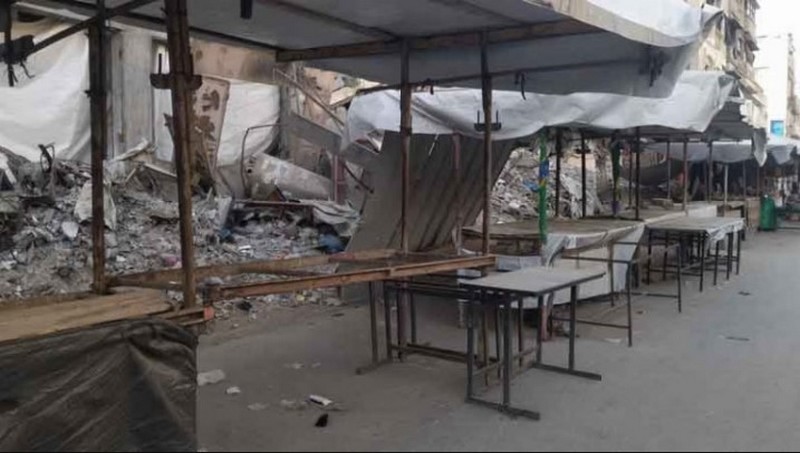
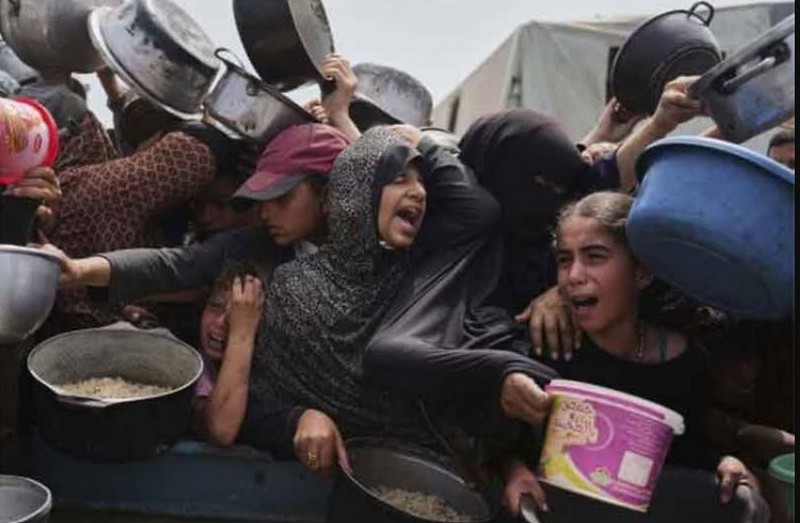
New Episode of Israeli-Made Starvation in Gaza: All Bakeries Forced to Close

By Quds News Network

Gaza (Quds News Network)- All bakeries in the Gaza Strip have been forced to close due to Israel’s blockade on food and essential supplies, amid ongoing bombardment that has killed over 1,000 Palestinians.

Abdel Nasser al-Ajrami, the head of Gaza’s bakery owners’ association, announced on Tuesday that bakeries had shut as a result of lack of fuel and flour.

“The World Food Programme [WFP] informed us today that flour had run out in its warehouses,” Ajrami said.

“Bakeries will no longer operate until the [Israeli] occupation opens the crossings and allows the necessary supplies to enter.”

The WFP supports the running of 19 bakeries in the enclave. Their closures will worsen a starvation and malnutrition crisis that has devastated Gaza’s two million residents.

Olga Cherevko, a spokesperson for the UN Office for the Coordination of Humanitarian Affairs, said that the WFP was closing its remaining 19 bakeries after shuttering six others last month. She said that hundreds of thousands of people relied on them.

For four weeks, since March 1, Israeli forces have closed off the supply of all sources of food, fuel, medicine and essentials into the Palestinian enclave. It’s the longest continuous such blockade since war began 18 months ago.

“All entry points into Gaza are closed. At the border, food is rotting. Medicine is expiring. Vital medical equipment is stuck,” said Tom Fletcher, the UN’s humanitarian chief.

“If the basic principles of humanitarian law still count, the international community must act to uphold them.”

The four weeks coincided with the holy month of Ramadan and the festival of Eid al-Fitr.

A WFP memo circulated to aid groups on Monday said that it could no longer operate its remaining bakeries, which produce the pita bread on which many rely. The UN agency said that it was prioritizing its remaining stocks to provide emergency food aid and expand hot meal distribution.

2 April 2025

Source: countercurrents.org
Iran to give crushing response to US if it commits evil acts

Leader of the Islamic Revolution Ayatollah Seyyed Ali Khamenei delivered a speech at the Grand Mosalla mosque of Tehran where he led this year’s Eid al-Fitr prayers.

At the beginning of his speech, the Leader of the Islamic Revolution offered feliciations on the occasion of Nowruz, the Persian new year, as well as the Eid al-Fitr.

He also hailed the Iranian nation’s turnout in this year’s International Quds Day rallies across the country.

Elsewhere in his remarks, the Leader referred to the ongoing barbaric actions of the Israeli regime throughout the region, considering the Israeli bloodshed of innocent people a bitter incident for Muslims.

He went on to say that the assassination of officials is a common practice of the Israeli regime, which is backed by the US and Western governments.

The Leader added that Israel is committing genocide and, if given the opportunity, it will invade other countries’ territories, just as it invaded Syria as the proxy force of the colonizers.

“The Zionist regime, this criminal group, must be eradicated from Palestine; and by God’s grace and power, it will be eradicated.”

“There is only one proxy force in this region, and that is the corrupt usurper Zionist regime. The Zionist regime invades countries on behalf of the colonialists,” he stressed.

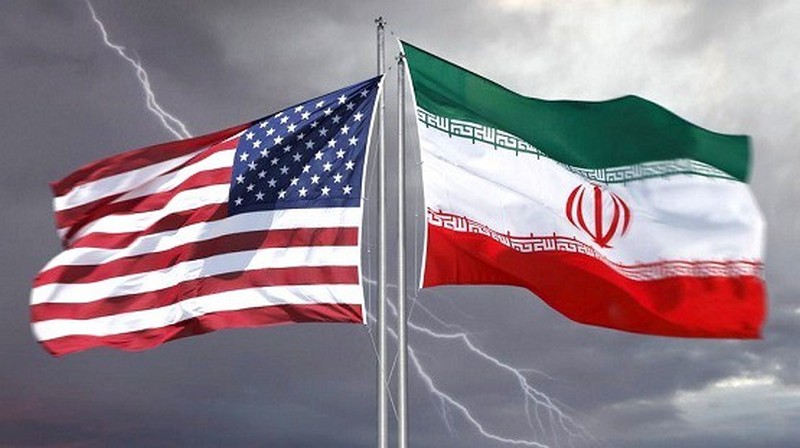
He stressed that if enemies commit evil against Iran, they will definitely receive a strong and reciprocal blow. “And If they seek to create sedition within the country, the (Iranian) nation itself will (give a proper) answer to them.”

MP/

31 March 2025

Source: en.mehrnews.com

New US airstrike campaign targeting Yemen’s Houthi rebels more intense than last, AP review finds

By Jon Gambrell

DUBAI, United Arab Emirates (AP) — A new American airstrike campaign against Yemen’s Houthi rebels appears more intense and more extensive, as the U.S. moves from solely targeting launch sites to firing at ranking personnel as well as dropping bombs in city neighborhoods, an Associated Press review of the operation shows.

The pattern under U.S. President Donald Trump reflects a departure from the Biden administration, which limited its strikes as Arab allies tried to reach a separate peace with the group. It comes after the Iran-backed Houthis threatened to resume attacking “any Israeli vessel” and have repeatedly fired at Israel over the country’s refusal to allow aid into the Gaza Strip.

The Houthi attacks and the response to them have drawn new scrutiny in Washington after security officials in Trump’s administration shared plans for the first round of strikes on the rebels in a group chat that included a journalist. But bombing alone may not be enough to stop the Houthis, whose earlier barrage of missile fire toward the U.S. Navy represented the most intense combat it had seen since World War II.

“Folks that say, ‘We’ll go in there and take out everyone with the last name Houthi and we’ll win.’ The Houthi leadership has been taken out in history in the past, and they are resilient,” retired U.S. Navy Vice Adm. Kevin Donegan said. “They came back and they grew stronger. So this isn’t something that is a one-and-done.”

Meanwhile, concerns are growing over civilians being caught in the middle of the campaign. While the U.S. military has not acknowledged any civilian casualties since the strikes began over a week ago, activists fear strikes may have killed noncombatants already in territory tightly controlled by the Houthis.

“Just because you can’t see civilian harm doesn’t mean it’s not happening,” warned Emily Tripp, the director of the U.K.-based group Airwars, which studies Western airstrike campaigns.

A new, intense U.S. airstrike campaign shakes Yemen

The Trump campaign began March 15. American warships fired cruise missiles while fighter jets flying off of the USS Harry S. Truman aircraft carrier dropped bombs on Houthi-controlled areas of Yemen, a nation on the southern edge of the Arabian Peninsula that is the Arab world’s poorest.

“No terrorist force will stop American commercial and naval vessels from freely sailing the Waterways of the World,” Trump said in a social media post announcing the campaign, days after his administration reimposed a “foreign terrorist organization” designation on the Houthis.

So far, the Houthis say the airstrikes have killed 57 people.

That’s just over half the 106 people the Houthis’ secretive leader, Abdul Malik al-Houthi, claimed the U.S. and U.K. killed during all of 2024. He provided no breakdown of combatants versus noncombatants. Houthi fighters often aren’t in uniform.

Al-Houthi said the two countries launched over 930 strikes last year. The U.S.-based Armed Conflict Location & Event Data Project, known as ACLED, has recorded 305 strikes. The discrepancy between the figures could not be immediately reconciled, though the Houthis could be counting individual pieces of ordnance launched, rather than a single event with multiple bombs used, as ACLED does. The rebels also have exaggerated details in the past.

Between March 15 to March 21, ACLED reported 56 events. The campaign also has seen the highest number of events in a week since the American bombing campaign began on Yemen during the Israel-Hamas war.

Trump administration officials have touted the differences between their strikes and those carried out under President Joe Biden.

“The difference is, these were not kind of pin prick, back and forth, what ultimately proved to be feckless attacks,” Trump’s national security adviser, Mike Waltz, told ABC’s “This Week” on March 16. “This was an overwhelming response that actually targeted multiple Houthi leaders and took them out.”

Waltz has also claimed key members of Houthi leadership, including their “head missileer,” have been killed. The Houthis have not acknowledged any losses in their leadership.

There are indeed clear differences, said Luca Nevola, the senior analyst for Yemen and the Gulf at ACLED. Under Biden, the focus appeared to be on mobile launchers for missiles and drones, then infrastructure, he said. Trump is targeting urban areas more intensely, judging from the number of strikes on cities so far.

“It’s very likely that somehow the Trump administration is pursuing a decapitation strategy,” Nevola added.

The Trump administration is also allowing the U.S. military’s Central Command, which oversees Mideast operations, to launch offensive strikes at will, rather than having the White House sign off on each attack as under Biden. That will mean more strikes — like a particularly intense set early Friday.

Israel, which has repeatedly been targeted by Houthi missile fire and drones, including Thursday, also launched four rounds of airstrikes in 2024 and another in January.

Less transparency, growing concerns about civilians being harmed

During the Biden administration, Central Command offered details to the public on most strikes conducted during the campaign. Those details often included the target struck and the reason behind it.

Since the start of the new campaign, however, there’s been no similar breakdown.

Donegan, the retired vice admiral, praised that strategy during a recent call hosted by the Jewish Institute for National Security of America. “You don’t tell the enemy what you’re going to do, and you don’t tell them what you’re not going to do.”

But that also means the Houthis’ description of targets is the only one that’s public. They’ve claimed two attacks targeted an under-construction cancer clinic in the city of Saada, as well as private homes and crowded city neighborhoods. There’s been no effort so far from the U.S. military to either dispute that or offer evidence to support strikes on those targets.

“It’s an extremely complicated information environment in Yemen,” Tripp, of Airwars, said. “The Houthis have extensive restrictions on (activists) and operations, media and press.”

Even so, some information can be gleaned from Houthi-released footage. One strike around Saada that the Houthis say killed a woman and four children included missile debris. Serial numbers on the fragments correspond to a contract for Tomahawk cruise missiles, an AP examination of the imagery showed. That corresponded to an assessment separately made by Airwars.

Including that Saada strike, Airwars believes it is likely that at least five U.S. strikes in the new Trump campaign that have hurt or killed civilians, based off of videos and photos from the site, Houthi statements and other details.

The U.S. military declined to answer questions regarding possible civilian casualties but said the “Houthis continue to communicate lies and disinformation.”

“CENTCOM won’t provide details on strikes and locations until the operation has concluded, and there is no additional risk to U.S. personnel or assets involved,” it added, using an acronym for Central Command. “At the direction of the president, CENTCOM continues to conduct strikes across multiple Iran-backed Houthi locations every day and night to restore freedom of navigation and restore American deterrence.”

Houthi attacks started over the Israel-Hamas war

From November 2023 — weeks after the Israel-Hamas war began — until January of this year, the Houthis targeted over 100 merchant vessels with missiles and drones, sinking two and killing four sailors.

The rebels said the campaign in the Red Sea, the Gulf of Aden and the Bab el-Mandeb Strait connecting the two waterways was carried out in solidarity with Hamas. It stopped with the ceasefire reached in that war in January.

The attacks greatly raised the Houthis’ profile as they faced economic problems and launched a crackdown targeting any dissent and aid workers at home amid Yemen’s decadelong stalemated war.

Since the ceasefire ended, the Houthis have not resumed their attacks on shipping in the vital corridor for cargo and energy shipments moving between Asia and Europe. Still, overall traffic remains sharply reduced.

A European Union naval force has been patrolling the Red Sea and escorting ships, as well as taking Houthi fire. However, the vast majority of Houthi attacks toward military targets has been pointed at U.S. Navy vessels.

More US forces move into Mideast as Yemen’s future in question

The U.S. airstrikes have kept up a daily tempo since beginning March 15. Meanwhile, the USS Carl Vinson and its carrier strike group is to transit into the Middle East.

That, along with the Truman, will likely give the American military two places to launch aircraft since it hasn’t immediately appeared that any strikes came from bases in other Mideast nations — where public sentiment remains strongly with the Palestinians in the Israel-Hamas war.

The U.S. military also may be bringing additional firepower, as radio transmissions from B-2 stealth bombers and flight-tracking data suggested the U.S. Air Force is moving a number of the aircraft to Diego Garcia in the Indian Ocean.

Satellite images from Planet Labs PBC analyzed by the AP showed three B-2s parked Wednesday at Camp Thunder Cove on the island. That would provide a closer location for the long-range bombers to launch that’s still far outside of the range of the rebels — and avoids using allies’ Mideast bases.

In October, the Biden administration used the B-2 to target what it described as underground bunkers used by the Houthis.

But the future of Yemen itself remains in question. The Houthis broadly maintain control over the capital of Sanaa and the country’s northwest. Yemen’s exiled government is part of a fractious coalition that for now appears unable to wrest any control back from the rebels. Meanwhile, Saudi Arabia and the United Arab Emirates, which launched a war 10 years ago against the Houthis, have pushed for peace talks as fighting appears broadly frozen on the ground.

“The United States can hurt the Houthis, it can weaken them,” wrote Gregory D. Johnsen, a Yemen expert at the Arab Gulf States Institute in Washington, “but without effective ground troops — either its own or someone else’s — it will not be able to eliminate their capabilities.”

Jon Gambrell is the news director for the Gulf and Iran for The Associated Press.

28 March 2025

Source: apnews.com

Israeli military orders evacuation of most of Gaza’s southern city of Rafah

By Wafaa Shurafa

DEIR AL-BALAH, Gaza Strip — The Israeli military on Monday issued sweeping evacuation orders covering most of Rafah, indicating it could soon launch another major ground operation in the southernmost city in the Gaza Strip.

Israel ended its ceasefire with the Hamas militant group and renewed its air and ground war earlier this month. At the beginning of March it cut off all supplies of food, fuel, medicine and humanitarian aid to the territory’s roughly 2 million Palestinians to pressure Hamas to accept changes to the truce agreement.

The evacuation orders appeared to cover nearly all of the city and nearby areas. The military ordered Palestinians to head to Muwasi, a sprawl of squalid tent camps along the coast. The orders came during Eid al-Fitr, a normally festive Muslim holiday marking the end of the fasting month of Ramadan.

Last May, Israel launched a major operation in Rafah, on the border with Egypt, leaving large parts of it in ruins. The military seized a strategic corridor along the border as well as the Rafah crossing with Egypt, Gaza’s only gateway to the outside world that was not controlled by Israel.

Israel was supposed to withdraw from the corridor under the ceasefire it signed with Hamas in January under U.S. pressure, but it later refused to, citing the need to prevent weapons smuggling.

Israeli forces killed 15 first responders during a ground operation in Rafah’s Tel al-Sultan neighborhood last week, in what the International Federation of Red Cross and Red Crescent Societies said was the deadliest attack on its medics in years.

The Israeli military said its forces opened fire on several vehicles that raised suspicions by advancing without headlights or emergency signals. The military said a Hamas operative and eight other militants were among those killed.

The United Nations humanitarian office said the dead included eight Red Crescent workers, six members of Gaza’s Civil Defense, which operates under the Hamas-run government, and a U.N. worker.

Rescuers were only allowed to access the area nearly a week later to recover the bodies. Footage of Sunday’s recovery operation released by the U.N. showed Civil Defense workers digging into a mound of sand and pulling out a body wearing the same orange vest as the rescuers.

Israel has vowed to intensify its military operations until Hamas releases the remaining 59 hostages it holds — 24 of whom are believed to be alive. Israel has also demanded that Hamas disarm and leave the territory, conditions that were not included in the ceasefire agreement and which Hamas has rejected.

Israeli Prime Minister Benjamin Netanyahu said Sunday that Israel would take charge of security in Gaza after the war and implement U.S. President Donald Trump’s proposal to resettle Gaza’s population in other countries, describing it as “voluntary emigration.”

That plan has been universally rejected by Palestinians, who view it as forcible expulsion from their homeland, and human rights experts say it would likely violate international law.

Hamas, meanwhile, has insisted on implementing the signed agreement, which called for the remainder of the hostages to be released in exchange for a lasting ceasefire and an Israeli pullout. Negotiations over those parts of the agreement were supposed to have begun in February, but only preliminary talks have been held.

The war began when Hamas-led militants stormed into Israel on Oct. 7, 2023, rampaging through army bases and farming communities and killing some 1,200 people, mostly civilians. The militants took another 251 people hostage, most of whom have since been released in ceasefires or other deals.

Israel’s retaliatory offensive has killed more than 50,000 Palestinians, according to Gaza’s Health Ministry, which does not say how many were civilians or combatants. At its height, the war had displaced some 90% of Gaza’s population, with many fleeing multiple times.

Large areas of Gaza have been completely destroyed, and it’s unclear how or when anything will be rebuilt.

31 March 2025

Source: washingtontimes.com

DCI Statement Calls for Immediate Action in Lebanon to Ensure Birth Registration, Recognising it as a Fundamental Human Right.

Delivered at the General Debate on Item 3: Promotion and Protection of All Human Rights, Civil, Political, Economic, Social and Cultural Rights, Including the Right to Development.

On 17 March, on behalf of DCI-Lebanon, Defence for Children International delivered a statement during the 58th session of the United Nations Human Rights Council in Geneva, Switzerland. The statement asserted that birth registration is a fundamental human right and called attention to the hundreds of thousands of unregistered children at risk of statelessness in Lebanon.

There are between 50,000 and 60,000 stateless people in Lebanon, excluding Palestinian refugees born in Lebanon. Additionally, 100,000 children born to Syrian refugees in Lebanon remain unregistered.

Lebanon unfortunately lacks a systematic mechanism to ensure all births are registered.  Furthermore, the lack of birth registration is also affected by:

  • Legal barriers that are complex and consist of strict deadlines, making registration difficult; missing the one-year deadline leads to costly legal procedures.
  • High costs and fees that make registration unaffordable for low-income families.
  • Displacement challenges that affect families and prevent them from accessing civil registry offices.
  • Many parents are unaware of the importance of timely registration or its serious consequences

Unregistered children are deprived of their right to a name, nationality, education, healthcare, and legal protection. They are more vulnerable to exploitation, trafficking, recruitment into armed groups, and lifelong statelessness.

DCI urges the Lebanese government and international partners to take the following steps:

  • Implement a computerised system for birth notifications and streamline the process
  • Extend administrative registration and deadlines and simplify procedures for late registrations.
  • Reduce penalties and offer financial assistance for legal fees to ease the burdens on families.
  • Deploy certified midwives in refugee settlements to ensure proper birth documentation.
  • Educate families about their right to register births and the importance of doing so.
  • Provide free legal assistance to Lebanese and refugee families facing registration challenges.

We urge Member States, UN agencies, and humanitarian organisations to prioritize birth registration in their funding, programming, and advocacy efforts. Together, we can prevent an entire generation from being left stateless and vulnerable.

24 March 2025

Source: defenceforchildren.org

Palestinians starve as Israel continues full ban on humanitarian aid

By Ahmed Dremly

Huda Helles enjoyed a brief respite during the first days of the latest two-month ceasefire between Israel and Hamas.

She lived with her family of eight in a makeshift tent in Al-Wihda Street, central Gaza City, after their house in Al-Shujaiya was bombed by an Israeli air strike in 2023. She and her family had a plan for the various dishes they wanted to cook during Ramadan.

That plan was turned upside down on 2 March, when Israel closed the borders, halting the entry of all humanitarian aid, food, and goods into Gaza. The renewed blockade has brought the enclave to the brink of famine once again.

“We used to cook a variety of dishes every day, but now, for over 20 days, all we’ve had is rice,” Huda said. “Now it’s starting to give me severe stomach cramps.”

On Wednesday, the UN aid coordination office, OCHA, said in its latest update that Israel’s ban on entry of aid has continued for nearly a month and that no aid entered the enclave throughout this period. All requests by humanitarian agencies to coordinate access with Israeli authorities have been denied.

Moreover, Israeli attacks killed eight humanitarian workers since its unilateral decision to resume hostilities on Gaza on 18 March, bringing the total number of aid workers killed by the Israeli army in Gaza to 399, OCHA said.

Helles recalled when the blockade was imposed. The shops were empty within hours, and what was left was too expensive, she said. Even the charity distributions, which once offered a variety of meals, have dwindled, now providing only small servings of rice at the time of Iftar.

After days of eating little more than rice, Huda couldn’t sleep at night, suffering from severe stomach pain and colic. She was diagnosed with a stomach infection two weeks ago.

“Doctors advised me to eat healthy food and avoid canned goods,” she said. “But there’s nothing else to eat except the low-quality charity distribution. I am surviving on eating only bread and cheese, when possible.”

Helles’s mother, Manal, 52, was also supposed to eat healthy food. She suffered a heart attack and high blood pressure at the beginning of this month. Huda thinks that the main reason for her mother’s deteriorating health is living in the harsh conditions in the tents, including the dire lack of food and clean water for drinking.

“During Ramadan, my mother used to prepare a beautiful spread of chicken, meat, and vegetables, carefully preparing each dish for the family,” Huda recalled. “Now, she looks at us helplessly, asking us to hang on, hoping that the starvation will not last much longer.”

‘We lived on canned hummus’

Before the ceasefire, Huda and her family had been displaced to Khan Younis, in the southern part of Gaza.

“We were not able to find a piece of bread. For two months, we lived only on canned hummus.”

During the ceasefire, Huda and her family feared the return of war and the famine that would inevitably follow. And that is what has happened. “It’s unfair to live in starvation again,” she said.

Ahmed Ramda, 38, also struggles to find something to eat or feed his four children during Israel’s current complete blockade on the entry of humanitarian aid, including food. He thinks that the blockade’s impact is even worse than last year.

“We no longer have the energy to flee from one place to another, fetch water, or even recover from wounds due to the lack of food and medical care,” he said.

“They want us to be homeless, reliant on limited humanitarian aid, but all we want is for the borders to open so we can work, make a living, and live in peace.”

He was once a driver, but his car was bombed by Israeli air strikes in November 2023 while he and his family were evacuating. His house was also destroyed, his father killed, and many other family members were wounded.

Now, Ramda and his family live in a tent on Omar Al-Mukhtar Street in central Gaza.

“My children cry every day, refusing to eat the lentils or rice from the charity distributions. They ask me for chicken, meat, and fruits,” Ahmed said. “Their mother even lied to them, telling them she put minced meat in the food, but it melted while cooking.”

“I wish to be dead before the moment I see my children starve to death.”

In January 2024, Ramda and his wife, Sana, welcomed their baby girl, Misk, into the world in their displacement tent in Deir al-Balah, in the middle of the Gaza Strip. However, due to the lack of proper nutrition, Sana had a difficult time breastfeeding Misk.

Tragically, Misk died of malnutrition in August 2024.

“Sana struggled to breastfeed Misk due to the lack of healthy food and because we couldn’t afford what was available in the markets,” Ramda explained through tears.

Meanwhile, his 10-year-old daughter, Jori, has been battling dehydration.

“I lost one daughter, and I’m terrified of losing another before the borders open and we get food,” he said. “I appeal to the world to end our suffering – not for us, the adults, but for the sake of our children, who are deprived of their most basic rights.

“If the borders open, I hope to flee Gaza, seeking a new life in Norway or Belgium, where I can find a job and live in peace with my family.”

‘We want the war to end’

Mazen Marouf, 48, a farmer, struggles to survive with his 11-member family. During the ceasefire, he and his six sons had planted tomatoes and onions on their farmland in Beit Lahia, hoping to feed themselves and make a living from their crops.

But when Israel broke the ceasefire on 18 March, their plans were shattered.

“Israeli artillery and aerial shelling began suddenly in the morning. We could only take our tent,” Marouf said. “We didn’t know where to go.”

Marouf and his family could hardly find an empty place to set up their tent in Al-Yarmouk neighbourhood due to the crowded movement of displaced people. They are still struggling to find something to eat, as they have no money and were unable to bring any food with them when they evacuated.

The north of the Gaza Strip, especially Beit Hanoun, was once considered the food basket of Gaza, but has been decimated by the war. According to the Food and Agriculture Organisation of the United Nations (FAO), at least 67.6 percent of cropland in northern Gaza has been destroyed by Israel.

“We only eat when charity distributions come or when others share their canned food,” Marouf explained. “My family and I are sick and suffering from malnutrition.”

“We don’t want to rely on humanitarian aid. We want the war to stop now and to live in peace and dignity.”

Middle East Eye delivers independent and unrivalled coverage and analysis of the Middle East, North Africa and beyond.

29 March 2025

Source: middleeasteye.net

Weaponizing starvation, Israel seeks full control over Gaza aid distribution

By Lee Mordechai and Liat Kozma

The acute hunger crisis in the Strip is part of a deliberate Israeli strategy to cripple Hamas’ governance capabilities and banish humanitarian groups.

For almost a month, not a single drop of humanitarian aid has entered Gaza. Since March 2 — when the second phase of the ceasefire was due to commence, only for Israel to renege on its commitment to the deal — Israel has blocked the entry of all food into the Strip, along with fuel, medical equipment, and other essential supplies. The UN Relief and Works Agency (UNRWA) has warned that Gaza’s flour stores will likely run out completely before the end of this week.

While the current policy is more extreme than anything we’ve seen since October 7, Israel has nonetheless imposed restrictions on the entry of aid into Gaza throughout its onslaught. Already in December 2023, Human Rights Watch declared that Israel was using starvation as a weapon of war. Almost a year later, the International Criminal Court issued arrest warrants for Israeli Prime Minister Benjamin Netanyahu and then-Defense Minister Yoav Gallant, in part on the grounds that they had “intentionally and knowingly deprived the civilian population in Gaza of objects indispensable to their survival, including food.”

The surge of humanitarian aid that Israel allowed to enter Gaza during the recent two-month ceasefire only served to underscore the cruel intentionality of the starvation policy. Israel argued for months — including in a year-long case at the High Court of Justice, in response to a petition by five Israeli human rights organizations — that any obstacles to the entry of aid were not its fault, attributing them instead to the inefficiencies of humanitarian agencies or looting by gangs. Yet the data paint a clear picture to the contrary.

While the quality and quantity of available data about the volume and composition of aid entering Gaza have declined significantly since the beginning of the ceasefire in mid-January (the two primary sources of information, the Israeli army’s Coordinator of Government Activities in the Territories, or COGAT, and the UN Office for the Coordination of Humanitarian Affairs, or OCHA, have stopped providing detailed dashboard updates), we can still see that the number of aid trucks authorized to enter Gaza increased dramatically, helping to somewhat alleviate the humanitarian crisis in the Strip.

Whereas, according to COGAT, a daily average of 126 aid trucks entered Gaza in the six months leading up to the deal — even despite an ultimatum from the Biden administration in October, demanding the entry of 350 trucks per day — the numbers that entered in the first three days of the ceasefire were 634, 916, and 897 trucks, respectively. The six-week period between the start of the ceasefire on Jan. 19 and Israel’s imposition of a full blockade on March 2 saw the entry of more trucks (25,200) than during the previous six months altogether (21,368).

During the ceasefire, Israel also lifted some of the barriers it had previously imposed on the entry of aid. For example, aid operations within Gaza no longer required coordination with the Israeli army, and it became possible to deliver much larger quantities of supplies to northern Gaza, which had until then been difficult to access. Over 100,000 tents were distributed, and visual evidence showed that heavy equipment, such as bulldozers, was brought in and used to clear roads and remove some of the rubble.

Additionally, the ceasefire allowed Hamas to reassert its governing capabilities in Gaza, which led to a drastic reduction in the looting of aid trucks to the point that the phenomenon became nearly nonexistent. The increased availability of aid also reduced the demand for goods on the black market, further contributing to the decline in looting.

These humanitarian relief measures, however, were not absolute. For example, around 10 percent of the more than half a million residents who returned to their destroyed homes in northern Gaza ended up moving south again, in part because they could not find sufficient means of survival in the devastated north. Moreover, some of the items that Israel was required to allow into Gaza under the terms of the ceasefire, such as mobile homes, appear to have been almost entirely barred from entering.

At the same time, Israel has quietly expanded its use of bureaucracy as a tool for controlling international organizations, tightening restrictions on the entry of aid workers into Gaza. About half of the doctors who received preliminary approval to enter the Strip through the World Health Organization (which requires all details to be submitted a month in advance), later discovered that Israel was denying them entry. Nearly all of these doctors had already entered the enclave since the start of the war, with prior COGAT approval.

A similar decrease in entry permits was observed among humanitarian aid workers. Arwa Damon, a former CNN journalist who founded the International Network for Aid, Relief, and Assistance (INARA), an organization providing medical and psychological assistance to children in Gaza, entered the Strip four times in 2024. In 2025, however, all five of her applications for entry have been denied.

This policy shift, which began in early February, appears to stem from Israel’s decision to impose new regulations on the approval and registration of international organizations. According to these criteria, Israel can deny entry to any organization that promotes BDS, supports international tribunals against Israeli officials or soldiers, or “denies the existence of the State of Israel as a Jewish and democratic state.”

A step toward direct control

Still, what followed at the start of March was a drastic shift. Israel’s decision to halt all humanitarian aid to Gaza as a means of pressuring Hamas to release the remaining hostages without any commitment from Israel to end the war — an action that amounts to the war crime of collective punishment — was widely condemned by international actors.

About a week after Israel sealed off the border crossings, Energy and Infrastructure Minister Eli Cohen additionally ordered a cutoff of the electricity that Israel sells to Gaza, crippling the operation of desalination plants. Senior Israeli officials even indicated plans to shut off water pipelines to Gaza. Unsurprisingly, food prices in the have Strip skyrocketed since the closure of the crossings, with the sharpest increases recorded in fresh produce like fruits and vegetables.

The impact of this intensified blockade is even more devastating than the one Israel imposed at the beginning of the war, after Gallant’s “no electricity, no food, no fuel” order; Gaza’s stockpiles were much higher back then than they are now, and Israel eventually relented to international pressure and allowed some aid in, albeit in much smaller quantities than what was needed. Yet the state’s latest response to the High Court of Justice — that it has no authority to rule on these matters — underscores its newfound confidence in its position, while the weak international pushback highlights the low political cost of employing starvation and deprivation as a form of collective punishment and a weapon of war.

Israel followed the aid ban with a resumption of its assault on Gaza in the early hours of March 18, killing more than 400 Palestinians in surprise attacks in the first few hours, including 178 children. Among the targets of these airstrikes were the civilian leadership of Hamas, specifically senior officials responsible for governance in the Strip. By crippling Hamas’ ability to manage civilian life in Gaza, Israel is intending to enable armed gangs — similar or identical to those that looted humanitarian aid — to take its place.

All the while, Israel has begun laying the groundwork to shift control of humanitarian aid management from international organizations to the Israeli military itself.

At the beginning of the month, COGAT published a report accusing the UN of disseminating biased, incomplete, or incorrect data. Shortly afterward, the new IDF Chief of Staff, Eyal Zamir, reversed his predecessor’s policy and removed the military’s objection to being the power responsible for distributing humanitarian aid in Gaza. The Israeli government and COGAT simultaneously launched a coordinated campaign — echoed by the prime minister’s supporters — alleging that Hamas steals humanitarian aid from international organizations and uses it to harm Israel, all while claiming that Israel is not supplying Gaza with enough food.

Transferring humanitarian aid management away from international organizations would serve several of Israel’s strategic objectives, aligning with its broader war policy. Direct control over aid would allow Israel to regulate assistance as it sees fit as part of a “carrots and sticks” approach — a policy with clear precedents in the decades preceding the current offensive. Additionally, removing aid organizations from Gaza would significantly reduce the flow of critical information about Israel’s actions in the Strip.

There have been some indications that this policy is having its intended effect. On March 24, the UN decided to “reduce its footprint” in the besieged enclave, partially in response to an attack on international UN personnel the previous week. Around 30 percent of the roughly 100 international UN staff were expected to leave within a week, with others likely to follow suit. An attack on a Red Cross building the same day further demonstrated that Gaza is not safe for international humanitarian workers.

If the army does take over the responsibility for distributing aid, this will increase friction with the local population and almost certainly lead to additional harm to civilians as well as higher casualties among Israeli soldiers. All the while, Israel will be the sole official source of information coming out of Gaza, allowing it to further obscure the reality on the ground from the eyes of the world.

A version of this article was first published in Hebrew on Local Call. Read it here.

Lee Mordechai is a senior lecturer in the Department of History at the Hebrew University.

Liat Kozma is a professor in the Department of Islamic and Middle Eastern Studies, and is in charge of the Harry Friedenwald Chair in the History of Medicine at the Hebrew University.

26 March 2025

Source: 972mag.com

Gaza: Red Crescent Says Recovered 15 Bodies After Israel Targeted Ambulances in Rafah

By Quds News Network

Gaza (Quds News Network)- The Palestine Red Crescent Society (PRCS) said on Sunday it had recovered the bodies of 15 rescuers killed a week ago when Israeli forces targeted ambulances in the Gaza Strip.

Bodies of eight medics from the Red Crescent, six members of Gaza’s civil defence agency and one employee of a UN agency were retrieved, the Red Crescent said in a statement.

It said one medic, Asaad Nasasra, from the Red Crescent remained missing.

The group said those killed “were targeted by the Israeli occupation forces while performing their humanitarian duties as they were heading to the Hashashin area of Rafah to provide first aid to a number of people injured by Israeli shelling in the area”.

“The occupation’s targeting of Red Crescent medics … can only be considered a war crime punishable under international humanitarian law, which the occupation continues to violate before the eyes of the entire world.”

In an earlier statement the Red Crescent said the bodies “were recovered with difficulty as they were buried in the sand, with some showing signs of decomposition”.

PRCS President Younis al-Khatib condemned Israel for targeting its paramedics as they “fulfil their humanitarian mission”.

“Those souls are not mere numbers. If this incident [happened] anywhere else, the whole world would have moved heaven and earth to expose this war crime,” al-Khatib said on Sunday.

Last week, the Israeli military said that it had fired on ambulances and fire trucks – calling them “suspicious vehicles” – that arrived at a scene where it was carrying out attacks.

Hamas political bureau member Basem Naim slammed the attack on the ambulance and said the “targeted killing of rescue workers – who are protected under international humanitarian law – constitutes a flagrant violation of the Geneva Conventions and a war crime”.

The PRCS shared images of its teams saying goodbye to their slain colleagues.

[https://twitter.com/PalestineRCS/status/1906407923489636744]

The Palestinian Health Ministry confirmed in a statement that the bodies of eight paramedics were recovered today after contact with them had been lost over the previous days.

It added: “Some of these bodies were bound and shot in the chest. They were buried in a deep hole to prevent their identification.”

The ministry called on “UN organisations and relevant international bodies to conduct an urgent investigation into these crimes and hold the occupation accountable for committing them.”

The International Federation of Red Cross and Red Crescent Societies (IFRC) said the attack is the single deadliest attack on Red Cross/Red Crescent workers anywhere in the world since 2017.

“These dedicated ambulance workers were responding to wounded people. They were humanitarians. They wore emblems that should have protected them; their ambulances were clearly marked. They should have returned to their families; they did not,” IFRC Secretary_General Jagan Chapagain said in a statement.

“Even in the most complex conflict zones, there are rules. These rules of International Humanitarian Law could not be clearer – civilians must be protected; humanitarians must be protected. Health services must be protected,” Chapagain said.

OCHA chief Tom Fletcher said since Israel broke the ceasefire in Gaza on March 18 and resumed its war on the enclave, Israeli air attacks have hit “densely populated areas”, with “patients killed in their hospital beds, ambulances shot at, first responders killed”.

Since Israel resumed its attacks on Gaza, more than 900 Palestinian civilians have been killed in the territory, adding to the more than 50,000 killed since October 7, 2023, according to the Palestinian Ministry of Health.

Red Cross Federation ‘Outraged’ at Israel’s Murder of Red Crescent Medics in Gaza

The International Federation of Red Cross and Red Crescent Societies (IFRC) has condemned Israel’s killing of 14 medics in Gaza. The victims, including nine from the Palestine Red Crescent Society (PRCS) and five from Gaza’s civil defense, were executed and buried in a deep pit to hide their bodies. Their hands were bound, and they were shot in the chest.

Their bodies were recovered a week after Israeli forces attacked their ambulances in Rafah’s Tel al-Sultan neighborhood. The medics had been responding to injured civilians when they came under fire.

“I am heartbroken,” said IFRC Secretary-General Jagan Chapagain. “These ambulance workers were humanitarians. Their vehicles were clearly marked. They should have returned to their families—but they did not.”

Israel admitted to firing on the ambulances, calling them “suspicious vehicles.” It claimed Hamas fighters were inside. No evidence was provided to support the claim. Humnitarian groups insist the victims were medics performing their duties.

The IFRC demanded accountability and stressed that international law protects medical workers. “When will this stop?” Chapagain asked. “All parties must stop the killing.”

Since the war began in October 2023, at least 30 PRCS medics have been killed.

31 March 2025

Source: countercurrents.org
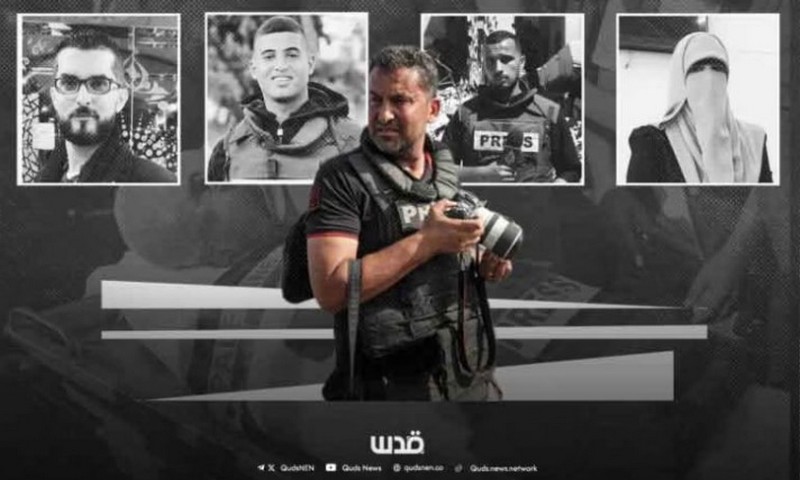
Israel’s Ritual of Massacres: The Philosophy Behind Killing Palestinians on Eid

By Quds News Network

On the first day of Eid al-Fitr, Israel turned Gaza into a slaughterhouse. Warplanes bombed homes, refugee camps, and even rescue workers. At least 76 Palestinians were murdered, including entire families, women, and children.

This was not just another day of war. It was part of a pattern. Killing on Eid has become an Israeli ritual, one designed to shatter the spirit of an occupied people.

A Calculated Massacre

Among the victims, a family was wiped out in a refugee camp west of Khan Younis. In Hamad City, north of Khan Younis, Israeli bombs killed nine people, including children and women. In Juhor al-Dik, six more perished in another airstrike. Homes, already surrounded by destruction, were erased in seconds.

Even the dead kept multiplying. In al-Shuja’iya, eastern Gaza City, another strike killed more children. Two more Palestinians died in Abasan al-Kabira. Bodies were pulled from the rubble all day, but no one was left to grieve them properly—because grief itself had become too constant, too exhausting.

Slaughtering the Rescuers

Not even those trying to save lives were spared. In Rafah’s Tel al-Sultan neighborhood, rescue workers had disappeared more than a week ago. On Eid morning, their bodies were found.

Israeli forces had executed 14 Palestinian Red Crescent and Civil Defense workers. Their hands were bound, their chests riddled with bullets, their bodies dumped in a deep pit to hide the evidence. The health ministry called it an “escalation in war crimes.” But was it? Or was it just the next step in a genocide where every limit is meant to be broken?

The Science of Psychological Warfare

Israeli journalist Muna Al-Omari described the philosophy behind these killings: “Israel doesn’t just kill—it kills methodically, with a deep understanding of how to break people.”

Her words capture the strategy behind Eid massacres. Killing on a holy day is not random. It is designed to make Palestinians feel that no moment is sacred, no occasion is safe. The goal is psychological: to destroy the idea that there can ever be a life beyond war, beyond occupation.

Al-Omari explained it simply: “When you kill children on Eid—children who suffered hunger, who smiled over a new pair of shoes or a bracelet—you don’t just take their lives. You take away the meaning of joy itself.”

From Gaza to Al-Aqsa: No Space for Celebration

The massacre in Gaza was not the only message. In the occupied Palestinian capital city of Jerusalem, Israeli forces stormed Al-Aqsa Mosque on Eid morning. Heavily armed officers pushed through worshippers, standing among them as a silent warning: “You will not celebrate in peace.”

Al-Omari predicted what comes next: Next year, they will fire tear gas at worshippers. The year after, fewer people will come. Then, in the future, access will be restricted, just like the Ibrahimi Mosque in Hebron.

It is not just about violence. It is about erasing Palestinian presence, piece by piece, until nothing remains but occupation.

Hamas condemned the attacks, stressing that Israel uses the holiday to escalate its massacres, knowing that the world will look away. “What enables Netanyahu—the war criminal—to keep defying international law is the silence of the world and the absence of accountability,” the resistance movement stated.

Al-Omari described it even more bluntly: “Israel no longer waits for condemnation because it knows no one will condemn. It no longer cares about appearances because it no longer needs to.”

And so, the massacres continue. Every year, every war, every Eid.

The message is clear: For Palestinians, there will be no safe days, no sacred moments, no space to exist in peace. Unless the world stops looking away.

31 March 2025

Source: countercurrents.org
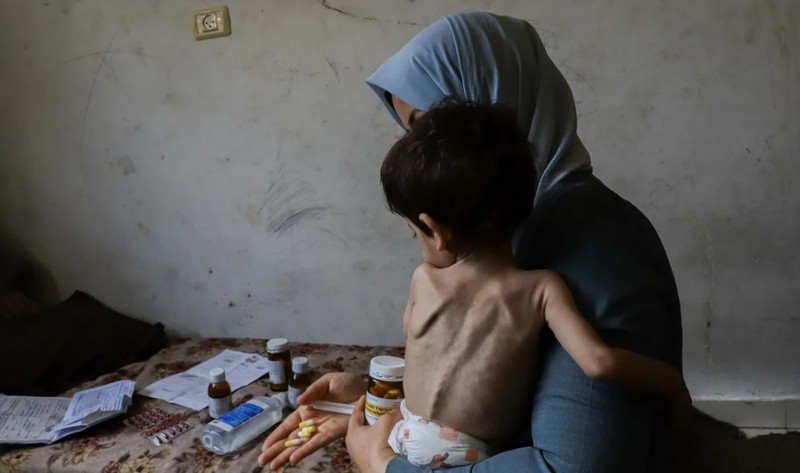
Israeli Supreme Court decision legitimises starvation, genocide in the Gaza Strip

By Euro-Med Human Rights Monitor

Palestinian Territory – The Israeli Supreme Court’s ruling to deny a request to allow humanitarian aid into the Gaza Strip is a crucial component of a well-functioning colonial system designed to perpetrate the crime of genocide against the Strip’s people.

The ruling made yesterday (Thursday 27 March)is further evidence that the Israeli judiciary—which has never served as a tool of justice for Palestinians—functions as a part of a system in which all state institutions participate, whetherIsrael’s government, army and other security forces, military prosecution, courts, or media. All of these institutions blatantly violate international legal and humanitarian norms by committingcrimes against Palestinians, aiding in thecommission of such crimes by coordinating their activities, and/or providing a false legal cover.

The Israeli Supreme Court has explicitly and directly legitimised Israel’s illegal blockade of the Gaza Strip. This blockade has denied food, water, medicine, fuel, and electricity to over two million people—half of whom are children—for nearly 18months. Meanwhile, human rights organisations have warned that Israel’s refusal to allow humanitarian aid and basic supplies into the enclave for more than three consecutive weeks has accelerated famine in the Strip and led to the deaths of infants from starvation. One of the most obvious examples of the complicity of all Israeli state institutions in the crime of genocide is the use of starvation as a declared weapon against Palestinians in the Gaza Strip, which has nowbeen made an official policy through a “political”decision validated by a court ruling.

To support its ruling, the Israeli court used the argument that the State of Israel is exempt from the obligations of belligerent occupation under international law in all cases pertaining to the Gaza Strip. This blatantly violates established international legal norms that are acknowledged to apply to the Occupied Palestinian Territory. It also goes against the International Court of Justice’s 2024 advisory opinion and gravely breaches the ICJ rulings in South Africa’sgenocide case against Israel.

The Fourth Geneva Convention, which applies to the Occupied Palestinian Territory, including the Gaza Strip, is gravely violated by the Israeli court’s recent decision. The occupying power is required by the Convention to provide food and medical supplies to the occupied population. It isalso required to permit relief efforts for the benefit of these populations in the event that local resources are insufficient, and to allow for the supply of facilities, including those conducted by states or humanitarian organisations, especially those involving food aid, clothing, and medical supplies.

Euro-Med Monitor emphasises that the decision is a flagrant disregard of the rulings of the International Court of Justice in the South Africa v. Israel genocide case. In January and March of 2024, the Court mandated that Israel take prompt and decisive action to allow for the delivery of humanitarian aid and essential basic services to alleviate the terrible circumstances faced byPalestinians in the Gaza Strip. In coordination with the United Nations, these measures includedproviding food, water, electricity, fuel, shelter, humanitarian aid, clothing, hygiene, and sanitation needs, as well as medical supplies and medical care to Palestinians across the Strip, including by expanding the number and capacity of land crossing points and keeping them open for as long as possible.

The International Court of Justice affirmed that Israel’s actions in the Gaza Strip constituted a real and immediate threat of genocide to the Palestinian people there, as well as the possibility of irreversible harm and violations of Palestinians’rights to be protected from genocide under the Convention on the Prevention and Punishment of the Crime of Genocide.

The Israeli court’s rationale is therefore in direct opposition to the advisory opinion issued on 19 July 2024 by the International Court of Justice, the highest court in the world. The ICJ unequivocally affirmed that Israel’s legal obligations were not terminated by its military withdrawal from the Gaza Strip in 2005, as Israel still maintains effective control over key areas of the Strip, such as the buffer zone, the land, sea, and air borders, restrictions on the movement of people and goods, and tax control. Since 7 October 2023, this control has become much more intense. As a result, Israel continues to be the occupying force in accordance with international law and is responsible for providing humanitarian aid and other necessities to the civilian population in the Strip.

The rejection of these fundamental legal preceptsby the Israeli court is not just a misreading; rather, it is a deliberate judicial intervention aimed atdenying the existence of the Israeli occupation and undermining the laws that safeguard the rights of the people who are subject to it. Viewed within the larger framework of institutional complicity that helps to enable and carry out Israel’s crime of genocide against the Palestinian people, this intervention turns the international legal system from a tool of protection into a cover for impunity.

Israel has a legal duty to the people it governs, and this duty extends beyond its legal relationship with the territory. Instead, it necessitates asteadfast obligation to uphold and defend human rights and the principles of preemptive international law under all conditions. Israel’s responsibilities under fundamental human rights conventions, such as the International Covenant on Civil and Political Rights, the International Covenant on Economic, Social, and Cultural Rights, the Convention on the Rights of the Child, and other international instruments, extend beyond the regulations of occupation law and include duties pertaining to preventing population starvation and allowing the entry of humanitarian aid. Regardless of a state’s legal standing under international law, its effective control over a territory serves as the foundation for its legal accountability for actions that impact this territory’s residents.

The presence of a state of occupation alone does not negate the duties of an occupying power toprevent the occupied population from living in substandard conditions or from suffering from severe physical or mental injury.

Instead, these duties are enforced by preemptive standards of customary international law, such as the outright ban on crimes against humanity, such as apartheid and genocide. Whether in times of peace or conflict, these standards require all states to uphold these rights and guarantee their protection at all times.

All Palestinians in the Gaza Strip are experiencing a dire humanitarian situation, especially since Israel’s genocidal campaign of direct killings in the Strip resumed on 18 March. This occurs at a time when Israel has been using other tools of genocide against the Strip’s people for a year and a half now. These tools include starvation, blockade, deprivation of virtually all means of survival, severe physical and psychological suffering, and the imposition of living conditions that are destructive, all of which are intended to destroy the Palestinian people there.

Not only does the ongoing situation in the Gaza Strip violate Israel’s legal obligations, but it also directly calls into question all other states’adherence to their own obligations, whether these states are directly involved in the genocide or have not acted decisively to stop Israel if in a position to do so. The Fourth Geneva Convention, the Convention on the Prevention and Punishment of the Crime of Genocide, and customary international law all bind these states. These regulations require states to actively work to prevent genocide and to abstain from any actions that facilitate, encourage, or open the door for its occurrence.

The international community must stop enslaving the Palestinian people to a state that is using all of its official institutions to destroy their lives, drive them off their land, and threaten their shared national identity. Given its decades-long failure to uphold international law and apply it equitably to, and without discrimination against, Palestinians, the international community is directly responsible for the disastrous reality that Palestinians face today, wherever they may be. This failure revealsthe biased foundations upon which the international system was established, as this system has deprived Palestinians of their most fundamental rights, most notably their right toexist.

All states must take up their individual and collective legal obligations and act quickly to put an end to the genocide in the Gaza Strip. They must do everything they can to protect Palestinian civilians there, i.e. enforce all necessary measures to force Israel to immediately and fully lift the blockade; permit unhindered freedom of movement of people and goods; open all crossings without arbitrary conditions; and take decisive action to protect Palestinians from forced displacement and swift or slow-motion killing. This entails launching an immediate response to address the population’s pressing and pertinent needs, such as offering suitable temporary housing for displaced people.

The international community must impose economic, diplomatic, and military sanctions on Israel due to its systematic and serious violations of international law. These sanctions, which willincrease pressure on Israel to stop its crimes against Palestinians, should include barring arms exports to Israel; stopping military cooperation with Israel; freezing the financial assets of officials involved in crimes against Palestinians; and suspending trade privileges and bilateral agreements that give Israel economic benefits.

In addition to acting to stop Israeli policies that violate the most fundamental humanitarian principles and endanger the lives of millions of civilians, the States Parties to the Fourth Geneva Convention should fulfil their duty under Common Article 1 to uphold and guarantee adherence to the Convention under all circumstances.

The International Criminal Court must issue arrest warrants for Israeli officials involved in international crimes in the Gaza Strip, and expedite its ongoing investigations. Additionally, the Court ought to acknowledge and specifically address Israel’s crimes as genocide. The Rome Statute’s States Parties should fulfil their legal duties to assist the Court in every way possible;make sure that arrest warrants against Israeli officials are carried out; bring these officials to international justice; and make sure to end the policy of impunity that has been granted to these officials thus far.

Along with fulfilling its legal obligations, the international community must take immediate action to end the root causes of the suffering and persecution endured by the Palestinian people forthe past 76 years: Israeli occupation and settler-colonialism in the Occupied Palestinian Territory. The international community must compel Israelto guarantee the Palestinians’ right to live in freedom, dignity, and self-determination in accordance with international law; to dismantle the system of apartheid and isolation imposed on the Palestinians; to lift the illegal blockade of the Gaza Strip; to hold Israeli perpetrators and allies accountable and prosecute them; and to ensure Palestinian victims’ rights to compensation and redress.

Euro-Med Human Rights Monitor is a Geneva-based independent organization with regional offices across the MENA region and Europe

29 March 2025

Source: countercurrents.org