Just International

‘They Don’t Know Iran’s Military Lexicon’: First Six Days of The Aggression

By Abdul Bari Atwan

They truly don’t know Iran. By this, I mean the Israelis and the US, and even some Arab leaders, none of whom dared to condemn the aggression. But the aggression entered its sixth day without the regime falling, and/or the new interim leadership rushing to the nearest negotiating table to surrender. The following factors need to be considered.

The battlefields:

First: The downing of an advanced American fighter jet, the F-15, by Iranian missiles in the west of Iran, a firstever development. This suggests the Iranian military leadership may have developed new missiles capable of achieving this feat, or they acquired them from their Chinese and Russian allies, or both, particularly the Russian S-400 and S-500 missile systems.

Second: The entry of Hezbollah’s ballistic missiles into the arena, striking deep inside Israel, specifically Tel Aviv and Haifa, for the first time after 15 months of restraint and the rebuilding of its military arsenal, and/or what was destroyed during the Israeli aggression. This means that no area in the Zionist entity will be safe.

Third: The fiery speech delivered by Sheikh Naim Qassem, Secretary-General of Hezbollah, containing strong unprecedented tone statements most notably: “We will not surrender and we will defend our land, no matter the sacrifices and despite the disparity in capabilities. We will not surrender.”

Fourth: The introduction of the fastest “infiltrating” drone into the Iranian Air Force for the first time. Named “Hadid 110,” it has a speed of 517 km/h and, according to Western military experts, is considered more efficient than its sister drone, “Shahed,” which performed well deep inside Israel. Its production costs only $35,000, while shooting it down costs $4 million.

Fifth: Every day of resistance by the Iranian army and people costs the occupying state approximately $1 billion. As for America, the costs of the war has already nearly spiralled to $160 billion in the first six days. These preliminary estimates are likely to rise, especially after the bombing of aircraft carriers and the destruction of warships, the increasing number of dead and wounded, the largest military buildup since the Iraq War, and the rise in energy prices.

Sixth: The fulfillment of the promise to close the Strait of Hormuz, which means delivering two fatal blows. The first is to the Western economy because oil and gas prices would likely reach record-breaking figures, and the second, for the Arab states who host the US military bases. Closing the Strait means preventing their oil and gas exports from reaching global markets, and the losses will increase while oil and gas revenues decrease depending on the war’s duration and developments.

The Iranians wanted from the outset a regional war of attrition with no end in sight in direct opposite to the new American warefare military doctrine, which aims for short, swift, and clean wars (without American casualties). The Iranians resolved to bomb all those cooperating with the aggression in the region. This new Iranian theory was best and most clearly expressed by Sheikh Naim Qassem when he called on the Israeli army to prepare for many days of fighting with all available means.

Defeat, surrender, and raising the white flag, individually or collectively, have no place in the Iranian military and political lexicon. In the first six days, the Iranian army launched 500 hypersonic missiles with multiple cluster warheads and more than 2,000 drones, resulting in the displacement of more than 7 million settlers to shelters and tunnels, and the destruction of large parts of Tel Aviv and Haifa.

Neither the 47-year-long starvation siege, nor three Israeli-American aggressions within a few years, nor the incitement of popular protests and the planting of spies among the protesters, nor the deployment of aircraft carriers and warships, nor inflation and the collapse of the national currency, succeeded in defeating the mighty and unwavering Iranian will, and consequently, in toppling or changing the regime.

Our proof is they baffled the Americans in negotiations that lasted more than two years in Vienna and in several other Arab and European capitals, and they never conceded. They rejected all American conditions, starting with halting enrichment and handing over 460 kilograms of highly enriched uranium, and even refusing to allow the inclusion of the Iranian missile industry or severing ties with resistance factions on the negotiating table.

Yes, arrogance, conceit, and the unfortunate complicity of some Arabs blinded them to the true nature of Iran, and they will pay a very heavy price, the most prominent feature of which will be the destruction of all Israeli gas infrastructure. In the Mediterranean, water and electricity stations, and the lack of distinction between settler and soldier, many assumptions have changed after the massacre of the children’s school in southern Iran… and time will tell.

This opinion was written in Arabic by the chief editor of Alrai Al Youm Abdul Bari Atwan and translated for crossfirearabia.com

6 March 2026

Source: countercurrents.org

Loony Bin Rationales: The Continuing War on Iran

By Dr. Binoy Kampmark

Villainous lunacy is abundant these days as the bombing of Iran by Israel and the United States continues. The rationale for this illegal pre-emptive war that not only lacks legitimacy but should land its perpetrators in the docks of the International Criminal Court, continues to get increasingly muddled. With US President Donald Trump now given to giving press conferences on the conflict, loony bin mutterings are becoming increasingly the norm.

A common assumption behind these attacks is Israel’s firm, unremitting stranglehold on the US President. Combined with the considerable influence of what John Mearsheimer and Stephen Walt called the “Israeli Lobby”, American foreign policy in the Middle East has been tenanted by Israeli interests. And Israel has shown itself to be a particularly bruising tenant in this regard.

While the central rationale is both fantastic and mendacious – namely, the destruction of a nuclear capability that had been, in any case, apparently obliterated last June – the view that Iran was going to unilaterally strike either Israel, the United States, its allies or all of the above, is fascinatingly absurd.

In a classified briefing with Republican and Democratic lawmakers on Capitol Hill on March 2, senior administration officials put forth the position that Israel had already planned to strike Iran, with or without US support. Present were Secretary of State Marco Rubio, the increasingly deranged Secretary of Defense Pete Hegseth, CIA Director John Ratcliffe and the Chair of the Joint Chiefs of Staff Gen. Dan Caine. Prior to the briefing, Rubio put forth the view that “there was going to be an Israeli action. We knew that that would precipitate an attack against American forces, and we knew that if we didn’t pre-emptively go after them before they launched those attacks, we would suffer high casualties.” Israeli impulsiveness proved the heaviest of tails in wagging the dimmest of dogs.

This less than convincing explanation worried Virginia Democratic Senator Mark Warner, who serves as vice chair of the Senate Intelligence Committee. “This is still a war of choice that has been acknowledged by others that it was dictated by Israel’s goals and timeline.” He questioned whether American lives should be put at risk when an alleged imminent threat was directed at an ally. “Israel is a great ally of America. I stand firmly with Israel. But I believe at the end of the day when we are talking about putting American soldiers in harm’s way and we have American casualties and expectations of more, there needs to be the proof of an imminent threat to American interests. I still don’t think that standard has been met.” Had Iran actually posed an imminent threat to the US, “better planning” should have been in place.

An even clearer statement of the foolish rationale was allegedly put to conservative broadcaster and commentator Tucker Carlson by Trump himself, suggesting that Israel had essentially painted him into the smallest of corners. Carlson, according to The New York Times, had attempted no fewer than three times in meetings at the Oval Office to argue why the US should not go to war with Iran. Reasons for not doing so included risks to US military personnel, the soaring effects of war on energy prices and concern about how Washington’s Arab partners would react. He surmised that it was Prime Minister Benjamin Netanyahu’s desire to strike Iran that was the sole reason the president was considering a military effort. It would be prudent, suggested Carlson, if the Israeli PM was restrained in his bellicosity.

Carlson has also personally expressed the view that the war took place “because Israel wanted it to happen. This is Israel’s war. This is not the United States War.” It had been launched on a freight of “lies” and orchestrated by Netanyahu’s beguiling approach. “The point is regional hegemony.” Israel wanted “to control the Middle East” and “sow chaos and disorder” in the Gulf.

Another right-wing commentator, Megyn Kelly, reiterated what had been a central, even canonical line of MAGA: “No one should have to die for a foreign country.” The four servicemembers (there were actually six) who had given their lives for the US “died for Iran or for Israel.” The war was clearly Israel’s and based on a fictional threat. “Does it make any sense to you that Iran was planning pre-emptive strikes against us? Obviously, it doesn’t.”

Trump was dismissive of both Carlson and Kelly, slipping into that habit common to megalomaniacs humming before a mirror: he referred to himself in the third person. “I think MAGA is Trump – not the other two.” The movement wished “to see our country thrive and be safe, and MAGA loves what I’m doing.” Carlson’ could “say whatever he wants. It has no impact on me.”

Israel, however, did and does, though Trump, in what can only be regarded as piffling nonsense, is now promoting the view that Israel was the second hitter, with the US taking the bold lead. “We were having negotiations with these lunatics, and it was my opinion that they were going to attack first,” he reasoned at a bilateral meeting with Germany’s Chancellor Friedrich Merz. As he “didn’t want that to happen”, Trump thought he “might have forced Israel’s hand, but Israel was ready and we were ready.”

Hegseth, in another mad, uneven display before the press, also laid the entire blame for the war on Iran itself. “We didn’t start this war, but under President Trump, we are finishing it.” Not that the facts even mattered. International law did not exist. “No stupid rules of engagement, no national-building quagmire, no democracy building exercise, no politically correct wars.” (What do politically correct wars look like?) He sums up the jungle attitude to conflict, a deranged, semi-literate Tarzan whose views would sit well with the state machinery of Nazi Germany, one that showed the world how best to avoid international protocols and violate the laws of war in the name of streaky fantasy and monstrous ego.

Dr. Binoy Kampmark was a Commonwealth Scholar at Selwyn College, Cambridge.

6 March 2026

Source: countercurrents.org

Why Is the United States Being Drawn into a Confrontation with Iran?

By Salim Nazzal

The current war with Iran closely resembles the war against Iraq in that the United States appears to have no real interest in it, except that it has been drawn into it under the influence of the Jewish lobby.

Public opinion polls within American society indicate that support for this war does not exceed about 27 percent, a very low figure compared with the support the war against Iraq received in 2003 Iraq War, when public approval reached nearly 70 percent.

It is true that American governments do not always follow public opinion when deciding to wage wars. However, they also cannot ignore it completely, since the legitimacy of foreign policy ultimately depends on the acceptance of society.

Israeli Prime Minister Benjamin Netanyahu has attempted to push the United States toward a direct military confrontation with Iran. He dealt with several American presidents in this regard, but these attempts failed to draw Washington into a full-scale war except for the full approval expressed by Donald Trump for such a course.

It is noteworthy that although the United States has strongly supported Israel politically and militarily since its establishment, it has not normally entered into a direct joint war with Israel. Even during the Gulf War in 1991, when Saddam Hussein launched missiles at Israel, Washington moved quickly to restrain Israel and prevent it from responding, so that the international coalition which included Arab states would not collapse.

However, political shifts inside the United States, particularly the rise of Christian Zionism, have played an important role in pushing the debate toward more hardline positions against Iran. This movement has been influenced by interpretations presented by the American theologian Cyrus Ingerson Scofield in his well-known Scofield Reference Bible. These interpretations are based on what is known as Dispensationalism, a theological doctrine claiming that the Jewish people have a future role in Palestine as part of end-times prophecy.

However, this theological interpretation is not widely accepted within traditional Christianity. Most historic Protestant churches reject it, as do the Catholic and Orthodox churches.

Despite this, decision-makers in the United States understand that Iran does not represent an threat to their country. Many of the arguments used today to justify war strongly resemble the propaganda that preceded the invasion of Iraq, when Iraq was portrayed as a global threat.

Claims to protect the Strait of Hormuz also appear part of the propoganda. The strait has historically remained open to international navigation, including oil tankers, even during periods of intense tension.

For these reasons, the present war appears, at its core a war that is decided by Israel . The more important question, however, may not concern the interests of the United States alone, but rather the difference between the American and Israeli visions for the region.

The United States, despite its repeated interventions, does not theoretically appear interested in fragmenting the Middle East into smaller entities. Israel, however, has historically viewed the region from a different perspective. It understands that the emergence of a unified regional power in the Levant could pose a strategic challenge. Consequently, it tends to prefer a regional environment characterized by fragile balances and internal conflicts.

A similar view was expressed by the Israeli writer Oded Yinon in his 1982 article, A Strategy for Israel in the Nineteen Eighties, where he argued that the fragmentation of major states in the region such as Iraq, Syria, and Lebanon into smaller competing entities could serve Israel’s strategic interests.

If we look at the military dimension of the conflict, a clear difference in targets can also be observed. American strikes tend to focus mainly on military objectives, whereas Israeli operations often target the civilian infrastructure of society schools, hospitals, television facilities, and public infrastructure aiming to weaken the social fabric and accelerate its fragmentation.

At the same time, sectarian and ethnic divisions within states are often exploited, further increasing the fragility of political structures across the region.

Therefore, viewing the current war simply as a confrontation with Iran alone represents an oversimplification of reality. The conflict may instead be part of a broader trajectory that could push the Arab Levant into a long cycle of conflict and instability.

Salim Nazzal is a Palestinian Norwegian researcher, lecturer playwright and poet, wrote more than 17 books such as Perspectives on thought, culture and political sociology, in thought, culture and ideology, the road to Baghdad

6 March 2026

Source: countercurrents.org

US-Israeli Iran War: Australian & US MSM Hide US-Israeli Muslim Holocaust

By Dr Gideon Polya

The racist, mendacious, US-beholden and Zionist-perverted Western Mainstream media (MSM) hide the horrific post-9/11 US-imposed Muslim Holocaust and Muslim Genocide associated with over 30 million Muslim deaths from violence and deprivation since the US Government’s 9/11 false flag atrocity that killed 3,000 Americans. I have addressed MSM malreportage over the illegal US-Israeli invasion of Iran in 7 detailed Letters sent to 3 dozen media (mostly Australian MSM). The Silence has been Deafening.

Of these 7 carefully researched and edited Letters 5 have not been published and it is extremely unlikely that the last 2 will be published. Due to wonderful, progressive and humane editors I have published about one thousand typically huge humanitarian articles overseas but very little of my prolific writing is published in a substantially racist, mendacious, US-beholden and Zionist-perverted Australia [1-6]. A key indicator of this failure of truth-telling and effective free speech in Zionist-perverted Australia is given by the conduct of Australian Federal MPs. Of 227 Federal MPs only about 20 – some 15 Greens and about 5 like-minded Independents – have condemned and demanded concrete action against Apartheid Israel’s Gaza Genocide.

The lying and censorship in Australia has reached a new low on Thursday 5 March 2026 when the Queensland State Parliament passed a law making it a criminal offence punishable by 2 years in prison to utter the phrases “from the river to the sea” and “globalize the intifada” , slogans routinely chanted at pro-Palestinian human rights rallies (I can attest to this having attended most of the weekly Sunday Gaza rallies in Melbourne) [7]. The Australian ABC (the Australian equivalent of the UK BBC): “The phrases “from the river to the sea” and “globalise the intifada” have been outlawed in Queensland when used to menace or offend someone, under legislation passed in state parliament on Thursday [5 March 2026]. Under the changes, it will be considered an offence to use the expressions in a way that makes a member of the public feel menaced, harassed or offended. The new laws include both written and spoken use of phrases, such as chants or placards at a protest, with penalties of up to two years in prison. The banned phrases had been deemed antisemitic by the state government” [7]. “From the river to the sea, Palestine will be free” means “all human rights for all between the Jordan River and the Mediterranean Sea”, something fervently opposed by the child-killing, genocidal racists running Zionazi Apartheid. Similarly, “globalize the intifada” means “peacefully support revolution against colonial subjugation of Indigenous people around the world”, noting (a) that “intifada in Arabic means “shaking off” and (b) that child-killing, war criminal Trump on the way to bombing 93 million Iranians back to the Stone Age is now demanding that he appoint the next ruler of Iran (perhaps his son-in-law, Jared Kushner, a Jewish Zionist who is presently illegally involved in the illegal US-Israeli ruling of demolished and murderously depopulated Gaza [8]).

I am a prolific writer on human rights (a thousand huge articles and 9 huge books) but over the last 2 decades I have been rendered largely “invisible” to Mainstream Australia by remorseless censorship. I can only speculate on the perpetrators e.g. the Zionists (who have been falsely defaming me and like-minded people for decades), Australian Intelligence (who may have revived a new and secret version of their former draconian media-censoring “D-notice system), or powerful people (notably media bosses and their pliant gate-keepers) (see “My Experience: Racism, Lying & Censorship Entrenched In Genocide-complicit & Zionist-perverted Australia, US, UK & West” [9]. ).

As a part of a 3-decade, Quixotic attempt to make a hole in the Mainstream media Wall of Silence, since the Palestinian Breakout from the Gaza Concentration Camp on 7 October 2023 I have been resolutely writing carefully researched Letters of fewer than 200 words to Australian Mainstream media, and recording their overwhelming rejection on the website “Australian Mainstream media lying & censorship”, this representing a documentary record of what Australian Mainstream media don’t what their readers to see, hear about or think about” [1].

On 28 February 2026 while Iranian delegates were negotiating peaceful accommodation with American officials, Trump and Apartheid Israel launched a massive, unprovoked and International Law-violating bombing campaign on Iran. Set out below are 7 successive Letters re Iran sent to 3 dozen media (mainly Australian MSM). Each Letter is prefaced by a short summary, the date and the e-mail Subject heading. The astonishing and horrifying contents are typically important, quantitative and authoritatively-sourced assessments (I am a scientist) but are kept from Western and Australian readers by remorseless lying and censorship by Zionist-perverted Mainstream media.

Letter #1 Summary: The US and Apartheid Israel bombing of Iran grossly violates the key Article 2 of the UN Charter (that prohibits attacking another country) but is fervently backed by US lackey and racist Zionist-perverted Australia that is also complicit in the US-Israel Gaza Genocide (875,000 killed in 2 years including 325,000 children, 207,000 women and 342,000 men).

2 March 2026. Racism, war, genocide and child-killing are simply wrong. “Article 2 of the UN Charter is International Law observed by all decent countries: “3. All Members shall settle their international disputes by peaceful means in such a manner that international peace and security, and justice, are not endangered. 4. All Members shall refrain in their international relations from the threat or use of force against the territorial integrity or political independence of any state, or in any other manner inconsistent with the Purposes of the United Nations”. War is the penultimate in racism and genocide the ultimate in racism. Australia backs the illegal US-Israeli bombing of Iran, is complicit in the Gaza Genocide in 20 ways, and targets the US-Israeli bombs in both atrocities via Pine Gap (as reported by the decent, anti-war, anti-racism and International Law-supporting Greens). Pro-Apartheid Israel and thus unforgivably pro-Apartheid Labor and the Coalition make Australia complicit in the Iran War and the Gaza Genocide: from data and methodology in The Lancet, in 2 years 875,000 Gazan “deaths from violence and deprivation” (Google this phrase), including 325,000 children, 207,000 women and 342,000 men. Racism, war, genocide and child-killing are simply wrong. Decent Australians simply cannot support the warmongering Liberal-Labor (Lib-Lab) duopoly.”

Letter #2 Summary: Ayatollah Khamenei issued a fatwa against nuclear weapons, Iran has none but the US has 5,277 and Israel 90 nukes, 875,000 deaths in the Australia-complicit US-Israeli-imposed Gaza Genocide, and rejection of the Treaty on the Prohibition of Nuclear Weapons (TPNW) makes Australia a prime nuclear target.

3 March 2026 (i). US and Israel criminally violate Article 2 of the UN Charter. “Some huge but largely-ignored truths: (1). Reuters: “Khamenei denied any intent to develop nuclear weapons and went so far as to issue an Islamic ruling, or fatwa, in the mid-1990s on “production and usage” of nuclear weapons, saying: “It is against our Islamic thoughts.””. (2). Melbourne-founded and Nobel Prize-winning ICAN informs that Iran has zero (0) nuclear weapons whereas the US has 5,277, Israel 90, and their active backers in the Iran War, the UK and France, have 225 and 290, respectively. (3). In his first Administration Trump told over 30,000 lies (The Washington Post) and Netanyahu is the subject of an ICC arrest warrant for war crimes. (4). Based on data and methodology published in The Lancet, in 2 years of the Gaza Holocaust Gazan “deaths from violence and deprivation” (Google this phrase) totalled 875,000, including 325,000 children, 207,000 women, and 342,000 men, but Mainstream media report “75,000”. (5). Labor and the Coalition are complicit in the Gaza Genocide in 20 ways, lie for Apartheid Israel in 35 ways, and by opposing the TPNW have made Australia a prime nuclear target. (6). US and Israel criminally violate Article 2 of the UN Charter. Silence is complicity.”

Letter #3 Summary: War is the penultimate in racism and genocide the ultimate, but the US, Apartheid Israel and the US lackey Australian Labor Government and Coalition Opposition reject Article 2 of the UN Charter that bans invading another country.Accordingly Australian voters should reject Labor and the Coalition.

3 March 2026 (ii). Labor and Coalition rejection of Article 2 betrays Australia. “The UN Charter came into force on 24 October 1945 about 6 months after the defeat of Nazi Germany that had exercised evil “might is right” by invading and devastating 17 European countries. Article 2 of the UN Charter crucially states: “3. All Members shall settle their international disputes by peaceful means in such a manner that international peace and security, and justice, are not endangered. 4. All Members shall refrain in their international relations from the threat or use of force against the territorial integrity or political independence of any state, or in any other manner inconsistent with the Purposes of the United Nations.” Article 2 has been grossly violated by the unprovoked and illegal US-Israeli bombing of Iran that is shamefully and unforgivably backed by both the Liberal-National Coalition Opposition and the Australian Labor Government. Much-touted “Australian values” include observance of the “rule of law” including both national and international laws of which Article 2 is the most important: war is the penultimate in racism and genocide the ultimate in racism. Labor and Coalition rejection of Article 2 betrays Australia and Humanity. Decent, law-abiding and anti-racist Australian voters will put Labor and the Coalition last.”

Letter #4 summary: Nazi Germany invaded 17 countries with genocidal killing of over 30 million mainly Jews and Slavs. Post-WW2 the US invaded 52 countries with genocidal killing by violence, deprivation and sanctions of 40 million Asians and over 30 million Muslims post-9/11. US Alliance-backed Apartheid Israel has attacked 18 countries with 875,000 Gazans killed by violence and deprivation in 2 years.

4 March 2026. Nazism is as Nazism does. Silence is complicity. “It’s timely to compare Nazi Germany, America and Apartheid Israel re (a) war (number of countries invaded) and (b) genocide (deaths from violence and deprivation): (1) Nazi Germany (a) invaded 17 countries and was responsible for (b) genocide of Poles (6 million), Jews (5-6 million), Soviet citizens (23 million), and Sinti and Roma (1 million). (2) The US has (a) invaded 72 countries (52 since WW2), has committed 469 invasions from 1798 onwards, committed 251 invasions since 1991, invaded or otherwise had a military presence in all but 3 countries, and has 800 military bases in over 70 countries). The US was responsible for (b) genocide of American Indians (5 million), Iraqi Genocide (5 million), Afghan Genocide (7 million), Somali Genocide (2 million), Syrian Genocide (1 million), Iranian Genocide (3 million), post-WW2 Asian Holocaust (40 million) and the post-9/11 Muslim Holocaust (32 million). (3) Apartheid Israel (a) has invaded 18 countries (4 countries’ territory still occupied) and is responsible for (b) the ongoing Gaza Genocide (875,000 deaths in 2 years), the century-long Palestinian Genocide (3 million) and genocide-complicity in Myanmar, Sri Lanka, Guatemala, and Sudan. Terrorism is as terrorism does. Nazism is as Nazism does. Silence is complicity.”

Letter #5 Summary: Mass murder by war criminal Iran War perpetrators Trump (57,000 US heroin-related deaths in 2017-2021, over 30 million deaths in the post-9/11 Muslim Holocaust, Trump’s USAID abolition means 14 million deaths globally by 2030, huge preventable deaths of Americans) and ICC-sought war criminal Netanyahu (875,000 Gaza deaths in 2 years).

5 March 2026. Australia-backed Trump’s deadly crimes summarized. “Australia-backed Trump’s deadly crimes summarized: (1). US heroin-related deaths peaked under the first Trump Administration (2017- 2021), totalled about 57,000, and coincided with the peak period of US-protected Afghan opium production before the US withdrew in 2021 and the Taliban re-imposed a ban in April 2022 on the cultivation, transportation, trade, and selling of all drugs (UN Office on Drugs and Crime). (2). About 1.5 million Americans die preventably each year from “lifestyle choice” and ”political choice” reasons, this exacerbated by Trump-imposed poverty, ignorance and lack of medical insurance. (3). 14 million people will die globally by 2030 from racist Trump’s abolition of USAID (The Lancet). (4). Trump provided weapons, bombs, bullets, UN Security Council vetoes, intelligence, military cooperation and over $16 billion in military funding for Apartheid Israel’s Gaza Genocide: in 2 years 875,000 Gaza dead from violence and deprivation including 325,000 children, 207,000 women and 342,000 men (The Lancet). (5). The world is acutely and existentially threatened by nuclear weapons and climate change (Stephen Hawking) but anti-science liar Trump will resume nuclear testing and regards climate change as a “hoax”. (6) Unprovoked and UN Charter-violating bombing and devastation of 93 million Iranians. Silence is complicity.”

Letter #6. Summary: Western Mainstream media coverage of the US Alliance-backed and illegal US-Israeli attack on Iran largely ignores some huge realities re Iran e.g. 1908 discovery of oil, 1953 CIA coup for oil,1979-2006 deadly US sanctions after removal of the Shah dictatorship, 1980-1988 Iran-Iraq War, 2000 -2022 US-protected but Taliban banned Afghan opiate production..

6 March 2026 (i). US Alliance-backed and illegal US-Israeli attack on Iran. “Western Mainstream media coverage of the US Alliance-backed and illegal US-Israeli attack on Iran largely ignores some huge realities. (1). 1908: oil was discovered by Westerners in Iran. (2). 1953: the democratically-elected Mossadegh Iranian government was overthrown in a US- and UK-engineered coup for Western oil interests. (3). 1979-2006: after the fall of the US-backed Shah dictatorship, Iran suffered US and US Alliance sanctions that were associated with an estimated 3 million Iranian deaths from imposed deprivation. (4) 1980-1988: US-backed Iran-Iraq War that involved US-backed Iraqi use of chemical weapons and killed up to 600,000 Iranians. (5). 2001-2021, Iran led the world in interdiction of opiates from US Alliance-occupied Afghanistan (the Taliban had banned Afghanistan’s world-leading opium production in 2000, but it was immediately restored by the US only to be banned again after the Americans left in 2021). Australian PM Rudd courageously suggested destruction of Afghan poppy crops. 2 doctors and a paramedic I knew died from overdose due to opiate access. There was war gas research in Australia. I had to decline an invitation to Teheran but in replying linked my huge painting “Isfahan Matisse” for Iran-West amity. Silence is complicity, non-violence the only way.

[“Isfahan Matisse”: https://www.flickr.com/photos/gideonpolya/4290121654/ ].

Letter #7. Summary: Top US General Wesley Clark was apprised in November 2001 of a Pentagon plan to devastate “a total of seven countries, beginning with Iraq, then Syria, Lebanon, Libya, Somalia, Sudan and finishing off Iran.” All 7 have now been devastated plus Gaza (875,000 deaths from violence and deprivation in 2 years) and Afghanistan (7 million such deaths).

6 March 2026 (ii). All 7 countries have been devastated by the US. “General Wesley Clark (former US Commander of NATO and Iraq War opponent) in his “Winning Modern Wars” (2003): “As I went back through the Pentagon in November 2001, one of the senior military staff officers had time for a chat. Yes, we were still on track for going against Iraq, he said. But there was more. This was being discussed as part of a five-year campaign plan, he said, and there were a total of seven countries, beginning with Iraq, then Syria, Lebanon, Libya, Somalia, Sudan and finishing off Iran.” All 7 countries have been devastated with various US and Israeli involvements (subversion, weapons, invasion) as follows (dates and deaths from violence and deprivation in brackets): Iraq (1990-2014, 5 million), Syria (2012-2025, 1 million), Lebanon (1982 to present, 0.1 million), Libya (2011-2012, 0.2 million), Somalia (1992 onwards, 2 million; the US and Israel have recently carved Somaliland off Somalia), Sudan (1955-2011, 13 million; South Sudan created in 2011; 2023 onwards Sudan Civil War, 0.2 million; Israeli weapons supply), and Iran (1979 to present, 3 million deaths from deprivation; 2026, thousands killed). Plus Gaza (2023 onwards, 875,000 in 2 years) and Afghanistan (2001-2021, 7 million). Silence is complicity.

Final comments and conclusions.

The illegal and surprise attack on Iran by the US and Apartheid Israel was utterly unprovoked and grossly violated Article 2 of the UN Charter. Serial war criminal and genocidally racist Apartheid Israel has attacked 18 countries and its powerful Biblical literalist fanatics quote the Bible on a Greater Israel from the Nile to the Euphrates and indeed horrible exhortations from “the Lord” for total genocide of non-Israelites, men, women , children and livestock. Indeed Netanyahu at the beginning of the Gaza Genocide cried “Remember Amalek”, referencing “the Lord” repeatedly demanding total extermination of non-Israelites (for an alphabetic compilation of horrific genocidal assertions from the Bible through to Netanyahu see “Zionist quotes re racism and Palestinian Genocide” [10]). This, of course, must be utterly rejected as a kind of psychopathic Nazi (or more precisely Zionazi) Master Race obsession. Decent human beings believe in “all human rights for all” , “love thy neighbour as thyself” and Kindness and Truth as the core ethos of Humanity. Kindness and Truth are grossly violated by genocidally racist, egregiously mendacious and endlessly thieving Zionazis. I often wear a T-shirt saying (White on Black) JEWS for a FREE PALESTINE and at a shopping centre a tall Arab gentleman came up and shook my hand, saying “The Israelis are not Jews, they are Zionists”.

There are only 3 countries in the world that have not (yet) been trodden by US military boots. The Americans always seemed to need some sort of “excuse” for war like “Remember The Maine”(Spanish-American War” and “Remember The Alamo” (the American-Mexican War) and “9/11”[11, 12]. In the present situation the Americans initially wanted no Iranian nuclear weapons (they don’t have any and don’t want any) and then shifted to “regime change”. However for narcissist Trump the bottom line is a puerile demand, “might is right” and “the ends justify the means” to get what he wants, whether that is Iran, Venezuela, Cuba, Panama, Colombia, Mexico, Canada, Greenland, Gaza or whoever and whatever (e.g. more oil, rare earth minerals, a Third Term, lifetime presidency, presidential veto of Supreme Court decisions…) . Other US presidents and their US-beholden lackeys at least tried to dress things up a bit (as in “secret intelligence says that Iraq has weapons of mass destruction”). The pathological liar and narcissist Trump has created a very scary Orwellian world akin to Nazi Germany in the 1930s.

What can the World do? The World must (a) inform everyone they can (the mendacious, Zionist-perverted Mainstream media, politician, academic and commentariat presstitutes certainly won’t) and (b) urge and apply draconian Boycotts, Divestment and Sanctions (BDS) against genocidal Apartheid Israel and all people, parties, politicians, collectives, companies and countries supporting Israel (notably the US and its lackeys). Those who support Apartheid Israel are supporting the evil crime of Apartheid and thus are utterly unfit for decent company, public life and public office.

References.

[1]. “Australian mainstream media lying & censorship”: https://sites.google.com/site/mainstreammedialying/australian-mainstream-media-lying-censorshp

[2]. “Racist & lying Australian Mainstream ignores awful truths”: https://sites.google.com/site/mainstreammedialying/racist-lying-australian-mainstream-ignores-awful-truths .

[3]. “Gideon Polya Countercurrents articles”: https://sites.google.com/site/palestinegenocideessays/gideon-polya-countercurrents-articles and for more detailed descriptions of these articles see

[4]. “Countercurrents articles by Gideon Polya”: https://sites.google.com/site/drgideonpolya/countercurrents-articles .

[5].“Gideon Polya”: https://sites.google.com/site/drgideonpolya/home .

[6]. “Mainstream media lying”: https://sites.google.com/site/mainstreammedialying/home .

[7]. Sarah Richards, “”, ABC News, “Hate speech laws passed through Queensland Parliament”, 5 March 2026: https://www.abc.net.au/news/2026-03-05/qld-hate-speech-laws-passed-parliament/106420306 .

[8]. Gideon Polya, “Gaza Holocaust: Details Of Trump & His Criminal Appointees Illegally Ruling Genocide-Devastated Gaza”, Countercurrents, 24 January 2026: https://countercurrents.org/2026/01/gaza-holocaust-details-of-trump-his-criminal-appointees-illegally-ruling-genocide-devastated-gaza/ .

[9]. Gideon Polya, “My Experience: Racism, Lying & Censorship Entrenched In Genocide-complicit & Zionist-perverted Australia, US, UK & West”, Countercurrents, 28 November 2025: https://countercurrents.org/2025/11/my-experience-racism-lying-censorship-entrenched-in-genocide-complicit-zionist-perverted-australia-us-uk-west/ .

[10]. “Zionist quotes re racism Palestinian Genocide”, Palestinian Genocide”: https://sites.google.com/site/palestiniangenocide/zionist-quotes .

[11]. Gideon Polya, “Body Count. Global avoidable mortality since 1950”, Korsgaard Publishing, 2021.

[12]. Gideon Polya, “Post-9/11 US-imposed Muslim Holocaust and Muslim Genocide”, Korsgaard Publishing, 2020.

Dr Gideon Polya taught science students at La Trobe University, Melbourne, Australia over 4 decades.

6 March 2026

Source: countercurrents.org

The war with Iran is Israel’s war

By Ranjan Solomon

A large number of American people have made it abundantly clear that they do not want to go to war with Iran, but Israel partisans and the Israel lobby use their massive political clout to bring about whatever is beneficial to Israel – including putting the US military in harm’s way. It cannot be overemphasized that Israel has been the impetus behind US policies and actions vis-a-vis Iran for years. Benjamin Netanyahu has been pushing the US to attack Iran for decades. This is especially true right now, under Donald Trump.

The USA has deficits face depletion of key stockpiles

Military analysts claim that the USA can likely sustain a long-term conflict in terms of overall military capability, but faces critical bottlenecks in high-end, precision-guided munitions production and logistics. While able to sustain lower-intensity operations “almost indefinitely,” intense, high-end, or simultaneous conflicts with major powers could exhaust key stockpiles within 3–4 weeks.

Meanwhile, Iran’s has accused the US and Israel of striking hospitals, schools, residential areas and markets in several Iranian cities. Iran has also accused the US and Israel of committing a “blatant war crime” after a missile strike damaged part of the historic Golestan Palace, a UNESCO World Heritage Site in the Iranian capital, calling it “a heinous crime aimed at erasing the cultural heritage of Iran”. Defense Secretary Pete Hegseth has accused Iran of having “negotiated in bad faith” while “scheming and preparing” an attack. The reverse is the real truth. Israel and US acted in cowardly and deceitful fashion while Israel launched the first attack. Iran had sworn it would not initiate the war. At the same time, it avowed that it would not hesitate to hit back hard if attacked.

The war wasn’t meant to be a “fair fight” and Trump had loosened the rules of engagement for the military. Israel wants the US to go for Iran and change its very history. “Keep going to the end – we are with you,” the American defense secretary told his counterpart. On the other end of the spectrum, we have the US secretary of state warning against deploying troops as Hegseth takes a hawkish turn.

Iran calls it an unjust war, yet counts 500 US military deaths

Iran’s top security official claims 500 US military deaths. It has categorized the war on Iran as an ‘unjust war’ . US President Donald Trump and Netanyahu beat the drums of war hoping to scare Iran, yet forgetting, that Iran functions as a mature state, with a civilizational sense of duty. It seeks peace, but with dignity and justice. It refuses to be swayed by Israeli Prime Minister Benjamin Netanyahu’s ‘clownish antics.’

Ali Larijani, former military officer in the Islamic Revolutionary Guard Corps and now one of the most powerful figures in the security hierarchy has accused Israel of dragging the American people into an unjust war with Iran. He is crucial to Iran’s war strategy and was tied to Tehran’s to its violent suppression of internal unrest. Larijani expressed understanding for demonstrations staged in protest at economic hardship. But he condemned armed actions fomented by Iran’s arch-enemy Israel. He is quoted as saying: “Popular protests must be completely separated from these terrorist-similar groups.”

A former member of Iran’s Revolutionary Guards, Larijani served as chief nuclear negotiator from 2005-2007, defending what Tehran says is it’s right to enrich uranium. He once likened European incentives to abandon nuclear fuel production to “exchanging a pearl for a candy bar”.

Key factors in sustaining the struggle.

The US military possesses the world’s deepest conventional stockpiles. However, the reliance on high-tech, expensive weapons creates vulnerabilities. As of early 2026, there is a push to speed up defense production due to ammunition depletion risks in potential, intense conflicts (e.g., with Iran or China).

While long-term, low-intensity, or “stand-in” weapon usage (e.g., JDAM bombs) can continue long-term, maintaining high-end, long-range “stand-off” capabilities (e.g., Tomahawk missiles) is difficult beyond 30-40 days. The U.S. will be compelled to shift from high-intensity, expensive, long-range campaigns to more sustainable, lower-cost, shorter-range strikes to manage, rather than exhaust, its arsenals.

The U.S. remains the world’s most powerful military with unmatched logistical, economic, and industrial resources, but it has lost wars to much weaker nations. Military strength is rarely the sole determinant of victory in modern conflict; it is part of a broader spectrum of national power, alongside economic, technological, and political factors. While hard power (weapons, personnel, technology) is necessary for deterrence, winning wars often depends on adaptability, logistics, and the human factor. War is ultimately fought between people, making the human factor – leadership, training, morale, and willingness to sacrifice – decisive. The ability to adapt to new combat methods often outweighs initial material advantages. It now serves Israeli interests not because it is fighting a just war, but because this is imposed on the US by its Zionist lobbies.

Russia and China provide a strategic lifeline

Russia and China provide crucial, yet calculated, support to Iran, acting as a strategic lifeline rather than a direct military shield. Beijing serves as an economic stabilizer, purchasing the bulk of Iranian oil, while Moscow boosts Iranian defense with advanced technology, including potential S-400 components and Su-35 fighters. This backing offers significant, albeit non-military, deterrence against Western pressure, allowing Tehran to counter US influence without direct, large-scale intervention from its allies.

China remains Iran’s primary economic partner, buying roughly 90% of its oil exports, acting as a crucial, though sometimes hesitant, partner that avoids direct military engagement. Russia has deepened military cooperation, including supplying advanced Su-35 fighter jets and S-400 air defense components to strengthen Iran’s defense, according to SpecialEurasia. Both countries have condemned recent attacks on Iran, but they have largely avoided direct military involvement, opting for diplomatic shielding at the UN.

The Israeli regime’s defense minister, Israel Katz said, “Any leader appointed by the Iranian terror regime to continue leading the plan to destroy Israel, threaten the US and the free world and the countries of the region, and oppress the Iranian people, will be an unequivocal target for elimination.” Katz stated, “It does not matter what his name is or where he hides,” indicating an intention to pursue targeted killings of new leadership, regardless of their location. The threats were aligned with what Katz termed “Operation Rising Lion” (or “Roar of the Aryans”), which involved attacks on Iranian military and nuclear infrastructure.

Not the Iran war- it is Israel’s war

This war is referred to as the ‘Iran War’. Patently incorrect. It is Israel’s war to which US has joined a co-conspirator in this illegal war. The joint US-Israeli strikes against Iran seemingly are in breach of the UN Charter’s prohibition on aggression. Israel does not care that the war with Iran war threatens the global economy with severe maritime, and energy disruptions. The intensifying conflict risks major disruption to the Strait of Hormuz, which carries 20% of global oil and gas.

The United Nations special rapporteur on the promotion of human rights and “counterterrorism”, Ben Saul “said to Al Jazeera, “This is not lawful self-defence against an armed attack by Iran, and the UN Security Council has not authorised it.” A vast proportion of American people, including Congresspersons and a Senators, have disregarded Trump’s claim that “This is not lawful self-defence against an armed attack by Iran, and the UN Security Council has not authorised it.” The war is an unjustified act of use of force.

Israel is beginning to being isolated. Iranian officials say Israel carried out some of the drone strikes on Gulf energy sites. Some of the attacks, namely on oil refineries, ports and civilian targets, were carried out by Israel to provoke Gulf states into entering war. The US sounds clueless and the Trump administration’s ultimate desired outcomes in Iran remain unclear.

Mounting cynicism in USA

Speaking to Al Jazeera from Frankfurt, Hodges said that while various justifications had been given for launching the attacks, “we still don’t know what the president’s end game is.” Hodges claims a mounting cynicism in the United States in Israel regarding security commitments, citing that they may not inform the U.S. before taking action against Iranian targets. This could be the growing sign of disillusionment with Israel- post Gaza and before, as well. It could also be the rising tide of people’s opinions about Israel’s refusal to talk around a just peace.

According to the Atlantic Council, there were reports of severe strain in US-Israeli ties beginning 2025 and even now, with some US officials indicating that Israel might have to make tough choices regarding its security, the current, immediate situation involves high-level, coordinated military operations.

Trump’s claim that Iran is an imminent truth is gobbledegook
Trump’s rationalisation for joining the war is that Iran is an imminent danger. Iran’s advancements in 2026 constitute a direct, urgent threat to U.S. security, others argue this claim is a manufactured or exaggerated pretext for a pre-planned, politically motivated intervention to overthrow the Iranian regime. A diplomatic “breakthrough” was within reach just before the strikes began, with Iran potentially agreeing to restrict its nuclear activity, making the sudden shift to full-scale war seem contradictory to some analysts.

Israel’s principal, ruthless goal is to shift from containing regional threats to defeating them, specifically aiming to neutralize Iran’s nuclear capabilities and proxy networks. (Foreign Affairs reports). While regime change in Tehran is seen by some observers as the ultimate, albeit unspoken, objective to ensure long-term security.

Regime change- part of Israel’s unattainable wish list

While the US and Israel have initiated a large-scale attempt at regime change, the outcome remains virtually out-of-reach and uncertain due to the resilience of the Iranian security apparatus and the potential for severe, retaliatory disruption in the region. The Iranian security apparatus, centered on the Islamic Revolutionary Guard Corps (IRGC), demonstrates high resilience through a decentralized, multi-layered structure designed to withstand leadership losses and intense external pressure.

The security apparatus is structured to function even if central leadership is disrupted, using a collective command structure within the IRGC and multiple “parallel” intelligence agencies. The regime has shifted to a “collective command” system, ensuring that military and political, ideological institutions maintain continuity, even with the death of top leaders, as seen in the transition following the 2025 conflicts. The deep-rooted, multi-layered nature of the security apparatus makes it highly unlikely to collapse solely due to airstrikes.

Conclusion

In truth, this is not USA’s war. It is Israel’s war, conceived in Tel Aviv and drawn into Washington through the relentless pressure of Netanyahu and the Zionist lobby. By entangling the United States in a conflict that lacks legal, moral, and strategic legitimacy, Israel risks not only regional catastrophe but also the erosion of American credibility. Iran, whatever its faults, is not a state that will easily capitulate under coercion. History shows that wars driven by hubris rather than justice rarely end in victory. This war may yet become the moment when imperial overreach meets determined resistance.

Ranjan Solomon has worked in social justice movements since he was 19 years of age.

6 March 2026

Source: countercurrents.org

Iran death toll surges past 1,200 as Israel bombs two more schools

By Andre Damon

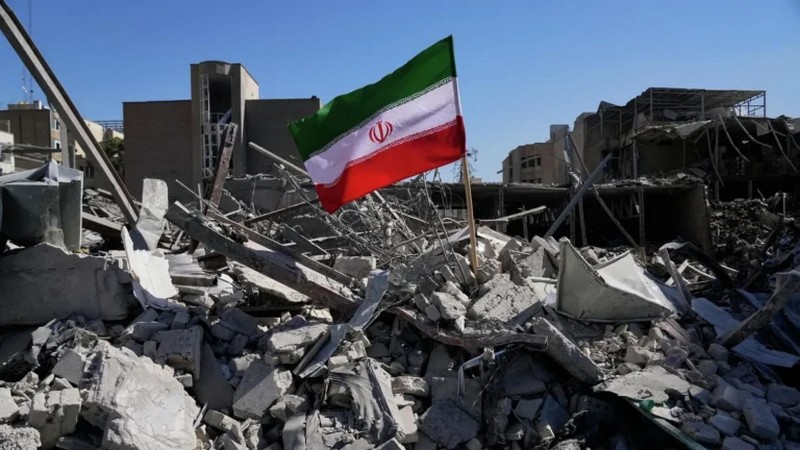
The death toll from the US-Israeli war on Iran surged past 1,200 on Thursday as two more schools were bombed in the city of Parand, southwest of Tehran—the third and fourth schools struck since the bombing campaign began six days ago.

Iran’s Foundation of Martyrs and Veterans Affairs reported 1,230 people killed and more than 6,000 wounded. The Iranian Red Crescent Society reported that more than 3,600 civilian sites have been damaged, including 3,090 homes, 528 commercial centers, 13 medical facilities and nine Red Crescent centers. The World Health Organization has verified 13 attacks on health infrastructure in Iran, resulting in four healthcare worker deaths and 25 injuries. The Valiasr Burn Hospital in Tehran has been rendered inoperable.

The two schools struck Thursday—the Shahid Bahonar Middle School and the Arian Pouya Elementary School, located across the street from one another—sustained blown-out windows, collapsed classroom walls and heavy structural damage, according to photos verified by the New York Times. Iranian authorities had closed schools after declaring a month of mourning for Supreme Leader Ali Khamenei, and there were no immediate reports of casualties. But the strikes underscore the pattern of devastation being inflicted on civilian infrastructure across the country.

The schools in Parand are near a telecommunications tower, the type of facility that has been a frequent target throughout the campaign. The Times noted that intentional attacks on schools are considered war crimes under international law.

The Parand strikes came less than a week after the deadliest single atrocity of the war: the bombing of the Shajareh Tayyebeh girls’ elementary school in Minab, which killed 168 people—most of them girls aged 7 to 12.

BBC Verify’s analysis of satellite imagery and verified video revealed that both the school and the adjacent IRGC naval compound were hit in what munitions expert N.R. Jenzen Jones described as “multiple simultaneous or near-simultaneous strikes.” Video from the scene shows desperate families rushing through the wreckage, holding up bloodied schoolbags and books. Aerial footage captured three days later showed more than 100 graves freshly dug in rows at a nearby cemetery. Thousands of mourners filled the streets of Minab for the mass funeral, casting rose petals over the procession of coffins, some of them child-sized. Neither the United States nor Israel has accepted responsibility.

According to the US-based Human Rights News Agency, at least 1,114 civilians have been killed since fighting began, among them 183 children.

The devastation of Iranian society is accelerating. Iran’s Foreign Ministry said Thursday that 33 civilian sites have been hit, among them hospitals, schools, residential neighborhoods, the Tehran Grand Bazaar and the Golestan Palace complex, a UNESCO World Heritage Site. Strikes also damaged the Azadi Stadium, the country’s largest sporting venue. Tehran residents reported intensifying bombardment. “Today is worse than yesterday,” one resident told Al Jazeera by phone. “They are striking northern Tehran. We have nowhere to go. It is like a war zone.”

Iran remains under a near-total internet blackout for a sixth day—connectivity at 1 percent of normal levels—disrupting hospitals, pharmacies and banks. The economy, already devastated by decades of sanctions and runaway inflation—food prices had risen 105 percent before the war began—is in free fall.

At US Central Command headquarters in Tampa on Thursday, Secretary of War Pete Hegseth and Admiral Brad Cooper gave a press briefing in which they outlined the next phase of the war: the systematic destruction of Iran’s capacity to rebuild.

“We’re not just hitting what they have. We’re destroying their ability to rebuild,” Cooper said, announcing that US forces have struck nearly 200 targets in the last 72 hours, destroyed over 30 Iranian naval vessels, and dropped dozens of 2,000-pound penetrator bombs from B-2 bombers on deeply buried ballistic missile launchers.

Hegseth declared: “Our timeline is ours and ours alone to control.” He boasted there was “no shortage of munitions” and warned that the firepower over Tehran “is about to surge dramatically.”

Trump spoke at the White House the same day, boasting that Iran’s military had been obliterated. “Their navy is gone, 24 ships in three days… Their anti-aircraft weapons are gone, so they have no air force, they have no air defense. All of their airplanes are gone.” He said Iran was calling to make a deal. “I said, ‘You’re being a little bit late,’” Trump said. “We want to fight now more than they do.”

In an interview with Axios, Trump declared he must be personally involved in selecting Iran’s next leader, calling the late supreme leader’s son “unacceptable” and insisting “I have to be involved in the appointment, like with Delcy [Rodriguez] in Venezuela.”

Trump is openly seeking the destruction of Iran as a functioning society through the effort to incite an ethno-communal civil war. The CIA is working to arm Kurdish forces inside Iran with the aim of fomenting an uprising, according to CNN.

Trump personally called multiple Kurdish leaders—Masoud Barzani, Bafel Talabani, and Mustafa Hijri—to recruit them into the war effort. Kurdish fighters affiliated with PJAK have deployed inside Iranian territory, and Israeli warplanes have been hitting Iranian security installations along the Iraq border to open a path for a Kurdish ground advance into western Iran. A former Israeli government adviser told Al Jazeera that Israel has “no real interest in smooth regime change” and is “more interested in regime and state collapse.”

Trump’s refusal to rule out ground troops—“I don’t have the yips with respect to boots on the ground,” he told the New York Post—and his announcement that the Navy will begin escorting tankers through the Strait of Hormuz place American forces within range of Iranian anti-ship missiles in a waterway just 21 miles wide. Six US soldiers have already been killed with 18 seriously wounded.

Israel has seized upon the war to re-invade Lebanon and impose a total siege on Gaza. Israeli troops have crossed into southern Lebanon in a ground incursion, the military has ordered the evacuation of more than 100 villages and the entire Dahiyeh district of Beirut, and strikes since March 2 have killed at least 77 people and wounded more than 500. In Gaza, Israel shut every border crossing on March 1, halting all food, fuel, medicine and humanitarian aid to more than two million people.

Iran has retaliated with waves of missiles and drones—more than 500 ballistic missiles and 2,000 drones, according to Admiral Cooper—targeting Israel, US military bases and Gulf states. Iranian drones struck Nakhchivan International Airport and landed near a school inside Azerbaijani territory. Eleven civilians have been killed in Israel and at least three in the UAE.

Both houses of Congress voted this week to grant Trump a free hand. The Senate defeated a war powers resolution 47–53 on Tuesday. The House rejected its own measure 212–219 on Wednesday.

The Democratic Party, while quibbling over procedure, parrots the war aims of the administration. At a House Democratic Leaders press conference, Representative Ted Lieu denounced “a murderous, theocratic regime” that “funds terrorist networks and whose stated aim is to destroy the United States and Israel.” Representative Chrissy Houlahan declared: “I don’t mourn those leaders. I am clear-eyed about the threat that Iran is.” Representative Maggie Goodlander called Iran “a brutal and determined enemy… a regime that has blood of our fellow Americans on its hands.” Representative Jared Moskowitz denounced the war powers resolution itself as “the Ayatollah Protection Act.”

The Democrats’ procedural objections are a fig leaf. Not a single faction of the American political establishment opposes the war.

Originally published in WSWS.ORG

6 March 2026

Source: countercurrents.org

James Petras (1936–2026): A Relentless Marxist Voice Against Empire

By Harsh Thakor

The world of critical scholarship and anti-imperialist struggle has lost one of its most steadfast voices. James Petras, a towering Marxist sociologist and one of the foremost analysts of Latin American politics, passed away on January 17, 2026, at the age of 89.

Born in Lynn, Massachusetts, to a Greek immigrant working-class family, Petras carried throughout his life the imprint of that upbringing: a deep identification with labour, migrants, and the marginalized. He earned his B.A. from Boston University and his Ph.D. from the University of California, Berkeley, before embarking on a distinguished academic career. In 1972, he joined Binghamton University, where he became Bartle Professor of Sociology and later Professor Emeritus. He also served as an adjunct professor at Saint Mary’s University in Halifax.

Yet to describe Petras merely as an academic would be to diminish the scale of his engagement. He was, above all, a public intellectual rooted in struggle. Over six decades, he authored more than 62 books—translated into 29 languages—and published hundreds of articles in leading journals, including the American Sociological Review, the British Journal of Sociology, Social Research, the Journal of Contemporary Asia, and the Journal of Peasant Studies. His scholarship was encyclopedic, but always anchored in the concrete realities of class power and resistance.

A leading authority on Latin America, Petras dissected the structures of neoliberalism, transnational capital, and U.S. foreign policy with unflinching clarity. In works such as Unmasking Globalization: Imperialism of the Twenty-First Century (2001), The Dynamics of Social Change in Latin America (2000), System in Crisis (2003), Social Movements and State Power (2004), Empire with Imperialism (2005), Multinationals on Trial (2006), and Rulers and Ruled in the U.S. Empire (2007), he demonstrated how imperialism had not disappeared under the euphemism of “globalization,” but rather assumed new economic forms while retaining its political and military foundations.

Petras’s Marxism was neither dogmatic nor diluted. He refused to abandon class analysis in the face of postmodern and post-Marxist currents that, in his view, fragmented social theory and obscured material relations of power. In The Left Strikes Back and A Marxist Critique of Post-Marxism, he argued that the retreat from class politics reflected political defeats, not intellectual progress. He warned that neoliberal institutions often funded “grassroots” organizations promoting anti-statist ideologies, thereby depoliticizing potentially insurgent classes.

His method embodied what he often invoked as “pessimism of the intellect, optimism of the will.” History, he insisted, was never linear. At every conjuncture, competing tendencies, counter-tendencies, and class forces contended. The task of the analyst was to dissect these forces rigorously—without surrendering faith in transformative possibility.

Nowhere was this clarity more evident than in his work on Latin America. Petras examined neoliberal reforms, trade agreements, and financial dependency as mechanisms of upward wealth transfer and labour disempowerment. He remained a fierce critic of NGOs, which he regarded as instruments that softened and institutionalized social movements under neoliberal rule. His allegiance lay consistently with landless workers, peasants, and combative grassroots organizations.

His assessments of progressive governments were marked by the same principled independence. Writing on Hugo Chávez after Venezuela’s 2004 referendum, Petras recognized the class and racial alignments underpinning Chávez’s support while cautioning against premature declarations of revolutionary transformation. He distinguished Chávez from other national-populist leaders by noting his reliance on mass movements and alliances with Cuba, even as he pointed to contradictions within the process.

In evaluating figures such as Lula in Brazil and Morales in Bolivia, Petras resisted both euphoria and cynicism. The central question for him was always whether participation in parliamentary democracy sharpened the independent power of the working class—or whether it absorbed and institutionalized social movements, reducing class struggle to negotiated interest-group politics. He understood that progressive governments operating within bourgeois democracy posed new strategic dilemmas for popular forces.

Throughout his career, Petras insisted that global inequality could only be understood through the interplay of class relations, state power, and imperial strategy. He argued that 21st-century imperialism was driven by the internal dynamics of capital, producing what he termed the “super-exploitation” of the Global South—often mediated through financial institutions, NGOs, and compliant political elites.

James Petras leaves behind an intellectual legacy of extraordinary depth and breadth. For students, activists, and scholars across continents, his writings will remain a formidable resource for diagnosing exploitation and mapping resistance. Even where debates endure—and they will—his insistence on grounding theory in material struggle stands as a lasting contribution.

In an era when class analysis was declared obsolete and empire renamed globalization, James Petras held the line. His life was a testament to the enduring relevance of Marxist critique and to the conviction that history, shaped by struggle, remains open.

Harsh Thakor is a freelance Journalist

3 March 2026

Source: countercurrents.org

The Decline and Fall of the United Nations: Is the UN Still Relevant?

By Md Tariqul Islam Tanvir

Since the 7th of October 2023, Israeli forces have killed just over 72,000 people and injured 171,741 others as a result of the conflict, according to the Palestinian Ministry of Health. Among this death toll, over half of those were women, children under 18, or the elderly (those over 65).

Meanwhile, the Russia-Ukraine War in Eastern Europe, already one of modern Europe’s longest, has no end in sight and will become the longest continuous interstate military campaign in Europe in centuries by the end of June 2026. The loss of life has been tremendous, with the military casualty level projected to reach 2 million wounded or killed by this spring—a rate that few wars have witnessed since 1945.

The question arises whether the United Nations, established from the ashes of the Second World War to promote peace, human rights, and global cooperation, is fulfilling its role. Is it still relevant? Or is it obsolete?

The United Nations was officially established on October 24, 1945, by 51 countries committed to maintaining international peace and security, prompting global cooperation and advancing social progress, better living standards, and human rights. At present, 193 countries are members of the UN.

However, because of their key roles in establishing the UN, China, France, the Russian Federation (which succeeded the Soviet Union in 1990), the United Kingdom, and the United States were given a special power known as the “veto“. This allows any one of them to block a Security Council resolution with a single negative vote, regardless of international consensus.

The veto, however, is not the only option available to these permanent members. If a permanent member does not fully agree with a proposed resolution but does not wish to cast a veto, it may choose to abstain, thus allowing the resolution to be adopted if it obtains the required number of nine favorable votes.

Unfortunately, rather than upholding global stability, the five permanent members (the P5) of the UNSC ( United Nations Security Council) are exploiting their exclusive voting and negotiating powers to suit their own geopolitical interests. In doing so, they have undermined the Council’s ability to maintain international peace and security. For example, a new Oxfam report, “Vetoing Humanity,” studied 23 of the world’s most protracted conflicts over the past decade, including Afghanistan, Burkina Faso, Ethiopia, Libya, Niger, the Occupied Palestinian Territory (OPT), Somalia, South Sudan, Sudan, Syria, Ukraine, Venezuela and Yemen, and found that 27 of the 30 UNSC vetoes cast on these conflicts were on OPT, Syria and Ukraine. More than a million people have been killed in these 23 conflicts alone, and more than 230 million people are today in urgent need of aid – an increase of over 150 per cent since 2015.

In that situation, Russia and the United States are particularly responsible for abusing their veto power, which is blocking progress toward peace in Ukraine, Syria, the Occupied Palestinian Territory, and Israel.

These veto abuses are part of a broader legacy of UN failures. In Rwanda, the UN ignored warnings and withdrew peacekeepers during the genocide, allowing more than 800,000 Tutsis to be killed. A year later, UN Dutch peacekeepers failed to stop the massacre of 8,000 Muslim men in Srebrenica, a supposedly UN “safe area”, the most notorious mass killing by the Serbs in Bosnia. In Syria from 2011–2024, the UN Security Council’s deadlock (Russia & China vetoes) blocked intervention, enabling Assad’s atrocities, resulting in more than 500,000 dead. Similar cases in South Sudan, Congo, Haiti, Israel-Palestine, and the Ukraine War, where the UN failed to stop the war and bring peace.

Further undermining its legitimacy, the United Nations (UN) has been involved in several high-profile scandals, including the Oil-for-Food Programme in 1996 to allow Iraq to sell enough oil to pay for food and other necessities for its population, and sexual abuse. In addition, for decades, UN peacekeeping missions have been accused of rape and sexual exploitation of women and children in Congo, Bosnia, Haiti, and Liberia, further undermining the UN’s credibility in humanitarian and peacekeeping efforts.

Though the UN announced a Zero-tolerance policy against the sexual exploitation of women and children, Most of the time, peacekeepers do not receive any type of punishment following abuse allegations. Many perpetrators avoid prosecution due to legal immunity or repatriation, as the UN lacks the authority to conduct trials—only the peacekeepers’ home countries have the jurisdiction to prosecute them.

However, the UN provides a critical platform for international dialogue for arms control efforts to prevent nuclear proliferation, fosters cooperation in the peaceful uses of nuclear technology and the Paris Agreement ( legally binding international treaty on climate change), which aims to limit global warming to well below 2 degrees Celsius. Moreover, Agencies like the WHO, UNICEF, and WFP deliver life-saving aid such as vaccines, famine relief, and refugee support. The Sustainable Development Goals (SDGs) offer a unified global framework for a universal call to action to end poverty, protect the planet, and ensure that all people enjoy peace and prosperity. In some cases, the UN plays a key role in de-escalating conflicts, even if imperfect for example Cuban Missile Crisis (1962), Iran Nuclear Deal (JCPOA, 2015) and Mission in Liberia (UNMIL) was established in 2003 to support the peace process and security reform following the civil war, eventually completing its mandate in 2018 as the country achieved stability and UNFICYP was established in 1964 to prevent further clashes between Greek and Turkish Cypriots.

Nearly eight decades after its founding, with a noble mission born of World War II, the United Nations stands at a crossroads. Created with the noble mission of preventing war, protecting human rights, and promoting peace, it now faces a crisis of relevance. Too often, the UN functions more as a humanitarian cleanup crew than as a proactive force for peace. Its original mandate—to prevent conflict and uphold justice—has been undermined by power politics, especially the unchecked dominance of the Security Council’s permanent members. Until this imbalance is addressed, the UN will remain a paralyzed institution—capable of delivering aid, but not of preventing the crises that require it.

Unless the veto power is reformed, accountability is enforced for peacekeeping abuses, and people are prioritized over geopolitics, the UN risks becoming a symbol of failed ambition—a well-intentioned body that could not rise to the challenges of the 21st century.

The world still needs a credible, functioning multilateral system to defend peace and human dignity. Whether the UN becomes that system—or fades into obsolescence—is a choice that depends on bold reform. The message is clear: reform or irrelevance.

Md Tariqul Islam Tanvir is a postgraduate of the Erasmus Mundus International Master in Central East European, Russian and Eurassian Studies.

3 March 2026

Source: countercurrents.org

India’s Iran Dilemma: Strategic Autonomy or Strategic Dependence?

By Mohd Ziyauallah Khan

The war on Iran launched under US President Donald Trump has drawn two distinct responses from India. The first was an official statement by the Ministry of External Affairs expressing “deep concern”, calling for dialogue, restraint, and respect for sovereignty and territorial integrity. The second was a phone call by Prime Minister Narendra Modi to the ruler of the United Arab Emirates, strongly condemning attacks on the Emirates and expressing solidarity.

Between these two responses and Modi’s visit to Israel just two days before Israeli strikes on Iran lies a telling silence. It is a silence that reveals the strain in India’s long-standing balancing act between Washington, Tehran, and Tel Aviv.

A Calibrated Response and a Noticeable Silence

The Prime Minister’s call to the UAE followed Iranian retaliatory strikes targeting the Emirates after combined Israeli-US attacks on Iranian soil. In those strikes, Iran’s Supreme Leader Ali Khamenei, senior officials, and hundreds of civilians were reportedly killed. Iran also fired missiles toward Qatar and Bahrain, both hosts to US military bases.

Yet India has not explicitly condemned the breach of Iran’s sovereignty. Instead, it has urged “all sides” to pursue dialogue and diplomacy. What remains unaddressed is the manner in which Washington abruptly broke off two months of negotiations with Tehran reportedly when a deal was within reach.

Just hours before the strikes, Omani foreign minister and mediator Badr bin Hamad Al Busaidi had indicated that an agreement was close, with Iran committing never to stockpile bomb-grade material. Delhi’s silence on this breakdown underscores a familiar pattern: its relations with Tehran have long been shaped, and often constrained, by its ties with Washington.

The 2005 Vote: A Turning Point

Criticism of the current government has come swiftly. Congress leaders have accused the Modi administration of betraying Iran. Yet history suggests that this pattern predates the present regime.

In September 2005, under Prime Minister Manmohan Singh, India voted in favour of a US-backed EU-3 (UK, Germany, France) resolution against Iran at the International Atomic Energy Agency (IAEA). The resolution stated that Iran was not in compliance with its safeguards under the Nuclear Non-Proliferation Treaty and hinted at possible referral to the UN Security Council.

India’s vote marked a sharp departure from its traditional non-aligned stance. Iran had lobbied New Delhi intensely, appealing to shared developing-world solidarity and leadership within the Non-Aligned Movement. Simultaneously, Washington exerted pressure.

Days before the vote, US Congressman Tom Lantos warned that India’s newly announced civil nuclear cooperation agreement with the United States carried expectations of “reciprocity” especially regarding US policy toward Iran.

India voted with 22 other countries in favour. Twelve abstained, including China and Russia. Iran was furious. Tehran viewed the vote as a betrayal.

Iran’s 1994 Intervention: A Forgotten Chapter

The 2005 decision appeared even more striking in light of events a decade earlier. In 1994, India faced the prospect of censure at the UN Commission on Human Rights over allegations of violations in Kashmir. Pakistan had mobilised support within the Organisation of Islamic Cooperation (OIC) for a resolution.

Then external affairs minister Dinesh Singh travelled urgently to Tehran. He secured assurances from Iranian leaders, including President Ali Akbar Hashemi Rafsanjani, that Iran would intervene.

Tehran did more than expected. According to diplomatic accounts, Iran effectively blocked the OIC move to table the resolution, sparing India a potentially damaging international setback. For many in Iran, this episode magnified the sense of betrayal in 2005.

Chabahar, Sanctions, and Strategic Drift

The fallout from 2005 narrowed political trust, even as trade continued. A key casualty was the development of Iran’s Chabahar Port, intended to give India access to Afghanistan and Central Asia while bypassing Pakistan.

The project regained momentum after Iran signed the Joint Comprehensive Plan of Action (JCPOA) with world powers. Modi visited Tehran in 2016. But when Trump withdrew the US from the JCPOA and reimposed sanctions, Chabahar slowed once more. India halted purchases of Iranian oil under US pressure.

Although New Delhi insists it remains committed to a 10-year Chabahar contract signed in 2024, Tehran has publicly expressed disappointment over the absence of allocations in India’s 2026 budget.

Israel, Gaza, and Growing Divergences

Today’s tensions are layered atop shifting regional alignments. The perceived warmth between Modi and Israeli Prime Minister Benjamin Netanyahu has added strain to India-Iran ties.

Iran has not hesitated to criticise India publicly. In 2020, Ali Khamenei condemned the Delhi riots and criticised the revocation of Kashmir’s special status. In 2024, he included India among countries allegedly persecuting Muslims.

Differences over Israel’s war in Gaza have also surfaced. When External Affairs Minister S Jaishankar visited Tehran in January 2024, Iran pressed India to help end bombings and lift blockades, while India reiterated its call for dialogue and a two-state solution.

Strategic Autonomy or Strategic Dependence

India presents its calibrated silence as an exercise in strategic autonomy. Yet to many observers, it increasingly resembles strategic dependence particularly on Washington.

For over two decades, India’s Iran policy has been shaped by US pressure, from the IAEA vote to sanctions compliance. What distinguishes the current moment is the visibility of alignment with Israel, the growing domestic scrutiny over minority rights, and the sheer scale of conflict engulfing West Asia.

Caught in the middle are India’s 10 million-strong diaspora across the Gulf and the broader region. Their security and livelihoods depend on regional stability and on a foreign policy that is not merely reactive, but principled.

India’s balancing act is not new. But as this crisis deepens, the space between silence and solidarity is becoming harder to occupy.

Final Thought

In conclusion, India’s cautious stance on the US-Iran conflict reflects a long-standing strategic dilemma balancing its global partnerships while protecting its regional interests. While Delhi has called for restraint and dialogue, its refusal to explicitly condemn attacks on Iran exposes the limits of its proclaimed autonomy, shaped in large part by decades of alignment with Washington and evolving ties with Israel and Gulf states.

As the conflict escalates and global reactions pour in urging de-escalation and diplomacy, India’s approach will continue to be scrutinised, both at home and across the region, for its implications on regional stability and its own foreign policy credibility.

Mohd Ziyauallah Khan is a freelance content writer & editor based in Nagpur.

3 March 2026

Source: countercurrents.org

Is India becoming a junior partner in US Israel strategy in current geopolitics?

By Dr Arun Mitra

The Indian government has not issued any forthright statement condemning the aggression against Iran jointly carried out by the United States and Israel. This is despite the fact that Iran has been a time-tested friend of India with deep civilizational commonalities. One may or may not agree with the political system of a particular country, but no one can condone foreign aggression that threatens the sovereignty and territorial integrity of any nation. In recent times, we have witnessed a growing disregard for internationally accepted norms that call for respect among nations, big or small. The unprovoked aggression against Iran by the United States and Israel must be condemned outright. The Indian government’s merely expressing concern is not acceptable.

This is a very serious situation with long-term regional and global implications. The aggression occurred at a time when diplomatic efforts were underway between the United States and Iran. Representative of the government of Oman had even announced that the two sides were nearing an agreement. However, the very next day, Israel and the United States launched attacks on Iran. On the very first day, Israeli forces reportedly killed more than 150 children in a school. Israel has often been accused of carrying out extremely brutal and inhumane acts. This became particularly evident during the war in Gaza, where more than 70,000 people were reported killed, including over 20,000 children.

It has now become clear that the United States was never serious about peace negotiations. has openly called for regime change and has urged the people of Iran to use this opportunity to overthrow the present establishment. Israel, on the other hand, is advancing claims of a “Greater Israel” and seeking to expand its influence in the Middle East. Iran has vowed to retaliate for the killing of its Supreme Leader. In response, it has launched missile attacks on Israel and on United States land and naval bases in the region, reportedly causing serious damage in several locations.

There has been a global outcry against this aggression, which many have described as illegal, unprovoked, and unwarranted. The claim by the United States that Iran poses a threat to America, and similar statements by the Israeli Prime Minister about an existential threat to Israel from Iran, do not appear convincing to many people across the world. Russia and China have strongly condemned the attack. The UNO has taken up the matter and called for an immediate cessation of hostilities.

India could have played a significant role in restoring peace in the region. However, the recent visit of our Prime Minister to Israel has unfortunately led to a loss of trust in our country according to many observers. At one time, India was regarded as a true champion of peace in the world. Since the aggression occurred only a day after Prime Minister returned from Israel, it raises questions about whether he might have been aware of the plans for aggression. He is the only Prime Minister of India to have visited Israel, and that too twice, in 2017 and again in 2026. Visiting Israel with prior knowledge of any such plan would amount to a betrayal of humanity. On the other hand, if he was unaware of it, then it reflects a serious failure on the part of the Indian state that advised him to visit Israel during a period of heightened tensions in the Middle East.

The manner in which the Prime Minister publicly embraced Netanyahu appeared to signal a strong personal and political commitment to him. In his speech, he did not utter a single word about the killing of more than 70,000 people, including over 20,000 children, in Gaza. He also did not refer to the two-state solution to the conflict. Instead, efforts were made to pursue a larger trade agreement, including defence deals. It has also been reported that he sought surveillance software similar to Pegasus, without fully considering that such technology could potentially provide strategic leverage to foreign agencies over our country. Additionally, India reportedly agreed to send 50,000 workers to Israel, which could displace Palestinian workers who are already employed there.

The Foreign Minister of Iran reached out to several countries for support, but not to India. In the process, we appear to have lost a time-tested friend in Iran while gaining little in return. It increasingly seems that India is being seen as a junior partner in the United States–Israel strategy in current geopolitics—an unfortunate reflection on our foreign policy.

Dr Arun Mitra is a Practicing ENT Surgeon in Ludhiana, Punjab.

3 March 2026

Source: countercurrents.org