
Just International

US leads G7 in ambassadors’ boycott of ceremony commemorating atomic bombing of Nagasaki

By Jordan Shilton

The United States has led a boycott by six G7 members of Friday’s ceremony commemorating the atomic bombing of Nagasaki during World War II. Justified on the basis that the mayor of Nagasaki refused to invite the ambassador of the genocidal Israeli regime to the ceremony, the coordinated decision by the imperialist powers to stay away underscores that they are prepared to risk a world war waged with nuclear weapons.

A ceremony is held each year on August 9 at the Nagasaki peace statue to mark the dropping of the second atomic bomb, which killed an estimated 40,000 people instantaneously and killed tens of thousands more over subsequent weeks and months. It followed just three days after the dropping of the first atomic bomb on Hiroshima on August 6, 1945. American imperialism remains the only power to have used these barbaric weapons in warfare.

The ambassadors to Japan of Britain, Canada, France, Germany, Italy, the US and the European Union addressed a letter to the city authorities in July stating that “it would become difficult for us to have high-level participation” if Israel was excluded. Nagasaki Mayor Shiro Suzuki confirmed Thursday his refusal to invite Israel, citing the security threat posed by potential protests against the Zionist regime’s genocide against the Palestinians in Gaza. In June, the Japanese city addressed a letter to the Israeli government calling for an immediate ceasefire in Gaza, where the Israeli military has slaughtered upwards of 200,000 people over the past 10 months, according to an estimate by The Lancet medical journal.

In this context, the insistence by the imperialist powers that the representative of a regime guilty of crimes on a scale not seen since the Nazis’ Holocaust of European Jewry and the incineration of two Japanese cities by American imperialism is a scandalous provocation. Prime Minister Benjamin Netanyahu’s far-right government has bombed hospitals, universities and all other civilian infrastructure, intentionally starved more than 2 million Palestinians, authorised the torture and abuse of prisoners, and cut off water, electricity, fuel and medical supplies to the Gaza Strip. On Thursday alone, the Israel Defence Forces struck two schools sheltering displaced people in Gaza City, killing at least 15 people and injuring dozens.

By the end of March 2024, Israel had dropped some 65,000 tons of ordnance on Gaza, more than three times the explosive power of the bombs that destroyed Hiroshima and Nagasaki. A large proportion of the explosives used to raze Gaza to the ground consists of the 14,000 2,000-pound bombs sent by the Biden administration to Israel since October 2023.

In their letter protesting Israel’s exclusion, the ambassadors of the imperialist powers nonetheless had the audacity to accuse city authorities in Nagasaki of “politicising” the ceremony by failing to invite Israel. They asserted that it would be unjustified to place Israel on par with Russia and Belarus, the only other two countries excluded from the ceremony in Nagasaki. This is rich coming from Washington, Berlin, London and Paris, the very imperialist powers that organised the overthrow of Ukraine’s pro-Russian president in a fascist-led coup in 2014, armed Kiev to the teeth, and provoked the reactionary Putin regime to invade Ukraine in 2022. In the more than two years since, the imperialist-fuelled conflict has claimed the lives of at least 500,000 Ukrainians and tens of thousands of Russians.

Moreover, these same imperialist powers have endorsed the Gaza genocide as part of advanced preparations for a region-wide war against Iran, which would plunge the long-suffering Middle East into a bloodbath and risk the lives of millions. The war in the Middle East is one front in what is rapidly emerging as a third world war involving all of the imperialist powers in a redivision of the world to secure their geostrategic and economic interests. In pursuit of these interests, the imperialists are prepared to sanction any crime, including the use of nuclear weapons.

The dropping of two atomic bombs on Hiroshima and Nagasaki by American imperialism led to the deaths of over 200,000 people in the blasts and subsequent radiation. With this demonstration of its utter ruthlessness and brutality, Washington wished to demonstrate to the world its readiness to use unrestrained force to secure its hegemony and ensure a swift end to the Second World War so as to prevent the further advance of Soviet troops into Japanese-occupied parts of China.

As the World Socialist Web Site wrote in an article marking the 60th anniversary of the atomic bombings,

There is a certain naïveté on the part of the American people with regard to the utter ruthlessness of the American ruling class, particularly in relation to the Second World War. That war has long been presented by the American media and political establishment as a great war for democracy, against fascism and tyranny. In fact, the principal reason that the United States entered the war—and the underlying motivation behind all its actions in prosecuting the war—was to establish itself as the dominant and unchallenged world power. In pursuit of this aim the lives of hundreds of thousands of Japanese were of little consequence.

Almost 80 years on, American imperialism’s determination to offset its rapidly deteriorating economic position through the use of military might takes precedence over the lives of hundreds of thousands of Palestinians, Ukrainians and Russians, whose fate is as inconsequential for the imperialist warmongers as that of the Japanese civilians was for their predecessors.

The imperialist ambassadors’ decision to boycott the ceremony comes in the wake of the NATO summit last month in Washington at which plans were finalised to directly intervene into the war with Russia in Ukraine. The aggressive military alliance announced the creation of a permanent office in Ukraine, and a command centre in Germany tasked with overseeing weapons deliveries to the fascistic Kiev regime and waging the war on nuclear-armed Russia. This is a prelude to the deployment of NATO troops, hundreds of whom are already in Ukraine. These reckless moves intensify the conflict with Russia, which threatens to spiral into a nuclear exchange that would risk human life across Europe and the world.

Washington and its NATO allies are not only risking a nuclear exchange with Russia, but also with China in the Asia-Pacific. Last month’s NATO communique denounced Beijing as “a decisive enabler of Russia’s war against Ukraine.” The preparations for war with China are supported by Japanese imperialism, which agreed to an expansion of the US-Japan Security Treaty to deepen bilateral cooperation on military and defence cooperation. Washington has established a series of bilateral, trilateral and quadrilateral alliances in the Asia-Pacific, including its regional allies Japan, Australia and India, to isolate Beijing diplomatically, economically and militarily. The trilateral AUKUS alliance between the US, Britain, and Australia specifically focuses on the construction of long-range nuclear attack submarines for use in a war with China.

The only way to stop the descent into imperialist barbarism in a third world war is through the development of a global anti-war movement led by the working class. The international working class must unify under its leadership all progressive elements in society in a fight for the socialist transformation of society to put an end to imperialist war and the capitalist profit system in which it is rooted.

9 August 2024

Source: countercurrents.org

Gaza genocide enters month 11 as Israel provokes regional war

By Maureen Clare Murphy

Israel issued new forced displacement orders in Gaza, killed another journalist and massacred more civilians at schools being used as shelters for displaced Palestinians as the genocide stretched into its 11th month.

The latest attacks on Palestinians in Gaza come amid a looming regional war following the assassination of Hamas leader Ismail Haniyeh in Tehran last Wednesday and the killing of Fuad Shukr, Hizballah’s top military commander in Beirut, hours earlier.

Both Iran and Hizballah have promised significant retaliatory attacks.

Israeli officials have stayed silent over the country’s role in the killing of Haniyeh, though Tel Aviv is widely assumed responsible. Israel did admit responsibility for the killing of Shukr, who was described by Hizballah Secretary-General Hasan Nasrallah as a founding leader of the group during remarks delivered on Tuesday.

Hamas announced on Tuesday that Yahya Sinwar, the former head of the faction in Gaza who is believed to be one of the architects of the unprecedented and devastating 7 October operation dubbed al-Aqsa Flood, would be succeeding Haniyeh as head of the movement.

The announcement was likely a surprise to some after international outlets suggested that other Hamas figures such as Khaled Meshaal or Khalil al-Hayya would be likely to succeed Haniyeh, whose deputy Saleh al-Arouri was assassinated in Beirut in January.

[https://twitter.com/AliAbunimah/status/1820916346395263199]

Whereas Haniyeh was based in Qatar, and was considered a more moderate figure in the movement, the succession of Sinwar was seen as sending a message that Hamas remains committed to armed struggle and that there is unity between the leadership in Gaza, the West Bank, those in Israeli prison and in the diaspora.

Because a full leadership meeting of Hamas’ decision-making Shura council would be impossible to convene with dozens of its members in Gaza, Sinwar appears to be a consensus pick before a formal election, as political analyst Hani al-Masri anticipated in a comment given to the AP news agency.

The decision reinforced that “the decision-making lies in Gaza and on the ground,” according to commentator Ibrahim Hamami, who added that it is a “clear message” that negotiations for a ceasefire and exchange of captives happen there.

It also was a sign of discontent over the subservient role played by Arab states during the Gaza genocide, Hamami said, and of Hamas’ strengthened relations with Iran, which the faction may lean on to rebuild when the war is over.

Amal Saad, an expert on Hizballah, said that the selection of Sinwar not only signals a harder line in Gaza ceasefire talks with Israel, it “also broadcasts an uncompromising and resolute message for the ‘day after’ political landscape.”

Saad added that this “implies that Hamas has secured commitments from its partners guaranteeing ongoing and steadfast military backing.”

“This support is all the more meaningful considering the very real possibility of a worst case scenario unfolding – where Israel exploits Iran and Hizballah’s retaliatory actions as a justification for initiating all out war against the entire [Resistance] Axis,” Saad said, referring to armed groups throughout the region.

More than 300 days of genocide

The government media office in Gaza said on Tuesday that since the beginning of Israel’s offensive in early October, more than 39,650 fatalities had been received at hospitals, including 16,365 children and more than 11,000 women, indicating that the vast majority of Palestinians killed were civilians. An additional 10,000 people remain missing under the rubble or their bodies not yet recovered from the streets or inaccessible areas.

The Euro-Med Human Rights Monitor estimates that at least an additional 51,000 Palestinians have died as a result of Israel’s siege on Gaza and its deliberate collapse of the medical sector in the territory, as well as the widespread destruction of infrastructure and mass displacement of civilians, leading to the spread of disease.

Nearly three dozen hospitals and 68 health centers in Gaza have been knocked out of service due to Israel’s assault. Israel’s military offensive has inflicted $33 billion in “direct initial losses” overall, the government media office added.

After more than 300 days of genocide, the media office said, more than 91,500 people in Gaza had been injured, at least 36 people had starved to death, while nearly 900 medical workers and nearly 80 civil defense members were killed.

The Israeli military had dropped 82,000 tons of explosives on Gaza, according to the office, destroying homes, universities, schools, mosques, churches, government buildings, sports and recreation facilities, water and hygiene infrastructure, and archaeological and heritage sites.

Meanwhile, Gaza has gone 300 days without electricity, the government media office said on Friday after Israel cut off the supply of power on 7 October and the only power plant in the territory was forced to shut down four days later after running out of fuel.

In what is widely cited as proof of Israel’s genocidal intent, Ghassan Alian, the head of the military body that deals with the civil administration of the occupation, said in early October that “Israel has imposed a total blockade on Gaza, no electricity, no water, just damage.”

“You wanted hell – you will get hell,” he added while referring to the population of Gaza as “human beasts.”

Israel Katz, Israel’s electricity minister, likewise stated following the cut-off of fuel in early October that this is what Israel would do “to a nation of murderers and butchers of children. What was will not be.”

The absence of electricity has prevented the normal operation of vital infrastructure and services for Gaza’s population, which before the war stood at 2.3 million Palestinians. This includes health, water and sanitation facilities, schools, flour mills and bakeries. The resulting environmental catastrophe has allowed for the spread of diseases and the emergence of the highly infectious polio virus and meningitis.

Journalist killed

The government media office in Gaza said on Tuesday that the number of journalists killed in the territory since last October now stands at 166 after the death of Muhammad Issa Abu Saada, a correspondent and photographer with several media outlets, in an Israeli attack.

[https://twitter.com/NourNaim88/status/1820846614581272827]

Last week, Israel deliberately killed prominent Al Jazeera correspondent Ismail al-Ghoul and cameraman Rami al-Rifi in an airstrike in Gaza City. Khaled al-Shawa, a 17-year-old bystander, was also killed in the strike.

Basma al-Shawa, the slain teen’s mother, said that the boy was killed while out delivering food to an older man and told The Washington Post that “my son is not just a number.”

Israel attempted to justify the killing of the two journalists by accusing al-Ghoul of participating in the 7 October attack “while working as a journalist for Al Jazeera,” though he only joined the network in November. An Israeli military spokesperson claimed that a file from a Hamas computer showed that al-Ghoul was “an engineer in the Hamas Gaza Brigade.”

Al Jazeera Media Network rejected the accusations as “baseless” and pointed to “Israel’s long history of fabrications and false evidence used to cover up its heinous crimes.” It pointed out that Israel is denying international journalists access to Gaza, thereby preventing them from reporting on “the deteriorating humanitarian conditions and suffering” there.

The accusation against al-Ghoul echoed Israel’s attempted justification for previous attacks targeting Al Jazeera personnel.

In January, an Israeli strike killed Hamza Dahdouh, a journalist and son of the broadcaster’s Gaza bureau chief. Mustafa Thuraya, a drone operator, was killed alongside Hamza Dahdouh, along with their driver, after they had used “a drone to document the aftermath of an Israeli airstrike south of Khan Younis,” a Washington Post investigation found.

Al Jazeera correspondent Ismail Abu Omar was severely injured in a deliberate Israeli attack in February but survived.

Irene Khan, the UN special rapporteur on freedom of opinion and expression, condemned the killing of al-Ghoul and al-Rifi and said “the Israeli military seems to be making accusations without any substantive evidence as a license to kill journalists, which is in total contravention of international humanitarian law.”

A statement released by Khan noted Israel’s “total ban on [Al Jazeera] in Israel, and the vicious smear campaign against the broadcaster” and called for the International Criminal Court “to move swiftly to prosecute the killing of journalists as a war crime.”

Schools, hospital courtyard attacked

On Wednesday, 7 August, Israel issued additional forced displacement orders in the already hard-hit areas of Beit Hanoun and Beit Lahiya in northern Gaza, instructing residents to evacuate to shelters in central Gaza City. Local media warned that “a ‘large scale’ Israeli army operation is expected to begin there soon,” Al Jazeera reported.

Palestinians in central Gaza were also bracing for an Israeli invasion after “concentrated air attacks” on the area, “coupled with heavy artillery in the past few days,” Al Jazeera reported on Wednesday.

Deir al-Balah in central Gaza, now densely populated with people displaced from other areas of the Strip, is the only city in the territory that has remained largely intact, “with buildings people can shelter in,” the broadcaster added.

“But right now, there is a growing concern that the repeated attacks on Deir el-Balah indicate that this area, and largely the central area, is on the verge of a wider-scale attack and a larger invasion,” according to Al Jazeera correspondent Hani Mahmoud.

Three Palestinians were killed in a home in the al-Tuffah neighborhood of Gaza City, Reuters reported on Wednesday.

Several Palestinians were killed in an Israeli strike on a tent housing displaced Palestinians east of Khan Younis the same day, according to Al Jazeera.

Journalist Anas al-Sharif reported that the victims included a woman and child whose bodies were burned by the fire caused by the bombing:

[https://twitter.com/AnasAlSharif0/status/1821170812235255817]

Also on Wednesday, at least four Palestinians were killed in an Israeli attack in western Khan Younis, “a very busy area,” Al Jazeera reported.

Israel bombed three schools sheltering displaced people on Saturday and Sunday, killing dozens of Palestinians.

At least 17 Palestinians, including women and children, were reportedly killed in a strike on the Hamama school in the Sheikh Radwan neighborhood of Gaza City on Saturday.

[https://twitter.com/RamAbdu/status/1820090066431012912]

On Sunday, at least 30 Palestinians were killed in strikes on al-Nasser and Hasan Salama schools in the Nasser neighborhood. Another 16 people were missing under the rubble of al-Nasser school, according to the Palestinian Civil Defense.

That same day, five Palestinians were killed and 15 injured in an Israeli strike on tents in the courtyard of Al-Aqsa Martyrs Hospital in Deir Al-Balah. Thousands of displaced people were at the hospital complex at the time of the attack, which occurred without warning, according to Physicians for Human Rights Israel.

[https://twitter.com/RamAbdu/status/1819878417212297654]

The strike on the hospital sheltering displaced people came the same day as the Israeli military issued new orders for the forcible displacement of Palestinians in parts of Khan Younis, the largest city in southern Gaza.

UNRWA, the UN agency for Palestine refugees, said on Saturday that “people in Gaza are constantly displaced, living in tents under the scorching summer sun with minimal access to drinking water.”

The UN human rights office stated on Monday that it was “horrified by the unfolding pattern” of “escalating” Israeli attacks on schools being used as shelters.

“Strikes on at least 17 schools just in the last month reportedly killed at least 163 Palestinians, including children and women,” the UN office said, adding that it indicates “a failure to comply with the principles of distinction, proportionality and precautions in carrying out these attacks.”

The Euro-Med Human Rights Monitor said “the Israeli military is systematically creating a coercive environment by repeatedly, violently and directly bombing homes, residential neighborhoods and shelter centers.”

Israel hands over “desecrated” bodies

Israel transferred the decomposed remains of 89 people whose corpses had been handled in an undignified manner, the government media office said on Monday.

Yamen Abu Suleiman, the director of the Palestinian Civil Emergency Service in Khan Younis, told media that Israel provided no information about the “names, or ages, or anything” regarding the bodies and that it was unclear whether they had been exhumed from cemeteries or if they belonged to “detainees who had been tortured and killed.”

“He said the bodies would be examined in an attempt to determine the causes of death and to identify them, before being buried in a mass grave at a cemetery near Nasser hospital in Khan Younis,” Reuters reported.

Israeli forces have seized more than 2,000 human remains from cemeteries in Gaza during the military’s ground offensive, according to the government media office in the territory.

Israel has previously returned bodies to Gaza “after confirming that they were not Israeli hostages taken by Hamas,” according to Reuters.

The Gaza government media office said on Sunday that Abd al-Fattah al-Zriei, the deputy economy minister in the territory, was killed along with his mother in an Israeli airstrike on a home in Deir al-Balah.

The Israeli military claimed without substantiation that al-Zriei was “involved in the manufacturing department” of Hamas’ military wing and “stopped humanitarian aid from reaching Gazan civilians” – a tacit acknowledgement that al-Zriei was deliberately killed.

One day after the Israeli military implied that al-Zriei had diverted aid from reaching those in need in Gaza, Bezalel Smotrich, Israel’s finance minister, complained that “nobody will let us cause two million civilians to die of hunger, even though it might be justified and moral, until our hostages are returned.”

Smotrich said that “international legitimacy for this war” was holding Israel back from doing so.

Israeli Prime Minister Benjamin Netanyahu and his far-right allies such as Smotrich are viewed within Israel’s defense establishment and its negotiating team, as well as its allies abroad, as the primary obstacle for a negotiated ceasefire agreement that would secure the release of the remaining captives in Gaza – particularly after the assassination of Haniyeh, a key Hamas interlocutor in the talks.

A deal to end the war is also necessary to prevent a further escalation between Israel and Hizballah, the latter of which has reiterated its position that de-escalation will come only once the bloodshed ends in Gaza.

Nasrallah describes existential battle

During his speech on Tuesday, Hizballah’s Nasrallah said that judging by Israel’s actions in Gaza, “it is clear that Netanyahu doesn’t want a ceasefire and he doesn’t want to end the war.”

[https://twitter.com/ME_Observer_/status/1820822136535326858]

He added that Israel’s plan in Gaza is to uproot the population and force it into submission while consolidating its hold on the lands of historic Palestine, Golan Heights and Shebaa Farms.

If Israel and the US “were to achieve victory against the resistance in Gaza, in the West Bank and the region,” Nasrallah warned, it would mean that there would be no deterrence against the genocidal state “running loose in the region.”

“The region today is confronting real dangers, everyone must understand the nature of this current battle,” Nasrallah emphasized. “If [the Israeli] government were to achieve victory in the battle of Gaza and the West Bank, it would mean there is no such thing as Palestine and the Palestinian people, nor Palestinian refugees.”

“Even al-Aqsa mosque, which the Muslims say is our first qibla, our sanctity … will be in very grave danger,” he added.

The defeat of resistance to Israel’s ambitions would endanger Lebanon’s sovereignty while the regime in Jordan, viewed by Netanyahu and his far-right allies as an alternative location for Palestinians, “would become something of the past.”

“I’m speaking about the current dangers, not in the next 10 years,” Nasrallah said.

But a defeat of the resistance is hardly a foregone conclusion.

“Nothing has changed: the captives haven’t returned, the resistance in Gaza hasn’t been eliminated,” Nasrallah said. To the contrary, he added, Israel’s army is becoming exhausted while its economy is suffering and social and political divisions within the country are widening.

“So there’s a horizon for this battle,” Nasrallah said, adding that “the fate of the region is now being determined.”

As if to underscore Nasrallah’s warnings of the danger posed by Tel Aviv, people in Beirut reported sonic booms from Israeli warplanes minutes before his televised address.

“The loud booms sent residents rushing to open their windows to prevent the glass from shattering, or standing on their balconies to get a glimpse of the planes flying over,” the news agency added.

Nasrallah’s speech marked the one-week anniversary of the killing of the resistance group’s senior military commander Fuad Shukr. Israel said that it killed Shukr in retaliation for what it said was a Hizballah rocket strike that killed 12 children in Majdal Shams, a Syrian town in the occupied Golan Heights, late last month.

Hizballah has said that it was not connected in any way to the explosion in Majdal Shams. In a speech last week, Nasrallah blamed it on a failed Israeli missile interceptor.

Earlier on Tuesday, Hizballah said “it launched a swarm of attack drones at two military sites near Acre in northern Israel and also attacked an Israeli military vehicle in another location,” according to Reuters.

Several people were injured, one critically, by an interceptor that “missed the target and hit the ground,” the Israeli military said.

Nasrallah did not divulge anything about the nature or timing of Hizballah’s response to the killing of Shukr but said it “will be strong, effective and impactful.”

A spokesperson for Iran’s foreign ministry said on Monday that Tehran “seeks to establish stability in the region, but this will only come with punishing the aggressor and creating deterrence against the adventurism of the Zionist regime.”

Maureen Clare Murphy is senior editor of The Electronic Intifada

8 August 2024

Source: countercurrents.org
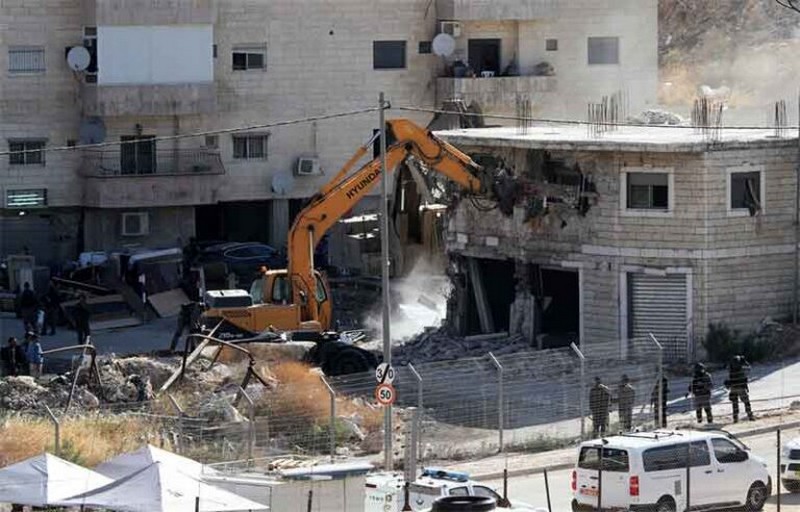
Unconditional Ceasefire should be the starting point for ending most ongoing conflicts

By Bharat Dogra

At present there are about 56 conflicts in the world, more than in any year since WW2. In addition there is a tendency for conflicts to be more prolonged. The percentage of conflicts ending with peace agreements has declined from 23% in the 1970s to just 4% in the 2010s. The possibility of ongoing conflicts escalating into much bigger and destructive wars is very high just now. The humanitarian crisis arising from conflicts is endangering the life of many times more people than die directly in the violence of conflicts, while the budgets available for humanitarian aid are diminishing.

All these are important reasons for a significantly enhanced sense of urgency in finding peaceful solutions for conflicts and in particular for such ideas that can bring at least some immediate relief, apart from laying the foundation for more durable peace. With modern heavily destructive weapons in use, it is an immense relief if the shooting, bombing and fighting can stop as early as possible even if various contentious issues take longer to resolve. Thousands of deaths, very painful injuries and disabilities can be stopped on daily basis if such steps can be taken up on a significant scale.

Hence the way forward for peace efforts in the case of most conflicts should be to combine three important steps that are mutually supportive of each other.

The first part in turn consists of two sub-parts. First, the two sides agree to unconditional ceasefire i.e. cessations of all fighting in whatever form, more or less on the basis of the existing line of control. The second sub-part consists of the two sides agreeing at the same time to engage in peaceful negotiations to settle all contentious issues.

Such an agreement has the advantage of stopping the fighting, bombing and shooting immediately and providing immediate relief to long-suffering people. Food and other relief supplies can now be rushed much more easily and safely to people who need these the most. Medical care and medicines for seriously injured and ill people can now be provided more easily. Large-scale reconstruction and repair work can also start now and many displaced people can gradually start returning to their homes.  In addition there is no loss of face for either side as all contentious issues are kept open for future peace negotiations.

The second part of the peace process parts starts a few month later after preparations have been made for peace negotiations. This should not be seen as a hurried affair. Both sides should agree that regardless of any persisting differences, the peace negotiations should not break down. There can be one round, followed with a short rest (I won’t call it a break), then the second round can start, and then after a gap the third round can start. If in the process big differences get resolved that is very good, but even if this does not happen and only some minor ones are resolved, this too is a step forward.  What is important is that the peace negotiations should not be allowed to break down and should be conducted as politely as possible, taking special care to avoid any provocative statements. Attempts should be made to create near consensus on both sides that peace negotiations should not break down and should continue.

The third part of the peace process is that while peace negotiations are taking place with some rest periods, outside of the main peace negotiations a number of other efforts should be made with even greater continuity to create goodwill between the people of the two countries, remove misunderstandings, promote cultural exchanges, have co-production of movies, promote economic ties and trade in such ways that are genuinely beneficial for the people of both countries and strong economic reasons are also created for a relationship of friendship between the two countries.

All the three processes are intended to be mutually supportive towards each other.

While the above suggestions have been in the context mainly of conflicts involving two countries but of course these apply also to conflicts involving more than two countries or to two or more sides of internal conflicts.

These suggestions are for a path which can create durable peace and goodwill.

Bharat Dogra is Honorary Convener, Campaign to Save Earth Now.

7 August 2024

Source: countercurrents.org
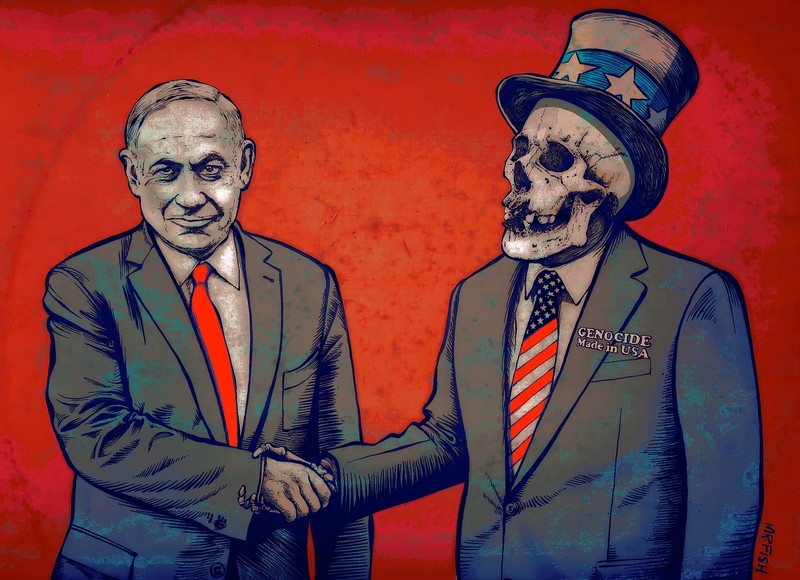
AIPAC Hijacks Rep. Cori Bush’s Race–and Our Elections

By Medea Benjamin

Representative Cori Bush, a progressive black woman from St. Louis, MO who is a member of the “Squad” and has been a powerful voice in Congress for poor people, women’s rights, healthcare, housing–and Palestine, just lost her primary because pro-Israel lobby groups flooded the race with outside funding. Her loss is a tremendous blow to progressives and to the U.S. electoral process itself.

This is the pro-Israel lobby’s second “win” of the season. The first was the June defeat of progressive, black congressman from Westchester County, N.Y., Jamaal Bowman, who was a forceful critic of Israel’s attacks on Gaza. AIPAC and its mis-named super PAC, the United Democracy Project, barged into Westchester County to anoint an opponent—white, pro-Israel Westchester County Executive George Latimer—and then shower him with cash.

The ads against Bowman were not about Israel. Instead, AIPAC smeared the congressman’s character and criticized him as a “hot head” who was not a reliable member of the Democratic team. In the words of President of the Arab American Institute Jim Zogby, the race became  “the angry, frightening young black man versus the calm, thoughtful older white guy.”

By throwing $17 million into the race, pro-Israel groups turned Bowman’s primary into the most expensive one in U.S. history. When Bowman was defeated, AIPAC declared the outcome showed that the pro-Israel position is “both good policy and good politics.” On the contrary. It showed that pro-Israel groups can buy elections and it sent a frightening message to all elected officials that if they criticize Israel, even during a genocide, they may well pay with their careers.

Buoyed by its success, AIPAC then took on Cori Bush, marching into St. Louis, MO determined to defeat a black woman who was one of the most unique voices in all of congress. Once a unhoused single mother of two, and a survivor of gun violence, domestic violence and sexual assault, Bush became a nurse and a pastor, and in the wake of the killing of the unarmed black man Michael Brown in Ferguson in 2014, she became an activist on the frontlines of the movement to save black lives. After protesting in the streets for 400 days, she jumped into the political arena. In 2020 made a successful run for Congress, becoming the first black representative from Missouri.

In Bush’s two terms in Congress, she demonstrated leadership on many fronts, including reproductive justice and abortion rights. At a House of Representatives committee hearing in 2021, Bush was one of three congresswomen to share her abortion story publicly. And after the Dobbs decision that overturned Roe v. Wade, she introduced a host of bills, including the Reproductive Health Care Accessibility Act, the Protecting Access to Medication Abortion Act, the Reproductive Health Travel Fund Act, and the Protect Sexual and Reproductive Health Act.

She also championed housing rights. When the COVID moratorium on evictions was about to expire, she grabbed her sleeping bag and lawn chair, and organized a “sleep in” on the steps of the U.S. Capitol that resulted in an extension of the moratorium on evictions.

Foreign policy was not her focus, but in the wake of the Hamas attack on October 9, 2023 and Israel’s subsequent bombing of civilians in Gaza, Bush felt compelled to speak out. Just nine days after the October 7 Hamas attack, she had the courage to introduce a ceasefire resolution in the House. She was one of only nine House members who opposed a resolution supporting Israel. She boycotted Israeli Prime Minister Benjamin Netanyahu’s speech before Congress, calling him a “war criminal.”

As a result of defending Palestinians, she found herself in AIPAC’s crosshairs. “Cori Bush has been one of the most hostile critics of Israel since she came to Congress in 2021 and has actively worked to undermine mainstream Democratic support for the U.S.-Israel relationship, “ AIPAC claimed.

AIPAC’s super PAC spent nearly $9 million, much of it coming from Republican mega-donors, to buy ads smearing Bush and shoring up contender Wesley Bell, a St. Louis County Prosecutor. The attacks were vicious, including ads that darkened Bush’s skin and manipulated her racial features. They also distorted her domestic voting record, condemning her for not supporting Biden’s Infrastructure Bill instead of explaining that her vote was part of a strategy to gain leverage for key social programs in the Build Back Better Act.

Curiously, in the cases of both Bowman and Bush, the attack ads did not even mention Israel. But if Israel is AIPAC’s singular focus, why did the ads avoid the issue? That’s because most Americans, especially in those liberal Democrat districts, agree with their positions. Most Americans want a ceasefire and disapprove of Israel’s military actions in Gaza.  As Jewish Voice for Peace Executive Director Stephanie Fox said during a call to rally support for the Congresswoman Bush, “She has been a life raft for our values and principles in Congress and she has been under attack because far right extremist groups like AIPAC are scared.

Jim Zogby of the Arab American Institute agrees.  “Pro-Israel groups are running scared,” he said. “They are losing the public debate over policy—especially among Democrats. Most Democrats are deeply opposed to Israeli policies in Gaza and the Occupied Palestinian lands. Majorities want a ceasefire and an end to settlements. And they want to stop further arms shipments to Israel.” So AIPAC hides the Israel issue and then claims the “win” is a victory for Israel.

If we are going to stop U.S. support for Israel’s genocide, prevent the Middle East from erupting in flames and reclaim our elections here at home, we have to stop AIPAC.

Medea Benjamin is an author and the cofounder of the peace group CODEPINK. You can find her on social media @medeabenjamin.

7 August 2024

Source: countercurrents.org
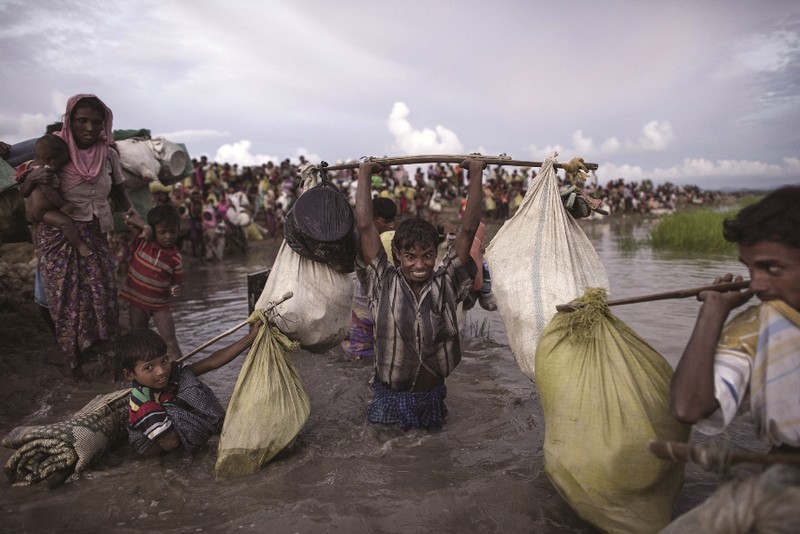
Sudan Famine a ‘Shameful Stain on Our Collective Conscience,’ Says Top UN Official

By Brett Wilkins

In an urgent appeal for financial and other resources, two top United Nations human rights officials on Tuesday condemned the world’s inadequate response to a nascent famine in Sudan.

The U.N. Famine Review Committee announced last week that famine now exists in the Zamzam refugee camp near al-Fashir in North Darfur, where hundreds of thousands of displaced Sudanese are sheltering amid 15 months of a civil war that’s displaced more than 10 million people and cut off delivery of desperately needed food and other aid.

Other parts of Sudan—including Greater Darfur, South Kordofan, and Khartoum—are at risk of famine.

“This announcement should stop all of us cold because when famine happens, it means we are too late,” Edem Wosornu, director of the Operations and Advocacy Division at the U.N. Office for the Coordination of Humanitarian Affairs (OCHA), said Tuesday.

“It means we did not do enough. It means we, the international community, have failed,” she added, pointing to the numerous warnings of imminent famine over recent months. “This is an entirely man-made crisis and a shameful stain on our collective conscience.”

[https://twitter.com/UN_News_Centre/status/1820905232127164855]

As U.N. News reported:

The Sudanese National Army and a rival, formerly allied military, known as the Rapid Support Forces (RSF), have been battling since April 2023, pushing “millions of civilians into a quagmire of violence and with it, death, injury, and inhumane suffering treatment.”

A staggering 26 million people are facing acute hunger… More than 10 million people have been forced to flee their homes, including some 726,000 displaced from Sennar state following recent RSF advances.

Sudan’s once vibrant capital, Khartoum, now lies in ruins, the national healthcare system has collapsed, and recent heavy rains in Kassala and North Darfur have increased the risk of cholera and other waterborne diseases. An entire generation of children is missing out on a second straight year of education.

“Let me be clear: It is still possible to stop this freight train of suffering that is charging through Sudan,” Wosornu stressed. “But only if we respond with the urgency that this moment demands.”

Justin Brady, who heads OCHA’s Sudan office, toldU.N. News on Monday that “if we don’t have enough resources and we don’t have enough access, it is going to be very difficult to stop famine conditions from taking hold” in other parts of Sudan.

“Access continues to be a major problem,” he continued. “And some donors have seen that and said, well, we’ll give you funding when you get access.”

[https://twitter.com/JustinTBrady/status/1820817468954169706]

“Second of all, when we do get access, we need to take advantage of those openings very quickly,” Brady added. “If we don’t, they will close very quickly. So not having enough resources… Our appeal for this year is only a third funded, under $900 million received.”

Echoing Brady, Wosornu said that “we are pushing from every possible angle to stop this catastrophe from getting worse, but we cannot go very far without the access and resources we need.”

Wosornu outlined the humanitarian community’s four key demands:

  • Warring parties must end the conflict;
  • They must uphold their obligations under international law;
  • They must allow rapid, safe, and unimpeded humanitarian access across all possible routes; and
  • The international community must provide adequate funding—OCHA is seeking $2.7 billion—to support aid operations.

“Assistance delayed is assistance denied for the many Sudanese civilians who are literally dying of hunger during the time it takes for clearances to come through, permits to be granted, and flood waters to subside,” Wosornu warned.

Brett Wilkins is a staff writer for Common Dreams.

7 August 2024

Source: countercurrents.org
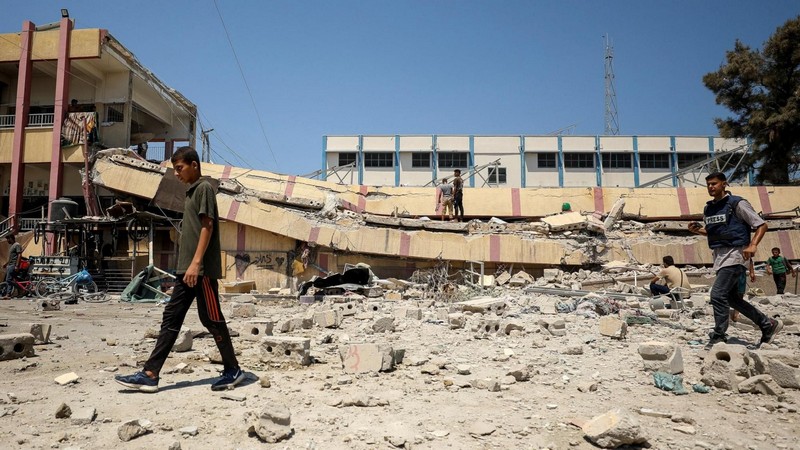
Israeli Soldiers Will Soon Find Ways to Tell About the Terror in Gaza

By Ralph Nader

Soldiers saw the body parts of little children, heard the screams, the cries, and groans of the dying, smelled the stench of rotting corpses being eaten by stray dogs, and saw their victims—mothers and fathers—begging in vain for help to save their dismembered children.

Israeli soldiers, like soldiers in other countries, bask in the self-serving effusive praise showered upon them by politicians, but privately they know BS when they hear it.

Right from the start on October 7th, the soldiers knew that the sudden collapse of Israeli Prime Minister Netanyahu’s state-of-the-art multitiered border defense system left the door open for the Hamas attack. Still denied an official investigation by Netanyahu, people know that had the border defense been in place, all the terrible consequences never would have occurred. (See, the open letter by six very prominent Israelis in The New York Times on June 26, 2024: “We Are Israelis Calling On Congress to Disinvite Netanyahu.”)

The soldiers also know that the small Hamas militia of some 25,000 fighters hidden in tunnels, having only small arms with dwindling ammunition, is up against the 465,000-person military armed with 1,500 F-16 fighter pilots and nuclear weapons. The Israeli military is also equipped daily by U.S. President Joe Biden with the most modern weapons. All this makes Netanyahu’s absurd description of Hamas as an existential threat sheer propaganda designed to protect his job.

The evidence is on the bloody body-strewn ground of tiny Gaza and its crowded 2.3 million people. The Israeli military has dropped over 100,000 precision bombs, countless artillery shells from hundreds of tanks, and even naval missiles to kill over 300,000 innocent Gazan civilians, mostly children, women, and elderly, who had nothing to do with October 7th. (See also my March 5, 2024 column “Stop the Worsening UNDERCOUNT of Palestinian Casualties in Gaza”). Most of the remaining people in Gaza are sick, injured, or both. (See the open letter to Biden and the U.S. Congress titled, “45 American Health Workers’ Letter on Their Experiences in Gaza” dated July 25, 2024.)

How many Israeli soldiers have died? The official figure is 395 Israel Defense Forces (IDF) soldiers—many from friendly fire in the fog of explosions, accidents such as collapsing buildings, and diseases. The exaggerated “Hamas battalions” send fighters popping up from their underground tunnels to fire rifles or grenade launchers before most are immediately extinguished by overwhelming firepower.

The largest number of Israeli casualties are the soldiers suffering from post-traumatic stress disorder (PTSD), including moral traumas, being treated in the thousands by Israeli psychologists and mental health specialists. These are the soldiers who will tell the stories of who they were ordered to kill and what they were ordered to destroy. The lack of a truthful account of the atrocities in Gaza—because of Netanyahu blocking war correspondents from Israel and other nations from freely reporting there—will be brought to light by the reports of these soldiers.

To be sure, the thirst for vengeance after October 7th animated most of the soldiers at the outset—especially those screened for having no qualms about killing innocent children, women, and men and destroying civilian facilities.

But as the weeks became months, the Torah’s instruction of “an eye for an eye and a tooth for a tooth” to limit escalating cycles of revenge, according to Biblical scholars, became a hundred and then a thousand eyes for an eye and a thousand teeth for a tooth. More soldiers and generals are questioning why they are still there amidst the smoldering ruins and ghastly slaughters.

Netanyahu’s drive to remain in power has stoked the carnage in Gaza. Despised by 3 out of 4 Israelis for earlier moving to weaken the judiciary, under indictment for political corruption by Israeli prosecutors, and soundly condemned for his defense failure on October 7th, ending this one-sided annihilation of defenseless people would mean the end of his political career.

Consider what these soldiers have witnessed or done: Powerful precision bombs blowing to bits babies, children, pregnant women, refugee camps, apartments, schools, health clinics, hospitals, ambulances, water mains, and electricity networks; families starving on genocidal orders from the Israeli military “no food, water, medicine, electricity, fuel”; and homeless people trapped, unable to escape, surrender, or shelter.

The soldiers have seen their bulldozers flatten critical civilian infrastructure, even cemeteries and agricultural crops. F-16s have blown up universities, government buildings, and many schools, mosques, and historic churches. Snipers, among the most brutal of the army, kill patients in broken hospitals and survivors desperately try to pull their crushed families out from under the rubble.

Already, several reservists have told reporters in Israel that the military has no operating “rules of engagement.” They could blow up or shoot and kill anyone who moves, including United Nations relief workers, journalists, and health workers protected by international law. The laws of war—the duty to disobey illegal orders—don’t exist in Gaza.

Soldiers saw the body parts of little children, heard the screams, the cries, and groans of the dying, smelled the stench of rotting corpses being eaten by stray dogs, and saw their victims—mothers and fathers—begging in vain for help to save their dismembered children.

Unlike other wars, Israeli soldiers were not allowed to facilitate the emergency rescue crews that still exist in Gaza such as those with Doctors Without Borders, the Palestinian Red Crescent, and several internationally respected providers of food and water—themselves subject to Israeli attacks. (See December 13, 2023, an open letter titled, “Stop the Humanitarian Catastrophe” to Biden by 16 Israeli human rights groups which appeared in The New York Times).

Soldiers obeyed their commanders’ orders to repeatedly push hundreds of thousands of desperate Gazans on foot, exposed to the stifling heat and lethally polluted air, from one Israeli-designated area to another. The treachery is unlimited.

Other soldiers were told to block thousands of trucks ready to enter from Egypt, packed with humanitarian aid of food, water, medicine, and other critical supplies. Still, other soldiers were ordered to kidnap thousands of Gazans, including women and children, and send them without charges to be tortured in Israeli jails, as documented in a just-released U.N. Human Rights Office report titled, Detention in the Context of the Escalation of Hostilities in Gaza.

Of course, there are plenty of soldiers happy to have such sadistic and unlawful commands. How dare the Gazans revolt against the decades of violent Israeli bombing, occupation, invasions, and military embargoes? That’s historically been the imperious attitude of cruel, colonizing, land-seizing regimes. The ranks will grow to join past “refuseniks” who in 2002 courageously declared their refusal to go and beat up people, demolish homes, and otherwise rampage against defenseless Palestinians in the West Bank and Gaza.

From The Combatants’ Letter, January 2002:

We, combat officers and soldiers who have served the state of Israel for long weeks every year, in spite of the dear cost to our personal lives, have been on reserve duty in the occupied territories, and were issued commands and directives that had nothing to do with the security of our country, and that had the sole purpose of perpetuating our control over the Palestinian people.

[…]

We hereby declare that we shall not continue to fight this war of the settlements.

We shall not continue to fight beyond the 1967 borders in order to dominate, expel, starve, and humiliate an entire people.

Dozens of Israeli human rights organizations and leading advocates will record these reservists’ recollections, their remorse, and their recurring nightmares. The vicious omnicidal extremists who make up Netanyahu’s ruling coalition will be exposed for their war crimes and destruction of their own country’s freedoms. Returning war veterans have credibility that will fortify the forthcoming entry into Gaza of international commissions of inquiry and scores of investigative journalists. (See the new documentary The Night Won’t End.)

The violent Netanyahu knows all this, which is why he is now scheming to provoke a wider regional war by dragging spineless Biden and the U.S. military directly into the fighting. Remember Biden’s intense backing of the Bush/Cheney criminal invasion/war in Iraq.

If you don’t care what Netanyahu is doing over there, you’d better care about what he’s doing to America, our Congress, our tax dollars, our freedom of speech, and our national security.

Ralph Nader is a consumer advocate and the author of “The Seventeen Solutions: Bold Ideas for Our American Future” (2012). His new book is, “Wrecking America: How Trump’s Lies and Lawbreaking Betray All” (2020, co-authored with Mark Green).

5 August 2024

Source: countercurrents.org

Israel Kills Mostly Children in Fresh Attacks on Gaza Schools

By Jake Johnson

Israeli forces killed dozens of displaced Palestinians—mostly children—on Sunday with attacks on a pair of United Nations-run schools in the Gaza Strip as diplomats in the region worked to prevent all-out war from breaking out in the aftermath of Israel’s latest assassination spree.

Al Jazeera reported that 80% of the roughly 30 people killed in the Israeli attacks on two schools in Gaza City were children, strikes that came shortly after Israel’s military bombed a hospital complex in central Gaza, killing at least five people.

“This is beyond horror now,” David Shoebridge, an Australian senator, wrote in response to the attacks on schools-turned-shelters.

Tareq Abu Azzoum of Al Jazeera noted that rescue teams were still searching the rubble of the two schools for survivors on Monday.

“At least 16 Palestinians are still missing, including children, under the remnants of these areas that were targeted by Israel without any prior warning,” Azzoum wrote. “Civil defense crews have been using only their bare hands in order to look for survivors. They have been saying that sometimes the process for recovering and pulling out victims can take days simply because there isn’t enough fuel to operate the vast majority of bulldozers, and due to the Israeli attacks on bulldozers at the municipal facilities, used in the initial months of the war to rescue victims.”

[https://twitter.com/PalestineRCS/status/1820104591565795824]

Israel’s monthslong war on the Gaza Strip has devastated the territory’s children, killing more than 14,000, wounding more than 12,000, and leaving over 20,000 missing. The physical toll has been compounded by what one Gaza mother recently described as the “complete psychological destruction” of the enclave’s youth.

Becky Platt, a British pediatric nurse who recently returned from Gaza after a stint at a field hospital there, wrote Monday that “the psychological distress that I witnessed among children and young people is like nothing I’d ever seen before.”

“It’s very easy to be overwhelmed by the numbers when we watch the news or read about what’s happening in Gaza,” Platt continued. “Remember that each one of those numbers is one person, a child who has been forever changed by what’s happened. Then multiply that one child by thousands. That’s the work that needs to be done.”

Israel’s attacks came after a round of cease-fire talks in Cairo concluded without a deal to end the assault on Gaza. Critics, including some Israeli officials, believe Israeli Prime Minister Benjamin Netanyahu is actively sabotaging cease-fire talks in a bid to remain in power.

Axiosreported Sunday that “Israeli officials and families of hostages are concerned Netanyahu, who recently toughened his demands and presented new conditions for a hostage and cease-fire deal, sent the delegation [to Cairo] only to create an appearance of negotiations to relieve some of the pressure from” U.S. President Joe Biden, who has called for a cease-fire while continuing to provide military support for the war on Gaza.

“Hamas rejected Netanyahu’s new conditions, which include forming an international mechanism to prevent weapons transfers from southern Gaza to the north,” according to Axios. “Israeli officials say this and other new demands are making a deal impossible.”

Meanwhile, diplomats are trying to prevent the region from descending into full-scale military conflict following Israel’s assassination of a Hezbollah commander and Hamas’ political leader.

Iran’s supreme leader has reportedly ordered an attack on Israel in retaliation for the killing of Hamas political chief Ismail Haniyeh, and U.S. Secretary of State Antony Blinken told G7 nations on Sunday that Iran’s military response could begin as soon as Monday.

Late last week, the Pentagon announced it would “deploy additional fighter jets and Navy warships to the Middle East” as lawmakers and anti-war campaigners warned of deepening U.S. involvement in the regional war.

“Americans do not want to fight another war in the Middle East,” Jamal Abdi, president of the National Iranian American Council, said last week, “and the path out of the unimaginable death and destruction in Gaza that threatens to engulf the region is through a cease-fire.”

Jake Johnson is a senior editor and staff writer for Common Dreams.

5 August 2024

Source: countercurrents.org
The Undemocratic Reality of Capitalism

By Richard D. Wolff

2 Aug 2024 – Fans of capitalism like to say it is democratic or that it supports democracy. Some have stretched language so far as to literally equate capitalism with democracy, using the terms interchangeably. No matter how many times that is repeated, it is simply not true and never was. Indeed, it is much more accurate to say that capitalism and democracy are opposites. To see why, you have only to look at capitalism as a production system where employees enter into a relationship with employers, where a few people are the boss, and most people simply work doing what they are told to do. That relationship is not democratic; it is autocratic.

When you cross the threshold into a workplace (e.g., a factory, an office, or a store), you leave whatever democracy might exist outside. You enter a workplace from which democracy is excluded. Are the majority—the employees—making the decisions that affect their lives? The answer is an unambiguous no. Whoever runs the enterprise in a capitalist system (owner[s] or a board of directors) makes all the key decisions: what the enterprise produces, what technology it uses, where production takes place, and what to do with enterprise profits. The employees are excluded from making those decisions but must live with the consequences, which affect them deeply. The employees must either accept the effects of their employers’ decisions or quit their jobs to work somewhere else (most likely organized in the same undemocratic way).

The employer is an autocrat within a capitalist enterprise, like a king in a monarchy. Over the past few centuries, monarchies were largely “overthrown” and replaced by representative, electoral “democracies.” But kings remained. They merely changed their location and their titles. They moved from political positions in government to economic positions inside capitalist enterprises. Instead of kings, they are called bosses or owners or CEOs. There they sit, atop the capitalist enterprise, exercising many king-like powers, unaccountable to those over whom they reign.

Democracy has been kept out of capitalist enterprise for centuries. Many other institutions in societies where capitalist enterprises prevail—government agencies, universities and colleges, religions, and charities—are equally autocratic. Their internal relationships often copy or mirror the employer/employee relationship inside capitalist enterprises. Those institutions try thereby to “function in a businesslike manner.”

The anti-democratic organization of capitalist firms also conveys to employees that their input is not genuinely welcomed or sought by their bosses. Employees thus mostly resign themselves to their powerless position relative to the CEO at their workplace. They also expect the same in their relationships with political leaders, the CEOs’ counterparts in government. Their inability to participate in running their workplaces trains citizens to presume and accept the same in relation to running their residential communities. Employers become top political officials (and vice versa) in part because they are used to being in charge.” Political parties and government bureaucracies mirror capitalist enterprises by being run autocratically while constantly describing themselves as democratic.

Most adults experience working at least eight hours for five or more days per week in capitalist workplaces, under the power and authority of their employer. The undemocratic reality of the capitalist workplace leaves its complex, multilayered impacts on all who collaborate there, part time and full time. Capitalism’s problem with democracy—that the two basically contradict one another—shapes many people’s lives. Elon Musk, Jeff Bezos, and the Walton family (descendants of Walmart’s founder), along with a handful of other major shareholders, decide how to spend hundreds of billions. The decisions of a few hundred billionaires bring economic development, industries, and enterprises to some regions and lead to the economic decline of other regions. The many billions of people affected by those spending decisions are excluded from participating in making them. Those countless people lack the economic and social power wielded by a tiny, unelected, obscenely wealthy minority of people. That is the opposite of democracy.

Employers as a class, often led by major shareholders and the CEOs they enrich, also use their wealth to buy (they would prefer to say “donate” to) political parties, candidates, and campaigns. The rich have always understood that universal or even widespread suffrage risks a nonwealthy majority voting to undo society’s wealth inequality. So, the rich seek control of existing forms of democracy to make sure they do not become a real democracy in the sense of enabling the employee majority to outvote the employer minority.

The enormous surpluses appropriated by “big business” employers—usually corporations—allow them to reward their upper-level executives lavishly. These executives, technically also “employees,” use corporate wealth and power to influence politics. Their goals are to reproduce the capitalist system and thus the favors and rewards it gives them. Capitalists and their top employees make the political system depend on their money more than it depends on the people’s votes.

How does capitalism make the major political parties and candidates dependent on donations from employers and the rich? Politicians need vast sums of money to win by dominating the media as part of costly campaigns. They find willing donors by supporting policies that benefit capitalism as a whole, or else particular industries, regions, and enterprises. Sometimes, the donors find the politicians. Employers hire lobbyists—people who work full time, all year round, to influence the candidates that get elected. Employers fund “think tanks” to produce and spread reports on every current social issue. The purpose of those reports is to build general support for what the funders want. In these and other ways, employers and those they enrich shape the political system to work for them.

Most employees have no comparable wealth or power. To exert real political power requires massive organization to activate, combine, and mobilize employees so their numbers can add up to real strength. That happens rarely and with great difficulty. Moreover, in the U.S., the political system has been shaped over the decades to leave only two major parties. Both of them loudly and proudly endorse and support capitalism. They collaborate to make it very difficult for any third party to gain a foothold, and for any anti-capitalist political party to emerge. The U.S. endlessly repeats its commitment to maximum freedom of choice for its citizens, but it excludes political parties from that commitment.

Democracy is about “one person, one vote”—the notion that we all have an equal say in the decisions that affect us. That is not what we have now. Going into a voting booth once or twice a year and picking a candidate is a very different level of influence than that of the Rockefeller family or George Soros. When they want to influence people, they use their money. That’s not democracy.

In capitalism, democracy is unacceptable because it threatens the unequally distributed wealth of the minority with a majority vote. With or without formal institutions of democracy (such as elections with universal suffrage), capitalism undermines genuine democracy because employers control production, surplus value, and that surplus value’s distributions. For capitalism’s leaders, democracy is what they say, not what they do.

Richard D. Wolff is professor of economics emeritus at the University of Massachusetts, Amherst, and a visiting professor in the Graduate Program in International Affairs of the New School University, in New York.

5 August 2024

Source: transcend.org

Does Israel Really Believe It Can Win a War Against Hezbollah?

By Jeremy Scahill

Amal Saad, a leading expert on the Lebanese resistance movement, says all-out war could lead to Israel’s downfall.

30 Jul 2024 – Yesterday, flights at Beirut’s airport were canceled as Israeli Prime Minister Benjamin Netanyahu promised to carry out a “harsh” military attack on Lebanon, following Saturday’s deadly strike on a Syrian Druze community in the Israeli-occupied Golan town of Majdal Shams. The horrifying incident killed 12 children on a soccer field.

Israel and the U.S. immediately accused Hezbollah of hitting the town with a Falaq-1 rocket launched from southern Lebanon. Hezbollah has denied it was behind the attack and both it and the Lebanese government have called on the United Nations to undertake an independent investigation.

The way that blame for this incident unfolded publicly lends itself to competing theories of responsibility. Earlier Saturday, Hezbollah had announced it had launched a series of attacks on nearby Israeli military installations in retaliation for the killing of four Hezbollah fighters in an Israeli air strike in southern Lebanon. When news of the deaths at the soccer field began to emerge, Hezbollah swiftly issued a statement saying that it had “no connection to the [Majdal Shams] incident at all, and categorically denies all false allegations.” Hezbollah charged that an Israeli Iron Dome interceptor missile had missed its target and hit the town. Israel has claimed it identified the Hezbollah commander of the strike.

“Despite [Hezbollah’s] denials, it’s their rocket, it was launched from an area that they control,” said White House national security spokesperson John Kirby on Monday.

Since Saturday, Netanyahu and other senior Israeli officials have weaponized the deaths in the Golan Heights to preemptively justify a larger scale attack on Lebanon. “We are all Druze,” proclaimed a post on the state of Israel’s official Twitter/X account on Saturday. “These children are our children,” Netanyahu said when he visited Majdal Shams on Monday — though the vast majority of the estimated 20-25,000 Druze residents of occupied Golan Heights have rejected Israeli citizenship and have regularly protested Israel’s wars and policies. None of the 12 victims held Israeli citizenship. “Israel will not and cannot let this simply pass on by,” Netanyahu declared. “Our response will come, and it will be harsh.”

A crowd of residents gathered to confront Netanyahu, chanting at times in Hebrew for him to go away. Others chanted “Killer! Killer!” and accused Netanyahu of coming to “dance on our children’s blood.” Some locals told journalists they did not want to be used by any side as fuel for a war between Israel and Hezbollah and questioned why either would attack their town.

Families of the Majdal Shams victims refused to meet Netanyahu, according to Ha’aretz. The visit was under a media censorship restriction until Netanyahu departed the town. Ronen Bar, the director of the Shin Bet intelligence agency, accompanied Netanyahu on the trip and Defense Minister Yoav Gallant visited the site a day earlier.

Israel first occupied large swaths of the Golan region in southwestern Syria in 1967 and formally annexed the Golan Heights in 1981. Under international law it remains Syrian territory. In 2019, President Donald Trump reversed decades of U.S. policy and officially recognized the Golan Heights as Israeli territory. No other nations have followed suit.

Despite written requests from community leaders in Majdal Shams that no Israeli officials attend the funerals, far-right finance minister Bezalel Smotrich and a handful of other Israeli officials showed up at a funeral Sunday for 10 of the victims. Mourners shouted them down and demanded they leave. Some denounced Smotrich as a “murderer.”

The rise of the Axis of Resistance introduces an array of other forces that could join Hezbollah’s side in a war with Israel.

The Biden-Harris administration, while publicly affirming that Israel would be justified in attacking Lebanon in response to the Majdal Shams incident, has claimed it does not want a wider regional conflict or a full-scale war between Israel and Lebanon. In a call with reporters, Kirby said talk of a broader war was “exaggerated,” adding, “I’m confident that we’ll be able to avoid such an outcome.” Hezbollah and Israel have both conducted military strikes on each other since the October 7, 2023 Hamas-led attacks, but to date there has been no escalation that has sparked the type of ground and air battles that ensued in 2006 when Israel and Hezbollah fought a 34-day war.

Since Saturday, Israel has launched a series of attacks in southern Lebanon, though they have been similar in scope to its previous strikes over the past ten months. On Sunday, Gallant said, “Hezbollah will pay a heavy price for this.”

While the Netanyahu regime has consistently threatened war against Lebanon over the past 10 months and specifically against Hezbollah, many leading regional analysts believe such action would result in catastrophe for Israel, militarily and politically. Hamas and Palestinian Islamic Jihad, far less sophisticated and armed groups, have managed to wage a nearly 10-month insurgency against Israeli ground forces in Gaza while enduring sustained bombardment from U.S.-provided weapons.

Iran has also shown a willingness to attack Israel. The rise of the Axis of Resistance, which, in addition to Iran, includes Ansar Allah (the Houthis) in Yemen, Hamas, and Palestinian Islamic Jihad, as well as the Syrian government and the Islamic Resistance in Iraq, introduces an array of other forces that could join Hezbollah’s side in a war with Israel.

I discussed all this today with Amal Saad, one of the leading experts on Hezbollah and the Axis of Resistance. Saad is a lecturer on international relations and politics at Cardiff University in the UK and author of Hizbu’llah: Politics and Religion and The Iran Connection: Understanding the Alliance with Syria, Hizbu’llah and Hamas. She is currently in Lebanon.

My Interview with Amal Saad

Jeremy Scahill: You’ve suggested that you do not believe that Hezbollah was behind this attack in the occupied Syrian Golan.

Amal Saad: Yes. So I said that Hezbollah, it’s very unlikely that they are behind it, not just because they issued the statement. Yes, it was uncharacteristic, and it was the first time they’ve issued such a statement—I don’t know about ever—but they have not issued such a statement once since October 8 [when Hezbollah announced it would engage in “solidarity” strikes against Israel in support of the Hamas-led October 7 attacks]. So that indicated, obviously, the seriousness of the situation and that they were indeed denying responsibility for the attack.

But also beyond that, just on the basis of logic and precedent and so on. First of all, this town, Majdal Shams, it’s not Israeli territory. It’s occupied Syrian territory and its inhabitants are Syrian Druze. The majority of them have refused to take Israeli citizenship and to serve in the army. And they are staunch supporters of the resistance axis. They’ve supported Bashar al Assad’s government in Syria. They’ve supported Hezbollah and Hamas. And so it would be extremely absurd for Hezbollah to attack its own allies.

Now, beyond that as well, I would say, I don’t think Hezbollah would attack Israeli civilians either in terms of a deliberate target. They would not attack them because that would lead to all-out war. That’s very, very provocative. And I know that [Hezbollah General Secretary Hassan] Nasrallah has quite recently actually threatened Israel with such retaliation, saying if you keep targeting our civilians, we’re going to have to do the same sort of thing. But even then, I don’t think Hezbollah would seek out civilians and massacre them like that. They would probably target civilian objects, which is very different from targeting civilians, and we still haven’t seen that to be fair. We haven’t seen any real civilian casualties in Israel [from Hezbollah attacks]—there have been quite few. So based on these factors, I think it’s very unlikely that it would be a deliberate strike at least.

Jeremy Scahill: It seems that the dominant theories are: either it was a misfire or a mistake on Hezbollah’s part or it was an Israeli failure of its Iron Dome system and one of Israel’s munitions hit the soccer field. I’ve also seen people suggest that it’s a false flag, that Israel intentionally hit the town and they wanted to blame it on Hezbollah.

Amal Saad: There are several theories, but I think the one that is less of a theory and more empirically backed is that it was an Israeli interceptor missile that misfired, was trying to intercept an incoming rocket. And I say it has some empirical evidence for this because on Arab TV, and obviously, we didn’t see this in Western media, but we saw several reports talking to eyewitnesses who said they actually saw that interceptor missile from the Iron Dome strike the target. And one correspondent said that an Israeli paramedic told her that, but he said he couldn’t say it on air because he would be arrested. So there have been several such reports, and it does seem like the most likely explanation.

But there is also the possibility that other [anti-Israel resistance] groups were responsible for this. And Hezbollah is not alone in fighting Israel. Ever since they established this so-called solidarity front, there have been several other groups, in fact, some secular, some Islamist. One of them is, for example, Jamaa Al-Islamiya, the [Lebanese Sunni] Islamic group, which has been involved quite a bit recently in these cross border strikes. And their members have been targeted by Israel quite often. So they may have potentially mistakenly hit that target. If it was another group, it was obviously a mistake. That was not going to be a deliberate target for anyone.

Jeremy Scahill: If it was, though, a Hezbollah misfire, is there a precedent for Hezbollah taking responsibility if they inadvertently kill civilians?

Amal Saad: Yes, that’s a good question because in 2006, there was such an incident during the July war when Hezbollah, one of its rockets, mistakenly landed in a Palestinian town. And not only did Hezbollah issue a statement taking responsibility and apologizing, but Nasrallah himself personally apologized on TV and paid condolences to the victim’s family. [In that incident, Hezbollah rockets killed two Arab children in Nazareth. “In my name and on behalf of my brothers, I apologize to this family,” Nasrallah said in an interview broadcast on Al Jazeera. “Of course, the word apology is not sufficient. I bear full responsibility. That was not intended at all.”] So Hezbollah has a history of claiming responsibility, of admitting to such errors. And I think that also lends more credence to its argument, or rather its assertion, that it was not behind this.

I think another point also that we need to look at is sort of the timing of this as well. Last week, Hezbollah issued the third in a series of drone footage videos. It was surveilling a specific military base over Israel and it was threatening Israel that we will target this military base. In previous such videos, they threatened others, not just military, but also civilian targets. Why would Hezbollah do all that to deter Israel from striking it, if it was just going to provoke Israel a couple of days later with this? It makes absolutely no sense, as Hezbollah knows that Israel, if it has decided to launch an all-out war, if that decision has been taken, and we’re all assuming it’s not a likely scenario, but there is always a possibility that such a decision has been taken. If it has, then why would Hezbollah want to give Israel ammunition to escalate further? Even if it’s not to launch an all-out war, but to escalate further against itself, that makes absolutely no sense. And the purpose of that video was to deter such a strike. So it makes no sense that it would be deliberately targeted.

Why would Hezbollah do all that to deter Israel from striking it, if it was just going to provoke Israel a couple of days later with this?

Now, again, going back to was it an error? You know, some people said that Hezbollah, just like seconds earlier, had issued a statement declaring responsibility for striking something in the Golan which was 3 km away from Majdal Shams. I tried to sort of get to the bottom of this. It’s very hard to tell, but it’s not very likely that they would miss by that far. I spoke to military experts who—and I think this is much more convincing—who said that if it was the Falaq-1 [missile], because Hezbollah used the Falaq-1 to strike that target that they announced in the statement, an Israeli brigade. And if they had used the Falaq-1, we would have seen a much larger crater, and the crater was much smaller than would be expected from such a heavy warhead, which is 53 kilos. It would be much, much bigger and there would be much more destruction.

Jeremy Scahill: Why then is Israel so quick to seize on this and to blame Hezbollah? Do you really believe that Israel wants a full war with Hezbollah?

Amal Saad: There are two reasons it could be doing this. I think the more likely one isn’t that it wants a full war. First of all, it wants to deflect attention away from its own genocidal crimes and killing of children on a daily basis. Now, just one or two days earlier, it had struck a children’s school and scores of children were massacred. So this is very convenient for Israel, and this has [allowed Israel] to say, ‘Look, Hezbollah is a child killer.’ So it definitely serves a propaganda purpose. There is definitely that element. In terms of what kind of military or strategic value can it derive from this, I think it can use this to pressure Hezbollah through its allies, Western mediators and so on. And they have been doing this. They have been now pressuring Hezbollah not only to not respond to Israel, to absorb an Israeli strike, but also to stop all the clashes across the border. So it’s used to apply this sort of pressure on [Hezbollah] because it assumes that there will be a lot of internal as well, pressure domestically, from the state, from the population. And, in terms of the state, I wouldn’t say that’s been forthcoming. So there is that element of pressure, of propaganda value.

And third, it would allow Israel then—there could be this bank of targets it has, military targets which it hasn’t dared to strike before because it’s a bit risky, perhaps, because there would be quite significant strikes in areas outside of the usual sort of zone of operations. It might be outside of that and they may now think they can get away with it, with striking those targets, if it looks like it’s engaged in a counter strike, because this is the first time that we see that happen in this conflict so far, that Hezbollah has denied responsibility and Israel is saying, nonetheless, we have the right to counter strike. So I do think they’re trying to milk this as much as they can.

Now, there’s always the possibility with Israel, because we’re not dealing here with a rational actor necessarily, we can’t take for granted Israel’s rationality, I think, and there is always the possibility that an irrational decision will be made and one that tries to drag the U.S. into a wider war because it would have to do that if it wants to strike Hezbollah and risk all out war, it would need U.S. military support, in fact. So there could always be that possibility.

Jeremy Scahill: When you say that there are targets that Israel might want to strike that are outside of the normal zone of their military attacks on Hezbollah, what types of targets are you referring to?

Amal Saad: Well, I mean, I personally don’t know, but they could be, not in terms of just strategic value, it could be their location. So, for example, the Bekaa is kind of more off limits than these border areas in the south. So they might strike the Bekaa, for instance. They have done such strikes, but not anywhere near as many as in the south. So the Bekaa is more off limits. And Hezbollah has adopted a new equation. Whenever Israel strikes the Bekaa, [Hezbollah] strikes the Golan in response. So they might, there might be certain parts of the Bekaa it hasn’t struck. It might be another area altogether. I don’t really know. But I don’t think Beirut would be—if we assume [Israel] doesn’t want to risk a war, I don’t think they would come near Beirut. But again, here it’s very difficult to foresee the extent to which Israel is being rational here because it might actually also not just be not rational, it might also be extremely foolish and think that if it does strike Beirut, Hezbollah would kind of absorb it if it’s a military target. We don’t know. I doubt that. I doubt that. And I know the U.S., according to various reports, has warned Israel not to strike Beirut or heavily populated areas. So that they will most likely, I think, subscribe to those kind of limits.

Jeremy Scahill: There were even some rumors that Israel was contemplating bombing Beirut airport.

Amal Saad: I saw that. I don’t really—I think that Israelis make a lot of noise and there’s a lot of accounts on Twitter which spread so much disinformation and they’re people who are not—sometimes journalists, sometimes activists or whatever, and even Israeli officials. I mean, they spread so much misinformation and rumors, and even Western governments. For example, what they’ve been doing recently is alerting their citizens and urging them to leave Lebanon. It’s not a new trend. It’s been going on since the start of the war, but these past two days have been crazy. They’ve started sending texts to American citizens, France has joined the fray, Germany, many other countries, all Western, urging them to leave in a way that they haven’t before. And this is part and parcel of the intimidation campaign. It’s to put pressure on the Lebanese, which in turn puts pressure on Hezbollah and sort of threatens them with a huge response on Israel’s part. So, there is that at work as well.

Jeremy Scahill: How does Hezbollah view this kind of insane moment in the context of American politics where you have Joe Biden, who’s been a lifelong dedicated promoter of Israel, a self-described Zionist, he’s now stepping down from seeking another term. You likely now have Kamala Harris versus Donald Trump. You have Netanyahu clearly playing his own game in part based on American politics. What’s your best sense of how the Hezbollah movement sees the US role in this, given the political uncertainty of the next few months in the United States?

Amal Saad: I think Hezbollah, especially Nasrallah, has on several occasions declared that the U.S. is ultimately responsible for all of this. And Hezbollah sees Israel as a proxy of the U.S. Now, yes, [Israel] does have some sort of room for maneuver. As a proxy, it’s not entirely beholden. I don’t think [Hezbollah leaders] view it that way. And they do see Netanyahu as having his own kind of personal agenda and reasons for not always abiding by the wishes of the U.S. But at the same time, they don’t believe the U.S. is serious enough about preventing an escalation. I think they do tend to believe that it’s not in the U.S.’s interests. And they have said as much. This is not my own analysis. This is what they’ve said publicly, that the U.S. doesn’t want an all-out war. However, they also don’t think it’s doing enough to prevent one. And that’s sort of the contradiction here.

In terms of candidates, I think it’s quite difficult. There is, and if you speak to people here—it’s not just Hezbollah—people are generally unsure about who would be the worst candidate because in one sense, how much more Zionist can you get than Biden? So in terms of Trump—we’ve seen Trump make a lot of contradictory messages. There have been instances where he hasn’t been as conciliatory towards Israel as in other cases, so it’s a bit confusing. However, he is also the same president who assassinated [Iranian General] Qassem Soleimani and [Iraqi resistance commander] Abu Mahdi Al-Muhandis [in a drone strike in Baghdad on January 3, 2020]. So he is not risk averse. He’s even irrational, some would say. And I think that’s very true. And so the idea of: would Kamala be better than both Biden and Trump? I think there is a general sense—I’m not talking about Hezbollah here, but generally in Lebanon—that she might be the lesser evil based on some of her statements so far and some reports. But I don’t think Hezbollah is banking on any specific candidate in the same way that Israel is banking on Trump winning.

Jeremy Scahill: If Israel does commit and they do want war with Hezbollah, what does that look like from the Lebanese side, based on the history of these conflicts and wars and Hezbollah’s response to Israel? If Israel does send in ground forces or engages in a very heavy, wider bombing campaign, what could we expect Hezbollah’s response to look like?

From all the information I’ve been gathering, it would actually lead to the unraveling of the Israeli state.

Amal Saad: Well, I think the Israeli intelligence is quite aware because I’ve read a lot of these analyses in Israeli and U.S. intelligence reports and others, which is that Hezbollah—first of all, I don’t think we would see what we saw in 2006. I don’t think Israel would even get to invade Lebanon in the same way. I don’t think it would be able to stage a ground incursion, definitely not of that magnitude. And Israel would not be in a purely offensive position. Israel would be also in a defensive position because Hezbollah would also infiltrate and make incursions into Israel proper. So, it’s going to look very different, just in terms of the overall strategy of the war, that it will be an offensive defense on Hezbollah’s part. It won’t just be defense.

Secondly, the fact that Hezbollah has now fully conventionalized, it’s no longer even a hybrid force. I’ve spoken to military experts here, and I’ve been curious myself to see what they think. Where is [Hezbollah] on the spectrum of guerrilla to conventional army? Is it sort of in the middle, like in 2006? They’ve said, “No, it’s actually a fully fledged conventional force now. But obviously it has these sort of capabilities of an irregular armed force. It still retains them and has that experience.” So we’re talking here about a much more sophisticated military organization with well over 100,000 fighters, well over that number, over 150,000 missiles and rockets. You know, back in 2006, Hezbollah had just a few thousand fighters, far fewer rockets, much less sophisticated missiles and rockets. Basically everything that Iran has, all the weapons Iran has, you can be certain Hezbollah has them, too. That’s what we know. And that’s aside from the things that Hezbollah is manufacturing domestically, like it’s drone technology—it’s manufacturing its own drones now. So, we’re talking here about a vastly different military creature than 2006.

And, again, the tactics will not just be purely defensive. They will be offensive. And that’s not even factoring in other actors in the resistance axis who are itching to join the fight and have declared their intent to send hundreds of thousands of fighters, such as the Houthis [from Yemen], to Lebanon.

From all the information I’ve been gathering, it would actually lead to the unraveling of the Israeli state. We’re not talking here about just a defeat for Israel like in 2006. It would be the sort of defeat that would actually lead to its demise. This is why, when we talk about “the great war,” which is not a matter of if, it’s when, when that war happens, which is an inevitability, [Hezbollah] have always said that that is going to be the war that will change the face of the region. So, we are talking here about a scenario which would definitely lead to the destruction of a lot of Lebanon — no one is discounting that or belittling that. But at the same time, it would lead to the destruction of Israel and while it would lead to the destruction of Lebanon in material terms, that destruction would not lead to the unraveling of the Lebanese state in the same way that it would lead to the unraveling of the Israeli or Zionist regime. I think that’s one way of looking at it.

Jeremy Scahill: Short of an all-out war between Israel and Lebanon, what does the future of the resistance axis or the axis of resistance look like? This has been an unprecedented moment. You don’t have Arab nation states stepping in to say, ‘We’re going to defend the Palestinians of Gaza and the West Bank and Jerusalem militarily,’ but you do have a multifaceted response that is also multinational and involves both state and non-state actors. What does the future look like for this resistance axis?

Amal Saad: Well, this is the consolidation phase of the resistance axis. It first emerged in Syria, I would say, like in 2014 especially—that was sort of its peak, 2015, but it wasn’t as large as it is today. It didn’t include Hamas, obviously, and it didn’t include the Houthis. Today it’s a much larger axis in terms of state and non-state—I don’t even know if we should call them non-state. They’re quasi-states and sometimes, you know, virtual states like the Houthis are now Yemen. I think it’s a misnomer to call it a non-state actor. This is the consolidation phase. This war has been actually sort of a testing grounds for how tightly knit this alliance is, weapons and training, transfer of weapons, military knowledge, weapons manufacturing, you name it. Coordination, both tactical and strategic. It’s taken root here. So we can only assume that level of coordination and cooperation and consolidation among its ranks will only grow stronger, not only, by the way, on the level of political elites or the different militaries of these organizations, but we’re talking about the popular level as well, that the massive constituencies that each of these actors has is almost fully behind this alliance.

So I think we’re in for a further deepening of this alliance, and we’re going to start seeing how it sort of significantly departs from any Western alliances or any alliances we’ve known so far. It’s going to need its own model, its own theoretical model, to study it and to understand it. It’s a new paradigm, really.

Jeremy Scahill – Journalist at Drop Site News, co-founder of The Intercept, author of the books Blackwater and Dirty Wars. Reported from Iraq, Afghanistan, Somalia, Yemen, etc.

5 August 2024

Source: transcend.org

False Flag? Syria Attributes Deadly Golan Strike to Israel, Denounces Attempts to Expand War

By The Cradle

28 Jul 2024 – The Syrian Foreign Ministry said in a statement today that Israel is trying to ignite the region by blaming Hezbollah for the strike in the Syrian Druze town of Majdal Shams in the occupied Golan Heights a day earlier.

“As part of attempts to escalate the situation in the region, Israeli occupation entity committed a heinous crime on Saturday in Majdal Shams town and then held the Lebanese National Resistance accountable for this crime,” the Syrian Foreign Ministry said today.

“Syria condemns the continued massacres committed by Israeli occupation entity on a daily basis and holds it responsible for the dangerous escalation of the situation in the whole region,” it added.

“People in occupied Golan, who have refused for decades to give up their Syrian Arab identity, will not be fooled by the occupation’s false accusations that Lebanese national resistance shelled Majdal Shams, especially since people in Syrian Golan were and still are an integral part of resisting the occupier and its aggressive policies that violate land and identity.”

Twelve Syrian children were killed when a missile fell on a soccer field in Majdal Shams in the occupied Golan Heights on Saturday night. Israel immediately blamed Hezbollah and rejected the Lebanese resistance group’s statement on 27 July, categorically denying its involvement in the incident.

Extremist Israeli Finance Minister Bezalel Smotrich, along with members of the Likud, were expelled by the local residents of Majdal Shams while trying to attend the funeral on 28 July.

[https://twitter.com/TheCradleMedia/status/1817528485667074227]

Eyewitnesses at the scene reported that it was an Israeli Iron Dome interceptor missile that fell on the field, according to an Al-Arabi TV correspondent who spoke with a member of Israel’s ambulance service, Magen David Adom.

A military expert cited by Sputnik said, “the missile that exploded in Majdal Shams was 100 percent Israeli, and we are faced with two possibilities: either a malfunction in the performance of the Israeli air defense systems, or a deliberate launch to achieve specific goals.”

Tel Aviv has described the victims as Israeli civilians. Yet the residents of Majdal Shams are Syrian Druze living under occupation since the illegal occupation of the Golan Heights during the 1967 war.

Residents of the town have refused Israeli citizenship and continue to view themselves as Syrians. The Druze community in Majdal Shams called on Israel not to politicize the incident. However, Israeli officials have used it to reinforce calls for launching a broader war against Lebanon.

Israeli jets launched several strikes against Lebanon’s southern and eastern regions afterward, yet Israeli officials have vowed further escalation.

“Hezbollah will not escape punishment for this incident” and will “pay a heavy price,” Israeli Defense Minister Yoav Gallant said on Sunday.

The Majdal Shams incident has raised concerns that an all-out war between Hezbollah and Israel is imminent.

5 August 2024

Source: transcend.org