Just International

A Palestinian Wedding in Jordan, a Wake for Israel

By Rima Najjar

You would think that my announcement on Facebook of my Gazan cousin’s wedding in Jordan were an invitation to a wake in hateful memory of Israel. Zionist trolls who swarm every such Palestinian affirmation of identity reared their ugly heads to spin their narratives of erasure and sow discord.

Palestinian weddings have long represented resilience. They take on deeper significance during times of war; they celebrate traditions and reinforce bonds; they provide emotional support and foster community bonds; they celebrate life despite adversity and symbolize unity and hope for a better future.

On June 21, 2024, I posted my photo at a wedding with my Gazan cousins on Facebook. The caption read, “Gazans (my cousins of the Bseiso family) celebrating a wedding in Jordan at a site overlooking Palestine.”

Zionist trolls used this post as an opportunity to question the family’s Palestinian identity (“Bseiso family from Aleppo, Syria who migrated two centuries ago to the land of Israel”) and to express their views that Jordan is Palestine and, by implication therefore, that there was no need for Palestinians to assert their right to self-determination and sovereignty in their ancestral homeland:

– “The Hashemit Kingdom of Jordan is in Palestine! PALESTINE is not a State or country, but a Region, just like the Balkan or Kavkaz!”
– “They are in Jordan ! So this is their real place !!!!:!!”
– “Mais la Jordanie c’est la Palestine arabo musulmane ! Et sur 80% de la région de Palestine , presque tout le territoire . Qu’est ce qu’ils ont encore à regarder de plus?” [But Jordan is Arab-Muslim Palestine! And on 80% of the region of Palestine, almost the entire territory. What more do they have to watch?]
– “Er…Jordan is in Palestine!🤦”

By describing Jordan as “in Palestine,” the trolls obfuscate history to stir up trouble and create divisions. Jordan’s monarchy has faced challenges in balancing Palestinian interests while maintaining stability and it is this delicate stability that Israel and these trolls want to injure. The geopolitical border described in the rallying cry “from the river to the sea” includes only the West Bank of the Jordan River, not the East.

Although there are historical and cultural connections between the areas west and east of the Jordan River, Transjordan was not considered part of Palestine in a strict geopolitical sense during the Ottoman period or under the British Mandate after 1921, when international boundaries between Palestine and Transjordan were established. At the time, the Sykes-Picot Agreement and the Balfour Declaration produced a recipe for disastrous instability in the southern part of Greater Syria, namely, two countries (Palestine and Transjordan) for three peoples — Palestinians, Transjordanians, and a growing Jewish Zionist colonists from Europe in Palestine.

The establishment of the Hashemite Kingdom of Jordan has provided continuity and a degree of stability in the region (Hashemites hold a special role as custodians of the Muslim holy sites in Jerusalem), but the monarchy has never resolved the underlying conflict between Zionists and Palestinians in the region, preferring instead to co-operate with the US and buy into its illusory and deceptive “peace process.”

Jordan has supported Palestinian rights and provided refuge and integration for many Palestinians. It has consistently advocated for a two-state solution and the rights of Palestinians on international platforms. This advocacy has helped keep the Palestinian cause in the international spotlight. However, Jordan has also acted to preserve its own authority, sometimes at the expense of Palestinian nationalist aspirations. Its actions have not always aligned perfectly with Palestinian nationalist goals. And although today, in the aftermath of Oct 7, public opinion in Jordan is swinging firmly against normalization with Israel, concerns about stability and security remain paramount for Jordanians.

After World War I, the League of Nations granted Britain the mandate for Palestine in 1920. Initially, this mandate included the territory east of the Jordan River. However, the British had different administrative plans for these regions. In 1921, the British decided to separate the territory east of the Jordan River from the Mandate for Palestine, creating the Emirate of Transjordan. Abdullah I of the Hashemite family was installed as the emir. This effectively created a distinct administrative entity, although both were under British control.

The establishment of Transjordan as a separate administrative unit in 1921 meant that it was no longer considered part of Palestine in a political or administrative sense. By 1923, this separation was formalized, but the British government often treated them as two complementary entities —for example, the Palestinian currency was also the official currency of Transjordan; Palestinian civil servants were seconded to the administration in Transjordan, and Palestine supported the Transjordanian budget both directly and indirectly. Both regions, after all, were administered by the same Mandate. The British resident in Amman operated under the directives of the high commissioner in Palestine and Palestinian officials were usually appointed to the administration of Transjordan as well.

As a result of the subsequent partitioning of Palestine and the violent creation of the settler-colonial Zionist Jewish state on 78 percent of Palestinian territory, antagonism toward Israel and support for Palestine remain deeply ingrained in the political culture and national consciousness of Arab and Muslim nations.

My friend Max Monclair expressed it perfectly: “The only reason Jordan isn’t ‘in Palestine’ is because of the British. No one living in Palestine decided on any of this. The trolls need to learn history or be honest that they are defending the self-claimed ‘right’ of the West to determine the shape of the rest of the world.”

Just as the Zionist movement and the presence of US-backed Israel in the region has significantly influenced Jordan’s history, politics, and stability, it has also had significant negative and dramatic impact on the stability of several other Middle Eastern countries, ranging from territorial disputes to broader geopolitical tensions. The unresolved tensions of the past in Palestine continue to shape the politics of the region today.

Following is a cursory rundown of these scenarios:

Egypt: Israel’s aggression on Palestinians, especially in Gaza, continues to pose immediate threats to Egypt, including potential refugee influx, internal instability, and sharp reductions in state revenues that undermine Egypt’s economic and national security.

Iraq: The Zionist movement played a role in the 1950s attacks on Iraqi Jews, leading to tensions and displacement. It intensified competition between superpowers (the United States and the Soviet Union) in the region, affecting Iraq’s stability.

Lebanon: The 1982 Lebanon War, initiated by Israel, had a profound impact on Lebanon’s stability. Israel’s invasion aimed to weaken Palestinian and Syrian influence but resulted in significant casualties and displacement. The concept of “Greater Israel” also included parts of Lebanon, further contributing to regional tensions.

Syria: The 1967 War led to Israel capturing the Golan Heights from Syria, escalating tensions and affecting regional stability. The uprooting, dispossession of Palestinians influenced Syria’s domestic and foreign policies, contributing to instability.

Yemen: Israel’s actions and their consequences in the region shaped the Houthi worldview regarding the Zionist-American aggression. while Yemen faces internal strife, the Houthi movement’s alignment with Palestine underscores the broader geopolitical contest in the Middle East.

Sudan: The Israeli-Palestinian conflict impacted Sudan’s security and relations with power dynamics in the Middle East, indirectly affecting its stability.

As I wrote here: “Much of the world is finally realizing that Zionism and Israel are not just problems, but everybody’s problems.”

Long before Oct 7 and the Al-Aqsa Flood, there was Al-Buraq Revolution of 1929, the first Palestinian uprising against attempts to Judaize Jerusalem during the British Mandate era. Al-Buraq Wall is the western wall of Al-Aqsa Mosque. Muhammad Jamjoum, Fouad Hijazi, and Atta al-Zeer were Palestinian revolutionaries executed by the British Mandate in 1930 for their role in the Al-Buraq Revolution. These three individuals became enduring symbols of Palestinian resistance and struggle. Mirror of the East (جريدة مرآة الشرق) Newspaper reported the following on June 21, 1930:

“This is my wedding day, ma, so rejoice

When the mother of the martyr Muhammad Jamjoom went to visit him in prison, he saw her crying and said to her, ‘This is my wedding day, my mother, so ululate’ and the martyr Atta al-Zeer told his sisters, ‘Do not think that I am dead, I am alive, so do not cry for me.’

Those sentenced to death Fouad, Atta and Mohamed continued to sing national anthems until the last hour.”

By comparing his martyrdom to a wedding, Muhammad Jamjoum invoked the idea of Palestinian weddings as powerful expressions of resilience, love, and continuity.

Palestinians carry a profound mix of emotions when it comes to the martyrdom of their sons. Along with immense grief and pain, they feel a deep sense of national pride. They regard martyrdom as a worthy sacrifice in defense of their homeland and resistance to occupation, colonization, and injustice — a path to paradise and divine reward. To Palestinians, “Peace be upon you السلام عليكم” means liberation, equality, and justice.

Note: First published on Medium here.
___________________
Rima Najjar is a Palestinian whose father’s side of the family comes from the forcibly depopulated village of Lifta on the western outskirts of Jerusalem and whose mother’s side of the family is from Ijzim, south of Haifa. She is an activist, researcher, and retired professor of English literature, Al-Quds University, occupied West Bank.

28 June 2024

Source: countercurrents.org

Al Shujaiyia Proves Tough Battle For The Israelis

By Dr Marwan Asmar

The battle for the Al Shujaiyia starts again. Israeli troops under aircover and aerial bombardment are entering the destroyed town that lies east of Gaza City.

[https://twitter.com/MustafaBarghou1/status/1806336919174844609]

This is the third round of entry by the Israeli army, seeing the town as a sore thumb, and a degrading one at that.  Al Shujaiyia, which lies one kilometer away from the siege into Israel, holds bad memories for the Israeli army.

[https://twitter.com/WAFANewsEnglish/status/1806585180888396211]

It is here where Israel killed three of the hostages that were held there back in December, 2023.  Despite the three holding white flags and shouting in Hebrew, they were shot point-blank.

[https://twitter.com/warfareanalysis/status/1806277007262540149]

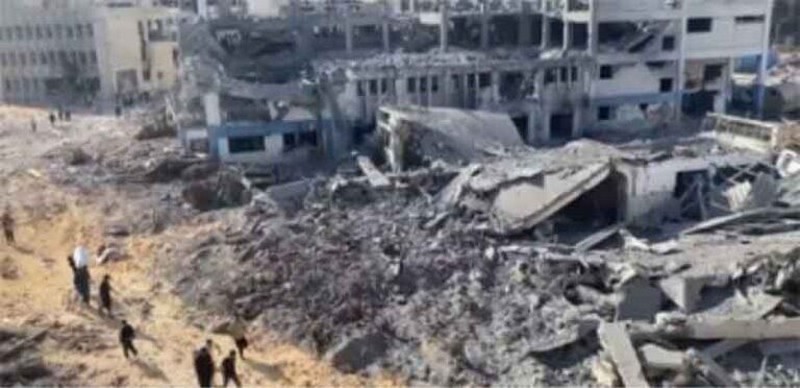
Today it invades the ruined town despite the rubble and the wreckage. There are no homes here, but people have refused to leave, making do with what they have, living on their bomb-created homes.

[https://twitter.com/warfareanalysis/status/1806378166015168786]

The Israeli army says its invading the town once again because of their intelligence sources saying there are Palestinian resistance fighters here.

[https://twitter.com/EuroMedHR/status/1806337673994408339]

But in reality, Al Shujaiyia has always remained a resistance territory. It is the grave of Israeli soldiers. In the first hours of their entry, Israeli troops faced at least 10 military operations against them by Hamas and Saraya Al Quds fighters.

The drainage of Israeli troop and hardware losses continued with news of one Merkava 4-tank blown up as well as troop carrier not to say anything about the IED planted bombs unto the Baghdad Road to prevent entry by other Israeli vehicles.

Once historians sit and write the history of this war, they will find Al Shujaiyia has been the toughest for the Israeli army despite the enormous levels of destruction where the fight has been by a modern, professional army with top guns and armour against men in jeans and home-made missiles made from pipe tubes.

[https://twitter.com/Kuffiyateam/status/1806271739120238919]

The entry of Israeli troops however has caused havoc on the population of Al Shujaiyia who managed up till now to stay in their wrecked homes. This time however, reports of hundreds leaving the neighborhood abound the internet and social media.

This not to say anything about the numbers of those killed and injured. It was reported at least 15 people were killed in the first few hours of troops entering the neighborhood.

As usual Israeli troops – and they know it – will not be able to get to the resistance fighters. All the Israeli army will be doing – and this is a credit to their already soured professionalism – is create more death, injury, displacement among the civilian population.

Marwan Asmar is a Amman-based writer covering Middle East Affairs

28 June 2024

Source: countercurrents.org

The Altalena Affair: Is Israel Heading towards a Civil War?

By Dr. Ramzy Baroud

“There will be no civil war” in Israel, Israeli Prime Minister Benjamin Netanyahu said on June 18. But he might be wrong.

Netanyahu’s statement was made in the context of the growing popular protests in Israel, especially following the long-anticipated resignations of several Israeli War Cabinet Ministers, including Benny Gantz and Gadi Eisenkot – both former chiefs of staff in the Israeli army.

These resignations did not necessarily isolate Netanyahu, as the man’s popularity rests almost entirely on the support of the right and the far right. However, the move further illustrated deep and growing rifts in Israeli society, which could ultimately take the country from a state of political upheaval to an actual state of civil war.

Divisions in Israel cannot be viewed the same way as other political polarizations currently rife among Western democracies. This assertion is not necessarily linked to the legitimate view that, at its core, Israel is not an actual democracy but, rather, due to the fact that Israel’s political formation is unique.

The story began long before the current Gaza war.

In February 2019, the leaders of three Israeli parties formed a coalition, Kahol Lavan, or ‘Blue and White’. Two of Kahol Lavan’s founders, Gantz and Moshe Ya’alon, were also military men, widely respected among the country’s powerful military establishment, thus society at large. Despite their relative electoral successes, they still failed to dislodge Netanyahu from office. So, they went to the streets.

Taking the conflict to the streets of Tel Aviv and other Israeli cities was a decision not made lightly. It followed the collapse of a strange government coalition, cobbled up by all of Netanyahu’s enemies, unified around the single objective of ending the right and far-right reign over the country. Naftali Bennet’s failure was simply the last straw.

The terms ‘right’ and ‘far-right’ may give the impression that the political conflict in Israel is essentially ideological. Though ideology does play a role in Israeli politics, anger at Netanyahu and his allies is largely motivated by the feeling that the new right in Israel is attempting to reconfigure the very political nature of the country.

So, starting in January 2023, hundreds of thousands of Israelis launched unprecedented mass protests that lasted until the start of the Israeli war on Gaza. The initial collective demand of the protesters, supported by Gantz and the who’s who of the Israeli military and liberal elites, was to prevent Netanyahu from altering the political balances of power that have governed Israeli society for the last 75 years. With time, the demands, however, turned into the collective chant of regime change.

Though the issue was largely discussed in the media as a political rift resulting from Netanyahu’s wishes to marginalize Israel’s judicial institution for personal reasons, the roots of the event, which threatened a civil war, were quite different.

The story of the potential Israeli civil war is as old as the Israeli state itself, and recent comments by Netanyahu, suggesting otherwise, are yet another false claim by the prime minister.

Indeed, on June 16, Netanyahu lashed out at rebellious military generals, stating that “We have a country with an army and not an army with a country.” In truth, Israel was founded through war, and was sustained also through war.

This meant that the Israeli military had, from the very start, a special status in Israeli society, an unwritten contract that allowed army generals a special and often a central seat in Israel’s political decision-making. The likes of Ariel Sharon, Ehud Barak and others, including the very founder of Israel, David Ben Gurion, have all reached the helm of Israeli politics namely because of their military affiliations.

But Netanyahu changed all of this when he began to actively restructure Israel’s political institutions to keep the military marginal and politically disempowered. In doing so, Netanyahu has violated the main pillar of Israel’s political balance, starting in 1948.

Even before Israel finished the task of ethnically cleansing the Palestinian people during the Nakba, the nascent country almost immediately entered into a civil war. As Ben Gurion issued an order regarding the formation of the Israeli Defense Forces (IDF) on May 26, some Zionist militias, including the Irgun and Lehi – the Stern Gang – fought to preserve a degree of political independence.

That was the start of the so-called Altalena Affair, when the Haganah-dominated IDF tried to block a sea shipment of weapons on its way to the Irgun, then under the leadership of Menachem Begin who, in 1967, became Israel’s prime minister. The confrontation was deadly. It resulted in the killing of many members of the Irgun, mass arrests and the shelling of the ship itself.

The reference to the Altalena Affair is heard quite frequently in Israeli media debates these days, as the Israeli war on Gaza is splintering an already divided society. This division is compelling the military to abandon the historical balance that was achieved following that mini-civil war, which could have ended Israel’s future as a state only days after its formation.

The internal Israeli conflict over Gaza is, indeed, not just about Gaza, Hamas or Hezbollah, but the future of Israel itself. If the Israeli army finds itself scapegoated for October 7 and the assured failed military campaigns that followed, it will have to make a choice, between accepting its indefinite marginalization or clashing with the political institution.

For the latter to take place, a civil war might become a real possibility.

“There will be no civil war” in Israel, Israeli Prime Minister Benjamin Netanyahu said on June 18. But he might be wrong.

Netanyahu’s statement was made in the context of the growing popular protests in Israel, especially following the long-anticipated resignations of several Israeli War Cabinet Ministers, including Benny Gantz and Gadi Eisenkot – both former chiefs of staff in the Israeli army.

These resignations did not necessarily isolate Netanyahu, as the man’s popularity rests almost entirely on the support of the right and the far right. However, the move further illustrated deep and growing rifts in Israeli society, which could ultimately take the country from a state of political upheaval to an actual state of civil war.

Divisions in Israel cannot be viewed the same way as other political polarizations currently rife among Western democracies. This assertion is not necessarily linked to the legitimate view that, at its core, Israel is not an actual democracy but, rather, due to the fact that Israel’s political formation is unique.

The story began long before the current Gaza war.

In February 2019, the leaders of three Israeli parties formed a coalition, Kahol Lavan, or ‘Blue and White’. Two of Kahol Lavan’s founders, Gantz and Moshe Ya’alon, were also military men, widely respected among the country’s powerful military establishment, thus society at large. Despite their relative electoral successes, they still failed to dislodge Netanyahu from office. So, they went to the streets.

Taking the conflict to the streets of Tel Aviv and other Israeli cities was a decision not made lightly. It followed the collapse of a strange government coalition, cobbled up by all of Netanyahu’s enemies, unified around the single objective of ending the right and far-right reign over the country. The failure of Naftali Bennet, the leader of that coalition, was simply the last straw.

The terms ‘right’ and ‘far-right’ may give the impression that the political conflict in Israel is essentially ideological. Though ideology does play a role in Israeli politics, anger at Netanyahu and his allies is largely motivated by the feeling that the new right in Israel is attempting to reconfigure the very political nature of the country.

So, starting in January 2023, hundreds of thousands of Israelis launched unprecedented mass protests that lasted until the start of the Israeli war on Gaza. The initial collective demand of the protesters, supported by Gantz and the who’s who of the Israeli military and liberal elites, was to prevent Netanyahu from altering the political balances of power that have governed Israeli society for the last 75 years. With time, the demands, however, turned into the collective chant of regime change.

Though the issue was largely discussed in the media as a political rift resulting from Netanyahu’s wishes to marginalize Israel’s judicial institution for personal reasons, the roots of the event, which threatened a civil war, were quite different.

The story of the potential Israeli civil war is as old as the Israeli state itself, and recent comments by Netanyahu, suggesting otherwise, are yet another false claim by the prime minister.

Indeed, on June 16, Netanyahu lashed out at rebellious military generals, stating that “We have a country with an army and not an army with a country.” In truth, Israel was founded through war, and was sustained also through war.

This meant that the Israeli military had, from the very start, a special status in Israeli society, an unwritten contract that allowed army generals a special and often a central seat in Israel’s political decision-making. The likes of Ariel Sharon, Itzhak Rabin, Ehud Barak and others, including the very founder of Israel, David Ben Gurion, have all reached the helm of Israeli politics, namely because of their military affiliations.

But Netanyahu changed all of this when he began to actively restructure Israel’s political institutions to keep the military marginal and politically disempowered. In doing so, he has violated the main pillar of Israel’s political balance, starting in 1948.

Even before Israel finished the task of ethnically cleansing the Palestinian people during the Nakba, the nascent country almost immediately entered into a civil war. As Ben Gurion issued an order regarding the formation of the Israeli Defense Forces (IDF) on May 26, 1948, some Zionist militias, including the Irgun and Lehi – the Stern Gang – fought to preserve a degree of political independence.

That was the start of the so-called Altalena Affair, when the Haganah-dominated IDF tried to block a sea shipment of weapons on its way to the Irgun, then under the leadership of Menachem Begin who, in 1967, became Israel’s prime minister. The confrontation was deadly. It resulted in the killing of many members of the Irgun, mass arrests and the shelling of the ship itself.

The reference to the Altalena Affair is heard quite frequently in Israeli media debates these days, as the Israeli war on Gaza is splintering an already divided society. This division is compelling the military to abandon the historical balance that was achieved following that mini-civil war, which could have ended Israel’s future as a state only days after its formation.

The internal Israeli conflict over Gaza is, indeed, not just about Gaza, Hamas or Hezbollah, but the future of Israel itself. If the Israeli army finds itself scapegoated for October 7 and the assured failed military campaigns that followed, it will have to make a choice, between accepting its indefinite marginalization or clashing with the political institution.

For the latter to take place, a civil war might become a real possibility.

Dr. Ramzy Baroud is a journalist, author and the Editor of The Palestine Chronicle. He is the author of six books.

28 June 2024

Source: countercurrents.org

Israel is dragging the world into darkness

By Susan Abulhawa

Israel does not belong in the modern world. It is the child of European colonialism and Europe’s genocidal anti-Semitism, imposed by force and fire and Western guilt on a land already inhabited by an indigenous people.

Israel is a contemporary trespass of that old world’s colonial ethos that justified genocide, ethnic cleansing, wholesale plunder, endless theft and destruction of indigenous peoples in the name of settlement and divine entitlement of a superior group of humans.

But the modern world has moved on with incremental moral evolution. It long ago repudiated, at least in principle, the racist and violent impulses that powered the genocidal colonial engines of old.

One can hear Israel’s anachronistic nature in the rhetoric of its leaders and citizens. Benjamin Netanyahu points to America’s nuclear bombing of Hiroshima and Nagasaki to justify Israel’s ongoing genocide in Gaza.

Zionists, especially those in settler-colonial nations like the United States and Australia, love to remind us that these countries were founded on the genocide and ethnic cleansing of indigenous peoples.

And from these reminders come their accusations of double standards and hypocrisy. “You’re living on stolen land, why don’t you leave?” so their rhetoric goes.

Implicit in their accusations is an admission of sameness with the violent and racist settler-colonial force that created the United States.

In other words, while humanity has tried and continues to strive to prevent and right the wrongs of the past, Israel points to these base moments in human history, not in the context of “never again,” but as precedents it should be free to emulate.

As we still today uncover mass graves in “Indian schools” where Indigenous children were ripped from their families and tortured to death in boarding schools, Israel demands the right to create more mass graves of Palestinians in the name of “self-defense.”

While we engage in discourse to push for acknowledgement and reparations, much as the world did for European Jews, Israel demands an entitlement to ethnically cleanse indigenous Palestinians, steal their lands, plunder resources and raze their cities and farmlands.

While we imagine and endeavor to create a post-colonial reality of revolutionary universalism, inclusion, equity and understanding, Israel demands the right to Jewish exclusivity and Jewish entitlement at the expense of non-Jews.

Invoking American settler-colonialism to justify its own version of the same is no different than invoking America’s industrialized enslavement as a precedent to emulate.

Rules-based order?

Western governments have long touted their values as beacons of democracy and idealism toward which modernity must aim. How they love to lecture the world about law and rules-based order; about freedom of speech, freedom of assembly, freedom of this and that.

But look how quickly they denounce, veto and attack any courts, human rights organizations and UN protocols when the institutions they helped create do not serve their imperial interests. Look how quickly they shut down speech and sic their police on their own citizens trying to exercise those freedoms.

They do this because Israel is antithetical to democratic values. It is antithetical to human rights and the so-called rules-based order.

The West must therefore choose between Israel and the ideals it claims to uphold. And thus far, it is choosing Israel.

And in the process, it is dragging itself and the world into an abyss.

Already, Indian commentators are talking about an “Israel-like” solution in Kashmir. The world is silent as Arab dictatorships like the UAE are arming genocidal militias in Sudan to take control of the country’s vast gold and uranium treasures.

Israel is dragging the world into an infectious darkness that will spread across our planet unless it is stopped and held accountable for the holocaust it is committing in Gaza and now, it seems, in the West Bank as well.

The “solution” is not at all complicated, contrary to pervasive Zionist propaganda.

It is simply an adherence to accepted universal morality that rejects Jewish supremacy as it rejects all other forms of supremacy. This means equality of rights for all those who inhabit the land, a return of Palestinian refugees in a nation of its citizens founded on the principle of one-person-one-vote.

Susan Abulhawa is a writer and activist. Her most recent novel is Against the Loveless World.

27 June 2024

Source: countercurrents.org

White House brags that it has given Israel $6.5 billion in weapons since October 7

By Andre Damon

The United States has provided Israel with more than $6.5 billion in weapons since October 7, the White House said Wednesday, underscoring the scale of the Biden administration’s support for the continuing genocide in Gaza.

Doled out over just nine months, this figure is nearly double the US’s typical annual Israel military aid budget of $3.4 billion and will be further supplemented by $14 billion in weapons funding allocated by Congress this year.

The White House admitted the scale of its arms shipments to Israel in a closed briefing to reporters, with neither a video nor transcript made available to the public.

Washington Post reporter John Hudson described the content of the briefing on X: “The US has flooded Israel with more than $6.5 billion in security assistance since Oct. 7, said a senior administration official, a massive transfer of equipment and firepower despite recurring disagreements between the two nations over civilian casualties and aid access.”

The US official declared, “This is a massive, massive undertaking, and nothing is paused other than that one shipment” of 2,000-pound bombs.

Amid continuing mass protests against the Biden administration’s complicity in the Gaza bloodbath, the White House has sought to keep the scale of its arms transfers a secret. For this reason, it has broken up its arms shipments into more than 100 chunks in order to bypass congressional reporting requirements.

The announcement came the same day that Israeli Defense Minister Yoav Gallant met with senior White House officials.

Gallant was welcomed by senior White House officials Wednesday, after the lead prosecutor of the International Criminal Court applied for charges against him last month, accusing the Israeli defense minister, alongside Prime Minister Benjamin Netanyahu, of “war crimes” and “crimes against humanity.”

The visit follows last week’s assertion by a UN investigative committee that the Israeli government is responsible for the “extermination” of the Palestinian population, with commission member Chris Sidoti declaring that the “Israeli army is one of the most criminal armies in the world.”

Gallant’s trip sets the stage for the visit by Netanyahu to Washington on July 24, when he is set to address both houses of Congress.

In a readout of the meeting between Gallant and US National Security Advisor Jake Sullivan, the White House wrote, “Mr. Sullivan reaffirmed the United States’ ironclad commitment to Israel’s security, including in the face of threats from Iranian-backed terrorist groups such as Lebanese Hezbollah.”

The statement continued, “The two also discussed President Biden’s unprecedented support for Israel since the Hamas attacks of October 7th. Mr. Sullivan reaffirmed President Biden’s commitment to ensure that Israel has all it needs to defend itself militarily and confront its Iranian-backed adversaries.”

The White House praised the purported humanitarian efforts of Gallant, the man who has pushed the population of the narrow enclave to the brink of starvation by declaring a “complete blockade” of food into Gaza because the Palestinians are, in his words, “human animals.”

The readout declared:

Mr. Sullivan and Minister Gallant discussed the humanitarian crisis in Gaza, and the need to increase and sustain the flow of humanitarian assistance into Gaza. Mr. Sullivan recognized Minister Gallant’s personal efforts and leadership to support these efforts.

In a separate meeting with US Defense Secretary Lloyd Austin, the defense secretary “underscored the ironclad US commitment to Israel, as evidenced in part by the extraordinary defense of Israel against an unprecedented Iranian attack on April 13 and by the more than $14 billion in assistance in the Bipartisan National Security Supplemental that President Biden signed on April 24.”

Gallant, for his part, responded to the meetings by threatening war against Lebanon, declaring that Israel is “preparing for every scenario” and threatening to send Lebanon “back to the Stone Age.”

Israeli massacres of civilians in Gaza continued Wednesday, with 15 Palestinian civilians killed in a strike on a home in northern Gaza.

Israeli forces killed Fadi Al-Wadiya, a doctor and member of Doctors Without Borders, while he was on his way to work in Gaza City.

MSF reported:

The attack killed Fadi, along with five other people including three children, while he was cycling to work, near the MSF clinic where he was providing care.

Fadi was a 33-year-old physiotherapist and father of three. He joined MSF in 2018. Our thoughts are with his family and loved ones. Fadi’s loss marks the sixth killing of an MSF staff member in Gaza since October 7, 2023.

Meanwhile, famine is worsening in Gaza. In a Twitter statement, the United Nations Children’s Fund wrote, “Malnutrition in Gaza is wreaking havoc on children” and “Lack of food, water, and medical supplies is worsening the already desperate situation for Gaza’s children.”

Mass starvation and hunger in Gaza have been massively intensified by the closure of the Rafah border crossing, as part of the US-backed Israeli attack on Rafah. In a statement Wednesday, the World Health Organization said that no medical evacuations had taken place from Gaza since May.

Before the closure of the border, “approximately 50 critical patients a day left Gaza. … It means that since the 7th of May at least 2,000 people have been unable to leave Gaza to receive medical care,” said World Health Organization representative Rik Peeperkorn.

Separately, the United Nations Relief and Works Agency for Palestine Refugees in the Near East (UNRWA) reported that at least 508 internally displaced people had been killed at its shelters in October.

27 June 2024

Source: countercurrents.org

You Saved Julian Assange

By Chris Hedges

After 14 years of persecution, Julian Assange will go free. We must honor the hundreds of thousands of people across the globe who made this happen.

The dark machinery of empire, whose mendacity and savagery Julian Assange exposed to the world, spent 14 years trying to destroy him. They cut him off from his funding, canceling his bank accounts and credit cards. They invented bogus charges of sexual assault to get him extradited to Sweden, where he would then be shipped to the U.S.

They trapped him in the Ecuadorean Embassy in London for seven years after he was given political asylum and Ecuadorian citizenship by refusing him safe passage to Heathrow Airport. They orchestrated a change of government in Ecuador that saw him stripped of his asylum, harassed and humiliated by a pliant embassy staff. They contracted the Spanish security firm UC global in the embassy to record all his conversations, including those with his attorneys.

The CIA discussed kidnapping or assassinating him. They arranged for London’s Metropolitan Police to raid the embassy – sovereign territory of Ecuador – and seize him. They held him for five years in the high security HM Prison Belmarsh, often in solitary confinement.

And all the while they carried out a judicial farce in the British courts where due process was ignored so an Australian citizen, whose publication was not based in the U.S. and who, like all journalists, received documents from whistleblowers, could be charged under the Espionage Act.

They tried over and over and over to destroy him. They failed. But Julian was not released because the courts defended the rule of law and exonerated a man who had not committed a crime. He was not released because the Biden White House and the intelligence community have a conscience. He was not released because the news organizations that published his revelations and then threw him under the bus, carrying out a vicious smear campaign, pressured the U.S. government.

He was released — granted a plea deal with the U.S. Justice Department, according to court documents — in spite of these institutions. He was released because day after day, week after week, year after year, hundreds of thousands of people around the globe mobilized to decry the imprisonment of the most important journalist of our generation. Without this mobilization, Julian would not be free.

Mass protests do not always work. The genocide in Gaza continues to exact its gruesome toll on Palestinians. Mumia Abu-Jamal is still locked up in a Pennsylvania prison. The fossil fuel industry ravages the planet. But it is the most potent weapon we have to defend ourselves from tyranny.

This sustained pressure — during a London hearing in 2020, to my delight, District Judge Vanessa Baraitser of the Old Bailey court overseeing Julian’s case, complained about the noise protestors were making in the street outside — shines a continuous light on injustice and exposes the amorality of the ruling class. This is why spaces in the British courts were so limited and blurry eyed activists lined up outside as early as 4 a.m. to secure a seat for journalists they respected, my spot secured by Franco Manzi, a retired policeman.

These people are unsung and often unknown.  But they are heroes. They move mountains. They surrounded parliament. They stood in the pouring rain outside the courts. They were dogged and steadfast. They made their collective voices heard. They saved Julian. And as this dreadful saga ends, and Julian and his family I hope, find peace and healing in Australia, we must honor them. They shamed the politicians in Australia to stand up for Julian, an Australian citizen, and finally Britain and the U.S. to give up. I do not say to do the right thing. This was a surrender. We should be proud of it.

I met Julian when I accompanied his attorney, Michael Ratner, to meetings in the Ecuadorian Embassy in London. Michael, one of the great civil rights attorneys of our era, stressed that popular protest was a vital component in every case he brought against the state. Without it, the state could carry out its persecution of dissidents, disregard for the law and crimes in darkness.

People like Michael, along with Jennifer Robinson, Stella Assange, WikiLeaks Editor-in-Chief Kristenn Hrafnsson, Nils Melzer, Craig Murray, Roger Waters, Ai WeiWei, John Pilger and Julian’s father John Shipton and brother Gabriel, were instrumental in the fight. But they could not have done it alone.

We desperately need mass movements. The climate crisis is accelerating. The world, with the exception of Yemen, stands passive watching a live streamed genocide. The senseless greed of limitless capitalist expansion has turned everything from human beings to the natural world into commodities that are exploited until exhaustion or collapse. The decimation of civil liberties has shackled us, as Julian warned, to an interconnected security and surveillance apparatus that stretches across the globe.

The ruling global class has shown its hand. It intends, in the global north, to build climate fortresses and in the global south to use its industrial weapons to lock out and slaughter the desperate the way it is slaughtering the Palestinians.

State surveillance is far more intrusive than that employed by past totalitarian regimes. Critics and dissidents are easily marginalized or silenced on digital platforms. This totalitarian structure — the political philosopher Sheldon Wolin called it “inverted totalitarianism” —  is being imposed by degrees. Julian warned us. As the power structure feels threatened by a restive population that repudiates its corruption, amassing of obscene levels of wealth, endless wars, ineptitude and mounting repression, the fangs it exposed to Julian will be exposed to us.

The goal of wholesale surveillance, as Hannah Arendt writes in “The Origins of Totalitarianism,” is not, in the end, to discover crimes, “but to be on hand when the government decides to arrest a certain category of the population.” And because our emails, phone conversations, web searches and geographical movements are recorded and stored in perpetuity in government databases, because we are the most photographed and followed population in human history, there will be more than enough “evidence” to seize us should the state deem it necessary. This constant surveillance and personal data waits like a deadly virus inside government vaults to be turned against us. It does not matter how trivial or innocent that information is. In totalitarian states, justice, like truth, is irrelevant.

The object of all totalitarian systems is to inculcate a climate of fear to paralyze a captive population. Citizens seek security in the structures that oppress them. Imprisonment, torture and murder are saved for unmanageable renegades such as Julian. The totalitarian state achieves this control, Arendt wrote, by crushing human spontaneity, and by extension human freedom. The population is immobilized  by trauma. The courts, along with legislative bodies, legalize state crimes. We saw all this in the persecution of Julian. It is an ominous harbinger of the future.

The corporate state must be destroyed if we are to restore our open society and save our planet. Its security apparatus must be dismantled. The mandarins who manage corporate totalitarianism, including the leaders of the two major political parties, fatuous academics, pundits and a bankrupt media, must be driven from the temples of power.

Mass street protests and prolonged civil disobedience are our only hope. A failure to rise up — which is what the corporate state is counting on — will see us enslaved and the earth’s ecosystem become inhospitable to human habitation. Let us take a lesson from the courageous men and women who took to the streets for 14 years to save Julian. They showed us how it is done.

Chris Hedges is a Pulitzer Prize-winning journalist who was a foreign correspondent for fifteen years for The New York Times, where he served as the Middle East Bureau Chief and Balkan Bureau Chief for the paper.

26 June 2024

Source: countercurrents.org

Armed Vs. Peaceful Resistance – What You Need to Know about Muqawama in Gaza

By Dr. Ramzy Baroud

The word Muqawama in Palestinian lexicon does not need elaboration beyond the immediate meaning it generates among ordinary Palestinians. Only recently, and specifically after the Oslo peace accords and the sudden infusion of western-funded NGOs, did such terms as ‘peaceful resistance’ and ‘non-violent resistance’ begin to emerge within some circles of Palestinian intellectuals. These phrases, however, never truly registered as central to the collective discourse of Palestinians. For them, Muqawama remained: one – indivisible, all encompassing.

This assertion should hardly suggest that Palestinians did not resist, in the various stages of their struggle, using non-armed methods. In fact, they have done so for generations. The six-month general strike of April 1936 was a culmination of civil disobedience tactics that had been used for years prior to that date. It continued to be used, since then, throughout Palestine, for a century.

The difference between the Palestinian perception of resistance and the western-promoted notion is that Palestinians do not see Muqawama as a liability, nor do they seek to explain, contextualize or justify forms of collective resistance they use. Historically, only circumstances determine the type, time and place for armed or unarmed resistance.

The western notion, however, is predicated on the concept of preferentiality, as in one strategy is better than the other, and that one is ethical, while the other is not. In doing so, this judgmental attitude creates a clear distinction between the ‘peaceful’ Palestinians, dubbed moderate, and the violent ones, dubbed radical.

Moreover, western definitions of resistance are selective. The Ukrainians, for example, are permitted to use arms to repel the Russian army. Palestinians are condemned for doing so when Israel invades and carries out an unparalleled genocide in Gaza.

Though some promoters of certain types of resistance are, perhaps, well intentioned, they seem to fully ignore the historical roots of such language. Yet, by engaging in such condemnatory discourse, they, wittingly or otherwise, reproduce old colonial perceptions of the colonized. Similar language defined colonial Europe’s relationship with virtually all colonized spaces: those who resisted were perceived as savages or terrorists; those who did not, were granted no civil or political rights, only the occasional privilege of not being tortured or killed with impunity.

Gaza: Heart of Resistance

To fully fathom the concept of Muqawama in its Palestinian context, one only needs to look at Gaza. Though the Strip has historically served as the center of Palestinian Resistance in both discourse and action, al-Muqawama here is not entirely an outcome of geography, but rather the collective experience and identity of those occupying this tiny space of 365 square kilometers.

70 percent of Gaza’s population are refugees. They were ethnically cleansed, along with nearly 800,000 Palestinians, from historic Palestine during the Nakba, the catastrophic destruction and ethnic cleansing of Palestine and her people in 1948. They are survivors of massacres, which were part of a major military campaign that saw the ruin or emptying of whole villages, towns and communities.

Due to Gaza’s small size and the nature of its topography – flat land with little resources – the suffering of the refugees of Gaza was particularly extreme. Trapped between a persisting past of loss, suffering and unrestored rights and a present of siege and grinding poverty, it was only rational for Gaza to be the spearhead of Palestinian Resistance throughout the years. Often, the degree of Israeli brutality determined the degree of Palestinian response, since violence begets violence and deadly sieges and genocidal wars beget Al-Aqsa Flood type of resistance operations.

Though general strikes and other forms of civil disobedience were abundantly used by Gaza’s resisting population throughout the years – especially in the period between the Israeli occupation of 1967 and the so-called Israeli military ‘redeployment’ of 2005 –  armed resistance has always been a critical component of Palestinian Muqawama.

Despite its geographic isolation, which has long preceded the latest layer of Israeli siege imposed on the Strip in 2007, the Gaza population, as judged by the constant state of rebellion and political discourse, has always viewed itself as part of a larger and more coherent Palestinian whole. One of the reasons behind this is that collective Palestinian memory served as a generational bonding agent that kept Palestinian communities attached to Palestine as a tangible reality, and also as an idea.

The other reason pertains to the relationship that Gaza had with Egypt, the Strip’s former military administrator and once potential liberator.

Though Egypt administered Gaza between 1949 and 1967 – with a brief few months’ exception during the war of 1956 – Cairo did not exactly see Gaza as a territorial or even as a political extension that is permanently linked to the country’s body politic. True, Egyptian President Jamal Abdul Nasser was the caretaker of Gaza and attempted to shape its political institutions, in fact, the very armed resistance – for example, the Palestine Liberation Organization (1964) and the Palestine Liberation Army (1964) – Gaza’s local leaderships and political elites largely embraced Egypt as strategic depth, not an alternative leadership, let alone homeland. If any confusion existed, the matter was resolved, anyway, following the humiliating defeat of Arab armies at the hands of the US-backed Israeli military in the June 1967 war, known as the Naksa or the ‘setback’.

Though the post-war version of the PLO remained largely reliant on Arab support and political validation, with time, it became more Palestinian in terms of decision-making. The PLA, on the other hand, which only operated under the auspices of other Arab militaries, became marginalized, if at all relevant. But even with the sidelining of the Arabs and marginalization of the PLA, Palestinians continued to resist. Their new resistance, however, was modeled around Palestinian historical experiences. This history of resistance is rife with examples, which started long before the establishment of Israel on the ruins of Palestine, and continued after the Nakba with the rise of the Fidayeen Movement, whose roots trace back to Gaza.

When Gaza fell under Israeli military occupation in 1967, so did the West Bank. Though all historic Palestine was now captive to Israel and its totalistic Zionist discourse, the occupation, coupled with the defeat of Arab armies, only accentuated a Palestinian identity that had little overlaps with regional Arab priorities – be it Jordanian, as was the case in the West Bank, or Egyptian, as in the case of Gaza.

This new reality did not automatically cancel the historic rapport between Palestine and the Arab world. However, it did underscore a growing sense of Arab political provincialism and a growing sense of Palestinian nationalism that began evolving into a new set of political significances and boundaries.

Ironically, armed Palestinian resistance, which developed outside the realm of Arab governments and armies, only grew stronger following the Naksa. This was true in the case of Jordan and Lebanon-based Palestinian Resistance. However, this seeming contradiction has been manifested in Gaza since October 7 more than any other time or place in the past.

Homegrown Palestinian resistance in Gaza has paralyzed the Israeli army to the point of failing to achieve any real military or strategic objective in its war on the Palestinians. Moreover, fighters, manufacturing most of their own weapons, have arguably inflicted more damage on the Israeli army than entire Arab armies in previous wars.

It will take years for the psychological outcomes of this war to be fully appreciated. However, numbers already speak of a changing perception. Over 70 percent of Palestinians now believe that armed resistance is the way forward, a direct and decisive challenge to the perceptions held immediately after the Oslo accords and during the early phase of the so-called peace process. Back then, many Palestinians genuinely believed that a negotiated solution is the shortest way to a Palestinian State.

Chances are armed resistance will continue to grow, not only in Gaza but in the West Bank as well. A nascent armed movement, mostly focused in the northern region of the West Bank, will likely continue to develop as well, modeling itself, whenever possible, around the ideas, strategies and values of the Gaza Resistance. Indeed, a different kind of Palestinian unity is now forming.

Changing Attitudes

But is this the end of the Palestinian quest for Arab liberators?

In a pre-recorded statement on October 28, the military spokesman for the Al-Qassam Brigades – the military wing of Hamas – uttered a few words that carried profound meaning. “We’re not asking you to defend the children of Gaza with your armies and tanks, God forbid,” he said, in a sarcastic message to Arab governments. Those few words were some of the most analyzed remarks made by Abu Obeida, whose popularity in the Arab world has soared since October 7, along with that of Hamas and other Palestinian movements in Gaza.

Though Abu Obedia’s language remained committed to religious, cultural and social values held in common with other Arab and Muslim nations, the masked fighter’s political language is now largely situated within a Palestinian discourse. His statements, however, are an obvious departure from Hamas’ own perception of the responsibilities of mostly Arabs, but also Muslim governments towards Palestine. Hamas’ original charter seemed aimed at mobilizing the Arabs as much as it did the Palestinians.

Ya ummatuna al-Alarabiya” and “ya ummatuna al-Islamiyah” are the standard form through which Al-Qassam Brigades and other Palestinian resistance groups call upon Arabs and Muslims. However, considering the growing involvement of non-Arab and non-Muslim countries in standing up to Israel’s genocide in Gaza, a third term is now almost always present in these statements: ‘Ya ahrar al-alem’ – a call to the ‘free people of the world’.

Equating between Arabs and any other nation anywhere in the world, and the cynical reference to Arab armies – let alone the near complete absence of any demand by Palestinian groups for Arab military intervention – have all signaled an obvious shift in the attitude of Palestinian Resistance. Gaza, the heart of this resistance, is now sending a message to all Palestinians, that liberation can only originate from Palestine itself.

This attitude is a relatively new phenomenon.

Back to the Start

One of the earliest and most powerful calls for resistance, then referred to as Jihad, was not made by a Palestinian, but a Syrian preacher at his final public sermon at the Al-Istiqlal Mosque in Haifa on November 9, 1935. Palestinians have been resisting for years. But what made the call by Izz al-Din al-Qassam particularly special is that it contributed to the three-year rebellion against British and Zionist colonialism which followed the strike of 1936.

Al-Qassam’s political thought may have matured in Palestine, but it developed in Syria and Egypt. Al-Qassam had fled French colonialism in 1920 only to engage in another anti-colonial struggle, this time involving the British and their Zionist allies in Palestine.

“I have taught you the matters of your religion,” the sheikh, now actively pursued by British police, said in his last sermon. “I have taught you the affairs of your homeland,” he continued, before raising his voice louder with an impassioned plea, “To the Jihad, o Muslims. To the Jihad.”

A Syrian Arab, urging Muslims from a Palestinian town to engage in a holy struggle was a perfectly accepted and rational notion back then. These layers of identity, since then, however, have fragmented to create alternative identities, thus relationships.

Al-Qassam himself was killed, along with a small band of his Palestinian followers in the orchards of Ya’bad, not long after he left Haifa in preparation for a countrywide revolt – one that only happened after his death.

When Al-Qassam Brigades was officially formed in Gaza in1991, it may have attempted to model itself after the Al-Qassamite bands of yesteryears. But their lack of means, Israel’s policy of assassination, in addition to the restrictions and crackdowns by the Palestinian Authority – which managed Gaza until the Hamas-Fatah clash of 2007 – made it difficult for such an army to exist.

Ultimately, the group managed to achieve what Al-Qassam himself could not, forming a resistance army consisting of small units of fighters that was able to fight and sustain a liberation war using guerrilla warfare tactics for a long time.

Unlike Al-Qassam’s old rag-tag army of poorly trained fighters, the new Qassamites are well-trained, make their own weapons and have managed to achieve what standing Arab armies and traditional warfare have failed. The same conclusion can be drawn about the Quds Brigades, the military branch of the Islamic Jihad in Palestine (IJP) Movement.

But even well-trained and equipped fighters cannot fight, let alone survive, the kind of Israeli firepower that has destroyed the majority of Gaza. According to The Washington Post, the number of bombs dropped on Gaza in a single week – between October 7 and October 14 – estimated at 6,000 bombs, was almost as many as what the US has dropped on Afghanistan in one year.

So, how did the Palestinian resistance survive? The answer here has less to do with military technology or tactics and more with intangible values. If this question is asked in Gaza, the answer is most likely to point towards such notions as ‘ruh al-muqawama’ – spirit or soul of the Resistance. Though such intangible concepts cannot easily be qualified, let alone quantified, according to western academia, the truth is that armed resistance in Palestine would have not survived the Israeli onslaught if it were not for the sumud – steadfastness – of the Palestinian people.

In other words, if it were not for the Palestinian people themselves, no group of Palestinian fighters, no matter how well-trained and prepared, would have sustained the task of fighting the Israeli military machine, backed by Washington and its other western partners.

Muqawama for Palestinians is not an intellectual conversation, or an academic theory. It is not an outcome of a political strategy, either. In the words of Frantz Fanon, referencing wars of liberation, “we revolt simply because (…) we can no longer breathe”. Indeed, Palestinian revolts and resistance are a direct outcome of the Palestinian people’s refusal to accept the injustices of settler-colonialism, military occupation, protracted sieges and the denial of basic political rights.

For Muqawama to be fully appreciated as a unique Palestinian phenomenon, it cannot be delinked from history; neither can it be explored separate from the ‘popular embrace’ –  Al-Hadina al-Sha’biyah lil-Muqawamah al-Filistiniyah –  of the Palestinian people themselves, who have always served as the original source and the main protector of Palestinian resistance in all of its forms.

Dr. Ramzy Baroud is a syndicated columnist, the author of six books and the Editor of The Palestine Chronicle. Baroud has a Ph.D. in Palestine Studies from the University of Exeter.

25 June 2024

Source: countercurrents.org

Israel has no future in the Middle East due to its racist barbarity and lawlessness

By Latheef Farook

Fair minded intellectuals from United States, Europe, Middle East and even Australia predict the inevitable collapse of Israel  in  view of its heinous crimes  on Palestinians for almost a century.

Many point out that Israel turned vengeful, tribal and adamant on destruction and expansion with total disregard for basic human decency and international law. Israel’s colonial war became a war on hospitals, schools, mosques and residential buildings, financed, armed and protected by the United States and other Western lackeys and killing thousands of Palestinian civilians – children, doctors, teachers, journalists, men and women, old and young, as if they were enemy combatants.

As a result this alien  entity has no chance of surviving among all the indigenous people of the region, who have coalesced more than ever before against the savage intruder. Israel can no longer use its fanciful theological claims to justify its violent racist practices. God does not sanction the slaughter of innocent children. And nor should Israel’s American and Western patrons.

American political scientist and international relations scholar    John J. Mearsheimer  said  “ it appears that Israel is losing its war in Gaza. At the same time, Israel is fighting Hezbollah on its northern border, the International Court of Justice has ruled that a plausible case can be made that Israel is committing genocide in Gaza. Mearsheimer emphasizes the corrupting influence of occupation, asserting that treating the occupied population as subhumans is a consequence of political dynamics.

The ICJ hearings involve arguments from both Israeli and South African representatives, with the Israelis using the Holocaust argument and attempting to shift the focus to events on October 7th. The human shield argument is presented to deflect blame from the IDF for civilian casualties. The overall sentiment is that Israel is losing the global public relations battle, except in the United States.

Qatar based  Al Jazeera’s Senior political analyst  Marwan Bishara predicted  that Israel “has no future in the Middle East. The Gaza war may turn out to be the beginning of the end, but not for Palestine”. He added that Israel’s sadistic war on Gaza, the culmination of a long series of criminal policies, may well prove suicidal in the long term and lead to the demise of the mighty “Jewish State . Indeed, Israel’s deliberate, industrial-scale murder of the Palestinian people under the pretext of “self-defence” won’t enhance its security or secure its future. Rather, it will produce greater insecurity and instability, further isolate Israel and undermine its chances for long-term survival in a predominantly hostile region.

In an article titled  The end of a charade: Israel’s collapse under Global Condemnation retired professor Adrian Liberto said  “Israel is as good as finished. It has lost all credibility as a responsible nation in-the-making. From the onset its creation has depended on abusing superpowers, injustice and crime. It has been those three forces that have kept it enduring and spreading until now, while skilfully dodging every attempt to hold it to account, often by playing the victim. Despite the numerous massacres perpetrated along the way, something very different has happened now that has shaken its very foundations; mortally so: Gaza.

 Israel is a theocratic and apartheid state that was created through the theft of Palestinian lands, homes, livelihoods and lives. It has been allowed and supported to incrementally abuse the native population to the point where more and more Zionists are now claiming openly that the whole of Palestine should be theirs by divine right, despite the fact that most Israelis are postwar immigrants, their descendants and relatively new arrivals. So in a way what is happening in Gaza is no surprise, though the fact that Israel has so bullishly peeled off the mask is. What is utterly bewildering, however, is why the “West” is persisting in its aiding and abetting of these murderous crimes even though Israel no longer makes any attempts to hide them.

Long before the war on Gaza, a leading Israeli journalist, Ari Shavit, predicted the demise of Israel “as we know it”, if it continued on the same destructive path. And  Ami Ayalon, a former head of Israel’s Shin Bet secret service, warned that the government’s war and territorial expansion will lead to “the end of Israel” as we know it. Both have written books warning Israel about the dark future ahead if it continues its occupation.

Like all other violent intruders, from the ancient crusaders to the modern-day colonial powers, this last colonial entity, Israel, as we know it, is destined to vanish, regardless of how much Palestinian, Arab and Israeli blood it sheds.

The Gaza war may turn out to be the beginning of the end, but not for Palestine. Just as apartheid South Africa’s bloody supremacist regime imploded, so will Israel’s, sooner or later.

In truth, I never thought Israel could have much of a future in the Middle East without shedding its colonial regime and embracing normal statehood.  Israel’s colonial nature dominated its behaviour at each and every turn. It wasted countless opportunities to end its occupation and live in peace with its  neighbours.

Instead of ending its occupation, it doubled down on its colonisation project in the occupied Palestinian territories. Thus as one apartheid was dismantled in South Africa, another was erected in Palestine.

In the absence of peace and in the shadow of  colonisation, Israel has slid further towards fascism, enshrining Jewish supremacy into its laws and extending it to all of historic Palestine, from the Jordan River to the Mediterranean Sea. In no time, the fanatical and far-right parties gained momentum and took over the reins of power under the opportunistic leadership of Prime Minister Benjamin Netanyahu, undermining Israel’s own institutions, and all chances of peace based on coexistence between two peoples.

They rejected all compromise and have begun devouring the entirety of historic Palestine, expanding the illegal Jewish settlement on stolen Palestinian lands throughout the occupied West Bank in an attempt to squeeze the Palestinians out. They also tightened their siege of the Gaza Strip, the world’s largest open-air prison, and dropped all pretence of ever allowing it to unite with its Palestinian hinterland in a sovereign Palestinian state.

Then came the October 7 attack – a rude wake-up call reminding Israel that its colonial enterprise is neither tenable nor sustainable, that it could not lock in two million people and throw away the key, that it must address the root causes of the conflict with the Palestinians, namely their dispossession, occupation and siege.

Latheef Farook is a journalist from Sri Lanka

25 June 2024

Source: countercurrents.org

Julian Assange freed after plea deal with the US

By Oscar Grenfell

Julian Assange walked free from Belmarsh Prison yesterday, where he has been incarcerated for more than five years. Footage posted by WikiLeaks showed the journalist at liberty as he boarded an international flight leaving Britain.

Assange has reportedly agreed to plead guilty to a single count under the US Espionage Act. He will appear tomorrow morning in a US court in Saipan, capital of the American territory of the Northern Mariana Islands in the western Pacific. When the agreement is signed off by a judge, Assange is set to be free under time served and to return to his native Australia.

The arrangement represents a massive victory for Assange, whose liberation will be welcomed by defenders of democratic rights and opponents of imperialist war around the world. It is an enormous climbdown by the American government, which since 2019 had sought Assange’s extradition so that he could be prosecuted under 17 Espionage Act charges carrying a maximum sentence of 170 years imprisonment, i.e., life.

The plea deal demonstrates there was never any legal basis to this attempted prosecution, even within the hollowed-out framework of bourgeois law and draconian national security legislation. It was always a brutal and politically motivated witch hunt, aimed at silencing and destroying Assange because he had exposed historic US war crimes in Iraq and Afghanistan, Washington’s criminal conspiracies the world over, and gross violations of human rights.

Assange is being freed as a result of his own extraordinary and courageous resilience in the face of vast state persecution, and the indefatigable efforts of his supporters, including his family, legal team and WikiLeaks colleagues. A protracted global campaign demanding Assange’s liberty won the sympathy and support of millions. For years, masses of people have regarded Assange as an heroic figure, and his persecution as unjust and criminal.

In a statement earlier today, WikiLeaks declared: “Julian Assange is free. He left Belmarsh maximum security prison on the morning of 24 June, after having spent 1901 days there. He was granted bail by the High Court in London and was released at Stansted airport during the afternoon, where he boarded a plane and departed the UK.”

WikiLeaks stated that this was the “result of a global campaign that spanned grass-roots organisers, press freedom campaigners, legislators and leaders,” which had “created the space for a long period of negotiations with the US Department of Justice.” It added that: “After more than five years in a 2×3 metre cell, isolated 23 hours a day, he will soon reunite with his wife Stella Assange, and their children, who have only known their father from behind bars.”

In a video prerecorded last week and released today, Stella noted that it was exactly twelve years since Assange had entered Ecuador’s London embassy to seek protection from the US vendetta. “This period of our lives, I am confident now, has come to an end,” she said.

Stella hailed an “incredible movement,” involving people from around the world, that was committed to Assange’s freedom, the wellbeing of his family and “what Julian stands for: truth and justice.” She appealed for ongoing support, including for an emergency fund to assist with Assange’s new life, including medical treatment he will require.

Acting WikiLeaks editor-in-chief Kristin Hraffnson added, “The cost to Julian, of course, has been to be deprived of freedom for all these years in the battle for journalistic freedom, the freedom to publish, the foundation of democracy.” He concluded: “I can say in earnest that without your support, this would never have materialised, this day of joy, this day of Julian’s freedom.”

The US persecution will be recorded as a milestone in the breakdown of democracy and the increasing criminality of the ruling elite.

For years, successive American governments and their allies in Britain, Australia and elsewhere proceeded with the pursuit of a journalist, as civil liberties and human rights groups globally condemned it as a mortal assault on press freedom.

In 2019, then United Nations Special Rapporteur Nils Melzer announced his finding that Assange had been the victim of medically verifiable psychological torture, perpetrated by the American and allied governments, along with official institutions and a complicit corporate media. The same year, hundreds of doctors first warned that Assange’s health was declining dramatically in Belmarsh Prison and that he could die behind bars.

Further exposures of the witch hunt followed. In 2021, Sigurdur “Siggi” Thordarson, a convicted Icelandic criminal and star witness for the US government, admitted that his testimony against Assange had consisted of lies proffered in exchange for immunity from American prosecution.

Then, in September 2021, former US officials confirmed to Yahoo! News that the Central Intelligence Agency (CIA) had spied on Assange while he was a protected political refugee in the Ecuadorian embassy. This included illegal surveillance of his privileged legal conversations. Most explosively, they stated that leaders of the CIA and then President Donald Trump had in 2017 discussed abducting Assange and rendering him to the US or assassinating him.

The US agreement to a plea deal was undoubtedly motivated by fears that these criminal activities and more would be exposed and that they would not stand up to scrutiny, even in a stacked national security court.

The deal was also struck under conditions of a major political crisis in the US, associated with this year’s presidential election. There were likely fears within the ruling establishment and state apparatus that Assange’s extradition could intensify this crisis and further inflame opposition to the bipartisan program of imperialist war and increasing authoritarianism.

A Department of Justice court filing stated that the federal District Court in Saipan had been selected to finalise the plea deal “in light of the defendant’s opposition to traveling to the continental United States” and its proximity “to the defendant’s country of citizenship, Australia, to which we expect he will return at the conclusion of the proceedings.”

Assange had been compelled to plead guilty to a single Espionage Act charge of “conspiracy to obtain and disclose national defense information.” That is one last act of petty vindictiveness by the Department of Justice and the Biden administration, directed against a journalist who has already had more than ten years of his life taken away in an illegitimate pursuit. It has the character of an attempt by the American government to save face amid its backdown.

Assange’s liberation is a major victory. The US decision to employ the Espionage Act in the plea deal, however, underscores that the American government has not repudiated the dire threat to press freedom and civil liberties contained in its protracted pursuit of Assange.

25 June 2024

Source: countercurrents.org

What’s Unsaid | Who can the Rohingya rely on?

‘Generations have convinced themselves that Rohingyas are foreigners’

The current military rulers of Myanmar came to power in a February 2021 coup. Since then, they have been accused of massive rights abuses towards civilians, especially the Rohingya.

“Over the last 40-plus years, the military-controlled state of Myanmar has singled out the Rohingya as a population unwanted,” guest Maung Zarni, an academic and human rights activist, told host Ali Latifi on the latest What’s Unsaid podcast.

To get a sense of what life is like for Rohingya in Myanmar, Latifi also heard from Pacifist Farooq, a Rohingya poet-activist. “Poetically, we can call it an open-air prison,” Farooq said. “The government doesn’t even think of us as human beings. They call us illegal immigrants.”

Farooq lived for 17 years in Rakhine State, where many Rohingya, a Muslim minority group, are from in western Myanmar. During that time, he needed permission from the military to travel between villages. “It’s an apartheid,” he said.

The ruling junta, however, isn’t the only group accused of perpetrating abuses against the Rohingya. When armed ethnic militias began uniting to challenge the junta last November, they were billed as sources of hope: brave heroes taking on the violent and abusive military. But the most prominent of those groups, the Arakan Army, is now accused of carrying out similar violence and discrimination against the Rohingya as the junta.

Even Nobel Peace Prize laureate and human rights defender Aung Sang Suu Kyi proved no friend of the Rohingya. In fact, the leader of Myanmar’s semi-democratic government, who was ousted by the military in February 2021, defended the military during her time in office against allegations that it had committed genocide against the Rohingya.

“When you have a military-controlled state for 60 years that is hell-bent on promoting xenophobia and Islamophobia, we are stuck with generations that have convinced themselves that Rohingyas are foreigners [and] illegal migrants,” Zarni said.

Describing this as “a genocidal perspective”, he explained: “We are caught in this vicious cycle of racism, fear, hatred, and violence”.

Zarni is currently exiled from a home plagued by decades of civil war, allegations of genocide and ethnic cleansing, and limits on basic democratic rights. The coordinator of the Free Rohingya Coalition explained why the West’s tendency to look for Hollywood-style heroes in a conflict is so damaging. “What needs to happen is international actors taking a step back to say, ‘Look, this is no longer good versus evil,’” he said.

In this episode, Zarni calls out Burmese communities, the military, ethnic minorities, Aung San Suu Kyi, and the political class in Myanmar. “We have proven incapable of maintaining peace and stability in our own country for the last 75 years,” he said. “There’s nothing wrong with saying to the international community, ‘We need help.’”

What’s Unsaid is the new bi-weekly podcast exploring the open secrets and uncomfortable conversations that surround the world’s conflicts and disasters, hosted by The New Humanitarian’s Ali Latifi and Obi Anyadike.

Guest: Maung Zarni, academic, human rights activist, and coordinator for the Free Rohingya Coalition.

27 June 2024

Source: thenewhumanitarian.org