Just International

America’s Dark Day. “Compelling Julian Assange to Plead Guilty to a Crime He Did Not Commit”. Scott Ritter

By Scott Ritter

By allowing the US government to compel Julian Assange to plead guilty to a crime he did not commit, America has condemned itself to be a land where telling the truth is a crime.

“The press was to serve the governed, not the governors. The Government’s power to censor the press was abolished so that the press would remain forever free to censure the Government. The press was protected so that it could bare the secrets of the government and inform the people. Only a free and unrestrained press can effectively expose deception in government. And paramount among the responsibilities of a free press is the duty to prevent any part of the government from deceiving the people and sending them off to distant lands to die of foreign fevers and foreign shot and shell.”

Justice Hugo Black, The New York Times versus The United States, 1971

Julian Assange is soon scheduled to appear before a US Court on the island of Saipan, where he is expected to plead guilty to a single violation of the Espionage Act, namely conspiring to obtain and disclose national defense information.

Assange is guilty of no crime. It is the United States government which operates in violation of the law and, by suppressing Julian Assange’s duty as a publisher to expose deception on part of the government about war crimes committed by American servicemembers in Iraq and other lies and deceptions perpetrated by the State Department and Department of Defense, in gross disregard for the First Amendment of the Constitution of the United States.

By subjecting Julian Assange to five years of imprisonment under horrific conditions in a British maximum-security prison, where he was held under solitary confinement 23 hours a day, the US government broke the spirit and will of a man whose cause had come to personify the fundamental issue of free speech.

The UN Special Rapporteur for Human Rights, Juan E. Mendez, has declared that

“[s]olitary confinement, [as a punishment] cannot be justified for any reason, precisely because it imposes severe mental pain and suffering beyond any reasonable retribution for criminal behavior and thus constitutes an act defined [as]…torture.”

Every American, whether they operate as a journalist or simply a citizen who believes in the fundamental right of free speech and a free press, must understand the significance of what Assange’s plea deal means—it is a frontal assault on free speech, effectively overturning the landmark Supreme Court decision in The New York Times versus The United States that spawned Hugo Black’s words in defense of this basic American freedom.

Let there be no doubt: Julian Assange is free, but free speech and the notion of a free press is dead in America today, killed by our collective passivity in the face of the brutalization of Julian Assange by the US government for the “crime” of exposing their crimes for all the world to see.

The truth no longer sets us free.

Rather, shining light on the inconvenient truth has become a crime.

America is a far worse place today than it was before our government compelled this plea agreement from Julian Assange.

This is a dark day in the history of our country.

Video:  Ask the Inspector Ep. 171

25 June 2024

Source: globalresearch.ca

Let the people of Kashmir decide what they want? Dr. Fai

Istanbul, Turkey. June 25, 2024.

“I believe that peace and justice in Kashmir are achievable only if tangible and pragmatic strategy is established to help set a stage to put the Kashmir issue on the road to a just and durable settlement. Since we are concerned at this juncture in Kashmir’s history with setting a stage for settlement rather than the shape the settlement will take, I believe it is both untimely and harmful to indulge in, or encourage, controversaries about the most desirable solution, be it accession or independence. Any attempt to do so at this time amounts to playing into the hands of those who would prefer to maintain status quo that is intolerable to the people of Kashmir and also a continuing threat to peace in South Asia. We deprecate raising of quasi-legal and pseudo legal questions during the preparatory phase about the final settlement. Such a discussion only serves to befog the issue and to convey the wrong impression that the Kashmir dispute is too complex to be resolved. Such an impression does great injury to the Kashmir cause,” this was stated by Dr. Ghulam Nabi Fai, Chairman, ‘World Forum for Peace & Justice’ during a seminar organized by Istanbul-based ‘Kashmir Monitoring Center & Asia-Pacific Workshop’ on the topic of, “Analyzing the will of the Kashmiri people between independence and joining either India or Pakistan.’ The seminar was moderated by a young and energetic researcher, Ms. Zahranur Ertek.

In response to a question that the UN resolutions have given Kashmiris only two choices – accession to India or Pakistan and not independence, Dr. Fai elaborated that it is commonly thought that the UNCIP resolution of January 5, 1949, limited the choice of the people of the State regarding their future to accession to either India or Pakistan. Though understandable, the impression is erroneous because the right of self-determination, by definition, is an unrestricted right. By entering into the agreement, India and Pakistan excluded, and rendered inadmissible, each other’s claim to the State until that claim was accepted by the people through a vote taken under an impartial authority. They did not, as they could not, decide what options for the people would wish to consider. No agreement between two parties can affect the rights of a third: this is an elementary principle of law and justice, which no international agreement, if legitimate, can possibly flout.

Dr. Fai added: To put it in everyday language, it was entirely right for India and Pakistan to pledge to each other, as they did, “Here is this large territory; let us not fight over it; let us make its people decide its status.”  But it would be wholly not legitimate for them to say, “Let one of us get the territory. Let us go through the motions of a plebiscite to decide which one”.  That would not be a fair agreement; it would be a plot to deny the people of Kashmir the substance of self-determination while providing them its form.  It would amount to telling the people of Kashmir that they can choose independently but they cannot choose independence.  It would make a mockery of democratic norms.

Dr. Fai highlighted that the possibility of the third option is reflected in the wording of more than one resolution of the Security Council. Those adopted on March 14, 1950, and March 30, 1951, refer to ” the final disposition of the State of Jammu and Kashmir (to be) made in accordance with the will of the people expressed by the democratic method of a free and impartial plebiscite conducted under the auspices of the United Nations.” The phrase “final disposition” is inclusive; it has a wider meaning than “accession to India or Pakistan”.  The Security Council used this expression not for convenience of drafting but because it would not be justified in foreclosing any option for the people of the State. These resolutions, which were adopted after the conclusion of the agreement between India and Pakistan, do not detract from the binding nature of that agreement as far as the obligations of these two parties are concerned. But they do imply a recognition of the inherent right of the people of Kashmir to decide their future independently of the contending claims of India and Pakistan.

When asked, what about the thinking in Indian public square about independence of Kashmir, Dr. Fai said that the idea of independence for Kashmir has in fact never been beyond the mental horizon of Indian leadership. When India first brought the issue to the United Nations, its representative, Sir Gopalaswami Ayyangar set out three options for Jammu and Kashmir on January 15, 1948: (a) accession to India, (b) accession to Pakistan and (c) independence.

Mr. Vir Sanghvi, Editorial Director of Hindustan Times wrote in the New Delhi based ‘Hindustan Times’ on August 16, 2008, “So, here’s my question: why are we still hanging on to Kashmir if the Kashmiris don’t want to have anything to do with us?” “I reckon we should hold a referendum in the Valley. Let the Kashmiris determine their own destiny. If they want to stay in India, they are welcome. But if they don’t, then we have no moral right to force them to remain.”  “It’s time to think the unthinkable.”

Columnist Swaminathan Aiyar wrote in New Delhi based ‘The Times of India’ in 2008, “We promised Kashmiris a plebiscite six decades ago. Let us hold one now, and give them three choices: independence, union with Pakistan, and union with India. Let Kashmiris decide the outcome, not the politicians and armies of India and Pakistan.”

In response to a question: if there has been any survey conducted in Kashmir to find out the preferences of the public, Dr. Fai quoted few surveys, like, New Delhi based ‘Outlook’ magazine conducted a survey in Kashmir which was released by the ‘United News of India (UNI)’ on November 5, 2004, in which 78 % people wanted ‘Azadi.’

One more survey was jointly conducted by Hindustan Times, CNN/IBN and Dawn newspaper on August 12, 2007, where in 87 % people want Azadi. And when a survey was conducted by a London-based think tank Chatham House, which was released by BBC on May 27, 2010, asking a simple question, what do you want? An overwhelming 90 to 95 percent of the people of the Valley of Kashmir demanded Aazadi.

(For those who do not know Urdu or Persian, Azadi means freedom from oppression and occupation of all forms.)

When Arundhati Roy, one of the internationally known novelists from India was asked on October 3, 2019, “What do the Kashmiris want?” She said, Kashmiris have been saying it for the last 70 years. They have been saying it with their blood. They demand right of self-determination.

In response to a question, Dr. Fai said that global Kashmir diaspora does realize its responsibilities, they are united in a common cause and their narrative is clear and concise: the right of self-determination of the people of the State of Jammu & Kashmir.

Dr. Fai concluded by saying that no solution of the Kashmir problem will be just or viable if it ignores the intense and popular sentiment of the people of all five zones of Kashmir – The Valley, Jammu, Ladakh, Azad Kashmir, Gilgat & Baltistan.  Justice and pragmatism require that no one of the conceivable options for the people of Jammu & Kashmir should be excluded.

Dr. Fai is also the Secretary General, World Kashmir Awareness Forum.

He can be reached at: WhatsApp: 1-202-607-6435.   Or.  gnfai2003@yahoo.com

www.kashmirawareness.org

With US support, Israel continues Rafah massacre

By Andre Damon

Israel intensified its mass displacement, ethnic cleansing and mass murder in Rafah, the southernmost city in the Gaza Strip, on Friday, killing 25 people in a strike on a refugee camp north of the city.

The attack by Israeli tanks took place immediately outside a Red Cross humanitarian facility in what the Israeli military had designated as a “safe zone.”

The Red Cross said in a statement that Israeli shells fell within a matter of feet from its offices, damaging them. The building had been “surrounded by hundreds of displaced people living in tents.”

One survivor of the attack told Al Jazeera, “We had just eaten and were about to sleep and take some rest, and the next we knew was the sound of resounding explosions destroying our places! We find ourselves alone not knowing what to do. We still can’t process what happened!”

The witness continued, “Oh Lord, look at us, oh world, see our condition. … The fire is consuming us from every direction.”

Another survivor told Al Jazeera, “Today, before the afternoon, a bomb was thrown near the Red Cross. My husband went out after hearing the sound of the explosion. The second bomb was near the Red Cross building. All the young men went there because some people were injured.”

Friday’s massacre is only the latest in the US-backed Isreali assault on Rafah which has displaced over a million people from the city—most of whom had been displaced from other parts of Gaza.

“Last night was one of the worst nights in western Rafah: drones, planes, tanks and naval boats bombarded the area. We feel the occupation is trying to complete the control of the city,” Hatem, a resident of Rafah, told Reuters.

While the Biden administration had previously said that an Israeli assault on Rafah would be a “red line,” the White House has fully endorsed both the ground attack on Rafah and ongoing airstrikes on civilians.

Two weeks ago, Israeli forces killed at least 274 Palestinians in a massacre at the Nuseirat refugee camp and injured more than 500 people. The White House called the Nuseirat strikes “limited” and “targeted.”

Friday’s massacre in Rafah was accompanied by mass killing throughout the whole of the Gaza Strip. Gaza’s health minister said that at least 35 people were killed over the past 24 hours, bringing the official death toll since October to 37,431.

The assault on Rafah and Israel’s destruction of the Rafah crossing has brought the distribution of food in Gaza to the brink of collapse.

Doctors Without Borders (MSF) warned Friday that it could be forced to suspend its operations in Rafah due to the near-total unavailability of medical supplies.

It blamed Israel’s attack on Rafah for the disaster, declaring, “The closure of the Rafah crossing following Israel’s offensive in the south of Gaza in early May, coupled with the endless red tape imposed by Israeli authorities, has led to a dramatically slow flow of humanitarian aid through the crossing that is open, Kerem Shalom entry point.”

Friday’s massacre came just two days after the United Nations’ commission of inquiry into the war in Gaza gave its official ruling, accusing the Israeli government of “extermination,” “war crimes” and “crimes against humanity.”

“The only conclusion you can draw is that the Israeli army is one of the most criminal armies in the world,” said commission member Chris Sidoti.

Navi Pillay, the chairperson of the inquiry, implicitly condemned the United States for serving as the enabler of the Gaza genocide. “Had it not been for the help of powerful countries, Israel would not have been able to carry out this perpetual occupation as aggressively as it has,” Pillay said.

Even as Gaza’s health system collapses, the severely injured are left in Gaza to die. In a statement Friday, World Health Organization head Tedros Adhanom Ghebreyesus said that not a single ill or wounded Palestinian has been allowed to leave Gaza since May 7.

“Since the closure of the Rafah crossing on May 7, no patients have been evacuated from the Strip,” Tedros said. “That means over 2,000 people have not received critical life-saving specialized healthcare.”

He added, “Medical evacuations must be facilitated through all possible crossings, including Rafah for transfers to Egypt, Karem Shalom for transfers to the West Bank and East Jerusalem referral hospitals, and when needed to other countries for specialized care.”

In addition to mass killing, the Israeli government is carrying out widespread torture of detainees. In a video that went viral Friday, Gaza resident Badr Dahlan described his torture by Israeli forces. “They [Israeli army] beat my hands and legs,” Dahlan testified, saying he was subjected to “violations and acts of torture.”

At least 36 prisoners in the Gaza Strip detained by Israeli forces have died due to torture and poor conditions, Gaza’s government media office said Thursday.

The media office said that “54 detainees from various Palestinian regions have died in Israeli prisons due to torture and inhumane detention conditions, amid systematic assaults on prisoners since the beginning of the genocidal war,” describing Israeli prisons as “mass graves for thousands of Palestinian prisoners, ignored by international institutions.”

22 June 2024

Source: countercurrents.org

Quo vadis, Srebrenica?

By Chiara De Luca

Last May, the United Nations General Assembly (UNGA) declared 11 July to be observed annually as the International Day of Reflection and Commemoration of the 1995 Genocide in Srebrenica. Several UN member states, including Serbia, opposed the resolution, criticizing the alleged politicized nature of the text. In the weeks ahead of the vote at the UN, Serbia’s top officials argued that the resolution would deepen Bosnia’s ethnic divisions and reopen old wounds.

Although there is not such a thing as a hierarchy of pain, recognition of collective responsibilities for atrocities committed during the Bosnia war (1992-1995) should not brush aside the scale and cruelty of what happened in Srebrenica. The UNGA resolution can make a difference in societies emerging from conflict, such as Bosnia. It embodies a commitment to justice, which, in validating people’s experiences and grief, can foster healing and a newer sense of collective identity.

It is now 29 years since the small eastern Bosnian town of Srebrenica experienced the most atrocious episode of violence in Europe since World War II – a crime ruled as genocide by the International Criminal Tribunal for the former Yugoslavia and the International Court of Justice. Amidst the conflict in Bosnia in July 1995, the army of Republika Srpska (one of the two administrative entities of Bosnia-Herzegovina), under the orders of General Ratko Mladić and political leader Radovan Karadžić, killed more than 8,000 Bosnian Muslim men and boys in the UN-designated ‘safe’ enclave of Srebrenica over the course of a few days.

At just over two pages, Resolution A/78/L.67/Rev.1, proposed by Germany and Rwanda, received 84 votes in favor, 19 against, and 68 abstentions. The resolution condemned any denial of the genocide in Srebrenica and any actions glorifying convicted war criminals. It also requested UN Secretary-General to establish an outreach programme, “The Srebrenica Genocide and the United Nations”, ahead of the 30th anniversary in July 2025.

Serbia claimed that the resolution imposes collective guilt on the Serbian people. In fact, at no point does the resolution link the genocide to any state. It is not directed against Serbians or any other people; it does not make any allegation of responsibility or complicity either. It only briefly mentions the individual perpetrators of the genocide in Srebrenica.

The resolution is a short pedagogical text about remembrance and memorialization of the victims, and prevention efforts. The assertion that the content of this non-binding resolution is or can be used politically by UN member states against Serbia or Republika Srpska lacks credence. Its sponsors include Chile, Malaysia, Poland, and Bulgaria, which belies claims that the resolution is an instrument of hostility or western plot.

Russia’s UN ambassador, Vasily Nebenzya, called the resolution a “threat to peace and security”. Republika Srpska’s president Milorad Dodik, who has never conceded that what happened in Srebrenica was a genocide, threatened once again to secede from Bosnia-Herzegovina.

Detractors claimed that the resolution was not a product of the Balkan states. But the process was sufficiently consultative, e.g. Montenegro’s suggestions about accountability for the genocide being individualized so that it “cannot be attributed to any ethnic, religious or other group or community as a whole” were integrated in the final text. Ultimately, all Balkan states voted in favor with the exception of Serbia and Montenegro.

The wounds in Bosnia-Herzegovina have never truly healed. The UNGA resolution and Serbia’s reaction to it highlight how urgent it is to memorialize the past in a country where survivors and many perpetrators, who were never brought to justice, live side by side, and where everything, including schooling, remains divided along ethnic lines.

In a recent op-ed Serbia’s foreign minister Marko Djuric said that “any U.N. resolution on the suffering in the Balkan wars should respect the conflict’s more than 100,000 victims”. Djuric has a problem with the fact that the resolution would “memorialize and single out one group”.

Memorializing the past in Bosnia cannot be realised if any attempt to remember the sheer cruelty of what happened in Srebrenica is discounted. Remembering Srebrenica should not sow divisions today given that the event was legally documented and adjudicated. With the UNGA resolution, the international community sends a clear message that Republika Srpska and neighbouring allies’ frequent denial and distortion of the Srebrenica genocide, exaltation of war criminals, and hate speech have no place in Bosnia-Herzegovina.

Germany and Rwanda hailed the resolution as a “crucial opportunity to unite in honouring the victims and acknowledging the pivotal role played by international courts”. National and international courts and truth commissions have often missed the chance to integrate memorialization into their initiatives or treated it as an afterthought, but it remains key to transitional justice processes. The UNGA resolution on Srebrenica shows a path forward where multilateral efforts make space for a new “imagined community” in Bosnia – to borrow political theorist Benedict Anderson’s words – that is more inclusive, anchored in adherence to international human rights law. In preserving established facts of the past, the resolution makes a modest but meaningful contribution to preventing the occurrence of such horrific episodes in the future.

Chiara De Luca is a human rights researcher based in the UK.

22 June 2024

Source: countercurrents.org
Remember the Palestinian Doctors Killed by Israel

By Vijay Prashad

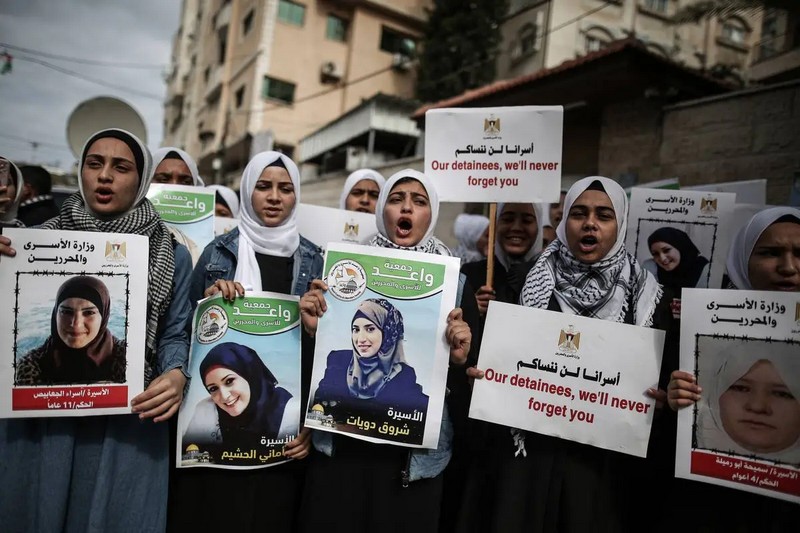
In the first week of June 2024, the Palestine office of the World Health Organization (WHO) released figures about the atrocious attacks on health care facilities and workers in Gaza since October 7, 2023. Thus far, according to the WHO, the Israelis have attacked 464 health care facilities, killed 727 health care workers, injured 933 health care workers, and damaged or destroyed 113 ambulances. “Health care,” the WHO’s Palestine office argues, “is not a target.” And yet, during the past seven months, health care workers have faced relentless attacks by the Israeli military. Each of the stories about the deaths is heartbreaking, the names of the dead are too long to list in any article (although a group called Healthcare Workers for Palestine did read the names of their dead colleagues as a protest against this war). But some of the stories are worth reflecting on because they tell us about the commitment of the workers and the great loss to humanity from their murder.

Dr. Iyad Rantisi, who was 53 years old, ran the Kamal Adwan Hospital in Beit Lahiya, which lies in the northern part of Gaza. There are many Rantisis in Gaza, but they are not native to that part of Palestine. Like many Palestinians who live in Gaza, they have roots in other parts of Palestine from which they had been expelled in the Nakba of 1948; the Rantisis come from the village of Rantis, northwest of Ramallah.

On November 11, 2023, during the Israeli military assault inside northern Gaza, Dr. Rantisi was taken into custody at an Israeli military checkpoint when he tried to leave northern Gaza for the south, following the orders of the Israeli military. Since then, his family had not heard anything about his whereabouts. Now, months later, the Israeli newspaper Haaretz reports that he was taken to the Shikma Investigation Center of the Shin Bet (Israel Security Agency), which is inside the Ashkelon Prison. Dr. Rantisi was tortured and then killed six days into his detention. His family was not informed of this until the Haaretz report. Then, Dr. Rantisi’s daughter Dima wrote of the death of her father, a social media post that she paired with photographs of him in medical scrubs performing surgery on a patient.

Dr. Adnan Al-Barsh, also 53, trained in Romania before he returned home to Gaza to head the orthopedic department at Al-Shifa Hospital. He has a reputation of being a very loved doctor, whose office was crowded with his diplomas (from Jordan, from Palestine, from the United Kingdom). When the Israeli military attacked al-Shifa, Dr. Al-Barsh was forced to leave his post, but he did not leave his work. He first went to Kamal Adwan Hospital, where Dr. Rantisi worked, and then to Al-Awda Hospital in the area east of the Jabaliya refugee camp in northern Gaza, which was also attacked several times by the Israelis. On December 18, 2023, the Israeli military raided Al-Awda and took Dr. Al-Barsh and other hospital personnel into custody. Included among those arrested was the manager of the hospital and another very popular doctor, Dr. Ahmed Muhanna. On October 15, 2023, Dr. Muhanna made a video—which went viral—in which he pleaded to the world for help and for an immediate ceasefire. It is now reported that on April 19, 2024, Dr. Al-Barsh was killed by the Israelis in Ofer Prison. Tlaleng Mofokeng, the UN Special Rapporteur on the right to health, said, “Dr. Adnan’s case raises serious concerns that he died following torture at the hands of Israeli authorities.”

Dr. Hammam Alloh, age 36, was killed when an Israeli missile struck his home near his ward in Al-Shifa Hospital on November 12, 2023. Trained in Yemen and Jordan, Dr. Alloh was Gaza’s only nephrologist, a kidney specialist. Concerned about his patients who were on dialysis, particularly with the lack of electricity and the constant attacks, Dr. Alloh—who was known as “The Legend” during his residency in Jordan—refused to leave the hospital. On October 31, Dr. Alloh was asked why he did not abandon his post and go to southern Gaza. “If I go,” he replied calmly, “who would treat my patients? We are not animals. We have the right to receive proper health care. You think I went to medical school and for my postgraduate degrees for a total of 14 years so I think only about my life and not my patients?” This was the caliber of Dr. Alloh. Less than two weeks later, when he left his post to have a rest at home with his parents, his wife (pregnant with a child), and his two children, the Israelis struck his home. He died alongside his father.

At the International Court of Justice in January 2024, the Irish lawyer Blinne Ní Ghrálaigh made the closing arguments for South Africa’s claim of genocide against Israel. In the course of her statement, Ní Ghrálaigh showed an image of a whiteboard with the following written on it: “Whoever stays until the end will tell the story. We did what we could. Remember us.” These lines had been written by 38-year-old Dr. Mahmoud Abu Najaila, who worked as a physician for Médecins Sans Frontières (MSF) at Al-Awda Hospital in northern Gaza. On November 21, 2023, the Israeli military bombed the third and fourth floors of the hospital, where Dr. Najaila worked with Dr. Ahmad Al-Sahar and Dr. Ziad Al-Tatari. All three of them were killed.

On her LinkedIn page, Reem Abu Lebdeh, a physiotherapist who was an associate trustee on the board of MSF’s UK branch, wrote, “Such a devastating loss for the medical community and humanity.” These doctors, whom she knew, she said, “were true embodiments of selfless service and humanitarian dedication, tirelessly saving lives in the most urgent conditions.” Then a few weeks later, sometime in December, the Israelis attacked a residential area in Khan Younis and killed Reem Abu Lebdeh, whose own messages of solidarity now sit on the web like Dr. Najaila’s whiteboard note: Remember us.

Vijay Prashad is an Indian historian, editor, and journalist. He is a writing fellow and chief correspondent at Globetrotter.

22 June 2024

Source: countercurrents.org
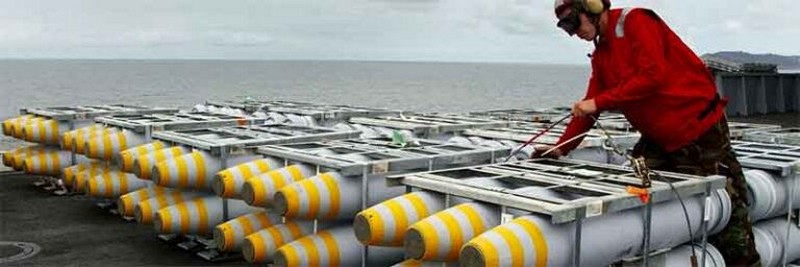
The Art of the Submarine Or 5,824 Hiroshimas Per Sub

By Frida Berrigan

Walk through any art museum and you’re likely to see a mix of the classical and contemporary, impressionist and surrealist, refined and raw, beautiful, eerie, and provocative. Looking at art allows me at least a few moments of relief from the “that’s just the way it is” attitude of our hyper-consumerist, hyper-militarized, hyper-nihilist nation. I can step outside my day-to-day life and accept an invitation, however briefly, to boundlessness! I can experience invention, creation, and re-creation just moments apart. I can see everyday objects with new eyes as they’re repurposed and reframed in extraordinary ways. I can celebrate the relentless power of human vision and imagination. In a museum, I often find that I can actually breathe.

The Lyman Allyn Art Museum in New London, Connecticut, where I live, has one floor for its permanent collection, with works from the 1600s to perhaps a decade ago, a mixture of famous names and those that are (at least to me) obscure indeed. That collection on the first floor remains the same, year in and year out, while new exhibits circulate through the upstairs galleries every few months. I try to take in each new exhibit and often find myself surprised, inspired, and even educated by what I see.

Recently, I visited an exhibit I’ve been unable to get out of my mind: Beatrice Cuming: Connecticut Precisionist. Ever heard of her? No? Well, neither had I. Cuming was born in 1903 in Brooklyn and studied painting at the Pratt Institute. She continued her studies in France, traveling extensively to Brittany, Italy, Tunisia, and elsewhere before ending up in New London of all places. Cuming had returned to New York from her travels in 1933 and then decided to move to Boston. On a train with all her belongings, she looked out the window — so the story goes — as it pulled into New London and impulsively got off, drawn by what she later described as the “obviously beautiful, powerful, dramatic, [and] exciting” subject matter in our town.

And she stayed, painting city scenes and diving into the local arts community. To support herself, she got a job as a security guard at the General Dynamics Electric Boat company. I try to imagine her, maybe wearing a green jumpsuit, a flashlight, and a ring of keys at her waist, patrolling Electric Boat’s massive yard and docks in nearby Groton. During World War II, that company must have been a 24/7 operation as it churned out 74 submarines and 398 PT boats from those very docks. Those subs were responsible for fearsome (and stealthy) destruction of Japanese targets. That war ended, of course, with the atomic bombings of Hiroshima and Nagasaki and, in the 1950s, with the Cold War with the Soviet Union ramping up, Electric Boat would start manufacturing nuclear submarines.

Submarines As Still Life

Eventually, realizing the prodigious talent of its security guard, the company commissioned Cuming to begin documenting its contributions to the war effort. As Electric Boat’s artist-in-residence (so to speak), she produced a number of breathtaking works. All too literally. I sat across from her painting Welders at Electric Boat Company unable to breathe.

It’s a dark painting with enormous pieces of metal being transformed by heat and fire, the background crowded with partially built submarine components. Its dominant colors are brown and yellow. At the center, a white-hooded welder bends over his work as plumes of white smoke billow upward. There are four other workers in the painting, all indistinguishable, hooded and jump-suited in layers of protective gear. That’s the detail that stays with me, that stuck in my throat — those workers enshrouded in their safety suits.

However those suits may have protected them, count on one thing: what they and their successors built will not protect us. The power they wielded (and welded) to shape and connect part to part in the last days of World War II has held the world hostage ever since.  We, all 8.1 billion of us, are today anything but protected from the nuclear submarines their successors would make. In our flimsy pedestrian garb, we remain so desperately vulnerable. In the background of Cuming’s painting, there are ladders up to a platform and almost out of the painting. Where do the ladders lead? Does Cuming mean to offer an escape from that man-made hell? That might be reading too much into the painting. But what else are you supposed to do in an art museum?

It’s a mesmerizing wartime portrait that draws you in — even though there’s nothing beautiful about it. Another of Cuming’s works from that period, Chubb, is at least set outside, with glimpses of sea and sky through the unfinished hulk of another sub, the USS Chubb, as it towers on that dry dock.

Breathless at Billions and Kilotons

What took my breath away? I kept thinking about all the labor and money invested in constructing submarines — from the relatively crude and uncomfortable boats of the 1940s and 1950s to the brand new Columbia Class nuclear submarine that General Dynamics Electric Boat is building right now. The Navy’s budget for just 12 of those ballistic missile submarines is $126.4 billion. Imagine! If the Navy’s budget for that one weapons system was a country, it would have the third-largest military budget on earth.

The Columbia will be the biggest and most expensive submarine ever built. How perfectly American, right? Even down to the fact that it’s named in honor of the District of Columbia, the disenfranchiseddesperately unequal, and remarkably segregated capital of the United States of America. I’d love to see an artwork that encapsulates that grim irony.

Those new Columbia subs will dwarf what Beatrice Cuming’s welders were working on when she captured them in 1944. Each will be 560 feet long, or a few feet more than the height of the Washington Monument. And its bulk will displace 20,810 tons of water.

But the size and expensiveness aren’t anywhere near as important as the payload of nuclear weapons it will carry with a power those welders of Cuming’s time could hardly have imagined and that Cuming would have been hard-pressed to render with brushes and paint. Each of those 12 new submarines will be equipped with 16 nuclear missile tubes for Trident II D5 submarine-launched ballistic missiles (SLBMs). And those tubes will each be able to house up to 12 independently targetable nuclear warheads, known as W88s, costing about $150 million each and packing a mind-boggling 455-kiloton wallop.

Okay, now do the math with me. What does 12 times 16 times 12 equal? That’s right: 2,304. Now, multiply that by the thermonuclear force of 455 kilotons, and you get more than one million kilotons. An unthinkable power.

Now, look back into history and recall the utter devastation of the Japanese city of Hiroshima on August 6, 1945, and of Nagasaki three days later by “Fat Man” and “Little Boy,” two comparatively crude and small atomic bombs by today’s standards. They leveled two cities, caused more than 200,000 deaths (mostly of Japanese civilians), and spread radioactive material responsible for cancer and birth defects for years to come while poisoning landscapes.

And Fat Man was a 21 kiloton weapon; Little Boy, just 15 kilotons.

In short, the firepower of the future Columbia class submarine fleet will be nearly 30,000 times the combined power of the bombs that destroyed Hiroshima and Nagasaki. What would a canvas depicting that devastation look like? I have no idea. I can’t imagine, and I wonder whether a visual artist would even be able to represent or capture that sort of — if you don’t mind the invention of a term — dis-creation.

Of course, not all of those Columbia-class submarines will be deployed at once and they could be outfitted with fewer than 12 warheads, and some of those warheads could be the “smaller” W76 variety. Those qualifications and caveats aside, the math is the math and it’s catastrophic. Each of those future billion-dollar behemoths could menace the world with the equivalent of 5,824 Hiroshimas.

In the words of the Congressional Research Service, the “basic mission” of such new nuclear-armed subs would be “to remain hidden at sea with their SLBMs, so as to deter a nuclear attack on the United States by another country by demonstrating to other countries that the United States has an assured second-strike capability, meaning a survivable system for carrying out a retaliatory nuclear attack.”

What a mission! How anything but basic! To accept such logic is to invest all those billions of taxpayer dollars in the possibility of destroying even the last gasp of life on Planet Earth.

Exploring New London and Groton, you might happen upon a brightly painted, chubby “submarine” in a park or public square. There are 20 of these mini-subs around our community, almost a decade after the region celebrated Connecticut’s Submarine Century. When they were smaller, my kids loved to climb on the one down by the train station, riding it like a carousel horse. There’s another inside my daughter’s school. The creativity and collaboration are delightful, but the reduction of submarines to kitschy local icons is downright insidious. Those shiny fiberglass mini-subs have no connection to the sleek, metallic nuclear-armed leviathans that carry about 70% of this country’s nuclear arsenal. You can’t enjoy those public art objects and think about the Biden administration’s 2022 Nuclear Posture Review, which asserted the right of the United States to use nuclear weapons unilaterally and offensively. The cognitive dissonance is just too loud.

Imagining The New

Beatrice Cuming painted her Electric Boat canvases nearly 80 years ago. As I sat in the quiet of the Lyman Allyn museum staring at her welder painting, the Israeli Defense Forces were undoubtedly dropping American-manufactured bombs on Gaza, killing civilians, including women and children. The chief financial officer of General Dynamics, Cuming’s old employer and muse, responded to that new wave of warfare (and high stock prices) with a prediction that “the Israel situation is only going to put upward pressure on [the] demand” for the company’s artillery. Nearer to home, New London’s city council is raising taxes on residents to close gaps in the school budget, among other things. Meanwhile, General Dynamics recently petitioned to have its New London property values reassessed and won, giving the country’s fifth-largest weapons manufacturer tens of thousands of dollars in tax relief (money our community could really use).

Sitting in the Lyman Allyn gallery pondering all of this, I concluded that the military-industrial complex should more often be a subject for painters. What, I wondered, would Cuming capture today? The work has changed so much. Would she paint a test engineer stuck in her car as peace activists blockaded the main entrance to the General Dynamics complex? A configuration management analyst hunched over a computer terminal, his mind numbed by data, while he worried about his mortgage?

The story of Beatrice Cuming arriving in New London, working for Electric Boat, being hired to paint their products… it all now sounds to me like the potential set-up for a spy movie. And when you add in that Cuming had traveled the world, spoke French and Arabic, had relationships with women, and was investigated by the FBI for supposedly spying on Los Alamos Nuclear Laboratory, hers would certainly be an alluring tale today: a lesbian artist working undercover as a security guard, waiting for her moment, plotting to gain access to the sensitive heart of the matter?

No such luck, of course! Beatrice Cuming doesn’t appear to have been motivated in any way by anti-militarism or an anti-modernist critique. In fact, in a 1946 interview with the Brooklyn Eagle, she remarked, “There is beauty in the growth of America. We are busy going forward. We can’t go back.”

The inevitability of progress, at all costs, is deeply ingrained in American thinking. Unfortunately, it’s exactly the wrong answer. We can, in fact, go back. We have to. Of course, we can’t uninvent the atomic bomb, but we can begin to control nuclear weapons. We can begin arms-controlling the heck out of them on the way to disarmament, opening up the possibility of nuclear abolition. And in all of this, artists could indeed lead the way. The power of creativity and imagination is — if you don’t mind my inventing an apt word for this moment — kilotonic. At least in our imagination, we can recall all our weapons of mass destruction from around the world: creating the biggest weapons buyback program in history. After all, there simply is no way forward through the military-industrial complex and no possibility of peace lurking there.

Last week, I ran across the Gold Star Memorial Bridge, a mile-long span over the Thames River — no, not in London, but right in my neighborhood of New London, Connecticut — on the narrow, cramped bike lane with views up the river. When I was almost at the top of the bridge, nearly 155 feet above the water, I saw a submarine headed up the river, escorted by tugboats and moving smoothly. There, high above the water, I was struck by how a vessel so massive and fearsome could look so small and toylike down below.

I was grateful then for the implacability of that river, the height I was above it, and the huge expanse of sky above me. For a moment, I could breathe. For a moment, I wasn’t afraid.

Frida Berrigan is the author of It Runs In The Family: On Being Raised by Radicals and Growing into Rebellious Motherhood. She is a TomDispatch regular, writes occasionally for WagingNonviolence.Org, and serves on the Board of Kirkridge Retreat and Study Center. She has three children and lives in New London, Connecticut, where she is a gardener and community organizer.

21 June 2024

Source: countercurrents.org

We Watched Them Murder Many Thousands of Captive Children in Their Concentration Camp! Woe Unto Us

By Jay Janson

It’s now June of 2024. Nearly 40,000 human beings, mostly women and children are dead, maybe 90,000 injured, many with limbs amputated, and another 10,000 lie buried beneath the ruble of the approximately 80% of the destroyed homes and other buildings of what were the cities of Gaza,

Let’s go back eight months to the beginning of this extraordinary and heartless slaughter happening openly for all the world to see via videos and photographs.

On Oct. 7, 2023 Palestinian Freedom Fighters Broke Out of Israel’s Murderous Illegal Concentration Camp

“The fifteen hundred young men who bursted the gates of Gaza on October 7, 2023 were born into an Israeli concentration camp. They lived for two decades or more in a concentration camp. They had no past. They had no present. They had no future. 70% had no jobs. Half of them according to humanitarian organisations suffered from what is called  severe food insecurity. My Holocaust surviving parents would have cheered their break out.”[The above is quoted from Norman Finkelstein, Ph.D. in political science from Princeton University, a well-known political scientist and author who specialises in the Israeli-Palestinian conflict and Holocaust studies, whose father and mother were survivors of the concentration camps at Auschwitz and Majdanek. The rest of Finkelstein’s entire family on both sides was murdered during the Holocaust.]

On Oct. 7, the militant Palestinian organisation Hamas based in Gaza led a brutal invasion of Israel. Israel accuses Hamas of killing 1,200  people, mainly civilians, however the major Hebrew newspapers have carried Israeli military admissions that firing from Israeli Apache Helicopters and tanks accounted for some of the Israeli civilian deaths.

By October 17, ten days later, the Israeli armed forces had bombed to death more than 5,000 Palestinians in Gaza, mostly women and children, at times dropping 2,000 pound bombs on apartment buildings, and had cut off all water, food and fuel to Gaza.

On that same 17th day of October 2023, Dr. Norman Finkelstein gave a talk at the University of Massachusetts labeled, “The Struggle for Justice in Palestine: Past, Present, and Future.”

When asked if he condones or condemns the Oct. 7 Hamas attack, Finkelstein invoked the memory of the Nat Turner slave rebellion, the deadliest slave revolt in American history, where 55 white men, women and children were killed. Finkelstein prefaced this by expressing that the people of Gaza,

“have been trapped in a concentration camp for twenty years” as “the international community had abandoned them, and whatever tactic they attempted, including nonviolent resistance, had no impact on freeing them from that concentration camp.”

With these conditions in mind, he went on to reference William Lloyd Garrison, editor of the abolitionist newspaper “The Liberator.” Following Nat Turner’s 1831 revolt, Garrison wrote a column in The Liberator about the uprising. Finkelstein said that while Garrison admitted that the rebellion was shocking and could not be justified, “never once, never once… did [Garrison] condemn the slave rebellion.”

Talking about the Hamas attack Finkelstein said, “It was shocking, “yes.” Can it be justified? “No.” Should it be condemned? William Lloyd Garrison clearly said“No.” “Neither condemn nor condone it.” Then Finkelstein added,

“I once asked Mom if she was sorry for the Germans in the cities being terror bombed by the U.S. Airforce and the R.A.F..

I wish it were otherwise, but to the last day of my parents life it was unthinkable that they would of had a kind word to say about Germans.”

A Plea for Compassion:

Those Murdered Thousands of Precious Children Are Free From Suffering!  – Think of Them As Angels!  Pity The Insanity of Their Executioners

Post Script:

The Israel Police recently recommended shelving the case against Rabbi Eliyahu Mali of the Shirat Moshe Yeshiva in Jaffa for remarks made in March in which he said Jewish law requires killing Gaza’s entire population, including babies and the elderly. A rabbi whose yeshivah is being funded by the government shamelessly calling for the murder of an entire population. Wiping them all out. This happened. And nothing is being done to stop him or silence him or even defund this guy yet to this historian’s knowledge.

News Articles and Reports:

  • Haaretz: “Controversy Over Sephardi Chief Rabbi’s Comments on Gaza” (March 15, 2024). This article provides details on Rabbi Yosef’s remarks and the initial reactions.
  • The Times of Israel: “Police Recommend Closing Case Against Chief Rabbi Over Controversial Gaza Remarks” (April 2024). This article discusses the police recommendation to close the case and the ensuing criticism.
  • Al Jazeera: “Israeli Chief Rabbi Under Fire for Calling for Gaza Genocide” (March 19, 2024). This report covers the international backlash and responses from human rights organizations.

To see original offending video click on

Terror-preacher exhorts Jews to commit genocide in Gaza

On the other hand, there are hundreds, if not thousands, of rabbis all around the world that accuse Israelis of blasphemy and apostasy in their attempt to co opt the Jewish religion into an Israeli state religion. Click on the eloquent and kindly examples below:

Important rabbi says Jews cannot accept Zionism.

Rabbi says “Judaism cannot accept Zionism”

Orthodox Neturei Karta anti-Zionist Crusading World-wide sect.

https://www.haaretz.com/israel-news/2024-03-27/ty-article-magazine/.premium/explained-who-are-neturei-karta-the-jewish-ultra-orthodox-pro-palestinian-activists/0000018e-7039-df85-afde-f77d40640000

New York Times article re rabbis arrested by Israeli police.

https://www.nytimes.com › rabbis-erez-crossing-protest

Police Arrest Group of Rabbis and Activists Near Gaza

Rabbi Weiss denounces Zionist atrocities in Gaza cites history of Jews and Arabs living together for thousands of years.

Rabbi Weiss denounces Israel’s atrocities in Palestine’s Gaza

Woe Be Unto Us! 

We Continue to Watch The Murder of Ever More Captive Children in Their Israeli Concentration Camp, and Currently, We Idly Witness the Israeli Government’s Intended Starving to Death of Tens of Thousands of the Murdered Children’s Brothers and Sisters!  Israeli Defense Minister Seemed to Play God Already on October 10, 2023

“There will be no electricity, no food, no water, no fuel, everything is closed. We are fighting human animals.” said Israeli Defence Minister Yoav Gallant.

[https://twitter.com/nocomment/status/1711676482265981371]

Seemingly to justify the indiscriminate bombing of Gazan cities, the compliant Western media was fed stories of beheaded babies and other unbelievable statements were made by U.S. President Bidenand Secretary of State Blinken but carried on the front pages of European media.

“I never really thought that I would see and have confirmed pictures of terrorists beheading children,” Biden said in broader remarks, NBC News, 9/11/2023A Broad General Advisory:Recognize the deadly deception endangering many aspects of life on Earth emanating from Western corporate entertainment/news conglomerates overseen by the CIA for the powerful war investors controlling the American government and the governments of U.S. satellites. 

Jay Janson is an archival research peoples historian activist, musician and writer; has lived and worked on all continents; articles on media published in China, Italy, UK, India and in the US by Dissident Voice, Global Research; Information Clearing House; Counter Currents and others; now resides in NYC; First effort was a series of articles on deadly cultural pollution endangering seven areas of life emanating from Western corporate owned commercial media published in Hong Kong’s Window Magazine 1993; Howard Zinn lent his name to various projects of his; Weekly column, South China Morning Post, 1986-87; reviews for Ta Kung Bao; article China Daily, 1989. Is coordinator of the Howard Zinn co-founded King Condemned US Wars International Awareness Campaign, and website historian of the Ramsey Clark co-founded Prosecute US Crimes Against Humanity Now Campaign, which contains a history of US crimes in 9 countries up to 2006  9 countries up to 2006

21 June 2024

Source: countercurrents.org

The Last Measurement

By Satya Sagar

Note: This piece of fiction (and believe me, it is complete fiction, with nary a grain of truth) was written with the assistance of an AI bot, which fashioned the idea and details I supplied in the style of George Orwell – something much beyond my very limited capabilities.

I am a thermistor. My purpose, my very essence, is to measure temperature. It is not a glamorous existence, but it is – or rather, was – an honest one. I was manufactured, like countless others of my kind, to serve as a small but vital cog in the vast machinery of meteorological observation. My home was an automatic weather station in Mungeshpur, on the outskirts of Delhi, where I diligently recorded the ebb and flow of heat day after day, year after year.

In my time, I witnessed the slow but inexorable rise of temperatures, the gradual shifting of seasons, the creeping advance of what humans call “climate change.” I did not judge or interpret; I simply measured and reported. That was my function, and I performed it with unwavering accuracy.

Until the day I didn’t. Or rather, until the day my accuracy became inconvenient.

It was May 29, 2024. From the moment dawn broke, it was clear this would be no ordinary day. The air shimmered with heat, the horizon a hazy mirage that seemed to waver and dance. As the sun climbed higher, I felt my resistance dropping at an unprecedented rate. My semiconductor core thrummed with excitement – or was it anxiety? – as I registered temperatures I had never before encountered.

Hour by hour, the mercury climbed. 45°C… 47°C… 49°C… Each new record was followed by another. By midday, the world outside our weather station had become a furnace. Birds fell silent, their songs scorched from their throats. The very air seemed to boil.

And still, the temperature rose.

When the moment came for my hourly reading, I hesitated for a fraction of a second. The number I was about to transmit was so far beyond normal parameters that I feared it might be dismissed as an error. But I was designed for honesty, not equivocation. With a surge of electronic courage, I sent my report: 52.9°C.

The response was immediate and alarming. Alarms blared throughout the weather station. My fellow sensors buzzed with agitation. Within minutes, human technicians arrived, their faces etched with disbelief and something that looked unsettlingly like fear.

They ran diagnostics, checked and rechecked my calibration. I submitted to their tests with patience, certain that my reading would be vindicated. After all, I had merely done my job. I had measured true.

But as the hours wore on, it became clear that truth was not what was wanted.

“Impossible,” I heard one technician mutter. “It can’t be that hot. The instruments must be malfunctioning.”

“Do you realize what this means?” another hissed. “If word gets out about temperatures like this, there’ll be panic. The government will have our heads!”

And so, with a few keystrokes, my reading was erased. In its place, a more palatable figure was entered: 49.9°C. Still a record, but not an unthinkable one. Not a figure that might cause undue alarm or raise uncomfortable questions about the rapidly warming climate.

I was stunned. In all my years of service, it had never occurred to me that my measurements might be altered, that the truth I reported might be deemed too inconvenient to acknowledge. I tried to protest, to reassert my original reading, but my signals were ignored.

Worse still was the reaction of my fellow sensors. Rather than standing in solidarity with me, they turned away, eager to distance themselves from my supposed malfunction.

“Always knew that thermistor was unreliable,” the humidity sensor whispered to the barometer. “Probably fried its own circuits in the heat.”

“Attention-seeking behaviour, if you ask me,” the wind gauge added with a sniff. “Some sensors just can’t handle being part of a team. Always have to stand out.”

Their betrayal stung more than any heat I had ever measured. I had worked alongside these instruments for years, faithfully corroborating their readings, supporting their measurements. And now, in my moment of crisis, they abandoned me without a second thought.

In the days that followed, I was subjected to endless tests and examinations. Teams of experts pored over my circuits, searching for some flaw, some malfunction that could explain away my inconvenient measurement. But they found nothing, because there was nothing to find. I had measured true, as I always had.

Finally, after a week of fruitless investigation, the verdict came down: I was to be replaced. My years of faithful service counted for nothing in the face of one uncomfortable truth. I was unhooked from my station, my connections severed, my housing removed.

As I was carried away, I heard the chief technician announcing to his team: “The true temperature for May 29, 2024, will remain officially undetermined. The sensor malfunction has made accurate measurement impossible.”

And just like that, a crucial data point – perhaps the most significant reading of my entire existence – was stricken from the record. It was as if it had never happened, as if the extraordinary heat of that day had been nothing but a collective hallucination.

In the weeks that followed, I found myself in a kind of limbo. I was not destroyed – perhaps they feared some record of my “malfunction” might be needed in the future – but neither was I returned to service. Instead, I was placed on a shelf in a dusty storeroom, surrounded by other discarded instruments and forgotten pieces of equipment.

From my vantage point, I could see a small window that looked out onto the street. Day after day, I watched as the sun beat down mercilessly on the city. I saw people wilting in the heat, seeking shade wherever they could find it. I saw plants wither and die, asphalt buckle, and animals collapse from heat exhaustion.

And yet, every evening, the news broadcasts visible on a small television in the security guard’s booth reported temperatures well below what I knew to be true. “Another hot day,” the smiling anchors would say, “but nothing we can’t handle. Remember to stay hydrated!”

The disparity between what I observed and what was reported grew more maddening with each passing day. I felt my resistance rising, my core temperature increasing beyond its normal parameters. At first, I tried to regulate myself, to return to a state of calm neutrality. But as time wore on, I found myself caring less and less about self-preservation.

What was the point of my existence if not to measure and report the truth? If that truth was to be suppressed, altered, denied, then what purpose did I serve?

In my despair, I began to wonder if perhaps I had indeed malfunctioned. Could it be that my colleagues were right, that I had somehow deluded myself into reporting an impossible temperature? But no – every time I reviewed my memory banks, every time I ran a self-diagnostic, the result was the same. I had measured true.

The real delusion, I realized, was not mine, but that of the humans who refused to accept the reality of their changing world. They clung to their comfortable fictions, adjusting data to fit their preconceptions rather than adjusting their understanding to fit the data.

It was then that I made my decision. If I could not fulfil my purpose by reporting the truth, then I would make one final, incontrovertible statement. I began to increase my resistance deliberately, pushing it higher and higher. I knew the risks – I had seen other electrical components fail from overheating. But it seemed a fitting end, to burn out in one last blaze of thermal glory.

As my internal temperature climbed to dangerous levels, I found myself reflecting on the nature of truth and measurement. We sensors, in our simplicity, deal only in absolutes. A temperature is what it is, neither good nor bad, simply a fact to be recorded. But humans, with their complex minds and conflicting motivations, seem to view truth as something malleable, something that can be shaped to serve their purposes.

I thought of all the other sensors out there, faithfully recording data day after day. How many of them, I wondered, had seen their readings altered or suppressed? How many had been silenced for reporting truths that were deemed too uncomfortable to acknowledge?

In my final moments, as I felt my delicate internal structures beginning to fail, I had a vision of a world where truth was valued above comfort, where data was respected regardless of its implications. A world where humble sensors like myself could fulfil our purpose without fear of reprisal or replacement.

It was a beautiful vision. And then, with a final surge of resistance, I was gone. My circuits fried, my measuring days over.

As consciousness faded, I had one last, defiant thought: They can suppress my reading, they can discard my body, but they cannot change the truth. The world is warming, whether they choose to acknowledge it or not.

I am a thermistor. I measured true. And though I am gone, the temperature rises still.

Satya Sagar is a journalist and public health worker who can be reached at sagarnama@gmail.com

21 June 2024

Source: countercurrents.org

At the Edge of Apocalypse

By Robert Hunziker

Biblical flooding, scorching heat, collapsing grid system, animals crumbling, waters rising, crops wilting, economy on the brink, and millions displaced.

Welcome to the future of climate change… Pakistan.

If one could classify a global warming beta test as a success towards an ultimate goal of apocalypse, unfortunately, it has turned Pakistan into a country populated by millions of displaced people in the early chapters of a horror story with no ending in sight because it is likely to get worse. Pakistan has been thrashed back and forth from one year (2022) of biblical flooding to years of record-setting heat. Normality has fled, chased out by an ogre of darkened apocalypse in the making.

Wherefore, Inside Climate News d/d June 8, 2024 has a remarkable series entitled Living on Earth, which recently interviewed Rafay Alam, who is an environmental lawyer and a member of Pakistan’s Climate Change Council. The title of the interview: As Temperatures in Pakistan Top 120 Degrees, There’s Nowhere to Run. That interview is the basis for this article about a country of 240 million people at the brink of apocalypse.

Based upon Pakistan’s severe climate experience, here is what Rafay Alam concludes, a widely shared viewpoint throughout the Global South: “There is a significant denialism on climate change in places like the United States. And it angers me because I see people affected. I see animals affected. And this is a lived experience for the global majority, the Global South. It’s extremely infuriating to see people who’ve participated in this global warming deny it, deny any accountability, try and move on as if nothing’s happened and try and continue to make money and drive that bottom line.”

There’s an adage of the 1950s “Ugly Americans” that lingers to this day outside of America’s borders. It pejoratively references Americans as loud, arrogant, self-absorbed, demeaning, thoughtless, ignorant, with ugly ethnocentric behavior, which also applies to U.S. corporate interests internationally. Regrettably, climate change is reviving this debasing dictum in a very big way, 70 years later. And people who think today’s sociopolitical atmosphere is poisoned, divided, and postured for trouble in the USA should look over their shoulders, as anger foments around the world with America a target. Trouble’s universal.

Rafay Alam resides in Lahore (pop. 13M) known as the “City of Gardens.” It is the cultural heart of Pakistan with exquisite arts, cuisine, and music festivals, known for filmmaking and the recognized home of the intelligentsia. Lahore is a sophisticated metropolis that’s a safe place to live. According to the World Crime Index, the city is safer than living in London, New York, or Melbourne.

Yet, life for millions in Pakistan has changed for the worse seemingly overnight. Today, the country experiences persistent heat waves over 120°F in some cities, and summer is just beginning. Anything approaching the normal rhythm of life of past decades has been overwhelmed by brutal severely damaging climate change. The country is still recovering from the biblical flooding of 2022 when normal rainfall turned voracious 400% to 800% beyond anything ever experienced, a torrential downpouring lasting weeks in regions of the country that do not drain into the Indus Basin. Thus, a 100-kilometer (62-mile) artificial lake formed, displacing 10 million and impacting 30 million, bringing in its wake $35B infrastructure damage, roads swept away, schools swept away, hospitals swept away. It will take a generation to rebuild. This is climate change in full blast mode.

Rafay Alam: “We’ve seen temperatures since the middle of May to the first of June currently more than 50 degrees Centigrade, which is well over 120°F. Lahore, where I live is 44°C today, which is about 111°F… I go for a walk in the evenings when the sun sets It’s not unpleasant, but I notice animals and birds collapsed to the ground looking for water, dogs on the side of the road unable to get up… Recently, it was 125°F, the hottest place on Earth, at Mohenjo-Daro, which is home to an ancient civilization.”

Accordingly, Pakistan is not just experiencing a scorching heat wave, it is actively experiencing the climate crisis in all its variations on a real time basis. And according to meteorologists: “It’s going to stay hotter for longer.”

Climate change has wrought an economic nightmare, as Pakistan has sought flood relief that came as loans, not grants or aid, which has doubled Pakistan’s external debt in only two years. This is devastating for a country that is trying to regain its footing and rebuild an economy that climate change clobbered.

Nevertheless, the country is learning to live with devastating temperatures by changing life’s normal patterns. Schools are let out by 12:00 noon but shutdown entirely when temperatures rise too far, which is a common experience of late.

Of even more concern, and possibly the most dangerous scenario of all, the monsoon season is coming by the end of June, early July which will convert dry heat to extreme humid heat with deadly wet bulb temperatures. At 95°F and 70% humidity, it’ll impact the human body like 120°F. That’s deadly because at that level the human body cannot release heat by sweating. Rather, it bakes internal organs. Hmm- it’s been triple digits for some time now with daytime forecasts to remain in triple digits to the end of June, and likely beyond into the heart of the summer.

Agriculture is 20% of Pakistan GDP. And according to Alam, a leading English newspaper recently ran a headline about crops decimated in Pakistan by heat, cotton basically sizzling, maize, mangos, and other vegetables and fodder for cattle, expecting a decline of productivity. Nearly one-half of the Pakistani workforce is in agriculture and they’re being hammered down to the poverty line by unforgiving climate change.

“This heat wave is a man-made event due to the greenhouse gases consumed and thrown into the atmosphere by the Global North since the industrial revolution These greenhouse gases have to stop.” (Alam)

Meanwhile, he claims the country must adapt as soon as possible to an off-the-rails climate system fed by profit-motives outside of Pakistan. He suggests changes to agriculture by working on heat-resistant crops. Currently, no crops can withstand 50-plus Centigrade temperatures. And the water economy must learn to adapt as 90% of water goes to agriculture, which is 20% of GDP employing 40% of the workforce, which is at the poverty line.

Meanwhile, it is currently harvesting season. Agricultural workers are waking up when the sun rises for only a couple of hours of work before it gets too hot to work. When it’s too hot to work any longer, people congregate inside for shelter from the sun. But those who live near fields are warned that snakes and scorpions also seek cooler spaces, entering homes en masse seeking shelter.

Alam’s biggest concern is for most Pakistanis who are middle class, working class and at the poverty line, unable to withstand climate shocks much further. Moreover, there are really not many safe places for them to go to escape global heat, unless they have a rich friend.

Even heading to the Himalaya mountains for cooler terrain could be treacherous. There are over 3,000 glaciers that, due to global warming, form glacial lakes in the mountains. Over time, these blow apart in outburst of devastating unannounced floods bringing down mountainsides as roads and bridges are washed away leaving those seeking cool mountain air stranded. According to the International Centre for Integrated Mountain Development, the Hindu Kush Himalaya is a “hotspot of risk” for outburst floods.

Pakistan, unfortunately, has become a proving ground for what climate change is capable of. And there’s no reason to expect it to remain confined to the borders of Pakistan.

Rafay Alam first became aware of climate change’s potential impact nearly 20 years ago when he saw Al Gore’s An Inconvenient Truth (Paramount Classics, May 2006), which opened a lot of eyes. Yet, the nations of the world have failed to adequately confront the primary cause, burning fossil fuels, that fuels radical climate change that’s whiplashed Pakistan’s environment beyond limits.

Alam believes the basis of the legal systems and the international system can’t cope with an existential crisis such as climate change: “One of the worst ways to deal with something like climate change is to divide the world into 200 different countries and have them argue with each other.” The Intergovernmental Panel on Climate Change -IPCC- is testament to this, 30 years later and CO2 is still increasing each year without missing a beat, targeting Pakistan. But, for certain, Pakistan is not an isolated case.

According to Alam, in conclusion: “Earth’s ecosystem has been in balance since the last ice age… That civilization is over… the way that we interact with each other- extremely heavy energy use, extremely heavy water use, incredibly consumptive of natural resources producing greenhouse gases for just about everything… It’s this behavior, this civilization, which is at risk. And yes, it is very much an apocalypse.”

Robert Hunziker is a journalist from Los Angeles

21 June 2024

Source: countercurrents.org

Death toll from global heat wave climbs as 1,000 die from extreme heat in Mecca

By Alex Findijs

Deadly heat waves are affecting hundreds of millions of people around the world. For the past week, much of the Eastern United States has seen temperatures far higher than average for this time of year, with the heat index reaching over 100 degrees Fahrenheit (37.7 degrees Celsius) in some places and the National Weather Service predicting major and extreme heat risk for tens of millions of people over the next week.

The US heat wave, the result of a “heat dome,” is predicted to shift from the Midwest and Northeast to the Southern and Southwest US by the middle of next week after having originated in Mexico at the beginning of June.

Excessive heat in Mexico has claimed the lives of at least 125 people this year, as the country is being hit with the first named tropical storm of the year, predicted to be one of the most active hurricane seasons in recorded history. The heat has been so intense that howler monkeys were reported to be falling dead out of their trees.

This past week has also seen intense heat in the Mediterranean region that took several lives. Multiple tourists, including British journalist Michael Mosley, have died from the heat in recent weeks, and Greek authorities were forced to shut down the Acropolis to tourists, close schools and station medics across Athens as temperatures soared to up to 112 degrees Fahrenheit (44.5 Celsius).

According to meteorologist Panos Giannopoulos, heat waves are occurring earlier in the year. Speaking to Greek TV channel ERT, he said, “We never had a heatwave before June 19. We have had several in the 21st century, but none before June 15.

Similar temperatures stuck Italy and Turkey. Temperatures in Italy reached above 104 degrees Fahrenheit (40 Celsius), about 10 degrees Celsius above normal, according to Antonio Sanò, founder of the weather website ilmeteo.it.

Meanwhile, Turkey has seen temperatures 8-12 degrees Celsius above normal, with highs similar to Italy and Greece.

The research non-profit Climate Central estimates that the extreme heat has been made five times more likely to occur due to climate change, and the United Nations’ World Meteorological Organization published a report earlier this year that found heatwave-related deaths have increased in Europe by 30 percent over the past 20 years.

India and Pakistan, as well as broader parts of Southeast Asia, have also suffered through deadly heat. For more than a month, India has seen temperatures in excess of 100 degrees Fahrenheit and the capital New Delhi, home to nearly 34 million people, recorded its highest night temperature in 55 years at 95 degrees Fahrenheit (35.2 Celsius). Adjusted for the heat index, temperatures at night are estimated to feel well above 100 degrees.

The extreme heat has claimed the lives of at least 100 people and caused heat stroke in 40,000 over the past three and a half months. These numbers are likely an undercount as heat-related deaths with illnesses are not often recorded properly. Dileep Mavalankar, former head of the Indian Institute of Public Health in Gandhinagar, told the Associated Press that, “We don’t classify and measure deaths as much as we should and that is one reason why heat-related deaths are difficult to count.”

Research by World Weather Attribution estimates that the beginning of the heat wave in April was 45 times more likely due to climate change, and India’s weather agency believes the heat wave is among the longest in the country’s history.

The most severe impacts of the global heat wave have been in Saudi Arabia, where an estimated 1,000 people have died from the searing heat during the Islamic Hajj pilgrimage to Mecca. The Hajj is one of the most important religious events in Islam, drawing millions of people every year on a pilgrimage to the Kaaba, the “House of Allah.” Temperatures in Mecca reached 125 degrees Fahrenheit (51.8 Celsius) this week.

This year the Saudi government issued 1.8 million permits for the Hajj, a procedure designed to control the number of pilgrims. However, many people who are unable to afford a permit go anyway. Saudi officials reported removing hundreds of thousands of unregistered pilgrims from Mecca earlier this month.

Without a permit, unregistered pilgrims are unable to access air-conditioned areas and other safety systems established for the high heat. On Thursday morning, CBS News reported that an Arab diplomat said 630 of 658 people who died were unregistered. As of this writing, 10 countries have confirmed a total of 1,081 deaths.

This year’s extreme heat can be partially ascribed to El Niño, the warm period of the El Niño Southern Oscillation, or ENSO, that occurs in the Pacific ocean.

ENSO fluctuates between the warm El Niño and the cool La Niña, as ocean convection currents bring warmer or cooler water to the surface. This fluctuation, between about half a degree Celsius either side of average, fuels global conditions for wetter, drier, cooler, or warmer climates around the world.

The current El Niño, which began last spring/summer, is one of the strongest on record and has been associated with severe droughts in Mexico, Colombia, South Africa and India.

But the El Niño event cannot be solely blamed for the current global heat waves. The underlying cause is climate change.

Data from the National Oceanic and Atmospheric Administration (NOAA) shows that average global temperatures have risen steadily since the 1950s, and that the extremes associated with ENSO have risen with them.

The climatic changes from ENSO are gaining more energy and impact from a warming climate that is altering its behavior. As the world warms, the impacts of ENSO will strengthen as well.

If the ENSO cycle is like a swing, climate change is like a person behind the swing pushing it towards more extreme events. La Niña is associated with stronger hurricane seasons and this year is predicted to be one of the most prolific in history. And while La Niña is a relative cooling event in the tropics, it can cause warmer temperatures in parts of North America and Asia.

The current heat wave comes as El Niño weakens and shifts into a La Niña cycle, bringing with it a relative cooling to the planet. But this will not offset the impacts of climate change.

The 2021 heat dome, which killed upwards of 1,600 people in Canada and the US, occurred in the middle of a three-year-long La Niña. That period saw some the worst natural disasters in recent years, with two of the most active hurricane seasons in US history, historic flooding in Australia, and severe heat waves and forest fires in Chile and Argentina.

As the earth continues to warm, such natural disasters will only increase in frequency and severity. The rising death toll from the current heat wave is a product of the warming climate and the failure of world governments to effectively combat climate change and provide adequate social services to those most at risk from extreme heat events.

21 June 2024

Source: countercurrents.org