Just International

Masar Badil: US, Zionist regime and imperialist powers are full partners in the horrific Rafah Massacre

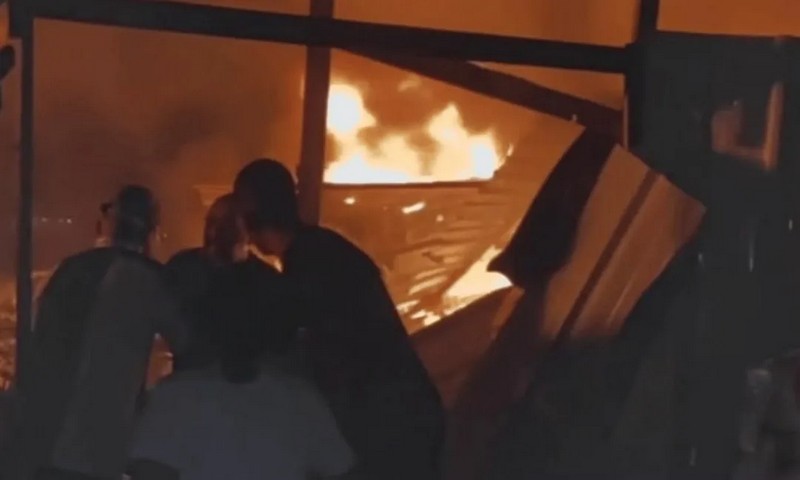
The latest massacre carried out by the Zionist regime as it targeted the camps of the displaced in Rafah – days after the International Court of Justice ordered the end of the attacks on Rafah and after the International Criminal Court prosecutor announced his intention to seek arrest warrants against the bloodstained war criminals Benjamin Netanyahu and Yoav Gallant – is a new advance in the horrors of genocide, deliberately targeting crowds of Palestinian families sheltering in tents around an UNRWA office, displaced multiple times over and seeking refuge from the ongoing assault. The scenes of burning tents, beheaded children, exploded families and violent destruction convey only a portion of the horror of this massacre.

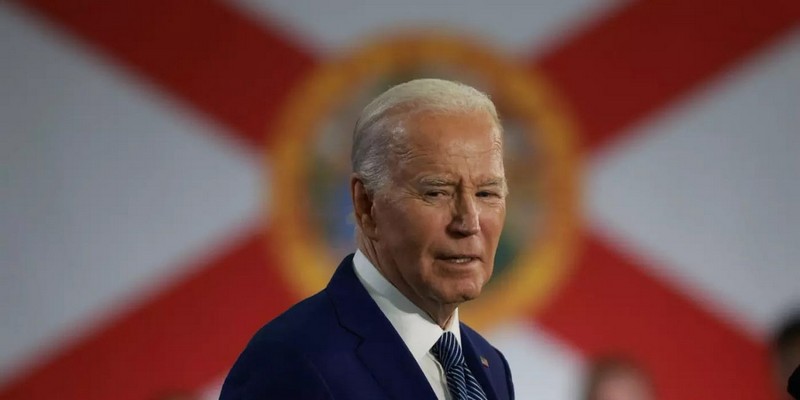
The United States, Britain, Germany and their fellow imperialist powers are fully, jointly, individually, equally and primarily responsible for these crimes alongside their Zionist colony, which have already taken the lives of over 50 martyrs, wounding dozens and potentially hundreds more. These are children and families who were deliberately targeted for no reason other than to kill the maximum number of Palestinian civilians, living in tents without protection, already forced from their homes. They were targeted by the latest delivery of tons of US-made weapons that the Zionist regime just received from the US in order to continue its genocide, at the same time that “Genocide Joe” Biden spoke his empty words about “red lines” in Rafah. The blood of our people is dripping from the hands of Biden and every member of Congress who continue to supply the genocidal occupation regime with the mechanisms of death and destruction.

The Masar Badil, the Palestinian Alternative Revolutionary Path Movement, calls upon Palestinians in the shatat and their allies, supporters and friends, all people of conscience and freedom in the world, to respond to these crimes with all the means at their disposal. Now is the time to expose and isolate the Zionist entity, fill the streets and squares with mass mobilizations, shut down the gears of empire and its war machine with direct action, besiege the embassies and consulates of the occupying entity and its imperialist backers, and to escalate all forms of pressure and action.

The so-called “international community” has utterly failed to stop the genocide for eight months. We must all act NOW to bring it to an end, and to bring down the genocidal entity that carried out this latest massacre, atop 76 years of massacres against our Palestinian people. These massacres once again expose the utter failure of the occupier’s criminal army against the heroic Palestinian armed resistance in Gaza. They deliberately target the most vulnerable of the Palestinian people to massacre children and families in their shelters as their cowardly forces completely fail to confront the steadfast resistance of our people. The armed resistance is the front lines of defense for all of humanity. This is the moment of choice for all: for humanity, dignity and justice, or for genocide, massacres, war crimes and plunder.

We reiterate our call to the people of Egypt to open the Rafah crossing and to take meaningful action to defend the Palestinian people under attack, to join with their Arab brothers and sisters in Yemen, Lebanon and Iraq acting to bring this genocide to an end. We urge them to express their anger and outrage at the policies of the fascist Sisi government that remains complicit in these war crimes.

The billions of dollars of weaponry that the United States provides to “Israel” – along with its fellow imperialist powers Britain and Germany – are used to carry out this slaughter in Rafah. They are not only failing to stop the crimes – they are responsible for the genocide. We must all do everything in our power to act immediately to bring it to an end NOW.

From the river to the sea, Palestine WILL be free.

27 May 2024

Source: masarbadil.org

CAIR Applauds ICJ Ruling Ordering Israel to Halt Rafah Attacks in Gaza

By Ibrahim Hooper

The Council on American-Islamic Relations (CAIR), the nation’s largest Muslim civil rights and advocacy organization, today applauded a ruling by the UN’s International Court of Justice (ICJ) in the Hague ordering Israel to halt its attacks on Rafah in Gaza.

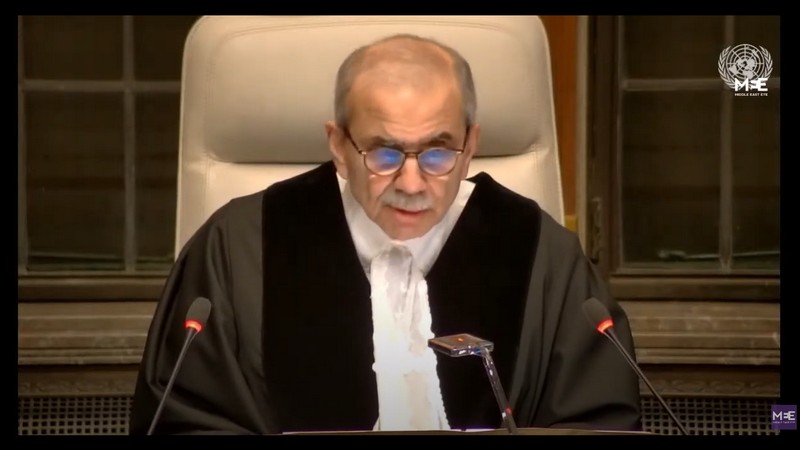
That court said the humanitarian situation in Rafah had “deteriorated further” since its previous court order, saying the situation there is “disastrous.” The court ruled 13-2 that Israel must immediately halt its military offensive and any other action in Rafah.

Nawaf Salam, the president of ICJ said: “Israel must take effective measures to ensure the unimpeded access to the Gaza Strip of any commission of inquiry, fact-finding mission or investigative body mandated by the competent organs of the UN to investigate allegations of genocide.”

Israel has slaughtered more than 35,000 Palestinians in Gaza, mostly women and children. Some two million Palestinians have been forcibly displaced.

In a statement, CAIR National Executive Director Nihad Awad said:

“We applaud this binding order by the United Nations’ top court demanding an immediate end to Israel’s slaughter and forced displacement of Palestinian civilians in Rafah. While the Biden administration stands alone in continuing to offer full support for Israel’s genocide in Gaza, the international community is increasingly pushing back against the slaughter, forced starvation and ethnic cleansing Israel’s far-right government is inflicting on the Palestinian people.

“Israel is clearly attempting to make Gaza uninhabitable. It must be stopped from completing this monstrous goal. President Biden must honor this important ruling by immediately ending all military assistance to Israel’s genocide.”

Earlier this year, CAIR expressed its support for South Africa’s request to the ICJ to adopt emergency measures to protect Palestinian civilians after the Israeli attack on Rafah and its threats of depopulation and further attack on the city.

In December of last year, CAIR welcomed the launch of a case by South Africa in the United Nations’ top court accusing Israel of genocide against Palestinians in Gaza.

This week, CAIR welcomed the recognition of the state of Palestine by Norway, Ireland and Spain, and called on the Biden administration to stop blocking that nation’s full United Nations membership.

CAIR’s mission is to protect civil rights, enhance understanding of Islam, promote justice, and empower American Muslims.

La misión de CAIR es proteger las libertades civiles, mejorar la comprensión del Islam, promover la justicia, y empoderar a los musulmanes en los Estados Unidos.

Become a Fan of CAIR on Facebook

http://www.facebook.com/CAIRNational

Subscribe to CAIR’s Email List

https://action.cair.com/a/newsletters

Subscribe to CAIR’s Twitter Feed

http://twitter.com/cairnational

Subscribe to CAIR’s YouTube Channel

http://www.youtube.com/cairtv

Follow CAIR on Instagram

https://www.instagram.com/cair_national

Donate to CAIR

https://action.cair.com/a/donate

Do you like reading CAIR press releases and taking part in our action alerts? You can help contribute to CAIR’s work of defending civil rights and empowering American Muslims across the country by making a one-time contribution or becoming a monthly donor. Supporters like you make CAIR’s advocacy work possible and defeating Islamophobia an achievable goal. Click here to donate to CAIR.

You are receiving this email due to your interest selection from commercial media databases. If you would like to join CAIR’s media list, please sign up here: https://action.cair.com/a/newsletters — For more information, email: info@cair.com, CC ihooper@cair.com

END

CONTACT: CAIR National Deputy Director Edward Ahmed Mitchell, 404-285-9530, e-Mitchell@cair.com; CAIR Government Affairs Director Robert McCaw, 202-742-6448, rmccaw@cair.com; CAIR National Communications Director Ibrahim Hooper, 202-744-7726, ihooper@cair.com; CAIR National Communications Manager Ismail Allison, 202-770-6280, iallison@cair.com

24 May 2024

Source: cair.com

Indeed, There Is No Comparison. Israel’s Crimes Are Far Worse Than Hamas’. Jonathan Cook

By Jonathan Cook

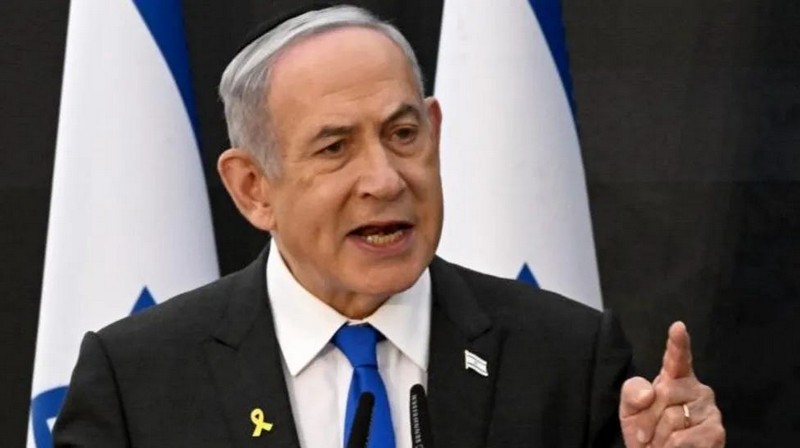
There is one thing we should all be able to agree with Benjamin Netanyahu on: Any comparison between Israel’s war crimes and those of Hamas is, as the Israeli prime minister put it, “absurd and false” and a “distortion of reality”.

Here’s why:

  • Israeli war crimes have been ongoing for more than seven decades, long predating Hamas’ creation.
  • Israel has kept the Palestinians of Gaza caged into a concentration camp for the past 17 years, denying them connection to the outside world and the essentials of life. Hamas managed to besiege a small part of Israel for one day, on October 7.
  • For every Israeli killed by Hamas on October 7, Israel has slaughtered at least 35 times that number of Palestinians. Similar kill-ratios grossly skewed in Israel’s favour have been true for decades.
  • Israel has killed more than 15,000 Palestinian children since October – and many tens of thousands more Palestinian children are missing under rubble, maimed or orphaned. By early April, Israel had killed a further 114 children in the West Bank and injured 725 more. Hamas killed a total of 33 Israeli children on October 7.
  • Israel has laid waste to Gaza’s entire health sector. It has bombed its hospitals, and killed, beaten and kidnapped many hundreds of medical personnel. Hamas has not attacked one Israeli hospital.
  • Israel has killed more than 100 journalists in Gaza and more than 250 aid workers. It has also kidnapped a further 40 journalists. Most are presumed to have been taken to a secret detention facility where torture is rife. Hamas is reported to have killed one Israeli journalist on October 7, and no known aid workers.
  • Israel is actively starving Gaza’s population by denying it food, water and aid. That is a power – a genocidal one – Hamas could only ever dream of.
  • Israel has been forcibly removing Palestinians from their lands for more than 76 years to build illegal Jewish settlements in their place. Hamas has not been able to ethnically cleanse a single Israeli, nor build a single Palestinian settlement on Israeli land.
  • Some 750,000 Palestinians are reported to have been taken hostage and jailed by Israel since 1967 – an unwelcome rite of passage for Palestinian men and boys and one in which torture is routine and military trials ensure a near-100% conviction rate. Until October 7, Hamas had only ever managed to take hostage a handful of the Israeli soldiers whose job is to oppress Palestinians.
  • And, while Hamas is designated a terrorist organisation by western states, those same western states laud Israel, fund and arm it, and provide it with diplomatic cover, even as the World Court rules that a plausible case has been made it is committing a genocide in Gaza.

Yes, Netanyahu is right. There is no comparison at all.

Jonathan Cook is the author of three books on the Israeli-Palestinian conflict, and a winner of the Martha Gellhorn Special Prize for Journalism.

24 May 2024

Source: globalresearch.ca

Interview with Prof. Jefferey Sachs: Will the Death of U.S. Hegemony Lead to Peace—Or World War III?

Professor Jeffrey Sachs, currently a Professor at Columbia University, has held positions around the world as an economist, and has become one of the most outspoken peace advocates in the United States. This interview was conducted on May 15 by EIR’s co-editor Mike Billington.

Mike Billington: I listened to your interview with Jill Stein, the presidential candidate for the Green Party. I noticed that she ran through your various hats, which took her a long time to do! Rather than running through all of that, I thought I would start with your original profession, which was an economist. I want to read to you a quote from Russia’s Executive Director at the IMF, Aleksei Mozhin. Do you know him personally?

Prof. Sachs: I know him very well.

Billington: Yes, I assumed you would. What he wrote on May 3rd in Ria Novosti was this: “If American debt continues to increase, which I expect it will, confidence in the U.S. dollar will decline. Chaos will ensue in the global economy, and the possibility of a collapse exists.” What are your thoughts on that?

Prof. Sachs: First, Aleksei Mozhin has been Executive Director for Russia for, I think, three decades. He’s outstanding, absolutely outstanding. So what he says we should take very seriously. He’s been dean of the executive directors, meaning the longest serving. He presides often at the IMF. So I have great respect for him.

What he’s saying is that the public debt of the U.S., which is now more than 100% of national income and rising rapidly, will be a source of financial crisis in the years ahead. I concur with that. We don’t have any kind of political consensus in the United States about what government should do and how to fund it, so the recourse of both the Democrats and the Republicans is to run larger deficit spending.

The Republicans really like tax cuts. The Democrats like various kinds of spending increases or tax credits, but both sides like war. So both sides spend fortunes on war. The upshot is that since the year 2000, the public debt has risen from around one third of national income to more than 100% of national income. The Congressional Budget Office of the United States makes long term projections, and their long term projection for mid-century is that the debt will rise to around 200% of GDP. That’s not the precise number that they give, but essentially the ratio of debt to national income doubling. That’s not a forecast so much as saying, if we stay on the current trajectory. So the fact that we have no political equilibrium in this country means that the fallback option is raise the debt, and eventually that leads to crisis.

Billington: Right. I’m going to continue reading from Aleksei Mozhin. What he said next was about the BRICS (the organization founded by Brazil, Russia, India, China, and South Africa) and the role of the BRICS in dealing with this situation: “The BRICS are putting together an accounting unit based on a basket of currencies of the original five members of the BRICS, which will include daily quotes for the main commodities,” and he mentions in that regard oil, grain, gold, metals and timber. He goes on: “Mutual trade will be carried out in this accounting unit. If there is a collapse, it would be necessary to turn the BRICS accounting unit into a real currency backed by exchange traded goods.”

That’s his quote. I’ll mention that this is very close to the idea proposed by Lyndon LaRouche in the year 2000 called “Trade Without Currency,” which was subsequently studied by Russian economists Sergey Glazyev and others who are planning the BRICS policies for how to deal with this global crisis. As you know, the Russians and the Chinese are also quite verbally warning of the severity of the global financial blowout that we are facing. So what are your thoughts on that idea?

Prof. Sachs: Well, I think, first, it’s important to say that a number of things are in play, and one of them is that the BRICS countries want a means of settlement that isn’t the U.S. dollar. This is one part of what’s in play. That’s not even mainly because of the debt crisis in the United States. That’s mainly because of the weaponization of the dollar by the United States. The U.S. began around 20 years ago to use the currency not merely as a system of settlements for international transactions, but also as a weapon of foreign policy, by seizing the assets of countries deemed to be adversarial to the U.S. The United States seized the balances of Iran, seized the balances of Venezuela, of Afghanistan. And now the big one, Russia—roughly $300 billion of Russia’s financial assets frozen by the Western governments. So these countries in the BRICS, that’s Brazil, Russia, India, China, South Africa, and now five more countries added, Egypt, Ethiopia, the Emirates, Iran, and, we think, Saudi Arabia—not entirely clear about Saudi Arabia, but it seems to be the case. They are saying that they want to hedge against this kind of geopolitical risk. This is one factor in this.

The second factor is that the dollar itself may become unstable for the reasons that we were speaking about. I would say a third factor is that there is lots of technological change, creating different ways to make settlements. The current settlement system goes through banks, but in the future it will go through digital currencies, probably central bank digital currencies.

Now, all of that, then, also raises questions. If you have a central bank currency, renminbi or a dollar or ruble, how do you manage monetary policy? Should that currency be backed by a basket of commodities? If so, in what sense backed by that basket? Could be a price indicator for monetary policy? It could be a literal kind of gold standard where you can take your currency unit and convert it into units of some kind of commodity or basket of commodities. There are lots of technical choices.

But the question is: does the central bank need some kind of anchor of a commodity to be responsible? Otherwise, the claim is sometimes made that central banks are inherently inflationary. At the end of the day, unless the currency is backed by something, it will be inflated away. So these are the issues that Lyndon LaRouche raised.

These are the issues that the BRICS are tackling right now. In my view, the order of priority for the BRICS is first not to have their foreign reserves seized by the United States or Europe, because both the U.S. and Europe are misbehaving very badly. They are using what should be financial instruments as foreign policy adversarial instruments. This is a big mistake and the BRICS want something else. Second is this unit of account issue. It happens that the first five countries Brazil, Russia, India, China and South Africa all have currencies that start with the letter R: the Brazilian real, the Russian ruble, the Indian rupee, the Chinese renminbi, and the South African rand—so they call it the five R currency unit.

I just found it an amazing coincidence. But in any event, Aleksei is carrying the ball on this. There are lots of good ideas to have a unit of account. I think there’s an interest among these major countries to do that, and they’re working pretty hard on this right now, and I’m in favor of it. I think there’s nothing wrong with having some alternatives. I keep saying to American policymakers, “Stop wrecking the dollar, stop weaponizing the dollar, stop seizing other countries assets. It’s absolutely ridiculous. If you want the dollar to be used, you can’t use it like a punching bag this way. I’m sure you know that.”

Billington: There’s now a bill in the Congress and discussion to not just freeze the Russian money, but to use the interest earned from it to literally hand over to the Ukrainian war.

Prof. Sachs: This is part of the aid legislation—not aid, this is part of the military spending that was passed last month, directing some kind of seizure of Russia’s assets. Plainly illegal, but also plainly stupid. But I don’t count on intelligence from the Congress.

Billington: As I mentioned, I watched your interview with Jill Stein. I also saw your interviews with Judge Napolitano, which was very interesting, and with a man named Robert, whom I surmise is connected to the Vatican.

Prof. Sachs: Yes, he does a show around Vatican issues, Robert Moynihan.

Billington: I found them all very interesting. It’s obvious that you’re making your views known about the global crisis facing mankind generally as widely as you possibly can. I appreciate that, and I appreciate your agreement to do so with EIR as well. Of course, in particular, you have condemned both political parties, as you just mentioned, being totally pro-war, united in their insane view, and that their expected presidential candidates are fully subservient to the military-industrial complex and to war, including the war between NATO and Russia being fought with Ukrainian bodies, and the horrendous genocide that’s taking place in Palestine, as well as their preparation for a war with China. All of which clearly is bringing us closer and closer to global war and probably global nuclear war. Can you expand a bit on your view of the Biden and Trump situation and the danger to the U.S.?

Prof. Sachs: I think fundamentally what is at play is almost tectonic, like the plate tectonics on the Earth, but the tectonics of geopolitics. The United States, especially with the end of the Soviet Union in 1991, but really going back to the early days after World War Two, came to believe at the highest strategic level that the U.S. dominates the world scene, that it is the hegemon, to use the political science term, meaning the political power that effectively is in control of the world scene, and that its grand strategy should be to protect its hegemonic advantage. Sometimes this is put very explicitly. For example, in a very clear article written for the Council on Foreign Relations by Robert Blackwell (a former U.S. Ambassador and now at the Council on Foreign Relations) and Ashley Tellis (a senior fellow at the Carnegie Endowment for International Peace) in 2015, where those two authors, senior analysts, one a very senior U.S. diplomat, discuss what U.S. policy towards China should be. The article says very bluntly and clearly, the U.S. grand strategy is to be number one. If China’s rise threatens the U.S. being number one, the U.S. needs to take action to curb China’s rise. Well, to my mind, this is the fundamental issue in the world scene today.

The U.S., and by that I mean the military-industrial blob, or complex, a small number of powerful people, from the security establishment, the intelligence agencies, the Pentagon, the military companies and their supporters in the Congress. That group wants to preserve American hegemony as they see it. But the real issue is: Russia is a powerful, technologically sophisticated country. China is a very powerful, very technologically sophisticated country. And not surprisingly, neither Russia nor China, nor most countries around the world, want a hegemon. What they want is in large part to be left alone so that they can get on with their lives. But they would like peace. They really do want global cooperation, they just don’t want the U.S. to tell them what to do. The U.S., on the other hand, resents Russia for being big and powerful. The U.S. has a completely neurotic fixation on China. Again, when I say the U.S., I mean, I mean real individuals at the top of the power structure in the U.S. I don’t mean American society as a whole.

The reason we are slipping towards World War Three is that America’s self-image as hegemon is completely inconsistent with the reality on the ground, which is: Russia is powerful. China is powerful, other regional powers are powerful, and they don’t want American dominance, period. So when the United States government declared already in the late 90s, but then committed in the year 2008, that it would expand NATO to Ukraine, Russia said, “No, not on our border. We don’t want you next door.” It’s obvious that if China said, we’re going to start putting military bases along the Rio Grande, it would trigger a kind of reaction in Washington. Not saying, “Oh, that’s just fine. You do what you want.”

Billington: We saw the response when the Russians moved weapons into Cuba.

Prof. Sachs: We ran that show at once. But one of the points about the U.S., just to digress for one moment, is that our senior officials absolutely refuse even to try to think like the other side might think, and to take that into account, much less to reflect on it and use that reflection as a way to stay out of disaster. We absolutely reject that. We do what we want, and we expect others to do what we want. And so what you raised, the war in Ukraine, the war in the Middle East, the risk of a catastrophic war in East Asia. In my mind, it all comes down at the core to this U.S. demand: “You do it our way or we’ll have war.” And the U.S. ends up getting in a lot of disastrous wars. It gets millions of people killed, because of this kind of approach. And we’re in the midst of it now.

Biden obviously doesn’t know where the brakes are. I don’t know if he knows where anything is right now. Trump is an odd character, utterly unpredictable. He had neocons and he had anti-neocons in his administration, doing very haphazard things. It’s probably true he would be less pro-NATO in Ukraine, but he was absolutely up for goading China and as aggressive as can be pro-Israel in the Middle East. So all of it is to say, in my view, there’s not so much difference at the political personality level. Structurally, the U.S. security establishment is fighting for its hegemony and it could end up creating a world war.

Billington: I’ll mention, since you brought up the military-industrial complex, you may know that Ray McGovern has expanded that idea to the MICIMATT which includes the Congress, the intelligence community, the media, academia and the think tanks.

But let me first ask you about the Oasis Plan. I’m sure you’re familiar with this. This is an idea that LaRouche had way back in the 1970s, with his idea being that the only way to resolve the perpetual warfare that had been created in the Middle East by the British, the way they set it up as a cockpit for war, eventually against Russia and China. But the only way to deal with that is through a massive development plan addressing the needs of both sides, and in particular, the massive shortage of water in the region, through canals, nuclear powered desalination of seawater and related developments, Belt and Road style developments for the entire region.

We sponsored a conference on this concept last month in which four ambassadors, including one from Palestine, who basically spoke in support of it, along with scientists and water experts from around the world. Lyn argued, when he first developed this, that the idea that we have to get a political settlement first—that this is backwards, that the vision for a real solution, a solution that is long term, that actually addresses the infrastructure needs of both sides, is required, like the Peace of Westphalia, which I know you’re familiar with. You know Southwest Asia very well. What are your thoughts generally on this development solution?

Prof. Sachs: I think that we actually need a political solution and an economic approach, and the political solution is at hand, because all the world agrees to it, other than two countries. The political solution is that there should be a State of Palestine, and it should live alongside the State of Israel, and Israel should not be able to veto a State of Palestine. And we’re actually quite close to that, except the U.S. keeps vetoing it on behalf of Israel. If the U.S. would actually be sensible and say, this is what international law, international agreements, and the only way for a global consensus that exists to resolve this crisis is, we would actually get there quite quickly.

The U.S. alone vetoed the State of Palestine as the 194th UN member state. What’s ironic, and I speak to diplomats in the Arab region all the time, and in the Arab and Islamic countries all the time. They’re ready for peace. Peace with Israel, a peace, normalization of relations. They don’t want war in the region. The Saudis don’t want war, the UAE doesn’t want war. Egypt doesn’t want war. Jordan doesn’t want war. Lebanon doesn’t want war. But they want Palestine not to live under apartheid rule or worse, under a genocide, which is what’s happening in Gaza right now. So I think the politics is actually straightforward, except that it’s blocked by the United States. And I’m hoping that America wakes up to the very obvious point that the American people want Palestine to have political rights, and the world community is united for that, and that all the United States is doing is perpetuating war and promoting its own complete isolation, and I would say fundamentally endangering Israel as a viable state, because Israel needs some legitimacy, not just to be seen as a war crime state protected by the United States.

That’s a bad bargain for all concerned when it comes to the economics. I couldn’t agree more that there’s ample opportunity for regional development. And there is a water crisis, and desalination is the way forward. And there are so many things that could be done. One needs peace.

Now, the reason why we have to combine the political and the economic is that one of the gambits of Trump and Biden was: “Oh, we could kind of bribe them. They don’t really need a state. All we need is some economic terms.”

But the truth of the matter is that Israel right now is absolutely radicalized, extremist compared to what it was even a quarter century ago, much less in the 1970s. It’s an extremist government. It is saying overtly, among the major cabinet members; “This is our land. We will never allow a state of Palestine. We will dominate the land,” and so forth, including the so-called occupied territories, which is Palestine, but they call it Judea and Samaria. It’s really dangerous how extremist Israel has become. And so I think we need to say, as a world community, stop the extremism. We need a political settlement. Clearly: 1967 borders, the State of Palestine, capital in East Jerusalem. And we need an economic framework that can go along with that. And I think both are possible.

Billington: With a Peace of Westphalia approach, where you acknowledge that you have to forgive the crimes of the other side, which both are so adamant in insisting upon.

In your interview with Robert, you brought up the encyclical of Pope Francis in which he spoke about the meeting of Saint Francis with the Sultan Malik al-Kamil of Egypt on the battlefield of the Fifth Crusade. I found that absolutely fascinating.

Prof. Sachs: It is a great story, a true one.

Billington: Pope Francis’s encyclical, which I looked up, is called Fratelli tutti, which means “all brothers,” which of course reminds you quickly of the Friedrich Schiller phrase “Alle Menschen werden Brueder,” “all mankind will be brothers,” which Beethoven set in his Ninth Symphony. What can you tell us about this meeting of Saint Francis and the Sultan?

Prof. Sachs: Well, this was the Fifth Crusade, and Saint Francis was saintly. He believed in peace. And he believed that there would be a way to reconcile the Christian and the Muslim world. So he trekked on foot from his native Assisi to the battlefield in Egypt in 1219 and met with Sultan al-Malik. He had an all-nighter with the Sultan in a discussion, a debate about religion, politics and war. It is a meeting that went down in history as a peace seeker. It did not end the Fifth Crusade. Saint Francis left without peace.

But he did have that conversation. And Pope Francis raised this at the beginning of this wonderful encyclical, because he said that it not only is inspiring that his namesake, Saint Francis, made this journey, but also because he and the Grand Imam of Al-Azhar, which is the great, great center of learning of the last thousand years, in Cairo, in Egypt, the great Muslim center of learning, the Pope and the Grand Imam have really joined hands in calling for peace and saying, there is a way forward, but you have to reach across the divide, like Saint Francis did in 1219. So that’s the message of the encyclical. It’s a wonderful encyclical. It’s really Pope Francis’s great wisdom as a great pastoral leader. He’s basically explaining, how do you deal with the other side through? Do you deal with hate propaganda, war making, or do you find a way to have what he calls encounter? And that is to meet the other side?

In addition to the meeting of Saint Francis and the Sultan, a lot of the encyclical is taken up with the parable of the Great Samaritan, told by Jesus, where you have a Samaritan, robbed and left bloodied on the side of the road. Many pious people walk by him, Jews in the community. But it’s a Samaritan, meaning someone from, another jurisdiction and a religious group that the Jews looked down on at the time of Jesus’s parable.

And it’s a Samaritan who rescues the robbed person, brings him to an inn, gives money for his care, and, the Pope says, this is the way that the world can be saved. And the only way the world can be saved. And I find it an extraordinarily important encyclical, very basic in its intention, which is, don’t shout hate to the other side. Find the way to have a dialogue with the other side. It’s so simple and so basic and so far from what we do right now.

For me, the telltale fact of the recklessness and foolishness of Washington is that Biden has not tried to speak with Putin one time since the end of 2021. With all the war going on, the risk of nuclear war, the disasters. Biden doesn’t even understand that there’s a role for speaking. And why do I say Biden? Because President Putin actually said repeatedly, “I’m open for discussion, but they don’t want to talk.” And the truth is, I’ve been watching this very close up, because I know all these people. The U.S. does not have the idea of diplomacy. They don’t get it. They don’t know it. We have a Secretary of State, but we don’t have a diplomat.

Billington: On the question of the Vatican’s role in this situation, in addition to the encyclical which you just described, you’re also a member of the Pontifical Academy of Social Sciences at the Vatican. I’m afraid I don’t really know exactly what that is, but I’m wondering what you and others with whom you are in touch in the Vatican might be doing to try to realize the Pope’s offer, from a few years ago now, to use the Vatican as a forum for peace negotiations?

Prof. Sachs: The Pope has reiterated this. Just recently, he said that Ukraine should show the “bravery” to open to negotiations. Actually, in Ukraine, there’s a law that Zelensky pushed which says that it’s illegal to negotiate with Russia, until Russia leaves Ukraine. In other words, we can’t have negotiations to end this war. The war magically has to end first. This is completely backwards, completely destructive. It has meant that Ukraine rejects negotiations. And the United States, which is very poorly led by President Biden, takes the line, which I think is both a dodge and a delusion: “Well, we can’t do anything unless the Ukrainians ask for it. And since the Ukrainians don’t want negotiation, we say no to negotiations.” This is a complete copout. Actually, it’s almost the opposite of the truth.

The U.S. has pushed this war all along. The U.S. has funded this war. The U.S. has armed Ukraine. It’s the U.S., by the way, that told Ukraine, “Keep fighting,” when Ukraine was ready to settle on the basis of neutrality in March 2022. Then the U.S. and UK came in and said “No, no, we arm you, you keep fighting.” That is about 500,000 deaths earlier that would have been averted but for the U.S. insistence, I would say, that its client state keep fighting. All of this has meant that while the Pope has said repeatedly, “We the Vatican stands ready to use the Pope’s good offices, to use the Vatican, to use our ability to have outreach to Patriarch Kirill and other religious leaders,” it’s been blocked by the geopolitics up until now.

Billington: In terms of the U.S. as the unipolar power of the world, nearly the entire Global South is now quite verbally and publicly and openly rejecting the whole policy of colonialism. Really, the 500 years and more of human history has been largely defined by this colonial era. But they’re now being offered something quite different from the BRICS, from the Belt and Road, something different than the austerity and subservience that the IMF and the World Bank policies and the colonial powers have imposed on all these centuries. What do you think about the Belt and Road and the BRICS policies in terms of dealing with the continuing immiseration of much of the developing sector, the so-called Third World, as we used to call it?

Prof. Sachs: Well, the U.S. really has starkly divided the world, because the U.S. has said, “You’re with us or you’re against us.” It said that repeatedly. It said that with regard to the Iraq war in 2003 and onward, and it says it now with regard to Ukraine and the sanctions against Russia. You’re either with us applying these sanctions or you’re against us. Most of the world doesn’t want to be for or against. It wants to be left alone. Most of the world is trying to get on with living, trying to get on with facing many, many challenges and crises. And it doesn’t want to be told by the United States, you do what we say, or we somehow punish you or put on sanctions and so on. So we’re in the midst of that upheaval right now.

Europe, to my disappointment, which has the capacity to be an independent actor, has for the moment fallen almost entirely into the U.S. camp. Countries that should know better, and a European Union that should know better, act almost as if it’s simply a complete dependency on the U.S. And the European Union no longer distinguishes between the EU, which is an economic and political union, and NATO, which is a U.S. led military alliance. It’s a shame, but true, that the capital of the EU and the capital of NATO are both in Brussels, in the same city, and effectively the same thing right now. So when the world divides—you have the U.S. and Europe and a few allies in Asia, important countries, Japan, Korea, Australia, New Zealand, Singapore, effectively in that group. And then you have most of the rest of the world, not per se against the U.S., but saying, “Stop it, stop dividing the world, stop creating Cold War, stop your military expansionism, stop your regime change operations and all the rest. Just get along.”

That’s the vast majority of the world, I would say, 150 countries or so. There are 27 in the European Union, plus the United States, plus the handful of non-EU countries, Britain, Canada, Australia, New Zealand and so forth, coming up to probably about 40 countries in the “U.S. camp.” It’s a dangerous, sad, ridiculous way to behave that “we’re number one. And if we can’t be number one for everybody, we’ll be number one in our group,” among the 40 or so, “and we’ll divide the world.” It’s a lousy bargain for Americans. It’s a lousy bargain for the world. It’s pretty much where we are right now.

When you look at any other individual developing country, generally their position is: “I’d like to trade with the U.S. I’d like to trade with Europe. I’d like to trade with Russia. I’d like to trade with China. Why should I choose? I just want to get along. I don’t need to take sides.” But it’s the U.S. that is forcing this sharp division.

And it’s a shame. And it’s a huge mistake for the U.S. because when countries are forced to choose, they say, “Okay, we’ll go with the other side because it looks like a better bargain.” And when you ask specifically about what’s on offer, one of the things that’s on offer right now is this Belt and Road Initiative, which is a $1 trillion plus initiative of China to finance modern infrastructure in partner countries. Fast rail. This is a huge part of Belt and Road. Many places are getting rail service for effectively the first time, or the first time in modern technology, such as a rail line that I actually was near to just recently, in Ethiopia, running from Addis Ababa to the port in Djibouti. Many countries are getting major power systems, hydroelectric dams and so on.

So the Belt and Road Initiative is a tremendous initiative. Naturally, the United States bad mouths it, says it’s awful. It’s terrible because the United States can’t say anything good about China, because China is an affront to the American arrogant claim of superiority. So everything the U.S. says about China is badmouthing, it’s basically lies, fibs, misrepresentations and misunderstandings, because what China is doing is very constructive in the world. This is why so many other countries are saying, “Okay, you’ve forced me to choose. I choose the Belt and Road.”

Billington: Well, finally there’s some revolt going on in the United States. We now have hundreds of universities in upheaval. Students are protesting the war policies of our government. They’re spurred on, obviously, by the genocide in Gaza. But it really goes beyond that. The response of both parties and most of the Congress has been sending in the police, and perhaps soon the National Guard. People may recall that it was exactly 54 years ago, in May of 1970, that the National Guard opened fire on peaceful demonstrators at Kent State University in Ohio, killing four and wounding nine. Are we seeing this coming again?

Prof. Sachs: We’re seeing a kind of panic by the politicians and by the university administrators to what the students are saying. What the students are saying is: they don’t like genocide. They don’t support what Israel is doing. They want it to stop. And the students are absolutely correct in this. This is a shock to the politicians, who are, of course, deeply influenced, one could say bought off by the Israel Lobby, by the big money that that entails, or by the military-industrial complex. And frankly, they are shocked and amazed that there’s such a strong sentiment among America’s young people, pro-Palestinian. I don’t think the political class expected this at all. But then again, what Israel is doing is so vulgar, so cruel, so crass. It’s not really surprising. But this caught the politicians and the university administrators completely off guard.

Remember that many of these universities have large donors, Jewish donors and other donors, very pro-Israel, very pro-military-industrial complex. And these donors immediately said, “What are these students doing? How dare they do this?” And so the administrators at Columbia panicked, behaved very incorrectly, in a very peremptory way, suddenly started outlawing student organizations, cracking down on students for being on zoom calls, and couldn’t stomach that there were overt demonstrations on the campus against Israel’s war in Gaza. Of course there would be! And so what? It’s a protest! So let it be. But the university said, “Oh, this is terrible. This is anti-Semitism. This is a danger.” Everything was exaggerated in a kind of panic. The universities wanted to prove to the Congress, “Oh, we’re going to take care of this anti-Israel sentiment.”

This is absolutely terrible. And so they cracked down. They called the police, across the United States. Students, faculty arrested. Students expelled. If they had read Pope Francis’s encyclical and actually talked to the students, they would have gotten somewhere. The President of Harvard, it seems, from what I know, and I know him, actually very, very well. And I think he’s done a good job. He spoke to the students, he discussed with them. They said, “Okay, you’ve made some promises. You’re going to take up the issues of the university’s divestment policies. We’re going to have more learning about what’s happened in the Middle East,” and so on. And they peacefully decamped. Whereas at Columbia, the police came in, twice, very brutal and absolutely unnecessarily.

But that happened all across the country because the university administrations, by and large, wanted to show these right wingers—it’s not even right wingers, I scratch the phrase—they wanted to show both parties of Congress that we absolutely understand what free speech is, which means don’t allow it if it’s against the prevailing policy of the United States, which is to support Israel at any cost and at all costs. And so they fell all over each other to impress the politicians. The politicians did their usual demagoguery, and they came to the campuses and they called the pro-Palestinian protesters anti-Semitic and every kind of slur and slander you can imagine. And this is where we are in America. We do not speak with each other in a civilized way.

Billington: Do you know Professor Bruce Robbins at Columbia?

Prof. Sachs: No.

Billington: He’s a professor of English and literature. I sent you this morning a six minute video that he released. He describes: “I went to the encampment. I talked to them. They’re all peaceful. What they want is peace. They want to make their point about the genocide, about the evil that’s taking place. And what’s the response? The response is the police came in.” Then he said that he began to see something was amiss when after the October 6th events, Colombia set up a 3-person team to investigate anti-Semitism. But all three of the people that were chosen were Zionists! Their report just completely ignored, 100% ignored, what was going on in Gaza. All they talked about was the evil of Hamas and so forth. It’s a very interesting video.

Prof. Sachs: Yes. I didn’t see it, but it completely comports with everything that I’ve spoken about with my colleagues at length in recent weeks. I think the actions that were taken by our administrators and similar actions taken by administrators of universities and other places was wrong, completely contrary to the spirit of the university, completely contrary to First Amendment rights of free speech and the right to protest and completely neglectful of the reality, which is that Israel is killing tens of thousands of people. And I’m proud that our students are saying, “No, don’t do that.” That’s what students should be saying.

Billington: You said something similar in your interview with Judge Napolitano, which I took note of, which is that the U.S. wants to maintain its hegemony around the world, but to do so it is imposing internal suppression on the U.S. population, and that this was in your terms, “breaking apart our community, undermining the role of universities as places of debate, speaking out on ideas, and instead is bringing in the police to crush peaceful opposition.” So that’s what you’ve just explained.

Prof. Sachs: The American people do not want or need in any way hegemony for our safety, our security, or our well-being. China is not an enemy. Russia is not an enemy. We don’t need these wars. They don’t make us safer. They don’t make us more prosperous. And the American people sense it, or know it, and they oppose the foreign policy. And of course, in the U.S. at this point, almost all foreign policy is managed secretly, really by a small group. Everything is classified, under control. What is told to us are lies, and the public is protesting. And in order to keep to the lies, the government is cracking down. That’s where we are. It’s extremely dangerous.

Billington: What else do you think is going on amongst the faculty at Columbia and perhaps other universities that I’m sure you’re in touch with as well? What do you think they are doing about this and what do you think they can do about it? I can imagine that having Hillary Clinton and Victoria Nuland becoming professors at Columbia is not going to help very much. The president of the university, Minouche Shafik, was the first university president to call in the police to shut down the student protests. I don’t know if you know her background, but she’s also a member of the House of Lords in the UK. She was Vice President of the World Bank and a Managing Director at the IMF, and a Deputy Director at the Bank of England. So we’re dealing here with a person at the very center of the global financial oligarchy. And now she’s running a leading university like Columbia. What do you think of that?

Prof. Sachs: Well, I think the main point is: her community is the students and the faculty. And I would say to her, and I have said to her and to the administration, pay attention to your community. The outsiders who are aiming to divide us, the politicians who are always ready for their bit of demagoguery, even the donors, okay, they may be generous, but they cannot run an academic community, and should not. And everybody should know that, including them, including the donors themselves. Pay attention to your community. Because if the community breaks, what do you have? What’s left?

I think that this is really the point. The faculty are very unhappy. At least hundreds of them are. There is a faculty vote of no confidence underway, right now. It’s a several day online system of voting, so I don’t know how it’s going or what the outcome is, but the fact of it, is a demonstration that a significant fraction of the Columbia faculty was really unhappy with how things have happened. The faculty is very concerned about the students: Students who were expelled, suspended for doing the right thing, protesting injustice and exercising their critical faculties, their thinking and their First Amendment rights. And they should not be suspended for that or expelled much less.

Billington: The universities are beginning to shut down now, at the end of the term and the summer break. These protests may not continue. But what, in your view, what would it take to rally the national sentiment of the students that are already expressing their concerns, and the rest of the population as well, to rally them against these wars, with something like a march on Washington or some major display of the kind of sentiment, which, as you said, the U.S. people don’t agree with these wars. How do we galvanize that?

Prof. Sachs: I think it’s likely to continue. I don’t think that even with the school year ending, the protests are going to stop. We’re in an election year also. They’re going to be lots of gatherings of people. There will be political conventions. There will be campaign events. If, which seems tragically likely, the fighting in Gaza continues the way it’s going right now, with the more senseless deaths and more violence, I’m pretty sure that the protests are going to continue to play a very big role in American society in the coming weeks.

Billington: Do you have any recommendations on how to consolidate that or to expand on it?

Prof. Sachs: I don’t have recommendations. I’m trying on my part to move forward to diplomacy. My particular area of effort right now is to try to apply the maximum logic and geopolitical sense for the U.S. to drop its veto on the State of Palestine, because I really believe if we could have a state of Palestine in the UN, so much of the rest of making peace would follow very quickly.

Billington: Well as you certainly know, there were tens of thousands of Israelis who have been out in the streets over the last few weeks, generally demanding an end of the war and a release of the hostages. And Bibi, of course, has insisted that the planned slaughter, and now it appears the ongoing slaughter of innocents in Rafah is going to proceed, with or without a deal with Hamas. Do you see any hope that the Israelis themselves can end this? The madness of Bibi and Ben-Gvir and Smotrich and so forth?

Prof. Sachs: I’m not so optimistic. I’m not so close to it, but, this group is ruthless. This is obvious, with so many tens of thousands dead, with this senseless and absolutely brutal military campaign underway. This is a ruthless group, and the demonstrations are not exactly for peace. They’re for release of the hostages. They are anti-Bibi to an important extent, but unfortunately, there’s a lot of feeling across Israeli society, according to the opinion surveys, for very harsh, continued measures in Gaza. That is very concerning. I’m not sure that the peace is going to come from within Israel. I think it’s more likely to come from the international community, which, again, putting aside the U.S. veto, is pretty much unanimous in rejecting what Israel is doing.

Billington: I’ll ask you to close by saying what you can about China. You know China very well. You spend time there. We’ve already discussed the fact that the NATO people want a global NATO, want a war on China. What do you think we should do about this?

Prof.Sachs: Well, since China’s rather big, 1.4 billion people, and with a very constructive role to play in the world, I hope we could have another discussion about that at length. I don’t want to oversimplify, but I will say basically one sentence: China is not our enemy. This is the most important point to understand. China is not out to run the world. It’s not out to dominate the United States. It’s not out to invade the U.S. It’s not out to hinder the United States. The idea of China as the enemy is a U.S. concoction. It’s a resentment of China being large and successful. It is not a measure of China per se, and this is the most important thing for Americans to understand. Stop making enemies where they don’t exist. If one persists long enough in calling someone else an enemy and acting that way, you’ll create an enemy. But if you have more sense and understand that China is not our enemy, we have no reason to make China an enemy, nor will it be an enemy.

Billington: All right, very good. Okay. Thanks a lot.

19 May 2024

Source: schillerinstitute.com

Biden’s Genocide on Gaza Is Now a War on Truth and the Right to Protest

By Jonathan Cook

The media’s role is to draw attention away from what the students are protesting – complicity in genocide – and engineer a moral panic to leave the genocide undisturbed.

10 May 2024 – As mass student protests quickly spread to campuses across the United States last week, and others took hold in Britain and elsewhere in Europe, the western media gave centre stage to one man to arbitrate on whether the demonstrations should be allowed to continue: US President Joe Biden.

The establishment media reverentially relayed the president’s message that the protests were violent and dangerous, treating his assessment as if it had been handed down on a tablet of stone.

Biden declared the protesters had no “right to cause chaos”, giving the green light for police to go in with even greater force to clear the encampments.

This week, Biden raised the stakes further by suggesting the protests were evidence of a “ferocious surge” of antisemitism in the US.

According to reports, more than 2,000 protesters have been arrested after some university administrators – under growing pressure from the White House and their own wealthy donors – called in local police.

In approving the crushing of dissent, Biden contradicted himself: “We are not an authoritarian nation where we silence people or squash dissent. But order must prevail.”

One small problem went unmentioned: Biden was not a disinterested party. In fact, his conflict of interest was so gigantic it could, like the damage to Gaza, be seen from outer space.

The students were calling on their universities to pull all investments from companies that are assisting Israel in carrying out what the World Court has called a “plausible” genocidein Gaza. Those weapons are being supplied in huge quantities largely thanks to the decisions of one man.

Yes, Joe Biden.

Law-breaking Biden

The “order” the US president wants to prevail is one in which his decisions to block any ceasefire and arm the slaughter, maiming and orphaning of many tens of thousands of Palestinian children go unchallenged.

Biden has been so indulgent of Israel’s destruction of Gaza that Benjamin Netanyahu’s government crossed the president’s supposed “red line” this week. Israel launched the initial stages of its long-threatened final assault on Rafah in southern Gaza. Some 1.3 million Palestinians have been huddling in makeshift tents there.

Biden could easily have forced Israel to change course at any point over the past seven months, but chose not to, even as he feigned concern about the ever-rising death toll among Palestinian civilians. Only under growing popular pressure, fuelled by the protests, has he finally appeared to pause arms shipments as the attack on Rafah intensifies.

The White House has authorised vast shipments of arms to Israel, including 2,000lb bombs that have levelled whole neighbourhoods, killing men, women and children outright or leaving them trapped under rubble to slowly suffocate or starve to death.

Late last month Biden signed a further $26bn of US taxpayers’ money to Israel, the majority military aid – just as mass graves of Palestinians killed by Israel were coming to light. He has been able to do so only by flagrantly ignoring the requirement in US law that any weapons supplied not be used in ways likely to constitute war crimes.

Human rights groups have warned his administration repeatedly that Israel is routinely breaking international law.

At least 20 of Biden administration’s own lawyers are reported to have signed off on a letter that Israel’s actions violate a host of US statutes, including the Arms Export Control Act and Leahy Laws, as well as the Geneva Conventions.

Meanwhile, the State Department’s investigations show that, even before Israel’s destruction of Gaza began seven months ago, five Israeli military units were committing gross violations of the human rights of Palestinians in the separate enclave of the Occupied West Bank.

There, Israel doesn’t even have the one-size-fits-all excuse that the abuse and killing of Palestinian civilians are unfortunate “collateral damage” in an operation to “eradicate Hamas”. The West Bank is under the control of the Palestinian Authority of Mahmoud Abbas, not Hamas.

Nonetheless, no action has been taken to stop the arms transfers. US laws, it seems, don’t apply to the Biden administration, any more than international law does to Israel.

Protest quicksand

In denying students the right to protest at the US arming of Israel’s plausible genocide, Biden is also denying them the right to protest the most consequential policy of his four-year term – and of at least the last two decades of US foreign policy, since the US invasion of Iraq.

And it is all happening in a presidential election year.

The students’ immediate aim is to stop their universities’ complicity in the slaughter of tens of thousands of Palestinians in Gaza. But there are two obvious wider goals.

The first is to bring attention back to the endless suffering of Palestinians in the tiny, besieged enclave. Until this week’s attack on Rafah, the plight of Gaza had increasingly dropped off front pages, even as Israeli-induced famine and disease tightened their grip over the past month.

When Gaza has made the news, it is invariably through a lens unrelated to the slaughter and starvation. It is details of the interminable negotiations, or political tensions over Israel’s Rafah “invasion”, or plans for the “day after” in Gaza, or the plight of the Israeli hostages, or their families’ agonies, or where to draw the line on free speech in criticising Israel.

The students’ second goal is to make it politically uncomfortable for Biden to continue providing the weapons and diplomatic cover that have permitted Israel’s actions – from slaughter to starvation, and now the imminent destruction of Rafah.

The students have been trying to change the national conversation in ways that will pressure Biden to stop his all-too-visible law-breaking.

But they have run up against the usual problem: the national conversation is largely dictated by the political and media class in their own interests. And they are all for the genocide continuing, it seems, whatever the law says.

Which means the media has carefully refocused attention, dealing exclusively with the nature of the protests – and a supposed threat they pose to “order” – not addressing what the protests are actually about.

Last Sunday, the head of the UN Food Aid Programme, Cindy McCain, warned that northern Gaza was in the grip of “full-blown famine” and that the south was not far behind. Dozens of children were reported to have died of dehydration and malnutrition. “It’s horror,” she said.

The head of Unicef pointed out last week, a few days before Israel ordered the evacuation of eastern Rafah: “Nearly all of the some 600,000 children now crammed into Rafah are either injured, sick, malnourished, traumatized, or living with disabilities.”

A separate UN report recently revealed it will take 80 years to rebuild Gaza, based on the historic levels of materials allowed in by Israel. On a highly unlikey, best-case scenario, it will take 16 years.

As ever, establishment journalists have been essential to distracting from these horrendous realities.

The students are caught in a protest equivalent of quicksand: the more they struggle to draw attention to the Gaza genocide, the more the Gaza genocide sinks from view. The media have seized on their struggle as a pretext to ignore Gaza and turn the spotlight on to their protests instead.

Feeling ‘unsafe’

The student protest movement has been remarkably peaceful – a fact that is all the more obvious when compared to the Black Lives Matter protests that swept the US in 2020, with Biden’s approval.

Four years ago there were many episodes of property damage, but that has been all but unheard of in the student protests, which are mostly confined to encampments on university campus lawns.

Initially, the idea that student protests were violent depended on a highly improbable claim: that chants calling for the liberation of Palestinians from occupation, or for equality between Israeli Jews and Palestinians, were inherently antisemitic.

The coverage had to studiously ignore the fact that a sizeable chunk of those protesting on campus were Jewish.

The media’s manufactured narrative was then put to further, mischievous purpose. Zionist Jews on campus – those who identify with Israel rather than the global movement to stop a genocide – were reported to be uncomfortable when faced by the protests. Or “unsafe”, as the media preferred to call it.

In all this hysteria, no one seemed to care how “unsafe” anti-Zionist Jewish students felt, or Palestinian and Muslim students, after being publicly labelled antisemitic and a threat to “order” by Congress and their own president.

But this would soon become about a lot more than a clash of feelings. Stoked on by Biden’s condemnations and by political and financial pressures on the universities, administrations took the unusual step of inviting local police forces on to their campuses. Soon police in riot gear were massed against the students.

With the political and media climate mounting against academic freedom and the right to protest on issues of Israel and genocide, university staff turned out in a show of support for their embattled students.

At Dartmouth College in New Hampshire, for example, a Jewish professor, Annelise Orleck, joined colleagues hoping to protect their students by placing themselves between the police and the encampments. It was a pattern repeated across the country.

The police, she told Democracy Now, were clearly determined to break up the encampments using force.

[https://twitter.com/democracynow/status/1787834929407009034]

Orleck, a former Jewish studies department head, was one of many grey-haired professors filmed being assaulted by police. In her case, she was videoing the violent arrests of students when a police officer body-slammed her from behind. When she tried to get up, she was thrown to the ground, pinned with a knee in her back and zip-tied.

Jill Stein, another prominent Jew and the Green Party candidate in the presidential elections later this year, was also violently arrested at a demonstration.

Moral panic

The media has worked hard to offer rationalisations for this assault on freedoms once taken for granted.

One moral panic – an entirely fake story about campus protest “violence” against a Jewish student at Yale – illustrates the depths being plumbed.

The Jewish student’s own video of the incident shows her pressing herself up against a campus protest march, presumably as part of her own counter-protest in favour of Israel continuing its genocide. At one point, a small Palestinian flag brushes her face.

Video artist Matt Orfea’s clips of the resulting hysterical coverage would be hilarious were the stakes not so grave. A stream of headlines and TV hosts scream in horrified tones: “Jewish student stabbed in the eye” and “Stabbed for being a Jew.”

Hate Crime Hoax: “Stabbed in the Eye with a Palestinian Flag for Being a Jew”

The investment by the media in shocked outrage on behalf of one student – who, even in her own assessment, says the worst injury she suffered was a headache – over one unremarkable confrontation at one of the many dozens of campus protests in the US is the real story.

Had the media industry even a tiny conscience, the journalists lavishing concern on a Yale student with a headache might pause to wonder if some of that concern ought to be redirected elsewhere – as the campus protests demand.

Such as towards the tens of thousands of children being killed by US bombs and starved with the help of a US funding blockade on the UN’s main relief agency, Unrwa. Or towards Israel’s destruction of every one of Gaza’s 12 universities.

Similar mendacity was fully on display in the media’s coverage of the protests at UCLA when the police briefly backed down from their stand-off with students. A masked group of pro-Israel activists – seemingly not enrolled at the university – seized the opportunity to invade the campus, throw fireworks into the encampment, tear it down and beat the students.

Police took several hours to intervene. None of the “counter-protesters” seems to have been arrested.

Despite the clear, filmed evidence of the attack on the students, the media uniformly painted it as a “clash” between two rival groups of violent protesters. In many cases, the reporting, including by the BBC, insinuated that the students – the victims – had initiated the “clashes”.

It was off the back of this confected “fake news” that Biden was able to characterise the student protests as chaotic, dangerous and a threat to “order”.

Drawing on a well-worn trope used by racists to tar the civil rights movement back in the 1960s, New York’s black mayor joined other politicians in claiming that “outside agitators” were behind the campus protests.

Meanwhile, CNN host Dana Bash exploited the manufactured narrative to compare the students to “Nazis”.

CNN’s Dana Bash Labels Pro-Peace Protestors as Nazis

When the police returned to the UCLA campus, it was to increase the crackdown, stepping up arrests and firing rubber bullets at the students.

Furious backlash 

The UK’s own version of this manufacturing of a moral panic is playing out too. Last weekend the Metropolitan Police arrested four people for displaying what police claimed was a banner “supporting a proscribed organisation”. The four, reportedly including a doctor and parents of students, were protesting outside University College London in solidarity with a protest camp there.

The banner showed a white dove – a symbol of peace – carrying a key flying through a breach in Israel’s apartheid wall around the West Bank.

According to reports, police claimed the four were Hamas supporters based on the fact that the sky behind the dove was “clear blue”, supposedly a reference to the clear skies on the day of Hamas’ attack on 7 October. Police seemed to be unaware that the sky is regularly clear blue in the Middle East.

According to witnesses, police officers had consulted with pro-Israel counter-demonstrators shortly before making the arrests.

The reality the political and media class are working to obscure is that some universities, rather than calling the police, have been allowing the protests on their campuses to play out peacefully.

And – in what seems to be the real fear among the political and media class – the protesters are also slowly having some impact in isolating Israel as well as moving public opinion. Extraordinarily, given the uniformly hostile coverage of the protests, suggesting they are antisemitic, four in ten American voters have still concluded that Israel is committing genocide, according to a survey published this week.

Largely unreported, several universities – in an attempt to end the protests without violence – have quietly made promises to limit their complicity in Israel’s genocide. In most cases, their good faith has yet to be tested.

Under countervaling pressure from 5,000 alumni who signed a letter threatening to withhold donations, the University of California Riverside appears to have agreed to divest from companies with ties to Israel, as well as stopping joint study programmes with Israel.

This week, Ireland’s Trinity College, in Dublin, reached a settlement with protesters that will see it quickly divest from Israeli companies involved with the illegal settlements in the West Bank.

A college statement read: “We are in solidarity with the students in our horror of what is happening in Gaza.”

Goldsmith’s college in London has promised an ethical investment policy that may see it divest from Israel’s decades of occupation of the Palestinian territories. It has also agreed to set up scholarships for Palestinians living under an Israeli occupation that has all but destroyed higher education for them.

And Goldsmith’s is to review its adoption of the new, highly controversial IHRA definition of antisemitism that has been aggressively promoted by the Israel lobby and widely adopted by western public institutions.

Paradoxically, the definition intentionally blurs the distinction between Jews and Israel – a favoured tactic of antisemites – and has been key to helping Israel and its allies smear anti-genocide protests as Jew hatred.

Concessions that ended protests at Rutgers, the state university of New Jersey, have included holding talks with student representatives about investments in arms firms assisting Israel’s slaughter in Gaza, the setting up of a Palestine studies course mirroring an existing Jewish studies programme, and establishing a long-term collaboration with a Palestinian university in the West Bank similar to Rutgers’ relationship with Tel Aviv university in Israel.

Those minimal concessions have already provoked a furious backlash from 700-plus members of the local Jewish community. They accused Rutgers of “capitulating to the extreme demands of the lawless mob”, one that is supposedly inciting “hatred and violence against Jews and the Jewish state”.

The group has threatened to bring the university to its knees by pulling “donations and financial support”. Meanwhile, the four largest Jewish federations in New Jersey are reported to be demanding a state investigation of Rutgers.

Gaza playbook

In reporting on the campus protests, the establishment media have simply rolled out the same well-thumbed playbook they used to cover up Israel’s genocide in Gaza: strip out context, distort chronology, reverse the roles of aggressor and victim, and push the messaging so hard it sticks.

Over the past seven months, the western media have erased the context of decades of Israeli structural violence: its belligerent occupation of the Palestinian territories and ethnic cleansing of Palestinian communities to establish in their place illegal settlements of armed Jewish militias.

Even more specifically, they have disappeared the imprisonment and slow-motion starvation of 2.3 million Palestinians through a 17-year medieval-style siege of Gaza.

Instead, Hamas’ one-day attack on 7 October is presented as coming out of the blue – that clear blue sky. It has served as a rationalisation for genocide by Israel that just keeps on giving.

The student protests are being exploited for a similar purpose. The media have been able to expand their self-serving narrative from foreign fields – where every Palestinian, even a child, can be painted as a potential terrorist – to domestic turf, where anyone clamouring against Israel’s genocide is considered a likely antisemite.

Leaks from the New York Times show that the company has effectively imposed a ban on staff using terms such as “genocide” and “apartheid” in relation to Israel, making it impossible to name the reality faced by Palestinians or the reasons for solidarity among western publics with them.

It is clear that the Times’ policy is shared across the establishment media.

Now, Congress is preparing to bring down the same free speech and free thought shutters on American citizens. Their First Amendment rights are in the process of being shredded to protect a foreign country, Israel, from criticism.

This month the House of Representatives passed by an overwhelming majority an “antisemitism awareness” bill that would once again expand the definition of Jew hatred to criminalise critical speech against Israel. The Republicans who introduced the legislation specifically referenced the bill’s use against the student protests, which call for universities to stop investing in genocide.

The goal is to chill speech in the last places – campuses and social media – where it still exists outside the imposed consensus of the political and media class.

The politicians and media are not disinterested. They are in thrall to Big Money interests, such as the arms, surveillance and oil industries, for whom Israel is a critical element, both in the projection of western power into the Middle East and in the construction of a western narrative of permanent victimhood, even as the West and its allies continue to wreck the region.

From their campuses, the students are calling out as loudly as they can that western institutions are complicit in arming a genocide, that the emperor is every bit as morally exposed as he appears. It is time to stop listening to those gaslighting us. Now is the time to believe our own eyes.

Jonathan Cook is an award-winning British journalist based in Nazareth, Israel, since 2001.

20 May 2024

Source: transcend.org

The Palestinian Nakba, from 1948 to Today

By Amy Goodman and Denis Moynihan

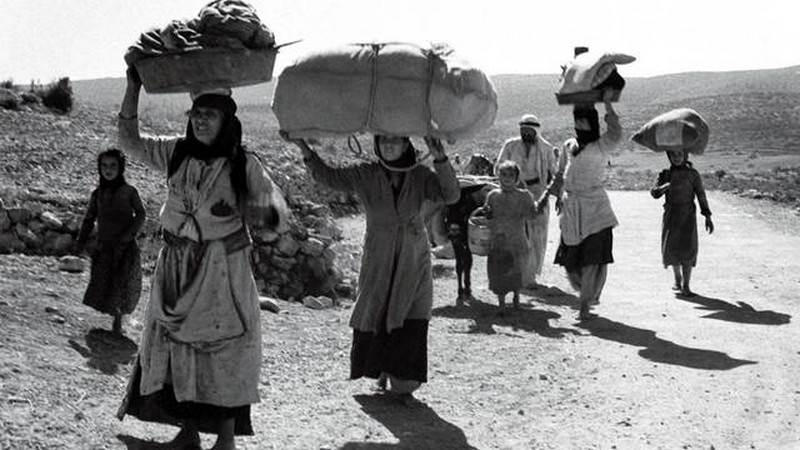
16 May 2024 – Palestinians and allies marked the 76th anniversary of the Nakba, May 15th – the day after the state of Israel was formally declared. “Nakba” is Arabic for “catastrophe,” and is used to describe the murder, dispossession and forced displacement Palestinians suffered in the years up to and including 1948. As many as 900,000 Palestinians were driven from their homes. Thousands were killed, massacred by Israeli militias like the Irgun and the Stern Gang or while fleeing on foot with no food or water, and some while engaged in armed resistance. What has followed since 1948 has been one of the most violent, costly and protracted conflicts in the modern era.

Israel’s assault on Gaza has been termed a genocide by an increasing number of United Nations member states and international legal experts. Egypt joined South Africa’s genocide case against Israel at the International Court of Justice in The Hague, where an emergency hearing was called this week, following Israel’s ground invasion of Rafah. In Gaza, the official death toll is now over 35,000 Palestinians. Israel’s siege is also responsible for widening famine in Gaza.

“What we are seeing now, what unfolds in front of our eyes, is a genocidal situation, by which people are targeted, whether they are children, babies, in hospital or in schools. This is a massive operation of killing, of ethnic cleansing, of depopulation,” renowned Israeli historian Ilan Pappé, who as an Israeli soldier fought in the 1973 war, said on the Democracy Now! news hour. “The Nakba has never really ended for the Palestinians, so it’s a new horrific chapter in the ongoing Nakba that the Palestinians are suffering.”

Professor Pappé was just detained when he flew into Detroit, and described on Facebook two hours of FBI questioning before being released. He said they asked,“Am I a Hamas supporter? Do I regard the Israeli actions in Gaza a genocide? What is the solution to the ‘conflict’? (seriously, this is what they asked!) Who are my Arab and Muslim friends in the US?”

This week, on Nakba Day, Professor Abdel Razzaq Takriti, a Palestinian historian and endowed Arab studies chair at Rice University, said on Democracy Now!

“The Nakba is continuing. We have to understand that this is a colonial continuum. This is a structural process. It is not an event. And what we’re seeing now in Gaza is very much connected to what happened in 1948.”

Professor Takriti assigned historical blame on the United Nations, the United States, and Britain:

“You had a very aggressive settler-colonial movement develop in Palestine under British rule. It was armed under British rule. It was trained under British rule.”

Professor Takriti continued, “The Israeli project is very much intertwined with American foreign policy towards the Palestinian people. They don’t see us as human beings. They want to destroy us. But they know that they have to present it in self-defense terms so that it’s palatable to the broader public…this is just a racist, criminal project that is leading and causing immense pain and suffering.”

South Africa’s genocide case against Israel at the International Court of Justice is seeking to do just that. On Thursday, human rights attorney Adila Hassim spoke at the ICJ emergency hearing, her voice betraying emotion as she recited grim statistics:

“Children have suffered particularly severely. More than 14,000 have been killed. 1000s more have been injured or lost family members, While an estimated 17,000 Children are unaccompanied or separated. Make no mistake. These conditions are a direct result of Israel’s military onslaught on the besieged enclave with full knowledge of the destructive consequences of this humanitarian crisis. In these circumstances, the thwarting of humanitarian aid cannot be seen as anything but the deliberate snuffing out of Palestinian lives, starvation to the point of famine, obstructing aid in the face of famine, and killing of at least 200 aid workers.”

Hassim concluded,“Israel must be stopped.”

Ironically, Israeli nationalists, many who deny that the Nakba occurred at all, are now calling for a second one. “Right now, one goal: Nakba! A Nakba that will overshadow the Nakba of 48,” wrote Knesset member Ariel Kellner. On Tuesday, at an Israeli Independence Day march, far-right National Security Minister Itamar Ben-Gvir addressed thousands, saying, “First, we must return to Gaza now! We are coming home to the Holy Land! And second, we must encourage emigration. Encourage the voluntary emigration of the residents of Gaza!”

Israel’s mass slaughter in Gaza must end immediately. Ultimately, the Israeli occupation of Palestine, and U.S. support for the occupation, also must end. It’s not good for Israel or its national security. It’s devastating for Palestinians. It’s illegal and immoral.

Amy Goodman is the host of “Democracy Now!” a daily international TV/radio news hour airing on more than 900 stations in North America.

Denis Moynihan is the co-founder of Democracy Now! Since 2002, he has participated in the organization’s worldwide distribution, infrastructure development, and the coordination of complex live broadcasts from many continents.

20 May 2024

Source: transcend.org

Israel’s UN Ambassador Gilad Erdan Does World a Favor by Making Plain Israel’s Doomed-to-Fail Strategy

By Jeffrey D. Sachs

Likud’s tactical approach relies entirely on the U.S. for Israel’s security, as the sole blocking force in a world community that is increasingly united and aghast at massive Israeli war crimes. How much longer can they carry on this way?

14 May 2024 – We owe an ironic debt of gratitude to Israel’s UN Ambassador Gilad Erdan for advancing the cause of the State of Palestine at the United Nations. By delivering a speech to the UN General Assembly that was so unhinged, absurd, vulgar, insulting, undignified, and undiplomatic, Erdan helped to secure a lopsided vote of 143 to 9 in favor of Palestine’s UN membership (the rest abstained or did not vote). But more than that, Erdan helped to clarify Israel’s tactical approach—and why it is doomed to fail.

Let us briefly consider the content of Erdan’s speech. Erdan claimed, in short, that Palestine equals Hamas and Hamas equals Hitler’s Nazi Reich. Erdan told the UN delegates that their nations support a state of Palestine because “so many of you are Jew-hating.” He then shredded the UN Charter at the podium, claiming that the delegates were doing the same by voting for Palestine’s UN membership. All the while, on the very same day as his speech and UN vote, Israel was amassing its forces for yet more slaughter of innocent civilians in Rafah.

Erdan’s rant rose to the level of venomous hatred and absurdity. Palestine would enter the UN as a peace-loving state, a commitment stated firmly and eloquently by the Palestinian Ambassador to the UN, Riyad Mansour (here at 23:44). “We want peace,” Ambassador Mansour declared unequivocally. Moreover, the two-state solution will of course not happen in a diplomatic vacuum. According to the Arab Peace Initiative of 2002, and reaffirmed by the Arab and Islamic countries in Riyadh last November, the Arab and Islamic countries have repeatedly pledged to support peace and the normalization of relations with Israel as part of the two-state solution.

Contrary to Erdan’s slander, the governments of UN General Assembly are of course not Jew-haters. Rather, they detest the Israeli government’s assault in Gaza, a carnage so vast that Israel is in the dock at the International Court of Justice on the charge of genocide. The same false charge has been made against student protestors who aren’t anti-Jewish but rather anti-Apartheid and anti-genocide.

The question then is what Erdan was actually doing making a speech that was so over-the-top that it could only serve to bolster, not reduce, the overwhelming worldwide vote for Palestine. Of course, he was doing what all politicians do in the social media age. He was grandstanding for his adoring 157K followers on X (formerly Twitter) and for supporters in Israel’s right-wing Likud Party.

Contrary to Erdan’s slander, the governments of UN General Assembly are of course not Jew-haters. Rather, they detest the Israeli government’s assault in Gaza, a carnage so vast that Israel is in the dock at the International Court of Justice on the charge of genocide.

At first, when listening to Erdan, I simply thought that the man was deranged, suffering from post-Holocaust trauma and seeing a Hitler lurking in every shadow. Yet such a view is naïve. Erdan is a highly experienced political figure, well-educated and well trained, and was in full control of a carefully prepared speech (which included a poster and shredder as props). My initial mistake was to think he was speaking to the rest of the UN ambassadors and to viewers of the proceedings such as myself.

The great difference of broadcast-era politics of yesteryear and the social-media era politics of today is that politicians no longer speak to the broad public. They now communicate almost entirely with their base and “near base.” Each person today receives a personalized flow of “news” that is jointly constructed by individual choices (which websites we visit), networks of digital “followers,” algorithms of platforms such as Facebook, X and TikTok, and hidden forcers that include the Intelligence agencies, government propagandists, corporations, and political operatives. As a result, politicians mobilize and motivate their base, and little beyond.

Erdan the politician, and his Likud party, have been fighting against Palestinians for far longer than Hamas has dominated the politics of Gaza, indeed for longer than Hamas has existed. Erdan grew up inside the party, from its youth wing onward, in a movement that has always stood stridently against a Palestinian state and the two-state solution. In fact, Likud has long treated Hamas as a political prop, a ploy to divide the Palestinians and thereby to fend off international calls for the two-state solution. As even the Israeli media report, Likud leaders worked with Arab nations over the years to keep Hamas funded, so that it would pose a continuing competition to the Palestinian authority.

On the one side, American voters, especially young American voters, are aghast at Israel’s brutality. On the other side, America’s geopolitical position is crumbling.

What, then, is Likud’s strategy as Israel increasingly isolates itself from the rest of the world? Here too, Erdan’s own political past ploys offer a clue. Erdan has been one of the Israel’s shrewdest and most successful politicians in building Likud’s alliance not only with the wealthy America’s Jewish community but with America’s Christian Evangelical community as well. The Christian Zionists ardently back Israel’s control over the Holy Land, albeit as a prelude to their Armageddon, not exactly Likud’s longer-term agenda.

Likud’s tactical belief is that the US will always be there, thick or thin, because the Israel Lobby (Jewish and Christian Evangelical alike) and the US military-industrial complex will always be there. Likud’s bet has always worked in the past and they believe it will work in the future. Yes, Israel’s violent extremism will cost Biden the support of America’s young voters, but if so, that will just mean Trump’s election in November, so even better for Likud.

Likud’s strategy relies entirely on the U.S. for Israel’s security, as the sole blocking force in a world community that is increasingly united and aghast at Israel’s massive war crimes, and in favor of imposing the two-state solution on an utterly recalcitrant Israel. Yet U.S. core interests—economic, financial, commercial, diplomatic, and military—are at odds with becoming isolated with Israel within the international system.

The Israel lobby will be hit by a pincer movement. On the one side, American voters, especially young American voters, are aghast at Israel’s brutality. On the other side, America’s geopolitical position is crumbling. Shortly, many European countries, including Spain, Ireland, and Norway, are expected to recognize Palestine and welcome its U.N. membership. Erdan may end up at the top of the heap of the Likud party, but Likud and its extremist and violent partners in the coalition are likely soon to hit the limits of their arrogance, violence, and cruelty.

Jeffrey D. Sachs, Professor of Sustainable Development and Professor of Health Policy and Management at Columbia University, is Director of Columbia’s Center for Sustainable Development and the UN Sustainable Development Solutions Network.

20 May 2024

Source: transcend.org

Gaslit to Death: Giving Cover to Israel’s Rafah Atrocity with Phony Gaza Numbers Game

By Juan Cole

15 May 2024 – Playing with the death toll from Israel’s genocide on Gaza is not as cruel as actually killing over 35,000 people, the majority women and children. But it is still cruel and heartless. It is also another way we are being gaslit by the pro-Zionist US establishment.

There is that scene in the first Star Wars film when Obi Wan Kenobe uses Jedi magic to convince the Storm Troopers looking for R2D2, “These are not the ‘droids you’re looking for.” Congressional staffers once told me that that is the way politics works on the Hill. Now they’re trying to tell us that actually all those little dead children are figments of our imagination.

The US government repeatedly warned Prime Minister Benjamin Netanyahu and his extremist, fascist cabinet not to invade Rafah without a practical plan for protecting the nearly two million civilians whom Israel has force-marched into the small enclave, most with no potable water, no toilets, and insufficient food and shelter.

Israel is in the process of invading Rafah, forcing some 360,000 internal refugees to flee the area designated as a “safe zone” for wilderness or already-destroyed towns that are still being actively bombed.

I think it is in order to take people’s minds off the current additional war crimes being committed by Tel Aviv that Zionist agents provocateurs have signaled their useful idiots to try to make an issue of the Palestinian death toll.

It is a phony issue. Netanyahu himself has admitted that 30,000 are dead, though he implausibly alleges that 14,000 are Hamas militants and he leaves out another 5,000 he’s not accounting for.

The UN World Health Organization said Monday that 25,000 of the Palestinians in Gaza had been positively identified by the Gaza Health Ministry — which is run by professionals, not by the Hamas politburo. Another 10,000 of the corpses awaited such definite identification, coming to 35,000 total. The identification of 25,000 is an advance, since previously names had not been put to so many of the dead.

Persons who hate Palestinians the way the devil hates holy water jumped on the disaggregation of the two figures to allege that the UN was admitting “only” 25,000 had been killed and the MoH numbers were unreliable.

These horrid prevaricators included the US Council on Foreign Relations, which thereby lost all credibility, and Rupert Murdoch’s New York Post, which never had any credibility, and Joe Scarborough, long a right wing clown.

That isn’t what the WHO said.

As a historian I like primary sources. So I’ll let you hear it from the horse’s mouth.

Here’s the video:

WHO Video: World Health Organization Gaza Casualties

And here’s the transcript:

    • Storyline
    • In Gaza, as more Palestinian casualties of the Israeli military offensive are identified by the enclave’s health authorities, UN humanitarians reiterated on Tuesday (14 May) that a high proportion of women and children were indeed among the 35,000 dead. UNTV CH

Since the beginning of the war in the enclave triggered by Hamas’ deadly 7 October attacks in Israel, the United Nations has consistently relied on casualty figures from the Gaza Ministry of Health, noting that independent verification is not possible. Last week, the health authorities updated the breakdown of the figures based on the number of bodies identified, but the UN has maintained that neither the overall death toll nor the proportion of women and children killed had gone down.

Liz Throssell, spokesperson for the UN Human Rights Office (OHCHR), told the Press in Geneva: “We’re basically talking about 35,000 people who are dead. And really every life matters, doesn’t it? We know that many and many of those are women and children, and there are thousands missing under the rubble.”

Speaking on behalf of the UN’s humanitarian affairs coordination office, OCHA, Jens Laerke clarified that “what has been provided additionally by the Ministry of Health is more detailed information about a subsection of the overall tally” of the 35,000 dead.

Christian Lindmeier, spokesperson for the UN World Health Organization (WHO), explained that as the Gaza Ministry of Health “identifies every single body… gives names to people to give closure to their family, their friends – that’s when these figures get updated and the data get updated”.

Some 25,000 have been identified, he said, calling the growing number of identified bodies “a step forward” and “a typical and very normal process in any conflict”.

Among the 10,000 remaining dead, some are not reachable, including those “in mass graves”. These individuals need to be brought back to a health centre or morgue for identification, Mr. Lindmeier said, insisting that “every single of these figures is a person with a name, a history and a family”.

The WHO spokesperson also warned against getting “sidetracked” by the death toll updates and breakdowns.

Two recent OCHA situation reports have been widely “scrutinized” for changes in the proportion of women and children killed, he said. However, if one applies the breakdown by gender and age of the 25,000 bodies now identified to the remaining unidentified 10,000 casualties, women and children still represent about 60 per cent.

The UN health agency spokesperson also pointed out that under collapsed houses, there is a “high likelihood that you find rather women and children because they are the ones typically staying at home while the men are out looking for food, looking for business, looking for any supplies for their families”.

Mr. Lindmeier further insisted on the challenges of identification in a “difficult conflict” where people have been “displaced five, six, seven times”, and where, in certain areas, “not a single health worker, no ambulance” can venture to recover dead bodies.

“Once everybody is recovered, you may have a chance to have a name to every person,” he said. “We need a ceasefire now to be able to recover those dead.”

Only the malicious could have read the UN reports in any other way but as an affirmation of the vast death toll and a plea for a ceasefire so that the remaining 10,000 Jane Does and John Does can have a decent individual burial, not the mass graves into which Israeli soldiers are bulldozing them. Of course, a ceasefire would also be nice so as to cease racking up such an astonishing death toll.

Juan Cole is the founder and chief editor of Informed Comment.

20 May 2024

Source: transcend.org

My Grandfather’s Nakba

[From TMS Editor: Today (15 May) marks the 76th anniversary of the Nakba (Catastrophe), the expulsion of hundreds of thousands of Palestinians from their homes to establish the State of Israel. To remember this infamous date, we are reposting this piece from May 2021. Actually, the Nakba never ended.]

************************************

15 May 2024 –Emad Moussa recalls his first trip out of Gaza with his grandfather, whose memory of his original village continued to define all other memories.

It was my first trip out of Gaza, and my destination was the city of Nablus in the West Bank to pursue my university studies. At the time the Oslo Accords were still somewhat in effect. That allowed Palestinians from Gaza to travel to the West Bank – through Israel – provided they were issued a permit by the Israeli authorities.

Since I was only 18, a hot-headed teenager with a mood for security breaches, so the Israeli authorities assumed, I was required to have an adult escort me across the checkpoint exiting Gaza. Someone old enough and, preferably, too frail to pose any security threats.

My grandfather immediately volunteered to be my trip chaperone. He would travel with me to Nablus, find me somewhere to live, and then head back to Gaza on his own. Little did I know then, the trip was going to be a life-changing experience.

As we cut through Israel I was mesmerized by the nice landscape. The scenery may not have been breathtaking, but from the perspective of someone who lived most of his life in a refugee camp, everything seemed novel and extraordinary. Beyond the beauty, however, there was the realization that our loss was indeed enormous.  All this used to be ours? All this was stolen from us? I couldn’t help but wonder in disbelief.

Nearly 30 kilometers away from Gaza, my grandfather broke his silence and asked the driver to slow down and started to look around attentively. At that point, I realized we were somewhere near his old village, Al-Sawafir. Excited, I began to summon all of my grandparents’ magical anecdotes about that “paradise village.”

Paradise lost 

I imagined my grandparents’ village as a utopian society with leafy footpaths, lines of olive trees evanescing into the horizon, and fields embellished with countless poppies. I visualized it — as Edward Said once depicted it — “some real but partly mythologized spot of land,” one that stood in stark contrast to life in the refugee camp where we grew up. Through the anecdotes of that paradise lost, at an early age, I learned about loss and internalized an immense feeling of nostalgia for a land that I never physically set foot in.

[Historical_map_series_for_the_area_of_al-Sawafir_al Gharbiyya_1940]

A 1940s map of the area of Al-Sawafir Al-Gharbiyya from the Survey of Palestine. This map is part of a series of historical maps used for comparison, showing the same area, showing the same area, made with help from Palestine Open Maps. (Photo: Survey of Palestine/Palestine Open Maps)

Now in the taxi parked on the side of the road in the middle of nowhere, surrounded by open fields, my grandfather disembarked and walked purposefully into a nearby field.

My grandparents’ village was called Al-Sawafir, based on the ancient Roman name Shaffir, and it was located only a few kilometers from Ashdod, a Palestinian city built upon the ancient Canaanite urban settlement with the same name. Al-Sawafir was divided into three sections, eastern, western and northern, perpendicularly separated by a road originally built by the Ottomans. All of the sections were ethnically cleansed early in 1948 during Operation Barak, a Haganah-led onslaught and part of Plan Dalet, which represented the Zionist master plan for the conquest of Palestine.

My family belonged to the western part, Al-Sawafir Al-Gharbiyya, and that’s exactly where my grandfather was headed. His confident steps made me think he was there only recently and not – at the time – 50 years prior.

All I can see were old ruins, random lines of cacti, sporadic citrus and olive trees, a large sycamore tree, and what looked like a power transformer with a Hebrew placard stuck on it. The village was everything but the utopia in my grandparents’ anecdotes.

Dragging me deeper into the field and looking increasingly confused, my grandfather asked if I could help him find his father’s grave and the ruins of his old house. An odd request, I thought. How can I find my great-grandfather’s grave in a place I never visited before, much less make out a grave-like structure amid the piles of rocks and ruins which can be seen hesitantly peaking through the long grass and bushes?

As time passed fruitlessly, frustrated and seemingly tired, my grandfather collapsed on a small rock and began to weep. Uncomfortable and unsure what to do, I convinced him to halt the search and call it a day.

Strangely, feeling like intruders, we rushed back to the taxi before the Israeli police showed up and continued our journey. To this day, I continue to think about the irony of acting – and feeling – guilty on a land that was stolen from us.

My grandfather’s tears that day were transformative. In Palestine, men are taught not to cry: it is unmasculine, a sign of weakness, and above all, one is always reminded, “fighters do not cry.”  You can’t help it when these are defining standards of Palestinian masculinity, ones specifically designed to withstand the enormous odds in our daily existence. But when men do cry, my grandfather would tell us, it is because “the weight on one’s shoulders is heavier than mountains.”

This is certainly true for him. As the mukhtar, the clan leader of all the Gaza families originating from Al-Sawafir Al-Gharbiya, he always had to remain composed and wear solemnity as a badge of wisdom and dignity. To cry is to basically violate everything he was. It truly was a mountain he could no longer carry. It would take me a few years to understand his metaphor. Only recently, however, I began to identify with his type of pain. The feeling of loss, it seems, grows with you as you get older.

I often wondered how harrowing it must have been for him to wait and wait only to discover that there is no longer a door to the old, rusty key that he had anxiously guarded for decades. The whole exodus was supposed to last for a month at best, so everyone thought. My grandmother told me that this assumption was so strong to the extent that her brother bought several pieces of land in villages on their way to Gaza. He was confident that the “Arab armies were going to push the Zionist gangs out
“ and he’d return, only a known landowner this time. The month turned into months, and the months grew into years, then decades, and the wait continues today 73 years later.

Up until his death, my grandfather continued to speak of that paradise village, of his Palestine. As if what he saw that day was only a fleeting thought. His memories were perhaps more real than the physical ruins of what used to be his village. To him, time stood still, and the memory of the village continued to define all other memories thereafter.

Memory nomads 

My grandfather was not unique in his sentiment. He was, like every other Palestinian, a nomad traveling across a landscape of memory. Like all others, his memory was premised on three main motifs: the praise of a long-gone paradise lost; the lamentation of a present defined by military occupation; and, the hopeful visualization of a return to Palestine, where justice will finally be served.

The longer we clung to that memory the closer we felt we become to the day of return. As if memory was a purpose in itself, as Ghassan Kanafani once said in 1981: “even though we know tomorrow will be no better, we remain here on the shore eagerly awaiting the boat that will not come.”

Same as my grandfather who chose to ignore the seemingly new power transformer and the Hebrew signs in and around his village, one must disregard that we have been mentally and physically erased and replaced. As though to force ourselves to feel that our current state— and theirs — is only temporary.

This is why the question “where are you from?” bears a different meaning to Palestinians. As descendants of refugees living in Gaza, you’d answer by saying you’re from Majdal (Ashkelon), Ashdod, Jaffa, the Negev, and in my case, Al-Sawafir. It’s customary and perfectly normal to ignore the fact that you and possibly your parents were born and raised in Gaza. As if to say, Gaza is only a stop-by on the journey back to Palestine.

This gives us the comforting feeling that history is yet to come to a halt and can still be reversed. It matters not if such worldview is only a coping mechanism or representing a tangible blueprint for return. After all, Palestine is a state of consciousness, Edward Said reminds us, representing “a vast collective feeling of injustice continues to hang over our lives with undiminished weight.”

Erasure 

But, that state of consciousness is also steered by a strong fear of oblivion, of being completely erased from history. As Palestinians look toward Israel, all they can see is that the physical spaces they once occupied have been (or are being) physically transformed to mentally erase them.

Just think for a moment about the tragic irony that the Israeli museum commemorating the Shoah victims, Yad Vashem, sits on top of a hill overlooking the village of Deir Yassin, the site of the known Deir Yassin massacre and a prominent symbol of the Palestinian catastrophe. There are no markers, signs, or memorials, and no mention from tour guides in the museum regarding what their visitors see from where they stand.

This is not a case of absence of remembering or ignorance, but a certain kind(s) of active forgetting that is selective and misleading. As Marcelo Svirsky in his book “After Israel: Towards Cultural Transformation” says, it’s one that makes the Jewish memory a means to conceal the hierarchies and constellations of power and deny perpetration, as well as to justify and protect the prevailing social order.

What’s disturbing about such forgetting is its banality. It normalizes and routinizes what otherwise be considered one of the most heinous crimes in modern history.  In “The Ethnic Cleansing of Palestine,” Ilan Pappé calls the phenomenon memoricide, an erasure of one people from history in order to write that of another people’s over it.

Fearing the counter-narrative 

Despite all the show of power and intransigence, Israel remains a torn entity constantly faced by its original sin. Only controlling the narrative through memoricide would allow the country to move past its guilt.

Intrinsic to the Zionist historical narrative is the idea that history could be controlled, molded, and changed by the formation of an active, task-oriented Israeli reality. But the validity and sustainability of such reality have only been achievable through the removal of other realities, the Palestinian reality.

This is exactly why, that, since its inception, the Israeli state has been systematically removing, replacing, or concealing the traces of Palestinian past from the Israeli public sphere: archaeological sites; Nakba-related archival material, school textbooks, as well as by creating legal impediments to make the return of Palestinian refugees virtually impossible.

It boils down to the simple fact that recognizing the Nakba shifts the responsibility for the Palestinian plight to Israel. This will profoundly challenge the country’s foundational narrative. This narrative concerns issues regarding the Jewish people’s historical persecution and the return from exile to sovereignty; the rightful rule over the land;  and the belief that the Palestinian exodus was voluntary. These issues are essential to the maintenance of the societal beliefs in the justness and morality of the Jewish cause, especially upheld by the notion that Israel’s inception is a historical right, a redemption, for the persecuted Jews.

As far as Palestinian consciousness is concerned, none of Israel’s concerns matter. Memoricide doesn’t change the fact that the Nakba is not a past trauma; rather, a continuous reality. Today’s military occupation: the oppression, the checkpoints, the arrests, the killings, the humiliation, the imprisonment, and the lack of autonomy are all but manifestations of the Nakba.

My grandfather died in 2014, and the fact that I couldn’t travel to the besieged Gaza Strip to say my final goodbyes was, and continues to be, another one of those manifestations.

20 May 2024

Source: transcend.org

Slain Slovak Prime Minister’s Opposition to Arming Ukraine

By Defend Democracy Press

18 May 2024 – Robert Fico’s first official visit to Ukraine lasted only half a day. He met with Ukrainian Prime Minister Denys Shmyhal at around 10:00 a.m. local time on January 24 in Uzhhorod, a city in western Ukraine, not far from the border with Slovakia. While the politicians agreed to “continued cooperation,” no other details about their meeting were announced. Right after dinner, Fico flew to Berlin for talks with German Chancellor Olaf Scholz.

Before the bilateral meeting in Uzhhorod took place, Fico said that “Ukraine is not a sovereign country and is under the total influence of the U.S.” and called the return of territories occupied by Russia “unrealistic.” “What are Ukrainians waiting for? For Russians to leave Donbas and Luhansk? Or Crimea? It’s not realistic. The conflict can’t be solved through military means, and prolonging it will only strengthen Russia’s positions,” said the Slovak Prime Minister in an interview with Radio and Television of Slovakia.

Fico has maintained this position since the start of Russia’s full-scale invasion in February 2022 (when he was a lawmaker in the opposition). “An immediate halt to combat operations is the best solution we have for Ukraine. The E.U. should change from an arms supplier to a peacemaker. Let them spend 10 years holding peace talks rather than 10 years killing each other with no result,” said Fico in late October 2023, one day after assuming office.

One of his first decisions as prime minister was to stop sending equipment and ammo from state and army warehouses to Ukraine’s Armed Forces. Slovakia had previously sent 13 military aid packages worth 671 million euros (around $720 million), including an S-300 air defense system, 13 MiG-29 fighter jets, Mi-171 helicopters, infantry fighting vehicles, ammunition, and anti-tank systems.

Fico has also spoken out against Ukraine’s membership in NATO and promised to block Kyiv’s potential accession. “It would be nothing but the basis for a third World War,” said Fico.

‘In Slovakia, a significant portion of the population openly sympathizes with Russia’

Robert Fico, who leads the Smer political party, adopted a harsher approach to Ukraine in mid-2022, explains Slovak political scientist Jozef Lenč from the University of Ss. Cyril and Methodius: “Around this period, Smer politicians began talking about a peaceful solution, centered on ending military support for Ukraine, and it giving up occupied and annexed territories.”

The Smer party maintains that the war in Ukraine started because of “provocations from NATO and the U.S.” and because “Ukrainian nazis” infringed upon the rights of Russian-speakers in the Donbas. Lenč explained that such statements were Fico’s way of trying to attract voters from the far-right, who tend to hold pro-Russian views. “And that’s what he succeeded in doing,” said Lenč.

20 May 2024

Source: transcend.org