Just International

From Sade’s Chateau to Epstein’s Island: When Fiction’s Horrors Become Reality

By Binu Mathew

I still remember the unease that first crept into me as a young man when I encountered The 120 Days of Sodom by Marquis de Sade. It was not merely shock—it was a deep, unsettling recognition of something profoundly disturbing in the human condition. Yet, like many readers, I comforted myself with a convenient thought: this is only fantasy, an exaggerated descent into depravity that could never find real expression in the world outside the page.

De Sade’s unfinished novel, written in 1785 while he was imprisoned in the Bastille, is structured with chilling precision. Four wealthy libertines—a duke, a bishop, a judge, and a financier—retreat into an isolated chateau, accompanied by a group of abducted boys and girls. Over 120 days, they subject their captives to escalating cycles of sexual violence, humiliation, and torture, catalogued with bureaucratic detachment. The narrative is less a story than a system—an inventory of cruelty.

The historical context matters. De Sade wrote on the eve of the French Revolution, in a society where aristocratic privilege had reached grotesque extremes. His work is often read as both a product and a critique of that world—a savage allegory of power unrestrained by morality. The libertines are not aberrations; they are the logical outcome of a system that places absolute authority in the hands of the elite. Unsurprisingly, the novel was suppressed for decades, circulated clandestinely, and later condemned as obscene, immoral, and dangerous. Even today, it remains one of the most controversial works in literary history.

Years later, in 1996, at the International Film Festival of Kerala (IFFK) held in Kozhikode, I watched Pier Paolo Pasolini’s Salo, or the 120 Days of Sodom. If the novel had disturbed me, the film was almost unbearable. I remember the atmosphere in the theatre—tense, uneasy. As the scenes unfolded, many around me could not endure it. People stood up and walked out, unable to confront the relentless degradation on screen.

Pasolini’s adaptation transposes de Sade’s narrative to the final days of Mussolini’s fascist regime in the Italian Social Republic of Salò. The libertines become fascist officials, and the château becomes a sealed space of totalitarian power. The film strips away any illusion of distance. It is stark, clinical, and merciless in its depiction of abuse. Pasolini’s political intent is unmistakable: fascism is not merely a political system but a structure that commodifies and destroys human bodies. Power, in its absolute form, becomes indistinguishable from sadism.

The reception of Salò mirrored the outrage that greeted de Sade’s work. It was banned in several countries, condemned by critics, and remains one of the most controversial films ever made. Yet, like the novel, it endures because it forces us to confront an uncomfortable question: what happens when power operates without accountability?

For a long time, I held on to a fragile belief—that such horrors belonged to fiction, to allegory, to the darkest corners of imagination or history. I wanted to believe that the world had moved beyond such barbarity.

Then came the Epstein story.

What shattered me was not just the scale of the abuse but the banality of its setting. Jeffrey Epstein did not operate in a remote château hidden from the world. He moved in the highest circles of global power—among billionaires, politicians, royalty, and celebrities. His crimes were not the product of isolation but of access. Young girls were trafficked, abused, and silenced within a network that intersected with the very structures meant to uphold justice.

Names began to surface—figures linked, questioned, or scrutinized in connection with Epstein’s world: Bill Clinton, Prince Andrew, Donald Trump, among others. Whether through association, allegation, or documented interaction, the proximity of power to abuse became impossible to ignore. This was not a fictional circle of libertines; this was the real elite.

In many ways, the Epstein case is more horrifying than de Sade’s novel. De Sade imagined a closed system where cruelty could flourish unchecked. Epstein’s reality reveals something far more disturbing: such cruelty can exist within open society, shielded by wealth, influence, and institutional complicity. The libertines of Sodom needed isolation to carry out their crimes. Epstein did not.

De Sade’s work was a warning—a grotesque exaggeration meant to expose the moral decay of a privileged class. Pasolini amplified that warning, linking it to the machinery of fascism. But Epstein shows us that the warning was not heeded. The same dynamics—power without accountability, bodies reduced to objects, systems that protect perpetrators—persist, not in fiction, but in our lived reality.

If anything, Epstein mirrors the moral corruption of modern elites with a clarity that de Sade could only imagine. The structures have changed, the language has softened, the settings have become more discreet—but the underlying logic remains the same. Power shields itself. Wealth silences victims. Justice bends.

I can no longer take comfort in the idea that such horrors are confined to novels or films. The distance between fiction and reality has collapsed.

And that is why the Epstein files matter.

Every name, every letter, every video, every fragment of evidence must be pursued with uncompromising rigor. This is not about spectacle or scandal; it is about accountability. It is about dismantling the networks that enable such crimes and ensuring that no individual—no matter how powerful—is beyond the reach of the law.

Justice, in this case, cannot be partial or selective. It must be complete.

For the victims, whose suffering has too often been dismissed or ignored, anything less would be another form of betrayal.

Binu Mathew is the Editor of Countercurrents.org. He can be reached at editor@countercurrents.org

18 February 2026

Source: countercurrents.org

Masar Badil in São Paulo: Defiance, Organizing, and Critical Reflection

By Rima Najjar

The upcoming Masar Badil conference in São Paulo (March 28–31, 2026) stands as a deliberate and audacious escalation in the Palestinian diaspora’s political struggle. In the words of founding member Khaled Barakat, it represents a “qualitative leap” into open political confrontation. By choosing Brazil — a country marked by deep Zionist economic, military-security, and evangelical penetration alongside vibrant leftist and anti-imperialist traditions — the organizers transform potential vulnerabilities into strategic advantages.

This choice capitalizes on the heightened global solidarity momentum following October 7, the powerful symbolism of Land Day (commemorated around March 30), and Latin America’s enduring history of resistance to settler-colonialism, foreign intervention, and imperialism.

In a podcast interview on Alkarama-Palestina’s YouTube channel, Samidoun coordinator Ruwaa al-Saghir (São Paulo) — joined by Khaled Barakat (Beirut) and Jaldia Abubakra (Madrid) — explained how the continent is currently witnessing a sharp rise in far-right forces, looming presidential elections, and the entrenched presence of Israeli-linked defense and surveillance firms, facial-recognition systems, and evangelical networks that extend into poor neighborhoods. Rather than shying away from these realities, the conference deliberately enters this terrain to expose Zionist infiltration, name the shared enemy, and assert that Zionism and imperialism are inseparable.

What makes the event truly bold is its refusal to treat Latin America as a mere backdrop for distant solidarity. As al-Saghir describes it, the conference offers a chance to restore the voice of the Global South — to forge a living bridge between the Palestinian struggle and the ongoing fights of Brazilian, Argentine, Chilean, and Venezuelan peoples, drawing on five centuries of shared colonial dispossession, indigenous resistance, and anti-imperialist memory. In a region still scarred by the memory of military coups and facing renewed U.S. threats against Venezuela, convening such an event is itself an act of political defiance, turning the diaspora from a passive support base into an active frontline.

Masar Badil actively conducts multilingual outreach to expand its reach, especially among younger diaspora generations who may not speak Arabic fluently. The movement draws strength from its proven networks — Samidoun for prisoner solidarity, Alkarama for women’s organizing, and various youth structures — which have mobilized hundreds of events, protests, and webinars since 2021.

Ideological Clarity and Its Strategic Tensions

Ideologically, Masar Badil offers uncompromising clarity. It rejects the Oslo framework, the Palestinian Authority’s security coordination with the occupier, and the mainstream two-state paradigm, instead positioning Palestine as the vanguard of a global anti-imperialist struggle. This stance draws in activists disillusioned with moderate or institutionalized approaches, offering a radical alternative.

As Khaled Barakat reminded listeners, the October 7 operation and the genocidal response that followed have imposed new priorities on every Palestinian current: the urgent, practical work of stopping the slaughter, flooding the streets, universities, and unions, and raising slogans once considered marginal — “Long live October 7,” “Long live the armed resistance,” “From the river to the sea.” The São Paulo conference carries this shift forward by calling openly for popular rebellion against a Palestinian Authority that coordinates security with the occupier, marginalizes the resistance, and imposes recognition of Israel as a condition for political belonging.

This embrace of October 7, however, creates a strategic tension: how to defend the principled right to armed struggle — a right affirmed in international law and repeatedly recognized by UN General Assembly resolutions, yet systematically criminalized by Israel and the United States as “terrorism” — while building the broadest possible internationalist coalitions needed to confront genocide and imperialism. For many potential allies on the global left, or among those horrified by the destruction in Gaza, unequivocal celebration of the attack can appear deeply challenging, not because armed resistance is inherently illegitimate, but because decades of Israeli and U.S. propaganda have successfully framed any endorsement of Palestinian military action as moral transgression.

Masar Badil appears to resolve this tension by refusing to dilute its political clarity, insisting that genuine awakening requires confronting uncomfortable realities rather than conforming to externally imposed red lines. Whether this unapologetic stance ultimately expands or limits the front of solidarity will be tested in spaces like the São Paulo conference, where the movement seeks to mobilize diverse actors under its banner.

Jaldia Abubakra underscored another dimension of this courage: the insistence that women and youth — especially those born in the diaspora — must occupy central, non-decorative roles, changing stereotypes and mobilizing entire communities in languages and spaces that official politics often ignore.

Repression, Internal Dynamics, and the Vanguard Question

Central to the movement’s self-understanding is its transformation of repression into validation. Organizers view every sanction, arrest, travel restriction, funding block, and lobbying effort to cancel events not as setbacks, but as evidence of real impact. As they have stated repeatedly, “every repressive step only ignites greater determination.” The intensity of the response — from U.S. and Canadian designations to German bans and personal sanctions on leaders — demonstrates that Masar Badil is disrupting financial flows, narrative control, and diaspora passivity in ways that genuinely threaten the Zionist project and its backers.

Even the challenge of remaining a minority voice within the broader pro-Palestine spectrum is reframed as a strength. By refusing co-optation and openly competing with official Palestinian diplomacy and more moderate solidarity groups, the movement claims authenticity as the genuine revolutionary path — untamed and therefore worthy of suppression.

Masar Badil’s portrayal of repression as validation, while powerful from the movement’s perspective, invites closer scrutiny of its strategic trade-offs. Vanguardism may forge a highly committed revolutionary core, but it often comes at the expense of broad-based appeal. By treating virtually all compromise or institutional engagement as co-optation, Masar Badil risks political sectarianism — potentially narrowing alliances with more moderate pro-Palestine forces and obstructing the diverse, majoritarian coalitions historically essential to successful decolonization struggles. Is isolation truly evidence of vanguard efficacy, or might it limit the movement’s capacity to scale mass mobilization at a time of genocide and deepening global polarization?

The organizers would likely counter that genuine mass awakening demands uncompromised clarity rather than strategic dilution, and that the post-October 7 transformation of global discourse — where slogans once deemed marginal have gained widespread traction — already demonstrates the effectiveness of their approach. The continued — and even expanded — planning of the conference in early 2026, despite layered sanctions, high-profile arrests (such as that of executive committee member Mohammed Khatib in Greece), and persistent Zionist lobbying efforts to disrupt venues, stands as the clearest validation in the organizers’ narrative. The São Paulo conference will serve as a real-time test of this tension: whether bold, confrontational organizing in contested terrain can expand solidarity, or whether it ultimately reinforces the movement’s position on the frontline margins.

Theory of Change: Means, Ends, and the Path Forward

Masar Badil’s vivid emphasis on defiance, advance, and the transformative power of conferences and networks radiates inspiring energy, yet it leaves a deeper question hanging: what is the concrete theory of change? If the explicit goal remains full liberation of Palestine from the river to the sea — rejecting two-state diplomacy, Oslo compromises, and the Palestinian Authority’s framework — how precisely do diaspora-led initiatives translate into tangible shifts on the ground? How do they strengthen steadfastness in Gaza and the West Bank, empower Palestinians within the 1948 borders, or erode the occupation’s material foundations?

The organizers would likely respond that consciousness-raising, the forging of unified resistance fronts, and sustained international pressure constitute indispensable preconditions for any breakthrough, especially after decades of failed diplomacy. They might point to the October 7 rupture as already demonstrating how armed initiative, when backed by popular and global support, can fundamentally alter the equation. Without a clearly articulated pathway linking diaspora vanguardism to the daily realities of those under siege, however, the globalized project risks remaining more aspirational than operational — more a powerful moral and ideological rallying point than a fully elaborated strategy for decisive victory.

The São Paulo gathering, through its workshops and joint declarations, will provide one concrete measure of whether this approach can forge genuine connections between the diaspora’s activism and the homeland’s endurance — or whether the gap between rhetoric and on-the-ground impact endures.

In the end, the São Paulo conference embodies the movement’s deepest conviction: when empires tighten their grip, the revolutionary response is not retreat, but a bolder, more internationalist advance — turning the adversary’s chosen ground into the next arena of struggle.

Rima Najjar is a Palestinian whose father’s side of the family comes from the forcibly depopulated village of Lifta on the western outskirts of Jerusalem and whose mother’s side of the family is from Ijzim, south of Haifa.

18 February 2026

Source: countercurrents.org
As War Tensions Rise, Rev. Jesse Jackson’s Call for Peace and Justice Endures

By Dr. Ghassan Shahrour

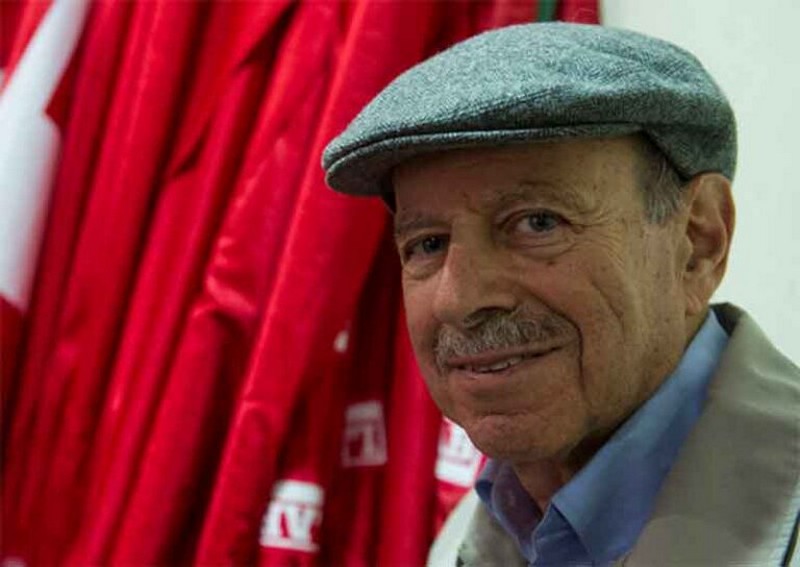
Rev. Jesse Jackson, who passed away on February 17, 2026, leaves behind a legacy that extends far beyond the civil-rights milestones that first defined his public life. As founder of Operation PUSH (People United to Save Humanity) — later People United to Serve Humanity — Jackson built an institution grounded in economic justice, educational opportunity, and the empowerment of marginalized communities. PUSH was not merely an organization; it was a moral vision that placed human dignity at the center of public life.

Equally defining, though less widely acknowledged, was Jackson’s unwavering commitment to peace and disarmament. From the 1980s onward, he emerged as one of the most consistent American voices urging an end to the nuclear arms race. He warned that humanity could not survive a world governed by fear, militarization, and the unchecked spread of weapons. His message feels even more urgent today, as global tensions rise, military budgets swell, and new technologies accelerate conflict. In an era drifting toward escalation, Jackson’s voice reminds us that human security begins with justice, not armament.

This urgency is sharpened by the expiration of the New START Treaty in February 2026, which removed the last remaining legal limits on the world’s two largest nuclear arsenals. For the first time in more than half a century, no binding framework restrains U.S.–Russian nuclear forces. Jackson spent his life urging nations to step back from the brink; the disappearance of these guardrails underscores how vital — and how fragile — the work of peace truly is.

For those engaged in humanitarian disarmament and human-security advocacy, Jackson’s passing resonates deeply. We know — from years of documenting suffering, negotiating with policymakers, and mobilizing communities — that change is slow, fragile, and often resisted. Advocacy demands patience, resilience, and the belief that moral clarity can outlast political cycles. Jackson embodied that endurance.

His international humanitarian work reflected the same convictions. He negotiated the release of hostages in Syria and Cuba, supported peace efforts in Central America, stood firmly against apartheid, and consistently defended Palestinian rights, insisting that no people should live without freedom, dignity, or hope.

As we reflect on his passing, one truth stands out: the most faithful tribute to his legacy is to resist the normalization of war and the quiet expansion of armament, and to defend justice wherever it is threatened. Accepting conflict as inevitable is a moral failure. Peace is not a distant aspiration — it is a shared and urgent responsibility.

Dr. Ghassan Shahrour, Coordinator of Arab Human Security Network, is a medical doctor, prolific writer, and human rights advocate specializing in health, disability, disarmament, and human security.

18 February 2026

Source: countercurrents.org
US murders 11 people with airstrikes on boats in both Caribbean and Pacific

By Andre Damon

The US military killed 11 people Monday in strikes on three boats in the eastern Pacific and Caribbean Sea in the deadliest single day so far this year of the Trump administration’s killing spree off the Latin American coast.

US Southern Command announced that four men were killed on one boat in the eastern Pacific, four on another in the eastern Pacific, and three on a boat in the Caribbean. It was the first time the military bombed targets on both sides of the Panama Canal in the same day. The military posted a 39-second video showing the three boats being destroyed—one on the move, two sitting motionless in the water. No evidence was provided that the vessels were carrying drugs or that those killed had any connection to drug trafficking.

The strikes are murders under international law. The men on these boats posed no imminent threat to anyone. They were not armed combatants. They were not engaged in hostilities. Under the International Covenant on Civil and Political Rights, the UN Charter, and the Pentagon’s own Law of War Manual, killing them is a crime. UNCLOS (United Nations Convention on the Law of the Sea) Article 98 establishes a duty to rescue persons in distress at sea.

The US media treated the strikes as entirely routine. ABC News ran a write-up of approximately 130 words. The Washington Post filed its report under “national security,” not the front page. The killings did not receive even token condemnation from the Democratic Party. Alexandria Ocasio-Cortez, Bernie Sanders, House Minority Leader Hakeem Jeffries and Senate Minority Leader Chuck Schumer said nothing in response to the strikes.

The strikes bring the total death toll to at least 145 people killed in 42 known strikes since early September 2025. Another 11 survivors of earlier strikes are presumed dead after the military left them to drown. Families of two Trinidadian fishermen killed in an October 14 strike have sued the US government, calling the campaign “lawless killings in cold blood; killings for sport and killings for theatre.”

In October, UN High Commissioner for Human Rights Volker Turk called the strikes “unacceptable,” stating that “none of the individuals on the targeted boats appeared to pose an imminent threat to the lives of others.” In November, former ICC Chief Prosecutor Luis Moreno Ocampo concluded that the strikes “likely constitute crimes against humanity.”

Representative Adam Smith, the top Democrat on the House Armed Services Committee, who viewed the classified video in December, described the scene: the men were “basically two shirtless people clinging to the bow of a capsized and inoperable boat, drifting in the water—until the missiles come and kill them.” Killing survivors is a direct violation of the Hague Regulations’ prohibition on denying quarter—one of the oldest rules of warfare.

An investigation by the Intercept published Monday revealed that when eight men jumped overboard during a December 30 triple strike, the Coast Guard took 45 hours to dispatch a rescue plane—into nine-foot seas and 40-knot winds where survival was measured in minutes. No survivors were found. “SOUTHCOM doesn’t want these people alive,” a government official told the Intercept.

The strikes take place in the context of a vast US military campaign across the Western Hemisphere. In January, the USS Gerald R. Ford, the world’s largest aircraft carrier, took part in the kidnapping of Venezuelan President Nicolás Maduro amid a massive bombardment of the Venezuelan capital of Caracas.

The Trump administration’s 2025 National Security Strategy declares a “Trump Corollary to the Monroe Doctrine,” asserting that the United States will “restore American preeminence in the Western Hemisphere” and “deny non-Hemispheric competitors the ability to position forces or other threatening capabilities, or to own or control strategically vital assets, in our Hemisphere.”

At the Munich Security Conference over the week, Secretary of State Marco Rubio delivered an open defense of imperialist criminality: “We cannot continue to allow those who blatantly and openly threaten our citizens and endanger our global stability to shield themselves behind abstractions of international law.”

He boasted that the old international order “was unable to address the threat to our security from a narcoterrorist dictator in Venezuela.” The positions of the Trump administration that international law is an “abstraction” that the United States is not bound to observe.

The Ford carrier strike group has now been redeployed from the Caribbean to the Middle East, where it will join the USS Abraham Lincoln strike group. Approximately 50,000 US troops are deployed to the region. Reuters reported Friday that the Pentagon is planning “sustained, weeks-long operations” against Iran. Trump told troops at Fort Bragg that regime change in Iran would be “the best thing that could happen.”

The same carrier used to kidnap the president of Venezuela is being redeployed to wage war against a country of 88 million people.

Some Democrats made verbal criticisms of earlier strikes. In November, Tim Kaine said the double-tap “rises to the level of a war crime,” and in December, Himes called it “a violation of the laws of war.” But these criticisms have been completely dropped. War powers resolutions introduced by Kaine were defeated on party-line votes.

Ocasio-Cortez spoke at the Munich Security Conference last weekend and said nothing about the killing campaign or about the preparations for war against Iran. Instead, she accused Trump of insufficient aggression against Russia, called for reviving Obama’s Trans-Pacific Partnership to confront China and refused to rule out sending American troops to fight China over Taiwan.

Despite the total criminality of the Trump administration’s killing spree in the Caribbean, the Democrats have consistently voted to fund Trump’s war machine. The $901 billion National Defense Authorization Act passed the House 312-112 in December, with 115 Democrats voting yes. In the Senate, it passed 77-20, with the vast majority of Senate Democrats voting in favor.

Trump has called for a $1.5 trillion military budget for fiscal year 2027—the largest in American history. The Democrats have said nothing to oppose it. They supplied the votes to pass the spending bill that funds the ongoing killing spree in the Caribbean and every warship now sailing toward Iran.

18 February 2026

Source: countercurrents.org
Over 100 Leading Entertainment Figures Back UN’s Francesca Albanese Amid Calls for Her Resignation

By Quds News Network

Occupied Palestine (QNN)- More than 100 prominent figures from the entertainment industry have signed an open letter backing the UN Special Rapporteur for the Occupied Palestinian Territory, Francesca Albanese, who is facing calls from European states to step down over her opposition to Israel’s genocidal war in Gaza.

At last week’s Al Jazeera Forum, Albanese said “we as humanity have a common enemy”.

However, a fake video that was later debunked had her accusing Israel of being the “common enemy”.

She later explained in a social media post that she was referencing “the system that has enabled the genocide in Palestine” as the “common enemy”. She denounced this as a “manipulation” and “completely false”.

[https://twitter.com/FranceskAlbs/status/2020983308818186721]

Albanese is one of the most outspoken critics of Israel’s more-than-two-year genocide in Gaza which has killed more than 72,000 people.

She has called it the “the shame of our time” and says she always asks prime ministers, presidents and foreign ministers the same question: “How do you sleep? When will you act?”

The Italian-born legal expert, who began her unpaid role in 2022, was targeted with sanctions by the Trump administration in July last year over he anti-genocide position.

France and Germany called for Albanese to step down over her faked remarks last weekend.

A group of French MPs sent a letter to French Foreign Minister Jean-Noel Barrot on Tuesday denouncing Albanese’s remarks as “antisemitic”.

Barrot called for her to step down a day later, saying that France “unreservedly condemns the outrageous and reprehensible remarks”.

German Foreign Minister Johann Wadephul on Thursday said her position was “untenable”.

In a letter organized by the Artists for Palestine group, over a 100 cultural figures backed her, including actors Mark Ruffalo and Javier Bardem, Nobel-winning author Annie Ernaux and British musician Annie Lennox.

The signatories “offer our full support to Francesca Albanese, a defender of human rights and therefore also of the Palestinian people’s right to exist,” the letter says.

“There are infinitely more of us, in every corner of the Earth, who want force no longer to be the law. Who know what the word ‘law’ truly means,” it concludes.

Published in French on the website of Artists for Palestine, it also reproduces the full remarks by Albanese who was speaking via videoconference at a forum last Saturday organized by the Al Jazeera TV network.

Other celebrities to offer support for her include actresses Rosa Salazar and Asia Argento, Oscar-nominated film directors Yorgos Lanthimos and Kaouther Ben Hania, Latin music star Residente, and photographer Nan Goldin.

Marta Hurtado, a spokesperson for the Office of the UN High Commissioner for Human Rights, said at a news briefing on Friday that her colleagues are “very worried” about the backlash against Albanese.

“We are concerned that UN officials, independent experts and judicial officials are increasingly subjected to personal attacks, threats and misinformation that distracts from the serious human rights issues,” Hurtado said.

[https://twitter.com/DropSiteNews/status/2022366456747315668]

16 February 2026

Source: countercurrents.org
Israel Approves Registration of Occupied West Bank Land as ‘State Property’

By Quds News Network

Occupied West Bank (QNN)- Israel has approved, for the first time since 1967, the registration of land in the occupied West Bank as “state property”, a move that will facilitate the dispossession and displacement of Palestinians, violate international law, and “bury the idea of a Palestinian state.”

The proposal was submitted by the Finance Minister, Bezalel Smotrich, the Justice Minister, Yariv Levin, and Israel Katz, the Defence Minister, and was approved on Sunday.

The measure is expected to formalize Israeli control over extensive areas of Palestinian land, much of which has remained unregistered since Israel occupied the West Bank in 1967.

It would allow Israel to legalize the confiscation of unregistered, or so-called abandoned, land by reclassifying it as “state land”.

In 1968, Israeli occupation authorities suspended a Jordanian-led land registration process, effectively preventing Palestinians from formally recording ownership of their property. 

In a joint statement, Katz, Smotrich and Levin described the decision as “an appropriate response to illegal settlement measures being pushed by the Palestinian Authority in Area C in violation of the law and agreements”.

They said the measure “will allow for a transparent and in-depth examination of rights, end legal disputes, and enable the development of infrastructure and the organised marketing of land”.

Katz called the decision an “essential security and governance measure designed to ensure control, enforcement and full freedom of action for the state of Israel in the area”.

“We are continuing the settlement revolution to control all our lands,” Smotrich said

The decision follows the approval last week of a series of measures advanced by Smotrich and Katz aimed at facilitating Israeli ownership of Palestinian land in the West Bank. The sweeping changes expand Israel’s civil control in Areas A and B – where all major Palestinian cities and towns are located – which since the Oslo Accords have officially been under Palestinian Authority (PA) jurisdiction. 

Smotrich said in a statement that the measures “fundamentally change the legal and civic reality” in the West Bank and “bury the idea of a Palestinian state”.

While Israel has increased the confiscation of Palestinian land through military orders, with the activity reaching record levels in 2025, the new move gives Israel a legal avenue that “systemati[ses] the dispossession of Palestinian land to further Israeli settlement expansion and cement the apartheid regime”, Bimkom, an Israeli human rights organisation that focuses on land and housing rights, said in a statement.

16 February 2026

Source: countercurrents.org

Pakistan’s Mandate Heist and the Making of a Blowback State

By Prof. Junaid S. Ahmad

There are regimes that decay gradually, and there are regimes that accelerate their own demise with theatrical impatience. Pakistan’s ruling establishment chose the latter. In February 2024, it did not merely manipulate an election; it vandalized the very premise of electoral politics — and then expressed irritation that the country noticed.

February 8 was not incompetence. It was intent.

Results stalled with bureaucratic calm. Victories evaporated with procedural straight faces. Symbols disappeared as if democracy were a clerical error requiring correction. What had long been marketed as a “hybrid order” — that antiseptic euphemism for military guardianship over civilian décor — shed its final pretense. The regime did not manage democracy; it mugged it. Mandates were inverted. Representation was treated as an administrative nuisance. The fiction of consent was edited in real time.

Subtle authoritarianism requires confidence. This was something else: a system so insulated from consequence that it mistook audacity for durability. It assumed legitimacy could be restored by notification, that disbelief could be outlawed, that obedience was muscle memory.

But legitimacy is not administrative. It is relational. It depends not merely on the capacity to govern, but on the belief that governance is earned. When that belief collapses, institutions do not merely weaken — they hollow out. Courts become ornamental. Parliaments become decorative. Elections become choreography.

And when institutions empty, society recalibrates.

The nationwide political expression on February 8, 2026 — marking two years since the stolen mandate from Imran Khan’s Movement for Justice (PTI) — was not a routine protest. It was a coordinated shutdown and strike across the country, coupled with massive and strikingly spontaneous rallies in cities, towns, and villages. Markets closed. Roads filled. Crowds gathered without central choreography. It was a referendum conducted without permission.

Authoritarian systems are adept at crushing spectacle — rallies, slogans, charismatic leaders. But here, spectacle and silence fused. The country withdrew normalcy through shutdown, and then reasserted its presence through sheer numbers. How does one repress absence? How does one criminalize a closed shop? And how does one disperse a crowd that appears everywhere at once?

Withdrawal is rebellion refined. Mass presence is rebellion amplified.

The regime responded with pageantry. Festivals amplified. Cameras redirected. Stability simulated. Governance became stagecraft — color substituting for credibility. The state glittered while trust corroded. It was administration as performance art: if the optics sparkle, the crisis must be imagined.

But spectacle cannot substitute for substance indefinitely. Nor can coercion substitute for belief.

Imran Khan’s imprisonment exemplifies the regime’s deeper anxiety. His incarceration is less punishment than prevention. The establishment fears not merely the man but the contradiction he embodies: stripped of office yet central to political gravity; silenced yet omnipresent. Authority without affection governs through force. Legitimacy governs through belief. The state possesses the former and conspicuously lacks the latter.

If he were irrelevant, he would not require suffocation.

Yet the crisis is not reducible to personalities. February 2024 did more than injure one party; it exposed a structural truth long obscured by procedural fog. Pakistan’s military-civilian façade is not a constitutional balance but a patronage cartel sustained by coercion and insulated from accountability. The theft of the mandate was not an aberration. It was a clarification.

And clarity is corrosive.

For decades, the establishment relied on calibrated ambiguity. Elections could be nudged discreetly and absorbed into public cynicism. Militants could be categorized as “good” or “bad” depending on utility. Provinces could be securitized rather than politically included. Foreign hands could be blamed for domestic rot. The architecture functioned because it was plausibly deniable.

That plausibility has evaporated.

Pakistan is not merely confronting political illegitimacy; it is confronting the cumulative consequences of a state that treated militancy as leverage, governance as inconvenience, and accountability as foreign interference. The blowback is not accidental. It is structural.

For years, generals curated instability as strategic depth. Proxy warfare was rationalized as necessity. Extremists were parsed, repurposed, differentiated — assets when useful, threats when unruly. The underlying assumption was breathtaking in its arrogance: that violence could be domesticated, that chaos could be administered, that instability could be weaponized without becoming permanent.

That assumption has collapsed.

When bombs detonate in Balochistan or suicide attacks strike urban centers, the script assembles with suspicious speed. Foreign funding. Cross-border infiltration. Invisible conspiracies. The narrative arrives before the debris cools. Responsibility is projected outward with theatrical confidence. Introspection remains forbidden.

Yet the insecurity is overwhelmingly self-authored.

Balochistan is treated less as a political community than as a security theater: enforced disappearances, extractive economics, militarized governance. The unrest is then labeled foreign-backed, as if alienation were imported. In Khyber Pakhtunkhwa and the former tribal regions, operations cycle through landscapes, displacing communities and deepening distrust. Resentment accumulates. It becomes recruitment capital.

Groups like the TTP or ISIS-K are vicious. But to present their resurgence primarily as foreign orchestration is analytical fraud. Militancy thrives where governance is corrupt, justice politicized, and political expression criminalized. Pakistan’s rulers have meticulously cultivated those conditions.

February 2024 sharpened this contradiction. A regime that must expend enormous coercive energy suppressing its electorate — manipulating results, intimidating dissent, shrinking civic space — diverts institutional capacity from public security toward regime preservation. Intelligence becomes politicized. Citizens become suspects. Trust collapses.

A state that fears its own population cannot protect it.

Meanwhile, Islamabad performs its diplomatic ballet: reassuring Washington of counterterror reliability, promising Beijing strategic permanence, courting Gulf capital with anxious opportunism. This is presented as grand strategy. It is, in fact, insecurity layered atop illegitimacy. External alignments become leverage points rather than assets. Credibility erodes abroad because trust has eroded at home.

The hypocrisy is staggering. The same establishment that once differentiated militants into usable and disposable now lectures the public on unity against extremism. The same architects of calibrated chaos express astonishment that chaos refuses calibration. The same engineers of electoral vandalism scold citizens for economic disruption during shutdowns.

It is not irony. It is projection.

Repression intensifies accordingly: pre-emptive detentions, media intimidation, administrative harassment. Peaceful dissent is securitized more aggressively than insurgent violence. The regime has inverted its priorities: criticism is treated as more dangerous than extremism. In hollowing elections and criminalizing politics, it narrows the channels through which grievances can be expressed nonviolently — and then performs bewilderment when instability metastasizes.

Violence does not emerge from a vacuum. It emerges from suffocation.

Authoritarian systems appear monolithic until coercion becomes permanent condition rather than episodic tool. Then even internal factions begin to question not morality but sustainability. How long can force substitute for belief? How long can spectacle override memory? How long can foreign villains compensate for domestic failure?

History is merciless toward regimes that mistake control for consent. They overreach. They misread silence as submission. They confuse exhaustion with acquiescence. And then they discover that society has internalized a new grammar — disciplined withdrawal, organized disbelief, visible defiance.

The events of February 8, 2026 confirmed that disbelief has matured.

The regime may command the barracks. It may command the courts. It may command the broadcast towers and the ballot boxes.

But it no longer commands belief.

And once belief is gone, power does not merely weaken — it decays.

Because fear can enforce obedience for a season.

But it cannot manufacture legitimacy.

And a state that rules without legitimacy does not stand on authority.

It stands on borrowed time.

Prof. Junaid S. Ahmad teaches Law, Religion, and Global Politics and is the Director of the Center for the Study of Islam and Decolonization (CSID), Islamabad, Pakistan.

12 February 2026

Source: countercurrents.org

Drowning of 53 migrants off Libya’s coast, inseparable from Europe’s restrictive migration policies, closure of safe pathways

By Euro-Med Human Rights Monitor

Geneva – The death and disappearance of dozens of migrants and asylum seekers after their boat capsized off the Libyan coast is deeply concerning. This recurring tragedy highlights the significant suffering faced by those fleeing persecution, conflict, and poverty due to border restrictions and the lack of safe pathways for asylum or migration.

This situation occurs as restrictions on civilian rescue operations tighten and humanitarian solidarity is criminalised, putting people at sea at greater risk of drowning without adequate protection.

An inflatable boat carrying around 55 migrants from African countries left the shores of Zawiya, a city in western Libya, on the evening of Thursday, 5 February. The boat travelled for approximately six hours before water started to leak in, causing it to capsize off Zuwara’s coast. During the Libyan search-and-rescue efforts, only two survivors were recovered, while 53 others, including two infants, are still missing and presumed dead, based on initial reports from authorities and local sources.

The frequent shipwrecks along the Mediterranean coast highlight a significant failure in providing adequate protection through current safety and rescue systems. More migrants and asylum seekers are risking their lives on unseaworthy vessels under dangerous conditions, yet little has been done to tackle the root structural issues that largely contribute to these recurring tragedies.

Data from the Missing Migrants Project by the International Organisation for Migration shows that in 2025, the Western, Central, and Eastern Mediterranean migration and asylum routes accounted for 1,873 migrant and asylum seeker deaths and disappearances. Additionally, from the start of 2026 until 5 February, about 524 people have been reported as missing or dead.

These figures indicate an increase in human losses this year, driven by limited official search and rescue efforts, greater restrictions on humanitarian activities at sea, and stricter migration and asylum policies.

This incident is linked to the wider European policies that facilitate militarised migration governance in the Mediterranean and restrict humanitarian work. These policies involve limiting rescue activities by NGOs, criminalising acts of solidarity, and backing coast guards in dangerous transit countries like Libya. This support enables intercepting migrants and forcibly sending them back to detention centres, which often violate basic humanitarian standards and are known for serious documented abuses.

Many shipwreck incidents should not be seen solely as accidents or inevitable events. Instead, they happen within a broader context of risks created by deterrence and prevention policies. These incidents are sometimes worsened by interception and pursuit practices at sea, which can increase the chance of drowning.

In this context, Euro-Med Human Rights Monitor recalls an incident on 3 February off the Greek island of Chios, where at least 15 migrants and asylum seekers were killed, 26 others injured, and an unknown number remain missing.

In that incident, the Hellenic Coast Guard reported that the migrants’ boat sailed without lights, ignored warnings from a patrol vessel to stop, and abruptly changed course as the patrol vessel approached, causing a collision and capsizing the migrant boat. However, survivors claimed that their inflatable boat did not change course, that they received no warnings from the Coast Guard, and that they saw the patrol vessel only when it activated its lights shortly before impact.

Euro-Med Monitor suggests there are valid reasons to doubt the Hellenic Coast Guard’s explanation, given its inconsistency with survivors’ testimonies and repeated documented cases of excessive force and violent pushbacks at sea. This underscores the need for an independent, transparent investigation to uncover the facts and determine responsibilities.

The increase in shipwrecks and violent pushbacks in the Mediterranean is connected to recent EU legislative and policy changes. These include expanding the “safe third country” concept and adopting unified lists of countries considered “safe.” Such policies might limit thorough review of protection claims, weaken the principle of individual assessment, and increase the likelihood of asylum seekers being sent to countries lacking adequate protection or without a legitimate link to justify their reception.

These new measures conflict significantly with international legal obligations, especially the principle of non-refoulement and the rights to individual assessment and effective appeals in asylum processes. They exert added pressure on migrants and asylum seekers, increasing their vulnerability to risks such as being pushed onto more dangerous maritime routes and facing higher chances of being sent back to unsafe countries where they risk persecution or violence. Additionally, these measures could be exploited to justify violent pushbacks and forced returns, providing political cover for such actions.

The violent interception of migrants and asylum seekers in the Mediterranean, their forcible return to countries where they risk persecution, and the intentional abandonment of individuals to face drowning in deteriorated boats are clear breaches of international obligations. These include violations of the 1951 Geneva Convention, its 1967 Protocol, and the principle of non-refoulement, a rule binding under customary international law. Moreover, these actions oppose the protections offered by the International Covenant on Civil and Political Rights and the European Convention on Human Rights, which safeguard the right to life and prohibit inhumane or degrading treatment.

The abandonment of people in distress at sea violates international maritime law, which mandates immediate aid. It also weakens European systems that ensure the right to fair asylum procedures and require individual, independent case assessments.

The continued militarisation of borders, obstruction of rescue vessels, and criminalisation of humanitarian solidarity with migrants not only constitute serious breaches of international law and refugee protection norms but also entail international legal responsibility for the foreseeable consequences of such policies, including preventable shipwreck incidents.

The European Union should urgently perform a thorough review of recent legislation, especially laws concerning the “safe third country” concept and the classification of ‘safe’ countries of origin. It is crucial to establish legitimate and secure legal pathways as viable alternatives to prevent asylum seekers from risking deadly sea journeys and to ensure that states adhere to the principle of non-refoulement.

Furthermore, Mediterranean countries need to stop militarising borders and avoid consistently blocking rescue ships run by non-governmental organisations. Euro-Med Monitor emphasises that maritime authorities, particularly in Greece and Libya, must comply with international maritime law. This law clearly requires them to offer immediate aid and carry out efficient search and rescue efforts, rather than resorting to violent pushbacks and chasing tactics that cause fatal shipwrecks.

All concerned states should initiate official and effective search and rescue operations to help migrants and asylum seekers confronting ongoing dangers in the Mediterranean. They should also establish safe and legal routes for submitting asylum applications. These actions would help prevent individuals from risking their lives on unseaworthy boats and reinforce their rights to protection under international law.

European governments must immediately stop funding and supporting coast guards in transit countries like Libya, where detention centres fail to meet basic humanitarian standards and are sites of serious, documented violations. Euro-Med Monitor stresses that ongoing support could make European states legally complicit in practices such as forced returns and torture, which migrants endure after interception and forced repatriation to unsafe countries.

An independent, transparent international investigation must be launched into shipwrecks involving migrants and asylum seekers, violent pushback, and interception operations in the Mediterranean. Euro-Med Monitor calls for identifying those responsible, including states that execute or fund forcible interception, to ensure accountability for violations and safeguard the human rights of migrants and asylum seekers.

Euro-Med Human Rights Monitor is a Geneva-based independent organization with regional offices across the MENA region and Europe

12 February 2026

Source: countercurrents.org

Suffocating an Island: What the U.S. Blockade Is Doing to Cuba

By Medea Benjamin

Marta Jiménez, a hairdresser in Cuba’s eastern city of Holguín, covered her face with her hands and broke down crying when I asked her about Trump’s blockade of the island—especially now that the U.S. is choking off oil shipments.

“You can’t imagine how it touches every part of our lives,” she sobbed. “It’s a vicious, all-encompassing spiral downward. With no gasoline, buses don’t run, so we can’t get to work. We have electricity only three to six hours a day. There’s no gas for cooking, so we’re burning wood and charcoal in our apartments. It’s like going back 100 years. The blockade is suffocating us—especially single mothers,” she said crying into her hands “and no one is stopping these demons: Trump and Marco Rubio.”

We came to Holguín to deliver 2,500 pounds of lentils, thanks to fundraising by CODEPINK and the Cuban-American group Puentes de Amor. On our last trip, we brought 50-pound bags of powdered milk to the children’s hospital. With Trump now imposing a brutal, medieval siege on the island, this humanitarian aid is more critical than ever. But lentils and milk cannot power a country. What Cubans really need is oil.

There were no taxis at the airport. We hitchhiked into town on the truck that came to pick up the donations. The road was eerily empty. In the city, there were few gas-powered cars and no buses running, but the streets were full of bicycles, electric motorcycles, and three-wheeled electric vehicles used to transport people and goods. Most of the motorcycles—Chinese, Japanese, or Korean—are shipped in from Panama. With a price tag near $2,000, only those with family abroad sending remittances can afford them.

Thirty-five-year-old Javier Silva gazed longingly at a Yamaha parked on the street. “I could never buy one of those on my salary of 4,000 pesos a month,” he said. With inflation soaring, the dollar now fetches about 480 pesos, making his monthly income worth less than ten dollars.

Cubans don’t pay rent or have mortgages; they own their homes. And while healthcare has deteriorated badly in recent years because of shortages of medicines and equipment, it remains free–a system gasping but not abandoned. When my partner Tighe had an asthma attack, we went to the clinic and within minutes, he was breathing in albuterol mist from a nebulizer. No insurance forms. No bill. Just care — delivered with competence and a smile. That’s what health care looks like when it’s treated as a human right.

The biggest expense for Cubans is food. Markets are stocked, but prices are out of reach—especially for coveted items like pork, chicken, and milk. Even tomatoes are now unaffordable for many families.

Holguín was once known as the breadbasket of Cuba because of its rich agricultural land. That reputation took a severe hit this year when Hurricane Melissa tore through the province, destroying vast areas of crops. Replanting and repairing the damage without gasoline for tractors or electricity for irrigation is nearly impossible. Less food means higher prices.

Production across the economy is grinding to a halt. Factories can’t function without electricity, and many skilled workers have given up their state jobs because wages are so low. Jorge, whom I met selling bologna in the market, used to be an engineer at a state enterprise. Verónica, once a teacher, now sells sweets she bakes at home—when the power is on. Ironically, while Marco Rubio claims he wants to bring capitalism to Cuba, U.S. sanctions are crushing the very private sector that most Cubans now depend on to survive.

I talked to people on the street who blame the Cuban government for the crisis and openly say they can’t wait for the fall of communism. Young people told me that their goal is to leave the island and live somewhere they can make a decent living. But I didn’t meet a single person who supported the blockade or a U.S. invasion.

“This government is terrible,” said a thin man who changes money on the street—an illegal but tolerated activity. But when I showed him a photo of Marco Rubio, he didn’t hesitate. “That man is the devil. A self-serving, slimy politician who doesn’t give a damn about the Cuban people.”

Others put the blame squarely on the United States. They point to the dramatic improvement in their lives after Presidents Obama and Raúl Castro reached an agreement and Washington eased many sanctions in 2014–2016. “It was the same Cuban government we have now,” one man told me. “But when the U.S. loosened the rope around our necks, we could breathe. If they just left us alone, we could find our own solutions.”

The only way Cubans are surviving this siege is because they help one another. They trade rice for coffee with neighbors. They improvise—no hay, pero se resuelve (we don’t have much, but we make it work). The government provides daily meals for the most vulnerable—the elderly, the disabled, mothers with no income—but each day it becomes harder as the state has less food to distribute and less fuel to cook with.

At one feeding center, an elderly volunteer told us he spends hours every day scavenging for firewood. He proudly showed us a chunk of a wooden pallet, nails and all. “This guarantees tomorrow’s meal,” he said—his face caught between pride and sorrow.

So how long can Cubans hold on as conditions worsen? And what is the endgame?

When I asked people where this is leading, they had no idea. Rubio wants regime change, but no one can explain how that would happen or who would replace the current government. Some speculate a deal could be struck with Trump. “Make Trump the minister of tourism,” a hotel clerk joked, only half joking. “Give him a hotel and a golf course—a Mar-a-Lago in Varadero—and maybe he’d leave us alone.”

Who will win this demonic game Trump and Rubio are playing with the lives of eleven million Cubans?

Ernesto, who fixes refrigerators when the power is on, places his bet on the Cuban people. “We’re rebels,” he told me. “We defeated Batista in 1959. We survived the Bay of Pigs. We endured the Special Period when the Soviet Union collapsed and we were left with nothing. We’ll survive this too.”

He summed it up with a line Cubans know by heart, from the great songwriter Silvio Rodríguez: El tiempo está a favor de los pequenos, de los desnudos, de los olvidados—time belongs to the small, the exposed, the forgotten.

In the long sweep of time, endurance outlasts domination.

Medea Benjamin is co-founder of Global Exchange and CODEPINK: Women for Peace.

12 February 2026

Source: countercurrents.org

Arab-rooted plan must replace Trump’s Board of Peace

By Dr. Ranjan Solomon

Almost each of Trump’s forays into ruthless foreign policy demonstrates how catastrophic his choices can be.

The “Board of Peace,” announced with fanfare, was truncated even before its first meeting. When Trump launched the initiative, ostensibly to oversee Gaza’s post-war reconstruction and potentially address other global conflicts, it immediately faced scepticism. While over 20 countries were initially reported as signatories—including several Middle Eastern nations (Saudi Arabia, Qatar, Turkey, Egypt, Jordan, UAE)—many traditional U.S. allies in Europe showed caution, with some declining to join.

Its leadership was thin in both content and capacity. It would require extraordinary imprudence to entrust a team consisting of Jared Kushner, Secretary of State Marco Rubio, special envoy Steve Witkoff, and former British Prime Minister Tony Blair with founding responsibilities. An objective selection process would likely have found them politically patronised and lacking the necessary skills to oversee reconstruction of devastation on such an unprecedented scale. Worse still, they were themselves implicated in policy-making and influence connected to the very catastrophe they now propose to remedy.

Each brought political or business ambitions of their own. Kushner was widely seen as the “Riviera” architect. Witkoff and Rubio were positioned for political manoeuvring. Blair’s name remains linked to corruption allegations and the Iraq War. Self-interest hovered over the initiative.

Trump formally ratified the Board of Peace as an international organization on February 8, 2026, appointing himself chair with veto powers. It was scheduled to meet at the “Donald J. Trump U.S. Institute of Peace” in Washington on February 19, 2026. Yet the challenges it faces may render it self-extinguishing. It has no clear mandate and encroaches upon responsibilities traditionally assigned to the United Nations. The proposed headquarters is itself embroiled in a legal battle after the administration reportedly seized the facility and dismissed staff.

Critics, including Human Rights Watch, have questioned the structure of the board, with some describing it as a “pay-to-play” initiative in which permanent members are expected to contribute $1 billion.

The initiative has already faced setbacks in attempts to solidify a ceasefire. Some analysts remain unconvinced that it poses a long-term threat to the UN framework, suggesting it may merely offer participating nations a foothold in Gaza-related discussions.

Critics describe the Board of Peace as a top-down, foreign-led initiative that lacks Palestinian representation at its highest decision-making levels, raising serious concerns about legitimacy and effectiveness. The board, proposed by Donald Trump to manage Gaza’s post-conflict reconstruction and security, is seen by many as prioritizing foreign interests—particularly Israeli security objectives—over immediate Palestinian needs. Its development vision, centred on rapid economic transformation and high-rise construction, appears detached from political realities.

The board’s upper tier is composed entirely of foreigners, with no Palestinians in leadership roles. Critics argue this resembles colonial or neocolonial governance. Stability, as defined by the board, appears focused on territorial control rather than urgent humanitarian relief or genuine self-determination for Palestinians. It remains a foreign-led and non-representative body.

Although not in “ICU” in a literal sense, the Board of Peace faces profound international scepticism, along with structural and legal challenges from its inception. Critics characterize it as a “control architecture” prioritizing economic redevelopment—potentially facilitating Israeli land control—rather than addressing the core political conflict or urgent humanitarian needs. Although initially linked to a Gaza ceasefire, its charter notably omits any specific mention of Gaza, suggesting a broader global mandate.

Originally conceived as a mechanism for managing Gaza’s post-war reconstruction following the 2025 ceasefire, the board has expanded its scope into a global conflict-resolution body. The formal charter, signed in Davos on January 22, 2026, removed references to Gaza and authorized the body to address stability in regions “affected or threatened by conflict” worldwide. Power is heavily concentrated in the chair, including authority to appoint members. It has been criticized as a potential alternative to the UN framework.

While several Middle Eastern and some Asian nations joined, major European and Asian actors—including France, the UK, and Japan—have remained uncommitted, citing concerns about the board’s ambiguous mandate and its potential to undermine established international law. The Board of Peace has thus evolved from a Gaza-focused entity into a broader voluntary international organization.

Hamas has rejected the U.S.-backed Board of Peace (BoP) and its accompanying International Stabilization Force (ISF), authorized by UN Security Council Resolution 2803 in November 2025. Hamas views the plan—aimed at overseeing governance and disarming factions—as an “international guardianship” and a dangerous imposition that would perpetuate conflict. It has condemned the inclusion of Israeli Prime Minister Benjamin Netanyahu in the U.S.-led board as a troubling signal.

The ISF is proposed as a UN-mandated multinational force to secure and demilitarize Gaza, replace Hamas security control, train a new Palestinian police force, protect civilians, and oversee humanitarian aid. Its mandate includes dismantling militant infrastructure and securing borders under strategic guidance from the Board of Peace. However, it has struggled to secure firm commitments from contributing nations. Some countries, such as Turkey, have suggested prioritizing separation of Israeli forces from Hamas rather than immediate disarmament.

Hamas rejects disarmament under foreign supervision, arguing that stability requires ending occupation rather than imposing external governance. It contends that replacing Israeli control with an international force merely substitutes one form of dominance for another. Senior Hamas official Osama Hamdan stated that no Palestinian would accept a committee headed by Donald Trump with figures such as Tony Blair involved. While Hamas has engaged in limited negotiations on ceasefires and hostage exchanges, it continues to oppose the broader governance and security architecture of the plan.

In response, the Arab League has focused on countering the Board of Peace by advancing an independent Arab-led alternative. Working with the Organization of Islamic Cooperation (OIC), it has promoted a comprehensive reconstruction framework.

Promoting the Arab Reconstruction Plan

  • Supporting a Cairo-hosted pledging conference to establish an Arab-led Gaza reconstruction fund.
  • Rejecting a “tabula rasa” reconstruction aligned with external control, instead advocating sustainable local recovery initiatives.
  • Championing the creation of a Palestinian technocratic committee to manage day-to-day governance in Gaza rather than an externally imposed authority.

Diplomatic Pressure for a Two-State Solution

  • Reaffirming the 2002 Arab Peace Initiative based on land-for-peace principles.
  • Advocating recognition of a Palestinian state within 1967 borders.
  • Working toward full UN membership for Palestine.

Condemning and Limiting the Board of Peace

  • Characterizing the BoP as an instrument that could entrench long-term foreign security presence.
  • Encouraging member states to resist joining or funding it.
  • Insisting that any international presence in Gaza operate under UN authority.

Seeking Accountability

The Arab League has also called for punitive measures against Israel, including:

  • Suspension of Israel’s UN membership.
  • An arms embargo.
  • Coordinated diplomatic efforts at the Security Council to lift the blockade and halt operations in Gaza.

The Arab League’s reconstruction plan is presented as an indigenous effort to prevent displacement, halt what it describes as ethnic cleansing, and establish a technocratic Palestinian governance structure capable of restoring stability. Amid immense devastation, proponents argue that only a Palestinian-led vision can ensure sustainable reconstruction, economic revival, and the protection of residents’ rights.

Dr. Ranjan Solomon has worked in social justice movements since he was 19 years of age. After an accumulated period of 58 years working with oppressed and marginalized groups locally, nationally, and internationally, he has now turned a researcher-freelance writer focussed on questions of global and local/national justice. 

12 February 2026

Source: countercurrents.org