Just International

Whose Child Is This?

By Anthony J. Marsella

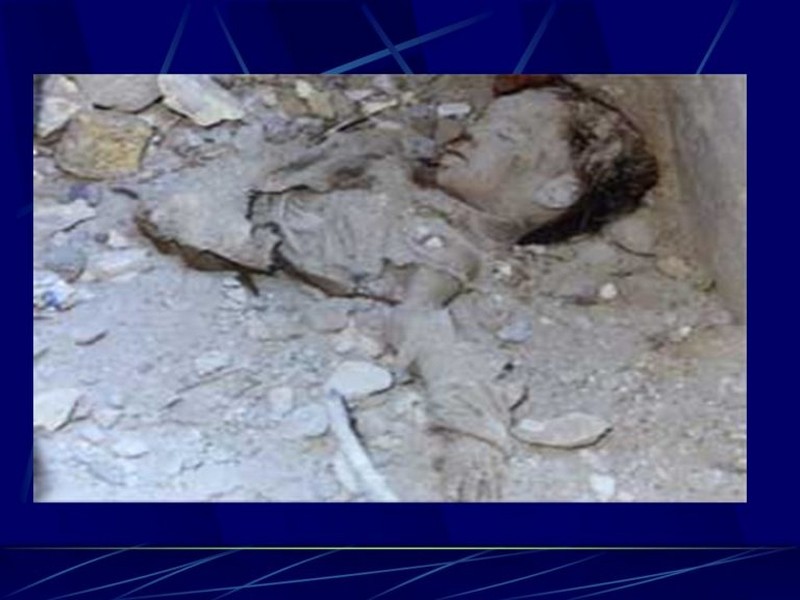
Whose Child is This?  Whose child is this?  Is this child an Iraqi . . . an Israeli . . .  a Chechnyan . . . an Afghani . . . a Kurd . . . a Nigerian?   Is she or he English, Indonesian, Spanish, Lebanese, Turkish, Congolese, Bosnian, Persian?   Does it matter?  Is this child not a daughter or son to each of us?

Is this child not a human being born of a union of a man and woman whose intimacy, whose passion, whose very breathe yielded a life that sought only to live . . . to enjoy some moments of laughter and delight, some moments of comfort and calm . . . to make yet another life.

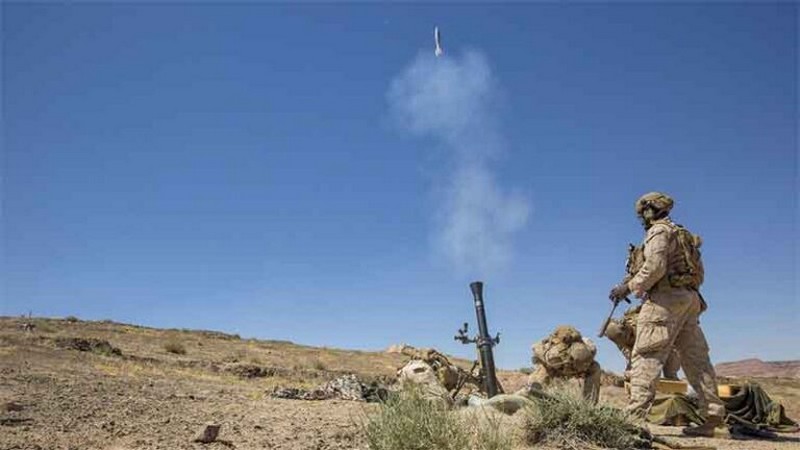
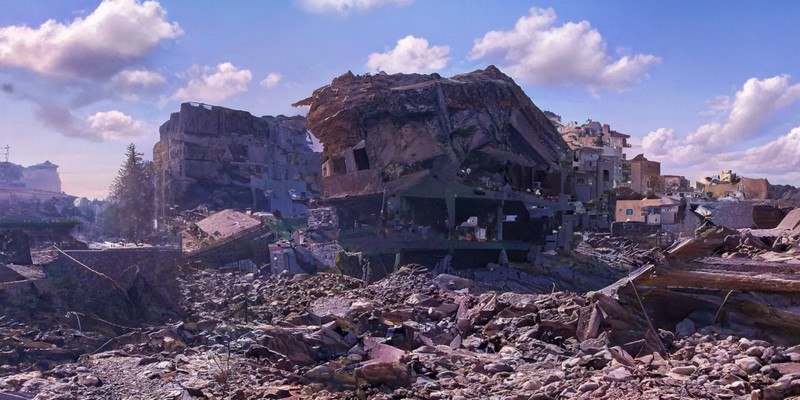
Now this child rests amidst the dust and debris of war . . . lifeless . . . torn and shattered . . . killed by someone whom she or he never knew, and would likely never meet.  Death from a distance. . . a bomb from a plane, a shell from a mortar, a strap of explosives . . .  intentional and willing, calculated and planned, a measured effort to destroy.

The Source:  an agent of death and destruction, a pilot or soldier, an insurgent or terrorist . . . does it matter? They have killed their own child . . . they have killed our child.  And in doing so, they have diminished each of us as human beings, each of us as creatures of consciousness and conscience, each of us as reflections and carriers of life.  Words cannot console her or his parents, if they, indeed, survived this horror. They are left with only endless pain . . . memories of a child eating, sleeping, playing . . . a reminder of a tragic moment inscribed in mortar and blood.

Enough!  Enough!  Stand, speak, write, act against those who advocate violence and hate no matter the source — be they presidents, prime ministers, generals, terrorists, mullahs, rabbis, dictators, ministers, true believers . . .  tell them that we do not share their quest for power and greed.   Tell them we do not share their hate, nor their blindness and indifference to suffering.  Tell them we do not share their empty post-tragedy rhetoric designed to keep us mired in the fulfillment of their selfish needs. We are not pacified and contented by their explanations and assurances. We challenge and contest their motives!  We resent and resist their excuses. How shallow their words in the face of dying or dead child.

THIS IS OUR CHILD!  Today, we claim this child as our own, too late to keep her or him alive, too late to know her or his hopes and dreams, too late to know the promise and possibilities of their life had it been given the chance to be lived free of oppression, abuse, and indignity.

But we are not too late to affirm to all living children that we will try to protect you, to guard you, and to shelter you from the terror of war and violence, and from an untimely, painful, and meaningless death, by choosing peace over war, compassion over violence, voice over silence, and conscience over comfort.

Note:  I first wrote this brief appeal in July, 2005, following a conference in Savannah, Georgia, in which Dr. Amer Hosin shared photos of death and suffering in the Middle East.  I emailed this appeal in the December holiday season, when the poignant holiday carol, “What child is this?” is played endlessly on radio and television, testimony to Christian faith, but indirectly testimony to the consequences of violence against children, and the reality our hope for recovery and redemption reside in children – all children!

Today, as I viewed the now iconic photo of the stalwart Syrian boy, covered in dust, his mind and body shattered by bombs he could never fathom, and I recalled the iconic photo of the naked Vietnamese girl escaping napalm.  I decided I must share this appeal today.  It is upon all of us. What can we do to stop the destruction of life? What can we do end the reflexive response of violence and hate toward those we deem enemies.

I say to you, I plead with you now: “Hate begets violence, and violence begets hate, and always innocents become the victims.” We use the word “hate” daily, casually expressing our so often disgust or revulsion with something as benign as broccoli, or an athletic team.  “I hate __________!

The powerful emotion of “hate” has escaped our conscious awareness! We “hate” too much, too often, too easily; the consequences of the word and the behaviors it implies are lost to us.  Ask: Do I have a right to “hate?” Is “hate” a choice? What do I mean when I say I “hate”!  Stare at the image of a dead Iraqi child? Embed the image of the struggling shocked Syrian boy in your mind. Make room for it!  It is more important than so many other images you hold. Ask: Whose child is thisHe or she is your child! If you deny this reality, then await the day the face returns to remind you of your failure, to haunt your minds as you look at your child.

Anthony J. Marsella, Ph.D., a member of the TRANSCEND Network for Peace Development Environment, is a past president of Psychologists for Social Responsibility, Emeritus Professor of psychology at the University of Hawaii’s Manoa Campus in Honolulu, Hawaii, and past director of the World Health Organization Psychiatric Research Center in Honolulu.

29 January 2024

Source: transcend.org

Biden Must Choose Between a Ceasefire in Gaza and a Regional War

By Medea Benjamin and Nicolas J. S. Davies

In the topsy-turvy world of corporate media reporting on U.S. foreign policy, we have been led to believe that U.S. air strikes on Yemen, Iraq and Syria are legitimate and responsible efforts to contain the expanding war over Israel’s genocide in Gaza, while the actions of the Houthi government in Yemen, Hezbollah in Lebanon, and Iran and its allies in Iraq and Syria are all dangerous escalations.

In fact, it is U.S. and Israeli actions that are driving the expansion of the war, while Iran and others are genuinely trying to find effective ways to counter and end Israel’s genocide in Gaza while avoiding a full-scale regional war.

We are encouraged by Egypt and Qatar’s efforts to mediate a ceasefire and the release of hostages and prisoners-of-war by both sides. But it is important to recognize who are the aggressors, who are the victims, and how regional actors are taking incremental but increasingly forceful action to respond to genocide.

A near-total Israeli communications blackout in Gaza has reduced the flow of images of the ongoing massacre on our TVs and computer screens, but the slaughter has not abated. Israel is bombing and attacking Khan Younis, the largest city in the southern Gaza Strip, as ruthlessly as it did Gaza City in the north. Israeli forces and U.S. weapons have killed an average of 240 Gazans per day for more than three months, and 70% of the dead are still women and children.

Israel has repeatedly claimed it is taking new steps to protect civilians, but that is only a public relations exercise. The Israeli government is still using 2,000 pound and even 5,000 pound “bunker-buster” bombs to dehouse the people of Gaza and herd them toward the Egyptian border, while it debates how to push the survivors over the border into exile, which it euphemistically refers to as “voluntary emigration.”

People throughout the Middle East are horrified by Israel’s slaughter and plans for the ethnic cleansing of Gaza, but most of their governments will only condemn Israel verbally. The Houthi government in Yemen is different. Unable to directly send forces to fight for Gaza, they began enforcing a blockade of the Red Sea against Israeli-owned ships and other ships carrying goods to or from Israel. Since mid-November 2023, the Houthis have conducted about 30 attacks on international vessels transiting the Red Sea and Gulf of Aden but none of the attacks have caused casualties or sunk any ships.

In response,  the Biden administration, without Congressional approval, has launched at least six rounds of bombing, including airstrikes on Sanaa, the capital of Yemen. The United Kingdom has contributed a few warplanes, while Australia, Canada, Holland and Bahrain also act as cheerleaders to provide the U.S. with the cover of leading an “international coalition.”

President Biden has admitted that U.S. bombing will not force Yemen to lift its blockade, but he insists that the U.S. will keep attacking it anyway. Saudi Arabia dropped 70,000 mostly American (and some British) bombs on Yemen in a 7-year war, but utterly failed to defeat the Houthi government and armed forces.

Yemenis naturally identify with the plight of the Palestinians in Gaza, and a million Yemenis took to the street to support their country’s position challenging Israel and the United States. Yemen is no Iranian puppet, but as with Hamas, Hezbollah, and Iran’s Iraqi and Syrian allies, Iran has trained the Yemenis to build and deploy increasingly powerful anti-ship, cruise and ballistic missiles.

The Houthis have made it clear that they will stop the attacks once Israel stops its slaughter in Gaza. It beggars belief that instead of pressing for a ceasefire in Gaza, Biden and his clueless advisers are instead choosing to deepen U.S. military involvement in a regional Middle East conflict.

The United States and Israel have now conducted airstrikes on the capitals of four neighboring countries: Lebanon, Iraq, Syria and Yemen. Iran also suspects U.S. and Israeli spy agencies of a role in two bomb explosions in Kerman in Iran, which killed about 90 people and wounded hundreds more at a commemoration of the fourth anniversary of the U.S. assassination of Iranian General Qasem Soleimani in January 2020.

On January 20th, an Israeli bombing killed 10 people in Damascus, including 5 Iranian officials. After repeated Israeli airstrikes on Syria, Russia has now deployed warplanes to patrol the border to deter Israeli attacks, and has reoccupied two previously vacated outposts built to monitor violations of the demilitarized zone between Syria and the Israeli-occupied Golan Heights.

Iran has responded to the terrorist bombings in Kerman and Israeli assassinations of Iranian officials with missile strikes on targets in Iraq, Syria and Pakistan. Iranian Foreign Minister Amir-Abdohallian has strongly defended Iran’s claim that the strikes on Erbil in Iraqi Kurdistan targeted agents of Israel’s Mossad spy agency.

Eleven Iranian ballistic missiles destroyed an Iraqi Kurdish intelligence facility and the home of a senior intelligence officer, and also killed a wealthy real estate developer and businessman, Peshraw Dizayee, who had been accused of working for the Mossad, as well as of smuggling Iraqi oil from Kurdistan to Israel via Turkey.

The targets of Iran’s missile strikes in northwest Syria were the headquarters of two separate ISIS-linked groups in Idlib province. The strikes precisely hit both buildings and demolished them, at a range of 800 miles, using Iran’s newest ballistic missiles called Kheybar Shakan or Castle Blasters, a name that equates today’s U.S. bases in the Middle East with the 12th and 13th century European crusader castles whose ruins still dot the landscape.

Iran launched its missiles, not from north-west Iran, which would have been closer to Idlib, but from Khuzestan province in south-west Iran, which is closer to Tel Aviv than to Idlib. So these missile strikes were clearly intended as a warning to Israel and the United States that Iran can conduct precise attacks on Israel and U.S. “crusader castles” in the Middle East if they continue their aggression against Palestine, Iran and their allies.

At the same time, the U.S. has escalated its tit-for-tat airstrikes against Iranian-backed Iraqi militias. The Iraqi government has consistently protested U.S. airstrikes against the militias as violations of Iraqi sovereignty. Prime Minister Sudani’s military spokesman called the latest U.S. airstrikes “acts of aggression,” and said, “This unacceptable act undermines years of cooperation… at a time when the region is already grappling with the danger of expanding conflict, the repercussions of the aggression on Gaza.”

After its fiascos in Afghanistan and Iraq killed thousands of U.S. troops, the United States has avoided large numbers of U.S. military casualties for ten years. The last time the U.S. lost more than a hundred troops killed in action in a year was in 2013, when 128 Americans were killed in Afghanistan.

Since then, the United States has relied on bombing and proxy forces to fight its wars. The only lesson U.S. leaders seem to have learned from their lost wars is to avoid putting U.S. “boots on the ground.” The U.S. dropped over 120,000 bombs and missiles on Iraq and Syria in its war on ISIS, while Iraqis, Syrians and Kurds did all the hard fighting on the ground.

In Ukraine, the U.S. and its allies found a willing proxy to fight Russia. But after two years of war, Ukrainian casualties have become unsustainable and new recruits are hard to find. The Ukrainian parliament has rejected a bill to authorize forced conscription, and no amount of U.S. weapons can persuade more Ukrainians to sacrifice their lives for a Ukrainian nationalism that treats large numbers of them, especially Russian speakers, as second class citizens.

Now, in Gaza, Yemen and Iraq, the United States has waded into what it hoped would be another “US-casualty-free” war. Instead, the U.S.-Israeli genocide in Gaza is unleashing a crisis that is spinning out of control across the region and may soon directly involve U.S. troops in combat. This will shatter the illusion of peace Americans have lived in for the last ten years of U.S. bombing and proxy wars, and bring the reality of U.S. militarism and warmaking home with a vengeance.

Biden can continue to give Israel carte-blanche to wipe out the people of Gaza, and watch as the region becomes further engulfed in flames, or he can listen to his own campaign staff, who warn that it’s a “moral and electoral imperative” to insist on a ceasefire. The choice could not be more stark.

Medea Benjamin and Nicolas J. S. Davies are the authors of War in Ukraine: Making Sense of a Senseless Conflict, published by OR Books in November 2022.

29 January 2024

Source: countercurrents.org


Demands in Congress for war with Iran after drone kills 3 US soldiers in Jordan

By Andre Damon

US Central Command claimed Sunday that three US soldiers were killed and 25 injured in a drone strike against a US base in Jordan near the Syrian border. US officials told the New York Times that the strike hit a barracks housing troops at a US base known as Tower 22.

The Islamic Resistance in Iraq, a group for Iranian-linked militias, claimed credit for the attack, stating it was retaliation for US support for the genocide in Gaza.

US politicians seized upon the deaths of the American soldiers to call for a direct US attack on Iran, which would greatly intensify the sprawling war throughout the Middle East triggered by Israel’s genocide in Gaza.

Republican Senator Lindsey Graham called on the United States to strike “targets of significance inside Iran.”

“Hit Iran now, hard,” Graham declared. “The only thing the Iranian regime understands is force,” said Graham, adding, “Until they pay a price with their infrastructure and their personnel, the attacks on US troops will continue.”

Senate Minority Leader Mitch McConnell, a Republican, called on the administration to impose “serious crippling costs” on Iran.

Republican Senator Dan Sullivan called for “a clear, lethal and overwhelming response.”

Republican Senator Tom Cotton called for a “devastating military retaliation against Iran’s terrorist forces, both in Iran and across the Middle East.”

Some Democrats also joined the clamor for war. Retired US General and former NATO Commander Wesley Clark, once a candidate for the Democratic presidential nomination, said, “The US should stop saying ‘we don’t want to escalate.’ This invites them to attack us. Stop calling our strikes ‘retaliation.’ This is reactive. Take out their capabilities and strike hard at the source: Iran.”

President Joe Biden, in announcing the deaths, declared, “We will hold all those responsible to account at a time and in a manner of our choosing.”

Bloomberg News reported, citing unnamed sources, that the US was contemplating direct attacks inside Iran. “One possibility is covert action that would see the US strike Iran without claiming credit for it but sending a clear message regardless,” the news service wrote. “The Biden administration could also target Iranian officials directly, as former President Donald Trump did when he ordered the killing of General Qassem Soleimani in Baghdad in 2020.”

A direct US attack inside Iran would massively inflame what is already a regional shooting war throughout the Middle East.

In an article headlined “The Ever-Expanding Middle East War,” The Economist explained:

If you drew a diagram of who is shooting at whom in the Middle East, it would look increasingly like a bowl of spaghetti. What began in October as a war between Israel and Hamas has now drawn in militants from four other Arab states. In addition, Iran, Israel, and Jordan all bombed Syria this month. Iran also unexpectedly bombed Pakistan, which must have wondered how it got dragged into this mess.

In the past two weeks, the United States has carried out strikes inside Syria, Iraq and Yemen, while its ally Israel is exchanging daily fire across its northern border with Lebanon, struck at alleged Iran-linked targets in Syria, and had military clashes with the Egyptian armed forces. Two US Navy SEALs were killed earlier this month during a raid on a ship the US alleged was carrying weapons to be used by Houthi rebels in Yemen.

The escalating war throughout the Middle East takes place as the United States is deepening its complicity in the genocide in Gaza.

On Friday, the Biden administration announced that it would suspend funding for United Nations Relief and Works Agency for Palestine Refugees in the Near East (UNRWA). The organization is the main lifeline for food and medical aid getting into Gaza, whose population is facing widespread starvation due to a deliberate Israeli blockade. The UK, Finland, Australia, Canada, Italy, the Netherlands and Switzerland also announced that they would suspend funding for the organization.

The US claimed that the action, which would only further mass death throughout Gaza, was in response to allegations that a dozen UNRWA employees took part in the October 7 attack on Israel. UNRWA employs 13,000 people in Gaza.

World Health Organization Director-General Tedros Adhanom Ghebreyesus declared, “We appeal to donors not to suspend their funding to @UNRWA at this critical moment. Cutting off funding will only hurt the people of #Gaza who desperately need support.”

Last week, the International Court of Justice ordered Israel to suspend its blockade of Gaza in response to a case brought by South Africa alleging Israel was carrying out genocide in Gaza.

Agnes Callamard, the secretary-general of Amnesty International, condemned the move in a statement on Twitter. “Sickening heartless decision of the richest countries in the world to punish the most vulnerable population on earth because of the alleged crimes of 12 people. Right after the ICJ ruling finding risk of genocide. Sickening.”

Israel has responded to the ICJ ruling by intensifying its forcible displacement of Palestinians. In a statement published Sunday, the Euro-Med Human Rights Monitor warned,

Less than two days after the International Court of Justice (ICJ) ruled that Israel would be subject to temporary measures as a result of its military operations infringing upon its obligations under the Convention on the Prevention and Punishment of Genocide, including mass forced displacement to unsafe locations, thousands of people were forcibly evacuated from the Khan Yunis refugee camp and several other parts of the governorate to the Strip’s western coastal areas.

To date, 32,000 Gazans have been killed, including those both confirmed dead and who have been missing for more than two weeks, according to the monitor. These include 115 journalists, 675 healthcare workers and 165 civil defense workers. The vast majority of the dead are either women or children; 1.95 million people have been internally displaced.

29 January 2024

Source: countercurrents.org

Israel’s Black Day: 24 Soldiers Killed

By Dr Marwan Asmar

Israel is in mourning. It’s a catastrophic, devastating, painful day for the country – a black Monday filled with trepidation and fear.

The day of 23 January 2024 will be printed on the Israeli psyche as a bloody event for decades to come and a turning point in its deadly conflict with the Palestinians of Gaza and in which it’s trying to erase their national identity but with little success.

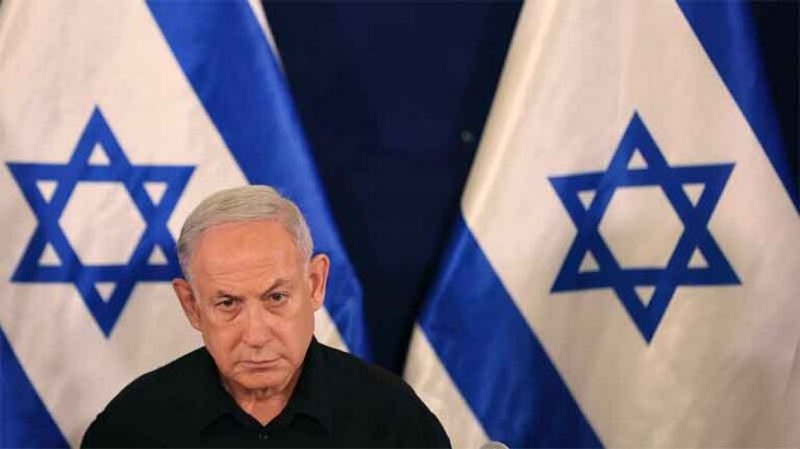
The end result is the killing of 24 of its soldiers and officers in Gaza over a 24-hour period which is stark and harrowing. Prime Minister Benjamin Netanyahu says this is the worst day Israel has experienced since it waged its deadly war on the Gaza Strip after 7 October.

Twenty-one of these 24 soldiers were killed in the area near the Al Maghazi Camp to the east of the enclave, and specifically, around 600 meters after the siege border that divides the strip from Israel.

How?

It seems the Israeli soldiers who are now fighting in the center of Gaza around Dier Al Balah and the camps of Nuseirat and Al Breij – were in the middle of a booby-trap operation that blew up in their faces on a massive scale and heard one kilometer away.  The soldiers had been busy wiretapping two houses with explosives and TNT to blow them up for senseless reasons.  It is suggested the objective had been to clear up the area as a prelude to creating a military buffer zone Israel wants to create in the east and north of the Gaza Strip to bolster its own security.

https://twitter.com/QudsNen/status/1749691725050782111/history

Hamas, Palestinian resistance and the Izz Al Din Al Qassam operatives got to hear of what the Israeli soldiers were up to through intelligence gathering and took the initiative by launching RBG missiles on the two houses and thus resulted in the deaths of the soldiers while they were busy doing the wiring.

A lot of question so far continue to remain unanswered and that is why the Israeli army has already launched an official investigation to ascertain what happened and how the soldiers were killed. This being not the first time Israeli soldiers were killed in mysterious circumstances.

And it is bearing in mind the ground soldiers were supposed to be protected by a tank stationed outside the buildings. They may have been actually hit by Palestinian rocket launchers that triggered a chain-reaction and killed the soldiers in total.

Another theory may lie in the fact that these ground troops frequently call for help from the air and thus it could have been Israeli warplanes that may either bombed the tank and/or the building that already had waiting bombs to go off and this explains the large explosions heard in the surrounding areas.

This theory led to another which suggests that 1 in 5 soldiers killed in Gaza do so in friendly-fire attacks according to Israeli army figures which also form 17 percent of the number of killed.

According to Fayez Al Duwairi, military strategists and commentator for Al Jazeera, this is a high figure. First of all, he disputes the 17 percent number and says it logically should be 20 percent based on the 1 in 5 equation and the fact there is a prevailing Hannibal Directive in Israeli military strategy. It states it’s better to have an Israeli soldier killed rather than have him taken alive by the enemy.

Of course, this is not to say anything about the scores of injured that are feared to have resulted from the blasts. The Israeli army would only talk about the number of those killed with many saying they could be even higher.

Consequences

The killing of the soldiers is likely to have major consequences for Israeli society and the military and political establishments with demands for much answers. These soldiers are not from the professional army but are only reservists who have families, homes and daily jobs to go to.

One of the questions likely to be asked therefore, is why put these soldiers in such positions that require technical expertise in bomb-making and wiring? They are too inexperienced for such work and as reservists should not have been there in the first place.

The Israeli war on Gaza is turning out to be a nightmare despite the mass bombing of the Palestinians, yet Netanyahu and his army seem to be blindfolded by the fact that they say we will continue till we get the job done and finish off Hamas but the problem is Izz Al Din operatives and Saraya Al Quds fighters of Islamic Jihad are nowhere to be found.

The Israeli army keeps saying “we are getting the job done” but the problem with that is there is no documentary evidence as those provided by the Palestinian organizations. Netanyahu says despite the heavy losses, the war on Gaza will continue.

The author, based in Amman, Jordan, writes on Middle East Affair

24 January 2024

Source: countercurrents.org

John Pilger, a Friend of Palestine and All Oppressed Nations, Has Passed Away

By Dr Ramzy Baroud

The first and the last time I met John Pilger in person was in 2018.

I was invited to deliver a speech at the NSW Parliament in Sydney, Australia. Among the large crowd were many that I knew and respected – a former foreign minister, socially conscientious MPs, morally driven intellectuals and activists, and so on.

As I stood at the podium, glancing at the crowd, I saw John Pilger. He had a big smile on his face, as if he was in great anticipation to hear me talk.

The reality was entirely different. I would have rather listened to John than to lecture before him.

As I expressed my many “thank yous”, I made a point of emphasizing that I have modeled my journalism around that of John Pilger.

The painful truth is that, growing up in a refugee camp in Gaza, we rarely affiliated Western media, intellect or journalists with truth-telling, in general. Though, with time, I realized that this wholesale assumption was hardly fair, associating bias with everything Western had its own justification, if not logic.

Aside from the typical corporate biased media narrative on Palestine, the Middle East, the Arab and Muslim world – in fact, the entirety of the Global South – there were those who were identified as part of the ‘left’.

We were told that those supposed leftist are the exception to the norm. But experience has taught me that, aside from ideological nuances, even the so-called left still saw the non-Western world based on a different set of unique biases. They perceived the rest of the world through judgmental eyes, as if they, and they alone, had access to a moral code according to which the rest of us must be filtered.

Those ‘leftists’ are only against certain kinds of wars, especially if they perceive military interventions to be channeled by imperialist agendas. For them, so-called humanitarian intervention is morally justified, although there is no evidence that Western interventions of that kind ever bode well for any country.

Ultimately, that reasoning tends to have little impact on the outcome of international conflicts. Worse, some leftists often find themselves siding with the very imperialist powers they supposedly loathe, whenever it is convenient.

And then, there are the John Pilgers of this world: Principled to the core, and able to understand, dissect and convey the political, cultural and historical complexities of conflicts to millions of people around the world.

“We are beckoned to see the world through a one-way mirror, as if we are threatened and innocent and the rest of humanity is threatening, or wretched, or expendable,” Pilger said at his Sydney Peace Prize acceptance speech, in 2009.

For the Australian-born journalist, whose impact on our understanding of major global conflicts is arguably unparalleled in modern history, these were not mere words but principles to which he adhered to throughout his life, until his passing on December 30.

In his book, and documentary, ‘The New Rulers of the World’, Pilger brilliantly connects the dots of major global issues – social injustice, inequality, the so-called war on terror and more – demonstrating the powerful maxim that “injustice everywhere is a threat to justice everywhere”.

Pilger’s enemies were never a certain race, a nation or even an ideology. He simply served as the sharp critic and, at times, the mobilizer against all sorts of government-orchestrated injustices, whether within national boundaries or internationally.

He challenged imperialism in all of its forms, colonialism wherever it may be. This put him on a crash course with Washington, Canberra, London and other Western capitals.

His dedication to the causes of indigenous people, from Australia to Palestine to Indonesia were all reflected in great volumes and documentaries, such as ‘Utopia’, ‘Palestine is Still the Issue’ and the ‘New Rulers of the World’.

Pilger’s powerful texts as an academic, an author and a journalist, must not distract from his equally powerful and hard-hitting documentaries as a filmmaker. More important than the many awards he had achieved as a filmmaker, starting with ‘The Quiet Mutiny’, was the impact of these films on the way that millions of people around the world perceived issues, conflicts and wars that had only been communicated through non-critical eyes.

“Many journalists now are no more than channelers and echoers of what George Orwell called the ‘official truth’. They simply cipher and transmit lies,” he said during an interview with David Barsamian in 2007.

Though, at times, some intellectuals of Pilger’s caliber may have deviated from their commitment to the uncompromising moral code of principled journalism and intellect, Pilger’s legacy suggests otherwise.

He stood firmly on the side of oppressed people, spoke strongly against the injustices meted out by the powerful, and uncompromisingly defended free speech whenever it is threatened.

Indeed, Pilger was one of the most stalwart supporters of Julian Assange in his war against censorship in all of its forms.

“This is not about the survival of a free press. There is no longer a free press. (…) The paramount issue is justice and our most precious human right: to be free,” Pilger wrote in an article in July 2023.

Before our meeting, I exchanged many messages with John. The first time he responded to my request for an endorsement of a book, I was truly thrilled. I was also moved by his kind response to a young author who was merely starting his own quest for a just world.

Many messages and years later, we finally met in person. I quickly made my way to him through the crowd to thank him for all that he has done for Palestine and for all the oppressed people of this world.

His death, especially during these difficult times, is a major loss for humanity. But I know that, deep down, John must have known that things would eventually get better. He did his part, and much more.

Dr. Ramzy Baroud is a journalist, author and the Editor of The Palestine Chronicle.

20 January 2024

Source: countercurrents.org

It’s All About Me: Netanyahu Rejects Palestinian Statehood

By Dr Binoy Kampmark

Israel has been given enormous license to control the security narrative in the Middle East for decades.  This is not to say it is always in control of it – the attacks of October 7 by Hamas show that such control is rickety and bound, at stages, to come undone.  What matters for Israeli security is that certain neighbours always understand that they are never to do certain things, lest they risk existential oblivion.

For instance, no Middle Eastern state will be permitted to acquire nuclear weapons on the Jewish State’s watch.  Nuclear reactors and facilities will be struck, infected, or pulverised altogether (Osirak at Tuwaitha, Iraq; the Natanz site in Iran), with, or without knowledge, approval or participation of the United States.

This is a signature mark of Israeli foreign and defence policy: the nuclear option remains the greatest, single affirmation of sovereignty in international relations.  To possess it, precisely because of its destructive and shielding potential, is to proclaim to the community of nation states that you have lethal insurance against invasion and regime change.  Best, then, to make sure others do not possess it.

Israel, on the other hand, will be permitted to develop its own cataclysmic inventory of weapons, platforms, and doomsday options, all the while claiming strategic ambiguity about the whole matter.  In that strangulating way, Israeli policy resembles the thornily disingenuous former US President Bill Clinton’s approach to taking drugs and oral sex: he did not inhale, and oral pleasuring by one by another is simply not sex.

The latest remarks from Israeli Prime Minister Benjamin Netanyahu on January 18 suggest that the license also extends to ensuring that Palestinians will never be permitted a sovereign homeland, that they will be, in a perverse biblical echo, kept in a form of bondage, downtrodden, oppressed and, given what happened on October 7 last year, suppressed.  This is to ensure that, whatever the grievance, that they never err, never threaten, and never cause grief to the Israeli State.  To that end, it is axiomatic that their political authorities are kept incipient, inchoate, corrupt and permanently on life support, the tolerated beggars and charity seekers of the Middle East.

At the press conference in question, held at the Kirya military base in Tel Aviv, Netanyahu claimed that, “Whoever is talking about the ‘day after Netanyahu’ is essentially talking about the establishment of the Palestinian state with the Palestinian Authority.”  (How very like the Israeli PM to make it all about him.)  The Israel-Palestinian conflict, he wanted to clarify, was “not about the absence of a state, a Palestinian state, but rather about the existence of a state, a Jewish state.”

With monumental gall, he complained that “All territory we evacuate, we get terror, terrible terror against us”.  His examples, enumerated much like sins at a confessional, were instances where Israel, as an occupying force, had left or reduced their presence: Gaza, southern Lebanon, parts of Judea and Samaria (the West Bank).  It followed that “any future arrangement, or in the absence of any future arrangement,” Israel would continue to maintain “security control” of all lands west of the Jordan River.  “That is a vital condition.”

As such lands comprise Israeli territory, Gaza and the West Bank, Palestinian sovereignty can be assuredly ignored as a tenable outcome in Netanyahu’s policed paradise.  He even went so far as to acknowledge that this “contradicts the idea of sovereignty” as far as the Palestinians are concerned.  “What can you do?  I tell this truth to our American friends.”

As to sceptical mutterings in the Israeli press about the country’s prospects of defeating Hamas decisively, Netanyahu was all foamy with indignation.  “We will continue to fight at full strength until we achieve our goals: the return of all our hostages – and I say again, only military pressure will lead to their release; the elimination of Hamas; the certainty that Gaza will never again represent a threat to Israel.  There won’t be any party that educates for terror, funds terror, sends terrorists against us.”

This hairbrained policy of ethno-religious lunacy masquerading as sane military strategy ensures that permanent war nourished by the poison of blood-rich hatred and revenge will continue unabated.  In keeping such a powder keg stocked, there is always the risk that other powers and antagonists willing to have a say through bombs, rockets and drones will light it.  Should this or that state be permitted to exist or come into being? The answer is bound to be convulsively violent.

It is of minor interest that officials in the United States found Netanyahu’s comments a touch off-putting.  US Secretary of State Antony Blinken had, it is reported, dangled a proposal before the Israeli PM that would see Saudi Arabia normalise relations with Israel in exchange for an agreement to facilitate the pathway to Palestinian statehood.  Netanyahu did not bite, insisting that he would not be a party to any agreement that would see the creation of a Palestinian state.

Blinken, if one is to rely on the veracity of the account, suggested that the removal of Hamas could never be achieved in purely military terms; a failure on the part of Israel’s leadership to recognise that fact would lead to a continuation of violence and history repeating itself.

In Washington, State Department spokesperson Matthew Miller stated in the daily press briefing that “Israel faces some very difficult choices in the months ahead.”  The conflict in Gaza would eventually end; reconstruction would follow; agreement from various countries in the region to aid in that effort had been secured – all on the proviso that a “tangible path to the establishment of a Palestinian state” could be agreed upon.

For decades, administrations in Washington have fantasised about castles in the skies, the outlandish notion that Palestinians and Israelis might exist in cosy accord upon lands stolen and manured by brutal death.  Washington, playing the Hegemonic Father, could then perch above the fray, gaze paternally upon the scrapping disputants, and suggest what was best for both.  But the two-state solution was always encumbered and heavily conditioned to take place on Israeli terms, leaving all mediation and interventions by outsiders flitting gestures lacking substance.

Now, no one can claim otherwise that Palestinian statehood is anything other than spectral, fantastic, and doomed – at least under the current warring regime.  Netanyahu’s own political survival, profanely linked to Israel’s own existence, depends on not just stifling pregnancies in Gaza but preventing the birth of a nationally recognised Palestinian state.

Dr. Binoy Kampmark was a Commonwealth Scholar at Selwyn College, Cambridge.

20 January 2024

Source: countercurrents.org

Inhumane Conditions – Gaza Residents Rely On Soup Kitchens For Food, Have Little Or No Water

By Countercurrents Collective

As the Israel-Hamas war passed the 100-day mark this week, the Gaza Strip continues to be devastated amid the conflict, with women and children said to be the majority of casualties — and those still in Gaza desperate for aid.

An ABC News report cited Maryam Al-Dahdouh, a pregnant mother of four:

“I walk a kilometer on my feet, back and forth every day, every day, for my children to eat.”

“There is no water, so we walk miles to get a bottle of water for the children. Four children, I am pregnant, and there is no food at all. I am a pregnant mother. This pregnant mother has not eaten eggs, milk or anything healthy for three months until now,” Maryam Al-Dahdouh told ABC News on Wednesday at a soup kitchen in Rafah, in southern Gaza Al-Dahdouh said.

The ABC News report said:

Since the Hamas terrorist group’s surprise attack on Israel on Oct. 7, 2023, that killed some 1,200 people, mostly civilians, the death toll on both sides of the conflict has been rising. More than 24,000 people have been killed in Gaza and over 61,000 others injured, according to the Hamas-run Gaza Health Ministry. In Israel, at least 1,200 people have been killed and 6,900 others injured, according to the Israeli prime minister’s office. Israeli officials say 526 Israel Defense Forces (IDF) soldiers have been killed since the ground operations in Gaza began.

The IDF has said it is only targeting Hamas and other militants in Gaza and alleges that Hamas deliberately shelters behind civilians, which the group denies.

60% Homes Destroyed

More than 60% of homes in Gaza have been destroyed, the United Nations said in a press release Tuesday. The U.N. Office for the Coordination of Humanitarian Affairs estimates that about 85% of Gaza’s population, or 1.9 million people, has been forced to flee their homes, many of them now living in tents in southern Gaza in very difficult conditions and reliant on the limited aid that is being delivered from Egypt.

“The sheer mass of civilians on the border is hard to fathom and the conditions they live in are inhumane,” UNICEF Deputy Executive Director Ted Chaiban told ABC News in a statement issued after he returned from Gaza on Thursday.

Uninhabitable

The U.N. warns that with so little aid reaching those who need it in Gaza, famine is becoming increasingly likely.

“Gaza has simply become uninhabitable. Its people are witnessing daily threats to their very existence — while the world watches on,” Martin Griffiths, U.N. undersecretary-general for humanitarian affairs and emergency relief coordinator, said in a Jan. 5 statement.

Famine Around Corner

“Infectious diseases are spreading in overcrowded shelters as sewers spill over. Some 180 Palestinian women are giving birth daily amidst this chaos. People are facing the highest levels of food insecurity ever recorded. Famine is around the corner,” Griffiths said.

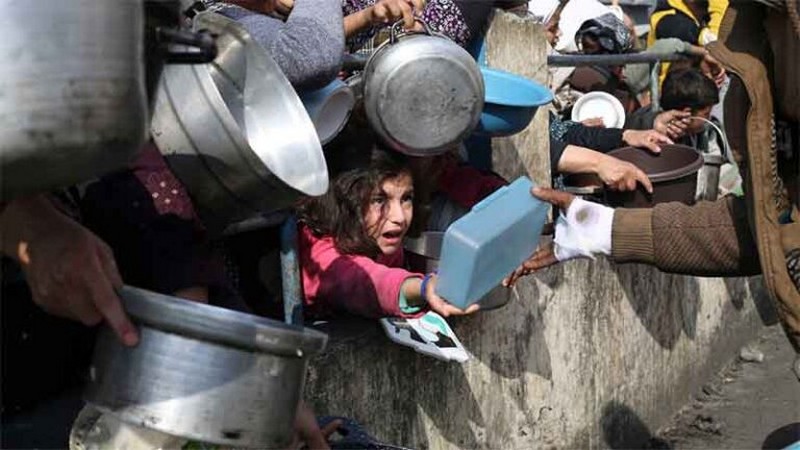
ABC News saw those signs of hunger at the soup kitchen in Rafah on Wednesday. Hundreds of people lined up, clutching containers hoping for some food from the vats bubbling with pasta and soup, many of them children looking gaunt and hungry.

“We stand for a long time in line, and sometimes we come and find that they have not cooked anything and we wait,” Umm Mohammed told ABC News as she stood in line. “And sometimes we come and find that everything is finished and we go and don’t take anything.”

Cold, Rain, Rivers Of Waste

“Water is scarce and poor sanitation is inescapable. The cold and rain this week created rivers of waste. The little food that is available does not meet children’s unique nutritional needs. As a result, thousands of children are malnourished and sick,” Chaiban said.

Among those children who are sick are Al-Dahdouh’s little ones. “Our children got sick, literally sick, all day sick, fever, vomiting, diarrhea all day, not a single one of them is healthy,” she said.

Most Dangerous Place On Earth

“UNICEF has described the Gaza Strip as the most dangerous place in the world to be a child,” Chaiban said.

“We have said this is a war on children. But these truths do not seem to be getting through. Of the nearly 25,000 people reported to have been killed in the Gaza Strip since the escalation in hostilities, up to 70% are reported to be women and children. The killing of children must cease immediately,” he added.

UN Agency Chief Warns Of Bleak Post-war Future For Gazans

The head of the UN agency for Palestinian refugees, Philippe Lazzarini, warned Wednesday of the bleak future facing Gazans after the war between Hamas and Israel ends.

Following his fourth visit to the Palestinian territory since the war erupted on October 7, the UNRWA chief said many residents are no longer able to see “the future in the Gaza Strip”.

“You have hundreds of thousands of people living now in the street, living in these plastic makeshift (tents), sleeping on the concrete,” Mr Lazzarini told journalists in Jerusalem.

More People Are Likely To Die Of Hunger And Famine Than War

Mohammad Mustafa, the Palestine investment fund chairman, said more people in Gaza are likely to die of hunger and famine than war.

The first steps should be to bring food, medicine, water and electricity back to the besieged enclave, he said.

He estimated that rebuilding housing units in Gaza would need at least $15 billion.

Mustafa said, while speaking at the World Economic Forum (WEF) in Davos, that reconstruction efforts will be huge and the financial needs significant.

Jordan Says Its Gaza Hospital ‘Badly Damaged’ By Israeli Shelling

The Jordanian army said its military field hospital in the city of Khan Younis in Gaza was badly damaged as a result of Israeli shelling in the vicinity.

In a statement, the army said it held Israel responsible for a “flagrant breach of international law”.

The Israeli military says it is looking into the allegations.

Israel ‘Steps Up Strikes In South’

Israel stepped up strikes in the southern Gaza Strip, with air strikes and artillery fire targeting Khan Younis throughout the night, said an AFP correspondent.

“It was the most difficult and intense night in Khan Younis since the start of the war,” said Gaza’s Hamas-run government, whose health ministry reported 81 deaths across the Palestinian territory.

‘The World Is Standing By As Civilians Are Killed’

Parties to the conflict in Gaza are “trampling” on international law, Antonio Guterres, the United Nations Secretary-General, said as he urged them to implement an immediate humanitarian ceasefire.

Speaking at the WEF in Davos, Mr Guterres said the warring parties were “ignoring international law, trampling on the Geneva Conventions, and even violating the United Nations Charter”.

“The world is standing by as civilians, mostly women and children, are killed, maimed, bombarded, forced from their homes and denied access to humanitarian aid,” he said.

“I repeat my call for an immediate humanitarian ceasefire in Gaza, and a process that leads to sustained peace for Israelis and Palestinians, based on a two-state solution.”

‘We Cannot Have In Lebanon Another Gaza’

Antonio Guterres, has said he is “extremely worried about Lebanon”.

He told CNN: “We cannot have in Lebanon another Gaza.”

He added that it is “absolutely crucial to avoid a messy confrontation in Lebanon that will be the devastation of the country”.

Mr Guterres, who made the comments at the WEF in Davos, said resolving the situation in Gaza would “allow for…de-escalation in other parts of the Middle East”.

Aid

Two Qatari armed forces aircraft carrying 61 tons of aid landed in el-Arish, Egypt, on Wednesday, which was then transferred into Gaza, according to the Qatari Foreign Ministry. The assistance includes medicine for both Israeli hostages and Gaza citizens, and food, after Qatar and Egypt brokered a deal between Israel and Hamas. There has been no verification the Israeli hostages have received this medicine yet, according to the Qataris. There are still 136 hostages held captive by Hamas, Israeli officials say.

Tunnel ‘Wide Enough For Hamas Leader To Drive His Car Down’

A tunnel wide enough for a Hamas leader to drive his car underneath Gaza has reportedly been discovered by Israeli forces.

The passage was found as troops unearthed more of the terror group’s subterranean network in recent weeks, the New York Times reported.

Until last month, the tunnels were assessed to stretch for some 250 miles beneath the enclave.

But senior Israeli defence officials, cited by the newspaper, said estimates had been revised upwards in light of recent discoveries, with the network now thought to be between 350 and 450 miles in length.

The Gaza Strip itself is only estimated to be around 25 miles long and six miles wide.

One tunnel “stretched nearly three football fields long and was hidden beneath a hospital,” the New York Times reported.

Another, the newspaper said, “was wide enough for a top Hamas official to drive a car inside”.

Destroying the underground network has been one of Israel’s key aims of the war, but an official told the newspaper it could take years to destroy the system.

Senior military officers told The Economist that the IDF would not be able to destroy the entirety of the network.

Doing so would require each tunnel to be mapped, checked for hostages and made irreparable.

Recent attempts to destroy the network by flooding it with seawater have failed and the IDF previously conceded that it has yet to destroy half of the underground passages in Gaza.

Military leaders have been surprised by the quality and depth of the tunnels, according to the New York Times.

Two officials cited by the newspaper assessed that there were nearly 5,700 separate shafts leading down into the network.

Daphné Richemond-Barak, a tunnel warfare expert at Reichman University in Israel, said Israel’s stated goal of eradicating Hamas was dependent on destroying the tunnels.

“If you want to destroy the leadership and arsenal of Hamas, you have to destroy the tunnels,” he told the New York Times. “It’s become connected to every part of the military missions.”

Several Israelis who were held hostage by Hamas in the wake of the group’s October 7 attack have spoken about the spider web-like structures stretching beneath Gaza after being freed.

“We went underground and walked for kilometres in wet tunnels, for two or three hours, in a spider’s web of tunnels,” Yocheved Lifshitz, 85, told reporters in late October.

Israel ‘Kills Hamas Counter-espionage Official’ In Strike

The IDF claims it has killed Bilal Nofal, a Hamas counter-espionage officer in overnight strikes that also claimed the lives of six fighters in the Gaza Strip.

The IDF killed the Hamas officer in charge of interrogating suspected spies, in strikes in the southern district of the Strip.

20 January 2024

Source: countercurrents.org

Al Jazeera documents more mass summary executions by Israeli troops

By Andre Damon

With each passing day, there is growing evidence that Israeli troops are functioning as mobile mass execution parties in Gaza.

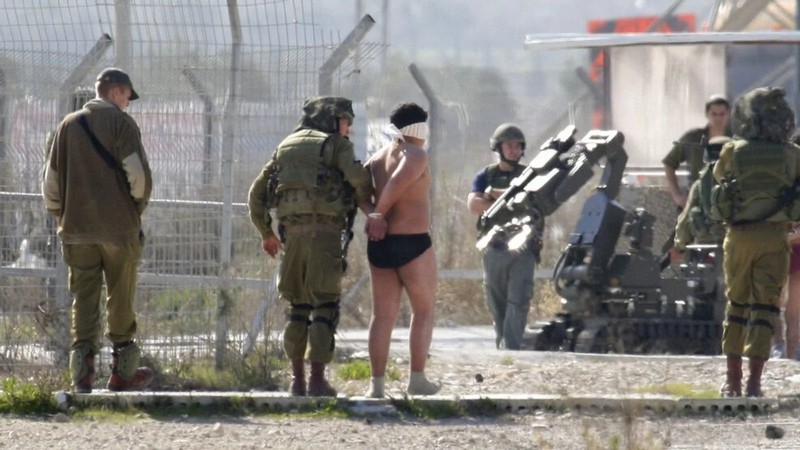
On Thursday, Al Jazeera published video interviews of residents of an apartment building in Gaza City, where residents said Israeli troops systematically tortured and executed 15 men.

Heba Selem, a witness, stated: “They stripped them of their clothes except for their boxers and forced them to lay on their stomachs on the floor. They started to execute the men on the floor. They didn’t leave anyone. I swear to God, they turned the entire place into a bloodbath.

“It’s a day you can’t forget, I can’t forget it.” Her husband was killed during the execution.

“After they tortured my husband in front of us and they broke his jaw, and beat up his face, they beat him until his arms were bleeding. They stripped all the men, tortured them, and humiliated them, then executed them. That all happened while we watched.”

Al Jazeera quoted William Schabas, professor of international law at Middlesex University, as saying the footage would constitute evidence of war crimes at the International Criminal Court. “I should add that it’s not really important to demonstrate that they’re civilians. Summary executions even of fighters, even of combatants is a war crime,” he told the news outlet.

In a subsequent interview, Muhammad Shehada, chief of programs and communications of the Euro-Med Human Rights Monitor, told Al Jazeera that there is a pattern of “systematic” killing in Gaza.

“In at least 13 of field executions, we corroborated that it was arbitrary on the part of the Israeli forces,” he said, adding: “We believe that the IDF [Israel Defense Forces] has dropped restraint in its conduct in Gaza, enabling soldiers to confidently conduct these atrocities, without fear of accountability, which is why we’re seeing them in multiple neighborhoods and parts of the Gaza Strip.”

On December 20, the United Nations Office of the High Commissioner for Human Rights (OHCHR) published a report alleging that Israeli forces carried out a mass execution of civilians in northern Gaza, separating 11 men from their families and summarily shooting them.

In its December 20 report, the OHCHR in the Occupied Palestinian Territories said it “has received disturbing information alleging that Israel Defense Forces (IDF) summarily killed at least 11 unarmed Palestinian men in front of their family members in Al Remal neighborhood, Gaza City, which raises alarm about the possible commission of a war crime.”

The UN agency wrote: “On 19 December 2023, between 2000 and 2300 hours, IDF reportedly surrounded and raided Al Awda building, also known as the ‘Annan building,’ in Al Remal neighborhood, Gaza City, where three related families were sheltering in addition to Annan family.”

Neither Al Jazeera’s latest revelations, nor the reports by the United Nations and Euro-Med, have been reported by the US and European media, which have largely dropped any systematic coverage of the genocide.

In a briefing, White House National Security spokesperson John Kirby denied that Israel was carrying out “deliberate” war crimes.

A journalist asked: “Yesterday, Mexico, and Chile requested the International Criminal Court to investigate potential crimes against civilians in Gaza. Any reaction?”

Kirby replied: “We don’t have any indications that there’s deliberate, deliberate efforts to commit war crimes by the Israeli Defense Forces.”

Kirby declared: “Currently, of course, we’re rightly focused on making sure Israel has what it—continues to has—have what it needs to defend itself.”

As Washington doubled down on its defense of Israel’s war crimes, the US further expanded its war in the Middle East.

On Friday, the US carried out yet another strike on Yemen, marking the sixth such strike in 10 days. Kirby claimed that the “pre-emptive” attacks were taken in “self-defense.”

Kirby threatened to launch more strikes, declaring: “They continue to have offensive capability, and they still continue to be willing to use it.” He added: “We also have plenty of defense capability available to us, and we continue to use it as well.”

These continuous, daily attacks on Yemen make clear that the United States has launched yet another endless war in the Middle East, centrally targeting Iran, as part of its global military offensive aimed at Russia and China.

According to the Euro-Med Human Rights Monitor, 32,246 people have been killed in Gaza since October 7, with 62,234 people injured. A staggering 1.95 million people are displaced.

The United Nations reported Friday: “Between the afternoons of 18 and 19 January, according to the Ministry of Health (MoH) in Gaza, 142 Palestinians were killed, and another 278 people were injured.”

Euro-Med said 72,440 homes in Gaza have been fully destroyed, and 190,250 homes have been partially destroyed.

According to the World Health Organization, most of Gaza’s hospitals have completely stopped functioning, while the 15 remaining hospitals are operating at up to three times their capacity.

Last week, Israeli Prime Minister Benjamin Netanyahu declared that Israel will continue its onslaught on Gaza in defiance of international law. “Nobody will stop us—not The Hague, not the [Iranian-led] axis of evil and not anybody else,” Netanyahu said.

20 January 2024

Source: countercurrents.org

“Depopulating” Palestine: Israel Through the Bifocal Lens of Hitler and Lemkin

By Maung Zarni

In fact, Lemkin, “the father of the term ‘genocide’”, drew on Hitler’s publicly available genocidal thoughts expressed in writing to hone his understanding of the destruction of human groups andsubsequently, imposing the perpetrators’ design on the surviving population, in the morning after.

That in turn took me to the ideological and technical source of modern genocides, Adolf Hitler’s blood-based view of a racially cleansed state, with the acquisition of land for the state’s – as opposed to biblically – “chosen people.” As a matter of fact, even, 20 years before Hitler, a fringe demagogue from Bavaria, began formulating his coherent if vile body of “National Socialist” vision of a racially superior Aryan nation, cleansed of inferior populations – most specifically “the Jude” which he termed “vermin” “bloodsuckers” “masters of deception” “parasites” and so on – pre-Nazi Germany under Kaisar Wilhem and Bismack were perpetrating the 1st modern genocide of the 20th century in Namibia (1904-08).

As students of genocide noted the colonizing German authorities and troops were driving hundreds of thousands of native peoples – Heroro and Nama – into African desert where they (the Germans) cut off water and any sources of essentials to sustain life for the marked populations whom the occupiers did not want, but whose land they lusted after and subsequently taken over to build German settlements. Three decades on, the Nazis, now in power, proceeded to hone the earlier successful genocidal techniques hatched in the deserts to realize their Aryan project on the local populations. So, Namibia Presidency condemned Germany when Berlin announced that it will officially support Netanyahu’s Israel as a 3rd party in S. Africa vs. Israel genocide case at the International Court of Justice (ICJ) on the day (12 January) Israel denied any wrongdoing in Gaza.

Land and Genocides

We are obliged to depopulate,” (italics original), he went on emphatically, as part of our mission of preserving the German population. We shall have to develop a technique of depopulation. If you ask me what I mean by depopulation, I mean the removal of the entire racial units. And that is what I intend to carry out….”

Those were Adolf Hitler’s words as quoted verbatim by his frequent guest and writer Dr Herman Rausching, uttered as early as 1932, a year before the Nazis came to power.

In the New York Times Book review (18 February 1940) of Rausching’s The Voice of Destruction (New York, 1940), the reviewer Ferdinand Khun Jr. wrote, quoting Rausching, “he (Hitler) said the war of the future would consist of ‘ariel attacks, stupendous in their mass effect, surprise, terror, sabotage, assassination from within, the murder of leading men, overwhelming attacks on all weak points, in the enemy’s defence.” While guests including Dr Rausching were sipping tea and nibbling Streuselkuchen, Hitler proceeded to thunder, “we may be destroyed, but if we are we shall drag the world with us, a world in flames.”

Rausching dubbed Hitler and his Nazi movement “apocalyptic riders of world annihilation.”

Google “100th day in Gaza,” and see what comes up in images, audiovisual materials and reports. Hiroshima- or post-war Berlin- or Warsaw-like scenes, to start with.

And enter the unfolding of “widening regional conflict” as US and UK have already gotten themselves involved in attacking Yemen in the direct context of the African country’s assault on the Israel-bound ships in the Red Sea, which the Yemenese organization bow will not stop until Israel ends its genocidal assault on Gaza’s population.

Now back to Hitler and Lemkin in Europe of those mass-murderous decades of 1930’s and 1940’s.

In Berlin, the newly elected Aryan Chancellor Hitler was elaborating his plan of genocide to a group of visitors over tea and German snacks in the early 1930’s, the Polish Jewish legal scholar Raphael Lemkin, recent graduate from the then Polish University in Lwow (now Lviv, in Ukraine) was reworking his earlier pre-Nazi era concerns and concepts about population destruction – the crime of barbarism and the crime of vandalism. Lemkin proposed, without success, these two new crimes be added to the existing body of international law at an international law conference in Madrid in 1933.

The result was his ground-breaking essay entitled in a single (newly coined) word “Genocide”, published as Chapter IX of Axis Rule in Occupied Europe: Laws of Occupation, Analysis of Government, Proposals for Redress, 2nd Edition by the Lawbook Exchange, Ltd. 2008, originally published in 1944. Within the narrow confines of the Genocide Convention, S. Africa’s case against Israeli genocide in Gaza only deals the Jewish State’s systematic and ongoing violent conduct towards the Palestinians under various types of siege for the last 17 years, and more ominously, “the total siege” since October 7 attacks against Israel by Palestinian resistance groups Hamas and Islamic Jihad. Seen through the framework of Lemkin’s rich sociological conception of genocide, the incessant talks of post-conflict Gaza – by Israel and its Euro-American genocide enablers such as USA, UK and EU – fall neatly in the Lemkinian second phase or stage of genocide: imposing the victorious scheme on the surviving segment of Palestinians. Neither the ICJ case nor the legally framed narrative will cover this deeply settler colonial policy and outlook, which Israel’s perpetrators pursue through genocidal techniques.

On 12 January 2024, during 3-hours of Israel’s presentations, the Jewish State’s Co-Agent Mr Sander had obviously deceived the ICJ when he accused S. Africa of depriving Palestinians of “their agency” by filing the Application. In social media and in street rallies and processions, I have only heard repeated public “Thank you” to S. Africa for anti-apartheid S. Africans’ well-established and decades-old ties and acts of solidarity with the Palestinian liberation struggle. It is Israel, as the colonizer and the grabber of Palestinian land, that has denied millions of Palestinians under its Occupied Territories and in the diaspora worldwide, the right of self-determination – and the right of return.

Speaking of Zionists’ landgrab of Palestinian land, in her biography “My Life, Golda Meir: Israel’s only female Prime Minister” (first published in 1975, 2023)” Meir, a Ukraine-born American Jewish settler, wrote, “… I am more than a little tired of hearing about how the Jews ‘stole’ land from Arabs in Palestine.” In the preceding paragraph, Meir wrote, “(w)hen the First World War ended and the Mandate over Palestine was awarded by the League of Nations to Great Britain (from Turkey), the new hopes raised by the Balfour Declaration for the establishment of a full-fledged Jewish national home seemed to be on the way towards fulfilment (p.78).”

Deeply drunk with her own fanaticism of Socialist Zionism, Gold Meir did not seem to be bothered by what the native Arabs of Palestine might feel about the unwelcome mass-implant of largely Eastern Europe’s persecuted Jews (from Ukraine, Russia and Lithuania) – which she rightly termed “the Christian problem”, not “the Jewish problem”. Nor was Meir troubled by the imperialistic decision by the League’s war-victorious Western powers to slice land (with people on it), nor by the unilateral decision by Britain’s Christian Zionist Secretary of State Lord Balfour. None of these historic moves involved any consultation with, much less consent by the residential population of Palestine.

It is noteworthy that ninety-six percent of Palestine’s population were Arabs of various faiths.

As a matter of fact, Meir definitely knew that the land was already predominantly populated by native, residential Arabs, and, equally important, that the latter were putting up resistance against the League’s colonialist imposition of mass immigration policies in Palestine.

Making a specific reference to her older sister Sheyna, a staunch Zionist, who decided to re-immigrate, with her two children, from Denver, Colorado to Palestine at “the worst possible time”. For, Meir wrote, “on 1 May 1921, following a series of attacks on the Jewish settlements in the north of the country (of Palestine), full-scale Arab riots against the Jews had broken out in Palestine. Over forty people, many of them new immigrants, had been murdered and mutilated. Only a year earlier, Jews had been murdered and raped by Arab gangs in the Old City of Jerusalem, and although it was hoped that the British civil administration (which had just taken over from the military) would deal sternly with those responsible for the riots and thus restore calm, violence had just erupted again. Within a few years, Shamai (Meir’s brother-in-law) argued, Palestine might be at peace; the Arab nationalists might no longer be able to incite Arab villagers to bloodshed; it might become a reasonably safe country in which to live! (p.64)”.

Three weeks after the 1 May riots against the unwelcome mass Jewish immigration in Palestine, driven by their Zionist zeal for “our conquest of the land” (p.74), the two sisters and their families set sail from New York to the biblical Zion aboard SS Pocahontas on 23 May.

Meir wrote, “(y)ears earlier, however, in 1901, the Jewish National Fund had already been formed by the Zionist movement for the exclusive purpose of buying and developing land in Palestine in the name of the entire Jewish people (italics added).

As a matter of fact, Theodor Herzl whom Meir called “the father of Israel”, was lobbying various imperial powers, 1st to the Ottoman sultan, later to German Kaisar Wilhelm and later the British Colonial Office, – depending on who was controlling the real estate in Palestine – to get a large slice of Palestine for the Jewish state. He apparently tried to entice the Sultan by promising to the latter that the Jewish financiers would pay off portions of the Ottoman debt. Herzl got nowhere when he died in 1915. (See False Messiahs: How Zionism’s dreams of liberation became entangled with colonialism, Barnett R. Rubin, The Boston Review, 4 January 2024, for a very thorough historical background to what I would call “secondary settler colonialism” adopted by Herzl and his ideological heirs. Secondary because the Zionists in search of “the living space”, to borrow the German term, were looking for European colonial powers to serve as “mother country”, a role that the United States has come to assume, out of its own strategic equations.

According to the New Historian of Israel Shlomo Sand, the author of The Invention of the Land of Israel: From Holy Land to Homeland and The Invention of the Jewish People, the biblical Zion, in sharp contrast to Herzl’s quest for land, using the biblical rhetoric, is a holy land where the observant Jews, (including one of his “selfish” great-uncles who sold everything of value in order to finance his voyage for his own resurrection, having left not a cent for his children or family), from all over Europe travelled to die where they believe they would be resurrected.

This religious custom is not dissimilar to the observant Hindus who travel their 5,000-years’ old holy city of Varanasi, Benare state, India to die and be cremated on the banks of River Ganges there. The sight of the 24/7 burning of heaven-bound corpses is a mesmerising spectacle which brings millions of international tourists (and their $$$) to India.

Choosing to go and die in one’s holy land is one thing. But taking over vast swarths of land already developed as a society and economy, and densely populated by another people – Palestinians – to build a new Zionist settler colony, justified on the biblical fairy tales and backed by the Old Europe’s imperialist policies which dressed themselves up as “international law”, is a radically different matter.

In sharp contrast to the Old Europe’s spiritual Zionists, political Zionists of late 19th century Eastern Europe – mainly Socialist and Labourite secularists – were solely driven to acquire large tracts of land to acquire, live and start a new sovereign country “on the ruins of the (native) people”, as the late Edward Said rightly and angrily pointed out in one of his TV interviews.

Tel Aviv’s biblically justified land deed and its Zombie-like deployment of “the right of return”, after the supposed 2,000 years of exile from Egypt, is as credible as the Chinese Communist Party’s diabolical rhetoric of the Middle Kingdom’s historical claim over the vast water bodies of South China Sea, holding up maps from antiquity. These claims from antiquity, based in maps or the old bible, put the claimant states above international law (for instance, the Genocide Convention or the Convention on the Law of the Sea).

To belabour the obvious, the now-100-years’ old hope of Golder Meir’s extended family that there might be peace in Palestine “in a few years” remains as elusive as the spiritualists’ “resurrection” in Zion.

As Mairead Mahguire the Northern Irish Nobel Laureate (1976 Peace Prize) and a friend of the late Yasar Arafat put it in her interview with me in her native Belfast, in December 2023, “Israel cannot build peace (or security) on genocide.”

Myanmar and Israel genocide cases and International Court of Justice

On the face of the available evidence that S. Africa submitted in its 84-page Application – as opposed to Gambia’s Application of 36 pages against Myanmar – to the International Court of Justice (ICJ), most non-Zionist (read impartial and objective) lawyers, students of genocide and legally informed journalists around the world certainly see that the ICJ judges will have a breezy job of ruling in favour of the Applicant S. Africa, on both the interim or “provisional measures” request by the Applicant state of S. Africa and in the Merit Phase. That is, if all 15 judges – and the two ad hoc judges handpicked by S. Africa and Israel – are independent, intellectually, ideologically and politically.

In Gambia vs. Myanmar case the ICJ reached a unanimous decision on 23 January 2020 that the case thus presented met the bar of “plausibility” (of Myanmar breaching the Genocide Convention) to warrant a full hearing, and hence the issuance of the interim ruling. Another landmark case, the Rohingya genocide proceedings are now in the Merit Phase, and its 5th year.

There are currently raging debates globally about the S. Africa vs. Israel genocide case anchored in the Convention on the Prevention and Punishment of the Crime of Genocide (The Genocide Convention). However, in my own attempts to understand Israel’s physical destruction of Gaza and the Zionist state’s policies and Zionist thought and mindset with respect to the native population of Palestine at large, I find exceedingly helpful to turn to Hitler’s own formulation of genocidal techniques which he shared in his private circles as early as 1932, and, conversely, Raphael Lemkin’s extremely rich, grounded and textured sociological conception of genocide a decade later, which were then being implemented by Hitler’s “executioners” throughout the Nazi-occupied Europe.

In the midst of the civil war between East and West Pakistan in 1971, made up of two different populations of Bengali speakers and Urdu speakers, West Pakistani general chillingly ordered his troops, “I want the land, not the people.” What ensued was a genocidal destruction of Bengalis in East Pakistan (now Bangladesh), still not recognized as such.

In all genocides forcibly removing and/or destroying an unwanted population, or “depopulating” the land – as Adolf Hitler put it, as a matter-of-factly – typically go hand in hand.

Obviously, the Architect of the Nazi Genocide, Hitler did not need to turn to the Heaven (or any edition of the bible), unlike Netanyahu and generations of political Zionists to make the baseless claim over the land.

In the brief sub-section entitled “Significance of the State’s Area” (of Mein Kempf, pp. 642-643), Hitler offered his non-biblical rationale for the need for “an adequately large space.”

In Hitler’s own written words, “Only an adequately large space on this earth assures a nation of freedom of existence (italic original). Moreover, the necessary size of the territory to be settled cannot be judged exclusively on the basis of present requirements, not even in fact on the basis of present requirement, not even in fact on the basis of the yield of the soil compared to the population. For, as I explained in the first volume, under ‘German Alliance Policy Before the War,’ in addition to its importance as a direct source of a people’s food, another significance, that is, a military and political one, must be attributed to the area of a state (italics original)If a nation’s sustenance as such is assured by the amount of its soil, the safeguarding of the existing soil itself must also be borne in mind. This lies in the general power-political strength of the state, which in turn to no small extent is determined by geo-military considerations (p.643).

Does this sound familiar in the current context of utterances with regard to Gaza-related security concerns for the officially Jewish State, coming out of Netanyahu’s War Cabinet?

The equally chilling parallel is the common ideological justification by the Third Reich and Israel – in terms of manufactured link between the two apartheid states and exclusionary mono-races.

Here Hitler is instructive, when he wrote, in Mein Kampf“(T)he foreign policy of the folkish (National Socialist) state must safeguard the existence on this planet of the race embodied in the state, by creating a healthy, viable natural relation between the nation’s population and growth on the one hand and the quantity and quality of its oil soil on the other hand (pp.642-643).”

However, going forward, Hitlerite notion of “depopulation” (or drastic reduction) of the land of unwanted group – in this case, 2.3 million residents of Gaza offers a crystal clear empirical lens through which judges and spectators alike should be invited to view Israel’s policies and practices.

As chilling and vile as he was, Hitler spelled out “depopulation” of the land as the crucial objective for the preservation (security) of the Aryan nation thus:

We are obliged to depopulate,” (italics original), he went on emphatically, as part of our mission of preserving the German population. We shall have to develop a technique of depopulation. If you ask me what I mean by depopulation, I mean the removal of the entire racial units. And that is what I intend to carry out – that, roughly, is my task. Nature is cruel, therefore we, too, may be cruel. If I can send the flower of the German nation into the hell of war without the smallest pity for the spilling of precious German blood, then surely I have the right to remove millions of an inferior race that breeds like vermin! By “remove”, I don’t necessarily mean destroy (italics mine); I shall simply take systematic measures to dam their great natural fertility. For example, I shall keep their men and women separated for years. Do you remember the falling birthrate of the world war? Why should we not do quite consciously and through a number of years what was at the time merely the inevitable consequence of the long war? There are many ways, systematical and comparatively painless, or at any rate bloodless, of causing undesirable races to die out.”
[Hitler’s statement to Rauschning, from “The Voice of Destruction,” by Hermann Rauschning (New York, 1940, pp. 137-138), quoted by Lemkin as Footnote 29, page 86, Chapter IX: Genocide)].

Published in 1942 in USA, when the Final Solution was well-underway in such dark sites as Auschwitz in the Nazi-occupied Poland under the Administration of Hitler’s lawyer Hans Frank, Lemkin’s Genocide Chapter included that crucial, extensive quote attributed to Hitler. Were Lemkin alive today and was asked to look at the conduct by the occupying state of Israel in Gaza (and other occupied territories of Palestine), the Polish Jewish legal genius would certainly be persuaded to reference Hitler’s articulation of his genocidal project and reach the inevitable conclusion: that Israel is committing a comprehensive genocide.

No two genocides in history are identical, to belabour the obvious.

Different genocidal regimes device different but coordinated and generally systematic plan of annihilation. The English proverb “there are many ways to skin a cat” springs to mind. Some genocides are executed over decades. Even the most industrially systematized genocide by the Nazis took over 10 years, with its accelerated phase of the “liquidation” of the unwanted populations, largely the European Jewry.

The push for out-migration, ghettoization, accompanying deprivation of the absolute essentials of life – food, water, medicine, electricity – , direct killings of the members of the targeted population, establishment of ever-expanding “living space” (or settlements, if you like) for “one chosen race”, state-chosen or biblically chosen, were all integral to Hitler’s scheme of “depopulating” the land earmarked for the ownership in the hands of the race-state, the (exclusively) Jewish State or the Third Reich and its Aryan race. The State of Israel now owns more than 93% of the land in Palestine while at the height of the apartheid, Pretoria owned about 70%.

Myanmar state which has long been captured by the country’s central military adopted consciously a policy of slow-genocide towards Myanmar’s Rohingya population concentrated in the Bangladesh-Myanmar border areas, as early as 1970’s. The two final waves of “depopulating” the western land of Myanmar drove out 740,000 people from 300+ villages in 2016 and 2017.

Amidst the physical destruction of much of Gaza which the world has witnessed over the last 100 days, Israeli politicians, officials and public openly talk of the natives of Gaza relocating to countries “for their own better future”.

In his essay “The Old and New Conversations” (On Palestine, Noam Chomsky and Iian Pappe, Penguin, 2015), a highly regarded Israeli scholar of Palestine at Britain’s Exeter University shed light on “the connection between Zionist ideology and the movement’s policies in the present.” Peppe wrote, “both aim to establish a Jewish state by taking over as much of historical Palestine as possible and leaving in it as few Palestinians as possible. The desire to turn the mixed ethnic Palestine into a pure ethnic space was and is at the heart of the conflict that has raged since 1882.”

He continues, “(t)his impulse, never condemned or rebuked by a world that watched by and did nothing, led to the massive expulsion of 750,000 people (half of the region’s population), the destruction of more than five hundred villages, and the demolition of a dozen towns in 1948.”

It is instructive to quote Peppe’s scathing indictment of Israel: “(t)he international silence in the face of this crime against humanity (which is how ethnic cleansing is defined in the dictionary of international law) transformed the ethnic cleansing into the ideological infrastructure on which the Jewish state was built. Ethnic cleansing became the DNA of Israeli Jewish society – and remains a daily pre-occupation for those in power and those who were engaged in one way or another with the various Palestinian communities controlled by Israel. It became the means for implementing a not yet fulfilled dream – if Israel wanted not only to survive but also to thrive, whatever the shape of the state, the fewer Arabs (Palestinians) in it, the better.”

One hears the echoes of Hitler’s words: We are obliged to depopulate”.

Whatever the ICJ’s ruling, interim or eventual, Israel’s genocidal dream of “depopulating” the land of Palestine in pursuit of the nearly 150-years of deadly Zionist Dream has been effectively shattered.

Both the world, including the anti-Zionist Jews, or “Jews with conscience”, as my Jewish American brother Stephen Shaw from Brooklyn put it, have called Israel out for its ongoing genocide. We roundly condemn Israel’s financial, political, and military backers such as USA, UK, Germany France and a majority of the EU states. They are criminal accomplices in Israel’s genocide, and they ought to be held to account, if only morally and reputationally, for their criminal complicity.

The historically genocidal colonising states with European root show no signs of humanity, nor have they “atoned” their colonial “sins” globally. After centuries of landgrab, loot, and colonialism of various hues, political classes in the Global North appear unable to see the non-white people as fully humans equally worthy of “life, liberty and happiness”.

Still, it is very fitting, morally, legally, ideologically and intellectually, the mono-racialized Jewish State found itself before the UN’s highest court of the states, being tried as it were under the very convention – the Convention on the Prevention and Punishment of the Crime of Genocide, whose emergence was triggered by the Shoah.

The same year when the United Nations adopted the Genocide Convention and the Universal Declaration of Human Rights, the UN chose to look the other way when Israel began its first large scale genocide – the Nakba – during which the settler colonial state laid its foundation for depopulation, destruction and displacement of Palestinian land. Its choice is coming back to haunt the world body while millions of Palestinians on their ancestral land – and in diaspora – continue to bear the brunt of the United Nations’ abysmal failures.

This time, the conscience of the world has been awoken – in the same way the Abolitionist Conscience had been awoken nearly 200 years ago – as evidenced in the vociferous and sustained protests and marches of Free Palestine supporters globally including in Western capitals.

It is cliché to say what is seen cannot be unseen; still, it is absolutely true that the world has seen with its collective eyes – might I add, also with moral clarity, not simply Israel’s immediate and unfolding Lemkinian “crime of barbarism” and “crime of vandalism”, but also the genocidal foundation of the Zionist settler colonial state and its un-repentant formulations of the post-Gaza genocidal vision for the natives of Palestinians.

With deep pain, Lemkin must be watching all this unfold from Heaven while Hitler turns in his un-marked grave, now a parking lot, in Berlin.

Dr Maung Zarni is a scholar, educator and human rights activist with 30-years of involvement in Burmese political affairs, Zarni has been denounced as an “enemy of the State” for his opposition to the Myanmar genocide.

20 January 2024

Source: forsea.co

Netanyahu outlines his plan to seize Gaza for Israel

By Jean Shaoul and Chris Marsden

Prime Minister Benjamin Netanyahu has bluntly spelled out his plan to ethnically cleanse and then seize Gaza for Israel. In doing so he rejected domestic demands for a ceasefire tied to the release of hostages and denied face-saving claims made by the United States administration to justify its support for genocide that there will be some form of Palestinian mini-state established in its aftermath.

Speaking at a press conference last Thursday, Netanyahu insisted, “I will not compromise on full Israeli security control over all the territory west of the Jordan River”. His statement also prefigures an assault on the West Bank and the seizure of all Palestinian-held territory.

War would “continue until the end, until the victory, until the elimination of Hamas” and “nothing will stop us.” Ending the war prematurely “would harm Israel’s security for generations,” he said, suggesting this could mean military action continuing until next year.

US President Joe Biden responded Saturday with what was reportedly his first phone call with Netanyahu for a month, after which he claimed that the Israeli leader would consider some “type” of two-state solution.

Netanyahu’s spokesman dismissed Biden’s claim Sunday, saying that “In his conversation with President Biden, prime minister Netanyahu reiterated his policy that, after Hamas is destroyed, Israel must retain security control over Gaza to ensure that Gaza will no longer pose a threat to Israel, a requirement that contradicts the demand for Palestinian sovereignty.”

Netanyahu said Sunday, “I emphasized to President Biden our determination to achieve all the goals of the war, and to ensure that Gaza never again constitutes a threat to Israel.” Under his leadership, Israel would wage a far wider regional war “on all fronts and in all sectors. We are not giving immunity to any terrorist: not in Gaza, not in Lebanon, not in Syria, and not anywhere.”

Netanyahu and his generals have repeatedly made clear that Israel is waging war not just on the Palestinians but Iran and its allies, with Defence Minister Yoav Gallant declaring that Israel faces a war on seven fronts: Gaza, the West Bank, and Iran and its allies in Lebanon, Syria, Iraq and the Houthis in Yemen. Replying to a reporter who asked why Israel was making do with attacks on Iran’s proxies rather than attacking Iran directly, Netanyahu said, “Who says we aren’t attacking Iran? We are attacking Iran.”

On Friday night, Israeli forces bombed Syria’s capital, Damascus, targeting Iranian forces allied to the Syrian government during NATO’s 13-year war for regime change in the country. Those killed included the Islamic Revolutionary Guard Corps’ (IRGC) Syria intelligence chief and four other IRGC members.

Emboldened by the prospect of a Trump victory in the US presidential elections in November to openly clash with Biden, Netanyahu threw down the gauntlet to his domestic opponents. Rejecting any possibility of holding elections, he said, “Going to elections would be irresponsible and would badly halt the war effort.”

Politically embarrassed by the confirmation that all talk of a Palestinian state, like appeals for Israel to avoid civilian casualties, is empty rhetoric for public consumption, Biden politely stressed that creating a Palestinian state was “still a possibility.”

A spokesman for UK Prime Minister Rishi Sunak called Netanyahu’s opposition “disappointing”, while the European Union on Monday leaked a policy document asserting that the block will press ahead with peace talks including a two-state solution without the involvement of Israel, because it was “unrealistic to assume that Israelis and Palestinians will in the near future directly engage in bilateral peace negotiations”.

On all fundamentals, Washington is at one with Netanyahu’s war aims, though it needs the fig leaf of a two-state solution to help regional allies including Saudi Arabia and Egypt justify their refusal to come to the aid of the Palestinians.

Israel’s attack on the Palestinians was planned with Washington and designed as the opening move in a military campaign aimed against Iran and its allies, as part of US imperialism’s broader preparations for war against China. Both Washington and its ally London dispatched warships to the Middle East within days of the October 7 attack to secure hegemony over the resource-rich region.

Netanyahu heads a crisis-ridden and deeply unpopular government and his efforts to play to his right-wing constituency have made this worse. Prior to October 7 and Netanyahu’s assault on Gaza, he faced mass protest movements against his far-right coalition.

Anti-Palestinian sentiment over the October 7 incursion and the launching of revenge attacks was used to suppress opposition, but public anger has grown over revelations that the intended attack was known of and allowed to take place in order to provide an excuse for launching war on Gaza. This has been fueled by the massive cost of the war, its brutality and the failure to prioritise the release of hostages.

The prime minister and his Likud party’s poll ratings have plummeted. The opposition National Unity—led by former army chiefs of staff Benny Gantz and Gadi Eisenkot, both now serving in Netanyahu’s war cabinet, and Yesh Atid leader Yair Lapid—is predicted to win an election.

On Monday, families of the hostages burst into a session of the Knesset Finance Committee demanding that the government do more to secure their family members’ release. Outside the Knesset, dozens of protesters called for new elections before being dragged away by security officers.

This followed days of small but growing protests in Israel’s major cities calling for talks to halt the war and secure the immediate release of the remaining 140 hostages, with some protesters also calling for fresh elections. On Saturday, thousands took part in a demonstration in Tel Aviv, whose streets are plastered with signs reading “Bring Them Home” and demanding the immediate dissolution of the Knesset and fresh elections.

Hundreds of anti-war protesters, organized by Partnership for Peace, a coalition of civil society groups, took part in a demonstration in the mixed city of Haifa calling for an end to the war, a hostage deal and elections. The protest had initially been banned by the police and was only allowed after an appeal to the Supreme Court and the imposition of a 700 attendee maximum.

The protests, though much smaller than last year’s demonstrations against Netanyahu’s attacks on Israel’s Supreme Court, suffer from the same political weaknesses. A retired general, Nimrod Sheffer, spoke at the Haifa demonstration and called on Eisenkot and Gantz to “choose whether you are in the government and continue to serve the government, or leave it now and start serving the people. The Israeli Knesset must return the mandate to the people, now.”

Demands for a ceasefire, the release of the hostages and fresh elections can never be achieved by appealing to the war criminals Eisenkot and Gantz. Both will continue to wage war alongside Netanyahu for as long as this is required. Speaking of Gaza, Gantz has declared, “The war here is for our existence and for Zionism, and so I can’t provide an estimate of the length of each stage in the war and the fighting that will continue after. We can’t retreat from our strategic objective,” and “On the question of the operation’s length, there are no limitations.”

Their pledge to the Israeli bourgeoisie and to US imperialism is that should a change of government become necessary, then National Unity and its coalition partners will continue to wage the war, only more effectively—especially in combining genocide in Gaza with the broader regional conflict with Iran and its allies.

In an interview with Israel’s Channel 12, Eisenkot declared his support for a temporary pause in the fighting for talks to secure the release of the hostages, to maintain public support for the escalating war. But he followed these remarks with the declaration, “For me, the mission to save civilians comes before killing the enemy. The enemy can be killed afterward.”

Eisenkot boasted of how the decision by National Unity to join the war cabinet and wage Israel’s genocide in Gaza had prevented Netanyahu plunging Israel into a disaster. According to the Times of Israel, “on October 11, Israel was on the verge of striking Hezbollah but he and Gantz managed to convince Netanyahu and the war cabinet to hold off. ‘Our presence there prevented Israel from making a grave strategic error,’ Eisenkot said.

“Had a decision been made to attack Hezbollah, ‘we would have fulfilled [Hamas’s Gaza leader Yahya] Sinwar’s strategic vision’ of bringing about a regional war, he said. The entire axis —‘Syria, Iraq, Iran’ — would have gotten involved, he said, and then ‘[the war against] Hamas, which caused us the greatest damage since the establishment of the state, would have become a secondary arena,’ he said.”

The Times of Israel adds, “Nonetheless, he did not rule out the potential for escalation to war.”

Creating the political conditions for continuing an agenda of genocide and war is what preoccupies Eisenkot and Gantz. The former explained that while both would continue for now to take full part in the war cabinet, “It is necessary, within a period of months, to bring the Israeli voter back to the polls and hold elections in order to renew trust, because right now there is no trust.”

23 January 2024

Source: countercurrents.org