Just International

Aaron Bushnell’s Divine Violence

By Chris Hedges

Aaron Bushnell’s self-immolation was ultimately a religious act, one that radically delineates good and evil and calls us to resist.

29 Feb 2024 – Aaron Bushnell, when he placed his cell phone on the ground to set up a livestream and lit himself on fire in front of the Israeli Embassy in Washington D.C., resulting in his death, pitted divine violence against radical evil. As an active duty member of the U.S. Air Force, he was part of the vast machinery that sustains the ongoing genocide in Gaza, no less morally culpable than the German soldiers, technocrats, engineers, scientists and bureaucrats who oiled the apparatus of the Nazi Holocaust. This was a role he could no longer accept. He died for our sins.

“I will no longer be complicit in genocide,” he said calmly in his video as he walked to the gate of the embassy. “I am about to engage in an extreme act of protest. But compared to what people have been experiencing in Palestine at the hands of their colonizers, it’s not extreme at all. This is what our ruling class has decided will be normal.”

Young men and women sign up for the military for many reasons, but starving, bombing and killing women and children is usually not amongst them. Shouldn’t, in a just world, the U.S. fleet break the Israeli blockade of Gaza to provide food, shelter and medicine? Shouldn’t U.S. warplanes impose a no fly zone over Gaza to halt the saturation bombing? Shouldn’t Israel be issued an ultimatum to withdraw its forces from Gaza? Shouldn’t the weapons shipments, billions in military aid and intelligence provided to Israel, be halted? Shouldn’t those who commit genocide, as well as those who support genocide, be held accountable?

These simple questions are the ones Bushnell’s death forces us to confront.

“Many of us like to ask ourselves,” he posted shortly before his suicide, “‘What would I do if I was alive during slavery? Or the Jim Crow South? Or apartheid? What would I do if my country was committing genocide?’ The answer is, you’re doing it. Right now.”

The coalition forces intervened in northern Iraq in 1991 to protect the Kurds following the first Gulf War. The suffering of the Kurds was extensive, but dwarfed by the genocide in Gaza. A no-fly zone for the Iraqi air force was imposed. The Iraqi military was pushed out of the northern Kurdish areas. Humanitarian aid saved Kurds from starvation, infectious diseases and death from exposure.

But that was another time, another war. Genocide is evil when it is carried out by our enemies. It is defended and sustained when carried out by our allies.

Walter Benjamin — whose friends Fritz Heinle and Rika Seligson committed suicide in 1914 to protest German militarism and the First World War — in his essay “Critique of Violence,” examines acts of violence undertaken by individuals who confront radical evil. Any act that defies radical evil breaks the law in the name of justice. It affirms the sovereignty and dignity of the individual. It condemns the coercive violence of the state. It entails a willingness to die. Benjamin called these extreme acts of resistance “divine violence.”

“Only for the sake of the hopeless ones have we been given hope,” Benjamin writes.

Bushnell’s self-immolation — one most social media posts and news organizations have heavily censored — is the point. It is meant to be seen. Bushnell extinguished his life in the same way thousands of Palestinians, including children, have been extinguished. We could watch him burn to death. This is what it looks like. This is what happens to Palestinians because of us.

The image of Bushnell’s self-immolation, like that of the Buddhist monk Thích Quảng Đức in Vietnam in 1963 or Mohamed Bouazizi, a young fruit seller in Tunisia, in 2010, is a potent political message. It jolts the viewer out of somnolence. It forces the viewer to question assumptions. It begs the viewer to act. It is political theater, or perhaps religious ritual, in its most potent form. Buddhist monk, Thích Nhất Hạnh said of self-immolation: “To express will by burning oneself, therefore, is not to commit an act of destruction but to perform an act of construction, that is, to suffer and to die for the sake of one’s people.”

If Bushnell was willing to die, repeatedly shouting out “Free Palestine!” as he burned, then something must be terribly, terribly wrong.

These individual self-sacrifices often become rallying points for mass opposition. They can ignite, as they did in Tunisia, Libya, Egypt, Yemen, Bahrain and Syria, revolutionary upheavals. Bouazizi, who was incensed that local authorities had confiscated his scales and produce, did not intend to start a revolution. But the petty and humiliating injustices he endured under the corrupt Ben Ali regime resonated with an abused public. If he could die, they could take to the streets.

These acts are sacrificial births. They presage something new. They are the complete rejection, in its most dramatic form, of conventions and reigning systems of power. They are designed to be horrific. They are meant to shock. Burning to death is one of the most dreaded ways to die.

Self-immolation comes from the Latin stem immolāre, to sprinkle with salted flour when offering up a consecrated victim for sacrifice. Self-immolations, like Bushnell’s, link the sacred and the profane through the medium of sacrificial death.

But to go to this extreme requires what the theologian Reinhold Niebuhr calls “a sublime madness in the soul.” He notes that “nothing but such madness will do battle with malignant power and spiritual wickedness in high places.” This madness is dangerous, but it is necessary when confronting radical evil because without it “truth is obscured.” Liberalism, Niebuhr warns, “lacks the spirit of enthusiasm, not to say fanaticism, which is so necessary to move the world out of its beaten tracks. It is too intellectual and too little emotional to be an efficient force in history.”

This extreme protest, this “sublime madness,” has been a potent weapon in the hands of the oppressed throughout history.

The some 160 self-immolations in Tibet since 2009 to protest Chinese occupation are perceived as religious rites, acts that declare the independence of the victims from the control of the state. Self-immolation calls us to a different way of being. These sacrificial victims become martyrs.

Communities of resistance, even if they are secular, are bound together by the sacrifices of martyrs. Only apostates betray their memory. The martyr, through his or her example of self-sacrifice, weakens and severs the bonds and the coercive power of the state. The martyr represents a total rejection of the status quo. This is why all states seek to discredit the martyr or turn the martyr into a nonperson. They know and fear the power of the martyr, even in death.

Daniel Ellsberg in 1965 witnessed a 22-year-old anti-war activist, Norman Morrison, douse himself with kerosene and light himself on fire — the flames shot 10 feet into the air — outside the office of Secretary of Defense Robert McNamara at The Pentagon, to protest the Vietnam War. Ellsberg cited the self-immolation, along with the nationwide anti-war protests, as one of the factors that led him to release the Pentagon Papers.

The radical Catholic priest, Daniel Berrigan, after traveling to North Vietnam with a peace delegation during the war, visited the hospital room of Ronald Brazee. Brazee was a high school student who had drenched himself with kerosene and immolated himself outside the Cathedral of the Immaculate Conception in downtown Syracuse, New York to protest the war.

“He was still living a month later,” Berrigan writes. “I was able to gain access to him. I smelled the odor of burning flesh and I understood anew what I had seen in North Vietnam. The boy was dying in torment, his body like a great piece of meat cast upon a grill. He died shortly thereafter. I felt that my senses had been invaded in a new way. I had understood the power of death in the modern world. I knew I must speak and act against death because this boy’s death was being multiplied a thousandfold in the Land of Burning Children. So I went to Catonsville because I had gone to Hanoi.”

In Catonsville, Maryland Berrigan and eight other activists, known as the Catonsville Nine, broke into a draft board on May 17, 1968. They took 378 draft files and burned them with homemade napalm in the parking lot. Berrigan was sentenced to three years in a federal prison.

I was in Prague in 1989 for the Velvet Revolution. I attended the commemoration of the self-immolation of a 20-year-old university student named Jan Palach. Palach had stood on the steps outside the National Theater in Wenceslas Square in 1969, poured petrol over himself and lit himself on fire. He died of his wounds three days later. He left behind a note saying that this act was the only way to protest the Soviet invasion of Czechoslovakia, which had taken place five months earlier. His funeral procession was broken up by police. When frequent candlelit vigils were held at his grave at Olsany cemetery, the communist authorities, determined to stamp out his memory, disinterred his body, cremated it and handed the ashes to his mother.

During the winter of 1989, posters with Palach’s face covered the walls of Prague. His death, two decades earlier, was lionized as the supreme act of resistance against the Soviets and pro-Soviet regime installed after the overthrow of Alexander Dubček. Thousands of people marched to the Square of Red Army Soldiers and renamed it Jan Palach Square. He won.

One day, if the corporate state and apartheid state of Israel are dismantled, the street where Bushnell lit himself on fire will bear his name. He will, like Palach, be honored for his moral courage. Palestinians, betrayed by most of the world, already look to him as a hero. Because of him, it will be impossible to demonize all of us.

Divine violence terrifies a corrupt and discredited ruling class. It exposes their depravity. It illustrates that not everyone is paralyzed by fear. It is a siren call to battle radical evil. That is what Bushnell intended. His sacrifice speaks to our better selves.

Chris Hedges is a Pulitzer Prize–winning journalist who was a foreign correspondent for fifteen years for The New York Times, where he served as the Middle East Bureau Chief and Balkan Bureau Chief.

4 March 2024

Source: transcend.org

US Airman Aaron Bushnell’s Self-Immolation Outside the Israeli Embassy in Washington D.C.

By Alfred de Zayas

27 Feb 2024 – The live-streaming and subsequent videos of US active duty airman Aaron Bushnell’s extreme sacrifice in front of the Israeli Embassy in Washington, D.C. on Sunday 25 February 2024 should make us reflect on the complicity of our governments in the on-going genocide being perpetrated by Israel on the hapless Palestinian people.  30,000 dead – overwhelmingly civilians, women and children.

The self-immolation brings back memories of the Vietnamese monks who self-immolated in the 1960s in protest against the oppressive Saigon government and the US aggression of their country. Further self-immolations took place in the United States, including on 16 March 1965, Alice Herz, an 82-year old peace activist, in front of the Federal Department Store in Detroit, Norman Morrison, a 31-year old Quaker pacifist, who poured kerosene over himself and set himself alight outside the Pentagon, and Robert LaPorte in front of the United Nations.

It reminds us of the Tunisian street vendor Mohamed Bouazizi who in 2010 self-immolated in protest against the police brutality of the Tunisian government, and whose sacrifice was the occasion that triggered what came to be known as the “Arab spring”, and which I consider more like a neo-colonial effort on the part of the US and Europe to cement their control in the MENA region. Of course, there were real home-grown grievances against authoritarian and corrupt governments, but the US-driven “colour revolutions” made a chill come over the region, an Arab winter with perpetual wars in Libya, Syria, Yemen, etc.

Aaron Bushnell, a young man of 25 with all of his life before him, performed the ultimate protest to make the point against the indifference of the world in the face of the Israeli genocide in Gaza, a continuing tragedy which Professor Norman Finkelstein has documented in his comprehensive book GAZA[1] and in his numerous articles and television appearances.

On the video, minutes before setting himself ablaze, Bushnell said with a quiet, measured, resolute voice:  “I am about to engage in an extreme act of protest, but compared to what people have been experiencing in Palestine at the hands of their colonizers, it’s not extreme at all.”  Bushnell was a respected and loved cyber defence operations specialist with the 531st intelligence support squadron at Joint Base San Antonio, Texas.

In an interview with Newsweek Senator Bernie Sanders said “It’s obviously a terrible tragedy, but I think it speaks to the depths of despair that so many people are feeling now about the horrific humanitarian disaster taking place in Gaza, and I share those deep concerns…. The United States has got to stand up to Netanyahu and make sure this does not continue.”[2]

Yes, a genocide is unfolding before our eyes.  Articles 2 and 3 of the Genocide Convention are clearly engaged, and the issue of “intent” is overwhelmingly established in pages 57-69 of the legal brief submitted by South Africa to the ICJ.  On television and the internet we watch the bombardments of hospitals, schools, UN shelters.

While the entire world is clamouring for a cease-fire, the U.S. government abused the veto power in the Security Council three times to block the three draft resolutions on a cease-fire.  The United States and other countries that continue delivering lethal weapons to Israel, weapons that have been used and are being used to perpetrate the genocide, are complicit in genocide under article III e of the Convention.  Any state party to the Convention can refer the matter directly to the ICJ pursuant to article 9 of the Convention.  Accordingly, not only Israel, but also the US, UK, France and Germany should be on the dock[3].

On 26 January 2024 the International Court of Justice issued a comprehensive order of “provisional measures”[4] of protection, an injunction, which is legally binding under article 41 of the Statute of the ICJ, and which Israel has systematically violated, as it violated the ICJ’s earlier Advisory Opinion on the Wall, dated 9 July 2004[5].

On 16 February the ICJ published a decision on the South African second request for additional measures of protection:

“The Court notes that the most recent developments in the Gaza Strip, and in Rafah in particular, ‘would exponentially increase what is already a humanitarian nightmare with untold regional consequences’, as stated by the United Nations Secretary-General (Remarks to the General Assembly on priorities for 2024 (7 Feb. 2024)). This perilous situation demands immediate and effective implementation of the provisional measures indicated by the Court in its Order of 26 January 2024, which are applicable throughout the Gaza Strip, including in Rafah, and does not demand the indication of additional provisional measures. The Court emphasizes that the State of Israel remains bound to fully comply with its obligations under the Genocide Convention and with the said Order, including by ensuring the safety and security of the Palestinians in the Gaza Strip.”[6]

Notwithstanding the ICJ proceedings and the proceedings before the International Criminal Court, Israel’s onslaught on 2.3 million Palestinians continues.

While I understand Aaron Bushnell’s motivation and his noble hope that his self-immolation would make an impact on our politicians, I fear that the deep-seated cynicism in the US and Israeli governments and the cavalier attitude of the mainstream media will effectively give carte blanche to Biden and Netanyahu, who will continue ignoring all calls for a cease-fire and will very soon “cancel” the memory of Bushnell’s sacrifice.

In our modern world, Aaron Bushnell’s extreme protest appears to be anachronistic, from a distant bygone era.  We read about it, and it almost sounds like fiction.  It may not accomplish anything, because our politicians are committed to war – in Gaza as in Ukraine — no matter what the majority of the world thinks, no matter what the International Court of Justice will rule on the 1948 Genocide Convention and its concrete application in the case of the Gaza genocide.

It is rare to see someone today actually following his principles and going through to the ultimate (and excruciatingly painful) sacrifice.  In my opinion, and in that of many peace activists, it would have been more sensible to live for the cause of peace and not to die in protest against a criminal war.  Peace-making is work-in-progress, a daily commitment.

The deconstruction and desacralization of Western society have made gestures as Aaron Bushnell’s harder to relate to than in the past, because our society has lost its moral compass, its capacity for empathy. Indeed, Western society is impregnated with cynicism to such a degree that a sacrifice for a cause greater than oneself seems incomprehensible, a far harder concept to grasp intellectually — let alone feel — for modern rootless materialists.

Ms. Lupe Barboza of the Care Collective in Texas said that Bushnell had developed deep friendships with people living in encampments and would regularly purchase blankets, sweaters and snacks from a store on base to give out. In the days before his death, Bushnell wrote his will detailing his final wishes that he shared with close friends. “He took all the steps he needed to make sure that everything he had would be cared for, like his cat, he designated that to his neighbour. … So yeah, that to me is all the sense of someone who was measured and knew what he was doing.”[7]

I urge fellow Americans and the US military, especially Bushnell’s Air Force comrades,  to demand that the US government stop supplying arms to Israel immediately and that the US cease blocking the Security Council when a resolution is tabled by Algeria or any other country.

We know that the world stood and watched when Pol Pot massacred his own people in Cambodia in the 1970s, the world did nothing to stop the Rwandan genocide of 1994.  Today it is up to us to demand accountability.  We must all stand together against the genocide in Gaza.

And if we really mean it, we should also pray for the victims of this senseless slaughter in Gaza, we should pray for the soul of Senior Airman Bushnell.  I would like to see a bronze monument erected to him, exactly where he self-immolated himself.  His extreme sacrifice must not be forgotten.

As a practising Catholic, I will have Masses read for his soul.  I also extend my deepest sympathies to his family and friends.  God bless his soul.  Requiescat in pace.

Notes.

[1] https://www.normanfinkelstein.com/books/gaza-an-inquest-into-its-martyrdom/

[2] https://www.msn.com/en-us/news/world/bernie-sanders-breaks-silence-on-aaron-bushnell-self-immolation/ar-BB1iWaYf

[3] https://www.un.org/en/genocideprevention/documents/atrocity-crimes/Doc.1_Convention%20on%20the%20Prevention%20and%20Punishment%20of%20the%20Crime%20of%20Genocide.pdf?ref=readthemaple.com

[4] https://www.icj-cij.org/sites/default/files/case-related/192/192-20240126-sum-01-00-en.pdf

[5] https://www.icj-cij.org/case/131

[6] https://www.icj-cij.org/sites/default/files/case-related/192/192-20240216-pre-01-00-en.pdf

[7] https://www.npr.org/2024/02/25/1233810136/fire-man-israeli-embassy-washington

Alfred de Zayas is a law professor at the Geneva School of Diplomacy and served as a UN Independent Expert on International Order 2012-18.

4 March 2024

Source: transcend.org

New York Times Report Demolishes the Narrative of the “Unprovoked War” in Ukraine

By Patrick Martin

26 Feb 2024 – For the past two years, nearly every reference in the US media to the February 2022 invasion of Ukraine by Russia has been preceded by an obligatory word—“unprovoked.”

The public was told that this was a war without cause, that Ukraine was blameless, and that the invasion was to be explained entirely in terms of the intentions and psychology of one man, Russian President Vladimir Putin.

However, on the weekend of the second anniversary of the war, the New York Times published a lengthy article revealing that the Russian invasion of Ukraine on February 24, 2022 was instigated by a systematic and widespread campaign of military-intelligence aggression on the part of the United States.

The article details longstanding Central Intelligence Agency (CIA) operations in Ukraine, in which the agency sponsored and built up the Ukrainian military intelligence agency HUR, using it as a weapon of spying, assassination and provocation directed against Russia for more than a decade.

The Times writes:

Toward the end of 2021, according to a senior European official, Mr. Putin was weighing whether to launch his full-scale invasion when he met with the head of one of Russia’s main spy services, who told him that the C.I.A., together with Britain’s MI6, were controlling Ukraine and turning it into a beachhead for operations against Moscow.

The Times report demonstrates that this Russian intelligence assessment was absolutely true. For more than a decade, dating back to 2014, the CIA was building up, training and arming Ukrainian intelligence and paramilitary forces that were engaging in assassinations and other provocations against pro-Russian forces in eastern Ukraine, against Russian forces in Crimea and across the border into Russia itself.

In a critical passage, the Times writes:

As the partnership deepened after 2016, the Ukrainians became impatient with what they considered Washington’s undue caution, and began staging assassinations and other lethal operations, which violated the terms the White House thought the Ukrainians had agreed to. Infuriated, officials in Washington threatened to cut off support, but they never did.

In other words, Ukrainian paramilitary forces that were armed, funded and led by the United States and NATO were systematically assassinating forces supporting closer relations with Russia.

The newspaper’s account begins with the Maidan Coup of February 2014, when right-wing and neo-Nazi forces backed by the US and the European Union overthrew the elected pro-Russian president and installed a pro-imperialist regime headed by the billionaire Petro Poroshenko.

This coup was the culmination of two decades of imperialist inroads into the former Soviet bloc, including the expansion of NATO to include virtually all of Eastern Europe in violation of pledges made to the leaders of the former Soviet Union. The Times is silent on this earlier history, as well as on the role of the CIA in the Maidan events.

Maidan set the stage for a massive escalation of the CIA intervention, as detailed in the Times report. The intelligence agency played a central role in fueling conflict between Ukraine and Russia, first as a low-level war against pro-Russian separatists in eastern Ukraine, then as a full-scale war after the Russian invasion in February 2022. Three US administrations were involved: first Obama, then Trump and now Biden.

According to the Times account, CIA operations included not only widespread spying, but also assisting direct provocations such as the assassination of pro-Russian politicians in eastern Ukraine and paramilitary attacks on Russian forces in Crimea.

The Times reports that a Ukrainian unit, the Fifth Directorate, was tasked with conducting assassinations, including one in 2016. The Times writes:

[A] mysterious explosion in the Russian-occupied city of Donetsk, in eastern Ukraine, ripped through an elevator carrying a senior Russian separatist commander named Arsen Pavlov, known by his nom de guerre, Motorola.

The C.I.A. soon learned that the assassins were members of the Fifth Directorate, the spy group that received C.I.A. training. Ukraine’s domestic intelligence agency had even handed out commemorative patches to those involved, each one stitched with the word “Lift,” the British term for an elevator.

The report describes another such operation:

A team of Ukrainian agents set up an unmanned, shoulder-fired rocket launcher in a building in the occupied territories. It was directly across from the office of a rebel commander named Mikhail Tolstykh, better known as Givi. Using a remote trigger, they fired the launcher as soon as Givi entered his office, killing him, according to U.S. and Ukrainian officials.

Since the outbreak of full-scale war, the Ukrainian HUR has extended these assassination operations to the whole territory of Russia, including the killing of Darya Dugina, a leading pro-Putin polemicist in the Russian media, and Russian government and military officials.

The CIA found its Ukrainian allies very useful in collecting vast amounts of data on Russian military and intelligence activity, so much that the HUR itself could not process it and had to forward the raw data to CIA headquarters in Langley, Virginia for analysis. An earlier, less detailed report on this intelligence collaboration, in the Washington Post, cited a Ukrainian intelligence official’s estimate that “250,000 to 300,000” Russian military/intelligence messages were being collected each day. This data was not just related to Ukraine, but concerned Russian intelligence activity all over the world.

Long before the Russian invasion, the CIA was seeking to broaden its attack on Moscow. The Times reports:

The relationship [with the Ukrainian HUR] was so successful that the C.I.A. wanted to replicate it with other European intelligence services that shared a focus in countering Russia.

The head of Russia House, the C.I.A. department overseeing operations against Russia, organized a secret meeting at The Hague. There, representatives from the C.I.A., Britain’s MI6, the HUR, the Dutch service (a critical intelligence ally) and other agencies agreed to start pooling together more of their intelligence on Russia.

The result was a secret coalition against Russia—and the Ukrainians were vital members of it.

All these activities occurred well before the Russian invasion of February 2022. The outbreak of full-scale war led to even more direct CIA engagement in Ukraine. CIA agents were the only Americans not covered by the initial evacuation of US government personnel from Ukraine, removing only to western Ukraine. They continually briefed the Ukrainians on Russian military plans, including precise details of operations as they were unfolding.

According to the Times:

Within weeks, the C.I.A. had returned to Kyiv, and the agency sent in scores of new officers to help the Ukrainians. A senior U.S. official said of the C.I.A.’s sizable presence, “Are they pulling triggers? No. Are they helping with targeting? Absolutely.”

Some of the C.I.A. officers were deployed to Ukrainian bases. They reviewed lists of potential Russian targets that the Ukrainians were preparing to strike, comparing the information that the Ukrainians had with U.S. intelligence to ensure that it was accurate.

In other words, the CIA was helping direct the war, making the US government a full participant, a co-belligerent in a war with nuclear-armed Russia, despite Biden’s claim that the United States was only aiding Ukraine from afar. And all this without the American people having the slightest say in the matter.

The Times account also provides an inadvertent indictment of the American media. The newspaper writes:

The details of this intelligence partnership, many of which are being disclosed by the New York Times for the first time, have been a closely guarded secret for a decade.

This admission means that these secrets were “closely guarded” by the Times itself. As former Editor Bill Keller once observed, freedom of the press means freedom not to publish, and “that is a freedom we exercise with some regularity.” Particularly, we might add, when it comes to the crimes of US imperialism.

The Times article is not so much an exposure as a controlled release of information. The US “newspaper of record” reports that the two authors of the piece, Adam Entous and Michael Schwirtz, conducted “more than 200 interviews” with “current and former officials in Ukraine, elsewhere in Europe, and in the United States.” This activity could hardly have taken place without the knowledge, permission, even encouragement of the CIA, as well as the Zelensky regime and Ukrainian intelligence.

In the meantime, a real journalist, Julian Assange, is awaiting the decision on his final appeal against extradition to the United States, where he faces 175 years in prison or even a death sentence. The crime of Assange and WikiLeaks, which Assange founded, is that they did not obey the rules of bourgeois journalism and did not seek the permission of the military-intelligence authorities before publishing revelations about US war crimes in Iraq and Afghanistan, the efforts of the US State Department to subvert and manipulate governments, and the spying activities of the CIA and National Security Agency.

The exposure of a decade of CIA operations in Ukraine—clearly at the request of the agency itself—appears to be linked to the ongoing conflict within the US ruling elite over what policy to adopt in that war, in the wake of the debacle suffered by the Zelensky regime in last year’s offensive, which gained little and suffered colossal casualties. Congressional Republicans have blocked further military and financial aid to Ukraine, effectively declaring that the US must cut its losses there and concentrate on the main enemy, China.

By reporting the virtual control of the Ukrainian regime by the US military-intelligence apparatus, the Times is seeking to pressure the Republicans to support the war funding. It is arguing that this money is not going to a foreign government, in a foreign war, thousands of miles from US borders, but to a subcontractor of American imperialism, waging an American war in which US personnel are deeply and directly engaged.

In so doing, the Times has revealed its own coverage of the Ukraine war over the past two years to have been nothing more than war propaganda, aimed at using a fraudulent narrative to dragoon the American public to support a predatory imperialist war of aggression aimed at subjugating and dismantling Russia.

4 March 2024

Source: transcend.org

Lula, Israel’s Genocide, and Racism on Brazilian Corporate Media

By Gabriel Rocha Gaspar

28 Feb 2024 – “Brazilian diplomatic tradition relies on solving problems. The ‘incident’ with Israel takes the opposite direction and affects not only the image of our country but also the course of subjects that actually matter for the population in an electoral year.” With these words, the host of Brazil’s most renowned talk show, Roda Viva, closed last Monday’s edition, which had the Minister of Institutional Relations Alexandre Padilha as a guest. It was an exceptionally editorialized closing; normally Roda Viva’s hosts simply say, “Goodbye,” when the show runs out of time.

The “incident” the journalist refers to is Luiz Inácio Lula da Silva’s speech during the African Union Summit in the Ethiopian capital Addis Ababa, where the Brazilian president compared the current genocide in Gaza to Hitler’s mass extermination of Jews during the Second World War. And of course, it includes Israel’s subsequent attempt to humiliate Brazilian diplomacy by declaring Lula persona non grata and inviting Ambassador Frederico Meyer to the official Holocaust Memorial for public scolding.

Basically, the host (or his bosses) was stating that Lula was irresponsible, jeopardizing both Itamaraty’s diplomatic tradition and the electoral potential of the so-called democratic camp in the municipal elections that will take place later this year throughout the country. His speech summarizes what has been the most “progressive” social-democrat reaction of Brazilian corporate media to Lula’s strong statement. More reactionary outlets simply dropped openly genocidal rhetoric and inflated over one hundred congressmen to file an impeachment request against the president.

Behind a mundane preoccupation with Brazil’s electoral normality, there lies a pure and simple hierarchization of human life. But, for now, let’s stick to their arguments: more than a conceptual mistake, Lula’s speech was supposedly a tactical error, since it happened at the same time as former president Jair Bolsonaro was getting more and more cornered for his flagrant participation in a plot to overturn the 2022 elections and remain in power via a coup.

Why should Lula revive a moribund “bolsonarismo,” when Finance Minister Fernando Haddad’s neoliberal agenda managed to cool down the markets and grow above expectations? Why should he ignite a Congress that’s overcrowded with all kinds of fascists? Why should he offer a deviant talking point for the opposition on the eve of the elections, in a country where evangelical fanaticism is on the rise? And more than that, why should he do that right before an immense protest in São Paulo that Bolsonaro convened in his own defense? If over 100,000 supporters of the former president managed to fill Paulista Avenue, blame shall not be put on the persistent inaction of our political and media classes, inaction grounded in the 1985 general amnesty that acquitted all crimes committed by the dictatorship that had ravaged the country since 1964. No, shame on Lula, whom they see as a Bolsonaro in red.

Behind the hegemonic reaction, there is a fetishist reliance on an imaginary normality that must be achieved and maintained using one single tool: moderation. It’s what Tariq Ali would call the extreme center, a pseudo-responsible political posture based on the Thatcherian idea that there’s no alternative to neoliberalism, the “natural” course of “human evolution”. It’s a brutal inversion of Lenin’s advice, that we should be flexible when it comes to tactics, and inflexible in terms of principles.

Lula’s statement was based on principles: antiracist, anticolonialist, humanist. What Israel is doing to Gaza is definitely comparable to the lowest standards humankind has ever reached, including the Holocaust. It’s the mass extermination of a whole population whose overwhelming majority is comprised of women and children specifically because it’s been subjected to systematic assassination for seventy years. Genocide must be stopped now, and Israel’s Prime Minister will not do so—not only because he’s ever been ideologically committed to it, but also because his survival depends on the annihilation of the Palestinian people. He is far too compromised, judiciallyeconomically, and politically to suddenly change course.

The brakes must be pulled from the outside. And that should be a global priority, otherwise, everyone will have to deal with the moral, political, and humanitarian consequences of having idly watched a genocide unfold in real time. The world had no idea of the extent of the Holocaust until the Red Army liberated the extermination camps of Eastern Europe. One could claim ignorance then. Not now. As we couldn’t during the immigration crisis of 2015, the ongoing Yanomami extermination in Brazil, or the death policy applied by fascistic governments, especially in the United States and Brazil, during the harsher years of the COVID-19 pandemic. Now everybody is watching.

If the Israeli government has its way and manages to achieve the Zionist Final Solution, it will effectively succeed where Hitler failed. Lebensraum, living space for the development of the “Aryan race,” was what Hitler sought with the total disappearance of what he called Judeo-Bolshevism from the East of Europe. Lebensraum is what the state of Israel is trying to establish by ethnically cleansing the Gaza Strip. Lula’s comparison is conceptually accurate.

But more than that, it’s the only antiracist position possible. Because every colonial project, including Israel’s, is racist by definition. Holocaust, in the Zionist discourse, is an ideological tool, as made clear by Jewish political scientist Norman Finkelstein, another persona non grata in Israel. Divorced from the actual holocaust and turned into a historical exceptionality beyond any comparison, Holocaust becomes a carte blanche for its own reenactment. By clearly making the comparison, Lula echoes Aimé Césaire and deconstructs in two simple sentences the exceptionalism that justifies Israel’s colonial endeavor.

As the late theoretician of Négritude would say, “[I]t would be worthwhile to study clinically, in detail, the steps taken by Hitler and Hitlerism and to reveal to the very distinguished, very humanistic, very Christian bourgeois of the twentieth century that without his being aware of it, he has a Hitler inside him, that Hitler inhabits him, that Hitler is his demon, that if he rails against him, he is being inconsistent and that, at bottom, what he cannot forgive Hitler for is not crime in itself, the crime against man, it is not the humiliation of man as such, it is the crime against the white man, the humiliation of the white man, and the fact that he applied to Europe colonialist procedures which until then had been reserved exclusively for the Arabs of Algeria, the coolies of India, and the [B]lacks of Africa.”

The Brazilian corporate media and political class show how unchanged the last century’s bourgeois remains in the 21st century: even municipal elections in the country have heavier moral weight than the complete and systematic extermination of a non-white population.

Gabriel Rocha Gaspar is a Marxist Brazilian activist and journalist, with a master’s degree in literature from the Sorbonne Nouvelle Paris 3 University.

4 March 2024

Source: transcend.org

Palestine Lights the Way Forward

By Walden Bello

In these worst of times, still there is hope.

22 Feb 2024 – When the first World Social Forum was held in Porto Alegre, Brazil in 2001, it was meant as a counterpoint to the World Economic Forum in Davos, Switzerland. Davos was the world of the One Percent. Porto Alegre was the world of the rest of us. Today Kathmandu, the site of the Sixteenth World Social Forum, is the world of the rest of us.

The World Social Forum was meant to convey our resistance to global capitalism and its depredations. It was also meant to be an affirmation of solidarity of all people and networks struggling for social justice and peace. It was also an opportunity to get together to plan for the future, a future where, as the WSF slogan put it, another world is possible.

In his novel about lives entwined with the French Revolution, the novelist Charles Dickens said it was the best of times and the worst of times.

These days are certainly the worst of times. Climate catastrophe threatens the planet. Neoliberalism has failed resoundingly, but it remains even more entrenched as ideology and policy. We are witnessing the rise of fascism globally—indeed, just south of Nepal, we have seen fascism raise its ugly head in India. We are witnessing two genocides. One is taking place in Myanmar, where the military elite is desperately hanging on to power by indiscriminately killing all opposition, a task that is impossible since the resistance now controls 60 percent of the country. The greater genocide is taking place in Gaza, where already the Israelis have killed some 29,000 Palestinians, 70 percent of whom are women and children.  Now they are poised to enter the city of Rafah, promising more slaughter, more sorrow.

I have not had a good night’s sleep since the Israeli invasion of Gaza. Indeed, one cannot enjoy one moment of personal happiness while massive carnage is taking place somewhere in the world. This ability to empathize with others’ sufferings is the basis of human solidarity. It stems from our common humanity.

We ask ourselves, why is Israel so committed to totally destroy the Palestinians as a people? We ask, why is the United States so committed to providing the weapons and ammunition to enable genocide? We ask, why is Europe, which once told us in the global South that it was the pinnacle of civilization, supporting barbarism?

Yes, this is the worst of times. But is it the best of times? That depends on each and every one of us. Are we willing to take on the great challenges of the times?

Are we willing to exert all efforts to save the planet from the climate catastrophe that global capitalism has created?

Will we continue to wage the political and ideological struggle to uproot and dismantle neoliberalism?

Are we willing to put our bodies on the line against the advance of fascism?

Are we going to give everything to the struggle to stop genocide in Gaza and elsewhere?

Let me end by quoting from an interview I made with Usamah Hamdan, the Hamas representative in Lebanon, that I did in Beirut in 2004. I asked him if he did not fear for his life given his being a high-profile leader of the organization. Here was his answer:

I am on two [assassination] lists, one with six names and another with 12 names. But I am living my own life normally. I eat breakfast with my children, I always try to do this because this is when I can talk to them and ask them about their day and their plans. I visit my friends and my friends visit me. I just recently went out with my children to swim in the sea. You just die once, and it can be from cancer, in a car accident, or by assassination. Given these choices, I prefer assassination. 

The spirit reflected in Hamdan’s answer is, in my view, the reason why Palestinians, even in the face of genocide, will triumph in the end. Let us gather strength from that spirit. Palestine needs us. But we also need Palestine. And let us thank Palestine for leading the way, for lighting the way for the rest of the world.

Walden Bello is the co-founder of and current senior analyst at the Bangkok-based Focus on the Global South, the International Adjunct Professor of Sociology at the State University of New York at Binghamton, and National Chairperson of Laban ng Masa, a progressive coalition of organizations and individuals in the Philippines.

4 March 2024

Source: transcend.org

Israel Defying ICJ Ruling to Prevent Genocide by Failing to Allow Adequate Humanitarian Aid to Reach Gaza

By Amnesty International

26 Feb 2024 – One month after the International Court of Justice (ICJ) ordered “immediate and effective measures” to protect Palestinians in the occupied Gaza Strip from the risk of genocide by ensuring sufficient humanitarian assistance and enabling basic services, Israel has failed to take even the bare minimum steps to comply, Amnesty International said today.

The order to provide aid was one of six provisional measures ordered by the Court on 26 January and Israel was given one month to report back on its compliance with the measures. Over that period Israel has continued to disregard its obligation as the occupying power to ensure the basic needs of Palestinians in Gaza are met.

Israeli authorities have failed to ensure sufficient life-saving goods and services are reaching a population at risk of genocide and on the brink of famine due to Israel’s relentless bombardment and the tightening of its 16-year-long illegal blockade. They have also failed to lift restrictions on the entry of life-saving goods, or open additional aid access points and crossings or put in place an effective system to protect humanitarians from attack.

“Not only has Israel created one of the worst humanitarian crises in the world, but it is also displaying a callous indifference to the fate of Gaza’s population by creating conditions which the ICJ has said places them at imminent risk of genocide. Time and time again, Israel has failed to take the bare minimum steps humanitarians have desperately pleaded for that are clearly within its power to alleviate the suffering of Palestinian civilians in Gaza,” said Heba Morayef, Regional Director for the Middle East and North Africa at Amnesty International.

“As the occupying power, under international law, Israel has a clear obligation to ensure the basic needs of Gaza’s population are met. Israel has not only woefully failed to provide for Gazans’ basic needs, but it has also been blocking and impeding the passage of sufficient aid into the Gaza Strip, in particular to the north which is virtually inaccessible, in a clear show of contempt for the ICJ ruling and in flagrant violation of its obligation to prevent genocide.”

“The scale and gravity of the humanitarian catastrophe caused by Israel’s relentless bombardment, destruction and suffocating siege puts more than two million Palestinians of Gaza at risk of irreparable harm.”

The supplies entering Gaza before the ICJ order have been a drop in the ocean compared to the needs for the last 16 years. Yet, in the three weeks following the ICJ order, the number of trucks entering Gaza decreased by about a third, from an average of 146 a day in the three weeks prior, to an average of 105 a day over the subsequent three weeks. Before 7 October, on average, about 500 trucks entered Gaza every day, carrying aid and commercial goods, including things like food, water, animal fodder, medical supplies and fuel. Even that quantity fell far short of meeting people’s needs. In the three weeks after the ICJ ruling, smaller quantities of fuel, which Israel tightly controls, made it into Gaza. The only crossings that Israel has allowed to open were also opened on fewer days, further demonstrating Israel’s disregard for the provisional measures. Aid workers reported multiple challenges, but said that Israel was refusing to take obvious steps to improve the situation.

In the case it submitted to the ICJ, South Africa argued that Israel’s deliberate denial of humanitarian aid to Palestinians could constitute one of the prohibited acts under the Genocide Convention by “deliberately inflicting on the group conditions of life calculated to bring about its physical destruction in whole or in part.”

“Now even the fodder is becoming scarce”

Across the Gaza Strip, the engineered humanitarian disaster grows more horrifying each day. On 19 February, humanitarian agencies reported that acute malnutrition was surging in Gaza and threatening children’s lives, with 15.6% of children under two years acutely malnourished in northern Gaza and 5% of children under two years in Rafah in the south. The speed and severity of the decline in the population’s nutritional status within just three months was “unprecedented globally”.

Hamza, a resident of northern Gaza, whose wife Kawthar gave birth to their fourth child on 17 February, told Amnesty International on 20 February that his family of six was barely able to secure half a meal per day amid severe shortages of food and water. After flour and corn supplies ran out, they resorted to grinding barley and animal feed to make bread. “Now even the [animal] fodder is becoming scarce,” he said.

His wife gave birth at the already no-longer-operational Kamal Adwan hospital in Beit Lahia. She had no breast milk after delivery and has struggled to feed her newborn baby.

The scale and gravity of the humanitarian catastrophe caused by Israel’s relentless bombardment, destruction and suffocating siege puts more than two million Palestinians of Gaza at risk of irreparable harm.

Heba Morayef, Amnesty International

“After an anxious search around the hospital, a woman gave us a small quantity of milk which we fed the baby through a syringe. My aunt managed to find us some milk today, I don’t know how, and she didn’t say how much it cost her. There is no rice, no meat. I went to the market yesterday to look for food and came back home empty handed: no meat, no chickpeas, nothing.”

The looming threat of a full-scale ground assault on Rafah in southern Gaza, where over 1.2 million civilians are currently sheltering, would have further devastating consequences for the humanitarian situation.

The limited supplies trickling into Gaza are entering through two crossings along the perimeter with Israel and on the border with Egypt. The two operational crossings – Rafah, on the border with Egypt, and Karem Abu Salem, on the perimeter with Israel – are both in southern Gaza. A ground operation in the area near where the Rafah and Karem Abu Salem crossings let trucks into southern Gaza risks cutting off the flow of aid entirely and destroying the last remaining vestiges of the aid system.

All around me people are broken”

Amnesty International spoke to ten workers from five humanitarian agencies or organizations in mid and late-February who described horrifying conditions in Gaza, as well as ongoing, severe access restrictions. All said their ability to get aid into and around Gaza had either remained the same or gotten worse since the ICJ ruling.

Humanitarians highlighted Israel’s failure to take obvious steps, such as opening all available access points and crossings to enable them to transfer aid more rapidly and on a larger scale to areas in need or to ensure that humanitarian operations did not come under military attack.

A UN Security Council resolution passed in December 2023 demanded that parties “allow and facilitate the use of all available routes to and throughout the entire Gaza Strip, including border crossings” to ensure vital assistance reaches civilians “through the most direct routes.” Despite this legally binding resolution, Israel has refused to open further crossings to facilitate humanitarian access.

Fathia, a mental health support practitioner, told Amnesty International of the challenges she faces with her family and work. She described the difficulty of trying to get her 78-year-old mother who has developed a form of dementia since they were displaced to understand why they don’t have enough food.

“My sons are hardly earning any money and we can’t find or afford even basic food. There is nothing and the little there is unaffordable. My mother cannot comprehend this; she thinks we are neglecting her. I have come to the point that I wish my own mother died rather than see her suffer thinking we are neglecting her. All around me people are broken because they can’t feed their children, their families, and I am unable to offer them any useful advice or support because I, myself, am broken,” she said.

Israeli protesters demanding the government stops allowing aid into Gaza until the hostages are freed have repeatedly blocked access to the Karem Abu Salem crossing, forcing it to close repeatedly, sometimes for multiple days. Such disruptions do not relieve Israeli authorities of their obligation to take necessary measures to maintain unhindered flow of aid.

Only an immediate and sustained ceasefire can save lives and ensure that the ICJ’s provisional measures, including the delivery of lifesaving aid, can be implemented.

Heba Morayef, Amnesty International

Other access points and crossings exist. Some were closed by Israel after 7 October. Others have been kept closed for years by Israel. Israel tightly controls what enters and exits Gaza, including people and goods, as part of its illegal blockade, which has become significantly more suffocating in recent months.

The situation is particularly dire in the north of the Strip, which Israel has effectively cut off from the rest of Gaza. Between 1 January and 12 February, OCHA reported Israel had denied permission to more than half of the requests by humanitarians to access the north. On 6 February, OCHA reported Israel had granted none of the UN’s 22 requests to open checkpoints early, including to access areas north of Wadi Gaza.

On 21 February, one of the aid workers interviewed said: “There’s basically no access [to the north]. We had the ceasefire in November where we pushed a lot of trucks north. Other than that we have not been able to get trucks north at any scale. In 2024, it has been even less. Some people are already starving.”

Blocking and delaying life-saving supplies while people starve

Israel continues to tightly restrict the import of essential supplies to Gaza. All imports to Gaza must be pre-approved by Israeli authorities. In February, humanitarians continued to describe frequent, unpredictable and “arbitrary” rejections and limitations.

Israeli officials repeatedly blame humanitarian organizations for any gaps in aid delivery, alleging they are incapable of dispatching and distributing more aid, or due to looting in Gaza. But humanitarians described an array of ways in which Israeli authorities impede their work. They offered a list of basic steps Israel has failed to take to facilitate aid delivery: from allowing in sufficient and essential supplies, which they regularly reject; to opening checkpoints earlier, which authorities have repeatedly refused; to respecting basic security guarantees for aid convoys, aid workers and aid offices, which have instead come under recurrent attack.

In addition to goods, Gaza desperately needs fuel to allow people to purify water, process food and run medical equipment, like incubators. Since 11 October, Gaza has been under an electricity blackout as a result of Israel cutting off Gaza’s electricity supply. Israel also completely blocked the import of fuel from early October until 18 November 2023. While it has now allowed some fuel to enter Gaza, the quantities remain jarringly insufficient. As of late-February, Israeli authorities also continued to regularly reject humanitarian requests to bring in other power sources, like solar panels, generators and batteries.

“No human beings should be forced to suffer the inhumane conditions Gazans are being subjected to. Instead of lifting their brutal blockade, Israeli authorities are planning to escalate their attacks with a deadly military operation into Rafah that will have horrific consequences for civilians and risks cutting off the only lifeline for aid entering Gaza. Only an immediate and sustained ceasefire can save lives and ensure that the ICJ’s provisional measures, including the delivery of lifesaving aid, can be implemented,” said Heba Morayef.

“Instead, the USA has, for a third time, vetoed a UN Security Council resolution demanding an immediate ceasefire, effectively greenlighting more killings and mass suffering of Palestinians. Countries with influence over the Israeli government, including the USA, UK, Germany and other allies must not stand by and watch as Palestinian civilians die preventable deaths due to bombardment, lack of food and water, the spread of diseases and lack of healthcare. In light of the humanitarian catastrophe in Gaza, these states’ support for Israel’s actions, including its flouting of the ICJ’s ruling, is indefensible and could violate their obligation to prevent genocide.”

Amnesty International is also calling on states to ensure that UNRWA receives adequate funding to continue its operations after a number of states suspended funding to the organization based on allegations that some of its members took part in the 7 October attack. UNRWA has long served as a sole lifeline for Palestinian refugees in Gaza and elsewhere in the Middle East offering indispensable humanitarian aid, shelter and education.

All states must uphold their obligation to prevent genocide by taking urgent steps to ensure Israel complies with the ICJ’s provisional measures, including by pressing Israel to rapidly open up access to Gaza and end its brutal blockade once and for all. All states must also immediately end the transfer of arms to Israel, as recently asked by 24 UN Experts.

Background

Today’s humanitarian catastrophe in the occupied Gaza Strip is the result of Israel’s 16-year-long blockade and its further intensification and recurrent devastating military operations. Since 2007 Israel has maintained control of Gaza’s air space, land borders and territorial waters, tightly restricting the movement of basic goods and people in and out of the Strip, fuelling a humanitarian disaster. Israel has forced Gaza’s population to live in increasingly dire conditions, which have, since October 2023, deteriorated with such speed and severity that the entire population now faces an engineered famine.

Israel’s blockade is a form of collective punishment and is a war crime. It is one of the key ways in which Israel maintains its system of apartheid against Palestinians, which is a crime against humanity.

On 7 October 2023, Hamas and other armed groups launched indiscriminate rockets, sent fighters into southern Israel and committed war crimes. According to Israeli authorities, at least 1,139 people were killed and more than 200 people, mostly civilians, including 33 children, were taken as hostages by Hamas and other armed groups in Gaza. As of 1 December, 113 hostages held by Hamas and other armed groups in Gaza had been released.

4 March 2024

Source: transcend.org

Nicaragua Hits Germany with ICJ Case for Aiding Israel in Gaza Genocide

By Jessica Corbett

“The Global South strikes again against the morally and politically decayed West,” said one supporter of the case.

1 Mar 2024 – Nicaragua today launched a case against Germany at the International Court of Justice, accusing the nation responsible for the deaths of 6 million Jews during the Holocaust of helping Israel commit genocide in the Gaza Strip over the past five months.

Germany has provided financial, military, and political support to Israel and halted contributions to the United Nations Relief and Works Agency for Palestine Refugees in the Near East in response to unverified Israeli allegations that a dozen employees were involved in the Hamas-led attack that sparked the war on October 7.

Nicaragua’s application to the ICJ argues that Germany “has not only failed to fulfill its obligation to prevent the genocide committed and being committed against the Palestinian people… but has contributed to the commission of genocide in violation of the Convention on the Prevention and Punishment of the Crime of Genocide.”

“Although the United States richly deserves it too, it would be difficult for Nicaragua to successfully sue the United States… because of its disingenuous reservation to Article 9 of the Genocide Convention denying such jurisdiction to the World Court.”

Germany has also “failed to comply with its obligations under international humanitarian law, derived both from the Geneva Conventions of 1949 and its Protocols of 1977 and from the intransgressible principles of international humanitarian law,
by not respecting its obligations to ensure respect for these fundamental norms in all circumstances,” the document states.

The application further accuses Germany of failing to “comply with other peremptory norms of general international law” by rendering aid or assistance “in maintaining the illegal situation of the continued military occupation of Palestine including its ongoing, unlawful attack in Gaza,” as well as “not preventing the illegal regime of apartheid and the negation of the right of self-determination of the Palestinian people.”

Nicaragua is seeking emergency action from the ICJ, which has already taken a genocide case against Israel led by South Africa. The U.N. court issued provisional measures for that case in January—though rights groups said this week that Israeli forces are ignoring them—and last month reiterated Israel’s obligations under the Genocide Convention.

“When emergency measures are requested, the ICJ usually sets a date for a hearing within weeks of a case being filed,” noted Deutsche Welle. The German public broadcaster also reported that there was no comment from Berlin.

While the case against Germany was widely welcomed by Palestinian rights advocates around the world, many also pointed out that—as Michael Paarlberg an assistant professor of political science at Virginia Commonwealth University, put it—Nicaragua is “maybe not the best plaintiff for making charges of human rights violations.”

In its latest annual report on Nicaragua, Human Rights Watch states that “the government of President Daniel Ortega and his wife, Vice President Rosario Murillo, deepened its systematic repression against critics, journalists, and human rights defenders. Dozens of people arbitrarily detained remain behind bars.”

As the U.N. Group of Human Rights Experts on Nicaragua released its own report Wednesday, its chair, Jan Simon, said that Ortega, Murillo, and other top officials “should be held accountable by the international community, as should Nicaragua as a state that goes after its own people, targeting university students, Indigenous people, people of African descent, campesinos, and members of the Catholic Church and other Christian denominations.”

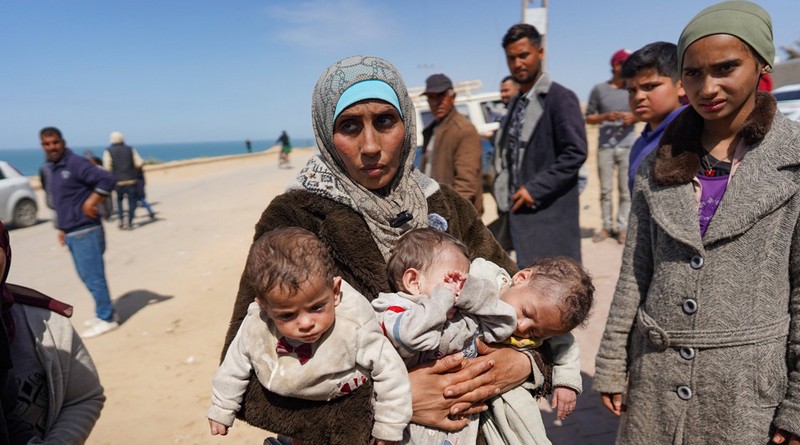
Nicaragua’s filing at the World Court, as it’s also called, comes as Israeli forces have killed over 30,200 Palestinians in Gaza and injured 71,000 more. Most of the Hamas-governed enclave’s 2.3 million residents are displaced. They face devastated civilian infrastructure and limited supplies of food, water, and medicine, as Israel restricts humanitarian aid. Children are starving to death.

The Central American country’s move follows lawyers in Germany who represent Palestinian families suing top German officials, including Chancellor Olaf Scholz, for “aiding and abetting” Israel’s genocide in the federal court last week.

University of Illinois College of Law professor Francis Boyle told Jordanian-Palestinian writer Sam Husseini that Nicaragua’s application “could lead to World Court lawsuits… for aiding and abetting Israeli genocide against the Palestinians, an emergency hearing by the World Court, another round of oral arguments, and new provisional measures of protection for the benefit of the Palestinians.”

New provisional measures would go to the U.N. Security Council—where the U.S. has veto power—for enforcement, he said, and, “if that does not succeed, to the United Nations General Assembly for enforcement under the Uniting for Peace Resolution (1950),”

“It is telling that Nicaragua is doing this because they won a resounding World Court lawsuit against the United States from 1984 to 1986 for illegally mining their harbors,” Boyle added. He also explained why the United States isn’t expected to face an ICJ case, despite giving Israel nearly $4 billion in annual military aid.

“Although the United States richly deserves it too, it would be difficult for Nicaragua to successfully sue the United States for aiding and abetting Israeli genocide against the Palestinians because of its disingenuous reservation to Article 9 of the Genocide Convention denying such jurisdiction to the World Court,” he said.

However, there is a U.S. genocide complicity case in the federal court system. The Center for Constitutional Rights has sued U.S. President Joe Biden, Secretary of State Antony Blinken, and Secretary of Defense Lloyd Austin on behalf of groups and Palestinians in Gaza and the United States. After a district-level dismissal, an appeal hearing is expected in June.

Jessica Corbett is a senior editor and staff writer for Common Dreams.

4 March 2024

Source: transcend.org

Aaron Bushnell and the Power of Protest

By David Cortright

A Vietnam veteran on the political legacy of self-sacrifice and the necessity of war resistance.

The self-immolation of twenty-five-year-old active-duty U.S. airman Aaron Bushnell at the Israeli embassy in Washington, D.C., earlier this week was an extreme act of protest against the war in Gaza—a desperate plea to “free Palestine,” as he screamed while flames engulfed his body.

Whatever was in Bushnell’s mind, he clearly hoped to compel us to act to end the bloodshed.

The incident evokes haunting memories of Vietnam, especially for those of us who served during that war and spoke out against it. The fact that Bushnell wore his uniform and called attention to his military service indicates he believed his status as a soldier would lend greater weight and significance to his protest. I feel only sadness that he was compelled to take such drastic action alone.

We don’t know what was in Bushnell’s mind when he decided to take his life, but clearly he hoped that his self-sacrifice would shake us out of our complacency and compel us to act to end the bloodshed.

Bushnell may have been aware of acts of self-immolation that occurred during the Vietnam War. The most famous was the immolation of Buddhist monk Thich Quang Duc in June 1963 in downtown Saigon near the Presidential Palace. Quang Duc sat in a lotus position and set himself on fire after being doused with gasoline. He burned to death without flinching. He and others were protesting persecution of the Buddhist community by the U.S.-supported Diem government. Five other Buddhist monks self-immolated in the following weeks, leading to the overthrow of the Diem regime. The shocking scene of Quang Duc’s immolation was immortalized in Malcolm Brown’s award-winning iconic photograph. The ghastly video of Bushnell burning himself may be the modern equivalent.

Other self-immolations have also occurred in the United States. In December, another protester of the war in Gaza, about whom little information has been released, self-immolated in front of the Israeli consulate in Atlanta. In March 1965 eighty-two-year-old activist Alice Jeanette Herz set fire to herself on a street in Detroit, calling attention to her antiwar message and urging others to work for peace. A few months later, thirty-one-year-old Quaker pacifist Norman Morrison self-immolated at the Pentagon, near the office of Secretary of Defense Robert McNamara, who later admitted the act was “an outcry against the killing that was destroying the lives of so many Vietnamese and American youth.” A week after Morrison’s death, Roger Allen LaPorte committed a similar act of self-immolation in front of the United Nations building in New York. In May 1970 graduate student and former ROTC cadet George Winne died of self-immolation on the campus at of the University of California San Diego. These were acts of supreme sacrifice, like Bushnell’s, to call attention to the brutality of war. They were intended to motivate others to speak out for peace.

I was one of many active-duty American soldiers who publicly opposed the Vietnam War and participated in the antiwar movement. I was not politically aware when I enlisted in 1968. I volunteered for the Army band to avoid being drafted into the infantry; I was hoping to skate by and get on with my life. My worldview turned upside down, however, when I realized what was happening in Vietnam. This was not a noble struggle against communism, as politicians said, but a war against the people of Vietnam. I was angry at being deceived. I was horrified to learn that the United States was bombing and destroying Vietnamese villages, that we were killing so many innocent civilians, including women and children.

Those of us who protested as soldiers recognized that we might be punished for our dissent. But we felt compelled to act.
I could not accept being part of such a policy and began to organize for peace while on active duty. I circulated petitions against the war in the barracks and joined other soldiers in marching in peace demonstrations. Those of us who protested as soldiers recognized that we might be punished for our dissent, and many of us were. But we felt compelled to act. We could not remain silent. We hoped that because we were soldiers, politicians and the media might take notice and perhaps show more respect for our antiwar message.

The GI peace movement extended throughout the military. Underground newspapers published by and for active service members appeared at nearly every major military base in the military and aboard dozens of ships. Dozens of countercultural antiwar coffeehouses were established outside major military bases. Military desertion and AWOL rates reached all-time highs. In Vietnam soldiers increasingly defied orders and refused to engage in combat, and the effectiveness of the U.S. military declined precipitously. Throughout the military morale reached rock bottom.

Those of us who dissented and resisted the war took risks because we could not participate in an unjust policy. We were motivated most of all by a desire to stop the killing and save lives. We felt responsible for the massive death and destruction our government was imposing on the people of Southeast Asia.

I’ve thought a great deal about my feelings then as I see the news now of Israel’s onslaught in Gaza, the massive bombing of densely populated neighborhoods and the deaths of thousands of innocent civilians, including many women and children. The situation today is different, of course. Israel is the main culprit in mounting the siege, but U.S. intelligence sharing is significant for Israel’s ability to wage war, and Special Forces units are reportedly in Israel providing technical support. Israeli troops are using American-made weapons, and our government is helping to fund the war. Without U.S. support Israel could not continue perpetrating its campaign of collective punishment against Gazans. We are enabling Israel’s actions and are therefore partly responsible. The Biden administration can and must do more to pressure Israel to end the carnage.

Like any state, Israel does have a right to defend itself. But the killing of noncombatants is never permissible regardless of the cause, and this is true for Israel as it is for Hamas or any other group. And waging war to counter terrorism—atrocities committed against civilians—is a fool’s errand, a trap that entangles the warring state in prolonged costly and debilitating wars of counterinsurgency and military occupation while sowing seeds of hatred and violence that will endanger its security.

Millions of people in the United States and around the world are active in the movement against war in Gaza, demanding a ceasefire and negotiations for a political solution. Despite the many protests and massive pressure against the war, however, the killing continues, and U.S. aid is still flowing to the Israeli military. Many young activists today are becoming frustrated and angry at their inability to stop the war.

Similar feelings of frustration and anger emerged during the Vietnam War, which continued despite massive protests against it. The movement against U.S. aggression in Indochina was the largest, most sustained and intensive antiwar campaign in American history. For a decade, as the U.S. war escalated, reached its furious peak, and then gradually diminished, millions of citizens in the United States and around the world campaigned continuously to bring the war to an end. During that era, as Tom Hayden writes in Hell No: The Forgotten Power of the Vietnam Peace Movement (2017), “Americans took to the streets in numbers exceeding one hundred thousand on at least a dozen occasions, sometimes reaching half a million.” From the first major protests and teach-ins in 1965 to the Indochina Peace Campaign against funding the war in the 1970s, opponents of the war engaged in public education campaigns, mass marches, picketing, prayer vigils, boycotts, student strikes, draft resistance, legislative lobbying, media and advertising, electoral campaigns, and more. Antiwar protest emerged from every sector of society and in every part of the country, including among many of us in the military.

It was disheartening to go to protests and engage in continuous action against the war and see little or no response from the Nixon administration. I remember vividly the November 1969 mass mobilization against the war in Washington, D.C. Half a million people converged on the Washington Monument to demand an end to the war. That rally and the preceding Vietnam Moratorium mobilizations gave the antiwar movement renewed momentum and generated enormous excitement and energy.

I was based at Ft. Hamilton in New York at the time and drove down to Washington for the rally. On the ride back that evening, every car on the New Jersey Turnpike seemed to be filled with protesters. The rest stops along the way felt almost like mini rallies. The whole day had been an empowering experience, but then we turned on the radio news and heard Nixon saying he paid no attention to the rally and would not be influenced by antiwar protest.

Our spirits sank at the thought that so large a demonstration could not move or influence him. How could the government ignore such a large outcry for peace? Little did we know at the time that the White House was in fact extremely concerned about the movement. Our protests had more power than we knew.

Years later, when Nixon, Henry Kissinger, and his senior aide, H. R. Halderman, published their memoirs, we learned that the Moratorium events and the Washington mobilization had the effect of preventing a threatened escalation of the war. The story of this little-known episode is presented masterfully in Stephen Talbot’s 2023 television documentary, The Movement and the “Madman.” The White House had delivered an ultimatum to the Vietnamese, threatening the possible use of nuclear weapons (the so-called “madman theory”) if North Vietnam did not end the war on American terms. When Hanoi balked, Nixon canceled the planned attacks, fearful that further escalation might lead to even greater antiwar disruption and social disorder.

The history of the Vietnam War shows that antiwar dissent limited U.S. options and helped to end the war. Public opinion against the war was a key variable in the strategic calculations of both the Johnson and Nixon administrations, as historian Melvin Small has argued. Political leaders made decisions about the conduct of the war based on their assessment of political impacts at home and the effects on antiwar dissent. This was “irrefutable evidence” of the movement’s impact, Small wrote.

It’s doubtful that Bushnell was aware of this antiwar history, because few people are. In our individualist culture, we learn about the historical achievements of leaders and individuals, not the social movements that support them. We learn about the civil rights movement, although often telescoped to the role of Dr. King alone, with limited reference to the many who worked with him in the struggle for freedom. We know little of social movements generally and even less about their strengths and weaknesses and how movements influence policy.

One of the great challenges of social movement organizing is to overcome the feelings of powerlessness that many activists have when their mobilizing efforts do not achieve the results they demand. When change does not come quickly or as completely as desired, activists can become demoralized. They may fall prey to the debilitating belief that nothing can be done, that protest and organizing are futile.

Political change often occurs in unexpected ways, and history clearly shows that movements matter.
Part of the problem is that political change often occurs in unexpected and sometimes unrecognized ways. The process is often slow and incremental, with modest changes that fall short of activist demands. “It is always too soon to calculate effect,” Rebecca Solnit has observed. We can never know how our actions today may influence events tomorrow. When we apply pressure, we can’t predict how political establishments will respond, but partial steps can be significant and may lead to more substantive change.

History clearly shows that movements matter, and activist pressures can exert policy influence. Scholarly analysis shows that social movements are able to achieve change if they can build large coalitions, employ wise strategies, have compelling and unifying narratives, and are persistent in applying pressure for change.

It’s tragic that Bushnell felt it necessary to take his life in an extreme manner in order to be heard. His death sends a message for us to take continued action against the war and in support of Palestinian rights, to pressure our government to insist that Israel end the bloodshed. Our success in achieving these goals will depend on building an ever larger and more persistent movement of millions of people determined to work for peace.

28 February 2024

David Cortright is a Vietnam veteran, peace activist, and professor emeritus at the Keough School of Global Affairs at the University of Notre Dame. His many books include Soldiers in Revolt: GI Resistance During the Vietnam War.

Source:: www.bostonreview.net

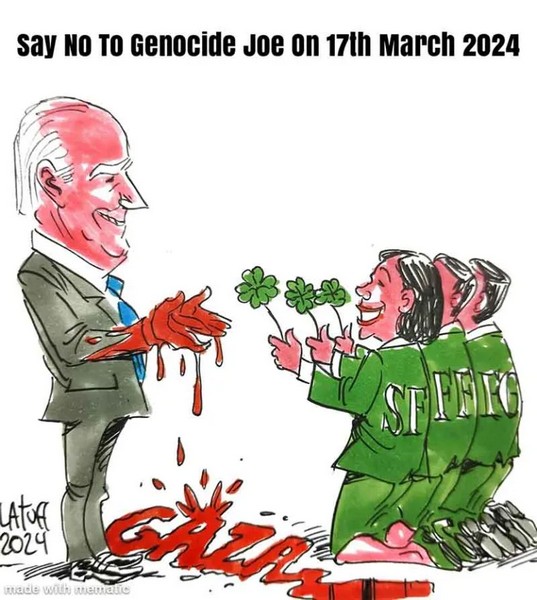
Thank You, Mr Biden, For Letting Gaza Kids Starve

By Dr Marwan Asmar

Voices from Gaza speak about their hunger and ask why has the world turned their backs on them?

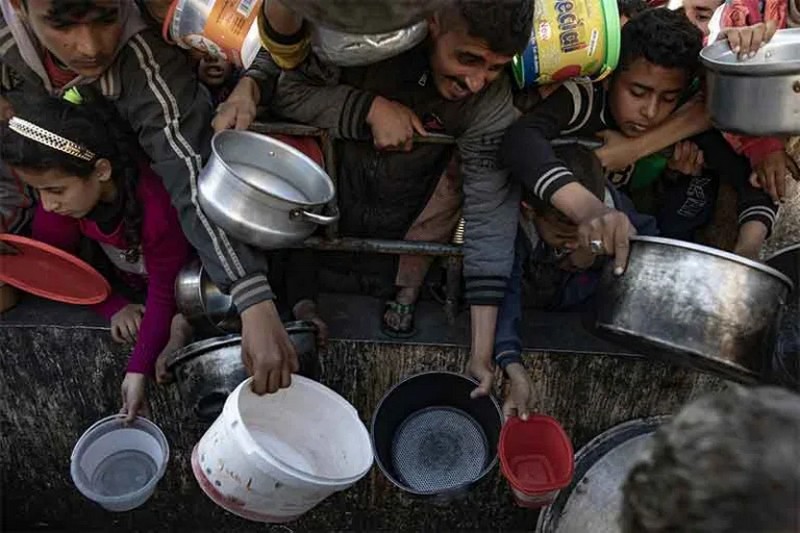
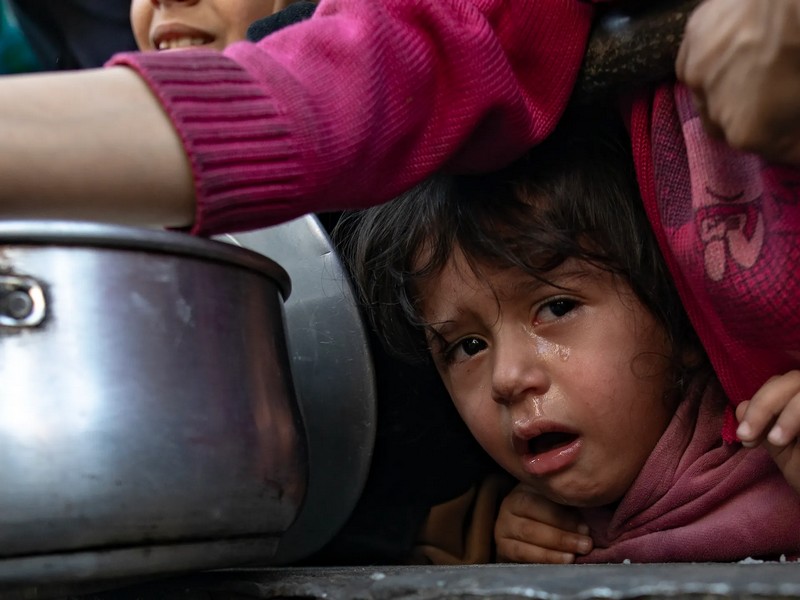
Gaza continues to starve. The north of Gaza is experiencing the worst famine thanks to the Israeli blockade and the fact the Biden administration is turning a blind eye and continues to fund the deadly war on Gaza.

The Strip is being attacked from the air, sea and on the ground. The Israeli government is determined to starve the Palestinian population into submission – more like death – in pursuit of Hamas and Islamic Jihad resistance fighters.

Meanwhile the world looks on! But since it is the Americans who are mainly funding the war, it should be the White House that should tell Prime Minister Benjamin Netanyahu and his Defense Minister Yoav Gallant enough is enough!

The social media has been inundated with news of the ongoing starvation campaign of Gaza with many tags on the X platform including #Gaza, #GazaGenocide, #Gaza Genocide, #gazahunger, #SaveGazaFrom Hunger, #Palestine, #FreePalestineFromIsraelNOW.

There is much videos about people starving and dying because of the incessant hunger. These include those posted by Palestinians in the north of Gaza.

‘I haven’t eaten in a week’

“….do you know it has been a week since I last eaten…a whole week without eating anything,” a young man bellows in the videoclip.

“…the price of a bag of flour costs $500 but it’s not available…I’ve been eating hay and barley,” but there is nothing left anymore with his eyes watering.

“…there are no human rights, no women rights, no children rights, no religious rights and no Arab countries have been allowed to send supplies into the Gaza Strip, especially into Gaza City,” he says with a sense of horror.

“…here people have stayed weeks at a time without eating. Can you imagine your mother or your brother without food. This city is under total siege.

If you the occupier [Israel] have a problem with the [Palestinian] resistance, what does that have to do with us, why are you doing this to us. Presently, there is no food and drinks in Gaza City, there are no rights here…”

‘We are eating animal feed but that has run out’

“For the people who don’t know, we, in north Gaza, have been in the last five months without rice, without flour, without vegetables, without any foodstuffs” a young woman says in another videoclip.

“No supplies have been able to reach here, even in the markets there is nothing, we reverted to eating fodder, bird seeds and cat food…

But despite this we said its ok, at least there is something we can eat to block our hunger, despite the fact its taste is bad, and gives us a bellyache. There was simply alternative despite the fact it was animal feed.

I remember what our parents used to say that nobody sleeps hungry, nobody starves to death in his country. But today, every night we sleep hungry. I never thought one day we will go hungry or sleep on an empty stomach.

What have we done to deserve this, what have the children done to deserve this. If we are not killed by the strikes, we will be starved to death.”

‘I have five children to feed’

“It’s been five days now since I last eaten but I can’t find any food. People say they have been grinding animal feed to stay alive but I have not been able to find such fodder to grind,” a man with a large family says.

“I have no way of feeding myself, I have five children but I can’t feed them…

I can’t leave this place, we are under harsh conditions, I am not able to walk down the street, how am I supposed to provide for them.

I hit my kid every night so he could get to sleep, this make me feel bad but what can I do? Just who is going to stand with us.”

‘Final death warning’

“This is the final warning. This is literally the final warning. Journalists in the north [of Gaza] sent us what they are eating and how they can’t find anything to grind to eat,” says another man in a desperate tone.

“The situation is disastrous in a way that the human mind can’t imagine or understand.

We never imagined we would get here as an Islamic and Arab nation to see our people and brothers dying of hunger and we can’t do anything about it. What are you? Who are you?

The people of Jordan and Egypt are not able to pressure for aid to enter the Gaza Strip?

There is in Rafah 1.4 million people on the border of Egypt. They can’t pass over even a bottle of water or even let it enter. What more do you want to see?

Do you have no God, religion, worship, no traditions, no customs, nothing. What are you made of? Who will stay? Who will not offer his soul, his blood, his money, his land, everything he owns for Gaza?”

Dr Marwan Asmar is a writer based in Amman, Jordan

25 February 2024

Source: countercurrents.org
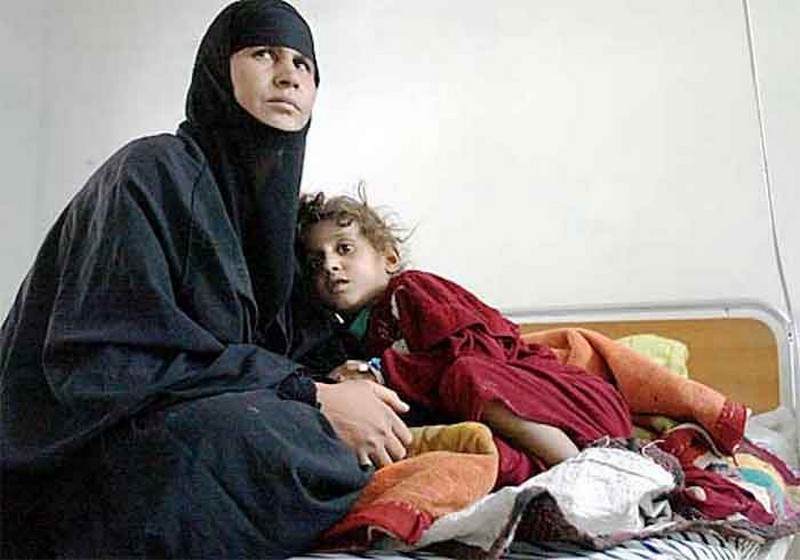
Indians for Palestine Call For Immediate Ceasefire In Gaza

By Press Release

NEW DELHI, FEBRUARY 23: Indians for Palestine, a group of concerned citizens, convened a public meeting on Friday, February 23 to understand the implications of the crucial ruling of the ‘The International Court and Justice for Gaza’ (ICJ), and extend solidarity and support to Palestine. It was a public meeting between representatives of political parties, the media, the legal fraternity, the international diplomatic community, activists, students, and the public. Among the speakers were lawyer Anand Grover, former ambassador K.P. Fabian, journalist Siddharth Varadarajan, and political leaders including Dipankar Bhattacharya, Asaduddin Owaisi, Amarjeet Kaur and Subhashini Ali. The overflowing meeting Hall showcased the strength of the solidarity of Indians with the people of Palestine, with the resounding slogans of “Ceasefire Now!”.

The session began with an introductory note by the moderators, Jean Drèze and Ayesha Kidwai. This was followed by a recording of Arwa Abu Hashhash, a Gazan citizen and representative of the Union of Palestinian Working Women’s Committee and the Palestinian People’s Party, who said language is incapable of describing the horror of the massacre that is taking place in the Gaza strip today. She emphasized that every single action of solidarity matters. Adnan Abu Al Haija, the Palestinian ambassador, highlighted how none of the resolutions passed by the United Nations have been implemented. He acknowledged the solidarity expressed by South Africa, Colombia, Chile, Bolivia, Brazil, Ireland, Belgium, and Spain.

It was noted that the daily death rate in Gaza is higher than any other major 21st-century conflict. The total deaths have has surpassed 29,000. This does not even include the irreversible long-term impacts of this massacre on the population of Gaza: deepening of poverty, severe crisis in water availability, the shutdown of healthcare systems, and chronic and intergenerational trauma.

Anand Grover stated that South Africa’s courage is missing from other countries, especially India. KP Fabian said that standing with Palestine means standing for justice, and pointed out how the international community was allowing the genocide to continue despite the extensive broadcasting of the horrors. Siddharth Varadarajan highlighted the complicity of the current Indian government with Israel’s ongoing genocide. He pointed out how Adani-Elbit Advanced Systems India Limited have sent 20 Hermes-900 drones to Israel in early February.

Salman Khurshid (INC) endorsed the stance of Indians for Palestine and called for an immediate ceasefire. Amarjeet Kaur (AITUC) stated that while the Modi government may be with Israel, the Indian people stand with Palestine as indicated by the dock workers who refused to load weaponized cargo being sent to Israel. Subhashini Ali (CPIM) said that this war is not of religion, but of imperialism and that a post-colonial country like India should stand with Palestine; the struggle for Palestine is a struggle for India’s democracy. Dipankar Bhattacharya (CPIML-Liberation) said that the Modi government is implementing the Israeli blueprint against farmers and dissenters. Representatives of all parties endorsed the call for an immediate ceasefire.

It was in this context that Indians for Palestine had convened the public meeting. They called upon the Indian government to publicly endorse the latest ruling of the ICJ and stand against the violation of the human rights of the Palestinians in Gaza.

25 February 2024

Source: countercurrents.org