Just International

Appeal to 153 Countries Which Voted for Ceasefire – Unitedly Hold Peaceful Sit-in at Egypt-Gaza Border

By P S Sahni

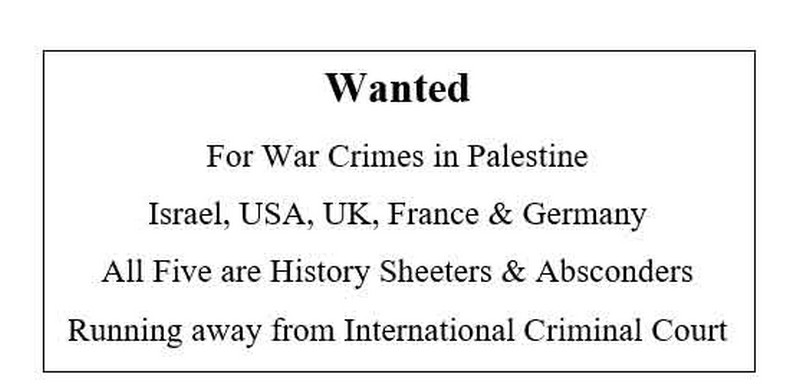
Extraordinary situations call for unusual forms of resistance and protests. Efforts of the majority of member countries at the UN for a ceasefire are being scuttled by brute veto power of one or two countries. The puffed-up bullies who have catapulted themselves to power through electoral maneuverings in imperialist-capitalist USA; former colonizers UK and France; Zionist Israel and erstwhile Nazi Germany are holding not just the brave and valiant Palestinians to ransom, but also cocking a snook at the international community. This mafia-raj of the five dons enumerated above must be uprooted and booted out of power. Rather than using the public financial resources to create jobs for an increasing unemployment amongst the working class, the exchequer is being emptied by directing money to war industry for providing arms and ammunition to the IDF to slaughter Palestinians.

Each of the 153 countries (including India) which voted for a ceasefire in the United Nations General Assembly (UNGA) could send one representative each for a collective action at the Egypt-Gaza Border (Rafah Crossing Point). The form of protest should be an indefinite peaceful sit-in. Let the Israeli army bombard just right up to the Gaza border but within Gaza itself. The protesters should continue with their peaceful action till the Israeli army is forced into a ceasefire. The protesters should be guided by the philosophy of Mahatma Gandhi; Nelson Mandela; Martin Luther King. The 153 countries which have been sending representatives to UN meetings have learnt that their efforts are being thwarted. Peaceful sit-in at the Egypt-Gaza Border could be the first step in a renewed effort to stop the war on Palestinians by the Israeli army.

P.S. Sahni is a qualified orthopaedic surgeon.

16 December 2023

Source: countercurrents.org

May Peace Prevail

By Jim Miles

I can see the photos:  the faces of children haunted by chaos beyond their control; their faces of pain, the silent cries and screams of injuries and fear; parents’ faces, torn with grief and more silent cries of pain and injustice; blood washed across staircases and floors in hospitals, blood caked on faces of innocent people – clotted with the powder and grit of demolished concrete and plaster from homes, hospitals, and schools;

I can see the photos: neighbourhoods crumpled and flattened by thousands of bombs; craters where buildings and streets used to be; people, small by comparison to the deluge of destruction, digging with bare hands through the tangled rubble of steel and mortar; people, frozen in time, calling for help, beseeching the world, damning the world, nowhere to turn, no escape from the whistle and rumble of bombs and missiles;

I cannot hear that:  nor the screams of the wounded, the cries of the injured, the cries for lost parents, lost children, lost lives; the cries of those trapped under the wreckage of their homes;

I cannot smell that: the sickly metallic sweet smell of blood; the acrid sulfurous smoke of explosions; the dustings of powder and chemicals drifting around the ruins; the heart and gut-wrenching smells of bodies decomposing under the rubble; the smoke of a small fire somehow scavenged to boil water for a meager meal of…some unknown provenance;

I cannot touch that: the heat, the cold, the grit, the twist of iron bars under calloused and bloody hands searching for victims; the warm damp of bloodied clothing and bandages.

…and I understand: this is not a war, but a genocide committed against an imprisoned people; a genocide that has endured slowly over many decades; an ethnic cleansing long understood by the perpetrators to be an underlying feature of their conquest; as long as the very origins of the concept of the settler state started over a century ago.

There is no morality in U.S. governance

I listen to the politicians:  the members of the U.S. congress and their fawning obsequiousness towards Israel; the same coming from the EU, Britain, Canada and other members of the ‘western’ (and diminishing) world.  I listen to news commentaries:  knowing that “balance” and “fairness” do not apply in a situation where one side has vastly superior military power (although not the touted prowess of such), controls most of the media, and has its mystique inculcated into its own population:  exceptionalism, freedom, indispensability ring hollow in a world of violence they themselves have created.

The United States, as the largest purveyor of violence in the world, could easily put a stop to all this.  The feeble words and excuses of the U.S. government only emphasize how the politicians, the military-industrial-financial complex, and the corporate “persons” – all of whom reap large financial rewards for this carnage – do not want the savagery to end.  The military corporations – Raytheon, Boeing, Lockheed Martin, General Dynamics, Northop Grumman, an almost endless list – and those supplying them, are providing as per President Biden a financial boost for the U.S. economy.  Lives and deaths are not important; the dollar reigns supreme, both for profits and global hegemony.

A big if, a gigantic if:  if the U.S. simply stopped sending military support to Israel, the bombs and missiles and tanks would soon become silent.  So simple; so not going to happen.

The U.S. is the least moral country in the world today.  It has created and facilitated more wars, more deaths, more damages, more humanitarian disasters than any other country.  The U.S. sees everything as a win or lose situation, a zero sum game in which only they can be the winners, at all costs – the costs of millions of lives around the world.  Now it is the costs of tens of thousands of lives in Gaza/Palestine, the costs of all civic functions, of hospitals, doctors, schools, teachers, bakeries, electrical and sewage systems, all to support the Israeli ethnic cleansing of Palestinians.

The future is unknown, but obviously major changes of some kind are in process, violently so.  There are solutions, none of which the U.S. or Israel will even consider for a moment, until and unless some unforeseen event forces them to.  As both are nuclear armed violent societies, the world needs to hope above all hopes for a peaceful resolution to current events, beyond a pause, beyond a ceasefire, well into the creation of a democratic state for all citizens, well into the creation of a global democracy where politicians and their militaries do not rule.

In the meantime sumud in the face of a genocidal threat has served along with the resistance to ethnic tyranny.  May peace eventually prevail.

Jim Miles is a Canadian educationist

15 December 2023

Source: countercurrents.org

Gaza Not Fit For Human Life, Says UNRWA Chief

By Countercurrents Collective

Nine weeks of war have left Gaza unfit for human habitation, the head of the UN’s agency for Palestinian refugees said on Thursday. With hunger rampant and UN shelters crammed to capacity, the organization demanded an immediate end to Israel’s siege of the enclave.

Speaking at a press conference in Geneva, the commissioner-general for the United Nations Relief and Works Agency for Palestine Refugees (UNRWA), Philippe Lazzarini, described how Israel’s ground operation in Gaza has pushed more than a million refugees south to the city of Rafah.

The head of the United Nations relief and works agency for Palestinian refugees (UNRWA) said conditions in Gaza were “a living hell”.

“There is no more food to buy, even for those who can pay. In the shops, the shelves are empty,” he said.

“Rafah is the epicenter of the displacement,” Lazzarini said. “One [UN] warehouse that became a shelter is home to 30,000 people. The lucky ones have made it inside our premises. The others have absolutely nowhere to go. They live in the open, in the cold, in the mud, and under the rain. Everywhere you look is congested with makeshift shelters. Everywhere you go people are desperate, hungry, and are terrified.”

At the start of its bombing campaign in October, Israel urged residents of Gaza City – located in the north of the enclave – to migrate south for their own safety. Those who complied then had to push further south when Israeli planes began bombing the city of Khan Younis, and with Israeli ground troops now pushing into both cities, Rafah remains the only relatively safe area in the entire strip.

The influx into Rafah has quadrupled the city’s population and strained resources in what was already the poorest sector of Gaza, Lazzarini said. Israel’s near-total siege has caused shortages of food and water, and humanitarian agencies have complained that the convoys of aid trucks allowed through the Egypt-Rafah crossing cannot meet the needs of millions of people.

“Over the last few weeks we met more and more people who have not eaten in one, two, or three days,” Lazzarini noted, describing how trucks carrying food are often unable to make it to UN shelters and distribution points. “People are stopping aid trucks, taking the food, and eating it right away,” he added.

“Every time I go back [to Gaza], I always think it cannot get worse, but every time I see more misery, more grief, more sadness, and have the feeling that Gaza is not really a habitable place anymore,” the UN official told reporters.

“What is happening in Gaza should outrage anyone,” Lazzarini stated, insisting that only an immediate lifting of the Israeli siege followed by the “uninterrupted, unconditional flow of commodities” into the strip will reverse the declining humanitarian situation.

Lynn Hastings, the UN’s humanitarian coordinator in the Palestinian territories, said on Wednesday that the war threatened peace and security for Palestinians and Israelis for years or even decades to come

She said the hostilities had pushed almost half of Gaza’s population – or about a million people – into Rafah in the south, compounding the dire health and hunger crisis.

People seeking safety in overcrowded shelters in Gaza are facing the spread of infectious diseases as well as inadequate food, water and basic services.
Al-Nasser hospital in southern Gaza, close to heavy fighting and airstrikes in Khan Younis, gave the names of 45 people killed, CNN reported.

Medical staff at al-Kuwaiti hospital in Rafah, also in southern Gaza, said 19 bodies were recovered after two houses in the area were hit by airstrikes, the network said.

Earlier Wednesday, Gaza’s health ministry said at least 18,608 people have been killed and 50,594 injured in Israeli strikes on Gaza since 7 October.

There is rain in Gaza. Parts of Gaza were flooded on Wednesday, after a night of heavy rains and strong winds.

The rainwater soaked and damaged the tents of people already displaced by Israeli offensives, exacerbating Gaza’s humanitarian crisis.

At least 85% of Gaza’s population of 2 million have been displaced since fighting started in October, raising urgent concerns about the spread of disease, as well as scarce supplies of water, electricity and food.

Among those caught in the open was Ameen Edwan, camped with thousands of others in the grounds of al-Aqsa Martyrs hospital in central Gaza, who said his family had been unable to sleep.

“Rainwater seeped in. We could not sleep,” he told the AFP news agency. “We tried to find nylon covers but couldn’t find any so we resorted to stones and sand” to keep the rain out.

Hamas operatives attacked Israel on October 7, killing around 1,200 people and taking roughly 240 hostages. In the nine weeks since, Israeli strikes have killed 18,787 people in Gaza and injured more than 50,000, according to figures released on Thursday by the Gaza Health Ministry. Some 135 UNRWA staff have been killed, and Israeli strikes on the agency’s schools, clinics, and offices have killed 270 people and wounded more than 1,000, Lazzarini said on Thursday. According to a UN report released on Tuesday, almost a fifth of Gaza’s buildings have been damaged or destroyed during the Israeli campaign. Hospitals in Gaza reported an uptick in civilian casualties on Wednesday, Palestinian health officials said.

U.S. Pushes For ‘More Precise’ Military Operations In Gaza To Save Civilians

Media reports said:

U.S. President Joe Biden on Israel: “I want them to be focused on how to save civilian lives, not stop going after Hamas but be more careful.”

White House security envoy has talks with Netanyahu about military operations shifting to more precise, more targeted phase.

A Reuters report said:

A U.S. security envoy discussed with Israeli officials on Thursday how to better protect civilians during their war against Hamas in Gaza and President Joe Biden appealed for lives in the Palestinian territory to be saved.

Israel pounded the 25-mile (40-kilometer) length of Gaza, killing families in their homes as the more than two-month-old conflict raged across the entire enclave, causing a humanitarian catastrophe with little end in sight.

“It will last more than several months – but we will win and we will destroy them,” Israeli Defence Minister Yoav Gallant told visiting White House national security adviser Jake Sullivan.

Sullivan said in an Israeli TV interview that he spoke to  Israeli Prime Minister Benjamin Netanyahu about when Israel will shift from high-intensity military operations to a more precise, more targeted phase.

Sullivan did not provide a specific timeline or elaborate on what such operations would look like, although he said Israel was expected to continue its military campaign for some time.

“The issue really is, when does Israel shift from the high-intensity military operations that are under way today to a different phase of this conflict. One that’s more precise, more targeted,” Sullivan said on Israel’s Channel 12 television.

The occupied West Bank and the Gaza Strip need to be connected under a “revamped and revitalized” Palestinian Authority government, Sullivan said.

On Friday, Sullivan would discuss revamping the Palestinian Authority and holding “extremist” Jewish settlers accountable for violence against Palestinians when he visits Palestinian President Mahmoud Abbas in Ramallah, a U.S. official said.

U.S. President Joe Biden, asked whether he wanted Israel to scale back its assault on the Gaza Strip by the end of the year, said: “I want them to be focused on how to save civilian lives, not stop going after Hamas but be more careful.”

Washington has been pushing Israel for weeks to do more to protect civilians in Gaza’s population of 2.3 million.

Israel launched its campaign in retaliation for a rampage by Hamas, the Iran-backed group that rules Gaza, whose fighters killed 1,200 Israelis and seized 240 hostages in a cross-border raid on Oct. 7.

Since then, Israeli forces have besieged the coastal strip and laid much of it to waste, with nearly 19,000 people confirmed dead, according to Palestinian health officials, and thousands more feared buried under the rubble.

People Jammed In Makeshift Tents

In the Rafah area, jammed with people in makeshift tents on Gaza’s southern edge, people wept at a morgue near bodies wrapped in bloodied shrouds.

Residents picked forlornly through the rubble of the adjacent homes of the Abu Dhbaa and Ashour families where Gaza health authorities said 26 people had been killed.

Neighbour Fadel Shabaan rushed to the area after the bombing. “It was difficult because of the dust and people’s screams,” he said. “This is a safe camp, there is nothing here, the children play soccer in the street.”

With Europe on alert for Islamist threats linked to the war, authorities in Denmark, Germany and the Netherlands said seven people, including four suspected Hamas members, were arrested on suspicion of planning attacks on Jewish institutions.

Hamas official Sami Abu Zuhri denied Hamas members were arrested, saying the reports were meant to erode support for Palestinians in Europe.

In further possible international fallout from the war, Danish company Maersk said a cargo ship was targeted by a missile off Yemen. A Maersk spokesperson said the vessel was not hit, denying a claim by Yemen’s Iran-aligned Houthi movement that the militia made a drone strike on a Maersk vessel sailing towards Israel.

Maritime security company Ambrey said a Malta-flagged, Bulgarian-owned bulk carrier was reportedly boarded in the Arabian Sea near the Yemeni island of Socotra.

Yemen’s Houthi group, which has warned cargo ships in the Red Sea to avoid travel toward Israel, has attacked vessels and fired drones and missiles at Israel since the Gaza war began.

Nearly all of Gaza’s residents have been forced from their homes, many several times.

The U.N. Palestinian Refugee Agency said hungry people were stopping trucks and eating food aid immediately. “We meet more and more people who haven’t eaten for one, two or three days,” its head Philippe Lazzarini told reporters in Geneva.

People in Gaza described begging for bread, paying 50 times more than usual for a single can of beans and slaughtering a donkey to feed a large family.

‘Revenge’

Israel has extended its ground campaign from the north to the south this month.

In the main southern city Khan Younis, where advancing Israeli forces reached the centre this week, a whole city block was bombed overnight to dust. Though most people fled after Israeli warnings, neighbours digging with a hand shovel believed four people were inside. One body was recovered.

“May God take revenge on them,” said Nesmah al-Byouk, returning to the ruins of the home she had fled three days ago. “We came and saw everything destroyed … Where we can we go to now?”

In the north, fighting has escalated even after Israel announced its troops had largely completed their military objectives last month.

The Israeli military said its troops had dismantled a Hamas operating site in a school in the Shejaia area and destroyed two tunnel shafts, a rocket launch pit and a weapons storage facility in Khan Younis.

Elsewhere in the north in Jabalia, Gaza’s health ministry said Israeli forces had stormed a hospital, detaining and abusing medical staff and preventing them from treating wounded patients, at least two of whom had died.

Israel’s military said fighters had been operating inside the hospital, 70 of whom had surrendered.

The White House On The Defensive

Other media reports said:

The White House went on the defensive over President Joe Biden’s comments to Israel prime minister Benjamin Netanyahu that Israel was losing international support because of its “indiscriminate bombing” and that Netanyahu should change his hard-right dominated government. U.S. security spokesman John Kirby was evasive at a press briefing when asked if Biden’s comments were the official position of the US government.

Israeli defence minister Yoav Gallant acknowledged the differences with the U.S. but said he was confident the two sides would find a way for Israel’s military operation to continue. Israeli foreign minister Eli Cohen said earlier that his country would continue its war in Gaza “with or without international support”.

U.S. Made Rifles Sale Delayed

The Biden administration is delaying the sale of more than 20,000 U.S.-made rifles to Israel over concerns about attacks by Israeli settlers on Palestinians in the occupied West Bank, two sources familiar with the matter have said. The state department sent an informal notification for the sale to Congress several weeks ago but the sale has not gone ahead, despite being cleared by Senate and House committees.

A former U.S. official familiar with the sale said on Wednesday:

Other members of Congress became aware of this case, and reached out to the administration to demand they obtain assurances from Israel that the firearms will not go to settlers.

The administration has been engaged with Israel in trying to get satisfactory assurances in that regard prior to formally notifying it. Under the license as drafted, these firearms can also go to Israeli police units about which the department has significant human rights concerns.

The state department did not have a comment on the sale. The Biden administration is specifically worried that some of the rifles could end up in the hands of Israeli settlers, the two sources said.

President Joe Biden and other senior US officials have warned repeatedly that Israel must act to stop settler violence against Palestinians in the West Bank.

The administration last week began imposing visa bans on people it said were involved in the violence, which this year has risen to its highest level in more than 15 years.

Israel’s Combat Loss

Israel has announced its worst combat losses in six weeks after an ambush in the ruins of Gaza, saying on Wednesday that 10 of its soldiers had been killed over the past 24 hours. Two senior Israeli commanders and seven other soldiers were killed by Hamas in a complex ambush in the Gaza City suburb of Shejaiya, in one of the most lethal incidents for Israeli soldiers during the two-month-long war.

Most of the deaths came in the Shejaia district of Gaza City in the north, where troops were ambushed trying to rescue another group of soldiers who had attacked Hamas fighters in a building, the military said.

Hamas said the episode showed that Israeli forces could never subdue Gaza.

In a televised address, Hamas chief Ismail Haniyeh said any future arrangement in Gaza without Hamas was a “delusion”.

Polls in recent weeks show overwhelming backing for the war despite the rising human costs. Six Israelis who spoke to Reuters on Wednesday said now was not the time back down, regardless of fading global sympathy reflected in Tuesday’s UN resolution.

Israel’s army website was briefly hacked on Wednesday by a pro-Palestinian group that warned of more attacks against Israeli forces, including further cyber-attacks.

In a short letter that covered the main page of the Israeli army website, the group, calling itself “Anonymous Jo”, said the military’s “arrogance and injustice toward our people in Gaza will only harm you through terror, killing and war, whether by land, air or electronically”, Associated Press reports.

The letter went on to call for the “liberation of Palestine”.

The Israeli army confirmed the hack.

Little is known about Anonymous Jo, although the group or individual behind the attack indicated they were of Jordanian origin. One of the lines read:

From your brothers in Jordan to our people in Gaza and Palestine.

Family members of Israeli hostages held in Gaza say they are “shocked” by a report that Israel’s war cabinet has decided against sending the head of Mossad to Qatar for negotiations on a new hostage deal and are demanding an “immediate explanation” from Israeli prime minister Benjamin Netanyahu, the Times of Israel is reporting.

The Times of Israel said Israel’s Channel 13 news reported that Mossad chief David Barnea, who helped negotiate last month’s hostage-release deal, had offered to go to Qatar again but the war cabinet decided against sending him amid cabinet disagreements over efforts being made on talks towards a new agreement.

Israel has said it believes nearly 140 people remain captive after being seized during Hamas’s 7 October attack on Israel.

Ceasefire Discussion

Discussions over a possible ceasefire hit a dead end, according to a “senior US official” quoted by CNN. The news network said Qatar, which helped broker the previous week-long pause in hostilities that led to the release of more than 100 hostages, had been active in pursuing a new deal but Hamas had “not been responsive”.

Arab Neighbours’ Economic Cost Of War

A UN study said economic cost of the war on Arab neighbours Lebanon, Egypt and Jordan could rise to at least $10bn (£7.9bn) this year and push more than 230,000 people into poverty. The cost for the three states in terms of loss of GDP may amount to $10.3bn, or 2.3%, and could double if the conflict lasts another six months, the UN development program (UNDP) paper reveals.

Jordan, which borders the occupied West Bank, has a large Palestinian population and the public is very sympathetic to the plight of the Palestinians.

Israel’s Existence

The sense of the people is that this is a threat to the very existence of Israel.

Hermann, of the Israel Democracy Institute, which conducts regular opinion polls on the war, said people were prepared for more deaths of soldiers.

Speaking in Jerusalem, retired former IT worker Ben Zion Levinger said Israel’s enemies would view any slowdown in fighting Hamas as a sign of weakness.

If we do not take this fight to the end, then tomorrow morning we will have battles in the north and in the east and the south and maybe Iran. Therefore, we have no choice.

Israeli Military Raid In Jenin

The Israeli military carried out a raid in Jenin in the occupied West Bank. The Palestinian news agency Wafa said seven Palestinians were killed and there were a “number of wounded civilians with various injuries”.

Pope Renews Call For Ceasefire

Pope Francis renewed his call for an immediate ceasefire, saying “may this great suffering for the Israelis and the Palestinians be over”.

Ceasefire Protest In Los Angeles

Police in Los Angeles arrested a group of protesters calling for a ceasefire in Gaza after they shut down a busy stretch of freeway in the city’s downtown.

The U.S. has seen a slew of major protests about the war since the conflict began in October. At least 50 people were arrested in Washington DC on Monday at a protest calling for the US to push for a permanent ceasefire.

In California, hundreds of people assembled outside the office of the US senator Alex Padilla on Tuesday to demand an immediate ceasefire. Last month, a demonstration in Los Angeles shut down a portion of Hollywood Boulevard, while in San Francisco dozens of protesters calling for a ceasefire were arrested after blocking traffic on the Bay Bridge.

Video posted by IfNotNow, the group behind Wednesday’s protest in LA, showed people singing as they linked arms in front of stopped cars while wearing shirts that read “not in our name” and “Jews say ceasefire now”.

15 December 2023

Source: countercurrents.org

Israeli officials spell out plans for ethnic cleansing of all Palestinians, as Gaza massacres continue

By Thomas Scripps

Following the United Nations General Assembly vote Tuesday for a ceasefire in Gaza, the Israeli government has not only pledged to continue the war but made clear its plan for an onslaught against the Palestinians across the whole region. Its leaders know they have full license to do so, whatever cynical votes are cast at the UN or statements made to the press by its imperialist backers.

On Wednesday, Israeli Foreign Minister Eli Cohen declared, “Israel will continue the war against Hamas, with or without international support.”

Prime Minister Benjamin Netanyahu told military commanders the war would “continue until the end, until the victory, until the elimination of Hamas” and that “nothing will stop us.”

Around 18,800 people have already been killed in Gaza—over 300 in the last day—with thousands more still trapped, dead or alive, under rubble.

As the World Socialist Web Site explained this week, “When the fascist Israeli Prime Minister Netanyahu speaks of ‘Hamas’, he is speaking not of a political organization but of any will to resist on the part of the Palestinian population.”

The implications of this objective for Palestinians everywhere were spelled out by Israeli Communications Minister Shlomo Karhi, who commented Wednesday, “There will be no Palestinian state here. We will never allow another state to be established between Jordan and the [Mediterranean] sea.” This was, he said, “our country; the historical property of our ancestors.”

Israel’s ambassador to the UK Tzipi Hotovely reiterated the point in an interview with Sky News Thursday morning. Asked about the prospect of a future Palestinian state she replied, “Absolutely no. Israel knows today, and the world should know now that the Palestinians never wanted to have a state next to Israel.”

She added snidely, “They want to have a state from the river to the sea. They are saying it loud and clear.” Hotovely detailed the single Israeli state “from the river to the sea” she and the Zionists want to create in a 2013 essay, “The Five Stage Plan for the Greater Land of Israel”.

She argues that discussion of a two-state solution has “obstructed the most basic desire harboured by a majority of Israeli citizens—not to give up territory that was conquered through blood.”

Her five steps involve declaring full Israeli sovereignty over the West Bank, adopting as a Basic Law the principle of the State of Israel being a Jewish nation state (achieved in 2018), making full Israeli citizenship conditional on service in the Israel Defense Forces (IDF), and encouraging the migration of a further two million Jews to Israel to ensure a Jewish majority as Palestinian areas are annexed.

This would necessarily involve an eruption of violence from the IDF and its far-right vigilante allies. It is because the United States knows and supports this strategy that it has delayed the sale of 20,000 assault rifles to Israelwhere they are set to be handed out among fascist settler groups—in an attempt to distance the White House from the worst of the crimes it authors.

What the Israeli state is preparing is a permanent state of war against the entire Palestinian population of the Occupied Territories and Israel itself in pursuit of their expulsion.

On Thursday, Israeli Defence Minister Yoav Gallant told visiting US National Security Advisor Jake Sullivan the war “will require a long period of time—it will last more than several months”. Earlier in the day the Knesset passed a wartime budget adding an additional $7 billion, formally to cover the costs of the Gaza war, though opposition members alleged the funds would be directed to the Settlements and National Projects Ministry.

The IDF has already massively stepped up its aggression in the West Bank. An operation has been ongoing in the city of Jenin since Tuesday, with 12 Palestinians, including children, reported killed, 10 wounded and over 500 rounded up, with some needing medical treatment after “questioning”—roughly 100 are still detained. Raids and bulldozers have destroyed people’s homes and vehicles, and many families are now struggling to access food.

IDF soldiers have provocatively delivered Jewish prayers from mosque loudspeakers, forcing their suspension from operations for giving the game away.

As in Gaza, denying access to healthcare is a clear military objective. Médecins Sans Frontières (MSF) International announced Wednesday, “Yesterday, a man had to carry his 13-year-old son to Khalil Suleiman hospital because Israeli armoured cars blocked ambulances. The boy died soon after.

“Yesterday and today, Israeli forces tear gassed the hospital in response to children throwing stones at armoured cars…

“Today, after a patient was discharged from hospital and an ambulance attempted to take her home, the ambulance was fired upon, and the same patient was re-admitted with a gunshot wound.”

In another post, the organisation recounted the shooting and killing of an unarmed teenager, Musa Ahmed Musa Khatib, inside the hospital. It described how “Israeli forces stopped ambulances taking discharged patients home outside Khalil Suleiman hospital. Paramedics and ambulance drivers were ordered out of the ambulances, stripped and made to kneel in the street.”

The Jenin operation is now being expanded to local villages, while other raids have been carried out in Ramallah, Qalqilya, Nablus, Jericho, Ramallah, Bethlehem and Hebron. More than 280 Palestinians have been killed in the West Bank since October 7, among them 69 children, and at least 4,400 detained.

Attacks in the West Bank replicate the programme being carried out with unrestrained savagery in Gaza, once again under the cover of a telecommunications blackout.

The Gaza Health Ministry reported Thursday that IDF forces occupying the Kamal Adwan Hospital in the north of the strip prevented medical staff from providing emergency care, leading to the deaths of two people. Soldiers reportedly stopped medical staff from moving between departments, and cut off food, electricity and water, including to 12 infants in the neonatal department. Staff and patients were later forcibly evacuated to the hospital yard.

Across Gaza, just 11 out of 36 hospitals are still functioning at all, according to the World Health Organization, and nine out of 28 primary health clinics. The UN has recorded 364 attacks on healthcare facilities in the Strip since October 7, and 300 health ministry staff killed.

The destruction of healthcare infrastructure prepares the way for a catastrophic spread of disease over winter, with flooding that brings with it water borne diseases and hypothermia already a major problem. “The perfect storm for disease has begun,” said UNICEF chief spokesperson James Elder.

Viruses and bacteria will spread like wildfire amid the overcrowded, squalid and starved conditions Israel has forced the population of Gaza into. According to the UN, over half of its people are now sheltering in the Rafah governate in the far south, in a tent mega-slum which has now been inundated with floodwater. In the city of Deir al-Balah further north, images show ambulance workers wading up to their waist in water trying to rescue the injured.

UN Palestinian refugee chief Philippe Lazzarini described the situation in Rafah: “It lacks infrastructure and all the basics. It is not a place to hold more than one million people. One warehouse is home to 30,000 people. Families live in tiny spaces only separated by blankets and plastic sheeting.”

Like the rest of the Strip, Rafah is under regular bombardment, despite the IDF declaring it a safe zone. On Wednesday night, an enormous airstrike obliterated two houses in the city, killing 26 people at a stroke.

Referring to the lack of aid entering Gaza and the increasingly difficulty in distributing it, Lazzarini said people were “desperate and hungry.” He added, “Gaza is not habitable as a place anymore.”

While continuing its genocidal assault, Israel and its allies are mounting provocations against Lebanon, Syria and Iran in the hope of a wider war in which every Palestinian can be treated as an enemy combatant.

Iranian Defence Minister Mohammad Reza Ashtiani warned Thursday of “extraordinary problems” if plans go ahead for a US-led military task force in the Red Sea, on the pretext of Houthi rebel attacks on shipping. NBC reported of the “worries grow[ing]” in Lebanon “that Netanyahu won’t stop with Gaza.”

Originally published in WSWS.ORG

15 December 2023

Source: countercurrents.org
‘Let It Be a Tale’: On Refaat Alareer and the Martyrdom of the Gaza Intellectual

By Dr Ramzy Baroud

What is taking place in Gaza is meant for the history books: an epic tale of a small nation under a long, brutal siege for many years, facing one of the greatest military powers in the world. And yet, it refuses to be defeated.

Not even the legendary tenacity of Leo Tolstoy’s ‘War and Peace’ characters can be compared to the heroism of Gazans, living over a tiny stretch of land while subsisting on the precipice of calamity, even long before the Israeli genocide.

But if Gaza has already been declared uninhabitable by the United Nations Conference on Trade and Development (UNCTAD) as early as 2020, how is it able to cope with everything that took place since then, particularly the grueling and unprecedented Israeli war, starting on October 7?

“I have ordered a complete siege on the Gaza Strip. There will be no electricity, no food, no fuel, everything is closed,” said Israeli Defense Minister Yoav Gallant on October 9. In fact, Israel carried out far greater war crimes than the choking of 2.3 million people.

“No place is safe, not even hospitals and schools,” the UN Office for the Coordination of Humanitarian Affairs (OCHA) said on X on November 11. Things have become far worse since that statement was made.

And, because Gazans refused to leave their homeland, the 365 sq kilometers – approx. 141 sq miles – turned into a hunting ground of human beings, who were killed in every way imaginable. Those who did not die under the rubble of their homes or were gunned down by attack helicopters while attempting to escape from one region to another, are now dying from disease and hunger.

Not a single category of Palestinians has been spared this horrible fate: the children, the women, the educators, the doctors and medics, the rescuers, even the artists and the poets. Each one of these groups has an ever-growing list of names, updated daily.

Fully aware of the extent of its war crimes in Gaza, Israel has systematically targeted Gaza’s storytellers – its journalists and their families, the bloggers, the intellectuals and even the social media influencers.

While Palestinians insist that their collective pain – and resistance – must be televised, Israel is doing everything in its power to eliminate the storytellers.

The Palestinian Journalists Syndicate said in a statement on December 6 that 75 Palestinian Journalists and media workers have been killed by Israel since the beginning of the war.

The above number does not include many citizen journalists and writers who do not necessarily operate in an official capacity. It also does not include members of their families, like the family of journalist Wael al-Dahdouh or the family of Moamen Al Sharafi.

Aware that their intellectuals are targets for Israel, Gazans have, for years, attempted to produce yet more storytellers. In 2015, a group of young journalists and students formed a group they called ‘We Are Not Numbers’. “We Are Not Numbers tells the stories behind the numbers of Palestinians in the news and advocates for their human rights”, WANN described itself.

A co-founder of the group, Professor Refaat Alareer, is a beloved Palestinian educator from Gaza. A young intellectual, whose brilliance is only matched by his kindness, Alareer believed that the story of Palestine, Gaza in particular, should be told by the Palestinians themselves, whose relationship to the Palestinian discourse cannot be marginal.

“As Gaza keeps gasping for life, we struggle for it to pass, we have no choice but to fight back and tell her stories. For Palestine,” Alareer wrote in his contribution in the volume ‘Light in Gaza: Writing Born of Fire’.

He edited several books, including ‘Gaza Writes Back’ and ‘Gaza Unsilenced’, which also allowed him to take the message of other Palestinian intellectuals in Gaza to the rest of the world.

“Sometimes a homeland becomes a tale. We love the story because it is about our homeland and we love our homeland even more because of the story,” he wrote in ‘Gaza Writes Back’.

Alareer reportedly refused to leave northern Gaza, even after Israel had managed to isolate it from the rest of the Strip, subjecting it to countless massacres.

As if aware of the fate awaiting him, Alareer tweeted this line, along with a poem he had penned: “If I must die, let it be a tale.”

On December 7, the writers’ collective, We Are Not Numbers, declared that their beloved founder, Refaat Alareer, was killed in an Israeli airstrike in northern Gaza.

Alareer was not the only member of the collective who was killed by Israel. On October 14, Yousef Dawas and on November 24, Mohammed Zaher Hammo, were killed, with members of their families, in Israeli strikes on various parts of the Gaza Strip.

In one of the workshops I did with the group, prior to the war, Yousef Dawas stood out, and not only because of his unusually long hair, but because of his clever and pointed questions.

He wanted to tell the stories of ordinary Gazans, so that other ordinary people around the world can appreciate the everyday struggle of the Palestinian people, their righteous quest for justice and their hope for a better future.

These storytellers were all killed by Israel, with the hope that the stories will die with them. But Israel will fail because the collective story is bigger than all of us. A nation that has produced the likes of Ghassan Kanafani, Basil al-Araj and Refaat Alareer will always produce great intellectuals, who will serve the historic role of telling the story of Palestine and her liberation.

This is the last poem shared by Alareer.

“If I must die,

you must live

to tell my story

to sell my things

to buy a piece of cloth

and some strings,

(make it white with a long tail)

so that a child, somewhere in Gaza

while looking heaven in the eye

awaiting his dad who left in a blaze—

and bid no one farewell

not even to his flesh

not even to himself—

sees the kite, my kite you made, flying up

above

and thinks for a moment an angel is there

bringing back love

If I must die

let it bring hope

let it be a tale.”  

Dr. Ramzy Baroud is a journalist, author and the Editor of The Palestine Chronicle.

14 December 2023

Source: countercurrents.org
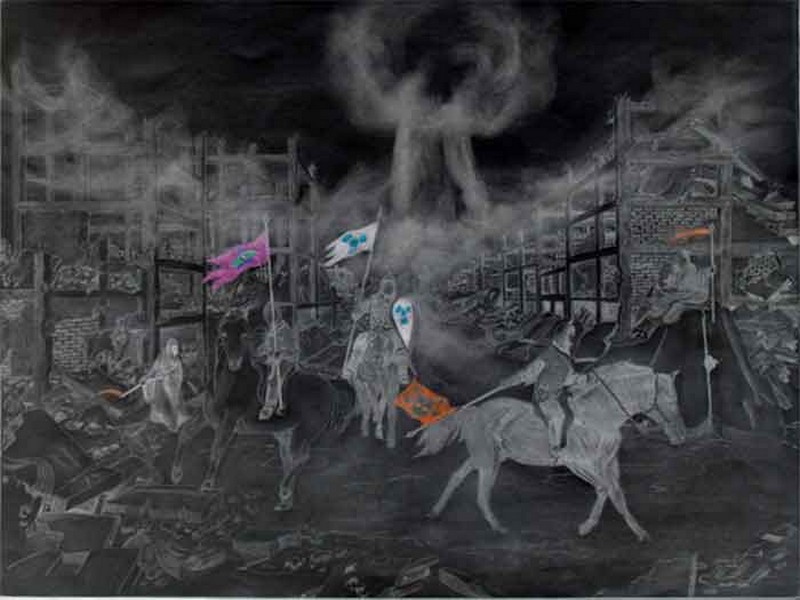
Getting Serious About Halting Israeli Genocide

By Medea Benjamin and Nicolas J. S. Davies

On Friday, December 8, the UN Security Council met under Article 99 for only the fourth time in the UN’s history. Article 99 is an emergency provision that allows the Secretary General to summon the Council to respond to a crisis that “threatens the maintenance of international peace and security.” The previous occasions were the Belgian invasion of the Congo in 1960, the hostage crisis at the U.S. Embassy in Iran in 1979 and Lebanon’s Civil War in 1989.

Secretary General Antonio Guterres told the Security Council that he invoked Article 99 to demand an “immediate ceasefire” in Gaza because “we are at a breaking point,” with a “high risk of the total collapse of the humanitarian support system in Gaza.” The United Arab Emirates drafted a ceasefire resolution that quickly garnered 97 cosponsors.

The World Food Program has reported that Gaza is on the brink of mass starvation, with 9 out of 10 people spending entire days with no food. In the two days before Guterres invoked Article 99, Rafah was the only one of Gaza’s five districts to which the UN could deliver any aid at all.

The Secretary General stressed that “The brutality perpetrated by Hamas can never justify the collective punishment of the Palestinian people… International humanitarian law cannot be applied selectively. It is binding on all parties equally at all times, and the obligation to observe it does not depend on reciprocity.”

Mr. Guterres concluded, “The people of Gaza are looking into the abyss… The eyes of the world – and the eyes of history – are watching. It’s time to act.”

UN members delivered eloquent, persuasive pleas for the immediate humanitarian ceasefire that the resolution called for, and the Council voted thirteen to one, with the U.K. abstaining, to approve the resolution. But the one vote against by the United States, one of the five veto-wielding permanent members of the Security Council, killed the resolution, leaving the Council impotent to act as the Secretary General warned that it must.

This was the sixteenth U.S. Security Council veto since 2000 – and fourteen of those vetoes have been to shield Israel and/or U.S. policy on Israel and Palestine from international action or accountability. While Russia and China have vetoed resolutions on a variety of issues around the world, from Myanmar to Venezuela, there is no parallel for the U.S.’s extraordinary use of its veto primarily to provide exceptional impunity under international law for one other country.

The consequences of this veto could hardly be more serious. As Brazil’s UN Ambassador Sérgio França Danese told the Council, if the U.S. hadn’t vetoed a previous resolution that Brazil drafted on October 18, “thousands of lives would have been saved.” And as the Indonesian representative asked, “How many more must die before this relentless assault is halted? 20,000? 50,000? 100,000?”

Following the previous U.S. veto of a ceasefire at the Security Council, the UN General Assembly took up the global call for a ceasefire, and the resolution, sponsored by Jordan, passed by 120 votes to 14, with 45 abstentions. The 12 small countries who voted with the United States and Israel represented less than 1% of the world’s population.

The isolated diplomatic position in which the United States found itself should have been a wake-up call, especially coming a week after a Data For Progress poll found that 66% of Americans supported a ceasefire, while a Mariiv poll found that only 29% of Israelis supported an imminent ground invasion of Gaza.

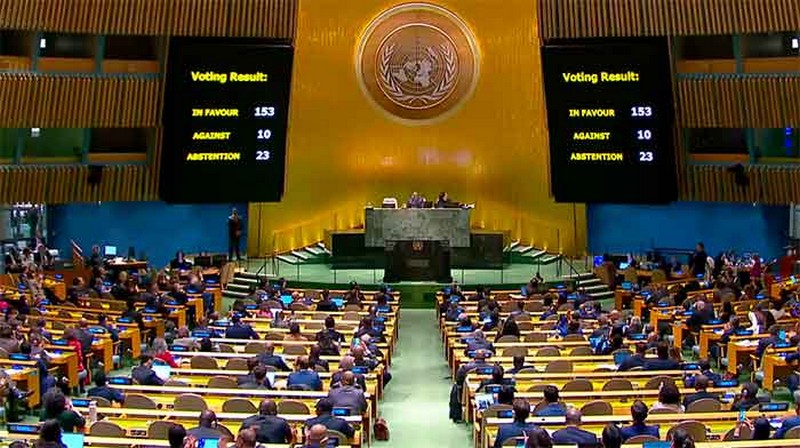
After the United States again slammed the Security Council door in Palestine’s face on December 8, the desperate need to end the massacre in Gaza returned to the UN General Assembly on December 12. An identical resolution to the one the U.S. vetoed in the Security Council was approved by a vote of 153 to 10, with 33 more yes votes than the one in October. While General Assembly resolutions are not binding, they do carry political weight, and this one sends a clear message that the international community is disgusted by the carnage in Gaza.

Another powerful instrument the world can use to try to compel an end to this massacre is the Genocide Convention, which both Israel and the United States have ratified. It only takes one country to bring a case before the International Court of Justice (ICJ) under the Convention, and, while cases can drag on for years, the ICJ can take preliminary measures to protect the victims in the meantime.

On January 23, 2020, the Court did exactly that in a case brought by The Gambia against Myanmar, alleging genocide against its Rohingya minority. In a brutal military campaign in late 2017, Myanmar massacred tens of thousands of Rohingya and burnt down dozens of villages. 740,000 Rohingyas fled into Bangladesh, and a UN-backed fact-finding mission found that the 600,000 who remained in Myanmar “may face a greater threat of genocide than ever.”

China vetoed a referral to the International Criminal Court (ICC) in the Security Council, so The Gambia, itself recovering from 20 years of repression under a brutal dictatorship, submitted a case to the ICJ under the Genocide Convention.

That opened the door for a unanimous ruling by 17 judges at the ICJ that Myanmar must prevent genocide against the Rohingya, as the Genocide Convention required. The ICJ issued that ruling as a preventive measure, the equivalent of a preliminary injunction in a domestic court, even though its final ruling on the merits of the case might be many years away. It also ordered Myanmar to file a report with the Court every six months to detail how it is protecting the Rohingya, signaling serious ongoing scrutiny of Myanmar’s conduct.

So which country will step up to bring an ICJ case against Israel under the Genocide Convention? Activists are already discussing that with a number of countries. Roots Action and World Beyond War have created an action alert that you can use to send messages to 10 of the most likely candidates (South Africa, Chile, Colombia, Jordan, Ireland, Belize, Turkïye, Bolivia, Honduras and Brazil).

There has also been increasing pressure on the International Criminal Court to take up the case against Israel. The ICC has been quick to investigate Hamas for war crimes, but has been dragging its feet on investigating Israel. After a recent visit to the region, ICC prosecutor Karim Khan was not allowed by Israel to enter Gaza, and he was criticized by Palestinians for visiting areas attacked by Hamas on October 7, but not visiting the hundreds of illegal Israeli settlements, checkpoints and refugee camps in the occupied West Bank.

However, as long as the world is faced with the United States’ tragic and debilitating abuse of institutions the rest of the world depends on to enforce international law, the economic and diplomatic actions of individual countries may have more impact than their speeches in New York.

While historically there have been about two dozen countries that have not recognized Israel, in the past two months, Belize and Bolivia have severed ties with Israel, while others–Bahrain, Chad, Chile, Colombia, Honduras, Jordan and Turkey–have withdrawn their ambassadors.

Other countries are trying to have it both ways–condemning Israel publicly but maintaining their economic interests. At the UN Security Council, Egypt explicitly accused Israel of genocide and the U.S. of obstructing a ceasefire.

And yet Egypt’s long-standing partnership with Israel in the blockade of Gaza and its continuing role, even today, in restricting the entry of humanitarian aid into Gaza through its own border crossings, make it complicit in the genocide it condemns. If it means what it says, it must open its border crossings to all the humanitarian aid that is needed, end its cooperation with the Israeli blockade and reevaluate its obsequious and compromised relationships with Israel and the United States.

Qatar, which has worked hard to negotiate an Israeli ceasefire in Gaza, was eloquent in its denunciation of Israeli genocide in the Security Council. But Qatar was speaking on behalf of the Gulf Cooperation Council, which includes Saudi Arabia, Bahrain and the United Arab Emirates (UAE). Under the so-called Abraham accords, the sheikhs of Bahrain and the UAE have turned their backs on Palestine to sign on to a toxic brew of self-serving commercial relations and hundred million dollar arms deals with Israel.

In New York, the UAE sponsored the latest failed Security Council resolution, and its representative declared, “The international system is teetering on the brink. For this war signals that might makes right, that compliance with international humanitarian law depends on the identity of the victim and the perpetrator.”

And yet neither the UAE nor Bahrain has renounced their Abraham deals with Israel, nor their roles in U.S. “might makes right” policies that have wreaked havoc in the Middle East for decades. Over a thousand US Air Force personnel and dozens of U.S. warplanes are still based at the Al-Dhafra Airbase in Abu Dhabi, while Manama in Bahrain, which the U.S. Navy has used as a base since 1941, remains the headquarters of the U.S. Fifth Fleet.

Many experts compare apartheid Israel to apartheid South Africa. Speeches at the UN may have helped to bring down South Africa’s apartheid regime, but change didn’t come until countries around the world embraced a global campaign to economically and politically isolate it.

The reason Israel’s die-hard supporters in the United States have tried to ban, or even criminalize, the campaign for Boycott, Divestment and Sanctions (BDS) is not that it is illegitimate or anti-semitic. It is precisely because boycotting, sanctioning and divesting from Israel may be an effective strategy to help bring down its genocidal, expansionist and unaccountable regime.

U.S. Alternate Representative to the U.N. Robert Wood told the Security Council that there is a “fundamental disconnect between the discussions that we have been having in this chamber and the realities on the ground” in Gaza, implying that only Israeli and U.S. views of the conflict deserve to be taken seriously.

But the real disconnect at the root of this crisis is the one between the isolated looking-glass world of U.S. and Israeli politics and the real world that is crying out for a ceasefire and justice for Palestinians.

While Israel, with U.S. bombs and howitzer shells, is killing and maiming thousands of innocent people, the rest of the world is appalled by these crimes against humanity. The grassroots clamor to end the massacre keeps building, but global leaders must move beyond non-binding votes and investigations to boycotting Israeli products, putting an embargo on weapons sales, breaking diplomatic relations and other measures that will make Israel a pariah state on the world stage.

Medea Benjamin and Nicolas J. S. Davies are the authors of War in Ukraine: Making Sense of a Senseless Conflict, published by OR Books in November 2022.

14 December 2023

Source: countercurrents.org
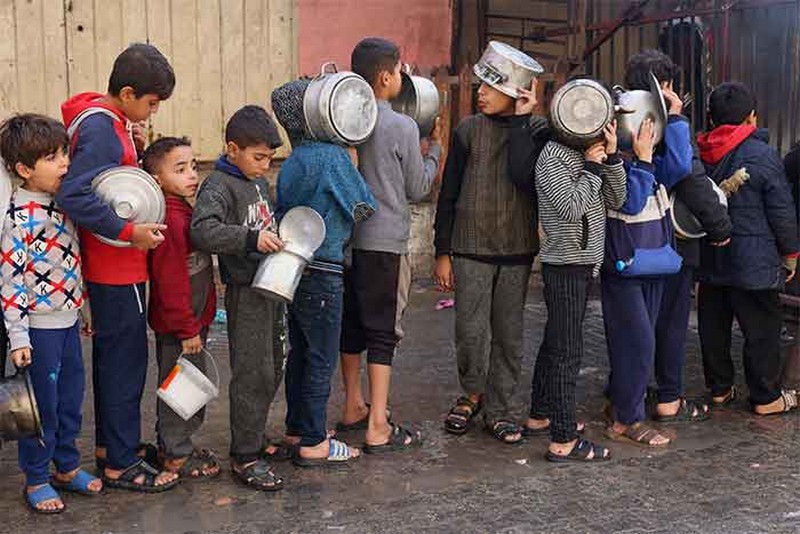
The No-State Solution Becomes More and More Real as Israel’s Permanent Nakba Continues

By Vijay Prashad

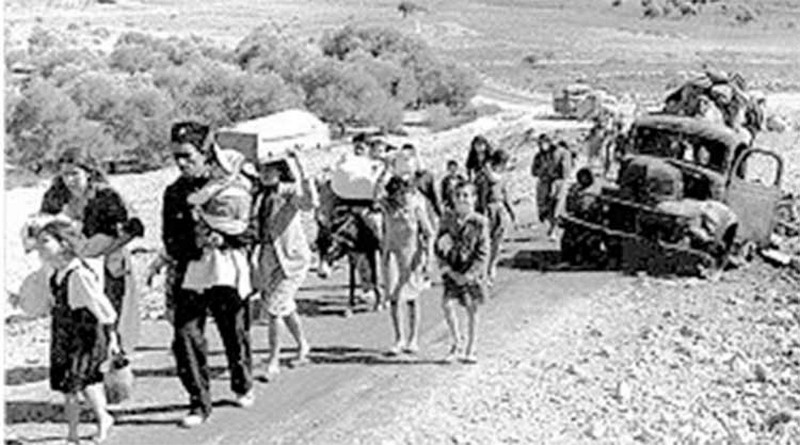
In 1948, the Syrian historian Constantin Zurayk used the Arabic word Nakba (Catastrophe) to refer to the forced removal of Palestinians from their lands and homes by the newly formed Israeli state (in his August 1948 book, Ma’na al-Nakba or The Meaning of the Nakba). A decade ago, in Beirut, I met with the Lebanese novelist Elias Khoury—then editor of the Arabic-language Journal of Palestinian Studies, who told me that the Nakba of 1948 was not an event but part of a process. “What we have is a Permanent Nakba, which means that this catastrophe has been continuous for the Palestinians,” he said. Since 1948, Palestinian political movements and intellectuals have argued that the logic of the Israeli state has been to expel the Palestinians from the region between the River Jordan and the Mediterranean Sea. This policy of expulsion to create an ethno-religious Jewish State of Israel is what Khoury meant by the Permanent Nakba.

On November 11, 2023, Israel’s Agriculture Minister Avi Dichter said something startling to the press. “We are now rolling out the Gaza Nakba,” he said. “Gaza Nakba 2023. That’s how it’ll end,” said this former director of Israel’s internal security service Shin Bet. In the first week of November, Israel’s Heritage Minister Amihai Eliyahu was on Radio Kol BaRama, whose interviewer ruminated about dropping “some kind of nuclear bomb on all of Gaza, flattening them, eliminating everybody there.” Eliyahu replied, “That’s one way. The second way is to work out what’s important to them, what scares them, what deters them… They’re not scared of death.” Israel, the minister said, should retake all of Gaza. What about the Palestinians? “They can go to Ireland or deserts,” he said. “The monsters in Gaza should find a solution by themselves.” This language of annihilation and dehumanization has become normal among the cabinet of Israeli Prime Minister Benjamin Netanyahu. Netanyahu suspended Eliyahu from his cabinet, but he did not rebuke his Defense Minister Yoav Gallant who called Palestinians “human animals.” This is the broad attitude of the Israeli high officials, who are now on record with this kind of language.

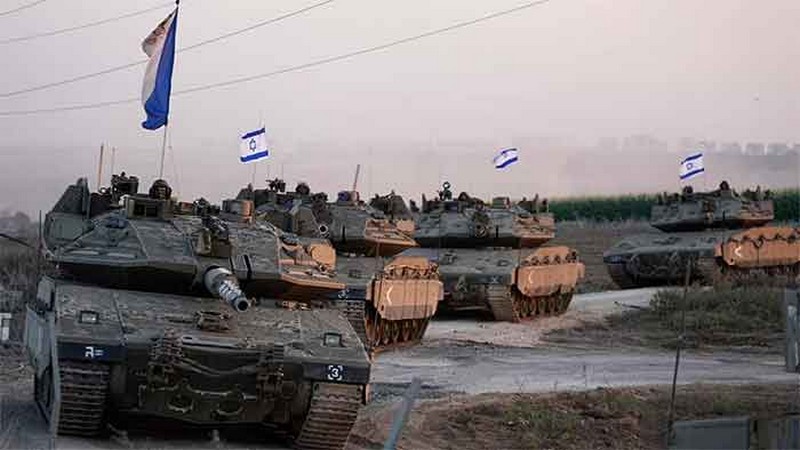
Israel’s army has advanced its execution of the “Gaza Nakba.” In the early stage of the attack, Israel told Palestinian civilians to move south within the Strip, along Salah al-Din Road, the north-south axis in this 40-kilometer-long area of Palestine that holds 2.3 million Palestinians. The Israelis said that they would largely attack northern Gaza, particularly Gaza City. Around 1.5 million Palestinians moved from the northern part of Gaza to the south, the Israelis having told them repeatedly that this would be a safe zone. Those who stayed experienced a level of bombardment not seen in Gaza in the past, which has been pummeled by the Israelis on a punctual basis since 2006 (the current war including deadly air strikes against highly congested refugee camps, such as Jabalia). In late November, five weeks into their brutal bombing in the north, Israel aircraft intensified the bombing of Gaza’s second-largest city, Khan Younis, and began ground operations in the areas where they had told civilians to take shelter. By the first week of December, Israeli tanks surrounded Khan Younis, and Israeli aircraft began to bomb small towns in the southern part of Gaza. Having pushed 1.8 Palestinians into the south, the Israelis now began to bomb that part of Gaza. Meanwhile, Israel’s refusal to allow sufficient humanitarian aid to enter Gaza meant that nine out of 10 Palestinians are living without food for days on end (some told the UN World Food Program that they had not eaten in 10 days). This total war by Israel has pushed the majority of Palestinians in Gaza down toward the Egyptian border. Under cover of this war, the Israelis have also moved aggressively into the West Bank to deepen the Permanent Nakba in that part of the Occupied Palestinian Territory.

As early as October 18, long before the Israeli forces moved toward Khan Younis, the Israel military tweeted that it “orders Gaza residents to move to the humanitarian zone in the area of al-Mawasi.” Three days later, the Israeli military said that the Palestinians must move “south of Wadi Gaza” and go to the “humanitarian area in Mawasi.” Those who went to this small enclave (3.3 square miles) found it without any services—including no internet—and found that even here the Israelis were firing their weapons nearby. Mohammed Ghanem, who had lived near al-Shifa Hospital in northern Gaza, said that al-Mawasi was “neither humane nor safe.” Palestinians in southern Gaza now hope that they can get out before the Israeli bombs find them. The death toll is now in excess of 18,000 dead. As one Palestinian friend wrote in a text, “If we do not leave our homes and go into exile, we will get killed here.” He sent this text just when confirmation arrived that more Palestinians have been pushed out of their homes and killed since October 7 than in the Nakba of 1948. “This is the Second Nakba,” he said to me from near the border between Gaza and Egypt.

A Vote for Annihilation

The ghastly Israeli attack on the Palestinians of Gaza provoked a call for a ceasefire from the second week of October. Israel’s immense firepower—provided by Western countries (especially the United Kingdom and the United States)—was used indiscriminately against a people who live in congested areas of Gaza. Images of that violence flooded social media and even the broadcast news, which could not ignore what was happening. These images overcame all the attempts by the Israeli government and its Western backers to justify their actions. Tens of millions of people joined various forms of protests across the world, but significantly in the Western states that back Israel, bravely confronting governments that tried to portray their solidarity with the Palestinians—unsuccessfully—as antisemitism. This attack was a cynical attempt to use the actual and horrible existence of antisemitism to malign the protests. It did not work. The call for a full-scale ceasefire increased, putting pressure on governments around the world to act.

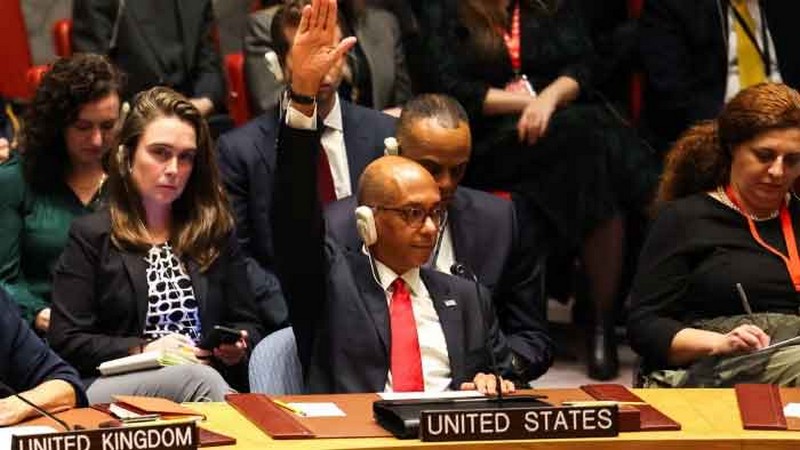
On December 8, 2023, the United Arab Emirates (UAE) put a “brief, simple, and crucial” resolution for a ceasefire (the words are from UAE ambassador to the UN Mohamed Issa Abushahab). UN Secretary-General António Guterres invoked Article 99 of the Charter, which allows him to underscore the importance of an event through “preventative diplomacy” (the article has only been used three times previously, over the conflicts in the Republic of Congo in 1960, Iran in 1979, and Lebanon in 1989). Almost a hundred member states of the UN backed the UAE resolution. “The people of Gaza are being told to move like human pinballs—ricocheting between ever-smaller slivers of the south, without any of the basics for survival,” Guterres told the UN Security Council. “Nowhere in Gaza is safe.” Thirteen members of the Security Council voted for it, including France, while the United Kingdom abstained. Only U.S. Deputy Ambassador Robert Wood raised his hand to veto the resolution.

Four days later, on December 12, the Egyptians tabled much the same resolution in the UN General Assembly, where Assembly President Dennis Francis (of Trinidad and Tobago) said, “We have one singular priority—only one—to save lives. Stop this violence now.” The vote was overwhelming: 153 countries voted for the resolution, 10 voted against it, and 23 abstained. It is instructive to see which countries voted against the ceasefire: Austria, Czechia, Guatemala, Israel, Liberia, Micronesia, Nauru, Papua New Guinea, Paraguay, and the United States. Many European countries—from Bulgaria to the United Kingdom—abstained. But matters are complex. Even Ukraine did not vote with Israel on this resolution. They abstained.

The U.S. veto in the Security Council and the votes against in the General Assembly are effectively votes for the Permanent Nakba of the Palestinian people, the No-State Solution. At least, that is how they will be read across the world, not only in al-Mawasi, as the bombs get closer, but also in the demonstrations from New York to Jakarta.

Vijay Prashad is an Indian historian, editor, and journalist.

14 December 2023

Source: countercurrents.org
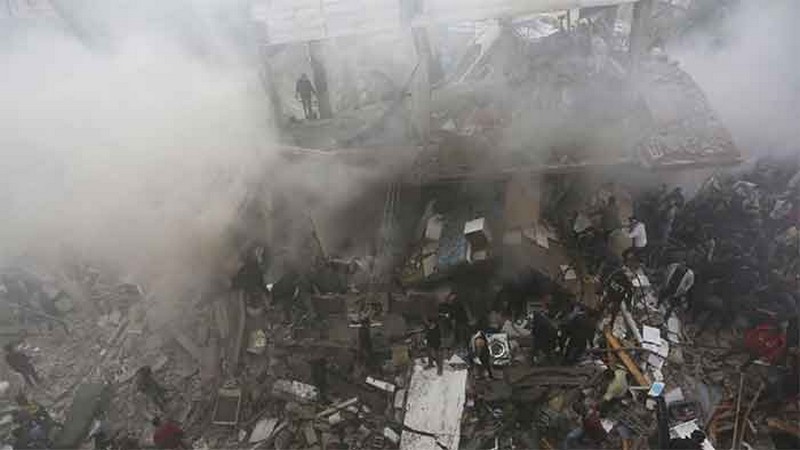
Netanyahu Presses Land War Despite Mass Losses in Israeli Army

By Marwan Asmar

Israeli Prime Minister Benjamin Netanyahu is “blindfolded” to what is in front of him. It would be better for him and his war cabinet to call for a ceasefire and get back to the negotiating table to get his 138 or so remaining hostages that are being held by Hamas and Islamic Jihad.

However, he clearly doesn’t want a political deal, having made that abundantly clear with the goal to eliminate Hamas and to free the hostages through Israeli-style combat. But these two goals remain elusive, as he is nowhere near to getting the hostages and is also losing badly in the field against what tantamounts to Palestinian militias facing a highly mechanized Israeli professional army.

Northern Gaza

Ever since, Israel started the ground war on Gaza in the second half of October – and it began from the north, northeast and latter on the east, Israeli soldiers, their tanks and artillery has been to say the least, bogged down in the Gaza Strip. They certainly didn’t expect to meet such tough fighting from the Palestinian resistance dominated by the Hamas Izz Al Din Al Qassam Brigade and Saraya Al Quds, which is also the armed wing of Islamic Jihad.

After weeks of remaining on the periphery, they have in some cases, managed to enter Gaza proper first in the north in Biet Lahia, Al Falouja, Jabalia, Shiekh Radwan, to the north east of Biet Hanoon, and downwards to the east Al Shujayia, Al Zaytoon, Johr Al Diek and encroached Gaza city.

It must be remembered also, especially in the east, these are mainly rural areas with thinly-spread populations, and this is how they managed to get into Gaza city and divide the north from the south, which had been their strategy from the beginning of the war.

This included as well, displacing masses of people from the north to the south.

Figures appear unreliable. At first it was said up to 1.1 million people were displaced, then 1.7 million and later 1.9 million but it turned out to be up to 700,000 remained in their places up north despite the destruction of their homes.

Today, these northern places as well as the places down the east, continue as battlegrounds and tough resistance. They have not been dominated as the Israeli army maintains, judging from the fact that Israeli warplanes keep bombing the different areas while its soldiers getting killed and their tanks and military hardware hit and destroyed by locally-made missiles and drones.

The Israeli army has not yet dominated the north and north east of Gaza as it keeps harping about. Bloody skirmishes continue in both the areas. But this is just one part of the military equation as the Israeli army and air force maybe stretching themselves too far.

Southern Gaza

Now Israeli ground forces are operating on the periphery of Khan Younis, the second largest city in the strip, trying to enter it from the west, through the sea and by parachutes from the air and from the east, alongside the border filled with Israeli settlements and military bases.

In the southeast, just off Khan Younis to the north, there is Beni Suhaila, Muraj, Al Qarara, Al Fukhari, Abbassan, Khuza’a and these have become places of fighting between the Israeli forces and the Palestinian resistances forces. On the face of it, it would seem the Israeli forces are in Gaza, they, together with their troop carriers and other artillery are fighting hard, but don’t be deceived!

Military experts, say despite their maneuvers into the 362-kilometer strip, and the fact they are being helped by the Israeli air force from the top and from the sea by warships, they are yet to dominate the areas they are fighting in with the Palestinian resistance forces. They have greater advantage over them because they know the terrain, different geographical areas and off course the deep underground tunnels that stretch around 500 kilometers and are as big as the London Underground.

Israeli deaths

In the war on Gaza, the Israeli army has been very careful about the number of deaths in their ranks. It was only days into the war, it was forced to admit about the number of soldiers killed, and then again, these published and/or uttered figures were strictly enforced by the Israeli censors.

But then the cat was out of the bag when Hamas fighters started to say how many soldiers they killed on that particular day, how many tanks that were destroyed, and the videos it started showing of battles of its fighters while aiming at Israeli tanks and firing on them in different parts of Gaza.

These videos were daily shown and analyzed by military experts on different Arab satellite channels and quickly picked up by the Israelis themselves, and their different media forms – television, press, social media. They couldn’t stay as “mouth pieces” for the Israeli politicians and military but published figures that later on, they were forced to retract, because they were under military censorship.

The Israeli daily newspaper Yeddioth Ahronoth said there are 5000 Israeli soldiers who were injured in the ground war on Gaza so far. However, the official figures would only admit to just 2000 injured. Deputy Director-General of the Rehabilitation Dept of the Israeli Defense Ministry Limor Luria says they never experienced anything like this with serious injuries being to the hands and feet and these include amputations.

However, she did also point out 12 percent of the injuries included ruptures to the spleen, kidneys and other internal organs.

This is not to say anything about the number of disabilities among the military personnel. Figures by the Israeli Disabled Veterans Association, up till 23 November, 2023, suggests 1,600 Israeli soldiers were left with permanent disabilities and no longer fit for active service. And these figures are likely to increase as the war goes on.

So the war is having its toll on the Israeli military despite the bombs and missiles its hurling down on Gaza civilians which amounted to 40,000 tons of explosives up till late November. The figure today is likely to be higher because of the continual bombing of the southern part of the Gaza Strip including Khan Younis, Dier Al Balah and Rafah with refugee camps such as Nuseirat and Al Maghazi, with Israeli missile strikes on different houses and/or often rows of houses and squares creating large creators of debris with sleeping people dying under the rubble in their thousands.

While Palestinians deaths now stands at over 18000 with 50,000 injured and likely to increase if there is no ceasefire – a fact Israel, once again maybe, interested in, at least temporarily, military analyst for Al Jazeera Dr Fayez Al Dowairi, says no matter how much the Israeli military tries to message the figures, the real numbers can be deduced from the amount of Israeli tanks that were destroyed up till now, 67 days into the war.

Relaying on Hamas figures, which they show in their daily videos, he says the Palestinian resistance have destroyed so far 500 Israeli tanks with an average of 11 personnel that makes around 5000 dead and this excludes the soldiers who die on the ground during to face-to-face fighting with different Palestinian fighters.

However Al Dowairi says this number is nearer to an earlier estimation made on video – mid-October – of the number of Israeli dead standing at 3000 with 11,000 injured and has since hit the social media and the google search engine.

Off course these are far less than the official figures which continue to be parroted every night on television as if it’s a sobering reality by the Israelis and a major achievement for Palestinians and the Arab population.

The Israeli army says 425 of its soldiers were killed since 7 October. Two days later, and as reported by the Times of Israel, it stated the number of those killed stands at 105 since 27 October when the land war restarted again and that 20 of them died through friendly fire.

An End to the Killing

Observers suggest the Biden administration has given Israel a few weeks to wrap up operations with many appear dreading the number of civilian deaths among the Palestinian population. But the US support to the Israelis have given Netanyahu a booster. He simply says the war on Gaza will continue till he eliminates Hamas and establishes an authority of his choosing regardless of the Palestinian Authority in Ramallah.

We wait and see the outcome.

Marwan Asmar is a journalist from Jordan

14 December 2023

Source: countercurrents.org
As UN calls for Gaza ceasefire, Israel begins flooding Gaza with seawater

By Andre Damon

The United Nations General Assembly voted overwhelmingly Tuesday to call for a ceasefire in Gaza, with the United States, the leading global enabler of Israel’s genocide, voting against the resolution.

The vote totals saw 153 member states vote in favor of a ceasefire, while 10, including the United States, Israel and a handful of smaller countries—Austria, Czechia, Guatemala, Liberia, Micronesia, Nauru, Papua New Guinea, Paraguay—vote against it. The United Kingdom, Germany and Italy abstained.

Speaking in support of the resolution, UN General Assembly President Dennis Francis of Trinidad and Tobago said, “Right now, what we are seeing is an onslaught on civilians, the breakdown of humanitarian assistance, and profound disrespect for international law.” He added, “Even war has rules, and it is imperative we prevent any deviation from these principles and values.”

He noted that thousands of women and children have been killed, and “even more have been forcibly displaced by the incessant violence, with nowhere—I repeat, nowhere—safe to go.”

In a statement on the vote, Avril Benoît, executive director of Doctors Without Borders, said, “Today the majority of the world stood together to demand an end to this bloodshed and suffering in Gaza. The United States has once again voted to allow the carnage against civilians in Gaza to continue.” She added, “The US is increasingly isolated in its steadfast support of a war that seems to have no rules and no limits.”

The resolution, however, is non-binding, enabling Israel to continue to murder hundreds of Palestinians each day, and the United States to fund, arm and logistically support the genocide. In a show of open defiance, Israel added to its war crimes on Monday, blowing up a United Nations UNRWA school in Northern Gaza.

With potentially even more catastrophic effects, Israel has begun pumping seawater into Gaza with the stated aim of flooding underground tunnels and structures. The Netanyahu government has said the hostages are being held in underground tunnels, but President Joe Biden said on Tuesday he has been told Israel is not flooding tunnels where hostages are being kept.

Besides potentially drowning its own citizens being held hostage, Israel’s pumping of vast quantities of salt water into Gaza will have catastrophic health and economic consequences for the enclave and its inhabitants.

A substantial portion of the water is likely to make its way into Gaza’s underground aquifer, potentially poisoning the water supply. The salt water could also have a massive impact on Gaza’s agriculture, as a high salt content in soil is poisonous to plant life.

In a meeting with families of the Israeli hostages held in Gaza, Prime Minister Benjamin Netanyahu said of the hostages, “currently it’s not possible to bring all of them back.” In response, the families told Netanyahu they believed flooding the tunnels would lead to the hostages’ deaths.

On Tuesday, when he was asked to comment on reports that the tunnels were being flooded, Biden replied that “assertions [are] being made that … there’s no hostages in any of these tunnels. But I don’t know that for a fact.” In his remarks, Biden referred to “the indiscriminate bombing that takes place” on the part of Israel, contradicting the repeated false assertions of his administration that Israel is taking measures to protect the lives of civilians in Gaza.

Biden also for the first time admitted that elements within Israel’s government are calling for the deliberate targeting of the entire civilian population of Gaza. He said, “Ben-Gvir and company and the new folks, they… They not only want to have re—retribution, which they should for what the Palestinian—Hamas did, but against all Palestinians.”

Despite these admissions, Biden was categorical that the United States would support Israel regardless, declaring that “in the meantime, none of it is going to walk away from providing Israel what they need to defend themselves and to finish the job.”

In announcing that the US would vote against a ceasefire in Gaza, US Ambassador to the UN Linda Thomas-Greenfield said, “Any ceasefire right now would be temporary at best and dangerous at worst.” She added, “Israel, like every single country on earth, has the right and the responsibility to defend its people from acts of terrorism.”

On Monday, the death toll in Gaza surged to 18,205, Gaza’s Ministry of Health said, with another 7,000 people missing. Some 70 percent of the dead are reported to be women and children.

The United Nations warned that disease is running rampant:

The spread of diseases in Gaza has reportedly intensified, especially due to overcrowded living conditions; which adds to the strain on an increasingly overwhelmed health system and an increased risk of people dying. On 12 December, the [Ministry of Health] spokesperson in Gaza said that the ministry had documented 360,000 cases of infectious diseases in shelters, noting that the actual number is believed to be higher.

The UN added that “cases of meningitis, jaundice, impetigo, chickenpox and other upper respiratory tract infections had been recorded.” It continued: “Additionally, the director of the Abu Youssef An Najjar Hospital in Rafah announced that… diarrhea and influenza were spreading amongst internally displaced persons (IDPs) in Rafah.”

On Tuesday, footage emerged on social media showing Israeli troops using Gazan civilians—stripped to their underwear—as human shields as they advanced into urban areas.

Meanwhile, Israel’s minister of communications wrote in a statement on Twitter that “we will never allow another state to be established between the Jordan and the sea,” making it clear that Israel is seeking the total annexation of Palestinian lands, with the unstated premise that its current inhabitants will either be killed or expelled.

Despite the overwhelming vote in the United Nations, Israel and the United States are bent on continuing their genocide in Gaza. All of the imperialist powers, including France, Germany and the UK, have declared their support for Israel’s “right to defend itself,” providing critical military, logistical and political support for Israel.

Stopping the massacre requires the deepening and expansion of the mass protest movement that has emerged against the genocide by turning to the working class and fighting for a socialist perspective. As the World Socialist Web Site wrote in its most recent editorial board statement:

Stopping the genocide in Gaza is the task of the working class. Workers should support the call by the Palestinian trade unions not to handle war materiel destined for Israel. The global demonstrations by millions of people against the genocide must be expanded and armed with a socialist perspective.

The struggle to put an end to Israel’s genocide in Gaza must be waged as a struggle against the imperialist governments that are responsible for it and the capitalist system whose barbarism is being put on hideous display before the world.

ORIGINALLY PUBLISHED IN WSWS.ORG

13 December 2023

Source: countercurrents.org
Israel, Gaza, and the Struggle for Oil

It was the sign that got to me. I was standing with protesters outside the Burlington (VT) City Hall at a rally organized by Jewish Voice for Peace. To my left I spotted a man, grim-faced and silent, holding aloft a piece of cardboard with these words scratched in black:

“Jews against Genocide.”

“So it has finally come to this,” I said to myself.

Why, I wondered, would Israeli Prime Minister Benjamin Netanyahu and the Biden administration risk their standing in the world and ignore calls for a ceasefire? Did they have an unspoken agenda?

As  a chronicler of the endless post-9/11 wars in the Middle East, I concluded that the end game was likely connected to oil and natural gas, discovered off the coast of Gaza, Israel and Lebanon in 2000 and 2010 and estimated to be worth $500 billion. The discovery promised to fuel massive development schemes involving the US, Israel, and Saudi Arabia.

Also at stake was the transformation of the eastern Mediterranean into a heavily militarized energy corridor that could supply Europe with its energy needs as the war in Ukraine dragged on.

Here was the tinderbox waiting to explode that I had predicted in 2022. Now it was exploding before our very eyes. And at what cost in human lives?

Reflections on the Israeli War on Gaza

The year 1975 was my last in beautiful, cosmopolitan Beirut, Lebanon, before it descended into 15 years of brutal civil war, killing 100,000 people.

As a journalist for the Beirut Daily Star, I began reporting on the escalating tensions among the ruling Maronite Christians, Shiite Muslims — located primarily in southern Lebanon not far from the border with Israel — and the Palestinians caught in between. The presence of Yasser Arafat’s Palestine Liberation Organization (PLO) in Lebanon was not appreciated by Lebanon’s Maronite Christian ruling elite.

The PLO had been forced out of Jordan by King Hussein during what became known as Black September (1970). In that conflict Arafat’s forces fought to prevent Jordanians from regaining control of the once-Jordanian-controlled West Bank, after Israeli forces had pulled out following the Six Day War of 1967. Defeated by King Hussein’s forces, Palestinian refugees poured into Lebanon. In their desperation to be heard by the international community, Palestinian militants began hijacking planes in 1968 to express their grievances against Israeli occupation.

Those three years of reporting in the Middle East gave me a rare lesson in how oil was turning desert sheikhdoms into modern city states, and Beirut into a refuge for the rich — but also a refuge for displaced Palestinians, which ultimately would not be tolerated.

From the rooftop of my apartment I witnessed French Mirage jets supplied to the Maronites roaring overhead to drop bombs on a Palestinian refugee camp on the outskirts of Beirut. Days later, I spent an afternoon on my belly, hiding under a desk as bullets flew around a Christian school where I had taken refuge during a sudden outbreak of fighting.

I began writing about parents dodging bullets to rescue their children. I did not know who was fighting whom, and as dusk descended on the school, I happily accepted a parent’s offer to rush me to safety. As we dashed to his car, his hand tightened on mine as we narrowly escaped a sniper’s bullet. He was a Palestinian Christian, and he likely saved my life.

Shortly afterwards, I returned to the States, not keen on covering a war that made no sense to me. It would take another seven years before I would figure out that this ongoing “civil war” was really about ridding Lebanon of radicalized Palestinians.

In 1982, the Israeli army invaded Lebanon and coordinated with right-wing Lebanese Phalangist forces to slaughter hundreds of Palestinians in the Sabra and Shatila refugee camps. Arafat and his PLO got the message. They departed Lebanon for exile in Tunisia that year, and the Palestinian resistance, once secular and leftist, gave way to the rise of the Islamist Hezbollah fighters who resisted future Israeli incursions into Shiite-dominated southern Lebanon, and ended up earning the respect of Lebanon’s large Shiite population.

Public opinion in the US and the world began to shift against Israel in the aftermath of the Sabra and Shatila massacres, but the American media and members of Congress equated criticism of Israel with antisemitism and invariably reminded the world of the horrors of the Holocaust.

Censorship of anyone who showed sympathy for the Palestinians was pervasive, so I took a hiatus from writing about the Middle East during this time, and ended up joining my future husband, author and investigative journalist Gerard Colby, in investigating the genocide of Amazonian Indians during the 1960s and ’70s. The result of our 18-year investigation was Thy Will be Done: The Conquest of the Amazon: Nelson Rockefeller and Evangelism in the Age of Oil(HarperCollins, 1994). That work became my primer for understanding oil and power at the highest level.

Death of a Master Spy — and Oil

By the mid-1990s, I was drawn back to writing about the Middle East, which was always in my heart, having been born in Beirut and having attended high school there — which was the beginning of my political awakening. But this time I was on a personal mission. I decided to investigate the circumstances behind the plane crash that killed my father. I was six weeks old at the time. Daniel Dennett had just completed a top secret mission to Saudi Arabia in March 1947.

As head of counterintelligence for the Office of Strategic Services (OSS) and its successor, the Central Intelligence Group (CIG), his assignment was to determine the route of the Trans-Arabian Pipeline (aka Tapline) and whether it would terminate in Haifa, Palestine, soon to be Israel, or nearby Lebanon.

His last report stated that US oil executives were upset with anti-Zionist Syria, which was refusing to let the pipeline cross Syrian territory.

This was remedied in 1949, when the CIA removed Syria’s democratically elected president, Shukri al-Quwatli, and replaced him with a Lebanese army officer who gave the green light to the pipeline crossing over Syria’s Golan Heights and terminating near the southern Lebanese port of Sidon.

Saudi oil, and the Trans-Arabian Pipeline which carried it to the Mediterranean Sea, was important to American ambitions in the Middle East. The New York Times, on March 2, 1947, carried a full page story about it entitled: “Pipeline for US Adds to Middle East Issues: Oil Concession Raises Questions Involving the Position of Russia.”

The article, written by President Harry S. Truman’s future son-in-law, Clifton Daniel, was a treatise on the “Great Game for Oil.” “Protection of that investment,” Daniel wrote, “and the military and economic security that it represents, inevitably will become one of the prime objectives of American foreign policy in this area, which already has become a pivot of world politics and one of the main focal points of rivalry between East and West.”

The East, of course, was the Soviet Union. And the US’s exclusive concession in Saudi oil would soon elevate it into becoming a world power, much to the consternation of not only the Soviets, but also the British and the French. Our erstwhile wartime allies were all quietly trying to undermine US interests in the Middle East.

In 1944, my father wrote in a declassified document that his mission for the OSS was “to protect the oil at all costs.” Three years later, as he left Saudi Arabia for Ethiopia on another oil mission, his plane mysteriously crashed, killing all six Americans on board. A CIA official confessed to me, “We always thought it was sabotage, but we couldn’t prove it.” Feeling validated in my quest for the truth, I began digging into history for more context.

After World War II, the US would replace a much-weakened Britain as the overseer of what was to become Israel. And Israel, following its war for independence in 1948 and its expulsion of 750,000 Palestinians from their homeland, would rapidly become a heavily militarized outpost hitched to US interests, with pro-Western European Jews who had survived the Holocaust settling there to protect their lives — and unwittingly to most — to protect Saudi oil “at all costs.”

Seizing Iraq: A ‘First Class War Aim’

My search for oil connections sent me even further back to World War I, when seizing the oil of Iraq became a “first class war aim” for the British admiralty under Winston Churchill. He had decided in 1911 that the British navy would have to replace its fuel source (coal, of which Britain had plenty) with cheaper and more efficient oil (of which Britain had none), hence requiring Churchill to fight “on a sea of troubles” to get oil for his Navy.

Britain succeeded, with the help of Lawrence of Arabia and Arabs who were promised independence in return for helping to drive the Turks (the tottering Ottoman Empire) out of the Middle East. Instead, by 1917, Britain’s foreign minister, Arthur Balfour, penned the Balfour Declaration signaling British approval of a Jewish home in Palestine.

Less known is the fact that the declaration was actually a letter written to Walter Rothschild, a scion of Europe’s powerful oil and banking family. Both men understood the stakes were high for protecting a pipeline planned to bring oil from Iraq (which was seen as an especially promising source) to the West, through the port of Haifa. Establishing a colony of European Jews in and around the pipeline’s terminal point in Haifa would assuage their security concerns.

Netanyahu: ‘Soon the Oil Will Be Flowing to Haifa’

In 1927 oil exploration yielded a major strike near Kirkuk, Iraq; the long-planned pipeline was completed in 1934 and oil flowed through it to the West until 1948, when it was closed by the Iraqis during the First Arab–Israeli War. Some five decades later, reopening it became a rallying cry of then-Finance Minister Benjamin Netanyahu, following the 9/11 attacks on the World Trade Center and the US invasion of Iraq. Netanyahu envisioned Saddam Hussein being overthrown and replaced by a pro-Israel Iraqi dissident named Ahmad Chalabi. “Soon the oil will be flowing to Haifa!” Netanyahu proclaimed. “It’s not a pipe dream.”

But Chalabi was soon ousted and discredited as the creator of the US government’s weapons of mass destruction (WMD) pretext for invading Iraq, and Netanyahu’s pipe dream had to be put on hold.

In 2000, significant natural gas fields were discovered off the coast of Gaza and Israel. The Palestinians claimed that the gas fields off its coast, known as Gaza Marine, belonged to them. Arafat, now settled in the West Bank, hired British Gas (now the biggest energy supplier in the UK) to explore the fields. He learned they could provide $1 billion in badly needed revenue. “This is a Gift of God for our people,” Arafat proclaimed, “and a strong foundation for a Palestinian state.”

The Israelis thought otherwise. In 2007, Moshe Yaalon, a military hardliner (who would become Israel’s defense minister from 2013 to 2016) rejected claims by former British Prime Minister Tony Blair that the development of Gaza’s offshore gas by British Gas would bring badly needed economic development to the area. Although proceeds of a Palestinian gas deal could amount up to $1 billion, Yaalon asserted in a paper for Jerusalem Issue Briefs that the revenue “would not likely trickle down to an impoverished Palestinian people.” He insisted that the proceeds would “likely serve to fund terror attacks against Israel.” It is clear, he added, that, “without an overall military operation to uproot Hamas’s control of Gaza, no drilling work can take place without the consent of the radical Islamic movement.”

One year later, on December 27, 2008, Israeli forces launched Operation Cast Lead with the aim, Haaretz reported, of sending Gaza “decades into the past,” killing nearly 1,400 Palestinians and 13 Israelis. But it did not result in Israel gaining sovereignty over the Gaza gas fields.

In December 2010, prospectors discovered a much larger gas field off the Israeli coast, dubbed Leviathan. The field offered enough energy to supply Israel’s needs, but also presented Israel, according to the Hazar Strategy Institute, “with one of its greatest challenges: protecting the new offshore gas infrastructure in the Eastern Mediterranean which is vital to its energy security and therefore to its economic security.”

I was reminded of the 1947 New York Times piece on the Saudi Tapline pipeline, emphasizing the need for protecting this large American investment, hence the need for military and economic security.

In the summer of 2014, Netanyahu launched a massive invasion of Gaza with the aim of uprooting Hamas and ensuring Israeli monopoly over the Gazan gas fields, killing 2,100 Palestinians, three-quarters of them civilians. Journalist Nafeez Ahmed, writing for The Guardianclaimed “resource competition has increasingly been at the heart of the conflict [in Gaza], motivated largely by Israel’s increasing domestic energy woes.” He continued, “In an age of expensive energy, competition to dominate regional fossil fuels is increasingly influencing the critical decision that can inflame war.”

After the 2014 invasion, the Gazan economy went into a free fall, exacerbating concerns about growing unrest.

October 7 and the End Game

Netanyahu has succeeded so far in averting questions about how Israel’s much vaunted security apparatus could have been taken by surprise by the Hamas attack of October 7, 2023.

He insists on calling October 7 “Israel’s 9/11,” even comparing how the Bush administration, like Israel, was “caught by surprise” by the terrorist attacks that day (in fact, Bush had been forewarned of an impending attack). Now Netanyahu had a pretext for justifying Israel’s latest and most brutal invasion of Gaza.

News has seeped out, however, that he was forewarned by Egyptian intelligence that Hamas was on the verge of orchestrating attacks in Israel. In fact, he was repeatedly warned by Israeli intelligence that the political turmoil surrounding his advocacy for changing the Israeli judiciary threatened Israeli national security.

Which raises the unavoidable question: Did Netanyahu let October 7 happen to achieve his ambitions: silencing his critics, fighting corruption charges, staying out of jail, and rallying the country around a wartime president bent on destroying Hamas?

Much of northern Gaza has been reduced to rubble, and it is his goal to obliterate southern Gaza as well. Perhaps he is thinking that only then, after destroying Hamas and forcing Palestinians out of Gaza, can he convince international lenders to support his long-held scheme of turning Israel into an energy corridor.

Netanyahu — and possibly President Joe Biden — are likely taking the “long view,” convincing themselves that the world will forget what happened once economic development takes off in the region, powered by Israel’s abundant offshore natural gas in the Leviathan Field and Gaza Marine. Work has already begun on another infrastructure project: building the so-called Ben Gurion Canal, from the tip of northern Gaza south into the Gulf of Aqaba, connecting Israel to the Red Sea and providing a competitor to Egypt’s Suez Canal.

Ben Gurion Canal Project

The Canal Project will also connect Israel to Saudi Arabia’s $500 billion futuristic Neom tech city. One plan envisioned by the Abraham Accords involved normalizing relations with Israel, and tying the signatories — the United Arab Emirates, Bahrain, Sudan, and Morocco — into vast development projects in the name of peace.

Ironically, at least for me, this involves a revival of the Trans-Arabian Pipeline, only with its terminal point in Haifa, instead of Lebanon.

On the positive side, much of the world is now recognizing that there can be no development project, no peace process, that does not guarantee the military security of Palestine as well as Israel, and recognize the right of Palestinians to live free of occupation, with the same rights, dignity, and peace as their Israeli neighbors.

Even more encouraging are the stands being taken by American Jews who realize that Netanyahu’s siege of Gaza has only increased antisemitism worldwide. As Rabbi Alissa Wise noted recently, “All of this is making Jews less safe in the world. Israel’s actions in Gaza, but also not just now but for generations — when Palestinians are not free, Jews are less safe in the world. And that is the crux of the matter.”

Peter Beinart, editor of Jewish Currents, clearly sees the folly of Netanyahu’s war against Hamas: “You can’t defeat Hamas militarily, because even if you depose it in Gaza, you will be laying the seeds for the next group of people who will be fighting Israel.”

Charlotte Dennett is an investigative journalist.

11 December 2023

Source: www.counterpunch.org