Just International

Infamous War Criminal Henry Kissinger Dead

By Countercurrents Collective

Infamous war criminal, former U.S. Secretary of State and Nobel Peace Prize winner Henry Kissinger passed away at age 100 on Wednesday.

The renowned diplomat, and infamous to many people in the Third World, died at his home in Connecticut, his consulting firm, Kissinger Associates, said in a statement.

The former U.S. secretary of state and national security advisor “oversaw, overlooked and at times actively perpetrated some of the most grotesque war crimes the United States and its allies have ever committed,” HuffPost reporters Travis Waldron and George Zornick wrote in a scathing obituary of Kissinger, calling him “America’s most notorious war criminal.”

Kissinger’s life story began with his family escaping Nazi Germany for the U.S. in 1938.

After quitting the U.S. military, Kissinger earned a PhD at Harvard University and taught international relations before becoming President Richard Nixon’s top national security adviser in 1969.

He eventually served as secretary of state under Nixon and his successor, President Gerald Ford.

A skilled negotiator committed to realism, Kissinger was instrumental in improving U.S. relations with the Soviet Union in the 1970s and paved a way for the normalization of Washington’s ties with China.

With Kissinger’s stewardship, the Nixon administration’s easing of travel and trade restrictions against Beijing was instrumental in kick-starting China’s rise to prominence as an industrial economy.

In 1973, influential U.S. foreign policy thinker Kissinger shared the Nobel Peace Prize with Vietnamese diplomat Le Duc Tho for negotiating the Paris Peace Accords, which facilitated the withdrawal of U.S. forces from Vietnam. Kissinger accepted the Nobel Peace prize but no-showed the ceremony, blaming the pressure of official duties. Tho refused the prize, explaining that he considered the negotiations to have been a failure.

In 1974, Kissinger helped to negotiate Israel’s disengagement agreements with Syria and Egypt, which officially ended the Yom Kippur War.

Bombed Cambodia Without Congressional Approval

A book by U.S.-British journalist Christopher Hitchens ‘The Trial of Henry Kissinger’ accused the diplomat of ordering the first round of Cambodia bombings in the 1960s without congressional approval.

Behind More Than 3 Million Civilian Deaths

An Intercept report released in May to mark the Kissinger’s 100th birthday claimed that he was behind more than 3 million civilian deaths, and that he helped to prolong the Vietnam War while fostering strife and civil wars in Asia, Africa, and Latin America.

In Chile, after the overthrow of Salvador Allende and the coup by Augusto Pinochet, at least 3,000 dissidents were killed, and some 40,000 tortured. In Argentina, some estimates put the number of those “disappeared” by the government as high as 30,000 people.

Lectures On World Affairs

Kissinger remained active after leaving office, giving lectures and interviews, in which he commented on world affairs. One of his last trips was a visit to Beijing in July 2023, during which he met with President Xi Jinping. He also repeatedly warned the U.S. and China that if they continued on their current foreign policy course, they risked sliding into open military confrontation.

NATO’s Mistake

On the Ukraine conflict, Kissinger described the West’s decision to offer Kiev a pathway to NATO as “a grave mistake” which led to the hostilities in the first place. While the veteran diplomat opposed Ukraine’s membership in the U.S.-led military bloc before the conflict, he later changed his stance, arguing that the country’s neutrality is “no longer meaningful” amid the ongoing fighting.

Last year, he also suggested that Ukraine could relinquish its territorial claims to Crimea and grant autonomy to the Donetsk and Lugansk People’s Republics – all Russian territories now – to achieve peace, an idea repeatedly rejected by Kiev.

A Secret War

A Huffpost report – Anthony Bourdain did not hold back when writing about Henry Kissinger – said on November 30, 2023:

An excerpt from Anthony Bourdain’s 2001 book (Bourdain’s memoir, “A Cook’s Tour: Global Adventures in Extreme Cuisines) dragging Henry Kissinger resurfaced on Wednesday following the infamous war criminal’s death.

While speaking about his culinary explorations around the world in “A Cook’s Tour: In Search of the Perfect Meal,” published after his death in 2018, Bourdain said that “you will never stop wanting to beat Henry Kissinger to death with your bare hands” after visiting Cambodia, referring to one of Kissinger’s most heinous acts, the approval of a secret war beyond the borders of Vietnam. It was one of many actions he promoted during his eight years as secretary of state under former Presidents Richard Nixon and Gerald Ford that are now considered shameful chapters in U.S. foreign affairs.

Carpet Bombing Of Laos

In 1969, Kissinger ordered the clandestine carpet-bombing of Cambodia and Laos. For four years, the U.S. dropped 540,000 bombs, slaughtering 150,000 to 500,000 Cambodian civilians.

“You will never again be able to open a newspaper and read about that treacherous, prevaricating, murderous scumbag sitting down for a nice chat with Charlie Rose or attending some black-tie affair for a new glossy magazine without choking,” Bourdain wrote in his book.

“Witness what Henry did in Cambodia ― the fruits of his genius for statesmanship ― and you will never understand why he is not sitting in the dock at The Hague next to [Serbian President Slobodan] Milošević.”

Decades after the book’s release, Bourdain’s comments lingered in people’s minds and even made a comeback online following news of Kissinger’s death on Wednesday.

This was not the first dig the chef had taken at Kissinger. In a 2017 New Yorker profile on Bourdain, his publisher, Dan Halpern, lauded the influence he had with “Parts Unknown,” a travel and food show in which Bourdain traveled around the world and discussed the cuisines, cultures and political issues of various countries.

Halpern said that Bourdain had “become a statesman” as his show made people aware of conflicts in other countries.

But Bourdain pushed back on the notion, saying, “I am not going to the White House Correspondents’ dinner. I do not need to be laughing it up with Henry Kissinger.”

Despite being responsible for the deaths of hundreds of thousands of people, Kissinger had been seen having amicable exchanges with notable figures, including former President George W. Bush, Nixon, Oprah Winfrey and Princess Diana.

“Any journalist who has ever been polite to Henry Kissinger, you know, fuck that person,” Bourdain said. “I am a big believer in moral gray areas, but, when it comes to that guy, in my view he should not be able to eat at a restaurant in New York.”

Rightwing Dictatorships In Chile And Argentina

A Los Angeles Times report – Anthony Bourdain’s scathing Henry Kissinger remarks resurface after foreign policy figure’s death – said on November 30, 2023:

Kissinger was always a controversial figure, and his most outspoken critics — Bourdain among them — saw him as ruthless and accused him of war crimes, mainly for the expansion of the Vietnam War into Cambodia and the support Washington gave to brutal right-wing dictatorships in Chile and Argentina.

U.S. Interests

A Salon report – “Murderous scumbag”: Anthony Bourdain’s brutal takedown of “war criminal” Henry Kissinger goes viral – said on November 30, 2023:

His positions allowed him to direct the Vietnam War and Cold War with the Soviet Union, while carrying out a foreign policy approach that valued U.S. interests and domestic political achievements over any potential for atrocity that could occur as a result.

“The former led to perhaps the most infamous crime Kissinger committed: a secret four-year bombing campaign in Cambodia that killed an untold number of civilians, despite the fact that it was a neutral nation with which the United States was not at war,” HuffPost reporters Waldron and Zornick wrote.

The campaign killed between 150,000 and a half-million Cambodian civilians, per various estimates, and, according to a Pentagon report released late, Kissinger personally “approved each of the 3,875 Cambodia bombing raids” that occurred between 1969 and 1970.

Bangladesh

The Salon report said:

While in charge of U.S. foreign policy, Kissinger also directed illegal arms sales to Pakistan as it executed a brutal suppression of Bengalis in present-day Bangladesh in 1971.

The genocide in Bangladesh led to killing of 3 million Bengali people.

Indonesia And Dirty War

The Salon report said:

Kissinger also backed a 1973 military coup overthrowing a democratically elected socialist government in Chile, granted Indonesia permission to carry out its 1975 invasion of East Timor, and supported Argentina’s military dictatorship as it launched its “dirty war” against dissenters and leftists in 1976.

Civil Wars In Africa

The report said:

During the Ford administration, Kissinger’s policies also inflamed civil wars in Africa, most notably in Angola.

The Intercept’s obituary said Kissinger “stoked a war in Angola and prolonged apartheid in South Africa,” as well as leaving the Middle East “in chaos,” per  Yale historian Greg Grandin. For Kissinger, the protection of US economic and foreign policy interests took precedence over human life.

Millions Of Death And Millions Of Rights Abuse

“Even the most generous calculations suggest that the murderous regimes Kissinger supported and the conflicts they waged were responsible for millions of deaths and millions of other human rights abuses, during and after the eight years he served in the American government,” Waldron and Zornick write, noting that Kissinger never expressed any remorse for his actions or was held to any account for carrying them out.

Kissinger approached criticism of his human rights abuses with a mocking tone and remained in good standing in Washington’s political elite until the time of his death.

“The covert justifications for illegally bombing Cambodia became the framework for the justifications of drone strikes and forever war. It is a perfect expression of American militarism’s unbroken circle,” historian Greg Grandin, author of “Kissinger’s Shadow,” told The Intercept earlier this year. According to Common Dreams, the historian has estimated that Kissinger was responsible for at least 3 million deaths.

Millions Of Argentinians, Bangladeshis, Cambodians, Chileans, East Timorese

“What is undeniable, on the occasion of his death, is that millions of Argentinians, Bangladeshis, Cambodians, Chileans, East Timorese and others cannot offer their opinion on Henry Kissinger’s legacy or the world he helped create, because they died at the hands of the tyrants Kissinger enabled,” Waldron and Zornick wrote.

Other reporters further lamented Kissinger’s approach to policy and the notorious legacy it left throughout the nation — and the world — across social media and in articles about his death.

In an obituary of Kissinger for Rolling Stone, journalist Spencer Ackerman compared Kissinger to “white supremacist terrorist Timothy McVeigh,” who Ackerman described as “the worst mass murderer ever executed by the United States.”

“McVeigh, who in his own psychotic way thought he was saving America, never remotely killed on the scale of Kissinger, the most revered American grand strategist of the second half of the 20th century,” Ackerman continued. “Every single person who died in Vietnam between autumn 1968 and the Fall of Saigon — and all who died in Laos and Cambodia, where Nixon and Kissinger secretly expanded the war within months of taking office, as well as all who died in the aftermath, like the Cambodian genocide their destabilization set into motion — died because of Henry Kissinger.”

“We will never know what might have been, the question Kissinger’s apologists, and those in the U.S. foreign policy elite who imagine themselves standing in Kissinger’s shoes, insist upon when explaining away his crimes,” Ackerman added. “We can only know what actually happened. What actually happened was that Kissinger materially sabotaged the only chance for an end to the war in 1968 as a hedged bet to ensure he would achieve power in Nixon’s administration or Humphrey’s. A true tally will probably never be known of everyone who died so Kissinger could be national security adviser.”

The Intercept’s D.C. Bureau Chief Ryan Grim noted that “Henry Kissinger killed so many people that we uncovered new atrocities he directed JUST THIS YEAR” in a post to X/Twitter, linking to an article the outlet published titled, “Survivors of Kissinger’s Secret War in Cambodia Reveal Unreported Mass Killings.”

Journalist Conor Powell highlighted former President George W. Bush’s opening statement on Kissinger’s death — “America has lost one of the most dependable and distinctive voices on foreign affairs with the passing of Henry Kissinger” — as an indication of “just how problematic #Kissinger’s legacy is.”

“These words are not a ringing endorsement of Kissinger,” Powell tweeted. “And yet George W Bush as president did more to put Kissinger’s foreign policy ideas into practice than just about any other US president. Bush can barely say a thing positive about Kissinger in 2023.”

Against The Kurds, In Chile, Argentina, Uruguay, And Cyprus

A Teen Vogue report – Henry Kissinger Was a War Criminal Responsible for Millions of Deaths – said on November 30, 2023:

On November 29, former US Secretary of State Henry Kissinger, who NPR calls “one of the country’s most important foreign policy thinkers for more than half a century,” died at 100. Kissinger was responsible for an estimated 3 to 4 million deaths, according to one historian, and millions of human rights violations across a long list of nations. That list was recalled by Yale historian Greg Grandin in his obituary of Kissinger for The Nation: “Cambodia, Laos, Vietnam, East Timor, Bangladesh, against the Kurds, in Chile, Argentina, Uruguay, and Cyprus, among other places.”

In May, Grandin wrote another story for the same magazine about Kissinger making it to age 100, outliving his contemporaries who share some of the blame, like Richard Nixon. That month, MSNBC commentator Medhi Hasan “celebrated” Kissinger’s birthday by recalling “some of the many, many people around the world who didn’t get to live till 100, or even 60, 70 or 80, because of Henry Kissinger, because of his support for brutal dictators, brutal regimes, brutal wars, and war crimes.”

Bombs, Instrument Of Diplomacy

Kissinger used, as Grandin put it, “bombs as an instrument of diplomacy” — an approach which, HuffPost’s obituary observed, “has become a hallmark of U.S. foreign policy.”

Upon news of Kissinger’s death, the internet celebrated possibly more than it did after the last elderly imperial death, but that celebration has been darkened by the basis for it. Joshua Hill posted a video from the 2010s of Kissinger being “unrepentant” about the deaths of Cambodians, where Kissinger’s personally approved carpet-bombing campaign still wounds and takes lives from cluster bombs left there more than 50 years later. (The US provided the same sort of bombs to Ukraine this year.) C-SPAN posted footage from 2016 of Kissinger defending his role in Vietnam. A biting missive from the late Anthony Bourdain — painful enough given that Kissinger got almost twice as long on this Earth than Tony — got posted over and over again.

Within 10 minutes of seeing the news, I started seeing the headlines: “America’s Most Notorious War Criminal” dead, Teen Vogue classic; “Controversial Diplomat;” and some spicier ones, such as “Finally” at the leftist Tribune. Publishers Verso and Jacobin had a book fully prepared and ready for a print run for the occasion. It is hard to exaggerate how long the media had to get ready for this moment. A contributor to the New York Times’s obituary died in 2010.

Apparently, the preparedness to dance on Kissinger’s grave went hand-in-hand with an assumption, proven right, that those currently in power would not hesitate to eulogize a war criminal. Eric Adams and George W. Bush are among those publicly mourning. In life, Kissinger was a friend to Hillary Clintonan advisor to Trump, and feted by the Obama administration in 2016 — at the same time that Obama acknowledged the U.S.’s role in Argentina’s “dirty war” against dissenters and leftists.

Kissinger has advised or been celebrated by every presidency since he joined Nixon’s cabinet, though less so with President Biden. However, current Secretary of State Anthony Blinken, whose name has been sprawled across coverage of America’s 2023 involvement in overseas wars, attended Kissinger’s 100th-birthday party at the New York Public Library, leading the State Department to “awkwardly” sidestep calls for Blinken to justify his attendance.

New York City’s social strata was a respite for Kissinger, according to New York magazine’s Choire Sicha, who noted that from 1977 onward — when, even then, “in all the world there were fewer names more hated than his” — he left his academic and diplomatic careers behind to attend socialite parties after his campaign of death.

Kissinger Enabled The Deaths Of Between 300,000 And 3 Million In Bangladesh

The Teen Vogue report said:

“Historical memory is short, and U.S. politicians from both parties have a habit of bestowing accolades and kind words on officials who deserve nothing of the sort,” wrote Azadeh Shahshahani for Teen Vogue in 2021 following the death of fellow war criminal Donald Rumsfeld, calling for accountability for both Rumsfeld and Kissinger. Shahshahani pointed out that, in 1971, in Bangladesh alone, Kissinger had enabled the deaths of between 300,000 and 3 million people by providing arms to the Pakistani Army.

Ultimately, there’s little to celebrate about a war criminal who lived without regret to 100 years old, comfortably admired by the political class that created and supported him, with millions of deaths in his tracks. I’m reminded of a lyric: “Not everybody gets the chance to live/A life that isn’t dangerous.”

Our tech overlords, modern-day robber barons with hubris and unchecked power, aspire to never agenever die, to outlive us on other planets rather than save ours. There is not much dignity left in the “lesser evil” that is folks gladly burning our planet to the ground in favor of supposed American business interests. Things are dark right now. But, as writer Edward Ongweso Jr. tweeted, “At least one less literal demon walks among us.”

While death tolls keep rising over the world at the hands or arms of the U.S. empire, to outlive one of its proudest, prolifically murderous foots soldiers offers some small karmic comfort.

1 December 2023

Source: countercurrents.org
Can US Threats Prevent a Wider War in the Middle East?

By Medea Benjamin and Nicolas J. S. Davies

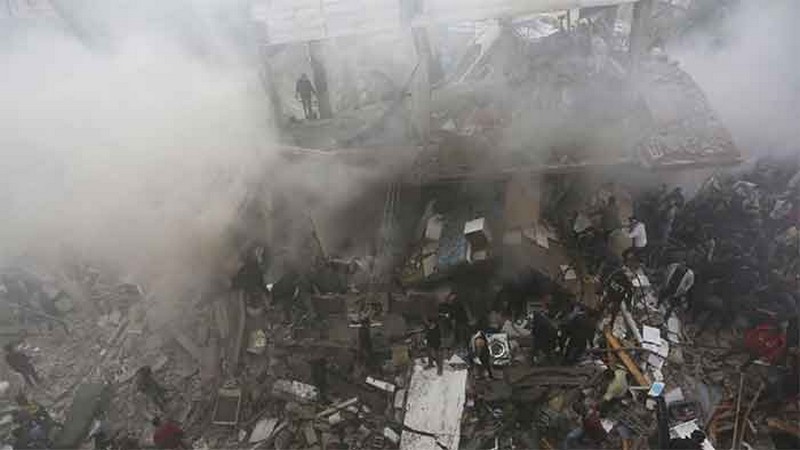
While Secretary of State Anthony Blinken has been frantically shuttling around the Middle East trying to stop the Israeli coflict in Gaza from exploding into a regional war, the United States has also sent two aircraft carrier strike groups, a Marine Expeditionary Unit and 1,200 extra troops to the Middle East as a “deterrent.” In plain language, the United States is threatening to attack any forces that come to the defense of the Palestinians from other countries in the region, reassuring Israel that it can keep killing with impunity in Gaza.

But if Israel persists in this genocidal war, U.S. threats may be impotent to prevent others from intervening. From Lebanon to Syria, Yemen, Iraq and Iran, the possibilities of the conflict spreading are enormous. Even Algeria says it is ready to fight for a free Palestine, based on a unanimous vote in its parliament on November 1st.

Middle Eastern governments and their people already see the United States as a party to Israel’s massacre in Gaza. So any direct U.S. military action will be seen as an escalation on the side of Israel and is more likely to provoke further escalation than to deter it.

The United States already faces this predicament in Iraq. Despite years of Iraqi demands for the removal of U.S. forces, at least 2,500 U.S. troops remain at Al-Asad Airbase in western Anbar province, Al-Harir Airbase, north of Erbil in Iraqi Kurdistan, and another small base at the airport in Erbil.  There are also “several hundred” NATO troops, including Americans, advising Iraqi forces in NATO Mission Iraq (NMI), based near Baghdad.

For many years, U.S. forces in Iraq have been mired in a low-grade war against the Popular Mobilization Forces (PMF) that Iraq formed to fight ISIS, mainly from Shia militias. Despite their links to Iran, the armed groups Kata’ib Hezbollah, Asa’ib Ahl al-Haq and other PMFs have often ignored Iranian calls to de-escalate attacks on U.S. forces. These Iraqi groups do not respect Iran Quds Force leader General Esmail Qaani as highly as they did General Soleimani, so Soleimani’s  assassination by the United States in 2020 has further reduced Iran’s ability to restrain the militias in Iraq.

After a year-long truce between U.S. and Iraqi forces, the Israeli war on Gaza has triggered a new escalation of this conflict in both Iraq and Syria. Some militias rebranded themselves as the Islamic Resistance in Iraq, and began attacking U.S. bases on October 17. After 32 attacks on U.S. bases in Iraq, 34 more in Syria and 3 U.S. airstrikes in Syria, U.S. forces conducted airstrikes against two Kata’ib Hezbollah bases in Iraq, one in Anbar province and one in Jurf Al-Nasr, south of Baghdad, on November 21, killing at least nine militiamen.

The U.S. airstrikes prompted a furious response from the Iraqi government spokesman Bassam al-Awadi. “We vehemently condemn the attack on Jurf Al-Nasr, executed without the knowledge of government agencies,” al-Awadi said. “This action is a blatant violation of sovereignty and an attempt to destabilize the security situation… The recent incident represents a clear violation of the coalition’s mission to combat Daesh (ISIS) on Iraqi soil. We call on all parties to avoid unilateral actions and to respect Iraq’s sovereignty…”

As the Iraqi government feared, the Islamic Resistance in Iraq responded to the U.S. airstrikes with two attacks on Al-Harir airbase on November 22 and several more on November 23rd. They attacked Al-Asad airbase with several drones, launched another drone attack on the U.S. base at Erbil airport, and their allies in Syria attacked two U.S. bases across the border in northeastern Syria.

Short of a ceasefire in Gaza or a full U.S. withdrawal from Iraq and Syria, there is no decisive action the U.S. can take that would put a stop to these attacks. So the level of violence in Iraq and Syria is likely to keep rising as long as the war on Gaza continues.

Another formidable and experienced military force opposing Israel and the United States is the Houthi army in Yemen. On November 14, Abdul-Malek al-Houthi, the leader of the Houthi government in Yemen, asked neighboring countries to open a corridor through their territory for his army to go and fight Israel in Gaza.

The Houthi Deputy Information Secretary Nasreddin Amer told Newsweek that if they had a way to enter Palestine, they would not hesitate to join the fight against Israel, ”We have fighters numbering hundreds of thousands who are brave, tough, trained and experienced in fighting,” Amer said. “They have a very strong belief, and their dream in life is to fight the Zionists and the Americans.”

Transporting hundreds of thousands of Yemeni soldiers to fight in Gaza would be nearly impossible unless Saudi Arabia opened the way. That seems highly unlikely, but Iran or another ally could help to transport a smaller number by air or sea to join the fight.

The Houthis have been waging an asymmetric war against Saudi-led invaders for many years, and they have developed weapons and tactics that they could bring to bear against Israel. Soon after al-Houthi’s statement, Yemeni forces in the Red Sea boarded a ship owned, via shell companies, by Israeli billionaire Abraham Ungar. The ship, which was on its way from Istanbul to India, was detained in a Yemeni port.

The Houthis have also launched a series of drones and missiles towards Israel. While many members of Congress try to portray the Houthis as simply puppets of Iran, the Houthis are actually an independent, unpredictable force that other actors in the region cannot control.

Even NATO ally Türkiye is finding it difficult to remain a bystander, given the widespread public support for Palestine. President Erdogan of Türkiye was among the first international leaders to speak out strongly against the Israeli war on Gaza, explicitly calling it a massacre and saying that it amounted to genocide.

Turkish civil society groups are spearheading a campaign to send humanitarian aid to Gaza on cargo ships, braving a possible confrontation like the one that occurred in 2010 when the Israelis attacked the Freedom Flotilla, killing 10 people aboard the Mavi Marmara.

On the Lebanese border, Israel and Hezbollah have conducted daily exchanges of fire since October 7, killing 97 combatants and 15 civilians in Lebanon and 9 soldiers and 3 civilians in Israel. Some 46,000 Lebanese civilians and 65,000 Israelis have been displaced from the border area. Israeli defense minister Yoav Gallant warned on November 11, “What we’re doing in Gaza, we can also do in Beirut.”

How will Hezbollah react if Israel resumes its brutal massacre in Gaza after the brief pause is over or if Israel expands the massacre to the West Bank, where it has already killed at least 237 more Palestinians since October 7?

In a speech on November 3, Hezbollah leader Hassan Nasrallah held back from declaring a new war on Israel, but warned that “all options are on the table” if Israel does not end its war on Gaza.

As Israel prepared to pause its bombing on November 23, Iranian foreign minister Hossein Amirabdollahian held meetings in Qatar, first with Nasrallah and Lebanese officials, and then with Hamas leader Ismail Haniyeh.

In a public statement, Amirabdollahian said, “the continuation of the ceasefire can prevent further expansion of the scope of the war. In the meeting with the leaders of the resistance, I found out that if Israel’s war crimes and genocide continue, a tougher and more complicated scenario of the resistance will be implemented.”

Amirabdollahian already warned on October 16 that, “The leaders of the resistance will not allow the Zionist regime to do whatever it wants in Gaza and then go to other fronts of the resistance.”

In other words, if Iran and its allies believe that Israel really intends to continue its war on Gaza until it has removed Hamas from power, and then to turn its war machine loose on Lebanon or its other neighbors, they would prefer to fight a wider war now, forcing Israel to fight the Palestinians, Hezbollah and their allies at the same time, rather than waiting for Israel to attack them one by one.

Tragically, the White House is not listening. The next day, President Biden continued to back Israel’s vow to resume the destruction of Gaza after its “humanitarian pause,” saying that attempting to eliminate Hamas is “a legitimate objective.”

America’s unconditional support for Israel and endless supply of weapons have succeeded only in turning Israel into an out-of-control, genocidal, destabilizing force at the heart of a fragile region already shattered and traumatized by decades of U.S. warmaking. The result is a country that refuses to recognize its own borders or those of its neighbors, and rejects any and all limits on its territorial ambitions and war crimes.

If Israel’s actions lead to a wider war, the U.S. will find itself with few allies ready to jump into the fray. Even if a regional conflict is avoided, the U.S. support for Israel has already created tremendous damage to the U.S. reputation in the region and beyond, and direct U.S. involvement in the war would leave it more isolated and impotent than its previous misadventures in Vietnam, Afghanistan and Iraq.

The United States can still avoid this fate by insisting on an immediate and permanent ceasefire and the withdrawal of Israeli forces from Gaza. If Israel will not agree to that, the U.S. must back up this position with an immediate suspension of arms deliveries, military aid, Israeli access to U.S. weapons stockpiles in Israel and diplomatic support for Israel’s war on Palestine.

The priority of U.S. officials must be to stop Israel’s massacre, avoid a regional war, and get out of the way so that other nations can help negotiate a real solution to the occupation of Palestine.

Medea Benjamin and Nicolas J. S. Davies are the authors of War in Ukraine: Making Sense of a Senseless Conflict, published by OR Books in November 2022.

30 November 2023

Source: countercurrents.org
United for Gaza: Time Now for Palestinians to Protect Their Collective Sumud

By Dr Ramzy Baroud

Shortly after the start of a four-day ceasefire in the war on Gaza, the prime ministers of Spain and Belgium, Pedro Sanchez and Alexander De Croo, appeared in a joint press conference at Rafah Crossing.

While Sanchez described “what is happening (as) a disaster,” De Croo called for a “permanent cessation of hostilities” and for an end to the killing of children.

Equally significant, the two European leaders declared that “we may decide to recognize the State of Palestine, if the European Union does not”.

Coupled with the strong position of Ireland, some in Europe seem to be waking up to the fact that the Israeli occupation is the primary cause of the recent Gaza ‘hostilities’.

Israel was not pleased by the evolving European position. It immediately summoned the ambassadors of both countries, and sharply ‘rebuked’ them. This exaggerated response comes to show that Israel is not willing to give Europe even the narrowest of margins – as in condemning the killing of children or, expecting some kind of a peaceful settlement centered round Palestinian sovereignty.

Spain and Belgium’s phrase of “we may decide” to recognize Palestine even without EU consensus is indicative of an actual foreign policy schism within Europe itself. It turned out that not all EU governments have the same tolerance towards the genocide in Gaza as, for example, Germany and Britain.

Interestingly, other EU officials, too, are calling for a Palestinian State, though their intention is neither to ensure Palestinian freedom nor to safeguard Palestinian rights.

EU’s chief diplomat Josep Borrell, for example, argued on November 20 that “the creation of a Palestinian state would be the best way of ensuring Israel’s security”.

Even the former British Prime Minister, now Secretary of State for Foreign Affairs, used similar logic. Israel will not have security unless it guarantees “long-term safety, security and stability” for the Palestinian people, Cameron said.

Regardless of the reasoning behind the growing emphasis on a ‘solution’ and rights for the Palestinians, this language was almost entirely absent from the Western political discourse prior to October 7.

The truth is that Palestinians have succeeded, through their resistance and sumud, to reassert Palestine on the global agenda. But how did Palestinians succeed in doing so, despite the utter marginalization of their cause before the war?

First, unlike previous wars, especially those that preceded the Unity Intifada of May 2021, this time around Palestinians spoke in unison.

Without rehearsing or even coordinating, it felt as if the Palestinian message flew seamlessly, when all Palestinians, regardless of their ideological backgrounds, placed the focus on the Israeli atrocities, without falling into the trap of the typical factional blame game.

Even children who have lost members of their families in Gaza would stand bravely in front of cameras reiterating that they will never weaken and that nothing would remove them from their homeland. Young and old repeated the same logic, used similar language, even from their hospital beds.

This led Israel to do everything in its power to excommunicate the 2.3 million Palestinians in Gaza from the rest of the world, shutting down the internet, electricity and any form of communications, even among Palestinians themselves.

Yet, somehow, a clear, united Palestinian message continued, amplified countless times by an army of social media activists who impressively helped balance out mainstream media bias, eventually overpowering corporate media’s control over the war narrative altogether.

The Palestinians have done this, and more, without powerful lobby groups, media consultants or a hasbara machine, like that which attempted, to no avail, to sway the public opinion in favor of Israel.

Secondly, the factional Palestinian suddenly disappeared.

For years, factional narratives, dividing Palestinians into conflicting interest groups, have thwarted the Palestinian people’s attempt to unify behind a single leadership – one that is capable of conveying, representing and defending Palestinian political aspirations.

Yet, all the Fatah-Hamas talks and agreements have failed, leaving the people with no other alternative but to explore different manifestations of unity that go beyond the interests of politicians.

This unity is now on full display, compelling everyone, including those affiliated with the Palestinian Authority itself, to adhere to the line of the people. While Gazans fought to free prisoners in the West Bank, West Bankers rose, and died in large numbers, in defense of Gaza.

This popular unity must continue, so that it would eventually be harnessed in the form of  political unity, which will bring all Palestinian groups together under a single leadership. This is the only way to ensure the tremendous Palestinian sacrifices and the precious blood that spilled in Gaza, eventually translate into the freedom that all Palestinians covet.

Thirdly, unity beyond Palestine also proved critical.

Arabs and Muslims served as the core of Palestinian solidarity throughout the Israeli war on Gaza. They protested, boycotted, fought and mobilized. Moreover, tens of millions of people, beyond the confines of the Arab and Muslim worlds, also marched around Palestinian rights and priorities.

Indeed, whole new conversations on Palestine are now occupying many public spheres around the globe. The Global South is once more embracing the struggle for Palestine, while the Global North is challenging governments, big corporations and mainstream media for justifying, supporting and financing the Israeli genocide.

The Palestinian people would now have to lead and direct this momentum of solidarity so that it may serve their righteous objectives, those of equality, justice and freedom – all enshrined in international law.

No public space should be left without engagement, no audience should be overlooked or neglected, and no stone should be left unturned in the search of that critical mass needed to hold Israel accountable for its crimes.

Western leaders and officials are speaking out now because they understand that the Palestinian cause has become a global one, and that the prolonging of Israeli occupation and apartheid will not bode well, neither for Tel Aviv nor for the collective West.

It is time for Palestinians to utilize this significant moment. It is time for them to lead the process of their own liberation. In fact, in Gaza, Jenin and elsewhere, this process has already begun.

Dr. Ramzy Baroud is a journalist, author and the Editor of The Palestine Chronicle.

30 November 2023

Source: countercurrents.org
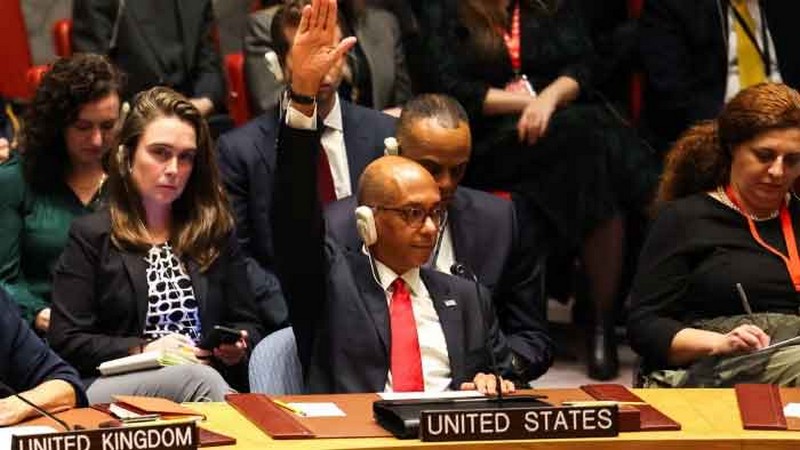
“Slow death”: Israel weaponizes disease in the Gaza genocide

By Andre Damon

On Monday, the World Health Organization issued a dire warning: Even after the relentless Israeli bombing that has left over 20,000 Gazans dead or missing, the death toll from infectious disease in the period ahead is likely to be even higher.

“We will see more people dying from disease than from bombardment if we are not able to put back together this health system,” Margaret Harris, a spokesperson for the WHO, said at a briefing in Geneva on Tuesday.

For two months, Israel has systematically targeted Gaza’s hospital system for destruction. To date, 207 health personnel have been killed, and 56 ambulances have been attacked. Twenty-six hospitals and 55 health centers have ceased operations.

In the latest horrific scene, footage has emerged of premature babies being left to die and decompose in hospital beds at Al-Naser Hospital after Palestinian medical personnel were forced at gunpoint to abandon them.

“We were subjected to a direct targeting operation by the Israeli forces after strangling the health system on the first day of the aggression by cutting off medical supplies, fuel and electricity,” said Palestinian Health Ministry spokesman Ashraf Al-Qudra.

The destruction of Gaza’s healthcare system compounds the catastrophic consequences of the starvation and dehydration of the population by Israel’s blockade of food, fuel and water, and the mass displacement of nearly three-quarters of the population.

In an interview with Al Jazeera last week, WHO spokesperson Harris described the medical conditions in Gaza as “misery being piled on misery.”

She continued, “It’s catastrophic in so many ways. As the needs rise from the terrible crush injuries, the burns, the amputated limbs, the multiple complex fractures due to all the bombing, the hospital supply is reducing as fewer and fewer hospitals are able to function.

“Because people are so crowded, because they are in such poor condition, because they lack food and they lack water, and they are unable to wash themselves or drink clean water, we are seeing huge rises in infectious diseases, particularly in diarrheal diseases—diarrheal disease is going up exponentially. It’s increased 31 times more than you would expect in children under 5; also in adults: 104 times greater than you would expect.” Dysentery has increased 14 times, she said.

These conditions are deliberate. Their intentional character is publicly acknowledged by Israeli officials. Last week, Giora Eiland, the former head of the Israeli National Security Council, published an article in which he urged the Israeli military to create medical conditions in which as many Gazan civilians die as possible from preventable disease.

Eiland wrote:

Who are the “poor” women of Gaza? They are all the mothers, sisters or wives of Hamas murderers…

The international community warns us of a humanitarian disaster in Gaza and of severe epidemics. We must not shy away from this, as difficult as that may be. After all, severe epidemics in the south of the Gaza Strip will bring victory closer and reduce casualties among IDF soldiers.

Eiland argues that inflicting death and misery through infectious disease should be a goal, not a mere byproduct, of Israel’s actions. Its aim is “not the mere killing of more Hamas fighters” but “irreversible harm to their families.”

Such monstrous statements would seem to be the mere ravings of a lunatic. In reality, the deliberate subjection of a population to conditions that facilitate mass infection has been a critical component of past historical genocides, including the HolocaustThe parallels between Israel’s deliberate withholding of food, fuel and water from the Palestinians and descriptions of the Nazi regime’s treatment of the Jews in the Warsaw Ghetto are striking.

In his landmark book, Axis Rule in Occupied Europe, jurist Raphaël Lemkin, who introduced the term “genocide” in its contemporary understanding, explained how the Nazis used the blockade of food, fuel and water in the Warsaw Ghetto as a deliberate means of killing its inmates:

The undesired national groups … are deprived of elemental necessities for preserving health and life. … No fuel at all has been received since then by the Jews in the ghetto.

Moreover, the Jews in the ghetto are crowded together under conditions of housing inimical to health, and in being denied the use of public parks they are even deprived of the right to fresh air. Such measures, especially pernicious to the health of children, have caused the development of various diseases.

Payam Akhavan, a special adviser to the International Criminal Court, wrote in 2021:

Extermination through disease and starvation in the ghettos became the staging grounds for the concentration camps. An estimated 700,000 Jews died in the ghettos from diseases such as typhus, having been abandoned to “perish in their filth.” In the Warsaw Ghetto “the death toll from typhus was estimated at 15 percent, even though the Germans prevented proper treatment … and refused to allow the necessary preventive measures to be taken and enforced.”

In Why Did the Heavens Not Darken?, historian Arno J. Mayer described the conditions of concentration camp inmates:

half-starved and practically without medical care, the frail and the sick were particularly imperiled, the more so since at the journey’s end the whole of Auschwitz was intermittently in the grip of a devastating typhus epidemic. The result was an unspeakable death rate…

The Nazi leaders decided to transport frail and sick Jews, and Gypsies, to Auschwitz in full awareness of the perils they would face, and they continued to do so once there was no ignoring and denying the deadly conditions there, including the endemic danger of epidemics.

The United Nations defines “genocidal acts” as including “the deliberate deprivation of resources needed for the group’s physical survival and which are available to the rest of the population, such as clean water, food and medical services,” and the “Creation of circumstances that could lead to a slow death, such as lack of proper housing, clothing and hygiene or excessive work or physical exertion.”

It notes: “Deprivation of the means to sustain life can be imposed through confiscation of harvests, blockade of foodstuffs, detention in camps, forcible relocation or expulsion to inhospitable environments.”

This language reads as a perfect description of Israel’s genocide in Gaza.

Notably, the destruction of Gaza’s healthcare system takes place amid a new global upsurge of the COVID-19 pandemic—a disease that becomes exponentially more deadly in the absence of adequate healthcare to treat the sickest patients.

The ruling classes of the world responded to the COVID-19 pandemic with homicidal indifference to human life, with UK Prime Minister Boris Johnson praising the disease as “nature’s way of dealing with old people.” In Gaza, the sociopathic indifference to human life manifested in these remarks has metastasized into a full-scale genocide.

Not one single member of the Biden administration has made a public statement condemning the Israeli government’s systematic destruction of Gaza’s public health infrastructure and the starvation of its population. When Israel bombed the Al-Ahli Arab Hospital killing hundreds, US President Joe Biden blamed the Palestinians. The White House has made clear that there are “no red lines” limiting the number of civilians the US will allow Israel to kill, or the scale of the war crimes it will be allowed to commit.

The apologists for capitalism have argued that the vast crimes committed by the imperialist powers during the 20th century, the gravest of which was the Holocaust, were an exception, the actions of singularly evil individuals the likes of which would never appear again.

Twenty-three years into the new century, many of the means by which the Nazis carried out their “Final Solution” are being applied in Gaza, with the full support of all the imperialist powers.

This reality must bear upon the analysis not only of the present but also of the past. The Holocaust and Nazism were not the result of historical accidents but expressed the essential barbarism of the capitalist system in its “highest stage” of modern imperialism, which Leon Trotsky called its “death agony.”

Millions of people have taken part in mass demonstrations against the genocide in Gaza. They must understand what they are fighting against. It is not merely Netanyahu, or even just the governments that are funding and arming Israel’s genocide. It is the entire capitalist social order that is responsible for this monumental crime.

30 November 2023

Source: countercurrents.org
The voice of Gaza

By Abubaker Abed

Al Jazeera’s bureau chief in Gaza Wael al-Dahdouh was live on air when he heard the worst possible news: His family had been attacked by Israel.

His wife Amna, son Mahmoud, daughter Sham and grandson Adam were all killed.

It has been almost a month since the massacre yet Wael has not had any space to grieve. He has continued reporting with great courage on the genocide being inflicted on his people.

“The pain of loss can never be described,” he said in an interview. “It was unbearable but I am a different person because of the profession I hold. I fully believe that God has pearls of wisdom and he is the one who provides a man with patience and strength.”

Wael believes that by documenting Israel’s crimes, he is fulfilling a duty to his family.

“I was determined to return to work and appear on the screen out of loyalty to their blood and the blood of all the martyrs. I refused to let the occupation achieve its goal of shattering this voice. So I overcame my pain to appear to the world again and convey my message and the message of every Palestinian suffering in Gaza.”

“Absolute horror”

Wael has witnessed all five of the previous major Israeli attacks on Gaza since December 2008.

“The 2023 war on Gaza is an absolute horror,” he said. “It is totally different and undoubtedly the bloodiest, the most destructive and the most monstrous. Throughout all the wars we have seen violence, destruction and injuries. But none comes close to this level of brutality and bloodshed.”

While Israel has bombed residential buildings without warning on many occasions, it is doing so far more frequently this time.

“It’s the first war when electricity was fully cut off, water was wholly cut off, and when crossings were completely closed for more than 25 days, preventing aid from entering the Strip,” he said.

I asked Wael when there will be peace and liberty in Gaza.

“When the occupation ends,” he said. “The occupation means aggression and the continuation of these painful images of destruction, horror and hardship. Its end will mean the return of Gaza, Palestine, and the Arab region to the hugs of peace, freedom, love, calm, security and every beautiful thing.”

Aged 53, Wael has no retirement plans despite everything that he has endured. He vows to keep working “no matter the cost.”

Journalists have paid a heavy price during this current war. More than 50 have been killed.

“We are all journalists in these circumstances,” said Wael. “We are not a party to this war. All we do is report events and what is happening around us.”

The bravery of Wael and other Palestinian journalists is at odds with how Western media outlets generally refuse to hold Israel accountable.

“As a human being and a Palestinian, I have a message to people all over the world,” Wael said. “We want you to listen to the narrative of the Palestinians, not just the Israelis. Please do not let the world apply any double standards. We have our narrative and we only ask for justice. Justice must prevail in the world.”

Abubaker Abed is a journalist and translator based in Gaza.

26 November 2023

Source: countercurrents.org
Gaza’s Children & Our Rohingya Children: A Tale of Israeli and Myanmar Genocides

We, the Rohingya have been chased from our homelands through a series of massacres and Burmese military campaigns since 1978. Our villages have been exterminated and wiped out of all maps. The Palestinian situation is just the same, if not, even worse.

By Raïss Tinmaung

The Palestinian situation is just the same, if not, even worse. They were evicted from their homes through non-stop eviction campaigns by the Israeli government ever since the formation of Israel which resulted in the Nakba of 1948. Their houses have constantly been bulldozed and their entire neighbourhoods have been demolished to make way for new Israeli settlements. The vast majority of Palestinians are now forced to live in pockets of “Bantustans” in the West Bank, in refugee camps within Israel and neighbouring states, and in the open air prison of Gaza.

Just like the Rohingya, the Palestinians cannot move freely within their own ancestral lands. Like the Rohingya, the Palestinians need to go through check points and pay hefty sums to the authorities to be able to simply go from one village/township to another. The Rohingya can never get official jobs or work without fear of their land and produce getting confiscated overnight; the Palestinians live through the same. The Rohingya are not allowed to vote or run for office in federal elections, the Palestinians in Israel are the same. The Rohingya are discriminated in Burmese schools and educational institutions, just like Palestinian children are treated inferior in Israeli education systems. The Rohingya are constantly abducted, detained, and imprisoned without trial; the Palestinians have an unparalleled record of unlawful detentions in Israeli prisons. In essence, just like the Rohingya live under severe discrimination in Myanmar, the Palestinians live in apartheid under systemic discrimination and oppression from Israeli authorities.

Like the Rohingya, the Palestinians are looked down upon and denigrated by the Israelis as objects of extreme hate. Throughout social media, Israeli citizens are often heard saying out loud in public “we will kill you all”, “we will bomb all hospitals, all the tunnels, everything”, ”Gaza nakba 2023” . Similarly, prior to the Rohingya massacre of 2017, hate speech on social media was widespread with statements such as “kill them all so that they can meet Allah faster”, or “stuff pig into their mouths and throw them into the river”. At the government level, Israeli Ministers have referred to Palestinians as “snakes”, “beasts on two legs” and “human animals”, just like the Rohingyas were referred to as “insects” and “half humans” by government officials and the clergy. Scholars of genocide stress that hate speech and dehumanization of a population are integral to any genocide, an international and organized process of physical destruction of any identity-based population or human group. There is no doubt that the Israeli regime, from its “moderate” president to Far-Right prime minister and cabinet ministers, as well as the society at large, have openly and crudely expressed vile and hate-filled speech towards the Palestinians, just as Myanmar’s flagship political party of Aung San Suu Kyi, state officials, and the military, as well as multi-ethnic civil society had towards the Rohingya while committing genocide.

However revolting the Hamas acts of violence against the Southern settler communities might have been, a just military retaliation can never include the indiscriminate bombing of refugee camps. Genocide is no “self-defence”: Period. For an armed force as sophisticated as the IDF, there is no reason why they should ever resort to the bombing of a civilian population, starving them for weeks, and destroying their healthcare facilities where the crippled and elderly are housed. The only reason is their sheer intent to eliminate the Palestinians as much as they can.

Last month I was at Kutupalong refugee camp in Bangladesh as part of my yearly visits to the Rohingya children’s education & vocational training programs that I run through a registered charity. During my visit I saw many kids playing and running around in narrow unkempt alleys between densely crowded shelters. I got to know a few kids by their names: Kulsum, 6, Jannatara, 7, and Nurhashim, 6. Their smiles were innocent and their laughter simply oblivious. I can still see them when I close my eyes.

But what if I closed my eyes and I saw them bombed to death all of a sudden? Alas, such unspeakable horror was the eventuality of many Palestinian children in Jabalia and many other refugee camps…

We, the Rohingya have been chased from our homelands through a series of massacres and Burmese military campaigns since 1978. Our villages have been exterminated and wiped out of all maps. People who lived in my parents’ and grandparents’ villages were forced out by government authorities to make space for settler colonies called “Nga ta la”. Those of us who owned lands for generations became homeless overnight. Many had no choice but to resort to Internally Displaced Persons camps a few kilometers from their own villages inside Arakan. We became refugees in our own homelands.

The Palestinian situation is just the same, if not, even worse. They were evicted from their homes through non-stop eviction campaigns by the Israeli government ever since the formation of Israel which resulted in the Nakba of 1948. Their houses have constantly been bulldozed and their entire neighbourhoods have been demolished to make way for new Israeli settlements. The vast majority of Palestinians are now forced to live in pockets of “Bantustans” in the West Bank, in refugee camps within Israel and neighbouring states, and in the open air prison of Gaza.

Just like the Rohingya, the Palestinians cannot move freely within their own ancestral lands. Like the Rohingya, the Palestinians need to go through check points and pay hefty sums to the authorities to be able to simply go from one village/township to another. The Rohingya can never get official jobs or work without fear of their land and produce getting confiscated overnight; the Palestinians live through the same. The Rohingya are not allowed to vote or run for office in federal elections, the Palestinians in Israel are the same. The Rohingya are discriminated in Burmese schools and educational institutions, just like Palestinian children are treated inferior in Israeli education systems. The Rohingya are constantly abducted, detained, and imprisoned without trial; the Palestinians have an unparalleled record of unlawful detentions in Israeli prisons. In essence, just like the Rohingya live under severe discrimination in Myanmar, the Palestinians live in apartheid under systemic discrimination and oppression from Israeli authorities.

Like the Rohingya, the Palestinians are looked down upon and denigrated by the Israelis as objects of extreme hate. Throughout social media, Israeli citizens are often heard saying out loud in public “we will kill you all”, “we will bomb all hospitals, all the tunnels, everything”, ”Gaza nakba 2023” . Similarly, prior to the Rohingya massacre of 2017, hate speech on social media was widespread with statements such as “kill them all so that they can meet Allah faster”, or “stuff pig into their mouths and throw them into the river”. At the government level, Israeli Ministers have referred to Palestinians as “snakes”, “beasts on two legs” and “human animals”, just like the Rohingyas were referred to as “insects” and “half humans” by government officials and the clergy. Scholars of genocide stress that hate speech and dehumanization of a population are integral to any genocide, an international and organized process of physical destruction of any identity-based population or human group. There is no doubt that the Israeli regime, from its “moderate” president to Far-Right prime minister and cabinet ministers, as well as the society at large, have openly and crudely expressed vile and hate-filled speech towards the Palestinians, just as Myanmar’s flagship political party of Aung San Suu Kyi, state officials, and the military, as well as multi-ethnic civil society had towards the Rohingya while committing genocide.

However revolting the Hamas acts of violence against the Southern settler communities might have been, a just military retaliation can never include the indiscriminate bombing of refugee camps. Genocide is no “self-defence”: Period. For an armed force as sophisticated as the IDF, there is no reason why they should ever resort to the bombing of a civilian population, starving them for weeks, and destroying their healthcare facilities where the crippled and elderly are housed. The only reason is their sheer intent to eliminate the Palestinians as much as they can.

When I close my eyes and see Kulsum, Jannatara and Nurhashim playing in the alleys of Kutupalong refugee camps, I pray that they aren’t bombed to death by some Burmese military artillery falling over their heads. Their only crime: they were born Rohingya and are therefore considered less human by the ruling regime. And I hope my prayers are answered. But for Alaa, Momen, Hazem, Yousef, Yazan and dozens of other children in Jabalia refugee camp, that prayer cannot be made. They are already bombed to death, along with approximately 6000 other innocent children, who were clearly considered less human by the Israeli government and its allies.

Raïss Tinmaung is the country coordinator for Canada at Free Rohingya Coalition.

28 November 2023

Source: forsea.co

Israel’s War on Hospitals

By The Chris Hedges Report

20 Nov 2023 – Israel is carrying out a campaign to make Gaza uninhabitable. This campaign includes destroying all of Gaza’s hospitals. The message Israel is sending is clear – Nowhere is safe. If you stay you die.

Israel is not attacking hospitals in Gaza because they are “Hamas command centers.” Israel is systematically and deliberately destroying Gaza’s medical infrastructure as part of a scorched earth campaign to make Gaza uninhabitable and escalate a humanitarian crisis. It intends to force 2.3 million Palestinians over the border into Egypt where they will never return.

Israel has destroyed and nearly emptied the Al Shifa Hospital in Gaza City. The Indonesian Hospital in Beit Lahia is next. Israel is deploying tanks and armored personnel carriers around the hospital and has fired rounds into the building, killing twelve people.

The playbook is familiar. Flyers are dropped by Israel over a hospital telling people to leave because the hospital is a base for “Hamas terrorist activities.” Tanks and artillery shells rip away parts of the hospital walls. Ambulances are blown up by Israeli missiles. Power and water is cut. Medical supplies are blocked. There are no painkillers, antibiotics and oxygen. The most vulnerable, premature babies in incubators and the gravely ill, die. Israeli soldiers raid the hospital and force everyone out at gunpoint.

This is what happened at Al Shifa hospital. This is what happened at Al Rantisi Children’s Hospital. This is what happened at Gaza’s main psychiatric hospital. This is what happened at Nasser Hospital. This is what happened at the other hospitals that Israel has destroyed. And this is what will happen at the few hospitals that remain.

Israel has shut down 21 of Gaza’s 35 hospitals, including Gaza’s only cancer hospital. The hospitals still operating have severe shortages of basic medicine and supplies. One by one the hospitals are being picked off. Soon there will be no health facilities left. This is by design.

Tens of thousands of terrified Palestinians, forced to evacuate by Israel, their homes blasted into rubble, seek refuge from the relentless bombing by camping out in and around Gaza’s hospitals. They hope the medical centers will not be targeted by Israel. If Israel abided by the Geneva Conventions they would be correct. But Israel is not carrying out a war. It is carrying out a genocide. And in a genocide, a population, and all that sustains a population, is obliterated.

In an ominous sign that Israel will turn on the Palestinians in the West Bank once it is done flattening Gaza, armored vehicles have surrounded at least four West Bank hospitals. The Ibn Sina Hospital has been raided by Israeli soldiers along with the East Jerusalem Hospital.

Israel’s settler colonial state was founded on lies. It is sustained by lies. And now, when it is grimly determined to carry out the worst slaughter and ethnic cleansing of Palestinians since the 1948 Nakba, or “catastrophe,” that saw 750,000 Palestinians ethnically cleansed and some 50 massacres by Jewish militias, it spits out one grotesque absurdity after another. It speaks of Palestinians as a dehumanized mass. There are no mothers, fathers, children, teachers, doctors, lawyers, cooks, poets, taxi drivers or shopkeepers. Palestinians, in the Israeli lexicon, are a single contagion that must be eradicated.

Watch this video of Israeli school children singing, “We Will Annihilate Everyone” in Gaza.

Hitler Youth used to sing songs like this about Jews.

Those who embark upon projects of mass killing lie to avoid demoralizing their own populations, lull the victims into believing they will not all be exterminated and stop outside forces from intervening. The Nazis claimed that Jews packed on trains and sent to extermination camps were on work details and had good medical care and adequate food. As for the infirm and elderly, they were cared for in rest centers. The Nazis even created a mock camp for the “resettlement” of Jews “to the East,” – Theresienstadt – where international bodies such as the Red Cross could see how humanely the Jews were treated, even as millions were being exterminated.

At least 664,000 and possibly as many as 1.2 million Armenians were massacred or died of exposure, disease and starvation during the genocide carried out by the Ottoman Empire from the spring of 1915 to the autumn of 1916. The Armenian genocide was as public as the genocide in Gaza. European and U.S. consular missions provided detailed accounts of the campaign to cleanse modern day Türkiye of Armenians.

The Ottoman government, in an attempt to hide the genocide, banned foreigners from taking photographs of Armenian refugees or the corpses that lined the roads. Israel too has blocked the foreign press from Gaza, carrying out only a handful of brief and carefully staged visits arranged by the Israeli military. Israel periodically cuts off internet and phone services. At least 43 Palestinian journalists and media workers have been killed by Israel since the Hamas incursion into Israel on Oct. 7, many undoubtedly targeted by Israeli forces.

Armenians, like Palestinians, were forced from their homes, gunned down and denied food and water. Armenian deportees were sent on death marches to the Syrian Desert where tens of thousands were shot or died from starvation, cholera, malaria, dysentery and influenza. Israel is forcing 1.1 million Palestinians into the southern tip of Gaza and bombing them as they flee. These refugees, like the Armenians, lack food, water, fuel and sanitation. They too will soon succumb to epidemics of infectious diseases.

Talat Pasha, the de facto leader of the Ottoman Empire, told the United States ambassador, Henry Morgenthau Sr., in words that replicate Israel’s stance, on Aug. 2, 1915, “that our Armenian policy is absolutely fixed and that nothing can change it. We will not have the Armenians anywhere in Anatolia. They can live in the desert but nowhere else.”

The longer the genocide continues the more absurd the lies become.

There are big Israeli lies. The obliteration of Gaza and wanton killing of thousands of Palestinians, Israel insists, is a targeted effort to get rid of Hamas rather than a campaign to reduce Gaza to a pile of rubble, carry out mass murder and ethnically cleanse Palestinians.

There are small Israeli lies. Forty beheaded babies. Al Shifa Hospital is a “Hamas command center.” A calendar in Arabic on the wall of a hospital, according to IDF Spokesperson, Rear Admiral Daniel Hagari, is “a guardian [guard] list, where every terrorist writes his name and every terrorist has his own shift guarding the people that were here.” An Israeli actor dressed up as a nurse and speaking heavily accented Arabic claims to be Palestinian doctor and to have seen Hamas use civilians as human shields. She says members of Hamas “attacked Al Shifa Hospital” and stole “the fuel and medicine.” Palestinian militants, rather than Israeli tanks, Israel says, are responsible for shelling Al Shifa Hospital. Israel struck a car full of “terrorists” in southern Lebanon, “terrorists” who turned out to be three girls, their mother and grandmother. The explosion at the Al Ahli Hospital was the result of an errant rocket fired by the Palestinians, a claim questioned by The New York Times when it discredited the video based on analysis of its time stamp. Israel said it “responded to the request of the director of Shifa Hospital to allow Gazan citizens who were sheltering in the hospital and who wish to evacuate from Shifa Hospital towards the humanitarian crossing in the Gaza Strip via a secure axis,” a statement Mohammed Zaqout, director general of hospitals in Gaza, said was “false,” adding “we were forced to leave by gunpoint.” Israeli Lt. Col. Jonathan Conricus, in a video pilloried by the BBC, shows viewers a meager stash of automatic weapons in a promotional video that magically increases once foreign reporters arrive for a guided tour. The IDF later deleted it.

The lies will be written into the Israeli school books. The lies will be repeated by Israeli politicians, historians and journalists. The lies will be told on Israeli television and in Israeli films and books. Israelis are eternal victims. Palestinians are absolute evil. There was no genocide. Türkiye, a century later, still denies what happened to the Armenians.

In wartime people believe what they want to believe. The lies fill a hunger within the Israeli public that sees the conflict as a binary struggle between “the children of light and the children of darkness.” The lies are a defense against accountability, for if Israel refuses to acknowledge reality, it is not forced to respond to reality. The lies create cognitive dissonance, where fact becomes fiction and fiction becomes truth. The lies make any discussion of genocide, or reconciliation, impossible.

Israel, with the backing of the Biden administration, will continue to snuff out all systems that sustain life in Gaza. Hospitals. Schools. Power plants. Water treatment facilities. Factories. Farms. Apartment blocks. Houses. Then Israel will pretend, like the killers in past genocides, it never happened.

The lies used by Israel to absolve itself of responsibility will eat away at Israeli society. They will corrode its moral, religious, civic, intellectual and political life. The lies will elevate war criminals to heroic status and demonize those with a conscience. Israel’s genocide, as with the 1965 mass killings in Indonesia, will be mythologized, an epic battle against the forces of evil and barbarity, just as we mythologized the genocide of Native Americans and turned our settlers and murderous cavalry units into heroes. The killers in the Indonesian war against communism are cheered at rallies as saviors. They are interviewed about the “heroic” battles they fought nearly six decades ago. Israel will do the same. It will deform itself. It will celebrate its crimes. It will turn evil into good. It will exist within a self-constructed myth. The truth, as in all despotisms, will be banished. Israel, a monster to the Palestinians, will be a monster to itself.

Chris Hedges is a Pulitzer Prize–winning journalist who was a foreign correspondent for fifteen years for The New York Times, where he served as the Middle East Bureau Chief and Balkan Bureau Chief.

27 November 2023

Source: transcend.org

BRICS Condemns Israel War on Gaza in Signal to the West

By Shola Lawal

The grouping, which has previously focused on economic issues, called for an end to ‘war crimes’ in the Gaza conflict.

21 Nov 2023 – Leaders of major emerging economies called for an end to Israel’s war on Gaza today and for a cessation of hostilities on both sides to ease the rapidly deteriorating humanitarian crisis in the Gaza Strip.

In a virtual summit chaired by South African President Cyril Ramaphosa, the BRICS grouping denounced attacks on civilians in Palestine and Israel, with many leaders calling the forced displacement of Palestinians, within Gaza or outside the territory, “war crimes.”

“We condemned any kind of individual or mass forcible transfer and deportation of Palestinians from their own land,” a chair’s summary read. The group, which did not issue a joint declaration, also “reiterated that the forced transfer and deportation of Palestinians, whether inside Gaza or to neighbouring countries, constitute grave breaches of the Geneva conventions and war crimes and violations under International Humanitarian Law.”

The BRICS is made up of Brazil, Russia, India, China and South Africa, all major emerging economies looking for a greater say in a global order long dominated by the United States and its Western allies. These countries are often viewed as leaders of what is referred to in international policy speak as the “Global South”.

But it wasn’t just these five countries that spoke on the war on Tuesday. Earlier this year, the BRICS had agreed to expand and add Egypt, Ethiopia, Argentina, Saudi Arabia, the UAE and Iran as members from 2024. The leaders of these six countries also participated in the meeting called by South Africa. United Nations Secretary-General Antonio Guterres joined the summit too.

The chair’s summary — in essence a gist of the mood in the room — highlights growing calls from the Global South to end the war on the Gaza Strip. The conflict began after an October 7 attack on Israeli communities by the armed group Hamas that saw 1,200 people killed and 240 others taken hostage. In response, Israel has incessantly shelled Gaza, targeting hospitals, schools and refugee camps and killing more than 13,000 people, many of them children, in violation of international laws.

Since then, millions of people across Africa, Asia and the Middle East have marched for a “Free Palestine” and called for a ceasefire. Experts in Africa and elsewhere have accused the United States, United Kingdom and European Union of hypocrisy for claiming to be  bastions of democracy and human rights while supporting Israel’s war in Gaza.

A ‘growing assertiveness’

While the chair’s summary appeared “mild and somewhat balanced” according to Steven Gruzd, an analyst at the South African Institute of International Affairs (SAIIA), some countries were more combative in their presentations.

In his opening statement at the meeting, the current BRICS chair, President Ramaphosa of South Africa, said that Israel’s actions “are in clear violation of international law” and that the “collective punishment of Palestinian civilians by Israel “is a war crime … tantamount to genocide”. Ramaphosa also said Hamas had “violated international law and must be held accountable”.

India’s stance was comparatively softer, with Foreign Minister Subrahmanyam Jaishankar saying there was “a need for restraint and immediate humanitarian support”, as well as “peaceful resolution through dialogue and diplomacy”.

Many of the member states, including Russia and Brazil, have previously criticised Israel’s non-stop bombardment and now, ground invasion of the Gaza Strip. China, for its part, this week hosted a delegation of Muslim countries, officials and organisations seeking a ceasefire, including the Palestinian Authority (PA).

India, though, has not been as vocal and has in fact cracked down on pro-Palestine marches at home, seemingly siding with Israel and its biggest benefactor, the US, in what is seen as a split within the BRICS itself.

But that split did not seem glaring at Tuesday’s summit, which experts say is a first-of-its-kind meeting for a group that has previously focused on economic issues.

“I am not sure I recall a similar extraordinary summit being called,” Gruzd told Al Jazeera. “It does reflect on the growing assertiveness and confidence of the BRICS grouping, not waiting for the West. BRICS has generally shied away from political and security issues; this meeting goes against that trend.”

Together, BRICS countries represent 40 percent of the world population and a quarter of the global economy.

President Ebrahim Raisi of Iran – Israel’s archenemy – said Palestinians should hold a referendum to determine their fate.

Still, many BRICS nations — not just India — have established ties with Israel that they will be wary of severing.

China has huge investments in Israel, Gruzd notes, while India has even deeper historic ties with the country and enjoys military and technological partnerships with it. But with a fiery Iran set to join the group, India might not be able to influence how a new BRICS+ will react to Israel, Gruzd said.

South Africa, currently the smallest BRICS country, and one that itself experienced oppressive apartheid rule for more than four decades, sees its own struggle reflected in that of the Palestinians and has consistently been one of the loudest calls for a ceasefire, said analysts.

At the same time, it has long been Israel’s largest trade partner in Africa. On Tuesday, that relationship appeared to have reached a turning point.

Parliament members voted to shut down the Israeli embassy in Pretoria, signifying a turning point in the crisis. Diplomats from the country had already been recalled from Israel on November 6. Israel recalled its ambassador to South Africa, Eliav Belotserkovsky, for “consultations” on Monday in response to Pretoria’s growing hostility.

Alongside Bangladesh, Bolivia, Comoros and Djibouti last week, South Africa also submitted a referral to the International Criminal Court (ICC) to investigate whether war crimes have been committed in Gaza.

A turning point?

On Monday, South African Minister in the Presidency Khumbudzo Ntshavheni applied further pressure, calling for an ICC warrant against Israeli Prime Minister Benjamin Netanyahu, adding that it would be a “total failure” if the court did not investigate the leader.

Earlier this year, South Africa had managed to convince Russia not to send  President Vladimir Putin to the annual BRICS Summit in August because of an ICC arrest warrant issued against him for war crimes committed in Ukraine. If Putin had attended the summit in South Africa, the country, an ICC signatory, would have been obligated to arrest him.

Tuesday’s BRICS stance, instigated by South Africa, might push more countries to be vocal in denouncing the war, said Muhammed Desai of Africa4Palestine, an advocacy group.

“South Africa is a significant economic and political powerhouse on the African continent as well as a country with one of the most embassies and high commissions in the world,” Desai said. “Thus, its stance and position does have clout within the diplomatic arena.”

But the coalition’s political weight is not significant enough to have any real impact on the direction of Israel’s war, others say. “Frankly, I do not think they have much leverage on Israel directly,” said Gruzd of SAIIA. “I also do not think it will have much effect on the West, besides adding to voices calling for a ceasefire.”

Their leverage is, however, growing. Dozens of nations have applied or shown interest in joining BRICS, a major reason for the expansion earlier this year, as countries seek to reduce their dependence on the US-led Western financial system.

Russia, which will hold the group’s presidency in 2024, is expected to push to use local currencies for international trade payments, as opposed to the dominant US dollar.

That platform, some say, is necessary for the voice of the Global South to be heard. “Within the global world order, BRICS offers another voice,” Desai of Africa4Palestine said, and “that is necessary to counter the current Western hegemonic view”.

27 November 2023

Source: transcend.org

Actual U.S. Military Spending Reached US$ 1.537 Trillion in 2022—More than Twice Acknowledged Level (US$ 765.8 billion)

By Gisela Cernadas and John Bellamy Foster

New Estimates Based on U.S. National Accounts

November 2023 – For decades, it has been recognized by independent researchers that actual U.S. military spending is approximately twice the officially acknowledged level.1 In 2022, actual U.S. military spending reached $1.537 trillion—more than twice the officially acknowledged level of $765.8 billion. Data on U.S. military spending reported by the U.S. government, the Stockholm International Peace Research Institute (SIPRI, generally considered the definitive source on international military expenditures), and NATO all primarily rely on the figures of the U.S. Office of Management and Budget (OMB).2 These data, however, are subject to two major shortcomings.First, the numbers provided by the OMB with respect to “defense spending” are substantially lower than those provided in the U.S. National Income and Product Accounts (NIPA), the most complete and definitive source on U.S. national income and expenditures as a whole, constituting an input-output approach to the whole economy, and the basis of all analysis of the U.S. economy.

Second, as is well-known, key areas of U.S. military spending are included in other parts of federal expenditures and do not fall under the OMB’s “defense spending” category. Although SIPRI and NATO adopt wider definitions of “defense spending” than the U.S. government and claim to increase their estimates using the OMB figures as a base, in practice, they do so only marginally and in ways that are not entirely transparent, with the result that their figures are only slightly above those of the officially acknowledged U.S. figures.3

If the reality is that actual U.S. military spending has been consistently around twice the acknowledged amounts—something demonstrated repeatedly in independent studies—the methodology for approaching the question of actual military spending on a consistent, statistically conservative, and incontestable basis has only developed over time. Most attempts have sought simply to add components of actual military spending appearing in other parts of federal spending and not included under OMB figures for “national defense.” Although these studies helped to set the stage, they often appeared to have a scattered and arbitrary character, rather than employing a truly consistent methodology.

A breakthrough in this respect was first achieved by Jurgen M. Brauer at Augusta State University’s College of Business Administration in 2007. Brauer introduced an approach that took the NIPA data on U.S. military consumption and investment expenditures as the base for U.S. military spending, and then added in other military expenditures outside of official defense using the NIPA accounts, creating a methodology for detailing U.S. military expenditures that not only surmounted the limitations of the OMB data with respect to accounting for “defense spending” itself, but adopted an entirely consistent approach, based on NIPA data, to adding in unacknowledged expenditures.4 Brauer’s approach was then developed further by Hannah Holleman, John Bellamy Foster, and Robert W. McChesney in an article in Monthly Review in 2008 that provided detailed estimates of actual U.S. military expenditures, as opposed to those officially acknowledged by the OMB, for 2007.5

Although the estimates of military spending here rely on the 2008 study by Holleman, Foster, and McChesney (building on Brauer’s 2007 methodological breakthrough) as its original basis, the method and results differ somewhat from that earlier study, adopting more conservative assumptions, while incorporating some refinements that Brauer introduced in 2019. Thus, the percentages attributed to the military in federal space expenditures and in grants to foreign countries are lower in the present estimates, in accord with widely accepted mainstream assumptions. Military medical insurance (consisting of payments for medical services for dependents of active duty military personnel at nonmilitary facilities) is also added, which was not included in the earlier study by Holleman, Foster, and McChesney. (It should be noted that military spending in the Department of Energy associated with nuclear weapons is included in both OMB and NIPA, as recognized in the earlier study.)

In addition to the NIPA data for total defense consumption and gross investment expenditures, our figures for actual U.S. military expenditures include seven further categories: veterans’ benefits, veterans’ life insurance, other veterans’ costs, military medical insurance, the military portions of space spending, grants in aid to other governments, and the share of net interest attributed to actual federal military expenditures. (Net interest here includes only “on-budget” net interest, excluding the “off-budget” net interest associated with Social Security and other transfer payments, as well as the Post Office.)

Veterans’ benefits and net interest both constitute what are known as so-called legacy costs of militarism and war, and thus are part of overall military spending, but are not included in the official “defense budget.” Euroconsult has attributed 42.4 percent of federal space consumption and investment expenditure to the military.6 The Council of Foreign Relations conservatively classified 33 percent of all U.S. grants in foreign aid as for military purposes.7

All of these categories, taken together, thus constitute the components of actual military spending as shown in Table 1. The table shows that actual U.S. military spending in 2022 came to $1.537 trillion, as opposed to the $765.8 billion in acknowledged (OMB) defense spending (and the $876 billion estimated by SIPRI and $821 billion by NATO). This means that actual U.S. military spending in 2022 was more than double the acknowledged “defense spending” provided by OMB.

Table 1. Actual U.S. Military Spending in 2022 (Billions USD)

Category Table Line Item Allocation Amount
NIPA National Defense Expenditure Consumption expenditures 100% 732.4
Military Medical Insurance Gross investment 100% 192.6
Military medical insurance 100% 5.7
Veterans’ life insurance 100% 0.8
Veterans-Related Expenses* Veterans’ benefits 100% 153.3
Other 25% 26.1
Space Consumption and Gross Investment Expenditure** Space 40% 15.2
Grants to Foreign Countries Grants to foreign countries 33% 29.4
Net Interest Attributed to Military*** Net interest attributed to military 381.4

Sources: See Table 2 in Statistical Appendix for a discussion of data and sources.

* Since the data corresponding to “Veterans-Related Expenses,” from NIPA Table 3.12 (“Government Social Benefits”) for the year 2022 were not available at time of writing, we adopted a conservative assumption and assigned the same nominal value that such expenses adopted in 2021.

** Since the data corresponding to “Space Consumption and Gross Investment Expenditure,” from NIPA Table 3.15.5 (“Government Consumption Expenditures and Gross Investment by Function”) for the year 2022 were not available at time of writing, we adopted the same nominal value from the year 2021 for this variable.

*** The details corresponding to the calculation of this item are explained in the Statistical Appendix, Table A-2.

Chart 1 shows actual U.S. military spending as a percentage of GDP, compared to the acknowledged defense spending and the closely related SIPRI data from 2007 (the year in which the Great Recession began) to 2022. Over the entire period, actual military spending (NIPA augmented) as a percentage of GDP averaged 6.7 percent. In 2022, actual U.S. defense spending came to 6 percent of GDP, while acknowledged military spending was only half that, at 3 percent of GDP.

Chart 1. U.S. Military Spending as a Percentage of GDP

Source: See Statistical Appendix for sources and notes.

Chart 2 presents actual military spending as a percentage of total federal government consumption and gross investment, which averaged 72 percent over the entire period and, in 2022, was 70.2 percent. Once again, however, it is rising.

Chart 2. U.S. Military Spending as a Percentage of Federal Consumption and Gross Investment, 2007–2022

Source: See Statistical Appendix for sources and notes.

“National Defense Consumption Expenditures” and “National Defense Gross Investment” accounted, respectively, for 47 percent and 13 percent of actual military spending in 2022, according to NIPA. The remaining 40 percent of U.S. military spending is not included in OMB figures or in the larger figures on “defense” spending reported by the Bureau of Economic Analysis in NIPA, but appears in other budgets in NIPA. The breakdown is shown in Chart 3.

Chart 3. U.S. Military Spending by Component, 2022

Source: See Statistical Appendix for sources and notes.

All of this demonstrates that the extent of U.S. military spending has been grossly understated by the U.S. government. Washington has allocated expenses corresponding to military-related activities under departments other than the Department of Defense.

Although institutions like SIPRI and NATO claim to reflect the actual military spending of most countries, their estimations for the United States are vastly understated. Moreover, it is important to recognize that the base data from which we start our calculations (National Defense Consumption and Gross Investment Expenditure, using U.S. Bureau of Economic Analysis NIPA tables) are already larger than the final estimations reported by SIPRI and NATO. Central to the estimates of actual military expenditure presented here, then, is the fact that expenses of military-related activities are not fully included under the expenditure announced by the OMB. Significantly, legacy costs, which support the entire military systems, such as veterans’ benefits and the enormous net interest payments attributable to the military and largely responsible for U.S. government deficits, are fully incorporated in our analysis, while excluded in military spending acknowledged by the U.S. government and largely excluded by SIPRI (see Statistical Appendix).

It is no wonder, then, that, taking the ten countries with the highest military spending in the world in 2022, the United States—based on its actual military spending as shown here—accounts for more than 70 percent of the total.8

Statistical AppendixMethodological Approach

To estimate actual U.S. military spending, we utilize a set of nine items from the National Income and Product Accounts (NIPA) produced by the U.S. Bureau of Economic Analysis (see Table A-1). The criteria to allocate each of these items is described below:

  1. National Defense consumption expenditure. This information is provided by the U.S. Bureau of Economic Analysis. We allocate 100 percent of this item to the estimation of the U.S. military spending.
  2. National Defense gross investment expenditure. This information is provided by the U.S. Bureau of Economic Analysis. We allocate 100 percent of this item to the estimation of the U.S. military spending.
  3. Veterans’ related costs. This information is provided by the U.S. Bureau of Economic Analysis and consists of three categories:
    1. Veterans’ life insurance
    2. Veterans’ benefits
    3. Other

Table A-1. Sources for Calculation of Actual Military Spending

Category Line Name (Line #) Table Source
NIPA National Defense Expenditure Consumption expenditures (18) Table 3.9.5. Government Consumption Expenditures and Gross Investment NIPA
Gross investment (19) Table 3.9.5. Government Consumption Expenditures and Gross Investment NIPA
Military Medical Insurance* Military medical insurance (16) Table 3.12. Government Social Benefits NIPA
Veterans-Related Expenses Veterans’ life insurance (14) Table 3.12. Government Social Benefits NIPA
Veterans’ benefits (17) Table 3.12. Government Social Benefits NIPA
Other (26) Table 3.12. Government Social Benefits NIPA
Space Consumption and Gross Investment Expenditure Space (58) Table 3.15.5. Government Consumption Expenditures and Gross Investment by Function NIPA
Grants to Foreign Countries Grants to foreign countries (32) Table 3.2. Federal Government Current Receipts and Expenditures NIPA
Net Interest Attributed to Military Net interest payments (on budget) Table 3.2 Outlays by Function and Subfunction: 1962–2028 OMB

Sources and Notes: NIPA Tables, bea.gov/itable; OMB: White House Historical Tables, whitehouse.gov/omb/budget/historical-tables. Also see direct links to tables above.

* Consists of payments for medical services for dependents of active duty military personnel at nonmilitary facilities.

We allocate 100 percent of the items 3.a and 3.b to the estimation of the U.S. military spending. The category “Other” (3.c) is shared among other institutions, therefore we allocated only 25 percent of this expenditure to the military.

  1. Military medical insurance (payments for medical services for dependents of active-duty military personnel at nonmilitary facilities).
  2. Space consumption and gross investment expenditure. This information is provided by the U.S. Bureau of Economic Analysis. We allocate 40 percent of the space consumption and gross investment of the United States for defense purposes, following the study of Euroconsult, which reports that 42.4 percent of global space spending in 2021 was meant for defense purposes.
  3. Grants in foreign aid. This information is provided by the U.S. Bureau of Economic Analysis. We allocate 33 percent of this expenditure to military purposes, following the analysis by the Council on Foreign Relations.
  4. Net interest paid by the federal government attributed to military. This information is provided by the U.S. Bureau of Economic Analysis (see Table A-2). We allocated this item according to the following formula:
    Percentage of allocation =
    Total expenditures of the federal government with military
    purposes on consumption and gross investment
    Total expenditures of the federal government
    on consumption and gross investment

It is important to note that we are considering federal gross investment expenditures in both the numerator and denominator, and not only the consumption expenditure.

Table A-2. Calculation of Net Interest Attributed to U.S. Military Spending in 2022 (Billions USD)

Item Amount Source/Note
Total Federal Government Consumption and Gross Investment Expenditure 1,646.7 NIPA, Table 3.9.5. Government Consumption Expenditures and Gross Investment (lines 10 + 11)
Actual Federal Military Spending (without Interest) 1,155.4 NIPA (see Table 1)
Interest Allocation 70.2% Row 2 / Row 1 (above)
Net Interest Payments (On Budget) 543.6 OMB, Table 3.2. Outlays by Function and Subfunction: 1962–2028

Comparison with Other Estimations

Table A-3 compares our method with mainstream estimations of U.S. military spending. Here, we can see that the expenditures reported by the OMB ($765.8 billion) are significantly lower than other sources. SIPRI and NATO claim to report actual military spending of the countries, including some legacy costs, but their numbers are still below those of independent researchers (see Table A-4 below). Indeed, our estimation of the actual U.S. military spending for 2022 is twice that reported by the White House, 1.9 times the spending estimated by NATO, and 1.8 times that reported by SIPRI.

Table A-3. Comparison with Mainstream Estimates of U.S. Military Spending for 2022 (Current USD)

Source Year Amount estimated As % of GDP
NIPA Augmented (JBF/GC) 2022 1,536.9 6.0
“Acknowledged” U.S. Military Spending (OMB) 2022 765.8 3.0
SIPRI Military Expenditure 2022 876.9 3.4
NATO 2022 821.8 3.2

Sources: NIPA Augmented, see Table A-1; “Acknowledged,” Office of Management and Budget (OMB), “Table 3.2. Outlays by Function and Subfunction: 1962–2028,” whitehouse.gov; SIPRI, “Military Expenditure by Country, 1949–2022,” sipri.org; NATO, Defense Expenditure Tables: 2022, nato.int.

Notes: “Acknowledged” U.S. military spending consists of three elements: 1) spending by the Department of Defense; 2) spending in atomic energy defense activities (under the Department of Energy); 3) and other defense-related activities. See Eric Berger, “Report Finds that the US Accounts for Half of Global Space Spending,” Ars Technica, January 6, 2022, arstechnica.com.

Table A-4. Independent Estimates of U.S. Military Spending

Source Year Amount estimated Percent of GDP Unit Method
Cockburn 2023 1,447.70 Current USD Real U.S. defense budget
Smithberger and Hartung 2020 1,254.20 6.0 Current USD U.S. national security state budget
Brauer 2018 1,202.80 6.5 Constant 2012 USD Augmented NIPA U.S. military spending
Foster, Holleman, and McChesney 2007 1,002.50 6.9 Current USD Augmented NIPA U.S. military spending

Sources: Andrew Cockburn, “Getting the Defense Budget Right: A (Real) Grand Total, over $1.4 trillion,” Responsible Statecraft, May 7, 2023, responsiblestatecraft.org; Mandy Smithberger and William Hartung, ”Making Sense of the $1.25 Trillion National Security State Budget,” POGO, May 7, 2019, pogo.org; “Don’t Just Click ‘Download’: The Case of U.S. Military Expenditure Data,” Economics of Peace and Security Journal 14, no. 2 (2019): 55–64; John Bellamy Foster, Hannah Holleman, and Robert W. McChesney, “The U.S. Imperial Triangle and Military Spending,” Monthly Review 60, no. 5 (October 2008): 1–19

Using our method, actual U.S. military spending doubled acknowledged military spending for the year 2022. Between 2007 and 2022, the gap between our measure and mainstream estimates averaged around 3 percent as a share of GDP.

Independent researchers have devised a number of critical approaches to the calculation of actual U.S. military spending. In Table A-4, we present estimates for selected years by Cockburn; Smithberger and Hartung; Brauer; and Foster, Holleman, and McChesney. As can be seen, these authors have reached estimates that are similar to each other—and, of course, significantly higher than official estimates for the respective years.

Notes

  1.  James Cypher, “The Basic Economics of ‘Rearming America,’” Monthly Review 33, no. 6 (November 1981): 11–17; James Cypher, “From Military Keynesianism to Global Neoliberal Militarism,” Monthly Review 59, no. 2 (June 2007): 37–55; Jurgen Brauer, “United States Military Expenditure,” in Arms, War, and Terrorism in the Global Economy Today (Hamburg: Lit Verlag, 2007), 61–94; Hannah Holleman, John Bellamy Foster, and Robert W. McChesney, “The U.S. Military Triangle and Military Spending,” Monthly Review 60, no. 5 (October 2008): 1–18; Jurgen Brauer, “Don’t Just Click ‘Download’: The Case of U.S. Military Expenditure Data,” Economics of Peace and Security Journal 14, no. 2 (2019); Andrew Cockburn, “Getting the Defense Budget Right: A (Real) Grand Total, over $1.4 Trillion,” Responsible Statecraft, May 7, 2023, responsiblestatecraft.org; Mandy Smithberger and William Hartung, May 7, 2019, “Making Sense of the $1.25 Trillion National Security State Budget,” Project on Government Oversight, May 7, 2019.
  2.  Note that OMB data is reported by fiscal year. For further explanation, see Table 4 in the Statistical Appendix.
  3.  SIPRI, “Frequently Asked Questions: What Is the SIPRI Definition of Military Expenditure?”; NATO, “Information on Defence Expenditures,” July 7, 2023.
  4.  Brauer, “United States Military Expenditure.”
  5.  Holleman, Foster, and McChesney, “The U.S. Military Triangle and Military Spending.”
  6.  Eric Berger, “Report Finds that the US Accounts for Half of Global Space Spending,” Ars Technica, January 6, 2022, arstechnica.com.
  7.  James McBride, “How Does the U.S. Spend Its Foreign Aid?,” Council on Foreign Relations, October 1, 2018, cfr.org.
  8. See “Countries with the Highest Military Spending Worldwide in 2002,” Statista, statista.com.

2023Volume 75, Number 06 (November 2023)

Gisela Cernadas is an economist at the National University of La Plata, Argentina, and a Master’s student on Economic Development and researcher at the Center of Economic Development Studies at the National University of San Martin, Argentina.

John Bellamy Foster is a North American professor of sociology at the University of Oregon and editor of the Monthly Review.

27 November 2023

Source: transcend.org

Syria Is Playing the Long Game – Developing Strategy for the Potential of All-Out War

By Vanessa Beeley

23 Nov 2023 – In-Depth Analysis of Syrian Military Developments Since 7 October

October 7th has sent shock waves throughout the world. The invincible Israel with, allegedly, the most powerful military and intelligence capability was proven to be a paper tiger by a weaker and less well equipped Palestinian Resistance coalition.

The effect has been dramatic on regional Resistance factions – triggering a regional wide engagement with Israel or with the illegal US military bases in Syria and Iraq. As a result, there has been an unprecedented military escalation in the region that has largely gone unreported with all eyes on Gaza and the ongoing Zionist ethnic cleansing in both Gaza and West Bank.

Israel is in disarray with internal divisions threatening the Netanyahu extremist coalition government. Netanyahu is unable to acknowledge the military and intelligence failings despite pressure to do so, even from within his own military.

Instead Israel has resorted to the familiar sadistic war against women, children and innocent civilians for almost two months. The ongoing brutal massacre on an hourly basis, the targeting of hospitals, UNRWA refugee centers and schools, humanitarian convoys, ambulances, paramedics, civil defence headquarters are a litany of war crimes.

Of course any admission by Netanyahu would signal the end of his political career and bring him to trial for corruption. Despite the knowledge that his military would suffer horrendous losses in a ground operation in the sprawling urban landscape of the Gaza enclave, Netanyahu gave the green light to invade. He relied on the daily horrific civilian death toll to break the Resistance resolve.

The message was “to resist is futile” but just as the entire globalist axis led by the US and UK failed to factor in the determination of the Syrian people to prevent regime change in Syria – the world has underestimated the strength of the Palestinian Resistance against decades of apartheid, oppression and trickle expansionist ethnic cleansing by the Zionist entity.

Hezbollah in northern Palestine has skillfully and tactically occupied the Zionist forces in the north preventing their involvement in the Gaza operations and ongoing stealth ethnic cleansing of the West Bank.

Yemen has directly engaged by targeting sites in southern occupied Palestine. Iraqi Resistance factions have increased their attacks against US illegal military bases in Iraq and Syria resulting in the death of at least forty US military personnel. Most recently Yemeni forces have seized an Israeli owned vessel in the Red Sea holding the crew hostage.

Palestinian factions inside Syria have launched several missile attacks on Israeli occupation sites in the illegally annexed Golan territories and even attacked Eilat from Syrian territory.

In response, the US and Israel have mobilised their ISIS agents in Syria to attack Syrian Arab Army positions in the central desert areas.

Hayat Tahrir Al Sham (HTS), an Al Qaeda offshoot, have escalated attacks on the northern Lattakia countryside axis and intensified drone attacks in Western Aleppo, northern Lattakia and northern Hama.

Israel aggression particularly south of Damascus has increased with the latest attack on the Sayeda Zainab district of south-east Damascus yesterday afternoon (22/11). Aleppo and Damascus civilian airports are still closed, not because of the previous damage from Israeli aggression, due to the high risk of Israeli bombardment.

The US has directly engaged with the Syrian Arab Army in Deir Ezzor in north-east Syria. Syria has responded by directly engaging with the US occupation forces, targeting US military bases and shooting down US drones. Syria has expanded the operational area in Syria for all Resistance factions to enable the targeting of Israel from multiple and mobile fronts.

In this article the focus will be on the military situation in Syria. Syria has endured a 12 year Western-orchestrated regime change war that has decimated Syrian infrastructure, depleted the military capability, imposed unprecedented sanctions unilaterally on the Syrian people. The US occupies oil and agricultural resources in the north-east, their assets occupy the agricultural resources in the north-west. Their Kurdish proxies and Al Qaeda assets benefit from the trade of Syrian resources under the protection of US political and military endorsement and collaboration.

Syria’s refusal to abandon Palestine and willingness to expand the ability of Resistance factions to target Israeli facilities and installations has triggered serious recriminations from the US/Israeli axis.

ISIS aggression on behalf of Israel and US

On the 8th of November ISIS groups attacked Syrian Arab Army positions in the vicinity of the Homs, Hama and Raqqa triangle. The attack led to the deaths of 21 SAA soldiers and several injured. Military reinforcements were dispatched to comb the area and to eliminate the ISIS fighters.

Since the double earthquake tragedy that struck Syria and Turkey on the 6th February there have been a number of ISIS attacks on Syrian military and civilians. This attack of the 8th November and the one that preceded it are the most intense.

On 18th October, ISIS launched a wide-scale assault on the SAA and allies in the Al Sukhnah area of the eastern Homs desert. ISIS took control of SAA positions along the main road and the Dubayyat gas field. This from a Carnegie Middle East Center report in 2015 when ISIS was gaining ground in Syria (before Russian intervention in September 2015):

Faced with dense regime defenses around Shaer, the Islamic State shifted its focus to Palmyra, which has been the site of the most development in Syria’s gas sector since the mid-1990s. Fields in the area were expected to eventually produce 9 million cubic meters of crude gas per day. These included the Arak, Dubayat, Hail, Hayan, Jihar, al-Mahr, Najib, Sukhneh, and Abi Rabah fields, which according to a former industry insider have collectively been producing half of Syria’s output of natural raw and liquid petroleum gas. Palmyra is also the transit point for pipelines carrying gas from important fields in Hasakah and Deir Ezzor provinces in northeastern and eastern Syria respectively.

The US appears to be recycling their strategy of pre-Russian intervention to control the ‘hub between the extraction or transfer of virtually all of Syrian gas production and the processing and power plants further west that supply electricity and gas for domestic and industrial use’ to the most populated areas of Syria that are under the control of the Syrian government and military.

The SAA was forced to withdraw and to await reinforcements from the 18th Division and allied forces.

The ISIS terrorists were counter-attacked and the Syrian positions were recaptured in the southern outskirts of Al Sukhna. ISIS forces were routed with a high casualty rate.

Units of the SAA pursued the remnants of ISIS terrorists targeting them heavily with artillery to force their retreat to the 55 km exclusion zone established by the US occupation forces around the US allied Al Tanf military base on the borders of Iraq and Jordan.

ISIS terrorists were also besieged in small pockets around Al Dubayyat gas field. Russian and Syrian warplanes concurrently bombed ISIS groups emanating from the area of Al Tanf that were trying to reach Al Dubbayat to break the SAA siege on their militants.

On November 16th, Deputy Head of the Russian Reconciliation Center, Vadim Collet, gave a statement that:

“Armed groups trained at Al-Tanf base are planning to carry out sabotage acts in southern Syria against Syrian forces on main roads and fuel and energy facilities” adding that “the leadership of both Russian and Syrian forces will take preemptive measures to prevent armed provocations”

On the 13th November, at night, the SAA again repelled an ISIS attack on Point 10 in the Ja’ideen area in the eastern desert of Raqqa, on the administrative border with Homs province.

The joint Russian-Syrian warplanes targeted ISIS terrorists, forcing them to withdraw again to the open desert within the US controlled Al Tanf 55 km exclusion zone.

The Syrian Arab Army secured the area between the Al-Rasafa Castle and Al-Zamla village less than an hour after the failed infiltration operation, which demonstrates a significant improvement in the Syrian Arab Army’s ability to respond and deal with these attacks.

Later on November 14, an ISIS cell attacked a Russian patrol with an RPG on Al-Shaer gas field road in the desert. Three Russian soldiers were injured in the attack.

The level of attacks being carried out by the ISIS terrorists is indicative of both their presence in the areas occupied by US allied forces and of the control that the US alliance has over this terrorist faction operating in Syria and Iraq.

The ISIS attacks must be seen in conjunction with the US and Israeli direct attacks on SAA and allied military positions.

Israeli aggression against Syria since October 7th

After five Israeli attacks in October, four of which targeted civilian airports in Damascus and Aleppo, putting them out of service, Israel has attacked more than three times in November.

On November 8th at 22.50 Israel launched an attack on the positions of allied forces in the farmland extending from Sayeda Zainab and Aqraba, south-west of Damascus. They also targeted radar systems and air defence positions in Tal Qalib and Tal Al Massih in the Sweida district, southern Syria – scene of the most recent separatist protests backed and instigated by the US and Israel. Three civilians were injured in the Sweida attack.

In the early dawn hours of November 10th, Israel bombed two positions of the Syrian allies in the vicinity of Shanshar, south-west of Homs. This led to the deaths of seven Hezbollah soldiers and significant material damage.

Vanessa Beeley is a member of the TRANSCEND Network for Peace Development Environment.

27 November 2023

Source: transcend.org