Just International

Ukraine Crisis Sounds Alarm For Mankind, Do Not Repeat Ukraine Tragedy, China Warns Neighbors

By Countercurrents Collective

Southeast Asian countries must avoid following in the footsteps of Ukraine and beware of being used as geopolitical pawns by foreign forces that are sowing discord in the region for their own gain, China’s Foreign Minister Wang Yi  has warned.

“The crisis in Ukraine has sounded the alarm for mankind, and similar tragedies must not be staged in Asia,” China’s top diplomat said on Saturday in a video address at a conference hosted by the Foreign Policy Community of Indonesia, a think tank in Jakarta.

The Chinese FM said: “We must promote regional security through dialogue and cooperation and oppose seeking absolute security at the expense of other countries.”

Media reports said:

The “tragedy” of the war in Ukraine must not be repeated in Asia, Wang Yi said as he warned countries not to allow themselves to become pawns in a great power competition.

Wang also accused “individual external forces” of “sowing discord” among the Association of Southeast Asian Nations (ASEAN) to prevent a consensus over the South China Sea, where China’s extensive claims have fuelled tensions with a number of neighboring countries.

We “should disclose the backstage manipulator who aims at serving its own geopolitical needs that has been attempting to stir up troubles undermining the peace in the South China Sea issue for many years,” Wang said.

“This black hand hiding behind the scenes must be exposed,” he said. “China is always willing to properly resolve differences through dialogue and seek effective ways to control the maritime situation.”

“We should abandon the cold war mentality and oppose zero-sum games, keeping the region away from geopolitical calculations, and not become pawns in the great power competition.”

Wang did not name the “external forces” he accused of “manipulating” ASEAN, but Chinese analysts said his comments could be aimed at the U.S. or its allies.

In his speech, Wang appealed to shared “Asian values” and invoked the spirit of a 1955 conference in Bandung, Indonesia, where newly independent countries agreed to promote economic and cultural cooperation and reject colonialism.

“We must promote regional security through dialogue and cooperation … to appropriately address and manage risk and difference, working together to safeguard the hard-won peace in the region,” he said.

Wang, who is now China’s foreign policy chief, returned to his old job as foreign minister after the still-unexplained removal of his successor Qin Gang in July.

He urged the ASEAN members to work to conclude talks on a legally binding code of conduct (COC) for the South China Sea – a process that has dragged on for years and which missed a deadline for reaching agreement last year.

Yi predicted that foreign efforts to spur conflict in the South China Sea would not succeed. China and its neighbors must work together to safeguard the “hard-won peace” in the region by properly managing their differences, he added.

“We should abandon the Cold War mentality and oppose zero-sum games, keeping the region away from geopolitical calculations, and not become pawns in the great power competition,” said Yi.

China’s Concern, Korean Peninsula

“Wang’s remarks reflected Beijing’s concern over the potential U.S. strategic plan to create some crises similar to the ongoing military conflict between Russia and Ukraine in the region,” said Zhou Chenming, a researcher with the Beijing-based Yuan Wang military science and technology think tank. “The US’s recent military deployments in the Korean peninsula and northeast region to beef up South Korea and Japan, the AUKUS pact to link up Australia and Britain, and other moves all tell us that Washington wants to disperse the military strength of the People’s Liberation Army in different directions in the event of a war over Taiwan.”

Taiwan, China’s Territorial Disputes

Song Zhongping, a former PLA instructor said, Taiwan is the most dangerous possible flashpoint, but North Korea and China’s territorial disputes with neighbouring countries could also trigger a crisis.

He also said Wang was warning Asean to be alert to U.S. efforts to stage a “proxy war” in the region.

China claims most of the resource rich waters, but those claims are challenged by the Philippines, Vietnam, Malaysia and Brunei.

“It is also unlikely that the COC will be completed by the end of this year, as there are too many intractable disagreements between China and other claimants,” said Zhang Mingliang, a Jinan University professor who specialises in South China Sea studies.

“One of the key obstacles is China insists negotiations should exclude ‘external forces’ like the U.S., but its ASEAN counterparts do not agree. The other one is how to set up penalties for a legally binding code of conduct.”

Sino-U.S. Relations

Media reports said:

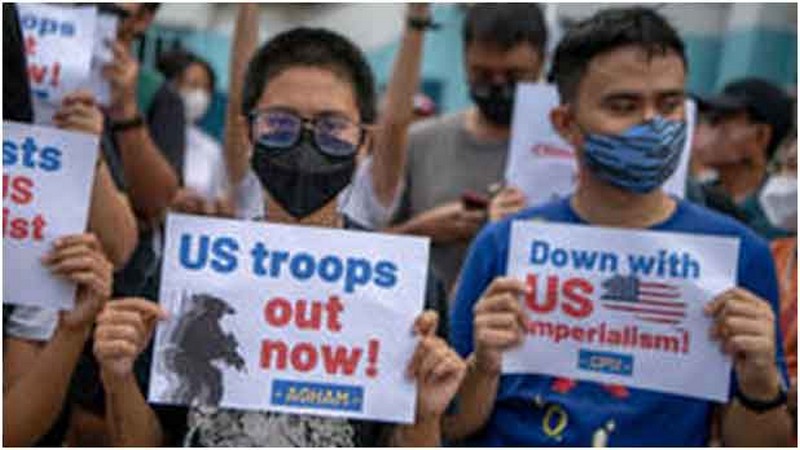
Sino-U.S. relations have deteriorated in recent years amid the Russia-Ukraine conflict and rising tensions over Washington’s alleged meddling in Taiwan. The Pentagon has sought to forge closer defense ties with Southeast Asian nations, including the four countries in the region that have territorial disputes with China. The Philippines, for instance, agreed earlier this year to allow U.S. forces to use four additional bases in the country, prompting a warning from Chinese officials that Manila was binding itself to a “chariot of geopolitical strife.”

Chinese officials have repeatedly accused Washington of employing a “zero-sum mentality” as it tries to maintain hegemonic power over the world. Beijing and Washington have also repeatedly accused each other of various military provocations in the South China Sea, Taiwan Strait, and elsewhere across the region.

Do Not Bringing Wolves Into House, China Warned Philippines

An earlier media report said:

The Chinese Foreign Ministry on Sunday cautioned the Philippines against strengthening military cooperation with the U.S., saying it will be used to serve Washington’s geopolitical agenda to the detriment of Manila’s own security.

The latest warning from the Chinese embassy in Manila cited Philippines’ President Ferdinand Marcos Jr.’s decision last month to give U.S. troops access to four additional military bases in the Southeast Asian country.

Such cooperation will “pull the Philippines against China and tie the country to the chariot of geopolitical strife, seriously jeopardizing Philippine national interests and regional peace and stability,” the embassy warned.

Since Marcos took office last summer, relations with Beijing have been increasingly strained amid a territorial dispute in the South China Sea, where China claims sovereignty. U.S. Vice President Kamala Harris visited the philippines last November, saying the world was “grappling with assaults on the rules-based international order.”

The Chinese embassy urged the Marcos administration to avoid getting sucked into U.S. efforts to maintain global hegemony: “We should abandon the perverse path of sowing dissension and causing trouble, not to mention the evil path of drawing wolves into the house and opening the door for thieves.”

China has repeatedly accused the US and its NATO allies of behaving as if the Cold War were still going on. Washington has been “stirring up trouble” in the South China Sea, undermining efforts by China and its neighbors to maintain peace and stability in the disputed waters, the embassy said.

U.S. Bases In Philippines

Some of the Philippine bases where U.S. soldiers will be stationed are located near the disputed waters. The defense cooperation agreement also enables U.S. forces to store equipment at those bases, which could come in handy if war breaks out in the Taiwan Strait.

Countercurrents is answerable only to our readers. Support honest journalism because we have no PLANET B.

4 September 2023

Source: countercurrents.org


From the Partial Test Ban Treaty to a Nuclear Weapons-Free World

By Lawrence S Wittner

This September is the sixtieth anniversary of U.S. and Soviet ratification of the world’s first significant nuclear arms control agreement, the Partial Test Ban Treaty.  Thus, it’s an appropriate time to examine that treaty, as well as to consider what might be done to end the danger of nuclear annihilation.

Although the use, in 1945, of atomic bombs to destroy Hiroshima and Nagasaki unleashed a wave of public concern about human survival in the nuclear age, it declined with the emergence of the Cold War.  But another, even larger wave developed during the 1950s and early 1960s as the nuclear arms race surged forward.  At the time, the governments of the United States, the Soviet Union, and Britain engaged in testing a new nuclear device, the H-bomb, with a thousand times the power of the atomic bomb.

Many people found this situation alarming.  Not only did the advent of H-bombs point toward universal doom in a future war, but the testing of the weapons sent vast clouds of radioactive “fallout” into the atmosphere, where it drifted around the planet until it descended upon the populace below.  In 1957, Professor Linus Pauling, a Nobel Prize winner in chemistry, predicted that, thanks to the nuclear tests already conducted, a million people would die early, and 200,000 children would be born with serious mental deficiency or physical defects.

In reaction to this growing menace, millions of people around the world began to resist nuclear weapons.  They formed new, activist organizations, including the National Committee for a Sane Nuclear Policy (better known as SANE) and Women Strike for Peace (in the United States), the Campaign for Nuclear Disarmament (in Britain, Canada, Australia, and New Zealand), the Japan Council Against A & H Bombs and the Japan Congress Against A & H Bombs (in Japan), and the Struggle Against Atomic Death (in West Germany).  Even in the Soviet bloc, concerned scientists pressed for an end to the nuclear arms race.

Government officials in nuclear-armed nations, troubled by the rising agitation, as well as by opinion polls showing widespread popular distaste for nuclear testing, nuclear weapons, and nuclear war, gradually began to adapt their policies to the demands of the public.  Meeting with top scientists in the U.S. nuclear weapons program, U.S. President Dwight Eisenhower told them that the U.S. government was “up against an extremely difficult world opinion situation” and that the country “could not permit itself to be ‘crucified on a cross of atoms.’”  If U.S. nuclear testing continued, U.S. Secretary of State John Foster Dulles warned the president, “the slight military gains” would be “outweighed by the political losses.”

Accordingly, in 1958, the Soviet, American, and British governments halted nuclear testing while beginning negotiations for a test ban treaty.  Failing to secure an agreement, they resumed nuclear tests in 1961, which led to nuclear testing remaining a very hot political issue for people and governments alike.

Into this controversy stepped Norman Cousins, the editor of a widely-read public affairs magazine, the Saturday Review, and, also, founder and co-chair of SANE.  During a lengthy meeting at the White House with President John F. Kennedy in November 1962, Cousins inquired if the president would like him to meet with Soviet Premier Nikita Khrushchev to try to smooth the diplomatic path toward a nuclear test ban treaty.  Kennedy responded affirmatively and, in the following months, Cousins shuttled back and forth between the two world leaders.  Ultimately, Cousins overcame Khrushchev’s suspicions of Kennedy and, then, convinced Kennedy to deliver a major speech with “a breathtaking new approach” to Soviet-American relations.

This American University address, partially written by Cousins, proved an immediate success with Khrushchev.  Test ban negotiations commenced in Moscow during July 1963, resulting in the Partial Test Ban Treaty―banning nuclear testing in the atmosphere, in outer space, and under water.

From the standpoint of ending the nuclear arms race, the treaty had its limitations.  Because the treaty left unaddressed the issue of nuclear testing underground, the nuclear powers and aspiring nuclear powers simply shifted nuclear tests to this new locale.  Furthermore, with nuclear fallout no longer a major public concern, popular pressure to halt nuclear testing―and, thereby, choke off the arms race―declined.

Nevertheless, the Partial Test Ban Treaty proved a turning point in world history.  Together with the nuclear disarmament campaign that produced the treaty, it reduced Cold War hostility and ushered in a period of détente between the U.S. and Soviet governments.  Furthermore, widespread nuclear proliferation, which seemed imminent at the time, failed to materialize.  Even today, sixty years later, there are only nine nuclear powers.

Most important, the treaty demonstrated that nuclear arms control and disarmament were feasible.  And so a host of treaties followed that substantially reduced nuclear dangers.  These included the Nonproliferation Treaty, Strategic Arms Limitation Treaties, the Intermediate-Range Nuclear Forces Treaty, Strategic Arms Reduction Treaties, and the Comprehensive Test Ban Treaty.  Through these treaties, as well as through unilateral action―both spurred on by popular pressure―the number of nuclear weapons in the world dropped sharply, from 70,000 to roughly 12,500.  Meanwhile, nuclear war became increasingly unthinkable.

Of course, in recent years, with the decline of popular pressure against nuclear weapons, the prospect of nuclear annihilation has revived.  Disarmament treaties have been scrapped, a new nuclear arms race has begun, and reckless leaders of nuclear nations have publicly threatened nuclear war.  Although a UN Treaty on the Prohibition of Nuclear Weapons entered into force in 2021, the nine nuclear powers have resisted signing it.

Even so, as the Partial Test Ban Treaty and its successors show us, arms control and disarmament treaties have helped to curb the nuclear arms race and prevent nuclear war.  Similarly, the revived march toward nuclear catastrophe can be halted by finally banning nuclear weapons―if people will demand it.

Lawrence S. Wittner (https://www.lawrenceswittner.com/ ) is Professor of History Emeritus at SUNY/Albany and the author of Confronting the Bomb (Stanford University Press).

4 September 2023

Source: countercurrents.org

A Tribute to the Life of Daniel Ellsberg

By Caitlin Johnstone

Thank You for Your Service

Presented at the memorial service for the Pentagon Papers whistleblower Daniel Ellsberg on 30 Jul 2023 at the National Press Club in Washington, DC.

Video:

Thank You For Your Service, a tribute to the life of Daniel Ellsberg

Caitlin Johnstone is a rogue journalist, poet, and utopia prepper who publishes regularly at Medium. Contact: admin@caitlinjohnstone.com

28 August 2023

Source: transcend.org

Roads Taken and Not Taken: Two Visions of the Future

By Richard Falk

Two roads diverged in a wood, and I—
I took the one less traveled by,
And that has made all the difference.
— Robert Frost, The Road Not Taken

When the Cold War ended in 1991, the West, and particularly the United States, found itself at a fork in the road. One road led to peace, justice, cooperation, nuclear disarmament, a revitalized UN, inclusiveness, pluralism, human rights, multilateralism, fair trade, regulated markets, food security, sustainability, and humane governance. The other road led to militarism, warmongering, nuclearism, conflict, sanctions, regime-changing interventions, multiple trends toward inequality, predatory neoliberal globalization, hegemony, geopolitical primacy. Unfortunately, the. victorious side in the Cold War immediately chose the familiar more traveled road of hegemonic geopolitics.

The American president, George W. Bush a decade later, summarized the ideological justification of this choice in self-assured language: “The great struggles of the twentieth century between liberty and totalitarianism ended with a decisive victory for the forces of freedom—and a single sustainable model for national success: freedom, democracy, and free enterprise… We will extend the peace by encouraging free and open societies on every continent.” [Cover letter to official document, The National Security Strategy of the United States, 2002] Such a statement was made some months after the 9/11 terror attacks on World Trade Center and Pentagon, reaffirming the choice of the geopolitical road by declaring a ‘war on terror’ rather than an opportunity for transnational cooperative anti-terror law enforcement.

The Ukraine War presented yet another major opportunity to choose the less familiar road of compromise and diplomacy rather than the costly pursuit of victory, huge investment in hegemony, and prolonged warfare, and yet again there was no hesitation about embracing an uncompromising militarism, and what doubts arose involved questioning the financial burdens of this geopolitically tinged war making, that is,  defeat of Russia, warning China, and cynically inflicting the heaviest cost of such a strategy on the Ukrainian people who have not only been victimized by the Russian attack but by the hyper-nationalism of their own government.

This prevailing pattern of geopolitics is difficult to deny, and vividly illustrated by the long and complicated outcome documents of the recent summits of G-7 leaders in May at Hiroshima if revealingly compared to declaration of BRICS leaders at Johannesburg in August. The G-7 document has three notable features: a highlighted commitment to help Ukraine achieve a battlefield. victory over Russia, a downplaying of the relevance of the UN and the failure to do more that pay lip service to the peace agenda embedded in the UN Charter, nuclear disarmament, and international law, bolstered by ‘feel good’ platitudes about the doing more to achieve the UN SDG (Sustainable Development Goals. The G-7 countries having opposed the Treaty on the Prohibition of Nuclear Weapons (TPNW), affirming continued reliance on deterrence and non-proliferation, misleadingly softened by a declared intention to embrace nuclear disarmament ‘ultimately,’ which in elite security circles of the West is correctly understood as ‘never.’

In contrast, the BRICS Johannesburg Declaration looks toward.  a world of peaceful competition and global cooperation, treats the Ukraine War as presenting a diplomatic rather than a military challenge.  The most pronounced theme of the BRICS document is the resolve to become less dependent on the hegemonic global security and trade/finance/investment arrangements imposed on the Global South after the Soviet collapse, to resist the new imperialism of unipolarity and the related post-independence struggle that has shown the world that the struggle against ‘colonialism’ in Africa, Latin America, and Asia is far from over.

The recent tensions arising from the July coup in Niger manifest the entrapment of African states in the toxic reality of ‘colonialism after colonialism.’ This reality reflects the contradictions, corruption, and incompetence of the decolonized state that had been deliberately prevented from developing the economic, educational, and governance capabilities while under direct colonial control until 1960, and since then under a regime of informal control. When left to fend for themselves these states, especially the former French colonies in West Africa, found that they could do not better than accept a new phase of French tutelage disguised by the façade of collaborating civilian elites.

BRICS are still at the early stages of discovering their own identity, an intricate undertaking given their own internal contradictions. For instance, India, Brazil, and South Africa do not want to burn most of their bridges to the West but do seek to create counterweights to the.  hegemonic aspects of unipolarity. Also, it is unclear whether the addition of six countries to BRICS membership will overall broaden its base and help increase its anti-hegemonic leverage or have the opposite effect—diluting a principal reason for the formation of BRICS by admitting to membership countries that seem unwilling to challenge hegemony or geopolitical primacy.

Yet as of 2023 the difference in tone and substance between the two collective perspectives has significance. The. G-7 after a recital of peace and development platitudes shifts immediately to specifying its operational commitment to militarism, which is reinforced throughout the document by references to ‘Russia’s war of aggression against Ukraine.’ The opening words of the Hiroshima final statement are indicative: “We, the Leaders of the Group of Seven (G7), met in Hiroshima for our annual Summit on May 19- 21, 2023, more united than ever in our determination to meet the global challenges of this moment and set the course for a better future. Our work is rooted in respect for the Charter of the United Nations (UN) and international partnership.” From the overall document, it is clear that ‘our determination’ in the quoted sentence is symbolically linked to securing victory in Ukraine however long it takes, confirmed by the document’s focus on outlining concrete steps in relation to winning in Ukraine with no sign of openness to diplomacy or political compromise.

This dubious course of action is confirmed as follows: “We are taking concrete steps to “support Ukraine for as long as it takes in the face of Russia’s illegal war of aggression.” A listing of such concrete steps is in marked contrast to the vague generalities when it comes peace and justice issues. In contrast, the BRICS give close attention to the worsening situation of Palestine, worries about migration, the urgency of an equitable approach to climate change, issue on which the G-7 address by silence or regressive postures.

How can we make sense of these G-7 choices that seem so obviously to imperil the human future by raising nuclear dangers to crisis levels and by diverting attention and resources from global public goods such as climate change, poverty mitigation, food and nutritional security, self-determination, peaceful resolution of conflict, enhanced UN capabilities, receptivity to multilateralism? Why do the political leaders of the West consistently turn their backs on the human interest as a time of planetary emergency?

A first line of response is to grasp that although the historical circumstances are fraught with unprecedented risk, geopolitical primacy has long been part of the way the world is organized. Even in the shadow of World War II, the UN exempted the most dangerously powerful countries from its own Charter framework by the veto as well as by giving the victors impunity for their international crimes while prosecuting the losers.  With respect to nuclear weapons, instead of eliminating them the solution found was to combine non-proliferation restraints on additions to nuclear oligopoly with unrestrained discretion on the war plans of the nuclear powers, not even limited by No First Declarations. In effect, the global security system was designed in 1945 to keep international law and the UN at the margins. What it was not designed to be was a unipolar structure that only emerged after the Berlin Wall fell. It is this that is currently under increasing challenge from Russia and China, themselves not prepared to bring   geopolitical governance to an end. Multipolar challenges are also being directed at hegemonic and dysfunctional post-Cold War structures of the U.S. led NATO West, but also by the Global South acting jointly and separately from the two geopolitical challengers.

Among the important manifestations of this new more hopeful global atmosphere are the following: widespread support by governments representing a majority of the world’s peoples for diplomatic accommodations in Ukraine and Iran and overall opposition to coercive diplomacy by way of sanctions; the launch by BRICS of a direct challenge to neoliberal globalization by way of ‘dedollarization’ of international trade and financial arrangements for less developed countries through its New Development Bank (NDB) without conditionalities of the support imposed by the World Bank and IMF; challenging NATO nuclearism by wide support among countries in the Global South for TPNW); support for Palestine’s right of self-determination and African coups directed at the colonialist features of post-colonial statehood.

With respect to the roads not taken, these developments suggest a renewed willingness to travel toward a fragile global future on the less familiar road, especially with respect to hegemony, but also in relation to a governance framework with greater deference to the UN Charter and international law. This creates the potential of a more benign geopolitics, less militarist, more committed to peaceful resolution of disputes, more concerned with equity in the world economy, and dedicated to cooperative solution of common global problems. As such, the historical transformation underway involves the weakening of its hegemonic characteristics and the early phase of a transition to a more benign and regulated version of geopolitics. Overall, glimmers of hope in a darkening sky.

Richard Falk is a member of the TRANSCEND Network, Albert G. Milbank Professor Emeritus of International Law at Princeton University, Chair of Global Law, Faculty of Law, at Queen Mary University London, Research Associate the Orfalea Center of Global Studies at the University of California, Santa Barbara, and Fellow of the Tellus Institute.

4 September 2023

Source: transcend.org

Niger’s Ordeal of Forever Colonialism

By Richard Falk

27 Aug 2023 – The original interview on the coup in Niger with Zahra Mizrafarjouyan of Mehr Agency in Tehran was published on 14 Aug 2023. A lot has happened since then that affects Niger, and how we understand its relation to that country, to West Africa’s Sahel region, to Africa generally, and to the geopolitical war of position that puts the U.S. rivalry with Russia and China in the foreground. I have taken ‘liberties’ with my interview answers to address this awareness of the broader context.

  1. What was the destructive colonial role of France in West African countries?

As elsewhere, but perhaps more crudely and more deeply, France dominated the post-colonial experience of West Africa that commenced in 1960, politically controlling and ruthlessly exploiting these countries economically whose populations were impoverished despite being resource rich. France more than other European colonial powers sought to replace the indigenous culture, including its language and cuisine, with what it claimed to be superior, which was of course, French culture. In Africa in particular France also created a set of conditions that made the society incapable of stable and equitable governance after formal independence was gained. As a result, a heavier residue of colonialism remained after independent statehood was achieved than in most other countries. Niger’s impoverishment, with an extreme poverty rate of over 40%, is a textbook case of ‘colonialism after colonialism.’

The differences between pre-independence colonialism and its post-independence sequel should be more than a matter of changing the flags and changing the racial features of the ruler, but even in the best of circumstances it is far less for decades than the exercise of the full right of self-determination for reasons long ago provided by Franz Fanon. The post-independence voluntary acceptance of Western military bases is indicative of the governance deficiencies of the native leadership capabilities when it comes to national security. In the case, of encroaching jihadist movements with their own territorial ambitions that have been encroaching on Sahel countries during the last twelve years. Analogous weaknesses, including capabilities, corruption and cooption, help explain the one-sided agreements on the production and marketing of resources is imprudently entrusted to the good will of the former colonizers.

The role of collaborative and corrupted national elites becomes indispensable to make the system of governance enjoy a semblance of political legitimacy that facilitates imbalanced resource related agreements that deprive the home country of its fair share. In the context of Niger, these foreign, non-African actors build further their case for interventions in such countries as Niger by pointing to the virtue of protecting democratically elected leaders against extra-legal coups of the sort that occurred on July 26th. The hypocrisy of the West is revealed when democratic elections produce a political mandate for radically nationalist leaders as with Chavez in Venezuela, or earlier Castro in Cuba and Allende in Chile. As with human rights, such enthusiasm for elected leaders is a selective policy instrument entrenching double standard, not a principled commitment to the rule of law, discrediting ideals that deserve more consistent respect if the peace and justice of the peoples of the world are to be served.

Niger, as with the earlier somewhat similar coups in Mali and Burkina Faso suggest, an important difference that distinguishes the two types of colonialism. It is that the post-colonial state, however beholden it remains in relation to its prior colonial master, has a strong sense of nationalist entitlement among non-collaborationist elites that is often shared with the armed forces and influential sectors of the population, and over time leads to a second anti-colonialism, an anti-colonialism after political independence. Such motivations seem present in the Niger coup leadership despite the fact that many of its members, including its apparent leader, General Abdurahman Tchiani, underwent extensive training by the U.S. armed forces, which usually produces compliant military leadership.

Besides personal ambition and a repudiation of ‘puppet’ leaders, the passage of time after independence leads portions of the elites and masses to grasp the connections between exploitation by the former colonial power and the poverty of the country that is giving away its potential prosperity.

2- It seems that France has kept its colonial role in the regional countries even after these countries gained their independence. What are the tactics that Paris uses to keep its influence in these countries?

The colonial era refused to educate and train an indigenous elite capable of running these West African countries without French assistance in the security, technological sophisticated, and economic policy spheres. When independence was granted in 1960 the French negotiated a series of self-serving arrangements that kept its troops in the country and its favorable and highly profitable and predatory relationship to the natural resources of each of the West African countries that had been its former colonies. Internal conditions prevailed in these countries that resulted in a new unspoken realism that I call ‘colonialism after colonialism.’ It is a way of underscoring the point that the structures of control and exploitation have persisted long after independent statehood, yet in more subtle forms, was achieved in the early 1960s, but without the stigma of ‘colonialism.’ As earlier explained, this process is greatly facilitated by the cooption and corruption of local elites that give a nationalist veneer to this reality of ‘stunted decolonization,’ but if the inequities are too gross a new surge of resistance to foreign exploitation begins to form, and will produce some kind of radical nationalist backlash.

3- What is the political, economic and military importance of Niger for France? Do you think that France whether France will be able to return to the African country?

French interests, also reinforced by Western interests, particularly by the U.S., are especially important in Niger. To begin with, as a spillover from the NATO regime-changing intervention in Libya, an alleged jihadist presence in the country became a target in counterterrorist agenda of the Global North and a pretext for the deployment of Western military forces, and the construction and maintenance of expensive military bases. For France in particular, Niger was a major source of uranium for its nuclear power facilities. It also had gold mines and oil reserves, both controlled by foreign corporations made profitable by low labor costs and pricing well below market values. Niger is also seen as strategically important to ensure that African countries keep aligned to and dependent upon the West as part of its multi-dimensional struggle with Russia and China for geopolitical primacy in the world. Africa has evolved into becoming an arena of this unfolding rivalry that has risen to the surface of global awareness in the course of the Ukraine War of the nuclear dangers of confrontations in the Global North, and offers a semi-peripheral seemingly less dangerous terrain to carry on the new cold war.

4- Some African countries are ready to wage war against Niger in fact to the benefit of France despite the fact that they themselves have been suffering from France colonialism. Why?

On the basis of available information, it is difficult to respond convincingly, especially as various African countries have distinct national motivations in such a complex situation and belatedly faced the fact they lacked the capability to ensure their own territorial security much less take part in an intervention of a sister African country. At the same time seems that many African states have grown worried about their own stability, and do not want to create another precedent of a successful West African coup as occurred in Mali, Burkina Faso. In addition, corrupted elites are fearful of their own vulnerability resulting from the spread of these expressions of anti-Western national radicalism. Part of the reality of colonialism after colonialism are habits of dependence that are difficult to break, especially if intertwined with corrupting incentives and threats to collaborating national elites that act as bonding ties to the former colonial power.

There is also issues arising from non-African interventions by external actors if Africa does not act to reverse the outcome of the coup. There is a growing fear that Africa could become a battleground for the geopolitical rivalry involving the U.S., Russia, and China if a second cold war continues to unfold. As observed, Ukraine War has raised concerns in the Global North about dangers of nuclear war that seem to be giving rise to temptations to shift armed struggles to the Global South as was the case in the Cold War.

So far, various states have acted with caution, with Russia taking the lead in urging non-intervention. The United States seemed at first ready to condemn the coup and suspend economic aid, but later has been sending mixed messages, including refraining

from calling the July 26 takeover of the government a coup despite have the features of a coup. If declared a coup then by legislative mandate, economic assistance would be suspended until civilian government is restored. It raises the question, ‘when is a coup not a coup?’ The answer is simple, a coup is not a coup if strategic interests so dictate.

Such a moderation of pressures may also reflect the position of the new Nigerien leadership which has sent signals that it is receptive to diplomacy and wants a renegotiation not a rupture with France.

5- Do you think that war will be waged in the region?

It is hard to tell, and partly depends on the type of pressure exerted by the U.S. and Europe, and the flexibility of the new civilian leader of Niger, a former Finance Minister, Ali Mawawan Lamine Zeine and the junta. And partly about how worried other African governments are about the danger of coups in their own country or already threatened by extremist insurgencies. Neighboring Nigeria that has been leading the effort to reverse the outcome in Niger is key to whether a diplomatic compromise can be negotiated, or a war erupts.

A central issue is whether foreign troops will be allowed to remain in Niger. A major outcome of the earlier similar recent coups in Bukina Faso, Mali, and Guinea each development provoked by the presence of foreign troops of France and the U.S. Each of these coups resulted in the demands for the removal from the country. At present, there are French, U.S. and Italian bases and detachments of armed personnel in Niger. it may be seen as a victory for the national military that launched this latest coup if these foreign forces are removed, and a humiliating setback if they are allowed to stay, or it may not if national forces are unable to contain the extremist group already occupying national territory.

The deposed President of Niger, Mohamed Bazoumi, is lauded in the West as the first democratically elected president in the country and condemned by the coup leadership as massively corrupt and coopted. There is no doubt that a war in Niger would be a tragedy for the country and the region, given its already impoverished population and the overall low rankings for these Sahel West African countries on the Human Development Index.

6- In case of a war what will be Russia’s reaction? As you know, many Russian Wagner forces are stationed there.

The Wagner Group’s role and response is part of the overall uncertainty, greatly accentuated by the death of its leader Prigozhin in a plane crash. So far Russia’s official position have in general supported the coup and opposed intervention from without. Whether the Wagner Group even with a mission of defending Niger possesses sufficient capabilities to alter the relation of forces in Niger or West Africa is unknown. There is a danger of a proxy war, which would prolong the combat and raise the stakes of winning and losing, with dire consequences for the people of Niger, and elsewhere in the region.

Whether the coup in Niger represents the last stage of decolonization or is just one more chapter in the under-narrated story of colonialism after colonialism remains to be seen.

Richard Falk is a member of the TRANSCEND Network, Albert G. Milbank Professor Emeritus of International Law at Princeton University, Chair of Global Law, Faculty of Law, at Queen Mary University London, Research Associate the Orfalea Center of Global Studies at the University of California, Santa Barbara, and Fellow of the Tellus Institute.

4 September 2023

Source: transcend.org

NATOstan Robots Versus the Heavenly Horses of Multipolarity

By Pepe Escobar

29 Aug 2023 – We will all need plenty of time and introspection to analyze the full range of game-changing vectors unleashed by the unveiling of BRICS 11 last week in South Africa.

Yet time waits for no one. The Empire will (italics mine) strike back in full force; in fact its multi-hydra Hybrid War tentacles are already on display.

Here and here I have attempted two rough drafts of History on the birth of BRICS 11. Essentially, what the Russia-China strategic partnership is accomplishing, one (giant) step at a time, is also multi-vectorial:

  • expanding BRICS into an alliance to fight against U.S. non-diplomacy.
  • counter-acting the sanctions dementia.
  • promoting alternatives to SWIFT.
  • promoting autonomy, self-reliance and instances of sovereignty.
  • and in the near future, integrating BRICS 11 (and counting) with the Shanghai Cooperation Organization (SCO) to counter imperial military threats, something already alluded to by President Lukashenko, the inventor of the precious neologism “Global Globe”.

In contrast, the indispensable Michael Hudson has constantly shown how the U.S. and EU’s “strategic error of self-isolation from the rest of the world is so massive, so total, that its effects are the equivalent of a world war.”

Thus Prof. Hudson’s contention that the proxy war in Ukraine – not only against Russia but also against Europe – “may be thought of as World War III.”

In several ways, Prof. Hudson details, we are living “an outgrowth of World War II, whose aftermath saw the United States establish international economic and political organization under its own control to operate in its own national self-interest: the International Monetary Fund to impose U.S. financial control and dollarize the world economy; the World Bank to lend governments money to bear the infrastructure costs of creating trade dependency on U.S. food and manufactures; promoting plantation agriculture, U.S./NATO control of oil, mining and natural resources; and United Nations agencies under U.S. control, with veto power in all international organizations that it created or joined.”

Now it’s another ball game entirely when it comes to Global South, or Global Majority, of “Global Globe” real emancipation. Just take Moscow hosting the Russia-Africa summit in late July, then Beijing, with Xi in person, spending a day last week in Johannesburg with dozens of African leaders, all of them part of the new Non-Aligned Movement (NAM): the G77 (actually 134 nations), presided by a Cuban, President Diaz-Canel.

That’s the Russia-China Double Helix in effect – offering large swathes of the “Global Globe” security and high-tech infrastructure (Russia) and finance, manufactured exports and road and rail infrastructure (China).

In this context, a BRICS currency is not necessary. Prof. Hudson crucially quotes President Putin: what’s needed is a “means of settlement” for Central Banks for their balance of payments, to keep in check imbalances in trade and investment. That has nothing to do with a BRICS gold-backed supra-national currency.

Moreover, there will be no need for a new reserve currency as increasingly more nations will be ditching the U.S. dollar in their settlements.

Putin has referred to a “temporary” accounting unit – as intra-BRICS 11 trade will be inevitably expanding in their national currencies. All that will develop in the context of an increasingly overwhelming alliance of major oil, gas, minerals, agriculture and commodities producers: a real (italics mine) economy capable of supporting a new global order progressively pushing Western dominance into oblivion.

Call it the soft way to euthanize Hegemony.

All aboard the “malign China” narrative

Now compare all of the above with that piece of Norwegian wood posing as NATO secretary-general telling the CIA mouthpiece paper in Washington, in a unique moment of frankness, that the Ukraine War “didn’t start in 2022. The war started in 2014”.

So here we have a designated imperial vassal plainly admitting that the whole thing started with Maidan, the U.S.-engineered coup supervised by cookie distributor Vicky “F**k the E” Nuland. This means that NATO’s claim of a Russia “invasion”, referring to the Special Military Operation (SMO) is absolutely bogus from a legal standpoint.

It’s firmly established that the spin doctors/ paid propagandist “experts” of Atlanticist idiocracy, practicing an unrivalled mix of arrogance/ignorance, believe they can get away with anything when it comes to demonizing Russia. The same applies to their new narrative on “malign China”.

Chinese scholars which I have the honor to interact with are always delighted to point out that imperial pop narratives and predictive programming are absolutely useless when it comes to confronting Zhong Hua (“The Splendid Central Civilization”).

That’s because China, as one of them describes it, is endowed with a “clear-minded, purposeful and relentless aristocratic oligarchy at the helm of the Chinese State”, using tools of power that guarantee, among other issues, public safety and hygiene for all; education focused on learning useful information and skills, not indoctrination; a monetary system under control; physical assets and the industrial capacity to make real stuff; first-class diplomatic, supply chain, techno-scientific, economic, cultural, commercial, geostrategic and financial networks; and first-class physical infrastructure.

And yet, since at least 1990, Western mainstream media is obsessed to dictate that China’s economic collapse, or “hard landing”, is imminent.

Nonsense. As another Chinese scholar frames it, “China’s strategy has been to let sleeping dogs lie and let lying machines lie. Meanwhile, let China surpass them in their sleep and cause the Empire’s demise.”

Poisons, viruses, microchips

And that bring us full circle back to the New Great Game: NATOstan versus the Multipolar World. No matter the evidence provided by graphic reality, NATOstan in advanced seppuku mode – especially the European sector – actually believes it will win the war against Russia-China.

As for the Global South/Global Majority/”Global Globe”, they are regarded as enemies. So their mostly poor populations should be poisoned with famine, experimental injections, new modified viruses, implanted microchips as in BCI (Brain Computer Interface) and soon NATO As Global Robocop “security” outfits.

The coming of BRICS 11 is already unleashing a new imperial wave of deadly poisoning, brand new viruses and cyborgs.

The imperial master issued the order to “save” the Japanese seafood industry – a few scraps as quid pro quod for Tokyo acting as a rabid dog in the imperial Chip War against China, and dutifully pledging alliance at the recent Camp David summit side by side with the South Korean vassals.

The EU vassals, in synch, lifted Japan food import rules just as Fukushima nuclear wastewater was to be pumped into the ocean. That’s yet another instance of the EU continuing to dig its own grave – as Japan is set to suffer a Typhoon Number Ten type of blowback.

Radiation spread across the world through the Pacific will breed endless cancer patients around the world and simultaneously destroy the economy of several small island nations relying heavily on tourism.

In parallel, Sergey Glazyev, Minister of Macroeconomics at the Eurasian Economic Commission, part of the EAEU, has been among the very few warning about the new trans-humanist frontier: the Nanotechnology Injection craze ahead – something quite well documented in scientific journals.

Quoting Dr. Steve Hotze, Glazyev in one of his Telegram posts explained what DARPA (Defense Advanced Research Projects Agency) has been doing, “injecting nanobots in the form of graphene oxide and hydrogel” into the human body, thus creating an interface between nanobots and brain cells. We become “a receptor, receiver and transmitter of signals. The brain will receive signals from the outside, and you can be manipulated remotely.”

Glazyev also refers to the by now frantic promotion of “Eris”, a new Covid variety, named by the WHO after the Greek goddess of discord and enmity, daughter of the goddess of night, Nykta.

Those familiar with Greek mythology will know that Eris was quite angry because she was not invited to the wedding of Peleus and Thetis. Her vengeance was to plant at the feast a golden apple from the gardens of Hesperides with the inscription “Most Beautiful”: that was the legendary “apple of discord”, which generated the Mother of All Catfights between Hera, Athena and Aphrodite. And that eventually led to no less than the Trojan War.

In the White Room, with black curtains

It’s oh so predictable, coming from those “elites” running the show, to name a new virus as a harbinger of war. After all, The Next War is badly needed because Project Ukraine turned out to be a massive strategic failure, with the cosmic humiliation of NATO just around the corner.

During the Vietnam War – which the empire lost to a peasant guerrilla army – the daily briefing at the command HQ in Saigon was derided by every journalist with an IQ above room temperature as the “Saigon follies”.

Saigon would never compare with the tsunami of daily follies offered on the proxy war in Ukraine by a tawdry moveable feast at the White House, State Dept., Pentagon, NATO HQ, the Brussels Kafkaesque machine and other Western environs. The difference is that those posing as “journalists” today are cognitively incapable of understanding these are “follies” – and even if they did, they would be prevented from reporting them.

So that’s where the collective West is at the moment: in a White Room, a simulacrum of Plato’s cave depicted in Cream’s 1968 masterpiece, partly inspired by William Blake, invoking pale “silver horses” and exhausted “yellow tigers”.

The entire West is waiting at the room at the station with black curtains – and no trains. They will “sleep in this place with the lonely crowd” and “lie in the dark where the shadows run from themselves”.

Outside in the cold, long distance, under the sunlight, away from the moving shadows, across roads made of silk and iron, the Heavenly Horses (Tianma) of the multipolar world gallop gallantly from network to network, from Belt and Road to Eurasia and Afro-Eurasia Bridge, from intuition to integration, from emancipation to sovereignty.

Pepe Escobar, born in Brazil, is a correspondent and editor-at-large at Asia Times and columnist for Consortium News and Strategic Culture in Moscow.

4 September 2023

Source: transcend.org

West Bank: Spike in Israeli Killings of Palestinian Children

By Human Rights Watch

End Systematic Impunity for Unlawful Lethal Force

  • The Israeli military and border police forces are killing Palestinian children with virtually no recourse for accountability.
  • Israeli forces should end the routine unlawful use of lethal force against Palestinians, including children. Israel’s allies should increase pressure to end the practice.
  • The UN Secretary-General should list Israel’s armed forces in his annual report on grave violations against children in armed conflict for 2023 as responsible for the violation of killing and maiming Palestinian children.

28 Aug 2023 – The Israeli military and border police forces are killing Palestinian children with virtually no recourse for accountability.

Last year, 2022, was the deadliest year for Palestinian children in the West Bank in 15 years, and 2023 is on track to meet or exceed 2022 levels. Israeli forces had killed at least 34 Palestinian children in the West Bank as of August 22. Human Rights Watch investigated four fatal shootings of Palestinian children by Israeli forces between November 2022 and March 2023.

More unarmed Palestinian children killed by Israeli forces #palestine #israel

“Israeli forces are gunning down Palestinian children living under occupation with increasing frequency,” said Bill Van Esveld, associate children’s rights director at Human Rights Watch. “Unless Israel’s allies, particularly the United States, pressure Israel to change course, more Palestinian children will be killed.”

Human Rights Watch researchers, in documenting the four killings, interviewed in person seven witnesses, nine family members, and other residents, lawyers, doctors, staff and fieldworkers at Palestinian and Israeli rights groups, and reviewed CCTV and videos posted on social media, statements by Israeli security agencies, medical records, and news reports.

Human Rights Watch investigated the case of Mahmoud al-Sadi, 17, killed by Israeli forces as he walked to school near the Jenin refugee camp on November 21, 2022. The Israeli military did not address his killing specifically but said its forces had been conducting arrest raids in the camp, during which they exchanged fire with Palestinian fighters. However, the nearest exchange of fire occurred at one of the alleged fighter’s homes, about 320 meters away from where Mahmoud was shot, based on residents’ statements.

Mahmoud stood by the side of a road, waiting for the sounds of shooting in the distance to stop, and was not holding any weapon or projectile, a witness said and a security-camera video that Human Rights Watch reviewed showed. After the distant shooting had stopped and the Israeli forces were withdrawing, a single shot fired from an Israeli military vehicle roughly 100 meters away struck Mahmoud, the witness said. No Palestinian fighters were in the area, the witness said. Mahmoud was killed a block away from the street where Israeli forces killed the journalist Shireen Abu Aqla on May 11, 2022.

In the other cases investigated, the security forces killed boys after they had joined other youths confronting Israeli forces with stones, Molotov cocktails, or fireworks. While these projectiles can seriously injure or kill, in these cases, Israeli forces fired repeatedly at chest-level, hitting multiple children, and killed children in situations where they do not appear to have been posing a threat of grievous injury or death, which is the standard for the use of lethal force by law enforcement officers under international norms. That would make these killings unlawful.

Mohammed al-Sleem, 17, was shot in the back while running from Israeli soldiers after a group of friends he was with threw rocks, and allegedly Molotov cocktails, at military vehicles that had entered a village near his hometown of Azzun in the northern West Bank. Three other children were shot and wounded with automatic gunfire while running away.

An Israeli officer shot Wadea Abu Ramuz, 17, from behind while he was with a group of youths throwing rocks and launching fireworks at Border Police vehicles in East Jerusalem at around 10 p.m. on January 25, 2023, two witnesses said. Another boy in the group was shot and wounded. Security forces shackled Wadea to his hospital bed, beat and prevented his relatives from visiting him, withheld his body for months after he died, and required his family to bury him quietly at night.

In all cases, Israeli forces shot the children’s upper bodies, without, according to witnesses, issuing warnings or using common, less-lethal measures such as tear gas, concussion grenades, or rubber-coated bullets. Adam Ayyad, 15, was fatally shot from behind in Deheisheh refugee camp on January 3 while with a group of boys throwing stones and at least one Molotov cocktail at Israeli forces. The soldier also shot and wounded a 13-year-old boy, witnesses said.

The Israeli newspaper Haaretz reported in January that since “December 2021, soldiers are allowed to shoot at Palestinians who are fleeing if they had previously thrown stones or Molotov cocktails.” Human Rights Watch wrote to the Israeli military and police on August 7 with questions about the four cases and the forces’ rules of engagement. The police responded, but the military did not . The police rules of engagement permit the use of firearms against persons who are throwing stones, Molotov cocktails or fireworks only if there is an “imminent risk to life or bodily integrity.” The police also stated that they could not provide information about the case of Wadea Abu Ramuz because it was under investigation.

Israeli authorities have used excessive force against Palestinians in policing situations for decades. The authorities have routinely failed to hold their forces accountable when security forces kill Palestinians, including children, in circumstances in which the use of lethal force was not justified under international norms. From 2017 to 2021, fewer than one percent of complaints of violations by Israeli military forces against Palestinians, including killings and other abuses, resulted in indictments, the Israeli rights group Yesh Din reported.

Israeli forces killed at least 614 Palestinians whom the UN classified as civilians in the Gaza Strip and the West Bank during this period. But only three soldiers were convicted for killing Palestinians, according to Yesh Din, and all received short sentences of military community service. The Israeli rights group B’Tselem, which for decades filed documented complaints about killings to the Israeli military, has deemed the Israeli law enforcement system a “whitewash mechanism.” In 2021, out of 4,401 complaints to the department of internal police investigations, which include complaints by Israeli citizens, just 1.2 percent resulted in indictments, according to the state comptroller.

The killings take place in a context in which Israeli authorities are committing the crimes against humanity of apartheid and persecution against Palestinians, including children, as Human Rights Watch and other rights groups have documented. The then International Criminal Court (ICC) prosecutor, Fatou Bensouda, opened a formal investigation in 2021 into serious crimes committed in Palestine.

The UN Secretary-General is mandated by the Security Council to annually list military forces and armed groups responsible for grave violations against children in armed conflict. Between 2015 and 2022, the UN attributed over 8,700 child casualties to Israeli forces, yet Israel has never been listed. The reports have repeatedly listed other forces that killed and injured far fewer children than Israel did.

The stigma attached to the Secretary-General’s “list of shame” is considerable, and parties named must create and carry out an action plan of reforms to end the abuses in order to be removed from the list. The UN missed an opportunity to protect children by omitting Israel, Human Rights Watch said. The Secretary-General should use objective criteria to determine the list for 2023.

“Palestinian children live a reality of apartheid and structural violence, where they could be gunned down at any time without any serious prospect of accountability,” Van Esveld said. “Israel’s allies should confront this ugly reality and create real pressure for accountability.”

Mahmoud al-Sadi, Jenin refugee camp

Israeli forces killed Mahmoud al-Sadi, 17, while he was walking to school in Wadi Burqin, near the Jenin refugee camp, at around 9:30 a.m. on November 21, 2022. The Israeli military did not address or announce any intention to investigate Mahmoud’s killing, but said its forces were conducting arrest raids and exchanged fire with Palestinian fighters. There were no reports that Israeli troops were injured.

The exchanges of fire occurred when Israeli forces surrounded the family homes of two alleged fighters, and the nearest home was about 320 meters from where Mahmoud was shot. Residents identified the building to Human Rights Watch, and videos posted on social media show fighting at the same building.

Mahmoud had dropped off his sisters, ages 8 and 10, at their elementary school and was walking to his secondary school with other students, when “all of a sudden there’s [the sounds of] shooting in the distance, we didn’t know where, and people say the [Israeli] military is present,” said a classmate who was walking with Mahmoud. Mahmoud waited for safety on the side of a street. A security-camera video, which Human Rights Watch viewed, showed him wearing his school backpack, standing alone, and not holding any weapon or rock, just before he took a step into the street and was shot, his father and the classmate said.

The shooting in the distance had stopped and the military was withdrawing when Mahmoud’s classmate said he heard a gunshot. Mahmoud stepped toward him, said he had been hit, and fell down. The witness and other boys saw a stationary Israeli military vehicle roughly 100 meters up the street, which then drove away. Human Rights Watch visited the site and found that if the shooter had been in this vehicle, they would have had a clear view of Mahmoud. A medical intake report for Mahmoud from Ibn Sina Hospital in Jenin at 9:50 a.m. records a single bullet wound and hemorrhagic shock.

No armed Palestinians or other Israeli forces were in the area at the time, said the classmate and reports by news media and rights groups, raising concerns that the Israeli forces may have deliberately targeted him even though he was unarmed and not engaging in violent activity. The intentional or reckless use of lethal force against a person who poses no imminent threat to life by the security forces of an occupying power carrying out policing operations would be unlawful. The “willful killing” of members of the population of an occupied territory is a war crime.

After the killing, the Israeli military cancelled Mahmoud’s father’s permit to enter Israel, where he worked. It took three months and 8,000 NIS (US$2,200) in lawyers’ fees to obtain a new permit, Mahmoud’s father told Human Rights Watch. The Israeli military views relatives as aggrieved “potential avengers” and automatically cancels their work permits as a security measure, harming them through a blanket policy that offers no meaningful individual assessments.

Wadea Abu Ramuz, East Jerusalem

At around 10 p.m. on January 25, 2023, an Israeli officer shot Wadea Abu Ramouz, 17, in the back as he was with a group of youths who were throwing stones and launching fireworks at Border Police vehicles on the main street in the Ein el-Lowzeh area of Silwan, a neighborhood in occupied East Jerusalem, two witnesses said. Human Rights Watch visited the site where the youths had gathered, on a hillside about 30 meters from where the Border Police vehicles were passing below on the neighborhood’s main street.

The witnesses did not see whether Wadea had launched fireworks or threw stones. The officer who shot Wadea was positioned further up the hillside behind them, a witness said. A second child was also shot and subsequently released from the hospital. His family declined to speak with Human Rights Watch.

Israeli medics provided first aid and took Wadea to Shaarei Tzedek hospital in West Jerusalem. No Israeli authority informed Wadea’s family of where he had been taken, relatives told Human Rights Watch. The family called the Israeli emergency service, the police, and visited two hospitals before going to Shaarei Tzedek, where Palestinian hospital staff informally told the family that a “critical case” whom they suspected was Wadea, had been admitted.

Blocked by the police from entering, the family “stayed in the parking lot all night,” a relative said. At 4:30 a.m., “as a favor to us, [a hospital staff member] sneaked an article of [Wadea’s] clothing to the front gate, to let us confirm that it was him.”

Israeli police at the hospital refused to allow Wadea’s parents to see him on the basis that he was a “detained criminal suspect,” until lawyers obtained a court order for a family visit the next afternoon. Police had shackled Wadea to the hospital bed, hand and foot, though his father and lawyer said he was unconscious and connected to multiple medical devices.

On January 27, other relatives were waiting to visit him in the hospital parking lot when police said they had to leave, forced one man to the ground and beat him and pushed the group out of the lot, family members said.

At around 9:30 p.m., Palestinian journalists called Wadea’s lawyer to ask about rumors of his death. A security official at the hospital told him to wait outside and returned at 12:10 a.m. with Wadea’s death certificate, the lawyer said.

At 8:00 a.m. the next day, Border Police raided the family’s yard, broke down the condolence tent, confiscated Palestinian flags and posters of Wadea, and broke plastic chairs, a relative said. Border Police returned several times in the following days and forcibly dispersed neighborhood residents who “kept coming to our home, spontaneously … waiting and expecting the body to be released. There were confrontations and they fired tear gas.”

Israeli authorities took Wadea’s body for autopsy. The Israel Security Agency (known as the Shabak, or Shin Bet), which Israeli law grants authority over the return of bodies of Palestinians killed by Israeli forces in what they consider security incidents, then refused to return the boy’s body to his family. Israeli authorities currently hold in morgues the bodies of at least 115 Palestinians, including 15 children, killed in what the authorities consider security operations. The family’s lawyers appealed to the Supreme Court, which upheld their demand on May 4, but without specifying a date.

The family received the body from Israeli police at 10 p.m. on May 30 near the entrance to a cemetery, after paying a 10,000 NIS (about $2,725) guarantee that would be forfeited unless they conducted the burial immediately, admitted at most 25 mourners, and did not take photographs, chant, or raise Palestinian flags, said the lawyer, who was present. Police checked the mourners’ identification documents and kept them, and the mourners’ mobile phones, during the burial.

The lawyers also appealed to the Department of Internal Police Investigations within the Office of Israel’s State Attorney (“Machash”), to investigate Wadea’s shooting, but had not received updates regarding their complaint by mid-August.

Wadea’s father was fired from his job at an Orthodox Jewish institution in Jerusalem when the management learned his son had been shot, he said. Border Police also took the principal of Wadea’s school, Shatha Mahmoud, from her school for questioning about a Facebook post in which she criticized his killing, said residents and the Wadi Hilweh Information Center, a local organization that documents rights abuses.

Mohammed al-Sleem, Azzun

On the evening of March 2, Mohammed al-Sleem, 17, and a group of five friends he had grown up with were walking from the town of Azzun to the nearby village of Izbat al-Tabib, where a relative had a home at which the group regularly “hung out,” one boy said. Azzun is close to Road 55, which connects the large Israeli settlements of Alfei Menashe and Karnei Shomron.

Human Rights Watch spoke to two of Mohammed’s friends, ages 16 and 17, who were with him at the time, and three of his relatives. At around 7:40 p.m., the boys saw a dark blue Israeli truck with military license plates on the road that runs through the village, they said. According to reports by local media, based on residents’ accounts, the youths threw rocks or Molotov cocktails at the vehicle, which was roughly 30 meters away. The boys said the military vehicle had protective metal mesh over the windows, which could significantly reduce the risk of serious injury or death. A second military vehicle arrived next to the first, and the boys ran in different directions as four soldiers got out of the vehicle and fired assault rifles at them. The two witnesses said they heard between two to five individual gunshots followed by automatic gunfire.

Mohammed ran down a side street past an elementary school about 80 meters from the village road, and through plots of land with olive trees, his friends said. His friend, age 16, recalled, “We started running, and Mohamed told me, ‘I’m hit’, and I said, ‘Run! Run!’ and I was shot too. I ran about 100 meters, then I couldn’t go on.” A bullet pierced the back of the left shoulder of Mohammed’s friend and exited his chest. He collapsed but was able to call for help from relatives in the area, he said. He said that he cannot lift his left arm, or take deep breaths because of his injuries.

Mohammed was shot in the back by a bullet that lodged in his right lung. He ran approximately 200 meters, then collapsed in a field. Residents reached him 30 minutes later, found him unconscious, and took him to a hospital in Azzun in a private vehicle. He was transferred by ambulance to a hospital in the Palestinian city of Qalqilya and pronounced dead on arrival.

A third boy, 17, was shot through the bicep, he said, and a fourth, 16, had a superficial wound from a bullet that grazed his lower back. Researchers counted 10 apparent bullet impacts on the wall of the schoolyard, and others in olive trees, consistent with witness descriptions, indicating that Israeli soldiers fired a significant number of high-velocity assault-rifle rounds at fleeing children at a time when they posed no threat to life or of causing injury.

The military reported on the incident and said “hits [of Palestinian suspects] were identified” but did not report any injuries to soldiers.

Israeli forces regularly raid Azzun, residents said. They perceived the raids as a disproportionate, a collective deterrent against throwing rocks at Israeli vehicles driving to and from the settlements on Road 55, recalling repeated warnings by Israeli officers in the area against throwing stones at the road. On April 8, a soldier in a military vehicle fatally shot Ayed Sleem, 20, in the chest, although he was not armed or throwing projectiles at the time, an Israeli news report said.

Adam Ayyad, Deheisheh refugee camp

A large Israeli force was withdrawing after a raid on Deheisheh refugee camp near Bethlehem at around 5:00 or 5:30 a.m. on January 3, when Adam Ayyad, 15, joined a group of youths who threw stones at Israeli forces on a street below them, three boys who were there at the time said. After another boy threw a Molotov cocktail, an Israeli soldier in a building overlooking the street where the boys were, fired repeatedly at the group, two of the boys said.

The Israeli military told news media in general terms that Border Police officers had shot suspects during the large-scale raid on the camp, in response to Molotov cocktails, explosive devices, and stones thrown at them, but did not address Adam’s killing specifically.

The witnesses said that one bullet went through the window of a parked car and then wounded a 13-year-old. The soldier fired again repeatedly and hit Adam. A Palestinian Medical Relief Society medic who lives in the area said that repeated gunfire from Israeli forces delayed him as he tried to reach the wounded boys to stop their bleeding.

Human Rights Watch could not determine whether Adam was holding a projectile at the time. However, the three boys said that the members of the group began running away as soon as they heard the first shot. Several news reports cited an initial statement from the Palestinian Health Ministry that Adam was shot in the chest, but doctors at the hospital where Adam was taken and pronounced dead told Human Rights Watch that his wounds indicated the bullet hit him in the right side of his upper back and caused a large wound in the front of his chest, indicating that he had turned away from the direction of the Israeli soldiers and the shooter. Defense for Children International – Palestine also reported that Adam was shot in the back.

Based on witness statements, the Israeli forces were withdrawing roughly 45 meters away on the street below, and could have been hit by projectiles thrown from the youths’ more elevated position. The shooter was apparently in a room on the unfinished top floor of a multi-story building 73 meters away, where the boys later found spent bullet casings. That is consistent with Human Rights Watch researchers’ observations of bullet impacts at the site.

The shooter was apparently in position before the boys began throwing projectiles, but Israeli forces did not issue a warning, use less-lethal weapons, or shoot at the boys’ extremities before the shooter repeatedly fired with live ammunition at the group, with the bullets striking at chest-level, the witnesses said.

The incident raises questions about whether the shooter had targeted members of the group who posed an imminent threat to life or of serious injury, and if so, whether the shooting continued beyond the point where it could be deemed necessary. The military did not report any injuries to their forces during the raid.

Adam, an only child, had stopped attending school and found work in a bakery from 9 a.m. to 11 p.m. each day, a coworker said, to help support his mother, who is divorced and was raising him alone. Israeli forces had killed a friend who worked at another bakery nearby, Omar Manah, 23, during a raid on December 5, a relative said, and Adam was carrying a handwritten statement meant to be read if he was killed, which read, in part, “I had a lot of dreams I wished would come true but we are living in a reality that makes your dreams impossible.” His mother sometimes still prepares meals for both of them, especially his favorite dishes, she said.

International Law on Use of Force and Israeli Investigative Practices

International human rights standards prohibit law enforcement officials from “the intentional lethal use of firearms” except when “strictly unavoidable to protect life.” Throwing rocks, Molotov cocktails, and explosive fireworks could pose a risk to life, depending on the circumstances. However, nonviolent means and warnings must be used first whenever feasible, and force may be used “only if other measures to address a genuine threat have proved ineffective or have no likelihood of achieving the intended result.” The UN Code of Conduct for Law Enforcement Officials provides that, “Every effort should be made to exclude the use of firearms, especially against children.”

Palestinians in the West Bank are protected under the Geneva Conventions. Willful killings of protected persons by the occupying power outside what is permissible under human rights standards would constitute a grave breach of the laws of occupation.

Under international human rights law, governments “must ensure that individuals also have accessible and effective remedies to vindicate” their rights, including the right to life.

The Israeli military does not automatically open criminal investigations into cases in which soldiers use lethal force against Palestinians in the West Bank, including if a complaint is filed. Human Rights Watch has found that investigations are more likely to be opened in cases in which international news media report extensively on the killing. The armed forces military police carry out investigations and, regardless of whether an investigation is opened, impunity remains the norm.

Recommendations

  • The Israeli military and Border Police should end the unlawful use of lethal force against Palestinians, including children. The Israeli government should issue clear directives publicly and privately to all security forces, that prohibit the intentional use of lethal force except in situations where it is necessary to prevent an imminent threat to life.
  • The United Nations Secretary-General should list Israel’s armed forces in his annual report on grave violations against children in armed conflict for 2023 as responsible for the violation of killing and maiming Palestinian children.
  • The prosecutor of the International Criminal Court should expedite his office’s Palestine investigation, including for grave violations committed against children.
  • Foreign governments, such as the US which pledged $3.8 billion in military aid to Israel in 2023, should condition assistance on Israel taking concrete and verifiable steps toward ending their serious abuses, including the crimes against humanity of apartheid and persecution and the regular use of lethal force against Palestinians, including children, that violate international standards, and to investigate past abuses. It should suspend assistance so long as these grave abuses persist.
  • Members of the US House of Representatives should support the Defending the Human Rights of Palestinian Children and Families Living Under Israeli Occupation Act (H.R. 2590), which would prohibit US funding to Israel from being unlawfully used for the military detention and abuse of Palestinian children, destruction of Palestinian property, and expropriation of land for settlements.

4 September 2023

Source: transcend.org

People Protest French Military Presence In Niger, Demand Withdrawal Of French Troops

By Countercurrents Collective

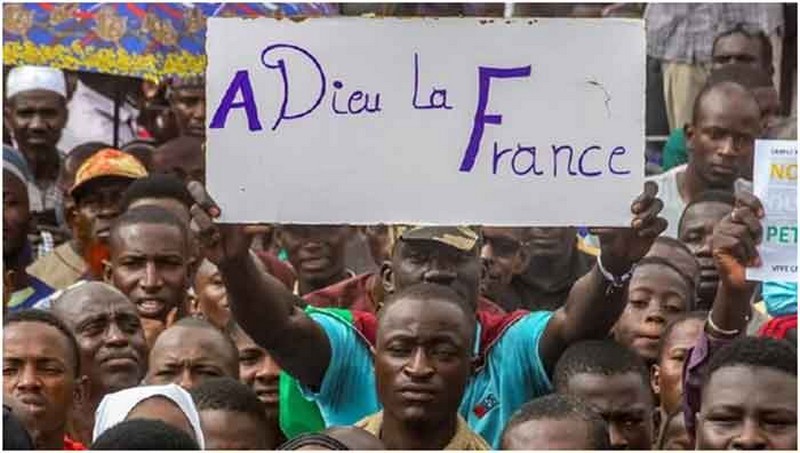
Thousands of people protested the French military presence in Niger and French interference in Niger’s internal affairs Saturday.

Media reports said:

The protesting people gathered outside of the French military base in Niger’s capital Niamey once again demanding the withdrawal of French forces from Niger.

The rally was sparked by a call from several civic organizations, opposed to the former colonial power’s military presence in the region.

In what was regarded as the biggest gathering since the July 26 coup in Niger, tens of thousands of protesters gathered outside the French military base.

The military coup that has widespread popular support but France refuses to recognize the change of power.

The protesters also demanded that France withdraw its ambassador from Niger as its new military government have accused Niger’s former colonial ruler France of “interference”.

A series of smaller protests leading up to the weekend rally have been “relatively calm and organized,” said a media report.

However, on Saturday some of the activists were seen “breaking the barriers set up by the security forces, police and the military” and trying to force their way into the base, which houses around 1,500 French soldiers.

Anti-French sentiment has risen in Niger since the coup but soured further last week when France ignored the junta’s order for its ambassador, Sylvain Itte, to leave.

French Army, Leave Our Country

Despite the warning by the French military that it would respond, if their military and diplomatic facilities were targeted in the renewed tensions, the demonstrators refused to leave.

“French army, leave our country,” read the banners held by the demonstrators in Niamey.

“We want to fight to remove from our country all military bases,” a protester told journalists. “We do not want it. Because for more than 13 years terrorism has been here. They do not care to fight terrorism,” he said.

A Goat’s Throat Slit And Coffin

Outside the military base, the protesters slit the throat of a goat dressed in French colours and carried coffins draped in French flags as a line of Nigerien soldiers looked on. Others carried signs calling for France to leave.

An Al Jazeera report said the protests were seen approaching the army base with some trying to force their way in.

A media report said:

The demonstrators expressed frustration as there is still a French presence in the country. They said the people were beginning to take matters into their own hands.

We Are Proud

Reuters reporters said it was the biggest gathering yet since the coup, suggesting that support for the junta – and derision of France – was not waning.
“We are ready to sacrifice ourselves today, because we are proud,” said demonstrator Yacouba Issoufou. “They plundered our resources and we became aware. So, they are going to get out.”

France had cordial relations with ousted President Mohamed Bazoum and has about 1,500 troops stationed in Niger.
Blatant Interference To Perpetrate Neo-Colonial Relationship

Niger’s military government has accused Paris of blatant interference by backing ousted president Bazoum, who has been in custody since July 26.

On Friday, French President Emmanuel Macron said that he spoke to the deposed Nigerien leader “every day” and reassured his support towards Bazoum’s regime.

“I speak every day to President Bazoum. We support him. We do not recognize those who carried out the putsch. The decisions we will take, whatever they may be, will be based upon exchanges with Bazoum,” said Macron.

Macron has backed ousted President Bazoum and refused to recognize the new rulers.
The French President’s remarks caused backlash from Niger’s military leaders, who accused the French president of using “divisive rhetoric and seeking to perpetrate neo-colonial relationship.”

Niger’s military government spokesman, Colonel Amadou Abdramane, responded to Macron’s comments by saying that they “constitute further blatant interference in domestic affairs,” adding that Niger’s “differences” with France “do not touch on the relationship between our peoples, or on individuals, but on the relevance of the French military presence in Niger.”

Macron’s comments were published on the French Presidential Palace Elysee’s social media platform and were made as he spoke about educational matters to reporters in southern France.

Niger’s military government has denounced Macron’s comments as divisive and served only to perpetrate France’s neo-colonial relationship.
Last month, the military rulers announced the cancellation of military agreements with France and called for “immediate expulsion” of the French ambassador Sylvain Itte. The envoy’s diplomatic immunity had been withdrawn, on the basis that his presence constitutes a threat to public order.

France has refused to recall the diplomat from its former colony, stating that despite pressure from “illegitimate authorities,” the ambassador will remain in Niamey.

French ambassador, Itte, has remained in Niger despite a 48-hour deadline to leave the country given more than a week ago, a decision Macron said he “applauds”.

France, Most Impacted

A media report said:

Most impacted by the July 26 coup in Niger is France, whose influence over its former colonies has waned in West Africa in recent years just as popular discontent against former colonial rulers has grown.
France’s military forces have been kicked out of neighboring Mali and Burkina Faso since coups in those countries, reducing its role in a region-wide fight against deadly Jihadist insurgencies.

France is not the only country with strategic interests at stake. The U.S. and European powers also have troops stationed in the country.

Back To Civilian Rule

Nigeria’s President Bola Tinubu, who holds the West African economic block ECOWAS’ revolving chairmanship, said last week that a nine-month transition back to civilian rule could satisfy regional powers.
Niger’s junta had previously proposed a three-year timeline.

Niger Court Orders Expulsion Of French Ambassador

A Bloomberg report said:

Niger’s top court approved the immediate expulsion of France’s ambassador, revoking his diplomatic immunity, according to a request addressed to the court’s president.

The development comes after France’s President Emmanuel Macron rejected the ruling junta’s demand to recall his ambassador a month after a coup disrupted relations between the two former allies.

Since the July 26 coup, France has committed acts that “violates the Vienna convention regulating diplomatic relations, including the violation of Niger’s airspace and other acts that goes against the interests of Niger and its people,” according to the court document.

Itte “has refused to leave the country after he was declared persona non grata,” it said.

A spokesman of the military government confirmed the document.

The decision by the court seems judicial support to the new military government.

An MNA report said:

Emphasizing that the French ambassador violated diplomatic protocols, Niger’s judicial system announced that the legal process of expelling the French ambassador from Niger has begun.

Nigerian sources reported on Saturday that a security atmosphere is prevailing around the French Embassy in Niamey, and the security forces do not allow anyone to approach this embassy.

Niger’s judicial system announced that the French ambassador violated diplomatic protocols and avoided being present there after being summoned to the Nigers Ministry of Foreign Affairs.

The judicial system of Niger further added that the French ambassador is no longer a diplomat and does not have a residence permit.

According to reports from Nigerian sources, the legal process of expelling the French ambassador and his family from the country has begun.

French Military’s Threat

A report by The New Arab said:

Colonel Pierre Gaudilliere, the French military’s spokesman, said that “The French military forces are ready to respond to any upturn in tension that could harm French diplomatic and military premises in Niger.”

This is seen as a military threat to Niger.

Italy Fears Military Solution To Niger Crisis Could Foment Migration

A Reuters report said:

A military solution to the coup in Niger would be a “disaster” that could trigger a new migration crisis, Italian Foreign Minister Antonio Tajani said on Thursday.

The main West African bloc ECOWAS has been trying to negotiate with the coup leaders but has warned it is ready to send troops into Niger to restore constitutional order if diplomatic efforts fail.

“(A) military solution (would) be a disaster,” Tajani told reporters as he arrived at a meeting of EU foreign ministers in the Spanish city of Toledo. “We need to work day by day for a diplomatic solution.”

The crisis in Niger is one of the main topics of the meeting, which will be addressed by Hassoumi Massoudou, the foreign minister of the ousted government, and Omar Touray, the president of the ECOWAS Commission.

Asked if he feared military intervention could lead to a migration crisis, Tajani replied: “Yes, of course. To have a war in Niger (means) more people leaving this country, as in Sudan – there are more and more people leaving Sudan.”

Tajani spoke positively of an Algerian proposal this week to resolve the crisis, involving a six-month transition period led by a civilian.

Countercurrents is answerable only to our readers. Support honest journalism because we have no PLANET B.

3 September 2023

Source: countercurrents.org

Kashmir, Palestine and Rohingya were discussed during I|SNA Convention

Chicago. September 2, 2023.

“Kashmir has had its checkered history of strife, foreign invasion and occupations just like all other nations of the world. That was up to 1947 when the British Empire let South Asia (India and Pakistan) go free after nearly 200 years of colonial slavery. That is when the newly un-enslaved India chose to turn on its smaller neighbor to its north—the erstwhile State of Jammu and Kashmir. Just to be sure the Indians had their eyes on Kashmir ever since they started dreaming of freedom from the British at the beginning of 1925- The birth Hindu nationalism of Savarkar’s Hindutva and its political manifestations in the form of RSS and Hindu Mahasaba,” this was stated by Dr. Ghulam Nabi Mir, President World Kashmir Awareness Forum and Chairman, Kashmir Global Coalition during 60th Annual Convention of Islamic Society of North American (ISNA) that took place in Chicago on September 2, 2023.

Dr. Mir added, “Fast forward to 2014, when the worst that could happen did happen not only to Kashmir but to India itself. The butcher of Gujarat, Narender Modi, the mastermind of the 2004 Gujarat Muslim Massacre, rose to power in New Delhi. It was as if Hitler was born again, this time in India. The writing was on the wall for those who could see, including the US president, Barack Obama, who lifted the 10-year travel ban to the US on Modi. The Times Magazine’s May 2019 cover page rightly called him “divider in chief” of India for using Hundutvadi ideologies to divide India on religious sentiments. In August 2019, Modi revoked Kashmir’s semiautonomous status and imposed a media and internet blackout on the state. Also, India built up a massive military in the area, coupled with a shutdown and curfew in the valley to cut it off virtually and physically from the whole world. Thousands of additional Indian troops were deployed, a major Hindu pilgrimage was canceled, schools and colleges were shut, tourists were ordered to leave, telephone and internet services were suspended, and thousands of youth and resistance leaders and activists were detained. The BJP wants to change the demographic character of the Muslim-majority region by allowing non-Kashmiris to buy land there.”

“Currently, Kashmir is now a full-fledged settler-colonial project. A genocidal and ethnic cleansing plan is in place. Under the new Domicile Law, 4.2 million Indian Hindus have been issued domicile certificates. Floodgates have been opened to demographically flood Kashmir with non-Kashmiri Indian settlers to dilute the Muslim population,” Dr. Mir warned.

Mir continued, “India also resorts to harsh techniques, including attacks on Muslim spaces, such as repression of educational and religious institutions, and endowments and places of worship. Thousands of innocent Kashmiri civilians of all ages have been incarcerated for variable periods in Indian prisons over the last seven decades, starting in 1947. Some of the political prisoners have been languishing in the jails for decades, like Shabir Ahmad Shah and some for years, like Yasin Malik, Masarat Aalam, Aasia Andrabi and internationally known human rights activist Khurram Parvez.”

“There is a deep conspiracy to erase the most treasured tradition of Kashmiri Muslim creed, culture, and legacy. This atrocity is starting to run deeper and deeper under the Modi regime. It is what amounts to crimes against humanity. Even in the academic space, our history books, or any reference to Kashmir’s struggle for self-determination are being removed,” Dr. Mir alerted.

Other speakers were Dr. Miko Peled and Dr. Mohammad Karim.

Dr. Miko Peled is a writer and human rights activist, born and raised in Jerusalem. He is considered by many to be one of the clearest voices calling for justice in Palestine, and creation of a single democracy with equal rights on all of historic Palestine. Driven by a personal family tragedy to explore Palestine, its people and their narrative, he has written a book about his journey, ‘The General’s Son: The Journey of an Israeli in Palestine.’ He travels regularly to Palestine, and he has been arrested several times by the Israeli authorities for his activities.

Dr. Mohammad Karim is a Professor of Electrical and Computer Engineering at the university of Massachusetts, Dartmouth. He served as Provost, Executive Vice Chancellor, and Chief Operating Officer of the University. He served on the Board of Regents of the North American Bangladeshi Islamic Community (NABIC) as well as on the Bords of multiple universities in Bangladesh. He is an author of 20 engineering books and over 300 scientific publications.

Dr. Ghulam Nabi Fai, Secretary General, World Kashmir Awareness Forum was the Emcee of the event. Dr. Fai said that Kashmir, Palestine and Rohingya genocide are the three important international conflicts. We do not need to tell the Palestinians and Kashmiris what they want. They should be provided the full opportunity to decide whatever they want without any external pressure or compulsion. That choice was given to Palestinians under UN Security Council resolution # 43, 46 and 48 which were adopted in April 1948; and to Kashmiris under UN Security Council resolution # 47, adopted on April 21, 1948. The denial of the right to self-determination to the people of Palestine and Kashmir is a clear danger to the international peace and security.

Dr. Fai added that Rohingya genocide cannot and should not go unnoticed. More than 1 million Rohingya Muslims have fled and are living in refugee camps in different parts of the world. The pain and suffering of Rohingya Muslims are a challenge to the world conscience. Time has come that the United Nations need to intervene in all these three situations to bring peace to the region of South Asia and Middle East.

[Dr. Fai is the Chairman, World Forum for Peace & Justice. He can be reached at: WhatsApp: 1-202-607-6435. Or. gnfai2003@yahoo.com.www.kashmirawareness.org]

Behavior Is a Miracle Drug for Our Health – TIME

By Arianna Huffington

Healthcare is broken. Chronic diseases are eating up an increasing share of healthcare resources in every healthcare system across the world in ways that are not sustainable. Yes, there is a golden age of innovation happening in the form of new technologies like gene therapy, neural technology, immunotherapy, and increasingly the impact of AI on diagnoses and drug development, but we can’t let these extraordinary technological advances blind us to the tragedy of modern healthcare and to the much neglected miracle drug right in front of us: our daily behaviors. Whether for preventing disease or optimizing the treatment of disease, behavior is indeed a miracle drug.

There are five foundational daily behaviors that, together, make up this miracle drug: sleep, food, movement, stress management, and connection. Because the science is clear that when we improve these daily aspects of our lives, dramatic improvements in our health and well-being follow. The breakthroughs this can bring in our health aren’t over the horizon—they’re here right now.

What’s clear is that what we’re doing right now isn’t working. According to the World Health Organization, chronic and noncommunicable diseases, like heart disease, diabetes, and respiratory diseases, kill 41 million people each year. At the current rate, by 2050, chronic diseases will be responsible for 86% of the 90 million deaths each year, an astounding 90% increase in raw numbers just since 2019. Worldwide, over 500 million people are living with diabetes, and that number is expected to rise to 783 million by 2045. By 2040, the International Diabetes Foundation predicts that spending on diabetes could exceed $800 billion a year. “The most heart-rending symbol of America’s failure in healthcare,” writes Nicholas Kristof in The New York Times, “is the avoidable amputations that result from poorly managed diabetes… A toe, foot or leg is cut off by a doctor about 150,000 times a year in America.”

There’s no healthcare system in the world successfully managing health outcomes against this onslaught of chronic diseases. Whether it’s single payer, nationalized healthcare or systems based on private insurance, all healthcare systems are losing the battle. In the U.S., around 90% of our $3.8 trillion in healthcare spending goes toward the treatment of chronic and mental health conditions. From 1960 to 2021, U.S. healthcare costs soared from 5% to 18% of GDP. In the UK, the list of those waiting to receive medical care has reached 7.47 million. Clearly it’s not just a failure of prevention—our healthcare systems are even failing at the narrower goal of delivering adequate sick care.

The potential to reverse these trendlines can be found in the data: Medical care accounts only for an estimated 10% to 20% of health outcomes, while our daily behaviors drive 36% of outcomes. What does that add up to in terms of our health? According to the UN, the combination of maintaining a healthy weight, regular exercise, a healthy diet and not smoking can reduce the risk of developing the most common and deadly chronic diseases by as much as 80%. The dramatic decline of smoking in America in the last two decades and the impact this has had on health is one example of what’s possible.

Both our lifespan and our healthspan—the period of time in which we’re not just alive but healthy and enjoying a good quality of life—are hugely influenced by our lifestyle. Harvard economist Raj Chetty has found that behaviors such as eating habits, exercise, and smoking affect our life expectancy even more than access to healthcare. In other words, how long we live and how well we live are in large part governed by the choices we make each day. To truly change healthcare, along with the power of life-saving drugs and technologies, we must focus on the power of life-transforming habits within each of these foundational behaviors. Because while healthcare is episodic, health itself is continuous. Health is what happens between doctor visits.

A study in the journal Circulation gives us a vivid look at how powerful behavior can be. Researchers found that people who, at age 50, were practicing five healthy habits—exercising regularly, eating healthy, not smoking, maintaining healthy weight, and not drinking excessive alcohol—added over a decade to their lives (14 years for women and 12.2 years for men). “The main take-home message is that there’s huge gains in health and longevity to be had just by simple changes in our behavior pattern,” said study co-author and Harvard Medical School professor Dr. Meir Stampfer.

So why is the power of behavior change so overlooked? Some dismiss it because they think it’s too soft—how can something like behavior change be in the same category as technological advances and new diagnostic tools? Others give up on behavior change because it’s too hard—it’s the doctor telling us to eat our broccoli and go to the gym. Eating healthier and getting some exercise are things most of us know we should do, but simply being told to do them doesn’t set us up for success.

For the first objection, it’s not either-or. Of course, behavior change isn’t a substitute for drugs and medical treatment, but there’s a ton of hard science showing that it’s an essential companion that optimizes the management of disease. For instance, a study by researchers at Fred Hutchinson Cancer Research Center found that getting good sleep can increase rates of survival for breast cancer patients. “Sleep is certainly something that is controllable,” said epidemiologist and lead author Dr. Amanda Phipps. “We have control over it more than family history of the disease. These results generally suggest that the more attention we give to sleep as an important aspect of overall health, the better we might do for breast cancer patients.” Studies have also found that chronic stress increases the growth of cancer cells. And exercise can reverse stiffness in the heart associated with a condition called left ventricular hypertrophy. All five of our foundational daily behaviors deeply impact how effective medical treatment will be.

And for the second objection—yes, behavior change is hard. But here, too, the science shows that behavior change is absolutely possible when it’s done right. Behavioral science has a long history. Our habits are not formed in a vacuum, and there are certain conditions and strategies that make behavior change much more likely to succeed.

One of those proven strategies is to start as small as possible, which is why Thrive’s behavior change platform is based on Microsteps—too-small-to-fail steps you can take to immediately begin improving your life. Not only is behavior change possible, but it’s going to get easier and more effective with the rise of AI, which Thrive is using to give people real-time nudges and personalized Microsteps in their life flow when they need them most.

Along with Microsteps, other proven strategies are storytelling, compelling content, and community that engages, inspires, motivates and supports people to take charge of their own health and move from awareness to action. This is the scientific methodology that makes behavior change not only achievable but sustainable. We’ve seen the dramatic results that starting off with small Microsteps can have in the lives of employees at the companies we work with around the world.

For instance, there’s Pele Mase, a Walmart associate who lives in Tulsa. She started with a single Microstep of drinking water instead of soda, and progressed to Microsteps around her food, movement, and stress management until she lost 100 pounds.

And there’s Jerry Ouellette, a director of network services for AT&T. After his doctor told him at his annual checkup that he was pre-diabetic, Ouellette started with the goal of walking one mile a day, and then worked his way up to five: “I’ve lost 32 pounds, my sleep apnea is gone, I feel great and I’m getting ready for my annual wellness check and I expect my doctor is going to give me a lot better news. It’s been a great journey.”

Of course, there are chronic systemic health inequities that make it much harder for people to live healthy lives—food deserts, violent neighborhoods, housing instability, lack of access to healthcare —and we should be relentlessly focused on fixing those, both at the policy and at the community levels. But again it’s not either-or. While we are working to improve the social determinants of health, people don’t have the luxury to continue to ignore the impact of behavioral determinants of health—taking small steps to reduce their suffering and improve their lives and the lives of their children. That also means taking advantage of modern digital solutions, like Instacart’s availability to 93% of people living in food deserts. These steps cannot wait until systemic problems have been solved. Too many lives are at stake.

People are hungry for help and support in managing their health. A recent survey by CharityRx found that 65% of Americans turn to Google for health advice—but only 40% find online health information reliable. What makes this moment so exciting is that this growing focus on behavior change is happening at the same time that new powerful technologies—like AI, personalized digital tools and wearables—are emerging to support real and lasting behavior change.

Yes, we can look forward to new medical breakthroughs, and we should celebrate them when they happen. But if we’re truly going to move the needle on chronic diseases, we also need the miracle drug of daily behaviors.

Huffington is the founder and CEO of Thrive Global

31 August 2023

Source: tradebriefs.com