Just International

Cruel Arrangements: The UK-Rwanda Refugee Deal Falters

By Dr Binoy Kampmark

Since 2022, Rwanda has been very much on the mind of British policy makers, a dark option of retreat from the irritating intrusions of international refugee law.  The English Channel has become something of a polemical resource, with those seeking to cross it demonised as undermining Britannia’s sacred sovereignty.

Giddy with the dusty advice of Australian advisors – the crude offerings of wisdom from former foreign minister Alexander Downer, and former Prime Minister Tony Abbott stand out – respective Tory governments have been pondering how to stem the arrival of irregular migrants and asylum seekers.

The use of third states as a means of deferring obligations of protection towards refugees has become an attractive, brutal way of snuffing out the right to asylum.  The UN Refugee Convention of 1951 is treated as a dead letter, and options such as the “Australian model” in repelling unwanted arrivals thrill populist politicians.

The common choice of destination in all these agreements is Africa, with Rwanda proving most attractive.  In equal measures the choice of such a country is both daft and cruel.  But this has not stopped Denmark and the United Kingdom from signing memoranda of understanding and agreements making Kigali the favoured destination of unwanted asylum seekers.

On April 14, 2022 the Johnson government announced that it had reached an Asylum Partnership Arrangement with Rwanda “to contribute to the prevention and combating of illegally facilitated and unlawful cross border migration by establishing a bilateral asylum partnership”.  According to the agreement, Rwanda would receive asylum seekers whose claims would be otherwise processed in the UK and consider applications through its own domestic asylum system.  They would also assume settling and protective responsibilities.  The then Prime Minister, Boris Johnson, crowed that the arrangements were “uncapped”, with Rwanda having “the capacity to resettle tens of thousands of people in the years ahead.”

That Rwanda should even feature at all was baffling for human rights advocates.  Home Secretary Suella Braverman is barely believable in her claim that “Rwanda has a track record of successfully resettling and integrating people who are refugees or asylum seekers”.

While the UK government continues to praise the country as a model of development and guardian of human rights, Kigali’s record is abysmal.  Organisations such as Human Rights Watch have noted the country’s appetite for prosecuting dissidents, using torture, arbitrary detention, and resorting to more than the occasional extrajudicial assassination.

Rwandan police have not been shy in using live ammunition on protesters, especially when they have been refugees.  In February 2018, twelve refugees from the Democratic Republic of Congo were gunned down in a protest over diminished food rations at the Kiziba camp.  A rash of arrests were hurriedly  made, with charges ranging from the implausible accusation of rebellion to the “spreading of false information with intent to create a hostile international opinion against the Rwandan state.”

As to how well the Rwandan state processes claims for asylum, the record is hardly glorious there, either. Instances of “airport refoulement” – where individuals arriving in the country claiming asylum are denied entry and promptly returned back to countries they have flown from, abound.  (The testy response from Rwanda border authorities suggested that these were not cases of refoulement given that these arrivals tended to use forged documents, thereby failing to meet immigration entry requirements.)

Victoire Ingabire Umuhoza, a political figure Rwanda’s authorities have often found threatening, offers another, oft neglected angle on her country’s policies.  The Rwandan government, she challenges, “creates thousands of refugees every year and its government is yet to guarantee a safe environment for Rwandan refugees settled across the world to return home.”  The very fact that 12,838 Rwandans fled their own country to seek asylum should scuttle any claims about refugee safety.  The joke is on any power willing to send the vulnerable to the country.

Despite such facts respective UK Home Secretaries have been pushing the plan as viable and, most astonishingly of all, legal.  Potential victims of the policy have begged to differ.  Last year, a legal appeal by ten asylum seekers from Syria, Iraq, Iran, Vietnam, Sudan and Albania, along with the charity Asylum Aid, was launched.  The central claims by the parties were that there were real risks that their claims to asylum would not be properly and fairly determined by the authorities in Kigali, and that there was a serious risk that they would either be sent back to their own country (refoulement) or be “subjected to torture or to inhuman or degrading treatment or punishment” in breach of Article 3 of the European Convention on Human Rights.

The UK government, at least initially, had reason to be cocky.  It scored a legal victory in the High Court in December 2022, which had taken the undertakings made by Kigali in the Memorandum of Understanding and Notes Verbales (NV) at face value.  The Home Secretary had also conducted, it was astonishingly found, a “thorough examination” of “all relevant generally available information” relevant to human rights.

On June 29, a majority of the Court of Appeal reversed the decision.  As Sir Geoffrey Vos, Master of the Rolls opined, “there were substantial grounds for thinking that asylum seekers sent to Rwanda under the MEDP [Migration and Economic Development Partnership]” at the date the decisions were made by the secretary in July 2022 “faced real risks of article 3 mistreatment.”  Such a conclusion was inevitable after consulting “the historical record described by the UNHCR, the significant concerns of the UNHCR itself, and the factual realities of the current asylum process itself.”

The Rwandan human rights record, which was danced around in the lower court, comes in for some severe pasting. Lord Justice Underhill noted the lower court’s own acknowledgment that the Rwandan government was “intolerant of dissent; that there are restrictions on the right of peaceful assembly, freedom of the press and freedom of speech; and that political opponents have been detained in unofficial detention centres and have been subjected to torture and Article 3 ill-treatment short of torture.”

As has been starkly demonstrated by Australia’s own offshoring record, outsourcing a state’s obligations to process asylum claims is both costly to the taxpayer and bound to put asylum seekers and refugees in harm’s way.  Doing so contravenes the spirit, and the letter, of international refugee law, whatever specious claims are advanced to the contrary.  It is a source of some comfort that certain judicial officers in the UK have come to that same conclusion.  An appeal to the Supreme Court, however, will test this further.

Dr. Binoy Kampmark was a Commonwealth Scholar at Selwyn College, Cambridge.

2 July 2023

Source: countercurrents.org

The Bizarre Episode of Yevgeny Prigozhin

More complete information is now available and reports of the event still do not “add up.” What we are told cannot be what exactly occurred. Coup is not thr correct word. 

By Dan Lieberman

More complete information is now available and reports of the bizarre episode of Yevgeny Prigozhin still do not “add up.” What we are told cannot be what exactly occurred. Media agenda drives media perception and that perception is marketed to develop a mindset that satisfies the agenda.

Tatiana Stanovaya, a senior fellow at the Carnegie Russia Eurasia Center reported the event objectively.

Prigozhin’s rebellion wasn’t a bid for power or an attempt to overtake the Kremlin. It arose from a sense of desperation; Prigozhin was forced out of Ukraine and found himself unable to sustain Wagner the way he did before, while the state machinery was turning against him.

President Putin used the word mutiny to describe the Wagner Group activity, which may be misleading and too mild as a characterization. The Wagner group is not attached to the Russian army and cannot mutiny against the Russian military. Prigozhin is rebelling against Russian Military of Defense (MOD) actions and personnel, but that rebellion is not an act in the usual sense, meaning it is not intended against the government.

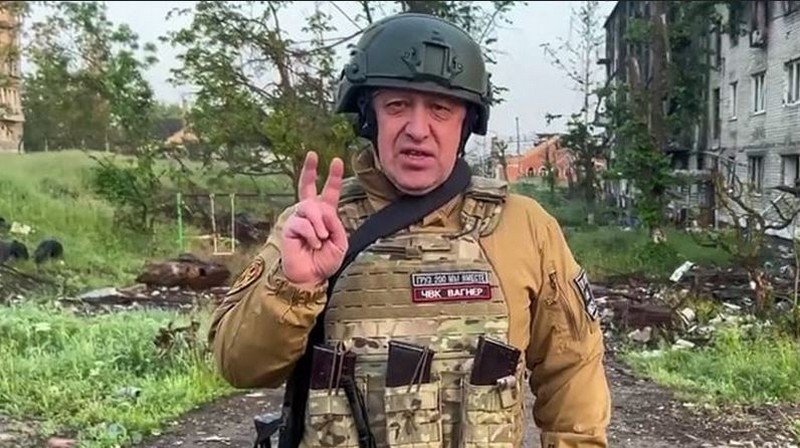
Characterized by the media as a super patriot, as a charismatic leader of a strong military force striving to fix Russia’s military problems, Yevgeny Prigozhin, by his own words, in which he attacked the MOD and claimed he had an army that was going to fix the chaos, is better depicted as a person who committed treason, with one excuse — his words are mouthed from an incoherent and mentally disturbed egomaniac. Here is how he addressed the MOD:

Prigozhin said that “Russia was losing the war,” and accused Russian Defense Minister Sergei Shoigu and Valery Gerasimov, the Russian Army chief of the general staff, of “genocide against their own people,” and  “for the murder of tens of thousands of Russian citizens and the transfer of Russian territories to the enemy.”

And here is how he, supposedly, was going to change the situation; I write, ‘supposedly,’ because it is difficult to know what is actual or from a bot.

There are 25,000 of us and we are going to figure out why this chaos is happening in the country. That figure “is a tactical reserve, but the strategic reserve is our whole army and the whole country. Everyone who wants, join us. We must end this disgrace and can end this.

Anyone who attempts to resist we will consider to be a threat and eliminate them immediately, including any checkpoints in our way, any aircraft above our heads. I ask everyone to remain calm, not to succumb to provocations, to stay in their homes, preferably not to go out into the streets along our route. After we finish what has been started, we will return to the front and defend our homeland.

During war, no sound and sane person voices the comments attributed to Prigozhin. A person of his reputation can find avenues to inject criticism without bringing the nation to factional war. His belief that the Wagner Group, which has been cited as having 8000 soldiers that entered Russia from Ukraine, and, needed several months to dislodge the Ukraine army from a town, could take command of all of Russia is a bit of stretch, no? His chances of winning were infinitesimal and sure to lose everything — military contracts, his private army in Russia, and its reputation overseas. Who wants to contract an army that overthrows its contractor? Why would any soldier want to be associated with that type of army? All that is relatively harmless compared to the final blow ─ a noose around the neck. Does his method of “resolving the chaos,” which he is emphasizing in spades, reflect the activities of a balanced person?

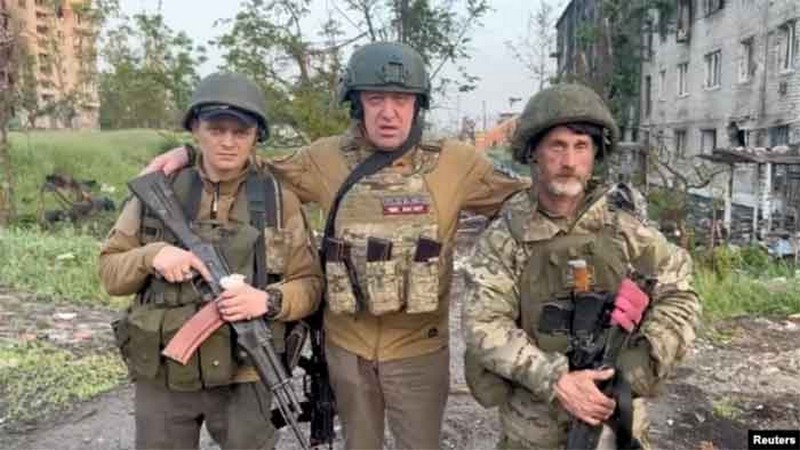
When the Wagner Group was on the front lines and remained armed, nothing could be done to bring it under military control. Realizing he was not wanted and at a disadvantage, Prigozhin proceeded to move his troops to the nearest city, which was Rostov. The media continued catering to his neurotic impulses when it announced that Prigozhin, “seized military headquarters without a fight and was in control of the headquarters and the airport. All flights proceeded without interruption.”

Being in a place does not mean controlling the place. Nowhere had it been shown that Southern Command HQ operating personnel surrendered control to Prigozhin and that he was instituting any form of control. Did he give a single order to anyone?

Why did he have his forces leave the military HQ of the Southern Command, an important place he already controlled and which could serve as a springboard for galvanizing further action? When his forces left Rostov to move on to Moscow the media showed the populace cheering him on, leaving the impression that the Rostov population sided with his adventure. Cheers are easily explained by noting that it is not every day that a heroic and idolized military force and their hardware come to town.

On the road to Moscow, everything becomes murky and “does not add up.” Why did this small force expect to reach Moscow and what did they expect to accomplish? The Russian military could easily block the M-4 highway and all its exits and trap the entire Wagner contingent in a fixed stretch of concrete. Why head into an obvious trap? Could it be that those who don’t know want to do and have no idea of what they are doing, do the ridiculous?

Even if the Wagner troops entered Moscow, how would they navigate traffic and where would they go? What was their objective and their strategy to fulfill the objective?

Media reports of the Wagner Group downing one transport aircraft and six helicopters near Voronezh did not seem logical but appear to be true. The initial report surfaced from a social media site on Telegram and slowly gained media credibility. Prigozhin confirmed the report by stating that his convoy had been fired upon, his troops were forced to protect themselves, they destroyed aircraft, and Russian pilots were killed. Question: Was Prigozhin there or did he only repeat something he was told?

President Putin, in a speech the day after Russia returned to normal, talked of “bravery and sacrifice of the fallen heroes, pilots saved Russia.” His words seem to connect to incidents in which Russian military personnel were killed.

How can soldiers riding at great speed in covered trucks perceive threatening aircraft and manage to operate tracking equipment? Where is the power to operate the equipment and guide the weapons that target the aircraft?

Images of a downed II-22 aircraft and several helicopters in a field have appeared as certifications of the shootouts. Who took these pictures and how were they able to get them to a Telegraph site in a short time? Could anybody from the moving convoy take the pictures and quickly pass them on to a website? How would anyone else know about downed aircraft and where to locate them? Perplexing! Hopefully, someone can supply the answers.

Because the reports seem to be true, it is difficult to believe that Putin, who goes ballistic over traitors to Russia, and the air force, who suffered the casualties, would permit those involved in the deaths of air force personnel to escape retribution. Putin would lose the air force’s confidence and face a more serious threat. Something strange about that decision.

Replies to media narratives illustrate the distortions in coverage of the bizarre episode.

Hudson Institute

“Footage of Wagner forces charging toward Moscow seized the world, and Vladimir Putin dug in to defend his capital.”

A bunch of trucks on a road, moving together with commercial traffic, becomes “Charging toward Moscow?” Has there been any footage of “Vladimir Putin dug in to defend his capital?”

Washington Post

“The question of whether regular Russian troops would have the will and the skill to fight the mercenaries occupied much of Western thinking Saturday.”

Not only was it improbable that the mercenaries would reach Moscow but it is not questionable that a professional force of hundreds of thousands, equipped with an air force and modern weapons. has the skill to fight an army of 8000. The Moscow police force has 50,000 policemen. National Guard, security forces, and those in the Moscow military district must add an additional hundreds of thousands.

“A Western intelligence official predicted early in the day that Russian troops were unlikely to put up much resistance to Prigozhin’s forces if they were persuaded by his arguments that Russia’s military leaders, including Defense Minister Sergei Shoigu, have performed disastrously in leading operations in Ukraine, are to blame for the extraordinary number of troops casualties and must be removed by Putin.”

Prigozhin offered disparaging words and no arguments. Nor did he say or do anything that attempted to persuade anyone of his charges. Not one Russian soldier and no security service officer has been shown to have sided with Prigozhin

AP

“Wagner forces’ largely unopposed, rapid advance also exposed vulnerabilities in Russia’s security and military forces.”

Rapid advance or confusion about where to go? What are the vulnerabilities? How could and why would Russia’s security and military forces confront Wagner forces? The latter weren’t going anywhere and Russian military realized their condition.

Leon Aron | Politico

“Coups are decided not by how many troops storm the palaces but by how many come to defend them. The top military brass, prime minister, and mayor of Moscow did not back Putin publicly. The fissures in Putin’s support were also evident among the Russian people. At best, they appeared indifferent to the mutiny’s outcome; at worse, the residents of Rostov, in which the Wagner Group briefly took control, welcomed it.”

This is an example of wishful thinking replacing reality thinking. A plausible explanation for the lethargy is that few of the public ever do anything during an insurrection, most were home for the weekend, nobody thought of this as a possible coup, which it wasn’t, and few paid serious attention to it because their attention could do nothing and they had faith that the government would successfully handle the situation, which it did.

Conclusion

One unmentioned favorable element for Putin is that the present Russian military thrust in Ukraine has attempted to rectify the earlier questionable strategy. Prigozhin’s charge of “the murder of tens of thousands of Russian citizens and the transfer of Russian territories to the enemy,” is answered by a MOD strategy that uses missile power to destroy Ukraine’s infrastructure rather than muscle power to destroy Ukraine’s army. The new strategy intends to lessen the danger to the lives of Russian military personnel.

Considering the animosity that Western media has toward President Vladimir Putin, it is surprising they have not added a conspiratorial tone to the events. They have not asked, either knowingly or by careless remarks if Putin pushed Yevgeny Prigozhin to say and do what he said and did. Was Alexander Lukashenko’s intermediation, which saved Prigozhin’s life, done on his own volition or by prompting from his good friend, Vladimir Putin? Did Lukashenko save Putin’s life?

Dan Lieberman publishes commentaries on foreign policy, economics, and politics at https://dlieb10gmailcom.substack.com/.

1 July 2023

Source: countercurrents.org

Seymour Hersh, Forbes, Financial Times, Economist, CNN On War In Ukraine

By Countercurrents Collective

Kiev’s inability to penetrate Russian defensive lines should serve as a “wake-up call” in Washington, veteran journalist Seymour Hersh warned on Thursday.

Citing battlefield statistics obtained from an unnamed source, Hersh claimed that Ukrainian forces have only managed to capture two square miles of Russian-held land over the last ten days of fighting. In the two weeks beforehand, he continued, the Ukrainian military took only 44 square miles of territory, much of it open land located before the first of Russia’s multiple defensive lines.

With Russia holding 40,000 square miles land that had previously been part of Ukraine, an “informed official” told Hersh that “it would take Zelensky’s military 117 years” to reimpose Kiev’s rule over the territories.

The time has come for U.S. President Joe Biden to publicly acknowledge that “the estimated more than $150 billion that his administration has put up thus far turned out to be a very bad investment,” the veteran journalist concluded, adding that the “looming disaster in Ukraine … should be a wake-up call” for U.S. lawmakers willing to hand Kiev billions of dollars “in the hope of a miracle that will not arrive.”

Ukraine launched its long-anticipated counteroffensive in early June, using German-made Leopard 2 tanks, U.S.-supplied Bradley Infantry Fighting Vehicles, and other Western hardware to strike at Russian positions along the front line from Donetsk to Kherson.

The offensive cost Kiev dearly, with the Russian Security Council estimating Ukrainian losses at 13,000 troops as of last week. Attacking through minefields and without air support, according to Moscow, Ukrainian forces have failed to overcome the multi-layered network of trenches, obstacles, and armored emplacements constructed by Russia since last year.

Seymour Hersh writes (PRIGOZHIN’S FOLLY, The Russian ‘revolt’ that wasn’t strengthens Putin’s hand, June 29, 2023):

The Biden administration had a glorious few days last weekend. The ongoing disaster in Ukraine slipped from the headlines to be replaced by the “revolt,” as a New York Times headline put it, of Yevgeny Prigozhin, chief of the mercenary Wagner Group.

The focus slipped from Ukraine’s failing counter-offensive to Prigozhin’s threat to Putin’s control. As one headline in the Times put it, “Revolt Raises Searing Question: Could Putin Lose Power?” Washington Post columnist David Ignatius posed this assessment: “Putin looked into the abyss Saturday—and blinked.”

Secretary of State Antony Blinken—the administration’s go-to wartime flack, who weeks ago spoke proudly of his commitment not to seek a ceasefire in Ukraine — appeared on CBS’s Face the Nation with his own version of reality: “Sixteen months ago, Russian forces were . . . thinking they would erase Ukraine from the map as an independent country,” Blinken said. “Now, over the weekend they have had to defend Moscow, Russia’s capital, against mercenaries of Putin’s own making. . . . It was a direct challenge to Putin’s authority. . . . It shows real cracks.”

Blinken, unchallenged by his interviewer, Margaret Brennan, as he knew he would not be — why else would he appear on the show? — went on to suggest that the defection of the crazed Wagner leader would be a boon for Ukraine’s forces, whose slaughter by Russian troops was ongoing as he spoke. “To the extent that it presents a real distraction for Putin, and for Russian authorities, that they have to look at — sort of mind their rear as they are trying to deal with the counter offensive in Ukraine, I think that creates even greater openings for the Ukrainians to do well on the ground.”

The famous journalist writes:

We now know that the chronically unstable Prigozhin’s revolt fizzled out within a day, as he fled to Belarus, with a no-prosecution guarantee, and his mercenary army was mingled into the Russian army. There was no march on Moscow, nor was there a significant threat to Putin’s rule.

Pity the Washington columnists and national security correspondents who seem to rely heavily on official backgrounders with White House and State Department officials. Given the published results of such briefings, those officials seem unable to look at the reality of the past few weeks, or the total disaster that has befallen the Ukraine military’s counter-offensive.

He writes:

There is an enormous gap between the way the professionals in the American intelligence community assess the situation and what the White House and the supine Washington press project to the public by uncritically reproducing the statements of Blinken and his hawkish cohorts.

The current battlefield statistics that were shared with me suggest that the Biden administration’s overall foreign policy may be at risk in Ukraine. They also raise questions about the involvement of the NATO alliance, which has been providing the Ukrainian forces with training and weapons for the current lagging counter-offensive. I learned that in the first two weeks of the operation, the Ukraine military seized only 44 square miles of territory previously held by the Russian army, much of it open land. In contrast, Russia is now in control of 40,000 square miles of Ukrainian territory. I have been told that in the past ten days Ukrainian forces have not fought their way through the Russian defenses in any significant way. They have recovered only two more square miles of Russian-seized territory. At that pace, one informed official said, waggishly, it would take Zelensky’s military 117 years to rid the country of Russian occupation.

The Washington press in recent days seems to be slowly coming to grips with the enormity of the disaster, but there is no public evidence that President Biden and his senior aides in the White House and State Department aides understand the situation.

Putin now has within his grasp total control, or close to it, of the four Ukrainian oblasts — Donetsk, Kherson, Lubansk, Zaporizhzhia — that he publicly annexed on September 30, 2022, seven months after he began the war. The next step, assuming there is no miracle on the battlefield, will be up to Putin. He could simply stop where he is, and see if the military reality will be accepted by the White House and whether a ceasefire will be sought, with formal end-of-war talks initiated. There will be a presidential election next April in Ukraine, and the Russian leader may stay put and wait for that — if it takes place. President Volodymyr Zelensky of Ukraine has said there will be no elections while the country is under martial law.

He writes:

The looming disaster in Ukraine, and its political implications, should be a wake-up call for those Democratic members of Congress who support the president but disagree with his willingness to throw many billions of good money after bad in Ukraine in the hope of a miracle that will not arrive. Democratic support for the war is another example of the party’s growing disengagement from the working class. It is their children who have been fighting the wars of the recent past and may be fighting in any future war. These voters have turned away in increasing numbers as the Democrats move closer to the intellectual and moneyed classes.

Ukraine Suffered Disastrous Losses In Single Offensive

Ukraine’s widely anticipated counteroffensive has seen Kiev’s forces lose a significant amount of armor, including dozens of Western-supplied tanks and infantry fighting vehicles, Forbes reported on Tuesday.

According to Forbes, analysts believe that an attempt by the Ukrainian army’s 47th Assault Brigade and 33rd Mechanized Brigade to cross a minefield near the town of Malaya Tokmachka in Russia’s Zaporozhye region on June 8 proved to be “even more disastrous” than previously thought.

Despite deploying de-mining vehicles, including several Leopard 2Rs donated by Finland and one German-made Wisent, the Ukrainian battlegroup appears to have failed to clear a path through the minefield. The Wisent and three Leopard 2R struck mines, as did several U.S.-supplied M-2 Bradleys, while the brigade came under fire from Russian artillery and aviation.

Experts have estimated that as a result of the failed attempt, which lasted several hours, no fewer than 25 Ukrainian vehicles were destroyed, including 17 M-2s, four Leopard 2A6 tanks, three Leopard 2Rs and one Wisent.

Forbes noted that while the loss of one Wisent is not important, as the Ukrainian army has dozens more, the other losses have proven to be more significant. The 47th-33rd Brigade battlegroup lost nearly a fifth of Ukraine’s M-2s, a fifth of its Leopard 2A6s and half of its Leopard 2Rs, the outlet claimed, pointing out that Kiev lost the equivalent of an entire battalion in one botched assault.

Although Washington has already pledged to provide more M-2 vehicles to make up for Kiev’s June 8 losses, Ukraine’s European allies have yet to agree to provide more Leopard 2A6s and there are literally no more Leopard 2Rs left to send, Forbes noted.

NATO Believes Ukraine’s Counteroffensive Unsuccessful So Far

Western officials have privately acknowledged that Ukraine’s counteroffensive against Russia is not going well, and that future military assistance to Kiev may diminish as a result, the Financial Times has reported.

“Russia still has the advantage of mass,” General Christopher Cavoli, NATO’s top commander in Europe, told a private gathering last week, the FT claimed on Thursday. He reportedly added that Ukraine has not achieved any significant success in its operation.

“For better or worse, the outcome is going to impact everything we do regarding Ukraine, and we are all aware of that,” a senior European diplomat told the FT on condition of anonymity. “Funding, support, political engagement … and most importantly the peace talks that are coming whether we like them or not.”

The FT cited the assessments to illustrate internal discussions in the West. EU leaders are set to offer formal security commitments to Ukraine, and the newspaper said it had obtained a draft copy of the final statement being considered at an ongoing summit in Brussels.

EU members France and Germany, along with the UK and the US, are seeking to provide bilateral security arrangements. The deal would serve as a “stopgap” to give Kiev “confidence in enduring Western support” and ensure that the EU is not sidelined by NATO, the report said. Ireland, Malta and Austria are reportedly against extending vaguely defined commitments.

Ukraine Outraged Over Western Expectations

Officials in Kiev are frustrated by western demands that they accelerate their counteroffensive against Russia, despite already using all available resources on the battlefield, the Economist reported on Wednesday, citing a Ukrainian intelligence source.

The Economist noted that the Ukrainian army had suffered heavy casualties during the first weeks of the widely-anticipated counteroffensive, without making any significant gains so far, prompting Ukrainian commanders to try to protect their depleted forces.

Ukrainian officials hoped for swifter progress, but have since pointed to a number of obstacles, such as effective Russian aviation, large minefields and bad weather.

The slow pace of the counteroffensive has reportedly started worrying Kiev’s Western backers, according to The Economist, with officials arguing that a lack of shock and momentum will cost more lives in the long run.

The unnamed Ukrainian intelligence source, however, told the Economist that such statements coming from the West are hypocritical. “let me put this as diplomatically as I can,” he told the Economist. “Certain partners are telling us to go forward and fight violently, but they also take their time delivering the hardware and weapons we need.”

Politico

Politico also reported on Monday that certain Western officials have called Ukraine’s Armed Forces “too cautious” and are demanding that its troops hurry up and make significant battlefield gains soon.

Ukrainian Generals Killed In Russian Strike

Two Ukrainian generals were killed in a Russian high-precision strike on the Donbass city of Kramatorsk on Tuesday, the Defense Ministry in Moscow said on Thursday, citing “updated data.”

The ministry had earlier claimed that the strike targeted the temporary base of the Ukrainian Armed Forces 56th Motorized Infantry Brigade. Since then, the ministry has added that the base was hosting a “staff meeting” involving dozens of Ukrainian officers and foreign advisers.

The attack resulted in the deaths of “two generals, up to 50 officers of the Ukrainian Armed Forces, as well as up to 20 foreign mercenaries and military advisers,” according to the Russian Defense Ministry’s daily briefing.

The news came as Russian forces continue to repel Ukrainian attacks on their defensive positions in Zaporozhye Region as well as in Donbass. Ukraine has lost almost 800 servicemen in attempted assaults on various fronts over the past 24 hours, the Russian ministry claimed. It added that Russian forces had destroyed dozens of pieces of Ukrainian heavy equipment, including howitzers, armored vehicles and a tank.

Counteroffensive Is Hard Work

Kiev wants its counteroffensive to achieve results faster, but this is not easy due to stiff resistance from Russian troops, Aleksey Danilov, the head of Ukraine’s National Security and Defense Council, said on Wednesday.

Speaking to Ukrainian media, Danilov acknowledged that Russian troops have proven to be formidable in Kiev’s counteroffensive, which Moscow says has so far failed to gain any ground. “Do not say that these people are untrained, they are putting up a fight,” he said, adding that among Kiev’s problems are the huge minefields laid by Russian forces.

Despite those obstacles, Danilov said he is confident that the counteroffensive will eventually succeed, but called for patience. “We would very much like to move faster, but that only happens in fairy tales. It is hard work, every day. This is the front, I repeat, not a walk in a park.”

In recent weeks, a number of Kiev officials have sought to downplay the apparent difficulties Ukraine faces amid its push to reclaim lost territories.

Ukrainian Counteroffensive Is Not Meeting U.S. Expectations

Ukraine’s ongoing counteroffensive against Russian forces is “not meeting expectations on any front,” Western and U.S. officials told CNN on June 22, 2023. Ukrainian troops and armor are proving “vulnerable” to Russian minefields, missiles, and air power, they added.

“Russian lines of defense have been proving well-fortified, making it difficult for Ukrainian forces to breach them,” CNN reported, paraphrasing the anonymous officials. “In addition, Russian forces have had success bogging down Ukrainian armor with missile attacks and mines and have been deploying air power more aggressively.”

According to one official, the Russian defense has proven more “competent” than expected. However, the source insisted that the U.S. is still “optimistic” that Ukraine will turn the failing operation around, and that Washington will re-evaluate the offensive next month.

However, one of the officials cited by CNN claimed that “Ukrainian casualties are heavy.”

Counteroffensive Not Going Well, Says Zelensky

Ukrainian President Vladimir Zelensky has admitted that the long-promised counteroffensive against Russian forces has not delivered the results that some Western observers expected. Amid mounting losses, Zelensky insisted that he would not discuss peace with Moscow.

“Some people believe this is a Hollywood movie and expect results now. It is not,” he told the BBC on Wednesday, admitting that advances by Ukrainian troops have been “slower than desired.”

Countercurrents is answerable only to our readers. Support honest journalism because we have no PLANET B.

30 June 2023

Source: countercurrents.org

Prigozhin goes into exile but left behind a can of worms

By M K Bhadrakumar

On Monday night, Russian President Vladimir Putin addressed the nation for the second time with the intention to bring the curtain down on the coup attempt by Wagner “founder” Yevgeny Prigozhin on June 23-24. It was quintessentially a self-congratulatory speech — well-deserved, perhaps.

The speech had four principal elements. First, Putin took note right at the outset the “restraint, cohesion and patriotism” that the Russian people had shown, their “civic solidarity and “high consolidation,” and their “firm line… (in) taking an explicit position of supporting constitutional order.”

Putin forcefully contradicted the western narrative that the coup attempt showed cracks in the house that he built since assuming power in 2000. French President Emmanuel Macron rubbed salt in the wound saying that the development revealed a “crack” existing “in the Russian camp, the fragility of both its army and its auxiliary forces, such as the Wagner Group.”

Second, Putin highlighted that the Russian leadership acted swiftly, decisively and effectively — “all necessary decisions to neutralise the emerged threat and protect the constitutional system, the life and security of our citizens were made instantly, from the very beginning of the events.”

Third, Putin went on to roundly condemn the “mutiny plotters” as people full of malignity and evil intentions. But he sidestepped their political agenda as such. After all, a coup is about the usurpation of political power. Presumably, the topic is far too sensitive to be in the public domain.

However, Putin touched the issue tangentially through an enigmatic conjecture as to how if the coup attempt had succeeded, “the enemies of Russia – the neo-Nazis in Kiev, their Western patrons and other national traitors” would have been the beneficiaries, “but they miscalculated.” [Emphasis added.]

Putin didn’t elaborate on any foreign involvement in Prigozhin’s coup attempt. However, the fact that he brought it up at all for a second time, especially of external forces having “miscalculated,” must be noted carefully.

Interestingly, when Foreign Minister Sergey Lavrov was asked about this in an interview with RT, he also parried and replied rather cryptically, “I work in a government ministry that is not engaged in gathering evidence of unlawful acts being committed, but we do have such agencies and, I assure you, they are already looking into it.”

But Lavrov commented on the media reports that Washington contemplated the lifting of existing sanctions against Wagner PMC. “I do not believe that it is a change of approach by the US. It is just another confirmation that the US’ approach depends on what the US needs from a certain foreign actor at this specific stage, be it on the international arena in general, or in some specific country,” Lavrov said. Lavrov recalled that the US intelligence agencies were counting on the success of the coup on June 24.

Fourth, Putin explained the rationale behind his decision to differentiate “the majority of Wagner Group soldiers and commanders (who) are also Russian patriots, loyal to their people and their state.” Putin expressed “gratitude” for the right decision they took “not to engage in fratricidal bloodshed and stopped before reaching the point of no return.” He then offered to them the options of signing a contract with the Defence Ministry or other law enforcement or  security agency or to “return home” — or even go to Belarus.

For the Russian public, this was perhaps the most keenly  awaited part of Putin’s speech. Putin said: “I will keep my promise. Again, everyone is free to decide on their own, but I believe their choice will be that of Russian soldiers who realise they have made a tragic mistake.”    

As in his first speech on Saturday, Putin did not mention Prigozhin by name. But Kremlin Spokesman Dmitry Peskov had disclosed on Monday that a criminal case against Prigozhin would be dropped.

So, what emerges is that Putin approved a general amnesty for those involved in the coup attempt and  virtually granted “safe passage” for Prigozhin and his followers to leave for Belarus, as quid pro quo for giving up the coup attempt, while at the same time,  making a gracious offer to integrate the Wagner fighters into the Russian state organs or military in the fulness of time. The Russian public will accept this.

Evidently, Putin, who is sensitive to domestic public opinion, carefully weighed that there is a cult of celebrity about Wagner fighters for their courage, heroism, patriotism and loyalty. The saga of liberation of Bakhmut, a long drawn-out war of attrition lasting several months, hollowed out the Ukrainian military and became a defining moment in the war. It is embedded in the Russian psyche.

Equally, a significant section of Russian opinion is in empathy with a thought process aired in public in the recent months — not only from Wagner ranks — that the Kremlin is dragging out the war. Evidently, Kremlin decided that it is prudent not to prosecute Prigozhin for sedition.

A can of worms 

The assurance held out by Putin publicly on Monday night would have reassured Prigozhin. At any rate, he flew out of Russia Tuesday morning by his private jet and landed in Minsk at 11.30 am.

Now comes a new twist to the tale. At 3.00 pm Moscow time on Tuesday, Putin gave yet another speech at a meeting in the Kremlin with military personnel apparently to express his “gratitude” to those who were on duty on the fateful days of the coup attempt.

Putin assured the select audience that “everything will be done to support the families of our fallen comrades,” etc.  Then, Putin concluded his speech with an abrupt digression into one of Russia’s best kept public secrets — namely, that Wagner company is a progeny of the Russian state.

He said, “those who served and worked for this company, Wagner, were respected in Russia. At the same time, I would like to point out, and I want everyone to be aware of the fact that all of the funding the Wagner Group received came from the state. It got all its funding from us, from the Defence Ministry, from the state budget.

“Between May 2022 and May 2023 alone, the Wagner Group received 86,262 million rubles (approx. $1 billion) from the state to pay military salaries and bonuses… But while the state covered all of the Wagner Group’s funding needs, the company’s owner, Concord, received from the state, or should I say earned, 80 billion rubles ($940 million) through Voentorg as the army’s food and canteen provider. The state covered all its funding needs, while part of the group – I mean Concord – made 80 billion rubles, all at the same time. I do hope that no one stole anything in the process or, at least, did not steal a lot. It goes without saying that we will look into all of this.”

This would be a nasty surprise to Prigozhin in Belarus — Russian authorities are probing him on charges of financial irregularities by his corporate business house!

This will hit Prigozhin where it hurts, for his mother Violetta Prigozhina has been listed as the owner of Concord Catering. Possibly, the vast business empire that the oligarch built, thanks to state patronage — Concord Management and Consulting (construction and real estate development), LLC Megaline ( which hogged most capital construction contracts for the Russian military in 2016) and so on — can also come under scanner.

This will not be the first time that the Kremlin punishes an errant oligarch who strayed into the shark-infested waters of Russian politics. Prigozhin would know that he will have some important choices to make in the coming months — and, possibly, even for the rest of his life.

Of course, Prigozhin’s future moves will be watched keenly not only in Moscow but the Western capitals as well who are far from convinced that the last word has been spoken on the dramatic events.    

Against this sordid backdrop, the big question is: Wasn’t Prigozhin’s coup attempt largely a crisis that was waiting to happen, which western/ Ukrainian  intelligence exploited? The heart of the matter is, scams follow Russian oligarchs like their shadows, and Prigozhin is no exception. The Russian authorities cannot wash their hands off this shameful reality.

For, after creating the Wagner as a company of private military contractors — similar to Aegis, the British private security and private military company, or Academi, which works heavily with the US military as well as the CIA — the Russian defence and security establishment simply handed over its infant to a powerful oligarch to make a fortune out of it (and possibly share part of the loot with his mentors), whose actual expertise lies in catering business, construction and real estate development!

In comparison, Aegis was led by a former British Army officer, while the founder of Academi (formerly Blackwater), probably the most well-known of all private military companies in America, is a former Navy SEAL officer.

When national security and defence contracts get mired in sleaze and crony capitalism, it is a sign of decadence. If the US is no longer winning its hybrid wars — be it in Afghanistan or Iraq, in the Caribbean or in Africa  — the root problem is the hydra-headed corruption spreading its tentacles across the ruling elite all the way to the Pentagon, the Congress and the White House. Now, one can endlessly argue that such malaise is endemic to capitalism, etc., but that is neither here nor there. 

Inevitably, Wagner under Prigozhin was going down the same path as the US’ private military contractors — about whom the famous whistleblower Edward Snowden who lives in Moscow has candidly written in his book Permanent Record. Therefore, fortuitously, Prigozhin’s  legacy gives the Kremlin a compelling reason to clean the Augean stable. Whether that will happen or not, time will tell.

Ambassador M K Bhadrakumar served the Indian Foreign Service for more than 29 years.

29 June 2023

Source: countercurrents.org

Sea Monsters Threaten the World With Their Tridents

By Edward Curtin

Sometimes you wake up from a dream to realize it is telling you to pay close attention to the depth of its message, especially when it is linked to what you have been thinking about for days.  I have just come up from a dream in which I went down to the cellar of the house I grew up in because the basement light was on and the back cellar door had been opened by a mysterious man who stood outside.

I will spare you additional details or an interpretation, except to say that my daytime thoughts concerned the media spectacle surrounding the Titan submersible that imploded two miles down in the ocean’s cellar while trying to give its passengers a view of the wreck of the Titanic, the “unsinkable” ship nicknamed “the Millionaire’s Special.”  The ship that no one could sink except an ice cube in the drink that swallowed it.

Cellar dreams are well-known as the place where we as individuals and societies can face the flickering shadows that we refuse to face in conscious life.  Carl Jung called it “the shadow.”  Such shadows, when unacknowledged and repressed, have a tendency to autonomously surface and erupt, not only leading to personal self-destruction but that of whole societies.  History is replete with examples.  My dream’s mysterious stranger had lit my way through some dark thoughts and opened the door to a possible escape.  He got me thinking about what all of us tend to want to deny or avoid because its implications are so monstrous.

The obsession with the alleged marvels of technology together with naming them after ancient Greek and Roman gods are fixations of elite technologues who have lost what Spengler called “living inner religiousness” but wish to show they know the classical names even though they miss the meaning of these myths.  Such myths tell the stories of things that never happened but always are.  Appropriating the ancient names without irony – such as naming a boat Titanic or a submersible Titan – unveils the hubristic ignorance of people who have never descended to the underworld to learn its lessons.  Relinquishing  their sense of god-like power doesn’t occur to them, nor does the shadow side of their Faustian dreams.

They will never name some machine Nemesis, for that would expose the fact that they have exceeded the eternal limits with their maniacal technological extremism, and, to paraphrase Camus, dark Furies will swoop down to destroy them.

Nietzsche termed the result nihilism.  Once people have killed God, machines are a handy replacement in societies that worship the illusion of technique and are scared to death of death and the machines that they invented to administer it.

The latter is not a matter fit to print since it must remain in the dark basement of the public’s consciousness.  If it were publicized, the game of nihilistic death-dealing would be exposed.  Because power, money, and technology are the ruling deities today, the mass media revolve around publicizing their marvels in spectacular fashion, and when “accidents” occur, they never point out the myth of the machines, or what Lewis Mumford called “The Pentagon of Power.”  Tragedies occur, they tell us, but they are minor by-products of the marvels of technology.

But if these media would take us down to see the truth beneath the oceans’ surfaces, we would see not false monsters such as the Titanic or Moby Dick or cartoon fictions such as Disney’s Monstro the whale, but the handiwork of thousands of mad Captain Ahabs who have attached the technologues “greatest” invention – nuclear weapons – to nuclear-powered ballistic submarines.

Trident submarines. First strike submarines, such as the USS Ohio.

These Trident subs live and breathe in the cellars of our minds where few dare descend.  They are controlled by jackals in Washington and the Pentagon with polished faces in well-appointed offices with coffee machines and tasty snacks.  Madmen.  They hum through the deep waters ready to strike and destroy the world.  Few hear them, almost none see them, most prefer not to know of them.

But wait, what’s the buzz, tell me what’s happening: the Titan and the Titanic, wealthy voyeurs intent on getting a glance into the sepulchre of those long dead, while six hundred or so desperate migrants drown in the Mediterranean sea from which the ancient gods were born.  These are the priorities of a society that worships the wealthy; a society of the spectacle that entertains and distracts while the end of the world cruises below consciousness.

The United States alone has fourteen such submarines armed with Trident missiles constantly prowling the ocean depths, while the British have four.  Named for the three-pronged weapon of the Greek and Roman sea gods, Poseidon and Neptune respectively, these submarine-launched ballistic missiles, manufactured by Lockheed Martin (“We deliver innovative solutions to the world’s toughest challenges”), can destroy the world in a flash. Destroy it many times over. A final solution.

While the United States has abrogated all treaties that offered some protection from their use and has declared their right of first use, it has consistently pushed toward a nuclear confrontation with Russia and China.  Today – 2023 June – we stand on the precipice of nuclear annihilation as never before.

A single Trident submarine has 20 Trident missiles, each carrying 12 independently targeted warheads for a total of 240 warheads, with each warhead approximately 40 times more destructive than the Hiroshima bomb.  Fourteen submarines times 240 equals 3,360 nuclear warheads times 40 equals 134,400 Hiroshimas.  Such are the lessons of mathematics in absurd times.

James W. Douglass, the author of the renown JFK and the Unspeakable and a longtime activist against the Tridents at Ground Zero Center for Non-Violent Action outside the Bangor Submarine Base in Washington state, put it this way in 2015 when asked about Robert Aldridge, the heroic Lockheed Trident missile designer who resigned his position in an act of conscience and became an inspirational force for the campaign against the Tridents and nuclear weapons:

Question: “What did the Nuremberg attorneys say about war crimes that had such a deep impact on Robert Aldridge?”

Douglass: “They said that first-strike weapons and weapons that directly target a civilian population were war crimes in violation of the Nuremberg principles. Those Nuremberg principles, which are the foundations of international law, are violated by both by electronic warfare – which is why we poured blood on the files for electronic warfare [at the base] – and also by the Trident missile system, which is what Robert Aldridge was building.”

Robert Aldridge saw his shadow side.  He went to the cellar of his darkest dreams. He refused to turn away.  He became an inspiration for James and Shelley Douglass and so many others.  He was a man in and of the system, who saw the truth of his complicity in radical evil and underwent a metanoia.  It is possible.

If those missiles are ever launched from the monsters that carry them through the hidden recesses of the world’s oceans, there will never be another Nuremberg Trial to judge the guilty, for the innocent and the guilty will all be dead.

We will have failed to shed light on our darkest shadows.

Writing in another context that pertains to today’s high-flying nuclear madmen whose mythic Greek forbear Icarus would not listen, the poet W. H. Auden put it this way in “Musée des Beaux Arts”:

About suffering they were never wrong,
The Old Masters: how well they understood
Its human position; how it takes place
While someone else is eating or opening a window or just walking dully along

How, when the aged are reverently, passionately waiting
For the miraculous birth, there always must be
Children who did not specially want it to happen, skating
On a pond at the edge of the wood:
They never forgot
That even the dreadful martyrdom must run its course
Anyhow in a corner, some untidy spot
Where the dogs go on with their doggy life and the torturer’s horse
Scratches its innocent behind on a tree.

In Brueghel’s Icarus, for instance: how everything turns away
Quite leisurely from the disaster; the ploughman may
Have heard the splash, the forsaken cry,
But for him it was not an important failure; the sun shone
As it had to on the white legs disappearing into the green
Water; and the expensive delicate ship that must have seen
Something amazing, a boy falling out of the sky
Had somewhere to get to and sailed calmly on.

We turn away at our peril.

Edward Curtin is an independent writer whose work has appeared widely over many years.

28 June 2023

Source: countercurrents.org
We Will Not Surrender’: The Extraordinary Palestinians of Jenin

By Dr Ramzy Baroud

On June 19, a large Israeli military force raided the northern Palestinian town and refugee camp of Jenin from multiple directions. Not only did the raid fail, it backfired, and it also created a precedent in Israel’s decades-long war on the ever-rebellious Palestinian region.

Israel killed eight Palestinians and wounded 91 more, following hours of clashes involving Israeli soldiers, on the one hand, and unified Palestinian Resistance groups, on the other.

Israel only admitted to the wounding of eight of its soldiers, with some Israeli media outlets speaking of critical injuries among the invading troops and others claiming only moderate wounds.

The reality on the ground, however, suggested that an extraordinary battle had taken place. Locally produced videos showed Israeli military vehicles blown up,  engulfed in clouds of fire and smoke, among them the Panther troops carrier – known as Nimr – a monstrous, well-fortified vehicle used in moderate to heavy combat.

A total of seven vehicles, along with a military helicopter were blown up or damaged in what was meant to be a routine Israeli raid on Jenin, which has often resulted in the killing of several so-called ‘wanted’ Palestinians – a reference to fighters who resist the Israeli military occupation.

The military wings of Hamas and the Islamic Jihad – the main resistance forces in Jenin, in addition to the Al-Aqsa Martyrs Brigades – issued statements detailing the courage of their fighters and celebrating the legacy of those who have been killed in the fighting.

But not all Palestinians killed were fighters. Israel targets civilians, including children, women, medics, and journalists, as a matter of course. One of the Jenin victims was a 15-year-old boy named Ahmed Saqr. Another is a 14-year-old girl named Sadil Ghassan Turkman. A journalist, Hazem Emad Nasser, was also wounded.

One of those killed, Amjad Aref Abu Jaas, is the father of a Palestinian youth, Wasim, who was killed by the Israeli army during a previous invasion of Jenin, on January 25.

The fact that a son and a father were both killed, a few months apart, by Israel is indicative of Israel’s relationship with Jenin. Israel sees Jenin as the beating heart of Resistance – armed or otherwise – in the Occupied West Bank. Therefore, Jenin has been Israel’s main target for decades, simply to downgrade – never crush – the intensity of the Resistance there.

Israel knows that crushing the Resistance in Jenin is not possible. Though the far-right ministers in Benjamin Netanyahu’s right-wing government are constantly making such a demand, the Israeli military understands the difficulty – in fact, the impossibility of such a task.

Generational Resistance 

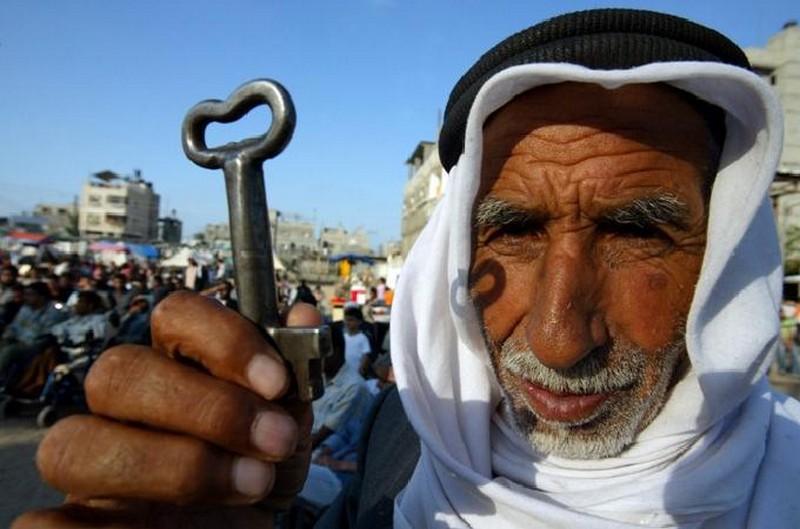
The Jenin refugee camp was established in 1953 by the United Nations Palestinian Refugees Agency (UNRWA). The inhabitants of the camp are refugees who were expelled by Israeli Zionist militias and gangs during the Nakba, the ethnic cleansing of historic Palestine in 1947-48.

The camp has grown in terms of size and population over the years, though poverty and neglect have remained its main features. The history of the camp and its inhabitants has been the main drive behind their ongoing resistance.

In my 2003 book, Searching Jenin, I detailed the accounts of many of the camp’s residents as they described the legendary battle and the subsequent massacre of April 2002.

The pride and toughness of the residents of Jenin struck me, although I am quite familiar with the tenacity of the resilience of Palestinians, in general. Despite the killing of dozens of its inhabitants, the wounding of hundreds, the arrests of many and the destruction of entire neighborhoods, the Jenin residents insisted that the resistance is not over and that the next generation will soon continue what they have begun.

Writing about Jenin in recent months, I realize that many of the family and clan names are repeated, whether in the last name of fighters and martyrs, but also journalists, medics and civilian victims are mentioned. Somehow Jenin, though in near complete isolation, ongoing suppression, and utter neglect, has been resurrected from the ashes of the past.

I wonder if the young Israeli soldiers who keep invading Jenin, killing a few Palestinians at a time with each invasion, know anything about that history, about where these refugees came from, and that, no matter how violent and well-armed their bloody quests can be, Jenin will never surrender.

In other words, for Israel, the battle of Jenin is already lost.

It Is Not Over

Jenin terrifies Israel, because it is a representation of a much greater fight undertaken by Palestinians in besieged Gaza and throughout the Occupied West Bank. They know that all Palestinians are watching the events underway in Jenin – but also in Nablus and its environs, Al-Khalil (Hebron), Jericho, and more. When Jenin resists, Palestinian Resistance rises in unison.

In April 2002, during the invasion of major Palestinian cities of the West Bank, the destruction of Jenin was meant to be the tragic end of an equally tragic Palestinian story. The survivors eventually trickled back into the camp, collected and buried the bodies, often in mass graves, looked after the wounded, and slowly began rebuilding their shattered lives.

Then, all of Palestine was bleeding; Nablus, Ramallah, Bethlehem, and Gaza were reeling under the heavy weight of Israeli tanks, which left in their wake massive destruction and a high death toll. Israel emerged bruised but triumphant. The Palestinian Authority’s police force was restructured around Israeli priorities and with American training and funds. Palestine, it was thought, was squarely defeated.

But the prophecy of those I interviewed two decades ago turned out to be true: The resistance is not over, and the next generation will soon continue what we have begun.

Since then, many of my eyewitnesses have died – old age, broken hearts, Israeli bullets, and so on. Some are currently in prison. But others are still alive to remind us that freedom is precious and that the desire for justice can never be killed or defeated, no matter the enemy’s firepower or the sacrifices. Because it is innate and God-given, and because Jenin knows its history too well.

Dr. Ramzy Baroud is a journalist, author and the Editor of The Palestine Chronicle.

28 June 2023

Source: countercurrents.org

Wildfires, Indigenous People and Very Sad History

By Bharat Dogra

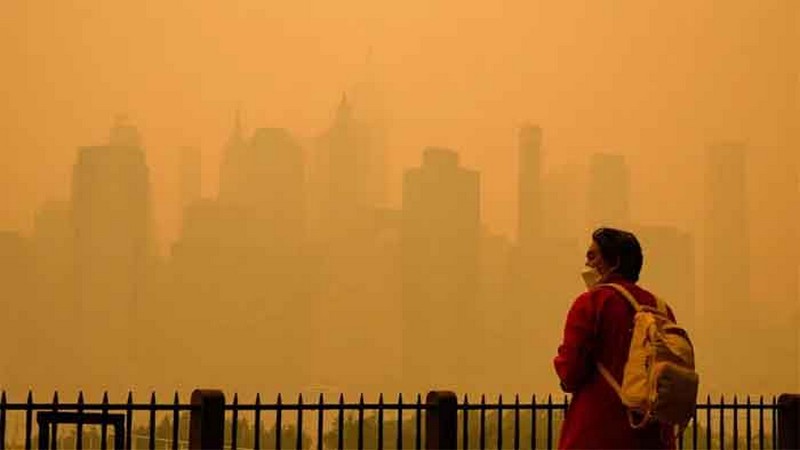
In recent years wildfires have spread uncontrollably over very vast areas in American and Australian continents, causing immense losses including loss of human and animal life and endangering environment in various ways. Their adverse impacts on pollution and health have travelled far and wide, creating health problems even in leading cities like New York.

In this context one question that is not being asked but should be asked is whether wildfires would have become such a serious threat if the native people had not been treated in such a cruel way as to either result in the death of vast numbers, or in the displacement of vast numbers and imposition of so many restrictions on them as to deny them their traditional way of life. This has been not only the loss of native people but also a bigger social loss too as the native or indigenous people had a much better understanding of nature, land and forests acquired from many centuries and generations of living close to nature. If the new settlers from Europe had tried to learn from them instead of killing them, driving them away or colonizing them, this would have been very beneficial for the entire society.

To give an example, over several generations the native people had learnt how to use controlled fires in such ways that the danger of bigger, destructive, uncontrolled fires could be avoided and at the same time they could get more food and some specific plants (such as those needed for making baskets or for some ceremonial purposes). If these native people had continued to live with their traditional wisdom over vast areas, they would have certainly used their great knowledge and experience to minimize the risk of huge out-of-control fires. The environmental risks would be reduced. As a native person told a US journalist, they used such methods to use controlled fire that carbon was stored in soil and not released in atmosphere.

This apart, the natives had a very holistic view of various phenomenon in which fire was not to be necessarily feared and dominated but instead to be understood and lived with as a part of life and such a view makes it possible to explore fire in a more friendly and creative way, instead of looking at the appearance of even a small non-threatening fire merely in terms of rushing to extinguish it. Such a view was moreover part of a wider understanding in which there is unity and continuity between nature, land, plants, forests, animals, fire and humanity—all are linked closely and part of a being. Such a view of view integrates respect of nature, respect of land with respect of oneself and one’s near and dear ones. With such a worldview, native communities scattered all over these continents would have been in the forefront of protecting forests, protecting nature, protecting rivers.

In fact time and again, despite all the injustice and deprivation they have suffered, they have been coming forward and making important contributions to several important environment protection efforts. However conservation efforts which entirely drive away human beings are not in keeping with their integrated views, and they would have contributed even more if the environment protection efforts had been based on a unity of nature and humanity instead of being isolationist. Even with all the problems of the present systems, they have come forward to make important contributions, often motivated by their desire to protect their sacred places, which are again a reflection of their integrated understanding.

If they had been allowed to live peacefully by the colonizers, the native people of the Australian and American continents would have contributed to the creation of a better society, more sustainable society in numerous ways. It is therefore one of the greatest regrets of history that they were treated in such cruel and insensitive ways that very small numbers survived over vast parts of these continents. During the last 550 years or so some of the worst injustices ever seen in human history have been inflicted on these indigenous people. Some were so destructive that perhaps no compensatory action can come even close to making up for what happened. Despite this, urgent efforts must nevertheless be made to achieve what can still be done in the interests of justice.

After Columbus opened up the new American world to Europeans in 1492, waves of settlers and traders started coming here with modern arms to plunder or drive away the native people.

Columbus forced the Taino ‘Indians’ in Hispaniaola to bring him an ounce of gold every three months. Those who did not, had their hands chopped off while escapees were hunted down with dogs.

A priest Bartoleme de Las Casas was very distressed by what he saw of the interactions of the newcomer ‘civilizers’ with indigenous people. He wrote, “For 40 years, they have done nothing but torture, murder, harass, afflict, torment and destroy them with extraordinary, incredible, ‘innovative’, and previously unheard of cruelty.”

Las Casas estimated that about 50 million Indians perished in Latin America and the Caribbean within 50 years of Columbus’ landing. ( Quoted in Third World Resurgence, No. 5—Genocide of the Indians).

The New Internationalist journal prepared a special issue (No. 226) on ‘Hidden History—Columbus and the Colonial Legacy). Here in the cover story Wayne Ellwood has written after examining the available historical evidence, “Scholars now reckon that 90 per cent of the indigenous population of the Americas was wiped out in a century and a half—the greatest demographic collapse in the history of the planet and the proportional equivalent of nearly half a billion people today.”

While in some places the native ‘Indian’ population recovered partially, in other places the recovery was almost non-existent.  The New Internationalist compared the population of these indigenous people over a period of 500 years from 1492 to 1992.

In Mexico there were 21.4 million Indians in 1492, 8 million in 1992. In the Caribbean there were were 5.85 million Indians in 1492, but only 0.001 million in 1992. In Lowland S. America there were 8.50 million Indians in 1492, but only 0.90 million in 1992. In North America there were 4.40 million Indians, but only 2.54 million in 1992.

A somewhat similar tragedy was later repeated later in Australia and its nearby areas. Robert Hughes writes in his book The Fatal Shore—“ It took less than 75 years of white settlement to wipe out most of the people who had occupied Tasmania for some 20,000 years.”

What is more, in some places some of the most terrible atrocities inflicted on the indigenous people continued right into the 20th century. For example let us compare more recent accounts from Guatemala with what was happening a few hundred years back.

First let us see Bob Carty’s account of the 16th century regarding a conqueror Pedro Alvarado’s atrocities in Guatemala—“He directed eight major massacres killing up to 3000 Indians at a time. Mayan chiefs were incinerated alive as Catholic priests burned Mayan historical records. Alvarado rewarded his soldiers with the right to enslave the survivors. Mayan lands were appropriated, the people herded into towns and forced to work the Spanish Estates.”

Now compare this with a more recent account from Guatemala in the 1980s—“In the early 1980s it was as if the new conquistador Pedro Alvarado was back in power. All Mayans were seen as supporters of the guerillas, the military set out to destroy the people as well as their culture. Mayans were burned alive, babies murdered and women raped. The dictator Rios Mantt wiped 440 Mayan villages off the face of the earth. Soldiers are so brutalized in their training that they follow orders to kill their people as enemies.” (New Internationalist)

This account indicates the shocking reality that terrible atrocities have continued against indigenous people till recent times in many countries. These are in fact aggravated whenever indigenous people offer resistance to injustice or demand justice and restoration/protection of land rights much beyond the small concessions the existing regimes are willing to offer.

While some sincere initiatives for their welfare have indeed been taken up in various parts of world, generally the human development indicators for them remain much lower. Their human rights violations and imprisonment rates are generally higher than those suffered by other communities. They often experience discrimination and loss of dignity. Appreciation of their different world view, which may be much, much better than those dominant views which have entangled our world in a web of environment ruin and wars and violence, is generally least appreciated, something which is not just their loss but the loss of the entire humanity. A much better appreciation of the thinking, culture and life-views of indigenous people as well as many-sided, overdue justice for them should be an essential part of the world’s future agenda.

Bharat Dogra is Honorary Convener, Campaign to Save Earth Now.

28 June 2023

Source: countercurrents.org
We’re Having a Violent Meltdown: The Human Costs of Global Warming — and of Our Response to It

By Stan Cox

Several times in recent weeks I’ve heard people suggest that Mother Nature has been speaking to us through that smoke endlessly drifting south from the still-raging Canadian wildfires. She’s saying that she wants the coal, oil, and gas left in the ground, but I fear her message will have little more influence on climate policy than her previous ones did. After all, we essentially hit the “snooze” button on the wakeup call from Hurricane Katrina 18 years ago; ditto the disastrous Hurricane Sandy seven years later, as well as the East Coast heat waves and West Coast wildfires of more recent years; or the startling overheating of global waters and the sea level rise that goes with it. And that’s just to begin an ever longer list of horrors.

Despite the fact that, in recent weeks, more than 100 million North Americans have been inhaling lungfuls of smoke from those Canadian wildfires, we’ll probably continue to ignore the pummeling so many here are enduring daily while carbon dioxide continues to accumulate overhead. Climate disasters are not only failing to goad governments into taking bold action but may be nudging societies toward increasing violence and cruelty.

Recently, Joel Millward-Hopkins of the University of Leeds suggested that, as the climate emergency intensifies, we may only find ourselves ever more affected by some of the indirect impacts of global warming. Those would include the “widening of socioeconomic inequalities (within and between countries), increases in migration (intra- and inter-nationally), and heightened risk of conflict (from violence and war through to hate speech and crime).” Such impacts, he suggests, will reflect a “highly inconvenient overlap with key drivers of the authoritarian populism that has proliferated in the 21st century.” Inconvenient indeed.

In other words, although weather disasters of many kinds can increase public concern about climate change, they can also help to whip up an oppressively violent sociopolitical climate that may prove ever more hostile to the very idea of reducing greenhouse-gas emissions — especially in large, affluent, high-emission societies.

Warm in the USA

Though not itself linked to climate change, the Covid-19 pandemic may have given us a preview of such developments. When it first struck, a feeling of noble national purpose, shared sacrifice, and mutual aid swept the country… for perhaps a few weeks. Then came the waves of social conflict that may, in the end, have left us even more poorly prepared for the next public health emergency. After all, the pandemic of hate that first fed on anti-vaccine and anti-mask fervor now sups from a far larger buffet of political issues including energy and climate.

Guardian columnist George Monbiot wrote recently that “culture war entrepreneurs” are casting efforts to reduce greenhouse-gas emissions as authoritarian attacks on ordinary people’s fundamental freedoms. Be ready to do battle, they say, against any move to promote heat pumps over furnaces or electric induction stoves over gas stoves or walking to the store instead of driving a big-ass truck there. In fact, he suggests, “you cannot propose even the mildest change without a hundred professionally outraged influencers leaping up to announce: ‘They’re coming for your …’’”

There are always going to be people under the influence of such influencers who will respond by jumping in their trucks for a session of “rollin’ coal” — that is, spewing toxic diesel fumes into the faces of pedestrians and cyclists. Or maybe they’ll run over a climate protester (without fear of prosecution if they’re in Florida, Iowa, or Oklahoma).

This outbreak of hostility and violence among right-wingers is occurring even though no one has actually curtailed any of their freedoms. Now, imagine the ferocity of the backlash if we could somehow manage to enact the policies that are undoubtedly most urgently needed to rein in greenhouse gases and other environmental threats: a rapid phase-out of fossil fuels and cuts in the extraction and use of material resources. The eruption would undoubtedly be far more aggressive and violent than the resistance to Covid-19 regulations.

From Pole to Equator, the Specter of Violence Looms

New climate realities are also expected to alter military conflicts among nations. One of the most troubling potential flashpoints could be the fast-melting Arctic, which, thanks to all that carbon dioxide released into the atmosphere, will soon be wide open for fishing, resource extraction, and other activities. In fact, the United States and Russia haven’t even let the Arctic Sea finish its thaw before starting to militarize it. As Devin Speak of NPR reports,

“While indigenous communities have long thrived in communion with the land there, nation states haven’t had much presence in the northern latitudes because it hasn’t been ripe for exploitation. Until sea ice began rapidly receding, oil, gas, shipping, and minerals were all under frigid lock and key. But with dwindling sea ice, tapping the region’s resources is becoming more feasible. And in conjunction with the economic opportunities, nations are eyeing big military spending. Russia has already ramped up its military presence and the United States is playing catch-up.”

As an armed standoff in cold polar waters heats up, increased attention is being paid to climate-induced mass migration as another likely conflict trigger. After all, forecasts now suggest that if greenhouse-gas emissions aren’t reduced deeply and quickly, the climatic zones safe for humans to live in will shrink dramatically. The worst of it will happen in tropical South America and Africa, the Middle East, South and Southeast Asia, parts of China, and the U.S. Sun Belt. By 2050, two to three billion people are likely to either be living in or fleeing regions that have become increasingly hostile to human existence and, by 2090, it could be three to six billion of us, or a quarter to a third of humanity. Desired destinations will include the northern United States and southern Canada, Russia, Central Asia, Korea, Japan, northern China, and northern Europe.

Consider for a moment the torrent of hate and cruelty we’ve seen in the past decade along borders between the United States and Mexico, Southeast and South Asia, and Europe and Africa. Now, imagine a 10- to 20-fold increase in long-distance migration rates and the anti-immigrant hate, violence, and even international conflict that could grip the globe in the decades to come. As a preview, just consider the fact that Republican governors in 14 states have already deployed National Guard troops to the border with Mexico for no good reason whatsoever.

In his Guardian column, Monbiot explains succinctly how climate disruption and anti-immigrant bias reinforce each other: “Round the cycle turns,” he writes. “As millions are driven from their homes by climate disasters, the extreme right exploits their misery to extend its reach. As the extreme right gains power, climate programs are shut down, heating accelerates, and more people are driven from their homes. If we don’t break this cycle soon, it will become the dominant story of our times.” It may already be the most important story, whether we realize it or not.

Climate change is likely to exacerbate violence within countries as well, simply by discombobulating us as individuals. A 2015 analysis of 57 nations found that “each degree Celsius increase in annual temperatures is associated with a nearly 6% average increase in homicides.” More recently, a review of research worldwide found that climate disruption can undermine peace by interfering with people’s mental or physiological functioning and by threatening our quality of life.

Increasingly extreme heat will also push waves of human displacement within national borders, further fanning the flames of domestic conflict. An analysis by Abrahm Lustgarten of ProPublica found that, as the Earth’s atmosphere warms, almost half of the U.S. population “will most likely experience a decline in the quality of their environment, namely more heat and less water. For 93 million of them, the changes could be particularly severe.” Expect many millions of us to move from the Sunbelt to, perhaps, the Great Lakes region and from rural to urban areas.

Mathew Hauer, a sociologist at Florida State University and a modeler of climate migration interviewed by Lustgarten, predicts some especially hard times for Atlanta. It’s the largest metropolitan area in the Southeast, a region in which, climate models suggest, droughts and wildfires will become far more common and severe as the decades pass. He projects that hundreds of thousands of local climate refugees will migrate from outlying areas into an urban area already experiencing overburdened water systems and a shaky infrastructure, along with the highest income inequality among large U.S. cities. All of that, writes Lustgarten, could make the future Atlanta “a virtual tinderbox for social conflict.”

Such conflict could well include the kind of state violence and oppression that’s increasingly unleashed on people and groups who are determined to protest against the systems that create climate chaos, environmental devastation, and injustice. Indeed, in Atlanta, that violence is already a reality. This winter and spring, city police shot and killed an activist and arrested 40 more for nonviolently occupying the city’s largest urban forest. They were part of a broad effort by people in low-income neighborhoods bordering the forest, environmental organizations, and racial-justice groups to head off the construction of a tactical-training center for the Atlanta police department that would occupy and devastate 85 of that woodland’s 150 acres. The coalition aims to prevent deforestation, preserve the quality of life for nearby neighborhoods, and halt the expenditure of $90 million on a facility that would hone the skills of cops who have demonstrated their willingness to kill unarmed Black people.

And mind you, those forest defenders were charged not with trespassing but with violating Georgia’s domestic terrorism law, which carries a sentence of at least five years in prison. When arrested, they were held in a jail that, reported Piper French of Bolts, “is notorious for squalid conditions and allegations of mistreatment by staff.” The defendants, who had committed no acts of violence, let alone “terrorism,” were denied bail on flimsy grounds, including accusations of merely “wearing black, having a jail support number scrawled on their arm, and having mud on their shoes,” according to French. And the basis for denying bail thanks to wearing black clothing and having on muddy shoes? That domestic terrorism law provides for something called “vicarious liability.” (In plain English, you could call it guilt by association.)

Nor did the repression stop there. Following a SWAT team’s recent raid on a southeast Atlanta home, the Georgia Bureau of Investigation arrested three board members of an Atlanta nonprofit that was arranging legal support for those forest defenders. They were charged with money laundering and charity fraud, stretching the already dubious concept of vicarious liability even further. Writing for Jacobin, Abe Asher notes that “the intensity of the threats protesters in Atlanta are facing is reminiscent of the risks climate defenders routinely face in the Global South, where both activists and journalists are routinely jailed and killed in their defense of land and water. Of the 401 human rights defenders killed last year, nearly half were killed defending the climate.”

Violence on the Ground (and Below It)

Some of America’s domestic policies aimed at curbing climate change could also become increasingly responsible for conflict in the Global South. If, for instance, the wealthier North continues to pursue technology-heavy “green growth” climate policies, the south could suffer yet more from the inherent violence of resource extraction. The need for increasing amounts of the minerals and metals essential to building renewable energy systems and vast fleets of electric vehicles — including lithium, cobalt, copper, nickel, and rare earths — is attracting much media attention these days.

Worse yet, in the future, they are likely to become the focus of “green resource wars.” And the mining of such ores isn’t the only extractive activity that raises the threat of conflict. To take one example, if the world’s nations pursue climate-mitigation policies that depend heavily on biofuels, the ensuing fuel plantations could end up occupying a staggering quarter to a third of the world’s croplands, almost certainly displacing some essential food crops to less productive areas. And count on this: communities throughout the global south are not going to stand back and allow such potentially wholesale losses without protest.

Selina Gallo-Cruz is an associate professor of sociology at Syracuse University. She recently published a paper, “Peace Studies and the Limits to Growth,” in which she laid out the ways the widespread violence and injustice implicit in the global North’s quest for growth — green or otherwise — has affected other communities around the world.

Citing the work of organizations like Global Witness in conflict zones worldwide, she points out that a significant part of the violence on this planet comes from the North’s “extraction of natural resources through mining or deforestation — palm oil plantations are a big one — and mega-, mega-agricultural projects,” all of which lead to “outbreaks of very violent conflict.” We must not, says Gallo-Cruz, fall for the specious argument that it would be unfair and cruel not to extract resources from impoverished countries, because the North needs such minerals and energy, while the South needs the revenue those resources can bring in. That argument is, of course, blind to the devastation of the lands, waters, and biodiversity on which such communities depend, not to mention the violent conflict that so often threatens to become a part of resource extraction.

To sum up: There has always been violent conflict. (As striking evidence, the artist Miranda Maher has documented that over the past 2,023 years of human history, only one year, 327 AD, was completely free of open armed conflict.) But we may now be preparing to top off that sorry record with climate-induced conflict globally — from open war between nation-states to abuse of migrants at borders to hate and physical assaults that happen just down the block. And efforts to curb climate change are already provoking a right-wing backlash that encourages civil conflict while bringing state violence down on climate activists. Meanwhile, corporate efforts to achieve climate-friendly growth end up inflicting the violence that accompanies resource extraction on the world’s poorest regions, creating conditions for… yes, yet more conflict.

In short, industrial civilization has by now painted the world into a perilous corner. The only way out of this mess would be for affluent societies to deeply reduce their consumption of energy and extraction of material resources, but don’t hold your breath on that one.

Stan Cox, a TomDispatch regular, is the author of The Path to a Livable Future: A New Politics to Fight Climate Change, Racism, and the Next Pandemic, The Green New Deal and Beyond: Ending the Climate Emergency While We Still Can, and the current In Real Time climate series at City Lights Books.

28 June 2023

Source: countercurrents.org
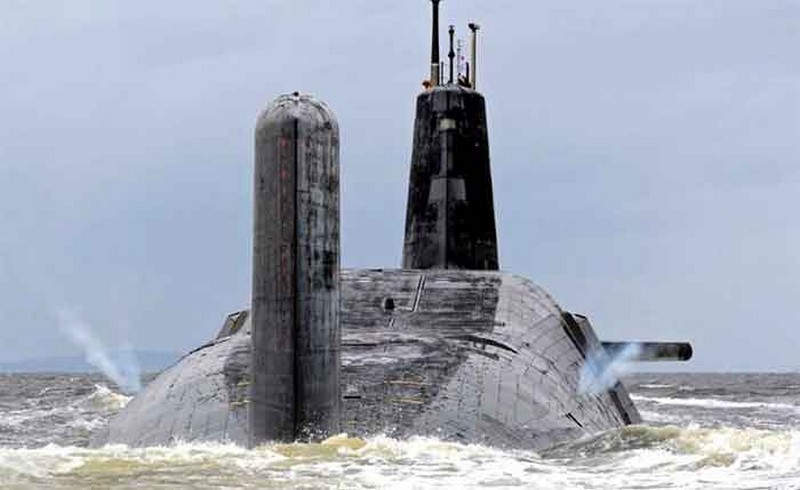
Naseem 1995 in India 2023

By Neha Tuheen

PM Modi said in a press conference that the religious minorities in India do not face any discrimination and that India’s democracy remains faultless during his infamous visit to the US. However, it is common knowledge that the scenario in India could not be more different. Despite being a secular state, India as a nation has not lived up to the secular dreams of its founders. Minorities in the nation, especially Muslims, have been facing constant discrimination in plain sight throughout the history of independent India. The destruction of the Babri Masjid is perhaps the most symbolic of all the vile demonstrations made by the far-right Hindus. The demolition of the mosque at the hands of a wing of the Sangh Parivar remains a watershed moment, marking the emergence of hard-core Hindutva in modern Indian politics.

Saeed Akhtar Mirza’s 1995 film “Naseem” depicts the journey of a young girl named Naseem against a watershed moment in India’s history of bigotry and communal violence. Set in the early 1990s, the story captures the transition from a time of harmony to a period marked by hate and communal tensions during the demolition of the Babri Masjid. Naseem’s personal experiences, as witnessed through her innocent eyes, mirror the larger societal changes unfolding around her. The film gives us glimpses into the everyday life of Naseem for seven months leading up to the destruction of the Masjid. Khaifi Azmi the poetic legend takes on the most critical role of Naseem’s Dada-Jaan in the film. Dada-Jaan, a bedridden man who loves his family and the art of storytelling is deeply tied with the iconography of the Masjid itself.

Naseem’s easy-going nature and mellow routine contrast deeply with the communal chaos going on throughout the country at that point in time. The film’s opening scenes effectively establish a sense of separation within the community and Naseem’s role as a witness caught in the middle. As Naseem combs her hair while the TV plays in the background, the calmness of her reflection in the mirror is disrupted by the voices of yelling men. This serves as a precursor to the divisive events that would soon unfold. The positioning of her family members on either side of her reflection symbolizes the diverging paths that lie ahead, highlighting the growing divide in society.

Naseem’s search for identity becomes a central theme as she seeks to understand the meaning of her name. The interaction with her grandfather, who tells her that Naseem means the morning breeze, emphasizes her desire to connect with something positive amidst the changing atmosphere. This quest for self-discovery and understanding becomes Naseem’s anchor as she navigates through turbulent times.

As communal tensions rise, Naseem’s parents shield her from the violence by keeping her uninformed. This protective approach is evident when Naseem finds her parents fixated on the TV but unable to disclose the disturbing events taking place outside. The audience shares Naseem’s confusion and frustration as she seeks answers from her family members who remain silent, their actions embodying a desire to preserve her innocence.

The loss of innocence is exemplified through Naseem’s encounters with personal tragedies. The sudden demise of Parvati Bhabhi, a neighbour, reflects the brutality that women face within of society. This incident shatters Naseem’s perception of the world, exposing the darker aspects hidden from her until now. Parvati Bhabhi is one of the few Hindu characters that Naseem is shown to have a deep connection with within the film. Her untimely violent demise is also symbolic of the murder of secular Hinduism and the death of the allyship that existed between the two religions.

The film cleverly intertwines historical narratives within the personal journey of Naseem. As Naseem’s grandpa narrates stories about his own experiences as a “freedom fighter”. These stories not only connect Naseem to her heritage but also inspire her to question the present circumstances and the societal changes that have led to the current turmoil. Naseem often finds comfort in the stories of Dada-Jaan’s past. The ideal India that many dreamed of pre-Independence lives in these tales woven by the old man. In a conversation between Naseem’s father and her grandfather, the question of why her grandfather did not migrate to Pakistan during the partition arises. This dialogue serves as a reflection on the sense of belonging and the memories that make a place feel like home. It alludes to the essence of India, beyond religion and other differences. Naseem is also seen asking the meaning of her name to her Dada-Jaan, both at the beginning and the end of the movie, showing us that despite all the changes and chaos, the maker has faith in the youth of India to be like Naseem, the fresh morning breeze of change and harmony.

The death, chaos, and hate that has ensued since December 6th, 1992 has seen no end. Houses, mosques, and workplaces of Muslim people are brought down with hate. A Ram Mandir has been constructed in place of the Babri Masjid. This new India, which has existed since the passing of Naseem’s Dada-Jaan and the masjid itself, does not portray the image that our Prime Minister has presented on the world stage. Naseem’s coming-of-age story set three over three decades ago, still resonates and represents the story of thousands of children in our country.

Neha Tuheen is an undergraduate student of International Studies at FLAME University, Pune.

27 June 2023

Source: countercurrents.org
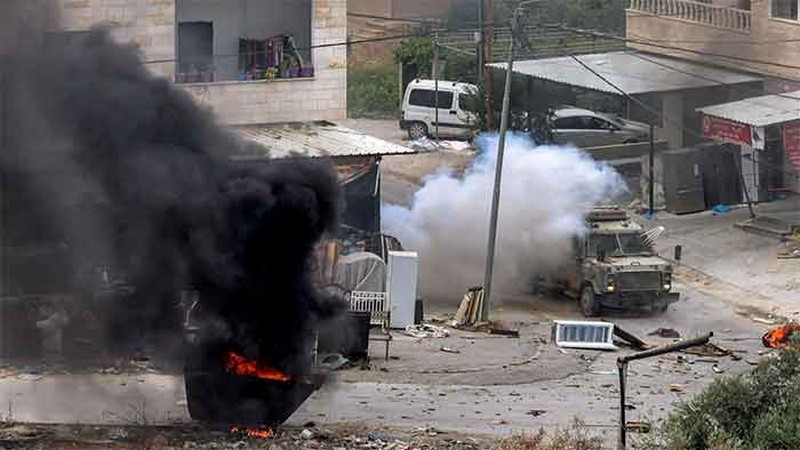
Trained to Hate

By Jafar M Ramini

Sunday evening. It was cold outside and my wife and I decided to light the fire and settle down to watch a movie. We searched, as you do, through the plethora of channels on offer nowadays, until we saw a movie called ‘The Promise’ on Prime.

The very name evoked memories. Twelve years ago, in 2011, director Peter Kominsky made a 4-part TV series for Channel 4 in London called ‘The Promise’. In this instance the promise was one from a young British girl to her grandfather, who had been a soldier during the 1940s in Palestine. He left a diary for her so she could retrace his steps and find out what Britain in Palestine really meant. Her journey of discovery shocked her to the core. Not just for the past but for the present. The violence, the destruction, the horror hadn’t stopped with the creation of Israel, but continues up to today. We were invited to a private view of ‘The Promise’ and the director, who is Jewish, assured us that despite the fact that every word in the series was meticulously researched for truth and accuracy, he had to jump through hoops to get it on the air.

This new movie tells the story of a different kind of promise. A promise of love from a young Armenian medical student to a girl of his village, pledging that he would return from Constantinople, where he hoped to gain his medical degree, no matter what. As the story unfolds this dream of learning how to save lives turns into a tragedy of survival and genocide of 1.5 million Armenian citizens of the Ottoman Empire from 1914 – 1923.

The film had us mesmerised. It felt too close. ‘The Promise’, created and directed by that great Irish talent, Terry George, could so easily have been telling the on-going story of Palestinian genocide and the relentless determination by successive Israeli Governments to remove, by any and every means possible, any suggestion that a country called Palestine ever existed. There was one moment in the film when a group of orphans and villagers are seen hiding in a cave. That was me, 75 years ago, aged five, crouching in such a cave, hearing the mortar shells and the gun-fire outside and terrified to my very bones. Another boy, also called Jafar, sitting right beside me, was shot straight through his right eye as the bullet went through the back of his head. Miraculously he survived.

I recommend this latest film called ‘The Promise’. It is a heartbreaking, thought-provoking and epic, and for those who know nothing of this terrible true story of the Turkish treatment of the Armenians it is a real eye-opener. If only, I said to my wife, another director of talent and commitment, would do the same for Palestine.

But, who? To quote the words of Gideon Levy, Israeli journalist and columnist for Haaretz;

“ There aren’t many populations in the world as helpless as the Palestinians who live in their own country. No one protects their lives and property, let alone their dignity, and no one intends to do so. They are totally abandoned to their fates. Their houses and their cars can be torched, their fields set on fire. It’s all right to shoot them mercilessly, killing old people and babies, with no defence forces at their side. No police, no military: no one. If some such desperate defence force is organised it’s immediately criminalised by Israel. Its fighters are labeled ‘terrorists’, their actions ‘terror attacks’ and their fates sealed, with death or prison the only options.”

Coincidentally, I am now in the middle of reading a book that has just came out. It is called ‘The State Of Israel Versus The Jews’, by a Jewish French writer, Sylvain Cypel, and it chronicles in minute detail how Israel trains children to hate, discriminate against and kill Palestinians out of utter conviction that our lives are of a lesser value than theirs and therefore justifies everything that they do to us.

At this very moment Israel has been wreaking havoc all over the occupied West Bank, especially in my home town of Jenin.

Will we ever see another brave and principled film-maker who would have the moral courage to make a block buster movie about the tragedy of Palestine, and have it beamed around the world in cinemas and streamed through the internet for anyone and everyone to see? I live in hope.

Jafar M Ramini is a Palestinian writer and political analyst.

27 June 2023

Source: countercurrents.org