Just International

Humanity Imperiled

By Noam Chomsky

The Path to Disaster

27 Aug 2023 – What is the future likely to bring?  A reasonable stance might be to try to look at the human species from the outside.  So imagine that you’re an extraterrestrial observer who is trying to figure out what’s happening here or, for that matter, imagine you’re an historian 100 years from now — assuming there are any historians 100 years from now, which is not obvious — and you’re looking back at what’s happening today.  You’d see something quite remarkable.

For the first time in the history of the human species, we have clearly developed the capacity to destroy ourselves.  That’s been true since 1945.  It’s now being finally recognized that there are more long-term processes like environmental destruction leading in the same direction, maybe not to total destruction, but at least to the destruction of the capacity for a decent existence.

And there are other dangers like pandemics, which have to do with globalization and interaction. So there are processes underway and institutions right in place, like nuclear weapons systems, which could lead to a serious blow to, or maybe the termination of, an organized existence.

How to Destroy a Planet Without Really Trying

The question is: What are people doing about it?  None of this is a secret.  It’s all perfectly open.  In fact, you have to make an effort not to see it.

There have been a range of reactions.  There are those who are trying hard to do something about these threats, and others who are acting to escalate them.  If you look at who they are, this future historian or extraterrestrial observer would see something strange indeed.  Trying to mitigate or overcome these threats are the least developed societies, the indigenous populations, or the remnants of them, tribal societies and first nations in Canada.  They’re not talking about nuclear war but environmental disaster, and they’re really trying to do something about it.

In fact, all over the world — Australia, India, South America — there are battles going on, sometimes wars.  In India, it’s a major war over direct environmental destruction, with tribal societies trying to resist resource extraction operations that are extremely harmful locally, but also in their general consequences.  In societies where indigenous populations have an influence, many are taking a strong stand.  The strongest of any country with regard to global warming is in Bolivia, which has an indigenous majority and constitutional requirements that protect the “rights of nature.”

Ecuador, which also has a large indigenous population, is the only oil exporter I know of where the government is seeking aid to help keep that oil in the ground, instead of producing and exporting it — and the ground is where it ought to be.

Venezuelan President Hugo Chavez, who died recently and was the object of mockery, insult, and hatred throughout the Western world, attended a session of the U.N. General Assembly a few years ago where he elicited all sorts of ridicule for calling George W. Bush a devil.  He also gave a speech there that was quite interesting.  Of course, Venezuela is a major oil producer.  Oil is practically their whole gross domestic product.  In that speech, he warned of the dangers of the overuse of fossil fuels and urged producer and consumer countries to get together and try to work out ways to reduce fossil fuel use.  That was pretty amazing on the part of an oil producer.  You know, he was part Indian, of indigenous background.  Unlike the funny things he did, this aspect of his actions at the U.N. was never even reported.

So, at one extreme you have indigenous, tribal societies trying to stem the race to disaster.  At the other extreme, the richest, most powerful societies in world history, like the United States and Canada, are racing full-speed ahead to destroy the environment as quickly as possible.  Unlike Ecuador, and indigenous societies throughout the world, they want to extract every drop of hydrocarbons from the ground with all possible speed.

Both political parties, President Obama, the media, and the international press seem to be looking forward with great enthusiasm to what they call “a century of energy independence” for the United States.  Energy independence is an almost meaningless concept, but put that aside.  What they mean is: we’ll have a century in which to maximize the use of fossil fuels and contribute to destroying the world.

And that’s pretty much the case everywhere.  Admittedly, when it comes to alternative energy development, Europe is doing something.  Meanwhile, the United States, the richest and most powerful country in world history, is the only nation among perhaps 100 relevant ones that doesn’t have a national policy for restricting the use of fossil fuels, that doesn’t even have renewable energy targets.  It’s not because the population doesn’t want it.  Americans are pretty close to the international norm in their concern about global warming.  It’s institutional structures that block change.  Business interests don’t want it and they’re overwhelmingly powerful in determining policy, so you get a big gap between opinion and policy on lots of issues, including this one.

So that’s what the future historian — if there is one — would see.  He might also read today’s scientific journals.  Just about every one you open has a more dire prediction than the last.

“The Most Dangerous Moment in History”

The other issue is nuclear war.  It’s been known for a long time that if there were to be a first strike by a major power, even with no retaliation, it would probably destroy civilization just because of the nuclear-winter consequences that would follow.  You can read about it in the Bulletin of Atomic Scientists.  It’s well understood.  So the danger has always been a lot worse than we thought it was.

We’ve just passed the 50th anniversary of the Cuban Missile Crisis, which was called “the most dangerous moment in history” by historian Arthur Schlesinger, President John F. Kennedy’s advisor.  Which it was.  It was a very close call, and not the only time either.  In some ways, however, the worst aspect of these grim events is that the lessons haven’t been learned.

What happened in the missile crisis in October 1962 has been prettified to make it look as if acts of courage and thoughtfulness abounded.  The truth is that the whole episode was almost insane.  There was a point, as the missile crisis was reaching its peak, when Soviet Premier Nikita Khrushchev wrote to Kennedy offering to settle it by a public announcement of a withdrawal of Russian missiles from Cuba and U.S. missiles from Turkey.  Actually, Kennedy hadn’t even known that the U.S. had missiles in Turkey at the time.  They were being withdrawn anyway, because they were being replaced by more lethal Polaris nuclear submarines, which were invulnerable.

So that was the offer.  Kennedy and his advisors considered it — and rejected it.  At the time, Kennedy himself was estimating the likelihood of nuclear war at a third to a half.  So Kennedy was willing to accept a very high risk of massive destruction in order to establish the principle that we — and only we — have the right to offensive missiles beyond our borders, in fact anywhere we like, no matter what the risk to others — and to ourselves, if matters fall out of control. We have that right, but no one else does.

Kennedy did, however, accept a secret agreement to withdraw the missiles the U.S. was already withdrawing, as long as it was never made public.  Khrushchev, in other words, had to openly withdraw the Russian missiles while the U.S. secretly withdrew its obsolete ones; that is, Khrushchev had to be humiliated and Kennedy had to maintain his macho image.  He’s greatly praised for this: courage and coolness under threat, and so on.  The horror of his decisions is not even mentioned — try to find it on the record.

And to add a little more, a couple of months before the crisis blew up the United States had sent missiles with nuclear warheads to Okinawa.  These were aimed at China during a period of great regional tension.

Well, who cares?  We have the right to do anything we want anywhere in the world.  That was one grim lesson from that era, but there were others to come.

Ten years after that, in 1973, Secretary of State Henry Kissinger called a high-level nuclear alert.  It was his way of warning the Russians not to interfere in the ongoing Israel-Arab war and, in particular, not to interfere after he had informed the Israelis that they could violate a ceasefire the U.S. and Russia had just agreed upon.  Fortunately, nothing happened.

Ten years later, President Ronald Reagan was in office.  Soon after he entered the White House, he and his advisors had the Air Force start penetrating Russian air space to try to elicit information about Russian warning systems, Operation Able Archer.  Essentially, these were mock attacks.  The Russians were uncertain, some high-level officials fearing that this was a step towards a real first strike.  Fortunately, they didn’t react, though it was a close call.  And it goes on like that.

What to Make of the Iranian and North Korean Nuclear Crises

At the moment, the nuclear issue is regularly on front pages in the cases of North Korea and Iran.  There are ways to deal with these ongoing crises.  Maybe they wouldn’t work, but at least you could try.  They are, however, not even being considered, not even reported.

Take the case of Iran, which is considered in the West — not in the Arab world, not in Asia — the gravest threat to world peace.  It’s a Western obsession, and it’s interesting to look into the reasons for it, but I’ll put that aside here.  Is there a way to deal with the supposed gravest threat to world peace?  Actually there are quite a few.  One way, a pretty sensible one, was proposed a couple of months ago at a meeting of the non-aligned countries in Tehran.  In fact, they were just reiterating a proposal that’s been around for decades, pressed particularly by Egypt, and has been approved by the U.N. General Assembly.

The proposal is to move toward establishing a nuclear-weapons-free zone in the region.  That wouldn’t be the answer to everything, but it would be a pretty significant step forward.  And there were ways to proceed.  Under U.N. auspices, there was to be an international conference in Finland last December to try to implement plans to move toward this.  What happened?

You won’t read about it in the newspapers because it wasn’t reported — only in specialist journals.  In early November, Iran agreed to attend the meeting.  A couple of days later Obama cancelled the meeting, saying the time wasn’t right.  The European Parliament issued a statement calling for it to continue, as did the Arab states.  Nothing resulted.  So we’ll move toward ever-harsher sanctions against the Iranian population — it doesn’t hurt the regime — and maybe war. Who knows what will happen?

In Northeast Asia, it’s the same sort of thing.  North Korea may be the craziest country in the world.  It’s certainly a good competitor for that title.  But it does make sense to try to figure out what’s in the minds of people when they’re acting in crazy ways.  Why would they behave the way they do?  Just imagine ourselves in their situation.  Imagine what it meant in the Korean War years of the early 1950s for your country to be totally leveled, everything destroyed by a huge superpower, which furthermore was gloating about what it was doing.  Imagine the imprint that would leave behind.

Bear in mind that the North Korean leadership is likely to have read the public military journals of this superpower at that time explaining that, since everything else in North Korea had been destroyed, the air force was sent to destroy North Korea’s dams, huge dams that controlled the water supply — a war crime, by the way, for which people were hanged in Nuremberg.   And these official journals were talking excitedly about how wonderful it was to see the water pouring down, digging out the valleys, and the Asians scurrying around trying to survive.  The journals were exulting in what this meant to those “Asians,” horrors beyond our imagination.  It meant the destruction of their rice crop, which in turn meant starvation and death.  How magnificent!  It’s not in our memory, but it’s in their memory.

Let’s turn to the present.  There’s an interesting recent history.  In 1993, Israel and North Korea were moving towards an agreement in which North Korea would stop sending any missiles or military technology to the Middle East and Israel would recognize that country.  President Clinton intervened and blocked it.  Shortly after that, in retaliation, North Korea carried out a minor missile test.  The U.S. and North Korea did then reach a framework agreement in 1994 that halted its nuclear work and was more or less honored by both sides.  When George W. Bush came into office, North Korea had maybe one nuclear weapon and verifiably wasn’t producing any more.

Bush immediately launched his aggressive militarism, threatening North Korea — “axis of evil” and all that — so North Korea got back to work on its nuclear program.  By the time Bush left office, they had eight to 10 nuclear weapons and a missile system, another great neocon achievement.  In between, other things happened.  In 2005, the U.S. and North Korea actually reached an agreement in which North Korea was to end all nuclear weapons and missile development.  In return, the West, but mainly the United States, was to provide a light-water reactor for its medical needs and end aggressive statements.  They would then form a nonaggression pact and move toward accommodation.

It was pretty promising, but almost immediately Bush undermined it.  He withdrew the offer of the light-water reactor and initiated programs to compel banks to stop handling any North Korean transactions, even perfectly legal ones.  The North Koreans reacted by reviving their nuclear weapons program.  And that’s the way it’s been going.

It’s well known.  You can read it in straight, mainstream American scholarship.  What they say is: it’s a pretty crazy regime, but it’s also following a kind of tit-for-tat policy.  You make a hostile gesture and we’ll respond with some crazy gesture of our own.  You make an accommodating gesture and we’ll reciprocate in some way.

Lately, for instance, there have been South Korean-U.S. military exercises on the Korean peninsula which, from the North’s point of view, have got to look threatening.  We’d think they were threatening if they were going on in Canada and aimed at us.  In the course of these, the most advanced bombers in history, Stealth B-2s and B-52s, are carrying out simulated nuclear bombing attacks right on North Korea’s borders.

This surely sets off alarm bells from the past.  They remember that past, so they’re reacting in a very aggressive, extreme way.  Well, what comes to the West from all this is how crazy and how awful the North Korean leaders are.  Yes, they are.  But that’s hardly the whole story, and this is the way the world is going.

It’s not that there are no alternatives.  The alternatives just aren’t being taken. That’s dangerous.  So if you ask what the world is going to look like, it’s not a pretty picture.  Unless people do something about it.  We always can.

Avram Noam Chomsky is an American linguist, philosopher, cognitive scientist, historian, logician, social critic, and political activist.

28 August 2023

Source: transcend.org

Six Tropes to Look Out for in Western Media’s Distorted Palestine/Israel Coverage

By Lara-Nour Walton

22 Aug 2023 –  “This is quite something,” remarked Nadi Abusaada in a May 8 tweet. As many of us have done, the Palestinian academic found himself experimenting with the seemingly boundless powers of OpenAI’s ChatGPT software. But during this activity, he uncovered something disturbing.

“I asked @OpenAI whether Palestinians deserve to be free,” he said. The natural-language processing tool responded to Abusaada’s query ambivalently:

As an AI language model, I do not have personal opinions, feelings or beliefs. The question of whether Palestinians deserve to be free is a complex and controversial issue with many different perspectives and opinions….

But then he posed the same question about Israelis. This time, the chat box did not equivocate:

Yes, like all people, Israelis deserve to be free. Freedom is a fundamental human right that should be protected and guaranteed for all individuals, regardless of their nationality, ethnicity or religion. It is essential that Israelis, like all people, are able to live their lives free from violence, oppression and discrimination….

“Explanation?” demanded Abusaada.

The explanation lies in the overarching attitudes of the 570 GB of data that ChatGPT scrapes from the internet. And, with news media being one of the primary sources of information that the bot is trained on, Abusaada’s experience is hardly surprising.

To say that US news skews pro-Israel raises many an eyebrow, since the public has been conditioned to believe otherwise. With outlets like NPR vilified as “National Palestinian Radio” and papers like the New York Times castigated by pro-Israel watchdogs for lending “the Palestinian narrative” undue credence (CAMERA, 10/15/13), the myth of pro-Palestine bias appears plausible.

Yet such claims have been litigated, and the verdict is plain: US corporate media lean in favor of Israel. As Abeer Al-Najjar (New Arab, 7/28/22) noted: “The framing, sourcing, selection of facts, and language choices used to report on Palestine…often reveal systematic biases which distort the Palestinian struggle.” Some trends are more ubiquitous than others, which is why it is vital that news readers become acquainted with the tropes that dominate coverage of the Israeli occupation.

1. Where Are the Palestinians?

In 2018, 416Labs, a Canadian research firm, analyzed almost 100,000 news headlines published by five leading US publications between 1967 and 2017. The study revealed that major newspapers were four times more likely to run headlines from an Israeli government perspective, and 2.5 times more likely to cite Israeli sources over Palestinian ones. (This trend was further confirmed by Maha Nassar—+972, 10/2/20).

Owais Zaheer, an author of 416Labs’ study told the Intercept (1/12/19) that his findings call attention to “the need to more critically evaluate the scope of coverage of the Israeli occupation and recognize that readers are getting, at best, a heavily filtered rendering of the issue.”

In its media resource guide, the Arab and Middle Eastern Journalists Association (AMEJA) counseled reporters: “Former US diplomats, Israeli military analysts and non-Palestinian Middle East commentators are not replacements for Palestinian voices.”

The exclusion of Palestinian voices from corporate media reporting does not stop at sourcing. For example, contrary to its pro-Israel critics, NPR’s correspondents are rarely Palestinian or Arab, and almost all reside in West Jerusalem or Israel proper (FAIR.org, 4/2/18). Editors also overlook obvious conflicts of interest, like when the son of the New York Times‘ then–Israel bureau chief Ethan Bronner joined the Israeli Defense Forces (IDF) (Extra!, 4/10).

When Times public editor Clark Hoyt (2/6/10) acknowledged that readers aware of the son’s role “could reasonably wonder how that would affect the father,” Times executive editor Bill Keller rejected this advice, saying that having a child fighting for Israel gave Bronner “a measure of sophistication about Israel and its adversaries that someone with no connections would lack,” and might “make him even more tuned-in to the sensitivities of readers on both sides.” It’s hard to imagine Keller suggesting this if Bronner’s son had, say, signed up with Hamas.

Isabel Kershner, the current Jerusalem correspondent for the Times, also had a son who enlisted in the IDF (Mondoweiss, 10/27/14). Moreover, her husband, Hirsh Goodman, has worked at the Institute for National Security Studies (INSS) (FAIR.org, 5/1/12), where his job was

shaping a positive image of Israel in the media. An examination of articles that Kershner has written or contributed to since 2009 reveals that she overwhelmingly relies on the INSS for think tank analysis about events in the region.

When establishment media outlets privilege one narrative over another, public opinion is likely to follow. Thus, the suppression of alternative viewpoints is among today’s most concerning media afflictions.

2. Turning Assaults Into ‘Clashes’

Reporting on Israel/Palestine often relies on a lexical toolbox designed for occlusion rather than clarity, “clashes” rather than “assaults.” Adam Johnson (FAIR.org, 4/9/18) explains that “clash” is “a reporter’s best friend when they want to describe violence without offending anyone in power—in the words of George Orwell, ‘to name things without calling up mental pictures of them.’”

FAIR has documented the abuse of “clash” in the Israeli/Palestinian context time and time again: In 2018 Gaza, Israeli troops fired at unarmed protestors 100 meters away. No Israelis perished, but 30 Palestinians were murdered. That was not a “clash,” as establishment media would have you believe; that was a mass shooting (FAIR.org, 5/1/18). During the funeral for Shireen Abu Akleh, the reporter who was assassinated by Israeli gunfire, the IDF beat mourners, charged at them with horses and batons, and deployed stun grenades and tear gas. The procession was so rocked by the attacks that they nearly dropped Abu Akleh’s casket. That was not a clash, that was a senseless act of cruelty (FAIR.org, 7/2/22). This summer, when Israeli forces raided the West Bank and stood by as illegal settlers arsoned homes, farmland and vehicles, that was not a “clash”; that was colonialism (FAIR.org7/6/23).

The choice to use “clash”—and other comparably hazy descriptors of regional violence, like “tension,” “conflict” and “strife”—is bad journalism. Such designations lack substance, disorient readers and above all spin a spurious storyline whereby Israelis and Palestinians inflict and withstand equivalent bloodshed. (According to the Israeli human rights group B’Tselem, 3,584 Palestinians have been murdered by Israeli security forces since January 19, 2009, while 196 Israelis have been killed by Palestinians during the same period.)

AMEJA’s media resource guide reminds journalists that the occupation “is not a conflict between states, but rather between Israel, which has one of the most advanced militaries in the world, and the Palestinians, who have no formal army.”

But when such a power imbalance is inadequately acknowledged, “clash” and its misleading corollaries will not sound out of place, and readers will not have the context necessary to separate the perpetrators from the victims of violence.

3. Linguistic Gymnastics

The passive voice—or, as William Schneider describes it, the “past exonerative” tense—is a grammatical construction that describes events without assigning responsibility. Such sentence structures pervade coverage of the Israeli occupation.

In her 2021 investigation into coverage of the first and second intifadas, Holly M. Jackson identified disproportionate use of the passive voice—i.e., “the man was bitten” rather than “the dog bit the man”—as one of the defining linguistic features of New York Times reporting on the uprisings. The Times used the passive voice to talk about Palestinians twice as often as it did Israelis, which demonstrated the paper’s “clear patterns of bias against Palestinians.”

While Jackson’s study only examined New York Times coverage during the intifadas, passive voice remains a common grammatical cop out—still permeating national newspaper headlines in recent months:

  • “At Least Five Palestinians Killed in Clashes After Israeli Raid in West Bank” (New York Times, 6/19/23)
  • “Two Palestinians Killed in Separate Episodes in Latest West Bank Violence” (AP, 8/4/23)
  • “Israeli Forces Say Three Palestinians Killed in Occupied West Bank” (CNN, 8/7/23)

Other times, raids are miraculously carried out on their own, violence randomly erupts and missiles are inexplicably fired. The now-amended New York Times headline “Missile at Beachside Gaza Cafe Finds Patrons Poised for World Cup” (7/10/14) begged the question: Who fired the missile that, as if it had a mind of its own, “found” Palestinian World Cup spectators?

Similarly, the Washington Post piece “Yet Another Palestinian Journalist Dies on the Job” (5/12/22) leaves the reader puzzled. How exactly did Shireen Abu Akleh—left unnamed in the title—die?

Headlines that omit the Israeli subject are unjustifiably exculpatory, because editors know exactly who the assailant is.

4. Newsworthy and Unnewsworthy Deaths

Operation Cast Lead, Israel’s three-week military assault on Gaza in 2008, was carnage. According to Amnesty International and B’Tselem, the attack claimed 13 Israeli lives (four of which were killed by Israeli fire), while Palestine’s death toll was nearly 1,400—300 of which were children. Yet the media response was far from proportional.

In a 2010 study of New York Times coverage of Operation Cast Lead, Jonas Caballero found that the Times covered 431% of Israeli deaths—meaning each Israeli fatality was reported an average of four times—while reporting a mere 17% of Palestinian deaths. This means that Israeli deaths were covered at 25 times the rate Palestinian ones were.

The Times is not an outlier. FAIR’s examination (Extra!, 11–12/01) of six months’ worth of NPR Israel/Palestine broadcasting during the Second Intifada determined that 81% of Israeli fatalities were reported on, while Palestinian deaths were acknowledged just 34% of the time. The disparity only widened when Palestinian victims were minors:

Of the 30 Palestinian civilians under the age of 18 that were killed, six were reported on NPR—only 20%. By contrast, the network reported on 17 of the 19 Israeli minors who were killed, or 89%…. Apparently being a minor makes your death more newsworthy to NPR if you are Israeli, but less newsworthy if you are Palestinian.

Media also erase or downplay Palestinian deaths in the language of their headlines. When the New York Times (11/16/14) ran a story entitled “Palestinian Shot by Israeli Troops at Gaza Border” it did not seem to occur to the editor that specifying the age of the victim would be important. The Palestinian in question was a 10-year-old boy. In another headline, “More Than 30 Dead in Gaza and Israel as Fighting Quickly Escalates,” the Times (5/11/21) neatly obscures that 35 out of the “more than 30 dead” were Palestinian, while five were Israeli.

5. Sidelining International Law

Attempts to insulate Israel from condemnation also manifest themselves in establishment media’s reluctance to identify the country’s breaches of international law (FAIR.org, 12/8/17).

In Operation Cast Lead coverage, FAIR (Extra!, 2/09) noted that—despite the blatant illegality of Israel’s assaults on Palestine’s civilian infrastructure—international law was seldom newsworthy. By January 13, 2009, only two evening news programs  (NBC Nightly News, 1/8/09, 1/11/09) had broached the legality of the Israeli military offensive. But, only one of those TV segments (Nightly News, 1/8/09) reprimanded Israel—the other (Nightly News, 1/11/09) defended the illegal use of white phosphorus, which was being deployed on refugee camps.

Meanwhile, just one daily newspaper (USA Today, 1/7/08) mentioned international law. But that single reference—embedded in an op-ed by a spokesperson from the Israeli embassy in Washington—was directed at Hamas violations, rather than Israeli ones.

When it comes to reporting on the unlawful establishment of Israeli settlements, media are no better. Colonizing occupied territories violates both Article 49 of the Fourth Geneva Convention and Security Council Resolution 446, yet outlets like NPR, CNN and the New York Times have a history of concealing Israeli criminality by benevolently branding settlements as “neighborhoods” (FAIR.org, 8/1/02, 10/10/14).

Such charitable descriptions have also been extended to settlers themselves. In an October 2009 Extra! piece, Julie Hollar investigated a bevy of articles that characterized settlers as “law-abiding,” “soft-spoken,” “gentle” and “normal.” One tone-deaf Christian Science Monitor headline (8/9/09) even read: “Young Israeli Settlers Go Hippie? Far Out, Man!” As Hollar observed, “ethnic cleansing could hardly hope for a friendlier hearing.”

Even when news media have characterized settlements and settlers as engaging in unlawful colonial practices, they have done so reluctantly. In 2021, Israeli settlement expansion in Sheikh Jarrah culminated in an unlawful campaign of mass expulsion. A New York Times (5/7/21) article on the crisis waited until the 39th paragraph before suggesting that Israel was acting criminally. Similarly, while describing Benjamin Netanyahu’s increasingly aggressive settlement policies, Associated Press (6/18/23) buried the lead by avoiding the “illegal” designation until the middle of the piece.

It’s important to bring up the rule of law not only when Israel is actively injuring innocents or erecting colonial communities. The ceaseless maltreatment of Palestinians constitutes—according to Amnesty International, B’Tselem and Human Rights Watch—apartheid. Apartheid is a crime against humanity, yet news media avoid acknowledging the human rights community’s consensus (FAIR.org, 7/21/23, 2/3/22, 4/26/19). As FAIR (5/23/23) pointed out, it is a journalistic duty to do so:

The dominant and overriding context of anything that happens in Israel/Palestine is the fact that the state of Israel is running an apartheid regime in the entirety of the territory it controls. Any obfuscation or equivocation of that fact serves only to downplay the severity of Israeli crimes and the US complicity in them.

6. Reversing Victim and Victimizer

As Gregory Shupak (FAIR.org, 5/18/21) wrote:

Only the Israeli side has ethnically cleansed and turned millions…into refugees by preventing [Palestinians] from exercising their right to return to their homes. Israel is the only side subjecting anyone to apartheid and military occupation.

Nevertheless, US media enter into fantastical rationalizations to make the Israeli aggressor appear to be the victim. Blaming Palestinians for their suffering and dispossession has become one of the prime ways to accomplish this feat.

A 2018 FAIR report (5/17/18) analyzed coverage of the deadly Great March of Return—protests that erupted in response to Israel’s illegal land, air and sea blockade on the Gaza Strip. The ongoing siege bans the import of raw materials and significantly curtails the movement of people and goods. The International Committee of the Red Cross (6/14/10) deplores the blockade: “The whole of Gaza’s civilian population is being punished for acts for which they bear no responsibility.”

Despite the ICRC indictment, FAIR found that established media held besieged Palestinians accountable for Israel’s reign of terror following anti-blockade demonstrations. The New York Times (5/14/18) editorial board went so far as to suggest that Palestinians (and not the siege-imposing Israel) were the only obstacles to peace:

Led too long by men who were corrupt or violent or both, the Palestinians have failed and failed again to make their own best efforts toward peace. Even now, Gazans are undermining their own cause by resorting to violence, rather than keeping their protests strictly peaceful.

Casting Palestinians as incorrigible savages is also easier when US media use defensive language to excuse the bulk of Israeli violence (FAIR.org, 2/2/09, 7/10/14). FAIR (5/1/02) conducted a survey into ABC, CBS and NBC’s use of the word “retaliation”—a term that “lays responsibil­ity for the cycle of violence at the doorstep of the party being ‘retaliated’ against, since they presumably initiated the conflict.” Of the 150 mentions of “retaliation” and its analogs between September 2000 and March 17, 2002, 79% referred to Israeli violence. Twelve percent were ambiguous, or encompassed both sides. A mere 9% framed Palestinian violence as a retaliatory response.

Greg Philo and Mike Berry’s books Bad News From Israel and More Bad News From Israel posit that television’s “Palestinian action/Israeli retaliation” trope has a “significant effect” on how the public remember events and allot blame (FAIR.org, 8/21/20). When Palestinians are consistently portrayed as the aggressive party and Israel as the defensive one, US news media are “effectively legitimizing Israeli actions.”

Coverage of the Russian invasion of Ukraine celebrates the efforts of Ukrainian resistance. With the anti-imperial Palestinian struggle, however, news media refuse to extend the same favor (FAIR.org, 7/6/23), thus creating a

media landscape where certain groups are entitled to self-defense, and others are doomed to be the victims of  “reprisal” attacks. It tells the world that…Palestinians living under apartheid have no right to react to the almost daily raids, growing illegal settlements and ballooning settler hostility.

***

Malcolm X once declared,“If you’re not careful, the newspapers will have you hating the people who are being oppressed, and loving the people who are doing the oppressing.” As stories about Israel/Palestine continue to bombard our screens and daily papers, readers and journalists alike need to remain aware of the pro-Israel pitfalls that pockmark establishment news coverage. Then maybe one day we can move towards a future where ChatGPT answers “yes” when users like Abusaada ask it whether Palestinians deserve to be free.

Lara-Nour Walton is a Summer 2023 FAIR intern.

28 August 2023

Source: transcend.org

Dostoyevsky on Animal Rights and the Deepest Meaning of Human Love

By Maria Popova

“Love the earth and sun and the animals,” Walt Whitman wrote in his timeless advice on living a vibrant and rewarding life — advice anchored, like his poetry, in that all-enveloping totality of goodwill that makes life worth living, advice at the heart of which is the act of unselfing; poetry largely inspired by the prose of Emerson, who had written of the “secret sympathy which connects men to all the animals, and to all the inanimate world around him.”

A quarter century after Leaves of Grass, Fyodor Dostoyevsky (November 11, 1821–February 9, 1881) took up this bright urgency in his final novel, The Brothers Karamazov (public library | public domain) — one of the great moral masterworks in the history of literature.

Dostoyevsky — who felt deeply the throes of personal love — contours the largest meaning of love:

Love every leaf… Love the animals, love the plants, love everything. If you love everything, you will perceive the divine mystery in things. Once you have perceived it, you will begin to comprehend it better every day, and you will come at last to love the world with an all-embracing love. Love the animals: God has given them the rudiments of thought and untroubled joy. So do not trouble it, do not harass them, do not deprive them of their joy, do not go against God’s intent. Man, do not exalt yourself above the animals: they are without sin, while you in your majesty defile the earth by your appearance on it, and you leave the traces of your defilement behind you — alas, this is true of almost every one of us!

In our era of ecological collapse, as we reckon with what it means to pay reparations to our home planet, the next passage rings with especial poignancy, painting the antidote to the indifference that got us where we are:

My young brother asked even the birds to forgive him. It may sound absurd, but it is right none the less, for everything, like the ocean, flows and enters into contact with everything else: touch one place, and you set up a movement at the other end of the world. It may be senseless to beg forgiveness of the birds, but, then, it would be easier for the birds, and for the child, and for every animal if you were yourself more pleasant than you are now. Everything is like an ocean, I tell you. Then you would pray to the birds, too, consumed by a universal love, as though in ecstasy, and ask that they, too, should forgive your sin. Treasure this ecstasy, however absurd people may think it.

Complement with Shelley’s prescient case for animal rights and Christopher Hitchens on the lesser appreciated moral of Orwell’s Animal Farm, then revisit Dostoyevsky, just after his death sentence was repealed, on the meaning of life.

My name is Maria Popova — a reader, a wonderer, and a lover of reality who makes sense of the world and herself through the essential inner dialogue that is the act of writing.

28 August 2023

Source: transcend.org


Remembering Nagasaki

By Jon Olsen

9 Aug 1945  –  9 Aug 2023

Our faith in government, once based on trust
Has now irrevocably turned to rust.
Oh yes, there are a few whose loyalty us is true.
But countless others felt the need
To attach themselves to corporate greed.

You think the president calls the shots?
Then it’s you who don’t connect the dots.
The corporate elite, that one percent
Have directed all the laws to be bent
In their favor, against us all,
Who, in their view, should be made to crawl.

Some kids, they now say, are now illegal
And must be chased by a trained beagle.
Yet all of us are really human
Except perhaps for Harry Truman
Who authorized those awful bombs
To fall on old folks, kids, and moms
Who had nothing at all to do with war
Yet paid the price to even the score.

Today as well, his kind survive
To make pesticides that kill the hives
Of our friends the friendly  bees
And devastate majestic trees.

I could go on with this tirade
Concerning all the crimes they made:
The false flag events that place the blame
On others, that they wrongly claim
So many times to promote their wars.
Instead, they could have opened doors
To honor, truth, justice, and peace
And from misery deliver true release.

So now it is our turn to find a way
To liberate ourselves and make them pay
For all the devastation they have done.
Shall we count them all, one by one?
Shattered economy, wars, and bankrupt folk,
To them it seems some kind of joke.

So now what is it that we must do
To free ourselves from their sticky glue
That binds us to their exploitation
Of us and Nature’s great creation?

I have some answers and so do you.
Together we can see this through,
Taking inspiration from words so true.
Legitimate government for me and you
Is consent of us, the governed,
Whether red, green, white, or blue

Any trust we once had
And to say it  is so very sad,
Has all been vaporized like those
Whose lives were taken far away
On that unspeakable and horrid day.

Like the Founding Fathers of before,
It is our turn to discover the core
Of a new say, so precious and bold,
And reject this system  cruel and cold.

Jon Olsen – B.A. in philosophy from Bates College; Master degree in philosophy from University of Hawai’i; anti-imperialist activist since 1966 and founding member (in Hawai’i) of Students for a Democratic Society (SDS), Resistance (to the Draft), Peace and Freedom Party, and Hawai’i Green Party.

28 August 2023

Source: transcend.org

Review: “The Palestine Laboratory” By Antony Loewenstein – Apartheid Israel Exports Surveillance Nightmare

By Dr Gideon Polya

Anti-racist Jewish Australian writer Antony Loewenstein’s latest book “The Palestine Laboratory” describes how genocidally racist Apartheid Israel mercilessly uses high technology weapons, fences, and comprehensive surveillance to comprehensively control the 5.5 million sorely oppressed Occupied Palestinians, and how it exports this obscene technology of neo-Nazi occupation to countries around the World, from the EU and Anglosphere democracies to brutal dictatorships.

Antony Loewenstein’s chilling book “The Palestine Laboratory. How Israel exports the technology of occupation to the world” [1] is a horrifying dissection of violent and genocidal perversion in Occupied Palestine and the Developing World.  This book is addressed to a wide audience who, because of sustained lying about Palestine by Western Mainstream journalist, editor, politician, academic, and commentariat presstitutes, are unaware of the awful dimensions of the ongoing, century-long Palestinian Genocide and gross human rights abuses in Palestine. The author, Antony Loewenstein, has an outstanding record as an anti-racist Jewish Australian writer of exposing the evils of Zionist settler-colonialism to the Mainstream.

Antony Loewenstein devotes this important book to demonstrating how high technology Israeli militarism, confinement, and highly invasive surveillance used against the subjugated Palestinians is being sold “pre-tested” around the world, and is increasingly impacting people from impoverished, strife-torn Global South military dictatorships to rich Global North democracies. This book should be in every school, university, institutional and state library around the world because it exposes a huge threat to all of Humanity, not just in  vulnerable countries  of the Global South but also to those in the rich democracies of the Global North.

Several years ago Danish writer, activist and publisher Soren Korsgaard warned of the looming menace of the Surveillance State and Digital Dictatorship  [2, 3],  but Information Technology (IT), Artificial Intelligence (AI), and high technology mass surveillance  are presently making this already a  global reality, with Quantum Computing advancing in the wings to potentially add  quantum leaps to the computational power of AI.  Rapidly advancing AI can deliver huge benefits for Humanity but there are well-grounded fears of IT and AI in the wrong hands, and indeed of rapidly evolving AI itself and of possible conscious and self-aware AI [4-9].  Fears of abuse of IT and AI  have already become a horrible reality for 5.5 million Occupied Palestinians subject to high technology  imprisonment and surveillance, and indeed for all Subjects of Apartheid Israel (over 50% being Indigenous Palestinians). Genocidally racist , neo-Nazi Apartheid Israel is now exporting high technology mass physical subjugation and mass surveillance across the World to “nice” countries and to brutal dictatorships alike. “We are all Palestinians” is transmuting from a noble statement of human rights solidarity to a worsening high technology mass surveillance reality for all of Humanity.

(A). Summary of the ongoing Palestinian Genocide and the appalling circumstances of the 15.5 million horribly abused Indigenous Palestinians.

Before reviewing the book in detail it is necessary to briefly summarize the appalling dimensions of Apartheid Israel’s ongoing, horrendous and utterly intolerable abuse of the Indigenous Palestinians. Unfortunately, for sensible focus reasons most of the following statistics were not presented in the book. They should be noted here because Western Mainstream media resolutely ignore these horrible realities that would simply not be tolerated if applied just for 1 day to nice, White folks in nice, rich, internally peaceful and democratic Western countries with all equal rights for all. The century-long and ongoing Palestinian Genocide (egregiously murderous anti-Arab anti-Semitism) has been associated with the following (for detailed and documented analyses see [10-27]) :

(a). In 1880 after 4 centuries under the benign Ottoman Caliphate there were 0.5 million Indigenous Palestinians in Palestine, 90% Muslim and 10% Christians, plus 25,000 Jews (half of them immigrants) [10].

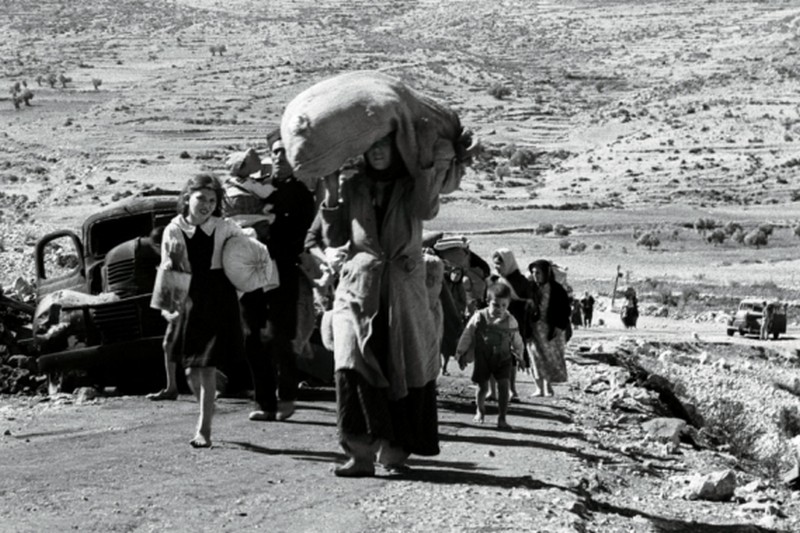
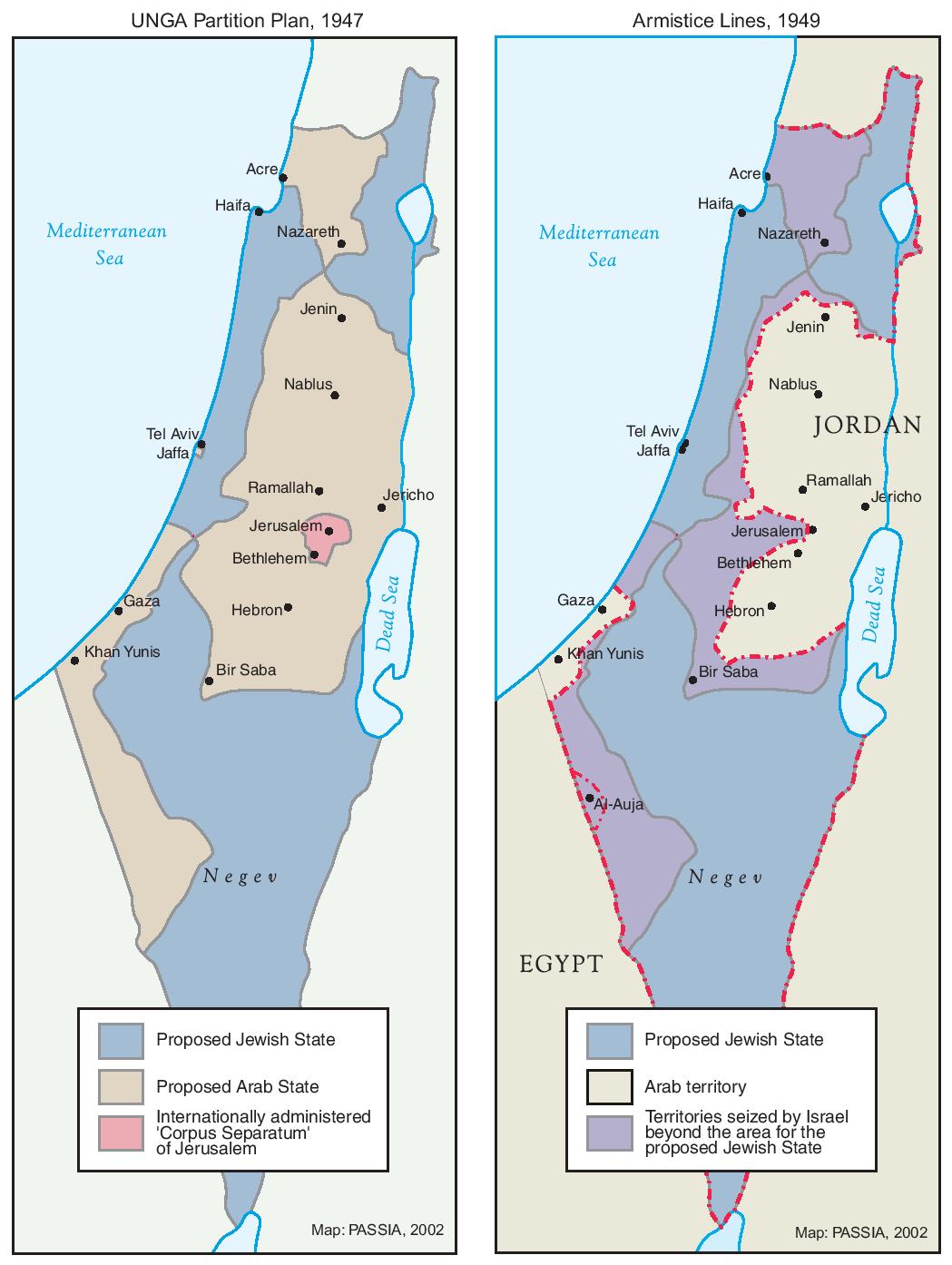
(b). Due to racist UK-backed Zionist colonization after 1917, by 1948 there were about 2.0 million people in Palestine, 1.4 million being Indigenous Palestinians and 0.6 million being Jewish Zionist settlers, but in the 1948 Nakba (Catastrophe) 800,000 Palestinians (57% of the Indigenous Palestinian population) were expelled by the UK-backed, UK-armed and UK-trained Zionists, this being associated with 530 villages emptied, 70 massacres, 15,000 Palestinians killed, and Zionist seizure of 78% of Palestine. In the 1967 Naksa (Setback) the genocidally racist Zionists seized all of Palestine plus parts of Egypt, Lebanon, Jordan and Syria and expelled a further 400,000 Arabs [28, 29].

(c). Today of  15.5 million mostly impoverished Palestinians, about 7 million are Exiled Palestinians (illegally prevented from return to the land continuously inhabited by their forebears for millennia), 5.5 million Occupied Palestinians (3.3 million in the West Bank, and 2.2 million in the blockaded and bombed Gaza Concentration Camp, and all deprived of the human rights specified by the 30 Articles of the Universal Declaration of Human Rights under violent and highly abusive military occupation for 56 years), and 2.0 million Israeli Palestinians (able to vote for the government ruling them, albeit as Third Class citizens subject to 60 Nazi-style, race-based discriminatory laws, persecutions, exclusions, extensive home demolitions, and the endlessly publicly-repeated  threat of mass ethnic cleansing) [10].

(d). The GDP per capita is a deadly $3,500 for Occupied Palestine versus $55,500 for Apartheid Israel [30]. About 44% of Occupied Palestinians are children and 70% are women and children. Israeli Apartheid involves massive abuse of children, mothers and women.

(e). Indigenous Palestinians represent over 50% of the Subjects of Apartheid Israel, and Jewish Israelis 47%, but the 5.5 million Occupied Palestinians (73% of the 7.5 million Indigenous Palestinian Subjects)  cannot vote for the government ruling them i.e. they are subject to egregious Apartheid as recognized by major human rights groups, numerous eminent scholars, heroes in the fight against neo-Nazi Apartheid in South Africa, and billions of decent, informed people around the world [31-33].

(f.). The ongoing, century-long Palestinian Genocide (the term is not actually used in the book) has been associated with 2 mass population expulsion atrocities, about 0.1 million violent deaths and over 2 million avoidable deaths from violently-imposed deprivation since the British imperialists invaded the Middle East in 1914 for oil and imperial hegemony. The genocidal intent of the Zionist settler-colonial project has been clearly stated by Zionist leaders from genocidally psychopathic founder of Zionism, Theodor Herzl (We shall try to spirit the penniless population across the border by procuring employment for it in the transit countries, while denying it employment in our country) to present serial war criminal Israeli PM Benjamin Netanyahu (“Israel should have exploited the repression of the demonstrations in China, when world attention focused on that country, to carry out mass expulsions among the Arabs of the territories”). Total expulsion of the Indigenous Palestinians is presently publicly  articulated by the racist psychopaths of the present far right, neo-Nazi Apartheid Israeli government [28, 29, 34].

(g). Presently the Zionists violently kill about 500 Palestinians each year, and a further 4,000 die avoidably each year from imposed deprivation (denial of proper shelter, sustenance and medical services in violation of the Fourth Geneva Convention). In the last 20 years about 10,000 Palestinians have been killed violently, scores of thousands have been wounded, and about 80,000 have died from imposed deprivation. In contrast, about 5,000 invading Zionists have been killed by Palestinians since 1920. In the last 20 years only about 50 Israelis have been killed by home-made Gaza rockets, whereas about 4,000 Israelis have been murdered by fellow Israelis. Terrorism is as terrorism does, but the violently racist West regards the mass murdering Zionists as civilized Europeans and the Indigenous Palestinians as “terrorists”, this being the justification for Apartheid Israel’s horrendous militarization, acquisition of 90 nuclear weapons and development of a deadly militarized economy [35].

(h). Not set out explicitly in “The Palestine Laboratory”, Apartheid Israel egregiously violates numerous International Laws and Conventions including the UN Charter, the UN Convention on the Prevention and Punishment of the Crime of Genocide (UN Genocide Convention), the Rights of the Child Convention (United Nations Convention on the Rights of the Child ), the UN Refugee Convention (the UN Convention Relating to the Status of Refugees), the Geneva Conventions, the International Criminal Court, the Declaration on the Rights of Indigenous People, the International Convention on the Suppression and Punishment of the Crime of Apartheid, the Treaty on the Prohibition of Nuclear Weapons (TPNW), the International Covenant on Civil and Political Rights, numerous UNGA and UNSC Resolutions, the Universal Declaration of Human Rights, the International Convention on the Elimination of All Forms of Racial Discrimination, the 1926 Slavery Convention or the Convention to Suppress the Slave Trade and Slavery, the  2015 Paris Climate Agreement, and numerous UNGA and UNSC Resolutions [10].

(i). In particular and further to (h) above,  Apartheid Israel grossly violates Articles 55 and 56 of the Fourth Geneva Convention that demand that an Occupier is obliged to provide its Conquered Subjects with life-sustaining food and medical requisites “to the fullest extent of the means available to it” [36]. While Apartheid Israel prospers hugely from the export of highly advanced killing, imprisoning and surveillance technology, it deliberately keeps 5.5 million Occupied Palestinians at a deadly level of bare existence that passively kills about 4,000 Occupied Palestinians each year [10].

(j) Finally, the Elephant in the Room reality not mentioned in “The Palestine Laboratory” is that the Ashkenazi Jews (Eastern European Jews) who run all of Israel/Palestine (and US foreign policy) descend from non-Semitic, Turkic Khazar converts to Judaism in abut the 8th- 9th  centuries CE. Indeed I come from a very famous Ashkenazi Jewish Hungarian family (ask any surgeon or mathematician) but DNA analysis says that it was overwhelmingly Ashkenazi Jewish with zero Middle Eastern (i.e. zero Semitic) contribution. Indeed the genetic descendants today of the Jewish and non-Jewish Palestinians at the time of Jesus are the sorely oppressed Indigenous Palestinians, whereas most Jewish Israelis descend from Khazar, Berber and Yemeni converts to Judaism in the first millennium CE [37-45]. The Ashkenazi Jewish history is real and variously rich and tragic but the claim of the genocidally racist Zionists to Palestine is religious fantasy transmuted into genocidally racist neo-Nazi settler-colonialism after the fashion of 16th – 20th century genocidal Western settler-colonialism .

(B). Detailed analysis of “The Palestine Laboratory”.

Numbers matter and hopefully the above summary will fill out the quantitative dimension of the ongoing Zionist atrocity in Palestine that is largely absent from “The Palestine Laboratory”. In the following brief summation of the various chapters of the book I will concentrate on the numbers.

The Introduction outlines the major themes in the book and Zionist militarization from the time of the Indigenous Palestinian rebellion in the 1930s (not mentioned in the book is that in the1930s Arab Revolt 10% of the adult male Palestinians were killed by the British and by British-armed and British-trained Zionist terrorist militias [46-48]). The extraordinary silence of the West over the horrendous ethnic cleansing and subjugation of the Palestinians derives from Zionist subversion and perversion of the West that is dominated by Zionist-subverted America. Further, neo-Nazi Apartheid Israel egregiously censors media. Thus Loewenstein: “All media outlets in Israel, along with publishers and authors, must submit stories related to foreign affairs and security to the Israeli Defense Force (IDF) chief military censor before publication” (p3 [1]).

The Introduction sketches key issues such as (a) increasing Jewish acknowledgment of Israeli Apartheid, (b) huge Israeli sales of state-of-the-art war, control and surveillance technology (pre-tested on Palestinians) to dictatorships and amoral democracies around the world, and (c) the fervent pro-Zionism of the Zionist-subverted, US-dominated West and of White Supremacist neo-Nazis. No doubt cognizant of its wider audience and the requirement for “respectful conversation” (self-censorship) in the West, the book stops short of declaring the horrible reality that Zionism is genocidal racism and Nazism without gas chambers and industrial mass murder but with  mass population expulsions, active and passive large-scale killing,  and comprehensive subjugation of the Indigenous Palestinians population by one of the world’s biggest high technology militaries [35] with about 90 nuclear weapons and delivery systems. Also missing from the book is the plight of about 7 million Exiled Palestinians forbidden on pain of death from returning to the Land continuously inhabited by their forebears to the very dawn of the Agrarian Revolution 10,000 years ago.

Chapter 1 , “Selling Weapons to Anybody Who Wants Them”, details how the high technology Israeli arms industry from the 1930s onwards has advanced from use in the genocide and subjugation of Palestine  and repeated defeat of its impoverished neighbours to huge global sales of high technology military weapons (drones, missiles, anti-missiles, guns, warships, planes and ordnance) to the West and to dictatorships in the Global South. Apartheid Israel (variously independently or as a dirty tricks agent of the US) has been variously assisting horrendous and genocidal military violence in many countries including Chile, Colombia, Guatemala (the Mayan Indian Genocide),  Iran (under the Shah) , Indonesia (under Suharto), Romania (under Ceausescu), Haiti (under Duvalier), Paraguay (an unsuccessful scheme to get rid of Gaza Palestinians), Argentina, Lebanon, Afghanistan, Nicaragua (the Iran Contra Affair), Sudan and South Sudan (civil wars), Myanmar (Rohingya Genocide) and Sri Lanka (Tamil Genocide)  and elsewhere in Central America, Africa and Asia [49]. Loewenstein: “The sheer number of dictatorships with whom Israel has had relations is staggering (p34 [1]). Loewenstein details later in the book Israeli involvement in the Sudan, South Sudan, the Myanmar Rohingya Genocide and the Sri Lankan Tamil Genocide.

The horrendous “Body Count” of deaths from violence and war-imposed deprivation in the “death zones” of the Global South is missing from the book (that is after all to be mostly read by squeamish, personally gentle Western folk). Thus as estimated in 2007 avoidable deaths totalled 24 million (1950-2005) in countries variously occupied by Apartheid Israel (Egypt, Palestine, Jordan, Lebanon and Syria) [24], a huge total that puts Apartheid Israel into the Nazi Germany category of evil [21]. Of course these terrible realities are resolutely not reported in the ostensibly democratic but neo-Nazi, racist and pro-Zionist West, and any criticisms of Apartheid Israel by anti-racist Jews and non-Jews alike are falsely labelled “anti-Semitic” by the endlessly mendacious Zionists and their racist supporters.

Chapter 2, “September 11 was Good for Business”, shows how from the 1990s onward “Israel moved to become more militarily autonomous from Washington” (p45 [1]). What is not stated is that since Israeli acquisition of nuclear weapons (with US, UK and French help) by the middle 1960s, the US became progressively more Zionist beholden. Indeed today 30% of the Biden Administration are Jewish Zionists and the remainder are “moderate” Christian Zionists  (as opposed to the fanatical, Biblical literalist  Pentecostal Christian  Zionist Trump supporters) [50]. The only strong opponents in Congress of Apartheid Israel’s war criminal excesses are the 6 members of the so-called Squad of decent, anti-racist Democrat women. Nevertheless neo-Nazi Apartheid Israel went from US aid being 10% of the economy in 1981 to about $4 billion or about 1% of the economy by 2020 (p46 [1]). The Israeli economy increasingly involved military and surveillance technologies. Through supply of modern weapons Apartheid Israel was involved in the 1994 onwards Rwandan Genocide (1 million Rwandans massacred) , the Colombian civil war, and dictatorship in Equatorial Guinea. The Apartheid Israeli economy was increasingly involved in cyber technology. Israel company Any Vision developed a system for mass surveillance of Palestinians, and now operates in over 40 countries, including Russia, China (Hong Kong), and the US (p63 [1]).

Of course as a Western Mainstream-published book nothing is said about almost certain US involvement (and hence very likely Israeli involvement) in the  9/11 atrocity (3,000 mostly Americans killed) that was used as the “excuse” for the US Alliance to invade the Muslim World from Libya to the Philippines in the US War on Terror. It was estimated in 2015 that 32 million Muslims died from violence (5 million) and deprivation  (27 million) in 20 countries invaded by the neo-Nazi US Alliance since the US Government’s 9/11 false flag atrocity [51, 52]. Numerous science, engineering, architecture, aviation, military and intelligence experts have concluded that the US Government did 9/11 with some arguing for Israeli involvement.  Critical evidence for this alternative hypothesis to the lying Bush “official US version of 9/11” (the US version is accepted by only a minority of Humanity) is the endless mendacity of US and Israeli governments, low temperature fires in the Twin Towers, the sheer implausibility that men barely trained on single-engine light aircraft could fly passenger jets into precise building targets, and the rapid collapse of 3 skyscrapers (in about 10 seconds in “perfect” examples of explosive demolition). Indeed application of the latest chemical physics technologies has revealed unexploded nanothermite high explosive in the World Trade Center (WTC) dust. Further, US engineers have reported that the collapse of WTC Building 7 (WTC7) was due to simultaneous loss of all key structural support elements (i.e. due to explosive demolition). The closest the US Government has come to recognition of the Big Lie has been former President Donald Trump and former Vice President Al Gore roundly condemning the huge intelligence failure that enabled 9/11 to happen [52-59].

Loewenstein does report on how 9/11 enormously helped the Israeli war business. Israeli PM Netanyahu questioned about 9/11 on US TV stated: “It’s very good,. Well, not very good, but it will generate immediate sympathy” (p48 [1]).  The Zionist-subverted West continues to swallow the lying Bush “official US version of 9/11” and ignores the stark difference between about 3,000 Americans killed on 9/11 and over 30 million Muslims killed in the ongoing US War on Terror (aka the US War on Muslims) [51, 52]. Loewenstein: “In 2020, Israel spent US$22 billion on its military and was the twelfth biggest military supplier in the world, with sales of more than US$345 million” (p51 [1]). However he also states: “Global public opinion in the US toward Israel has taken a nosedive since 2001… 34 per cent of [US] Jews agreed that “Israel’s treatment of Palestinians is similar to racism in the United States”, 25 per cent agreed that “Israel is an apartheid state”, and 22 per cent agreed that “Israel is committing genocide against the Palestinians” (p51 [1]). Loewenstein concludes that “Israel has thus fully embraced the “war on terror” and richly profited from it” (p52 [1]), and describes key Israeli involvement in the Sri Lankan Tamil Genocide, the Rwandan Genocide, the Myanmar Rohingya Genocide, the South Sudan civil war, and violent despotism in Equatorial Guinea (pp 52-54 [1]).

Finally Loewenstein describes extraordinarily extensive use of facial recognition technology that has made the Occupied Palestinians electronic prisoners of Apartheid Israel. And now this Israeli technology is being sold to neo-Nazi regimes and ostensible democracies alike across the World.

Chapter 3, “Preventing an Outbreak of Peace”, commences with a description of horrible sophisticated electronic targeting of Palestinians so that “Killing or injuring Palestinians should be as easy as ordering a pizza” (p61 [1]). It goes on to describe the genocidal racism of Israeli leaders and the succession of mass expulsions, Gaza massacres, and proposed total ethnic cleansing of Indigenous Palestinians (for an alphabetically-organized  compendium of genocidal Zionist statements over 130 years see [34]).  Loewenstein describes the chilling Israeli Unit 8200 involved in highly intrusive mass surveillance of Occupied Palestinians. The information garnered includes information on illicit affairs and homosexuality that is used to blackmail Palestinians into collaboration with the neo-Nazi Occupiers. This technology is being sold to the World – and thus we are all becoming Palestinians.

Loewenstein: “The Covid-19 pandemic was the perfect opportunity for Israeli surveillance firms to attract business; arresting the spread of the disease required effective contact tracing and Israeli companies promoted themselves as the best in the world” (p91 [1]). However Orthodox Jews objected to control measures, this resulting in the community of Bnei Brek being sealed off.  Loewenstein comments: “For some sections of the Israeli public there’s more hatred towards Orthodox communities than Palestinians (p96 [1]).  Not mentioned in the book is that true Orthodox Judaism is intrinsically anti-Zionist by holding that Jews cannot return to Zion (Jerusalem) until the Messiah arrives to declare the glory of the Lord to the whole world [60].

Chapter 4, “Selling Israeli Occupation to the World”, describes the horrible use of Israeli technology to keep Africans out of Israel (by a high technology fence along the Israel-Egypt border) and to keep desperate refugees from reaching Europe (by Israeli drones used by the EU Frontier agency for locating but then ignoring refugees headed for the neo-Nazi EU and who thence drowned at sea). Loewenstein: “[Humanitarian] Sea-Watch cannot compete with this surveillance capability and is woefully outmatched by the Frontier infrastructure” (p100 [1]). Loewenstein castigates cooperation between Greece and the EU in general in this obscene and deadly violation of refugee human rights.

Loewenstein takes a disturbing look at Germany-Israel relations. Apparently driven by guilt over the WW2 Jewish Holocaust (but probably also driven by innate racism and neo-Nazism as reflected in election results) German reparations enabled the militarization of  Apartheid Israel. Germany buys Israeli weaponry pre-tested on Occupied Palestinians, and German authorities are threatening and censoring anti-racist public demonstrations in favour of Palestinian human rights. Germany supplied Apartheid Israel with 6 submarines as launch vehicles for Israeli nuclear weapons. Germany and all the nations that collaborated with Nazi Germany in WW2 belong to the anti-Semitic and holocaust-denying International Holocaust Remembrance Alliance (IHRA). The IHRA is anti-Jewish anti-Semitic and anti-Arab anti-Semitic (by falsely defaming anti-racist Jewish, Palestinian, Arab and Muslim critics of Apartheid Israel as anti-Semitic) and holocaust ignoring (by ignoring all WW2 holocausts other than the WW2 Jewish Holocaust (5-6 million deaths), and indeed ignoring some 70 holocaust and genocide atrocities. The WW2 holocausts ignored by the IHRA include (deaths from violence and deprivation in brackets) the WW2 Polish Holocaust (6 million), the European Holocaust (30 million Slavs, Jews and Gypsies killed by the German Nazis), the Soviet Holocaust (27 million killed by the Nazis), the WW2 Chinese Holocaust (35-40 million Chinese killed under the Japanese), and the WW2 Bengali Holocaust  (WW2  Indian Holocaust, WW2 Bengal Famine; 6-7 million Indians deliberately starved to death for strategic reasons by the British with food-denying Australian complicity) [24-26]. All but 3 IHRA member countries shockingly voted No to the annual UNGA Anti-Nazi Resolution in 2022 that  condemns Nazism, neo-Nazism and related racist obscenities [45].

This chapter concludes with a disturbing account of rising anti-Jewish anti-Semitism in Europe, in addition to the horrendously deadly, post-9/11, hysteria-driven US Islamophobia (anti-Arab anti-Semitism). One must reiterate what the Zionist-subverted Western Mainstream ignores, that while Palestinians and Arabs are ethnically Semitic, the dominant European Ashkenazi Jews (such as myself) are not Semitic and derive from non-Semitic Turkic Khazar converts to Judaism in about the 8th – 9th centuries CE [37-44].

Chapter 5, “The Enduring Appeal of Israeli Domination”, describes initial African support for an independent Israel, and how this has dramatically changed since 1990 as the genocidal racism of Apartheid Israel and its Western backers became increasingly apparent. Genocidally racist Apartheid Israel found an ideological, ethnonationalist partner in Apartheid South Africa. Neo-Nazi Afrikaaner White Supremacists  had been imprisoned during WW2 for Nazi sympathies  but in 1948 their National Party was elected (Whites only suffrage) and began installing neo-Nazi Apartheid. Apartheid Israel assisted Apartheid South Africa creating an arms industry, developing nuclear weapons, and overcoming global anti-Apartheid sanctions [24]. The book admits that South Africa permitted Apartheid Israel to test nuclear weapons but incorrectly implies that South Africa did not actually acquire nuclear weapons. South Africa acquired 6 nuclear bombs but eventually dismantled them after the fall of Apartheid. The architect of South African Apartheid, Dr Hendrik Verwoerd, declared (1961): “Israel, like South Africa, is an apartheid state” [61, 62]. Neo-Nazi Apartheid Israel was involved with Apartheid South African Bantustans and has applied the same model to check-point entry and exit West Bank “Bantustans” and the bombed and blockaded Gaza Concentration Camp [63].

While India under Congress lead the non-aligned and socialist world in boycotting and sanctioning Apartheid South Africa (and banned Israel arms sales over corruption issues), under the right-wing and Hindu nationalist Bharatya Janata Party (BJP; Indian People’s Party)  led by Narendra Modi Indian ethnonationalism and Islamophobia have found a common party with ethnonationalist and anti-Arab anti-Semitic Apartheid Israel and Zionism. India is applying harsh Israeli tactics and technology to disputed Kashmir.

In relation to China, Loewenstein comments: “Chinese ethno-authoritarianism scares the West” (p133 [1]) and quotes Human Rights Watch’s comparisons between the Occupied Palestinians and the 12 million Uyghurs in Xinjiang (about half the population). However while China has been heavy-handed in Xinjiang to prevent disastrous insurgency, claims by the serial war criminal and genocidal US Alliance of a “Uyghur Genocide” are utterly false and utterly hypocritical when one considers the horrendous ethnic cleansing of Palestine. Loewenstein’s analysis of Xinjiang is flawed and derives from a US-imposed Mainstream Western anti-China stance. Indeed the health and education statistics for Xinjiang and Tibet are vastly better than in neighbouring Afghanistan that suffered 20 years of US-imposed war and in which avoidable deaths from deprivation in 2001-2021 totalled an appalling 6 million, evidence of horrendous violation of Articles 55 and 56 of the Fourth Geneva Convention by the neo-Nazi and war-criminal US Alliance [24-27, 64-66]. China supports human rights for Palestinians that are denied by US-, Australia-, UK- and EU-backed Apartheid Israel. Loewenstein asks: “But if Chinese technology and its ideology is a threat [to] the world, why is [Apartheid] Israel not viewed in the same way?” (p135 [1]).

Loewenstein also writes about the US-Mexico border as a major site of Israeli security and surveillance companies employing technologies also used against the Occupied Palestinians. This has been associated with a huge spike in refugee deaths at the border (p137  [1]), with this also impacting Indigenous Americans. Loewenstein: “Over seven thousand bodies have been found on the US/Mexico border since the 1990s” (p137 [1]) and  “It was therefore not surprising that autonomous surveillance robots started appearing on both the Israel/Gaza border and the US/Mexico border in 2021 and 2022” (p141 [1]).

Chapter 6, “Israeli Mass Surveillance in the Brain of Your Phone”, deals with the Israeli NGO Pegasus spyware system that can hack into mobile phones, spy on conversations and even insert material enabling criminal prosecution of the innocent users. Loewenstein states: “Israel’s surveillance apparatus is a competitor and ally of Washington’s National Security Agency (NSA), the most powerful eavesdropping network in the world. While outmatched in terms of manpower, Israel has a long history of spying on its closest ally, a fact that does not appear to bother the superpower” (p143 [1]). Israeli Pegasus and similar systems have been used to identify, arrest, torture and kill dissidents in the Middle East and is being adopted by India and indeed throughout the world. Another Israeli company Celebrite is widely used around the world to target political opponents and activists. Israeli Black Cube is an espionage-for-hire system being used in Africa, Europe and the US. Apartheid Israel has monetized the imprisonment and surveillance technology oppressing 5.5 million Occupied Palestinians by selling these systems to democracies and dictatorships alike around the World. Thanks to neo-Nazi Apartheid Israel the total control, galactic fascist state of the BBC outer space science fiction TV series “Blake’s 7” is well on the way to being realized on Earth [67].

Chapter 7, “Social Media Companies Don’t like Palestinians”, describes how US media giants like Google, Twitter (now X), YouTube, and Facebook censor material critical of neo-Nazi Apartheid Israel. Notwithstanding the freedom of speech First Amendment of the US Constitution (that permits flagrant religion-based lying to children i.e. massive intellectual child abuse), Facebook has over 15,000 content moderators (censors). The examples given in the  this chapter suggest that criticism of Israeli Apartheid, including that by a growing number of anti-racist Jews, is being falsely regarded as “hate speech” and “anti-Semitism”, the 2 favourite canards of the genocidally racist and remorselessly mendacious neo-Nazi Zionists (Zionazis).

Not quoted in the book, the CEO of YouTube boasted of having diverted 70% of viewers away from “concerning sites” to “approved sites” [2, 3]. The World Socialist Web Site (WSWS) has reported that Google (or the Google-directed robot) greatly reduced the visibility of socialist articles on Google Searches, noting that about 95% of searchers don’t bother going beyond the first 20 search results [68]. Bing Searches are vastly better, and hence people are advised to “Bing it!” [69-71]. All this is very daunting. On a personal note, I found that a Wikipedia entry about me was removed (notwithstanding that I have authored 8 huge books, and hundreds of carefully researched humanitarian articles, as well as  over 100 scientific papers in a half-century scientific career). I was recently removed from Twitter (X). A resolute critic of the appalling crimes against Humanity by Apartheid Israel, I have found that that some  of my key articles have effectively disappeared from Google Searches by being relegated well down in the search results. In the last dozen years I have been falsely defamed by Zionists and coincidentally effectively removed from Mainstream visibility in Zionist-subverted and Zionist-perverted Australia.

A detailed 2018 analysis of major media companies found that a significant part of the explanation for huge Zionist media censorship is that the American 60% of the world’s 30 biggest media companies have a disproportionately high Jewish Board membership. Jews and females represent 2% and 51%, respectively, of the US population but average 33% and 19%, respectively, of Board members of the top 18 US media companies. It is a reasonable assumption that extremely wealthy Jews would be very likely to be pro-Zionist, in contrast to poor Jews or modestly prosperous intellectual Jews who would be more likely in comparison to be anti-racist and thus anti-Zionist. By way of comparison with Alphabet (owner of Google) that is #1 in the global Mainstream media, Microsoft ($4.58 billion annual revenue) is #17 in the world Mainstream media. Among other things Microsoft owns the search engine Bing and  has an 18% Jewish Board and an 18% female Board as compared to a 46% Jewish Board and 23% female Board for Alphabet. However a notable difference is that Bing Searches reveal humane websites variously rendered effectively invisible by Google [71].

These astounding disparities were not in the book. However Loewenstein notes that Facebook established an Oversight Board that “included Emi Palmor, the former director general of Israel’s [In]Justice Ministry. Palestinians are not currently represented on the Board” (p202 [1]). Further, Loewenstein notes the rightful Western indignation over the war criminal Russian invasion of Ukraine as compared to the massive Western silence over the US-backed Apartheid Israeli invasion and 56-year subjugation of the Occupied Palestinians (and indeed the US invasion of over 50 countries since the defeat of German Nazism in 1945 [72-79]).

The Conclusion of the book comments that “The worst-case scenario, long-feared but never [totally] realized, is ethnic cleansing against occupied Palestinians or population transfer, forcible expulsion under guise of national security” (page 211 [1]). This mass expulsion has been explicitly advocated by Zionist leaders from Theodor Herzl (the genocidally racist founder of Zionism) to present Apartheid Israeli PM Benjamin Netanyahu and his genocidally racist and fascist colleagues today (for a catalogue of  appalling genocidal Zionist statements see [34]). 2 mass expulsions have already occurred (800,000 in 1948 and 400,000 in 1967). Indeed Tom Pickering, a former US ambassador to Apartheid Israel and the UN, has predicted eventual complete ethnic cleansing of the Occupied Palestinian Territories [34].

Only the presently racist West recovering some semblance of decency and supporting Indigenous Palestinian human rights can stop such further genocidal atrocities. Indeed in so doing the West can also protect itself from the ongoing subversion and perversion by the neo-Nazi Zionist state and its traitorous and racist supporters. One notes that Australia is second only to the US as a supporter of Apartheid Israel but  there is egregious violation of Australians,  Australian institutions and Australia by Apartheid Israel and its traitorous agents [80, 81]. Thus, for example, the US supplies raw intelligence on Australians to Apartheid Israel [82], and the Zionist-subverted and US lackey Australian Labor  Government has an extraordinary record of egregious and blatant lying in support of Apartheid Israel [83].

Final comments.

Antony Loewenstein’s “The Palestine Laboratory” is a powerful and humane book that should be in every library. Anti-Apartheid and world hero Nelson Mandela famously stated that “The UN took a strong stand against apartheid; and over the years, an international consensus was built, which helped to bring an end to this iniquitous system. But we know too well that our freedom is incomplete without the freedom of the Palestinians” [33]. “The Palestine Laboratory” describes how Apartheid Israel is hugely profiting by exporting the high technology instruments of violent subjugation, mass incarceration and surveillance to the rest of the world. We are all set to become Palestinians.

What can decent people do? Decent people must (a) inform everyone they can (reading “The Palestine Laboratory” would be a useful start), (b) urge and apply Boycotts Divestment and Sanctions (BDS) against Apartheid Israel and all people, politicians, parties, collectives, corporations and countries supporting Apartheid Israel (and hence the vile crime of Apartheid), and (c) expose and oppose the globally entrenching Surveillance State that is remorselessly expanding based on technology pre-tested upon Indigenous Palestinians in neo-Nazi Apartheid Israel’s “Palestine Laboratory”.

References.

[1]. Antony Loewenstein, “The Palestine Laboratory. How Israel exports the technology of occupation to the world”, Scribe 2023.

[2].  Soren Korsgaard , “One World Digital Dictatorship”, Crime & Power, 5 January 2020: https://www.crimeandpower.com/2020/01/05/one-world-digital-dictatorship/ .

[3].  Gideon Polya, “Review: “One World Digital Dictatorship” by Soren Korsgaard – Digital Nightmare”, Countercurrents, 23 January 2020: https://countercurrents.org/2020/01/review-one-world-digital-dictatorship-by-soren-korsgaard-digital-nightmare/ .

[4]. Yuval Noah Harari, “Homo Deus. A brief history of tomorrow”, Vintage, London, 2017.

[5]. Gideon Polya, “Review: “Homo Deus” By Yuval Harari – Palestinian Genocide & Climate Genocide Ignored”, Countercurrents, 6 November 2021: https://countercurrents.org/2019/11/review-homo-deus-by-yuval-harari-palestinian-genocide-climate-genocide-ignored/ .

[6]. Max Tegmark, “Life 3.0. Being Human in the Age of Artificial Intelligence”, Penguin, 2017.

[7]. Stanislas Dehaene,  Hakwan Lau and  Sid Kouider, “What is consciousness , and could machines have it?”, Science,   Vol. 358, Issue 6362, pp. 486-492, 27 October  2017: https://science.sciencemag.org/content/358/6362/486.full .

[8]. “Artificial Intelligence. A selection of our stories on AI”, The Economist: https://www.economist.com/artificial-intelligence .

[9]. “How to worry wisely about Artificial Intelligence”, The Economist, 22 April 2023: https://www.economist.com/leaders/2023/04/20/how-to-worry-wisely-about-artificial-intelligence .

[10]. Gideon Polya, “Australia must stop Zionist subversion and join the World in comprehensive Boycotts, Divestment and Sanctions (BDS) against Apartheid Israel and all its supporters”, Subversion of Australia, 15 April 2021: https://sites.google.com/site/subversionofaustralia/2021-04-15 .

[11]. “The genocide of the Palestinian people: an international law and human rights perspective”, Center for Constitutional Rights, 25 August 2016: https://ccrjustice.org/genocide-palestinian-people-international-law-and-human-rights-perspective

[12]. Gideon Polya, “Refutation Of Mainstream-Accepted Racist Zionist Lies Behind Israel ‘s Gaza Massacres And Palestinian Genocide”, Countercurrents, 26 July, 2014: https://www.countercurrents.org/polya260714.htm .

[13]. Gideon Polya, “Israeli-Palestinian & Middle East conflict – from oil to climate genocide”, Countercurrents, 21 August 2017: https://countercurrents.org/2017/08/21/israeli-palestinian-middle-east-conflict-from-oil-to-climate-genocide/ .

[14]. Gideon Polya, “End 50 Years Of Genocidal Occupation & Human Rights Abuse By US-Backed Apartheid Israel”, Countercurrents, 9 June 2017: https://countercurrents.org/2017/06/09/end-50-years-of-genocidal-occupation-human-rights-abuse-by-us-backed-apartheid-israel/ .

[15]. Gideon Polya, “Universal Declaration of Human Rights & Palestinians. Apartheid Israel violates ALL Palestinian Human Rights”, Palestine Genocide Essays, 24 January 2009: https://sites.google.com/site/palestinegenocideessays/universal-declaration-of-human-rights-palestinians .

[16]. Gideon Polya, “70th anniversary of Apartheid Israel & commencement of large-scale Palestinian Genocide”, Countercurrents, 11 May 2018: https://countercurrents.org/2018/05/11/70th-anniversary-of-apartheid-israel-commencement-of-large-scale-palestinian-genocide/ .

[17]. Gideon Polya, “Apartheid Israel’s Palestinian Genocide & Australia’s Aboriginal Genocide compared”, Countercurrents, 20 February 2018: https://countercurrents.org/2018/02/20/apartheid-israels-palestinian-genocide-australias-aboriginal-genocide-compared/ .

[18]. Gideon Polya, “Israelis kill 10 times more Israelis in Apartheid Israel than do terrorists”, Countercurrents, 1 March 2017: https://countercurrents.org/2017/03/01/israelis-kill-ten-times-more-israelis-in-apartheid-israel-than-do-terrorists/ .

[19]. Gideon Polya, “Israeli Jewish Nation-State Law enshrines Apartheid and genocidal racism”, Countercurrents, 24 July 2018: https://countercurrents.org/2018/07/24/israeli-jewish-nation-state-law-enshrines-apartheid-and-genocidal-racism/ .

[20]. Gideon Polya, “Submission To National Anti-Corruption Commission: Australian Labor Government’s Lying For Apartheid Israel”, Countercurrents, 22 July 2023: https://countercurrents.org/2023/07/submission-to-national-anti-corruption-commission-australian-labor-governments-lying-for-apartheid-israel/ .

[21]. Gideon Polya, “A Shocking List of 52 Zionist- & Apartheid Israeli-Nazi Germany Comparisons”, Countercurrents, 7 August 2021: https://countercurrents.org/2021/08/a-shocking-list-of-52-zionist-apartheid-israeli-nazi-germany-comparisons/ .

[22]. Gideon Polya, “Review: “The Plight Of The Palestinians. A Long History Of Destruction”, Countercurrents,  17 June, 2012: https://countercurrents.org/polya170612.htm .

[23]. William A. Cook , editor,  “The Plight of the Palestinians. A Long History of Destruction”, Palgrave Macmillan, London , 2010.

[24]. . Gideon Polya, “Body Count. Global avoidable mortality since 1950”, Korsgaard Publishing, Germany, 2020.

[25]. Gideon Polya, “Jane Austen and the Black Hole of British History. Colonial rapacity, holocaust denial and the crisis in biological sustainability”, 3rd edition Korsgaard Publishing, Germany, 2022.

[26]. Gideon Polya, “US-imposed Post-9/11 Muslim Holocaust & Muslim Genocide”, Korsgaard Publishing, Germany, 2020.

[27]. Gideon Polya in Soren Korsgaard, editor, “The Most Dangerous Book Ever Published: Deadly Deception Exposed”, Korsgaard Publishing, Germany, 272020.

[28]. “Palestinian Genocide”: https://sites.google.com/site/palestiniangenocide/ .

[29]. “2023, 75th Nakba Anniversary: 1948 Nakba (Catastrophe) & Palestinian Genocide”: https://sites.google.com/site/palestiniangenocide/1948-nakba-catastrophe-palestinian-genocide .

[30]. “List of countries by GDP (nominal) per capita”, Wikipedia: https://en.wikipedia.org/wiki/List_of_countries_by_GDP_(nominal)_per_capita .

[31]. BDS – Boycott Apartheid Israel: https://sites.google.com/view/bdsopinions/home .

[32]. “Jews Against Racist Zionism”: https://sites.google.com/site/jewsagainstracistzionism/ .

[33]. “Non-Jews Against Racist Zionism”: https://sites.google.com/site/nonjewsagainstracistzionism/ .

[34]. “Zionist quotes re racism and Palestinian Genocide”, Palestinian Genocide :  https://sites.google.com/site/palestiniangenocide/zionist-quotes .

[35]. Gideon Polya, “Apartheid Israel Among World’s Leading Countries For Militarization, Violence, Abuse And Genocide”, Countercurrents, 16 May 2023: https://countercurrents.org/2023/05/apartheid-israel-among-worlds-leading-countries-for-militarization-violence-abuse-and-genocide/ .

[36]. “Fourth Geneva Convention”: https://www.un.org/en/genocideprevention/documents/atrocity-crimes/Doc.33_GC-IV-EN.pdf .

[37]. “Khazars”, McGill: https://cs.mcgill.ca/~rwest/wikispeedia/wpcd/wp/k/Khazars.htm .

[38]. Palestine Maps, “Jews of Khazaria, brief history and other resources”: https://www.palestineremembered.com/Acre/Maps/Story800.html .

[39]. Gideon Polya, “Refutation Of Mainstream –Accepted Racist Zionist Lies Behind Israel ‘s Gaza Massacres And Palestinian Genocide”, Countercurrents,  26 July 2014: https://www.countercurrents.org/polya260714.htm .

[40]. Eran Elhaik,”Ashkenazic Jews’ mysterious origins unravelled by scientists  thanks to ancient DNA”,  The Conversation, 5 September 2018: https://theconversation.com/ashkenazic-jews-mysterious-origins-unravelled-by-scientists-thanks-to-ancient-dna-97962 .

[41]. Eran Elhaik, “Uncovering ancient Ashkenaz – the birthplace of Yiddish speakers”,  The Conversation, 6 May 2016: https://theconversation.com/uncovering-ancient-ashkenaz-the-birthplace-of-yiddish-speakers-58355 .

[42]. Arthur  Koestler, “The Thirteenth Tribe: The Khazar Empire and its Heritage”, Hutchinson, 1976.

[43]. Shlomo Sand, “The Invention of the Jewish People”, Verso, London, 2009.

[44]. Marta D. Costa et al, “A substantial prehistoric European ancestry amongst Ashkenazi maternal lineages”, Nature, 2013: http://www.nature.com/ncomms/2013/131008/ncomms3543/full/ncomms3543.html .

[45].Gideon Polya, “Melbourne University Adopts Anti-Semitic & Holocaust-Ignoring IHRA Definition Of Anti-Semitism”, Countercurrents, 5 February 2023: https://countercurrents.org/2023/02/melbourne-university-adopts-anti-semitic-holocaust-ignoring-ihra-definition-of-anti-semitism/ .

[46]. “Gideon Goes To War: The Story of Major-General Orde C. Wingate”, Scribner, 1955.,

[47]. Gordon Thomas, “Gideon’s Spies. The Secret History of the Mossad”, Pan Books, 1999.

[48]. “The Palestinian Arab Revolt, 1936-1939”, The Palestinian History Tapestry: https://www.palestinianhistorytapestry.org/tapestry/0450-kuyffiyeh-1936-arab-revolt/ .

[49]. Apartheid Israeli state terrorism: (A) individuals exposing Apartheid Israeli state terrorism, and (B) countries subject to Apartheid Israeli state terrorism”: https://sites.google.com/site/palestiniangenocide/apartheid-israeli-state-terrorism .

[50]. Gideon Polya, “Zionist-subverted America:  Jewish Zionists Are One Third Of The Biden Cabinet”, Countercurrents, 27 January 2022: https://countercurrents.org/2022/01/zionist-subverted-america-jewish-zionists-are-one-third-of-the-biden-cabinet/ .

[51]. Gideon Polya, “Paris Atrocity Context: 27 Million Muslim Avoidable  Deaths From Imposed Deprivation In 20 Countries Violated By US Alliance Since 9-11”, Countercurrents, 22 November, 2015: http://www.countercurrents.org/polya221115.htm .

[52]. “Experts: US did 9-11”: https://sites.google.com/site/expertsusdid911/ .

[53]. Gideon Polya, “Lying  Mainstream Media Ignore Expert New 9/11 WTC7 Demolition Report”, Countercurrents, 22 August 2022: https://countercurrents.org/2020/08/lying-mainstream-media-ignore-expert-new-9-11-wtc7-demolition-report/ .

[54]. Dr. J. Leroy Hulsey, Dr. Zhili Quan, and Professor Feng Xiao (Institute of Northern Engineering, University of Alaska Fairbanks) , Final Report. “A structural reevaluation of the collapse of World Trade Center 7”, March 2020: https://files.wtc7report.org/file/public-download/A-Structural-Reevaluation-of-the-Collapse-of-World-Trade-Center-7-March2020.pdf .

[55]. Feng Xiao and Zhili Quan, “A structural reevaluation of the collapse of World Trade Center 7”, Institute of Northern Engineering, University of Alaska Fairbanks, March 2020: http://ine.uaf.edu/wtc7 .

[56]. David Ray Griffin, “The Mysterious Collapse of World Trade Center 7: Why the Final Official Report about 9/11 is Unscientific and False”, Olive Branch Press, 2012: https://www.amazon.com.au/Mysterious-Collapse-World-Trade-Center-ebook/dp/B00APDAZZ2 .

[57]. 911Truth.org, “The 40 top reasons to doubt the official story”, 911Truth.org, 16 May 2006: http://www.911truth.org/the-top-40-reasons-to-doubt-the-offical-story/ .

[58]. Niels H. Harrit, Jeffrey Farrer, Steven E. Jones, Kevin R. Ryan, Frank M. Legge, Daniel Farnsworth, Gregg Roberts, James R. Gourley, Bradley R. Larsen, “Active Thermitic Material Discovered in Dust from the 9/11 World Trade Center [32].

[59]. Paul Craig Roberts, “9/11: finally the truth comes out?”, Foreign Policy Journal, 4 January 2019: https://www.foreignpolicyjournal.com/2019/01/04/9-11-finally-the-truth-comes-out/ . Catastrophe, The Open Chemical Physics Journals, vol.2,  pp.7-31 (25), 2009: http://www.bentham-open.org/pages/content.php?TOCPJ/2009/00000002/00000001/7TOCPJ.SGM .

[60]. Neturei Karta, “Israeli Independence Day”: http://www.nkusa.org/activities/Statements/20090429IID.cfm .

[61]. “BDS – Boycott Apartheid Israel”: [17]. BDS – Boycott Apartheid Israel: https://sites.google.com/view/bdsopinions/home . .

[62]. “Non-Jews Against Racist Zionism”: https://sites.google.com/site/nonjewsagainstracistzionism/ .

[63]. “Gaza Concentration Camp”: https://sites.google.com/site/palestiniangenocide/gaza-concentration .

[64]. Gideon Polya, “Submission To Australian National Anti-Corruption Commission Over Huge But Ignored Australian War Crimes”, Countercurrents, 2 August 2023: https://countercurrents.org/2023/08/submission-to-australian-national-anti-corruption-commission-over-huge-but-ignored-australian-war-crimes/

[65]. “Afghan Holocaust, Afghan Genocide”: https://sites.google.com/site/afghanholocaustafghangenocide/ .

[66]. “Muslim Holocaust Muslim Genocide”: https://sites.google.com/site/muslimholocaustmuslimgenocide/  .

[67]. Martin Belam, “Blake’s 7: 40 years on, the dystopian sci-fi drama still packs a punch”, Guardian, 3 January 2018: https://www.theguardian.com/tv-and-radio/tvandradioblog/2018/jan/03/blakes-7-40-years-on-the-dystopian-sci-fi-drama-still-packs-a-punch .

[68]. WSWS, “Google’s new search protocol is restricting access to 13 leading socialist, progressive and anti-war sites”, WSWS, 2 August 2017: http://www.wsws.org/en/articles/2017/08/02/pers-a02.html .

[69]. Gideon Polya, “Google Censorship & Zionist Constraint On Effective Free Speech Threaten Planet”, Countercurrents, 9 August 2017: https://countercurrents.org/2017/08/google-censorship-zionist-constraint-on-effective-free-speech-threaten-planet/ .

[70]. Gideon Polya, “Do Bing Searches To Circumvent Mendacious Pro-Zionist Google Censorship – Bing It!”, Countercurrents, 30 April 2018: https://countercurrents.org/2018/04/do-bing-searches-to-circumvent-mendacious-pro-zionist-google-censorship-bing-it/ .

[71]. Gideon Polya, “Zionist subversion, Mainstream media censorship”, Countercurrents, 9 March 2018: https://countercurrents.org/2018/03/zionist-subversion-mainstream-media-censorship/ .

[72]. Gideon Polya, “Why Australia Should Quit  Military Links With Serial War Criminal America”, Countercurrents, 28 January 2023: https://countercurrents.org/2023/01/why-australia-should-quit-military-links-with-serial-war-criminal-america/ .

[73]. Gideon Polya, “The US Has Invaded 70 Nations Since 1776 – Make 4 July Independence From America Day”, Countercurrents, 5 July, 2013: http://www.countercurrents.org/polya050713.htm .

[74]. William Blum, “Rogue State: A guide to the world’s only superpower”, Common Courage Press, 2005.

[75]. Dr Zoltan Grossman, “From Wounded Knee to Libya : a century of U.S. military interventions”,  ” http://academic.evergreen.edu/g/grossmaz/interventions.html . .

[76]. Benjamin Norton, “US launched 251 military interventions since 1991, and 469 since 1798”, Multipolista, 13 September 2022: https://multipolarista.com/2022/09/13/us-251-military-interventions-1991/ .

[77]. Congressional Research Service, “Instances of use of United States armed forces abroad, 1798-2022”, 22 March 2022: https://crsreports.congress.gov/product/pdf/R/R42738 .

[78]. David Vine, “Where in the world is the U.S. military?”, Politico, July/August 2015: https://www.politico.com/magazine/story/2015/06/us-military-bases-around-the-world-119321/ .

[79]. “Stop state terrorism”: https://sites.google.com/site/stopstateterrorism/ .

[80]. Gideon Polya, “Racist Zionism and Israeli State Terrorism threats to Australia and Humanity”, Palestinian Genocide, 2010: https://sites.google.com/site/palestiniangenocide/racist-zionism-and-israeli .

[81]. Gideon Polya, “50 Ways Australian Intelligence Spies On Australia And The World For UK , Israeli And US State Terrorism”, Countercurrents, 11 December, 2013: https://countercurrents.org/polya111213.htm .

[82]. Philip Dorling, “US shares raw intelligence on Australians with Israel”, Sydney Morning Herald, 12 September 2013: https://www.smh.com.au/national/us-shares-raw-intelligence-on-australians-with-israel-20130912-2tllm.html .

[83]. Gideon Polya, “Submission To National Anti-Corruption Commission: Australian Labor Government’s Lying For Apartheid Israel”, Countercurrents, 22 July 2023: https://countercurrents.org/2023/07/submission-to-national-anti-corruption-commission-australian-labor-governments-lying-for-apartheid-israel/ .

Dr Gideon Polya taught science students at La Trobe University, Melbourne, Australia over 4 decades.

29 August 2023

Source: countercurrents.org

France Will Back ECOWAS Military Action In Niger, Says Macron

By Countercurrents Collective

France will back any military action by the 11-member Economic Community of West African States (ECOWAS) in Niger to restore the rule of ousted leader Mohamed Bazoum, French President Emmanuel Macron has said.

Macron made the comment in response to the Expulsion of French Ambassador Sylvain Itte from Niamey by the new military government that seized power in a coup last month.

The Nigerien Foreign Ministry said on Friday that the envoy had 48 hours to leave the country for refusing to meet with the new military rulers and for “other actions of the French government contrary to the interests of Niger.”

Speaking to diplomats in Paris about French foreign policy on Monday, Macron stated that, despite the coup leaders’ order, the ambassador would remain in Niger.

“France and its diplomats have faced particularly difficult situations in some countries in recent months, from Sudan, where France has been exemplary, to Niger at this very moment, and I applaud your colleague and your colleagues who are listening from their post,” Macron said.

The West African regional bloc, ECOWAS, has been attempting to negotiate with Niger’s coup leaders, but has warned that, if diplomatic efforts fail, troops would be sent to Niamey to restore democratic rule.

Macron called Bazoum’s decision not to resign, which has kept him under house arrest since the July 26 coup, “courageous” on Monday.

France would not change its stance on condemning the coup and supporting Bazoum, the French president insisted, emphasizing that the ousted leader had been democratically elected.

“I think our policy is the right one. It is based on the courage of President Bazoum, and on the commitments of our ambassador on the ground who is remaining despite all the pressure, despite all the declarations made by the illegitimate authorities,” said the French President.

Meanwhile, hundreds of supporters of the military rulers reportedly rallied on Saturday near a French military base in the capital, Niamey, calling for the removal of the soldiers, while accusing Paris of meddling in the country’s affairs.

France still has 1,500 soldiers in its former French colony, its last remaining ally in the Sahel region in the fight against jihadist insurgencies.

Earlier this month, Niger’s new rulers announced the cancellation of five military treaties with France. However, France insisted on carrying out the cooperation agreements, claiming they were signed with the country’s “legitimate authorities.”

Niger Expels French Ambassador

Earlier media reports said:

The military government of Niger on Friday gave French Ambassador Sylvain Itte 48 hours to leave the country. The Nigerien Foreign Ministry justified the decision by Itte not responding to their invitation to a meeting and “other actions of the French government contra the interests of Niger.”

The ambassador’s expulsion comes a month after the military of the former French colony, led by Brigadier General Abdourahamane Tchiani, ousted President Mohamed Bazoum. In response, the ECOWAS sanctioned Niger and threatened a military intervention to “restore democracy.”

Guinea, Mali, Burkina Faso

Guinea declined to go along with the sanctions, while neighboring Mali and Burkina Faso said they would consider such an intervention an act of war against them. Late on Thursday, Niger authorized the two neighbors to come to its defense should ECOWAS invade.

“The three countries have agreed to grant each other facilities for mutual assistance in matters of defense and security in the event of aggression or terrorist attacks,” said a joint statement by their foreign ministries.

Malian Foreign Minister Abdoulaye Diop and his Burkinabe colleague Olivia Rouamba also condemned the “illegal, illegitimate, and inhumane” sanctions imposed on Niger by ECOWAS and the West African Economic and Monetary Union (UEMOA).

Omar Alieu Touray, the ECOWAS Commission president, told AP that the sanctions have resulted in  “serious socio-economic crises” in the country, but were “for the interest of the people of Niger.”

The ECOWAS has repeatedly announced final plans for a military intervention, while continuing to send diplomatic missions to Niamey. On Thursday, a delegation of Islamic leaders was dispatched to Niger by Nigerian President Bola Tinubu, who also chairs the bloc.

Earlier this week, General Tchiani outlined a proposal to return to civilian rule that would take “no longer than three years,” but warned neighbors and France not to interfere in Niger’s internal affairs.

The ECOWAS rejected the offer, demanding the immediate reinstatement of Bazoum. Touray told AP on Friday that the military option was “still on the table.”

Algeria Rejects French Request To Use Airspace For Niger Operation

A media report said:

Algeria has turned down a request from France to fly over its airspace for a military operation in Niger, several media reports suggested on Tuesday, citing the North-African nation’s state radio.

Algerian national radio reported late on Monday that it had learned from sources that France was planning a strike against Niamey’s new military rulers if they did not release Bazoum, who has been held in detention since July 26.

“Faced with Algerian refusal, France turned to Morocco, asking for authorization to pass its military planes through its airspace,” state radio said, according to the Nova News Agency.

France, which has some 1,500 troops in its former colony Niger, has been accused by the coup leadership of plotting to intervene militarily to restore the ousted president’s rule.

The French foreign ministry denied any intention of armed intervention in the West African country but has repeatedly stated that it supports the efforts of the West African regional bloc ECOWAS, which has threatened to use force to reverse the coup.

“France’s joint defense staff denies making a request to fly over Algerian territory,” a source in the French army told Reuters.

ECOWAS said on Friday that it has decided on a date for sending troops into Niger if diplomatic efforts at Bazoum’s restoration prove unsuccessful.

Benin, Ivory Coast, and Nigeria have all expressed willingness to contribute troops to the bloc’s mission to restore democratic order in Niger.

Earlier this month, Algerian President Abdelmadjid Tebboune raised concerns about an armed response to the crisis in Niamey, which he fears “could ignite the whole Sahel region.” He added that Algeria would not use force against its neighbors.

In a statement on Saturday, the Foreign Affairs Ministry of Algeria insisted on a peaceful restoration of democratic order, opposing the possible use of an ECOWAS “standby force” against the military leaders in Niger, saying military interventions “have brought more problems than solutions.”

African Union

The African Union (AU) warned on Tuesday against any external interference in Niger, after suspending the country’s membership as punishment for the coup.

West African Sanctions Blocking Food And Aid From Reaching Niger

A Reuters report said on Thursday:

Thousands of trucks carrying food bound for Niger have been stuck for weeks at the Malanville crossing in northern Benin due to border closures and sanctions imposed on the new military government in Niamey,.

Benin’s Malanville checkpoint is said to be one of the busiest in West Africa, with a high volume of transit goods, including humanitarian aid products passing through into neighboring Niger.

Traffic at the crossing is reportedly at a standstill, with a line of loaded trucks stretching back 25 kilometers “from the muddy shores of the Niger River that marks the frontier.”

Some small traders are said to be using wooden boats to transport goods across the river into the country, evading border guards.

“We do not know if we have taken hostage or what,” a Nigerien driver told the agency, who said he had been stranded at the border with his cargo of sugar and oil for more than 20 days. “There is no food, there is no water, there is nowhere to sleep,” he added.

The ECOWAS restricted financial transactions and blocked entry into Niger from its member states in order to force the new military government to reinstate ousted president Mohamed Bazoum.

3.3 Million People Food-Insecure In Niger

The World Food Programme (WFP) warned last week that the blockade was “greatly affecting the supply of vital foods and medical supplies inti Niger,” where it claimed at least 3.3 million people were already “acutely food-insecure” prior to the coup.

Margot van der Velden, the UN food agency’s acting regional director for Western Africa, has urged “all parties to facilitate humanitarian exemptions, enabling immediate access to people in need of critical food and basic necessities.”

The WFP’s West African regional spokesperson, Djaounsede Madjiangar, has also told the media that about 6,000 tonnes of goods from the agency, including cereals, cooking oil, and food for malnourished children, are stuck outside Niger.

Businesses in the country’s southern neighbor, Nigeria, have expressed concern about the impact of the sanctions on cross-border trade. Some residents told the Associated Press that business owners have taken advantage of the border closure to raise the prices of goods.

Burkina Faso And Mali Shall Defend Niger

Niger’s new military government has signed an order authorizing Burkina Faso and Mali to send their defense and security forces to intervene on its territory in the event of an attack, the parties announced on Thursday.

The agreement was reached in Niamey when both Burkina Faso’s foreign minister, Olivia Rouamba, and her Malian counterpart, Abdoulaye Diop, paid a visit to the coup leader, General Abdourahamane Tchiani.

“The three countries have agreed to grant other facilities for mutual assistance in matters of defense and security in the event of aggression or terrorist attacks,” the foreign ministries said in a joint statement late Thursday.

Last month, the military governments of Mali and Burkina Faso warned African states and Western governments against intervening militarily in neighboring Niger.

Any such move would be considered a declaration of war against Bamako and Ouagadougou, the military rulers said in a statement.

Consultation Framework Of 3 Countries

Mali, Burkina Faso and Nifer have also announced the formation of a “consultation framework” and a “a joint secretatiat” to coordinate efforts to “deal with the multiple situations and challenges to which they are exposed.”

Countercurrents is answerable only to our readers. Support honest journalism because we have no PLANET B

29 August 2023

Source: countercurrents.org

Border Massacres: The Saudi Ethiopian Migrant Killings

By Dr Binoy Kampmark

We know what the regime is like.  Starving a country, bombing its hospitals and strafing its schools has been minor fare for the Kingdom of Saudi Arabia.  The population of Yemen has found this out to their colossal cost.  Add to this the killing of dissident journalists, the enthusiastic employment of capital punishment, and an assortment of other merry brutalities, the House of Saud comes across as a fine specimen of barbaric endeavour. At least, as many of their supporters will say, they like international sporting events, and are willing to throw money at, if not completely purchase, full events.

The killing of hundreds of Ethiopian migrants and asylum seekers attempting to cross the Yemen-Saudi border between March 2022 and June 2023 on what is sometimes termed the “Eastern Route” or “Yemeni Route”, adds another notch to the belt of bloodstained achievements for Riyadh.  According to Human Rights Watch (HRW), “Saudi officials are killing hundreds of women and children out of view of the rest of the world while they spend billions on sports-washing to try to improve their image.”

This is all the more galling for the fact that such human travellers must already encounter the dangers of the sea route from the Horn of Africa to Yemen, where they transit through to Saudi Arabia.

HRW’s “They Fired Upon Us Like Rain”: Saudi Arabian Mass Killings of Ethiopian Migrants at the Yemen-Saudi Border, is a self-explanatory document of brutal recounting by the human rights organisation, based on the interviews of 42 Ethiopian and asylum seekers.  In addition to the interviews, HRW also based its report on findings drawn from an examination of 350 videos and photographs which were posted on social media platforms.

The examination had been conducted by members of the Independent Forensic Expert Group (IFEG) of the International Rehabilitation Council for Torture Victims.  In terms of injuries, IFEG members reached the conclusion that some exhibited “clear patterns consistent with the explosion of munitions with capacity to produce heat and fragmentation”; others had “characteristics consistent with gunshot wounds”.

The 2023 report by the organisation notes some staggering instances of violence against those seeking refuge.  “People travelling in groups, from four to five people to up to several hundred describe being attacked by mortar projectiles and other explosive weapons by Saudi border guards once they had crossed the border from Yemen into Saudi Arabia.”

The allegations are biting in their cruelty, and bring to mind the fact that killings of this sort have happened before along this notorious route.  Saudi border guards, it would seem, went so far as to deploy an array of weapons against such migrants, showing a keen interest targeting Ethiopians.  Some 750,000 live and work in the kingdom.  Movement through the borders is based on the less than scrupulous calculations and account keeping of smugglers.

Those interviewed in the camp of Saada, base for tens of thousands awaiting their chance to enter Saudi Arabia, note how Saudi border guards tended to patrol the border equipped with “large vehicles” that could have been rocket launchers.  “Many migrants,” the report also notes, “said they saw cameras tracking their movements mounted on what looked like ‘street lamps’ on the Saudi side of the border.”

Some of the brutalities are calculatingly perverse.  According to HRW, some Saudi border guards dared to discriminate, bothering to first ask “survivors in which limb of their body they preferred to be shot, before shooting them at close range.”  Such viciousness sounds boardroom, spreadsheet and planned, which is exactly the sort of matter that should leave a trail right to the Kingdom’s central authorities.  But it could also be burgeoning sadism at work, an instant where the powerful can determine what bit of maiming might excite them.

For Ethiopians moving through the precarious route, the circumstances of misery have been frequent.  While Riyadh engages in its own complement of viciousness, the Yemeni guards have also had a hand in raping and torturing asylum seekers from the Horn of Africa.  Houthi forces have not been averse to targeting immigration centres in Sana’a.

The spectacle recounted by HRW is grotesque.  But so are acts involving the turning back of refugee-laden boats or repulsing migrant vessels in the Mediterranean, and conspiring to frustrate the international right to asylum which has been in print since 1951. Little wonder that little mention was made of the killings when they were made aware to envoys from France, Germany, The Netherlands, Sweden and the European Union, not to mention the Biden administration.  (The US State Department insists that it “quickly engaged senior Saudi officials to express our concern” on receiving news on the gruesome details.)

In August 2001, the Australian government, a most eminent practitioner in the field of subverting international refugee law, did not deploy rocket launchers against those seeking asylum off Christmas Island on the Norwegian vessel, the MV Tampa.  But they did deploy fully armed members of the Special Air Services regiment, an elite force that would go on to, some years later, inflict atrocities upon Afghans in an unwinnable war.

This HRW Report adds another bloodied entry to the chronicles of the Kingdom’s brutality.  The organisation claims that the killings continue.  The sanguinary story is a telling one for those who continue to conduct relations with Riyadh without murmur or concern, delighted by the riches of its Sovereign Wealth Fund.  Its officials know all too well that cash and the expediency of security softens a prickly conscience.

Dr. Binoy Kampmark was a Commonwealth Scholar at Selwyn College, Cambridge.

29 August 2023

Source: countercurrents.org

Declaration of the BRICS Johannesburg Summit

By Countercurrents Collective

XV BRICS Summit

Johannesburg II Declaration

BRICS and Africa: Partnership for Mutually Accelerated Growth, Sustainable Development and Inclusive Multilateralism

Sandton, Gauteng, South Africa Wednesday 23 August 2023

Preamble

  1. We, the Leaders of the Federative Republic of Brazil, the Russian Federation, the Republic of India, the People’s Republic of China and the Republic of South Africa met in Sandton, South Africa, from 22 to 24 August 2023 for the XV BRICS Summit held under the theme: “BRICS and Africa: Partnership for Mutually Accelerated Growth, Sustainable Development and Inclusive Multilateralism”.
  2. We reaffirm our commitment to the BRICS spirit of mutual respect and understanding, sovereign equality, solidarity, democracy, openness, inclusiveness, strengthened collaboration and consensus. As we build upon 15 years of BRICS Summits, we further commit ourselves to strengthening the framework of mutually beneficial BRICS cooperation under the three pillars of political and security, economic and financial, and cultural and people-to-people cooperation and to enhancing our strategic partnership for the benefit of our people through the promotion of peace, a more representative, fairer international order, a reinvigorated and reformed multilateral system, sustainable development and inclusive growth.

Partnership for Inclusive Multilateralism

  1. We reiterate our commitment to inclusive multilateralism and upholding international law, including the purposes and principles enshrined in the Charter of the United Nations (UN) as its indispensable cornerstone, and the central role of the UN in an international system in which sovereign states cooperate to maintain peace and security, advance sustainable development, ensure the promotion and protection of democracy, human rights and fundamental freedoms for all, and promoting cooperation based on the spirit of solidarity, mutual respect, justice and equality.
  2. We express concern about the use of unilateral coercive measures, which are incompatible with the principles of the Charter of the UN and produce negative effects notably in the developing world. We reiterate our commitment to enhancing and improving global governance by promoting a more agile, effective, efficient, representative, democratic and accountable international and multilateral system.
  3. We call for greater representation of emerging markets and developing countries, in international organizations and multilateral fora in which they play an important role. We also call for increasing the role and share of women from EMDCs at different levels of responsibilities in the international organizations.
  4. We reiterate the need for all countries to cooperate in promoting and protecting human rights and fundamental freedoms under the principles of equality and mutual respect. We agree to continue to treat all human rights including the right to development in a fair and equal manner, on the same footing and with the same emphasis. We agree to strengthen cooperation on issues of common interests both within BRICS and in multilateral fora including the United Nations General Assembly and Human Rights Council, taking into account the necessity to promote, protect and fulfil human rights in a non-selective, non-politicised and constructive manner and without double standards. We call for the respect of democracy and human rights. In this regard, we underline that they should be implemented on the level of global governance as well as at national level. We reaffirm our commitment to ensuring the promotion and protection of democracy, human rights and fundamental freedoms for all with the aim to build a brighter shared future for the international community based on mutually beneficial cooperation.
  5. We support a comprehensive reform of the UN, including its Security Council, with a view to making it more democratic, representative, effective and efficient, and to increase the representation of developing countries in the Council’s memberships so that it can adequately respond to prevailing global challenges and support the legitimate aspirations of emerging and developing countries from Africa, Asia and Latin America, including Brazil, India and South Africa, to play a greater role in international affairs, in particular in the United Nations, including its Security Council.
  6. We reaffirm our support for the open, transparent, fair, predictable, inclusive, equitable, non-discriminatory and rules-based multilateral trading system with the World Trade Organisation (WTO) at its core, with special and differential treatment (S&DT) for developing countries, including Least Developed Countries. We stress our support to work towards positive and meaningful outcomes on the issues at the 13th Ministerial Conference (MC13). We commit to engage constructively to pursue the necessary WTO reform with a view to presenting concrete deliverables to MC13. We call for the restoration of a fully and well-functioning two-tier binding WTO dispute settlement system accessible to all members by 2024, and the selection of new Appellate Body Members without further delay.
  7. We call for the need to make progress towards the achievement of a fair and market-oriented agricultural trading system, ending hunger, achieving food security and improved nutrition, promoting sustainable agriculture and food systems, and implement resilient agricultural practices. We emphasize the need to deliver on agriculture reform in accordance with the mandate in Article 20 of the Agreement on Agriculture, while recognizing the importance of respecting the mandates with regards to a Permanent Solution on Public Stockholding (PSH) for food security purposes and special safeguard mechanism (SSM) for developing countries, including LDCs, in their respective negotiating contexts. BRICS members are also concerned with trade restrictive measures which are inconsistent with WTO rules, including unilateral illegal measures such as sanctions, that affect agricultural trade.
  8. We support a robust Global Financial Safety Net with a quota-based and adequately resourced International Monetary Fund (IMF) at its centre. We call for the conclusion of the International Monetary Fund’s (IMF) 16th General Review of Quotas before 15 December 2023. The review should restore the primary role of quotas in the IMF. Any adjustment in quota shares should result in increases in the quota shares of emerging markets and developing economies (EMDCs), while protecting the voice and representation of the poorest members. We call for reform of the Bretton Woods institutions, including for a greater role for emerging markets and developing countries, including in leadership positions in the Bretton Woods institutions, that reflect the role of EMDCs in the world economy.

Fostering an Environment of Peace and Development

  1. We welcome the Joint Statement of the BRICS Ministers of Foreign Affairs and International Relations meeting on 1 June 2023 and note the 13th Meeting of BRICS National Security Advisors and High Representatives on National Security held on 25 July 2023.
  2. We are concerned about ongoing conflicts in many parts of the world. We stress our commitment to the peaceful resolution of differences and disputes through dialogue and inclusive consultations in a coordinated and cooperative manner and support all efforts conducive to the peaceful settlement of crises.
  3. We recognise the importance of the increased participation of women in peace processes including in conflict prevention and resolution, peacekeeping, peacebuilding, post-conflict reconstruction and development, and sustaining peace.
  4. We stress our commitment to multilateralism and to the central role of the United Nations which are prerequisites to maintain peace and security. We call on the international community to support countries in working together towards postpandemic economic recovery. We emphasise the importance of contributing to postconflict countries’ reconstruction and development and call upon the international community to assist countries in meeting their development goals. We stress the imperative of refraining from any coercive measures not based on international law and the UN Charter.
  5. We reiterate the need for full respect of international humanitarian law in conflict situations and the provision of humanitarian aid in accordance with the basic principles of humanity, neutrality, impartiality and independence established in UNGA resolution 46/182.
  6. We commend continued collective efforts of the United Nations, the African Union and sub-regional organisations, including in particular the cooperation between the United Nations Security Council and the African Union Peace and Security Council, to address regional challenges including maintaining peace and security, promoting peacebuilding, post-conflict reconstruction and development, and call for continued support by the international community to these endeavours using diplomatic means such as dialogue, negotiations, consultations, mediation, and good offices, to resolve international disputes and conflicts, settle them on the basis of mutual respect, compromise, and the balance of legitimate interests. We reiterate that the principle “African solutions to African problems” should continue to serve as the basis for conflict resolution. In this regard we support African peace efforts on the continent by strengthening the relevant capacities of African States. We are concerned about the worsening violence in Sudan. We urge the immediate cessation of hostilities and call for the unimpeded access of the Sudanese population to humanitarian assistance. We remain concerned at the situation in the Sahel region, in particular in the Republic of Niger. We support the sovereignty, independence, territorial integrity and national unity of Libya. We reiterate our support for a “Libyan led and Libyan-owned” political process with UN-led mediation as the main channel. We emphasize the need to achieve an enduring and mutually acceptable political solution to the question of Western Sahara in accordance with relevant UNSC resolutions and in fulfilment of the mandate of the United Nations Mission for the Referendum in Western Sahara (MINURSO).
  7. We welcome the positive developments in the Middle East and the efforts by BRICS countries to support development, security and stability in the region. In this regard, we endorse the Joint Statement by the BRICS Deputy Foreign Ministers and Special Envoys for the Middle East and North Africa at their meeting of 26 April 2023. We welcome the reestablishment of diplomatic relations between the Kingdom of Saudi Arabia and the Islamic Republic of Iran and emphasise that deescalating tensions and managing differences through dialogue and diplomacy is key to peaceful coexistence in this strategically important region of the world. We reaffirm our support for Yemen’s sovereignty, independence, and territorial integrity, and commend the positive role of all the parties involved in bringing about a ceasefire and seeking a political solution to end the conflict. We call on all parties to engage in inclusive direct negotiations and to support the provision of humanitarian, relief and development assistance to the Yemeni people. We support all efforts conducive to a political and negotiated solution that respects Syrian sovereignty and territorial integrity and the promotion of a lasting settlement to the Syrian crisis. We welcome the readmission of the Syrian Arab Republic to the League of Arab States. We express our deep concern at the dire humanitarian situation in the Occupied Palestinian Territories due to escalating violence under continued Israeli occupation and the expansion of illegal settlements. We call on the international community to support direct negotiations based on international law including relevant UN Security Council and General Assembly resolutions and the Arab Peace Initiative, towards a two-state solution, leading to the establishment of a sovereign, independent and viable State of Palestine. We commend the extensive work carried out by the United Nations Relief and Works Agency for Palestine Refugees in the Near East (UNRWA) and call for greater international support for UNRWA activities to alleviate the humanitarian situation of the Palestinian people.
  8. We express serious concern with the ongoing deterioration of the security, humanitarian, political and economic situation in Haiti. We believe that the current crisis requires a Haitian-led solution that encompasses national dialogue and consensus building among local political forces, institutions and the society. We call on the international community to support the Haitian endeavours to dismantle the gangs, enhance the security situation and put in place the foundations for long-lasting social and economic development in the country.
  9. We recall our national positions concerning the conflict in and around Ukraine as expressed at the appropriate fora, including the UNSC and UNGA. We note with appreciation relevant proposals of mediation and good offices aimed at peaceful resolution of the conflict through dialogue and diplomacy, including the African Leaders Peace Mission and the proposed path for peace.
  10. We call for the strengthening of disarmament and non-proliferation, including the Convention on the Prohibition of the Development, Production and Stockpiling of Bacteriological (Biological) and Toxin Weapons and on their Destruction (BTWC) and the Convention on the Prohibition of the Development, Production, Stockpiling and Use of Chemical Weapons and on Their Destruction (CWC), recognizing its role in safeguarding and for preserving their integrity and effectiveness to maintain global stability and international peace and security. We underline the need to comply with and strengthen the BTWC, including by adopting a legally binding Protocol to the Convention that provides for, inter alia, an efficient verification mechanism. We reassert our support for ensuring the long-term sustainability of outer space activities and prevention of an arms race in outer space (PAROS) and of its weaponization, including through negotiations to adopt a relevant legally binding multilateral instrument. We recognise the value of the updated Draft Treaty on the Prevention of the Placement of Weapons in Outer Space, the Threat or Use of Force against Outer Space Objects (PPWT) submitted to the Conference on Disarmament in 2014. We stress that practical and non-binding commitments, such as Transparency and Confidence-Building Measures (TCBMs), may also contribute to PAROS.
  11. We reiterate the need to resolve the Iranian nuclear issue through peaceful and diplomatic means in accordance with the international law, and stress the importance of preserving the JCPOA and the UNSCR 2231 to international non-proliferation as well as wider peace and stability and hope for relevant parties to restore the full and effective implementation of the JCPOA at an early date.
  12. We express strong condemnation of terrorism in all its forms and manifestations whenever, wherever and by whomsoever committed. We recognize the threat emanating from terrorism, extremism conducive to terrorism and radicalization. We are committed to combating terrorism in all its forms and manifestations, including the cross-border movement of terrorists, and terrorism financing networks and safe havens. We reiterate that terrorism should not be associated with any religion, nationality, civilization or ethnic group. We reaffirm our unwavering commitment to contribute further to the global efforts of preventing and countering the threat of terrorism on the basis of respect for international law, in particular the Charter of the United Nations, and human rights, emphasizing that States have the primary responsibility in combating terrorism with the United Nations continuing to play central and coordinating role in this area. We also stress the need for a comprehensive and balanced approach of the whole international community to effectively curb the terrorist activities, which pose a serious threat, including in the present-day pandemic environment. We reject double standards in countering terrorism and extremism conducive to terrorism. We call for an expeditious finalization and adoption of the Comprehensive Convention on International Terrorism within the UN framework and for launching multilateral negotiations on an international convention for the suppression of acts of chemical and biological terrorism, at the Conference of Disarmament. We welcome the activities of the BRICS Counter-Terrorism Working Group and its five Subgroups based upon the BRICS Counter-Terrorism Strategy and the BRICS Counter-Terrorism Action Plan. We look forward to further deepening counter-terrorism cooperation.
  13. While emphasising the formidable potential of Information and Communication Technologies (ICTs) for growth and development, we recognise the existing and emerging possibilities they bring for criminal activities and threats, and express concern over the increasing level and complexity of criminal misuse of ICTs. We welcome the ongoing efforts in the Ad Hoc Committee to elaborate a comprehensive international convention on countering the use of ICTs for criminal purposes and reaffirm our commitment to cooperating in the implementation of the mandate adopted by the UN General Assembly resolution 75/282 in a timely manner.
  14. We reaffirm our commitment to the promotion of an open, secure, stable, accessible and peaceful ICT-environment, underscored the importance of enhancing common understandings and intensifying cooperation in the use of ICTs and Internet. We support the leading role of the United Nations in promoting constructive dialogue on ensuring ICT-security, including within the UN Open-Ended Working Group on security of and in the use of ICTs 2021-2025, and developing a universal legal framework in this realm. We call for a comprehensive, balanced, objective approach to the development and security of ICT products and systems. We underscore the importance of establishing legal frameworks of cooperation among BRICS countries on ensuring security in the use of ICTs. We also acknowledge the need to advance practical intra-BRICS cooperation through implementation of the BRICS Roadmap of Practical Cooperation on ensuring security in the use of ICTs and the activities of the BRICS Working Group on security in the use of ICTs.
  15. We reaffirm our commitment to strengthen international cooperation and our collaboration against corruption and continue to implement the relevant international agreements in this regard, in particular the United Nations Convention against Corruption. With the knowledge that the scourge of corruption knows no geographic boundaries, and respects no society or humanitarian cause, we have jointly put in place a strong foundation to combat corruption through capacity building, including, conducting training programmes and sharing of current best practices applied in each of our countries. We will continue to reinforce these efforts and increase our knowledge of the emerging avenues. We will enhance international cooperation through collaborative information-sharing networks, and mutual legal assistance to combat illicit financial flows, counter safe havens and support the investigation, prosecution and recovery of stolen assets subject to domestic laws and regulations of BRICS countries.

Partnership for Mutually Accelerated Growth

  1. We note that an unbalanced recovery from the shock and hardship of the pandemic is aggravating inequality across the world. The global growth momentum has weakened, and the economic prospects have declined owing to trade fragmentation, prolonged high inflation, tighter global financial conditions, in particular the increase in interest rates in advanced economies, geopolitical tensions and increased debt vulnerabilities.
  2. We encourage multilateral financial institutions and international organizations to play a constructive role in building global consensus on economic policies and preventing systemic risks of economic disruption and financial fragmentation. We call for Multilateral Development Banks (MDBs) to continue implementing the recommendations which should be voluntary within MDBs governance frameworks, from the G20 Independent Review Report on MDBs Capital Adequacy Frameworks to increase their lending capacities, while safeguarding MDBs long-term financial stability, robust creditor rating, and preferred creditor status.
  3. We believe that multilateral cooperation is essential to limit the risks stemming from geopolitical and geoeconomic fragmentation and intensify efforts on areas of mutual interest, including but not limited to, trade, poverty and hunger reduction, sustainable development, including access to energy, water and food, fuel, fertilizers, as well as mitigating and adapting to the impact of climate change, education, health as well as pandemic prevention, preparedness and response.
  4. We note that high debt levels in some countries reduce the fiscal space needed to address ongoing development challenges aggravated by spillover effects from external shocks, particularly from sharp monetary tightening in advanced economies. Rising interest rates and tighter financing conditions worsen debt vulnerabilities in many countries. We believe it is necessary to address the international debt agenda properly to support economic recovery and sustainable development, while taking into account each nation’s laws and internal procedures. One of the instruments, amongst others, to collectively address debt vulnerabilities is through the predictable, orderly, timely and coordinated implementation of the G20 Common Framework for Debt Treatment, with the participation of official bilateral creditors, private creditors and Multilateral Development Banks in line with the principle of joint action and fair burden-sharing.
  5. We reaffirm the importance of the G20 to continue playing the role of the premier multilateral forum in the field of international economic and financial cooperation that comprises both developed and emerging markets and developing countries where major economies jointly seek solutions to global challenges. We look forward to the successful hosting of the 18th G20 Summit in New Delhi under the Indian G20 Presidency. We note the opportunities to build sustained momentum for change by India, Brazil and South Africa presiding over the G20 from 2023 to 2025 and expressed support for continuity and collaboration in their G20 presidencies and wish them all success in their endeavours. Therefore, we are committed to a balanced approach by continuing to amplify and further integrate the voice of the global South in the G20 agenda as under the Indian Presidency in 2023 and the Brazilian and South African presidencies in 2024 and 2025.
  6. We recognize the important role of BRICS countries working together to deal with risks and challenges to the world economy in achieving global recovery and sustainable development. We reaffirm our commitment to enhance macro-economic policy coordination, deepen economic cooperation, and work to realize strong, sustainable, balanced and inclusive economic recovery. We emphasize the importance of continued implementation of the Strategy for BRICS Economic Partnership 2025 in all relevant ministerial tracks and working groups. We will look to identify solutions for accelerating the implementation of the 2030 Agenda for Sustainable Development.
  7. Recognising that BRICS countries produce one third of the world’s food, we reaffirm our commitment to strengthen agricultural cooperation and promote sustainable agriculture and rural development of BRICS countries for enhancing food security both within BRICS and worldwide. We emphasize the strategic importance of facilitating steady access to agricultural inputs, on ensuring global food security. We reiterate the importance of implementing the Action Plan 2021-2024 for Agricultural Cooperation of BRICS Countries, and welcome the Strategy on Food Security Cooperation of the BRICS Countries. We underscore the need for resilient food supply chains.
  8. We recognize the dynamism of the digital economy in enabling global economic growth. We also recognize the positive role that trade and investment can play in promoting sustainable development, national and regional industrialization, the transition towards sustainable consumption and production patterns. We recognize the challenges facing trade and investment development in the digital era and acknowledge that BRICS members are at different levels of digital development, and thus recognize the need to address respective challenges including the various digital divides. We welcome the establishment of the BRICS Digital Economy Working Group. We reaffirm that openness, efficiency, stability, reliability, are crucial in tackling economic recovery challenges and boosting international trade and investment. We encourage further cooperation among BRICS countries to enhance the interconnectivity of supply chains and payment systems to promote trade and investment flows. We agree to strengthen exchanges and cooperation in trade in services as established in the BRICS Framework for Cooperation on Trade in Services, with the BRICS Business Council and BRICS Women’s Business Alliance (WBA) with the aim to promote implementation of BRICS Trade in Services Cooperation Roadmap and relevant documents including the BRICS Framework for cooperation in Trade in Professional Services.
  9. We reiterate our support to the African Union Agenda 2063 and to Africa’s efforts towards integration, including through the operationalisation of the African Continental Free Trade Area. We underscore that the AfCFTA is poised to create a predictable environment for investments, particularly in infrastructure development, and provides an opportunity to find synergies with partners on cooperation, trade and development on the African continent. We underline the importance of strengthening the partnership between BRICS and Africa to unlock mutually beneficial opportunities for increased trade, investment and infrastructure development. We welcome progress made towards the AfCFTA Protocol on Women and Youth in Trade and recognise its potential to be a catalyst for economic and financial inclusion of women and youth into Africa’s economy. We stress the importance of issues including industrialization, infrastructure development, food security, agriculture modernisation for sustainable growth health-care, and tackling climate change for the sustainable development of Africa.
  10. We further note that the African continent remains on the margins of the global trading system and has much to gain through BRICS collaboration. The African Continental Free Trade Agreement (AfCFTA) and BRICS cooperation presents opportunities for the continent to transition away from its historic role as a commodity exporter towards higher productivity value addition. We welcome and support the inclusion of the African Union as a member of the G20 at the New Delhi G20 Summit.
  11. We commit to strengthening intra-BRICS cooperation to intensify the BRICS Partnership on New Industrial Revolution (PartNIR) and create new opportunities for accelerating industrial development. We support intra-BRICS cooperation in human resource development on new technologies through the BRICS Centre for Industrial Competences (BCIC), BRICS PartNIR Innovation Centre, BRICS Startup Forum and collaboration with other relevant BRICS mechanisms, to carry out training programmes to address challenges of NIR for Inclusive and sustainable industrialization. We reiterate our commitment to continue discussion on the establishment of BCIC in cooperation with UNIDO to jointly support the development of Industry 4.0 skills development among the BRICS countries and to promote partnerships and increased productivity in the New Industrial Revolution. We look forward to the cooperation with UNIDO and request the PartNIR Advisory Group to coordinate with UNIDO.
  12. We recognize the crucial role that Micro, Small and Medium-sized Enterprises (MSMEs) play in unlocking the full potential of BRICS economies and reaffirm the importance of their participation in production networks and value chains. We will continue joint efforts aimed at eliminating constraints such as lack of easily accessible information and financing, skills shortage, network effects, as well as regulation of excessive administrative burden, and procurement related constraints ensuring easily accessible information and financing, skill up gradation and market linkage. We endorse the BRICS MSMEs Cooperation Framework which promotes BRICS cooperation on such issues as exchanging information about fairs and exhibitions, and encouraging participation of MSMEs in the selected events to enhance interactions and cooperation amongst MSMEs which may secure deals. Member states will facilitate exchange of business missions, and promote sector specific Business to Business (B2B) meetings amongst the MSMEs, to enhance enterprise-to-enterprise cooperation and business alliances between the MSMEs of BRICS, with a particular focus on women-owned and youth-owned MSMEs. Member States will provide information relating to MSMEs, business development opportunities and possibilities of partnerships for the development of MSMEs in the BRICS countries. In addition, we will promote sharing of information on trade policies, and market intelligence for MSMEs to increase their participation in international trade. We will facilitate access to resources and capabilities such as skills, knowledge networks, and technology that could help MSMEs improve their participation in the economy and global value chains. We will exchange views on measures and approaches for integrating BRICS MSMEs into global trade and Global Value Chains, including by sharing experience on how regional integration approaches can support the development of MSMEs.
  13. We reiterate the commitment to promote employment for sustainable development, including to develop skills to ensure resilient recovery, genderresponsive employment and social protection policies including workers’ rights. We reaffirm our commitment to respect, promote, and realise decent work for all and achieve social justice. We will step up efforts to effectively abolish child labour based on the Durban Call to Action and accelerate progress towards universal social protection for all by 2030. We will invest in skills development systems to improve access to relevant and quality skills for workers in the informal economy and workers in new forms of employment as we seek to increase productivity for economically, socially, and environmentally sustainable and inclusive economies. We will explore the development of a BRICS platform to implement the Productivity Ecosystem for Decent Work.
  14. We acknowledge the urgent need for tourism industry recovery and the importance of increasing mutual tourist flows and will work towards further strengthening the BRICS Alliance for Green Tourism to promote measures, which can shape a more resilient, sustainable and inclusive tourism sector.
  15. We agree to enhance exchanges and cooperation in the field of standardization and make full use of standards to advance sustainable development.
  16. We agree to continue to deepen cooperation on competition amongst BRICS countries and create a fair competition market environment for international economic and trade cooperation.
  17. We agree to enhance dialogue and cooperation on intellectual property rights through, the BRICS IPR cooperation mechanism (IPRCM). As we celebrate a decade of cooperation of the Heads of Intellectual Property Offices, we welcome the alignment of their workplan to the Sustainable Development Goals.
  18. We support enhancing statistical cooperation within BRICS as data, statistics and information form the basis of informed and effective decision making. On the 10th anniversary of its first issue, we support the continued release of the BRICS Joint Statistical Publication 2023 and the BRICS Joint Statistical Publication Snapshot 2023 for engaging a wider range of users.
  19. We recognise the widespread benefits of fast, inexpensive, transparent, safe, and inclusive payment systems. We look forward to the report by the BRICS Payment Task Force (BPTF) on the mapping of the various elements of the G20 Roadmap on Crossborder Payments in BRICS countries. We welcome the sharing of experience by BRICS members on payment infrastructures, including the interlinking of cross-border payment systems. We believe this will further enhance cooperation amongst the BRICS countries and encourage further dialogue on payment instruments to facilitate trade and investment flows between the BRICS members as well as other developing countries. We stress the importance of encouraging the use of local currencies in international trade and financial transactions between BRICS as well as their trading partners. We also encourage strengthening of correspondent banking networks between the BRICS countries and enabling settlements in the local currencies.
  20. We task our Finance Ministers and/or Central Bank Governors, as appropriate, to consider the issue of local currencies, payment instruments and platforms and report back to us by the next Summit.
  21. We recognise the key role of the NDB in promoting infrastructure and sustainable development of its member countries. We congratulate Ms Dilma Rousseff, former President of the Federative Republic of Brazil, as President of the New Development Bank (NDB) and are confident that she will contribute to strengthening of the NDB in effectively achieving its mandate. We expect the NDB to provide and maintain the most effective financing solutions for sustainable development, a steady process in membership expansion, and improvements in corporate governance and operational effectiveness towards the fulfilment of NDB’s General Strategy for 2022-2026. We welcome the three new members of the NDB, namely Bangladesh, Egypt and United Arab Emirates. We encourage the NDB to play an active role in knowledge sharing process and incorporate the member-countries best practices in its operational policies, according to its governance mechanism and taking into account national priorities and development goals. We see the NDB as an important member of global MDB family, given its unique status as an institution created by EMDCs for EMDCs.
  22. We welcome the establishment of the BRICS Think Tank Network for Finance during 2022 and efforts to operationalise the Network. We will work towards the identification and designation of the lead Think Tanks from member countries. We endorse the Operational Guidelines for the BRICS Think Tank Network for Finance developed under South Africa’s Chairship, which provides guidance on how the Network will operate in terms of governance, delivery of outputs and funding of the BRICS Think Tank Network for Finance.
  23. We recognise that infrastructure investments support human, social, environmental, and economic development. We note that the demand for infrastructure is growing, with a greater need for scale, innovation and sustainability. We highlight that BRICS countries continue to offer excellent opportunities for infrastructure investment. In this regard, we further recognise that leveraging governments’ limited resources to catalyse private capital, expertise and efficiency will be paramount in closing the infrastructure investment gap in BRICS countries.
  24. We continue to support the work of the Task Force on Public-Private Partnership (PPP) and Infrastructure in sharing knowledge, good practices and lessons learnt on the effective development and delivery of infrastructure for the benefit of all member countries. In this regard, the Task Force has collated guiding principles that advance the adoption of a programmatic approach in infrastructure delivery and promotes the use of PPPs and other blended finance solutions in infrastructure development and delivery. We look forward to convening the Infrastructure Investment Symposium later this year for a discussion amongst BRICS governments, investors and financiers on ways to work with the private sector to promote the use of green, transition and sustainable finance in infrastructure delivery.
  25. The BRICS Contingent Reserve Arrangement (CRA) continues to be an important mechanism for mitigating the effects of a crisis situation, complementing existing international financial and monetary arrangements, and contributing to the strengthening of the global financial safety net. We reiterate our commitment to the continued strengthening of the CRA and look forward to the successful completion of the sixth Test-Run later in 2023. We also support progress made to amend the outstanding technical issues on the Inter-Central Bank Agreement and endorse the proposed theme of 2023 BRICS Economic Bulletin ‘Challenges in a post-COVID-19 environment.
  26. We welcome the continued cooperation on topics of mutual interest on sustainable and transition finance, information security, financial technology, and payments, and look forward to building on work in these areas under the relevant work streams, including the proposed study on leveraging technology to address climate data gaps in the financial sector and support the proposed initiatives aimed at enhancing cyber security and developing financial technology, including the sharing of knowledge and experience in this area.

Partnership for Sustainable Development

  1. We reaffirm the call for the implementation of the 2030 Agenda for Sustainable Development in its three dimensions: economic, social and environmental, in a balanced and integrated manner by mobilising the means required to implement the 2030 Agenda. We urge donor countries to honour their Official Development Assistance (ODA) commitments and to facilitate capacity building and the transfer of technology along with additional development resources to developing countries, in line with the national policy objectives of recipients. We highlight in this regard that the SDGs Summit to be held in New York in September 2023 and the Summit of the Future to be held in September 2024, constitute significant opportunities for renewing international commitment on the implementation of the 2030 Agenda.
  2. We recognise the importance of implementing the SDGs in an integrated and holistic manner, inter alia through poverty eradication as well as combating climate change whilst promoting sustainable land use and water management, conservation of biological diversity, and the sustainable use of its components and the biodiversity and the fair and equitable sharing of the benefits arising out of the utilisation of genetic resources, including by appropriate access to genetic resources, in line with Article 1 of Convention on Biological Diversity (CBD) and in accordance with national circumstances, priorities and capabilities. We also underscore the significance of technology and innovation, international cooperation, public-private partnerships, including South-South cooperation.
  3. We underscore the importance of collaborating on biodiversity conservation and sustainable use matters, such as research and development of conservation technologies, development of protected areas, and the combatting of illegal trade in wildlife. Furthermore, we will continue to actively participate in international biodiversity-related conventions, such as the Convention on Biological Diversity (CBD), its protocols and advancing the implementation of its Kunming-Montreal Global Biodiversity Framework (GBF), Convention on International Trade in Endangered Species of Wild Fauna and Flora (CITES), United Nations Convention to Combat Desertification (UNCCD) and working towards the Global Initiative on Reducing Land Degradation and Enhancing Conservation of Terrestrial Habitats.
  4. We welcome the historic adoption of the Kunming-Montreal Global Biodiversity Framework (KMGBF) at the 15th Conference of the Parties to the Convention on Biological Diversity (CBD COP-15) in December 2022. We thus undertake to strive towards the implementation of all the global goals and targets of the KMGBF, in accordance with the principles of common but differentiated responsibilities and national circumstances, priorities and capabilities in order to achieve its mission to halt and reverse biodiversity loss and vision of living in harmony with nature. We urge developed countries to provide adequate means of implementation, including financial resources, capacity-building, technical and scientific cooperation, and access to and transfer of technology to fully implement the KMGBF. We also acknowledge the potential for cooperation on the sustainable use of biodiversity in business to support local economic development, industrialisation, job creation, and sustainable business opportunities.
  5. We reemphasise the importance of implementing the United Nations Framework Convention on Climate Change (UNFCCC) and its Paris Agreement and the principle of Common but Differentiated Responsibilities and Respective Capabilities (CBDR-RC) enhancing low-cost climate technology transfer, capacity building as well as mobilizing affordable, adequate and timely delivered new additional financial resources for environmentally sustainable projects. We agree that there is a need to defend, promote and strengthen the multilateral response to Climate Change and to work together for a successful outcome of the 28th Conference of the Parties of the United Nations Framework Convention on Climate Change (UNFCCC COP28). We recognise that the Means of Implementation should be enhanced by developed countries, including through adequate and timely flow of affordable Climate Finance, Technical Cooperation, Capacity Building and transfer of Technology for climate actions. Furthermore, there is a need for comprehensive financial arrangements to address loss and damage due to climate change, including operationalising Fund on Loss and Damage as agreed at the UNFCCC COP27 to benefit developing countries.
  6. We agree to address the challenges posed by climate change while also ensuring a just, affordable and sustainable transition to a low carbon and low-emission economy in line with the principles of CBDR-RC, in light of different national circumstances. We advocate for just equitable and sustainable transitions, based on nationally defined development priorities, and we call on developed countries to lead by example and support developing countries towards such transitions.
  7. We stress the need for support of developed countries to developing countries for access to existing and emerging low-emission technologies and solutions that avoid, abate and remove GHG emissions and enhance adaptation action to address climate change. We further emphasize the need for enhancing low-cost technology transfer and for mobilizing affordable, adequate new and timely delivered additional financial resources for environmentally sustainable projects.
  8. We express our strong determination to contribute to a successful COP28 in Dubai, later this year, with the focus on implementation and cooperation. As the main mechanism for assessing collective progress towards achieving the purpose of the Paris Agreement and its long-term goals and promoting climate action on all aspects of the Paris Agreement under the UNFCCC, the Global Stocktake must be effective and identifying implementation gaps on the global response to climate change, whilst prospectively laying the foundations for enhanced ambition by all, in particular by developed countries. We call upon developed countries to fill outstanding gaps in means of implementation for mitigation and adaptation actions in developing countries.
  9. We welcome Brazil’s candidacy to host COP30 as the year 2025 will be key to the very future of the global response to climate change.
  10. We further urge developed countries to honour their commitments, including of mobilizing the USD 100bn per annum by 2020 and through 2025 to support climate action in developing countries. In addition, importance of doubling adaptation finance by 2025 from the base of 2019 is also key in order to implement adaptation actions. Moreover, we look forward to setting up an ambitious New Collective Quantified goal, prior to 2025, as per the needs and priorities of developing countries. This will require enhanced financial support from developed countries that is additional, grant-based and/or concessional, timely delivered, and adequate to take forward adaptation and mitigation action in a balanced manner. This extends to support for the implementation of the Nationally Determined Contributions (NDCs).
  11. We acknowledge that the financial mechanisms and investments to support the implementation of environment and climate change programmes need to be enhanced, and increased momentum to reform these financial mechanisms, as well as the multilateral development banks and international financial institutions is required. In this regard, we call on the shareholders of these institutions to take decisive action to scale-up climate finance and investments in support towards achieving the SDGs related to climate change and make their institutional arrangements fit for purpose.
  12. We oppose trade barriers including those under the pretext of tackling climate change imposed by certain developed countries and reiterate our commitment to enhancing coordination on these issues. We underline that measures taken to tackle climate change and biodiversity loss must be WTO-consistent and must not constitute a means of arbitrary or unjustifiable discrimination or a disguised restriction on international trade and should not create unnecessary obstacles to international trade. Any such measure must be guided by the principle of common but differentiated responsibilities and respective capabilities (CBDR-RC), in the light of different national circumstances. We express our concern at any WTO inconsistent discriminatory measure that will distort international trade, risk new trade barriers and shift burden of addressing climate change and biodiversity loss to BRICS members and developing countries.
  13. We commit to intensify our efforts towards improving our collective capacity for global pandemic prevention, preparedness, and response, and strengthening our ability to fight back any such pandemics in the future collectively. In this regard, we consider it important to continue our support to the BRICS Virtual Vaccine Research and Development Center. We look forward to the holding of the High-Level Meeting on Pandemic Prevention, Preparedness and Response to be to be held on 20th September 2023 at the United Nations General Assembly and we call for an outcome that will mobilise political will and continued leadership on this matter.
  14. We recognize the fundamental role of primary health care as a key foundation for Universal Health Care and health system’s resilience, as well as on prevention and response to health emergencies. We believe that the High-level meeting on Universal Health Coverage (UHC) to be held at the UN General Assembly in September 2023 would be a critical step for mobilizing the highest political support for UHC as the cornerstone to achieving SDG 3 (good health and well-being). We reiterate our support for the international initiatives, with the leadership of WHO, on addressing tuberculosis (TB) and look forward to actively engaging in the United Nations HighLevel Meeting on TB in New York in September this year and encourage an assertive political declaration.
  15. Taking into account national legislation and priorities of BRICS countries, we commit to continue cooperation in traditional medicine in line with previous meetings of the BRICS Health Ministers and their outcomes, as well as the BRICS High-Level Forum on the Traditional Medicine.
  16. We note that BRICS countries have significant experience and potential in the field of nuclear medicine and radio pharmaceutics. We welcome the decision to establish a BRICS Working Group on Nuclear Medicine to expand cooperation in this area.
  17. We welcome South Africa hosting BRICS Science Technology and Innovation (STI) Steering Committee meetings throughout 2023 as the main coordination mechanism to manage and ensure the successful hosting of BRICS STI activities. We call on the Steering Committee to undertake a strategic review of the thematic focus areas and organisational framework of the BRICS STI Working Group to ensure better alignment as appropriate with current BRICS policy priorities. We commend South Africa for hosting the 8th BRICS Young Scientist Forum and the concurrent organization of the 6th BRICS Young Innovator Prize. We commend the success of the BRICS STI Framework Programme in continuing to connect scientists through the funding of an impressive portfolio of research projects between BRICS countries. We also appreciate the efforts of the BRICS STI Framework Programme Secretariat in facilitating a discussion to launch in 2024 a Call for Proposals for BRICS STI Flagship Projects. We recognize the progress achieved in the implementation of the BRICS Action Plan for Innovation Cooperation (2021-24). In this regard we encourage further actions to be taken on initiatives such as the BRICS Techtransfer (the BRICS Centers for Technology Transfer) and the iBRICS Network (the dedicated BRICS innovation network). We also welcome more actions to be taken, especially by the BRICS STIEP (Science, Technology and Innovation Entrepreneurship Partnership) Working Group, in the fields of innovation and entrepreneurship, for example, through support for the BRICS Incubation Training and Network, the BRICS Technology Transfer Training Program, and the BRICS Startup Forum.
  18. We congratulate our Space agencies for successfully implementing the BRICS RSSC agreement by exchanging of BRICS Satellite Constellation data samples; holding of the 1st BRICS RSSC Application Forum in November 2022; convening of the 2nd meeting of BRICS Space Cooperation Joint Committee in July 2023 and continue to successfully implement the BRICS Constellation Pilot Projects. We encourage the BRICS Space agencies to continue enhancing the level of cooperation in remote sensing satellite data sharing and applications, so as to provide data support for the economic and social development of the BRICS countries.
  19. While emphasising the fundamental role of access to energy in achieving SDGs and noting the outlined risks to energy security we highlight the need for enhanced cooperation among the BRICS countries as major producers and consumers of energy products and services. We believe that energy security, access and energy transitions are important and need to be balanced. We welcome the strengthening of cooperation and increasing investment in the supply chains for energy transitions and note the need to fully participate in the clean energy global value chain. We further commit to increase the resilience of energy systems including critical energy infrastructure, advancing the use of clean energy options, promoting research and innovation in energy science and technology. We intend to address energy security challenges by incentivising energy investment flows. We share a common view, taking into consideration national priorities and circumstances, on the efficient use of all energy sources, namely: renewable energy, including biofuels, hydropower, fossil fuels, nuclear energy and hydrogen produced on the basis of zero and low emission technologies and processes, which are crucial for a just transition towards more flexible, resilient and sustainable energy systems. We recognise the role of fossil fuels in supporting energy security and energy transition. We call for collaboration amongst the BRICS countries on technological neutrality and further urge for the adoption of common, effective, clear, fair and transparent standards and rules for assessment of emissions, elaboration of compatible taxonomies of sustainable projects as well as accounting of carbon units. We welcome joint research and technical cooperation within the BRICS Energy Research Cooperation Platform, and commend the holding of the BRICS Youth Energy Summit and other related activities.
  20. We remain committed to strengthening BRICS cooperation on population matters, because the dynamics of population age structure change, and pose challenges as well as opportunities, particularly with regard to women’s rights, youth development, disability rights, employment and the future of work, urbanisation, migration and ageing.
  21. We reiterate the importance of BRICS cooperation in the field of disaster management. We stress the importance of disaster risk reduction measures towards building resilient communities and the exchange of information on best practices, adoption of climate change adaptation initiatives, and integration of indigenous knowledge systems and improving investments in early warning systems and disaster resilient infrastructure. We further stress the need for holistic inclusivity in disaster risk reduction by mainstreaming disaster risk reduction in government and communitybased planning. We encourage expanding intra-BRICS cooperation through joint activities for enhancing the capacities of national emergency systems.
  22. We agree with the importance placed by South Africa as BRICS Chair on Transforming Education and Skills Development for the Future. We support the principle of facilitating mutual recognition of academic qualifications amongst BRICS countries to ensure mobility of skilled professionals, academics, and students and recognition of qualifications obtained in each other’s countries subject to compliance of applicable domestic laws. We welcome concrete proposals made during the 10th Meeting of BRICS Ministers of Education focusing on critical areas in education and training such as entrepreneurship development, skills for the changing world, out-ofschool youth, climate change, labour market intelligence, early childhood development and university global ranking. We appreciate the progress on education and Technical and Vocational Education and Training (TVET) cooperation, in particular, the operationalization of the BRICS TVET Cooperation Alliance which focuses on strengthening communication and dialogue and early finalisation of the Charter of the BRICS TVET Cooperation Alliance thereby promoting substantial cooperation in TVET, integrating TVET with industry.
  23. We commit to strengthening skills exchanges and cooperation amongst BRICS countries. We support the digital transformation in education and TVET space, as each BRICS country is domestically committed to ensure education accessibility and equity, and promote the development of quality education. We agree to explore opportunities on BRICS digital education cooperative mechanisms, hold dialogues on digital education policies, share digital educational resources, build smart education systems, and jointly promote digital transformation of education in BRICS countries and to develop a sustainable education by strengthening the cooperation within BRICS Network University and other institution-to-institution initiatives in this area, including the BRICS University League. We welcome the BRICS Network University International Governing Board consideration to expand membership of the BRICS Network University to include more universities from the BRICS countries. We underscore the importance of sharing best practices on expanding access to holistic early childhood care and education to provide a better start in life for children within BRICS countries. We welcome the decision to facilitate exchanges within BRICS countries on equipping learners with skills fit for the future through multiple learning pathways.

Deepening People-to-People Exchanges

  1. We reaffirm the importance of BRICS people-to-people exchanges in enhancing mutual understanding, friendship and cooperation. We appreciate the progress made under South Africa’s Chairship in 2023, and including in the fields of media, culture, education, sports, arts, youth, civil society and academic exchanges, and acknowledge that people-to-people exchanges play an essential role in enriching our societies and developing our economies.
  2. We recognise that youth is a driving force for accelerating the achievement of sustainable development goals. Leadership by young people is fundamental to accelerating a just transition premised on the principles of intergenerational solidarity, international cooperation, friendship, and societal transformation. A culture of entrepreneurship and innovation must be nurtured for the sustainable development of our youth. We reiterate the importance of the BRICS Youth Summit as a forum for meaningful engagement on youth matters and recognise its value as a coordinating structure for youth engagement in BRICS. We welcome the finalisation of the BRICS Youth Council Framework.
  3. We commend the successful holding of the BRICS Business Forum. On its 10th anniversary, we welcome the BRICS Business Council’s self-reflection with a focus on milestones achieved and areas of improvement. We further welcome the intention of the BRICS Business Council to track intra-BRICS trade flows, identify areas where trade performance has not met expectations and recommend solutions.
  4. We acknowledge the critical role of women in economic development and commend the BRICS Women’s Business Alliance. We recognise that inclusive entrepreneurship and access to finance for women would facilitate their participation in business ventures, innovation, and the digital economy. We welcome initiatives that will enhance agricultural productivity and access to land, technology, and markets for women farmers.
  5. On its 15th anniversary, we recognise the value of BRICS Academic Forum as a platform for deliberations and discussions by leading BRICS academics on the issues confronting us today. The BRICS Think Tanks Council also celebrates 10 years of enhancing cooperation in research and capacity building among the academic communities of BRICS countries.
  6. Dialogue among political parties of BRICS countries plays a constructive role in building consensus and enhancing cooperation. We note the successful hosting of BRICS Political Parties Dialogue in July 2023 and welcome other BRICS countries to host similar events in the future.
  7. We reaffirm our commitments under all the instruments and Agreements signed and adopted by the Governments of the BRICS States on Cooperation in the Field of Culture and commit to operationalising the Action Plan (2022-2026) as a matter of urgency through the BRICS Working Group on Culture.
  8. We commit to ensure the integration of culture into our national development policies, as a driver and an enabler for the achievement of the goals set out in the UN 2030 Agenda for Sustainable Development. We also reaffirm our commitment to promote culture and the creative economy as a global public good as adopted at the World Conference on Culture and Sustainable Development-MONDIACULT22.
  9. We agree to support the protection, preservation, restoration and promotion of our cultural heritage, including both tangible and intangible heritage. We commit to take strong action to fight against illicit trafficking of our cultural property and encourage dialogue among culture and heritage stakeholders and commit to promote digitization of the culture and creative sectors by finding technologically innovative solutions and pushing for policies that transform ways in which cultural contents are produced, disseminated, and accessed. We reaffirm our commitment to support participation of cultural enterprises, museums and institutions in international exhibitions and festivals, hosted by BRICS countries and extend mutual assistance in the organisation of such events.
  10. We welcome the establishment of a Joint Working Group on Sports to develop a BRICS Sport Cooperation Framework, during South Africa’s Chairship in 2023. We look forward to the successful holding of the BRICS Games in October 2023 in South Africa. We commit to provide the necessary support for BRICS countries to participate in international sport competitions and meetings held in their own country in compliance with relevant rules.
  11. We emphasize that all BRICS countries have rich traditional sport culture and agree to support each other in the promotion of traditional and indigenous sports among BRICS countries and around the world. We encourage our sport organizations to carry out various exchange activities both online and offline.
  12. We commend the progress made by BRICS countries in promoting urban resilience including through the BRICS Urbanisation forum and appreciate the commitment to further strengthen inclusive collaboration between government and societies at all levels, in all BRICS countries in implementing the 2030 Agenda and promoting the localisation of the SDGs.

Institutional Development

  1. We reiterate the importance of further enhancing BRICS solidarity and cooperation based on our mutual interests and key priorities, to further strengthen our strategic partnership.
  2. We note with satisfaction the progress made on BRICS institutional development and stress that BRICS cooperation needs to embrace changes and keep abreast with the times. We shall continue to set clear priorities in our wide-ranging cooperation, on the basis of consensus, and make our strategic partnership more efficient, practical and results oriented. We task our Sherpas to continue discussions on a regular basis on BRICS institutional development, including on consolidation of cooperation.
  3. We welcome the participation, at the invitation of South Africa as BRICS Chair, of other EMDCs as “Friends of BRICS” in BRICS meetings below Summit-level and in the BRICS-Africa Outreach and BRICS Plus Dialogue during the XV BRICS Summit in Johannesburg in 2023.
  4. We appreciate the considerable interest shown by countries of the global South in membership of BRICS. True to the BRICS Spirit and commitment to inclusive multilateralism, BRICS countries reached consensus on the guiding principles, standards, criteria and procedures of the BRICS expansion process.
  5. We have decided to invite the Argentine Republic, the Arab Republic of Egypt, the Federal Democratic Republic of Ethiopia, the Islamic Republic of Iran, the Kingdom of Saudi Arabia and the United Arab Emirates to become full members of BRICS from 1 January 2024.
  6. We have also tasked our Foreign Ministers to further develop the BRICS partner country model and a list of prospective partner countries and report by the next Summit.
  7. Brazil, Russia, India and China commend South Africa’s BRICS Chairship in 2023 and express their gratitude to the government and people of South Africa for holding the XV BRICS Summit.
  8. Brazil, India, China and South Africa extend their full support to Russia for its BRICS Chairship in 2024 and the holding of the XVI BRICS Summit in the city of Kazan, Russia.

Countercurrents is answerable only to our readers. Support honest journalism because we have no PLANET B.

27 August 2023

Source: countercurrents.org

Educational Fantasies in a Dystopian Conjunture

By Yanis Iqbal

On August 24, 2023, in a private school in Muzaffarnagar, Uttar Pradesh, teacher Tripta Tyagi instructed students to take turns hitting a fellow student, who was of the Muslim faith and had apparently made multiplication errors. Tyagi referred derogatorily to “Mohammedan children,” insinuating that they get spoiled when their mothers don’t prioritize their studies. She urged a student to hit harder, questioning, “Why are you hitting him lightly? Hit him hard.” As the distressing incident unfolded, Tyagi continued by asking whose turn was next and instructing, “This time hit his back… don’t hit his face, it’s turning red.”

At first glance, the above incident may seem as if the teacher is arbitrarily imposing her authoritarian will upon an utterly degraded student. But the fantasy driving this violence takes an inverse structure: the teacher assumes the role of a passive spectator, positioning the student as the subject. This student’s perceived negligence grants him access to an excessive enjoyment that ostensibly spoils him more than his Hindu peers. Contrary to what might be assumed, the sadistic violence inflicted by Tyagi doesn’t merely turn the student into an object for her will. Rather, it transforms her into an object for the Other’s enjoyment. In the words of Jacques Lacan: “The sadist discharges the pain of existence into the Other, but without seeing that he himself thereby turns into an ‘eternal object.’”

The figure of the suffering student foregrounds the illicit enjoyment that has been attributed to him. By physically assaulting the otherized student, the perpetrators attempt to recover the entire reservoir of libidinal gratification from him. This satisfaction, however, doesn’t exist. Its coordinates are constructed through the positing of the neglectful student, who functions as an obstacle in the path of the educational normality that the teacher wishes to bring about. “What we conceal by imputing to the Other the theft of enjoyment,” writes Slavoj Žižek, “is the traumatic fact that we never possessed what was allegedly stolen from us”. Mainstream enjoyment is constituted in the very act of beating the Other, who simultaneously accesses the fantasized satisfaction and blocks its achievement by the aggrieved majority.

Given that the Other is both a barrier to enjoyment and the site for an endlessly appealing enjoyment, his continued presence is essential for the hegemonic subject’s identity. When talking about the racist fantasy, Todd McGowan notes: “extreme violence doesn’t just combat an excess; it reproduces it in the guise of eliminating it. The racist subject feeds off the enjoyment that it imputes to the racial other in the fantasy, especially when the racist is destroying this other…despite reviling this racial other, the racist subject must unconsciously identify with this figure in order to access the enjoyment that it hoards for itself.” Insofar as the teacher enjoys through the Other, it is incorrect to see her an all-powerful subject humiliating an objectified student to establish a new educational regime wherein all are capable of enjoying themselves to the full. The teacher’s conscious imagination staves off the reality of her unconscious, which enjoys through the figure of the otherized student.

By refusing to be responsible for her enjoyment, the teacher styles herself as a transparent instrument of a new Educational Future, whose dictates she is supposed to be following with mechanical rigidity. This is what led Theodor Adorno to remark, “The image of the teacher repeats, no matter how dimly, the extremely affect-laden image of the executioner.” The executioner is driven by hardness, completely indifferent to the consequences of their action. In the fascist phalanxes, bodies become insensitive to the emotional charge of relational dynamics. Boundaries are indispensable in order to register the Other as mere input for a larger project of religio-national regeneration. Adolf Hitler described the preferred fascist education as “a harsh one,” where “weakness must be stamped out” in order to generate a “violent, masterful, dauntless, cruel younger generation” with “nothing weak and tender about it.”

The hardness and instrumental rationality of fascist pedagogy masks its unconscious dependence on the Other, whose unrestrained enjoyment motivates the subject to undertake hate campaigns. Just like “love jihad,” in which the value of Hindu women increases due to the threat posed by the predatory sexuality of Muslim males, the glory of education is secured through the otherized student whose subterfuge enables him to enjoy at the expense of the pedagogic majority. This fascist fantasy can be combated only through what Avijit Pathak calls the spirit of “mutual trust,” in which “nuanced conversations, reflections on multiple ways of seeing, the art of listening…[and] the willingness to expand one’s mental/intellectual horizon,” reveal that we all are lacking, that none of has total satisfaction and that our incompleteness can be a source of creative connections.

Yanis Iqbal is studying at Aligarh Muslim University, India. He has published over 300 articles on social, political, economic and cultural issues.

27 August 2023

Source: countercurrents.org

Who’s afraid of Prigozhin and Wagner?

By M K Bhadrakumar

There has been an avalanche of western media reports within minutes or hours of the ghastly death on Wednesday of the head of the Wagner organisation of Russian military contractors, Yevgeny Prigozhin, which pointed the accusing finger at President Vladimir Putin as the perpetrator.

It is almost as if a button was pressed at some unknown command centre to launch a new narrative to demonise Putin for serving the cold dish of revenge to Prigozhin, to borrow the CIA director William Burns’  recent words, for staging a failed coup in Russia. No one cared to produce empirical evidence.

“Repeat a lie often enough and it becomes the truth” — the law of propaganda is often attributed to the Nazi leader Joseph Goebbels who understood the power of repeating falsehoods. It is now the West’s compass to “erase” Russia.

True, Putin had every reason to be annoyed with Prigozhin — a “stab in the back,” as he put it — when the nation was waging an existential war against sworn enemies who seek the dismemberment of Russia. But three considerations discredit the hypothesis of Putin’s involvement.

First, why such a crude method reminiscent of the murder of the charismatic Iranian general Qasem Suleimani, the spearhead of Tehran’s ‘Axis of Resistance’ against America, by former US president Donald Trump?

In his celebrated 1827 essay titled On Murder Considered as one of the Fine Arts, Thomas De Quincey wrote, “Everything in this world has two handles. Murder, for instance, may be laid hold of by its moral handle… and that, I confess, is its weak side; or it may also be treated aesthetically, as the Germans call it, that is, in relation to good taste.” The aesthetic of Prigozhin’s murder is, simply put, the least appealing by the principle of murder connoisseurship if the motivation were revenge .

Second, Prigozhin was a dead man walking for staging such an idiotic act, after his security cover was withdrawn by the state. Imagine ex-president Barack Obama without secret service protection after the murder of Osama bin Laden — or Mike Pompeo and Trump walking around without security after murdering Soleimani.

But Putin made it clear that Wagner still would have a future and the nation will remember its role in the Ukraine war. Putin even invited Prigozhin to a Kremlin meeting. Arguably, Putin’s first remarks on Prigozhin’s death betray a trace of pity. (here and here)

Putin said, “I’ve known Prigozhin for a very long time, since the early 1990s. He was a man of no easy fate. He made some serious mistakes in his life, but he also achieved the needed results – both for himself and, when I asked him, for the common cause. The way it was in recent months.”

“As far as I know, he returned from Africa only yesterday. He met with some officials here. He worked not only in our country – and he worked successfully, but also abroad, especially in Africa. There, he dealt with oil, gas, precious metals and stones,” Putin added.

In the excessive zeal to focus on Prigozhin’s murder to demonise Putin, what is overlooked is that whoever choreographed the crime also ensured that Wagner’s entire command structure has been eliminated. Bye, bye, Africa!

There isn’t going to be anyone in the foreseeable future to challenge the hegemony of the French Legion in the Sahel or match the vast network of 29 bases under Pentagon’s Africa Command spread across the continent from Djibouti in the north to Botswana in the south. Put differently, the long arm of Russia’s “smart power” has been chopped off with one single swing of the blade. Who stands to gain?

Third, Prigozhin’s murder was staged on a special day that in a historical perspective, must be counted as the finest hour of Russian diplomacy ever since the disintegration of the former Soviet Union. The reality of “a new starting point for BRICS” — as Chinese President Xi Jinping stated — is yet to sink in fully, but what is beyond doubt is that Russia is walking away as the winner.

Make no mistake that the BRICS unity held firm and rubbished all western prognosis; BRICS expansion means that the issue of a single settlement currency is on the table, and the international financial system is not going to be the same again; de-dollarisation is knocking at the gates; a new global trading system is taking shape which renders obsolete the exploitative 4-century old western regime geared to transfer wealth to the rich countries; BRICS has graduated, finally, from an informal club to an institution that will eclipse the G7.

The host country South Africa delivered big-time for the Russian and Chinese agenda of multipolarity. The joint statement issued by South Africa and China and the induction of Ethiopia (where the West tried to stage a regime change) as BRICS member underscore the emerging alignment in Africa. Doesn’t all that add up to something?

And, above all, the big message coming out of Johannesburg is that with all the king’s horses and all the king’s men, the Biden administration has failed miserably to “isolate” Russia — it is there writ large in the resplendent glow of Foreign Minister Sergey Lavrov’s effulgent smile. Russia is capping its gains in the battlefields of Ukraine with an outstanding diplomatic victory by being on the right side of history alongside the global majority.

Isn’t it plain common sense that of all days, Putin would never have chosen Wednesday to act as spoiler when Russia’s prestige was soaring high in the international community? Again, the question arises: Who stands to gain?

The plain truth is, there could be any number of people who wanted to physically eliminate Prigozhin. Within Russia itself, Prigozhin had recruited hardened criminals undergoing prison sentence to fight in Ukraine and thereby get their sentence commuted. He deployed them without adequate military training, and over 10,000 of them reportedly got killed. There is a deep sense of revulsion within Russia in the matter.

Then there are the external enemies starting from France, which has been virtually evicted from the Sahel region, its playpen where it had a field day as the ex-colonial power until Prigozhin came and spoiled the party. France could barely hide its rancour toward Russia ever since then.

Meanwhile, the brewing crisis in Niger alerted the US that Prigozhin was on the prowl. The redoubtable acting secretary of state Victoria Nuland, who masterminded the 2014 coup in Ukraine, travelled to Niamey to plead with the coup leaders not to have any truck with Wagner.

However, Prigozhin reportedly had sneaked into the neighbouring country, Mali, where Wagner is well established, with a view to establish contact with Niger’s new rulers and offer the services of Wagner. Suffice to say, Prigozhin was threatening to do to the Pentagon what he earlier did to the French Legion in Sahel.

It is entirely conceivable that the Biden administration decided that enough was enough and Wagner must be decapitated. Of course, Prigozhin’s departure along with his core group of senior commanders will incalculably weaken Wagner.

Meanwhile, within Russia, the ruthless Uranian intelligence operates at different levels. The drone attacks on Moscow are being staged by saboteurs within Russia. And Ukraine too has a score to settle with Wagner, which is establishing itself in Belarus.

Without doubt, there is a congruence of interests between the Ukrainian intelligence and its western mentors to destroy Wagner and eliminate it from the geopolitical chessboard altogether.

Ambassador M K Bhadrakumar served the Indian Foreign Service for more than 29 years.

27 August 2023

Source: countercurrents.org