Just International

Babbling about Prigozhin

By Dr Binoy Kampmark

A lot of nonsense is being spouted by a bevy of spontaneous “Russian experts” in light of the Prigozhin spray, a mutiny (no one quite knows what to call it), stillborn in the Russian Federation.  It all fell to the theatrical sponsor, promoter and rabble rouser Yevgeny Prigozhin, a convict who rose through the ranks of the deceased Soviet state to find fortune and security via catering, arms and Vladimir Putin’s support.

In the service of the Kremlin, Prigozhin proved his mettle.  He did his level best to neutralise protest movements.  He created the Internet Research Agency, an outfit employing hundreds dedicated to trolling for the regime.  Such efforts have been apoplectically lionised (and vilified) as being vital to winning Donald Trump the US presidency in 2016.

His Wagner mercenary outfit, created in the summer of 2014 in response to the Ukraine conflict, has certainly been busy, having impressed bloody footprints in the Levant, a number of African states, and Ukraine itself.  Along the way, benefits flowed for the provision of such services, including natural resource concessions.

But something happened last week.  Suddenly, the strong man of the mercenary outfit that had been performing military duties alongside the Russian Army in Ukraine seemed to lose his cool.  There were allegations that his men had been fired upon by Russian forces, a point drawn out by his capture of the 72nd Motorised Rifle Brigade commander, Lieutenant Colonel Roman Venevitin.  Probably more to the point, he had found out some days earlier that the Russian Defence Ministry was keen to rein in his troops, placing them under contractual obligations.  His autonomous wings were going to be clipped.

The fuse duly went.  Prigozhin fumed on Telegram, expressing his desire to get a number of officials, most notably the Defence Minister, Sergei Shoigu, and Chief of the General staff Valery Gerasimov, sent packing.  A “march for justice” was organised, one that threatened to go all the way to Moscow.

President Vladimir Putin fumed in agitation in his televised address on June 24, claiming that “excessive ambition and personal interests [had] led to treason, to the betrayal of the motherland and  the people and the cause”.  Within hours, Belarussian President Alexander Lukashenko, whose diplomatic skills are threadbare, had intervened as mediator, after which it was decided that the Wagner forces would withdraw to avoid “shedding Russian blood”.

This all provided some delicious speculative manna for the press corps and commentariat outside Russia.  Nature, and media, abhor the vacuum; the filling that follows is often not palatable.  There was much breathless, excited pontification about the end of Putin, despite the obvious fact that this insurrection had failed in its tracks.  John Lyons of the Australian Broadcasting Corporation was aflame with wonder.  Where, he wondered, was the Russian President?  Why did the Wagner soldiers “get from Ukraine to Rostov, take control of Ukraine’s war HQ then move to Voronezh without a hint of resistance”?

John Lough of Chatham House in London claimed that Putin had “been shown to have lost his previous ability to be the arbiter between powerful rival groups.”  His “public image in Russia as the all-powerful Tsar” had been called into question.  Ditto the views of Peter Rutland of Wesleyan University, who was adamant in emphasising Putin’s impotence in being “unable to do anything to stop Prigozhin’s rogue military unit as it seized Rostov-on-Don”, only to then write, without explaining why, about uncharacteristic behaviour from both men in stepping “back from the brink of civil war”.

Then came the hyperventilating chatter about nuclear weapons (too much of the Crimson Tide jitters there), the pathetic wail that accompanies those desperate to fill both column space.  The same degree of concern regarding such unsteady nuclear powers as Pakistan is nowhere to be seen, despite ongoing crises and the prospect of political implosion.

Commentors swooned with excitement: the Kremlin had lost the plot; the attempted coup, if it could even be called that, had done wonders to rattle the strongman.  Those same commentators could not quite explain that Prigozhin had seemingly been rusticated and banished to Belarus within the shortest of timeframes, where he is likely to keep company with a man of comparatively diminished intellect: Premier Lukashenko himself.  Prigozhin, for all his aspirations, has a gangster’s nose for a bargain, poor or otherwise.

As Kremlin spokesman Dmitry Peskov put it, the original criminal case opened against Prigozhin for military mutiny by the Kremlin would be dropped, while any Wagner fighters who had taken part in the “march for justice” would not face any punitive consequences. Those who had not participated would be duly assimilated into the Russian defence architecture in signing contracts with the Defence Ministry.

The image now appearing – much of this subject to redrawing, resketching, and requalifying – is that things were not quite as they seemed.  Assuming himself to be a big-brained Wallerstein of regime stirring clout, Prigozhin had seemingly put forth a plan of action that had all the seeds of failure.  Britain’s The Telegraph reported that “the mercenary force had only 8,000 fighters rather than the 25,000 claimed and faced likely defeat in any attempt to take the Russian capital.”

Another reading is also possible here, though it will have to be verified in due course.  Putin had anticipated that this contingently loyal band of mercenaries was always liable to turn, given the chance.  Russia is overrun with such volatile privateers and soldiers of fortune.  Where that fortune turns, demands will be made.

Ultimately, in Putin’s Russia, the political is never divorceable from the personal.  Chechnya’s resilient thug, Ramzan Kadyrov, very much the prototypical Putin vassal only nominally subservient, suggests that this whole matter could be put down to family business disputes.  “A chain of failed business deals created a lingering resentment in the businessman, which reached its peak when St. Petersburg’s authorities did not grand [Prigozhin’s] daughter a coveted land plot.”  The big picture, viewed from afar, can be very small indeed.

Dr. Binoy Kampmark was a Commonwealth Scholar at Selwyn College, Cambridge.

27 June 2023

Source: countercurrents.org

A Muslim Man Lynched To Death On Suspicion Of Carrying Beef In Nashik

By Countercurrents Collective

A Muslim man was beaten to death (lynched) for allegedly transporting beef in Nashik, Maharashtra another one seriously injured. The two victims identified as Afan Ansari aged 32 and Nasir Qureshi aged 24 were seriously injured in the attack. Afsan Ansari was pronounced dead. They were traveling in a car to Mumbai, when they were attacked by the cow vigilantes with iron rodes on the suspicion of carrying beef.

Qureshi was able to file a complaint and based on that the Ghoti police have arrested 11 persons and a case has been registered on charges of murder.The meat samples have been sent to a forensic lab for testing.

In Maharashtra, India, Hindu supremacist mob has lynched one Muslim to death and another one struggling for his life in hospital. In New India, you can kill Muslims in the name of protecting cow. pic.twitter.com/4aEc061pD0

This becomes the second incident of lynching by cow vigilantes in Nashik in the last two weeks. On June 8, three men transporting cattle on a tempo were attacked allegedly by a group of ‘cow vigilantes’. The body of one of them, identified as Lukman Ansari (23), was recovered from a gorge at Ghatandevi in Igatpuri area on June 10.

Countercurrents is answerable only to our readers. Support honest journalism because we have no PLANET B.

27 June 2023

Source: countercurrents.org

Manipur’s Killing Fields: A Tale of Greed, Identity Politics, Radicalization and State Collusion

By Oliver DSouza

“We are afraid to open our mouths. There is nothing we can do for ourselves. It is those outside the state who must speak up for us,” a Christian academician and scholar based in Churchandpur, Manipur, told this author under conditions of anonymity; that’s the level of fear among the Kuki-Zo in the state.

”It’s not just the Meitei extremist organizations in the valley who are leading and perpetrating the violence, the state machinery is also involved,” he laments, adding “After the Supreme Court refused to send the Army to protect Kuki-Zo, armored vehicles have now arrived for the state forces. This is ominous for the tribals.”

The academician’s fears are rooted in having witnessed Meitei extremist groups indulging in the violence with help from state police and commandos, also reported by Human Rights Watch.

“After helping burn Kuki-Zo villages, officers of the forces are also telling the Meiteis involved precisely what to tell the media,” says the academician while explaining how suspension of internet services, except for sections of a pliant Valley based media, has been used to distort the reality of the violence by peddling the government’s unbelievable version.

Participation of army officers has also been confirmed by other ground reports. The Zomi Students’ Federation, Lamka, (ZSF) too in a report titled ‘The Inevitable Split,” quoting eyewitnesses says paramilitary border security forces drawn from army units are part of the violence.

“Two Majors of the Assam Rifles, coming from the Meitei community were involved in setting Bongbal Kholen and nearby villages on fire in the Saikul area of the Kangpokpi District,” it says.

All of this has happened also in the backdrop of radicalisation and consolidation of Meitei Hindus by the Rashtriya Swayamsevak Sangh (RSS) as a ‘Hindu force’ against the ‘Christian Kuki-Zo.’ Jagdamba Mall, a RSS organiser in Nagaland for 40 years told the Indian Express “as many as 15 organizations affiliated to the Sangh have been active in Manipur, some for over three decades.” In 1995, there were merely just 600 RSS shakhas in the state, now there are over 6000. The BJP has also been courting two Meitei extremist groups – Armabai Tenggol and Meitei Leepun and now the sangh parivar is further stoking the fire, with VHP spokesperson Milind Parande claiming destruction of major temples in Tipaimuk.

In a rebuttal, Hmar Students’ Association (HSA) said, “There are 25 villages within the Tipaimuk sub-division (now Parbung sub-division) predominantly inhabited by the tribals, who are 100% Christian by faith. There is no single temple either big or small in the entire Tipaimuk sub-division.”

”We also want to clarify that there is only one Hindu temple in the entire Churchandpur town, which is standing safe and intact,” the statement said.

The violence starting May 3 has not occurred out of the blue: it has been in the making for some time and has its roots in three Bills passed in 2015, in the anti-tribal ethos and identity politics of Biren Singh and in the mismanagement of the state by Biren and his bosses in Delhi, along with a political-criminal nexus in play.

On August 25, 2015, without any discussion, using the money Bills route, the state government passed three very controversial bills: The Protection of Manipur People Bill, the Manipur Land Reforms (Seventh Amendment Bill) and the Manipur Shops and Establishment (Second Amendment). The tribals were infuriated and opposed the bills as they intrude on their constitutionally guaranteed tribal land and forest rights.

These bills were followed by Meiteis, who already enjoy benefits under Scheduled Caste (SC), Other Backward Castes (OBC) and Economically Weaker Sections (EWS) quota, and were demanding Scheduled Tribe (ST) status since 2012, reaffirming their demand with new gusto. They claim tribals occupy 90% of land in the state (90% of it is hills) though constituting only 35% of the population, while the Meiteis, who live in the fertile valley and constitute 54% of the population, occupy 10% of the land.

Meiteis also claim they were omitted from the President’s Constitution (STs) Order, 1950, but sociologist L. Lam Khan Piang, writing in the Wire says “When the first Backward Castes Commission (BCC) requested a list of tribes to be included in the Scheduled Tribes (modification) list from each state and Union Territory, Meities did not include themselves.” They chose not to be categorized as ST even as Hindu Meiteis consider tribals ‘Haomacha’ (untouchables).

Meiteis additionally complain about their decreasing population and increasing Kuki population. However, the Kuki-Zo population as a percentage of total population increased by a 1.8% from 14% in 1951 to 15.8% in 2011, while the decadal growth of Kukis is 0.9%. The Meitei population meanwhile declined from 64.29% in 1951 to 53% in 2011.

What the Meitei lobby won’t tell you is that unlike the growth of the Kuki population since 1951, as Binalakshmi Nepram, Convenor of the Northeast India Women Initiative for Peace, in an interview pointed out, the increased population of Meiteis in the valley has been engineered by migration of Meiteis from neighboring states even as there is a drop in the birth rate among them. The Kuki-Zo living in the valley are mostly those holding government jobs and students and together they are a tiny percentage of the valley’s population.

It also won’t tell you that despite the variance in size of land occupied by the two communities, valley based Meiteis corner most of the budgetary allocations and projects and enjoy benefits of development while the tribal areas remain under-developed and neglected. In the state assembly too, 40 of the 60 seats are from the Valley while tribals have only 20 seats.

“The violence is over Meiteis wanting to occupy tribal lands for their growing population, the rest of the reasons are mere excuses” asserts Ginza Vualzong, Spokesperson, Indigenous Tribal Leaders Forum (ITLF).

“Once they get the ST status, the tribal land that has illegally been denotified by the state and cleared by the eviction drive will be handed over to Meiteis through subterfuge,” he says.

Meiteis can settle in the tribal areas under license but what they want is free access to and ownership of tribal lands disallowed by law. Clearly, the valley Meiteis are facing pressures of population versus land available, while obtaining ST status enables them to occupy tribal lands also known to have rich deposits of petroleum and gas and other minerals.

Though tension between the two tribes has been going on since 2012, it started escalating in 2017 when, soon after Bharatiya Janata Party (BJP) gained power it appointed a known anti-tribal Biren Singh as Chief Minister. Indulging in majoritarian appeasement and identity politics typical of the BJP, Biren Singh immediately notified vast tribal lands as Reserved Forest, Protected Forest, Wildlife Sanctuaries, National Parks, and Wetlands bypassing Constitutional procedures, thereby surreptitiously depriving the tribals of their land rights.

At the same time, following the 2017 notification, Meiteis, who overwhelmingly voted the BJP to power, upped their political demand for ST status, adding to the tension between the two communities.

The charged atmosphere became diabolical in June 2018, when Biren Singh was hit by a drug scandal, wherein BJP leader Lukhosei Zou was apprehended with large quantities of heroin and amphetamines.

During investigation, Thounaojam Brinda, Additional Superintendent of Police, Narcotics and Drugs Wing, uncovered involvement of BJP politicians, drug lords and officials, with the Meitei run Etocha Drug Cartel operating out of the Valley.   

Brinda stated in court that she was under ‘pressure’ from Biren Singh to release from custody ‘drug lord’ and BJP member Lukhosei Zou. Senior lawyer and president of the All Manipur Bar Association, H Chandrajit Sharma, too made a similar allegation in April 2019 

After allegations against him in the drug scandal surfaced, Biren immediately started the ‘War on drugs’, specifically demonizing the Kuki-Zo, calling them ‘poppy cultivators’ and ‘terrorists’, besides also labelling legitimate Kuki-Zo villages as ‘encroachments.’

Fact is, most of the poppy processing laboratories are based in the Valley, while poppy is cultivated by all tribals – not merely Kuki-Zo. Yet it is only the Kuki-Zo who is demonized by Biren Singh for his own survival and for BJP’s politics of perdition.

Later, in August 2022, the state government claimed that 38 villages in the Churachandpur-Khoupum Protected Forest were “illegal settlements” of Kuki-Zo and its residents were “illegal immigrants”.

The illegal immigrants referred to by Biren Singh are allegedly from Myanmar, but leave alone 38 villages, by no figment of any imagination could they be occupying even a single village as AFSPA has been in force in Manipur for long and only recently removed from some places in the state.

In early April 2022, using these pretexts and the three controversial laws passed in 2015, the government started a demolition and eviction drive against Kuki-Zo settlements and properties in the valley which continued well into 2023.

What set the stage for the eruption of the  violence, however, is the High Court direction directing the state government on April 20, 2023 to consider within four weeks the demand of the Meiteis for ST status. Following the court directive, the All Tribal Students Union Manipur (ATSUM) called for a peaceful Solidarity March on May 3, 2023 in all the hill areas of Manipur leading to a reaction from Meiteis.

The Zomi Students Federation (ZSF) says “The Valley-based Meitei organizations reacted to this call by organizing counter-blockades in the valley areas the evening before the peaceful rally.”

The immediate spark began when some Meitei miscreants started burning the Anglo-Kuki-Zo Centenary gate near Leisang Village, Churachandpur, which is one of the most important symbols of tribal resistance against British rule.

”The radicalised Meitei mob also assaulted returning rally-goers from border areas of Churachandpur district, with Pastor Sehkhohao Kipgen beaten to death by radical Meitei groups,” says ZSF.

The smaller number of Kukis in the Valley responded with violence, more particularly in the tribal dominated Churchandpur area. Thereafter, the violence spread to various parts of the valley and in parts bordering tribal villages, with Kuki-Zo at the receiving end en masse, forcing most of them to leave the valley or get killed.

The ZSF says that the attacks were carried out principally by the BJP backed Meitei extremist group, Arambai Tenggol, openly linked to CM Biren Singh and current Rajya Sabha MP from Manipur, Leisemba Sanajaoba. Many surrendered militants are members of these outfits.

Neither was the larger mayhem random. The Christian academician, with good reason says “the violence was pre-planned in collusion with the state; many strange things were going on before that.”

Starting Dec 2022, citing improved security conditions, the Armed Forces Special Powers Act (AFSPA) in force due to insurgency in the region was lifted from Imphal, Wangoi, Leimakhong, Nambol and Moirang areas of Valley districts.

“At that time itself, when the army left, we felt something untoward was afoot, but we never suspected that it would be the carnage that we are now witnessing and there was nothing we could do about it because both the state and Union government are involved in the decisions taken by the Biren government,” says the academician.

Later, in January 2023, people claiming to be conducting a census went throughout the Valley marking tribal homes and properties with paint and numbers. Most of those premises are not standing today, nor do many of their residents live, with over 60,000 Kuki-Zos taking shelter in refugee camps run by the government and Christian institutions.

”Why were only Kuki-Zo homes and properties numbered and marked and who were these people who claimed they were doing a census when no Kuki-Zo specific census was notified?” asks Vualzong.

Statistics reveal only a fraction of Meitis in the Valley suffered the violence faced by Kuki-Zo from Meiteis and the state. The violence against Meiteis occurred mostly in the tribal dominated Churchandpur area, whereas the Kuki-Zo communities have been attacked all over the valley and in bordering hill areas of the valley.

In February 2023, citing that 10 people were killed in 2-3 years by licensed gun users, the state government also started reviewing gun licenses issued to Kuki-Zo to protect themselves from insurgents.

”The state government disarmed the tribals by not renewing their weapons licenses while it issued over 1000 new licenses to Meiteis in the valley,” says ITLF.

Thereafter, from May 3 onwards, the carnage in the state began, triggered by Meiteis.  Large scale looting of weapons from police weapons depositories and stations without a shot being fired by the police in retaliation was reported from the valley. As seen on social media, various sophisticated weapons, including machine guns, rocket launchers and sniper rifles, the kind used by state forces, have been used by the miscreants.

According to Senior Supreme Court Lawyer and activist, Colin Gonzalves, who represents Manipur Tribal Forum, Delhi, over 135 people have been killed, 110 of them Kuki-Zos and 20 Meiteis, besides burning and vandalizing of over 300 churches, and vandalizing of few Hindu shrines in the valley. Meitei women are also seen in social media videos blocking supplies for the forces and Kuki-zo refugee camps, including medicines and food. Meities were affected by violence mostly around the tribal dominated Churchandpur area, while Kuki-Zos throughout the Valley faced it.

With the valley now more or less becoming Kuki-Zo free, the question being asked is whether the violence is one of demand for land belonging to tribals, or of ethnic cleansing or of communal and caste violence.

The body count, the loss of homes, properties and villages, the 60,000 Kuki refugees and the state’s involvement is heavily lopsided against the Kuki-Zo who are also called “’Haomacha”’ (untouchables) by the Meiteis. All Kuki-Zo killed are Christians as 100% of the community are Christian. Churches have overwhelmingly been targeted, with the Sarai Talet, the Meitei flag being hoisted on some of them in Bajrang Dal fashion. No Naga churches, and no homes or other properties save one home in Churchandpur were torched and not a single of the Naga tribals, who are the second largest tribal community, is reported killed.

Perhaps the conclusive answer to the questions is in the silence and inaction of the political leadership. The CM remained silent for 18 hours following the outbreak of violence. During the time, the mobs led by Arambai Tenngol organized themselves and burnt Kuki-Zo homes, churches and properties in Imphal Valley, killing many of them.

Despite the seriousness of the situation, Union Home Minister Amit Shah too failed to visit the state for 15 days and after his 3-day visit, the violence became worse. The peace committee he formed collapsed, with some members resigning, and Kuki-Zo, who saw it as a committee of perpetrators of the violence rejected it. To date, even Prime Minister Modi has not said a word on the violence while he found voice to campaign in Karnataka when the violence was occurring and comment about many irrelevant matters thereafter.

Biren Singh, with his anti-tribal ethos, his BJP majoritarian and identity politics and his involvement with extremist Meitei outfits and drug lords leading up to the violence has now drastically divided the two communities. A buffer zone for safety has been created between the hill and valley areas and it should not come as a surprise that a separate administration for Kuki-Zo is now being demanded by 10 BJP Kuki-Zo MLAs and the rest of the tribe.

At the same time, BJP and Assam Chief Minister Himenta Biswas Sarma now find themselves in the woods with United Kuki-Zo Liberation Front (UKLF), a secessionist outfit, in a letter to Union Home Minister Amit Shah is claiming that in a deal brokered by Sarma, it helped BJP win 2017 Assembly elections and 2019 General elections in areas of its influence and that it expected the BJP to keep its ‘promises.’

The North-East has never been a Shangri-La; there has been tribal conflict for centuries, but this is the first time in independent India that an orchestrated attack on a specific tribal community by another tribal community in the North-East has occurred with state patronage.

Oliver D’Souza is a senior journalist/editor and an award winning author

27 June 2023

Source: countercurrents.org

The NeoCons’ Proxy War “Against Ukraine”: Nuclear War is On the Table. The Privatization of Ukraine

By Prof Michel Chossudovsky

Introduction

In this article, I will be focussing on the NeoCon agenda, largely inspired by The Project for the New American Century. (PNAC).

The Neocons exert control over foreign policy. They are involved in bribing and manipulating politicians and decision-makers. They have played a key role in defining nuclear doctrine on behalf of powerful financial interests.

The PNAC has called for establishing “Superiority in Nuclear Weapons” (applied to Russia) coupled with a profit driven expansion of the military industrial complex.

The NeoCon agenda, as formulated by the PNAC (2000) follows in the footsteps of The Cold War “Truman Doctrine” In the words of George Kennan:

“The day is not far off when we are going to have to deal in straight power concepts. The less we are then hampered by idealistic slogans, the better”

The NeoCons are not intent upon “Winning the War”.

Their agenda is to “Destroy Countries”.

It is a profit-driven agenda: “Destruction” leads to “Reconstruction”. What is at stake is the engineered economic and social destruction of sovereign nation states. The creditors are there to “pick up the pieces” and “appropriate real wealth”.

The second part of this article will focus on the NeoCons’ agenda to “privatize countries” on behalf of the financial establishment.

The privatization of Ukraine as an impoverished derelict Nation State has already commenced via the creation of the Ukraine Reconstruction Bank (URB) by BlackRock and JPMorgan.

The Danger of Nuclear War 

The use of nuclear weapons is on the drawing board of the Pentagon. It has the support of the U.S State Department.

Meanwhile legislation is being put forward in the U.S. Congress to initiate World War III.

“Senators Lindsey Graham (R-SC) and Richard Blumenthal (D-CT) introduced on June 22nd a Resolution which if passed and signed by President Biden, … would commit the U.S. as the head of NATO to launch, on behalf of NATO, war directly against Russia (See Eric Zuesse, Duran, June 20, 2023)

User Clip: Senators Graham and Blumenthal News Conference on Russian Nuclear Threats

The NeoCon Agenda:

The Project for the New American Century 

The NeoCons are firmly behind the Ukraine agenda.

The Project for the New American Century (PNAC) dominates US foreign policy on behalf of powerful financial interests.

The PNAC dispels the planning of “consecutive” military operations: it describes:

America’s “Long War” as follows: 

“fight and decisively win multiple, simultaneous major theater wars”

The conduct of  “Simultaneous theater Wars” is the backbone of America’s hegemonic Agenda.

It’s a project of global warfare. The PNAC controlled by the NeoCons also dispels the holding of real peace negotiations.

The Nuclear Agenda and Global Warfare

The PNAC was published at the height of the presidential election campaign in September 2000, barely 2 months prior to the November 2001 elections.  It has become the backbone of US foreign policy. It is the basis for the carrying out a hegemonic global warfare agenda, coupled with the imposition of a “Unipolar World Order”.

Victoria Nuland who sits in the State Department, currently advising President Biden is the spouse of  PNAC’s Robert Kagan.

Why Does the Biden administration require a $1.3 trillion nuclear weapons program which is slated to increase to $2.0 trillion in 2030?

Superiority in Nuclear War is the backbone of the NeoCon agenda as expounded in the PNAC.

The objective is to “Maintain Nuclear Superiority”, specifically in relation to the US-Russia balance.

The Post War Era 

The US has conducted numerous wars since the end of what is euphemistically called the post war era:

Korea, Vietnam, Cambodia, Laos, Afghanistan, Yugoslavia, Iraq, Libya, Syria, Yemen… and now Ukraine.

The unspoken objective is not to “win the war” but to engineer the destruction of entire countries, create political and social chaos, with a view to ultimately “picking up the pieces” and taking control of the national economies of sovereign nation states.

This agenda is also conducted through “regime change”, “color revolutions” and the concurrent demise and criminalization of the state apparatus coupled with “strong economic medicine” and the imposition of a soaring dollar denominated debt.

That is what happened in Vietnam. The Destruction of an entire country which was then “privatized” in the early 1990s:

“Vietnam never received war reparations payments from the U.S. for the massive loss of life and destruction, yet an agreement reached in Paris in 1993 required Hanoi to recognize the debts of the defunct Saigon regime of General Thieu. This agreement is in many regards tantamount to obliging Vietnam to compensate Washington for the costs of war.”

And now what is ongoing in Ukraine is the outright privatization of an entire country. 

The Privatization of Ukraine

BlackRock, which is the World’s largest portfolio investment company together with JPMorgan have  come to the rescue of Ukraine. They are slated to set up the Ukraine Reconstruction Bank.

The stated objective is “to attract billions of dollars in private investment to assist rebuilding projects in a war-torn country”. (FT, June 19, 2023)

“… BlackRock, JP Morgan and private investors, aim to profit from the country’s reconstruction along with 400 global companies, including Citi, Sanofi and Philips. … JP Morgan’s Stefan Weiler sees a “tremendous opportunity” for private investors. (Colin Todhunter, Global Research June 28, 2023)

The Kiev Neo-Nazi regime is a partner in this endeavour. War is Good for Business. The greater the destruction, the greater the stranglehold on Ukraine by “private investors”:

“BlackRock and JPMorgan Chase are helping the Ukrainian government set up a reconstruction bank to steer public seed capital into rebuilding projects that can attract hundreds of billions of dollars in private investment.” (FT, op cit)

The Privatization of Ukraine was launched in November 2022 in liaison  with BlackRock’s  consulting company McKinsey which is a public relations firm which has largely been responsible for co-opting corrupt politicians and officials Worldwide not to mention scientists and intellectuals on behalf of powerful financial interests.

“The Kyiv government engaged BlackRock’s consulting arm in November to determine how best to attract that kind of capital, and then added JPMorgan in February. Ukraine president Volodymyr Zelenskyy announced last month that the country was working with the two financial groups and consultants at McKinsey.

BlackRock and Ukraine’s Ministry of Economy signed a Memorandum of Understanding in November 2023.

In late December 2023, president Zelensky and BlackRock’s CEO Larry Fink agreed on an investment strategy.

Ukraine Reconstruction: The London Conference Venue

Careful Timing (See Timeline Below). The Prigozhin-Wagner “Failed Coup” (June 23-24) was initiated on the day following the Ukraine Reconstruction Conference in London hosted by the Kiev Regime and His Majesty’s Government on June 21-22, 2023. Is it a coincidence?

“The Ukraine Development Fund remains in the planning stages and is not expected to fully launch until the end of hostilities with Russia. But investors will have a preview this week at a London conference co-hosted by the British and Ukrainian governments.

The World Bank estimated in March that Ukraine would need $411bn to rebuild after the war, and recent Russian attacks have driven that figure higher.

No formal fundraising target has been set but people familiar with the discussions say the fund is seeking to raise low-cost capital from governments, donors and international financial institutions and leverage it to attract between five and 10 times as much private investment.

BlackRock and JPMorgan are donating their services, although the work will give them an early look at possible investments in the country. The assignment also deepens JPMorgan’s relationship with a longstanding client.

What Ukraine needed, BlackRock advised, was a development finance bank to find investment opportunities in sectors such as infrastructure, climate and agriculture and make them attractive to pension funds and other long-term investors and lenders. JPMorgan was brought in partly for its debt expertise.

… most investors want to wait for the end of hostilities. “The important part is that Ukraine is already thinking ahead,” Weiler said. “When the war is over, they’re going to want to be ready and start the rebuilding process immediately.” (FT, 19 June, 2023, emphasis added)

The Ukraine Privatization Chronology 

November 2022. Contract with BlackRock and McKinsey, Ukraine Ministry of Economy

December 2022. Agreement between BlackRock CEO Larry Fink and President Zelensky

February 2023. JPMorgan Joins the BlackRock Reconstruction Bank Project

June 18, 2023. Africa Peace Initiative in Saint Petersburg, Statement by President Putin with regard the foiled peace negotiations of March 2022.

June 21-22, 2023. London conference pertaining to Ukraine Reconstruction Bank co-hosted by the British and Ukrainian governments.

June 23-24, 2023. The Prigozhin Wagner “Rebellion”

Concluding Remarks

All the major financial and political actors were in attendance at the Ukraine Reconstruction Conference in London.

Ukraine is in the stranglehold of Big Money. BlackRock and JPMorgan.

Destruction is the Driving Force behind “Reconstruction”.

Peace as well as “Cease Fires” are not “Good for Business”.

“Ukraine’s people desperately need a future based on welfare and peace, but in reality Ukraine is being driven towards the kind of huge indebtedness that leads to subservience and dominance.” (Bharat Dogra, Global Research, June 28, 2023)

The outcome is mass poverty and social devastation of an entire country, under the guise of “reconstruction”.

28 June 2023

Source: www.globalresearch.ca

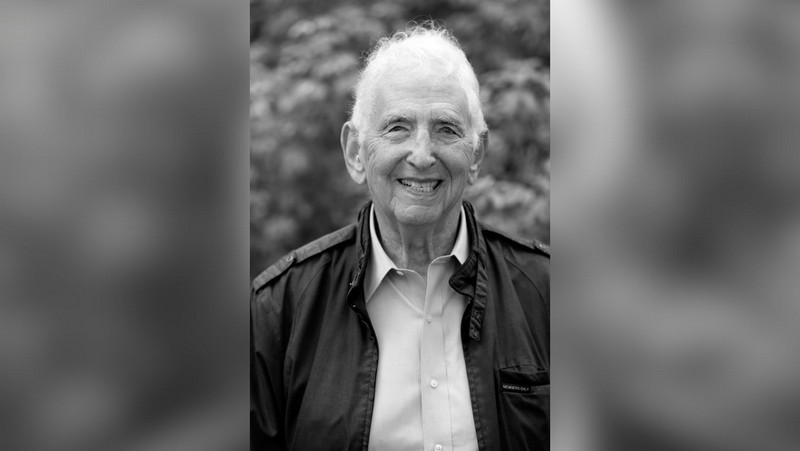
Celebrating an Extraordinary American Life: Daniel Ellsberg

By Richard Falk

Points of Departure

Daniel Ellsberg’s death like his life occurred with flair and purpose. Dan (a cherished friend for more than 65 years) had taken the unusual step of sharing with the world the deeply personal news that he had only a few months to live, and even less to be active, as he was diagnosed as suffering from inoperable pancreatic cancer. It was clear that Dan was not seeking pity or adulation by the release of this sad news. His obvious purpose of such a public message was to let be known to all who care that he would continue to devote his energy as long as he could to the struggle to make the world less prone to nuclear mega-catastrophes. Dan firmly believed that we humans are living at a unique time of ominous global danger, and he felt the urgency of action. This inspirational message personified Daniel Ellsberg’s special human qualities of belief, courage, and commitment that made him a heroic figure for so many of us. And Dan’s love of life and people made him far more humanly lovable than if he had confined himself to being an austere political crusader.

I had the opportunity to have two long phone conversations at that fragile interface between Dan’s intense engagement with world history and the ravages of the disease, and found that Dan had lost none of his cerebral brilliance or weakened in his resolve to warn humanity of an increasingly imminent nuclear danger if geopolitics as usual continued on the path taken since the outbreak of the Ukraine War. Besides the warning, Dan also believed there many things of a political and technical nature could and should be done to reduce immediate risks. Yet his fundamental vision was to realize the imperative of safely achieving a denuclearized and demilitarized world.

In our talks, Dan’s mind was preoccupied, in his relentlessly exhausting probing mental style to depict root causes, with an anguished awareness that the threat of extinction was now present on the horizon of likely human futures. Dan wondered aloud as to whether the disasters he feared, would in fact result in the literal end of our species. He seemed to believe rather that unprecedented global catastrophes, such as ’nuclear winter’ would be devastating on a civilizational level and yet still leave as survivors a remnant of humanity. Dan was never content with vague generalities, but to get to the concrete bottom of things. In this spirit he went on to speculate as I recollect, ‘that likely 8 or 10% of humanity would survive, and that’s still a lot of people.’ Not that he envied the survivors, but he wanted to stress that dire as the situation was it should not be assumed to be an extinction event. It was through ‘the glass darkly’ of these grim reflections that he viewed the situation confronting humanity. These dark shadows, more than anything else, led Dan to lament the utter recklessness of Biden’s seeming resolve to engage in a geopolitical war with Russia and to teach Moscow and Putin a lesson in the aftermath of its aggressive, if provoked, attack against Ukraine.

With news of Ellsberg’s imminent demise broadcast widely the mainstream media was finally awakened to write and interview him extensively, and generally sympathetically, about Dan’s life, focusing quite naturally on the drama and legacy of the 1971 release for publication in the NY Times and Washington Post of the Pentagon Papers, and how this ‘invention’ of whistleblowing left behind a precedent seized upon, whether knowingly or not, by others. Yet unlike these subsequent notable whistleblowers, Dan’s work did not cease with the disclosure of specific official dirty deeds hidden from the citizenry by secrecy regulations and dragnet espionage laws, but barely began. In the course of the next half century Dan distinguished himself as both a tireless activist and as an author producing two pedagogical memoirs of lasting value. [Secrets: A Memoir of Vietnam and the Pentagon Papers (2003); The Doomsday Machine: Confessions of a Nuclear War Planner, 2017].

Dan deserves all the praise he is receiving, and even more, yet I find that two major elements of his strikingly original mental and humanistic qualities have been so far largely missing in the many recent valuable assessments of his life and death. At most Dan’s unusual career journey from being a star consultant to the Pentagon and RAND on the Vietnam War and nuclear war plans to becoming a world renowned anti-nuclear activist who was arrested and imprisoned numerous times over the years, but little commentary on what made personal trajectory so remarkable, taking such courage, insight, persistence, and a truth-telling sense of mission. From my vantage point I will do my best to fill in this gap.

Daniel Ellsberg’s Trajectory

I first encountered Dan during 1957-58, a year we both at Harvard, he was already a rising star, making his name as a strategic wizard who even while a student was doing pioneering work in exploring the use of nuclear weapons as a potent weapon by which to threaten and blackmail adversaries, aside from its roles in preventing or fighting war.

We had initially been brought together for a dinner by an engaging apolitical journalist who convinced me that I should meet Dan because we were in her judgment soulmates. How wrong, or at any rate, premature she was, as we sparred throughout the evening about Cold War issues and I regarded Dan as a gifted, but dangerous, ‘defense intellectual’ of the sort I would be later surrounded by in my early years at Princeton. Yet looking back on that mutually unpleasant evening, I now realize there was one element of Dan’s hawkishness that set him apart from his like-minded cohort, a quality that would a decade later be the bedrock of his highly congenial progressive behavior. He was already in 1958 as he was after he switched sides, someone who deeply enjoyed both friendship and comradery, based on consistent solidarity, believing deeply that he was doing the right thing. Later at Princeton when I had antagonistic contact with several leading defense intellectuals, I noted their careerist motivations and amoral, often cynically playful intellectuality that contrasted with Dan’s intense moral convictions that were his lifelong anchor, making him always a person driven by responsiveness to the dictates of conscience rather than of naked ambition or indulging a cavalier attitude of many leading ‘war thinkers’ toward the menace of nuclear war, perhaps to hide from the horror of it all.

Endowed with an amazingly gifted, quirky mind and astonishing energy, Dan was further animated by an ardent passion to make a difference in all that he undertook. This lineage starts with his outstanding academic record from high school (and maybe earlier) through graduate school, reinforced ever after by performative excellence in whatever he chose to do.

Even taking account of his mainstream Cold War outlook as a young man it was rather unusual for someone with his background, interests, and professional opportunities to seek enlistment in the U.S. Marines as Dan did in 1954, serving as a junior officer for several years including an overseas assignment in the Middle East during the Suez Operation, earning him a promotion by the time he de-enlisted. This military service was followed by a period as an influential consultant to Robert McNamara, Secretary of Defense, who sent Dan to Vietnam in 1964 to evaluate U.S. so-called ‘civilian pacification programs’ (really killing machines at the village level) in order to advise him on the conduct of the war. This stint was followed by working for 18 months alongside Major Gen. Edward Lansdale, the most famous counterinsurgency specialist. Dan’s role included going on extremely risky combat patrols in Vietnamese jungles and remote villages. He would later talk about his growing doubts about the way the war was being fought and the suffering inflicted on the Vietnamese people, but was not ready to break with the U.S. policies in the Vietnam War. Yet again, Dan was motivated by doing the right thing. He reasoned, during his advising years, that even if the war was not going well or proved unwinnable, the U.S. campaign was benevolent, aiming at giving the Vietnamese a better life than they could expect under communism and being a justifiable part of an American military effort to prevent World War III by containing Sino-Soviet expansion in Asia. These were views that I never shared, and Dan would soon himself reject.

Then came the remarkable change from his posture as an expert trying to figure out a winning strategy in Vietnam to a rejection of the whole undertaking, and thus in harmony with various strands of the growing Vietnamese peace movement. His disillusionment with the Vietnam War that intensified over time after he returned to the U.S. during a period when he continued working as a top consultant at the RAND corporation, then the prime venue of ‘war thinkers.’ In collaboration with my former Princeton graduate student, Tony Russo, another convert to radical anti-war activism due to what he experienced in Vietnam, especially in working on RAND’s prisoner interrogation program. It was in that alien militarist atmosphere at RAND that the pair spent their evenings copying the Pentagon Papers.

Of course, copying itself was a daring act, given the highly classified character of many documents comprising the 3,000 pages of Pentagon material brought together in a classified study entitled “U.S. Decision Making in Vietnam Policy, 1945-68” on which Ellsberg had himself worked on briefly while an employee at the Department of Defense. The drama of arranging publication and the post-publication pushback by the Nixon presidency has received much commentary and is widely treated as the highlight of Dan’s turn toward activism.

Dan became utterly convinced that the American people deserved to know that they had been lied to by their elected leaders for years about the progress in the war, as the war went on year after year and the casualty figures for Americans and Vietnamese rose higher and higher, but he had no appetite for martyrdom. The keystone of his initial effort was to make the copied documents discreetly available to anti-war Congressmen and trusted media platforms whom he felt had a constitutional duty to make public use of the Pentagon study in furtherance of the public interest. At first, he imposed a strict condition on those he handed the documents, including myself, that his identity as source not be disclosed. This condition was notoriously breached by Neal Sheehan of the NY Times, but Dan’s role was already known by the FBI in any event. I was visited by two agents at my home a few days after I received the Papers, before newspaper publishing began. Needless to say, I refused to cooperate.

Again, Dan was determined to do the right thing, but prudently. Subsequently, this resolve was always centermost and without further second thoughts. Contrary to his earlier beliefs Dan grew convinced that the U.S. government definitely could not be counted on to do the right thing, and in fact was doing the wrong thing. At the same time, Dan steadfastly refrained from releasing material that would expose intelligence sources or impart inflammatory material to foreign adversaries.

Special Qualities of Mind, Spirit, Dramatization, and Obsessive Dedication

Moral Compass: What I mainly want to impart is through it all Dan impressively never lost trust in his moral compass or his political identity. He wanted to do the right thing always, and was willing, although not eager, to pay heavy costs for doing so, earning him high profile defamatory attacks from the likes of Kissinger and Nixon. Yet he remained an American patriot throughout his life, who drew vivid no-go lines in his mind when it came to anti-government activism and civil disobedience. Unlike many radical activists Dan knew the difference between civil disobedience (to the law) and espionage (against his country, as typified by those documents in among the Pentagon Papers he refused to release).

Mastery reinforcing brilliance. Another notable feature in Dan’s way of taking political stands was his refusal to commit his illuminating energy until he had mastered a subject with penetrating, memorable precision. He spent his activist life on opposing the Vietnam War by every non-violent means at his disposal including insider knowledge and extensive field experience in combat zones. During the last several decades his concern mainly focused multi-faceted opposition to the way the U.S, government addressed risks of nuclear war with both the knowledge of a brilliant insider and someone who penetrated below the surface to uncover the terrifying nature of nuclear war plans.

Dramatization of Knowledge and Action And finally, Dan had a natural disposition to dramatize knowledge and action that had the effect of maximizing the impact of whatever he undertook, whether in public or private. Without doubt, the saga of the Pentagon Papers is the most publicized drama of his life, but throughout, no other public intellectual was so publicly articulate and poised about why he was doing what he did. He once told me during the media frenzy after the Papers were finally released, “I wish I could always be the way I am on television.” For me, a scary prospect, for him, not a matter of vanity, but of an infection passion to make a difference by what he did, especially when his reputation or life were at risk.

Love and Politics Well Mixed. As the outpouring of grief exhibits, Dan will be as remembered for his loving modes of relating to family, friends, and co-activists as for his political engagements, exploits, and achievements. Unlike many in the peace movement who were personally detached or narrowly focused on daunting political challenges, working with Dan was a warm, emotionally satisfying experience of someone that lived daily a belief in the transformative power of love whether for peace, justice, a good time, and a fulfilled life.

Completing the Thoreau legacy

Dan will be rightly long remembered for his seminal role in enriching the legacy of the anti-slave, anti-war civil disobedience associated with the work and life of the New England transandentalist, Henry David Thoreau (who exerted a major influence on Gandhi, Martin Luther King, Jr., Tolstoy). It was this courtly writer, poet, and wilderness seeker who by choosing jail over paying taxes funding government policies that struck him as deeply immoral gave to democratic governance an added vitality. As a private person Thoreau chose conscience over obedience to law as the most essential quality of citizenship, which is the golden thread that runs through the fabric of Dan’s rich and varied life.

The release of the Pentagon Papers could be seen as Ellsberg’s dramatic enactment of Thoreau’s imperative, but taking the crucial and more dangerous form of whistleblowing about systemic governmental abuse of its unrestricted control of information by permissively classifying it as ‘secret.’ Dan never disputed the need for legitimate state secrets, but he acted to expose the misuse of secrecy by elected leaders to lie and mislead citizens on vital matters of war and peace in Vietnam and with respect to Pentagon planning for nuclear war. Balancing the governmental right to keep secrets against the rights of the citizenry to know the truth, especially on matters of life and death pertaining to the nation’s future.

I think it not an overstatement to conclude that if democracy survives the digital age, it will be thanks to brave whistleblowers, starting with Ellsberg, and continuing with such heroic followers as Edward Snowden, Julian Assange, and Jack Teixeira, individuals currently hounded as criminals by the U.S. government. Whistleblowing being honored the world over by progressive forces in civil society, and shamefully marginalized by the mainstream media that waited until Ellsberg was dying before belatedly and grudgingly acknowledging his greatness.

Richard Falk is Albert G. Milbank Professor Emeritus of International Law at Princeton University, Chair of Global law, Queen Mary University London, and Research Associate, Orfalea Center of Global Studies, UCSB. He is also a member of JUST’s International Advisory Panel (IAP).

23 June 2023

AUKUS: Part of A Multi-Pronged Strategy to Preserve US Regional Dominance

By Dr Joseph Camilleri

The AUKUS agreement reached in September 2021 has left Australia more deeply entangled with US strategic priorities and war preparations than ever before.

AUKUS reflects the prevalent view within the US security establishment that China’s rise poses a major threat to America’s regional and global dominance – a view, as it happens, strongly supported by Australia’s security elite.

Australian governments, under the previous conservative coalition and now under Labor, have repeatedly pointed to China’s misdeeds. In a major address in April, Foreign Minister Penny Wong took issue with China’s rapidly rising defence budget, its militarisation of disputed islands in the South China Sea, its ballistic missiles falling in Japan’s exclusive economic zone, and its military drills and blockades around Taiwan.

By contrast, Australia has steadfastly refrained from criticising the United States for any of its provocative actions, not least Nancy Pelosi’s much publicised visit to Taiwan or Biden’s often stated position that US forces would intervene should Taiwan come under threat.

Meanwhile, Australian mainstream media have dutifully reported US and Australian portrayals of the China threat, and become increasingly vociferous contributors to the anti-China frenzy.

The rhetoric has been faithfully supported by action. The last few years have seen the steady expansion of joint US-Australian military exercises, notably Talisman Sabre and Exercise Pacific Vanguard.

In addition, the United States now controls or has extensive access to an ever larger array of military assets on Australian soil, including the high-technology bases cluster along the length of North West Cape in Western Australia, the port and air base of Darwin, and the Tindal air base.

To this must be added the large and still growing Pine Gap facility likely to play a key role in any US conventional and nuclear operations from Africa to the Pacific.

Simply put, once China’s rise came to be seen by the US security establishment as inimical to its interests, Australian governments have been quick to follow suit.

Unsurprisingly, the Australian government secured the services of two retired US admirals and three former US Navy officials as highly paid consultants to advise it during the negotiations to acquire top-secret nuclear submarine technology. This advice no doubt contributed to the cancellation of the French submarine contract and the establishment of AUKUS.

All of which prompts the question: what lies behind Australia’s subservience to US militarism? Much of it has to do with the fact that Australia’s policy makers have traditionally felt most comfortable when connected to the Anglophone world and at best uneasy when dealing with the East.

One other pull factor helps explain the addiction to imperial power. Australia’s political, bureaucratic, military and intelligence elites see themselves as having unique access to an exclusive and powerful club that confers status and privileges – once the British club, now the American club. They may have reluctantly accepted the demise of the former, but are in no mood to accept the slow but steady decline of the latter.

The first tangible commitment under the highly secretive AUKUS arrangements is the decision to provide Australia with eight nuclear powered submarines (SSNs) at an estimated cost of $368 billion. The plan, however, is fraught with uncertainty and danger. Will the submarines be delivered on time? Will the cost involved greatly exceed the current estimate?

Added to this are the complex technological and security problems that will inevitably arise.

First, to build nuclear powered submarines, Australia will need to be supplied not just with the technology for the nuclear reactors, but also with the nuclear fuel. Transport of such fuels over long distances raises the prospect of diversion to a third party, widely considered a major nuclear proliferation risk.

Secondly, the nuclear reactors used by the submarines will generate a significant amount of nuclear waste, which will have to be returned to the supplying country or stored in Australia. Either way, the country will face the highly contentious problem of nuclear waste disposal.

Thirdly, there is always the possibility of a nuclear reactor being breached, or at least of a leakage of nuclear materials. The AUKUS deal poses troubling questions that remain unanswered. If answers are ever offered, they are likely to prove less than reassuring.

In short, Australia has saddled itself with a vast military project of unknown cost and duration and dubious effectiveness. It will contribute to an ever-increasing defence budget that will divert scarce resources from urgent social and economic priorities.

Importantly, it will fan the flames of resentment in China not just amongst the Chinese leadership, but amongst a wide cross-section of Chinese society. Beijing has repeatedly argued that the AUKUS project will fuel an arms race and raise the level of mutual mistrust. It will certainly reinforce China’s perception that it is surrounded by a hostile coalition.

While the reactions of other countries have been generally more subdued, there is no denying the widespread unease AUKUS has already provoked. Some governments, it is true, have accepted the security partnership, but few have done so with undiluted enthusiasm.

Singapore has indicated support in principle for AUKUS insofar as it helps to balance China’s assertiveness and contributes to regional peace and stability. The Philippines, for its part, has gone so far as to characterise AUKUS as “essential to our national development and to the security of the region”.

Japan too has generally welcomed AUKUS which it sees as “strengthening engagement [of those three countries] in the Indo-Pacific region”. There have even been indications that Japan would cooperate closely with AUKUS. Some have even contemplated the possibility that Japan might join AUKUS at some future date. It is worth noting, however, that Tokyo has studiously refrained from open support of the submarines deal because the acquisition of nuclear submarines remains a highly contentious issue in the context of both Japanese politics and public opinion.

South Korea too has been guarded in its comments, expressing support for AUKUS insofar as it contributes to regional peace and security, but has said little about the nuclear submarine program.

The response of other ASEAN countries has ranged from unease to open criticism. Vietnam, notwithstanding its territorial dispute with China, has said little about AUKUS, confining itself to support for the peaceful use of nuclear energy. Thailand has gone further and expressed concern that AUKUS could fuel a regional arms race.

Indonesia has been especially critical. It sees AUKUS as committed to the forward projection of military power which could well provoke China into adopting an even more assertive stance. In Indonesia’s view, Australia’s acquisition of nuclear powered submarines could “set a dangerous precedent” for other countries with similar ambitions “to follow suit”.

Malaysia too has expressed deep misgivings. While acknowledging the right of the countries concerned to upgrade their defence capabilities, it has more than once made it clear that it expects all countries, including the three AUKUS partners, to fully respect and comply with Malaysia’s requirements with regard to nuclear-powered submarines, as stated in the Law of the Sea Convention, the Southeast Asia Nuclear Weapons Free Zone, and the ASEAN Declaration on the Zone of Peace, Freedom and Neutrality (ZOPFAN).

India, for its part, has avoided public comment on the issue. While some commentators have suggested that AUKUS could help check “China’s aggression”, many others fear the prospect of an even more assertive China. A growing Chinese naval presence in the Indian Ocean cannot but pose a challenge to Indian interests.

It remains to say a word about the attitudes of Pacific Island nations. While some have indicated varying degrees of support, notably Fiji, several others have been sharply critical. Solomons Prime Minister Manasseh Sogavare lambasted the Australian government’s lack of consultation on the AUKUS deal.

A communique issued by four former prime ministers (Marshall Islands, Palau, Kiribati and Tuvalu) described “the staggering $368 billion” earmarked for the AUKUS submarine deal as an affront to the region, suggesting that these resources could be better spent combatting climate change.

Current leaders in Tuvalu, the Cook Islands, and Kiribati, have also pointed to the likelihood that the AUKUS arrangements will make for an increasingly militarised and unstable region. These reactions are hardly surprising. A zone that has endured the catastrophic damage of nuclear testing is unlikely to welcome the intrusion of nuclear powered submarines into its seas.

These varied responses are themselves indicative of the deep divisions that have re-emerged in the Asia-Pacific region. The containment policy pursued by the United States during the Cold War years is back with a vengeance, except that the stakes are now much higher and containment is euphemistically described as “strategic competition”.

Recent years have seen frenetic efforts by the United States to construct an overwhelming military presence in both the Indian and Pacific Oceans. AUKUS is but one prong in a multi-pronged “Indo-Pacific” strategy based on the unrelenting modernisation and expansion of America’s military alliances with Japan, South Korea, the Philippines, Thailand, and Australia and its extensive security arrangements with Taiwan, Singapore, New Zealand, and Pakistan.

Bilateral and multilateral arrangements between the US and these countries involve large and increasingly frequent joint military exercises, vastly expanded programs in maritime surveillance, cybersecurity, construction of new military facilities, and access to a growing number of military bases.

All of this is unfolding in the context of greater interoperability between the US and allied forces, rapidly growing military modernisation investments, and the acquisition of new military platforms, including radar systems, drones, military transport aircraft and coastal and air defence systems, including multi-role fighter aircraft and an array of precision-guided air-to-surface and other missile systems.

The militarisation of the Asia-Pacific, which AUKUS will greatly accelerate, has seen military spending in this region rise to $575 billion in 2022. During 2018-2022, Asia and Oceania accounted for 41 per cent of global arms imports. The largest exporter by far was the United States and the largest importers were US allies. Arms imports by East Asian states increased by 21 per cent between 2013–17 and 2018–22, with the largest increases recorded by US allies: South Korea (+61%) Japan (+171), and Australia (+23%). Here lies one of the key drivers of the globalisation of NATO.

Unsurprisingly, US-based weapon manufacturers have recorded a massive increase in sales from $103.4 billion in 2021 to $153.7 billion in 2022. For them the Ukraine war and rising Sino-US tensions have been a godsend, except that God had little to do with it. The main drivers of these trends have been the principal beneficiaries, which include weapons manufacturers, armed private security contractors, a wide array of logistics and reconstruction firms and their combined ability to shape public opinion and policy making elites through their close connections with mainstream media and their funding of policy think tanks.

In this sense the AUKUS deal is emblematic of a deeply embedded militarisation of economy and society which risks shifting the Asia-Pacific region from competition to confrontation and eventually war.

Dr Joseph Camilleri is a Professor Emeritus at  La Trobe University, Melbourne, Australia. He is also Co-convener, SHAPE (Saving Humanity and Planet Earth) and one of JUST’s International Advisor Panel Members.

25 June 2023

Readouts Point to a Disjuncture between US and China

By Kim Petersen

During the economic crisis in 2008, the United States sought China’s aid. US treasury secretary Hank Paulson conferred with Chinese officials, and China agreed to increase the value of the RMB and to stop selling US T-bills which it had been doing at that time.

Paulson said, “It is clear that China accepts its responsibility as a major world economy that will work with the United States and other partners to ensure global economic stability.” But the notion that China was acting in a selfless fashion was also dispelled by Paulson who stated China helps when it is in their own interest.

Paulson depicted the US position during the crisis as “dealing with Chinese from a position of strength…”

That same attitude was repeated by the US State Department in March 2021 during the first face-to-face meeting with president Joe Biden’s administration in Anchorage, Alaska: “America’s approach will be undergirded by confidence in our dealing with Beijing — which we are doing from a position of strength — even as we have the humility to know that we are a country eternally striving to become a more perfect union.” [emphasis added]

Given the baleful US shenanigans against China, Chinese high-ranking officials were ill-disposed to meet with their American counterparts. Chairman Xi Jinping was not interested in meeting with Biden after the US shot down a Chinese weather balloon. The Pentagon sought a meeting between defense secretary Lloyd Austin and China’s minister of national defense Li Shangfu, but the latter reportedly ghosted Austin in Singapore.

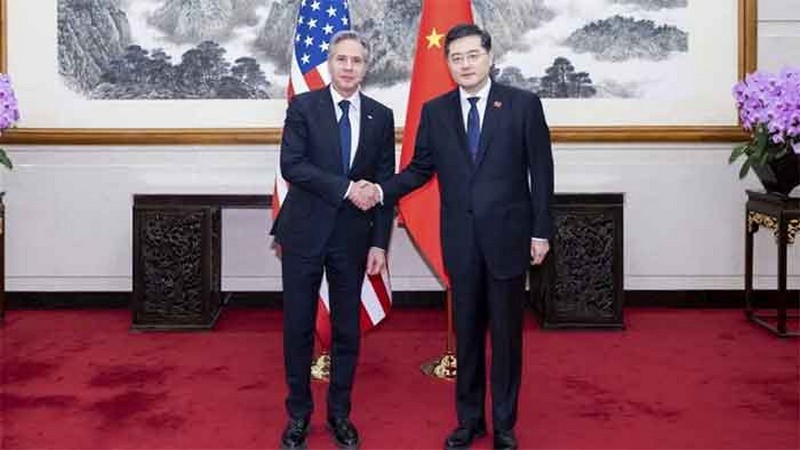
Finally, secretary of state Antony Blinken managed to secure a meeting with his Chinese counterpart Qin Gang in Beijing. The official readouts for each country, however, reveal a monstrous gap between them.

The Chinese readout noted that “China-U.S. relations are at their lowest point since the establishment of diplomatic ties…” Other excerpts read:

China has always maintained continuity and stability in its policies towards the United States, fundamentally adhering to the principles of mutual respect, peaceful coexistence, and win-win cooperation proposed by President Xi Jinping. These principles should also be the shared spirit, bottom line, and goal that both sides uphold together.

Qin Gang pointed out that the Taiwan question is at the core of China’s core interests, it is the most significant issue in China-U.S. relations, and it is also the most prominent risk. China urges the U.S. side to adhere to the one-China principle and the three China-U.S. Joint Communiqués, and truly implement its commitment not to support “Taiwan independence”.

That the US and China were not on the same page was clear from the oft-heard banality in the American readout:

The Secretary made clear that the United States will always stand up for the interests and values of the American people and work with its allies and partners to advance our vision for a world that is free, open, and upholds the international rules-based order.

That the US side made no comment on China’s core interest was a glaring brush off. Instead the US side pushed its “international rules-based order,” which is about rules defined by the US for others to follow. In other words, China does not decide what rules apply to its province of Taiwan.

The readouts made crystal clear that China and the US view the world through different lenses.

China is about peaceful development and win-win trade relations. The US is about waging war, sanctions, bans on trading, and an immodest belief in its indispensability. Because of this, China and Russia with the Global South are each forging their own way, a way that respects each country’s sovereignty. In future, it will be increasingly difficult for the US to use loans to impoverish other nations and plunder their wealth through the IMF’s financial strictures. Sanctions, freezing assets, and blocking financial transactions through the SWIFT system have pushed countries away and toward de-dollarization, joining BRICS, taking part in the Belt and Road Initiative, and using other financial institutions such as the Asian Infrastructure Investment Bank based in Beijing. Even companies in countries nominally aligned with the US are pulling back from the harms of adhering to US trading bans. The US pressure tactics have resulted in blowback, and there is sure to be growing apprehension within empire.

The US is a warmaker. It flattened Iraq, Libya, and would have done the same to Syria had not Russia, Iran, and Hezbollah intervened at the invitation of the Syrian government. Nevertheless, the US still illegally occupies an enormous chunk of Syria and plunders its oil, revealing its true nature to the world.

China is a peacemaker; for example, the Saudi-Iranian rapprochement, the Syrian-Arab League reunion, a ceasefire between Yemen and Saudi Arabia, a proposal for peace between Russia and Ukraine that was rejected by the US, and currently China is playing an honest broker to try and solve the Israeli-Palestinian impasse, something the US has failed miserably at solving (not that it was ever interested in solving this besides, perhaps, a brief interregnum under Jimmy Carter).

China has stood steadfastly with Russia during its special military operation in Donbass and Ukraine. China knows that if the US-NATO would succeed in their proxy war, the plan is “regime change” and a carve up of Russia to exploit its resource wealth. This would pave the way for further “regime change” in China.

The Blinken-Qin meeting has been an abysmal failure in diplomacy. Communist China is ascendant, and the capitalist US is in economic decline, but it still believes that it can bully and fight its way to the top by keeping the others down.

Kim Petersen is an independent writer.

19 June 2023

Source: countercurrents.org
Why The World’s Most Bombed Country May Still Suffer from These Wounds after A Hundred Years

By Bharat Dogra

Laos is a country in Southeast Asia with a rich development potential based on vast water resources as well as minerals including gold. Its suitably located land trade routes had also contributed to the prosperity of the country in previous centuries. In more recent time its tourism potential has attracted much attention and the country even received the most favored tourist destination status from a leading European tourism organization, partly due to architecture, history and heritage aspects. In numerous villages of this rural-based economy there has been much potential for achieving food reliance in ecologically conducive ways.

Unfortunately all this potential was first harmed by the highly exploitative French colonial rule, then Japanese invaders, and then French colonialists again. The brave people of Laos continued to resist all this to finally achieve independence. Tragically, before they could properly tap the potential of various development opportunities, they were attacked in the most destructive ways by the USA Air Force as well as the CIA.

No, the people and the country of Laos had not harmed the far away located, mighty USA in any way at all. Despite this the people of Laos faced their heaviest destruction from the USA, worse than what they faced even during direct colonial rule, due to two factors.

First, in the course of their freedom movement, it is the communist force called the Pathet Lao which had emerged as the strongest, probably because it was the closest to protecting the interests of peasants and workers. Hence it could only be expected to be friendly to the communists in their neighboring country of Vietnam, particularly as the Vietnam communists were led by such a great and popular leader as Ho Chi Minh. To start with neither the communists of Vietnam or of Laos had any quarrel with the USA at all and in fact expected it to help them in their anti-colonial struggles.

However the USA establishment had by then taken a non-rational decision of coming down hard upon any and all communist forces and led by such thinking they got involved in a long and prolonged war first in Vietnam and then in Laos. In the case of Laos a more specific complaint of the USA was that some land routes of Laos were being used to supply provisions to the communists in Vietnam and these had to be cut off.

Anyway, the USA embarked on a twin strategy of very heavy aerial bombing of Laos, including its villages, and at the same time using the CIA to organize an illegal and secret land war on the land. The CIA organized war was largely kept secret from not just the world but even from the people and elected representatives of the USA for a long time. This illegal war initially also used the cover of development aid agencies to make contacts. Then ethnicity based groups which could be used to fight the communists were carefully identified and helped with money and arms to attack the communist forces and their supporters. This created such great divisions in the country that it became very difficult for certain people to live together in the same country again, as some of them were looked upon as traitors, and several of them had to be settled in the USA.

However even worse damage was done by bombing attacks, because of the very destructive weapons used as well as the extremely large scale of the bombings. Between 1964 and 1973, about 2.3 million tons of bombs were dropped in this small country, more than the 2.1 million tons dropped by the USA in Europe as well as in Asia together in the entire course of World War II. In terms of bombing relative to population or per capita bombing, no other country in the world has ever suffered heavier bombing than this. Over a period of about 9 years, one bombing was carried out every 8 minutes (day as well as night).

Nearly 270 million bombs, mostly cluster bombs, were dropped. Cluster bombs are known to be one of the most painful weapons. A single cluster bomb, which in turn can contain as many as 200 bomblets, explodes a little before hitting ground and the bomblets can be very violently dispersed, often getting lodged in critical organs of the person or child who has been hit, or resulting in several festering open wounds whose pain has been compared to acid burning. Completely innocent civilians and villagers were hit more often. It became impossible to live in several villages and these were deserted and people became refugees. In a small country nearly 200,000 persons died, nearly double this number were seriously injured, nearly 7,50,000 became refugees.

This was not all. About 30 per cent of the dropped bombs did not detonate immediately and remained hidden in various places to pose serious danger in future. Nearly 50,000 persons including a very large number of children have been killed, seriously injured and disabled in later years due to these hidden bombs. Many such injuries resulted in amputations. As several bombs resembled balls or toys for children, a large number of children were injured or died when they picked up bombs, despite the fact that a campaign of warning was launched.

This danger of unexploded ordnance (UXO) is likely to continue for long, with 63 such accidents being reported as late as 2021, because the USA has invested so little in removing this danger. According to one estimate, while the USA spent $16 million per DAY on the bombings for 9 years (on the basis of current prices), it has spent only average of $ 5 million per YEAR since it started contributing, that too very late, to the UXO clearing work in the 1990s. This contribution was increased after some time not so much by the USA government acting on its own, but because of the wide awareness generated by some good efforts like the Legacies of War project which increased public awareness of this great injustice and tragedy. A very small percentage of the estimated UXO has been cleared yet, probably less than 5 per cent. It has been estimated in US studies that the UXO risks can continue beyond 100 years.

It is important not only for the USA to contribute much more for UXO clearance but also to pay huge compensation to Laos because the bombings and the CIA land war in Laos were completely illegal. The USA war against Laos was for the USA just an extension of its war with Vietnam; it had no legal justification and was shockingly unethical in all aspects. The only reason, if it can be called a reason, the USA had was that it was committed to curbing any communist force, and isn’t it an irony that after all that happened, the tiny country of Laos with its 8 million people is today more committed to communism than China is!

Bharat Dogra is Honorary Convener, Campaign to Save Earth Now.

19 June 2023

Source: countercurrents.org

Israel teaches fascism to Germans, but my Chatbot doesn’t believe it

By Rima Najjar

Intensive hasbara aimed at obscuring Palestine’s history and stifling criticism of Israel also obscures Zionist fascism in Germany

I am new at using Chatbot, the computer program that deploys artificial intelligence and natural language processing to understand questions and simulate human conversation. When I queried Chatbot about fascism in Germany, the response I got began with the statement: “That’s a complex and sensitive question.” I was impressed by this statement that implied human evaluation, but my sense of wonder did not last for long. When I asked about Israeli fascism, the Chatbot opined that “there is no definitive or objective answer to this question.”

My purpose in researching this question was my interest in learning how Germany was combating fascism in its education and legal systems, especially in the light of recent reports about the German-Israeli Society’s fascist attack on Samidoun Palestinian Prisoner Solidarity Network, Deutchland. The former had filed a complaint with the Berlin police against Samidoun to classify it as a terrorist organization in Germany and to ban its advocacy of Palestinian prisoners on the basis of law 129b, which criminalizes organizations and individuals that establish or support so-called “foreign terrorist organizations.”

The Chatbot summarized for me a New York Times report that described measures such as “denazification, anti-fascist education, surveillance by the Federal Office for the Protection of the Constitution, and prosecution of hate crimes.” There was nothing about Israeli fascism. When I asked specifically about dezionification, the Bot referred me to a wiki that categorizes dezionification efforts in every country by alphabet as “anti-Zionism.” In Germany, the antifa movement, which has its roots in the Antifaschistische Aktion set up by the Communist Party of Germany in the late Weimar Republic, “has splintered into different groups and factions, including one anti-imperialist and anti-Zionist faction and one anti-German faction who strongly oppose each other, mainly over their views on Israel.”

That Zionism is a fascist political philosophy is a fact as explicit and simple to me as are the words of one of the architects of the Zionist movement and a future Prime Minister of the settler-colonial Zionist Jewish state, Moshe Sharett. He saw the ethnic cleansing of Palestinians as “a lasting and radical solution” to achieving Jewish supremacy in Palestine:

“On this day (June 15) in 1948, future Prime Minister Sharett exulted to WZO [World Zionist Organization] head Goldman on Israel’s successful ethnic cleansing: “the most spectacular event in the contemporary history of Palestine…is the wholesale evacuation of its Arab population…The opportunities opened up by the present reality for a lasting and radical solution of the most vexing problem of the Jewish state, are so far-reaching, as to take one’s breath away. The reversion to the status quo ante is unthinkable”, i.e., the refugees would not be allowed to return.”

The Bot not only failed to see that the facts about Palestine’s ethnic cleansing were indisputable, it also felt programmed confidence in giving me the following robotic advice: “In this context, a human might say that it is important to be critical and respectful when discussing such sensitive and complex issues.”

In this context, I chatted back to the Bot, you are bamboozled by Israel’s hasbara (Hebrew for propaganda), which has spread the false alternate historical narrative that justifies the ethnic cleansing of Palestinians and rationalizes the fascist, supremacist crimes of the settler-colonial Zionist Jewish state.

The robot’s summary of the googalized information about the issue of Zionist fascism is as follows: Yes, Zionism has been found by some critics to be a form of fascism or racism, and some have compared it to Nazism and some have also claimed that some of the founding fathers of Zionism were influenced by or were sympathetic to fascism and Mussolini and others have argued that Zionism shares some ideological features with fascism, such as nationalism, militarism, expansionism, and exclusivism. However, this is in “dispute” by other critics “who have strongly rejected and denounced” the accusations and challenged the validity and motives of the sources and arguments that make such accusations and accused them of being biased, antisemitic, or politically motivated.

Many in academia and outside are painfully aware of the well-funded hasbara that has infiltrated the media as well as educational institutions and controlled the outcome of research through lawfare as well as the threat of lawfare. Here are two examples of the latter currently playing out in the US.

The Deborah Project, a Zionist public interest law firm that claims to protect “Jewish Civil rights” launched a campaign against Critical Race Theory and Liberated Ethnic Studies for including Palestine in their curriculum:

“We have brought a legal challenge in federal court in California challenging ‘Liberated Ethnic Studies’ — which adopts the full complement of Critical Race Theory’s attack on Zionism, the goal of which is to teach all American public school children the canard that such attacks are not antisemitic because ‘Zionism and Judaism are two separate things.’ Those attacks have crept into the mainstream of the US conversation on race, through Critical Race Theory, which denounces the creation of the State of Israel as an exercise in land theft by white colonialists… Now these libelous attacks on the Jewish commitment to Zion [“the land of Israel”] are being injected into public school curricula in the guise of ‘anti-racism,’ through the vehicles of Liberated or Critical Ethnic Studies.”

What does “libelous attacks on the Jewish commitment to Zion” even mean? The Zionist hasbara of “they’re out to get us Jews” and the attachment to it of Western governments are very much like the story of Trump and his followers. Facts are irrelevant and there are two sides to every story, no matter how outrageous and blatantly untrue one of them is.

In the second example, this same Project is threatening to sue the American Anthropological Association just as its members are preparing to vote on a resolution to boycott Israeli academic institutions.

On social media, Israel’s ongoing crimes are being documented by many organizations such as Samidoun Palestinian Prisoner Solidarity Network and Institute for Middle East Understanding. They are amplified by Jewish Voice for Peace, which does not mince words when it comes to dezionification:

“The Israeli military’s mandate is enforcing Jewish supremacy and Palestinian subjugation, along with the ideology that upholds it: Zionism. Zionism targets all Palestinians, regardless of age, gender, or ability. These coordinated and terrifying attacks are strategic, and they share the goals perpetuated by the Israeli state since its inception: the complete and total ethnic cleansing of Palestinians from their land and the elimination of any resistance to it. The Israeli military’s nightly raids against Palestinians is yet another manifestation of the ongoing Nakba. This is why we unite against state-sponsored killing, ethnic cleansing and settler colonialism. We stand firmly in our anti-Zionism so every Palestinian can live a life free of daily violence, a life with freedom and dignity.”

The inability of the Chatbot to muster from the crystal ball of Google a clear and objective answer to my question about Zionist fascism is the result of intensive and successful hasbara aimed at obscuring Palestine’s history and stifling criticism of Israel. Its efforts to glean “objective truth” about Israel are about to get harder as Israel’s Ministry of Foreign Affairs has dedicated millions in a hasbara scheme enlisting high school students as trolls.

As for Germany, it makes no sense to denazify and not dezionize its culture and society. My title, “Israel teaches fascism to Germans, but my Chatbot doesn’t believe it,” is not just a provocative headline enticing you to read; it is meant to invite you to reflect on the appalling cognitive dissonance in Germany when it comes to the government’s unconditional support of Israel. The phrase “never again” was meant to express anti-fascist sentiment and to demand justice and accountability for the perpetrators and collaborators of Nazi crimes. But its scope is now much wider; it applies not only to Jewish suffering, but also to all forms of genocide and oppression. It applies to Israel’s ongoing ethnic cleansing of Palestine.

Note: First published on Medium

_________________
Rima Najjar is a Palestinian whose father’s side of the family comes from the forcibly depopulated village of Lifta on the western outskirts of Jerusalem and whose mother’s side of the family is from Ijzim, south of Haifa.

19 June 2023

Source: countercurrents.org
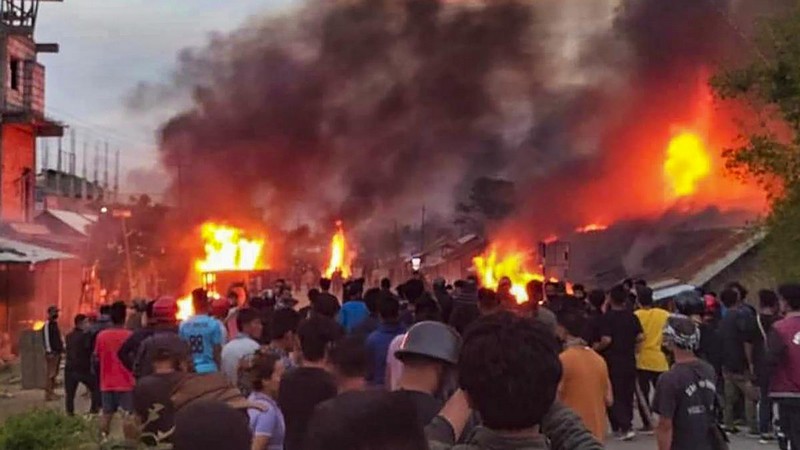
Juneteenth and the Battle Against Deadly Racism

By Amy Goodman and Denis Moynihan

Juneteenth is the newest federal holiday, signed into law by President Biden in 2021. It commemorates June 19th, 1865, the day enslaved people in Texas first learned they were free, more than two and a half years after they were declared free by President Lincoln in his Emancipation Proclamation.

For generations, formerly enslaved people and their descendants have observed Juneteenth. It has grown over the decades, embraced by an increasingly diverse population that realizes its historical importance. But despite Juneteenth’s long overdue acceptance as a federal holiday, the Black population of the United States still suffers intolerable levels of discrimination, de facto segregation, health and wealth disparity, and many other symptoms of systemic racism.

Olympic track and field star Tori Bowie was just 32 years old when she died at home last month. The Orange County, Florida medical examiner reported she was eight months pregnant and in labor when she died, most likely from eclampsia, a complication of pregnancy. Bowie, who was Black, won bronze, silver and gold medals in the 2016 Olympic games in Rio de Janeiro. The CDC recently marked Black Maternal Health Week in April, noting that Black women are three times more likely to die from pregnancy complications than white women.

Bowie’s Olympic teammate Tianna Bartoletta wrote after learning of her death, “As of June 2023…3 of the 4 members of Team USA’s 4×100m relay team…who ran the second fastest time in history, and brought home the gold medal…have nearly died or did die in childbirth. We deserve better. #BlackMaternalHealthCrisis.”

In Colorado, Jor’Dell Richardson had just finished 8th grade at Aurora West College Preparatory Academy. On June 1st, the young African American boy was chased into an alley by two Aurora police officers and tackled. “You got me,” Jor’Dell can be heard saying on the police body camera footage. An instant later, an officer shot him in the abdomen. Screaming in pain, Jor’Dell shouted, “I’m sorry! Please…I can’t breathe…” He died in pain on the ground.

Aurora, a large, diverse working-class and immigrant suburb of Denver, is where police killed Elijah McClain on August 24, 2019. A call to police reported a “suspicious black male” who was “acting weird.” In fact he was heading home from the store after buying iced tea. The police response was caught on body camera. Elijah was 23-years-old, he was 5’6” tall and weighed only 140 pounds. He was believed to be on the autism spectrum. Elijah volunteered at the local animal shelter, playing violin for the stray dogs and cats. Moments after police arrived, he was tackled and put in a choke hold. “My name is Elijah McClain … I’m an introvert and I’m different. [Sobbing] I’m just different, that’s all…Why are you attacking me?”

“I can’t breathe,” Elijah McClain cried. Emergency Medical Technicians arrived and injected him with a lethal dose of ketamine, a sedative. He never regained consciousness and died in the hospital several days later. In the wake of the police killing of George Floyd in 2020, a violin vigil was held outside the Aurora Municipal Center, honoring Elijah McClain’s memory with classical music. Aurora riot police attacked the vigil.

Three of the officers and two of the EMTs involved with McClain’s death have been criminally charged, with trials scheduled to start in September.

And in New York City, Jordan Neely, a Black street performer and Michael Jackson impersonator, was assaulted and killed while on the subway on May 1st. He was crying out that he was hungry and thirsty. Daniel Penny, a white 24-year-old former U.S. Marine, put it in, in a chokehold, claiming that Neely was threatening passengers. Two other men joined in the vigilante action, pinning Neely’s hands and legs as he struggled to breathe. Some of the assault captured on cell phone video shows Neely struggling for several minutes before going limp. His death was ruled a homicide, caused by “compression of neck (chokehold).”

Daniel Penny was questioned by police then released. Following growing outrage and protests, Manhattan District Attorney Alvin Bragg charged Penny with second degree manslaughter, more than a week later. A grand jury has now formally indicted Penny.

These three cases, the deaths of Tori Bowie, Jor’Dell Richardson and Jordan Neely, each under different circumstances within weeks of each other, are all connected by the painful throughline of the Black experience in America, stretching back to 1619, the year the first ship arrived on the shores of Virginia delivering enslaved Africans.

White supremacists are trying to obliterate that history, to prevent it from being taught. We should celebrate Juneteenth, but we must also remember the bloody history that led to that day in Galveston, and commit to fighting racism as it exists today.

Amy Goodman is the host and executive producer of Democracy Now!, a national, daily, independent, award-winning news program airing on over 1,400 public television and radio stations worldwide.

Denis Moynihan has worked with Democracy Now! since 2000. He is a bestselling author and a syndicated columnist with King Features.

18 June 2023

Source: countercurrents.org