Just International

Hate Crimes in India Reach Class Rooms

By Vidya Bhushan Rawat

The video of a Muslim boy being beaten up, slapped and humiliated in front of the entire class in a school in Uttar Pradesh, has only shown how much the hate propaganda against the Muslims in India has reached inside our hearts and minds. That a teacher in the primary school is sadistically enjoying when the poor boy is being humiliated in front of the entire class reflects the power of the poison that has been injected in our mind for years and has become the hallmark of the Noida channels. Remember, the teacher is not beating the boy herself but ordering each student of the class to beat him up. She encouraged and said that all Muslim children should be dealt with like this.

The criminal and thuggish teacher identified as Tripta Tyagi is actually head of the Neha Public school of a village in Muzaffarnagar district in Uttar Pradesh. This clearly reflects how much poison has been spread in our heart across the nooks and corners of the country and it should not merely make us feel ashamed of us but worry us. Should we allow such things to happen or they need a strong socio-political and cultural response. Often BJP and the Sangh Parivar promote its agenda on the ‘non-political basis’ using common prejudices and cultural practices as if they are the sole guardians of the society.

The most atrocious part of these hate crimes is that they are being recorded and spread across the internet by the perpetrators of the crime. In most of such cases when there is a huge outrage, the state apparatus acts like it acted in the Manipur case, to punish the person who posted the video on social media. The person who brought it to the notice of the nation becomes a criminal while the criminals who commit such heinous crimes are carefully pushed in the background for some time till someday some outfit of the Hindutva makes the person their leader. Tripta Tyagi actually does not deserve to be teacher but for certain she is the product of the ‘jahar kee pathshala’ of various outfits of the saffron propaganda militia.

We all celebrated India now on the moon yesterday. The G-20 summit is scheduled to happen in the second week of September. The prime minister has already got an ‘international award’ for his ‘contribution’ but the crisis in India is much bigger than even the BJP can think of now. The poison of hatred has spread across. The Sangh Parivar outfits, Noida Propaganda media all have worked hard during the past 10 years. Remember, it is not merely the act of committing the hate crime but justifying it through the vilifying those who speak up against such hatred. The vilification of the opponents is justified through whereaboutary on the prime time. Criminals get normalised on TV. Media will wait for a couple of days till they find some Muslim criminal to have committed a heinous crime to deflate the story. The continuous vilification of Muslims in our media is the biggest achievement of the present dispensation.

India’s ruling party and its Ministers rarely speak on the issue. The officers will wait for the orders of the highest authority and the media will begin to cover up the incident. The Darbaris and loud speakers on prime time will not allow ‘Hindus’ to be ‘targeted’ for some ‘isolated’ incident and blame the opponents for conspiring to ‘defame’ India when the country has landed on moon and G-20 is happening. The ruling party’s response to this will be on conspiracy theory while their ground staff will continue to feed the hatred against Muslims as well as the Bahujan Samaj of India.

Good thing is that the people are speaking. Many political leaders have spoken including Rahul and Priyanka Gandhi. It was essential for them and speak against hatred. I am still waiting Uttar Pradesh, Bihar Netas to speak up on the issue and call for a full-fledged battle against hatred. More than anything else, India does not merely need a ‘ muhobbat kee dukan’ but complete demolition of the hate factories built up so powerfully with the help of the power elite. Hate crime flourishes on the strength of distortion of history and fake news. So, the biggest priority of our political parties today in INDIA should be to unite against the culture of violence, prejudices and hate crime. Do not legitimise news channels that spread fake news and justify hate crime. Speak up against hatred as otherwise it will engulf you. You can’t build stronger and united India on the edifice of falsehood and hatred.

Remembering Gurudev Rabindranath Tagore’s powerful lines here

‘Where the mind is without fear and the head is held high,

Where knowledge is free

Where the world has not been broken up into fragments by narrow domestic walls;

Where words come out from the depths of truth;

Where tireless striving stretches its arms towards perfection;

Where the clear stream of reason has not lost its way into the dreary desert sand of dead habit;

Where the mind is led forward by thee into ever widening thought and action

into that heaven of freedom, my father, l

Let my country awake’

Let my countrymen awake against this culture of hatred which will ultimately affect us as a society and as a citizen of India.

We must stand united and firm against the culture of hatred and bigotry.

26 August 2023

Source: countercurrents.org

Tens of Thousands Pledge to Resist an Imperialist-backed Intervention in Niger

By Abayomi Azikiwe

Millions across the West Africa Sahel region and around the world have loudly objected to the imperialist-instigated threats against the newly installed National Council for the Defense of the Homeland (CNSP) government in Niger.

From left political groupings to more moderate and even conservative forces recognize the grave danger inherent in the proclamations of some members of the Economic Community of West African States (ECOWAS) to stage a military intervention into Niger aimed at restoring the former President Mohamed Bazoum.

In Niger itself, thousands of young people have appeared at the main stadium in the capital of Niamey to sign up as volunteers committed to defend the uranium-rich state in the case of a hostile invasion. Despite the threats issued by ECOWAS Chairperson and Federal Republic of Nigeria President Bola Tinubu, the regional organization seems to be moving towards utilizing a more political approach by engaging the CNSP government.

Rallies held in Niamey since the July 26 change of government have attracted the support of the broad masses of people. Sanctions levelled at the CNSP have not impacted the determination to maintain the course of charting a new direction for the country. Transitional military governments in neighboring Mali and Burkina Faso have joined the CNSP in building an anti-imperialist front in the midst of the military and intelligence units of France and the United States which have drone stations and nearly 3,000 soldiers in Niger.

The August 19 mobilization was designed to create a mass organization among youth who are committed to defending the Nigerien territory. Since the July 26 overthrow of Bazoum the weight of the imperialist states and their allies in ECOWAS has had the effect of building greater animosity against France and the U.S.

A leading Nigerian newspaper, Vanguard, published an article on August 19 on the current situation in neighboring Niger saying:

“Supporters of Niger’s junta were forced on Saturday (Aug. 19) to halt a census of people willing to volunteer for non-military roles in defense against a possible intervention by West African powers, saying they had been overwhelmed by the numbers who turned up. Thousands of mostly young men had massed outside a stadium in the capital Niamey hours before the scheduled start-time of the event – a sign of the strong support in some quarters for the junta, which has defied international pressure to stand down after the July 26 ouster of President Mohamed Bazoum. ‘In all our calculations and our understandings, we never thought we could mobilize (this number of people),” said Younoussa Hima, co-organizer of the initiative dubbed ‘The Mobilization of Young People for the Fatherland’.”

Any objective observer of the level of enthusiasm displayed by people in Niger, should surmise that any attempted intervention would not be an easy task for the ECOWAS military forces who claim they are prepared to restore the ousted government by force. This position related to threats of military force has been reiterated by ECOWAS defense ministers at a recent meeting in Accra, Ghana, where President Nana Akufo-Addo is a close ally of Washington. The outcome of the Accra meeting was that ECOWAS designated what it described as a “D Day” for the CNSP to leave office and return authority back to Bazoum.

Nonetheless, quotes from youth in Niger reflect a sense of patriotism and hope for a better future. This West African state is categorized as one of the least developed in the world even though the territory is well-endowed with uranium, gold and other valuable natural resources. The current siege against Niger, in part through the imposition of sanctions, will only worsen the social conditions inside the country.

Vanguard in the same above-mentioned report noted:

“Organizers of the Niamey recruitment drive said they did not intend to sign up volunteers for the army, but rather to gather a list of people willing to lend their civilian skills in case ECOWAS attacks. But many of those around the stadium appeared keen to fight. ‘They called on the youth to respond to a possible attack on our soil. And we are ready for any attack,’ said blogger Tahirou Seydou Abdoul Nassirou. ‘My life, I give my life to my country,’ he said, wiping a tear from his eye as other young men nodded and cheered his words…. At the stadium on Saturday, 35-year-old Kader Haliou said patriotism was not the only motivation for those wanting to help the junta. ‘Most of the young people who have come are unemployed. Getting registered is a blessing for us given the idleness and lack of work,’ he said.”

Regional Solidarity

The pledge by neighboring Burkina Faso and Mali to view any attack on Niger as a declaration of war against their states as well has been exemplified by the deployment of fighter jets from Ouagadougou and Bamako to Niamey. Delegations have been travelling between the three West African states in obvious preparation for the possible eventuality of an imperialist-engineered invasion.

TRT World confirmed the sending of military aircraft to Niger in an article which emphasized:

“Mali and Burkina Faso have dispatched warplanes to Niger in a show of solidarity against possible military intervention by the Economic Community of West African States (ECOWAS).

A report aired on Niger’s state television highlighted joint efforts by Mali and Burkina Faso in support of Niger and the deployment of warplanes within Niger’s borders on Friday (Aug. 18). ‘Mali and Burkina Faso turned their commitments into concrete action by deploying warplanes to respond to any attack on Niger,’ it said, noting the planes were Super Tucano fighter jets.”

The solidarity with the CNSP in Niger is not only being demonstrated on an official level. Various commentators, journalists, unions and civil society organizations have objected to the course which ECOWAS has taken in alliance with France and the U.S.

Consequently, after repeating threats to intervene at its meeting in Accra, ECOWAS sent a delegation to Niamey on August 18 to discuss the crisis with CNSP leaders. The new government stated that it would implement a three-year transitional process in the country. It also reiterated that Bazoum was not going to be reinstalled and that there is a possibility to place the former president on trial for treason against the Nigerien people.

France, the U.S. and the African Union (AU) Differ on Handling the Crisis

There are reports that Washington and Paris have differences over how to resolve the crisis in Niger. The U.S. is more inclined to engage diplomatically with the CNSP government in order to sustain its military and intelligence operations in West Africa. Whereas the French administration of President Emmanuel Macron wants to limit any discussions between NATO states and the CNSP, thinking that it would eventually break the capacity of the new government to resist the demands of imperialism.

This obstinate position by Paris may complicate efforts by the administration of President Joe Biden to continue its presence in Niger where the Pentagon has two drone bases and the presence of 1,100 soldiers from the U.S. Africa Command (AFRICOM). If the Biden administration can reach a compromise with the CNSP it will not have to take down its drone bases and other intelligence operations in Niger. See this.

However, contingency plans are underway by AFRICOM to possibly disable the drone bases in Niger. Reports have been published suggesting that the Russian-based Wagner Group has been invited to assist the CNSP government in security matters. An ambush on Niger troops on the border with Mali on August 14 has been blamed on Islamist armed rebels by the western corporate and government-controlled media outlets. Nevertheless, any attack on the new government in Niamey is objectively aiding the imperialist military forces occupying the country.

The 55-member African Union (AU) in a meeting on August 14 rejected the plans for a military intervention by ECOWAS in Niger. Reports emerging from a meeting of the AU’s Peace and Security Council (PAS) revealed that:

“The African Union’s Peace and Security Council, the organ in charge of enforcing the bloc’s decisions, met in the Ethiopian capital Addis Ababa on Monday (Aug. 14) for talks on the crisis in Niger that one African diplomat described as ‘difficult’. According to several sources cited by French media, the council rejected an ECOWAS proposal to stage a military intervention unless the Nigerien military junta cedes power and reinstates President Mohamed Bazoum. Bazoum has been under house arrest since the July 26 coup. Speaking to FRANCE 24’s sister station RFI, a diplomat who attended the meeting said many southern and northern African member countries were ‘fiercely against any military intervention’. On Wednesday (Aug. 16) the council had still not issued a joint statement on the bloc’s stance.”

These responses by governments, political parties and mass organizations across the continent should reinforce the antiwar and anti-imperialist movements in the western countries to categorically oppose any NATO-backed intervention in Niger and other states within the West Africa region. African states have a right to self-determination and sovereignty. Any violations of these rights should be met with fierce resistance both inside and outside the continent of Africa.

Abayomi Azikiwe is the editor of the Pan-African News Wire. He is a regular contributor to Global Research.

22 August 2023

Source: globalresearch.ca

Nagasaki Peace Declaration on 78th Anniversary of Atomic Bombing

9 Aug 2023The following is a translation of the Peace Declaration read today by Nagasaki Mayor Shiro Suzuki at a ceremony to mark the 78th anniversary of the atomic bombing of the city, as provided by the Nagasaki Municipal Government, with minor changes for style and clarity.

“Suddenly a rainbow-like flash of light burst from behind me. A blast of wind knocked me over, slamming me into the road. Touching my back, my clothes were gone and my skin was blistered and slimy, sticking to my fingers. I was in hospital for three years and seven months, hovering between life and death, and one year and nine months of my stay I spent lying on my stomach, my back covered with severe burns. My chest was covered in bedsores, the flesh rotting to the bone. Even now, my chest appears gouged so deeply you can see my heart beating through my ribs.

“This is the experience of Sumiteru Taniguchi, who sustained crimson-red burns all over his back in the atomic bombing at the age of 16.

“The atomic bomb that exploded over Nagasaki at 11:02 on the morning of August 9, 1945, stole the lives of 74,000 people by the end of the year. The hibakusha who survived developed leukemia, cancer and other diseases years and decades after the bombing battle with suffering and anxiety due to the effects of radiation even now.

“Mr. Taniguchi passed away six years ago, but before his death he left a message that seemed to foresee the world today: “People appear to be gradually forgetting the suffering of the past. This forgetfulness terrifies me. I fear that forgetfulness will lead to the acceptance of further atomic bombings.

“As the invasion of Ukraine drags on, Russia continues to threaten use of nuclear weapons. Other nuclear states are accelerating moves to strengthen their dependence on nuclear weapons or enhance their nuclear capabilities, further increasing the risk of nuclear war.

“What must we do right now?

“We have to go back to the very beginning, to look again at “What happened to human beings underneath that mushroom cloud 78 years ago?” and address the fundamental question of “What would happen to the Earth and to humankind if a nuclear war were to begin right now?

“At the G7 Hiroshima Summit held in May this year, the leaders of all the participating countries visited the Hiroshima Peace Memorial Museum and met with a hibakusha, showing the world through their own actions the importance of knowing the reality of the atomic bombings. Furthermore, the G7 Leaders’ Hiroshima Vision on Nuclear Disarmament — one of the summit’s outcome documents — reaffirmed that “a nuclear war cannot be won and must never be fought.

“However, the Hiroshima Vision is predicated on “nuclear deterrence” — nations maintaining their safety by possessing nuclear weapons. Russia is not the only state representing the risk of nuclear deterrence. As long as states are dependent on nuclear deterrence, we cannot realize a world without nuclear weapons. Eliminating nuclear weapons from the face of the Earth is the only way to truly protect our safety.

“I hereby appeal to the leaders of nuclear states and countries under the nuclear umbrella: Now is the time to show courage and make the decision to break free from dependence on nuclear deterrence. I ask that you move steadily along the path to abolishing nuclear weapons through dialogue, not confrontation, based on a concept of security centered on humanity.

“I hereby appeal to the Government of Japan and members of the National Diet: The world is watching the actions of the only country to experience wartime atomic bombings. In order to clearly show Japan’s resolve to abolish nuclear weapons, please participate in the Second Meeting of States Parties to the Treaty on the Prohibition of Nuclear Weapons (TPNW) as an observer, and sign and ratify the treaty as quickly as possible. I also ask that, in addition to firmly maintaining the principle of peace stated in the Japanese Constitution, you engage in diplomatic efforts aimed at disarmament and alleviation of tensions in the region, such as denuclearization of the Korean Peninsula and the Northeast Asia Nuclear-Weapon-Free Zone initiative.

“I ask that everyone in the world stop for a moment and think: Despite the pain caused by recalling their atomic bombing experiences, the hibakusha have continuously called on the world to recognize the inhumanity of nuclear weapons by recounting their personal ordeals. Surely it is their testimonies that have been a deterrent force preventing the use of nuclear weapons during the past 78 years.

“This year, the average age of the hibakusha exceeded 85 years. As we near a time when there are no longer any hibakusha living, whether we are able to maintain this genuine deterrent force and whether we are able to abolish nuclear weapons are dependent on the actions of each and every individual.

“Please visit the atomic bombing sites, see with your own eyes and sense the consequences of nuclear weapons. Please listen to the testimonies of hibakusha, a common inheritance of humankind that must continue to be talked about throughout the world.

“Knowing the reality of the atomic bombings is the starting point for achieving a world without nuclear weapons, and could also be the driving force for changing the world.

“I am a second-generation hibakusha; my parents are both hibakusha. To ensure that Nagasaki is the last place to suffer an atomic bombing, the next generation of hibakusha — including me — will firmly carry on the hibakusha’s mission, passing the baton of peace on to future generations.

“I strongly call on the Government of Japan to further enhance support for the hibakusha as well as provide relief for those who have experienced an atomic bombing as quickly as possible.

“In addition to expressing my deepest condolences to those whose lives were taken by the atomic bombs, I declare here that Nagasaki will continue to strive to disseminate a ‘Culture of Peace’ throughout the world as well as realize the abolition of nuclear weapons and permanent world peace, working with not only Hiroshima, Okinawa, and Fukushima — which sustained radiation damage — but all people who desire peace.”

21 August 2023

Source: www.transcend.org

The Hiroshima Peace Declaration on 78th Anniversary of Atomic Bombing

By The Mainichi

6 Aug 2023The following is the full text of the Peace Declaration read today by Hiroshima Mayor Kazumi Matsui at a ceremony to mark 78 years since the 1945 atomic bombing of the city.

“l want the leaders of all countries with nuclear weapons to visit Hiroshima and Nagasaki and, using their own eyes and ears, learn the realities of the atomic bombings — the lives lost in an instant, the bodies charred by heat rays; lives lost in agony from burns and radiation, tended to by no one. I want them standing here to feel the full weight of the countless lives lost.” The hibakusha making this plea was 8 years old when the bomb exploded 78 years ago. He always remembered that day as a living hell.

“The heads of state who attended the G7 Hiroshima Summit in May this year visited the Peace Memorial Museum, spoke with hibakusha, and wrote messages in the guestbook. Their messages provide proof that hibakusha pleas have reached them. As they stood before the Cenotaph for the A-bomb Victims, I conveyed the Spirit of Hiroshima underlying its inscription. Enduring past grief, overcoming hatred, we yearn for genuine world peace with all humanity living in harmony and prosperity. I believe our spirit is now engraved in their hearts. And in this spirit, the first G7 Leaders’ Hiroshima Vision on Nuclear Disarmament reaffirms their “commitment to the ultimate goal of a world without nuclear weapons with undiminished security for all,” and declares that their “security policies are based on the understanding that nuclear weapons, for as long as they exist, should serve defensive purposes …

“However, leaders around the world must confront the reality that nuclear threats now being voiced by certain policymakers reveal the folly of nuclear deterrence theory. They must immediately take concrete steps to lead us from the dangerous present toward our ideal world. In civil society, each of us must embrace the generosity and love for humanity embodied in the hibakusha message, “No one else should ever suffer as we have.” It will be increasingly important for us to urge policymakers to abandon nuclear deterrence in favor of a peaceful world that refuses to compromise individual dignity and security.

“Mahatma Gandhi, who pursued independence for his native India through absolute nonviolence, asserted, “Nonviolence is the greatest force at the disposal of mankind. It is mightier than the mightiest weapon of destruction devised by the ingenuity of man.” The U.N. General Assembly has adopted, as a formal document, a Programme of Action on a Culture of Peace. To end the current war as quickly as possible, the leaders of nations should act in accordance with Gandhi’s assertion and the Programme of Action, with civil society rising up in response.

“To that end, it will be vital to build a social environment in which our dreams and hopes come alive in our daily lives through contact with or participation in music, art, sports, and other activities that transcend language, nationality, creed, and gender. And to create that social environment, let us promote initiatives to instill the culture of peace everywhere. If we do, elected officials, who need the support of the people, will surely work with us toward a peaceful world.

“The City of Hiroshima, together with more than 8,200 member cities of Mayors for Peace in 166 countries and regions, intends to promote the culture of peace globally through citizen-level exchange. Our goal is an environment in which our united desire for peace can reach the hearts of policymakers, helping to build an international community that maintains peace without relying on military force. We will continue to expand our programs to convey the realities of the atomic bombings to young people around the world so they can acquire the hibakusha’s passion for peace, spread it beyond national borders, and pass it on to future generations.

“I ask all policymakers to follow in the footsteps of the leaders who attended the G7 Hiroshima Summit by visiting Hiroshima and sharing widely their desire for peace. I urge them to immediately cease all nuclear threats and turn toward a security regime based on trust through dialogue in pursuit of civil society ideals.

“I further urge the national government to heed the wishes of the hibakusha and the peace-loving Japanese people by reconciling the differences between nuclear-weapon and non-nuclear-weapon states. Japan must immediately join the Treaty on the Prohibition of Nuclear Weapons (TPNW) and establish common ground for discussions on nuclear weapons abolition by attending, at least as an observer, the Second Meeting of States Parties to the TPNW to be held in November this year. The average age of the hibakusha now exceeds 85. The lives of many are still impaired by radiation’s harmful effects on mind and body. Thus, I demand that the Japanese government alleviate their suffering through stronger support measures.

“Today, at this Peace Memorial Ceremony commemorating 78 years since the bombing, we offer heartfelt condolences to the souls of the atomic bomb victims. Together with Nagasaki and like-minded people around the world, we pledge to do everything in our power to abolish nuclear weapons and light the way toward lasting world peace.”

21 August 2023

Source: www.transcend.org

The US Will Strengthen Its Occupation of Syria, while Plundering Oil Resources

By Steven Sahiounie interviews Prof. Glenn Diesen

Steven Sahiounie of MidEastDiscourse interviewed Glenn Diesen from the University of South-Eastern Norway.

11 Aug 2023 – The Obama administration began the US military occupation of Syria in November 2015. Obama sold the public on the idea of fighting ISIS, but in reality military personnel of Syria, Russia, Iraq and Iran were already on the group and ultimately defeated ISIS in Syria.

The real reason behind the US invasion and occupation of Syria, now lasting eight years, and with no end in sight, was to prevent the Syrian government, and its citizens, from benefiting from the oil wells in the north east.

Those oil wells had supplied the domestic consumption of gasoline, diesel home heating fuel, diesel truck fuel, and the production of electricity.

Since then, Syrians have had a chronic shortage of gasoline, diesel and have almost no electricity for homes, offices, businesses, schools and hospitals The national grid is dependent on converting petroleum into electricity at the various power stations. Syrians are living with just two to three hours of electricity per 24 hours, in three increments.

Due to US sanctions, Syria can’t buy energy products easily. The sanctions and occupation are designed to keep the Syrian people deprived of even the most basic daily needs.

#1. Steven Sahiounie (SS):   Recently, the US military sent reinforcement to east of Syria where they are illegal occupying the largest oil wells in Syria. In your opinion, what is the US planning there?

Glenn Diesen (GD):  We have seen growing military pressure against the US in Syria to compel the Americans to end their occupation of Syria. The US will strengthen its position to withstand these efforts. Besides plundering Syria, the US must also ensure that the region recognizes the US as the dominant force in the region. Once states in the region no longer believe that the US will have the final say, then they will start to become more self-reliant by seeking alternative security arrangements, or pursuing peace agreements. The political power of the US derives to a large extent from its ability to demonstrate its military dominance.

#2. SS:  In both Ukraine and Syria, Russia and the US are in a military conflict. Recently, the US was complaining about Russian airplanes operating in Syria, where they are targeting the Radical Islamic terrorists such as ISIS and Jabhat Al-Nusra. In your opinion, will this result in open conflict, and where?

GD:  Russia is increasing pressure on the American troops to push them out of Syria. This can also be considered to be horizontal escalation to the conflict in Ukraine where the Americans are in a position to kill Russian soldiers, but the Russians do not have any possibility to impose direct costs on the Americans. Neither the Russians nor the Americans want this to escalate into a direct hot war between the two nuclear powers; however, they are both prepared to risk such a war by increasing pressure on the other side. However, the US still prefers to fight Russia through proxies such as Islamic terrorist groups in Syria.

#3. SS:  China brokered a deal between Saudi Arabia and Iran, which took America by surprise. In your view, how do you see the American reaction to this new relationship? 

GD:  The political influence of the US in the region largely derives from its role as a security provider, and therefore has an interest in perpetuating the conflicts. US hegemony therefore depends on dividing regions of the world into dependent and obedient allies on one side, and weakened adversaries on the other. The US openly expressed its dissatisfaction with the Chinese-brokered deal between Saudi Arabia and Iran as they want the military pressure on Iran to endure and they want to maintain their influence over Saudi Arabia. The US is also very apprehensive about the strength of China, that is displacing US power across the world.

#4. SS:  US president Joe Biden has a very strained relationship with Saudi Arabia. Crown Prince Mohammed bin Salman has decided to act decisively on the world stage. In your opinion, will America allow Saudi Arabia to fall from their grasp?

GD:  Saudi Arabia is seeking an ideal position in the nascent multipolar world, which is to establish good relations with all the great powers. By diversifying its partnerships, Saudi Arabia can avoid excessive dependence on any one state and thus enjoy greater political autonomy. The US will predictably attempt to restore its control over Saudi Arabia, and therefore push for Saudi Arabia to sever its ties with other great powers such as China and Russia. This can only be achieved by stoking tensions between Saudi Arabia and Iran as this will increase Saudi security dependence on the US and it must therefore follow US orders. The US always aims to convert security dependence into economic and political loyalties, thus US power is conditioned on conflict.

#5. SS:   The US-Turkish relationship has been strained for years while the US supports the Kurds, who Turkey considers terrorists. In your view, now that President Erdogan has been re-elected, and has such a big role to play in Ukraine, will the US re-evaluate their support of the Kurds? 

GD:  The US has more than once used the Kurds as a proxy against regional adversaries, and then abandoned the Kurds once they have served their purpose for the Americans. It is still unclear what path the Americans will take, but they obviously face a dilemma between continuing to use the Kurds to advance US objectives in Syria or improving US relations with Turkey.

Steven Sahiounie is a two-time award-winning journalist and political commentator.

Glenn Diesen is a professor at the University of South-Eastern Norway.

21 August 2023

Source: www.transcend.org

Cuba’s Worsening Food Crisis Means US Blockade Must End Now, Not Later

By W.T. Whitney Jr.

17 Aug 2023 – At a meeting in Havana on August 11 attended by government ministers and the press, Cuban National Assembly President Esteban Lazo communicated a message to Cuba’s Minister of Agriculture from the Assembly, whose recent session ended on July 22. The ministry would be “transforming and strengthening the country’s agricultural production,” to initiate “a political and participatory movement that would unleash a productive revolution in the agricultural sector.”The National Assembly dealt primarily with Cuba’s present food disaster. The lives of many Cubans are precarious due to food shortages, high prices, and low income.

Information emerging from the Assembly’s deliberations attests to the reality of crisis in Cuba. Urgency builds for Cuba’s friends in the United States to resist U.S. policies in new ways, strongly and assertively. Their own government accounts for new suffering and destitution in Cuba.

President Miguel Díaz-Canel emphasized resistance while addressing the National Assembly. He dedicated his remarks to two revolutionary heroes who were present. Admiring “their foot in the stirrup of difficulties and their rifle pointed at mistakes,” he may have been thinking of hard work ahead.

He mentioned “problems of our difficult daily life, such as food production, electricity generation, water availability, crime, rising inflation, abusive prices.” He criticized behaviors “that reinforce the omnipresent blockade through inaction, apathy, insensitivity, incapacity or simple tiredness and lack of faith.”

Díaz-Canel noted approvingly that delegates discussed “closer ties between deputies and the population,” “better management and allocation of the currency,” “greater direct participation of the non-state sector in national production,” “municipal autonomy,” and “downward pressure on prices.”

“Above all,” he insisted, “we must devote ourselves to creating wealth, first of all, by producing food.”

Vice Prime Minister Jorge Luis Tapia Fonseca reported on implementation of Cuba’s 2022 law on Food Sovereignty and Food and Nutritional Security. He noted that food self-sufficiency in local areas was lagging. Crop yields were low. Plant diseases and the lack of inputs hampered grain production.

Cubans individually had consumed only 438 grams of animal protein per month in 2022, and in May 2023, only 347 grams; recommendations call for ingestion of 5 kg monthly. Not enough chickens were been raised; poultry meat and eggs were scarce.

Yields of corn, soy, sorghum and other crops are reduced and animal feed is mostly unavailable. Therefore, pork production is down, milk is unavailable to adults, and fewer cattle are being raised.  Pasturage is poor, due to drought and no fertilizer.

Tapia pointed to failures. The output of state-controlled food producers is low. Producers, distributers, and institutional consumers don’t regularly contract with one another to facilitate food distribution. Producers aren’t being paid, because credit isn’t available. Cattle-stealing has reached new heights, 44,318 head so far this year.

Tapia exploded: “It takes work to produce food. Everyone wants food deliveries, but we do nothing to produce it. We lack a culture of production … We don’t need all these papers, or words. When do we begin to plant? Who will do it?”

The Ministry of Finances and Prices issued a report prior to the National Assembly session. It recognized high inflation, widespread popular dissatisfaction and the need for “concrete solutions.” Minister Vladimir Regueiro Ale indicated prices skyrocketed by 39% during 2022 and 18% more so far in 2023.

Inflation, he explained, varies from province to province and may manifest as abusive price-fixing, especially when agricultural supplies and products are in short supply.

Commenting on the report, National Assembly President Esteban Lazo, reminded delegates that diminished production and inflation were connected: “If there is no production and supply, we will not achieve effective control of prices.” He complained that “practically 100% of the food basket is being imported.”

The Assembly’s Food and Agricultural Commission issued one more report. It mentioned organizational and management problems and reported that only 68% of expected diesel fuel has arrived so far in 2023, 14,700 tons less than in the similar period a year before; 28,900 tons of imported fertilizer were ordered, but only 168 tons arrived. Cuba’s fertilizer production has been nil this year in contrast to 9,600 tons produced in the same months in 2022.

Cuba’s rural communities are troubled. Soon “we won’t have any people left in the countryside,” a delegate said.  Another called for improved “roadways, housing, and connectivity.”  Someone regarding agricultural skills as low called for teaching in “agroecological technics” and “good practices for the producing, processing and commercialization of food.”

The idea circulated that local autonomy would spur food production. As of April, 2023, aspiring farmers had not yet taken possession of 258,388 hectares of idle land made available to them without cost under land-tenure reforms in 2008.

Frei Betto, Brazilian friend of revolutionary Cuba and adviser to Cuba’s Food Sovereignty and Nutritional Education Plan, visited Cuba in June. For him, the “current shortages are more severe than in the Special Period (1990-1995).” He indicated that Cuba now imports 80% of the food it consumes, up from 70% five or so years ago, that it costs $4 billion annually, up from $2 billion. For corn, soy, and rice alone, the outlay now is  $1.5 billion annually.

He indicated too that a ton of imported chicken meat now costs $1.3 million, up from $900,000 a year ago, that “the wheat supply has worsened,” that milk production is down 38 million liters in one year, that less oil from Venezuela, thanks to U.S. sanctions there, means reduced food production in Cuba.

The origins of food shortages in Cuba and the mode of U.S. intervention are highly relevant. Shortages are not solely due to U.S. policies. Drought, hurricane damage, marabou shrub infestation, soil erosion, high soil acidity, poor drainage, and lack of organic material soil have contributed. Bureaucratic and centralizing tendencies of Cuba’s government play a role.

The U.S. economic blockade is central. Food crisis is in line with the proposals of State Department official Lestor Mallory in 1960 for policies leading to “hunger, desperation and overthrow of government.” The Soviet Bloc fell three decades later. The U.S. government tightened economic blockade by means of legislation in 1992 and 1996 and, later, Cuba’s designation as a terrorist-sponsoring nation.

Beyond bans on products manufactured or sold by U.S. companies, proscribed categories soon included products manufactured by foreign companies associated with U.S. ones and products containing 10% or more components of U.S. origin. Now foreign enterprises active in Cuba faced possible U.S. court action.

International loans and international transactions in dollars are usually off limits. Payments abroad don’t reach destinations. Income from exports doesn’t arrive.

Think imports of seeds, fertilizers, herbicides, pesticides, breeding stock, veterinary supplies and drugs, new equipment, spare parts, exports of coffee, rum, and nickel. Think loans for purchasing food and more, loans for agricultural development. Think impediments to restoring rural infrastructure.

The blockade, the U.S. tool of choice, has hit food production in Cuba hard. It is far along in achieving its ultimate purpose. Cuba needs a new order of support from friends in the United States─ Marti’s “belly of the beast.”

Many have so admired Cuba’s brand of socialism as to assume that Cuba’s social gains and exuberant international solidarity would fire up such enthusiasm that, along with considerations of fairness, legality, neighborliness, and revulsion against U.S. cruelty, would make U.S. policymakers think anew about Cuba. It never happened.

Now at a watershed moment in Cuba, a new direction is necessary, one all about persuading, organizing, and unifying left-leaning political groups and anti-war, anti-empire activists of all stripes. Leadership is needed.

Frei Betto says that,

“It is time for all of us, in solidarity with the Cuban Revolution, to intensify the struggle against the U.S. blockade and mobilize international cooperation with the island that dared to conquer its independence and sovereignty against the most powerful and genocidal empire in the history of mankind.”

W.T. Whitney Jr. is a retired pediatrician and political journalist living in Maine.

21 August 2023

Source: www.transcend.org

U.S.-Backed Roll of the Dice Leaves Ukraine in Worse Crisis

By Medea Benjamin and Nicolas J. S. Davies

16 Aug 2023 – President Biden wrote in the New York Times in June 2022 that the United States was arming Ukraine to “fight on the battlefield and be in the strongest possible position at the negotiating table.”

Ukraine’s fall 2022 counteroffensive left it in a stronger position, yet Biden and his NATO allies still chose the battlefield over the negotiating table. Now the failure of Ukraine’s long-delayed “Spring Counteroffensive” has left Ukraine in a weaker position, both on the battlefield and at the still empty negotiating table.

So, based on Biden’s own definition of U.S. war aims, his policy is failing, and it is hundreds of thousands of Ukrainian soldiers, not Americans, who are paying the price, with their limbs and their lives.

But this result was not unexpected. It was predicted in leaked Pentagon documents that were widely published in April, and in President Zelenskyy’s postponement of the offensive in May to avoid what he called “unacceptable” losses.

The delay allowed more Ukrainian troops to complete NATO training on Western tanks and armored vehicles, but it also gave Russia more time to reinforce its anti-tank defenses and prepare lethal kill-zones along the 700-mile front line.

Now, after two months, Ukraine’s new armored divisions have advanced only 12 miles or less in two small areas, at the cost of tens of thousands of casualties. Twenty percent of newly deployed Western armored vehicles and equipment were reportedly destroyed in the first few weeks of the new offensive, as British-trained armored divisions tried to advance through Russian minefields and kill-zones without demining operations or air cover.

Meanwhile, Russia has made similar small advances toward Kupyansk in eastern Kharkiv province, where land around the town of Dvorichna has changed hands for the third time since the invasion. These tit-for-tat exchanges of small pieces of territory, with massive use of heavy artillery and appalling losses, typify a brutal war of attrition not unlike the First World War.

Ukraine’s more successful counteroffensives last fall provoked serious debate within NATO over whether that was the moment for Ukraine to return to the negotiating table it had abandoned at British and U.S. urging in April 2022. As Ukrainian forces advanced on Kherson in early November, La Republicca in Italy reported that NATO leaders had agreed that the fall of Kherson would put Ukraine in the position of strength they had been waiting for to relaunch peace talks.

On November 9, 2022, the very day that Russia ordered its withdrawal from Kherson, General Mark Milley, the Chairman of the Joint Chiefs of Staff, spoke at the Economic Club of New York, where the interviewer asked him whether the time was now ripe for negotiations.

General Milley compared the situation to the First World War, explaining that leaders on all sides understood by Christmas 1914 that that war was not winnable, yet they fought on for another four years, multiplying the million lives lost in 1914 into 20 million by 1918, destroying five empires and setting the stage for the rise of fascism and the Second World War.

Milley concluded his cautionary tale by noting that, as in 1914, “… there has to be a mutual recognition that military victory is probably in the true sense of the word, is maybe not achievable through military means. And therefore, you need to turn to other means… So things can get worse. So when there’s an opportunity to negotiate, when peace can be achieved, seize it, seize the moment.”

But Milley and other voices of experience were ignored. At Biden’s February State of the Union speech in Congress, General Milley’s face was a study in gravity, a rock in a sea of misplaced self-congratulation and ignorance of the real world beyond the circus tent, where the West’s incoherent war strategy was not only sacrificing Ukrainian lives every day but flirting with nuclear war. Milley didn’t crack a smile all night, even when Biden came over to glad-hand after his speech.

No U.S., NATO or Ukrainian leaders have been held accountable for failing to seize that moment last winter, nor the previous missed chance for peace in April 2022, when the U.S. and UK blocked theTurkish and Israeli mediation that came so close to bringing peace, based on the simple principle of a Russian withdrawal in exchange for Ukrainian neutrality. Nobody has demanded a serious account of why Western leaders let these chances for peace slip through their fingers.

Whatever their reasoning, the result is that Ukraine is caught in a war with no exit. When Ukraine seemed to have the upper hand in the war, NATO leaders were determined to press their advantage and launch another offensive, regardless of the shocking human cost. But now that the new offensive and weapons shipments have only succeeded in laying bare the weakness of Western strategy and returning the initiative to Russia, the architects of failure reject negotiating from a position of weakness.

So the conflict has fallen into an intractable pattern common to many wars, in which all parties to the fighting—Russia, Ukraine and the leading members of the NATO military alliance—have been encouraged, or we might say deluded, by limited successes at different times, into prolonging the war and rejecting diplomacy, despite appalling human costs, the rising danger of a wider war and the existential danger of a nuclear confrontation.

But the reality of war is laying bare the contradictions of Western policy. If Ukraine is not allowed to negotiate with Russia from a position of strength, nor from a position of weakness, what stands in the way of its total destruction?

And how can Ukraine and its allies defeat Russia, a country whose nuclear weapons policy explicitly states that it will use nuclear weapons before it will accept an existential defeat?

If, as Biden has warned, any war between the United States and Russia, or any use of “tactical” nuclear weapons, would most likely escalate into full-scale nuclear war, where else is the current policy of incremental escalation and ever-increasing U.S. and NATO involvement intended to lead?

Are they simply praying that Russia will implode, or give up? Or are they determined to call Russia’s bluff and push it into an inescapable choice between total defeat and nuclear war?

Hoping, or pretending, that Ukraine and its allies can defeat Russia without triggering a nuclear war is not a strategy.

In place of a strategy to resolve the conflict, the United States and its allies harnessed the natural impulse to resist Russian aggression onto a U.S. and British plan to prolong the war indefinitely. The results of that decision are hundreds of thousands of Ukrainian casualties and the gradual destruction of Ukraine by millions of artillery shells fired by both sides.

Since the end of the First Cold War, successive U.S. governments, Democratic and Republican, have made catastrophic miscalculations regarding the United States’ ability to impose its will on other countries and peoples. Their wrong assumptions about American power and military superiority have led us to this fateful, historic crisis in U.S. foreign policy.

Now Congress is being asked for another $24 billion to keep fueling this war. They should instead listen to the majority of Americans, who, according to the latest CNN poll, oppose more funding for an unwinnable war. They should heed the words of the declaration by civil society groups in 32 countries calling for an immediate ceasefire and peace negotiations to end the war before it destroys Ukraine and endangers all of humanity.

Medea Benjamin is cofounder of CODEPINK for Peace, and author of several books, including Inside Iran: The Real History and Politics of the Islamic Republic of Iran.

Nicolas J. S. Davies is an independent journalist, a researcher with CODEPINK and the author of Blood on Our Hands: The American Invasion and Destruction of Iraq.

21 August 2023

Source: www.transcend.org

Top 5 U.S. Weapons Contractors Made US$196B in 2022

By Connor Echols

Half of the world’s 20 biggest arms makers are based in the US, according to a new ranking from Defense News.

7 Aug 2023 – U.S. weapons makers continue to dominate the global arms industry, with four U.S.-based companies in the world’s top five military contractors, according to a new Defense News ranking of the top 100 defense firms.

In 2022, the top five U.S. weapons contractors made $196 billion in military-related revenue, according to Defense News. Lockheed Martin dominated all other defense-focused companies, with total military revenue of roughly $63 billion last year. RTX, formerly known as Raytheon Technologies, was a distant second, earning roughly $40 billion in revenue in 2022.

The same five U.S. “prime” contractors have long dominated lists of the world’s biggest arms manufacturers. Lockheed Martin, Northrop Grumman, RTX, Boeing and General Dynamics have remained in the top seven of the Defense News ranking since it began in 2000.

Notably, several Chinese firms have expanded their military operations in recent years as tensions have risen between the U.S. and China. Four Chinese companies are now in the top 20, including one — the Aviation Industry Corporation of China — that became the world’s fourth largest military contractor last year.

The top 5 for 2022 are as follows: Lockheed Martin, RTX, Northrop Grumman, Aviation Industry Corporation, and Boeing.

The U.S., for its part, had 10 companies in the top 20. Italy, the Netherlands, France and the United Kingdom each had at least one of the world’s 20 biggest military firms last year.

The new dataset highlights the extent to which U.S. military contractors rely on government contracts to stay afloat. In 2022, U.S.-based primes got 71 percent of their total revenue from public contracts. Lockheed Martin is by far the most reliant on taxpayer dollars, earning 96 percent of its total revenue from military contracts.

As RS recently reported, these companies invested much of these earnings into controversial stock buybacks, which are meant to attract investors by keeping share prices high; Lockheed Martin alone spent $5.8 billion on stock repurchases last year.

The big five saw a three percent drop in revenue over the past year when compared to fiscal year 2021. But this year’s numbers are unlikely to signal a long-term trend given that many top weapons firms have reported record levels of new orders for military equipment, driven in part by the war in Ukraine.

Connor Echols is a reporter for Responsible Statecraft. He was previously an associate editor at the Nonzero Foundation, where he co-wrote a weekly foreign policy newsletter.

21 August 2023

Source: www.transcend.org

How the US and France Created a Niger Mess for Themselves

M. K. Bhadrakumar

Neo-colonial powers have become entangled in a diplomatic and military impasse borne from a fundamental lack of understanding.

19 Aug 2023 – The military coup in Niger is over three weeks old. The military government is cementing its rule, having gained the upper hand in the shadow play with the Economic Community of West African States (ECOWAS) backed by ex-colonial powers ravaging that desperately poor West African state rich in mineral wealth – France, Germany, and Italy – and the United States.

The prospects of Niger’s pro-Western President Mohamed Bazoum being reinstated look dim. He is an ethnic Arab with a small power base in a predominantly African country, hailing from the migrant Ouled Slimane tribe, which has a history of being France’s fifth column in the Sahel region locked in a struggle with the ancient Tuareg people, the large Berber group that principally inhabits the Sahara in a vast area stretching from Libya to Algeria, Niger, Mali, Burkina Faso, and northern Nigeria.

ECOWAS lost the initiative once the coup leaders defied its August 6 deadline to release Bazoum and reinstate him on pain of military action. In fact, the coup leaders have since audaciously threatened the visiting US Deputy Secretary of State Victoria Nuland (who famously choreographed and navigated the transition following the coup in Ukraine in 2014) that they would physically eliminate Bazoum if she pushed the envelope.

The coup in Niger has been a humiliating setback for France too, and a terrible drama for President Emmanuel Macron, who has been striding the global stage as a passionate advocate of Ukraine’s national sovereignty espousing the ‘this-is-not-an-era-of-wars’ thesis to speak and act in a contrarian direction over Niger. Macron is egging ECOWAS on to invade Niger and rescue Bazoum, but that seems an increasingly futile effort.

For Macron personally, this has been a terrible occurrence, as he has lost his best supporter in Africa for France’s neo-colonial policies. He misread the groundswell behind the coup and gambled that Niger’s military would splinter. To be sure, his overreaction boomeranged as the coup leaders overnight abrogated the military pacts with Paris. And the latent animosity toward France has surged on account of its predatory policies in Niger.

France has ceded the leadership in the emergent situation to Washington. As a political scientist and professor at the French Institute of Political Studies, Bertrand Badi, puts it, this “is a very significant humiliation in the African context and shows that he [Macron] made a mistake in his calculations.” Badi went on to make an interesting point that fundamentally, France has failed to “get rid of all its colonial history.”

“The great drama of France is that it doesn’t know how to turn the page, in France’s inability to redefine itself… France, since independence by the African states, has pursued a schoolteacher diplomacy based on the temptation to give lessons and distribute punishments.” Badi concluded that France probably did not understand that African societies have changed since then.

Not only France, but Western powers on the whole do not understand that the African people have a highly politicized mindset, thanks to the violent, bitterly fought national liberation movements. Unsurprisingly, Africa has been quick to adapt to the space opening up for them in the multipolar setting to negotiate with the ex-colonial masters. The savviness with which the coup leaders in Niamey are acting takes the breath away.

General Abdourahmane Tchiani, the titular head of the coup, refused to meet Nuland. She and other US officials asked to see Bazoum in person when they visited Niger on Monday, but the answer was no. Even with a hefty $200 million of annual US aid at stake, the Nigerien generals weren’t interested in Nuland’s offer.

Instead, she had to sit across the table and negotiate with the commander of Niger’s Special Operations Forces and one of the leaders of the coup, Brig. Gen. Moussa Salaou Barmou, who serves as chief of defense. Barmou attended the US National Defense University and was trained at Fort Benning in Georgia. Yet, he was handpicked to threaten Nuland that the deposed president would be executed if neighboring countries attempted a military intervention to restore his rule. US Senator Chris Murphy later wryly remarked: “It’s a disturbing trend, and a sign of how badly misallocated our national security spending is on the [African] continent.”

The Intercept has since revealed that Barmou was not the only US-trained Nigerien general involved in the coup. “Two weeks after Niger’s coup, the State Department has still not provided a list of the US-connected mutineers, but a different US official confirmed that there are ‘five people we’ve identified as having received [US military] training,’” the investigative news outlet said.

The US faces a messy situation in Niger. The plain truth is, if the Biden administration has not formally labeled the military takeover a coup, it is because such a designation will not permit further security assistance to Niger. The US has a 1,100-strong military presence in the country and, more importantly, a drone base, known as airbase 201, near Agadez in central Niger built at a cost of more than $100 million, which has been used since 2018 for operations in the Sahel.

The US is so much on the back foot that a Reuters report stated that “one of the US officials said if [Russian private military contractor] Wagner fighters turn up in Niger it would not automatically mean US forces would have to leave. The official said a scenario where a few dozen Wagner forces base themselves in Niger’s capital Niamey was unlikely to affect the United States’ military presence. But if thousands of Wagner fighters spread across the country, including near Agadez, problems could arise because of safety concerns for US personnel… Regardless, the US will put a high bar for any decision to leave the country.”

This bravado is notwithstanding the fact that the Wagner Group (whose reported operations in various African countries, though in few cases confirmed by the respective governments and almost never commented on by the Kremlin, are a source of much concern and speculation by Western commentators and officials) is under sanctions by the US – as well as Australia, Canada, Japan, the UK, and the European Union – as a foreign “terrorist organization” on a par with Islamic State.

The good part is that in this bizarre state of play, the US also cannot afford a military intervention in Niger by ECOWAS, lest its military presence become untenable in such a chaotic atmosphere. Of course, the coup leaders in Niamey have been smart enough not to make any demand so far to remove American troops from Niger.

As regards the drone base, the leading Africa specialist at the Center for Strategic and International Studies in Washington, DC, Cameron Hudson, also a former US official, estimates it is likely that Washington will try to keep using the facility irrespective of who is in charge of Niger. Now, that is not really problematic since the Pentagon’s own map of the network of 29 US bases across Africa shows these footprints are far from located in pristine, lily-white democracies.

M. K. Bhadrakumar: I was a career diplomat by profession. For someone growing up in the 1960s in a remote town at the southern tip of India, diplomacy was an improbable profession.

21 August 2023

Source: www.transcend.org

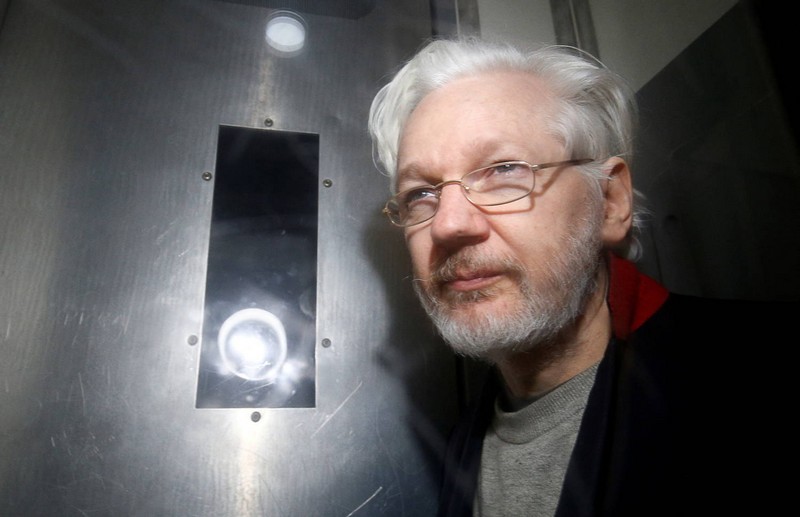
The Crucifixion of Julian Assange

By Chris Hedges

This is a sermon I gave on Sunday 20 Aug in Oslo, Norway at Kulturkirken Jakob (St. James Church of Culture). Actor and film director Liv Ullmann read the scripture passages.

20 Aug 2023 – Hebrew Bible Reading: Jeremiah 37 11- 21

And it came to pass, that when the army of the Chaldeans was broken up from Jerusalem for fear of Pharaoh’s army,

Then Jeremiah went forth out of Jerusalem to go into the land of Benjamin, to separate himself thence in the midst of the people.

And when he was in the gate of Benjamin, a captain of the ward was there, whose name was Irijah, the son of Shelemiah, the son of Hananiah; and he took Jeremiah the prophet, saying, Thou fallest away to the Chaldeans.

Then said Jeremiah, It is false; I fall not away to the Chaldeans. But he hearkened not to him: so Irijah took Jeremiah, and brought him to the princes.

Wherefore the princes were wroth with Jeremiah, and smote him, and put him in prison in the house of Jonathan the scribe: for they had made that the prison.

When Jeremiah was entered into the dungeon, and into the cabins, and Jeremiah had remained there many days;

Then Zedekiah the king sent, and took him out: and the king asked him secretly in his house, and said, Is there any word from the Lord? And Jeremiah said, There is: for, said he, thou shalt be delivered into the hand of the king of Babylon.

Moreover Jeremiah said unto king Zedekiah, What have I offended against thee, or against thy servants, or against this people, that ye have put me in prison?

Where are now your prophets which prophesied unto you, saying, The king of Babylon shall not come against you, nor against this land?

Therefore hear now, I pray thee, O my lord the king: let my supplication, I pray thee, be accepted before thee; that thou cause me not to return to the house of Jonathan the scribe, lest I die there.

Then Zedekiah the king commanded that they should commit Jeremiah into the court of the prison, and that they should give him daily a piece of bread out of the bakers’ street, until all the bread in the city were spent. Thus Jeremiah remained in the court of the prison.

New Testament Readings:

Matthew 4:1-17

Then was Jesus led up of the Spirit into the wilderness to be tempted of the devil. And when he had fasted forty days and forty nights, he was afterward an hungred.And when the tempter came to him, he said, If thou be the Son of God, command that these stones be made bread. But he answered and said, It is written, Man shall not live by bread alone, but by every word that proceedeth out of the mouth of God. Then the devil taketh him up into the holy city, and setteth him on a pinnacle of the temple, And saith unto him, If thou be the Son of God, cast thyself down: for it is written, He shall give his angels charge concerning thee: and in their hands they shall bear thee up, lest at any time thou dash thy foot against a stone.

Jesus said unto him, It is written again, Thou shalt not tempt the Lord thy God.

Again, the devil taketh him up into an exceeding high mountain, and sheweth him all the kingdoms of the world, and the glory of them; And saith unto him, All these things will I give thee, if thou wilt fall down and worship me.

Then saith Jesus unto him, Get thee hence, Satan: for it is written, Thou shalt worship the Lord thy God, and him only shalt thou serve. Then the devil leaveth him, and, behold, angels came and ministered unto him.

I dedicate this sermon to my mentor at Harvard Divinity School, Bishop Krister Stendhal.

Prophets are notoriously difficult people. They are not saints. They are people of agony, as Rabbi Abraham Heschel writes, whose “life and soul are at stake.” The prophet is moved by human anguish. Prophets are not soothsayers. They do not divine the future. Injustice, for the prophet, “assumes almost cosmic proportions.” A prophet, consumed by an unnatural fury, gives witness to “the divine pathos.” “God,” Heschel writes, “is raging in the prophet’s words.” He or she stands unflinchingly with the crucified of the earth, even to the point of their own destruction. “While the world is at ease and asleep,” Heschel writes, “the prophet feels the blast from heaven.” The prophet says “No” to his or her society, “condemning its habits and assumptions, its complacency, waywardness, and syncretism.” And the prophet “is often compelled to proclaim the very opposite of what his [or her] heart desires.”

Prophets believe in justice even when the world around them says there will be no justice. It is not that they transcend reality. It is that they are compelled to strike out against it, refusing to be silent no matter how hard life becomes. They are gripped by what Reinhold Niebuhr calls “a sublime madness in the soul,” for “nothing but such madness will do battle with malignant power” and “spiritual wickedness in high places.” This madness is dangerous, but vital because without it “truth is obscured.” Liberalism, Niebuhr goes on, “lacks the spirit of enthusiasm, not to say fanaticism, which is so necessary to move the world out of its beaten tracks. It is too intellectual and too little emotional to be an efficient force in history.”

But as the priest Amaziah says of the prophet Amos, “The land is not able to bear all his words.”

The Biblical prophets — Elijah, Amos, Jeremiah, Isaiah — believed that anything worth living for was worth dying for. Their enemy was not only suffering, calumny, poverty, injustice, but a life devoid of meaning. “You have to be prepared to die before you can begin to live,” the civil rights icon Fred Shuttlesworth said. Prophets cannot be intimidated. They cannot be bought. They are single-mindedly obsessed. James Baldwin, himself a prophet, understands. He writes:

“Ultimately, the artist and the revolutionary function as they function, and pay whatever dues they must pay behind it because they are both possessed by a vision, and they do not so much follow this vision as find themselves driven by it. Otherwise, they could never endure, much less embrace, the lives they are compelled to lead.”

The powerful and the rich make war on the prophet. They slander and insult the prophet. They question the prophet’s sanity and motives. They make it hard for the prophet to survive removing the prophet’s meager source of income. They punish and marginalize those who stand with the prophet. They silence the prophet’s voice, through censorship, imprisonment and often murder. The list of martyred prophets is long. Socrates. Joan of Arc. Isaac Babel. Federico García Lorca. Miklós Radnóti. Irène Némirovsky. Malcolm X. Martin Luther King Jr. Victor Jara. Ken Saro-Wiwa.

The truth grips the prophet so that he or she is bound so strongly to it that nothing but death can separate them from it. In that truth they find God.

“One can never wrestle enough with God if one does so out of a pure regard for truth,” Simone Weil writes. “Christ likes for us to prefer truth to him because, before being Christ, he is truth. If one turns aside from him to go toward the truth, one will not go far before falling into his arms.”

Who crucified Jesus? Organized religion. Organized politics. Organized business.

The executioners have not changed. They simply changed the story, created a counterfeit gospel, as the poet Langston Hughes writes:

Listen, Christ,

You did alright in your day, I reckon –

But that day’s gone now.

They ghosted you up a swell story, too,

Called it Bible –

But it’s dead now.

The popes and the preachers’ve

Made too much money from it.

They’ve sold you to many

Kings, generals, robbers, and killers –

Even to the Tzar and Cossacks,

Even to Rockefeller’s Church,

Even to THE SATURDAY EVENING POST.

You ain’t no good no more.

They’ve pawned you

Till you’ve done wore out.

The Carthaginian general Hannibal, who came close to defeating the Roman Republic in the Second Punic War, committed suicide in 181 B.C. in exile as Roman soldiers closed in on his residence in Bithynia, now modern-day Turkey. It had been more than 30 years since he led his army across the Alps and annihilated Roman legions. Rome was only able to save itself from defeat by replicating Hannibal’s military tactics.

It did not matter that there had been over 20 Roman consuls since Hannibal’s invasion. It did not matter that Hannibal had been hunted for decades and forced to perpetually flee, always just beyond the reach of Roman authorities. He had humiliated Rome. He had punctured its myth of omnipotence. And he would pay. With his life. Years after Hannibal was gone, the Romans were still not satisfied. They finished their work of apocalyptic vengeance in 146 B.C. by razing Carthage to the ground and selling its remaining population into slavery. Cato the Censor summed up the sentiments of Empire: Carthāgō dēlenda est  — Carthage must be destroyed. Nothing about Empire, from then until now, has changed.

Imperial powers do not forgive those who make public the sordid and immoral inner workings of Empire. Empires are fragile constructions. Their power is as much one of perception as of military strength. The virtues they claim to uphold and defend, usually in the name of their superior civilization, are a mask for pillage, corruption, lies, the exploitation of cheap labor, indiscriminate mass violence against innocents and state terror.

The current American Empire, damaged and humiliated by troves of internal documents published by WikiLeaks, will, for this reason, persecute Julian for the rest of his life. It does not matter who is president or which political party is in power. Imperialists speak with one despotic voice.

Julian, for this reason, is undergoing a slow-motion execution. Seven years trapped in the Ecuadorian Embassy in London. Four years in Belmarsh Prison. He ripped back the veil on the dark machinations of the U.S. Empire, the wholesale slaughter of civilians in Iraq and Afghanistan, the lies, the corruption, the brutal suppression of those who attempt to speak the truth. The Empire intends to make him pay. He is to be an example to anyone who might think of doing what he did.

Julian had other options. His genius and his skill as a computer programmer and cryptographer would have seen him highly compensated by security agencies, private contractors or Silicon Valley. He could have made a very comfortable living if he served the Empire. His soul, as Christopher Marlow shows us in Doctor Faustus, would have atrophied and died, like the souls of all who prostitute themselves to power, but the material rewards would have been significant. He would have been a success, at least a success as measured by the powerful and the wealthy.

Satan tempts Jesus by offering him power, “all the kingdoms of the world,” accompanied by glory and authority.

“If you, then, will worship me,” Satan says, “it will all be yours.”

This temptation is the fatal disease of those who serve power and with it the hubris and avarice that hastens, as the prophet Amos says, “the reign of violence.”

And yet these malevolent forces are not the most dangerous.

“When I was a rabbi of the Jewish community in Berlin under the Hitler regime…the most important lesson I learned under those tragic circumstances was that bigotry and hatred are not the most urgent problems,” Rabbi Joachim Prinz says. “The most urgent and most disgraceful, the most shameful, the most tragic problem, is silence.”

Julian’s crucifixion is a public spectacle. It is not hidden. And yet we watch passively. We do not flood the streets with our protests. We do not condemn the executioners, including Donald Trump and Joe Biden. We give his crucifixion our silent consent. W. H. Auden in Musee des Beaux Arts writes:

About suffering they were never wrong,
The old Masters: how well they understood
Its human position: how it takes place
While someone else is eating or opening a window or just walking dully along;
How, when the aged are reverently, passionately waiting
For the miraculous birth, there always must be
Children who did not specially want it to happen, skating
On a pond at the edge of the wood:
They never forgot
That even the dreadful martyrdom must run its course
Anyhow in a corner, some untidy spot
Where the dogs go on with their doggy life and the torturer’s horse
Scratches its innocent behind on a tree.

In Breughel’s Icarus, for instance: how everything turns away
Quite leisurely from the disaster; the ploughman may
Have heard the splash, the forsaken cry,
But for him it was not an important failure; the sun shone
As it had to on the white legs disappearing into the green
Water, and the expensive delicate ship that must have seen
Something amazing, a boy falling out of the sky,
Had somewhere to get to and sailed calmly on.

Sacrifice, self-sacrifice, is the cost of discipleship. But few are willing to pay that price. We prefer to look away from suffering, a boy falling out of the sky. And it is our indifference, and with our indifference, our complicity, that condemns all prophets.

“But what of the price of peace?” the radical priest Father Daniel Berrigan, who spent two years in a federal prison for burning draft records during the Vietnam War, asks in his book “No Bars to Manhood”:

I think of the good, decent, peace-loving people I have known by the thousands, and I wonder. How many of them are so afflicted with the wasting disease of normalcy that, even as they declare for the peace, their hands reach out with an instinctive spasm … in the direction of their comforts, their home, their security, their income, their future, their plans—that five-year plan of studies, that ten-year plan of professional status, that twenty-year plan of family growth and unity, that fifty-year plan of decent life and honorable natural demise. “Of course, let us have the peace,” we cry, “but at the same time let us have normalcy, let us lose nothing, let our lives stand intact, let us know neither prison nor ill repute nor disruption of ties.” And because we must encompass this and protect that, and because at all costs—at all costs—our hopes must march on schedule, and because it is unheard of that in the name of peace a sword should fall, disjoining that fine and cunning web that our lives have woven, because it is unheard of that good men should suffer injustice or families be sundered or good repute be lost—because of this we cry peace and cry peace, and there is no peace. There is no peace because there are no peacemakers. There are no makers of peace because the making of peace is at least as costly as the making of war—at least as exigent, at least as disruptive, at least as liable to bring disgrace and prison and death in its wake.

Bearing the cross, living in truth, is not about the pursuit of happiness. It does not embrace the illusion of inevitable human progress. It is not about achieving wealth, celebrity or power. It entails sacrifice. It is about our neighbor. The organs of state security monitor and harass you. They amass huge files on your activities. They disrupt your life. They throw you in prison, even when, like Julian, you did not commit a crime. It is not a new story. Nor is our indifference to evil; palpable evil we can see in front of us, new.

In the reading from the Hebrew Bible we hear the story of the prophet Jeremiah. He, like Julian, exposed the corruption and lust for war by the powerful. He warned of the catastrophe that inevitably comes when the covenant with God is broken. He condemned idolatry, the corruption of kings, priests and false prophets. Jeremiah was arrested, beaten and put in stocks. He was forbidden from preaching. An attempt was made on his life. After Egypt was conquered by Babylon, and Judea began to prepare for war, Jeremiah delivered an oracle warning the king to maintain peace. King Zedekiah ignored him. Babylon besieged Jerusalem. Jeremiah was arrested and imprisoned. He was freed by the Babylonians after Jerusalem’s conquest, but was exiled to Egypt, where, according to the Biblical tradition, he was stoned to death.

Jeremiah, like Julian, understood that a society that prohibits the capacity to speak in truth extinguishes the capacity to live in justice.

Yes, all of us who know and admire Julian decry his prolonged suffering and the suffering of his family. Yes, we demand that the many wrongs and injustices that have been visited upon him end. Yes, we honor him for his courage and his integrity. But the battle for Julian’s liberty has always been much more than the persecution of a publisher. It is the most important battle for press freedom, and truth, of our era. And if we lose this battle, it will be devastating, not only for Julian and his family, but for us.

Tyrannies, from Biblical times to the present, invert the rule of law. They turn the law into an instrument of injustice. They cloak their crimes in a faux legality. They use the decorum of the courts and trials, to mask their criminality. Those, such as Julian, who expose that criminality to the public are dangerous, for without the pretext of legitimacy the tyranny loses credibility and has nothing left in its arsenal but fear, coercion and violence.

The long campaign against Julian and WikiLeaks is a window into the collapse of the rule of law, the rise of what the political philosopher Sheldon Wolin calls our system of “inverted totalitarianism,” a form of totalitarianism that maintains the fictions of the old capitalist democracy, including its institutions, iconography, patriotic symbols and rhetoric, but internally has surrendered total control to the dictates of global corporations.

I was in the London courtroom during Julian’s extradition hearing overseen by Judge Vanessa Baraitser, an updated version of the Queen of Hearts in “Alice in Wonderland”, demanding the sentence before pronouncing the verdict. It was a judicial farce. There was no legal basis to hold Julian in prison. There was no legal basis to try him, an Australian citizen, under the U.S. Espionage Act. The CIA spied on Julian in the embassy through the Spanish company, UC Global, contracted to provide embassy security. This spying included recording the privileged conversations between Julian and his lawyers as they discussed his defense. This fact alone invalidated the hearing. Julian is being held in a high security prison so the state can, as Nils Melzer, the U.N. Special Rapporteur on Torture, has testified, continue the degrading abuse and torture it hopes will lead to his psychological, if not physical disintegration.

The U.S. government directed London barrister James Lewis. Lewis presented these directives to Baraitser. Baraitser adopted them as her legal decision. It was a judicial pantomime. Lewis and the judge insisted they were not attempting to criminalize journalists and muzzle the press while they busily set up the legal framework to criminalize journalists and muzzle the press. And that is why the court worked so hard to mask the proceedings from the public; limiting access to the courtroom to a handful of observers and making it hard, and at times impossible, to access the hearing online. It was a tawdry show trial, not an example of the best of English jurisprudence, but the Lubyanka.

Prophets call for justice in an unjust world. What they demand is not radical. On the political spectrum it is conservative. The restoration of the rule of law. It is simple and basic. It should not, in a functioning democracy, be incendiary. But living in truth in a despotic system is the supreme act of defiance. This truth terrifies those in power.

The architects of imperialism, the masters of war, the corporate-controlled legislative, judicial and executive branches of government and their obsequious courtiers in the media, are illegitimate. Say this simple truth and you are banished, as many of us have been, to the margins of the media landscape. Prove this truth, as Julian, Chelsea Manning, Jeremy Hammond and Edward Snowden have done by allowing us to peer into the inner workings of power, and you are hunted down and persecuted.

In Oct. 2010, WikiLeaks released the Iraq War Logs. The War Logs documented numerous U.S. war crimes — including video images of the gunning down of two Reuters journalists and 10 other unarmed civilians in the “Collateral Murder” video, the routine torture of Iraqi prisoners, the covering up of thousands of civilian deaths and the killing of nearly 700 civilians who approached too closely to U.S. checkpoints. The towering civil rights attorneys Len Weinglass and my good friend Michael Ratner — who I would later accompany to meet Julian in the Ecuadoran Embassy — met with Julian in a studio apartment in Central London. Julian’s personal bank cards had been blocked. Three encrypted laptops with documents detailing U.S. war crimes had disappeared from his luggage en route to London. Swedish police were fabricating a case against him in a move, Ratner warned, was about extraditing Julian to the United States.

“WikiLeaks and you personally are facing a battle that is both legal and political,” Weinglass told Julian. “As we learned in the Pentagon Papers case, the US government doesn’t like the truth coming out. And it doesn’t like to be humiliated. No matter if it’s Nixon or Bush or Obama, Republican or Democrat in the White House. The US government will try to stop you from publishing its ugly secrets. And if they have to destroy you and the First Amendment and the rights of publishers with you, they are willing to do it. We believe they are going to come after WikiLeaks and you, Julian, as the publisher.”

“Come after me for what?” asked Julian.

“Espionage,” Weinglass continued. “They’re going to charge Bradley Manning with treason under the Espionage Act of 1917. We don’t think it applies to him because he’s a whistleblower, not a spy. And we don’t think it applies to you either because you are a publisher. But they are going to try to force Manning into implicating you as his collaborator.”

“Come after me for what?’

That is the question.

They came after Julian not for his vices, but his virtues.

They came after Julian because he exposed the more than 15,000 unreported deaths of Iraqi civilians; because he exposed the torture and abuse of some 800 men and boys, aged between 14 and 89, at Guantánamo; because he exposed that Hillary Clinton in 2009 ordered U.S. diplomats to spy on U.N. Secretary General Ban Ki-moon and other U.N. representatives from China, France, Russia, and the U.K., spying that included obtaining DNA, iris scans, fingerprints, and personal passwords (part of the long pattern of illegal surveillance that included the eavesdropping on U.N. Secretary General Kofi Annan in the weeks before the U.S.-led invasion of Iraq in 2003); because he exposed that Barack Obama, Hillary Clinton and the CIA backed the June 2009 military coup in Honduras that overthrew the democratically elected president Manuel Zelaya, replacing him with a murderous and corrupt military regime; because he exposed that George W. Bush, Barack Obama and General David Petraeus prosecuted a war in Iraq that under post-Nuremberg laws is defined as a criminal war of aggression, a war crime; that they authorized hundreds of targeted assassinations, including those of U.S. citizens in Yemen, and that they secretly launched missile, bomb, and drone attacks on Yemen, killing scores of civilians; because Julian exposed the contents of the speeches Hillary Clinton gave to Goldman Sachs for which she was paid $675,000, a sum so large it can only be considered a bribe, and that she privately assured corporate leaders she would do their bidding while promising the public financial regulation and reform; because he exposed how the hacking tools used by the CIA and the National Security Agency permits the wholesale government surveillance of our televisions, computers, smart phones and anti-virus software, allowing the government to record and store our conversations, images and private text messages, even from encrypted apps.

Julian exposed the truth. He exposed it over and over and over until there was no question of the endemic illegality, corruption and mendacity that defines the global ruling class And for these truths they came after Julian, as they have come after all who dared rip back the veil on power. “Red Rosa now has vanished too,” Bertolt Brecht wrote after the German socialist Rosa Luxemburg was murdered. “She told the poor what life is about, And so the rich have rubbed her out.”

We have undergone a corporate coup, where poor and working men and women are reduced to joblessness and hunger, where war, financial speculation and internal surveillance are the only real business of the state, where even habeas corpus no longer exists, where we, as citizens, are nothing more than commodities to corporate systems of power, ones to be used, fleeced and discarded.

To refuse to fight back, to reach out and help the weak, the oppressed and the suffering, to save the planet from ecocide, to decry the domestic and international crimes of the ruling class, to demand justice, to live in truth, is to bear the mark of Cain. Those in power must feel our wrath, and this means constant acts of mass civil disobedience, it means constant acts of social and political disruption, for this organized power from below is the only power that will save us and the only power that will free Julian. Politics is a game of fear. It is our moral and civic duty to make those in power very, very afraid.

The criminal ruling class has all of us locked in its death grip. It cannot be reformed. It has abolished the rule of law. It obscures and falsifies the truth. It seeks the consolidation of its obscene wealth and power. But to do this, we must, as Julian has done, as all prophets have done, pick up the cross and bear its awful weight on our back.

“This is the cross that we must bear for the freedom of our people…” Martin Luther King Jr. reminds us. “The cross we bear precedes the crown we wear. To be a Christian, one must take up the cross, with all its difficulties agonizing and tension-packed content and carry it until that very cross leaves its marks upon us and redeems us, to that more excellent way which comes only through suffering…When I took up the cross, I recognized its meaning…The cross is something you bear, and ultimately that you die on.”

“Hope has two beautiful daughters,” Augustine writes. “Their names are anger and courage;anger at the way things are, and courage to see that they do not remain the way they are.”

Those who hold fast to the eternal and the sacred, to truth, as the sociologist Emile Durkeim understood, are not merely those who see new truths of which most others are ignorant, but are men and women, possessed by sublime madness, who are driven by a transcendent force that allows them to endure the trials of existence or conquer them. They transform the world through suffering.

My friend Julian is suffering. He is suffering for our sins and our indifference. As Rabbi Heschel reminds us, “some are guilty, but all are responsible.” There are two choices. We stand for the truth, for Julian, and free him. We find the courage to be responsible, to pick up the cross. Or we are complicit in the dark night of corporate tyranny that will envelope us all.

Let us pray:

God of grace and God of glory

In thy people pour thy power;

Crown thine ancient church’s story,

Bring her bud to glorious flower.

Grant us wisdom, grant us courage,

For the facing of this hour

For the facing of this hour. 

Amen

Chris Hedges is a Pulitzer Prize–winning journalist who was a foreign correspondent for fifteen years for The New York Times, where he served as the Middle East Bureau Chief and Balkan Bureau Chief.

21 August 2023

Source: www.transcend.org