Just International

Understanding the Currency of Courage, Discipline, and Love in Contemporary Indian Politics: Lessons from Karnataka

By Javed Iqbal Wani

The result of the 2023 Karnataka assembly elections has surprised those who, directly or indirectly, had already read its obituary. Congress has secured 136 seats out of 224, and the BJP has managed to retain only 64.  However, contrary to the observation of most commentators, Congress was successful not merely because of its local focus. In this article, I argue that at least three factors solidified Congress’s campaign against the currently dominant Bharatiya Janata Party. Therefore, there are some lessons to be learnt from its political campaign.

The first factor is the politics of courage. In an atmosphere of political gloom where an alternative to the aggressive posturing of the BJP seemed distant, the disposition of courage by Congress leadership in the Karnataka elections refreshed the practice of politics. Compassion and reason were the much-needed antidotes to rescue politics from authoritarian hyperbole. Courage as a political practice, thus, infused politics with almost a redemptive heroic quality to confront cruelty and fear in the service of humanity. It is no secret that, to some extent, the BJP had successfully exhausted Congress’s energies by dragging its leaders into legal and extra-legal political battles. At a time when Congress did not have sufficient support and was being bullied by all means, its leadership has shown exemplary leadership qualities by practising unflinching defiance of fear and intimidation and demonstrating the much-needed courage and energy to amass popular support. Fortunately, it did not go unnoticed by the electorate. One can argue that the momentum of the mass-contact Bharat Jodo Yatra consolidated the party’s presence in Karnataka too. Its people-oriented campaign did not resort to vague promises but categorically emphasised the significance of peace, harmony, and brotherhood. It seems to have clicked with the electorate in Karnataka and hence made a case for a renewed political responsibility based on conscientious citizenship.

The second factor is the disciplined, clear, and consistent election campaign and political messaging run by the Congress party. Its campaign focused on relatable notions of civic virtue and liberal ideals such as rights and human dignity. Thus, puncturing the juggernaut of discursive violence of a communal narrative that is self-sustaining and self-serving. From grassroots workers to its top leadership, the party exhibited commendable discipline and astute engagement with popular issues. During this campaign, Congress did not fall prey to the BJP’s trap of communal rhetoric and carefully manoeuvred a few instances where it was cornered in the name of religion and community. The people-oriented campaign raised issues like inflation and unemployment and, unlike BJP, did not invoke abstract fears and inconsequential sectarianism. The clarity and consistency of political messaging provided a shot in the arm for Congress’s campaign. The electorate responded to the political messaging of the Congress party and realised the dangers of zero-sum game politics. The form of politics has triumphed over the force of politics. Reason and dialogue emerge as significant medium to restore political hope.

The last but the most potent was the politics of love, inclusion, and humanity. Toleration and civility were the central pillars of the Congress campaign. The ideological thrust of such ideas creates meaningful coordination between various aspects of public and private life, thus offering a radical configuration of political engagement. It emerged as a formula that redefines obscure junctures where commonalities overtake differences. As the famous French Philosopher Alain Badiou has observed in his work In Praise of Love that love is an existential project and, therefore, a constant unravelling quest for truth. Badiou’s analysis proposes that the moment or point of engagement is a moment of encounter. This encounter transforms the relationship between two parties by challenging them “to see the world from the point of view of two rather than one.” Badiou understands it as love’s most concrete transfiguration. Thus, the politics of love is a magnificent quest to explore and celebrate differences and dilutes our obsession with ourselves.

As they say, with great power comes great responsibility. Congress faces a challenging task that ranges from diffusing any party infightings, posing as a unified organisation and meeting the expectations of the state’s people, keeping in mind the impact their governance model can have on potentially reviving their fortune in the upcoming 2024 Lok Sabha elections. The Karnataka results must not be seen as momentary but as the symptom of a legitimacy deficit of the BJP government and its policies.

Javed Iqbal Wani, Senior Assistant Professor,School of Law, Governance and Citizenship, Ambedkar University Delhi, New Delhi

15 May 2023

Source: countercurrents.org

New Rules of Engagement: How Palestinians Defeated Netanyahu and Redefined ‘Unity’

By Dr Ramzy Baroud

All Israeli wars on the Palestinians throughout the years have been promoted and justified by Tel Aviv in the name of ‘security’ and ‘fighting terrorism’.

Israel’s biggest challenge throughout many of these wars was hardly the Palestinian Resistance, however steadfast and resilient. The challenge has always been Tel Aviv’s ability to kill many Palestinians, including civilians, without tarnishing its image internationally as an oasis of democracy and civilization.

Israel has been losing the public relations battle and rapidly so and, now, it is losing a different kind of battle as well.

Throughout its 75-year-old history, from its violent birth on the ruins of historic Palestine in May 1948, up to its latest war on besieged Gaza on May 9, Israel’s history has been associated with violence.

Pro-Israel western propaganda, along with masterful Israeli manipulation of facts and rewriting of history, allowed Israel to blame the violence on others: first, the Arabs who, supposedly, attacked Israel, unprovoked, time and again; then the Palestinian ‘terrorists’ from all ideological colors, the socialists, the secularists and, as of late, the ‘Islamic fundamentalists’.

Alas, the Israeli hasbara worked, not because of its sheer genius, but because of the near-total embargo on the Palestinian voice in all aspects of life. This embargo continues to this day, and has extended to reach dominant social media platforms, leading amongst them, Facebook.

But the fight for the truth, intellectual integrity and freedom of speech continues, and Palestinian successes are now far greater than all attempts by Israel, its benefactors and supporters to censor, sideline or muffle the Palestinian voice.

The days of hiding Israeli crimes or blaming them on someone else seem to be over.

There are reasons why Israel’s propaganda is living its worst days. Aside from the power and influence commanded by Palestinian intellectuals, social media activists and the numerous platforms made available to them through innumerable solidarity networks around the world, Israeli hasbara has itself grown weak and unconvincing.

Israel is a fragmented society. While it is true that Israelis often unite during times of war, this time around, their unity is stale and unimpressive.

The rise of a far-right, even fascist government under the leadership of embattled Prime Minister Benjamin Netanyahu last December, generated mass protests that have rocked Israeli cities since then. Trapped, Netanyahu needed an outlet, to unify angry Israelis behind him, and to keep his far-right ministers satisfied. He opted to attack Gaza.

The choice of exporting Israel’s political crises to Palestine is an old tactic. However, since stiff and increasingly strong Palestinian resistance in recent years, a Gaza war is no longer an easy option. The May 2021 war, dubbed “Guardian of the Walls” by Israel and “Sword of Jerusalem” by Palestinians, for example, was a painful reminder of how such foolish miscalculations on the part of Tel Aviv can backfire, and badly.

So, Netanyahu resorted to a different model: a mini war that targets one Palestinian group in an isolated area, at a time, for example, the Lions’ Den in Nablus, the Islamic Jihad in Gaza.

Netanyahu’s choice of attacking Gaza and assassinating top leaders in the Islamic Jihad’s military arm, Al-Quds Brigades, was not a haphazard one. The group is strong enough that such a decisive and bloody military operation can be marketed by Netanyahu and his supporters as a restoration of ‘deterrence’, but without involving Israel in a prolonged and costly war with all Palestinian Resistance groups, all at once.

This tactic worked in the past, at least according to Israel’s own calculations. In November 2019, Israel launched a war on the Islamic Jihad in Gaza. It was dubbed “Black Belt”. Though other Resistance groups declared support for the Islamic Jihad then, they did not engage in the fight directly. Why?

For years, the Resistance in Gaza wanted to change the rules of engagement with Israel. Instead of allowing Israel to determine the time and place for war, based on Tel Aviv’s own agenda and degree of readiness, Resistance factions in Gaza wanted to have a say over the timing of such battles.

Israel completely failed to understand the Palestinian strategy and assumed that the “Black Belt” operation reflected Palestinian weakness, indecisiveness and, more dangerously, disunity.

The May 2021 war and Unity Intifada should have alerted Israel to the fact that Palestinian Resistance groups remained united, and that the Resistance Joint Operations Room, which includes Hamas, the Islamic Jihad, the socialist PFLP, among others, continues to operate in unison.

Netanyahu wished to ignore the clear messaging transmitted by Palestinians, not only in Gaza, but also through the unified Resistance in the West Bank, perhaps out of his own desperation to divert attention from his multiple political crises and corruption trials at home. For whatever reason, Netanyahu thought that he would be able to successfully copy the “Black Belt” experience, divide the Resistance and restore ‘deterrence’.

Soon after the assassination of top Islamic Jihad commanders – Jihad al-Ghannam, Khalil al-Bahtini and Tariq Ezz al-Deen. – on February 9, Netanyahu appeared at a press conference along with his archenemy, Defense Minister, Yoav Gallant, to prematurely detail Israel’s supposed victory. The victory lap did not last for long, however. After 35 hours of perplexing silence, and as nearly two million Israelis hid in shelters as if awaiting their punishment, the Resistance responded.

Then, the rockets of the Resistance came raining in, creating panic, from Sderot, Ashkelon and Netivot all the way to Rehovot or Gush Etzion.

Suddenly, the ‘deterrence’ war, named “Shield and Arrow” by the Israeli military, became Netanyahu’s nightmare. And, yet, all of this was done by the Islamic Jihad alone, in coordination and support from the rest of the Resistance factions.

Though Hamas, the PFLP and others have fully supported the Islamic Jihad in its ongoing fight, Israeli officials still refrained from resorting to their usual threats of assassinating all Palestinian Resistance leaders. The only exception was comments made by Israel’s Minister of Energy of Infrastructure, Israel Katz, who threatened, in an interview with Israel’s Kan 11 News, to ‘eliminate’ top Hamas leaders in Gaza, Yahya Sinwar and Mohammed Deif.

Now that, as of Saturday evening, May 13, a tentative ceasefire has been reached, pro-Netanyahu propagandists will spend many hours speaking of the splendid victory over ‘terror’, and pro-Israeli spin doctors will labor to twist facts and blame Palestinians, including children, for their own misery.

But the uncontested truth is that the Palestinian Resistance has managed to challenge, if not to reverse, the rules of engagements like never before.

More importantly, Palestinians on the ground have shown us that unity is not expressed through cliched language, empty slogans and press conferences in luxury hotels. It is the unity of those resisting on the ground, from Gaza to Nablus, and from Jenin to Sheikh Jarrah, that matters most.

Dr. Ramzy Baroud is a journalist, author and the Editor of The Palestine Chronicle.

15 May 2023

Source: countercurrents.org

Syria-Arab League Rapprochement: U.S. Lawmakers Threaten Sanctions

By Countercurrents Collective

A bipartisan group of U.S. lawmakers has introduced a bill to oppose the normalization of relations between Syria and other nations. The Arab League reinstated the country this month, while Saudi Arabia announced the reopening of diplomatic channels with Damascus after ten years.

Media reports said:

The Assad Anti-Normalization Act threatens “governments considering normalization with the Assad regime” with severe consequences, according to a press release by the office of U.S. Representative Joe Wilson, the primary sponsor of the bill.

The government of Syrian President Bashar Assad faced mass protests and an armed uprising over a decade ago. The U.S. and its allies accused Damascus of crimes against its people and backed anti-government forces by sending weapons to militant groups, among other measures. Some of the arms ended up in the hands of outright jihadists.

The Syrian government turned the tide of the conflict against the militant groups – which had taken over large parts of Syrian territory – with the help of Russia and Iran, and is now in control of most parts of the country. The U.S. now has a military base in the east, in spite of objections from Damascus, and supports the Kurdish forces which hold fertile and oil-rich regions of the country.

After the opposition’s failure to topple Assad, Washington introduced severe economic sanctions, which critics say significantly undermine Syria’s attempts at reconstruction. The new legislation seeks to bolster the sanctions. Among other things, it targets foreign airports receiving Syrian planes, seeks to crack down on first lady Asma Assad’s charity, and subjects grants of $50,000 or more to Syria from nations in the region to sanctions review.

“The United States must use all of our leverage to stop normalization with Assad,” U.S. Foreign Affairs Committee Chairman Michael McCaul said of the new bill, which he co-sponsored. It mandates “further sanctions against any form of investment in territory under control of the Assad regime, as we remain committed to ensuring the Syrian people receive justice.”

The bill also reacts to the Arab League’s reengagement with Syria by instructing the U.S. Department of State to monitor and report to the Congress all diplomatic contacts between Damascus and certain states. The list includes Türkiye, the UAE, Egypt, Jordan, Iraq, Saudi Arabia, and others. The U.S. government would be required to implement a strategy to counter Syria rapprochement for at least five years under the proposed law.

The lawmakers also want to be updated on what they have termed the “manipulation of the UN” by Damascus, referring to conditions under which UN humanitarian aid programs helping Syrians operate.

A Reuters report said:

A bipartisan group of U.S. lawmakers introduced a bill on Thursday intended to bar the U.S. government from recognizing Bashar al-Assad as Syria’s president and enhance Washington’s ability to impose sanctions in a warning to other countries normalizing relations with Assad.

The bill, first reported by Reuters, would prohibit the U.S. federal government from recognizing or normalizing relations with any government in Syria led by Assad, who is under U.S. sanctions, and expands on the Caesar Act, a U.S. law that imposed a tough round of sanctions on Syria in 2020.

The bill comes after Arab states turned the page on years of confrontation with Assad on Sunday by letting Syria back into the Arab League, a milestone in his regional rehabilitation even as the West continues to shun him after years of civil war.

Regional countries, including Saudi Arabia, Qatar and others, had for years supported anti-Assad rebels, but Syria’s army – backed by Iran, Russia and allied paramilitary groups – regained most of the country. The icy ties with Assad began to thaw more quickly after devastating earthquakes in Syria and Turkey in February.

The U.S. has said it will not normalize ties with Assad, and its sanctions remain in full effect.

“Countries choosing to normalize with (the) unrepentant mass murderer and drug trafficker, Bashar al-Assad, are headed down the wrong path,” U.S. Representative Joe Wilson, the chair of the Subcommittee on the Middle East, North Africa, and Central Asia, said in a statement.

The bill was introduced by Wilson alongside House of Representatives Foreign Affairs Committee Chairman Michael McCaul and co-chairs of the Free, Democratic and Stable Syria Caucus, Republican French Hill and Democrat Brendan Boyle; among others.

The legislation is a warning to Turkey and Arab countries that if they engage with Assad’s government, they could face severe consequences, a senior congressional staffer who worked on the bill told Reuters.

“The readmission of Syria to the Arab League really infuriated members and made clear the need to quickly act to send a signal,” the staffer said.

The staffer said the State Department was consulted in the drafting of the bill. The State Department did not immediately respond to a request for comment.

The bill’s provisions include a requirement for an annual strategy from the secretary of state for five years on countering normalization with Assad’s government, including a list of diplomatic meetings held between Syria’s government and Turkey, the United Arab Emirates, Egypt and others.

The bill would also clarify the applicability of U.S. sanctions on Syrian Arab Airlines and another carrier, Cham Wings. Under the proposed bill, countries that allow the airlines to land would face sanctions against that airport, the staffer said.

If passed, the bill would also require a review of transactions, including donations over $50,000 in areas of Syria held by Assad’s government by anyone in Turkey, the UAE, Egypt and several other countries.

U.S., UK Oppose Syria’s Re-admission To Arab League

An AP report said on May 10, 2023:

The U.S. and Britain voiced dissatisfaction Tuesday with the weekend decision by the Arab League to re-instate Syria as a member.

U.S. Secretary of State Antony Blinken and British Foreign Secretary James Cleverly said they opposed the move. But they also allowed it was up to the Arab League to determine its membership.

At the same time they said their countries would not normalized relations with Syrian President Bashar Assad’s government unless it accepts and complies with a U.N. plan to restore peace to the country after a brutal 13-year civil war.

“We do not believe that Syria merits re-admission to the Arab League,” Blinken told reporters at a joint news conference with Cleverly at the State Department.

“It is a point we have made to all of our regional partners, but they have to make their own decisions,” Blinken said. “Our position is clear: We are not going to be in the business of normalizing relations with Assad and with that regime.”

Cleverly said the British government agreed with the U.S. stance.

“This is an occasion where the U.S. and the U.K. share very, very similar views,” he said. ”The U.K. is very uncomfortable with the re-admission of Syria in the Arab League, but as Secretary Blinken said, ultimately it is a decision for the membership of the Arab League.”

“The point that I have made is that there needs to be conditionality if they choose to take this course of action,” he said. “It needs to be conditional on some fundamental changes from Damascus and the Assad regime.”

Blinken and Cleverly said any solution to the crisis in Syria must be based on U.N. Security Council Resolution 2254, which was adopted in 2015 and lays out steps, including a permanent cease-fire, humanitarian assistance and progress toward free and fair elections, measures the Arab League also backs.

“I think the Arab perspective as articulated through the Arab League is that they believe they can pursue these objectives through more direct engagement,” Blinken said. “We may have a different perspective when it comes to that, but the objectives that we have I think are the same.”

Both men said it was critical for Syria to never again become a haven for the Islamic State group, which occupied large portions of the country and neighboring Iraq before being largely driven out.

Syria was reinstated in the 22-nation Arab League on Sunday after a 12-year suspension. It was a symbolic victory for Assad, who can join the group’s May 19 summit, though Western sanctions will continue to block reconstruction funds to the war-battered country.

Türkiye And Syria Planning Roadmap To Rebuild Ties

Another media report said:

Türkiye, Syria, Iran and Russia have agreed to develop a roadmap for rebuilding ties between Ankara and Damascus, which deteriorated during the Syrian conflict, the Russian Foreign Ministry has said.

The announcement was made after talks between the top diplomats of the four countries – Türkiye’s Mevlut Cavusoglu, Syria’s Faisal Mekdad, Iran’s Hossein Amir-Abdollahian and Russia’s Sergey Lavrov – which concluded in Moscow on Wednesday.

During the negotiations, the foreign ministers “discussed the issues of restoring Syrian-Turkish interstate relations in various aspects in a substantive and frank manner,” the ministry said in a statement.

“The participants also agreed to instruct their deputy foreign ministers to prepare a roadmap for advancing relations between Turkiye and Syria in coordination with the defense ministries and special services of the four countries,” it added.

All sides stressed their commitment to preserving the sovereignty and territorial integrity of Syria and agreed to continue contacts in bilateral and quadruple formats, according to Moscow.

The Syrian Foreign Ministry confirmed the accounts by Moscow and Ankara in its statement. Damascus added that the sides also stressed the need to increase international assistance to Syria for the reconstruction of the country after a battle against international terrorism that lasted over a decade.

In December, Moscow hosted the first talks in 11 years between the defense ministers of Türkiye and Syria.

According to a report from Syrian newspaper Al-Watan, during that meeting Ankara agreed to withdraw its troops from northern Syria.

However, Turkish forces still remain in Idlib Province – the last area remaining under control of militants in the country, with Cavusoglu saying last month they are needed there “to prevent threats against [Türkiye], but also to block efforts to break up Syria.”

Relations between Ankara and Damascus deteriorated after the outbreak of the conflict in Syria in 2011, and saw Türkiye join Western calls for President Bashar Assad to be removed from power, supported by the Syrian National Army and some other anti-government groups.

However, over the past few years the Syrian authorities, helped by their Russian and Iranian allies, were able to restore control over most of the country’s territory, defeating, among others, Islamic State (IS, formerly ISIS/ISIL) and other terrorist groups. Ankara’s stance towards Damascus has also shifted recently as it started looking for ways to rebuild ties with its neighbor. Turkish President Recep Tayyip Erdogan said in January that he was ready to meet with Assad after their respective diplomats do the preparatory work, in order “to establish peace and stability in the region.”

Last week, Syria was reinstated as a member of the Arab League.

Syria has also agreed to resume diplomatic relations with another major regional player, Saudi Arabia.

Earlier media reports said:

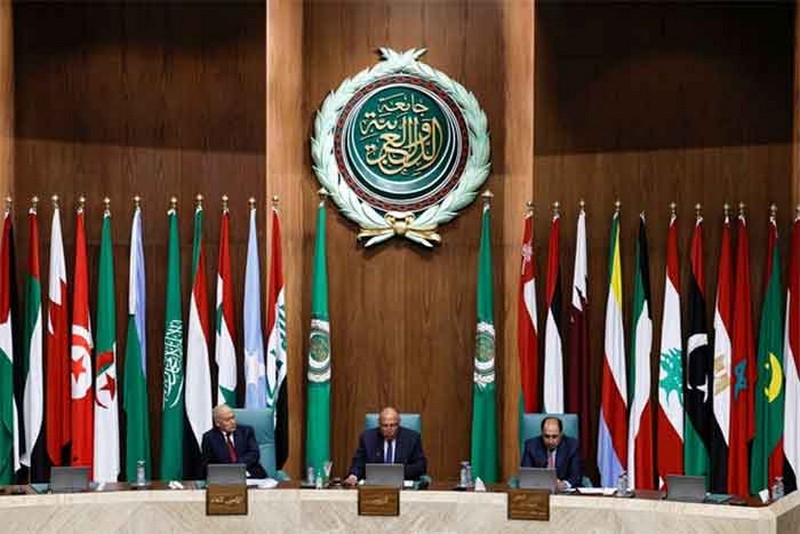
The Arab League agreed Sunday to reinstate Syria, ending a 12-year suspension and taking another step toward bringing Syrian President Bashar Assad, a long-time regional pariah, back into the fold.

Some influential league members remain opposed to reinstating Syria, chief among them Qatar, which did not send its foreign minister to Sunday’s gathering. Thirteen out of the league’s 22 member states sent their foreign ministers to the meeting in Cairo.

The decision represented a victory for Damascus, albeit a largely symbolic one. Given that Western sanctions against Assad’s government remain in place, the return to the Arab League is not expected to lead to a quick release of reconstruction funds in the war-battered country.

Syria’s membership in the Arab League was suspended early on during the country’s 2011 uprising against Assad’s rule that was met by a violent crackdown and quickly turned into a civil war. The conflict has killed nearly a half million people since March 2011 and displaced half of the country’s pre-war population of 23 million.

Arab League Secretary-General Ahmed Aboul Gheit said in a televised statement that the decision to return Syria to the organization, which will allow Assad to take part in the group’s upcoming May 19 summit, is part of a gradual process of resolving the conflict.

Aboul Gheit also said restoring Syria’s membership in the organization does not mean all Arab countries have normalized with Damascus.

“These are sovereign decisions for each state individually,” he said.

Syrian Prime Minister Hussein Arnous claimed Sunday that Syria had been the victim of “misinformation and distortion campaigns launched by our enemies” for 12 years. He said Sunday’s consultations reflected the “prestigious position” Syria holds regionally and internationally.

Qatar

A spokesperson for Qatar’s Ministry of Foreign Affairs said in a statement published by state media that normalization with Syria should be tied to a political solution to the conflict but that it “always seeks to support what will achieve an Arab consensus and will not be an obstacle to that.”

Arab rapprochement with Damascus accelerated after a deadly Feb. 6 earthquake that shattered parts of the war-torn country. One of the countries pushing normalization is Saudi Arabia, which once backed opposition groups trying to overthrow Assad.

Egypt

Egyptian Foreign Minister Samer Shoukry said before Sunday’s meeting that only an Arab-led “political solution without foreign dictates” can end the ongoing conflict. “The different stages of the Syrian crisis proved that it has no military solution, and that there is no victor nor defeated in this conflict,” he said.

Neighbors of Syria that hosted large refugee populations took steps towards reopening diplomatic links with Damascus. Meanwhile, two Gulf monarchies, the United Arab Emirates and Bahrain, reestablished ties.

The Feb. 6 earthquake that rocked Turkey and Syria was a catalyst for further normalization across the Arab world. China helped to broker a recent rapprochement between arch-rivals Saudi Arabia and Iran, which had backed opposing sides in the Syrian conflict.

Jordan last week hosted regional talks that included envoys from Saudi Arabia, Iraq, Egypt, and Syria. They agreed on a framework, dubbed the “Jordanian initiative,” that would slowly bring Damascus back into the Arab fold. Amman’s top diplomat said the meeting was the “beginning of an Arab-led political path” for a solution to the crisis.

Saudi King Invites Assad To Attend Arab League Summit

Saudi Arabia’s King Salman bin Abdulaziz has invited Syria’s President Bashar al-Assad to attend an Arab League summit in the Gulf country on May 19, Syrian state media reported on Wednesday.

The invitation is a powerful signal that the regional isolation of Assad and his war-battered country is ending.

Regional countries – including Saudi Arabia, Qatar and others – had for years supported anti-Assad rebels but Syria’s army, backed by Iran, Russia and allied paramilitary groups, regained most of the country.

Bashar al-Assad received an invitation to next week’s Arab summit in Saudi Arabia.

Assad received an invitation from Saudi King Salman “to participate in the 32nd Arab League summit which will be held in Jeddah on May 19”, the Syrian presidency said.

Assad said the summit “will enhance joint Arab action to achieve the aspirations of the Arab peoples,” it said in a statement.

Saudi Arabia’s ambassador to Jordan, Nayef bin Bandar al-Sudairi, delivered the invitation, according to Saudi state news agency SPA.

He conveyed the King and his son Crown Prince Mohammed bin Salman’s “wishes to the brotherly government and people of Syria for security and stability,” SPA said.

The last Arab League summit Assad attended was in 2010 in Libya.

The invitation comes a day after Riyadh and Damascus announced that work would resume at their respective diplomatic missions in Syria and Saudi Arabia, after more than a decade of severed relations.

A decision in March by former arch-rivals Saudi Arabia and Iran, a close ally of Damascus, to resume ties also shifted the political landscape.

In April, Saudi Foreign Minister Prince Faisal bin Farhan met with Assad in Damascus on the first such visit since the war broke out.

Regional capitals have gradually been warming to Assad as he has held onto power and clawed back lost territory with crucial support from Iran and Russia.

In 2018, the United Arab Emirates re-established ties with Syria and has been leading the recent charge to reintegrate Damascus into the Arab fold.

The fate of millions of Syrian refugees — many of them living in neighboring Turkey, Jordan and Lebanon — are among some states’ main concerns.

Several Arab countries are also seeking increased security co-operation with Syria.

Assad hopes normalization with wealthy Gulf states can bring economic relief and money for reconstruction.

Analysts say Western sanctions on Syria are likely to continue to deter investment.

15 May 2023

Source: countercurrents.org

America’s Blueprint for Global Domination: From “Containment” to “Pre-emptive War”. The 1948 Truman Doctrine

By Prof Michel Chossudovsky

We bring to the attention of our readers the analysis of George F. Kennan (1948) which constitutes the foreign policy cornerstone of the “‘Truman doctrine.”

These documents have set the groundwork. They have a direct bearing on US foreign policy and military doctrine under the Biden Administration, specifically with regard to Germany and the European Union which are currently the object of a U.S. sponsored Act of “Economic Warfare”. 

What is of significance is that the threats directed against Germany and the EU, emanating from the Biden White House, were formulated under the “Truman Doctrine” at the very outset of the post-war era. According to George Kennan

“To achieve such a federation [EU] would be much easier if Germany were partitioned, or drastically decentralized, and if the component parts could be brought separately into the European union.”

The military occupation of western Germany may have to go on for a long time. We may even have to be prepared to see it become a quasi-permanent feature of the European scene

In the long run there can be only three possibilities for the future of western and central Europe. One is German domination. Another is Russian domination. The third is a federated Europe, into which the parts of Germany are absorbed but in which the influence of the other countries is sufficient to hold Germany in her place.

The day is not far off when we are going to have to deal in straight power concepts. The less we are then hampered by idealistic slogans, the better”  (George Kennan, emphasis added)

“Straight power concepts” are now designated by the U.S State Department and the media as “the rules-based order”.

Introduction

Today’s US-NATO sponsored wars are part of a military and foreign policy agenda extending over a period of more than half a century.

In this regard, the NeoCons’ Project for the New American Century’s blueprint formulated in 2000  should be viewed as the culmination of a post-war agenda of military hegemony and global economic domination as initially formulated by the State Department in 1948 at the outset of the Cold War.

What these 1948 State department documents reveal (see below in Annex) is continuity in US foreign policy from “Containment” during the Cold War to today’s doctrine of “Pre-emptive War”.

The Project for the New American Century (PNAC) is in many regards a continuation of the Truman Doctrine, namely a hegemonic “long war” waged by US-NATO at a global level. Military actions are to be implemented simultaneously in different regions of the world (as outlined in the PNAC): 

“Fight and decisively win multiple, simultaneous major theater wars” 


Needless to say, successive Democratic and Republican administrations, from Harry Truman to George W. Bush, Barack Obama [and now Joe Biden] have been involved in carrying out this hegemonic blueprint for global domination, which the Pentagon  calls the “Long War”.

Kennan’s writings point to the importance of building a dominant Anglo-American alliance based on “good relations between our country and [the] British Empire”. In today’s world, this alliance largely characterizes the military axis between Washington and London, which plays a dominant role inside NATO to the detriment of Washington’s  European allies. Kennan also pointed to the inclusion of Canada in the Anglo-American alliance, a policy which today has largely been implemented (under NAFTA and the integration of military command structures).  Canada was viewed as a go between the US and Britain, as a means for the US to also exert its influence in Britain’s colones, which later became part of the Commonwealth.

Of significance, Kennan underscores the importance of preventing the development of continental European powers (e.g. Germany and France)  which could compete with the Anglo-American axis:

Today, standing at the end rather than the beginning of this half-century, some of us see certain fundamental elements on which we suspect that American security has rested. We can see that our security has been dependent throughout much of our history on the position of Britain; that Canada, in particular, has been a useful and indispensable hostage to good relations between our country and British Empire; and that Britain’s position, in turn, has depended on the maintenance of a balance of power on the European Continent.

Thus it was essential to us, as it was to Britain, that no single Continental land power should come to dominate the entire Eurasian land mass. Our interest has lain rather in the maintenance of some sort of stable balance among the powers of the interior, in order that none of them should effect the subjugation of the others, conquer the seafaring fringes of the land mass, become a great sea power as well as land power, shatter the position of England, and enter—as in these circumstances it certainly would—on an overseas expansion hostile to ourselves and supported by the immense resources of the interior of Europe and Asia. Seeing these things, we can understand that we have had a stake in the prosperity and independence of the peripheral powers of Europe and Asia: those countries whose gazes were oriented outward, across the seas, rather than inward to the conquest of power on land. (George F. Kennan, American Diplomacy. University of Chicago Press, Chicago, 1951)

Today the World is at crossroads of the most serious crisis in World history. The US and its allies have launched a military adventure which threatens the future of humanity. This roadmap of global warfare has its historical roots in the 1948 Truman doctrine.

Of relevance in relation to recent developments in Ukraine and Eastern Europe, Kennan explicitly pointed in his 1948 State Department brief, to “a policy of containment of Germany, within Western Europe”. What Kennan’s observations suggest is that the US should be  supportive of  a European Project only inasmuch as it supports US hegemonic interests.

In this regard, we recall that the Franco -German alliance largely prevailed prior to the onslaught of the March 2003 US-UK invasion of Iraq, to which both France and Germany were opposed.

The 2003 invasion of Iraq was a turning point. The election of pro-US political leaders (President Sarkozy in France and Chancellor Angela Merkel in Germany) was conducive to a weakening of national sovereignty, leading to the demise of the Franco-German alliance.

Today both Francois Hollande and Angela Merkel are taking their orders directly from Washington.

Moreover, in today’s context, the US is committed to preventing Germany and France from developing political and economic relations with Russia, which in the eyes of Washington would undermine America’s hegemonic ambitions in the European Union.

“Federated Europe”

It would appear that a blueprint of  a European Union predicated on “a weakened Germany” had been envisaged by the US State Department in the late 1940s.

Writing in 1948, Kennan had envisaged the formation of a “Federated Europe” which would based on the strengthening of the dominant Anglo-American alliance between Britain and the US , the weakening of Germany as a European power and the exclusion of Russia.

According to Kennan:

In the long run there can be only three possibilities for the future of western and central Europe. One is German domination. Another is Russian domination. The third is a federated Europe, into which the parts of Germany are absorbed but in which the influence of the other countries is sufficient to hold Germany in her place.

If there is no real European federation and if Germany is restored as a strong and independent country, we must expect another attempt at German domination. If there is no real European federation and if Germany is not restored as a strong and independent country, we invite Russian domination, for an unorganized Western Europe cannot indefinitely oppose an organized Eastern Europe. The only reasonably hopeful possibility for avoiding one of these two evils is some form of federation in western and central Europe.

Moreover, it is worth noting that the US at the outset of the Cold did not favor the reunification of Germany. Quite the opposite: Germany was to remain partitioned:

Our dilemma today lies in the fact that whereas a European federation would be by all odds the best solution from the standpoint of U.S. interests, the Germans are poorly prepared for it. To achieve such a federation would be much easier if Germany were partitioned, or drastically decentralized, and if the component parts could be brought separately into the European union. To bring a unified Germany, or even a unified western Germany, into such a union would be much more difficult: for it would still over-weigh the other components, in many respects.

With regard to Asia including China and India, Kennan hints to to the importance of not only articulating a military solution but in maintaining the people of Asia in a state of poverty. What is also put forth is a strategy of creating divisions as well as ensuring that Asian countries do not establish a relationship with the Soviet Union which would hinder US hegemonic interests.

“The day is not far off when we are going to have to deal in straight power concepts. The less we are then hampered by idealistic slogans, the better”:

Furthermore, we have about 50% of the world’s wealth but only 6.3% of its population. This disparity is particularly great as between ourselves and the peoples of Asia. In this situation, we cannot fail to be the object of envy and resentment. Our real task in the coming period is to devise a pattern of relationships which will permit us to maintain this position of disparity without positive detriment to our national security. To do so, we will have to dispense with all sentimentality and day-dreaming; and our attention will have to be concentrated everywhere on our immediate national objectives. We need not deceive ourselves that we can afford today the luxury of altruism and world-benefaction.

For these reasons, we must observe great restraint in our attitude toward the Far Eastern areas. The peoples of Asia and of the Pacific area are going to go ahead, whatever we do, with the development of their political forms and mutual interrelationships in their own way. This process cannot be a liberal or peaceful one. The greatest of the Asiatic peoples—the Chinese and the Indians—have not yet even made a beginning at the solution of the basic demographic problem involved in the relationship between their food supply and their birth rate. Until they find some solution to this problem, further hunger, distress, and violence are inevitable. All of the Asiatic peoples are faced with the necessity for evolving new forms of life to conform to the impact of modern technology. This process of adaptation will also be long and violent. It is not only possible, but probable, that in the course of this process many peoples will fall, for varying periods, under the influence of Moscow, whose ideology has a greater lure for such peoples, and probably greater reality, than anything we could oppose to it. All this, too, is probably unavoidable; and we could not hope to combat it without the diversion of a far greater portion of our national effort than our people would ever willingly concede to such a purpose.

In the face of this situation we would be better off to dispense now with a number of the concepts which have underlined our thinking with regard to the Far East. We should dispense with the aspiration to “be liked” or to be regarded as the repository of a high-minded international altruism. We should stop putting ourselves in the position of being our brothers’ keeper and refrain from offering moral and ideological advice. We should cease to talk about vague and—for the Far East—unreal objectives such as human rights, the raising of the living standards, and democratization. The day is not far off when we are going to have to deal in straight power concepts. The less we are then hampered by idealistic slogans, the better. (emphasis added)

From the outset of the Cold War era, Washington was also intent upon weakening the United Nations. According to Kennan:

The initial build-up of the UN in U.S. public opinion was so tremendous that it is possibly true, as is frequently alleged, that we have no choice but to make it the cornerstone of our policy in this post-hostilities period. Occasionally, it has served a useful purpose. But by and large it has created more problems than it has solved, and has led to a considerable dispersal of our diplomatic effort. And in our efforts to use the UN majority for major political purposes we are playing with a dangerous weapon which may some day turn against us. This is a situation which warrants most careful study and foresight on our part. (emphasis added)

Michel Chossudovsky, September 7, 2014, May 17, 2023  [updated from December 2003)

ANNEX

Further references including original archives:

FOREIGN RELATIONS OF THE UNITED STATES 1945-1950 Emergence of the Intelligence Establishment

at http://www.state.gov/www/about_state/history/intel/

Foreign Relations Series   (Kennedy through Nixon)

at http://www.state.gov/www/about_state/history/frus.html

For a list of Kennan’s writings at Princeton University library:

http://infoshare1.princeton.edu/libraries/firestone/rbsc/finding_aids/kennan/index.html

See also The United States’ Global Military Crusade (1945-2003) by Eric Waddell, Global Outlook, Issue 6, Winter 2003

17 May 2023

Source: www.globalresearch.ca


Why China Can’t Pull the World Out of a New Great Depression

By F. William Engdahl

Over the past two decades since China was admitted into the WTO, its national industrial base has made unprecedented strides to emerge as the world’s leading economic producer in many major areas. The academic debates over whether China’s GDP is larger than that of the USA are misplaced. GDP is largely worthless as a measure of a real economy. When measured in real physical economic production, China has left the USA and everyone else in the dust. Therefore, the future course of industrial production in China is vital to the future of the world economy. Globalization of the world economy made it so.

Steel production is still the single best indicator of a growing real economy. In 2021, China produced more that twelve times the tonnage steel as the USA, over one billion tons. The USA, once world leader, managed a piddly 86 million tons. In tons of coal, China produces some 50% of world total coal. She controls 70% of world rare earth mining and over 90% of its processing, thanks to bizarre US policy actions going back several decades. China today is far the world’s largest motor vehicle producer, almost three times the size of the US at 27 million units annually, one third of world total in 2022. China is by far the largest producer of the essential cement for construction, and is the world’s leading aluminum  producer.  At 40 million tons in 2022, this compares to not even one million tons in the USA. It is also the world’s largest copper consumer. The list goes on.

This is merely to suggest  how essential the economy of China has been to world economic growth over the past two decades. A mere four decades ago China was insignificant in world real economic terms. So, if China goes into deep economic contraction, the effect this time will be global. And this is just what is now underway. Important to note, the contraction began well before the severe three-years of China’s zero covid lockdown. Simply put, China since the so-called Great Financial Crisis of 2008 managed to create a financial bubble the size of which the world has never before experienced. That bubble began to deflate, beginning in real estate, around 2019. The scale is systemic and is only beginning.

Colossal Deleveraging and Hidden Debt

A huge problem with China’s economic model over the past two decades has been the fact that it has been a debt-based finance model massively concentrated on real estate speculation beyond what the economy can digest.

Fully 25 to 30% of the total Chinese GDP is from real estate investment in homes, apartments, offices. That’s significant. The problem is that real estate, especially apartments in China, for more than two decades, appeared to be a guaranteed money maker for owners as well as builders and banks and above all, local government officials. Prices rose annually in the double digits, sometimes by 20%. Millions of middle-class Chinese bought not just one, but two or more apartments, using the second as investment for future retirement. China’s land is owned by the Communist Party, at the local level. It is leased long-term to construction firms who then borrow to build.

Here it gets murky. For CP local government officials, revenue from local real estate land leasing and their infrastructure projects is their major revenue source. Until now municipal property taxes are forbidden despite a huge pressure from local officials.

In the months of 2018 and 2019 China real estate prices peaked. Since then they have been in a prolonged decline. China has a unique and very abuse-prone real estate model. Typically a buyer must pre-pay the full purchase price when a developer has merely begun the construction. “Buy today as the price will be even more tomorrow” was the mantra. He takes a mortgage, usually from local banks, to do that. If the builder does not complete on time, the buyer must still pay their mortgage. Even if the developer goes bankrupt as is now happening, leaving abandoned unfinished housing behind. No other country uses that model. Typically in Western countries a small deposit on a home to reserve until completion is enough. The mortgage comes when the property is finished. Not in China.

So long as China home prices were constantly rising, it seemingly worked and the home market expanded. When that price inflation stopped, for a variety of reasons, and exacerbated by the ultra-severe covid lockdowns, what was then a colossal real estate bubble began to implode. According to economist Robert Pettis at Beijing University, “Since the beginning of the property crisis in September and October 2021, property prices have declined in more than two-thirds of China’s seventy largest cities (and probably all of the smaller ones), while, more importantly, sales of new apartments this year (2022) have collapsed.”

The major turn took place in 2021 with the default of China Evergrande Group on its dollar bonds. It was then the world’s most indebted real estate conglomerate with debts of well over $300 billion. In 2018 Evergrande was deemed, “the most valuable real estate group in the world,” according to Wikipedia. That was on paper. By time of default it also owned theme parks, an EV auto company, resorts and enough land to house 10 million people. Until Beijing refused to bailout Evergrande, in a belated bid to cool the bubble,  Chinese lenders had made loans based on the assumption that large borrowers would be bailed out—Too Big To Fail. Beijing learned all the wrong lessons from US banks after Lehman Bros.

It came out that Evergrande had created a colossal Ponzi fraud over the years. They were not unique. Following a speculative property boom after 2010, poorly-regulated local governments across China turned increasingly to real estate to boost income and fulfill the Beijing GDP growth targets, a de facto monetary version of Soviet central planning. Inflating local real estate values was a way of meeting local GDP targets. Local officials were given their share of annual GDP contribution to be met. Real estate became the ideal vehicle to meet GDP targets and generate local revenues. As long as prices were rising, banks and increasingly unregulated local “shadow banks” joined in the “win-win” bonanza.  According to the South China Morning Post, by 2020 and the start of covid severe lockdowns, land sales and real estate taxes’ contribution to local government fiscal revenue reached a peak of 37.6 per cent.

The Evergrande partial default set off a panic in China real estate that officials desperately, and unsuccessfully, have tried to control. It was merely the first major casualty in what is a systemic meltdown. Beijing authorities imposed sharp limits on real estate lending in a vain attempt to contain the implosion, the so-called Three Red Lines. That made the implosion of the property bubble worse. In 2022 China new home sales plunged 22% over 2021. As of February 2023, China home prices had fallen for 16 straight months. Sales by the country’s top 100 developers last year were only 60% of 2021 levels. Land sales, which typically account for more than 40% of local government revenue, have collapsed.

Empty Houses and unemployment rising

Until the bubble began to burst in 2022 with the Evergrande default, Chinese real estate prices had risen several times higher, relative to household income, than in the USA. More alarming, two decades of rampant price inflation had created literal ghost cities and millions of empty apartments. As of 2021 an estimated 65 million apartments in China were empty, enough to house the French nation. This was a result of two decades or more of municipalities and developers building beyond actual demand, as citizens bought for investment, not living. One estimate is that between one-fifth and one-quarter of the total China housing stock, especially in more desirable cities, was owned by speculative buyers who had no intention of living in them or renting them out. In Chinese culture, a used apartment is considered unattractive. With falling prices, these homes become unpayable.

The unprecedented 3-year covid lockdowns that ended abruptly last December did not help matters. Thousands of foreign manufacturers including Apple, Foxconn, Samsung and Sony, have begun to leave China for other locations in Asia or even Mexico, fueling a growing unemployment crisis which feeds the housing crisis in a self-feeding cycle.

As a result of this slow-motion implosion across China, for the first time since the great expansion unemployment is becoming very serious. This March, youth unemployment officially was over 20%. Millions of recent university graduates are unable to find work and Beijing has begun to send them to work in the rural countryside, reminiscent of the Mao era. This bodes ill for future home sales. A contracting bubble has a vicious dynamic.

Until about the time of the 2008 Beijing Olympics, real estate investment was largely productive. It filled a huge deficit in quality housing as a new middle class grew more affluent. After about 2010 that began to shift to bubble status as millions of middle-class and rich Chinese began to buy second and even third homes for pure speculation as prices were rising in double digits. The degree of central supervision of local government finances was loose.

Over recent years, to avoid central clampdown by Beijing authorities fearful of a new debt bubble imploding, local governments, often with hidden collusion from the giant state banks, created a non-bank economy, “shadow banks,” all off-balance sheet. As one result, despite actions by Beijing regulators to control the property meltdown and prevent contagion, total debt, public and private, in China by February 2023 according to Bloomberg reached an alarming 280% of GDP.

Commodity.com reports total state debt of China in 2023 is more than $9.4 trillion. But that excluded local government financing vehicles (LGFVs). Chinese local governments rely on off-balance sheet LGFVs to raise funds for local public construction—housing, high-speed rails, ports, airports. The debts of all these LGFVs are estimated to be roughly $27 trillion more. The official figure for total state debt also excluded debt of state banks and state companies, which is also clearly considerable, but unpublished. That total debt is also without the unknown size of local shadow banks which China’s National Institute of Finance and Development in 2018 estimated at some $6 trillion more. The result of all these omissions is a headline figure meant to reassure Western financial markets that China has manageable public and private debt. It doesn’t. All told, very roughly we can calculate a mammoth debt accumulation of well more than $42 trillion, a staggering sum for an economy which only three decades ago was at a level of an underdeveloped economy.

A major vehicle used to finance local budgets is unguaranteed and largely unregulated municipal investment bonds. Unlike traditional municipal debt in western countries, the Chinese local LGFVs are not able to use tax revenues to fund their bond interest or principal payments. So, local governments would tap into a growing housing market by leasing their long-term land to developers to fund their bond payments.  This created a system where a sustained fall in housing construction, sales and prices now creates a systemic threat. This is now underway across China. In just two decades China has created the world’s second largest corporate debt market behind the USA, and far the most of that is in unregulated municipal bond debt.

As a result of this unique mixing of local governmental fiscal policies with local housing markets, a substantial drop in housing or land prices has greatly increased the risk level of local government  default on its debts. In July 2022 Zunyi City in Guizhou defaulted on a major bond, leading to a collapse of the entire unregulated local bond market, as local bond issuance collapsed by 85% after that. The bonds were a way to refinance local debt and that channel now is all but closed, despite   Beijing liquidity injections early 2023. Investors were mostly local ordinary Chinese seeking to earn on savings. This past April officials of Guiyang, also in Guizhou, told Beijing it was unable to finance its debts accumulated over a decade in construction projects including housing. [viii] This opens the next phase of debt implosion. Several China municipalities reportedly have been slashing wages, cutting transportation services and reducing fuel subsidies in a desperate bid to avoid default.

National Security redefined

Transparency of financial data has always been a problem in China. Thirty years ago the country had no developed financial markets. So long as the economy was expanding however, it was not a priority. Now it is, but too late.

A signal of how severe the situation is becoming, the Beijing authorities have begun to limit release of local and corporate financial data to foreign firms, calling it a “national security” issue.

On May 9 Bloomberg reported, “China’s crackdown on data access to overseas firms is adding to concerns about how Beijing controls the flow of information in the country, making it difficult for investors to assess the state of the economy.” Information such as academic papers, court judgments, official biographies of politicians, and bond market transactions are affected, they report. US consultancy Bain &Co. had their China offices raided recently as part of the national data security campaign. Such measures may keep reality from the pages of the Wall Street Journal or CNBC for a while, but the underlying reality of the collapse of the world’s largest financial edifice will be more difficult to hide.

This May, Dalian Wanda Group, another major Chinese real estate conglomerate with investments in US cinema chains, Australian real estate and beyond, revealed talks with its major bankers to restructure huge debts amid a liquidity crisis. The UK Financial Times on May 9 reported that hopes of a post-covid China recovery are vanishing: “Chinese iron ore prices dropped to their lowest levels in five months, as weak demand adds to evidence that the country’s economic rebound from tough coronavirus lockdowns may be faltering… the optimism and activity that followed the end of lockdown have waned, leading to a ‘collapse’ in the steel market.”

This all means the prospect of the Chinese economy being a growth locomotive to lift the rest of the world from looming depression is virtually nil at this point. The massive Belt and Road Initiative is mired in hundreds of billions of dollars in loans to countries unable to service the debt, as world interest rates rise and growth stalls. Attempts to boost domestic China growth by relying on a consumer boom are doomed presently for obvious reasons noted, as is the call by Xi Jinping to make 5G, AI and such technologies the basis of a new boom, as US sanctions greatly hamper China IT advances.

*

Note to readers: Please click the share button above. Follow us on Instagram and Twitter and subscribe to our Telegram Channel. Feel free to repost and share widely Global Research articles.

F. William Engdahl is strategic risk consultant and lecturer, he holds a degree in politics from Princeton University and is a best-selling author on oil and geopolitics.

16 May 2023

Source: www.globalresearch.ca

Unspoken Divisions within NATO. Turkey is “Sleeping with the Enemy”. Turkey’s Elections, Washington Wants to Get Rid of Erdogan

Part II

By Prof Michel Chossudovsky

First published on February 2, 2023

***

Update: The February Earthquakes, May 14, 2023 Turkey Elections

The economic, social and geopolitical impacts of the February 2023 two earthquakes in Southern Anatolia are far-reaching. They have resulted in economic, social and political chaos in the period leading up to the May 14 presidential and parliamentary elections. 

For details see Environmental Modification Techniques (ENMOD) and the Turkey-Syria Earthquake: An Expert Investigation is Required

With regard to the May elections, Washington’s unspoken objective is to: “Replace Erdogan” with an obedient US proxy. No easy task: Their chosen successor to Erdogan is leader of the opposition Kemel Kılıçdaroğlu, who heads a six-party coalition “united by the sole aim of removing Erdoğan from power”. 

According to Western media reports, Erdogan’s Justice and Development party (AKP) is poised to suffer losses in the May 14, 2023 elections, which could be followed by a “Color Revolution” resulting in a process of engineered social chaos and mass protests against Erdogan. 

Washington’s ultimate objective is to dismantle the Russia-Turkey alliance, while reintegrating Turkey back into the Atlantic Alliance as an “obedient NATO country”, no more “sleeping with the enemy”.

What the media in recent reports have failed to mention is that the outcome of the May 14 election will have far-reaching geopolitical implications.

Washington is intent upon undermining Turkey’s alliance with Russia, as well as taking full control of  US-NATO naval access to the Black Sea. 

Michel Chossudovsky, May 10, 2023

***

The latest election reports (May 15), point to a run-off. See below.

It should be mentioned that there are reports pointing to the manipulation of election results.

***

Introduction. Turkey is both a “NATO Heavyweight” as well as “An Ally of Russia”

It should be obvious to the White House, the Pentagon not to mention NATO headquarters in Brussels that:

You cannot win a war against Russia when the second largest military power member state of the North Atlantic Treaty Organization is “sleeping with the enemy”

I am referring to Turkey which is both a “NATO heavyweight” as well as a firm ally of the Russian Federation.

The “sleeping with the enemy” narrative –which is the object of this article  — has never hit the headlines, nor has it been the object of analysis by the independent media in Turkey’s elections

Turkey abandoned NATO’s Air Defence System in favor of Russia’s “State of the Art” S-400.

“As of 2020, 4 batteries consisting of 36 fire units, and 192+ missiles were delivered to Turkey. Turkey has tested the S-400 air defense system against drones and F-16 fighter jets at low altitudes.”

That acquisition of Russian military technology is part of a concurrent military cooperation agreement as well an alliance between Turkey and Russia established in the immediate aftermath of the failed July 2016 US sponsored coup d’Etat directed against President Recep Tayyip Erdogan. 

Needless to say it is a slap in the face for US-NATO, “which you do not want to publicize”.

It is important to address the history of US-Turkey relations and how this shift in military alliances occurred.

History: US-Turkey Military Clash in Northern Syria

From the outset of the war on Syria in mid-March 2011, the Islamist “freedom fighters” were supported, trained and equipped by NATO and Turkey’s High Command. According to Israeli intelligence sources (Debka, August 14, 2011):

NATO headquarters in Brussels and the Turkish high command are meanwhile drawing up plans for their first military step in Syria, which is to arm the rebels with weapons for combating the tanks and helicopters spearheading the Assad regime’s crackdown on dissent. … NATO strategists are thinking more in terms of pouring large quantities of anti-tank and anti-air rockets, mortars and heavy machine guns into the protest centers for beating back the government armored forces. (DEBKAfile, NATO to give rebels anti-tank weapons, August 14, 2011)

In this regard, Turkey played a central role in relation to logistics, weapons supplies, recruitment and training, in close liaison with Washington and Brussels.

This initiative involved a process of organized recruitment of thousands of jihadist “freedom fighters”, reminiscent of  the enlistment of  Mujahideen to wage the CIA’s jihad (holy war) in the heyday of the Soviet-Afghan war.

The Ankara government also played a strategic role in protecting the movement of jihadist rebels and supplies across its border into Northern Syria.

Also discussed in Brussels and Ankara, our sources report, is a campaign to enlist thousands of Muslim volunteers in Middle East countries and the Muslim world to fight alongside the Syrian rebels. The Turkish army would house these volunteers, train them and secure their passage into Syria. (Debka, emphasis added)

Both Turkey and the US initially collaborated in covertly supporting ISIS-Daesh and Jabhat Al Nusra.

President Recep Tayyip Erdogan, however, had territorial ambitions in Northern Syria which did not meet with US-NATO approval.

They consisted in combating Kurdish YPG separatist forces in Rojava which were supported by Washington.

Rojava is contiguous to the Kurdistan Autonomous region of Iraq, which has been under the control of the U.S. since 1992, in the immediate wake of the Gulf War.

Erdogan’s actions in Northern Syria were considered an encroachment upon Syria’s Autonomous Administration of North and East Syria (Rojava), which in 2015 received extensive air and ground support from the United States and its Middle East allies.

In an unusual twist of events, Washington forcefully accused Erdogan:

“he [Erdogan] continues to supply arms [into Syria] as well, with his ultimate aim [being] to go after the Kurds, and ISIS is secondary.”

This division between the US and Turkey had struck at the very heart of the Atlantic Alliance. Washington was firmly opposed to Erdogan’s territorial ambitions in Northern Syria.

Under Obama, a major campaign against Syria and Iraq in support of ISIS-Daesh was initiated in 2014. The US-NATO objective was intent upon fragmenting both Syria and Iraq as well destabilizing  the government of Bashar Al Assad.

In turn, Washington’s strategy in Northern Syria consisted in supporting and controlling the Kurdish YPG separatists against Turkey.

In May 2016, Erdogan retorted, accusing US-NATO of supporting YPG forces:

“The support they give [US, NATO] to… the YPG (militia)… I condemn it,” Turkish President Recep Tayyip Erdogan said… during an airport ceremony in the Kurdish city of Diyarbakir.

Those who are our friends, who are with us in NATO… cannot, must not send their soldiers to Syria wearing YPG insignia.” (Ara News Network, May 28, 2016)

Failed July 2016 Coup d’Etat against President Erdogan

Less than two months following Erdogan’s May 28, 2016 “refusal to comply”, on July 15, 2016, Turkey was the object of an attempted coup d’Etat: 

…[It] was [allegedly] conducted by a faction of the Turkish military [which] bombed government buildings, blocked roads and bridges and attempted to overthrow President Recep Tayyip Erdogan

What the NPR Report quoted above failed to mention was that the Coup d’Etat consisted in an alleged CIA plan to assassinate President Erdogan:

“…Erdogan accused the CIA of being behind a coup attempt to assassinate him and bring the CIA-controlled networks of exiled Fethullah Gülen into power as Washington had enough of Erdogan’s flips in allegiance. The coup failed and reports were that Russian intelligence intercepts were given Erdogan that saved his life. After that, relations with Moscow improved markedly. 

Then Erdogan began a shift towards Moscow. In 2017, Turkey ignored repeated protests from Washington and NATO and agreed to buy the advanced Russian S-400 air defense missile system, said to be the most advanced in the world. At that same time Russia began construction of the first of two Black Sea gas pipelines to Turkey, TurkStream in October 2016, further distancing Ankara and Washington.  (F. William Engdahl, April 2021, emphasis added) (see map below)

Ankara Drifts Towards Moscow

Prior to the July 15, 2016 failed coup d’Etat there was a strained relationship between Russia and Turkey (which had been facilitating the entry of US-NATO warships from the Mediterranean into the Black Sea).

The July 2016 failed coup d’Etat attempt against Erdogan pointed to a major turning point in the structure of political and strategic alliances. 

It led to a realignment of alliances almost immediately. Ankara’s evolving relations with Moscow were also coupled with economic cooperation, specifically in  the areas of pipelines.

“Our Alliances”: “Sleeping with the Enemy” while “Cooperating with NATO”.

In recent developments, Turkey’s Minister of Defense Hulusi Akar (a former four-star general) candidly stated (Double Speak):

“…[that] Turkey’s role in Nato against criticism that its objections to the Nordic countries’ joint application and its friendly ties with Russia were harming the alliance. “A Nato without Turkey is unthinkable,” Akar said. …

 “We are a tested nation, a tried army that would never act contrary to our alliances [note plural].  Turkish fighter jets patrol the skies above the Black Sea for Nato and the government has blocked Russian warships from using its straits during the war in Ukraine. (FT emphasis added)

Hulusi Akar says: “A Nato without Turkey is unthinkable.” I partially concur.  

A fractured NATO cannot under any circumstances wage war on Russia when its military heavyweight on the Southern coastline of the Black Sea is “Sleeping with the Enemy”, i.e. collaborating with Moscow coupled with a close personal relationship between Recep Tayyip Erdoğan and Vladimir Putin.

Those Turkish fighter jet patrols are pro forma. They are not directed against Russia.

“Our Alliances” says Hulusi Akar, plural: what does this mean? We are not only allied with US-NATO but also with Russia [paraphrase]. A Non sequitur.

Was Turkey’s initiative to block the accession of Sweden and Finland to the Atlantic Alliance undertaken on behalf of Russia?

Geopolitics of the Black Sea

From a geopolitical standpoint Turkey and Russia presently control the Black Sea (and they are collaborating with regard to commodity trade out of Ukraine).

While Russia controls a large part of the Northern and Eastern coastlines, the entire Southern coastline of the Black Sea as well as access to the Mediterranean under the Montreux Protocol is under Turkey’s jurisdiction.

If we go back in history, the Cold War US-NATO militarization was largely dependent on the strategic role of Turkey against the Soviet Union, with a massive US-NATO buildup in Turkey. That is a foregone era.

Moscow and Ankara have developed a bilateral and unofficial understanding. Turkey is not deploying its Navy and Air Force in the Black Sea Basin on behalf of US- NATO.

Is “Sleeping with the Enemy” an Avenue Towards Peace?

The March 2022 failed Peace Initiative in Istanbul was hosted by the Erdoğan government in close liaison with the Kremlin. While it was subject to sabotage by both Kiev and US-NATO, it hopefully remains an option.

In recent developments (Early February 2023) Turkey’s President Recep Tayyip Erdogan “has openly criticized the decision by his NATO allies to provide Ukraine with over 300 heavy tanks to prolong the war against Russia.”

“I personally can’t say that sending tanks will resolve this issue… This is a high-risk endeavor and will only line the pockets of gun barons,”

Erdogan confirmed that he “would continue talks with both Russia and Ukraine as part of efforts to find a path to peace”.

What Next: Another US Sponsored Failed Coup d’Etat, Regime Change in Turkey?

Presidential elections in Turkey are scheduled for May 2023:

“With Recep Tayyip Erdoğan at the helm, Turkey is again “the sick man of Europe,” Mr. Erdoğan’s performance has consistently been divisive and dangerous. …  Turkey is a member of the North Atlantic Treaty Organization, but it isn’t acting like an ally.” (WSJ),

While there is staunch opposition to Erdogan’s authoritarian rule, the various opposition parties are fragmented, unable to form a meaningful coalition.

The West, signifying US-NATO is committed to intervening in the elections against the “sick man of Europe” who is “sleeping with the enemy”:

Yet there’s a chance he can be stopped, if the West takes bold action to help ensure his domestic opposition gets a fair shake in upcoming presidential elections. To do so, the alliance [NATO] ought to put Ankara’s membership on the chopping block. Considering expulsion now will allow for the alliance to debate the pros and cons of its membership and emphasize—both to Turkish voters and NATO members— … ” (WSJ, emphasis added)

What can we we expect:

Washington’s objective is to destabilize the Erdogan regime (e.g. through color revolution, engineered protest movements, devaluation of the Lira, manipulation of the elections, coup d’Etat?) as a means to reintegrating Turkey as the heavyweight of the Atlantic Alliance and breaking Ankara’s relationship with Moscow.

In substance, another possible coup d’Etat against Erdogan? Triggering social chaos, etc. But will it work?

US-NATO is seeking regime change in Turkey, as a means to regaining control over the Black Sea.

Most of the opposition parties in Turkey are NOT supportive of  US-NATO and Turkey’s membership in the Atlantic Alliance.

Will this succeed or will it backlash, leading to broader divisions within the Atlantic Alliance?

There are massive protest movements against NATO throughout the European Union.

While corrupt governments are supportive of US-NATO, anti-war peace movements have spread across Europe.

Michel Chossudovsky is an award-winning author, Professor of Economics (emeritus) at the University of Ottawa, Founder and Director of the Centre for Research on Globalization (CRG), Montreal, Editor of Global Research.

15 May 2023

Source: www.globalresearch.ca

Sudan Talks Held in Saudi Arabia Reveals Underlying Crisis of Governance

By Abayomi Azikiwe

There have been various contours of discussions reported for the talks between the Sudanese Armed Forces (SAF) and the Rapid Support Forces (RSF) which commenced in Jedda, Saudi Arabia on May 6.

Initial news stories stated that the terms of the talks centered around the declaration of a more sustainable ceasefire to allow humanitarian assistance and evacuations to occur from the country with a population of nearly 47 million.

However, in subsequent days there appears to be a recognition of broader discussions between the envoys of the SAF and RSF. Meanwhile thousands are being displaced while others are losing their lives on a daily basis.

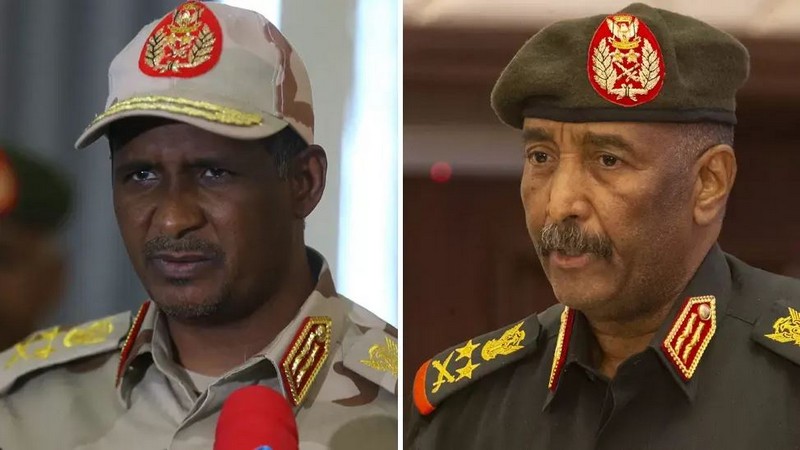
Fighting inside Sudan erupted on April 15 after disagreements over the future role of the RSF in a transitional government. The SAF commander General Abdel-Fattah al-Burhan supports the notion of integrating the RSF into the national military structures. General Mohamed Hamdan Dagalo (Hemeti), the commander of the Rapid Support Forces (RSF) has been reported to want a ten-year transitional period for his personnel to merge with the SAF.

What is striking about the negotiations are that they are taking place under the mediation efforts of the Kingdom of Saudi Arabia and the United States. Both of these states have a vested interest in the outcome of the current internal conflict. Washington does want to reset relations with Khartoum albeit on its own terms. Saudi Arabia, with its long-term relationship with Sudan which extends to both religious as well as geostrategic objectives, wants to maintain and extend its existing alliance with Khartoum.

Role of the Gulf Monarchies in Stifling the Sudanese Revolution

The response of Saudi Arabia and the United Arab Emirates (UAE) during the unfolding political situation in the early months of 2019 when thousands were demonstrating in the streets daily, was to stabilize the military and prevent the emergence of a civilian government committed to genuine democratic reforms. Immediately after the forced removal of former President Omer Hassan al-Bashir in April 2019, the Saudis and the UAE announced substantial sums of direct financial assistance to the military regime.

Rather than allow the process of political transformation to continue under the civilian leadership of the Forces for Freedom and Change (FFC), the youth resistance committees and the numerous opposition parties, the military seized power in an effort to confuse the masses by suggesting that it was the people that removed al-Bashir.

According to an article published by Reuters press agency in April 2019:

“Saudi Arabia and the United Arab Emirates said on Sunday (April 19) they had agreed to send Sudan $3 billion worth of aid, throwing a lifeline to the country’s new military leaders after protests led to the ousting of President Omar al-Bashir. The two Gulf Arab countries will deposit $500 million with the Sudanese central bank and send the rest in the form of food, medicine and petroleum products, their state news agencies said in parallel statements. The aid comes amid wrangling between the Transitional Military Council (TMC) and protesters and opposition groups who are demanding that civilians lead a two-year transitional period. The protesters who have kept up a sit-in outside the Defense Ministry since Bashir was removed on April 11. They have demonstrated in large numbers over the past three days, pressing for a rapid handover to civilian rule. TMC head Abdel Fattah al-Burhan told state TV that the formation of a joint military-civilian council – one of the activists’ demands – was being considered.”

General al-Burhan claimed that the military coup of April 11, 2019 against President al-Bashir was in line with the revolutionary movement that the Sudanese people desired. The Sudanese Professional Association (SPA) in public statements rejected the assertion made by the Transitional Military Council (TMC) led by al-Burhan and insisted on continuing the resistance aimed at the removal of the armed forces from power.

When the mass organizations, professional associations and youth-led resistance committees in the neighborhoods continued to demonstrate and occupy the areas around the military headquarters in Khartoum, they were met with the brute force of the Sudanese state bolstered by the assistance from Saudi Arabia and the UAE. The days-long massacres of political activists in June 2019 should have sealed the fate of the security forces as legitimate participants in any transitional process.

Two years later in 2021, the same Reuters media organization noted:

“Saudi Arabia and the United Arab Emirates had jointly promised $3 billion in aid to Sudan and Sudanese officials previously indicated that $750 million of that aid had been delivered, including a $500 million deposit in the central bank. However, there was no news of further disbursements, and it was unclear whether the remainder of the aid would be delivered after civilian groups struck a power-sharing deal with the military in the summer of 2019. Some of the aid was expected to arrive in the form of badly needed supplies of wheat, medicine, fuel and other goods, and Yousif said joint committees would determine how the remaining $1.2 billion of the Saudi Arabian grant would be delivered.”

Sudan’s military structures serving as the government are being subsidized in order to prevent any semblance of a revolutionary movement from coming to power in Khartoum. Another coup was staged by al-Burhan and Hemeti in October 2021 unseating interim Prime Minister Abdalla Hamdok and removing the first iteration of the Sudan Sovereign Council, an unholy alliance between the civilian and military leadership which could not stop the repressive policies of the security forces let alone send the army back to its barracks.

Washington and its Allies Continue to Subvert the Will of the People

After the eruption of the April 15 crisis, the government of the Republic of South Sudan headed by President Salva Kiir, offered to host talks between the two belligerents in Juba, the capital. Nonetheless, this neighboring state which is a part of the African Union (AU), the 55-member states continental organization, was not able to enact their proposal.

A mediation effort by the AU or other regional organizations such as the Inter-governmental Authority on Development (IGAD), the East Africa Community (EAC) or the Southern African Development Community (SADC), etc., would have been a continuation of the recent efforts to develop “African solutions to African problems.”  In Ethiopia, the headquarters of the AU, beginning in 2020 when fighting broke out between the central government of Prime Minister Abiy Ahmed and the Tigray People’s Liberation Front (TPLF), would eventually reach a resolution during late 2022 through the work of the governments of the Republic of South Africa and the Republic of Kenya where discussions were held that ended the conflict.

At present the ceasefire in northern Ethiopia seems to be holding between the TPLF and the Abiy administration in Addis Ababa. The Ethiopia peace agreement has been hailed as a success illustrating the potential for further successes under the diplomatic leadership of the AU.

The U.S. under the previous administration of President Donald Trump and the current government of President Joe Biden have played a destructive role in the Federal Democratic Republic of Ethiopia along with neighboring Republic of Sudan. The many visits to Khartoum by U.S. envoys have only served to further the instability in Sudan while strengthening the intransigence of the military.

Successive administrations in Washington have worked ceaselessly to undermine the genuine independence and sovereignty of Sudan. The country, which was once the largest geographic nation-state in Africa, was partitioned in 2011 after decades of civil war largely at the aegis of the U.S., Britain and Israel. Sudan and South Sudan today are suffering from the impact of the rupture of the once promising emergent oil-producing state.

On May 6, the AU headquarters in Addis Ababa issued the following statement:

“The Chairperson of the African Union Commission, Moussa Faki Mahamat, is closely following the Saudi Arabia – United States facilitated talks between the Sudanese Armed Forces (SAF) and the Rapid Support Forces (RSF), which commenced today, in Jeddah. The Chairperson urges the parties to agree to a humanitarian ceasefire as a matter of urgency as a first step to allow for the immediate supply of relief materials to ease the suffering of Sudanese civilians, who have borne the brunt of this crisis. The Chairperson also calls on the SAF and RSF to promptly agree to open humanitarian corridors to ease the distribution of essential supplies and restoration of services. The Chairperson reiterates the imperative for the parties to comply with International Humanitarian Law and International Human Rights Law and to permanently silence the guns in the supreme interest of the people of Sudan. The Chairperson stresses the urgent need for the international community to combine their efforts strongly and expeditiously in a collective action, to express solidarity with the Sudanese people for peace, democracy, and development.”

Despite these words and the willingness of the AU to mediate a sustainable end to the fighting in Sudan, the role and status of the continental body are being constantly undermined. However, until there is an African solution adopted to the Sudanese political crisis, the country will continue to fail in the quest for peace, unity and security.

Abayomi Azikiwe is the editor of the Pan-African News Wire. He is a regular contributor to Global Research.

11 May 2023

Source: www.globalresearch.ca

Ongoing Nakba

by Jonathan Kuttab

As we commemorate the 75th anniversary of the Nakba (“catastrophe”) of May 15, 1948, many commentators have been pointing out that the Catastrophe did not simply occur on that date or year but rather that it is an ongoing catastrophe, beginning prior to 1948 and continuing to the present day.

May 15, 1948 marks the creation of the State of Israel, and it represents the height of the campaign for the destruction of the Palestinian community which permitted that creation. Even prior to 1948, and well before the entrance of the Arab armies into the fight, the armed forces of the Zionists had substantially carried out a successful campaign to depopulate hundreds of Arab villages, drive out their occupants through terror and massacres, take over their lands and properties, and expand their control far beyond those areas allocated unfairly to them under the UN partition resolution of 1947. That resolution granted to the Zionists approximately 51% of the “territory” of Palestine, even though Jews constituted at that time only one third of the population. And, despite intensive efforts to buy land from wealthy absentee landowners, they only held ownership of about 7% of the land.

There are three basic elements to the Nakba. All three were essential for the creation of a Jewish state in Palestine. All three elements continue to operate today. First is the expulsion of hundreds of thousands of the land’s original inhabitants (and the barring of their return), which together with a massive influx of migration was intended to create a Jewish demographic majority. The ongoing refusal to allow Palestinian refugees to return, as well as continued attempts to push out additional numbers of Arabs in the years since, attests to the ongoing Nakba on the demographic front. As fragmentation and apartheid became the standard way of life for the remaining Palestinian population, the refugees were restricted entirely from accessing the “higher strata” of recognized rights, such as Israeli citizenship, East Jerusalem residency, West Bank residency, or Gaza residency (as opposed to outright exile).

The second key element to the Nakba is the appropriation of land and its dedication for exclusive Jewish use. The events of 1948 and the creation of numerous laws, including the “Custodian of Absentee Property” law, was followed by continuing efforts to confiscate and acquire land from Arabs, place that land in the public domain, and then dedicate it for exclusive Jewish usage and settlement building. This policy continues to this day, as Israel takes over more and more land and property in the West Bank, Sheikh Jarrah, Masafer Yatta, the Negev, and the Galilee. This aspect of the Nakba also manifests itself in severe limits placed on Arab use of any remaining land through closures, urban planning, and zoning restriction, as well as outright intimidation. In this area, as well, the catastrophe of the Nakba continues to torment the Palestinian people today.

The third element inherent in the Nakba is the intentional destruction, cancellation, and denial of Palestinian identity markers, structures, and institutions. This first began with the myth of a “land without a people” and was followed up with the bizarre claim that Israel “made the desert bloom.” It is often manifested in the denial that there ever existed such a thing as Palestine; that Arabs of the Holy Land are just recent nomadic immigrants; or the claim that “Jordan is Palestine.” Palestinian citizens of the state of Israel (a full 21% of that population) are marginalized and referred to by Israel as “Israeli Arabs” rather than Palestinians, and they are treated as a hostile fifth column. These attempts at erasure explain the Zionist reluctance to use the term “Palestine” at all or to ever recognize a Palestinian state even in the remaining 22% of Palestine captured in 1967, an area often referred to by Israelis as “Judea and Samaria” (or, at best, as shrinking “Palestinian Authority territory”). This also explains the utter rejection of the Palestinian flag, along with all aspects and expressions of Palestinian life and culture. It includes the appropriation of Palestinian foods, such as falafel and hummus, while simultaneously claiming them to be “Israeli.”

The labeling of the Palestinian people, as a whole, as “terrorists” and their legitimate struggle, including nonviolent strategies and tactics, as “terrorism” is part of this campaign of erasure. The total demonization of Palestinian armed struggle, even when done in self-defense and aimed at legitimate military targets, like soldiers and armed settlers, (in accordance with international laws of armed conflict) is viewed as the height of terrorism. Even the use of diplomatic channels, like calls for international accountability and International Criminal Court sanctions, is described as being antisemitic. Nowhere is there any room for legitimate Palestinian struggle or even the telling of the Palestinian narrative and story. Rights, if any are acknowledged, are to be favors resulting from Israeli generosity and acquiescence to Zionist power structures and narratives.

The IHRA definition of antisemitism attempts to codify this position into law and policy as well. All opposition to Zionism and the state of Israel, according to the IHRA definition, is defined as “antisemitic hate speech” and is to be repudiated and silenced by all decent people. Zionism and the state of Israel are not only to be recognized as legitimate, but any opposition or challenge to them is treated as illegitimate by definition.

As recently as yesterday, the attempts of Congresswoman Rashida Tlaib, herself a Palestinian American, to hold an event at the US Capitol Visitor’s Center to educate congresspersons and their staff about the Nakba was canceled abruptly by Speaker of the House Kevin McCarthy. He did so at the request of Zionist organizations who labeled the event as antisemitic. Luckily, at the invitation of Senator Bernie Sanders, the event was moved to a Senate conference room over which Speaker McCarthy has no jurisdiction. The crowd (myself included) was now standing room only and heard from historians, Nakba survivors, and activists, who asserted that Palestine absolutely exists, that its people have not disappeared nor have they been silenced, and that even though attempts to cancel and deny Palestinians continue to this very day, such attempts have failed to achieve their goal.

Even as Israel controls the entire area of historic Palestine and proactively continues with the first two elements of the Nakba, there is much we can do to bring an end to the Nakba’s  third element—by promoting Palestinian voices, highlighting Palestinian identity, raising Palestinian flags, wearing Palestinian keffiyehs, and challenging those destructive narratives and tropes that seek to eliminate or denigrate the Palestinians.

The raising of Palestinian flags during the recent FIFA World Cup matches was just such a demonstration. The nonviolent activities of BDS, the demand for international accountability and ICC sanctions, and insisting on the humanity and dignity of Palestinians go a long way towards ending the Nakba, and perhaps such activities can push all sides towards a peaceful solution based on equality and justice. Each of us in our own small way can keep alive the story of Palestine. That is the first step towards dismantling apartheid and ending the ongoing Nakba once and for all.

12 May 2023

Source: www.fosna.org

Sowing Seeds of Plunder: A Lose-Lose Situation in Ukraine

By Colin Todhunter

It’s a lose-lose situation for Ukrainians. While they are dying to defend their land, financial institutions are insidiously supporting the consolidation of farmland by oligarchs and Western financial interests.  

So says Frédéric Mousseau, Policy Director of the Oakland Institute, an independent think tank.

Depending on which sources to believe, between 100,000 and 300,000 Ukrainian soldiers (possibly more) have died during the conflict with Russia. That figure, of course, does not include civilian casualties.

The mainstream narrative in the West is that Russia grabbed Crimea and then invaded Ukraine. Russia is portrayed as the outright aggressor which wants to restore its control over large swathes of Europe.

However, this narrative is false and has been debunked by various commentators who explain in some depth how Ukraine has been used and manipulated as part of a geopolitical campaign formulated by neoconservatives in Washington to destabilise Russia.

The expansion of NATO towards the east, the US-backed coup in 2014 – followed by eight years of the shelling of the ethnic Russian eastern parts of the country by the regime in Kyiv resulting in around 14,000 deaths – led up to the military intervention by Russia, which regards the expansionism and militarism as an existential threat.

It is not the purpose of this article to explore these issues. Much has already been written on this elsewhere. But billions of dollars’ worth of military hardware has been sent to Ukraine by the NATO countries and hundreds of thousands of young Ukrainians have died.

They died in the belief that they were protecting their nation – their land. A land that is among the most fertile in the world.

Professor Olena Borodina of the National Academy of Sciences of Ukraine says:

“Today, thousands of rural boys and girls, farmers, are fighting and dying in the war. They have lost everything. The processes of free land sale and purchase are increasingly liberalised and advertised. This really threatens the rights of Ukrainians to their land, for which they give their lives.”

Borodina is quoted in the February 2023 report by the Oakland Institute War and Theft: The Takeover of Ukraine’s Agricultural Land, which reveals how oligarchs and financial interests are expanding control over Ukraine’s agricultural land with help and financing from Western financial institutions.

Aid provided to Ukraine in recent years has been tied to a drastic structural adjustment programme requiring the creation of a land market through a law that leads to greater concentration of land in the hands of powerful interests. The programme also includes austerity measures, cuts in social safety nets and the privatisation of key sectors of the economy.

Frédéric Mousseau, co-author of the report, says:

“Despite being at the centre of news cycle and international policy, little attention has gone to the core of the conflict — who controls the agricultural land in the country known as the breadbasket of Europe. [The] Answer to this question is paramount to understanding the major stakes in the war.”

The report shows the total amount of land controlled by oligarchs, corrupt individuals and large agribusinesses is over nine million hectares — exceeding 28% of Ukraine’s arable land (the rest is used by over eight million Ukrainian farmers).

The largest landholders are a mix of Ukrainian oligarchs and foreign interests — mostly European and North American as well as the sovereign fund of Saudi Arabia. A number of large US pension funds, foundations and university endowments are also invested in Ukrainian land through NCH Capital – a US-based private equity fund, which is the fifth largest landholder in the country.

President Zelenskyy put the land reform into law in 2020 against the will of the vast majority of the population who feared it would exacerbate corruption and reinforce control by powerful interests in the agricultural sector.

The Oakland Institute notes that, while large landholders are securing massive financing from Western financial institutions, Ukrainian farmers — essential for ensuring domestic food supply — receive virtually no support. With the land market in place, amid high economic stress and war, this difference of treatment will lead to more land consolidation by large agribusinesses.

All but one of the ten largest landholding firms are registered overseas, mainly in tax havens such as Cyprus or Luxembourg. The report identifies many prominent investors, including Vanguard Group, Kopernik Global Investors, BNP Asset Management Holding, Goldman Sachs-owned NN Investment Partners Holdings, and Norges Bank Investment Management, which manages Norway’s sovereign wealth fund.

Most of the agribusiness firms are substantially indebted to Western financial institutions, in particular the European Bank for Reconstruction and Development, the European Investment Bank, and the International Finance Corporation – the private sector arm of the World Bank.

Together, these institutions have been major lenders to Ukrainian agribusinesses, with close to US$1.7 billion lent to just six of Ukraine’s largest landholding firms in recent years. Other key lenders are a mix of mainly European and North American financial institutions, both public and private.

The report notes that this gives creditors financial stakes in the operation of the agribusinesses and confers significant leverage over them. Meanwhile, Ukrainian farmers have had to operate with limited amounts of land and financing, and many are now on the verge of poverty.

International financial institutions are in effect subsidising the concentration of land and a destructive industrial model of agriculture based on the intensive use of synthetic inputs, fossil fuels and large-scale monocropping.

Much of what is happening in Ukraine is part of a wider trend: private equity funds being injected into agriculture throughout the world and used to lease or buy up farms on the cheap and aggregate them into large-scale, industrial grain and soybean concerns. These funds use pension funds, sovereign wealth funds, endowment funds and investments from governments, banks, insurance companies and high net worth individuals (see the 2020 report ‘Barbarians at the Barn‘ by Grain.org).

Financialising agriculture this way shifts power to people with no connection to farming. In the words of BlackRock’s Larry Fink: “Go long agriculture and water and go to the beach.”

Funds tend to invest for between 10 and 15 years, resulting in good returns for investors but can leave a trail of long-term environmental and social devastation and serve to undermine local and regional food insecurity.

By contrast, according to the Oakland Institute, small-scale farmers in Ukraine demonstrate resilience and enormous potential for leading the expansion of a different production model based on agroecology and producing healthy food. Whereas large agribusinesses are geared towards export markets, it is Ukraine’s small and medium-sized farmers who guarantee the country’s food security.

This is underlined by the State Statistics Service of Ukraine in its report ‘Main agricultural characteristics of households in rural areas in 2011’, which showed that smallholder farmers in Ukraine operate 16% of agricultural land, but provide 55% of agricultural output, including 97% of potatoes, 97% of honey, 88% of vegetables, 83% of fruits and berries and 80% of milk.

In June 2020, the IMF approved an 18-month, strings-attached $5 billion loan programme with Ukraine. Also that year, the World Bank incorporated measures relating to the sale of public agricultural land as conditions in a $350 million Development Policy Loan (COVID ‘relief package’) to Ukraine. This included a required ‘prior action’ to “enable the sale of agricultural land and the use of land as collateral.”

According to the Oakland Institute:

“Ukraine is now the world’s third-largest debtor to the International Monetary Fund and its crippling debt burden will likely result in additional pressure from its creditors, bondholders and international financial institutions on how post-war reconstruction – estimated to cost US$750 billion – should happen.”

Financial institutions are leveraging Ukraine’s crippling debt to drive further privatisation and liberalisation – backing the country into a corner to make it an offer it can’t refuse.

Since the war began, the Ukrainian flag has been raised outside parliament buildings in the West and iconic landmarks have been lit up in its colours. An image bite used to conjure up feelings of solidarity and support for that nation while serving to distract from the harsh machinations of geopolitics and modern-day economic plunder that is unhindered by national borders and has scant regard for the plight of ordinary citizens.

Renowned author Colin Todhunter specialises in development, food and agriculture.

10 May 2023

Source: www.globalresearch.ca

ASEAN: Support the People of Burma, Recognise the legitimate National Unity Government

Under the chairmanship of Indonesian President Joko Widodo, the 42nd Association of Southeast Asian Nations (ASEAN) Summit commenced today. When Indonesia accepted the chairmanship from its predecessor Cambodia five months ago, there was renewed hope that ASEAN would take a harder line against Myanmar’s military junta in 2023. With only eight months left before the ASEAN chairmanship is handed to Laos, ASEAN’s emphasis remains on implementing its failed Five Point Consensus, engaging in an “inclusive national dialogue,” and facilitating the repatriation of refugees back to Rakhine State, against repeated calls from Myanmar civil society to change its course. As ASEAN drags its feet, Myanmar continues to burn.

For two years, the people of Burma have bravely resisted the junta’s violent attempt to take total control of the country. In the face of mass, unwavering public resistance, the junta has continued to increase its campaign of brutality and savagery as it carries out killings, torture, forced disappearances, sexual violence, and daily airstrikes against the civilian population throughout the country. Last month, a junta fighter jet dropped bombs on approximately 300 people in a village in Kanbalu Township of the Sagaing Region, killing at least 168 people according to the National Unity Government (NUG). Currently, the number of casualties is nearing 3,500 and still rising.

Despite ongoing atrocities, ASEAN’s response has remained limited to symbolic actions, like banning Burma from meetings. Burma was banned from annual ASEAN summits when Brunei held the chair in 2021 and again by Cambodia last year. However, ASEAN continues to normalize engagement with the junta by treating it as a reliable authority despite it having no legitimacy to represent the will of the people of Myanmar nor the ability to seize effective control of the country. A September 2022 briefing paper by the Special Advisory Council for Myanmar and maps recently produced by the Free Burma Rangers show that the junta does not have sufficient effective control of the country to warrant engagement with ASEAN and other international actors.

“ASEAN cannot expect to negotiate with an oppressive regime holding the country hostage,” said Burma Human Rights Network (BHRN) Executive Director, Kyaw Win. “The source of all of Myanmar’s most significant problems is the military. The regime only manages to survive because the world has taken a soft stance against them after each crime against humanity. This cannot continue, and ASEAN has particular influence to deny them any semblance of legitimacy.

With less than eight months remaining as chair, pressure is mounting on Indonesia to take concrete measures to end the crisis in Myanmar and to hold the junta accountable for its atrocities. As one of the largest democracies in the world with experience toppling its own dictatorship, Indonesia has the opportunity to do what its predecessors could not – to provide the help that the Myanmar people so badly need in their struggle for democracy.

To start, Indonesia should publicly acknowledge the NUG as the legitimate government of Myanmar, and engage with it, alongside representatives of Ethnic Resistance Organisations (EROs) and Myanmar civil society, on all issues. The NUG should be given Myanmar’s seat in ASEAN.

Indonesia should promote within ASEAN a new agreement to replace the failed Five Point Consensus, an agreement signed by ASEAN member states and Min Aung Hlaing’s junta in April 2021 which aimed to end the violence in Burma, foster negotiations between all stakeholders, and deliver humanitarian aid. Min Aung Hlaing has openly flouted ASEAN’s peace plan from the outset. ASEAN must recognize the futility of seeking a negotiated solution to Myanmar’s crisis that could be palatable to the exiled NUG, EROs, and the junta. Moving forward, a new agreement should be negotiated with the NUG and allied forces, not with Min Aung Hlaing, and it should include clear benchmarks and enforcement mechanisms.

Indonesia should immediately announce the appointment and establish a clear mandate for the ASEAN Special Envoy for Myanmar grounded in human rights, justice, and accountability. The envoy should be accountable to ASEAN leaders and foreign ministers instead of the incumbent ASEAN Chair. Once appointed, the envoy should open formal communications and engage with the NUG, National Unity Consultative Council, the Committee Representing Pyidaungsu Hluttaw, EROs, civil society, and other critical stakeholders from Myanmar’s Spring Revolution.

Indonesia should guide ASEAN to re-strategize its humanitarian support plan by working through the NUG, ethnic organizations, and Myanmar’s vibrant civil society to assist those affected by the humanitarian crisis. Currently, the junta continues to be represented in the Governing Board of the ASEAN Coordinating Centre for Humanitarian Assistance on disaster management.

As the main driver of the humanitarian crisis in Myanmar and an actor that routinely weaponizes humanitarian aid, the junta cannot and should not be trusted to deliver aid in an effective mannersaid

said Kyaw Win

BHRN calls on Indonesia’s leadership to work with governments worldwide to freeze all ties with the junta, impose travel bans, global sanctions on military-owned companies, and an arms embargo. ASEAN should also take a leading role in making the junta accountable for its horrific crimes. Finally, ASEAN should put the safety and security of those fleeing the conflict and ongoing atrocities in Myanmar by providing protection, support, and humanitarian and legal aid to all refugees fleeing Myanmar.

Organisation’s Background

BHRN is based in London and operates across Burma/Myanmar working for human rights, minority rights and religious freedom in the country. BHRN has played a crucial role in advocating for human rights and religious freedom with politicians and world leaders.

10 May 2023

Media Enquiries
Please contact:

Kyaw Win
Executive Director
Burma Human Rights Network (BHRN)
E: kyawwin@bhrn.org.uk
T: +44(0) 740 345 2378