Just International

Modi’s Speech in U.S. Congress: An Address Full of Contradictions

By Sandeep Pandey

The sharp reaction to Wall Street Journal journalist Sabrina Siddiqui and the online harassment faced by her on asking a question of Prime Minister Narendra Modi during his recent joint press conference with President Joe Biden in Washington D.C. on the discrimination against religious minorities and silencing of critics is just a taste of attack on press freedom in India. Had she been in India she would have lost her job by now and would be looking to start her own portal as most senior independent minded reputed journalists in India are doing now. Hence, it was no surprise when Reporters Without Borders ranked India 161 out of 180 countries on Press Freedom Index earlier this year.

This article will analyse Modi’s address to the Congress, in which democracy has been hailed as the cornerstone of India United States partnership.

Talking about the tradition of debate in house, Modi said, ‘Being a citizen of a vibrant democracy myself, I can admit one thing Mister Speaker – you have a tough job! I can relate to the battles of passion, persuasion and policy. I can understand the debate of ideas and ideology.’ Compare this to the reality where most bills have been passed in the Indian Parliament in recent years without any debate. The manner in which farmers’ bills were passed made the entire opposition sit in protest overnight in the premises of Parliament complex. And while the opposition was absent from the house the government took advantage and got the Labour Codes approved doing away with a number of Labour laws. Even the ruling party members of parliament do not get a chance to express their opinion. They are supposed to blindly vote in favour of any resolution moved by the government as a favour to Modi and his Home Minister Amit Shah who have ensured their victory and a seat in Parliament.

When praising American Democracy Modi said, ‘The foundation of America was inspired by the vision of a nation of equal people. Throughout your history, you have embraced people from around the world. And, you have made them equal partners in the American dream. There are millions here, who have roots in India. Some of them sit proudly in this chamber. There is one behind me, who has made history!’ He should have been asked if he considers assimilation a strengthening feature of democracy then why in India Muslims are being hounded and have been reduced to second grade citizens. The ruling Bhartiya Janata Party does not have a single Muslim Member of Parliament. Does it not consider 14% population of the country, which is mostly indigenous – not immigrants, worth being represented in the nation’s legislature? Kamala Harris is a minority in U.S., just as Muslims are in India.

Referring to the cherished values of democracy he said, ‘Over two centuries, we have inspired each other through the lives of great Americans and Indians. We pay tribute to Mahatma Gandhi and Martin Luther King Junior. We also remember many other who worked for liberty, equality and justice.’ It is amazing that Modi can talk about these values with temerity when at least six Muslim students and youth are in jail in Delhi on false charges of having a role in 2020 riots related to anti-Citizenship Amendment Act protests and twelve intellectuals, lawyers, professors, activists, journalists are in jail on false charges related to Bhima Koregaon case of 2018, all of them under Unlawful Activities Prevention Act in which it is extremely difficult to get bail and the trail has not even begun.

Talking about the diversity of India he said, ‘We have over 2,500 political parties. About 20 different parties govern various states of India. We have 22 official languages and thousands of dialects, and yet, we speak in one voice.’ If diversity is a reality of Indian State, it has existed from before and the credit for it goes to the freedom fighters and the makers of our Constitution. Had BJP or its parent organisation Rashtriya Swayamsewak Sangh played any role in laying the foundations of our country or drafting the Constitution we don’t know how much of the diversity would have reflected today. Modi’s favourite international leader was Xi Jinping until Xi ordered Chinese incursions in the India territory. Modi probably fantasised the one party rule and an authoritarian ruler in India based on the Chinese design. Given a chance Modi, Shah and BJP would not allow opposition parties to be in power anywhere. They are busy carrying out their machinations between the elections so that opposition governments can fall and be replaced by ones where BJP has a key role. Also, who doesn’t know the obsession of RSS with Hindu, Hindi, Hindustan. Had it not been for the strident opposition from Tamil Nadu, BJP would have gone ahead with imposing Hindi as the national language. This is the vision of RSS/BJP of country speaking in one ‘voice.’

He informed that, ‘Today, there are more than 850 million smart phones and internet users in the country,’ but forgot to add that India is a country which has enforced most number of internet shutdowns in the last five years. He further said, ‘We protected our people with 2.2 billion doses of made-in-India Covid vaccines, and that too free of cost.’ The reality that the world would remember of India during Covid times is walking millions on roads trying to reach their homes, inadequate beds in hospitals, shortage of Oxygen supply, dead bodies lining up outside crematoriums or floating in river Ganga and PM addressing crowded election rallies in West Bengal while the government was enforcing masks and safe distancing.

Talking of women he said, ‘India’s vision is not just of development which benefits women. It is of women led development, where women lead the journey of progress. A woman has risen from a humble tribal background, to be our Head of State.’ Modi has the audacity to talk about this so soon after the entire world has witnessed how women wrestlers had to face harassment at the hand of police when fighting against sexual misconduct of a BJP leader. They were dragged by police as if they were miscreants and cases were filed against them. They still haven’t got justice and the accused Brij Bhushan Sharan Singh is roaming around free. Not long back the country has witnessed with the complicity of the Home Ministry the pre-mature release of 11 rapists of Bilkis Bano and murderers of her family members. Who is going to take the claims of Modi seriously who humiliated the President by not inviting her to the inauguration ceremony of the new Parliament building the same day when female wrestlers were being dragged on streets of Delhi?

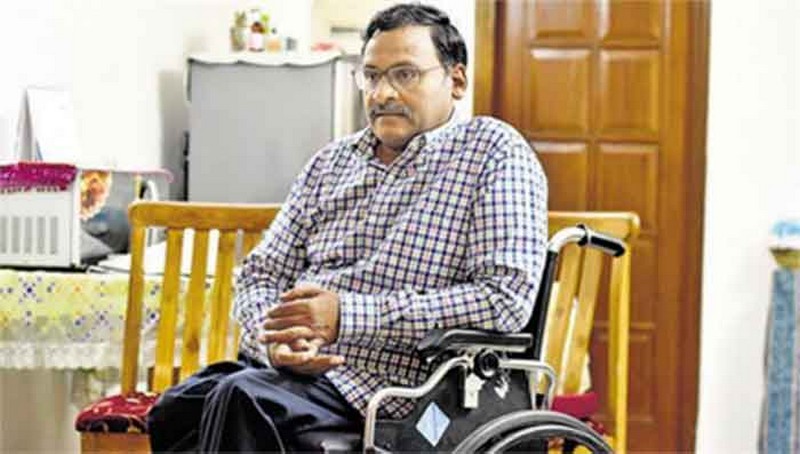
On Environment Modi said, ‘A spirit of democracy, inclusion and sustainability defines us. It also shapes our outlook to the world, India grows while being responsible about our planet…..At the Glasgow Summit, I proposed Mission LiFE – Lifestyle for Environment. This is a way to make sustainability a true people’s movement. Not leave it to be the job of governments alone.’ Yet, when distinguished scientist-saint Professor G.D. Agrawal aka Swami Gyan Swaroop Sanand fasted for saving Ganga in Haridwar in 2018 and wrote four letters to Modi for intervention, he did not get a response. Only after his death on the 112th day Modi tweeted a condolence message. In reality, Modi government has relaxed the environmental norms to make it easier for the businesses. It should be a matter of shame that in 2022 India finished last among 180 countries on Environment Performance Index of the World Economic Forum.

Hence Modi’s speech in U.S. Congress was rhetoric without substance. In fact, it was misleading and illusory.

Sandeep Pandey is General Secretary of Socialist Party (India) E-mail: ashaashram@yahoo.com

4 July 2023

Source: countercurrents.org

France has ignored racist police violence for decades. This uprising is the price of that denial

By Rokhaya Diallo

Since the video went viral of the brutal killing by a police officer of Nahel, a 17-year-old shot dead at point-blank range, the streets and housing estates of many poorer French neighbourhoods have been in a state of open revolt. “France faces George Floyd moment,” I read in the international media, as if we were suddenly waking up to the issue of racist police violence. This naive comparison itself reflects a denial of the systemic racist violence that for decades has been inherent to French policing.

I first became involved in antiracist campaigning after a 2005 event that had many parallels with the killing of Nahel. Three teenagers aged between 15 and 17 were heading home one afternoon after playing football with friends when they were suddenly pursued by police. Although they had done nothing wrong (and this was confirmed by a subsequent inquiry) these terrified youngsters, these children, hid from the police in an electricity substation. Two of them, Zyed Benna and Bouna Traoré, were electrocuted. The third, Muhittin Altun, suffered appalling burns and life-changing injuries.

Those boys could have been my little brothers, or my younger cousins. I remember the sense of incredulity: how could they simply lose their lives to such terrible injustice? “If they go in there [to the power plant], I don’t fancy their chances of making it” were the chilling words spoken by one of the police officers as he watched this horrific event play out.

France was ablaze for weeks with the rioting that followed – the worst in years. But just as now, with the death of Nahel, the initial media and political reaction in 2005 was to criminalise the victims, to scrutinise their past, as if any of it could justify their atrocious deaths. As if responsibility for their tragedy lay in their own hands. Nicolas Sarkozy, who was interior minister at the time, sullied the memory of young people whose fear had led to their death with the remark: “If you have nothing to hide, you don’t run when you see the police.”

The numbers of cases of police brutality grow relentlessly every year. In France, according to the Defender of Rights, young men perceived to be black or of north African origin are 20 times more likely to be subjected to police identity checks than the rest of the population. The same institution denounced the absence of any appeal against being checked as a form of systemic police discrimination. Why would we not feel scared of the police?

In 1999, our country, the supposed birthplace of human rights, was condemned by the European court of human rights for torture, following the sexual abuse by police of a young man of north African origin. In 2012 Human Rights Watch said: “the identity check system is open to abuse by the French police … These abuses include repeated checks – “countless”, in the words of most interviewees – sometimes involving physical and verbal abuse.” Now, after the death of Nahel, a UN rights body has urged France to address “profound problems of racism and racial discrimination” within its law enforcement agencies.

Even our own courts have condemned the French state for “gross negligence”, ruling in 2016 that “the practice of racial profiling was a daily reality in France denounced by all international, European, and domestic institutions and that for all that, despite commitments made by the French authorities at the highest level, this finding had not led to any positive measures”. More recently, in December 2022, the UN committee on the elimination of racial discrimination denounced both the racist discourse of politicians and police ID checks “disproportionately targeting certain minorities”.

Despite such overwhelming findings, our president, Emmanuel Macron, still considers the use of the term “police violence” to be unacceptable. This time, Macron has unequivocally condemned an act that he called “unacceptable” – which is significant. Yet I fear that the focus is being placed on an individual police officer instead of questioning entrenched attitudes and structures within the police that are perpetuating racism. And not a single one of the damning reports and rulings has led to any meaningful reform of the police as an institution.

Worse, a law passed in 2017 has made it easier for police to resort to the use of firearms. Officers can now shoot without even having to justify it on the grounds of self-defence. Since this change in the law, according to the researcher Sebastian Roché, the number of fatal shootings against moving vehicles has increased fivefold. Last year, 13 people were shot dead in their vehicles.

Nahel’s death is another chapter in a long and traumatic story. Whatever our age, many of us French who are descended from postcolonial immigration carry within us this fear combined with rage, the result of decades of accumulated injustice. This year, we commemorate the 40th anniversary of a seminal event. In 1983, Toumi Djaïdja, a 19-year-old from a Lyon banlieue, became the victim of police violence that left him in a coma for two weeks. This was the genesis of the March for Equality and Against Racism, the first antiracist demonstration on a national scale, in which 100,000 people took part.

For 40 years this movement has not stopped calling out the violence we see targeted at working-class neighbourhoods and more broadly black people and people of north African origin. The crimes of the police are at the root of many of the uprisings in France’s most impoverished urban areas, and it is these crimes that must be condemned first. After years of marches, petitions, open letters and public requests, a disaffected youth finds no other way to be heard than by rioting. It is difficult to avoid asking if, without so many uprisings in cities across France, Nahel’s death would have garnered the attention it has. And as Martin Luther King rightly said: “A riot is the language of the unheard.”

Rokhaya Diallo is a writer, journalist, film director and activist

4 July 2023

Source: countercurrents.org

Netanyahu government mounts all-out offensive on Palestinians in Jenin

By Jean Shaoul

Israel’s military launched an aerial and armoured vehicle attack on the northern West Bank city of Jenin and the city’s densely populated refugee camp in the early hours of Monday morning, killing at least 10 Palestinians, including three children, and wounding dozens more. With 10 of the wounded in serious condition, the death toll is expected to mount.

Some 2,000 Israeli soldiers are involved in a mass arrest operation, with at least 20 Palestinians thus far detained for further interrogation.

Israel’s air strikes on Jenin have hit homes, the city’s utilities, a hospital and a mosque, with ground troops storming the Al-Ansar Mosque, claiming—falsely—that armed men were holed up inside it and others were preventing ambulances from transporting people to the hospital. Israeli forces have surrounded the refugee camp that is home to 14,000 Palestinians and are not allowing anyone to enter or leave. Connections to the internet, the electricity network and water supplies have been cut. Soldiers attacked journalists wearing press vests, including staff from Al Araby TV, who were covering the offensive and their video cameras set on fire.

The Lion’s Den, a Palestinian militant group based in Jenin, called on people across the West Bank and Gaza to mobilise and demonstrate in support of the people in Jenin, urging them to close the roads and routes used by Israeli forces and settlers to get their supplies into the city. Palestinians in Gaza have responded by gathering along the border with Israel, waving flags and setting fire to tyres to protest Israel’s attack on Jenin. They were met with tear gas from Israeli troops.

This criminal operation is the largest since Israel’s siege of the Jenin refugee camp in April 2002 that killed at least 52 Palestinians and left many homeless. Twenty-three Israeli soldiers lost their lives in that battle. It follows repeated demands from the fascistic forces in Prime Minister Benjamin Netanyahu’s coalition government for the Israel Defense Forces (IDF) to launch a large-scale military operation to suppress the Palestinians—similar to its murderous assaults on the besieged Gaza Strip—in the West Bank, which Israel has occupied illegally since the 1967 Arab-Israeli war. Such an operation, which would meet fierce resistance, would lead to mass killings and devastation. National Security Minister Itamar Ben-Gvir said the army needed to “demolish buildings” and kill “thousands of terrorists,” while encouraging his supporters to “run to the hill tops and settle them.”

IDF Chief Spokesman Brigadier General Daniel Hagari said the operation was a “wide scale effort against terror”, referring to the militant Palestinian groups, including Hamas, Islamic Jihad, Lions’ Den, the Popular Front for the Liberation of Palestine and others. While it was focused on Jenin, it could expand to other parts of the northern West Bank. He refused to say how long the operation would last but gave the impression it would last at least a week. He added that the military was on high alert in case Gaza, Lebanon’s Hezbollah or other groups tried to intervene or attack Israel.

Israel’s National Security Advisor Tzachi Hanegbi claimed that “the intelligence that has been accumulated has indicated that there is an effort by Iran and its proxies, Hamas and Islamic Jihad, to transfer a lot of money and weapons to terrorists.”

Major General Yehuda Fox, the chief of the IDF’s Central Command, insisted the Jenin operation was not going to be a one-off. “There is a series of operations here, just like we were here a week ago and two weeks ago, we will finish this operation, and we will come back in a few days or a week, and we will not allow this city of refuge for terror.”

Defence Minister Yoav Gallant, only recently lionised by opposition leaders for criticizing Netanyahu’s plans to overhaul the judiciary, approved the attack. He said the military operation in the West Bank city of Jenin “is progressing as planned.” The troops “will receive full support to do whatever is necessary and to operate on the ground and in the air, in order to protect the citizens of Israel and preserve full freedom of action throughout [the West Bank].”

This was tantamount to announcing a military dictatorship over the West Bank, including in areas designated under the 1993 Oslo Accords as under the full control of the Palestinian Authority (PA). Furthermore, it makes explicit what has long been implicit, the PA’s complete irrelevance as far as Israel—and Washington—is concerned.

According to Ha’aretz, Israel informed the US of its intention of carrying out the operation in Jenin and was evidently given the green light. On Monday, the White House National Security Council stated, “We support Israel’s security and right to defend its people against Hamas, Palestinian Islamic Jihad, and other terrorist groups.”

Far-right forces have repeatedly demanded the annexation of the West Bank—as has Netanyahu himself—in pursuit of their aim of establishing a Jewish supremacist state in both Israel and the occupied Palestinian territories. Monday’s attack on Jenin follows a series of murderous military raids in the West Bank, constant settler violence watched over and protected by the Israel Defense Forces, and the government’s announcement of 13,000 new settlement homes since the start of the year. The IDF’s deployment of an Apache helicopter and armed drones in Jenin two weeks ago marked a significant escalation in Israeli aggression, which has seen around 190 Palestinians in the West Bank, Gaza, East Jerusalem and Israel killed since Netanyahu’s far-right coalition took office.

Monday’s assault on Jenin, following months of near nightly raids on Jenin and Nablus, comes as Palestinians in the West Bank face an increasingly desperate economic situation. The 1993 Oslo Accords, which saw foreign direct investment in Israel soar and in practice ended the Arab League boycott of Israel, have crippled the Palestinian economy. Israel imposed restrictions on the movement of people, labour and goods, fragmented the territories with settlements, settler-only access roads and nature reserves, confiscated land, water and other natural resources, tied the Palestinian economy to the Israeli economy and cut it off from international markets.

Industry has withered, farmers have been driven off their land and per capita income has remained stagnant since 1994. The PA is utterly dependent upon international aid, even as the UNRWA, the UN agency for Palestinian refugees, announced last month that the $107 million in new funds falls significantly short of the $300 million needed to support millions of Palestinians in the occupied territories and refugee camps in neighbouring countries.

Thirty percent of the young people in the West Bank—where 50 percent of the population is under 30 years of age—are unemployed. More than one-third of young people who are employed work in the informal sector, while more than half of those working in the formal sector have no social security, medical insurance or entitlement to sick and holiday leave.

Netanyahu has deliberately stoked war, targeting the Palestinians in the Occupied Territories, Israel’s Arab citizens and neighbouring states, above all, Iran and Syria, as he faces widespread opposition to his efforts to assume dictatorial powers by neutering a largely compliant judiciary that has provided cover for Israel’s expansionist drive and relentless attacks on the Palestinians. His aim is to deflect social tensions outwards against a perceived external enemy.

For 25 consecutive weeks, hundreds of thousands of Israelis have turned out to protest his judicial coup. But this movement is led by bourgeois Zionist parties whose opposition to Netanyahu reflects only their fears that he is endangering the interests of the state. They refuse to link the emerging fascist threat in Israel with opposition to the oppression of the Palestinians. Indeed, on Monday morning, the heads of the biggest opposition parties rushed to support the IDF’s offensive against Jenin.

The Palestinians in Israel and the occupied territories live under a regime of savage economic and military repression and brazen vigilante and settler violence—all upheld by Israel’s judicial system. It is impossible to defend the democratic rights of Jewish Israelis at the same time as defending military dictatorship in the West Bank and Gaza. The main task is to overcome the reactionary Zionist leadership of the protest movement and fight to unite Arab and Jewish workers in a common struggle to defend jobs, living standards and democratic rights, including the national rights of the Palestinian people. This can only be done based on the programme and perspective of international socialism.

4 July 2023

Source: countercurrents.org

The Normalisation of Migrant Deaths and Its Implications for Humanity

By Hyab Yohannes

On October 3, 2013, a devastating tragedy off the coast of Lampedusa resulted in the loss of over 365 lives. Among those who drowned was my dear childhood friend, Alex, whose final text message to me reads: “Born rightless, die rightless”. These were the last words I received from him before he tragically perished without a trace. Alongside Alex was Yohanna, who passed away with her new-born baby still attached to her by the umbilical cord. In the last ten years, I have lost dozens of close relatives, childhood friends, and former colleagues. The homes of the drowned still quiet and empty, filled with the shrieks of their grieving loved ones. This sense of stillness and emptiness, alongside the haunting pain of the bereaved, continue to devour my conscience. It feels as though I am stuck in a limbo between night and day, as if I am still dreaming. Despite the sun rising, the darkness of the night still lingers.

Since 2014, the IOM Missing Migrants Project has reported that more than 56,216 forced migrants have disappeared in perilous journeys, including crossing violent borders, lifeless deserts, treacherous waters, and impoverished refugee camps. More than 23,437 bodies have not been recovered at all. Before the latest tragic incident along the Mediterranean coast of Greece, just this year alone, over 2,091 forced migrants have lost their lives. Now we have more people to add to that tally. The Guardian reports that hundreds of migrants, including 100 children, are believed to have died in this latest incident. Only 78 deaths have been confirmed according to reports, and it remains uncertain whether the remaining bodies will ever be recovered. All of these numbers represent human beings who have suffered torturous deaths. These bodies once contained lives, before they were “discounted” in “unimaginable worlds and uninhabitable places”. They once had hopes for a better life, but their yearning for freedom ended tragically.

I want to remind the reader a few things about these human calamities.

First, we must grasp the severity of the situation. The conditions faced by forced migrants in the Mediterranean Sea and elsewhere are no different from those experienced by slaves during the transatlantic slave trade between the 16th and 19th centuries. Evoking the slave condition is not just a symbolic reference to enslaved people in the past, but rather a reminder that refugees are currently experiencing similar conditions before our very eyes. We must come to terms with the fact that the dehumanisation of these racialised bodies remains endlessly normalised. It only takes a glimpse at the apocalyptic images of bodies floating in the sea, innocent people brutally tortured by traffickers in torture camps, children killed during perilous journeys, and families consumed by grief at the loss of their loved ones to imagine the gravity of the human calamity. If we cannot recognise these deaths as human deaths and their suffering as human suffering, I doubt there is an iota of humanity left in us. I truly doubt that humanity will hold any meaning beyond those few who benefit from its destruction.

Second, it is time to recognise that our fate is inextricably intertwined with the lives of those who die. With each death, we lose a significant portion of our humanity. If we get accustomed to these suffering and normalise them, it is because we have lost sight of our own humanity and mortality. This might sound like an emotional plea, but it’s actually a warning. It is a warning against an irrevocable exodus from humanity to catastrophic raciality.

Thirdly, overcoming this human calamity is not the responsibility of only those who suffer its consequences or those who smuggle them. Rather, it is the responsibility of all humanity. Those who create the conditions for this necropolitical spectacle bear the greatest responsibility towards those whom their (in)actions dehumanise.

Finally, dealing with this challenge necessitates a profound change. It requires warmongers, dictators, and their masters to silence their guns and stop creating refugees in the first place. It requires acknowledging the violence of (b)ordering and sharing culpability for this human calamity. It requires governments to take responsibility for their catastrophic abdication of responsibility and for transforming politics into a politics of death. The media and journalists can come out of the shadows of political scandals and speak up for, and with, those yearning to breathe. Ordinary citizens must demand justice for all.

Hyab Teklehaimanot Yohannes, Research Associate, University of Glasgow.

16 June 2023

Source: blogs.law.ox.ac.uk

France Burning after Naël Merzouk Death by Police Bullet

By Sandeep Banerjee

Naël Merzouk (17) dropped out of school to earn a little and became a pizza delivery boy some months back. His mother is single, his father left her before Nahel saw this earth. On June 27 morning he was driving a hired car with two passengers when he was signalled to stop in a traffic crossing at Nanterre, the Parisian outskirt where he lived; it was very apparent that he was too young to get a driving license. What shocked France was a video captured by a passerby who posted it in social media and it was somewhat after the big media houses showed only the first police version of the event: that the policeman shoot being afraid of getting run over by the car when Naël was trying to escape, a story that the video had smashed. People saw that the boy was killed point-blank while he tried to run his car away. Naël had Algerian/Muslim lineage and he is the third person to die this year in police shootout in traffic crossing, last year the figure was 22! And no wonder, most of the victims were Black and/or Muslim, while the French police has already gained a racist/islamophobe fame.

As usual the big media is showing and lamenting ‘riots’, ‘violence’, ‘loss of business’ and etc. But what was unusual that President Macron would say the incident was “inexcusable and unforgivable” and the National Assembly would observe a minute’s silence! This was unacceptable, naturally, to fascist party head Madame Le Pen and many far-right groups. The pent-up anger within the lower depth of the society usually gets expressed as ‘riots’ or ‘violence’ as aftermath of such incidents, and this time also it is happening, though nobody guessed it would continue so long. Thousands of cars and dozens of police stations were torched. Also, when rage is expressed like this there are times it crosses ‘limit’.

Naël’s mother and grandma expressed their anger and mother called for a protest via tik-tok, which thousands joined.

As it is still illegal to collect race/religion/ethnicity data of persons in France even by national census authority, there can only be estimates and once such estimate says about 40% of French people might be partly foreign-descent, though it is taken as a guesswork.

However, as far as poll results can show, it was seen that angry France, the poorer in France has been shifting towards far-right – and thus is dangerous. During the Gillet Jaunes (yellow-vests) protest we have seen far rights assembling and trying to make real racist riot in a few places. It is to be seen whether a Jacobin France, whether a Communard Paris can resurface in coming days and history starts taking forwards steps again.

Sandeep Banerjee is an activist who writes on political and socioeconomic issues and also on environmental issues.

2 July 2023

Source: countercurrents.org

Cruel Arrangements: The UK-Rwanda Refugee Deal Falters

By Dr Binoy Kampmark

Since 2022, Rwanda has been very much on the mind of British policy makers, a dark option of retreat from the irritating intrusions of international refugee law.  The English Channel has become something of a polemical resource, with those seeking to cross it demonised as undermining Britannia’s sacred sovereignty.

Giddy with the dusty advice of Australian advisors – the crude offerings of wisdom from former foreign minister Alexander Downer, and former Prime Minister Tony Abbott stand out – respective Tory governments have been pondering how to stem the arrival of irregular migrants and asylum seekers.

The use of third states as a means of deferring obligations of protection towards refugees has become an attractive, brutal way of snuffing out the right to asylum.  The UN Refugee Convention of 1951 is treated as a dead letter, and options such as the “Australian model” in repelling unwanted arrivals thrill populist politicians.

The common choice of destination in all these agreements is Africa, with Rwanda proving most attractive.  In equal measures the choice of such a country is both daft and cruel.  But this has not stopped Denmark and the United Kingdom from signing memoranda of understanding and agreements making Kigali the favoured destination of unwanted asylum seekers.

On April 14, 2022 the Johnson government announced that it had reached an Asylum Partnership Arrangement with Rwanda “to contribute to the prevention and combating of illegally facilitated and unlawful cross border migration by establishing a bilateral asylum partnership”.  According to the agreement, Rwanda would receive asylum seekers whose claims would be otherwise processed in the UK and consider applications through its own domestic asylum system.  They would also assume settling and protective responsibilities.  The then Prime Minister, Boris Johnson, crowed that the arrangements were “uncapped”, with Rwanda having “the capacity to resettle tens of thousands of people in the years ahead.”

That Rwanda should even feature at all was baffling for human rights advocates.  Home Secretary Suella Braverman is barely believable in her claim that “Rwanda has a track record of successfully resettling and integrating people who are refugees or asylum seekers”.

While the UK government continues to praise the country as a model of development and guardian of human rights, Kigali’s record is abysmal.  Organisations such as Human Rights Watch have noted the country’s appetite for prosecuting dissidents, using torture, arbitrary detention, and resorting to more than the occasional extrajudicial assassination.

Rwandan police have not been shy in using live ammunition on protesters, especially when they have been refugees.  In February 2018, twelve refugees from the Democratic Republic of Congo were gunned down in a protest over diminished food rations at the Kiziba camp.  A rash of arrests were hurriedly  made, with charges ranging from the implausible accusation of rebellion to the “spreading of false information with intent to create a hostile international opinion against the Rwandan state.”

As to how well the Rwandan state processes claims for asylum, the record is hardly glorious there, either. Instances of “airport refoulement” – where individuals arriving in the country claiming asylum are denied entry and promptly returned back to countries they have flown from, abound.  (The testy response from Rwanda border authorities suggested that these were not cases of refoulement given that these arrivals tended to use forged documents, thereby failing to meet immigration entry requirements.)

Victoire Ingabire Umuhoza, a political figure Rwanda’s authorities have often found threatening, offers another, oft neglected angle on her country’s policies.  The Rwandan government, she challenges, “creates thousands of refugees every year and its government is yet to guarantee a safe environment for Rwandan refugees settled across the world to return home.”  The very fact that 12,838 Rwandans fled their own country to seek asylum should scuttle any claims about refugee safety.  The joke is on any power willing to send the vulnerable to the country.

Despite such facts respective UK Home Secretaries have been pushing the plan as viable and, most astonishingly of all, legal.  Potential victims of the policy have begged to differ.  Last year, a legal appeal by ten asylum seekers from Syria, Iraq, Iran, Vietnam, Sudan and Albania, along with the charity Asylum Aid, was launched.  The central claims by the parties were that there were real risks that their claims to asylum would not be properly and fairly determined by the authorities in Kigali, and that there was a serious risk that they would either be sent back to their own country (refoulement) or be “subjected to torture or to inhuman or degrading treatment or punishment” in breach of Article 3 of the European Convention on Human Rights.

The UK government, at least initially, had reason to be cocky.  It scored a legal victory in the High Court in December 2022, which had taken the undertakings made by Kigali in the Memorandum of Understanding and Notes Verbales (NV) at face value.  The Home Secretary had also conducted, it was astonishingly found, a “thorough examination” of “all relevant generally available information” relevant to human rights.

On June 29, a majority of the Court of Appeal reversed the decision.  As Sir Geoffrey Vos, Master of the Rolls opined, “there were substantial grounds for thinking that asylum seekers sent to Rwanda under the MEDP [Migration and Economic Development Partnership]” at the date the decisions were made by the secretary in July 2022 “faced real risks of article 3 mistreatment.”  Such a conclusion was inevitable after consulting “the historical record described by the UNHCR, the significant concerns of the UNHCR itself, and the factual realities of the current asylum process itself.”

The Rwandan human rights record, which was danced around in the lower court, comes in for some severe pasting. Lord Justice Underhill noted the lower court’s own acknowledgment that the Rwandan government was “intolerant of dissent; that there are restrictions on the right of peaceful assembly, freedom of the press and freedom of speech; and that political opponents have been detained in unofficial detention centres and have been subjected to torture and Article 3 ill-treatment short of torture.”

As has been starkly demonstrated by Australia’s own offshoring record, outsourcing a state’s obligations to process asylum claims is both costly to the taxpayer and bound to put asylum seekers and refugees in harm’s way.  Doing so contravenes the spirit, and the letter, of international refugee law, whatever specious claims are advanced to the contrary.  It is a source of some comfort that certain judicial officers in the UK have come to that same conclusion.  An appeal to the Supreme Court, however, will test this further.

Dr. Binoy Kampmark was a Commonwealth Scholar at Selwyn College, Cambridge.

2 July 2023

Source: countercurrents.org

The Bizarre Episode of Yevgeny Prigozhin

More complete information is now available and reports of the event still do not “add up.” What we are told cannot be what exactly occurred. Coup is not thr correct word. 

By Dan Lieberman

More complete information is now available and reports of the bizarre episode of Yevgeny Prigozhin still do not “add up.” What we are told cannot be what exactly occurred. Media agenda drives media perception and that perception is marketed to develop a mindset that satisfies the agenda.

Tatiana Stanovaya, a senior fellow at the Carnegie Russia Eurasia Center reported the event objectively.

Prigozhin’s rebellion wasn’t a bid for power or an attempt to overtake the Kremlin. It arose from a sense of desperation; Prigozhin was forced out of Ukraine and found himself unable to sustain Wagner the way he did before, while the state machinery was turning against him.

President Putin used the word mutiny to describe the Wagner Group activity, which may be misleading and too mild as a characterization. The Wagner group is not attached to the Russian army and cannot mutiny against the Russian military. Prigozhin is rebelling against Russian Military of Defense (MOD) actions and personnel, but that rebellion is not an act in the usual sense, meaning it is not intended against the government.

Characterized by the media as a super patriot, as a charismatic leader of a strong military force striving to fix Russia’s military problems, Yevgeny Prigozhin, by his own words, in which he attacked the MOD and claimed he had an army that was going to fix the chaos, is better depicted as a person who committed treason, with one excuse — his words are mouthed from an incoherent and mentally disturbed egomaniac. Here is how he addressed the MOD:

Prigozhin said that “Russia was losing the war,” and accused Russian Defense Minister Sergei Shoigu and Valery Gerasimov, the Russian Army chief of the general staff, of “genocide against their own people,” and  “for the murder of tens of thousands of Russian citizens and the transfer of Russian territories to the enemy.”

And here is how he, supposedly, was going to change the situation; I write, ‘supposedly,’ because it is difficult to know what is actual or from a bot.

There are 25,000 of us and we are going to figure out why this chaos is happening in the country. That figure “is a tactical reserve, but the strategic reserve is our whole army and the whole country. Everyone who wants, join us. We must end this disgrace and can end this.

Anyone who attempts to resist we will consider to be a threat and eliminate them immediately, including any checkpoints in our way, any aircraft above our heads. I ask everyone to remain calm, not to succumb to provocations, to stay in their homes, preferably not to go out into the streets along our route. After we finish what has been started, we will return to the front and defend our homeland.

During war, no sound and sane person voices the comments attributed to Prigozhin. A person of his reputation can find avenues to inject criticism without bringing the nation to factional war. His belief that the Wagner Group, which has been cited as having 8000 soldiers that entered Russia from Ukraine, and, needed several months to dislodge the Ukraine army from a town, could take command of all of Russia is a bit of stretch, no? His chances of winning were infinitesimal and sure to lose everything — military contracts, his private army in Russia, and its reputation overseas. Who wants to contract an army that overthrows its contractor? Why would any soldier want to be associated with that type of army? All that is relatively harmless compared to the final blow ─ a noose around the neck. Does his method of “resolving the chaos,” which he is emphasizing in spades, reflect the activities of a balanced person?

When the Wagner Group was on the front lines and remained armed, nothing could be done to bring it under military control. Realizing he was not wanted and at a disadvantage, Prigozhin proceeded to move his troops to the nearest city, which was Rostov. The media continued catering to his neurotic impulses when it announced that Prigozhin, “seized military headquarters without a fight and was in control of the headquarters and the airport. All flights proceeded without interruption.”

Being in a place does not mean controlling the place. Nowhere had it been shown that Southern Command HQ operating personnel surrendered control to Prigozhin and that he was instituting any form of control. Did he give a single order to anyone?

Why did he have his forces leave the military HQ of the Southern Command, an important place he already controlled and which could serve as a springboard for galvanizing further action? When his forces left Rostov to move on to Moscow the media showed the populace cheering him on, leaving the impression that the Rostov population sided with his adventure. Cheers are easily explained by noting that it is not every day that a heroic and idolized military force and their hardware come to town.

On the road to Moscow, everything becomes murky and “does not add up.” Why did this small force expect to reach Moscow and what did they expect to accomplish? The Russian military could easily block the M-4 highway and all its exits and trap the entire Wagner contingent in a fixed stretch of concrete. Why head into an obvious trap? Could it be that those who don’t know want to do and have no idea of what they are doing, do the ridiculous?

Even if the Wagner troops entered Moscow, how would they navigate traffic and where would they go? What was their objective and their strategy to fulfill the objective?

Media reports of the Wagner Group downing one transport aircraft and six helicopters near Voronezh did not seem logical but appear to be true. The initial report surfaced from a social media site on Telegram and slowly gained media credibility. Prigozhin confirmed the report by stating that his convoy had been fired upon, his troops were forced to protect themselves, they destroyed aircraft, and Russian pilots were killed. Question: Was Prigozhin there or did he only repeat something he was told?

President Putin, in a speech the day after Russia returned to normal, talked of “bravery and sacrifice of the fallen heroes, pilots saved Russia.” His words seem to connect to incidents in which Russian military personnel were killed.

How can soldiers riding at great speed in covered trucks perceive threatening aircraft and manage to operate tracking equipment? Where is the power to operate the equipment and guide the weapons that target the aircraft?

Images of a downed II-22 aircraft and several helicopters in a field have appeared as certifications of the shootouts. Who took these pictures and how were they able to get them to a Telegraph site in a short time? Could anybody from the moving convoy take the pictures and quickly pass them on to a website? How would anyone else know about downed aircraft and where to locate them? Perplexing! Hopefully, someone can supply the answers.

Because the reports seem to be true, it is difficult to believe that Putin, who goes ballistic over traitors to Russia, and the air force, who suffered the casualties, would permit those involved in the deaths of air force personnel to escape retribution. Putin would lose the air force’s confidence and face a more serious threat. Something strange about that decision.

Replies to media narratives illustrate the distortions in coverage of the bizarre episode.

Hudson Institute

“Footage of Wagner forces charging toward Moscow seized the world, and Vladimir Putin dug in to defend his capital.”

A bunch of trucks on a road, moving together with commercial traffic, becomes “Charging toward Moscow?” Has there been any footage of “Vladimir Putin dug in to defend his capital?”

Washington Post

“The question of whether regular Russian troops would have the will and the skill to fight the mercenaries occupied much of Western thinking Saturday.”

Not only was it improbable that the mercenaries would reach Moscow but it is not questionable that a professional force of hundreds of thousands, equipped with an air force and modern weapons. has the skill to fight an army of 8000. The Moscow police force has 50,000 policemen. National Guard, security forces, and those in the Moscow military district must add an additional hundreds of thousands.

“A Western intelligence official predicted early in the day that Russian troops were unlikely to put up much resistance to Prigozhin’s forces if they were persuaded by his arguments that Russia’s military leaders, including Defense Minister Sergei Shoigu, have performed disastrously in leading operations in Ukraine, are to blame for the extraordinary number of troops casualties and must be removed by Putin.”

Prigozhin offered disparaging words and no arguments. Nor did he say or do anything that attempted to persuade anyone of his charges. Not one Russian soldier and no security service officer has been shown to have sided with Prigozhin

AP

“Wagner forces’ largely unopposed, rapid advance also exposed vulnerabilities in Russia’s security and military forces.”

Rapid advance or confusion about where to go? What are the vulnerabilities? How could and why would Russia’s security and military forces confront Wagner forces? The latter weren’t going anywhere and Russian military realized their condition.

Leon Aron | Politico

“Coups are decided not by how many troops storm the palaces but by how many come to defend them. The top military brass, prime minister, and mayor of Moscow did not back Putin publicly. The fissures in Putin’s support were also evident among the Russian people. At best, they appeared indifferent to the mutiny’s outcome; at worse, the residents of Rostov, in which the Wagner Group briefly took control, welcomed it.”

This is an example of wishful thinking replacing reality thinking. A plausible explanation for the lethargy is that few of the public ever do anything during an insurrection, most were home for the weekend, nobody thought of this as a possible coup, which it wasn’t, and few paid serious attention to it because their attention could do nothing and they had faith that the government would successfully handle the situation, which it did.

Conclusion

One unmentioned favorable element for Putin is that the present Russian military thrust in Ukraine has attempted to rectify the earlier questionable strategy. Prigozhin’s charge of “the murder of tens of thousands of Russian citizens and the transfer of Russian territories to the enemy,” is answered by a MOD strategy that uses missile power to destroy Ukraine’s infrastructure rather than muscle power to destroy Ukraine’s army. The new strategy intends to lessen the danger to the lives of Russian military personnel.

Considering the animosity that Western media has toward President Vladimir Putin, it is surprising they have not added a conspiratorial tone to the events. They have not asked, either knowingly or by careless remarks if Putin pushed Yevgeny Prigozhin to say and do what he said and did. Was Alexander Lukashenko’s intermediation, which saved Prigozhin’s life, done on his own volition or by prompting from his good friend, Vladimir Putin? Did Lukashenko save Putin’s life?

Dan Lieberman publishes commentaries on foreign policy, economics, and politics at https://dlieb10gmailcom.substack.com/.

1 July 2023

Source: countercurrents.org

Seymour Hersh, Forbes, Financial Times, Economist, CNN On War In Ukraine

By Countercurrents Collective

Kiev’s inability to penetrate Russian defensive lines should serve as a “wake-up call” in Washington, veteran journalist Seymour Hersh warned on Thursday.

Citing battlefield statistics obtained from an unnamed source, Hersh claimed that Ukrainian forces have only managed to capture two square miles of Russian-held land over the last ten days of fighting. In the two weeks beforehand, he continued, the Ukrainian military took only 44 square miles of territory, much of it open land located before the first of Russia’s multiple defensive lines.

With Russia holding 40,000 square miles land that had previously been part of Ukraine, an “informed official” told Hersh that “it would take Zelensky’s military 117 years” to reimpose Kiev’s rule over the territories.

The time has come for U.S. President Joe Biden to publicly acknowledge that “the estimated more than $150 billion that his administration has put up thus far turned out to be a very bad investment,” the veteran journalist concluded, adding that the “looming disaster in Ukraine … should be a wake-up call” for U.S. lawmakers willing to hand Kiev billions of dollars “in the hope of a miracle that will not arrive.”

Ukraine launched its long-anticipated counteroffensive in early June, using German-made Leopard 2 tanks, U.S.-supplied Bradley Infantry Fighting Vehicles, and other Western hardware to strike at Russian positions along the front line from Donetsk to Kherson.

The offensive cost Kiev dearly, with the Russian Security Council estimating Ukrainian losses at 13,000 troops as of last week. Attacking through minefields and without air support, according to Moscow, Ukrainian forces have failed to overcome the multi-layered network of trenches, obstacles, and armored emplacements constructed by Russia since last year.

Seymour Hersh writes (PRIGOZHIN’S FOLLY, The Russian ‘revolt’ that wasn’t strengthens Putin’s hand, June 29, 2023):

The Biden administration had a glorious few days last weekend. The ongoing disaster in Ukraine slipped from the headlines to be replaced by the “revolt,” as a New York Times headline put it, of Yevgeny Prigozhin, chief of the mercenary Wagner Group.

The focus slipped from Ukraine’s failing counter-offensive to Prigozhin’s threat to Putin’s control. As one headline in the Times put it, “Revolt Raises Searing Question: Could Putin Lose Power?” Washington Post columnist David Ignatius posed this assessment: “Putin looked into the abyss Saturday—and blinked.”

Secretary of State Antony Blinken—the administration’s go-to wartime flack, who weeks ago spoke proudly of his commitment not to seek a ceasefire in Ukraine — appeared on CBS’s Face the Nation with his own version of reality: “Sixteen months ago, Russian forces were . . . thinking they would erase Ukraine from the map as an independent country,” Blinken said. “Now, over the weekend they have had to defend Moscow, Russia’s capital, against mercenaries of Putin’s own making. . . . It was a direct challenge to Putin’s authority. . . . It shows real cracks.”

Blinken, unchallenged by his interviewer, Margaret Brennan, as he knew he would not be — why else would he appear on the show? — went on to suggest that the defection of the crazed Wagner leader would be a boon for Ukraine’s forces, whose slaughter by Russian troops was ongoing as he spoke. “To the extent that it presents a real distraction for Putin, and for Russian authorities, that they have to look at — sort of mind their rear as they are trying to deal with the counter offensive in Ukraine, I think that creates even greater openings for the Ukrainians to do well on the ground.”

The famous journalist writes:

We now know that the chronically unstable Prigozhin’s revolt fizzled out within a day, as he fled to Belarus, with a no-prosecution guarantee, and his mercenary army was mingled into the Russian army. There was no march on Moscow, nor was there a significant threat to Putin’s rule.

Pity the Washington columnists and national security correspondents who seem to rely heavily on official backgrounders with White House and State Department officials. Given the published results of such briefings, those officials seem unable to look at the reality of the past few weeks, or the total disaster that has befallen the Ukraine military’s counter-offensive.

He writes:

There is an enormous gap between the way the professionals in the American intelligence community assess the situation and what the White House and the supine Washington press project to the public by uncritically reproducing the statements of Blinken and his hawkish cohorts.

The current battlefield statistics that were shared with me suggest that the Biden administration’s overall foreign policy may be at risk in Ukraine. They also raise questions about the involvement of the NATO alliance, which has been providing the Ukrainian forces with training and weapons for the current lagging counter-offensive. I learned that in the first two weeks of the operation, the Ukraine military seized only 44 square miles of territory previously held by the Russian army, much of it open land. In contrast, Russia is now in control of 40,000 square miles of Ukrainian territory. I have been told that in the past ten days Ukrainian forces have not fought their way through the Russian defenses in any significant way. They have recovered only two more square miles of Russian-seized territory. At that pace, one informed official said, waggishly, it would take Zelensky’s military 117 years to rid the country of Russian occupation.

The Washington press in recent days seems to be slowly coming to grips with the enormity of the disaster, but there is no public evidence that President Biden and his senior aides in the White House and State Department aides understand the situation.

Putin now has within his grasp total control, or close to it, of the four Ukrainian oblasts — Donetsk, Kherson, Lubansk, Zaporizhzhia — that he publicly annexed on September 30, 2022, seven months after he began the war. The next step, assuming there is no miracle on the battlefield, will be up to Putin. He could simply stop where he is, and see if the military reality will be accepted by the White House and whether a ceasefire will be sought, with formal end-of-war talks initiated. There will be a presidential election next April in Ukraine, and the Russian leader may stay put and wait for that — if it takes place. President Volodymyr Zelensky of Ukraine has said there will be no elections while the country is under martial law.

He writes:

The looming disaster in Ukraine, and its political implications, should be a wake-up call for those Democratic members of Congress who support the president but disagree with his willingness to throw many billions of good money after bad in Ukraine in the hope of a miracle that will not arrive. Democratic support for the war is another example of the party’s growing disengagement from the working class. It is their children who have been fighting the wars of the recent past and may be fighting in any future war. These voters have turned away in increasing numbers as the Democrats move closer to the intellectual and moneyed classes.

Ukraine Suffered Disastrous Losses In Single Offensive

Ukraine’s widely anticipated counteroffensive has seen Kiev’s forces lose a significant amount of armor, including dozens of Western-supplied tanks and infantry fighting vehicles, Forbes reported on Tuesday.

According to Forbes, analysts believe that an attempt by the Ukrainian army’s 47th Assault Brigade and 33rd Mechanized Brigade to cross a minefield near the town of Malaya Tokmachka in Russia’s Zaporozhye region on June 8 proved to be “even more disastrous” than previously thought.

Despite deploying de-mining vehicles, including several Leopard 2Rs donated by Finland and one German-made Wisent, the Ukrainian battlegroup appears to have failed to clear a path through the minefield. The Wisent and three Leopard 2R struck mines, as did several U.S.-supplied M-2 Bradleys, while the brigade came under fire from Russian artillery and aviation.

Experts have estimated that as a result of the failed attempt, which lasted several hours, no fewer than 25 Ukrainian vehicles were destroyed, including 17 M-2s, four Leopard 2A6 tanks, three Leopard 2Rs and one Wisent.

Forbes noted that while the loss of one Wisent is not important, as the Ukrainian army has dozens more, the other losses have proven to be more significant. The 47th-33rd Brigade battlegroup lost nearly a fifth of Ukraine’s M-2s, a fifth of its Leopard 2A6s and half of its Leopard 2Rs, the outlet claimed, pointing out that Kiev lost the equivalent of an entire battalion in one botched assault.

Although Washington has already pledged to provide more M-2 vehicles to make up for Kiev’s June 8 losses, Ukraine’s European allies have yet to agree to provide more Leopard 2A6s and there are literally no more Leopard 2Rs left to send, Forbes noted.

NATO Believes Ukraine’s Counteroffensive Unsuccessful So Far

Western officials have privately acknowledged that Ukraine’s counteroffensive against Russia is not going well, and that future military assistance to Kiev may diminish as a result, the Financial Times has reported.

“Russia still has the advantage of mass,” General Christopher Cavoli, NATO’s top commander in Europe, told a private gathering last week, the FT claimed on Thursday. He reportedly added that Ukraine has not achieved any significant success in its operation.

“For better or worse, the outcome is going to impact everything we do regarding Ukraine, and we are all aware of that,” a senior European diplomat told the FT on condition of anonymity. “Funding, support, political engagement … and most importantly the peace talks that are coming whether we like them or not.”

The FT cited the assessments to illustrate internal discussions in the West. EU leaders are set to offer formal security commitments to Ukraine, and the newspaper said it had obtained a draft copy of the final statement being considered at an ongoing summit in Brussels.

EU members France and Germany, along with the UK and the US, are seeking to provide bilateral security arrangements. The deal would serve as a “stopgap” to give Kiev “confidence in enduring Western support” and ensure that the EU is not sidelined by NATO, the report said. Ireland, Malta and Austria are reportedly against extending vaguely defined commitments.

Ukraine Outraged Over Western Expectations

Officials in Kiev are frustrated by western demands that they accelerate their counteroffensive against Russia, despite already using all available resources on the battlefield, the Economist reported on Wednesday, citing a Ukrainian intelligence source.

The Economist noted that the Ukrainian army had suffered heavy casualties during the first weeks of the widely-anticipated counteroffensive, without making any significant gains so far, prompting Ukrainian commanders to try to protect their depleted forces.

Ukrainian officials hoped for swifter progress, but have since pointed to a number of obstacles, such as effective Russian aviation, large minefields and bad weather.

The slow pace of the counteroffensive has reportedly started worrying Kiev’s Western backers, according to The Economist, with officials arguing that a lack of shock and momentum will cost more lives in the long run.

The unnamed Ukrainian intelligence source, however, told the Economist that such statements coming from the West are hypocritical. “let me put this as diplomatically as I can,” he told the Economist. “Certain partners are telling us to go forward and fight violently, but they also take their time delivering the hardware and weapons we need.”

Politico

Politico also reported on Monday that certain Western officials have called Ukraine’s Armed Forces “too cautious” and are demanding that its troops hurry up and make significant battlefield gains soon.

Ukrainian Generals Killed In Russian Strike

Two Ukrainian generals were killed in a Russian high-precision strike on the Donbass city of Kramatorsk on Tuesday, the Defense Ministry in Moscow said on Thursday, citing “updated data.”

The ministry had earlier claimed that the strike targeted the temporary base of the Ukrainian Armed Forces 56th Motorized Infantry Brigade. Since then, the ministry has added that the base was hosting a “staff meeting” involving dozens of Ukrainian officers and foreign advisers.

The attack resulted in the deaths of “two generals, up to 50 officers of the Ukrainian Armed Forces, as well as up to 20 foreign mercenaries and military advisers,” according to the Russian Defense Ministry’s daily briefing.

The news came as Russian forces continue to repel Ukrainian attacks on their defensive positions in Zaporozhye Region as well as in Donbass. Ukraine has lost almost 800 servicemen in attempted assaults on various fronts over the past 24 hours, the Russian ministry claimed. It added that Russian forces had destroyed dozens of pieces of Ukrainian heavy equipment, including howitzers, armored vehicles and a tank.

Counteroffensive Is Hard Work

Kiev wants its counteroffensive to achieve results faster, but this is not easy due to stiff resistance from Russian troops, Aleksey Danilov, the head of Ukraine’s National Security and Defense Council, said on Wednesday.

Speaking to Ukrainian media, Danilov acknowledged that Russian troops have proven to be formidable in Kiev’s counteroffensive, which Moscow says has so far failed to gain any ground. “Do not say that these people are untrained, they are putting up a fight,” he said, adding that among Kiev’s problems are the huge minefields laid by Russian forces.

Despite those obstacles, Danilov said he is confident that the counteroffensive will eventually succeed, but called for patience. “We would very much like to move faster, but that only happens in fairy tales. It is hard work, every day. This is the front, I repeat, not a walk in a park.”

In recent weeks, a number of Kiev officials have sought to downplay the apparent difficulties Ukraine faces amid its push to reclaim lost territories.

Ukrainian Counteroffensive Is Not Meeting U.S. Expectations

Ukraine’s ongoing counteroffensive against Russian forces is “not meeting expectations on any front,” Western and U.S. officials told CNN on June 22, 2023. Ukrainian troops and armor are proving “vulnerable” to Russian minefields, missiles, and air power, they added.

“Russian lines of defense have been proving well-fortified, making it difficult for Ukrainian forces to breach them,” CNN reported, paraphrasing the anonymous officials. “In addition, Russian forces have had success bogging down Ukrainian armor with missile attacks and mines and have been deploying air power more aggressively.”

According to one official, the Russian defense has proven more “competent” than expected. However, the source insisted that the U.S. is still “optimistic” that Ukraine will turn the failing operation around, and that Washington will re-evaluate the offensive next month.

However, one of the officials cited by CNN claimed that “Ukrainian casualties are heavy.”

Counteroffensive Not Going Well, Says Zelensky

Ukrainian President Vladimir Zelensky has admitted that the long-promised counteroffensive against Russian forces has not delivered the results that some Western observers expected. Amid mounting losses, Zelensky insisted that he would not discuss peace with Moscow.

“Some people believe this is a Hollywood movie and expect results now. It is not,” he told the BBC on Wednesday, admitting that advances by Ukrainian troops have been “slower than desired.”

Countercurrents is answerable only to our readers. Support honest journalism because we have no PLANET B.

30 June 2023

Source: countercurrents.org

Prigozhin goes into exile but left behind a can of worms

By M K Bhadrakumar

On Monday night, Russian President Vladimir Putin addressed the nation for the second time with the intention to bring the curtain down on the coup attempt by Wagner “founder” Yevgeny Prigozhin on June 23-24. It was quintessentially a self-congratulatory speech — well-deserved, perhaps.

The speech had four principal elements. First, Putin took note right at the outset the “restraint, cohesion and patriotism” that the Russian people had shown, their “civic solidarity and “high consolidation,” and their “firm line… (in) taking an explicit position of supporting constitutional order.”

Putin forcefully contradicted the western narrative that the coup attempt showed cracks in the house that he built since assuming power in 2000. French President Emmanuel Macron rubbed salt in the wound saying that the development revealed a “crack” existing “in the Russian camp, the fragility of both its army and its auxiliary forces, such as the Wagner Group.”

Second, Putin highlighted that the Russian leadership acted swiftly, decisively and effectively — “all necessary decisions to neutralise the emerged threat and protect the constitutional system, the life and security of our citizens were made instantly, from the very beginning of the events.”

Third, Putin went on to roundly condemn the “mutiny plotters” as people full of malignity and evil intentions. But he sidestepped their political agenda as such. After all, a coup is about the usurpation of political power. Presumably, the topic is far too sensitive to be in the public domain.

However, Putin touched the issue tangentially through an enigmatic conjecture as to how if the coup attempt had succeeded, “the enemies of Russia – the neo-Nazis in Kiev, their Western patrons and other national traitors” would have been the beneficiaries, “but they miscalculated.” [Emphasis added.]

Putin didn’t elaborate on any foreign involvement in Prigozhin’s coup attempt. However, the fact that he brought it up at all for a second time, especially of external forces having “miscalculated,” must be noted carefully.

Interestingly, when Foreign Minister Sergey Lavrov was asked about this in an interview with RT, he also parried and replied rather cryptically, “I work in a government ministry that is not engaged in gathering evidence of unlawful acts being committed, but we do have such agencies and, I assure you, they are already looking into it.”

But Lavrov commented on the media reports that Washington contemplated the lifting of existing sanctions against Wagner PMC. “I do not believe that it is a change of approach by the US. It is just another confirmation that the US’ approach depends on what the US needs from a certain foreign actor at this specific stage, be it on the international arena in general, or in some specific country,” Lavrov said. Lavrov recalled that the US intelligence agencies were counting on the success of the coup on June 24.

Fourth, Putin explained the rationale behind his decision to differentiate “the majority of Wagner Group soldiers and commanders (who) are also Russian patriots, loyal to their people and their state.” Putin expressed “gratitude” for the right decision they took “not to engage in fratricidal bloodshed and stopped before reaching the point of no return.” He then offered to them the options of signing a contract with the Defence Ministry or other law enforcement or  security agency or to “return home” — or even go to Belarus.

For the Russian public, this was perhaps the most keenly  awaited part of Putin’s speech. Putin said: “I will keep my promise. Again, everyone is free to decide on their own, but I believe their choice will be that of Russian soldiers who realise they have made a tragic mistake.”    

As in his first speech on Saturday, Putin did not mention Prigozhin by name. But Kremlin Spokesman Dmitry Peskov had disclosed on Monday that a criminal case against Prigozhin would be dropped.

So, what emerges is that Putin approved a general amnesty for those involved in the coup attempt and  virtually granted “safe passage” for Prigozhin and his followers to leave for Belarus, as quid pro quo for giving up the coup attempt, while at the same time,  making a gracious offer to integrate the Wagner fighters into the Russian state organs or military in the fulness of time. The Russian public will accept this.

Evidently, Putin, who is sensitive to domestic public opinion, carefully weighed that there is a cult of celebrity about Wagner fighters for their courage, heroism, patriotism and loyalty. The saga of liberation of Bakhmut, a long drawn-out war of attrition lasting several months, hollowed out the Ukrainian military and became a defining moment in the war. It is embedded in the Russian psyche.

Equally, a significant section of Russian opinion is in empathy with a thought process aired in public in the recent months — not only from Wagner ranks — that the Kremlin is dragging out the war. Evidently, Kremlin decided that it is prudent not to prosecute Prigozhin for sedition.

A can of worms 

The assurance held out by Putin publicly on Monday night would have reassured Prigozhin. At any rate, he flew out of Russia Tuesday morning by his private jet and landed in Minsk at 11.30 am.

Now comes a new twist to the tale. At 3.00 pm Moscow time on Tuesday, Putin gave yet another speech at a meeting in the Kremlin with military personnel apparently to express his “gratitude” to those who were on duty on the fateful days of the coup attempt.

Putin assured the select audience that “everything will be done to support the families of our fallen comrades,” etc.  Then, Putin concluded his speech with an abrupt digression into one of Russia’s best kept public secrets — namely, that Wagner company is a progeny of the Russian state.

He said, “those who served and worked for this company, Wagner, were respected in Russia. At the same time, I would like to point out, and I want everyone to be aware of the fact that all of the funding the Wagner Group received came from the state. It got all its funding from us, from the Defence Ministry, from the state budget.

“Between May 2022 and May 2023 alone, the Wagner Group received 86,262 million rubles (approx. $1 billion) from the state to pay military salaries and bonuses… But while the state covered all of the Wagner Group’s funding needs, the company’s owner, Concord, received from the state, or should I say earned, 80 billion rubles ($940 million) through Voentorg as the army’s food and canteen provider. The state covered all its funding needs, while part of the group – I mean Concord – made 80 billion rubles, all at the same time. I do hope that no one stole anything in the process or, at least, did not steal a lot. It goes without saying that we will look into all of this.”

This would be a nasty surprise to Prigozhin in Belarus — Russian authorities are probing him on charges of financial irregularities by his corporate business house!

This will hit Prigozhin where it hurts, for his mother Violetta Prigozhina has been listed as the owner of Concord Catering. Possibly, the vast business empire that the oligarch built, thanks to state patronage — Concord Management and Consulting (construction and real estate development), LLC Megaline ( which hogged most capital construction contracts for the Russian military in 2016) and so on — can also come under scanner.

This will not be the first time that the Kremlin punishes an errant oligarch who strayed into the shark-infested waters of Russian politics. Prigozhin would know that he will have some important choices to make in the coming months — and, possibly, even for the rest of his life.

Of course, Prigozhin’s future moves will be watched keenly not only in Moscow but the Western capitals as well who are far from convinced that the last word has been spoken on the dramatic events.    

Against this sordid backdrop, the big question is: Wasn’t Prigozhin’s coup attempt largely a crisis that was waiting to happen, which western/ Ukrainian  intelligence exploited? The heart of the matter is, scams follow Russian oligarchs like their shadows, and Prigozhin is no exception. The Russian authorities cannot wash their hands off this shameful reality.

For, after creating the Wagner as a company of private military contractors — similar to Aegis, the British private security and private military company, or Academi, which works heavily with the US military as well as the CIA — the Russian defence and security establishment simply handed over its infant to a powerful oligarch to make a fortune out of it (and possibly share part of the loot with his mentors), whose actual expertise lies in catering business, construction and real estate development!

In comparison, Aegis was led by a former British Army officer, while the founder of Academi (formerly Blackwater), probably the most well-known of all private military companies in America, is a former Navy SEAL officer.

When national security and defence contracts get mired in sleaze and crony capitalism, it is a sign of decadence. If the US is no longer winning its hybrid wars — be it in Afghanistan or Iraq, in the Caribbean or in Africa  — the root problem is the hydra-headed corruption spreading its tentacles across the ruling elite all the way to the Pentagon, the Congress and the White House. Now, one can endlessly argue that such malaise is endemic to capitalism, etc., but that is neither here nor there. 

Inevitably, Wagner under Prigozhin was going down the same path as the US’ private military contractors — about whom the famous whistleblower Edward Snowden who lives in Moscow has candidly written in his book Permanent Record. Therefore, fortuitously, Prigozhin’s  legacy gives the Kremlin a compelling reason to clean the Augean stable. Whether that will happen or not, time will tell.

Ambassador M K Bhadrakumar served the Indian Foreign Service for more than 29 years.

29 June 2023

Source: countercurrents.org

Sea Monsters Threaten the World With Their Tridents

By Edward Curtin

Sometimes you wake up from a dream to realize it is telling you to pay close attention to the depth of its message, especially when it is linked to what you have been thinking about for days.  I have just come up from a dream in which I went down to the cellar of the house I grew up in because the basement light was on and the back cellar door had been opened by a mysterious man who stood outside.

I will spare you additional details or an interpretation, except to say that my daytime thoughts concerned the media spectacle surrounding the Titan submersible that imploded two miles down in the ocean’s cellar while trying to give its passengers a view of the wreck of the Titanic, the “unsinkable” ship nicknamed “the Millionaire’s Special.”  The ship that no one could sink except an ice cube in the drink that swallowed it.

Cellar dreams are well-known as the place where we as individuals and societies can face the flickering shadows that we refuse to face in conscious life.  Carl Jung called it “the shadow.”  Such shadows, when unacknowledged and repressed, have a tendency to autonomously surface and erupt, not only leading to personal self-destruction but that of whole societies.  History is replete with examples.  My dream’s mysterious stranger had lit my way through some dark thoughts and opened the door to a possible escape.  He got me thinking about what all of us tend to want to deny or avoid because its implications are so monstrous.

The obsession with the alleged marvels of technology together with naming them after ancient Greek and Roman gods are fixations of elite technologues who have lost what Spengler called “living inner religiousness” but wish to show they know the classical names even though they miss the meaning of these myths.  Such myths tell the stories of things that never happened but always are.  Appropriating the ancient names without irony – such as naming a boat Titanic or a submersible Titan – unveils the hubristic ignorance of people who have never descended to the underworld to learn its lessons.  Relinquishing  their sense of god-like power doesn’t occur to them, nor does the shadow side of their Faustian dreams.

They will never name some machine Nemesis, for that would expose the fact that they have exceeded the eternal limits with their maniacal technological extremism, and, to paraphrase Camus, dark Furies will swoop down to destroy them.

Nietzsche termed the result nihilism.  Once people have killed God, machines are a handy replacement in societies that worship the illusion of technique and are scared to death of death and the machines that they invented to administer it.

The latter is not a matter fit to print since it must remain in the dark basement of the public’s consciousness.  If it were publicized, the game of nihilistic death-dealing would be exposed.  Because power, money, and technology are the ruling deities today, the mass media revolve around publicizing their marvels in spectacular fashion, and when “accidents” occur, they never point out the myth of the machines, or what Lewis Mumford called “The Pentagon of Power.”  Tragedies occur, they tell us, but they are minor by-products of the marvels of technology.

But if these media would take us down to see the truth beneath the oceans’ surfaces, we would see not false monsters such as the Titanic or Moby Dick or cartoon fictions such as Disney’s Monstro the whale, but the handiwork of thousands of mad Captain Ahabs who have attached the technologues “greatest” invention – nuclear weapons – to nuclear-powered ballistic submarines.

Trident submarines. First strike submarines, such as the USS Ohio.

These Trident subs live and breathe in the cellars of our minds where few dare descend.  They are controlled by jackals in Washington and the Pentagon with polished faces in well-appointed offices with coffee machines and tasty snacks.  Madmen.  They hum through the deep waters ready to strike and destroy the world.  Few hear them, almost none see them, most prefer not to know of them.

But wait, what’s the buzz, tell me what’s happening: the Titan and the Titanic, wealthy voyeurs intent on getting a glance into the sepulchre of those long dead, while six hundred or so desperate migrants drown in the Mediterranean sea from which the ancient gods were born.  These are the priorities of a society that worships the wealthy; a society of the spectacle that entertains and distracts while the end of the world cruises below consciousness.

The United States alone has fourteen such submarines armed with Trident missiles constantly prowling the ocean depths, while the British have four.  Named for the three-pronged weapon of the Greek and Roman sea gods, Poseidon and Neptune respectively, these submarine-launched ballistic missiles, manufactured by Lockheed Martin (“We deliver innovative solutions to the world’s toughest challenges”), can destroy the world in a flash. Destroy it many times over. A final solution.

While the United States has abrogated all treaties that offered some protection from their use and has declared their right of first use, it has consistently pushed toward a nuclear confrontation with Russia and China.  Today – 2023 June – we stand on the precipice of nuclear annihilation as never before.

A single Trident submarine has 20 Trident missiles, each carrying 12 independently targeted warheads for a total of 240 warheads, with each warhead approximately 40 times more destructive than the Hiroshima bomb.  Fourteen submarines times 240 equals 3,360 nuclear warheads times 40 equals 134,400 Hiroshimas.  Such are the lessons of mathematics in absurd times.

James W. Douglass, the author of the renown JFK and the Unspeakable and a longtime activist against the Tridents at Ground Zero Center for Non-Violent Action outside the Bangor Submarine Base in Washington state, put it this way in 2015 when asked about Robert Aldridge, the heroic Lockheed Trident missile designer who resigned his position in an act of conscience and became an inspirational force for the campaign against the Tridents and nuclear weapons:

Question: “What did the Nuremberg attorneys say about war crimes that had such a deep impact on Robert Aldridge?”

Douglass: “They said that first-strike weapons and weapons that directly target a civilian population were war crimes in violation of the Nuremberg principles. Those Nuremberg principles, which are the foundations of international law, are violated by both by electronic warfare – which is why we poured blood on the files for electronic warfare [at the base] – and also by the Trident missile system, which is what Robert Aldridge was building.”

Robert Aldridge saw his shadow side.  He went to the cellar of his darkest dreams. He refused to turn away.  He became an inspiration for James and Shelley Douglass and so many others.  He was a man in and of the system, who saw the truth of his complicity in radical evil and underwent a metanoia.  It is possible.

If those missiles are ever launched from the monsters that carry them through the hidden recesses of the world’s oceans, there will never be another Nuremberg Trial to judge the guilty, for the innocent and the guilty will all be dead.

We will have failed to shed light on our darkest shadows.

Writing in another context that pertains to today’s high-flying nuclear madmen whose mythic Greek forbear Icarus would not listen, the poet W. H. Auden put it this way in “Musée des Beaux Arts”:

About suffering they were never wrong,
The Old Masters: how well they understood
Its human position; how it takes place
While someone else is eating or opening a window or just walking dully along

How, when the aged are reverently, passionately waiting
For the miraculous birth, there always must be
Children who did not specially want it to happen, skating
On a pond at the edge of the wood:
They never forgot
That even the dreadful martyrdom must run its course
Anyhow in a corner, some untidy spot
Where the dogs go on with their doggy life and the torturer’s horse
Scratches its innocent behind on a tree.

In Brueghel’s Icarus, for instance: how everything turns away
Quite leisurely from the disaster; the ploughman may
Have heard the splash, the forsaken cry,
But for him it was not an important failure; the sun shone
As it had to on the white legs disappearing into the green
Water; and the expensive delicate ship that must have seen
Something amazing, a boy falling out of the sky
Had somewhere to get to and sailed calmly on.

We turn away at our peril.

Edward Curtin is an independent writer whose work has appeared widely over many years.

28 June 2023

Source: countercurrents.org