Just International

We Will Not Surrender’: The Extraordinary Palestinians of Jenin

By Dr Ramzy Baroud

On June 19, a large Israeli military force raided the northern Palestinian town and refugee camp of Jenin from multiple directions. Not only did the raid fail, it backfired, and it also created a precedent in Israel’s decades-long war on the ever-rebellious Palestinian region.

Israel killed eight Palestinians and wounded 91 more, following hours of clashes involving Israeli soldiers, on the one hand, and unified Palestinian Resistance groups, on the other.

Israel only admitted to the wounding of eight of its soldiers, with some Israeli media outlets speaking of critical injuries among the invading troops and others claiming only moderate wounds.

The reality on the ground, however, suggested that an extraordinary battle had taken place. Locally produced videos showed Israeli military vehicles blown up,  engulfed in clouds of fire and smoke, among them the Panther troops carrier – known as Nimr – a monstrous, well-fortified vehicle used in moderate to heavy combat.

A total of seven vehicles, along with a military helicopter were blown up or damaged in what was meant to be a routine Israeli raid on Jenin, which has often resulted in the killing of several so-called ‘wanted’ Palestinians – a reference to fighters who resist the Israeli military occupation.

The military wings of Hamas and the Islamic Jihad – the main resistance forces in Jenin, in addition to the Al-Aqsa Martyrs Brigades – issued statements detailing the courage of their fighters and celebrating the legacy of those who have been killed in the fighting.

But not all Palestinians killed were fighters. Israel targets civilians, including children, women, medics, and journalists, as a matter of course. One of the Jenin victims was a 15-year-old boy named Ahmed Saqr. Another is a 14-year-old girl named Sadil Ghassan Turkman. A journalist, Hazem Emad Nasser, was also wounded.

One of those killed, Amjad Aref Abu Jaas, is the father of a Palestinian youth, Wasim, who was killed by the Israeli army during a previous invasion of Jenin, on January 25.

The fact that a son and a father were both killed, a few months apart, by Israel is indicative of Israel’s relationship with Jenin. Israel sees Jenin as the beating heart of Resistance – armed or otherwise – in the Occupied West Bank. Therefore, Jenin has been Israel’s main target for decades, simply to downgrade – never crush – the intensity of the Resistance there.

Israel knows that crushing the Resistance in Jenin is not possible. Though the far-right ministers in Benjamin Netanyahu’s right-wing government are constantly making such a demand, the Israeli military understands the difficulty – in fact, the impossibility of such a task.

Generational Resistance 

The Jenin refugee camp was established in 1953 by the United Nations Palestinian Refugees Agency (UNRWA). The inhabitants of the camp are refugees who were expelled by Israeli Zionist militias and gangs during the Nakba, the ethnic cleansing of historic Palestine in 1947-48.

The camp has grown in terms of size and population over the years, though poverty and neglect have remained its main features. The history of the camp and its inhabitants has been the main drive behind their ongoing resistance.

In my 2003 book, Searching Jenin, I detailed the accounts of many of the camp’s residents as they described the legendary battle and the subsequent massacre of April 2002.

The pride and toughness of the residents of Jenin struck me, although I am quite familiar with the tenacity of the resilience of Palestinians, in general. Despite the killing of dozens of its inhabitants, the wounding of hundreds, the arrests of many and the destruction of entire neighborhoods, the Jenin residents insisted that the resistance is not over and that the next generation will soon continue what they have begun.

Writing about Jenin in recent months, I realize that many of the family and clan names are repeated, whether in the last name of fighters and martyrs, but also journalists, medics and civilian victims are mentioned. Somehow Jenin, though in near complete isolation, ongoing suppression, and utter neglect, has been resurrected from the ashes of the past.

I wonder if the young Israeli soldiers who keep invading Jenin, killing a few Palestinians at a time with each invasion, know anything about that history, about where these refugees came from, and that, no matter how violent and well-armed their bloody quests can be, Jenin will never surrender.

In other words, for Israel, the battle of Jenin is already lost.

It Is Not Over

Jenin terrifies Israel, because it is a representation of a much greater fight undertaken by Palestinians in besieged Gaza and throughout the Occupied West Bank. They know that all Palestinians are watching the events underway in Jenin – but also in Nablus and its environs, Al-Khalil (Hebron), Jericho, and more. When Jenin resists, Palestinian Resistance rises in unison.

In April 2002, during the invasion of major Palestinian cities of the West Bank, the destruction of Jenin was meant to be the tragic end of an equally tragic Palestinian story. The survivors eventually trickled back into the camp, collected and buried the bodies, often in mass graves, looked after the wounded, and slowly began rebuilding their shattered lives.

Then, all of Palestine was bleeding; Nablus, Ramallah, Bethlehem, and Gaza were reeling under the heavy weight of Israeli tanks, which left in their wake massive destruction and a high death toll. Israel emerged bruised but triumphant. The Palestinian Authority’s police force was restructured around Israeli priorities and with American training and funds. Palestine, it was thought, was squarely defeated.

But the prophecy of those I interviewed two decades ago turned out to be true: The resistance is not over, and the next generation will soon continue what we have begun.

Since then, many of my eyewitnesses have died – old age, broken hearts, Israeli bullets, and so on. Some are currently in prison. But others are still alive to remind us that freedom is precious and that the desire for justice can never be killed or defeated, no matter the enemy’s firepower or the sacrifices. Because it is innate and God-given, and because Jenin knows its history too well.

Dr. Ramzy Baroud is a journalist, author and the Editor of The Palestine Chronicle.

28 June 2023

Source: countercurrents.org
Wildfires, Indigenous People and Very Sad History

By Bharat Dogra

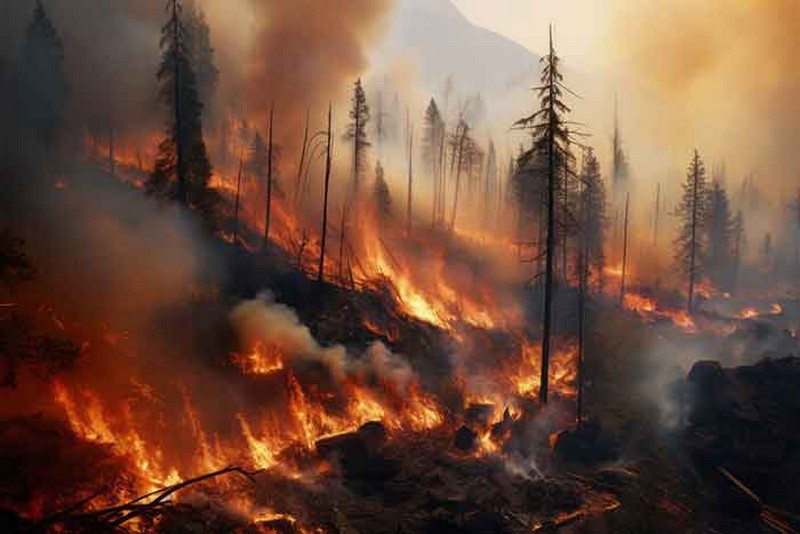
In recent years wildfires have spread uncontrollably over very vast areas in American and Australian continents, causing immense losses including loss of human and animal life and endangering environment in various ways. Their adverse impacts on pollution and health have travelled far and wide, creating health problems even in leading cities like New York.

In this context one question that is not being asked but should be asked is whether wildfires would have become such a serious threat if the native people had not been treated in such a cruel way as to either result in the death of vast numbers, or in the displacement of vast numbers and imposition of so many restrictions on them as to deny them their traditional way of life. This has been not only the loss of native people but also a bigger social loss too as the native or indigenous people had a much better understanding of nature, land and forests acquired from many centuries and generations of living close to nature. If the new settlers from Europe had tried to learn from them instead of killing them, driving them away or colonizing them, this would have been very beneficial for the entire society.

To give an example, over several generations the native people had learnt how to use controlled fires in such ways that the danger of bigger, destructive, uncontrolled fires could be avoided and at the same time they could get more food and some specific plants (such as those needed for making baskets or for some ceremonial purposes). If these native people had continued to live with their traditional wisdom over vast areas, they would have certainly used their great knowledge and experience to minimize the risk of huge out-of-control fires. The environmental risks would be reduced. As a native person told a US journalist, they used such methods to use controlled fire that carbon was stored in soil and not released in atmosphere.

This apart, the natives had a very holistic view of various phenomenon in which fire was not to be necessarily feared and dominated but instead to be understood and lived with as a part of life and such a view makes it possible to explore fire in a more friendly and creative way, instead of looking at the appearance of even a small non-threatening fire merely in terms of rushing to extinguish it. Such a view was moreover part of a wider understanding in which there is unity and continuity between nature, land, plants, forests, animals, fire and humanity—all are linked closely and part of a being. Such a view of view integrates respect of nature, respect of land with respect of oneself and one’s near and dear ones. With such a worldview, native communities scattered all over these continents would have been in the forefront of protecting forests, protecting nature, protecting rivers.

In fact time and again, despite all the injustice and deprivation they have suffered, they have been coming forward and making important contributions to several important environment protection efforts. However conservation efforts which entirely drive away human beings are not in keeping with their integrated views, and they would have contributed even more if the environment protection efforts had been based on a unity of nature and humanity instead of being isolationist. Even with all the problems of the present systems, they have come forward to make important contributions, often motivated by their desire to protect their sacred places, which are again a reflection of their integrated understanding.

If they had been allowed to live peacefully by the colonizers, the native people of the Australian and American continents would have contributed to the creation of a better society, more sustainable society in numerous ways. It is therefore one of the greatest regrets of history that they were treated in such cruel and insensitive ways that very small numbers survived over vast parts of these continents. During the last 550 years or so some of the worst injustices ever seen in human history have been inflicted on these indigenous people. Some were so destructive that perhaps no compensatory action can come even close to making up for what happened. Despite this, urgent efforts must nevertheless be made to achieve what can still be done in the interests of justice.

After Columbus opened up the new American world to Europeans in 1492, waves of settlers and traders started coming here with modern arms to plunder or drive away the native people.

Columbus forced the Taino ‘Indians’ in Hispaniaola to bring him an ounce of gold every three months. Those who did not, had their hands chopped off while escapees were hunted down with dogs.

A priest Bartoleme de Las Casas was very distressed by what he saw of the interactions of the newcomer ‘civilizers’ with indigenous people. He wrote, “For 40 years, they have done nothing but torture, murder, harass, afflict, torment and destroy them with extraordinary, incredible, ‘innovative’, and previously unheard of cruelty.”

Las Casas estimated that about 50 million Indians perished in Latin America and the Caribbean within 50 years of Columbus’ landing. ( Quoted in Third World Resurgence, No. 5—Genocide of the Indians).

The New Internationalist journal prepared a special issue (No. 226) on ‘Hidden History—Columbus and the Colonial Legacy). Here in the cover story Wayne Ellwood has written after examining the available historical evidence, “Scholars now reckon that 90 per cent of the indigenous population of the Americas was wiped out in a century and a half—the greatest demographic collapse in the history of the planet and the proportional equivalent of nearly half a billion people today.”

While in some places the native ‘Indian’ population recovered partially, in other places the recovery was almost non-existent.  The New Internationalist compared the population of these indigenous people over a period of 500 years from 1492 to 1992.

In Mexico there were 21.4 million Indians in 1492, 8 million in 1992. In the Caribbean there were were 5.85 million Indians in 1492, but only 0.001 million in 1992. In Lowland S. America there were 8.50 million Indians in 1492, but only 0.90 million in 1992. In North America there were 4.40 million Indians, but only 2.54 million in 1992.

A somewhat similar tragedy was later repeated later in Australia and its nearby areas. Robert Hughes writes in his book The Fatal Shore—“ It took less than 75 years of white settlement to wipe out most of the people who had occupied Tasmania for some 20,000 years.”

What is more, in some places some of the most terrible atrocities inflicted on the indigenous people continued right into the 20th century. For example let us compare more recent accounts from Guatemala with what was happening a few hundred years back.

First let us see Bob Carty’s account of the 16th century regarding a conqueror Pedro Alvarado’s atrocities in Guatemala—“He directed eight major massacres killing up to 3000 Indians at a time. Mayan chiefs were incinerated alive as Catholic priests burned Mayan historical records. Alvarado rewarded his soldiers with the right to enslave the survivors. Mayan lands were appropriated, the people herded into towns and forced to work the Spanish Estates.”

Now compare this with a more recent account from Guatemala in the 1980s—“In the early 1980s it was as if the new conquistador Pedro Alvarado was back in power. All Mayans were seen as supporters of the guerillas, the military set out to destroy the people as well as their culture. Mayans were burned alive, babies murdered and women raped. The dictator Rios Mantt wiped 440 Mayan villages off the face of the earth. Soldiers are so brutalized in their training that they follow orders to kill their people as enemies.” (New Internationalist)

This account indicates the shocking reality that terrible atrocities have continued against indigenous people till recent times in many countries. These are in fact aggravated whenever indigenous people offer resistance to injustice or demand justice and restoration/protection of land rights much beyond the small concessions the existing regimes are willing to offer.

While some sincere initiatives for their welfare have indeed been taken up in various parts of world, generally the human development indicators for them remain much lower. Their human rights violations and imprisonment rates are generally higher than those suffered by other communities. They often experience discrimination and loss of dignity. Appreciation of their different world view, which may be much, much better than those dominant views which have entangled our world in a web of environment ruin and wars and violence, is generally least appreciated, something which is not just their loss but the loss of the entire humanity. A much better appreciation of the thinking, culture and life-views of indigenous people as well as many-sided, overdue justice for them should be an essential part of the world’s future agenda.

Bharat Dogra is Honorary Convener, Campaign to Save Earth Now.

28 June 2023

Source: countercurrents.org
We’re Having a Violent Meltdown: The Human Costs of Global Warming — and of Our Response to It

By Stan Cox

Several times in recent weeks I’ve heard people suggest that Mother Nature has been speaking to us through that smoke endlessly drifting south from the still-raging Canadian wildfires. She’s saying that she wants the coal, oil, and gas left in the ground, but I fear her message will have little more influence on climate policy than her previous ones did. After all, we essentially hit the “snooze” button on the wakeup call from Hurricane Katrina 18 years ago; ditto the disastrous Hurricane Sandy seven years later, as well as the East Coast heat waves and West Coast wildfires of more recent years; or the startling overheating of global waters and the sea level rise that goes with it. And that’s just to begin an ever longer list of horrors.

Despite the fact that, in recent weeks, more than 100 million North Americans have been inhaling lungfuls of smoke from those Canadian wildfires, we’ll probably continue to ignore the pummeling so many here are enduring daily while carbon dioxide continues to accumulate overhead. Climate disasters are not only failing to goad governments into taking bold action but may be nudging societies toward increasing violence and cruelty.

Recently, Joel Millward-Hopkins of the University of Leeds suggested that, as the climate emergency intensifies, we may only find ourselves ever more affected by some of the indirect impacts of global warming. Those would include the “widening of socioeconomic inequalities (within and between countries), increases in migration (intra- and inter-nationally), and heightened risk of conflict (from violence and war through to hate speech and crime).” Such impacts, he suggests, will reflect a “highly inconvenient overlap with key drivers of the authoritarian populism that has proliferated in the 21st century.” Inconvenient indeed.

In other words, although weather disasters of many kinds can increase public concern about climate change, they can also help to whip up an oppressively violent sociopolitical climate that may prove ever more hostile to the very idea of reducing greenhouse-gas emissions — especially in large, affluent, high-emission societies.

Warm in the USA

Though not itself linked to climate change, the Covid-19 pandemic may have given us a preview of such developments. When it first struck, a feeling of noble national purpose, shared sacrifice, and mutual aid swept the country… for perhaps a few weeks. Then came the waves of social conflict that may, in the end, have left us even more poorly prepared for the next public health emergency. After all, the pandemic of hate that first fed on anti-vaccine and anti-mask fervor now sups from a far larger buffet of political issues including energy and climate.

Guardian columnist George Monbiot wrote recently that “culture war entrepreneurs” are casting efforts to reduce greenhouse-gas emissions as authoritarian attacks on ordinary people’s fundamental freedoms. Be ready to do battle, they say, against any move to promote heat pumps over furnaces or electric induction stoves over gas stoves or walking to the store instead of driving a big-ass truck there. In fact, he suggests, “you cannot propose even the mildest change without a hundred professionally outraged influencers leaping up to announce: ‘They’re coming for your …’’”

There are always going to be people under the influence of such influencers who will respond by jumping in their trucks for a session of “rollin’ coal” — that is, spewing toxic diesel fumes into the faces of pedestrians and cyclists. Or maybe they’ll run over a climate protester (without fear of prosecution if they’re in Florida, Iowa, or Oklahoma).

This outbreak of hostility and violence among right-wingers is occurring even though no one has actually curtailed any of their freedoms. Now, imagine the ferocity of the backlash if we could somehow manage to enact the policies that are undoubtedly most urgently needed to rein in greenhouse gases and other environmental threats: a rapid phase-out of fossil fuels and cuts in the extraction and use of material resources. The eruption would undoubtedly be far more aggressive and violent than the resistance to Covid-19 regulations.

From Pole to Equator, the Specter of Violence Looms

New climate realities are also expected to alter military conflicts among nations. One of the most troubling potential flashpoints could be the fast-melting Arctic, which, thanks to all that carbon dioxide released into the atmosphere, will soon be wide open for fishing, resource extraction, and other activities. In fact, the United States and Russia haven’t even let the Arctic Sea finish its thaw before starting to militarize it. As Devin Speak of NPR reports,

“While indigenous communities have long thrived in communion with the land there, nation states haven’t had much presence in the northern latitudes because it hasn’t been ripe for exploitation. Until sea ice began rapidly receding, oil, gas, shipping, and minerals were all under frigid lock and key. But with dwindling sea ice, tapping the region’s resources is becoming more feasible. And in conjunction with the economic opportunities, nations are eyeing big military spending. Russia has already ramped up its military presence and the United States is playing catch-up.”

As an armed standoff in cold polar waters heats up, increased attention is being paid to climate-induced mass migration as another likely conflict trigger. After all, forecasts now suggest that if greenhouse-gas emissions aren’t reduced deeply and quickly, the climatic zones safe for humans to live in will shrink dramatically. The worst of it will happen in tropical South America and Africa, the Middle East, South and Southeast Asia, parts of China, and the U.S. Sun Belt. By 2050, two to three billion people are likely to either be living in or fleeing regions that have become increasingly hostile to human existence and, by 2090, it could be three to six billion of us, or a quarter to a third of humanity. Desired destinations will include the northern United States and southern Canada, Russia, Central Asia, Korea, Japan, northern China, and northern Europe.

Consider for a moment the torrent of hate and cruelty we’ve seen in the past decade along borders between the United States and Mexico, Southeast and South Asia, and Europe and Africa. Now, imagine a 10- to 20-fold increase in long-distance migration rates and the anti-immigrant hate, violence, and even international conflict that could grip the globe in the decades to come. As a preview, just consider the fact that Republican governors in 14 states have already deployed National Guard troops to the border with Mexico for no good reason whatsoever.

In his Guardian column, Monbiot explains succinctly how climate disruption and anti-immigrant bias reinforce each other: “Round the cycle turns,” he writes. “As millions are driven from their homes by climate disasters, the extreme right exploits their misery to extend its reach. As the extreme right gains power, climate programs are shut down, heating accelerates, and more people are driven from their homes. If we don’t break this cycle soon, it will become the dominant story of our times.” It may already be the most important story, whether we realize it or not.

Climate change is likely to exacerbate violence within countries as well, simply by discombobulating us as individuals. A 2015 analysis of 57 nations found that “each degree Celsius increase in annual temperatures is associated with a nearly 6% average increase in homicides.” More recently, a review of research worldwide found that climate disruption can undermine peace by interfering with people’s mental or physiological functioning and by threatening our quality of life.

Increasingly extreme heat will also push waves of human displacement within national borders, further fanning the flames of domestic conflict. An analysis by Abrahm Lustgarten of ProPublica found that, as the Earth’s atmosphere warms, almost half of the U.S. population “will most likely experience a decline in the quality of their environment, namely more heat and less water. For 93 million of them, the changes could be particularly severe.” Expect many millions of us to move from the Sunbelt to, perhaps, the Great Lakes region and from rural to urban areas.

Mathew Hauer, a sociologist at Florida State University and a modeler of climate migration interviewed by Lustgarten, predicts some especially hard times for Atlanta. It’s the largest metropolitan area in the Southeast, a region in which, climate models suggest, droughts and wildfires will become far more common and severe as the decades pass. He projects that hundreds of thousands of local climate refugees will migrate from outlying areas into an urban area already experiencing overburdened water systems and a shaky infrastructure, along with the highest income inequality among large U.S. cities. All of that, writes Lustgarten, could make the future Atlanta “a virtual tinderbox for social conflict.”

Such conflict could well include the kind of state violence and oppression that’s increasingly unleashed on people and groups who are determined to protest against the systems that create climate chaos, environmental devastation, and injustice. Indeed, in Atlanta, that violence is already a reality. This winter and spring, city police shot and killed an activist and arrested 40 more for nonviolently occupying the city’s largest urban forest. They were part of a broad effort by people in low-income neighborhoods bordering the forest, environmental organizations, and racial-justice groups to head off the construction of a tactical-training center for the Atlanta police department that would occupy and devastate 85 of that woodland’s 150 acres. The coalition aims to prevent deforestation, preserve the quality of life for nearby neighborhoods, and halt the expenditure of $90 million on a facility that would hone the skills of cops who have demonstrated their willingness to kill unarmed Black people.

And mind you, those forest defenders were charged not with trespassing but with violating Georgia’s domestic terrorism law, which carries a sentence of at least five years in prison. When arrested, they were held in a jail that, reported Piper French of Bolts, “is notorious for squalid conditions and allegations of mistreatment by staff.” The defendants, who had committed no acts of violence, let alone “terrorism,” were denied bail on flimsy grounds, including accusations of merely “wearing black, having a jail support number scrawled on their arm, and having mud on their shoes,” according to French. And the basis for denying bail thanks to wearing black clothing and having on muddy shoes? That domestic terrorism law provides for something called “vicarious liability.” (In plain English, you could call it guilt by association.)

Nor did the repression stop there. Following a SWAT team’s recent raid on a southeast Atlanta home, the Georgia Bureau of Investigation arrested three board members of an Atlanta nonprofit that was arranging legal support for those forest defenders. They were charged with money laundering and charity fraud, stretching the already dubious concept of vicarious liability even further. Writing for Jacobin, Abe Asher notes that “the intensity of the threats protesters in Atlanta are facing is reminiscent of the risks climate defenders routinely face in the Global South, where both activists and journalists are routinely jailed and killed in their defense of land and water. Of the 401 human rights defenders killed last year, nearly half were killed defending the climate.”

Violence on the Ground (and Below It)

Some of America’s domestic policies aimed at curbing climate change could also become increasingly responsible for conflict in the Global South. If, for instance, the wealthier North continues to pursue technology-heavy “green growth” climate policies, the south could suffer yet more from the inherent violence of resource extraction. The need for increasing amounts of the minerals and metals essential to building renewable energy systems and vast fleets of electric vehicles — including lithium, cobalt, copper, nickel, and rare earths — is attracting much media attention these days.

Worse yet, in the future, they are likely to become the focus of “green resource wars.” And the mining of such ores isn’t the only extractive activity that raises the threat of conflict. To take one example, if the world’s nations pursue climate-mitigation policies that depend heavily on biofuels, the ensuing fuel plantations could end up occupying a staggering quarter to a third of the world’s croplands, almost certainly displacing some essential food crops to less productive areas. And count on this: communities throughout the global south are not going to stand back and allow such potentially wholesale losses without protest.

Selina Gallo-Cruz is an associate professor of sociology at Syracuse University. She recently published a paper, “Peace Studies and the Limits to Growth,” in which she laid out the ways the widespread violence and injustice implicit in the global North’s quest for growth — green or otherwise — has affected other communities around the world.

Citing the work of organizations like Global Witness in conflict zones worldwide, she points out that a significant part of the violence on this planet comes from the North’s “extraction of natural resources through mining or deforestation — palm oil plantations are a big one — and mega-, mega-agricultural projects,” all of which lead to “outbreaks of very violent conflict.” We must not, says Gallo-Cruz, fall for the specious argument that it would be unfair and cruel not to extract resources from impoverished countries, because the North needs such minerals and energy, while the South needs the revenue those resources can bring in. That argument is, of course, blind to the devastation of the lands, waters, and biodiversity on which such communities depend, not to mention the violent conflict that so often threatens to become a part of resource extraction.

To sum up: There has always been violent conflict. (As striking evidence, the artist Miranda Maher has documented that over the past 2,023 years of human history, only one year, 327 AD, was completely free of open armed conflict.) But we may now be preparing to top off that sorry record with climate-induced conflict globally — from open war between nation-states to abuse of migrants at borders to hate and physical assaults that happen just down the block. And efforts to curb climate change are already provoking a right-wing backlash that encourages civil conflict while bringing state violence down on climate activists. Meanwhile, corporate efforts to achieve climate-friendly growth end up inflicting the violence that accompanies resource extraction on the world’s poorest regions, creating conditions for… yes, yet more conflict.

In short, industrial civilization has by now painted the world into a perilous corner. The only way out of this mess would be for affluent societies to deeply reduce their consumption of energy and extraction of material resources, but don’t hold your breath on that one.

Stan Cox, a TomDispatch regular, is the author of The Path to a Livable Future: A New Politics to Fight Climate Change, Racism, and the Next Pandemic, The Green New Deal and Beyond: Ending the Climate Emergency While We Still Can, and the current In Real Time climate series at City Lights Books.

28 June 2023

Source: countercurrents.org

Naseem 1995 in India 2023

By Neha Tuheen

PM Modi said in a press conference that the religious minorities in India do not face any discrimination and that India’s democracy remains faultless during his infamous visit to the US. However, it is common knowledge that the scenario in India could not be more different. Despite being a secular state, India as a nation has not lived up to the secular dreams of its founders. Minorities in the nation, especially Muslims, have been facing constant discrimination in plain sight throughout the history of independent India. The destruction of the Babri Masjid is perhaps the most symbolic of all the vile demonstrations made by the far-right Hindus. The demolition of the mosque at the hands of a wing of the Sangh Parivar remains a watershed moment, marking the emergence of hard-core Hindutva in modern Indian politics.

Saeed Akhtar Mirza’s 1995 film “Naseem” depicts the journey of a young girl named Naseem against a watershed moment in India’s history of bigotry and communal violence. Set in the early 1990s, the story captures the transition from a time of harmony to a period marked by hate and communal tensions during the demolition of the Babri Masjid. Naseem’s personal experiences, as witnessed through her innocent eyes, mirror the larger societal changes unfolding around her. The film gives us glimpses into the everyday life of Naseem for seven months leading up to the destruction of the Masjid. Khaifi Azmi the poetic legend takes on the most critical role of Naseem’s Dada-Jaan in the film. Dada-Jaan, a bedridden man who loves his family and the art of storytelling is deeply tied with the iconography of the Masjid itself.

Naseem’s easy-going nature and mellow routine contrast deeply with the communal chaos going on throughout the country at that point in time. The film’s opening scenes effectively establish a sense of separation within the community and Naseem’s role as a witness caught in the middle. As Naseem combs her hair while the TV plays in the background, the calmness of her reflection in the mirror is disrupted by the voices of yelling men. This serves as a precursor to the divisive events that would soon unfold. The positioning of her family members on either side of her reflection symbolizes the diverging paths that lie ahead, highlighting the growing divide in society.

Naseem’s search for identity becomes a central theme as she seeks to understand the meaning of her name. The interaction with her grandfather, who tells her that Naseem means the morning breeze, emphasizes her desire to connect with something positive amidst the changing atmosphere. This quest for self-discovery and understanding becomes Naseem’s anchor as she navigates through turbulent times.

As communal tensions rise, Naseem’s parents shield her from the violence by keeping her uninformed. This protective approach is evident when Naseem finds her parents fixated on the TV but unable to disclose the disturbing events taking place outside. The audience shares Naseem’s confusion and frustration as she seeks answers from her family members who remain silent, their actions embodying a desire to preserve her innocence.

The loss of innocence is exemplified through Naseem’s encounters with personal tragedies. The sudden demise of Parvati Bhabhi, a neighbour, reflects the brutality that women face within of society. This incident shatters Naseem’s perception of the world, exposing the darker aspects hidden from her until now. Parvati Bhabhi is one of the few Hindu characters that Naseem is shown to have a deep connection with within the film. Her untimely violent demise is also symbolic of the murder of secular Hinduism and the death of the allyship that existed between the two religions.

The film cleverly intertwines historical narratives within the personal journey of Naseem. As Naseem’s grandpa narrates stories about his own experiences as a “freedom fighter”. These stories not only connect Naseem to her heritage but also inspire her to question the present circumstances and the societal changes that have led to the current turmoil. Naseem often finds comfort in the stories of Dada-Jaan’s past. The ideal India that many dreamed of pre-Independence lives in these tales woven by the old man. In a conversation between Naseem’s father and her grandfather, the question of why her grandfather did not migrate to Pakistan during the partition arises. This dialogue serves as a reflection on the sense of belonging and the memories that make a place feel like home. It alludes to the essence of India, beyond religion and other differences. Naseem is also seen asking the meaning of her name to her Dada-Jaan, both at the beginning and the end of the movie, showing us that despite all the changes and chaos, the maker has faith in the youth of India to be like Naseem, the fresh morning breeze of change and harmony.

The death, chaos, and hate that has ensued since December 6th, 1992 has seen no end. Houses, mosques, and workplaces of Muslim people are brought down with hate. A Ram Mandir has been constructed in place of the Babri Masjid. This new India, which has existed since the passing of Naseem’s Dada-Jaan and the masjid itself, does not portray the image that our Prime Minister has presented on the world stage. Naseem’s coming-of-age story set three over three decades ago, still resonates and represents the story of thousands of children in our country.

Neha Tuheen is an undergraduate student of International Studies at FLAME University, Pune.

27 June 2023

Source: countercurrents.org

Trained to Hate

By Jafar M Ramini

Sunday evening. It was cold outside and my wife and I decided to light the fire and settle down to watch a movie. We searched, as you do, through the plethora of channels on offer nowadays, until we saw a movie called ‘The Promise’ on Prime.

The very name evoked memories. Twelve years ago, in 2011, director Peter Kominsky made a 4-part TV series for Channel 4 in London called ‘The Promise’. In this instance the promise was one from a young British girl to her grandfather, who had been a soldier during the 1940s in Palestine. He left a diary for her so she could retrace his steps and find out what Britain in Palestine really meant. Her journey of discovery shocked her to the core. Not just for the past but for the present. The violence, the destruction, the horror hadn’t stopped with the creation of Israel, but continues up to today. We were invited to a private view of ‘The Promise’ and the director, who is Jewish, assured us that despite the fact that every word in the series was meticulously researched for truth and accuracy, he had to jump through hoops to get it on the air.

This new movie tells the story of a different kind of promise. A promise of love from a young Armenian medical student to a girl of his village, pledging that he would return from Constantinople, where he hoped to gain his medical degree, no matter what. As the story unfolds this dream of learning how to save lives turns into a tragedy of survival and genocide of 1.5 million Armenian citizens of the Ottoman Empire from 1914 – 1923.

The film had us mesmerised. It felt too close. ‘The Promise’, created and directed by that great Irish talent, Terry George, could so easily have been telling the on-going story of Palestinian genocide and the relentless determination by successive Israeli Governments to remove, by any and every means possible, any suggestion that a country called Palestine ever existed. There was one moment in the film when a group of orphans and villagers are seen hiding in a cave. That was me, 75 years ago, aged five, crouching in such a cave, hearing the mortar shells and the gun-fire outside and terrified to my very bones. Another boy, also called Jafar, sitting right beside me, was shot straight through his right eye as the bullet went through the back of his head. Miraculously he survived.

I recommend this latest film called ‘The Promise’. It is a heartbreaking, thought-provoking and epic, and for those who know nothing of this terrible true story of the Turkish treatment of the Armenians it is a real eye-opener. If only, I said to my wife, another director of talent and commitment, would do the same for Palestine.

But, who? To quote the words of Gideon Levy, Israeli journalist and columnist for Haaretz;

“ There aren’t many populations in the world as helpless as the Palestinians who live in their own country. No one protects their lives and property, let alone their dignity, and no one intends to do so. They are totally abandoned to their fates. Their houses and their cars can be torched, their fields set on fire. It’s all right to shoot them mercilessly, killing old people and babies, with no defence forces at their side. No police, no military: no one. If some such desperate defence force is organised it’s immediately criminalised by Israel. Its fighters are labeled ‘terrorists’, their actions ‘terror attacks’ and their fates sealed, with death or prison the only options.”

Coincidentally, I am now in the middle of reading a book that has just came out. It is called ‘The State Of Israel Versus The Jews’, by a Jewish French writer, Sylvain Cypel, and it chronicles in minute detail how Israel trains children to hate, discriminate against and kill Palestinians out of utter conviction that our lives are of a lesser value than theirs and therefore justifies everything that they do to us.

At this very moment Israel has been wreaking havoc all over the occupied West Bank, especially in my home town of Jenin.

Will we ever see another brave and principled film-maker who would have the moral courage to make a block buster movie about the tragedy of Palestine, and have it beamed around the world in cinemas and streamed through the internet for anyone and everyone to see? I live in hope.

Jafar M Ramini is a Palestinian writer and political analyst.

27 June 2023

Source: countercurrents.org

Babbling about Prigozhin

By Dr Binoy Kampmark

A lot of nonsense is being spouted by a bevy of spontaneous “Russian experts” in light of the Prigozhin spray, a mutiny (no one quite knows what to call it), stillborn in the Russian Federation.  It all fell to the theatrical sponsor, promoter and rabble rouser Yevgeny Prigozhin, a convict who rose through the ranks of the deceased Soviet state to find fortune and security via catering, arms and Vladimir Putin’s support.

In the service of the Kremlin, Prigozhin proved his mettle.  He did his level best to neutralise protest movements.  He created the Internet Research Agency, an outfit employing hundreds dedicated to trolling for the regime.  Such efforts have been apoplectically lionised (and vilified) as being vital to winning Donald Trump the US presidency in 2016.

His Wagner mercenary outfit, created in the summer of 2014 in response to the Ukraine conflict, has certainly been busy, having impressed bloody footprints in the Levant, a number of African states, and Ukraine itself.  Along the way, benefits flowed for the provision of such services, including natural resource concessions.

But something happened last week.  Suddenly, the strong man of the mercenary outfit that had been performing military duties alongside the Russian Army in Ukraine seemed to lose his cool.  There were allegations that his men had been fired upon by Russian forces, a point drawn out by his capture of the 72nd Motorised Rifle Brigade commander, Lieutenant Colonel Roman Venevitin.  Probably more to the point, he had found out some days earlier that the Russian Defence Ministry was keen to rein in his troops, placing them under contractual obligations.  His autonomous wings were going to be clipped.

The fuse duly went.  Prigozhin fumed on Telegram, expressing his desire to get a number of officials, most notably the Defence Minister, Sergei Shoigu, and Chief of the General staff Valery Gerasimov, sent packing.  A “march for justice” was organised, one that threatened to go all the way to Moscow.

President Vladimir Putin fumed in agitation in his televised address on June 24, claiming that “excessive ambition and personal interests [had] led to treason, to the betrayal of the motherland and  the people and the cause”.  Within hours, Belarussian President Alexander Lukashenko, whose diplomatic skills are threadbare, had intervened as mediator, after which it was decided that the Wagner forces would withdraw to avoid “shedding Russian blood”.

This all provided some delicious speculative manna for the press corps and commentariat outside Russia.  Nature, and media, abhor the vacuum; the filling that follows is often not palatable.  There was much breathless, excited pontification about the end of Putin, despite the obvious fact that this insurrection had failed in its tracks.  John Lyons of the Australian Broadcasting Corporation was aflame with wonder.  Where, he wondered, was the Russian President?  Why did the Wagner soldiers “get from Ukraine to Rostov, take control of Ukraine’s war HQ then move to Voronezh without a hint of resistance”?

John Lough of Chatham House in London claimed that Putin had “been shown to have lost his previous ability to be the arbiter between powerful rival groups.”  His “public image in Russia as the all-powerful Tsar” had been called into question.  Ditto the views of Peter Rutland of Wesleyan University, who was adamant in emphasising Putin’s impotence in being “unable to do anything to stop Prigozhin’s rogue military unit as it seized Rostov-on-Don”, only to then write, without explaining why, about uncharacteristic behaviour from both men in stepping “back from the brink of civil war”.

Then came the hyperventilating chatter about nuclear weapons (too much of the Crimson Tide jitters there), the pathetic wail that accompanies those desperate to fill both column space.  The same degree of concern regarding such unsteady nuclear powers as Pakistan is nowhere to be seen, despite ongoing crises and the prospect of political implosion.

Commentors swooned with excitement: the Kremlin had lost the plot; the attempted coup, if it could even be called that, had done wonders to rattle the strongman.  Those same commentators could not quite explain that Prigozhin had seemingly been rusticated and banished to Belarus within the shortest of timeframes, where he is likely to keep company with a man of comparatively diminished intellect: Premier Lukashenko himself.  Prigozhin, for all his aspirations, has a gangster’s nose for a bargain, poor or otherwise.

As Kremlin spokesman Dmitry Peskov put it, the original criminal case opened against Prigozhin for military mutiny by the Kremlin would be dropped, while any Wagner fighters who had taken part in the “march for justice” would not face any punitive consequences. Those who had not participated would be duly assimilated into the Russian defence architecture in signing contracts with the Defence Ministry.

The image now appearing – much of this subject to redrawing, resketching, and requalifying – is that things were not quite as they seemed.  Assuming himself to be a big-brained Wallerstein of regime stirring clout, Prigozhin had seemingly put forth a plan of action that had all the seeds of failure.  Britain’s The Telegraph reported that “the mercenary force had only 8,000 fighters rather than the 25,000 claimed and faced likely defeat in any attempt to take the Russian capital.”

Another reading is also possible here, though it will have to be verified in due course.  Putin had anticipated that this contingently loyal band of mercenaries was always liable to turn, given the chance.  Russia is overrun with such volatile privateers and soldiers of fortune.  Where that fortune turns, demands will be made.

Ultimately, in Putin’s Russia, the political is never divorceable from the personal.  Chechnya’s resilient thug, Ramzan Kadyrov, very much the prototypical Putin vassal only nominally subservient, suggests that this whole matter could be put down to family business disputes.  “A chain of failed business deals created a lingering resentment in the businessman, which reached its peak when St. Petersburg’s authorities did not grand [Prigozhin’s] daughter a coveted land plot.”  The big picture, viewed from afar, can be very small indeed.

Dr. Binoy Kampmark was a Commonwealth Scholar at Selwyn College, Cambridge.

27 June 2023

Source: countercurrents.org

A Muslim Man Lynched To Death On Suspicion Of Carrying Beef In Nashik

By Countercurrents Collective

A Muslim man was beaten to death (lynched) for allegedly transporting beef in Nashik, Maharashtra another one seriously injured. The two victims identified as Afan Ansari aged 32 and Nasir Qureshi aged 24 were seriously injured in the attack. Afsan Ansari was pronounced dead. They were traveling in a car to Mumbai, when they were attacked by the cow vigilantes with iron rodes on the suspicion of carrying beef.

Qureshi was able to file a complaint and based on that the Ghoti police have arrested 11 persons and a case has been registered on charges of murder.The meat samples have been sent to a forensic lab for testing.

In Maharashtra, India, Hindu supremacist mob has lynched one Muslim to death and another one struggling for his life in hospital. In New India, you can kill Muslims in the name of protecting cow. pic.twitter.com/4aEc061pD0

This becomes the second incident of lynching by cow vigilantes in Nashik in the last two weeks. On June 8, three men transporting cattle on a tempo were attacked allegedly by a group of ‘cow vigilantes’. The body of one of them, identified as Lukman Ansari (23), was recovered from a gorge at Ghatandevi in Igatpuri area on June 10.

Countercurrents is answerable only to our readers. Support honest journalism because we have no PLANET B.

27 June 2023

Source: countercurrents.org

Manipur’s Killing Fields: A Tale of Greed, Identity Politics, Radicalization and State Collusion

By Oliver DSouza

“We are afraid to open our mouths. There is nothing we can do for ourselves. It is those outside the state who must speak up for us,” a Christian academician and scholar based in Churchandpur, Manipur, told this author under conditions of anonymity; that’s the level of fear among the Kuki-Zo in the state.

”It’s not just the Meitei extremist organizations in the valley who are leading and perpetrating the violence, the state machinery is also involved,” he laments, adding “After the Supreme Court refused to send the Army to protect Kuki-Zo, armored vehicles have now arrived for the state forces. This is ominous for the tribals.”

The academician’s fears are rooted in having witnessed Meitei extremist groups indulging in the violence with help from state police and commandos, also reported by Human Rights Watch.

“After helping burn Kuki-Zo villages, officers of the forces are also telling the Meiteis involved precisely what to tell the media,” says the academician while explaining how suspension of internet services, except for sections of a pliant Valley based media, has been used to distort the reality of the violence by peddling the government’s unbelievable version.

Participation of army officers has also been confirmed by other ground reports. The Zomi Students’ Federation, Lamka, (ZSF) too in a report titled ‘The Inevitable Split,” quoting eyewitnesses says paramilitary border security forces drawn from army units are part of the violence.

“Two Majors of the Assam Rifles, coming from the Meitei community were involved in setting Bongbal Kholen and nearby villages on fire in the Saikul area of the Kangpokpi District,” it says.

All of this has happened also in the backdrop of radicalisation and consolidation of Meitei Hindus by the Rashtriya Swayamsevak Sangh (RSS) as a ‘Hindu force’ against the ‘Christian Kuki-Zo.’ Jagdamba Mall, a RSS organiser in Nagaland for 40 years told the Indian Express “as many as 15 organizations affiliated to the Sangh have been active in Manipur, some for over three decades.” In 1995, there were merely just 600 RSS shakhas in the state, now there are over 6000. The BJP has also been courting two Meitei extremist groups – Armabai Tenggol and Meitei Leepun and now the sangh parivar is further stoking the fire, with VHP spokesperson Milind Parande claiming destruction of major temples in Tipaimuk.

In a rebuttal, Hmar Students’ Association (HSA) said, “There are 25 villages within the Tipaimuk sub-division (now Parbung sub-division) predominantly inhabited by the tribals, who are 100% Christian by faith. There is no single temple either big or small in the entire Tipaimuk sub-division.”

”We also want to clarify that there is only one Hindu temple in the entire Churchandpur town, which is standing safe and intact,” the statement said.

The violence starting May 3 has not occurred out of the blue: it has been in the making for some time and has its roots in three Bills passed in 2015, in the anti-tribal ethos and identity politics of Biren Singh and in the mismanagement of the state by Biren and his bosses in Delhi, along with a political-criminal nexus in play.

On August 25, 2015, without any discussion, using the money Bills route, the state government passed three very controversial bills: The Protection of Manipur People Bill, the Manipur Land Reforms (Seventh Amendment Bill) and the Manipur Shops and Establishment (Second Amendment). The tribals were infuriated and opposed the bills as they intrude on their constitutionally guaranteed tribal land and forest rights.

These bills were followed by Meiteis, who already enjoy benefits under Scheduled Caste (SC), Other Backward Castes (OBC) and Economically Weaker Sections (EWS) quota, and were demanding Scheduled Tribe (ST) status since 2012, reaffirming their demand with new gusto. They claim tribals occupy 90% of land in the state (90% of it is hills) though constituting only 35% of the population, while the Meiteis, who live in the fertile valley and constitute 54% of the population, occupy 10% of the land.

Meiteis also claim they were omitted from the President’s Constitution (STs) Order, 1950, but sociologist L. Lam Khan Piang, writing in the Wire says “When the first Backward Castes Commission (BCC) requested a list of tribes to be included in the Scheduled Tribes (modification) list from each state and Union Territory, Meities did not include themselves.” They chose not to be categorized as ST even as Hindu Meiteis consider tribals ‘Haomacha’ (untouchables).

Meiteis additionally complain about their decreasing population and increasing Kuki population. However, the Kuki-Zo population as a percentage of total population increased by a 1.8% from 14% in 1951 to 15.8% in 2011, while the decadal growth of Kukis is 0.9%. The Meitei population meanwhile declined from 64.29% in 1951 to 53% in 2011.

What the Meitei lobby won’t tell you is that unlike the growth of the Kuki population since 1951, as Binalakshmi Nepram, Convenor of the Northeast India Women Initiative for Peace, in an interview pointed out, the increased population of Meiteis in the valley has been engineered by migration of Meiteis from neighboring states even as there is a drop in the birth rate among them. The Kuki-Zo living in the valley are mostly those holding government jobs and students and together they are a tiny percentage of the valley’s population.

It also won’t tell you that despite the variance in size of land occupied by the two communities, valley based Meiteis corner most of the budgetary allocations and projects and enjoy benefits of development while the tribal areas remain under-developed and neglected. In the state assembly too, 40 of the 60 seats are from the Valley while tribals have only 20 seats.

“The violence is over Meiteis wanting to occupy tribal lands for their growing population, the rest of the reasons are mere excuses” asserts Ginza Vualzong, Spokesperson, Indigenous Tribal Leaders Forum (ITLF).

“Once they get the ST status, the tribal land that has illegally been denotified by the state and cleared by the eviction drive will be handed over to Meiteis through subterfuge,” he says.

Meiteis can settle in the tribal areas under license but what they want is free access to and ownership of tribal lands disallowed by law. Clearly, the valley Meiteis are facing pressures of population versus land available, while obtaining ST status enables them to occupy tribal lands also known to have rich deposits of petroleum and gas and other minerals.

Though tension between the two tribes has been going on since 2012, it started escalating in 2017 when, soon after Bharatiya Janata Party (BJP) gained power it appointed a known anti-tribal Biren Singh as Chief Minister. Indulging in majoritarian appeasement and identity politics typical of the BJP, Biren Singh immediately notified vast tribal lands as Reserved Forest, Protected Forest, Wildlife Sanctuaries, National Parks, and Wetlands bypassing Constitutional procedures, thereby surreptitiously depriving the tribals of their land rights.

At the same time, following the 2017 notification, Meiteis, who overwhelmingly voted the BJP to power, upped their political demand for ST status, adding to the tension between the two communities.

The charged atmosphere became diabolical in June 2018, when Biren Singh was hit by a drug scandal, wherein BJP leader Lukhosei Zou was apprehended with large quantities of heroin and amphetamines.

During investigation, Thounaojam Brinda, Additional Superintendent of Police, Narcotics and Drugs Wing, uncovered involvement of BJP politicians, drug lords and officials, with the Meitei run Etocha Drug Cartel operating out of the Valley.   

Brinda stated in court that she was under ‘pressure’ from Biren Singh to release from custody ‘drug lord’ and BJP member Lukhosei Zou. Senior lawyer and president of the All Manipur Bar Association, H Chandrajit Sharma, too made a similar allegation in April 2019 

After allegations against him in the drug scandal surfaced, Biren immediately started the ‘War on drugs’, specifically demonizing the Kuki-Zo, calling them ‘poppy cultivators’ and ‘terrorists’, besides also labelling legitimate Kuki-Zo villages as ‘encroachments.’

Fact is, most of the poppy processing laboratories are based in the Valley, while poppy is cultivated by all tribals – not merely Kuki-Zo. Yet it is only the Kuki-Zo who is demonized by Biren Singh for his own survival and for BJP’s politics of perdition.

Later, in August 2022, the state government claimed that 38 villages in the Churachandpur-Khoupum Protected Forest were “illegal settlements” of Kuki-Zo and its residents were “illegal immigrants”.

The illegal immigrants referred to by Biren Singh are allegedly from Myanmar, but leave alone 38 villages, by no figment of any imagination could they be occupying even a single village as AFSPA has been in force in Manipur for long and only recently removed from some places in the state.

In early April 2022, using these pretexts and the three controversial laws passed in 2015, the government started a demolition and eviction drive against Kuki-Zo settlements and properties in the valley which continued well into 2023.

What set the stage for the eruption of the  violence, however, is the High Court direction directing the state government on April 20, 2023 to consider within four weeks the demand of the Meiteis for ST status. Following the court directive, the All Tribal Students Union Manipur (ATSUM) called for a peaceful Solidarity March on May 3, 2023 in all the hill areas of Manipur leading to a reaction from Meiteis.

The Zomi Students Federation (ZSF) says “The Valley-based Meitei organizations reacted to this call by organizing counter-blockades in the valley areas the evening before the peaceful rally.”

The immediate spark began when some Meitei miscreants started burning the Anglo-Kuki-Zo Centenary gate near Leisang Village, Churachandpur, which is one of the most important symbols of tribal resistance against British rule.

”The radicalised Meitei mob also assaulted returning rally-goers from border areas of Churachandpur district, with Pastor Sehkhohao Kipgen beaten to death by radical Meitei groups,” says ZSF.

The smaller number of Kukis in the Valley responded with violence, more particularly in the tribal dominated Churchandpur area. Thereafter, the violence spread to various parts of the valley and in parts bordering tribal villages, with Kuki-Zo at the receiving end en masse, forcing most of them to leave the valley or get killed.

The ZSF says that the attacks were carried out principally by the BJP backed Meitei extremist group, Arambai Tenggol, openly linked to CM Biren Singh and current Rajya Sabha MP from Manipur, Leisemba Sanajaoba. Many surrendered militants are members of these outfits.

Neither was the larger mayhem random. The Christian academician, with good reason says “the violence was pre-planned in collusion with the state; many strange things were going on before that.”

Starting Dec 2022, citing improved security conditions, the Armed Forces Special Powers Act (AFSPA) in force due to insurgency in the region was lifted from Imphal, Wangoi, Leimakhong, Nambol and Moirang areas of Valley districts.

“At that time itself, when the army left, we felt something untoward was afoot, but we never suspected that it would be the carnage that we are now witnessing and there was nothing we could do about it because both the state and Union government are involved in the decisions taken by the Biren government,” says the academician.

Later, in January 2023, people claiming to be conducting a census went throughout the Valley marking tribal homes and properties with paint and numbers. Most of those premises are not standing today, nor do many of their residents live, with over 60,000 Kuki-Zos taking shelter in refugee camps run by the government and Christian institutions.

”Why were only Kuki-Zo homes and properties numbered and marked and who were these people who claimed they were doing a census when no Kuki-Zo specific census was notified?” asks Vualzong.

Statistics reveal only a fraction of Meitis in the Valley suffered the violence faced by Kuki-Zo from Meiteis and the state. The violence against Meiteis occurred mostly in the tribal dominated Churchandpur area, whereas the Kuki-Zo communities have been attacked all over the valley and in bordering hill areas of the valley.

In February 2023, citing that 10 people were killed in 2-3 years by licensed gun users, the state government also started reviewing gun licenses issued to Kuki-Zo to protect themselves from insurgents.

”The state government disarmed the tribals by not renewing their weapons licenses while it issued over 1000 new licenses to Meiteis in the valley,” says ITLF.

Thereafter, from May 3 onwards, the carnage in the state began, triggered by Meiteis.  Large scale looting of weapons from police weapons depositories and stations without a shot being fired by the police in retaliation was reported from the valley. As seen on social media, various sophisticated weapons, including machine guns, rocket launchers and sniper rifles, the kind used by state forces, have been used by the miscreants.

According to Senior Supreme Court Lawyer and activist, Colin Gonzalves, who represents Manipur Tribal Forum, Delhi, over 135 people have been killed, 110 of them Kuki-Zos and 20 Meiteis, besides burning and vandalizing of over 300 churches, and vandalizing of few Hindu shrines in the valley. Meitei women are also seen in social media videos blocking supplies for the forces and Kuki-zo refugee camps, including medicines and food. Meities were affected by violence mostly around the tribal dominated Churchandpur area, while Kuki-Zos throughout the Valley faced it.

With the valley now more or less becoming Kuki-Zo free, the question being asked is whether the violence is one of demand for land belonging to tribals, or of ethnic cleansing or of communal and caste violence.

The body count, the loss of homes, properties and villages, the 60,000 Kuki refugees and the state’s involvement is heavily lopsided against the Kuki-Zo who are also called “’Haomacha”’ (untouchables) by the Meiteis. All Kuki-Zo killed are Christians as 100% of the community are Christian. Churches have overwhelmingly been targeted, with the Sarai Talet, the Meitei flag being hoisted on some of them in Bajrang Dal fashion. No Naga churches, and no homes or other properties save one home in Churchandpur were torched and not a single of the Naga tribals, who are the second largest tribal community, is reported killed.

Perhaps the conclusive answer to the questions is in the silence and inaction of the political leadership. The CM remained silent for 18 hours following the outbreak of violence. During the time, the mobs led by Arambai Tenngol organized themselves and burnt Kuki-Zo homes, churches and properties in Imphal Valley, killing many of them.

Despite the seriousness of the situation, Union Home Minister Amit Shah too failed to visit the state for 15 days and after his 3-day visit, the violence became worse. The peace committee he formed collapsed, with some members resigning, and Kuki-Zo, who saw it as a committee of perpetrators of the violence rejected it. To date, even Prime Minister Modi has not said a word on the violence while he found voice to campaign in Karnataka when the violence was occurring and comment about many irrelevant matters thereafter.

Biren Singh, with his anti-tribal ethos, his BJP majoritarian and identity politics and his involvement with extremist Meitei outfits and drug lords leading up to the violence has now drastically divided the two communities. A buffer zone for safety has been created between the hill and valley areas and it should not come as a surprise that a separate administration for Kuki-Zo is now being demanded by 10 BJP Kuki-Zo MLAs and the rest of the tribe.

At the same time, BJP and Assam Chief Minister Himenta Biswas Sarma now find themselves in the woods with United Kuki-Zo Liberation Front (UKLF), a secessionist outfit, in a letter to Union Home Minister Amit Shah is claiming that in a deal brokered by Sarma, it helped BJP win 2017 Assembly elections and 2019 General elections in areas of its influence and that it expected the BJP to keep its ‘promises.’

The North-East has never been a Shangri-La; there has been tribal conflict for centuries, but this is the first time in independent India that an orchestrated attack on a specific tribal community by another tribal community in the North-East has occurred with state patronage.

Oliver D’Souza is a senior journalist/editor and an award winning author

27 June 2023

Source: countercurrents.org

The NeoCons’ Proxy War “Against Ukraine”: Nuclear War is On the Table. The Privatization of Ukraine

By Prof Michel Chossudovsky

Introduction

In this article, I will be focussing on the NeoCon agenda, largely inspired by The Project for the New American Century. (PNAC).

The Neocons exert control over foreign policy. They are involved in bribing and manipulating politicians and decision-makers. They have played a key role in defining nuclear doctrine on behalf of powerful financial interests.

The PNAC has called for establishing “Superiority in Nuclear Weapons” (applied to Russia) coupled with a profit driven expansion of the military industrial complex.

The NeoCon agenda, as formulated by the PNAC (2000) follows in the footsteps of The Cold War “Truman Doctrine” In the words of George Kennan:

“The day is not far off when we are going to have to deal in straight power concepts. The less we are then hampered by idealistic slogans, the better”

The NeoCons are not intent upon “Winning the War”.

Their agenda is to “Destroy Countries”.

It is a profit-driven agenda: “Destruction” leads to “Reconstruction”. What is at stake is the engineered economic and social destruction of sovereign nation states. The creditors are there to “pick up the pieces” and “appropriate real wealth”.

The second part of this article will focus on the NeoCons’ agenda to “privatize countries” on behalf of the financial establishment.

The privatization of Ukraine as an impoverished derelict Nation State has already commenced via the creation of the Ukraine Reconstruction Bank (URB) by BlackRock and JPMorgan.

The Danger of Nuclear War 

The use of nuclear weapons is on the drawing board of the Pentagon. It has the support of the U.S State Department.

Meanwhile legislation is being put forward in the U.S. Congress to initiate World War III.

“Senators Lindsey Graham (R-SC) and Richard Blumenthal (D-CT) introduced on June 22nd a Resolution which if passed and signed by President Biden, … would commit the U.S. as the head of NATO to launch, on behalf of NATO, war directly against Russia (See Eric Zuesse, Duran, June 20, 2023)

User Clip: Senators Graham and Blumenthal News Conference on Russian Nuclear Threats

The NeoCon Agenda:

The Project for the New American Century 

The NeoCons are firmly behind the Ukraine agenda.

The Project for the New American Century (PNAC) dominates US foreign policy on behalf of powerful financial interests.

The PNAC dispels the planning of “consecutive” military operations: it describes:

America’s “Long War” as follows: 

“fight and decisively win multiple, simultaneous major theater wars”

The conduct of  “Simultaneous theater Wars” is the backbone of America’s hegemonic Agenda.

It’s a project of global warfare. The PNAC controlled by the NeoCons also dispels the holding of real peace negotiations.

The Nuclear Agenda and Global Warfare

The PNAC was published at the height of the presidential election campaign in September 2000, barely 2 months prior to the November 2001 elections.  It has become the backbone of US foreign policy. It is the basis for the carrying out a hegemonic global warfare agenda, coupled with the imposition of a “Unipolar World Order”.

Victoria Nuland who sits in the State Department, currently advising President Biden is the spouse of  PNAC’s Robert Kagan.

Why Does the Biden administration require a $1.3 trillion nuclear weapons program which is slated to increase to $2.0 trillion in 2030?

Superiority in Nuclear War is the backbone of the NeoCon agenda as expounded in the PNAC.

The objective is to “Maintain Nuclear Superiority”, specifically in relation to the US-Russia balance.

The Post War Era 

The US has conducted numerous wars since the end of what is euphemistically called the post war era:

Korea, Vietnam, Cambodia, Laos, Afghanistan, Yugoslavia, Iraq, Libya, Syria, Yemen… and now Ukraine.

The unspoken objective is not to “win the war” but to engineer the destruction of entire countries, create political and social chaos, with a view to ultimately “picking up the pieces” and taking control of the national economies of sovereign nation states.

This agenda is also conducted through “regime change”, “color revolutions” and the concurrent demise and criminalization of the state apparatus coupled with “strong economic medicine” and the imposition of a soaring dollar denominated debt.

That is what happened in Vietnam. The Destruction of an entire country which was then “privatized” in the early 1990s:

“Vietnam never received war reparations payments from the U.S. for the massive loss of life and destruction, yet an agreement reached in Paris in 1993 required Hanoi to recognize the debts of the defunct Saigon regime of General Thieu. This agreement is in many regards tantamount to obliging Vietnam to compensate Washington for the costs of war.”

And now what is ongoing in Ukraine is the outright privatization of an entire country. 

The Privatization of Ukraine

BlackRock, which is the World’s largest portfolio investment company together with JPMorgan have  come to the rescue of Ukraine. They are slated to set up the Ukraine Reconstruction Bank.

The stated objective is “to attract billions of dollars in private investment to assist rebuilding projects in a war-torn country”. (FT, June 19, 2023)

“… BlackRock, JP Morgan and private investors, aim to profit from the country’s reconstruction along with 400 global companies, including Citi, Sanofi and Philips. … JP Morgan’s Stefan Weiler sees a “tremendous opportunity” for private investors. (Colin Todhunter, Global Research June 28, 2023)

The Kiev Neo-Nazi regime is a partner in this endeavour. War is Good for Business. The greater the destruction, the greater the stranglehold on Ukraine by “private investors”:

“BlackRock and JPMorgan Chase are helping the Ukrainian government set up a reconstruction bank to steer public seed capital into rebuilding projects that can attract hundreds of billions of dollars in private investment.” (FT, op cit)

The Privatization of Ukraine was launched in November 2022 in liaison  with BlackRock’s  consulting company McKinsey which is a public relations firm which has largely been responsible for co-opting corrupt politicians and officials Worldwide not to mention scientists and intellectuals on behalf of powerful financial interests.

“The Kyiv government engaged BlackRock’s consulting arm in November to determine how best to attract that kind of capital, and then added JPMorgan in February. Ukraine president Volodymyr Zelenskyy announced last month that the country was working with the two financial groups and consultants at McKinsey.

BlackRock and Ukraine’s Ministry of Economy signed a Memorandum of Understanding in November 2023.

In late December 2023, president Zelensky and BlackRock’s CEO Larry Fink agreed on an investment strategy.

Ukraine Reconstruction: The London Conference Venue

Careful Timing (See Timeline Below). The Prigozhin-Wagner “Failed Coup” (June 23-24) was initiated on the day following the Ukraine Reconstruction Conference in London hosted by the Kiev Regime and His Majesty’s Government on June 21-22, 2023. Is it a coincidence?

“The Ukraine Development Fund remains in the planning stages and is not expected to fully launch until the end of hostilities with Russia. But investors will have a preview this week at a London conference co-hosted by the British and Ukrainian governments.

The World Bank estimated in March that Ukraine would need $411bn to rebuild after the war, and recent Russian attacks have driven that figure higher.

No formal fundraising target has been set but people familiar with the discussions say the fund is seeking to raise low-cost capital from governments, donors and international financial institutions and leverage it to attract between five and 10 times as much private investment.

BlackRock and JPMorgan are donating their services, although the work will give them an early look at possible investments in the country. The assignment also deepens JPMorgan’s relationship with a longstanding client.

What Ukraine needed, BlackRock advised, was a development finance bank to find investment opportunities in sectors such as infrastructure, climate and agriculture and make them attractive to pension funds and other long-term investors and lenders. JPMorgan was brought in partly for its debt expertise.

… most investors want to wait for the end of hostilities. “The important part is that Ukraine is already thinking ahead,” Weiler said. “When the war is over, they’re going to want to be ready and start the rebuilding process immediately.” (FT, 19 June, 2023, emphasis added)

The Ukraine Privatization Chronology 

November 2022. Contract with BlackRock and McKinsey, Ukraine Ministry of Economy

December 2022. Agreement between BlackRock CEO Larry Fink and President Zelensky

February 2023. JPMorgan Joins the BlackRock Reconstruction Bank Project

June 18, 2023. Africa Peace Initiative in Saint Petersburg, Statement by President Putin with regard the foiled peace negotiations of March 2022.

June 21-22, 2023. London conference pertaining to Ukraine Reconstruction Bank co-hosted by the British and Ukrainian governments.

June 23-24, 2023. The Prigozhin Wagner “Rebellion”

Concluding Remarks

All the major financial and political actors were in attendance at the Ukraine Reconstruction Conference in London.

Ukraine is in the stranglehold of Big Money. BlackRock and JPMorgan.

Destruction is the Driving Force behind “Reconstruction”.

Peace as well as “Cease Fires” are not “Good for Business”.

“Ukraine’s people desperately need a future based on welfare and peace, but in reality Ukraine is being driven towards the kind of huge indebtedness that leads to subservience and dominance.” (Bharat Dogra, Global Research, June 28, 2023)

The outcome is mass poverty and social devastation of an entire country, under the guise of “reconstruction”.

28 June 2023

Source: www.globalresearch.ca

Celebrating an Extraordinary American Life: Daniel Ellsberg

By Richard Falk

Points of Departure

Daniel Ellsberg’s death like his life occurred with flair and purpose. Dan (a cherished friend for more than 65 years) had taken the unusual step of sharing with the world the deeply personal news that he had only a few months to live, and even less to be active, as he was diagnosed as suffering from inoperable pancreatic cancer. It was clear that Dan was not seeking pity or adulation by the release of this sad news. His obvious purpose of such a public message was to let be known to all who care that he would continue to devote his energy as long as he could to the struggle to make the world less prone to nuclear mega-catastrophes. Dan firmly believed that we humans are living at a unique time of ominous global danger, and he felt the urgency of action. This inspirational message personified Daniel Ellsberg’s special human qualities of belief, courage, and commitment that made him a heroic figure for so many of us. And Dan’s love of life and people made him far more humanly lovable than if he had confined himself to being an austere political crusader.

I had the opportunity to have two long phone conversations at that fragile interface between Dan’s intense engagement with world history and the ravages of the disease, and found that Dan had lost none of his cerebral brilliance or weakened in his resolve to warn humanity of an increasingly imminent nuclear danger if geopolitics as usual continued on the path taken since the outbreak of the Ukraine War. Besides the warning, Dan also believed there many things of a political and technical nature could and should be done to reduce immediate risks. Yet his fundamental vision was to realize the imperative of safely achieving a denuclearized and demilitarized world.

In our talks, Dan’s mind was preoccupied, in his relentlessly exhausting probing mental style to depict root causes, with an anguished awareness that the threat of extinction was now present on the horizon of likely human futures. Dan wondered aloud as to whether the disasters he feared, would in fact result in the literal end of our species. He seemed to believe rather that unprecedented global catastrophes, such as ’nuclear winter’ would be devastating on a civilizational level and yet still leave as survivors a remnant of humanity. Dan was never content with vague generalities, but to get to the concrete bottom of things. In this spirit he went on to speculate as I recollect, ‘that likely 8 or 10% of humanity would survive, and that’s still a lot of people.’ Not that he envied the survivors, but he wanted to stress that dire as the situation was it should not be assumed to be an extinction event. It was through ‘the glass darkly’ of these grim reflections that he viewed the situation confronting humanity. These dark shadows, more than anything else, led Dan to lament the utter recklessness of Biden’s seeming resolve to engage in a geopolitical war with Russia and to teach Moscow and Putin a lesson in the aftermath of its aggressive, if provoked, attack against Ukraine.

With news of Ellsberg’s imminent demise broadcast widely the mainstream media was finally awakened to write and interview him extensively, and generally sympathetically, about Dan’s life, focusing quite naturally on the drama and legacy of the 1971 release for publication in the NY Times and Washington Post of the Pentagon Papers, and how this ‘invention’ of whistleblowing left behind a precedent seized upon, whether knowingly or not, by others. Yet unlike these subsequent notable whistleblowers, Dan’s work did not cease with the disclosure of specific official dirty deeds hidden from the citizenry by secrecy regulations and dragnet espionage laws, but barely began. In the course of the next half century Dan distinguished himself as both a tireless activist and as an author producing two pedagogical memoirs of lasting value. [Secrets: A Memoir of Vietnam and the Pentagon Papers (2003); The Doomsday Machine: Confessions of a Nuclear War Planner, 2017].

Dan deserves all the praise he is receiving, and even more, yet I find that two major elements of his strikingly original mental and humanistic qualities have been so far largely missing in the many recent valuable assessments of his life and death. At most Dan’s unusual career journey from being a star consultant to the Pentagon and RAND on the Vietnam War and nuclear war plans to becoming a world renowned anti-nuclear activist who was arrested and imprisoned numerous times over the years, but little commentary on what made personal trajectory so remarkable, taking such courage, insight, persistence, and a truth-telling sense of mission. From my vantage point I will do my best to fill in this gap.

Daniel Ellsberg’s Trajectory

I first encountered Dan during 1957-58, a year we both at Harvard, he was already a rising star, making his name as a strategic wizard who even while a student was doing pioneering work in exploring the use of nuclear weapons as a potent weapon by which to threaten and blackmail adversaries, aside from its roles in preventing or fighting war.

We had initially been brought together for a dinner by an engaging apolitical journalist who convinced me that I should meet Dan because we were in her judgment soulmates. How wrong, or at any rate, premature she was, as we sparred throughout the evening about Cold War issues and I regarded Dan as a gifted, but dangerous, ‘defense intellectual’ of the sort I would be later surrounded by in my early years at Princeton. Yet looking back on that mutually unpleasant evening, I now realize there was one element of Dan’s hawkishness that set him apart from his like-minded cohort, a quality that would a decade later be the bedrock of his highly congenial progressive behavior. He was already in 1958 as he was after he switched sides, someone who deeply enjoyed both friendship and comradery, based on consistent solidarity, believing deeply that he was doing the right thing. Later at Princeton when I had antagonistic contact with several leading defense intellectuals, I noted their careerist motivations and amoral, often cynically playful intellectuality that contrasted with Dan’s intense moral convictions that were his lifelong anchor, making him always a person driven by responsiveness to the dictates of conscience rather than of naked ambition or indulging a cavalier attitude of many leading ‘war thinkers’ toward the menace of nuclear war, perhaps to hide from the horror of it all.

Endowed with an amazingly gifted, quirky mind and astonishing energy, Dan was further animated by an ardent passion to make a difference in all that he undertook. This lineage starts with his outstanding academic record from high school (and maybe earlier) through graduate school, reinforced ever after by performative excellence in whatever he chose to do.

Even taking account of his mainstream Cold War outlook as a young man it was rather unusual for someone with his background, interests, and professional opportunities to seek enlistment in the U.S. Marines as Dan did in 1954, serving as a junior officer for several years including an overseas assignment in the Middle East during the Suez Operation, earning him a promotion by the time he de-enlisted. This military service was followed by a period as an influential consultant to Robert McNamara, Secretary of Defense, who sent Dan to Vietnam in 1964 to evaluate U.S. so-called ‘civilian pacification programs’ (really killing machines at the village level) in order to advise him on the conduct of the war. This stint was followed by working for 18 months alongside Major Gen. Edward Lansdale, the most famous counterinsurgency specialist. Dan’s role included going on extremely risky combat patrols in Vietnamese jungles and remote villages. He would later talk about his growing doubts about the way the war was being fought and the suffering inflicted on the Vietnamese people, but was not ready to break with the U.S. policies in the Vietnam War. Yet again, Dan was motivated by doing the right thing. He reasoned, during his advising years, that even if the war was not going well or proved unwinnable, the U.S. campaign was benevolent, aiming at giving the Vietnamese a better life than they could expect under communism and being a justifiable part of an American military effort to prevent World War III by containing Sino-Soviet expansion in Asia. These were views that I never shared, and Dan would soon himself reject.

Then came the remarkable change from his posture as an expert trying to figure out a winning strategy in Vietnam to a rejection of the whole undertaking, and thus in harmony with various strands of the growing Vietnamese peace movement. His disillusionment with the Vietnam War that intensified over time after he returned to the U.S. during a period when he continued working as a top consultant at the RAND corporation, then the prime venue of ‘war thinkers.’ In collaboration with my former Princeton graduate student, Tony Russo, another convert to radical anti-war activism due to what he experienced in Vietnam, especially in working on RAND’s prisoner interrogation program. It was in that alien militarist atmosphere at RAND that the pair spent their evenings copying the Pentagon Papers.

Of course, copying itself was a daring act, given the highly classified character of many documents comprising the 3,000 pages of Pentagon material brought together in a classified study entitled “U.S. Decision Making in Vietnam Policy, 1945-68” on which Ellsberg had himself worked on briefly while an employee at the Department of Defense. The drama of arranging publication and the post-publication pushback by the Nixon presidency has received much commentary and is widely treated as the highlight of Dan’s turn toward activism.

Dan became utterly convinced that the American people deserved to know that they had been lied to by their elected leaders for years about the progress in the war, as the war went on year after year and the casualty figures for Americans and Vietnamese rose higher and higher, but he had no appetite for martyrdom. The keystone of his initial effort was to make the copied documents discreetly available to anti-war Congressmen and trusted media platforms whom he felt had a constitutional duty to make public use of the Pentagon study in furtherance of the public interest. At first, he imposed a strict condition on those he handed the documents, including myself, that his identity as source not be disclosed. This condition was notoriously breached by Neal Sheehan of the NY Times, but Dan’s role was already known by the FBI in any event. I was visited by two agents at my home a few days after I received the Papers, before newspaper publishing began. Needless to say, I refused to cooperate.

Again, Dan was determined to do the right thing, but prudently. Subsequently, this resolve was always centermost and without further second thoughts. Contrary to his earlier beliefs Dan grew convinced that the U.S. government definitely could not be counted on to do the right thing, and in fact was doing the wrong thing. At the same time, Dan steadfastly refrained from releasing material that would expose intelligence sources or impart inflammatory material to foreign adversaries.

Special Qualities of Mind, Spirit, Dramatization, and Obsessive Dedication

Moral Compass: What I mainly want to impart is through it all Dan impressively never lost trust in his moral compass or his political identity. He wanted to do the right thing always, and was willing, although not eager, to pay heavy costs for doing so, earning him high profile defamatory attacks from the likes of Kissinger and Nixon. Yet he remained an American patriot throughout his life, who drew vivid no-go lines in his mind when it came to anti-government activism and civil disobedience. Unlike many radical activists Dan knew the difference between civil disobedience (to the law) and espionage (against his country, as typified by those documents in among the Pentagon Papers he refused to release).

Mastery reinforcing brilliance. Another notable feature in Dan’s way of taking political stands was his refusal to commit his illuminating energy until he had mastered a subject with penetrating, memorable precision. He spent his activist life on opposing the Vietnam War by every non-violent means at his disposal including insider knowledge and extensive field experience in combat zones. During the last several decades his concern mainly focused multi-faceted opposition to the way the U.S, government addressed risks of nuclear war with both the knowledge of a brilliant insider and someone who penetrated below the surface to uncover the terrifying nature of nuclear war plans.

Dramatization of Knowledge and Action And finally, Dan had a natural disposition to dramatize knowledge and action that had the effect of maximizing the impact of whatever he undertook, whether in public or private. Without doubt, the saga of the Pentagon Papers is the most publicized drama of his life, but throughout, no other public intellectual was so publicly articulate and poised about why he was doing what he did. He once told me during the media frenzy after the Papers were finally released, “I wish I could always be the way I am on television.” For me, a scary prospect, for him, not a matter of vanity, but of an infection passion to make a difference by what he did, especially when his reputation or life were at risk.

Love and Politics Well Mixed. As the outpouring of grief exhibits, Dan will be as remembered for his loving modes of relating to family, friends, and co-activists as for his political engagements, exploits, and achievements. Unlike many in the peace movement who were personally detached or narrowly focused on daunting political challenges, working with Dan was a warm, emotionally satisfying experience of someone that lived daily a belief in the transformative power of love whether for peace, justice, a good time, and a fulfilled life.

Completing the Thoreau legacy

Dan will be rightly long remembered for his seminal role in enriching the legacy of the anti-slave, anti-war civil disobedience associated with the work and life of the New England transandentalist, Henry David Thoreau (who exerted a major influence on Gandhi, Martin Luther King, Jr., Tolstoy). It was this courtly writer, poet, and wilderness seeker who by choosing jail over paying taxes funding government policies that struck him as deeply immoral gave to democratic governance an added vitality. As a private person Thoreau chose conscience over obedience to law as the most essential quality of citizenship, which is the golden thread that runs through the fabric of Dan’s rich and varied life.

The release of the Pentagon Papers could be seen as Ellsberg’s dramatic enactment of Thoreau’s imperative, but taking the crucial and more dangerous form of whistleblowing about systemic governmental abuse of its unrestricted control of information by permissively classifying it as ‘secret.’ Dan never disputed the need for legitimate state secrets, but he acted to expose the misuse of secrecy by elected leaders to lie and mislead citizens on vital matters of war and peace in Vietnam and with respect to Pentagon planning for nuclear war. Balancing the governmental right to keep secrets against the rights of the citizenry to know the truth, especially on matters of life and death pertaining to the nation’s future.

I think it not an overstatement to conclude that if democracy survives the digital age, it will be thanks to brave whistleblowers, starting with Ellsberg, and continuing with such heroic followers as Edward Snowden, Julian Assange, and Jack Teixeira, individuals currently hounded as criminals by the U.S. government. Whistleblowing being honored the world over by progressive forces in civil society, and shamefully marginalized by the mainstream media that waited until Ellsberg was dying before belatedly and grudgingly acknowledging his greatness.

Richard Falk is Albert G. Milbank Professor Emeritus of International Law at Princeton University, Chair of Global law, Queen Mary University London, and Research Associate, Orfalea Center of Global Studies, UCSB. He is also a member of JUST’s International Advisory Panel (IAP).

23 June 2023