
Just International

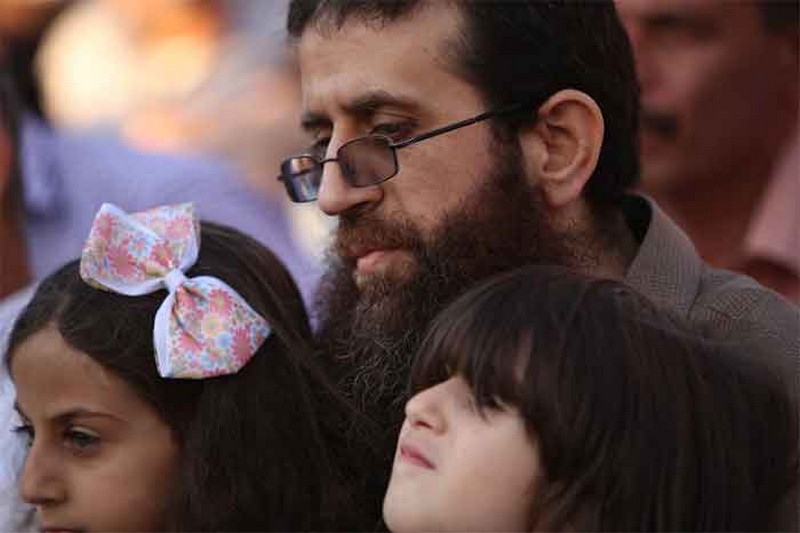
Khader Adnan, who yearned to live free, dies in Israeli prison

By Tamara Nassar

Khader Adnan died after 86 days of refusing food in protest of his detention by Israel.

The news early Tuesday prompted outpourings of anger and grief among Palestinians who see him as an icon of courageous and steadfast resistance to Israeli oppression.

Adnan is the first Palestinian to die during a hunger strike in almost 40 years.

His death brings to 237 the number of Palestinian prisoners who have died in Israeli custody since 1967.

Israeli prison authorities said they found the 45-year-old father of nine unresponsive in his cell at the Nitzan Prison in central Israel in the early hours of Tuesday, and he was pronounced dead at the Shamir Medical Center.

Israel had for weeks refused to move him to a proper hospital or to allow his family to visit him, even as his condition deteriorated.

Hailing from the occupied West Bank village of Arraba near Jenin, Adnan spent some eight years in Israeli detention, mostly without charge or trial.

baker by profession whose job was to feed others, he refused any sustenance except water and salt in pursuit of a greater cause.

Over the years, he gained his freedom or limits on his detention by undertaking several long hunger strikes.

They include 25 days in 2004, 66 days in 2011 and 201255 days in 201558 days in 2018 and 25 days in 2021.

Those successive protests took a toll on his body, causing several long-term health problems.

Palestinian writer Yousef Aljamal recalled speaking to Adnan by phone in 2021 while co-editing with Norma Hashim the book, A Shared Struggle—Stories of Palestinian & Irish Republican Hunger Strikers.

“I remember his voice was very weak and he was barely able to talk due to his illness and the damage his vocal cords suffered from past hunger strikes,” Aljamal wrote in a tribute to Adnan.

But if Israel broke and finally destroyed Adnan physically, it did not do so spiritually.

“Our freedom is the most precious thing we have,” Adnan explained in an essay published in the book.

“Being locked in a dark dungeon, where Israeli soldiers beat my chained body was deeply humiliating and oppressing,” Adnan said. “Their punches and their weapons have left permanent scars on my body. Their barbarism itself stood before me, literally.”

“Freedom beckoned me from the moment I was first imprisoned, it haunted me. My quest for liberty also drove me to bolster the morale of my friends and brothers.”

By waging his hunger strikes, Adnan said he was determined “to teach the occupiers a lesson in dignity and defiance.”

He also recalled how his captors moved his “weak, faint and emaciated body from one prison to another.”

“Their hatred, oppression and brutality still live with me,” he said. “They pretend to act humanely in front of the rest of the world, but they don’t.”

Adnan never lost sight of what motivated him: his devotion to his people, his land and his family.

“During my struggle I occupied my mind by recalling the sun on the distant green lands. I missed most of all the feel of grains of sand, the scent of the almond and lemon trees,” he said.

“I demanded to go home, to my family, to my daughters, who had spent long periods of their childhoods without me since I was jailed.”

According to Aljamal, Adnan did “not subscribe to Palestinian factionalism. His discourse tended to be focused on Palestinian unity and nationalism, and one could find him at different political and social events across the West Bank.”

The love he showed his people was returned by Palestinians across various political factions.

“Pride and honor”

Following his death, Adnan’s captors transferred his body to Israel’s Abu Kabir Forensic Institute for an autopsy.

Adnan’s lawyer is reportedly appealing to Israel’s high court that they hand his body over to his family for burial.

The International Committee of the Red Cross offered its condolences to Adnan’s family and called on Israel to release his body so his loved ones “can mourn and arrange a dignified burial.”

Adnan’s wife Randa Musa said Tuesday that his family would not open a traditional mourning tent to receive condolences, but would instead accept congratulations on his martyrdom.

“He is our pride and honor, even though we would have liked him to return to us victorious,” Musa said.

Musa has long stood by her husband, campaigning for him, speaking to the media and celebrating with him and their children on the previous occasions when he did come home victorious.

She urged all Palestinian resistance factions to honor her husband’s wishes.

“Not a single drop of blood fell or was seen during Sheikh [Adnan’s] last five hunger strikes,” Musa said.

“We do not want a drop of blood to be spilled now. We do not want anyone to respond to their sheikh’s martyrdom. We do not want someone to fire rockets and for Gaza to be subsequently hit.”

“Calculated” killing

Adnan’s passing on Tuesday came after weeks of increasingly urgent warnings from family, lawyers and physicians that his health was deteriorating rapidly, but Israeli authorities consistently refused to release him or care for him properly.

The Palestinian Human Rights Organizations Council described Adnan’s death as a “calculated and cold-blooded slow-killing.”

Adnan began his final hunger strike after Israeli occupation authorities arrested him on 5 February and imposed an administrative detention order.

Typically issued for six-month periods, these orders can be renewed indefinitely. Detainees are held without charge or trial and they and their attorneys are not allowed to see evidence against them.

Adnan’s latest detention came as the number of Palestinians Israel is holding without charge or trial soared to a 20 year high.

An Israeli military court reportedly later charged Adnan with “terror-related offenses” but he had had no trial even in Israel’s military courts which have a near 100 percent conviction rate for Palestinians.

Israeli occupation authorities accused Adnan of being a senior member of Palestinian resistance group Islamic Jihad.

Israel considers virtually all Palestinian political parties and even prominent human rights organizations to be “terrorist” organizations – a pretext to routinely arrest Palestinians for political activity or for documenting Israel’s crimes.

Adnan’s wife Randa Musa told reporters last month that her husband is “quite literally” dying after a lawyer affiliated with Physicians for Human Rights-Israel visited him.

Physicians for Human Rights Israel said it tried for weeks to convince the Israeli health ministry, prison authorities and the Kaplan medical center to keep Adnan hospitalized, but to no avail.

The prison clinic “was not equipped to monitor Adnan and could not provide emergency intervention in case of sudden deterioration,” the group said.

“Unfortunately, our efforts to raise these concerns judicially and individually fell on deaf ears. Even the request to allow Adnan’s family to visit him in prison – when it was clear this may be their final meeting – was denied by the Israeli prison service.”

Grief and protests

Adnan’s death was met with widespread outrage among Palestinians in the occupied West Bank. General strikes were declared in several Palestinian cities.

Birzeit University in Ramallah, where Adnan earned his Master’s degree in economics, halted all activities in his honor.

Similar outrage was felt in Gaza, from where rockets were fired into Israel in response to Adnan’s death.

The Israeli military fired missiles into Gaza in response, and the joint operations room of Palestinian armed resistance factions retaliated by firing rockets as an “initial response” into southern Israeli cities.

The secretary of the Bobby Sands Trust, Danny Morrison, who previously called on the Israeli government to immediately release Adnan during his 2012 hunger strike, expressed sadness over his death and offered “condolences to his wife, children and family, to his friends and comrades.”

Bobby Sands died almost 42 years to the day, on 5 May 1981, after 66 days on hunger strike against British refusal to grant political status to him and other Irish republican prisoners.

Tamara Nassar is an assistant editor at The Electronic Intifada.

3 May 2023

Source: countercurrents.org
Masar Badil, Samidoun usher bolder activism — and growing backlash, as they march in Ottawa

By Rima Najjar

Both Networks are challenging Zionist manufactured smears and their power to twist governments as they like

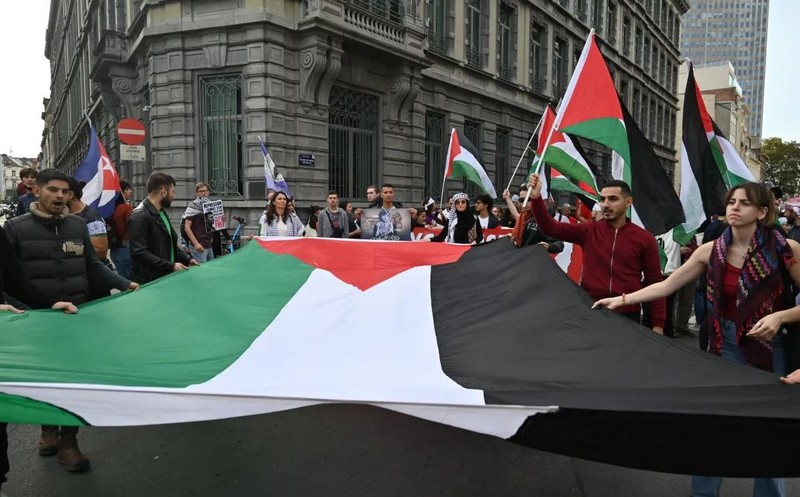
It was overcast, rainy and windy when my brother and I arrived at the Canadian Tribute to Human Rights in Ottawa on Sunday, April 30 at 2:00 pm to join the May Day Liberation March organized by Masar Badil and Samidoun and sponsored by many pro-Palestine organizations in Canada. The route took us from the Monument via Elgin as we headed toward the Parliament of Canada on Wellington St and then past the American Embassy on Sussex Dr through downtown and back.

The bleak atmosphere brightened as protestors began to mill about and the organizers set the stage up for the speeches of support and solidarity that followed. Two young activists climbed 20 feet up on either side of the Monument and stood precariously on ledges holding the Palestinian flag, the wind keeping the flags unfurled. Samidoun international coordinator Charlotte Kates gave a short rousing speech in which she spoke about the sanctions and warmongering against Iran among other issues and then introduced the speakers: Toronto 4 Palestine, Montreal 4 Palestine, Neturei Karta, Anti Imperialist Alliance, Communist Party of Canada, Young Communist League, Communist Party of Canada, Marxist-Leninist; Khaled Barakat of Masar Badil, Anakbayan Ottawa (a Filipino youth organization) and Tito Martinez, singer from Guatemala.

And then quietly, the protestors made a formation and began the march following a front line of Neturei Karta members headed by an activist waving a huge Palestinian flag. But we weren’t quiet for long.

In its report on trends in Palestine advocacy and backlash in 2022, Palestine Legal states: “Palestine solidarity activism in 2022 was characterized by bold campaigns, particularly by students and faculty, to draw attention to the Palestinian liberation struggle and to invite concrete acts of solidarity from a growing community of allies.”

It’s safe to say that few campaigns rival in boldness the campaigns of Masar Badil and Samidoun. The Ottawa Declaration of the Masar Badil conference in North America published on May 1st does not mince words: “… the conference [which bore the name, “Palestine: Envisioning Liberation, Confronting Colonialism.”] of our movement extends a Palestinian, Arab and international salute to the resistance forces in occupied Palestine, with all of its battalions, brigades, committees, and heroic armed forces, and to the forces of the ‘Lion’s Den’ and the fighters of the cities, villages and camps of the West Bank, and to the masses of activists throughout the land of Palestine, led by the Palestinian prisoners’ movement in the prisons and detention centers of the occupation.” The chants on the march were just as bold and explicit.

Part of Masar Badil’s Khaled Barakat’s speech at the march, the part that affirms Palestinian armed resistance, quickly found its way on Twitter. CIJA- The Centre for Israel and Jewish Affairs in Canada posted the clip and tweeted: “‘Enough is enough!’ We’ve long urged @Safety_Canada to list Samidoun as a terrorist entity due to its ties to PFLP terror group This weekend in Ottawa, Samidoun called for support of ‘Palestinian resistance,’ directly referring to Hamas, Palestinian Islamic Jihad & PFLP #cdnpoli”

Samir Abed-Rabbo @OneDemState retorted: “The only terror I see here is CIJA’s working on behalf of settler colonial apartheid Israel …”

Zionism is a form of Nazism. Both Masar Badil and Samidoun are challenging Zionist manufactured smears and their power to twist governments as they like — in Canada as well as Germany. Palestinians have a legal right to armed struggle. As Stanley L Cohen put it, “It’s time for Israel to accept that as an occupied people, Palestinians have a right to resist — in every way possible.”

Both Samidoun and Masar Badil published fighting words eulogizing Sheikh Khader Adnan of Islamic Jihad. He was a Palestinian prisoner, hunger striker and resistance leader who was martyred in the early morning hours of Tuesday, 2 May 2023 after 86 days of hunger strike. As one of the much-repeated chants on the march says: “نموت وتحيا فلسطين |We die and Palestine lives.” Read his wife’s appeal on the 79th day of his strike here.

https://www.youtube.com/shorts/_qDY_uFfh4w
Caption: “We die and Palestine lives.”

Samidoun wrote: “The only response to his martyrdom must be continued and escalated action, resistance, protest and struggle, and for people around the world and Palestinian and Arab communities in exile and diaspora, it is urgent that we take the streets to make it clear that Khader Adnan, a great symbol of freedom, will never be eliminated by the Zionist assassination policy. He must live on in each of us and our actions, in honor of his sacrifice, commitment and willingness to put his body and life on the line not only for his own freedom, but for the liberation of Palestine. The great crime of the assassination of Sheikh Khader Adnan must not be allowed to pass without real accountability imposed by the people.”

Likewise, Masar Badil published a statement by the joint leadership of the Popular Democratic Party and the Arab Socialist Action Party in Lebanon emphasizing “that the response to the martyrdom of the leader Khader Adnan and the ongoing Zionist crimes against thousands of Palestinian prisoners is to escalate the resistance in all of its forms, at the top of which is the armed struggle, to unify all fronts and perpetuate the struggle with the occupier throughout historic Palestine.

The wonderful part of the march for me, other than the euphoria and pride I experienced, was the heartening reception we received from Ottawans, as we marched and chanted “From the river to the sea, Palestine will be free.” They honked their cars, raised fists and walked out of shops. A group of young men and women even spontaneously joined the march.

https://youtu.be/Gc1-eHTpobY
Caption: Ottawans honk cars in solidarity with Palestine

We Palestinians have had enough of “ideological debate,” “battle of narratives” and “peace talks,” thank you. It’s been seventy-five years and counting. We will return.

Rima Najjar is a Palestinian whose father’s side of the family comes from the forcibly depopulated village of Lifta on the western outskirts of Jerusalem and whose mother’s side of the family is from Ijzim, south of Haifa.

3 May 2023

Source: countercurrents.org
Winners and Losers in Sudan: On Proxy Wars and Superpower Rivalries in the Global South

By Dr Ramzy Baroud

The world is changing. In fact, it has been undergoing seismic change that long preceded the Russian-Ukraine war, and the recent US-Chinese tensions in the Taiwan Strait.

In fact, the US debacle in Iraq and the Middle East, and the humiliating retreat from Afghanistan were only signs of the decline in US power.

Leading US neoconservative strategists have once argued in “Rebuilding America’s Defenses: Strategies, Forces, and Resources For a New Century” that aggressive intervention policies were meant to keep emerging great powers, like China, out of areas designated as US geopolitical domains. They sought to “preserve and extend (US) position of global leadership (through) maintaining the preeminence of U.S. military forces.”

They failed, and the future seems to head in a different direction than what the likes of Dick Cheney, John Bolton, Richard Perle and Paul Wolfowitz had hoped for.

Instead, a whole new world order is emerging, one that is hardly centered round US-western priorities alone.

Indeed, what has taken place since the start of the Russia-Ukraine war in February 2022, and the provocative visit by then-US House Speaker, Nancy Pelosi, to Taipei in August of the same year, are an acceleration of an existing momentum of global shifts, that ranged from the emergence of new economic alliances, geopolitical formations, turf wars and, of course, competing political discourses.

These changes are currently on full display in the Middle East, Africa and, indeed, much of the Global South.

While this can be considered a positive development, in the sense that a bipolar or multipolar world can offer alternatives to countries that have been at the receiving end of US-western exploitation and violence, it can – and will – have negative manifestations as well.

More Than a Power Struggle

Though the current war in Sudan is understood to be a power struggle between two rival generals or, more accurately, corrupt warlords, General Abdel Fattah al-Burhan and General Mohamed Hamdan Dagalo, or Hemedti, it is also partly the outcome of a regional, and, increasingly, global power struggle as well. The regional and global dimension of the conflict in Sudan is itself an expression of the changing world order and the intense fight over resources and critical geographies.

Sudan is one of the richest African countries in terms of raw material, much of which remains un-exploited due to the country’s multifront and multilayered conflicts, starting in the South – which has led to the secession of the Republic of South Sudan, then West, namely Darfur and, as of now, everywhere else.

The North-South civil war and the Darfur crisis, too, were sustained and prolonged by outside parties, whether Sudan’s own neighbors or global powers. Sadly, in all these cases, the outcome was horrific in terms of human and material losses.

Sudan, however, was not the exception. Proxy wars in the Global South were one of the main features of the Cold War between Washington and Moscow, until the collapse of the Soviet Union in 1989-92. The dismantlement of the USSR, however, only exacerbated violence, this time channeled mostly through US-led or championed wars in the Middle East, Africa and Asia. Now that global rivalry is back with a vengeance, global conflicts, especially in resource-rich and strategic regions with no clear political allegiances, are also back.

Sudan will not be the last of such conflicts.

What complicates the picture in Sudan now is the involvement of other regional actors, each with a specific set of interests, as they take advantage of the quickly dwindling US leadership, which, till recently – was the Middle East’s primary political and military hegemon.

The current shifts in power relations in the Middle East – as in other parts of the world – are also significant within historical, not merely current political contexts.

History Reversed

Since the Sykes-Picot Agreement was signed in 1916 between old colonial powers – France and Britain – with a minor, but still important involvement of Tsarist Russia, the Middle East and North Africa, along with Central Asia, were divided into various spheres of influence. Global priorities then were almost entirely Western.

The Bolshevik Revolution in 1917 was a watershed moment in world history, as it sowed the seeds for a possibility of a new global bloc to rival Western domination.

It took decades for that new bloc to emerge. In 1955, the Warsaw Pact was born, “unifying the Soviet Union and its allies against the North Atlantic Treaty Organization (NATO), a Western military alliance that saw the light six years earlier.

The rivalry between both camps was expressed in fierce economic competition, a political Cold War, a low-grade military conflict, proxy wars and two distinctly ideological discourses that defined our understanding of world politics for much of the 20th Century.

All of this came to a bitter end in the early 1990s. NATO won, while the Warsaw Pact, along with the USSR, disintegrated rapidly and in the most humiliating fashion. It was “the end of history”, Francis Fukuyama declared. It was the age of Western triumphalism and, by extension, more colonial wars, starting in Panama, then Iraq, Serbia, Afghanistan, Iraq again, and elsewhere.

China factored in all of this, not as a major global political player, yet, but as a worthy adversary and prized ally. The historic visit by US President Richard Nixon to Beijing in 1972 thwarted efforts to unify the East against US-Western imperialism. That trip, which supposedly ‘changed the world’ – per the assessment of then-Ambassador Nicholas Plat, was indeed consequential. It was the beginning of the end of the Soviet Union as it gave Washington a massive advantage and strategic boost over its rivals.

But history is now being reversed in ways that only a few geopoliticians could have possibly predicted.

The New Powers

The road ahead is not entirely clear. But numerous signs, accompanied by tangible changes, suggest that the world is transforming. However, this metamorphosis is more visible in some regions than others. The geopolitical tug-of-war between old and new global rivals is most visible in the Middle East and Africa, in addition, of course, to South America, East Asia and Pacific regions. Each of these regions is undergoing its own re-ordering of power relations and dynamics.

In the Middle East, for example, Iran seems to be breaking away from its West-imposed isolation, while Saudi Arabia is challenging its old client regime status.

The latter move is particularly troubling for Washington, as it challenges two layers of Western domination of the Middle East: one which followed the Sykes-Picot agreement in 1916 – thus dividing the region into subregions under Western ‘protection’ and influence; and the other which resulted from the US-NATO invasion of Iraq. With massive political sway, an ever-growing military presence, and a weaponized US currency, Washington had dominated the Middle East with no serious competition for many years. This is no longer the case.

For years, Russia and China have been staking claims in the region, though using mechanisms that are wholly removed from the Western style of old colonialism and neocolonialism. While the Russians tapped into their long Soviet tradition of cooperation, the Chinese resorted to a more ancient history of friendly trade and cultural exchanges.

Now that Beijing has developed a more candid and unapologetic approach to foreign policy, China’s status as a new superpower shall demonstrate its effectiveness in the Middle East in unprecedented ways. In fact, it already has. The recent Iran-Saudi Accords was a tremendous achievement for the new politically-oriented China, but the road ahead is still very challenging, as the region is rife with foreign contenders, and old and new conflicts. For China to succeed, it must present itself as a new and better model, to be contrasted with Western exploitation and violence.

But China does not hold all the keys, as the US and its Western and regional allies continue to hold significant influence. For example, the UAE is emerging as a powerful player in the current war in Sudan.

What is certain is that the consequences of the current fight for resources, influence and domination are likely to lead to smaller, though bloody conflicts, especially in countries that are politically and socially unstable. Sudan fits perfectly into this category, which makes its current war particularly alarming.

Although much has been said and written about Sudan’s gold, agriculture potential and massive wealth of raw materials, the fight over Sudan by outside parties is essentially a turf war due to Sudan’s unparalleled geopolitical location. Egypt, Ethiopia, UAE, Israel, and others are all keen to emerge winners in the ongoing war. Russia is monitoring the situation closely from its various African bases. The US, Britain and France are wary of the dire consequences of direct intervention and the equally costly price of no intervention at all. China is still gauging the challenges and opportunities.

The outcome of the bloody Sudan war is likely to redefine, not only Sudan’s own political balances but the power relations of the whole region as well.

Dr. Ramzy Baroud is a journalist, author and the Editor of The Palestine Chronicle.

3 May 2023

Source: countercurrents.org
Euro-imperialism ready for new colonial wars in Africa

By John Graversgaard

Where is Danish foreign policy headed? Everything now revolves around the war in Ukraine and rearmament against Russia, which is quite openly called our enemy, and where sanctions are being extended and trade and contacts are being cut off in all areas. NATO now also talks about China in its new strategy papers. But what about Africa, which has for decades received Danish development aid? What does the government say about Africa, which belongs to the Global South, today a widely used term?

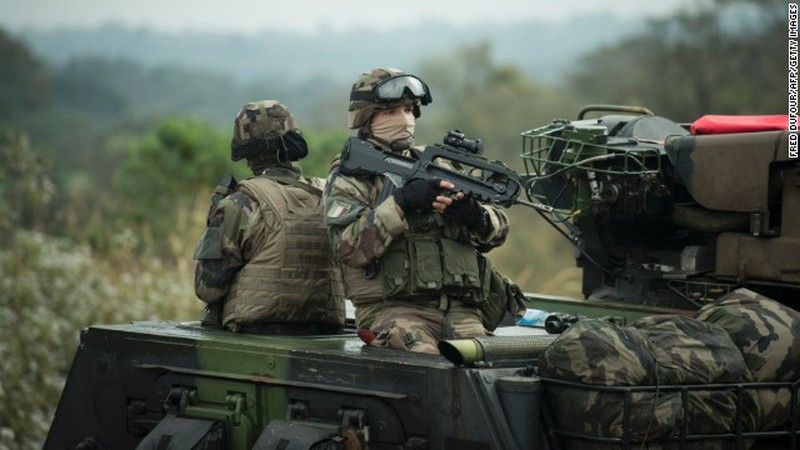
Denmark is a member of NATO, and has increasingly become an active participant in wars outside Europe. Danish governments have sent military forces into hotspots where Denmark is not exactly remembered for any positive role. Except in their own self-glorification, strongly supported by uncritical media. The so-called activist foreign policy has broad support in Parliament, and the military has been trained to be able to send missions to distant targets to defend what? Yes, that is the good question, which is most often answered with the fact that it is about defending our values. Values ​​that are called liberal, although it can be difficult to see when it comes to the choice of business partners. These are usually corrupt governments that line their own pockets and are hated by large sections of the population. We can only mention Libya, Iraq and Afghanistan. And most recently Mali in West Africa, where a new government has thrown Denmark and the old colonial power France at the door.

The government’s security policy analysis group

The analysis was published by the Mette Frederiksen government in October 2022 and was carried out under the leadership of Michael Zilmer-Johns and a number of experts and researchers. Mention is made of analyzes carried out by e.g. Center for Military Studies, DIIS, the Defense Academy and Foreign Economic Analysis Unit. The analysis was therefore made after the Russian invasion of Ukraine.

The fact that Denmark is a small state does not exactly characterize the analysis. Denmark wants to eat cherries with the big ones, and aligns itself closely with the US’s foreign policy, as has been the tradition since joining NATO in 1949. It’s like the mouse saying to the elephant when they cross the bridge: Hear where we rock.

China has gained a growing role as a great power, which challenges the United States, which understands itself as the leading great power. This also permeates the latest strategic scenarios from Washington. The analysis believes that the US will be more focused on China and therefore “Europe will have to provide a much larger part of both NATO’s defense against Russia and the efforts against terror and irregular migration from the Middle East and Africa” ​​(quote) towards 2035. In short, Africa will move more into the center, also militarily.

There is talk of the “southern agenda”, which has not diminished since Russia’s invasion of Ukraine. The activist foreign policy, where Denmark was a willing actor in the US and NATO wars during the changing government, has not been cancelled. There are threats in both the east and the south, and in the south it is “international terrorism, geopolitical and societal instability, irregular migration etc.” In short – you must be prepared for evacuation on all front sections.

The challenge from the Global South

The analysis also resumes the old scare picture from the Cold War. That the non-aligned movement, which then had its heyday, is being revived. That there are countries that do not choose a side, i.e. above all, it does not support the so-called “free Western world”, but goes its own way and chooses its partners based on its own interests. Imperialism is based on capital exports and access to raw materials, and a development where Western groups are exposed to increased competition is therefore a threat. The analysis formulates it as follows: “A value-based division of the world risks standing in the way of handling one of the most important global axes in the long-term great power competition – namely the relations with the group of countries that during the Cold War belonged to the “non-aligned” grouping. The West i.e. needs to cooperate with many of these countries on replacing Russian energy and on raw materials for the green transition”.

As I said, this group of countries has its own interests, and there are countries that want to break the neo-colonial ties with the West, and maintain and expand ties with China and Russia. The analysis indicates that there is considerable skepticism towards the West’s intentions.

“In many countries, the West is suspected of double standards, and neither leaders nor populations see the big difference between Russia’s actions and US-led interventions in Iraq or the bombing of Serbia and the recognition of Kosovo’s independence”.

“In the African countries, Russia and China have gradually gained greater influence, while the EU has had difficulty converting its large development aid and importance as an export market into political influence”.

The West’s heavy emphasis on having an agenda of values ​​has run into major problems when it comes to demonstrating those values ​​in practice. That this value agenda creates more distance than it promotes the West’s interests. Internally, too, the West is weakened by internal problems with e.g. populism and increased polarization. A large number of large nations in the Global South do not immediately buy this value agenda. The analysis indicates that the EU is far less ready than the US to face these challenges. But that there is untapped potential in the EU, which Denmark can also contribute to. The TEAM Europe mechanism is mentioned as a plan that can ensure greater decision-making power. TEAM Europe (2021) is an initiative that seeks to create a good narrative about the EU vis-à-vis the EU’s partners and global competitors. An initiative which must portray the EU as a global and visible leader and as a “soft power” in order to gain influence, not least in the Global South. But which also covers the fact that EU member states have been particularly active in exercising hard military power through actions with the USA and/or NATO.

A double agenda for Denmark

The analysis says that towards 2035 the period will be characterized by a “double agenda with threats and challenges from both the east and the south”. The previous strategy, where one wanted to change from territorial defense to international operations, is now being revised. They have their eyes fixed on the East, and the USA and NATO throw in immeasurable sums of money for arms aid and rearmament with the stated aim of Ukraine winning the war against Russia. One imagines that “an amputated Ukraine will have great difficulty in restoring a sustainable economy and its physical and human infrastructure. There will be a need for very extensive international aid, which will be difficult to finance for Western donors who are already under pressure from higher energy prices and lower growth as a result of the war”.

When peace hopefully comes before long, it will cost enormous sums to rebuild Ukraine. Not to mention the huge profits that can be made from this. The Western powers are determined that Russia should not be “rewarded” for its invasion, and in this game everyone is the loser, but the poor countries also pay a heavy price. The analysis then also points out that “a large part of the aid to Ukraine will be given at the expense of support for weak and fragile countries in Africa, thus increasing the security challenges from there”. In short, development aid will be reduced, at the same time as poverty and crises grow in Africa. A development which can only support the forces in Africa who say we must find African solutions to African problems. And not to attach unilaterally to the West.

The EU’s military arm is growing

The EU would like to appear as a “soft superpower” that provides humanitarian support and opens doors to its huge trading area. But the EU is also closely linked to NATO and the USA, and EU countries participate in both multilateral and bilateral actions globally. So you can’t exactly call the EU a continent of peace, even though the EU has a colossal ideological superstructure with lots of positive words about development and peace. With the massive rearmament and the growth of the military-industrial complex, the course is set towards becoming a great power, a “force for good” (CEPA, 2023). The discussions between France, the UK and Germany about where the emphasis should be placed have been going on for years. Whether it was a more independent military power, or whether one should continue to lean completely on NATO/USA. With the Treaty of Lisbon in 2009, it became clearer that the EU had set a course for more militarization, and in 2011 a unit was established for the EU’s Foreign Service and external actions: the European External Action Service (EEAS). With the Ukraine war, even more momentum has been set in the development of what Jürgen Wegner (2022) has called a TURBO MILITARISATION.

The southern flank and Europe’s backyard

Military presence in Africa is constantly wrapped in beautiful declarations of intent about missions that are about stabilization, but of what? The EU’s foreign affairs chief, the Social Democrat Josep Borrell, caused a diplomatic storm when he spoke in October 2022 about “Europe with a well-functioning “garden” which is surrounded by a somewhat dangerous and uncertain “jungle.”. “Most of the rest of the world is a jungle, and the jungle can invade the garden”, he stated in a speech” (DR, 2022). He also stated that “the gardeners must go into the jungle. The Europeans will have to be much more engaged with the rest of the world. Otherwise, the rest of the world will invade us in different ways and by different means”. He was heavily criticized by several countries for being racist; and a Russian spokesman took the opportunity to say: “This “garden” was built by Europe as a result of their barbaric approach to plundering the “jungle.” “Borrell could not have said it better: The most prosperous system that has been created in Europe has been nurtured by its colonial roots”. Then the lines were drawn up. The colonial and Eurocentric mindset is alive and well.

But just as it was during the cold war the fight against communism spreading to Africa through the freedom movements, a new cold war is now underway, where, with increased great power competition, it is important to keep China and Russia out. The ongoing crisis in Africa, which has lasted for decades, is producing flows of migrants seeking Europe. There is a lack of offers from the EU for social and economic solutions, and therefore the military dimension has grown in importance. In a Danish analysis by Mathiesen & Tetzlaff (2022) called ‘Sydflanken’, it is pointed out that the EU is “the obvious supplier” of solutions to “the strategic problem in the South”. Fort Europe has become a reality, they say, and with the EU’s Strategic Compass as a basis, one must learn to “speak the language of power”. Appropriations for a new instrument, the European Peace Facility (EPF), allow arms to be sent to states in the South. Through a combination of soft and hard power, the EU will signal its support for operations reminiscent of the deployment of colonial troops in the old days. Money is taken from the development aid and plans are made for the civil and military to be more coordinated.

The Danish abolition of the defense reservation opens up increased engagement in the South, and makes it easier to deploy military forces. With the Ukraine war, the focus has shifted sharply to the East, but NATO’s strategic concept also includes the South. However, the analysis honestly writes that there is “a declining political appetite” and quotes Pia Olsen Dyhr for having spoken of “meaningless desert wars”. But Africa’s importance as a raw material supplier and intervention arena for the multinational groups and the great powers remains high on the agenda. The growing cooperation of some African countries with China and the international pariah Russia is getting big headlines. The living conditions of the African population do not trigger great missions, but are often met with a resigned shrug. The growing awareness in Africa of securing more sovereignty and control over its own resources is a positive development, but it is difficult to break with the neo-colonial structures which have been built up over many years and which have the support of the ruling classes.

New missions in Africa

12 Dec. 2022, the Council of Europe decided on military cooperation with the state of Niger in the Sahel belt. It is considered a military mission, where Denmark also has the option of sending soldiers. It has caused panic in the EU that France, but also Denmark, have been forced out of Mali. Where Denmark has been militarily present together with France for a number of years in the so-called Operation Barkhane. The Malian government does not believe that they have been effective in the fight against Islamist groups, and has therefore turned to Russia and made an agreement with a Russian militia group, Wagner. The same development has occurred in Burkina Faso. In order to maintain its footing after what observers (JP, 26 Dec. 2022) have described as a failed Western effort, an agreement has been made with Niger. A country which also has strategically important uranium mines, not least of importance for France’s many nuclear power plants. But also in Niger there are “very anti-Western tendencies, where people also have protested against France, which has a complicated past as a colonial power (JyllandsPosten, 26 Dec. 2022).

A recent decision in the Danish Parliament on joining PESCO, which is the EU’s enhanced military cooperation, showed that we have a government and a majority that are ready for interventions in Africa when called upon (Arbejderen, 2 March 2023). The proposal states: “With the proposal, the government requests the consent of the Parliament of Denmark to participate in the European Defense Agency and the permanent, structured cooperation in the field of defense (PESCO), both of which are central parts of the EU’s defense cooperation.

The background for the resolution proposal is the abolition of the EU defense reservation in June 2022, which meant that Denmark fully entered into European cooperation on security and defense on 1 July 2022. According to the government, participation in the two collaborations will mean that Denmark will be able to help set the strategic direction for the EU’s security and defense policy, including with a view to ensuring that the collaboration aligns to an even greater degree with Danish security interests”.

Africa says no to new cold war

The Africans have historically bad experiences with great power rivalry on their continent, and have great skepticism about the West’s attempts to involve them in a new intensified cold war, not least after the start of the Ukraine war. At the UN General Assembly, the Chairperson of the African Union, the President of Senegal, Macky Sall, stated: ‘Africa has suffered enough from the burden of history and does not want to be the breeding ground for a new Cold War, but rather a center of stability and opportunity, open to all its partners on a mutually beneficial basis’ (Tricontinental, Nov.2022).

The US works systematically to maintain and expand its influence, both politically and militarily, and here uses AFRICOM as a tool. Morocco is a key country here, which has closely linked itself to the USA (US Embassy. Oct. 2022). Annual military exercises are held, called African Lion, and in 2022 they held their largest exercise to date with observers from Israel and NATO. Just as the United States has begun to speak more directly about its plans to fight Africa’s choice of other partners.

The US military command for Africa, called AFRICOM, has for many years applied for a headquarters in Africa, but has so far been rejected. AFRICOM Says About Itself: AFRICOM, with partners, counters transnational threats and malign actors, strengthens security forces, and responds to crises to advance U.S. national interests and promote regional security, stability, and prosperity. AFRICOM was formed in 2007 to secure US interests in Africa and, according to Nick Turse (2020), has established at least 29 military bases on the continent.

Africa is seen by the US and its allies as a battleground in the new Cold War against China and Russia. This is also reflected in the US’s strategic plans (US Strategy, 2022) for Africa. The US claims that it does not want to dictate anything to the Africans, but has begun to put increased pressure after the war in Ukraine.

What Africa has in store for the US was exemplified in the disastrous military intervention in Libya by the US and NATO (here also Denmark), which smashed a country that had ranked highest on the UN’s index of human development in Africa.

Africa is seen as NATO’s southern flank or our southern neighborhood, and this is a point of view we find again in the Danish and European security analyzes of Africa. It is strongly reminiscent of the Americans’ Monroe Doctrine, where they designated Latin America as their backyard. There is an almost paternalistic view of Africa, which is warned against seeking increased cooperation with others, here especially Russia after Russia’s invasion of Ukraine. Here, the US and the West seek to create a united front, but the Africans have a natural skepticism towards the West’s intentions. The aggressive policy of the USA towards Africa was shown in a decision in the House of Representatives in the USA, where in April 2022 a law was passed by an overwhelming majority: “Countering Malign Russian Influence Activities in Africa Act”. The threats are obvious and the USA/NATO is ready to intervene to secure the interests of their monopolies, regardless of what the Africans think.

Defense of sovereignty

There are many examples of Africa not passively putting up with this big brother mentality. The US is trying to compensate for its economic decline with military means. The USA has, so to speak, lost on the basis of rules for world trade that they themselves have been behind. Developing countries, and especially China, have made tremendous progress and have increasingly represented economic alternatives. This changed political strategy is also found in the strategies of the EU and NATO, which here show their vassal status in relation to the USA.

Examples of political analyzes that will strengthen Africa’s sovereignty can be found in a document prepared by Tricontinental and The Socialist Movement of Ghana’s Research Group: “Defending Our Sovereignty: US Military Bases in Africa and the Future of African Unity” (Tricontinental, 2021). It is pointed out here that there are 2 important principles in a Pan-African movement, namely political unity and territorial sovereignty. Here, foreign military bases are an expression of a lack of unity and sovereignty, and it reinforces the division and subjugation of the continent’s peoples and governments.

Instead of supporting and cooperating with an Africa that suffers from poverty, the climate crisis and the consequences of the Ukraine war, they want to send military. It cannot be seen as anything other than continued colonialism.

John Graversgaard is a political activist from Aarhus, Denmark

3 May 2023

Source: countercurrents.org
After Years of Attacking Protesters, Sudan’s Army and Paramilitary RSF Turn on Each Other

By Pavan Kulkarni and Prasanth Radhakrishnan

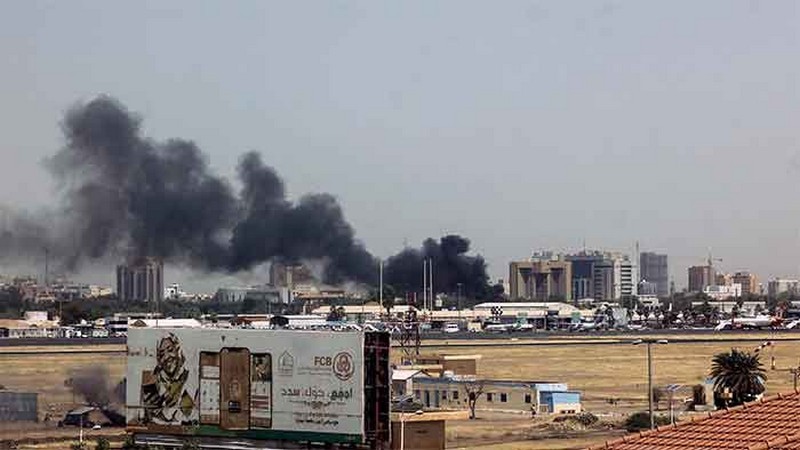
More than 500 people have been killed and 4,000 injured since fighting broke out between the Sudanese Armed Forces (SAF) and the paramilitary Rapid Support Forces (RSF) on April 15.

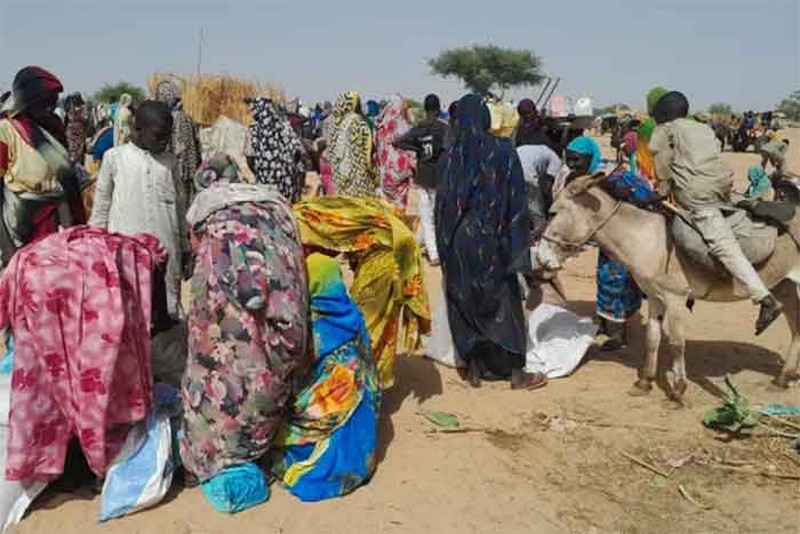
Groups such as the Sudan Doctors Union are worried the fighting could escalate after the evacuation of foreign nationals. Thousands have already fled the country. Over 69 percent of the hospitals in and around the conflict zones are inoperable. There is a severe shortage of medicine, food, water, and electricity.

The fighting is the latest in a series of political convulsions since massive pro-democracy protests overthrew long-time dictator Omar al-Bashir in April 2019. Army chief General Abdel-Fattah Burhan, who is the chair of the ruling military junta, and his deputy and RSF head, General Mohamed Hamdan Dagalo, aka Hemeti, were key members of Bashir’s regime. The RSF was formed out of janjaweed militias who were responsible for mass killings in Darfur during Bashir’s reign.

Burhan and Hemeti took over de facto control after Bashir’s fall and were responsible for the massacre of more than 100 protesters who were demanding civilian rule at a sit-in in Khartoum in June 2019. In its aftermath, they negotiated with right-wing parties in the Forces for Freedom and Change (FFC) coalition and inaugurated a civilian-military transitional government in August.

While this government had a civilian Prime Minister, Abdalla Hamdok, defense, police, and foreign policy were under the control of the army, with Burhan heading a ‘Sovereignty Council.’ The army controls a substantial chunk of the economy while the RSF has gorged on the mineral wealth of Darfur.

The transitional arrangement was supposed to pave the way for civilian rule. Instead, in October 2021, Burhan and Hemeti took complete control in a coup.

Throughout the years since the coup, protesters took to the streets, often in the hundreds of thousands, refusing any compromise with the junta and demanding genuine democracy and civilian control of the military. The protests were spearheaded by the Resistance Committees (RCs), a network of over 5,000 neighborhood organizations. Left forces, including the Sudanese Communist Party, were a key force too. Over 120 people were killed in the attacks on demonstrations in the months following the October 2021 coup.

Disregarding popular sentiment against any negotiations with the junta, the international community—the UN, U.S., UK, European Union, African Union, and the regional Intergovernmental Authority on Development—supported renewed talks between the junta and the FFC.

This negotiation led to the Framework Agreement in December 2022, which was to be concluded with a final political agreement that would have led to the formation of another joint government with civilians on April 11, 2023.

This plan did not materialize as the SAF and RSF turned on each other after disagreeing over the timespan for the integration of the latter into the former.

The Sudanese Communist Party has reiterated its rejection of any compromise with the junta. It maintains that international support for another power-sharing compromise after the October coup served to legitimize the junta, which eventually led to this infighting.

Pavan Kulkarni and Prasanth Radhakrishnan are journalists with Peoples Dispatch and Newsclick.

2 May 2023

Source: countercurrents.org
Tribute to Harry Belafonte

By Harsh Thakor

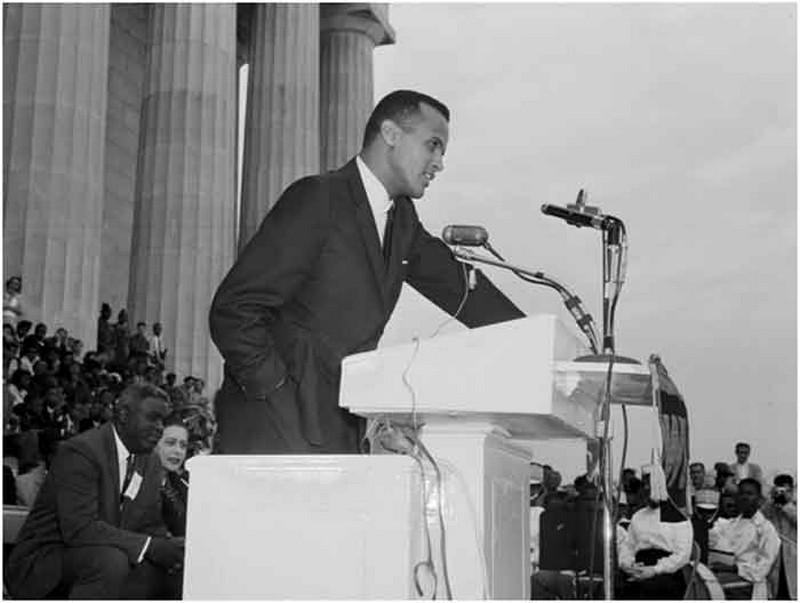
The outstanding Jamaica-born artist, Civil Rights activist and internationalist, Harry Belafonte, died from congestive heart failure at age 96, a week ago, on April 25, 2023.A mascot of people’s emancipation from injustice. His life story that shaped his life are amongst the most gripping commentaries ever.

Belafonte achieved gigantic fame almost 70 years ago, when he was only in his mid-20s. He popularized calypso music in the US, with a hugely successful concert and recording career in several different musical genres. His album Calypso (1956) became the first long-playing record to sell 1 million copies in a single year.

For the major part of his long life, Belafonte classed himself first and foremost a social and political activist, not a singer or actor. Few progressive  or radical artists were such powerhouses of talent or endowed with such extraordinary natural gifts. Rare in history to have witnessed musicians of actors transcending spirit of liberation or struggle to emancipate humanity at such a scale. His political speeches stirred the souls of people, more than the power with which his voice pulled crowds.

The singer  also went on to appear as a screen actor, including in a well-known role opposite Dorothy Dandridge in Otto Preminger’s ground-breaking, all-black Carmen Jones (1959), as well as major roles in Island in the Sun (Robert Rossen, 1957) and Odds Against Tomorrow (Robert Wise, 1959). In the 1960s, however, Belafonte largely parted away from a career in Hollywood, complaining that the film studios were not interested in promoting socially conscious films he was searching for. He appeared in some later films, notably co-starring with Zero Mostel in The Angel Levine (1970) and appearing in several Robert Altman films in the 1990s: The Player (1992) and Kansas City (1996).

Background

Belafonte was born into a West Indian family in Harlem, although he spent part of his boyhood in Jamaica. After the Second World War, he met Sidney Poitier at the American Negro Theater and took acting classes at The New School under left-wing German theatre director Erwin Piscator. Belafonte traveled in left-wing circles around the Communist Party. He met actors Ossie Davis and Ruby Dee and singer Paul Robeson, whom he called a mentor.

Despite becoming the first Black person to win a TV Emmy award in 1960, a Broadway Tony award in 1954 and selling millions of recordings, Belafonte experienced racist discrimination firsthand, like most Black entertainers in the 1950s and 1960s, including his good friend, the late actor Sidney Poitier. Belafonte played a role of an important political organizer and financial backer of the Civil Rights Movement led by Dr. Martin Luther King, Jr.

Impact of Paul Robeson on his life

Belafonte drew his lifelong inspiration personally and politically by the great singer and radical actor, Paul Robeson, who was a victim of the anti-communist, McCarthyite witch hunt that all but reduced him to dust.

In a speech before the Veterans of the Abraham Lincoln Brigade/Abraham Lincoln Brigade Archives meeting in New York City on April 27, 1997, Belafonte, a survivor of the witch hunt, stated, “And it was from Paul that I learned that the purpose of art is not just to show life as it is, but to show life as it should be. And that if art were put into the service of the human family, it could only enhance their betterment.”

“Paul said to me, ‘Harry, get them to sing your song, and they will want to know who you are. And if they want to know who you are, you’ve gained the first step in bringing truth and bringing insight that might help people get through this rather difficult world.’”

Belafonte ended his speech this way: “Thank you — and long live the Brigade and what it stands for — and long live each and every one of you — and give up smoking! Fidel Castro gave it up, you can give it up!” (University of Chicago)

Belafonte left no stone unturned in offering moral support for a just trial for the revolutionary journalist and African American political prisoner Mumia Abu-Jamal.

Support to Martin Luther King

Belafonte’s collaboration with and steadfast support for Martin Luther King Jr. is the political connection for which he is most well-known. The singer financially supported King and his family, including after King was assassinated in 1968. He bailed out King and others when they were jailed. He turned his spacious home on Manhattan’s Upper West Side into a virtual second home and unofficial office for the civil rights leader when he was in New York. It was in this apartment that the historically significant meeting dominated by a sharp exchange between King and Andrew Young, and referenced by Belafonte in his memoir, took place.

Belafonte first met Martin Luther King Jr. in 1956, in the midst of the Montgomery Bus Boycott. Both men, not yet 30 years old, had already become famous in their respective fields. The singer and civil rights leader immediately forged a bond, and Belafonte went on to help raise funds for the Southern Christian Leadership Conference and to develop a strong collaborative friendship with King. When King was in New York, he and his closest advisers—Belafonte among them—often met at the singer’s apartment on Manhattan’s Upper West Side.

No other entertainer immersed themselves in the very heart of  the Civil Rights Movement, in the depth of Belafonte.

Challenging racism

Belafonte was an important U.S. spokesperson for the anti-apartheid struggle in South Africa.

Belafonte whole heartedly supported left-wing progressive causes that threw a challenge to  the racist, white status quo; this includes being a vocal  opponent of imperialist war. In January 2006, Belafonte led a delegation, which included actor Danny Glover, farmworker organizer Dolores Huerta and professor Cornel West, to Caracas, Venezuela, to meet with the late President Hugo Chavez.

Belafonte told Chavez during a TV and radio broadcast: “No matter what the greatest tyrant in the world, the greatest terrorist in the world, George W. Bush says, we’re here to tell you: Not hundreds, not thousands, but millions of the American people … support your revolution. . . .  We respect you, admire you, and we are expressing our full solidarity with the Venezuelan people and your revolution.” (jamaicaobserver.com. Jan. 9, 2006)

Supporter of the Cuban Revolution

Belafonte was Cuba’s Friendship Medal by the Council of State in 2020. When on July 23, 2020, Harry Belafonte held aloft the Friendship Medal, awarded by the Cuban state, traversing his mind, was a recollection of an unforgettable chain of events during his life when he shared the same luck, convictions and destiny of inhabitants of Cuba.

On that day, then Cuban ambassador in Washington José R. Cabañas stated:, “This distinction serves as recognition of your lifelong solidarity with Cuba, your respect and admiration for the Cuban revolutionary process.”

On the 95th birthday of the U.S. actor, musician and social activist — born March 1, 1927, in New York — Belafonte continues to be a source of inspiration for many of his compatriots and for those of us who appreciate him as an exceptional artist, extraordinary human being and dear friend.

One name cannot be overlooked in describing the development of such a special bond: Fidel Castro. The historic leader of the revolution and the actor and singer, a companion of Martin Luther King in the struggle, cultivated a very close relationship, after Belafonte reencountered Cuba in 1979, subsequently never foregoing his trips to Havana, as long as his health allowed.

Belafonte got to know the city in the 1950s, not without first exchanging words and experiences with many Cubans living in New York, and feeling an affinity for the music of the neighboring country, especially after listening to Chano Pozo with Dizzy Gillespie’s band.

In those same years, more than sensation of his films, the song “Matilda, Matilda” touched the core of the soul of the Cubans at that time, a song that dates back at least to the 1930s, when the calypso pioneer, Trinidad’s King Radio (aka Norman Span) released the song. Belafonte first recorded it in 1953, and it turned into immediate hit, further popularized with its inclusion on his second full-length album with RCA Victor in 1955.
In his memoirs, “My Song: A Memoir of Art, Race, and Defiance”, published in 2011, its Spanish version still unpublished in Cuba, he wrote: “When I became an artist and began to have some celebrity, I went to Cuba quite regularly, before ’59. I went there with Sammy Davis Jr., and to hear Nat King Cole, and to hang out with Frank Sinatra; the place where we most often gathered was the Hotel National.

“Everybody was performing there except me. When they came to me — and I had a work contract, when the Habana Riviera Hotel first opened — I was in an interracial marriage, as it was called in those days, and suddenly I became a persona non grata, in Cuba, everywhere.

Right around that time he filmed Robert Rossen’s film, “Island In The Sun,” in which he was cast as  a Black union leader in a fictitious West Indian country who lived a love story with a young white woman from the upper middle class (Joan Fontaine). The film ignited controversy when it was released in the United States in 1957, considering that racist elites considered its content an irresponsible transgression.

After the triumph of the Cuban Revolution on January 1, 1959, Fidel, who, in addition to being an avid reader, enjoyed movies to the extent that his political and governmental responsibilities allowed, saw the film and talked about it with Belafonte, along with his wife Julie, and Sidney Poitier, a friend and colleague. For both Fidel and Harry, racism and discrimination based on skin colour were and intolerable cultural phenomena.

In this regard, Belafonte noted in his memoirs: “Many Cuban exiles say that in Cuba there was no racism before the Revolution, that Cuba was never racist, never like the United States. I think that Cuba, among all the Caribbean islands, all with racist practices, was the most racist . . .

“So, when I went to Cuba after the revolution, the first thing I noticed was the mixture of people, particularly among young people, there were still residues of the old customs, but certainly among the young, when I went to the university, and when I went to cultural sites, when I went to day care centers, wherever I went in Cuba among the young, I was deeply impressed by the extent of racial integration . . . . I am not suggesting that in Cuba there is no racism, but it is important to know that it is not an official state practice, nor is it institutionalized.”

The objective and subjective factors that leaned towards the resurrection of racist and discriminatory attitudes in Cuban life, and the struggle to erase them as an integral part of the Cuban revolutionary project, were the subjects of Belafonte’s conversations with Fidel more than once, and over the last two years, he has followed news of the implementation of our “National Program Against Racism and Racial Discrimination,” an effort inspired by Fidel’s ideas.

His unflinching solidarity and sense of justice, was illustrated in the manner with which he introduced a rally held at the Church of Reconciliation in New York on September 27, 2003. On that day he offered prayers for the five Cuban anti-terrorist heroes serving long prison sentences in the United States.

He [Belafonte] stated:, “What is happening with our policy toward Cuba is not the American way, it is not the true voice of the American people, it is not the true voice of those of us who believe deeply, profoundly, in the rights of all peoples, and the freedom of all people and in democracy…There is a great deal that the Cuban government, the Cuban people have achieved, that many of us here are still attempting to achieve.”

Belafonte was once asked why he supports the Cuban people, and he stated, “I don’t see it as a supreme effort. It is a way of life: if you believe in freedom, if you believe in justice, if you believe in democracy, if you believe in people’s rights, if you believe in the harmony of all humanity.”

Weaknesses

Belafonte’s first political influences, in Stalinist circles, shaped his conversion toward Popular Front reformism, including the claim that the Democratic Party could be pushed to the left and could garner benefits for the working class. It was in this spirit that Belafonte supported the presidential campaigns of Vermont Senator Bernie Sanders.

In Belafonte’s case, this was also entangled with an emphasis on race, and on support for nationalist opponents of US imperialism, such as Cuba’s Fidel Castro and Venezuela’s Hugo Chavez. While he did not welcome the rhetoric of the black nationalists or identity politics fanatics, he distinguished the struggle against racism from the challenges facing the working class as a whole. This originated from his whole reformist outlook, rekindled by the experience of the postwar boom. He dismissed the role of the working class in the fight for socialism.

New York Times columnist Charles Blow, in his column this week paying tribute to Belafonte, quotes the entertainer at a speech he gave before an audience at the Ford Foundation 10 years ago. “We surrendered to greed,” said Belafonte. “We surrendered to our hedonist joys. We destroyed the civil rights movement. Looking at the great harvest of achievements we had, all the young men and women of our communities ran off to the feast of Wall Street and big business and opportunity.”

Belafonte targets   himself when he makes criticisms like these, as one of the most famous of the cream of American radicals, and not only African Americans, of course. It was this cream that reconciled with capitalism. Belafonte was shaken by this development. He could maintain complete silence; he could not be part of celebrations of Wall Street and the betrayal of the mass struggles of the 1950s and ’60s. Still, he had no alternative to offer, and joined hands with capitalist politicians, from John F. Kennedy to Obama and Bernie Sanders.

When King was assassinated, Belafonte stated that he quickly decided, after King’s death, to “help elect black candidates at every level of the political system… I helped persuade Andy Young to run for Congress in Georgia, gave him money, and staged a lot of free concerts.” Belafonte made “four- and five-figure contributions” to help elect black mayors in Cleveland; Gary, Indiana, and other cities. Where King had called to extinguish the “burning house” of capitalism, his followers took the opposite recourse.

Conclusion

It is complex to analyse the phenomena that ultimately make Belafonte draw away from Marxism or a Communist party and be entrapped in the quagmire of capitalist circles. Still we should applaud him for against all odds withstanding counter-revolutionary tides, relentlessly backing progressive regimes of Cuba and Venezuela, speaking out against the Iraq War and apartheid in South Africa earlier ,ridiculing a tyrant like Donald Truump and delivering a death defying blow to racism. .His very character was manifestation of the spirit of liberation from the shackles of oppression and few ever as touched the very core of the soul of the oppressed. Regretful that unlike Paul Robeson Harry could not champion Marxism , Socialism and Contribution of Mao Tse Tung  or integrate with the radical black revolutionary movements like the black Panthers or militants like Malcolm X , but overall his positive impact overshadowed the negative art. Arguable it was the very weakness of the progressive Marxist forces that were unable to win over such an icon. It is vital that his likes are re-born in the world in the era of globalisation with oppression on an unparalleled scale, and most artists dancing it it’s tune, worldwide.

Harsh Thakor is a freelance journalist who has done extensive research on progressive artists.

2 May 2023

Source: countercurrents.org
Withdraw Foreign Forces From Syria, Arab States Call

By Countercurrents Collective

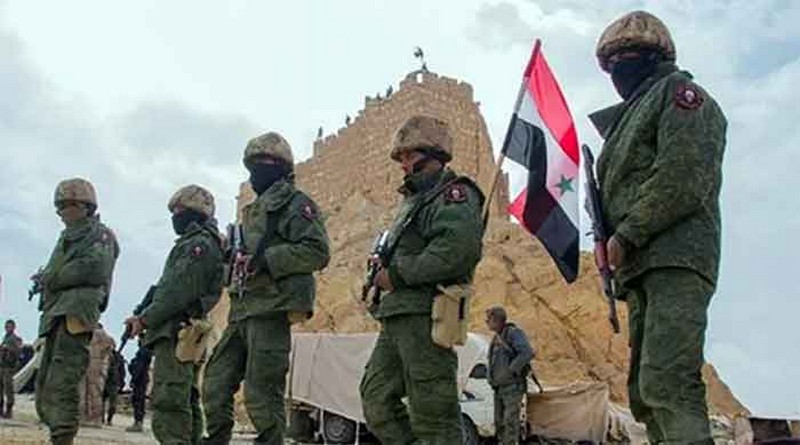
The foreign ministers of Syria, Saudi Arabia, Jordan, Egypt, and Iraq said on Monday after meeting in Amman said the government in Damascus should re-establish the rule of law on all of Syria’s territory, ending the presence of foreign armed groups and terrorists,.

Jordan hosted the meeting, the first of its kind since Syria’s membership in the Arab League was suspended in 2011. Prior to the multilateral meeting, Syrian Foreign Minister Faisal Mekdad met with his Jordanian counterpart Ayman Safadi to discuss refugees, border security and “water issues,” according to Amman.

In a joint statement distributed by state news agencies, the five ministers called for “ending the presence of terrorist organizations” as well as “armed groups” on the territory of Syria, and “neutralizing their ability to threaten regional and international security.” They also pledged to “support Syria and its institutions to establish control over all its territory and impose the rule of law.”

Saudi Arabia, Egypt, Jordan and Iraq pledged to establish ties with the Syrian military and security institutions in order to “address security challenges.” The five ministers also called for stopping “foreign interference in Syrian domestic affairs.” Their joint declaration also called for setting up technical teams of experts that would follow up on the summit and implement practical measures to resolve the conflict in Syria.

The Amman meeting comes just weeks after Mekdad visited Saudi Arabia and received the kingdom’s endorsement for Syria’s territorial integrity. Currently, Turkish-backed militants control parts of northern Syria, while the northeast is under the control of US-backed Kurdish militias. Several hundred US soldiers are also in Syria, controlling most of the country’s oil wells.

Militants backed by the U.S. and Saudi Arabia launched an uprising against Syrian President Bashar Assad in 2011. With the help of Russia and Iran, the government in Damascus eventually prevailed over the collection of rebels, including terrorists affiliated with Al-Qaeda and Islamic State (IS, formerly ISIS). While Syria’s neighbors and regional powers have moved to improve relations with Damascus in recent months, the U.S. has not changed its “regime change” policy.

Saudi Arabia Holds Talks With Syria

Other media reports said:

Syrian Foreign Minister Faisal Mekdad has completed a breakthrough visit to Saudi Arabia, the first such trip since Riyadh cut diplomatic relations with Damascus in 2012. In a joint press statement issued after the visit Saudi Arabia endorsed Syrian unity and integrity, condemned terrorism, and backed a political solution to the 12-year war.

Saudi Foreign Minister Prince Faisal bin Farhan Al Saud had invited his Syrian colleague to Jeddah to discuss “efforts to find a political solution to the Syrian crisis that preserves Syria’s unity, security, stability, Arab identity, and territorial integrity while also serving the interests of its brotherly people,” according to the statement cited by the state news agencies of both countries.

Prince Faisal and Dr. Mekdad agreed on the need to address humanitarian issues and allow aid “to reach all areas of Syria,” establish conditions for the return of refugees and displaced people, and “stabilize the situation in the entire Syrian territories.”

The two sides also committed to enhancing security and “combating terrorism in all its forms,” and agreed on the need to “support the institutions of the Syrian state to extend its control over its territories to end the presence of armed militias and external interference in the Syrian internal affairs.”

Parts of northern Syria are currently under control of Turkish-backed militants, while the area northeast of the Euphrates River is held by U.S.-backed Kurdish militias. Several hundred U.S. troops are also in the country in violation of international law, controlling most of the Syrian oil wells.

The two foreign ministers also discussed steps needed to reach “a comprehensive political settlement of the Syrian crisis,” so the country could return to the “Arab fold,” their joint statement said.

Damascus and Riyadh have begun the procedures needed to resume air travel and consular services between the two countries, while Syria thanked Saudi Arabia for the humanitarian aid provided after the catastrophic earthquakes in February. Much of the aid to Syria has been impeded by the U.S.-imposed ‘Caesar’ sanctions against Damascus.

Saudi Arabia cut diplomatic ties with Syria in February 2012, joining the U.S. in backing the militants that sought to overthrow President Bashar Assad. With the backing of Russia and Iran, the government in Damascus eventually prevailed over the collection of rebel militias that included terrorists affiliated with Al-Qaeda and Islamic State (IS, formerly ISIS).

Rumors that Riyadh was preparing to reverse course began to circulate last month, shortly after China mediated an agreement between Saudi Arabia and Iran to normalize relations. Since then, the kingdom has also launched peace talks to end the eight-year conflict in Yemen.

Damascus And Cairo Close To Restoring Ties

Another media report said:

Syria and Egypt are in advanced talks to restore diplomatic relations that were severed after the outbreak of the conflict in Syria back in 2011, informed sources have told the Wall Street Journal.

A summit is scheduled between Syrian President Bashar Assad and his Egyptian counterpart Abdel Fattah el-Sisi, shortly after the Muslim holy month of Ramadan ends in late April, the U.S. outlet reported.

On Saturday, Syrian Foreign Minister Faisal Mekdad made his first official visit to Cairo in more than a decade, holding talks with Egypt’s top diplomat Sameh Shoukry.

According to the Syrian Foreign Ministry, the two sides discussed “various aspects of bilateral cooperation and ways to strengthen brotherly relations,” during the meeting.

The Egyptian Foreign Ministry in its statement reported that the ministers “agreed to intensify channels of communication between the two countries at different levels during the coming phase.”

Shoukry reiterated Cairo’s support for a “comprehensive political settlement to the Syrian crisis as soon as possible,” the statement read.

According to WSJ’s sources, the parties were also expected to discuss Syria’s possible return to the Arab League during the talks in Cairo. Damascus’ participation in the group of 22 nations was suspended 12 years ago when members accused Syria of a violent crackdown on opposition.

Assad’s government, which insists that it has been fighting international terrorism all those years, has by now been able to regain almost full control of Syrian territory with the assistance of its allies Russia and Iran.

Diplomatic relations between Cairo and Damascus were cut in 2013 under the previous Islamist Egyptian government of Mohamed Morsi, which backed the Syrian opposition. When announcing the closure of the embassy in Syria, Morsi also decried the involvement of Lebanese armed group Hezbollah in the conflict on the side of Damascus and urged that a no-fly zone be established above the country.

The mending of relations between Damascus and the rest of the Arab World has been spearheaded by the United Arab Emirates, which reopened its Syrian embassy in 2018 and has been visited by Assad twice over the past two years.

The Syrian armed turmoil began in 2011 with foreign backing, triggered a war that killed over 500,000 people and created a massive refugee crisis. Assad emerged victorious, regaining control of most of his country, thanks largely to military and economic support from Iran and Russia. Iranian officials hope that success will inspire other nations opposed to US hegemony.

CIA Chief Admits U.S. blindsided By Saudi-Iran Deal

CIA Director William Burns has told Saudi officials that the U.S. was caught off guard, after the kingdom agreed to a normalization deal with Iran brokered by China, according to the Wall Street Journal.

During an unannounced trip to Saudi Arabia this week, Burns “expressed frustration” with Riyadh and said Washington “felt blindsided” by its renewed diplomacy with both Iran and Syria, multiple unnamed sources told the Journal on Thursday.

After years of strife as regional adversaries, Tehran and Riyadh concluded the normalization pact on March 10 following secret talks mediated by Beijing, agreeing to resume formal diplomatic relations after they cut ties in 2016. The deal marked a major diplomatic achievement for China and a significant shakeup in the geopolitics of the Middle East.

Since the agreement was announced, top diplomats from Saudi Arabia and Iran have spoken on the phone for a number of times, and hope to reach compromises on several outstanding issues – namely the war in Yemen, which has raged on for more than eight years and left hundreds of thousands dead.

Tehran is also working to reestablish contacts with the United Arab Emirates, another Gulf monarchy long at odds with the Islamic Republic. Earlier this week, Iranian Deputy Foreign Minister Ali Bagheri said his country had appointed an ambassador to Abu Dhabi for the first time in nearly a decade. Riyadh is also reportedly seeking to reach a similar understanding with Syria, and hopes to invite President Bashar al-Assad for a visit later this year, according to Reuters.

While the White House has welcomed the new diplomacy in public, Burns’ reported complaints to Saudi officials this week could highlight concerns over Beijing’s growing influence in the region. Tensions between Riyadh and Washington have also been on the rise since last year, when OPEC+, a group of major oil exporters led by Saudi Arabia, opted to slash production. The move reportedly angered” U.S. President Joe Biden, who claimed the cut would benefit Russia, another large energy exporter.

2 May 2023

Source: countercurrents.org
Ukraine War Shifts to Economic Warfarey Dan Lieberman

By Dan Lieberman

Russian President, Vladimir Putin, realized early, in his country’s invasion of Ukraine, that adversaries do not always fight wars on a battlefield. The realization that Russian military superiority could not easily overcome Ukraine’s moral superiority and its defensive capabilities succeeded the recognition by Ukraine’s NATO allies that Russia could not be defeated militarily and might be defeated by imposing sanctions that throttle Russian industry, including its agriculture. Defeat will be accomplished by economic warfare, reaching eventually to a politics of starvation ─ starve the industry, starve the body, and starve the mind. A defeated and succumbed people will force its government to capitulate.

The Russian leader heeded NATO’s thrust and abruptly adopted a militarized economic warfare strategy that sits well with the Russian people ─ Russian casualties will be minimal and Ukraine casualties will not be reported in the Russian Press. Russian armies have slowed their offensive actions and concentrated on destroying Ukraine’s energy sources and laying waste to its agriculture. In a move to show the futility of supporting Ukraine, Russia extended its politics of starvation to include blocking Ukraine grain shipments to nations throughout the world. The latter maneuver proved counterproductive and the Kremlin retreated from this drastic action.

In the early months of the Ukraine invasion, battles occurred on a front that extended from Southeast Ukraine to western Ukraine and to northeast Ukraine. Casualties grew on both sides as the battles intensified. In 2023, battles have diminished and are confined to a small strip of land in the Donets Basin. Escalating economic warfares, in which the Russian military pounds economic targets and NATO sanctions pound the Russian economy, have become the decisive and deciding strategies of the war. Which strategy, in this new war of attrition, will prove more decisive and has the greater possibility of achieving its goal can be analyzed by examining previous examples of economic warfare.

Examples of militaries waging economic warfare are the allied World War II bombings of German and Japan infrastructure and the U.S. bombing campaigns of North Vietnam and Vietcong territories. The World War II bombing campaigns did not have the precision and firepower of present day weapons but the intensity, number of sorties, and years of carpet bombings intended to overcome the limitations. Did these attempts to cripple economies prove vital in ending the wars?

Germany
A Table on P.191, Die Deutsche Industrie im Kriege (The German War Industry), R. Wagenfuhr, indicates that at the end of World War II, German industrial production was 10 percent higher than in 1942 and consumption had not diminished. The German industry circumvented the carpet bombings that destroyed German cities. Nazi Germany continued manufacturing tanks, airplanes, and munitions in factories throughout Europe, some of them underground, until military forces captured the ground where the factories existed. The German people maintained morale and endured the economic hardships until final surrender. Economic warfare did not defeat Germany. Defeat came on the battlefield from the combined strength of Soviet and allied ground forces.

Japan
The December 7, 1941 Japanese attack on Pearl Harbor started a military war between the United States and Japan. Before that date, the two antagonists were already engaged in an economic war. Concerned with Japanese military moves into Asia and the Empire’s seizure of resources that increased Japan’s military and economic might, U.S. President Franklin Delano Roosevelt dictated measures to contain Japan. From The Path to Pearl Harbor

President Franklin Delano Roosevelt, in July 1940, cut off shipments of scrap iron, steel, and aviation fuel to Japan even as he allowed American oil to continue flowing to the empire. Japan responded by entering resource-rich French Indochina, with permission from the government of Nazi-occupied France, and by cementing its alliance with Germany and Italy as a member of the Axis. In July 1941, Japan moved into southern Indochina in preparation for an attack against both British Malaya, a source for rice, rubber, and tin, and the oil-rich Dutch East Indies. This prompted Roosevelt to freeze all Japanese assets in the United States on July 26, 1941, which effectively cut off Japan’s access to US oil.

The economic war had one accomplishment ─ it led to a conventional military war that shifted into a militarized economic war. Faced with eventually having to invade the Japanese mainland and suffer huge casualties, the U.S. adopted a strategy that sacrificed Japanese lives and saved American lives.

After seizing island bases that brought the Japanese mainland within striking distance of long-range bombers, the US, in early 1945, halted a two year lull from the 1942 Doolittle raids and resumed bombings of Japan. The US Strategic Bombing Survey describes the goal of the bombing assault that destroyed Japan’s major cities in the period between May and August 1945 as “either to bring overwhelming pressure on her to surrender, or to reduce her capability of resisting invasion. . . . [by destroying] the basic economic and social fabric of the country.”

The economic effects of the air attacks against the Japanese mainland appear in the US Strategic Bombing Survey.

…some 40 percent of the built-up area of the 66 cities attacked was destroyed. Approximately 30 percent of the entire urban population of Japan lost their homes and many of their possessions….The railroad system had not yet been subjected to substantial attack and remained in reasonably good operating condition at the time of surrender….Damage to local transport facilities, however, seriously disrupted the movement of supplies within and between cities. Urban incendiary attacks destroyed the electric distribution systems in the burned-out areas simultaneously with the consumer load previously served by them. The hydro-electric generating plants and the transmission networks survived without substantial damage. Twenty-six urban steam-generating plants were damaged as an incident to other attacks, the aggregate loss of capacity being less than one-seventh of Japan’s total generating capacity.

Four hundred and seventy thousand barrels of oil and oil products, 221,000 tons of foodstuffs and 2 billion square yards of textiles were destroyed by air attacks. Ninety-seven percent of Japan’s stocks of guns, shells, explosives, and other military supplies were thoroughly protected in dispersed or underground storage depots, and were not vulnerable to air attack.

Physical damage to plant installations reduced physical productive capacity by roughly the following percentages of pre-attack plant capacity: oil refineries, 83 percent; aircraft engine plants, 75 percent; air-frame plants, 60 percent; electronics and communication equipment plants, 70 percent; army ordnance plants, 30 percent; naval ordnance plants, 28 percent; merchant and naval shipyards, 15 percent; light metals, 35 percent; ingot steel, 15 percent; chemicals, 10 percent.

The bombing campaign may have intended “to reduce her capability of resisting invasion. . . . [by destroying] the basic economic and social fabric of the country,” but it did not spare casualties.  The March 9, 1945 firebombing of Tokyo is considered the single-most destructive raid of World War II. Sixteen square miles of city were destroyed and an estimated 80,000 – 130,000 Japanese were killed, more than those who initially died in the atomic attacks on Hiroshima and Nagasaki.

Did the militarized economic warfare push the Japanese into surrender; evidence does not support that assumption. If the U.S. command thought that to be probable, the orders to drop the nuclear bombs on Hiroshima and Nagasaki would not have been issued. If the atomic age had not occurred and conventional bombing would have persisted, it is more likely that Japan would have surrendered but not unconditionally. A continued bombing campaign would have caused mounting casualties and impeded further offensive actions by the Imperial Army but would not have prevented a capable defense of the islands. The Japanese could accept the former as long as they had control of the latter. Doubtful that the U.S. would be willing to suffer a massive amount of casualties to achieve unconditional surrender; more likely that President Truman would have ended the war if the Japanese offered a conditional surrender.

The militarized economic warfare did not end the war; it needed more to bring an unconditional surrender. In this case, the more was excessive deaths. The specter of a slaughter of the Japanese by more atomic bombings, which gave the appearance of eventually extinguishing the entire population, prompted the emperor to agree with the surrender terms.

Vietnam
The Vietnam War is easily analyzed. Despite blasting North Vietnam and the Vietcong countryside, the U.S. lost the war. The military economic warfare proved futile and ground forces were incapable of making up for the futility.

Sanctions
Sanctions drive the economic war. After World War II, the United States imposed sanctions against more than 35 countries that Washington accused of intolerable behavior. North Korea, Iran, Libya, Nicaragua, Burma, Sudan, Iraq, Cuba, Liberia, Soviet Union, Sierra Leone, Syria, Somalia, Russia, and Yugoslavia are some of the many nations that have been whipped by U.S. sanctions. Only Burma and Nicaragua  corrected violations of human rights; both have returned to dictatorial rule. All of these nations have suffered greatly from the sanctions, with Iran, Cuba, North Korea, and Iraq enduring the most punishment.

Iran
Already heavily sanctioned, Iran’s entrance into the atomic age provoked a series of new sanctions. The economic warfare affected Iran’s industries and welfare. After decades of different sanctions, annual inflation increased to more than 42 percent, the national currency lost more than half of its value in the years fro 2019-2022, and oil exports fell from roughly 2.5 million barrels per day in 2017 to less than 0.4 million barrels per day in 2020. Gross Domestic Product peaked at $644 billion in 2011 and fell to $185 billion in 2020.

Going into the year 2023 tells a different story. The Iranian government budget predicts 1.4 million barrels of crude oil per day, inflation increased to 55 percent, and Statista predicts the GDP to rise to $368 billion.

Economic warfare has not halted Iran’s nuclear activities, changed any aspects of its behavior, or prevented it from signing contracts with foreign firms to develop energy resources. Exports grew to $71.6 billion in Dec 2021, compared with $46.9 billion in the previous year, with liberated Iraq, war ravished Russia, and independent China filling the gap as trading partners.

Economic warfare has caused Iran’s industry and Iran’s people to suffer. Iranians did not accept defeat, did not succumb, and the economic warfare has not forced its government to capitulate.

Cuba
The decades old economic, commercial, and financial embargoes placed on Cuba hampered the Cuban economy. The American Association for World Health and the American Public Health Association ascertained that it also caused significant deterioration in Cuba’s food production and health care:

  • Cuba was banned from purchasing nearly 1/2 of new drugs on the market.
  • Physicians had access to only 890 medications, down from 1,300 in 1989.
  • Deterioration of water supply increased water borne diseases.
  • Daily caloric intake dropped by 33% between 1989 and 1993.

The Cuba of 2023, politically, socially and culturally is still the Cuba of 1960. More than 60 years of economic warfare against Cuba has accomplished nothing for the U.S. and has greatly harmed the Cuban people.

North Korea
The proud and impoverished nation of North Korea (DPRK) has been continually subjected to sanctions, threats of economic sanctions, and hastily withdrawn sanctions. The media is peppered with the words: “U.S. Lifts sanctions,” “U.S. recommends sanctions,” “South Korea wary of sanctions.”  After its 2006 claim of conducting a nuclear test, the DPRK (Democratic People’s Republic Korea) leaders responded to intended sanctions by labeling them “a declaration of war.”

The DPRK has suffered from economic warfare, which includes restrictions on trade and financial transactions. Export to the DPRK of items that have both military and non-military uses have, at times, been prohibited.  During March 2012, the politics of starvation entered the situation; angered by an intended North Korea missile test, the U.S. suspended food aid to the “hermit kingdom.

Sanctions, intended to collapse the North Korea regime, have not halted its development of nuclear weapons and guided missile delivery systems. They have collapsed the economy and harmed the North Korean people; starvation during droughts have occurred. Although some international assistance has been provided to North Korea, the intensive economic warfare waged against the “hermit kingdom” has exacerbated its problems, without any apparent benefit to its principal antagonist, the United States.

Iraq
Sanctions against Iraq began August 6, 1990, four days after Saddam Hussein invaded Kuwait, and featured a near-total financial and trade embargo. Resultant suffering has been outlined in a UN Report on the Current Humanitarian Situation in Iraq, submitted to the Security Council, March 1999. Due to the length of the report, only significant features are mentioned.

Pre Gulf War

  • Before 1991, Iraq’s social and economic indicators were generally above the regional and developing country averages.
  • Up to 1990, the Food and Agricultural Organization (FAO) cited Iraq as having one of the highest per capita food availability indicators in the region.
  • According to the World Health Organization (WHO), prior to 1991, health care reached approximately 97% of the urban population and 78% of rural residents. A major reduction of young child mortality took place from 1960 to 1990; with the infant mortality rate at 65 per 1,000 live births in 1989 (1991 Human Development Report average for developing countries was 76 per 1,000 live births). UNICEF indicates that a national welfare system assisted orphans and children with disabilities and supported the poorest families.
  • Before 1991, southern and central Iraq had well developed water and sanitation systems, with two hundred water treatment plants for urban areas and 1200 compact hundred water treatment plants  to serve rural areas, as well as an extensive distribution network. WHO estimates that 90% of the population had access to an abundant quantity of safe drinking water.

Sanctions began after the Gulf War, ostensibly as a means to remove Saddam Hussein, and continued until the U.S. invasion of Iraq in 2003.

  • Economist Intelligence Unit estimates that Iraqi GDP may have fallen by nearly 67% in 1991, and the nation had “experienced a shift from relative affluence to massive poverty” and had infant mortality rates that were “among the highest in the world.”
  • The United Nations Population Fund (UNFPA) estimated the maternal mortality rate increased from 50/100,000 live births in 1989 to 117/100,000 in 1997. The under-five child mortality rate increased from 30.2/1000 live births to 97.2/1000 during the same period. The United Nations Department of Economic and Social Affairs (DESA) calculates that the infant mortality rate rose from 64/1000 births in 1990 to 129/1000 in 1995 (the Human Development Report set the average infant mortality rate for Least Developed Countries at 109/1000).
  • Calorie intake fell from a pre-war 3120 to 1093 calories per capita/per day in 1994-95. The prevalence of malnutrition in Iraqi children under five almost doubled from 1991 to 1996 (from 12% to 23%). Acute malnutrition in Center/South rose from 3% to 11% for the same age bracket.
  • The World Food Program (WFP) estimated that access to potable water decreased to 50% of the 1990 level in urban areas and 33% in rural areas.
  • School enrollment for all ages (6-23) declined to 53%. According to a field survey conducted in 1993, as quoted by UNESCO, in Central and Southern governorates, 83% of school buildings needed rehabilitation, with 8613 out of 10,334 schools having suffered serious damages.

The U.S. 2003 invasion of Iraq accomplished what sanctions failed to accomplish ─ after pushing Iraq into total ruin, the invasion brought total surrender and the removal of Saddam Hussein. A question, “Why go to war, if already had sanctions, or why implement sanctions if ready to go to war?”

CONCLUSION
As shown, economic warfare has rarely, if ever, accomplished its stated purposes. Applied to Russia, with the intent to degrade its ability to wage war and force it to eventually retreat from its wartime gains, economic warfare has little likelihood of achieving victory. The Bear has vast internal resources to use for any emergency, is a member of BRICS — an organization of five leading economies: Brazil, Russia, India, China, and South Africa — and a member of the  Collective Security Treaty Organization (CSTO), an intergovernmental military alliance in Eurasia consisting of six post-Soviet states — Armenia, Belarus, Kazakhstan, Kyrgyzstan, Russia, and Tajikistan. Many leading nations have refused to isolate Russia for its invasion —India, Israel, Serbia — and business with them remains as usual.

A Ukraine victory can only occur from a ground war that recovers the lost territory and brings the hostilities to the Russian border. For Ukraine to win the ground war, requires escalating the conflict to total war, which includes war on the Russian mainland. The result of this escalation will be vast destruction of Ukraine and millions of casualties. If facing defeat, will Russia use nuclear weapons? If Ukraine faces defeat, will NATO directly intervene?

It has been previously shown that militarized economic warfare by itself has not achieved victory. Circumstances are different in this war.

(1)    If Russia can contain its casualties, it will be patient in achieving its objectives. The U.S. government defied public criticism for 15 years in Vietnam and for 20 years in Afghanistan.

(2)    Unlike the European war, where all adversaries, except the United States, were subjected to homeland damage, Mother Russia has remained relatively immune from Ukraine attacks.

(3)    The Russians are not asking for unconditional surrender; they are requesting territorial surrender and Ukraine neutrality.

NATO’s economic warfare strategy has no chance of victory. It can only degrade into a land war that could lead to a Third World War. Russia’s militarized economic warfare strategy has been waged for several months, and, despite expecting Ukrainians to freeze, starve, have mental breakdowns, and run for the borders, the Ukrainian public has endured the bombings and remained relatively calm. The Russians are stalled, perplexed, contemplating, and probably feel they need to do more. The more may be similar to the more that American military strategists decided to use in their attempt to persuade Japan to surrender — more havoc and more civilian casualties — a growing more that leads to abundant catastrophes.

Neither side can win this war on the terms that have already been proposed. Ukraine demands complete withdrawal of Russian troops from all territories they have occupied; Russia demands recognition of annexation of territories it has seized and the demilitarization of Ukraine. This war has become a  war without end or ending only if one side is entirely obliterated. The only alternatives are (1) a cease fire, similar to Korea, that freezes the situation and permits each side to claim they have not surrendered. For the next years they can snarl, growl, threaten each other, and go on with their lives, or (2) replacement of one or both governments who will be willing to compromise their positions.

I’ll bet on a combination of the two ─ new governments installed specifically to arrange a cease fire agreement.

Dan Lieberman is a political commentator

2 May 2023

Source: countercurrents.org
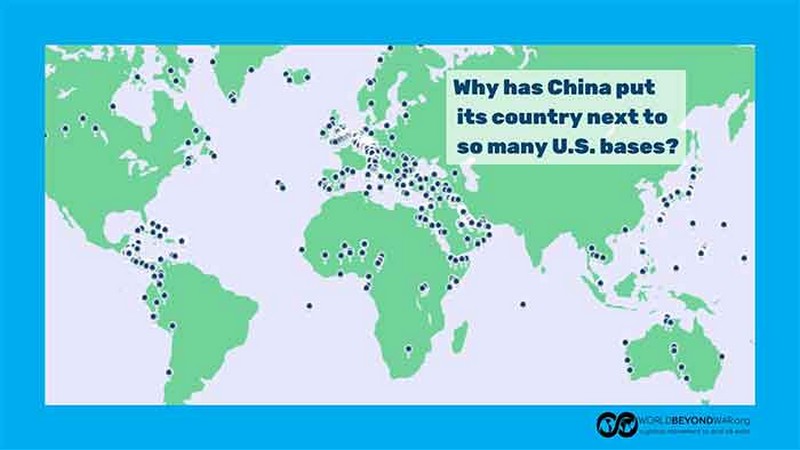
To End All Wars, Close All Bases

By Kathy Kelly

A Gazan Ph.D. candidate studying in India, Mohammad Abunahel steadily refines and updates a map on the World BEYOND War website, dedicating a portion of every day to continue researching the extent and impact of USA foreign bases.  What is Mohammad Abunahel learning, and how can we support him?

On the few occasions when a government moves toward converting property or weapon production facilities into something useful for human beings, I can’t restrain a tumbling brainstorm:  what if this signals a trend, what if practical problem-solving begins to trump reckless war preparation? And so, when Spain’s President Sanchez announced on April 26th that his government will build 20,000 homes for social housing on land owned by the country’s Ministry of Defense, I immediately thought about crowded refugee camps around the world and inhumane treatment of people without homes. Visualize the vast capacity to welcome people into decent housing and promising futures if space, energy, ingenuity and funds were diverted from the Pentagon to meet human needs.

We need glimmers of imagination about the worldwide potential for accomplishing good results by choosing the “works of mercy” over “the works of war.”  Why not brainstorm about how resources devoted to military goals of domination and destruction could be put to use defending people against the greatest threats we all face, – the looming terror of ecological collapse, the ongoing potential for new pandemics, the proliferation of nuclear weapons and threats to use them?

But a crucial first step entails fact-based education about the global infrastructure of the USA’s military empire. What is the cost of maintaining each base, how much environmental damage does each base cause (consider depleted uranium poison, water contamination, noise pollution, and risks of nuclear weapon storage). We also need analysis about ways the bases exacerbate the likelihood of war and prolong the vicious spirals of violence attendant on all wars. How does the U.S. military justify the base, and what is the human rights record of the government the U.S. negotiated with to build the base?

Tom Englehardt of Tom Dispatch notes the paucity of discussion about the expanse of U.S. military bases, some of which he calls MIA because the U.S. military manipulates information and neglects to even name various forwarding operating bases. “With very little oversight or discussion,” says Englehardt, “the massive (and massively expensive) base structure remains in place.”

Thanks to the tenacious work of researchers who formed the No Bases campaign, World BEYOND War now presents the many-faced hydra of U.S. militarism, worldwide, in a visual database.

Researchers, scholars, journalists, students and activists can consult this tool for help in exploring vital questions about the cost and impact of the bases.

It’s a unique and challenging resource.

At the helm of daily exploration enabling the mapping project’s growth is Mohammad Abunahel.

On almost any given day in Abunahel’s busy life, he sets aside time, far more than he is compensated for, to work on the mapping project. He and his wife are both Ph.D. students in Mysore, India. They share caring for their infant son, Munir. He takes care of the baby while she studies and then they trade roles. For years, Abunahel has devoted skill and energy to create a map which now draws the most “hits” of any section on the WBW website. He considers the maps as a step in addressing wider problems of militarism. The unique concept shows all U.S. bases along with their negative impacts in one data base which is easy to navigate. This allows people to grasp the intensifying  toll of U.S. militarism and also provides information useful for taking action to close bases.

Abunahel has good reason to resist military dominance and the threats of destroying cities and towns with overwhelming weaponry. He grew up in Gaza. Throughout his young life, before he finally managed to obtain visas and scholarships to study in India, he experienced constant violence and deprivation. As one of ten children in an impoverished family, he readily applied himself in classroom studies, hoping to improve his chances for a normal life, but along with the constant threats of Israeli military violence, Abunahel faced closed doors, dwindling options, and rising anger, his own and that of most other people he knew. He wanted out.  Having lived through successive Israeli Occupation  Force onslaughts, killing and maiming hundreds of innocent people of Gaza, including children, and destroying homes, schools, roadways, electrical infrastructure, fisheries and farms, Abunahel grew certain that no country has a right to destroy another.

He’s also adamant about our collective responsibility to question justifications for the U.S. network of military bases. Abunahel rejects the notion that the bases are necessary to protect U.S. people. He sees clear patterns showing the base network being used to impose U.S. national interests on people in other countries. The threat is clear: if you do not submit yourselves to fulfill U.S. national interests, the United States could eliminate you. And if you don’t believe this, look at other countries that were surrounded by U.S. bases. Consider Iraq, or Afghanistan.

David Swanson, the Executive Director of World BEYOND War, reviewing David Vine’s book, The United States of War, notes that “since the 1950s, a U.S. military presence has correlated with the U.S. military starting conflicts. Vine modifies a line from Field of Dreams to refer not to a baseball field but to bases: ‘If you build them, wars will come.’ Vine also chronicles countless examples of wars begetting bases begetting wars begetting bases that not only beget yet more wars but also serve to justify the expense of more weapons and troops to fill the bases, while simultaneously producing blowback — all of which factors build momentum toward more wars.”

Illustrating the extent of the USA’s network of military outposts deserves support. Calling attention to the WBW website and using it to help resist all wars are vital ways to expand the potential for expanding and organizing resistance to U.S. militarism. WBW will also welcome financial contributions to assist Mohammad Abunahel and his wife who are, by the way, excitedly awaiting the birth of their second child. WBW would like to increase the small income he earns. It will be a way to support his growing family as he raises our awareness of warmaking and our resolve to build a world BEYOND war.

Kathy Kelly (kathy@worldbeyondwar.org), Board President of World BEYOND War, co-coordinates the November 2023 Merchants of Death War Crimes Tribunal

2 May 2023

Source: countercurrents.org
UNESCO Needs to Rethink Freedom of Expression

Viewpoint by Kalinga Seneviratne

SYDNEY, 3 May 2023 (IDN) — At a time when the West has weaponised human rights, the United Nations body that promotes freedom of expression need to rethink what it means.

Every year UNESCO (United Nations Educational Scientific and Cultural Organisation) mark World Press Freedom Day (WPFD) on May 3 with a particular theme and this year is its 30th edition.

UNESCO has mainly provided a platform through their WPFD to civil society (NGO) groups that are funded by western agencies to shape the free speech agenda. With many countries in the Global South seeing these groups involved in so-called “colour revolutions” as a security threat, it is time, as an inter-governmental organisation, UNESCO paid some attention to the views of its member states who are not of the western alliance.

This year’s theme is ‘Shaping of Future Rights: Freedom of Expression as a Driver of all other human rights’.

UNESCO has given four special briefs in their website for campaign action on the day. First of which is the “misuse” of the judicial system to attack freedom of expression. It focuses on the use of criminal defamation to silence journalists, but no mention at all about how the UK and US judicial systems are being used to silence Julian Assange of Wikileaks.

Yonden  Lhatoo, the Chief News Editor of the Hong Kong based South China Morning Post in a recent videolog made a powerful indictment regarding the Assange case.

“There is no limit to the insufferable hypocrisy of these gangsters in glass houses,” he said referring to the US, UK and Australian government action against Assange. “They defecate all over on human rights and press freedom in the name of national security, when it suits them, calling it ‘justice’, when a country they don’t like do something of that sort, its ‘repression’—how convenient”.

Safety of foreign journalists and those covering protests are two other issues, while the fourth UNESCO brief is about journalism and whistleblowing.

The 16-page UNESCO brief on whistleblowing talks about the new electronic means of leaks to media and publishing of such information. It mentions “Pub/Leaks” and “Latamleaks” in Latin America but no mention of Wikileaks. It also argues that whistleblowers and publishers must have guarantees of protection and that their actions do not lead to negative consequences, such as financial sanctions, job dismissals, undermining their family members or circles of friends, or threats of arbitrary arrest. But, no mention whatsoever about the Assange’s case including western financial institutions blocking donations to Wikileaks[1].

The document seems to distance itself completely from this case because the US considers Assange a computer hacker not not a journalist. The brief talks about the benefits to society from whistleblowers that “allow people to get information and evidence of acts of corruption, human rights violations, or other matters of unquestionable public interest“ but no direct reference to war crimes, that Wikileaks exposed through whistleblowers like Chelsea Manning and Edward Snowden.

Unfortunately, today, it is okay to talk about war crimes if the Russians are doing it but not when the Americans, NATO or Australians are involved.

In June 2019, the Australian Federal Police raided the newsroom of Australia’s national broadcaster ABC after they have exposed Australian forces’ war crimes in Afghanistan. They took away the laptops of some journalists in an attempt to trace the whistleblowers describing the action as a “national security” operation.

Today human rights arguments have lost credibility because of these double standards. Thus, it is interesting to note how China is now pushing a new human rights agenda via the United Nations.

In July 2021, China succeeded in getting a resolution adopted at the 47th session of the UN Human Rights Council on development rights[2]. It affirmed that the eventual eradication of extreme poverty must remain a high priority for the international community and that international cooperation for sustainable development has an essential role in shaping our shared future.

The resolution was adopted by 31 votes to 14 against. Interestingly those voting against were 12 European countries plus Japan and South Korea. While joining China in voting for it were Russia, India, Pakistan, Cuba, Indonesia, Philippines and Fiji, plus a number of African and Latin American countries.

The vote itself gives a good indication of the new trends in the human rights agenda promoted by the Global South.

This brings us to the question of where freedom of speech stands in this human rights agenda.

Human rights according to this agenda are what is prescribed in the UN’s Sustainable Development Goals(SDGs).  Providing clean water and sanitation to the people, a good education, developing and nurturing sustainable systems of agriculture to provide food security to people, protecting the environment and protecting communities from the impacts of climatic change, empowering women, providing proper housing and healthcare to people, and so forth and so on.

Governments should be held accountable to providing these rights to people, but that cannot be achieved by the media always accusing governments of corruption, or people coming out to the streets shouting slogans or blocking roads or occupying government buildings.

Reporters need to go out to the communities talk to the people and find out how they live, what is lacking and how they think these services could be provided by governments. Journalist could even become a facilitator of a dialogue between the people and the government.

Human rights is a marvellous concept on paper, but its practice is today immersed in double standards and hypocrisy. Media has been a party to this.

In 2016-17, I was part of a team at Chulalongkorn University in Bangkok to develop curriculum to train Asian journalists in what we call “mindful communication for sustainable development”. It was funded by UNESCO, and we used Asian philosophical concepts in designing the curriculum, to encourage journalists to have a compassionate mindset in reporting grassroots development issues from the peoples’ perspective.

We want to develop a new generation of communicators, who would not demand rights and create conflicts, but work with all stakeholders, including governments, to help achieve the SDGs in a cooperative manner rather than confrontation.

It is time that UNESCO listen to the Global South and rethink about why we need to have freedom of speech and for what purpose.

* Dr Kalinga Seneviratne is the deputy global editor of IDN-In Depth News and is also currently a consultant to the Journalism Program at the University of the South Pacific in Fiji.

3 May 2023

Source: www.indepthnews.net