Just International

Israel’s perplexing political norms versus Palestinian arduous fight-back

Palestine Update 640
Comment

Israel’s perplexing political norms versus Palestinian arduous fight-back
By any given standards, Israel would easily rank as a hugely confused State with a generally large number of mystified people. Imagine now wanting a Constitution 75 years since its birth but struggling to figure out what choices the Constitution will pose. It would be far more than rocket science to decide the difference between a normal democratic State which uniformly distributes its rights among all- an egalitarian State- as opposed to a state that privileges Jewish citizens over and above the rest. Catch 22 is what it is! Who else but Israelis could bring this on themselves? They wonder how to overcome disentangle themselves from a policy whose effect is the opposite of what was intended. Those who wonder why Palestinians are not challenged or enthused by the massive Israeli protests understand that regardless of the outcome of these protests, a state that considers equality an existential threat, can never be a democracy.

Israel must also contend with its ‘karma’.  Israel’s National Cyber Directorate had on Friday, announced that it had identified and blocked several attacks on websites of Israeli banks. Earlier, hundreds of anti-Israel marches took place Friday across Iran. Iranian President Ebrahim Raisi led the Tehran march…Israeli authorities had actually predicted attacks by pro-Palestinian hackers on that day. On yet another front, Israeli is sparring with Jordan over access to Jerusalem’s holy sites, ahead of the Greek Orthodox Easter and the Muslim holiday of Ramadan next week.  While Israel assigns culpability on Jordan for fanning the flames over incidents last week at the Temple Mount/Haram al-Sharif compound, Jordan condemned Israeli restrictions on Christians’ access to the Jerusalem Holy Sepulcher Church for the Holy Light celebrations this coming Saturday.
Meanwhile another fear-terror tactic emerges. Israeli Police Commissioner has called on licensed gun owners to start carrying their weapons to respond to potential attacks by Palestinians just hours before the Tel Aviv beach incident. A citizen from Kafr Qasim city was shot by a police officer who said he thought the man was carrying a gun. Police and the internal security agency Shin Bet claimed they were examining the possibility that it was not a terror attack…But the family of the driver of the car disputes the police’s version of events, claiming that it was a car accident and not an attack…”We saw how a barrage of shots were fired at him while he lay on the floor.”

For the Palestinian fighting back is a huge challenge. Bisan Executive Director Ubai] al-Aboudi sums it up best aptly when he outlines what the occupation and the PA share in common: They don’t want accountability and hence resort to using extreme measures to suppress dissent.”

On behalf of MLN Palestine Updates

Ranjan Solomon

—————————————————————————-

Why Palestinians Aren’t Joining Israel’s Protests 

“The very Supreme Court that Israeli Jews is protesting to save has been the state’s most loyal partner in enabling this sort of violent repression and abuse against Palestinians. It was this court that approved the military’s use of live fire against protesters in Gaza in 2018. This court has enabled the use of torture by the Israeli state and has never denied a request by Israel to hold Palestinians without trial or charge, the Association for Civil Rights in Israel told Haaretz. Some of its decisions from the past decade allowed the state to carry out the ethnic cleansing of the occupied West Bank area of Masafer Yatta, confiscate Palestinian property in East Jerusalem, revoke citizenship from those it deems disloyal, deny citizenship to Palestinian spouses of Israelis, segregate Jewish and Palestinian communities within Israel, and permit the state to hold the bodies of alleged Palestinian attackers as political bargaining chips…Whatever the outcome of these protests, a state that considers equality an existential threat can never be a democracy. The reason Palestinians are not participating is because we have known this all along.”
Read more in Foreign Policy

Cyber attacks strike Israeli banks as Iran celebrates Quds Day

“Israel’s National Cyber Directorate announced Friday afternoon that it had identified and blocked several attacks on websites of Israeli banks. The directorate explained the attackers tried to overwhelm the sites and make them crash…The cyberattack against the banks coincides with Quds (Jerusalem) Day, which is observed in Iran and other Shiite communities such as Syria and Lebanon with anti-Israel demonstrations. Hundreds of anti-Israel marches took place Friday across Iran. Iranian President Ebrahim Raisi led the Tehran march…Israeli authorities had reportedly anticipated attacks by pro-Palestinian hackers on that day.”
Read more details in Al-Monitor

Jordan, Israel spar over access to Christian holy sites in Jerusalem

 “Israeli-Jordanian relations have taken a turn for the worse with accusations from both sides over access to Jerusalem’s holy sites, ahead of the Greek Orthodox Easter this Sunday, and the Muslim holiday of Ramadan next week.  The Israeli news outlet Walla reported Thursday that Israel is blaming Jordan for fanning the flames over incidents last week at the Temple Mount/Haram al-Sharif compound, when Israeli officers raided Al-Aqsa mosque, and clashed with worshippers that they claimed are barricading themselves at the site. On Thursday, Jordan condemned Israeli restrictions on Christians’ access to the Jerusalem Holy Sepulcher Church for the Holy Light celebrations this coming Saturday.”
Read more in Al-Monitor

Israel: Contradictory accounts raise questions over Tel Aviv ‘car-ramming’
“The family of a Palestinian citizen of Israel, who was shot dead by police after allegedly carrying out a “car ramming” are raising doubts over the authorities’ justification for killing him after law enforcement and medics made contradictory claims over what happened. Israeli police initially labelled the incident, which took place on Friday and left one person dead, as a “terror attack” involving a “shooting and a car-ramming”. A car had crashed into a crowd of people after speeding towards Tel Aviv’s beach promenade before overturning. An Italian citizen, Alessandro Parini, was killed and seven others were wounded. After the vehicle flipped, the driver – later identified as Yousef Abu Jaber from Kafr Qasim city – was shot by a police officer who said he thought Abu Jaber was carrying a gun…Police and the internal security agency Shin Bet then said they were looking into the possibility that it was not a terror attack…But Abu Jaber’s family is disputing the police’s version of events, claiming that it was a car accident and not an attack…”We saw how a barrage of shots were fired at him while he lay on the floor,” Omar Abu Jaber said. “They could have taken him into custody without killing him. Logically speaking, three armed men could have arrested him alive.” According to Omar: “The policemen who shot and killed him took on the role of prosecutor and judge, and tried him right there in the field.”…Israeli Police Commissioner Kobi Shabtai had called on licensed gun owners to start carrying their weapons to respond to potential attacks by Palestinians just hours before the Tel Aviv beach incident.”
Read more in Middle East Eye

Under the Radar, a U.S. Group Is Grooming Right-wing Judges Who Will Reshape Israel
Six U.S. Supreme Court justices were cultivated for their role by the same organization. Now it’s Israeli counterpart, financed by the New York-based Tikvah Fund, is operating along similar lines

 “The Federalist Society also initiated and encouraged the establishment of a similar organization in Israel. The Israel Law and Liberty Forum, established in 2019 with the aid of then-future MK Simcha Rothman, has branches on four campuses: the Hebrew University of Jerusalem, Tel Aviv University, Bar-Ilan University and Reichman University (formerly the Interdisciplinary Center, Herzliya). Enjoying substantial funding from the New York-based Tikvah Fund, a conservative U.S. nonprofit foundation, the Law and Liberty Forum provides students with a parallel, in some cases quite different sort of legal education from what is offered in the usual law school curriculum, by means of courses, conferences and other activities…The Tikvah Fund, financed by the estate of the American investment manager Zalman C. Bernstein, was founded with the express purpose of inculcating conservative and Jewish values in Israel and the United States, by means of educational and other activities. However, after many years of philanthropic work – supporting institutions such as Beit Avi Chai and the Shalem Center (now Shalem College) in Jerusalem – the organization’s activity has taken a different tack in recent years. In addition to underwriting scholarships, conferences and research institutes, the Tikvah Fund now also supports groups, such as the Kohelet Policy Forum, that want to revamp society, by way of implanting American-style conservatism in Israel.”
Read full story in Haaretz

‘From Every Side in Palestine, You Are Under Attack.’ NGO Director Ubai Al-Aboudi on Reforming Palestinian Politics

 “In a pre-dawn raid last year; Israeli soldiers stormed the Ramallah office of the Bisan Center for Research and Development, confiscating files and other office material from the Palestinian NGO. After leaving behind a military order declaring the Bisan Center unlawful, the soldiers welded its office door shut. Israeli forces conducted simultaneous raids on six other Palestinian civil society organizations in Ramallah: Addameer, al-Haq, Defense for Children International-Palestine, the Union of Agricultural Work Committees, the Health Work Committees, and the Union of Palestinian Women Committees…But the Bisan Center continues to face repression not just from Israeli forces in the occupied West Bank but also the Palestinian Authority, which has tried to restrict the Bisan Center’s activities, in an attempt to shut down criticism of the Palestinian leadership and demands for free elections. “Sometimes you feel that from every side in Palestine, you are under attack,” [Bisan Executive Director Ubai] al-Aboudi says. “What the occupation and the PA share is that they don’t want accountability. And because they do not want any accountability, they are using more and more extreme measures to suppress dissent.” In an interview with Democracy in Exile, al-Aboudi outlines the steps needed to reform the Palestine Liberation Organization, bringing democratic change to Palestinian politics.”
Read more from Dawn/MENA

Also read from Human Rights Watch

16 April 2023

Source: nakbaliberation.com
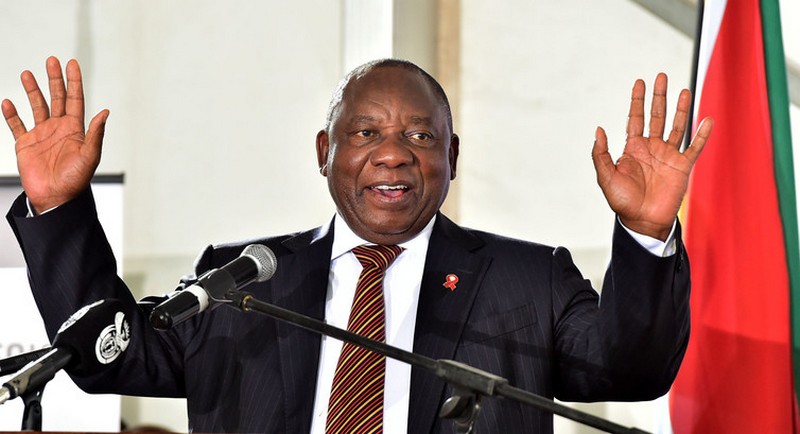
Efforts to Reduce Israeli Influence in Africa Continues

In March the South African National Assembly downgraded the status of Tel Aviv’s diplomatic presence to that of a liaison office.

By Abayomi Azikiwe

As the Israeli government intensifies its efforts to win influence on the African continent and other geopolitical regions, several governments have responded by heightening their solidarity with the Palestinian people.

In South Africa, the National Assembly based in Cape Town voted in early March to further downgrade the diplomatic presence of Israel inside the country.

Since 2019 there has been no South African ambassador credentialed to its embassy in Tel Aviv. This measure stems directly from the failure of the Israeli government to negotiate a settlement to end the occupation of Palestine.

In fact, repressive policies against the Palestinians have worsened over the decades with massive bombing campaigns by the Israeli Air Force in Gaza killing thousands and displacing many more from their homes and refugee camps. Every year more Palestinian communities are being taken over by the Israelis through the building of settlements for Jewish households.

United States foreign policy towards Israel has not changed since the formation and recognition of the state 75 years ago. Billions of dollars in direct financial assistance along with trade, military and diplomatic support characterize the relations between Washington and Tel Aviv.

The National Assembly in Cape Town is the highest legislative body in the Republic of South Africa which has nearly 60 million people. South Africa’s ruling party, the African National Congress (ANC), has maintained fraternal relations with the Palestine Liberation Organization (PLO) while endorsing the Boycott, Divestment and Sanctions (BDS) campaigns domestically and internationally which are geared towards the complete isolation of the racist apartheid regime in Tel Aviv.

The resolution to reduce Israeli diplomatic status in South Africa was introduced by Member of Parliament Ahmed Munzoor Shaik Emam of a small opposition grouping called the National Freedom Party (NFP) and was supported by the majority ANC. This parliamentary action is not binding legally although symbolically it reflects the mass sentiment throughout South Africa and the continent as whole which views the oppression of the Palestinians as a struggle against racism and colonial rule.

Emam said of the vote in favor of his resolution that:

“This is a moment Madiba [Nelson Mandela] would be proud of. He always said our freedom is incomplete without the freedom of Palestinians. This resolution demands accountability from Israel. … As South Africans, we refuse to stand by while Apartheid is being perpetrated again.”

The Israeli Foreign Ministry responded rapidly to the South African parliamentary vote saying:

“The symbolic resolution taken yesterday (March 8) by the South African parliament calling for the downgrading of relations between South Africa and Israel is shameful and disgraceful. Even as a symbolic resolution, it does not contribute in the least to the promotion of any viable solution in the Middle East. At a time when many African and Muslim countries are strengthening and deepening ties with the State of Israel for the benefit of everyone’s common interests, it is unfortunate that South Africa continues to adhere to anachronism and the deterioration of relations, a move that will only harm South Africa itself and its standing.”

What the Israeli Foreign Ministry is referencing is the Abraham Accords, an initiative of Tel Aviv and Washington to undermine solidarity with the Palestinian people as well as those impacted by the military and economic policies of the Zionist regime. Several states among the Gulf monarchies, Egypt and Sudan in North Africa have normalized relations with Israel.

However, as these diplomatic maneuvers are ongoing, the repression against the Palestinians is resulting in brutality, imprisonment and death. In addition, there has been a series of aerial bombardments by Israeli fighter jets in Gaza along with neighboring Syria and Lebanon.

Israel and the African Union

During the African Union Summit in Addis Ababa, Ethiopia in February, the Israeli Foreign Ministry attempted another hostile disruption of the continental organization composed of 55 member-states representing 1.4 billion people. In 2021, the AU Commission Chair, Moussa Faki Mahamat, made a unilateral decision to grant Israel observer status within the body.

This move was roundly denounced by several African governments who are leading members of the AU. Algeria along with the South African government pointed to the illegal nature of the granting of observer status to Tel Aviv absent any discussion or debate in the AU Executive Council. At the following AU Summit, the decision was suspended and since 2021 the issue has not been debated publicly.

In 2021, South Africa described the surprising move as “unjust” and “shocking”. The Republic of Namibia, also in Southern Africa, said:

“granting observer status to an occupying power is contrary to the principles and objectives of the Constitutive Act of the African Union.”

However, an Israeli diplomatic official entered the AU Headquarters in Ethiopia at the February summit and took a seat. The person was soon removed by the security personnel guarding the meeting.

The incident at the most recent AU Summit represents the renewed independent foreign policy orientation of the continent. Along with the attempts by Israel to gain greater diplomatic status within individual African states and the AU, the western imperialist paymasters to Tel Aviv are also canvassing the continent seeking to persuade governments and mass organizations to become sympathetic to the U.S. positions on Ukraine, Russia, China and Israel.

Several high-level officials, including Vice-President Kamala Harris, have visited African countries which are important strategic players in continental and international affairs. During these recent calls on the capitals of Zambia, Tanzania, Ethiopia, Ghana, etc., spokespersons for the administration of President Joe Biden are careful not to criticize the Russian Federation and the People’s Republic of China directly. Comments related to the burgeoning global debt crisis occurring in a number of African states such as Egypt, Ghana and Zambia are framed to implicate Beijing and Moscow. Yet the major source of the world economic crisis is to be found in the geoeconomic policies emanating from Western Europe and North America.

Middle East Eye news website emphasized in relation to the ejection of Israeli officials from the AU Summit in Addis Ababa:

“An Israeli observer delegation was removed on Saturday (February 18) from the African Union summit being held in the Ethiopian capital, Addis Ababa. A video shared online showed Sharon Bar-Li, the deputy director of the African Division at the Israeli foreign ministry, being escorted out at the opening ceremony of the two-day convention. An AU official told AFP the individual who was ‘asked to leave’ was not invited to attend the meeting, with a non-transferable invitation only issued to Aleli Admasu, Israel’s ambassador to the African Union. Israeli newspaper Haaretz, citing unnamed diplomatic officials, said Bar-Li had the proper authorization to attend the summit and that discussions are being held to allow her to return.”

Israel blamed South Africa and Algeria for engineering the removal of the diplomat from Tel Aviv at the AU gathering. The Israeli Foreign Ministry went as far as to say that Algeria and South Africa are controlled by the Islamic Republic of Iran. Such an absurd claim only highlights the failure of the regime to rationalize its presence in international forums within the Global South.

South African President Cyril Ramaphosa dismissed the statements by Israel saying they are unsubstantiated. Such an allegation implies that African states do not have their own reasons for being opposed to colonial occupation.

Africa has waged liberation struggles for many years for independence, unification and sovereignty. The alliance between the Palestinian national movement and the progressive forces in Africa are based upon mutual interests and concern for the emancipation of humanity from all forms of exploitation and oppression.

*

Note to readers: Please click the share button above or below. Follow us on Instagram and Twitter and subscribe to our Telegram Channel. Feel free to repost and share widely Global Research articles.

Abayomi Azikiwe is the editor of the Pan-African News Wire. He is a regular contributor to Global Research.

13 April 2023

Source: www.globalresearch.ca

At a Time of Increasing Concern Regarding Sanctions, Security Council should Compensate Iraq

By Bharat Dogra

There is increasing concern all over the world regarding the increasing and widespread use of economic and related sanctions by some of the richest and most powerful countries, led by the USA and other NATO member countries, taking undue advantage of their extraordinary privileged position in financial matters. This concern is reflected in several resolutions passed by international bodies, including UN organizations, against sanction regimes.

This may be the right time to revisit one of the most controversial sanction regimes, one imposed by the United Nations Security Council and pushed most by the US-UK combine, during the period 1990-2003, although traces of this continued even after this.

One of the most controversial aspects of these wide-ranging sanctions related to the very heavy costs these imposed very unjustly on ordinary people, including women, children, the elderly, the already sick and disability affected at a time when the 1991 Gulf War and the massive bombing, including of civilian infrastructure, had already left people in great distress. This should have been a time of healing of war-ravaged people led by the United Nations whose own studies had confirmed widespread devastation; instead the UN Security Council imposed cruel sanctions which further aggravated the adverse impacts of the destruction of essential infrastructure caused by war-time bombing.

There is no better way of understanding the impact of these sanctions than to recall what two of the most senior and highly respected UN humanitarian officials have said about these. The first of these is Denis J. Halliday who had 34 years of distinguished service at the United Nations in the course of which he had risen to the rank equivalent of UN Assistant Secretary General. He became the UN Humanitarian Coordinator for Iraq in 1997 and resigned in 1998. The second is an equally distinguished UN official of similar rank Hans von Sponeck who became the UN Human Coordinator in Iraq in 1998 and resigned in 2000. (Along with him Jutta Burghardt, the head of the World Food Program in Iraq also resigned). What prompted these resignations was the undoubted fact that sanctions were leading to unbearably high costs for people of Iraq, including children.

Some time after his resignation Denis J. Halliday, who received the Gandhi International Peace Prize stated very clearly—I was driven to resignation because I refused to continue to take orders of the same Security Council that had imposed and sustained genocidal sanctions on the innocent of Iraq…my innate sense of justice was, and still is, outraged by the violence these sanctions had brought upon, and continue to bring upon, the lives of children, families—extended families, the loved ones of Iraq.

Hans von Sponeck, who received the Coventry Peace Prize and other honors, was also very critical about the adverse impact of sanctions. He along with Denis Halliday co-authored an article titled ‘The Hostage Nation’ which was published in The Guardian dated November 29, 2001. In this article     the two former UN Humanitarian Coordinators stated that the economic sanctions had destroyed society in Iraq and caused the death of thousands, young and old. They wrote, “The UK and the US have deliberately pursued a policy of punishment since the Gulf War in 1991. The two governments have consistently opposed allowing the UN Secretary General to carry out the mandated responsibility to assess the impact of sanctions policies on civilians. We know about this first hand, because the governments repeatedly tried to prevent us from briefing the Security Council about it.”

Further they write, “The uncomfortable truth is that the west is holding the Iraqi people hostage, in order to secure Saddam Hussein’s compliance to ever-shifting demands. The UN Secretary General who would like to be a mediator has repeatedly been prevented from taking this role by the US and UK governments.”

Regarding the terrible impact on the people of Iraq and the responsibility for this, these former senior humanitarian officials with the most credible understanding of the reality they saw from very close up said, “The most recent report of the UN Secretary General in October 2001, says that the US and UK governments’ blocking of $4 billion of humanitarian supplies is by far the greatest constraint on the implementation of the oil for food program. The report says that in contrast the Iraqi government’s distribution of humanitarian supplies in fully satisfactory (as it was when we headed this program). The death of some 5-6000 children a month (five thousand to six thousand a month) is mostly due to contaminated water, lack of medicines and malnutrition. The US and UK governments’ delayed clearance of equipment and materials is responsible for the tragedy, not Baghdad.”

The two senior diplomats and humanitarian officials concluded on two notes. First, by stating—“ We are outraged that the Iraqi people continue to be made to pay the price for the lucrative arms trade and power politics. Secondly, they quote Martin Luther King’s famous words, “A time comes when silence is betrayal. That time is now.”

These strong words of UN officials with the most intimate knowledge of the Iraqi sanctions makes it clear that the sanctions led to untold sufferings and avoidable deaths of many thousands of people , including children. This happened despite the fact that the Iraqi government, functioning in very adverse circumstances and facing pressures from the most powerful countries, had succeeded in increasing local food production, implementing a functional ration system and ensuring an efficient distribution of limited humanitarian supplies they could still access in the middle of crippling and cruel sanctions. Hence there is a strong case for reopening the issue and the Security Council of the United Nations making adequate compensation for the immense harm caused to the people of Iraq. This compensation fund can be administered by a group of persons, including representation of women and minorities, of impeccable reputation and honesty within Iraq, helped by experienced UN officials or former UN officials like Halliday and Sponeck, who will ensure that the fund is spent keeping in view the urgent and real priorities of the people of Iraq, with emphasis on the poor and the vulnerable people, women and children.

Bharat Dogra is Honorary Convener, Campaign to Save Earth Now. His recent books include Planet in Peril, A Day in 2071 and Protecting Earth for Children.

13 April 2023

Source: countercurrents.org

Quest for Religious War: How Israel is Unifying Arabs and Muslims around Palestine

By Dr Ramzy Baroud

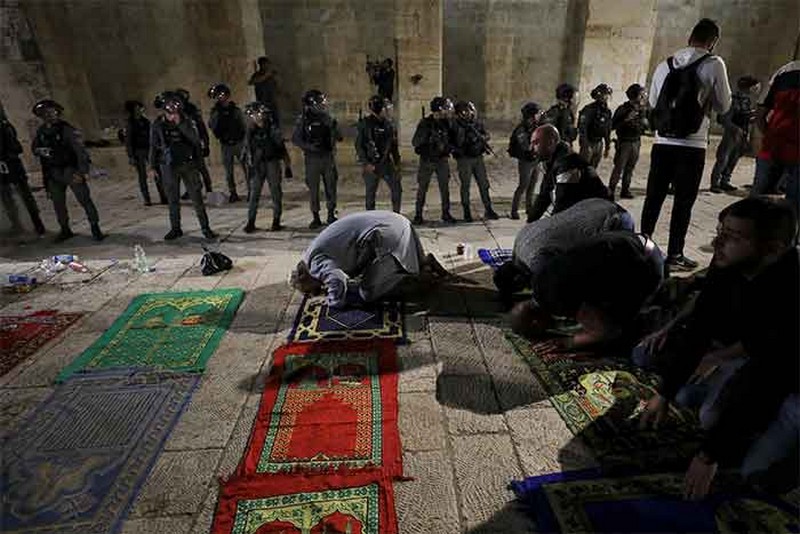
By ordering a brutal attack against Palestinian worshipers inside Al-Aqsa Mosque on the 14th day of the holy Muslim month of Ramadan, Israeli Prime Minister Benjamin Netanyahu knew very well that the Palestinians would retaliate.

Netanyahu’s motive should be clear. He wanted to generate a distraction from the mass protests that have rocked Israel, starting in January, and divided Israeli society around ideological and political lines, in ways never witnessed before.

Unwilling to relinquish his hard-earned achievement of finally winning a decisive election and forming an entirely rightwing coalition, while fearing that major concessions to his political rivals could eventually dissolve his government, Netanyahu set his sights on the Al-Aqsa Mosque.

History has proven that Israeli attacks on Palestinian holy places are a guarantor of a Palestinian response. For Netanyahu, and also his National Security Minister, Itamar Ben Gvir, the price of Palestinian retaliation was worth the political gains of unifying Israelis of all political backgrounds behind them. For Ben-Gvir, in particular, the attack against Al-Aqsa would reassure his far-right religious constituency of his commitment to restoring full Israeli Jewish sovereignty over Palestinian Muslim and Christian holy places in the occupied city.

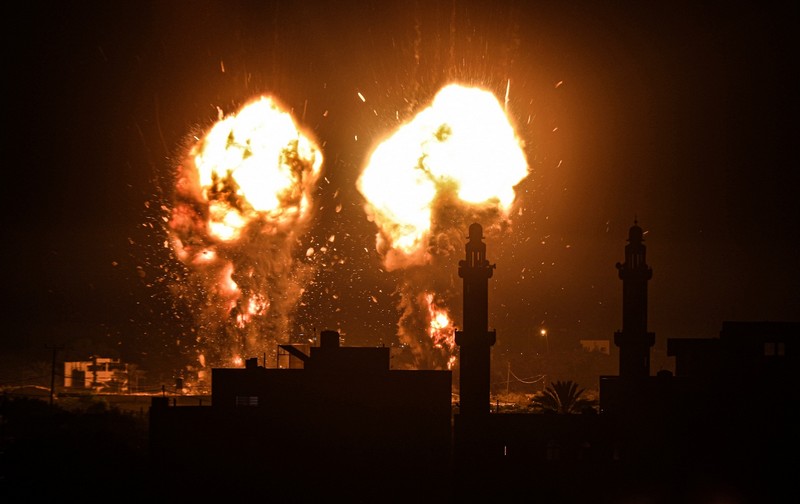
What Netanyahu and his allies may have not anticipated, however, is the intensity of the Palestinian response as hundreds of rockets were fired, not only from besieged Gaza but, even more strategically important, from South Lebanon, towards the northern and southern parts of the country.

Though some damage was reported, the attacks were a political game changer, as it was the first time in years that fighters in two Arab countries coordinated their retaliatory action against Israel and hit back simultaneously.

It will be difficult for Netanyahu to claim any kind of victory after this, unless he takes his country to a major war on two fronts – three, if we are to consider the rise of armed resistance in the Occupied Palestinian West Bank.

However, even a major war could backfire. During the Israeli attack on Gaza in 2014, Israel struggled to sustain a single military front as the war lasted 51 days, leading to an Israeli munition crisis. Were it not for the decision of the Barack Obama Administration to ship massive supplies of munition to Israel to fill its depleted arsenal, Israel could have found itself in an unprecedentedly difficult situation.

The United States, however, is no longer able to play the role of the emergency weapons supplier, at least for now, due to its own ammunition shortage resulting from the Ukraine war. Hence, Israel was careful not to exaggerate in its response to Palestinian and Lebanese rockets. This episode, however, shall prove decisive, as it will empower Israel’s regional enemies, and, instead of boosting, it could potentially undermine Netanyahu’s credibility among his own right-wing camp.

But how could Israel’s most experienced leader in history commit such an obvious strategic error?

Aside from desperately making the decision to attack Al-Aqsa – and likely under pressures from Ben-Gvir and Bezalel Smotrich – Netanyahu and other Israeli leaders often miscalculate the significance of the spiritual component of the Palestinian struggle, and how it ties to Arab and Muslim solidarity with Palestine.

What is currently taking place in Palestine is not a religious war, but some Israeli officials and political parties are keen on turning it into one.

Though warnings against ‘religious wars’ in Palestine – in fact, the entire region – have been mostly linked to Israel’s current “most rightwing government in history”, religious discourses have been the most dominant since the establishment of Israel’s founding ideology, Zionism, in the late 19th century.

Despite the historical fact that Zionism has been situated within a religious context,  the founders of the movement were mostly atheists. They merely used religion as a political tool to unify Jews globally around their new ideology and to romanticize in the minds of their followers what is essentially a violent settler colonial movement.

Yet, over the years, the center of power within the Zionist movement has shifted, from liberal Zionism to Zionist Revisionism to, in the last twenty years or so, religious Zionism. For Israel’s current generation of Zionist leaders, religion is not a political tool, but an objective. This is precisely why, as Palestinian men and women were being attacked with ferocity inside the holiest of all mosques, Israeli Jews were attempting to enter the Muslim shrine to sacrifice animals as part of the Passover tradition. Although not many of them have succeeded in doing so, the event suggests that a new kind of conflict is taking shape.

Historically, Israel targeted Muslim and Christian sites to acquire political capital. Late Israeli Prime Minister Ariel Sharon did just that when he conducted a provocative ‘visit’ inside Haram Al-Sharif with hundreds of soldiers in September 2000, and when the Israeli military completely destroyed or seriously damaged 203 mosques during its so-called “Operation Protective Edge” against Gaza in 2014.

Christian sites have also been attacked and oftentimes confiscated. The targeting of Palestinian Christians led many community leaders, the likes of Archbishop Atallah Hanna, to warn against “an unprecedented conspiracy against the Christian existence”.

The attack on Palestinian religious symbols goes further than the Occupied Territories into historic Palestine, today’s Israel. The 13th-century architectural marvel, Al-Ahmar Mosque in Safad, for example, was turned by Israeli authorities into a nightclub. A study published by the High Follow-up Committee for Arab Citizens in Israel revealed, in July 2020, that scores of mosques were turned into synagogues, barns, bars or restaurants.

Israel’s targeting of the Arab and Muslim identity of Palestine is now being accelerated under Netanyahu’s leadership. But this strategy is a double-edged sword as witnessed in recent days.

In the video that went viral of Israeli soldiers beating up Muslim worshipers, the distressed pleas of a Palestinian woman groaning in pain were heard. “Oh Allah, Oh Allah,” she repeated. Many in Palestinian media and social media have commented that the response by Palestinian Resistance was specifically to answer the call of the unidentified woman. This is the power of spirituality – the kind of logic that Netanyahu and his allies cannot possibly understand.

On April 3, the Jordanian King rightfully stressed that “it is the duty of every Muslim to deter Israeli escalations against Islamic and Christian holy sites in Jerusalem.” When this happens, instead of isolating and browbeating Palestinians, it is Israel that will find itself even more isolated.

Though Palestinians do not see themselves fighting a religious war, protecting their religious symbols stands at the core of their larger fight for freedom, justice and equality.

Dr. Ramzy Baroud is a journalist, author and the Editor of The Palestine Chronicle.

13 April 2023

Source: countercurrents.org

Fiscal Insanity: The Government Borrows $6 Billion a Day, and We’re Stuck with the Bill

By John W. Whitehead and Nisha Whitehead

We’re not living the American dream.

We’re living a financial nightmare.

The U.S. government is funding its existence with a credit card.

The government—and that includes the current administration—is spending money it doesn’t have on programs it can’t afford, and “we the taxpayers” are the ones being forced to foot the bill for the government’s fiscal insanity.

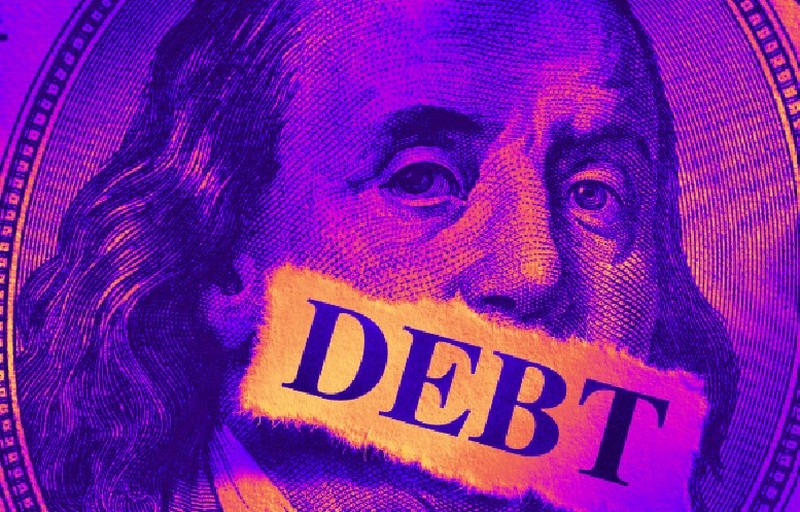
According to the number crunchers with the Committee for a Responsible Federal Budget, the government is borrowing roughly $6 billion a day.

As the Editorial Board for the Washington Post warns:

“The nation has reached a hazardous moment where what it owes, as a percentage of the total size of the economy, is the highest since World War II. If nothing changes, the United States will soon be in an uncharted scenario that weakens its national security, imperils its ability to invest in the future, unfairly burdens generations to come, and will require cuts to critical programs such as Social Security and Medicare. It is not a future anyone wants.

Let’s talk numbers, shall we?

The national debt (the amount the federal government has borrowed over the years and must pay back) is $31 trillion and will grow another $19 trillion by 2033. That translates to roughly $246,000 per taxpayer or $94,000 for every single person in the country.

The bulk of that debt has been amassed over the past two decades, thanks in large part to the fiscal shenanigans of four presidents, 10 sessions of Congress and two wars.

It’s estimated that the amount this country owes is now 130% greater than its gross domestic product (all the products and services produced in one year by labor and property supplied by the citizens).

In other words, the government is spending more than it brings in.

The U.S. ranks as the 12th most indebted nation in the world, with much of that debt owed to the Federal Reserve, large investment funds and foreign governments, namely, Japan and China.

Interest payments on the national debt are estimated to top $395 billion this year, which is significantly more than the government spends on veterans’ benefits and services, and according to Pew Research Center, more than it will spend on elementary and secondary education, disaster relief, agriculture, science and space programs, foreign aid, and natural resources and environmental protection combined.

According to the Committee for a Reasonable Federal Budget, the interest we’ve paid on this borrowed money is “nearly twice what the federal government will spend on transportation infrastructure, over four times as much as it will spend on K-12 education, almost four times what it will spend on housing, and over eight times what it will spend on science, space, and technology.”

In ten years, those interest payments will exceed our entire military budget.

This is financial tyranny.

We’ve been sold a bill of goods by politicians promising to pay down the national debt, jumpstart the economy, rebuild our infrastructure, secure our borders, ensure our security, and make us all healthy, wealthy and happy.

None of that has come to pass, and yet we’re still being loaded down with debt not of our own making while the government remains unrepentant, unfazed and undeterred in its wanton spending.

Indeed, the national deficit (the difference between what the government spends and the revenue it takes in) remains at more than $1.5 trillion.

If Americans managed their personal finances the way the government mismanages the nation’s finances, we’d all be in debtors’ prison by now.

Despite the government propaganda being peddled by the politicians and news media, however, the government isn’t spending our tax dollars to make our lives better.

We’re being robbed blind so the governmental elite can get richer.

In the eyes of the government, “we the people, the voters, the consumers, and the taxpayers” are little more than pocketbooks waiting to be picked.

“We the people” have become the new, permanent underclass in America.

Consider: The government can seize your home and your car (which you’ve bought and paid for) over nonpayment of taxes. Government agents can freeze and seize your bank accounts and other valuables if they merely “suspect” wrongdoing. And the IRS insists on getting the first cut of your salary to pay for government programs over which you have no say.

We have no real say in how the government runs, or how our taxpayer funds are used, but we’re being forced to pay through the nose, anyhow.

We have no real say, but that doesn’t prevent the government from fleecing us at every turn and forcing us to pay for endless wars that do more to fund the military industrial complex than protect us, pork barrel projects that produce little to nothing, and a police state that serves only to imprison us within its walls.

If you have no choice, no voice, and no real options when it comes to the government’s claims on your property and your money, you’re not free.

It wasn’t always this way, of course.

Early Americans went to war over the inalienable rights described by philosopher John Locke as the natural rights of life, liberty and property.

It didn’t take long, however—a hundred years, in fact—before the American government was laying claim to the citizenry’s property by levying taxes to pay for the Civil War. As the New York Times reports, “Widespread resistance led to its repeal in 1872.”

Determined to claim some of the citizenry’s wealth for its own uses, the government reinstituted the income tax in 1894. Charles Pollock challenged the tax as unconstitutional, and the U.S. Supreme Court ruled in his favor. Pollock’s victory was relatively short-lived. Members of Congress—united in their determination to tax the American people’s income—worked together to adopt a constitutional amendment to overrule the Pollock decision.

On the eve of World War I, in 1913, Congress instituted a permanent income tax by way of the 16thAmendment to the Constitution and the Revenue Act of 1913. Under the Revenue Act, individuals with income exceeding $3,000 could be taxed starting at 1% up to 7% for incomes exceeding $500,000.

It’s all gone downhill from there.

Unsurprisingly, the government has used its tax powers to advance its own imperialistic agendas and the courts have repeatedly upheld the government’s power to penalize or jail those who refused to pay their taxes.

While we’re struggling to get by, and making tough decisions about how to spend what little money actually makes it into our pockets after the federal, state and local governments take their share (this doesn’t include the stealth taxes imposed through tolls, fines and other fiscal penalties), the government continues to do whatever it likes—levy taxes, rack up debt, spend outrageously and irresponsibly—with little thought for the plight of its citizens.

To top it all off, all of those wars the U.S. is so eager to fight abroad are being waged with borrowed funds. As The Atlantic reports, “U.S. leaders are essentially bankrolling the wars with debt, in the form of purchases of U.S. Treasury bonds by U.S.-based entities like pension funds and state and local governments, and by countries like China and Japan.”

Of course, we’re the ones who have to repay that borrowed debt.

For instance, American taxpayers have been forced to shell out more than $5.6 trillion since 9/11 for the military industrial complex’s costly, endless so-called “war on terrorism.” That translates to roughly $23,000 per taxpayer to wage wars abroad, occupy foreign countries, provide financial aid to foreign allies, and fill the pockets of defense contractors and grease the hands of corrupt foreign dignitaries.

Mind you, that’s only a portion of what the Pentagon spends on America’s military empire.

The United States also spends more on foreign aid than any other nation, with nearly $300 billion disbursed over a five-year period. More than 150 countries around the world receive U.S. taxpayer-funded assistance, with most of the funds going to the Middle East, Africa and Asia. That price tag keeps growing, too.

As Forbes reports, “U.S. foreign aid dwarfs the federal funds spent by 48 out of 50 state governments annually. Only the state governments of California and New York spent more federal funds than what the U.S. sent abroad each year to foreign countries.”

Most recently, the U.S. has allocated nearly $115 billion in emergency military and humanitarian aid for Ukraine since the start of the Russia invasion.

As Dwight D. Eisenhower warned in a 1953 speech, this is how the military industrial complex continues to get richer, while the American taxpayer is forced to pay for programs that do little to enhance our lives, ensure our happiness and well-being, or secure our freedoms.

This is no way of life.

Yet it’s not just the government’s endless wars that are bleeding us dry.

We’re also being forced to shell out money for surveillance systems to track our movements, money to further militarize our already militarized police, money to allow the government to raid our homes and bank accounts, money to fund schools where our kids learn nothing about freedom and everything about how to comply, and on and on.

There was a time in our history when our forebears said “enough is enough” and stopped paying their taxes to what they considered an illegitimate government. They stood their ground and refused to support a system that was slowly choking out any attempts at self-governance, and which refused to be held accountable for its crimes against the people. Their resistance sowed the seeds for the revolution that would follow.

Unfortunately, in the 200-plus years since we established our own government, we’ve let bankers, turncoats and number-crunching bureaucrats muddy the waters and pilfer the accounts to such an extent that we’re back where we started.

Once again, we’ve got a despotic regime with an imperial ruler doing as they please.

Once again, we’ve got a judicial system insisting we have no rights under a government which demands that the people march in lockstep with its dictates.

And once again, we’ve got to decide whether we’ll keep marching or break stride and make a turn toward freedom.

But what if we didn’t just pull out our pocketbooks and pony up to the federal government’s outrageous demands for more money?

What if we didn’t just dutifully line up to drop our hard-earned dollars into the collection bucket, no questions asked about how it will be spent?

What if, instead of quietly sending in our tax checks, hoping vainly for some meager return, we did a little calculating of our own and started deducting from our taxes those programs that we refuse to support?

As I make clear in my book Battlefield America: The War on the American People and in its fictional counterpart The Erik Blair Diaries, if we don’t have the right to decide what happens to our hard-earned cash, then we don’t have any rights at all.

*

John W. Whitehead is founder and president of The Rutherford Institute.

Nisha Whitehead is the Executive Director of The Rutherford Institute.

12 April 2023

Source: www.globalresearch.ca

Nuclear Deal Is Key to Iran’s Membership in Weapons Treaties, Ex-Official Argues

By Seyed Hossein Mousavian

Dr. Mousavian is a Middle East Security and Nuclear Policy specialist at Princeton’s School of Public and International Affairs.

Turmoil domestic and foreign has roiled Iran over the past year. The government has faced widespread waves of protest after the death of a young woman, Mahsa Amini, at the hands of the police. And negotiations with the world powers failed to revive the 2015 nuclear deal, known as the Joint Comprehensive Plan of Action (JCPOA), resulting in a ramping up of international sanctions.

In this article, I explain Iran’s calculations with respect to the costs and benefits of its membership in the Treaty on the Non-Proliferation of Nuclear Weapons. If Iran abandons that accord, then the goal of establishing a Nuclear-Weapon-Free Zone in the Middle East will be undermined. I present an Iranian perspective on a nuclear-free zone in the Middle East region and propose a strategy to overcome decades of disputes between Iran and the western powers on weapons of mass destruction.

Last year, in response to a new round of US-EU sanctions, Iran started to enrich uranium to 60 percent, a level that could be used to make a nuclear weapon.1 Some reports indicate that inspectors from the International Atomic Energy Agency (IAEA) have found traces of uranium-235 enriched to 84 percent—the highest discovered to this point.2 However, in the past, Iranian officials have emphasized that possession of nuclear weapons would not increase the country’s security.3

Complicating the situation is Iran’s assistance to Russia’s war in Ukraine. The Islamic Republic has acknowledged that it supplied a limited number of drones to Russia in the months before the start of its invasion.

Given these domestic and international pressures, the chance of reviving the JCPOA seems remote.4 Indeed, these events have had consequences for Iran’s foreign policy calculations—particularly, its involvement in international treaties like the nuclear non-proliferation treaty (NPT).

The establishment of a Nuclear-Weapon-Free Zone (NWFZ) is a regional approach to strengthening non-proliferation and disarmament norms. Article VII of the NPT states, “Nothing in this Treaty affects the right of any group of States to conclude regional treaties in order to assure the total absence of nuclear weapons in their respective territories.”5 The UN secretary-general and the high representative for disarmament affairs work with member states to create, strengthen, and consolidate NWFZ that are free of weapons of mass destruction (WMD).6

A central issue is that, while Iran remains a party to the NPT and to the chemical- and biological-weapons bans, it has not benefited from the access to peaceful technologies associated with membership in those conventions.

International efforts to build a Middle East free from WMD began in the 1960s and led to a joint declaration by Iran and Egypt in 1974 and a UN General Assembly resolution.7 In parallel, the 1995 Review and Extension Conference of the Parties to the Treaty on the Non-Proliferation of Nuclear Weapons adopted a resolution calling for “the establishment of an effectively verifiable Middle East zone free of weapons of mass destruction, nuclear, chemical and biological, and their delivery systems.” Subsequent NPT review conferences continued to emphasize the importance of the 1995 resolution with a view to applying IAEA safeguards to all nuclear installations in the region.8

Following the 1995 conference, the IAEA held a series of meetings of experts and academics to consider ways to advance this process.

Centrality of the Non-Proliferation Treaty

The NPT is a landmark international treaty designed “to prevent the spread of nuclear weapons,” “promote cooperation in the peaceful uses of nuclear energy,” and further the goal of nuclear disarmament. It contains the only binding commitment by the first five nuclear-armed states to realize the goal of nuclear disarmament. A total of 191 states have joined the accord.

The three primary goals of the NPT are

  1. nonproliferation
  2. nuclear disarmament
  3. sharing the benefits of peaceful nuclear technology.

Similar goals have been set for the Chemical Weapons Convention and the Biological Weapons Convention.

The concept of “rights vs. commitments” is at the core of these international agreements. There has been little progress by the nuclear states toward disarmament. While Russia and the United States have reduced their nuclear weapons, actual disarmament is nowhere in sight. Instead, the world powers have decided to modernize and upgrade their nukes. The United States plans to spend up to $1.5 trillion over 30 years rebuilding each leg of its nuclear triad (arms deployed by land, sea, and air) and its nuclear-weapons infrastructure.9 The United Kingdom, France, and China also continue to possess nuclear weapons, while Israel, India, Pakistan, and North Korea have joined the club since the NPT came into force.10 On February 21, President Vladimir Putin pulled Russia back from its participation in the New START treaty with the United States, the last deal limiting the two sides’ strategic offensive arsenals.11

There are major differences in the policies of the United States toward countries in the developing world that possess nuclear weapons. North Korea, because it is not a US ally, is under tremendous economic sanctions by the world powers. The American allies Israel, India, and Pakistan are treated differently.

With the exception of Israel, the only nuclear state in the Middle East, regional states have expressed their desire to build a NWFZ.12 This effort has failed so far due to the differing perceptions of states toward such a zone.

Iran’s Failure to Achieve Its Rights under International Conventions

When it comes to the Iran’s nuclear program, the principle of rights vs. commitments has been applied in a vastly disproportionate way. Israel, which has about a hundred nuclear warheads, enjoys the unconditional support of the United States and other world powers, while, Iran, which does not possess a nuclear weapon, is under tremendous pressure from the western powers.13

In addition to its membership in the NPT, Iran has signed the additional protocol as part of the JCPOA, the world’s most comprehensive nuclear transparency agreement.14 The additional protocol entails a number of obligations, including providing the IAEA access to any facility, declared or not, on short notice to investigate suspicious nuclear activity.

The JCPOA is a landmark accord. Iran agreed to dismantle part of its nuclear program and open its facilities to more extensive international inspections in return for the lifting of crippling economic sanctions.15 US experts estimated at the time that if Iran had decided to make a bomb, it would have taken two to three months until it had enough 90 percent-enriched uranium to build a nuclear weapon. The JCPOA significantly increased Iran’s breakout time to more than one year.

Moreover, Iran agreed not to engage in research and development that would contribute to the development of a nuclear weapon. In December 2015, the IAEA’s board of governors voted to end the agency’s decade-long investigation into the possible military dimensions of Iran’s nuclear program. The IAEA’s director general concluded that, until 2003, Iran had conducted “a coordinated effort” on “a range of activities relevant to the development of a nuclear explosive device.” Iran had continued with some of these activities until 2009, but after that there were “no credible indications” of weapons development.16 Iran’s ratification of the additional protocol underscored its agreement to enhanced transparency beyond that required by the NPT.17

Despite Iran’s full implementation of the JCPOA for more than three years, the Trump administration unilaterally withdrew and imposed the most stringent economic sanctions on Iran—in total violation of the deal. The Islamic Republic has faced the same problem with regard the Biological Weapons Convention (BWC), which “prohibits the development, production, acquisition, transfer, stockpiling and use of biological and toxin weapons. It was the first multilateral disarmament treaty banning an entire category of weapons of mass destruction.”18 Iran has fully complied with these two international conventions but has not received the benefits to which it is entitled. In fact, the country was a victim of chemical weapons during war Iraq’s invasion in the 1980s. CIA files show that the United States helped Saddam Hussein launch some of the worst chemical attacks in history against Iran.19 European countries such as Britain, France, and Germany also supplied Iraq with such weapons. Some 80 German companies supplied Saddam’s regime with equipment for its weapons program. An 11,000-page report sent to the UN in 2002 detailed how German companies “actively encouraged” the Iraqi government to develop weapons.20

Iran signed the Chemical Weapons Convention (CWC) in 1993. When I was Iran’s ambassador to Germany, the former chancellor, Helmut Kohl, asked me to personally deliver an important letter to then-President Hashemi Rafsanjani. Kohl proposed that Iran ratify the CWC as soon as possible in order to open the way for Germany and Europe to export peaceful chemical technologies to the Islamic Republic. The Iranian parliament ratified the convention, but the combination of US sanctions and pressure prevented the European companies from delivering the Western side of the bargain.21 

The CWC’s implementation body, the Organisation for the Prohibition of Chemical Weapons, declares that it provides these benefits:

  • training, on-site assistance, and help with legislation;
  • “economic and technological development” through the “spin-offs” of the technologies;
  • financial support for scientific exchange and research projects;
  • and “audits of national laboratories to support the establishment of quality assurance systems.22

Iran has received no fiscal or logistical support on any of these fronts.

Just as with the chemical-weapons pact, the BWC also comes with incentives and commitments. Article I of the convention includes the right of parties to items that can be justified for “prophylactic, protective, or other peaceful purposes”: “For example, States Parties can develop medicines and vaccines to combat naturally occurring outbreaks of diseases as well as defensive measure to combat the effects of biological weapons.”23 The distinction between which items are prohibited and those that are allowed is a matter of purpose. Article X of the BWC clearly states the convention is to “facilitate the fullest possible exchange of equipment, materials and information for peaceful purposes.”24 The convention also notes that it should be implemented in a way that would “avoid hampering” economic and technical development as well as international cooperation of peaceful projects.25

Iran has not been able to benefit from the rights to which it is entitled under the BWC. While the Islamic Republic has made scientific and technological advances in biotechnology and nanotechnology, its advances in these fields have been due to its own domestic efforts, in isolation from the broader international community of researchers. Such constraints have been created by the United States.

Inside the government since the Islamic Revolution in 1979, there have been supporters of membership in these WMD treaties, as well as detractors. I have witnessed this debate since joining the Ministry of Foreign Affairs in 1986. The most serious discussions occurred during my tenure on the Foreign Policy Committee of the Secretariat of the Supreme National Security Council between 1997 and 2005. During that period, I got to know well the arguments of those opposing membership in the treaties: These conventions are a tool in the hands of arrogant global powers. Member states are obliged to allow the inspectors to not only inspect and control all the nuclear-chemical-biological facilities of the country, but also to surveil their technological capabilities and obtain information about sensitive military and security centers.

Thus, there is a strong belief among part of the political-security-military wings in Iran that these international conventions are one-way streets toward restrictions, intrusive inspections, political pressures, and allegations—without any benefits. There have also been numerous cyber and physical attacks on Iran’s nuclear facilities, and assassinations of its nuclear scientists from 2010 onward.26 This has given rise to the belief that such conventions, including extensive access for the IAEA, have enabled the activities of malicious forces against the state.27

Since the Trump administration’s ill-advised withdrawal from the JCPOA, this belief that Iran’s membership in the NPT and disarmament conventions is actually harmful to the country’s national interests has gained momentum. Iran fully implemented the JCPOA for three years. However, once in office, Trump rewarded this behavior by imposing the most stringent sanctions ever on any nation-state. There is now a strong anti-JCPOA faction in Iran. Mohammad-Javad Larijani—a well-known politician and former diplomat—recently said that the JCPOA “is dead but unfortunately not buried, and it smells.”28 He added that the agreement “is a crooked [instrument] and we should never pin hopes on it.”29 

John Kirby of the US National Security Council has made it clear that the United States is looking to make progress on the JCPOA. “The president has always said, while he would prefer a diplomatic, peaceful way to achieve an outcome of Iran not having a nuclear weapon, he isn’t going to take other options off the table,” he said.30 For its part, Iran’s Foreign Ministry has raised the possibility of withdrawing from the NPT as a countermeasure against Western sanctions and pressures. For instance, the European Union has the snapback at its disposal. If the union refers the Iranian nuclear file to the UN Security Council in order to reinstate sanctions, Iran may withdraw from the NPT. And in the event of potential US or Israeli military attacks, Iran may start building a nuclear bomb.31

I must caution against moving down this road. The absence of a nuclear deal and the intensification of US and Western pressures on Iran will make its withdrawal from the NPT more likely. It would then gradually leave all other WMD treaties. That will serve no one’s interests. There is a better solution:

  1. Revive the JCPOA.
  1. The five permanent members of the UN Security Council plus Germany and Iran should form a working group on WMD and finalize the details of a broad agreement based on the following principles:
    1. Iran would pledge its full commitment and adherence to the international nuclear, chemical, and biological conventions;
    2. the world powers would guarantee Iran’s access to the associated peaceful technologies and abolish the relevant sanctions.
  2. The principles of the JCPOA should be regionalized to all Gulf countries to facilitate, at the very least, a nuclear-weapons-free zone in that subregion.


This would be a diplomatic achievement and an important step forward toward a WMD-free world.

1 Simon Henderson, “Iran enriched uranium to 84 percent — but can it make a nuclear bomb?” The Hill, February 20, 2023, https://thehill.com/opinion/national-security/3865793-iran-enriched-uranium-to-84-percent-but-can-it-make-a-nuclear-bomb/.

2 Lauren Sforza, “Nuclear inspectors in Iran find uranium enriched to 84-percent purity: reports,” The Hill, February 19, 2023, https://thehill.com/policy/international/3865880-nuclear-inspectors-in-iran-find-uranium-enriched-to-84-percent-purity-reports/.

3 Islamic Republic News Agency, “Zarif: Nuclear bomb cannot augment Iran security,” July 17, 2019, https://en.irna.ir/news/83400216/Zarif-Nuclear-bomb-cannot-augment-Iran-security.

4 Adam Pourahmadi and Sophie Tanno, “Iran acknowledges providing drones to Russia before Moscow’s invasion of Ukraine,” CNN, November 5, 2022, https://www.cnn.com/2022/11/05/middleeast/iran-drones-russia-intl/index.html.

5 United Nations Office of Disarmament Affairs, “Treaty on the Non-Proliferation of Nuclear Weapons (NPT),” n.d., https://www.un.org/disarmament/wmd/nuclear/npt/text/.

6 Ibid.

7 Nabil Fahmy, “Egyptian Concerns on the P5+1/Iran Joint Comprehensive Plan of Action,” NUPI, September 28, 2015, https://www.nupi.no/en/news/egyptian-concerns-on-the-p5-1-iran-joint-comprehensive-plan-of-action.

8 Arms Control Association, “WMD-Free Middle East Proposal at a Glance,” updated December 2018, https://www.armscontrol.org/factsheets/mewmdfz.

9 Center for Arms Control and Non-Proliferation, “Fact Sheet: U.S. Nuclear Weapons Modernization: Costs & Constraints,” updated January 2023, https://armscontrolcenter.org/fact-sheet-u-s-nuclear-weapons-modernization-costs-constraints/.

10 Seyed Hossein Mousavian and Emad Kiyaei, A Middle East Free of Weapons of Mass Destruction: A New Approach to Nonproliferation (London: Routledge, 2022).

11 Rob Picheta, Anna Chernova, Nathan Hodge, Lauren Kent, and Radina Gigova, “Putin pulls back from last remaining nuclear arms control pact with the US,” CNN, February 21, 2023, https://www.cnn.com/2023/02/21/europe/putin-russia-new-start-nuclear-pact-intl/index.html.

12 Mousavian and Kiyaei, A Middle East Free of Weapons of Mass Destruction.

13 Ibid.; Gawdat Bahgat, “Israel and nuclear proliferation in the Middle East,” Middle East Policy 13, no. 2 (Summer 2006).

14 Seyed Hossein Mousavian and Mohammad Mehdi Mousavian, “Building on the Iran Nuclear Deal for International Peace and Security,” Journal for Peace and Nuclear Disarmament 1, no. 1 (2017): 169-192.

15 Masoud Movahed, “Rebooting Iran’s Economy: What Tehran Needs to Do to Fix its Finances,” Foreign Affairs, November 22, 2015; Masoud Movahed, “Industrializing an Oil-Based Economy: Evidence from Iran’s Auto Industry,” Journal of International Development 32, no. 7 (October 2020).

16 For more details, see BBC News, “Iran nuclear deal: What it all means,” November 23, 2021, https://www.bbc.com/news/world-middle-east-33521655.

17 See the text of the JCPOA through the website of the European Parliament: https://www.europarl.europa.eu/cmsdata/122460/full-text-of-the-iran-nuclear-deal.pdf.

18 United Nations Office for Disarmament Affairs, “Biological Weapons Convention,” n.d., https://www.un.org/disarmament/biological-weapons. 

19 Shane Harris and Matthew M. Aid, “Exclusive: CIA Files Prove America Helped Saddam as He Gassed Iran,” Foreign Policy, August 26, 2013, https://foreignpolicy.com/2013/08/26/exclusive-cia-files-prove-america-helped-saddam-as-he-gassed-iran/.

20 Morning Star, “Iran pursues German companies that gave Saddam Hussein chemical weapons,” People’s World, January 29, 2021, https://www.peoplesworld.org/article/iran-pursues-german-companies-that-gave-saddam-hussein-chemical-weapons/.

21 Seyed Hossein Mousavian, The Iranian Nuclear Crisis: A Memoir (Washington: Carnegie Endowment for International Peace, 2012).

22 Organisation for the Prohibition of Chemical Weapons, “Achieving Universality: Ensuring a truly global treaty,” n.d., https://www.opcw.org/our-work/achieving-universality-convention.

23 Jenni Rissanen, “The Biological Weapons Convention,” NTI, February 28, 2003, https://www.nti.org/analysis/articles/biological-weapons-convention/.

24 United Nations Office for Disarmament Affairs, “The Biological Weapons Convention: An Introduction,” June 2017, https://s3.amazonaws.com/unoda-web/wp-content/uploads/2017/07/BWS-brochure.pdf.

25 Ibid.

26 Mark Saunokonoko, “How Stuxnet worm took out key Iranian nuclear facility in 2010,” 9News, April 12, 2021, https://www.9news.com.au/world/how-stuxnet-cyberattack-took-out-natanz-…;

27 Ronen Bergman and Farnaz Fassihi, “The Scientist and the A.I.-Assisted, Remote-Control Killing Machine,” The New York Times, October 26, 2021, https://www.nytimes.com/2021/09/18/world/middleeast/iran-nuclear-fakhrizadeh-assassination-israel.html.

28 Iran International, “Iran Hardliner Says Nuclear Deal ‘Dead But Not Buried,’” January 20, 2023, https://www.iranintl.com/en/202301204594, accessed February 2, 202

29 Ibid.

30 Tom O’Connor, “With No Nuclear Deal, U.S. Eyes ‘Other Options,’ Iran Says JCPOA ‘Only’ Way,” Newsweek, January 27, 2023, https://www.newsweek.com/no-nuclear-deal-us-eyes-other-options-iran-says-jcpoa-only-way-1777205.

31 Seyed Hossein Mousavian, “What Losing the Iran Deal Could Mean for the Region,” The Cairo Review of Global Affairs, Fall 2022/Winter 2023, https://www.thecairoreview.com/essays/what-losing-the-iran-deal-could-mean-for-the-region/.

Seyed Hossein Mousavian From 2003 to 2005, he was Iran’s spokesman the nuclear negotiations with the European Union and the International Atomic Energy Agency.

11 April 2023

Source: mepc.org

Israel’s obstinate malice and Palestinian’s obdurate resistance

Palestine Update 639
_Comment_

Israel’s obstinate malice and Palestinian’s obdurate resistance
Israeli forces have developed a new habit of beating up Palestinian
worshipers at the Al-Aqsa mosque recurrently. Any pretext will do as
long as it is punitive and damaging physically and psychologically to
the Palestinians. A UN expert has condemned these brutal attacks by
Israeli forces on Palestinians praying at AlAqsa. Francesco Albanese, UN Special Rapporteur has urged the international community to step up efforts to hold the occupying power accountable before the situation spirals further out of control.

An Israeli [1] foreign ministry tweet scolding Palestinian [2] children
for playing football on the grounds of Al-Aqsa Mosque has been condemned and branded hypocritical on social media. The Israeli ministry posted a video [3] with the caption: “Meanwhile, soccer matches are being held just next to the mosque. Is this how the sanctity of the place is being maintained?” The retorts came thick and fast: “The irony is so thick! You talk about sanctity while disregarding Palestinian lives”.

International opinion remains prejudiced against the Palestinians thanks to outlets such as the BBC whose reportage ‘propagandises’ for
Israel and, in fact, enables Israeli violence. Francesca Albanese has
also called out the BBC’s awful reporting.

A Middle East Monitor reports how, in the midst of Ramadan, despite
warnings multiple sources; Jewish settler groups announced its menu for conflict and political tension. They asserted they would celebrate
Passover in Al-Aqsa Mosque, where thousands of Muslims will be spending their days and nights in various acts of worship.

Palestinians refuse to be cowed down by all these threats The
Palestinian resistance factions affirmed “that the threats of the
leaders of the defeated and deterred Zionist enemy will not frighten the
Palestinian people and their valiant resistance but will be met with an
escalation of resistance, revolution and uprising in all its forms
against the criminal enemy entity and its settlers. The factions called
for the continuation of the journey to al-Aqsa Mosque and the
intensification of crowds from all cities, villages and camps of the
homeland in order to defend its Islamic sites in the face of the
Zionist-Talmudic attack, especially in the ten days of the blessed month
of Ramadan”. This threat has carried weight because it is expected
that Netanyahu will not allow settlers to enter the mosque complex durng the period.  Netanyahu has to cope with variance from the extreme far-right Minister of National Security Itamar Ben-Gvir, who believes that stopping the settlers, is “surrendering to terrorism”.

The struggle remains tense with the ongoing Nakba and the ongoing
‘Intifadas’ happening in tandem.

On behalf of MLN Palestine Updates

Ranjan Solomon
————————-

Al-Aqsa: Israeli tweet scolding Palestinian children for playing
football ‘hypocritical’
_Israeli foreign ministry hit out at Palestinian children for disturbing
‘sanctity’ of holy site by playing football_
An Israeli [4] foreign ministry tweet scolding Palestinian [5] children
for playing football on the grounds of Al-Aqsa Mosque has been condemned and branded hypocritical on social media. The Israeli ministry posted a video [6] on Saturday night of teenagers playing football with the caption: “Meanwhile, soccer matches are being held just next to the mosque. Is this how the sanctity of the place is being maintained?”

Hundreds of social media users hit out at the use of the word
“sanctity”, given that Israeli forces stormed the site [7] over two
successive nights last week. “Is this your lame excuse to beat the
worshippers up violently, during the holy month of #Ramadan? The irony is so thick! You talk about sanctity while disregarding Palestinian
lives,” one wrote.
Source [8]

————————————————————————————————————————
Special Procedures @UN_SPExperts
#Israel: UN expert condemns brutal attacks by Israeli forces on
Palestinians praying at #AlAqsa on Wednesday. @FranceskAlbs urges intl community to step up efforts to hold the occupying power accountable before the situation spirals further out of control:
Full statement: [9]
—————————————————————————————————-
John Minto: Israeli attacks on Al Aqsa mosque – and the failings of
media

The last fortnight has seen a series of brutal, deliberately provocative
Israeli attacks on Palestinian worshippers at Al Aqsa Mosque in occupied East Jerusalem during the Muslim holy month of Ramadan. Needless to say, Israel had no business interfering in Muslim worship at Al Aqsa, the third holiest shrine for Muslims after Mecca and Medina, and an area which is not under their authority or control. Despite this, Israeli attacks on Al Aqsa have intensified in recent years as the apartheid state strives to undermine all aspects of Palestinian life in Jerusalem. It is applying ethnic cleansing in slow motion. Inevitably missile attacks on Israel from Gaza and Southern Lebanon followed and Israel has reveled in once again trying to portray itself to the world as the victim.

Initially reporting here in New Zealand was reasonable and clearly
identified Israel as the brutal racist aggressors attacking Palestinian
civilians at worship. However, within a couple of days media reporting
deteriorated dramatically with the “normal” appalling reporting
taking over — painting Palestinians as terrorists and Israel as simply
enforcing “law and order”. At the heart of appalling reporting for a
long time has been the BBC which slavishly and consistently screws the
scrum in Israel’s favour. The BBC does not report on the Middle East
– it propagandises for Israel. Journalist Jonathan Cook describes how
the BBC coverage [10] is enabling Israeli violence and UN Special
Rapporteur on the Palestinian Territories, Francesca Albanese, called
out the BBC’s awful reporting in a tweet. There is an excellent
10-minute video in which former Palestinian spokesperson Hanan Ashrawi more than held her own against a hostile BBC interviewer here [11].

Source [12]: [13]

Israel is in a downward spiral of self-destruction
The sight of Israeli police storming the holy mosque of Al-Aqsa with
their boots and batons, beating worshippers amid clouds of tear gas, was appalling. Hundreds of Palestinians were bound and driven away like cattle in the most inhumane way.

Yes, the holy month of Ramadan is here and what everyone was warning about happened in the worst possible way. “Everyone” includes the Israeli media, the Israeli government, the Israeli security forces, the Palestinians, the Arab states, the Europeans and the Americans, who all anticipated a wave of violence during the fasting month, not least because it coincides with the Jewish Passover (and, this year, Easter). Jewish settler groups announced that they were going to celebrate Passover in Al-Aqsa Mosque, where thousands of Muslims will be spending their days and nights in various acts of worship.

One of the reasons for the Aqaba Summit between the Israelis and the
Palestinians on 26 February was to de-escalate the tension in the
occupied West Bank prior to Ramadan starting. Representatives from
Jordan, Egypt and the US also took part. The US proposed a plan to
de-escalate and stop Palestinian resistance in the West Bank. According
to the US State Department, the Joint Communique following the meeting in Aqaba on 26 February said that Israel and the Palestinian Authority reaffirmed the necessity of committing to de-escalation on the ground and to prevent further violence; Israel committed to stop discussions about any new settlement units for four months and to stop the authorisation of any settlement outposts for six months; and the historic status quo at the holy sites in Jerusalem is to be upheld and
unchanged in word and practice, with an emphasis on the Hashemite
Kingdom’s custodianship and special role in this regard.
Read full article in Middle East Monitor [14]

Resistance factions: Enemy will pay price for any attack, its threats
will not frighten Palestinian people and their resistance The Palestinian resistance factions affirmed on Tuesday that the threats of the leaders of the defeated and deterred Zionist enemy will not frighten the Palestinian people and their valiant resistance but will be met with an escalation of resistance, revolution and uprising in all its forms against the criminal enemy entity and its settlers. The factions called for the continuation of the journey to al-Aqsa Mosque and the intensification of crowds from all cities, villages and camps of the homeland in order to defend its Islamic sites in the face of the Zionist-Talmudic attack, especially in the ten days of the blessed month of Ramadan. It considered that the battle with the Zionist enemy has become fierce and requires concerted efforts to achieve victory over the enemy and thwart all its plans and conspiracies.

The factions saluted the Palestinian people in all squares and fronts,
headed by the steadfast and worshipers in al-Aqsa Mosque, adding that
the steadfastness and painted pictures of glory will remain engraved in
the Palestinian memory, confirming that Al-Aqsa Mosque belongs to
Muslims and Arabs despite the arrogant Zionist enemy. They stressed that this entity will pay the price for any attack and the Palestinian people will continue to teach the enemy lessons in resistance, adherence to rights, and defense of al-Aqsa Mosque, regardless of the sacrifices.

The resistance factions addressed the peoples of the Arab and Islamic
nation and the axis of resistance, headed by the Islamic Republic of
Iran, with salutations, pride, and pride for the effort and active role
in supporting the Palestinian cause and supporting the Palestinian
resistance and the Palestinian people. The resistance factions called on
all the people of the nation to be strong and impenetrable in the face
of all conspiracies and schemes that seek to plunder the nation’s
resources, fragment its unity, and divert its compass from the real and
central enemy of the nation and its people.
Source: [15]

‘Mesaharati’ wakes Gaza’s residents for early Ramadan meal

Every year during Ramadan, Gaza’s residents are woken up by mesaharatis, who drum and sing to make sure people rise in time for suhoor, the pre-dawn meal. Most people now have digital alarm clocks on their mobile phones, but mesaharatis such as Ammar Rajeh are keeping this tradition alive, bringing excitement and joy to children in his neighbourhood every morning before fasting begins.
View images [16]

Al-Aqsa: settlers await Netanyahu nod to storm mosque during last 10
nights of Ramadan

“Israeli Prime Minister Benjamin Netanyahu is holding discussions
with the heads of the security agencies and police, as well as ministers, regarding Jewish settlers storming Al-Aqsa Mosque during thelast ten nights of Ramadan, which hold particular significance for Muslims. According to Haaretz, he is expected to announce his decision later today.

Observers believe that he will not allow settlers to enter the mosque
complex from tomorrow, Wednesday, which is the final day of the Jewish Passover. However, some security officials are also opposed to allowing the settlers to enter Al-Aqsa today. A compromise is likely, making today the last day that they can do so until after Ramadan. Yedioth Ahronoth newspaper reported that Netanyahu has held four meetings so far on the issue. It said that these disagreements arise from the opposition of extreme far-right Minister of National Security Itamar Ben-Gvir, who believes that stopping the settlers is “surrendering to terrorism”.

Source [17]

Palestine Updates from Movement for Liberation from Nakba is a clearing house for historical and current information about happenings in the colonised Palestinian territories. It covers news and analysis as well as global campaigns, reports from Israeli peace movement initiatives, and critiques of Israel’s colonialist apartheid policies in Israel and Palestine which impair peoples lives.

13 April 2023

nakbaliberation.com

The Bombing of Nord Stream — This Act of War Against Europe Requires Congressional Investigation: Dennis Kucinich

By Dennis Kucinich

President Biden’s own statements predicting the end of Nord Stream , preliminary to  the devastating attack on its infrastructure, point to the necessity of determining whether or not the president was speaking from his singularly informed position of the Chief Executive, as Hersh indicated.

As a former chair of a Government Oversight congressional investigative subcommittee, I am calling on Congress to investigate whether or not the Biden Administration initiated the destruction of the Nord Stream pipeline, near Denmark’s Bornholm Island, on September 26, 2022.

Veteran investigative journalist Seymour Hersh’s comprehensive account of the Biden Administration’s role in the bombing of Nord Stream has provided a road map for a series of congressional inquiries necessary to confirm or disconfirm Administration culpability.

President Biden’s own statements predicting the end of Nord Stream, preliminary to  the devastating attack on its infrastructure, point to the necessity of determining whether or not the president was speaking from his singularly informed position of the Chief Executive, as Hersh indicated.

A deconstruction of Hersh’s detailed narrative, (published two months ago on Substack), makes possible the development of a stream of subpoenas to determine the details of the planning and execution of the dismantling of Nord Stream by explosives.

This is a proper subject for a investigation, under Congress’ Article One, Section 8, Clause 18, constitutional powers to gather information, including to inquire on the administrative conduct of office.

The bombing of Nord Stream was an unconstitutional Act of War, involving the destruction of billions of dollars of energy infrastructure and wreaking havoc on the energy markets of Europe. The destruction of this major energy pipeline has affected over 80 million people, threatened the viability of continent’s manufacturing base and its overall economic stability.

The Administration did not have congressional approval, required under Article I, Section 8; nor did they consult with congressional leaders regarding the use of military assets for an attack on Nord Stream.

The President cannot cling to “Executive Privilege.”   The President takes an oath to “preserve, protect and defend the Constitution (Article II, Section 1, U.S. Constitution)…and to “take care the laws be faithfully executed.” (Article 2, Section 3, U.S. Constitution.) Executive privilege cannot be invoked to cover up violations of domestic or international law.  Production of presidential records relating to Nord Stream can be compelled.

Several foreign governments have investigated the undersea demolition. They have, however,  withheld information from not only their constituents, but also from members of their parliaments, further necessitating the exercise of United States’ congressional authority.  Last week, the U.N. Security Council turned down a Russian request for an investigation of the Nord Stream bombing.

The American people have a right to know if their government, as has been reported, was involved in secretly perpetrating an Act of War, using US military personnel and the expenditure of US tax dollars, without the people’s knowledge and without the assent of their elected representatives.

In order to be of assistance to my former colleagues, based on my experience in guiding subcommittee investigations (with the assistance of congressional staff), and with express appreciation for Seymour Hersh’s diligent investigation, I offer an example of (but by no means all-inclusive)  congressional subpoena:

Subpoena

By Authority of the House of Representatives of the Congress of the United States of America

To the Secretary of the Navy:  You are hereby commanded to be and appear before (name of committee) at the time and the date (specified below) to produce the things identified in the attached schedule, touching matters of inquiry committed to said committee….

Schedule A

You, the Secretary of the Navy, in accordance with the attached schedule instructions, are required to produce in unredacted form all records described below:

1. All records in the possession, custody, or control of the United States Department of the Navy or the Office of General Counsel of the Department of the Navy, with the terms “Nord Stream 1,” “Nord Stream 2,” “Baltic Sea,”  “Norway,” “Bornholm Island, Denmark,” “Navy Divers,” “Diving and Salvage Center,” “C-4 explosives,” “timing device,“ “sonar buoy,” “NATO,” BALTOPS 22,” “Congress,” and “Congressional Investigation,” that were generated between January 20, 2021 to the present date.

2. All records indicating the listing of employees operating out of the Diving and Salvage Center in Panama City, Florida.

3. All records indicating the training, tasks and missions of the members of the U.S. Navy Diving Team.

4. All records indicating contracts let by the Diving and Salvage Center.

5. All records indicating C-4 explosives, the chain of custody, the manner in which the explosives are secured, stored, inventoried, requisitioned, transported and used.

6. All records indicating timing devices for purposes of detonating C-4 explosives; the storage, inventory, requisition, transportation and use of same.

7. All records indicating the planning, practice for, the initiation of, or the coordination with, other agencies to advise, conduct, execute or otherwise inform the preparation for and the placement of C-4 explosive devices upon the Nord Stream 1 and Nord Stream 2 pipelines in the Baltic Sea.

8. All records indicating the planning of and the coordination with the NATO operation known as Operation BALTOPS 22.

9. All records indicating meteorological assessments for use in planning actions in the Baltic Sea.

10. All records indicating oceanographic mapping, wave studies, visual and sonar studies of the movement and timing of maritime traffic and the transit of marine mammals in the Baltic Sea.

11. All records indicating US submarine monitoring of the Nord Stream pipelines off Bornholm Island, Denmark.

12. All records indicating meetings, communications, planning sessions, and coordination with, any division or asset of the Department of the Navy, with the Norwegian Navy.

13. All records indicating forecasts of, or assessment of, post-attack damages to the Nord Stream pipelines.

Definitions:

The following definitions apply both to terms within the Subpoena, Schedule A, these instructions and these definitions:

1. The term “record” means any written, recorded, or graphic matter of any nature whatsoever, regardless of how recorded, and whether original or copy,  but not limited to, the following: memoranda, reports, expense reports, books, manuals, instructions, financial reports, working papers, records, notes, letters, notices, confirmations, receipts, appraisals, pamphlets, magazines, newspapers, prospectuses, intra-office and inter-office communications, electronic mail (emails) text messages, instant messages, contracts, cables, notations of any type of conversation, telephone calls, call logs, voicemail, meeting or other communication,  bulletins, printed matter, computer printouts, invoices, transcripts, diaries, analyses, returns, summaries, minutes, bills, accounts, estimates, projections, comparisons, messages, correspondence, press releases, circulars, financial statements, reviews, opinions, offers, studies and investigations, questionnaires and surveys, and work sheets and all drafts, and amendments of any of the foregoing, as well as any attachments or appendices thereto, and graphic or oral records or representations of any kind in the possession of your department.

Similar congressional subpoenas can be sent to the White House, the National Security Agency, the State Department, the Energy Department, the Treasury Department, the Joint Chiefs of Staff, the Defense Intelligence Agency, the President’s Foreign Intelligence Advisory Board, the Central Intelligence Agency and the National Security Agency.

Congress must investigate the bombing of the Nord Stream pipelines.  Listed above are some of the documents that must be obtained, and the list is by no means exclusive.

If the Administration, as has been charged by a veteran investigative journalist, did indeed conspire to blow up the Nord Stream pipelines, it marks a radical shift in the use of the presidential war power, a usurpation of the role of Congress and, unless checked, could lead to further reckless decisions that put us on an irrevocable path toward World War III.

***

A note to our readers in the U.S.:

The bombing of Nord Stream was an unconstitutional Act of War, ordered by President Joe Biden

Contact your member of Congress, with a view to filing a subpoena   

Global Research, April 12, 2023

*

Note to readers: Please click the share button above. Follow us on Instagram and Twitter and subscribe to our Telegram Channel. Feel free to repost and share widely Global Research articles.

Dennis Kucinich is a former Congressman and presidential candidate. Kucinich represented Cleveland, OH in the US Congress for 16 years.

10 April 2023

Source: www.globalresearch.ca

Subjugation and growing prisoners is how the Israel regime occupation is packaged

Palestine Update 638
Comment

Subjugation and growing prisoners is how the Israel regime occupation is packaged
The New Arab has reported that this year alone 95 Palestinians have been killed in occupied West Bank by Israel. This includes 17 minors and two elderly, during a military raid on Nablus.  The Palestine Red Crescent Society said 12 people were treated in the al-Aqsa Mosque compound, a location sacred to both Muslims and Jews, after police used beatings, stun grenades and metal-tipped rubber bullets to clear the area. Armed Israeli soldiers smashed their batons and guns down on cowering Palestinian worshippers in Al-Aqsa Mosque’s Al-Qibli prayer hall during Ramadan sparking outrage worldwide. Tens of thousands of worshipers had amassed at the holy site, like on every Ramadan night. Upon the conclusion of the prayer, hundreds remained – mostly youths, but also women and older men – who barricaded themselves within the Al-Qibli Mosque (also known as Al-Aqsa, although the Palestinians use that term for the entire mountaintop compound.)…The police breached the mosque with stun grenades and batons. 350 people were arrested and sent by bus to a Border Police base outside Jerusalem, where they were released with restraining orders barring them from the mosque.
According to Israeli Prison Service (IPS), as of 31 March 2023, there were 4,747 Palestinians (West Bank, East Jerusalem, Gaza) held as “security prisoners” in detention facilities including 151 children (12-17 years) (150 boys / 1 girl). In the case of children there was a 1 percent increase in the number compared with the previous month and an annual increase of 11 percent compared with 2022. Ten children were held in administrative detention. According to the IPS, 70 percent of child detainees and 80 percent of adults were unlawfully transferred to prisons in Israel in violation of the Fourth Geneva Convention and the Rome Statute of the International Criminal Court.”

Over the last few years, the space for Palestine advocacy in Germany has shrunk. Pro-Palestinian speech is reflexively labeled as antisemitic and, following the passage of the anti-BDS resolution in the German parliament in 2019; federal institutions have begun declaring all actions that support the boycott movement as antisemitic. This has allowed universitiesstate governments, and public institutions to deny Palestinians the right to free speech and assembly.

On behalf of MLN Palestine Updates

Ranjan Solomon

_____________________________________________________

Israeli police raid al-Aqsa Mosque; 37 people injured 

Palestinians inside al-Aqsa Mosque, sparking rocket fire from the Gaza Strip and retaliatory Israeli airstrikes. The Palestine Red Crescent Society said 12 people were treated in the al-Aqsa Mosque compound, a location sacred to both Muslims and Jews, after police used beatings, stun grenades and metal-tipped rubber bullets to clear the area. An additional 25 people received medical attention after being released from Israeli custody, the organization said. Israeli police, who control access to the site in Jerusalem’s Old City and routinely clear its plaza after nightly prayers, said they carried out the raid after a group of worshipers locked themselves inside…The night of violence at the al-Aqsa compound, known to Jews as the Temple Mount, adds fuel to an already combustible situation.”
Read more in Washington Post

Al-Aqsa Mosque raid: How a night of worship became a night of Israeli brutality

 “Footage of heavily armed Israeli soldiers smashing their batons and guns down on cowering Palestinian worshippers in Al-Aqsa Mosque’s Al-Qibli prayer hall during Ramadan sparked outrage worldwide on Wednesday morning…“They kept us on the ground, handcuffed, for a long time, and anyone who raised his head was hit with a gun,” Jaber told Middle East Eye…Speaking after his release, Jaber described the terrifying moment the Israelis forced their way into the holy site in occupied East Jerusalem, where Palestinians were practising the contemplative prayer of Itikaf. Stun grenades and teargas were fired into the thousand-year-old building, before soldiers threw Palestinians to the ground, stamped on them, and bound their hands forcefully behind their backs…Around 400 Palestinians were detained on Tuesday night.”
For more read Middle East Eye

Jewish Activists Fueled the Flames, but Israel Police Sparked the Temple Mount Fire  

“Until Tuesday night at 23:30, Jerusalem was experiencing its most quiet Ramadan in years. The first nine days passed almost without incident, save for the death of Mohammed Khaled Alasibi on the Temple Mount last week. There were record-breaking numbers of Muslim worshipers at the Al-Aqsa compound, and thousands gathered nightly at the Damascus Gate without clashes…This blessed routine was disrupted in recent days, due to the growing efforts of Temple activists seeking to slaughter a goat on the Temple Mount, performing the Passover sacrifice… By Tuesday evening, tens of thousands of worshipers had amassed at the holy site, like on every Ramadan night. Upon the conclusion of the prayer, hundreds remained – mostly youths, but also women and older men – who barricaded themselves within the Al-Qibli Mosque (also known as Al-Aqsa, although the Palestinians use that term for the entire mountaintop compound.)…The police breached the mosque with stun grenades and batons. 350 people were arrested and sent by bus to a Border Police base outside Jerusalem, where they were released with restraining orders barring them from the mosque. According to the Red Crescent, 19 people were wounded, but the most significant result from the police’s operation was a series of TikTok videos uploaded by worshipers – which showed grenades and fireworks exploding on the mosque floor, police officers striking people with batons, a fire breaking out by one of the doors, shattered windows, and screams. These sights moved Hamas to greenlight its rocket launches and have threatened to ignite the region.”
Read more in Haaretz

Israeli Supreme Court rules against eviction of east Jerusalem family
Israel’s top court has ended a 32-year battle, ruling that the Jewish National Fund cannot evict the Palestinian Sumarin family from their home in the Silwan neighborhood of Jerusalem.

“Israel’s Supreme Court ruled on Monday against a petition by the Jewish National Fund supported by the City of David Foundation, also known as Elad, which works to increase the Jewish presence in the city, to evict the Palestinian Sumarin family from their home at the east Jerusalem neighborhood of Silwan. The ruling overturned an earlier ruling by the Jerusalem District Court. The legal struggle over the Sumarin family home has been going on for 32 years. The house is located in an area of the Silwan neighborhood that forms part of the City of David archeological site, which is managed by the Elad organization…On Monday the Supreme Court criticized the state’s previous registration of the house as absentee property while the owner was alive and a resident of Jerusalem. Human rights activists now hope the legal precedent will help halt other eviction orders affecting Palestinian families in Silwan. The Elad group is working to buy properties inside the Palestinian Silwan neighborhood in order to bring in Jewish families.”
Read more: 

Germany’s anti-Palestinian censorship turns on Jews
Anti-Zionist Jews in Germany are increasingly being targeted with accusations of antisemitism, a charge usually directed at Palestinians.

 “Over the last few years, the space for Palestine advocacy in Germany has shrunk. Pro-Palestinian speech is reflexively labeled as antisemitic and, following the passage of the anti-BDS resolution in the German parliament in 2019, federal institutions have begun declaring all actions that support the boycott movement as antisemitic. This has allowed universitiesstate governments, and public institutions to deny Palestinians the right to free speech and assembly. Moreover, the 2019 resolution also dramatically expanded the scope of what is deemed antisemitic — and, while it is not legally binding, many officials use it as the standard by which they determine what is and is not antisemitism. And while this policy was previously deployed almost exclusively against Palestinian Germans, Germany’s attempt to preserve its allegiance to the State of Israel has moved it to target a new and unexpected group: Jews in Germany who are critical of the apartheid state.”
Read full narrative from 972 Mag

10 April 2023

Source: nakbaliberation.com
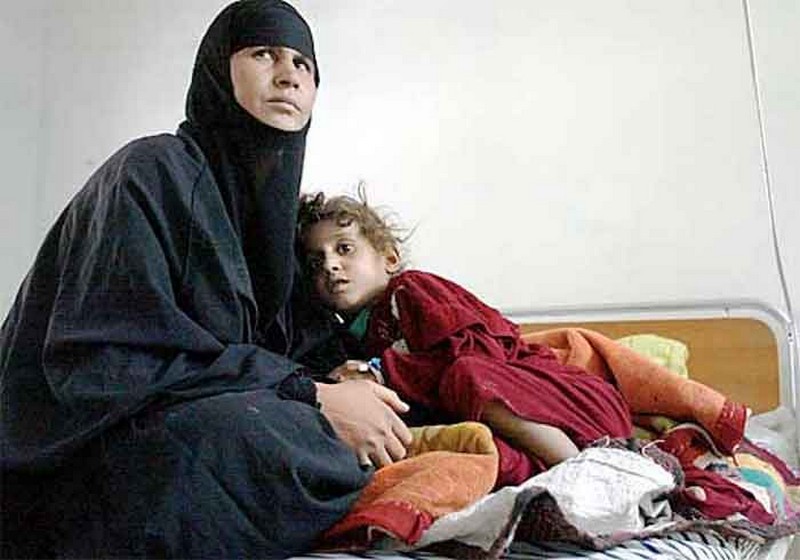
The United Nations Is Being Used by the U.S. in Its Propaganda War Against Nicaragua

By John Perry

While the United States pays little regard to the human rights of many of its own citizens, it manifests intense interest in those of countries that it regards as its enemies.

Nicaragua, designated by both Trump and Biden as a “strategic threat,” is seen as one of those enemies. Of the countries selected for their own annual human rights assessment by the U.S. State Department, Nicaragua merited special attention in 2022, with a 43-page report compared with, for example, only a 36-page analysis of neighboring El Salvador, where 66,000 people have been subjected to mass arrests in the past year. This is part of a highly selective approach in which human rights violations by U.S. allies are downplayed or ignored.

Worse, the U.S. exerts extraordinary influence on international bodies to follow suit, producing their own reports in the same ilk. The Organization of American States (OAS), largely financed by Washington, will readily scrutinize the performance of left-wing governments in Latin America at its bidding, while of course never threatening to monitor human rights in the U.S. itself. Perhaps more alarming, the United Nations human rights apparatus has been similarly instrumentalized to serve Washington’s agenda, as former UN rapporteur Richard Falk has argued.

This was evident again in March when the UN Human Rights Council released a new report by a “group of human rights experts on Nicaragua.”

The report claimed that President Daniel Ortega’s government had “executed” 40 people, disregarding the context of violent opposition attacks using firearms. The report also claimed that the government ordered hospitals not to treat wounded demonstrators, when the then health minister had made clear that anyone injured should receive treatment. It goes on to detail a range of other alleged government human rights abuses, including torture, where the evidence is contested.

The aim of demonizing Nicaragua was apparent at the press conference to launch the report: One of the “experts,” Jan-Michael Simon, a senior researcher at the Max Planck Institute for the Study of Crime, Security and Law in Germany, likened conditions in Nicaragua to those in Nazi Germany (the Sandinista government’s actions are “exactly what the Nazi regime did”).

Given that the group had not even visited the country, this was not only absurd but grossly irresponsible. Yet it enabled The New York Times, never slow to criticize the Sandinista government, to come up with the headline “Nicaragua’s ‘Nazis’: Stunned Investigators Cite Hitler’s Germany.”

However it is the damaging content of the report itself that led the Nicaraguan Solidarity Coalition to launch a petition demanding that it be with withdrawn, already co-signed by human rights experts Alfred de Zayas and Professor Falk.

The report’s focus is on the violence in 2018, which Dan Kovalik has characterized in his new book as bringing Nicaragua “to the verge of civil war, with hundreds killed and many more injured.” The group of experts was charged with examining “all alleged human rights violations and abuses committed in Nicaragua since April 2018” and they claim to have adopted a “victim-centered” approach to their task.

It is extraordinary, then, that the report focuses almost entirely on the human rights of the perpetrators of what became a violent coup attempt, rather than on the rights of the huge numbers of ordinary Nicaraguans who suffered the consequences of their violence.

It is as if the experts had produced a report focusing on, say, the attack on the U.S. Capitol on January 6, 2020, or the recent attack on Brazil’s presidential palace, and focused on the behavior of those repelling the attacks instead of on the injuries and mayhem caused by the attackers.

Image: Leonel Morales lying in a hospital bed. [Source: photo courtesy of Max Blumenthal]

Because it took this stance, the experts’ 300-page report found no space for incidents such as the attempted murder of student leader Leonel Morales, who was kidnapped, shot and left for dead in a drainage ditch. Or the burning down of Radio Ya, whose 21 workers only narrowly escaped death.

Or the sacking of the municipal depot in the city of Masaya, in which all the vehicles were destroyed and the workers so badly beaten or tortured that one later had his arm amputated. Or the attack on the police station of Morrito, that left five dead and nine kidnapped and beaten.

Or countless other crimes by “protesters” whom the report describes as largely peaceful, despite the gruesome scenes of torture and humiliation they filmed and then posted on social media. It contains not a single reference to any of these victims, let alone quoting from testimony (as it does in the cases of alleged victims of government violence).

The Nicaraguan government refused to take part in this exercise, having participated in similar ones in the past and found that its evidence was largely ignored. It has produced detailed evidence to show the steps it took to facilitate access by one set of international investigators, and how its cooperation was then abused.

As a result of past experiences, it denied permission for the group to visit the country, so the experts were reliant on evidence collected remotely. In these circumstances, the group might have been expected to balance carefully the sources and material it used.

In practice the opposite happened: Its preferred sources were opposition media or NGOs, in most cases ones that had received U.S. “democracy promotion” (meaning “regime-change”) funding in the years prior to the 2018 coup attempt, as Nan McCurdy has previously described.

The experts themselves are opaque about how their work was done. Requests for the names of the other team members assembling the report were refused, a lack of transparency which inevitably leads to the suspicion that its researchers might well have been drawn from opposition-supporting “human rights” groups or think tanks.

The report’s bias is obvious from the fact that it makes no reference at all to independent examinations of previous human rights reports, which have shown them to be unbalanced and to contain key omissions.

For example, I was part of a group who prepared the the 2019 report Dismissing the Truth, which identified dozens of inaccuracies and omissions in a report on Nicaragua by Amnesty International.

I also helped compile an open letter from the Alliance for Global Justice to the Inter-American Commission on Human Rights, about the errors in a previous “expert” report that it published.

I have shown the bias and manipulation in the work of Nicaragua’s so-called independent human rights groups, several of which are now based in Costa Rica. The new UN report uses all of these questioned or discredited sources, while ignoring the various detailed, published criticisms of them.

How does a report focused on events five years ago pretend to justify new sanctions on the Nicaraguan government?—by claiming that the government has been engaged “since April 2018 and up to the time of writing this report…[in] a widespread and systematic attack…against a part of the Nicaraguan population.”

Image: Anti-Ortega demonstrator brandishing gun. [Source: photo courtesy of Nan McCurdy]

In making this assertion, the experts not only discount evidence of crimes by those arrested since 2018, but also ignore or downplay the many acts of clemency that took place, culminating in a general, conditional amnesty in 2019 that covered even the organizers of fatal attacks on police stations. The strong implication is that abuses such as “extrajudicial killings” which it alleges—on highly questionable grounds—occurred in 2018, still take place now in a country which is entirely at peace.

The fundamental problem is that the expert group pretends that the opposition forces in 2018 were either unarmed or had only homemade weapons. It said that “acts of violence [were] perpetrated by some demonstrators in the context of the protests, including stone throwing, the use of homemade weapons—mainly ‘mortars,’ and some ‘contact bombs’ and Molotov bombs.”

They also “documented the use of conventional weapons in some cases.” These acts “allegedly” resulted in the deaths of 22 police officers and injuries to more than 400 more from gunfire.

Given that almost all these deaths and injuries were the result of firearm injuries, there is a very obvious disparity between the group’s assessment of the behavior of the opposition groups and what actually happened. If they had also taken into account the widespread kidnappings, torture, arson attacks, robberies and other crimes, they might have come closer to producing a report which reflected the real experience of Nicaraguans in 2018.

Instead, the UN report is clearly intended to be a whitewash of the violence which (as Kovalik says) brought the country “to the verge of civil war,” just as so-called “human rights” bodies were used to whitewash the violence of the “Contras” in the U.S.-directed war of the 1980s. The opposition explicitly aimed to overthrow the Nicaraguan government: At the start of the violence and during the national dialogue that began in May 2018, opposition activists and their leaders openly stated that their objective was the removal of President Daniel Ortega.

There is nothing surprising about the line taken by the new report, as a litany of official reports since 2018 have done the same. The danger of the UN’s latest attack on Nicaragua is that it comes at a time when Washington is clearly deliberating new sanctions.

Indeed, not failing to step up to the task, the group explicitly calls for additional sanctions in one of its recommendations. In doing so, it ignores the UN Human Rights Council’s own assessments of sanctions issued without its authority (known as “unilateral coercive measures”), which conclude that their legality is highly questionable.

Given that the “experts” who wrote this latest report are international lawyers, this is remarkably unprofessional. But it is even more extraordinary that the United Nations would publish such an unbalanced report attacking one of its own member countries, promoted in such a sensational manner. It could be tailor-made to give Washington the go-ahead to continue with the illegal measures against Nicaragua that it has already taken, and which it might now decide to strengthen still further.

John Perry is based in Masaya, Nicaragua and writes for the Council on Hemispheric Affairs, London Review of Books, FAIR and elsewhere.

7 April 2023

Source: www.globalresearch.ca