Just International

China now publishes more high-quality science than any other nation – should the US be worried?

By Caroline Wagner

In 2022, Chinese researchers published three times as many papers on artificial intelligence as US researchers.

By at least one measure, China now leads the world in producing high-quality science. My research shows that Chinese scholars now publish a larger fraction of the top 1% most cited scientific papers globally than scientists from any other country.

I am a policy expert and analyst who studies how governmental investment in science, technology and innovation improves social welfare. While a country’s scientific prowess is somewhat difficult to quantify, I’d argue that the amount of money spent on scientific research, the number of scholarly papers published and the quality of those papers are good stand-in measures.

China is not the only nation to drastically improve its science capacity in recent years, but China’s rise has been particularly dramatic. This has left US policy experts and government officials worried about how China’s scientific supremacy will shift the global balance of power. China’s recent ascendancy results from years of governmental policy aiming to be tops in science and technology. The country has taken explicit steps to get where it is today, and the US now has a choice to make about how to respond to a scientifically competitive China.

Growth across decades

In 1977, Chinese leader Deng Xiaoping introduced the Four Modernisations, one of which was strengthening China’s science sector and technological progress. As recently as 2000, the US produced many times the number of scientific papers as China annually. However, over the past three decades or so, China has invested funds to grow domestic research capabilities, to send students and researchers abroad to study, and to encourage Chinese businesses to shift to manufacturing high-tech products.

Since 2000, China has sent an estimated 5.2 million students and scholars to study abroad. The majority of them studied science or engineering. Many of these students remained where they studied, but an increasing number return to China to work in well-resourced laboratories and high-tech companies.

Today, China is second only to the US in how much it spends on science and technology. Chinese universities now produce the largest number of engineering PhDs in the world, and the quality of Chinese universities has dramatically improved in recent years.

More and better

Thanks to all this investment and a growing, capable workforce, China’s scientific output – as measured by the number of total published papers – has increased steadily over the years. In 2017, Chinese scholars published more scientific papers than US researchers for the first time.

Quantity does not necessarily mean quality though. For many years, researchers in the West wrote off Chinese research as low quality and often as simply imitating research from the US and Europe. During the 2000s and 2010s, much of the work coming from China did not receive significant attention from the global scientific community.

But as China has continued to invest in science, I began to wonder whether the explosion in the quantity of research was accompanied by improving quality.

To quantify China’s scientific strength, my colleagues and I looked at citations. A citation is when an academic paper is referenced – or cited – by another paper. We considered that the more times a paper has been cited, the higher quality and more influential the work. Given that logic, the top 1% most cited papers should represent the upper echelon of high-quality science.

My colleagues and I counted how many papers published by a country were in the top 1% of science as measured by the number of citations in various disciplines. Going year by year from 2015 to 2019, we then compared different countries. We were surprised to find that in 2019, Chinese authors published a greater percentage of the most influential papers, with China claiming 8,422 articles in the top category, while the US had 7,959 and the European Union had 6,074. In just one recent example, we found that in 2022, Chinese researchers published three times as many papers on artificial intelligence as US researchers; in the top 1% most cited artificial intelligence research, Chinese papers outnumbered US papers by a 2-to-1 ratio. Similar patterns can be seen with China leading in the top 1% most cited papers in nanoscience, chemistry and transportation.

Our research also found that Chinese research was surprisingly novel and creative – and not simply copying Western researchers. To measure this, we looked at the mix of disciplines referenced in scientific papers. The more diverse and varied the referenced research was in a single paper, the more interdisciplinary and novel we considered the work. We found Chinese research to be as innovative as other top performing countries.

Taken together, these measures suggest that China is now no longer an imitator nor producer of only low-quality science. China is now a scientific power on par with the US and Europe, both in quantity and in quality.

On August 9, President Joe Biden signed the CHIPS and Science Act into law to support the growth of US research and technology firms as a way to counter China’s scientific growth. Credit: The White House/Flickr

Fear or collaboration?

Scientific capability is intricately tied to both military and economic power. Because of this relationship, many in the US – from politicians to policy experts – have expressed concern that China’s scientific rise is a threat to the US, and the government has taken steps to slow China’s growth. The recent CHIPS and Science Act of 2022 explicitly limits cooperation with China in some areas of research and manufacturing. In October, the Biden administration put restrictions in place to limit China’s access to key technologies with military applications.

A number of scholars, including me, see these fears and policy responses as rooted in a nationalistic view that doesn’t wholly map onto the global endeavor of science.

Academic research in the modern world is in large part driven by the exchange of ideas and information. The results are published in publicly available journals that anyone can read. Science is also becoming ever more international and collaborative, with researchers around the world depending on each other to push their fields forward. Recent collaborative research on cancer, Covid-19 and agriculture are just a few of many examples. My own work has also shown that when researchers from China and the US collaborate, they produce higher quality science than either one alone.

China has joined the ranks of top scientific and technological nations, and some of the concerns over shifts of power are reasonable in my view. But the US can also benefit from China’s scientific rise. With many global issues facing the planet – like climate change, to name just one – there may be wisdom in looking at this new situation as not only a threat, but also an opportunity.

Caroline Wagner is Milton & Roslyn Wolf Chair in International Affairs, The Ohio State University.

15 January 2023

Source: countercurrents.org

Richest 1% Bag Nearly Twice As Much Wealth As The Rest Of The World Put Together Over The Past Two Years, Finds Oxfam Study

By Countercurrents Collective

The rich are having good days as they always have. Even the pandemic could not brake their stockpiling of wealth. The super-rich outstrip their extraordinary grab of half of all new wealth in past decade. The richest 1% of the world bag nearly twice as much wealth as the rest of the world put together over the past two years, finds Survival of the Richest, an Oxfam International (OI) study released on the first day of the World Economic Forum (WEF), January 16, 2023, being held in Davos, Switzerland.

The richest 1% grabbed nearly two-thirds of all new wealth worth $42 trillion created since 2020, almost twice as much money as the bottom 99% of the world’s population, reveals the report. During the past decade, the richest 1% had captured around half of all new wealth.

1.7 Billion Workers

Billionaire fortunes are increasing by $2.7 billion a day even as at least 1.7 billion workers now live in countries where inflation is outpacing wages.
A tax of up to 5% on the world’s multi-millionaires and billionaires could raise $1.7 trillion a year, enough to lift 2 billion people out of poverty. According to the World Bank, extreme poverty increased in 2020 for the first time in 25 years. At the same time, extreme wealth has risen dramatically since the pandemic began.

The report shows that while the richest 1% captured 54% of new global wealth over the past decade, this has accelerated to 63% in the past two years. $42 trillion of new wealth was created between December 2019 and December 2021. $26 trillion (63%) was captured by the richest 1%, while $16 trillion (37%) went to the bottom 99%. According to Credit Suisse, individuals with more than $1 million in wealth sit in the top 1% bracket.

Wealth Climbs

News from Oxfam said:

The billionaire class is $2.6 trillion richer than before the pandemic, even if billionaire fortunes slightly fell in 2022 after their record-smashing peak in 2021. The world’s richest are now seeing their wealth climb again.

U.S., UK, Australia

In the US, the UK and Australia, studies have found that 54%, 59% and 60% of inflation, respectively, was driven by increased corporate profits. In Spain, the CCOO (one of the country’s largest trade unions) found that corporate profits are responsible for 83.4% of price increases during the first quarter of 2022.

The news said:

The World Bank announced that the world has almost certainly lost its goal of ending extreme poverty by 2030 and that “global progress in reducing extreme poverty has grind[ed] to a halt” amid what the Bank says was likely to be the largest increase in global inequality and the largest setback in global poverty since WW2. The World Bank defines extreme poverty as living on less than $2.15 per day.

Elon Musk paid a “true tax rate” of just 3.27% from 2014 to 2018, according to ProPublica.

The $6.85 poverty line was used to calculate how many people (2 billion) an annual wealth tax of up to 5% on the world’s multi-millionaires and billionaires could lift out of poverty.

Polling consistently finds that most people across countries support raising taxes on the richest. For example, the majority of people in the US, 80% Indians, 85% of Brazilians and 69% of people polled across 34 countries in Africa support increasing taxes on the rich.

That is one of the ideas in a report by Oxfam International, which has sought for a decade to highlight inequality at the conclave of political and business elites in the Swiss ski resort of Davos.

The Ultra-Rich And Climate Crisis

OI’s research shows that the ultra-rich are the biggest individual contributors to the climate crisis. The richest billionaires, through their polluting investments, are emitting a million times more carbon than the average person. The wealthiest 1% of humanity are responsible for twice as many emissions as the poorest 50 percent and by 2030, their carbon footprints are set to be 30 times greater than the level compatible with the 1.5°C goal of the Paris Agreement.

The Rich In India

Billionaires in India have seen their fortune surge by 121% or ₹3,608 crore per day in real terms, since the Covid pandemic begun, the OI report showed. On the other hand, the bottom 50% of the population has continued to see their wealth chipped away and by 2020, according to the Survival of the Richest.

The richest 1% in India now own more than 40% of the country’s total wealth, while the bottom half of the population together share just 3% of wealth, the new study showed.

Releasing the India supplement of its annual inequality report on the first day of the WEF Annual Meeting here, the OI said that taxing India’s ten-richest at 5 percent can fetch entire money to bring children back to school.

Food Companies

Food companies making big profits as inflation has surged should face windfall taxes to help cut global inequality, said OI.

Billionaire wealth surged in 2022 with rapidly rising food and energy profits.

The report shows that 95 food and energy corporations have more than doubled their profits in 2022. They made $306 billion in windfall profits, and paid out $257 billion (84%) of that to rich shareholders.

The Walton dynasty, which owns half of Walmart, received $8.5 billion over the last year.

Indian billionaire Gautam Adani, owner of major energy corporations, has seen this wealth soar by $42 billion (46%) in 2022 alone.

Excess corporate profits have driven at least half of inflation in Australia, the U.S. and the UK.

Inflation And Wage

At the same time, at least 1.7 billion workers now live in countries where inflation is outpacing wages, and over 820 million people —roughly one in ten people on Earth —  are going hungry.

Eat Least And Last

Women and girls often eat least and last, and make up nearly 60% of the world’s hungry population. The World Bank says we are likely seeing the biggest increase in global inequality and poverty since WW2. Entire countries are facing bankruptcy, with the poorest countries now spending four times more repaying debts to rich creditors than on healthcare. Three-quarters of the world’s governments are planning austerity-driven public sector spending cuts — including on healthcare and education — by $7.8 trillion over the next five years.

The Irish Rich

The wealthiest 1% of Irish society now own more than a quarter of the country’s wealth or €232 billion, the report claims.

The research also shows that with €15 billion between them, the two richest people here have 50% more wealth than the poorest half of the population.

In total the study, based on data collated from Forbes, Credit Suisse and Wealth-X, found eight Irish people are worth over a billion euro, down one from last year.

But 1,435 individuals here are worth over €47m while 20,575 own over € 4.7 million.

Over the last decade, the numbers in both those categories has more than doubled the analysis finds, as wealth creation here grows.

Laying out how new wealth is distributed, the study claims that for every $100 or €93 of wealth created in Ireland over the past decade, a third has gone to the richest 1% and less than 50c to the bottom 50%.

The richest 1% has therefore gained 70 times more wealth than the bottom 50% in the last 10 years, Oxfam says.

While the top 10% of the population now owns nearly two thirds of the wealth, totalling €547 billion, but the bottom 50% of Irish society owns only 1% of wealth.

The Survival of the Richest is published on the opening day of the WEF. Elites are gathering in the Swiss ski resort as extreme wealth and extreme poverty have increased simultaneously for the first time in 25 years.

An OI release said:

“While ordinary people are making daily sacrifices on essentials like food, the super-rich have outdone even their wildest dreams. Just two years in, this decade is shaping up to be the best yet for billionaires —a roaring ‘20s boom for the world’s richest,” said Gabriela Bucher, Executive Director of OI.

“Taxing the super-rich and big corporations is the door out of today’s overlapping crises. It’s time we demolish the convenient myth that tax cuts for the richest result in their wealth somehow ‘trickling down’ to everyone else. Forty years of tax cuts for the super-rich have shown that a rising tide does not lift all ships — just the superyachts.”

A billionaire gained roughly $1.7 million for every $1 of new global wealth earned by a person in the bottom 90%. Billionaire fortunes have increased by $2.7 billion a day. This comes on top of a decade of historic gains — the number and wealth of billionaires having doubled over the last ten years.

Oxfam is calling for a systemic and wide-ranging increase in taxation of the super-rich to claw back crisis gains driven by public money and profiteering. Decades of tax cuts for the richest and corporations have fueled inequality, with the poorest people in many countries paying higher tax rates than billionaires.

Elon Musk, one of the world’s richest men, paid a “true tax rate” of about 3 percent between 2014 and 2018. Aber Christine, a flour vendor in Uganda, makes $80 a month and pays a tax rate of 40 percent.

Worldwide, only four cents in every tax dollar now comes from taxes on wealth. Half of the world’s billionaires live in countries with no inheritance tax for direct descendants. They will pass on a $5 trillion tax-free treasure chest to their heirs, more than the GDP of Africa, which will drive a future generation of aristocratic elites. Rich people’s income is mostly unearned, derived from returns on their assets, yet it is taxed on average at 18%, just over half as much as the average top tax rate on wages and salaries.

The report shows that taxes on the wealthiest used to be much higher. Over the last forty years, governments across Africa, Asia, Europe, and the Americas have slashed the income tax rates on the richest. At the same time, they have upped taxes on goods and services, which fall disproportionately on the poorest people and exacerbate gender inequality. In the years after WW2, the top U.S. federal income tax rate remained above 90 percent and averaged 81 percent between 1944 and 1981. Similar levels of tax in other rich countries existed during some of the most successful years of their economic development and played a key role in expanding access to public services like education and healthcare.

“Taxing the super-rich is the strategic precondition to reducing inequality and resuscitating democracy. We need to do this for innovation. For stronger public services. For happier and healthier societies. And to tackle the climate crisis, by investing in the solutions that counter the insane emissions of the very richest,” said Bucher.

According to new analysis by the Fight Inequality Alliance, Institute for Policy Studies, Oxfam and the Patriotic Millionaires, an annual wealth tax of up to 5% on the world’s multi-millionaires and billionaires could raise $1.7 trillion a year, enough to lift 2 billion people out of poverty, fully fund the shortfalls on existing humanitarian appeals, deliver a 10-year plan to end hunger, support poorer countries being ravaged by climate impacts, and deliver universal healthcare and social protection for everyone living in low- and lower middle-income countries.

Oxfam’s calculations are based on the most up-to-date and comprehensive data sources available. Figures on the very richest in society come from the Forbes billionaire list.

All amounts are expressed in US dollars and, where relevant, have been adjusted for inflation using the US consumer price index.

A Few Of The Key Findings Of The Report:

  • The India supplement of the inequality report said that the richest one per cent in India now own more than 40 % of the country’s total wealth, while the bottom half of the population together share just 3% of wealth.
  • Making a case for taxing the rich, the report said that taxing India’s ten richest at 5% can fetch entire money to bring children back to school.
  • It also argued that one-off tax on unrealized gains from 2017–2021 on Gautam Adani, could have been enough to employ more than five million Indian primary school teachers for a year.
  • The report further said that if India’s billionaires are taxed once at 2% on their entire wealth, it would support the requirement of ₹40,423 crore for the nutrition of malnourished in the country for the next three years.
  • “A one-time tax of 5% on the 10 richest billionaires in the country ( ₹1.37 lakh crore) is more than 1.5 times the funds estimated by the Health and Family Welfare Ministry ( ₹86,200 crore) and the Ministry of Ayush ( ₹3,050 crore) for the year 2022-23,” it added.
  • In 2021-22, only 3% of GST coming from the top 10% while approximately 64% of the total ₹14.83 lakh-crore in Goods and Services Tax (GST) came from bottom 50% of the population.
  • According to the report, taxing the top 100 Indian billionaires at 2.5%, or taxing the top 10 Indian billionaires at 5% would nearly cover the entire amount required to bring the children back into school.
  • Oxfam said the report is a mix of qualitative and quantitative information to explore the impact of inequality in India.
  • The total number of billionaires in India increased from 102 in 2020 to 166 in 2022 while the combined wealth of India’s 100 richest has touched USD 660 billion ( ₹54.12 lakh crore), an amount that could fund the entire Union Budget for more than 18 months.

Oxfam India urged the Union finance minister to introduce one-off solidarity wealth taxes and windfall taxes to end crisis profiteering. It also demanded a permanent increase in taxes on the richest 1% and especially raise taxes on capital gains, which are subject to lower tax rates than other forms of income.

Oxfam has called on governments to:​​​​​​​

  • Introduce one-off solidarity wealth taxes and windfall taxes to end crisis profiteering.
  • Permanently increase taxes on the richest 1 percent, for example to at least 60 percent of their income from labor and capital, with higher rates for multi-millionaires and billionaires. Governments must especially raise taxes on capital gains, which are subject to lower tax rates than other forms of income.

Tax the wealth of the richest 1 percent at rates high enough to significantly reduce the numbers and wealth of the richest people, and redistribute these resources. This includes implementing inheritance, property and land taxes, as well as net wealth taxes.

Countercurrents is answerable only to our readers. Support honest journalism because we have no PLANET B.

16 January 2023

Source: countercurrents.org

Davos 2023: Fragmenting the World

By Rick Thomas

The annual Davos Boys Club (it’s also open to girls as long as they know their place) is meeting Jan 16 – 20 in the Swiss Alps. The uber wealthy technocrats will discuss how to fix the fragmented world they broke. The promo for the event says it all, no need to dig for a hidden agenda:

Canadian Deputy Crime Minister Chystia Freeland will be there sniffing and twitching like she just fell off the bus on East Hastings. The usual suspects will attend, basking in the glow of their mutual sociopathy. Hopefully, they will squeeze in some skiing, and maybe cruise by the elementary school for future prospects. Epstein sightings are predicted.

The meeting will bring together 2700 members including 52 heads of state, 600 CEO’s, 160 young globalists and 125 experts from the world’s leading universities, research institutions, and think tanks. From the United States: the likes of FBI director Chris Wray, the CEOs of Amazon, BlackRock, and Pfizer, top officials at the Gates Foundation and in the Soros network, and the Publisher of The New York Times, to name a few. Special guests include:

  • John F. Kerry, Special Presidential Envoy for Climate of the United States of America
  • Avril Haines, US Director of National Intelligence
  • Martin J. Walsh, Secretary of Labor of the United States
  • Katherine Tai, United States Trade Representative
  • Chrystia Freeland, Deputy Prime Minister and Minister of Finance of Canada
  • Christine Lagarde, President, European Central Bank

Ukrainian President Volodomyr Zelensky will speak at the annual World Economic Forum conference in January 2023, and he will be featured on a panel with Jens Stoltenberg, the secretary-general of NATO, and CNN’s Fareed Zakaria. The panel will be called “Restoring Security and Peace,” which is Orwellian Newspeak for “How do we Balkanise Russia after we Destroy Ukraine.”

Conspicuously absent, there will be no Russian delegation this year.

In a recent Globe and Mail article, WEF managing director Adrian Monck complains that trolls are wrecking all of Klaus Schwab’s beautiful wickedness, by spreading far-right disinfo and stuff. He rattles on trying to prove the WEF are nice guys and would never plot world takeover or pull the wings off butterflies: “A pandemic was raging, and the World Economic Forum launched The Great Reset, promoting the idea of building back better so that economies could emerge greener and fairer out of the pandemic,” he says without blinking.

He continues on with the usual scripted propaganda that anti-semitic, far-right extremists, conspiracy-theorists, white-supremacists, neo-nazis, other-non-conformists are-misbehaving on the internet.

Why can’t they just drink the koolaid and do what they’re told like everybody else?

He is simply astonished that one website claimed the Great Reset was a “response to the coronavirus faked crisis” and would usher in “global communism” to ensure “no one will be able to own anything.” Wow, imagine that.

And yet, straight out of the horse’s mouth, the WEF itself suggests that a globalised world is best managed by a self-selected coalition of multinational corporations, governments and civil society organisations, which it expresses through initiatives like the Great Reset and the Global Redesign.

The main themes for 2023 will include: [translations provided by the author]

  1. Energy and Food Crises in the context of a New System for Energy, Climate and Nature [how to starve the plebs into submission]
  2. High Inflation, Low Growth, High Debt Economy in the context of a New System for Investment, Trade and Infrastructure [how to bankrupt the plebs into submission]
  3. Industry Headwinds in the context of a New System for Harnessing Frontier Technologies for Private Sector Innovation and Resilience [how to create the Borg]
  4. Social Vulnerabilities in the context of a New System for Work, Skills and Care [how to exploit the crisis they created]
  5. Geopolitical Risks in the context of a New System for Dialogue and Cooperation in a Multipolar World [how to exploit the war in Ukraine and/or how to exploit the crises they made without blowing themselves up in the process]

During the annual meeting the population of Davos explodes to well over 100,000, including participants, media, security, and support staff. About 2,500 in that surge are WEF delegates and the remainder comprise their entourage and security necessary for the delegates’ appearances, about 40 staff members per delegate.

Becoming an official member of WEF is expensive to say the least. You must be either in the billionaire crowd or a world leader whose tax payers foot the bill.

It costs $19,000 per person to attend.

Unfortunately, you cannot do so unless your organisation is also a WEF member. That costs between $60,000 and $600,000 a year, depending on your “partner” status. Doing the math, it costs minimum $79,000 per delegate to attend plus the additional cost for flights, accomodation and meals for their private entourages.

Doing more math: Schwab and the WEF are raking in a minimum of $213,000,000 and that would be the most conservative estimate. No doubt, the WEF gets a cut from all the hotels and other services, and so it would not be out of line to estimate at least a billion dollars per year in income.

Fortunately, the Swiss Army will be there, armed with their Swiss Army Knives, to keep all the nasty conspiracy theorists from crashing the party and spoiling all the fun. The Swiss government announced:

“For the use of the army in the form of support services on the occasion of the WEF from 10 to 26 January, the Federal Parliament has set an upper limit of 5,000 military personnel … With armed fighter jets on permanent patrol duty during the conference period, ground-to-air defence, additional radars, enhanced airspace surveillance and 24-hour air police service (throughout Switzerland).”

Though the WEF meets in Davos every year, it is actually headquartered in the tiny town of Cologny, outside of Geneva, 265 miles west.

One of Cologny’s claims to fame is that a group of Romantic poets and writers spent the summer there in 1816: Lord Byron, John Polidori, Mary Shelley and Percy Bysshe Shelley. Due to the poor weather, the guests spent days indoors telling each other horror stories. Mary Shelley’s Frankenstein and John Polidori’s The Vampyre, were the result of these fireplace sessions. Frankenstein is the story of a mad scientist who creates a monster out of used body parts, and The Vampyre is the story of a blood-sucking aristocrat who preys upon society. Sweet.

Despite the downplaying of regular attendees like Bono, who smirks that Davos is a herd of “fat cows in the snow,” the reality is that the WEF is increasingly becoming the centre of global decision-making. The United Nations did not become the forum that the elites could use to create their global corporate empire, simply because there is too much red tape and policies within the United Nations’ constitution that cannot be over-riden.

Secondly, the United Nations is built on the nation-state model, something the WEF wants to do away with.

The WEF is the future world government, plain and simple. Schwab is already its first president, and arguably the unacknowledged and unofficial CEO of the world.

All that has to happen next, through their planned series of forthcoming mega-crisis, is for the world to acknowledge the WEF’s conquest of all nation states and submit to its supreme authority.

The pandemic was the first stage towards the WEF’s endgame.

The World Health Organisation successfully enlisted 194 nations into a global coup d’etat without firing a shot.

There are three things the WEF needs to destroy in order to consolidate their power: national sovereignty, civil rights and faith in our Creator. Only the first one can be destroyed.

They can take away the power of nations on the world stage. Sovereignty has been undergoing a gradual degradation for decades. As Prime Minister Justin Trudeau said, “Canada is the world’s first post-national state,” referring to the fact that his cabinet is infiltrated by WEF members.

[Here is a complete list of Canadian elected officials who are WEF members.]

Civil rights and faith are impossible to destroy, and as history has shown, violating either results in an increase. Civil rights are the outward political expression of the inner spiritual path. Those who are on a spiritual journey, or those who value their freedom are boldly indignant when injustice occurs, especially when people’s right to basic human existence is threatened. The universe reveals that good is more powerful than evil. For all the evil that is done under the sun, the good that it produces is a hundred times greater.

The seed of destruction is planted in every totalitarian regime because tyranny is ultimately suicidal for all involved. We can, therefore, stand firm and say in confidence, “Bring it on, Schwab, bring it on.”

Rick Thomas is a musician, activist and the author of How to Defeat the New World Order.

21 January 2023

Source: globalresearch.ca

Bad news for Palestinians as Israel resorts to utmost cruelties

By Ranjan Solomon

Palestine Update 621

Bad news for Palestinians as Israel resorts to utmost cruelties
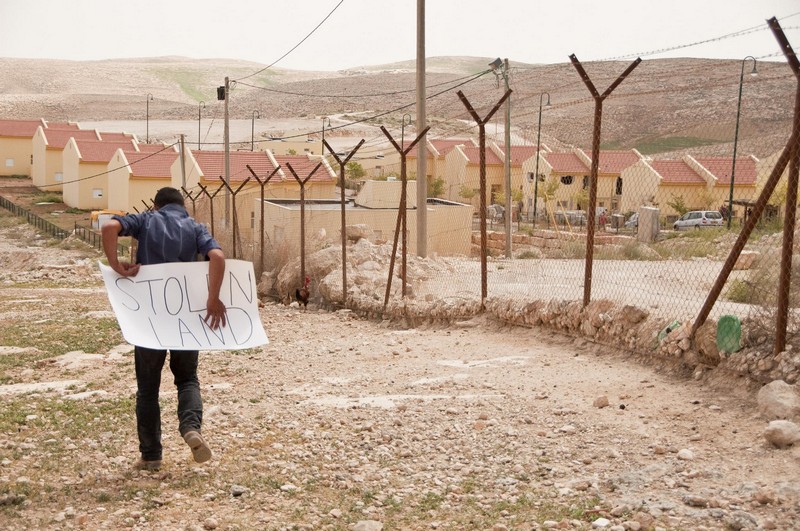
Israel persists with its unilateral and cruel choices of how it treats Palestinians and their villages. Despite the fact that forcible transfer of civilian populations in occupied territory is deemed as a war crime, Israel is pursuing a relentless plan to evict 1000 Palestinians from Masafer Yatta to make way for a firing zone for the Israel army. Israel is wayward in offering a substitute area to dwell. But this offer comes under duress and is, hence, devoid of any civilized intention. Peace Now and Bimkom report that Israel will remove Palestinians from about 3,250 acres of land in the West Bank and about 70 buildings in Hebron supposedly owned by Jews before 1948. This is part of a political deal between Likud and Religious Zionism to enable assets currently held by the Civil Administration to be transferred to their pre-1948 Jewish owners.

The threat to ban the Palestinian flag is not cutting ice among Palestinians. On the other hand, Israel does this more out of fear and insecurity and inanity. How can an entire identity be erased by banning a flag?

More cruelties; this time in Israeli prisons. As of 30 September 2022, there were 4,529 Palestinians (West Bank, East Jerusalem, Gaza) held as “security prisoners” in detention facilities including 129 children (12-17 years). In the case of children there was a 4 percent increase in the number compared with the previous month and an annual decrease of 12 percent compared with 2021. Seven children were held in administrative detention. According to the IPS, 68 percent of child detainees were transferred to prisons inside Israel in violation of the Fourth Geneva Convention and the Rome Statute of the International Criminal Court.

Israel’s new coalition has established a stranglehold over the Biden administration. It has got Biden to revoke its opposition to illiberal, theocratic tendencies to disentangle the judiciary, target ethnic and gender minorities, and unilaterally annex the occupied territories. Washington’s intransigence in the face of these cold realities comes as no shocker. In a cabinet filled with people whose criminal records are scandalous, it can be hardly expected that politically moral decisions will be taken. What do the ilk of Netanyahu’s cabinet coalition partner’s care? Nor is Netanyahu a saint given the array of charges he faces. The face of Israel’s fascists cabinet is scary to say the least.

In solidarity,
Ranjan Solomon
On behalf of MLN Palestine Updates.

19 January 2023

What It Means for Hunger to Burn Through the Pentagon’s Ranks

By Andrea Mazzarino

By any standard, the money the United States government pours into its military is simply overwhelming. Take the $858-billion defense spending authorization that President Biden signed into law last month. Not only did that bill pass in an otherwise riven Senate by a bipartisan majority of 83-11, but this year’s budget increase of 4.3% is the second highest in inflation-adjusted terms since World War II. Indeed, the Pentagon has been granted more money than the next 10 largest cabinet agencies combined. And that doesn’t even take into account funding for homeland security or the growing costs of caring for the veterans of this country’s post-9/11 wars. That legislation also includes the largest pay raise in 20 years for active-duty and reserve forces and an expansion of a supplemental “basic needs allowance” to support military families with incomes near the poverty line.

And yet, despite those changes and a Pentagon budget that’s gone through the roof, many U.S. troops and military families will continue to struggle to make ends meet. Take one basic indicator of welfare: whether or not you have enough to eat. Tens of thousands of service members remain “food insecure” or hungry. Put another way, during the past year, members of those families either worried that their food would run out or actually did run out of food.

As a military spouse myself and co-founder of the Costs of War Project, I recently interviewed Tech Sergeant Daniel Faust, a full-time Air Force reserve member responsible for training other airmen. He’s a married father of four who has found himself on the brink of homelessness four times between 2012 and 2019 because he had to choose between necessities like groceries and paying the rent. He managed to make ends meet by seeking assistance from local charities. And sadly enough, that airman has been in all-too-good company for a while now. In 2019, an estimated one in eight military families were considered food insecure. In 2020, at the height of the Covid-19 pandemic, that figure rose to nearly a quarter of them. More recently, one in six military families experienced food insecurity, according to the advocacy group Military Family Advisory Network.

The majority of members of the military largely come from middle-class neighborhoods and, not surprisingly perhaps, their struggles mirror those faced by so many other Americans. Spurred by a multitude of factors, including pandemic-related supply-chain problems and — you guessed it — war, inflation in the U.S. rose by more than 9% in 2022. On average, American wages grew by about 4.5% last year and so failed to keep up with the cost of living. This was no less true in the military.

An Indifferent Public

An abiding support for arming Ukraine suggests that many Americans are at least paying attention to that aspect of U.S. military policy. Yet here’s the strange thing (to me, at least): so many of us in this century seemed to care all too little about the deleterious domestic impacts of our prolonged, disastrous Global War on Terror. The U.S. military’s growing budget and a reach that, in terms of military bases and deployed troops abroad, encompasses dozens of countries, was at least partly responsible for an increasingly divided, ever more radicalized populace here at home, degraded protections for civil liberties and human rights, and ever less access to decent healthcare and food for so many Americans.

That hunger is an issue at all in a military so wildly well-funded by Congress should be a grim reminder of how little attention we pay to so many crucial issues, including how our troops are treated. Americans simply take too much for granted. This is especially sad, since government red tape is significantly responsible for creating the barriers to food security for military families.

When it comes to needless red tape, just consider how the government determines the eligibility of such families for food assistance. Advocacy groups like the National Military Family Association and MAZON: A Jewish Response to Hunger have highlighted the way in which the Basic Allowance for Housing (BAH), a non-taxable stipend given to military families to help cover housing, is counted as part of military pay in determining the eligibility of families for food assistance. Because of that, all too many families who need such assistance are disqualified.

Debt-Funded Living, Debt-Funded Wars

The BAH issue is but one part of a larger picture of twenty-first-century military life with its torrent of expenses, many of which (like local housing markets) you can’t predict. I know because I’ve been a military spouse for 12 years. As an officer’s wife and a white, cisgender woman from an upper-middle-class background, I’m one of the most privileged military spouses out there. I have two graduate degrees, a job I can do from home, and children without major health issues. Our family has loved ones who, when our finances get tight, support us logistically and financially with everything from childcare to housing expenses to Christmas gifts for our children.

And yet even for us, affording the basics has sometimes proved challenging. During the first few months after any move to a new duty station, a typical uprooting experience for military families, we’ve had to wield our credit cards to get food and other necessities like gas. Add to that take-out and restaurant meals, hotel rooms, and Ubers as we wait weeks for private contractors to arrive with our kitchen supplies, furniture, and the like.

Tag on the cost of hiring babysitters while we wait for affordable childcare centers in the new area to accept our two young children, and then the high cost of childcare when we finally get spots. In 2018, during one of those moves, I discovered that the military had even begun putting relocated families like ours at the back of wait lists for childcare fee assistance — “to give others a chance,” one Pentagon representative told me when I called to complain. In each of the five years before both of our children entered public school, we spent nearly twice as much on childcare as the average junior enlisted military service member gets in total income for his or her family.

Our finances are still struggling to catch up with demands like these, which are the essence of military life.

But don’t worry, even if your spouse isn’t nearby, there are still plenty of social opportunities (often mandated by commanders) for family members to get together with one another, including annual balls for which you’re expected to purchase pricey tickets. In the post-9/11 era, such events have become more common and are frequently seen as obligatory. In this age of the gig economy and the rolling back of workplace benefits and protections, the military is, in its own fashion, leading the way when it comes to “bringing your whole self (money included) to work.”

Now, add the Covid-19 pandemic into this fun mix. The schedules of many military personnel only grew more complicated given pre- and post-deployment quarantine requirements and labor and supply-chain issues that made moving ever less efficient. Military spouse unemployment rates, which had hovered around 24% in the pre-pandemic years, shot up to more than 30% by early 2021. Spouses already used to single parenting during deployments could no longer rely on public schools and daycare centers to free them to go to work. Infection rates in military communities soared because of travel, as well as weak (or even nonexistent) Covid policies. All of this, of course, ensured that absenteeism from work and school would only grow among family members. And to make things worse, as the last Congress ended, the Republicans insisted that an authorization rescinding the requirement for military personnel to get Covid vaccines become part of the Pentagon budget bill. All I can say is that’s a bit more individual freedom than this military spouse can wrap her brain around right now.

Worse yet, this country’s seemingly eternal and disastrous twenty-first-century war on terror, financed almost entirely by national debt, also ensured that members of the military, shuttled all over the planet, would incur ever more of it themselves. It should be no surprise then that many more military families than civilian ones struggle with credit-card debt.

And now, as our country seems to be gearing up for possible confrontations not just with terror groups or local rebel outfits in places like Afghanistan or Iraq, but with other great powers, the problems of living in the U.S. military are hardly likely to get easier.

The Fire of War Is Spreading

Secretary of Defense Lloyd Austin has at least publicly acknowledged hunger as a problem in the military and taken modest steps to alleviate the financial stresses on military families. Still, that problem is far larger than the Pentagon is willing to face. According to Abby Leibman, MAZON’s chief executive officer, Pentagon officials and military base commanders commonly deny that hunger exists among their subordinates. Sometimes they even discourage families in need of food assistance from seeking help. Daniel Faust, the sergeant I mentioned earlier, told me that his colleagues and trainees, concerned about seeming needy or not convinced that military services offering help will actually be useful, often won’t ask for assistance — even if their incomes barely support their families. Indeed, a recently released RAND Corporation investigation into military hunger found that some troops worried that seeking food assistance would jeopardize their careers.

I’m lucky that I haven’t had to seek food assistance from the government. However, I’ve heard dozens of officers, enlisted personnel, and family members shrug off such problems by attributing debt among the troops to lack of education, immaturity, or an inability to cope with stress in healthy ways. What you rarely hear is someone in this community complaining that military pay just doesn’t support the basic needs of families.

Ignoring food needs in the military is, in the end, about more than just food. Individual cooking and communal meals can help individuals and families cope in the absence of adequate mental healthcare or… well, so much else. The combat veteran who takes up baking as a tactile way of reminding himself that he’s here in the present and not back in Afghanistan or Iraq or Somalia or Syria is learning to conquer mental illness. The family that gathers for meals between deployments is seizing an opportunity to connect. In an age when military kids are suffering from widespread mental-health problems, eating together is one way parents can sometimes combat anxiety and depression.

Whatever is life-enhancing and doesn’t require a professional degree is vital in today’s stressed-out military. Heaven only knows, we’ve had enough excitement in the years of the war on terror. Perhaps in its wake you won’t be surprised to learn that military suicide rates have reached an all-time high, while mental healthcare is remarkably inaccessible (especially to families whose kids have disabilities or mental illnesses). And don’t let me get started on sexual assault or child abuse, or the poor school performance of so many military kids, or even the growth of divorce, not to speak of violent crime, in the services in these years.

Yes, problems like these certainly existed in the military before the post-9/11 war on terror began, but they grew as both the scale and scope of our disastrous military engagements and the Pentagon budget exploded. Now, with the war in Ukraine and growing tensions with China over Taiwan, we live in what could prove to be the aftermath from hell. In other words, to quote 1980s star Billy Joel’s famous record title, we did start this fire.

Believe me, what’s truly striking about this year’s Pentagon funding isn’t that modest military pay raise. It’s the way Congress is allowing the Department of Defense to make ever more stunning multi-year spending commitments to corporate arms contractors. For example, the Army has awarded Raytheon Technologies $2 billion in contracts to replace (or even expand) supplies of missile systems that have been sent to aid Ukraine in its war against Russia. So count on one thing: the CEOs of Raytheon and other similar companies will not go hungry (though some of their own workers just might).

Nor are those fat cats even consistently made to account for how they use our taxpayer dollars. To take but one example, between 2013 and 2017, the Pentagon entered into staggering numbers of contracts with corporations that had been indicted, fined, and/or convicted of fraud. The total value of those questionable contracts surpassed $334 billion. Think of how many military childcare centers could have been built with such sums.

Human Welfare, Not Corporate Welfare

Policymakers have grown accustomed to evaluating measures meant to benefit military families in terms of how “mission ready” such families will become. You would think that access to food was such a fundamental need that anyone would simply view it as a human right. The Pentagon, however, continues to frame food security as an instrument of national security, as if it were another weapon with which to arm expendable service members.

To my mind, here’s the bottom line when it comes to that staggering Pentagon budget: For the military and the rest of us, how could it be that corporate weapons makers are in funding heaven and all too many members of our military in a homegrown version of funding hell? Shouldn’t we be fighting, first and foremost, for a decent life for all of us here at home? Veteran unemployment, the pandemic, the Capitol insurrection — these crises have undermined the very reasons many joined the military in the first place.

If we can’t even feed the fighters (and their families) decently, then who or what exactly are we defending? And if we don’t change course now by investing in alternatives to what we so inaccurately call national defense, I’m afraid that there will indeed be a reckoning.

Those worried about looking soft on national defense by even considering curbing military spending ought to consider at least the security implications of military hunger. We all have daily needs which, if unmet, can lead to desperation. Hunger can and does fuel armed violence, and has helped lead the way to some of the most brutal regimes in history. In an era when uniformed personnel were distinctly overrepresented among the domestic extremists who attacked our Capitol on January 62021, one of the fastest ways to undermine our quality of life may just be to let our troops and their families, hungry and in anguish, turn against their own people.

Andrea Mazzarino, a TomDispatch regular, co-founded Brown University’s Costs of War Project.

12 January 2023

Source: countercurrents.org

In memory of Shadia Abu Ghazaleh on 75th birth anniversary who was first female martyr of Popular Front for the Liberation of Palestine

By Harsh Thakor

Shadia Abu Ghazaleh was born in Nablus on January 8, 1948, and educated in Nablus. She joined George Habash’s Arab Nationalist Movement as a young woman in 1964, in pursuit of the liberation of Palestine and the Arab homeland. We commemorated her 75th birthday 5 days ago.

The tenacity and death defying courage in the life of Shadia Abu Ghazaleh is an illustration of the resistance and relentless spirit of Palestinian women. Abu Ghazaleh studied at Ein Shams University in Cairo before returning to Nablus following the occupation of the West Bank in the 1967 six day war. There, she joined a local branch of the Popular Front for the Liberation of Palestine becoming one of the original members after the organisation was founded in 1967. (The PFLP was founded on December 11, 1967 from the Arab Nationalist Movement).

Abu Ghazaleh organised and led women’s military units and was one of the first Palestinian women to participate in military resistance after the 1967 occupation. She was also deeply devoted to education and political struggle treating it as an integral part of revolution. She had firm conviction in collective and organised work and emphasised the role of culture, politics, and strategy in directing armed struggle. She knitted together and led women’s military units and was one of the first Palestinian women to participate in military resistance after the 1967 occupation. Shadia Abu Ghazaleh succumbed on November 28, 1968 as she prepared a bomb in her home for a military operation against the occupation.

She became the first female martyr of the Popular Front for the Liberation of Palestine.

Today, her name is permanently embedded in the annals as a struggler, a pioneering women leader, and a fighter in the history of the Palestinian people and the people of the world. Her spirit still shimmers, like an inextinguishable flame. She manifested what distinguished a revolutionary from an ordinary person. People like her have to be reborn when Zionism is posing the most mortal threat to mankind .Her spark still shimmers to plant seeds for new lotuses to bloom to liberate the Palestinian people. Today in times of greater adversity, it is all the more challenging a task to confront the poisonous weeds or enemy.

Two schools have been named in her memory: the Shadia Abu Ghazaleh School for Girls in Gaza and the Shadia Abu Ghazaleh High School for Boys in Jabalia.

Women have long been in the vanguard of this century of resistance, flinging rocks at tanks in the ‘intifada’ uprisings, forming groups like the Palestinian Federation of Women’s Action Committee, commandeering commercial planes like Leila Khaled and Therese Halasa, slapping soldiers like Ahed Tamimi after her cousin was shot by Israeli forces. The decades long struggle of the Palestinian liberation poses a challenge not only Israel occupation and racism, but British imperialist ambitions to divide, exploit and occupy the Middle East.

Historical Background

For over 100 years, the Palestinian people have resisted imperialism and Zionism. The 1916 Sykes-Picot accord drawn up between Britain and France divided the Middle East between the two imperialist powers and allowed Britain ‘definite and exclusive control over Palestine’. The Balfour declaration of 1917 saw British Foreign Secretary, Arthur Balfour, sign a letter addressed to Lord Rothschild, a leader of the Zionist Federation in Britain, expressing support for the establishment in Palestine of a Zionist homeland. In 1920, the League of Nations granted Britain a mandate over Palestine. Britain agreed to allow 16,500 settlers to enter Palestine each year, implementing an economic system of ethnic cleansing and apartheid. Britain mercilessly suppressed the Great Palestinian Uprising and General Strike of 1936 to 1939 with bombs, dynamite and raids.  A British Settlement Police was formed which was morally a Zionist militia, armed and trained by the British. The settlement police formed the core of today’s Israeli army. When Israel was officially created in 1948 on 72% of the historic land of Palestine, over half of the Palestinian population were forced to flee to Jordan, Lebanon and beyond.

Today, British and US political, social and economic support, patronise the Israeli state. Britain exports over £220million worth of arms to Israel in its occupation of Palestine, whilst buying significant military technology from Israel that has been ‘battle tested’ on the Gaza strip. Imperialist Britain has spearheaded the attack on the Palestinian right to self-determination.

Abbas Fatah message

Abbas’s Fatah movement sent Abu Ghazaleh the movement’s “love” and called her a “heroine.” Marking the 50th anniversary of her death, Fatah stated that she is among those whoguide our path,” and honoured her for being an “uncompromising and merciful young woman, who sacrificed herself for her great family”:

Fatah’s posted text:Shadia took part in a bombing operation of an Israeli bus, and also took part in and even led a number of military operations. However, fate desired that when our heroine was at her home preparing a bomb to detonate on the occupation in Tal Al-Rabia ) it blew up in her hands and she died as a martyr (Shahida) …

Today, we send all of our love to Shadia, who would repeat: ‘If I fall, take my place, my comrade in the struggle’ … She and those like her guide our path… who sacrificed herself for her great family at the expense of the childhood dreams that were within her, in order to tell us: ‘Continue.’ ” In honouring the terrorist bomb-maker, Fatah is following the Palestinian Authority Ministry of Education, who thinks so highly of Abu Ghazaleh that it has named two schools after her.

Palastenian Media Watch has documented that young girls who studied in one of the schools named after Abu Ghazaleh viewed her as their idol or role model.

Q and  A of TV  Interview

PA TV host: “What do you know about Shadia Abu Ghazaleh, you study in a school named after her?”

Girl 1: “Shadia Abu Ghazaleh is a model of the patriotic woman ”

Girl 2: “She was a model of the wonderful female Palestinian fighter. We follow her path in this school.”

Girl 3: “We’re happy that our school is named after a very well-known Martyr, who played a role and who did something great.”

Girl 4: “The school is named after her to commemorate her … and encourage people to be like her.”

Girl 5: “Shadia was a model for us and will remain a model for us and we will follow her path.” [Official P.A. TV, Dec. 5, 2013, rebroadcast on Dec. 9, 2013]

The students are certain that they are upholding a bomb-maker as their role model, because a mural with Abu Ghazaleh’s face and biography appears prominently on a school wall

Harsh Thakor is a freelance journalist

13 January 2023

Source: countercurrents.org

Time for Action is Now: What Will Happen after the ICJ Delegitimizes Israel’s Occupation of Palestine

By Dr Ramzy Baroud

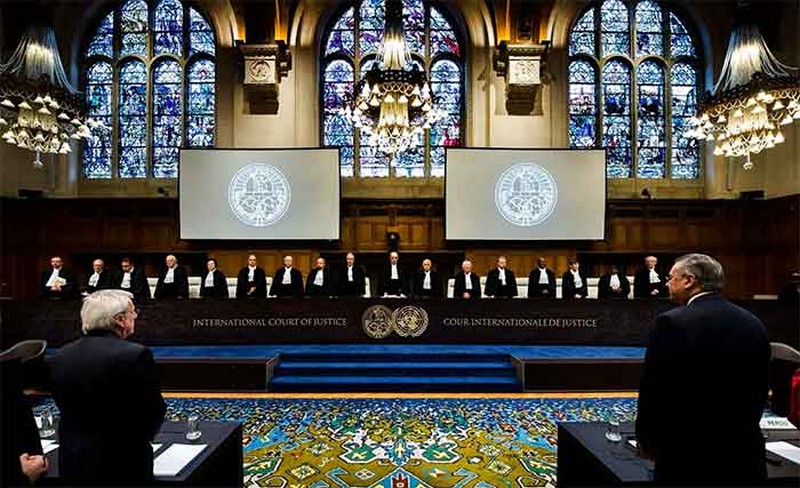
Once more, the International Court of Justice (ICJ) will offer a legal opinion on the consequences of the Israeli Occupation of Palestine.

A historic United Nations vote on December 31 called on the ICJ to look at the Israeli Occupation in terms of legal consequences, the rights of the Palestinian people to self-determination and the responsibility of all UN Member States in bringing the protracted Israeli Occupation to an end. A special emphasis will be placed on the “demographic composition, character and status” of Occupied Jerusalem.

The last time the ICJ was asked to offer a legal opinion on the matter was in 2004. However, back then, the opinion was largely centered around the “legal consequences arising from the construction of the (Israeli Apartheid) wall.”

While it is true that the ICJ concluded that the totality of the Israeli actions in the Occupied Palestinian Territories are unlawful under international law – the Fourth Geneva Convention, the relevant provision of the earlier Hague Regulations and, of course, the numerous UN General Assembly and Security Council Resolutions – this time around the ICJ is offering its view on Israel’s attempt at making what is meant to be a temporary military Occupation, a permanent one.

In other words, the ICJ could – and most likely will – delegitimize every single Israeli action taken in Occupied Palestine since 1967. This time around, the consequences will not be symbolic, as is often the case in UN-related decisions on Palestine.

Israeli Prime Minister Benjamin Netanyahu, who has done more than any other Israeli leader to ‘normalize’ the Israeli Occupation of Palestine, was understandably angry following the UN vote, describing it as ‘despicable’.

His other coalition partners were equally intransigent.

The Israeli “Occupation of (the) West Bank is permanent and Israel has the right to annex it,” said Knesset Member Zvika Fogel, during an interview on January 1 with Israeli Radio 103FM.

More than anything else, Fogel’s words encapsulate the new reality in Israel and Palestine. Gone are the days of political ambiguity regarding Israel’s ultimate motives in the Occupied Territories.

Indeed, Israel is now trying to manage a whole new phase of its colonial project in Palestine, an endeavor that began in earnest in 1947-48 and, in Israel’s own calculation, is about to end with the total colonization of Palestine – Israel’s version of a ‘one-state solution’ that is predicated on apartheid and racial discrimination.

Fogel, whose party, Otzma Yehudit, is an important member of Netanyahu’s new rightwing coalition, does not reflect his personal views or those of his ideological camp alone.

The new government, packed with extremists, the likes of Bezalel Smotrich, Itamar Ben-Gvir and Yoav Galant, among others, is now committed to an anti-peace agenda as a matter of policy. As soon as the new government was sworn in on December 28, it announced that “the government will advance and develop settlements in all parts of Israel”.

Ben-Gvir, whose raid of Al-Aqsa Mosque in Occupied East Jerusalem raised much criticism worldwide, is sending clear messages to Palestinians and the international community at large: as far as Israel is concerned, no international law is relevant, nothing is sacred and no inch of Palestine is off limits.

This time, however, it is not business as usual.

Yes, Israel’s territorial expansion at the expense of Occupied Palestine has been the common denominator among all Israeli governments in the last 75 years; but various Israeli governments, including that of Netanyahu’s early cabinets, found indirect ways to justify illegal settlement constructions. So-called ‘natural expansion’ and ‘security’ needs were some of the many pretexts furnished by Israel to justify its constant push for land acquisition by force.

Practically, none of this would have been possible if it were not for the inexhaustible United States support of Israel – financially, militarily and politically. Moreover, US vetoes at the UNSC and the relentless pressure on UNGA members allowed Israel to circumvent international law unscathed. The outcome is today’s tragic reality.

According to the official UN news website, there are currently nearly 700,000 illegal Jewish settlers. The Israeli NGO ‘Peace Now’ says that these Jewish settlers live in 145 illegal colonies in the Occupied West Bank, in addition to 140 settlement outposts, many of which are likely to be made official by the new government.

In fact, the Netanyahu-led alliance has been formulated with the understanding that the outposts would be legalized in the future, thus receiving official government funding. This should not pose a major political problem for Netanyahu, who, in 2020, had succeeded in selling the idea to the Israeli Knesset of annexing much of the West Bank and is now determined to carry out a process of ‘soft annexation’ – a de-facto annexation that is likely to become legalized as a de jure annexation later on.

Nor would the full colonization of Palestine prove to be a legal problem. Israel’s Nation-State Law of 2018 has already provided the legal cover for Tel Aviv to flaunt international law and to do as it pleases in terms of colonizing all of Palestine and marginalizing all of the Palestinian rights. According to Israel’s new Basic Law, “the State of Israel is the nation-state of the Jewish People in which it realizes its natural, cultural, religious and historical right to self-determination”. It was this particular reference that was cited in the new government’s statement on December 29.

And there are not many in Israel who are protesting this. In a recent article in the Palestine Chronicle, Israeli historian Ilan Pappe explains how the current socio-political formations of Israeli society make it nearly impossible for alternative mainstream politics to emerge, aside from the three dominant rightwing and extremist currents at work in the Netanyahu coalition: Ultra-Orthodox Jews, National Religious Jews and Likud’s secular Jews.

This means that change in Israel could never come from Israel itself. While Palestinians continue to resist, Arab and Muslim governments, and the international community at large must confront Israel, using all means available to end this travesty.

The ICJ’s opinion is very important, but without meaningful action, a legal opinion alone will not reverse the sinister reality on the ground in Palestine, especially when this reality is bankrolled, supported and sustained by Washington and Israel’s other western allies.

Dr. Ramzy Baroud is a journalist, author and the Editor of The Palestine Chronicle.

12 January 2023

Source: countercurrents.org

Beyond Geopolitics: Re-Examining Russia’s BRICS Relationship

By Lucas Dias Rodrigues dos Santos

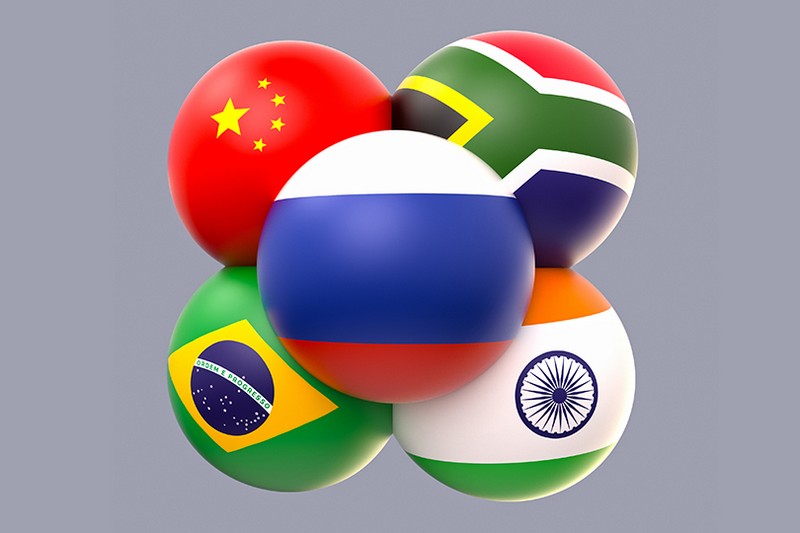
20 Dec 2022 – Despite frequent skepticism, the BRICS have come a long way. From a loose label given by investment bankers to four emerging economies in 2001 (Brazil, Russia, India and China), to a semi-formal group (adding South Africa in 2010). True, the differences between these five states have often hindered them from acting in concert; but they have still deepened their relationship with regular meetings at all levels (from leaders’ summits to scientific cooperation), and jointly-run institutions (such as a multilateral development bank, the NDB). This year a variety of countries, from Argentina to Iran, applied to join. But what does Russia get out of it – especially now?

Economic ties between its members have certainly increased, but still remain modest; so the explanation is often attributed to geopolitical clout. Bobo Lo, for example, argued in 2015 that “what is most important to the Kremlin is the imagery of BRICS summitry.” This is because , first, “[it reaffirms] – to the leadership, the Russian public, and a wider international audience – that Russia naturally belongs to the global elite”; and, second, it “[conveys] that Russia is part of the dynamic group of ascendant powers, in contrast to a decaying and discredited West.” This is a common thread in the literature, with Alexander Sergunin terming this a “soft power” strategy, and André Gerrits a “brand-strengthening” one. This certainly was observable as this last June’s BRICS Summit, which a major Indian outlet remarked “was the first meeting of such a grouping including Russian President Vladimir Putin since the invasion of Ukraine – giving the message that Russia is not isolated” – a framing echoed by the Wall Street Journal, among others.

Such a view endorses one side of a scholarly and policy debate – that Russia’s overall behavior is motivated more by status-assertion than security-maximizing. The latter refers to a more rationalist and materially-grounded conception of safeguarding territorial integrity, and the survival of the Russian polity itself. This is not an abstract distinction, and has direct policy implications, as Olivier Schmitt argues: security motivations can be assuaged through “cooperation mechanisms . . . from exchanges of information to arms control agreements”; meanwhile, “status concerns are relational and often satisfied at the expense of other actors.”

This point is all the more relevant now, as policymakers still struggle to decide how best to handle relations with Russia as its war on Ukraine impacts the entire world. In this sense, Russia’s continued and firm commitment to the BRICS project reinforces the status-seeking thesis, and can help states calibrate their approach to this area accordingly. Yet, however useful this distinction might be, stopping one’s analysis here leaves too many potentially crucial factors on the table. A fundamental point cited by Lo above, “the Russian public,” hints at a world of further possibility—but it is left undeveloped.

This is all the more relevant because, if status-asserting abroad is Russia’s chief aim with the BRICS, then its success is highly debatable. The aforementioned Summit might have signalled Russia’s relative non-isolation, but its outcome document still did not explicitly mention the US nor its sanctions regime, as Vladimir Putin and Xi Jinping’s speeches had days before; which can be read as a sign that other members pushed to water it down. Regarding sanctions, even Chinese and Indian banks, as well as the China-led Asian Infrastructure Investment Bank and the BRICS’ own NDB, have suspended lending to Russia. Similarly, the BRICS’ reserve-pooling mechanism, the Contingency Reserve Agreement, has not come to Russia’s aid.

It is true that, in March, India, China and South Africa abstained on a UN General Assembly resolution condemning Russia’s invasion of Ukraine, with only Brazil voting in favor. But this is still less support than Russia saw from them in 2014, when all the other BRICS abstained from UN votes condemning its annexation of Crimea, and used much more direct and more supportive language on the matter. Even China, the BRICS member with the least equivocal (but still less than full-throated) rhetoric toward Russia, has still shown a willingness to express “questions and concerns” to Putin about the conflict, as he admitted.

Thus, rather than gaining status, Russia’s own peculiar decisions (such as invading Ukraine) are tied to its decreasing reputational dividends even among this relatively friendly group. Must it be so? Rachel Salzman’s 2019 book BRICS and the Disruption of Global Order adds to the discussion by historicizing it – that is, Russia’s BRICS strategy has significantly varied over time. Salzman argues that Russia used the group first as a “bridge” to the West, then, more recently, as a “bulwark” against it. The “bridge” phase was a part of the country’s relative turn to the West during Dmitri Medvedev’s presidency (2008–12), “nested within a firm argument that Russia is an integral part of the Euro-Atlantic world.”

This began to change when Putin returned to the presidency, and even more so after 2014. Such a dimension helps to avoid the sort of essentialism that can affect both a rational security-maximizing and status-sensitive approach, if overly focused on external, geopolitical forces. However, Salzman claims that Putin’s rationale for choosing more West-friendly Medvedev as president “remains unknown.” This returns us to the importance of the domestic sphere in shaping status concerns in the first place.

Alexei Tsygankov’s theory of Russian foreign policy, for one, is centered on the interplay between such foreign and domestic dynamics. It holds that the prism which is consistent across all Russian foreign policy regimes is the country’s relationship to the West – identifying with it, defining itself against it – but always something related to it. For example, Tsygankov presents the Mikhail Gorbachev (1985–91) and Medvedev (2008–12) governments, as well as Boris Yeltsin’s first term (1991–96), as periods of relative rapprochement with the West, due to domestic political conjunctures whereby those favoring that approach prevailed in government. In the latter case, Tsygankov argues that the Medvedev pivot was a reaction to the global financial crisis’ impact on the Russian economy, discrediting the ruling orthodoxy and requiring an olive branch to the West. This trans-historical through-line vindicates and reinforces Salzman’s evolutionary argument, and can serve to harmonize the aforementioned status vs security dichotomy – that is, the dominant logic varies over time, depending on the Russian political situation as well as external factors.

Jeanne L. Wilson, in 2019 article on the Russia-China relationship concludes, for example, that “the relationship with China contributes to Russia’s self-identified status as a great power, which functions as a pillar of regime legitimacy for the Putin government.” But Wilson’s more fundamental insight is that “the regime’s commitment to project Russia as a great power to its citizens can often take precedence over tangible foreign policy goals.” Indeed, relying on Russian scholars, media outlets and polls (the latter showing, for example, that 82% of Russians believe preserving their country’s great power status should be a priority), she argues:

The Kremlin’s claim that Russia is a great power, irrespective of international recognition, or a more traditional display of conventional power capabilities, suggests that the projection of great power status to the Russian citizenry is in many ways more important than international recognition.

While Wilson focuses only on one of the BRICS, it is not a stretch to apply this framework to Russia’s relations to its other members, especially considering the aforementioned existing literature’s emphasis on the scarce material as opposed to reputational gains it reaps therefrom. Such an argument deserves engagement, as it turns the usual terms of said literature on their head, and can greatly complement its analysis.

Acknowledging the crucial role of reputational concerns in Russia’s foreign policy has been a significant step in the scholarship, but it can be taken further by historicizing the variations in this behavior, as well as incorporating the multiple layers and audiences that mold it. Doing so also allows scholars and practitioners to gain insights into the vast body of work on Russian politics and society – largely obscured by an overly geopolitical framing. This also has direct policy implications, such as regarding the current war. Conflict scholar Hein Goemans, for example, already makes a probing domestic-foreign connection by arguing that the often-proposed “off-ramp” for Putin to deescalate and potentially cease hostilities neglects audience costs that could involve his own assassination.

As to the BRICS, given that the group is not going away anytime soon (especially with the return of Lula to Brazil’s presidency), and that Russia’s reliance on the group will only increase as this war drags on, anyone wishing to understand this relationship, let alone engage with it, would benefit from this more expansive analytical starting point.

Lucas Dias Rodrigues dos Santos is a PhD candidate at the Geneva Graduate Institute.

16 January 2023

Source: transcend.org

US Threatens African Countries, Demanding to End Relations with Russia

By Lucas Leiroz de Almeida

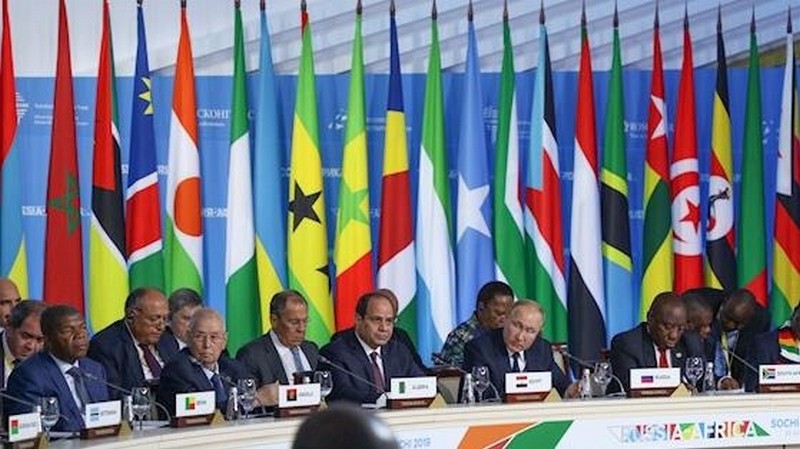
11 Jan 2023 – Even with the emerging countries several times making clear their solid position of not supporting the sanctions against Russia, the US remains with an absolutely interventionist foreign policy, threatening the states that maintain relations with “blacklisted” nations. Now, South African authorities report that they are being blackmailed by the US because of business that the country maintains with Moscow. More than that, it is reported that across the African continent there are many cases of anti-Russian intimidation, which reveals the high levels of interventionism on the part of Washington.

On January 9th, the Wall Street Journal (WSJ) reported that relations between US and South Africa are tense. The reason for the diplomatic instability would be the fact that last month a South African naval base received a Russian cargo ship sanctioned by Washington, with no public information about the contents inside the vessel. US authorities demand that their African counterparts report details on the cargo contained on the ship, demanding a kind of “justification” for the fact that the country maintains relations with sanctioned Russian companies.

“[Washington is] concerned by the support the South African Armed Forces provided to the ‘Lady R’ (…) There is no publicly available information on the source of the containers that were loaded onto the ‘Lady R’ “, a senior US official told the WSJ – “Lady R” being the term used to refer to the Russian ship.

The lack of information about the ship’s contents makes it difficult to ascertain whether it was bringing Russian products to Africa or transporting African products to Russia. Obviously, the greatest fear of US officials is that Russia and South Africa are strengthening ties of military cooperation. In a statement issued by the South African Minister of Defense Thandi Modise it was said that “whatever contents this vessel was getting were ordered long before Covid”.

Darren Olivier, a consultant at African Defense Review, commented to the WSJ that “South Africa’s defense industry does not generally produce armaments and complete systems that are used by the Russian military”. He claims it is possible that Russia eventually becomes interested in some South African military products such as optics and guidance systems for combat drones, but this does not appear to be the case about the latest “Lady R” expedition.

Olivier believes that most likely the ship was carrying to South Africa some tons of Russian ammunition that had previously been ordered by Pretoria. In 2020, South Africa signed a contract with Russian suppliers valued at more than 500,000 dollars to acquire ammunition. Considering the information that the ship’s contents referred to contracts signed “before Covid”, as the minister said, so it is likely that this was the cargo in December.

Commenting on the topic, Minister Modisa also expressed dissatisfaction with the way in which the US operates its relations with South Africa and other states on the continent. According to her, Washington “threatens Africa, not just South Africa, of having anything that is even smelling of Russia”. Indeed, the US does not seem willing to respect the sovereign foreign policy of African nations, simply ignoring the fact that there is real desire for cooperation with Russia on the part of these states.

In the specific case of South Africa, the American posture is even more serious, since Pretoria and Moscow are both members of the BRICS, maintaining a fundamental strategic alliance that cannot be vulnerable to the decisions taken by the American politicians. The posture of US diplomats in Pretoria in the “Lady R” case shows how Washington still conducts its diplomacy based on coercion. American officials called on the South African authorities to expose the ship’s cargo, simply because in Washington such ship is “blacklisted”.

In fact, American legislation itself allows this type of anti-diplomatic maneuver. There is a law in the US that permits the country to impose sanctions on any entities around the world that contract the services of blacklisted ships, which explains Pretoria’s stance on not disclosing details on the matter. The US wants to find out which South African entities are involved in the transaction in order to impose sanctions on them, which is why the South African state correctly omits the data to protect its domestic entities.

This shows how threat and coercion are not efficient diplomatic mechanisms. The American authorities seem connected to a belligerent logic according to which it is possible to obtain any kind of advantage through violence and blackmail. But the contemporary world goes in another direction. There is a process of transition towards geopolitical multipolarity that cannot be stopped through blackmail.

South Africa did not comply with the anti-Moscow sanctions because they were against its strategic interests. Currently, pragmatism, and not the “need” to please the US, is the parameter that guides the decisions of the states.

Lucas Leiroz de Almeida, researcher in Social Sciences at the Rural Federal University of Rio de Janeiro; geopolitical consultant.

16 January 2023

Source: transcend.org
Israeli Settler Colonialism and Apartheid: Poised for Victory or Defeat?

By Richard Falk

“These are the basic lines of the national government headed by me: The Jewish people have an exclusive and unquestionable right to all areas of the Land of Israel. The government will promote and develop settlement in all parts of the Land of Israel–in the Galilee, the Negev, the Golan, Judea and Samaria.”

— Benjamin Netanyahu, 30 Dec 2022

13 Jan 2023 – Anyone with but half eye open during the last several decades should by now be aware of the existence of an undisclosed Zionist Long Game that preceded the establishment of Israel in 1948,  and remains currently very much alive. It aims at extending Israeli sovereignty over the whole of Occupied Palestine, with the probable exception of Gaza, excluded for demographic and biblical reasons. The significance of Netanyahu’s public affirmation of this previously secretive long game is that it may be reaching its final phase, with him presiding over the far right governing coalition that is poised to pursue closure.

Should it matter that Netanyahu’s claim of exclusive Israel’s supremacy on behalf of the Jewish people over the whole of the promised land is in direct defiance of international law? Additionally, Netanyahu’s statement is also perversely at odds with Biden’s stubborn insistence, however farfetched, on reaffirming U.S. Government support for a two-state solution. This zombie approach to resolving the Israel/Palestine struggle has dominated international diplomacy for years, usefully allowing the UN and its Western members to maintain their embrace of Israel without seeming to throw the Palestinian people under the bus while doing just that. Netanyahu’s brazen avowal of Israeli unilateral expansionism foregoes these earlier diplomatic charades to placate world public opinion to put Israel’s intentions of unilaterally finishing the Zionist Project.

Such a forthright approach challenges the UN, the Palestinian Authority, the Palestinian people, governments around the world, and transnational civil society to open both eyes and finally acknowledge that the two-state solution is dead. This does not mean giving up on a peaceful solution based on political compromise, but it does suggest shifting such hopes from two-state proposals to a single unified confederal, secular state with coexisting dual homelands for the two peoples based on equality of ethnic entitlements to Palestine as often conceived from ‘the river to the sea.’ Such a state would have a single governance structure upholding the fused sovereign rights of a post-Zionist, presumably renamed, state premised upon equal citizenship and human rights for Jews and Palestinians.

In fairness, it is true that this Zionist Long Game has only recently become fully apparent to all but the closest observers of the struggle. Throughout the 20th century this design of progressive expansionism was hidden from public view by a combination of Israeli control over the public narrative and U.S. complicity, which deceived especially diaspora Zionists by assuming that Israel was open to a political and territorial compromises and that it was the Palestinians who were mainly responsible for the failures to accept reasonable diplomatic proposals prefiguring Palestinian statehood. Such an interpretation of the stalemate was always deeply mistaken because it underestimated Israel underlying ambitions.

The Zionist Project from its very beginnings, more than a century ago, proceeded by stages to accept as final whatever was politically attainable at any given time, before moving quietly and quickly on to the next stage in fulfillment of its long-range colonization plans. Zionism never convincingly gave up its guiding commitment to establish a Jewish state that exercised sovereign control over the whole of ‘the whole of the promised land,’ itself a misleadingly precise reading of Judaic biblical tradition that could be concretized in any way that the Israeli leadership preferred.

This pattern of expansionist priorities should have become evident in the periods following the Balfour Declaration of 2017 and after World War II. The infamous colonial Declaration had pledged British support for ‘a national home for the Jewish people’ in Palestine. This pledge was made credible during the British mandatory period by accommodating ballooning Jewish immigration, which coincided with the rise of antisemitic fascism, most visibly in Nazi Germany, but extending to much of the rest of Europe.

After World War II came the UN partition resolution (UNGA Res. 181, 1947), which not only ignored Palestinian rights of self-determination by partitioning the country without a prior referendum, changing the status of the Jewish presence from ‘national home’ within the state of Palestine to a sovereign Jewish state on fully half of Palestinian territory, and then failing to take effective responsibility for implementing the portions of the UN proposals more favorable to Palestinians. This internationally devised ‘solution’ was greeted positively at each stage by the Zionist formal leadership, but rejected by representatives of the Palestinian people and by neighboring Arab governments.

This regional rejectionism led directly to the 1948 War, which resulted in the catastrophic dispossession of an estimated 750,000 Palestinians, known to its victims as the nakba, ending with a ceasefire that increased Israel’s share of Palestine from 55% to 78%. The dispossession of such a large number of Palestinians was integral to the Zionist commitment to make Israel not only Jewish but democratic.

It was understandably thought insecure to suppose that Israel could remain an ethnic democracy without a substantial Jewish demographic margin, and this could not be obtained except by dispossession, by coercive means to the extent necessary. From early on, Zionist zealots believed it desirable for security and nation-building to work toward a Jewish Only state, and that goal may resurface in the months ahead, not only to achieve ethnic purity, but to quell worries about Palestinian ‘demographic bomb.’

The next step in carrying forward the Zionist Project resulted from Israell’s victory in the 1967 War, which drove Jordan out of the West Bank and East Jerusalem (and Egypt from Gaza). II also dispossessed another large number of indigenous Palestinians, a course of events known among Palestinian as the naksa. The 1967 War also resulted in Israel’s prolonged occupation of the territories occupied during the short war, and it was the beginning of an Israeli version of ‘triumphalism,’ which also made converts among foreign political elites in Washington previously worried that full support for Israel would alienate the Gulf oil producers.

The occupation by law and political consensus at the time was expected to be temporary (a matter of a few years at most) but the establishment of many unlawful Jewish settlements encroaching on what had been projected as a coexisting Palestinian state in the West Bank and East Jerusalem strongly suggested that all along Israel’s leadership envisioned permanent arrangements with an end game in mind that did not include viable Palestinian statehood encompassing the West Bank heartland. Israel stalled over the years by complicated demands for border adjustments being agreed upon prior to any withdrawal. And somewhat later on, with a show of temerity, Israel contended that the West Bank was ‘disputed territory’ rather than ‘occupied territory.’

Another strong straw in the wind back in 1967 was Israel immediate declaration and enactment of a sovereign claim over the whole of an enlarged Jerusalem as the ‘eternal capital’ of the Jewish state, signaling its unwillingness to trust an outcome of post-1948 diplomatic negotiations (or to uphold the Jerusalem portion of the UN Partition Plan), which had originally envisioned East Jerusalem as the capital of the co-equal Palestinian state, before backpedaling and accepting the idea of the holy city being divided between the two peoples. This incorporation of Jerusalem into Israel proper was repeatedly rejected by overwhelming votes in the General Assembly, duly ignored by the Israeli government, but again Israel found that it would suffer no adverse consequences by defying international law and General Assembly majorities.

There were many lesser displays of virtuoso salami slicing by Israel of Palestinian rights and expectations in the subsequent 55 years. The Oslo diplomatic process lingered and languished for more than 20 years after the 1993 hyped handshake between Rabin and Arafat on the White House lawn, which was the most notable stunt by Israel along these lines designed to show the world that Israel remained open to achieving a negotiated sustainable peace.

With the benefit of hindsight, it seems clear that in the Israeli strategic imaginary ‘peace’ was never what Oslo was about. The real basis of Israeli support for Oslo, besides satisfying international pressure to manifest a willingness to engage in some semblance of negotiations, was to gain the needed time to make the Jewish settlement movement large and territorially diffuse enough to become irreversible. Such an obvious assault on the two-state mantra should then have sounded the death knell of two-state duplicity, although it was overdue by 40-50 years. Yet the curtain was not lifted then or since.

The continuing international avowal of adherence to a two-state solution, until the present, was mutually convenient for both the Israeli and Palestinian leadership and for friendly foreign governments, and even for the UN that was far too weak to insist on Israeli compliance with international law in the face of Euro-American unwavering refusal to authorize any pushback in the UN Security Council.

Israel’s 2018 Basic Law proclaiming the supremacy of Jews in ‘the promised land of Israel,’ including the whole of the West Bank, moved a giant step closer to revealing the integral goals of the Zionist Project as openly endorsed by Netanyahu to coincide with the swearing in of his fourth go at being the Prime Minister. As argued here, the essential elements of such a project had preceded its public endorsement by more than a century, but for an Israeli head of state to dramatize the commitment as openly was new, and politically of great significance.

Yet, despite this series of monumental successes of this Zionist Long Game is from some perspectives more problematic of completion than it has ever been, strange as such assertions might be regarded from a purely materialist view of politics. The Palestinian people have held firm in their commitment to self-determination throughout, while enduring a century of being tested by large-scale Israeli settler encroachments, as aggravated by Palestinian disunity and inadequate representation at the international level by the quasi-collaborative leadership provided by the Palestinian Authority. The spirit of resistance and struggle has been sustained by a Palestinian deep culture of steadfastness of sumud as reinforced by global solidarity initiatives and a generally supportive global public opinion, as well as by Palestinian resistance and global solidarity, which although sporadic never disappeared.

Additionally, the weight of evolving historical circumstances has enabled the Palestinians to achieve important victories in The Legitimacy War being waged by the two peoples for the control of symbolic and normative spaces in the wider struggle, against all odds, is being won by the Palestinians. Over the course of the last decade the international political discourse has increasingly accepted the Palestinian narrative of Israel as ‘a settler colonial state,’ a damaging assessment in an era where colonialism elsewhere was being dismantled by the weaker side militarily, suggesting the unrecognized leverage of law, morality, global solidarity, and nationalist mobilization in out maneuvering a militarily superior adversary.

My previous comments on this latest, possibly terminal phase, of the Zionist Project, is further illuminated if interpreted through the lens of settler colonialism. As Patrick Wolfe, the leading academic expositor of the concept, and others point out, a settler colonialist undertaking eventually falters and collapses unless it manages to eliminate or at least permanently and radically marginalize and pacify the native population. Settler colonial successes in Canada, the U.S., Australia, and New Zealand confirm this hypothesis as do the most prominent instances of failure, South Africa, and less clearly, Algeria. Given this historical record, I anticipate feverish Israeli attempts in the near future to achieve a further massive dispossession of the Palestinian people. In an important sense, the nakba should be understood as a process rather than an event back in 1948, to be culminated during the 2020s by a new surge of dispossession tactical moves.

Beyond allegations of settler colonialism, and more carefully documented, the accusation of apartheid directed at the Israeli state, which had long dismissed as the irresponsible screams of those that wanted to destroy the Israeli state, became validated by an emergent civil society consensus. Over the course of the last six years exhaustive reports prepared under the auspices the UN (ESCWA), Human Rights Watch, Amnesty International, and even the fiercely independent Israeli NGO, B’Tselem issued reports documenting with care and professional skill the apartheid allegations. As memories of the Holocaust faded and wrongdoing toward Palestinian rights became harder to shove under the rug, world public opinion especially in the West, became somewhat more sympathetic to and convinced by the Palestinian narrative, and as significantly, by the relevance of the South African precedent that became harder to ignore.

Further symbolic Palestinian victories included widespread diplomatic recognition of Palestinian statehood by many governments in the Global South, admission of Palestine to non-voting membership in the UN, access as a state party to the International Criminal Court and its 2021 judgment authorizing the investigation of Palestinian allegations of international crimes in Occupied Palestine after 2014, and at the end of 2022, approval by a wide margin of a General Assembly Resolution requesting an Advisory Opinion from the World Court in The Hague on the prolonged unlawful occupation of Palestinian territories amounting to a deprivation of the Palestinian right of self-determination. T

he 2022 HRC appointment of a high-level Commission of Inquiry with a broad mandate to investigate Israel wrongdoing was also a revealing UN turn in favor of the Palestinians. Such challenges to Israeli administration of the Occupied Palestinian Territories only occurred after decades of UN frustrations arising from Israeli non-compliance with international humanitarian law in the OPT as set forth in the 4th Geneva Convention devoted to belligerent and refusal to cooperate with UNHRC Special Rapporteurs.

Israeli and its puppet NGOs, UN Watch and NGO Monitor, recognized the gravity of these largely symbolic delegitimizing developments, as did the Israeli government. Israel was intelligently responsive to the risks to its own viability as a Jewish Supremacy state by the collapse of the apartheid regime in South Africa due to pressures brought about by a blend of resistance, symbolic delegitimization, and global solidarity initiatives. Accordingly, Israel and its militants fought back, with total support of the U.S. Government, but not substantively, recognizing the costs of bringing about further scrutiny of the substance of Israel’s policies, practices, and racist ideology. Instead, the Israeli push-back focused on attacking the critics and their institutional venues, including even the UN, as antisemitic, and in the process smearing conscientious legal experts and even international civil servants and the institutions themselves.

This has created a sufficient diversionary smokescreen to enable Biden and top EU bureaucrats to keep faith with both sides by championing the hollow prospect of ‘two states for two peoples’ when even they must know by this time that such a policy is moribund, and no longer is of much use as a public relations tactic. This assessment is truer than ever now that an apparently cocky Netanyahu has publicly told foreign political leaders to their faces that Israel no longer is interested enough in the two-state ploy to underpin its credibility. This leaves Israel’s most ardent supporters out in the cold with no place to hide their formerly respectable pro-Israel one-sidedness.

Given this line of interpretation, contrary to media commentary, Netanyahu, rather than being burdened, is likely pleased that his governing coalition is heavily dependent upon the rightest extremism of the Religious Zionism (RZ) and Jewish Power bloc. In the present context RZ, led by Bezalel Smotrich and Itamar Ben-Gvar seems useful, if not natural allies of Likud in launching this culminating phase of the Zionist Project. This last phase involves territorial consolidation over the whole of the promised land and likely moves to inflict further dispossession of Palestinians—on the scale of a second (or intensified) Nakba—from their native lands. Seen in this way, the Netanyahu declaration above amounts to a virtual road map, hopefully from his point of view with RZ taking most of the heat for its inflammatory, openly racist, and likely violent implementation.

Given this background, the present context should be understood differently than the prevailing mode of reporting that stresses the difficulties for Netanyahu of heading the most right-wing and extremist government in the history of Israel. Mainstream journalism remains sympathetic with Netanyahu’s situation of supposedly being forced to rely on a coalition that gives dangerous influence to RZ. In opposition to such thinking, I believe having RZ entrenched in his governing structure actually strengthens the hand Netanyahu wants to play.

It is instructive to notice that most of the regrets up to now expressed in the U.S. about the extremist successes  in the 2022 Israeli elections are devoted to their possibly negative impact on support for Israel in the liberal democracies, especially, among the predominantly secular dominant communities that largely shape  attitudes toward Israel in the European and U.S. Jewish diaspora. The probability of intensifying suffering inflicted on the Palestinians hardly ever is mentioned, and almost never evokes Western empathy. Such slanted presemtations has always slighted the successive stages of the Palestinian collective trauma that has obscured their Orientalist erasures throughout the struggle.

Biden’s undoubtedly unconscious embrace of such Orientalist insensitivity to Palestinian rights, much less acknowledging Palestinian legitimate aspirations should have been expected. The evasive wording of Biden’s statement congratulating Netanyahu, warrants scrutiny: “I look forward to working with Prime Minister Netanyahu, who has been my friend for decades, to jointly address the many challenges and opportunities facing Israel and the Middle East region, including threats from Iran.”

In the same text, the American president asserts that “the United States will continue to support the two-state solution and to oppose policies that endanger its viability or contradict our mutual interests and values.” What struck me most, although by now I should have known better, was the absence of even a small gesture of recognition that these developments might have a negative relevance to Palestinian wellbeing. Often silences convey meanings better than do words of explanation with the hope of winning approval.

Despite all, most pro-Israeli commentary analyzing the shift to the right on the part of the Israeli voting public attributes the extremist outcome in the November elections to some combination of the perceived absence of ‘a partner’ in the search for peace, the Israeli security-first response to Palestinian ‘terrorism,’ the rising influence of the religious right within Israel, the emboldening effects on Israel of the normalization agreements (so-call Abraham Accords) reached in 2020 during the last months of the Trump presidency, and even Iran’s threat to Israel. Undoubtedly, these contextual factors were influential in persuading a larger segment of Israeli voters to swallow their dislike of a governing coalition that gave strong influence to RZ, interpreted in some circles as the foretaste of a now plausible Jewish theocratically-tinged fascism.

Overall, it seems enough Israelis gave priority to their hopes for a unilaterally imposed Israeli ‘victory’ scenario to the hypocritical uncertainties of the diplomatic status quo that is disinterested in negotiating a political compromise with its Palestinian counterpart. My main point here is that the shift to the right was opportunistic and pragmatic rather than reactive, resulting in most media accounts missing the relevance of the commitment of the Israeli religious right to the completion of the Zionist Project in the near future.

My own encounters with liberal Zionist opinions in America emphasized a belief that Israeli good will with respect to a political deal with the Palestinian had run into a brick wall of Palestinian hard line opposition, an indirect validation of the ‘no partner’ excuse, or at best, blaming both sides for diplomatic failure in an asymmetric situation where one side was the oppressor and the other the oppressed. This view was accentuated by the entirely unreasonable, accompanying insistence that Israeli’s closest ally and geopolitical source of security serve as intermediary in all ‘peace’ negotiations. Nothing exhibited Palestinian weakness or lack of strategic judgment more dramatically than this willingness to rely on such a flawed diplomatic process for their prospects of realizing such basic national rights as self-determination.

While these factors have been endlessly analyzed in piecing together a coherent, exoteric or public narrative, the real story—the deep roots of these developments—is in my view yet to be told. This is because the true account of the evolution of the Zionist Project before and since the establishment of Israel is bound up with an esoteric or secret Zionist narrative that links the successive stages of Israeli expansionism to an overarching vision.

This esoteric narrative centered on a strategic plan for the ideologically coherent and steady unfolding story of Israeli expansionism, which involved a pragmatic suppression of disclosing the utopian character of Zionist Project of recovering all of Palestine during a period when such ultimate goals seemed hopelessly out of reach due to the prevalence of rampant nationalism and the widespread decline in the geopolitical leverage and political acceptance of colonialism.

Richard Falk is a member of the TRANSCEND Network, Albert G. Milbank Professor Emeritus of International Law at Princeton University, Chair of Global Law, Faculty of Law, at Queen Mary University London, Research Associate the Orfalea Center of Global Studies at the University of California, Santa Barbara, and Fellow of the Tellus Institute.

16 January 2023

Source: transcend.org