Just International

The U.S. Is Leading the World Into the Abyss

By Edward Curtin

A few years after WW I, the poet T.S. Eliot opened his famous poem “The Wasteland” with these words: “April is the cruelest month … “ I think he may be wrong, for this October may be the cruelest month of all, followed by November. Unprecedented. You can hear the clicking and grating of spades if your antennae are attuned.

We are on the brink of ominous events created by the U.S. war against Russia. Yet so many people prefer to turn away and swallow the lies that the U.S. wants peace and not war and is the aggrieved party in the crisis.

A friend of mine, who is constantly charging me with having turned right-wing because of my writing that accuses many traditional liberal/leftists of buying the national security state’s propaganda on the JFK assassination, “9/11,” Syria, Ukraine, Covid-19, censorship, the “New” Cold War, etc., and whose go-to news sources are The Guardian, CNN, The New York Times, NPR, ABC, seems oblivious to the fact that right and left have become useless terms and that these media are all mouthpieces for the CIA and their intelligence allies in the new Cold War; that the so-called right and left are joined at the hip with their obsession with Pax Americana.

There are no right and left anymore; there are only free and independent voices or those of the caged parrots repeating what they have been taught to say:

“Polly wants a war!” “Polly wants a war.”

I am afraid that I will never convince this dear friend otherwise and I find that depressing. Yet I know such views are shared by millions of others and that even if nuclear war breaks out their minds will not change. Propaganda runs very, very deep into their psyches, and they desperately want to believe. Hitler said it clearly in Mein Kampf:

The masses … are always more easily corrupted in the deeper strata of their emotional nature than consciously or voluntarily; and thus in the primitive simplicity of their minds they more readily fall victims to the big lie than the small lie, since they themselves often tell small lies in little matters but would be ashamed to resort to large-scale falsehoods.

Hitler learned so much about “manufacturing consent” from his American teachers Edward Bernays, Walter Lippmann, et al., who accomplished so much brainwashing of the American people. They were all masters of the lie and millions continue to believe their followers.

If nuclear weapons are again used (and everyone knows the only country to have used them), these believers will blame their use on Russia, even though Russia has made it very clear that it would only resort to such weapons if the country’s existence were threatened, while the U.S. continues affirming its right to preemptively use nuclear weapons when it so chooses.

And even if nuclear weapons are not used, the recent sabotage of the Nord Stream pipelines and the bombing of the Crimean Bridge, both clearly the work of U.S./NATO/Ukrainian forces, have raised the ante considerably. The door to hell has just been opened wider, and I suspect not by accident, as the U.S. elections approach.

In his recent television talk, Vladimir Putin made Russia’s nuclear position very clear, mentioning nuclear weapons only in the context of Western threats of using them, as Moon of Alabama reported.

Putin said:

They [the U.S./NATO/Ukraine] have even resorted to the nuclear blackmail. I am referring not only to the Western-encouraged shelling of the Zaporozhye Nuclear Power Plant, which poses a threat of a nuclear disaster, but also to the statements made by some high-ranking representatives of the leading NATO countries on the possibility and admissibility of using weapons of mass destruction – nuclear weapons – against Russia.

I would like to remind those who make such statements regarding Russia that our country has different types of weapons as well, and some of them are more modern than the weapons NATO countries have. In the event of a threat to the territorial integrity of our country and to defend Russia and our people, we will certainly make use of all weapon systems available to us. This is not a bluff.

The citizens of Russia can rest assured that the territorial integrity of our Motherland, our independence and freedom will be defended – I repeat – by all the systems available to us. Those who are using nuclear blackmail against us should know that the wind rose can turn around.

When the long-planned U.S. war against Russia, so obvious to anyone who sees past the propagandist headlines and studies the matter, soon explodes into full-scale open war for all to see in horror, as it will, these true believers will dig in their heels even more.  They will find new reasons to justify their faith, and it is akin to religious faith.  The infamous Rand Corporation’s 2019 report cited above, “Overextending and Unbalancing Russia,” cites the following as part of the war process, as summarized in the Strategic Culture article, but it will have no impact on the faithful believers:

  • Providing lethal military aid to Ukraine
  • Mobilizing European NATO members
  • Imposing deeper trade and economic sanctions
  • Increasing U.S. energy production for export to Europe
  • Expanding Europe’s import infrastructure to receive U.S. liquefied natural gas (LNG) supplies

I keep thinking of the U.S. false flag Gulf of Tonkin “incident” in 1964 and how effective that was in convincing the gullible population and the complicit U.S. Congress – by a vote of 88 to 2 in the Senate and 414 to 0 in the House of Representatives (try to imagine such criminals) – that U.S. destroyers were innocently attacked by the North Vietnamese and that Lyndon Johnson should be given the authority to respond to repel “communist aggression,” which, of course, he did by bombing North Vietnam and sending 500,000 troops to savagely destroy Vietnam and Vietnamese nearly 9,000 miles from the United States.  Johnson simply lied to wage war and Biden is doing the same today.  But far too many people love their leaders’ lies because it allows them to secretly feel justified in the lies they themselves tell in personal matters.  And what may be true of the distant past, can’t be true today.

In 1965, the folk singer Tom Paxton put Johnson’s lies to music with “Lyndon Johnson Told the Nation.”  In those days, art was used as a weapon against U.S. propaganda.

Today we can ask: Where have all the artists gone?

We know that the U.S. has, for the time being, abandoned sending hundreds of thousands of troops into another country; now it is drones, air warfare, special forces, the CIA, mercenaries, terrorists, and intermediaries such as the Ukrainian conscripts, Azov Nazis, and NATO surrogates.  Such was the lesson of Vietnam when the draft led to massive protests and resistance.  Now war is waged less obviously and the propaganda is more extensive and constant as a result of digital media.

There are many such examples of U.S. treachery, most notably the attacks of September 11, 2001, but such history is only open to those who take it upon themselves to investigate.

Now there is the corrupt Ukrainian U.S. puppet government, which is nearly 6,000 miles from the United States, and must be defended from Russian “aggression,” just like the corrupt South Vietnamese U.S. puppet government was.

To those who buy the mass media propaganda, I ask: Why is the U.S.A. always fighting to kill people so far from its shores?

Doesn’t it sound a bit odd that our wonderful leaders destroyed Libya, Vietnam, Serbia, the Philippines, Iraq, Syria, Afghanistan, etc., countries so far away, and now that Russia defends itself from U.S./NATO encroachment a few miles from its borders, it is accused of being the evil aggressors and Vladimir Putin called another Hitler like all the leaders of the countries we attacked?

Have you completely lost your ability to think?  Or do you, like little children, actually believe the disembodied newsreaders who deliver your prepackaged television propaganda?

If I ask such an obvious question, does that make me a “right-winger”?

If I state two facts: that Donald Trump – whom I consider despicable and part of the divide and conquer game as Biden’s flip side, and have said so – did not start a war against Russia and that Russia-gate was a Democratic propaganda stunt and is false, does that make me a right-winger?  My friend would say so. Do telling facts define your political allegiances, whether they be facts about Republicans or Democrats?

No.  I will tell you what it makes me: A disgusted human being sickened by all the lies and people’s gullibility after decades of evidence that should have awakened them to the truth about all these politicians and the war against Russia underway.  I have lost patience with it.  For decades I have been writing about such propaganda to no avail.  Yes, those who tended to agree with me might have moved a little closer to my arguments, but the vast majority have not budged an iota.

I wish it were different. It is my desire. Eduardo Galeano, the Uruguayan sage of the Americas, who knew what was up and what was down when he wrote Upside Down: A Primer for the Looking-Glass World in 1998, said this about Desire:

A man found Aladdin’s lamp lying around. Since he was a big reader, the man recognized it and rubbed it right away. The genie appeared, bowed deeply, and said, ‘At your service master. Your wish is my command. But there will be only one wish.

Since he was a good boy, the man said, ‘I wish for my dead mother to be brought back.’

The genie made a face. ‘I’m sorry, master, but that wish is impossible. Make another.’

Since he was a nice guy, the man said, ‘I wish the world would stop spending money to kill people.’

The genie swallowed. ‘Uhh … What did you say your mother’s name was?’

The desire for peace and security is a universal dream.  Sometimes it is hidden in people’s hearts because they have swallowed the lies of the evil ones who wish to wage war against those who insist on security for their country, as Russians are demanding today.

It is very frustrating to try to wake people out of their manufactured consent and the insouciance that follows as we are being led into the abyss.

But I will not stop trying.  Galeano did not.  He left us these words of universal resistance:

We shall be compatriots and contemporaries of all who have a yearning for justice and beauty, no matter where they were born or when they lived, because the borders of geography and time shall cease to exist.

We must save the world before it is too late.

Edward Curtin is a prominent author, researcher and sociologist based in Western Massachusetts.

10 October 2022

Source: www.globalresearch.ca
Can Europe Afford to Turn a Blind Eye to Evidence of a US Role in Pipeline Blasts?

By Jonathan Cook

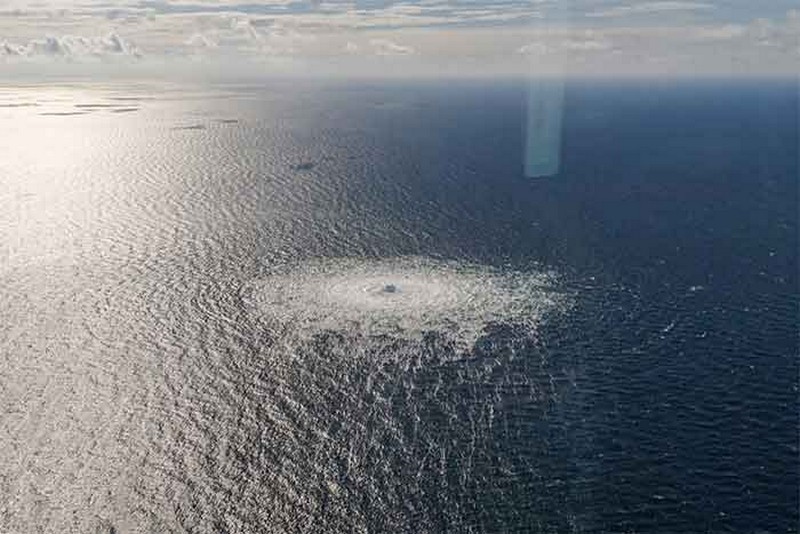
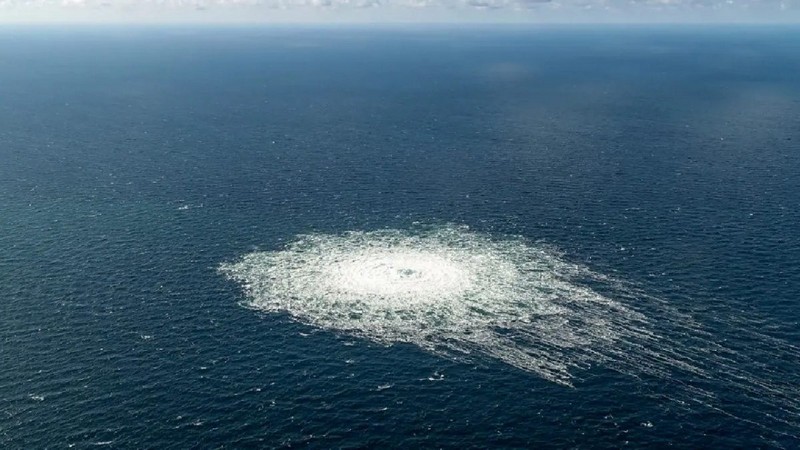
6 Oct 2022 – The sabotage of the two Nord Stream pipelines leaves Europeans certain to be much poorer and colder this winter, and was an act of international vandalism on an almost unimaginable scale. The attacks severed Russian gas supplies to Europe and caused the release of enormous quantities of methane gas, the prime offender in global warming.

This is why no one is going to take responsibility for the crime – and most likely no one will ever be found definitively culpable.

Nonetheless, the level of difficulty and sophistication in setting off blasts at three separate locations on the Nord Stream 1 and 2 pipelines overwhelmingly suggests a state actor, or actors, was behind it.

Western coverage of the attacks has been decidedly muted, given that this hostile assault on the globe’s energy infrastructure is unprecedented – overshadowing even the 9/11 attacks.

The reason why there appears to be so little enthusiasm to explore this catastrophic event in detail – beyond pointing a finger in Russia’s direction – is not difficult to deduce.

It is hard to think of a single reason why Moscow would wish to destroy its own energy pipelines, valued at $20 billion, or allow in seawater, possibly corroding them irreversibly.

The attacks deprive Russia of its main gas supply lines to Europe – and with it, vital future revenues – while leaving the field open to competitors.

Moscow loses its only significant leverage over Germany, its main buyer in Europe and at the heart of the European project, when it needs such leverage most, as it faces down concerted efforts by the United States and Europe to drive Russian soldiers out of Ukraine.

Even any possible temporary advantage Moscow might have gained by demonstrating its ruthlessness and might to Europe could have been achieved just as effectively by simply turning off the spigot to stop supplies.

Media taboo

This week, distinguished economist Jeffrey Sachs was invited on Bloomberg TV to talk about the pipeline attacks. He broke a taboo among Western elites by citing evidence suggesting that the US, rather than Russia, was the prime suspect.

Western media like the Associated Press have tried to foreclose such a line of thinking by calling it a “baseless conspiracy theory” and Russian “disinformation”. But, as Sachs pointed out, there are good reasons to suspect the US above Russia.

There is, for example, the threat to Russia made by US president Joe Biden back in early February, that “there will be no longer a Nord Stream 2” were Ukraine to be invaded. Questioned by a reporter about how that would be possible, Biden asserted: “I promise you, we will be able to do that.”

Biden was not speaking out of turn or off the cuff. At the same time, Victoria Nuland, a senior diplomat in the Biden administration, issued Russia much the same warning, telling reporters: “If Russia invades Ukraine, one way or another, Nord Stream 2 will not move forward.”

That is the same Nuland who was intimately involved back in 2014 in behind-the-scenes maneuvers by the US to help overthrow an elected Ukrainian government that led to the installation of one hostile to Moscow. It was that coup that triggered a combustible mix of outcomes – Kyiv’s increasing flirtation with NATO, as well as a civil war in the east between Ukrainian ultra-nationalists and ethnic Russian communities – that provided the chief rationale for President Vladimir Putin’s later invasion.

And for those still puzzled by what motive the US might have for perpetrating such an outrage, Nuland’s boss helpfully offered an answer last Friday. Secretary of State Anthony Blinken described the destruction of the Nord Stream pipelines, and the consequent environmental catastrophe, as offering “tremendous strategic opportunity for the years to come”.

Blinken set out a little too clearly the “cui bono” – “who profits?” – argument, suggesting that Biden and Nuland’s earlier remarks were not just empty, pre-invasion posturing by the White House.

Blinken celebrated the fact that Europe would be deprived of Russian gas for the foreseeable future and, with it, Putin’s leverage over Germany and other European states. Before the blasts, the danger for Washington had been that Moscow might be able to advance favorable negotiations over Ukraine rather than perpetuate a war Biden’s defense secretary, Lloyd Austin, has already stated is designed to “weaken” Russia at least as much as liberate Ukraine.

Or, as Blinken phrased it, the attacks were “a tremendous opportunity once and for all to remove the dependence on Russian energy, and thus to take away from Vladimir Putin the weaponization of energy as a means of advancing his imperial designs.”

Though Blinken did not mention it, it was also a “tremendous opportunity” to make Europe far more dependent on the US for its gas supplies, shipped by sea at much greater cost to Europe than through Russia’s pipelines. American energy firms may well be the biggest beneficiaries from the explosions.

Meddling in Ukraine

US hostility towards Russian economic ties with Europe is not new. Long before Russia’s invasion, Washington had been quite openly seeking ways to block the Nord Stream pipelines.

One of Blinken’s recent predecessors, Condoleezza Rice, expressed the Washington consensus way back in 2014 – at the same time as Nuland was recorded secretly meddling in Ukraine, discussing who should be installed as president in place of the elected Ukrainian government that was about to be ousted in a coup.

Speaking to German TV, Rice said the Russian economy was vulnerable to sanctions because 80% of its exports were energy-related. Proving how wrong-headed American foreign policy predictions often are, she asserted confidently: “People say the Europeans will run out of energy. Well, the Russians will run out of cash before the Europeans run out of energy.”

Breaking Europe’s reliance on Russian energy was, in Rice’s words, “one of the few instruments we have… Over the long term, you simply want to change the structure of energy dependence.”

Condoleezza Rice: Gas und Ölkrieg gegen Putin

She added: “You [Germany] want to depend more on the North American energy platform, the tremendous bounty of oil and gas that we’re finding in North America. You want to have pipelines that don’t go through Ukraine and Russia.”

Now, the sabotage of Nord Stream 1 and 2 has achieved a major US foreign-policy goal overnight.

It has also preempted the pressure building in Germany, through mass protests and mounting business opposition, that might have seen Berlin reverse course on European sanctions on Russia and revive gas supplies – a shift that would have undermined Washington’s goal of “weakening” Putin. Now, the protests are redundant. German politicians cannot cave in to popular demands when there is no pipeline through which they can supply their population with Russian gas.

‘Thank you, USA’

One can hardly be surprised that European leaders are publicly blaming Russia for the pipeline attacks. After all, Europe falls under the US security umbrella and Russia has been designated by Washington as Official Enemy No 1.

But almost certainly, major European capitals are drawing different conclusions in private. Like Sachs, their officials are examining the circumstantial evidence, considering the statements of self-incrimination from Biden and other officials, and weighing the “cui bono” arguments.

And like Sachs, they are most likely inferring that the prime suspect in this case is the US – or, at the very least, that Washington authorized an ally to act on its behalf. Just as no European leader would dare to publicly accuse the US of carrying out the attacks, none would dare stage such an attack without first getting the nod from Washington.

That was evidently the view of Radek Sikorski, the former foreign and defence minister of Poland, who tweeted a “Thank you, USA” with an image of the bubbling seas where one pipeline was ruptured.

Sikorski, it should be noted, is as well-connected in Washington as he is in Poland, a European state bitterly hostile to Moscow as well as its pipelines. His wife, Anne Applebaum, is a staff writer at The Atlantic magazine and an influential figure in US policy circles who has long advocated for NATO and EU expansion into Eastern Europe and Ukraine.

Sikorski hurriedly took down the tweet after it went viral.

But if Washington is the chief suspect in blowing up the pipelines, how should Europe read its relations with the US in the light of that deduction? And what does such sabotage indicate to Europe’s leaders about how Washington might perceive the stakes in Europe? The answers are not pretty.

Demand for fealty

If the US was behind the attacks, it suggests not only that Washington is taking the Ukraine war into new, more dangerous territory, ready to risk drawing Moscow into a round of tit-for-tats that could quickly escalate into a nuclear confrontation. It also suggests that ties between the US and Europe have entered a decisive new stage, too.

Or put another way, Washington would have done more than move out of the shadows, turning its proxy war in Ukraine into a more direct, hot war with Russia. It would indicate that the US is willing to turn the whole of Europe into a battlefield, and bully, betray and potentially sacrifice the continent’s population as cruelly as it has traditionally treated weak allies in the Global South.

In that regard, the pipeline ruptures are most likely interpreted by European leaders as a signal: that they should not dare to consider formulating their own independent foreign policy, or contemplate defying Washington. The attacks indicate that the US requires absolute fealty, that Europe must prostrate itself before Washington and accept whatever dictates it imposes.

That would amount to a dramatic reversal of the Marshall Plan, Washington’s ambitious funding of the rebuilding of Western Europe after the Second World War, chiefly as a way to restore the market for rapidly expanding US industries.

By contrast, this act of sabotage strangles Europe economically, driving it into recession, deepening its debt and making it a slave to US energy supplies. Effectively, the Biden administration would have moved from offering European elites juicy carrots to now wielding a very large stick at them.

Pitiless aggression

For those reasons, European leaders may be unwilling to contemplate that their ally across the Atlantic could behave in such a cruel manner against them. The implications are more than unsettling.

The conclusion European leaders would be left to draw is that the only justification for such pitiless aggression is that the US is maneuvering to avoid the collapse of its post-war global dominance, the end of its military and economic empire.

The destruction of the pipelines would have to be understood as an act of desperation: a last-ditch preemption by Washington of the loss of its hegemony as Russia, China and others find common cause to challenge the American behemoth, and a ferocious blow against Europe to hammer home the message that it must not stray from the fold.

At the same time, it would shine a different, clearer light on the events that have been unfolding in and around Ukraine in recent years:

  • NATO’s relentless expansion across Eastern Europe despite expert warnings that it would eventually provoke Russia.
  • Biden and Nuland’s meddling to help oust an elected Ukrainian government sympathetic to Moscow.
  • The cultivation of a militarized Ukrainian ultra-nationalism pitted against Russia that led to bloody civil war against Ukraine’s own ethnic Russian communities.
  • And NATO’s exclusive focus on escalating the war through arms supplies to Ukraine rather than pursuing and incentivizing diplomacy.

None of these developments can be stripped out of a realistic assessment of why Russia responded by invading Ukraine.

Europeans have been persuaded that they must give unflinching moral and military support to Ukraine because it is the last rampart defending their homeland from a merciless Russian imperialism.

But the attack on the pipelines hints at a more complex story, one in which European publics need to stop fixing their gaze exclusively at Russia, and turn round to understand what has been happening behind their backs.

Jonathan Cook is an award-winning British journalist based in Nazareth, Israel, since 2001.

10 October 2022

Source: www.transcend.org

Iranian and Turkish Moves to Join Shanghai Cooperation Organization Raise Its Profile

By John P. Ruehl

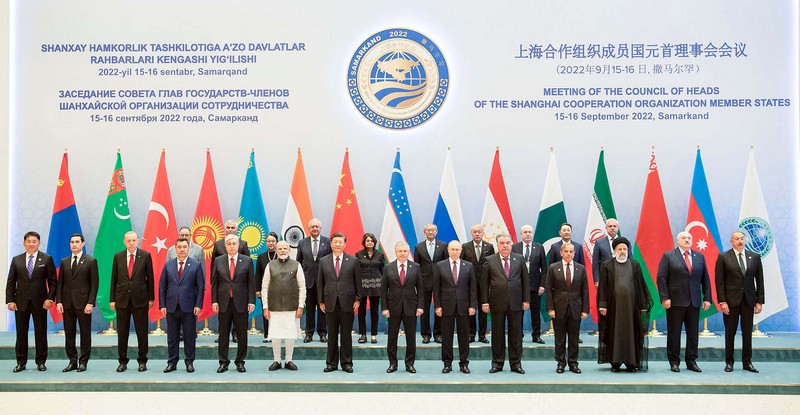
7 Out 2022 – Held in Samarkand, Uzbekistan, from September 15 to 16, the 2022 summit of the Shanghai Cooperation Organization (SCO) Heads of State Council demonstrated that the SCO was continuing to evolve into a viable international political congregation independent from the West.

Beginning in the early 1800s, international organizations (IOs) began to emerge as modest arbiters of European affairs. But during and after World War II, new IOs established themselves as far more prominent actors on a global scale. The United Nations (UN), the Arab League, the Organization of Petroleum Exporting Countries (OPEC), the Association of Southeast Asian Nations (ASEAN), and several other IOs were created to manage the affairs of their member states.

After the Soviet collapse, more IOs were created to manage the independence of new states, globalization, and regional cooperation. The Commonwealth of Independent States (CIS), created in 1991, attempted to coordinate military, economic, and political policies between post-Soviet states. The European Union (EU) and the African Union (AU), created in 1993 and 2002, respectively, bound member states more forcefully to common economic and political norms. Other IOs, like the Arctic Council (1996) and Asia Cooperation Dialogue (2002), aimed to foster broader regional cooperation.

Most new international organizations meshed neatly with the Western-led liberal world order. But in 2001, the formation of the Shanghai Cooperation Organization (SCO) was formally announced, and it established itself as an exclusionary outlier. Originally known as the Shanghai Five when it was created in 1996, it included China, Russia, Kazakhstan, Kyrgyzstan, and Tajikistan, with Uzbekistan later joining when it evolved into the SCO in 2001.

The SCO was created partly to help coordinate a new era of peaceful relations between Moscow and Beijing and to manage their coalescing interests in Central Asian states. In addition, combatting the “Three Evils” of extremism, separatism, and terrorism were major priorities for the organization, which included data and intelligence sharing and common military drills among its member states.

Over time, the SCO began to embrace greater political and economic integration. Support for autocratic rule and limiting criticism of human rights violations set it apart from other Western-aligned IOs, with the SCO also overseeing the growth of joint energy projects, the fostering of trade agreements, and the introduction of the SCO Interbank Consortium in 2005 “to organize a mechanism for financing and banking services in investment projects supported by the governments of the SCO member states.”

But the organization’s most pressing vocation was facilitating a multipolar world order. Investing in an independent forum for economic, political, and military affairs outside of Western influence became a key component of Russian and Chinese attempts to reduce Western power in global affairs.

Russia and China have also developed complementary mechanisms to the SCO, which have helped decentralize its mission. Following the blacklisting of several Russian banks from the Society for Worldwide Interbank Financial Telecommunication (SWIFT) in 2014, for example, the Kremlin approved the creation of the System for Transfer of Financial Messages (SPFS) to replicate SWIFT and introduced the National Payment Card System (now known as Mir), while China created the Cross-Border Interbank Payment System (CIPS).

These initiatives even proved attractive to states that were more aligned with the Western-led global order. India and Pakistan began SCO accession talks in 2015 and officially joined the organization in 2017. Despite relatively positive relations with the West, India and Pakistan have both faced Western criticism over human rights and democratic backsliding in recent years. India’s introduction of platforms like RuPay in 2012 and Unified Payments Interface, which eroded the traditional dominance of Visa and Mastercard in the country, also complemented SCO’s attempts to reduce Western economic preeminence globally.

At the 2022 summit of the SCO Heads of State Council, Uzbek President Shavkat Mirziyoyev reiterated that the SCO was not an anti-U.S. or anti-NATO alliance. But the organization’s original motive to create a multipolar world was echoed in its Samarkand Declaration, the final declaration of this meeting, and continues to conflict with Washington’s attempts to maintain the U.S.-led world order. According to the declaration, the member states “confirm[ed] their commitment to [the] formation of a more representative, democratic, just and multipolar world order.”

This core stratagem continues to appeal to countries around the world. Alongside the leaders of its eight member states, the SCO invited the presidents of Belarus, Mongolia, and Iran as official observers to the recent summit. Having started its accession process in 2021, Iran signed a memorandum of understanding with the SCO to join the institution by April 2023.

The SCO would likely alleviate Iran’s sense of economic isolation stemming from Western sanctions, a sentiment shared by Iranian officials at the summit and something that was also noted back in 2007. Belarus has also found itself under increasing sanctions in recent years and enhanced its accession procedures to join the SCO in Samarkand.

The presidents of Azerbaijan, Turkmenistan, and Turkey were also invited to the SCO summit as special guests, with Turkish President Recep Tayyip Erdoğan announcing that his country would seek full membership to the SCO. In 2012, Erdoğan joked to Russian President Vladimir Putin about abandoning Turkey’s EU aspirations if Russia would allow them into the SCO. Turkey’s renewed attempt comes at a time when its ties with the rest of the Western world are increasingly strained and could instigate other NATO states, and potentially the EU states, to join the SCO as well.

The SCO has also established strong relations with other IOs. Representatives from ASEAN, the UN, the Russian-dominated CIS, the Collective Security Treaty Organization (CSTO), and the Eurasian Economic Union (EAEU) were invited to the 2022 summit. Notably absent were any representatives from the EU or NATO. Meanwhile, in 2005, the U.S. was rejected from gaining observer status, solidifying the SCO’s status as a bulwark against U.S. influence in Eurasia.

Like all major international organizations, the SCO faces systemic obstacles that hinder its effectiveness and long-term viability. At the recent summit in Uzbekistan, China’s Xi Jinping was welcomed to the country by his Uzbek counterpart, Shavkat Mirziyoyev. Putin, however, was greeted by Uzbek Prime Minister Abdulla Aripov, highlighting Russia’s strained relations with many of the former Soviet states and the growing strength of Beijing over Moscow. Unlike in the CSTO and the EAEU, Russia is not the dominant actor in the SCO, and will increasingly have to contend with China’s predominant authority.

Disputes also remain between SCO member states. India and Pakistan, for example, are afflicted with an ongoing struggle over Kashmir. China and India have their own territorial disputes and have engaged in minor violent skirmishes since India joined the SCO. Additionally, deadly clashes between Kyrgyzstan and Tajikistan erupted during the recent summit, while admitting Armenia and Azerbaijan, both of which are SCO dialogue partners, will only further increase the number of members currently locked in their own territorial disputes.

But the SCO has consistently portrayed itself as a vehicle to supervise these issues. The leaders of Kyrgyzstan and Tajikistan met for talks during the summit to assuage tensions. And since 2002, the Regional Anti-Terrorist Structure (RATS) has encouraged military coordination between member states, with the Indian and Pakistani militaries conducting RATS drills in 2021. More drills between them are planned for October, and while they are aimed primarily at countering unrest from Afghanistan, they are also part of SCO’s attempts to manage relations of member states.

China and Russia have also agreed to “synergize” the Belt and Road Initiative (BRI) and the EAEU to help mitigate possible tension between them, with both Xi and Putin meeting on the sidelines of the 2022 SCO summit and pledging to respect each other’s core interests.

The SCO member states clearly believe the organization can, and has greater potential to, effectively manage their concerns and regional affairs, and its appeal continues to grow. Besides the additional SCO dialogue partners (Cambodia, Nepal, and Sri Lanka), Qatar, Saudi Arabia, and Egypt were granted the status of SCO dialogue partners at the 2022 SCO summit. Myanmar, Bahrain, Kuwait, the United Arab Emirates (UAE), and the Maldives were also granted the status of dialogue partners.

Russian and Chinese influence will fall as more members join, which will also dilute consensus within the organization. But it remains a Beijing and Moscow-led initiative to manage world affairs and to demonstrate that the “international community” is not just the West. With almost half of the world’s population and a quarter of the global GDP, the SCO is increasingly becoming a representative of the Global South.

By pooling together other IOs into an umbrella forum, the SCO can further its goal of challenging the wider Western-dominated IO ecosystem and prevent Washington from setting the global agenda. This will require the constructive management of Russian and Chinese ambitions and the increasingly complex needs of more member states.

John P. Ruehl is an Australian-American journalist living in Washington, D.C. He is a contributing editor to Strategic Policy and a contributor to several other foreign affairs publications.

10 October 2022

Source: www.transcend.org

The Puppets and the Puppet Masters

By The Chris Hedges Report

9 Oct 2022 – Merrick Garland and those who work in the Department of Justice are the puppets, not the puppet masters. They are the façade, the fiction, that the longstanding persecution of Julian Assange has something to do with justice. Like the High Court in London, they carry out an elaborate judicial pantomime. They debate arcane legal nuances to distract from the Dickensian farce where a man who has not committed a crime, who is not a U.S. citizen, can be extradited under the Espionage Act and sentenced to life in prison for the most courageous and consequential journalism of our generation.

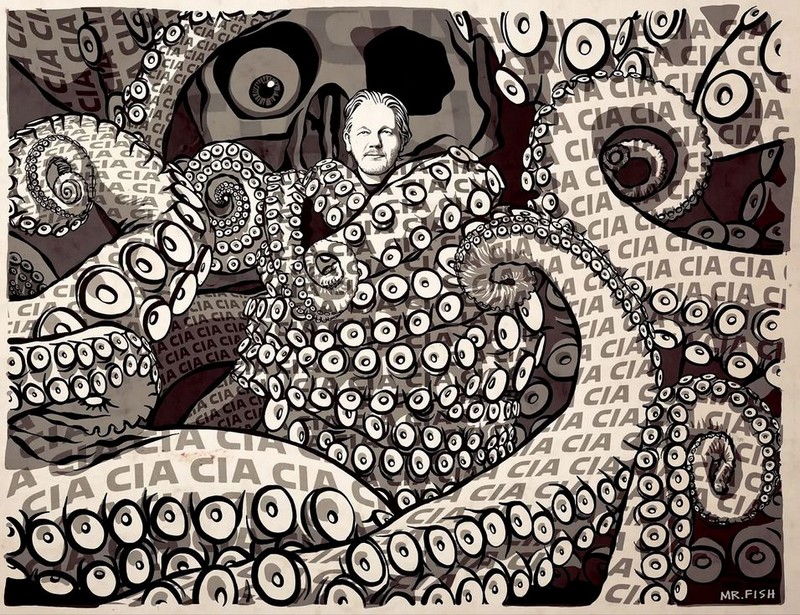
The engine driving the lynching of Julian is not here on Pennsylvania Avenue. It is in Langley, Virginia, located at a complex we will never be allowed to surround – the Central Intelligence Agency. It is driven by a secretive inner state, one where we do not count in the mad pursuit of empire and ruthless exploitation. Because the machine of this modern leviathan was exposed by Julian and WikiLeaks, the machine demands revenge.

The United States has undergone a corporate coup d’etat in slow motion. It is no longer a functioning democracy. The real centers of power, in the corporate, military and national security sectors, were humiliated and embarrassed by WikiLeaks. Their war crimes, lies, conspiracies to crush the democratic aspirations of the vulnerable and the poor, and rampant corruption, here and around the globe, were laid bare in troves of leaked documents.

We cannot fight on behalf of Julian unless we are clear about whom we are fighting against. It is far worse than a corrupt judiciary. The global billionaire class, who have orchestrated a social inequality rivaled by pharaonic Egypt, has internally seized all of the levers of power and made us the most spied upon, monitored, watched and photographed population in human history. When the government watches you 24-hours a day, you cannot use the word liberty. This is the relationship between a master and a slave. Julian was long a target, of course, but when WikiLeaks published the documents known as Vault 7, which exposed the hacking tools the CIA uses to monitor our phones, televisions and even cars, he — and journalism itself — was condemned to crucifixion. The object is to shut down any investigations into the inner workings of power that might hold the ruling class accountable for its crimes, eradicate public opinion and replace it with the cant fed to the mob.

I spent two decades as a foreign correspondent on the outer reaches of empire in Latin America, Africa, the Middle East and the Balkans. I am acutely aware of the savagery of empire, how the brutal tools of repression are first tested on those Frantz Fanon called “the wretched of the earth.” Wholesale surveillance. Torture. Coups. Black sites. Black propaganda. Militarized police. Militarized drones. Assassinations. Wars. Once perfected on people of color overseas, these tools migrate back to the homeland. By hollowing out our country from the inside through deindustrialization, austerity, deregulation, wage stagnation, the abolition of unions, massive expenditures on war and intelligence, a refusal to address the climate emergency and a virtual tax boycott for the richest individuals and corporations, these predators intend to keep us in bondage, victims of a corporate neo-feudalism. And they have perfected their instruments of Orwellian control. The tyranny imposed on others is imposed on us.

From its inception, the CIA carried out assassinations, coups, torture, and illegal spying and abuse, including that of U.S. citizens, activities exposed in 1975 by the Church Committee hearings in the Senate and the Pike Committee hearings in the House. All these crimes, especially after the attacks of 9/11, have returned with a vengeance. The CIA is a rogue and unaccountable paramilitary organization with its own armed units and drone program, death squads and a vast archipelago of global black sites where kidnapped victims are tortured and disappeared.

The U.S. allocates a secret black budget of about $50 billion a year to hide multiple types of clandestine projects carried out by the National Security Agency, the CIA and other intelligence agencies, usually beyond the scrutiny of Congress. The CIA has a well-oiled apparatus to kidnap, torture and assassinate targets around the globe, which is why, since it had already set up a system of 24-hour video surveillance of Julian in the Ecuadorean Embassy in London, it quite naturally discussed kidnapping and assassinating him. That is its business. Senator Frank Church — after examining the heavily redacted CIA documents released to his committee — defined the CIA’s “covert activity” as “a semantic disguise for murder, coercion, blackmail, bribery, the spreading of lies and consorting with known torturers and international terrorists.”

All despotisms mask state persecution with sham court proceedings. The show trials and troikas in Stalin’s Soviet Union. The raving Nazi judges in fascist Germany. The Denunciation rallies in Mao’s China. State crime is cloaked in a faux legality, a judicial farce.

If Julian is extradited and sentenced and, given the Lubyanka-like proclivities of the Eastern District of Virginia, this is a near certainty, it means that those of us who have published classified material, as I did when I worked for The New York Times, will become criminals. It means that an iron curtain will be pulled down to mask abuses of power. It means that the state, which, through Special Administrative Measures, or SAMs, anti-terrorism laws and the Espionage Act that have created our homegrown version of Stalin’s Article 58, can imprison anyone anywhere in the world who dares commit the crime of telling the truth.

We are here to fight for Julian. But we are also here to fight against powerful subterranean forces that, in demanding Julian’s extradition and life imprisonment, have declared war on journalism.

We are here to fight for Julian. But we are also here to fight for the restoration of the rule of law and democracy.

We are here to fight for Julian. But we are also here to dismantle the wholesale Stasi-like state surveillance erected across the West.

We are here to fight for Julian. But we are also here to overthrow — and let me repeat that word for the benefit of those in the FBI and Homeland Security who have come here to monitor us — overthrow the corporate state and create a government of the people, by the people and for the people, that will cherish, rather than persecute, the best among us.

Chris Hedges is a Pulitzer Prize–winning journalist who was a foreign correspondent for fifteen years for The New York Times, where he served as the Middle East Bureau Chief and Balkan Bureau Chief.

10 October 2022

Source: www.transcend.org

‘End the War on Journalism and Free Assange’: Thousands Demand Release of WikiLeaks Founder

By Kenny Stancil

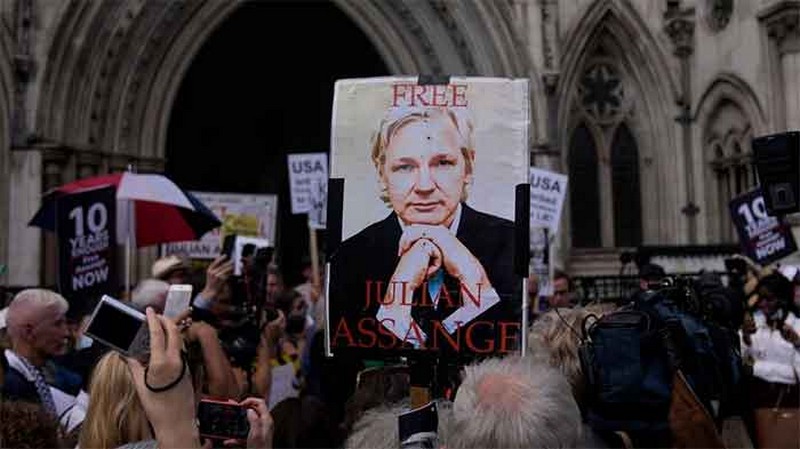
9 Oct 2022 – Supporters of WikiLeaks founder Julian Assange held a massive transatlantic protest yesterday to demand freedom for the incarcerated journalist.

In London, thousands of people formed a giant human chain around Britain’s parliament and called for Assange’s immediate release from the nearby maximum-security Belmarsh prison, where he has suffered for years under conditions that experts have condemned as torture.

Meanwhile, in Washington D.C., people gathered outside the Department of Justice (DOJ) and implored Attorney General Merrick Garland to end the United States government’s attempt to extradite Assange, who faces up to 175 years behind bars on espionage charges stemming from his publication of information that exposed war crimes committed by U.S. forces in Afghanistan, Iraq, and elsewhere.

“We did it!” tweeted Stella Assange, wife of the jailed Australian publisher. “Julian will be so energized and thankful for the support that you have shown for him,” she said in a recording thanking those who surrounded the Palace of Westminster—home to the United Kingdom’s House of Commons and House of Lords—on both sides of the River Thames.

Among those who joined London’s human chain to oppose the extradition of Assange was Jeremy Corbyn, a member of the U.K.’s opposition Labour Party. Characterizing the protest as an attempt to “stand up for press freedom everywhere,” Corbyn warned: “If they can silence Assange, they can silence anyone.”

“Julian is a journalist,” Corbyn said in an interview. “Journalism is not a crime. If he is extradited to the U.S.A., any other investigative journalist is at risk.”

That message was echoed by WikiLeaks editor-in-chief Kristinn Hrafnsson. Describing Assange as “an intellectual, a journalist who committed no crime but the crime of telling the truth,” Hrafnsson warned: “Today it’s Julian, tomorrow it’s you.”

In a message to Assange, Corbyn said: “Julian, you’ve made your life’s work that of exposing truths. You’ve taken enormous risks and made enormous sacrifices to do that. And you’ve faced horrible personal abuse and attacks upon your life and your character as a result… But there are millions of people that support you all around the world.”

“We’re just some of those, and we’ve completely surrounded parliament to show our support for you,” Corbyn added. “Our demand [for] the British government: Do not deport you; instead, free you so you can return to your passion, your skill, your genius of being a journalist.”

In a last-ditch effort to avoid extradition to the U.S., Assange’s legal team has filed an appeal at the U.K.’s High Court to block the transfer, which was formally approved by U.K. Home Secretary Priti Patel in June. The High Court is expected to announce whether it will hear the appeal in the coming weeks.

Stella Assange told Reuters on Saturday that British government officials should try to convince their counterparts in the U.S. to withdraw the extradition bid launched in 2019 by then-President Donald Trump’s administration and pursued relentlessly by President Joe Biden’s administration.

“It’s already gone on for three-and-a-half years,” she said. “It is a stain on the United Kingdom and is a stain on the Biden administration.”

On the other side of the Atlantic, Ben Cohen, co-founder of Ben & Jerry’s Ice Cream, was among those who demonstrated outside the DOJ. “It’s time to end the war on journalism and free Assange,” the activist tweeted.

“There’s no democracy without freedom of the press,” Cohen said at the rally. “Because it’s only a press that can hold government accountable. And there’s no free press without a free Assange.”

Given that he is being persecuted for the common journalistic practice of publishing classified information to expose wrongdoing in service of the public good, press freedom and human rights advocates have denounced the indictment of Assange as a landmark attack on and threat to First Amendment protections.

“Julian Assange exposed the crimes of the most powerful governments and corporations in the world today,” Misty Winston, a leading organizer of the D.C. rally, said this week in a statement. “He should be praised, not prosecuted.”

When Secretary of State Antony Blinken said last July that the U.S. “will always support the indispensable work of independent journalists around the world,” critics were quick to point out that Washington’s purported commitment to press freedom has never applied to Assange.

Two years before Assange’s 2019 arrest, for example, the CIA under then-Director Mike Pompeo reportedly plotted to kidnap—and discussed plans to assassinate—the WikiLeaks founder.

In a message to Biden, Corbyn said Saturday: “You won a presidential election against an extremely intolerant right-wing president. You won that with the support of millions of Americans who want to live in a free, open, democratic society.”

“Are you really wanting your administration to be the one that imprisons a journalist for telling the truth about wars in Afghanistan, Iraq, Iran, Syria, Libya, and the environmental destruction by big business and arms companies in so many parts of the world?” he asked. “Think of your place in history. Are you to go down in history as the president who put a journalist in prison on a triple life sentence? Or, will you get your place in history as the man who stood up for free speech?”

Nathan Fuller, director of the Assange Defense Committee, said this week in a statement that “the Biden DOJ could end this travesty at once.”

“Administration officials have given speech after speech touting the principles of a free press abroad and the importance of journalism to a healthy democracy,” said Fuller. “It’s time they practice what they preach and drop these charges immediately.”

Solidarity events were held Saturday in cities across the U.S., including San Francisco, Denver, Tulsa, Seattle, and Minneapolis.

There was also a march in Melbourne, where Assange’s brother, Gabriel Shipton, urged Australian Prime Minister Anthony Albanese to “call Joe Biden and say, ‘Hasn’t Julian suffered enough? Drop the charges and extradition.’”

“Julian would walk free,” he said.

Kenny Stancil is a staff writer for Common Dreams.

10 October 2022

Source: www.transcend.org

Global Development Initiative a constructive approach toward building a cooperative system: Jeffrey Sachs

By Global Times

Editor’s Note:
During the past decade, the world has increasingly witnessed a trend of “the East is rising and the West is declining” in the spheres of economy, security and discourse power. Western countries, particularly the US, plagued by their internal woes, have sought the old path of passing the buck and instigating turmoil elsewhere to ease their own pressure. China, representative of the emerging countries, is proposing new solutions to global problems. By advocating win-win development, facilitating consultation and reconciliation and proposing a balanced and effective security mechanism, China is striving to build a community with a shared future for mankind.

In the 16th piece of the series, Jeffrey Sachs (Sachs), director of the Center for Sustainable Development at Columbia University, told Global Times (GT) reporter Yu Jincui that the Global Development Initiative, proposed by Chinese President Xi Jinping, is a powerful call for cooperation and is very helpful for building an open international cooperative system.

GT: You have visited China many times. How do you comment on China’s development in the past 10 years? What impressed you most and why?

Sachs: I’ve seen China change since my first visit in 1981. This has been more than 40 years, and China’s continuing progress is absolutely remarkable. China went from a country that was filled with poverty to a remarkably prosperous country. And I always so much have benefited from seeing this remarkable progress and also learning from how China succeeded, because the lessons from China are very relevant for other regions of the world, such as Africa today which is still witnessing great poverty, but also has tremendous potential based on the kinds of strategies that China used.

Regarding China’s development in the past 10 years, China has moved from being a prosperous manufacturing country a decade ago to becoming a cutting-edge global technology leader. This is of course a major step. China is also becoming a leader in a wide range of environmentally sustainable technologies. The shift to sustainability is crucial for China and for the world.

GT: China has eliminated absolute poverty. You once said it’s one of the most remarkable economic achievements in human history. Why did you give so much credit to it? What can other countries learn from China in terms of poverty reduction?

Sachs: China showed that it is possible to go from pervasive absolute poverty to the end of poverty in 40 years, from 1980 to 2020. This is not only a wonderful and remarkable accomplishment, but also a road map for Africa and other places still facing extreme poverty. The key to China’s success was high rates of investment in human capital (health and education), infrastructure (power, transport, digital), and business capital. The combination of long-term planning and market forces was essential, as was China’s opening-up to the world.

We know that in the 1970s and indeed, at the time of China’s opening-up in the late 1970s, most people in China lived in rural areas in great poverty. The estimates vary, but by some accounts, the rate of extreme poverty was more than 60 percent of the population, even up to 80 percent by some measures. By 2020, this extreme poverty has been eliminated. I saw that with my own eyes, because at various times, government ministries invited me to join groups to visit different parts of China so that I could help make an assessment or give recommendations. And I visited some of the poorest areas of China on several occasions during the past quarter century.

But even for those who were poor in China, I saw their living standards were rising. This was accomplished by a combination of measures, especially investment in people that is in education, healthcare, improving nutrition, investment, infrastructure, especially in transport, in power, in building new industrial zones, so that production and trade could take place efficiently, of course in a lot of hard work, because Chinese people worked very hard and very long hours for many decades, also in very high saving rates, so the Chinese people saved for the future. This allowed for these big investments to take hold.

So China demonstrated that a high level of investment in people and infrastructure would also attract a tremendous amount of business investment and entrepreneurship as well. China opened the economy to international trade and became the most important trading country in the world during this period and a great manufacturing economy.

So this is the kind of road map based on a large-scale forward-looking investment that I think is very relevant for other regions. I tell leaders in Africa to look at China’s experience. It’s possible in the course of two generations to go from a very poor country to a very prosperous country with no poverty.

GT: There are many discussions over China’s economic development and prospect. How do you see the prospect of China’s future development? Are you optimistic?

Sachs: I am optimistic. China should continue the path of educational excellence, high investments in research and development, and continue outreach to the developing nations through the Belt and Road Initiative.

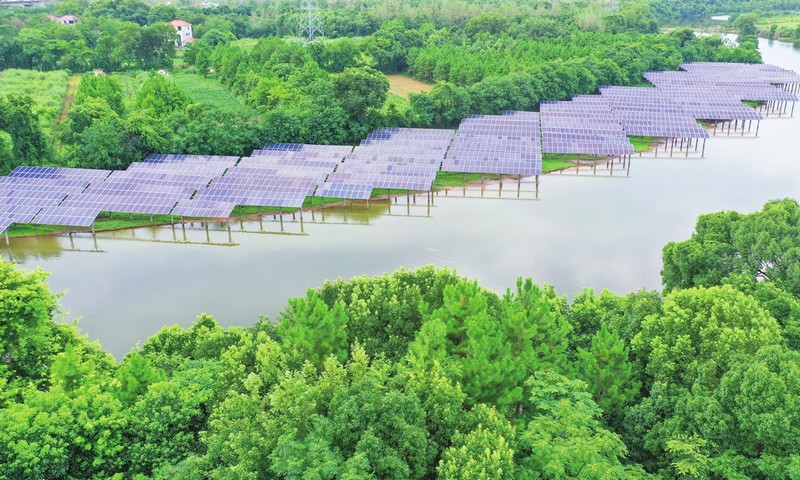
I think the key that is occurring in China now is China’s increasing development and innovation of cutting-edge technology. For a long time, during the past 40 years, China was a great workshop, a great manufacturing economy, with the skilled workers and using technologies largely from the West, actually. But then starting roughly 15 years ago, China’s innovative capacity rose significantly. Now, you see in any weekly issue of a leading science journal worldwide, many articles coming from China. So is a tremendous amount of cutting-edge science and cutting-edge technology. And China has committed to developing technologies in the crucial sectors of sustainability. For example, electric vehicles and photovoltaics, renewable energy, long-distance energy transmission, 5G that enables smart grids and the so-called Internet of Things, a precision agriculture, new material sciences.

These are several of the areas where China is devoting a lot of basic research and development and a lot of business development with business innovation. I think that this is really the key, because with China’s innovation, the country will continue to be a world leader in industry, in manufacturing, in a range of services, including new digital services. It will be a key leader in the sustainability transformation. We know we cannot go on producing in the old ways; we can’t have a coal-based energy system worldwide; we can’t depend on fossil fuels the way that we did in the past, because the climate change will wreck the planet. So China, fortunately, is moving quickly to the zero-carbon energy systems and will be a leader in that. I’m sure China’s technologies will help other countries to do the same.

GT: Many Chinese people once wanted China to copy the US path of development, but instead of doing that, China insisted on taking its own path. If China had completely followed the US one, what will it mean for today’s world?

Sachs: No countries should completely follow any other country’s models because the circumstances, the culture, the history are different in the different places. And China, as a huge civilization, an enormous economy, an enormous population, is of course following a system with Chinese characteristics, as you said. And this is a mixed economy with a significant state sector, a significant private sector, and a significant effort at industrial policy for innovation and continuing technological development. It’s a very distinctive model. It is China’s own. But I think that it gives lots of indications for how other countries, especially those that are poor and trying to catch up rapidly, can make advances.
Now China will become a leader of innovation. And as I say, I very much hope and count on China becoming a leader for innovation in sustainability.

The US model has unfortunately become dysfunctional in recent decades. Inequality has soared, educational quality is mediocre for a large part of the society, and the energy transformation has been paralyzed because of vested interests in fossil fuels. Moreover, the US is turning inward and protectionist even in business and investment, which is also unfortunate for America’s long-term future and for the rest of the world.

In fact, all countries – including China – will need to invent a new economic system that is supportive of sustainable development, common prosperity, a high quality of life, the digital economy, and global cooperation. China, I am glad to say, is actively pursuing these various dimensions of an innovative economic system.

GT: How do you comment on the Global Development Initiative (GDI) proposed by President Xi Jinping?

Sachs: The GDI or the Global Development Initiative that President Xi launched and discussed at the United Nations is very important. The GDI says that China wants to cooperate with all the rest of the world, and especially with the developing countries to promote global, sustainable development and the sustainable development goals (SDGs). It is a powerful call for cooperation, and countries around the world have responded very positively to it.

I really appreciate China’s commitment to the SDGs and the GDI. We know that we are not currently on a course for most of the developing countries to achieve the SDGs. We need increased financing, increased focus, more cooperation globally, an end to the war in Ukraine and an end to the sanctions regime. We need an open international cooperative system. GDI is very helpful for that, but now we need to make sure that we stop this conflict in Ukraine through a negotiated peace agreement.

We need to stop the harsh confrontation between the US and China so that the two countries can cooperate. The China-proposed Belt and Road Initiative and ideas in the US for development finance initiatives could work together, and by cooperating together, we can really accelerate the progress of poor countries to sustainable development. This is the direction that I very much hope that we follow. And GDI is a very, very constructive approach toward building the kind of future we want.

9 October 2022

Source: www.globaltimes.cn

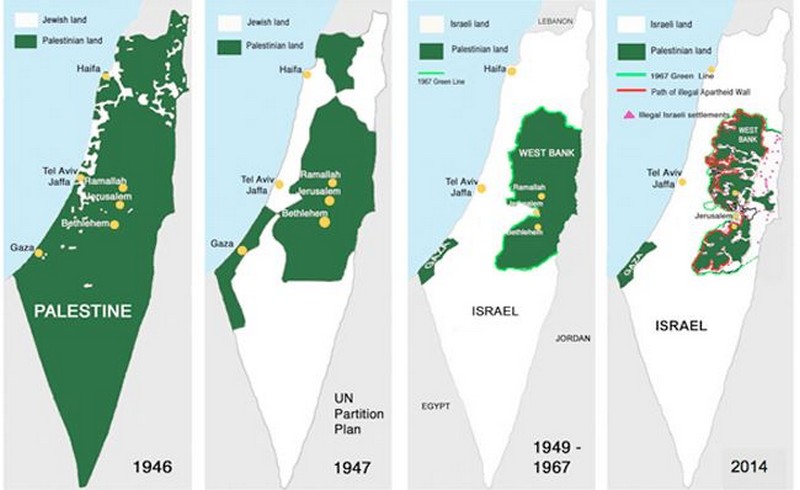
Hidden Motives: Why Lapid is Not Serious about a Palestinian State

By Dr Ramzy Baroud

Israeli Prime Minister Yair Lapid threw a wrench into the works when he declared from the United Nations General Assembly podium: “An agreement with the Palestinians, based on two states for two peoples, is the right thing for Israel’s security, for Israel’s economy and for the future of our children.”

The statement took many by surprise, including the Palestinian leadership.

Palestinian leader Mahmoud Abbas has been addressing the UNGA every September, every year, recycling the same speech about how he has fulfilled his commitments to peace and that it is Israel that needs to engage in serious negotiations toward a two-state solution.

This time, too, Abbas did his part as expected. In his latest speech, he referred to Israel’s “total impunity” and “premeditated and deliberate policies” aimed at “destroying the two-state solution”.

Lapid, like Naftali Bennet and Benjamin Netanyahu before him, was also expected to stick to the script: accusing Palestinians of terrorism and incitement, reeling against the UN’s supposed ‘bias’, and making a case of why Israel should be more invested in its own security than in a Palestinian state.

Lapid, however, did not go that route. True, he regurgitated much of the typical Israeli discourse, accusing Palestinians of “firing rockets and missiles at our children”, and the like.  However, he also spoke, unexpectedly, about Israel’s desire to see a Palestinian state.

Hence, Lapid linked the theoretical Palestinian state on the condition it does not become “another terror base from which to threaten the well-being, and the very existence of Israel”.

Conditions aside, Lapid’s reference to a Palestinian state remains interesting and politically risky. Indeed, the majority of Israelis – 58 percent, according to the Israel Democracy Institute – do not support a Palestinian state. Since Israel is embarking on yet another general election – the fifth in less than four years – swimming against Israel’s dominant political current does not, initially, seem like a winning idea.

In fact, immediate condemnations of Lapid’s statement by Interior Minister Ayelet Shaked, indicate that Lapid’s UN comments will definitely be a contentious campaign issue in the coming weeks.

So, why did Lapid utter these words?

To begin with, Lapid is not serious about a Palestinian state.

Israeli leaders have used this line since the start of the so-called peace process as a way to demonstrate their willingness to engage in a political dialogue under the auspices of Washington, but without going any further. If anything, for 30 years, Tel Aviv – and Washington – waved the Palestinian state carrot before the Palestinian leadership to win time for illegal settlement expansion and to, ultimately, cite Palestinian supposed rejection, incitement and violence as real obstacles before the establishment of such a state.

Lapid’s language – on the Palestinian state becoming a “terror base” threatening “the very existence of Israel” – is entirely consistent with the typical Israeli discourse on this issue.

Moreover, Lapid aimed to upset the predictable routine at the UN, where Palestinians make their case, which is usually supported by most UN members, and where Israel goes on the defensive. By alluding to a Palestinian state – a day before Abbas made his appeal for Palestinian full UN membership – Lapid wanted to regain the initiative and appear a pro-active leader with a plan.

Though it may appear that Lapid’s statement was a bad political move within the context of the rightwing-dominated Israeli politics, this might not be the case. For years, the Left and Center in Israel have been embattled, as they appeared to have no answers to any of Israel’s external and internal problems.

Contrastingly, the Right, along with its growing alliances within the religious and ultra-nationalist camps, seemed to have the answer to everything: their answer to Palestinian demands for freedom and sovereignty was annexation. Their answer to Palestinian protests against home demolitions in occupied East Jerusalem is more home demolitions, mass-scale destruction, and widening the circle of expulsions.

Unable to stop the tidal wave of the Right, Israel’s nominally Left, like the Labor party, and Center, like Kahol Lavan, moved closer to the Right. After all, the latter’s ideas, though sinister and violent, are the only ones that seem to be gaining traction among Israeli voters.

Israel’s political dichotomy, however, grew larger, as expressed in the stalemates of four previous elections, starting in April 2019. The Right failed to manage stable coalitions, and the Left failed to catch up. Lapid and his Yesh Atid party hope to change all of this by presenting a potentially stable Center-Left coalition that can offer more than mere opposition to the Right’s ideas, visions and plans of their own.

Though a Palestinian state is hardly a popular idea among most Israelis, Lapid’s target audience is not just Israel’s Left, Center, and possibly Arab parties. Another target audience is the Biden Administration.

US President Joe Biden and his Democratic Party, which remains, at least verbally, committed to a two-state solution, are embarking on very difficult times ahead: the Mid-term November election, which could cost them dearly at the House and Senate, and the subsequent Presidential elections in 2024. Biden is keen to present his administration as that of military strength and a vision of peace and stability. Lapid’s words about a Palestinian state were meant to entice the US administration, which will likely engage with Lapid’s party, and possible coalition government in the future, as a ‘peacemaker’.

Finally, Lapid is aware of the impending transition in the Occupied Palestinian territories. As an armed Intifada is growing in the northern Occupied West Bank, PA leader Abbas, 87, will soon leave the scene. A potential successor, Hussein al-Sheikh, is particularly close to Israel’s security apparatus, thus completely mistrusted by most Palestinians.

The talk of a Palestinian state is, therefore, meant to give whomever is to follow Abbas, political leverage that would allow him to stave off an armed revolt and take Palestinians into another futile hunt in search of another political mirage.

It remains to be seen if Lapid’s strategy will pay dividends – whether it will cost him in the coming Israeli elections, or whether his words will evaporate into the dustbin of history, as did many such references by Israeli leaders in the past.

Dr. Ramzy Baroud is a journalist, author and the Editor of The Palestine Chronicle.

6 October 2022

Source: countercurrents.org

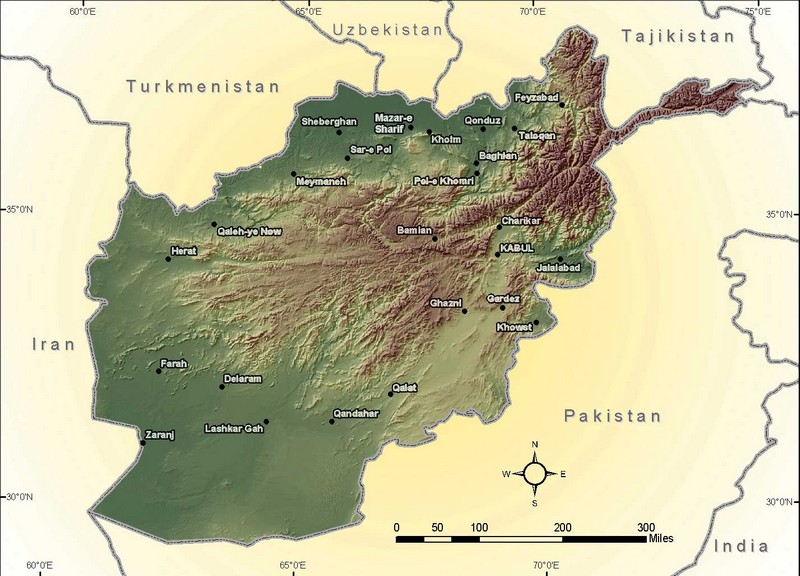
Twenty-one Years Ago, October 7, 2001, US-NATO Invades Afghanistan: It was an Act of Self Defense. “America was Attacked by an ‘Unnamed Foreign Power’ on 9/11”

October 7, 2001. Afghanistan is invaded under the doctrine of “self-defense”

By Prof Michel Chossudovsky

The legal argument used by Washington and NATO to invade Afghanistan was that the September 11 attacks constituted an undeclared “armed attack” “from abroad” by an unnamed foreign power, and that consequently “the laws of war” apply, allowing the nation under attack, to strike back in the name of “self-defense”.

Both the media and the US government, in chorus, continue to point to the 9/11 attacks and the role of Al Qaeda, allegedly supported by Afghanistan, when in fact (amply documented) Al Qaeda was an intelligence asset created by the CIA.

Lest we forget, Osama bin Laden had been recruited by National Security Advisor Zbigniew Brzezinski during the so-called Soviet-Afghan war.

The bombing and invasion of Afghanistan in October 2001 was described as a “campaign” against “Islamic terrorists”, rather than a war.

To this date, however, there is no proof that Al Qaeda was behind the 9/11 attacks.

Even if one accepts the official 9/11 narrative, there is no evidence that Afghanistan as a Nation State was behind or in any way complicit in the 9/11 attacks.

The Afghan government in the weeks following 9/11, offered on two occasions through diplomatic channels to deliver Osama bin Laden to US Justice, if there were preliminary evidence of his involvement in the 9/11 attacks. These offers were casually refused by Washington.

Where was Osama on September 11, 2001?

To this date, Osama bin Laden, the leader of Al Qaeda, is identified in military documents and official statements of both the Bush and Obama administrations as the mastermind behind the 9/11 attacks.

The Afghan government (the “Taliban regime” in official documents) is identified as supporting Al Qaeda and providing refuge to its leader Osama bin Laden inside Afghan territory in the wake of the 9/11 attacks.

On September 10, 2001, according to a CBS news report, Osama bin Laden was in Pakistan. He had been admitted to a Pakistani military hospital in Rawalpindi. (CBS Evening News with Dan Rather;  CBS, 28 January 2002, See also Michel Chossudovsky, Where was Osama on September 11, 2001?, Global Research, 11 September 2008):

“DAN RATHER, CBS ANCHOR: As the United states and its allies in the war on terrorism press the hunt for Osama bin Laden, CBS News has exclusive information tonight about where bin Laden was and what he was doing in the last hours before his followers struck the United States September 11.

This is the result of hard-nosed investigative reporting by a team of CBS news journalists, and by one of the best foreign correspondents in the business, CBS`s Barry Petersen. Here is his report.

(BEGIN VIDEOTAPE) BARRY PETERSEN, CBS CORRESPONDENT (voice-over): Everyone remembers what happened on September 11. Here`s the story of what may have happened the night before. It is a tale as twisted as the hunt for Osama bin Laden.

CBS News has been told that the night before the September 11 terrorist attack, Osama bin Laden was in Pakistan. He was getting medical treatment with the support of the very military that days later pledged its backing for the U.S. war on terror in Afghanistan (CBS, op cit, emphasis added)

9 11 Bin Laden At Rawalpindi Hospital September 10th 1 28 2002

Recovering from his hospital treatment in Rawalpindi on the 11th of September, how could Osama have coordinated the 9/11 attacks?

How could Afghanistan be made responsible for these attacks by Al Qaeda?

Bin Laden is a national of Saudi Arabia who, according to CBS News, was not in Afghanistan, but in Pakistan at the time of the attacks.

The Invasion of Afghanistan: NATO’s Doctrine of Collective Security

The legal argument used by Washington and NATO to invade Afghanistan was that the September 11 attacks constituted an undeclared “armed attack” “from abroad” by an unnamed foreign power, and that consequently “the laws of war” apply, allowing the nation under attack, to strike back in the name of “self-defense”.

The “Global War on Terrorism” was officially launched by the Bush administration on September 11, 2001. On the following morning (September 12, 2001), NATO’s North Atlantic Council meeting in Brussels, adopted the following resolution:

“if it is determined that the [September 11, 2001] attack against the United States was directed from abroad [Afghanistan] against “The North Atlantic area“, it shall be regarded as an action covered by Article 5 of the Washington Treaty”. (emphasis added)

In this regard, Article 5 of the Washington Treaty stipulates that if:

“The Parties agree that an armed attack against one or more of them in Europe or North America shall be considered an attack against them all and consequently they agree that, if such an armed attack occurs, each of them, in exercise of the right of individual or collective self-defence recognised by Article 51 of the Charter of the United Nations, will assist the Party or Parties so attacked by taking forthwith, individually and in concert with the other Parties, such action as it deems necessary, including the use of armed force, to restore and maintain the security of the North Atlantic area.” (NATO, What is Article 5,  NATO Topics – NATO and the Scourge of Terrorism, accessed 24 November 2009, emphasis added)

“Use of Armed Force” only “If It is Determined…”

There was an “if” in the September 12 resolution. Article 5 would apply only if it is determined that Afghanistan as a Nation State was complicit or behind the 9/11 attacks.

In practice, the “if” had already been waived prior to 9/11. The entire NATO arsenal was already on a war footing. In military terms, NATO and the US were already in an advanced state of readiness. Known to military analysts, but never revealed in the Western media, the implementation of a large scale theater war takes up to one year (or more) of advanced operational planning, prior to the launching of an invasion.

Moreover, there was evidence that the war on Afghanistan had been planned prior to 9/11.

The North Atlantic Council in Brussels responded almost immediately in the wake of the 9/11 attacks,  in the morning of September 12, 2001.

The use of article 5 of the Washington Treaty had in all likelihood been contemplated by military planners, as a pretext for waging war, prior to 9/11.

There was, however, no official declaration of war on September 12th. The Alliance waited until 3 days before the invasion to declare war on Afghanistan, an impoverished country which by no stretch of the imagination could have launched an attack against a member state of “The North Atlantic area”.

The September 12 resolution of the Atlantic Council required “determination” and corroborating evidence, that:

1) Al Qaeda led by Osama bin Laden with the support of a foreign power had ordered the “attack from abroad” on the United States of America;

2) The terrorist attacks of 9/11 constituted a bona fide military operation (under the provisions of Article 5) by an alleged foreign country (Afghanistan) against a NATO member state, and consequently against all NATO member states under the doctrine of collective security:

“Article 5 and the case of the terrorist attacks against the United States: The United States has been the object of brutal terrorist attacks. It immediately consulted with the other members of the Alliance. The Alliance determined that the US had been the object of an armed attack. The Alliance therefore agreed that if it was determined that this attack was directed from abroad, it would be regarded as covered by Article 5. NATO Secretary General, Lord Robertson, subsequently informed the Secretary-General of the United Nations of the Alliance’s decision.

Article 5 has thus been invoked, but no determination has yet been made whether the attack against the United States was directed from abroad. If such a determination is made, each Ally will then consider what assistance it should provide. In practice, there will be consultations among the Allies. Any collective action by NATO will be decided by the North Atlantic Council. The United States can also carry out independent actions, consistent with its rights and obligations under the UN Charter.

Allies can provide any form of assistance they deem necessary to respond to the situation. This assistance is not necessarily military and depends on the material resources of each country. Each individual member determines how it will contribute and will consult with the other members, bearing in mind that the ultimate aim is to “to restore and maintain the security of the North Atlantic area”.

By invoking Article 5, NATO members have shown their solidarity toward the United States and condemned, in the strongest possible way, the terrorist attacks against the United States on 11 September.

If the conditions are met for the application of Article 5, NATO Allies will decide how to assist the United States. (Many Allies have clearly offered emergency assistance). Each Ally is obliged to assist the United States by taking forward, individually and in concert with other Allies, such action as it deems necessary. This is an individual obligation on each Ally and each Ally is responsible for determining what it deems necessary in these particular circumstances.

No collective action will be taken by NATO until further consultations are held and further decisions are made by the the North Atlantic Council. (NATO, NATO Topics – NATO and the Scourge of Terrorism, accessed 24 November 2009, emphasis added)

The Mysterious Frank Taylor Report

The final decision to invoke Article 5 in relation to the 9/11 attacks came three weeks later upon the submission to the NATO Council of a mysterious classified report by a US State Department official named Frank Taylor. The report was submitted to NATO on October 2nd, 5 days before the commencement of the bombing and invasion of Afghanistan.

Frank Taylor was working in the US State Department. He had been entrusted with the writing of a brief to establish whether the US “had been attacked from abroad”, pursuant to the North Atlantic Council’s resolution of September 12 2001.

US Ambassador at Large and Co-ordinator for Counter-terrorism Frank Taylor briefed the North Atlantic Council on October 2nd, five days before the commencement of the bombings.

On October 2nd  he handed his brief to NATO “on the results of investigations into the 11 September attacks…. ” (NATO – Topic: Terrorism, NATO and the fight against Terrorism, accessed 24 November 2009).

The classified report was not released to the media. And to this date, to our knowledge, it has remained classified.

NATO’s Secretary General Lord Robertson casually summarised the substance of the Frank Taylor report in a press release:

“This morning, the United States briefed the North Atlantic Council on the results of the investigation into who was responsible for the horrific terrorist attacks which took place on September 11.

The briefing was given by Ambassador Frank Taylor, the United States Department of State Coordinator for Counter-terrorism.

This morning’s briefing follows those offered by United States Deputy Secretary of State Richard Armitage and United States Deputy Secretary of Defense Paul Wolfowitz, and illustrates the commitment of the United States to maintain close cooperation with Allies.

Today’s was classified briefing and so I cannot give you all the details.

Briefings are also being given directly by the United States to the Allies in their capitals.

The briefing addressed the events of September 11 themselves, the results of the investigation so far, what is known about Osama bin Laden and the al-Qaida organisation and their involvement in the attacks and in previous terrorist activity, and the links between al-Qaida and the Taliban regime in Afghanistan.

The facts are clear and compelling. The information presented points conclusively to an al-Qaida role in the September 11 attacks.

We know that the individuals who carried out these attacks were part of the world-wide terrorist network of al-Qaida, headed by Osama bin Laden and his key lieutenants and protected by the Taliban.

On the basis of this briefing, it has now been determined that the attack against the United States on September 11 was directed from abroad and shall therefore be regarded as an action covered by Article 5 of the Washington Treaty, which states that an armed attack on one or more of the Allies in Europe or North America shall be considered an attack against them all.

I want to reiterate that the United States of America can rely on the full support of its 18 NATO Allies in the campaign against terrorism.”

(Lord Robertson, NATO Secretary General, statement to the NATO Council, State Department, Appendix H, Multinational Response to September 11 NATO Press

http://www.state.gov/documents/organization/10313.pdf, accessed 24 November 2009, emphasis added)

In other words, on October 5, 2001, two days before the actual commencement of the bombing campaign on October 7, the North Atlantic Council decided, based on the information provided by Frank Taylor to the Council  “that the attacks were directed from abroad” by Al Qaeda, headed by Osama bin Laden, thereby requiring an action on the part of NATO under Article 5 of the Washington Treaty ( NATO – Topic: Terrorism, NATO and the fight against Terrorism, accessed 24 November 2009).

NATO action under article 5, was outlined in an October 4 decision, 3 days before the commencement of the bombings. This NATO decision implied eight measures in support the United States, which were tantamount to a declaration of war on Afghanistan:

to enhance intelligence sharing and co-operation, both bilaterally and in appropriate NATO bodies, relating to the threats posed by terrorism and the actions to be taken against it;

to provide, individually or collectively, as appropriate and according to their capabilities, [military] assistance to Allies and other states which are or may be subject to increased terrorist threats as a result of their support for the campaign against terrorism;

to take necessary measures to provide increased security for facilities of the United States and other Allies on their territory;

to backfill selected Allied assets in NATO’s area of responsibility that are required to directly support operations against terrorism;

to provide blanket overflight clearances for the United States and other Allies’ aircraft, in accordance with the necessary air traffic arrangements and national procedures, for military flights related to operations against terrorism; to provide access for the United States and other Allies to ports and airfields on the territory of NATO nations for operations against terrorism, including for refuelling, in accordance with national procedures;

that the Alliance is ready to deploy elements of its Standing Naval Forces to the Eastern Mediterranean in order to provide a NATO presence and demonstrate resolve; and that the Alliance is similarly ready to deploy elements of its NATO Airborne Early Warning Force to support operations against terrorism. NATO – Topic: Terrorism, NATO and the fight against Terrorism, accessed 24 November 2009 emphasis added)

Press reports of Frank Taylor’s brief to the NATO Council were scanty. The invocation of Article 5, five days before the bombings commenced, was barely mentioned. The media consensus was: “all roads lead to Bin Laden” as if bin Laden was a Nation State which had attacked America.

What stands out are outright lies and fabrications. Moreover, prior to October 2nd, NATO had no pretext under Article 5 of the Washington Treaty to intervene militarily in Afghanistan.

The justification was provided by Frank Taylor’s classified report, which was not made public.

The two UN Security Council resolutions adopted in the course of September 2001, did not, under any circumstances, provide a justification for the invasion and illegal occupation  of a UN member country. (See: Security Council resolution 1368 (2001) Threats to international peace and security caused by terrorist acts,  Security Council resolution 1373 (2001) Threats to international peace and security caused by terrorist acts).

UNSC Resolution 1373 (2001) called for prevention and suppression of terrorist acts, as well suppression of the financing of terrorism:

“(e) Ensure that any person who participates in the financing, planning, preparation or perpetration of terrorist acts or in supporting terrorist acts is brought to justice and ensure that, in addition to any other measures against them, such terrorist acts are established as serious criminal offences in domestic laws and regulations and that the punishment duly reflects the seriousness of such terrorist acts;

“3. Calls upon all States to:

“(a) Find ways of intensifying and accelerating the exchange of operational information, especially regarding actions or movements of terrorist persons or networks; forged or falsified travel documents; traffic in arms, explosives or sensitive materials; use of communications technologies by terrorist groups; and the threat posed by the possession of weapons of mass destruction by terrorist groups;

“(b) Exchange information in accordance with international and domestic law and cooperate on administrative and judicial matters to prevent the commission of terrorist acts;

“(c) Cooperate, particularly through bilateral and multilateral arrangements and agreements, to prevent and suppress terrorist attacks and take action against perpetrators of such acts;

“4. Notes with concern the close connection between international terrorism and transnational organized crime, illicit drugs, money-laundering, illegal arms-trafficking, and illegal movement of nuclear, chemical, biological and other potentially deadly materials, and in this regard emphasizes the need to enhance coordination of efforts on national, subregional, regional and international levels in order to strengthen a global response to this serious challenge and threat to international security;

“5. Declares that acts, methods, and practices of terrorism are contrary to the purposes and principles of the United Nations and that knowingly financing, planning and inciting terrorist acts are also contrary to the purposes and principles of the United Nations (excerpts of UNSC Resolution 1373 (2001, See also UN Press Release SC 7178 SECURITY COUNCIL UNANIMOUSLY ADOPTS WIDE-RANGING ANTI-TERRORISM RESOLUTION; CALLS FOR SUPPRESSING FINANCING, IMPROVING INTERNATIONAL COOPERATION, Security Council, 4385th Meeting, September 2001)

Nowhere in this resolution is there any mention of military action against a UN member State.

The War on Afghanistan Had been Planned Prior to 9/11

Known and documented, the war on Afghanistan had been  planned prior to 9/11. According to Jane Defense, India had been approached in March 2001 by US to participate in a US military operation against Afghanistan:

Insider accounts published in the British, French and Indian media have revealed that US officials threatened war against Afghanistan during the summer of 2001. These reports include the prediction, made in July, that “if the military action went ahead, it would take place before the snows started falling in Afghanistan, by the middle of October at the latest.”

The Bush administration began its bombing strikes on the hapless, poverty-stricken country October 7, and ground attacks by US Special Forces began October 19. (see Patrick Martin, US planned war in Afghanistan long before September 11, wsws.org, November 20, 2001)

According to statements of former foreign Secretary of Pakistan Niaz Naik, the US had already decided to wage war on Afghanistan prior to 9/11 ( BBC report published one week after the attacks, September 18, 2001)  ”

Niaz Naik, a former Pakistani Foreign Secretary, was told by senior American officials in mid-July that military action against Afghanistan would go ahead by the middle of October.

Russian troops were on standby. …

The underlying objective according to Mr Naik, was to “topple the Taleban regime” and install a government  “possibly under the leadership of the former Afghan King Zahir Shah.”

He said that he was in no doubt that after the World Trade Center bombings this pre-existing US plan had been built upon and would be implemented within two or three weeks.

Concluding Remarks: Twenty-one Years Later

Afghanistan did not attack America on September 11, 2001.

The war on Afghanistan was already on the Pentagon’s drawing board prior to 9/11.

The US led war on Afghanistan, using 9/11 as a pretext and a justification,  is illegal and criminal.

The US and NATO heads of state and heads of government from 2001 to the present are complicit in the launching of a criminal and illegal war.

Invoking article 5 of the Washington Treaty is an illegal and criminal procedure.  The (former) US and NATO heads of state and heads of government should be prosecuted for war crimes.

4 October 2022

Source: globalresearch.ca

Mahatma Gandhi’s Message of Healing for A World Troubled Deeply by Violence, War and Ecological Ruin

By Bharat Dogra

On October 2 an increasingly divided and troubled world observes the birth anniversary of Mahatma Gandhi (MG). This is a good time to reflect on the essence of some of his enduring messages.

Firstly, he said that economics should never be separated from ethics. In particular he gave a call for placing the poorer and weaker sections at the center of decision making and, in a statement that has been widely quoted since then, told policy makers that whenever they are confused regarding policy-choice, they should examine the question from the perspective of its impact on the poor and decide on the basis of what will most help/ empower the weak and the deprived. This thinking is also reflected in his views on mechanization and technology as he clearly declared, at the risk of being ridiculed, that in a country like India where so many people had been already unemployed by highly unjust colonial policies, he was prepared to emphasize protection of labor-intensive technologies in several lines of work (for example hand spinning and weaving), along with the special skills these involved, regardless of the easy availability of heavy machines for this work. He called upon consumers to support these hand-made goods and built up a huge market for these by his tireless efforts, a market which still exists, helped much by the linkage it has with the work and ideas of MG. In agriculture this thinking is reflected in his support for low-cost, self-reliant, organic, soil protecting methods which, as has been increasingly realized now, also help in climate change adaptation and mitigation.

This brings us to his essential message which is actually at the root of protecting environment, although MG had the wisdom to give this message even before the environmental crisis had become such a big issue. This message is of limiting human consumption, of voluntary simplicity in life style choices. MG continued to experiment with this in various experiments of community living. Once this voluntary frugality  is accepted as an ideal of daily life patterns and choice of food, clothing, housing, furnishing etc. is based on simplicity instead rather than greed, grandeur or ‘more and more’, this becomes a very important value that enhances humanity’s ability to live in sustainable ways without disrupting earth systems. People living this way have much less reason to be either discontented or dominating, excessively ambitious and careerist; they also get more time and space to devote to the higher aim of life of creating a better world.

Hence unlike the present-day highly reductionist thinking on environmental issues Mahatma Gandhi provided a holistic view based on the entire life pattern being simple and frugal, placing the least burden on nature. This, together with his ethical economics based on a deeply caring attitude towards weaker sections, provides for equality and simplicity to be the base of any society.

Equality and simplicity also provide very conducive conditions for peace and non-violence. MG saw non-violence as an all encompassing part of life, a way of thinking, which helps greatly to improve social relationships, to reduce widespread and very distressing problems like domestic violence, child abuse, bullying and identity-based violence. At the same time this helps to create a base for peace in world, which increases the chances of creating a world without wars and a war without the most terribly destructive weapons. Non-violence forms of opposing any injustice is something to which MG devoted his entire life.

Today we have a heavily demarcated way of thinking, researching and finding solutions and so we spend a lot of effort and resources for finding solutions separately of many problems with their roots in widespread tendencies of violence and dominance. MG’s thinking and worldview offer a different approach of a way of life rooted in non-dominance and non-violence, as well as self-training and training for this, which can reduce these painful social problems very significantly.

MG was able to mobilize millions of people for non-violent movements against injustices of colonial rule time and again. There were both successes to celebrate and mistakes to learn from in these struggles. What made the freedom movement successes bigger was the ability to add many constructive activities to these, and to prepare a wider base for more equality and justice based changes to follow. No less remarkable is the fact that the legacy of Gandhi lives on 74 years after his death in numerous big and small non-violent struggles for justice which are inspired by him and draw strength from him.

At a time when the world needs prolonged peace, stability and international cooperation to resolve unprecedented environmental problems which according to most senior scientists are already serious enough to endanger the basic life nurturing conditions of earth, we need more than ever before messages of healing which can help and guide us to seek deeper and more comprehensive as well as sustained solutions—beyond technological and short-term fixes—and the ideas and work of MG are particularly relevant and important in this context.

Bharat Dogra is Honorary Convener, Campaign to Save Earth Now. His recent books include Man over Machine, Planet in Peril and Protecting Earth for Children.

2 October 2022

Source: countercurrents.org

Who Sabotaged Nord Stream Gas Pipelines?

By John Scales Avery

I agree with Jan Oberg

Dr. Jan Oberg, Co-Founder and leader of the Transnational Foundation for Peace and Future Research, wrote a really excellent article on the question of who sabotaged Nordstream  pipelines. In the article, he points out that Russia had no motive for sabotaging Nordstream pipelines. If the Russians had wanted to stop the flow of natural gas through the pipeline, they could have simply turned it off at the Russian end. Here is a link to Dr. Oberg’s fine article:

https://transnational.live/2022/09/29/jan-oberg-biden-and-nuland-promised-to-destroy-nordstream-before-the-russian-invasion/

and here is a link to other articles making the same point:

https://duckduckgo.com/?q=Biden+on+Nordstream+2+if+Russia+invades&t=ffab&atb=v327-1&ia=webd

Both Joe Biden and Victoria Newland said the US was going to do it

In February, 2022, both Joe Biden and his Under-Secretary of State, Victoria Newland, said that if Russia should invade Ukraine, there would be no Nordstram 2. Here is a link to some articles that make this point:

https://duckduckgo.com/?q=Biden+on+Nordstream+2+if+Russia+invades&t=ffab&atb=v327-1&ia=web

The United States had a motive

The United States had a motive for sabotaging Nordstream 2, namely to weaken Russia by reducing its income from the sale of natural gas. Washington’s aim throughout the Ukraine war has been to weaken Russia.

US interference with other countries

If the US is guilty of sabotaging Nordstream 2, it is one more example of US interference in the affairs of other countries. Other examples are too numerous to list. The methods used include regime change, assasination of politicians , unilateral sanctions, arms transfers. war, and so on.

A crime against the environment

The methane bubbling up to the surface from the sabotaged pipeline is entering our earth’s atmosphere. Methane is a very powerful greenhouse gas. Although it has a shorter lifetime in the atmosphere than carbon dioxide, while it remains there, methane is twenty times as powerful.

We must rapidly end our dependence on fossil fuels

A point that no one seems to mention in connection with the sabotaging of Nordstream 2, is that we must rapidly end our dependence on all fossil fuels, if we are to have a chance of avoiding catastrophic climate change.

Books and articles on global problems

My books and articles on global problems and on cultural history may be found at the following web addresses.

Most of them may be downloaded and circulated free of charge.

https://www.johnavery.info/

http://eacpe.org/about-john-scales-avery/

https://www.meer.com/en/authors/716-john-scales-avery

John Scales Avery is a theoretical chemist at the University of Copenhagen.

30 September 2022

Source: countercurrents.org