Just International

Israel ruthlessly both grabs and suppresses everything it wants to

Palestine Update 597

For years; Israel has had its eyes on Golan for strategic military reasons. It also wants a monopoly of the tourism sector in The Golan Heights because there are massive profits in this arena. Israel annexed Golan in 1981 through a Knesset resolution. Even though that was nullified by a Security Council Resolution, Donald Trump in some of his most bizarre decisions gifted Israel, Jerusalem, the Golan and then the settlements! Zionism has not hidden its greed in the Golan since 1918, as David Ben-Gurion drew his conception of the “State of Israel”. In a document in which he stated that the borders of “the Jewish state” should include the entire Negev and part of the Sanjak of Damascus and the districts of Quneitra, Wadi Anjar and Hasbaya. The Zionist entity occupied Golan in 1967 and sought from the first day of its occupation to change its geographical and demographic features, destroying its villages and farms, establishing settlements, displacing its residents, tampering with its monuments, extending its control over all water resources, and laying mines in Agricultural areas and in the vicinity of populated areas and worked to convert many sites and villages into military sites. Any space that Israel eyes as helpful to its interests become part of its design for occupation and colonization. Syrian citizens in Golan refuse to surrender and are steadfast in the face of the Zionist occupation authorities. To them it is their conviction that the Golan will return to their homeland, Syria sooner or later.

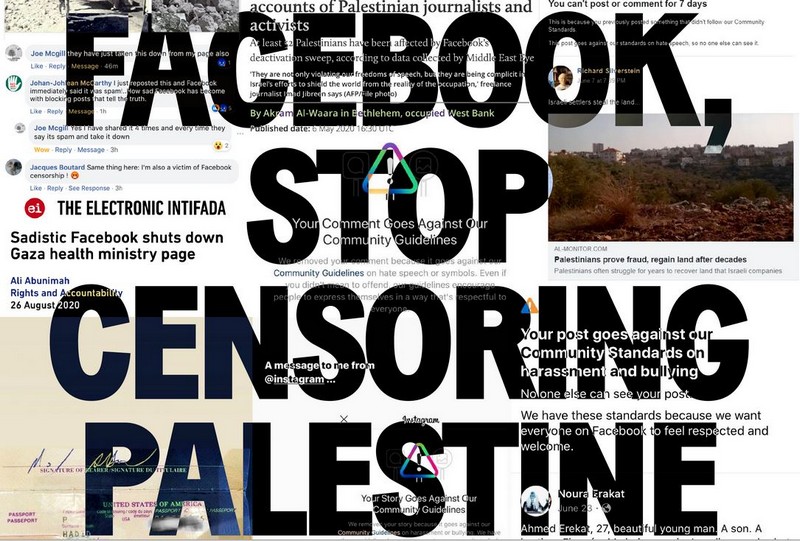
On another difficult front we are informed by Sada Social Center, a Ramallah-based social media rights group, that there have been 130 violations against Palestinian digital content on the social media in September 2022, including the permanent removal of 93 accounts. The platforms run by Meta came at the top of the platforms censoring the Palestinian content, with 91 violations on Face book, which varied between deleting posts, restricting access, preventing posting, preventing the use of some features such as live broadcasts and advertisements and participation in groups for a certain period of time, and the permanent removal of accounts. Still on the question of reporting news, WAFA has recorded 26 Israeli violations against Palestinian journalists and media in the occupied territories during September. WAFA stated in its monthly report on Israeli violations against journalists and media outlets that the Israeli occupation forces continued to deliberately target Palestinian journalists with an aim to limit their coverage of the Israeli army practices and violations against the defenseless Palestinian citizens.

Israeli occupation forces have been ruthless in their killing of innocent Palestinians during military assaults. The targets have been young people and those killings are aimed to remove liberation fighters from the younger age group. 175 Palestinians, including at least 29 children, were injured by Israeli occupation forces across the West Bank, of whom 17 were hit by live ammunition. Israeli settlers protected by soldiers also injured eight Palestinians and damaged Palestinian property in 11 instances. During the reporting period, Israeli forces conducted 120 search-and-arrest operations and arrested 216 Palestinians, including at least 10 children across the West Bank. The UN has called for an investigation, said OCHA. The UN report also reports confiscation of Palestinian-owned structures in Area C of the West Bank citing the lack of Israeli-issued building permits; four of the structures had been provided as donor-funded humanitarian aid. Citizens and were displaced, and the livelihoods of about 270 others were affected. Israeli authorities seal off wells without prior notice. These wells are the sole irrigation source for about 4,000 dunums of cultivated land and are also used for drinking water. These indiscriminate acts affect more than 8,000 Palestinians in surrounding villages.

Other vicious Israeli acts include seeking to diminish the voices of those who speak out socialist perspectives on politics, economics, and culture. Despite growing strides the Palestinian cause in the USA, criticism of the Israeli government and its treatment of the Palestinians is still the major taboo in US political discourse. Left-Wing Journalist Katie Halper Has Been Fired for Calling Israel an Apartheid State.

The Resistance rages on. The Islamic Movement Hamas organized a mass rally on Saturday under the title “Al-Aqsa is in Danger”, to emphasize the centrality of Jerusalem and Al-Aqsa Mosque. Hamas representatives denounced the escalation of Israeli aggressions and violations of the sanctity of the holy mosque. The rally attracted thousands of Palestinians from across the besieged Gaza Strip, brought together a large number of Palestinian political leaders and dignitaries.

Ranjan Solomon
For MLN Palestine Updates

3 October 2022

Source: Palestine Update

Golan is Syrian territory and will remain Syrian- report

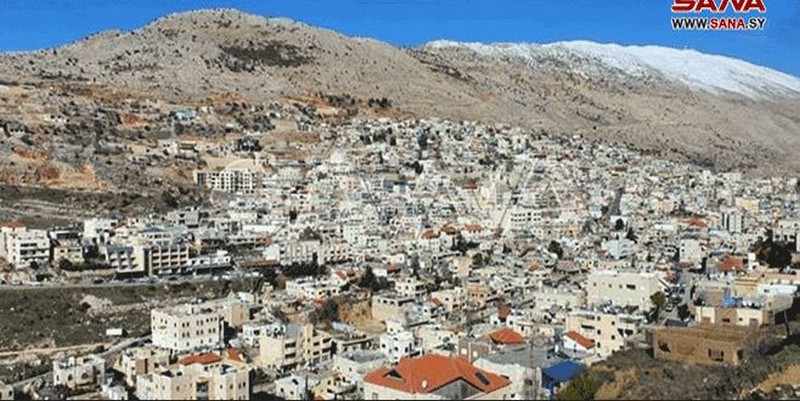
Occupied Golan, SANA-The occupied Syrian Golan is a Syrian territory, located in the southwest of Syria along the border with occupied Palestine, and its total area is estimated at about 1860 kilometers square.

Golan has a geographical location of great importance that made it a transit area for convoys, armies and peoples since ancient times.

Mount Hermon -Al-Sheikh mount- is located in the north and is separated from the southern Bekaa in Lebanon, as well as the Yarmouk Valley in the south from the northwestern heights of Ajloun and Jordan, and from the west the Hawa Plain and Lake Tiberias, while Wadi Al-Raqad lies in the east between it and the area Houran.

Golan diversity climatic ranging between cold, moderate and hot, and it is an ideal area for agriculture throughout the year and it is attractive for tourism as well. Various civilizations, had followed it , most notably the Canaanite, Aramaic and Islamic ones.

Zionism has not hidden its greed in the Golan since 1918 , as David Ben-Gurion drew his conception of the so-called “State of Israel” in a document in which he stated that the borders of “the Jewish state” should include the entire Negev and part of the Sanjak of Damascus and the districts of Quneitra, Wadi Anjar and Hasbaya.

The Zionist entity occupied Golan in 1967 and sought from the first day of its occupation to change its geographical and demographic features, destroying its villages and farms, establishing settlements, displacing its residents, tampering with its monuments, extending its control over all water resources, and laying mines in Agricultural areas and in the vicinity of populated areas and worked to convert many sites and villages into military sites.

On December 14, 1981, the Israeli Knesset approved the so-called decision of annexing the Golan, according to which “Israeli law, judiciary, and administration were imposed on the Golan,” but the UN Security Council responded quickly to the Zionist move and adopted Resolution No. 497 on December 17 From 1981, considering that Israel’s decision to annex the Golan is null and void and has no legal effect on the international level.

Today, Syria citizens in the occupied Syrian Golan continue to stand firm in the face of the Zionist occupation authorities, and they are all confident and certain that the Golan will return to homeland, Syria.

Fedaa al-Rhayiah/ Mazen Eyon

1 October 2022

Source: sana.sy

Digital rights group documents more than 130 violations against Palestinian digital content in September

RAMALLAH, Sunday, October 02, 2022 (WAFA) – Sada Social Center, a Ramallah-based social media rights group, said today it has documented more than 130 violations against Palestinian digital content on the social media in September 2022, including the permeant removal of 93 accounts.

The platforms run by Meta came at the top of the platforms censoring the Palestinian content, said the Center in a statement, with 91 violations on Facebook, which varied between deleting posts, restricting access, preventing posting, preventing the use of some features such as live broadcasts and advertisements and participation in groups for a certain period of time, and the permeant removal of accounts,.

20 violations were monitored by the Center on WhatsApp, 11 on Instagram, 4 on TikTok, 2 violations on Twitter, which classified many Palestinian news content as sensitive, and 2 violations on YouTube against news and Palestinian channels.

Sada Social Center pointed out that journalists and media organizations were the most vulnerable to documented violations, with 73 violations as some accounts were permanently deleted.

In September 2022, the Center said 48% of the content censored were texts and words related to the Palestinian cause, 32% were Palestinian pictures of martyrs or events describing the Israeli attacks, and 16% were videos of the funerals of Palestinian martyrs.

Sada Social Center noted that these documented violations came despite the release of the BSR Center for Human Rights study, which expressed in its results the bias of Meta against Palestinian content and was acknowledged by Meta’s administration.

M.N

2 October 2022

Source: wafa.ps

More Evidence Points to US-NATO Sabotage of Nord Stream

If you live in Germany, you may want to begin scouting out firewood before winter.

By Kurt Nimmo

Increasingly, there is little doubt who is behind the Nordstream pipeline leaks, now numbering four. The corporate media is lamely attempting to blame Russia for blowing up its own multi-billion dollar pipeline and its expensive cargo, but as usual, the corporate propaganda media provides no evidence to back this up.

From that oh-so-reliable news source, the Express:

The massive leak in the Nord Stream 1 and 2 pipelines, which many suspected to be an act of sabotage, could be Russia’s way of sending a horrifying threat to Europe, experts have warned. They say he has the prowess and firepower needed to damage other pipelines. Over the past few days, four leaks have been discovered along the 1,234km-long Nord Stream 2 pipeline between Russia and Germany. The pipelines, which bypassed Ukraine and Poland by transitting gas via the Baltic Sea, started leaking on Monday, which experts from Denmark and Sweden have confirmed occurred after strong explosions.

Indeed, I am certain Russia does possess such technology. However, so do the US and NATO, both with more incentive to blow up the pipelines than Russia. It doesn’t need to do this. Russia can simply turn off the tap on its end, as it has partially accomplished in response to Germany and Europe sending munitions to kill Russian soldiers.

As for the required technology:

BALTOPS is an annual military exercise held in the Baltic Sea. From Naval News:

Participating nations include Belgium, Bulgaria, Denmark, Estonia, Finland, France, Germany, Latvia, Lithuania, the Netherlands, Norway, Poland, Sweden, Turkey, the United Kingdom, and the United States. These countries will exercise a myriad of capabilities demonstrating the inherent flexibility of maritime forces. Exercise scenarios include amphibious operations, gunnery, anti-submarine, air defense, mine clearance operations, explosive ordnance disposal, unmanned underwater vehicles, and medical response. (Emphasis added.)

Moreover, not mentioned by the corporate propaganda media, is the fact BALTOPS was held near the coast of Bornholm, an island off the east coast of Denmark, precisely where the explosions and gas leaks occurred.

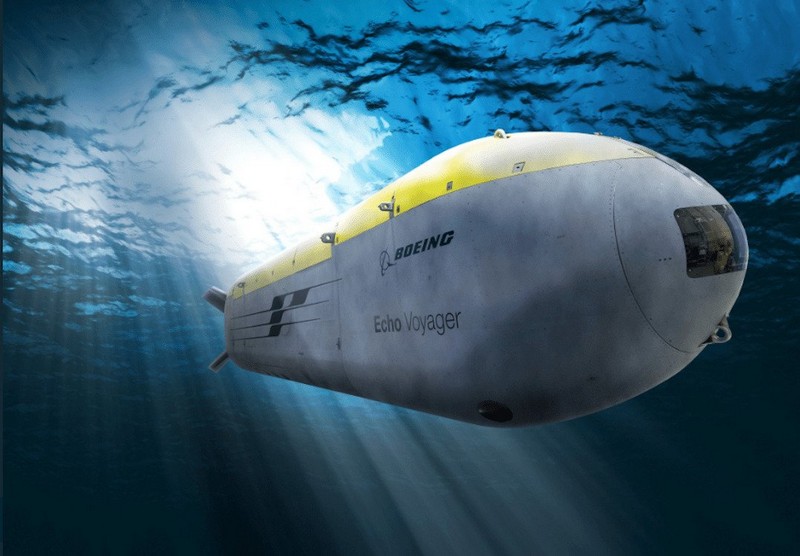
It wasn’t disclosed because this explosive-laden device belongs to the US military or NATO (or possibly Sweden, a country begging, along with Finland, to join NATO). If it had been identified as Russian, the morning headlines would be taller than Mount Everest.

Only trade publications reported the strange discovery. Obviously, not many Americans read pipeline technology journals.

The vehicle was discovered during a routine survey operation as part of the annual integrity assessment of the Nord Stream pipeline. Since it was within the Swedish Exclusive Economic Zone (EEZ) approximately 120 km away from the island of Gotland, the Swedes called on their armed forces to remove and ultimately disarm the object.

As social media de-platformed analyst Pepe Escobar notes, the development and production of this sort of submersible drone have been on NATO’s to-do list for some time. “NATO for its part has been very active on the underwater drones department. The Americans have access to long distance Norwegian underwater drones which can be modified with other designs,” he writes.

Meanwhile, the corporate propaganda media is ramping up the “Russia did it” story.

I’d link to The Washington Post story, but they want money to read their propaganda.

*
Kurt Nimmo is a regular contributor to Global Research.

30 September 2022

Source: www.globalresearch.ca

“End War in Ukraine” Say 66 Nations at UN General Assembly

By Medea Benjamin and Nicolas J.S. Davies

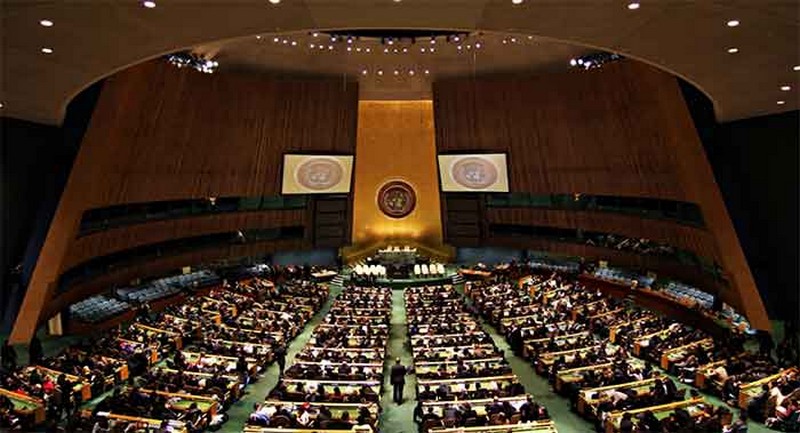
We have spent the past week reading and listening to speeches by world leaders at the UN General Assembly in New York. Most of them condemned Russia’s invasion of Ukraine as a violation of the UN Charter and a serious setback for the peaceful world order that is the UN’s founding and defining principle.

But what has not been reported in the United States is that leaders from 66 countries, mainly from the Global South, also used their General Assembly speeches to call urgently for diplomacy to end the war in Ukraine through peaceful negotiations, as the UN Charter requires. We have compiled excerpts from the speeches of all 66 countries to show the breadth and depth of their appeals, and we highlight a few of them here.

African leaders echoed one of the first speakers, Macky Sall, the president of Senegal, who also spoke in his capacity as the current chairman of the African Union when he said, “We call for de-escalation and a cessation of hostilities in Ukraine, as well as for a negotiated solution, to avoid the catastrophic risk of a potentially global conflict.”

The 66 nations that called for peace in Ukraine make up more than a third of the countries in the world, and they represent most of the Earth’s population, including India, China, Indonesia, Bangladesh, Brazil and Mexico.

While NATO and EU countries have rejected peace negotiations, and U.S. and U.K. leaders have actively undermined them, five European countries – Hungary, Malta, Portugal, San Marino and the Vatican – joined the calls for peace at the General Assembly.

The peace caucus also includes many of the small countries that have the most to lose from the failure of the UN system revealed by recent wars in Ukraine and the Greater Middle East, and who have the most to gain by strengthening the UN and enforcing the UN Charter to protect the weak and restrain the powerful.

Philip Pierre, the Prime Minister of Saint Lucia, a small island state in the Caribbean, told the General Assembly,

“Articles 2 and 33 of the UN Charter are unambiguous in binding Member States to refrain from the threat or use of force against the territorial integrity or political independence of any state and to negotiate and settle all international disputes by peaceful means.…We therefore call upon all parties involved to immediately end the conflict in Ukraine, by undertaking immediate negotiations to permanently settle all disputes in accordance with the principles of the United Nations.”

Global South leaders lamented the breakdown of the UN system, not just in the war in Ukraine but throughout decades of war and economic coercion by the United States and its allies. President Jose Ramos-Horta of Timor-Leste directly challenged the West’s double standards, telling Western countries,

“They should pause for a moment to reflect on the glaring contrast in their response to the wars elsewhere where women and children have died by the thousands from wars and starvation. The response to our beloved Secretary-General’s cries for help in these situations have not met with equal compassion. As countries in the Global South, we see double standards. Our public opinion does not see the Ukraine war the same way it is seen in the North.”

Many leaders called urgently for an end to the war in Ukraine before it escalates into a nuclear war that would kill billions of people and end human civilization as we know it. The Vatican Secretary of State, Cardinal Pietro Parolin, warned,

“…the war in Ukraine not only undermines the nuclear non-proliferation regime, but also presents us with the danger of nuclear devastation, either through escalation or accident. … To avoid a nuclear disaster, it is vital that there be serious engagement to find a peaceful outcome to the conflict.”

Others described the economic impacts already depriving their people of food and basic necessities, and called on all sides, including Ukraine’s Western backers, to return to the negotiating table before the war’s impacts escalate into multiple humanitarian disasters across the Global South. Prime Minister Sheikh Hasina of Bangladesh told the Assembly,

“We want the end of the Russia-Ukraine war. Due to sanctions and counter-sanctions, …the entire mankind, including women and children, is punished. Its impact does not remain confined to one country, rather it puts the lives and livelihoods of the people of all nations in greater risk, and infringes their human rights. People are deprived of food, shelter, healthcare and education. Children suffer the most in particular. Their future sinks into darkness.

My urge to the conscience of the world – stop the arms race, stop the war and sanctions. Ensure food, education, healthcare and security of the children. Establish peace.”

Turkey, Mexico and Thailand each offered their own approaches to restarting peace negotiations, while Sheikh Al-Thani, the Amir of Qatar, succinctly explained that delaying negotiations will only bring more death and suffering:

“We are fully aware of the complexities of the conflict between Russia and Ukraine, and the international and global dimension to this crisis. However, we still call for an immediate ceasefire and a peaceful settlement, because this is ultimately what will happen regardless of how long this conflict will go on for. Perpetuating the crisis will not change this result. It will only increase the number of casualties, and it will increase the disastrous repercussions on Europe, Russia and the global economy.”

Responding to Western pressure on the Global South to actively support Ukraine’s war effort, India’s Foreign Minister, Subrahmanyam Jaishankar, claimed the moral high ground and championed diplomacy,

“As the Ukraine conflict continues to rage, we are often asked whose side we are on. And our answer, each time, is straight and honest. India is on the side of peace and will remain firmly there. We are on the side that respects the UN Charter and its founding principles. We are on the side that calls for dialogue and diplomacy as the only way out. We are on the side of those struggling to make ends meet, even as they stare at escalating costs of food, fuel and fertilizers.

It is therefore in our collective interest to work constructively, both within the United Nations and outside, in finding an early resolution to this conflict.”

One of the most passionate and eloquent speeches was delivered by Congolese Foreign Minister Jean-Claude Gakosso, who summarized the thoughts of many, and appealed directly to Russia and Ukraine – in Russian!

“Because of the considerable risk of a nuclear disaster for the entire planet, not only those involved in this conflict but also those foreign powers who could influence events by calming them down, should all temper their zeal. They must stop fanning the flames and they must turn their backs on this type of vanity of the powerful which has so far closed the door to dialogue.

Under the auspices of the United Nations, we must all commit without delay to peace negotiations – just, sincere and equitable negotiations. After Waterloo, we know that since the Vienna Congress, all wars finish around the table of negotiation.

The world urgently needs these negotiations to prevent the current confrontations – which are already so devastating – to prevent them from going even further and pushing humanity into what could be an irredeemable cataclysm, a widespread nuclear war beyond the control of the great powers themselves – the war, about which Einstein, the great atomic theorist, said that it would be the last battle that humans would fight on Earth.

Nelson Mandela, a man of eternal forgiveness, said that peace is a long road, but it has no alternative, it has no price. In reality, the Russians and Ukrainians have no other choice but to take this path, the path of peace.

Moreover, we too should go with them, because we must throughout the world be legions working together in solidarity, and we must be able to impose the unconditional option of peace on the war lobbies.

(Next three paragraphs in Russian) Now I wish to be direct, and directly address my dear Russian and Ukrainian friends.

Too much blood has been spilled – the sacred blood of your sweet children. It’s time to stop this mass destruction. It’s time to stop this war. The entire world is watching you. It’s time to fight for life, the same way that you courageously and selflessly fought together against the Nazis during World War Two, in particular in Leningrad, Stalingrad, Kursk and Berlin.

Think about the youth of your two countries. Think about the fate of your future generations. The time has come to fight for peace, to fight for them. Please give peace a real chance, today, before it is too late for us all. I humbly ask this of you.”

At the end of the debate on September 26, Csaba Korosi, the president of the General Assembly, acknowledged in his closing statement that ending the war in Ukraine was one of the main messages “reverberating through the Hall” at this year’s General Assembly.

You can read here Korosi’s closing statement and all the calls for peace he was referring to.

And if you want to join the “legions working together in solidarity… to impose the unconditional option of peace on the war lobbies,” as Jean-Claude Gakosso said, you can learn more at https://www.peaceinukraine.org/.

Medea Benjamin and Nicolas J. S. Davies are the authors of War in Ukraine: Making Sense of a Senseless Conflict, available from OR Books in October/November 2022.

Medea Benjamin is the cofounder of CODEPINK for Peace, and the author of several books, including Inside Iran: The Real History and Politics of the Islamic Republic of Iran.

Nicolas J. S. Davies is an independent journalist, a researcher with CODEPINK and the author of Blood on Our Hands: The American Invasion and Destruction of Iraq.

29 September 2022

Source: countercurrents.org

Four Straight Years of Nonstop Street Protest in Haiti

By Vijay Prashad

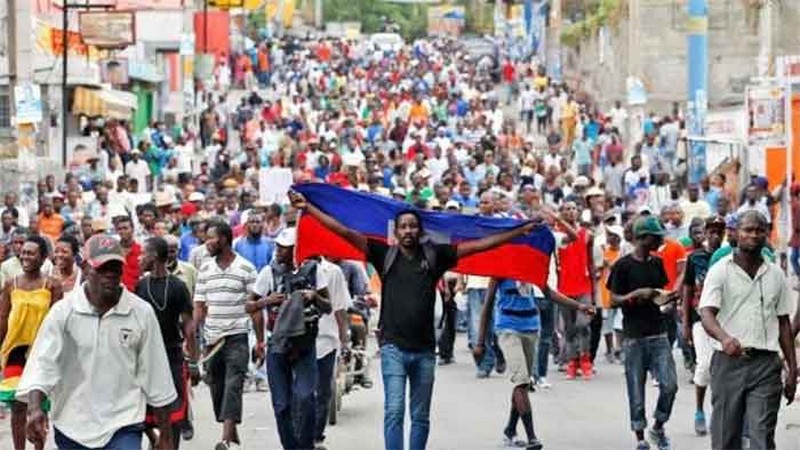
A cycle of protests began in Haiti in July 2018, and—despite the pandemic—has carried on since then. The core reason for the protest in 2018 was that in March of that year the government of Venezuela—due to the illegal sanctions imposed by the United States—could no longer ship discounted oil to Haiti through the PetroCaribe scheme. Fuel prices soared by up to 50 percent. On August 14, 2018, filmmaker Gilbert Mirambeau Jr. tweeted a photograph of himself blindfolded and holding a sign that read, “Kot Kòb Petwo Karibe a???” (Where did the PetroCaribe money go?). He reflected the popular sentiment in the country that the money from the scheme had been looted by the Haitian elite, whose grip on the country had been secured by two coups d’état against the democratically elected President Jean-Bertrand Aristide (once in 1991 and again in 2004). Rising oil prices made life unlivable for the vast majority of the people, whose protests created a crisis of political legitimacy for the Haitian elite.

In recent weeks, the streets of Haiti have once again been occupied by large marches and roadblocks, with the mood on edge. Banks and nongovernmental organizations (NGOs)—including Catholic charities—faced the wrath of the protesters, who painted “Down with [the] USA” on buildings that they ransacked and burned. The Creole word dechoukaj or uprooting—that was first used in the democracy movements in 1986—has come to define these protests. The government has blamed the violence on gangs such as G9 led by the former Haitian police officer Jimmy “Babekyou” (Barbecue) Chérizier. These gangs are indeed part of the protest movement, but they do not define it.

The government of Haiti—led by acting President Ariel Henry—decided to raise fuel prices during this crisis, which provoked a protest from the transport unions. Jacques Anderson Desroches, president of the Fós Sendikal pou Sove Ayiti, told the Haitian Times, “If the state does not resolve to put an end to the liberalization of the oil market in favor of the oil companies and take control of it,” nothing good will come of it. “[O]therwise,” he said, “all the measures taken by Ariel Henry will be cosmetic measures.” On September 26, trade union associations called for a strike, which paralyzed the country, including the capital of Haiti, Port-au-Prince.

The United Nations (UN) evacuated its nonessential staff from the country. UN Special Representative Helen La Lime told the UN Security Council that Haiti was paralyzed by “[a]n economic crisis, a gang crisis, and a political crisis” that have “converged into a humanitarian catastrophe.” Legitimacy for the United Nations in Haiti is limited, given the sexual abuse scandals that have wracked the UN peacekeeping missions in Haiti, and the political mandate of the United Nations that Haitian people see as oriented to protecting the corrupt elite that does the bidding of the West.

The current President Ariel Henry was installed to his post by the “Core Group” (made up of six countries, this group is led by the United States, the European Union, the UN, and the Organization of American States). Henry became the president after the still-unsolved murder of the unpopular President Jovenel Moïse (thus far, the only clarity is that Moïse was killed by Colombian mercenaries and Haitian Americans). The UN’s La Lime told the Security Council in February that the “national investigation into his [Moïse’s] murder has stalled, a situation that fuels rumors and exacerbates both suspicion and mistrust within the country.”

Haiti’s Crises

An understanding of the current cycle of protests is not possible without looking clearly at four developments in Haiti’s recent past. First, the destabilization of the country after the second coup against Aristide in 2004, which took place right after the catastrophic earthquake of 2010, led to the dismantling of the Haitian state. The Core Group of countries took advantage of these serious problems in Haiti to import onto the island a wide range of Western NGOs, which seemed to substitute for the Haitian state. The NGOs soon provided 80 percent of the public services. They “frittered” considerable amounts of the relief and aid money that had come into the country after the earthquake. Weakened state institutions have meant that the government has few tools to deal with this unresolved crisis.

Second, the illegal U.S. sanctions imposed on Venezuela crushed the PetroCaribe scheme, which had provided Haiti with concessionary oil sales and $2 billion in profits between 2008 and 2016 that was meant for the Haitian state but vanished into the bank accounts of the elite.

Third, in 2009, the Haitian parliament tried to increase minimum wages on the island to $5 per day, but the U.S. government intervened on behalf of major textile and apparel companies to block the bill. David Lindwall, former U.S. deputy chief of mission in Port-au-Prince, said that the Haitian attempt to raise the minimum wage “did not take economic reality into account” but was merely an attempt to appease “the unemployed and underpaid masses.” The bill was defeated due to U.S. government pressure. These “unemployed and underpaid masses” are now on the streets being characterized as “gangs” by the Core Group.

Fourth, the acting President Ariel Henry likes to say that he is a neurosurgeon and not a career politician. However, in the summer of 2000, Henry was part of the group that created the Convergence Démocratique (CD), set up to call for the overthrow of the democratically elected government of Aristide. The CD was set up in Haiti by the International Republican Institute, a political arm of the U.S. Republican Party, and by the U.S. government’s National Endowment for Democracy. Henry’s call for calm on September 19, 2022, resulted in the setting up of more barricades and in the intensification of the protest movement. His ear is bent more to Washington than to Petit-Goâve, a town on the northern coast that is the epicenter of the rebellion.

Waves of Invasions

At the UN, Haiti’s Foreign Minister Jean Victor Geneus said, “[T]his dilemma can only be solved with the effective support of our partners.” To many close observers of the situation unfolding in Haiti, the phrase “effective support” sounds like another military intervention by the Western powers. Indeed, the Washington Post editorial called for “muscular action by outside actors.” Ever since the Haitian Revolution, which ended in 1804, Haiti has faced waves of invasions (including a long U.S. occupation from 1915 to 1930 and a U.S.-backed dictatorship from 1957 to 1986). These invasions have prevented the island nation from securing its sovereignty and have prevented its people from building dignified lives. Another invasion, whether by U.S. troops or the United Nations peacekeeping forces, will only deepen the crisis.

At the United Nations General Assembly session on September 21, U.S. President Joe Biden said that his government continues “to stand with our neighbor in Haiti.” What this means is best understood in a new Amnesty International report that documents the racist abuse faced by Haitian asylum seekers in the United States. The United States and the Core Group might stand with people like Ariel Henry, but they do not seem to stand with the Haitian people, including those who have fled to the United States.

Options for the Haitian people will come from the entry of trade unions into the protest wave. Whether the unions and the community organizations—including student groups that have reemerged as key actors in the country—will be able to drive a dynamic change out of the anger being witnessed on the streets remains to be seen.

Vijay Prashad is an Indian historian, editor, and journalist.

28 September 2022

Source: countercurrents.org

Ukraine Update: Four Regions In Southern Ukraine Vote To Join Russia

By Countercurrents Collective

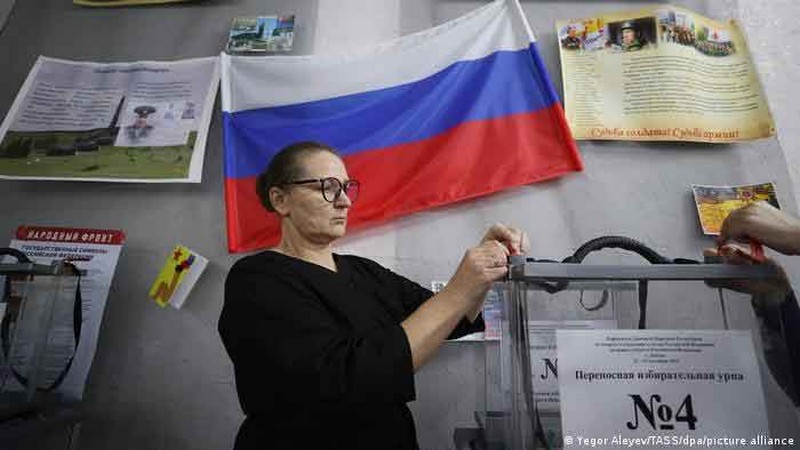
In an important development with serious implication, the Donetsk and Lugansk People’s Republics (LPR and DPR) along with Kherson Region (87%) and part of Zaporozhye Region (93%) in southern Ukraine have voted to join Russia in referendums that were held between September 23 and 27.

Media reports said:

In Lugansk, more than 98.42% of voters have supported the idea to join Russia, official figures show with all the ballots counted. Donetsk has shown similar results with 99.23% of voters supporting the move. Both Zaporozhye and Kherson regions have process all the ballots by late Tuesday, with 93% and 87% of voters respectively backing the split from Ukraine and reunification with Russia.

The process of integrating new regions into Russia may take some time as it requires the approval of the country’s parliament and the president. But Kremlin spokesperson Dmitry Peskov said on Friday that he was “convinced it will be fast enough.”

Under the Russian constitution and the federal law on the accession of new constituent members, the procedure includes several steps. Once the regions willing to become part of the Russian Federation submit their proposals to Moscow, the president should inform parliament and the government on the matter, Senator Konstantin Kosachev explained in a Telegram post last week.

If a political agreement on the accession is reached, “draft international treaties on the admission of foreign states or parts of them” to Russia should be developed, Kosachev, the vice speaker of the upper house of parliament, said. These agreements regulate issues such as the name and status of new territories, citizenship, succession, the functioning of public authorities, the operation of legislation, and so forth.

After these treaties are signed, the Russian Constitutional Court should verify if they comply with the country’s supreme law. If there are no violations, the next step will be the ratification of the documents by the lower house, the State Duma, and their approval by the upper house, the Federation Council.

Simultaneously, a draft federal constitutional law on the admission of new constituent units to Russia should be submitted to the Duma. If approved, it then goes to the upper house for consideration.

“This law enters into force no earlier than the entry into force of the international treaties themselves,” Kosachev noted.

Russia’s Earlier Warning

Russia warned earlier that if the Donbass republics and the two southern Ukrainian regions united with Russia, it would consider any attempts by Kiev to retake them as attacks on its own land. “Immediately the Russian Constitution will come into force in relation to these territories where everything is very clearly stated in this regard,” Peskov told journalists last week.

Shortly after the regions decided to hold referendums, Russian President Vladimir Putin announced a partial mobilization that involved calling to arms some 300,000 reservists, according to the military. Media reports have suggested that Moscow allegedly plans to mobilize up to a million.

Kiev considers the territories willing to join Russia to be under illegal occupation and said it would not recognize the results of the referendums. Ukrainian President Vladimir Zelensky has ruled out any possibility of talks after the voting.

Ukraine’s Claimed Right

Ukrainian Foreign Minister Dmitry Kuleba stated last Tuesday that “Ukraine has every right to liberate its territories and will keep liberating them, whatever Russia has to say.”

Sham Vote, Say EU And U.S.

The EU and the U.S. have already called the voting a “sham.”

U.S. Secretary of State Antony Blinken told CBS on Sunday that the LPR, DPR, Kherson and Zaporozhye regions “will never be recognized” as part of Russian territory. He added that Kiev had “every right” to take them back.

Zelensky Condemns Referendums

Ukrainian President Vladimir Zelensky firmly rejected the referendums staged in Moscow-held parts of Ukraine’s Zaporozhye and Kherson Regions, as well as in the Lugansk and Donetsk People’s Republics, on joining Russia.

Speaking during a UN Security Council meeting via a video link on Tuesday, he urged the countries of the world to reject the results. Zelensky also reiterated his threat to stop any contact with Russia should it recognize the results of the referendums.

Ukraine Can Use Western Weapons Against Territories Seized By Russia, Says U.S.

Washington has no objections to Kiev using Western-supplied weapons to target territories that may decide to join Russia, as the U.S. considers the vote to do so illegitimate, Secretary of State Antony Blinken said on Tuesday.

The U.S. and its allies have supplied Ukraine with a variety of weapons, including tube and rocket artillery. At a joint press conference with his Indian counterpart Dr. Subrahmanyam Jaishankar in Washington, Blinken was asked if the U.S. had any objections to Ukraine using those weapons to attack targets in Donetsk, Lugansk, Zaporozhye and Kherson, which just wrapped up a vote on joining Russia.

“We will never recognize the annexation of Ukrainian territory by Russia,” Blinken told reporters. “Ukraine has the absolute right to defend itself throughout its territory, including taking back the territory that has been illegally seized, one way or another, by Russia. And the equipment, the weapons that we and many other countries are providing, have been used very effectively to do just that.”

In June, when the U.S. first sent long-range HIMARS rocket artillery to Ukraine, Blinken said he had received “assurance” from Kiev that they will not be used on Russian territory, and that he believed them due to a “strong trust bond.”

Kiev’s forces have since used the U.S.-supplied weapons to target civilians in Donbass, Kherson and Zaporozhye, which are under Russian control. Ukraine has also bombed Crimea and border towns in the Russian regions of Kursk and Belgorod. Crimea rejoined Russia in March 2014, after the U.S.-backed coup in Kiev, while Donetsk and Lugansk declared independence.

CIA Warned Germany Of Nord Stream Attack

The CIA warned Berlin about a possible attack on gas pipelines in the Baltic Sea “weeks ago,” German magazine Der Spiegel reported on Tuesday. Germany was looking for answers after both of Russia’s Nord Stream pipelines were damaged and a massive gas leak appeared off the Danish island of Bornholm.

A tip from the U.S. spy agency was “received in Berlin during the summer,” the outlet said, citing “several people familiar with the matter.” Officially, however, the German federal government declined to comment on intelligence-related matters.

German security services are currently examining satellite imagery of the area where the explosions occurred, but see only “unremarkable” naval traffic, according to Spiegel. They are also convinced only a state actor could have done this, suggesting “divers or a mini-submarine” could have installed mines or explosives on the pipeline.

Nord Stream 1 and Nord Stream 2 both suddenly lost pressure on Monday. Danish authorities reported a gas leak off Bornholm, while Swedish seismologists registered multiple explosions. The pipeline operator confirmed multiple gas lines suffered “unprecedented” damage and it was impossible to estimate when, or if, service might be restored.

By Monday evening, the German government was convinced the pipeline was targeted in a deliberate attack, according to the daily Tagesspiegel. Berlin was considering the possibility Ukraine or “Ukraine-affiliated forces” could be behind it, but also a “false flag” by Russia to make Ukraine look bad and drive EU energy prices even higher.

While acknowledging that the “permanent interruption of gas supplies from Russia” would be in Ukraine’s interest, Der Spiegel said such an attack would have “immense political disadvantage” for Kiev. The only motive for Moscow to blow up the pipeline, according to the magazine, would be to “blame other parties for the incident.”

Earlier on Tuesday, US Secretary of State Antony Blinken said an attack on Nord Stream was “in no one’s interest,” but that it also represented a “significant opportunity” for Europe to abandon Russian natural gas in favor of alternative energy supplies, presumably such as U.S. LNG, and “accelerate the transition to renewables” in order to fight climate change.

Kremlin’s Comments on Nord Stream Damage

The Nord Stream pipelines may have been damaged in an act of sabotage, Kremlin spokesperson Dmitry Peskov suggested when asked about the possible reasons for sudden pressure loss in three of the Baltic Sea gas network’s lines.

Speaking to journalists on Tuesday, Peskov commented on a statement made by Nord Stream AG, the operator of the network, which said three offshore lines of the Nord Stream pipeline system sustained “unprecedented” damage in just one day.

“No option can be ruled out right now,” Peskov said when asked if the damage may have been the result of sabotage. He added that Moscow is very concerned about the situation, and called for an immediate and thorough investigation into the incident, which has implications for energy security on the “entire continent.”

Pressure in line A of the Nord Stream 2 pipeline, which was pumped with gas but had yet to go into operation, suddenly dropped overnight between Sunday and Monday. Shortly after that, on Monday afternoon, both of Nord Stream 1’s pipelines also suffered a sharp loss of pressure.

Sweden and Denmark’s coastguards have since reported gas leaks off the coast of Bornholm island in the Baltic Sea – one in the Swedish economic zone and one in the Danish zone – and closed off the area to maritime traffic.

According to a report from the Tagesspiegel newspaper on Tuesday, Berlin believes the sudden pressure drop in three gas pipelines at the same time could not be a coincidence and is likely a “targeted attack” from either Ukraine or Russia. The outlet explained that a deliberate attack on the pipeline could only have been carried out using special forces, navy divers or a submarine.

Nord Stream 1 was completed in 2011. Construction work on Nord Stream 2 (NS2) began in 2018, and suffered delays due to political pressure and sanctions from the U.S. NS2 was finished and pressurized in September 2021. However, two days prior to Russia’s military operation in Ukraine, the German government put its certification on indefinite hold, and has categorically rejected any suggestion from Moscow – or domestically – to unblock the pipeline.

U.S. Praised For Nord Stream Explosion

While the U.S., Russia and most European governments reserved judgment as to who might be behind Monday’s explosion that damaged both Nord Stream pipelines and cut off Germany from Russian gas, former Polish minister and member of the European Parliament Radoslaw Sikorski had no such qualms.

“Thank you USA,” Sikorski tweeted on Tuesday, alongside a photo of the massive gas leak in the waters of the Baltic Sea. Both pipelines were severely damaged off the coast of the Danish island of Bornholm, in what everyone is now calling a deliberate act.

Sikorski later tweeted, in Polish, that damage to Nord Stream means that Russia will have to “talk to the countries controlling the Brotherhood and Yamal gas pipelines, Ukraine and Poland” if it wishes to continue delivering gas to Europe. “Good work,” he concluded.

Nord Stream 1 and Nord Stream 2 lost all pressure on Monday, after what the Swedish and Danish authorities later said were a series of undersea explosions. The first pipeline was operating at reduced capacity after what Russia said were technical difficulties, while the second was fully pressurized but not operational, due to German refusal to certify it.

Russian Spokeswoman’s Comment

Russian Foreign Ministry spokeswoman Maria Zakharova wondered if Sikorsky’s tweet amounted to an “official statement that this was a terrorist attack.”

Moscow’s deputy ambassador to the UN, Dmitry Polyanskiy, thanked Sikorski for “making it crystal clear who stands behind this terrorist-style targeting of civilian infrastructure!”

Polish PM

Polish Prime Minister Mateusz Morawiecki did not go quite as far as Sikorski, but chose to describe the Nord Stream incident as “an act of sabotage, related to the next step of escalation of the situation in Ukraine.”

Not just any Member of European Parliament, Sikorski is a former UK citizen and a fellow at numerous U.S. and NATO think-tanks, as well as Poland’s former defense (2005-2007) and foreign minister (2007-2014). In October 2014, he was caught fabricating a claim about Russian President Vladimir Putin wanting to partition Ukraine with Warsaw, and was forced to recant.

Zelensky’s Adviser

While Sikorski thanked the U.S. for the Nord Stream sabotage, Kiev blamed Russia. President Vladimir Zelensky’s adviser Mikhail Podoliak called it “a terrorist attack planned by Russia and an act of aggression towards EU,” arguing the best response would be sending German tanks to the Ukrainian army.

More Americans Oppose Sending Military Aid to Ukraine Without Diplomatic Efforts, Finds Poll

Nearly half of Americans (47%) are against sending military aid to Ukraine if the U.S. is not involved in diplomatic efforts to resolve the conflict, a new poll conducted by the Quincy Institute for Responsible Statecraft revealed Tuesday.

About 40% expressed their support for providing weapons to Kiev regardless of the negotiation process.

Roughly 58% say they would oppose the U.S. providing military aid to Ukraine at current levels if their own country suffers higher gas prices and a higher cost of goods.

The poll also revealed that 57% of likely voters support the U.S. pursuing diplomatic negotiations as soon as possible to end the conflict, while only 32% oppose such efforts.

“Americans recognize what many in Washington don’t: Russia’s war in Ukraine is more likely to end at the negotiating table than on the battlefield. And there is a brewing skepticism of Washington’s approach to this war, which has been heavy on tough talk and military aid, but light on diplomatic strategy and engagement,” executive vice president at the Quincy Institute Trita Parsi was quoted as saying in the release.

Six percent of those surveyed further recognized that Russia’s special military operation is among the top issues the U.S. is currently facing. Other concerns included inflation, gun violence and the state of the American economy.

The survey was conducted from September 16 to 19, and included responses from 1,215 voters nationwide. The margin of error is three percentage points.

28 September 2022

Source: countercurrents.org

US defends F-16 arms deal with Pakistan against India’s criticism

Top diplomat Anthony Blinken says $450 million deal with Islamabad is for maintenance of its existing fighter jets.

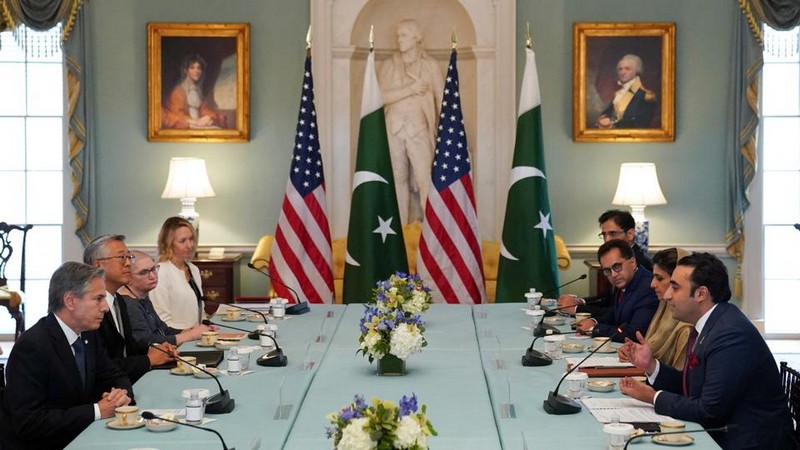
Secretary of State Antony Blinken has defended military sales to Pakistan after withering criticism from growing US partner India, which considers itself the target of Islamabad’s F-16 planes.

Blinken met in the US capital with India’s foreign minister on Tuesday, a day after separate talks with his counterpart from Pakistan.

The top US diplomat defended a $450 million F-16 deal for Pakistan approved earlier in September, saying the package was for the maintenance of Pakistan’s existing fleet.

“These are not new planes, new systems, new weapons. It’s sustaining what they have,” Blinken told a news conference with his Indian counterpart, Subrahmanyam Jaishankar.

“Pakistan’s programme bolsters its capability to deal with terrorist threats emanating from Pakistan or from the region.

It’s in no one’s interests that those threats be able to go forward with impunity,” Blinken said.

‘You’re not fooling anyone’

Jaishankar did not criticise Blinken in public. But on Sunday, speaking at a reception for the Indian community in the United States, Jaishankar said of the US position: “You’re not fooling anybody.”

“For someone to say, I’m doing this because it’s for counter-terrorism when you’re talking of an aircraft like the capability of the F-16, everybody knows where they are deployed,” he said, referring to the fleet’s positioning against India.

“Very honestly, it’s a relationship that has neither ended up serving Pakistan well nor serving American interests well,” he said.

Pakistan’s military relies on US equipment but the relationship soured during the two-decade US war in Afghanistan, with Washington believing that elements in Islamabad never severed support for the Taliban, which seized back power last year.

India historically has bought military equipment from Moscow and has pressed the United States to waive sanctions required under a 2017 law for any nation that buys “significant” military hardware from Russia.

29 September 2022

Source: www.trtworld.com

From Exodus to Marvel: A brief history of Hollywood’s justification of Israeli war crimes

By Dr Ramzy Baroud

The introduction of an Israeli Mossad agent as the latest Marvel movie character crosses the line, even by Hollywood’s poor moral standards. However, the Israeli superhero, Sabra, must be understood within the rational progression of the Israelification of Hollywood, a phenomenon that is surprisingly new.

Sabra is a relatively old character, dating back to Marvel comic The Incredible Hulk in 1980. On 10 September, however, it was announced that the Israeli character would be included in an upcoming Marvel film, Captain America: New World Order.

Expectedly, many pro-Palestine activists in the US and around the world fumed. It is one thing to introduce an ordinary Israeli character with the mere aim of normalising Israel, an unrepenting apartheid state, in the eyes of Marvel’s impressionable young audiences. However, it is far more sinister to normalise a state intelligence agency, Mossad, known for its numerous bloody assassinations, sabotage and torture.

By adding Sabra to its cast of superheroes, Marvel Studios has shown its complete disregard for the massive campaign by millions of fans around the world who, in 2017, protested the inclusion of former Israeli soldier Gal Gadot as Marvel’s Wonder Woman. Gadot is a vocal supporter of the Israeli government and military.

In response to the news, many rightly highlighted Hollywood’s inherent bias, starting in the 1960s movie Exodus by Otto Preminger, with Paul Newman as the lead actor. The film provided pseudo-historical justification for the colonisation of Palestine by the Zionists. Ever since, Israel has been elevated, celebrated and included in an ever-positive context by Hollywood, while Muslims, Arabs and Palestinians continue to be vilified.

Although Israel was represented in a positive light by Hollywood filmmakers, the Israelis themselves were quite marginal in the content creation process. Until recently, the Israeli construct was mostly built on behalf of Israel, not by Israel itself. “Things began to change in 1997,” wrote Brian Schaefer in Moment Magazine. It was then that the LA Federation’s Entertainment Division and the Jewish Agency launched the project, the Master Class, which: “For nearly 15 years… brought countless actors, directors, producers, agents, managers and top studio and network executives to Israel, introducing many of them to the country for the first time, and taught Israelis how to pitch their projects.”

The indoctrination of American actors and filmmakers through these visits and the introduction of many Israeli actors and filmmakers to Hollywood paid dividends, leading to a major change in the narrative on Israel. Instead of simply communicating Israel to American and international audiences using references to historical victimisation, positive association or even humour, Israelis began to make their case through Hollywood directly. And, unlike the haphazardness of past messages – good Israel, bad Arabs – the new messages are far more sophisticated, tailored around specific ideas and designed with full awareness of the politics of each era.

Steven Spielberg’s movie Munich (2005) was released within the cultural context of the US invasion of Iraq as part of Washington’s so-called “war on terror”, where human rights were violated on a global scale. Munich was a selective “historical” account of the supposedly difficult choices that Israel, namely Mossad, had to make to fight its own “war on terror”. That was the era when Tel Aviv tirelessly underscored its affinity to Washington, now that both countries are purportedly victims of “Islamic extremists”.

Unlike Munich, the popular TV series Homeland was not just another pro-Israel American argument that justifies Israeli wars and violence. The series itself, one of the most racist, Islamophobic shows on television, was entirely modelled on the Israeli show HaTufim. The writer and director of the Israeli show, Gideon Raff, has been included in the American version, serving as an executive producer.

The change in the ownership of the narrative may seem superficial – as pro-Israel Hollywood propaganda is being replaced by organic Israeli propaganda. However, this is not the case.

The pro-Israel agenda of the past – the romanticisation that followed the creation of Israel in 1948 – did not last long. The Israeli defeat of Arab armies in 1967 – thanks to the massive US military support of Tel Aviv – replaced the image of nascent, vulnerable Israel with that of the brave Israeli army, capable of defeating several militaries at once. It was then that Israeli soldiers toured US colleges and schools, talking about their heroism on the battlefield. The Israeli invasion of Lebanon and the subsequent massacres, like that of Sabra and Shatila, forced a rethink.

Throughout the 1980s and 1990s, Israel largely existed in Hollywood as comic relief, from shows like Friends, Frasier and, more recently, The Big Bang Theory. References to Israel were often followed by laughter – a clever and effective way of linking Israel with positive, happy associations.

The “war on terror”, starting in 2001, coupled with the creation of the Master Class project, allowed Israel to return to the Hollywood universe, not as an occasional reference, but as a staple, with Israeli shows or joint US-Israeli productions, defining a whole new genre: making difficult choices to fight terrorism and ultimately save the world.

The exploitation of Israeli women on magazine covers, for example, Maxim, was an entirely different shady business, catering to a different audience. The half-naked Israeli army girls have succeeded, in the minds of many, in justifying war through sexual imagery. This genre became particularly popular following the bloody Israeli wars on Gaza, which killed thousands.

Israel’s growing influence on Marvel movies is a combination of all of these elements: the sexualisation of the supposedly strong, empowered woman, the normalisation of those who carry out Israeli crimes – Gadot, the soldier, Sabra, the Mossad agent – and the direct injection of Israeli priorities as part of everyday American reality.

Yet, there is a silver lining. For decades, Israel has hidden behind false, romanticised historical notions, making its case to the US and other Western public, often indirectly. The wars on Gaza, the exponential growth of the Palestinian boycott movement and the proliferation of social media have, however, forced Israel out of hiding.

The new Hollywood Israel is now a warrior, often forced to make difficult moral choices, but it is, like its American counterpart, ultimately a force for good. Whether Israel will succeed in maintaining this image will depend on several factors, including the pro-Palestinian communities’ ability to counter such falsehood and hasbara.

Ramzy Baroud is a journalist and the Editor of the Palestine Chronicle.

24 September 2022

Source: www.middleeastmonitor.com

Number of Ultrarich Hits All-Time High as Someone Dies From Hunger Every 4 Seconds

By Brett Wilkins

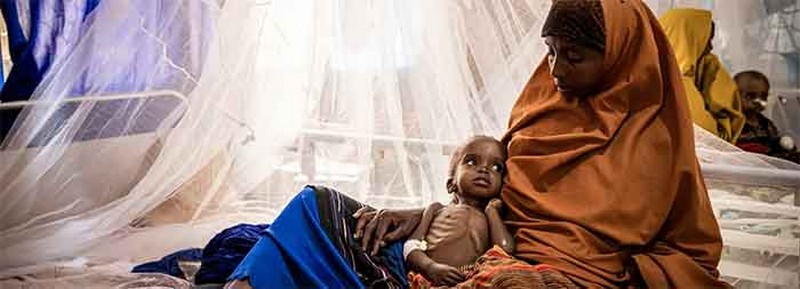
As a new analysis revealed that the global ranks of the superrich soared to a record number, a coalition of charity groups said Tuesday that hundreds of millions of people around the world are hungry—and that someone starves to death every four seconds.

At least 238 international and local charities from 75 countries signed an open letter noting that “a staggering 345 million people are now experiencing acute hunger, a number that has more than doubled since 2019.”

“Despite promises from world leaders to never allow famine again in the 21st century, famine is once more imminent in Somalia,” the signers stated. “Around the world, 50 million people are on the brink of starvation in 45 countries.”

The letter—which was timed to coincide with the annual meeting of the United Nations General Assembly in New York—asserts that “the global hunger crisis has been fueled by a deadly mix of poverty, social injustice, gender inequality, conflict, climate change, and economic shocks, with the lingering impacts of the Covid-19 pandemic and the crisis in Ukraine further driving up food prices and the cost of living.”

“Those with the power and money to change this must come together to better respond to current crises and prevent and prepare for future ones,” the signatories argued.

The number of those with the most money grew to a record number last year.

According to an analysis published Tuesday by Credit Suisse, there were 218,200 ultra-high net worth (UHNW) people in the world in 2021, an increase of 46,000 from the previous year. The share of the world’s wealth held by the richest 1% of people also increased from 44% to 46% last year.

Credit Suisse said there were 62.5 million U.S. dollar millionaires on Earth, and that all the wealth in the world added up to $463.6 trillion, while attributing what one of the report’s authors called the “explosion of wealth” to soaring home and stock values.

A separate report published in July by letter signatory Oxfam revealed that profits from soaring food prices have enriched billionaires around the world by a collective $382 billion.

Meanwhile, Sumaya, a 32-year-old mother of four living in a camp for internally displaced people in Ethiopia’s Somali region, lamented her family’s dire situation in the charity groups’ letter: “No water, no food, a hopeless life.”

“Above all, my children are starving,” she said. “They are on the verge of death. Unless they get some food, I’m afraid they will die.”

Last week, Oxfam published a report underscoring how the climate emergency is exacerbating extreme hunger. The report examined 10 of the world’s worst climate hot spots, where 18 million people are on the brink of starvation.

Mohanna Ahmed Ali Eljabaly of the Yemen Family Care Association, which also signed the charities’ letter, said that “it is abysmal that with all the technology in agriculture and harvesting techniques today we are still talking about famine in the 21st century.”

“This is not about one country or one continent and hunger never only has one cause. This is about the injustice of the whole of humanity,” she continued. “It is extremely difficult to see people suffering while others sharing the same planet have plenty of food.”

“We must not wait a moment longer to focus both on providing immediate lifesaving food and longer-term support,” Elhjabaly added, “so people can take charge of their futures and provide for themselves and their families.”

Originally published in CommonDreams.org
This work is licensed under Creative Commons (CC BY-NC-ND 3.0). Feel free to republish and share widely.

21 September 2022

Source: countercurrents.org