Just International

Why the New Israeli Government Manifests a Scary Scenario for the Middle East

By Yousef M. Aljamal

The new Israeli government, the most radical in Israel’s history, poses a scary scenario for instability in the Middle East region by igniting radical discourse and action that might lead to war. Formed by Israel’s longest-serving prime minister, Benjamin Netanyahu, after five elections in four years, Israel’s right-wing government seems to be more threatening than ever, with formerly convicted Israeli politicians becoming ministers such as Itamar Ben-Gvir.

In fact, Ben-Gvir, Israel’s ultra-nationalist national security minister, didn’t wait very long before making an unpreceded provocation by visiting Al-Aqsa Mosque under heavy protection by the Israeli police, although Netanyahu stated that storming Islam’s third holiest site will not happen after meeting with Ben-Gvir.

The visit stirred condemnations by several countries such as Qatar, the UAE, Saudi Arabia, Kuwait, Turkey, Jordan, and Egypt, and a UN Security Council session was held to discuss the visit, as Palestinian armed factions in Gaza threatened to retaliate. This seems to be the new norm: Israeli leaders who long advocated the construction of settlements on Palestinian lands, the execution of Palestinian political prisoners, and house demolitions are now the decision-makers in Israel. Having right-wing politicians as ministers in Israel will likely translate into more displacement of Palestinians, military confrontations with Gaza, and military incursions into the West Bank.

A deeper look at the terms according to which the new Israeli government was formed speaks of the future policy of the right-wing coalition. The new Israeli government will increase the salaries of Israeli soldiers by 20%, rewarding even soldiers accused of killing Palestinians – this appears emblematic of its policy towards the Palestinians in the Occupied Territories. The policy is a continuation of an old tradition of blaming Palestinian victims for their own death. The murder of 32-year-old autistic Palestinian Iyad Al-Hallaq in Jerusalem in May 2020 by an Israeli soldier, and the praise he received by then Israeli Justice Minister Avi Nissenkorn as “professional handling of the issue,” is just another example.

The Israeli government aspires to promote the Abraham Accords and expand them to include other countries, but is facing serious challenges especially after the public relations disaster Israel suffered at the World Cup in Qatar and the unprecedented pro-Palestinian support shown by football fans there, which made many Israelis feel shocked. The issue with Israelis is that they feel more shocked by people’s reactions to their actions than they feel ashamed about continuing the occupation and causing unlimited suffering to the Palestinian people.

The Israeli government also seeks to reach a deal with the United States to allow entry into the country without a visa for Israelis. The plan, however, is hitting a wall because of Israel’s treatment of Palestinian-Americans visiting Palestine and sending many of them back. Most likely, a visa-free entry to the U.S. for Israelis will remain a pipe dream as long as Israel does not take concrete actions to end its mistreatment of Americans of Palestinian origin, such as the shooting and killing of Omar Asad, 78, in the West Bank in January 2022.

The agreement based on which the Israeli government was formed highlights the “natural right of the Jewish people to the land of Israel.” Thus, the Israeli government will take the necessary measures to implement Israeli sovereignty over the West Bank, keeping in consideration Israel’s diplomatic and international situation. This translates into a formal declaration of the death of the two-state solution, which Palestinians gave up a long time ago, although their leadership says otherwise. The Israeli government will also decide on the legality of Israeli settlement outposts within two months of its formation, and it pledges to provide these illegal settlements with the needed infrastructure to thrive. This includes legalizing the Homesh settlement which Israel withdrew from in 2005 as part of its unilateral plan to withdraw from Gaza.

The Israeli government plans to strengthen and support Israeli settlements in the Palestinian city of Hebron. This Israeli pledge is particularly challenging and will translate into more violence on the ground as Israeli settlements in Hebron are small outposts surrounded by a sea of Palestinians, where hundreds of Israeli settlers control the lives of hundreds of thousands of Palestinians, especially in Hebron’s old city.

The Israeli government will also change a previous law that allowed Israel to give back property in the West Bank purchased by its “enemies” before 1948. This will allow the Israeli government and settler groups to take over these properties as “enemy properties.” The government will also maintain Israel’s sovereignty over Jerusalem, and combat all efforts made by the Palestinian Authority to have any presence in the city.

The Israeli government will invest in the Golan Heights as strategic geography, which is a violation of international law as the territory is considered occupied under international law and is part of Syria. It is worth mentioning that the text of the Israeli coalition agreement does not include the Golan Heights, where the government plans to allocate resources for expanding the settlements, as part of the “Land of Israel.”

The Israeli government plans to punish the Palestinian Authority for taking actions against Israel’s illegal practices at the International Court of Justice (ICJ) and the International Criminal Court (ICC) by withholding Palestinian tax money which Israel has the final control over according to the Oslo Accords of 1993. This includes salaries paid by the PA to the families of Palestinians killed or held by Israel.

The Israeli government will encourage a law that will allow it to withdraw Israeli citizenship from Palestinians who live in Israel, which is an unprecedented move that will open the door for displacing more Palestinians from Israel. Today, some two million Palestinians live in Israel, and they hold Israeli nationality that were imposed on them in 1966 by Israel.

The Israeli government will ban raising Palestinian flags at governmental or local institutions supported by the state. The fact that the text of the agreement refers to the Palestinian flag as the “Palestine Liberation Organization’s (PLO) flag” is in itself very telling. It is a declaration of war against anything Palestinian which is a continuation of Israel’s long-standing policy of negating the Palestinian national identity and treating Palestinians as foreign in their own country. The Palestinians who hold Israeli nationality and face daily violence are viewed by the Israeli state as lacking personal safety rather than an ethnic minority that is facing eradication.

The above is not strange as the Israeli government only sees Israeli settlers as legitimate residents and provides them with all the necessary tools to thrive in the settlements at the expense of the Palestinian people. The Israeli government will only cause more violence in the region, and it might cause a religious conflict sooner than many might think. The United States and the European Union are urged to speak up against the current Israeli government which publicly declares that Palestinians are not safe or equal under its exclusionary laws.

Yousef M. Aljamal is a researcher in Middle Eastern Studies and the author and translator of a number of books.

9 January 2023

Source: politicstoday.org

Harvard University Succumbs

By Richard Falk

Harvard University Withdraws a Fellowship from Kenneth Roth & HRW

7 Jan 2023 – I admit to feeling an ironic mean-spirited satisfaction that Ken Roth had his appointment as Senior Fellow at the Carr Center of Human Rights of Harvard’s Kennedy School of Government cancelled. After serving for 29 years as Director of Human Rights Watch, the world’s leading organization addressing human rights violations, Roth was superbly qualified for and entitled to this appointment. And would have had it but for the exertion of effective Zionist donor influence at Harvard. Without such a backroom factor this most revered academic institution would have undoubtedly been proud of Roth’s presence. [Chris McGreal, “Harvard Blocks Role for Former Human Rights Watch Head Over Israel Criticism,” The Guardian, Jan. 6, 2023] After his long and distinguished tenure at HRW Roth had become a civil society celebrity. This incident is another demonstration that even the most respected and wealthy institutions of higher learning are not fully insulated from nasty ideological and mercenary pressures that go against their proclaimed missions.

The irony of Roth’s mistreatment recalls a somewhat illuminating anecdote that seems so relevant that I cannot resist its disclosure. Over a decade ago I was a member of a local HRW advisory committee in Santa Barbara where I live. One day I got a phone call from a friend who chaired the committee. She informed me of my removal from this body because of a conflict of interest arising from my then holding the position of UN Special Rapporteur for Israeli Violations of Human Rights in Occupied Palestine. I thought it strange that this technical rule, given its dubious application here, should have been suddenly invoked some years after I had taken up the UN position, which led me to iuire further as to the real motive for my abrupt removal..

And I suppose unsurprisingly, it didn’t take me long to find out the true explanation for my ouster. UN Watch, Israel’s puppet NGO in Geneva had complained to HRW that it was unseemly to retain on their organizational chart a person with such notorious antisemitic views as myself. It was Ken Roth, I was told who had made the move to dismiss me. in. response, What followed could have been anticipated, UN Watch seized upon the incident to boast about their influence, announcing this blacklisting ‘victory’ on their website and through media releases. HRW was silent in response, allowing the impression to stand that I had been removed from their committee because of my antisemitism. I asked that HRW issue a statement clarifying my removal from committee on their stated grounds, which I thought of as a routine request, and learned that it was supported by several senior HRW staff, but rejected by Roth. The incident had some harmful effects on my academic life: lecture invitations were withdrawn or cancelled, and I experienced a variety of other unpleasant effects of becoming ‘unacceptably controversial.’

By coincidence, a few weeks later Roth and I appeared on the same panel at the University of Denver, and I told him that I was harmed by the way my removal from the SB Committee was handled, giving UN Watch grounds to show that I was too extreme in my criticisms of Israel for even HRW. Roth brushed me off with these unforgettably derisive words—“no one pays any attention to what UN Watch says.” In fairness, I acknowledge the subsequent reckless bravery of HRW years later in joining Amnesty International and B’Tselem in finding that Israel had established an apartheid regime of governance when it comes to the Palestinian people. [See “A Threshold Crossed: Israeli Authorities and the Crimes of Apartheid and Persecution,’ Human Rights Watch, April 27, 2021; see also earlier report by Richard Falk & Virginia Tilley, “Israeli Pactices Towards the Palestinian People and the Question of Apartheid,” UN ESCWA, MRCH 15, 2017.] It was this single report among hundreds issued during Roth’s long tenure that caused enough of a backlash as to make Harvard succumb.

I wish that it was true that smears by UN Watch and likeminded individuals and organizations lacked the leverage they possess to produce such totally unjustified results as inflicted on Roth. I suspect that what motivated Roth in my case was the influential Zionist membership on the HRW Board. As a child, I had known Bob Bernstein, the founder of HRW, as a family friend in NYC, and had a rather unpleasant dinner with him here in Santa Barbara a few years before incident while he was the leading Israeli advocate on the HRW Board. I learned that he and other board members were unconditional Israeli supporters who would have shed no tears about my treatment a few years hence.

Roth’s experience recalled the famous 1946 poem of the German theologian and pastor, Martin Niemöller, which vividly depicted the hazards faced by the tendency of liberals under pressure to sacrifice principles for financial gain or woke morality:

“First they came for the socialists, and I did not speak out—because I was not a socialist.
Then they came for the trade unionists, and I did not speak out—because I was not a trade unionist.
Then they came for the Jews, and I did not speak out—because I was not a Jew.
Then they came for me—and there was no one left to speak for me.”

Richard Falk is a member of the TRANSCEND Network, Albert G. Milbank Professor Emeritus of International Law at Princeton University, Chair of Global Law, Faculty of Law, at Queen Mary University London,  Research Associate the Orfalea Center of Global Studies at the University of California, Santa Barbara, and Fellow of the Tellus Institute.

9 January 2023

Source: transcend.org

The Sino-Russian Summit You Didn’t Read About

By Patrick Lawrence

4 Jan 2023 – The New York Times coverage of the recent summit between Vladimir Putin and Xi Jinping misses some of its most important details.

It is never very easy to understand what is going on in the world if you depend on The New York Times for an accounting of daily events. This is especially so in all matters to do with Russia, China, or any other nation The Times has on its blacklist because the policy cliques in Washington have these countries on their blacklist. Rely on The Times for its reporting in these cases and you are by definition in the dark. No exceptions. This is what the once-but-no-longer newspaper of record has done to itself and to its readers over, I would say, the past 20–odd years. It is now nothing more than an instrument of the imperial ideology emanating from our nation’s capital.

It follows that we must always take care to read The Times, odious as we may find it, in the same way millions of Soviet citizens over many decades made it a point to read Pravda. As noted severally in these commentaries, it is important to know what we are supposed to think happened on a given day before going in search of what happened.

Never were these assertions truer than they were as 2022 turned to 2023. On December 30, Vladimir Putin and Xi Jinping gathered by video for one of their regular summits. The Russian and Chinese presidents have now met, in person or electronically, 40–odd times by my count. A day later Putin delivered his customary New Year’s address to the Russian people. These were momentous events by any measure. They declared Moscow’s and Beijing’s historic commitment to constructing nothing less than a new world order. The world turned in 2022, to put the point another way. But you could not possibly know this if you read The Times’s accounts and nothing more.

Here I must single out the reporting of Anton Troianovski. While I do not approve of attacking a journalist in ad hominem fashion, it is meet and just, as the New Testament would put it, to single out Troianovski as the worst Moscow bureau chief The Times has had in place at least since Andrew Higgins, Troianovski’s immediate predecessor, who was in turn the worst bureau chief since Neil MacFarquhar, who preceded Higgins and was worse than his predecessor, and let us leave it there, as this list of worse-than-the-worst extends back many years.

In the method just outlined, I read first of the Putin–Xi summit, which was unusually long and pointed, in a piece Troianovski filed afterward from Moscow. I then read the detailed readouts issued by the Chinese and Russian governments, which are respectively here and here. Then I was astonished to discover the sheer irresponsibility of Troianovski and his employer. Even correspondents who serve more or less openly as propagandists can sink lower than what you thought was their low point, I had to remind myself.

Let us bridge the vast divide between what we are supposed to think happened on December 30 and 31—between what The Times published under Troianovski’s byline after the summit and Putin’s New Year’s address and what was actually said on these two occasions.

Here are a few passages from the post-summit readout issued by the Chinese Foreign Ministry:

President Xi noted that… the China-Russia comprehensive strategic partnership of coordination for a new era has grown more mature and resilient, with the internal impetus and special value of bilateral cooperation further brought out. In the first 11 months of this year, two-way trade volume reached a record high. Investment cooperation has been improved and integrated. Energy cooperation continues to serve as an anchor. And cooperation projects in key areas are moving forward steadily…. In a changing and turbulent international environment, it is important that China and Russia remain true to the original aspiration of cooperation, maintain strategic focus, enhance strategic coordination, continue to be each other’s development opportunity and global partner, and strive to bring more benefits to the two peoples and greater stability to the world.

Further on:

President Xi emphasized that the world has now come to another historical crossroads. To revert to a Cold War mentality, provoke division and antagonism, and stoke confrontation between blocs, or to act out of the common good of humanity to promote equality, mutual respect and win-win cooperation—the tug of war between these two trends is testing the wisdom of statesmen in major countries as well as the reason of the entire humanity. Facts have repeatedly proven that containment and suppression is unpopular, and sanction and interference is doomed to fail.

And, following the above:

China stands ready to join hands with Russia and all other progressive forces around the world who oppose hegemony and power politics, to reject any unilateralism, protectionism and bullying, firmly safeguard the sovereignty, security and development interests of the two countries and uphold international fairness and justice. The two sides need to maintain close coordination and collaboration in international affairs, uphold the authority of the United Nations and the status of international law, stand for true multilateralism, and fulfill their responsibilities as major countries and lead by example on such issues as protecting global food and energy security.

And, toward the conclusion:

The two presidents exchanged views on the Ukraine crisis. President Xi stressed that China has noted Russia’s statement that it has never refused to resolve the conflict through diplomatic negotiations and China commends that. The path of peace talks will not be a smooth one, but as long as parties do not give up, there will always be prospect for peace. China will continue to hold an objective and impartial position, work to build synergy in the international community and play a constructive role toward peaceful resolution of the Ukraine crisis.

It is not difficult to understand what Xi was conveying in these summarized remarks. He was describing the leading role China and Russia have assumed in the construction of a new world order wherein non–Western nations achieve parity with the West, wherein the latter’s presumption of superiority is a thing of the past, wherein international law and the authority of multilateral institutions such as the United Nations are sovereign. Not least, Xi placed the Ukraine crisis in the context of this larger project.

In my read, the year end summit was intended to confirm the determination the two sides voiced last February 4, three weeks before Russia began its intervention in Ukraine. This was the date Putin and Xi issued their Joint Declaration on International Relations Entering a New Era and Global Sustainable Development. As I noted at the time, I count that the single most important document advanced so far in our new century, one that defines just what it says, a new era.

As a Russian commentator remarked in an analysis of the December 31 summit, “2022 has been a year which has significant consequences for the future of global geopolitics and will be remembered as such in the history books. It marked the closing of three decades of American unipolarity, which had begun with the collapse of the Soviet Union in 1991, and forced through a new multipolar world consisting of numerous competing great powers.”

To be clear at this point, it is not a question of approving or disapproving of the new realities that arrived in the course of the year gone by. It is a question only of grasping them, like them or not.

Usefully enough, the Kremlin’s readout of the Putin–Xi on-screen summit was a transcript. Here are a couple of snippets from it:

In the context of growing geopolitical tensions, the importance of the Russian-Chinese strategic partnership as a stability factor is growing. Our relations have passed all the tests, demonstrating their maturity and stability, and they continue to grow dynamically. As both of us pointed out, our current relations are enjoying the best period in their history and can be regarded as a model of cooperation between major powers in the 21st century.

And:

Moscow and Beijing’s coordination on the international arena, including at the U.N. Security Council, the Shanghai Cooperation Organisation, BRICS [Brazil, Russia, India, China, and South Africa], and the G–20, serves to create a fair world order based on international law. We share the same views on the causes, course, and logic of the ongoing transformation of the global geopolitical landscape. In the face of unprecedented pressure and provocations from the West, we defend our principled positions and protect not only our own interests, but also the interests of all those who stand for a truly democratic world order and the right of countries to freely determine their destiny.

Mature, stable, dynamic relations. The transformation of the global geopolitical landscape. The right of countries to freely determine their destiny–this last including the Russian-speaking people in eastern Ukraine, whose political rights were highjacked with the U.S.-cultivated coup nine years ago and in whose name Russia intervened not quite a year ago. Risking conjecture, maybe this is something readers of The New York Times would do well to know about.

Ditto Putin’s year-end message. It was a specifically Russian take on what was said during the Russian leader’s summit with Xi, so I will not go long on it:

The year 2022 is drawing to a close. It was a year of difficult but necessary decisions, of important steps towards Russia’s full sovereignty…

It was a year that put many things in their place, and drew a clear line between courage and heroism, on the one hand, and betrayal and cowardice on the other…

The outgoing year has brought great and dramatic changes to our country and to the world. It was filled with uncertainty, anxiety and worry…. For years, Western elites hypocritically assured us of their peaceful intentions… But… the West lied to us about peace while preparing for aggression, and to cynically use Ukraine and its people as a means to weaken and divide Russia. We have never allowed anyone to do this and we will not allow it now.

I have quoted at some length two men capable of reading history’s clock. It is pointless, to repeat a thought shared earlier, to protest against what clocks tell us. Clocks will simply keep ticking, their hands moving inexorably forward.

There is, of course, the alternative of not looking at the clock and pretending it is not ticking. This is a pretty good way to describe what Anton Troianovski’s coverage of the events just reviewed urges New York Times readers to do.

Troianovski’s piece on the Putin–Xi summit appeared under the headline, “Xi and Putin Meet Again, Two Strongmen in a Weak Moment,” and it earns every bit of the naked dishonesty of those 11 words. They are “in positions of weakness,” they are “encumbered by geopolitical and economic threats,” they are “isolated,” they struggle “to maintain a semblance of diplomatic and financial stability.”

Let me be blunt, as I am in no mood to waste a lot of linage on this appalling turkey: None of these statements is an accurate representation of the truth. Far down in the piece, as is the practice among Times correspondents, we can read a few swift, blurred mentions of what actually transpired between Xi and Putin, as not even The Times can pretend indefinitely, but by then Times readers are well prepared to think night is day, black white, and the sky not blue. Nowhere but nowhere does Troianovski give any indication of the gravity and significance of the global transformation the two leaders dwelt upon at length. To read his piece is to come away thinking their summit consisted of piffle exchanged between two crippled, cornered desperados whose knees knock.

As to Putin’s New Year’s address, Troianovski gave it one paragraph of two sentences’ length. “Mr. Putin vowed to continue his onslaught against Ukraine,” he wrote, “asserting that ‘moral and historical righteousness is on our side.’” That’s it. The rest of the piece went to the messages a few detained dissidents, Alexei Navalny high among them, sent out to their followers. I do not know the merits or otherwise of any case against any Russian dissident. But to neglect the significance of what the Russian leader had to say to his nation so fully as Troianovski has done is hopelessly poor journalism to put the point too mildly.

You don’t get good journalism out of The Times’s Moscow bureau. It has long been as simple as that. The weight of ideology, as transmitted through their employers and editors, bears too heavily upon those who staff it. In Troianovski’s Russia, nothing good ever happens. All is misery and repression. He stops just short of giving us Russians shuffling through the snow with downcast eyes, sunken cheeks, and their feet bound in rags. Never does our Anton mention Putin’s 80 percent approval rating, to say nothing of explaining it—which I would appreciate a correspondent doing.

These things being as they are, it nonetheless seems to me a step too far to obscure the import of the latest Putin–Xi summit and the former’s remarks to Russians to the extent Troianovski has done. Given the significance of the year gone by, this is too a bold betrayal of his profession and his readers to let go by without notice.

Do you think the cultivation of ignorance in this fashion is a sign of a society’s health—a restorative, a source of strength? Or is it the opposite, one cause among many of the palpable decline in our public discourse, the tearing of our social fabric, the rampant confusion among us, the absence of purpose with which so many of us must live?

Patrick Lawrence, a correspondent abroad for many years, chiefly for the International Herald Tribune, is a columnist, essayist, author and lecturer.

9 January 2023

Source: transcend.org

In a Violent Economy, People of Faith Try Cooperatives

By Renée Darline Roden

3 Jan 2022 – Cooperatives are all around us. You may recognize the names of these cooperatives: Land O’Lakes butter, Ocean Spray Cranberries, Blue Diamond Growers, and REI.

Cooperatives, according to the International Cooperative Alliance, are businesses that are democratically run by the owners – one person, one vote. There are no majority owners. There are no outside shareholders. There are no hostile takeovers.

And many people of faith are turning to cooperatives as an alternative to the dehumanizing economics of capitalism.

“I’ve realized that the current state of economics is violence, since it violates human dignity,” said Dani Bodette, senior coordinator of Catholic Campaign for Human Development in Chicago. “But cooperatives are a form of nonviolence — they’re a nonviolent economics.”

Cooperative principles

In 1995, the International Cooperative Alliance adopted the current seven principles that guide cooperatives: voluntary and open membership, democratic governance, member participation in the cooperative’s capital, autonomy, education, cooperation among cooperatives, and communal concern.

Some cooperatives, like Land O’Lakes or Ocean Spray, are cooperatives of farmers who band together to sell a product. Some, like REI, are consumer-owned cooperatives, where people can pay $30 for a lifetime membership fee, receive discounts on products, and vote for the company’s board of directors.

“All of our lives have been touched by the ravages of capitalism.”

— Rev. Larissa Romero, interim pastor of Presbyterian Downtown Church in Nashville

A growing number of cooperatives are worker-owned, meaning the laborers own the company collectively, rather than a single owner, a family or outside shareholders controlling the company.

There are over 600 worker-owned cooperatives in the United States, with nearly 6,000 workers, according to a 2021 report by the Democracy at Work Institute and the US Federation of Worker-Owned cooperatives. The number of cooperatives has grown by over 30 percent in the past three years, according to Fifty by Fifty, a cooperative advocacy organization.

Co-ops’ internal structure push them toward the equity that is lacking in U.S. businesses. Worker-owned cooperatives on average have a top-to-bottom pay ratio of 2:1, according to the Democracy at Work report. Meanwhile, the average CEO in a non-cooperative business in the U.S. makes 351 times what a typical worker makes, according to the report. And the report found that, unlike shareholder-owned businesses, worker-owned cooperatives prioritized retaining workers during the pandemic, even as revenues dropped.

In contrast to the nature of the United States’ capitalist economic system, cooperatives put capital in the hands of the workers, consumers, and community, rather than owners who compete. And many faith communities are supporting this alternative economy. Bodette, who runs the Catholic Campaign for Human Development’s programs for the Archdiocese of Chicago, attended a talk at St. Thomas of Canterbury Catholic Church in Chicago’s Uptown neighborhood about the Chicago Market, a consumer-owned grocery co-op opening around the corner from the church next December.

At the meeting, the roughly 20 participants learned about the food co-op, the history of cooperatives, and Catholicism’s role in fostering cooperative principles. It was on trend with a focus on cooperatives in the broader Catholic church. Pope Francis has championed cooperatives and alternative economies.

In the appeal at the beginning of his Economy of Francesco initiative, Pope Francis called on young people, “to set in place a new economic model, the fruit of a culture of communion based on fraternity and equality.”

Like Pope Francis, Dan Arnett, Chicago Market’s general manager, told Sojourners that he finds inspiration in cooperatives because they honor the human dignity of the worker. And they promote a new kind of economic life.

Instead of an exploitative economy, based on maximizing profits for a small number of owners by extracting as much labor and giving as little as possible to the worker in return, cooperatives show the practicality and sustainability of giving a worker ownership of their labor.

Cooperatives demonstrate the financial wisdom of a reciprocal economy: the wisdom of sharing, giving, and building together. And faith groups see the pastoral and spiritual necessity of organizing a more humane economy.

Faith-based partnerships

Christian and interfaith communities across the country are turning to cooperatives in order to apply the fundamental beliefs of their faith to economic life. Many are seeing a theological mandate in Christian scripture to build what Southeast Center for Cooperative Development calls the “solidarity economy.”

“We have the need to collaborate with others, not compete, and find win-win solutions,” said Benny Overton, co-executive director of the Southeast Center for Cooperative Development, a nonprofit dedicated to building a cooperative economy in the Southeastern United States.

Benny Overton, a longtime union worker and former union president said the center sprung out of the work of Nashville Organized for Action and Hope, an interdenominational coalition of churches and labor nonprofits. In 2015, the coalition hosted a conference on cooperative economics and how a solidarity economy could reverse rising wealth inequality in the region.

“We have seen gentrification uproot families and cultures,” said Overton. “Those with money and power get the land. And the speculative market has placed housing out of the reach of most people.”

Over 150 community members attended the conference in 2015. Overton and his co-founder Rosemarie Rieger saw this interest as a mandate to do more. “We decided that we needed to create the Southeast Center for Cooperative Development to support people who have been left out of the economy,” Rieger said in an email.

The Southeast Center for Cooperative Development offers education opportunities about cooperative principles and Bible studies about cooperatives for church communities. The center serves as a cooperative incubator, offering microfinancing loans for cooperatives in their region. They also work with local churches to help turn unused church buildings into affordable housing co-ops.

“Churches have a renewed sense of mission post-COVID, and they’re looking for ways to use their land to make a difference,” Overton said.

The history of faith and co-ops

Marjorie Kelly is a senior fellow at The Democracy Collaborative, a research institute for a more sustainable and equitable society. Kelly sees investing in cooperatives as a powerful means to transform capitalism into something less rapid and more productive. She said faith groups have been integral to the ideas of co-ops.

“Faith-based organizations were the players who started the idea of socially responsible investing,” Kelly told Sojourners. Religious organizations, especially of women, still carry on the tradition in investing in a sustainable economy and in employee-owned companies, Kelly said.

One of the most famous of these worker-owned cooperatives, Mondragón, was founded in 1956 by Fr. Jose Maria Arizmendiarrieta, a Catholic priest from Basque, Spain. Known as “Arizmendi,” the priest founded a school for workers who were denied jobs at a local factory and formed a trade school to launch their own business. Now, Mondragón is the largest cooperative of worker-owned cooperatives in the world, with 95 cooperatives, roughly 80,000 workers, and, in 2021, 12 billion Euro ($12.7 billion) in sales.

Future work

Earlier this year, Vanderbilt’s Wendland-Cook Program in Religion and Justice began partnering with Southeast Center for Cooperative Development to host “solidarity circles.” Their inaugural five-month program in the spring of 2022 featured two Zoom communities, each community comprised of 10 faith leaders and organizers.

Now, during 2022-2023 academic year, there are three solidarity circles, each comprised of a dozen faith communities and community organizers who meet once a month. Faith communities share project ideas to promote the solidarity economy in their community. A Lutheran pastor in Memphis, for example, started a childcare cooperative for parishioners and their neighbors.

The members of the solidarity circles read literature on cooperatives and the solidarity economy, listen to lectures from cooperative experts, and get training in community organizing. But Aaron Stauffer, who coordinates the solidarity circle program for Wendland-Cook, said that building relationships is by far and away the most important thing they do.

“People are over-resourced but under-connected, especially when it comes to critiques of capitalism in the church,” Stauffer told Sojourners.

Even when pastors can see the economy is not set up for working people to succeed, they may not know who to talk to or how to build something different, he said. But relationships, to Stauffer, create a space to gather, organize, and begin something new. Relationships provide hope, he said. Stauffer described the work of the solidarity circles as a “tilling of the ground”

“We build relationships of solidarity and support that build a collective vision for how we can be together. And that imagination takes time,” he said.

Rev. Larissa Romero, interim pastor of Presbyterian Downtown Church in Nashville, and current solidarity circle participant, said she is participating to “keep up with our [economic] reality.”

“All of our lives have been touched by the ravages of capitalism,” she told Sojourners. “And with the climate crisis looming, we can see the way capitalism hurts communities already on the margins — the communities I’m serving.”

Romero said that the solidarity circle has been a way to meet with likeminded pastors and organizers, learn community-organizing tactics, and provide hope for creating “the kingdom of God on earth.”

Joerg Rieger, the director of the Wendland-Cook program at Vanderbilt, sees democratic workplaces and worker-owned cooperatives as deeply in tune with how God created humanity. To Rieger, cooperatives show the imago dei in each person.

“We talk about people being created in God’s image,” he told Sojourners, and he finds human agency and creativity reveals the image of a creative God in the human person.

“For me, imago dei has a lot to do with how we think about God as a creator and humans as co-creators,” he said. And the cooperative economy is the economic life that best reveals that creative image — “How we work together and how, together, we shape the world.”

Renée Darline Roden is a freelance journalist covering religion.

9 January 2023

Source: transcend.org


Brazil’s Ex-President Bolsonaro Fled to Florida

By Ben Norton

3 Jan 2023 – Lula da Silva returned as Brazil’s president, calling for fighting poverty and hunger, re-industrializing, strengthening the BRICS, and deepening Latin American integration. Far-right leader Jair Bolsonaro fled to Florida, fearing legal consequences for his corruption.

Meanwhile, far-right former leader Jair Bolsonaro fled to Florida, fearing legal consequences for his corruption.

Multipolarista spoke with Brazil-based journalist Brian Mier about what Lula’s third government means for Latin America and the world.

Brazil’s President Lula is back – and Bolsonaro fled to Florida

In his speech before the congress at his January 1 inauguration, Lula he stressed that everyone has the “right to a dignified life, without hunger, with access to employment, health, education.” He said his “life mission” is to guarantee that every Brazilian has three meals a day.

As president, Lula said he is a “representative of the working class” who “promotes economic growth in a sustainable way and to the benefit of all, especially those most in need.” He committed himself to the “widest social participation, including workers and the poorest in the budget.”3 Jan 2023 – Lula da Silva has returned as president of Brazil, the world’s sixth-most populous country. This will cause a major geopolitical shift.

“Our first actions aim to rescue 33 million people from hunger and rescue from poverty more than 100 million Brazilian men and women, who have borne the hardest burden of the project of national destruction that ends today,” Lula added, condemning the economic crisis left behind by Bolsonaro.

Lula was a co-founder of the BRICS bloc, bringing together Brazil, Russia, India, China, and South Africa.

In his inauguration speech, Lula called for “strengthening the BRICS” bloc, as well as deepening Brazil “cooperation with African countries.”

In a significant reversal compared to Bolsonaro, President Lula also urged “the resumption of South American integration”, through the “revitalization” of regional institutions like UNASUR and Mercosur.

Bolsonaro only came to power in the first place due to two US-backed coups against Lula’s left-wing Workers’ Party: the overthrow of President Dilma Rousseff in 2016 and the subsequent imprisonment of Lula in the lead-up to the 2018 election, on false charges that were subsequently expunged by the Brazilian supreme court and condemned by the United Nations Human Rights Committee.

Soon after he entered office thanks to US meddling, Bolsonaro visited CIA headquarters. He also dedicated himself to sabotaging institutions of Latin American integration, withdrawing Brazil from UNASUR.

In contrast, as a symbol of his commitment to the Patria Grande (the project of Latin American unity), Lula held the flag of Mercosur waving alongside that of Brazil at his inauguration.

Because Bolsonaro fled to Florida two days before his presidential term ended, he was not in the country to pass over the presidential sash to Lula.

So instead, Lula invited leaders of Brazil’s social movements, who fight the rights of workers, Indigenous communities, Afro-Brazilians, and disabled people. They marched with Lula and gave his the presidential sash at the inauguration ceremony.

While large numbers of Brazilians celebrated Lula’s return, Bolsonaro was in Florida.

The far-right former leader walked through a comfortable gated community in Orlando, posing for photos with his US-based supporters.

Bolsonaro fled justice, knowing that he was going to be investigated and likely charged by Brazil’s justice system over his flagrant corruption and his refusal to implement public health measures during the Covid-19 pandemic, which led to 700,000 deaths – one of the worst per capita death rates on Earth.

Lula’s inauguration was attended by left-wing leaders from across Latin America, including:

  • Colombia’s President Gustavo Petro
  • Honduras’ President Xiomara Castro
  • Bolivia’s President Luis Arce
  • Bolivia’s former President Evo Morales
  • Uruguay’s former President Pepe Mujica
  • Cuba’s Vice President
  • Nicaragua’s Foreign Minister Denis Moncada
  • President of Venezuela’s National Assembly Jorge Rodriguez

Together, they called for deepening the integration of the region.

Also present at Lula’s inauguration were representatives from fellow BRICS members, including China’s Vice President Wang Qishan and the chair of the Russian federation council, Valentina Matviyenko.

Benjamin Norton is an investigative journalist, analyst, writer and filmmaker.

9 January 2022

Source: transcend.org

Murder on the march in Palestine

By Jafar M Ramini

Three days into the New Year. Three murders in Palestine.

Don’t let us allow these martyrs to become just the opening numbers in the Israeli score of dead Palestinians, 2023.

Three young men, filled with hope and with anger had families, loved ones. They had dreams and ambitions, so let us name them, respect them and mourn their short lives.

Muhammad Samer Hoshieh, 21 years old from Alyamoun, near Jenin.

Fuad Mahmoud Ahmed Abed, 17 years old from Kafr Dan, also near Jenin.

15 year old Adam Ayyad, from the camp near Bethlehem, who was killed yesterday

Omar seemed to know what was coming. He left a note, saying he was proud to be a Palestinian and would be proud to die for the cause. Is this all the young can expect in Palestine? Dreams others may have are denied to young Palestinians. Cut short by a member of the Israeli occupation forces who was despatched by his superiors to do just that. Kill and Kill and Kill again.

This has been the norm in Palestine for the last 56 years, since Israel occupied the entire land mass of Palestine from the River Jordan to the Mediterranean. The heavily armed Israeli forces march in, kill, destroy and then march out. And the world is witnessing and the world is silent.

Has the world become so numbed and cowed that our lives have become worthless? It would seem so. Every morning, every news bulletin, every hour of the day, Russia is condemned for the killing and destruction of Ukraine. Yet, you hear almost nothing about Palestinian losses.

Here I will allow Gideon Levy, the renowned Israeli columnist for the Israel daily newspaper Haaretz , to say it for me.

“Maybe the West will have to accept that there is no legal or moral difference between the occupation in Ukraine and the occupation in Palestine – Gideon Levy, Middle East Eye.” 16 December 2022.

Jafar M Ramini is a Palestinian writer and political analyst.

4 January 2023

Source: countercurrents.org
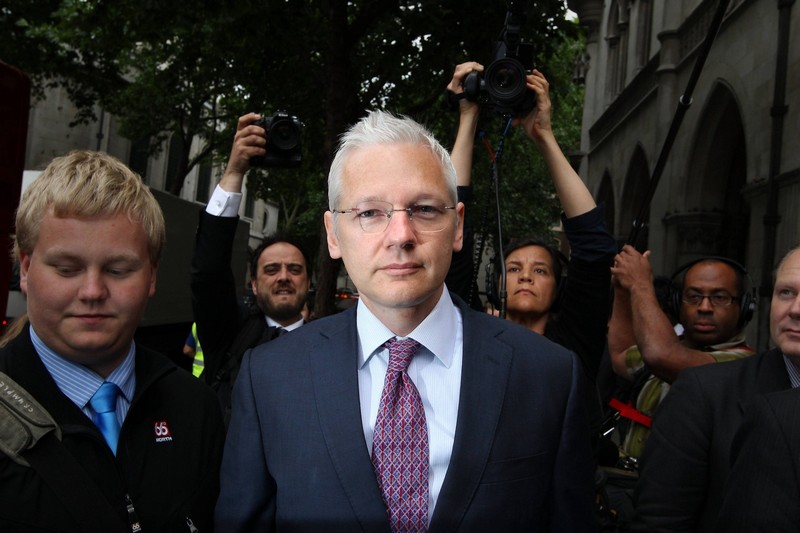
Can NATO and the Pentagon Find a Diplomatic Off-Ramp From the Ukraine War?

By Medea Benjamin and Nicolas J. S. Davies

NATO Secretary General Jens Stoltenberg, known for his staunch support for Ukraine, recently revealed his greatest fear for this winter to a TV interviewer in his native Norway: that the fighting in Ukraine could spin out of control and become a major war between NATO and Russia. “If things go wrong,” he cautioned solemnly, “they can go horribly wrong.”

It was a rare admission from someone so involved in the war, and reflects the dichotomy in recent statements between U.S. and NATO political leaders on one hand and military officials on the other. Civilian leaders still appear committed to waging a long, open-ended war in Ukraine, while military leaders, such as the U.S. Chair of the Joint Chiefs of Staff General Mark Milley, have spoken out and urged Ukraine to “seize the moment” for peace talks.

Retired Admiral Michael Mullen, a former Joint Chiefs of Staff Chair, spoke out first, maybe testing the waters for Milley, telling ABC News that the United States should “do everything we possibly can to try to get to the table to resolve this thing.”

Asia Times reported that other NATO military leaders share Milley’s view that neither Russia nor Ukraine can achieve an outright military victory, while French and German military assessments conclude that the stronger negotiating position Ukraine has gained through its recent military successes will be short-lived if it fails to heed Milley’s advice.

So why are U.S. and NATO military leaders speaking out so urgently to reject the perpetuation of their own central role in the war in Ukraine? And why do they see such danger in the offing if their political bosses miss or ignore their cues for the shift to diplomacy?

A Pentagon-commissioned Rand Corporation study published in December, titled Responding to a Russian Attack on NATO During the Ukraine War, provides clues as to what Milley and his military colleagues find so alarming. The study examines U.S. options for responding to four scenarios in which Russia attacks a range of NATO targets, from a U.S. intelligence satellite or a NATO arms depot in Poland to larger-scale missile attacks on NATO air bases and ports, including Ramstein U.S. Air Base and the port of Rotterdam.

These four scenarios are all hypothetical and premised on a Russian escalation beyond the borders of Ukraine. But the authors’ analysis reveals just how fine and precarious the line is between limited and proportionate military responses to Russian escalation and a spiral of escalation that can spin out of control and lead to nuclear war.

The final sentence of the study’s conclusion reads: “The potential for nuclear use adds weight to the U.S. goal of avoiding further escalation, a goal which might seem increasingly critical in the aftermath of a limited Russian conventional attack.” Yet other parts of the study argue against de-escalation or less-than-proportionate responses to Russian escalations, based on the same concerns with U.S. “credibility” that drove devastating but ultimately futile rounds of escalation in Vietnam, Iraq, Afghanistan and other lost wars.

U.S. political leaders are always afraid that if they do not respond forcefully enough to enemy actions, their enemies (now including China) will conclude that their military moves can decisively impact U.S. policy and force the United States and its allies to retreat. But escalations driven by such fears have consistently led only to even more decisive and humiliating U.S. defeats.

In Ukraine, U.S. concerns about “credibility” are compounded by the need to demonstrate to its allies that NATO’s Article 5—which says that an attack on one NATO member will be considered an attack on all—is a truly watertight commitment to defend them.

So U.S. policy in Ukraine is caught between the reputational need to intimidate its enemies and support its allies on the one hand, and the unthinkable real-world dangers of escalation on the other. If U.S. leaders continue to act as they have in the past, favoring escalation over loss of “credibility,” they will be flirting with nuclear war, and the danger will only increase with each twist of the escalatory spiral.

As the absence of a “military solution” slowly dawns on the armchair warriors in Washington and NATO capitals, they are quietly slipping more conciliatory positions into their public statements. Most notably, they are replacing their previous insistence that Ukraine must be restored to its pre-2014 borders, meaning a return of all the Donbas and Crimea, with a call for Russia to withdraw only to pre-February 24, 2022, positions, which Russia had previously agreed to in negotiations in Turkey in March.

U.S. Secretary of State Antony Blinken told The Wall Street Journal on December 5th that the goal of the war is now “to take back territory that’s been seized from [Ukraine] since February 24th.” The WSJ reported that “Two European diplomats… said [U.S. National Security Adviser Jake] Sullivan recommended that Mr. Zelenskyy’s team start thinking about its realistic demands and priorities for negotiations, including a reconsideration of its stated aim for Ukraine to regain Crimea, which was annexed in 2014.”

In another article, The Wall Street Journal quoted German officials saying, “they believe it is unrealistic to expect the Russian troops will be fully expelled from all the occupied territories,” while British officials defined the minimum basis for negotiations as Russia’s willingness to “withdraw to positions it occupied on February 23rd.”

One of Rishi Sunak’s first actions as U.K. Prime Minister at the end of October was to have Defence Minister Ben Wallace call Russian Defense Minister Sergei Shoigu for the first time since the Russian invasion in February. Wallace told Shoigu the U.K. wanted to de-escalate the conflict, a significant shift from the policies of former Prime Ministers Boris Johnson and Liz Truss.

A major stumbling block holding Western diplomats back from the peace table is the maximalist rhetoric and negotiating positions of President Zelenskyy and the Ukrainian government, which has insisted since April that it will not settle for anything short of full sovereignty over every inch of territory that Ukraine possessed before 2014.

But that maximalist position was itself a remarkable reversal from the position Ukraine took at cease-fire talks in Turkey in March, when it agreed to give up its ambition to join NATO and not to host foreign military bases in exchange for a Russian withdrawal to its pre-invasion positions. At those talks, Ukraine agreed to negotiate the future of Donbas and to postpone a final decision on the future of Crimea for up to 15 years.

The Financial Times broke the story of that 15-point peace plan on March 16, and Zelenskyy explained the “neutrality agreement” to his people in a national TV broadcast on March 27, promising to submit it to a national referendum before it could take effect.

But then U.K. Prime Minister Boris Johnson intervened on April 9 to quash that agreement. He told Zelenskyy that the U.K. and the “collective West” were “in it for the long run” and would back Ukraine to fight a long war, but would not sign on to any agreements Ukraine made with Russia.

This helps to explain why Zelenskyy is now so offended by Western suggestions that he should return to the negotiating table. Johnson has since resigned in disgrace, but he left Zelenskyy and the people of Ukraine hanging on his promises.

In April, Johnson claimed to be speaking for the “collective West,” but only the United States publicly took a similar position, while France, Germany and Italy all called for new cease-fire negotiations in May. Now Johnson himself has done an about-face, writing in an Op-Ed for The Wall Street Journal on December 9 only that “Russian forces must be pushed back to the de facto boundary of February 24th.”

Johnson and Biden have made a shambles of Western policy on Ukraine, politically gluing themselves to a policy of unconditional, endless war that NATO military advisers reject for the soundest of reasons: to avoid the world-ending World War III that Biden himself promised to avoid.

U.S. and NATO leaders are finally taking baby steps toward negotiations, but the critical question facing the world in 2023 is whether the warring parties will get to the negotiating table before the spiral of escalation spins catastrophically out of control.

Medea Benjamin and Nicolas J. S. Davies are the authors of War in Ukraine: Making Sense of a Senseless Conflict, published by OR Books in November 2022.

4 January 2023

Source: countercurrents.org
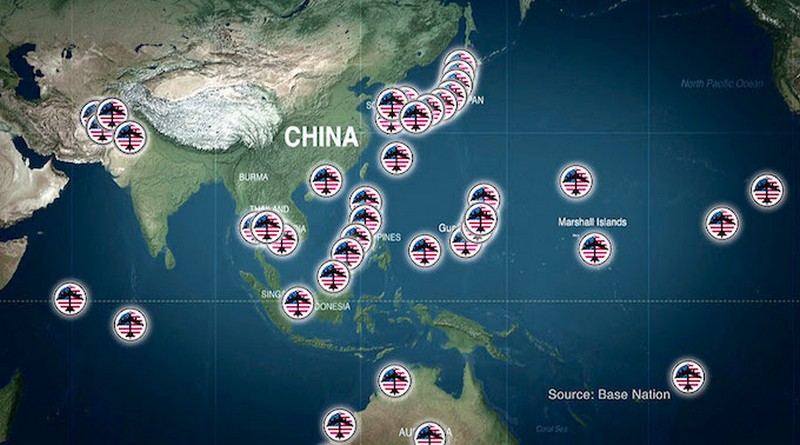
Alexander Mercouris: “Something Big Is on the Way”

By Mike Whitney

“The Russians have decided there is no way to negotiate an end to this. No one will negotiate in good faith; therefore we must crush the enemy. And that’s what’s coming.” — Colonel Douglas MacGregor (9:35 minute)

“Strictly speaking, we haven’t started anything yet.” — Vladimir Putin

The war in Ukraine is not going to end in a negotiated settlement. The Russians have already made it clear that they don’t trust the United States, so they’re not going to waste their time in a pointless gabfest. What the Russians are going to do is pursue the only option that is available to them: They are going to obliterate the Ukrainian Army, reduce a large part of the country to rubble, and force the political leadership to comply with their security demands. It’s a bloody and wasteful course of action, but there’s really no other option. Putin is not going to allow NATO to place its hostile army and missile sites on Russia’s border.

He’s going to defend his country as best as he can by proactively eliminating emerging threats in Ukraine. This is why Putin has called up an additional 300,000 reservists to serve in Ukraine; because the Russians are committed to defeating the Ukrainian army and bringing the war to a swift end. Here’s a brief recap from Colonel Douglas MacGregor:

Washington’s proxy war with Russia is the result of a carefully constructed plan to embroil Russia in conflict with its Ukrainian neighbor. From the moment that President Putin indicated that his government would not tolerate a NATO military presence on Russia’s doorstep in Ukraine, Washington sought to expedite Ukraine’s development into a regional military power hostile to Russia. The Maidan coup allowed Washington’s agents in Kiev to install a government that would cooperate with this project. PM Merkel’s recent admission that she and her European colleagues sought to exploit the Minsk Accords to buy time for the military building in Ukraine confirms the tragic truth of this matter.” (“US Colonel explains America’s role in provoking Russia-Ukraine conflict“, Lifesite)

This is an excellent summary of the events leading up to the present day although we should spend a bit more time on Angela Merkel’s comments. What Merkel actually said in her interview with Die Zeit was the following:

“The 2014 Minsk Agreement was an attempt to buy time for Ukraine. Ukraine used this time to become stronger, as you can see today.” According to the ex-Chancellor, “it was clear for everyone” that the conflict was suspended and the problem was not resolved, “but it was exactly what gave Ukraine the priceless time.” (Tass News Agency)

Merkel has been sharply criticized for admitting that she and the other western leaders deliberately deceived Russia about their true intentions vis a vis Minsk. The fact is, they had no intention of pressuring Ukraine to comply with the terms of the treaty and they knew it from the very beginning. What we know for a fact is that neither Merkel nor her allies were ever interested in peace.Second, we now know that they maintained the fraud for 7 years before she spilled the beans and admitted what they were really up-to. And finally, we now know from Merkel’s comments that Washington’s strategic objective was the opposite of the Minsk agreement. The real goal was to create a heavily-militarized Ukraine that would prosecute Washington’s proxy-war on Russia. That was the primary objective, war on Russia.

So, why would Putin even consider negotiating with people like that; people who just lied-to-his-face for 7 years while they flooded the country with weapons that would be used to kill Russian servicemen?

And what was the objective that compelled Merkel and her Washington colleagues to lie?

They wanted a war, which is the same reason why Boris Johnson put the kibosh on an agreement that Zelensky had negotiated with Moscow in March. Johnson sabotaged the deal because Washington wanted a war. It’s that simple.

But there is a price to pay for lying, and that price comes in the form of distrust, which is the pernicious erosion of confidence that makes it impossible to resolve issues of mutual concern. Russia’s deputy chair of the national Security Council, Dmitry Medvedev, expressed his views on the matter just this week in the bitterest terms. He said:

The behavior of Washington and others this year “is the last warning to all nations: there can be no business with the Anglo-Saxon world [because] it is a thief, a swindler, a card-sharp that could do anything…. From now on we will do without them until a new generation of sensible politicians comes to power… There is nobody in the West we could deal with about anything for any reason.” (Ex-Russian President outlines timeline for reconciliation with the West, RT)

Of course, the Washington warhawks will not be bothered by the prospect of severed relations with Russia, in fact they probably welcome it. But the same cannot be said for Europe.

Europe is going to regret that it tied itself to Washington’s anvil and threw itself into the sea. Sometime in the near future –when they finally realize that their economic survival is inextricably linked to access to cheap fossil fuel– EU leaders will change course and implement a policy that ensures their own prosperity. They will withdraw from NATO’s ‘forever war’ and join the ranks of civilized nations seeking a secure and economically-integrated future. We expect that even NordStream, which was destroyed in the greatest act of industrial sabotage in the modern era, will be reconnected establishing the main energy artery that binds Russia to the EU in the world’s biggest free trade zone. Eventually, common sense will prevail and Europe will emerge from the slump brought on by its alliance with Washington. But, first, the conflagration between Russia and the West must play out in Ukraine, and the “Guarantor of Global Security” must be replaced by the one nation willing to fight Goliath on his own terms in a winner-take-all contest.Ukraine is shaping up to be the decisive battle in the war against the “rules-based system”, a war in which the United States is going to use ‘every trick in the book’ to maintain its grip on power. Check out this short blurb from political analyst John Mearsheimer who explains the means by which the US has preserved its dominant role in the global order:

“You cannot underestimate how ruthless the United States is. This is all covered-up in the textbooks and the classes that we take growing up because it’s all part of nationalism. Nationalism is all about creating myths about how wonderful your country is. It’s America right or wrong; we never do anything wrong. (But) if you really look at the way the United States has operated over time, its’ really amazing how ruthless we’ve been. And the British, the same is true of them as well But we cover it up. So, I’m just saying, if you are Ukraine and you’re living next to a powerful state like Russia Or you’re Cuba and you’re living next to a powerful state like the United States, you should be very, very careful because this is like sleeping in bed with an elephant. If that elephant rolls over on top of you, you’re dead. You’ve got to be very careful. Am I happy about the fact that this is the way the world works? No, I’m not. But it is the way the world works for better or worse.” (John Mearsheimer, “How the World Works“, You Tube; 1 minute)

Bottom line: The prospects for peace in Ukraine are zilch. The US foreign policy establishment has decided that the only way it can reverse America’s accelerating decline is through direct military confrontation. The war is Ukraine is the first manifestation of that decision. On the other hand, Russia no longer puts any stock in negotiations with the West, because western leaders cannot be trusted to honor their commitments or fulfill their treaty obligations. The irreconcilable differences of the two main parties makes escalation inevitable. Absent a partner that can be trusted, Putin has just one option for resolving the conflict: Overwhelming military force. That’s why he called up 300,000 reservists to serve in Ukraine, and that’s why he’ll call up 300,000 more if they are needed. Putin realizes that the only way forward is by lowering-the-boom quickly and imposing his own settlement on the vanquished. This is exactly what Mearsheimer predicted just weeks ago when he said this:

“The Russians are not going to roll over and play dead. In fact, what the Russians are going to do is crush the Ukrainians. They are going to bring out the big guns. They are going to turn places like Kiev, and other cities in Ukraine into rubble. They’re going to do Fallujas, they’re going to do Mosuls, they’re going to do Groznys …. When a great power feels threatened…the Russians are going to pull out all stops in Ukraine to make sure they win. …You want to understand that what we are talking about doing here, is backing a nuclear-armed great power– that sees what’s happening as an existential threat– into a corner. This is really dangerous.” (John Mearsheimer, Twitter)

Source: PressTV via The Unz Review

So, if we know that Russia is going to try to end the war by defeating the Ukrainian Army, then what should we expect in the near future?

That’s a question that has been answered by a number of analysts who have followed the war closely from the very beginning. We will provide a few paragraphs from each of them in a minute, but first, here’s a recap of the meetings that took place last week that suggest a major Russian offensive may be just weeks away. The excerpt is from an article at Consortium News by Patrick Lawrence:

Alexander Mercouris… recently listed the exceptional series of meetings Putin has held over the past couple of weeks with the entire…. military and national security establishment. In Moscow, the Russian leader met with all of his top military commanders and national security officials (including) Sergei Surovikan, the general he put in charge of the Ukrainian operation….

Putin subsequently flew to Minsk with Foreign Minister Sergei Lavrov and Defense Minister Sergei Shoigu for exchanges with the Belarus political and military leadership. Then it was onward to meet with the leaders of the two republics, Donetsk and Lugansk, that were incorporated via referenda into the Russian Federation last autumn.

It is impossible to avoid concluding that these back-to-back meetings, barely covered in the Western press, portend a new, near- or medium-term military initiative in Ukraine. As Mercouris put it, “Something very big is on the way.”

Among the most interesting encounters in all of this took place in Beijing last week, when Dmitry Medvedev, currently deputy chairman of the Russian Security Council and long close to Putin, had talks with Xi Jinping….

At some point in the not-distant future, the war of hollow rhetoric in behalf of imperial hubris will weaken and drift toward collapse. This degree of Surreal detachment from reality simply cannot be sustained indefinitely — not in the face of a new Russian initiative, whatever the form it turns out to take.” (PATRICK LAWRENCE: “A War of Rhetoric & Reality“, Consortium News)

Is Lawrence, right? Is “something big on the way”?

It certainly looks like it. In the space below I have transcribed quotes from recent videos with Colonel MacGregor and Alexander Mercouris, two of the best and most reliable analysts of the war in Ukraine. Both agree that a Russian “winter offensive” will take place in the near future, and both agree on the strategic objectives of the operation. Here’s a clip from MacGregor:

“The American people don’t really understand that the Ukrainian Army in the Donbas is on the verge of collapse.They’ve taken hundreds of thousands of casualties… (and) they’re closing in on one hundred and fifty thousand dead. The 93rd Ukrainian Army Brigade was just withdrawn from Bahkmut– which has been turned into a Ukrainian bloodbath by the Russians– and they left after suffering 70 percent casualties. For them, that means that out of 4,000 men… they pulled out with about 1,200 men. That is a catastrophe, but that is what’s really happening. And when the Russians finally launch their offensive, Americans are going to watch this entire house of cards collapse. Then the only question is, will someone finally stand up and put an end to this utterly false narrative.” (“Colonel Douglas MacGregor”, Real America, Rumble; 8:45 min)

REAL AMERICA — Dan Ball W/ Col. Doug Macgregor, Zelensky Begs Congress For More $$, 12/22/22

And here’s more MacGregor:

It is looking more and more like the Russians would like to complete their task in Donbas first. They want to eliminate all the Ukrainian forces that are in the Donbas… Remember, this was always an economy-of-force measure. It was designed to grind up as many Ukrainians as possible at the lowest possible cost to the Russians. That’s what’s been going on in southern Ukraine (and) it continues. It has worked brilliantly. And Surovikin, the theatre commander, has said that will continue until he’s ready to launch his offensive. When the offensive is launched, it will be a very different battle. But the interesting thing is, that the Ukrainians have taken so many casualties in the South, we are beginning to hear reports that they are on the verge of collapse. And that’s why we’re hearing about teenage boys age 14 or 15 pressed into service. …and we’re getting videos from Ukrainian soldiers saying,”The people in Kiev had better hope that the Russians get to them before we do… because we’ll kill them.” They are talking about people in the government, because they see no evidence that Zelensky’s government …gives a damn about them. They are running out of food and clothes; they are freezing, they are taking heavy casualties, and they are being driven back.” (“Will Ukraine have enough Fire Power?”, Col MacGregor, Judging Freedom, You Tube; 17:35 min)

Will Ukraine ever have enough Fire Power? Col Doug Macgregor at 3:00p est TODAY

Both MacGregor and Mercouris appear to agree that the Russian strategy involves “grinding down” the enemy, (killing as many Ukrainian troops as possible) consolidating Russian gains while expanding their control over areas in the east and along the Black Sea, and, eventually, partitioning of Ukraine into 2 separate entities; a “dysfunctional rump state” in the west, and an industrialized, prosperous state in the east. Here’s Alexander Mercouris from a recent update on You Tube:

My strong impression is that ...the focus of the Russian winter offensive –which is indeed coming– will be on ending the battle in Donbas, breaking Ukrainian resistance in Donbas, clearing Ukrainian forces from the Donetsk People’s Republic. It does not look to me as if the Russians are planning some great advance on Kiev or on western Ukraine.That is not what these comments of General Gerasimov say. …the Russians are focusing on Donetsk… It’s ‘low risk’ but it is highly-effective. It is grinding down the Ukrainian Army exactly as General Surovikin said. It is weakening Ukraine’s future ability to continue the war and — at the same time– it fulfills Russia’s primary mission which, from the start, has been the liberation of Donbas.

Now, it is not going to end there. Other Russian officials have been saying that in 2023, we should see the recapture of Kherson region … and there will most surely be other Russian advances in other places. But the main battle was, and remains, Donbas. Once that battle is won, once Ukrainian resistance is broken, the Ukrainian army will be fatally weakened… which means that Ukraine will not only have lost its most heavily industrialized region, and its most heavily fortified zone. It will also mean the Russians will have unimpeded access all the way to the east bank of the Dnieper River. At that point, they will be in a position to cut Ukraine in half. This seems logical to me and it seems clearly to me that this is the Russian plan. They are not making a secret of it, but they are keeping people on-their-toes and guessing about the troops that are in Belarus. But I suspect the primary purpose of those forces is to pin Ukrainian soldiers down …around Kiev from a possible Russian offensive there, and to counter the very big buildup of Polish troops. So that is what Gerasimov has been saying.” (“Alexander Mercouris on Ukraine”, You Tube; 31:35 min)

Russia in Soledar, Ukraine Bakhmut Last Stand, Russia Focus Donbass, Putin confirms New Cold War

While no one can predict the future with absolute certainly, it seems that both MacGregor and Mercouris have a good-enough grip on the facts that their scenario cannot be dismissed out-of-hand. In fact, the present trajectory of the conflict suggests that their predictions are probably “dead on”. In any event, we won’t have to wait long to find out. Temperatures are dropping fast across Ukraine which allows for the unencumbered movement of tanks and armored vehicles. Russia’s winter offensive is probably just weeks away.

*

Michael Whitney is a renowned geopolitical and social analyst based in Washington State.

4 January 2023

Source: globalresearch.ca

Kashmir Diaspora Coalition for right to self-determination:

Washington DC (January 5, 2023)-

The Kashmir Diaspora Coalition (KDC) and its international affiliate
organizations—-World Kashmir Awareness Forum, Washington DC; Kashmir House Istanbul; Kashmir Civitas, Canada; World Kashmir Freedom Movement, London; Tehreek-Kashmir, UK and EU and Kashmir Campaign Global, London are issuing the following press statement in complete solidarity with the 23 million people of Jammu & Kashmir who are observing January 5, 2023, as Right to Self-Determination Day across the world:

On January 5, 1949, the UN Commission for India and Pakistan (UNCIP) passed its resolution giving the people right to self determination. Under this right the people of the state of Jammu & Kashmir were authorized to hold a free and unfettered plebiscite under the UN supervision. Unfortunately, the Indian state has failed to cooperate with the UNCIP in implementing Commission’s explicit mission and its underlying UNSC resolution 47 of April 21, 1948, mandating such plebiscite in Kashmir.

Non-compliance of India with the implementation of UN mandated right to self-determination in Jammu and Kashmir and UN’s failure to implement its decision over 76 years has led to enormous ongoing suffering on the people of Jammu & Kashmir. It includes three major wars between India and Pakistan, numerous massacres of Muslims and an ongoing genocide by Indian military, paramilitary and civilian militias. Indian regimes have incrementally hollowed out any internal autonomy granted to Kashmiris. Since August 5, 2019, with the abrogation of Article -370 and 35-A by the extremist supremacist regime of Narendra Modi has converted Kashmir from an illegal occupation to a fragmented lawless ‘Union Territory’ with no due process and no system of justice for the indigenous Muslim population.

Jammu & Kashmir is now undergoing a rapid transition from illegal
occupation into an Indian settler-colonialist and apartheid project. It
is following the Israeli model with forced demographic change —
millions of illegal Hindu importees granted Kashmiri domicile, right to
vote, settlement in expropriated and stolen Kashmiri land and jobs.
Local Muslims dwellings are demolished to make space for Hindu Indians. Plans are being made to hold farcical elections to disenfranchise Muslims and win elections. Most Muslim political leaders, intellectuals, human rights defenders, and religious figures are imprisoned, tortured, or killed in custody or fake encounters.

Kashmiris will never give in or give up their right to self-determination despite the suffering and neglect on the part of the UN and the human rights bodies.

We appeal to the UN Secretary General, the UNSC, the UNHCHR, OIC and international NGO’s to support the oppressed people of Jammu & Kashmir to achieve their UNSC-guaranteed right to self- determination.

Kashmir Diaspora Coalition (KDC) is an international umbrella of
Kashmiri diaspora organizations based on the right to self-determination of the people of Jammu and Kashmir as guaranteed by UNSC-resolution 47 of April 21, 1948.

Japan Rearms Under Washington’s Pressure

The Dec. 16 announcement by Japan’s Prime Minister Fumio Kishida of a new defense strategy, while doubling military spending by 2027 to implement it, is the largest defense shake-up in decades and a wake-up call to the antiwar movement.

The decision includes openly acquiring offensive weapons and reshaping its military command structure for its expanded armed forces. On Dec. 23, the draft budget was approved by Kishida’s cabinet.

Japan’s dangerous military expansion should set off international alarm bells. This major escalation is taking place based on intense U.S. imperialist pressure. It is the next step in the “Pivot to Asia,” aimed at threatening and surrounding China and attempting to reassert U.S. dominance in the Asia Pacific.

The movements opposing endless U.S. wars must begin to prepare material and draw mass attention to this ominous threat.

The plan to double military spending will add $315 billion to Japan’s defense budget over the next five years and make Japan’s military the world’s third largest, after the U.S. and China. Defense spending will escalate to 2% of gross domestic product, equal to the goal the U.S. sets for its NATO allies. Japan’s economy is the world’s third largest.

The Japanese government plans to buy up to 500 Lockheed Martin Tomahawk missiles and Joint Air-to-Surface Standoff Missiles (JASSM), procure more naval vessels and fighter aircraft, increase cyber warfare capabilities, manufacture its own hypersonic guided missiles and produce its own advanced fighter jets, along with other weapons. The plan shifts from relying solely on missile defense to also embracing “counterstrike” capabilities.

Three key security documents — the National Security Strategy (NSS), as well as the National Defense Strategy (NDS) and the Defense Buildup Program (DBP) — shed some of the postwar constraints on the Japanese military.

Article 9 – a class struggle against military rearmament

Although the U.S. occupation force, after defeating Japan’s military in World War II, imposed a “pacifist” constitution on Japan, for decades now U.S. strategists have pressured Japan’s government to aggressively rearm, and especially to buy U.S.-made weapons, to act as a junior partner to U.S. efforts to dominate the Asia-Pacific region.

Article 9 of the imposed Japanese constitution prohibits Japan from maintaining an army, navy and air force. To get around this, the “Japanese Self-Defense Forces” (JSDF) have since 1952 been treated as a legal extension of the police and prison system. The U.S. occupiers considered the JSDF an essential repressive tool defending capitalist property relations against the workers’ movement.

The decision for aggressive military expansion is in open violation of Japan’s supposedly pacifist constitution.

The effort to “reinterpret” Article 9 has been a continuing political struggle inside Japan. Mass rallies of hundreds of thousands have mobilized many times in defense of Article 9, which offers a clear prohibition of Japan’s maintaining a military force. The widespread opposition to the Japanese military and to constitutional change comes from working people, mobilized by the unions and the communist and socialist movements.

This movement pointed out to everyone how the wartime militarist regime of the 1930s and 1940s carried out brutal repression and led Japan into WWII. The people know from bitter experience that these ultrarightist forces, whose roots are in historic Japanese colonialism, are the real threat to their rights and the social gains they have made.

The present doubling of the defense budget will be funded by raising taxes. A huge military budget will inevitably mean severe cuts to the country’s limited social spending.

The Liberal Democratic Party, which has held power almost continually since the 1950s, is right-wing, pro-military and allied to U.S. imperialism, especially against China and the DPRK. They have been pushing for an end to the constitutional and legal restrictions on the country’s military.

The assassination of retired President Shinzo Abe on July 8, 2022, just two days before Japan’s election, brought additional votes to the LDP. It was able to win the two-thirds supermajority in Parliament, needed to move forward aggressively with its military plans.

Targeting China

Japan’s military expansion fits in with Washington’s aggression aimed at China, the DPRK and Russia. U.S. strategists’ goal is to use the U.S. alliance with Japan, South Korea and Australia, just as it uses the U.S.-led NATO alliance in Europe.

The doubling of NATO’s membership and NATO’s targeting of Russia have led to war in Ukraine, when the U.S. government imposed thousands of new sanctions against Russia, and the U.S. has ruptured the European Union’s mutually beneficial trade with Russia.

China is Japan’s largest trading partner in both imports and exports. Previous National Strategy Documents said Japan was seeking a “mutually beneficial strategic partnership” with China. Suddenly Japanese strategists started labeling China “the greatest strategic challenge in ensuring the peace and security of Japan.” (U.S. Institute of Peace, Dec. 19)

Japan had expanded trade with Russia in gas, oil, autos and machinery. Previously Japan’s Dec. 17, 2013, National Security Strategy document called for “enhanced ties and cooperation with Russia.” Now Japan considers Russia a “strong security concern.” (USIP, Dec. 19)

A U.S.-Japan alliance is now defined as a “cornerstone” of Japan’s security policy. (Japan Times, Dec. 17)

U.S. praise of Japan’s rising militarism

The U.S. media praised Japan’s new security strategy document as a “bold and historic step.” U.S. National Security Advisor Jake Sullivan praised the defense spending hike, which “will strengthen and modernize the U.S.-Japan alliance.” U.S. Secretary of State Antony Blinken called Japan an “indispensable partner” and cheered that the changed security documents reshape the ability to “protect the rules-based order in the Indo-Pacific region and around the world.” (quotes, whitehouse.gov, Dec. 16)

U.S. corporate power is the immediate beneficiary of this sharp turn in policy, built on military threats and economic sanctions.

Foreign Affairs Magazine calls the announcement “a profound transformation” and states: “The new national security strategy, however, represents a stunning change. … [T]he government is enacting policies that have been debated for decades but were always blocked. Until now … Japan’s new national security strategy should be applauded. ” (Foreign Affairs, Dec. 23)

U.S. needs collaborators

U.S. policy toward the defeated capitalist class in Germany, Italy and Japan was remarkably similar. At the end of WWII, many of the industrial leaders who had backed these fascist regimes were quietly protected and rehabilitated in Japan, Germany and Italy, along with the fascist collaborators who fled from workers’ control in Eastern Europe.

The U.S. and later NATO used the rehabilitated fascists against a rising workers movement in West Europe and against socialist construction in Eastern Europe. U.S. corporations, who had aggressively moved into the defeated Axis countries, needed insurance that their investments would be protected from the strike waves.

By 1950 the U.S. was at war on the Korean peninsula and, while using U.S. troops in Korea, needed a military force for “peacekeeping and self-defense” of capitalist property relations in Japan. Germany, Italy and Japan began to rearm during that period.

The impact on Okinawa

A chain of 150 islands called the Ryukyu Archipelago, of which the largest island is Okinawa, 400 miles from the Japanese mainland, is in reality a colony of Japan. Its population of 1.74 million people suffers from Tokyo’s rule and from the occupation by U.S. military bases. Okinawa is geographically closer to Taiwan than it is to the main islands of Japan.

Upgrading and strengthening Japanese ground units on Okinawa is part of the new National Security Strategy (NSS). Other islands, which are part of the chain southwest of Japan, will be further militarized.

Upgrading of Japan’s 15th Brigade on these islands for future electronic warfare, cyber warfare and joint operations of the ground, maritime and air forces are clearly a sign of plans to intervene in the Taiwan Straits.

In recent years, Japan has deployed anti-ship and air-defense missiles on its southwest islands of Amami Oshima, Okinawa Main Island, Miyako Island and a missile base on Ishigaki Island, the island closest to Taiwan.

More than 50,000 U.S. troops remain as an occupying force in Japan, at present the largest U.S. occupation force in any country. More than half of U.S. troops are based on Okinawa.

Okinawa residents, the Indigenous Ryukyu people, have spent decades protesting the constant presence of the U.S. military in their daily lives. There are now 31 U.S. military installations on the island prefecture of Okinawa, which accounts for 74% of the area of all U.S. military bases in Japan, although Okinawa only constitutes 0.6% of Japanese territory.

The U.S. maintains 73 military bases and 28,500 troops in South Korea. Both South Korea and Japan are forced to pay for “hosting” these troops of occupation.

‘Using North Korea threat as cover’

Japan has previously justified its remilitarization by claiming North Korea is a threat. However, retired Maritime Self-Defense Force (MSDF) Admiral Tomohisa Takei told the media that China has been the main target for which Japan has been preparing, “by using North Korea’s threat as cover.” (AP, Dec. 17)

Both Japan and South Korea engage on a regular basis in coordinated military drills under U.S. command threatening Korea DPRK. Massive demonstrations in South Korea and missiles fired from targeted North Korea respond to these military provocations.

This cynical admission of the planning and preparation for war, while claiming self-defense, is similar to former German Chancellor Angela Merkel’s Dec. 8 admission that the signing of the 2014 Minsk Agreement was not a peace treaty with Russia. Merkel confirmed that NATO wanted war from the start but needed time to prepare Ukraine militarily. (interview in Die Zeit, Dec. 7)

Having goaded Russia into an invasion of Ukraine in a bid to weaken and fragment Russia, the U.S. is next seeking to turn Taiwan into a military quagmire for China. The Biden administration is facilitating Taiwan’s purchase of advanced weaponry from the U.S. and greater diplomatic ties with the island.

Part of an effort to focus political attention through fact sheets, talking points, videos and webinars on the growing threat of U.S. pressure for Japan’s rearming is the short video, posted on the International Action Center website titled: “Japan’s constitutional amendment: a dangerous signal.” (tinyurl.com/mwjdt8rm)

The video was made in China and includes U.S. participation. People from many countries will need to cooperate to confront the growing militarism in Japan, the U.S. and their allies.

*

Sara Flounders is an American political writer active in progressive and anti-war organizing since the 1960s.

2 January 2023

Source: globalresearch.ca