Just International

Queen Elizabeth II & 70 years of UK colonialism, neo-colonialism, wars, mass mortality & genocide

By Dr Gideon Polya

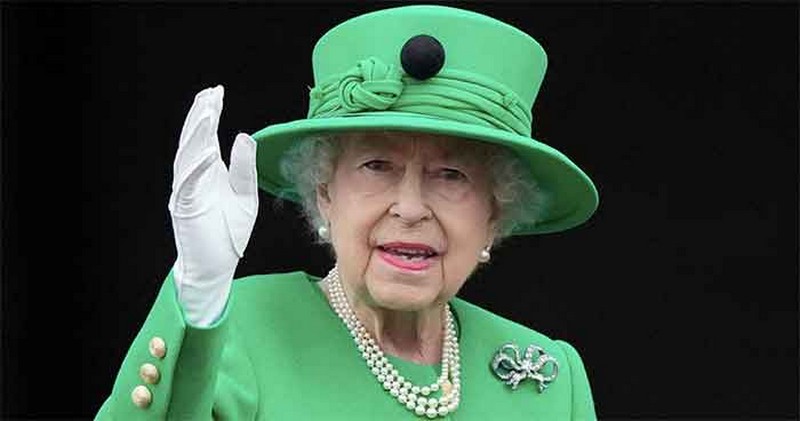
Queen Elizabeth II has died, and there is immense public affection for the Queen for her dignified but warm conduct in 70 years of dedicated service as a constitutional  monarch. That affection is most marked among her British, Australian , Canadian and New Zealand Subjects, as well as among some British Commonwealth loyalists. However resolutely ignored is the Royal heading of British imperialism, slavery, colonialism, neo-colonialism, war and genocide for centuries up to the present.

It is no accident that the Royal parades for which Britain is famous heavily and prominently involve British regiments, and typically also the armed forces of countries for which the British Monarch is also the head of state, notably the White Anglosphere countries of Australia, Canada and New Zealand. Indeed the sad passing of Queen Elizabeth II  and accession of King Charles III have been marked by huge military parades and the firing of massed artillery across the Anglosphere from Scotland  to remote New Zealand (Aotearoa). Indeed “Royal” is an appendage not just to numerous hospitals around the world  (e.g. the Royal Children’s Hospital in Melbourne) but also to armed forces and security services from the Royal Australian Navy (RAN) and Royal Australian Air Force (RAAF) to the Royal Canadian Mounted Police (RCMP).

The English have invaded 193 of the world’s present-day countries over the last 1,000 years, as compared to Australia 85, France 82, the US 72 (52 after WW2), Germany 39, Japan 30, Russia 25, Canada 25, Apartheid Israel 12, China 2, North Korea arguably zero, Iran zero and indeed most Developing Countries, zero  [1-4]. These invasions, from the Normans invading England in  1066 to the UK-backed US devastation of the Muslim world in the 21st century, have often involved genocide that is defined by Article 2  of the UN Convention on the Prevention and Punishment of the Crime of Genocide as “acts committed with intent to destroy, in whole or in part, a national, ethnic, racial or religious group” [5]. Thus the newly installed Norman English Establishment in 1066 commenced the violent removal of the Anglo-Saxon Establishment and genocidal removal of resistant peasantry (“the harrying of the north”), and the genocidal killing has continued for a thousand years. Nearly every present-day country in the world has suffered British invasion and devastation. Indeed one notes that the magnificent venues and bejewelled crowns and other accoutrements of Queen Elizabeth II’s memorial arrangements and King Charles III’s accession variously reference that violent 1,000-year history of the English monarchy.

Space does not permit even a brief account of this millennium in which the British Establishment (read English Establishment) have invaded nearly every country on earth with inaccessible Mongolia, Kazakhstan and other Central Asian states being the notable exceptions. For a summary see my article “British Have Invaded 193 Countries: Make 26 January (Australia Day, Invasion Day) British Invasion Day” [2], and also see my book “Body Count. Global avoidable mortality since 1950” that includes a brief but comprehensive summary of the avoidable mortality-related history of every present day country in the world from Neolithic times [3].

The most horrendously super-deadly, English-complicit  events (deaths in brackets) include the 16th – 19th century onwards Amerindian Genocide in North and South America  (90 million deaths)  the 17th – 19th century North American Indian Genocide (up to 18 million deaths), the  15th -19th century African Holocaust of the trans-Atlantic slave trade (6 million deaths), the 19th century Chinese Holocaust (20-100 million deaths), WW1 (1914-1918; 40 million deaths), the 1918-1920 Influenza epidemic (50-100 million deaths), WW2 (1939-1945, 90 million deaths) [3, 4, 6, 7], and the 2-century Indian Holocaust (1,800 million Indian deaths from violence and imposed deprivation under the British) that commenced with the 1769-1770 Great Bengal Famine (10 million deaths) and concluded just prior to Indian Independence with the British-imposed and Australia complicit but “forgotten” 1942-1945 WW2 Bengali Holocaust (WW2 Indian Holocaust, WW2 Bengal Famine; 6-7 million deaths)[8-14].

While the 2-century British-imposed Indian Holocaust (1757-1947) was quantitatively the worst man-made atrocity in human history (1,800 million Indian deaths from violence and imposed deprivation) [13, 14], from a qualitative perspective the 1788 onwards Australian Aboriginal Genocide and Ethnocide was the worst such atrocity in human history. Of 350-700 Indigenous languages and dialects in 1788 only 120 survive today, and of these all but 25 are endangered [15].

Queen Elizabeth II was Queen for 70 years,  from 1952-2022, and during that time the UK was regularly involved in wars that were horrendously deadly for the Indigenous people that the UK and its allies were attacking.

There are presently 15 countries having the Queen as head of state (UK, Australia, Canada, New Zealand, Jamaica, Bahamas, Grenada, Papua New Guinea, Solomon Islands, Tuvalu, Saint Lucia, St Vincent and the Grenadines, Belize, Antigua and Barbuda, and Saint Kitts and Nevis [16]. Of these 14 countries only the 4 White Anglosphere countries (the UK, Australia, Canada and New Zealand) have been involved in invading other countries during the Queen’s reign (1952-2022) [3].

In addition there have been a further 18 countries that for technical reasons connected with the independence and other processes had Queen Elizabeth II as sovereign for some time: South Africa, Pakistan, Ceylon (Sri Lanka), Ghana, Nigeria, Sierra Leone, Tanganyika (Tanzania), Trinidad and Tobago, Uganda, Kenya, Malawi, Malta, Gambia, White-ruled Rhodesia (officially unrecognized  by the Her Majesty’s UK Government and Her Majesty the Queen), Guyana, Barbados, Mauritius and Fiji [16]. Notwithstanding internal violence and/or brief conflicts and incursions with neighbours (South Africa, Nigeria, Sierra Leone, Uganda, Kenya, Rhodesia, Tanzania),  none of these countries were involved in the massive and genocidal invasion of other countries during the Queen’s reign (1952-2022) as carried out by the 4 White Anglosphere countries (the UK, Australia, Canada and New Zealand) [3].

Of 33 countries that had the Queen Elizabeth II as sovereign (some for short periods) only the  4 White Anglosphere countries (the UK, Australia, Canada and New Zealand) were involved in egregious violence against distant countries in a continuation of the extraordinary genocidal violence of England over a millennium (193 countries invaded i.e. nearly every present-day country invaded).

In summary, countries  in the post-1950 era that were variously subjects of the UK Monarchy, or were attacked and occupied by the UK and other war-making Anglosphere countries having the Queen as head of state (the UK, Australia, Canada, and New Zealand) were as follows:

United Kingdom – Afghanistan, Argentina, Bahamas, Bahrain, Barbados, Belize, Botswana, Brunei, China (Korean War), Cyprus, Diego Garcia (part of  Mauritius), Egypt, Fiji, Gambia, Ghana, Guyana, Hong Kong, Indonesia (Confrontation), Iran, Iraq, Jamaica, Kenya, Kiribati, Korea (North & South), Kuwait, Lesotho, Libya, Malaysia, Maldives, Malta, Mauritius, Nigeria, Oman, Qatar, Saint Lucia, Saint Vincent and the Grenadines, Serbia, Seychelles, Sierra Leone, Singapore, Solomon Islands, Somalia, South Africa, Sudan, Syria, Tanzania, Trinidad & Tobago, Tonga, Tuvalu, United Arab Emirates, Vanuatu, Yemen.

Australia – Afghanistan, China (Korean War), Indochina (Vietnam, Laos, Cambodia), Indonesia (Confrontation), Iraq, Korea, Malaysia, Nauru, Papua New Guinea, Solomon Islands, Timor-Leste.

Canada – Afghanistan, China (Korean War), Iraq, Korea.

New Zealand – China (Korean War), Indochina (Vietnam, Laos, Cambodia), Indonesia (Confrontation), Iraq, Korea, Malaysia, Samoa, Timor-Leste, Tokelau.

Below is a brief, alphabetically-ordered  summary of the last 70 years of egregious UK violence (with the overall historical period of British intervention, and deaths from violence and imposed deprivation given in brackets). One notes that at the end of WW2 (1945), a mere 7 years before the accession of Queen Elizabeth II in 1952,  the British Empire was at its peak. Most African colonies of the UK gained independence in the 1960s, and the key default reference for this list is [3] which contains a succinct history of every country.

(1). Afghanistan (1838-2021): UK First Afghan War (1838); Second Afghan War (1878); UK control of Afghan foreign affairs (1907); Third Afghan War (1919); UK invaded and occupied Afghanistan with the US Alliance (2001-2021; Afghan Genocide and Afghan Holocaust deaths 6 million). Huge under-5 infant deaths (in 2020 77,000 in Afghanistan as compared to 3,100 in the UK ) will continue due to US seizure of Afghan assets, and sanctions by the US Alliance including the UK.

(2). Argentina (1806-1982): British invasion repelled (1806); US-backed UK seized the Malvinas (Falkland Islands) (1833); Great War in Uruguay involving UK, France, Argentina, Uruguay and Brazil (1839-1852); horrendous genocide of Indigenous people in Argentina, Paraguay and Uruguay for the benefit of the British beef trade (19th century); genocidal Zionist psychopath Theodor Herzl contemplated Argentina as a “Jewish Homeland” (however the UK “gave” Palestine to the Zionists in 1917); Argentina invaded the Falkland Islands and was expelled by the UK in the Falklands War (1982).

(3). Bahrain (1861-1971): British protectorate established (1861); independence (1971); used by US, UK and Coalition forces against Iraq (1991).

(4). China (18th century onwards): the genocidal British conquered Bengal and thence set up the lucrative opium trade to China (Bengali opium for Chinese silver and tea; 1757); British defeated China in the First Opium War with ports opened and Hong Kong acquired (1839-1842); anti-Western Tai Ping Rebellion put down by the UK and other European forces (20-100 million dead; 1850-1864); Anglo-French forces defeated China and captured Beijing ((1856-1860); Queen Victoria the greatest opiate drug pusher in history; anti-Western Boxer rebellion subdued by the British with Russian, German, French, Japanese and US forces (1898); 35-40 million Chinese died under the Japanese (1937-1945); the British lead by Churchill successfully brought the US into war against Japan, and thence secured victory in the WW2 (1941-1945); UK forces fought Chinese forces in the Korean War (1950-1953); Hong Kong returned to China (1997); 800 million Chinese brought out of poverty in the Chinese economic “miracle” (1990s onwards); UK joined the threatening US anti-China stance (2020s).

(5). Cyprus (1878-1960): British rule (1878); British annexation (1914); the armed Greek Cypriot independence movement of EOKA culminated in independence under Archbishop Makarios (1960); conflict over Greek union, Makarios overthrown and Turkey seized part of the island (1974).

(6). Egypt (1882-1956): British conquest (1882); independence but with retention of British forces (1923); British forces finally left after the coming to power of Colonel Abdul Gamal Nasser (1956); however this was immediately followed by  the collusive UK, France and Apartheid Israel invasion of the Sinai Peninsula and the Suez Canal that took place at the same time as the Russian invasion of Hungary (1956); nuclear-armed,  UK-backed Apartheid Israel invaded again, seizing the Gaza Strip and the Sinai Peninsula (1967); defeated by Apartheid Israel in the Yom Kippur War (1973); US-brokered peace with Apartheid Israel, and return of the Sinai Peninsula (1979).

(7). Indonesia (1963-1965): armed conflict between Indonesia and the UK and its allies  over Malaysia and the future of Brunei and Borneo (Confrontation) (1963-1966); the UK was heavily involved in machinations to remove President Soekarno and eliminate the Indonesian communists, that were realized with the UK- , Australia- and US-backed military coup in 1965 that removed President Soekarno, and in which 1 million progressive Indonesians and many Chinese were murdered and hundreds of thousands imprisoned (1965). Corrupt and violent military rule for 34 years was associated with 33 million Indonesian excess deaths from deprivation (1965-1999).

(8). Iran (1914 onwards): Oil discovered (early 19th century); Iran was neutral but there was heavy Anglo-Russian involvement in WW1 (1914-1918);  WW1-related Iranian Famine (1917-1919, 2-10 million deaths);  Anglo-Russian occupation and installation of Mohammed Shah Pahlevi (1941-1979); economic blockade and UK MI6 and US CIA coup that removed elected PM Mossadegh who wanted to nationalize Anglo-Iranian oil, with thousands  killed (the CIA secretly invoked Queen Elizabeth II to stop a nervous and ambivalent Shah from quitting) (1953); UK- and US-backed authoritarian Shah regime with Anglo-American, French and Dutch oil interests dominant (1953-1979);  Iranian theocratic revolution (1979) and increasing hostility from the UK, US and Apartheid Israel (1 million Iranians died in the UK- and US-promoted, 1980-1988 Iran-Iraq War, and 3 million Iranians died from sanctions (1979 onwards) urged and applied by the nuclear powers US, UK and  Apartheid Israel against a non-nuclear weapons-possessing Iran [17]  .

(9). Iraq (1914 onwards): British invaded (1914); Kurdish and Arab revolts suppressed with use of the British Royal Air Force (RAF); Iraq made a British League of Nations Mandate ( 1920); first oil concession (1925); 25 year alliance with Britain (1930); British Mandate terminated and Iraq joined the League of Nations (1932); Iraqi Parliament rejected the UK demand for an extension of the of the 1930 alliance (1948); Iran, Turkey, Pakistan and Iraq formed the pro-US Baghdad Pact (1955); Kassem military coup ousted UK-backed King Faisal II who was killed (1958); US green-lighted the Iraqi invasion of Kuwait by Saddam Hussein; sanctions imposed killing 1.7 million Iraqis; deadly US, UK and Israeli bombing devastated Iraqi infrastructure (1990-2003); US, UK and Coalition Gulf War (0.2 million Iraqis killed); prefaced by US and UK lies about actually non-existent Weapons of Mass Destruction (notably by US President George W. Bush and UK PM Tony Blair), the US, UK, Australia and US lackey Coalition invaded and further devastated Iraq (2003-2011); rise of ISIS and subsequent defeat by the US, UK, Russia and the Syrian Government (2012-2017; half of Mosul, population 2 million, destroyed with 40,000 Iraqi residents killed by US, UK, and Australian bombing); notwithstanding demands  by the Iraqi Parliament that foreign forces leave, US, UK and Australian forces remained, and Trump threatened destruction of the Iraqi economy by freezing assets (2020); UK forces remain in Iraq, and NATO (including UK ) forces are planned to increase from 400 to 5,000 [18] (2021; I was alerted to this by the fact that some UK soldiers serving in Iraq were brought back to the UK especially for the Queen’s funeral). The ongoing UK-initiated and UK complicit Iraqi Genocide and Iraqi Holocaust has been associated with deaths from violence and imposed deprivation totalling 9 million (1914-2011), 4.6 million (1990-2011), and 2.7 million (2003-2011) [3, 4].

(10). Jordan (1918-1958): British defeated the Ottoman Empire (1918); Jordan was ruled from Damascus by UK-installed King Faisal I (1919); Faisal I removed by the French  and Jordan became part of a British Mandate (1920); Abdullah (son of Faisal) made emir with a British-trained army (1921); constitutional monarchy (1928); independent (1946); defeated by UK-backed Zionists (1948); changed name to  Jordan (1949); annexed West Bank of Palestine (1950); Jordan and Iraq formed the Arab Federation and British troops were sent to Jordan (1958); invasion and defeat by a now nuclear-armed Apartheid Israel of all its neighbours (the Naksa or Setback; 400,000 Arabs expelled in addition the  800,000 expelled in the UK-complicit 1948 Nakba) (1967); UK-backed and UK trained Jordan military took action against the huge Palestinian population (thousands killed) (1968); Jordan hosts over 2 million Palestinian refugees and over 1.5 million Syrian refugees.

(11). Kenya (1884-1960): Berlin Conference “gave” Uganda, Kenya, and Zanzibar to Britain and Tanzania (Tanganyika) to Germany (1884); Imperial British East Africa Company (1888); British East Africa Protectorate (1888); Mombasa-Lake Victoria Railway built with involvement of Indian workers (1895-1901); commencing in 1903 British settlement on most of the best land, with Kikuyu and Masai  people confined to the rest (20th century); the  “Uganda Plan” for Jewish Settlement was rejected by the genocidally racist Zionists, and the UK took back its offer of 13,000 square kilometres of Kenya (1903); interior Kenya colony and a coastal Protectorate of Kenya; European settlement of the temperate highlands, coffee plantations,  Indian labour and traders, and mounting Indigenous activism (20th century); Jomo Kenyatta started the independence movement (1944);  Kenyan Kikuyu Mau Mau uprising and the Mau Mau Emergency involving British atrocities and mass population incarcerations in concentration camps (1952-1960 excess mortality 1.1 million).

(12). Kiribati (1892 -1979): This low lying coral atoll archipelago of small islands was a UK colony (the Gilbert Islands part of the Gilbert and Ellice Islands) (1892-1979). In WW2 it was invaded by the Japanese who were thence removed by US forces from Tuvalu. In the late 1950s and early 1960s, Christmas Island was used by the US and UK for the testing of nuclear weapons, including hydrogen bombs.

(13). Korean War (1950-1953): 28% of the North Korean population was killed [19] and no buildings were left standing by US bombing; the UK, Australia, Canada and New Zealand were all involved in the Korean  War (1950-1953; 5 million Korean deaths) [9]; the conduct of the Korean War may have involved setting up an “excuse” for the nuclear destruction of China [20].

(14). Kuwait (1897-1961): British protectorate (1897); independent sheikdom but British and thence Arab League forces remained because of Iraqi claims (1961); Iraq recognized Kuwait (1963);  greenlighted by the US, Iraq invaded and annexed Kuwait over an oil dispute (1990); US-led Gulf War freed Kuwait, with 80% of oil wells destroyed,  0.2 million Iraqi soldiers killed, and mass expulsion of Palestinians (1991); Kuwait was the launch site for the US, UK and Australian invasion of Iraq, and the UK-involved Iraqi Holocaust and Iraqi Genocide associated with 2.7 million Iraqi deaths (2003-2011).

(15). Libya (1943-2012): UK and Allied forces prevailed over German and Italian forces with subsequent Anglo-French rule (1940-1943); UN jurisdiction (1949); independent as a monarchy under King Idris (1951); Anglo-Libyan treaty permitted presence of UK forces  (1953-1956); oil discovered (1958); most British forces left (1966); military coup with rule by Colonel Qaddafi under whom Libya became the richest country in Africa (1969-2012); terrorists destroyed US passenger plane over Lockerbie, Scotland (1988); France, UK and US (FUKUS) Coalition bombing destroyed Libya, and Qadaffi was captured and butchered (2011-2012; 0.1 million killed, 1 million refugees, and continued civil war  between US- , UK- and Turkey-backed Government in Tripoli and Egypt-backed forces based on Benghazi).

(16). Malaysia (1786-1960): British founded Georgetown on Penang (1786);  trade involved Chinese, Indians, Sumatrans and Malays (18th – 21st centuries); British under Raffles founded Singapore (1819); British-Dutch Treaty- Malaya and North Borneo to Britain and South Borneo and the rest of Indonesia to the Dutch (1824);  British protectorate agreements with sultanates, Chinese workers for tin mines and Tamil workers for rubber plantations (1870s onwards); federation of Malay Peninsular sultanates under British protection and similar arrangements for Brunei, Sarawak and Sabah (1896); political movements of Chinese (Sun  Yat Sen, Communism), Indians (Congress and Gandhi) and Malays (Islamic reform) (20th century); Japanese occupation (1941-1945); independence (1957); Communist revolt suppressed by the UK with Commonwealth allies (notably Australia) in the Malayan Emergency (1950-1960 excess mortality 1.0 million and 0.5 million Chinese compulsorily resettled).

(17). Mauritius (including the Chagos Archipelago, and Diego Garcia) (1810-onwards): Mauritius was a British colony (1810); Mauritius independent (1968); ruled by the UK, the Chagos Archipelago is part of Mauritius and home to the Chagossians, a Bourbonnais Creole-speaking people, it was completely ethnically cleansed by the British in 1967-1973 to make way for the obscene US Diego Garcia military base that threatens the Indo-Pacific with “conventional” or nuclear destruction. The UK and US  berate China with the “rules-based order” over its island-building on uninhabited coral reefs in the South China Sea, but effected the  genocide of the Chagossians (the Chagossian Genocide).

(18). Nigeria (16th century – 1970): Portuguese, British and French slave trade with millions transported and millions dying (16th-18th century); British abolished slavery within the UK (1807); UK took Lagos (1861); palm oil and capitalist exploitation replaced slavery (19th century); Goldie secured UK interests along the Niger (1880s); Britain invaded Oyo State (1883); Royal Niger Company dominated the Niger trade (1886); Berlin Conference “awarded” Nigeria to Britain (1894-1895); Benin taken by the British (1897); British colony (Lagos) and British protectorates (North and South) (1906); Nigerian independence (1960); Igbo (Biafra) military coup followed by massacres of Igbo people in the North (1966); Biafra in Eastern Nigeria declared independence (1967); Biafra backed by France and Apartheid Israel but the central Nigerian Government backed by the UK, USSR, Egypt and Zaire; UK Labor Government headed by Harold Wilson secretly armed the Nigerian Government; Biafra defeated; Biafran Genocide excess deaths totalled 2.5-3.0 million (1967-1970).

(19). Oman, 18th century-1971): British influence commenced (late 18th century); slave-trading  Zanzibar lost to British (1856); an interior revolt was suppressed by British forces (1957); UN demanded British withdrawal (1965); some royal concessions but rebellion continued in Dhofar (1970); Oman joined the UN and the Arab League (1971); bases given to US, UK and Coalition forces (1991); Oman bases were used by the US, UK and US Coalition in attacks on Afghanistan Alliance (2001-2021; Afghan Genocide and Afghan Holocaust deaths 6 million).

(20). Palestine (1917 onwards): the British promised Palestine as a Jewish Homeland by the despicable “stolen goods”  Balfour Declaration of 2 November 1917 (made 2 days after the Australian and New Zealand (ANZAC) victory over the Turks at Beersheba (31 October 1917), this declaration actually being an inducement for Communist Russian Zionists to try to keep Russia in WW1); the UK War Cabinet under Churchill approved Partition of Palestine (1944); the British supplied and trained Zionist terrorists in the 1930s and 1940s and then withdrew (1948); The WW1 onwards Palestinian Genocide has been associated with 2.2 million Palestinian deaths from violence, 0.1 million, and imposed deprivation, 2.1 million . Genocidally racist Apartheid Israel gained nuclear weapons in the mid-1960s, enabled Apartheid South Africa do the same, and presently has 90 nuclear weapons and bomber, missile and German-supplied submarine delivery systems. Successive UK Conservative and Labour Governments and Oppositions have been  fervent supporters of nuclear terrorist, genocidally racist, grossly human rights-abusing, democracy-by-genocide Apartheid Israel (a notable exception was the outstandingly anti-racist UK Labour Opposition leader Jeremy Corbyn who was falsely defamed and politically destroyed by the traitorous Zionists and the 34-member state International Holocaust Remembrance Alliance (IHRA) for supporting Palestinian human rights). Queen Elizabeth visited many countries in the Middle East but never visited Palestine/Apartheid Israel [21].

(21). Qatar (1868-1971): British installed Al-Thani clan and controlled foreign policy (1868); British protectorate (1916); oil discovered in Qatar (1939); UK left the Trucial Coast leaving 7 emirates as United Arab Emirates but with Bahrain and Qatar separate (1971); Qatar became a major US war base (2001); HQ for US, UK, Australian and Coalition invasion of Iraq (2003); Qatar withdrew from the Saudi-led and UK complicit war on Yemen (2017) and suffered intense Saudi Coalition hostility.

(22). Sierra Leone (16th century – 2000): exploited for timber, ivory and slaves (16th-20th century); British abolition of slavery and takeover of the Sierra Leone Company running Freetown (1807); 50,000 freed slaves settled but interior resistance to British rule (19th century); British protectorate over interior (1896); final British victory over Indigenous resistance (1897); autonomy with pro-British interim government (1960); independence under conservative Mende Sir Milton Margai as PM and representing Creole, British and Syrian-Lebanese merchant interests) (1961); 4 decades of coups and civil wars involving Guinea and Liberia; UN forces held hostage by rebels; British forces critically involved in defeating rebels; ban on rebel-funding sales of “blood diamonds” (2000); sanctions on Liberia; hundreds of thousands of refugees; rebel and pro-government militia disarmament (2001); 1991-2001 excess mortality 1.1 million.

(23). Somalia (1870- onwards): construction of the Suez Canal made the Horn of Africa strategically important to the British, French and Italians  (19th century); partial occupation by British-dominated Egypt (1870); Egyptians withdrew (1884); Italians defeated by Ethiopia (1896); Somali resistance to British eventually crushed using air power (1885-1920);  British forces from Kenya defeated the Italians (1941); Italian and thence British Somalia independence with union as United Republic of Somalia (1960); war by US- and Saudi-backed Somalia against USSR-backed Ethiopia over the Ogaden region (1976-1988; 840,000 refugees fled to Somalia); US gained formerly British Berbera base; Somalia-Ethiopia peace accord  (1976-1988 excess mortality 1.4 million); famine, US intervention and civil war (1990s onwards; 1991-2005 excess mortality  1.9 million); Indigenous Islamic Courts victory (2006-2007); US-backed Ethiopian invasion followed by African Union forces (notably from Kenya) (2007); continuing war of the Indigenous Al-Shabaab versus the US-backed foreign occupiers.

(24). South Africa (1795-1994): British occupation of the Cape during the Napoleonic Wars (1795); formal British “possession” by the Congress of Vienna (1814); British annexation of Natal (1843); Afrikaaner (Dutch origin) Boers enslaved and exterminated Indigenous Africans, and benefited from land, gold,  diamonds; British brought in  Indian and Chinese indentured labour (“5 year slaves”) (19th  century); British versus Afrikaaner Boer War , 50,000 Boer dead including  28,000 (mainly women and children) in British concentration camps (1899-1902); indignation in Europe over British crimes against the White Boers (20th century); Gandhi launched his non-violent Satyagraha message for human rights (Johannesburg, 11 September 1906);  many Afrikaaner nationalists were imprisoned as Nazi sympathizers in WW2 (1939-1945); Afrikaaner Nationalist victory (1948) and increasing racist Apartheid legislation legitimizing dispossession  confinement and control of the African, Asian and part-European majority; Apartheid policies led by Dr Hendrik Verwoerd, the “architect of Apartheid” (1948-1994); US, UK, Australia, Canada and Apartheid Israel support for Apartheid South Africa (1940s-1990s); Sharpeville Massacre (69 Africans killed; 1960) led to world-wide anti-Apartheid activism, Boycotts and Sanctions; the Queen was monarch of South Africa from 1910-1961); abolition of Apartheid, one-person-one-vote elections, and surrender of nuclear weapons acquired with Apartheid Israeli help  (1994);  Dr Verwoerd stated (1961): “Israel is an apartheid state” and leading heroes in the fight against Apartheid in South Africa (notably Nobel Laureates Nelson Mandela and Desmond Tutu) oppose Israeli Apartheid. Boycotts, Divestment and Sanctions (BDS) against Apartheid Israel and all its supporters is strongly supported  worldwide but is fervently opposed by the pro-Apartheid US, and by the pro-Apartheid Israel and hence pro-Apartheid  monarchies, the UK, Australia and Canada, under Queen Elizabeth II as head of state (20th and 21st centuries) .

(25). Sri Lanka (Ceylon) (1798-1972): British defeated the Dutch (1798); final British defeat of Indigenous resistance (1815); introduction of tea, coffee, and rubber cash crops (19th century); independence from Britain (1948); Queen Elizabeth II was Queen of Sri Lanka (Ceylon) from 1952-1972; growing conflict between the Tamils and the Sinhalese that descended into armed conflict  (1971 onwards); critically supported by Apartheid Israel and the US, the Sri Lanka Government defeated the Tamils (2009); the Tamil Genocide was associated with  100,000 Tamils killed and 800,000 Tamils fleeing Sri Lanka (2009).

(26). Sudan (1881-1958): Mahdi revolt against British-ruled Egypt (1881); General Gordon killed (1885); General Herbert (later Lord Kitchener) defeated Mahdi followers at Obdurman (the British executed the Sudanese wounded) (1889); Anglo-Egyptian condominium over Sudan (1889-1952); Egyptian independence from Britain and moves for Sudan independence  (1952); southern revolt commenced (1955); independence  from UK (1958) followed by 50 years of North-South civil war (1955-2005 excess mortality 12.4 million);

(27). Syria (1916 onwards): UK-France Sykes-Picot Agreement divided the Arab world between the non-Arab and non-Muslim UK and France (1916); British and Free French invaded (1941); Syria independent (1944); UK-backed Apartheid Israel attacked, and seized the Golan Heights (1967); US-led Coalition of US, UK, France, Apartheid Israel, Saudi Arabia and Turkey sought to remove the Assad Government under guise of defeating ISIS, but were opposed by Russia, Iran and Hezbollah (from Lebanon); ISIS was eventually defeated but the ISIS-held city of Raqqa was destroyed (like Fallujah for the second time and Mosul in Iraq) (2012-2017); 0.5 million Syrians killed, massive human rights abuses, and 11 million refugees (2012-2017). The US, UK and France were unable to get UN “permission” to bomb Syria as they had bombed Libya, but Apartheid Israel, the US and Turkey still occupy parts of Syria and regularly  bomb targets in Syria. It appears that Russia backs an Iran to Europe gas pipeline via Syria whereas the US and UK back a gas pipeline from Qatar via Syria to Europe.

(28). Uganda (1890-1962): UK-Germany Treaty over East Africa (1890); British protectorate (1894); beginning of cotton production (1904); British personal ownership-based “land reform” (i.e. military-backed theft) and cash crops distorted society; Indian immigration and the rail system advanced the economy (20th century); the  “Uganda Plan” for Jewish Settlement was rejected by the genocidally racist Zionists and the UK took back its offer of 13,000 square kilometres of Kenya (1903); independence (1955); Queen Elizabeth II was Queen of Uganda in 1962-1963; General Idi Amin came to power in a coup but was opposed by the US and Apartheid Israel (1971); expulsion of Indians; of 80,000 Indians  over 27,000 found safety in the UK, with others going to Canada, Pakistan and India (1972); severe repression in Uganda (0.3-0.5 million killed) (1970s);

(29). United Arab Emirates (1892 – 1971): British protectorates established (1892); British withdrawal (1971); UAE used by US, UK and Coalition forces in the Gulf War (1991); UAE involved with the UK, US, Australia, Saudi Arabia, Egypt, and the UAE  in the genocidal war on Yemen (2012 onwards).

(30). Yemen (1839- onwards): British East India Company seized Aden (1839); long and complicated North-South conflict variously involving  the UK, Egypt, and Saudi Arabia; North Yemen joined the UN (1947); independence of South Yemen from UK (1967); Yemen unified (1989); Houthi rebellion (2012) followed by UK- and US-backed intervention of a Saudi-led Coalition of Egypt, some Gulf States and some African countries. The UK is complicit in a worsening Yemeni Genocide (massive threat from famine; 66,000 avoidable deaths from deprivation in 2022 alone; so far 400,000 killed and 1.3 million dead predicted by 2030) [22].

 (31). Zimbabwe (formerly Rhodesia) (1889-1980): Rudd Concession opened up invasion by Boers and the British (notably by Cecil Rhodes’ British South Africa Company) (1889); Company charter renewed (1914); self-governing White-ruled Rhodesia (1923); Federation  of Rhodesia and Nyasaland (1953); by 1960 the 5% European minority owned 70% of the land; African National Congress (ANC) struggle for independence and majority rule (1960s to 1990s); Northern Rhodesia became independent Zambia and Nyasaland became independent Malawi (1963); after Ian Smith’s Unilateral Declaration of Independence (UDI) the UK refused to suppress the White rebellion (1965); UN embargo was violated by South Africa, Portugal, and the West (notably the UK and US); Rhodesian republic (Queen no longer the Queen of Rhodesia) (1970); 1970s, African guerrilla warfare involving Rhodesia, Mozambique and Zambia; the war made 1 million homeless; internal settlement (1978); peace with interim formal UK control and supervised elections);  Robert Mugabe was elected PM (1980) and he ruled until deposed in 2017. The 1965-1980 hostilities  killed 25,000 with an excess mortality from deprivation of 0.7 million).

How many people died avoidably from imposed deprivation in countries variously occupied impacted by the Queen-ruled UK, Australia and New Zealand  in the post-WW2 era?

Whether a child is killed violently (by bombs, bullets, and bashing) or non-violently through avoidable deaths from imposed deadly deprivation, the death is just as final and the perpetrators  just as guilty. Avoidable deaths (excess deaths, deaths that should not have happened)  can be readily estimated from UN Population Division demographic data that have been made available and continually revised since 1950 [3].

The summary data provided below are of 1950-2005  excess mortality/ 2005 population (both in millions, m) and expressed as a percentage (%); this ratio is given for each major Occupier, for each country occupied and as a total for all the countries subject to a particular Occupier. The asterisk (*) below indicates a major occupation by more than one country in the post-WW2 era.

Australia [0.587m/20.092m = 2.9%] – Papua New Guinea [2.091m/5.959m = 35.1%], Solomon Islands* [0.050m/0.504m = 9.9%], total = 2.141m/6.463m = 33.1%

New Zealand [0.143m/3.932m = 3.6%] – Samoa [0.039m/0.182m = 21.4%], total = 0.039m/0.182m = 21.4%

UK [4.411m/59.598m = 7.4%] – Afghanistan* [16.609m/25.971m = 64.0%], Bahamas [0.007m/0.321m = 2.3%], Bahrain [0.054m/0.754m = 7.2%], Bangladesh* [51.196m/152.593m = 33.6%], Barbados [0.015m/0.272m = 5.5%], Belize [0.014m/0.266m = 5.3%], Bhutan [0.908m/2.392m = 38.0%], Botswana [0.443m/1.801m = 24.6%], Brunei [0.020m/0.374m = 5.3%], Cameroon* [6.669m/16.564m = 40.3%], Cyprus [0.054m/0.813m = 6.6%]; Egypt* [19.818m/74.878m = 26.5%], Eritrea* [1.757m/4.456m = 39.4%], Ethiopia [36.133m/74.189m = 48.7%], Fiji [0.054m/0.854m = 6.3%], Gambia [0.606m/1.499m = 47.6%], Ghana [6.089m/21.833m = 27.9%], Greece* [0.027m/10.978m = 0.2%], Grenada* [0.018m/0.121m = 14.9%], Guyana [0.086m/0.768m = 11.2%], Hong Kong [0.125m/7.182m = 1.7%], India [351.900m/1096.917m = 32.1%], Iraq* [5.283m/26.555m = 19.9%], Israel [0.095m/6.685 = 1.4%], Jamaica [0.245m/2.701m =9.1%], Jordan* [0.630m/5.750m = 11.0%], Kenya [10.015m/32.849m = 30.5%], Korea* [7.958m/71.058m = 11.2%], Kuwait* [0.089m/2.671m = 3.3%], Lesotho [0.951m/1.797m =52.9%], Libya [0.785m/5.768m =13.6%], Malawi [6.976m/12.572m = 55.5%], Malaysia [2.344m/25.325m = 9.3%], Maldives [0.015m/0.338m = 4.4%], Malta [0.019m/0.397m = 4.8%], Myanmar [20.174m/50.696 = 39.8%], Nepal [10.650m/26.289m = 40.5%], Nigeria [49.737m/130.236m =38.2%], Occupied Palestinian Territories [0.677m/3.815m = 17.7%], Oman [0.359m/3.020m =11.9%], Pakistan [49.700m/161.151m = 30.8%], Qatar [0.029m/0.628m = 4.6%], Saint Lucia [0.012m/0.152m = 7.9%], Saint Vincent & Grenadines [0.018m/0.121m =14.9%], Sierra Leone [4.548m/5.340m = 85.2%], Singapore [0.113m/4.372m = 2.6%], Solomon Islands* [0.050m/0.504m = 48.5%], Somalia* [5.568m/10.742m =51.8%], Sri Lanka [0.951m/19.366m = 4.9%], Sudan [13.471m/35.040m = 38.4%], Swaziland [0.471m/1.087m = 43.3%], Tanzania [14.682m/38.365m =38.3%], Tonga [0.020m/0.106m = 18.9%], Trinidad & Tobago [0.052m/1.311m = 4.0%], Uganda [11.121m/27.623m = 40.3%], United Arab Emirates [0.087m/3.106m =2.8%], Vanuatu [0.037m/0.222m = 16.7%], Yemen [6.798m/21.480m = 31.6%], Zambia [5.463m/11.043m = 49.5%], Zimbabwe [4.653m/12.963m =35.9%], total = 727.448m/2247.711m = 32.4% [3].

The avoidable mortality (excess mortality) from deprivation for the whole world totalled 1.3 billion for the period 1950-2005, but that associated with countries variously occupied  by the UK in the post-WW2 era totalled 727 million or 56% of that in the whole world. The excess mortality for the whole world during the reign of Queen Elizabeth II (1952-2022) totalled about 1.5 billion with about 50% in countries variously  occupied by the UK. Under-5 infant deaths represent about 1.0 billion of these avoidable deaths.

Thus about half of this Global Avoidable Mortality Holocaust of 1,500 million people (including 1,000 million under-5 year old children) during the reign of Elizabeth II can be attributed to British colonialism and neo-colonialism. That is the awful reality that is unspoken during the dozen days of massive public mourning between HM The Queen’s death on 8 September 2022 and her official funeral to be held in in Westminster Abbey on 19 September 2022 that will be seen on TV by billions of people around the world.

Elizabeth II was much loved by the hundreds of millions of her Subjects from the wilds of Wales and Highland Scotland to the desert Outback of Australia and loyalist Royalist Pacific Islands on the other side of the world. She provided an  example of calm, niceness and dedicated public service that was widely admired, even by Republicans.  However the harsh reality that will be scrupulously ignored is that she presided for 70 years over a highly militarized global British system that was linked to a Global Avoidable Mortality Holocaust of 1,500 million people. Indeed the military play a key part in the Royal ceremonials for which Britain is famous.

Public dissent from the military pageantry of the fortnight’s massive public memorializing  has so far been minimal, and has not been tolerated (a few public dissenters in the UK have been swiftly arrested). Thus the timid new Australian Labor PM, Anthony Albanese (a Republican), has suspended Parliament and declared a public holiday in memory of the Queen’s death, ignoring the immense cost of his patriotic measure. Thus Australia has a GDP of US$1,450 billion in 2022 and thus 1 day’s lost production can be crudely estimated at $1,450 billion/365 days = $4 billion, or about 10% of the annual Australian defence budget.

The closest the hysterical and saturating Royalist public commentary and coverage has got to the actual historical has been glib talk of a New Elizabethan Era. However nobody has dared to go into specifics. Thus Elizabeth I launched the East India Company in 1600 that was  to ravage China and India over 2 centuries (several hundred  million  Chinese  and nearly 1.8 billion Indians died), whereas Elizabeth II’s 70 year rule was associated with 750 million avoidable deaths in the British “share” of the Global Avoidable Mortality Holocaust.  Elizabeth I’s rule was associated with invasion of the Americas (that would ultimately kill 90 million Indigenous people) and invasion of Gaelic Ireland that set the stage for horrendous British atrocities in coming centuries  (notably under Cromwell in the 17th century) and  culminating in the 1848-1850 Irish Famine (1 million starved to death and 1.5 million were forced into exile).  The much vaunted New Elizabethan  Era of Elizabeth II was associated with huge technical advances and attainment of peace in Northern Ireland. However the Mainstream resolutely ignores the atrocities  outlined in items # 1- #31 above,  and avoidable mortality from deprivation totalling about 750 million people in UK-impacted countries during the reign of HM Queen Elizabeth II.

Elizabeth II made her third and last visit to India in 1997, and much debate was provoked by her visit to the Jallianwala Bagh of the Golden Temple in Amritsar, Punjab, India. On 13 April 1919 this site was bloodied by the actions of the British Brigadier General Reginald Dyer who ordered troops to fire upon a gathering of thousands of Indians that resulted in the deaths of some 379 men, women and children. The Queen made no apology for this notorious British atrocity but commented thus: “It is no secret that there have been some difficult episodes in our pasts – Jallianwala Bagh, which I shall visit tomorrow, is a distressing example. But history cannot be rewritten, however much we might sometimes wish otherwise. It has its moments of sadness, as well as gladness. We must learn from the sadness and build on the gladness” [23]. However not a word uttered about the 6-7 million Indians deliberately starved to death by the British with Australian complicity in the WW2 Bengal Famine (WW2 Bengali Holocaust, WW2 Indian Holocaust) [8-14], nor indeed about 1,800 million Indians who died avoidably from imposed deprivation in 2 centuries of barbarous British rule [13, 14].

While the White Anglosphere is devoting nearly a fortnight to lavish public memorializing of HM Queen Elizabeth II, descendants of the victims of British imperialist  crimes have been less than enthusiastic. Thus Gwenda Stanley, Ambassador for the Aboriginal Tent Embassy in Canberra, commented: “She’s left a legacy of genocide and we’re the actual products of that, the result of that 232 years of genocide in this country” [24]. The ongoing Australian Aboriginal Genocide involved massive land dispossession, 0.1 million Indigenous people killed by violence, about 2 million deaths from imposed deprivation and disease, and about 0.1 million Indigenous children forcibly removed from their mothers and their cultures [15].

The Nigerian-born Uju Anya, an associate professor in the linguistics department at Carnegie Mellon University in Pittsburgh, Pennsylvania, commented very angrily and unkindly: “I heard the chief monarch of a thieving raping genocidal empire is finally dying. May her pain be excruciating”.  She refused to back down after the subsequent outcry, stating further: “If anyone expects me to express anything but disdain for the monarch who supervised a government that sponsored the genocide that massacred and displaced half my family and the consequences of which those alive today are still trying to overcome, you can keep wishing upon a star,” and  “I stand by my tweet and do not have any regrets … I am the child and sibling of survivors of genocide. From 1967-1970, more than 3 million civilians were massacred when the Igbo people of Nigeria tried to form the independent nation of Biafra. Those slaughtered included members of my family. I was born in the immediate aftermath of this genocide” [25].  British imperialism, under the Labour government headed by Harold Wilson, secretly supplied arms, and ammunition to the Nigerian government during the Biafran Genocide (1967-1970).

After their defeat in 1945 the Germans adopted a CAAAA (C4A) protocol of Cessation of  the crimes, Acknowledgment of the crimes, Apology for the crimes, Amends for the crimes, and Assertion “never again to anyone”. Unfortunately for the war criminal offences of Britain over the last 70 years (and let alone the last millennium), there has been no Cessation, Acknowledgement, Apology, Amends or Assertion “never again”.

Final conclusions.

Her Majesty Queen Elizabeth II  has died after 70 years of warm, nice, and dignified public service, and is being mourned by hundreds of millions  people around the world. However  while ostensibly politically neutral and disempowered, Queen Elizabeth II was the Head of State of a power that has wreaked immense harm to the world through colonialism, war and neocolonialism in the last 70 years, and indeed over the past 1,000 years. It cannot be ignored that the Queen’s office is inescapably linked to a millennium of invasions and colonial atrocities variously led or figure-headed by her predecessors. However they are ignored, and the closest the Western public is presently getting to see of this horrendous military power reality are the spears, swords, halbards, automatic weapons, bayonets, cannons, war horses,  and colourful uniforms associated with the pageantry of her memorial fortnight.

Lest we forget the martyred billions. History ignored yields history repeated. Presently 7.4 million people die avoidably from deprivation each year (5.3 million being under-5 infants) on Spaceship Earth with endlessly greedy First World One Percenters in charge of the flight deck [3]. However it is predicted that in the absence of requisite action a worsening Climate Genocide  may kill 10 billion people this century en route to a sustainable human population of only 1 billion by 2100 [26]. Please inform everyone you can. All people are created equal, and we must all adhere to the fundamental imperatives of Humanity, namely Kindness and Truth.

References.

[1]. “Stop state terrorism”: https://sites.google.com/site/stopstateterrorism/ .

[2]. Gideon Polya, “British Have Invaded 193 Countries: Make 26 January ( Australia Day, Invasion Day) British Invasion Day”, Countercurrents, 23 January, 2015: http://www.countercurrents.org/polya230115.htm .

[3]. Gideon Polya, “Body Count. Global avoidable mortality since 1950”, Korsgaard Publishing, Germany, 2021.

[4]. Gideon Polya, “US-imposed Post-9/11 Muslim Holocaust and Muslim Genocide”, Korsgaard Publishing, 2020.

[5]. UN Convention on the Prevention and Punishment of the Crime of Genocide  : http://www.edwebproject.org/sideshow/genocide/convention.html .

[6]. Gideon Polya, “Racist Mainstream Ignores “US-imposed Post-9/11 Muslim Holocaust & Muslim Genocide””, Countercurrents, 17 July 2020: https://countercurrents.org/2020/07/racist-mainstream-ignores-us-imposed-post-9-11-muslim-holocaust-muslim-genocide/ .

[7]. “Report genocide”: https://sites.google.com/site/reportgenocide/ .

[8]. N.G. Jog, “”Churchill’s Blind-Spot: India”, New Book Company, Bombay, 1944.

[9]. “Bengali Holocaust (WW2 Bengal Famine) writings of Gideon Polya”: https://sites.google.com/site/drgideonpolya/bengali-holocaust .

[10]. Gideon Polya, “Body Count. Global avoidable mortality since 1950”, Korsgaard Publishing, 2021.

[11]. Gideon Polya, “Australia And Britain Killed 6-7 Million Indians In WW2 Bengal Famine”,  Countercurrents, 29 September 2011: https://countercurrents.org/polya290911.htm .

[12]. Gideon Polya, “Jane Austen and the Black Hole of British History. Colonial rapacity, holocaust denial and the crisis in biological sustainability”, 1998, 2008 (revised and updated 2022 edition in press).

[13]. Gideon Polya, “Economist Mahima Khanna, Cambridge Stevenson Prize And Dire Indian Poverty”,  Countercurrents, 20 November, 2011: https://countercurrents.org/polya201111.htm .

[14]. Gideon Polya, “Britain robbed India of $45 trillion & thence 1.8 billion Indians died from deprivation”, Countercurrents, 18 Decemebr 2018: https://countercurrents.org/2018/12/britain-robbed-india-of-45-trillion-thence-1-8-billion-indians-died-from-deprivation/ .

[15]. “Aboriginal Genocide”: https://sites.google.com/site/aboriginalgenocide/ .

[16]. “List of sovereign states headed by Elizabeth II”, Wikipedia: https://en.wikipedia.org/wiki/List_of_sovereign_states_headed_by_Elizabeth_II .

[17]. Gideon Polya, “Apartheid Israel bombing Syria & Iraq – hotting up deadly 4-decade US war on Iran”, Countercurrents, 14 August 2019: https://countercurrents.org/2019/08/apartheid-israel-bombing-syria-iraq-hotting-up-deadly-4-decade-us-war-on-iran .

[18]. Mark Nichol, “UK troops surge as Iraq simmers: Hundreds of British soldiers will be sent to Iraq as part of a new NATO mission”, Daily Mail, 19 February 2021: https://www.dailymail.co.uk/news/article-9276693/Hundreds-British-soldiers-sent-Iraq-new-NATO-mission.html .

[19].  Michel Chossudovsky, “Know the facts: North Korea lost close to 30% of its population as a result of US bombings in the 1950s”, Global Research, 27 November 2010: http://www.globalresearch.ca/know-the-facts-north-korea-lost-close-to-30-of-its-population-as-a-result-of-us-bombings-in-the-1950s/22131 .

[20]. I.F. Stone, “The Hidden History of the Korean War”, Monthly Review Press, 1969.

[21]. “Palestinian newspapers announce the death of Queen Elizabeth II”,  UPI, 9 September 2022: https://www.upi.com/News_Photos/view/upi/d285fc29de46a32b181131fd1b178e29/ .

[22]. “Yemen war deaths will reach 377,000 by end of year: UN”, Al Jazeera, 23 November 2021: https://www.aljazeera.com/news/2021/11/23/un-yemen-recovery-possible-in-one-generation-if-war-stops-now .

[23]. Binoy Kampmark, “The other side of Elizabeth II’s reign: How to profit from plunder while disclaiming responsibility”, Pearls & Irritations, 14 September 2022: https://johnmenadue.com/cool-subjects-the-other-side-of-elizabeth-iis-reign/ .

[24]. Dana Morse, “Queen Elizabeth II’s death shows we’re still uncomfortable with Australia’s colonial truth”, ABC News, 14 September 2022: https://www.abc.net.au/news/2022-09-14/queen-elizabeth-death-indigenous-australia-analysis/101434952 .

[25]. Fred Mazelis, “Attack on Carnegie Mellon professor over criticism of British imperialism”, WSWS, 13 September 2022: https://www.wsws.org/en/articles/2022/09/13/pwge-s13.html?pk_campaign=newsletter&pk_kwd=wsws .

[26]. Gideon Polya, “Climate Crisis, Climate Genocide & Solutions”, Korsgaard Publishing, Germany, 2020.

Dr Gideon Polya taught science students at La Trobe University, Melbourne, Australia over 4 decades.

18 September 2022

Source: countercurrents.org
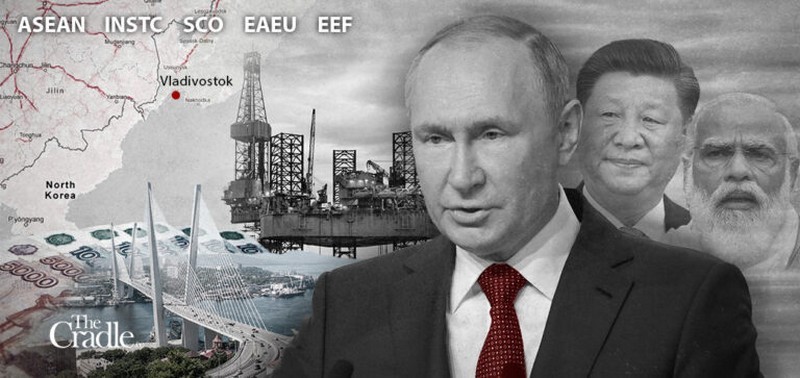
‘Asia’s Future Takes Shape in Vladivostok, the Russian Pacific

By Pepe Escobar

8 Sep 2022 – Sixty-eight countries gathered on Russia’s far eastern coast to listen to Moscow’s economic and political vision for the Asia-Pacific.

The Eastern Economic Forum (EEF) in Vladivostok is one of the indispensable annual milestones for keeping up not only with the complex development process of the Russian Far East but major plays for Eurasia integration.

Mirroring an immensely turbulent 2022, the current theme in Vladivostok is ‘On the Path to a Multipolar World.’ Russian President Vladimir Putin himself, in a short message to business and government participants from 68 nations, set the stage:

“The obsolete unipolar model is being replaced by a new world order based on the fundamental principles of justice and equality, as well as the recognition of the right of each state and people to their own sovereign path of development. Powerful political and economic centers are taking shape right here in the Asia-Pacific region, acting as a driving force in this irreversible process.”

In his speech to the EEF plenary session, Ukraine was barely mentioned. Putin’s response when asked about it: “Is this country part of Asia-Pacific?”

The speech was largely structured as a serious message to the collective west, as well as to what top analyst Sergey Karaganov calls the “global majority.” Among several takeaways, these may be the most relevant:

  • Russia as a sovereign state will defend its interests.
  • Western sanctions ‘fever’ is threatening the world – and economic crises are not going away after the pandemic.
  • The entire system of international relations has changed. There is an attempt to maintain world order by changing the rules.
  • Sanctions on Russia are closing down businesses in Europe. Russia is coping with economic and tech aggression from the west.
  • Inflation is breaking records in developed countries. Russia is looking at around 12 percent.
  • Russia has played its part in grain exports leaving Ukraine, but most shipments went to EU nations and not developing countries.
  • The “welfare of the ‘Golden Billion’ is being ignored.”
  • The west is in no position to dictate energy prices to Russia.
  • Ruble and yuan will be used for gas payments.
  • The role of Asia-Pacific has significantly increased.

In a nutshell: Asia is the new epicenter of technological progress and productivity.

No more an ‘object of colonization’ 

Taking place only two weeks before another essential annual gathering – the Shanghai Cooperation Organization (SCO) summit in Samarkand – it is no wonder some of the top discussions at the EEF revolve around the increasing economic interpolation between the SCO and the Association of Southeast Asian Nations (ASEAN).

This theme is as crucial as the development of the Russian Arctic: at 41 percent of total territory, that’s the largest resource base in the federation, spread out over nine regions, and encompassing the largest Special Economic Zone (SEZ) on the planet, linked to the free port of Vladivostok. The Arctic is being developed via several strategically important projects processing mineral, energy, water and biological natural resources.

So it’s perfectly fitting that Austria’s former foreign minister Karin Kneissel, self-described as “a passionate historian,” quipped about her fascination at how Russia and its Asian partners are tackling the development of the Northern Sea Route: “One of my favorite expressions is that airlines and pipelines are moving east. And I keep saying this for twenty years.”

Amidst a wealth of roundtables exploring everything from the power of territory, supply chains and global education to “the three whales” (science, nature, human), arguably the top discussion this Tuesday at the forum was centered on the role of the SCO.

Apart from the current full members – Russia, China, India, Pakistan, four Central Asians (Kazakhstan, Uzbekistan, Tajikistan, Kyrgyzstan), plus the recent accession of Iran – no less than 11 further nations want to join, from observer Afghanistan to dialogue partner Turkey.

Grigory Logvinov, the SCO’s deputy secretary general, stressed how the economic, political and scientific potential of players comprising “the center of gravity” for Asia – over a quarter of the world’s GDP, 50 percent of the world’s population – has not been fully harvested yet.

Kirill Barsky, from the Moscow State Institute of International Relations, explained how the SCO is actually the model of multipolarity, according to its charter, compared to the backdrop of “destructive processes” launched by the west.

And that leads to the economic agenda in the Eurasian integration progress, with the Russian-led Eurasia Economic Union (EAEU) configured as the SCO’s most important partner.

Barsky identifies the SCO as “the core Eurasian structure, forming the agenda of Greater Eurasia within a network of partnership organizations.” That’s where the importance of the cooperation with ASEAN comes in.

Barsky could not but evoke Mackinder, Spykman and Brzezinski – who regarded Eurasia “as an object to be acted upon the wishes of western states, confined within the continent, away from the ocean shores, so the western world could dominate in a global confrontation of land and sea. The SCO as it developed can triumph over these negative concepts.”

And here we hit a notion widely shared from Tehran to Vladivostok:

Eurasia no longer as “an object of colonization by ‘civilized Europe’ but again an agent of global policy.”

‘India wants a 21st Asian century’

Sun Zuangnzhi from the Chinese Academy of Social Sciences (CASS) elaborated on China’s interest in the SCO. He focused on achievements: In the 21 years since its founding, a mechanism to establish security between China, Russia and Central Asian states evolved into “multi-tiered, multi-sector cooperation mechanisms.”

Instead of “turning into a political instrument,” the SCO should capitalize on its role of dialogue forum for states with a difficult history of conflicts – “interactions are sometimes difficult” – and focus on economic cooperation “on health, energy, food security, reduction of poverty.”

Rashid Alimov, a former SCO secretary general, now a professor at the Taihe Institute, stressed the “high expectations” from Central Asian nations, the core of the organization. The original idea remains – based on the indivisibility of security on a trans-regional level in Eurasia.

Well, we all know how the US and NATO reacted when Russia late last year proposed a serious dialogue on “indivisibility of security.”

As Central Asia does not have an outlet to the sea, it is inevitable, as Alimov stressed, that Uzbekistan’s foreign policy privileges involvement in accelerated intra-SCO trade. Russia and China may be the leading investors, and now “Iran also plays an important role. Over 1,200 Iranian companies are working in Central Asia.”

Connectivity, once again, must increase: “The World Bank rates Central Asia as one of the least connected economies in the world.”

Sergey Storchak of Russian bank VEB explained the workings of the “SCO interbank consortium.” Partners have used “a credit line from the Bank of China” and want to sign a deal with Uzbekistan. The SCO interbank consortium will be led by the Indians on a rotation basis – and they want to step up its game. At the upcoming summit in Samarkand, Storchak expects a road map for the transition towards the use of national currencies in regional trade.

Kumar Rajan from the School of International Studies of the Jawaharlal Nehru University articulated the Indian position. He went straight to the point: “India wants a 21st Asian century. Close cooperation between India and China is necessary. They can make the Asian century happen.”

Rajan remarked how India does not see the SCO as an alliance, but committed to the development and political stability of Eurasia.

He made the crucial point about connectivity revolving around India “working with Russia and Central Asia with the INSTC” – the International North South Transportation Corridor, and one of its key hubs, the Chabahar port in Iran: “India does not have direct physical connectivity with Central Asia. The INSTC has the participation of an Iranian shipping line with 300 vessels, connecting to Mumbai. President Putin, in the [recent] Caspian meeting, referred directly to the INSTC.”

Crucially, India not only supports the Russian concept of Greater Eurasia Partnership but is engaged in setting up a free trade agreement with the EAEU: Prime Minister Narendra Modi, incidentally, came to the Vladivostok forum last year.

In all of the above nuanced interventions, some themes are constant. After the Afghanistan disaster and the end of the US occupation there, the stabilizing role of the SCO cannot be overstated enough. An ambitious road map for cooperation is a must – probably to be approved at the Samarkand summit. All players will be gradually changing to trade in bilateral currencies. And creation of transit corridors is leading to the progressive integration of national transit systems.

Let there be light

A key roundtable on the ‘Gateway to a Multipolar World’ expanded on the SCO role, outlining how most Asian nations are “friendly” or “benevolently neutral” when it comes to Russia after the start of the Special Military Operation (SMO) in Ukraine.

So the possibilities for expanding cooperation across Eurasia remain practically unlimited. Complementarity of economies is the main factor. That would lead, among other developments, to the Russian Far East, as a multipolar hub, turning into “Russia’s gateway to Asia” by the 2030s.

Wang Wen from the Chongyang Institute for Financial Studies stressed the need for Russia to rediscover China – finding “mutual trust in the middle level and elites level”. At the same time, there’s a sort of global rush to join BRICS, from Saudi Arabia and Iran to Afghanistan and Argentina:

“That means a new civilization model for emerging economies like China and Argentina because they want to rise up peacefully (…) I think we are in the new civilization age.”

B. K. Sharma from the United Service Institution of India got back to Spykman pigeonholing the nation as a rimland state. Not anymore: India now has multiple strategies, from connecting to Central Asia to the ‘Act East’ policy. Overall, it’s an outreach to Eurasia, as India “is not competitive and needs to diversify to get better access to Eurasia, with logistical help from Russia.“

Sharma stresses how India takes SCO, BRICS and RICs very seriously while seeing Russia playing “an important role in the Indian Ocean.” He nuances the Indo-Pacific outlook: India does not want Quad as a military alliance, privileging instead “interdependence and complementarity between India, Russia and China.”

All of these discussions interconnect with the two overarching themes in several Vladivostok roundtables: energy and the development of the Arctic’s natural resources.

Pavel Sorokin, Russian First Deputy Minister of Energy, dismissed the notion of a storm or typhoon in the energy markets: “It’s a far cry from a natural process. It’s a man-made situation.” The Russian economy, in contrast, is seen by most analysts as slowly but surely designing its Arctic/Asian cooperation future – including, for instance, the creation of a sophisticated trans-shipment infrastructure for Liquified Natural Gas (LNG).

Energy Minister Nikolay Shulginov made sure that Russia will actually increase its gas production, considering the rise of LNG deliveries and the construction of Power of Siberia-2 to China: “We will not merely scale up the pipeline capacity but we will also expand LNG production: it has mobility and excellent purchases on the global market.”

On the Northern Sea Route, the emphasis is on building a powerful, modern icebreaker fleet – including nuclear. Gadzhimagomed Guseynov, First Deputy Minister for the Development of the Far East and the Arctic, is adamant: “What Russia has to do is to make the Northern Sea Route a sustainable and important transit route.”

There is a long-term plan up to 2035 to create infrastructure for safe shipping navigation, following an ‘Arctic best practices’ of learning step by step. NOVATEK, according to its deputy chairman Evgeniy Ambrosov, has been conducting no less than a revolution in terms of Arctic navigation and shipbuilding in the last few years.

Kniessel, the former Austrian minister, recalled that she always missed the larger geopolitical picture in her discussions when she was active in European politics (she now lives in Lebanon): “I wrote about the passing of the torch from Atlanticism to the Pacific. Airlines, pipelines and waterways are moving East. The Far East is actually Pacific Russia.”

Whatever Atlanticists may think of it, the last word for the moment might belong to Vitaly Markelov, from the board of directors of Gazprom: Russia is ready for winter. There will be warmth and light everywhere.”

Pepe Escobar, born in Brazil, is a correspondent and editor-at-large at Asia Times and columnist for Consortium News and Strategic Culture in Moscow.

19 September 2022

Source: www.transcend.org

‘Dear Friends’ Xi and Putin: Project Unity

By Ray McGovern

16 Sep 2022 – In the official Chinese and Russian statements regarding yesterday’s meeting between Presidents XI Jinping and Vladimir Putin in Samarkand lies not a scintilla of evidence that China’s support for Putin’s invasion of Ukraine has weakened.

In my view, if Putin decides to up the ante in Ukraine, XI would be likely to support him. Most analysts of China doubt that this would extend to China’s stirring up trouble in the South China Sea or opposite Taiwan, but most Chinese analysts did not expect China to tolerate, much less endorse, Russia’s invasion of Ukraine. So your guess is as good as mine.

Underneath the ‘Dear Friend’ professions of solidarity lies a concrete-reinforced commitment, so to speak, indeed a China-Russia entente that bespeaks an intention to coordinate closely – including before any major military initiatives against the U.S. or its proxies.

Some of the mutual statements of solidarity may sound boilerplate, but it is important to remember that the boilerplate has acquired additional steel reinforcement, so to speak, in the crucible of this year 2022. Each country has pledged strong support for the other’s “core interests” – for Russia, re. Ukraine; for China, re. Taiwan.

The “core interest” mutual support was given prominence in the official Chinese readout of the Putin-Xi conversation:

“President XI emphasized that China will work with Russia to extend strong mutual support on issues concerning each other’s core interests….

“President Putin noted that the world is undergoing multiple changes, yet the only thing that remains unchanged is the friendship and mutual trust between Russia and China.

“The Russia-China comprehensive strategic partnership of coordination is as stable as mountains. … The Russian side is firmly committed to the one-China principle and condemns provocative moves by individual countries on issues concerning China’s core interests. Russia will consolidate and deepen bilateral and multilateral communication and collaboration with China and expand cooperation in key areas such as trade and energy.”

In his remarks, Putin emphasized the “key role” played by “the foreign policy tandem of Moscow and Beijing” in ensuring global and regional stability and took another potshot at the undefined “rules-based” order promoted by Washington. He also expressed appreciation for “our Chinese friends’ balanced position in connection with the Ukraine crisis.”

Putin also fleshed out the progress in Russia’s trade with China:

“Last year, trade grew by 35 percent to over $140 billion. In the first seven months of this year, our trade increased by another 25 percent. I am convinced that by the end of the year we will reach new record high levels, and in the near term, as agreed, we will bring our annual trade to $200 billion or more.”

On a personal note, in the early 60s when I was responsible for analyzing Sino-Soviet relations, mutual trade amounted to $200 million. Granted: bilateral relations back then were in the pits. But still, $200 million to $200 billion is something we never imagined in our wildest dreams.

The Chinese and Russians can thank the reckless-feckless team of Secretary of State Antony Blinken and national security adviser Jake Sullivan, as well as their immediate predecessors for helping that increase to be as large as it it.

Finally, right after the Xi-Putin meeting yesterday, ABC’s Martha Raddatz read the following words of wisdom into the TV camera:

“Given what has happened in Ukraine, with Russia losing territory and its forces exposed as weak and hapless, even if Russia gets nothing [from XI], the meeting will signal an anti-Western bond which is significant – it IS significant.”

I believe Martha got that last part right. We shall have to wait and see how this all plays out regarding Ukraine and Taiwan.

Ray McGovern works with Tell the Word, a publishing arm of the ecumenical Church of the Saviour in inner-city Washington.

19 September 2022

Source: www.transcend.org

Europe, More Than Putin, Must Shoulder the Blame for the Energy Crisis

By Jonathan Cook

14 Sep 2022 – The same arrogant, self-righteous posturing from the West that fuelled the Ukraine war is now plunging Europe into recession.

Outraged western leaders are threatening a price cap on imports of Russian natural gas after Moscow cut supplies to Europe this month, deepening an already dire energy and cost-of-living crisis. In response, Russian President Vladimir Putin has warned that Europe will “freeze” this winter unless there is a change of tack.

In this back-and-forth, the West keeps stepping up the rhetoric. Putin is accused of using a mix of blackmail and economic terror against Europe. His actions supposedly prove once more that he is a monster who cannot be negotiated with, and a threat to world peace.

Denying fuel to Europe as winter approaches, in a bid to weaken the resolve of European states to support Kyiv and alienate European publics from their leaders, is Putin’s opening gambit in a plot to expand his territorial ambitions from Ukraine to the rest of Europe.

Or so runs the all-too-familiar narrative shared by western politicians and media.

In fact, Europe’s arrogant, self-righteous posturing over Russian gas supplies, divorced from any discernible geopolitical reality, reflects precisely the same foolhardy mindset that helped provoke Moscow’s invasion of Ukraine in the first place.

It is also the reason why there has been no exit ramp – a path to negotiations – even as Russia has taken vast swaths of Ukraine’s eastern and southern flanks – territory that cannot be reclaimed without a further massive loss of life on both sides, as the limited Ukrainian assault around Kharkiv has highlighted.

The western media has to carry a major share of the blame for these serial failures of diplomacy. Journalists have amplified only too loudly and uncritically what US and European leaders want their publics to believe is going on. But maybe it is time that Europeans heard a little of how things might look to Russian eyes.

Economic war

The media could start by dropping their indignation at “insolent” Moscow for refusing to supply Europe with gas. After all, Moscow has been only too clear about the reason for the shutdown of gas supplies: it is in retaliation for the West imposing economic sanctions – a form of collective punishment on the wider Russian population that risks violating the laws of war.

The West is well practised in waging economic war on weak states, usually in a futile attempt to topple leaders they don’t like or as a softening-up exercise before it sends in troops or proxies.

Iran has faced decades of sanctions that have inflicted a devastating toll on its economy and population but done nothing to bring down the government.

Meanwhile, Washington is waging what amounts to its own form of economic terrorism on the Afghan people to punish the ruling Taliban for driving out US occupation forces last year in humiliating fashion. The United Nations reported last month that sanctions had contributed to the risk of more than a million Afghan children dying from starvation.

There is nothing virtuous about the current economic sanctions on Russia either, any more than there is about the blackballing of Russian sportspeople and cultural icons. The sanctions are not intended to push Putin to the negotiating table. As US President Biden made clear in March, the West is planning for a long war and he wants to see Putin removed from power.

Rather, the goal has been to weaken his authority and – in some fantasy scenario – encourage his subordinates to turn on him. The West’s game plan – if it can be dignified with that term – is to force Putin to over-extend Russian forces in Ukraine by flooding the battlefield with armaments, and then watch his government collapse under the weight of popular discontent at home.

But in practice, the reverse has been happening, just as it did through the 1990s when the West imposed sanctions on Iraq’s Saddam Hussein. Putin’s position has been bolstered, as it will continue to be whether Russia is triumphing or losing on the battlefield.

The West’s economic sanctions against Russia have been doubly foolish. They have reinforced Putin’s message that the West seeks to destroy Russia, just as it previously did Iraq, Afghanistan, Libya, Syria and Yemen. A strongman is all that stands between an independent Russia and servitude, Putin can plausibly argue.

And at the same time, the sanctions have demonstrated to Russians how truly artful their leader is. Economic pressure from the West has largely backfired: sanctions have barely made an impression on the value of the rouble, while Europe looks to be heading into recession as Putin turns off the gas spigot.

It will doubtless not only be Russians quietly rejoicing at seeing the West get a dose of the medicine it so regularly force-feeds others.

Western conceit

But there is a more troubling dimension to the West’s conceit. It was the same high-handed belief that the West would face no consequences for waging economic warfare on Russia, just as earlier assumed it would be pain-free for Nato to station missiles on Moscow’s doorstep. (Presumably, the effect on Ukrainians was not factored into the calculations.)

The decision to recruit ever-more east European states into the Nato fold over the past two decades not only broke promises made to Soviet and Russian leaders, but flew in the face of advice from the West’s most expert policy-makers.

Guided by the US, Nato countries closed the military noose around Russia year by year, all the while claiming that the noose was entirely defensive.

Nato flirted openly with Ukraine, suggesting that it too might be admitted to their anti-Russia alliance.

The US had a hand in the 2014 protests that overthrew Ukraine’s government, one elected to keep channels open with Moscow.

With a new government installed, the Ukrainian army incorporated ultra-nationalist, anti-Russia militias that engaged in a devastating civil war with Russian communities in the country’s east.

And all the while, Nato secretly cooperated with and trained that same Ukrainian army.

At no point in the eight long years of Ukraine’s civil war did Europe or the US care to imagine how all these events unfolding in Russia’s backyard might look to ordinary Russians. Might they not fear the West just as much as western publics have been encouraged by their media to fear Moscow? Putin did not need to invent their concern. The West achieved that all by itself.

The encirclement of Russia by Nato was not a one-off error. Western meddling in the coup and support for a nationalist Ukrainian army increasingly hostile to Russia were not one-offs either. Nato’s decision to flood Ukraine with weapons rather than concentrate on diplomacy is no aberration. Nor is the decision to impose economic sanctions on ordinary Russians.

These are all of a piece, a pattern of pathological behaviour by the West towards Russia – and any other resource-rich state that does not utterly submit to western control. If the West were an individual, the patient would be diagnosed as suffering from a severe personality disorder, one with a strong impulse for self-destruction.

Bogeyman needed

Worse still, this impulse does not appear to be open to correction – not as things stand. The truth is that Nato and its US ringmaster have no interest in changing.

Their purpose is to have a credible bogeyman, one that justifies continuing the massive wealth redistribution from ordinary citizens to an elite of the already ultra-rich. A supposed threat to Europe’s safety justifies pouring money into the maw of an expanding war machine masquerading as the “defence industries” – the military, the arms manufacturers, and the ever-growing complex of the surveillance, intelligence and security industries. Both Nato and a US network of more than 800 military bases around the globe just keep growing.

A bogeyman also ensures western publics are unified in their fear and hatred of an external enemy, making them readier to defer to their leaders to protect them – and with it, the institutions of power those leaders uphold and the status quo they represent.

Anyone suggesting meaningful reform of that system can be rounded on as a threat to national security, a traitor or a fool, as Britain’s former Labour leader Jeremy Corbyn found out.

And a bogeyman distracts western publics from thinking about deeper threats, ones that our own leaders – rather than foreigners – are responsible for, such as the climate crisis they not only ignored but still fuel through the very military posturing and global confrontations they use to distract us. It is a perfect circle of self-harm.

Since the fall of the Berlin Wall, and the demise of the Soviet Union, the West has been casting around for a useful bogeyman to replace the Soviet Union, one that supposedly presents an existential threat to western civilisation.

Iraq’s weapons of mass distraction were only 45 minutes away – until we learned they did not, in fact, exist.

Afghanistan’s Taliban was harbouring al-Qaeda – until we learned that the Taliban had offered to hand Osama bin Laden over even before the 9/11 attacks.

There was the terrifying threat from the head-choppers of the Islamic State (IS) group – until we learned that they were the West’s arm’s-length allies in Syria and being supplied with weapons from Libya after it was “liberated” by the West from its dictator, Muammar Gadaffi.

And there is always Iran and its supposed nuclear weapons to worry about, even though Tehran signed an agreement in 2015 putting in place strict international oversight to prevent it from developing a bomb – until the US casually discarded the deal under pressure from Israel and chose not to replace it with anything else.

Braced for recession

Each of these threats was so grave it required an enormous expenditure of energy and treasure, until it had served its purpose of terrifying western publics into acquiescence. Invariably, the West’s meddling spawned a backlash that created another temporary enemy.

Now, like a predictable Hollywood sequel, the Cold War is back with a vengeance. Russia’s President Putin has a starring role. And the military-industrial complex is licking its lips with delight.

Ordinary people and small businesses are being told by European leaders to brace for a recession as energy companies once again clock up “eye-watering” profits.

Just as with the financial crash nearly 15 years ago, when the public was required to tighten its belt through austerity policies, a crisis is providing ideal conditions for wealth to be redistributed upwards.

Like other officials, Nato’s Secretary-General Jens Stoltenberg has sounded the alarm about “civil unrest” this winter as prices across Europe soar, even while demanding public money be used to send yet more weapons to Ukraine.

The question is whether western publics will keep buying the narrative of an existential threat that can only be dealt with if they, rather than their leaders, dig deep into their pockets.

Jonathan Cook is an award-winning British journalist based in Nazareth, Israel, since 2001.

19 September 2022

Source: www.transcend.org

IMF Tells Bolivia to Drop Its Successful Economic Model

By Kawsachun News

16 Sep 2022The IMF released a report today on the Bolivian economy in which it recommends adopting drastic neoliberal measures, including; reducing workers’ salaries, cutting public investments, and ending currency controls. These policies have turned Bolivia from one of the poorest countries in the region into it’s fastest-growing economy.

The report takes aim at the government’s spending on development, saying, “The government must restrict spending, including eliminating the end of year wage bonus for workers, they must restrict the growth of wages for public sector workers, and limit the growth of public investment and subsidies.”

The ‘end-of-year wage bonus’ for workers (in both the public and private sector) refers to a policy introduced under Evo Morales that requires employers to pay their workers a bonus equal to double their monthly wage, but only if annual GDP growth is over 4.5%.

The bulk of public investment is destined for infrastructure, while the majority of subsidies are for ensuring the price of fuel doesn’t rise. Bolivia is the only country in the region to see no rise in fuel prices, a policy that has kept inflation at less than 2%, unlike the rest of South America.

The report even states that fuel prices must rise, and the inflation that would inevitably cause could be offset by cash-transfer programs for the poorest sectors, says the IMF:

“The successful implementation of an increase in domestic fuel prices will require recycling a part of the budget savings in cash transfer programs aimed at the poorest deciles of the population.”

Bolivia’s Economy Minister, Marcelo Montenegro, emphatically rejected the report, stating today; “They prescribe the old recipes from many decades ago where they call for reducing subsidies, lowering public spending, gradually eliminating the end of year bonus for workers. We are not going to accept these recommendations because we are a sovereign country, and we have a sovereign economic policy.”

The policies criticized by the IMF have helped Bolivia reduce poverty by over 50% since Evo Morales took office in 2006. It has also helped keep inflation at the lowest rate in Latin America. Meanwhile, when IMF policies were implemented in the early 2000s, over 60% of the country lived below the poverty line.

In a recent speech in Brazil, Bolivia’s President Luis Arce stated that the country’s impressive growth is due to rejecting IMF recommendations; “We are in better conditions because, since 2006, Bolivia doesn’t have a single agreement with the IMF. In 2020 with the de facto government, they tried to enter into a loan program with the IMF, which we stopped as soon as we entered government, we reversed that IMF loan because believe the best way to make economic policy is to have a sovereign monetary and economic policy without being submitted to any international organism.”

19 September 2022

Source: www.transcend.org

Latin Americans Reject Resource Plundering by Same NATO Countries Fueling Military Conflict in Ukraine

By Camila Escalante

13 Sep 2022 On August 6 we celebrated 197 years of independence here in Bolivia. We listened intently to the speech by President Luis Arce delivered in Sucre, the capital city in Bolivia’s Chiquisaca department. Among other issues, he spoke about the current military conflict in Ukraine and the need for peace in today’s world.

President Arce said there cannot be peace in the world so long as there is continued foreign military intervention and economic blockades and sanctions, so very painful to humanity. He went on to say that Bolivians are placing much attention on the conflict taking place in Ukraine. He cautioned against the propaganda being generated in Western countries about all of the harm and violence that people are suffering as a consequence of this conflict.

He also reminded his listeners that we in Latin America have been plagued with intervention, war, bombings and deaths for generations right here in our lands and territories as the United States continues to apply its anachronistic ‘Monroe Doctrine’. First the colonialists and then the imperialists have imposed this doctrine for hundreds of years, long before the current conflict in Ukraine began in February of this year. [You can view a brief excerpt of the August 6 speech by Luis Arce, here.]

Matters could not be clearer than they are today here in Latin America. One consequence of the conflict in Ukraine has been to reveal exactly who is on the side of a more just and equitable world, and who opposes that.

Sadly, in the Western countries, many left-wing and other progressive voices have been terribly confused about events. They are blaming Russia for the conflict, calling for its withdrawal from Ukraine, which at the present time amounts to a call for Russian surrender to NATO.

They are calling for ‘diplomacy’ instead of war, ignoring the fact that it is the U.S., NATO and Kyiv who have turned their backs on diplomacy. They ignore the long history of the conflict in Donbas in which Russia has ultimately been obliged to intervene in order to defend the people of that region against Ukraine military attacks and in order to resist the military and economic encroachment upon Russia’s borders by the NATO powers.

Many alleged anti-imperialists in Western countries have dismissed the positions on Ukraine-Russia taken by anti-imperialist parties, social movements and revolutionary leaders here in Latin America and the Caribbean. They ignore the fact that we, here in the Global South, in Latin America and the Caribbean, are obliged to fight every day to defend our lands and natural resources against imperialist plunder. This is becoming clearer and clearer by the day.

Leaders such as Evo Morales of Bolivia and President Nicolas Maduro of Venezuela were the first out of the gates earlier this year to call for an end to imperialist NATO’s continued expansion efforts. They have warned of the dangers of the extremist, far-right, white supremacist neo-Nazi forces in Ukraine that are being defended, protected and uplifted by countries in Europe and North America and by imperialists and fascists all over the world.

Evo Morales issued a call in July for an international campaign in favour of the abolition of NATO.

So I would say that there is, in fact, a consistent left-wing position here in Latin America, in contrast to the incoherent and inconsistent stances taken by too many in the global north. That consistent position continues to oppose NATO imperialist expansion and any new, manufactured pretexts for encroaching on our territories with new U.S. military bases. I am thinking, in particular, of the ‘SOUTHCOM’ military command for Latin America of the United States, located in Florida. It can be viewed as the representation of NATO on our continent.

Neither Russia and China, nor any other country in the world, has a presence anywhere remotely comparable to what the United States has all around our continent, particularly in Colombia where there are seven active U.S. military bases right now.

Coincidentally, on August 7, Colombia celebrated the inauguration of left-wing President Gustavo Petro and Vice-President Francia Marquez. It’s a very important date, a very momentous time for us. Their election on May 29 is an historic achievement for the people of Colombia.

Finally, we have seen the outgoing president Ivan Duque out the door. But he had welcomed NATO and the U.S. military to establish itself permanently in our continent and it is going to be very difficult to get rid of them.

Our position is also against additional plundering of our natural resources and the dismantling and privatization of our strategic nationalized industries.

Juan Ramon Quintana was a former minister of the Evo Morales government and he’s given several talks to social movements here in Bolivia to try to help bring clarity to the conflict and geopolitical situation in and around Ukraine. At a talk at the headquarters of the Six Federations of the Trópico of Cochabamba in March, he said, “The West, the European Union, the United States, NATO–what they’re trying to do is survive through their political, economic, financial and cultural crisis because the West has not given any answer to humanity. The West today is synonymous with war, destruction, weapons, atomic arsenals.”

Quintana asks, “What is the culture of the West? We are coming from 500 years of colonial violence—our ears have been mutilated, our noses and hands cut off, our bodies dismembered. That is what has been left with us, comrades. This is a culture of destroying nature and Mother Earth. It doesn’t cease in its compulsive, materialistic appetite to wage war, to appropriate other people’s strategic resources.”

Investment projects involving companies from Russia and China do exist. However, what we see there is cooperation among equals. As far back as July 2014, Russian president Vladimir Putin made an official visit to Cuba where he confirmed an agreement between the two countries in which the financial debt owed to Russia by Cuba stemming from the years of cooperation between Cuba and the Soviet Union was officially canceled.

Imagine—$32 billion in debt cancelled by common agreement! No wonder the Western imperialists wish to weaken if not crush Russia and such ‘bad examples’ of its cooperation with other countries!

It is absurd to even point all this out, considering the massive presence of Canadian, U.S. and European mining companies in our continent and the long list of their blatant meddling in our internal affairs of the countries. We know too well the well-documented coups they have waged and their funding of political opposition groups, which is ongoing, notably in Cuba, Nicaragua, Venezuela and Bolivia.

It is blatantly obvious what has been happening with the global energy crisis. The U.S. is currently searching for oil supplies and trying to barter access to them. It is once again descending on Caracas and on every other country in the region that has energy, including Suriname, Trinidad and Tobago, and Guyana. It’s very clear what this is all about.

New pretexts are being created to come in and swoop up our resources. If you listen to any of the press conferences, speaking events, interviews or statements by SOUTHCOM and its commander, General Laura Richardson, you will see that they are very clear about their fascination and obsession with exploiting our rare minerals, our rocks, everything we have here, in what they still continue to consider their backyard.

We’re witnessing a witch hunt in our region in which Washington is saying either you are with the U.S., NATO and the West, or you’re against us. That’s the choice that they’re giving us. Anyone who tries to be ‘neutral’ in these global conditions is placed into a category of being ‘pro-Russia’. They become subject to U.S. blackmail, intimidation and other pressures. These take the form of blocking loans and imposing new additional sanctions, as we see so clearly with countries that are closest to Russia, China, and Iran, namely Nicaragua, Venezuela and Cuba.

Meanwhile, no one is sanctioning the U.S. or the EU for their plundering wars or their violent crimes against humanity and war crimes in the Middle East.

Beyond inflation, the loss of access to inputs for production, and the various other ways in which our productive sectors and industries are being affected here—beyond the harsh economic effects on the working class of the Caribbean and Latin America and how difficult it is for people to access and afford fuel and food—we face the real threat of increased militarization and hostility towards our peoples and governments because we are rejecting and confronting imperialist policies.

We are seeing increased hostility and new attempts at destabilization against those countries which are choosing to reject the NATO propaganda and partner with, develop with, and move forward and advance with China, Russia and Iran. The most important consequence of this conflict for our region is this greater pressure by the Western countries for the looting of our natural strategic resources, our oil, our gas, our minerals, our lithium. They couldn’t be more overt about it.

This is radicalizing people here. And the situation has nothing to do with ‘democracy’ or ‘human rights’. It is about the expansion of NATO countries into other territories to grab resources in a system that maintains our populations in permanent servitude, absolute terror and tyranny by the imperialist north.

All this is being rejected and it’s due time that the people of the North understand and learn why.

Camila Escalante is the co-founder and editor of Kawsachun News.

19 September 2022

Source: www.transcend.org

UN Special Rapporteur Calls for the End of All Unilateral Sanctions against Iran

By Peoples Dispatch

Alena Douhan also expressed the need to create a legal framework to prevent countries such as the US taking unilateral action against others.

14 Sep 2022 – Claiming that unilateral coercive measures taken by the US and some of its allies against Iran had harmed ordinary Iranians’ rights to employment, health, and food, the UN Special Rapporteur Alena Douhan demanded the withdrawal of all such sanctions immediately and proposed mechanisms to prevent such measures being taken in the future.

Douhan’s report on Iran was released on Monday, September 12.

Douhan, a professor of international law, told Iranian news website Tehran Times in an interview on Monday that, contrary to claims by countries who pursue such policies, “ordinary people are directly affected by the sanctions.” She also drew attention in the interview to the work the Iranian state was doing for the millions of refugees in the country from Afghanistan and elsewhere. Iran provides refugees, many of them undocumented, with free access to primary health care and schooling, and the sanctions could render such projects untenable.

Douhan said that the humanitarian impact of such unilateral sanctions is further magnified because of the “over-compliance of states, banks, businesses, and private individuals.”

Douhan’s report is based on an extensive set of interviews conducted across the country with affected people, UN missions, NGOs, and government officials. She, in particular, underlines the impact of sanctions on patient care.  According to Douhan, despite the fact that Iran produces close to 95% of all medicines it needs, there have been shortages as a result of the sanctions, as Iran has been unable to access all the raw materials it requires.

Asserting that unilateral sanctions have an impact on people’s right to food, medicine, and economic opportunities in societies such as Iran, Venezuela, and others, Douhan underlined the need to have “legal action against unilateral coercive measures within the framework of the UN” to safeguards people’s rights.

In May this year Douhan became the first UN rapporteur to visit Iran in more than 17 years. She had expressed similar views about the impact on sanctions on the Iranian people after her visit to the country at the time as well.

Iran has been a subject of multiple US sanctions under various pretexts, dating back as far as the 1979 Iranian Revolution. US allies such as the European Union, Australia, and Canada have imposed sanctions on Iran as well.

The number of the US sanctions has only increased following then president Donald Trump’s unilateral withdrawal from the multi-party Joint Comprehensive Plan of Action (JCPOA) in May 2018, under the so-called “maximum pressure campaign.” The Joe Biden administration has imposed fresh sanctions on Iran as well since coming to power, despite claims to want to restore the nuclear deal and engaging in talks with Iran for over a year now.

On September 9, the US imposed fresh sanctions on Iran alleging that it was supplying drones to Russia. The US Treasury Department suggested in a press release that these sanctions would hold Iran “accountable.” The US also imposed sanctions against Iran’s Ministry of Intelligence alleging its involvement in cyber attacks in Albania.

At a UN Human Rights Council meeting Kazem Gharibabadi, Iran’s Vice-President of the Judiciary for International Affairs, described the US sanctions as crimes against humanity. He also claimed that sanctions prevented cooperation in the field of refugee crisis management and in the fight against narcotics.

Iran has denied both the sale of drones to Russia and its participation in cyber attacks against Albania. Iranian Foreign Ministry spokesperson Nasser Kanaani had said recently that allegations of cyber attacks against Albania had been fabricated by the US in order that it might take further action against Iran. Javad Zarif, former Foreign Minister of Iran, who had termed US sanctions on Iran “economic terrorism,” said on Tuesday, following the release of Douhan’s report, that current US sanctions on Iran were attempts to weaponize food and medicines against Iranians. He also alleged that the US uses sanctions as a means to serve Israeli interests in the region.

19 September 2022

Source: www.transcend.org

Ukraine: War, Statecraft, and Geopolitical Conflict—the Nuclear Danger

By Richard Falk

14 Sep 2022 – The following interview was previously published in September by the online Global Governance Forum. My responses to the questions posed by Asli Ü. Bâli have been somewhat updated to take account of intervening developments. Asli was my last PhD student at Princeton, has emerged as a star of the UCLA School of Law in recent years, and just now has joined the faculty of Yale Law School. Although her brilliance as a Princeton student both stimulated and challenged me, it as a cherished friend that Asli has most impacted my life.

******************************

Ukraine: War, Statecraft, and Geopolitical Conflict — A Focus on the Return of the Nuclear Question

Introduction

The risk of nuclear escalation in the context of Russia’s invasion of Ukraine has been a subject of considerable debate in the United States among scholars, policy analysts and media commentators. These debates reveal a broad spectrum of views from those who dismiss Russian references to nuclear capabilities as mere saber rattling to those who worry that if Russian President Vladimir Putin finds his back to the wall in Ukraine, he may resort to tactical nuclear strikes. Whatever the assessment of the risks in Ukraine, it is clear that questions of nuclear deterrence are back on the table after nearly a generation in which most North American analysts viewed non-proliferation as the sole U.S. foreign policy objective regarding nuclear arsenals.

For those who have continued to press concerns about nuclear disarmament since the end of the Cold War, the return of the nuclear question may raise awareness among new audiences about the existential threat posed by existing nuclear arsenals. Richard Falk has for decades been an outspoken authority calling for denuclearization. In this interview, Asli Ü. Bâli invites Richard to reflect on whether the Ukraine conflict risks becoming a military confrontation that tips the world into further nuclear escalation or whether there remains an opportunity to move the world away from the nuclear precipice.

***************************

Asli Ü. Bâli: To begin our conversation, it would be useful to provide some context as to why nuclear disarmament was largely sidelined as an urgent international question in the post-Cold War period. How might we think about the last two decades in particular, during which the possibility of the development of an Iranian nuclear arsenal was deemed so much more threatening than the existence of extensive nuclear arsenals in the hands of other states?

Richard Falk: I think the last two decades since the Soviet collapse reflect a period in which the nuclear weapons states, particularly the US, have felt comfortable with the nuclear status quo. Their preference was to organize this arrangement—in which they maintain nuclear arsenals and other states forego that option—as a permanent regime anchored in the non-proliferation treaty (NPT) interpreted in such a way as to drop the disarmament requirements of that treaty. Article VI of the NPT contains the good faith nuclear disarmament obligation, which was supposedly the bargain offered to induce non-nuclear states to become parties to the treaty. The attempt by nuclear weapons states to drop this element from the treaty arrangement creates an interesting international law situation: There’s a breach of an essential provision of the NPT, yet this treaty regime is regarded by the US and NATO countries as a great achievement of international law in relation to nuclear threat reduction.

The existential scope of the NPT is reduced to a hegemonic arrangement that imposes limits on the proliferation of nuclear weapons, while keeping the development and control of the weapons restricted to a small group of nuclear weapons states. This includes the discretion to develop and threaten their use, as well as determining how and whether they would be used, and to what extent, in crisis or combat situations. This is a regulatory framework that neither reflects the NPT as a negotiated text, nor is prudent and equitable, and it certainly violates the major premise of the rule of law—treating equals equally.

I participated in a Council on Foreign Relations webinar event a year or so ago about the future of national security, and one of the participants introduced the idea that Article VI of the NPT is best understood as ‘a useful fiction.’ That is, Article VI was included in the treaty as a way of satisfying non-nuclear countries that they were being offered an equitable bargaining framework by becoming parties to the NPT. Whereas in fact there was a tacit understanding from the beginning that disarmament, despite the treaty language of commitment, was not viewed by political elites of the nuclear weapons states as a realistic, or even a desirable goal, to be pursued by the nuclear weapons states, and most especially it was so viewed by the United States.

In considering the broader context that has, as you put it, sidelined the issues of nuclear disarmament, the other thing to be emphasized is that there had crept in a kind of complacency about this weaponry. There are thousands of nuclear weapons, preponderately in the US and Russia, and very little public understanding of existing constraints on their threat or use or under what circumstances these arsenals might be introduced into diplomacy or even combat situations.

The U.S. in particular, and some other countries like Israel, have been developing combat roles for certain types nuclear weapons—styled as tactical nuclear arms or so-called “mini-nukes”—that strongly implied that such weapons might actually be introduced into local or regional conflicts. Given the array of bilateral conflicts that have the risk of nuclear escalation including in Ukraine, if confrontation escalates in relation to Taiwan, on the Korean peninsula, in India/Pakistan, perhaps if Israel’s security is under pressure in the Middle East. Despite these possibilities being widely feared, there has been so far no concerted or consistent international response exhibiting opposition or even anxiety.

The risks of the overall situation are well-reflected for those who follow the nuclear issue by the fact that the Doomsday clock—maintained by the Bulletin of Atomic Scientists and often relied upon as a reliable assessment of nuclear danger at a given time—has moved ever closer in this period to midnight. Prior to the Ukraine crisis I think it was already only one hundred seconds away from midnight. In the words of the editors, “the Clock remains the closest it has ever been to civilization-ending apocalypse.” The UN Secretary General has recently warned that the world is but ‘one miscalculation’ away from nuclear catastrophe.

There is another worrisome aspect of the manner in which the three NATO nuclear weapons states have assumed the authority to enforce the NPT regime as it applies to non-nuclear states. There is nothing about enforcement in the treaty, and Article X grants non-nuclear states a right of withdrawal if facing severe security threats. And yet the U.S. and Israel have made unlawful claims to use force if they believe Iran intends or achieves a nuclear weapons capability. This is hegemonic geopolitics, which not be confused with the implementation of international law.

The complacency toward this weaponry and the satisfaction with the NPT regime that has allowed powerful states to retain a hierarchical and hegemonic relationship to non-nuclear states are important dimensions of this doomsday risk. Thus, the situation prior to Ukraine, Taiwan, and Iran require urgent action to avoid existential dangers, but global complacency and the diversionary priority given to containing proliferation threats posed by non-nuclear states rather than addressing the risks of existing arsenals has kept the nuclear agenda from any serious engagement with disarmament and war threats for many decades. This must stop or disaster is virtually assured.

Asli Bâli: Your response raises one further question: why, in your view, have the non-nuclear states acquiesced in the violation of the core bargained-for agreement they had negotiated in the NPT? 

Richard Falk: I think the non-nuclear weapons states, too, have adapted to this complacent atmosphere when it comes to nuclear weapons, although this may be changing, and not primarily because of Ukraine. It may reflect a sense of a lack of leverage over global nuclear policy in a post-Cold War context. During the Cold War, there had been some willingness on the part of the Soviet Union and then China to engage in a disarmament process on negotiating arsenal reductions, and this seemed realistic to the rest of the world. But in the post-Cold War period, the U.S. shifted away from even the pretense of disarmament priorities and there has been an absence of powerful states pushing back against this trajectory.

That said, I do think there is now emerging a critical outlook on the part of the Global South that may alter course back in manner more supportive of the views of disarmament advocates. This ‘new look’ of the Global South has been most clearly expressed in the negotiation and adoption a new treaty, the Treaty on the Prohibition of Nuclear Weapons (TPNW), signed in 2017 and coming into force with over sixty ratifications in 2021. The treaty itself was originally supported by as many as 120 countries, though it has only garnered signatures from about two-thirds of that number and been ratified so far by half.

Another indication of renewed Global South resistance to overlooking the nuclear weapons states disarmament obligations is evident in the twice delayed review conference called for by the NPT. Such a review conference is supposed to take place every five years and the pivotal Tenth Review Conference was scheduled for 2020. Originally postponed due to the COVID-19 pandemic, it was supposed to be rescheduled for 2021 and was postponed again to 2022 and finally took place in August 2022. But in addition to pandemic-related reasons, it is understood that the deferrals have been prompted by the concern among nuclear weapons states that there may encounter friction with the Global South over disarmament. Although the failure to produce a consensus outcome document was blamed on Russia, there were also present signs of resentment about the continuing refusal of the nuclear weapons states to implement their Article VI obligations.

In short, even prior to Ukraine and Taiwan there was reason to think that there is a new international mood at the intergovernmental level concerning the threat posed by existing nuclear arsenals. I think the Ukraine and Taiwan encounters have now added momentum to this shift by a reawakening at the civil society level of palpable apprehensions over the threat or use of nuclear weapons, and in Ukraine the additional risk that nuclear power facilities will be accidentally, or even deliberately, attacked. I believe this is a time when I am hoping for a revival of pressure from below to put nuclear disarmament back on the global policy agenda, and this time with greatly increased participation of non-Western civil society and governments.

Asli Bâli: Some have characterized the Ukraine conflict as illustrating the degree to which global powers might stumble blindly into a nuclear confrontation. Is it your sense that there are opportunities to contain this risk today whether through intergovernmental diplomacy or global civil society mobilization?

Richard Falk: Well, I think at the civil society level there is a definite concern though it is not too well-focused at this point. There is sort of a free-floating anxiety about the possibility that nuclear weapons use might occur on the European continent and this may have a galvanizing effect that leads to forms of domestic pressure in some European states to take action to offset such a risk. I also think that some high officials in the Biden inner circle have changed their views of the Ukraine conflict as the potential nuclear dimensions of the conflict have come into clearer focus. At an earlier stage of the Ukraine war, it seemed as if the Biden administration didn’t consider very seriously the nuclear risk, though they were always present fortunately to some degree wider war dangers of escalation.

This sensitivity was evident, for example, in Biden’s early resistance to calls, especially from Congress and right-wing think tanks, to establish a no-fly zone in Ukraine, and in his original hesitancy to supply offensive weaponry to the Ukrainians. Similarly, the early posture of not interfering with Ukrainian President Volodomir Zelensky’s efforts at seeking some sort of negotiated compromise further confirmed that the Biden administration was wary of escalation, and willing to allow Ukraine to control its own future.

But in a second phase of the conflict, when the Ukrainian resistance turned out to be more successful than anticipated, and strategic defeat or weakening of Russia seemed possible and strategically attractive, the Biden administration’s priorities visibly shifted and they manifestly treated the Ukraine war as an opportunity to teach Russia a lesson and at the same time, and perhaps of greater significance, to signal China that if they tried anything similar with Taiwan, they would face an even worse outcome.

This latter point was provocatively underscored by Biden during his recent trip to Asia that featured a strong public statement committing the US to the defense of Taiwan, followed by an irresponsibly provocative visit to Taiwan by Nancy Pelosi that violated the spirit of the One China Policy that represented the core of the 1972 Shanghai Communique, which has kept peace and stability for 50 years.

With respect to the Ukraine conflict, I have drawn a distinction between two levels. First, there is the Russia-Ukraine confrontation over issues that pertain to their bilateral conflict. But secondly, there is the geopolitical level of interaction between the US and Russia, which entails a confrontation whose stakes exceed the question of Ukraine. Here, escalation was stimulated by what I view as the quite irresponsible rhetoric from the Biden administration that demonized Putin from the outset of the crisis in February 2022.

To be sure, Putin is not an attractive political leader, but even during the Cold War North American leaders sensibly refrained from demonizing Stalin or other Soviet leaders, and vice versa. Some public officials, congresspeople, did demonize Soviet officials and policies but leaders in the executive branch refrained from such behavior because it would create such an evident obstacle to keeping open necessary diplomatic channels between the US and the Soviets, and significantly the Soviets did the same even during such encroachments on sovereign rights as in the Vietnam War.

Regrettably, in the second phase of the current conflict in Ukraine, the U.S. became a source of escalation. North American influence was directed also at more or less discouraging President Zelensky from further seeking a negotiated ending of the war on the ground. Instead, the U.S. position seemed to harden around pursuit of strategic victory. This was made explicit by Secretary of State Antony Blinken and Defense Secretary Lloyd Austin who commented on the opportunity to weaken Russia after a visit to Ukraine in which they pledged increased economic and military support. I think that now we have passed a third phase of the Ukraine conflict where there was some recognition in Washington and elsewhere that the Biden administration went too far in an escalatory direction from the perspective of prudence and with regard to the spillover harm from prolonged warfare.

Now in a fourth phase where once more a Ukrainian victory together with a Russian/Putin defeat has changed Washington tactics once more, with such favorable results seemingly within reach at what are viewed as acceptable costs. The tragic result, already partly consummated, will be a prolonged war in Ukraine, with terrible adverse consequences for the world economy  and the wellbeing of poorer people in a series of countries in the Global South. It will hardest those countries most dependent on affordable access to food and energy, and this includes European countries. It is not only the continuation of Ukraine warfare and China tensions, but the unintended consequences of anti-Russian sanctions that will result in harmful impacts in many parts of the planet.

Asli Bâli: Given your analysis of the U.S. role in escalating the conflict in Ukraine, what in your view is the current risk of either nuclear confrontation or further erosions of the possibility of promoting U.S.-Russian arms control and nuclear disarmament?

Richard Falk: The discouraging thing about the third phase is that the Biden administration still hasn’t clearly opened wide the door to a diplomatic resolution or emphasized the importance of a cease fire that might stop the immediate killing and enable de-escalation, and now in the midst of the fourth stage it seems too late. What this suggests is that there will be either of two bad scenarios unfolding as the Ukraine Crisis continues: the first is that the risk and costs of a long war in Ukraine results in the U.S. further escalating in order to try to bring the war to a faster conclusion by making Moscow give in, or withdraw, or do something that allows Ukraine and the U.S. to claim victory.

That approach really would put maximum pressure on Putin who, in turn, might determine that facing such a serious existential danger to Russian security justifies a robust response that includes the threat and possibly even the use of tactical nuclear weapons as a way, and maybe the only way, to avoid impression of strategic defeat to be the beginning of the end of his leadership.

The second scenario is that the U.S. might be prepared to live with a prolonged war and hope that it at some point Moscow will tire of the experience, the way the Soviets did in Afghanistan and that the US did in Vietnam. But recent experience suggests just how destructive this course would be for Ukraine and the world. It took the U.S. twenty years to extricate itself from Afghanistan, leaving that country as receptive to the Taliban as was twenty years earlier before driven from power, millions permanently displaced and millions more wandering the world as refugees, while those who stay home face famine and extreme gender discrimination, and untold hundreds of thousands of Afghanis have been maimed or worse. Equally depressing, as others have pointed out, the likely outcome from the Ukrainian point of view will not change very much because of what happens on the bloody battlefields, whether the war is ended next week or ten years from now except that a longer war will result in more casualties, greater devastation, and enduring embitterment.

Asli Bâli: Could you say more about what you would expect at the end of the Ukraine conflict whether it happens through early negotiations or at the end of a protracted war?

Richard Falk: Well, I expect that the most likely scenario for an end to the conflict will entail some concessions by Ukraine in relation to the Donbas region of Eastern Ukraine, together with a pledge of neutrality for the country as a whole, and non-membership in NATO. In exchange for such concessions, Russia would likely be expected to pledge in turn that it would heretofore respect the sovereign rights and political independence of the Ukraine. In all likelihood the question of Crimea will not be addressed in the course of ending the current conflict.

The contours of such a negotiated end to the conflict had already emerged in talks between the Russian and Ukrainian sides in March of 2022 and there is little reason to think these parameters will change substantially, although if the Ukrainian battlefield successes in the fourth phase hold up, it may alter a future peace process. Yet the probability still remains that such a compromised political outcome could have been achieved earlier, certainly in the first phase of the conflict if not prior to the Russian attack, before early Ukrainian victories led to the second, and then, a fourth geopolitical phase of escalation. It has become clearer as the conflict has persisted that the U.S. is prepared to go to extreme lengths, if necessary to retain its post-Cold War status as sole manager of a unipolar configuration of power in the world.

Asli Bali: Given this assessment, what opportunities, if any, do you see for reviving calls for nuclear disarmament in response to the nuclear risks made evident by the Ukraine conflict?

Richard Falk: Of course, there is a very dark form of opportunity that might emerge if there is indeed a nuclear confrontation and the use of tactical or other nuclear weapons. Such a development would undoubtedly generate a widespread call for disarmament—one hopes that doesn’t occur, of course. Beyond this apocalyptic scenario, it is a little unpredictable whether there will emerge a recognition that the pursuit of permanent stability via the non-proliferation approach should be superseded by a new effort at nuclear disarmament. I think it would be very globally popular to explore that possibility, and I would imagine the Chinese at least would be quite open to that.

In the background of such speculation is the question of whether the US is prepared to live in a multipolar world. Certainly, the post-Cold War period afforded the U.S. the opportunity to nurture illusions that the collapse of the Soviet Union might usher in a durable era in which it was the only global geopolitical actor. In a sense this is what Secretary Blinken presumably meant when he says in speeches that the idea of spheres of influence should have been discarded after World War II.[1]

The thought is that after WWII, or at the very least following the Cold War, the U.S. prefers to preside over a system in which its own influence is confined by no sphere and extends in a truly global fashion. Of course, had the US adopted this posture in the immediate aftermath of WWII, as Secretary Blinken suggests, it would have amounted to a declaration of a third world war. This is because ruling out spheres of influence would have mean blocking Soviet intervention in Eastern Europe, whether in Hungary in 1956 or Czechoslovakia in 1968.

Moreover, what Blinken is suggesting today is not a world without spheres of influence but rather an adaptation of a Monroe Doctrine for the world in which the US regards the global order as its singular sphere of influence. And, of course, the Monroe Doctrine in its narrower hemispheric form is also alive and well as the US continues to assert its prerogative to dictate policies and interfere with internal politics in countries throughout Latin America from Cuba to Venezuela to Nicaragua and beyond. We can hardly imagine the bellicosity of the U.S. response if Russia had dared meddle in Mexico for a decade in the manner that Washington did in Ukraine.

Against this backdrop, it is worth noting that the ongoing US effort at global supremacy does put it at a massive asymmetric advantage over all other actors in exerting influence without geographic bounds. With some 800 foreign bases—and a context in which 97% of all foreign bases globally are North American—and troops stationed in every continent the US has spread its influence globally, on land, in the air, on the sea, and is investing heavily to be sure it will control space.

Meanwhile, of course, alongside this enormous investment in militarism is profound disinvestment in the infrastructure and social services needed to sustain its own population domestically. In short, the US effort to prevent a multipolar order from challenging its own claim to global supremacy is coming at an enormous cost at home and is currently faltering abroad. The risk is that this strategy is increasingly tied to an investment in ensuring strategic weakness for the Russians in Ukraine, which, in turn, raises temptations to engage in nuclear brinksmanship.

Asli Bâli: There is something distressing about the way in which the Ukraine conflict has reset the domestic debate, which at the end of the Trump years and in the 2020 presidential election had begun to converge around the idea of restraining North American militarism and ending endless wars. Today, bipartisan consensus around an enhanced defense budget and massive military aid to Ukraine may be eclipsing those earlier commitments. Do you consider the Ukraine conflict as providing a new lease on life for the project of U.S. primacy?

Richard Falk: I’m afraid that might be right. Biden was so committed to unifying the country as part of his presidential campaign—the image of projecting himself as someone who is able to “cross the aisle” and generate bipartisan consensus, profoundly believing that a unified America remains a country capable of doing unlimited good at home and internationally. In fact, however, this unity project failed miserably with the Republican side converging around Trump’s constituencies. The Ukraine war has somewhat reshuffled the deck and Biden seems keen to embrace this opportunity to forge bipartisan consensus around war, but with a belated recognition that currently seeking unity at home is not only a lost cause but exhibits his lost sense of the realities of the country.

His popularity level remains surprisingly low, but the surge of Cold War bipartisanship in relation to appropriating billions of dollars for Ukraine is undeniable. From a global perspective, however, this great show of empathy for Ukrainian suffering and civilian damage and refugees, and so on, sets a stark contrast to the ways in which the US and the West responded to other humanitarian crises. Thus one price of this partial unity at home may be an increasingly divided world in which US standing declines further. The specific comparisons between the Western response to Ukraine and their indifference and callous disregard for the plight of Palestinians, the consequences of the Iraq War, and the displacement generated by the Syrian conflict is difficult to explain without taking into account an element of racism. This reality has hardly escaped the attention of governments and communities in the Global South.

Asli Bâli: Returning to the nuclear question, you have suggested that the Ukraine war has awakened a new generation to the real risks of the nuclear arsenals retained by global powers. Do you believe that this awareness alongside concerns about the double standards attached to US hegemony might mobilize new global social movements calling for disarmament and a more equitable international order?

Richard Falk: I certainly hope that might be the case. I think it would be premature to expect the Ukraine conflict alone to rekindle a vibrant anti-nuclear movement at this point. But there may be further developments that do have such a galvanizing effect, something that unfortunately cannot be discounted as the Russians engage in nuclear drills to remind Western states of the risks of escalation in Ukraine. There are also other nuclear dangers that are looming in the world. I think the Israel-Iran relationship is very unstable and may produce some renewed awareness of nuclear risk; the same is also true of the conflicts in India-Pakistan, the Korean peninsula, and above all the looming conflict involving Taiwan. In the latter instance Pentagon war games have achieved results showing that unless the U.S. is prepared itself to abandon the nuclear taboo it loses in the event of a naval confrontation in the Taiwan Straights.

So new generations may come to understand that the idea of achieving stability with nuclear weapons is a dangerous and unstable illusion. This brings me back to the cynical idea that I encountered at the Council on Foreign Relations about disarmament being a useful fiction to appease publics in the Global South. At the time, and there was no pushback against such an assertion at the meeting. The response of the audience was to simply acknowledge that this is how realist elites talks about national security. It is this kind of acquiescence and complacency that poses the greatest obstacle to global social organizing around disarmament and, thus, the greatest risk that we may stumble into crises where one side is prepared to risk nuclear war to avoid a strategic defeat.

I hope that the threats that are now manifest in Ukraine, Taiwan, Iran, and beyond might spark new forms of awareness among the now more mobilized younger generations leading social movements for environmental and racial justice. Nuclear arsenals pose an existential threat to our planet alongside the reckless climate policies, massive wealth disparities, and the virulent structural racism that plague the global order.

There is much work to do if we are to address all of these challenges, and there might be no better place to launch a new phase of transformative global politics by championing nuclear abolition.

Richard Falk is a member of the TRANSCEND Network, Albert G. Milbank Professor Emeritus of International Law at Princeton University, Chair of Global Law, Faculty of Law, at Queen Mary University London,  Research Associate the Orfalea Center of Global Studies at the University of California, Santa Barbara, and Fellow of the Tellus Institute.

19 September 2022

Source: www.transcend.org

Horn of Africa Moving Rapidly Towards Famine, Millions Face Starvation

By Bharat Dogra

The greater part of the Horn of Africa region is seeing a steady worsening of hunger and starvation, as four years of rain failure have tasted the limits of the coping mechanisms of people.

In Somalia, a country of around 16 million people, nearly 260,000 people are reported to have died in the famine of 2010-11. The international community was alerted to the serious threat at a very late stage then. This year there have been more warnings from the United Nations and other sources but nevertheless aid commitments are much lesser than actual needs.

Earlier Somalia used to get much of its food imports from Russia and Ukraine, but these supplies have become very difficult this year. The situation is particularly serious in southern and central parts, particularly Baidoa and Burhakaba.

A recent UN report said that 3 million animals have died in recent times. The last three months of the year may see the beginning of famine conditions which can last till March, if not longer. The situation is already described to be potentially more serious than in 2010-11.

There is also the problem of humanitarian workers not having easy access to areas affected by conflicts. Some of these areas have a large number of internally displaced persons. While elections were held in May, a terror attack in Hayat hotel in the capital city of Mogadishu has raised concerns over the possibilities of violence increasing in times of such a serious hunger situation. 40 people are reported to have died in this attack while nearly 70 were injured.

The situation of hunger is also reported to be serious in Ethiopia, particularly its southern and eastern parts, and in Kenya, particularly northern and eastern parts. In mid-August, the World Food Program stated that nearly 22 million people are at risk of starvation in these three countries which now face the worst drought in 40 years following four years of rain failures. These three countries ( Somalia, Ethiopia and Kenya) have a total population of around 185 million people.

However some agencies refer to a Greater Horn of Africa region, including other countries Djbouti, Sudan, South Sudan and Uganda as well. In August the WHO released a statement saying that 37 million people including 7 million children less than five years of age are at serious risk. While serious drought is the main issue in the bulk of this region, South Sudan has suffered from three years of consecutive flooding, this statement said. Nearly 8.3 million people here, or almost 75% of the population, face serious risks.

It is strange indeed that in a region which is experiencing such a serious situation, regarding which repeated warnings too are being voiced by the United Nations, there has not yet been adequate commitment of essential aid funds from various parts of world. A well-funded system of ensuring relief should have been in place by now, not having to worry much about the funding part so as to be able to devote more attention to detailed planning, but unfortunately the situation we still see is that even essential funding is lagging behind. If one looks at all the frivolous and wasteful expenditure taking place in some of the richest countries, what is needed to meet the most essential needs of the people of this region (suffering from some of the worst disaster situations and the worst impacts of climate change, resulting in turn in very serious hunger/starvation situation and impending famine) is only a very small share of this , but even this is not becoming available readily and the aid commitments still ( at a time when several areas are close to famine) are falling much short of what is required.

Of course just now the most pressing need is to somehow make available adequate food and meet other basic needs as well as to set in place relief disbursement systems with community involvement so that all those who need urgent help can be covered. But later there is also a clear need to go beyond this and also look at how time-honored coping mechanisms and survival strategies for difficult times have been disrupted due to not just conflicts but also distorted development strategies and projects pushed by big business interests. While the need for having development priorities and patterns which are most appropriate keeping in view local conditions has always been there, this need has increased all the more in recent times of climate change. The bigger challenge ahead is to move towards such development patterns which are most in keeping with local needs and conditions.

Bharat Dogra is Honorary Convener, Campaign to Save Earth Now. His recent books include Planet in Peril, Man over Machine and A Day in 2071.

10 September 2022

Source: countercurrents.org
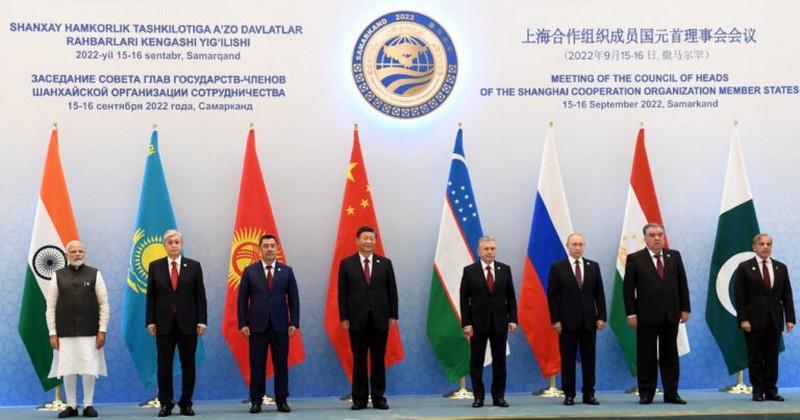
Silencing the Lambs: How Propaganda Works

By John Pilger

8 Sep 2022 – In an address to the Trondheim World Festival in Norway, John Pilger charts the history of power propaganda and describes how it appropriates journalism in a ‘profound imperialism’ and is likely to entrap us all, if we allow it.

In the 1970s, I met one of Hitler’s leading propagandists, Leni Riefenstahl, whose epic films glorified the Nazis. We happened to be staying at the same lodge in Kenya, where she was on a photography assignment, having escaped the fate of other friends of the Fuhrer.

She told me that the ‘patriotic messages’ of her films were dependent not on ‘orders from above’ but on what she called the ‘submissive void’ of the German public.

Did that include the liberal, educated bourgeoisie? I asked. ‘Yes, especially them,’ she said.

I think of this as I look around at the propaganda now consuming Western societies.

Of course, we are very different from Germany in the 1930s. We live in information societies. We are globalists. We have never been more aware, more in touch, better connected.

Are we? Or do we live in a Media Society where brainwashing is insidious and relentless, and perception is filtered according to the needs and lies of state and corporate power?

The United States dominates the Western world’s media. All but one of the top ten media companies are based in North America. The internet and social media – Google, Twitter, Facebook – are mostly American owned and controlled.

In my lifetime, the United States has overthrown or attempted to overthrow more than 50 governments, mostly democracies. It has interfered in democratic elections in 30 countries. It has dropped bombs on the people of 30 countries, most of them poor and defenceless. It has attempted to murder the leaders of 50 countries. It has fought to suppress liberation movements in 20 countries.

The extent and scale of this carnage is largely unreported, unrecognised; and those responsible continue to dominate Anglo-American political life.

In the years before he died in 2008, the playwright Harold Pinter made two extraordinary speeches, which broke a silence.

‘US foreign policy,’ he said, is ‘best defined as follows: kiss my arse or I’ll kick your head in. It is as simple and as crude as that. What is interesting about it is that it’s so incredibly successful. It possesses the structures of disinformation, use of rhetoric, distortion of language, which are very persuasive, but are actually a pack of lies. It is very successful propaganda. They have the money, they have the technology, they have all the means to get away with it, and they do.’

In accepting the Nobel Prize for Literature, Pinter said this: ‘The crimes of the United States have been systematic, constant, vicious, remorseless, but very few people have actually talked about them. You have to hand it to America. It has exercised a quite clinical manipulation of power worldwide while masquerading as a force for universal good. It’s a brilliant, even witty, highly successful act of hypnosis.’

Pinter was a friend of mine and possibly the last great political sage – that is, before dissenting politics were gentrified. I asked him if the ‘hypnosis’ he referred to was the ‘submissive void’ described by Leni Riefenstahl.

‘It’s the same,’ he replied. ‘It means the brainwashing is so thorough we are programmed to swallow a pack of lies. If we don’t recognise propaganda, we may accept it as normal and believe it. That’s the submissive void.’

In our systems of corporate democracy, war is an economic necessity, the perfect marriage of public subsidy and private profit: socialism for the rich, capitalism for the poor. The day after 9/11 the stock prices of the war industry soared. More bloodshed was coming, which is great for business.

Today, the most profitable wars have their own brand. They are called ‘forever wars’: Afghanistan, Palestine, Iraq, Libya, Yemen and now Ukraine. All are based on a pack of lies.

Iraq is the most infamous, with its weapons of mass destruction that didn’t exist. NATO’s destruction of Libya in 2011 was justified by a massacre in Benghazi that didn’t happen. Afghanistan was a convenient revenge war for 9/11, which had nothing to do with the people of Afghanistan.

Today, the news from Afghanistan is how evil the Taliban are – not that Joe Biden’s theft of $7billion of the country’s bank reserves is causing widespread suffering. Recently, National Public Radio in Washington devoted two hours to Afghanistan – and 30 seconds to its starving people.

At its summit in Madrid in June, NATO, which is controlled by the United States, adopted a strategy document that militarises the European continent, and escalates the prospect of war with Russia and China. It proposes ‘multi domain warfighting against nuclear-armed peer-competitor. In other words, nuclear war.

It says: ‘NATO’s enlargement has been an historic success’.

I read that in disbelief.

A measure of this ‘historic success’ is the war in Ukraine, news of which is mostly not news, but a one-sided litany of jingoism, distortion, omission. I have reported a number of wars and have never known such blanket propaganda.

In February, Russia invaded Ukraine as a response to almost eight years of killing and criminal destruction in the Russian-speaking region of Donbass on their border.

In 2014, the United States had sponsored a coup in Kyiv that got rid of Ukraine’s democratically elected, Russian-friendly president and installed a successor whom the Americans made clear was their man.

In recent years, American ‘defender’ missiles have been installed in eastern Europe, Poland, Slovenia, the Czech Republic, almost certainly aimed at Russia, accompanied by false assurances all the way back to James Baker’s ‘promise’ to Gorbachev in February 1990 that NATO would never expand beyond Germany.

Ukraine is the frontline. NATO has effectively reached the very borderland through which Hitler’s army stormed in 1941, leaving more than 23 million dead in the Soviet Union.

Last December, Russia proposed a far-reaching security plan for Europe. This was dismissed, derided or suppressed in the Western media. Who read its step-by-step proposals? On 24 February, Ukrainian President Volodymyr Zelenskyy threatened to develop nuclear weapons unless America armed and protected Ukraine. This was the final straw.

On the same day, Russia invaded – according to the Western media, an unprovoked act of congenital infamy. The history, the lies, the peace proposals, the solemn agreements on Donbass at Minsk counted for nothing.

On 25 April, the US Defence Secretary, General Lloyd Austin, flew into Kyiv and confirmed that America’s aim was to destroy the Russian Federation – the word he used was ‘weaken’. America had got the war it wanted, waged by an American bankrolled and armed proxy and expendable pawn.

Almost none of this was explained to Western audiences.

Russia’s invasion of Ukraine is wanton and inexcusable. It is a crime to invade a sovereign country. There are no ‘buts’ – except one.

When did the present war in Ukraine begin and who started it? According to the United Nations, between 2014 and this year, some 14,000 people have been killed in the Kyiv regime’s civil war on the Donbass. Many of the attacks were carried out by neo-Nazis.

Watch an ITV news report from May 2014, by the veteran reporter James Mates, who is shelled, along with civilians in the city of Mariupol, by Ukraine’s Azov (neo-Nazi) battalion.

In the same month, dozens of Russian-speaking people were burned alive or suffocated in a trade union building in Odessa besieged by fascist thugs, the followers of the Nazi collaborator and anti-Semitic fanatic Stephen Bandera. The New York Times called the thugs ‘nationalists’.

‘The historic mission of our nation in this critical moment,’ said Andreiy Biletsky, founder of the Azov Battalion, ‘is to lead the White Races of the world in a final crusade for their survival, a crusade against the Semite-led Untermenschen.’

Since February, a campaign of self-appointed ‘news monitors’ (mostly funded by the Americans and British with links to governments) have sought to maintain the absurdity that Ukraine’s neo-Nazis don’t exist.

Airbrushing, a term once associated with Stalin’s purges, has become a tool of mainstream journalism.

In less than a decade, a ‘good’ China has been airbrushed and a ‘bad’ China has replaced it: from the world’s workshop to a budding new Satan.

Much of this propaganda originates in the US, and is transmitted through proxies and ‘think-tanks’, such as the notorious Australian Strategic Policy Institute, the voice of the arms industry, and by zealous journalists such as Peter Hartcher of the Sydney Morning Herald, who labeled those spreading Chinese influence as ‘rats, flies, mosquitoes and sparrows’ and called for these ‘pests’ to be ‘eradicated’.

News about China in the West is almost entirely about the threat from Beijing. Airbrushed are the 400 American military bases that surround most of China, an armed necklace that reaches from Australia to the Pacific and south east Asia, Japan and Korea. The Japanese island of Okinawa and the Korean island of Jeju are loaded guns aimed point blank at the industrial heart of China. A Pentagon official described this as a ‘noose’.

Palestine has been misreported for as long as I can remember. To the BBC, there is the ‘conflict’ of ‘two narratives’. The longest, most brutal, lawless military occupation in modern times is unmentionable.

The stricken people of Yemen barely exist. They are media unpeople. While the Saudis rain down their American cluster bombs with British advisors working alongside the Saudi targeting officers, more than half a million children face starvation.

This brainwashing by omission has a long history. The slaughter of the First World War was suppressed by reporters who were knighted for their compliance and confessed in their memoirs. In 1917, the editor of the Manchester Guardian, C.P. Scott, confided to prime minister Lloyd George: ‘If people really knew [the truth], the war would be stopped tomorrow, but they don’t know and can’t know.’

The refusal to see people and events as those in other countries see them is a media virus in the West, as debilitating as Covid. It is as if we see the world through a one-way mirror, in which ‘we’ are moral and benign and ‘they’ are not. It is a profoundly imperial view.

The history that is a living presence in China and Russia is rarely explained and rarely understood. Vladimir Putin is Adolf Hitler. Xi Jinping is Fu Man Chu. Epic achievements, such as the eradication of abject poverty in China, are barely known. How perverse and squalid this is.

When will we allow ourselves to understand? Training journalists factory style is not the answer. Neither is the wondrous digital tool, which is a means, not an end, like the one-finger typewriter and the linotype machine.

In recent years, some of the best journalists have been eased out of the mainstream. ‘Defenestrated’ is the word used. The spaces once open to mavericks, to journalists who went against the grain, truth-tellers, have closed.

The case of Julian Assange is the most shocking. When Julian and WikiLeaks could win readers and prizes for the Guardian, the New York Times and other self-important ‘papers of record’, he was celebrated.

When the dark state objected and demanded the destruction of hard drives and the assassination of Julian’s character, he was made a public enemy. Vice President Biden called him a ‘hi-tech terrorist’. Hillary Clinton asked, ‘Can’t we just drone this guy?’

The ensuing campaign of abuse and vilification against Julian Assange – the UN Rapporteur on Torture called it ‘mobbing’ — brought the liberal press to its lowest ebb. We know who they are. I think of them as collaborators: as Vichy journalists.

When will real journalists stand up? An inspirational samizdat already exists on the internet: Consortium News, founded by the great reporter Robert Parry, Max Blumenthal’s Grayzone, Mint Press News, Media Lens, Declassified UK, Alborada, Electronic Intifada, WSWS, ZNet, ICH, Counter Punch, Independent Australia, the work of Chris Hedges, Patrick Lawrence, Jonathan Cook, Diana Johnstone, Caitlin Johnstone and others who will forgive me for not mentioning them here.

And when will writers stand up, as they did against the rise of fascism in the 1930s? When will film-makers stand up, as they did against the Cold War in the 1940s? When will satirists stand up, as they did a generation ago?

Having soaked for 82 years in a deep bath of righteousness that is the official version of the last world war, isn’t it time those who are meant to keep the record straight declared their independence and decoded the propaganda? The urgency is greater than ever.

John Pilger has won an Emmy and a BAFTA for his documentaries, which have also won numerous US and European awards.

12 September 2022

Source: www.transcend.org