Just International

Imran Khan’s arrest will derail Pakistan’s democracy

By Ejaz Akram

Prominent defense analyst and former Pakistani military officer Haider Mehdi has vociferously claimed that Army Chief General Qamar Javed Bajwa colluded with US authorities to topple the Imran Khan government on 9 April.

While much of the Pakistani masses and social media seem to think the same, the state’s mainstream media outlets have largely stayed mum on the biggest political scandal the country has witnessed in years.

Many who criticized the role of Pakistan’s military in the alleged coup – even without naming the collaborating officers specifically – have already fled the country. Some have been arrested, while others are facing legal charges.

One of the more notable and emotionally-charged cases has been that of Dr. Shahbaz Gill, a Pakistani-American academic and a close member of Imran Khan’s media team. Gill was charged with sedition against the state for making the argument on ARY News Network (a mainstream channel which was immediately shut down afterward) that military officers should not obey unlawful commands from their superiors.

Various senior military officers have already explained that Gill’s remarks are no serious offense because all military officers are already under oath to not obey unlawful commands by their superiors.

Gill was apprehended by authorities on 9 August and reportedly remained in federal government custody until his deteriorating medical condition forced his jailers to move him to a state hospital.

Khan said that he had been fooled by the very same state medical facility back in 2019 when courts were persuaded to allow former PM Nawaz Sharif to travel to the UK for urgent medical treatment, from which he never returned. Khan insisted on checking on Gill’s status himself, but was denied entry to the hospital.

According to the leadership of Khan’s Pakistan Tehreek-e-Insaf (PTI) party, Gill was apprehended without an arrest warrant, tortured, and sexually assaulted.

Under Pakistan’s Code of Criminal Procedure (CrCP), the maximum period of detention is 14 days – which for Gill would be today, 23 August – except for “terrorism specific cases,” in which custody can be extended for up to 90 days.

“The disparity in the period of detention under the CrPC and the ATA [Anti-Terrorism Act] is one of the many contributory factors of the high number of superfluous cases in the anti-terrorism courts of Pakistan, since the ATA gives more time to the police to complete investigation while detaining the accused,” writes the Research Society of International Law in its report on Pakistan.

Is Imran Khan next?

Which brings us to news of the arrest warrant on “terrorism” charges issued against Imran Khan himself.

The highly controversial charge against Khan, under section 7 of Pakistan’s Anti-Terrorism Act, followed Saturday’s mass rally in support of Gill. During his speech, Khan vowed to bring lawsuits against police and judicial authorities for their roles in Gill’s alleged torture: “We will not spare you … We will sue you,” he threatened.

The accusation appear frivolous to the extreme, especially when the prosecuting government’s cabinet is overwhelmingly composed of well-known indicted criminals and repeat offenders on charges that range from corruption to murder.

But government officials defended the “terrorism” charges against Khan, saying he “spread terror amongst the police and the judiciary” and hindered their work.

Pakistan’s ATA has come under fire by domestic lawyers as well as overseas organizations. It’s definitions are too broad, its powers too aggressive, its authorities too dangerous.

Pakistan’s abuse of terror laws

The Office of the UN High Commissioner for Human Rights (OHCHR) says one of the “fundamental flaws” of the ATA “is the vague and overly broad definition of ‘terrorism’ under its provisions. This allows offenses bearing no nexus to militancy and proscribed terrorist networks to be tried.”

Up to 80 percent of those convicted of terrorism-related offenses under this act in Pakistan were accused of things that had nothing to do with “terrorism.”

Furthermore, the OHCHR cites observations from Pakistani lawyers that “political and economic influence serves as a primary determinant for whether an offense is tried under the ATA or under the ordinary criminal justice system.”

The report quotes lawyer Imran Asmat Chaudhry, a senior Advocate of the High Courts, saying:

“I have personally taken around 11 cases, which were sent to ATCs for trial. [The] motive behind all cases was personal enmity, political rivalry, or any other malignant intentions of the police themselves – even though the crime had no nexus to the ATA.”

The UN human rights group concludes: “The [ATA’s] broad definition under the law has often allowed it to be used as a tool of political victimization by ruling parties against opponents.”

Silencing media

Following the news of Khan’s arrest warrant, several Pakistani television channels were shut down and prominent journalist Jameel Farooqi was arrested and moved to an undisclosed location. According to analysts, such level of Praetorian politics and McCarthyism is unprecedented in Pakistan.

Pakistani social media activists have reported deployment of troops on high alert in major cities of Pakistan. The state has imposed a ban on Khan’s appearance on mainstream television networks, and Islamabad Police has announced that it will be no longer provide security services for Khan in the capital.

Sami Ibrahim, another prominent journalist from BOL TV that was struck off the air, says the next 48 hours will be crucial because actions for or against Khan’s arrest may take place. He believes some key decisions are likely to be made shortly, possibly including further restrictions, crackdowns, and persecution of social media platforms inside Pakistan.

In a potentially dangerous stand-off between state authorities and regular Pakistani citizens, most are wondering if the government has enough power to arrest the most popular leader in Pakistan’s recent history.

Khan’s PTI political party currently runs multiple governments in different Pakistani provinces. In stark contrast, the ruling party in the federal government – widely seen as a foreign installed government – is limited to the capital and is suffering from a major crisis in legitimacy, despite aggressive efforts to control the narrative.

Cracks form at the top

The current Pakistani government is in an impossible situation. It cannot call for early elections to help establish a public mandate of support, because all indications suggest an overwhelming win for Khan. And yet the very act of governing is a challenge without this mandate, especially given the ongoing public derision expressed in massive street protests and across social media.

In addition, the government of PM Shahbaz Sharif has its own internal divisions; these cracks are slowly becoming visible – and widening.

On 21 August, the PTI beat their opposing 13-party alliance with a decisive margin in Karachi’s by-election. Imran Khan has essentially already gone to the polls and won, because these massive election margins are taking place on the opposition’s own home ground.

Many of the ruling alliance members are fleeing provinces, where the PTI has formed provincial governments, in order to avoid potential legal charges. Some federal ministers have already escaped overseas.

According to prominent Pakistani analyst Nasir Ahmad: “General Bajwa and his senior generals have no idea how deeply the people of Pakistan, and indeed their own command, loathe them. The more insecure the generals feel, the more they dig their heels, and the closer they dig in their heels, and the closer they take their country, which they are oath-bound to defend, to its ultimate fall.”

Others, however, worry that if the state succeeds in arresting – or even assassinating Imran Khan – then nobody of similar stature and popularity will remain to lead Pakistan to safe shores. Mass movements require competent and legitimate leadership that can appropriately channel nations toward a politically constructive end, or else these numbers may just collapse upon themselves.

Since the alleged US-sponsored ousting of Imran Khan on 9 April, there hasn’t been a dull moment in Pakistani politics. It is as though the country grew a new head overnight:

Nobody could have imagined that the nation’s usually impartial military elite could be turned against the Pakistani masses and become the focus of widespread disdain. Nobody thought the military’s top brass would cozy up to New Delhi, all while when India amasses invasion-level troop build-ups in occupied Kashmir.

Interior Minister Rana Sanaullah stated on 22 August that Afghanistan is an ‘enemy country,’ signaling renewed Pakistani sycophancy in Washington’s latest war against the Taliban. Such decisions go diametrically against the will, interests, and decisions of the people of Pakistan.

A showdown between the majority – versus an increasingly unpopular and emboldened Pakistani elite – is inevitable in the near future.

Dr. Ejaz Akram is currently Professor of Religion & Politics in the Southwestern University of Politics and Law in Chongqing, China.

23 August 2022

Source: thecradle.co
The west’s false narrative about Russia and China

By Jeffrey Sachs

The world is on the edge of nuclear catastrophe in no small part because of the failure of Western political leaders to be forthright about the causes of the escalating global conflicts. The relentless Western narrative that the West is noble while Russia and China are evil is simple-minded and extraordinarily dangerous. It is an attempt to manipulate public opinion, not to deal with very real and pressing diplomacy.

The essential narrative of the West is built into US national security strategy. The core US idea is that China and Russia are implacable foes that are “attempting to erode American security and prosperity.” These countries are, according to the US, “determined to make economies less free and less fair, to grow their. militaries, and to control information and data to repress their societies and expand their influence.”

The irony is that since 1980 the US has been in at least 15 overseas wars of choice (Afghanistan, Iraq, Libya, Panama, Serbia, Syria, and Yemen just to name a few), while China has been in none, and Russia only in one (Syria) beyond the former Soviet Union. The US has military bases in 85 countries, China in 3, and Russia in 1 (Syria) beyond the former Soviet Union.

President Joe Biden has promoted this narrative, declaring that the greatest challenge of our time is the competition with the autocracies, which “seek to advance their own power, export and expand their influence around the world, and justify their repressive policies and practices as a more efficient way to address today’s challenges.” US security strategy is not the work of any single US president but of the US security establishment, which is largely autonomous, and operates behind a wall of secrecy.

The overwrought fear of China and Russia is sold to a Western public through manipulation of the facts. A generation earlier George W. Bush, Jr. sold the public on the idea that America’s greatest threat was Islamic fundamentalism, without mentioning that it was the CIA, with Saudi Arabia and other countries, that had created, funded, and deployed the jihadists in Afghanistan, Syria, and elsewhere to fight America’s wars.

Or consider the Soviet Union’s invasion of Afghanistan in 1980, which was painted in the Western media as an act of unprovoked perfidy. Years later, we learned that the Soviet invasion was actually preceded by a CIA operation designed to provoke the Soviet invasion! The same misinformation occurred vis-à-vis Syria. The Western press is filled with recriminations against Putin’s military assistance to Syria’s Bashar al-Assad beginning in 2015, without mentioning that the US supported the overthrow of al-Assad beginning in 2011, with the CIA funding a major operation (Timber Sycamore) to overthrow Assad years before Russia arrived.

Or more recently, when US House Speaker Nancy Pelosi recklessly flew to Taiwan despite China’s warnings, no G7 foreign minister criticised Pelosi’s provocation, yet the G7 ministers together harshly criticised China’s “overreaction” to Pelosi’s trip.

The Western narrative about the Ukraine war is that it is an unprovoked attack by Putin in the quest to recreate the Russian empire. Yet the real history starts with the Western promise to Soviet President Mikhail Gorbachev that NATO would not enlarge to the East, followed by four waves of NATO aggrandisement: in 1999, incorporating three Central European countries; in 2004, incorporating 7 more, including in the Black Sea and Baltic States; in 2008, committing to enlarge to Ukraine and Georgia; and in 2022, inviting four Asia-Pacific leaders to NATO to take aim at China.

Nor do the Western media mention the US role in the 2014 overthrow of Ukraine’s pro-Russian president Viktor Yanukovych; the failure of the Governments of France and Germany, guarantors of the Minsk II agreement, to press Ukraine to carry out its commitments; the vast US armaments sent to Ukraine during the Trump and Biden Administrations in the lead-up to war; nor the refusal of the US to negotiate with Putin over NATO enlargement to Ukraine.

Of course, NATO says that is purely defensive, so that Putin should have nothing to fear. In other words, Putin should take no notice of the CIA operations in Afghanistan and Syria; the NATO bombing of Serbia in 1999; the NATO overthrow of Moammar Qaddafi in 2011; the NATO occupation of Afghanistan for 15 years; nor Biden’s “gaffe” calling for Putin’s ouster (which of course was no gaffe at all); nor US Defence Secretary Lloyd Austin stating that the US war aim in Ukraine is the weakening of Russia.

At the core of all of this is the US attempt to remain the world’s hegemonic power, by augmenting military alliances around the world to contain or defeat China and Russia. It’s a dangerous, delusional, and outmoded idea. The US has a mere 4.2% of the world population, and now a mere 16% of world GDP (measured at international prices). In fact, the combined GDP of the G7 is now less than that of the BRICS (Brazil, Russia, India, China, and South Africa), while the G7 population is just 6 percent of the world compared with 41 percent in the BRICS.
There is only one country whose self-declared fantasy is to be the world’s dominant power: the US. It’s past time that the US recognised the true sources of security: internal social cohesion and responsible cooperation with the rest of the world, rather than the illusion of hegemony. With such a revised foreign policy, the US and its allies would avoid war with China and Russia, and enable the world to face its myriad environment, energy, food and social crises.

Above all, at this time of extreme danger, European leaders should pursue the true source of European security: not US hegemony, but European security arrangements that respect the legitimate security interests of all European nations, certainly including Ukraine, but also including Russia, which continues to resist NATO enlargements into the Black Sea. Europe should reflect on the fact that the non-enlargement of NATO and the implementation of the Minsk II agreements would have averted this awful war in Ukraine. At this stage, diplomacy, not military escalation, is the true path to European and global security.

Jeffrey D. Sachs, Professor of Sustainable Development and Professor of Health Policy and Management at Columbia University, is Director of Columbia’s Center for Sustainable Development and the UN Sustainable Development Solutions Network.

24 August 2022

Source: johnmenadue.com

Drought Pushes Millions in East Africa To Starvation

By Countercurrents Collective

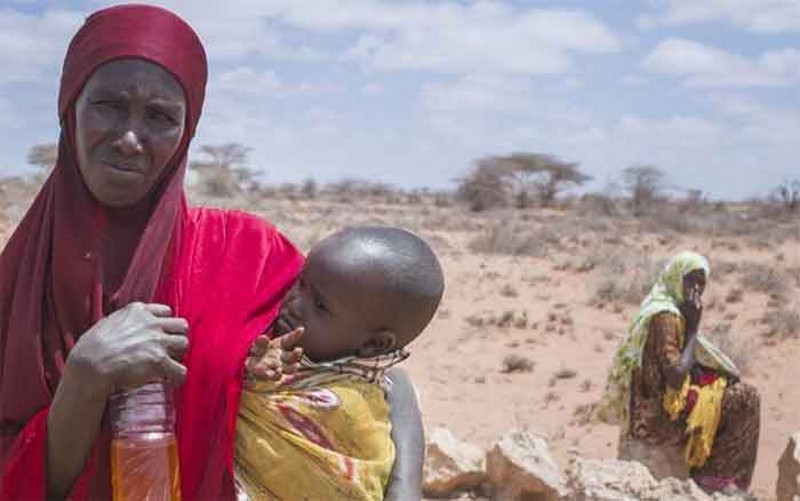
In East Africa, millions of people are facing starvation due to drought.

The World Health Organization (WHO) warned on Wednesday that millions of people in East Africa face the threat of starvation.

Speaking at a media briefing in Geneva, WHO Director-General Tedros Adhanom Ghebreyesus said that drought, climate change, rising prices and an ongoing civil war in northern Ethiopia are all contributing to worsening food insecurity.

Tedros Adhanom Ghebreyesus:

“Now to the Greater Horn of Africa, where millions of people are facing starvation and disease in Djibouti, Ethiopia, Kenya, Somalia, South Sudan, Sudan and Uganda.

“Drought, conflict, climate change and increasing prices for food, fuel and fertilizer are all contributing to lack of access to sufficient food.

“Hunger and malnutrition pose a direct threat to health, but they also weaken the body’s defenses, and open the door to diseases including pneumonia, measles and cholera.

“Food insecurity also forces some people to choose between paying for food and health care.

“Many people are migrating in search of food, which can also put them at increased risk of disease, and reduced access to health services.”

Over 50 million people in East Africa will face acute food insecurity this year, a study from late July by the World Food Programme (WFP) and Food and Agriculture Organization (FAO) found.

Roughly 7 million children are suffering from malnourishment and, according to the United Nations High Commissioner for Refugees, hundreds of thousands are leaving their homes in search of food or livelihoods. Affected countries include Djibouti, Ethiopia, Kenya, Somalia, South Sudan, Sudan and Uganda.

“The current food security situation across the Horn of Africa is dire after four consecutive rainy seasons have failed, a climatic event not seen in at least 40 years, or since the beginning of the satellite era,” Chimimba David Phiri of the Food and Agriculture Organization said in the report.

The warnings have been gradually building for months, as the situation worsens. In June, David Nash, a physical geographer at the University of Brighton, reported for the Conversation that “large areas of Ethiopia, Somalia and Kenya are currently in the grip of a severe drought.”

The Horn of Africa has two rainy seasons per year, but the last four have been unusually dry. In some regions of Somalia, it has not rained in two years, according to Reuters.

“This meteorological drought has resulted in a loss of soil moisture, caused waterways to dry up, and led to the death of millions of livestock,” Brighton reported. “Forecasts suggest that the September to December rainy season could also fail. This would set the stage for an unprecedented five-season drought.”

Climate change increases the risk of drought because warmer air causes more evaporation and throws off the natural water cycle.

“Climate change and La Niña have caused an unprecedented multi-season drought [in East Africa], punctuated by one of the worst March-to-May rainy seasons in 70 years,” the U.N. News Service reported last month.

Somalia

The drought has had a devastating effect on crop yields and on livestock populations. In Somalia, vegetable and grain production is expected to drop by about 80% this year.

According to the Foreign Policy Research Institute, a U.S-based think tank, “Somalia is entirely dependent on Ukraine (70 percent) and Russia (30 percent) for wheat imports.

The Islamist terrorist group al-Shabab controls over 20% of Somalia. Attacks by al-Shabab have increased since the Trump administration withdrew U.S. troops from the country in December 2020. The Biden administration redeployed 500 soldiers to Somalia earlier this year.

Ethiopia

In the Tigray region of Ethiopia, the government military, ethnic militias and soldiers from Eritrea are fighting the Tigray People’s Liberation Front, a political party that the Ethiopian government considers a terrorist organization.

The WHO DG said:

“In the Ethiopian region of Tigray, the drought is compounding a man-made catastrophe for 6 million people who have been under siege from Ethiopian and Eritrean forces for 21 months, sealed off from the outside world, with no telecommunications, no banking services and very limited electricity and fuel.

“As a result, the people of Tigray are facing multiple outbreaks of malaria, anthrax, cholera, diarrhea and more.

“This unimaginable cruelty must end. The only solution is peace.

“Earlier this month, a delegation from the US, European Union, United Kingdom, Germany, Italy and Canada visited Tigray in an effort to facilitate peace talks.

“Following their visit, the US and EU issued a joint statement saying that swift restoration of electricity, telecommunications, banking and other basic services in Tigray is essential for peace talks to go forward. So far, the government has refused.

“Since the humanitarian truce was announced in late March, some humanitarian aid has been delivered to Tigray, although nowhere near enough.

“In addition, the shortage of fuel and cash continues to be a major impediment to the distribution of aid, and to WHO’s efforts to respond to outbreaks, provide vaccination against COVID-19 and deliver other life-saving health services.”

Eastern Africa: Over 50 Million Face Acute Food Insecurity In 2022

Over 50 million people are expected to face high levels of acute food insecurity this year across seven IGAD countries (Djibouti, Ethiopia, Kenya, Somalia, South Sudan, Sudan, Uganda) according to the 2022 edition of the Inter-Governmental Authority on Development (IGAD) Regional Focus on Food Crises released on July 22, 2022.

Ethiopia, Kenya, Somalia, South Sudan, and Sudan are facing the largest food crises in the region. About 300,000 people are projected to face Catastrophe in Somalia and South Sudan in 2022, with a Risk of Famine occurring in eight areas of Somalia through September in the event of widespread crop and livestock production failures, spiraling food costs, and in the absence of scaled-up humanitarian assistance.

The situation in 2022, with 50 – 51 million people expected to face Crisis or worse, marks a dramatic increase from 2021 when 42 million people suffered from high levels of acute food insecurity. Last year, the IGAD region accounted for nearly 22 per cent of the global number of people in Crisis or worse, with an estimated 10 million children under the age of 5 suffering from acute malnutrition. In addition, 24 per cent of the world’s 51 million internally displaced people were also in IGAD countries, mainly Ethiopia, Somalia, South Sudan, and Sudan.

“Our region has been hit like never before”, says Workneh Gebeyehu, Executive Secretary of the IGAD. “The combination of climate extremes, conflict, and macroeconomic challenges makes it almost impossible for our otherwise very resilient communities to sustain multiple shocks. The figures we are releasing today are heartbreaking, and I’m very worried they could increase even more as the outlook for the October to December rainy season is bleak.”

“The current food security situation across the Horn of Africa (Ethiopia, Kenya, and Somalia) is dire after four consecutive rainy seasons have failed, a climatic event not seen in at least 40 years, or since the beginning of the satellite era”, noted Dr. Chimimba David Phiri, FAO Subregional Coordinator for Eastern Africa and FAO Representative to the African Union and UNECA. “Now more than ever, we must implement short-term livelihood-saving responses with long-term resilience building aimed at addressing the root causes of food crises in our region”.

Climate change and La Niña have caused an unprecedented multi-season drought, punctuated by one of the worst March-to-May rains in 70 years. The latest forecast by IGAD’s Climate Prediction and Applications Centre (ICPAC) is for a fifth consecutive failed rainy season across the region, with the latest long-term forecasts for the 2022 October–December rainfall season indicating an increased chance of below-average rains.

“Conflict, climate extremes, economic shocks, rising costs and now the impact of the conflict in Ukraine on food and energy prices are pushing millions towards starvation in Eastern Africa,” says Michael Dunford, the World Food Programme’s Regional Director for Eastern Africa. “Sadly, there is a very real risk of famine in the region, and we must do everything possible to prevent this from happening. At the same time, together we must start building the capacity to prepare and respond to future shocks which are increasingly inevitable because of a changing climate.”

The UNHCR said (https://reporting.unhcr.org/document/2716): Following poor rainfall patterns in the Horn of Africa since 2019 along with changing climatic conditions, the region is facing a catastrophic drought, the worst experienced in 40 years. The drought is severely affecting millions of refugees, internally displaced persons (IDPs) and their host communities in Ethiopia, Kenya and Somalia. With water sources drying up, livelihoods decimated, and rising prices, there is new displacement – both internal and across borders due to a mix of conflict and climate shocks – as well as drought specific impacts on existing refugee camps and settlements and host communities in all three countries. These populations are already suffering a dramatic reduction in food assistance due to funding shortfalls coupled with the global economic crisis that has seen drastic increases in food and commodity prices. Over 3.5 million (75%) of the total refugee population in the wider region is affected by cuts to food assistance – including Ethiopia and Kenya, where refugees are only receiving 60% of a full ration. Meanwhile, the cost of a food basket has already risen by 66% cent in Ethiopia and by 36% cent in Somalia, leaving many refugees and IDP families unable to afford even basic items. This has forced some of them to sell their hard-earned assets in exchange for food and other life-saving items.

19 August 2022

Source: countercurrents.org

Biden administration agrees arms sales to Riyadh and Abu Dhabi to counter China’s growing influence

By Jean Shaoul

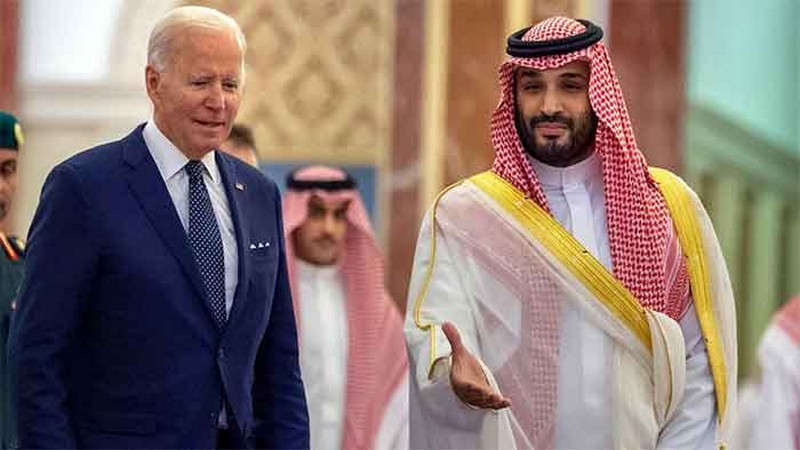
Just a few weeks after US President Joe Biden’s visit to Saudi Arabia, aimed at shoring up relations with the murderous regime, his administration has approved two massive arms sales worth more than $5 billion to Saudi Arabia and the United Arab Emirates (UAE). It follows $650 million in air-to-air missiles sent to Riyadh in November 2021 for its criminal war against the civilian population in Yemen.

Included in the sales are Patriot missiles costing $3 billion for Saudi Arabia and a high-altitude missile system costing $2.2 billion for the UAE aimed at protecting the venal petro-monarchs from rocket attacks by Yemen’s Houthi-led rebel movement.

The US State Department, seeking Congress’s approval for the deal, said the proposed sale would “support the foreign policy and national security of the United States by helping to improve the security of an important regional partner. The UAE is a vital US partner for political stability and economic progress in the Middle East.”

Biden had pledged during his election campaign to treat Saudi Arabia as a “pariah state” due to its appalling human rights record and Crown Prince Mohammed bin Salman’s signing off on Saudi insider turned dissident Jamal Khashoggi’s gruesome assassination in 2018. He also promised to cut off or cut back on the sale of “offensive” weapons to both Saudi Arabia and the UAE, citing their attacks on civilians in Yemen. But this has counted for nothing next to the more pressing needs of Washington’s geostrategic interests.

Last month, Reuters reported that the Biden administration was discussing lifting the ban on US sales of offensive weapons to Saudi Arabia.

Ever since Saudi and the UAE-led coalition invaded Yemen in April 2015, international human rights groups—including the New York-based Human Rights Watch and the London-based Campaign Against the Arms Trade—have documented the coalition’s use of US and UK weapons in unlawful airstrikes, including undoubted war crimes, breaching Washington and London’s own policies on arms sales. These two imperialist warmongers, which lose no opportunity to justify their bellicosity in the name of human rights, have also provided the Saudis and Emiratis with political and diplomatic cover at the UN, even as their blockade of the impoverished country has put millions at risk of famine.

The Guardian reported that the Biden administration is also exploring the setting up of a new international committee to document and report on human rights violations in Yemen that would include representatives from the Saudi and UAE puppet government in the country. An intensive lobbying campaign by Riyadh put a stop to an earlier United Nations Human Rights Council investigation into possible war crimes. One can only imagine the uproar that would follow if President Vladimir Putin were to be included in a panel to investigate Russian war crimes in Ukraine.

The political reasons Washington supports two of the most repressive regimes on the planet are clear. They are a key market for US arms and play a vital role on behalf of US imperialism in suppressing the working class in Saudi Arabia, the Gulf and throughout the region and supporting Washington’s domination in the resource-rich Middle East. They have allied with Israel in a US-led anti-Iranian axis that threatens to push the region into another catastrophic war.

The economic reasons are less well-known. As the US became increasingly self-sufficient in oil, the petro-monarchs turned elsewhere for customers. By 2020, the Gulf countries were supplying 40 percent of China’s oil imports, with 16 percent of that coming from Saudi Arabia. The Kingdom’s trade with China has soared from $3 billion in 2000 to $67 billion in 2021, while its trade with the US rose from $20.5 billion to $24.8 billion in the same period. While much has been made of China’s 25-year $400 billion trade and investment agreement with Iran, even if it were actualized at some $16 billion a year this is still much less than Beijing’s trade with Riyadh.

Merchandise trade between the Middle East and China has increased significantly, totaling $272 billion in 2020. Furthermore, despite heavy pressure from Washington, no Middle Eastern country has banned the Chinese telecom giant Huawei’s 5G networks. Beijing is now the largest single regional investor and trading partner of 11 countries in the Middle East. Its Belt and Road Initiative (BRI), aimed at placing China at the centre of global trade, is the basis of agreements with 21 countries in the region.

Algeria, Egypt, Iran, Saudi Arabia and the UAE all have “comprehensive strategic partnerships” with China, while Iraq, Jordan, Morocco, Oman and Qatar are “strategic partners.” Turkey has a “strategic cooperative relationship and Israel a “comprehensive innovation partnership” with China. Tel Aviv’s extensive links with China’s defence technology has on occasions put it at odds with Washington.

A critical element in China’s BRI has been its development and expansion of ports and industrial parks in Egypt, Oman, Saudi Arabia, the UAE and Djibouti, China’s only overseas military base, to secure its shipment of goods to Africa, Europe and beyond.

Of even greater significance are the talks, reported in the Wall Street Journal last March, between Beijing and Riyadh over pricing some oil sales to China in yuan. Such a move that would undermine the dollar’s role in the global petroleum market. Under a 1970s agreement between the US and Saudi Arabia, all oil sales anywhere in the world are conducted in dollars, recycled back to the US and to a lesser extent Britain as sovereign reserve holdings in return for military support and security.

The petrodollar system has underpinned the US financial system, allowing it to finance its soaring debts—the US is the world’s largest creditor nation—and the dollar’s status as the world’s reserve currency. While the US accounts for around 20 percent of global GDP, nearly 90 percent of international currency transactions and 60 percent of foreign exchange reserves are in dollars.

But foreign investment no longer finances US debt to the same extent as it once did. Since the 2008 financial crisis and more recently the pandemic crisis, the Federal reserve has sought to protect financial markets with quantitative easing and bought up US debt itself. As a result, foreign central banks’ and foreign investors’ holdings of US treasury bonds as a proportion of total US public debt have fallen by about 50 percent.

The prospect of Riyadh accepting payment in yuan is totally unacceptable to Washington. It would further and significantly undermine the dollar-based system, following on from Russia and Iran’s attempts to strike payments in different currencies under the pressure of US sanctions. Iraq’s efforts to avoid sanctions by selling its oil for euros was one of the factors that led the Bush administration to declare war on Iraq in 2003, despite opposition from the European powers.

Biden declared quite openly that his trip to Saudi Arabia last month was to bolster America’s position in the region, which had waned under his watch, against its rivals: “I want to make clear that we can continue to lead in the region and not create a vacuum, a vacuum that is filled by China and/or Russia.”

Relations with the Gulf States began to cool after President Barack Obama’s refusal to back Egypt’s President Hosni Mubarak during the mass protests that were to bring down his government in 2011 and threaten Saudi clients in Bahrain and Yemen. They became more strained after Washington signed the 2015 nuclear accords with Iran—whom Riyadh and Abu Dhabi accuse of supporting the Houthi rebels who ousted Riyadh’s puppet government in Yemen in 2015—and did little to counter the Houthis’ missile attacks.

Russia’s successful thwarting of the attempted overthrow of Syria’s President Bashar al-Assad, orchestrated by Washington and heavily backed by Riyadh in particular, and of the US-organised coup against Turkey’s President Recep Tayyip Erdogan have also caused disquiet.

Biden’s billion-dollar arms sales are intended as a down payment on a renewed partnership. They were announced as China’s President Xi Jinping prepares to visit Saudi Arabia as early as this week—his first overseas visit since the COVID pandemic—where he is expected to be given an extravagant welcome, in contrast to its low-key reception of Biden in July. They follow shortly after Saudi Arabia’s state-owned oil company Aramco signed a memorandum of understanding with China’s state-owned Sinopec for cooperation in areas, including “carbon capture and hydrogen processes.”

19 August 2022

Source: countercurrents.org

Whose Grain Is Being Shipped from Ukraine? America’s GMO Agribusiness Giants to Take Control of Ukraine Farmland

By F. William Engdahl

A great humanitarian uproar in recent weeks demanding the safe shipping of Ukrainian grain to ease a hunger crisis in Africa and elsewhere is deceptive on many levels.

Not the least is who owns the land on which the grain is grown and whether that grain is actually illegal GMO patented corn and other grains. A corrupt Zelenskyy regime has quietly made deals with the major GMO agribusiness companies in the West who have been stealthily taking control of some of the world’s most productive “black earth” farmland.

The 2014 CIA Coup

In February 2014 a US Government-backed coup d’etat forced the elected president of Ukraine to flee for his life to Russia. In December 2013 President Viktor Yanukovych had announced following months of debate that Ukraine would join the Russian Eurasian Economic Union on promise of a $15 billion Russian purchase of Ukraine state debt and 33% reduction in cost of imported Russian gas.

The competing offer had been a paltry “associate membership” in the EU tied to Ukraine acceptance of a draconian IMF and World Bank loan package that would force the privatization of Ukraine’s invaluable agriculture land, allow planting GMO crops, as well as imposing severe pension cuts and social austerity. In return for a $17 billion IMF loan, Ukraine would also have to raise personal income taxes by as much as 66% and to pay 50% more for natural gas. Workers would have to work ten years longer to get pensions. The aim was to open Ukraine to “foreign investment.” The usual IMF rape of the economy on behalf of globalist corporate interests.

A key provision of the US and IMF demands on the post-coup government of US-picked Prime Minister Arseniy Yatsenyuk , a leader of the CIA-backed Maiden protests against Yanukovych, was to finally open Ukraine’s rich agriculture land to foreign Agribusiness giants, above all GMO giants including Monsanto and DuPont. Three of the Yatsenyuk cabinet , including the key Finance and Economy ministers, were foreign nationals, dictated to Kiev by the US State Department’s Victoria Nuland and then-Vice President Joe Biden. The Washington-imposed IMF loan conditions required that Ukraine also reverse its ban on genetically engineered crops, and enable private corporations like Monsanto to plant its GMO seeds and spray the fields with Monsanto’s Roundup.

Since Ukraine declared independence from the Soviet Union in 1991, keeping control of Ukraine’s precious “black earth” land has been one of the most heated issues in national politics. Recent polls show 79% of Ukrainians want to retin control of their land from foreign takeover. Ukraine, as southern Russia, is home to valuable black earth or chernozems, a dark, humus-rich soil that is very productive and needs little artificial fertilizer.

2001 Moratorium

A 2001 Ukraine law imposed a moratorium on private sale of farmland to larger companies or foreign investors. The moratorium was to halt buy up by corrupt Ukrainian oligarchs and their leasing to foreign agribusiness of the rich farmlands. By then Monsanto and other Western agribusiness had made significant inroads into Ukraine.

When Ukraine left the Soviet Union in 1991, farmers who had worked on the Soviet collective farms were each given small plots of the land. To prevent sale of the plots to hungry foreign agribusiness, the 2001 moratorium was voted. Seven million Ukrainian farmers owned small plots totaling some 79 million acres. The remaining 25 million acres were owned by the state. Cultivation of GMO crops was strictly illegal.

Despite the moratorium, Monsato, DuPont, Cargill and other Western GMO purveyors secretly and illegally began spreading their patented GMO seeds in the black earth of Ukraine. Small landowners would lease their land to large Ukrainian oligarchs, who in turn would enter secret agreements with Monsanto and others to plant GMO corn and soybeans. By the end of 2016 according to a now-deleted US Department of Agriculture report, about 80% of Ukraine’s soybeans, and 10% of corn, were grown illegally from genetically modified seed. The Zelenskyy 2021 law has allowed this open door to GMO to be vastly expanded.

Enter the Comedian

In May 2019 Volodymyr Zelenskyy, a Ukrainian TV comedian, a protégé of notoriously corrupt Ukraine oligarch, Igor Kolomoisky, was elected President in a tragic popular revolt “against government corruption.” One of Zelenskyy’s first acts in 2019 was to try to overturn the 2001 land moratorium. Farmers and citizens staged huge protests throughout 2020 to block the changes proposed by Zelenskyy.

Finally, taking advantage of the covid lockdown restrictions and bans on public protests, in May 2021 Zelenskyy signed Bill No. 2194, deregulating land, calling it the “key” to the “farmland market.” He was right. In a sneaky move to calm farmer opposition, Zelensky claimed the new law allows only Ukrainian citizens to buy or sell the valuable farmland in the first few years. He did not mention the huge loophole allowing foreign-owned companies like Monsanto (today part of Bayer AG) or DuPont (now Corteva), or other companies which have been operating in Ukraine more than three years, to also buy the desired land.

The 2021 law also gave ownership to notoriously corrupt municipal and village governments who can change the land purpose. After January 2024 Ukraine citizens as well as corporations can buy up to 10,000 hectares of land. And an April, 2021 amendment to the land market law– “On Amendments to the Land Code of Ukraine and other Legislative Acts concerning the improvement of the management system and deregulation in the field of land relations”– opened another huge loophole for foreign agribusiness to take control of the rich Ukraine black earth. The amendment circumvents the ban on sale of land to foreigners by changing the purpose of the land, say from cropland to commercial land. Then it can be sold to anyone, including foreigners who can in turn repurpose it to farmland. Zelenskyy signed the bill and went back on his campaign pledge to hold a national referendum on any change in land ownership.

Should there be any doubt as to interest of US GMO-linked agribusiness in grabbing Ukraine prime farmland, a look at the current Board of Directors of the US-Ukraine Business Council is instructive. It includes the largest private grain and agribusiness giant in the world, Cargill. It includes Monsanto/Bayer which owns patented GMO seeds and the deadly pesticide, Roundup. It includes Corteva, the huge GMO fusion of DuPont and Dow Chemicals. It includes fellow grain cartel giants Bunge and Louis Dreyfus. It includes the major farm equipment maker John Deere.

These were the powerful agribusiness corporations reportedly behind Zelenskyy’s betrayal of his election promise.

With Bayer/Monsanto, Corteva and Cargill already controlling a reported 16.7 million hectares of prime Ukraine black earth farmland, and with a de facto bribe from the IMF and World Bank, Zelenskyy’s government caved in and sold out. The result will be very bad for the future of what was until recently the “breadbasket of Europe.” With Ukraine now being pried open by the GMO cartel companies, it leaves only Russia which banned GMO crops in 2016 as the only major world grain supplier without GMO. The EU is reportedly working on a new law that would overturn the long-established critical approval process for GMO crops and open the floodgates there to the GMO takeover.

F. William Engdahl is strategic risk consultant and lecturer, he holds a degree in politics from Princeton University and is a best-selling author on oil and geopolitics, exclusively for the online magazine “New Eastern Outlook” where this article was originally published.

19 August 2022

Source: www.globalresearch.ca

This Time the Collapse Will Be Global

By Chris Hedges

The archeological remains of past civilizations, including those of the prehistoric Cahokia temple mound complex in Illinois, are sobering reminders of our fate.

I am standing atop a 100-foot-high temple mound, the largest known earthwork in the Americas built by prehistoric peoples. The temperatures, in the high 80s, along with the oppressive humidity, have emptied the park of all but a handful of visitors. My shirt is matted with sweat.

I look out from the structure—known as Monks Mound—at the flatlands below, with smaller mounds dotting the distance. These earthen mounds, built at a confluence of the Illinois, Mississippi and Missouri rivers, are all that remain of one of the largest pre-Columbian settlements north of Mexico, occupied from around 800 to 1,400 AD by perhaps as many as 20,000 people.

This great city, perhaps the greatest in North America, rose, flourished, fell into decline and was ultimately abandoned. Civilizations die in familiar patterns. They exhaust natural resources. They spawn parasitic elites who plunder and loot the institutions and systems that make a complex society possible. They engage in futile and self-defeating wars. And then the rot sets in. The great urban centers die first, falling into irreversible decay. Central authority unravels. Artistic expression and intellectual inquiry are replaced by a new dark age, the triumph of tawdry spectacle and the celebration of crowd-pleasing imbecility.

“Collapse occurs, and can only occur, in a power vacuum,” anthropologist Joseph Tainter writes in The Collapse of Complex Societies. “Collapse is possible only where there is no competitor strong enough to fill the political vacuum of disintegration.”

Several centuries ago, the rulers of this vast city complex, which covered some 4,000 acres, including a 40-acre central plaza, stood where I stood. They no doubt saw below in the teeming settlements an unassailable power, with at least 120 temple mounds used as residences, sacred ceremonial sites, tombs, meeting centers and ball courts. Cahokia warriors dominated a vast territory from which they exacted tribute to enrich the ruling class of this highly stratified society. Reading the heavens, these mound builders constructed several circular astronomical observatories—wooden versions of Stonehenge.

The city’s hereditary rulers were venerated in life and death. A half mile from Monks Mound is the seven-foot-high Mound 72, in which archeologists found the remains of a man on a platform covered with 20,000 conch-shell disc beads from the Gulf of Mexico. The beads were arranged in the shape of a falcon, with the falcon’s head beneath and beside the man’s head. Its wings and tail were placed underneath the man’s arms and legs. Below this layer of shells was the body of another man, buried face downward. Around these two men were six more human remains, possibly retainers, who may have been put to death to accompany the entombed man in the afterlife. Nearby were buried the remains of 53 girls and women ranging in age from 15 to 30, laid out in rows in two layers separated by matting. They appeared to have been strangled to death.

The poet Paul Valéry noted, “a civilization has the same fragility as a life.”

Across the Mississippi River from Monks Mound, the city skyline of St. Louis is visible. It is hard not to see our own collapse in that of Cahokia. In 1950, St. Louis was the eighth-largest city in the United States, with a population of 856,796. Today, that number has fallen to below 300,000, a drop of some 65 percent. Major employers—Anheuser-Busch, McDonnell-Douglas, TWA, Southwestern Bell and Ralston Purina —have dramatically reduced their presence or left altogether. St. Louis is consistently ranked one of the most dangerous cities in the country. One in five people live in poverty. The St. Louis Metropolitan Police Department has the highest rate of police killings per capita, of the 100 largest police departments in the nation, according to a 2021 report. Prisoners in the city’s squalid jails, where 47 people died in custody between 2009 and 2019, complain of water being shut off from their cells for hours and guards routinely pepper spraying inmates, including those on suicide watch. The city’s crumbling infrastructure, hundreds of gutted and abandoned buildings, empty factories, vacant warehouses and impoverished neighborhoods replicate the ruins of other post-industrial American cities, the classic signposts of a civilization in terminal decline.

“Just as in the past, countries that are environmentally stressed, overpopulated, or both, become at risk of getting politically stressed, and of their governments collapsing,” Jared Diamond argues in Collapse: How Societies Choose to Fail or Succeed. “When people are desperate, undernourished and without hope, they blame their governments, which they see as responsible for or unable to solve their problems. They try to emigrate at any cost. They fight each other over land. They kill each other. They start civil wars. They figure that they have nothing to lose, so they become terrorists, or they support or tolerate terrorism.”

Pre-industrial civilizations were dependent on the limits of solar energy and constrained by roads and waterways, impediments that were obliterated when fossil fuel became an energy source. As industrial empires became global, their increase in size meant an increase in complexity. Ironically, this complexity makes us more vulnerable to catastrophic collapse, not less. Soaring temperatures (Iraq is enduring 120 degree heat that has fried the country’s electrical grid), the depletion of natural resources, flooding, droughts, (the worst drought in 500 years is devastating Western, Central and Southern Europe and is expected to see a decline in crop yields of 8 or 9 percent), power outages, wars, pandemics, a rise in zoonotic diseases and breakdowns in supply chains combine to shake the foundations of industrial society. The Arctic has been heating up four times faster than the global average, resulting in an accelerated melting of the Greenland ice sheet and freakish weather patterns. The Barents Sea north of Norway and Russia are warming up to seven times faster. Climate scientists did not expect this extreme weather until 2050.

“Each time history repeats itself, the price goes up,” the anthropologist Ronald Wright warns, calling industrial society “a suicide machine.”

In A Short History of Progress, he writes:

Civilization is an experiment, a very recent way of life in the human career, and it has a habit of walking into what I am calling progress traps. A small village on good land beside a river is a good idea; but when the village grows into a city and paves over the good land, it becomes a bad idea. While prevention might have been easy, a cure may be impossible: a city isn’t easily moved. This human inability to foresee—or to watch out for—long-range consequences may be inherent to our kind, shaped by the millions of years when we lived from hand to mouth by hunting and gathering. It may also be little more than a mix of inertia, greed, and foolishness encouraged by the shape of the social pyramid. The concentration of power at the top of large-scale societies gives the elite a vested interest in the status quo; they continue to prosper in darkening times long after the environment and general populace begin to suffer.

Wright also reflects upon what will be left behind:

The archaeologists who dig us up will need to wear hazmat suits. Humankind will leave a telltale layer in the fossil record composed of everything we produce, from mounds of chicken bones, wet-wipes, tires, mattresses and other household waste to metals, concrete, plastics, industrial chemicals, and the nuclear residue of power plants and weaponry. We are cheating our children, handing them tawdry luxuries and addictive gadgets while we take away what’s left of the wealth, wonder and possibility of the pristine Earth.

Calculations of humanity’s footprint suggest we have been in ‘ecological deficit,’ taking more than Earth’s biological systems can withstand, for at least 30 years. Topsoil is being lost far faster than nature can replenish it; 30 percent of arable land has been exhausted since the mid-20th century.

We have financed this monstrous debt by colonizing both past and future, drawing energy, chemical fertilizer and pesticides from the planet’s fossil carbon, and throwing the consequences onto coming generations of our species and all others. Some of those species have already been bankrupted: they are extinct. Others will follow.

As Cahokia declined, violence dramatically increased. Surrounding towns were burned to the ground. Groups, numbering in the hundreds, were slaughtered and buried in mass graves. At the end, “the enemy killed all people indiscriminately. The intent was not merely prestige, but an early form of ethnic cleansing” writes anthropologist Timothy R. Pauketat, in Ancient Cahokia and the Mississippians. He notes that, in one fifteenth-century cemetery in central Illinois, one-third of all adults had been killed by blows to the head, arrow wounds or scalping. Many showed evidence of fractures on their arms from vain attempts to fight off their attackers.

Such descent into internecine violence is compounded by a weakened and discredited central authority. In the later stages of Cahokia, the ruling class surrounded themselves with fortified wooden stockades, including a two-mile long wall that enclosed Monks Mound. Similar fortifications dotted the vast territory the Cahokia controlled, segregating gated communities where the wealthy and powerful, protected by armed guards, sought safety from the increasing lawlessness and hoarded dwindling food supplies and resources.

Overcrowding inside these stockades saw the spread of tuberculosis and blastomycosis, caused by a soil-borne fungus, along with iron deficiency anemia. Infant mortality rates rose, and life spans declined, a result of social disintegration, poor diet and disease.

By the 1400s Cahokia had been abandoned. In 1541, when Hernando de Soto’s invading army descended on what is today Missouri, looking for gold, nothing but the great mounds remained, relics of a forgotten past.

This time the collapse will be global. It will not be possible, as in ancient societies, to migrate to new ecosystems rich in natural resources. The steady rise in heat will devastate crop yields and make much of the planet uninhabitable. Climate scientists warn that once temperatures rise by 4℃, the earth, at best, will be able to sustain a billion people.

The more insurmountable the crisis becomes, the more we, like our prehistoric ancestors, will retreat into self-defeating responses, violence, magical thinking and denial.

The historian Arnold Toynbee, who singled out unchecked militarism as the fatal blow to past empires, argued that civilizations are not murdered, but commit suicide. They fail to adapt to a crisis, ensuring their own obliteration. Our civilization’s collapse will be unique in size, magnified by the destructive force of our fossil fuel-driven industrial society. But it will replicate the familiar patterns of collapse that toppled civilizations of the past. The difference will be in scale, and this time there will be no exit.

Chris Hedges is a Pulitzer Prize–winning journalist who was a foreign correspondent for fifteen years for The New York Times, where he served as the Middle East Bureau Chief and Balkan Bureau Chief for the paper.

17 August 2022

Source: countercurrents.org

Without Palestine, There is No Arab Unity: Why Normalization with Israel Will Fail

By Dr Ramzy Baroud

It seemed all but a done deal: Israel is finally managing to bend the Arabs to its will, and Palestine is becoming a marginal issue that no longer defines Israel’s relations with Arab countries. Indeed, normalization with Israel is afoot, and the Arabs, so it seems, have been finally tamed.

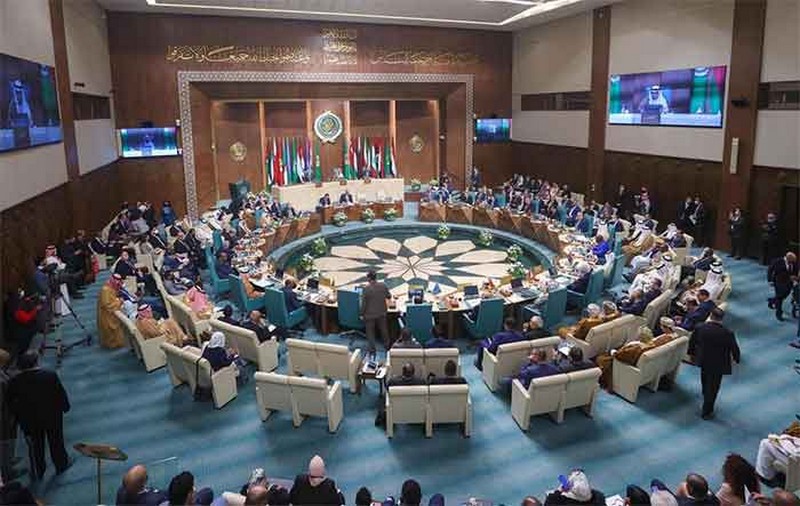
Not so fast. Many events continue to demonstrate the opposite. Take, for example, the Arab League two-day meeting in Cairo on July 31 – August 1. The meeting was largely dominated by discussions on Palestine and concluded with statements that called on Arab countries to reactivate the Arab boycott of Israel, until the latter abides by international law.

The strongest language came from the League’s Assistant Secretary-General who called for solidarity with the Palestinian people by boycotting companies that support the Israeli occupation.

The two-day Conference of the Liaison Officers of the Arab Regional Offices on the Boycott of Israel praised the Boycott, Divestment and Sanctions (BDS) movement, which has been under intense western pressures for its unrelenting advocacy of international action against Israel.

One of the recommendations by Arab officials was to support Arab boycott initiatives in accordance with the Tunis Arab Summit in March 2019, which resolved that “boycott of the Israeli occupation and its colonial regime is one of the effective and legitimate means to resist.”

Though one may rightly cast doubts on the significance of such statements in terms of dissuading Israel from its ongoing colonization schemes in Palestine, at least, it demonstrates that in terms of political discourse, the collective Arab position remains unchanged. This was also expressed clearly to US President Joe Biden during his latest visit to the Middle East. Biden may have expected to leave the region with major Arab concession to Israel – which would be considered a significant political victory for the pro-Israel members of his Democratic Party prior to the defining November midterm elections – but he received none.

What American officials do not understand is that Palestine is a deeply rooted emotional, cultural and spiritual issue for Arabs – and Muslims. Neither Biden, nor Donald Trump and Jared Kushner before him, could easily – or possibly – alter that.

Indeed, anyone who is familiar with the history of the centrality of Palestine in the Arab discourse understands that Palestine is not a mere political question that is governed by opportunism, and immediate political or geopolitical interests. Modern Arab history is a testament to the fact that no matter how great US-Western-Israeli pressures and however weak or divided the Arabs are, Palestine will continue to reign supreme as the cause of all Arabs. Political platitudes aside, the Palestinian struggle for freedom remains a recurring theme in Arab poetry, art, sports, religion, and culture in all its manifestations.

This is not an opinion, but a demonstrable fact.

The latest Arab Center Washington DC (ACW) public opinion poll examined the views of 28,288 Arabs in 13 different countries. Majority of the 350 million Arabs continue to hold the same view as previous generations of Arabs did: Palestine is an Arab cause and Israel is the main threat.

The Arab Opinion Index (AOI) of late 2020 is not the first of its kind. In fact, it is the seventh such study to be conducted since 2011. The trend remains stable. All the US-Israeli plots – and bribes – to sideline Palestine and the Palestinians have failed and, despite purported diplomatic ‘successes’, they will continue to fail.

According to the poll: Vast majority of Arabs – 81 percent – oppose US policy towards Palestine; 89 percent and 81 percent believe that Israel and the US respectively are “the largest threat” to their individual countries’ national security. Particularly important, majority of Arab respondents insist that the “Palestinian cause concerns all Arabs and not simply the Palestinians.” This includes 89 percent of Saudis and 88 percent of Qataris.

Arabs may disagree on many issues, and they do. They might stand at opposite sides of regional and international conflicts, and they do. They might even go to war against one another and, sadly, they often do. But Palestine remains the exception. Historically, it has been the Arabs’ most compelling case for unity. When governments forget that, and they often do, the Arab streets constantly remind them of why Palestine is not for sale and is not a subject for self-serving compromises.

For Arabs, Palestine is also a personal and intimate subject. Numerous Arab households have framed photos of Arab martyrs who were killed by Israel during previous wars or were killed fighting for Palestine. This means that no amount of normalization or even outright recognition of Israel by an Arab country can wash away Israel’s sordid past or menacing image in the eyes of ordinary Arabs.

A most telling example of this is how Egyptians and Jordanians answered the AOI question “Would you support or oppose diplomatic recognition of Israel by your country?” The interesting thing about this question is that both Cairo and Amman already recognized Israel and have diplomatic ties with Tel Aviv since 1979 and 1994, respectively. Still, to this day, 93 percent of Jordanians and 85 percent of Egyptians still oppose that recognition as if it never took place.

The argument that Arab public opinion carries no weight in non-democratic societies neglects the fact that every form of government is predicated on some form of legitimacy, if not through a direct vote, it is through other means. Considering the degree of involvement the cause of Palestine carries in every aspect of Arab societies – on the street, in the mosque and church, in universities, sports, civil society organizations and much more – disowning Palestine would be a major delegitimizing factor and a risky political move.

American politicians, who are constantly angling for quick political victories on behalf of Israel in the Middle East do not understand, or simply do not care that marginalizing Palestine and incorporating Israel into the Arab body politic is not simply unethical, but also a major destabilizing factor in an already unstable region.

Historically, such attempts have failed, and often miserably so, as apartheid Israel remains as hated by those who normalized as much as it is hated by those who have not. Nothing will ever change that, as long as Palestine remains an occupied country.

Dr. Ramzy Baroud is a journalist, author and the Editor of The Palestine Chronicle.

11 August 2022

Source: countercurrents.org

Pelosi is the Symbol of a Dying Perspective

By David Andersson

On August 2nd, House Speaker Nancy Pelosi became the highest-level U.S. official to visit Taiwan since 1997, against all warnings from China and from American officials, who said it could lead to more aggressive military posturing.

The objective of the visit was not clear, besides making a stand against China with the usual “democracy” rhetoric. What will America gain by this visit? Nothing. There is nothing to win from this type of bullying, but very much to lose.

After Ukraine’s proxy war with Russia, it seems as if Taiwan is becoming the focus in a proxy war between the US and China. That would be suicidal, as the U.S. can not go to war in any form with China. We have already experienced the unforeseen consequences of the present conflict in Ukraine, which has impacted the world’s food and oil supplies. A conflict with China would have a hundred times more consequences that could take the White-West to a point of no return.

The world has changed drastically in the past 100 years, yet some of our politicians have not ,and Pelosi is the perfect illustration of that. They carry the old mentality of power, control, and forcing everyone to adopt their worldview. In the world today, we are mainly interdependent on each other and there is no going back. As we saw with a small country like Ukraine, whose war has disrupted the lives of maybe a billion people across the globe.

It is very easy to justify our differences, to go against others: Russia against the EU and US, Democrats against Republicans. It’s a mental form that defines everything from the rich against the poor to the tensions between the US and China. But his form has reached its limit. As Ariane Weinberger argued in her study The 12 Steps,

“Despite the conservative tendencies of our rulers and those who still believe in them, there is no denying that human consciousness has grown with globalization. In addition, with the recent events of the pandemic and planetary confinement, it is hard to ignore that the planet is ONE.”

This world is crying for new forms, which some call a paradigm shift, but mainly a new world is emerging in which a different way of structuring is required, one which leaves behind all of the references from the past that correspond to a different time in humanity’s process.

Weinberger describes this ‘new way of looking’ quite well. In the same study mentioned above, she wrote: “We were warned in time: To go against the evolution of things is to go against oneself! Any change implies the destabilization of an «established order», therefore of a fixed form, in equilibrium, in harmony. That is why any change, especially the big ones, put us in crisis. Without even getting into speculation about a «science fiction» of the future, it seems that soul-to-soul communication «sacralizes» our relationships. The relationship as a central value, the relationship above our individualities, above «who is right», the quality of the relationship taking precedence over the content of a conversation; the reciprocal good intention and the good cooperation more important than the result of the action…

“In the same way that the first cosmonauts left the atmosphere, escaping the law of gravity and seeing the Earth from the cosmos. This jump of perspective represents the first step toward breaking out of the confinement of one’s own subjectivity («solipsism»). It is a huge first step in our process of liberation.

“How could we then continue to live of our own free will in the different forms of slavery and determinisms that trap our minds? How could Pegasus return to life as a harnessed horse, with blinkers, plowing land, which he considers not to be it’s own?

“I am neither the center of the world nor the world. I no longer look «from myself», it’s rather a co-present look that looks at me and makes me understand that I am «only part» of the landscape, just like all the other phenomena which constitute it; that I am «on parity» with everything I perceive. After that, it is quite impossible to continue living with the «Darwinism», the «egocentrism» and by extension the «geocentrism», so deeply rooted in our present civilization … and which I am a part of!

“By observing their Earth from the outside, the cosmonauts saw that it was «One» (beyond its natural and artificial divisions). As for us, after observing our «form of personal representation» from outside — this coenesthetic form that unites everything in the same structure, a «field of co-presence» in which all perceptions and representations are linked —, we also realize that reality is One, a Whole, connected and interdependent…”

Ariane Weinberger is dedicated to the study of the mental form of people and the evolutionary process of the human being on a social, cultural, and spiritual level. Her personal research has led her to the teachings of Silo, which she has been following for over thirty years. In addition, Ariane continues her investigations in several fields. Her research on iconography and spiritual practices in prehistory led to the book Le Dessein de Sapiens au paléolithique supérieur (The Purpose of Sapiens in the Upper Paleolithic), whose hypotheses have aroused the interest of the academic world (publication in the ERAUL collection, now in the hands of the Presses Universities de France – PUF).

David Andersson: Author of The White-West: A Look in the Mirror, journalist, photographer and publisher, starting back in the 80’s with the Humanist Movement by publishing a neighborhood newspaper in Paris.

11 August 2022

Source: countercurrents.org

US will send warships through Taiwan Strait “in the coming days,” US Naval Institute reports

By Andre Damon

Amid the military standoff in the Taiwan Strait triggered by the visit of US House Speaker Nancy Pelosi to Taiwan last week, the US is planning to send warships through the Taiwan Strait “in the coming days,” the publication of the United States Naval Institute reported Tuesday.

On Monday, the Pentagon confirmed earlier statements by the White House that the US was planning another so-called “freedom of navigation exercise,” with Undersecretary of Defense for Policy Colin Kahl stating, “We will continue to do Taiwan Strait transits, as we have in the past, in the coming weeks… We will continue to do freedom of navigation operations elsewhere in the region.”

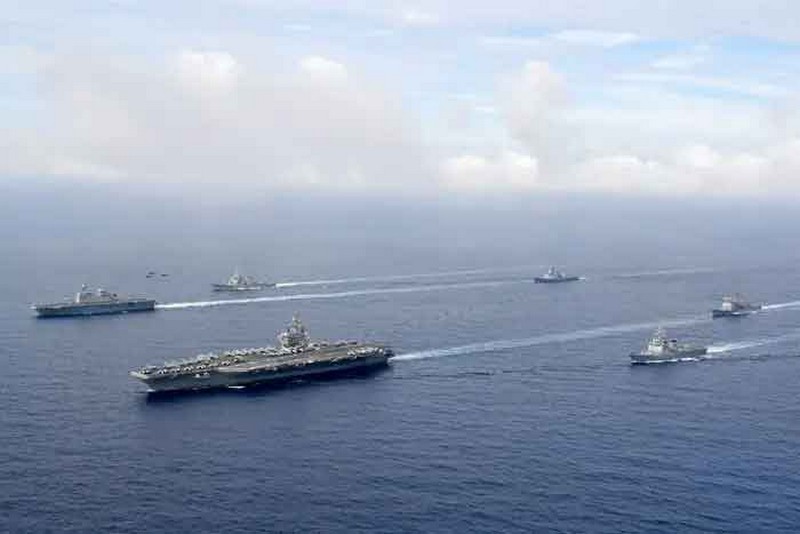
The United States has stationed a carrier strike group, led by the USS Ronald Reagan, in the waters near the island, flanked by the amphibious assault carrier USS Tripoli. The USS America Expeditionary Strike Group is currently in port nearby in Sasebo, Japan.

In recent years the United States has increased the tempo of its provocative operations near Chinese waters, on the other side of the world from the American mainland.

But none of these operations, which routinely involve American and Chinese warships shadowing each other and issuing radio warnings, have ever taken place in such a tense military and political climate.

Chinese forces have indefinitely extended live-fire military exercises around Taiwan that began after Pelosi’s visit, and are concentrating on “honing the capabilities of joint blockade under complex electromagnetic environment,” the Global Times reported.

China’s two aircraft carriers are operating in the area of Taiwan, but have not yet been reported to have joined the drills.

The Global Times reported that the Chinese aircraft carriers are expected to join the drills, and are “expected to deter and cut off routes of external force interference from the east side of Taiwan island.”

Following Pelosi’s trip, the Chinese government and Chinese military forces have cut off communications with their US counterparts, giving the looming standoff between US and Chinese forces an even greater element of danger and unpredictability.

Even prior to Pelosi’s visit, Chinese officials had argued to their US counterparts that the Taiwan Strait should not be considered international waters, raising the prospect that the Chinese navy would seek to block US warships or aircraft from transiting the strait.

The Global Times, paraphrasing a Chinese military expert, noted that “The PLA can set new navigation restriction zones amid its consecutive exercises around Taiwan island, and this will deny US warships from entering the Taiwan Straits from a tactical level.”

It continued, “The US must realize the PLA will not give in an inch when it comes to safeguarding national sovereignty, security, and the major core interests like the Taiwan question, Song said.”

Given this supercharged military climate around the Taiwan Strait, a further US freedom of navigation operation would take on a a far higher level of danger.

The announcement comes amid warnings in sections of the media over the increasing likelihood of a US war with China over Taiwan.

Writing in the Financial Times, columnist Gideon Rachman warned that, “In the past a US-China war over Taiwan seemed like a real possibility—but no more than that. Now an increasing number of experts believe that a US-China conflict is not just possible but probable.”

He cited a statement by James Crabtree, the Asia director for the International Institute of Strategic Studies, who warned, “On our current course some kind of military confrontation between the US and China over the coming decade now looks more likely than not.”

On Tuesday, a series of media reports reported on a war game carried out by the Center for Strategic and International Studies gaming out the consequences of a US war over Taiwan.

Although the participants were not allowed to use nuclear weapons, the hypothetical war was by far the most destructive US military conflict since World War II.

The Wall Street Journal reported that “In the first three weeks after invading Taiwan, China sank two multibillion-dollar U.S. aircraft carriers, attacked American bases across Japan and on Guam, and destroyed hundreds of advanced U.S. jet fighters.”

In the simulated exercise, “Chinese missiles sink a large part of the US and Japanese surface fleet and destroy ‘hundreds of aircraft on the ground’.”

“However, allied air and naval counterattacks hammer the exposed Chinese amphibious and surface fleet, eventually sinking about 150 ships,” one participant told the Journal.

He continued, “To get a sense of the scale of the losses, in our last game iteration, the United States lost over 900 fighter/attack aircraft in a four-week conflict. That’s about half the Navy and Air Force inventory.”

Critically, the war game did not calculate the number of lives that would be lost in such a conflict, but the minimal scenario with such losses would mean the death of tens, if not hundreds, of thousands of lives of people in China, Taiwan and Japan, as well as American sailors and airmen.

Yet despite this horrific prospect, the United States is relentlessly seeking to escalate tensions with China, seeing in war a way out of its protracted economic crisis and the growth of opposition within the working class at home.

Even as the US is escalating its conflict with China, it is encouraging its puppet government in Ukraine to escalate the war with Russia. In the same press conference reiterating US plans to sail through the Taiwan strait, the US for the first time acknowledged sending HARM anti-radiation missiles to Ukraine.

That same day, an explosion occurred at an arms depot in Crimea, in what the Kremlin denied was a Ukrainian attack.

Speaking just hours after the explosion, Ukrainian president and US proxy Volodymyr Zelensky said, “This Russian war against Ukraine and against all of free Europe began with Crimea and must end with—with its liberation. Today it is impossible to say when this will happen. But we are constantly adding the necessary components to the formula of liberation of Crimea … I know that we will return to the Ukrainian Crimea.”

Russian officials have made clear that they would consider an invasion of Crimea as an existential threat. Earlier this year, Malcolm Chambers warned, “Faced with losing Crimea, Putin might consider [the use of nuclear weapons] a worthwhile gamble.”

The systematic and simultaneous US efforts to escalate its conflicts with Russia and China threaten all of humanity with a disaster of monumental proportions. These plans must be opposed by workers all over the world.

10 August 2022

Source: countercurrents.org

Gaza slaughter: Israel’s war crimes and US hypocrisy

By Patrick Martin

Over the past three days, relentless Israeli airstrikes killed at least 45 Palestinians, including 16 children, and caused extensive devastation.

At least 400 were wounded, many severely, and the handful of barely functioning hospitals and clinics were overwhelmed. Some 2.3 million Palestinians live in Gaza, confined by Israeli and Egyptian military cordons and fences. Hundreds of powerful bombs and missiles have rained down on a territory comprising only 141 square miles—exactly equal in area to the city of Detroit.

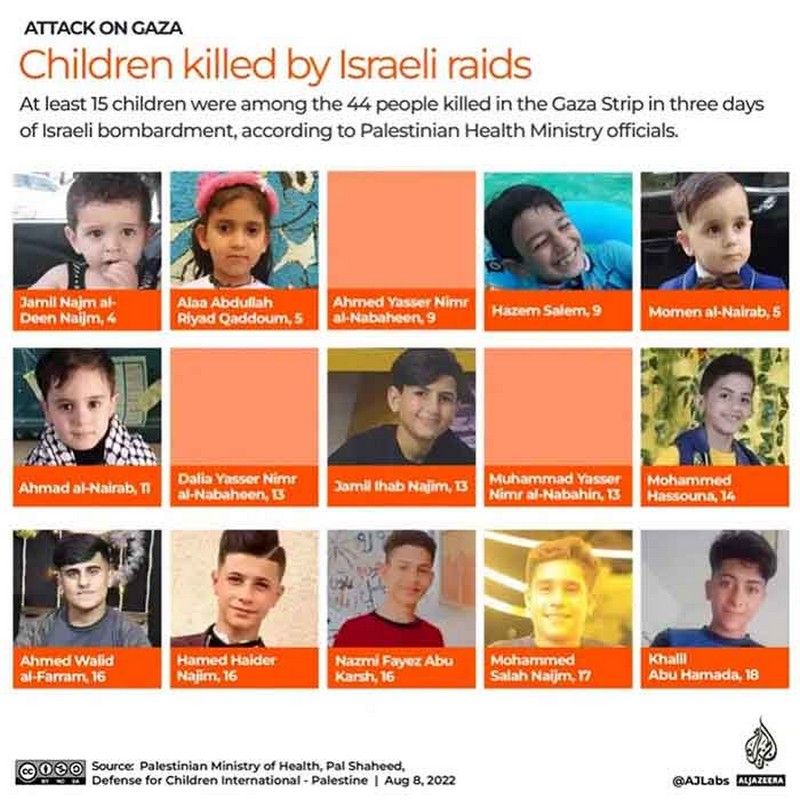
The most heavily bombed neighborhoods, where Israeli officials claimed leaders of the Islamic Jihad were the targets, were scenes of apocalyptic destruction, with apartment buildings transformed into craters and body parts strewn about. An Al-Jazeera montage of the faces of 12 martyred children, supplied by the Palestinian Health Ministry—shown here—was circulated throughout the Arab world, producing widespread outrage.

If it were Ukrainian children who suffered the same fate, there is no doubt that the American corporate media, the faithful servant of the CIA and State Department, would be providing saturation coverage. There would be endless hours devoted to mourning the loss of innocent lives and branding those responsible for their deaths as murderers and war criminals. No such terms will be used for Israeli Prime Minister Yair Lapid, Defense Minister Benny Gantz and other top Israeli military and intelligence officials.

The New York Times, which has spearheaded the media’s campaign over supposed Russian atrocities in the Ukraine war, began its report on the temporary halt in the Gaza bombardment this way: “A cease-fire ending three days of fierce cross-border fighting between Israel and a Palestinian militant group in Gaza appeared to be holding on Monday, and life on both sides of the lines began to return to normal.”

The supposed “fierce cross-border fighting” was a completely one-sided affair, with the Israeli military, the most powerful in the Middle East, armed to the teeth by US imperialism, dropping bombs and missiles on a defenseless population. Meanwhile, militants of the Palestinian Islamic Jihad (PIJ) fired off hundreds of rudimentary home-made rockets, nearly all of them landing harmlessly or shot down by Israeli’s antimissile system.

As to the “return to normal,” for the people of Gaza, this means unbearable poverty, a 50 percent unemployment rate and a smashed infrastructure, in what is routinely described by observers as the largest open-air prison camp on the planet. Electricity is available only 11 hours a day even when the Gaza power plant is running, but it was shut down, not because of the bombing, but because Israel and Egypt halted the delivery of fuel supplies required to keep it running.

The Biden administration issued a brief statement welcoming the ceasefire, expressing appreciation for the role of Egypt, Qatar, Jordan and other reactionary Arab dictatorships and monarchies for their role in the diplomacy that brought a temporary end to the violence, while condemning Islamic Jihad for “indiscriminate rocket attacks.” Biden reaffirmed his “long-standing and unwavering” support for Israel, adding, “I commend Prime Minister Yair Lapid and his government’s steady leadership throughout the crisis.”

There is no doubt that the onslaught against Gaza was discussed and approved during Biden’s visit to Israel July 13-15, just three weeks before the well-prepared attack began. The Pentagon will now rush to resupply the munitions expended by the Israel Defense Force during the bombing campaign.

The rocket exchanges with PIJ were deliberately provoked by Israel’s arrest and detention of the senior leader of the group on the West Bank, Bassam al-Saadi, on August 1 in the city of Jenin. This was part of a systematic campaign of Israeli military violence in Jenin which has killed at least 30 Palestinians and wounded hundreds since the beginning of this year.

The timing of the attack seemed calculated to benefit Prime Minister Lapid, who heads a caretaker coalition regime headed into a November 1 general election. A Times of Israel headline declared: “With elections looming, Lapid’s Gaza gamble seems to have paid off” and cited the former television broadcaster’s need to burnish his military credentials before a contest where the main opposition comes from the right-wing militarist Benjamin Netanyahu, whose Likud Party coalition was ousted just last year.

Israeli press reports suggest that the main shift in policy since the fall of Netanyahu has been a decision to concentrate on the destruction of Islamic Jihad, the smaller of the two Islamist groups in Gaza, noting that Lapid had not mentioned Hamas, the ruling party in Gaza, in his public statements on the Israeli military attack. On Saturday night, General Oded Basyuk, the head of the Israeli Defense Forces Operations Unit, told reporters that the IDF had successfully killed “the entire senior security echelon of Islamic Jihad’s military wing in Gaza.”

The response of the Arab rulers to the three-day bombardment of Gaza provided example of their cynical treachery and betrayal of the interests of the Palestinian people and the Arab masses as a whole. Most of the Gulf sheikdoms followed the lead of Saudi Arabia, whose media denounced Islamic Jihad as a tool of Iran and suggested that PIJ had provoked the conflict in conjunction with the resumption of nuclear energy talks between Iran and the so-called P5+1 group (the five full members of the UN Security Council plus Germany). These talks resumed in Vienna on August 4.

This allegation turns the world upside down. It is far more likely that the Israeli regime, not Islamic Jihad, timed the conflict to disrupt the nuclear talks because it stridently opposes any deal that would ease sanctions on Iran.

The bloodstained Egyptian military regime brokered the ceasefire, while maintaining its iron grip on Gaza’s western border, which it has largely closed since Hamas came to power in the territory in 2007.

The Gaza bloodbath also demonstrates the impotent and bankruptcy of the Palestinian bourgeois nationalists of every stripe, whether the Islamist variety, like Hamas, or the secular Fatah group which controls the Palestinian Authority and acts as Israel’s appointed prison guard on the West Bank. It is noteworthy that while the US and Israel still nominally treat Hamas as a “terrorist group,” Egypt, Qatar and the UN mediators “dealt with the Hamas leaders as if they were the legitimate and sole rulers of the Gaza Strip,” as the Jerusalem Post observed.

The situation in Gaza remains fraught. The Israeli military has called up 25,000 reserves and has no plans to demobilize them, while an Islamic Jihad leader said that if Israel did not release two imprisoned PIJ leaders, including Bassam al-Saadi, by the weekend—as was apparently promised to Egypt—the conflict would be resumed.

There is no way out of the intractable and bloody conflicts in the Middle East through any of the reactionary nationalist regimes or through maneuvers with the United Nations and the European imperialist powers, let alone through “peace” talks brokered by Washington, the center of world reaction and militarism. The only road forward is through an international movement of the working class and oppressed masses throughout the region, which unite Arab, Israeli, Turkish and Kurdish workers on the basis of a socialist and anti-imperialist program.

9 August 2022

Source: countercurrents.org