Conversations with Fidel Castro. The Threat of Nuclear War is Real. “The imminence of a dangerous and probable war that could very rapidly evolve towards a nuclear war”
By Fidel Castro Ruz and Prof Michel Chossudovsky
Fidel Castro was both an incisive analyst as well a powerful voice against nuclear weapons.
In the light of recent developments in Ukraine. Global Research is reposting this article first published in November 2010 which includes Fidel’s statement on the dangers of nuclear war, which are now imminent in relation to ongoing war in Ukraine.
Today, the dangers of military escalation are beyond description.
What is now happening in Ukraine has serious geopolitical implications. It could lead us into a World War III scenario.
It is important that a peace process be initiated with a view to preventing escalation.
A Bilateral Peace Agreement is required.
View Fidel Castro’s October 2010 Warning (GRTV Video Below):
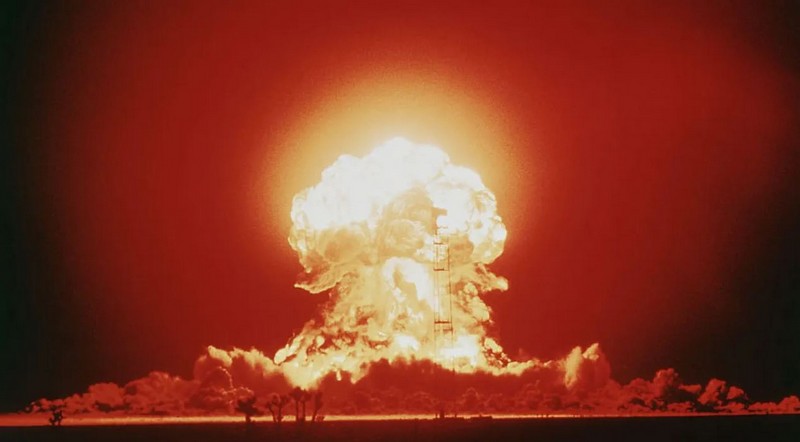
“In a Nuclear War the Collateral Damage would be the Life of All Humanity. Let us have the courage to proclaim that all nuclear or conventional weapons, everything that is used to make war, must disappear!”.
Michel Chossudovsky, Global Research, March 4, 2022, January 30, 2023
***
From October 12 to 15, 2010, I had extensive and detailed discussions with Fidel Castro in Havana, pertaining to the dangers of nuclear war, the global economic crisis and the nature of the New World Order. These meetings resulted in a wide-ranging and fruitful interview.
The first part of this interview published by Global Research and Cuba Debate focuses on the dangers of nuclear war.
The World is at a dangerous crossroads. We have reached a critical turning point in our history.
This interview with Fidel Castro provides an understanding of the nature of modern warfare: Were a military operation to be launched against the Islamic Republic of Iran, the US and its allies would be unable to win a conventional war, with the possibility that this war could evolve towards a nuclear war.
The details of ongoing war preparations in relation to Iran have been withheld from the public eye.
How to confront the diabolical and absurd proposition put forth by the US administration that using tactical nuclear weapons against Iran will “make the World a safer place”?
A central concept put forth by Fidel Castro in the interview is the ‘Battle of Ideas”. The leader of the Cuban Revolution believes that only a far-reaching “Battle of Ideas” could change the course of World history. The objective is to prevent the unthinkable, a nuclear war which threatens to destroy life on earth.
The corporate media is involved in acts of camouflage. The devastating impacts of a nuclear war are either trivialized or not mentioned. Against this backdrop, Fidel’s message to the World must be heard; people across the land, nationally and internationally, should understand the gravity of the present situation and act forcefully at all levels of society to reverse the tide of war.
The “Battle of Ideas” is part of a revolutionary process. Against a barrage of media disinformation, Fidel Castro’s resolve is to spread the word far and wide, to inform world public opinion, to “make the impossible possible”, to thwart a military adventure which in the real sense of the word threatens the future of humanity.
When a US sponsored nuclear war becomes an “instrument of peace”, condoned and accepted by the World’s institutions and the highest authority including the United Nations, there is no turning back: human society has indelibly been precipitated headlong onto the path of self-destruction.
Fidel’s “Battle of Ideas” must be translated into a worldwide movement. People must mobilize against this diabolical military agenda.
This war can be prevented if people pressure their governments and elected representatives, organize at the local level in towns, villages and municipalities, spread the word, inform their fellow citizens regarding the implications of a thermonuclear war, initiate debate and discussion within the armed forces.
What is required is a mass movement of people which forcefully challenges the legitimacy of war, a global people’s movement which criminalizes war.
In his October 15 message (see video below), Fidel Castro warned the World on the dangers of nuclear war:
“There would be “collateral damage”, as the American political and military leaders always affirm, to justify the deaths of innocent people. In a nuclear war the “collateral damage” would be the life of all humanity. Let us have the courage to proclaim that all nuclear or conventional weapons, everything that is used to make war, must disappear!”
The “Battle of Ideas” consists in confronting the war criminals in high office, in breaking the US-led consensus in favor of a global war, in changing the mindset of hundreds of millions of people, in abolishing nuclear weapons. In essence, the “Battle of Ideas” consists in restoring the truth and establishing the foundations of World peace.
Michel Chossudovsky, Global Research, November 2010
***
Fidel Castro’s Message to the World, Havana, October 15, 2010
“The conventional war would be lost by the US and the nuclear war is no alternative for anyone. On the other hand, nuclear war would inevitably become global”
“I think nobody on Earth wishes the human species to disappear. And that is the reason why I am of the opinion that what should disappear are not just nuclear weapons, but also conventional weapons. We must provide a guarantee for peace to all peoples without distinction
“In a nuclear war the collateral damage would be the life of humankind. Let us have the courage to proclaim that all nuclear or conventional weapons, everything that is used to make war, must disappear!”
“It is about demanding that the world is not led into a nuclear catastrophe, it is to preserve life.”
Video: Fidel Castro’s Message against Nuclear War. Calling for World Peace
CONVERSATIONS
Professor Michel Chossudovsky: I am very honored to have this opportunity to exchange views concerning several fundamental issues affecting human society as a whole. I think that the notion that you have raised in your recent texts regarding the threat against Homo sapiens is fundamental.
What is that threat, the risk of a nuclear war and the threat to human beings, to Homo sapiens?
Commander in Chief Fidel Castro Ruz: Since quite a long time –years I would say- but especially for some months now, I began to worry about the imminence of a dangerous and probable war that could very rapidly evolve towards a nuclear war.
Before that I had concentrated all my efforts on the analysis of the capitalist system in general and the methods that the imperial tyranny has imposed on humanity. The United States applies to the world the violation of the most fundamental rights.
During the Cold War, no one spoke about war or nuclear weapons; people talked about an apparent peace, that is, between the USSR and the United States, the famous MAD (Mutual Assured Destruction) was guaranteed. It seemed that the world was going to enjoy the delights of a peace that would last for an unlimited time.
Michel Chossudovsky: … This notion of “mutual assured destruction” ended with the Cold War and after that the nuclear doctrine was redefined, because we never really thought about a nuclear war during the Cold War. Well, obviously, there was a danger –as even Robert McNamara said at some point in time.
But, after the Cold War, particularly after September 11 [2001], America’s nuclear doctrine started to be redefined.
Fidel Castro Ruz: You asked me when was it that we became aware of the imminent risk of a nuclear war, and that dates back to the period I talked to you about previously, barely six months ago. One of the things that called our attention the most regarding such a war danger was the sinking of the Cheonan during a military maneuver. That was the flagship of the South Korean Navy; an extremely sophisticated vessel. It was at the time when we found on GlobalReasearch the journalist’s report that offered a clear and truly coherent information about the sinking of the Cheonan, which could not have been the work of a submarine that had been manufactured by the USSR more than sixty years ago, using an outdated technology which did not require the sophisticated equipment that could be detected by the Cheonan, during a joint maneuver with the most modern US vessels.
The provocation against the Democratic Republic of Korea added up to our own earlier concerns about an aggression against Iran. We had been closely following the political process in that country. We knew perfectly well what happened there during the 1950s, when Iran nationalized the assets of the British Petroleum in that country- which at the time was called the Anglo Persian Oil Company.
In my opinion, the threats against Iran became imminent in June [2010], after the adoption of Resolution 1929 on the 9th of June, 2010, when the United Nations Security Council condemned Iran for the research it is carrying out and the production of small amounts of 20 per cent enriched uranium, and accused it of being a threat to the world. The position adopted by each and every member of the Security Council is known: 12 member States voted in favor –five of them had the right to veto; one of them abstained and 2 –Brazil and Turkey- voted against. Shortly after the Resolution was adopted –the most aggressive resolution of of them all– one US aircraft carrier, embedded in a combat unit, plus a nuclear submarine, went through the Suez Canal with the help of the Egyptian government. Naval units from Israel joined, heading for the Persian Gulf and the seas nearby Iran.
The sanctions imposed by the United States and its NATO allies against Iran was absolutely abusive and unjust. I cannot understand the reason why Russia and China did not veto the dangerous Resolution 1929 of the United Nations Security Council. In my opinion this has complicated the political situation terribly and has placed the world on the brink of war.
I remember previous Israeli attacks against the Arab nuclear research centers. They first attacked and destroyed the one in Iraq in June 1981. They did not ask for anyone’s permission, they did not talk to anybody; they just attacked them and the Iraqis had to endure the strikes.
In 2007 they repeated that same operation against a research center that was being built by Syria. There is something in that episode that I really don’t quite understand: what was not clear to me were the underlying tactics, or the reasons why Syria did not denounce the Israeli attack against that research center where, undoubtedly, they were doing something, they were working on something for which, as it is known, they were receiving some cooperation from North Korea. That was something legal; they did not commit any violation.
I am saying this here and I am being very honest: I don’t understand why this was not denounced, because, in my opinion, that would have been important. Those are two very important antecedents.
I believe there are many reasons to think that they will try to do the same against Iran: destroy its research centers or the power generation centers of that country. As is known, the power generation uranium residues are the raw material to produce plutonium.
Michel Chossudovsky: It is true that that Security Council Resolution has to some extent contributed to cancelling the program of military cooperation that Russia and China have with Iran, especially Russia cooperates with Iran in the context of the Air Defence System by supplying its S-300 System.
I remember that just after the Security Council’s decision, with the endorsement of China and Russia, the Russian minister of Foreign Affairs said: “Well, we have approved the Resolution but that is not going to invalidate our military cooperation with Iran”. That was in June. But a few months later, Moscow confirmed that military cooperation [with Iran] was going to be frozen, so now Iran is facing a very serious situation, because it needs Russian technology to maintain its security, namely its [S-300] air defence system.
But I think that all the threats against Russia and China are intent upon preventing the two countries from getting involved in the Iran issue. In other words, if there is a war with Iran the other powers, which are China and Russia, aren’t going to intervene in any way; they will be freezing their military cooperation with Iran and therefore this is a way [for the US and NATO] of extending their war in the Middle East without there being a confrontation with China and Russia and I think that this more or less is the scenario right now.
There are many types of threats directed against Russia and China. The fact that China’s borders are militarized –China’s South Sea, the Yellow Sea, the border with Afghanistan, and also the Straits of Taiwan- it is in some way a threat to dissuade China and Russia from playing the role of powers in world geopolitics, thus paving the way and even creating consensus in favour of a war with Iran which is happening under conditions where Iran’s air defence system is being weakened. [With the freeze of its military cooperation agreement with Russia] Iran is a “sitting duck” from the point of view of its ability to defend itself using its air defence system.
Fidel Castro Ruz: In my modest and serene opinion that resolution should have been vetoed. Because, in my opinion, everything has become more complicated in several ways.
Militarily, because of what you are explaining regarding, for example, the commitment that existed and the contract that had been signed to supply Iran the S-300, which are very efficient anti-aircraft weapons in the first place.
There are other things regarding fuel supplies, which are very important for China, because China is the country with the highest economic growth. Its growing economy generates greater demand for oil and gas. Even though there are agreements with Russia for oil and gas supplies, they are also developing wind energy and other forms of renewable energy. They have enormous coal reserves; nuclear energy will not increase much, only 5% for many years. In other words, the need for gas and oil in the Chinese economy is huge, and I cannot imagine, really, how they will be able to get all that energy, and at what price, if the country where they have important investments is destroyed by the US. But the worst risk is the very nature of that war in Iran. Iran is a Muslim country that has millions of trained combatants who are strongly motivated.
There are tens of millions of people who are under [military] orders, they are being politically educated and trained, men and women alike. There are millions of combatants trained and determined to die. These are people who will not be intimidated and who cannot be forced to changing [their behavior]. On the other hand, there are the Afghans –they are being murdered by US drones –there are the Pakistanis, the Iraqis, who have seen one to two million compatriots die as a result of the antiterrorist war invented by Bush. You cannot win a war against the Muslim world; that is sheer madness.
Michel Chossudovsky: But it’s true, their conventional forces are very large, Iran can mobilize in a single day several million troops and they are on the border with Afghanistan and Iraq, and even if there is a blitzkrieg war, the US cannot avoid a conventional war that is waged very close to its military bases in that region.
Fidel Castro Ruz: But the fact is that the US would lose that conventional war. The problem is that nobody can win a conventional war against millions of people; they would not concentrate their forces in large numbers in a single location for the Americans to kill them.
Well, I was a guerrilla fighter and I recall that I had to think seriously about how to use the forces we had and I would never have made the mistake of concentrating those forces in a single location, because the more concentrated the forces, the greater the casualties caused by weapons of mass destruction….
Michel Chossudovsky: As you mentioned previously, a matter of utmost importance: China and Russia’s decision in the Security Council, their support of Resolution 1929, is in fact harmful to them because, first, Russia cannot export weapons, thus its main source of income is now frozen. Iran was one of the main customers or buyers of Russian weapons, and that was an important source of hard currency earnings which supported Russia`s consumer goods economy thereby covering the needs of the population.
And, on the other hand China requires access to sources of energy as you mentioned. The fact that China and Russia have accepted the consensus in the UN Security Council, is tantamount to saying: “We accept that you kill our economy and, in some ways, our commercial agreements with a third country”. That’s very serious because it [the UNSC Resolution] not only does harm to Iran; is also harms those two countries, and I suppose –even though I am not a politician –that there must be tremendous divisions within the leadership, both in Russia and in China, for that to happen, for Russia to accept not to use its veto power in the Security Council.
I spoke with Russian journalists, who told me that there wasn’t exactly a consensus within the government per se; it was a guideline. But there are people in the government with a different point of view regarding the interests of Russia and its stance in the UN Security Council. How do you see this?
Fidel Castro Ruz: How do I see the general situation? The alternative in Iran –let me put it this way –the conventional war would be lost by the US and the nuclear war is not an alternative for anyone.
On the other hand, nuclear war would inevitably become global. Thus the danger in my opinion exists with the current situation in Iran, bearing in mind the reasons you are presenting and many other facts; which brings me to the conclusion that the war would end up being a nuclear war.
Michel Chossudovsky: In other words, since the US and its allies are unable to win the conventional war, they are going to use nuclear weapons, but that too would be a war they couldn’t win, because we are going to lose everything.
Fidel Castro Ruz: Everyone would be losing that war; that would be a war that everyone would lose. What would Russia gain if a nuclear war were unleashed over there? What would China gain? What kind of war would that be? How would the world react? What effect would it have on the world economy? You explained it at the university when you spoke about the centralized defence system designed by the Pentagon. It sounds like science fiction; it doesn’t even remotely resemble the last world war. The other thing which is also very important is the attempt [by the Pentagon] to transform nuclear weapons into conventional tactical weapons.
Today, October 13th, I was reading about the same thing in a news dispatch stating that the citizens of Hiroshima and Nagasaki were drawing up strong protests about the fact that the US had just carried out subcritical nuclear tests. They’re called subcritical, which means the use of the nuclear weapon without deploying all the energy that might be achieved with the critical mass.
It reads: “Indignation in Hiroshima and Nagasaki because of a United States nuclear test.”…
“The Japanese cities of Hiroshima and Nagasaki that suffered a nuclear attack at the end of WW II, deplored today the nuclear test carried out by the US on September last, called sub critical because it does not unleash chain nuclear reactions.
“The test, the first of this kind in that country since 2006, took place on September 15th somewhere in Nevada, United States. It was officially confirmed by the Department of Energy of that country, the Japan Times informed.”
What did that newspaper say?
“I deeply deplore it because I was hoping that President Barack Obama would take on the leadership in eliminating nuclear weapons”, the governor of Nagasaki, Hodo Nakamura, stated today at a press conference.
A series of news items related to that follows.
“The test has also caused several protests among the citizens of Hiroshima and Nagasaki, including several survivors of the atomic bombs attacks that devastated both cities in August of 1945.
“We cannot tolerate any action of the United States that betrays President Barack Obama’s promise of moving forward to a world without nuclear arms, said Yukio Yoshioka, the deputy director of the Council for the Victims of the Hiroshima Atomic Bomb.
“The government stated that it has no intention of protesting.” It relegates the protest to a social level and then said: “With this, the number of subcritical nuclear tests made by the United States reaches the figure of 26, since July 1997 when the first of them took place.”
Now it says:
“Washington considers that these tests do not violate the Comprehensive Nuclear Test Ban Treaty (CTBT) since they do not unleash any chain reactions, and therefore do not release any nuclear energy, and so they can be considered to be laboratory tests.”
The US says that it has to make these tests because they are necessary to maintain the “security of its nuclear arsenal”, which is the same as saying: since we have these great nuclear arsenals, we are doing this in order to ensure our security.
Michel Chossudovsky: Let us return to the issue of the threat against Iran, because you said that the US and its allies could not win a conventional war. That is true; but nuclear weapons could be used as an alternative to conventional warfare, and this evidently is a threat against humanity, as you have emphasized in your writings.
The reason for my concern is that after the Cold War the idea of nuclear weapons with a “humanitarian face” was developed, saying that those weapons were not really dangerous, that they do not harm civilians, and in some way the nuclear weapons label was changed. Therefore, according to their criteria, [tactical] nuclear weapons are no different from conventional weapons, and now in the military manuals they say that tactical nuclear weapons are weapons that pose no harm to civilians.
Therefore, we might have a situation in which those who decide to attack Iran with a nuclear weapon would not be aware of the consequences that this might have for the Middle East, central Asia, but also for humanity as a whole, because they are going to say: “Well, according to our criteria, these [tactical] nuclear weapons [safe for civilians] are different from those deployed during the Cold War and so, we can use them against Iran as a weapon which does not [affect civilians and] does not threaten global security.”
How do you view that? It’s extremely dangerous, because they themselves believe their own propaganda. It is internal propaganda within the armed forces, within the political apparatus.
When tactical nuclear weapons were recategorized in 2002-2003, Senator Edward Kennedy said at that time that it was a way of blurring the boundary between conventional and nuclear weapons.
But that’s where we are today; we are in an era where nuclear weapons are considered to be no different from the Kalashnikov. I’m exaggerating, but somehow nuclear weapons are now part of the tool box –that’s the word they use, “tool box” –and from there you choose the type of weapon you are going to use, so the nuclear weapon could be used in the conventional war theatre, leading us to the unthinkable, a nuclear war scenario on a regional level, but also with repercussions at the global level.
Fidel Castro Ruz: I heard what you said on the Round Table [Cuban TV] program about such weapons, presumably harmless to people living in the vicinity of the areas where they are to be targeted, the power [explosive yield] could range from one-third of the one that was used in Hiroshima up to six times the power [explosive yield] of that weapon, and today we know perfectly well the terrible damage it causes. One single bomb instantly killed 100,000 people. Just imagine a bomb having six times the power of that one [Hiroshima bomb], or two times that power, or an equivalent power, or 30 per cent that power. It is absurd.
There is also what you explained at the university about the attempt to present it as a humanitarian weapon that could also be available to the troops in the theatre of operations. So at any given moment any commander in the theatre of operations could be authorized to use that weapon as one that was more efficient than other weapons, something that would be considered his duty according to military doctrine and the training he/she received at the military academies.
Michel Chossudovsky: In that sense, I don’t think that this nuclear weapon would be used without the approval, let’s say, of the Pentagon, namely its centralised command structures [e.g. Strategic Command]; but I do think that it could be used without the approval of the President of the United States and Commander in Chief. In other words, it isn’t quite the same logic as that which prevailed during the Cold War where there was the Red Telephone and…
Fidel Castro Ruz: I understand, Professor, what you are saying regarding the use of that weapon as authorized by the senior levels of the Pentagon, and it seems right to me that you should make that clarification so that you won’t be blamed for exaggerating the dangers of that weapon.
But look, after one has learned about the antagonisms and arguments between the Pentagon and the President of the United States, there are really not too many doubts about what the Pentagon decision would be if the chief of the theatre of operations requests to use that weapon because he feels it is necessary or indispensable.
Michel Chossudovsky: There is also another element. The deployment of tactical nuclear weapons now, as far as I know, is being undertaken by several European countries which belong to NATO. This is the case of Belgium, Holland, Turkey, Italy and Germany. Thus, there are plenty of these “little nuclear bombs” very close to the theatre of war, and on the other hand we also have Israel.
Now then, I don’t think that Israel is going to start a war on its own; that would be impossible in terms of strategy and decision-making. In modern warfare, with the centralization of communications, logistics and everything else, starting a major war would be a centralized decision. However, Israel might act if the US gives Israel the green light to launch the first attack. That’s within the realm of possibilities, even though there are some analysts who now say that the war on Iran will start in Lebanon and Syria with a conventional border war, and then that would provide the pretext for an escalation in military operations.
Fidel Castro Ruz: Yesterday, October 13th, a crowd of people welcomed Ahmadinejad in Lebanon like a national hero of that country. I was reading a cable about that this morning.
Besides, we also know about Israel’s concerns regarding that, given the fact that the Lebanese are people with a great fighting spirit who have three times the number of reactive missiles they had in the former conflict with Israel and Lebanon, which was a great concern for Israel because they need –as the Israeli technicians have asserted – the air force to confront that weapon. And so, they state, they could only be attacking Iran for a number of hours, not three days, because they should be paying attention to such a danger. That’s the reason why, from these viewpoints, every day that goes by they are more concerned, because those weapons are part of the Iranian arsenal of conventional weapons. For example, among their conventional weapons, they have hundreds of rocket launchers to fight surface warships in that area of the Caspian Sea. We know that, from the time of the Falklands war, a surface warship can dodge one, two or three rockets. But imagine how a large warship can protect itself against a shower of weapons of that kind. Those are rapid vessels operated by well-trained people, because the Iranians have been training people for 30 years now and they have developed efficient conventional weapons.
You yourself know that, and you know what happened during the last World War, before the emergence of nuclear weapons. Fifty million people died as a result of the destructive power of conventional weaponry.
A war today is not like the war that was waged in the nineteenth century, before the appearance of nuclear weapons. And wars were already highly destructive. Nuclear arms appeared at the very last minute, because Truman wanted to use them. He wanted to test the Hiroshima bomb, creating the critical mass from uranium, and the other one in Nagasaki, which created a critical mass from plutonium. The two bombs killed around 100,000 persons immediately. We don’t know how many were wounded and affected by radiation, who died later on or suffered for long years from these effects. Besides, a nuclear war would create a nuclear winter.
I am talking to you about the dangers of a war, considering the immediate damage it might cause. It would be enough if we only had a limited number of them, the amount of weapons owned by one of the least mighty [nuclear] powers, India or Pakistan. Their explosion would be sufficient to create a nuclear winter from which no human being would survive. That would be impossible, since it would last for 8 to 10 years. In a matter of weeks the sunlight would no longer be visible.
Mankind is less than 200,000 years old. So far everything was normalcy. The laws of nature were being fulfilled; the laws of life developed on planet Earth for more than 3 billion years. Men, the Homo sapiens, the intelligent beings did not exist after 8 tenths of a million years had elapsed, according to all studies. Two hundred years ago, everything was virtually unknown. Today we know the laws governing the evolution of the species. Scientists, theologians, even the most devout religious people who initially echoed the campaign launched by the great ecclesiastical institutions against the Darwinian Theory, today accept the laws of evolution as real, without it preventing their sincere practice of their religious beliefs where, quite often, people find comfort for their most heartfelt hardships.
I think nobody on Earth wishes the human species to disappear. And that is the reason why I am of the opinion that what should disappear are not just nuclear weapons, but also conventional weapons. We must provide a guarantee for peace to all peoples without distinction, to the Iranians as well as the Israelis. Natural resources should be distributed. They should! I don’t mean they will, or that it would be easy to do it. But there would be no other alternative for humanity, in a world of limited dimensions and resources, even if all the scientific potential to create renewable sources of energy is developed. We are almost 7 billion inhabitants, and so we need to implement a demographic policy. We need many things, and when you put them all together and you ask yourself the following question: will human beings be capable of understanding that and overcome all those difficulties? You realize that only enthusiasm can truly lead a person to say that he or she will confront and easily resolve a problem of such proportions.
Michel Chossudovsky: What you have just said is extremely important, when you spoke of Truman. Truman said that Hiroshima was a military base and that there would be no harm to civilians.
This notion of collateral damage; reflects continuity in [America’s] nuclear doctrine ever since the year 1945 up until today. That is, not at the level of reality but at the level of [military] doctrine and propaganda. I mean, in 1945 it was said: Let’s save humanity by killing 100,000 people and deny the fact that Hiroshima was a populated city, namely that it was a military base. But nowadays the falsehoods have become much more sophisticated, more widespread, and nuclear weapons are more advanced. So, we are dealing with the future of humanity and the threat of a nuclear war at a global level. The lies and fiction underlying [US] political and military discourse would lead us to a Worldwide catastrophe in which politicians would be unable to make head or tails of their own lies.
Then, you said that intelligent human beings have existed for 200,000 years, but that same intelligence, which has now been incorporated in various institutions, namely the media, the intelligence services, the United Nations, happens to be what is now going to destroy us. Because we believe our own lies, which leads us towards nuclear war, without realizing that this would be the last war, as Einstein clearly stated. A nuclear war cannot ensure the continuation of humanity; it is a threat against the world.
Fidel Castro Ruz: Those are very good words, Professor. The collateral damage, in this case, could be humanity.
War is a crime and there is no need for any new law to describe it as such, because since Nuremberg, war has already been considered a crime, the biggest crime against humanity and peace, and the most horrible of all crimes.
Michel Chossudovsky.- The Nuremberg texts clearly state: “War is a criminal act, it is the ultimate act of war against peace.” This part of the Nuremberg texts is often quoted. After the Second World War, the Allies wanted to use it against the conquered, and I am not saying that this is not valid, but the crimes that they committed, including the crimes committed against Germany and Japan, are never mentioned. With a nuclear weapon, in the case of Japan.
Michel Chossudovsky.- It is an extremely important issue for me and if we are talking about a “counter-alliance for peace”, the criminalization of war seems to me to be a fundamental aspect. I’m talking about the abolition of war; it is a criminal act that must be eliminated.
Fidel Castro Ruz – Well, who would judge the main criminals?
Michel Chossudovsky.- The problem is that they also control the judicial system and the courts, so the judges are criminals as well. What can we do?
Fidel Castro Ruz I say that this is part of the Battle of Ideas.
It is about demanding that the world not be spearheaded into a nuclear catastrophe, it is to preserve life.
We do not know, but we presume that if man becomes aware of his own existence, that of his people, that of his loved ones, even the U.S. military leaders would be aware of the outcome; although they are taught in life to follow orders, not infrequently genocide, as in the use of tactical or strategic nuclear weapons, because that is what they were taught in the [military] academies.
As all of this is sheer madness, no politician is exempt from the duty of conveying these truths to the people. One must believe in them, otherwise there would be nothing to fight for.
Michel Chossudovsky .- I think what you are saying is that at the present time, the great debate in human history should focus on the danger of nuclear war that threatens the future of humanity, and that any discussion we have about basic needs or economics requires that we prevent the occurrence of war and instate global peace so that we can then plan living standards worldwide based on basic needs; but if we do not solve the problem of war, capitalism will not survive, right?
Fidel Castro Ruz.– No, it cannot survive, in terms of all the analysis we’ve undertaken, it cannot survive. The capitalist system and the market economy that suffocate human life, are not going to disappear overnight, but imperialism based on force, nuclear weapons and conventional weapons with modern technology, has to disappear if we want humanity to survive.
Now, there something occurring at this very moment which characterizes the Worldwide process of disinformation, and it is the following: In Chile 33 miners were trapped 700 meters underground, and the world is rejoicing at the news that 33 miners have been saved. Well, simply, what will the world do if it becomes aware that 6,877,596,300 people need to be saved, if 33 have created universal joy and all the mass media speak only of that these days, why not save the nearly 7 billion people trapped by the terrible danger of perishing in a horrible death like those of Hiroshima or Nagasaki?
Michel Chossudovsky. -This is also, clearly, the issue of media coverage that is given to different events and the propaganda emanating from the media.
I think it was an incredible humanitarian operation that the Chileans undertook, but it is true that if there is a threat to humanity, as you mentioned, it should be on the front page of every newspaper in the world because human society in its totality could be the victim of a decision that has been made, even by a three-star general who is unaware of the consequences [of nuclear weapons].
But here we are talking about how the media, particularly in the West, are hiding the most serious issue that potentially affects the world today, which is the danger of nuclear war and we must take it seriously, because both Hillary Clinton and Obama have said that they have contemplated using nuclear weapon in a so-called preventive war against Iran.
Well, how do we answer? What do you say to Hillary Clinton and Barak Obama regarding their statements pertaining to the unilateral use of nuclear weapons against Iran, a country that poses no danger to anyone?
Fidel Castro Ruz.- Yes, I know two things: What was discussed. This has been revealed recently, namely far-reaching arguments within the Security Council of the United States. That is the value of the book written by Bob Woodward, because it revealed how all these discussions occurred. We know the positions of Biden, Hillary, Obama, and indeed in those discussions, who was firmer against the extension of the war, who was able to argue with the military, it was Obama, that is a fact.
I am writing the latest reflection, actually, about that. The only one who got there, and gave him advice, who had been an opponent because of his Republican Party membership, was Colin Powell. He reminded him that he was the President of the United States, encouraging advice.
I think we should ensure that this message reaches everybody; what we have discussed. I think many read the articles you have published in Global Research. I think we need to disclose, and to the extent that we have these discussions and harbor the idea of disclosure. I am delighted every time you argue, reasonably, and put forth these issues, simply, in my opinion, there is a real deficit of information for the reasons you explained.
Now, we must invent. What are the ways to make all this known? At the time of the Twelve Apostles, there were 12 and no more, and they were given the task of disseminating the teachings a preacher transmitted to them. Sure, they had hundreds of years ahead of them. We, however, we do not have that. But I was looking at the list of personalities, and there are more than 20 prominent people who have been working with Global Research, prestigious people, asking the same questions, but they do not have hundreds of years, but, well, very little time.
Michel Chossudovsky. – The antiwar movement in the United States, Canada and Europe is divided. Some people think the threat comes from Iran, others say they [the Iranians] are terrorists, and there is a lot of disinformation in the movement itself.
Besides, at the World Social Forum the issue of nuclear war is not part of the debate between people of the Left or progressives. During the Cold War there was talk of the danger of nuclear conflict, and people had this awareness.
At the last meeting held in New York on non-proliferation, under the United Nations, the emphasis was on the nuclear threat from non-state entities, from terrorists.
President Obama said that the threat comes from Al Qaeda, which has nuclear weapons. Also, if someone reads Obama’s speeches he is suggesting that the terrorists have the ability of producing small nuclear bombs, what they call “dirty bombs”. Well, it’s a way of [distorting the issues] and shifting the emphasis.
Fidel Castro Ruz. – That is what they tell him [Obama], that is what his own people tell him and have him believe.
Look, what do I do with the reflections? They are distributed in the United Nations, they are sent to all governments, the reflections, of course, are short, to send them to all the governments, and I know there are many people who read them. The problem is whether you are telling the truth or not. Of course, when one collects all this information in relation to a particular problem because the reflections are also diluted on many issues, but I think you have to concentrate on our part, the disclosure of essentials, I cannot cover everything.
Michel Chossudovsky. – I have a question, because there is an important aspect related to the Cuban Revolution. In my opinion, the debate on the future of humanity is also part of a revolutionary discourse. If society as a whole were to be threatened by nuclear war, it is necessary in some form, to have a revolution at the levels of ideas as well as actions against this event, [namely nuclear war].
Fidel Castro Ruz .- We have to say, I repeat, that humanity is trapped 800 meters underground and that we must get it out, we need to do a rescue operation. That is the message we must convey to a large number of people. If people in large numbers believe in that message, they will do what you are doing and they will support what you are supporting. It will no longer depend on who are those who say it, but on the fact that somebody [and eventually everybody] says it.
You have to figure out how you can reach the informed masses. The solution is not the newspapers. There is the Internet, Internet is cheaper, Internet is more accessible. I approached you through the Internet looking for news, not through news agencies, not through the press, not from CNN, but news through a newsletter I receive daily articles on the Internet . Over 100 pages each day.
Yesterday you were arguing that in the United States some time ago two thirds of public opinion was against the war on Iran, and today, fifty-some percent favored military action against Iran.
Michel Chossudovsky .- What happened, even in recent months, it was said: “Yes, nuclear war is very dangerous, it is a threat, but the threat comes from Iran,” and there were signs in New York City saying: ” Say no to nuclear Iran, “and the message of these posters was to present Iran as a threat to global security, even if the threat did not exist because they do not have nuclear weapons.
Anyway, that’s the situation, and The New York Times earlier this week published a text that says, yes, political assassinations are legal.
Then, when we have a press that gives us things like that, with the distribution that they have, it is a lot of work [on our part]. We have limited capabilities to reverse this process [of media disinformation] within the limited distribution outlets of the alternative media. In addition to that, now many of these alternative media are financed by the economic establishment.
Fidel Castro Ruz.- And yet we have to fight.
Michel Chossudovsky .- Yes, we keep struggling, but the message was what you said yesterday. That in the case of a nuclear war, the collateral damage would be humanity as a whole.
Fidel Castro Ruz.- It would be humanity, the life of humanity.
Michel Chossudovsky.- It is true that the Internet should continue to function as an outreach tool to avoid the war.
Fidel Castro Ruz.- Well, it’s the only way we can prevent it. If we were to create world opinion, it’s like the example I mentioned: there are nearly 7 billion people trapped 800 meters underground, we use the phenomenon of Chile to disclose these things.
Michel Chossudovsky .- The comparison you make with the rescue of 33 miners, saying that there are 33 miners below ground there to be rescued, which received extensive media coverage, and you say that we have almost 7 billion people that are 800 meters underground and do not understand what is happening, but we have to rescue them, because humanity as a whole is threatened by the nuclear weapons of the United States and its allies, because they are the ones who say they intend to use them.
Fidel Castro Ruz.- And will use them [the nuclear weapons] if there is no opposition, if there is no resistance. They are deceived; they are drugged with military superiority and modern technology and do not know what they are doing.
They do not understand the consequences; they believe that the prevailed situation can be maintained. It is impossible.
Michel Chossudovsky. – Or they believe that this is simply some sort of conventional weapon.
Fidel Castro Ruz. – Yes, they are deluded and believe that you can still use that weapon. They believe they are in another era, they do not remember what Einstein said when he stated he did not know with what weapons World War III would be fought with, but the World War IV would be fought with sticks and stones. I added there: “… there wouldn’t be anyone to handle the sticks and stones.” That is the reality; I have it written there in the short speech you suggested I develop.
Michel Chossudovsky .- The problem I see is that the use of nuclear weapons will not necessarily lead to the end of humankind from one day to the next, because the radioactive impact is cumulative.
Fidel Castro Ruz. – Repeat that, please.
Michel Chossudovsky. – The nuclear weapon has several different consequences: one is the explosion and destruction in the theater of war, which is the phenomenon of Hiroshima, and the other are the impacts of radiation which increases over time.
Fidel Castro Ruz.- Yes, nuclear winter, as we call it. The prestigious American researcher, University of Rutgers (New Jersey) Professor Emeritus Alan Robock irrefutably showed that the outbreak of a war between two of the eight nuclear powers who possess the least amount of weapons of this kind would result in “nuclear winter”.
He disclosed that at the fore of a group of researchers who used ultra-scientific computer models.
It would be enough to have 100 strategic nuclear weapons of the 25,000 possessed by the eight powers mentioned exploding in order to create temperatures below freezing all over the planet and a long night that would last approximately eight years. Professor Robock exclaims that it is so terrible that people are falling into a “state of denial”, not wanting to think about it; it is easier to pretend that it doesn’t exist”. He told me that personally, at an international conference he was giving, where I had the honor of conversing with him.
Well, but I start from an assumption: If a war breaks out in Iran, it will inevitably become nuclear war and a global war. So that’s why yesterday we were saying it was not right to allow such an agreement in the Security Council, because it makes everything easier, do you see?
Such a war in Iran today would not remain confined to the local level, because the Iranians would not give in to use of force. If it remained conventional, it would be a war the United States and Europe could not win, and I argue that it would rapidly turn into a nuclear war. If the United States were to make the mistake of using tactical nuclear weapons, there would be consternation throughout the world and the US would eventually lose control of the situation.
Obama has had a heated discussion with the Pentagon about what to do in Afghanistan; imagine Obama’s situation with American and Israeli soldiers fighting against millions of Iranians. The Saudis are not going to fight in Iran, nor are the Pakistanis or any other Arab or Muslim soldiers. What could happen is that the Yanks have serious conflicts with the Pakistani tribes which they are attacking and killing with their drones, and they know that. When you strike a blow against those tribes, first attacking and then warning the government, not saying anything beforehand; that is one of the things that irritates the Pakistanis. There is a strong anti-American feeling there.
It’s a mistake to think that the Iranians would give up if they used tactical nuclear weapons against them, and the world really would be shocked, but then it may be too late.
Michel Chossudovsky .- They cannot win a conventional war.
Fidel Castro Ruz .- They cannot win.
Michel Chossudovsky. – And that we can see in Iraq; in Afghanistan they can destroy an entire country, but they cannot win from a military standpoint.
Fidel Castro Ruz. – But to destroy it [a country] at what price, at what cost to the world, at what economic costs, in the march towards catastrophe? The problems you mentioned are compounded, the American people would react, because the American people are often slow to react, but they react in the end. The American people react to casualties, the dead.
A lot of people supported the Nixon administration during the war in Vietnam, he even suggested the use of nuclear weapons in that country to Kissinger, but he dissuaded him from taking that criminal step. The United States was obliged by the American people to end the war; it had to negotiate and had to hand over the south. Iran would have to give up the oil in the area. In Vietnam what did they hand over? An expense. Ultimately, they are now back in Vietnam, buying oil, trading. In Iran they would lose many lives, and perhaps a large part of the oil facilities in the area would be destroyed.
In the present situation, is likely they would not understand our message. If war breaks out, my opinion is that they, and the world, would gain nothing. If it were solely a conventional war, which is very unlikely, they would lose irretrievably, and if it becomes a global nuclear war, humanity would lose.
Michel Chossudovsky.- Iran has conventional forces that are …significant.
Fidel Castro Ruz.- Millions.
Michel Chossudovsky.- Land forces, but also rockets and also Iran has the ability to defend itself.
Fidel Castro Ruz.- While there remains one single man with a gun, this is an enemy they will have to defeat.
Michel Chossudovsky.- And there are several millions with guns.
Fidel Castro Ruz.- Millions, and they will have to sacrifice many American lives, unfortunately it would be only then that Americans would react, if they don’t react now they will react later when it will be too late; we must write, we must divulge this as much as we can. Remember that the Christians were persecuted, they led them off to the catacombs, they killed them, they threw them to the lions, but they held on to their beliefs for centuries and later that was what they did to the Moslems, and the Moslems never yielded.
There is a real war against the Moslem world. Why are those lessons of history being forgotten? I have read many of the articles you wrote about the risks of that war.
Michel Chossudovsky.- Let us return to the matter of Iran. I believe that it is very important that world opinion comprehends the war scenario. You clearly state that they would lose the war, the conventional war, they are losing it in Iraq and Afghanistan, Iran has more conventional forces than those of NATO in Afghanistan.
Fidel Castro Ruz.- Much more experienced and motivated. They are now in conflict with those forces in Afghanistan and Iraq and one they don’t mention: the Pakistanis of the same ethnic group as those in the resistance in Afghanistan. In White House discussions, they consider that the war is lost, that’s what the book by Bob Woodward entitled “Obama’s Wars” tells us. Imagine the situation if in addition to that, they append a war to liquidate whatever remains after the initial blows they inflict on Iran.
So they will be thrust into a conventional war situation that they cannot win, or they will be obliged to wage a global nuclear war, under conditions of a worldwide upheaval. And I don’t know who can justify the type of war they have to wage; they have 450 targets marked out in Iran, and of these some, according to them, will have to be attacked with tactical nuclear warheads because of their location in mountainous areas and at the depth at which they are situated [underground]. Many Russian personnel and persons from other nationalities collaborating with them will die in that confrontation.
What will be the reaction of world opinion in the face of that blow which today is being irresponsibly promoted by the media with the backing of many Americans?
Michel Chossudovsky.- One issue, Iran, Iraq, Afghanistan, they are all neighbouring countries in a certain way. Iran shares borders with Afghanistan and with Iraq, and the United States and NATO have military facilities in the countries they occupy. What’s going to happen? I suppose that the Iranian troops are immediately going to cross the border.
Fidel Castro Ruz.- Well, I don’t know what tactic they’re going to use, but if one were in their place, the most advisable is to not concentrate their troops, because if the troops are concentrated they will be victims of the attack with tactical nuclear weapons. In other words, in accordance with the nature of the threat as it is being described, the best thing would be for them to use a tactic similar to ours in southern Angola when we suspected that South Africa had nuclear weapons; we created tactical groups of 1000 men with land and anti-air fire power. Nuclear weapons could never within their reach target a large number of soldiers. Anti-air rocketry and other similar weapons was supporting our forces. Weapons and the conditions of the terrain change and tactics must continuously change.
Michel Chossudovsky.- Dispersed.
Fidel Castro Ruz.- Dispersed, but not isolated men, there were around 1000 men with appropriate weapons, the terrain was sandy, wherever they got to they had to dig in and protect themselves underground, always keeping the maximum distance between components. The enemy was never given an opportunity to aim a decisive blow against the 60,000 Cuban and Angolan soldiers in southern Angola.
What we did in that sister country is what, a thousand strong army, operating with traditional criteria, would have done. Fine, we were not 100 000, in southern Angola there were 60,000 men, Cubans and Angolans; due to technical requirements the tactical groups were mainly made up of Cubans because they handled tanks, rockets, anti-aircraft guns, communications, but the infantry was made up of Cuban and Angolan soldiers, with great fighting spirit, who didn’t hesitate one second in confronting the white Apartheid army supported by the United States and Israel. Who handled the numerous nuclear weapons that they had at that moment?
In the case of Iran, we are getting news that they are digging into the ground, and when they are asked about it, they say that they are making cemeteries to bury the invaders. I don’t know if this is meant to be ironic, but I think that one would really have to dig quite a lot to protect their forces from the attack which is threatening them.
Michel Chossudovsky.- Sure, but Iran has the possibility of mobilizing millions of troops.
Fidel Castro Ruz.- Not just troops, but the command posts are also decisive. In my opinion, dispersion is very important. The attackers will try to prevent the transmission of orders. Every combat unit must know beforehand what they have to do under different circumstances. The attacker will try to strike and destabilize the chain of command with its radio-electronic weapons. All those factors must be kept in mind. Mankind has never experienced a similar predicament.
Anyway, Afghanistan is “a joke” and Iraq, too, when you compare them with what they are going to bump into in Iran: the weaponry, the training, the mentality, the kind of soldier… If 31 years ago, Iranian combatants cleaned the mine fields by advancing over them, they will undoubtedly be the most fearsome adversaries that the United States has ever come across.
Our thanks and appreciation to Cuba Debate for the transcription as well as the translation from Spanish.
Fidel’s Message on the Dangers of Nuclear War
Recorded on the last day of the Conversations, October 15, 2010 the original Global Research/Cuba Debate video (our copyright) was removed on alleged copyright infringements alongside many other Youtube postings.
Fidel Castro’s Message Against Nuclear War: Calling for World Peace
TRANSCRIPT
The use of nuclear weapons in a new war would mean the end of humanity. This was candidly foreseen by scientist Albert Einstein who was able to measure their destructive capability to generate millions of degrees of heat, which would vaporize everything within a wide radius of action. This brilliant researcher had promoted the development of this weapon so that it would not become available to the genocidal Nazi regime.
Each and every government in the world has the obligation to respect the right to life of each and every nation and of the totality of all the peoples on the planet.
Today there is an imminent risk of war with the use of that kind of weapon and I don’t harbour the least doubt that an attack by the United States and Israel against the Islamic Republic of Iran would inevitably evolve towards a global nuclear conflict.
The World’s peoples have an obligation to demand of their political leaders their Right to Live. When the life of humankind, of your people and your most beloved human beings run such a risk, nobody can afford to be indifferent; not one minute can be lost in demanding respect for that right; tomorrow will be too late.
Albert Einstein himself stated unmistakably: “I do not know with what weapons World War III will be fought, but World War IV will be fought with sticks and stones”. We fully comprehend what he wanted to convey, and he was absolutely right, yet in the wake of a global nuclear war, there wouldn’t be anybody around to make use of those sticks and stones.
There would be “collateral damage”, as the American political and military leaders always affirm, to justify the deaths of innocent people.
In a nuclear war the “collateral damage” would be the life of all humanity.
Let us have the courage to proclaim that all nuclear or conventional weapons, everything that is used to make war, must disappear!
Fidel Castro Ruz
October 15, 2010
30 January 2023
Source: globalresearch.ca