Just International

The Prison Intifada: Supporting Palestinian Administrative Detainees

By Basil Farraj

Executive Summary

Administrative detention is central to the Israeli regime’s attempts to suppress Palestinian mobilization. Al-Shabaka policy analyst Basil Farraj shows how Palestinian administrative detainees have continuously resisted this policy and demanded an end to its widespread and arbitrary use. He offers recommendations to Palestinian civil society organizations, national stakeholders, and solidarity groups for how to support the ongoing Palestinian prison intifada. Read More

Overview

The Israeli settler-colonial regime has long employed the policy of administrative detention as part of its carceral tactics against Palestinians. This policy allows Israel to detain Palestinians at any given time and indefinitely, without charge or trial. Its widespread and arbitrary application allows the Israeli regime to criminalize Palestinian social and political mobilization, and to thwart Palestinian resistance against ongoing violence and dispossession — all by framing these Palestinians as a danger to Israel’s “security” and “public order.”

Israel’s use of administrative detention dates back to the early days of its violent inception, and detainees have consistently demanded an end to its use, highlighting the harm it inflicts on them and their families. On January 1, 2022, the nearly 500 administrative detainees held in Israeli prisons at the time launched a collective boycott of military courts and called on lawyers not to attend court sessions nor to engage in judicial processes related to their detention. This boycott, which ended on June 27, 2022,1 is a continuation of decades of Palestinian struggle against Israel’s carceral policies — including through hunger strikes, demonstrations against prison authorities, and certain forms of cultural production from captivity.

This policy brief contextualizes Israel’s use of administrative detention against Palestinians, historically and legally, and explains how the policy relates to the broader functioning of Israeli military courts and their criminalization of Palestinian activism. It also examines the detainees’ most recent boycott of military courts, situating this action within the wider repertoire of detainees’ responses to Israel’s systemic violation of their rights. While the months-long boycott did not result in the termination of the practice of administrative detention, it affirmed that unified action by detainees, activists, lawyers, Palestinian political leadership, and allied local and international civil society and human rights organizations is needed to actualize this goal.

Israeli Administrative Detention in Historical and Legal Context

Across the world, governments may administratively detain individuals they deem pose a “security risk” and justify such action as preemptively thwarting potential threats. International humanitarian law and international human rights law permit states’ recourse to this measure under strictly defined codes and exceptional circumstances. That is, administrative detention is regarded as an extreme measure that should be subject to strict legal provisions and oversight mechanisms.

The juridical review processes create a facade of judicial oversight while allowing Israel to bypass legal battles through which the detainees and their lawyers would be able to bring forth an actual defense Click To Tweet

For instance, Articles 42 and 78 of the Fourth Geneva Convention (1949) — ratified by Israel in 1951 — permit the use of administrative measures, including administrative detention, solely if deemed absolutely necessary to maintain the security of the detaining power. The International Covenant on Civil and Political Rights (ICCPR) — ratified by Israel in 1991 — similarly permits administrative detentions only in exceptional circumstances.

An Intricate Legal Regime

The use of administrative detention in Palestine dates back to the British Mandate, when the colonial government adopted the 1945 Defense (Emergency) Regulations, effectively imposing martial law in Palestine. The regulations also allowed the colonial government to establish military courts as it deemed necessary. The Israeli settler-colonial regime adopted these regulations upon its creation in 1948, and over the years, formulated various laws to allow for the prolonged detention of Palestinians under the pretexts of maintaining “security” and “public order.”

Currently, the Israeli regime uses three distinct laws and orders to justify and facilitate administrative detention across colonized Palestine:

1. Military Order 1651, Order Regarding Security Directives [Consolidated Version],2 authorizes the commander of the Israel occupation forces, or commanders authorized by him, to issue administrative detention orders against Palestinians from the West Bank for periods not exceeding six months and to renew them indefinitely. Furthermore, it permits the judge of the military court to receive evidence in the absence of detainees and their legal counsel, and not to disclose it if the judge is convinced that doing so “may harm regional security or public security,” thus preventing any form of legal defense.

2. The Internment of Unlawful Combatants Law allows Israel to detain Palestinians in Gaza for an indefinite period. It defines an “unlawful combatant” as a person who is not entitled to the status of prisoner of war, and who is engaged in “hostilities” against Israel, or is a member of a force that is engaged in “hostilities” against Israel. Unlike military laws applicable to residents of the West Bank that specify the duration of each detention order, the detention of “unlawful combatants” is not restricted in time. Detentions only end if the Israeli defense minister believes that the conditions justifying them cease to exist.

Under this law, detainees must be brought before an Israeli district court no later than 14 days following their detention, and if an order is issued, they must be brought for a judicial review every six months. Judges are not required to present evidence, and the deliberations are carried under the pretext of “secret” evidence that cannot be disclosed due to “security” considerations.

3. The Emergency Power (Detentions) Law of 1979 is used inside 1948 territories and Jerusalem to detain Palestinian Jerusalemites and Palestinian citizens of Israel. It permits the Israeli Defense Minister to issue detention orders for renewable periods of up to six months, and has been used increasingly since the 2021 Unity Intifada, which saw widespread mobilization among Palestinians.

These three laws and orders are part of the Israeli regime’s ongoing lawfare against Palestinians across colonized Palestine. They extend the work of Israeli military courts, where Palestinians are treated as threats to be managed, and through which their lives are subject to constant monitoring, surveillance, and punishment. But unlike military court procedures, by elevating the oft-cited notions of protecting “security” and maintaining “public order,” these policies allow Israel to incarcerate Palestinians without the need to provide evidence or bring detainees to trial. The laws work to effectively punish Palestinians for their civic and political work, thus hindering their resistance by attempting to instill fear and submission in them.

The arbitrary nature of administrative detention is exemplified by the lack of effective judicial oversight mechanisms. In effect, and as administrative detainees commonly attest, detainees are only released following the approval of the Shabak, the Israel Security Agency. Contrary to the claim purported by Israel’s courts that detention orders are judicially reviewed, administrative detainees and their lawyers constantly point to the dominant role that the Shabak plays in determining detention periods. In this way, the juridical review processes create a facade of judicial oversight while allowing Israel to bypass legal battles through which the detainees and their lawyers would be able to bring forth an actual defense — notwithstanding that Israeli military courts always presume a “guilty” Palestinian to be tried and sentenced.

This is further exemplified by the multiple cases of Palestinians who are transferred to administrative detention centers when the Israeli authorities are unable to charge them in military courts. For instance, eighty-year-old Bashir Khairi was arrested in October 2021 and originally presented with a list of charges in Ofer military court. Over a month later, and due to the military court’s inability to charge him, the Israeli military prosecutor issued a six-month administrative detention order against Khairi that was renewed an additional time since.3

Administrative Detention in Practice

The Israeli regime justifies administrative detention as necessary for “security” purposes. In practice, however, Israel’s use of the policy never adheres to restrictions set by international humanitarian law and human rights law. Rather, it is intended to thwart Palestinian civic and political activism, to suppress resistance, and to attempt to instill fear among the colonized population. That is, administrative detention is never used as a “preventative” measure in “exceptional” circumstances: it is a core policy that inflicts long-lasting damage on Palestinian detainees, their families, and Palestinian civic and political institutions at large.

Indeed, Israel’s use of administrative detention is a form of psychological warfare. First and foremost, it subjects detainees and their families to a perpetual state of uncertainty. As administrative detention orders can be renewed indefinitely, detainees never fully know when they will be released. In many cases, detentions are renewed just hours prior to the expiry of the orders. This reality was described by one detainee as akin to the Greek myth of Sisyphus, in which the cursed protagonist struggles to carry a rock up a mountain, always failing in the moment he reaches the summit, and is thus forced to begin his journey once again.

Administrative detention is never used as a ‘preventative’ measure in ‘exceptional’ circumstances: it is a core policy that inflicts long-lasting damage Click To Tweet

The number of Palestinians in administrative detention has varied over the years. During the First Intifada, it is estimated that a total of 14,000 Palestinians were held in Israeli administrative detention, while during the Second Intifada, numbers ranged between 700 and 1,000 administrative detainees each month. And during the 2021 Unity Intifada, the Israeli regime responded with extensive use of administrative detention across colonized Palestine. By the end of 2021 alone, the Israeli military commander in the West Bank had issued 1,595 administrative detention orders, including renewals of previously issued orders against current Palestinian detainees. Today, out of the 4,700 Palestinians imprisoned by Israel, 640 are held under administrative detention, including children, activists, civil society workers, and members of the Palestinian Legislative Council (PLC).

The lived reality of Palestinian detainees constitutes part of the violence that the Israeli regime has long inflicted on them and their families through carceral practices. More broadly, Israel’s widespread and arbitrary use of administrative detention affects all Palestinians across colonized Palestine. Palestinians from the river to the sea live in a reality in which they do not know when, why, or for how long they might be imprisoned.

Challenging Israeli Administrative Detention

For as long as Israel has used administrative detention, Palestinian detainees have employed a variety of tactics to challenge this policy. Over the decades of Israeli occupation, detainees have led protests inside prisons, individual or collective hunger strikes, and boycotts of military courts and their judicial processes — resistance tactics that are often met with violent and punitive measures.

Amnesty International documented that Palestinian administrative detainees went on hunger strike in al-Naqab Prison as early as February 1989. Detainees’ resistance continued in the 1990s: following the signing of the Oslo Accords, which ushered in a new era of widespread and indefinite administrative detention, detainees announced the first boycott of military courts on August 4, 1996. This boycott lasted for six months without achieving any concrete changes. During this period, Palestinian detainees also burnt their wooden beds and prison tents to further protest their detention.

Israel’s use of administrative detention increased during the Second Intifada. While only 32 Palestinians detainees were held in November 2001, by May 2002, that number skyrocketed to more than 700. Throughout the Second Intifada, Palestinian detainees resorted to multiple measures of protest, including burning their beds and tents, rejecting the prison authorities’ orders, refusing to accept and sign detention renewal orders, and protesting in the prisons’ courtyards. The detainees also engaged in several military court boycotts, though they were not widespread and rarely lasted more than three months.

In December 2011, Palestinian administrative detainee Khader Adnan began his first hunger strike, demanding the termination of his administrative detention and his immediate release. The strike lasted for 66 days, after which an agreement was reached to end his detention and to release him on April 17, 2012. Adnan resorted to hunger strikes during his subsequent detentions in 2015 and 2018. Inspired by Adnan’s first hunger strike, dozens of administrative detainees followed suit with individual strikes of their own. On April 24, 2014, administrative detainees began a collective hunger strike that lasted for two months. The strike was called off on June 25, 2014, with no concessions made by Israel and with only an agreement to continue dialogue on issues related to administrative detention. Until today, detainees continue to resort to hunger strikes as a measure to protest Israel’s use of this policy.

Palestinians from the river to the sea live in a reality in which they do not know when, why, or for how long they might be imprisoned
Click To Tweet

The effectiveness of individual hunger strikes in the face of the broader administrative detention policy is frequently debated among Palestinians, but it is worth noting that they have gained international attention and have highlighted the severe impact of administrative detention on detainees and their families. Moreover, hunger strikes shift the political burden onto Israel. That is, the Israeli regime can agree to release administrative detainees or risk widespread protests and mobilization in the event that the health of hunger strikers deteriorates in detention.

Broadly, hunger strikes and other forms of protest by administrative detainees illustrate the policy’s centrality for the Israeli regime. Even if these tactics have only succeeded in securing the release of individual detainees, their consistent use and historical duration illustrates the critical and strategically symbolic role of administrative detainees in the broader Palestinian struggle for liberation.

“Our Decision is Freedom”

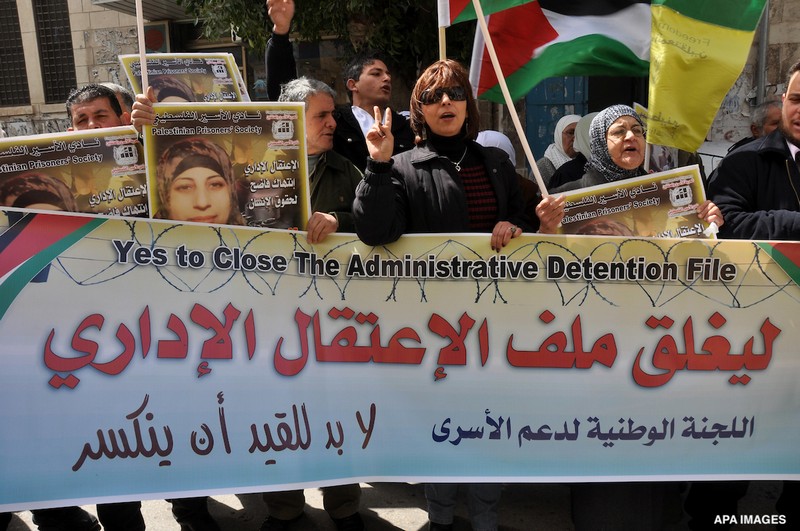
In January 2022, Palestinian administrative detainees began a collective boycott of Israel’s military courts under the slogan: “Our decision is freedom. No to administrative detention.” In a published statement, the detainees specifically outlined the arbitrary nature of administrative detention arrests and described the physical and psychological toll that this practice has taken on them. Moreover, they called for solidarity and support in their boycott of military courts, which they began after reaching a dead-end in negotiations with the Shabak and the Israeli Prison Service.

The boycott applied to all levels of Israeli military courts: detainees were to refuse to attend court procedures and hearings, and lawyers were to boycott court sessions. The detainees further threatened to undertake a collective hunger strike if the boycott did not succeed in forcing Israel to meet their demand to end the policy. By framing these escalating moves as part of a “mass united resistance movement,” the statement testified to the detainees’ conviction in the power of collective action.

The boycott came at a time during which the Israel Prison Service sought to fragment the detainees’ movement and to instate a wide range of punitive measures against all Palestinian prisoners, particularly in response to the escape of six prisoners from Gilboa prison in September 2021. The boycott also came amid the Israeli regime’s increased use of administrative detention against Palestinians from Jerusalem and 1948 territories throughout the ongoing wave of resistance across colonized Palestine, which began in May 2021.

The scope and duration of the detainees’ boycott underscored the ways in which the Israeli regime’s carceral and legal policies impact Palestinian lives, whether in detention or not. Indeed, Israel’s carceral regime extends beyond the confines of prisons and interrogation rooms to impact the lives of Palestinians across colonized Palestine who either have family members in detention or who themselves are awaiting detention on arbitrary grounds.

Palestinian administrative detainees’ 2022 boycott of Israeli military courts thus asserted that the Israeli regime’s legal structures cannot offer justice, for they are specifically designed to harm and punish Palestinians, and to rid them of their will to resist. In doing so, the boycott undermined any sense of legitimacy that Israeli military courts attempt to claim and affirmed that collective action is necessary to end the policy of administrative detention.

What Needs to be Done

Just as the administrative detainees’ boycott gained significant traction over the first half of 2022, Palestinians and their allies should mobilize to ensure that the Israeli regime’s practice of administrative detention ends. Several Palestinian and international organizations have been demanding an end to the policy and highlighting its impact on Palestinians more broadly. These include Amnesty international, Addameer: Human Rights and Prisoners’ Support Association, and the Defense for Children International – Palestine Section.

But more must be done:

  • The Palestinian Authority (PA) and its associated Commission of Detainees and Ex-Detainees Affairs should highlight the detrimental effects of administrative detention on Palestinians to the international community. They must advocate for an end to this policy in all international forums, including by demanding Israel be held accountable for its violations of the international human rights laws it ratified.
  • Palestinian civil society organizations, including those working on issues related to prisoners, should continue to rally support for Palestinian administrative detainees both locally and internationally. Addameer’s work is notable for its creative and continuous campaigns against administrative detention, which highlight the policy’s intricate connection to the functioning of the Israeli regime’s military courts.
  • Across colonized Palestine, Palestinians and their allies should more actively organize public events and protests in support of Palestinian prisoners, including administrative detainees.
  • The families of administrative detainees should establish a working committee that could centralize solidarity efforts on behalf of detainees. This step, mirroring other committees organized in Palestine and internationally — Argentina’s Mothers of the Plaza de Mayo, for example — would further shed light on the policy’s broader impact on Palestinian society.
  • International Palestine solidarity groups should include the Israeli regime’s carceral system in their boycott and divestment campaigns. These campaigns should target any companies benefitting from the Israeli carceral system, including Hewlett Packard Enterprise and G4S, which is currently owned by Allied Universal. They should also amplify calls to end the Deadly Exchange program between Israeli and US law enforcement agencies — tactics that manifest in prisons and detention centers across colonized Palestine.
  1. On June 27, 2022, a committee representing the administrative detainees released a statement announcing a freeze on the boycott campaign. The statement indicated that administrative detainees reached an agreement with prison authorities to restrict the use of administrative detention, particularly against women and children, and to consider the release of elderly and sick detainees.
  2. Previously, administrative detention was authorized under two orders: Military Order 1226 and Military Order 1591.
  3. ashir Khairi was released from administrative detention on July 7, 2022.

Basil Farraj completed his PhD in Anthropology and Sociology at the Graduate Institute, Geneva.

2 August 2022

Source: al-shabaka.org
Israeli airstrikes massacre Palestinian children in Gaza

By Jean Shaoul

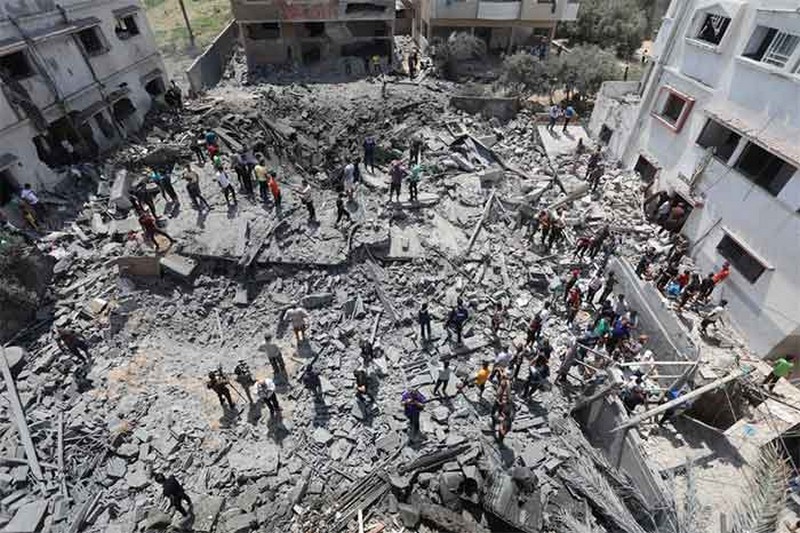
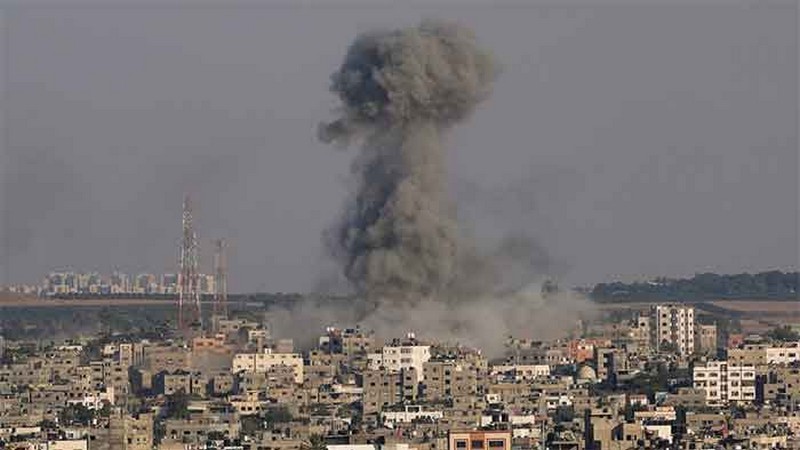
For three days, Israel has bombarded the densely and impoverished coastal enclave of Gaza, targeting leaders of Palestinian Islamic Jihad (PIJ), civilians and their property in the worst flare up since May 2021.

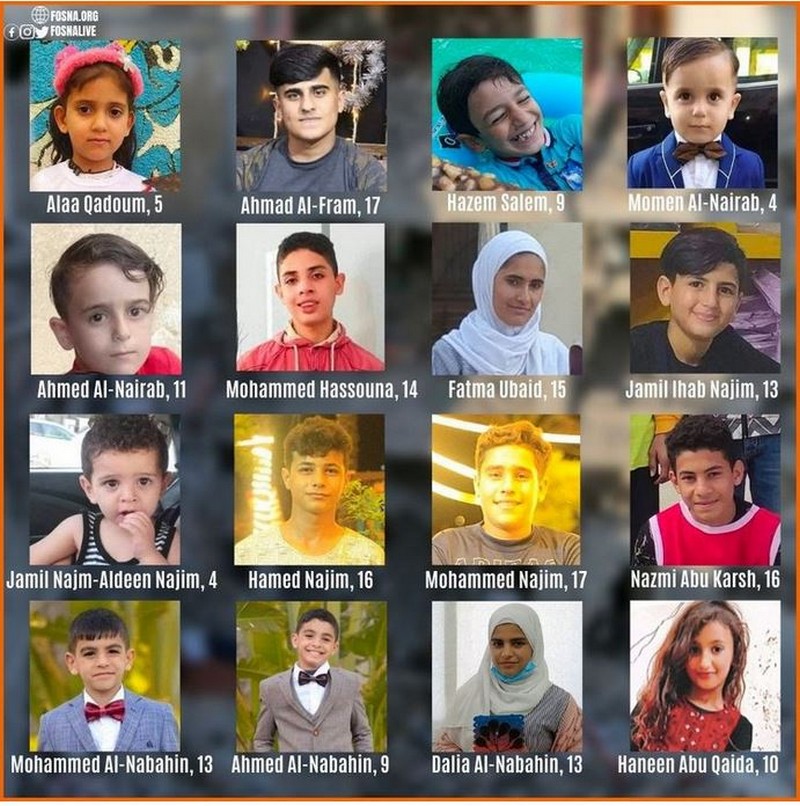
As of Sunday evening, Israel’s “surgical” air strikes have killed at least 43 Palestinians, including Taysir al-Jabari and Khalid Mansour, senior PIJ military leaders in northern and southern Gaza. Fifteen children and four women have been killed since Friday. At least 300, more than half of them women and children, have been injured and at least 31 families made homeless. One Israeli civilian and two soldiers have been lightly wounded by shrapnel.

The Israel Defence Forces (IDF) said its aerial bombardment was a preemptive operation aimed at preventing rocket attacks planned by Palestinian Islamic Jihad against Israel. It warned that its operation could last up to a week.

The continuous outbreaks of violence—Israel has launched at least eight murderous assaults on the besieged enclave since 2005 when it “withdrew” from Gaza—flows inexorably from the 15-year-long Israeli siege of Gaza that has been aided by the butcher of Cairo, General Abdel Fattah el-Sisi of Egypt, and Palestinian Authority President Mahmoud Abbas. The blockade, an act of collective punishment banned under international law, has turned the enclave into an open-air prison for its two million inhabitants. Most lack even the most basic essentials of life, clean water, sanitation and electricity, while more than half the population is unemployed and the vast majority live in appalling poverty.

At the same time as waging war on Gaza, the caretaker government under Yair Lapid, who heads an eight-party coalition that includes one of Israel’s Arab parties and several Jewish parties ostensibly committed to a Palestinian state alongside Israel, gave free rein to the far right to incite violence against the Palestinians in Jerusalem.

Under the protection of armed Israeli security forces, 1,000 religious bigots, far right nationalists and settlers stormed the Al-Aqsa Mosque compound in East Jerusalem on Sunday morning. They waved Israeli flags, prayed and chanted anti-Muslim and anti-Arab slogans, breaching long-standing agreements with Jordan, the official custodian of the site, whereby non-Muslims are not allowed to pray within the compound or display Israeli symbols. Israeli police have allowed settlers and far right activists entry to the site on a near-daily basis.

The authorities allowed this latest provocation to go ahead as Israel’s military onslaught on Gaza entered its third day, amid concerns that this would incite Palestinian protests and clashes. In May 2021, similar provocations at the al-Aqsa Mosque compound coinciding with Ramadan led to Israel’s 11-day assault on Gaza that killed 256 Palestinians and extensive riots in Israel’s mixed cities of Haifa, Acre, Lod and Ramla.

The latest conflict started on Monday with the storming by Israeli special forces of the Jenin refugee camp in the occupied West Bank. They fired live and rubber-coated bullets as well as tear gas at Palestinians and arrested senior Islamic Jihad leader Bassam al-Saadi, and his son-in-law, Ashraf al-Jada, at his home in Jenin. Pictures of al-Saadi being dragged across the ground accompanied by an attack dog provoked a storm of protest, amid fears for his life, from PIJ supporters. Islamic Jihad vowed revenge.

The PIJ has become the main force behind the armed resistance in Jenin and Nablus to both Israel and its subcontractor, the Palestinian Authority (PA) of President Mahmoud Abbas. During the raid, Israeli forces also shot and killed Derar Riyad al-Kafrini, a 17-year-old Palestinian youth and injured Saadi’s wife as well as least one other.

Israel claimed that PIJ was planning to launch attacks from Gaza on Israel and made full-scale preparations for an extensive operation against Islamic Jihad. It ordered a lockdown on towns and villages in southern Israel, closing roads and sending reinforcements to the area, and called up 10 reserve Border Guard battalions in case rioting erupted in Israel’s predominantly Palestinian cities. It closed both the Erez and Kerem Shalom border crossings into Gaza, preventing essential commodities, including food and fuel, from entering the besieged enclave and medical patients and the 14,000 Palestinians from Gaza with work permits in Israel from leaving. Shortly afterwards, Gaza’s sole power plant announced it would close, citing a lack of fuel.

On Friday, Israel began pounding Gaza with what it said were targeted strikes to “take out” Islamic Jihad leaders and militants. The US and major European powers supported this latest war crime with nostrums about “Israel’s right to defend itself” from attack, although no such attack had taken place.

Yair Lapid, Israel’s caretaker prime minister until Israel’s fifth elections in four years on November 1, described the PIJ as “an Iranian proxy that wants to destroy the state of Israel.” His statement signals an Israeli offensive against Iran’s allies in the region.

PIJ and Hamas, an affiliate of the Muslim Brotherhood that rules Gaza, are listed as “terrorist organisations” by the US and European powers. Backed by Iran, the PIJ also has supporters in Lebanon and Syria. Its leader Ziad al-Nakhalah was in Tehran for talks with Iranian President Ebrahim Raisi on Friday, the day Israel launched its bombardment on Gaza.

Al-Nakhalah pledged that the group would launch revenge attacks, including targeting Tel Aviv and other cities. But Islamic Jihad’s rockets, launched only after Israel’s onslaught, had little impact. Most of its 400 rockets were intercepted by Israel’s Iron Dome missile defence system or fell on empty ground. One house was damaged.

Major-General Hossein Salami, the head of Iran’s Revolutionary Guard Corps, said Saturday the Palestinians are “not alone” in their fight against Israel, declaring, “We are with you on this path until the end, and let Palestine and the Palestinians know that they are not alone.” He added that Israel “will pay another heavy price for the recent crime.”

Hamas, despite its bitter opposition to its rival, said it supported Islamic Jihad’s response to Israel’s bombardment. However, it took no action against Israel, as it tried to prevent the conflict erupting into a full-scale war. It also stood aside during Israel’s two-day assault on Gaza in November 2019 that assassinated PIJ’s southern military leader Bahaa Abu el-Atta and his wife.

Israel’s government under Naftali Bennett and now under Lapid, has in contrast to that of former Prime Minister Benjamin Netanyahu sought to bolster Hamas at the expense of Fatah-dominated Palestinian Authority as a means of dividing the Palestinians. Israel has lifted a few of the restrictions on Gaza, increasing its power supply and ability to carry out reconstruction work. It has granted work permits to 20,000 Gaza residents that enable them to cross into Israel daily to work for wages that are some 10 times the rate paid in Gaza where the unemployment rate tops 50 percent.

Lapid’s government has reportedly agreed an Egypt-brokered ceasefire between Israel and Islamic Jihad set to take effect at 8pm Sunday, with pledges from Israel to alleviate Gaza’s fuel shortage in return for a crackdown on PIJ by Hamas. It remains to be seen whether it will take effect or hold.

Lapid is fighting a bitterly contested election against two rivals for the premiership. The first is Netanyahu, who despite fighting criminal charges of bribery, corruption and breach of trust in three separate cases, is currently predicted to the largest number of votes, particularly if his far right, religious allies Itamar Ben Gvir’s Jewish Power and Bezalel Smotrich’s Religious Zionism party, agree a merger for electoral purposes as they did ahead of last year’s election. The second is his Defence Minister and former army chief Benny Gantz. Lapid, who has never held a security post, is thus anxious to bolster his credentials.

His efforts to terrorise the Palestinians and give succour to the fascistic far right seek to deflect the immense social tensions within Israeli society outward as the elections—unusually—focus on the rising cost of living and the increasing poverty. One of the most unequal societies in the advanced world, Israel has the highest poverty rate for any country in the Organization for Economic Cooperation and Development (OECD).

The coalition government, in power for just a year, has widened the already vast socioeconomic gaps in Israeli society, offering tax breaks to the wealthy, raising prices on basic household goods and promoting agricultural reforms that would devastate farmers, while failing to curb the soaring cost of housing. As elsewhere, deteriorating conditions for most Israeli workers and their families have led to a growing number of working class strikes and protests.

8 August 2022

Source: countercurrents.org

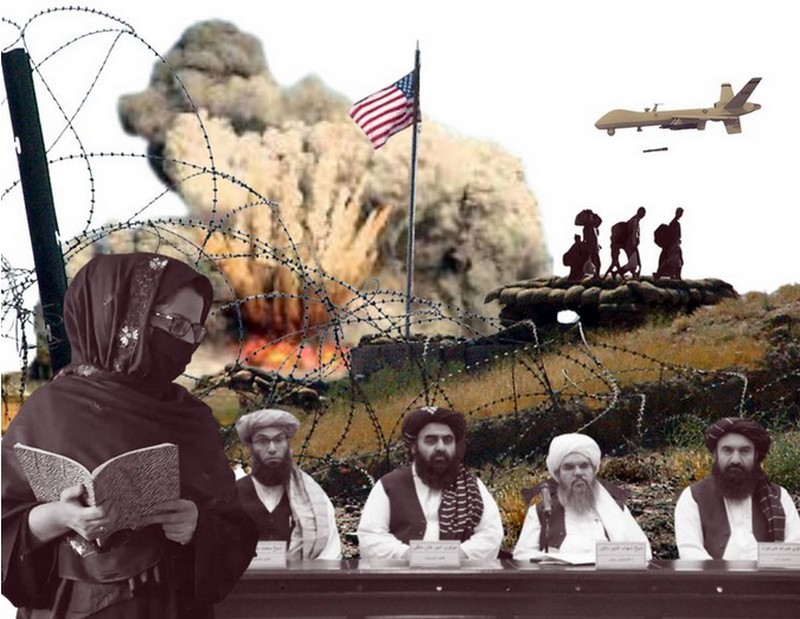
Afghanistan One Year On

By Nancy Lindisfarne & Jonathan Neale

An assessment of the Taliban takeover and governance in Afghanistan since the withdrawal of US troops in August 2021.

The first half of this article is a condensed version of a longer article we wrote last year about the American withdrawal from Afghanistan. The second half is an update on some of the changes since then.

In the last year a lot of nonsense about Afghanistan has been written in Britain and the United States. Most of this nonsense hides a number of important truths.

First, the Taliban defeated the United States, with the Americans leaving Kabul in a shambolic retreat on August 30 2021.

Second, the Taliban won because they had more popular support.

Third, this is not because most Afghans love the Taliban. It is because the American occupation was unbearably cruel and corrupt.

Fourth, the War on Terror has also been politically defeated in the United States. The majority of Americans favoured the withdrawal from Afghanistan and are now against any more foreign wars.

Fifth, the greatest military power in the world was defeated by the people of a small, desperately poor country. This weakens the power of the American empire all over the world.

Sixth, the rhetoric of saving Afghan women was widely used to justify the occupation, and many feminists in Afghanistan chose the side of the occupation. The result is a tragedy for feminism.

A Military Victory

The US withdrawal of 2021 was a military victory for the Taliban. For at least two years leading up to it, the Afghan government forces were losing more people dead and wounded each month than they were recruiting. So those forces shrank.

Over the previous ten years the Taliban took control of more and more villages and some towns. And they had taken all the cities in the country in the final twelve days before Kabul fell.

This was not a lightning advance through the cities and then on to Kabul. The people who took each city had long been in the vicinity, in the villages, waiting for the moment. Crucially, across the north the Taliban had been steadily recruiting Tajiks, Uzbeks and Arabs.

The Taliban of 2001 were overwhelmingly Pushtuns, and their politics was Pushtun chauvinist. By contrast, in 2021 Taliban fighters of many ethnicities had taken power in Uzbek and Tajik dominated areas. The important exception is the Hazara dominated areas in the central mountains.

This is also a political victory for the Taliban. No guerrilla insurgency on earth can win such victories without popular support.

But perhaps support is not the right word. It is more that Afghans had to choose sides. And more of the Afghan people chose to side with the Taliban than chose the American occupiers, the Afghan government of President Ashraf Ghani, or the old warlords. Not all of them, just more of them.

This was a war against foreign invaders, but it was also a civil war. Many fought for the Americans, the government or the warlords. Many more have made compromises with both sides to survive.

Why so Many Afghans Chose the Taliban

The fact that more people chose the Taliban does not mean that most Afghans necessarily support the Taliban. It means that given the limited choices available, that is the choice they have made. Why?

The short answer is that the Taliban are the only important political organization fighting the American occupation, and most Afghans came to hate that occupation.

When the Taliban came to power in 1994 many Afghans supported them. But when the Americans invaded in 2001, after seven years of Taliban rule, almost no Afghans were willing to fight for either the Taliban or the foreign invaders. Pakistani military intelligence negotiated a settlement, in which the Americans could take Kabul and formal power, but almost all the Taliban officials and fighters could go to Pakistan or back to their homes in the villages. This negotiated peace was not widely publicized outside Afghanistan. But it held.

For two years after the invasion there was almost no resistance to the American occupation. Think of the contrast with Iraq, where resistance was widespread from Day One of the occupation in 2003. Or think of the Russian invasion of Afghanistan in 1979, met with the same wall of anger.

This time ordinary people, even in the Taliban heartland in the south, dared to hope that the American occupation would bring Afghanistan peace and develop the economy to end the terrible poverty.

By 2001 Afghans had been trapped in war for twenty-three years, first a civil war between communists and Islamists, then a war between Islamists and Soviet invaders, then a war between Islamist warlords, and then a war in the north of the country between Islamist warlords and the Taliban.

Twenty-three years of war meant death, maiming, exile, refugee camps, poverty, so many kinds of grief, and endless fear and anxiety. People were desperate for peace and development.

The US Delivered War

The US and UK military occupied bases throughout the villages and small towns of the Taliban heartland, the mainly Pushtun areas of the south and east. The US units saw it as their mission to root out the remaining ‘bad guys’, who were obviously still there. They began a new war.

Night raids crashed through doors, humiliating and terrifying families, taking men away to be tortured for information about the other ‘bad guys’. Outraged relatives and villagers took a few potshots at the Americans in the dark. The Americans called in airstrikes and their bombs killed family after family.

War returned across the south and east of the country.

Afghans had hoped for development that could lift both the rich and the poor. And indeed, American money poured into Afghanistan. But it went to the people in the new government, to those working with the Americans and the occupying troops, the warlords and their entourages, and the workers in foreign-funded NGOs.

Afghans had long been used to corruption. They both expected it and hated it. But this time the scale was unprecedented. And in the eyes of the poor and middle-income people, all the obscene new wealth, no matter how garnered, seemed to be corruption.

And as the Taliban re-emerged as a force fighting against the American occupation, they offered their countrymen two things. The first was that they are not corrupt, as they were also not corrupt in office before 2001. Of course they have been accused of corruption in some cases, but they are the only political force in the history of the country that has ever been regarded by most Afghans as basically fair and honest.

Second, critically, the Taliban ran an honest judicial system in the rural areas they controlled. Their reputation became so high that many people involved in civil lawsuits in the cities agreed that both parties would go to Taliban judges in the countryside. This allowed them swift, cheap and fair justice without massive bribes.

For people in Taliban-controlled areas, fair justice was also a protection against inequality. When the rich can bribe the judges, they can do anything they want to the poor. Rich and powerful men, warlords and government officials could seize, steal or cheat their way into control of the land of small farmers, and oppress the even poorer sharecroppers. But Taliban judges, everyone understood, were willing to rule for the poor.

Hatred of corruption, of inequality, and of the occupation merged together.

What About Rescuing Afghan Women?

Many readers will now be feeling, insistently, but what about Afghan women? The answer is not simple.

We have to start by going back to the 1970s. Around the world, particular systems of gendered inequality are entangled with a particular system of class inequality. Afghanistan was no different.

Nancy did anthropological fieldwork with Pushtun women and men who lived by farming and herding animals in the north of the country in the early 1970s. Nancy’s subsequent book, Bartered Brides: Politics and Marriage in a Tribal Society, explains the connections between class, gender and ethnic divisions at that time. And if you want to know what those women themselves thought about their lives, troubles and joys, Nancy and her former partner Richard Tapper have recently published Afghan Village Voices. That reality was complex, bitter, oppressive and full of love.

In a deep sense, it was no different from the complexities of sexism and class in the United States or India. But the tragedy of the next half century would change much of that. That long suffering produced the particular sexism of the Taliban, which was not an automatic product of Afghan tradition.

The history of this new turn started in 1978. The civil war began between the communist government and the Islamist Mujahedin resistance. The Islamists were winning, so the Soviet Union invaded late in 1979 to back up the Communist government. Seven years of brutal war between the Soviets and the Mujahedin followed.

When we lived in Afghanistan, in the early 1970s, the communists were among the best people. They were driven by three passions. They wanted to develop the country. They wanted to break the power of the big landowners and share out the land. And they wanted equality for women.

But in 1978 the communists had taken power in a military coup, led by progressive officers. They had not won the political support of the majority of villagers, in an overwhelming rural country. The only way they could deal with the rural Islamist resistance were arrest, torture and bombing. And the greater the cruelty of the communist led army, the more the revolt grew.

Then the Soviet Union invaded to prop up the communists. Between half a million and a million Afghans were killed. At least another million were maimed for life. Between six and eight million were driven into exile in Iran and Pakistan, and millions more became internal refugees. In total about half the population were killed, wounded or driven from their homes.

When they came to power, the first thing the communists tried to do were land reform and legislation for the rights of women. When the Russians invaded, the majority of communists sided with them. Many of those communists were women. The result was to smear the name of feminism with support for torture and massacre.

So when the Soviet Union left, defeated, most people breathed a sigh of relief. But then the local leaders of the Mujahedin resistance to the communists and the Soviet invaders became local warlords and fought each other for the spoils of victory. The majority of Afghans had supported the Mujahedin, but now they were disgusted by the greed, corruption and the endless useless war. They also disliked the exaggerated sexism the Mujahidin had encouraged, in part because it was favoured by their rich Muslim backers among the leaders in the Arab Gulf.

The Class and Refugee Background of the Taliban

In the autumn of 1994, the Taliban had arrived in Kandahar, a mostly Pashtun city in southern Afghanistan. The Taliban were like nothing before in Afghan history.

The Communists had been the sons and daughters of the urban middle classes and the middle level farmers in the countryside with enough land to call their own. They had been led by people who attended the country’s sole university in Kabul. They wanted to break the power of the big landowners and modernize the country.

The Islamist leaders who fought the Communists had been men of similar class backgrounds, and mostly former students at the same university. They too wanted to modernize the country, but in a different way. They looked to the ideas of the Muslim Brotherhood and Al-Alzhar University in Cairo.

The word Taliban means students in an Islamic school, not a state school or a university. The fighters of the Taliban who entered Kandahar in 1994 were young men who had studied in the free Islamic schools in the refugee camps in Pakistan. They had been children with nothing.

The leaders of the Taliban were village mullahs from Afghanistan. They did not have the elite connections of many of the imams of city mosques. Village mullahs could read, and they were held in some respect by other villagers. But their social status was well below that of a landlord, or a high school graduate in a government office.

From the first the Taliban were funded by the Saudis, the Americans and the Pakistani military. Washington wanted a peaceful country that could house oil and gas pipelines from Central Asia. But the Taliban’s Pashtun chauvinism put them at odds with the members of other ethnic groups. They were sectarian and unable to control the country, and, in 1996, the Americans withdrew their support.

At the same time that the Americans withdrew their support, they unleashed a new and deadly version of Islamophobia against the Taliban. At that moment, and almost overnight, Afghan women were deemed helpless and oppressed, while Afghan men – the Taliban – were execrated as fanatical savages, paedophiles and sadistic patriarchs, hardly people at all. By the time the American bombing started after 9/11, everyone was meant to understand that the Afghan women needed help.

But how could you possibly ‘save Afghan women’ by bombing a civilian population that included, along with the women themselves, their children, their husbands, fathers and brothers?

The most egregious expression of feminist Islamophobia came little over a month into the war. A vastly unequal war of revenge doesn’t look very good in the eyes of the world, so better to be doing something that looks virtuous. Laura Bush and Cherie Blair lamented the plight of the veiled Afghan woman, using the full weight of the Orientalist paradigm to blame the victims and justify a war against some of the poorest people on earth. ‘Saving Afghan Women’ became the persistent cry of many liberal feminists to justify the American war.

With the election of Obama in 2008, Islamophobia became hegemonic among American liberals. That year the American anti-war alliance effectively dissolved itself to aid Obama’s campaign. His surge against the Taliban began almost immediately after he took office.

The feminist spin was a clever ploy. It domesticated and effectively displaced the ugly truths about a grossly unequal war. And it separated those notional ‘women to be saved’ from the tens of thousands of actual Afghan women, and men and children killed, wounded, orphaned or made homeless and hungry by the American bombs.

We believe another feminism is possible. But it remains true that the Taliban are deeply sexist. Misogyny has won a victory in Afghanistan. But it did not have to be that way.

Stereotypes and Confusions

Outside Afghanistan, there is a great deal of confusion about stereotypes of the Taliban elaborated over the last twenty-five years. They are seen as feudal, brutal and primitive. Not as people with laptops who have been negotiating with the Americans in Qatar for the last fourteen years.

The Taliban are not the product of medieval times. They are the product of some of the worst times of the late twentieth century and early twenty-first century. They have been moulded by life under aerial bombardment, refugee camps, communism, the War of Terror, enhanced interrogation, climate change, internet politics and the spiralling inequality of neoliberalism. They live, like everyone else, now.

There is a set of prejudices on the left which incline some people to ask how the Taliban could be on the side of the poor and anti-imperialist if they are not “progressive”. But reality is what it is. The Taliban are a movement of poor peasants, against corruption and an imperial occupation, deeply misogynist, supported by many women, sometimes racist and sectarian, and sometimes not. They are a bundle of contradictions produced by history.

Another source of confusion is the class politics of the Taliban. How can they be on the side of the poor, as they obviously are, and yet so bitterly opposed to socialism? The answer is that the experience of the Russian occupation stripped away the possibility of socialist formulations about class. But it did not change the reality of class. No one has ever built a mass movement among poor peasants that took power without being seen as on the side of the poor.

The Taliban talk not in the language of class, but in the language of justice and corruption. Those words describe the same side.

A Historic Change in America

The fall of Kabul marks a decisive defeat for American power around the world. But it also makes clear a deep turning away from the American empire among Americans.

In 2001, right after 9/11, between 85% and 90% of Americans approved of the invasion of Afghanistan. The numbers have dropped steadily. By April of 2021, 58% approved of Biden’s withdrawal plan, and only 25% disapproved.

This rejection of the war has been common on both the right and the left. The working class base of the Republican Party and Trump are against foreign wars. Many soldiers and military families come from the rural areas and the south where Trump is strong. They are against any more wars, for it is they and those they loved who served, died and were wounded.

Right wing patriotism in America now is pro-military, but that means pro-soldier, not pro-war. A majority of Democrats also support withdrawal from Afghanistan.

There are people who support further military intervention in other countries. They include many Obama democrats, Romney republicans, generals, many liberal and conservative professionals, and most people in the Washington elite. But the American people as a whole have turned against the American Empire.

The International Consequences

Since 1918, 103 years ago, the United States has been the most powerful nation in the world. The ‘American Century’ is now coming to an end.

The long-term reason is the economic rise of China and the relative economic decline of the United States. But the Covid-19 pandemic and the Afghan defeat make the last three years a turning point.

The pandemic has revealed the institutional incompetence of the ruling class and the government of the United States. This chaotic and shameful failure has been obvious to people around the world.

Then there’s Afghanistan. If you judge by expenditure and hardware, the United States is overwhelmingly the dominant military power globally. That power has been defeated by poor people in sandals who had nothing but endurance and courage.

The strength of the informal empire of the United States has relied for a century on three different pillars. One is being the largest economy in the world which dominates the global financial system. The second is a reputation in many quarters for democracy, competence, and cultural leadership. The third is that if soft power fails, the United States invades to support dictatorships and punish its enemies.

That military power is gone now. No government will believe that the US can rescue them from a foreign invader, or from their own people.

This is the beginning of the end of the American century.

One Year Later

What is the situation now, a year after the American defeat and the Taliban victory?

First, we can see the effects of the American defeat on the world stage. Almost immediately after the Taliban victory, Vladimir Putin saw his chance in the wake of the obvious weakness of the United States and invaded Ukraine.

After the American Occupation

In Afghanistan the Taliban’s new government, called the Emirate, immediately faced a series of linked problems. First, there was the vengeance of Washington. The US government has a long track record of economic punishment and boycotts to wipe out the shame of military and political defeat. This is what they did to Vietnam for a generation, to Cuba, to Iran and to Somalia for even longer.

The Biden administration did the same, only more so. They confiscated the entire financial reserves of the previous American backed Afghan Republic, held in Washington. They announced that they would punish any banks, anywhere, which allowed any payments to move into Afghanistan, for any purpose.

From the outset the new Emirate of Afghanistan faced an economic crisis. The economy of the towns and cities had grown deeply dependent on foreign aid and military spending over the twenty years of the occupation. When that money ended, there was widespread poverty, unemployment and small business collapse.

Economic hardship in the cities was made worse by the drought caused by climate change in the rural areas, which produced mainly grain, but also considerable amounts of opium.

Climate change droughts in Afghanistan have brought long suffering since the 1960s, and the worst horror is yet to come in what is already one of the poorest and most arid countries in the world.

There was some rain in the north in December of 2021 and January 2022, but since then it has been clear that 2022 will be another year of drought. Crop yields for both years will be an average of about 40% lower. But that average includes many areas in the north which will have seen a deeper collapse in water sources, crop yields and grazing for sheep, and will see worse.

In this situation, the aid agencies and the UN warned of famine likely to follow immediately after the American exit. The Biden administration was warned that millions could starve if he prevented aid. Mercifully, the famine did not happen because the United Nations, international NGOs and the other powers besides the United States stepped in and raised enough money to distribute food to some 13 million people, about a third of the total population. The distribution was uneven, and there was considerable corruption in the NGOs, and there was hunger, but a general famine was forestalled.

In part, prompt action was taken because many governments could imagine the consequences of a general famine for the region. The long term effects would be at least ten million new refugees, enraged and desperate terrorists, and a terrible burden of shame for all the neighbouring regimes. It cost $20 billion to keep the Afghans quiet and at home.

It is not at all clear whether aid will continue on the same level over next winter. The rise in grain and energy prices threatens city people in Afghanistan. But the widespread nature of the disaster may make large donors less inclined to protect the Afghans. So far this year donor countries have only come up with half the amount that is needed.

For the Afghan Emirate, the coming year looks like desperate economic depression at best, and famine at worst.

In any case, for at least thirty years, in many ways Afghanistan has not been an autonomous state. Afghan governments of every kind have been dependent on foreign aid to cover the national budget, and on international NGOs to pay for education, health and food, and to deliver the services as well. This continues to be the case.

There are positive things about what the Taliban have managed to do in the last year. They have remained relatively honest. Being in charge of a government in desperate economic circumstances exerts enormous pressure toward corruption, so far largely resisted. As we said, there is a good deal of corruption in food aid distribution, but local people blame this mostly on the NGO workers and local elders. How long the Taliban will be able to stay mostly clean is another question.

However, the Emirate is a dictatorship. A recent and reliable United Nations report found evidence for 160 killings by Taliban death squads in the last year. Some of these were at the behest of the national authorities, but more seem to have been done by local organizations. Those killed included former government officials and torturers, journalists and demonstrators, and Islamic State activists. There were also thousands arrested, many of whom were tortured.

This is an appalling number. And yet, Afghans, women and men, consider this a time of peace. The streets are relatively safe in Kabul.

The Education of Women

The education and clothing of women remains a political flashpoint. Here, several conflicting pressures are pressing on the Taliban.

First, they have to contend with the pressure from donor countries. The Afghan government will not survive without their money. In almost constant negotiations in Doha, the donors are insisting on the rights of girls to education.

Currently, girls can go to school for grades one through six. Women can also go to university but must be taught by women, separately from men. One common fix is for men to attend university three days a week, and women three days a week. However, very large numbers of skilled professionals, women and men, are leaving the country for uncertain futures, as are many poorer people.

The education of teenage girls in secondary schools is forbidden for the moment, except in the province of Balkh. Many, but not all, senior government officials are constantly saying that this policy will be reversed. But the Taliban are clearly very divided internally on this.

There is also confusion over the Taliban rules for how women dress. A recent decree mandated that women should wear veils that covered most of their faces. In practice, this seems to have been mainly aimed at women in Kabul. In other provincial capitals, there was already a great deal of variation in women’s dress, and a great deal of modesty. This does not appear to have shifted. And while there are reports of young Taliban men jeering at women at check points, there is so far no general enforcement of the rules. This is largely because the informal rules about dress were already restrictive under the American occupation.

Dress rules always have been, and we assume remain, different for rural people. A large majority of rural households are poor, and their women have to work in the fields. For this, they are not secluded, and do not wear full body veils. The women of pastoral nomads, about 5% of the population, have always worn traditional forms of head coverings, for they too must work outside. These farming and herding women may now be dressing more modestly, however, when they go to the town or the city.

Official government policy also now says that women must leave urban employments, unless they work in health or education. This policy has been more or less enforced in some places and industries, but there are exceptions.

For the most part, the controversies over dress, education and employment only affect minorities of women. But we should not underestimate the importance of the issue for many women, and for the Taliban.

For the Taliban, the emphasis on the modesty and protection of women has long been a bedrock issue. Moreover, they now have to look over their shoulders at a fundamentalist breakaway from the Taliban, the local affiliate of Islamic State.

In the five years before the American defeat, Islamic State grew more powerful, especially in parts of the Pushtun east. They had three central political differences with the Taliban.

The first was that Islamic State are Sunni chauvinists. They carried out terror bombings of Shias, Sufis, Sikhs and Christians. They continue to do this under the Emirate. The sectarianism of IS in Afghanistan towards Shias comes from the example of IS in Iraq and Syria.

By contrast, the Taliban were Pushtun chauvinists when they were first in power in 1994-2000, and were brutal towards Hazara Shias. In the years of resistance to the American occupation, they learned and changed and now argue for the unity of all Muslims, and the toleration of other faiths. Understandably, this does not mean that Hazaras have forgotten or forgiven. But when the Taliban took Kabul, they immediately sent troops to protect the Shia mosques.

It can also be confusing that many terror bombings done by IS in Afghanistan in the last year are reported in Western media as if they were done by hard core Islamists, and readers are led to assume these are Taliban.

Secondly, Islamic State took a harder line on negotiation with the Americans. The Taliban negotiated the withdrawal with the Americans, which is what drove some to join Islamic State in the first place. Now the survival of the Afghan Taliban state, and the economy, depends on continued negotiations with international powers and the UN.

Thirdly, Islamic State in Afghanistan have taken a hard line on women’s dress and employment.

Once the Afghan Taliban came to power, they were able to break the open power of Islamic State with targeted killings and arrest. Now Islamic State only survives underground and is much weaker. But they have been able to continue to carry out some terror bombings, particularly of Hazara Shia children at school. However, the Taliban remain understandably afraid that in conditions of economic collapse, Islamic State could grow and threaten their rule.

These are the reasons why the Taliban are internally divided and constantly debating what to do about women.

What makes all this more tragic is that we do not believe, and we are sure many Afghans do not believe, that foreign donors will come up with the needed food and money even if the Taliban do let girls go back to secondary school. Of course, different people involved have different motivations, but we think that at base the Western demands about women are largely a cover for a determination to continue to humiliate all Afghans for defeating NATO and the Americans.

Conclusion

And there you have it. For the moment, there is relative peace in Kabul, there is no famine, and this is perceived as the least corrupt government in centuries. These are not small things. But the government is still a dictatorship, and there are good reasons to dread the future.

Looking forward, there are a few key points we would like to leave you with. First, the key reason for the long agony of Afghanistan is the Russian and then the American invasion. Globally much of the left supported the Russian invasion, and the liberals and feminists supported the American invasion. The results are tragic.

Second, in these times, when people resist invasion, they win.

Third, Afghanistan is on the leading edge of the emerging horror of climate change, which stands to get much worse much more quickly. They will need much more help over the years to come.

Nancy Lindisfarne taught anthropology for many years at the School of Oriental and African Studies in London, and has done fieldwork in Iran, Afghanistan, Turkey and Syria.

Jonathan Neale is a writer and climate activist, and also did fieldwork in Afghanistan.

10 August 2022

Source: www.jamhoor.org

Gaza: Cruelty Without Consequences

By Jonathan Kuttab

Israel is currently gloating over its recent operation in Gaza. It succeeded by all measures: Israel initiated the conflict, first by arresting an Islamic Jihad leader in the West Bank city of Jenin and dragging him out in humiliation, as he was bitten by a dog; then, anticipating a reaction by his organization, Israel proceeded to bombard Gaza “preemptively.” In three short days, the Israeli military managed to rain death and destruction on Gaza, assassinating another Islamic Jihad leader, killing 46 Palestinians (including 16 children), and wounding 460 others. Meanwhile, it suffered no casualties itself aside from a few lightly wounded by shrapnel. The world press largely followed the Israeli narrative, giving credit to Israeli lies that it was Palestinian fire that killed its child-victims. Israel succeeded in calculating and limiting the actions it initiated, as Hamas was both bribed and bullied into staying on the sidelines and Egypt quickly moved in to suggest a ceasefire once Israel felt satisfied.

The operation succeeded in further fragmenting the Palestinians by distinguishing Hamas from Islamic Jihad and Gaza from the West Bank, Jerusalem, and Palestinians within Israel’s borders, as well as the wider Arab world. Israel suffered no losses, illustrating the power of its iron dome defenses and setting the stage for seeking additional military aid from the supportive US. It achieved a muted response from Arab countries and the international community, which found itself busy elsewhere. Israel successfully used varying tools of influence to “manage” the event, and it got what it wanted at little or no cost. In addition, the Gaza operation served as a useful tool for internal Israeli politics, improving the chances of the interim government ahead of elections. The operation’s success was such that Israel did not even need to pretend it was defending itself or only retaliating. Now, the discourse is about Israel’s “right to protect itself” from anticipated Palestinian reactions to Israeli provocations. Its power and military dominance was in full display yet again, as was the weakness and helplessness of the Palestinians.

Israel could now magnanimously turn the faucet and judiciously allow a few droplets of benefits for the imprisoned Gazans: a few more work permits, a few more medical permits, a few more truckloads of food, some fuel for electricity, a bit of water, and some relief aid from Qatar—subject to their continued subservience and “quiet” acceptance of domination and control by Israel. The biggest victory for Israel was in the muted response by the American media. National Public Radio did not even cover the story until the third day when it gave a three minute report that merely parroted the Israeli line, falsely claiming that the bombardment of Gaza was a response to Palestinian rocket fire. Even Israel itself proclaimed that its actions were “preemptive” and not retaliatory. By keeping the operation short, while the attention of the world was diverted elsewhere, it achieved all its objectives and now life could “return to normal.” Israel was even emboldened to step up its arrests, assassinations, raids, and other outrages in Jerusalem and the West Bank.

Yet this “success” belies certain realities, which are slowly becoming known to all:

  1. Gaza is a human made disaster whereby two million people live in an open air prison under the total control of Israel, which can attack at will.

  2. Gaza is a narrow strip, 3-5 miles wide and 20 miles long. Its skies are constantly buzzing with drones and military aircraft, which in addition to surveillance can at any time rain down death and destruction. The Gazan coastline is also controlled by Israel, which doles out permits for fishing while exploiting its subterranean oil reservoir.

  3. Over 2/3 of Gazans are refugees whose land, villages, and historic communities are located in what has become Israel. As such, Gazans still dream of a return to their homeland. They are an integral part of the Palestinian people, and no solution for Palestine can exclude them.

  4. Israel continues to occupy the Gaza Strip, keeping it under siege while “remotely” controlling all aspects of peoples’ lives—just as it does with residents of the West Bank.

  5. Egypt participates in this siege, in coordination with Israel.

  6. Israel controls electricity, water, fuel, cyberspace, and food, as well as all entry and exit of people and goods to and from the Strip. It regulates the entry of all aid money and humanitarian assistance, desperately needed after Israel has systematically destroyed the Gazan economy.

  7. Israel’s continued control over Gaza requires it to employ increasingly harsh and more cruel measures, occasionally erupting in huge losses of life for civilians, women, and children. While Israel controls this pressure cooker, “managing” it as it did again this time, the situation cannot be sustainable in the long run.

  8. In any military confrontation, the primitive rockets Palestinians use are no match for Israel’s massive firepower, but serve as a wonderful excuse for Israel to attack Gazans with massive bombardments from air, land, and sea.

  9. Palestinians have no real offensive or defensive power, and their civilians have no shelters or anywhere else to run or escape.

  10. Even when there is no bombardment, Gazans suffer daily from massive deprivations in all aspects of life, to the point that the UN declared the Strip would be unlivable by 2020! (I know, I know. It is already 2022!) Unemployment is over 50% and mental problems have been detected in over 80% of its children.

  11. The residents of Gaza are in fact human, children of God, and deserving of equal dignity as much as anyone else.

  12. Finally, while Gazan lives and livelihood may be worth nothing to Israelis, their continued oppression will continue to exact a toll on Israel’s soul, its morality, and more and more so its image.

Strategically, Israel has no plans for Gaza or the Gazans. It believes it can use its power and influence to continuously “manage” the situation, while its connections, influence, and clever hasbara (“propaganda”) will continue to ensure that it faces no consequences for its actions. The world will conveniently look away and forget or ignore Gaza and its Gazans.

For this situation to persist in perpetuity, it is necessary that a number of things continue to happen:

  • The world must continue to look away from the crisis, pretending that Gaza does not exist

  • All prospects of a just peace must be abandoned, and talk of peace must be limited to empty platitudes and the maintenance of an oppressive status quo.

  • International law must continue to remain impotent, and the US veto must continue to ensure that the United Nations cannot act when it comes to Israel.

  • The International Criminal Court must be kept in check, prevented from addressing Israel’s crimes.

  • The Arab world must continue to be ruled by autocratic regimes and corrupt elites who do not reflect the wishes or interests of its people.

  • People in the rest of the world must continue to do nothing, and Israel’s actions must continue to enjoy impunity.

  • And mostly you, my dear readers, would need to do absolutely nothing.

Join FOSNA Executive Director Jonathan Kuttab and FOSNA National Organizer Chad Collins in Washington, D.C. Jonathan will be giving a speech and FOSNA will be joining together in solidarity at American Muslims for Palestine’s emergency protest for Gaza.

11 August 2022

Sorce: www.fosna.org

Why the Chair of the Lancet’s COVID-19 Commission Thinks the US Government Is Preventing a Real Investigation into the Pandemic

By Jeffrey D. Sachs

Prof. Jeffrey Sachs says he is “pretty convinced [COVID-19] came out of US lab biotechnology” and warns that there is dangerous virus research taking place without public oversight.

2 Aug 2022 – Prof. Jeffrey Sachs is the Director of the Center for Sustainable Development at Columbia University and the President of the UN Sustainable Development Solutions Network. He has also served as the chair of the COVID-19 commission for leading medical journal the Lancet. Through his investigations as the head of the COVID-19 commission, Prof. Sachs has come to the conclusion that there is extremely dangerous biotechnology research being kept from public view, that the United States was supporting much of this research, and that it is very possible that SARS-CoV-2, the virus responsible for COVID-19, originated through dangerous virus research gone awry.

Prof. Sachs recently co-authored a paper in the Proceedings of the National Academy of Sciences calling for an independent inquiry into the virus’s origins. He believes that there is clear proof that the National Institutes of Health and many members of the scientific community have been impeding a serious investigation of the origins of COVID-19 and deflecting attention away from the hypothesis that risky U.S.-supported research may have led to millions of deaths. If that hypothesis is true, the implications would be earth-shaking, because it might mean that esteemed members of the scientific community bore responsibility for a global calamity. In this interview, Prof. Sachs explains how he, as the head of the COVID-19 commission for a leading medical journal, came to the conclusion that powerful actors were preventing a real investigation from taking place. He also explains why it is so important to get to the bottom of the origins of COVID: because, he says, there is extremely dangerous research taking place with little accountability, and the public has a right to know since we are the ones whose lives are being put at risk without our consent.

Nathan Robinson:

I want to quote something that you said recently:

“I chaired the commission for the Lancet for two years on COVID. I’m pretty convinced it came out of U.S. lab biotechnology, not out of nature, just to mention. After two years of intensive work on this. So it’s a blunder in my view of biotech, not an accident of a natural spillover. We don’t know for sure, I should be absolutely clear. But there’s enough evidence that it should be looked into. And it’s not being investigated, not in the United States, not anywhere. And I think for real reasons that they don’t want to look underneath the rug, the statement.”

The statement that you made there is a controversial one. Just to read a couple of quotes from the New York Times in the last year:

So I want to start by asking you just to tell us a little bit about the investigation that you were part of and what led you to think that what I just quoted is a misleading statement of the state of the evidence.

Jeffrey Sachs: 

Well, the funny thing is those scientists who are saying that said the same thing on February 4, 2020, before they had done any research at all. And they published the same statement in March 2020, before they had any facts at all. So they’re creating a narrative. And they’re denying the alternative hypothesis without looking closely at it. That’s the basic point.

Now, what is the alternative hypothesis? The alternative hypothesis is quite straightforward. And that is that there was a lot of research underway in the United States and China on taking SARS-like viruses, manipulating them in the laboratory, and creating potentially far more dangerous viruses. And the particular virus that causes COVID-19, called SARS-Cov-2, is notable because it has a piece of its genetic makeup that makes the virus more dangerous. And that piece of the genome is called the “furin cleavage site.” Now, what’s interesting, and concerning if I may say so, is that the research that was underway very actively and being promoted, was to insert furin cleavage sites into SARS-like viruses to see what would happen. Oops!

Well, that is what may have happened. And what has been true from the start is that that very real possibility, which a lot of scientists know, has not been looked at closely, even though it’s absolutely clear that it could have happened that way. They’re not looking. They just keep telling us, “Look at the market, look at the market, look at the market!” But they don’t address this alternative. They don’t even look at the data. They don’t even ask questions. And the truth is from the beginning, they haven’t asked the real questions.

But not quite the beginning. Because at the beginning, which we could date from the first phone call of the National Institutes of Health (NIH) with a group of virologists on February 1, 2020, the virologists said “Oh my god, that is strange, that could well be a laboratory creation. What is that furin cleavage site doing in there?” Because scientists knew that was part of an active ongoing research program. And yet, by February 3, the same group is saying “No, no, it’s natural, it’s natural.” By February 4, they start to draft the papers that are telling the public, “Don’t worry, it’s natural.” By March, they write a paper—totally spurious, in my view—called the proximal origins paper that is the most cited bio paper in 2020. It said: it is absolutely natural. [Note: the paper’s conclusion is “we do not believe that any type of laboratory-based scenario is plausible.”] But they didn’t have any of the data that you read about in the New York Times. They didn’t have any of this. They just said the labs weren’t working on this alternative. But you know what, they don’t know what the labs were working on, because they never asked, and NIH hasn’t told us.

ROBINSON:

Let me ask you if we can distinguish between what we know for certain and what is speculative because we just haven’t got the data. So we do know that there was—correct me if I’m wrong—research proposed that would have dealt with this category of viruses and would have modified them in ways that would have made them potentially more lethal. Do we know whether that kind of research was in fact actually ongoing somewhere?

SACHS:

We have enormous reason to believe that it was. And clearly, we haven’t even asked that question. But we have a lot of reason to believe that it was, because the scientists that were doing that research loved that research. And they explained to us publicly why it’s so important. And they wrote editorials about why this research must continue. And they made grant proposals saying that it should continue. And for those of us in the business of writing grant proposals, the fact that a particular grant proposal that’s deeply troubling was turned down doesn’t mean that it wasn’t carried out afterwards. But where is NIH saying, “Yeah, that’s an interesting question. Why don’t we get the evidence?” It doesn’t even ask that question.

And the scientists like those that talk about the Huanan market, they don’t even discuss that research that was underway. That is just misdirection, to my mind. It’s like sleight of hand art. Don’t look over there. Look over here. But we know that there was a tremendous amount of this research underway. We have interviews by the lead scientists. We have these research proposals. I know the intention of doing this research from discussions. I’ve read so many studies of the importance of this research claimed by the scientists. And yet I see NIH with its head in the ground. “Oh, no, nothing here to look at.” And then I see the scientists. “Oh, nothing here to look at. We know it’s the market. Did we find an animal? No. Do we have an explanation of where that furin cleavage site came in? No. We don’t have an explanation of the timing, which doesn’t quite look right. Oh, but don’t look over there, because there’s nothing there, they keep telling us. Well, that’s a little silly.

So my point is, there is a huge amount of reason to believe that that research was underway. Because there are published papers on this. There are interviews on this. There are research proposals. But NIH isn’t talking. It’s not asking. And these scientists have never asked either. From the very first day, they have kept hidden from view the alternative. And when they discuss the alternative, they don’t discuss the research program. They discuss complete straw men about the lab, not the actual kind of research that was underway, which was to stick furin cleavage sites into SARS-like viruses in a way that could have created SARS-Cov-2.

What I’m calling for is not the conclusion. I’m calling for the investigation. Finally, after two and a half years of this, it’s time to fess up that it might have come out of a lab and here’s the data that we need to know to find out whether it did.

ROBINSON:

One of the things that struck me that I didn’t know when I started writing about this and actually doing some some research is realizing that in the years leading up to the pandemic, there was a huge controversy about whether it was wise to modify viruses in the course of research in ways that could make a virus more infectious or more lethal. And some people were arguing that this kind of research was insane. And some people were warning that in the case of a lab accident—an accident, mind you, not as an intentional “bioweapon”—a simple human error could cause a real catastrophe.

SACHS:

That is exactly right. There were several kinds of experiments of manipulation of the genes of dangerous viruses. And this raised a lot of alarm. And there was actually a moratorium in 2014. But the champions of this kind of research pushed on, they applied for waivers, which they got, and finally the moratorium came off in 2017. And they said how important it is to do this dangerous kind of research, because they claimed, “Well, there are lots of viruses out there. And we don’t know when they’re going to become highly pathogenic, and we need to develop drugs and vaccines against a wide spectrum of them. So we have to test all these viruses that we can find, to see whether they have high spillover potential.” But they weren’t actually aiming to just test viruses that they were collecting in nature. They were aiming to modify those viruses. Because the scientists knew that a SARS-like virus without a furin cleavage site wouldn’t be that dangerous. But they wanted to test their drugs and vaccines and theories against dangerous viruses. Their proposal was to take hundreds, by the way—or least they talked about in one proposal more than 180 previously unreported strains—and test them for their so-called “spillover potential.” How effective would they be? And to look: do they have a furin cleavage site, or technically what’s called a proteolytic cleavage site? And if not, put them in. For heaven’s sake. My God! Are you kidding?

Okay, but we didn’t even ask the question from the first day: did you guys do that? Tell us what you did. Could you give us your lab notebooks? We’re kind of curious. Instead, these people who are writing these New York Times articles right now and publishing these pieces about the market, from the first day—without asking about the experiments—they said, “Nope, it’s natural.” That’s why I don’t trust them. Because they’ve never looked at the alternative hypothesis. And their hypothesis has so many gaps, so many holes in it. But they don’t even try to look at the alternative hypothesis.

ROBINSON:

I think it’s very important to make clear that the “alternative hypothesis” is mainly a hypothesis about an accident, and scientific hubris. It’s important to distinguish the kooky theories from the incredibly plausible theories. Because what you’re talking about is people who did not appreciate the dangers of what they were doing.

SACHS:

In fact, it’s very interesting. The alternative that is the right one to look at is part of a very extensive research program that was underway from 2015 onward, funded by the NIH, by Tony Fauci, in particular NIAID [National Institute of Allergy and Infectious Diseases], and it was to examine the spillover potential of SARS-like viruses. The champions of this research explained in detail their proposals. But after the event, we’d never asked them, “So what were you actually doing? What experiments did you do? What do you know?” We somehow never asked. It was better just to sweep it under the rug, which is what Fauci and the NIH have done up until this point. Maybe they could tell us, “Oh, full exoneration,” but they haven’t told us that at all. They haven’t shown us anything.

So there’s nothing “kooky” about it, because it’s precisely what the scientists were doing. And then you can listen to the scientists on tape describing why they think the research program is so important, because they say these are dangerous viruses, and therefore we have to prepare broad spectrum vaccines and drugs. They explain it’s not good enough to test one or two viruses. We have to test all of them. And then they came to realize, as I said earlier, that just having a SARS-like virus, if it doesn’t have this piece of the gene, it’s almost surely not going to be that effective. So they got around to the idea. “Well, let’s put these in,” if you can imagine that. To my mind, it’s mind-boggling.

But they were proud of this, because it’s actually genius at a technological level. Can you imagine: you can take a sequence of letters, which defines the genome, you can recreate the virus just from the letters. You don’t even have to have the biological virus in hand, you just need the sequence. Then you can say “I’m going to add these four letters RRAR, the furin cleavage site, or maybe it’s eight, RRARSVAS, this is a sequence of eight amino acids—I’m going to stick it in there right at the S1 S2 junction of the spike protein, because I know from my research program that will make it more pathogenic, that is more disease-causing. And then I can see whether my drug candidates like remdesivir, or some other candidate works against it. That is their idea. There’s nothing kooky about our claim: Hey, what were you doing? Because they told us that they wanted to do these projects. And they told us that they were wanting to do these projects in the months leading up to this outbreak. And then what is absolutely strange is that even though scientists knew right from the start, that is very weird to have that RRAR furin cleavage site in there—never saw that before in a SARS-like virus, and that that could well have come from a lab—hush, hush. Don’t talk about it. Don’t even discuss it. Just say right from the beginning: This is natural. Of course, it’s natural. Everything else is kooky.

So you saw a narrative being created. And the scientists are not acting like scientists. Because when you’re acting like a scientist, you’re pursuing alternative hypotheses. And the scientists just wrote recently an op-ed saying the only evidence that this came out of a lab that’s been put forward is that it came in a city, Wuhan, where an institute was located. Well, that’s a lie. That is not the only coincidence that leads to this theory. What leads to this alternative hypothesis is the detailed research program the NIH funded that was underway in the years leading up to the outbreak. So I see the scientists absolutely trying to create a narrative and take our eyes off of another issue.

Now, again, let me emphasize, we don’t have definitive evidence of either hypothesis. But what we do have is definitive evidence that officialdom has tried to keep our eyes away from the lab creation hypothesis.

ROBINSON:

You mentioned the lab in Wuhan. It’s not just that there was a lab in Wuhan doing research on viruses. But there were ties between the lab and those pursuing this program. What do we know about the research that was actually occurring there?

SACHS:

We know that at the Wuhan Institute of Virology, the scientists there had been trained by American scientists to use advanced bioengineering methodologies. And in particular, we have scientists in North Carolina, Texas, and so forth who do this kind of research, believe in it, argue for it, and say that they don’t want any regulations on it and so on. And they were in close contact with Wuhan Institute of Virology, and they were part of a joint research group that was stitched together by something called EcoHealth Alliance. And EcoHealth Alliance was the kind of marriage maker between the American scientists and the Chinese scientists. That was the vehicle for funding from the U.S. government, especially from the National Institutes of Health, and especially from Tony Fauci’s unit, the NIAID. There were years of grants, there were grant proposals. We don’t know exactly what was done. But we have enough reason to know that we should be asking exactly what was done. And we know definitively that from the beginning, NIH has been running from telling us what has been done. They’re not telling us the truth, that they had reason to fear from the start that this came out of a lab. And that to this day, they have reason to suspect it, but they’re not talking.

ROBINSON:

A shocking thing to me was that the head of the EcoHealth Alliance was on the World Health Organization team that actually investigated the origins of COVID and concluded that it wasn’t the lab.

SACHS:

Well, more than that: I appointed him—this was Peter Daszak—I appointed him to chair the task force of the pandemic commission that I was running for the Lancet. And he headed a task force on the origins. I thought, naively at the beginning, “Well, here’s a guy who is so connected, he would know.” And then I realized he was not telling me the truth. And it took me some months, but the more I saw it, the more I resented it.

And so I told him, “Look, you have to leave.” And then the other scientists in that task force attacked me for being anti-scientific. And I asked them: “What are your connections with all of this?” They didn’t tell me. Then when the Freedom of Information Act released some of these documents that NIH had been hiding from the public, I saw that people that were attacking me were also part of this thing. So I disbanded that whole task force. So my own experience was to witness close up how they’re not talking. And they’re trying to keep our eyes on something else. And away from even asking the questions that we’re talking about. We don’t have the answers. But we have good reasons to ask. And we have good reasons to know that NIH is not doing its job properly right now.

ROBINSON:

So you’re saying that Daszak and others did not disclose to you pretty serious conflicts of interest? Since, on the hypothesis that it had something to do with this kind of research, that would have implicated Daszak himself in the origins of the crisis?

SACHS:

Well, he could have explained to me right from the beginning that there was a big research program and that they were manipulating the viruses, and here’s how. He could have given me the research proposals. And when I asked him for one of the research proposals, he said, “No, my lawyer says I can’t give it to you.” I said, “What? You’re heading a commission. We’re a transparent commission. You’re telling me your lawyer says you can’t give me your project proposal.” I said, “Well, then you can’t be on this commission. This is not even a close call.”

But there were so many other things. He was just filled with misdirection. I don’t know whether he understands or not, maybe he doesn’t understand. But the things he said just were absolutely not right.

ROBINSON:

When people hear you say, “They’re sweeping it under the rug, they don’t want to look,” one question that may come to their minds is “Well, why? Why would people not be interested in getting to the truth?” But the alternate hypothesis from the natural spillover that you’re talking about could have serious repercussions. It would implicate a lot of people in potentially millions of deaths. So there’s a lot at stake here for the scientific community. Which explains why there would be an interest in directing people away from this possibility.

SACHS:

There are at least two reasons why they might be doing what they’re doing. One is, as you say, the implications are huge. Imagine if this came out of a lab. And we have, by some estimates, about 18 million dead worldwide from this. That’s not the official count. But that’s the estimated excess mortality from COVID. Well, the implications of that—the ethical, the moral, the geopolitical—everything is enormous.

But there’s a second matter that is really important, too. One thing that is rather clear to me is that there is so much dangerous research underway right now under the umbrella of biodefense or other things that we don’t know about, that is not being properly controlled. This is for sure. And that’s happening around the world. And governments say “don’t poke your nose into that.” That’s our business, not your business. But it’s actually our business. It’s our business to understand what is going on with this. This is not to be kept secret. We don’t trust you.

Let me put it this way: I don’t trust them right now. I want to know. Because even what we know of the dangerous research is enough to raise a lot of questions of responsibility for the future. And to pose the question: “Hey, what other viruses are you guys working on? What should we know?” Because no matter what the truth is on SARS-Cov-2, what is pretty clear is we’ve got so much technological capacity to engineer dangerous pathogens right now. And a lot of that is being done. And it’s classified. It’s secret, and we don’t know what it is. And I don’t like that feeling at all. I don’t recommend it for us and for the world.

ROBINSON:

Well, you’ve rather answered the question of why it’s important to get to the bottom of this. Because one of the excuses you hear is, “Well, who really cares? Does it matter? It was an animal, it was a lab, whatever it is, it’s here.” But what you’re saying is, “No, we actually need to know where this started.” Because this isn’t going to be the only one, whatever the origins are. And we don’t want people to die from future viruses. This is critically important. If we’re going to save millions of lives, we have to find out the answer.

SACHS:

I can tell you one thing that I’ve learned from talking to a lot of scientists in the last couple of years: the technological capacity to do dangerous things using this biotechnology is extraordinary right now. So I want to know what’s being done. I want to know what other governments are doing, too, not just ours. I want some global control over this stuff.

We’ve kind of understood the nuclear risk—even that, of course, is in a lot of ways hidden from view. But this is a clear and present risk. And there’s reason to believe we’re actually in the midst of it, not just hypothetically. So come on: it’s time to open the books everywhere. It’s time to find out. Maybe it was the marketplace. Maybe it wasn’t a lab. But we need to get real answers, now. Not the kind of misdirection that’s been going in since February 2020. Enough nonsense! Enough New York Times stories saying, “Oh, it’s this, it’s that,” without looking closely at the very plausible laboratory hypothesis.

ROBINSON:

It seems from what you’re saying that as the head of the Lancet’s COVID-19 commission, you didn’t feel you were able to get satisfactory answers or see the data you wanted. What kind of investigation do we need and who ought to do it?

SACHS:

The most interesting things that I got as chair of the Lancet commission came from Freedom of Information Act (FOIA) lawsuits and whistleblower leaks from inside the U.S. government. Isn’t that terrible? NIH was actually asked at one point: give us your research program on SARS-like viruses. And you know what they did? They released the cover page and redacted 290 pages. They gave us a cover page and 290 blank pages! That’s NIH, for heaven’s sake. That’s not some corporation. That is the U.S. government charged with keeping us healthy.

What I found is that we have a lot of data which we’re not finding right now. And I don’t want to have to rely on FOIA and leaks, though those can be incredibly informative. I want clear, independent scientific investigation and transparency. One way to do this would be a bipartisan congressional oversight investigation that had subpoena power. Give us your lab records, your notebooks, your data files of virus strains, and so forth. There are many questions that we need independent scientists to define, to tell us exactly the kinds of information. But we know right now we’re operating in an environment in which the government is working to hide the data that we need to make a real assessment.

Jeffrey D. Sachs, Professor of Sustainable Development and Professor of Health Policy and Management at Columbia University, is Director of Columbia’s Center for Sustainable Development and the UN Sustainable Development Solutions Network.

8 August 2022

Source: www.transcend.org

How the Pentagon Dictates Hollywood Storylines

By Jonathan Cook

New documentary discloses the ways western publics are softened up for aggressive, global US militarism through the Pentagon’s influence over thousands of films and TV shows.

4 Aug 2022 – In what should have been an extraordinary television confession this month, John Bolton, national security adviser in the previous administration of President Donald Trump, admitted to CNN in passing that he had helped to plot the overthrow of foreign governments while in office.

Dismissing the idea that Trump had attempted a coup at the Capitol with the January 6 riots, Bolton told anchor Jake Tapper: “As somebody who has helped plan coups d’etat, not here [in Washington] but, you know, other places, it takes a lot of work.”

It was an admission that he and others in the administration had committed the “supreme international crime”, as the Nuremberg trials at the end of the Second World War defined an unprovoked attack on the sovereignty of another nation. But Tapper treated the comment as largely unremarkable.

Washington can do out in the open what is denied to other countries only because of an exceptional assumption that the normal constraints of international law and the rules of war do not apply to the global superpower.

The US is reported to have carried out “regime change” in more than 70 countries since the Second World War. In recent years, it has been involved either directly or indirectly in wars in Afghanistan, Iraq, Libya, Syria, Yemenand Ukraine. Bolton himself has boasted of his involvement in efforts through 2019 to oust Nicolas Maduro’s government in Venezuela, trying to install as president Washington’s own preferred candidate, Juan Guaido.

The Pentagon outspends the next nine countries combined and maintains some 800 military bases dotted across the globe. And yet, Congress is poised once again to add tens of billions of dollars to the defence budget.

A new documentary suggests why western publics remain so docile both about the US being in a state of almost permanent war, and about it expending ever-vaster sums on its war machine.

Secret guiding hand

According to Theaters of War, the US Department of Defense does not just subtly influence Hollywood’s depiction of US wars to present them in a more favourable light. The Pentagon actively demands script oversight and dictates storylines. In practice, it has been waging a full-spectrum propaganda war against western audiences to soften them up to support aggressive, global US militarism.

The documentary, based on data uncovered by recent Freedom of Information requests from UK investigative journalist Tom Secker and academic Matthew Alford, reveals the astonishing fact that the Pentagon has been the secret, guiding hand behind thousands of films and TV shows in recent decades.

Many more movies never reach the screen because the Defense Department’s entertainment liaison office refuses to cooperate, believing the wrong messages are being promoted.

Top Gun: Maverick – Official Trailer (2022) – Paramount Pictures

Pentagon objections – usually the kiss of death – relate to any suggestion of military incompetence or war crimes, loss of control over nuclear weapons, influence by oil companies, illegal arms sales or drug trafficking, use of chemical or biological weapons, US promotion of coups overseas, or involvement in assassinations or torture. In fact, precisely the things the US military is known to have been doing.

How does the Defense Department exert so much control on film productions? Because expensive blockbusters are far more likely to recoup their budget and turn a profit if they feature the shiniest new weapons. Only the Pentagon can supply aircraft carriers, helicopters, fighter jets, pilots, submarines, armoured personnel carriers, military extras and advisers. But it does so only if it is happy with the dramatic messaging.

As one academic observes in Theaters of War, propaganda works most effectively when it can be passed off as entertainment: “You’re more open to incorporation of those ideas because your defences are down.”

How many viewers would take seriously a film if it was preceded by a sponsorship logo from the Defense Department or the CIA? And for that reason, Pentagon contracts usually specify that its role in a film be veiled.

This is why few know that the Defense Department and the CIA have had a controlling hand in such varied projects as Apollo 13, the Jurassic Park and James Bond franchises, the Marvel movies, Godzilla, Transformers, Meet the Parents and I Am Legend. Or how the military regularly gets involved in baking and quiz shows.

The reality, Theaters of War argues, is that many Hollywood movies are little more than advertisements for US war industries.

Selling war

This summer, Hollywood released the long-awaited sequel to Top Gun, a Tom Cruise movie about ace airforce pilots that came to define back in the 1980s how to sell war and make killing look sexy.

Top Gun’s makers got access to US navy aircraft carriers, a naval airbase and a host of F-14s and other jets. As the Washington Post reported: “It’s unlikely the [original] film could have gotten made without the Pentagon’s considerable support. A single F-14 Tomcat cost about $38 million.” The film’s entire budget was $15m.

The Pentagon got plenty in return. Its database records that the film “completed [the] rehabilitation of the military’s image, which had been savaged by the Vietnam War”. It stationed recruitment desks outside cinemas to take advantage of that new credibility.

Top Gun was so successful in marketing war machismo that it was implicated in the Tailhook scandal a few years later, in which more than 80 servicewomen were sexually assaulted by fellow officers at a convention in Las Vegas. That scandal delayed the follow-up, Top Gun: Maverick, for 36 years. Nonetheless, the Pentagon’s conditions for approving the new film were even stricter.

The agreement explicitly stated that the Defense Department would be able to oversee the script, “weave in key talking points”, and censor scenes it did not like. The US military also demanded a veto over actors appearing in the film and an official screening before Maverickcould be approved for release.

The Pentagon could punish any violations of the agreement by deleting footage involving its hardware, thereby killing the film. It could also deny “future support”, effectively killing the careers of Maverick’s filmmakers.

There is nothing unusual about Top Gun’s treatment. It is, argues Theaters of War, standard for US blockbusters, the films likely to have the most impact on popular culture and western perceptions of war.

The premise of one of the most popular franchises, Marvel’s Iron Man, was rewritten following Pentagon intervention. The main character, Tony Stark, played by Robert Downey Jr, was originally an outspoken opponent of the arms industries, reinventing his father’s empire so that Iron Man technology could stop wars.

But after Pentagon rewrites, Stark became the ultimate evangelist for the weapons industries: “Peace means having a bigger stick than the other guy.” In one early scene, he makes a fool of a young female reporter who criticises his business empire – before bedding her to underscore that she is also a hypocrite.

Military fiasco

The Pentagon has been particularly sensitive to portrayals of the US military following a fiasco in 1993 in which one of its helicopters was downed in Mogadishu. That led to a prolonged firefight that killed more than a dozen US soldiers and hundreds of Somalis.

The following year, the Defense Department insisted on major revisions to the Harrison Ford vehicle Clear and Present Danger – especially in a scene where a Colombian militia overwhelms US special forces. As documents unearthed by Theaters of War show, US officials worried that the Mogadishu events had made the US military “look ridiculous” and officials refused to “cooperate in a movie that does the same thing” in a different combat zone. It demanded changes to make the film “more of a ‘commercial’ for us”.

Clear And Present Danger (1994)

When in 2001, Hollywood turned its attention to the book Black Hawk Down – specifically about the Mogadishu incident – the Pentagon insisted on heavy script changes that transformed the drama. Just eight years after the actual events depicted, the Defense Department had turned a story of its own incompetence into an all-American tale of military valour in the face of overwhelming odds at the hands of a savage, faceless enemy.

Similar deceptions were achieved with Argo (2012), a film about the 1979 hostage crisis in Iran. In fact, according to Theaters of War, it was the CIA that hawked the book to Hollywood five years earlier on its website in the section “Inspirations for future storylines”. The tale was so appealing to the CIA because it focused on its sole success following the Iranian Revolution. The agency smuggled a handful of US hostages out of Tehran by pretending they were a visiting Canadian film crew.

Censored documents presented by Theaters of War show the CIA’s public relations office reviewing multiple versions of Argo’s script before finally agreeing: “The agency comes off looking very well.

That is because of what Argo ignores: the CIA’s long-running meddling in Iran, including its overthrow of the elected government in 1953 to install a US puppet, which ultimately provoked the 1979 revolution; the CIA’s intelligence failures that missed the looming revolution; and the fact that the six hostages the CIA freed were overshadowedby a further 52 who spent more than a year imprisoned in Tehran. A story of the CIA’s crimes and gross incompetence in Iran was reinvented as a tale of redemption.

The CIA managed a similar public relations coup the same year wth Zero Dark Thirty, after the Obama administration had lost the battle to conceal its routine use of torture in Iraq and elsewhere.

The filmmakers had to acknowledge that the CIA resorted to waterboarding, a torture technique that by then was in the public domain, but under pressure, they agreed to conceal the less well-known fact that the agency also used dogs to torture detainees.

Nonetheless, waterboarding was falsely presented as a vital tool in the CIA’s battle to extract needed information to supposedly keep Americans safe and help hunt down and kill the author of the 9/11 terror attacks, Osama bin Laden. That was such a distortion of the historical record that even the right-wing politician John McCain, a decorated war hero, went public to disparage the film.

Product placement

The Pentagon has such sway over Hollywood that it has even managed to turn around the anti-war message at the heart of a monster movie staple, Godzilla.

Back in the 1950s, it was an allegory about the horrors unleashed by the US dropping nuclear bombs on Japan at the end of the Second World War. But in the 2014 version, Defense Department meddling meant a reference to Hiroshima was excised and Cold War dynamics introduced instead: a lost Russian nuclear submarine triggers a confrontation with Godzilla.

Even more astonishingly, in both the 2014 and 2019 versions, the story is switched 180 degrees. Nuclear weapons become mankind’s salvation rather than a threat; the only possible way Godzilla can be destroyed. Nuclear proliferation sponsored by the Pentagon is no longer a problem. In Godzilla, it is integral to human survival.

Theaters of War also makes a plausible case that the Pentagon has been an important driver behind Hollywood’s move into sci-fi and fantasy territory.

The imaginary worlds of the Marvel universe, for example, offer a pristine showcase, demonstrating the need for the Pentagon’s shiniest weapons against implacable, other-worldly foes. Hollywood and the Pentagon can sweep aside real-world concerns, like the value of human life, the commercial motives behind wars, and the battlefield failures of military planners.

The challenge of superhuman enemies with superhuman powers has proved the perfect way to normalise extravagant, ballooning military expenditures.

That is why the Pentagon regularly insists on product placement rewrites, such as the Incredible Hulk riding an F-22 in the 2003 Hulk film, Superman flying alongside an F-35 in 2013’s Man of Steel, and the glorification of a Ripsaw armoured vehicle in 2017’s eighth instalment of the Fast and Furious franchise.

Paying dividends

Theaters of War concludes that the promotion of US militarism pays dividends. It means bigger budgets for the Pentagon and its contractors, greater prestige, less oversight and scrutiny, more wasteful wars, and more profiteering.

Donald Baruch, the Pentagon’s special assistant for audio-visual media, has noted that the US government “couldn’t buy the sort of publicity films give us”. In laundering the US military’s image, Hollywood encourages not only western publics, but the Pentagon itself, to believe its own hype. It leaves the US military more confident in its powers, less critically aware of its vulnerabilities, and more eager to wage war, even on the flimsiest of pretexts.

With Hollywood’s stamp of approval, the Pentagon also gets to define who are the bad guys. In Top Gun: Maverick, it is a barely disguised Iran supposedly trying to develop a covert nuclear bomb. Russia, China and generic Arab states are other template baddies.

The constant dehumanisation of official enemies, and contempt for their concerns, makes it easier for the Pentagon to rationalise wars that are certain to lead to death and displacement – or to impose sanctions that wreak suffering on whole societies.

This gung-ho culture is part of the reason there has been no public debate about the consequences of the US pouring billions of dollars of weapons into Ukraine to fight a proxy war against Russia, even at the risk of nuclear conflagration.

As Theaters of War convincingly argues, the Pentagon’s covert influence over popular culture can have a decisive role in raising support for divisive wars, such as the US invasion of Iraq in 2003. It can make the difference between public approval and rejection.

How different things might be if Hollywood was ring-fenced from Pentagon influence is illustrated by a case study.

The Day After was a 1983 Cold War film made for US TV over Defense Department objections. The Pentagon rejected the script after it depicted a nuclear exchange between the US and Russia following a series of misunderstandings. According to Theaters of War, the Defense Department demanded that Moscow be squarely blamed for starting the fictional war. Unusually, the filmmakers held their ground.

The Day After was watched by nearly half the US population. The president at the time, Ronald Reagan, recorded in his diary that the film had left him “greatly depressed”. It created political momentum that drove forward nuclear disarmament talks.

A single film that stepped outside the Pentagon’s simple-minded “US good guy” narrative generated a debate about whether the use of nuclear weapons could ever be justified.

The Day After was widely credited with slowing down the build-up of the two military superpowers’ nuclear arsenals. And it treated Russians not simply as a foe, but as people facing the same existential threat from the bomb as ordinary Americans. In a small way, The Day After made the world a safer place.

Theaters of War leaves audiences with a question: What might have been possible had the Pentagon not meddled in 3,000 movies and TV shows to promote its pro-war messages?

Jonathan Cook is an award-winning British journalist based in Nazareth, Israel, since 2001.

8 August 2022

Source: www.transcend.org

‘This Is a War of Propaganda’

By John Pilger

10 Jul 2022 – Australian journalist, author and documentary filmmaker John Pilger sits down with Talking Post’s chief news editor Yonden Lhatoo to discuss the war in Ukraine, the West versus China and the plight of jailed WikiLeaks founder Julian Assange.

20 minutes of truth… and a pretty sweet ending.

‘This is a war of propaganda’: John Pilger on Ukraine and Assange | Talking Post with Yonden Lhatoo

Submitted by TRANSCEND member Eric Herter

1 August 2022

Source: www.transcend.org

How We Remember Hiroshima and Nuremberg Reflects Power Not Justice

By Richard Falk

Peace activists around the world often choose August 8th each year to grieve anew the human suffering and devastation caused by dropping atomic bombs on the undefended Japanese cities of Hiroshima and Nagasaki. Among other things it was ‘a geopolitical crime’ of ultimate terror, with no combat justification, and intended mainly as a warning to Soviet leaders not to defy the West in the peace diplomacy at the end of World War II.

August 8th falls between the utter destruction of these two cities. It is a day that can never be forgotten or redeemed, although ever since the explosions in 1945 the solemnity of these occasions has been overshadowed outside of Japan by widespread fears that a nuclear war might occur at some point and a quiet rage that the nuclear weapons states have stubbornly refused to take steps to fulfill pledges to seek a reliable path to nuclear disarmament in good faith.

This moral and political pledge became legally obligatory in Article VI of the Nuclear Nonproliferation Treaty (1970), and affirmed unanimously in an Advisory Opinion of the International Court of Justice in 1996. It has become clear that for the security establishments of the ‘NATO Three’ this disarmament commitment was never more than ‘a useful fiction’ that conveyed the sense that the non-nuclear states were being given something valuable and commensurate to their willingness to give up their conditional option to underpin national security by acquiring nuclear weapons (as Russia and China, as well as Israel, India, Pakistan, and North Korea have done over the decades). It is formally conditional by virtue of Article 10 that gives Parties to the NPT a right of withdrawal if “extraordinary events..have jeopardized the supreme interests of its country.”

Last week at the NPT Review Conference, postponed since 2020 because of COVID, at UN Headquarters in New York City, two significant contradictory developments dominated the scene. It was the first such meeting of NPT Parties since the Treaty of Prohibition of Nuclear Weapons (TPNW) came into force in early 2021. This treaty, a project of governments from the Global South in active coalition with Global Civil Society has drawn a bright line between the majority views of the peoples of the world and the security elites of these nine nuclear weapons states. Indeed, the NATO Three (U.S., France, UK) had the temerity to issue a joint statement stating their opposition to the approach taken by the so-called Ban Treaty (TPNW) and defiantly declared their unlawful intention to continue to rely on nuclear weapons to meet their security needs broadly specified to include geopolitical deterrence, that is, not the defense of homelands but strategic concerns that could arise potentially anywhere on the planet. At present, illustrated by the U.S. posture in response to the Ukraine War and the future of Taiwan. This impasse between the nuclear haves and have-nots amounts to an existential confirmation of ‘nuclear apartheid’ as the underpinning of global security unless and until the advocates TPNW muster enough strength and will to mount a real challenge to such a hegemonic and menacing structure of power and authority.

The second notable development at the NPT Review Conference lent a sense of immediacy and urgency to what had become 77 years after Hiroshima a somewhat abstract concern is the Ukraine War, and its geopolitical spillover effect of heightening the perceived risks of the use of nuclear weaponry and even the danger of nuclear war. The U.S. has decided it is worth challenging Russia’s attack on Ukraine sufficiently to demonstrate its claim that since the end of the Cold War the world has political space for one extraterritorial state, which is the sole supplier of global governance when it comes to the security agenda. Among other things, unipolarity means that Cold War Era mutual respect for near abroad spheres of influence no longer sustains geopolitical coexistence. The U.S. has tacitly proclaimed a Monroe Doctrine for the world, and is prepared to accept the economic and strategic burdens of doing so, maintaining hundreds of foreign military bases and navies in every ocean.

NATO’s insistence on making Russia pay for its invasion by being again reduced to the normalcies of territorial sovereignty is intended as a master lesson in the geopolitics of the post-Cold War world. It also an occasion to send China, currently the more feared adversary, a message written with the blood of Ukrainian lives, that it better not forcibly seek to regain control over Taiwan or it will be devastated in an even more punitive manner, including thinly veiled threats and possible uses of nuclear weapons. Pentagon war games some months ago ominously showed that China would prevail in any military encounter in the South China Seas unless the U.S. was prepared to cross the nuclear threshold, affirming the renewed strategic relevance of nuclear weaponry and gathering evidence helpful in gaining even larger military appropriations from Congress.

American diplomacy has aggravated an already inflammatory context by some inexplicably provocative behavior that seems designed to produce a military confrontation. First, a gratuitous undertaking by Biden to provide whatever by way of military involvement is deemed necessary to protect Taiwan against an attack by China. And secondly, a reckless August visit to Taiwan by Nancy Pelosi at a time of high tensions in violation of the spirit of the Shanghai Communique that was issued by China and the U.S. in 1972, and has kept a reasonably stable status quo ever since between the two geopolitical actors, relying on what Henry Kissinger called ‘strategic ambiguity.’ Either these Biden/Pelosi ploys are yet another expression of American amateurism when it comes to foreign policy or are deliberate efforts to provoke Xi Jinping to take action. This supposedly fearful autocrat is already being accused in China of being weak, backing down on the key policy goal of achieving the reunification of China and Taiwan. Whether incompetence or malice is worse is a matter of taste. Both are unacceptably dangerous when it comes to nuclear dangers.

In effect, remembering Hiroshima and Nagasaki in 2022 is overshadowed by this dual reality of ongoing ‘geopolitical wars.’ It is also a reminder that nuclear war was narrowly averted in the Cuban Missile Crisis of 1962 by what Martin Sherwin, an authoritative interpreter of nuclear risk called, ‘dumb luck.’ [Gambling with Armageddon (2020). Also relevant: Daniel Ellsberg, The Doomsday Machine (2017)]. It may also be the moment when a nascent peace movement in the Global North wakes up and pushes hard for adoption of the TPNW approach.

I was recently shocked by realizing that the 1945 signing of the London Agreement by the U.S., Soviet Union, France, and the UK agreeing to establishing a tribunal in Nuremberg charged with the post-war prosecution of major Nazi war criminals also occurred on August 8th of the same year. A parallel tribunal in Tokyo was established for Japanese war crimes some months later. It has been often observed, especially in recent years, that these initiatives were so one-sided as to stretch our meaning of criminal law, the essence of which is to treat equals equally. Inequality pervaded the work of these tribunals, although the criminality of the indicted Germans and Japanese was well-documented. What was most controversial was the failure to inquire into the violations of international criminal law by both sides, which is why these tribunals, however noble their work, were derided as glaring instances of ‘victors’ justice.’

My interest in this connection between Hiroshima and the London Agreement is somewhat different. I am appalled by the insensitivity of signing this agreement establishing the Nuremberg Tribunal on the very days when the atomic bombings were actually taking place, arguably the worst crime of World War II at least on a par with the Holocaust. It is more than insensitivity, it is moral hubris, which prepares a political actor, whether state or empire, for tragedy. It leads directly to such features of world order as a geopolitical right of exception at the UN by way of the veto and impunity with respect to accountability procedures. In effect, the UN is designed quite literally to give assurances that the most dangerous states, as of 1945, are jurisprudentially incapable of doing any legal wrong, at least within the UN System, and such later affiliated institutions as the International Criminal Court. What is this slightly disguised feature of legality and legitimacy conveying to a curious observer? That law and accountability are relevant for propaganda and punishment against adversaries, and that the wrongs of victors in major wars are beyond scrutiny but those of the vanquished and weak are to be judged in what amounts to ‘show trials’ because of this core failure to treat equals equally.

There is yet something else to reflect upon. If August 8th had been a different day that of infamy because an English or American city had been targeted by a German atomic bomb and yet Germany still lost the war, the act and the weapon would have been criminalized at Nuremberg and by subsequent international action. We might not be still living with this weaponry if the perpetrators of those dreadful events of August 6th and 9th had been the losers in World War II, which makes the aptly celebrated defeat of fascism on balance a somewhat questionable long-term victory for humanity.

In summation, there is a lot to think about on August 8th this year if we allow ourselves to grasp this repressed relationship between Hiroshima and Nuremberg in addition to heightened geopolitical tensions.

Richard Falk is a member of the TRANSCEND Network, Albert G. Milbank Professor Emeritus of International Law at Princeton University, Chair of Global Law, Faculty of Law, at Queen Mary University London, Research Associate the Orfalea Center of Global Studies at the University of California, Santa Barbara, and Fellow of the Tellus Institute.

8 August 2022

Source: www.transcend.org

The Intricate Fight For Africa: The Legacy of the Soviet Union vs Western Colonialism

By Dr Ramzy Baroud

Russian Foreign Minister Sergey Lavrov’s recent tour in Africa was meant to be a game changer, not only in terms of Russia’s relations with the continent, but in the global power struggle involving the US, Europe, China, India, Turkey and others.

Many media reports and analyses placed Lavrov’s visit to Egypt, the Republic of Congo, Uganda and Ethiopia within the obvious political context of the Russia-Ukraine war. The British Guardian’s Jason Burka summed up Lavrov’s visit in these words: “Lavrov is seeking to convince African leaders and, to a much lesser extent, ordinary people that Moscow cannot be blamed either for the conflict or the food crisis.”

Though true, there is more at stake.

Africa’s importance to the geostrategic tug of war is not a new phenomenon. Western governments, think tanks and media reports have, for long, allocated much attention to Africa due to China’s and Russia’s successes in altering the foreign policy map of many African countries. For years, the West has been playing catch up, but with limited success.

The Economist discussed ‘the new scramble for Africa’ in a May 2019 article, which reported on “governments and businesses from all around the world” who are “rushing” to the continent in search of “vast opportunities” awaiting them there. Between 2010 and 2016, 320 foreign embassies were opened in Africa which, according to the magazine, is “probably the biggest embassy-building boom, anywhere, ever.”

Though China has often been portrayed as a country seeking economic opportunities only, the nature and evolution of Beijing’s relations with Africa prove otherwise. Beijing is reportedly the biggest supplier of arms to sub-Saharan Africa, and its defense technology permeates almost the entire continent. In 2017, China established its first military base in Djibouti in the Horn of Africa.

Russia’s military influence in Africa is also growing exponentially, and Moscow’s power is challenging that of France, the US and others in various strategic spaces, mainly in the East Africa regions.

But, unlike the US and other western states, countries like China, Russia and India have been cautious as they attempt to strike the perfect balance between military engagement, economic development and political language.

‘Quartz Africa’ reported that trade between Africa and China “rose to a record high” in 2021. The jump was massive: 35% between 2020 and 2021, reaching a total of $254 billion.

Now that Covid-19 restrictions have been largely lifted, trade between Africa and China is likely to soar at astronomical levels in the coming years. Keeping in mind the economic slump and potential recession in the West, Beijing’s economic expansion is unlikely to slow down, despite the obvious frustration of Washington, London and Brussels. It ought to be said that China is already Africa’s largest trade partner, and by far.

Russia-China-Africa’s strong ties are paying dividends on the international stage. Nearly half of the abstentions in the vote on United Nations Resolution ES-11/1 on March 2, condemning Russia’s military action in Ukraine, came from Africa alone. Eritrea voted against it. This attests to Russia’s ability to foster new alliances on the continent. It also demonstrates the influence of China – Russia’s main ally in the current geopolitical tussle – as well.

Yet, there is more to Africa’s position than mere interest in military hardware and trade expansion. History is most critical.

In the first ‘scramble for Africa’, Europe sliced up and divided the continent into colonies and areas of influence. The exploitation and brutalization that followed remain one of the most sordid chapters in modern human history.

What the Economist refers to as the ‘second scramble for Africa’ during the Cold War era was the Soviet Union’s attempt to demolish the existing colonial and neo-colonial paradigms established by western countries throughout the centuries.

The collapse of the Soviet Union over three decades ago changed this dynamic, resulting in an inevitable Russian retreat and the return to the uncontested western dominance. That status quo did not last for long, however, as China and, eventually, Russia, India, Turkey, Arab countries and others began challenging western supremacy.

Lavrov and his African counterparts fully understand this context. Though Russia is no longer a Communist state, Lavrov was keen on referencing the Soviet era, thus the unique rapport Moscow has with Africa, in his speeches. For example, ahead of his visit to Congo, Lavrov said in an interview that Russia had “long-standing good relations with Africa since the days of the Soviet Union.”

Such language cannot be simply designated as opportunistic or merely compelled by political urgency. It is part of a complex discourse and rooted superstructure, indicating that Moscow – along with Beijing – is preparing for a long-term geopolitical confrontation in Africa.

Considering the West’s harrowing colonial past, and Russia’s historic association with various liberation movements on the continent, many African states, intelligentsias and ordinary people are eager to break free from the grip of western hegemony.

Dr. Ramzy Baroud is a journalist and the Editor of The Palestine Chronicle.

7 August 2022

Source: countercurrents.org

Israel’s killing campaign continues in Gaza

By Tamara Nassar

Israel’s bombardment of the occupied Gaza Strip entered its second day on Saturday with no sign of de-escalation as the United States, European Union and other Western countries gave Tel Aviv a green light to continue its campaign of killing and destruction.

By late evening on Saturday, Israeli airstrikes in Gaza had killed at least five more people.

The health ministry in Gaza said that 24 had been killed in the territory, including six children, since Israel launched the surprise attack on Friday afternoon by assassinating a senior leader of the Islamic Jihad resistance group.

More than 200 Palestinians have been injured.

Israel claimed an air strike in Rafah on Saturday evening killed Khalid Mansour, the commander of Islamic Jihad in southern Gaza. But the group did not immediately confirm that.

There were reports of at least five people killed in an explosion near a mosque in Jabaliya refugee camp in northern Gaza on Saturday night, among them several children.

But Israel denied bombing the area and claimed the deaths were caused by a misfired Palestinian rocket.

Throughout the day, Israeli warplanes continued to strike densely populated residential areas, targeting civilians and their property. And an Israeli military spokesperson warned the assault could last a week.

Islamic Jihad fired 350 rockets into Gaza by Saturday afternoon, including towards Tel Aviv and Ben Gurion airport.

While Hamas, which controls Gaza’s internal affairs, has backed Islamic Jihad’s response, it has yet to launch a single rocket at Israel since Israel launched its assault on Friday.

Hamas said on Friday that resistance factions were coordinating their responses. Its restraint so far may be an indication that the resistance groups are trying to contain the flare-up before it erupts into a full-blown confrontation with Israel.

This may change on Sunday as Israelis plan to ascend to the al-Aqsa mosque compound for the first day of the Jewish holiday of Tisha B’Av, which in Jewish belief commemorates the destruction of the First and Second Temples in Jerusalem.

Many of these Jewish extremists want to see the al-Aqsa mosque replaced with a new Jewish temple.

The Israeli police is permitting them to do so, with the expected participation of extreme-right lawmaker Itamar Ben-Gvir.

Similar provocations led to Israel’s May 2021 assault, when Hamas responded to Israeli attacks on Palestinians in Jerusalem with barrages of rockets into Israel.

Toll rises

A missile fired by Israeli warplanes struck a group of people east of Khan Younis early Saturday, killing 24-year-old Tamim Ghassan Abdullah Hijazi and 27-year-old Osama Abdulrahman Hussein al-Suri, according to the Gaza-based human rights group Al-Mezan.

Hours later, Israeli warplanes fired three missiles at the three-story home of a family of 40 southwest of Gaza City, where mostly women and children lived, destroying the building completely and damaging other houses nearby.

On Saturday afternoon, Israeli warplanes destroyed another home occupied by four families and caused severe damage to nearby residences.

In the northern Jabaliya area, Israeli warplanes struck a group of Palestinians, killing 28-year-old Hasan Muhammad Yousef Mansour and severely injuring another.

Israeli warplanes also hit a group of Palestinians, mainly women and children, who were getting in a car to go to a family wedding.

Al-Mezan said the attack killed the groom’s mother, Naamah Talbat Muhammad Abu Qaidah.

Five children were injured.

Power outages

Greatly exacerbating the situation for Gaza’s 2.1 million inhabitants, the territory’s only power plant said that it would shut down on Saturday due to Israel’s continued closure of external crossings, blocking fuel imports.

Gaza has just a quarter of the power it needs during the summer, according to Gisha, an Israeli human rights group. This means residents may now receive only four hours of electricity per day, followed by an outage of 12 hours.

This is a particularly dire threat to Gaza’s healthcare system, which has already been battered by successive Israeli assaults and 15 years of an ongoing siege.

Pharmaceutical supplies in Gaza are at their “worst in years,” the Palestinian health ministry stated.

There are also severe shortages of supplies for labs and blood banks and other medical consumables.

Power outages pose a “serious threat” to vital hospital departments, including emergency rooms, intensive care units and dialysis clinics, the ministry said.

Desalination plants, sewage pumps and water supplies to homes will also be disrupted, “which may cause a severe health and humanitarian disaster,” the health ministry warned.

Israeli authorities continue to block the entry of two dozen x-ray machines and spare parts to repair medical devices in essential emergency departments.

All scheduled surgeries are being postponed to help hospitals cope with those injured in the ongoing Israeli attacks.

Meanwhile, Israel’s continued closure of the Erez checkpoint is preventing hundreds of Palestinian patients from leaving Gaza for medical treatment, putting their lives at risk, according to Al-Mezan.

The health ministry announced that a shutdown of the power plant would start a 72-hour countdown to health services coming to a standstill.

Lynn Hastings, the UN humanitarian coordinator in the West Bank and Gaza Strip, called for “an immediate de-escalation and halt to the violence” on Saturday.

Tamara Nassar is an assistant editor at The Electronic Intifada.

7 August 2022

Source: countercurrents.org