Just International

Statement for the International Day of Solidarity with the Palestinian People

As Israel ushers in a dangerous ultra-right wing, ultra-orthodox religious administration, belligerent Israeli settlers, protected by the Israeli Defense Force (IDF), are emboldened to viciously attack, and the sanctity of the holy city of Jerusalem is put in jeopardy. Never have the Palestinian people needed the support and solidarity of the international community more than now.

In less than a year, the world has witnessed the inexcusable killing of journalist Shireen Abu Akleh by an IDF sharpshooter, an alarming rate of arrests, detention, and mistreatment of Palestinian minors, an exponential increase in the killing of Palestinians, the ongoing devastation of house demolitions and the relentless confiscation of Palestinian land and expansion of illegal settlements.

Yet, Israel remains unaccountable for its blatant disregard of UN resolutions and international and human rights law. It is unabashed in its silencing of civil society. A newly elected Knesset member has called highly respected human rights organizations an “existential threat” while the new Prime Minister agrees to retroactively legalize settlements and outposts. The future is bleak for the beleaguered Palestinian people.

And so, the question becomes – with whom will the international community stand?

Solidarity must be more than a word; it must be visible, not on one day, but every day. Solidarity must demand change. Let this occasion finally be the moment when our statements of solidarity transform into purposeful action on behalf of the Palestinian people.

29 November 2022

Source: paxchristi.net


FOR FREEDOM FROM NAKBA

By Hassanal Noor Rashid

The 1948 Nakba resonates deeply with those who are familiar with the Palestinian Struggle and those who share a history of what it was like living under oppression.

Historically it symbolizes a great catastrophe endured by the
Palestinian people, with the destruction of their homeland, and the
displacement of many of their people.

It symbolizes the slow erosion of Palestine, territorially, historically, and culturally. The illegal settlements, the cruel and oppressive measures that were used to chase away Palestinian families from their homes, and the narrative manipulation to rewrite the history of Palestine itself. All of these were also part of the Nakba, and its effects continue to be felt for generations to come.

But through this catastrophe, the most shining example of what the human spirit is capable of in the face of injustice and overwhelming suffering.

The Nakba happened in 1948. And yet the Palestinian people remain, strong and resilient as ever.

Not only have they not given in to the subjugations of their occupiers, but they also fought back against the might of the Israelis oppressors, coordinating their efforts internally and externally to support each other, survive and push back against the Apartheid state and system in various social-political spheres.

Throughout the history of their struggle, and its ever-changing
dynamics, the goals still remain the same ultimately, and that is to
liberate themselves from the catastrophe that was placed unto them, and have their voices heard. This voice is shared by many now, especially those who share an understanding of the history of colonialism, and its’ many ills that continue to plague the world till this day.

We all share this voice, as we all want to see a world liberated from
that which is an afront to the human conscience.

Palestinian youth speak: Perspectives on struggle and liberation

Watch our latest webinar on Palestinian Youth Speak: Perspectives on
struggle and liberation

17 December 2022

A LETTER FROM PALESTINE

By Ilan Pappe

A mini-intifada is taking place this 2022 autumn in Palestine, spreading over Jenin, Nablus and Jerusalem. What is incredible is not that these uprisings occur, but rather the way the Israeli media is trying to explain their occurrence. One ex general after the other, on ex secret service expert after the other, provide an analysis that is familiar for anyone studying the history of colonialism in Asia and Africa. European colonialist policy makers always attributed resistance to the colonisation as the outcome of “incitement” and never attributed the revolts against them to their own callous oppression.

The daily humiliation in the checkpoints, the collective punishmentsthat include closure and endless curfews, the mass arrests without trial including of children, tortures in the interrogations, confiscation of land, ethnic cleansing operations and settlers’ attacks are all not sufficient causes, in the view of this narrative, for an ongoing uprising. Unemployment among the youth, the absence of any vision for a different future and the international indifference also do not factor into the analysis not just of the securitization sector but also in that provided by very respected doyens of the Israeli academy. They appear constantly in TV studios and explain how the violent nature of “Arabs” and “Muslims” are the sole causes for this and previous uprisings.

Who are the inciters is never totally clear from the analysis. Usually, the “culprits” is the Hamas movement in the Gaza Strip. However, the fingers are pointed to all kinds of organizations such as the Islamic Jihad, the Fatah and a new group called “the Lions’ Den” situated in Nablus. The contradictions have never bothered the analysts with their clear narrative which needed to have inciters and an easily incited crowd.

The depiction of the Palestinian liberation struggle as a series of senseless assaults by an incited mob is very familiar for those us exposed to the Israeli educational textbooks and public discourse. The Israeli academia provided scholarly scaffolding for this narrative and
articulated it in a more sophisticated discourse.

This analysis had been put forward already after the first significant Palestine uprising during the Mandatory period in 1929 (_thawrat al-Buraq_). While the British inquiry commission that was set up after the uprising, did attribute that particular uprising to the Zionist policy of land purchasing that pauperised rural Palestine, the Zionist assessment was that pro-Arab British officers and “fanatic” religious leaders incited the uprising which was carried out by “criminal gangs”. In 2022, the same Zionist discourse is employed for depicting the present Palestinian resistance (that already cost the life of more than 100 young Palestinians) as a mixture of criminal gangs and incited youth.

It is important to acknowledge the explanation official Israel, and by extension its civil society, provides for the present and past Palestinian uprisings. This discourse analysing Palestinian violence as the product of an “Arab culture” and “Islamic primitivism” is
widely shared within Israel.

These images and prejudices are deeply rooted, and are planted and replanted in every new generation of young Israelis passing through the educational system, the media, the political discourse and the socialisation processes, the most important taking place during the compulsory military,

Realising that this is the state of affairs, one can understand the failure of the so-called peace process that began in earnest in 1967. The process was initiated and managed by cynical politicians, but also by some genuine peace makers, mostly Americans. One of its basic assumptions was that there was a “peace camp” in Israel that would be willing to compromise with the Palestinians. Their optimism stemmed from the success of brining about two bilateral peace agreements between Israel and Egypt in 1979 and Jordan in 1994.

Two agreements between governments but without any genuine new relationship between the societies involved. More importantly, the nature of the conflict between Israel and these two Arab states was very different from the Palestine question. It is not a war between two
states, it is an anti-colonial struggle for decolonisation.

The total dehumanisation of the Palestinians, the total denial of their rights and of their attachment to their homeland, and the willingness to go to any extreme to turn Palestine into a de-Arabized space, lead to two undeniable conclusions. The first is that there is no peace camp in Israel and therefore any anticipation of a change within Israeli Jewish society and its consensual attitudes towards the Palestine issue is unrealistic. The second and interconnected conclusion is that the only way official Israel would stop its criminal policies towards the Palestinians, is by strong external pressure on it, the kind of pressure
that was directed against Apartheid South Africa. This pressure is required today more than ever before as so many Palestinians are under an existential danger. This year alone, more than 150 Palestinians were killed by the Israelis and the casualties are growing exponentially in the last few weeks.

There is another manifestation to this dehumanisation which is hardly noticed outside Israel. And these are the daily murders committed by criminal gangs within the Palestinian minority inside Israel, the 48 Arabs. Every day, someone is murdered among this community, sometimes more than one person a day is assassinated. Among those caught in the crossfire are also children. Allowing criminal gangs, a free hand in oppressed society as means of depoliticising them was done elsewhere. In the USA, this method was employed to kill in its bud the political resistance of African Americans, by allowing the drug deals to take over neighbourhoods and slums.

In Israel, such policies were already enacted in the early 1950s as mentioned but they have reached unprecedented levels in the last few years. The situation was aggravated after the Oslo accord, when Israel extracted a large number of its Palestinian collaborators and forced
them on the 48 Arabs community. Some of them are armed, have good connections to the security services and thus enjoy some sort of immunity. Some of them are part of this new gangland within the Palestinian villages and neighbourhood inside Israel.

This immunity coupled with an obvious lack of any attempt by the Israeli police to interfere significantly in the gang wars and crimes is an intentional policy of neglect that is substantiated by the narratives spanned by the Israel academia and media about this situation. There are two features in this narrative. The first is that high levels of
murderous crime like this are inevitable in an Arab society and there is not much Israel can do. The second is that it is the responsibility of the leaders of the Arab community themselves to put a stop to the killings. Both assertions are racist and stem from the same ideology and mentality that dehumanises the Palestinians living in the Jerusalem, the West Bank and the Gaza Strip.

This attitude became part of the DNA of Zionism and Israel as is typical to settler colonial movements and apartheid states. However, it petered out and is less significant in many other places where settler colonialism reigned. The reason that this DNA is still there in Israel has also to do with the international reaction to Zionism and later Israel. The total silence in the West in the face of the 1948 ethnic cleansing encouraged the new state of Israel to continue such polices in the future. Thus, ethnic cleansing policies are still enacted today, and they can only be perpetrated if the victims are dehumanised, as were the hundred and fifty Palestinians who have been killed by Israel since the beginning of this year. The killing will continue to be justified on the basis of this dehumanisation, and the question is will the international community continue to provide immunity to policies that it condemns and reject categorically when they are enacted in places such as the Ukraine or Iran?

6 December 2022

Illan Pappe is an expatriate Israeli historian and socialist activist. He is a professor with the College of Social Sciences and International Studies at the University of Exeter in the United Kingdom, director of the university’s European Centre for Palestine Studies, and co-director of the Exeter Centre for Ethno-Political Studies. He is also a member of JUST’S International Advisory Panel (IAP)


NATO summit vows to continue troop surge to Russia’s borders

By Andre Damon

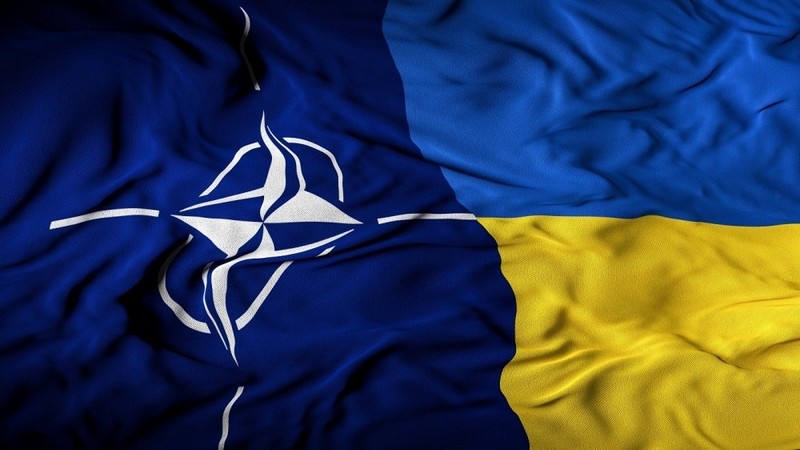
NATO foreign ministers met in Bucharest, Romania, on Tuesday, along with representatives of the prospective NATO members Ukraine, Finland, and Sweden to discuss a further expansion of the NATO war with Russia in Ukraine and the stationing of more troops on Russia’s Western borders.

“In response to Russia’s full-fledged invasion of Ukraine, we are raising the readiness of our troops,” said NATO Secretary-General Jens Stoltenberg at the start of the meeting. “And we have doubled the number of NATO battlegroups from four to eight. Including one here in Romania, led by France.”

“We have increased our presence on the ground, we have more presence in the air,” Stoltenberg said.

He continued, “Just last week, NATO Allies conducted an exercise to test air and missile defenses in Romania. Involving Spanish, Turkish and US aircraft, as well as French jets flying from the aircraft carrier Charles de Gaulle. Demonstrating how NATO Allies operate together and are ready to defend every inch, but also the airspace above NATO Allies.”

The “airspace above NATO Allies” is rapidly expanding, with Stoltenberg all but treating Finland and Sweden as members of NATO. He declared, “Their membership of NATO is a game-changer for the European security architecture. It will make them safer, our Alliance stronger and the Euro-Atlantic area more secure.”

Stoltenberg doubled down on NATO’s involvement in the war with Russia, saying, “So our message from Bucharest is that NATO will continue to stand with Ukraine for as long as it takes. We will not back down.”

Behind the scenes, these general pledges of expanded NATO involvement in the war are being filled out with concrete discussions to send US fighter jets, long-range missiles, and attack drones into the warzone.

In an article that appeared in Bloomberg, James Stavridis, NATO’s former Supreme Allied Commander Europe, declared that the “West’s best option will be to significantly increase its assistance to Ukraine on the air war side of the conflict.”

Stavridis claimed that NATO members are actively discussing sending US fighter jets to Ukraine, saying, “Leaders in NATO capitals are also revisiting an idea that was discarded in the early days of the war: providing either MiG-29 Soviet-era fighters (the Poles have offered to transfer them to the Ukrainians) or even US surplus F-16s, a simple-to-learn multi-role fighter.”

In an interview with Bloomberg, Latvian foreign minister Gabrielius Landsbergis said that NATO should “allow” Ukraine to strike targets inside of Russia, saying, “We should allow Ukrainians to use weapons to target missile sites or air fields from where those operations are being launched.” He added that NATO “should not fear” the response from Russia.

Ahead of the meeting, Landsbergis tweeted, “My message to fellow foreign ministers at today’s NATO meeting is simple: Keep calm and give tanks.”

Such calls were closely coordinated with demands by Ukrainian officials. “No eloquent speech will say more than concrete action. ‘Patriot’, ‘F-16’, or ‘Leopard’ for Ukraine,” tweeted presidential adviser Mykhailo Podolyak – referring to US F-16 fighter jets and German Leopard battle tanks.

A group of US senators have meanwhile issued a letter calling for the United States to provide lethal armed attack drones to Ukraine, the so-called “Grey Eagle,” which they praised for its “lethality.”

They note, most importantly, that armed Unmanned Aerial Systems (UAS) could find and attack Russian warships in the Black Sea.

They declare that “The MQ-1C, along with already provided long-range fires capabilities, provides Ukraine additional lethality needed to eject Russian forces and regain occupied territory.”

The signatories include Joe Manchin, a key Senate ally of US President Joe Biden, and Trump ally Lindsay Graham.

In an indication of the degree of tension surrounding the conflict, this week Russia canceled nuclear talks with the US at the last minute.

Deputy Foreign Minister Sergei Ryabkov said that “We are sending signals to the Americans that their line of escalation and ever deeper involvement in this conflict is fraught with dire consequences. The risks are growing.”

As the US intervenes ever more directly in the conflict, its military strategists are expressing their aims all the more bluntly. In an essay entitled “United States Aid to Ukraine: An Investment Whose Benefits Greatly Exceed its Cost,” veteran US geostrategist Anthony H. Cordesman acknowledges that “the war in Ukraine has become the equivalent of a proxy war with Russia.”

Cordesman explains that “the U.S. has already obtained major strategic benefits from aiding the Ukraine,” while “Russia is already paying far more of its Gross National Product and economy to fight the war in the Ukraine than the U.S. and its partners, and that Russia has suffered massive losses of weapons, war reserves, and military personnel.”

While Cordesman’s essay treats the deaths of Russian troops and the devastation of the Russian economy as a benefit, it does not anywhere factor in the cost in Ukrainian lives or the suffering inflicted on the Ukrainian population by the war.

Even as the US and NATO continue to pour weapons in to Eastern Europe, Russia has responded with weeks of strikes on Ukraine’s power and water infrastructure, leaving millions of people, including much of the capital of Kiev, without power in the freezing temperatures.

Originally published in WSWS.org

30 November 2022

Source: countercurrents.org

Jan Oberg in China Daily: Abolish NATO and Build Peace Instead

By Jan Oberg, Ph.D.

18 Nov 2022 – While most organisations are evaluated and reformed as time goes by, NATO isn’t. It has become sacrosanct and criticism of its operations silenced. In Western media, it is always called the ”defensive” alliance. It does not see itself as party to the conflict with Russia – but rather as an innocent property owner who protects himself against a burglar. This frees it from co-responsibility for the present, fateful situation.

The NATO-Russia conflict that plays out in Ukraine is grossly a-symmetric: NATO is 30 members with at least 12 times higher military expenditures than Russia. The former NATO Secretary-General, Anders Fogh Rasmussen, recently boasted that ”Putin knows that NATO spends 10 times more than Russia and NATO can beat him into a pulp.” Quite sensational given that NATO has always told us that Russia is a formidable threat.

After losing its raison d’etre in 1990, NATO has been expanding horisontally and vertically – ever more militarist. That breaks all the promises made to the last Soviet leader, Gorbachev, about not expanding ”one inch.” All Russian leaders have protested. So have eminent, knowledgeable security experts, former US politicians and ambassadors to Moscow. And no opinion poll in Ukraine has ever shown a majority for NATO membership.

NATO Secretary-General Stoltenberg states ad nauseam that countries must freely choose their security partnership. NATO never let Ukraine do so. Since 1991, NATO has been wooing, training, arming, financing, integrating and aiming at only one security arrangement for Ukraine: NATO membership

While Russia is responsible for the war in Ukraine, NATO is responsible for the underlying conflict – and that conflict is about the right to feel secure around one’s border and not be encircled. No NATO state would accept what NATO has expected Russia to accept.

Ukraine was the one too many expansions of the increasingly autistic alliance. Militarism has become the West’s new secular religion, NATO its church and the NATO elites with their intellectually empty summits as the congregation: You shall have no other gods but NATO!

NATO no longer bases itself on intellectual analyses. It states and postulates. Deterrence on which it builds is a basically offensive concept; it includes the ability to harm and kill the other on his territory – the opposite of common security and defensiveness. NATO’s ’defence’ ultimately rests on the right to first use of nuclear weapons even against a conventional or cyber attack. It has only one answer to every problem: More weapons.

NATO postulates threats and challenges. It does not argue them. China is a ’challenge’ because it has different interests and values. This means that NATO believes in universalising Western/Occidental values, making others like itself. The real problem is, however, that US/NATO cannot live without enemies. It seeks confrontation, not cooperation. At its moment of decline and coming fall, the West stands together in hate, enemy-making and armament – all negative energy – not in a vision of a better future.

Since 1949 when it was created, NATO has squandered trillions of dollars of taxpayers’ money, but it has not made them secure or created peace. NATO has 8% of the world’s population but consumes 57% of global military expenditures. We are closer than ever to a major war, perhaps involving nuclear weapons. The world must ask NATO: Why have you failed so miserably and what shall we do now – together? It’s a politico-intellectual task, not a military challenge to match.

There are other questions: The Russians have asked to become members of NATO in 1954, and so have Gorbachev, Yeltsin and Putin. Why has the door always been closed? Or, how come an organisation whose treaty is a copy of the UN Declaration (with Para 5 about mutual defence added) can violate its own Treaty every day and, for example, bomb Serbia and Kosovo, Libya and now expand violently into Ukraine?

China must calculate with another nasty factor: NATO’s evolving globalisation. It has 30 members, and future members have to be European, but it has 40 ”partners” over all continents. It’s the main US tool for maintaining global dominance. Now, the US is a declining empire bound to fall, but it can do a lot of harm before that happens.

The sad and risky fact is that the West does not have a single leader who can be trusted to preside grace- and peacefully over that process. Gorbachev could have used weapons, even nukes, when the Soviet game was over. But he was a man of ethics with a constructive vision about a new European peace and conflict-resolution structure. NATO cheated him.

The most dangerous aspects of the West’s crisis is the vicious circle of moral and intellectual disarmament and ever more military armament and militarism.

Therefore, we must all do what can be done to replace NATO with defensive defence, common security, early warning, mediation, civil conflict-resolution, a much stronger UN, peace academies and peace education. For our global common good, survival and peace.

Prof. Jan Oberg, Ph.D. is director of the Transnational Foundation for Peace and Future Research, TFF and a member of the TRANSCEND Network for Peace Development Environment.

5 December 2022

Source: www.transcend.org

Eight Reasons That Now Is a Good Time for a Ukraine Ceasefire and Peace Talks

By Medea Benjamin and Nicolas J. S. Davies

30 Nov 2022 As the war in Ukraine has dragged on for nine months and a cold winter is setting in, people all over the world are calling for a Christmas truce, harkening back to the inspirational Christmas Truce of 1914. In the midst of World War I, warring soldiers put down their guns and celebrated the holiday together in the no-man’s land between their trenches.This spontaneous reconciliation and fraternization has been, over the years, a symbol of hope and courage.

Here are eight reasons why this holiday season too offers the potential for peace and a chance to move the conflict in Ukraine from the battlefield to the negotiating table.

  1. The first, and most urgent reason, is the incredible, daily death and suffering in Ukraine, and the chance to save millions more Ukrainians from being forced to leave their homes, their belongings and the conscripted menfolk they may never see again.

With Russia’s bombing of key infrastructure, millions of people in Ukraine currently have no heat, electricity or water as temperatures drop below freezing. The CEO of Ukraine’s largest electric corporation has urged millions more Ukrainians to leave the country, ostensibly for just a few months, to reduce demand on the war-damaged power network.

The war has wiped out at least 35% of the country’s economy, according to Ukrainian Prime Minister Denys Shmyhal. The only way to halt the meltdown of the economy and the suffering of the Ukrainian people is to end the war.

  1. Neither side can achieve a decisive military victory, and with its recent military gains, Ukraine is in a good negotiating position.

It has become clear that U.S. and NATO military leaders do not believe, and possibly have never believed, that their publicly stated goal of helping Ukraine to recover Crimea and all of Donbas by force is militarily achievable.

In fact, Ukraine’s military chief of staff warned President Zelenskyy in April 2021 that such a goal would not be achievable without “unacceptable” levels of civilian and military casualties, leading him to call off plans for an escalation of the civil war at that time.

Biden’s top military advisor, Chair of the Joint Chiefs of Staff Mark Milley, told the Economic Club of New York on November 9, “There has to be a mutual recognition that military victory is probably, in the true sense of the word, not achievable through military means…”

French and German military reviews of Ukraine’s position are reportedly more pessimistic than U.S. ones, assessing that the current appearance of military parity between the two sides will be short-lived. This adds weight to Milley’s assessment, and suggests that this could well be the best chance Ukraine will get to negotiate from a position of relative strength.

  1. U.S. government officials, especially in the Republican Party, are starting to balk at the prospect of continuing this enormous level of military and economic support. Having taken control of the House, Republicans are promising more scrutiny of Ukraine aid. Congressman Kevin McCarthy, who will become Speaker of the House, warned that Republicans would not write a “blank check” for Ukraine. This reflects the growing opposition at the base of the Republican Party, with a Wall Street Journal November poll showing that 48% of Republicans say the U.S. is doing too much to help Ukraine, up from 6% in March.
  2. The war is causing upheavals in Europe. Sanctions on Russian energy have sent inflation in Europe skyrocketing and caused a devastating squeeze on energy supplies that is crippling the manufacturing sector. Europeans are increasingly feeling what German media call Kriegsmudigkeit.

This translates as “war-weariness,” but that is not an entirely accurate characterization of the growing popular sentiment in Europe. “War-wisdom” may describe it better.

People have had many months to consider the arguments for a long, escalating war with no clear endgame—a war that is sinking their economies into a recession—and more of them than ever now tell pollsters they would support renewed efforts to find a diplomatic solution. That includes 55% in Germany, 49% in Italy, 70% in Romania and 92% in Hungary.

  1. Most of the world is calling for negotiations. We heard this at the 2022 UN General Assembly, where one after another, 66 world leaders, representing a majority of the world’s population, eloquently spoke out for peace talks. Philip Pierre, Prime Minister of Saint Lucia, was one of them, pleading with Russia, Ukraine and the Western powers “to immediately end the conflict in Ukraine, by undertaking immediate negotiations to permanently settle all disputes in accordance with the principles of the United Nations.”

As the Amir of Qatar told the Assembly, “We are fully aware of the complexities of the conflict between Russia and Ukraine, and the international and global dimension to this crisis. However, we still call for an immediate ceasefire and a peaceful settlement, because this is ultimately what will happen regardless of how long this conflict will go on for. Perpetuating the crisis will not change this result. It will only increase the number of casualties, and it will increase the disastrous repercussions on Europe, Russia and the global economy.”

  1. The war in Ukraine, like all wars, is catastrophic for the environment. Attacks and explosions are reducing all kinds of infrastructure–railways, electrical grids, apartment buildings, oil depots–to charred rubble, filling the air with pollutants and blanketing cities with toxic waste that contaminates rivers and groundwater.

The sabotage of Russia’s underwater Nord Stream pipelines supplying Russian gas to Germany led to what may have been the largest release of methane gas emissions ever recorded, amounting to the annual emissions of a million cars. The shelling of Ukraine’s nuclear power plants, including Zaporizhzhia, the largest in Europe, has raised legitimate fears of deadly radiation spreading throughout Ukraine and beyond.

Meanwhile, US and Western sanctions on Russian energy have triggered a bonanza for the fossil fuel industry, giving them a new justification to increase their dirty energy exploration and production and keep the world firmly on course for climate catastrophe.

  1. The war has a devastating economic impact on countries across the world. The leaders of the world’s largest economies, the Group of 20, said in a declaration at the end of their November summit in Bali that the Ukraine war “is causing immense human suffering and exacerbating existing fragilities in the global economy — constraining growth, increasing inflation, disrupting supply chains, heightening energy and food insecurity and elevating financial stability risks.”

Our long-standing failure to invest the relatively small proportion of our resources required to eradicate poverty and hunger on our otherwise rich and abundant planet already condemns millions of our brothers and sisters to squalor, misery and early deaths.

Now this is compounded by the climate crisis, as entire communities are washed away by flood waters, burned out by wildfires or starved by multi-year droughts and famines. International cooperation has never been more urgently needed to confront problems that no country can solve on its own. Yet wealthy nations still prefer to put their money into weapons and war instead of adequately addressing the climate crisis, poverty or hunger.

  1. The last reason, which dramatically reinforces all the other reasons, is the danger of nuclear war. Even if our leaders had rational reasons to favor an open-ended, ever-escalating war over a negotiated peace in Ukraine – and there are certainly powerful interests in the weapons and fossil fuel industries that would profit from that – the existential danger of what this could lead to absolutely must tip the balance in favor of peace.

We recently saw how close we are to a much wider war when a single stray Ukrainian anti-aircraft missile landed in Poland and killed two people. President Zelenskyy refused to believe it was not a Russian missile. If Poland had taken the same position, it could have invoked NATO’s mutual defense agreement and triggered a full-scale war between NATO and Russia.

If another predictable incident like that leads NATO to attack Russia, it can only be a matter of time before Russia sees the use of nuclear weapons as its only option in the face of overwhelming military force.

*****

For these reasons and more, we join the faith-based leaders around the world who are calling for a Christmas Truce, declaring that the holiday season presents “a much-needed opportunity to recognize our compassion for one another. Together, we are convinced that the cycle of destruction, suffering and death can be overcome.”

Medea Benjamin is cofounder of CODEPINK for Peace, and author of several books, including Inside Iran: The Real History and Politics of the Islamic Republic of Iran.

Nicolas J. S. Davies is an independent journalist, a researcher with CODEPINK and the author of Blood on Our Hands: The American Invasion and Destruction of Iraq.

5 December 2022

Source: www.transcend.org

David Ray Griffin (8 Aug 1939 – 26 Nov 2022)–The Man and His Work: A Synopsis

By Elizabeth Woodworth

2 Dec 2022 – How big can a mind be?

If we’re lucky, we have threescore and ten years — in a very big wide world, full of history — to experience as much as we can take in.

Threescore-ten is not nearly enough, but some extraordinary people manage to encompass and give order to a lot of it.

And some even more extraordinary people manage to rise above their own lives to interpret creation and the fabric of the universe as having consistent meaning across cultures and throughout the ages.

David Ray Griffin was Professor of Philosophy of Religion and Theology, at the Claremont School of Theology and Claremont Graduate University, from 1973-2004. With his senior, Dr. John Cobb Jr., he co-founded the Center for Process Studies in 1973.

Griffin has stated that “the task of a theologian is to look at the world from what we would imagine the divine perspective, one that would care about the good of the whole and would love all the parts.”

Not only was David an outstanding theologian and one of the two best-known living scholars of Alfred North Whitehead’s process theology (the other being John Cobb): His books also spanned the related fields of postmodernism, theodicy (defence of God against evil), primordial truth, panentheism, scientific naturalism, parapsychology, Buddhist thought, and the mind-body interaction.

About the time that he retired in 2004, he was approached by some people who admired his candor, and pointed to evidence that the 9/11 event was highly suspicious.

At first David thought that 9/11 was simply blowback from the way America had treated the Middle East — but upon researching it more deeply he realized that there was indeed a very serious likelihood that the US had contrived 9/11 as a false flag operation to manufacture consent to occupy Afghanistan and Iraq for their oil.

This injustice fired his energy to research in depth, then write a dozen scholarly books on 9/11 — books that were not acknowledged in the media but which engaged in a cat-and-mouse game with the purveyors of the official 9/11 narrative, who continually adapted their story to cover up the weaknesses that David tracked and revealed as their tattered narrative evolved.

The first and most famous of these books was The New Pearl Harbor: Disturbing Questions about the Bush Administration and 9/11, published by his much-appreciated Interlink press in March 2004.

That best-seller was followed in 2005 by a devastating takedown of the Bush Administration’s whitewash Commission titled The 9/11 Commission Report: Omissions and Distortions, which exposed 115 problems in “the 571-page lie”.

Following these early 9/11 works, David was nominated for the Nobel Peace Prize in both 2008 and 2009, and was named among “The 50 People Who Matter Today” by the New Statesman, on September 24, 2009.

In November, 2008, David’s seventh book about 9/11, The New Pearl Harbour Revisited, was one of only 51 books awarded as “pick of the week” that year by Publishers Weekly.

What followed was extraordinary.

As the foremost book reviewing tool in the English language, Publishers Weekly’s spotlight should have led to reviews in the New York Times, the Times Literary Supplement, Library Journal, and many other top reviewing sources — but the word was out in the narrative-controlled media to give it a pass.

In 2011, David and I founded an organization called the 9/11 Consensus Panel, comprised of more than 20 professionals expert in various aspects of the 9/11 attacks. In 2018, the 51 consensus points that were developed during this unique evidence-based reviewing project were published under the title 9/11 Unmasked: An International Review Panel Investigation (2018).

During that seven-year project, David addressed the existential crisis of climate change, penning his encyclopaedic 2015 reference, Unprecedented: Can Civilization Survive the CO2 Crisis? (I took that book to the COP21 Paris climate summit in 2015, and presented it there, following up with a YouTube documentary on that enormous gathering of humanity – the largest meeting since World War II.)

David then turned his attention to US imperialism – writing Bush and Cheney: How They Ruined America and the World in 2016, and producing the incredible work of scholarship, The American Trajectory: Divine or Demonic, in 2018.

David was at last able, in 2019, to turn to his long-planned The Christian Gospel for Americans: A Systematic Theology. It is a magnum opus of enormous breadth and depth.

In it, for example, he confronts the science vs religion issue, showing that some scientists – former atheists – have been overwhelmed by the extent of exceedingly precise ratios between the chemical elements of earth that are required for life, to now saying that the universe was “fine-tuned for life,” thus reflecting a “fine-tuner” (or divine creator).

In 2022, as he approached the end of his life, and following a long struggle with prostate cancer, David wrote the beautiful and crowning reflections of his maturing theology, James and Whitehead on Life after Death.

In the spirit of James and Whitehead, he explains that the universe is not separate from, but is within God, and is itself the very nature of God. This evolving world view requires a new understanding of the divine reality – panentheism, meaning “all in God”.

The causal principles of the universe exist naturally, being inherent in the nature of things, because they exist in the very nature of God.

This chapter on the infinitely fine-tuned nature of the universe to support life is a transporting gift.

But he was not done yet!

Forthcoming in March, 2023, from the publisher Clarity Press, is David’s America on the Brink: How the US Trajectory Led Fatefully to the Russia-Ukraine War – which was completed during the last days of his life.

In total David Ray Griffin has written 50 books and more than 200 essays. (He was once asked if he had ever had an unpublished thought!)

In all of his books – and most notably those on American imperialism – he read and cited recent scholarly investigations from top university presses, effectively overriding the propaganda that has passed down through many years.

Paul Craig Roberts wrote: “David has served truth to the hilt. He is a hero of our time.”

There is no question that his body of work will go down in history as providing some of the most elegant thinking our century has witnessed.

And at some point, his chronicling of historically suppressed truths must emerge into full daylight, to allow reality-based civilization to advance.

Let us keep his work alive, so that earth’s future peoples will inherit the great spectrum of wisdom he has left them: from a hopeful common-sense theology, to the exposés of imperialist propaganda and false flag operations, to the full extent of the climate crisis, to our evolving perception of the nature of the divine, to the evidence that our spirits will survive after death.

David Griffin stands with the greats – yet was quiet, humorous, down to earth, and unassuming.

Elizabeth Woodworth, a career medical librarian and author/co-author of five books, worked with David Ray Griffin in various capacities from 2006-2022.

5 December 2022

Source: www.transcend.org

Israel Has Jailed 50,000 Palestinian Children since 1967, and the Number of Detentions Is Growing Rapidly: Report

By Juan Cole

23 Nov 2022 – The Palestinian Commission on Detainees and Ex-Detainees released a report for World Children’s Day on the routine Israeli arrest and jailing of minors, saying that Palestinian children are not secure from being constantly targeted by Israeli security forces. The Commission report found a worrying and massive increase in the rate of Israeli detentions of minors. The report says that there has been a large increase in such detentions since the Palestinian protests of 2015, and that they appear to be concentrating on children from Palestinian East Jerusalem, which was seized by Israel in 1967 and is militarily occupied and has been illegally annexed. These children detainees function as hostages for the good behavior of their relatives, which is a form of collective punishment that is illicit in international law.

The Commission estimates that since 1967, Israeli forces have incarcerated over 50,000 Palestinian children. They have also wounded and killed Palestinian minors. Some 20,000 of these children have been jailed since the year 2000, the outbreak of the second Intifada or uprising in the Palestinian West Bank. Some 9,000 minors have been imprisoned since the 2015 demonstrations in Jerusalem, and most of them are from East Jerusalem.

This year alone, 770 Palestinian minors have been detained in Israeli jails, and in October 119 were imprisoned.

The Palestinian Commission on Detainees and Ex-Detainees says that at this moment about 160 Palestinian children are languishing in Israeli prisons. Three of these are girls, two sixteen-year-olds and one seventeen-year-old, two of them from Al-Khalil / Hebron. Four of the minors are held under the illegal Israeli practice of “administrative detention,” under which individuals can be held in prison for an indefinite amount of time with no formal charges being filed against them and no opportunity for a trial.

Article continues after bonus IC video

Al Jazeera English: “Palestinian children in Israeli jails and detention centres”  

“Administrative detention” is a violation of the principle of habeas corpus, which requires that the government produce those arrested and bring them before a judge or release them. This principle is recognized by all democratic countries and is enshrined in the International Declaration of Human Rights. Despite the characterization of Israel as a “democracy,” it isn’t really any such thing, and lack of habeas corpus is one reason why. Another is that it keeps 5 million people under its rule stateless and without basic human rights.

The Palestinian Commission on Detainees points out that some persons arrested as a minor languish in jail for many years, becoming adults while on the inside.

The Commission accuses Israeli authorities of brutalizing these minors in prison, with either corporal punishment or psychological abuse. These forms of brutality are intended to get the children to confess orally or in writing to the charges Israeli authorities have laid against them, under conditions that would get such confessions thrown out of court in the civilized world.

Israeli practices in detaining and jailing minors violate the 1959 Declaration of the Rights of the Child, passed by the UN General Assembly, as well as other human rights instruments.

They give the sad example of Fatima Taqatiqa, 15, from a village near Bethlehem, who was wounded and nevertheless arrested, and who died in prison in 2017.

Some children are sentenced to house arrest, a practice that has turned hundreds of Palestinian homes in East Jerusalem into prisons.

Juan Cole is the founder and chief editor of Informed Comment.

28 November 2022

Source: www.transcend.org


Biden Sides with Trump in Killing Obama’s Iran Nuclear Deal

By Patrick Lawrence

27 Nov 2022 – Among our mentally impaired president’s more prominent campaign pledges during the 2020 political campaigns was that his national security people would negotiate America’s return to the multi-sided accord governing Iran’s nuclear programs. Without hesitation, I offered excellent odds that this would stand tall in Joe Biden’s forest of broken promises. It was a wager I truly did not want to win.

And now it seems I have.

Events over the past several weeks, in the U.S. and in Israel, indicate strongly that the Biden administration has decided to drop all notion of reviving the Joint Comprehensive Plan of Action, the JCPOA, as the 2015 agreement is called. In effect, Biden will hold to the position Donald Trump took when he pulled the U.S. out of the pact in 2018.

This brings us straight back to those dangerous years when recklessly risky covert operations in the Islamic Republic and the threat of open conflict were the norm. But what is a little more existential peril when Washington is all but directly confronting the world’s most heavily nuclearized nation by way of a wildly irresponsible regime located on Russia’s doorstep? I suppose we can look at it this way.

I knew all along I had made a safe bet on the fate of the Iran accord. Given the way Biden has operated over his half-century career, if he says he is going to do something it is a fairly good sign he has no intention of doing it. And there seemed to me no way an American pol so deep in the Israelis’ pocket would take any step that would displease the apartheid state’s savagely anti–Iran leadership.

This is a man who famously proclaims “You need not be a Jew to be a Zionist”—an assertion of his position he repeated during a state visit to Israel but four months ago. This is also a man who long ago learned how to manipulate Capitol Hill politics to his own advantage.

I know it is asking a lot, but readers may cast their minds far, far back to the forgotten days of “Build Back Better,” the second coming of FDR, and all that. It seemed perfectly obvious that Biden knew he could make all the extravagant promises he thought politically expedient because he also knew few to none of them would ever make it through the houses of Congress.

It was the same with the idea of bringing the U.S. back into the JCPOA. The lying dog-faced pony soldier who moved into the White House in January 2021 knew he could commit to reviving the accord with no chance his administration would ever do so. As soon as Biden assumed office and named his national security detail it was perfectly evident that Israel would be running their Iran policy.

Bibi Netanyahu was prime minister at the time, readers will recall, and he made it explicitly clear on repeated occasions during Biden’s early months in office that his Israel would never accept a restored or even renegotiated JCPOA. From then onward, the fate of the accord has been color by number.

The U.S. went ahead with new talks with the Islamic Republic, beginning in April 2021 and continuing well into this year. These were conducted indirectly in a Geneva hotel, with European diplomats running room to room as go-betweens. The American negotiators were led by Robert Malley, a seasoned conflict-resolution man with a pretty good record.

Details of just what was in the new accord—what of the original limits on Iran’s nuclear development, what was added to them—were never made clear. Iran’s preoccupation during the Geneva talks was with a guarantee that sanctions relief it would receive in exchange for its concessions would not be withdrawn when one Washington administration gave way to another—Tehran having taken the Trump withdrawal as a stinging betrayal.

Josep Borrell, the European Union’s foreign policy director, announced last August that he had in hand what he described as a draft of a final agreement to restore the JCPOA. “What can be negotiated has been negotiated,” the Spanish bureaucrat declared. For a short while after that I began to worry I might lose my money: Maybe they would pull this off after all.

No chance. On August 24, a couple of weeks after the Borrell announcement, the bubble burst. Ned Price, the State Department spokesman, stated—deadpan, no detail—that the U.S. had sent a response to the draft Borrell was waving around. John Kirby then signaled that the U.S. would keep a safe distance from it. “Gaps remain,” Biden’s “strategic communications” man declared. “We’re not there yet.”

And then came Israeli PM Yair Lapid, who, like Netanyahu, is of the right-wing Likud party. “A bad deal,” he said of the draft. The diplomats in Geneva “must stop and say ‘Enough.’” The new outline “does not meet the standards set by Biden himself, preventing Iran from becoming a nuclear state.”

Note the language of a leader whose nation was party neither to the original agreement nor to the new negotiations: To his mind, what would constitute a good deal could not be limited to banning a nuclear weapons program; Israel would insist Iran must not have a nuclear program of any kind, even one limited to peaceful purposes—energy production, advanced medical procedures, and the like. Three months later, nearly to the day, we read this David Sanger piece published in Sunday’s New York Times:

“Now, President Biden’s hope of re-entering the United States into the deal with Iran that was struck in 2015, and that Donald J. Trump abandoned, has all but died…. At the White House, national security meetings on Iran are devoted less to negotiation strategy and more to how to undermine Iran’s nuclear plans, provide communications gear to protesters and interrupt the supply chain of weapons to Russia, according to several administration officials…. ‘There is no diplomacy right now under way with respect to the Iran deal,’ John Kirby, a spokesman for the National Security Council at the White House, bluntly told Voice of America last month.”

Sanger, who has followed the Iran question for many years and who consistently reflects the national security state’s perspective, asserts, “A new era of direct confrontation with Iran has burst into the open.”

In the Iran context, “direct confrontation,” should readers need reminding, is a phrase weighing roughly the same as one of those F–35 jets the U.S. sells to the Israeli Defense Forces.

Sanger’s piece explains what is supposed to be an abrupt turn away from the JCPOA talks by noting the Tehran government’s tough responses to recent protests in the capital and other cities, Iran’s sales of drones to Russia, and violations of Iraqi territory—yes, believe it, the U.S. gets very upset when it hears of violations of Iraqi territory. Most worrisome, it seems, is that Iran intends to enrich uranium to “near bomb grade”—not bomb grade—at a facility called Fordow that is built inside a mountain.

The problem with Fordow, Sanger writes, is that it is “hard to bomb.” I am reminded of a remark Netanyahu made in response to Iran’s development of missile defense systems a few years ago. These will make it hard for us to attack, Bibi complained. How dare those Iranians.

To be clear about these matters, the recent unrest in Iran is three things: justified, unfortunate given the official repression it prompts, and none of the Biden administration’s business if you subscribe, as I do, to the principle of nonintervention in the internal affairs of other nations. Iran’s drone sales to Russia reflect the steady elaboration of the bilateral relationship and simply do not hold up as an excuse to shut down the Geneva diplomatic process.

As to Iran’s enrichment programs, we’ve been around this any-moment-they-will-build-a-bomb bit for too many years to count. Far down in Sanger’s piece, where this stuff always appears, we read, “The United States recently issued an assessment that it had no evidence of a bomb-making project underway.” I love Sanger’s comeback after writing that obligatory sentence: But maybe the intelligence is wrong, he suggests.

Nowhere in Sanger’s report—as nowhere in all mainstream reporting, indeed—do we read that Iran condemns nuclear weapons as a matter of religious principle and national defense doctrine. Just a small matter of no particular account.

My take on Iran’s nuclear intentions, for the record, remains what is has been for many years: The Islamic Republic has no ambition to build a nuclear bomb but would find it a useful deterrent—and who wouldn’t with Israel next door?—were it to develop the capacity to build one.

The Biden administration has all along had to give the appearance of a genuine effort in Geneva, and maybe Malley’s work was so. But it is the same, again, as with Build Back Better: We tried to give Americans what they want and need, but Congress blocked us. In the Iran case, after months of diplomatic footsie, the recent developments David Sanger cited presented a convenient out: We tried to negotiate with these people, but then… and then… and then…

The timing of this turn in the administration’s public presentation of its Iran policy merits brief attention. Israel’s legislative elections earlier this month have opened the way for Netanyahu, still obsessed with attacking Iran, to return to power. As none other than Tom Friedman noted in “The Israel We Knew Is Gone,” the new government he appears likely to head will be an absolute freak show—“a rowdy alliance of ultra–Orthodox leaders and ultranationalist politicians, including some outright racist, anti–Arab Jewish extremists once deemed completely outside the norms and boundaries of Israeli politics.”

It is impossible to imagine—or I find it impossible, anyway—that the Biden administration’s decision to abandon negotiations on the Iran nuclear accord, apparently promising only a few months ago, is not primarily a reflection of this turn in Israeli politics.

Americans and Israelis have already trained for an attack on Iran’s nuclear facilities. Ehud Barack, a former Israeli defense minister, let it be known years ago that Netanyahu planned military strikes on three occasions—2010, 2011, and 2012—but was foiled by inopportune circumstances or reluctant officers.

The JCPOA talks in Geneva, apart from their stated intent, represented an open channel between Washington and Tehran. I recall John Kerry, Obama’s secretary of state, declaring after the accord was signed in mid–July 2015 that it was a door through which other matters could be addressed.

What will come now, as the Biden administration closes this door? To watch and pray is all I can think to do.

Patrick Lawrence, a correspondent abroad for many years, chiefly for the International Herald Tribune, is a columnist, essayist, author and lecturer.

28 November 2022

Source: www.transcend.org

Why German State Racism Is Now Directed at the Palestinians

By Jonathan Cook

The Holocaust serves, paradoxically, as an alibi for Europeans to assume they are morally superior to others, as the cancellation of an arts prize to Caryl Churchill shows.

23 Nov 2022 – There are troubling insights to be gained into modern European racism from the German arts community’s decision to revoke a lifetime achievement award to the respected British playwright Caryl Churchill over her trenchant support for the Palestinians.

On 31 October, Churchill was stripped of the European Drama Prize she had been given in April in recognition of her life’s work. The decision was backed by Petra Olschowski, the arts minister of the state of Baden-Wurttemberg, who said: “We as a country take a clear and non-negotiable stance against any form of antisemitism. This is all the more reason why a prize funded by the state cannot be awarded under the given circumstances.”

The jury – comprising eminent figures in German cultural life – said they had had their attention drawn, since making the award, to two problems. First, Churchill had backed BDS, a Palestinian grassroots movement calling for a boycott of Israeli institutions directly involved in Israel’s decades-long oppression of the Palestinians.

Back in 2019, an overwhelming majority of the German parliament designated support for BDS as “antisemitic”.

And second, the panel had been reminded of a short play called Seven Jewish Children, written 13 years ago in the immediate aftermath of Israel’s savage and extended bombardment of Gaza’s besieged Palestinian population in the winter of 2008-09. In a statement, the German jury said the play could “be regarded as being antisemitic”.

In Churchill’s now largely forgotten play, Jewish parents articulate their trauma generation by generation.

Palestinians are not present. They are shadows. They are the referred pain of a wound from Europe. Instead, the play contextualises the suffering in Gaza through a series of monologues as each generation of Jewish parents struggles to decide what they should tell their children and what realities they should hide – be it about the horrors of Europe, the crimes involved in the creation of Israel, or the bombardment of Gaza.

The play hints at uncomfortable truths: that the oppressed can turn into oppressor; that traumas do not necessarily heal or enlighten; and that their effects can be complex and paradoxical.

Friends to tormentors

One conclusion to draw from the revocation of Churchill’s award – the latest episode in Europe’s endless “antisemitism rows” – is that German elites, who control the public discourse, have signally failed to internalise the Holocaust’s key lesson.

It is a universal one: that we should never tolerate the demonisation of oppressed and marginalised groups, or those who stand in solidarity with them, especially when the state itself or its representatives are behind such demonisation. That way lies pogroms and gas chambers.

How has support for the Palestinian cause of BDS – for boycotts of those directly involved in Israel’s decades-long oppression and ethnic cleansing of the Palestinians – come to be reinterpreted as racism against Jews?

This, of course, is not a uniquely German failing. Most western states – including the US, France and Britain – have willingly conflated criticism of Israel over its oppression of Palestinians with antisemitism, and sought to silence or criminalise calls to punish Israel through boycotts.

But this failure ought to be all the more surprising given the enormous efforts Germany has expended over many decades in Holocaust education, supposedly to eradicate the susceptibility of Germans to state-sponsored racism. How have they switched – so easily, it seems – from one kind of state-sanctioned racism, antisemitism, to another kind, anti-Palestinian racism?

But even more paradoxically, Germany has smeared not just Palestinians and their supporters through its crackdown on BDS, but Jews too. It treats them all as inherently responsible for the actions of Israel, a state that no more represents all Jews than Saudi Arabia represents all Muslims.

Germany’s ostentatious philo-semitism – expressed in its reflexive support for Israel – is simply antisemitism-in-waiting. If Jews are viewed as intrinsically tied to Israel’s actions, then their fate depends on how Israel is viewed at any particular moment. Should western elites support Israel, as they do now, then Jews are safe. Should western elites turn against Israel, then Jews are not safe.

Crucially, what Caryl Churchill and the vast majority of Palestinians and their supporters are highlighting is that Israel and “the Jews” are not the same. Criticism of Israel is not criticism of Jews. And those who claim it is are playing with fire. They are providing the conditions for those they now regard as friends to later become their tormentors.

‘Reeks of fascism’

So how has Germany reached the point where it can cancel an award to a renowned playwright – and smear her as antisemitic – because she supports the right of Palestinians to freedom and dignity and because she wishes to speak out against their silencing in Europe? How has Germany so casually, so unthinkingly, become racist towards Palestinians and their supporters, and once again to Jews?

As Mike Leigh, a famous British film director who is Jewish, has observed in Churchill’s defence, the decision to revoke the prize “reeks of the very fascism it affects to oppose”. There is a wider context to Germany’s repurposing of its racism.

The same elites who were attracted to a worldview that blamed the Jews, and others, for the subversion of a supposed “Aryan civilisation” are now attracted to a worldview that blames Muslims – including Palestinians (not all of whom are Muslim, it is too often forgotten) – for the subversion of European civilisation.

This monochrome worldview is appealing because it sweeps aside complexity and offers simple solutions that turn the world upside down and place the oppressor, western elites, on the side of Good and those they oppress on the side of Evil. Back in the 1930s and 1940s those solutions propelled Germany towards the horrors of the death camps.

The same racism that fuelled the Holocaust does not, of course, have to lead precisely to another industrial-scale genocide. That supreme crime has nephews and nieces, some of whom ostensibly look less ugly than their older relative. It can lead to exclusion, demonisation and McCarthyism, all of which serve as a prelude to worse crimes.

In our supposedly more enlightened age, the same Manichean impulse divides the world into camps of good and evil. Into “white” European natives versus Muslim and Arab invaders. Into moderates versus extremists. And somehow, conflated with these other categories, it pits supporters of Israel against “antisemites”.

To the dark side

This is no accident. Israel has helped to cultivate this divide, while its supporters have richly exploited it. Israel has provided the cover story for western elites to engineer a supposedly civilisational confrontation between West and East, between the Judaeo-Christian world and the Muslim world, between humanism and barbarism, between good and evil.

This morality tale, paradoxically with the Holocaust serving as its prequel, has been written to reassure western publics of their leaders’ benevolence. It suggests that through its repentance, Germany – the epicentre of the genocide of the Jews – cleansed itself and the rest of Europe of its sins.

Perversely, the industrialised crime of the Holocaust serves as the alibi for an enlightened Europe. The barometer of German and European atonement and redemption is their reflexive support for Israel. To back Israel uncritically is supposedly proof that today’s Europe is morally superior to a global south in which many condemn Israel.

Through Israel’s creation, according to this morality tale, Europe did not perpetuate its racism – by relocating its victims to another region and turning them into the tormentors of the native population. No, Europe turned over a new leaf. It made amends. Its better nature triumphed.

To bolster this improbable story, to breathe life into it, a yardstick of difference was needed. Just as “the Jews” once served that purpose by contrasting a pure Aryan race from a supposedly degenerate Jewish one, now the Muslim world is presented as the antithesis of an advanced white European civilisation.

And anyone who sides with those oppressed by Israel – and by a colonial West that inserted a self-declared Jewish state into the Middle East by destroying the Palestinians’ homeland – must be cast out, as Churchill has been by Germany. Such people are no longer part of an enlightened Europe. They have gone over to the dark side. They are traitors, they are antisemites.

‘Confected outrage’

This story, absurd as it sounds, carries great weight outside Germany too. One need only remember that a very short time ago a British political leader, Jeremy Corbyn, came within sight of power before he was crushed by the same antisemitism smears faced by Churchill.

But there is a notable difference.

In the case of Churchill, it has been harder to contain the backlash – at least outside Germany. Prominent artists, including Jewish actors, directors and writers, have rushed to her defence.

Perhaps more surprising still, so have liberal media outlets in Britain, such as the Guardian, which, according to research, was as deeply invested as the rest of the establishment media in undermining Corbyn and the anti-racist, anti-imperialist left he briefly led.

Take, for example, this comment from Dominic Cooke, an associate director at the National Theatre, defending Churchill’s play Seven Jewish Children, which he directed at the Royal Court.

He is quoted sympathetically by the Guardian: “The confected outrage about Caryl’s play was designed to divert attention away from this fact [the large Palestinian death toll caused by Israel’s bombardment of Gaza in 2009] and scare possible critics of it into silence.”

He is right. But the “confected outrage” directed at Churchill is exactly the same confected outrage that was directed at Corbyn – a confected outrage designed in Corbyn’s case both to divert attention from the former Labour leader’s anti-imperial opposition to Israel’s oppression of the Palestinians and to scare leftwing critics of Israel into silence.

In Labour’s case, simply noting that the outrage had been “confected” – or weaponised – was sufficient grounds to suspend or expel party members for antisemitism. In fact, it was precisely Corbyn’s comment about the problem of antisemitism being “dramatically overstated” for political reasons that ultimately served as the pretext to oust him from the Labour parliamentary party.

Timid cultural world

There are reasons why prominent artists and establishment media outlets such as the Guardian are coming to the defence of Churchill in a way, and using a forthrightness, they avoided with Corbyn.

In a very real sense, the fight to stand up for Palestinians culturally and artistically is now largely a lost cause. Who can imagine Seven Jewish Children being produced in the West End now, as it was 13 years ago? Or Peter Kosminsky, another Jewish signatory of the letter defending Churchill, being allowed to make The Promise, as he was 11 years ago by Channel 4, a drama series that revealed the full panorama of violence associated with Israel’s creation and its occupation?

Our cultural world is once again far more timid, more intimidated, in exploring and representing the realities of Palestinian suffering, paradoxically even as those realities are better understood than ever before because of social media.

The other reason Churchill is receiving the kind of support denied to Corbyn is that the cancellation of her award is really a skirmish on the margins of the fight to give voice to Palestinian oppression – the reason the Guardian can afford to indulge it. Defending a respected, elderly playwright from the accusation of antisemitism for a play that was quickly erased from memory incurs no real cost.

Far more was at stake in the battle to defend Corbyn. He had the potential power – had he become prime minister – to make real amends for European colonialism, to really atone, by denying British support and arms for Israel to perpetuate that colonialism in the Middle East and continue its oppression of the Palestinians.

More likely, however, had Corbyn been able to form a government, and been in a position to challenge Europe’s collusion in Israel’s crimes against the Palestinians, he would have faced even more savage resistance than he endured as Labour leader – and not just from the British establishment but from a wider western one.

That would have risked exposing as a myth the morality tale Europeans have been encouraged to tell about themselves. It would have risked highlighting the absurdity of the Holocaust alibi for European moral superiority.

Caryl Churchill has been stripped of her award because state-sponsored racism still lies at the heart of the European project. Europe’s racism was never cleansed. The seeds of fascism did not go away. They simply need a new time and purpose to flourish once more.

Jonathan Cook is an award-winning British journalist based in Nazareth, Israel, since 2001.

28 November 2022

Source: www.transcend.org