Just International

No Starvation for Oil

By Kathy Kelly

As President Joe Biden embarks on his trip to the Middle East, those of us back home must acknowledge that a “sensitive” trip would visit the victims rather than the butchers.

President Joe Biden’s foreign policy advisors are applauding themselves for devising a “sensitive” itinerary as he plans to embark on a trip to the Middle East on July 13.

In a Washington Post op-ed, Biden defended his controversial planned meeting with Saudi Arabia’s Crown Prince Mohammed bin Salman Al Saud (known as MBS), saying it is meant not only to bolster U.S. interests but also to bring peace to the region.

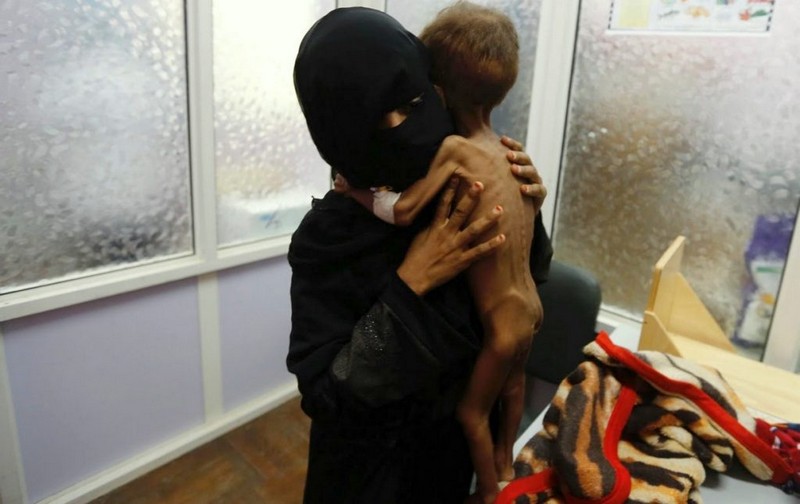
It seems that his trip will not include Yemen, though if this were truly a “sensitive” visit, he would be stopping at one of Yemen’s many beleaguered refugee camps. There he could listen to people displaced by war, some of whom are shell-shocked from years of bombardment. He could hear the stories of bereaved parents and orphaned children, and then express true remorse for the complicity of the United States in the brutal aerial attacks and starvation blockade imposed on Yemen for the past eight years.

From the vantage point of a Yemeni refugee camp, Biden could insist that no country, including his own, has a right to invade another land and attempt to bomb its people into submission. He could uphold the value of the newly extended truce between the region’s warring parties, allowing Yemenis a breather from the tortuous years of war, and then urge ceasefires and settlements to resolve all militarized disputes, including Russia’s war in Ukraine. He could beg for a new way forward, seeking political will, universally, for disarmament and a peaceful, multipolar world.

More than 150,000 people have been killed in the war in Yemen, 14,500 of whom were civilians. But the death toll from militarily imposed poverty has been immeasurably higher. The war has caused one of the worst humanitarian crises in the world, creating an unprecedented level of hunger in Yemen, where millions of people face severe hardship.

Some 17.4 million Yemenis are food insecure; by December 2022, the projected number of hungry people will likely rise to nineteen million. The rate of child malnutrition is one of the highest in the world, and nutrition continues to deteriorate.

I grew to understand the slogan “No Blood for Oil” while living in Iraq during the 1991 Operation Desert Storm war, the 1998 Desert Fox war, and the 2003 Shock and Awe war. To control the pricing and the flow of oil, the United States and its allies slaughtered and maimed thousands of Iraqi people. Visits to Iraqi pediatric wards from 1996 to 2003 taught me a tragic expansion of that slogan. We must certainly insist: “No Starvation for Oil.”

During twenty-seven trips to Iraq, all in defiance of the U.S. economic sanctions against Iraq, I was part of delegations delivering medicines directly to Iraqi hospitals in cities throughout the country. We witnessed the ghastly crime of punishing children to death for the sake of an utterly misguided U.S. foreign policy. The agony endured by Iraqi families who watched their children starve has now become the nightmare experience of Yemeni families.

It’s unlikely that a U.S. President or any leader of a U.S-allied country will ever visit a Yemeni refugee camp, but we who live in these countries can take refuge in the hard work of becoming independent of fossil fuels, shedding the pretenses that we have a right to consume other people’s precious and irreplaceable resources at cut rate prices and that war against children is an acceptable price to pay so that we can maintain this right.

We must urgently simplify our over-consumptive lifestyles, share resources radically, prefer service to dominance, and insist on zero tolerance for starvation.

This article first appeared in The Progressive Magazine.

Kathy Kelly (kathy.vcnv@gmail.com) is a peace activist whose efforts at times have led her to war zones and prisons.

12 July 2022

Source: countercurrents.org

World Population Projected To Reach 9.8 Billion In 2050, And 11.2 Billion In 2100, Says UN

By Countercurrents Collective

The current world population of 7.6 billion is expected to reach 8.6 billion in 2030, 9.8 billion in 2050 and 11.2 billion in 2100, according to a new United Nations report released today. The global population is expected to reach 8 billion by November 15, the UN predicts

With roughly 83 million people being added to the world’s population every year, the upward trend in population size is expected to continue, even assuming that fertility levels will continue to decline.

The World Population Prospects: The 2017 Revision, published by the UN Department of Economic and Social Affairs, provides a comprehensive review of global demographic trends and prospects for the future. The information is essential to guide policies aimed at achieving the new Sustainable Development Goals.

According to the UN, the world’s population is on the rise in part due to declining mortality, with global life expectancy reaching 72.8 years in 2019, which is almost nine years longer than it was in 1990. At the same time, the organization said that the pace of the growth is gradually slowing down.

India To Surpass China

The new projections include some notable findings at the country level. China (with 1.4 billion inhabitants) and India (1.3 billion inhabitants) remain the two most populous countries, comprising 19 and 18% of the total global population. In roughly seven years, or around 2024, the population of India is expected to surpass that of China. By 2050, India is projected to have 1.6 billion people, while China is projected to have 1.3 billion people.

Nigeria To Surpass U.S.
Among the ten largest countries worldwide, Nigeria is growing the most rapidly. Consequently, the population of Nigeria, currently the world’s 7th largest, is projected to surpass that of the U.S. and become the third largest country in the world shortly before 2050.

Half Of The World’s Population Growth Will Be In 9 Countries
From 2017 to 2050, it is expected that half of the world’s population growth will be concentrated in just nine countries: India, Nigeria, the Democratic Republic of the Congo, Pakistan, Ethiopia, the United Republic of Tanzania, the U.S., Uganda and Indonesia (ordered by their expected contribution to total growth).
LDCs To Have Relatively High Level Of Fertility

The group of 47 least developed countries (LDCs) continues to have a relatively high level of fertility, which stood at 4.3 births per woman in 2010-2015. As a result, the population of these countries has been growing rapidly, at around 2.4 % per year. Although this rate of increase is expected to slow significantly over the coming decades, the combined population of the LDCs, roughly one billion in 2017, is projected to increase by 33 % between 2017 and 2030, and to reach 1.9 billion persons in 2050.
Africa

Similarly, Africa continues to experience high rates of population growth. Between 2017 and 2050, the populations of 26 African countries are projected to expand to at least double their current size.
The concentration of global population growth in the poorest countries presents a considerable challenge to governments in implementing the 2030 Agenda for Sustainable Development, which seeks to end poverty and hunger, expand and update health and education systems, achieve gender equality and women’s empowerment, reduce inequality and ensure that no one is left behind.

Fertility Has Declined In Nearly All Regions
In recent years, fertility has declined in nearly all regions of the world. Even in Africa, where fertility levels are the highest of any region, total fertility has fallen from 5.1 births per woman in 2000-2005 to 4.7 in 2010-2015.
Europe, An Exception
Europe has been an exception to this trend in recent years, with total fertility increasing from 1.4 births per woman in 2000-2005 to 1.6 in 2010-2015.
More and more countries now have fertility rates below the level required for the replacement of successive generations (roughly 2.1 births per woman), and some have been in this situation for several decades. During 2010-2015, fertility was below the replacement level in 83 countries comprising 46 % of the world’s population. The ten most populous countries in this group are China, the U.S., Brazil, the Russian Federation, Japan, Viet Nam, Germany, the Islamic Republic of Iran, Thailand, and the UK (in order of population size).
Lower Fertility Leads To Ageing Populations
The report highlights that a reduction in the fertility level results not only in a slower pace of population growth but also in an older population.
Compared to 2017, the number of persons aged 60 or above is expected to more than double by 2050 and to more than triple by 2100, rising from 962 million globally in 2017 to 2.1 billion in 2050 and 3.1 billion in 2100.
In Europe, 25% of the population is already aged 60 years or over. That proportion is projected to reach 35% in 2050 and to remain around that level in the second half of the century. Populations in other regions are also projected to age significantly over the next several decades and continuing through 2100. Africa, for example, which has the youngest age distribution of any region, is projected to experience a rapid ageing of its population. Although the African population will remain relatively young for several more decades, the percentage of its population aged 60 or over is expected to rise from 5% in 2017 to around 9% in 2050, and then to nearly 20% by the end of the century.
80 And 80+
Globally, the number of persons aged 80 or over is projected to triple by 2050, from 137 million in 2017 to 425 million in 2050. By 2100 it is expected to increase to 909 million, nearly seven times its value in 2017.

Population ageing is projected to have a profound effect on societies, underscoring the fiscal and political pressures that the health care, old-age pension and social protection systems of many countries are likely to face in the coming decades.
Higher life expectancy worldwide
Substantial improvements in life expectancy have occurred in recent years. Globally, life expectancy at birth has risen from 65 years for men and 69 years for women in 2000-2005 to 69 years for men and 73 years for women in 2010-2015. Nevertheless, large disparities across countries remain.
Although all regions shared in the recent rise of life expectancy, the greatest gains were for Africa, where life expectancy rose by 6.6 years between 2000-2005 and 2010-2015 after rising by less than 2 years over the previous decade.
The gap in life expectancy at birth between the least developed countries and other developing countries narrowed from 11 years in 2000-2005 to 8 years in 2010-2015. Although differences in life expectancy across regions and income groups are projected to persist in future years, such differences are expected to diminish significantly by 2045-2050.
The increased level and reduced variability in life expectancy have been due to many factors, including a lower under-five mortality rate, which fell by more than 30 % in 89 countries between 2000-2005 and 2010-2015. Other factors include continuing reductions in fatalities due to HIV/AIDS and progress in combating other infectious as well as non-communicable diseases.
Refugees and Other Migrants
There continue to be large movements of migrants between regions, often from low- and middle-income countries toward high-income countries. The volume of the net inflow of migrants to high-income countries in 2010-2015 (3.2 million per year) represented a decline from a peak attained in 2005-2010 (4.5 million per year). Although international migration at or around current levels will be insufficient to compensate fully for the expected loss of population tied to low levels of fertility, especially in the European region, the movement of people between countries can help attenuate some of the adverse consequences of population ageing.
Syrian Refugee Crisis
The report observes that the Syrian refugee crisis has had a major impact on levels and patterns of international migration in recent years, affecting several countries. The estimated net outflow from the Syrian Arab Republic was 4.2 million persons in 2010-2015. Most of these refugees went to Syria’s neighboring countries, contributing to a substantial increase in the net inflow of migrants especially to Turkey, Lebanon and Jordan.
The 2017 Revision of World Population Prospects is the 25th round of official UN population estimates and projections that have been prepared by the Population Division of the United Nations Department of Economic and Social Affairs.
The 2017 Revision builds on previous revisions by incorporating additional results from the 2010 and 2020 rounds of national population censuses as well as findings from recent specialized sample surveys from around the world. The 2017 Revision provides a comprehensive set of demographic data and indicators that can be used to assess population trends at the global, regional and national levels and to calculate other key indicators for monitoring progress toward the Sustainable Development Goals.

In 2020, the global population growth rate fell below 1% for the first time since 1950. Factors such as the rise of life expectancy are reasons why the global population continues to rise.

Men And Women

Men currently make up 50.3% of the population, but by 2050, there are expected to be just as many women as men.

Bulgaria, Latvia, Lithuania, Serbia, Ukraine

61 countries are expected to have a population decrease of at least 1%. Of that list, Bulgaria, Latvia, Lithuania, Serbia and Ukraine are projected to lose at least 20% of their population.

North America

North America is projected by the UN to reach its peak population in the late-2030s and then start declining “due to sustained low levels of fertility.” But that won’t affect the population of the U.S.

The U.S. population is currently 337 million people and it is projected to be at 375 million people in 2050, still making it the third most populous country in the world, behind India and China.

The date of the publication coincided with World Population Day. In his message on the occasion, UN Secretary General Antonio Guterres lauded humanity’s achievements. At the same time, he noted that the eight-billion milestone “is a reminder of our shared responsibility to care for our planet,” adding that the Covid-19 pandemic, the climate crisis, wars and humanitarian disasters had shown that the world is “in peril.”

Guterres said that the world is still plagued by vast gender inequality and assaults on women’s rights.

“Reaching a global population of eight billion is a numerical landmark, but our focus must always be on people,” he reiterated.

Countercurrents is answerable only to our readers. Support honest journalism because we have no PLANET B.

12 July 2022

Source: countercurrents.org

Presbyterian Church declares Israel’s treatment of Palestinians constitute apartheid

Special Edition: Palestine Update 571

The Presbyterian Church Friday decisively declared that Israel’s treatment of the Palestinian people constitutes apartheid.

Commissioners of the 225th General Assembly of the Presbyterian Church decisively voted in favor of the resolution, called overture in denominational language, INT-02 “On Recognition That Israel’s Laws, Policies, and Practices Constitute Apartheid Against the Palestinian People”, with 266 affirmative votes (70 percent) and 116 negative votes (30 percent).

Under the resolution, the Presbytery “recognize]s[ that the government of Israel’s laws, policies, and practices regarding the Palestinian people fulfill the international legal definition of apartheid.”

“Apartheid is legally defined as inhuman acts committed for the purpose of establishing and maintaining domination by one racial group of persons over any other racial group of persons and systematically oppressing them. This occurs in Israel/Palestine through: establishing two sets of laws, one for Israelis and one for Palestinians, which give preferential treatment to Israeli Jews and oppressive treatment to Palestinians; expropriating Palestinian land and water for Jewish-only settlements; denying the right to freedom of residence to Palestinians; dividing the population along racial lines by the creation of separate reserves and ghettos for the Palestinians and denying Palestinians the right to a nationality,” the text of the resolution read.

The resolution “urge]s[ members, congregations, presbyteries, and national staff units, including the Office of Interfaith Relations, to seek appropriate ways to bring an end to Israeli apartheid.”

As for the purpose of the resolution, it is “pursued with the hope it will lead to a peaceful reconciliation for the people of Israel and Palestine similar to that which occurred in South Africa when apartheid was internationally acknowledged.”

Christians spoke out in the 1950s against segregation in the United States and later against apartheid in South Africa. They must again raise their voices and condemn Israel’s discrimination against Palestinians and give a name to the crime against humanity that this discrimination represents, the crime of apartheid.

The US Presbyterian Church said that it was not the first to name Israel’s practices as constituting apartheid, recalling that among those who named them as such were Nobel Peace Prize laureate Archbishop Desmond Tutu, The National Christian Coalition of Christian Organizations in Palestine (NCCOP) in addition to Jewish and Israeli leaders.

10 July 2022

Source: palestineupdates.com

How Cuba Is Eradicating Child Mortality and Banishing the Diseases of the Poor

By Vijay Prashad & Manolo De Los Santos

To move from 59 infant deaths out of every 1,000 live births to no infant deaths in the matter of a few decades is an extraordinary feat.

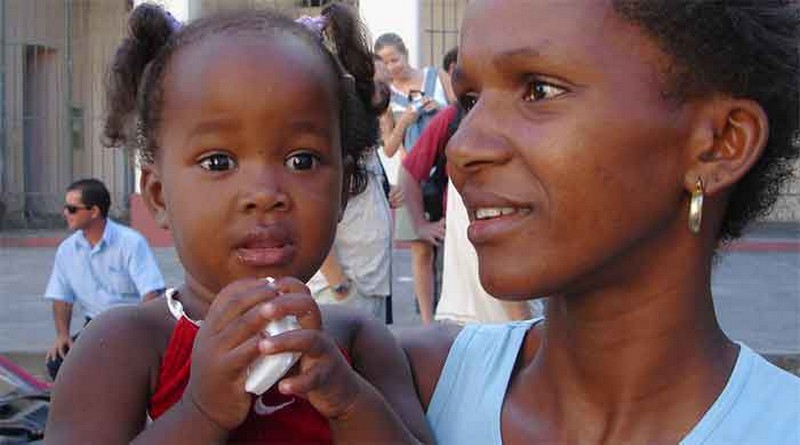
Palpite, Cuba, is just a few miles away from Playa Girón, along the Bay of Pigs, where the United States attempted to overthrow the Cuban Revolution in 1961. Down a modest street in a small building with a Cuban flag and a large picture of Fidel Castro near the front door, Dr. Dayamis Gómez La Rosa sees patients from 8 AM to 5 PM. In fact, that is an inaccurate sentence. Dr. Dayamis, like most primary care doctors in Cuba, lives above the clinic that she runs. “I became a doctor,” she told us as we sat in the clinic’s waiting room, “because I wanted to make the world a better place.” Her father was a bartender, and her mother was a housecleaner, but “thanks to the Revolution,” she says, she is a primary care doctor, and her brother is a dentist. Patients come when they need care, even in the middle of the night.

Apart from the waiting room, the clinic only has three other rooms, all of them small and clean. The 1,970 people in Palpite come to see Dr. Dayamis, who emphasizes that she has in her care several pregnant women and infants. She wants to talk about pregnancy and children because she wants to let me know that over the past three years, not one infant has died in her town or in the municipality. “The last time an infant died,” she said, “was in 2008 when a child was born prematurely and had great difficulty breathing.” When we asked her how she remembered that death with such clarity, she said that for her as a doctor any death is terrible, but the death of a child must be avoided at all costs. “I wish I did not have to experience that,” she said.

Eradicate the Diseases of the Poor

The region of the Zapata Swamp, where the Bay of Pigs is located, before the Revolution, had an infant mortality rate of 59 per 1,000 live births. The population of the area, mostly engaged in subsistence fishing and in the charcoal trade, lived in great poverty. Fidel spent the first Christmas Eve after the Revolution of 1959 with the newly formed cooperative of charcoal producers, listening to them talk about their problems and working with them to find a way to exit the condition of hunger, illiteracy, and ill-health. A large-scale project of transformation had been set into motion a few months before, which drew in hundreds of very poor people into a process to lift themselves up from the wretched conditions that afflicted them. This is the reason why these people rose in large numbers to defend the Revolution against the attack by the United States and its mercenaries in 1961.

To move from 59 infant deaths out of every 1,000 live births to no infant deaths in the matter of a few decades is an extraordinary feat. It was done, Dr. Dayamis says, because the Cuban Revolution pays an enormous attention to the health of the population. Pregnant mothers are given regular care from primary care doctors and gynecologists and their infants are tended by pediatricians—all of it paid from the social wealth of the country. Small towns such as Palpite do not have specialists such as gynecologists and pediatricians, but within a short ride a few miles away, they can access these doctors in Playa Larga.

Walking through the Playa Giron museum earlier that day, the museum’s director Dulce María Limonta del Pozo tells us that the many of the captured mercenaries were returned to the United States in exchange for food and medicines for children; it is telling that this is what the Cuban Revolution demanded. From early into the Revolution, literacy campaigns and vaccination campaigns developed to address the facts of poverty. Now, Dr. Dayamis reports, each child gets between twelve and sixteen vaccinations for such ailments as smallpox and hepatitis.

In Havana’s Center for Genetic Engineering and Biotechnology (CIGB), Dr. Merardo Pujol Ferrer tells us that the country has almost eradicated hepatitis B using a vaccine developed by their Center. That vaccine—Heberbiovac HB—has been administered to 70 million people around the world. “We believe that this vaccine is safe and effective,” he said. “It could help to eradicate hepatitis around the world, particularly in poorer countries.” All the children in her town are vaccinated against hepatitis, Dr. Dayamis says. “The health care system ensures that not one person dies from diarrhea or malnutrition, and not one person dies from diseases of poverty.”

Public Health

What ails the people of Palpite, Dr. Dayamis says, are now the diseases that one sees in richer countries. It is one of the paradoxes of Cuba, which remains a country of limited means—largely because of the U.S. government’s blockade of this island of 11 million people—and yet has transcended the diseases of poverty. The new illnesses that she says are hypertension and cardiovascular diseases as well as prostate and breast cancer. These problems, she points out, must be dealt with by public education, which is why she has a radio show on Radio Victoria de Girón, the local community station, each Thursday, called Education for Health.

If we invest in sports, says Raúl Fornés Valenciano, the vice president of the Institute of Physical Education and Recreation (INDER), then we will have less problems of health. Across the country, INDER focuses on getting the entire population active with a variety of sports and physical exercises. Over 70,000 sports health workers collaborate with the schools and the centers for the elderly to provide opportunities for leisure time to be spent in physical activity. This, along with the public education campaign that Dr. Dayamis told us about, are key mechanisms to prevent chronic diseases from harming the population.

If you take a boat out of the Bay of Pigs and land in other Caribbean countries, you will find yourself in a situation where healthcare is almost nonexistent. In the Dominican Republic, for example, infant mortality is at 34 per 1,000 live births. These countries—unlike Cuba—have not been able to harness the commitment and ingenuity of people such as Dr. Dayamis and Dr. Merardo. In these other countries, children die in conditions where no doctor is present to mourn their loss decades later.

Vijay Prashad is an Indian historian, editor and journalist. He is a writing fellow and chief correspondent at Globetrotter.

Manolo De Los Santos is the co-executive director of the People’s Forum and is a researcher at Tricontinental: Institute for Social Research.

7 July 2022

Source: countercurrents.org

15 Years of Failed Experiments: Myths and Facts about the Israeli Siege on Gaza

By Dr Ramzy Baroud

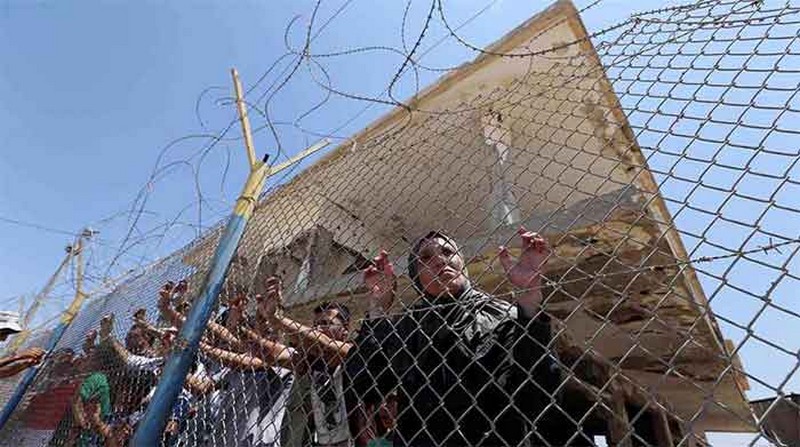
15 years have passed since Israel imposed a total siege on the Gaza Strip, subjecting nearly two million Palestinians to one of the longest and most cruel politically-motivated blockades in history.

The Israeli government had then justified its siege as the only way to protect Israel from Palestinian “terrorism and rocket attacks”. This remains the official Israeli line until this day. Not many Israelis – certainly not in government, media or even ordinary people – would argue that Israel today is safer than it was prior to June 2007.

It is widely understood that Israel has imposed the siege as a response to the Hamas takeover of the Strip, following a brief and violent confrontation between the two main Palestinian political rivals, Hamas, which currently rules Gaza, and Fatah, which dominates the Palestinian Authority in the occupied West Bank.

However, the isolation of Gaza was planned years before the Hamas-Fatah clash, or even the Hamas’ legislative election victory of January 2006. Late Israeli Prime Minister Ariel Sharon was determined to redeploy Israeli forces out of Gaza, years prior to these dates.

What finally culminated in the Israeli Disengagement from Gaza in August-September 2005 was proposed by Sharon in 2003, approved by his government in 2004 and finally adopted by the Knesset in February 2005.

The ‘disengagement’ was an Israeli tactic that aimed at removing a few thousand illegal Jewish settlers out of Gaza – to other illegal Jewish settlements in the West Bank – while redeploying the Israeli army from crowded Gaza population centers to the border areas. This was the actual start of the Gaza siege.

The above assertion was even clear to James Wolfensohn, who was appointed by the Quartet on the Middle East as the Special Envoy for Gaza Disengagement. In 2010, he reached a similar conclusion: “Gaza had been effectively sealed off from the outside world since the Israeli disengagement … and the humanitarian and economic consequences for the Palestinian population were profound.”

The ultimate motive behind the ‘disengagement’ was not Israel’s security, or even to starve Gazans as a form of collective punishment. The latter was one natural outcome of a much more sinister political plot, as communicated by Sharon’s own senior advisor at the time, Dov Weisglass. In an interview with the Israeli newspaper Haaretz, in October 2004, Weisglass put it plainly: “The significance of the disengagement plan is the freezing of the peace process.” How?

“When you freeze (the peace) process, you prevent the establishment of a Palestinian state, and you prevent a discussion on the refugees, the borders and Jerusalem,” according to Weisglass. Not only was this Israel’s ultimate motive behind the disengagement and subsequent siege on Gaza but, according to the seasoned Israeli politician, it was all done “with a presidential blessing and the ratification of both houses of Congress.” The President in question here is no other than US president at the time, George W. Bush.

All of this had taken place before Palestine’s legislative elections, Hamas’ victory and the Hamas-Fatah clash. The latter merely served as a convenient justification to what had already been discussed, ‘ratified’ and implemented.

For Israel, the siege has been a political ploy, which acquired additional meaning and value as time passed. In response to the accusation that Israel was starving Palestinians in Gaza, Weisglass was very quick to muster an answer: “The idea is to put the Palestinians on a diet, but not to make them die of hunger.”

What was then understood as a facetious, albeit thoughtless statement, turned out to be actual Israeli policy, as indicated in a 2008 report, which was made available in 2012. Thanks to the Israeli human rights organization Gisha, the “redlines (for) food consumption in the Gaza Strip” – composed by the Israeli Coordinator of Government Activities in the Territories – was made public. It emerged that Israel was calculating the minimum number of calories necessary to keep Gaza’s population alive, a number that is “adjusted to culture and experience” in the Strip.

The rest is history. Gaza’s suffering is absolute. 98 percent of the Strip’s water is undrinkable. Hospitals lack essential supplies and life-saving medications. Movement in and out of the Strip is practically prohibited, with minor exceptions.

Still, Israel has failed miserably in achieving any of its objectives. Tel Aviv hoped that the ‘disengagement’ would compel the international community to redefine the legal status of the Israeli occupation of Gaza. Despite Washington’s pressure, that never happened. Gaza remains part of the Occupied Palestinian Territories as defined in international law.

Even the September 2007 Israeli designation of Gaza as an “enemy entity” and a “hostile territory” changed little, except that it allowed the Israeli government to declare several devastating wars on the Strip, starting in 2008.

None of these wars have successfully served a long-term Israeli strategy. Instead, Gaza continues to fight back on a much larger scale than ever before, frustrating the calculation of Israeli leaders, as it became clear in their befuddled, disturbing language. During one of the deadliest Israeli wars on Gaza in July 2014, Israeli right-wing Knesset member, Ayelet Shaked, wrote on Facebook that the war was “not a war against terror, and not a war against extremists, and not even a war against the Palestinian Authority.” Instead, according to Shaked, who a year later became Israel’s Minister of Justice, “… is a war between two people. Who is the enemy? The Palestinian people.”

In the final analysis, the governments of Sharon, Tzipi Livni, Ehud Olmert, Benjamin Netanyahu and Naftali Bennett failed to isolate Gaza from the greater Palestinian body, break the will of the Strip or ensure Israeli security at the expense of Palestinians.

Moreover, Israel has fallen victim to its own hubris. While prolonging the siege will achieve no short or long-term strategic value, lifting the siege, from Israel’s viewpoint, would be tantamount to an admission of defeat – and could empower Palestinians in the West Bank to emulate the Gaza model. This lack of certainty further accentuates the political crisis and lack of strategic vision that continued to define all Israeli governments for nearly two decades.

Inevitably, Israel’s political experiment in Gaza has backfired, and the only way out is for the Gaza siege to be completely lifted and, this time, for good.

Dr. Ramzy Baroud is a journalist and the Editor of The Palestine Chronicle.

7 July 2022

Source: countercurrents.org

The United States Contests the Chinese Belt and Road with a Private Corporation

By Vijay Prashad

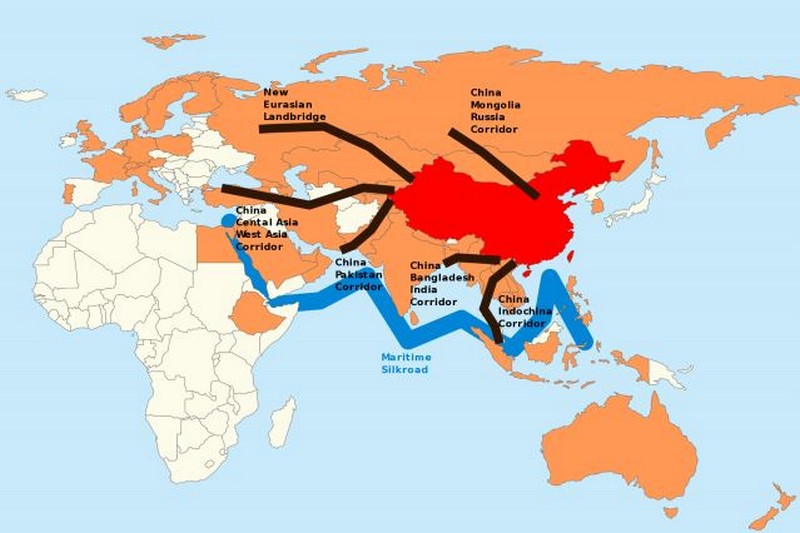
1 Jul 2022 – At the G7 Summit in Germany on June 26, U.S. President Joe Biden made a pledge to raise $200 billion within the United States for global infrastructure spending. It was made clear that this new G7 project—the Partnership for Global Infrastructure and Investment (PGII)—was intended to counter the Chinese Belt and Road Initiative (BRI). Given Biden’s failure to pass the Build Back Better bill (with its scope being almost halved from $3.5 trillion to $2.2 trillion), it is unlikely that he will get the U.S. Congress to go along with this new endeavor.

The PGII is not the first attempt by the U.S. to match the Chinese infrastructure investment globally, which initially took place bilaterally, and then after 2013 happened through the Belt and Road Initiative (BRI). In 2004, as the U.S. war on Iraq unfolded, the United States government set up a body called the Millennium Challenge Corporation (MCC), which it called an “independent U.S. foreign assistance agency.” Before that, most U.S. government development lending was done through the United States Agency for International Development (USAID), which was set up in 1961 as part of then-President John F. Kennedy administration’s charm campaign against the Soviet Union and against the Bandung spirit of non-alignment in the newly assertive Third World.

Former U.S. President George W. Bush said that USAID was too bureaucratic, and so the MCC would be a project that would include both the U.S. government and the private sector. The word “corporation” in the title is deliberate. Each of the heads of the MCC, from Paul Applegarth to Alice P. Albright, has belonged to the private sector (the current head, Albright is the daughter of former U.S. Secretary of State Madeleine Albright).

The word “challenge” in MCC refers to the fact that the grants are only approved if the countries can show that they meet 20 “policy performance indicators,” ranging from civil liberties to inflation rates. These indicators ensure that the countries seeking the grants adhere to the conventional neoliberal framework. There are also great inconsistencies among these indicators: for instance, the countries must have a high immunization rate (monitored by the World Health Organization), but at the same time they must follow the International Monetary Fund’s requirements for a tight fiscal policy. This essentially means that the public health spending of a candidate country should be kept low, resulting in the required number of public health workers not being available for the immunization programs.

The U.S. Congress provided $650 million to the MCC for its first year in 2004, as a U.S. government official told me; in 2022, the amount sought was more than $900 million. In 2007, when Bush met with Nambaryn Enkhbayar, the former president of Mongolia, to sign an MCC grant, he said that the Millennium Challenge Account—which is administered by MCC—“is an important part of our foreign policy. It’s an opportunity for the United States and our taxpayers to help countries that fight corruption, that support market-based economies, and that invest in the health and education of their people.” Clearly, the MCC is an instrument of U.S. foreign policy, but its aim seems to be not so much to tackle the Sustainable Development Goals of the United Nations (on hunger, health and education), as Bush said, but to ensure extension of the reach of U.S. influence and to inculcate the habits and structures of U.S.-led globalization (“market-based economies”).

In 2009, then-U.S. President Barack Obama developed a “pivot to Asia,” a new foreign policy orientation that had the U.S. establishment focus more attention on East and South Asia. As part of this pivot, in 2011, former U.S. Secretary of State Hillary Clinton gave an important speech in Chennai, India, where she spoke about the creation of a New Silk Road Initiative. Clinton argued that the United States government, under Obama’s “pivot to Asia,” policy was going to develop an economic agenda that ran from the Central Asian countries to the south of India, and would thereby help integrate the Central Asian republics into a U.S. project and break the ties the region had formed with Russia and China. The impetus for the New Silk Road was to find a way to use this development as an instrument to undermine the Taliban insurgency in Afghanistan. This U.S. project floundered due to lack of congressional funding and due to its sheer impossibility, since Afghanistan—which was the heart of this road project—could not be persuaded to submit to U.S. interests.

Two years later, in 2013, the Chinese government inaugurated the Silk Road Economic Belt project, which is now known as the Belt and Road Initiative (BRI). Rather than go from North to South, the BRI went from East to West, linking China to Central Asia and then outward to South Asia, West Asia, Europe and Africa. The aim of this project was to bring together the Eurasian Economic Community (established in 2000) and the Shanghai Cooperation Organization (set up in 2001) to work on this new, and bigger project. Roughly $4 trillion has been invested since 2013 in a range of projects by the BRI and its associated funding mechanisms (including the Asian Infrastructure Investment Bank and the Silk Road Fund). The investments were paid for by grants from Chinese institutions and through debt incurred by the projects at rates that are competitive with those of Western infrastructure lending programs.

The U.S. government’s “Indo-Pacific Strategy Report” (2019) notes that China uses “economic inducements and penalties” to “persuade other states to comply with its agenda.” The report provides no evidence, and indeed, scholars who have looked into these matters do not see any such evidence. U.S. Admiral Philip S. Davidson, who previously commanded the U.S. Indo-Pacific Command, told the U.S. Congress that China is “leveraging its economic instrument of power” in Asia. The MCC, and other instruments, including a new International Development Finance Corporation, were hastily set up to give America an edge over China in a U.S.-driven contest over the creation of infrastructure investment globally. There is no doubt that the MCC is part of the broad Indo-Pacific strategy of the United States to undermine Chinese influence in Asia.

Only a handful of countries have thus far received MCC grants— starting with Honduras and Madagascar. These are often not very large grants, although for a country the size of Malawi or Jordan, these can have a considerable impact. No large countries have been drawn into the MCC compact, which suggests that the United States wants to give these grants to mainly smaller countries, to strengthen their ties with the United States. Nepal’s accession to the MCC must be seen in this broader context. Although the discovery of uranium in Nepal’s Upper Mustang region in 2014 seems to play an important role in the pressure campaign on that country.

In May 2017, Nepal’s government signed a BRI framework agreement, which included an ambitious plan to build a railway link between China and Nepal through the Himalayas; this rail link would allow Nepal to lessen its reliance on Indian land routes for trade purposes. Various projects began to be discussed and feasibility studies were commissioned under the BRI plan. These projects, more details for which emerged in 2019, were the extension of an electricity transmission line and the creation of a technical university in Nepal, and of course, construction of a vast network of roads and rail, which included the trans-Himalayan railway from Keyrung to Kathmandu.

During this time, the United States entered the picture with a full-scale effort to disparage the BRI funding in Nepal and to promote the use of MCC money there instead. In September 2017, the government of Nepal signed an agreement with the United States called the Nepal Compact. This agreement—worth $500 million—is for an electricity transmission project and for a road maintenance project. At this point, Nepal had access to both BRI and MCC funds and neither of the parties seemed to mind that fact. This provided an opportunity for Nepal to use both these resources to develop much-needed infrastructure, or as former Prime Minister Madhav Kumar Nepal told me in 2020, his country could get new loans from the Asian Development Bank.

After both deals had been signed, a political dispute broke out within Nepal, which resulted in the split of the Communist Party of Nepal and the fall of the left government. One major issue on the table was the MCC and its role in the overall Indo-Pacific strategy of the United States, which seems to be targeted against China.

_______________________________________________

Vijay Prashad is an Indian historian, editor and journalist. He is a writing fellow and chief correspondent at Globetrotter.

4 July 2022

Source: www.transcend.org

Exile on Main Street: The Sound of the Unipolar World Fading Away

By Pepe Escobar

The future world order, already in progress, will be formed by strong sovereign states. The ship has sailed. There’s no turning back.

22 Jun 2022 – Let’s cut to the chase and roll in the Putin Top Ten of the New Era, announced by the Russian President live at the St. Petersburg forum for both the Global North and South.

The era of the unipolar world is over.

The rupture with the West is irreversible and definitive. No pressure from the West will change it.

Russia has renewed with its sovereignty. Reinforcement of political and economic sovereignty is an absolute priority.

The EU has completely lost its political sovereignty. The current crisis shows the EU is not ready to play the role of an independent, sovereign actor. It’s just en ensemble of American vassals deprived of any politico-military sovereignty.

Sovereignty cannot be partial. Either you’re a sovereign or a colony.

Hunger in the poorest nations will be on the conscience of the West and euro-democracy.

Russia will supply grains to the poorer nations in Africa and the Middle East.

Russia will invest in internal economic development and reorientation of trade towards nations independent of the U.S.

The future world order, already in progress, will be formed by strong sovereign states.

The ship has sailed. There’s no turning back.

How does it feel, for the collective West, to be caught in such a crossfire hurricane? Well, it gets more devastating when we add to the new roadmap the latest on the energy front.

Rosneft CEO Igor Sechin, in St. Petersburg, stressed that the global economic crisis is gaining momentum not because of sanctions, but exacerbated by them; Europe “commits energy suicide” by sanctioning Russia; sanctions against Russia have done away with the much lauded “green transition”, as that is no longer needed to manipulate markets; and Russia, with its vast energy potential, “is the Noah’s Ark of the world economy.”

For his part Gazprom CEO Alexey Miller could not be more scathing on the sharp decline in the gas flow to the EU due to Siemens’ refusal and/or incapacity to repair the Nord Stream 1 pumping engine: “Well, of course, Gazprom was forced to reduce the volume of gas supplies to Europe by 20%+. But you know, prices have increased not by 20%+, but by several times! Therefore, I’m sorry if I say that we don’t feel offended by anyone, we are not particularly concerned by this situation.”

If this pain dial overdrive was not enough to hurl the collective West – or NATOstan – into Terminal Hysteria, then Putin’s sharp comment on possibly allowing Mr. Sarmat to present his business card to “decision-making centers in Kiev”, those that are ordering the current shelling and killing of civilians in Donetsk, definitely did the trick:

“As for the red lines, let me keep them to myself, because this will mean quite tough actions on the decision-making centers. But this is an area that shouldn’t be disclosed to people outside the military-political leadership of the country. Those who deserve appropriate actions on our part should draw a conclusion for themselves – what they may face if they cross the line.”

Baby please, stop breaking down

Alastair Crooke has masterfully outlined how the collective West’s zugzwang leaves it lumbering around, dazed and confused. Now let’s examine the state of play on the opposite side of the chessboard, focusing on the BRICS summit this Thursday in Beijing.

As much as the Belt and Road Initiative (BRI), the Shanghai Cooperation Organization (SCO), the Eurasia Economic Union (EAEU) and ASEAN, now it’s time for a reinvigorated BRICS to step up its game. In conjunction, these are the key organizations/instruments that will be carving the pathways towards the post-unipolar era.

Both China and India (which between them were the largest economies in the world for centuries before the brief Western colonial interregnum) are already close and getting closer to “the Noah’s Ark of the world economy”.

The G20 – hostages of the Michael Hudson-defined FIRE scam that is the core of the financialized neoliberal casino – is slowly fading away, while a potential new G8 ramps up: and that is directly connected to BRICS expansion, one of the key themes of this week’s summit. An expanded BRICS with a parallel G8 configuration is bound to easily overtake the Western-centric one in importance as well as GDP by purchasing power parity (PPP).

BRICS in 2021 already added Bangladesh, Egypt, the UAE and Uruguay to its New Development Bank (NDB). In May, at Foreign Ministry-level debates, Argentina, Egypt, Indonesia, Kazakhstan, Nigeria, the UAE, Saudi Arabia, Senegal and Thailand were added to the 5 BRICS members. Leaders of some of these nations will be connected to the Beijing summit.

BRICS plays a completely different game from the G20. They aim for the grassroots, and it’s all about slowly “building trust” – a very Chinese concept. They are creating an independent Credit Rating Agency – away from the Anglo-American racket – and deepening a Currency Reserves Arrangement. The NDB – including its regional offices in India and South Africa – has been involved in hundreds of projects. Time will tell: one day the NDB will make the World Bank superfluous.

Comparisons between BRICS and the Quad, a U.S. concoction, are silly. Quad is just another crude mechanism to contain China. Yet there’s no question India treads on tightrope walker territory, as it’s a member of both BRICS and Quad, and made a vastly misguided decision to walk out of the Regional Comprehensive Economic Partnership (RCEP) – the largest free trade deal on the planet – opting instead to adhere to the American pie-in-the-sky Indo-Pacific Economic Framework (IPEF).

Yet India, long term, skillfully guided by Russia, is being steered to find essential common ground with China in several key issues.

BRICS, especially in its expanded BRICS+ version, is bound to increase cooperation on building truly stable supply chains, and a settlement mechanism for resources and raw material trade, which inevitably has to be based in local currencies. Then the path will be open for the Holy Grail: a BRICS payment system as a credible alternative to the weaponized U.S. dollar and SWIFT.

Meanwhile, a torrent of bilateral investments from both China and India in the manufacturing and services sector around their neighbors is bound to lift up smaller players in both Southeast Asia and South Asia: think Cambodia and Bangladesh as important cogs in a vast supply wheel.

Yaroslav Lissovolik had already proposed a BEAMS concept as the core of this BRICS integration drive, uniting “the key regional integration initiatives of BRICS economies such as BIMSTEC, EAEU, the ASEAN-China free trade agreement, Mercosur and SADC/SACU.”

It’s only (BRICS) rock’n roll

Now Beijing seems eager to promote “an inclusive format for dialogue spanning all the main regions of the Global South via aggregating the regional integration platforms in Eurasia, Africa and Latin America. Going forward this format may be further expanded to include other regional integration blocks from Eurasia, such as the GCC, EAEU and others.”

Lissovolik notes how the ideal path from now on should be “the greater inclusivity of BRICS via the BRICS+ framework that allows smaller economies that are the regional partners of BRICS to have a say in the new global governance framework.”

Before he addressed the St. Petersburg forum on video, President Xi called Putin personally to say, among other things, that he’s got China’s back on all “sovereignty and security” themes. They also, inevitably, discussed the relevance of BRICS as a key platform towards the multipolar world.

Meanwhile, the collective West plunges deeper into the maelstrom. A massive national demonstration of trade unions this past Monday paralyzed Brussels – the capital of the EU and NATO – as 80,000 people expressed their anger at the rising and rising cost of living; called for elites to “spend money on salaries, not on weapons”; and yelled in unison “Stop NATO.”

It’s zugzwang all over again. The EU’s “direct losses”, as Putin stressed, provoked by the sanctions hysteria, “could exceed $400 billion a year”. Russia’s energy earnings have hit record levels. The ruble is at a 7-year high against the euro.

It’s a blast that arguably the most powerful cultural artifact of the entire Cold War – and Western supremacy – era, the perennial Rolling Stones, is currently on tour across a “caught in a crossfire hurricane” EU. On every show they play, for the first time live, one of their early classics: ‘Out of Time’.

Sounds much like a requiem. So let’s all sing, “Baby baby baby / you’re out of time”, as one Vladimir “it’s a gas, gas, gas” Putin and his sidekick Dmitry “Under My Thumb” Medvedev seem to be the guys really getting their rocks off. It’s only (BRICS) rock’n roll, but we like it.

_______________________________________________

Pepe Escobar, born in Brazil, is a correspondent and editor-at-large at Asia Times and columnist for Consortium News and Strategic Culture in Moscow.

4 July 2022

Source: www.transcend.org

Needed: A Global Movement for Nuclear Disarmament

By David Adams

1 Jul 2022 – The world faces many dangers at this moment of history, famines, global warming, wars in the Ukraine, Yemen, Syria, mass migrations, increasing electoral tendencies towards fascism. But all these are pale in comparison to the danger of a nuclear World War III which could put an end to all of these problems by a suicidal destruction of all human civilization.

As UN Secretary-General recently said, referring to the confrontation between NATO and Russia in the Ukraine, “The once unthinkable prospect of nuclear conflict is now back within the realm of possibility.”

If we look for a solution from the nuclear powers, it seems hopeless. According to the new SIPRI report, the nine nuclear-armed states—the United States, Russia, the United Kingdom, France, China, India, Pakistan, Israel and the Democratic People’s Republic of Korea —continue to modernize their nuclear arsenals. There is no sign that any of them are even considering the possibility of eliminating their nuclear weapons.

On the other hand, the non-nuclear countries are developing a strategy for nuclear disarmament. As described in this month’s bulletin of CPNN, the meeting this month in Ulaanbaatar for nuclear-free zones (NWFZ) and the meeting in Vienna of States Parties to the Treaty on the Prohibition of Nuclear Weapons (TPNW) both proposed contributions to this strategy.

There are now five nuclear-free zones with 116 states that have committed to ban the manufacture, deployment and transit of nuclear weapons through their territories preventing thus proliferation of nuclear weapons in those concrete regions. Currently the idea of establishing of a Middle East NWFZ is under consideration. Informal exchanges of views and ideas to establish a Northeast Asian NWFZ and a zone in the Arctic are also being discussed.

At their meeting in Vienna, the States Parties to the TPNW welcomed Cabo Verde, Grenada, and Timor-Leste who deposited their instruments of ratification, which brings the number of TPNW states parties to 65. Eight more states told the meeting that they were in the process of ratifying the treaty: Brazil, Democratic Republic of the Congo, Dominican Republic, Ghana, Indonesia, Mozambique, Nepal and Niger.

The Vienna meeting adopted an Action Plan with 50 specific actions for taking forward the mission of the Treaty, including the establishment of a Scientific Advisory Group to advance research on nuclear weapon risks, their humanitarian consequences, and nuclear disarmament, and to address the scientific and technical challenges involved in effectively implementing the Treaty, and provide advice to states parties.

In addition to the initiatives of the NWFZ and TPNW countries, there continue to be initiatives by cities around the world. Of special importance last month were calls for nuclear disarmament by cities in the the United States and in Western Europe, including the nuclear-armed countries of France and the United Kingdom.

Can the initiatives of the NWFZ and TPNW countries be combined with those of cities in the nuclear-armed countries of the US and Europe? Can movements develop for nuclear disarmament in the other nuclear states of Russia, China, India, Israel, Pakistan, North Korea? The first three of these states are involved in the development of economic links (BRICS) free from the domination of the American Empire. Can the non-nuclear states of BRICS (Brazil and South Africa) add the issue of nuclear disarmament to their agenda?

The biggest obstacle to nuclear disarmament is the UN Security Counci which is completely dominated by nuclear-armed states with their powers of veto. How can it be reformed to escape from this nuclear domination?

The increased spending on the military by all of the nuclear powers, greatest in the case of the United States, runs the risk of their economic and political collapse; could this provide a window of opportunity for such a UN reform?

As I have previously suggested, can we develop a virtual alternative security council composed of mayors from around the world to issue press releases and raise consciousness that a nuclear-free world is possible. Perhaps, a variant of this proposal could be developed that involves the NWFZ and TPNW countries.

All of these questions should be on the agenda of a global movement for nuclear disarmament. There is nothing more important for the future of our species and our planet.

_________________________________________________

Dr. David Adams is a member of the TRANSCEND Network for Peace Development Environment and coordinator of the Culture of Peace News Network.

4 July 2022

Source: www.transcend.org
New World Records: More Weapons than Ever–and a Hunger Crisis like No Other

By Baher Kamal

1 Jul 2022 – While the North Atlantic Treaty Organisation (NATO) Summit ended in Madrid on 30 June with net commitments to double spending on weapons and to increase by eight-fold the number of troops in Europe, the total of hungry people worldwide now marks an unprecedented record.

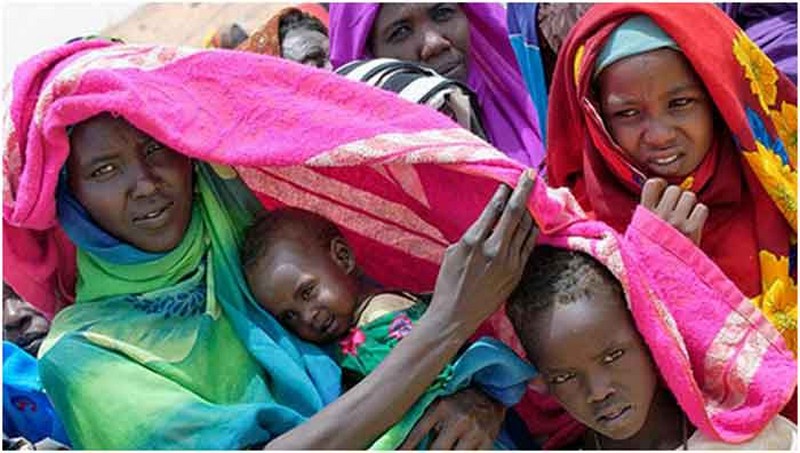
Conflict is still the biggest driver of hunger, with 60 percent of the world’s hungry living in areas affected by war and violence. Credit: Isaiah Esipisu/IPS

As advanced by IPS in its: NATO Summit Set to Further Militarise Europe, Expand in Africa? The Western military Alliance Declaration states that its member countries continue to face distinct threats from “all strategic directions.”

“The Russian Federation is the most significant and direct threat to Allies’ security and to peace and stability in the Euro-Atlantic area.”
Militarising migration policies?

Furthermore, the NATO Summit Declaration emphasises that terrorism, “in all its forms and manifestations, continues to pose a direct threat to the security of our populations, and to international stability and prosperity.”

The Summit, therefore, decided to increase its military deployment in Southern Europe, in particular in Spain and upon its request, as a way to prevent and combat terrorism.

From the Central American Dry Corridor and Haiti, through the Sahel, Central African Republic, South Sudan and then eastwards to the Horn of Africa, Syria, Yemen and all the way to Afghanistan, there is a ring of fire stretching around the world where conflict and climate shocks are driving millions of people to the brink of starvation

The decision was adopted by NATO leaders just four days after the massive entry of migrants to the Spanish cities of Ceuta and Melilla, both located in the North of Morocco, which was brutally stopped, killing around thirty migrants.

“Instability beyond our borders is also contributing to irregular migration and human trafficking,” says the Declaration.

In short, NATO has opted for further militarising its US, Canada and European countries’ migration policies, which they continue to claim that are based on international laws and human rights, etcetera.
Cyber, space threats?

The Madrid Declaration also says that NATO members “are confronted by cyber, space, and hybrid and other asymmetric threats, and by the malicious use of emerging and disruptive technologies.”

As expected, the NATO Declaration emphasises that the Russian Federation “is the most significant and direct threat to Allies’ security and to peace and stability in the Euro-Atlantic area.”

At the same time, NATO leaders have made a clear reference to China.

“We face systemic competition from those, including the People’s Republic of China, who challenge our interests, security, and values and seek to undermine the rules-based international order.”
Any mention of hunger?

Unless hunger has been dealt with by the Western military Alliance as a “top secret, confidential” topic, the NATO Declaration makes no clear mention of the current unprecedented hunger crisis.

Perhaps NATO includes the deadly hunger as part of its package of “threats” to their safety and security?

The fact is that right now 811 million people go to bed hungry every night, the Peace Nobel Laureate World Food Programme (WFP) warns.

The number of those facing acute food insecurity has soared – from 135 million to 345 million – since 2019. A total of 50 million people in 45 countries are teetering on the edge of famine.
Money for weapons, not for saving lives

While needs are sky-high, resources have hit rock bottom, warns WFP, while emphasising that it requires 22.2 billion US dollars to immediately reach 137 million people in 2022.

“However, with the global economy reeling from the COVID-19 pandemic, the gap between needs and funding is bigger than ever before.”

The urgently needed funding to face the pressing need to save lives is hard to be met. In its Nuclear-Armed Powers Squander $156.000 Per Minute on Their ‘MAD’ Policy, IPS reported on how nine nuclear-armed states spent 82.4 billion US dollars in just one year, prior to the unfolding war in Europe, on these weapons of mass destruction.

Now in view of the NATO Summit decision to further increase military spending to face not only Russia but also to more heavily spending on deadly arms to challenge what they now consider as the Chinese threat, there will be little chance to address the devastating hunger.
Why is the world hungrier than ever?

WPF mentions four causes of hunger and famine. This seismic hunger crisis, it explains, has been caused by a deadly combination of four factors:

  • Conflict is still the biggest driver of hunger, with 60 percent of the world’s hungry living in areas affected by war and violence. Events unfolding in Ukraine are further proof of how conflict feeds hunger, forcing people out of their homes and wiping out their sources of income.
  • Climate shocks destroy lives, crops and livelihoods, and undermine people’s ability to feed themselves.
  • The economic consequences of the COVID-19 pandemic are driving hunger to unprecedented levels.
  • And, last but not least, the cost of reaching people in need is rising: the price WFP is paying for food is up 30 percent compared to 2019, an additional US$42 million a month.

By the way, none of these factors has been caused by any of these millions of hungry humans.

Hunger hotspots: a ring of fire

By the way, none of these factors has been caused by any of these millions of hungry humans.

According to the Rome-based WFP, from the Central American Dry Corridor and Haiti, through the Sahel, Central African Republic, South Sudan and then eastwards to the Horn of Africa, Syria, Yemen and all the way to Afghanistan, there is a ring of fire stretching around the world where conflict and climate shocks are driving millions of people to the brink of starvation.

In countries like Nigeria, South Sudan and Yemen, WFP is already faced with hard decisions, including cutting rations to be able to reach more people. This is tantamount to taking from the hungry to feed the starving.

“The consequences of not investing in resilience activities will reverberate across borders. If communities are not empowered to withstand the shocks and stresses they are exposed to, this could result in increased migration and possible destabilisation and conflict.”

Is this why NATO leaders talk about pouring more billions and even trillions into their fight against “destabilisation and terrorism”?
__________________________________

Baher Kamal, a member of the TRANSCEND Network for Peace Development Environment, is an Egyptian-born, Spanish national, secular journalist, with over 45 years of professional experience — from reporter to special envoy to chief editor of national dailies and an international news agency.

4 July 2022

Source: www.transcend.org
STATEMENT ISSUED BY NEW WORLD MATHABA: BRUTAL ATTACKS ON AFRICANS IN MOROCCO HIGHLIGHTS CRISIS IN AFRICA

STATEMENT ISSUED BY NEW WORLD MATHABA:
BRUTAL ATTACKS ON AFRICANS IN MOROCCO HIGHLIGHTS CRISIS IN AFRICA

On June 24th, approximately 2000 African migrants made a desperate attempt at a mass border crossing, climbing the iron fence separating Morocco and the Spanish enclave of Melilla. Footage of African bodies piled up at the foot of the fence, many lifeless, while others were being savagely beaten by Moroccan Security Forces, went viral. To date, the number of African migrants who lost their lives has climbed to 37.

We join with those all over the world, to condemn, in the strongest possible terms, this horrific attack by Moroccan security forces. However, we know that in a matter of weeks, the statements of condemnation and outrage will be buried, and the incident will simply be added to the mountain of crimes against African humanity. The question is, what is to be done?

This brutal attack on Africans, on African soil, highlights the crisis that Africa is facing. The fundamental problem is that Imperialist forces have been able to install and sustain neo-colonial regimes throughout the continent, while rolling back and destroying all attempts by the African masses to rid themselves of the Imperialist’s stranglehold, from Ivory Coast and Zimbabwe to Libya.

One of the most serious setbacks for Africa was the destruction of the Libyan Jamahirya, and the assassination of revolutionary Pan-Africanist, Muammar Qaddafi. Utilizing the situation that had arisen in neighboring African countries, Egypt and Tunisia, the imperialists seized the moment to invade and destroy Libya, and murder Qaddafi. In so doing, they were able to neutralize what was a very real challenge to their continued plunder of African resources, and their continued exploitation and genocide of African peoples.

In addition, the destruction of the Libyan Jamahiriya dramatically changed the situation with regard to African migration. The Libyan Jamahiriya was the most prosperous country in all of Africa. Border restriction for Africans were relaxed which meant that Africans from all over the continent were free to live and work in Libya. From there, they were able to send money home to their families.

When people risk their lives and the lives of their families to flee their countries, it is because of the desperate and unbearable conditions they face at home. The crisis facing Africa is worsening by the day. Numerous African countries are experiencing a surge in attacks and sabotage by heretical, Islamic terrorist groups, aided and abetted by foreign powers from Qatar to the Western Imperial nations, with the aim of destabilizing and balkanizing the continent. The US and their allies are notorious for using these groups as foot soldiers, and as a justification for the imposition of USAFRICOM, which has relations and/or military bases in almost every African country.

Africa is experiencing climate shocks resulting in some of the worst droughts in East Africa in recent history. Food and fertilizer shortages, coupled with rising prices, caused by NATO’s proxy war against Russia, are exacerbating the already dire conditions. Poverty and hunger are on the rise, and the potential risk of famine across the continent looms large. Lack of access to potable drinking water is threatening the lives of millions of Africans.

There is only one way to overcome these problems, and that is to rid the continent of foreign military, economic and political interference and domination, and the neo- colonial governments installed to manage African nation-states on behalf of these foreign entities.

We, revolutionary Pan-Africanists, must intensify our efforts to come together with revolutionary and progressive forces worldwide, to accelerate the collapse of the US Empire and its West European, Canadian and Australasian surrogates. Their decline is without doubt underway, and the world is now at a critical tipping point. Despite the overwhelming challenges that confront us, both organizationally and personally, we must organize and mobilize as never before, to hasten the inevitable implosion and destruction of all those countries that built their economies on the backs of captured Africans and the plunder of Mother Africa.

There is nothing that White Power fears more than our united efforts and a united Africa,  free from foreign domination. It is the reason why they target every African leader and movement advocating this vision. They know that a united Africa would completely change the balance of power globally. A well-documented fact is that if Africa stopped the flow of all resources and raw materials to the Western nations for just one week, the United States and Europe would grind to a halt.

Almost every known natural resource needed to run contemporary industrial economies, uranium, gold, copper, cobalt, coltan (for cell phones, computers etc.), platinum, diamonds, bauxite, and especially large reserves of oil are located in Africa. Azania (South Africa) alone contains half the world's gold reserves. Democratic Republic of
Congo contains half of the world's cobalt and 80% of the world's known coltan reserves. One quarter of the world's aluminum ore is found in the coastal belt of West Africa and the continent is awash in petroleum reserves. These resources must be liberated and placed in the hands of the people, so that they can live decent and dignified lives in the land of their birth.

We cannot look to or expect anything from current African regimes with few exceptions, or to the impotent African Union, most aptly described by Zimbabwean writer, Reason Wafawarova, as “a bunch of cowardly bucolic boofheads, totally mesmerized by Western donor funding…What an unthinking lot of hopeless traitors!”

Gone are the days when that fiery club, formerly known as the Organization of African Unity, was graced by great freedom-fighters, including Kwame Nkrumah, Ahmed Sekou Toure, Ahmed Ben Bella, Kenneth Kaunda, Julius Nyerere, Jamal Abdel Nasser, Samora Machel, Thomas Sankara, Muammar Qaddafi, Robert Mugabe, Sam Nujoma,
Nelson Mandela and so many other African heroes.

We must now look to ourselves in this defining moment for Africa and indeed, for all of humanity. We must, no matter what the obstacles, work tirelessly to confront the core issues at stake. We must heed the words of Muammar Qaddafi, in an address to a large gathering in Niamey, Niger in 1997: “This is a scared battle, concerning our moral values… We cannot accept any undermining of these values. All barriers created by the colonialist armies must be demolished…we are stronger than them in terms of our moral values and material power… the wealth of Africa must be in the hands of the African masses. To achieve this, Imperialism and Neo-colonialism must be destroyed.”

And in the timeless words of Marcus Mosiah Garvey “Arise Ye Mighty Race – Accomplish what you will.”

Gerald A. Perreira On behalf of the International Directorate of the New World Mathaba

The New World Mathaba, formally established on African Liberation Day, May 25th, 2022, is a continuation of the original World Mathaba, launched in 1982 in Tripoli, Libya, by revolutionary Pan-Africanist and Martyr, Muammar Qaddafi. The word Mathaba is an ancient Afrabian word, and translates as “a meeting place, a point of convergence for people to exchange ideas and share experiences for the purpose of furthering a collective struggle for justice and that which is right.” Mathaba is more than a word – it is a profound concept. Our aim is to facilitate unity of purpose and strategy, and to coordinate our collective efforts to rid Africa, and the world, of Colonialism, Neo-colonialism, Imperialism, Racism and Zionism. Contact us at newworldmathaba@gmail.com