Just International

Was Alleged Russian Army Massacre of Civilians at Bucha Actually a False Flag Event Staged by Ukrainian Nazis?

By Evan Reif

Why was Nazi Butcher Botsun at Bucha?

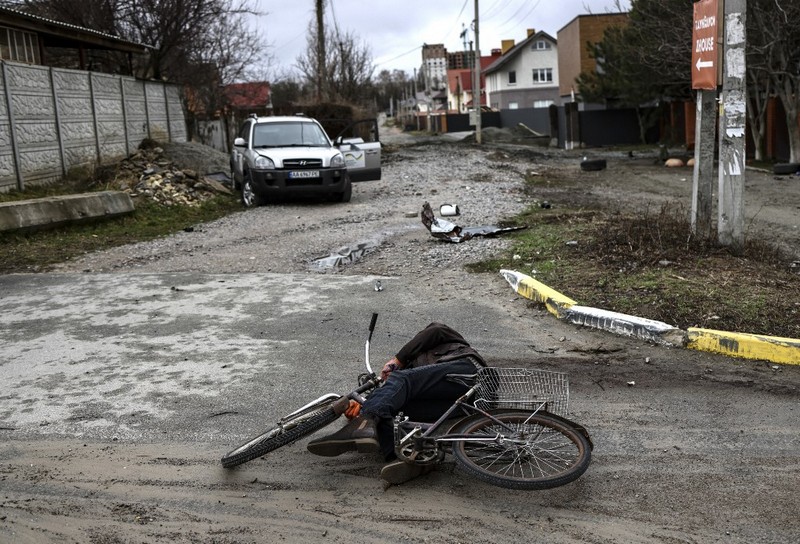
6 Apr 2022 – This story raises an important challenge to the official storyline of the Bucha massacre promoted in the mainstream media. The U.S. military has admitted that it cannot independently verify Ukrainian accounts of the atrocity alleging that Russian troops were behind it. The Russian Defense Ministry reported that Russian troops had left Bucha on March 30, while “the evidence of crimes” emerged only four days later, after Ukrainian Security Service officers had arrived in the town outside Kyiv. The Ministry stressed that on March 31, the town’s Mayor Anatoly Fedoruk had confirmed in a video address that there were no Russian troops in Bucha. However, he did not say a word about civilians shot dead on the street with their hands tied behind their backs. Reif’s article points to the presence of a notorious neo-Nazi commander in Bucha at the time of the massacre, suggesting that he was a key figure implicated in it. — Editors

Sergey Korotkikh is a man with many names. Botsun, Malyuta. Bandit. Terrorist. Nazi. All of them are fitting.

Born in 1974 in Tolyatti, USSR, his early life is not well documented. It is known that, as a child, his family moved to Belarus, where he would live for several decades. He served in the Soviet Marines as a young man, and allegedly attended the KGB Academy in 1994 (Belarus retained the name KGB for its secret police but there is no relation other than the name to the Soviet-era KGB) and was expelled in 1996 for his involvement with center-right anti-Lukashenko groups. [Alexander Luakashenko is the socialist leader of Belarus since 1994 who is allied with Vladimir Putin].

In 1999, Korotkikh joined the Belarussian chapter of Russian National Unity (RNU), his first neo-Nazi organization. The gang mostly sustained itself through petty gangsterism and racketeering, at which Korotkikh excelled. His training and skills meant that he rose quickly up the ranks, becoming one of its most feared muscle men.

Later that year he was involved in a fight with two of his former comrades in the Belarussian Popular Front. While much has been made of this encounter that made him appear as a stooge of Lukashenko, this was his only altercation with BPF activists as far as anyone knows. It was brutal, however, with some accounts saying Sergey beat one of the BPF men to death, which Sergey denies.

In 2001 the leader and founder of the RNU, Gleb Samoilov, was murdered while standing at the entrance of his home. Sergey was a prime suspect, but he and all other RNU members refused to co-operate with the police so the case was dropped. The RNU fell apart soon after that and Sergey moved to Russia in 2001. In 2004, he founded the National Socialist Society (NSO), which quickly became one of the wealthiest and most dangerous neo-Nazi organizations in Russia.

Unlike most other groups at the time, the NSO had a rigid hierarchy and offered military-style training to its members. It was able to pay its members a generous salary thanks to the backing of gangster Maxim Gritsay, which made it far more attractive than other Nazi groups.

The group itself could be the subject of many articles, but under the leadership of Korotkikh it carried out countless murders, robberies, extortion schemes and even bombings. It would become so successful and wealthy that, when finally shut down in 2010, the Russian authorities would find over 200 million rubles in its accounts.

In 2007, Korotkikh had himself filmed murdering two innocent Caucasian immigrants against the backdrop of a swastika flag in a video entitled “The Execution of a Dag [Dagestani] and a Tajik.” This video was so vile that it was initially believed to be a fake, but was quickly found by Russian prosecutors to be legitimate. The footage spread like wildfire throughout the internet and caused an outrage, possibly provoking the previously reluctant Russian authorities to action.

Only a few months thereafter, Korotkikh was expelled from the NSO. The reasons for this are not entirely clear, with the official NSO statement accusing him of theft and “financial mismanagement” which were likely true, however, almost certainly not the whole story. Over the next few years, Russian authorities launched a comprehensive attack on the remainder of the organization, arresting nearly all its members for a combined 28 counts of murder.

Sergey, however was untouched by this crackdown. At this point, rumors of police and/or intelligence collaboration also began to emerge. While I do believe he collaborated with the police to save his own skin, his ties to the FSB are much less clear. Ukrainian hackers have released what they say are chats between Sergey and his FSB handlers (now scrubbed from the site, for reasons unknown); however, while Sergey’s participation is clear, we have only their word that the other party is FSB.

While the content is suspicious—discussing smuggling, payment for illicit activities and so on—it is not out of the ordinary for a gangster, which Sergey very much still is. At one point, Sergey says he does not trust FSB, and it is specifically denied that he will be working for them.

I should point out here that there are very few trustworthy sources regarding Botsun, his life and his activities until about 2014. He is a loudmouth who loves publicity, with active YouTube, Instagram, and Telegram channels. I will not link to them to avoid giving this thug any more fame or fortune.

He loves to sit down for long interviews with anyone who will have him. His stories seem to grow ever more fantastical with each telling, claiming to have been a mercenary in the Middle East, in South America, and the founder of a Private Military Contractor (there is a company registered in his name called X-Trident, but I have found no evidence of its activities and it is registered out of an MMA gym).

The only evidence ever provided is the word of a scumbag Nazi thug or his equally repugnant Nazi friends, and these are not exactly trustworthy people.

I do not believe that he is an FSB agent or informer currently. He probably was one previously, but there are a variety of reasons I believe he went rogue, or perhaps defected to the other side.

Chief among them is that, upon arriving in Ukraine in 2014, he quickly became one of Azov’s top soldiers and has spent his entire time in Ukraine brutally slaughtering the separatists the FSB is backing.

It seems rather counterintuitive for the FSB to hire someone to kill its other employees, and while many liberals claim he is a provocateur, Ukraine had plenty of home-grown provocateurs long before Botsun arrived. It would not have been necessary to import terrorists into post-Maidan Ukraine. As for the second reason, I will elaborate below.

Living in a Nazi’s Paradise

After the destruction of the NSO, Sergey kept a low profile for several years. Very little is known about his activities during 2010-2014. Uncharacteristically of him, he does not seem to want to talk about it.

It is likely that his betrayal of his former comrades ruined his reputation and earning potential among Russian Nazis, and his extensive criminal background meant legitimate work was not possible. If he became a mercenary as he claims, this would most likely have been when he did so.

When the Maidan coup occurred in 2014, however, Sergey saw an opportunity. The ground has rarely been more fertile for a bloodthirsty fascist thug to ply his trade than 2014 Ukraine.

In 2014, Sergey moved to Ukraine. He did not just join Azov: By his own admission he was one of its original members and has been a military leader since day one. While this should be taken with a grain of salt, I have yet to find any information to refute it. His skills and experience meant that he climbed the ranks very rapidly in the early days of Azov.

He would become its first intelligence leader, a leader of the civic corps and eventually leader of Azov special forces. Once Poroshenko legitimized Azov as part of Ukraine’s security apparatus, Sergey was given command of a Ukrainian federal police force.

Sergey was a busy boy in his new home. Beyond playing an important role in the daily atrocities carried out by Azov and Ukrainian forces, he was also incredibly active in Azov’s “business ventures,” including racketeering and extortion. Kharkov became his fiefdom, one which he ruled with an iron fist. Between this and generous funding from Ukrainian gangster Ihor Kholomoisky, Botsun became very wealthy, amassing a fortune of more than a million euros by 2015. He would even acquire a private jet, an L-39 Albatross. This advanced jet trainer can be configured for a variety of combat roles.

He would ruthlessly consolidate power, leaving a trail of bodies in his wake, while also gaining friends in high places, including former Ukrainian Interior Minister Arsen Avakov, whose son Oleksandr trained at Botsun’s MMA gym, and even Petro Poroshenko himself.

Despite his incredibly sordid background, he was the first foreign fighter to receive Ukrainian citizenship, as a reward for his service (torturing, murdering and robbing) in the anti-terrorist operation zone (ATO). In response to widespread condemnation, the SBU carried out exhaustive background checks.

While I know the Ukrainian government of Poroshenko was incredibly corrupt and incompetent, it beggars belief that it would allow a man with so many red flags to walk in the door unless it was very sure he was not working for the enemy. Even Poroshenko is not THAT stupid. This also would have given Sergey a huge incentive to come into the Ukrainian camp and stay there.

All of this leads us to Bucha, Ukraine. What has been widely publicized is the massacre of civilians that took place there on the outskirts of Kyiv some time between March 31 and April 2, 2022.

What has not been so widely publicized is that the Nazi murderer and terrorist, a well-paid agent of the Ukrainian state, Sergey “Botsun” Korotkikh was not only among the first Ukrainian forces in the town along with his squad of terrorists, he was making jokes about shooting civilians as he entered. He would later happily post these videos on his official telegram channel.

At 6 seconds, you can hear the dialogue, a rough translation of which is:

“There are guys without blue armbands, can I shoot them?”

“Fuck yeah.”

The Ukrainian government clearly has a lot of explaining to do. Not just for allowing this bloodthirsty Nazi terrorist free reign in Donbas, not just for making him rich, not just for arming and supporting his death squads, not just for granting him citizenship, status, and power within its society, but for allowing this right-wing fanatic to breathe the same air as decent people.

I doubt we will ever receive satisfactory explanations.

Evan Reif was born in a small mining town in South Dakota as the son of a miner and a librarian.

11 April 2022

Source: www.transcend.org

Noam Chomsky: “We’re Approaching the Most Dangerous Point in Human History”

By George Eaton

The US professor, now 93, on the climate catastrophe and the threat of nuclear war.

6 Apr 2022 – It was as a ten-year-old that Noam Chomsky first confronted the perils of foreign aggression. “The first article that I wrote for the elementary school newspaper was on the fall of Barcelona [in 1939],” Chomsky recalled when we spoke recently via video call. It charted the advance of the “grim cloud of fascism” across the world. “I haven’t changed my opinion since, it’s just gotten worse,” he sardonically remarked. Due to the climate crisis and the threat of nuclear war, Chomsky told me, “we’re approaching the most dangerous point in human history… We are now facing the prospect of destruction of organised human life on Earth.”

At the age of 93, as perhaps the world’s most cited living scholar, Chomsky could be forgiven for retreating from the public sphere. But in an era of permanent crisis, he retains the moral fervour of a young radical – more preoccupied with the world’s mortality than his own. He is a walking advertisement for Dylan Thomas’s injunction – “Do not go gentle into that good night” – or for what Chomsky calls “the bicycle theory: if you keep going fast, you don’t fall off”.

The occasion for our conversation is the publication of Chronicles of Dissent, a collection of interviews between Chomsky and the radical journalist David Barsamian from 1984 to 1996. But the backdrop is the war in Ukraine – a subject about which Chomsky is unsurprisingly voluble.

“It’s monstrous for Ukraine,” he said. In common with many Jews, Chomsky has a family connection to the region: his father was born in present-day Ukraine and emigrated to the US in 1913 to avoid serving in the tsarist army; his mother was born in Belarus. Chomsky, who is often accused by critics of refusing to condemn any anti-Western government, unhesitatingly denounced Vladimir Putin’s “criminal aggression”.

But he added: “Why did he do it? There are two ways of looking at this question. One way, the fashionable way in the West, is to plumb the recesses of Putin’s twisted mind and try to determine what’s happening in his deep psyche.

“The other way would be to look at the facts: for example, that in September 2021 the United States came out with a strong policy statement, calling for enhanced military cooperation with Ukraine, further sending of advanced military weapons, all part of the enhancement programme of Ukraine joining Nato. You can take your choice, we don’t know which is right. What we do know is that Ukraine will be further devastated. And we may move on to terminal nuclear war if we do not pursue the opportunities that exist for a negotiated settlement.”

How does he respond to the argument that Putin’s greatest fear is not encirclement by Nato but the spread of liberal democracy in Ukraine and Russia’s “near abroad”?

“Putin is as concerned with democracy as we are. If it’s possible to break out of the propaganda bubble for a few minutes, the US has a long record of undermining and destroying democracy. Do I have to run through it? Iran in 1953, Guatemala in 1954, Chile in 1973, on and on… But we are supposed to now honour and admire Washington’s enormous commitment to sovereignty and democracy. What happened in history doesn’t matter. That’s for other people.

“What about Nato expansion? There was an explicit, unambiguous promise by [US secretary of state] James Baker and president George HW Bush to Gorbachev that if he agreed to allow a unified Germany to rejoin Nato, the US would ensure that there would be no move one inch to the east. There’s a good deal of lying going on about this now.”

Chomsky, who observed in 1990 that “if the Nuremberg laws were applied, then every postwar American president would have been hanged”, spoke witheringly of Joe Biden.

“It’s certainly right to have moral outrage about Putin’s actions in Ukraine,” he said of Biden’s recent declaration that the Russian president “cannot remain in power”. “But it would be even more progress to have moral outrage about other horrible atrocities… In Afghanistan, literally millions of people are facing imminent starvation. Why? There’s food in the markets. But people who have little money have to watch their children starve because they can’t go to the market to buy food. Why? Because the United States, with the backing of Britain, has kept Afghanistan’s funds in New York banks and will not release them.”

Chomsky’s contempt for the hypocrisies and contradictions of US foreign policy will be familiar to anyone who has read one of his many books and pamphlets (his first political work, American Power and the New Mandarins, published in 1969, foretold the US’s defeat in Vietnam). But he is now perhaps most animated when discussing Donald Trump’s possible return and the climate crisis.

“I’m old enough to remember the early 1930s. And memories come to mind,” he said in a haunting recollection. “I can remember listening to Hitler’s speeches on the radio. I didn’t understand the words, I was six years old. But I understood the mood. And it was frightening and terrifying. And when you watch one of Trump’s rallies that can’t fail to come to mind. That’s what we’re facing.”

Though he self-identifies as an anarcho-syndicalist or a libertarian socialist, Chomsky revealed to me that he had voted for Republicans in the past (“like them or not, they were an authentic party”). But now he said, they were a truly dangerous insurgency.

“Because of Trump’s fanaticism, the worshipful base of the Republican Party barely regards climate change as a serious problem. That’s a death warrant to the species.”

Faced with such existential threats, it is perhaps unsurprising that Chomsky remains a dissident intellectual – in the manner of one of his heroes, Bertrand Russell (who lived to 97 and similarly straddled politics and philosophy). But he also still spends hours a day answering emails from admirers and critics, and teaches linguistics at the University of Arizona, the state where he lives with his second wife, Valeria Wasserman, a Brazilian translator.

Chomsky is also still engaged by British politics. “Brexit was a very serious error, it means that Britain will be compelled to drift even further into subordination to the US,” he told me. “I think it’s a disaster. What does it mean for the Conservative Party? I imagine they can lie their way out of it, they’re doing a good job of lying about a lot of things and getting away with it.”

Of Keir Starmer, he scornfully remarked: “He’s returning the Labour Party to a party that’s reliably obedient to power, that will be Thatcher-lite in the style of Tony Blair and that won’t ruffle the feathers of either the US or anyone who’s important in Britain.”

The Italian Marxist Antonio Gramsci advised radicals to maintain “pessimism of the intellect and optimism of the will”. What, I asked Chomsky at the close of our conversation, gives him hope?

“A lot of young people; Extinction Rebellion in England, young people dedicated to trying to put an end to the catastrophe. Civil disobedience – it’s not a joke, I’ve been involved with it for much of my life. I’m too old for it now [Chomsky was first arrested in 1967 for protesting against the Vietnam War and shared a cell with Norman Mailer]… It’s not pleasant to be thrown in jail and beaten, but they’re willing to undertake it.

“There are plenty of young people who are appalled by the behaviour of the older generation, rightly, and are dedicated to trying to stop this madness before it consumes us all. Well, that’s the hope for the future.”

George Eaton is senior editor of the New Statesman.

11 April 2022

Source: www.transcend.org

The Demise of Mesopotamia: The Geopolitics of Water. The Desertification of Iraq

By Prof Souad N. Al-Azzawi

Abstract

The decades following World War II witnessed massive investments in large dams and water reservoirs. The number of large dams increased globally from 5,000 dams in 1950 to around 50,000 in 2017, and irrigated areas doubled from 140 million hectares to 280 million hectares.

The development of public irrigation and hydropower energy, and their associated dams, was central to Cold War geopolitics and national state policies. Throughout the Cold War, water became more involved in both building up and demolishing regimes, supporting, and undermining political legitimacy, and empowering and disempowering social groups.

Today, over 263 international watercourses generate about 60% of global freshwater flow, cross the territories of 145 countries, and are home to around 40% of the world’s populationConflicts over shared river waters cannot be interpreted without understanding the political power relations and the significance of upstream-downstream positioning of the competing or conflicting states.

For thousands of years being Mesopotamia (the land between two rivers), today’s Iraq faces water scarcity and desertification due to the continued reduction of the Tigris and Euphrates water flow into Iraqi territory. This is largely due to upstream developments on their headwaters in Turkey and Iran, and the steepening effects of climate change. In 2018, the UN Environment Program warned that Iraq was losing around 25,000 hectares of arable land.

The construction and operation of about 100 large dams and reservoirs on the Tigris and Euphrates headwaters in both Turkey and Iran in less than four decades, has drastically impaired the flow of the two rivers and caused severe land and environmental degradation including the desiccation of wetlands in Iraq.

In this article, the Tigris and Euphrates rivers mean annual flow rate records from the Ministry of Water Resources in Iraq (1960-2018) have been analyzed in correlation with dates of upstream dams filling and operation of tens of large dams in Turkey.

Conclusions indicate significant correlation that caused serious impacts including the desiccation of about 65% of the marshland’s areas in southern Iraq since the seventies to date, with continues degradation of valuable agriculture land into desertification, and other related environmental and socioeconomical aspects.

Introduction

About 96.3% of water on earth is saline. Freshwater including ice caps, lakes, rivers, groundwater, soil moisture, and atmosphere vapors covers only 2.7% of the Earth’s surface. River’s freshwater is only 0.0002 of total water on earth [.1 ]. Rivers are important natural corridors for the flows of energy, matter, and species, and are often key elements in the regulation and maintenance of landscape biodiversity [2]. With time and population explosion and drought, fresh water becomes a critical asset to meet food, water demands, development, and national security of nations.

The decades following World War II witnessed massive investments in large dams and water reservoirs. The number of large dams increased globally from 5000 in 1950 to around 50 000 in 2017. Irrigated areas also doubled from 140 million ha. to 280 million hectares. The development of public irrigation and hydro energy and associated dams was central to Cold War geopolitics as well as to wider national state policies. [3].

As a strategic asset, water is no longer linked only to environmental issues and food security issue’s but also plays a critical role in regional security arrangements. States view water as a means for political leverage and as a source of power.

There are over 263 international watercourses generating about 60% of global freshwater flow which cover almost half the earth’s land surface. They cross the territories of 145 countries and are home to around 40% of the world’s population.[4]

Shared rivers between two or more riparian states poses different levels of disputes over river water shares. Conflicts over shared rivers waters cannot be interpreted without understanding the power relations and the significance of upstream-downstream positioning of the competing or conflicting states [ 5]. In arid and semi-arid regions like the Middle East water represents a source of state power, and water scarcity is highly impacting development and national security [5].

Today Iraq faces water scarcity and desertification after continuous reduction of Tigris and Euphrates water inflows due to upstream damming of their headwaters in Turkey, Iran.

Water shortages are further aggravated by the steepening effects of climate change. The UN Environment Program reported in 2018 that Iraq is  losing around 25,000 hectares of arable land annually.[6].

The construction and operation of more than 100 large dams, reservoirs, and hydroelectric power plant (HEPP) in less than four decades on Tigris and Euphrates headwaters in Turkey, Iran, has impaired the flow of the two rivers and caused sever land and environmental degradation in Iraq.

Since the 1970s, Turkey has pursued an ambitious Southeastern Anatolia Project (GAP), or “Guneydogu Anadolu Projesi” (Turkish). The project involves the construction of 90 dams, and 60 hydro-electrical power stations [7 ], water diversion tunnels, and irrigation infrastructure on Tigris and Euphrates headwaters, with storage capacity exceeding 114 BCM. Full implementation of (GAP) facilities will harness nearly 70-80 percent of the Euphrates River water flow into Iraq and Syria [8].

Throughout the Cold War, water has become more involved in both building and demolishing regimes, supporting, and undermining political legitimacy, and empowering and disempowering social groups [9].

This paper presents an overview of how Cold War politics after World War II evolved to create tensions and potential conflicting situations between riparian countries within the Tigris and Euphrates basins.

As a NATO active member, Turkey received political, financial, and technical support to accelerate the construction of GAP mega dams without negotiating protocols with downstream riparian countries or conducting comprehensive environmental impact assessments to define the effects of these dams on them, as required by international water laws [10].

Tigris and Euphrates rivers mean annual flow rate (MAFR) records from the ministry of water resources in Iraq (MoWRI), Appendix A, table I, [14] [16], have been analyzed in correlation with dates of upstream dams filling and operation in Turkey and Iran, to identify the real impacts of these developments on the acceleration of the desiccation of the marshlands southern Iraq through the nineties to date.

With partial implementation of the GAP project, Iraq is already going through significant water scarcity, desertification [6], and the desiccation of about 65% of major areas of the marshlands after the diminishing of flood waves, major water recharge of these wetlands [11].  It’s been predicted that both Tigris and Euphrates rivers in Iraq might diminish by the year of 2040’s [12].

Water resources status of Iraq

Before the 1970s the flow of the Tigris and Euphrates rivers in Iraq were considered semi-natural [8]]. Both rivers are international rivers shared mainly by four countries (Turkey, Syria, Iraq, and Iran). Most headwaters of both rivers are in Turkey and Iran’s highlands. Tables 1 and 2 pertain to the major hydrological parameters of both Tigris and Euphrates drainage basins.

Since about 79% of water resources of the two rivers in Iraq originate mainly from Turkey and Iran’s highlands [8], a significant decline in total annual inflow of Euphrates in Iraq started in the mid-1970s, right after the construction and the operation of the Keban dam in Turkey and Tabqa dam in Syria.

Table 1: Main Hydrological parameters of Tigris and Euphrates rivers in Iraq.

Figure 1: Tigris and Euphrates River basins across riparian states [15].

Early 1980s to the present the total annual water inflow of both Tigris and Euphrates in Iraq have been going through continuous decline (figure 2), due mainly to the construction of the Southeast Anatolia Project, and other water developments in Iran, Syria, and Iraq.

The first stage of GAP project includes the building of 22 mega and large dams and 19 hydropower plants with storage capacity of (>114 BCM) on the Euphrates and Tigris (Table 3), which exceeds the natural annual flow volume of the two rivers [8].

Figure 2: Decline of mean annual flow of both Tigris and Euphrates water last five decades. Source of data MoWRI in references [14][16].

Another important source of surface water in Iraq is Shatt al Arab River. This river forms from the confluence of the Euphrates and Tigris Rivers near the city of Qurna in southern Iraq, figure 3 . Downstream of Qurna city to the Arabian Gulf, the length of the river is 192 Km [17]. The area draining to the Shatt al Arab river is shared between Iran and Iraq. In addition to the Euphrates and Tigris Rivers, the Karkheh and the Karun tributaries originate from the Zagros highlands in Iran contribute water to Shatt al Arab main channel in Iraq [8].

Mean annual inflow of Shatt Al Arab during (1947-1960) from Tigris and Euphrates was about 23 BCM in Maqal (Makal) district close to Basra city center (figure 3 )[18], increases to about 37.5 BCM further south after Karun tributary discharges about 14.4 BCM of its water into the river [18].

Last two decades, the contribution of Tigris, Euphrates, and Karun rivers inflow into Shatt Al Arab have been gradually declining. The flow rate of the river dropped to historical level of 45 CMS (Cubic Meter Per Second) reported in (2011), compared to 919 cms in (1977-1978) [19]. Shatt Al Arab annual flow rate decline is also related to the construction of large dams and reservoirs upstream in Turkey and Iran on both Tigris and Euphrates headwaters [8] figure 4.

Figure 3: Shatt Al Arab River through Basra city [17]

Figure 4: Shatt Al-Arab mean annual flow rate at Makal district in Basra.[18]

Iran on other hand constructed 37 dams on Tigris tributaries, Karun, and Karkha rivers originating from the Zagros and Touros highlands in Iran since the seventies [20] [21].

Syria also constructed three large dams on Euphrates since mid-seventies [8]. Iraq built 5 large dams at same period [8] , in addition to the construction of 17 dams last decade on Tigris tributaries within Kurdistan Region of Iraq ( KRI) last decade, with 24 more dams under construction currently [22 ]. Mean annual water inflow of both Tigris and Euphrates in Iraq during the sixties was around 83 BCM, figure 2. In four decades, mean water inflow dropped to 47 BCM. With climate changes, and full implementation of GAP project, further reduction is expected to the depletion of both rivers in Iraq around 2040’s according to (UN-IAU Interagency information and analysis unit) (Report, 2010 [12].

The Southeastern Anatolia Development Project

The Southeastern Anatolia Development (GAP) is part of a more comprehensive project intends to build 1,783 dams and hydro-electric power plants (HEPP) in Turkey by 2023 in addition to over 2,000 existing ones, which will affect millions of people [23] inside Turkey, and more than 30 million people downstream in Syria and Iraq.

The following section is a general historical review of the politics accelerated the development of the GAP project last four decades, starting from the construction of Keban dam, first mega dam constructed on Euphrates River headwaters in Turkey.

1. Keban dam

In 1962 the Turkish parliament allocated funds for a feasibility study for the construction of a dam at Keban city on the headwaters of the Euphrates River. That same year, a contract was signed with EBASCO Services Inc., an American engineering firm founded by the General Electric Company in 1905 [24].

The project Feasibility report released in October 1963.” EBASCO recommended the construction of the dam at Keban in a 350-page “economic feasibility” report. The project technical document supposed to come with technical details about the proposed design and the cost of the dam, but, the report was more as a political document [24]. It was an analysis of the whole Turkish economy and society. It offered a technocratic vision for the country’s future rather than the project region only. The study was produced as a prospectus for international capital, it was less about the development of Eastern and Southeastern Anatolia and more about the social and economic development of Turkey’s largest cities in the west [24].

In 1965, Turkey began construction of the Keban dam. Ankara obtained funding for the dam from the United States and several West European countries led by West Germany and the contracted consortium of West European companies to complete the dam.

The total aid for the project totaled some $135 million US Dollars [24]. Keban and Al-Tabqa dam in Syria were both completed and started filling the reservoirs (1973-1974) [25]. Filling the (31 BCM) storage capacity reservoirs of Keban and Tabqa dam reservoir (11.6BCM) during (1973,1974, 1975) caused significant decline of (MAFR) of Euphrates river in Iraq to (15.31, 9.02, 9.42 BCM)( MoWRI in Table I, Appendix A). Comparing these records to Euphrates average annual flow rate (1930-1970) of 30 BCM (Appendix A, Table I) before the construction of Keban and Tabqa dams. This decline caused serious damages to downstream riparian countries (Syria and Iraq) at the time, but the damages in Iraq were more severe.

Permanent Impacts of operating Keban dam is about 25% reduction of the annual inflow rate of the Euphrates in Iraq [26]. This reduction and control of the river flow ended most of the spring season flood waves [8].

Amidist most critical conflicts of the Cold War, right after filling of Keban dam, with the world’s oil crises early seventies of last century, the nationalization of Iraqi oil in 1973 [27], EBASCO report recommendation for Turkey’s economic development , and total political, technical, and financial support of the NATO countries during the construction of  Keban dam,  all opened the door widely for Turkey to further extend the development of Southeastern Anatolia region through  what today called the Southeastern Anatolia project (GAP).

2. Southeastern Anatolia Project (GAP) was launched in 1977 and introduced by Turkey’s State hydraulic works (DSİ) through bringing together various programs on the Tigris and Euphrates rivers, creating a regional project that covers nine provinces of an area about 74,000 km² [28]. The completed project aims to have built a total of 90 dams and 60 hydroelectric power plants, generating 27 billion kilowatt hours of electricity and irrigate 1.7 million hectares of surface area to grow cash crops and promote agro-industries such as food processing for export [28].

Phase one of the Southeastern Anatolia project include the construction of twenty-two large and mega dams, nineteen hydraulic power plants, and huge water conversion tunnels, figure 5 shows the locations of main GAP dams [29]. Without environmental impact assessment, planning, design, and construction of the project were singly decided by Turkey without negotiations with other downstream riparian states (Syria and Iraq) [10] as required by 1997 United Nations Convention on the Law of Non-navigational Uses of International Watercourses, and other related water laws [30].

Turkey’s stand on this issue is based on the principle of the Harmon Doctrine, whereby the upstream riparian country owns the water and controls its distribution, [31]. The problem with the Harmon Doctrine, “not only do the vast number of water treaties bear witness against this Doctrine, but all the international and federal judicial tribunals that have experience with international water problems have rejected it; all the learned associations, institutes, and other bodies which have studied these problems have rejected it in their statements of principles”, [32, page 142].

The International water law (IWL) as a process dismantled absolute sovereignty theories Including: Absolute territorial sovereignty theory; Absolute territorial integrity theory. As McCarthy, 1996, stated “The Harmon Doctrine … buried, not praised”)[32].

The three foundation pillars of IWL:

  • The equitable and reasonable utilization principle;
  • The no-harm rule; and
  • The principle of co-operation [32 ].

Hence the GAP project stands against all these principals in every single step of its planning, design, construction, and operation.

While the decision to build a dam is often seen as a sovereign decision, the decision of external agencies to support a dam depends on whether the proposed project complies with that agency’s policies and guidelines”. Such policies, argues by the world commission on dams (WCD), “should incorporate aspects of notification to riparian States, the desirability of ‘consent’ or ‘no objection’ from riparian States and independent expert assessment of social, ecological, and heritage and cultural impacts on downstream riparian states[10].

Figure 5: Major GAP constructed dams and their distribution along Tigris and Euphrates headwater in Turkey [29].

The world commission on dams (WCD) Policy Principle 7.5, Strategic Priority 7, states: “Where a government agency plans or facilitates the construction of a dam on a shared river in contravention of the principle of good faith negotiations between riparian’s’.  [10].

The World Bank and the International Monetary Fund refused to fund any part of the GAP after funding the construction of the Karakaya Dam (1983-1988) due to concerns over social and environmental impacts, as well as protests from governments in Iraq and Syria [10].

During the eighties, Initial Goals of GAP projects were mainly limited to developing irrigation and industrial zones. In 1989, Turkish state officially established the Southeast Anatolia Regional Development Administration.

The law governing the Administration demonstrated how the Turkish government saw this project as involving more than simply economic development. The GAP scheme engaged the entire landscape of Southeast Anatolia, including political, social, cultural, and environmental spheres.

Law decree 388 (1989) defined the Administration’s duties. GAP Regional Development Administration published the goals of the project as: 1. generation of hydroelectric power; 2. development of regional agriculture through irrigation. 3. development of a regional agro-industrial base; and 4. formulation of a mid- to long-term solution to Kurdish ethnic separatism [24] [ stahle page 228].

To Europe and America, the GAP mega dams project was not about safeguarding foreign policy interests, such as containment of the Soviet Union and the extension of communist ideology in the middle east only, rather, the dams were a key component in producing a particular economic order, and opening overseas markets to exports, maintaining a specific technical and industrial base in the donor country (like Turkey) [24].

In a report titled “THE EUPHRATES TRIANGLE, Security Implications of the Southeastern Anatolia Project” of the U.S. National Defense University ,1999 [31], statements clearly defined the U.S.-NATO stance on the construction of GAP project, such us;

“A secure and stable Turkey is in the U.S. national interestTurkey is the southern bastion of NATO, and it borders on three states that may pose a threat  to the United States–Iraq, Syria, and Iran.”

Also, that;

“the NATO southern flank, with Turkey in particular, still faced severe regional instability. For this reason, SACEUR designated southeastern Turkey as one of several areas within Allied Command Europe that would continue to receive priority military planning efforts.”

In the recommendation section of the same report:

” U.S. policy in the region has been to maintain close ties to Turkey, shaping the environment with international assistance, arms control, nonproliferation initiatives, and isolation of rogue states that support terrorism or violate international law.”

These states were previously identified in the same article as( Syria, Iraq, and Iran) [31].

Water in such context should not be considered as a source of conflict only, but as a mean that can be used during the conflict. Turkey have been using water to serve political aims, causing significant threat to riparian countries and the population’s human security [9] (Laura Meijer).

To the US and NATO powers, supporting the construction of GAP projects politically and financially with their negative impacts on Turkey’s downstream riparian countries (Syria, Iraq,) was more of goal and political strategy to isolate and end their social regimes. Even if that support means the destruction of river’s basins ecological, cultural, and socioeconomical systems.

As Kibaroglu, 2014 stated;

“While the Cold War deepened the tensions over water, Turkey joined NATO whilst Syria and Iraq kept close ties with the USSR” [33]. Other political issues are related to the Kurdistan Workers Party (PKK), and the territorial dispute between Turkey and Syria over the Hatay province which was a major source of tension between the two countries until 2005.” [34].

Reconstruction of the project never stopped, with no environmental or social impact assessments at local or regional levels [10].

Environmental Impact assessments are an international requirement for such strategic projects. They are usually conducted to define the impacts of the (dams in this case) on the whole river basin including hydrological, geomorphological, ecological, connected wetlands, and socioeconomic status of all cities   downstream in riparian countries and the suggested alternatives to eliminate these impacts.

To earn back international funds after the controversial (Ataturk) dam had been built and start filling the reservoir in 1990, the Turkish government further developed the project into a new international interest called “sustainable human development”.

The original design was expanded to include schools, roads, health care centers, housing, women’s projects, and tourism. This way the project earned back the international funding including the World Bank, Food and Agriculture Organization (FAO), United Nations Development (UNDP) ,table 3 shows the countries and organizations financially supported GAP project.

Table 3: Foreign Countries and organizations financially supported the GAP projects till 2002 [35 ][36].

Entities of the United Nations  supported and funded parts the project, table 3, knowing that sustainability of a river basin including human development is determined by whether the river system can support the long-term ecological and socioeconomic functions of the river basin as a whole [37], and not only part of the basin within the Turkish territories.

No detailed technical reports from these organizations or Turkey exploring the impacts of GAP mega dams on whole rivers basin including ecological and socioeconomic impacts on downstream riparian countries before constructing them [10].

UNEP and other UN organizations dealt with what they called (drying marshlands issue for security reasons) in southern Iraq with many studies during the 1990s. Most of these studies were local, not regional to cover the impacts of constructing all these dams and hydropower stations on the whole Tigris and Euphrates basins including wetlands.

Other related research conclusions built on processing enhanced Landsat and other remote sensing images without enough ground truth data and rate of flow records.

The GAP project created international conflicts regarding water sharing and escalated tensions among Turkey, Syria and Iraq as the three riparian states of the Euphrates and Tigris basins.

Turkey has for a long time rejected the notion of sharing rivers in an equitable and fair manner as stipulated by international law. It was one out of three countries voting against the 1997 UN Convention on the Law of the Non-navigational Uses of International Watercourses which establishes the principles of equitable and reasonable utilization, of not doing harm, of cooperation between riparian countries, and of notification and consultation [38].

According to international law experts, these principles form part of the customary law also binding those countries that have not ratified the relevant conventions. The obligation to inform and consult with riparian countries at an early stage and to conclude an agreement before a project is realized is also part of the World Bank Safeguard Policies [23].

[Desiccation is defined as the “Removal of Moisture”]

Impacts of GAP Projects on the Desiccation of Wetland in Southern Iraq

Marshlands are mainly located in southern Iraq and are directly connected to the Tigris and Euphrates rivers, figure 6 [39]. They are in Nasiriya, Basra, Diwaniya, and Umara governorates.

Before the intensive construction of dams on the Tigris and Euphrates rivers headwaters in Turkey highlands early seventies of last century, area of the marshes (Ahwar) was highly variable annually and seasonally, ranged from (8000-20000 Km²) [40]. In summer (June-October) and dry years, the area become only 25% of the area in flood season (3500 Km²) [41] due to decline of the two rivers MAFR and high evaporation rate. Many marshes in the area are seasonal and disappear in summer. Others are permeant like the following:

The Euphrates river Marshes: including Al Hammar permanent largest marsh with many other small seasonal marshes. In flooding season, they were all look connected, and are recharged mainly from Euphrates River and flowing water from central marsh westward in dry season. Al Hammar marsh area range between (1250-2500) Km² [40]. The American company T.A.M.S.(Tippet-Abbott-McCarthy, Stratton) estimated area of Al Hammar in 1954 about (1250) Km² [40].

The central marshlands: located between Tigris and Euphrates rivers including Abi Zarak and Chibayeesh marshes. Extending from Shaikh Saad city in Missan to Qurna in Basra, with an area of 4000 Km² in flood season to less than 1920 Km² in dry season, recharged from west Tigris and east Euphrates distributaries [41].

Hawaiza marsh extends from Iranian to Iraqi territories. Area of Hawaiza inside Iraq is about (2500-3000 Km²) in flooding time, to about (950 Km²) in summer, and (650 Km²) in dry years[19]. Inside Iran  the extension of Hawaiza is called (Hoor Alazim) , with an area of (  1250  Km²) in flood season [42 ]. Major recharge of Huwaiza in Iran was from Karkha river until 1998, before operating Karkha2 dam with an annual flow of 3.2BCM [42 ]. From Iraqi side recharge of Hawaiza is from Tigris River distributaries during flood seasons [40].

1. Impacts of GAP Development on the Desiccation of Marshlands in Iraq:

Streams and rivers are hydrologically connected to downstream water features like wetlands and floodplains via channels that convey surface and subsurface water either year-round in perennial flow or seasonally [43]. Water structures like dams on any river affect the frequency, duration, magnitude, timing, and rate of change of connections between headwater streams, and downstream water.

They cause fragmentation of longitudinal connections between headwater streams and downstream waters, including the deltaic wetlands. The impacts of changing streamflow are numerous, including altered flow regime, stream geomorphology, habitat, and ecology [43]. Wetlands in southern Iraq have been subjected to serious stresses after the building of tens of dams on both Tigris and Euphrates within three decades. These dams altered their hydrological, ecological, geomorphological, socioeconomical, and environmental systems due to the elimination of seasonal flood waves major water recharge of the marshlands, and the significant decline of Tigris and Euphrates mean annual flow rate (MAFR). This alteration was more profound after the construction and operation of the GAPS dams in Turkey since the seventies of last century to date [44].

Figure 6: Marshlands and diversion canals in southern Iraq, modified after (Abdullah, A. 2016)[39].

One of the important impacts of this flow impairments is the desiccation of marshlands in southern Iraq [26]. Acceleration of this desiccation occurred during the nineties, when Turkey filled and operated 22 dams and hydroelectrical power stations on Tigris and Euphrates rivers headwaters in one decade only, (Appendix B, table II) [45].

As a result the MAFR of both rivers dropped drastically (Appendix A), figure 2.  At that time, Iraq was under the economic sanctions, facing severe shortages of food and necessary chemicals for water purification plants, Iraq considered Turkey’s action (being a NATO member) as an assault to deprive Iraqi population access to fresh water for domestic and agriculture uses [10]. Such an action would raise the already high economic sanctions human casualties to a genocide level [46]. As a result, mid-nineties the Iraqi government constructed four freshwater diversion canals through the marshlands to supply potable water for Nasiriya and Basra cities population. These canals caused further dissection of the marshlands as will be explained later in this article.

In the next section the Tigris and Euphrates rivers mean annual flow rate (MAFR) records from the ministry of water resources in Iraq (MoWRI), Appendix A, table I, [14] [16], have been analyzed in correlation with dates of upstream dams filling and operation in Turkey and Iran, to figure out the real impacts of upstream developments on the acceleration of the desiccation of the marshlands through the nineties to date.

2. Desiccation of Hammar and Central Marshlands during the nineties of last century: Early seventies to 2002, Turkey constructed, and operated 32 dams and hydroelectrical power stations on Tigris and Euphrates headwaters with total storage capacity of (99.520 BCM) [45]. Twenty-two of these developments including Ataturk mega dam, with collective storage capacity of (56.969BCM) started filling and operating during the nineties of last century, Appendix B [45]. Thirteen of them with storage capacity (51.664 BCM) were filled and operated on Euphrates River, the other 9 with storage capacity of (4.55BCM) were on Tigris River, Appendix B, table II.

Hammar and Central marshlands are mainly connected and recharge from the Euphrates River and some of Tigris distributaries in case of central marshes [40] . To maintain an area of about 7000 Km² as before the construction of GAP projects, about (14-15 BCM) of water inflow is needed annually to recharge them from Euphrates River in Nasiriya city, the entrance to these marshes [11] [41] [47]. This amount historically was available from seasonal (March-May) flood waves of the river [47], figure 7.

These flood waves disappeared after controlling river flow by the dams on headwaters [11].  The relatively high flow water release from dams on headwaters in Turkey shifted from spring to summer season (June – September) to meet peak electricity demands [11]. Highest evaporation rate in Iraq is during summer [41].

Figure 7: Elimination of spring high flow (flood waves) of Euphrates River in Nasiriya City the entrance to Marshlands. (Flow records from ref. 11).

Mean Annual Flow of Euphrates measured in Husaiba station on Syrian/Iraqi borders before building the dams (1930-1973) is about 30 BCM [14]. During the filling and operating of Ataturk dam (1990, 1991, 1992, 1993, 1994), and six other smaller dams on Euphrates, Appendix B, table II. The reservoir level of Ataturk dam reached 535m a.s.l in March 1994 [48]. Mean annual flow of Euphrates River at Husaiba city on the Syrian/Iraqi borders during these years were (8.9, 12.4, 12.15, 12.37, and 15.29 BCM) [MoWRI), Appendix A, table I [14], figure 8.

It is well documented that until the seventies, the Euphrates river was losing about 50% of its mean annual flow rate or about (14-15) BCM of between Heet city close to Syrian/ Iraqi borders to Nasiriya city (Entrance to Marshlands) [40], mainly to meet domestic and agricultural demands for all cities along Euphrates river banks [11].

The Euphrates annual flow rate less than 15 BCM on Iraq/Syrian borders means that there is not enough water to recharge the Hammar and Central Marshlands in southern Iraq for five years (1990-1994), figure 8.

The situation further deteriorated with an annual evaporation rate of 2895 mm/year in Nasiriya [49], which means annual water losses of about (8.26 BCM) from both marshlands water surfaces.

Figure 8: Euphrates River mean annual flow rate in Iraq (1990-2003), showing periods of no recharge to Hammar and Central marshlands during the nineties (Water records, Appendix A)

Estimations of changes of Hammar and Central marshlands areas through the period (1973-2018) are shown in Figure 9 .

Data of the graph are taken from remote sensing interpretations in published articles and reports listed in table 4. From the graph we notice that from 1973-1990, Hammar and Central marshlands lost about 2000 Km² of its area, after the construction and operation of (Keban, 1973; Karakaya, 1986; Hancagiz, 1988; Hecihider,1989) on the Euphrates headwaters in Turkey (table); Qadisya dam in Iraq, 1986; Tabqa dam,1973 and Baath dam,1988 in Syria[8][45].

From table II, Appendix B, between 1998- 2002, other seven GAP dams and hydro electrical power stations on Euphrates River headwaters were filled and operated (Kahta, Camgazi, Gayt, Ozluc, Karkamis, and Berecik)[45 ] , with operating Tishreen dam in Syria 1999, figure 8. Euphrates MAFR measured on Iraqi/Syrian borders during the years of (1998, 1999, 2000, 2001, 2002) were (27.9, 18.61. 17.23, 9.59, 10.67 BCM) consecutively (Appendix A, table I). For the reason mentioned previously, throughout this period and from figure 9, Hammar and Central marshlands lost an extra 600 Km² from its area and  ends up to about  750 Km² in 2002 [26].Mid-nineties the Iraqi government constructed and operated four freshwater diversion canals (al EZZ, Taj al Marek, Wafaa al Qaed, and Um al Marek canals) within the marshlands area. Most of these canals started operating from 1994-1998 [55]. The construction of these fresh water diversion canals caused further 1300 Km² reduction of the area of Hammar and Central marshlands, figure 9, as explained in the next section.

Figure 9: Desiccation of Hammar and Central marshes due to continues decline of Euphrates and Tigris annual flow rate after the construction and operation of GAP dams.

3. Desiccation of Hawaiza marshthis marsh is located east of Amara city southern Iraq on Tigris River. It extends from Iranian territories (called Howr Al-Zim) to Iraqi territories [42].  During the seventies extension of this marsh in Iraq was about (2435Km²) in flood seasons [Nomas, 19 ] and about 950 Km² in summer and 650 Km² in dry years [Nomas, 19], in Iran its area was about (641-1250 Km² ), figure 3 , but both parts are one hydrological and ecological unit [40].

Until 1998 the Karkha river was the major source of water that recharged the Hawaiza marsh from the Iranian side. From the Iraqi side the marsh is recharged by Tigris distributaries Kahala, Musharah, and Majaria canals mainly during floods time [21].

Hawaiza marsh was also affected by the construction and operation of 9 dams and hydroelectrical power stations with total storage capacity of (6.383 BCM)  on Tigris river headwaters in Turkey during the nineties, Appendix B, table II.  Five of them were filled and operated from (1997-2000) [45 ].  Iraq filled and operated the Udhaim dam (1.5 BCM) in 1999[9]. Iran filled and operated two dams, one of them is the Karkha2 dam in 1998, with storage capacity (5.6 BCM) [56].

Tigris river MAFR measured in Kut city (180 Km) south of Baghdad, during the period of (1998, 1999, 2000, 2001), were ( 39.85, 18.88, 18.85, 21.13 BCM) Appendix A, table I. Historical mean annual flow rate of Tigris in Kut city from records of the Ministry of Water Resources in Iraq for the period (1933-1973) is about (49.20 BCM) Appendix A. During the seventies, more than 10 BCM out of the 49 BCM was recharging Hawaiza and central marshes during flood season [57].

Karkha2 dam in Iran was constructed during (1992-1998) on Karkha river, a tributary of Tigris River originates from west Iranian highlands and ends up in Hawaiza marsh in Iran ( Al Azim marsh), figure. The dam reservoir capacity is 5.9 BCM [42].

Starting from 1998-2000, filling then operating the dam from Karkha river cut off an annual recharge to Al Azim /Hawaiza marsh [42]. Mohsen Saeedi et al, in a published an article [42 ] wrote; “Hoor-Al-Azim/Al-Havizeh reached its minimum surface area at year 2000 and lost ~84% of its area following the exploitation of Karkheh dam in 1998”.  He proceeded that “ by disturbing the water inflow to the Hoor-Al-Azim, Karkheh dam exploitation is  the  main  parameter  which caused surface  area  reduction in  Al-Azim/Al-Havizeh wetland[58 ]”.

From 2000 to 2014 a sign of revival is observable over the wetland area so that its area augmented to 1714 km2, but still the total loss of wetland is ~55% from 1973 to 2017[42]. Hawaiza marsh lost about 2000 Km² from its area within Iraqi territories mainly due to dams filling and operations all during the nineties.

4. Impacts of constructing freshwater diversion canals southern Iraq (1994 -1998) on further desiccation of marshlands

After the military operations of Gulf war 1, 1991, with the intended destruction of the public services and the civil infrastructure by American coalition including electricity, water supply and wastewater treatment plants, Irrigation and drainage pumping stations, bridges, food storages [59] [60].

Economic Sanctions imposed on Iraq prevented repairing all the destroyed infrastructure specifically those required spare parts like pumps and chemical reagents, including electricity installations, water purification and sewage treatment plants, and water networks [59]. Harvard Study Team in their visit to Iraq observed that; “people collecting water from broken pipes surrounded by pools of murky water or even directly from drainage ditches”[60]. Loss of electricity had also caused Baghdad’s two sewage treatment plants to stop working and spilling raw sewage into the Tigris River. In neighborhoods in both Basra and Baghdad, whole streets were blocked by pools of foul-smelling water [60] [Starving Iraq].

Without public potable water supply, people had to use raw water directly from rivers for a while. About (50000) mostly under five children died in 1991 only [60]. The impacts of economic sanctions were severe specifically among population in south of Iraq [60]. Because of lack of clean water, food, and medicine, WHO supported data indicated that “Mortality in under-fives had risen 600% between 1990 -94, while there has been a 500% rise in low-birth-weight infants, and a doubling of the infant mortality rate of Baghdad over the same period”. Former UN official Denis Halliday resigned his job in Iraq because he considered sanctions against Iraq amount to ‘genocide’ [46].

During this period only about 40% of Euphrates River MAFR entered the Iraqi territories because of the filling and operation of Ataturk and eleven other dams in Turkey, Appendix B, table II. The release of sewage water discharges to the river caused further deterioration of water quality.  Large areas of marshlands connected to Euphrates River were desiccated due to decline in MAFR with serious deterioration of their water quality, figure 10. In 1994, Al-Imara and Jawad from Marin science Centre in Basra University published a paper presents the results of Physio-chemical properties of water sampling program conducted in December of 1991 [61] (during the filling of Ataturk dam [62].  The sampling program were conducted before the construction of any freshwater conversion canals through the marshlands by the Iraqi state companies, and covered water courses from Qurna to Arabian Gulf [61]. Measured salinity of Euphrates water samples at Qurna before confluence with Tigris River and after flowing through marshlands was (5280) part per million (ppm). According to WHO water quality standards, this salinity value is not suitable for human use [63], also not acceptable for agriculture, animal, or industrial uses. Salinity values from Tigris- Swaib canal (after exiting Huwaiza marsh) was 5020 ppm; Hartha, 6200 ppm; Garmat Ali, 6500 ppm; Basra, 6370 ppm [61 ]. Al these and other water parameters values give clear indication of what southern Iraqi cities were going through with the continues deterioration of surface water quality to meet population water demands through the economic sanctions.

Figure 10: Correlation of filling and operating GAP project dams on decline of Euphrates River MAFR and the dissection of marshlands southern Iraq. [ 45].

To prevent further casualties because of the inability to purify and supply clean water, four artificial water diversion canals were constructed by Iraqi state companies and operated from (1994-1998) [55]. The canals were designed to prevent mixing of what remained of Tigris and Euphrates fresh water with polluted and saline marshlands water, and to convert some of Tigris flood water to Euphrates River south Basra city to supply potable and irrigation water to highly populated villages and cities of Nasiriya, Shatra, and Basra. These projects are:

  1. Al- Ezz river: Recommended by American’s consultants (Tippets Abbott McCarthy Stratton),1958 [64].  This artificial canal was constructed mid-1993 and operation started 1994-1995 [65]. Its an open channel designed to transfer fresh water from Beterra’a and Great Majar distributaries of Tigris river south western Omara city to Euphrates river main channel south of Qurna city with mean flow rate of 256 cms [65] ,figure 3 . Main function of the project was to prevents mixing of Tigris distributaries fresh water with saline water of the central marshlands, and to transfer more fresh water to Euphrates River south of Nasiriya city to meet water demands of tens of populated Basra villages after four years of drastic decline.
  2. Wafaa Al Qaed Canal: after the American occupation of Iraq in 2003, the under occupation assigned government changed the name of this canal to (al Bada’a Canal), figure 5. An Italian company designed this canal during the eighties [66], and the construction were executed by state Iraqi companies and took three years during economic sanctions. The canal operated in 1997 [64]. The length of this open channel is 238.5 Km, built to transfer (21 cms) fresh water from Tigris (Gharaf) distributary to Nasiriya and south of Basra cities [66].

This canal is still supplying fresh water to the cities of Nasiriya, Shatra, and Basra till this day. Practically it is the only source of fresh water currently in Basra after the shutdown of ten water purification plants on Shatt Al Arab waterway due to sea water intrusion last decade [67].

After all criticism and accusations of the American’s propaganda during the economic sanctions that these canals are constructed to dry up the marshlands for security reasons, the occupation assigned Iraqi government after 2003 had to keep these canals to supply fresh water to about 2.5 million of Basra and Nasiriya population [67][68]. For Eighteen years the authorities couldn’t solve the problem of supplying potable water to villages of Nasiriya and Basra residents other than this canal. In 2018, about 118000 of Basra residents were hospitalized from drinking polluted water supplied from Shatt Al Arab water purification plants [68].  The minister of water resources in July 16, 2020 [69] announced that PM council approved turning al Bada’a (Wafaa Al Qaed) open canal into more efficient closed conduit canal for water supply! One should ask; Why keep this canal if it was constructed to dry up the marshlands???

  1. Taj Al Marek Canal (Saad Canal): is an open channel constructed in 1993 and start operating in 1994 after closing Musandeck Weir which converts water to central marshlands [ 70]. Located east of Tigris River, about 5 Km away from Omara city. The canal length is (36.5 Km), transfer 400 cms of Tigris flood water to Sanaf marsh which is connected to Huwaiza marsh [70]. From south Hawaiza marsh water flows to Shatt Al Arab through two small canals (Swaib and Kasara) [40].
  2. Um Al Marek Canal: constructed in 1994, west of Euphrates 10 Km from Nasiriya city [70]. The canal is 108 Km length, built to transfer what remained of Euphrates fresh water to supply potable and irrigation water to all villages along the way to Rumaila city east of Basra [70].

It’s worth mentioning that all these diversion canals except the Ezz canal, are still operating currently because there are no other alternatives to supply fresh water for tens of populated villages of Basra, Omara, and Nasiriya cities.

The construction and operation of these four canals also caused further desiccation of about 1300 Km³ of central marshlands between 1994-1998, table 5, figure 9.

From previous data we conclude that about 4200 Km² of the marshlands southern Iraq desiccated due to the decline of the mean annual flow of Euphrates and Tigris after the construction and operation of more than 31 of GAP dams and HEPP from 1973-2002. The construction of four freshwater diversion canals through the marshlands in Iraq caused further desiccation of about 1300 Km² during the nineties of last century. Also, the filling operating of Karkha dam in Iran caused the desiccation of about (1500 Km²) of Hawaiza marshland between 1998-2001. Total desiccated marshland areas by end of Nineties were (7000 Km²) out of original area 8350 [ 16] Km². Remaining of the marshland area was (1350 Km²). After 2003, elimination of Ezz canal passing through central marshlands recovered only about 1000 Km².  Studying all scenarios of recovery and flooding last two decades, still the current area of the marshlands is only (2500 -3000 Km²), figure 11 , simply because there is no enough water to revive them.

Figure 11: Recovered marshlands areas from 2009-2018.

5. Construction of the Third River in Iraq: The Main Outfall Drain (MOD) is considered one of the largest water development projects in Iraq. Its an open channel extends 565 Km between Tigris and Euphrates rivers from north of Baghdad to Shatt Al Basra canal west of Basra city [FAO 2008[47]. From Shatt Al Basra canal, through Khour al Zubair estuary the MOD water final destiny is discharged to the Arabian Gulf (figure 5 ).  The MOD main functions is to collect drainage water from irrigated agricultural lands between Tigris and Euphrates Rivers to minimize water logging and soil salinity, and to protect water quality of the two rivers through receiving polluted agriculture and municipalities waste water effluents of all cities along the project (Baghdad, Al Anbar, Wasit, Diwaniya, Hella, Karbala, Najaf, Nasiriya, and Basra) [71] .It’s also designed to act as a barrier against the expansion of sand dunes towards cities and irrigated land. Southern part of the project designed to serve as a navigation waterway for inland transportation to the Arabian Gulf [71] Figure (5). Kolars, 1994 wrote about MOD “This Impressive canal is intended to remove excess drainage water from area between twin rivers into the Gulf near FAO peninsula after transferring it by siphon across the Euphrates River near Nasiriya” [72].

History of Great Outfall Drain project

After Gulf war 1 in 1991, and during the economic sanctions, the American media, researchers, and UN organizations waged an aggressive campaign against Iraq after the special rapporteur of the Commission on Human Rights in Iraq, addressed the U.N. secretary general to charge Iraq of violating the rights of people in southern Iraq, whom the U. S. called Violation of Marsh Arabs rights by building the third river [73]. In an article published in EIR, 1992, Marcia Merry in November 20.1992[73]  criticized the UN special rapporteur charges document about the MOD and wrote: “ In this document, no mention was made of the major hydrological problem aggravating the Iraqi marshlands, namely that Turkey has been holding back a large volume of the flow of the Euphrates River, by operation of the Keban and Karakaya dams, and the filling of the huge reservoir behind the new Ataturk Dam.”[73].

It was clear later that this whole campaign, like others related to false claims of WMD and nuclear activities of Iraq, all associated with the American administration decision to invade and occupy Iraq in 2003.

The MOD project was suggested and designed by American and British consulting firms since the fifties of last century [73]. Most stages of the project were executed by other foreign companies over four decades before the economic sanctions, and that it has nothing to do with intentional desiccation of marshlands or the force migration of Marsh Arabs!

Historical review of planning and construction (MOD) in Iraq [73] [74] [75] [76]:

1913: British engineer William Wilcox studied problems of Mesopotamia water resources under Ottoman Empire rules and suggested the construction of whole drainage network discharge its water into a main drain 160 Km length discharge its water close to Dalmaj Marsh [73].

1952 & 1958: The American consultants Tippet Appet McCarthy proposed solutions for problems of soil salination, and water logging related to irrigation and proposed drainage network corresponding to Tigris and Euphrates irrigation network, including a main drain collecting excessive irrigation water starts from Balad northern of Baghdad to Nasiriyah (the path of the current MOD), and discharge the drainage water in the marshlands [74].

1963: United Kingdom consultants (Sir M. McDonald and Associates) approved the construction of the (MOD) to collect drainage discharges from agriculture land between Tigris and Euphrates starts from Mussaaib main drain to west Shatra, then further south the main drain discharges drainage water into Hammar marsh [74].

1965: Main contracting company from Holland built 60 Km drain from Shatra city to Hammar marsh.

1970: decision was made by Iraqi government to extend the (MOD) to the Arabian Gulf.

1971: establishment of the (Construction of Third river state organization).

1973-1977: The construction of first stage of (MOD) from great Mussaaib drainage network to Shatra Drain, 156 Km length, 60 m width, under the consultation and machinery supplies of (USSR Sulkhozprom Exports) [73]

1977-1981: Construction of the second stage of the MOD by (USSR Sulkhozprom Exports).

1980-1982: Contract with USSR Sulkhozprom Company to restudy middle part of (MOD). This part is 187Km from north Dalmaj lake to Nasiriya to use it for navigation.

1981-1983: contract with Holland Nedeco consulting to study north part of MOD [75].

1982-1986: contract with German companies Philip Holtzman and Polonsky to construct middle part of MOD from north Dalmaj lake to Shat al Basra canal [74].

1984: Contract with Brazilian company Mandis Josior   to construct southern part MOD infra structures (main pumping station and related buildings, the Siphon under Euphrates River to prevent mixing MOD water with Euphrates water, emergency spillway, new Euphrates cross section above the Syphon, railroad, six car bridges and navigation spaces. The company couldn’t finish the projects on time and left in 1990 with the start of economic sanctions on Iraq.

1987: Contract with Yugoslavian Arco project to construct the navigation Lock on Shatt al Basra. The project stopped in 1990.

25/ 5/1992: Iraqi national campaign to finish connecting the MOD by state construction companies during economic sanction [74]. Even though most literature state that 1992 is the construction of MOD project were done [47], the actual date was end of 1993[74][76]. The construction of the siphon with the pumping station near Nasiriyah City caused about one and half year delay in operating the project. This siphon is designed to isolate MOD drainage water from Euphrates River with pumping station. Because of economic sanctions, Iraq couldn’t import these pumps [71]. Design modifications was necessary to allow gravitational flow through MOD intersection with Euphrates River to bypasses maximum discharge of (80-110 cms) instead of the designed discharge of 220 cms [71].

7/12/1993: Construction were done, and the project started partially operating [74] [76] about early 1994. That’s why FAO stated that MOD carried about 17 million ton of salts to the Arabic Gulf in 1995[47] and not in 1993.

After the American occupation of Iraq in 2003, with the new assigned government, the whole attitude towards the MOD have changed. In 2008, Noori al Maliki, the under-occupation PM of Iraq gave short speech during the inauguration of MOD siphon pumping station at Nasiriyah city emphasized that “MOD project represents an inflection point in building the new Iraq!!”, and that “Iraqis efforts from all parties, NGO’s, tribes, and armed forces all worked together to accomplish this murical!!” [77].

The same MOD was a criminal act committed by Iraqi government during the Nineties [78 ], turned into a miracle development after regime change under the American occupation of Iraq. Since 2010, MOD water have been used to save Hammar marshland from drying [73].

Final Remarks

 From the data presented in this article and related references we conclude that:

  • The (GAP) is a water-based development on the headwaters of the two international rivers  Tigris and Euphrates in Turkey shared by four riparian states. The project was planned and partially constructed through the cold war period without consultation or negotiation with downstream riparian countries sharing the same river basin. American and NATO countries financially and technically supported the project even though it goes against major environmental and international water laws principles.
  • With its mega-dams, the project design serves Turkey’s local and regional political interests including the formulation of a mid- to long-term solution to Kurdish ethnic separatism, and as part of NATOs ‘interest to destabilizing downstream riparian’s regimes (Iraq and Sirya)) through controlling their water, food security, and the socioeconomic development. Since early seventies more than 40 dams and HEEP stations have been constructed and the planed target number is close to 90 dams and 60 HEEP.  currently the project is drawing up to about 60% of natural flow of Euphrates in Iraq, and 50% of the natural flow of the Tigris River [ESCWA 2013, page 79 [8]. Full operation of the project expect to withdraw about 80% of Euphrates and 60 of Tigris.
  • In planning and constructing the GAP- mega dams, Turkey have not taken into consideration the fact that the wetlands in southern Iraq are an integrated feature of the whole basins, as much as any other wetland withing the Turkish territories. Hydrological, ecological, and geomorphological preservation of wetlands connected to Tigris and Euphrates rivers (as required by RAMSAR protocol Turkey signed in 1994 [23] is the responsibility of all riparian countries sharing the two rivers’ basins. Harnessing about two third of the two rivers water inflow into Iraqi territories reduced total area of the marshes by same proportion of water inflow reduction.
  • The whole situation concerning the desiccated marshlands in southern Iraq during the nineties presented to the whole world with most misleading and data manipulation by the American and western media and researchers. In facts same countries helped planning, financially and technically supported the construction of the GAP mega dams responsible of desiccation of about 65% of southern Iraq marshlands areas since the seventies till now. The campaign was part of the political agenda related to the preparations of invading and the occupation of Iraq.
  • In the western media campaign, the area of the marshlands during the nineties were considered (10000-20000 Km²) to exaggerate (the crime that have been committed) against this natural feature by Iraq [78]. In the report submitted by Iraqi government after occupation to include these marshlands as a site under the UNESCO, with help of the IUCN, 2015, total area of marshlands is considered only (5260 Km²)[54 ]. This way when the media write that more than 50% of the marshlands were recovered after Iraq’s occupation [78], in reality recovered marshland area last eighteen year is not more than 30-35% of the early seventies area, which was (8300 Km²) [16], table 6 and figure 11. The situation is expected to get worse after the full implementation of the whole GAP projects [26].
  • The high interest in the marshlands issue in Iraq during the economic sanctions is not strictly related to persevering these natural water bodies, knowing that in the Mississippi River coastlands delta in USA, large areas of wetlands have been destroyed because of oil and gas exploration and production with land use changes [79]. More than 25% of the 3.8 million hectare coastland wetlands have and still being lost last few decades [79]. Major interest in the Marshlands in southern Iraq is also related to the fact that most of Iraq’s huge oil reservoirs and reserves are under these lands, figure 12  [80]. In fact many environmental groups in Iraq published many news reports warned that foreign oil companies are drying large areas of the marshlands in 2015, and polluting its fresh water in the oil exploration and production operations [81 ] [82 ] [83] , yet we didn’t notice same outrage by western governments and media.

Figure 12: Oil reservoirs under marshlands southern Iraq [78].

  • Concerning the migrating  of Marsh Arabs issue [73], It is interesting to know that those (Marshlands Arabs) kept migrating since the eighties to date due to war operations and the continuous decline of marshlands water areas, depth, and quality [84] [85].The International Organization on Migration (IOM) in 2019 published a report with numbers of families migrated from marshlands in Nasiriya, Umara, and Basra [84]. The report cleared out that as of January 2019, 100 locations were identified as facing water scarcity, 58 locations in Missan Governorate, 22 in Muthanna, 11 in Basra and 9 in Thi-Qar. And that 5,347 families were displaced from the four governorates of Missan, Muthanna, Thi-Qar and Basra [85].  Figures of the report show that most of these migration locations are within Marshland areas and villages, figure. These migration waves never stopped specially through the nineties (when Turkey filled and operated 13 dams and HEPP of GAP project in one decade, including Ataturk mega dam). This migration continued after 2003, according to published reports of their suffering from lack of services and increase of marshes water salinity to more than (6000- 10000) ppm [87]. Water salinity more than 5000 ppm kills their animals (buffalos or Jamose), major source of their living [86]. After 2003, the Americans and UN organizations switched the cause of migrations from force migration by Iraqi government into (migration from drought related water scarcity).
  • Serious environmental impacts have resulted from impairment of downstream natural flow of Tigris and Euphrates rivers by GAP projects including the increase of losing about 250 Km² of Iraq’s fertile land annually to desertification [87], that means about 750000 Hectare of good agriculture land have already been lost to desertification last three decades. In addition to other serious ecological and socioeconomic impacts.
  • Iraq is facing higher frequency of dust and sandstorms from 24 day/year in (1950-1990) to 200-220 day/year in (2008-2009) [87].
  • The destruction of thousands of years old date palm forests along Tigris and Euphrates floodplains with major reduction of the numbers of date palm trees from about 32 million during the sixties to only 13.9 million in 2011 [88].  Main reason is the recession of the Mesopotamian floodplain area associated with the decline of the two rivers main annual water flow  in Iraq, and the elimination of seasonal flood waves by dams controlled flow. These seasonal flood waves used to wash the soil from accumulated salts and recharge floodplains shallow ground water aquifers necessary to maintain dates growth in certain time span.
  • The amount of surface water share available per person annually in Iraq fell from (1540) to (870.8) m³/year [16] in only less than one decade, figure 13.

Figure 13: Decline of surface water share/ person /year from (2009- 2018)[16]

*

Note to readers: Please click the share buttons above or below. Follow us on Instagram, @globalresearch_crg and Fascist Twitter at @crglobalization. Feel free to repost and share widely Global Research articles.

Prof Souad N. Al-Azzawi, award-winning Iraqi engineer and environmentalist, distinguished scholar, (former) professor of environmental engineering at the University of Baghdad.

She is a Research Associate of the Centre for Research on Globalization (CRG).

Notes

[1] USGS, 2019. How Much Water is There on Earth?  United states Geological Survey, Water Science School . November 13, 2019.

[2] Nilsson C. and Jansson R., 1995. Floristic Differences Between Riparian Corridors of Regulated and Free-Flowing Boreal Rivers. Regulated Rivers Research & Management, 11(1):55 – 66. September 1995.    DOI: 10.1002/rrr.3450110106

[3] Molle F., 2017.  River Basin Management and Development. The International Encyclopedia of Geography. John Whiley and Sons, Ltd. DOI: 10.1002/9781118786352.wbieg0907. https://horizon.documentation.ird.fr/exl-doc/pleins_textes/divers17-10/010070802.pdf.[4].  Reap R. 2012. Summary Notes of the International Water Law and UN Watercourses Convention Regional Awareness Workshop. Cambodia May 10-11, 2012. Hatfield Consultants. http://www.unwatercoursesconvention.org/images/2012/10/Summary-report-of-the-Regional-Awareness-Raising-Workshop_May10_20120530-1.pdf

[5]  GOLMOHAMMADI V., 2021.Water Scarcity in the Middle East: Beyond an environmental risk. OBSERVER REASEARCH FOUNDATION (ORF). May 06/2021.https://www.orfonline.org/expert-speak/water-scarcity-middle-east-beyond-environmental-risk/#.

[6] FAO 2018, DROUGHT IN IRAQ. HTTPS://FSCLUSTER.ORG/SITES/DEFAULT/FILES/DOCUMENTS/2018_FAO_PPT_ON_DROUGHT.PDF.

[7] Ronayne M. 2005. The Cultural and Environmental Impact of Large Dams in Southeast Turkey. Fact-Finding Mission Report. National University of Ireland, Galway. Page 19.

[8] UN-ESCWA and BGR (United Nations Economic and Social Commission for Western Asia; Bundesanstalt für Geowissenschaften und Rohstoffe). 2013. Inventory of Shared Water Resources in Western Asia. Beirut. page 79.

[9] Meijer L. ,2018. “The Southeastern Anatolia Project (GAP): water, counterinsurgency, and conflict”. By Course “Food Security in International Politics: The Middle East and Africa” Taught by Dr Eckart Woertz Spring 2018.HTTPS://WWW.SCIENCESPO.FR/KUWAIT-PROGRAM/WP-CONTENT/UPLOADS/2018/11/LAURA-MEIJER-SOUTHEASTERN-ANATOLIA-PROJECT.PDF.

[10] Downstream Impacts of Turkish Dam Construction on Syria and Iraq:

Joint Report of Fact-Finding Mission to Syria and Iraq. jointly researched, written and published by Kurdish Human Rights Project. The Ilisu Dam Campaign. The Corner House, July 2002. https://www.oieau.org/eaudoc/system/files/documents/40/204634/204634_doc.pdf.

[11] Nomas, H.B. 2015.  Hydrological changes of lower Euphrates River basin from Nasiriya city to Qurna. Journal of geographic research, No 22, pp.145-167.[ in Arabic]

[12] UN-IAU 2010. Water in Iraq factsheet. Interagency information and analysis unit. Oct. 2010. https://reliefweb.int/sites/reliefweb.int/files/resources/A1F9733337B9CE83C12577C90032CCED-Full_Report.pdf.

[13] Erdem M., 2003. The Tigris-Euphrates Rivers Controversy and the Role of International Law. Journal of international affairs,  Year 2003, Volume 8, Issue 1, 1 – 14, 01.03.2003.

[14] Durobi A. 2011.Advantages of Cooperation between Tigris and Euphrates River Basins Countries for Optimal Use Of their Water Resources. Scientific Forum for Water Security Strategy. Naif University for Security Sciences. Riyadh. Saudi Arabia. Dec.21, 2011. [ In Arabic]. HTTPS://WWW.MEREFA2000.COM/2019/09/BLOG-POST_32.HTML

[15] Alan L. Flint, Lorraine E. Flint, Jennifer A. Curtis, and David C. Buesch. A Preliminary Water Balance Model for the Tigris and Euphrates River system. US Geological Survey, January 2010. https://www.researchgate.net/publication/252321941.

[16] CSO/Iraq. Central statistical organization. Ministry of planning. Environmental statistics of Iraq for the years from (2009, 2010, 2011, 2012, 2013, 2014, 2015, 2016, 2017, 2018, 2019). Baghdad, Iraq. [in Arabic]

[17] Lafta A. A.  2021. Estimation of Tidal Excursion Length Along The Shatt Al-Arab Estuary, Southern IRAQ. Vietnam Journal of Science and Technology 59 (1) (2021) 79-89.  doi:10.15625/2525-2518/59/1/15433.

[18] Nomas, H. B. 2006. Shatt Al-Arab, Water Future and alternative water developments. Journal of Basra Literature. No 41 (181-206). In Arabic.[In Arabic].

[19] Al Mahmoud K. H., 2020. Referenced Analysis to discharges and Salinity Records of Shatt Al Arab. Iraqi Journal of Aquiculture. Vol. 17, No.1. 2020. Pages (11-26). [In Arabic.]

[20] Nomas, H. B. and Gtamiy. H. A. 2016. Hydrological Properties of Karun and Karkheh rivers / Southwest of Iran. Journal of Arabic Gulf. Vol. 44, No. 3-4. PP. 28-55.  Basra, Iraq. 2016. In Arabic.

 [21] Badawi Tamer, 2020. Iran’s Upstream Hegemony and Its Water Policies Towards Iraq. Italian Institute of International Political Studies, ISPI.26 Feb. 2020.https://www.ispionline.it/en/pubblicazione/irans-upstream-hegemony-and-its-water-policies-towards-iraq-25173.

[22] Save the Tigris Campaign. 2020.  Damming the Kurdistan Region of Iraq: Structural gaps in the KRG dam construction policies. A report by Save the Tigris Campaign. June 2020. 86 pages.

[23] Counter Current – GegenStrömung, 2011.  Dam construction in Turkey and its impact on economic, cultural, and social rights, 2011.  Submission to the UN Committee on Economic, Social and Cultural Rights for its 46th Session, 2 – 20 May 2011.PP. 5. https://tbinternet.ohchr.org/Treaties/CESCR/Shared%20Documents/TUR/INT_CESCR_NGO_TUR_46_10201_E.pdf.

[24] Stahl, D., 2014. The Two Rivers: Water, Development and Politics in the Tigris-Euphrates Basin, 1920-1975. PhD Thesis, Colombia University. 263 pages. Pages 93, 228,

[25] Ismael T. Y. 2016. The International Relations of the Middle East in the 21st Century. Routledge Pub. NY. USA.

[26] Jones C., Sultan M., Yan E., Milewski A., Hussein M., Al-Dousari A., Al-Kaisy S., Becker R., 2008. Hydrologic impacts of engineering projects on the Tigris–Euphrates system and its marshlands. Journal of Hydrology (2008) 353, (59– 75).

[27] Brown M. E., 1979. The Nationalization of the Iraqi Petroleum Company. International Journal of Middle East Studies. Vol. 10, No. 1 (Feb., 1979), pp. 107-124. Published By: Cambridge University Press.

[28] Ronayne M. 2005. The Cultural and Environmental Impact of Large Dams in Southeast Turkey. Fact-Finding Mission Report. National University of Ireland, Galway. Page 19.

[29] HRW (2019) Basra is Thirsty. Iraq’s Failure to Manage the Water Crisis. Human Right Watch. July 22.2019. Iraq’s Failure to Manage the Water Crisis | HRW.

[30] James O. Moermond & Erickson Shirley, 1987. A Survey of the International Law of Rivers. Critical Assay. Denver Journal of International Law. & Policy. Volume 16, No.1. 139 (1987).

[31] Lorenz F. M. and Erickson E. J., 1999.  The Euphrates Triangle: Security Implications of the Southeastern Anatolia Project. National Defense University Press Washington, D.C. 55 pages.

[32] Tanzi A. ,1992. INTERNATIONAL LAW AND TRANSBOUNDARY WATER RESOURCES A Framework for Shared Optimal Utilization.  Legal Board of the 1992 UNECE Water Convention, University of Bolonia, Italy. Page 142.

[33 ]  Kibaroglu A., 2014. An analysis of Turkey’s water diplomacy and its evolving position vis-à-vis international water law. Water International.Volume 40, 2015 – Issue 1.Pages 153-167. https://doi.org/10.1080/02508060.2014.978971

[34 ] Climate diplomacy. Turkey, Syria and Iraq: Conflict over the Euphrates-Tigris. https://climate-diplomacy.org/case-studies/turkey-syria-and-iraq-conflict-over-euphrates-tigris.

[35] Al Taweel R. Z. 2010. Political and Economical Impacts of Water. Zahran House for Publishing and Distribution. Amman, Jordan.  Pages ????. In Arabic.

[36]  Unver  O. 2001. Southeastern Turkey: Sustainable Development and Foreign GAP Regional Development Administration. Prepared for the OECD-Communist China Conference on FDI in China’s Regional Development. 11-12 October 2001.https://www.oecd.org/investment/investmentfordevelopment/2350280.pdf

[37] Wu H., Dorton R. & Borthwick A., 2015. Defining and measuring river basin sustainability: a case study of the Yellow River. WIT Transactions on The Built Environment, Vol 168, © 2015 WIT Press. doi:10.2495/SD150331. http://www.witpress.com, ISSN 1743-3509 (on-line).

[38] Bilgen A. (2018): Turkey’s Southeastern Anatolia Project (GAP): a qualitative review of the literature, British Journal of Middle Eastern Studies. To link to this article: https://doi.org/10.1080/13530194.2018.1549978.

[39] Abdullah, A. (2016). Modelling Approaches to Understand Salinity Variations in a Highly Dynamic Tidal River: the case of the Shatt al-Arab River. CRC Press / Balkema – Taylor & Francis Group.

[40] Al-Khayat H. 1975. Geography of Marshlands and Swamps southern Iraq. UNESCO, Institute of Arabic Research and Studies. In Arabic. International Publishing, Cairo. Egypt. 226 pages. In Arabic.

[41] Maatouq, S. 2015. hydrochemical changes of southern Iraq marshlands and its environmental impacts. Journal of Basra Studies. In Arabic. Year eight, No.15. 223-243.

[42] Salmabadi H. and Saeedi M. 2018. Areal fluctuations monitoring of Al-Azim/Al-Havizeh wetland during the 1986–2017 period, using time-series Landsat data. The Second International Conference on Strategic ideas for Architecture, Urbanism, Geography and Environment, Mashhad, Iran.

[43] US-EPA, 2015. Connectivity of Streams & Wetlands to Downstream Waters: A Review & Synthesis of the Scientific Evidence. EPA/600/R-14/475F | January 2015 | epa.gov/research

[44] Chen Z. Q., Kavvas M. L., Ohara N., Anderson M. L., and Yoon J. 2011. Impact of Water Resources Utilization on the Hydrology of Mesopotamian Marshlands. JOURNAL OF HYDROLOGIC ENGINEERING © ASCE / DECEMBER 2011 / 1083.

[45] FAO. 2009. AQUASTAT Transboundary River Basins – Euphrates-Tigris River Basin. Food and Agriculture Organization of the United Nations (FAO). Rome, Italy.

[46] Siegal M. .1999. Former UN official says sanctions against Iraq amount to ‘genocide’. Cornel Chronical. https://news.cornell.edu/stories/1999/09/former-un-official-says-sanctions-against-iraq-amount-genocide

[47] FAO, 2008. Irrigation in the Middle East region in figures – AQUASTAT Survey 2008. Pages 199-2014.

[48] Malla S, Wieland M.  and Straubhaar S., 2006. Monitoring Ataturk dam. 17 October 2006https://www.waterpowermagazine.com/features/featuremonitoring-ataturk-dam.

[49] Yasir R. A., Rahi K. A., Abudi Z. N. 2018. Water Budget for Abu Zirig Marsh in Southern Iraq. Journal of Engineering and Sustainable Development. Vol. 20, No.01, January 2018. ISSN 2520-0917. http://www.jeasd.org.https://iasj.net/iasj/download/3a58a96398e5a9c1.

[50] Khalaf A. G., Mohammed G. H., Jassem A. A. 2016. Monitoring Change of Marshes In South of Iraq by Using Image Processing Techniques for Landsat Images through Period From 1990 to 2015. Journal of Engineering and Technology. Volume 34. No. 9.Sec. A. Pages 261-274.  Baghdad. Iraq.

[51] Abdul Jabbar A.2018.  Use of Remote Sensing Application to Identify Desertification Zones in the Southern Iraq Marshes. In Arabic. Vol.22, No 2(sec.3), March 2018. ISSN 2520-0917. 10.31272/jeasd.2018.2.42.

[52] Kadhim S. N., Abdul Karim I. K., and Gatea H. H. 2011. Use of Unified Remote Sensing Data with GIS to Monitor Change in Marshlands Environment in Southern Iraq. Journal of Mustansiriya Sciences. Vol.22, No.4. (130-142). Page 140. In Arabic.

[53] CRIM, 2012. Auditing Report. Duties of Center of Recovery of Iraqi Marshlands (CRIM) in Managing, Coordinating, and Monitoring the Execution of the Recovery of Marshlands. 21 pages report.https://www.environmental-auditing.org/media/4073/iraq_f_ar_center-for-restoration-of-marshes.pdf.

[54] IUCN, 2016. WORLD HERITAGE NOMINATION – IUCN TECHNICAL EVALUATION THE AHWAR OF SOUTHERN IRAQ: REFUGE OF BIODIVERSITY AND THE RELICT LANDSCAPE OF THE MESOPOTAMIAN CITIES (IRAQ) – ID No. 1481.

[55] Manssory F., 2009.The Ezz River and Its Effect on Shatt Al Arab Sediment Discharge. University of Thi-Qar Journal, 2009, Volume 4, Issue 4, pages (113-121). Thi-Qar, Iraq. Page.117.

[56] FAO’s Global Information System on Water and Agriculture, 2008. Country Profile – Iran (Islamic Republic of Iran.).https://www.fao.org/aquastat/en/countries-and-basins/country-profiles/country/IRN.

[57] Al-Asadi S. A.  and Al-Maatouq S. S. 2013.Utilization of Hawaiza marsh potential for natural Protectorates. Basra Literature Journal. No. 64. University of Basra. Basra, Iraq. Page 271.

[58] Fouladavand S. and Sayyad G. A. 2015. The Impact of Karkheh Dam Construction on Reducing the Extent of Wetlands of Hoor-Alazim. Journal of Water Resources and Ocean Science. Volume 4, Issue 2, April 2015, Pages: 33-38.

[59] WHO/EHA/96.1, 1996. The Health Conditions of The Population in Iraq Since the Gulf Crises. Impact on the environment because of increased agricultural activities. https://apps.who.int/disasters/repo/5249.html.

[60] James Rubin, 1999. Starving Iraq: one humanitarian disaster we can stop. US Department of State spokesman, daily press briefing, December 1, 1997. Campaign Against Sanctions on Iraq.  March 1999. http://www.casi.org.uk/briefing/pamp_ed1.html.

[61] Al-Imara F.J.M. and Jawad A. M., 1994. Physico-Chemical Parameters of Southern Iraq Water, Northwest Arabian Gulf. Marina Mesopotanica, Vol.9 (1): Pages 1-12. Basra Marin Center. Basra, Iraq. Page 4.

[62] Kliot, N., Water Resources and Conflict in the Middle East, London: Routledge, 1994, p. 118

[63] WHO, 2011. Guidelines for Drinking-water Quality FOURTH EDITION. World Health Organization. ISBN 978 92 4 154815 1.

[64] Tippet-Abbett-Mccarthy, Stratton Engineering, Inc. 1958. Summary of Definite Project Reports for Basrah Vicinity.Irrigation and Drainage Projects. Ministry of Development, Development Board. Government of Iraq. Baghdad. PII.I-II-7, III-I-III-2and Plate I.

[65] Nomas H. B. and Ramadan B. Y., 1998. Evaluation of Ezz River in Preserving and Develop Water Resource in southern Iraq. Journal of Education College. Mustansiriya University. Number 1. Baghdad. Iraq.

[66] Nomas H. B. and Hashim A. A. 2021. The Al Bada Canal water project: Its Construction Aspects and importance for Drinking water Supply projects of Basra Province. Journal of Education college, Wasit University. Vol. 1. No.44. Aug.2021. Pp. (205-235). In Arabic. https://doi.org/10.31185/eduj.Vol1.Iss44.2288. https://eduj.uowasit.edu.iq/index.php/eduj/article/view/2288.

[67] Almukhtar S., Hamdan A.N.A., and Scholz M. 2020. Assessment of the Effluents of Basra City Main Water Treatment Plants for Drinking and Irrigation Purposes. Water, 12 (12) , e3334. doi:10.3390/w12123334. file:///C:/Users/souad/Downloads/water-12-03334-v2%20(5).pdf.

[68] Al-Rubaie A., Mason M., and Mehdi Z. 2021. Failing Flows: Water Management in Southern Iraq. LSE Middle East Centre Paper Series | 52. July 2021. Middle East Centre. http://eprints.lse.ac.uk/110973/.

[69] Minister of Water Resources Received the Approval of PM Counsel to Convert Bada Canal from Open Canal to Closed one. Water Resources Ministry Website, July 20, 2020. In Arabic.https://mowr.gov.iq/2020/07/22/%D9%88%D8%B2%D9%8A%D8%B1%D8%A7%D9%84%D9%85%D9%88%D8%A7%D8%B1%D8%AF%D8%A7%D9%84%D9%85%D8%A7%D8%A6%D9%8A%D8%A9-%D9%8A%D8%B3%D8%AA%D8%AD%D8%B5%D9%84-%D9%85%D9%88%D8%A7%D9%81%D9%82%D8%A9-%D9%85%D8%ACز

[70] Nomas H. B., 2005.  The potential water supply for the Rehabilitation in the Southern marshes of Iraq. Marina Mesopotamica, 20(1): 105-126. University of Basra, Basra, Iraq. In Arabic.

[71] AL- MALLAH, I. A. 2014. Assessment of the Environmental, Hydrological and Hydrogeological changes of the Main Drain, Iraq. PhD Thesis. College of Science. University of Basra. Basra, Iraq. 280 pages.

[72] Biswas, A.K. edit. 2014. Middle East from Euphrates-Tigris to Nile. Water Resources Management Series. OXFORD UNIVERSITY PRESS, 1994. Page 84.

[73] Merry, M. (1992), ‘Iraq builds Third River Project despite no-fly zone’, EIR, 19:46, November, http://www.oalib.com/references/14621588.

[74] Al-Jabari M.H. and Al-Nofel B. F. (2001).  Saddam River (The Miracle River). General Cultural Affairs House, Baghdad, Iraq.156 pages (In Arabic).

[75] NEDCO. 1983. Tigris Euphrates Main Outfall Drain Project (North of Hor Dalmaj). Netherland Engineering Consultants Final Report, submitted to Ministry of Irrigation. Republic of Iraq.

[76] AL-Amar H. A. S. 2017.  A Study the Concentration of Heavy Metals in Water of the Al-Massab Al-Aam Channel (Middle Sector) in Iraq. International Journal of Chem Tech Research. Vol.10 No.2, pp 594-603, 2017. ISSN: 0974-4290, ISSN(Online):2455-9555. Page 595.

[77] Prim Minister Inaugurates the MOD pumping Station in Nasiriya. Press release, from the Cabinet Media Office. Monday Dec.1st. 2008. http://cabinet.iq/ArticleShow.aspx?ID=737.

[78] Dellapenna J. W., 2007. Ecocide and genocide in the Iraqi Marshlands. WIT Transactions on Ecology and the Environment, Vol 104, © 2007 WIT Press. http://www.witpress.com, ISSN 1743-3541 (on-line). doi:10.2495/RM07038.

[79] Koa J.Y. and Daya J. W. 2004. Impacts of Oil  and Gas Activities on Coastal Wetland Loss in The Mississippi Delta. Ocean & Coastal Management 47 (2004) 597–623. Available at: https://www.researchgate.net/publication/237565471_IMPACTS_OF_OIL_AND_GAS_ACTIVITIES_ON_COASTAL_WETLAND_LOSS_IN_THE_MISSISSIPPI_DELTA.

[80] Fanak/ Water, 2017. Marshlands in Twenty’s Century. May 30, 2017. In Arabic. Online. https://water.fanack.com/ar/specials/iraqi-marshes/marshes-20th-century.

[81] Majed Al-Brekan, 2012. “Oil Projects Drying the Marshlands”. Al Hurrah News. May 17. 2012. [In Arabic]. Online. https://www.alhurra.com/iraq/2012/05/17/%D9%85%D8%B3%D8%A4%D9%88%D9%84-%D8%A7%D9%84%D9%85%D8%B4%D8%A7%D8%B1%D9%8A%D8%B9-%D8%A7%D9%84%D9%86%D9%81%D8%B7%D9%8A%D8%A9-%D8%A3%D8%AF%D8%AA-%D8%AA%D8%AC%D9%81%D9%8A%D9%81-%D8%A7%D9%84%D8%A3%D9%87%D9%88%D8%A7%D8%B1.

[82] Al MADA PAPER, 2015. Jasim Al Asadi: Deduction of Areas from Marshlands for Oil Explorations. Online, Dec. 17. 2015. 12:01:00. AM. https://almadapaper.net/view.php?cat=141113. [ In Arabic].

[83] Alsamaraie, 2014: Scientific Study Warns from Further Environmental Pollution in Basra Marshlands Because of Oil Projects. [In Arabic]. Online.

دراسة علمية تحذر من تفاقم التلوث البيئي في أهوار البصرة نتيجة المشاريع النفطية | محليات (alsumaria.tv)

..

[84] IOM, 2019. Water Quantity and Water Quality in Center and South Iraq: A PRELIMINARY ASSESSMENT IN THE CONTEXT OF DISPLACEMENT RISK I. International Migration Organization.

[85] UN-IOM, 2019. ASSESSING WATER SHORTAGE-INDUCED DISPLACEMENT IN MISSAN, MUTHANNA, THI-QAR AND BASRA. International Migration Organization.

[86] Hussain al Amel, 2021. Environmental Organization Suggests Solutions for Increase of Marshlands Water Salinity. Al MADA Paper. Online, Aug. 03, 2021, 11:35:32. Thee Qar. Iraq.. https://almadapaper.net/view.php?cat=243559.

[87] Ministry of Environment , 2016. State of Environment in Iraq. Report 282 pages. Page 4. Republic of Iraq.https://moen.gov.iq/Portals/0/%D8%A7%D9%84%D9%88%D8%A7%D9%82%D8%B9%20%D8%A7%D9%84%D8%A8%D9%8A%D8%A6%D9%8A/%D8%AD%D8%A7%D9%84%D8%A9%20%D8%A7%D9%84%D8%A8%D9%8A%D8%A6%D8%A9%20%D9%81%D9%8A%20%D8%A7%D9%84%D8%B9%D8%B1%D8%A7%D9%82%20%D9%84%D8%B9%D8%A7%D9%85%202016.pdf.

[88] Al Ogaidy K. H. 2011. Towards Better Future for Dates and Palms in Iraq. www.iraqi-datepalms.net.

Featured image: Painting by Abdul-Qadir al-Rassam depicting a scene in Southern Iraq

Appendices

Appendix A: Table I

Appendix B: Table II [45]

8 April 2022

Source: www.globalresearch.ca

 

Will the Pentagon Budget Ever Shrink?

By William J Astore

What Would It Take for Military Spending in America to Go Down? A Thought Experiment on the Military-Industrial Complex

I have a question for you: What would it take in today’s world for America’s military spending to go down? Here’s one admittedly farfetched scenario: Vladimir Putin loses his grip on power and Russia retrenches militarily while reaching out to normalize relations with the West. At the same time, China prudently decides to spend less on its military, pursuing economic power while abandoning any pretense to a militarized superpower status. Assuming such an unlikely scenario, with a “new cold war” nipped in the bud and the U.S. as the world’s unchallenged global hegemon, Pentagon spending would surely shrink, right?

Well, I wouldn’t count on it. Based on developments after the Soviet Union’s collapse three decades ago, here’s what I suspect would be far more likely to happen. The U.S. military, aided by various strap-hanging think tanks, intelligence agencies, and weapons manufacturers, would simply shift into overdrive. As its spokespeople would explain to anyone who’d listen (especially in Congress), the disappearance of the Russian and Chinese threats would carry its own awesome dangers, leaving this country prospectively even less safe than before.

You’d hear things like: we’ve suddenly been plunged into a more complex multipolar world, significantly more chaotic now that our “near-peer” rivals are no longer challenging us, with even more asymmetrical threats to U.S. military dominance. The key word, of course, would be “more” — linked, as I’m sure you’ve guessed, to omnipresent Pentagon demands for yet more military spending. When it comes to weapons, budgets, and war, the military-industrial complex’s philosophy is captured by an arch comment of the legendary actress Mae West: “Too much of a good thing can be wonderful.”

Even without Russia and China as serious threats to American hegemony, you’d hear again about an “unbalanced” Kim Jong-un in North Korea and his deeply alarming ballistic missiles; you’d hear about Iran and its alleged urge to build nuclear weapons; and, if those two countries proved too little, perhaps the war on terror would be resuscitated. (Indeed, during the ongoing wall-to-wall coverage of Russia’s invasion of Ukraine, North Korea did test a ballistic missile, an event a distracted media greeted with a collective shrug.) My point is this: when you define the entire globe as your sphere of influence, as the U.S. government does, there will always be threats somewhere. It matters little, in budgetary terms, whether it’s terror, most often linked to radical Islam, or the struggle over resources linked to climate change, which the Pentagon has long recognized as a danger, even if it still burns carbon as if there were no tomorrow. And don’t discount a whole new set of dangers in space and cyberspace, the latest realms of combat.

Of course, this country is always allegedly falling behind in some vital realm of weapons research. Right now, it’s hypersonic missiles, just as in the early days of the Cold War bomber and missile “gaps” were falsely said to be endangering our security. Again, when national security is defined as full-spectrum dominance and America must reign supreme in all areas, you can always come up with realms where we’re allegedly lagging and where there’s a critical need for billions more of your taxpayer dollars. Consider the ongoing “modernization” of our nuclear arsenal, at a projected cost approaching $2 trillion over the coming decades. As a jobs program, as well as an advertisement of naked power, it may yet rival the Egyptian pyramids. (Of course, the pyramids became wonders of the world rather than threatening to end it.)

No Peace Dividends for You

While a young captain in the Air Force, I lived through the fall of the Berlin Wall, the collapse of the Soviet Union, and a romping, stomping performance by our military in the first Gulf War against Iraq in 1991. It felt great! I was teaching history at the Air Force Academy when President George H.W. Bush talked of a “new world order.” On a planet with no Soviet Union and no Cold War, we even briefly heard talk of “peace dividends” to come that echoed the historical response of Americans after prevailing in past wars. In the aftermath of the Civil War, as well as World Wars I and II, rapid demobilization and a dramatic downsizing of the military establishment had occurred.

And indeed, there was initially at least some modest shrinkage of our military after the Soviet collapse, though nothing like what most experts had expected. Personnel cuts came first. As a young officer, I well remember the Voluntary Separation Incentive Payments (VSIP) and the Selective Early Retirement Board (SERB). VSIP offered money to entice officers like me to get out early, while SERB represented involuntary retirement for those judged to have overstayed their welcome. Then there was the dreaded RIF, or Reduction in Force, program, which involved involuntary separation without benefits.

Yet even as personnel were pruned from our military, the ambitions of the national security state only grew. As I wrote long ago, the U.S. didn’t just “contain” the Soviet empire during the Cold War; that empire also contained us. With its main enemy in tatters and facing virtually no restraint to its global ambitions, the military-industrial complex promptly began to search for new realms to dominate and new enemies to contain and defeat. Expansion, not shrinkage, soon became the byword, whether in Asia, Africa, or Europe, where, despite promises made to the last of the Soviet Union’s leaders, NATO’s growth took the lead.

So, let’s jump to 1998, just before the initial round of NATO expansion occurred. I’m a major in the Air Force now, on my second tour of teaching history to cadets and I’m attending a seminar on coalition warfare. Its concluding panel focused on the future of NATO and featured four generals who had served at the highest levels of that alliance. I was feverishly taking notes as one of them argued forcefully for NATO’s expansion despite Russian concerns. “Russia has nothing to fear,” he assured us and, far more important, could no longer prevent it. “If the Soviet Union was an anemic tiger, Russia is more like a circus tiger that may growl but won’t bite,” he concluded. Tell that to the people of Ukraine in 2022.

Retired Army General Andrew Goodpaster had a different view. He suggested that the U.S. could have fostered a peaceful “overarching relationship” with Russia after 1991 but chose antagonism and expansion instead. For him, NATO’s growth was only likely to antagonize a post-Soviet Russia further. Air Force General John Shaud largely agreed, suggesting that the U.S. should work to ensure that Russia didn’t become yet more isolated thanks to such a program of expansion.

In the end, three of those four retired generals urged varying degrees of caution. In an addendum to my notes, I scribbled this: “NATO expansion, from the perspective of many in the West, gathers the flock and unites them against an impending storm. From the Russian perspective, NATO expansion, beyond a certain point, is intolerable; it is the storm.” If three of four former senior NATO commanders and a young Air Force major could see that clearly almost 25 years ago, surely senior government officials of the day could, too.

Unfortunately, it turned out that they simply didn’t care. For the military-industrial complex, as journalist Andrew Cockburn noted in 2015, such expansion was simply too lucrative to pass up. It meant more money, profits, and jobs, as Eastern European militaries retooled with weaponry from the West, much of it made in the USA. It didn’t matter that Russia was prostrate and posed no threat; it didn’t matter that NATO’s main reason for being had disappeared. What mattered was more: more countries in NATO, meaning more weapons sold, more money made, more influence peddled. Who cared if expansion pissed off the Russians? What was a toothless “circus tiger” going to do about it anyway, gum us to death?

If there ever was a time for peace dividends and military demobilization, the 1990s were it. This country even had a Democratic president, Bill Clinton, who was focused far more on domestic concerns than foreign policy. And there’s the rub. He simply had no desire to challenge the military-industrial complex. Few presidents do.

Early in his first term, he’d already lost big-time in arguing for gays to serve openly in the ranks, leading to his ignominious surrender and the institutionalization of “don’t ask, don’t tell” as military policy. As that complex then frog-marched Clinton through what remained of the twentieth century, hardheaded hawks like Dick Cheney, Donald Rumsfeld, and Paul Wolfowitz were already hatching their plans for America’s triumphant return to a policy of complete unipolar dominance empowered by a kick-ass military. Their time came with George W. Bush’s less than legitimate election in 2000, accelerated by the September 11th tragedy the following year.

America’s New Normal Is War

Ever since 9/11, endless conflict has been this country’s new normal. If you’re an American 21 years of age or younger, you’ve never known a time when your country hasn’t been at war, even if, thanks to the end of the draft in the previous century, you stand no chance of being called to arms yourself. You’ve never known a time of “normal” defense budgets. You have no conception of what military demobilization, no less peacetime might actually be like. Your normal is only reflected in the Biden administration’s staggering $813 billion Pentagon budget proposal for the next fiscal year. Naturally, many congressional Republicans are already clamoring for even higher military spending. Remember that Mae West quip? What a “wonderful” world!

And you’re supposed to take pride in this. As President Biden recently told soldiers from the 82nd Airborne Division now stationed in Poland, this country has the “finest fighting force in the history of the world.” Even with the mountains of cash we give to that military, the nation still “owes you big,” he assured them.

Well, I’m gobsmacked. During my 20-year career in the military, I never thought my nation owed me a thing, let alone owed me big. Now that I think of it, however, I can say that this nation owed me (and today’s troops as well) one very big thing: not to waste my life; not to send me to fight undeclared, arguably unconstitutional, wars; not to treat me like a foreign legionnaire or an imperial errand-boy. That’s what we, the people, really owe “our” troops. It should be our duty to treat their service, and potentially their deaths, with the utmost care, meaning that our leaders should wage war only as a last, not a first, resort and only in defense of our most cherished ideals.

This was anything but the case of the interminable Afghan and Iraq wars, reckless conflicts of choice that burned through trillions of dollars, with tens of thousands of U.S. troops killed and wounded, and millions of foreigners either dead or transformed into refugees, all for what turned out to be absolutely nothing. Small wonder today that a growing number of Americans want to see less military spending, not more. Citizen.org, representing 86 national and state organizations, has called on President Biden to decrease military spending. Joining that call was POGO, the Project on Government Oversight, as well as William Hartung at the Quincy Institute for Responsible Statecraft. And they couldn’t be more on target, though they’re certain to be ignored in Washington.

Consider the recent disastrous end to the Afghan War. Viewing that conflict in the aggregate, what you see is widespread corruption and untold waste, all facilitated by generals who lied openly and consistently to the rest of us about “progress,” even as they spoke frankly in private about a lost war, a reality the Afghan War Papers all too tellingly revealed. That harsh story of abysmal failure, however, highlights something far worse: a devastating record of lying on a massive scale within the highest ranks of the military and government. And are those liars and deceivers being called to account? Perish the thought! Instead, they’ve generally been rewarded with yet more money, promotions, and praise.

So, what would it take for the Pentagon budget to shrink? Blowing the whistle on wasteful and underperforming weaponry hasn’t been enough. Witnessing murderous and disastrous wars hasn’t been enough. To my mind, at this point, only a full-scale collapse of the U.S. economy might truly shrink that budget and that would be a Pyrrhic victory for the American people.

In closing, let me return to President Biden’s remark that the nation owes our troops big. There’s an element of truth there, perhaps, if you’re referring to the soldiers, Marines, sailors, and airmen, many of whom have served selflessly within its ranks. It sure as hell isn’t true, though, of the self-serving strivers and liars at or near the top, or the weapons-making corporations who profited off it all, or the politicians in Washington who kept crying out for more. They owe the rest of us and America big.

My fellow Americans, we have now reached the point in our collective history where we face three certainties: death, taxes, and ever-soaring spending on weaponry and war. In that sense, we have become George Orwell’s Oceania, where war is peace, surveillance is privacy, and censorship is free speech.

Such is the fate of a people who make war and empire their way of life.

William Astore, a retired lieutenant colonel (USAF) and professor of history, is a TomDispatch regular and a senior fellow at the Eisenhower Media Network (EMN), an organization of critical veteran military and national security professionals.

4 April 2022

Source: countercurrents.org

Is Europe Really More Civilized? Ukraine Conflict a Platform for Racism and Rewriting History

By Dr Ramzy Baroud

When a gruesome six-minute video of Ukrainian soldiers shooting and torturing handcuffed and tied up Russian soldiers circulated online, outraged people on social media and elsewhere compared this barbaric behavior to that of Daesh.

In a rare admission of moral responsibility, Oleksiy Arestovych, an adviser to the Ukrainian President, quickly reminded Ukrainian fighters of their responsibility under international law. “I would like to remind all our military, civilian and defense forces, once again, that the abuse of prisoners is a war crime that has no amnesty under military law and has no statute of limitations,” he said, asserting that “We are a European army”, as if the latter is synonymous with civilized behavior.

Even that supposed claim of responsibility conveyed subtle racism, as if to suggest that non-westerners, non-Europeans, may carry out such grisly and cowardly violence, but certainly not the more rational, humane and intellectually superior Europeans.

The comment, though less obvious, reminds one of the racist remarks by CBS’ foreign correspondent, Charlie D’Agata, on February 26, when he shamelessly compared Middle Eastern cities with the Ukrainian capital, Kyiv, stating that “Unlike Iraq or Afghanistan, (…) this is a relatively civilized, relatively European city”.

The Russia-Ukraine war has been a stage of racist comments and behavior, some explicit and obvious, others implicit and indirect. Far from being implicit, however, Bulgarian Prime Minister, Kiril Petkov, did not mince words when, last February, he addressed the issue of Ukrainian refugees. Europe can benefit from Ukrainian refugees, he said, because “these people are Europeans. (…) These people are intelligent, they are educated people. This is not the refugee wave we have been used to, people we were not sure about their identity, people with unclear pasts, who could have been even terrorists.”

One of many other telling episodes that highlight western racism, but also continued denial of its grim reality, was an interview conducted by the Italian newspaper, La Repubblica, with the Ukrainian Azov Battalion Commander, Dmytro Kuharchuck. The latter’s militia is known for its far-right politics, outright racism and horrific acts of violence. Yet, the newspaper described Kuharchuck as “the kind of fighter you don’t expect. He reads Kant and he doesn’t only use his bazooka.” If this is not the very definition of denial, what is?

That said, our proud European friends must be careful before supplanting the word ‘European’ with ‘civilization’ and respect for human rights. They ought not to forget their past or rewrite their history because, after all, racially-based slavery is a European and western brand. The slave trade, as a result of which millions of slaves were shipped from Africa during the course of four centuries, was very much European. According to Encyclopedia Virginia, 1.8 million people “died on the Middle Passage of the transatlantic slave trade”. Other estimations put the number much higher.

Colonialism is another European quality. Starting in the 15th century, and lasting for centuries afterward, colonialism ravaged the entire Global South. Unlike the slave trade, colonialism enslaved entire peoples and divided whole continents, like Africa, among European spheres of influence.

The nation of Congo was literally owned by one person, Belgian King Leopold II. India was effectively controlled and colonized by the British East India Company and, later, by the British government. The fate of South America was largely determined by the US-imposed Monroe Doctrines of 1823. For nearly 200 years, this continent has paid – and continues to pay – an extremely heavy price of US colonialism and neocolonialism. No numbers or figures can possibly express the destruction and death toll inflicted by Western-European colonialism on the rest of the world, simply because the victims are still being counted. But for the sake of illustration, according to American historian, Adam Hochschild, ten million people have died in Congo alone from 1885 to 1908.

And how can we forget that World War I and II are also entirely European, leaving behind around 40 million and 75 million dead, respectively. (Other estimations are significantly higher). The gruesomeness of these European wars can only be compared to the atrocities committed, also by Europeans, throughout the South, for hundreds of years prior.

Mere months after The North Atlantic Treaty Organization (NATO) was formed in 1949, the eager western partners were quick to flex their muscles in Korea in 1950, instigating a war that lasted for three years, resulting in the death of nearly 5 million people. The Korean war, like many other NATO-instigated conflicts, remains an unhealed wound to this day.

The list goes on and on, from the disgraceful Opium Wars on China, starting in 1839, to the nuclear bombings of Japan in 1945, to the destruction of Vietnam, Laos, Cambodia, in 1954, 1959 and 1970 respectively, to the political meddling, military interventions and regime change in numerous countries around the world. They are all the work of the West, of the US and its ever-willing ‘European partners’, all done in the name of spreading democracy, freedom and human rights.

If it were not for the Europeans, Palestine would have gained its independence decades ago, and its people, this writer included, would have not been made refugees, suffering under the yoke of Zionist Israel. If it were not for the US and the Europeans, Iraq would have remained a sovereign country and millions of lives would have been spared in one of the world’s oldest civilizations; and Afghanistan would have not endured this untold hardship. Even when the US and its European friends finally relented and left Afghanistan last year, they continue to hold the country hostage, by blocking the release of its funds, leading to actual starvation among the people of that war-torn country.

So before bragging about the virtues of Europe, and the demeaning of everyone else, the likes of Arestovych, D’Agata, and Petkov should take a look at themselves in the mirror and reconsider their unsubstantiated ethnocentric view of the world and of history. In fact, if anyone deserves bragging rights it is those colonized nations that resisted colonialism, the slaves that fought for their freedom, and the oppressed nations that resisted their European oppressors, despite the pain and suffering that such struggles entailed.

Sadly, for Europe, however, instead of using the Russia-Ukraine war as an opportunity to reflect on the future of the European project, whatever that is, it is being used as an opportunity to score cheap points against the very victims of Europe everywhere. Once more, valuable lessons remain unlearned.

Dr. Ramzy Baroud is a journalist and the Editor of The Palestine Chronicle.

4 April 2022

Source: countercurrents.org

From Corona to Ukraine, the awakening of the non-Western world

By Dr Salim Nazzal

(The Corona war) revealed many things, first and foremost of the greed of Western countries, especially with regard to providing vaccines for poor countries in the third world.

It also revealed that globalization which said to have made the world a small village has become questionable issue. The borders of countries were closed and each country had to rely on itself, which strengthened the idea of self-reliance, especially in basic foodstuffs.

The Corona war has provided an important lesson for the countries outside the Western world that they must rise as a cooperating force, especially in crises such as the Corona crisis, where countries closed their borders.

And the Ukrainian crisis revealed in an unequivocal way the ugly face of the West, which we thought was from the past. We watched on TV screens how racist dealt with Arab, Indian and African students in Kyiv when they were not allowed to board the trains to escape the war.

We also saw how the racist episodes with the colored persons on the Polish border. Though this thing may vary from a western country to another, yet this confirms that the superiority view over the people of the countries with brown and black skin is still there.

The Moroccan thinker Al jabre explained this phenomenon from a historical perspective. In his view the slogans of the French Revolution about brotherhood, justice and equality were only for the French, because the state of the French Revolution was itself the one which colonized the Third World and deprived its people of their basic rights.

In crises, real positions are revealed. It appears that the rhetoric in the West about human rights in the nonwestern countries has been a tool often used against any regime that challenge the west domination.

Therefore, the west must not be surprised that most of the third world countries in Asia, Africa, and Latin America did not stand with America and the West in the Ukrainian-Russian war. The reason in my view is that nonwestern counties do not support occupying any country but rather they are more aware than ever of the hypocrisy and duplicity of the West

These countries saw that it is in the interest of their countries to take a position of the center. The Pakistani Prime Minister expressed this position by saying that we are not slaves to the West. This blunt position expresses the essence of the position of many countries outside the west that do not see that America’s enemies are necessarily its enemies.

We may still remember that Nelson Mandela took a similar position when he was told in America that has friends like Castro and Gaddafi, and his response was that America’s enemies are not necessarily his enemies

It seems that the time for America to drag the nonwestern world into its wars, choosing friends for them and choosing enemies for them, is over. It is true that many non-Western countries are still in conflict with each other. And it is true that its abilities to stand up to America are still limited, but it is also true that the world outside the west is no longer ready to accept that America determines its options for it, including who are its friends and who are its enemies.

Salim Nazzal is a Palestinian Norwegian researcher, lecturer playwright and poet, wrote more than 17 books such as Perspectives on thought, culture and political sociology.

6 April 2022

Source: countercurrents.org

The Coming Global Financial Revolution: Russia Is Following the American Playbook

By Ellen Brown

Foreign critics have long chafed at the “exorbitant privilege” of the U.S. dollar as global reserve currency. The U.S. can issue this currency backed by nothing but the “full faith and credit of the United States.” Foreign governments, needing dollars, not only accept them in trade but buy U.S. securities with them, effectively funding the U.S. government and its foreign wars. But no government has been powerful enough to break that arrangement – until now. How did that happen and what will it mean for the U.S. and global economies?

The Rise and Fall of the PetroDollar

First, some history: The U.S. dollar was adopted as the global reserve currency at the Bretton Woods Conference in 1944, when the dollar was still backed by gold on global markets. The agreement was that gold and the dollar would be accepted interchangeably as global reserves, the dollars to be redeemable in gold on demand at $35 an ounce. Exchange rates of other currencies were fixed against the dollar.

But that deal was broken after President Lyndon Johnson’s “guns and butter” policy exhausted the U.S. kitty by funding war in Vietnam along with his “Great Society” social programs at home. French President Charles de Gaulle, suspecting the U.S. was running out of money, cashed in a major portion of France’s dollars for gold and threatened to cash in the rest; and other countries followed suit or threatened to.

In 1971, President Richard Nixon ended the convertibility of the dollar to gold internationally (known as “closing the gold window”), in order to avoid draining U.S. gold reserves. The value of the dollar then plummeted relative to other currencies on global exchanges. To prop it up, Nixon and Secretary of State Henry Kissinger made a deal with Saudi Arabia and the OPEC countries that OPEC would sell oil only in dollars, and that the dollars would be deposited in Wall Street and City of London banks. In return, the U.S. would defend the OPEC countries militarily. Economic researcher William Engdahl also presents evidence of a promise that the price of oil would be quadrupled. An oil crisis triggered by a brief Middle Eastern war did cause the price of oil to quadruple, and the OPEC agreement was finalized in 1974.

The deal held firm until 2000, when Saddam Hussein broke it by selling Iraqi oil in euros. Libyan president Omar Qaddafi followed suit. Both presidents wound up assassinated, and their countries were decimated in war with the United States. Canadian researcher Matthew Ehret observes:

We should not forget that the Sudan-Libya-Egypt alliance under the combined leadership of Mubarak, Qadhafi and Bashir, had moved to establish a new gold-backed financial system outside of the IMF/World Bank to fund large scale development in Africa. Had this program not been undermined by a NATO-led destruction of Libya, the carving up of Sudan and regime change in Egypt, then the world would have seen the emergence of a major regional block of African states shaping their own destinies outside of the rigged game of Anglo-American controlled finance for the first time in history.

The Rise of the PetroRuble

The first challenge by a major power to what became known as the petrodollar has come in 2022. In the month after the Ukraine conflict began, the U.S. and its European allies imposed heavy financial sanctions on Russia in response to the illegal military invasion. The Western measures included freezing nearly half of the Russian central bank’s 640 billion U.S. dollars in financial reserves, expelling several of Russia’s largest banks from the SWIFT global payment system, imposing export controls aimed at limiting Russia’s access to advanced technologies, closing down their airspace and ports to Russian planes and ships, and instituting personal sanctions against senior Russian officials and high-profile tycoons. Worried Russians rushed to withdraw rubles from their banks, and the value of the ruble plunged on global markets just as the U.S. dollar had in the early 1970s.

The trust placed in the U.S. dollar as global reserve currency, backed by “the full faith and credit of the United States,” had finally been fully broken. Russian President Vladimir Putin said in a speech on March 16 that the U.S. and EU had defaulted on their obligations, and that freezing Russia’s reserves marks the end of the reliability of so-called first class assets. On March 23, Putin announced that Russia’s natural gas would be sold to “unfriendly countries” only in Russian rubles, rather than the euros or dollars currently used. Forty-eight nations are counted by Russia as “unfriendly,” including the United States, Britain, Ukraine, Switzerland, South Korea, Singapore, Norway, Canada and Japan.

Putin noted that more than half the global population remains “friendly” to Russia. Countries not voting to support the sanctions include two major powers – China and India – along with major oil producer Venezuela, Turkey, and other countries in the “Global South.” “Friendly” countries, said Putin, could now buy from Russia in various currencies.

On March 24, Russian lawmaker Pavel Zavalny said at a news conference that gas could be sold to the West for rubles or gold, and to “friendly” countries for either national currency or bitcoin.

Energy ministers from the G7 nations rejected Putin’s demand, claiming it violated gas contract terms requiring sale in euros or dollars. But on March 28, Kremlin spokesman Dmitry Peskov said Russia was “not engaged in charity” and won’t supply gas to Europe for free (which it would be doing if sales were in euros or dollars it cannot currently use in trade). Sanctions themselves are a breach of the agreement to honor the currencies on global markets.

Bloomberg reports that on March 30, Vyacheslav Volodin, speaker of the lower Russian house of parliament, suggested in a Telegram post that Russia may expand the list of commodities for which it demands payment from the West in rubles (or gold) to include grain, oil, metals and more. Russia’s economy is much smaller than that of the U.S. and the European Union, but Russia is a major global supplier of key commodities – including not just oil, natural gas and grains, but timber, fertilizers, nickel, titanium, palladium, coal, nitrogen, and rare earth metals used in the production of computer chips, electric vehicles and airplanes.

On April 2, Russian gas giant Gazprom officially halted all deliveries to Europe via the Yamal-Europe pipeline, a critical artery for European energy supplies.

U.K. professor of economics Richard Werner calls the Russian move a clever one – a replay of what the U.S. did in the 1970s. To get Russian commodities, “unfriendly” countries will have to buy rubles, driving up the value of the ruble on global exchanges just as the need for petrodollars propped up the U.S. dollar after 1974. Indeed, by March 30, the ruble had already risen to where it was a month earlier.

A Page Out of the “American System” Playbook

Russia is following the U.S. not just in hitching its national currency to sales of a critical commodity but in an earlier protocol – what 19th century American leaders called the “American System” of sovereign money and credit. Its three pillars were (a) federal subsidies for internal improvements and to nurture the nation’s fledgling industries, (b) tariffs to protect those industries, and (c) easy credit issued by a national bank.

Michael Hudson, a research professor of economics and author of “Super-Imperialism: The Economic Strategy of American Empire” among many other books, notes that the sanctions are forcing Russia to do what it has been reluctant to do itself – cut reliance on imports and develop its own industries and infrastructure. The effect, he says, is equivalent to that of protective tariffs. In an article titled “The American Empire Self-destructs,” Hudson writes of the Russian sanctions (which actually date back to 2014):

Russia had remained too enthralled by free-market ideology to take steps to protect its own agriculture or industry. The United States provided the help that was needed by imposing domestic self-reliance on Russia (via sanctions). When the Baltic states lost the Russian market for cheese and other farm products, Russia quickly created its own cheese and dairy sector – while becoming the world’s leading grain exporter.

Russia is discovering (or is on the verge of discovering) that it does not need U.S. dollars as backing for the ruble’s exchange rate. Its central bank can create the rubles needed to pay domestic wages and finance capital formation. The U.S. confiscations thus may finally lead Russia to end neoliberal monetary philosophy, as Sergei Glaziev has long been advocating in favor of MMT [Modern Monetary Theory]. …

What foreign countries have not done for themselves – replacing the IMF, World Bank and other arms of U.S. diplomacy – American politicians are forcing them to do. Instead of European, Near Eastern and Global South countries breaking away out of their own calculation of their long-term economic interests, America is driving them away, as it has done with Russia and China.

Glazyev and the Eurasian Reset

Sergei Glazyev, mentioned by Hudson above, is a former adviser to President Vladimir Putin and the Minister for Integration and Macroeconomics of the Eurasia Economic Commission, the regulatory body of the Eurasian Economic Union (EAEU). He has proposed using tools similar to those of the “American System,” including converting the Central Bank of Russia to a “national bank” issuing Russia’s own currency and credit for internal development. On February 25, Glazyev published an analysis of U.S. sanctions titled “Sanctions and Sovereignty,” in which he stated:

[T]he damage caused by US financial sanctions is inextricably linked to the monetary policy of the Bank of Russia …. Its essence boils down to a tight binding of the ruble issue to export earnings, and the ruble exchange rate to the dollar. In fact, an artificial shortage of money is being created in the economy, and the strict policy of the Central Bank leads to an increase in the cost of lending, which kills business activity and hinders the development of infrastructure in the country.

Glazyev said that if the central bank replaced the loans withdrawn by its Western partners with its own loans, Russian credit capacity would greatly increase, preventing a decline in economic activity without creating inflation.

Russia has agreed to sell oil to India in India’s own sovereign currency, the rupee; to China in yuan; and to Turkey in lira. These national currencies can then be spent on the goods and services sold by those countries. Arguably, every country should be able to trade in global markets in its own sovereign currency; that is what a fiat currency is – a medium of exchange backed by the agreement of the people to accept it at value for their goods and services, backed by the “full faith and credit” of the nation.

But that sort of global barter system would break down just as local barter systems do, if one party to the trade did not want the goods or services of the other party. In that case, some intermediate reserve currency would be necessary to serve as a medium of exchange.

Glazyev and his counterparts are working on that. In a translated interview posted on The Saker, Glazyev stated:

We are currently working on a draft international agreement on the introduction of a new world settlement currency, pegged to the national currencies of the participating countries and to exchange-traded goods that determine real values. We won’t need American and European banks. A new payment system based on modern digital technologies with a blockchain is developing in the world, where banks are losing their importance.

Russia and China have both developed alternatives to the SWIFT messaging system from which certain Russian banks have been blocked. London-based commentator Alexander Mercouris makes the interesting observation that going outside SWIFT means Western banks cannot track Russian and Chinese trades.

Geopolitical analyst Pepe Escobar sums up the plans for a Eurasian/China financial reset in an article titled “Say Hello to Russian Gold and Chinese Petroyuan.” He writes:

It was a long time coming, but finally some key lineaments of the multipolar world’s new foundations are being revealed.

On Friday [March 11], after a videoconference meeting, the Eurasian Economic Union (EAEU) and China agreed to design the mechanism for an independent international monetary and financial system. The EAEU consists of Russia, Kazakhstan, Kyrgyzstan, Belarus and Armenia, is establishing free trade deals with other Eurasian nations, and is progressively interconnecting with the Chinese Belt and Road Initiative (BRI).

For all practical purposes, the idea comes from Sergei Glazyev, Russia’s foremost independent economist ….

Quite diplomatically, Glazyev attributed the fruition of the idea to “the common challenges and risks associated with the global economic slowdown and restrictive measures against the EAEU states and China.”

Translation: as China is as much a Eurasian power as Russia, they need to coordinate their strategies to bypass the US unipolar system.

The Eurasian system will be based on “a new international currency,” most probably with the yuan as reference, calculated as an index of the national currencies of the participating countries, as well as commodity prices. …

The Eurasian system is bound to become a serious alternative to the US dollar, as the EAEU may attract not only nations that have joined BRI … but also the leading players in the Shanghai Cooperation Organization (SCO) as well as ASEAN. West Asian actors – Iran, Iraq, Syria, Lebanon – will be inevitably interested.

Exorbitant Privilege or Exorbitant Burden?

If that system succeeds, what will the effect be on the U.S. economy? Investment strategist Lynn Alden writes in a detailed analysis titled “The Fraying of the US Global Currency Reserve System” that there will be short-term pain, but, in the long run, it will benefit the U.S. economy. The subject is complicated, but the bottom line is that reserve currency dominance has resulted in the destruction of our manufacturing base and the buildup of a massive federal debt. Sharing the reserve currency load would have the effect that sanctions are having on the Russian economy – nurturing domestic industries as a tariff would, allowing the American manufacturing base to be rebuilt.

Other commentators also say that being the sole global reserve currency is less an exorbitant privilege than an exorbitant burden. Losing that status would not end the importance of the U.S. dollar, which is too heavily embedded in global finance to be dislodged. But it could well mean the end of the petrodollar as sole global reserve currency, and the end of the devastating petroleum wars it has funded to maintain its dominance.

*

Note to readers: Please click the share buttons above or below. Follow us on Instagram, Twitter and Facebook. Feel free to repost and share widely Global Research articles.

This article was first posted on ScheerPost.

Ellen Brown is an attorney, chair of the Public Banking Institute, and author of thirteen books including Web of Debt, The Public Bank Solution, and Banking on the People: Democratizing Money in the Digital Age.

6 April 2022

Source: www.globalresearch.ca
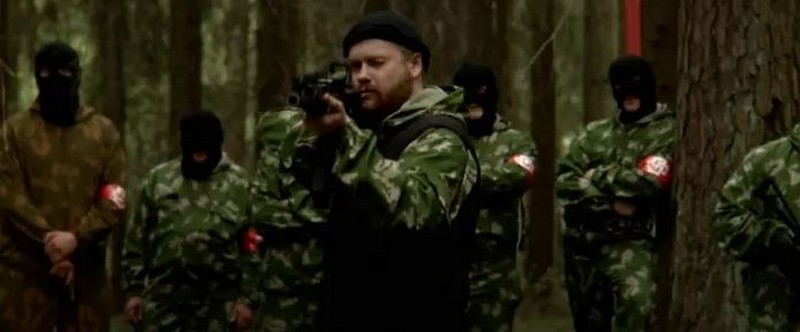
Update: How Both Putin and Biden Bungled in Ukraine. Analysis of the Bucha Tragedy

By Eric Zuesse

An update to

How Both Putin and Biden Bungled in Ukraine

By Eric Zuesse, April 04, 2022

***

On April 4th, Russia’s RT headlined “Russia and Ukraine trade accusations over Bucha civilian deaths (TIMELINE): After footage of dead civilians in the Ukrainian city of Bucha emerged, the West immediately pointed the finger at Moscow”, and included such items as, on April 2nd,

One clip published and later deleted by Ukrainian military commander Sergey Korotkih showed Ukrainian troops in Bucha discussing engagement rules. Korotkih, formerly a citizen of Belarus, is an open neo-Nazi who went to Ukraine back in 2014 to fight in the ranks of the notorious Azov Battalion. In Russia, Korotkih is wanted on multiple murder charges. One of the fighters can be heard asking if it was OK to shoot at “guys not wearing blue armbands” identifying Ukrainian soldiers. The response was an affirmative “you bet”.

This links through to this uploaded cellphone video evidence recording that conversation, physically onsite at Bucha, as Ukraine’s forces were coming into the area to inspect and evaluate the situation and to record and display the extent of their victory there.

Furthermore, on April 4th, Russia’s Ministry of Defense alleged that:

“All units of Russian troops completely withdrew from Bucha on March 30, and these shots [videos about Bucha that were distributed to the press] appeared on the 4th day after that, when SBU officers and representatives of Ukrainian TV arrived in the area”

If this statement is true, this would prove (even without there having been the necessary independent international investigation into Ukraine’s allegations on the matter) that Ukraine’s accusations were, in fact, bald-faced lies.

If Russia’s allegations in that Bucha matter are true, then, of course, the propaganda-value of the ‘news’-reports by CNN and others regarding it will reduce with time, and perhaps even become the enduring scandal here — yet another scandal of U.S.-and-allied ‘news’-media being actually instead propaganda-media. Trusting Western reports regarding Russia might then turn out to be even stupider than it was before.

Putin’s reputation in the U.S.-and-allied countries might then not suffer long-term harm from the Bucha matter. Putin’s approval-rating within Russia, itself, has risen from his low of around 60% in August 2021 to above 80% now, mainly as a result of soaring from 71% just before the February 24th invasion.

However, what’s far more important going forward will be the public opinion of him outside Russia, in the countries that never really stopped their Cold War against Russia after the Soviet Union’s 1991 end. America’s regime-change-in-Russia campaign will almost certainly not succeed by driving Putin’s approval-rating inside Russia down to where, say, Joe Biden’s in America is. But if America takes an alternative approach, such as a military coup, or a blitz invasion of Russia, perhaps the people who rule in America might ultimately succeed (in which case what happened to Ukraine after Obama conquered it in 2014 might happen, some day, to Russia itself).

The South Front Report

Then, later on April 4th, the best news-site on the war, South Front, bannered “NEW EVIDENCES SHED LIGHT ON ALLEGED MASSACRE IN BUCHA, KIEV REGION (VIDEO, PHOTO)”, and reported that,

Today, there are more interesting videos from Bucha shared by the Ukrainian military which may help to shed light on what did really happen in the town left by the Russian troops on March 30.

On April 2, a day before Ukrainian “journalists” came to Bucha to stage the horrific scenes on the streets, the National Police of Ukraine published a video of the mop up operation in Bucha.

Video Player

00:00

07:48

The footage confirmed that:

  • there were no corpses laying on the streets. Not a single civilian confirmed that any mass shootings [had occurred] in the city.
  • Ukrainian demining teams who entered the town right after the Russian withdrawal had no work to do. They are seen walking on the streets along with civilians. Not a single mine left by the Russians was shown on the video.
  • Servicemen of the National Guard asked some civilians if they needed help, none of them replied asking for any immediate assistance, confirming that they are fine.

Only one man is seen killed in his car. It is not clear how did his death happen. Another victim was obviously a servicemen of one of the warring sides killed in clashes, whose corps[e] is laying [lying] near a destroyed military equipment.

One of [the] Ukrainian “patriots” made a comment on behaviour of the “Russian invaders”. After his own compatriots told Russian servicemen about his acute social awareness, Russian military checked his apartment but found only flags and a bunch of Ukrainian symbols. To add some drama to his case, the man claimed that [a] Russian soldier took him out “to kill him”, but suddenly changed his mind and brought the man to the military commander. The brave patriot only had a short peaceful conversation with Russian servicemen, with no tortures. …

This video of the National Police of Ukraine, shot presumably on April 1 or earlier, does not really correspond to what the Ukrainian media published on April 3, trumpeting to the whole world that the Armed Forces of the Russian Federation allegedly carried out a “mass massacre” of civilians.

As more photos are shared from the spot, more proves [proofs], that the scene was staged, appear.

As the main video proof from Bucha raised a lot of suspicions and was quickly disclaimed, it was accompanied by more fake photos allegedly made in the town.

Unfortunately, these attempts are even less effective and are evident lies. For example, notorious Advisor to the Head of the Office of the President of Ukraine Arestovich published the photo of a woman tortured in Mariupol last week by Ukrainian Azov militants, claiming that she was a victim tortured by the Russians. The photo was later deleted but was widely spread by the Ukrainian MSM, who even did not come together if it was in Gostomel or in Bucha. The Ukrainian media are trying their best to gain as much hype as possible, lying on any matter. …

The Al Jazeera Report

However, at around the same time, Al Jazeera, which is owned by the Thani family of U.S.-allied Qatar, headlined “Bucha killings: ‘The world cannot be tricked anymore’,” and showed Ukraine-government-supporting alleged “witnesses” who alleged that Russian soldiers had perpetrated a “massacre” there, and urged international war-crimes trials against Russia’s leaders (and nothing against America’s leaders).

No one has — at least in any prominent ‘news’-medium — urged any war-crimes trial against any American leader: not against George W. Bush, nor against Obama, nor against Biden: no American leader at all.

Washington Post and AP Reports

Yet later in the day, America’s AP bannered “Biden: Putin should face war crimes trial for Bucha killings”, and an editorial in Jeff Bezos’s Washington Post headlined “The Bucha massacre should prompt a forceful response” and said that “Ukrainian President Volodymyr Zelensky called the civilian executions ‘genocide,’ and President Biden declared that Mr. Putin is ‘a war criminal.’ Those words will find meaning only with a determined prosecution.”

As-of day’s-end on the 4th, it seemed that there were corpses in Bucha, but there was no public information yet on the identities of the dead, nor on how many were civilians, how many were Ukrainian soldiers, and how many were Russian soldiers, and the ways in which each of those individuals had become killed — much less on whether any legal grounds yet existed for asserting that any “war crimes” had been perpetrated by anyone there.

And the Ukrainian account of the Bucha matter was full of faked ‘interpretations’ of the ‘evidence’ they were providing.

Nonetheless, on the morning of April 4th, Washington’s The Hill had bannered “Macron, EU official join calls for further sanctions over ‘clear’ indications of war crimes in Bucha”.

*

Note to readers: Please click the share buttons above or below. Follow us on Instagram, Twitter and Facebook. Feel free to repost and share widely Global Research articles.

Investigative historian Eric Zuesse’s next book (soon to be published) will be AMERICA’S EMPIRE OF EVIL: Hitler’s Posthumous Victory, and Why the Social Sciences Need to Change.

6 April 2022

Source: www.globalresearch.ca
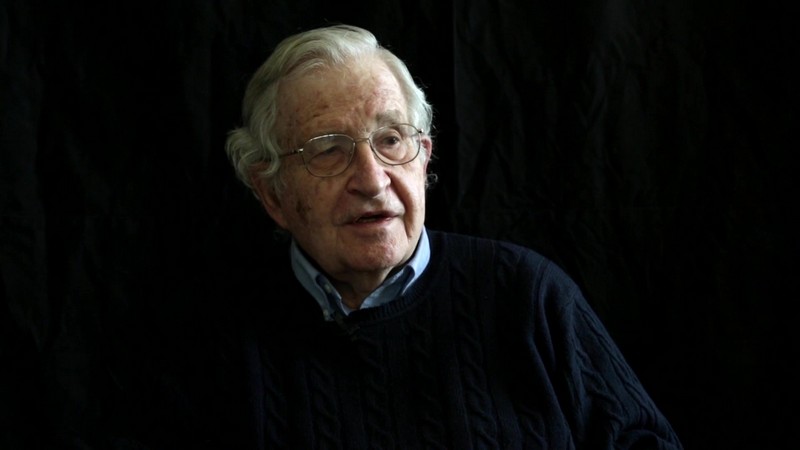
 

New Evidence Sheds Light on Alleged Massacre in Bucha, Kiev Region

By South Front

On April 3, the Ukrainian propaganda machine attempted another attack against Moscow. A few videos showing dozens of civilians who were allegedly killed by the Russian servicemen were widely spread by all the Ukrainian MSM.

The main thesis of the Ukrainian and Western media is that the Russian military left Bucha, causing huge civilian casualties. One of the main pieces of evidence was a video of the AFU driving along the city. Corpses of civilians were shown laying along the road.

The slightest analysis of the footage rose a lot of suspicions on its credibility. You can read more information HERE.

Today, there are more interesting videos from Bucha shared by the Ukrainian military which may help to shed light on what did really happen in the town left by the Russian troops on March 30.

On April 2, a day before Ukrainian “journalists” came to Bucha to stage the horrific scenes on the streets, the National Police of Ukraine published a video of the mop up operation in Bucha.

The footage confirmed that:

  • there were no corpses laying on the streets. Not a single civilian confirmed that any mass shootings in the city.
  • Ukrainian demining teams who entered the town right after the Russian withdrawal had no work to do. They are seen walking on the streets along with civilians. Not a single mine left by the Russians was shown on the video.
  • Servicemen of the National Guard asked some of civilians if they need help, no of them replied asking for any immediate assistance, confirming that they are fine.

Only one man is seen killed in his car. It is not clear how did his death happen. Another victim was obviously a servicemen of one of the warring sides killed in clashes, whose corps is laying near a destroyed military equipment.

One of Ukrainian “patriots” made a comment on behaviour of the “Russian invaders”. After his own compatriots told Russian servicemen about his acute social awareness, Russian military checked his apartment but found only flags and a bunch of Ukrainian symbols. To add some drama to his case, the man claimed that the Russian soldier took him out “to kill him”, but suddenly changed his mind and brought the man to the military commander. The brave patriot only had a short peaceful conversation with Russian servicemen, with no tortures.

This video of the National Police of Ukraine, shot presumably on April 1 or earlier, does not really correspond to what the Ukrainian media published on April 3, trumpeting to the whole world that the Armed Forces of the Russian Federation allegedly carried out a “mass massacre” of civilians.

As more photos are shared from the spot, more proves that the scene was staged appear.

As the main video proof from Bucha raised a lot of suspicions and was quickly disclaimed, it was accompanied by more fake photos allegedly made in the town.

Unfortunately, these attempts are even less effective and are evident lies. For example, notorious Advisor to the Head of the Office of the President of Ukraine Arestovich published the photo of a woman tortured in Mariupol last week by Ukrainian Azov militants, claiming that she was a victim tortured by the Russians.

The photo was later deleted but was widely spread by the Ukrainian MSM, who even did not come together if it was in Gostomel or in Bucha. The Ukrainian media are trying their best to gain as much hype as possible, lying on any matter.

In fact, Ukrainian media used a random photo of Yakut conscript soldiers, which was found in social networks.

These soldiers were demobilized a year ago. Now they were advised to hide their army photos so as not to be exposed in Ukrainian fakes.

Some of the victims in Bucha are people who were killed by the so-called Ukrainian territorial defense. This is confirmed by the Ukrainians themselves. The rest of the victims were killed in the shelling conducted by the AFU after the departure of Russian troops — this is indicated by a large number of craters from artillery strikes on the video.

On April 3, the Russian Defense Ministry confirmed that Kiev’s information about the mass killings in the Ukrainian Butcha was not true, and the footage was staged.

The Russian Defense Ministry stated that all the facts irrefutably confirm that the photos and video frames from Bucha are another staging of the Kiev regime for the Western media, as it was a case in Mariupol with the maternity hospital, as well as in other cities.

It was added that:

  • All units of the Russian troops completely withdrew from Bucha on March 30, and these shots appeared on the 4th day after that, when SBU officers and representatives of Ukrainian TV arrived there;
  • During the stay of Russian soldiers in Bucha, not a single civilian was injured;
  • 452 tons of humanitarian aid were delivered and issued to civilians by Russian servicemen in the settlements of the Kiev region.

On April 4, the Russian Foreign Minister Sergey Lavrov claimed that Russia sees a direct threat to international security in such provocations as in the Butchs. In turn, spokesperson of the Russian President Peskov claimed that Russia categorically rejects any accusations of involvement in the deaths of people in the Ukrainian Butcha, the topic should be discussed at the international level.

Peskov added that the videos distributed by Ukraine cannot be trusted, experts of the Russian Ministry of Defense have revealed signs of video forgery and fakes, facts and time lane also undermine the reliability of the statements of the Ukrainian side.

“We would demand that international leaders not rush into sweeping accusations and listen to Russia’s arguments.” -Peskov said.

In turn, the European Union has already claimed that its readiness to tighten sanctions against Russia and strengthen Kiev’s support in defense issues, according to German Foreign Minister Anna Lena Berbock on Twitter. European officials attribute this decision to the reports of the Ukrainian authorities about the events in Bucha. London followed their example.

Surprisingly, on April 4, London has not agreed to hold a meeting of the UN Security Council on the events in Bucha in Ukraine. This was stated by the official representative of the Russian Foreign Ministry Maria Zakharova in Telegram.

*

Note to readers: Please click the share buttons above or below. Follow us on Instagram, Twitter and Facebook. Feel free to repost and share widely Global Research articles.

SUPPORT SOUTHFRONT:

PayPal: southfront@list.ru, http://southfront.org/donate/ or via: https://www.patreon.com/southfront

6 April 2022

Source: www.globalresearch.ca
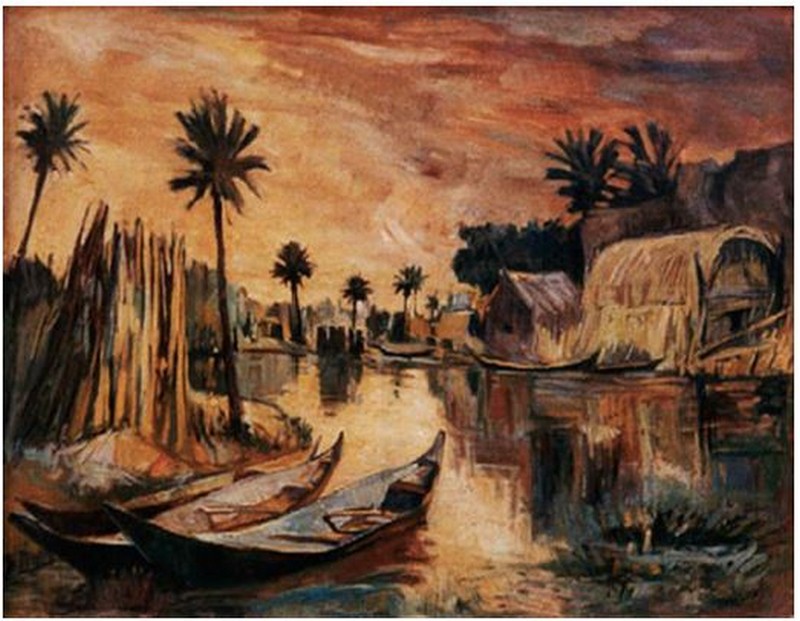
 

The Bucha Massacre. Ukraine Fake News

By Rodney Atkinson

Russian troops evacuated Bucha on March 30. Ukrainian National Police began entering Bucha on March 31, and that same day the mayor of Bucha announced that the town was fully under the control of Ukrainian officials.

At no time was there any suggestion by the mayor (watch video below) or any other Ukrainian official of mass killings undertaken by Russia. Given that they are claiming bodies litter the streets they could hardly have escaped the attention of the Mayor!

Mayor of Bucha confirms liberation from Russian occupants

It took four day for claims of a “war crime” to emerge (3rd April).

Film of alleged victims on the roads in Bucha look suspicious, with “bodies” moving. (we know this has happened in other staged and acted films provided by Ukraine’s propaganda) It is claimed that civilians had been shot and buried in shallow graves. We know from the behaviour of NATO allies in the Yugoslav war that in Racak dead soldiers were dressed up as civilians and then paraded as the victims of “a massacre” which was later debunked.

There is also the possibility that those civilians in Bucha who were accused of cooperating with Russian forces could have been executed by Ukrainian forces following the Russian exit on 30th March.

It is also both unprecedented and suspicious that the U.K. Chair at the UN Security Council refused an emergency meeting called by Russia on 3rd April to discuss the Bucha claims.

A Ukrainian MP Ilya Kiva has accused the Ukrainian SBU [Security Service of Ukraine] of fabricating (with the help of MI6) the Bucha “crimes”. (see youtube unless it has been censored already!)

If only we could say that “time will tell” which side is telling the truth! But there is certainly no doubt about the self-filmed Ukrainian crimes in this post (see below).

The Cynical Sacrifice of Ukraine

In an interview with CNN ON 20th March, Ukraine’s President Zelenskyy said of Joe Biden and the NATO leadership (the interview)

“I requested them personally to say directly that we are going to accept you into NATO in a year or two or five, just say it directly and clearly, or just say no,” Zelensky said. “And the response was very clear, you’re not going to be a NATO member, but publicly, the doors will remain open,”

Nothing shows the cynical sacrifice of Ukrainians more than this duplicitous treatment of Zelensky by NATO. Privately NATO and the Biden administration were telling Zelenskyy Ukraine was never going to be in NATO, yet they told him they were going to act publicly as if the possibility existed. The latter position (together with Zelensky’s remarks about developing nuclear weapons) they knew would provoke Russia into war.

The German President has every reason to be angry at this given that he promised Zelensky before the war that if he rejected NATO membership the Russians wouldn’t attack.

The evident (at least 8 year long) intent of the USA and NATO to provoke Russia into an attack was confirmed by Biden’s intemperate admission (on his visit to Poland) that he wanted regime change in Moscow. As Madeleine Albright (recently deceased) said in 1998

“If we have to use force, it is because we are America! We are the indispensable nation. We stand tall. We see further into the future.”

According to recent polls, one-third of the American people were enthusiastic about the idea of nuclear war with Russia. Even though as one commentator pointed out most of them would be Democrat supporting inhabitants of major cities which would be nuclear bomb targets! After years of wall to wall Russophobic bigotry and lies about Ukraine blasted out by tech companies, politicians and the mainstream media this mad mass psychosis is no surprise.

David Sanger reported for the New York Times that the Biden administration

“seeks to help Ukraine lock Russia in a quagmire without inciting a broader conflict with a nuclear-armed adversary or cutting off potential paths to de-escalation … CIA officers are helping to ensure that crates of weapons are delivered into the hands of vetted (!!!) Ukrainian military units, according to American officials.”

In fact (as happened with US weapons provided to Syrian rebel forces) hundreds of tanks and anti tank weapons have found their way into the hands of the Russians as Ukrainian troops have defected, been killed or captured.

The Mindless Western and Ukrainian War Propaganda

Here are some examples of the blatantly distorted media and image war. A picture of an injured child from Damascus is used again as anti Russian propaganda in Ukraine:

Here a “heartbreaking” image of a Ukrainian soldier leaving his loved one to go to war turns out to be from fiction film “The War of Chimeras”.

The BBC broadcast on the World Service the news that somewhere called “Tarkov” was resisting the Russians. Pity it is a fictional city from a computer game!

A film of a rocket ostensibly shooting down a Russian aircraft also turned out to be a scene from a commercial film!

Russian Civilians Killed in East Ukraine Don’t Make News

This DONETSK bombing by Ukrainian troops which killed 20 civilians was not reported in the western media. The missile was one used only by Ukrainian forces. See this.

Indeed there is a report that a far greater crime had been intended with civilians drawn by false information to an Administration building with fake text messages.

The very next day, Monday March 14th, at about 12:20 in the afternoon, the ukrops (Ukrainian forces) launched a Tochka-U ballistic missile with a 1,000 pound anti-personnel cluster bomb warhead at the Administration building in the city center.

The Nazis sent text messages and posted on social media (under fake pro-DPR accounts) for mothers, wives and sisters of our soldiers to gather at the administration building at noon on Monday to get information about their men. THIS was the intended target of the missile.

As many civilian women as possible. And it is not a rumour, I can confirm I have seen the text message myself sent to the daughter of one of my comrades. Our air defence intercepted the missile and prevented it from reaching the target, but some of the cluster bomb cassettes fell on University Avenue in downtown Donetsk (where the 20 civilians were killed).

Ukrainian War Crimes and Propaganda

As befits a regime headed by a comedian and actor, never has one side in a war used so many actors to fake scenes for propaganda purposes. The most common has been the use of actors to fake dead bodies. The most recent being claims related to areas where Russian troops have withdrawn since 30th March. Here a “body” moves and after the car goes by, starts to get up.

A similar film was taken a couple of weeks ago ostensibly from a morgue where some 30 “bodies” were lined up. Unfortunately some of them moved while the filming was going on!

Ukrainian Psychopaths

But such fakes are nothing compared to the treatment by Ukrainian soldiers of captured Russians in an infamous video.

At the beginning of the video, we can see Ukrainian soldiers shooting newly arrived prisoners through their legs. Needless to say they are not treated. Shock could have killed them due to the pain. In the rest of the video Russian POWs lying on the ground with bullet wounds in their legs. Some of them have their legs broken. It takes psychopaths to film their own atrocities and then make it public. All of this was filmed by Ukrainian soldiers themselves.

Article 13 of the Third Geneva Convention states: “Prisoners of war must at all times be humanely treated.” Here Ukrainian soldiers call up the mothers and wives of soldiers they have killed, mocking them

Ukrainian Soldiers Film Themselves Calling Up Mothers of Russian Soldiers Killed in Action And Mocking Them

Crimes in the Donbass

“Tatyana accompanies me to the hospital. She has also lived in Volnovakha most of her life. “The Ukrainians deliberately destroyed us. They needed the land. And then, it seems, the land was no longer needed, so they just beat us out of anger,” she says, pointing to holes blown into the hospital by shells and shrapnel-scarred asphalt. Then she takes me to the morgue, a small building that has also been noticeably damaged by shooting. The door turns out to be unlocked, and I see the morgue is completely filled with dead bodies. They lie in the corridor stacked up in two or three layers.

According to Tatyana, the National Guard soldiers siphoned diesel fuel from the hospital’s generators, so all the old people who depended on artificial ventilation devices died. “

The Ukrainian military allegedly said they would “leave nothing” in Volnovakha if they were ousted by pro-Russian forces.

See this.

When Fox News’ Bret Baier asked President Zelensky on Friday about reports of Azov Battalion committing atrocities, Zelensky appeared to brush them off by saying, “They are what they are, they were defending our country.” Fox then censored their report!

See this.

The main reason why so many civilian buildings have been damaged and destroyed in Ukrainian towns is because Ukrainian soldiers have used those buildings and the civilians in and around them as human shields. Here is a report from Odessa which although not yet the centre of Russian operations its preparing for an attack. Ukrainian troops have apparently taken up positions in Schools and hospitals.

See this.

Odessa native (Lev Vershinin) living in exile in the EU wrote in this article in Russian:

  • Nazi/Ukr-soldiers taking positions in schools, hospitals:
  • school no.1 at Mikhailovskiy-Place 10
  • school no. 57 at Yamchinkiy street 7
  • school no. 59 at Maraslievskyy street 60
  • medical centre/surgery at Sudostroitelnaya 1
  • Odessa University clinic at Tenista st. 8
  • maternity clinics no.1 and no.4
  • evening school no.25 at Staroportofrankovskiy st 45a
  • Marinskiy gymnasium at Lev-Tolstoy-st 9

Aidar-leader Maksim Marchenko in a document of 16/3/2022 ordered his troops to prevent civilians from leaving the city (apparently a document with his stamp & signature exists). This has been the norm which is why the humanitarian corridors offered by the Russians were for a long time a dangerous failure. Only the Ukrainians have the incentive to bottle up civilians as human shields in the cities to which they have retreated. They know the Russians don’t want to destroy such heritage but are forced to fire on buildings which protect Ukrainian gun positions. Would the British Government station guns in St Paul’s Cathedral?

Oles Yanchuk – former mayor of Odessa, now leader of Nazi-battalion “Bratstvo” – said about Odessa: the city will be destroyed (by us): “if they come to Odessa, they will receive it only burned down and destroyed.”

Other buildings used by Ukrainian troops have been a synagogue and the famous Pecherskaya Lavra monastery in Kiev. See this.

*

Note to readers: Please click the share buttons above or below. Follow us on Instagram, Twitter and Facebook. Feel free to repost and share widely Global Research articles.

6 April 2022

Source: www.globalresearch.ca