Just International

How the Pentagon Dictates Hollywood Storylines

By Jonathan Cook

New documentary discloses the ways western publics are softened up for aggressive, global US militarism through the Pentagon’s influence over thousands of films and TV shows.

4 Aug 2022 – In what should have been an extraordinary television confession this month, John Bolton, national security adviser in the previous administration of President Donald Trump, admitted to CNN in passing that he had helped to plot the overthrow of foreign governments while in office.

Dismissing the idea that Trump had attempted a coup at the Capitol with the January 6 riots, Bolton told anchor Jake Tapper: “As somebody who has helped plan coups d’etat, not here [in Washington] but, you know, other places, it takes a lot of work.”

It was an admission that he and others in the administration had committed the “supreme international crime”, as the Nuremberg trials at the end of the Second World War defined an unprovoked attack on the sovereignty of another nation. But Tapper treated the comment as largely unremarkable.

Washington can do out in the open what is denied to other countries only because of an exceptional assumption that the normal constraints of international law and the rules of war do not apply to the global superpower.

The US is reported to have carried out “regime change” in more than 70 countries since the Second World War. In recent years, it has been involved either directly or indirectly in wars in Afghanistan, Iraq, Libya, Syria, Yemenand Ukraine. Bolton himself has boasted of his involvement in efforts through 2019 to oust Nicolas Maduro’s government in Venezuela, trying to install as president Washington’s own preferred candidate, Juan Guaido.

The Pentagon outspends the next nine countries combined and maintains some 800 military bases dotted across the globe. And yet, Congress is poised once again to add tens of billions of dollars to the defence budget.

A new documentary suggests why western publics remain so docile both about the US being in a state of almost permanent war, and about it expending ever-vaster sums on its war machine.

Secret guiding hand

According to Theaters of War, the US Department of Defense does not just subtly influence Hollywood’s depiction of US wars to present them in a more favourable light. The Pentagon actively demands script oversight and dictates storylines. In practice, it has been waging a full-spectrum propaganda war against western audiences to soften them up to support aggressive, global US militarism.

The documentary, based on data uncovered by recent Freedom of Information requests from UK investigative journalist Tom Secker and academic Matthew Alford, reveals the astonishing fact that the Pentagon has been the secret, guiding hand behind thousands of films and TV shows in recent decades.

Many more movies never reach the screen because the Defense Department’s entertainment liaison office refuses to cooperate, believing the wrong messages are being promoted.

Top Gun: Maverick – Official Trailer (2022) – Paramount Pictures

Pentagon objections – usually the kiss of death – relate to any suggestion of military incompetence or war crimes, loss of control over nuclear weapons, influence by oil companies, illegal arms sales or drug trafficking, use of chemical or biological weapons, US promotion of coups overseas, or involvement in assassinations or torture. In fact, precisely the things the US military is known to have been doing.

How does the Defense Department exert so much control on film productions? Because expensive blockbusters are far more likely to recoup their budget and turn a profit if they feature the shiniest new weapons. Only the Pentagon can supply aircraft carriers, helicopters, fighter jets, pilots, submarines, armoured personnel carriers, military extras and advisers. But it does so only if it is happy with the dramatic messaging.

As one academic observes in Theaters of War, propaganda works most effectively when it can be passed off as entertainment: “You’re more open to incorporation of those ideas because your defences are down.”

How many viewers would take seriously a film if it was preceded by a sponsorship logo from the Defense Department or the CIA? And for that reason, Pentagon contracts usually specify that its role in a film be veiled.

This is why few know that the Defense Department and the CIA have had a controlling hand in such varied projects as Apollo 13, the Jurassic Park and James Bond franchises, the Marvel movies, Godzilla, Transformers, Meet the Parents and I Am Legend. Or how the military regularly gets involved in baking and quiz shows.

The reality, Theaters of War argues, is that many Hollywood movies are little more than advertisements for US war industries.

Selling war

This summer, Hollywood released the long-awaited sequel to Top Gun, a Tom Cruise movie about ace airforce pilots that came to define back in the 1980s how to sell war and make killing look sexy.

Top Gun’s makers got access to US navy aircraft carriers, a naval airbase and a host of F-14s and other jets. As the Washington Post reported: “It’s unlikely the [original] film could have gotten made without the Pentagon’s considerable support. A single F-14 Tomcat cost about $38 million.” The film’s entire budget was $15m.

The Pentagon got plenty in return. Its database records that the film “completed [the] rehabilitation of the military’s image, which had been savaged by the Vietnam War”. It stationed recruitment desks outside cinemas to take advantage of that new credibility.

Top Gun was so successful in marketing war machismo that it was implicated in the Tailhook scandal a few years later, in which more than 80 servicewomen were sexually assaulted by fellow officers at a convention in Las Vegas. That scandal delayed the follow-up, Top Gun: Maverick, for 36 years. Nonetheless, the Pentagon’s conditions for approving the new film were even stricter.

The agreement explicitly stated that the Defense Department would be able to oversee the script, “weave in key talking points”, and censor scenes it did not like. The US military also demanded a veto over actors appearing in the film and an official screening before Maverickcould be approved for release.

The Pentagon could punish any violations of the agreement by deleting footage involving its hardware, thereby killing the film. It could also deny “future support”, effectively killing the careers of Maverick’s filmmakers.

There is nothing unusual about Top Gun’s treatment. It is, argues Theaters of War, standard for US blockbusters, the films likely to have the most impact on popular culture and western perceptions of war.

The premise of one of the most popular franchises, Marvel’s Iron Man, was rewritten following Pentagon intervention. The main character, Tony Stark, played by Robert Downey Jr, was originally an outspoken opponent of the arms industries, reinventing his father’s empire so that Iron Man technology could stop wars.

But after Pentagon rewrites, Stark became the ultimate evangelist for the weapons industries: “Peace means having a bigger stick than the other guy.” In one early scene, he makes a fool of a young female reporter who criticises his business empire – before bedding her to underscore that she is also a hypocrite.

Military fiasco

The Pentagon has been particularly sensitive to portrayals of the US military following a fiasco in 1993 in which one of its helicopters was downed in Mogadishu. That led to a prolonged firefight that killed more than a dozen US soldiers and hundreds of Somalis.

The following year, the Defense Department insisted on major revisions to the Harrison Ford vehicle Clear and Present Danger – especially in a scene where a Colombian militia overwhelms US special forces. As documents unearthed by Theaters of War show, US officials worried that the Mogadishu events had made the US military “look ridiculous” and officials refused to “cooperate in a movie that does the same thing” in a different combat zone. It demanded changes to make the film “more of a ‘commercial’ for us”.

Clear And Present Danger (1994)

When in 2001, Hollywood turned its attention to the book Black Hawk Down – specifically about the Mogadishu incident – the Pentagon insisted on heavy script changes that transformed the drama. Just eight years after the actual events depicted, the Defense Department had turned a story of its own incompetence into an all-American tale of military valour in the face of overwhelming odds at the hands of a savage, faceless enemy.

Similar deceptions were achieved with Argo (2012), a film about the 1979 hostage crisis in Iran. In fact, according to Theaters of War, it was the CIA that hawked the book to Hollywood five years earlier on its website in the section “Inspirations for future storylines”. The tale was so appealing to the CIA because it focused on its sole success following the Iranian Revolution. The agency smuggled a handful of US hostages out of Tehran by pretending they were a visiting Canadian film crew.

Censored documents presented by Theaters of War show the CIA’s public relations office reviewing multiple versions of Argo’s script before finally agreeing: “The agency comes off looking very well.

That is because of what Argo ignores: the CIA’s long-running meddling in Iran, including its overthrow of the elected government in 1953 to install a US puppet, which ultimately provoked the 1979 revolution; the CIA’s intelligence failures that missed the looming revolution; and the fact that the six hostages the CIA freed were overshadowedby a further 52 who spent more than a year imprisoned in Tehran. A story of the CIA’s crimes and gross incompetence in Iran was reinvented as a tale of redemption.

The CIA managed a similar public relations coup the same year wth Zero Dark Thirty, after the Obama administration had lost the battle to conceal its routine use of torture in Iraq and elsewhere.

The filmmakers had to acknowledge that the CIA resorted to waterboarding, a torture technique that by then was in the public domain, but under pressure, they agreed to conceal the less well-known fact that the agency also used dogs to torture detainees.

Nonetheless, waterboarding was falsely presented as a vital tool in the CIA’s battle to extract needed information to supposedly keep Americans safe and help hunt down and kill the author of the 9/11 terror attacks, Osama bin Laden. That was such a distortion of the historical record that even the right-wing politician John McCain, a decorated war hero, went public to disparage the film.

Product placement

The Pentagon has such sway over Hollywood that it has even managed to turn around the anti-war message at the heart of a monster movie staple, Godzilla.

Back in the 1950s, it was an allegory about the horrors unleashed by the US dropping nuclear bombs on Japan at the end of the Second World War. But in the 2014 version, Defense Department meddling meant a reference to Hiroshima was excised and Cold War dynamics introduced instead: a lost Russian nuclear submarine triggers a confrontation with Godzilla.

Even more astonishingly, in both the 2014 and 2019 versions, the story is switched 180 degrees. Nuclear weapons become mankind’s salvation rather than a threat; the only possible way Godzilla can be destroyed. Nuclear proliferation sponsored by the Pentagon is no longer a problem. In Godzilla, it is integral to human survival.

Theaters of War also makes a plausible case that the Pentagon has been an important driver behind Hollywood’s move into sci-fi and fantasy territory.

The imaginary worlds of the Marvel universe, for example, offer a pristine showcase, demonstrating the need for the Pentagon’s shiniest weapons against implacable, other-worldly foes. Hollywood and the Pentagon can sweep aside real-world concerns, like the value of human life, the commercial motives behind wars, and the battlefield failures of military planners.

The challenge of superhuman enemies with superhuman powers has proved the perfect way to normalise extravagant, ballooning military expenditures.

That is why the Pentagon regularly insists on product placement rewrites, such as the Incredible Hulk riding an F-22 in the 2003 Hulk film, Superman flying alongside an F-35 in 2013’s Man of Steel, and the glorification of a Ripsaw armoured vehicle in 2017’s eighth instalment of the Fast and Furious franchise.

Paying dividends

Theaters of War concludes that the promotion of US militarism pays dividends. It means bigger budgets for the Pentagon and its contractors, greater prestige, less oversight and scrutiny, more wasteful wars, and more profiteering.

Donald Baruch, the Pentagon’s special assistant for audio-visual media, has noted that the US government “couldn’t buy the sort of publicity films give us”. In laundering the US military’s image, Hollywood encourages not only western publics, but the Pentagon itself, to believe its own hype. It leaves the US military more confident in its powers, less critically aware of its vulnerabilities, and more eager to wage war, even on the flimsiest of pretexts.

With Hollywood’s stamp of approval, the Pentagon also gets to define who are the bad guys. In Top Gun: Maverick, it is a barely disguised Iran supposedly trying to develop a covert nuclear bomb. Russia, China and generic Arab states are other template baddies.

The constant dehumanisation of official enemies, and contempt for their concerns, makes it easier for the Pentagon to rationalise wars that are certain to lead to death and displacement – or to impose sanctions that wreak suffering on whole societies.

This gung-ho culture is part of the reason there has been no public debate about the consequences of the US pouring billions of dollars of weapons into Ukraine to fight a proxy war against Russia, even at the risk of nuclear conflagration.

As Theaters of War convincingly argues, the Pentagon’s covert influence over popular culture can have a decisive role in raising support for divisive wars, such as the US invasion of Iraq in 2003. It can make the difference between public approval and rejection.

How different things might be if Hollywood was ring-fenced from Pentagon influence is illustrated by a case study.

The Day After was a 1983 Cold War film made for US TV over Defense Department objections. The Pentagon rejected the script after it depicted a nuclear exchange between the US and Russia following a series of misunderstandings. According to Theaters of War, the Defense Department demanded that Moscow be squarely blamed for starting the fictional war. Unusually, the filmmakers held their ground.

The Day After was watched by nearly half the US population. The president at the time, Ronald Reagan, recorded in his diary that the film had left him “greatly depressed”. It created political momentum that drove forward nuclear disarmament talks.

A single film that stepped outside the Pentagon’s simple-minded “US good guy” narrative generated a debate about whether the use of nuclear weapons could ever be justified.

The Day After was widely credited with slowing down the build-up of the two military superpowers’ nuclear arsenals. And it treated Russians not simply as a foe, but as people facing the same existential threat from the bomb as ordinary Americans. In a small way, The Day After made the world a safer place.

Theaters of War leaves audiences with a question: What might have been possible had the Pentagon not meddled in 3,000 movies and TV shows to promote its pro-war messages?

Jonathan Cook is an award-winning British journalist based in Nazareth, Israel, since 2001.

8 August 2022

Source: www.transcend.org
‘This Is a War of Propaganda’

By John Pilger

10 Jul 2022 – Australian journalist, author and documentary filmmaker John Pilger sits down with Talking Post’s chief news editor Yonden Lhatoo to discuss the war in Ukraine, the West versus China and the plight of jailed WikiLeaks founder Julian Assange.

20 minutes of truth… and a pretty sweet ending.

‘This is a war of propaganda’: John Pilger on Ukraine and Assange | Talking Post with Yonden Lhatoo

Submitted by TRANSCEND member Eric Herter

1 August 2022

Source: www.transcend.org

How We Remember Hiroshima and Nuremberg Reflects Power Not Justice

By Richard Falk

Peace activists around the world often choose August 8th each year to grieve anew the human suffering and devastation caused by dropping atomic bombs on the undefended Japanese cities of Hiroshima and Nagasaki. Among other things it was ‘a geopolitical crime’ of ultimate terror, with no combat justification, and intended mainly as a warning to Soviet leaders not to defy the West in the peace diplomacy at the end of World War II.

August 8th falls between the utter destruction of these two cities. It is a day that can never be forgotten or redeemed, although ever since the explosions in 1945 the solemnity of these occasions has been overshadowed outside of Japan by widespread fears that a nuclear war might occur at some point and a quiet rage that the nuclear weapons states have stubbornly refused to take steps to fulfill pledges to seek a reliable path to nuclear disarmament in good faith.

This moral and political pledge became legally obligatory in Article VI of the Nuclear Nonproliferation Treaty (1970), and affirmed unanimously in an Advisory Opinion of the International Court of Justice in 1996. It has become clear that for the security establishments of the ‘NATO Three’ this disarmament commitment was never more than ‘a useful fiction’ that conveyed the sense that the non-nuclear states were being given something valuable and commensurate to their willingness to give up their conditional option to underpin national security by acquiring nuclear weapons (as Russia and China, as well as Israel, India, Pakistan, and North Korea have done over the decades). It is formally conditional by virtue of Article 10 that gives Parties to the NPT a right of withdrawal if “extraordinary events..have jeopardized the supreme interests of its country.”

Last week at the NPT Review Conference, postponed since 2020 because of COVID, at UN Headquarters in New York City, two significant contradictory developments dominated the scene. It was the first such meeting of NPT Parties since the Treaty of Prohibition of Nuclear Weapons (TPNW) came into force in early 2021. This treaty, a project of governments from the Global South in active coalition with Global Civil Society has drawn a bright line between the majority views of the peoples of the world and the security elites of these nine nuclear weapons states. Indeed, the NATO Three (U.S., France, UK) had the temerity to issue a joint statement stating their opposition to the approach taken by the so-called Ban Treaty (TPNW) and defiantly declared their unlawful intention to continue to rely on nuclear weapons to meet their security needs broadly specified to include geopolitical deterrence, that is, not the defense of homelands but strategic concerns that could arise potentially anywhere on the planet. At present, illustrated by the U.S. posture in response to the Ukraine War and the future of Taiwan. This impasse between the nuclear haves and have-nots amounts to an existential confirmation of ‘nuclear apartheid’ as the underpinning of global security unless and until the advocates TPNW muster enough strength and will to mount a real challenge to such a hegemonic and menacing structure of power and authority.

The second notable development at the NPT Review Conference lent a sense of immediacy and urgency to what had become 77 years after Hiroshima a somewhat abstract concern is the Ukraine War, and its geopolitical spillover effect of heightening the perceived risks of the use of nuclear weaponry and even the danger of nuclear war. The U.S. has decided it is worth challenging Russia’s attack on Ukraine sufficiently to demonstrate its claim that since the end of the Cold War the world has political space for one extraterritorial state, which is the sole supplier of global governance when it comes to the security agenda. Among other things, unipolarity means that Cold War Era mutual respect for near abroad spheres of influence no longer sustains geopolitical coexistence. The U.S. has tacitly proclaimed a Monroe Doctrine for the world, and is prepared to accept the economic and strategic burdens of doing so, maintaining hundreds of foreign military bases and navies in every ocean.

NATO’s insistence on making Russia pay for its invasion by being again reduced to the normalcies of territorial sovereignty is intended as a master lesson in the geopolitics of the post-Cold War world. It also an occasion to send China, currently the more feared adversary, a message written with the blood of Ukrainian lives, that it better not forcibly seek to regain control over Taiwan or it will be devastated in an even more punitive manner, including thinly veiled threats and possible uses of nuclear weapons. Pentagon war games some months ago ominously showed that China would prevail in any military encounter in the South China Seas unless the U.S. was prepared to cross the nuclear threshold, affirming the renewed strategic relevance of nuclear weaponry and gathering evidence helpful in gaining even larger military appropriations from Congress.

American diplomacy has aggravated an already inflammatory context by some inexplicably provocative behavior that seems designed to produce a military confrontation. First, a gratuitous undertaking by Biden to provide whatever by way of military involvement is deemed necessary to protect Taiwan against an attack by China. And secondly, a reckless August visit to Taiwan by Nancy Pelosi at a time of high tensions in violation of the spirit of the Shanghai Communique that was issued by China and the U.S. in 1972, and has kept a reasonably stable status quo ever since between the two geopolitical actors, relying on what Henry Kissinger called ‘strategic ambiguity.’ Either these Biden/Pelosi ploys are yet another expression of American amateurism when it comes to foreign policy or are deliberate efforts to provoke Xi Jinping to take action. This supposedly fearful autocrat is already being accused in China of being weak, backing down on the key policy goal of achieving the reunification of China and Taiwan. Whether incompetence or malice is worse is a matter of taste. Both are unacceptably dangerous when it comes to nuclear dangers.

In effect, remembering Hiroshima and Nagasaki in 2022 is overshadowed by this dual reality of ongoing ‘geopolitical wars.’ It is also a reminder that nuclear war was narrowly averted in the Cuban Missile Crisis of 1962 by what Martin Sherwin, an authoritative interpreter of nuclear risk called, ‘dumb luck.’ [Gambling with Armageddon (2020). Also relevant: Daniel Ellsberg, The Doomsday Machine (2017)]. It may also be the moment when a nascent peace movement in the Global North wakes up and pushes hard for adoption of the TPNW approach.

I was recently shocked by realizing that the 1945 signing of the London Agreement by the U.S., Soviet Union, France, and the UK agreeing to establishing a tribunal in Nuremberg charged with the post-war prosecution of major Nazi war criminals also occurred on August 8th of the same year. A parallel tribunal in Tokyo was established for Japanese war crimes some months later. It has been often observed, especially in recent years, that these initiatives were so one-sided as to stretch our meaning of criminal law, the essence of which is to treat equals equally. Inequality pervaded the work of these tribunals, although the criminality of the indicted Germans and Japanese was well-documented. What was most controversial was the failure to inquire into the violations of international criminal law by both sides, which is why these tribunals, however noble their work, were derided as glaring instances of ‘victors’ justice.’

My interest in this connection between Hiroshima and the London Agreement is somewhat different. I am appalled by the insensitivity of signing this agreement establishing the Nuremberg Tribunal on the very days when the atomic bombings were actually taking place, arguably the worst crime of World War II at least on a par with the Holocaust. It is more than insensitivity, it is moral hubris, which prepares a political actor, whether state or empire, for tragedy. It leads directly to such features of world order as a geopolitical right of exception at the UN by way of the veto and impunity with respect to accountability procedures. In effect, the UN is designed quite literally to give assurances that the most dangerous states, as of 1945, are jurisprudentially incapable of doing any legal wrong, at least within the UN System, and such later affiliated institutions as the International Criminal Court. What is this slightly disguised feature of legality and legitimacy conveying to a curious observer? That law and accountability are relevant for propaganda and punishment against adversaries, and that the wrongs of victors in major wars are beyond scrutiny but those of the vanquished and weak are to be judged in what amounts to ‘show trials’ because of this core failure to treat equals equally.

There is yet something else to reflect upon. If August 8th had been a different day that of infamy because an English or American city had been targeted by a German atomic bomb and yet Germany still lost the war, the act and the weapon would have been criminalized at Nuremberg and by subsequent international action. We might not be still living with this weaponry if the perpetrators of those dreadful events of August 6th and 9th had been the losers in World War II, which makes the aptly celebrated defeat of fascism on balance a somewhat questionable long-term victory for humanity.

In summation, there is a lot to think about on August 8th this year if we allow ourselves to grasp this repressed relationship between Hiroshima and Nuremberg in addition to heightened geopolitical tensions.

Richard Falk is a member of the TRANSCEND Network, Albert G. Milbank Professor Emeritus of International Law at Princeton University, Chair of Global Law, Faculty of Law, at Queen Mary University London, Research Associate the Orfalea Center of Global Studies at the University of California, Santa Barbara, and Fellow of the Tellus Institute.

8 August 2022

Source: www.transcend.org

The Intricate Fight For Africa: The Legacy of the Soviet Union vs Western Colonialism

By Dr Ramzy Baroud

Russian Foreign Minister Sergey Lavrov’s recent tour in Africa was meant to be a game changer, not only in terms of Russia’s relations with the continent, but in the global power struggle involving the US, Europe, China, India, Turkey and others.

Many media reports and analyses placed Lavrov’s visit to Egypt, the Republic of Congo, Uganda and Ethiopia within the obvious political context of the Russia-Ukraine war. The British Guardian’s Jason Burka summed up Lavrov’s visit in these words: “Lavrov is seeking to convince African leaders and, to a much lesser extent, ordinary people that Moscow cannot be blamed either for the conflict or the food crisis.”

Though true, there is more at stake.

Africa’s importance to the geostrategic tug of war is not a new phenomenon. Western governments, think tanks and media reports have, for long, allocated much attention to Africa due to China’s and Russia’s successes in altering the foreign policy map of many African countries. For years, the West has been playing catch up, but with limited success.

The Economist discussed ‘the new scramble for Africa’ in a May 2019 article, which reported on “governments and businesses from all around the world” who are “rushing” to the continent in search of “vast opportunities” awaiting them there. Between 2010 and 2016, 320 foreign embassies were opened in Africa which, according to the magazine, is “probably the biggest embassy-building boom, anywhere, ever.”

Though China has often been portrayed as a country seeking economic opportunities only, the nature and evolution of Beijing’s relations with Africa prove otherwise. Beijing is reportedly the biggest supplier of arms to sub-Saharan Africa, and its defense technology permeates almost the entire continent. In 2017, China established its first military base in Djibouti in the Horn of Africa.

Russia’s military influence in Africa is also growing exponentially, and Moscow’s power is challenging that of France, the US and others in various strategic spaces, mainly in the East Africa regions.

But, unlike the US and other western states, countries like China, Russia and India have been cautious as they attempt to strike the perfect balance between military engagement, economic development and political language.

‘Quartz Africa’ reported that trade between Africa and China “rose to a record high” in 2021. The jump was massive: 35% between 2020 and 2021, reaching a total of $254 billion.

Now that Covid-19 restrictions have been largely lifted, trade between Africa and China is likely to soar at astronomical levels in the coming years. Keeping in mind the economic slump and potential recession in the West, Beijing’s economic expansion is unlikely to slow down, despite the obvious frustration of Washington, London and Brussels. It ought to be said that China is already Africa’s largest trade partner, and by far.

Russia-China-Africa’s strong ties are paying dividends on the international stage. Nearly half of the abstentions in the vote on United Nations Resolution ES-11/1 on March 2, condemning Russia’s military action in Ukraine, came from Africa alone. Eritrea voted against it. This attests to Russia’s ability to foster new alliances on the continent. It also demonstrates the influence of China – Russia’s main ally in the current geopolitical tussle – as well.

Yet, there is more to Africa’s position than mere interest in military hardware and trade expansion. History is most critical.

In the first ‘scramble for Africa’, Europe sliced up and divided the continent into colonies and areas of influence. The exploitation and brutalization that followed remain one of the most sordid chapters in modern human history.

What the Economist refers to as the ‘second scramble for Africa’ during the Cold War era was the Soviet Union’s attempt to demolish the existing colonial and neo-colonial paradigms established by western countries throughout the centuries.

The collapse of the Soviet Union over three decades ago changed this dynamic, resulting in an inevitable Russian retreat and the return to the uncontested western dominance. That status quo did not last for long, however, as China and, eventually, Russia, India, Turkey, Arab countries and others began challenging western supremacy.

Lavrov and his African counterparts fully understand this context. Though Russia is no longer a Communist state, Lavrov was keen on referencing the Soviet era, thus the unique rapport Moscow has with Africa, in his speeches. For example, ahead of his visit to Congo, Lavrov said in an interview that Russia had “long-standing good relations with Africa since the days of the Soviet Union.”

Such language cannot be simply designated as opportunistic or merely compelled by political urgency. It is part of a complex discourse and rooted superstructure, indicating that Moscow – along with Beijing – is preparing for a long-term geopolitical confrontation in Africa.

Considering the West’s harrowing colonial past, and Russia’s historic association with various liberation movements on the continent, many African states, intelligentsias and ordinary people are eager to break free from the grip of western hegemony.

Dr. Ramzy Baroud is a journalist and the Editor of The Palestine Chronicle.

7 August 2022

Source: countercurrents.org

Israel’s killing campaign continues in Gaza

By Tamara Nassar

Israel’s bombardment of the occupied Gaza Strip entered its second day on Saturday with no sign of de-escalation as the United States, European Union and other Western countries gave Tel Aviv a green light to continue its campaign of killing and destruction.

By late evening on Saturday, Israeli airstrikes in Gaza had killed at least five more people.

The health ministry in Gaza said that 24 had been killed in the territory, including six children, since Israel launched the surprise attack on Friday afternoon by assassinating a senior leader of the Islamic Jihad resistance group.

More than 200 Palestinians have been injured.

Israel claimed an air strike in Rafah on Saturday evening killed Khalid Mansour, the commander of Islamic Jihad in southern Gaza. But the group did not immediately confirm that.

There were reports of at least five people killed in an explosion near a mosque in Jabaliya refugee camp in northern Gaza on Saturday night, among them several children.

But Israel denied bombing the area and claimed the deaths were caused by a misfired Palestinian rocket.

Throughout the day, Israeli warplanes continued to strike densely populated residential areas, targeting civilians and their property. And an Israeli military spokesperson warned the assault could last a week.

Islamic Jihad fired 350 rockets into Gaza by Saturday afternoon, including towards Tel Aviv and Ben Gurion airport.

While Hamas, which controls Gaza’s internal affairs, has backed Islamic Jihad’s response, it has yet to launch a single rocket at Israel since Israel launched its assault on Friday.

Hamas said on Friday that resistance factions were coordinating their responses. Its restraint so far may be an indication that the resistance groups are trying to contain the flare-up before it erupts into a full-blown confrontation with Israel.

This may change on Sunday as Israelis plan to ascend to the al-Aqsa mosque compound for the first day of the Jewish holiday of Tisha B’Av, which in Jewish belief commemorates the destruction of the First and Second Temples in Jerusalem.

Many of these Jewish extremists want to see the al-Aqsa mosque replaced with a new Jewish temple.

The Israeli police is permitting them to do so, with the expected participation of extreme-right lawmaker Itamar Ben-Gvir.

Similar provocations led to Israel’s May 2021 assault, when Hamas responded to Israeli attacks on Palestinians in Jerusalem with barrages of rockets into Israel.

Toll rises

A missile fired by Israeli warplanes struck a group of people east of Khan Younis early Saturday, killing 24-year-old Tamim Ghassan Abdullah Hijazi and 27-year-old Osama Abdulrahman Hussein al-Suri, according to the Gaza-based human rights group Al-Mezan.

Hours later, Israeli warplanes fired three missiles at the three-story home of a family of 40 southwest of Gaza City, where mostly women and children lived, destroying the building completely and damaging other houses nearby.

On Saturday afternoon, Israeli warplanes destroyed another home occupied by four families and caused severe damage to nearby residences.

In the northern Jabaliya area, Israeli warplanes struck a group of Palestinians, killing 28-year-old Hasan Muhammad Yousef Mansour and severely injuring another.

Israeli warplanes also hit a group of Palestinians, mainly women and children, who were getting in a car to go to a family wedding.

Al-Mezan said the attack killed the groom’s mother, Naamah Talbat Muhammad Abu Qaidah.

Five children were injured.

Power outages

Greatly exacerbating the situation for Gaza’s 2.1 million inhabitants, the territory’s only power plant said that it would shut down on Saturday due to Israel’s continued closure of external crossings, blocking fuel imports.

Gaza has just a quarter of the power it needs during the summer, according to Gisha, an Israeli human rights group. This means residents may now receive only four hours of electricity per day, followed by an outage of 12 hours.

This is a particularly dire threat to Gaza’s healthcare system, which has already been battered by successive Israeli assaults and 15 years of an ongoing siege.

Pharmaceutical supplies in Gaza are at their “worst in years,” the Palestinian health ministry stated.

There are also severe shortages of supplies for labs and blood banks and other medical consumables.

Power outages pose a “serious threat” to vital hospital departments, including emergency rooms, intensive care units and dialysis clinics, the ministry said.

Desalination plants, sewage pumps and water supplies to homes will also be disrupted, “which may cause a severe health and humanitarian disaster,” the health ministry warned.

Israeli authorities continue to block the entry of two dozen x-ray machines and spare parts to repair medical devices in essential emergency departments.

All scheduled surgeries are being postponed to help hospitals cope with those injured in the ongoing Israeli attacks.

Meanwhile, Israel’s continued closure of the Erez checkpoint is preventing hundreds of Palestinian patients from leaving Gaza for medical treatment, putting their lives at risk, according to Al-Mezan.

The health ministry announced that a shutdown of the power plant would start a 72-hour countdown to health services coming to a standstill.

Lynn Hastings, the UN humanitarian coordinator in the West Bank and Gaza Strip, called for “an immediate de-escalation and halt to the violence” on Saturday.

Tamara Nassar is an assistant editor at The Electronic Intifada.

7 August 2022

Source: countercurrents.org

The web of relations within the Israel-India-USA-UAE (I2-U2) alliance

By Arab Center for Research & Policy Studies

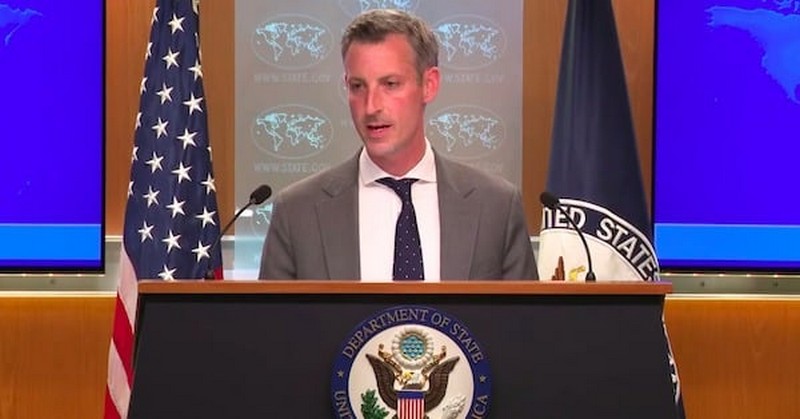
On 14 July, during his visit to Israel, US President Joe Biden held a virtual meeting with the leaders of a new economic group known as I2-U2, consisting of India, Israel, the UAE, and the USA. The announcement of the group’s establishment has raised many questions concerning its objectives, the timing of its formation, and the interests that unite its parties. Although the joint statement issued after the meeting stressed that the goal of establishing the group is a ‘particular focus on joint investments and new initiatives in water, energy, transportation, space, health, and food security,’ the prevailing belief is that strategic goals stand behind the group’s establishment, considering the circumstances that led to its emergence and the nature of the relations and interests linking its members. This was noted by US State Department spokesman Ned Price when he said that the four parties discussed ‘expanding economic and political cooperation in the Middle East and Asia, including through trade, combating climate change, energy cooperation, and increasing maritime security’.

Context

The I2-U2 group was established in October 2021 during a meeting between the US secretary of state and his Israeli and Emirati counterparts to monitor the implementation of the ‘Abraham Accords’, which triggered the normalisation of diplomatic relations between Israel on the one hand, and the UAE and Bahrain on the other. India, which enjoys strategic relations with Israel, joined the group a few days later, during a visit to Israel by India’s foreign minister, Subrahmanyam Jaishankar. Consequently, the four parties held a virtual meeting while Jaishankar was in Israel to attend the Indian Air Force’s participation in Israel’s Blue Flag exercise. While the tripartite group of Israel, the UAE and the USA appears understandable in light of the Abraham Accords, India’s accession has aroused several questions regarding motives, as well as the reason for choosing Israel as a setting for the announcement of its accession.

Interests

The four state parties are linked to a wide network of economic, strategic and security interests, with shared views on many regional and international issues, most prominently the issue of Islamist movements (although the ideology and practice of India’s ruling party is hostile not just to Islamist movements but to Islam more generally). They do have difference on other issues, such as Iran (with which India entertains friendly relations), and the failure of the UAE and Israel to share the hostile position of the USA and India on China. India, the UAE and Israel have been strengthening their bilateral relations in recent years, eventually making it possible to establish a regional alliance under US auspices.

India-Israel Relations

Following the establishment of diplomatic relations between India and Israel in 1992, relations between the two states have flourished, especially since the ascension to power of India’s nationalist Bharatiya Janata Party (BJP) in 2014. Trade between them had ballooned to more than four billion dollars by the end of 2016, from one billion in 2000. In 2017, India’s prime minister, Narendra Modi, undertook the first visit of an Indian prime minister to Israel, followed by a visit by the former Israeli prime minister, Benjamin Netanyahu, to India in January 2018. The progress of Indo-Israeli relations has covered many areas, including research and development and joint manufacturing in the defence sector, science and technology, trade and innovation, agriculture, health, telecommunications, water, and smart cities. But the defence and security sector remains the most important in their bilateral relations. Within a few years, Israel became one of the three most important sources of weapons for India. During the Indian foreign minister’s visit to Israel in October 2021, the two countries signed a ten-year defence cooperation agreement. Previously, in April 2017, the two governments signed the biggest deal in the history of the Israeli military industry, valued at two billion dollars. India is currently the largest importer of Israeli weapons; it imports about 45 per cent of all Israeli produced weapons. Israel is a convenient source of arms for India because, unlike the USA, it does not tie its exports to any conditions.

India-UAE Relations

India’s high economic growth numbers, accompanied by an increase in its energy needs, added a strategic dimension to its relations with the Gulf region. Energy and maritime security have become the glue of these relations, and India has set its sights on strengthening relations with Gulf states, and building a strategic partnership with them to secure the oil and gas for its continued economic growth. India is currently the third largest oil importer in the world, and the Gulf region provides about 70 per cent of India’s imported oil; the vast majority from Arab states, and the rest from Iran. Although India’s relations with all Gulf countries have undergone extensive development, New Delhi and Abu Dhabi are particularly close, especially since the BJP came to power. In February 2016, the then crown prince of Abu Dhabi, Mohammed bin Zayed, visited India. In January 2017, he again visited India as the guest of honour for its National Day celebrations. On the other hand, India’s prime minister Modi visited Abu Dhabi in February 2018, and again in August 2019, when he was presented with the Order of Zayed, the highest honour in the UAE. During this visit, the two countries also signed a partnership and strategic cooperation agreement that included energy, investment, defence and maritime security. Meanwhile, trade between the two countries amounted to USD57 billion in 2019.

In February 2022, the two countries signed a comprehensive economic partnership agreement to increase trade from its current level of USD60 billion to USD115 billion within five years. Symbolic of the relationship between the two countries, the UAE insisted on inviting India to attend the ministerial meeting of the Organisation of Islamic Cooperation (OIC) that was held in Abu Dhabi in early 2019, despite Pakistan’s threat to boycott the meeting. Later that year, India abolished Kashmir’s seven-decade self-rule.

While the UAE seeks to enhance its technology, security and defence clout by strengthening its relations with India, ideology is also an important factor in the development of its relations with India, as well as with Israel, The UAE agrees with the Israeli and Indian definition of terrorism, generalising and seeking to eliminate all variations of Islamist forces, and cooperating with them to restrict and shut down Islamic organisations that are active in representing the interests of Muslims in Europe and the United States.

UAE-Israel Relations

Despite a long history of secret relations between the UAE and Israel dating back two decades, according to some sources, security relations have progressed remarkably quickly, especially after the Abraham Accords were signed in 2020. On 18 August 2020, former Mossad chief Yossi Cohen visited the UAE where he met the Emirati national security adviser, Tahnoun bin Zayed, to discuss ‘prospects for cooperation in the fields of security’, and ‘exchanged points of view on regional developments and on issues of common interest’.

In March 2021, the Emirates Defense Advanced Technology Group (EDGE) signed a memorandum of understanding with the Israel Aerospace Industries Company to develop joint security and military production and build an advanced anti-drone defence system. In November 2021, the head of the Arms Export Department of the Israeli Ministry of Defence, Yair Kolas, visited the Dubai International Airshow, accompanied by seven Israeli security, military and cyber companies, in order to enhance the joint security and military cooperation between the two countries, and to design and manufacture unmanned ships capable of implementing M-170 anti-submarine attacks. On the political level, Naftali Bennett made the first visit of an Israeli prime minister to the UAE in December 2021, and returned in June 2022 with reports that Israel had installed radar systems in the UAE to intercept any attacks from Iran. Economically, the volume of trade between the UAE and Israel increased from USD125 million in 2020 to USD700 million in 2021. In March 2022, the UAE announced the establishment of a USD10 billion fund to invest in strategic sectors in Israel, including energy, water, space, healthcare and agricultural technology.

The Tripartite consensus and the US position

Thus, the Abraham Accords prepared the ground to bring together India, the UAE, and Israel as partners within the framework of an Asian-Middle Eastern regional alliance based on shared interests and sponsored by Washington. As soon as normalisation between Israel and the UAE became public, the International Federation of Indian-Israeli Chambers of Commerce was established, and Dubai was selected as its main international headquarters. The opening of the headquarters was attended by the heads of the Indian and Israeli diplomatic missions in Abu Dhabi and the UAE ambassador to India, in addition to numerous Indian businessmen based in the UAE.

On 14 February 2021, the American Israel Public Affairs Committee (AIPAC) organised a virtual symposium titled ‘India, Israel, and the Gulf: New Opportunities’. Israel views Dubai as an important bridge to the large Indian market, as Dubai hosts about 500 Indian investment groups, as well as the headquarters of every Indian company operating in the Middle East, in addition to the 23 Indian banks with branches in the Dubai International Financial Center. On the other hand, New Delhi considers the presence of direct flights between Dubai and Tel Aviv helpful in strengthening the relations of Indian companies with Israel. Israeli representatives in Dubai hastened to establish relations with Indian businessmen in the Emirates, while several Indian companies in Dubai announced the launch of activities in Israel in the fields of healthcare, pharmaceuticals, financial services, and gold and jewellery, among other sectors. The three countries have shown great interest in strengthening cooperation in the field of technology and artificial intelligence, in which Israel and India are pioneers, while the UAE boasts the capital to invest in these projects. According to an opinion poll conducted by the Brookings Institution in 2019, the UAE and Israel are, remarkably, considered the most reliable partners for Indian political elites.

With Washington being party to this regional grouping, the three countries hope to gain access to advanced US technology in security, defence, aerospace, healthcare and emerging technologies, and also hope to access the best weapons technology and to cooperate in containing the Islamist groups that they consider their greatest threat.

Meanwhile, Washington hopes that cooperation with India in the Gulf will replace, if only partially, China, and will lead to the emergence and development of a defence-security architecture that can confront China. The USA is looking for cooperation not only in terms of defence, but also to compete with Chinese trade. To this end, it has been proposed that Indian ports, such as Mumbai, may be linked Greek ports through the Jebel Ali port in Dubai, and a railway line may be constructed from the Emirates through Saudi Arabia and Jordan to the port of Haifa. Washington believes that supporting such projects will help restructure global supply chains and international trade lines away from China and its Belt and Road Initiative. This would be consistent with the vision of the G7 countries, adopted at their last meeting in June 2022, to provide USD600 billion to finance infrastructure projects to rival and limit the expansion of Chinese mega projects.

* This article was first published by the Arab Centre for Research & Policy Studies, Doha

7 August, 2022

Source: www.amec.org.za

US-China relations at breaking point

By Peter Symonds

The reckless and provocative trip by US House Speaker Nancy Pelosi has strained relations between the United States and China to breaking point.

The Chinese government has reacted with Pelosi’s visit by ending dialogue with Washington in key areas, including military-to-military talks, climate change, cross-border crime and drug trafficking, and the repatriation of illegal migrants. Beijing has also imposed unspecified sanctions on Pelosi herself.

“Despite China’s serious concerns and firm opposition, Pelosi insisted on visiting Taiwan, seriously interfering in China’s internal affairs, undermining China’s sovereignty and territorial integrity, trampling on the One China policy, and threatening the peace and stability of the Taiwan Strait,” a Chinese foreign ministry spokesperson declared.

The eight countermeasures announced yesterday specifically cancel China-US Theatre Commanders meetings, China-US Defense Policy Coordination talks and China-US Military Maritime Consultative Agreement meetings. The Politico website reported that multiple calls by US Defense Secretary Lloyd Austin and Joint Chiefs Chair General Mark Milley have not been returned by their Chinese counterparts.

The breakdown of direct military-to-military contact further heightens the danger of an incident or accident leading to a broader conflict amid the tense standoff between Chinese, US and Taiwanese forces triggered by Pelosi’s visit.

The US is maintaining a major naval presence in waters near Taiwan, featuring the aircraft carrier, the USS Ronald Reagan, with its full complement of warplanes, along with the warships of its accompanying strike group. White House spokesperson John Kirby announced further anti-China provocations, with US naval and air transits of the Taiwan Strait in the “next few weeks.”

China is staging its own largest-ever military drills in six areas close to Taiwan, due to continue until noon local time on Sunday. These involve the dispatch of military aircraft into the Taiwan Strait, the firing of missiles into waters to the east of Taiwan, including over the island itself, and the deployment of naval ships into the areas, disrupting international flights and shipping.

In a pointed warning to the US and Japan, several Chinese missiles reportedly landed inside the 200-nautical mile Exclusive Economic Zone (EEZ), surrounding Japan’s southern islands near Taiwan, sparking a protest from Tokyo. The largest US military bases in Japan are sited on Okinawa, which is part of Japan’s lengthy southern island chain.

Taiwan’s defence ministry reported it had scrambled fighters to warn away Chinese aircraft that it said had entered the island’s self-declared Air Defence Identification Zone (ADIZ), some of which also had crossed the median line in the Taiwan Strait separating the island from the Chinese mainland. The ministry said a total of 68 Chinese military aircraft and 13 navy ships had conducted missions in the strait.

The risk of a military clash is increased by the extremely confined space in which such manoeuvres are taking place. The Taiwan Strait is just 130 kilometres wide at its narrowest point. The nearest inhabited Japanese island, Yonaguni, is only 110 kilometres to the east of Taiwan.

Moreover, the Taiwanese ADIZ, which has no standing in international law, not only hugs the Chinese mainland, including heavily-fortified islets just kilometres from major Chinese cities, but covers a significant portion of the Chinese mainland itself. In many cases, Chinese aircraft cannot even take off without “intruding” into the ADIZ.

In a statement steeped in hypocrisy and cynicism, US Secretary of State Antony Blinken condemned the Chinese exercises, saying: “There is no justification for this extreme, disproportionate and escalatory military response… now, they’ve taken dangerous acts to a new level.”

At the same time, Blinken reiterated that the US intended to stage further provocations by sending its military through the narrow waters between Taiwan and the Chinese mainland and encouraging its allies to do the same.

Despite initial expressions of concern about the inflammatory character of Pelosi’s trip, the Biden administration backed it and authorised the mobilisation of US military aircraft and warships as part of the visit. Now the White House, its allies such as Japan and Australia, and the US and international media repeat the lie that the visit in no way changed the status quo surrounding Taiwan.

In reality, the trip is another major nail in the coffin of the One China policy that underpinned the establishment of diplomatic relations between the US and China in 1979. Beijing insists that Taiwan is an integral part of One China of which it is the legitimate government—a position that the US accepted de-facto when it broke diplomatic and military relations with Taiwan and removed its embassy and its armed forces from the island.

Beijing has repeatedly warned that it will reintegrate Taiwan by force if Taipei ever declares formal independence from China. The visit by the highest-ranking US official in 25 years is just the latest in a series of steps by the Trump and Biden administrations calculated to call the One China policy into question. That included a public acknowledgement last year of the presence of US troops on Taiwan—a territory that de facto the US recognises as part of China.

Taiwan would be part of China today if it were not for US imperialism. The protocols reached between the US and its allies at the end of World War II recognised that Taiwan—the Japanese colony of Formosa since 1895—was part of Chinese territory. In the wake of the 1949 Chinese Revolution, the defeated Kuomintang armies fled to Taiwan, where Generalissimo Chiang Kai-shek presided over a brutal military dictatorship.

For nearly a quarter century, successive US administrations maintained the fiction that the Chiang Kai-shek dictatorship was the legitimate government-in-exile of all China. That changed in 1972 when President Nixon visited China and forged a quasi-alliance with Beijing against the Soviet Union. Taiwan and the One China policy was central to the protracted negotiations that finally culminated in the establishment of formal US-Chinese relations in 1979.

The Biden administration is now deliberately undermining those foundations. In doing so, it is goading Beijing into taking military action to reunify Taiwan and prevent the island being drawn into Washington’s web of anti-China alliances throughout the Indo-Pacific. Taiwan is not only critical to China strategically but is home to the Taiwan Semiconductor Manufacturing Company, which has a virtual monopoly on the production of the most advanced semiconductors vital for countless commercial and military applications.

US imperialism is consciously exploiting Taiwan and endangering its population, in the same way as it has used Ukraine to provoke a war with Russia. It is seeking to provoke a conflict over the island and drag China into a military quagmire that will weaken and fracture the country that Washington regards as the chief threat to the “international rules-based order” on which its global domination rests.

Pelosi’s visit to Taiwan marks a dramatic escalation in the US provocations against China, but Washington will not stop there. As it increasingly renders the One China policy a dead letter, the US is arming Taiwan to the teeth, as part of its decade-long military build-up throughout the Indo-Pacific region for a war with China with potentially catastrophic consequences.

6 August 2022

Source: countercurrents.org

Why Resistance Matters: Palestinians are Challenging Israel’s Unilateralism, Dominance

By Dr Ramzy Baroud

Until recently, Israeli politics did not matter to Palestinians. Though the Palestinian people maintained their political agency under the most demoralizing conditions, their collective action rarely influenced outcomes in Israel, partly due to the massive discrepancy of power between the two sides.

Now that Israelis are embarking on their fifth election in less than four years, it is important to raise the question: “How do Palestine and the Palestinians factor in Israeli politics?”

Israeli politicians and media, even those who are decrying the failure of the ‘peace process’, agree that peace with the Palestinians is no longer a factor, and that Israeli politics almost entirely revolves around Israel’s own socio-economic, political and strategic priorities.

This, however, is not exactly true.

While it is appropriate to argue that none of Israel’s mainstream politicians are engaged in dialogue about Palestinian rights, a just peace or co-existence, Palestine remains a major factor in the election campaigning of most of Israel’s political parties. Instead of advocating peace, these camps advocate sinister ideas, ranging from the expansion of illegal Jewish settlements to the rebuilding of the ‘Third Temple’ – thus the destruction of Al-Aqsa Mosque. The former is represented by ex Israeli Prime Ministers Benjamin Netanyahu and Naftali Bennett, and the latter in more extremist characters like Itamar Ben-Gvir and Bezalel Smotrich.

Hence, Palestine has always factored in Israeli politics in such a vulgar way. Even before the establishment of the state of Israel on the ruins of historic Palestine in 1948, the Zionist movement understood that a ‘Jewish state’ can only exist and maintain its Jewish majority through force, and only when Palestine and the Palestinian people cease to exist.

“Zionism is a colonizing adventure and, therefore, it stands or falls on the question of armed forces”, Zionist ideologue Ze’ev Jabotinsky wrote nearly 100 years ago. This philosophy of violence continues to permeate Zionist thought to this day. “You can’t make an omelet without breaking eggs. You have to dirty your hands,” said Israeli historian, Benny Morris in a 2004 interview, in reference to the Nakba and the subsequent dispossession of the Palestinian people.

Until the war of 1967, Palestinian and Arab states mattered, to some extent, to Israel. Palestinian and Arab resistance cemented Palestinian political agency for decades. However, the devastating outcome of the war, which, once again, demonstrated the centrality of violence to Israel’s existence, relegated Palestinians and almost entirely sidelined the Arabs.

Since then, Palestinians mattered to Israel based almost exclusively on Israeli priorities. For example, Israeli leaders flexed their muscles before their triumphant constituencies by attacking Palestinian training camps in Jordan, Lebanon and elsewhere. Palestinians also factored in as Israel’s new cheap labor force. In some ironic but also tragic way, it was the Palestinians who built Israel following the humiliating defeat of the Naksa, or the Setback.

The early stages of the ‘peace process’, especially during the Madrid talks in 1991, gave the false impression that the Palestinian agency is finally translating to tangible outcomes; this hope quickly evaporated as illegal Jewish settlements continued to expand, and Palestinians continued to lose their land and lives at an unprecedented rate.

The ultimate example of Israel’s complete disregard for Palestinians was the so-called ‘disengagement plan’ carried out in Gaza by late Israeli Prime Minister Ariel Sharon in 2005. The Israeli government believed that Palestinians were inconsequential to the point that the Palestinian leadership was excluded from any phase of the Israeli scheme. The approximately 8,500 illegal Jewish settlers of Gaza were merely resettled in other illegally occupied Palestinian land and the Israeli army simply redeployed from Gaza’s heavily populated areas to impose a hermetic blockade on the impoverished Strip.

The Gaza siege apparatus remains in effect to this day. The same applies to every Israeli action in the occupied West Bank and Jerusalem.

Due to their understanding of Zionism and experience with Israeli behavior, generation after generation of Palestinians rightly believed that the outcome of Israeli politics can never be favorable to Palestinian rights and political aspirations. The last few years, however, began altering this belief. Though Israeli politics have not changed – in fact, pivoted further to the right – Palestinians, wittingly or otherwise, became direct players in Israeli politics.

Israeli politics has historically been predicated on the need for further colonialism, strengthening the Jewish identity of the state at the expense of Palestinians, and constant quest for war. Recent events suggest that these factors are no longer controlled by Israel alone.

The popular resistance in occupied East Jerusalem and the growing rapport between it and various other forms of resistance throughout Palestine are reversing Israel’s previous success in segmenting Palestinian communities, thus dividing the Palestinian struggle among different factions, regions and priorities. The fact that Israel is forced to seriously consider Gaza’s response to its annual provocation in Jerusalem, known as the ‘Flag March’, perfectly illustrates this.

As demonstrated time and again, the growing resistance throughout Palestine is also denying Israeli politicians the chance to wage war for votes and political status within Israel. For example, Netanyahu’s desperate war in May 2021 did not save his government, which collapsed shortly after. Bennett, a year later, hoped that his ‘Flag March’ would provoke a Palestinian response in Gaza that would buy his crumbling coalition more time. The strategic decision by Palestinian groups not to respond to Israel’s provocations thwarted Bennett’s plans. His government, too, collapsed shortly after.

Still, a week following the dismantling of Israel’s latest coalition, groups in Gaza released a video of a captured Israeli who was presumed dead, sending a message to Israel that the resistance in the Strip still has more cards at its disposal. The video raised much attention in Israel, compelling the new Israeli Prime Minister Yair Lapid to assert that Israel has “a sacred obligation to bring home” its captives.

All these new elements have a direct impact on Israeli politics, policies and calculations, even if the Israelis continue to deny the obvious impact of Palestinians, their resistance and political strategies.

The reason why Israel refuses to acknowledge Palestinian political agency is that, in doing so, Tel Aviv would have no other alternative but to engage Palestinians as partners in a political process that could guarantee justice, equality and peaceful co-existence. Until this just peace is realized, Palestinians will continue to resist. The sooner Israel acknowledges this inescapable reality, the better.

Dr. Ramzy Baroud is a journalist and the Editor of The Palestine Chronicle.

4 August 2022

Source: countercurrents.org

Ten Truths that Can’t Be Published Under the U.S. Regime

By Eric Zuesse

  1. The overthrow of Yanukovych in Ukraine in February 2014 was a U.S. coup, and definitely not a democratic revolution there.


  1. The U.S. Government and its ‘news’-media lied — didn’t merely “err” — to deceive the U.S. public to believe the “Saddam’s WMD” falsehoods that were used to ‘justify’ criminally invading Iraq on 20 March 2003.


  1. The U.S. Government and its OPCW lied — didn’t merely “err” — to say that Assad was using chemical weapons, so as to ‘justify’ America’s criminal invasion and occupation of Syria.


  1. The war between Russia and Ukraine is actually the war by America against Russia in the battlefields of Ukraine and started not on 24 February 2022 when Russia invaded Ukraine but even well before America’s criminal February 2014 coup in Ukraine and was already secretly in the planning stages in the Obama Administration by no later than June 2011.


  1. The claim that Taiwan isn’t and hasn’t even been a part of China is a blatant lie about history, to deceive U.S.-and-allied publics and aiming to enable the U.S. regime to grab China too.


  1. U.S.-and-allied ‘news’-media lie constantly so as to deceive their publics to support their criminal invasions, coups, and sanctions, against countries that the U.S. regime is aiming ultimately to conquer, even countries (such as Iraq, Libya, Syria, and Ukraine) that never threatened, nor posed any threat to, U.S. national security.


  1. The U.S. repeatedly shows up in international polls as being overwhelmingly a bigger threat to peace in the world than is any other nation. Whereas Americans don’t know it, foreigners certainly do.


  1. The termination of American democracy, and the decision by the U.S. Government to ultimately conquer the entire world, occurred on 25 July 1945, and the Cold War excuse — that it was about communism, instead of about ultimate global conquest by the U.S. — was, and remains, a lie.


  1. The U.S. regime’s statements that it had not in 1990 promised to Russia that its ending its communism and its Warsaw Pact military alliance would mean that NATO itself would not expand “one inch to the east [toward Russia’s border]” is a historical lie, and the U.S. regime started on 24 February 1990 secretly to inform its ‘allies’ (vassal nations) that it was a lie and that on America’s side the Cold War would continue until Russia itself becomes under its control.


  1. The U.S. regime’s being a regime — a dictatorship instead of a democracy — has been repeatedly proven, and is an established fact, to the contrary of all the lies and liars. Calling it “the U.S. regime” is effectively prohibited, though it is certainly true. In fact, a good case can be made that the U.S. is the world’s #1 police-state.

On August 2nd, U.S. Speaker of the House Nancy Pelosi’s speech upon landing in Taipei, Taiwan, said “Our congressional delegation’s visit to Taiwan honors America’s unwavering commitment to supporting Taiwan’s vibrant democracy.”

NOTE: A reader of this article commented on it by saying: “Actually US democracy did not end in 1945, as it never existed in the first place. The authors of the Constitution deliberately made it a republic, not a democracy.” To this, I replied:

A “republic” IS a “democracy”: they are synonyms for a nation in which the government REPRESENTS the public, instead of being some dictator or (more commonly) dictatorial class of people who DON’T represent the public.

You got balled-up in words instead of thinking about WHAT THE WORDS REPRESENT. “Democracy” and “republic” represent the SAME THING.

(There supposedly are also nations that are ‘direct democracies’ in which the government is ‘direct’ from the voters instead of entailing any voting for representatives; but none such actually exists today, because a direct democracy is possible only for tiny nations, “city-states,” and even most of those do and have had representatives. In the real world, “democracy” and “republic” are the same thing.)

It is because of such confusions by, and gullibility OF, the public, that politicians such as Pelosi, Biden, and Obama, and such as Trump, Bush, and Reagan, can so easily fool the public to accept them as BEING representatives of the public, INSTEAD OF as being representatives of the billionaires who funded their political careers — which they actually are and have been.

—————

Investigative historian Eric Zuesse’s next book (soon to be published) will be AMERICA’S EMPIRE OF EVIL: Hitler’s Posthumous Victory, and Why the Social Sciences Need to Change.

4 August 2022

Source: countercurrents.org

‘Get Out!’ People In Taiwan Protest Pelosi’s Visit Amid China’s Missile Drill

By Countercurrents Collective

Civic groups, politicians, and business and industry representatives on the island of Taiwan on Tuesday protested against U.S. House Speaker Nancy Pelosi’s visit, amid China’s missile drill.

Protest

Media reports said:

The Taipei-based Chinese Patriotic Concentric Association took to the street at a site near the Grand Hyatt hotel in the Xinyi district, where Pelosi was planned to stay. The crowd ranged from a few hundred to about 1,000 people from various civic groups.

Gu Xijun, the vice president of the above group, told the Global Times that the protests and boycotts “will accompany Pelosi wherever she appears in Taiwan.”

Zhang Xiuye, another Taiwan resident who has participated in the rally, told the Global Times that U.S. politicians constantly create cross-Straits tensions and use Taiwan as their ATM.

“If we do not warn the Yanks in Taiwan, then we will be like Tsai Ing-wen who is acquiescing to the Yanks,” she said. “Both sides of the Taiwan Straits are one family, and we can sit down and talk without the Yanks interfering. We sincerely hope for early reunification.”

Wu Cherng-dean, chairman of the pro-reunification New Party, said on Tuesday that the party is firmly opposed to Pelosi’s visit to Taiwan, saying that Pelosi is “harmful to Taiwan without bringing any benefits.”
Wu said that Pelosi’s visit would push Taiwan into a fire and turn the island into a battlefield.

Taiwan-based media reported that several groups will hold protest rallies at the American Institute in Taiwan (AIT), Songshan Airport and the Grand Hyatt Hotel during Pelosi’s visit.

A number of Taiwan civic groups gathered in front of the AIT as early as Monday afternoon, with hundreds of people holding placards with slogans such as “American witch get out of Taiwan, China,” and “get out, trouble maker Nancy Pelosi!” after U.S. and Taiwan-based media disclosed that Pelosi is expected to land in Taipei on Tuesday evening and stay in Taipei overnight.

Lin Por-fong, director of Taiwan’s “The Third Wednesday Club,” a Taipei-based business group with about 80 company members, said that Taiwan should “bravely refuse Pelosi’s visit” to avoid being involved in disputes, including a war, local media udn.com reported on Tuesday.

“Peace and stability across the Taiwan Straits and in the Asia-Pacific region form the cornerstone of Taiwan’s economic development,” said Hsu Shu-po, chairman of Taiwan’s “Chamber of Commerce,” in a statement on Tuesday. He said there is no tangible benefit to Taiwan from this visit.

Chiu Yi, a Taiwan-based cross-Straits expert, told the Global Times on Tuesday that rational Taiwan residents know the seriousness of the situation and will be deeply disturbed.

“Pelosi talks about supporting Taiwan but is actually a disaster maker. Her visit may create the most serious cross-Straits crisis in decades,” said Chiu, who has urged Tsai to publicly announce that Pelosi is not welcomed by the island.

Chiu said that because the political party DPP member and former Hsinchu mayor Lin Chih-chien was mired in thesis plagiarism allegations, the DPP is facing a disadvantage in the upcoming local election. Therefore, Tsai is keen to use Pelosi’s visit to stir up “anti-China populism,” the way she did during the social unrest in Hong Kong in 2019.

“The DPP may gain at the ballot box, but its gains are not solid, as in the event of a military conflict, its incremental gains will turn negative,” Chang Ya-chung, the president of the Sun Yat-sen School in Taiwan and a member of Taiwan’s major opposition party KMT, told the Global Times on Tuesday.

Cancelling Pelosi’s Visit Was Considered, But Taiwan Is Just A U.S. Pawn

Taiwan-based media China Times said on Tuesday that the DPP authorities considered cancelling the visit, but Pelosi insisted.

“It once again proved that Taiwan is just a pawn of the U.S. and has no right to agree or disagree,” Chang said.

The island has also become a chessboard, on which confrontation and conflict between Chinese mainland and the U.S. occurs, Chang said, noting that however, it is Taiwan that will have to bear the consequences.

According to China Times, former head of the KMT Hung Hsiu-chu said on Tuesday that it is now the seventh month of the lunar calendar, when many ghosts and monsters may appear in traditional tales. “God bless, it is better not to have anything happen.”

Hung mocked that after Pelosi’s arrival, the DPP authorities can receive her with a “taste of home” with high standards, including ractopamine-enhanced pork imported from the U.S.

PLA’s Massive Military And Missile Drills

Reports by China’s media including Xinhua said:

China’s People’s Liberation Army (PLA), on the night that Pelosi landed in Taiwan for her provocative visit that violates the U.S. promise of opposing “Taiwan independence” secessionism, launched massive military drills around the island of Taiwan, including a long-range live fire drill in the Taiwan Straits and a live fire conventional missile drill to the east of the island, with analysts saying China is not merely targeting a visiting 82-year-old U.S. politician, but is eyeing the anti-secession campaign against the secessionist Taiwan authorities and is to concretely speed up the reunification process.

The military drills, set to begin on Thursday, after Pelosi’s departure, will take place in six large maritime areas and their air space all around Taiwan.

Immediately after Pelosi’s plane landed in Taipei on Tuesday evening, the PLA Eastern Theater Command announced it will start a series of joint military operations around the island of Taiwan starting Tuesday evening.

Joint maritime and air exercises will be held in sea and air spaces to the north, southwest and southeast of the island of Taiwan, long-range live-fire shooting will be held in the Taiwan Straits, and conventional missile test launches will be held to the east of the island of Taiwan, Senior Colonel Shi Yi, a spokesperson at the PLA Eastern Theater Command, said in a statement on Tuesday.

This means the island of Taiwan will be surrounded by PLA drills in five directions.

The joint maritime and air exercises in the north, southwest and southeast will likely hone the capabilities of warplanes and warships to seize air superiority and control of the sea; the long-range live-fire shooting in the Taiwan Straits will likely feature long-range multiple rocket launchers that can strike targets on Taiwan island directly from the mainland; the conventional missile test launches to the east of the island means that, if the missiles were launched from the mainland, they would fly over the island of Taiwan, analysts said.

It is also possible that the missiles will be launched from the PLA Navy vessels that are sailing to the east of the island, said military experts, noting that the move will target the external forces that try to intervene in the reunification process from the east.

The operation is a stern deterrence against the recent U.S. negative move and major escalation on the Taiwan question, as well as a serious warning for “Taiwan independence” secessionist forces’ attempt to seek “independence,” Shi said.

Gu Zhong, deputy chief of staff of the PLA Eastern Theater Command, said that the drills involve courses like joint blockade, sea assault, land attack and air superiority seizing plus live-fire shooting of precision weapons.

Just as Pelosi’s flight was about to land, a Su-35 fighter jet of the PLA Air Force was flying across the Taiwan Straits. Observers said that the PLA aircraft’s activity could be part of the drills.

The drills are also rehearsals for the PLA to reunify the island by force, experts said, noting that missiles could fly over the island.
For safety reasons, entering of vessels and aircraft to those sea and air space is prohibited, Xinhua said.

The report did not give more details on the drills, but experts said that more realistic combat-oriented training courses like the drills that started on Tuesday are expected, including those featuring aircraft carriers.

The PLA Navy’s aircraft carrier Liaoning on Sunday embarked on a voyage from its homeport in Qingdao, East China’s Shandong Province, and the aircraft carrier Shandong on Monday set out from its homeport in Sanya, South China’s Hainan Province, accompanied by a Type 075 amphibious assault ship, media on the island of Taiwan reported on Tuesday.

A report by state broadcaster China Central Television on Saturday revealed for the first time a scene in which what seems to be a DF-17 hypersonic missile was fired. The missile, despite its hypersonic characteristics, is a conventional weapon.

The drills aim to enhance combat preparedness over the Taiwan question, Song Zhongping, a Chinese mainland military expert and TV commentator, told the Global Times on Tuesday.

Taiwan Accuses Beijing Of Air And Sea Blockade

Taiwan’s defense officials have accused Beijing of seeking to “invade” the island’s territorial waters and airspace, after China announced a series of “targeted military operations” in response to Pelosi’s visit to Taipei.

Military officials in Taipei claimed on Wednesday that several exclusion zones around the island, where China intends to conduct live-fire drills and other military exercises later this week, overlap with “Taiwan’s territorial space.”

According to the Guardian, a military spokesman accused Beijing of violating “UN rules” with what would amount to a de facto “blockade of Taiwan’s air and sea space.”

Accusing Beijing of waging “psychological warfare on Taiwan and citizens” Taipei vowed to “firmly defend its national security” and boost its military preparedness to the highest level, while adhering to the “principle of not asking for a war.”

China’s Options

Analysts said there are many options on the table for China to speed up the reunification process. Apart from military drills, the options could include striking Taiwan military targets, just as the PLA did in the previous Taiwan Straits crisis, pushing new legislation for national reunification, sending military aircraft and vessels to enter the island’s “airspace” and “water areas” controlled by the Taiwan authorities and ending the tacit cease-fire with the Taiwan military.

Shortly after Pelosi arrived at Taipei’s Songshan Airport, five Chinese authorities including the Chinese Foreign Ministry, Standing Committee of the National People’s Congress, Taiwan Affairs Office of the Communist Party of China Central Committee, Foreign Affairs Committee of the Chinese People’s Political Consultative Conference National Committee and the Ministry of National Defense issued statements condemning the visit, which seriously damages the political foundation of China-US relations and sends a seriously wrong message to “Taiwan independence” forces.

China will definitely take all necessary measures to resolutely safeguard its sovereignty and territorial integrity in response to the U.S. Speaker’s visit. All the consequences must be borne by the U.S. and the “Taiwan independence” separatist forces, the Chinese Foreign Ministry said in the statement.
The secessionist DPP authority colluded with the external forces and insisted on inviting Pelosi to Taiwan, which is extremely dangerous and will trigger severe consequences.

New Status Quo
Chinese analysts said the struggle between China and the U.S. at this point is about dignity and concrete strategic interests, but the latter is much more important, so China will not merely focus on playing a game of chicken and hawk with Pelosi, as changing the whole situation of the region is much more significant and valuable.

Lü Xiang, a research fellow at the Chinese Academy of Social Sciences, told the Global Times on Tuesday that China’s reaction will not just be a momentary action but will consider the whole security mechanism of Taiwan.

Because of Pelosi’s arrival at the Taipei airport that totally ignored China’s warning, it is certain that the status quo of the Taiwan Straits situation has been broken, and China will make it enter a new status quo, Lü stressed.

Strategic Patience

The Chinese mainland really knows the importance of “strategic patience,” just like when many people expected that China would crack down on the Hong Kong turmoil in 2019 with force when rioters attacked the central government’s liaison office, but the facts prove that China did not act in that way but eventually realized a land-slide victory to reinforce its governance in Hong Kong. “So this time, China will teach the U.S. a lesson again, as it will use U.S. mistakes to comprehensively change the Taiwan Straits situation, just as it did in Hong Kong in recent years,” said a Beijing-based senior expert on international relations who asked for anonymity.

Strengthen Sovereignty Claim

Wang Jiangyu, a professor of law at the City University in Hong Kong, said China will use this incident to strengthen its sovereignty claim over Taiwan. “For instance, sending squadrons of military aircraft to enter the ‘airspace’ of Taiwan, or sending military vessels to enter the ‘water areas’ controlled by the Taiwan military,” he said.
These are unprecedented acts of declaring sovereignty over Taiwan, and if China can send its tough signal of determination to effectively contain the provocations made by the U.S. and other Western countries, the situation will be in favor of the Chinese side in the future, Wang said.

Song said the mainland could also consider speeding up legislation for a national reunification law and even publish a timetable for reunification which will impose real pressure on the U.S. and Taiwan authorities.

U.S. – The Biggest Destroyer of Peace

Chinese State Councilor and Foreign Minister Wang Yi issued a statement Wednesday morning condemning U.S. intrusion of China’s sovereignty. Pelosi blatantly visited the island in disregard of China’s solemn representations, which is a serious violation of the one-China principle and malicious violation of China’s sovereignty, Wang said.
Such blatant political provocation aroused the strong indignation of the Chinese people and widespread opposition from the international community. This once again proves that some U.S. politicians have become “troublemakers” in China-U.S. relations, and the U.S. has become the “biggest destroyer” of peace and regional stability in the Taiwan Straits, Wang said.

The statement came after Pelosi landed in Taiwan for her provocative visit.

Four Fantasies

Wang urged the U.S. to stop four fantasies, namely the fantasy of interfering in China’s reunification process, of sabotaging China’s development, of manipulating the geopolitical situation, and of confusing right and wrong. Taiwan is part of China, and realizing the reunification is the historical trend that is inevitable, Wang noted. We will never leave any room for the “Taiwan independence” secessionist forces or for the external forces to interfere.

No matter in what way the U.S. supports and condones “Taiwan independence” secessionists, it will be doomed to fail, and it will only leave more ugly records of the U.S. grossly interfering in other countries’ internal affairs, Wang said.

This is the second statement of Wang on the issue within 24 hours. On Tuesday evening just a few hours ahead of the planned arrival of Pelosi in Taiwan island, Wang stressed China’s solemn position, warning that some U.S. politicians who selfishly play with fire on the Taiwan question will become the enemies to 1.4 billion Chinese people, and would not meet with a good end.

The U.S. has introduced the Taiwan question into its regional strategy and provoked confrontation, which acts against the trend of the regional development and expectation of people from the Asia-Pacific region, Wang said, noting that it is very dangerous and stupid.

The one-China principle has become a basic norm in international relations and constitutes an integral part of the post-World War II international order. What the US needs to do is to immediately stop violating the purposes and principles of the UN Charter, and immediately stop playing the Taiwan card and disrupting the Asia-Pacific, the Chinese official said.

The fundamental basis of the peace and stability of the Taiwan Straits is the one-China principle, and the true guardrails for peaceful China-US relations is the three China-U.S. joint communiqués. Any attempts of collusion with the US to seek “Taiwan independence” will meet a dead end and using Taiwan island to contain China is doomed to fail, Wang said.

We Mean What We Say

On late Tuesday night, China’s Vice Foreign Minister Xie Feng summoned U.S. Ambassador to China Nicholas Burns to protest against Pelosi’s visit to Taiwan island, stressing that the nature of Pelosi’s visit is extremely vicious and the consequences are very grave. The Chinese side will not sit idly by.

Xie said the U.S. must pay the price for its own mistake. China will take necessary and resolute countermeasures and we mean what we say.

China’s Protest
Chinese Ambassador to the U.S. Qin Gang also lodged solemn representations and strong protests with the U.S. National Security Council and the Department of State over Pelosi’s visit.

Another report said:

China has suspended import of citrus fruit and frozen fish from Taiwan.

Russia Stands In ‘Absolute Solidarity’ With China, Says Kremlin

Russia regards the visit of US House of Representatives Speaker Pelosi to Taiwan as a “purely provocative” act and fully supports China in its dispute with Washington, Kremlin spokesperson Dmitry Peskov said during a press conference on Tuesday.

“We see this, it is being recorded by all countries of the world. We stand in absolute solidarity with China here. Its sensitivity to this issue is understandable. It is justified. And instead of respecting this the U.S. is choosing the path of confrontation. It does not bode well,” the Kremlin spokesman said, adding that Washington’s decision is “only regrettable.”

Russia’s Borders Would Be Secured

Peskov also noted that in the event that a military conflict breaks out as a result of the ongoing tensions between China and the U.S. over Taiwan, Russia’s borders would be secured by its own army.

“Regardless of the emergence of some provocative situations, the security of our borders is reliably ensured along the entire perimeter of these borders by the Armed Forces of the Russian Federation,” said Peskov.

Countercurrents is answerable only to our readers. Support honest journalism because we have no PLANET B.

3 August 2022

Source: countercurrents.org