Just International

Make Peace, Not War, in Ukraine

By Richard Falk

31 Mar 2022 – This is a modified version of an opinion piece published in CounterPunch on March 30, 2022.

Russia launched its massive invasion of Ukraine on February 24 flagrantly violating the most fundamental norm of international law—the prohibition of recourse to international force encroaching upon the territory of a sovereign state except in exercising the right of self-defense against a prior armed attack. Yes, there were a series of irresponsible provocations by NATO that aroused understandable security concerns in Moscow, including the relentless expansion of the Cold War NATO alliance after the Cold War was over, the threat from the Soviet Union had disappeared, and promises were made by Western leaders to Gorbachev of no further NATO expansion. Such geopolitical behavior amounted to imprudent statecraft by the West, especially given Russian historical anxieties about being surrounded and attacked by hostile forces. Such eminent public figures as George Kennan, Jack Matlock (respected former U.S. ambassador to Russia), and even Henry Kissinger issued warnings to this effect, but they went unheeded in Washington.

The Ukraine War is best understood and interpreted as a two-level war. In the active combat zones of Ukraine, it is a devastating traditional war between Russia and Ukraine producing an increasingly severe humanitarian crisis that includes massive civilian displacement taking the dual form of refugee flows over Ukraine’s borders and internal movements away from embattled cities and throughout the country.

This primary war phenomenon interacts with, and in some respects contradicts, an ongoing secondary proxy war pitting Russia against the United States, with Russia trying to impose its will on Ukraine and the U.S. pursuing several geopolitical objectives additional to the support of Ukrainian territorial sovereignty. These include revitalizing and strengthening NATO and mobilizing unity in Europe by inflaming anti-Russian sentiments, which as during the Cold War rested on fear and loathing of Russia, then the Soviet Union. There is no military engagement at this point in the proxy war, although its ideological confrontations, while avoiding direct violence at present, run the risk of escalating dangerously in various directions, including putting inhibitions on nuclear threats and risks to their greatest test since the Cuban Missile Crisis of 1962. It should be appreciated that the fog of war is denser in the secret sessions of proxy war advisors and leaders than even what is hovering over the Ukrainian battlefields. Strategic objectives in this two-level war are confusing, being neither coherent nor consistent, and because there are no current images of death and destruction, the very real negative effects of the proxy war tend to be ignored, such as prolonging the killing, delaying a ceasefire.

In this proxy war, Russia is seeking to reestablish its traditional sphere of influence over the Russian ‘near abroad’ in Ukraine and the U.S. is determined to frustrate this Russian mission, although at a high cost to Ukrainians. The U.S., along with other NATO members, is doing this by sending weapons and other forms of assistance to help the Ukrainians resist more effectively. In addition, strong sanctions are being imposed on Russia with the announced intention of exerting enough economic and political pain on Moscow and Putin to make Russia reverse course. To augment coercive policies Biden, in particular has used language of incitement to attack Putin, climaxing with this outburst a few days ago while in Poland: “For God’s sake, this man cannot stay in power.” Previously, he had called Putin a war criminal, supportive of indictment of the Russian leader by the International Criminal Court, surely viewed by most of the world as hypocritical given the denunciation of the ICC for daring to investigate charges of war crimes against the U.S. in Afghanistan, reinforced by retaliatory personal sanctions imposed on the Prosecutor in the Hague and other officials of the Tribunal.

I find both of these war strategies dysfunctional and dangerous. For Russia to impose its will on Ukraine by military force is both unlawful, and unlikely to succeed, while inflicting great harm on Ukraine and Ukrainians, as well as on itself as a result of the sanctions and diplomatic pushback. One symbolic result has been the activation of the International Criminal Court in pursuit of an indictment of Putin. Some critics are urging. the UN to establish the type of tribunal used to prosecute surviving Nazi leaders at Nuremberg after World War II. Although these gestures towards accountability for international crimes are plausibly associated with the Russian leader’s behavior, their wider credibility is gravely compromised as mentioned above by moral, legal, and political hypocrisy given past U.S. comparable behavior that was carefully spared similar scrutiny.

Looked at differently, for the U.S. to pursue a militarist strategy toward Russia in this manner is to choose a path leading toward frustration and danger, drawn out humanitarian suffering in Ukraine, disastrous economic spillover effects already leading to food insecurity throughout the Middle East and North Africa by way of spikes in prices and shortages, renewed pressures to turn to nuclear power and fossil fuels in the vain search for energy independence, and the likelihood of inducing a severe global recession coupled with an escalation of geopolitical tensions of the West with Russia and possibly China. In other words, these antagonists on the geopolitical level of conflict are on a treacherous collision course, with only China so far acting prudently throughout the crisis, remaining on the sidelines, unwilling to give either Russia assistance or to endorse its flagrant violations of Ukrainian sovereignty while opposing sanctions and punitive action directed at Russia.

There is another, better way to proceed to resolve the Ukraine crisis. Russia should have learned from its earlier Afghanistan invasion that military superiority cannot overcome determined national resistance, particularly if externally supported. This is the unlearned lesson for the U.S. of the Vietnam War and all subsequent regime-changing wars of the Ukraine variant. The political outcomes of the Iraq War of 2003 and the costly failure of the prolonged effort to keep the Taliban from power in Afghanistan were reminders that military superiority had lost its historical agency in the post-colonial world. Such a recognition by Washington while long overdue, yet not forthcoming, which means the likelihood of future failures of a similar kind.

At the same time, the U.S. has been losing out globally, overplaying its geopolitical hand ever since the end of the Cold War. Instead of dissolving NATO when Moscow ended the Warsaw Pact, it sponsored anti-Russian political forces all along the Russian border as well as taking the lead in converting NATO into an expanding offensive alliance to be used anywhere in the world, defying its European founding mission as specified in the underlying treaty arrangement. Since the Soviet collapse the alliance was being illegitimately used by Washington as a global policy tool to provide a collective cover somewhat obscuring the unilateral lawlessness of controversial U.S. foreign policy undertakings that involve uses of military force.

The U.S. would have much to gain by shifting the emphasis from a pro-active level 2 strategy to a level 1 diplomatic approach. By this is meant that instead of inflicting pain on Russia and demonizing Putin and Russia, the U.S. should be seeking to solve the humanitarian crisis in Ukraine by opting for diplomacy and political compromise, stopping the killing as the highest policy priority, and also moving to ease the nuclear dangers associated with escalation and prolonging the Ukrainian ordeal of this Level1 war. Such a behavioral abandonment by the U.S. of its Level 2 irresponsible geopolitical tactics of confrontation and incitement would also have the great national advantage of minimizing the adverse spillover effects outside of Ukraine on food, energy, trade, and political stability.

This seems an opportune moment to renounce the triumphalist unipolar pretensions that took over in Washington at the end of the Cold War. It is time to take account of the self-inflicted wounds of a disastrous record of U.S. over-investment in the military (currently more than the combined expenditures of the next eleven countries) and under-investment in humane state-building at home. Those who seek peace, justice, and economic stability in the political sphere should explore further the restorative potentialities of a UN/international law centered geopolitics of multipolarity.

At present, neither side seems ready to move in such constructive directions. Biden articulates the Level 2 strategy of the U.S. as based on bolstering Ukraine’s military capabilities to carry on a successful war of resistance, while seeking to pressure Russia to the point of acknowledging that their leader should be replaced and Moscow renounce all security claims justifying action beyond its borders. Backing Putin into such a corner is a recipe for geopolitical retaliation, likely giving rise to an escalation spiral that comes ever closer to the nuclear threshold, which as it unfolds would lead to a Western response that was more prone to engage in the active defense of the Ukraine. Escalation along these lines would heighten the nuclear danger, amounts to starting a menacing second cold war, and seems oblivious to the risks of World War III. In the interim, climate change challenges, despite their urgency are placed once more on the back burner of international attention where they were temporarily relocated during the COVID pandemic since 2020. Put simply the opposed geopolitical postures draw on competing visions of world order: the U.S. seeks to police a unipolar world without opposition, while Russia and China in different ways are insisting on establishing geopolitical norms of multipolarity, which include the restoration of geographically proximate spheres of influence for geopolitical actors.

I find it extremely disturbing that the venerable Economist articulates support for Biden’s geopolitical approach, framed as Western support for a Ukrainian victory in a form that inflicts a humiliating defeat upon Russia: “Unfortunately, Ukraine’s Western backers are dragging their feet–reluctant, it seems, to provoke Russia or bear the cost of sanctions. That is reprehensibly short-sighted. A decisive Ukrainian victory is more likely to lead to a stable peace. And by dealing what may be a terminal blow to three centuries of Russian imperialism, it could also transform the security of Europe.” [March 31, 2022] Such a logic is oblivious to Ukrainian suffering arising from a prolonged war, the severity of severe spillover costs to Central Asia, the Middle East, North Africa and the world economy, as well as dangerously stressing geopolitics with high probabilities of escalation in the short-run including heightened risks of breaching nuclear red lines and in the longer run of stimulating a resurgent militarism experienced as a new cold war that diverts the world from climate change and other global challenges. Never has it seemed more beneficial ‘to give peace a chance’ not by such militarist thinking, but by a turn to imaginatively flexible diplomacy. If the The Economist editorial is a reflection of a consensus prevailing in Western political elite circles, we are all in for a dismal future.

I find it extremely disturbing that the venerable Economist articulates support for Biden’s geopolitical approach, framed as Western support for a Ukrainian victory in a form that inflicts a humiliating defeat upon Russia: “Unfortunately, Ukraine’s Western backers are dragging their feet–reluctant, it seems, to provoke Russia or bear the cost of sanctions. That is reprehensibly short-sighted. A decisive Ukrainian victory is more likely to lead to a stable peace. And by dealing what may be a terminal blow to three centuries of Russian imperialism, it could also transform the security of Europe.” [March 31, 2022] Such a logic is oblivious to Ukrainian suffering arising from a prolonged war, the severity of severe spillover costs to Central Asia, the Middle East, North Africa and the world economy, as well as dangerously stressing geopolitics with high probabilities of escalation in the short-run including heightened risks of breaching nuclear red lines and in the longer run of stimulating a resurgent militarism experienced as a new cold war that diverts the world from climate change and other global challenges. Never has it seemed more beneficial ‘to give peace a chance’ not by such militarist thinking, but by a turn to imaginatively flexible diplomacy. If the The Economist editorial is a reflection of a consensus prevailing in Western political elite circles, we are all in for a dismal future.

These concerns are aggravated by other factors in the broader international context. The UN has been sidelined, international law is flaunted, and the killing goes on. Only transnational civil society in the form of public pressure from within the main geopolitical antagonists can bring these two governments to their senses and end this terrible two-level struggle. A few countries, among them Turkey, could offer to mediate peace negotiations to end the Level 1 Ukrainian War but the Level 2 antagonists seem stubbornly entrapped in their lose/lose war paradigm. As long as this is so, Ukrainians will continue to die and the peoples of the world suffer from the immediate and more deferred consequence of dysfunctional geopolitics.

__________________________________________

Richard Falk is a member of the TRANSCEND Network, Albert G. Milbank Professor Emeritus of International Law at Princeton University, Chair of Global Law, Faculty of Law, at Queen Mary University London, Research Associate the Orfalea Center of Global Studies at the University of California, Santa Barbara, and Fellow of the Tellus Institute.

4 April 2022

Source: www.transcend.org
Biden Confirms Why the US Needed This Ukrainian War

By Joe Lauria

27 Mar 2022 – The U.S. got its war in Ukraine. Without it, Washington could not attempt to destroy Russia’s economy, orchestrate worldwide condemnation and lead an insurgency to bleed Russia, all part of an attempt to bring down its government. Joe Biden has now left no doubt that it’s true.

The president of the United States has confirmed what Consortium News and others have been reporting since the beginnings of Russsiagate in 2016, that the ultimate U.S. aim is to overthrow the government of Vladimir Putin.

“For God’s sake, this man cannot remain in power,” Biden said on Saturday at the Royal Castle in Warsaw. The White House and the State Dept. have been scrambling to explain away Biden’s remark.

But it is too late.

“The President’s point was that Putin cannot be allowed to exercise power over his neighbors or the region,” a White House official said. “He was not discussing Putin’s power in Russia, or regime change.”

On Sunday, U.S. Secretary of State Antony Blinken said, “As you know, and as you have heard us say repeatedly, we do not have a strategy of regime change in Russia, or anywhere else, for that matter,” the last words inserted for comic relief.

Biden first gave the game away at his Feb. 24 White House press conference — the first day of the invasion. He was asked why he thought new sanctions would work when the earlier sanctions had not prevented Russia’s invasion. Biden said the sanctions were never designed to prevent Russia’s intervention but to punish it afterward. Therefore the U.S. needed Russia to invade.

“No one expected the sanctions to prevent anything from happening,” Biden said. “That has to sh- — this is going to take time. And we have to show resolve so he knows what’s coming and so the people of Russia know what he’s brought on them. That’s what this is all about.” It is all about the Russian people turning on Putin to overthrow him, which would explain Russia’s crackdown on anti-war protestors and the media.

It was no slip of the tongue. Biden repeated himself in Brussels on Thursday: “Let’s get something straight … I did not say that in fact the sanctions would deter him. Sanctions never deter. You keep talking about that. Sanctions never deter. The maintenance of sanctions — the maintenance of sanctions, the increasing the pain … we will sustain what we’re doing not just next month, the following month, but for the remainder of this entire year. That’s what will stop him.”

It was the second time that Biden confirmed that the purpose of the draconian U.S. sanctions on Russia was never to prevent the invasion of Ukraine, which the U.S. desperately needed to activate its plans, but to punish Russia and get its people to rise up against Putin and ultimately restore a Yeltsin-like puppet to Moscow. Without a cause those sanctions could never have been imposed. The cause was Russia’s invasion.

Regime Change in Moscow

Once hidden in studies such as this 2019 RAND study, the desire to overthrow the government in Moscow is now out in the open.

One of the earliest threats came from Carl Gersham, the long-time director of the National Endowment for Democracy (NED). Gershman, wrote in 2013, before the Kiev coup: “Ukraine is the biggest prize.” If it could be pulled away from Russia and into the West, then “Putin may find himself on the losing end not just in the near abroad but within Russia itself.”

David Ignatius wrote in The Washington Post in 1999 that the NED could now practice regime change out in the open, rather than covertly as the C.I.A. had done.

The RAND Corporation on March 18 then published an article titled, “If Regime Change Should Come to Moscow,” the U.S. should be ready for it. Michael McFaul, the hawkish former U.S. ambassador to Russia, has been calling for regime change in Russia for some time. He tried to finesse Biden’s words by tweeting:

On March 1, Boris Johnson’s spokesperson said the sanctions on Russia “we are introducing, that large parts of the world are introducing, are to bring down the Putin regime.” No. 10 tried to walk that back but two days earlier James Heappey, minister for the armed forces, wrote in The Daily Telegraph:

“His failure must be complete; Ukrainian sovereignty must be restored, and the Russian people empowered to see how little he cares for them. In showing them that, Putin’s days as President will surely be numbered and so too will those of the kleptocratic elite that surround him. He’ll lose power and he won’t get to choose his successor.”

After the fall of the Soviet Union and throughout the 1990s Wall Street and the U.S. government dominated Boris Yeltsin’s Russia, asset-stripping former state-owned industries and impoverishing the Russian people. Putin came to power on New Year’s Eve 1999 and starting restoring Russia’s sovereignty. His 2007 Munich Security Conference speech, in which he blasted Washington’s aggressive unilateralism, alarmed the U.S., which clearly wants a Yeltsin-like figure to return. The 2014 U.S.-backed coup in Kiev was a first step. Russiagate was another.

Back in 2017, Consortium News saw Russiagate as a prelude to regime change in Moscow. That year I wrote:

“The Russia-gate story fits neatly into a geopolitical strategy that long predates the 2016 election. Since Wall Street and the U.S. government lost the dominant position in Russia that existed under the pliable President Boris Yeltsin, the strategy has been to put pressure on getting rid of Putin to restore a U.S. friendly leader in Moscow. There is substance to Russia’s concerns about American designs for ‘regime change’ in the Kremlin.

Moscow sees an aggressive America expanding NATO and putting 30,000 NATO troops on its borders; trying to overthrow a secular ally in Syria with terrorists who threaten Russia itself; backing a coup in Ukraine as a possible prelude to moves against Russia; and using American NGOs to foment unrest inside Russia before they were forced to register as foreign agents.”

The Invasion Was Necessary

The United States could have easily prevented Russia’s military action. It could have stopped Russia’s intervention in Ukraine’s civil war from happening by doing three things: forcing implementation of the 8-year old Minsk peace accords, dissolving extreme right Ukrainian militias and engaging Russia in serious negotiations about a new security architecture in Europe.

But it didn’t.

The U.S. can still end this war through serious diplomacy with Russia. But it won’t. Blinken has refused to speak with Russian Foreign Minister Sergei Lavrov. Instead, Biden announced on March 16 another $800 million in military aid for Ukraine on the same day it was revealed Russia and Ukraine have been working on a 15-point peace plan. It has never been clearer that the U.S. wanted this war and wants it to continue.

NATO troops and missiles in Eastern Europe were evidently so vital to U.S. plans that it would not discuss removing them to stop Russia’s troops from crossing into Ukraine. Russia had threatened a “technical/military” response if NATO and the U.S. did not take seriously Russia’s security interests, presented in December in the form of treaty proposals.

The U.S. knew what would happen if it rejected those proposals calling for Ukraine not to join NATO, for missiles in Poland and Romania to be removed and NATO troops in Eastern Europe withdrawn. That’s why it started screaming about an invasion in December. The U.S. refused to move the missiles and provocatively sent even more NATO forces to Eastern Europe.

MSNBC ran an article on March 4, titled, “Russia’s Ukraine invasion may have been preventable: The U.S. refused to reconsider Ukraine’s NATO status as Putin threatened war. Experts say that was a huge mistake.” The article said:

“The abundance of evidence that NATO was a sustained source of anxiety for Moscow raises the question of whether the United States’ strategic posture was not just imprudent but negligent.”

Senator Joe Biden knew as far back as 1997 that NATO expansion, which he supported, could eventually lead to a hostile Russian reaction.

The Excised Background to the Invasion

It is vital to recall the events of 2014 in Ukraine and what has followed until now because it is routinely whitewashed from Western media coverage. Without that context, it is impossible to understand what is happening in Ukraine.

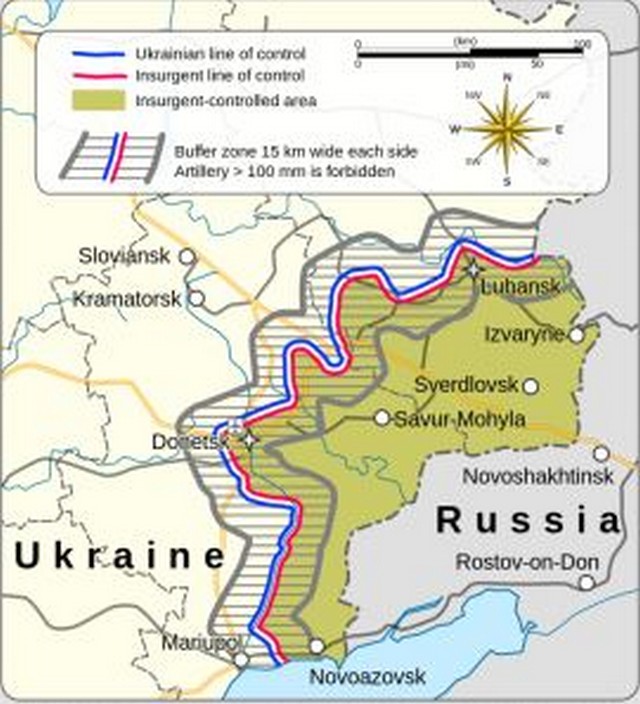
Both Donetsk and Lugansk had voted for independence from Ukraine in 2014 after a U.S.-backed coup overthrew the democratically elected president Viktor Yanukovych. The new, U.S.-installed Ukrainian government then launched a war against the provinces to crush their resistance to the coup and their bid for independence, a war that is still going on eight years later at the cost of thousands of lives with U.S. support. It is this war that Russia has entered.

Neo-Nazi groups, such as Right Sector and the Azov Battalion, who revere the World War II Ukrainian fascist leader Stepan Bandera, took part in the coup as well as in the ongoing violence against Lugansk and Donetsk.

Despite reporting in the BBC, the NYT, the Daily Telegraph and CNN on the neo-Nazis at the time, their role in the story is now excised by Western media, reducing Putin to a madman hellbent on conquest without reason. As though he woke up one morning and looked at a map to decide what country he would invade next.

The public has been induced to embrace the Western narrative, while being kept in the dark about Washington’s ulterior motives.

The Traps Set for Russia

Six weeks ago, on Feb. 4, I wrote an article, “What a US Trap for Russia in Ukraine Might Look Like,” in which I laid out a scenario in which Ukraine would begin an offensive against ethnic Russian civilians in Donbass, forcing Russia to decide whether to abandon them or to intervene to save them.

If Russia intervened with regular army units, I argued, this would be the “Invasion!” the U.S. needed to attack Russia’s economy, turn the world against Moscow and end Putin’s rule.

In the third week of February, Ukrainian government shelling of Donbass dramatically increased, according to the OSCE, with what appeared to be the new offensive. Russia was forced to make its decision.

It first recognized the Donbass republics of Donetsk and Lugansk, a move it put off for eight years. And then on Feb. 24 President Vladimir Putin announced a military operation in Ukraine to “demilitarize” and “denazify” the country.

Russia stepped into a trap, which grows more perilous by the day as Russia’s military intervention continues with a second trap in sight. From Moscow’s perspective, the stakes were too high not to intervene. And if it can induce Kiev to accept a settlement, it might escape the clutches of the United States.

A Planned Insurgency

The examples of previous U.S. traps that I gave in the Feb. 4 piece were the U.S. telling Saddam Hussein in 1990 that it would not interfere in its dispute with Kuwait, opening the trap to Iraq’s invasion, allowing the U.S. to destroy Baghdad’s military. The second example is most relevant.

In a 1998 interview with Le Nouvel Observateur, Jimmy Carter’s former national security adviser Zbigniew Brzezinski admitted that the C.I.A. set a trap four decades ago for Moscow by arming mujahiddin to fight the Soviet-backed government in Afghanistan and bring down the Soviet government, much as the U.S. wants today to bring down Putin. He said:

“According to the official version of history, CIA aid to the mujahideen began during 1980, that is to say, after the Soviet army invaded Afghanistan on December 24, 1979. But the reality, closely guarded until now, is completely otherwise: Indeed, it was July 3, 1979 that President Carter signed the first directive for secret aid to the opponents of the pro-Soviet regime in Kabul. And that very day, I wrote a note to the president in which I explained to him that in my opinion this aid was going to induce a Soviet military intervention.

He then explained that the reason for the trap was to bring down the Soviet Union. Brzezinski said:

“That secret operation was an excellent idea. It had the effect of drawing the Russians into the Afghan trap and you want me to regret it? The day that the Soviets officially crossed the border, I wrote to President Carter, essentially: ‘We now have the opportunity of giving to the USSR its Vietnam war.’ Indeed, for almost 10 years, Moscow had to carry on a war that was unsustainable for the regime, a conflict that bought about the demoralization and finally the breakup of the Soviet empire.”

Brzezinski said he had no regrets that financing the mujahideen spawned terrorist groups like al-Qaeda. “What is more important in world history? The Taliban or the collapse of the Soviet empire? Some agitated Moslems or the liberation of Central Europe and the end of the cold war?,” he asked. The U.S. today is likewise gambling with the world economy and further instability in Europe with its tolerance of neo-Nazism in Ukraine.

In his 1997 book, The Grand Chessboard: American Primacy and Its Geostrategic Imperatives, Brzezinski wrote:

“Ukraine, a new and important space on the Eurasian chessboard, is a geopolitical pivot because its very existence as an independent country helps to transform Russia. Without Ukraine, Russia ceases to be a Eurasian empire. Russia without Ukraine can still strive for imperial status, but it would then become a predominantly Asian imperial state.”

Thus U.S. “primacy,” or world dominance, which still drives Washington, is not possible without control of Eurasia, as Brzezinski argued, and that’s not possible without control of Ukraine by pushing Russia out (U.S. takeover of Ukraine in the 2014 coup) and controlling the governments in Moscow and Beijing. What Brzezinski and U.S. leaders still view as Russia’s “imperial ambitions” are in Moscow seen as imperative defensive measures against an aggressive West.

Without the Russian invasion the second trap the U.S. is planning would not be possible: an insurgency meant to bog Russia down and give it its “Vietnam.” Europe and the U.S. are flooding more arms into Ukraine, and Kiev has called for volunteer fighters. The way jihadists flocked to Afghanistan, white supremacists from around Europe are traveling to Ukraine to become insurgents.

Just as the Afghanistan insurgency helped bring down the Soviet Union, the insurgency is meant to topple Putin’s Russia.

An article in Foreign Affairs entitled “The Coming Ukrainian Insurgency” was published Feb. 25, just one day after Russia’s intervention, indicating advanced planning that was dependent on an invasion. The article had to be written and edited before Russia crossed into Ukraine and was published as soon as it did. It said:

“If Russia limits its offensive to the east and south of Ukraine, a sovereign Ukrainian government will not stop fighting. It will enjoy reliable military and economic support from abroad and the backing of a united population. But if Russia pushes on to occupy much of the country and install a Kremlin-appointed puppet regime in Kyiv, a more protracted and thorny conflagration will begin. Putin will face a long, bloody insurgency that could spread across multiple borders, perhaps even reaching into Belarus to challenge Belarusian President Alexander Lukashenko, Putin’s stalwart ally. Widening unrest could destabilize other countries in Russia’s orbit, such as Kazakhstan, and even spill into Russia itself. When conflicts begin, unpredictable and unimaginable outcomes can become all too real. Putin may not be prepared for the insurgency—or insurgencies—to come.

WINNER’S REMORSE

Many a great power has waged war against a weaker one, only to get bogged down as a result of its failure to have a well-considered end game. This lack of foresight has been especially palpable in troubled occupations. It was one thing for the United States to invade Vietnam in 1965, Afghanistan in 2001, and Iraq in 2003; likewise for the Soviet Union to enter Afghanistan in 1979. It was an altogether more difficult task to persevere in those countries in the face of stubborn insurgencies. … As the United States learned in Vietnam and Afghanistan, an insurgency that has reliable supply lines, ample reserves of fighters, and sanctuary over the border can sustain itself indefinitely, sap an occupying army’s will to fight, and exhaust political support for the occupation at home.’”

As far back as Jan. 14, Yahoo! News reported:

“The CIA is overseeing a secret intensive training program in the U.S. for elite Ukrainian special operations forces and other intelligence personnel, according to five former intelligence and national security officials familiar with the initiative. The program, which started in 2015, is based at an undisclosed facility in the Southern U.S., according to some of those officials.

The CIA-trained forces could soon play a critical role on Ukraine’s eastern border, where Russian troops have massed in what many fear is preparation for an invasion. …

The program has involved ‘very specific training on skills that would enhance’ the Ukrainians’ ‘ability to push back against the Russians,’ said the former senior intelligence official.

The training, which has included ‘tactical stuff,’ is “going to start looking pretty offensive if Russians invade Ukraine,’ said the former official.

One person familiar with the program put it more bluntly. ‘The United States is training an insurgency,’ said a former CIA official, adding that the program has taught the Ukrainians how ‘to kill Russians.’”

In his Warsaw speech, Biden tipped his hand about an insurgency to come. He said nothing about peace talks. Instead he said: “In this battle, we need to be clear-eyed. This battle will not be won in days or months either. We need to steel ourselves of a long fight ahead.”

Hillary Clinton laid it all out on Feb. 28, just four days into Russia’s operation. She brought up the Russian invasion of Afghanistan in 1980, saying “it didn’t end well for Russia” and that in Ukraine “this is the model that people are looking at … that can stymie Russia.”

What neither Maddow nor Clinton mentioned when discussing volunteers going to fight for Ukraine is what The New York Times reported on Feb. 25, a day after the invasion, and before their interview: “Far-right militias in Europe plan to confront Russian forces.”

The Economic War

Along with the quagmire, are the raft of profound economic sanctions on Russia designed to collapse its economy and drive Putin from power.

These are the harshest sanctions the U.S. and Europe have ever imposed on any nation. Sanctions against Russia’s Central Bank sanctions are the most serious, as they were intended to destroy the value of the ruble. One U.S. dollar was worth 85 rubles on Feb. 24, the day of the invasion and soared to 154 per dollar on March 7. However the Russian currency strengthened to 101 on Friday.

Putin and other Russian leaders were personally sanctioned, as were Russia’s largest banks. Most Russian transactions are no longer allowed to be settled through the SWIFT international payment system. The German-Russia Nord Stream 2 gas pipeline was closed down and become bankrupt.

The U.S. blocked imports of Russian oil, which was about 5 percent of U.S. supply. BP and Shell pulled out of Russian partnerships. European and U.S. airspace for Russian commercial liners was closed. Europe, which depends on Russia gas, is still importing it, and is so far rebuffing U.S. pressure to stop buying Russian oil.

A raft of voluntary sanctions followed: PayPal, Facebook, Twitter, Netflix and McDonalds have been shut down in Russia. Coca-cola will stop sales to the country. U.S. news organizations have left, Russian artists in the West have been fired and even Russian cats are banned.

It also gave an opportunity for U.S. cable providers to get RT America shut down. Other Russia media has been de-platformed and Russian government websites hacked. A Yale University professor has drawn up a list to shame U.S. companies that are still operating in Russia.

Russian exports of wheat and fertilizer have been banned, driving the price of food in the West. Biden admitted as much on Thursday:

“With regard to food shortage … it’s going to be real. The price of these sanctions is not just imposed upon Russia, it’s imposed upon an awful lot of countries as well, including European countries and our country as well. And — because both Russia and Ukraine have been the breadbasket of Europe in terms of wheat, for example — just to give you one example.”

The aim is clear: “asphyxiating Russia’s economy”, as French Foreign Minister Jean-Yves Le Drian put it, even if it damages the West.

The question is whether Russia can extricate itself from the U.S. strategy of insurgency and economic war.
______________________________________

Joe Lauria is editor-in-chief of Consortium News and a former correspondent for The Wall Street Journal, Boston Globe, Sunday Times of London and numerous other newspapers.

4 April 2022

Source: www.transcend.org
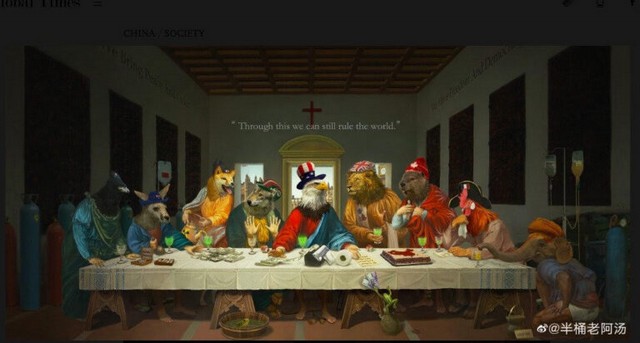
NATO/Russia Conflict in Ukraine: The West’s Spinal Cord Reaction Will Prove Extremely Self-Destructive

By Jan Oberg, Ph.D.

Since Russia’s foolish and totally unacceptable war on Ukraine started, there no longer seems to be any limit to what can be said about Russians and Russia and what can be done to isolate the country and its people economically, culturally, socially, financially and in the media. The word ‘Putin’ explains everything as if by magic.

The contempt and hatred must have been latent deep in the collective unconscious for a very long time. It is probably largely a consequence of the so-called free media’s systematic, one-sided “threat assessments” over decades – without comparative analysis with NATO’s behaviour and military overspending – and the omission of any perspective on Russia’s history, security needs or its perception of us.

To explain something has been distorted – by whom? – to be identical with defending. The conversation is dumbing down. The case – the ball – disappears, and all that remains is the persona, categorisation and positioning: “Putin Versteher,” “pro-Russian,” “anti-NATO,” “Putinist,” or “paid by the Kremlin.”

The Unbearable Folly of Irreversible, Hasty Decisions

With the classic reservation of a few exceptions, governments, politicians, scientists, and the media are today entirely at the mercy of emotion. Laws can be broken, special regulations imposed, money taken from the world’s poor for Ukrainian refugees; the business world has suddenly become PR-politically correct with Ukraine flags and blue/yellow lights and immediate cessation of all activities in Russia.

The EU overnight has no resource problems with 2-3 million refugees from Ukraine, while in 2015 it could not cope with 1.5 million – mostly Muslims, and this is important – from the war zones the US and other NATO countries have ravaged for decades and many times worse than Russia has done at least until today in Ukraine. Germany decides – again without analysis – to immediately rearm up to US$ 112 billion per year. Russia’s is US$ 66 billion!

In the frenzy of the dog pack, no one will risk appearing cautious, moderate or understanding when it comes to the underlying Russia-NATO conflicts. They denounce the violence – Russia’s but not that of others to nearly the same extent – and overlook entirely the underlying conflicts, which are Russia and NATO and certainly not Russia and Ukraine. Ukraine is only the unfortunate war theatre of war.

More weapons and more rearmament – whatever the cost to our society in the slightly longer term, which no one is analysing – is the only answer needed. We must stand together now, and we do.

But what do we do if it turns out the day after tomorrow to be fundamentally wrong and self-destructive policies?

Cultural events involving Russians are shut down in a row – exhibitions and concerts. The grotesque thing is that these measures also affect Russian artists who have explicitly denounced Russia’s invasion. In other words, they are being punished because they are Russian.

Ministers are urging scientists to stop ongoing research collaborations and not start new ones. Russian goods are removed from shops. Peace and other demonstrations go only to the Russian embassies, not to those of the NATO countries, which – extremely provocatively – have just expanded NATO and let all the wise warnings go to waste. And, as mentioned, waged wars on a scale that dwarfs Russia in comparison.

Facebook sees fit to allow hate speech against Russians – and only them, of course – as long as it’s within the context of the war in Ukraine.

I wonder how far Russians and the rest of us will be forced to suffer under this modern-day parallel to anti-Semitism: Russophobia?

I wonder when this collective psychosis, this mass hysteria with a single focus, will end generations from now?

I wonder if anyone in the Christian West will one day think of Luke: “Why do you see the speck in your brother’s eye but do not notice the beam in your own eye? Hypocrite, first take the beam out of your own eye; then you will see clearly enough to take out the mote that is in your brother’s eye.” (Luke 6:41-42).

The Slippery Slope of Lawlessness

There now seems to be an orgiastic heat of self-righteousness. The entire response – every single action in response to Russia’s war on Ukraine – has been decided in such a short time that there has been no time for any kind of impact assessment even 6 months ahead, let alone on a 6 year or 30-year horizon. Not within a national, European or global framework.

The G7 countries are freezing Russia’s US$ 400 billion debt. This is pure theft. They are closing airspaces so that, for example, the Russian foreign minister cannot fly to meetings at the UN in Geneva. The EU/NATO world cuts off oil and gas imports from Russia and imposes countless sanctions on anything and anyone that can move in Russia: “We are coming to get you!” – President Biden said in his State of the Union address.

That’s not how you behave if you feel inferior or fearful of your opponent – the way you argue when you need to raise military spending. And former NATO Secretary-General Anders Fogh Rasmussen tells Danish TV2 that – “Putin will be beaten to a pulp by NATO. Once NATO moves, it will be with enormous force. You have to remember that the investments we make in defence are ten times as big as Putin’s.”

And now the heavily over-armed must over-arm even more?

Thousands of Western companies operating in Russia are now facing possible nationalisation. Will Western governments and/or insurance companies compensate them after leaving? Just think of the cost to German business of this on a 10-20 year horizon – that is, at best, the time it will take until we can hope for a rapprochement with Russia after this.

The boomerangs will come back to us. Be sure of that. And when it happens so severely, the only response from any decision-maker will be: Well, it was and is all Putin’s fault!

But that doesn’t hold water by the West’s own standards.

NATO has provoked Russia with its expansion for 30 years and ignored dozens of warnings about where it was going. When solid, highly experienced American statesmen and intellectuals of a very different calibre than those in the West today – like George F. Kennan, Henry Kissinger, John Mearsheimer, Jack Matlock and William Perry – warned against NATO expansion and attempts to bring Ukraine into NATO, they were simply ignored.

It has broken the promises not to expand NATO an inch, made to Gorbachev in 1989-90. It has set up The Ballistic Missile Defence that deliberately undermines Russia’s ability to respond to a nuclear attack. It has waged war in Yugoslavia, treating both Russia and the UN and international law as inferior.

I am not the only one who predicted years ago that there would be a reaction. Nobody listened. Now Russia has reacted – over-reacted. I agree it is an over-reaction and have argued that Putin could have done other things than this invasion.

Proportionality, Collective Punishment and Violation of Freedom of Expression

Here we are faced with a classic dilemma and responsibility: A may provoke B, but it is still B who chooses his way of reacting and must be held responsible for it.

It is precisely this reasoning about the responsibility of the provoked side for its reaction that must also apply to the response of the NATO/EU countries to Russia’s invasion.

While the West’s response to the invasion is a complete knee-jerk hate policy, it also borders on systematic violation of international law. It is not proportional. It is a deliberate use of collective punishment that the Geneva Conventions and their protocols prohibit. It is all the more so when those who carry it out believe that they are facing a dictator. In a democracy, it might be argued that the people share responsibility for the actions of leaders because they have become leaders through free elections. The situation is quite different in what the same people call dictatorships, where the people cannot be held jointly responsible (I am not saying that Russia is a dictatorship; I am challenging the reasoning of those who think it is).

The closing down of access to Russian media such as RT and Sputnik is a clear violation of The International Covenant on Civil and Political Rights of 1966, Article 19 about the right to seek information freely. And of Article 20 that ”Any propaganda for war shall be prohibited by law” and

”Any advocacy of national, racial or religious hatred that constitutes incitement to discrimination, hostility or violence shall be prohibited by law.”

One must also raise the issue: What kind of suffocating, very hard, broad, unconditional and unlimited sanctions like those the US and EU – not the UN – have decided can possibly be compatible with international law?

Although it is difficult to judge when such things actually happen and should be condemned, the whole public discussion tends to violate at least the spirit of these international law provisions. And it cannot and should not be swept off the table by reference to Russians or others doing the same. We are responsible for our actions.

The West itself tramples on international human rights 24/7 at the moment.

Such fairly obvious ethical-legal dimensions are, of course, completely sidelined. The inner swine dog has frothing at its mouth, and in all its lying self-righteousness can’t get enough. Regardless of decency, the spirit and the letter of international law.

The Boomerangs of Hate – The Self-Destruction of the West

We, our children and grandchildren, will pay dearly for this – the self-isolation and accelerated decline and fall of the West. And perhaps nuclear war – deliberate or by technical and human error.

And it is, one wants us to remember forever, all one person’s fault, Vladimir Putin. And him “we” need neither understand nor take into account. The amateur psychologists and editors are now queuing up in our media to have him diagnosed as almost insane. He went insane on 23 February 2022.

That way this hellishly complex conflict over decades with at least 50 parties can be reduced to issues of one person’s mental health. And it also follows that “we” bear no responsibility whatsoever for the fact that the world is now in the most existentially threatening situation since 1945. We are up against a Russian Hitler – ”Putler” – and now no trick is too small, no lie too big.

So where could this re-action to Russia’s invasion take us? Her a few heuristically chosen possible scenarios, which Western decision-makers have hardly given a thought:

  • The longer the war lasts in Ukraine – and it lasts longer than it otherwise would because vast amounts of arms and ammunition are pumped in from the West – the greater the humanitarian disaster and the reconstruction of a country that was already the poorest in Europe heavily marked by corruption. Internal hatred in Ukraine is also likely to be more intense than before the invasion.
  • The probably extensive infiltration of neo-Nazism into Ukraine’s politics and military security sector – arguably the largest anywhere – will not diminish once the war is over. These circles will demand a special status in future Ukraine because of their efforts in the resistance struggle. What role might they seek to play internationally – in, say, US-like movements and in European countries with, so far, less far-right extremism? Over the years, Nazism could spread precisely because its supporters were seen as heroes in the fight against Russia.
  • In the long run, Russia’s people will suffer so much because of our sanctions that the world may face a massive humanitarian disaster that it cannot bear on top of all the other problems of poverty, refugees and climate change, etc. And someone will begin to realise and say: These poor, innocent people are victims of Western sanctions that were imposed without a time limit.
  • While many are talking about which countries Putin will now try to conquer, I think this is a reasonably likely scenario. In the US view, there is now an excellent chance to tie Russia to the war in Ukraine and make it as long as possible by pumping weapons and everything else into Ukraine – but not participating in it At the same time, the focus is now 100% on strangling the Russian economy and effectively collapsing the country like the old Soviet Union. I know too little about the Russian economy to say whether this is a possibility – but in Washington’s perspective, this is where the stakes are: drain Russia’s military strength in Ukraine and undermine its economic base at home.
    By contrast, I’m pretty sure China and others won’t let that happen. Regardless, the US can then calculate that millions of Russians will have to flee – including to Europe. And there the Atlantic consensus will end: the EU will blame the US for demanding that the EU impose these suffocating sanctions whose human consequences will only affect Europe, not the US.
  • Far more nationalistic and militaristic people in the Kremlin depose Putin and re-arm, like Germany, to the double and bomb the NATO installations NATO will not discuss as provocative. In that case, there is a far more significant than 50% risk of a nuclear war in Central Europe.
  • This conflict will legitimise any increase in the US presence with heavy equipment as close to Russia’s border as possible. This is already being planned in US military circles. The US will impose itself militarily and politically on Europe to a perhaps unprecedented extent. Until that day, the United States will have militarised itself to death by seeking to wage two cold wars simultaneously – against Russia and China – with significant elements of rearmament and militaristic policy. It is called over-extension, and the economy, as in the old Soviet Union, will collapse under this burden. Why are the Americans betting so much on Europe? Because NATO’s primary purpose – when you peel back all the rhetoric – is to ensure that a war with Russia is fought on European soil, not US soil.
  • With the weapons and ammunition that NATO and EU countries are now pumping into and around Ukraine, there is already a de facto war between NATO/EU and Russia. Moreover, with the borders open to all manner of mercenaries and adventurers from around the world, one can safely expect more suffering than would otherwise be necessary. Terrorist groups of various kinds will undoubtedly feel drawn; I imagine that the terrorist groups that Russia has helped to defeat in Syria will see Ukraine as a golden territory for revenge against Russians.
  • Another scenario might be that Russia does reasonably well economically with a prolonged military presence in Ukraine, converts to a kind of war economy and expands cooperation with Iran, China and perhaps India. Others outside the West will see the same writing on the wall: it is futile to try to have a reasonably trusting relationship with the US, NATO and the EU after this. If they can do that to the Russians, what can they do to us? The US-led system with allies who have lost the ability to think and act independently of the US/NATO will become a periphery of the future world order as the years go by.
  • The Western world’s response to Russia’s invasion has shown that the only thing that can unite it is confrontation and hate – it has not been able to connect around the financial crisis, NATO’s future and burden-sharing, the 2015 refugees or the Corona, all of which could have brought us closer together and working together for our own good and the good of humanity. More hatred brings satisfaction, inward solidarity and strengthen the sense of shared values. And so who will be the next object of hate?
  • Very simply: China – even more so than hitherto. We have just seen the beginning of the US-led and -funded Cold War against China so far. The West will accuse China of not siding closely enough with the West against Russia (and China won’t, though it is undoubtedly very unhappy with Russia over the invasion). So the future ice-cold war in the world could be between the declining Occident and the rising Orient, to simplify. The West’s gigantic rearmament in “response” to Russia’s invasion will of course drain its civilian economy – all militarisation is harmful to everyone but the arms industries – and cause the West’s economic strength to be eroded over time even more and faster by the rearmament’s mad waste of resources.

Humanity, as we know, desperately needs constructive cooperation if we shall succeed in solving the problems of inequality, climate and the environment here in the 11th hour, create technological progress and new infrastructure for the good of all, create a new green global economy, reduce militarism and abolish nuclear weapons…etc. All this – all this – will be made impossible by the West’s destructive energy, cold war philosophy, conversion to a kind of war economy, and total lack of positive Realpolitik vision in even a 20-year horizon.

The intellectual laziness, the contempt for ‘the others’ as a kind of Untermenschen, the spine-hatred and the cocktail of self-righteousness are bound to harm the Russian people. But the longer this ‘policy’ is pursued, the more damaging it will become for the West itself. China and the others need not lift a finger, one by one the fruits of history will fall into its basket, and the US system will crumble.

But I know that such reasoning has not one chance in a thousand of being heard in these – fateful – hours and days. Unbearable as it is, I have felt that it should be said as I have done here.

__________________________________________

Prof. Jan Oberg, Ph.D. is director of the Transnational Foundation for Peace and Future Research, TFF and a member of the TRANSCEND Network for Peace Development Environment.

21 March 2022

Source: www.transcend.org
Ukraine: Countering the Spin. “The Propaganda War”. Max Blumenthal

By Michael Welch, Yves Engler, Glenn Michalchuk, and Max Blumenthal

“The propaganda war that we’ve seen waged by the Ukrainian government is a U.S. propaganda war. It is a British propaganda war. And in Kiev and across the country there are just highly educated young tech-savvy people ready to wage that war. And they have invented so many false stories.” – Max Blumenthal, from this week’s interview

LISTEN TO THE SHOW

Ukraine: Countering the Spin on “Russian aggression”

Click to download the audio (MP3 format)

Right now, in Ukraine it is said by multiple media sources in the West that Russia is behind a campaign to fabricate illusions about what President Vladimir Putin’s troops are and are not doing in the battlefield in order to bend sympathies of the public inside and outside of Russia. [1][2][3]

The Communications Security Establishment (CSE), a Canadian signals intelligence agency, has observed the Russian war messaging online and says via twitter:

“We are sharing this information as part of the government of Canada’s efforts to help inform Canadians so they can protect themselves from disinformation.” [4]

Fair enough, in principle. But the point MUST be emphasized that the United States is DEFINITELY shaping coverage of war to their strategic advantage.

In 1964, the Gulf of Tonkin incident, in which North Vietnamese boats attacked two US destroyers resulting in the Vietnam War, never actually happened.

In 1990, news of Iraqis taking babies out of incubators and throwing them on the floor sparking a surge in support for the Persian Gulf War the following year never actually happened. Same scenario with the claim of weapons of mass destruction in Iraq which served the purpose of instigating massive bloodshed during the lengthy Iraq War.

And more recently: In Venezuela, after widespread accusations of President Nicolás Maduro’s troops torching a humanitarian convoy coming over the border from Colombia, it was established first by independent media that hooligans from Columbia threw molotov cocktails on the truck and then looting the trucks!

And as we have covered elsewhere on this site, including this program, accusations of chemical weapons attacks waged by the president of Syria in recent years were more likely waged by the opposition. Humanitarian corridors for civilians subjected to attacks by Syrian and Russian forces were actually struck by the opposition forces.

Given their record of distorting the truth, it would seem extremely out of character for the U.S. – NATO corporate media press to suddenly be addicted to the TRUTH!

On this week’s Global Research News Hour, we will feature major instances of the holes in journalistic coverage not addressed by those who want “to help inform Canadians so they can protect themselves from disinformation.”

Our first guest, journalist Max Blumenthal of The Gray Zone, takes us through his site’s multiple examples of how the stories pointing to Russian nastiness is not verified and even corrupted by the make-up of their press corps.

My next guest, author and activist Yves Engler explains the unacknowledged work of Canadians in the set-up for the war, and the building up of NATO to the outrage of Russia. Finally, Glenn Michalchuk finishes expressing his continued opposition to this war since February 24, and what listeners can do who wish to stop increased military funding in the upcoming Federal Budget of 2022.

Max Blumenthal is the founder and editor-in-chief of The Gray Zone. He is an award-winning journalist and the author of several books, including best-selling Republican Gomorrah, Goliath, The Fifty One Day War, and The Management of Savagery.

Yves Engler is a Montreal based activist and author of twelve books including House of mirrors: Justin Trudeau’s Foreign Policy and his latest Stand on Guard for Whom? A People’s History of the Canadian Military.

Glenn Michalchuk is chair of Peace Alliance Winnipeg and president of the Winnipeg branch of the Association of United Ukrainian Canadians.

(Global Research News Hour Episode 350)

LISTEN TO THE SHOW

Ukraine: Countering the Spin on “Russian aggression”

Click to download the audio (MP3 format)

Transcript – Interview with Max Blumenthal, March 28, 2022

Global Research: We’re going to touch base on the topic of disinformation, but not from the Russian side, from the US-NATO side. For this, I got hold of Max Blumenthal. He’s an award-winning journalist, author of several books, and editor-in-chief of thegrayzone.com, which he describes as shining a spotlight on America’s state of perpetual wars and its dangerous domestic repercussions. I started our conversation by asking Max to provide some examples of fake news manufactured in opposition to the Russians.

Max Blumenthal: It’s really obvious that there are so many fake stories that you can’t even count them. And it’s hard to understand why they’re so necessary when there is real civilian suffering in a city like Mariupol which Russia is taking street by street back from the neo-Nazi Azov Battalion, which has been incorporated into the Ukrainian military. There are civilians being killed in the fire or suffering enormously, but what the Ukrainian side has done, they’ve been, I mean, if you look at Syria or Venezuela, and how much the US intelligence cut-outs have invested there in training and cultivating their, not just their armed proxies but their information warriors. So much more has gone into Ukraine, and Ukraine has been controlled by this pro-US pro-NATO regime since 2014.

So it’s just open season for funding PR operatives and tech startups to do the kind of information warfare that is the dream of the US. The propaganda war that we’ve seen waged by the Ukrainian government, it is a US propaganda war, it is a British propaganda war. And in Kiev and across the country there are just highly educated young tech-savvy people ready to wage that war and they have invented so many false stories, for instance the ghost of Kiev, or ​Keev as we’re supposed to call it [laughter], a fighter pilot who has taken down 40 Russian jets like representative Adam Kinzinger, this wannabe n McCain tweeted about, the ghost of Kiev. And it turns out it’s a completely fake story, no such fighter pilot exists. The Ukrainian Air Force doesn’t even exist.

Then you got the Snake Island story of 13 soldiers, Ukrainian border guards, who stood up to a Russian battleship and said, you know, to screw off, I mean, they used harsher language than that, and then they all died fighting. It turned out there were way more than 13 border guards. All of them were captured, none of them defied the Russian warship at all, and they were then safe and sound as POWs. There was no brave standoff, but this incident, you know, was reported in the Washington Post, the New York Times, the Military Times as something real.

Then you’ve got something I’ve been looking at, using kind of open-source intelligence, otherwise known as reporting [laughter], and it’s the bombing of the Mariupol theatre, which is said to be the deadliest incident of the war. CNN and BBC are reporting that 300 were killed in this theatre that women and children sheltered in, and that the theatre was marked with signs reading “children,” to ward off Russian bombers, but they bombed it anyway. And it appears pretty clear that no one was inside the theatre when it was bombed, there are no images of rescuers of dead of survivors that can be found, and that the only source of this claim is an assistant to the exiled mayor of Mariupol, who has run away days ago, and who was working hand-in-glove with the neo-Nazi Azov Battalion, who is pro-Azov.

This is the only source for the BBC and CNN. It’s just pure hearsay. They have not been able to independently verify anything, and just looking at the, you know, the photographic evidence, I found that there were cars parked all around this theatre the day before the bombing, and that the day of the bombing there were no vehicles. No vehicles damage, no vehicles present, and no people present.

GR: Wait a second, I mean, the press, aren’t they supposed to verify before they go to print? I mean they’re just taking the message from this one mayor as the basis for everything that’s going on?

MB: Exactly. And so this is one of the worst performances, or maybe you could call it one of the best performances by US corporate media, because essentially, what we’re seeing, is that they are an arm of the information war being waged by US intelligence through its Ukrainian proxies. And the assistant to the Ukrainian mayor, I was reading in Ukrainian media, just using translation tools, he said we had to abandon Mariupol in order to preserve our intelligence network. That was the language he used. So this is just an intelligence game.

And what is the agenda of the Azov Battalion in Mariupol–aside from establishing a fascist bastion, which they’ve sort of effectively done for years. They have been calling for a no-fly zone because they’re desperate, they’re losing the fight there against a much larger military force, just like the armed opposition in Syria was. So we’ve seen their commanders issued pleas in English on YouTube for NATO to intervene militarily. But NATO doesn’t want to do it. Biden doesn’t want to do it. They don’t want a direct confrontation with a nuclear power. And so they’re trying to generate emotionally potent incidents that will cause the Western public to demand that their leaders intervene.

And that was the point of the theatre story I think. Where Azov had controlled the theatre, they’ve controlled everything around it, and as they were retreating, it appears that an explosive charge was detonated with no one inside the theatre, or no one near the charge, that’s what it looks like to me, I could be completely wrong, it’s been 12 days since this tip took place and there’s still no footage of dead people or rescue crews or anything.

So maybe that will turn up, and I’ll be proven completely wrong, but it looks like they were trying to stage something to generate the emotional impact needed to get the West on board with getting in there, just like the Syrian rebels did, the so-called rebels in Douma, April 2018, when Jaish al-Islam, this extremist faction backed by Saudi Arabia was losing in a Damascus suburb, was retreating, had everyone, all the other battalions around it had been defeated by the Syrian Army, they were closing in. And suddenly they allege a chemical attack, a chlorine attack and produced video through all of these networks that have been set up through Turkish and US intelligence so they have like pretty powerful communication networks still even though their military capacity had collapsed. They produce, just video and a photograph of dead civilians in a basement. No evidence of any chlorine attack.

And then they gather a bunch of civilians together including children and start hosing them off through their auxiliary so-called rescue crews like the White Helmets and then, and then corporate media and the West broadcast all of it. “Allegations of a chemical attack,” and they show children being hosed off. And then the leaders have to respond, and so they do pinprick missile strikes on Damascus.

That’s the model that the Ukrainian forces are operating under.

GR: Well, they used to talk about the White Helmets was also providing a lot of disinformation and today they actually have Azov Battalion showing some of the theatre footage of the attacks in Mariupol. Is it the same tactic or there might be a little bit of a difference this time?

MB: What’s different is that they didn’t, what they could have done, which is what appears to have been done in Douma, was that these civilians had actually been killed. They may have been killed in a conventional, by a conventional weapon by the Syrian Army, or they could have been executed by these vicious forces. And I can tell you, like I’ve been in the ruins, in Ghouta, which is just west of Douma, and talked to civilians there about the conditions. They lived under just, a miniature Saudi Arabia but more tyrannical, for several years. They said that women were trafficked, people were used as slave labour, all the aid that came in was pillaged, and that people were used as human shields towards the end and held in a stable, and that the Syrian government was told that they will kill everyone in the stable if they enter the area.

So that was, and that’s what sort of been going on Mariupol these past days, except the Azov Battalion apparently didn’t kill anyone or take any dead bodies that had been killed by the Russian army and attempt to claim that they were killed inside the theatre. And that’s what makes this incident so strange. I mean, they haven’t really backed up any of their claims with the kind of photographic and video evidence that was so potent in Syria, and I’m waiting for that to come, but it just hasn’t come, so it really looks like the Azov people let everyone just go the day before. We do hear a lot of talk about people leaving the day before, around the theatre.

GR: Yeah. Well you mentioned just a few days ago, there was a press article about an incident involving how some press agencies had biased their reporting by setting up an individual as a reporter and fixer for press agency BBC. And this reporter was working formally as the head of the PR firm linked to boosterism for Ukraine in as late as October 2021. So she brings the stories of this theatre in Mariupol, completely consistent with what the architects wanted people to see. Orysia Khimiak is her name. Could you describe a little bit about what you could see as some of the holes running through their news narratives?

MB: Well, the most obvious hole is that they did not have any evidence, photographic or video evidence, of even a rescue taking place or being attempted. The descriptions, they have two eyewitnesses, and these reporters are in Lviv or Lvov. which is in the west of Ukraine, very far from Mariupol, and so they’re interviewing two people who said they were eyewitnesses delivering a very cinematic account, who themselves were not able to see who was responsible for the blast, they just said they felt a blast and that they had gone there to get lunch. I think what Azov appeared to be doing was just gathering people there with a field kitchen they said they had.

But beyond that, I mean, you have a co-author of these BBC articles, you look at who they are, they’re a public relations operative from Lviv, and who also worked in Kiev on a app produced by a start-up that the Washington Post called one of the top Ukrainian war information messaging apps. And it’s called Reface. It gives users the ability to put their face on celebrities’ bodies in like famous film scenes…what they do is they’ve gathered millions of people into this network, and now they’re pumping out messages urging them to stand with Ukraine, to send aid, to support the war effort, to support the Ukrainian military to everyone who participates in this app. And it seems like it was all done by design.

GR: Yeah. I mean, all my time in journalism, whenever you had any kind of potential conflict, you have to state it outright, you have to be transparent, and here it’s presented as if it’s totally fair, and I just don’t get it.

MB: Well, it just shows what the BBC is. It’s just another information weapon. And they just cast aside any pretense of objectivity.

Like, on their site, one of the first things you see is that they’re the most trusted network. And that you could trust them more than other outlets, and that they’re against disinformation. And then you have them, you know their correspondent in Ukraine sharing a byline with someone who is a nationalist Ukrainian PR operative. I went on her Twitter account, and she’s openly saying that she hates all Russians. She’s saying, like, I cannot, I can no longer suspend my impulse to hate all Russians because of what they’re doing.

So it’s just like, it’s right out there in the open. Her Twitter header is a meme referring to the phony incident of Snake Island, which she treats as real. This is the BBC. I mean, it’s everything they say about RT… It just shows what a projection all of the denunciations of RT are.

GR: Yeah, now I know that the press keeps insisting that the idea that neo-Nazis are in Ukraine, that’s Russian disinformation. I can’t even hear any news about the Nazi Azov faction on the show like Democracy Now, which is held up as a high beacon of independent news reporting. And I don’t think you can get a sense of what the war is unless you have acknowledgement of their existence. But it is only mentioned as Russian disinformation. And they say that there is a Jewish president, so how could the Nazis be taking over. That sort of thing. Give us a few short descriptions of how you, I guess, bulk up your insistence of the Nazis in Ukraine, and indeed how they are a major presence versus the Russian fairy tale.

MB: Well right now you could just look at who’s doing the fighting in the key theatre of battle. It is Mariupol. And it is the Azov Battalion. That’s their base. They captured it in 2014 and they maintained it on behalf of the Ukrainian State. The Azov Battalion emerged from the so-called black-shirts of the Maidan revolution of dignity which I would consider a US backed coup. They were the street muscle.

They themselves emerged out of the Patriot of Ukraine which was a gang of Fascist hooligans who assaulted migrants and Roma people, homosexuals, you know, the usual suspects, they were just literal, they were a literal neo-Nazi street gang that turned into one of the most ferocious and important battalions of the Ukrainian National Guard. The Azov Battalion which wears neo-Nazi insignia on its uniforms, has a civilian wing called a National Corps which operates openly intimidating citizens and political opponents in Kiev and cities across Ukraine under the auspices of the Ukrainian Interior Ministry.

They are sponsored officially by the Ukrainian Interior Ministry to keep order and they are armed by the state, their uniforms are provided by the state, and they go around intimidating city councils and mayors that will not do their bidding. And they’ve stolen elections by just going to the polls and telling people, we want.

They have another gang, C14, its name was inspired by the famous 14 words by the dead American Neo-Nazi leader David Lane, which has been funded and sponsored by the Ukrainian minister of culture. One of their leaders gave a talk at the America house in Kiev, which is an NGO sponsored by the US government, and the Kiev city council sponsored this group, C14, it’s a literal neo-Nazi terrorist organization, to attack Roma people who are sleeping near a train station. It was considered part of a public clean-up campaign.

They filmed themselves pepper spraying women and elderly Roma people and beating them with clubs. These are leaders that have participated in negotiations with Zelensky and held veto power over the Minsk agreement because they have their forces in the east. And when Zelensky attempted to get them to pull back they just told him to go to hell and he left.

And Zelensky himself, while Jewish, has not only downplayed his Jewish background, he has said that it is cool and normal for a part of the Ukrainian population to revere Stepan Bandera, who is the hero of all Ukrainian nationalists and was the leader of the organization of Ukrainian nationalists during World War II who collaborated with Nazi Germany and participated in the Holocaust of Bullets, in which hundreds of thousands of Jews, ethnic Poles, and other minorities were exterminated across Ukraine.

That is just a small slice of the kind of collaboration between the Ukrainian state and literal neo-Nazis that we’ve witnessed since the birth of the Maidan regime in 2014, and what sets Ukraine apart from a country like the United States or Russia, which both have neo-Nazis and white supremacists, is that their neo-Nazis and white supremacists are part of the military, and part of the state, and they’re officially recognized as such and celebrated.

GR: You know, your coverage has been quite refreshingly at odds with what we see in media. Have you been subjected to attacks of any origin? I mean, putting out Russian disinformation, or are they just, ignore you all together?

MB: Well, you can look at my Wikipedia page. It says that I’m like a regular free contributor to RT and Sputnik, and that is one of the first things you’ll read. And while I value RT and Sputnik as news sources that provide a different point of view for Americans, we need to follow all sorts of media, I’ve been on RT I think twice in the past two or three months, and I have been on Sputnik maybe once.

I’ve been on other networks much more, but it doesn’t list me that way, pretty much that you just follow, just look down through my Wikipedia page, and it basically makes me look like a psychotic holocaust-denying self-hating Jew who is an Assadist genocide denier, and it’s just pure propaganda. None of the facts are engaged, and in fact, The Grayzone, the site that I run, while we’ve never had to really issue a factual correction, we’ve never had anyone debunk any of our articles, we are listed as a deprecated source on The Grayzone, sorry on Wikipedia, so the denigrations start there.

And then you have mainstream journalists just drawing on that to create and cobble together a phony narrative about us in order to discredit our work. What they want to do is frighten people away from our factual journalism because it’s doing so much damage to their disinformation narrative. And I’m waiting for some mainstream…

I was attacked in the Times of London last week, which is like the MI5’s favorite paper in the UK, because an academic in the UK retweeted one of my articles. They want to get him fired. I was sort of peripherally attacked. But I got a Newsweek reporter reached out to me and I was just, like, it was a strange request, so I assume there’ll be some more attacks incoming.

No one in mainstream media can be treated as a good-faith operator or someone who will honestly quote you and present your side because if you just look at the whole spectrum of US media right now, there is only one side, and that is the Ukrainian nationalist narrative and the State Department side.

GR: I really congratulate you on your work, you and your colleagues out there at The Grayzone. Sounds like you’re doing the kind of work that you should be doing if you’re getting attacked to the extent you are. So I want to thank you for coming on the show, and maybe we can have you back at a later date.

MB: Thanks a lot Michael. Absolutely I would love to come back.
__________________________________________

The Global Research News Hour airs every Friday at 1pm CT on CKUW 95.9FM out of the University of Winnipeg. The programme is also podcast at globalresearch.ca .

3 April 2022

Source: www.globalresearch.ca


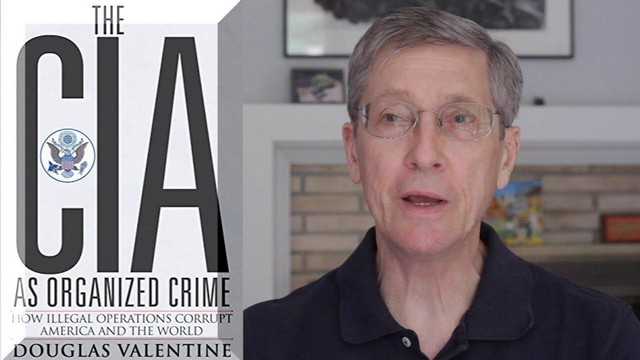
Video: The CIA — 70 Years in Ukraine

By Douglas Valentine and Regis Tremblay

A nine-minute segment from Part 2 of Doug Valentine’s The CIA As Organized Crime. For 70 years the CIA has been working to undermine and occupy Ukraine to bring down Russia using such things as paramilitaries, right wing Nazi groups, corrupt politicians and businessmen, coups, and warfare in the eastern Ukraine region of the Donbass.

The CIA – 70 years in Ukraine

Douglas Valentine is an investigator and author with a rare and tenacious approach toward research.

4 April 2022

Source: www.globalresearch.ca

Pakistan’s Imran Khan Takes on America

By Dr. Ejaz Akram

After a humiliating defeat in Afghanistan and loss of credibility over Ukraine, the era of US unipolarity seems to be entering its terminal phase, marked by lashing out ferociously in all directions. The most recent of these offensives occurred last week when the government of Pakistan alleged that Washington was trying to engineer regime change in Islamabad.

This time the US was caught red handed. The claim was not made via a leak or a fringe observer, but by the prime minister of Pakistan, Imran Khan, himself. While the US State Department has denied any involvement, the political drama has only just begun.

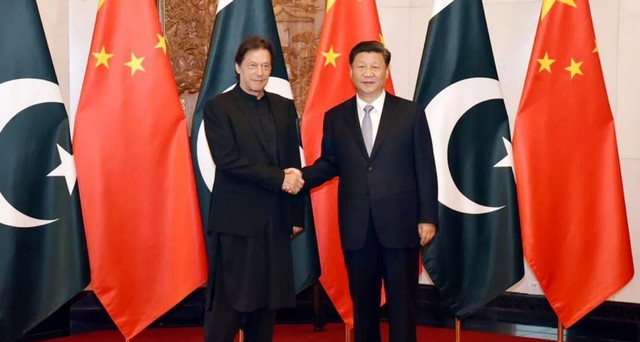
Emerging from a crucial meeting of Afghanistan’s neighbors, China’s top diplomat took a public whack at Washington’s behavior. Foreign Minister Wang Yi said that China will not allow the US to drag smaller nations into conflict and sharply rebuked the ‘US Cold War mentality.’ Beijing is determined not to allow the US to steal Pakistan from its inner circle of vital Asian partners that today include Russia, Iran, Afghanistan, and others.

On Wednesday, when a coalition partner of the governing Pakistan Tehreek-e-Insaf party (PTI) announced its seven members would switch to the opposition, Khan essentially lost his majority in the National Assembly, consisting of 342 parliamentarians. More than a dozen of his party members also threatened to cross the political aisle.

But the Pakistani opposition had mistakenly believed that as soon as they showed their required numerical majority in the parliament, the prime minister would either step down or resign. But that is not what appears to be happening.

Instead, in the next 24 hours, the voting will begin in parliament to count the actual numbers. Many analysts see this as the end of the Khan government in Pakistan; others believe the prime minister’s hold on power will be consolidated and the opposition and their foreign underwriters will suffer a permanent blow.

If the courts entertain the government’s petition to look into the foreign meddling and bribery cases, then Khan may have more time to develop a full court reaction. In just a few days, Khan has already displayed a modest demonstration of his street power. The mood and sentiment across the social media spectrum, as of now, is lopsidedly in favor of the prime minister. Large segments of the public has loudly rallied around him as the spokesman of their aspirations, while opposition party leaders are being characterized as corrupt individuals who want to topple an elected government.

The country’s main opposition parties are the Pakistan Muslim League-N (PML-N) and the Pakistan People’s Party (PPP), both dynastic groups that ruled for decades until Khan came along with his campaign promises to root out the rampant corruption and cronyism that has plagued Pakistani politics for years.

The letter

Millions of Pakistanis poured out to see PM Khan speak on 27 March, when he alleged that “foreign powers are engineering a regime change in Pakistan.” Waving a letter drawn from his coat pocket, Khan threatened to reveal direct, written threats to Pakistan and himself.

Top cabinet members [Minister for Planning, Development, Reforms and Special Initiatives] Asad Umar and [Minister of Information] Fawad Chaudhry held a joint press conference where they revealed further details of this controversial letter. Khan then invited several members of his cabinet, media and the Pakistani security community to view the document first hand.

Government opponents dismissed Khan’s allegations outright, amidst an enormous amount of hubris and posturing soon to follow. Pakistani opposition leader Shahbaz Sharif (an aspirant for the prime minister position) proclaimed that he will jump ship and join Imran Khan if the letter is real and the PM was speaking truthfully. Similarly, prominent anti-establishment TV anchor Saleem Safi said that if the letter were real, he would retire from his position and drop out of media altogether.

But within hours, a mysterious petition was filed in the Islamabad High Court (IHC) with the Chief Justice Islamabad Athar Minallah issuing a legal opinion that Imran Khan may not share this letter in public because of his secrecy oath. Such a swift ruling could not have come from Pakistan’s highest judicial authority about a fake letter, surely?

The next day, the country’s National Security Committee (NSC) convened for a meeting. In attendance were Pakistan’s prime minister, the army chief, chairman of the Joint Chiefs of Staff, the Pakistan Air Force (PAF) and naval chiefs, the National Security Advisor (NSA), and several other important officials.

Opposition members boycotted the meeting, but participants took a unanimous decision to reprimand the United States for its actions and ensure that Pakistan would not allow US authorities off the hook so easily. Subsequently, the Foreign Office called the acting US ambassador and reprimanded him – none of which could have conceivably been done on the pretext of a false letter.

What’s in the letter?

According to statements made by Khan during the NSC meeting, senior officials from the US State Department (believed to be an Undersecretary of State) sent the letter on 7 March via Asad Majeed Khan, the Pakistani ambassador in Washington.

The document reportedly states that there will be a no-confidence motion (NCM) against the prime minister soon, that Khan should know that it is coming and that he should not resist the NCM but go down with it. If he tries to resist it, the letter allegedly continues, Khan and Pakistan will face horrible consequences.

The letter mentions the NCM about eight times. The next day, on 8 March, a no-confidence vote was indeed announced. According to Khan, he has security agency information on how the illegal buying and selling of votes took place among Pakistan’s parliamentarians during this time. Then, on 9 March, the nation’s military leadership declared itself ‘neutral’ between the opposition parties and the prime minister.

Khan criticized the military for taking a neutral stance, saying a vital institution of the state should not show “neutrality” to those openly and willfully being used as tools of regime change, orchestrated by the adversaries of Pakistan. But after Foreign Minister Shah Qureshi’s return from Beijing, the military now appears to be favoring Khan’s position. It seems that either a phone call or a message must have come directly from Beijing.

Consequences of US involvement

If the foreign meddling case is a priori to the no-confidence motion, then it is possible that Khan will have legal relief and those accused of collaborating, aiding and assisting an external regime-change conspiracy will be indicted. This would include opposition political party members and Pakistani media personalities who have purportedly been traipsing to and from the US embassy in the days, weeks and months preceding the motion – now set for a seat-gripping vote on Sunday. If this can be proven in a court of law, many opposition leaders may end up behind bars.

According to Pakistan’s highest national security office and judging from the IHC notice, it appears clear that the letter was legitimate and the US is guilty of meddling in Pakistan’s internal affairs. But this is not 2001 when former Pakistani president, General Pervez Musharraf, capitulated to the Americans upon receiving a single phone call. Today’s Pakistan has a stronger self-identity after two decades of grueling and unrecognized sacrifices for Washington’s unsuccessful war on terror. Equally, they now also understand that the US is a declining power.

Most Pakistanis do not care about US sanctions any longer, especially as they watch other nations circumvent them with new allies. The public mood and sentiment is to dismiss sanctions threats, recognizing that there will be consequences from the Pakistani side which could lead to the expulsion of American diktats from the Af-Pak-Iran region.

During his 1 April interview on national television (PTV), Imran Khan exhorted the Pakistani nation to reject the alliance of corrupt parties and western-backed media. He believed that the west’s next step will be to take his life. Pakistan’s information minister had said the same only a day earlier.

If Khan didn’t have the ability to rally the street, they could have spared him, but his current popularity and obstinate resistance to US bullying tactics make him a prime target for assassination. Most Pakistanis have long considered the killing of leaders such as Liaquat Ali Khan, Z.A. Bhutto, Zia al Haq and Benazir Bhutto to be the work of US intelligence. To those citizens, any perceived threat to PM Imran Khan’s life is a real and imminent danger. Very rapidly, the security around him has been reshuffled and new measures have been taken to provide him with extra protection.

Khan’s narrative about US interference has gained heavy momentum in the past week. The storyline is one of two sides butting heads at a critical juncture in the country’s history: on one side, an Indo-US alliance, corrupt Pakistani opposition parties, the country’s corporate media, and a handful of western-styled liberals. On the other side, a legally elected, popular and feisty prime minister, supported by the Russo-China alliance and an overwhelming majority of Pakistanis.

With those odds, it may be politically and legally impossible for Pakistan’s military to maintain its ostensible posture of neutrality no matter how much US pressure comes at it. Time may be on Khan’s side.

2 April 2022

Source: www.globalresearch.ca

Pakistan warns of foreign-backed regime-change attempt, to disrupt China/Russia alliance

By Junaid S. Ahmad

While the world’s attention is understandably focused on the crisis in Ukraine, equally grave developments are taking place elsewhere. Perhaps the most consequential – and underreported – is a regime-change operation underway in Pakistan.

This March, opposition lawmakers in Pakistan’s parliament launched a “no-confidence” motion aimed at overthrowing Prime Minister Imran Khan.

Khan, who was democratically elected in 2018, has warned that an “effort is being made to topple the government with the help of foreign funds in our country.”

“Our people are being used. Mostly unknowingly, but some knowingly are using this money against us,” Khan said at a rally on March 27. He added that the government had proof of these payments.

Khan argued that these external interests seek to reverse his independent foreign policy. He recalled his predecessor Zulfikar Ali Bhutto, a Pakistani prime minister who was overthrown in a US-backed coup in 1977, then executed following a show trial.

Bhutto was punished “when he tried to bring in a free foreign policy to the country,” Khan declared.

Khan specifically singled out the United States for meddling to try to remove him from power. He said he received a letter from Washington that threatened him for refusing to allow it to establish US military bases in Pakistan.

He cautioned that the opposition is collaborating with the United States and other foreign countries in its no-confidence motion against him.

These warnings came just over a month after Khan publicly criticized the US government for cynically using Pakistan to advance Washington’s interests. He also simultaneously praised China for always acting as a “friend” of Islamabad.

“Whenever the US needed us, they established relations, and Pakistan became a frontline state [against the Soviet Union], and then abandoned it and slapped sanctions on us,” Khan complained.

On the other hand, “China is a friend which has always stood by Pakistan,” he contrasted.

The idea that a regime-change plot could even be conceived of, let alone attempted, in a nuclear-armed country of more than 220 million may seem shocking and preposterous. On the surface, it strikes as incredulous considering that Islamabad is a major world capital, arguably the most powerful within the Muslim-majority world.

Nevertheless, it is precisely these characteristics that make Pakistan so geopolitically important.

The following is an analysis of the principal reasons for why hostile foreign elites have decided that Prime Minister Imran Khan must go:

1) Imran Khan opposes US foreign policy

Imran Khan was always dubbed a “fanatic” – i.e., overly critical of US foreign policy.

Khan strongly opposed Washington’s so-called “war on terror,” and especially the war in Afghanistan, arguing that military solutions were both immoral and counterproductive. For this he was long disparagingly referred to as “Taliban Khan.”

What bruised Washington’s ego even more was that Khan turned out to be right. The American debacle in Afghanistan that ended with Kabul falling to the Taliban was perceived by the US as a victory for Pakistan, and for Khan in particular.

The US is unwilling to forgive Khan for its own humiliation in Afghanistan, even though he had little to do with it.

2) Khan’s anti-colonial voice on the international stage

Imran Khan’s speech at the United Nations General Assembly in September 2019 was condemned as overly audacious. A Pakistani leader speaking so strongly on issues of global injustice made Western elites feel that he had become way too big for his shoes.

At least three of the points that he emphasized in his remarks rubbed Western supremacists in the wrong way.

First, Khan condemned powerful Western countries for enabling elites of the Global South to plunder their own societies.

Second, he highlighted Islamophobia as not a marginal affair, but as a dangerous phenomenon structuring our global order – and one that the world must take seriously.

Relatedly, Khan scathingly criticized the insidious characterization of some Muslims as “moderate” and others as “radical.” These maliciously constructed distinctions have been essential to the political lexicon of the “war on terror.”

Third, Khan spoke passionately about the Kashmiri struggle against Indian occupation in a way that few Pakistani (or any other) leaders have.

His rhetorical performance seemed to be a page out of the anti-colonial playbook of the 1960s.

3) Khan deepened Pakistan’s friendship with China

Perhaps most concerning to Western elites is how Imran Khan has strengthened Pakistan’s decades-old relationship with China.

Islamabad and Beijing are key partners in infrastructure projects aimed at connecting the region. They work together in the China Pakistan Economic Corridor (CPEC) and the Belt and Road Initiative.

Khan received a very warm reception at the Beijing Olympics this February. It was a clear affirmation that Islamabad remains Beijing’s close ally.

In addition, President Xi Jinping and the Chinese leadership deem Khan to be a Pakistani leader genuinely interested in cooperation for Pakistan’s development, free from the enormous corruption and incompetence that characterize other political forces in the country.

Whether this is true or not, Beijing believes it. And Xi has built a very close relationship with Khan personally.

Furthermore, the fact that China’s Foreign Minister Wang Yi attended the Organization of Islamic Cooperation (OIC) Summit in Islamabad this March spoke volumes to China’s embrace of Pakistan’s leadership within the Muslim world.

4) Khan improved Pakistan’s ties with Russia

The recent breakthrough in the relationship between Pakistan and Russia seems to have been the straw that ultimately broke the camel’s back.

Islamabad never had a close relationship with Moscow. On the contrary, Pakistan and the Soviet Union had been adversaries during the first cold war, and retained a level of bitterness and distance. Moscow was always considered a strong ally of New Delhi.

But on the sidelines of the Beijing Olympics, Russian President Putin extended an invitation to Prime Minister Khan. Seeing an opportunity to at least neutralize a regional powerhouse that has historically been Islamabad’s foe, he agreed to the visit.

However, as soon as Khan landed in Moscow, Putin launched his military assault against Ukraine. Khan was lambasted by Western capitals for not condemning Russia then, and this continued when he returned home.

Khan received a strongly worded letter from European ambassadors demanding he denounce Moscow. The prime minister’s response, “we are not your slaves,” became quite popular not only in Pakistan, but in many parts of the Muslim world and the Global South.

Khan noted that his requests that these same Western countries condemn India’s behavior in Kashmir or Israel’s crimes in Palestine routinely fell on deaf ears.

Since then, Khan has consistently called for an end to the war in Ukraine and a diplomatic solution.

At the OIC summit he hosted, Khan specifically called on China to help mediate between Russia and Ukraine.

But the rapprochement with Russia appears to be where Khan crossed the rubicon.

As the global geopolitical battle lines are being rigidly drawn, Khan’s Pakistan seems to increasingly be on the “wrong side,” according to Washington.

5) Khan’s leadership in the Muslim world

The decision to host the 48th Session of the Organization of Islamic Conference (OIC) in Islamabad this March crystallized Imran Khan’s role as one of the most popular Muslim political leaders today.

Khan seemed to be trying to mimic the performance and standing of Pakistan’s prime minister in the 1970s, Zulfiqar Ali Bhutto, who similarly hosted an OIC meeting in Lahore, with great fanfare and purpose.

Whatever one’s feelings about Islam and politics, there is no question that powerful external forces detest those Muslim actors that they cannot control.

Washington has continued to work closely with brutal exclusivist forces such as al-Qaeda in Syria and the House of Saud. It has also cultivated a class of “moderate” Muslims since 9/11 that have faithfully delivered an empire-friendly Islam.

There is one factor that unites all of these disparate Muslim actors: their servility to Washington.

Unfortunately, Khan does not fit these imperial categories – as much as both Western and Pakistani liberal elites would want to portray him as a “fundamentalist.”

Khan’s invocation of an Islamicate civilizational ethos that centers social justice, however incoherently articulated and scarcely implemented, also advanced a politics of countering Western supremacy.

6) Pakistan’s gradual challenge to Saudi-led hegemony in the Muslim world

Imran Khan has demonstrated a gradual tilt toward countries that, on the whole, represent a counterweight to Saudi-led hegemony throughout the Muslim world.

The 2019 Kuala Lumpur Summit called by Malaysian Prime Minister Mahathir Mohamad marked a milestone in this project. Nations such as Turkey, Iran, and Qatar participated.

Everyone knew that this was a significant attempt to challenge traditional Saudi dominance and influence.

Mahathir, who is very fond of Khan, invited Pakistan, and the participants understood how important the Pakistani prime minister’s presence would be.

Yet in the last minute, Islamabad pulled out.

Days before the Kuala Lumpur Summit, Khan was summoned to Riyadh, where he was warned in no uncertain terms: You are not to go to Malaysia, and if you do, the House of Saud will begin the deportation of Pakistani laborers, halt all oil subsidies and supplies, rescind any and all loans, and so on.

Khan was humiliated, but had to comply. He did not go to Kuala Lumpur.

7) Khan can’t be simply controlled by the military

Imran Khan came to power with the blessing of the Pakistani army. The commonsense understanding was that he and the military have a snug relationship and are on the same page – to the point that Khan was for a time portrayed as a puppet of the military establishment. That has turned out not to be true.

The military has always been in control of Pakistan’s national security and foreign policy. To the extent both Khan and the generals viewed things the same, all was fine.

However, Khan turned out to be no pushover. He has firmly asserted his right to be a part of any crucial national security issue – a right most previous civilian governments readily relinquished.

When the Pakistani media now incessantly reiterates “Khan has fallen out of favor with the military,” it simply means that the cat is finally out of the bag: Khan is no lackey of the men in khaki.

For Washington, this is a huge problem. Having militaries to “set things straight” when leaders of the Global South become disobedient has been standard American operating procedure.

8) Khan’s unequivocal support for Palestinian liberation

One of the most important reasons why imperialist forces demand Imran Khan’s ouster is the obvious: his consistent and unequivocal support for the Palestinian struggle.

His position became all too well-known and “controversial” when an intense campaign of pressure and threats came Islamabad’s way in 2020 and 2021.

After several Gulf monarchies normalized relations with apartheid Israel, and the extent of their coziness was finally paraded publicly, what followed was painful arm-twisting of other Muslim countries to follow suit.

For Tel Aviv, Riyadh, Abu Dhabi, and of course Washington, Islamabad was the real prize.

For months, Pakistanis experienced an onslaught of information warfare geared to make the public more amenable to the idea of recognizing and accepting Israeli apartheid.

Very quickly, it became obvious that not only the major national political parties, but also significant sections of the military high command all conveyed a willingness to entertain the idea of normalization.

The motive of Pakistan’s ruling elite was obvious: such a step, they believed, would get them into the good graces of Washington, and enable their private coffers to exponentially grow.

But Prime Minister Khan did not give in.

At the OIC summit this March, even at the risk of embarrassing some of his guests (especially from the Gulf), Khan consistently spoke about the failure of Muslim countries to stop Israeli brutality against the Palestinians.

There is no doubt that if Khan had avoided touching the Palestinian question, he would not be in so much trouble.

Criticisms of Imran Khan

While the reasons enunciated above explain why antagonistic global elites desire regime change in Islamabad, for the sake of clarity – especially for sincere liberal-progressive critics of Imran Khan – it is also worth acknowledging criticisms. Suffice to say, these are decidedly not reasons motivating this hybrid war on Pakistan:

1) Khan’s patriarchal views
2) Khan’s poor governance
3) Khan’s mismanagement of the economy

Whether any of the above is true or not – (and they certainly may be – it ought to be self-evident that these issues have never been the real motivations of global elites in their imperial interventions.

From the time that Khan first took power, we have been subject to an eerily familiar narrative. In the dirty war aimed at regime change in Syria, for years we heard the same refrain: the Assad regime is falling any day now.

We have been fed the same slogan for the past three-and-a-half years in Pakistan as well: the Imran Khan “regime” is just about to fall.

And since Khan has not “moderated” his views to be more palatable to the interests of Western capitals, the latter’s low-intensity hybrid war has been increased to full throttle.

The standard falsehoods recycled against all targets of regime change, including Latin American countries like Venezuela, now prevail in the narrative on Pakistan.

Claims that Khan is guilty of “increasingly authoritarian” rule, characterized by harsh repression of dissent and the media, fit an all too well-trodden script.

Yet it just so happens that the overwhelming majority of both the print and electronic media in Pakistan have been incessantly anti-Khan.

The hybrid warfare being waged against Pakistan – including information warfare, psyops, and the engineering of something like a “color revolution” – in no way means that there is not genuine opposition to the current government.

But in Pakistan we saw a coordinated campaign emerge this March, leading up to the opposition’s “no-confidence” motion in the parliament.

Virtually all of Pakistan’s media, dominant sections of elite civil society, and the opposition leaders and their moles in Khan’s political party, Pakistan Tehreek-e-Insaf (PTI), all of a sudden united in a full-scale blitzkrieg against Khan.

That this came right at the moment when Western condemnations of the prime minister had reached their peak does not seem like a mere coincidence.

As we witness geopolitical transformations of a world-historical importance, the international fault lines in this interregnum are becoming more visible.

Pakistan’s growing proximity to China and Russia and the country’s commitment to the Eurasian integration project has activated the wrath of American ruling elites.

At this particularly precarious conjuncture, Washington views Islamabad as a, if not the, major Muslim capital that needs to be controlled and severely disciplined if an independent Khan-type leader arises.

The turmoil afflicting Pakistan is the outcome of a well-coordinated strategy to discipline and punish Khan.

The opposition demand for a no-confidence vote in the National Assembly reflects the amalgamation of domestic and foreign machinations.

This vote will be a reflection of the balance of forces, resulting either in a victory for Washington and its political quislings, or the retention of at least a quasi-sovereign Pakistan with Khan still in power.

The shenanigans of politicians and their maneuvering to be on the “right side” of the political winds are the games of corrupt, power-hungry elites.

None of this has anything to do with genuine grievances of Pakistanis, and is largely a diversion from the real global power play inside the country.

Hostile global elites are trying desperately to find a new, Pakistani version of Juan Guaidó (the Western minion chosen unilaterally by Washington to replace Nicolás Maduro as supposed “interim president” of Venezuela).

Whether or not Khan survives, anyone even vaguely familiar with global regime-change operations will see exactly what is going on.

Junaid S. Ahmad teaches religion and world politics and is the director of the Center for the Study of Islam and Decoloniality in Islamabad, Pakistan.

1 April 2022

Source: multipolarista.com

“Russia is Succeeding Wildly in its Objectives!” Scott Ritter on the War in Ukraine

By Michael Welch and Scott Ritter

What follows is a segment of the show March 25, 2022 Global Research News Hour program. It featured Scott Ritter, a former U.S. Marine Corps Intelligence Officer and outspoken columnist and commentator elaborating on some of the points surrounding the Russian intervention in Ukraine that have gone under -mentioned in standard media narratives.

In this interview (complete transcript available below) Ritter spoke of the role of Nazis in Russia’s move, the fact that the Russians will soon achieve a victory, the role of Zelensky in his public demands, and the role sanctions ultimately played in Vladimir Putin’s favor.

Scott Ritter is a U.S. Marine Corps Intelligence officer, former UN Chief Weapons Inspector from 1991 -1998, and is currently engaged as a commentator and columnist on Huffington Post, consortiumnews and the American Conservative.

LISTEN TO THE SHOW

Ukraine War: Scott Ritter

Transcript – Interview with Scott Ritter, March 23, 2022

Global Research: The last time you were on the show, about a month before Russia authorized a military incursion into Ukraine you mentioned that if it did happen it would not be trying to occupy the country. It would be in your words “lancing the boil.” An attempt to demilitarize and destroy Ukraine as a modern nation-state. It seems based on mainstream media coverage that it is in fact trying to occupy the country. Millions of Ukrainians are literally leaving the country as we speak, and this is not an operation that would end in days. It’s now approaching a month. Several Russian soldiers have been killed. They seem to be bogged down outside of cities. Certainly NATO is not yet going to engage them it’s true. Russia isn’t succeeding, no doubt due in part, it seems, to the resistance of the Ukrainian soldiers.

So let me ask you if you’ve changed your mind about what you said two months ago. I mean, did you err in your assessment of the Russian logistics in the situation?

Scott Ritter: NO! I’m a hundred percent correct! I mean, the fact of the matter is Russia isn’t occupying Ukraine!

Ukraine is a nation of forty one million people. Now, they say ten million of those are displaced, some internally some have fled. That still leaves thirty million people occupying expansive areas of terrain, including cities such as Kiev where you have over three million people. Russia came in with two hundred thousand troops. Military math just simply says no, you’re not occupying Ukraine with two hundred thousand troops!

So, let’s just stop that kind of nonsense right off the bat! This is politicized rhetoric, what people say, that Russia is trying to occu – because what you’ve done now is create a straw man that says therefore Russia has failed in its objectives!

Russia is succeeding wildly in its objectives! I don’t have to speculate. Russia has stated what its objectives are! There are two military objectives that will lead to one political objective.

The first military objective is de-Nazification. That is, the absolute destruction, liquidation, annihilation of the neo-Nazi and ultra-right wing nationalist military formations and the political parties that sustain them, along with any legislation that empowers them.

For instance, legislation passed in January of 2021 which made Stepan Bandera, a right wing Nazi supporting, Jew killing Ukrainian nationalist, elevated him to the status of national hero! And then went around – they passed additional legislation which named streets after him, named boulevards, named places, raised monuments and then also brought back into the mainstream people of his ilk. Nazis, people who had enlisted and served in Waffen SS units during World War II. People who had served in Einsatzgruppen that killed Jews during World War II. These people are now rehabilitated, and their names are put up in places of honour!

The Russians want to eliminate this. They want legislation passed in Ukraine which de-legitimizes Nazis instead of praising Nazis.

The Russians are doing very well on this front! They’re in the process of finishing off the last Nazi defenders of the city of Mariupol. This is where the Azov battalion, now a regiment, was headquartered. These are right-wing neo-Nazi extremists, many of whom have swastikas and other Nazi symbols tattooed on their bodies. This is where they tormented the Russian speaking population for the past eight years! They are now in the process of being killed, or captured by the Russians.

That is what de-Nazification looks like. Similar de-Nazification processes are taking place elsewhere in Ukraine anywhere where the Russian forces find a neo-Nazi national unit of Ukrainian army. So anybody who thinks that the Nazis are doing well against the Russians, think again!

The second is de-militarization! This means that Russia is going to dismantle the NATO army that had been built in Ukraine. A lot of people don’t realize that there were 260,000 active duty Ukrainian military personnel, most of whom have been trained by NATO in the past eight years to NATO standards. That means that Ukrainian military units were inter-operable with the North Atlantic Treaty Organization. You could take a battalion, a NATO trained Ukrainian troops, and place them under NATO command and they would perform well.

This isn’t theory. This is reality. Ukrainian troops participated in numerous NATO-led operations around the world and in Europe. So, Russia has said that this – the existence of a NATO proxy-force is unacceptable, and that its goal is to de-militarize Ukraine.

Now, this could be done peacefully with Ukrainian soldiers staying in their barracks, while the Russians dismantled and removed from Ukraine all NATO provided equipment and oversaw the reorganization of Ukrainian military in a manner which made it no longer a de-facto proxy of NATO. Or if they wanted to resist, Russia would destroy them.

Now Russia came in a little soft handed early on. They didn’t bomb the barracks. They went out of their way to avoid unnecessary deaths among the Ukrainian troops. But the Ukrainians decided to fight!

Lets be clear here. This is a big army: 260,000 active duty, 310,000 reservists and security forces. Normally in the military if you want to launch an offensive operation, you want a three-to-one advantage. That is, for every single defender, you want three of your own troops. Russia went into Ukraine with a three to one disadvantage! Meaning for every single Russian, there were three Ukrainians. And yet, Russia is winning on the battlefield. They are advancing at a rate faster than the German army advanced during the Blitzkrieg of World War II! They are engaging the Ukrainian forces on large scale combat operations the likes of which have not been seen in Europe since World War II. And they are prevailing.

They are in the process of entrapping 60-100 thousand Ukrainian troops in Eastern Ukraine, one of the largest bedlam development cauldron type operations seen since World War II. They are doing the same around Kiev. And they are doing the same in the area of Odessa.

A lot of people will look at video-tapes that have been put out on YouTube and elsewhere showing destroyed Russian columns, dead Russian troops. This is war on a scale that people can’t imagine! It’s well beyond anything the United States and its allies undertook in Iraq and Afghanistan. When you have war on this level, there will be tactical setbacks.

Ukrainians who are extremely hard fighting, well-trained, well equipped groups are capable of limited combat success. And they are enjoying limited combat success on the battlefield. There is multiple occasions where they had defeated the Russians. Where they have inflicted serious casualties on the Russians. But from an operational and strategic stand-point, the Russians are winning and winning decisively. Ukrainians cannot sustain their defence. They lacked a logistical depth. They’re running out of gas. They’re running out of ammunition. They’re running out of food and water. Their troops are worn out, worn down, and are rapidly disintegrating as we speak. As we speak!

The Ukrainian defences in Eastern Ukraine are collapsing. They’re starting a panicked retreat westward. They’re going to be cut off by the Russians, and probably killed by the Russians if they don’t surrender to the Russians. So no, the Russians are doing quite well. People are…

GR: Did you say the Russians, I mean, put on your military and analyst glasses for a moment. Is Russia going to prevail? And how far away is the victory? IS it weeks away, or…

SR: Russia will prevail. And I believe that Russia is closer to victory than they were starting this conflict. Meaning that Ukrainian military is collapsing as we speak, and the ability for Ukraine to sustain large scale resistance is diminishing if not being eliminated.

This war’s over! It’s all over but the shouting! That’s all just a statement of fact.

GR: If you’re right about this, then what do you make of the role of Zelensky in this situation? Because he’s been speaking to governments around the world, and he’s a national hero and everything. But dies he think that he can still win this? The forces will, you know, “close the sky” and all the other things? Or is there something more going on in terms of seeing the writing on the wall as it were?

SR: Well, Zelensky knows what the outcome of this will be.

Think about it for a second. Every time he says, “if you just close the skies, if you just give us a no-fly-zone, we can win!” But what’s he really saying? That the Russians are winning the war! Okay? I mean there’s no other way of interpreting that!

GR: Yeah…

SR: He’s not saying, “hey, don’t worry about not closing the skies because we’re doing pretty well on the battlefield. We’re going to win this thing!” He’s saying that if you don’t close the skies, we have lost this war!

GR: Ahhh! Okay…

SR: And that’s exactly what’s happening. Because NATO is not going to close down the skies, and Ukraine is losing the war. He knows this. His generals know this. His troops know this. This is why at every single chance, everybody involved in the Ukrainian resistance is demanding a no-fly-zone because without this, they’re doomed, and they know it!

GR: What about the sanctions aspect of it. I mean, are they going to wear down the Russian public over time? Or will the boomerang effect of the sanctions wear down the US, Canada, and the EU first? How do you see that the sanctions aspect playing out?

SR: Well, let’s look at this strategically for a second. Joe Biden looked Vladimir Putin in the eye last June and threatened him with massive sanctions should he act on Ukraine. Sanctions like you’ve never seen before! Alright, now Putin as soon as he got done changing his pants and everything because I’m sure that just scared him to death. He had months to sit down with his inner circle and say, “how do we prepare for this?” Nothing the U.S. and its allies are doing has taken the Russians by surprise. NOTHING! They anticipated EVERYTHING! And they have a plan in response.

As for instance today, when the sanctions came out, remember Russia had 650 billion dollars in sovereign fund in reserves – foreign reserves, gold reserves – and half of that was dispersed in banks around the world. And people went, “why would you do that?” Because the West is going to freeze them, which the West did. And the answer is because Russia was setting the West up for a trap, which was sprung today.

Today, Vladimir Putin gave a speech in which he said the following: “Because you froze our assets illegally, you have defaulted on every obligation you have in regard to Russia. Therefore, Russia will not only never again accept foreign currency, you know, for payment for Russian services or goods, we are going to demand from this moment on that all nations that are on the non-friendly list that is everybody who sanctioned them must now pay in Russian Rubles for natural gas.

Okay Europe cannot survive! One of the big things that came out of this economic sanctions was that the United States had been promising Europe, “Don’t worry about Russia gas! We have a plan B! We will be able to bring together resources and make sure that you have the gas you need!”

Well, there is no plan B. There aren’t the resources available. There’s not enough gas. And Europe will shut down immediately.

Now, Russia hasn’t shut off the pipelines. Because Russia was laying a trap. Russia now has confirmed that Europe is addicted. Germany has admitted right now that if Russia turns off the gas pipelines, Germany won’t have any gas for next winter. It’s over! All she wrote! Their economy will collapse! The French economy will collapse! Every economy in Europe will collapse! And there will be a rebounding effect in Canada and the United States.

So now, Europe is in the difficult position of if they want to keep the gas going, that they must keep going in order to survive, they’ve got to pay in Russian Rubles. Take a look at what’s happened to the Russian Ruble just today! IT’s rebounding! Everbody said the Ruble is collapsing. No! It’s the dollar that’s collapsing right now! Because the Russians have laid a trap. They set the trap. And this is just the first of many! The Russians have many other traps out there that they have set, and they can initiate at a time of their choosing. So, the notion that the sanctions…

Look, the sanctions are hurting Russians right now. There’s no doubt about that. But the sanctions also liberated Putin for the first time since he took power to be able to divorce Russia from the Western economy. And in doing so, eliminate in totality any leverage the West had over Russian domestic political affairs. The West used to be able to threaten sanctions. And the Russians are saying, “gosh, maybe we don’t want to do that so we’ll…” The West no longer has – the West has sanctioned everything. It’s over!

Putin has said, “thank you very much! Thank you! You’ve done me a big favour! The first thing you’ve done by freezing all the assets is that you have disembowelled the oligarchs!” You know that corrupt class of Russian businessmen that came to life during Boris Yeltsin’s ten years as a president. That Putin inherited!

Putin was able to neuter them politically by telling them that if they get involved in domestic politics he will destroy them, and he did. Several of them have been forced to flee to London and elsewhere because Putin will put them in jail for life. The others that remained were able to retain their riches and continue to get rich, but they were not allowed to be involved in politics. But their existence has always been a thorn in Putin’s side. He doesn’t like them. He doesn’t want them. And he hates the fact that he needed them. But now that the West has gone in and seized all their assets, they’re bankrupt and broke! And guess what! Putin doesn’t want them now! He’s told them to get the heck out of Russia! HE has no use for them! Go live where you wanted to live over there! You’re no longer welcome here!

The other thing that’s happened is about 20 percent of the Russian population that was relatively apolitical, who tended to vote for the status quo, meaning vote for Putin would have turned on Putin had Putin initiated a divorce with the West. These are the Russian middle class whose economic well-being had become so intertwined with the West that there could be no thought of breaking with the West. If any move by Russia, by Putin, by anybody, to do so would have caused a backlash that any democracy, and Russia is a democracy, would have cost the incumbent the vote. Putin would have been voted out.

But now that the West has sanctioned Russia, it is not Putin that has made the divorce, it’s the West! Putin is now applying shock therapy to these people, seeking to rapidly reinstate their middle class status, by pivoting eastward to China, to India, to elsewhere, to recapitalize the Russian economy. And now that he has made gas based upon the Ruble standard, those Rubles that these Russians had in the bank that last week were worth nothing, they’re worth twice as much today! And this time next week, they’ll double in value again! And the middle class is going to forget the West ever existed.

GR: Amazing analysis! Scott Ritter, it’s been a pleasure hearing your unique take on this situation. We thank you so much for your time!

SR: Thanks for having me!

The original source of this article is Global Research
Michael Welch and Scott Ritter, Global Research, 2022

29 March 2022

Source: www.globalresearch.ca

“Preemptive Nuclear War”: The Historic Battle for Peace and Democracy. A Third World War Threatens the Future of Humanity

By Prof Michel Chossudovsky

Today, the dangers of military escalation are beyond description.

What is now happening in Ukraine has serious geopolitical implications. It could lead us into a World War III Scenario.

It is important that a peace process be initiated with a view to preventing escalation.

Global Research does not support Russia’s invasion of Ukraine.

The history of this war must be understood.

The bombing and shelling led by Ukraine’s Armed Forces directed against the people of Donbass started eight years ago, resulting in the destruction of residential areas and more than 10,000 civilian casualties.

A bilateral Peace Agreement is required.

Michel Chossudovsky, Global Research, March 1, 2022
______________________________________________________

Introduction

At no point since the first atomic bomb was dropped on Hiroshima on August 6th, 1945, has humanity been closer to the unthinkable. All the safeguards of the Cold War era, which categorized the nuclear bomb as “a weapon of last resort”, have been scrapped.

Vladimir Putin’s statement on February 21st, 2022 was a response to US threats to use nuclear weapons on a preemptive basis against Russia, despite Joe Biden’s “reassurance” that the US would not be resorting to “A first strike” nuclear attack against an enemy of America:

“Let me [Putin] explain that U.S. strategic planning documents contain the possibility of a so-called preemptive strike against enemy missile systems. And who is the main enemy for the U.S. and NATO? We know that too. It’s Russia. In NATO documents, our country is officially and directly declared the main threat to North Atlantic security. And Ukraine will serve as a forward springboard for the strike.” (Putin Speech, February 21, 2022, emphasis added)

Last July 2021, the Biden administration launched its 2021 Nuclear Posture Review (NPR) to be completed and formally announced in 2022. The 2021 NPR is to include what is described as a “nuclear declaratory policy of the United States”.

It is unlikely that the 2021 NPR will repeal the nuclear options of the Obama and Bush administrations which are largely predicated on the notion of preemptive nuclear war raised in President Putin’s speech.

The underlying US nuclear doctrine consists in portraying nuclear weapons as a means of “self defense” rather than as a “weapon of mass destruction”.

Moreover, there are powerful financial interests behind the NPR which are tied into the $1.3 trillion nuclear weapons program initiated under President Obama.

Although the Ukraine conflict has so-far been limited to conventional weapons coupled with “economic warfare”, the use of a large array of sophisticated WMDs including nuclear weapons is on the drawing board of the Pentagon.

According to the Federation of American Scientists, the total number of nuclear warheads Worldwide is of the order of 13,000. Russia and the United States “each have around 4,000 warheads in their military stockpiles”.

The Dangers of Nuclear War are Real. Profit Driven. Two Trillion Dollars

Under Joe Biden, public funds allocated to nuclear weapons are slated to increase to 2 trillion by 2030 allegedly as a means to safeguarding peace and national security at taxpayers expense. (How many schools and hospitals could you finance with 2 trillion dollars?):

The United States maintains an arsenal of about 1,700 strategic nuclear warheads deployed on intercontinental ballistic missiles (ICBMs) and submarine-launched ballistic missiles (SLBMs) and at strategic bomber bases. There are an additional estimated 100 non-strategic, or tactical, nuclear weapons at bomber bases in five European countries and about 2,000 nuclear warheads in storage. [see our analysis of B61-11 and B61-12 below]

The Congressional Budget Office (CBO) estimated in May 2021 that the United States will spend a total of $634 billion over the next 10 years to sustain and modernize its nuclear arsenal. (Arms Control)

In this article, I will first focus on the Post Cold War shift in US Nuclear Doctrine, followed by a brief review of the history of nuclear weapons going back to the Manhattan Project initiated in 1939 with the participation of both Canada and the United Kingdom.

A Note on the History of US-Russia Relations. The Forgotten War of 1918

From a historical standpoint the US and its Allies have been threatening Russia for more than 104 years starting during World War I with the deployment of US and Allied Forces against Soviet Russia on January 12, 1918 (in support of Russia’s Imperial Army).

The 1918 US-UK Allied invasion of Russia is a landmark in Russian History, often mistakenly portrayed as being part of a Civil War.

It lasted for more than two years involving the deployment of more than 200,000 troops of which 11,000 were from the US, 59,000 from the UK. Japan which was an Ally of Britain and America during World War I dispatched 70,000 troops.

The Threat of Nuclear War

The US threat of nuclear war against Russia was formulated more than 76 years ago in September 1945, when the US and the Soviet Union were allies. It consisted in a “World War III Blueprint” of nuclear war against the USSR, targeting 66 cities with more than 200 atomic bombs. This diabolical project under the Manhattan Project was instrumental in triggering the Cold War and the nuclear arms race. (See analysis below).

Chronology

1918-1920: The first US and allied forces led war against Soviet Russia with more than 10 countries sending troops to fight alongside the White Imperial Russian army. This happened exactly two months after the October Revolution, on January 12, 1918, and it lasted until the early 2020s.

The Manhattan Project initiated in 1939, with the participation of the UK and Canada. Development of Atomic Bomb.

Operation Barbarossa, June 1941. Nazi Invasion of the Soviet Union. Standard Oil of New Jersey was selling oil to Nazi Germany.

February 1945: The Yalta Conference. The meeting of Roosevelt, Churchill and Stalin.

“Operation Unthinkable”: A Secret attack plan against the Soviet Union formulated by Winston Churchill in the immediate wake of the Yalta conference. It was scrapped in June 1945.

April 12, 1945: The Potsdam Conference. President Harry Truman and Prime Minister Winston Churchill approve the atomic bombing of Japan.

September 15, 1945: A World War III Scenario formulated by the US War Department: A plan to bomb 66 cities of the Soviet Union with 204 atomic bombs, when the US and USSR were allies. The Secret plan (declassified) formulated during WWII, released less than two weeks after the official end of WWII on September 2, 1945

1949: The Soviet Union announces the testing of its nuclear bomb.

Post Cold War Doctrine: “Preemptive Nuclear War”

The Doctrine of Mutually Assured Destruction (MAD) of the Cold War Era no longer prevails. It was replaced at the outset of the George W. Bush Administration with the Doctrine of Preemptive Nuclear War, namely the use of nuclear weapons as a means of “self-defense” against both nuclear and non-nuclear weapons states.

In early 2002, the text of George W. Bush’s Nuclear Posture Review had already been leaked, several months prior to the release of the September 2002 National Security Strategy (NSS) which defined, “Preemption” as:

“the anticipatory use of force in the face of an imminent attack”.

Namely as an act of war on the grounds of self-defense

The MAD doctrine was scrapped. The 2001 Nuclear Posture Review not only redefined the use of nuclear weapons, so-called tactical nuclear weapons or bunker buster bombs (mini-nukes) could henceforth be used in the conventional war theater without the authorization of the Commander in Chief, namely the President of the United States..

Seven countries were identified in the 2001 NPR (adopted in 2002) as potential targets for a preemptive nuclear attack

Discussing “requirements for nuclear strike capabilities,” the report lists Iran, Iraq, Libya, North Korea, and Syria as “among the countries that could be involved in immediate, potential, or unexpected contingencies.” …

Three of these countries (Iraq, Libya and Syria) have since then been the object of US-led wars. The 2002 NPR also confirmed continued nuclear war preparations against China and Russia.

“The Bush review also indicates that the United States should be prepared to use nuclear weapons against China, citing “the combination of China’s still developing strategic objectives and its ongoing modernization of its nuclear and non-nuclear forces.”

“Finally, although the review repeats Bush administration assertions that Russia is no longer an enemy, it says the United States must be prepared for nuclear contingencies with Russia and notes that, if “U.S. relations with Russia significantly worsen in the future, the U.S. may need to revise its nuclear force levels and posture.” Ultimately, the review concludes that nuclear conflict with Russia is “plausible” but “not expected.” ( Arms Control) emphasis added.

Nuclear War against both China and Russia is contemplated

Russia is tagged as “Plausible” but “Not Expected”. That was back in 2002.

Today at the height of the Ukraine crisis, a Preemptive Nuclear attack against Russia is on the drawing of the Pentagon. That does not however mean that it will be implemented.

A Nuclear War Cannot be Won?

We recall Reagan’s historic statement: “A nuclear war cannot be won and must never be fought. The only value in our two nations possessing nuclear weapons is to make sure they will never be used.”

Nonetheless, there are powerful voices and lobby groups within the US establishment and the Biden administration that are convinced that “a nuclear war is winnable”.
Flashback to World War II: “Operation Barbarossa”
There is ample evidence that both the US and its British ally were intent upon Nazi Germany winning the war on the Eastern Front with a view to destroying the Soviet Union:
.

“Stalin and his entourage’s growing suspicions, that the Anglo-American powers hoped the Nazi-Soviet War would last for years, were based on well-founded concerns. This desire had already been expressed in part by Harry S. Truman, future US president, hours after the Wehrmacht had invaded the Soviet Union.

Truman, then a US Senator, said he wanted to see the Soviets and Germans “kill as many as possible” between themselves, an attitude which the New York Times later called “a firm policy”. The Times had previously published Truman’s remarks on 24 June 1941, and as a result his views would most likely not have escaped the Soviets’ attention. (Shane Quinn, Global Research, March 2022)
Hitler’s Operation Barbarossa initiated in June 1941 would have failed from the very outset had it not been for the support of Standard Oil of New Jersey (owned by the Rockefellers) which routinely delivered ample supplies of oil to the Third Reich. While Germany was able to transform coal into fuel, this synthetic production was insufficient. Moreover, Romania’s Ploesti oil resources (under Nazi control until 1944) were minimal. Nazi Germany largely depended on oil shipments from US Standard Oil.
.

Trading with the Enemy legislation (1917) officially implemented following America’s entry into World War II did not prevent Standard Oil of New Jersey from selling oil to Nazi Germany. This despite the Senate 1942 investigation of US Standard Oil.

While direct US oil shipments were curtailed, Standard Oil would sell US oil through third countries. US oil was shipped to occupied France through Switzerland, and from France it was shipped to Germany:

“… for the duration of the Second World War, Standard Oil, under deals Teagle had overseen, continued to supply Nazi Germany with oil. The shipments went through Spain, Vichy France’s colonies in the West Indies, and Switzerland.”

Without those oil shipments instrumented by Standard Oil and the Rockefellers, Nazi Germany would not have been able to implement its military agenda. Without fuel, the Third Reich’s eastern front under Operation Barbarossa would most probably not have taken place, saving millions of lives. The Western front including the military occupation of France, Belgium and The Netherlands would no doubt also have been affected.

The USSR actually won the war against Nazi Germany, with 27 million deaths, which in part resulted from the blatant violation of Trading with the Enemy by Standard Oil.
.
“Operation Unthinkable”: A World War III Scenario Formulated During World War II
.
A World War III scenario against the Soviet Union had already been envisaged in early 1945, under what was called Operation Unthinkable, to be launched prior to the official end of World War II on September 2, 1945.
.
Roosevelt, Churchill and Stalin met at Yalta in early February 1945 largely with a view to negotiating the post war occupation of Germany and Japan.

Meanwhile in the wake of the Yalta Conference, Winston Churchill had contemplated a Secret Plan to wage war against the Soviet Union: .
.
“If you thought the Cold War between East and West reached its peak in the 1950s and 1960s, then think again. 1945 was the year when Europe was the crucible for a Third World War.
.
The plan called for a massive Allied assault on 1 July 1945 by British, American, Polish and German – yes German – forces against the Red Army. They aimed to push them back out of Soviet-occupied East Germany and Poland, give Stalin and bloody nose, and force him to re-consider his domination of East Europe. … Eventually in June 1945 Churchill’s military advisors cautioned him against implementing the plan, but it still remained a blueprint for a Third World War. …The Americans had just successfully tested an atomic bomb, and there was now the final temptation of obliterating Soviet centres of population”

.

Churchill’s “Operation Unthinkable” against Soviet Forces in Eastern Europe (see above) was abandoned in June 1945.

During his mandate as Prime Minister (1940-45), Churchill had supported the Manhattan Project. He was a protagonist of nuclear war against the Soviet Union, which had been contemplated under the Manhattan project as early as 1942, when the US and the Soviet Union were allies against Nazi Germany.

A Blueprint for a Third World War using nuclear weapons against 66 major urban areas of the Soviet Union was officially formulated on September 15, 1945 by the US War Department (see section below).

The Potsdam Conference

Vice President Harry S. Truman was sworn in as president of the United States on April 12, 1945, after the death of Franklin D. Roosevelt, who died unexpectedly of a cerebral hemorrhage.
.
At the Potsdam meetings, President Truman entered into discussions (July 1945) with Stalin and Churchill: (see image right). The discussions were of a different nature to those of Yalta, specifically with regard to both Truman and Churchill who were both in favour of nuclear warfare:
.

“[British] PM [Churchill] and I ate alone. Discussed Manhattan (it is a success). Decided to tell Stalin about it. Stalin had told PM [Churchill] of telegram from Jap emperor asking for peace. Stalin also read his answer to me. It was satisfactory. Believe Japs will fold up before Russia comes in. I am sure they will when Manhattan appears over their homeland. I shall inform Stalin about it at an opportune time. (Truman Diary, July 17, 1945, emphasis added)

What this statement from Truman’s Diary confirms is that Japan would “fold up” and surrender to the US “before Russia comes in”. Ultimately this was the objective of the atomic bombs dropped on Hiroshima and Nagasaki.

While Stalin was casually informed by Truman regarding the Manhattan Project in July 1945, sources suggest that the Soviet Union was aware of the Manhattan Project as early as 1942. Did Truman tell Stalin that the atom bomb was intended for Japan?

“We met at 11.00am. today.[ That is, Stalin, Churchill and the US president].

But I had a most important session [without Stalin?] with Lord Mountbatten and General Marshall [US joint Chiefs of Staff] before that. [This meeting was not part of the official agenda] We have discovered the most terrible bomb in the history of the world. It may be the fire destruction prophesied in the Euphrates Valley era, after Noah and his fabulous ark. Anyway, we think we have found the way to cause a disintegration of the atom. An experiment in the New Mexico desert was startling – to put it mildly. Thirteen pounds of the explosive caused a crater six hundred feet deep and twelve hundred feet in diameter, knocked over a steel tower a half mile away, and knocked men down ten thousand yards away. The explosion was visible for more than two hundred miles and audible for forty miles and more.

This weapon is to be used against Japan between now and August 10th.I have told the secretary of war, Mr Stimson, to use it so that military objectives and soldiers and sailors are the target and not women and children. Even if Japs are savages, ruthless, merciless and fanatic, we as the leader of the world for the common welfare cannot drop this terrible bomb on the old capital or the new. He and I are in accord. The target will be a purely military one and we will issue a warning statement asking the Japs to surrender and save lives. I’m sure they will not do that, but we will have given them the chance. It is certainly a good thing for the world that Hitler’s crowd or Stalin’s did not discover this atomic bomb. It seems to be the most terrible thing ever discovered, but it can be made the most useful.” (Truman’s Diary, Potsdam meeting on July 18, 1945)

The discussion on the Manhattan Project does not appear in the official minutes of the meetings.

The Infamous “WW III Blueprint” to Wage a Nuclear Attack against the Soviet Union (September 15, 1945)

Barely two weeks after the official end of World War II (September 2, 1945), the US War Department issued a directive (September 15, 1945) to “Erase the Soviet Union off the Map” (66 cities with 204 atomic bombs), when the US and USSR were allies, confirmed by declassified documents. (For further details see Chossudovsky, 2017)

According to a secret (declassified) document dated September 15, 1945, “the Pentagon had envisaged blowing up the Soviet Union with a coordinated nuclear attack directed against major urban areas.

All major cities of the Soviet Union were included in the list of 66 “strategic” targets. The irony is that this plan was released by the War Department prior to onset of the Cold War.

The Cold War Era

The Nuclear Arms Race was the direct result of America’s September 1945 plan to “blow up the Soviet Union”, formulated by the US War Department.

The Soviet Union tested its first nuclear bomb in 1949. Without the Manhattan Project and the War Department’s September 15, 1945 “World War III Blueprint”, the Arms Race would not have occurred.

The September 15, 1945 War Department set the stage for numerous plans to wage World War III against Russia and China:

The Cold War List of 1200 Targeted Cities

This initial 1945 list of sixty-six cities was updated in the course of the Cold War (1956) to include some 1200 cities in the USSR and the Soviet block countries of Eastern Europe (see declassified documents below). The bombs slated for use were more powerful in terms of explosive capacity than those dropped on Hiroshima and Nagasaki.

“According to the 1956 Plan, H-Bombs were to be Used Against Priority “Air Power” Targets in the Soviet Union, China, and Eastern Europe. Major Cities in the Soviet Bloc, Including East Berlin, Were High Priorities in “Systematic Destruction” for Atomic Bombings. (William Burr, U.S. Cold War Nuclear Attack Target List of 1200 Soviet Bloc Cities “From East Germany to China”, National Security Archive Electronic Briefing Book No. 538, December 2015

During the Cold War, the doctrine of Mutually Assured Destruction (MAD) prevailed, namely that the use of nuclear weapons would result in “the destruction of both the attacker and the defender”.

In the post Cold war era, US nuclear doctrine was redefined. “Offensive” military actions using nuclear warheads are now described as acts of “self-defense”.

Humanitarian Nuclear Warfare under Joe Biden

US-NATO led military Interventions (Yugoslavia, Afghanistan, Iraq, Libya, Syria, Yemen) which have resulted in millions of civilian casualties are heralded as Humanitarian Wars, as a means to ensuring Peace.

This is also the discourse underlying US-NATO intervention in Ukraine.

“I just want you to know that, when we talk about war, we’re really talking about peace” said George W. Bush

“Humanitarian Nuclear Bombs”

This kind of window dressing of “humanitarian nuclear bombs” is not only embedded into Joe Biden’s foreign policy agenda, it constitutes the mainstay of US military doctrine, namely the so-called Nuclear Posture Review, not to mention the 1.2 trillion nuclear weapons program initiated during the Obama administration.

The B61 Mini-nukes Deployed in Western Europe

The latest B61-12 “mini nuke” is slated to be deployed in Western Europe, aimed at Russia and the Middle East (replacing the existing of B61 nuclear bombs).

B-61-12 is portrayed as a “more usable” “low yield” “humanitarian bomb” “‘harmless to civilians”. That’s the ideology. The reality is “Mutual Assured Destruction” (MAD).

The B61-12 has a maximum yield of 50 kilotons which is more than three times that of a Hiroshima bomb (15 kilotons) which resulted in excess of 100,000 deaths in matter of minutes.

If a preemptive attack using a so-called mini nuke were to succeed, targeted against Russia or Iran, this could potentially lead humanity into a WW III scenario. Of course these details are not highlighted in mainstream media reports.

F-15E Eagle Strike Eagle Fighter for the Delivery of the B-61-12

Low Yield Nukes: Humanitarian Warfare Goes Live

And when the characteristics of this “harmless” low yield nuclear bomb are inserted into the military manuals, “humanitarian warfare” goes live: “It’s low yield and safe for civilians, let’s use it” [paraphrase].

The US arsenal of B61 nuclear bombs directed against the Russian Federation are currently under the national command of 5 non-nuclear states (Italy, Germany, the Netherlands, Belgium, Turkey). The command structure pertaining to the B61-12 is yet to be confirmed. The situation with regard to Turkey’s Incirlik base is unclear.

Upholding WMDs as Instruments of Peace is a Dangerous Gimmick

Throughout History, “Mistakes” have Played a Key Role

We are at a Dangerous Crossroads. There is no Real Anti-war Movement in Sight.

Why? Because War is Good for Business!

And the powers of Big Money which are behind US-NATO led wars control both the anti-war movement as well as the media coverage of US led wars. That’s nothing new. It goes back to the so-called Soviet-Afghan War (1979-) which was spearheaded by US National Security Advisor Zbigniew Brzezinski.

Through their “philanthropic” foundations (Ford, Rockefeller, Soros et al) the financial elites have over the years channelled millions of dollars into financing so-called “progressive movements” including the World Social Forum (WSF)

It’s Called “Manufactured Dissent”: Big Money is also behind numerous coups d’état and color revolutions.

Meanwhile, important sectors of the Left including committed anti-war activists have endorsed the Covid mandates without verifying or acknowledging the facts and the history of the so-called pandemic.

It should be understood that the lockdown policies as well as the Covid-19 “Killer Vaccine” are an integral part of the financial elite’s “broader arsenal”. They are instruments of submission and tyranny.

The World Economic Forum’s Great Reset is an integral part of the World War III scenario which consists in establishing through military and non military means an imperial system of “global governance”.

The same powerful financial interests (Rockefeller, Rothschild, BlackRock, Vanguard, et al) which are supportive of the US-NATO military agenda are firmly behind the “Covid Pandemic Op”.

***

The Historic Battle for Peace and Democracy. A Third World War Spells the End of Humanity?

Relentless War Propaganda and Media Disinformation Is the Driving Force. It Must be Confronted.

Is “Peaceful Coexistence” and Diplomacy between Russia and the U.S. an Option?

“War is Good for Business”: Corrupt Governments which Uphold the Interests of Big Money Must be Challenged
____________________________________________________

Michel Chossudovsky is Professor of Economics at the University of Ottawa and Director of the Centre for Research on Globalization (CRG), which hosts the critically acclaimed website www.globalresearch.ca .

29 March 2022

Source: www.globalresearch.ca

NATO-Russia Proxy War: Revealing Signs of a Fading America: Scott Ritter, Michael Hudson

By Michael Welch, Prof Michael Hudson, and Scott Ritter

“Joe Biden looked Vladimir Putin in the eye last June and threatened him with massive sanctions should he act on Ukraine. Sanctions like you’ve never seen before! … He had months to sit down with his inner circle and say, “how do we prepare for this?” Nothing the U.S. and its allies are doing has taken the Russians by surprise. NOTHING! They anticipated EVERYTHING! And they have a plan in response.”

– Scott Ritter (from this week’s interview)
___________________________________________________

Today, the dangers of military escalation are beyond description.

What is now happening in Ukraine has serious geopolitical implications. It could lead us into a World War III scenario.

It is important that a peace process be initiated with a view to preventing escalation.

Global Research condemns Russia’s invasion of Ukraine.

A Bilateral Peace Agreement is required.

An understanding of history is important.

It is absolutely essential that Freedom of Speech prevail as a means to resolving this crisis which potentially threatens the future of humanity.

Global Research, March 4, 2022
____________________________________________________
LISTEN TO THE SHOW

NATO-Russia Proxy War: Revealing Signs of a Fading America

Click to download the audio (MP3 format)

The company BlackRock, Inc manages $10 trillion dollars in assets, and as such investors tend to place close attention to the views and opinions of chairman and CEO Larry Fink. Here is what he said in his recent letter to shareholders:

“the Russian invasion of Ukraine has put an end to the globalization we have experienced over the last three decades… Russia’s aggression in Ukraine and its subsequent decoupling from the global economy is going to prompt companies and governments worldwide to re-evaluate their dependencies and re-analyze their manufacturing and assembly footprints – something that Covid had already spurred many to start doing.”

In other words, the spectacle of the last few weeks, and the response by NATO has had far-reaching ramifications beyond the aggression mustered by the United States as they invaded or devastated one country after another for years and years. Globalization is dead! A massive decoupling is taking place!

Indeed, the sanctions put in place to hurt Russia are hitting Americans, Canadians and the European communities too as we pull up to the gas station or watch our food prices start to escalate.

Meanwhile, on Friday, President Biden, flanked by European Commission President Ursula von der Leyen announced an agreement to lower the European Union’s dependence on Vladimir Putin’s oil and gas supplies. According to Biden:

“We’re going to have to make sure the families in Europe can get through this winter and the next while we’re building the infrastructure for a diversified, resilient and clean energy future.”

So the stakes for the Ukraine literally go far beyond the bullets, bombs and bravery of troops in the Eastern European country. While NATO still won’t engage them on the battlefield (let us hope) the many other financial measures levelled against Russia that are having consequences potentially as devastating as an actual war.

With Saudi Arabia now pursuing talks allowing some of it’s oil to be priced in the Chinese currency the Yuan, the dominance of the American dollar as part of the standard for maintaining its power is in jeopardy. As well, 5 nations including Russia itself rejected the United Nations General Assembly vote to immediately end Russia’s military aggression in Ukraine. The 35 nations that abstained did so, in many cases as suspecting that the West incited the conditions that led to the conflict. So Russia is not exactly “isolated.”

Is a new divided world part of the New World Order that has been unraveled in front of us? This week’s Global Research News Hour makes an attempt to peek at the future of this gawd awful war!

In our first half hour, we are joined once again by US military intelligence officer and strategist Scott Ritter. He will assess the longevity of the Russian mission in Ukraine (not long by his standards), the role of President Zelenskyy calling for help NATO can’t provide, and the sanctions war which will hurt the U.S. and Europe far more than Russia.

In our second half hour, we will be joined by the great economic thinker Prof. Michael Hudson. He will explain the true strategy of provoking Russia’s war, describe the accelerating slide of the US currency, and what the dynamics of this new separation of states is going to play out.

Scott Ritter is a U.S. Marine Corps Intelligence officer, former UN Chief Weapons Inspector from 1991 -1998, and is currently engaged as a commentator and columnist on Huffington Post, consortiumnews and the American Conservative.

Michael Hudson is President of The Institute for the Study of Long-Term Economic Trends (ISLET), a Wall Street Financial Analyst, and Distinguished Research Professor of Economics at the University of Missouri in Kansas City. He is also the author of J is for Junk Economics from (2017), Killing the Host from (2015), and his 1968 classic Super-Imperialism: The Economic Strategy of American Empire. His website is michael-hudson.com

(Global Research News Hour Episode 349)

Transcript – Interview with Michael Hudson, March 24, 2022

Part One

Global Research: Great privilege to speak with you again Mr. Hudson. Welcome!

Michael Hudson: Thanks for having me on!

GR: Now, We’re seeing NATO unifying together behind the US call to sanction Russia, including removal from the SWIFT system. They’re being hit with sanctions to hurt, sanctions from hell as President Biden would say, and it doesn’t look as if it’s working. But the sanctions are boomeranging, and hitting the EU and the US pretty hard with soaring rates for food, fertilizer, oil and gas. They seem to provoke Russian aggression. He’s kind of compelled them to do that. We know it wasn’t the response, I mean it’s something they have been working on all along. But what really was the strategic goal of provoking Russia to go to sanctions war with Ukraine? Do they foresee Russia begging for mercy or is there more going on here?

MH: I think it’s just the opposite of what you said. The war isn’t against Russia. The war isn’t against Ukraine. The war is against Europe and Germany. The purpose of the sanctions is to prevent Europe and other allies from increasing their trade and investment with Russia and China, because the United States saw that the centre of world growth is not in America now that it’s deindustrializing. Following neoliberal policies since the 1980s has ended up hollowing out the US economy. And how on earth can the United States maintain prosperity if it’s lost the ability to do wealth creation?

The only way of maintaining prosperity if you can’t create it at home is to get it from abroad. And the attempt, beginning a year ago, by President Biden and by the US neocons, was to block Nord Stream 2, and failing that, to block all energy trade and other trade with Russia. So that the United States could monopolize it itself. One of the main tools for the last hundred years of US control of the world economy has been by the oil industry. Controlling world energy trade. Energy is the key to the GDP, the productivity and every country, and the thought of energy trade passing out of US control into that of other countries threatened the United States’ ability to turn off other countries.

So the provocation of war in Ukraine and the provocation of a US response has enabled the US to say, look at how awful the Russian is doing, it’s defending itself. Defending itself against the United States is a declaration of war. Because it means that you are breaking away from the dollarized system, and so by the thought that other countries have the potential of becoming independent was viewed at the United States as a challenge to the United States’ ability to dictate their policies and to use dollar diplomacy to take control of their commanding heights.

The fear of the United States of course is that the environmental movement would be able to move to stop global warming by slowing the carbon fuels, oil and gas, and so by creating this crisis in Europe, the United States has greatly…it bases its foreign policy on accelerating global warming. Accelerating coal and oil as the fuels of the future. I think President Biden in Poland today is promising Polish coal to replace Russian oil. And American coal. That’s why President Biden has Senator Manchin from the coal industry lobby as head of the environmental and energy agency.

So what you’re seeing is not the US backfiring and shooting it in their foot by creating a world crisis. That’s the idea! Because it realizes that in the world crisis, energy prices are going to go way up, benefiting the US balance of payments. Not only as an energy exporter, but the oil companies that control the world oil trade, once they exclude Russia from it, agricultural crop prices will go way up, benefiting the United States as an agricultural exporter, especially if they prevent Ukrainian and Russian wheat exports, and this is going to create a debt crisis for third world countries whose debts are coming due. And the United States can use this debt crisis to force them, or attempt to force them, if they go along with it, to continue privatizing and selling off their public domain to US buyers so they can sell off their patrimony in order to get the money to pay the debts to pay for the higher oil and food imports.

The US strategy is to create exactly the world crisis that you are presented as being accidental. You can be sure that these people read the newspapers enough to know that this is the obvious result of what they’re doing. Look at what they’re doing as deliberate. Don’t assume they’re dumb. They’re smart, they’re evil, but they’re not dumb.

GR: You know it’s quite a bit there, but I want to point out that in one of your articles you talked about basically three areas, economic areas, that seemed to be dominating things in the US right now. There’s the oil and gas sector, there’s the military-industrial complex, and then there’s the FIRE sector, finance, industry, and real estate. And I think all three of those areas are benefiting from the current situation. You can see this clearly. The levels, the rates of Raytheon and Lockheed Martin going up…

MH: Well, I’m not sure about the banks. Where did the banks’ interest end up in all this? Banks, since the 13th century, have made the bulk of their money on trade financing. Receivables, if you’re an importer of oil, you get a letter of credit so that the bank promises to pay when the delivery is made. Trade financing is a huge banking activity, and now, the US banks are locked out of this trade financing as long as it concerns Russia, China and probably the Belt and Road Initiative countries. So it’s hard to see how the banks are benefiting. Especially if the third world countries, the global south countries, say we are not going to sacrifice our economies and impose austerity just to pay for bondholders. The loans have gone bad, they’re odious loans, we’re repudiating. We’re not paying them.

That is not going to help banks and investors. So the banks seem to have taken a… They’re a beat behind in all of this. The war doesn’t seem to be economic as much as neoliberal, a visceral hatred of Russia, and a hatred of Germany also, among the neocons. And I think that’s, it’s not understood, but there’s this non-economic, almost a racist hatred at work here when it extends to China for instance. And the United States is, you don’t know what’s going to happen in anarchy. If there’s a financial war, and, the world is splitting into two economic blocs, it’s very much like a military war. You really don’t know what’s going to happen in anarchy. It’s brad-bag. The United States thinks that it has enough power by bribery, by force, by assassination, if need be, as some of the senators have called for, to get its way, but I’m not sure that that’s going to be met with simple passivity on the part of everybody who the United States declares to be an enemy.

GR: Well, Saudi Arabia recently announced it would be pricing oil in the yuan. That means that the dollar now has a competitor, I guess, when it comes to buying oil.

MH: Oil trade with China. Other countries are not going to do their trade in dollars because the United States can simply grab whatever dollar assets they have. If a country does something independent, as when Chile became, wanted to take control of the copper trade, under Allende, the United States can simply grab its money. When Venezuela thought to undertake land reform in the popular policy, the United States simply seized its money, and the Bank of England seized Venezuela’s gold. The United States simply seized Afghanistan’s foreign reserves before it seized Russia’s foreign reserves.

So all of a sudden, countries or afraid to keep, are afraid to use US banks, afraid to use any connection with the dollar, or to have any, anything available for the United States to grab, because that’s its policy now. That is what’s really driving other countries away. Even America’s allies must be frightened, because Germany is asking for its gold supply to be sent back to it from the New York Federal Reserve Bank in airplane loads.

GR: Yeah, so you are seeing sort of like a domino effect, I mean is the American dollar, it was already in some difficulty, but now, you can see that really accelerating as we continue, and in all of those other global south countries and other places that you mentioned, they’re going to ditch that and go with the other currency?

MH: The crisis is political. It’s not going with another currency. President Putin, in his speeches, said this war is not about Ukraine. This war is about restructuring the international order. And what that means is an alternative to the IMF. An alternative set of institutions to the World Bank. An alternative to the World Court. And an alternative to the US rules-based order based on the United Nations rules for instance, but that can’t be done as long as the United States is a member of that group.

So it means that there’s going to be a new grouping of international organizations, of which the United States will not join because it won’t join any organization that it does not have veto power in. So you’re going to have to parallel paths. You’ll have a neoliberal financialized, debt-financed path in Europe and North America, and you’ll have an industrial capitalism evolving into socialism path in China and the Belt and Road Initiative, Shanghai Cooperation Organization Block.

– Intermission-

Part Two

GR: I think that resolving Ukraine is sort of like a short-term deal, but the longer term is going to be in fact shaking Europe away from NATO and the United States degree of influence.

MH: United States is thoroughly in control of European politicians. The only opposition to NATO and the US in Europe is the right wing. The nationalist wing. The left wing is fully behind the United States and has been ever since, really the National Endowment for Democracy and other US Agencies really took control of the left-wing parties throughout Europe. They’ve Tony Blairized the European left, the Social Democratic parties in Germany and the rest of Europe, the labour parties in England, these are not labour and not socialist, they’re basically pro-American neoliberal parties.

GR: I know that Russia is very rich in mineral deposits, its rich in oil and gas as well. Russia and Ukraine form part of the breadbasket of the world. And as they control the important minerals like lithium and palladium and so forth, so they’re dealing with Ukraine, part of that plan, as a result you’re going to see, as I mentioned, a lot of impacts worldwide including food, and we’re probably going to start to see even food shortages pretty soon.

MH: That is the intention, You have to realize that this was anticipated. Without gas, already German fertilizer companies are going out of business because fertilizer is made out of gas, and if they can’t get their Russian gas, they can’t make the fertilizer, and if you don’t have the fertilizer, the crops are not going to be as prevalent and abundant as they were before. So all of this, you have to assume that, it’s so obvious, they knew this would happen, and they expect the United States to benefit from the cost squeeze that it’s imposing on food importers to the US benefit.

GR: I just want to get a sense of what the United States has to fight back with. I mean, they had the prestige of the dollar in their ability to make up things, but they also have control, through using, confiscating, for example, the gold and the deposits of the Russian government, the Russian Central Bank. Are these efforts going to be, is that the sort of thing that they have, I mean we could also talk later on about the actual military, but could you talk about those sorts of tools that the United States has to fight back against Russia?

MH: Well, the obvious tool is that’s used for the last 75 years has been bribery. European politicians especially are very easy to bribe. And most countries, just simply paying them money, and backing their political campaigns, meddling in other countries by huge financial support of pro-US politicians is the obvious way. Targeted assassination ever since World War II when the British and Americans moved into Greece and began shooting all of the anti-Nazis because they were largely socialists, and England and America wanted to restore the Greek monarchy. You have Operation Gladio in Italy, you have the targeted assassinations from Chile all the way through the rest of Latin America and its wake. So, if you can’t buy them, kill them.

Then there are various military forces. And the main tool that the US has tried to use is sanctions. If they can’t get their oil, or finance it in gas or food from Russia, then America can simply turn off their food supply. And turn off critical raw materials and interrupt their economic processes because there are so many different components that you need for almost any kind of economic activity…

The United States was looking for pressure points. And it is going to try to work on the pressure points, sabotage certainly, is another tool that’s being used, as you see in Ukraine. So the question is whether this attempt on pressure points is going to force other countries to, certainly it’s going to cause suffering. In the short term for these countries.

Over the longer-term, they’re going to see, we’re going to have to become self-sufficient in the main pressure points. We’re going to have to produce our own food. Not import our wheat. We’re going to have to shift away from growing export plantation crops and have our own grain, maybe return to family size farming to do all this. We’re going to have to produce our own arms, we’re going to have to have our own fuel sources, and that would include solar energy and renewable energy to become independent of the American-dominated oil and gas and coal trade. So the longer-term, even medium-term effect of all of this is going to make other countries self-sufficient and independent.

There will be a lot of interruptions, even starvation, a lot of property transfers and disruption, but over the long term, the United States will, is destroying the idea of a single interconnected globalized order because it’s separated Europe and North America from the whole rest of the world.

GR: How is… When it comes to dealing with the oligarchs in Russia, and what they’re facing with these sanctions, do they want the sanctions to be ended so they can get involved with the United States, or are they taking to Putin and a “let’s do it on our own approach?”

MH: In the past, the oligarchs were very western oriented because when they transferred Russia’s oil and gas and nickel and real estate into their own hands, how did they cash out? There wasn’t any money in Russia because it was all destroyed in the, after 1991 in the shock therapy. The only way they could cash out was by selling some of their stocks to the west. And that’s what Khodorkovsky wanted to do when he wanted to sell Yukos to, I think, the Standard Oil Group. And now that they realize that the United States can simply grab their yachts, grab their British real estate, grab their sports teams, grab the assets they hold in the west, they’re realizing their only safety is to hold it within Russia and its allied economies, not US-based economies where whatever they have in the west can be grabbed.

So yes today, or yesterday, Chubais left Russia for good and went to the west, and you’re having the oligarchs choose. Either they remain in Russia and look at their wealth by creating Russian means of production or they leave Russia, they take their money and they run and hope that the west will let them keep some of what they stole.

GR: Among the countries that are not going to be supporting the sanctions against Russia or China, India, Kazakhstan, Tajikistan, Kurdistan, I mean all those countries in the Central Asian region. And that seems to be benefiting the Belt and Road Initiative, I think.

MH: You’d think so. The big question mark is India. Because it’s so large. And India has already positioned itself to be the intermediary for a lot of financial trade financing with Russia. India is also prone to be pro-American. And Modi in the past politically has been very pro-American. But the fact is if you’re looking at India’s implicit national economic interests, its economic interests lies with the region it’s in. With Eurasia, not with the United States.

So the question is, I think within the Pentagon and the state department, their big worry is, how do we keep control of India in the US hands? That’s going to be the big crisis areas for the next few years.

GR: Maybe I’ll, maybe get you to put on your glasses to sort of looking ahead into the future. Maybe a couple of years from now. Given the prevailing trends, how is this going to play out? Is this, is it going to have one side advanced more than the other or is it going to be a nuclear husk? What is your thinking?

MH: I don’t think it’ll be nuclear, although it could, given the crazy neocons with their Christian fundamentalists in Washington, people like Pompeo thinking that Jesus will come if you blow up the world. I mean, these people are literally crazy.

I worked with National Security people 50 years ago at the Hudson Institute, and I couldn’t believe that human brains were as twisted as they were, wanting to blow up much of the world for religious reasons. And for ethnic reasons, and for personal psychology reasons. And these are the people that have somehow risen to a policy-making position in the United States, and they’re threatening not only the rest of the world, but of course the US economy as well.

But I don’t think atomic war is likely. I think that the United States is going to try to convince other countries that neoliberalism is the way that they can get rich. And of course, it’s not.

Neoliberalism impoverishes. Neoliberalism is a class war against labour by finance, primarily, and a class war against industry. A class war against governments. It’s the financial class really against the whole rest of society seeking to use debt leverage to control companies, countries, families and individuals by debt. And the question is, are they really going to be able to convince people that the way to get rich is to go into debt. Or are other countries going to say, this is a blind alley. And it’s been a blind alley really since Rome that bequeathed all the pro creditor debt laws to western civilization that were utterly different from those of the near east, that, where civilizations take off.

GR: And just maybe a final thought, I mean, I’m based in Canada, and it seems when I’m hearing about de-dollarization at the sinking of the US economy and how things are going to go for ordinary individuals, and I’m wondering if Canada can somehow escape that trajectory next to me or are we kind of manacles at the wrists, where the United States goes, we’re going there too?

MH: Canada is completely controlled by the banking sector. I wrote an article for the government’s think-tank, Canada and the New Monetary Order, in 1978, detailing how Canada was dependant. It’s very debt-financed, financially controlled, and its government is utterly corrupt. The neoliberal party, the liberal party there is fairly corrupt, and so are most of the other parties, and they look at the United States as protecting the corruption and economic gangsterism that enables them to control Canada.

GR: Well, Michael Hudson, I guess we’ve got to go now, but thanks for that very large and interesting discussion on our survival, how we survive this war, and what the consequences will be. Thank you very much for being my guest on Global Research.

MH: It’s good to be here.

___________________________________________

Michael Welch, Prof Michael Hudson, and Scott Ritter, Global Research, 2022

26 March 2022

Source: www.globalresearch.ca