Just International

Vivekananda: Monk who highlighted Humanism of Hinduism

By Dr Ram Puniyani

As we celebrate the birth anniversary (12th January) of the saffron robed monk who projected spirituality of Hinduism, the diversity and syncretic nature of India, it is very reassuring. His teachings are in total contrast to the present scenario, where many saffron robed are promoting hate and inciting violence in the name of same religion. Swami Vivekananda, the legend who conveyed the essence of Hindu religion as humanism and love; in his speech in Chicago will remain a landmark in times to come.

He could make impact as he courageously put forth the great values of Hinduism while undermining the inhuman practices prevalent in the name of the same religion. Sunil Khilnani (Incarnations, page 305) quotes a valuable saying of his, talking of Hindu religion Swamiji says “No religion on earth preaches dignity of humanity in such lofty strains as Hinduism, and no religion on Earth treads upon necks of the poor and low in such a fashion as Hinduism.” For him poverty and caste system were the curses which needed eradication. In tune with that he sees God in the poor, Daridranarayan, and eradication of poverty and restoring dignity to the untouchables becomes his central concern.

He did not see that religions are in conflict as he picked up values of meditation from Buddhism. For him knowledge was not restricted by boundaries and so for him Western science and rational philosophy were to be accepted and respected. He equally upheld the organizational energies of American social reformers. He was out to reconcile the best in human traditions irrespective of native or ‘Foreign’, and so Hinduism, rationalism and social radicalism were the ideals which he synthesized in his understanding and practice. While we are out to make temples and statues, he was against idol worship as was propounded by Brahmo Samaj.

Unlike many; for him Hinduism was not to be mixed with politics. He had moved the length and breadth of country and knew the deeper syncretism prevalent in our country. While Hinduism’s blend with politics was based on ‘Hate other’, Vivekananda’s Hinduism was seeped with love and unity of religions. While opposing the unwanted social practices prevailing in society in the name of religion, he called for rational thinking which may go against blind faith and dictates of priesthood.

While we are witnessing the phenomenon of love jihad to control the lives of women, he stood for freedom of women. And as we are currently made to look down on movements like farmers movement, he saw the contribution of struggles of people coming together for their interests, like workers movement in America contributing to betterment of workers conditions.

When one sees the prevailing atmosphere where a social common sense has been created against Islam, Muslims and spread of Islam in India, his understanding about diversity in India comes as a breath of fresh air. His understanding is for promoting amity in the society. Rather than looking at Muslims as aliens who attacked Hindu culture, he says, “Our mother land is the land where confluence of two great traditions-Hinduism and Islam-has taken place. Make Vedas the brain and Islam the body of this land. In my inner self I dream of such an integrated India.” (Dr. Dattaprasad Dabholkar, Shodh Vivekanadacha, endnote 41).

While we are witnessing the tragedy of violence and promotion of hate in the name of Religion, he saw God as one “May I be born again and again and suffer thousands of miseries so that I may worship the only God that exists, the only God that I believe in, the sum total of all souls- the miserable and poor of all races, of all species.” (Volume V/Epistles-First Series/LXXVIII/ Mary Hale, 9July 1897)

While currently lot of efforts are being made to hide the source of caste system under the carpet, he frankly wrote, “I have no doubt that according to the ancient view in this country, caste was hereditary, and it cannot be doubted that Shudras used to be oppressed…(Volume Vi Epistles-second series/Sir, 17August 1889)

For him the diverse religions are no obstacle, as he sees religions as the path for attaining liberty and cessation of misery. One should have freedom to choose one’s path and live in mutual respect with other religions. In the atmosphere of present dominating Islamophobia, globally and more at home the sage teaches us, “If ever any religion approached to this equality in an appreciable manner, it is Islam and Islam alone. ((Volume 6/Epistles-Second series/CXLII/ Sarfaraz Hussain, 10 June 1898)

Currently social energies are being diverted to intimidate religious minorities. Muslims are being targeted for having spread Islam through sword and Christians for converting through force, fraud and allurement. He clarifies the real cause of conversions in two of his letters, one to Pundit Shankarlal of Khetri (20th September 1892 and another to Haridas Vithaldas Desai in November 1894 (Volume 5/Epistles-First Series/II, Volume 8/Epistles-Fourth series Nov 1894, respectively). In these letters he points out, “Religious conversions have not taken place because of atrocities of Christians and Muslims, but because of atrocities of upper caste.”

In matters of choice of food also he was very rational to point out that “We leave everybody free to know, select and follow whatever suits and helps him…Each is welcome to his own peculiarities and has no right to criticize the conduct of other.” Volume 4/Writings: Prose/What we believe in, 3rd March 1894) While he had no issues with beef he pointed out that cow meat was consumed during the Vedic period. It was also the object of sacrifice in the Vedic rituals. While speaking to a large gathering in the USA said: “You will be astonished if I tell you that, according to old ceremonials, he is not a good Hindu who does not eat beef. On certain occasions, he must sacrifice a bull and eat it.” (cited in Swami Vivekananda, The Complete Works of Swami Vivekananda, Vol 3 (Calcutta: Advaita Ashram, 1997), p. 536.)

It is obvious that those who have iconized the legendary Swami are totally against his teachings. He is for eradication of poverty, for restoring dignity of poor and downtrodden, is opposed to caste and is for a Harmony amongst all the religions. Wish we can honestly follow his teachings rather than pursue aggressive politics of Hate in his name.

13 January 2022

Source: countercurrents.org

“US TODAY IS THE MOST HATED NATION ON THE WORLD. WHAT HAPPENED IN BETWEEN?

“US TODAY IS THE MOST HATED NATION ON THE WORLD. WHAT HAPPENED IN BETWEEN?

Some years ago, David Ignatius wrote an article in the Washington Post titled, ‘Replant the American Dream’ (1), in which he told of travelling the world as a foreign correspondent some 35 years ago, and how he believed that as an American he carried a kind of white flag, presumably of purity and moral superiority, signifying that he – being an American – was ‘different’, and that “the world knew it”.
He then noted dejectedly that the US was slowly “shredding the fabric that defines what it means to be an American”, that Americans are now seen as “hypocrites who boast of our democratic values but who behave lawlessly and with contempt for others”. His basic premise was that the US, and Americans generally, had “used up all their seed corn” and needed now to reach out to the world and ‘share America’s values’ once again.
He then ended with a statement of hope about the celebration of American Thanksgiving Day. Reading from his mythological American history book, he recounted the Pilgrims’ desolate fears as they departed the Old World for America, and “the measureless bounty they found in the new land”, which they shared with the local natives. You have already read an accurate account of the first Thanksgiving, which was a bit short on sharing measureless bounty. Ignatius ended with the words: “We need to put America’s riches back on the table and share them with the world, humbly and gratefully.” I wrote a reply to Mr. Ignatius that said in part:
You said that when you travelled the world as a correspondent carrying your American flag, you believed and felt you were different from all the others, a perception all foreigners shared. But that isn’t exactly how it was. What you really meant to say was “I was better than them, and they knew it”. Your despair is not from having shredded your fabric, but a nostalgic regret that those people have finally realised you are not better than them, but are worse, and that they no longer respect you but despise you. You don’t want to reach out and ‘share America’s riches’. What you want is to replant the false utopian values of American superiority in the minds of all those people so you can once again travel the world and tell yourself you are better than everyone else – and to once again see that delusion in their eyes.
You said you must stop behaving as if you were in a permanent state of war, but your America has always been in a permanent state of war. That’s what you do.

Wars of aggression are what define you as a nation.
You don’t want the world to think badly of you about your culture of torture, massacres and war, but you have no intention of ceasing them.
You continue to destroy nations, topple governments, foster regional wars and revolutions, reduce small countries to poverty and misery, but you want to be judged only by the utopian values you preach but never follow.
You say that Americans “travelling and sharing” will make everything okay again, that you would no longer be misunderstood.
But why do you think your US today is the world’s most hated nation? It isn’t because the world doesn’t understand you, but because it does understand you. You are reviled as a nation and as a people, for your values that produce only instability, terror, misery, poverty and death.
You say you want to “give something back to the world”. Well, maybe you could begin by giving back the country you live in, to those from whom you stole it. Maybe you could give Panama back to Columbia and Hawaii back to the Hawaiian people. And maybe Puerto Rico back to the Puerto Ricans. Maybe you could give Korea back to the Koreans and stop preventing the unification they have wanted for the past 60 years. Maybe you could get out of Taiwan and Hong Kong. Maybe you would like to give back the wealth you forcibly plundered from about 100 nations with the strength of your military.
Perhaps you would like to give back to Chile the hundreds of billions worth of copper you stole. Maybe you would like to return all the gold you plundered from all of Central and South America and the Caribbean, when you repeatedly invaded those countries, forced open – and then emptied – the vaults in their central banks. Maybe you would like to convince Citibank to give back the billions in gold it stole from the Chinese citizens who trusted it. Maybe you would like to give back to the Philippines and Nicaragua and Haiti the peace and happiness they had before you colonised and destroyed them.
Maybe you would like to give back to mothers in Iraq the 500,000 babies that Madeline Albright killed.
You said you wanted to share America’s riches with the world, but the time for that is long past. You no longer have any riches to share with anyone, and you never shared them even when you did have. Instead, you shared your depleted uranium artillery with the people of Iraq and Libya, who today have fetuses born that are described as ‘unidentifiable lumps of flesh’. For a decade, you shared napalm and Agent Orange with the people of Vietnam who today, fifty years later, still have tens of thousands of hideously-deformed babies being born.
Your CIA shared its 1,000-page torture manual and its Death Squad training with dozens of your dictators in Latin America. You shared your brand of democracy with Yugoslavia, converting it from a peaceful federation to a broken and pathetic mess of despair, and you then shared that same template with a dozen other nations, priding yourself on your “color revolutions”, leaving nothing but death and misery in each of them.
If you don’t mind, we don’t want you to share anything more with us.
We have had enough exposure to American-style freedom, democracy and human rights, to last us for generations.
And, to tell you the truth, we in the world have lost our stomach for your worldwide carpet of atrocities, brutality, death and misery, as well as our tolerance for your hypocrisy.
All we want is for you to just go home, mind your own goddamned business, and get your dirty, bloody, dollar-soaked fingers out of most of the world’s nations you are exploiting. The seed corn that you refer to, is gone, but it was not eaten. It just rotted.

12 January 2022

Note to readers: please click the share buttons above or below. Forward this article to your email lists. Crosspost on your blog site, internet forums. etc.
Larry Romanoff is a retired management consultant and businessman. He has held senior executive positions in international consulting firms, and owned an international import-export business. He has been a visiting professor at Shanghai’s Fudan University, presenting case studies in international affairs to senior EMBA classes. Mr. Romanoff lives in Shanghai and is currently writing a series of ten books generally related to China and the West.

Let us convert and get converted

By Satya Sagar

I have a confession to make. That I have been converted many times. From one faith to another to yet another, endlessly. And I simply love it.

Sometimes I got converted through the power of a compelling idea, just by reading a wonderful book. Or watching a well-made movie or listening to a song (especially sung by Mohammad Rafi saheb).

Often I have become a true believer thanks to the charms of a wonderful personality. I obtained so much spiritual relief through them on Earth that I have indefinitely postponed my journey to Heaven.

And I must admit, quite shamelessly, I have been repeatedly converted by the lure of money too – especially when the currency on offer was the US dollar and in the right amount.

In turn I too have converted many I have been with – whether family, neighbours, classmates, complete strangers. I have been evangelical about many causes from planting trees to overthrowing capitalism. These days I am trying (unsuccessfully) to get my children to join the ‘Church of Stop Shopping’ – which sees malls and online retailers like Amazon as the agents of the Devil.

Which is why I am completely baffled by all the noise being made by some self-appointed champions of ‘Hinduism’, about conversion being a problem in India. Apart from enacting draconian laws in several states around the country their cowardly goons have vandalized Churches, beaten up pastors and threatened Christians with dire consequences – for just being Christians!

India’s Muslims have been brutalized even more over the last two decades, accused of converting non-Muslims through ‘jihad’ of different kinds – from romance to clearing civil service exams with flying colours. This again is truly puzzling – why target Christians or Muslims as indulging in conversions when the truth is that converting people from one faith to another has been a staple part of India’s history from ancient times.

In fact the biggest and most successful conversion movement in India historically has been that carried out by the proponents of Brahmanism (also called Sanatan Dharma), a very tightly guarded and specific set of rituals, beliefs, myths. After all, if Vedic culture, the inspiration for Brahmanism, originated 3500 years ago in what is now the region of Punjab, how did it reach all parts of the country if not through conversion? And how did a multitude of local, indigenous gods and deities in this country get incorporated into the imaginary, umbrella framework called ‘Hinduism’, if not through active proselytizing?

And surely all of this conversion over the centuries was not done through mere persuasion alone? Both force and bribery played crucial roles, given the alliance between the Brahmin, Kshatriya and Bania – in ‘convincing’ the population to change their prayers, rituals and even gods.

It is a process that continues to this day as the high priests of Brahmanism – mostly from cow belt India – dictate to all Hindus what they should eat or wear, who their daughters should marry, which deities to worship and how they should behave with non-Hindus. In the Adivasi areas of the country the situation is worse as they are forced to call themselves ‘Hindus’, thus denying their own religions and traditions that date back to many millennia.

For that matter, when the Buddha, 2500 years ago, preached his message of the Four Noble Truths and Eightfold Path to Nirvana wasn’t he also converting members of the public to his faith? To think of it, how come there are so many adherents of Jainism and Sikhism in India without some kind of conversion process taking place. Would Lord Mahavir or Guru Nanak be ‘guilty’ of carrying out religious conversion and what would that mean anyway?

In more recent history, in 1956, when Dr B.R.Ambedkar converted to Buddhism and inspired thousands of Dalits to emulate him, would he not have been charged under the current anti-conversion laws? Would Amit Shah or Yogi Adityanath have booked Babasaheb on charges of ‘religious conversion’?

So, let me come to the main point I am trying to make. The Muslims or Christians of India have done nothing that has not been done before by everyone else and conversion is an absolutely very Indian tradition – and everyone has the right to try and convert everyone else.

Conversion is essentially the process of people of different belief systems interacting and influencing each other in various ways to change their perceptions, habits and moral or cultural norms. Every television channel and advertiser is constantly trying to convert his/her audience to change their faith – to shift their object of worship from Coca Cola to Pepsi. This is so normal an activity that to even think of stopping it, leave alone making it a criminal offense, is the sign of a high degree of mental derangement.

What is really happening in India now is that a section of upper-caste Hindus are essentially telling everyone else in the country that only they have the right to convert everybody else and there should be no competitors at all ! And for them it is not just about religious conversion because these folks don’t like the conversion activity carried out by communists, atheists, democrats, secularists and supporters of the Indian Constitution either.

What they want – and are close to getting- are unchallenged powers to decide both the lives and afterlives of all Indian citizens. In practice what this means in the Indian context is the installation of a theocracy where the only ruling deities will be a bunch of Maharashtrian Brahmins, Gujarati Banias together with the Kshatriyas of Uttar Pradesh. This is a power grab of immense proportions that will leave the rest of India- and not just religious minorities- as second-class citizens.

The response that is called for from the truly devout of all faiths and beliefs (including atheists, who are among the most spiritual people I have ever met) is to fight for their right to preach, convert and also get converted. Let us convert and get converted should be our slogan – as our fundamental human right.

Failure to resist will mean not just our own surrender but that of our Gods too, to the tyrants in power today. And for the truly spiritual that is simply not an option at all.

So let us all go forth and convert – Hate into Love, Abuse into Prayer, Despair into Hope

Anger into Empathy, Division into Unity and Suffering into Solidarity.

Satya Sagar is a journalist and public health worker who can be reached at sagarnama@gmail.com

9 January 2022

Source: countercurrents.org

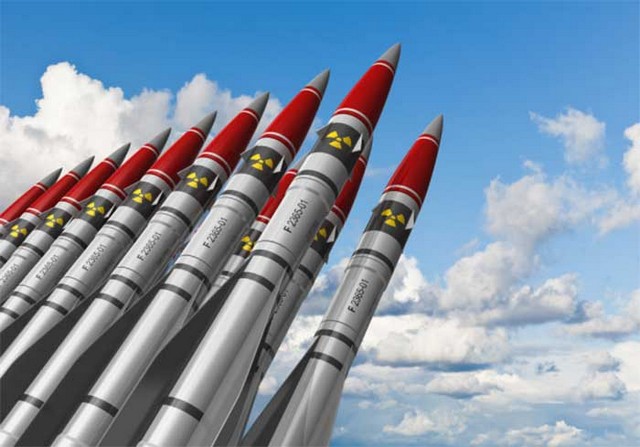
The Treaty on the Prohibition of Nuclear Weapons and the World’s Future

By Dr Lawrence Wittner

Late January of this year will mark the first anniversary of the entry into force of the UN Treaty on the Prohibition of Nuclear Weapons. This momentous international agreement, the result of a lengthy struggle by the International Campaign to Abolish Nuclear Weapons (ICAN) and by many non-nuclear nations, bans developing, testing, producing, acquiring, possessing, stockpiling, and threatening to use nuclear weapons. Adopted by an overwhelming vote of the official representatives of the world’s nations at a UN conference in July 2017, the treaty was subsequently signed by 86 nations. It received the required 50 national ratifications by late October 2020, and, on January 22, 2021, became international law.

Right from the start, the world’s nine nuclear powers—the United States, Russia, China, Britain, France, Israel, India, Pakistan, and North Korea—expressed their opposition to such a treaty. They pressed other nations to boycott the crucial 2017 UN conference and refused to attend it when it occurred. Indeed, three of them (the United States, Britain, and France) issued a statement declaring that they would never ratify the treaty. Not surprisingly, then, none of the nuclear powers has signed the agreement or indicated any sympathy for it.

Even so, the Treaty on the Prohibition of Nuclear Weapons has acquired considerable momentum over the past year. During that time, an additional nine nations ratified it, thus becoming parties to the treaty. And dozens more, having signed it, are expected to ratify it in the near future. Furthermore, the governments of two NATO nations, Norway and Germany, have broken free from the U.S. government’s oppositional stance to the treaty and agreed to attend the first meeting of the countries that are parties to it.

In nations where public opinion on the treaty has been examined, the international agreement enjoys considerable support. YouGov opinion polls in five NATO countries in Europe show overwhelming backing and very little opposition, with the same true in Iceland, another NATO participant. Polling has also revealed large majorities in favor of the treaty in Japan, Canada, and Australia.

In the United States, where most of the mainstream communications media have not deigned to mention the treaty, it remains a well-kept secret. Even so, although a 2019 YouGov poll about it drew a large “Don’t Know” response, treaty support still outweighed opposition by 49 to 32 percent. Moreover, when the U.S. Conference of Mayors, representing 1,400 U.S. cities, met in August 2021, the gathering unanimously approved a resolution praising the Treaty on the Prohibition of Nuclear Weapons.

Meanwhile, a variety of institutions, recognizing that nuclear weapons are now illegal under international law, have begun to change their investment policies. In September 2021, Lansforsakringar, a Swedish insurance company with assets of over $46 billion, cited the treaty as a major reason to avoid investing in companies producing nuclear weapons. In December, the New York City Council adopted a resolution telling the city comptroller to remove investments from the city’s $250 billion pension fund from companies producing or maintaining these weapons of mass destruction. According to ICAN, 127 financial institutions stopped investing in nuclear weapons companies during 2021.

Despite this impressive display of respect for the landmark agreement, the nine nuclear powers have not only continued to oppose it, but have accelerated their nuclear arms race. Having cast off the constraints of most nuclear arms control and disarmament agreements of the past, they are all busy either developing or deploying new nuclear weapons systems or have announced their intention to do so.

In this process of nuclear “modernization,” as it is politely termed, they are building newly-designed nuclear weapons of increasing accuracy and efficiency. These include hypersonic missiles, which travel at five times the speed of sound and are better able than their predecessors to evade missile defenses. Reportedly, hypersonic missiles have already been developed by Russia and China. The United States is currently scrambling to build them, as well, with the usual corporate weapons contractors eager to oblige.

When it comes to “modernization” of its entire nuclear weapons complex, the U.S. government probably has the lead. During the Obama administration, it embarked on a massive project designed to refurbish U.S. nuclear production facilities, enhance existing nuclear weapons, and build new ones. This enormous nuclear venture accelerated during the Trump administration and continues today, with a total cost estimated to ultimately top $1.5 trillion.

Although there remain some gestures toward nuclear arms control—such as the agreement between U.S. president Joe Biden and Russian president Vladimir Putin to extend the New Start Treaty—the nuclear powers are now giving a much higher priority to the nuclear arms race.

The current build-up of their nuclear arsenals is particularly dangerous at this time of rising conflict among them. The U.S. and Russian governments almost certainly don’t want a nuclear war over Ukraine, but they could easily slip into one. The same is true in the case of the heightening confrontation between the Chinese and U.S. governments over Taiwan and the islands in the South China Sea. And what will happen when nuclear-armed India and nuclear-armed Pakistan fight yet another war, or when nuclear-armed national leaders like Kim Jong-un and a possibly re-elected Donald Trump start trading insults again about their countries’ nuclear might?

At present, this standoff between the nuclear nations, enamored with winning their global power struggles, and the non-nuclear nations, aghast at the terrible danger of nuclear war, seems likely to persist, resulting in the continuation of the world’s long nuclear nightmare.

In this context, the most promising course of action for people interested in human survival might well lie in a popular mobilization to compel the nuclear nations to accept the Treaty on the Prohibition of Nuclear Weapons and, more broadly, to accept a restrained role in a cooperatively-governed world.

Dr. Lawrence S. Wittner (https://www.lawrenceswittner.com/ ) is Professor of History Emeritus at SUNY/Albany and the author of Confronting the Bomb (Stanford University Press).

9 January 2022

Source: countercurrents.org

441,449 Low Earth Orbit Satellites – Operating, Approved and Proposed

By Arthur Firstenberg

5 Jan 2022 – While the attention of a terrified world has been riveted on a virus, and while concern about radiation has been focused on 5G on the ground, the assault on the heavens has reached astronomical proportions. During the past two years, the number of satellites circling the earth has increased from 2,000 to 4,800, and a flood of new projects has brought the number of operating, approved, and proposed satellites to at least 441,449. And that number only includes low-earth-orbit (LEO) satellites that will reside in the ionosphere.

The satellite projects include the ones listed below. The companies are based in the United States unless otherwise indicated.

17,270 satellites already approved by the U.S. Federal Communications Commission:

  • Amazon (Kuiper) – 3,236 satellites
  • Astro Digital – 30 satellites
  • Black Sky Global – 36 satellites
  • Boeing – 147 satellites
  • Capella Space Corp. – 7 satellites
  • Globalstar (operating since 2000) – 48 satellites
  • Hawkeye 360 – 80 satellites
  • ICEYE – 6 satellites (FINLAND)
  • Iridium (operating since 1998) – 66 satellites
  • Kepler Communications – 140 satellites (CANADA)
  • Loft Orbital – 11 satellites
  • OneWeb – 720 satellites (UNITED KINGDOM)
  • Planet Labs (operating) – 200 satellites
  • R2 Space, LLC – 8 satellites
  • Spire Global – 175 satellites
  • SpaceX – 11,943 satellites
  • Swarm – 150 satellites
  • Telesat – 117 satellites (CANADA)
  • Theia Holdings – 120 satellites
  • Umbra Lab – 6 satellites
  • Viasat – 24 satellites

​Applications for 65,912 satellites pending before the FCC:

  • Amazon (Kuiper) – 4,538 additional satellites
  • AST & Science – 243 satellites
  • Astra Space – 13,620 satellites
  • Boeing – 5,789 additional satellites
  • Black Sky Global – 14 additional satellites
  • Fleet Space Technologies – 40 satellites (AUSTRALIA)
  • Hughes Network Systems – 1,440 satellites
  • Inmarsat – 198 satellites (UNITED KINGDOM)
  • Kepler Communications – two additional constellations of 360 satellites and 212 satellites (CANADA)
  • Lynk Global – 10 satellites (HONG KONG)
  • Maxar Technologies – 12 satellites
  • New Spectrum – 30 satellites (CANADA)
  • OneWeb – 6,368 additional satellites (UNITED KINGDOM)
  • Orbital Sidekick – 6 satellites
  • SN Space Systems – 1,190 satellites (UNITED KINGDOM)
  • SpaceX – 30,000 additional satellites
  • Telesat – 1,554 additional satellites (CANADA)
  • Terra Bella – 24 satellites (15 already operating)
  • Viasat – 264 additional satellites

Constellations totaling 14,872 satellites announced by governments:

  • Guowang – 12,992 satellites (CHINA)
  • Roscosmos – 264 satellites named Marathon (RUSSIA)
  • Roscosmos – 640 satellites named Sfera (RUSSIA)
  • Defense Advanced Research Projects Agency – 20 satellites (U.S. MILITARY)
  • Space Development Agency – 500 satellites (U.S. MILITARY)
  • UN:IO – 400 satellites (EUROPEAN COMMISSION)
  • Yaogan – 76 satellites (already operating) (CHINESE MILITARY)

Other LEO constellations planned by U.S. and foreign companies, totaling more than 16,055 satellites:

  • 4pi Lab – 16 satellites (CANADA)
  • ADA Space – 192 satellites (CHINA)
  • Aerospacelab – two constellations (unknown number of satellites) (BELGIUM)
  • Aistech – 20 satellites (SPAIN)
  • Albedo Space – 24 satellites
  • Alpha Insights – unknown number (CANADA)
  • Analytical Space – 36 satellites (under contract with S. SPACE FORCE)
  • Apogee Networks – 18 satellites (NEW ZEALAND)
  • Astrocast – 100 satellites (SWITZERLAND)
  • Astrome – 198 satellites (INDIA)
  • Aurora Insight – 12 satellites
  • Avant Space – 30 satellites (RUSSIA) equipped with lasers to serve as a billboard in space to display advertisements
  • Axelspace – 50 satellites (JAPAN)
  • BeetleSat – 80 satellites (ISRAEL)
  • Canon – 100 satellites (JAPAN)
  • Capella Space Corp. – 29 additional satellites
  • Carbon Mapper – 20 satellites
  • Care Weather – 50 satellites
  • Chang Guang – 138 satellites (CHINA)
  • China Aerospace Science and Industry Corporation – 80 satellites (CHINA)
  • Climavision – 50 satellites
  • Commsat – 72 satellites (8 already operating) (CHINA)
  • ConstellR – 30 satellites (GERMANY)
  • Curvalux – 240 satellites (UNITED KINGDOM)
  • Earth Observant – 30 satellites
  • EarthDaily Analytics – 6 satellites (CANADA)
  • Earth-i – 15 satellites (UNITED KINGDOM)
  • EchoStar – 30 satellites (CANADA)
  • Elecnor Deimos – unknown number (SPAIN)
  • EOSAgriSat – 12 satellites
  • Eutelsat – 25 satellites (FRANCE)
  • ExactEarth (operating) – 68 satellites (CANADA)
  • Fleet Space – 60 additional satellites (AUSTRALIA)
  • Future Navigation – 120 satellites (CHINA)
  • GalaxEye – 15 satellites (INDIA)
  • Galaxy Space – 1,000 satellites (CHINA)
  • Geely – unknown number (CHINA)
  • GeoOptics – 50 satellites
  • GHG Sat – 10 satellites (CANADA)
  • GP Advanced Projects – 9 satellites (ITALY)
  • Guodian Gauke – 38 satellites (CHINA)
  • Hanwha Systems – 2,000 satellites (SOUTH KOREA)
  • HEAD Aerospace – 48 satellites (CHINA)
  • Hera Systems – 50 satellites
  • Horizon Technologies – 13 satellites (UNITED KINGDOM)
  • Hydrosat – 16 satellites
  • Hypersat – 6 satellites
  • ICEYE – has already launched 14 satellites and plans 18, for 12 more satellites than have been approved by the FCC (FINLAND)
  • Innova Space – 100 satellites (ARGENTINA)
  • iQPS – 36 satellites (JAPAN)
  • Kinéis – 25 satellites (FRANCE)
  • KLEO – 300 satellites – (GERMANY)
  • Kleos Space – 80 satellites (LUXEMBOURG)
  • Lacuna Space – 240 satellites (UNITED KINGDOM)
  • Launchspace – 124 satellites
  • LunaSonde – unknown number (UNITED KINGDOM)
  • Lynk Global – 4,990 additional satellites (HONG KONG)
  • LyteLoop – 6 satellites
  • MDA – unknown number
  • Mission Space – unknown number (LATVIA)
  • Modularity Space – 150 satellites
  • Muon Space – unknown number
  • Myriota – 50 satellites (AUSTRALIA)
  • NanoAvionics – 72 satellites (LITHUANIA)
  • Ningxia – 10 satellites (CHINA)
  • NorthStar – 52 satellites (CANADA)
  • OHB Italia – 20 satellites (ITALY)
  • Omnispace – 200 satellites
  • OQ Technology – 60 satellites (LUXEMBOURG)
  • Orbital Micro Systems – 40 satellites
  • OroraTech – 100 satellites (GERMANY)
  • PION Labs – unknown number (BRAZIL)
  • PIXXEL – 36 satellites (INDIA)
  • PlanetIQ – 20 satellites
  • PredaSAR – 48 satellites
  • Prométhée – unknown number (FRANCE)
  • QEYNet – unknown number (CANADA)
  • QianSheng – 20 satellites (CHINA)
  • Reaktor Space Lab – 36 satellites (FINLAND)
  • Rocket Lab – “Mega-constellation” of unknown number (NEW ZEALAND)
  • Rogue Space Systems – 40 satellites
  • Rovial – unknown number (FRANCE)
  • Saab – 100 satellites (SWEDEN)
  • SaraniaSat – unknown number
  • Sateliot – 100 satellites (SPAIN)
  • Satellogic – 90 satellites (ARGENTINA)
  • SatRevolution – 1500 satellites (POLAND)
  • Scanworld – 10 satellites (BELGIUM)
  • Scepter and ExxonMobil – 24 satellites
  • SCOUT – unknown number
  • Shanghai Lizheng – 90 satellites (CHINA)
  • Skykraft – 210 satellites (AUSTRALIA)
  • Space JLTZ – 200 satellites (MEXICO)
  • Space Union – 32 satellites (LITHUANIA)
  • SpaceBelt – 12 satellites
  • SpaceFab – unknown number
  • Spacety – 56 satellites (CHINA)
  • Stara Space – 120 satellites
  • Startical – 200 satellites (SPAIN)
  • Sternula – 50 satellites (DENMARK)
  • Synspective – 30 satellites (JAPAN)
  • Telnet – 30 satellites (TUNISIA)
  • io – 36 satellites
  • Totum Labs – 24 satellites
  • Trion Space – 288 satellites (LIECHTENSTEIN)
  • Trustpoint – unknown number
  • Umbra Lab – 18 additional satellites
  • UnseenLabs – 50 satelites (FRANCE)
  • Vyoma Space – unknown number (GERMANY)
  • WiseSat Space – unknown number (SWITZERLAND)
  • Xona – 300 satellites
  • ZeroG Lab – 378 satellites (CHINA)
  • Zhuhai Orbita – 34 satellites (CHINA)

Rwanda, which wants to catapult Africa into world leadership in space, filed an application with the International Telecommunication Union (ITU) on September 21, 2021 for 327,320 satellites. Its proposal includes 937 orbital planes, distributed in 27 orbital shells (layers of satellites at different altitudes), with 360 satellites in each plane.

  • Rwanda Space Agency – 327,320 satellites (RWANDA)

TOTAL: 441,449 SATELLITES OPERATING, APPROVED AND PROPOSED (+18 constellations whose numbers are not yet known)

Most of the above list of satellites would orbit at altitudes between about 325 km (200 miles) and 1,100 km (680 miles), except that some of Rwanda’s proposed orbits go as low as 280 km (174 miles). The above list does not include applications for satellites in geostationary orbit (GEO), or for LEO constellations of fewer than 5 satellites, or constellations in medium earth orbit (MEO) such as:

  • Intelsat (at 8600 km) – 216 satellites (LUXEMBOURG)
  • Mangata Networks (at 6,400 km and 12,000 km) – 791 satellites
  • O3b (at 8,062 km) – 112 satellites (LUXEMBOURG)

Brightening the Night Sky

Scientists have already begun to publish papers analyzing the effect all these satellites will have, not only on astronomy, but on the appearance of the night sky and the visibility of the stars to everyone on earth. An article published online on March 29, 2021 in Monthly Notices of the Royal Astronomical Society by scientists in Slovakia, Spain and the United States is titled “The proliferation of space objects is a rapidly increasing source of artificial night sky brightness.” The scattering of sunlight from all of the objects in space, wrote the authors, is causing a “new skyglow” during the beginning and end of each night that has already brightened the natural night sky by about 10 percent. The authors are concerned that “the additional contribution of the new satellite mega-constellations” would ruin the night sky to a much greater extent.

A group of Canadian astronomers have an article in the January 2022 issue of The Astronomical Journal. “Megaconstellations of thousands to tens of thousands of artificial satellites (satcons) are rapidly being developed and launched,” they write. “These satcons will have negative consequences for observational astronomy research, and are poised to drastically interfere with naked-eye stargazing worldwide.” They analyzed what the effect on astronomy will be if 65,000 new low-orbit satellites are launched. At 40 degrees latitude (mid-United States; Mediterranean; mid-China; Japan; Buenos Aires; New Zealand), say these authors, more than 1,000 of these satellites will be sunlit and visible in the sky in the summer even at midnight. At higher latitudes (northern U.S.; Canada; most of Europe; Russia), thousands of these satellites will be visible all night long.

Another paper, titled Report on Mega-Constellations to the Government of Canada and the Canadian Space Agency, was commissioned by the Canadian Astronomical Society and submitted to the Canadian government on March 31, 2021. It is a moving document. These astronomers write:

“In ancient times, humans everywhere in the world had access to completely dark skies. In stark contrast, today 80% of North Americans cannot see the Milky Way from where they live because of light pollution. The lack of darkness that many people now experience due to urban light pollution has been linked to many physical and mental health issues, both in humans and wildlife. But there are still pockets of darkness where urban-dwellers can escape the light pollution and experience skies nearly as dark as those seen by our ancestors. Unfortunately, light pollution from satellites will be a global phenomenon — there will be nowhere left on Earth to experience skies free from bright satellites in orbit.

“Anyone who has ever spent time in a truly dark place staring up at the stars understands the powerful feeling of connection and insignificance this act inspires. Our lives, our worries, even our entire planet seem so inconsequential on these scales — a feeling that has shaped literature, art, and culture around the globe. Seeing the night sky makes it immediately obvious that we are part of a vast and wondrous universe full of countless stars… Connecting to the sky is part of our humanity, and everyone in the world is in very real danger of losing that…

“With the naked eye, stargazing from a dark-sky location allows you to see about 4,500 stars… Once Starlink approaches 12,000 satellites in orbit, most people in Canada will see more satellites than stars in the sky.”

The World’s Largest Garbage Pit

And not only do thousands of whole satellites threaten the heavens, but a phenomenal amount of debris orbits the earth as a result of satellites colliding, or exploding, or otherwise being destroyed while in space. During the 64 years that humans have been launching rockets, the protective blankets of the ionosphere and magnetosphere have become the Earth’s largest garbage pit.

According to the European Space Agency there are, in orbit around the Earth today, 7,790 intact satellites, of which 4,800 are functioning. Since 1957, there have been more than 630 breakups, explosions, collisions, and other satellite-destroying events. This has resulted in the creation of more than 9,700 tons of space debris. There are, in orbit today:

  • 30,430 debris objects presently being tracked
  • 36,500 objects larger than 10 cm in size
  • 1,000,000 objects from 1 cm to 10 cm in size
  • 330,000,000 objects from 1 mm to 1 cm in size

Effects on Ozone, Earthquakes, and Thunderstorms

Ozone

In a 2020 paper titled “The environmental impact of emissions from space launches: A comprehensive review,” Jessica Dallas and her colleagues at the University of New South Wales wrote that “ozone depletion is one of the largest environmental concerns surrounding rocket launches from Earth.”

In 2021, there were 146 orbital rocket launches to put 1,800 satellites into space. At that rate, to maintain and continually replace 100,000 low-earth-orbit satellites, which have an average lifespan of five years, would require more than 1,600 rocket launches per year, or more than four every day, forever into the future.

2020 and 2021 witnessed two of the largest Antarctic ozone holes since measurements began in 1979. The 2020 hole was also the longest-lasting on record, and the 2021 hole was only a few days shorter; larger than the continent of Antarctica, it began in late July 2021 and ended on December 28, 2021. Everyone is still blaming chlorofluorocarbons (CFCs), which were banned by the Montreal Protocol in 1978. Nobody is looking at rocket launches, of which there were more in 2020 and 2021 than in any previous year. In addition to the 146 orbital launches in 2021, there were 143 sub-orbital launches of rockets to over 80 kilometers in altitude, for a total of 289 high-altitude launches for the year, or almost one every day.

Earthquakes and Thunderstorms

In 2012, Anatoly Guglielmi and Oleg Zotov reviewed evidence that the global use of electricity has an effect on both seismic activity and thunderstorms. In particular, global electric power consumption spikes every hour on the hour, and so does the average number of earthquakes in the world. In 2020, a group of Italian scientists supplied additional information: solar activity also correlates with earthquakes, and it appears to do so by raising the voltage of the ionosphere. Since this must increase the current flow in the global electric circuit (see chapter 9 of my book, The Invisible Rainbow), it would increase the electric currents that flow through the earth’s crust at all times, which would increase the stress on earthquake faults and increase the frequency of earthquakes. The Italian paper’s title is “On the correlation between solar activity and large earthquakes worldwide.”

Whether 100,000 satellites, although emitting powerful radio waves, would raise the ionospheric voltage, is doubtful. However, the rocket exhaust from every launch emits tons of water vapor, which is more conductive than dry air. The stratosphere is dry and contains very little water, and any water humans put there remains there for years and accumulates. Multiple daily rocket launches, in perpetuity, will fill the stratosphere with water vapor, increase its conductivity, and increase the current flowing in the global electric circuit. The current flowing through the earth’s crust will increase, possibly increasing the frequency of earthquakes.

I also speculate that this would increase the frequency and power of thunderstorms worldwide. Were it not for thunderstorms, the ionospheric voltage, which averages 300,000 volts, would discharge in about 15 minutes. About 100 lightning strokes per second, somewhere on Earth, continuously recharge it. Increasing the current flow in the global electric circuit would discharge the ionosphere more quickly, and since it is thunderstorms that recharge the Earth’s battery, the frequency and violence of thunderstorms would have to increase.

Alteration of the Earth’s Electromagnetic Environment

What everyone is completely blind to is the effect of all the radiation from satellites on the ionosphere, and consequently on the life force of every living thing. The relationship of electricity to qi and prana has escaped the notice of modern humans. Atmospheric physicists and Chinese physicians have yet to share their knowledge with one another. And at this time, such a sharing is crucial to the survival of life on Earth.

“The pure Yang forms the heaven, and the turbid Yin forms the earth. The Qi of the earth ascends and turns into clouds, while the Qi of the heaven descends and turns into rain.” So the Yellow Emperor’s Classic of Internal Medicine described the global electric circuit 2,400 years ago — the circuit that is generated by the ionosphere and that flows perpetually between the Yang (positive) heaven and the Yin (negative) earth. The circuit that connects us to earth and sky and that flows through our meridians giving us life and health. A circuit that must not be polluted with frequencies emitted by a hundred thousand satellites, some of whose beams will have an effective power of up to ten million watts. That is sheer insanity, and so far no one is paying attention. No one is even asking whether the satellites have anything to do with the profound and simultaneous decline, planetwide, in the number of insects and birds, and with the pandemic of sleep disorders and fatigue that so many are experiencing. Everyone is so focused on a virus, and on antennas on the ground, that no one is paying attention to the holocaust descending from space.

Download PDF File: 441,449-Low-Earth-Orbit-Satellites

___________________________________________________

Arthur Firstenberg – Author, The Invisible Rainbow: A History of Electricity and Life – Administrator, International Appeal to Stop 5G on Earth and in Space – Caretaker, ECHOEarth.org (End Cellphones Here On Earth)

10 January 2022

Source: www.transcend.org

A Texas Team Comes Up with a COVID Vaccine That Could Be a Global Game Changer

By Joe Palca

5 Jan 2022 – A vaccine authorized in December for use in India may help solve one of the most vexing problems in global public health: How to supply lower-income countries with a COVID-19 vaccine that is safe, effective and affordable.

The vaccine is called CORBEVAX. It uses old but proven vaccine technology and can be manufactured far more easily than most, if not all, of the COVID-19 vaccines in use today.

“CORBEVAX is a game changer,” says Dr. Keith Martin, executive director of the Consortium of Universities for Global Health in Washington, D.C. “It’s going to enable countries around the world, particularly low-income countries, to be able to produce these vaccines and distribute them in a way that’s going to affordable, effective and safe.”

The story of CORBEVAX begins some two decades ago. Peter Hotez and Maria Elena Bottazzi were medical researchers at George Washington University in Washington, D.C., where they worked on vaccines and treatments for what are called neglected tropical diseases, such as schistosomiasis and hookworm.

When a strain of coronavirus known as SARS broke out in 2003, they decided to tackle that disease. After moving to Houston to affiliate with Baylor College of Medicine and the Texas Children’s Center for Vaccine Development, they created a vaccine candidate using protein subunit technology. This involves using proteins from a virus or bacterium that can induce an immune response but not cause disease.

“It’s the same technology as the hepatitis B vaccine that’s been around for decades,” Hotez says.

Their SARS vaccine candidate looked promising, but then the SARS outbreak petered out. No evidence of disease, no need for a vaccine.

When a new strain of coronavirus triggered the COVID-19 pandemic, Hotez and Bottazzi figured they could dust off their old technology and modify it for use against COVID-19. After all, the virus causing COVID-19 and the virus causing SARS are quite similar.

Hotez says they tried to interest government officials in the vaccine, but they weren’t impressed.

“People were so fixated on innovation that nobody thought, ‘Hey, maybe we could use a low-cost, durable, easy-breezy vaccine that can vaccinate the whole world,’ ” Hotez says.

“We really honestly couldn’t get any traction in the U.S., but our mission is always to enable technologies for low- and middle-income countries production and use,” Bottazzi recalls.

So they turned to private philanthropies. A major donor early on was the JPB Foundation in New York.

“The rest were all Texas philanthropies: the Kleberg Foundation, the [John S.] Dunn Foundation, Tito’s Vodka,” Hotez says. The MD Anderson Foundation also chipped in.

“When people say, ‘Why did we move [from Washington, D.C.] to Texas?’ Well, we knew that this was a great philanthropic environment. So this is really very much a Texas vaccine,” although there were other, smaller donors from all over the country.

Hotez says that unlike the mRNA vaccines from Pfizer and Moderna, and the viral vector vaccine from Johnson & Johnson, protein subunit vaccines like CORBEVAX have a track record. So he and Bottazzi were relatively certain CORBEVAX would be safe and effective.

“And it’s cheap, a dollar, dollar fifty a dose,” Hotez says. “You’re not going to get less expensive than that.”

Clinical trials showed they were right to be confident CORBEVAX would work. An unpublished study conducted in India involving 3,000 volunteers found the vaccine to be 90% effective in preventing disease cause by the original COVID-19 virus strain and 80% against the delta variant. It’s still being tested against omicron.

But CORBEVAX is already entering the real world. Last month, the vaccine received emergency use authorization from regulators in India. An Indian vaccine manufacturer called Biological E Ltd is now making the vaccine. The company says it is producing 100 million doses per month and has already sold 300 million doses to the Indian government.

“The real beauty of the CORBEVAX vaccine that Drs. Hotez and Bottazzi created is that intellectual property of this vaccine will be available to everybody,” Keith Martin says. “So you can get manufacturers in Senegal, and South Africa and Latin America to be able to produce this particular vaccine.”

By contrast, the makers of Pfizer and Moderna, for example, are not sharing their recipe.

One drawback to the CORBEVAX technology is that it can’t be modified as quickly as mRNA vaccines can to adjust to new variants.

That forces public health officials to make difficult choices.

“Something which can be adapted the fastest versus something that can be adapted relatively quickly, but then more importantly can be manufactured at a large global capacity and at a cost of production which is much lower,” says Prashant Yadav, senior fellow at at the Center for Global Development in Washington, D.C. The thought is some protection may better than no protection.

Of course, the ideal vaccine would have both qualities, and Hotez is at work trying to develop technologies that can do that.

“There’s no issue with pushing innovation,” he says. “I think that’s one of the really positive features of the U.S. vaccination program for COVID. The problem was it wasn’t balanced with a portfolio or oldies but goodies.”

Hotez is hoping his oldie but goodie will usher in a brighter future for the world.

__________________________________________

Joe Palca is a science correspondent for NPR. Since joining in 1992, he has covered a range of science topics from biomedical research to astronomy.

10 January 2022

Source: www.transcend.org

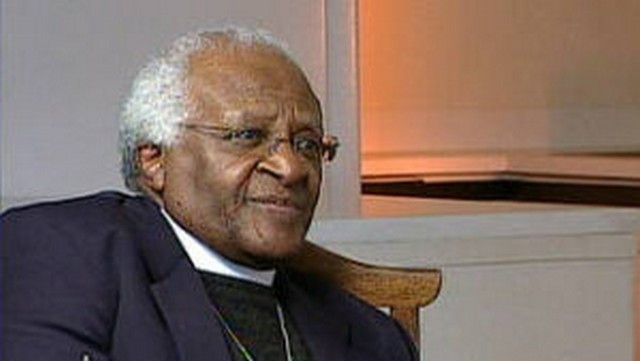
[Nobel Peace Laureate] Desmond Tutu, Rest in Power

By Amy Goodman and Denis Moynihan

29 Dec 2021 – Archbishop Desmond Tutu died the day after Christmas at the age of 90. The Nobel Peace laureate was a leader in the movement to overthrow apartheid, South Africa’s brutal system of racial segregation. After that historic victory and the election of Nelson Mandela as South Africa’s first Black president in 1994, Tutu led the Truth and Reconciliation Commission, pursuing restorative justice rather than retribution. After that, Tutu continued demonstrating and speaking out around the world for justice, peace, women’s equality, gay rights, in solidarity with Palestinians, and more.

Born in South Africa in 1931, Tutu grew up under racist laws imposed over centuries of colonialism. In 1948, the hardline white supremacist National Party swept the elections and instituted apartheid. As a college student in the early 1950s, Tutu met Nelson Mandela. They wouldn’t meet again for close to 40 years, until after Mandela served 27 years in prison.

Tutu became an Anglican priest, and rapidly rose in the clergy. He took charge of the South African Council of Churches, transforming it into a major human rights organization. He mobilized domestic and international opposition to apartheid, including an international economic boycott of South Africa.

Testifying before the U.S. Congress in 1984, Tutu denounced the Reagan administration:

“Apartheid is as evil, as immoral, as un-Christian, in my view, as Nazism. And in my view, the Reagan administration’s support and collaboration with it is equally immoral, evil and totally un-Christian.”

Later that year he received the Nobel Peace Prize.

“Governments don’t always represent their people.”

Tutu said at the 2001 World Conference against Racism in Durban, South Africa, reflecting on the importance of grassroots action in the United States in overcoming Reagan’s support for the apartheid regime.

“We tried to persuade the Reagan White House to impose sanctions against South Africa. And the Reagan White House was firmly set against that. We appealed over their heads, to the people. And they were fantastic. The response was that the moral climate in the United States changed. And they did not just pass the anti-apartheid legislation, they mustered a presidential veto override.”

Tutu was referring to Reagan’s veto of The Comprehensive Anti-Apartheid Act of 1986, which had passed both houses of Congress with overwhelming support. The Republican-controlled Senate overrode Reagan’s veto by a vote of 78-21.

“Apartheid’s rulers bit the dust, as all oppressors have done always, for this is a moral universe,” Tutu said in 2007 in a speech at Boston’s Old South Church. “Right and wrong matter. It cannot happen that evil, injustice and oppression can have the last word. No, ultimately goodness, justice, freedom — these will prevail.”

Archbishop Tutu gave the Boston speech not long after St. Thomas University in Minneapolis/St. Paul rescinded an invitation to speak because of his unwavering solidarity with Palestinians. Facing a public backlash, the Catholic university then reversed its own decision and issued Tutu an apology and a re-invitation. He elaborated on Israel/Palestine in 2008, appearing on the Democracy Now! news hour. He described a visit to the region, during which Israel prevented him from entering Gaza:

“For me, coming from South Africa and looking at the checkpoints and the arrogance of those young soldiers – it reminds me of the kind of experiences that we underwent. I was Bishop of Johannesburg and would be driving with my wife from town to Soweto, where we lived, and we’d have a roadblock, and the fact of our having to have passes allowing us to move freely in the land of our birth. And now you have that extraordinary structure — the wall.”

Tutu “selflessly fought the evils of racism during the most terrible days of apartheid,” Nelson Mandela wrote of Desmond Tutu in his autobiography, Long Walk to Freedom. Mandela went on, describing their reunion following his release from prison:

“When I greeted Archbishop Tutu, I enveloped him in a great hug; here was a man who inspired an entire nation with his words and his courage, who had revived the people’s hope during the darkest of times.”

We find ourselves again in dark times, with authoritarianism on the rise, widening economic inequality, vaccine apartheid in the midst of a pandemic and the worsening climate emergency. Speaking to youth activists outside the United Nations climate summit in Copenhagen, Denmark in 2009, Tutu said, “For those who think that the rich are going to escape — hahaha! — we either swim or sink together.” Unleashing his signature squeal of laughter, Tutu’s principled resistance was suffused with expressions of joy and compassion.

“We have one world, and we want to leave a beautiful world for this beautiful, wonderful young generation. We, the oldies, want to leave you a beautiful world. It is a matter of morality. It is a question of justice.”

____________________

Amy Goodman is the host of “Democracy Now!” a daily international TV/radio news hour airing on more than 900 stations in North America.

Denis Moynihan is the co-founder of Democracy Now! Since 2002, he has participated in the organization’s worldwide distribution, infrastructure development, and the coordination of complex live broadcasts from many continents.

10 January 2022

Source: www.transcend.org

A Flawed Program – Millions Of Expiring Covid Vaccine Doses: Poorer Nations Reject

A Flawed Program – Millions Of Expiring Covid Vaccine Doses: Poorer Na

The short expiration dates of vaccines donated to the sharing program is a major problem, Etleva Kadilli, an official concerned with the issue told the European Parliament (EP) on Thursday. The official heads the Supply Division of UNICEF, the UN’s agency for the betterment of children’s lives worldwide.

“Until we have a better shelf life, this is going to be a pressure point for the countries, specifically when countries want to reach populations in hard-to-reach areas,” she said.

COVAX is currently approaching the delivery of its billionth dose, its management reported. The EU accounts for about a third of the doses delivered to it so far, the official said.

The World Health Organization (WHO), which co-manages COVAX, has repeatedly described the lackluster assistance it received from donors amid the hoarding of vaccines by rich nations as a moral failure.

The program to help poorer nations to vaccinate their populations against Covid-19 is facing a problem, as many donations have a remaining shelf life too short to be properly distributed, a UN official has revealed.

In December alone, over 100 million doses offered to the UN’s COVAX program had to be rejected by aid recipients, most of them due to the looming expiration dates of the vaccines, Etleva Kadilli told the EP.

The agency later in the day said some 15.5 million of the doses rejected last month were reportedly destroyed. Some of the shipments were rejected by multiple countries.

Poorer nations have a number of issues with accepting the vaccines donated to them. Many lack storage capacity to receive shipments and have problems with rolling out vaccination campaigns due to factors like domestic instability and strained healthcare infrastructure.

Some 92 member states missed the WHO’s 40% vaccination goal in 2021 “due to a combination of limited supply going to low-income countries for most of the year and then subsequent vaccines arriving close to expiry and without key parts – like the syringes,” WHO Director-General Tedros Ghebreyesus said during an end-of-year conference in December.

A Flawed Program

Some critics say the program was flawed from the start because it relies on the generosity of the wealthy instead of pushing for wider availability of vaccines to developing nations through the eradication of legal barriers like patent protection. Billionaire Bill Gates, who is an influential figure in global healthcare, has been a vocal opponent of stripping patent protections for medicines, though his foundation seemed to buckle on Covid-19 vaccines after facing criticism over the position.

Alternatives designed for the needs and capabilities of poor nations, like the open-source, patent-free Corbevax vaccine, have been suffering from lack of funding. The vaccine developed by two Texas scientists received more money from the charity arm of spirits maker Tito’s Vodka, which is based in their home state, than from the U.S. government, the project’s co-director Elena Bottazzi told Vice.

A Vodka Maker Gives More Than U.S. Government

The Vice report by Ella Fassler on Jan. 11, 2022 (Open-Source Vaccines Got More Funding From Tito’s Vodka Than the Government, https://www.vice.com/en/article/akvk9j/open-source-vaccines-got-more-funding-from-titos-vodka-than-the-government) said:

With the Omicron variant spreading across the US at an unprecedented speed, medical experts have reignited their calls for mass-producing patent-free COVID-19 vaccines to address the lack of widely-available vaccines in low-income countries. But two scientists in Texas who have successfully developed such a vaccine say their effort still has not received any funding from the world’s richest countries, including the U.S.

Dr. Peter Hotez and Dr. Maria Elena Bottazzi are professors at the Baylor College of Medicine and co-directors of the Texas Children’s Center for Vaccine Development, where they are renewing their pleas for the U.S. federal government and other G7 countries to financially support the mass production of Corbevax, the world’s first open-source, patent-free COVID-19 vaccine being distributed on a mass scale.

Virologists have frequently noted that new variants like Omicron are more likely to emerge in countries where vaccines are not widely available — a problem that vaccine patents exacerbate, and those efforts like Corbevax aim to directly address. Without vaccine equity, low-income nations suffer from the virus disproportionately, all the while increasing the chances that the pandemic will continue indefinitely.

“The U.S. government could, tomorrow, agree to make 4 billion doses of our vaccine,” Hotez told Motherboard. “There is still no roadmap to vaccinating the world. We are doing what we can, but we could do much more if we had help from G7.”

$7 And $1

In July 2021, the U.S. government and Pfizer signed a $3.5 billion dollar contract for the purchase of 500 million doses of the Pfizer/BioNTech vaccine for international donation to low- and middle-income countries, according to a heavily redacted contract obtained by Knowledge Ecology International, a social justice and transparency oriented non-profit. Each Pfizer/BioNTech dose costs $7, whereas Biological E, an Indian company that has licensed Corbevax, is selling each of its shots for about a dollar.

The doctors helped create what they call the “vaccine for all” with recombinant protein subunit technology, a type of vaccine that has been used to treat hepatitis B for over four decades. Cuba’s Soberana 02, patented by the state-run Finlay Institute, relies on similar technology to combat COVID-19. Lower income countries are able to mass produce recombinant protein vaccines more easily than ones that rely on newer technology, like Pfizer/BioNTech and Moderna’s mRNA designs or Johnson & Johnson’s adenovirus vaccine.

And unlike pharmaceutical giants, the Texan center is freely sharing the recipe and know-how with anyone who asks for it — without strings attached — in order to, as they put it, “decolonize,” the vaccine distribution process.

Lives, Not Profit

“Our goal is to save lives, not make a profit,” said Hotez. “We knew that for resource poor settings, there would be a learning curve before you could make enough mRNA or adenovirus vectored vaccines for the 9 billion doses that would likely be needed for Africa, Asia, Latin America. So we right off the bat took a different approach to use the technology that we have used before to partner with vaccine developers in low and middle income countries.”

The Indian government approved Corbevax under an emergency authorization on December 28, following successful clinical trials boasting 90 percent effectiveness against the original COVID-19 strain and 80 percent against Delta. Whether Corbevax is protective against the Omicron variant is unclear. While the current vaccines are still proven effective against severe illness and death, one study conducted by researchers at Ragon Institute of MGH, MIT and Harvard indicated that the standard regimen of mRNA vaccines do not produce antibodies that neutralize the Omicron variant unless they are accompanied by a booster shot.

Biological E has already produced 150 million doses, anticipates producing 200 million doses per month, and has received an order from the Indian government for 300 million doses. Hotez and Bottazzi expect Indonesia, Bangladesh, Botswana and South Africa to be next in line.

Vaccine Hoarding: U.S. And European Countries

The Vice report said:

Financial support from wealthier countries could accelerate the distribution process. To date, the U.S. and European countries have hoarded vaccines, and pharmaceutical companies and the US government have refused to share the manufacturing know-how and recipes. The World Health Organization and some public health experts have criticized wealthier countries for distributing booster shots to their own citizens before lower-income countries could provide the first two shots to their most vulnerable. As of January 6, just 8.8 percent of people in low-income countries had received at least one dose of a vaccine, compared with 58.8 percent of the world population, according to Our World in Data, a joint project between the University of Oxford and the non-profit Global Change Data Lab.

“If we had even a fraction of the funding that Moderna had gotten, there’s a possibility the world could have been vaccinated by now,” said Hotez. “And nobody would have ever heard of the Omicron variant.”

As of late October 2020, the U.S. government had invested $12 billion dollars in vaccine development as part of Operation Warp Speed. The Texan team invested just $6-7 million total to develop Corbevax, all raised through private donations and one $400,000 grant from the National Institutes of Health (NIH).

Bottazzi told Motherboard that her team “constantly” sought government funding “at all levels” in 2020. They made pleas during congressional hearings, webinars, conferences, to journalists, and through op-eds. The philanthropic arm of the Texas-based Tito’s Vodka, which donated $1 million dollars to the effort, has contributed more funds than the U.S. government.

The Great Gates’ Plea: No Open License

The team met also with The Gates Foundation on at least one occasion in the early stages of development, but, Hotez said, they could not engage them either. In 2020, Bill Gates bragged about convincing Oxford University not to release its vaccine under an open license.

“In terms of Operational Warp Speed, it was made pretty clear to us that we were not in the running,” said Hotez. “It was all about supporting and incentivizing the pharma companies, the multinationals and focusing on new technologies, and that was a huge source of frustration for us.”

It is still unclear why Operation Warp Speed prioritized mRNA vaccine designs produced by large pharmaceutical companies over long-standing, cheap, easy-to-produce technologies such as Corbevax. But a likely reason is that mRNA vaccines may be more profitable than other vaccine designs. More than two-thirds of Congress cashed a check from the pharmaceutical industry ahead of the 2020 election, according to Stat News.

Tax filings from 2020 show that Biotechnology Innovation Organization (BIO), a group that lobbies on behalf of Pfizer, Moderna Johnson & Johnson and other biotech companies, gave $500,000 to Majority Forward, a nonprofit that works to elect Senate Democrats and $250,000 to American Bridge 21st Century, a Democratic fact-checking and research website. One Nation, a GOP-aligned dark-money group, received $250,000 from BIO in 2020.

An earlier public-private collaboration could have played a role in the U.S. government’s investment into Moderna’s vaccine. Prior to the pandemic, Moderna had been working with the NIH’s National Institute of Allergy and Infectious Diseases (NIAID) on an investigational vaccine for the Middle East Respiratory Syndrome, another type of coronavirus. The work “provided a head start for developing a vaccine candidate to protect against COVID-19,” the agency wrote in a news release announcing its clinical trial for Moderna’s vaccine on March 16, 2020.

When the NIH partners with a company to design a drug, its scientists are typically listed as inventors on the patent. This allows the agency and its scientists to earn royalties from sales and potentially gives them the power to allow other companies to license the invention. From 1991 to February 2020, the NIH earned more than 2 billion dollars in royalty revenue from licenses of inventions associated with drugs developed by pharmaceutical companies, according to a Government Accountability Office report.

In 2020, Moderna filed to patent a genetic sequence used in its vaccine without listing NIH as inventors. A bitter dispute between the agency and Moderna resulted, with Moderna ultimately abandoning its application and re-filing another to delay the process.

Moderna has earned billions from the vaccine to date, and the average forecast among analysts for the company’s 2022 revenue jumped 35 percent after President Joe Biden laid out its booster plan in mid-August, according to Marketwatch.

“COVID is just such a massive market. Your market is the entire planet,” James Love, director of the non-governmental organization Knowledge Ecology International, told Motherboard. “And at first, it’s two doses. And then ‘oh, maybe you need to have a booster shot.’ And so there is a third dose, which is what I had.  And then maybe it is a special one next year. And then you begin to wonder, ‘where are we going with this?’ If you are talking about doing it with eight billion people, it makes it a pretty big market.”

Public’s Distrust In Large Pharmaceutical Companies

The Vice report said:

Recent studies have shown that the public’s distrust in large pharmaceutical companies has contributed to vaccine hesitancy. As a truly open-source, not-for-profit vaccine, the makers of Corbevax say it could provide people with some sense of security that the shot is actually intended to improve their own health, not boost pharmaceutical profits.

“The mission of our vaccine center, which has been in operation for more than two decades, has always aspired to be open-source,” Bottazzi said. “With the emergency and the pandemic, it’s even better highlighted, the fact that you need new business models for vaccine development that are not just driven by economics. Vaccines, at the end of the day, should be a commodity accessible to all.”

Always The Leftover

A Devex report by Jenny Lei Ravelo and Sara Jerving (‘We will always get the leftovers’: A year in COVID-19 vaccine inequity, December 23, 2021, https://www.devex.com/news/we-will-always-get-the-leftovers-a-year-in-covid-19-vaccine-inequity-102240) said:

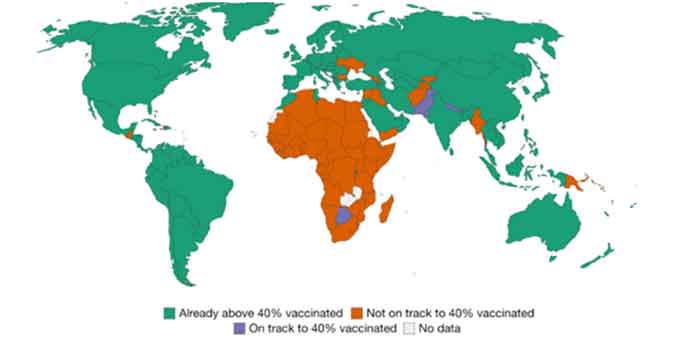
More than half of the population in over 60 countries across the world have not yet been vaccinated against COVID-19. The majority of them are in Africa, as well as conflict-affected countries such as Afghanistan and Myanmar, and Pacific island nations such as Papua New Guinea.

“December marks one year since the first doses of the vaccine were administered in rich countries. People in these countries are now onto their third dose while the majority of people in poorer countries haven’t yet even had their first,” UNAIDS Executive Director Winnie Byanyima wrote to Devex. “This is inequality at its harshest.”

The low vaccination rates, mainly due to countries’ limited access to doses, have left lower-income countries largely unprotected as waves of infections have ripped through them.

According to World Health Organization Director-General Tedros Adhanom Ghebreyesus, there were enough vaccines produced this year, that if they had been distributed equitably, every country could have reached the 40% target by September.

Instead, as of Dec. 21, 76% of populations in high-income countries were fully or partially vaccinated and only 8.1% were vaccinated in low-income countries, leading to a global outcry against vaccine inequity.

Experts say dose hoarding by high-income countries, export restrictions, manufacturer delays, slow in-country rollouts, and dose donations with short shelf lives have left significant portions of low-income countries’ populations vulnerable to COVID-19. Others also argue that blocked proposals to broaden manufacturing through the voluntary sharing of intellectual property or a temporary waiver of intellectual property have limited countries’ ability to access vaccines.

Over 60 countries are not on track to vaccinate 40% of their population by year’s end. Source: Our World in Data

Supply is slated to increase next year, but the introduction of booster shots by high- and middle-income countries, and the threat of new variants, such as omicron, create uncertainties. Getting the vaccines is also not enough — countries need financial, human resources, and technical assistance to ensure doses go from tarmacs to people’s arms.

“Vaccine inequity … is probably the most horrific injustice of 2021. I hope and I pray that it can be improved in 2022,” said Dr. Michael Ryan, executive director of the emergencies program at WHO, during a press briefing Wednesday.

Left To Beg

The report said:

The scene was set for inequity early in the rollouts when higher-income countries hoarded vaccines. This stacked the cards against COVAX, the global COVID-19 vaccine procurement mechanism that aimed to provide equitable access to doses.

It faced financial constraints and challenges in securing supplies, with a lack of commitment from manufacturers and countries engaging in vaccine nationalism, Aurélia Nguyen, managing director of COVAX, wrote to Devex.

It also faced export restrictions. Early on, COVAX relied heavily on AstraZeneca doses produced by the Serum Institute of India. But those supplies quickly dried up when India, dealing with a deadly second wave of COVID-19, imposed vaccine export restrictions that lasted for eight months, leaving many countries, which relied on COVAX, with limited to no access to doses.

It said:

WHO and its partners called on countries that already vaccinated high-risk groups, such as health care workers and the elderly, to donate doses as a stopgap measure. And a handful of higher-income countries responded with pledged doses. As a result, in July, African nations received more doses from COVAX than the months of April to June combined.

But it came at the wrong time after many lives were already lost, Dr. Phionah Atuhebwe, new vaccines introduction officer at WHO Africa, told Devex.

“At a point where we were going through the third wave in Africa and had completely no doses, the richer countries were rushing to vaccinate even their teenagers, when health care workers in Africa were working in COVID treatment centers, unvaccinated. They knew it. We were in the news. We were making all of these noises. We were literally begging,” she said.

But even with an increase in donated doses delivered, countries are still behind on their pledged doses. Of the over 1.5 billion doses pledged to COVAX through next year, only 378 million doses were delivered as of Dec. 21. That’s part of COVAX’s total deliveries to date of about 806 million doses, which is still 300 million doses short of the 1.1 billion doses it expected to deliver by the end of this year when it announced its revised supply forecast in September.

COVAX has been pummeled with criticism for key decisions made along the way. Nguyen said in planning for future pandemics, contingency financing and a geographically distributed manufacturing base for vaccines, especially in emerging markets, should be a priority. But as supply becomes relatively stable, it will also be important to ensure countries get the support they need to grow their capacities to absorb and deliver doses, she said.

More than 1 billion doses of countries’ donation pledges to COVAX have yet to be delivered. Click here for a larger version of the image.

‘Profit First, People Second’

The report said:

Now, even with adequate levels of supply, many countries are struggling to roll out vaccines.

“People in big city centers, big towns have really accessed these vaccines. But then people in rural areas, where a health facility is a couple of kilometers away, are not able to access these vaccines,” said Elizabeth Ntonjira, global communications director at Amref Health Africa.

A key hurdle is the donation of vaccines with short shelf lives. COVAX has struggled with receiving detailed information from vaccine manufacturers and donor governments about vaccine deliveries, making it difficult for countries to plan rollouts.

“Even when you have a nice, smoothly running program — the moment you get short shelf life vaccines, everything is thrown into tatters and you have to rush and quickly deploy these vaccines throughout the country,” Ntonjira said.

High-income countries donating doses near expiry, while opposing proposals to waive intellectual property on COVID-19 vaccine production is like “offering crumbs off the table while banning hungry people from using the recipe to bake their own bread,” said Byanyima, citing similarities to the AIDS epidemic. It took a decade, and the death of 12 million Africans before antiretroviral medicines became more accessible in lower-income countries, she said.

“This profit-first, people-second, strategy has given us a world in which just 3% of people in low-income countries are fully vaccinated: The ideal breeding ground for new virus variants,” said the UNAIDS chief.

“Let me be as explicit as possible: Leaving people in poor countries unvaccinated will also cost the lives of people in the richest countries,” she added.

Precarious Supplies

It said:

It is been a year of missed targets. Many countries failed to meet WHO’s goal to vaccinate 10% of populations by September and at least 35 countries have yet to reach this target as of Dec. 21. And at the current pace, WHO estimates the African continent won’t reach an average of 40% of populations fully vaccinated until May 2022.

Forty-eight countries are not on track to meet WHO target to vaccinate 70% of their population by the end of June 2022. In fact, the African continent isn’t expected to vaccinate an average of 70% of its population until August 2024.

Several experts predict supply constraints will start to ease next year. Airfinity, a global health intelligence and analytics company, forecasts production of 8.6 billion doses during the first half of 2022, reaching a total of 19.8 billion doses by the end of June, at current rates of production. But if half of that production shifts to producing a vaccine targeted toward omicron, the total vaccine production forecast could drop to 16.4 billion doses.

Australia, India, Japan, and the U.S. are reportedly on track to produce at least one billion doses of COVID-19 vaccines by the end of 2022. The bulk of high-income countries’ pledged dose donations is also planned for next year. Other vaccines, including those produced by Novavax and Clover Biopharmaceuticals, are expected to become available. Nguyen said COVAX and partners must work with countries to prepare them for introducing these new vaccines.

​​”In theory, there are enough doses for everyone. It is a case of prioritizing supply to Africa and of course, supporting African countries to accelerate their vaccine programs,” Atuhebwe said.

Supplies, and support to deliver doses are also needed in conflict-affected countries and displaced populations within countries. A few organizations have already applied for doses via COVAX’s Humanitarian Buffer, but majority of vaccine makers’ reluctance to waive legal indemnity requirements — meaning governments or humanitarian organizations receiving the vaccines for distribution to assume liability for any injury claims by those who received the shot — has posed challenges for vaccine distribution via the buffer.

So far only Johnson & Johnson, and Chinese vaccine manufacturers Sinopharm, Sinovac, and Clover have agreed to waive the indemnification requirements for humanitarian agencies delivering the vaccines to these vulnerable populations. The first deliveries via the buffer took place just last month to reach displaced populations in Iran, including Afghan asylum-seekers and migrants, and another batch is slated for migrants and refugees in Thailand. Both deliveries are expected to vaccinate almost 800,000 people.

But these supplies could face constraints as a number of countries accelerate their booster programs. Over 461 million booster shots have been administered as of Dec. 22, more than the total vaccines administered in Africa. Each day, about 20% of all administered doses globally are boosters or additional doses, which WHO defines as a vaccine that “may be needed as part of an extended primary series for target populations where the immune response rate following the standard primary series is deemed insufficient.”

“I know that we will always get the leftovers,” she added. “If the shoes changed, if we changed places, I know Africa would do more for the Western world than they did for us.”
Source countercurrents.org

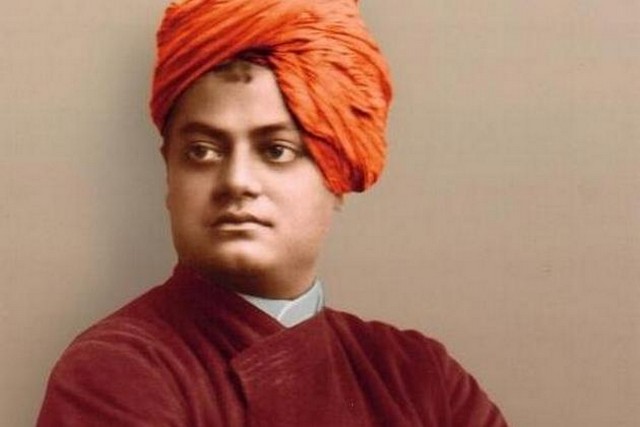
The Imperative of an international protection force for Palestinians

Palestine Update 515

Editorial comment
The Imperative of an international protection force for Palestinians
International law is “a body of rules established by custom or treaty and recognized by nations as binding in their relations with one another” – a major aim is preventing war or at least regulating its conduct. In response to the horrendous killing and abuses of civilians in WWII, the 4th Geneva Convention (July 1949) addressed humanitarian protections for civilians in war zones. Since 1949 three additional Protocols have been added to the Geneva Conventions, but the US and Israel are only parties to the third. Also, the Universal Declaration of Human Rights was adopted by the UN General Assembly as Resolution 217 in December 1948. In 1993, the United Nations Security Council concluded that the Geneva Conventions had passed into the body of customary international law, thus making them binding also on non-signatories to the Conventions during armed conflicts.

Israel has proven since 1948 that it is a country that is there to grab Palestinian land and wage or prompt war on any nation that it perceives as a threat. Peace does not belong in its lectionary. It has been a source of instability in the Middle East. Armed to its teeth, it is a major exporter of armaments, military hardware and, in more recent times, sophisticated spyware. This is why activists from the global community who seek justice in the region, notably for liberation from the colonial-racist clutches of Israel want to see measures that augment mere resolutions at the level of the United Nations.

Despite the Geneva Conventions and UN Security Council Resolutions, the Israeli government has the dubious record of patently ignoring international law in dealing with Palestinian people. Under military occupation and colonization of Palestinian territories, Palestinians experience egregious assaults on their lives every single day. Israel has converted the abnormal into the new normal for its political standards. Extra-judicial killings, collective punishment (curfews and home and infrastructure demolitions), night-time home invasions, arrests of children, torture and detention without trial are not happenstance. They are part of a deliberately constructed policy. Palestinians must also cope with irrational travel restrictions and checkpoints cut people off from their livelihoods, medical care, their friends and relatives. Gaza confronts a land, air and sea blockade. When women and children approach the border fence to exercise their legal right to return to their original homes they are shot and often killed by Israeli snipers. Settlements and settlers are built into Israel’s long-term occupation strategy. Settlements are actually a tactic to eliminate the possibility of a contiguous Palestinian state.

In context of the above stated facts, it is increasingly seen that the UN should now seek to create an international multinational force that will monitor Israel’s criminal and unlawful actions both as a deterrent and way of hastening a finish to the occupation. This is one concrete action around which civil society, peace and justice movements, human rights activists can rally around and lobby for.

Ranjan Solomon

______________________

West Bank Needs Armed UN Peacekeeping Force
There is clearly no interest in Israel for a negotiated peace with the Palestinians. In the absence of a desire for peace by the Israeli occupiers and a rejection of the globally accepted two-state solution, a period of chaos and the absence of any semblance of tranquility is bound to take place. Israeli Jewish settlers living illegally in the Palestinian territories are armed to the teeth and, as Israeli human rights organizations have documented, are supported by the Israeli army.

Palestinians have always claimed that settlements and settlers are part of Israel’s long-term occupation strategy. Settlements are built in strategic locations to cut off a contiguous Palestinian state and make the Israeli army’s work easier. Israel encourages its citizens to live in troubled areas. With the absence and inability of any serious Israeli effort to stem the illegal Jewish settlers’ violence and with the potential of a negotiated solution being vetoed by the new “three no’s” of Israeli Prime Minister Naftali Bennett – no talks with the Palestinians, no meeting with Palestinian Authority President Mahmoud Abbas and no to a two-state solution – the only remaining solution is an armed peacekeeping force. What is needed is a neutral armed force that will ensure that the Jewish settlers stop their violence; their burning and destroying of Palestinian farms; and their almost nightly raids on unarmed Palestinian homes. United Nations-sponsored blue helmets are needed now more than ever in the occupied territories. In addition to putting an end to the illegal Jewish violence and Palestinian resistance to the illegal settlers, what is needed now is a neutral force that can keep things quiet until there is a change in Israel that will bring about a government that understands the need for a negotiated end to their occupation.

The current Israeli government led by right-wing zealots might reject such an idea on ridiculous claims that all of historic Palestine is their God-given territory. That could be explained in some radical Jewish circles but doesn’t muster credibility anywhere else. No matter what the Israelis, or the Palestinians, for that matter, claim, the facts are clear: Palestinians are not going anywhere and the sooner they are protected by an armed neutral force, the better for all concerned and the faster we will be able to bring sanity and proportional justice to this conflict.
Read more

Israeli Forces attack protests against Settler Violence
Israeli forces attacked, several non-violent demonstrations in various cities across the occupied West Bank, shooting a teen with rubber-coated steel round and causing others to suffocate on tear gas. In the northern occupied West Bank, in Kufur Qaddoum village, east of Qalqilia, Israeli forces shot a 16-year-old in the chest with a rubber-coated steel bullet, causing a moderate injury. The condition of the minor was unknown at the time of this report.Also in the northern West Bank, soldiers opened fire with tear gas and rubber-coated steel rounds at Palestinian youths who gathered on the Nablus-Qalqilia street, east of Qalqilia, in northern West Bank. Activists organized the protest to express their rejection of the escalating settler violence particularly in Burqa village, northwest of Nablus in the northern West Bank.

In the central West Bank, at the entrance to the Al-Jalazoun refugee camp, north of Ramallah, hundreds of local youths confronted the army who attempted to suppress the rally in rejection of the escalating settler crimes. The military fired rubber-coated steel rounds, tear gas canisters, and sound bombs at the crowd. Meanwhile, in the village of Al-Mughayyir, northeast of Ramallah, Israeli soldiers fired tear gas and stun grenades at local youths who gathered to resist the military incursion, no injuries were reported. Dozens of illegal Israeli colonists stormed the northern entrance of Sinjil town, north of Ramallah under the full protection of the occupation army, blocking the road. In the northern occupied West Bank, in Kufur Qaddoum village, east of Qalqilia, Israeli forces shot a 16-year-old in the chest with a rubber-coated steel bullet, causing a moderate injury.

Also in the northern West Bank, soldiers opened fire with tear gas and rubber-coated steel rounds at Palestinian youths who gathered on the Nablus-Qalqilia street, east of Qalqilia, in northern West Bank. In the central West Bank, at the entrance to the Al-Jalazoun refugee camp, north of Ramallah, hundreds of local youths confronted the army who attempted to suppress the rally in rejection of the escalating settler crimes. The military fired rubber-coated steel rounds, tear gas canisters, and sound bombs at the crowd. In the village of Al-Mughayyir, Israeli soldiers fired tear gas and stun grenades at local youths who gathered to resist the military incursion. Additionally, the army suppressed protests in the Sahal al-Baqai’a area in the northern Jordan Valley, firing tear gas and stun grenades, no injuries were reported. Furthermore, dozens of illegal Israeli colonists stormed the northern entrance of Sinjil town, north of Ramallah under the full protection of the occupation army, blocking the road.
Read more

NGOs urge UN shield to Palestinians from Israeli Settlers’ attacks
In a statement, the network, which includes 145 organizations, demanded that the UN take urgent measures to provide international protection for Palestinians amid escalated settler attacks, especially in the Northern part of the occupied West Bank, presstv reported. The groups described the escalated settler violence as part of Israeli attempts to “forcibly deport” the Palestinians, noting that the attacks amount to “war crimes”. The attacks come as part of “an open and systematic war”, and “are not individual” or separate from Israel’s policy of ethnic cleansing of Palestinians in the occupied territories, the statement said. The Palestinian NGOs Network also urged the UN to pressure Israel to stop its practices against the Palestinians which, they said, amount to “war crimes”. It also called for taking all necessary steps to support Palestinians’ right to remain on their land and to stop all Israeli measures aimed to evacuate the territory of its indigenous people.

The statement also stressed the significance of activating the popular protection and security committees and supplying them with necessary needs to confront “extremism and racism”. The network also called for the formation of a broad international front to end the Israeli occupation and for the expansion of international campaigns of solidarity with the Palestinian people and their legitimate rights. It also called for prosecuting the occupying regime and holding it accountable for the atrocities it has committed against the Palestinian people. Israeli settlers routinely engage in acts of violence and vandalism against Palestinians in the occupied West Bank. Palestinians are outraged by the sharp rise in settler attacks on their villages, which are backed by the Israeli military.

Israeli rights group B’Tselem has documented hundreds of such settler attacks this year alone.Israeli authorities rarely prosecute the Israeli settler assaults on Palestinians and their property. Hence, the vast majority of the files are closed due to deliberate police failure to investigate properly. The Palestinian resistance movement Hamas warned that the Israeli military and settlers would pay the price for the increasing settler violence, after an Israeli settler ran over a 63-year-old woman near the town of Sinjil, Northeast of the occupied West Bank city of Ramallah.
A full report

Palestine Updates is a clearing house for historical and current information about happenings especially in the Palestinian territories, global campaigns, Israeli peace movement initiatives, and critiques of government policies in Israel and Palestine which hurt the people.

29 December 2021

Source: palestineupdates.com

Checkmate: Iran Is Spearheading a Geopolitical Sea Change in West Asia

By Matthew Ehret-Kump

Benjamin Franklin once famously wrote to his fellow colonials: “Either we hang together or we hang separately.”

Those words are just as true today as they were 270 years ago, for empires have always controlled by dividing their victims into regional tribal interests in order to be better conquered.

While techniques have adapted to modern times, the essential ingredients for the science of discord remain relatively unchanged: keep resources scarce, fear and ignorance high, and let a targeted population clash over diminishing returns of scarcity.

Amid this division, myopic ethnic, religious, and linguistic prejudices have fertile soil to grow to the benefit of an oligarchic elite.

Today’s Americans, sitting as they are on the precipice of a their own internal civil clashes, and economic collapse more broadly, have not heeded the advice of their own founding fathers well enough.

However, it is no small irony that Ben Franklin’s advice is being taken to heart in another part of the world far removed from the decaying republic.

The China-Russia-Iran alliance challenges rules-based disorder

Since Iran finalized its Comprehensive 25 Year Cooperation Plan with China on 27 March, a completely new geometry has arisen in Southwest Asia, which is evolving at breakneck speed.

An ancient civilization serving as the third foundational pillar supporting the Greater Eurasian Partnership, and having joined the Shanghai Cooperation Organization (SCO) on 17 September, Iran has finally emerged as a leading driver for stabilization and progress.

Alongside security agreements with Russia that have seen the two nations conducting Indian Ocean military drills in February 2021, Russia, Iran and China (RIC) have also announced that all three parties would hold joint naval drills in the Persian Gulf by the start of 2022.

Russian-Iran relations don’t end here, but a 20-year cooperation agreement – modelled on the Iran-China agreement – between the two powers is also in the final stages of negotiation.

Iranian foreign ministry spokesman Saeed Khatibzadeh stated on 11 December: “Like the 25-year cooperation roadmap we developed with China, we can do the same with major neighboring countries.”

Among the many impossibilities now becoming possible under this new system, the Iranian-led Persian Gulf-Black Sea International Transportation and Transit Corridor, which many thought was long dead, has in 2016 has come back to life with force.

This transformative corridor is an obvious synergistic component to the China-led east-west Belt and Road Initiative, and Russian-Indian led International North South Transportation Corridor, both of which are sweeping across the world island.

The Iran-Azerbaijan-Turkmenistan gas swap

At the 28 November Economic Cooperation Organization (ECO) summit in Ashgabat, the leaders of Azerbaijan, Iran and Turkmenistan overcame immense hurdles by finalizing an important gas swap deal that will involve Iran receiving two billion cubic meters of gas per year from Turkmenistan, which it will also send in equal proportions to Azerbaijan.

This agreement broke through the five-year block on gas relations between Turkmenistan and Iran, which had collapsed in 2016 due to complaints over unpaid oil from over a decade earlier. Additionally, the war which many commentators were warning might break out just a few months ago between Azerbaijan and Iran makes the agreement for renewed cooperation between the two nations that much more important.

Iranian president Raisi alluded to the foreign interests that were provoking fires during that heated period saying: “We must never allow others to interfere in our relations. We must resolve our own problems, work together to advance our relations and deepen mutually beneficial cooperation. Experience so far shows that when we discuss our issues ourselves, we manage to resolve many of them.”

The three nations also agreed to deepen integration and cooperation in transportation, trade, shipping, tourism and, most importantly, the development of the incredibly bountiful offshore oil and gas resources within the Caspian Sea.

While southern Iran holds the world’s second largest oil and natural gas reserves (behind Russia, who sits at #1), Turkmenistan is 4th on the list, while offshore deposits in the Caspian Sea represent some of the largest in the world.

As Pepe Escobar has observed in his recent contribution to The Cradle, the Chalous Gas fields in the Caspian not only represent the tenth largest reserves in the world with a $5.4 trillion value but, according to experts, this region alone could service 52 percent of Europe’s natural gas needs for 20 years. As of this writing, agreements have been signed, which will see this region developed by Russian, Chinese and Iranian interests.

The long overdue 300 km Trans Caspian Pipeline (TCP) crossing the Caspian has also come much closer to being realized alongside this harmonization of interests. With its completion in 2022, the TCP will connect to the Southern Gas Corridor and Turkey’s TANAP.

The final branch to Europe via the Nabucco gas pipeline will easily be completed (if political sabotage is avoided), providing Europe with abundant gas for generations. This will give both Iran and Russia a position of vast economic leverage with a mismanaged Europe now experiencing one of the worst man-made energy crises in history.

The INSTC as a game changer

The International North South Transportation Corridor (INSTC, involving Russia, Central Asia, Azerbaijan, Europe, Turkey, Iran, Afghanistan and India) is a 7,200 km multimodal transit system very much in synergy with China’s Belt and Road Initiative (BRI).

Since the ECO summit, a plethora of agreements have been signed to accelerate this megaproject as well. While many talking heads have tried hard to paint this 20-year-old project as a Russian competitive challenge to China’s BRI, it is increasingly obvious that the two projects are entirely harmonious.

On 28 November, a three-way Iran-Kazakhstan-Turkmenistan memorandum of understanding was signed to build a new railway which will add to the 917 km railway from Ozen (in Kazakhstan) to Gorgan (in Iran) via Turkmenistan that began in 2014 and which was funded primarily by the three powers.

Another agreement was signed on 10 December to create an Iran-Azerbaijan-Georgia transit route connecting the Persian Gulf with the Black Sea to be completed in March 2022.

Once built, this new route will allow goods to move from Iran’s southern ports to Europe and Central Europe directly over land.

Reporting on this development, the Caspian Report stated that “effectively combining the capacity of all three would allow Iran to connect the Oman Sea and the Gulf to the south, Afghanistan and Pakistan to the east, Central Asia to the northeast and the Caucasus to the northwest.”

On 12 November, Iranian, Turkish and UAE leaders signed a new cooperation agreement to start work on a new transportation corridor between the three nations with goods arriving from the UAE to Iran’s Port Shahid Rajaee, then transported over land to Turkey and thence to Europe, cutting eight days off conventional sea routes.

This is all part of the broader INSTC which just last summer saw the first cargo arriving to India via Iran from Finland.

Security cooperation

In addition to building new transport and energy grids between the historic rivals, the leaders of Turkey and Iran signed a strategic security agreement on 21 October with Iran’s Interior Minister Vahidi saying: “Iran-Turkey ties will speed up. The two states will together end regional instability and foil enemy plots. The two countries will not allow others to disrupt their relations.”

One month later, Vahidi’s sentiments were amplified by Prime Minister Erdogan who held a press conferencealongside Raisi saying: “The White House is training and arming all terrorist groups in the region, including ISIS and the PKK, and providing them with terrorist equipment and tools to create insecurity.”

The two leaders not only signed security cooperation agreements to fight foreign-sponsored terrorism, but also advanced plans for a new free trade zone with preferential tariffs for all regional nations.

While Saudi Arabia has been among the most stubborn of the Persian Gulf states to adapt to the new reality shaping Southwest Asia, the UAE has been among the quickest.

No longer do the promises of western backers appear as attractive as they did a decade ago, especially considering the speed of economic disintegration of the ‘Titanic’ speculative bubbles known as the Trans-Atlantic economy.

In this spirit of simply wanting to survive if nothing else, the UAE has not only suspended US military deals, unveiled regional transport hubs, and advanced frontier scientific investments in space and atomic power. Additionally, we have also seen Iran and the UAE agreeing to “open a new page in Iran-UAE relations.”

On 6 December, Iran’s President met with the UAE’s National Security in Tehran saying: “the security of the countries in the region is intertwined and Iran supports the Persian Gulf littoral states. There should be no obstacle in the relations between the two Muslim countries of Iran and the UAE, and these relations must not be influenced by outsiders.”

The UAE representative stated in return: “We are the children of this region and we have a common destiny, so the development of relations between our two countries is on our agenda … we hope that a new chapter of relations with our two countries will begin.”

A new paradigm emerges

While the west is busy sabre-rattling, imposing unilateral sanctions and virtue signaling their rules-based superiority, the world has moved ahead towards a new multipolar system premised on genuine cooperation.

Based on this positive momentum, it is only a matter of time before the Economic Cooperation Organization fully incorporates into the Russian-led Eurasian Economic Union (EAEU) which itself has already integrated deeply into China’s Belt and Road Initiative.

As it stands the long-awaited Iran-EAEU free trade zone is on the cusp of being finalized and this watershed will create many potentials for an expanded power bloc.

As Iranian MP Mohsen Zanganeh stated: “I think that if we focus our attention on Eastern countries, especially those in Central Asia, East Asia, as well as Eastern Europe, instead of focusing on the West, we can definitely benefit from their considerable economic potential… As you are aware, we are facing a lot of challenges in interacting with Western countries, because of the United States and Israel’s attitudes toward Iran. But the same challenges don’t exist in our ties with Eastern nations. That creates a great opportunity for our economy.”

With this new set of relationships in place, a chance at Syrian reconstruction has emerged with Iran and Iraq building the first railway connecting both nations in the form of the Shalamcheh-Basra railway.

If the 2018 Iraq-Iran Provisional Agreement is also revived, then this small railway can be extended 1,570 km through Iraq to Syria’s Latakia Port and Lebanon as a southern corridor for the New Silk Road. Syria’s return to the Arab League in the coming months makes this project much easier to achieve.

Despite the fact that old imperial habits die hard, there is obviously a new game in town, and anyone who wants to have a future should come to the recognition that they must learn to play by a new set of rules. These are rules which reject regime changes, divide-to-conquer tactics, or zero-sum thinking.

Much more in alignment with natural law, the Greater Eurasian Partnership is driven by win-win cooperation and building up the powers of productivity within a community of sovereign nation states.

Where one paradigm is unipolar, the other is multipolar; and where one is premised on extracting wealth from a fixed set of resources in order to get nations to fight for scraps, the other creates new wealth while harmonizing diverse interests into a greater whole. Which one would you rather live in?

*
Matthew Ehret is the Editor-in-Chief of the Canadian Patriot Review , and Senior Fellow at the American University in Moscow.

28 December 2021

Source: www.globalresearch.ca