Just International

They Defend the Climate While Preparing the End of the World

By Manlio Dinucci

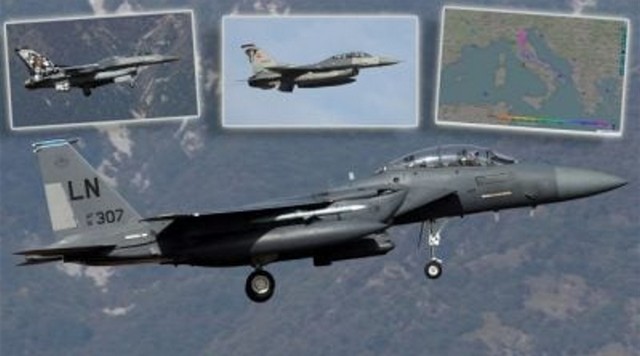
At the beginning of October, Italy hosted the preparatory meeting of the UN Conference on Climate Change, currently taking place in Glasgow. Two weeks later Italy hosted another international event that, unlike the first widely advertised, was passed over in silence by the government: the NATO exercise of nuclear warfare Steadfast Noon in the skies over northern and central Italy. For seven days, under US command, the air forces of 14 NATO countries participated, with dual-capacity nuclear and conventional fighter-bombers deployed at the bases of Aviano and Ghedi.

At Aviano the 31st U.S. Squadron with F-16C/D fighter-bombers and B61 nuclear bombs is permanently deployed. At Ghedi. the 6th Wing of the Italian Air Force with Tornado PA-200 fighter-bombers and B61 nuclear bombs. The Federation of American Scientists confirms in 2021 that “the Italian Air Force is assigned nuclear strike missions with U.S. bombs, maintained in Italy under the control of the U.S. Air Force, the use of which in war must be authorized by the President of the United States.”

The bases of Aviano and Ghedi have been restructured to accommodate the F-35A fighters armed with the new B61-12 nuclear bombs. Last October, the final test was carried out in Nevada with the release of inert B61-12 from two F-35A fighters. Soon the new nuclear bombs will arrive in Italy: in the base of Ghedi alone 30 Italian F-35A fighters can be deployed, ready to attack under US command with 60 B61-12 nuclear bombs.

A week after participating in the nuclear warfare exercise, Italy attended the UN Climate Change Conference, chaired by the UK in partnership with Italy. British Prime Minister Boris Johnson warned that “there is one minute to midnight and we need to act now” against global warming that is destroying the planet. In this way, he instrumentally uses the symbolic Doomsday Clock, which in reality indicates how many minutes away we are from nuclear midnight.

A few months ago, in March, Boris Johnson himself announced the upgrading of British nuclear attack submarines: the Astute (price 2.2 billion dollars each), armed with U.S. Tomahawk IV nuclear cruise missiles with a range of 1,500 km, and the Vanguard, armed with 16 U.S. Trident D5 ballistic missiles with a range of 12,000 km, equipped with over 120 nuclear warheads. The latter will soon be replaced by the even more powerful Dreadnought class submarines.

The British nuclear attack submarines, which cross deep along the coasts of Russia, now also sail along those of China, starting from Australia to which the U.S. and Britain will provide nuclear submarines. Great Britain, which is hosting the conference to save the planet from global warming, is thus contributing to the arms race that is leading the world towards nuclear catastrophe.

Against this backdrop the promotional video of the Conference is misleading: the Dinosaur, symbol of an extinct species, from the podium of the United Nations warns humans to save their species from global warming. In fact, scientific studies confirm that dinosaurs became extinct not because of warming, but because of the cooling of the Earth after the impact of a huge meteorite that, raising clouds of dust, darkened the Sun.

Exactly what would happen after a nuclear war: in addition to catastrophic destruction and radioactive fallout on the entire planet, it would cause, in urban and forest areas, huge fires that would put in the atmosphere a blanket of sooty smoke, darkening the Sun. This would determine a climatic cooling of the duration of years: the nuclear winter. The majority of plant and animal species would become extinct, with devastating effects on agriculture. The cold and malnutrition would reduce the ability to survive of the few survivors, leading the human species to extinction.

*

Note to readers: Please click the share buttons above or below. Follow us on Instagram, @crg_globalresearch. Forward this article to your email lists. Crosspost on your blog site, internet forums. etc.

This article was originally published on Il Manifesto. Translated from Italian.

Manlio Dinucci, award winning author, geopolitical analyst and geographer, Pisa, Italy. He is a Research Associate of the Centre for Research on Globalization.

3 November 2021

Source: www.globalresearch.ca

COP 26: Can a Singing, Dancing Rebellion Save the World?

By Medea Benjamin and Nicolas J. S. Davies

COP Twenty-six! That is how many times the UN has assembled world leaders to try to tackle the climate crisis. But the United States is producing more oil and natural gas than ever; the amount of greenhouse gases (GHG) in the atmosphere and global temperatures are both still rising; and we are already experiencing the extreme weather and climate chaos that scientists have warned us about for forty years, and which will only get worse and worse without serious climate action.

And yet, the planet has so far only warmed 1.2° Celsius (2.2° F) since pre-industrial times. We already have the technology we need to convert our energy systems to clean, renewable energy, and doing so would create millions of good jobs for people all over the world. So, in practical terms, the steps we must take are clear, achievable and urgent.

The greatest obstacle to action that we face is our dysfunctional, neoliberal political and economic system and its control by plutocratic and corporate interests, who are determined to keep profiting from fossil fuels even at the cost of destroying the Earth’s uniquely livable climate. The climate crisis has exposed this system’s structural inability to act in the real interests of humanity, even when our very future hangs in the balance.

So what is the answer? Can COP26 in Glasgow be different? What could make the difference between more slick political PR and decisive action? Counting on the same politicians and fossil fuel interests (yes, they are there, too) to do something different this time seems suicidal, but what is the alternative?

Since Obama’s Pied Piper leadership in Copenhagen and Paris produced a system in which individual countries set their own targets and decided how to meet them, most countries have made little progress toward the targets they set in Paris in 2015.

Now they have come to Glasgow with predetermined and inadequate pledges that, even if fulfilled, would still lead to a much hotter world by 2100. A succession of UN and civil society reports in the lead-up to COP26 have been sounding the alarm with what UN Secretary General Antonio Guterres has called a “thundering wake-up call” and a “code red for humanity.” In Guterres’ opening speech at COP26 on November 1st, he said that “we are digging our own graves” by failing to solve this crisis.

Yet governments are still focusing on long-term goals like reaching “Net Zero” by 2050, 2060 or even 2070, so far in the future that they can keep postponing the radical steps needed to limit warming to 1.5° Celsius. Even if they somehow stopped pumping greenhouse gases into the air, the amount of GHGs in the atmosphere by 2050 would keep heating up the planet for generations. The more we load up the atmosphere with GHGs, the longer their effect will last and the hotter the Earth will keep growing.

The United States has set a shorter-term target of reducing its emissions by 50% from their peak 2005 level by 2030. But its present policies would only lead to a 17%-25% reduction by then.

The Clean Energy Performance Program (CEPP), which was part of the Build Back Better Act, could make up a lot of that gap by paying electric utilities to increase reliance on renewables by 4% year over year and penalizing utilities that don’t. But on the eve of COP 26, Biden dropped the CEPP from the bill under pressure from Senators Manchin and Sinema and their fossil fuel puppet-masters.

Meanwhile, the U.S. military, the largest institutional emitter of GHGs on Earth, was exempted from any constraints whatsoever under the Paris Agreement. Peace activists in Glasgow are demanding that COP26 must fix this huge black hole in global climate policy by including the U.S. war machine’s GHG emissions, and those of other militaries, in national emissions reporting and reductions.

At the same time, every penny that governments around the world have spent to address the climate crisis amounts to a small fraction of what the United States alone has spent on its nation-destroying war machine during the same period.

China now officially emits more CO2 than the United States. But a large part of China’s emissions are driven by the rest of the world’s consumption of Chinese products, and its largest customer is the United States. An MIT study in 2014 estimated that exports account for 22% of China’s carbon emissions. On a per capita consumption basis, Americans still account for three times the GHG emissions of our Chinese neighbors and double the emissions of Europeans.

Wealthy countries have also fallen short on the commitment they made in Copenhagen in 2009 to help poorer countries tackle climate change by providing financial aid that would grow to $100 billion per year by 2020. They have provided increasing amounts, reaching $79 billion in 2019, but the failure to deliver the full amount that was promised has eroded trust between rich and poor countries. A committee headed by Canada and Germany at COP26 is charged with resolving the shortfall and restoring trust.

When the world’s political leaders are failing so badly that they are destroying the natural world and the livable climate that sustains human civilization, it is urgent for people everywhere to get much more active, vocal and creative.

The appropriate public response to governments that are ready to squander the lives of millions of people, whether by war or by ecological mass suicide, is rebellion and revolution – and non-violent forms of revolution have generally proven more effective and beneficial than violent ones.

People are rising up against this corrupt neoliberal political and economic system in countries all over the world, as its savage impacts affect their lives in different ways. But the climate crisis is a universal danger to all of humanity that requires a universal, global response.

One inspiring civil society group on the streets in Glasgow during COP 26 is Extinction Rebellion, which proclaims, “We accuse world leaders of failure, and with a daring vision of hope, we demand the impossible…We will sing and dance and lock arms against despair and remind the world there is so much worth rebelling for.”

Extinction Rebellion and other climate groups at COP26 are calling for Net Zero by 2025, not 2050, as the only way to meet the 1.5° goal agreed to in Paris.

Greenpeace is calling for an immediate global moratorium on new fossil fuel projects and a quick phase-out of coal-burning power plants. Even the new coalition government in Germany, which includes the Green Party and has more ambitious goals than other large wealthy countries, has only moved up the final deadline on Germany’s coal phaseout from 2038 to 2030.

The Indigenous Environmental Network is bringing indigenous people from the Global South to Glasgow to tell their stories at the conference. They are calling on the Northern industrialized countries to declare a climate emergency, to keep fossil fuels in the ground and end subsidies of fossil fuels globally.

Friends of the Earth (FOE) has published a new report titled Nature-Based Solutions: A Wolf in Sheep’s Clothing as a focus for its work at COP26. It exposes a new trend in corporate greenwashing involving industrial-scale tree plantations in poor countries, which corporations plan to claim as “offsets” for continued fossil fuel production.

The U.K. government that is hosting the conference in Glasgow has endorsed these schemes as part of the program at COP26. FOE is highlighting the effect of these massive land-grabs on local and indigenous communities and calls them “a dangerous deception and distraction from the real solutions to the climate crisis.” If this is what governments mean by “Net Zero,” it would just be one more step in the financialization of the Earth and all its resources, not a real solution.

Because it is hard for activists from around the world to get to Glasgow for COP26 during a pandemic, activist groups are simultaneously organizing around the world to put pressure on governments in their own countries. Hundreds of climate activists and indigenous people have been arrested in protests at the White House in Washington, and five young Sunrise Movement activists began a hunger strike there on October 19th.

U.S. climate groups also support the “Green New Deal” bill, H.Res. 332, that Representative Alexandria Ocasio-Cortez has introduced in Congress, which specifically calls for policies to keep global warming below 1.5° Celsius, and currently has 103 cosponsors. The bill sets ambitious targets for 2030, but only calls for Net Zero by 2050.

The environmental and climate groups converging on Glasgow agree that we need a real global program of energy conversion now, as a practical matter, not as the aspirational goal of an endlessly ineffective, hopelessly corrupt political process.

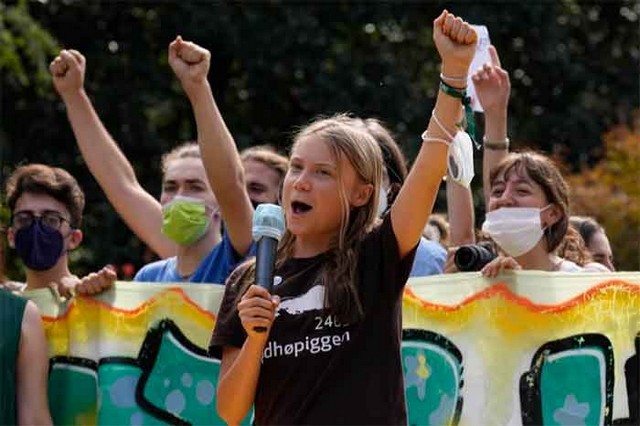
At COP25 in Madrid in 2019, Extinction Rebellion dumped a pile of horse manure outside the conference hall with the message, “The horse-shit stops here.” Of course that didn’t stop it, but it made the point that empty talk must rapidly be eclipsed by real action. Greta Thunberg has hit the nail on the head, slamming world leaders for covering up their failures with “blah, blah, blah,” instead of taking real action.

Like Greta’s School Strike for the Climate, the climate movement in the streets of Glasgow is informed by the recognition that the science is clear and the solutions to the climate crisis are readily available. It is only political will that is lacking. This must be supplied by ordinary people, from all walks of life, through creative, dramatic action and mass mobilization, to demand the political and economic transformation we so desperately need.

The usually mild-mannered UN Secretary General Guterres made it clear that “street heat” will be key to saving humanity. “The climate action army – led by young people – is unstoppable,” he told world leaders in Glasgow. “They are larger. They are louder. And, I assure you, they are not going away.”

Medea Benjamin is cofounder of CODEPINK for Peace, and author of several books, including Inside Iran: The Real History and Politics of the Islamic Republic of Iran

Nicolas J. S. Davies is an independent journalist, a researcher with CODEPINK and the author of Blood On Our Hands: the American Invasion and Destruction of Iraq.

3 November 2021

Source: countercurrents.org

Why Readers Should Support Countercurrents

Today the mass media are controlled by powerholders and corporate oligarchs. And therefore to obtain a true picture of what is going on in the world, readers must turn to the alternative media. Citizens need the knowledge they obtain from the alternative media because, without it, a true democracy cannot function. Among the alternative media, Countercurrents is one of the best and most famous.

Countercurrents fearlessly publishes reports on the true state of the world, on topics ranging from the climate crisis to issues involving the need for social reform and peace between nations, and it does so every single day. However, it will be impossible for Editor Binu Mathew and the Countercurrents collective to continue this heroic work without financial support from readers.

Therefore I urge readers to contribute generously to Countercurrents’ fundraising appeal. They should do so for the sake of democratic government, for the sake of avoiding catastrophic climate change, for the sake of social and political reform, and for the sake of the future.

We give our children loving care, but it makes no sense to do so if we fail to make every effort to create a future in which they and their descendents can survive. Supporting the alternative media, and in particular, Countercurrents, is part of the effort that we need to make to save the future.

You can support Countercurrents at this link

John Scales Avery is a theoretical chemist at the University of Copenhagen. He is noted for his books and research publications in quantum chemistry, thermodynamics, evolution, and history of science. His 2003 book Information Theory and Evolution set forth the view that the phenomenon of life, including its origin, evolution, as well as human cultural evolution, has its background situated in the fields of thermodynamics, statistical mechanics, and information theory. Since 1990 he has been the Chairman of the Danish National Group of Pugwash Conferences on Science and World Affairs. Between 2004 and 2015 he also served as Chairman of the Danish Peace Academy. He founded the Journal of Bioenergetics and Biomembranes, and was for many years its Managing Editor. He also served as Technical Advisor to the World Health Organization, Regional Office for Europe (19881997).

Why Julian Assange’s Inhumane Prosecution Imperils Justice for Us All

By John Pilger

When I first saw Julian Assange in Belmarsh prison, in 2019, shortly after he had been dragged from his refuge in the Ecuadorean embassy, he said, “I think I am losing my mind.”

He was gaunt and emaciated, his eyes hollow and the thinness of his arms was emphasized by a yellow identifying cloth tied around his left arm, an evocative symbol of institutional control.

For all but the two hours of my visit, he was confined to a solitary cell in a wing known as “health care,” an Orwellian name. In the cell next to him a deeply disturbed man screamed through the night. Another occupant suffered from terminal cancer. Another was seriously disabled.

“One day we were allowed to play Monopoly,” he said, “as therapy. That was our health care!”

“This is One Flew Over the Cuckoo’s Nest,” I said.

“Yes, only more insane.”

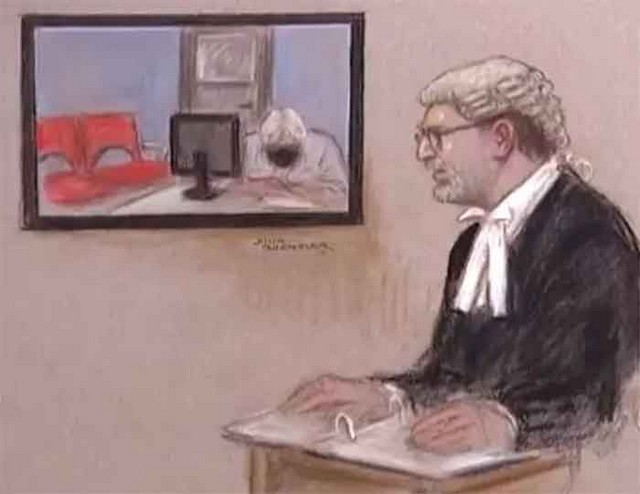
Julian’s black sense of humor has often rescued him, but no more. The insidious torture he has suffered in Belmarsh has had devastating effects. Read the reports of Nils Melzer, the UN Special Rapporteur on Torture, and the clinical opinions of Michael Kopelman, emeritus professor of neuropsychiatry at King’s College London and Dr. Quinton Deeley, and reserve a contempt for America’s hired gun in court, James Lewis QC, who dismissed this as “malingering.”

I was especially moved by the expert words of Dr. Kate Humphrey, a clinical neuropsychologist at Imperial College, London. She told the Old Bailey last year that Julian’s intellect had gone from “in the superior, or more likely very superior, range” to “significantly below” this optimal level, to the point where he was struggling to absorb information and “perform in the low to average range.”

At yet another court hearing in this shameful Kafkaesque drama, I watched him struggle to remember his name when asked by the judge to state it.

For most of his first year in Belmarsh, he was locked up. Denied proper exercise, he strode the length of his small cell, back and forth, back and forth, for “my own half-marathon,” he told me. This reeked of despair. A razor blade was found in his cell. He wrote “farewell letters.” He phoned the Samaritans repeatedly.

At first he was denied his reading glasses, left behind in the brutality of his kidnapping from the embassy. When the glasses finally arrived at the prison, they were not delivered to him for days. His solicitor, Gareth Peirce, wrote letter after letter to the prison governor protesting the withholding of legal documents, access to the prison library, the use of a basic laptop with which to prepare his case. The prison would take weeks, even months, to answer. (The governor, Rob Davis, has been awarded an Order of the British Empire.)

Books sent to him by a friend, the journalist Charles Glass, himself a survivor of hostage-taking in Beirut, were returned. Julian could not call his American lawyers. From the start, he has been constantly medicated. Once, when I asked him what they were giving him, he couldn’t say.

At the late October High Court hearing to decide finally whether or not Julian would be extradited to America, he appeared only briefly by video link on the first day. He looked unwell and unsettled. The court was told he had been “excused” because of his “medication.” But Julian had asked to attend the hearing and was refused, said his partner Stella Moris. Attendance in a court sitting in judgment on you is surely a right.

This intensely proud man also demands the right to appear strong and coherent in public, as he did at the Old Bailey last year. Then, he consulted constantly with his lawyers through the slit in his glass cage. He took copious notes. He stood and protested with eloquent anger at lies and abuses of process.

The damage done to him in his decade of incarceration and uncertainty, including more than two years in Belmarsh (whose brutal regime is celebrated in the latest Bond film) is beyond doubt.

But so, too, is his courage beyond doubt, and a quality of resistance and resilience that is heroism. It is this that may see him through the present Kafkaesque nightmare—if he is spared an American hellhole.

I have known Julian since he first came to Britain in 2009. In our first interview, he described the moral imperative behind WikiLeaks: that our right to the transparency of governments and the powerful was a basic democratic right. I have watched him cling to this principle when at times it has made his life even more precarious.

Almost none of this remarkable side to the man’s character has been reported in the so-called “free press” whose own future, it is said, is in jeopardy if Julian is extradited.

Of course, but there has never been a “free press.” There have been extraordinary journalists who have occupied positions in the “mainstream”—spaces that have now closed, forcing independent journalism on to the internet.

There, it has become a “fifth estate,” a samizdat of dedicated, often unpaid work by those who were honorable exceptions in a media now reduced to an assembly line of platitudes. Words like “democracy,” “reform,” “human rights” are stripped of their dictionary meaning and censorship is by omission or exclusion.

The recent fateful hearing at the High Court was “disappeared” in the “free press.” Most people would not know that a court in the heart of London had sat in judgment on their right to know: their right to question and dissent.

Many Americans, if they know anything about the Assange case, believe a fantasy that Julian is a Russian agent who caused Hillary Clinton to lose the presidential election in 2016 to Donald Trump. This is strikingly similar to the lie that Saddam Hussein had weapons of mass destruction, which justified the invasion of Iraq and the deaths of a million or more people.

They are unlikely to know that the main prosecution witness underpinning one of the concocted charges against Julian has recently admitted he lied and fabricated his “evidence.”

Neither will they have heard or read about the revelation that the CIA, under its former director, the Hermann Goering lookalike Mike Pompeo, had planned to assassinate Julian. And that was hardly new. Since I have known Julian, he has been under threat of harm and worse.

On his first night in the Ecuadorean embassy in 2012, dark figures swarmed over the front of the embassy and banged on the windows, trying to get in. In the U.S., public figures—including Hillary Clinton, fresh from her destruction of Libya—have long called for Julian’s assassination. The current President Biden damned him as a “hi-tech terrorist.”

The former prime minister of Australia, Julia Gillard, was so eager to please what she called “our best mates” in Washington that she demanded Julian’s passport be taken from him—until it was pointed out to her that this would be against the law. The current prime minister, Scott Morrison, a PR man, when asked about Assange, said, “He should face the music.”

It has been open season on the WikiLeaks founder for more than a decade. In 2011, the Guardian exploited Julian’s work as if it was its own, collected journalism prizes and Hollywood deals, then turned on its source.

Years of vituperative assaults on the man who refused to join their club followed. He was accused of failing to redact documents of the names of those considered at risk. In a Guardian book by David Leigh and Luke Harding, Assange is quoted as saying during a dinner in a London restaurant that he didn’t care if informants named in the leaks were harmed.

Neither Harding nor Leigh was at the dinner. John Goetz, an investigations reporter with Der Spiegel, actually was at the dinner and testified that Assange said nothing of the kind.

The great whistleblower Daniel Ellsberg told the Old Bailey last year that Assange had personally redacted 15,000 files. The New Zealand investigative journalist Nicky Hager, who worked with Assange on the Afghanistan and Iraq war leaks, described how Assange took “extraordinary precautions in redacting names of informants.”

In 2013, I asked the filmmaker Mark Davis about this. A respected broadcaster for SBS Australia, Davis was an eyewitness, accompanying Assange during the preparation of the leaked files for publication in the Guardian and the New York Times. He told me, “Assange was the only one who worked day and night extracting 10,000 names of people who could be targeted by the revelations in the logs.”

Lecturing a group of City University students, David Leigh mocked the very idea that “Julian Assange will end up in an orange jumpsuit.” His fears were an exaggeration, he sneered. Edward Snowden later revealed that Assange was on a “manhunt timeline.”

Luke Harding, who co-authored with Leigh the Guardian book that disclosed the password to a trove of diplomatic cables that Julian had entrusted to the paper, was outside the Ecuadorean embassy on the evening Julian sought asylum. Standing with a line of police, he gloated on his blog, “Scotland Yard may well have the last laugh.”

The campaign was relentless. Guardian columnists scraped the depths. “He really is the most massive turd,” wrote Suzanne Moore of a man she had never met.

The editor who presided over this, Alan Rusbridger, has lately joined the chorus that “defending Assange protects the free press.” Having published the initial WikiLeaks revelations, Rusbridger must wonder if the Guardian’s subsequent excommunication of Assange will be enough to protect his own skin from the wrath of Washington.

The High Court judges are likely to announce their decision on the U.S. appeal in the new year. What they decide will determine whether or not the British judiciary has trashed the last vestiges of its vaunted reputation; in the land of Magna Carta this disgraceful case ought to have been hurled out of court long ago.

The missing imperative is not the impact on a collusive “free press.” It is justice for a man persecuted and willfully denied it.

Julian Assange is a truth-teller who has committed no crime but revealed government crimes and lies on a vast scale and so performed one of the great public services of my lifetime. Do we need to be reminded that justice for one is justice for all?

John Pilger is an award-winning journalist, filmmaker, and author.

2 November 2021

Source: countercurrents.org

Blinken: US Policy Is to ‘Oppose the Reconstruction of Syria’

By Dave DeCamp

The US Has Ruled Out Normalizing with Syria

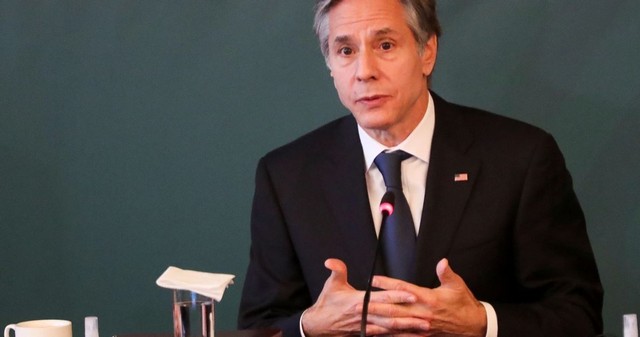
13 Oct 2021 – Secretary of State Antony Blinken today said the US position on Syria is to “oppose” the country’s reconstruction and not support any attempts at normalization with the government of Bashar al-Assad.

At a joint press conference with his Israeli and UAE counterparts, Blinken said the US has not “changed our position to oppose the reconstruction of Syria until there is irreversible progress toward a political solution.”

More and more Arab countries are accepting that Assad isn’t going anywhere and have taken steps to normalize, including Jordan, which opened its border with Syria in September. Blinken said the US does not intend to “express any support for efforts to normalize relations or rehabilitate Mr. Assad” or lift a “single sanction” unless there is regime change in Damascus.

US sanctions under the Caesar Act against Syria specifically target the energy and construction sectors to impede the country’s ability to rebuild after 10 brutal years of war. The sanctions can target any person regardless of nationality, discouraging Syria’s neighbors from helping in the reconstruction.

On top of the sanctions, the US also maintains an occupation force of about 900 soldiers in eastern Syria and supports the Kurdish-led Syrian Democratic Forces in the region. This area of Syria is where most of the country’s oil fields are, so the US presence keeps vital resource out of the hands of Damascus.

Washington’s economic warfare against Syria is exacerbating the country’s food shortages. According to the UN, as of February, the number of Syrians that are close to starvation is at 12.4 million, or 60 percent of the population.

Dave DeCamp is the news editor of Antiwar.com.

1 November 2021

Source: www.transcend.org

By Calling the Fight for Palestinian Rights ‘Terror’, Israel Turns Reality on Its Head

By Jonathan Cook

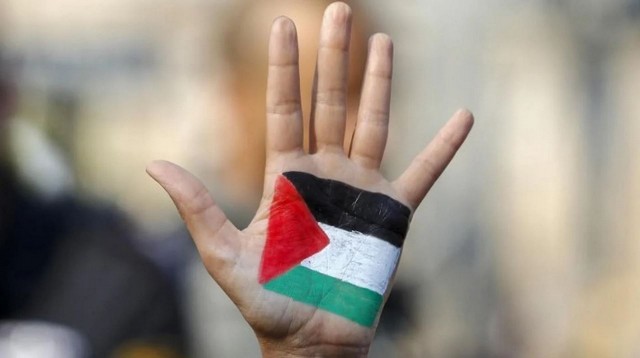
25 Oct 2021 – The aim is to embarrass Europe into defunding Palestinian human rights groups who have been effective at documenting Israeli war crimes, and therefore prevent further scrutiny.

Did someone forget to tell Benny Gantz that Donald Trump is no longer the United States president?

It certainly looked that way last Friday as Israel’s defence minister – who has been presented as a force for moderation in an Israeli government led by the settler right – declared six leading Palestinian human rights groups to be “terrorist organisations”.

The move effectively outlaws the most prominent organisations in the Palestinian human rights community.

Despite the eternal bonds so often lauded by Israeli and US officials, President Joe Biden’s administration appeared to be caught off-guard by the announcement, despite claims from Israel that Washington had been forewarned.

Israeli officials were reported on Sunday to be preparing to fly to the US to share intelligence justifying the new “terror list”.

The targeted groups – most funded by European states – include those assisting farmers and promoting women’s rights and democratic values, as well as others documenting Israeli violations of the rights of prisoners and children, and exposing war crimes.

Israel offered no evidence that any of the Palestinian lawyers, field researchers, community organisers, and press officers that staff these organisations are carrying weapons or making bombs.

Shawan Jabareen, director of al-Haq, one of the organisations listed, noted the obvious paradox: “Gantz says we are a terror organisation, when he himself is a war criminal”.

Al-Haq has been at the forefront of efforts by the Palestinian human rights community to supply evidence to the International Criminal Court (ICC) at The Hague that Israeli military commanders and politicians have been responsible for war crimes against Palestinians.

Gantz, for example, was head of the Israeli military back in 2014 when it laid waste to parts of Gaza, killing at least 1,450 civilians, including some 550 children. He later boasted that he had sent Gaza “back to the Stone Age”.

Murky narrative

So how exactly does Israel think most of the Palestinian human rights community qualifies as “terrorists”?

The indications so far are that Israel plans to construct a murky narrative for western capitals based on supposedly secret evidence tying the organisations financially to the Popular Front for the Liberation of Palestine (PFLP).

It has spoken vaguely of the human rights groups being “controlled by senior [PFLP] leaders” and acting as a “central source” of money for the PFLP by redirecting “large sums of money from European countries and international organisations”.

There is a twofold advantage for Israel in presenting its claim this way.

The first is that almost certainly the intelligence – given its classified nature – will be all but impossible for the organisations to refute. The US and Europeans will largely have to take Israel’s word for it.

We have been here many times before. Israel makes extravagant claims about links to terror groups no one is in a position to check. If an investigation does eventually take place, by the time the truth emerges everyone has moved on and the false impression is rarely corrected.

This is what happened when Israel bombed a tower block in Gaza back in May that had been serving as a base for many media organisations. Israel claimed it also housed Palestinian militants, though it never produced any evidence to support such an improbable claim.

It was also Israel’s approach after soldiers shot dead Ahmad Erekat in his car in June 2020 at a West Bank checkpoint as he was doing errands for his sister’s wedding. Israel said it was a terrorist car-ramming. A reconstruction by experts, however, indicated that Erekat’s brakes had malfunctioned.

The case of Mohammed el-Halabi is even more pertinent. A charity worker in Gaza, he has spent five years in an Israeli prison without trial, accused of diverting huge sums of international aid money to Hamas. Israel’s claims against Halabi have proved so obviously unsupportable that even the western media has started to doubt them.

Distinction blurred

Secondly, Israel will hope that the central thrust of its allegations will be treated uncritically: that any connection by anyone in these groups to the PFLP can be cited as definitive proof of the organisation’s ties to terrorism. It is doubtless true that some staff in these human rights groups have an ideological affiliation with the PFLP – and for good reason.

Most Palestinian political leaders have either been co-opted by Israel, as with Fatah, which is invested in a “sacred” security cooperation, or they have prioritised a struggle that, through its Islamist character, fails to represent all sections of the Palestinian population, as with Hamas and Islamic Jihad.

The only significant political alternative is provided by the PFLP. Its vision is of a secular, single democratic state offering all inhabitants of the region, Jews and Palestinians, equal rights. That platform is growing politically more powerful, for Palestinians and solidarity activists, as Israel makes it even clearer that it has no interest in ever allowing partition of the land and the establishment of a Palestinian state.

But, as with most national liberation movements, there have been historic divisions within the PFLP about how best to achieve its goal of decolonisation and a single democratic state.

As in Fatah and Hamas, some believe liberation will require armed resistance, which is allowed under international law against a belligerent occupier like Israel, while others are committed to political struggle.

Israel, of course, is keen to blur these distinctions and avoid any examination of the PFLP’s central political aspiration: a state based on equal rights rather than absolute rule by one ethnic group exported by Israel into the Palestinian territories through military occupation.

Instead, Israel has issued a blanket proscription on the PFLP, hounding all its prominent members. That has included Khalida Jarrar, a PFLP legislator, who was recently released by Israel after two years’ imprisonment. Jarrar worked on Palestine’s application to the ICC. According to Human Rights Watch (HRW), Israel “never claimed that she had any personal involvement in armed activities”.

Apartheid state

There should be no doubt that these six Palestinian human rights organisations have prioritised organised, communal resistance to Israel’s occupation rather than armed struggle.

Some, like the Union of Agricultural Work Committees and the Union of Palestinian Women’s Committees, are there to internally strengthen Palestinian society. They hope to make Palestinian communities better able to withstand Israel’s relentless efforts to drive Palestinians off their land to be replaced by illegal Jewish settlements – a process Israel ominously calls “Judaisation”.

These agricultural and work committees encourage a long-standing Palestinian principle known in Arabic as sumud, or steadfastness. But given Israel’s desire to ethnically cleanse Palestinians and destroy any hope of a future Palestinian state, steadfastness is easily equated in the Israeli imagination with terrorism.

The other groups on the list, such as al-Haq, Addameer, and Defence for Children International, have been highly effective at documenting Israel’s war crimes against Palestinians, from killing civilians and abusing Palestinian children and prisoners to forcible transfer policies and settlement building.

The data collected by Palestinian groups is shared with international and Israeli human rights organisations such as HRW and B’Tselem, both of which recently issued reports declaring Israel an apartheid state.

Israel has been targeting these groups too.

Omar Shakir, the regional director of HRW, was expelled by Israel two years ago. Last year, Israel refused to renew work visas for United Nations human rights officials after they published an investigation into the collusion of international firms with illegal West Bank settlements.

And B’Tselem, Israel’s foremost occupation watchdog, and Breaking the Silence, a group of whistleblowing former Israeli soldiers, are denied the right to speak in Israeli schools and are regularly vilified by Israeli politicians and the media. This assault by Israel on the entire human rights community – at home and abroad – is obviously explained.

These organisations have been gradually making an unassailable case: both for Israeli leaders to be prosecuted at the ICC for war crimes, and for boycotts and sanctions to be imposed on Israel of the kind that was used against apartheid South Africa.

That work is polarising Jewish communities abroad, traditionally a reliable support base for Israel. And it is making an overpowering case for Israel to be shunned, exposing the yawning gulf between the expectations of western publics and the inaction of their leaders.

For Israel, all this is truly terrifying – and therefore those responsible for it must be deemed terrorists.

Ending EU funding

Gantz’s suggestion that Israel has new information tying these Palestinian human rights groups to terror is belied by the fact that Israel has been abusing them for many years.

Staff have been arrested and jailed or denied the right to travel abroad. Jerusalem residency permits for their workers have been revoked. And the army has raided their offices, seizing computers and documents. Those abuses have intensified as these organisations have found more purchase at international forums for their research into Israeli war crimes and apartheid practices.

Israel will now be able to exploit its new “terror list” to justify intensifying the crackdown. It will be even easier to find pretexts for harassing and jailing staff.

But there are other advantages for Israel. It will make it even harder for international and Israeli partners to collaborate with Palestinian groups on work exposing the crimes of Israeli occupation.

And undoubtedly Israel and its advocates abroad will use the terror designation to further vilify these groups and discredit their findings.

But perhaps the biggest prize for Israel will be using this new “terror list” to try to bully European states and the European Union into ending their funding for the Palestinian human rights community.

Labelling Palestinian human rights activists as “terrorists” will serve the same goal as labelling western activists seeking to end Israel’s oppression of Palestinians as “antisemites”, or labelling Jews acting in solidarity with Palestinians as “self-hating” and “traitors”.

Israel will bundle all this supposed “hate” into its existing narrative that it is facing a campaign from all sides to “demonise” the only Jewish state in the world.

The reality is that Israeli leaders are conflating their own terror at being held to account for their crimes with an imagined “terrorism” being waged by lawyers and researchers trying to show the reality of occupation.

Will anyone fall for it? The record suggests western governments just might.

Jonathan Cook is an award-winning British journalist based in Nazareth, Israel, since 2001.

1 November 2021

Source: www.transcend.org

The World According to Vladimir Putin

By Pepe Escobar

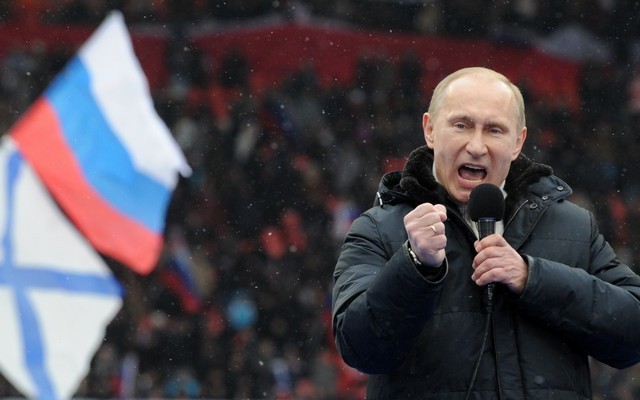
Russian president, in Sochi, lays down the law in favor of conservatism – says the woke West is in decline.

23 Oct 2021 – The plenary session is the traditional highlight of the annual, must-follow Valdai Club discussions – one of Eurasia’s premier intellectual gatherings.Vladimir Putin is a frequent keynote speaker. In Sochi this year, as I related in a previous column, the overarching theme was “global shake-up in the 21st century: the individual, values and the state.”

Putin addressed it head on, in what can already be considered one of the most important geopolitical speeches in recent memory (a so-far incomplete transcript can be found here) – certainly his strongest moment in the limelight. That was followed by a comprehensive Q&A session (starting at 4:39:00).

Predictably, assorted Atlanticists, neocons and liberal interventionists will be apoplectic. That’s irrelevant. For impartial observers, especially across the Global South, what matters is to pay very close attention to how Putin shared his worldview – including some very candid moments.

Right at the start, he evoked the two Chinese characters that depict “crisis” (as in “danger”) and “opportunity,” melding them with a Russian saying: “Fight difficulties with your mind. Fight dangers with your experience.”

This elegant, oblique reference to the Russia-China strategic partnership led to a concise appraisal of the current chessboard:

The re-alignment of the balance of power presupposes a redistribution of shares in favor of rising and developing countries that until now felt left out. To put it bluntly, the Western domination of international affairs, which began several centuries ago and, for a short period, was almost absolute in the late 20th century, is giving way to a much more diverse system.

That opened the way to another oblique characterization of hybrid warfare as the new modus operandi:

Previously, a war lost by one side meant victory for the other side, which took responsibility for what was happening. The defeat of the United States in the Vietnam War, for example, did not make Vietnam a “black hole.” On the contrary, a successfully developing state arose there, which, admittedly, relied on the support of a strong ally. Things are different now: No matter who takes the upper hand, the war does not stop, but just changes form. As a rule, the hypothetical winner is reluctant or unable to ensure peaceful post-war recovery, and only worsens the chaos and the vacuum posing a danger to the world.

A disciple of Berdyaev

In several instances, especially during the Q&A, Putin confirmed he’s a huge admirer of Nikolai Berdyaev. It’s impossible to understand Putin without understanding Berdyaev (1874-1948), who was a philosopher and theologian – essentially, a philosopher of Christianity.

In Berdyaev’s philosophy of history, the meaning of life is defined in terms of the spirit, compared with secular modernity’s emphasis on economics and materialism. No wonder Putin was never a Marxist.

For Berdyaev, history is a time-memory method through which man works toward his destiny. It’s the relationship between the divine and the human that shapes history. He places enormous importance on the spiritual power of human freedom.

Putin made several references to freedom, to family – in his case, of modest means – and to the importance of education; he heartily praised his apprenticeship at Leningrad State University. In parallel, he absolutely destroyed wokeism, transgenderism and cancel culture promoted “under the banner of progress.”

This is only one among a series of key passages:

We are surprised by the processes taking place in countries that used to see themselves as pioneers of progress. The social and cultural upheavals taking place in the United States and Western Europe are, of course, none of our business; we don’t interfere with them. Someone in the Western countries is convinced that the aggressive erasure of whole pages of their own history – the “reverse discrimination” of the majority in favor of minorities, or the demand to abandon the usual understanding of such basic things as mother, father, family or even the difference between the sexes – that these are, in their opinion, milestones of the movement toward social renewal.

So a great deal of his 40 minute-long speech, as well as his answers, codified some markers of what he previously defined as “healthy conservatism”:

Now that the world is experiencing a structural collapse, the importance of sensible conservatism as a basis for policy has increased many times over, precisely because the risks and dangers are multiplying and the reality around us is fragile.

Switching back to the geopolitical arena, Putin was adamant that “we are friends with China. But not against anyone.”

Geoeconomically, he once again took time to engage in a masterful, comprehensive – even passionate – explanation of how the natural gas market works, coupled with the European Commission’s self-defeating bet on the spot market, and why Nord Stream 2 is a game-changer.

Afghanistan

During the Q&A, scholar Zhou Bo from Tsinghua University addressed one of the key, current geopolitical challenges. Referring to the Shanghai Cooperation Organization, he pointed out that, “if Afghanistan has a problem, the SCO has a problem. So how can the SCO, led by China and Russia, help Afghanistan?”

Putin stressed four points in his answer:

  • The economy must be restored;
  • The Taliban must eradicate drug trafficking;
  • The main responsibility should be assumed “by those who had been there for 20 years” – echoing the joint statement after the meeting between the extended troika and the Taliban in Moscow on Wednesday; and
  • Afghan state funds should be unblocked.

He also mentioned, indirectly, that the large Russian military base in Tajikistan is not a mere decorative prop.

Putin went back to the subject of Afghanistan during the Q&A, once again stressing that NATO members should not “absolve themselves from responsibility.”

He reasoned that the Taliban “are trying to fight extreme radicals.” On the “need to start with the ethnic component,” he described Tajiks as accounting for 47% of the overall Afghan population – perhaps an over-estimation but the message was on the imperative of an inclusive government.

He also struck a balance: As much as “we are sharing with them [the Taliban] a view from the outside,” he made the point that Russia is “in contact with all political forces” in Afghanistan – in the sense that there are contacts with former government officials like Hamid Karzai and Abdullah Abdullah and also Northern Alliance members, now in the opposition, who are self-exiled in Tajikistan.

Those pesky Russians

Now compare all of the above with the current NATO circus in Brussels, complete with a new “master plan to deter the growing Russian threat.”

No one ever lost money underestimating NATO’s capacity to reach the depths of inconsequential stupidity. Moscow does not even bother to talk to these clowns anymore: as Foreign Minister Sergey Lavrov has pointed out, “Russia will no longer pretend that some changes in relations with NATO are possible in the near future.”

Moscow from now on only talks to the masters – in Washington. After all, the direct line between the Chief of General Staff, General Gerasimov, and NATO’s Supreme Allied Commander, General Todd Wolters, remains active. Messenger boys such as Stoltenberg and the massive NATO bureaucracy in Brussels are deemed irrelevant.

This happens, in Lavrov’s assessment, right after “all our friends in Central Asia” have been “telling us that they are against … approaches either from the United States or from any other NATO member state” promoting the stationing of any imperial “counter-terrorist” apparatus in any of the “stans” of Central Asia.

And still the Pentagon continues to provoke Moscow. Wokeism-lobbyist-cum-Secretary of Defense Lloyd “Raytheon” Austin, who oversaw the American Great Escape from Afghanistan, is now pontificating that Ukraine should de facto join NATO.

That should be the last stake impaling the “brain-dead” (copyright Emmanuel Macron) zombie, as it meets its fate raving about simultaneous Russian attacks on the Baltic and Black Seas with nuclear weapons.

Pepe Escobar Pepe Escobar, born in Brazil, is a correspondent and editor-at-large at Asia Times and columnist for Consortium News and Strategic Culture in Moscow.

1 November 2021

Source: www.transcend.org
Snowden Calls Assange ‘Political Criminal’ Ahead of Extradition Hearing, Where the Pressure Might Now Be on Biden’s Legal Team

By Damian Wilson

25 Oct 2021 – Whistleblower Edward Snowden went on the attack against the US and UK and he appealed for the freedom of his pal, WikiLeaks’ Julian Assange, who faces the US’ attempt to overturn a UK court decision to deny his extradition.

Assange has a big week coming up. He should learn this week just how far the US government is prepared to go in its bid to extradite him so they can punish him for revealing secrets they’d rather have kept private.

And while the future is uncertain for the lanky Australian activist still banged up after two years in Belmarsh Prison, the public groundswell is building and might just be enough to make a British judge think twice about sending a man who has devoted his life to uncovering the truth, to almost certain death in a US supermax prison.

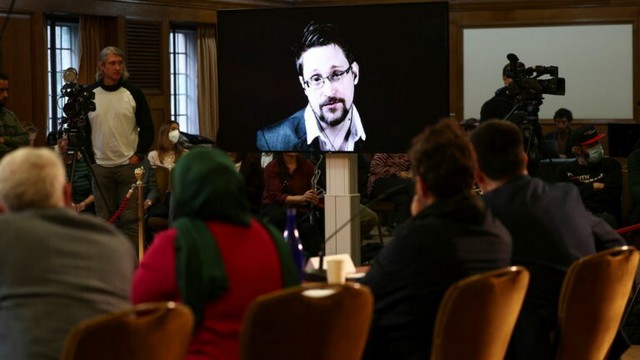
Helping raise awareness in the lead-up to that appeal is former US National Security Agency contractor-turned whistleblower Edward Snowden, who launched a strident defence of Assange on Friday at an event in London where speaker after speaker made the case for his freedom.

Snowden, something of a hero in whistleblower circles, fled to Hong Kong in 2013 with a massive trove of classified materials, among which it was revealed that the US government was illegally spying on Americans. WikiLeaks duly published the damning documents.

Speaking in exile from Moscow to the audience of the Belmarsh Tribunal, Snowden said of Assange’s case: “What were are witnessing is a murder that passes without comment.” He said the charges against the Australian had been reduced to “an allegation of journalism in the first degree.”

“I want to say that it is difficult for me to comprehend the spectacle of the press of a nation in the ‘developed’ world aiding and abetting, with full knowledge, a crime not only against this man but against our public interest,” Snowden said. “However, at this moment, we all see this, we all feel it, it’s no less familiar than the shoes on my feet.”

According to Snowden, Assange “has been charged as a political criminal – something that I understand quite well – but he has been charged as the purest sort of political criminal for having committed the transgression of choosing the wrong side.”

“The charges are absolutely an unadorned legal fiction,” he said.

“We are told to believe that the state has these powers over what can be said and what can’t be said, but what happens if we permit that? Where does that lead? What are we? Can we be said to be free?”

As the views on the streamed event racked up past 2,500, the online audience went crazy in the comments as Snowden spoke – even though ‘Pongo Pigpen’ continued off-piste with a rant about Dr. Fauci. His message was going down so well, people stopped eulogising Jeremy Corbyn’s turn.

Snowden said:

“When I came forward in 2013, I said the reason that I came forward was that we have a right to know that which is done to us, and that which is done in our name by our governments. That was already under threat and when you look at the world since it seems that that trend is accelerating.

“Do we still have that right? Do we have any rights? Today we see someone who has stood up to defend that right who has aggressively championed that right at an extreme cost and it’s time for us to defend his rights.”

It was powerful stuff delivered in a thoughtful, understated way and underscored the comments from Assange’s fiancée, Stella Morris, who said,

“His rights that are being violated are your rights too. If he loses this, we all lose.”

This event had been billed as an effort to put the ‘War on Terror’ on trial, and no doubt high hopes were held for a full condemnation of the US and its allies, of which the UK was only too complicit.

It was nothing of the sort in the end. After all, give a left-leaning politician or academic a microphone, and somehow, they’ll shoehorn their specialist subject into their allotted speaking time. That’s what happened, and so while most drifted off-topic, the international flavour of the ‘tribunal’ made it clear that support for Assange and calls for his freedom came from as far away as his homeland of Oz, from Ecuador, the nation that afforded him sanctuary for a time, from the US, and throughout Europe.

All eyes will be on the Royal Courts of Justice this Wednesday when the US government launches a full appeal in a hearing expected to last two days. This clamour might ensure that nothing untoward will pass. That enough people are keeping a close watch so the pressure is not on Assange, or the bench, but on President Joe Biden’s legal team. It won’t be comfortable for them.

Assange supporters rally in London, as US prepares new extradition attempt

The Americans want Assange to face a US court, and the potential sentence of 175 years in prison for allegedly helping former US Army analyst Chelsea Manning break into a classified computer network and conspiring to obtain and publish classified documents in violation of the Espionage Act.

In fact, so desperate were they to punish Assange that plans were even discussed among the top spooks of the CIA about abducting or even assassinating the WikiLeaks founder while he was holed up in Ecuador’s London embassy. Most British people would probably balk at that idea.

And that could be enough to secure Assange his freedom and a chance to bid farewell to his cell in Belmarsh. We should know this week if the British courts have the guts, and the inclination, to reject the American appeal.

If the court fails Julian Assange, the UK’s complicity in what Snowden and others are certain will be his murder, will not pass unnoticed. The world is watching.

Damian Wilson is a UK journalist, ex-Fleet Street editor, financial industry consultant and political communications special advisor in the UK and EU.

1 November 2021

Source: www.transcend.org