Just International

A Texas Team Comes Up with a COVID Vaccine That Could Be a Global Game Changer

By Joe Palca

5 Jan 2022 – A vaccine authorized in December for use in India may help solve one of the most vexing problems in global public health: How to supply lower-income countries with a COVID-19 vaccine that is safe, effective and affordable.

The vaccine is called CORBEVAX. It uses old but proven vaccine technology and can be manufactured far more easily than most, if not all, of the COVID-19 vaccines in use today.

“CORBEVAX is a game changer,” says Dr. Keith Martin, executive director of the Consortium of Universities for Global Health in Washington, D.C. “It’s going to enable countries around the world, particularly low-income countries, to be able to produce these vaccines and distribute them in a way that’s going to affordable, effective and safe.”

The story of CORBEVAX begins some two decades ago. Peter Hotez and Maria Elena Bottazzi were medical researchers at George Washington University in Washington, D.C., where they worked on vaccines and treatments for what are called neglected tropical diseases, such as schistosomiasis and hookworm.

When a strain of coronavirus known as SARS broke out in 2003, they decided to tackle that disease. After moving to Houston to affiliate with Baylor College of Medicine and the Texas Children’s Center for Vaccine Development, they created a vaccine candidate using protein subunit technology. This involves using proteins from a virus or bacterium that can induce an immune response but not cause disease.

“It’s the same technology as the hepatitis B vaccine that’s been around for decades,” Hotez says.

Their SARS vaccine candidate looked promising, but then the SARS outbreak petered out. No evidence of disease, no need for a vaccine.

When a new strain of coronavirus triggered the COVID-19 pandemic, Hotez and Bottazzi figured they could dust off their old technology and modify it for use against COVID-19. After all, the virus causing COVID-19 and the virus causing SARS are quite similar.

Hotez says they tried to interest government officials in the vaccine, but they weren’t impressed.

“People were so fixated on innovation that nobody thought, ‘Hey, maybe we could use a low-cost, durable, easy-breezy vaccine that can vaccinate the whole world,’ ” Hotez says.

“We really honestly couldn’t get any traction in the U.S., but our mission is always to enable technologies for low- and middle-income countries production and use,” Bottazzi recalls.

So they turned to private philanthropies. A major donor early on was the JPB Foundation in New York.

“The rest were all Texas philanthropies: the Kleberg Foundation, the [John S.] Dunn Foundation, Tito’s Vodka,” Hotez says. The MD Anderson Foundation also chipped in.

“When people say, ‘Why did we move [from Washington, D.C.] to Texas?’ Well, we knew that this was a great philanthropic environment. So this is really very much a Texas vaccine,” although there were other, smaller donors from all over the country.

Hotez says that unlike the mRNA vaccines from Pfizer and Moderna, and the viral vector vaccine from Johnson & Johnson, protein subunit vaccines like CORBEVAX have a track record. So he and Bottazzi were relatively certain CORBEVAX would be safe and effective.

“And it’s cheap, a dollar, dollar fifty a dose,” Hotez says. “You’re not going to get less expensive than that.”

Clinical trials showed they were right to be confident CORBEVAX would work. An unpublished study conducted in India involving 3,000 volunteers found the vaccine to be 90% effective in preventing disease cause by the original COVID-19 virus strain and 80% against the delta variant. It’s still being tested against omicron.

But CORBEVAX is already entering the real world. Last month, the vaccine received emergency use authorization from regulators in India. An Indian vaccine manufacturer called Biological E Ltd is now making the vaccine. The company says it is producing 100 million doses per month and has already sold 300 million doses to the Indian government.

“The real beauty of the CORBEVAX vaccine that Drs. Hotez and Bottazzi created is that intellectual property of this vaccine will be available to everybody,” Keith Martin says. “So you can get manufacturers in Senegal, and South Africa and Latin America to be able to produce this particular vaccine.”

By contrast, the makers of Pfizer and Moderna, for example, are not sharing their recipe.

One drawback to the CORBEVAX technology is that it can’t be modified as quickly as mRNA vaccines can to adjust to new variants.

That forces public health officials to make difficult choices.

“Something which can be adapted the fastest versus something that can be adapted relatively quickly, but then more importantly can be manufactured at a large global capacity and at a cost of production which is much lower,” says Prashant Yadav, senior fellow at at the Center for Global Development in Washington, D.C. The thought is some protection may better than no protection.

Of course, the ideal vaccine would have both qualities, and Hotez is at work trying to develop technologies that can do that.

“There’s no issue with pushing innovation,” he says. “I think that’s one of the really positive features of the U.S. vaccination program for COVID. The problem was it wasn’t balanced with a portfolio or oldies but goodies.”

Hotez is hoping his oldie but goodie will usher in a brighter future for the world.

__________________________________________

Joe Palca is a science correspondent for NPR. Since joining in 1992, he has covered a range of science topics from biomedical research to astronomy.

10 January 2022

Source: www.transcend.org

[Nobel Peace Laureate] Desmond Tutu, Rest in Power

By Amy Goodman and Denis Moynihan

29 Dec 2021 – Archbishop Desmond Tutu died the day after Christmas at the age of 90. The Nobel Peace laureate was a leader in the movement to overthrow apartheid, South Africa’s brutal system of racial segregation. After that historic victory and the election of Nelson Mandela as South Africa’s first Black president in 1994, Tutu led the Truth and Reconciliation Commission, pursuing restorative justice rather than retribution. After that, Tutu continued demonstrating and speaking out around the world for justice, peace, women’s equality, gay rights, in solidarity with Palestinians, and more.

Born in South Africa in 1931, Tutu grew up under racist laws imposed over centuries of colonialism. In 1948, the hardline white supremacist National Party swept the elections and instituted apartheid. As a college student in the early 1950s, Tutu met Nelson Mandela. They wouldn’t meet again for close to 40 years, until after Mandela served 27 years in prison.

Tutu became an Anglican priest, and rapidly rose in the clergy. He took charge of the South African Council of Churches, transforming it into a major human rights organization. He mobilized domestic and international opposition to apartheid, including an international economic boycott of South Africa.

Testifying before the U.S. Congress in 1984, Tutu denounced the Reagan administration:

“Apartheid is as evil, as immoral, as un-Christian, in my view, as Nazism. And in my view, the Reagan administration’s support and collaboration with it is equally immoral, evil and totally un-Christian.”

Later that year he received the Nobel Peace Prize.

“Governments don’t always represent their people.”

Tutu said at the 2001 World Conference against Racism in Durban, South Africa, reflecting on the importance of grassroots action in the United States in overcoming Reagan’s support for the apartheid regime.

“We tried to persuade the Reagan White House to impose sanctions against South Africa. And the Reagan White House was firmly set against that. We appealed over their heads, to the people. And they were fantastic. The response was that the moral climate in the United States changed. And they did not just pass the anti-apartheid legislation, they mustered a presidential veto override.”

Tutu was referring to Reagan’s veto of The Comprehensive Anti-Apartheid Act of 1986, which had passed both houses of Congress with overwhelming support. The Republican-controlled Senate overrode Reagan’s veto by a vote of 78-21.

“Apartheid’s rulers bit the dust, as all oppressors have done always, for this is a moral universe,” Tutu said in 2007 in a speech at Boston’s Old South Church. “Right and wrong matter. It cannot happen that evil, injustice and oppression can have the last word. No, ultimately goodness, justice, freedom — these will prevail.”

Archbishop Tutu gave the Boston speech not long after St. Thomas University in Minneapolis/St. Paul rescinded an invitation to speak because of his unwavering solidarity with Palestinians. Facing a public backlash, the Catholic university then reversed its own decision and issued Tutu an apology and a re-invitation. He elaborated on Israel/Palestine in 2008, appearing on the Democracy Now! news hour. He described a visit to the region, during which Israel prevented him from entering Gaza:

“For me, coming from South Africa and looking at the checkpoints and the arrogance of those young soldiers – it reminds me of the kind of experiences that we underwent. I was Bishop of Johannesburg and would be driving with my wife from town to Soweto, where we lived, and we’d have a roadblock, and the fact of our having to have passes allowing us to move freely in the land of our birth. And now you have that extraordinary structure — the wall.”

Tutu “selflessly fought the evils of racism during the most terrible days of apartheid,” Nelson Mandela wrote of Desmond Tutu in his autobiography, Long Walk to Freedom. Mandela went on, describing their reunion following his release from prison:

“When I greeted Archbishop Tutu, I enveloped him in a great hug; here was a man who inspired an entire nation with his words and his courage, who had revived the people’s hope during the darkest of times.”

We find ourselves again in dark times, with authoritarianism on the rise, widening economic inequality, vaccine apartheid in the midst of a pandemic and the worsening climate emergency. Speaking to youth activists outside the United Nations climate summit in Copenhagen, Denmark in 2009, Tutu said, “For those who think that the rich are going to escape — hahaha! — we either swim or sink together.” Unleashing his signature squeal of laughter, Tutu’s principled resistance was suffused with expressions of joy and compassion.

“We have one world, and we want to leave a beautiful world for this beautiful, wonderful young generation. We, the oldies, want to leave you a beautiful world. It is a matter of morality. It is a question of justice.”

____________________

Amy Goodman is the host of “Democracy Now!” a daily international TV/radio news hour airing on more than 900 stations in North America.

Denis Moynihan is the co-founder of Democracy Now! Since 2002, he has participated in the organization’s worldwide distribution, infrastructure development, and the coordination of complex live broadcasts from many continents.

10 January 2022

Source: www.transcend.org

A Flawed Program – Millions Of Expiring Covid Vaccine Doses: Poorer Nations Reject

A Flawed Program – Millions Of Expiring Covid Vaccine Doses: Poorer Na

The short expiration dates of vaccines donated to the sharing program is a major problem, Etleva Kadilli, an official concerned with the issue told the European Parliament (EP) on Thursday. The official heads the Supply Division of UNICEF, the UN’s agency for the betterment of children’s lives worldwide.

“Until we have a better shelf life, this is going to be a pressure point for the countries, specifically when countries want to reach populations in hard-to-reach areas,” she said.

COVAX is currently approaching the delivery of its billionth dose, its management reported. The EU accounts for about a third of the doses delivered to it so far, the official said.

The World Health Organization (WHO), which co-manages COVAX, has repeatedly described the lackluster assistance it received from donors amid the hoarding of vaccines by rich nations as a moral failure.

The program to help poorer nations to vaccinate their populations against Covid-19 is facing a problem, as many donations have a remaining shelf life too short to be properly distributed, a UN official has revealed.

In December alone, over 100 million doses offered to the UN’s COVAX program had to be rejected by aid recipients, most of them due to the looming expiration dates of the vaccines, Etleva Kadilli told the EP.

The agency later in the day said some 15.5 million of the doses rejected last month were reportedly destroyed. Some of the shipments were rejected by multiple countries.

Poorer nations have a number of issues with accepting the vaccines donated to them. Many lack storage capacity to receive shipments and have problems with rolling out vaccination campaigns due to factors like domestic instability and strained healthcare infrastructure.

Some 92 member states missed the WHO’s 40% vaccination goal in 2021 “due to a combination of limited supply going to low-income countries for most of the year and then subsequent vaccines arriving close to expiry and without key parts – like the syringes,” WHO Director-General Tedros Ghebreyesus said during an end-of-year conference in December.

A Flawed Program

Some critics say the program was flawed from the start because it relies on the generosity of the wealthy instead of pushing for wider availability of vaccines to developing nations through the eradication of legal barriers like patent protection. Billionaire Bill Gates, who is an influential figure in global healthcare, has been a vocal opponent of stripping patent protections for medicines, though his foundation seemed to buckle on Covid-19 vaccines after facing criticism over the position.

Alternatives designed for the needs and capabilities of poor nations, like the open-source, patent-free Corbevax vaccine, have been suffering from lack of funding. The vaccine developed by two Texas scientists received more money from the charity arm of spirits maker Tito’s Vodka, which is based in their home state, than from the U.S. government, the project’s co-director Elena Bottazzi told Vice.

A Vodka Maker Gives More Than U.S. Government

The Vice report by Ella Fassler on Jan. 11, 2022 (Open-Source Vaccines Got More Funding From Tito’s Vodka Than the Government, https://www.vice.com/en/article/akvk9j/open-source-vaccines-got-more-funding-from-titos-vodka-than-the-government) said:

With the Omicron variant spreading across the US at an unprecedented speed, medical experts have reignited their calls for mass-producing patent-free COVID-19 vaccines to address the lack of widely-available vaccines in low-income countries. But two scientists in Texas who have successfully developed such a vaccine say their effort still has not received any funding from the world’s richest countries, including the U.S.

Dr. Peter Hotez and Dr. Maria Elena Bottazzi are professors at the Baylor College of Medicine and co-directors of the Texas Children’s Center for Vaccine Development, where they are renewing their pleas for the U.S. federal government and other G7 countries to financially support the mass production of Corbevax, the world’s first open-source, patent-free COVID-19 vaccine being distributed on a mass scale.

Virologists have frequently noted that new variants like Omicron are more likely to emerge in countries where vaccines are not widely available — a problem that vaccine patents exacerbate, and those efforts like Corbevax aim to directly address. Without vaccine equity, low-income nations suffer from the virus disproportionately, all the while increasing the chances that the pandemic will continue indefinitely.

“The U.S. government could, tomorrow, agree to make 4 billion doses of our vaccine,” Hotez told Motherboard. “There is still no roadmap to vaccinating the world. We are doing what we can, but we could do much more if we had help from G7.”

$7 And $1

In July 2021, the U.S. government and Pfizer signed a $3.5 billion dollar contract for the purchase of 500 million doses of the Pfizer/BioNTech vaccine for international donation to low- and middle-income countries, according to a heavily redacted contract obtained by Knowledge Ecology International, a social justice and transparency oriented non-profit. Each Pfizer/BioNTech dose costs $7, whereas Biological E, an Indian company that has licensed Corbevax, is selling each of its shots for about a dollar.

The doctors helped create what they call the “vaccine for all” with recombinant protein subunit technology, a type of vaccine that has been used to treat hepatitis B for over four decades. Cuba’s Soberana 02, patented by the state-run Finlay Institute, relies on similar technology to combat COVID-19. Lower income countries are able to mass produce recombinant protein vaccines more easily than ones that rely on newer technology, like Pfizer/BioNTech and Moderna’s mRNA designs or Johnson & Johnson’s adenovirus vaccine.

And unlike pharmaceutical giants, the Texan center is freely sharing the recipe and know-how with anyone who asks for it — without strings attached — in order to, as they put it, “decolonize,” the vaccine distribution process.

Lives, Not Profit

“Our goal is to save lives, not make a profit,” said Hotez. “We knew that for resource poor settings, there would be a learning curve before you could make enough mRNA or adenovirus vectored vaccines for the 9 billion doses that would likely be needed for Africa, Asia, Latin America. So we right off the bat took a different approach to use the technology that we have used before to partner with vaccine developers in low and middle income countries.”

The Indian government approved Corbevax under an emergency authorization on December 28, following successful clinical trials boasting 90 percent effectiveness against the original COVID-19 strain and 80 percent against Delta. Whether Corbevax is protective against the Omicron variant is unclear. While the current vaccines are still proven effective against severe illness and death, one study conducted by researchers at Ragon Institute of MGH, MIT and Harvard indicated that the standard regimen of mRNA vaccines do not produce antibodies that neutralize the Omicron variant unless they are accompanied by a booster shot.

Biological E has already produced 150 million doses, anticipates producing 200 million doses per month, and has received an order from the Indian government for 300 million doses. Hotez and Bottazzi expect Indonesia, Bangladesh, Botswana and South Africa to be next in line.

Vaccine Hoarding: U.S. And European Countries

The Vice report said:

Financial support from wealthier countries could accelerate the distribution process. To date, the U.S. and European countries have hoarded vaccines, and pharmaceutical companies and the US government have refused to share the manufacturing know-how and recipes. The World Health Organization and some public health experts have criticized wealthier countries for distributing booster shots to their own citizens before lower-income countries could provide the first two shots to their most vulnerable. As of January 6, just 8.8 percent of people in low-income countries had received at least one dose of a vaccine, compared with 58.8 percent of the world population, according to Our World in Data, a joint project between the University of Oxford and the non-profit Global Change Data Lab.

“If we had even a fraction of the funding that Moderna had gotten, there’s a possibility the world could have been vaccinated by now,” said Hotez. “And nobody would have ever heard of the Omicron variant.”

As of late October 2020, the U.S. government had invested $12 billion dollars in vaccine development as part of Operation Warp Speed. The Texan team invested just $6-7 million total to develop Corbevax, all raised through private donations and one $400,000 grant from the National Institutes of Health (NIH).

Bottazzi told Motherboard that her team “constantly” sought government funding “at all levels” in 2020. They made pleas during congressional hearings, webinars, conferences, to journalists, and through op-eds. The philanthropic arm of the Texas-based Tito’s Vodka, which donated $1 million dollars to the effort, has contributed more funds than the U.S. government.

The Great Gates’ Plea: No Open License

The team met also with The Gates Foundation on at least one occasion in the early stages of development, but, Hotez said, they could not engage them either. In 2020, Bill Gates bragged about convincing Oxford University not to release its vaccine under an open license.

“In terms of Operational Warp Speed, it was made pretty clear to us that we were not in the running,” said Hotez. “It was all about supporting and incentivizing the pharma companies, the multinationals and focusing on new technologies, and that was a huge source of frustration for us.”

It is still unclear why Operation Warp Speed prioritized mRNA vaccine designs produced by large pharmaceutical companies over long-standing, cheap, easy-to-produce technologies such as Corbevax. But a likely reason is that mRNA vaccines may be more profitable than other vaccine designs. More than two-thirds of Congress cashed a check from the pharmaceutical industry ahead of the 2020 election, according to Stat News.

Tax filings from 2020 show that Biotechnology Innovation Organization (BIO), a group that lobbies on behalf of Pfizer, Moderna Johnson & Johnson and other biotech companies, gave $500,000 to Majority Forward, a nonprofit that works to elect Senate Democrats and $250,000 to American Bridge 21st Century, a Democratic fact-checking and research website. One Nation, a GOP-aligned dark-money group, received $250,000 from BIO in 2020.

An earlier public-private collaboration could have played a role in the U.S. government’s investment into Moderna’s vaccine. Prior to the pandemic, Moderna had been working with the NIH’s National Institute of Allergy and Infectious Diseases (NIAID) on an investigational vaccine for the Middle East Respiratory Syndrome, another type of coronavirus. The work “provided a head start for developing a vaccine candidate to protect against COVID-19,” the agency wrote in a news release announcing its clinical trial for Moderna’s vaccine on March 16, 2020.

When the NIH partners with a company to design a drug, its scientists are typically listed as inventors on the patent. This allows the agency and its scientists to earn royalties from sales and potentially gives them the power to allow other companies to license the invention. From 1991 to February 2020, the NIH earned more than 2 billion dollars in royalty revenue from licenses of inventions associated with drugs developed by pharmaceutical companies, according to a Government Accountability Office report.

In 2020, Moderna filed to patent a genetic sequence used in its vaccine without listing NIH as inventors. A bitter dispute between the agency and Moderna resulted, with Moderna ultimately abandoning its application and re-filing another to delay the process.

Moderna has earned billions from the vaccine to date, and the average forecast among analysts for the company’s 2022 revenue jumped 35 percent after President Joe Biden laid out its booster plan in mid-August, according to Marketwatch.

“COVID is just such a massive market. Your market is the entire planet,” James Love, director of the non-governmental organization Knowledge Ecology International, told Motherboard. “And at first, it’s two doses. And then ‘oh, maybe you need to have a booster shot.’ And so there is a third dose, which is what I had.  And then maybe it is a special one next year. And then you begin to wonder, ‘where are we going with this?’ If you are talking about doing it with eight billion people, it makes it a pretty big market.”

Public’s Distrust In Large Pharmaceutical Companies

The Vice report said:

Recent studies have shown that the public’s distrust in large pharmaceutical companies has contributed to vaccine hesitancy. As a truly open-source, not-for-profit vaccine, the makers of Corbevax say it could provide people with some sense of security that the shot is actually intended to improve their own health, not boost pharmaceutical profits.

“The mission of our vaccine center, which has been in operation for more than two decades, has always aspired to be open-source,” Bottazzi said. “With the emergency and the pandemic, it’s even better highlighted, the fact that you need new business models for vaccine development that are not just driven by economics. Vaccines, at the end of the day, should be a commodity accessible to all.”

Always The Leftover

A Devex report by Jenny Lei Ravelo and Sara Jerving (‘We will always get the leftovers’: A year in COVID-19 vaccine inequity, December 23, 2021, https://www.devex.com/news/we-will-always-get-the-leftovers-a-year-in-covid-19-vaccine-inequity-102240) said:

More than half of the population in over 60 countries across the world have not yet been vaccinated against COVID-19. The majority of them are in Africa, as well as conflict-affected countries such as Afghanistan and Myanmar, and Pacific island nations such as Papua New Guinea.

“December marks one year since the first doses of the vaccine were administered in rich countries. People in these countries are now onto their third dose while the majority of people in poorer countries haven’t yet even had their first,” UNAIDS Executive Director Winnie Byanyima wrote to Devex. “This is inequality at its harshest.”

The low vaccination rates, mainly due to countries’ limited access to doses, have left lower-income countries largely unprotected as waves of infections have ripped through them.

According to World Health Organization Director-General Tedros Adhanom Ghebreyesus, there were enough vaccines produced this year, that if they had been distributed equitably, every country could have reached the 40% target by September.

Instead, as of Dec. 21, 76% of populations in high-income countries were fully or partially vaccinated and only 8.1% were vaccinated in low-income countries, leading to a global outcry against vaccine inequity.

Experts say dose hoarding by high-income countries, export restrictions, manufacturer delays, slow in-country rollouts, and dose donations with short shelf lives have left significant portions of low-income countries’ populations vulnerable to COVID-19. Others also argue that blocked proposals to broaden manufacturing through the voluntary sharing of intellectual property or a temporary waiver of intellectual property have limited countries’ ability to access vaccines.

Over 60 countries are not on track to vaccinate 40% of their population by year’s end. Source: Our World in Data

Supply is slated to increase next year, but the introduction of booster shots by high- and middle-income countries, and the threat of new variants, such as omicron, create uncertainties. Getting the vaccines is also not enough — countries need financial, human resources, and technical assistance to ensure doses go from tarmacs to people’s arms.

“Vaccine inequity … is probably the most horrific injustice of 2021. I hope and I pray that it can be improved in 2022,” said Dr. Michael Ryan, executive director of the emergencies program at WHO, during a press briefing Wednesday.

Left To Beg

The report said:

The scene was set for inequity early in the rollouts when higher-income countries hoarded vaccines. This stacked the cards against COVAX, the global COVID-19 vaccine procurement mechanism that aimed to provide equitable access to doses.

It faced financial constraints and challenges in securing supplies, with a lack of commitment from manufacturers and countries engaging in vaccine nationalism, Aurélia Nguyen, managing director of COVAX, wrote to Devex.

It also faced export restrictions. Early on, COVAX relied heavily on AstraZeneca doses produced by the Serum Institute of India. But those supplies quickly dried up when India, dealing with a deadly second wave of COVID-19, imposed vaccine export restrictions that lasted for eight months, leaving many countries, which relied on COVAX, with limited to no access to doses.

It said:

WHO and its partners called on countries that already vaccinated high-risk groups, such as health care workers and the elderly, to donate doses as a stopgap measure. And a handful of higher-income countries responded with pledged doses. As a result, in July, African nations received more doses from COVAX than the months of April to June combined.

But it came at the wrong time after many lives were already lost, Dr. Phionah Atuhebwe, new vaccines introduction officer at WHO Africa, told Devex.

“At a point where we were going through the third wave in Africa and had completely no doses, the richer countries were rushing to vaccinate even their teenagers, when health care workers in Africa were working in COVID treatment centers, unvaccinated. They knew it. We were in the news. We were making all of these noises. We were literally begging,” she said.

But even with an increase in donated doses delivered, countries are still behind on their pledged doses. Of the over 1.5 billion doses pledged to COVAX through next year, only 378 million doses were delivered as of Dec. 21. That’s part of COVAX’s total deliveries to date of about 806 million doses, which is still 300 million doses short of the 1.1 billion doses it expected to deliver by the end of this year when it announced its revised supply forecast in September.

COVAX has been pummeled with criticism for key decisions made along the way. Nguyen said in planning for future pandemics, contingency financing and a geographically distributed manufacturing base for vaccines, especially in emerging markets, should be a priority. But as supply becomes relatively stable, it will also be important to ensure countries get the support they need to grow their capacities to absorb and deliver doses, she said.

More than 1 billion doses of countries’ donation pledges to COVAX have yet to be delivered. Click here for a larger version of the image.

‘Profit First, People Second’

The report said:

Now, even with adequate levels of supply, many countries are struggling to roll out vaccines.

“People in big city centers, big towns have really accessed these vaccines. But then people in rural areas, where a health facility is a couple of kilometers away, are not able to access these vaccines,” said Elizabeth Ntonjira, global communications director at Amref Health Africa.

A key hurdle is the donation of vaccines with short shelf lives. COVAX has struggled with receiving detailed information from vaccine manufacturers and donor governments about vaccine deliveries, making it difficult for countries to plan rollouts.

“Even when you have a nice, smoothly running program — the moment you get short shelf life vaccines, everything is thrown into tatters and you have to rush and quickly deploy these vaccines throughout the country,” Ntonjira said.

High-income countries donating doses near expiry, while opposing proposals to waive intellectual property on COVID-19 vaccine production is like “offering crumbs off the table while banning hungry people from using the recipe to bake their own bread,” said Byanyima, citing similarities to the AIDS epidemic. It took a decade, and the death of 12 million Africans before antiretroviral medicines became more accessible in lower-income countries, she said.

“This profit-first, people-second, strategy has given us a world in which just 3% of people in low-income countries are fully vaccinated: The ideal breeding ground for new virus variants,” said the UNAIDS chief.

“Let me be as explicit as possible: Leaving people in poor countries unvaccinated will also cost the lives of people in the richest countries,” she added.

Precarious Supplies

It said:

It is been a year of missed targets. Many countries failed to meet WHO’s goal to vaccinate 10% of populations by September and at least 35 countries have yet to reach this target as of Dec. 21. And at the current pace, WHO estimates the African continent won’t reach an average of 40% of populations fully vaccinated until May 2022.

Forty-eight countries are not on track to meet WHO target to vaccinate 70% of their population by the end of June 2022. In fact, the African continent isn’t expected to vaccinate an average of 70% of its population until August 2024.

Several experts predict supply constraints will start to ease next year. Airfinity, a global health intelligence and analytics company, forecasts production of 8.6 billion doses during the first half of 2022, reaching a total of 19.8 billion doses by the end of June, at current rates of production. But if half of that production shifts to producing a vaccine targeted toward omicron, the total vaccine production forecast could drop to 16.4 billion doses.

Australia, India, Japan, and the U.S. are reportedly on track to produce at least one billion doses of COVID-19 vaccines by the end of 2022. The bulk of high-income countries’ pledged dose donations is also planned for next year. Other vaccines, including those produced by Novavax and Clover Biopharmaceuticals, are expected to become available. Nguyen said COVAX and partners must work with countries to prepare them for introducing these new vaccines.

​​”In theory, there are enough doses for everyone. It is a case of prioritizing supply to Africa and of course, supporting African countries to accelerate their vaccine programs,” Atuhebwe said.

Supplies, and support to deliver doses are also needed in conflict-affected countries and displaced populations within countries. A few organizations have already applied for doses via COVAX’s Humanitarian Buffer, but majority of vaccine makers’ reluctance to waive legal indemnity requirements — meaning governments or humanitarian organizations receiving the vaccines for distribution to assume liability for any injury claims by those who received the shot — has posed challenges for vaccine distribution via the buffer.

So far only Johnson & Johnson, and Chinese vaccine manufacturers Sinopharm, Sinovac, and Clover have agreed to waive the indemnification requirements for humanitarian agencies delivering the vaccines to these vulnerable populations. The first deliveries via the buffer took place just last month to reach displaced populations in Iran, including Afghan asylum-seekers and migrants, and another batch is slated for migrants and refugees in Thailand. Both deliveries are expected to vaccinate almost 800,000 people.

But these supplies could face constraints as a number of countries accelerate their booster programs. Over 461 million booster shots have been administered as of Dec. 22, more than the total vaccines administered in Africa. Each day, about 20% of all administered doses globally are boosters or additional doses, which WHO defines as a vaccine that “may be needed as part of an extended primary series for target populations where the immune response rate following the standard primary series is deemed insufficient.”

“I know that we will always get the leftovers,” she added. “If the shoes changed, if we changed places, I know Africa would do more for the Western world than they did for us.”
Source countercurrents.org

The Imperative of an international protection force for Palestinians

Palestine Update 515

Editorial comment
The Imperative of an international protection force for Palestinians
International law is “a body of rules established by custom or treaty and recognized by nations as binding in their relations with one another” – a major aim is preventing war or at least regulating its conduct. In response to the horrendous killing and abuses of civilians in WWII, the 4th Geneva Convention (July 1949) addressed humanitarian protections for civilians in war zones. Since 1949 three additional Protocols have been added to the Geneva Conventions, but the US and Israel are only parties to the third. Also, the Universal Declaration of Human Rights was adopted by the UN General Assembly as Resolution 217 in December 1948. In 1993, the United Nations Security Council concluded that the Geneva Conventions had passed into the body of customary international law, thus making them binding also on non-signatories to the Conventions during armed conflicts.

Israel has proven since 1948 that it is a country that is there to grab Palestinian land and wage or prompt war on any nation that it perceives as a threat. Peace does not belong in its lectionary. It has been a source of instability in the Middle East. Armed to its teeth, it is a major exporter of armaments, military hardware and, in more recent times, sophisticated spyware. This is why activists from the global community who seek justice in the region, notably for liberation from the colonial-racist clutches of Israel want to see measures that augment mere resolutions at the level of the United Nations.

Despite the Geneva Conventions and UN Security Council Resolutions, the Israeli government has the dubious record of patently ignoring international law in dealing with Palestinian people. Under military occupation and colonization of Palestinian territories, Palestinians experience egregious assaults on their lives every single day. Israel has converted the abnormal into the new normal for its political standards. Extra-judicial killings, collective punishment (curfews and home and infrastructure demolitions), night-time home invasions, arrests of children, torture and detention without trial are not happenstance. They are part of a deliberately constructed policy. Palestinians must also cope with irrational travel restrictions and checkpoints cut people off from their livelihoods, medical care, their friends and relatives. Gaza confronts a land, air and sea blockade. When women and children approach the border fence to exercise their legal right to return to their original homes they are shot and often killed by Israeli snipers. Settlements and settlers are built into Israel’s long-term occupation strategy. Settlements are actually a tactic to eliminate the possibility of a contiguous Palestinian state.

In context of the above stated facts, it is increasingly seen that the UN should now seek to create an international multinational force that will monitor Israel’s criminal and unlawful actions both as a deterrent and way of hastening a finish to the occupation. This is one concrete action around which civil society, peace and justice movements, human rights activists can rally around and lobby for.

Ranjan Solomon

______________________

West Bank Needs Armed UN Peacekeeping Force
There is clearly no interest in Israel for a negotiated peace with the Palestinians. In the absence of a desire for peace by the Israeli occupiers and a rejection of the globally accepted two-state solution, a period of chaos and the absence of any semblance of tranquility is bound to take place. Israeli Jewish settlers living illegally in the Palestinian territories are armed to the teeth and, as Israeli human rights organizations have documented, are supported by the Israeli army.

Palestinians have always claimed that settlements and settlers are part of Israel’s long-term occupation strategy. Settlements are built in strategic locations to cut off a contiguous Palestinian state and make the Israeli army’s work easier. Israel encourages its citizens to live in troubled areas. With the absence and inability of any serious Israeli effort to stem the illegal Jewish settlers’ violence and with the potential of a negotiated solution being vetoed by the new “three no’s” of Israeli Prime Minister Naftali Bennett – no talks with the Palestinians, no meeting with Palestinian Authority President Mahmoud Abbas and no to a two-state solution – the only remaining solution is an armed peacekeeping force. What is needed is a neutral armed force that will ensure that the Jewish settlers stop their violence; their burning and destroying of Palestinian farms; and their almost nightly raids on unarmed Palestinian homes. United Nations-sponsored blue helmets are needed now more than ever in the occupied territories. In addition to putting an end to the illegal Jewish violence and Palestinian resistance to the illegal settlers, what is needed now is a neutral force that can keep things quiet until there is a change in Israel that will bring about a government that understands the need for a negotiated end to their occupation.

The current Israeli government led by right-wing zealots might reject such an idea on ridiculous claims that all of historic Palestine is their God-given territory. That could be explained in some radical Jewish circles but doesn’t muster credibility anywhere else. No matter what the Israelis, or the Palestinians, for that matter, claim, the facts are clear: Palestinians are not going anywhere and the sooner they are protected by an armed neutral force, the better for all concerned and the faster we will be able to bring sanity and proportional justice to this conflict.
Read more

Israeli Forces attack protests against Settler Violence
Israeli forces attacked, several non-violent demonstrations in various cities across the occupied West Bank, shooting a teen with rubber-coated steel round and causing others to suffocate on tear gas. In the northern occupied West Bank, in Kufur Qaddoum village, east of Qalqilia, Israeli forces shot a 16-year-old in the chest with a rubber-coated steel bullet, causing a moderate injury. The condition of the minor was unknown at the time of this report.Also in the northern West Bank, soldiers opened fire with tear gas and rubber-coated steel rounds at Palestinian youths who gathered on the Nablus-Qalqilia street, east of Qalqilia, in northern West Bank. Activists organized the protest to express their rejection of the escalating settler violence particularly in Burqa village, northwest of Nablus in the northern West Bank.

In the central West Bank, at the entrance to the Al-Jalazoun refugee camp, north of Ramallah, hundreds of local youths confronted the army who attempted to suppress the rally in rejection of the escalating settler crimes. The military fired rubber-coated steel rounds, tear gas canisters, and sound bombs at the crowd. Meanwhile, in the village of Al-Mughayyir, northeast of Ramallah, Israeli soldiers fired tear gas and stun grenades at local youths who gathered to resist the military incursion, no injuries were reported. Dozens of illegal Israeli colonists stormed the northern entrance of Sinjil town, north of Ramallah under the full protection of the occupation army, blocking the road. In the northern occupied West Bank, in Kufur Qaddoum village, east of Qalqilia, Israeli forces shot a 16-year-old in the chest with a rubber-coated steel bullet, causing a moderate injury.

Also in the northern West Bank, soldiers opened fire with tear gas and rubber-coated steel rounds at Palestinian youths who gathered on the Nablus-Qalqilia street, east of Qalqilia, in northern West Bank. In the central West Bank, at the entrance to the Al-Jalazoun refugee camp, north of Ramallah, hundreds of local youths confronted the army who attempted to suppress the rally in rejection of the escalating settler crimes. The military fired rubber-coated steel rounds, tear gas canisters, and sound bombs at the crowd. In the village of Al-Mughayyir, Israeli soldiers fired tear gas and stun grenades at local youths who gathered to resist the military incursion. Additionally, the army suppressed protests in the Sahal al-Baqai’a area in the northern Jordan Valley, firing tear gas and stun grenades, no injuries were reported. Furthermore, dozens of illegal Israeli colonists stormed the northern entrance of Sinjil town, north of Ramallah under the full protection of the occupation army, blocking the road.
Read more

NGOs urge UN shield to Palestinians from Israeli Settlers’ attacks
In a statement, the network, which includes 145 organizations, demanded that the UN take urgent measures to provide international protection for Palestinians amid escalated settler attacks, especially in the Northern part of the occupied West Bank, presstv reported. The groups described the escalated settler violence as part of Israeli attempts to “forcibly deport” the Palestinians, noting that the attacks amount to “war crimes”. The attacks come as part of “an open and systematic war”, and “are not individual” or separate from Israel’s policy of ethnic cleansing of Palestinians in the occupied territories, the statement said. The Palestinian NGOs Network also urged the UN to pressure Israel to stop its practices against the Palestinians which, they said, amount to “war crimes”. It also called for taking all necessary steps to support Palestinians’ right to remain on their land and to stop all Israeli measures aimed to evacuate the territory of its indigenous people.

The statement also stressed the significance of activating the popular protection and security committees and supplying them with necessary needs to confront “extremism and racism”. The network also called for the formation of a broad international front to end the Israeli occupation and for the expansion of international campaigns of solidarity with the Palestinian people and their legitimate rights. It also called for prosecuting the occupying regime and holding it accountable for the atrocities it has committed against the Palestinian people. Israeli settlers routinely engage in acts of violence and vandalism against Palestinians in the occupied West Bank. Palestinians are outraged by the sharp rise in settler attacks on their villages, which are backed by the Israeli military.

Israeli rights group B’Tselem has documented hundreds of such settler attacks this year alone.Israeli authorities rarely prosecute the Israeli settler assaults on Palestinians and their property. Hence, the vast majority of the files are closed due to deliberate police failure to investigate properly. The Palestinian resistance movement Hamas warned that the Israeli military and settlers would pay the price for the increasing settler violence, after an Israeli settler ran over a 63-year-old woman near the town of Sinjil, Northeast of the occupied West Bank city of Ramallah.
A full report

Palestine Updates is a clearing house for historical and current information about happenings especially in the Palestinian territories, global campaigns, Israeli peace movement initiatives, and critiques of government policies in Israel and Palestine which hurt the people.

29 December 2021

Source: palestineupdates.com

Checkmate: Iran Is Spearheading a Geopolitical Sea Change in West Asia

By Matthew Ehret-Kump

Benjamin Franklin once famously wrote to his fellow colonials: “Either we hang together or we hang separately.”

Those words are just as true today as they were 270 years ago, for empires have always controlled by dividing their victims into regional tribal interests in order to be better conquered.

While techniques have adapted to modern times, the essential ingredients for the science of discord remain relatively unchanged: keep resources scarce, fear and ignorance high, and let a targeted population clash over diminishing returns of scarcity.

Amid this division, myopic ethnic, religious, and linguistic prejudices have fertile soil to grow to the benefit of an oligarchic elite.

Today’s Americans, sitting as they are on the precipice of a their own internal civil clashes, and economic collapse more broadly, have not heeded the advice of their own founding fathers well enough.

However, it is no small irony that Ben Franklin’s advice is being taken to heart in another part of the world far removed from the decaying republic.

The China-Russia-Iran alliance challenges rules-based disorder

Since Iran finalized its Comprehensive 25 Year Cooperation Plan with China on 27 March, a completely new geometry has arisen in Southwest Asia, which is evolving at breakneck speed.

An ancient civilization serving as the third foundational pillar supporting the Greater Eurasian Partnership, and having joined the Shanghai Cooperation Organization (SCO) on 17 September, Iran has finally emerged as a leading driver for stabilization and progress.

Alongside security agreements with Russia that have seen the two nations conducting Indian Ocean military drills in February 2021, Russia, Iran and China (RIC) have also announced that all three parties would hold joint naval drills in the Persian Gulf by the start of 2022.

Russian-Iran relations don’t end here, but a 20-year cooperation agreement – modelled on the Iran-China agreement – between the two powers is also in the final stages of negotiation.

Iranian foreign ministry spokesman Saeed Khatibzadeh stated on 11 December: “Like the 25-year cooperation roadmap we developed with China, we can do the same with major neighboring countries.”

Among the many impossibilities now becoming possible under this new system, the Iranian-led Persian Gulf-Black Sea International Transportation and Transit Corridor, which many thought was long dead, has in 2016 has come back to life with force.

This transformative corridor is an obvious synergistic component to the China-led east-west Belt and Road Initiative, and Russian-Indian led International North South Transportation Corridor, both of which are sweeping across the world island.

The Iran-Azerbaijan-Turkmenistan gas swap

At the 28 November Economic Cooperation Organization (ECO) summit in Ashgabat, the leaders of Azerbaijan, Iran and Turkmenistan overcame immense hurdles by finalizing an important gas swap deal that will involve Iran receiving two billion cubic meters of gas per year from Turkmenistan, which it will also send in equal proportions to Azerbaijan.

This agreement broke through the five-year block on gas relations between Turkmenistan and Iran, which had collapsed in 2016 due to complaints over unpaid oil from over a decade earlier. Additionally, the war which many commentators were warning might break out just a few months ago between Azerbaijan and Iran makes the agreement for renewed cooperation between the two nations that much more important.

Iranian president Raisi alluded to the foreign interests that were provoking fires during that heated period saying: “We must never allow others to interfere in our relations. We must resolve our own problems, work together to advance our relations and deepen mutually beneficial cooperation. Experience so far shows that when we discuss our issues ourselves, we manage to resolve many of them.”

The three nations also agreed to deepen integration and cooperation in transportation, trade, shipping, tourism and, most importantly, the development of the incredibly bountiful offshore oil and gas resources within the Caspian Sea.

While southern Iran holds the world’s second largest oil and natural gas reserves (behind Russia, who sits at #1), Turkmenistan is 4th on the list, while offshore deposits in the Caspian Sea represent some of the largest in the world.

As Pepe Escobar has observed in his recent contribution to The Cradle, the Chalous Gas fields in the Caspian not only represent the tenth largest reserves in the world with a $5.4 trillion value but, according to experts, this region alone could service 52 percent of Europe’s natural gas needs for 20 years. As of this writing, agreements have been signed, which will see this region developed by Russian, Chinese and Iranian interests.

The long overdue 300 km Trans Caspian Pipeline (TCP) crossing the Caspian has also come much closer to being realized alongside this harmonization of interests. With its completion in 2022, the TCP will connect to the Southern Gas Corridor and Turkey’s TANAP.

The final branch to Europe via the Nabucco gas pipeline will easily be completed (if political sabotage is avoided), providing Europe with abundant gas for generations. This will give both Iran and Russia a position of vast economic leverage with a mismanaged Europe now experiencing one of the worst man-made energy crises in history.

The INSTC as a game changer

The International North South Transportation Corridor (INSTC, involving Russia, Central Asia, Azerbaijan, Europe, Turkey, Iran, Afghanistan and India) is a 7,200 km multimodal transit system very much in synergy with China’s Belt and Road Initiative (BRI).

Since the ECO summit, a plethora of agreements have been signed to accelerate this megaproject as well. While many talking heads have tried hard to paint this 20-year-old project as a Russian competitive challenge to China’s BRI, it is increasingly obvious that the two projects are entirely harmonious.

On 28 November, a three-way Iran-Kazakhstan-Turkmenistan memorandum of understanding was signed to build a new railway which will add to the 917 km railway from Ozen (in Kazakhstan) to Gorgan (in Iran) via Turkmenistan that began in 2014 and which was funded primarily by the three powers.

Another agreement was signed on 10 December to create an Iran-Azerbaijan-Georgia transit route connecting the Persian Gulf with the Black Sea to be completed in March 2022.

Once built, this new route will allow goods to move from Iran’s southern ports to Europe and Central Europe directly over land.

Reporting on this development, the Caspian Report stated that “effectively combining the capacity of all three would allow Iran to connect the Oman Sea and the Gulf to the south, Afghanistan and Pakistan to the east, Central Asia to the northeast and the Caucasus to the northwest.”

On 12 November, Iranian, Turkish and UAE leaders signed a new cooperation agreement to start work on a new transportation corridor between the three nations with goods arriving from the UAE to Iran’s Port Shahid Rajaee, then transported over land to Turkey and thence to Europe, cutting eight days off conventional sea routes.

This is all part of the broader INSTC which just last summer saw the first cargo arriving to India via Iran from Finland.

Security cooperation

In addition to building new transport and energy grids between the historic rivals, the leaders of Turkey and Iran signed a strategic security agreement on 21 October with Iran’s Interior Minister Vahidi saying: “Iran-Turkey ties will speed up. The two states will together end regional instability and foil enemy plots. The two countries will not allow others to disrupt their relations.”

One month later, Vahidi’s sentiments were amplified by Prime Minister Erdogan who held a press conferencealongside Raisi saying: “The White House is training and arming all terrorist groups in the region, including ISIS and the PKK, and providing them with terrorist equipment and tools to create insecurity.”

The two leaders not only signed security cooperation agreements to fight foreign-sponsored terrorism, but also advanced plans for a new free trade zone with preferential tariffs for all regional nations.

While Saudi Arabia has been among the most stubborn of the Persian Gulf states to adapt to the new reality shaping Southwest Asia, the UAE has been among the quickest.

No longer do the promises of western backers appear as attractive as they did a decade ago, especially considering the speed of economic disintegration of the ‘Titanic’ speculative bubbles known as the Trans-Atlantic economy.

In this spirit of simply wanting to survive if nothing else, the UAE has not only suspended US military deals, unveiled regional transport hubs, and advanced frontier scientific investments in space and atomic power. Additionally, we have also seen Iran and the UAE agreeing to “open a new page in Iran-UAE relations.”

On 6 December, Iran’s President met with the UAE’s National Security in Tehran saying: “the security of the countries in the region is intertwined and Iran supports the Persian Gulf littoral states. There should be no obstacle in the relations between the two Muslim countries of Iran and the UAE, and these relations must not be influenced by outsiders.”

The UAE representative stated in return: “We are the children of this region and we have a common destiny, so the development of relations between our two countries is on our agenda … we hope that a new chapter of relations with our two countries will begin.”

A new paradigm emerges

While the west is busy sabre-rattling, imposing unilateral sanctions and virtue signaling their rules-based superiority, the world has moved ahead towards a new multipolar system premised on genuine cooperation.

Based on this positive momentum, it is only a matter of time before the Economic Cooperation Organization fully incorporates into the Russian-led Eurasian Economic Union (EAEU) which itself has already integrated deeply into China’s Belt and Road Initiative.

As it stands the long-awaited Iran-EAEU free trade zone is on the cusp of being finalized and this watershed will create many potentials for an expanded power bloc.

As Iranian MP Mohsen Zanganeh stated: “I think that if we focus our attention on Eastern countries, especially those in Central Asia, East Asia, as well as Eastern Europe, instead of focusing on the West, we can definitely benefit from their considerable economic potential… As you are aware, we are facing a lot of challenges in interacting with Western countries, because of the United States and Israel’s attitudes toward Iran. But the same challenges don’t exist in our ties with Eastern nations. That creates a great opportunity for our economy.”

With this new set of relationships in place, a chance at Syrian reconstruction has emerged with Iran and Iraq building the first railway connecting both nations in the form of the Shalamcheh-Basra railway.

If the 2018 Iraq-Iran Provisional Agreement is also revived, then this small railway can be extended 1,570 km through Iraq to Syria’s Latakia Port and Lebanon as a southern corridor for the New Silk Road. Syria’s return to the Arab League in the coming months makes this project much easier to achieve.

Despite the fact that old imperial habits die hard, there is obviously a new game in town, and anyone who wants to have a future should come to the recognition that they must learn to play by a new set of rules. These are rules which reject regime changes, divide-to-conquer tactics, or zero-sum thinking.

Much more in alignment with natural law, the Greater Eurasian Partnership is driven by win-win cooperation and building up the powers of productivity within a community of sovereign nation states.

Where one paradigm is unipolar, the other is multipolar; and where one is premised on extracting wealth from a fixed set of resources in order to get nations to fight for scraps, the other creates new wealth while harmonizing diverse interests into a greater whole. Which one would you rather live in?

*
Matthew Ehret is the Editor-in-Chief of the Canadian Patriot Review , and Senior Fellow at the American University in Moscow.

28 December 2021

Source: www.globalresearch.ca

[Nobel Peace Laureate] Desmond Tutu, the Nonviolent Foe of Two Apartheids – South Africa and Israel-Palestine

By Juan Cole

27 Dec 2021 – Ofeiba Quist-Arcton reports at NPR that Desmond Tutu has died in Cape Town, South Africa. He was 90.

Tutu was an amazingly courageous voice against the white nationalist Apartheid system in South Africa, which segregated Blacks and deprived them of a good education and economic opportunities, and which attempted to create reservations for them in which the state stripped them of their citizenship.

Tutu spoke out against South African systematic racial exclusion, making bold demands, given the Apartheid police state’s repressive apparatus. The Nobel Prize committee wrote in 1984:

‘Desmond Tutu has formulated his objective as “a democratic and just society without racial divisions”, and has set forward the following points as minimum demands:

  1. equal civil rights for all
  2. the abolition of South Africa’s passport laws
  3. a common system of education
  4. the cessation of forced deportation from South Africa to the so-called “homelands” ‘

The last point referred to the government’s carving out of “Bantustans” or statelets it declared to be not South Africa, the residents of which would not have citizenship. The white Afrikaners behind this policy hoped to decrease the demographic weight of Blacks in South Africa over time, making it a white country, by expelling Blacks to these Bantustans.

For these reasons (and American television will strictly not tell you this), Tutu spoke out equally courageously and eloquently about Palestinian rights. In a 2002 op-ed for The Guardian, Tutu wrote,

“In our struggle against apartheid, the great supporters were Jewish people. They almost instinctively had to be on the side of the disenfranchised, of the voiceless ones, fighting injustice, oppression and evil. I have continued to feel strongly with the Jews. I am patron of a Holocaust centre in South Africa. I believe Israel has a right to secure borders.

What is not so understandable, not justified, is what it did to another people to guarantee its existence. I’ve been very deeply distressed in my visit to the Holy Land; it reminded me so much of what happened to us black people in South Africa. I have seen the humiliation of the Palestinians at checkpoints and roadblocks, suffering like us when young white police officers prevented us from moving about.”

He spoke of the dispossession of Palestinians from their homes by Israelis, who took their land. He continued,

“Israel will never get true security and safety through oppressing another people. A true peace can ultimately be built only on justice. We condemn the violence of suicide bombers, and we condemn the corruption of young minds taught hatred; but we also condemn the violence of military incursions in the occupied lands, and the inhumanity that won’t let ambulances reach the injured.”

Tutu called for a peaceful resolution of Apartheid in Occupied Palestine, such as occurred in South Africa.

He also complained that in the United States to bring up the Israeli colonial project in the Palestinian territories was immediately to attract charges of anti-Semitism. With his gentle humor, he riposted that to voice such criticism of Israeli policy “is to be immediately dubbed anti-semitic, as if the Palestinians were not semitic. I am not even anti-white, despite the madness of that group. And how did it come about that Israel was collaborating with the apartheid government on security measures?”

In 2014 he wrote for the Israeli newspaper Haaretz about a pro-Palestinian rally he attended:

‘I asked the crowd to chant with me: “We are opposed to the injustice of the illegal occupation of Palestine. We are opposed to the indiscriminate killing in Gaza. We are opposed to the indignity meted out to Palestinians at checkpoints and roadblocks. We are opposed to violence perpetrated by all parties. But we are not opposed to Jews.’

He added,

“Over the past few weeks, more than 1.6 million people across the world have signed onto this movement by joining an Avaaz campaign calling on corporations profiting from the Israeli occupation and/or implicated in the abuse and repression of Palestinians to pull out. The campaign specifically targets Dutch pension fund ABP; Barclays Bank; security systems supplier G4S; French transport company Veolia; computer company Hewlett-Packard; and bulldozer supplier Caterpillar. Last month, 17 EU governments urged their citizens to avoid doing business in or investing in illegal Israeli settlements.’

He urged that the movement be nonviolent, and condemned Hamas’s rockets. But he wasn’t afraid to be called a terrorist (the Apartheid regime branded all its opponents ‘terrorists’ as well). His goal here, as elsewhere in his rich life, was peace, love and forgiveness. Especially forgiveness.

There is no point in celebrating Archbishop Tutu’s brave stand against Apartheid in South Africa if you are afraid to bring up his brave stand against Israeli Apartheid practices against Occupied, stateless Palestinians.

His life was epic, and full of love of others (including many dear Jewish friends who also worked against Apartheid alongside him).

In 1986, Tutu had become the first Black archbishop of the Anglican Church in Cape Town.

Tutu was born in Kerksdorp, a Gold Rush town in the North West Province. His father became an elementary school principal and his mother cooked and cleaned at a school for the blind. Already in 1913, the newly independent South African government began making Blacks live on reservations and usurping their property. After World War II, in 1948, the white nationalist National Party came to power. Starting in 1949, when he was 19, the Afrikaner-dominated government began passing Apartheid laws forbidding inter-racial marriage and imposing an even stricter segregation, which resembled the Jim Crow laws passed by Southern white legislators in the late nineteenth century to deprive African-Americans of the vote and to segregate them from whites.

AfricaPalestine: “Archbishop Desmond Tutu addresses Palestine rally

Tutu was initially a high school teacher, but gained a sense that religious leaders were best placed to challenge racial inequality. In 1953, an Apartheid law lowered the standards for the education of Black children, trying to ensure that they learned only enough to be docile laborers. Tutu became an ordained Anglican priest (Americans would say Episcopalian) and studied theology in Johannesburg. Then he went off to London for an MA in theology, which he received from King’s College in 1966. On his return he rose quickly through the Anglican church hierarchy. In 1976 he became bishop of Lesotho, a former British colony that had become an independent kingdom in 1966. It is completely surrounded by South Africa.

From there, Tutu began speaking out against Apartheid, and continued even when he returned to South Africa, as an official of the Council of Churches. These were liberal Protestant denominations and the Council was the South African national sub-group of the World Council of Churches. The Afrikaner Calvinist churches withdrew from it because of its opposition to Apartheid.

After the Apartheid government collapsed and Nelson Mandela became president in the early 1990s, he appointed Archbishop Tutu to head the Truth and Reconciliation Commission, which investigated the crimes of the Apartheid regime. These included torture, unlawful imprisonment and unlawful killing, among others.

Tutu’s commission adopted the rule that a public and detailed confession of wrongdoing was sufficient punishment, and so elicited from some former Afrikaner war criminals a full picture of their activities, but then pardoned them. Many South Africans were angry about this leniency, but Tutu’s philosophy was that unless the country, including the Afrikaaners, fully faced the history and documented it, they would never be able to get past it. The war criminals after all would hardly have confessed at such length if they had simply been tried and imprisoned, where a conviction could even have been gotten.

The Israeli press is churlishly lambasting Tutu as an “enemy” of Israel, which I think I’ve shown he was not. Indeed, Israel’s continued and blatant war crimes are destroying the country, and its true friends owe it frankness and tough love. Tutu didn’t hate anyone, but he loved justice.

Juan Cole is the founder and chief editor of Informed Comment.

3 January 2022

Source: www.transcend.org

Obituary: South Africa’s Archbishop Desmond Tutu

By DW

Archbishop Desmond Tutu, who died on Sunday [26 Dec] aged 90, was one of South Africa’s most important Nobel Laureates and a tireless opponent of apartheid.

In April 1993, South Africa was a powder keg. Three years earlier, after decades of oppression of the black population, President Frederik Willem de Klerk had announced reforms. Many political prisoners, among them Nelson Mandela, were released, and their parties and organizations were no longer outlawed. But negotiations on a new democracy had stalled.

Then, a white right-wing radical murdered prominent politician and freedom fighter Chris Hani, pushing the country to the brink of civil war. At Hani’s funeral, which was attended by over 100,000 people, Desmond Tutu defused a tense situation by leading the crowd in a chant: “We will be free! All of us — black and white together!”

It was in these difficult moments in South Africa’s history that Desmond Tutu showed his strength. Throughout his life, he followed his ideals without wavering and fought for the Rainbow Nation — a term for South Africa he coined himself — in the name of peace and nonviolence.

Nobel Peace Prize for struggle against apartheid

Born in the mining town of Klerksdorp in 1931, Tutu first job was as a teacher, but he quit after the government implemented policies that undermined the education of black students.

Tutu opted for a new career in the church, becoming the first black Anglican bishop of Johannesburg and, later, the Archbishop of Cape Town.

He never stopped fighting for the abolition of racial segregation. He sympathized openly with the goals of Nelson Mandela’s party, the African National Congress (ANC), which wanted to build a democratic South Africa, undivided by race. In 1984, Tutu was awarded the Nobel Peace Prize for his nonviolent efforts against the apartheid regime.

‘An incredible day’

But a different event proved much more important to him: The day in April 1994, when he cast his vote in South Africa’s first free, democratic elections.

“It’s an incredible day for all of our people,” a visibly jubilant Tutu told members of the press outside the polling station. “And I mean all of our people — black and white. Because as of now, we won’t be able to say ‘that illegal regime.’ It will be our government.”

His cheerful, lighthearted nature — which he retained throughout the often frustrating years of the struggle for justice — endeared the archbishop to many South Africans. He had originally planned to retire to the US after the election to spend more time with his grandchildren there. But after President Nelson Mandela asked him to head the Truth and Reconciliation Commission, which was set up to come to terms with the crimes of apartheid, he decided to stay.

Pleas for reconciliation

Tutu and the commission tried to find a middle ground between victors’ justice and amnesty, appealing for reconciliation and forgiveness. Over the next three years, thousands of victims were given the chance to describe their suffering. Perpetrators asked for forgiveness.

Clad in a purple robe, Tutu often struggled to hold back tears. But he always directed attention away from himself, emphasizing that the focus had to be on the victims.

Once the commission was over, Tutu continued to speak out against injustice in the world, from the war in Iraq, to autocratic regimes. He didn’t spare South Africa’s neighbors. “He is an angry, even embittered little bishop,” Zimbabwe’s longtime ruler Robert Mugabe once said following Tutu’s remarks on his leadership.

The archbishop wasn’t always popular among many in South Africa’s ruling ANC party either — especially when he railed against the government’s relationship with Mugabe, its hesitancy in the fight against AIDS, and what overpaid political elites.

Disillusioned with South African politics, he later said it was no longer a given to vote ANC: “People are asking questions, which is a good thing. That’s what a democracy is.”

Retreat into privacy

In 1997, Desmond Tutu was diagnosed with prostate cancer. Three years later, on his 79th birthday, he officially withdrew from all public duties. In his typical upbeat way, he explained he simply wanted more time to drink rooibos tea with his wife.

But he wouldn’t — or couldn’t — stay completely out of politics. In 2014, he called for a boycott of mining and oil companies. Climate change, he said, should be fought with the same vigor that apartheid was fought in the 1980s. An ardent supporter of gay rights, he said he would rather go to hell than worship a homophobic god.

His daughter Mpho Tutu van Furth married a woman in the Netherlands in December 2015. As a priest in the Anglican Church of South Africa, she was forbidden to continue her duties in the church. Already in failing health, her father attended her second wedding ceremony in South Africa in May 2016, when same-sex marriage was legalized.

Cancer treatment left Desmond Tutu vulnerable to persistent infections. In recent years, South Africa often worried about its “Arch” — as Tutu was nicknamed. But the civil rights activist continued to make appearances in public life.

In 2020, during the Black Lives Matter protests in the US, Tutu said it was an “inconvenient truth” that the lives of certain groups in society were considered more valuable than those of others. Tutu’s words of caution followed the violent death of African-American George Floyd during a police operation in the US.

27 December 2021

Source: www.transcend.org

Will the Islamic World Save Afghanistan?

By Pepe Escobar

Between the complex internal dynamics of the Taliban and the western trick of conditional aid, it is the Muslim world that must act to save Afghanistan.

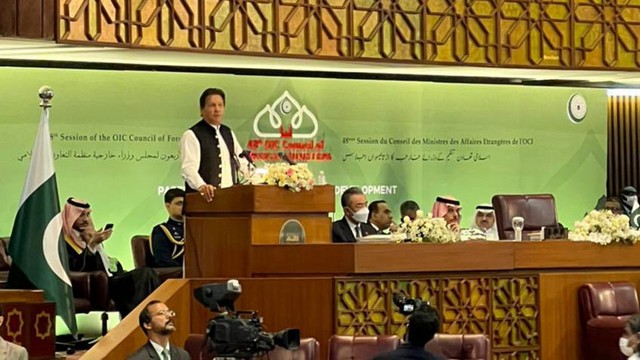
21 Dec 2021 – Afghanistan was at the heart of the 17th Extraordinary Session of the Council of Foreign Ministers representing 57 nations at the Organization of Islamic Conference (OIC).

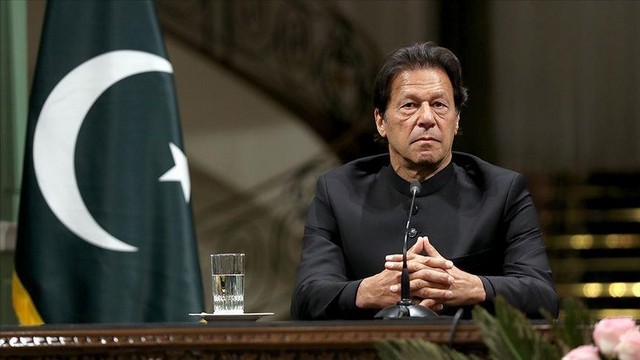
It was up to Pakistani Prime Minister Imran Khan to deliver the keynote address to the session, held on 19 December at the Parliament House in Islamabad.

And he rose to the occasion: “If the world doesn’t act, this will be the biggest man-made crisis which is unfolding in front of us.”

Imran Khan was addressing not only representatives of the lands of Islam, but also UN officials, the proverbial “global financial institutions,” scores of NGOs, a smattering of US, EU and Japanese bureaucrats and, crucially, Taliban Foreign Minister Amir Khan Muttaqi.

No nation or organization has yet formally recognized the Taliban as the new, legitimate Afghan government. And quite a few are frankly more interested in engaging in an elaborate kabuki, pretending to deliver some sort of aid to the devastated Afghan economy after 20 years of US/NATO occupation instead of actually coordinating aid packages with Kabul.

The numbers are dire, and barely tell the full extent of the drama.

According to the UNDP, 22.8 million Afghan citizens – over half of Afghanistan – are facing food shortages, and soon, acute hunger; while no less than 97 percent of Afghans could soon fall under the poverty line. In addition, the World Food Programme stresses that 3.2 million Afghan children risk acute malnutrition.

Imran Khan emphasized that the OIC had a “religious duty” to help Afghanistan. As for the ‘hyperpower’ that stunned the world with its humiliating withdrawal show after 20 years of occupation, he was adamant: Washington must “delink” whatever grudges it may hold against the Taliban government from the destiny of 40 million Afghan citizens.

Imran Khan did ruffle a few Afghan feathers – starting with former President Hamid Karzai, when he observed that “the idea of human rights is different in every society,” referring to Khyber Pakhtunkhwa province, which borders Afghanistan.

“The city culture is completely different from the culture in rural areas …,” he said. “We give stipends to the parents of the girls so that they send them to school. But in districts bordering Afghanistan, if we are not sensitive to the cultural norms, then they won’t send them to school despite receiving double the amount. We have to be sensitive about human rights and women rights.”

This was interpreted in a few quarters as Pakistani interference – part of a secret, devious strategic narrative. Not really. The prime minister was stating a fact, as anyone familiar with the tribal areas knows. Even Afghan Foreign Minister Muttaqi said the prime minister’s words were not “insulting”.

Imran Khan also observed that there are already over three million Afghan refugees in Pakistan. Moreover, Islamabad is sheltering more than 200,000 refugees who overstayed their visas. “They can’t go back. We are already suffering from the impact of the Covid-19 pandemic. We are not in a position to deal with an influx of refugees.”

Would you ever trust NATO?

Then there’s the ultimate nut to crack: internal Taliban dynamics.

Diplomatic sources confirm off the record that it’s a non-stop struggle to convince different layers of the Taliban leadership to allow for some concessions.

Discussions with the NATO block are for, all practical purposes, dead: bluntly, there will be no help without visible concessions on girls’ education, women’s rights and the heart of the matter – on which everyone agrees, including the Russians, the Chinese and the Central Asians – a more inclusive government in Kabul.

So far, Taliban pragmatists – led by the Doha political office – have been on the losing end.

The OIC meeting at least came up with practical suggestions involving Islamic development banks. Pakistani Foreign Minister Shah Mahmood Qureshi was keen to emphasize the necessity of getting Kabul to access banking services.

This is the heart of the problem: there are no solid banking channels after NATO departed. So it’s technically impossible to transfer financial aid into the system and then distribute it across hard-hit provinces. Yet, once again, this is ultimately linked to those lofty western humanitarian aid pledges crammed with conditionalities.

In the end, Qureshi, together with the OIC Secretary-General Hissein Brahim Taha, announced that a ‘humanitarian trust fund’ will be established as soon as possible, under the aegis of the Islamic Development Bank. The fund should be able to incorporate international partners, non-politicized westerners included.

Qureshi put out his bravest face, emphasizing that “the need is felt to forge a partnership between the OIC and the UN.”

Taha, for his part, was quite realistic. No funds whatsoever have been pledged so far for this new OIC humanitarian operation.

As Qureshi mentioned, there is one thing which Russia, China, Iran, Pakistan and other actors may decisively help with: investment “in the people of Afghanistan, bilaterally or through the OIC, in areas such as education, health and technical and vocational skills to the Afghan youth.”

So now it comes to the crunch – and fast. It’s up to the OIC to play the leading role in terms of alleviating Afghanistan’s dire humanitarian drama.

The official declaration calling on all OIC member states, Islamic financial institutions, donors, and unnamed ‘international partners’ to announce pledges to the humanitarian trust fund for Afghanistan will have to go way beyond rhetorical flourish.

At least, it’s all but certain that from now on, it will be up to the lands of Islam to decisively help Afghanistan. A bitter, defeated, vengeful, internally corroded NATO simply cannot be trusted.

Nobody today remembers that the Empire had concocted its own version of the New Silk Road over 10 years ago, announced by then Secretary of State Hillary Clinton in Chennai in July 2001.

That was no ‘community of shared future for mankind,’ but a very narrow obsession on capturing energy resources – in Kazakhstan and Turkmenistan; ‘stabilizing’ Afghanistan, as in perpetuating the occupation; giving a boost to India; and ‘isolating’ Iran.

The energy supply routes to the west should have gone through the Caspian Sea, and then across Azerbaijan, Georgia and Turkey – the three actors of the BTC pipeline – thus bypassing Russia, which was already then being depicted in the west as a ‘threat’.

All this is dead and buried – as post-occupation Afghanistan alongside the five Central Asian ‘stans’ are now back as one of the key foci of interest of the Russia–China strategic partnership: the heart of a Greater Eurasia spanning from Shanghai in the east to St. Petersburg in the west.

Yet to make it happen, it’s imperative that the OIC helps Afghanistan as much as the Taliban must help themselves.

Pepe Escobar, born in Brazil, is a correspondent and editor-at-large at Asia Times and columnist for Consortium News and Strategic Culture in Moscow.

27 December 2021

Source: www.transcend.org

Was China’s Amazing Rise Due to ‘Socialism with Chinese Characteristics’ or ‘Capitalism with a Chinese Facade? Or a Little of Both?

By Richard Falk

23 Dec 2021 – There has in recent months many discussions centering around the proper characterization of China from an ideological point of view. The Chinese leadership has its own reasons for doing this, seeking to present what it deems a glorious self-image. In contrast, the West, especially the United States has wanted to offer an ideological explanation of its confrontational stance with China. Part of the ideological confusion is whether or not China can be considered to be a type of ‘democratic’ state, which it sometimes claims to be. China was not invited to take part in Biden’s Summit of Democracies, but questionable democracies as Israel, India, and the Philippines received invitations. What the United States has refrained from doing is to attribute China’s success to its mastery of and reliance upon maket-managed economic policy.

In my judgement, China’s self-identification as ‘a Communist state’ in certain contexts is no more misleading than the U.S. assumption that it possesses all the credentials to be claimed the world’s leading ‘democracy.’ There are features of both political systems that defy such labels from a descriptive perspective. China accelerated its amazing development process of the last 50 years by sometimes defining its system of governance as ‘socialism with Chinese characteristics,’ which was a coded way of expressing its participation at home and internationally in the capitalist world economy guided by a perspective usually described as ‘neoliberal globalization.’ Such an identity was underscored by Chinese membership in the World Trade Organization (WTO), widely accepted as an institutional body entrusted with overseeing and promoting global capitalism in its neoliberal phase. It is became common for economists to describe China after the market friendly reforms to attract foreign investment and promoted trade associated with Deng Xiaoping leadership in 1991 as establishing a ‘socialist market economy.’ To ideological militants in the West to be ‘socialist’ amounts to being ‘communist,’ a negative characterization applicable not only to China but also to social democracy in Scandinavia or liberal tendencies of the Democratic Party in the United States.

It is obvious that invoking the label ‘Communist’ by a party leader in Beijing is quite different than its use as a political slur by right-wing politics in Europe and North America. When Chinese officials insist on ascribing a Communist identity to China it functions as a claim of legitimacy, confirming fidelity to its founding ideology and recalling its revolutionary struggle. When agitators inside and outside of government in the West call China ‘Communist,’ or even ‘Socialist’ it is meant as both as an insult and a warning about an alien ideology that poses a domestic threat by way of leftist and even left liberal politics.

Looked at differently, China exemplifies the Communist political tradition after the Cold War associated with Marx and Lenin, and later Mao, in certain crucial respects. The Communist Party provides authoritative ideological guidance in relation to its own governing process, overseees one-party rule, provides guidance for political education and citizenship, and entrusts leadership to a single person essentially for lifetime. The current leader, Xi Jinping exemplifies this tradition in all respects. No political alternatives are accepted as legitimate challengers to Communist rule. In periodic five-year high-level conferences of the Chinese Communist Party leadership ideological articles of faith are reaffirmed and adjustments made by expressions of consensus seemingly shaped by the leader. The Chinese government from the moment of its takeover of the Chinese mainland in 1949 has suppressed dissent, and insisted on an extreme form of secularism that has regulated religious movements strictly, sometimes harshly, particularly if they dare to exhibit political ambitions.

Despite some superficial resemblances to the Soviet Union, and the Cold War, it would be deeply misleading to view China through a Soviet lens or by way of post-World War II geopolitics. Two extraordinary differences highlight the gaps between the Cold War era and the present confrontation with China: first, in contrast to the Soviet Union, China has compiled a remarkable record of administrative competence, which has overseen the greatest economic and geopolitical ascent of any country in all of history, a story confirmed by spectacular growth, alleviation of extreme poverty, and increasing dominance of the most significant technological frontiers of 21st innovation; secondly, China’s expansionist foreign policy has been completely reliant on soft power instruments of influence, producing many win/win solutions, including its hyper-ambitious Belt and Road Project, and contrasting dramatically with the Western rise and Soviet attainment of superpower status which were based on military conquest and imperial forms of coercive control. It is the U.S. hostile reaction that confronts China rather than cooperates that seems mainly responsible for

inducing China to place an ever greater emphasis on military capabilities to maintain its national interests by discouraging U.S. provocations. The West should be learning from China rather than treating China as the second coming of the USSR, necessitating an ideological and militarizing mobilization for a new cold war that the world cannot afford, diverting attention and resources from a series of urgent global challenges posed by climate change, pandemics, global migration, gross inequalities that did not seriously impact on international relations.

Only the costly arms race, especially its nuclear dimension, made the last half of the 20th century vulnerable to catastrophe on a global scale, threatening species survival, prepared the public sphere for its present policy agenda.

Xi Jinping has been claiming that he is adapting Marxism to contemporary condition under the banner of ‘Marxism for the 21st Century.’ As near I can tell this terminology is used mainly as a way to identify and highlight the charismatic relevance of Xi Jinping personal leadership, and in the process elevate him to the status of the most eminent of revolutionary leaders, above all as the equal of Mao Zedong. Xi’s ideological viewpoint has been also associated with explaining what is meant by the phrase ‘socialism with Chinese characteristics.’ In ideological discourse, especially internationally, Xi commonly refers to the ‘socialist’ nature of the Chinese approach rather than to claim its ‘communist’ character.’ Xi clearly wants his various audiences to believe that Marxist thought remains as dynamic and relevant as ever, being ‘full of vitality,’ and thus the key to future human happiness.

The Chinese references to 21sst century Marxism is also a way of entering dialogue with Marxist political parties in other societies and creating a common global discourse. It also seems a way to be faithful to Markist-Leninis traditions of thought without having to comment critically upon the Soviet-led interval as a departure from Marxism. Put in positive terms Marxism in the 21st century calls for dedication to ‘human progress’ focused on building ‘a shared future for humanity’ in collaboration with congenial forces around the world

Whether China is viewed as a Communist center of power or not is less important than for the West to relate to China in a manner that is mutually beneficial for world peace and multilateralism. The policy emphasis on the West should be on not only learning from China but on bringing out the most constructive responses in relation to China’s potential indispensable contributions to world order. Such a view is not blind to Chinese violations of human rights or the excesses of Han nationalism, but it views these undeniable blemishes as best left to dynamics of internal reform and to the pressures mounted by global civil society, rather than as presently, a form of geopolitical harassment and anti-Chinese mobilization.

Richard Falk is a member of the TRANSCEND Network, an international relations scholar, professor emeritus of international law at Princeton University, Distinguished Research Fellow, Orfalea Center of Global Studies, UCSB, author, co-author or editor of 60 books, and a speaker and activist on world affairs.

27 December 2021

Source: www.transcend.org

Spreading Hate- Inciting Violence: No more a Crime!

By Dr Ram Puniyani

After Suraj Pal Amu made derogatory and hate speech, he was made the spokesman for BJP state unit. After the murder of Akhlaq in the beef-cow issue, one of the murder accused died, one central minister (Mahesh Sharma) arrived to put tricolor on the body of the deceased. When 8 lynching accused got bail, Jayant Sinha another Central Minister garlanded them. Not too long ago, when a central minster made the audience give the slogan “Goli maro“ he was promoted to the Cabinet rank. In this background if one sees the present disturbing events of spreading hate and inciting violence, the lack of action on the part of authorities can be easily understood. We do recall that our PM, prompt at speaking when not needed generally either kept quite or spoke after a painfully long delay in the aftermath of murders of Juanid or Rohith Vemula.

Today (24th December, 2021), 5 days after the two disturbing events took place; our PM’s silence on these issues is very loud and clear. In the first incident on 19th December Suresh Chavhanke, the Editor-in-Chief of Sudarshan TV administered an oath to young boys and girls. The event was organized by Hindu Yuva Vahini (Founded by UP Chief Minster and Mahant of Gorakhnath Peeth, Adityanath Yogi), it was “. “We take an oath and make a resolution that till our last breath, we shall fight, die for and if need be, kill, to make this country a Hindu rashtra,”

In another event organized in Hardwar hundreds of saffron clad Sadhus and Sadhvi’s had assembled for a meeting on the theme “Islamic Terrorism and our Responsibilities”. It was Dharma Sansad organized by Yati Narsinghanand, Head Priest of Ghaziabad temple. He himself set the tone by stating “‘Economic boycott (against the Muslims) will not work… No community can survive without picking up weapons…And swords won’t work, they look good only on stages. You need to update your weapons…more and more offspring and better weapons can protect you.” He gave a clarion call, Shastra Mev Jayate for inciting armed violence against Muslims.” “In another video, Narsinghanand is seen to be offering Rs 1 crore to Hindu youth for becoming like LTTE leader Prabhakaran as he called upon Hindu youth to become “Prabhakaran” and “Bhindranwale”

Annapurna Maa, (earlier, Poonam Shakun Pandey) general secretary of Hindu Mahasabha said, we need 100 soldiers who can kill 20 lakh of them (Muslims). She added ‘Matr shakti ke sher se panje hain. Phaad kar rakh denge’. (mother power has claws like lion, will tear apart). She is the one who couple of years ago reenacted Gandhi murder in Meerut and distributed sweets after that.

Dharam Das Maharaj from Bihar said “If I was present in Parliament when PM Manmohan Singh said that minorities have right over national resources, I would have followed Nathuram Godse and shot him six times with a revolver”

These are few samples from what happened in Dharma Sansad. Such meetings have been set into action by VHP, which began these meetings in the wake of Babri demolition. The surprise is that most of the videos are circulating and police have access to them. No arrest so far.

Those making such statements which are criminal as per our law are very much reassured that no action will be taken against them. They know those in power quietly appreciate their speeches or such speeches or incitement may be a part of planning in the wake of elections. What is surprising is that all this is taking place at a time when Munwar Faruqui was arrested for a joke which he had not cracked. His shows have been cancelled times and over again.

What will be the impact of these uttering’s on our minorities, who are equal citizens of the country. The fear and intimidation will reach the peak. Economic boycott, threat to life and intimidations will further intensify the ghettoization, already existing as serious problem. Disturbed by all these Jamiat-E-Ulema a Hindu, Mahmood Madnai has written to Home minster. Can Minorities commission take cognizance of this and take action? Can the police take proper action apart from just filing FIR against the recent convert to Hinduism, Jitendra Tyagi (earlier Wasim Rizvi)? And why is Supreme not waking up to take suo moto action?

The World is aghast at this level of hate and open incitement of violence. Martina Navratilova tweeted that she is aghast. The trends were caught by global media right some time ago when The Daily Guardian in a 2020 article states that “since achieving every single public interest is cumbersome; pointing towards the flaws of ruling party which may or may not have a religious back up and flaming the emotions of the public at large through continuous hate speech was a trend in early ’90s and the immediate years of second millennium. Hate speech was therefore procuring a wide scope with respect to democracy in India.” There is a turmoil world over on these incidents in India.

The Hate against minorities is reaching dangerous proportions. What began as a project of communal politics, Hindu and Muslim in undivided India is now focusing on Muslim minorities. Every occasion is being used to demonize them and the global trends set by American media in coining the phrase “Islamic Terrorism” has put salt on the wounds of the targeted community. During last seven years with the patronage of BJP government at the center; the process has taken ghastly proportions.

What is needed is that the civil society wakes up to the dastardly phenomenon. The Hate and violence which is directed against the ‘others’ takes a turn to consume the same community in whose name all this takes place, rather all this is orchestrated by the communal stream. All non BJP parties need to come together to raise their voice and call for action against the Hate mongers. It is welcome that Rahul Gandhi and many other leaders have tweeted and condemned these utterences.

Nothing short of a social movement directed against hate and promoting of love will help the matters. It is time that we to work on the lines of Bhakti-Sufi traditions; and the path of Mahatma Gandhi-Maulana Azad to keep the society and country in peace and harmony.

25 December 2021

Source: countercurrents.org