Just International

Spreading Hate: Open call for Genocide

By Press Release

Statement Released on December 24, 2021 at a press conference organized by Anhad. Dr Syeda Hameed, prof Ram Puniyani, Prashant Bhushan, Gauhar Raza, Anjali Bhardwaj, Dev Desai and Shabnam Hashmi addressed the press conference.

From December 17 to 19, the ‘Dharma Sansad’ or ‘Religious Parliament’ was organized in Haridwar wherein several religious leaders and those associated with Hindutva extremist organisations gave an open call for Hindus to arm themselves and eliminate Muslims from the country. Sadhvi Annapurna, general secretary of Hindu Mahasabha gave a direct call for the mass murder of Muslims. She said, we need 100 soldiers who can kill 20 lakh of them ( Muslims) . She added ‘Matr shakti ke sher se panje hain. Phaad kar rakh denge’ .

Dharam Sansad was organized by Swami Yati Narsinghanand, who has been spewing venom against Muslims for months. He said at the Dharam Sansad, ‘Economic boycott (against the Muslims) will not work. No community can survive without picking up weapons. And swords won’t work, they look good only on stages. You need to update your weapons…more and more offspring and better weapons can protect you.” He promised Rs.1 crore to anyone who is ready to become a Prabhakaran or a Bhindranwale for Muslims. He gave a clarion call, Shastra Mev Jayate for inciting armed violence against Muslims.

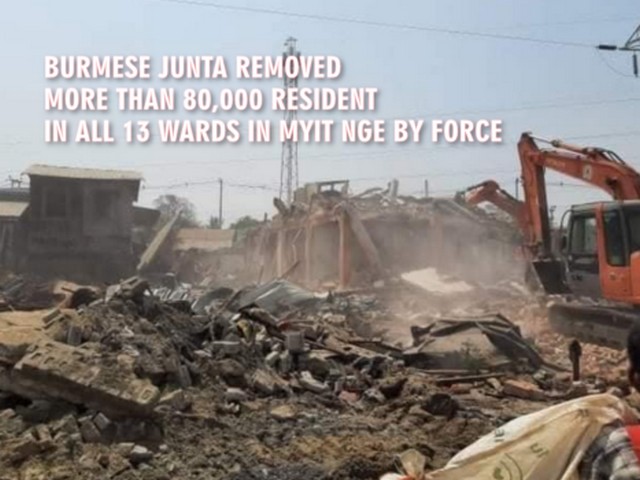
‘If I was present in Parliament when PM Manmohan Singh said that minorities have right over national resources, I would have followed Nathuram Godse and shot him six times with a revolver’ said Dharam Das Maharaj from Bihar. Anand Swarup Maharaj threatened to wage a war ‘more scarier’ than 1857 if the government does not concede the demand of creating a Hindu Rashtra through violence against the minorities. He said that in Uttarakhand he will not allow Christians to celebrate Christmas or Muslims to celebrate their festivals since the state belongs only to Hindus. Ashwini Upadhyay known for his anti Muslim vitriol at Jantar Mantar in October, also a BJP spokesperson; stood before the gathering and presented Bhagwa Constitution to his Gurudev Yati Narsinghanand. Swami Prabodhanand Giri, president of the Hindu Raksha Sena, a right-wing organisation based out of Uttarakhand said, “get ready to kill, there’s no other way. This is why, like in Myanmar, the police here, the politicians here, the army and every Hindu must pick up weapons and we will have to conduct this cleanliness drive (safai abhiyan). There is no solution apart from this.”

All this is an open violation of provisions of India’s Constitution and various provisions of the law which prohibit spreading of Hate. This is not just spreading of Hate; this is a call for violence against Muslims.

It’s been a week since the Haridwar Sansad began and 5 days since it ended; all under the state government’s watch. While poison was disseminated from here to the country and indeed all over the globe via social and other media the administration looked on. We all heard one sentence repeated ad nauseam by a police spokesman ‘Hum nazar banayen hain… uchit karavahi hogi’. (We are keeping an eye, will take suitable steps) It’s the mother of all banalities!

This Sansad has been held under the benign gaze of CM Uttrarakhad Pushkar Singh Dhami who has recently been seen paying respects to Yati Maharaj.

It is time when every sane Indian must think where the country is heading? Will the present regime uphold the Constitution of India or will they allow Bhagwa Constitution to be forced on them? This Sansad, permitted to be held on the eve of Elections in several states including Uttarakhand and UP, smashes to smithereens the ‘Idea of India’ held by Mahatma Gandhi, Jawaharlal Nehru, Maulana Azad and Bhimrao Ambedkar. When a state remains silent while hate speech and poison shards are flung at its citizens it bodes the worst evil for us the people who love this land, who are citizens of this country.

We strongly condemn the hate speeches, the calls for a genocide and demand immediate legal action and arrest of Swami Yati Narsinghanand, Swami Prabodhanand Giri , Annapurna Maa, Dharam Das Maharaj , Anand Swarup Maharaj and all others who organized the event and are indulging in hate mongering .

We demand an immediate stop to such gatherings which are organized to vitiate the atmosphere and polarize the people of India.

24 December 2021

Source: countercurrents.org

The Combating Islamophobia Act: On Hate Crimes and ‘Irrational Fears’

By Dr Ramzy Baroud

The result of a vote, on December 14, in the US House of Representatives regarding the combating of Islamophobia, may, possibly, appear to be a positive sign of change, that Washington is finally confronting this socio-political evil. However, conclusions must not be too hasty.

Disquietingly, Congress was nearly split on the vote. While 219 voted in favor of the resolution, 212 voted against it. What is so objectionable about the resolution, which was introduced by Rep. Ilhan Omar, that prompted a ‘nay’ vote by such a large number of American representatives?

The resolution – ‘Combating International Islamophobia Act’ – merely called for establishing the position of a “Special Envoy for monitoring and combating Islamophobia”. Arguably, HR 5665 would have not passed, were it not for the embarrassing episode last September, when Republican Rep. Lauren Boebert of Colorado mouthed off such obscene and racist language, in which she suggested that Rep. Omar was a terrorist.

“So the other night on the House floor was not my first jihad squad moment,” Boebert told a crowd during a campaign event in Staten Island. The other moment, according to Boebert, was when she met Ilhan Omar on an elevator. “What’s happening? I look to my left and there she is, Ilhan Omar, and I said, ‘Well she doesn’t have a backpack, we should be fine,’” suggesting that Omar was a potential bomber.

The fact that Boebert would make such racist references publicly, while being aware of the particular cultural sensitivity that exists in her country at the moment, speaks volumes about the complete disregard that many Americans, whether in power, in the media or on the street, have towards their fellow US Muslim citizens.

However, the disparaging and racist comments, thanks to the tireless efforts of numerous activists throughout the country, made enough impact that helped register a semi-official indictment of such despicable behavior. Of course, much more work would have to be done to convince the 212 objecting representatives that degrading and discriminating against their own people because of religion, culture or attire must not be tolerated.

Whether HR 5665 would prove decisive in condemning Islamophobia or holding Islamophobes accountable, is a different story. Hence, we must not hesitate to confront the term itself, the misleading reference that what Muslims in the US and throughout the world are experiencing is some kind of a pathological phenomenon, that of fear, itself instigated, as some suggest, by Muslims themselves.

Anti-Muslims are outright racists. Though Islam is a religion, in the mind of these racists, Islam is affiliated with brown and black-skinned people and, therefore, the hate of Islam and Muslims is part of the anti-black racism that continues to define many parts of the world, especially the US and Europe.

Anti-Muslims are also capable of being criminals, as numbers have shown that the so-called Islamophobia has resulted in mass killing, as was the case in Canada, New Zealand and the UK.

Less reported than these horrific massacres are thousands of incidents where Muslims are targeted because of their religion, cultural symbols and values.

According to a report released by the Council on American-Islamic Relations (CAIR) last July, hundreds of Anti-Muslim incidents have been reported throughout the country in the first half of 2021. These incidents range from hate crimes, hate speech, targeting mosques and Muslim children being bullied at school.

The US is not the only Western country where Anti-Muslim bias and hate crimes are on the rise. Canada, too, which has witnessed the horrific January 2017 attack on the Islamic Cultural Center in Quebec – in which six Muslims were killed and 19 others wounded – is equally culpable.

According to a report by the National Council of Canadian Muslims (NCCM) in September, Anti-Muslim incidents in Canada are growing exponentially. Fatema Abdalla, NCCM’s communication coordinator, described Anti-Muslim hate in Canada as “systemic”. “Not only is it growing, but it’s also evolving,” she told Global News, following the release of the report.

Like in the US, Anti-Muslim hate is also fueled by politicians, but not just any politician. In 2015, for example, Canada’s then Prime Minister Stephen Harper pushed to establish a “barbaric cultural practices hotline” where Canadians would be able to call the police to report the ‘disturbing rituals’ of their neighbors. The reference was widely understood to be targeting Muslims, especially as equally disturbing Anti-Muslim measures were proposed, or enacted, in Canada during that period.

Similarly, in the UK and the rest of Europe, Anti-Muslim bias and hate crimes were reported, based on extensive studies and research as well as experiences of ordinary Muslims on a daily basis.

While the vote in Congress to ‘monitor and combat Islamophobia’ is a positive step, the urgency of the situation demands not just symbolic gestures, but the outright criminalization and prosecution of Anti-Muslim hate crimes.

It is time that we stop perceiving ‘Islamophobes’ as people with irrational or, in the mind of some, rational, fear of Muslims – similar to ‘claustrophobia’, ‘arachnophobia’, or ‘agoraphobia’. Indeed, rarely do people in the latter categories gun down innocent people in the street to overcome their fears. Anti-Muslim hate is real and the racists behind it must be punished for their words and actions, as all racists surely deserve.

 Ramzy Baroud is a journalist and the Editor of The Palestine Chronicle.

24 December 2021

Source: countercurrents.org

Israel Killed Up to 192 Palestinian Civilians in May 2021 Attacks on Gaza

By Murtaza Hussain

More than 70 percent of the Israeli attacks that killed civilians in Gaza had no corresponding reports of militants hit alongside them.

9 Dec 2021 – A new report by the independent monitoring group Airwars found that the 2021 conflict between Israel and Palestinian factions in the Gaza Strip killed up to 192 Palestinian civilians and injured hundreds more over 11 days of intense fighting. Rockets fired by Palestinian militants into Israel are also estimated to have killed 10 civilians inside Israel during the brief but intense conflict first triggered by tensions between Israelis and Palestinians in Jerusalem.

Among the key findings of the report — titled “Why Did They Bomb Us?” — are the age breakdowns of Palestinians killed in Israeli strikes in Gaza. Of the total number of civilian deaths, roughly one-third were children, most of whom died in attacks that killed or wounded multiple members of the same family. More than 70 percent of the reported attacks that killed civilians had no corresponding reports of militants hit alongside them, meaning that civilians were the only victims.

One attack documented in the report took place the night of May 15, when an Israeli airstrike hit a house in the Al-Shati refugee camp in Gaza. Two mothers, sisters-in-law, were reportedly killed in the attack, along with eight children between the ages of 5 and 14. One 5-month-old boy was found by rescuers in the rubble from the attack still alive in his dead mother’s arms. The families had gathered together to celebrate the long weekend after the Eid holiday.

Alaa Abu Hattab, whose wife, children, sister, and sister’s children were all killed in the attack, recounted to Airwars what took place.

“I left my house on foot at about 1:30AM to go to some of the local shops that were open late during the run-up to Eid to buy toys and snacks for the kids for the Eid festival and to buy some food, as we were hungry,” Abu Hattab said in the report. Fifteen minutes later, an explosion hit the area he had just left. He ran back to find that it was his own home that had been struck. Seeing the rubble where his family house once stood, he fainted in shock. “When I regained consciousness, I saw rescue workers looking for bodies under the rubble and recovering body parts. The attack had shredded the bodies. Other parts remained under the rubble because they could not find them.”

No militants were reported killed in the strike, one of many that hit the strip during the brief fighting. “There were no militants in or near my house and no rockets or rocket launchers there,” Abu Hattab told Airwars. “I still don’t know why they bombed my house and killed my wife and children and my sister and her children.”

In addition to providing details on the civilian impact of the last war in Gaza, the Airwars report also provides the first comprehensive review of the long-running Israeli air campaign in Syria. Civilian casualties in Israel’s air campaign in Syria, mostly targeting alleged Iranian and Hezbollah assets, have been light, particularly in comparison with U.S., Russian, and Syrian government aerial attacks there that have killed tens of thousands of people. An estimated 14 to 40 civilians have been killed across hundreds of Israeli strikes against air bases, troop convoys, and weapons stores since 2013, according to Airwars findings.

“I still don’t know why they bombed my house and killed my wife and children and my sister and her children.”

The relative precision of Israel’s attacks in Syria stands in stark contrast to the toll of its operations in Gaza. According to the report, more civilians were killed in Gaza during the fighting this summer than in all of the attacks that have been carried out in Syria over the past eight years. The staggering difference between civilian harm in the two campaigns raises “fundamental questions about targeting policies,” according to the report. Israeli strikes in Syria have largely taken place away from built-up civilian areas, whereas the Gaza Strip is one of the most densely populated regions on the planet — making the nature of the Israeli campaign there something closer to counterinsurgency carried out from the skies.

In response to questions about its targeting practices during the 11-day Gaza conflict, an Israel Defense Forces spokesperson told Airwars that “terror organizations in the Gaza Strip deliberately embed their military assets in densely populated civilian areas,” adding that the IDF conducted internal operational reviews of its strikes and that the findings from those reports were classified. In response to similar questions about its attacks on Israel, a Hamas spokesperson stated that “[Israeli] military compounds and security facilities are built inside big cities and near universities and near hospitals,” claiming that the group similarly issued warnings in the hours before it carried out its attacks and took steps to ensure that its operations complied with international law.

Civilian Casualties in Gaza May 10–20, 2021 – An interactive map laying out the locations and extent of the civilian death toll.

The Airwars report is only the latest in a series from the monitoring organization on the civilian toll of various air campaigns in the Middle East and North Africa, including the U.S.-led coalition war against the Islamic State, Russian and Turkish airstrikes in Syria, and international operations in Libya. The study on Israeli and Palestinian militant activity is the first of its kind from the group.

“Our latest study corroborates what we have found with other large-scale conflicts in Iraq, Syria, and elsewhere: Even technologically advanced militaries kill large numbers of civilians when attacks focus on urban centers,” Airwars Director Chris Woods said about the report. “Stark differences in civilian deaths and injuries from Israeli actions in Syria and in the Gaza Strip clearly illustrate that the most significant driver of civilian harm remains the use of explosive weapons in populated areas. The single most effective way to reduce the number of civilians dying in warfare would be to restrict the use of such dangerous wide-area effect weapons.”

Murtaza Hussain – murtaza.hussain@​theintercept.com

20 December 2021

Source: www.transcend.org

The NYT Reports US Forces ‘Killed Dozens in Syria’–The Reality Is Far Worse

By Eva Bartlett

15 Dec 2021 – Two recent reports by the New York Times highlight some of the US’ manifold crimes in Syria, murdering untold numbers of Syrian civilians over the years, under the pretext of fighting the Islamic State.

They exposed a 2019 US bombing in Baghuz, eastern Syria, which killed 70 civilians, and that this was but one of numerous instances, with the Delta Force routinely launching “reckless airstrikes” while purportedly fighting ISIS.

Stating the obvious: had the wanton and repeated mass murder of civilians been committed by Syria or Russia, it would have been in headlines, ad nauseam… because the legacy media genuinely cares about the Syrian people. But, since the crimes were committed by the US, we’ll neither see outrage nor crocodile tears. In fact, it’s pretty shocking that the New York Times, a noted apologist for American Imperialism which has promoted outright fabrications about Syria over the years, has deigned to report honestly on actual war crimes in the country.

In April 2019, Airwars (and Amnesty International) reported that, “at least 1,600 civilians died in Coalition strikes on the city of Raqqa in 2017 during the battle to evict so-called Islamic State – ten times the number of fatalities so far conceded by the US-led alliance, which had admitted 159 deaths to April 24th.”

It noted that, “most of the destruction during the battle for Raqqa was caused by incoming Coalition air and artillery strikes – with at least 21,000 munitions fired into the city over a four-month period. The United Nations would later declare it the most destroyed city in Syria, with an estimated 70% laid waste.”

Along with reporting from Syria since 2014, I’ve keenly followed news on the subject and, unless my memory betrays me, I don’t recall overwhelming media outrage following this report.

In November, former United Nations Weapons Inspector and former Marine Corps Intelligence Officer, Scott Ritter, wrote: “The Battle of Raqqa became a template for all future anti-ISIS operations involving the SDF and the US going forward. By the time the mopping up operations around Baghuz were conducted, in March 2019, there was in place a seamless killing machine which allowed the US to justify any action so long as it was conducted in support of an SDF unit claiming to be in contact with ISIS.”

The US strikes were apparently meant to be portrayed as “self-defense” protecting US proxies on the ground, a feeble excuse for the slaughter that occurred. Yet, what Syria, with the aid of allies, has been doing the past ten years has literally been self-defense: defending the country against the death squads supported and funded by the West, the Gulf, Turkey and Israel in their war on Syria.

Were such death squads to descend on Western cities, they would almost immediately be eviscerated. This scenario is highly unlikely given that the terrorists are tools of the West, but this illustrates the hypocrisy of the situation: Syria has been doing its utmost to restore security to the nation, via strategic warfare against terrorist factions, as well as reconciliation deals enabling Syrian armed men among the foreign terror groups to lay down their weapons and return to civilian life. Simultaneously, the US, their allies, and the terrorists they support, have wantonly murdered Syrian civilians and wreaked destruction on the country.

Referring to the New York Times reports, RT reported recently that former Pentagon and State Department adviser Larry Lewis, who co-authored a 2018 DoD report on civilian harm based on classified casualty data, said the rate was “10 times that of similar operations he tracked in Afghanistan.’ … and that, when interviewed by the New York Times, Gen. Townsend blamed any civilian casualties on “the misfortunes of war.”

Funny how that works. When Syria is actually fighting terrorism, they are condemned. When the US is fake fighting terrorism and slaughtering civilians, it’s just a “misfortune of war.”

It should be no surprise to any thinking person that the US has committed untold war crimes in Syria (and many other countries) during its illegal presence in the country. Still, even with ample documentation of these crimes, the US is not held accountable. Completing this unjust scenario, the US and allies have repeatedly hurled unfounded accusations of chemical weapons attacks and Russian war crimes, providing no evidence and generally relying on unnamed sources or the al-Qaeda-affiliated White Helmets.

I wrote about this last year, noting, “A UN-mandated report, which accuses Russia of war crimes in Syria, heavily relies on anonymous sources and lacks evidence, but also smacks of deliberate disinformation that is halting the eradication of terrorism in Idlib.”

Emphasizing that this report was based on testimonies taken in Turkey, Jordan, Lebanon or by phone, I noted, “I scoured the 24 pages of the report, but even in the annexes I could find no transparent and credible sources, only the following vague terms repeatedly referred-to: Witnesses, civilians, NGO rescuers, medical teams, first responders, flight spotters, and early warning observers.”

In the relentless propaganda against Syria, and Russia, that report got a lot of traction in regime-change media. The recent reports on US crimes in Syria? Not so much.

Some days ago, the Twitter account @USEmbassySyria tweeted about the US standing firm in its commitment to human rights and the rights of women. A ludicrous tweet given the US’ support for terrorists who quash human rights and imprison and rape women.

It is also worth mentioning that Twitter account represents a non-existent entity: in their push for human rights for Syrians (as they bomb and murder Syrians or starve them with sanctions), the US Embassy in Syria long ceased to exist, as did most embassies involved in the plan to put extremist terrorists in power.

In a world where Israel can daily imprison and slaughter children and other Palestinians, and Saudi Arabia can wage war on Yemen while beheading its own civilians, the crimes of the US (and allies) in Syria are sadly not surprising. Nor are they new. The US has a decades-long history of attempting regime-change in Syria.

But seriously? Syria and Russia are to blame in this upside-down world…?

Eva Bartlett is a Canadian independent journalist and activist.

20 December 2021

Source: www.transcend.org

U.S. And Ukraine, Only Two Countries Vote Against UN Resolution Condemning Nazism

By Countercurrents Collective

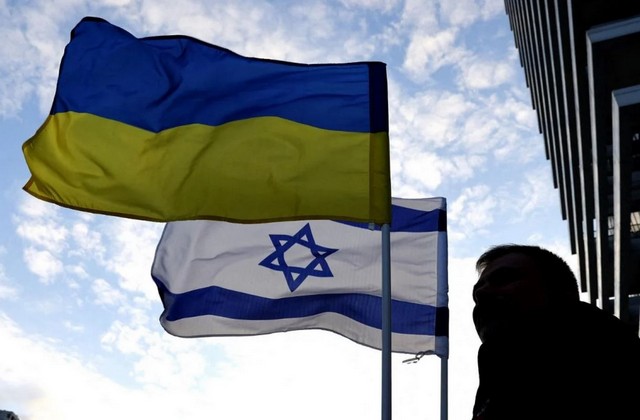
The UN General Assembly has adopted a resolution condemning Nazism, neo-Nazism and all forms of racism, and the U.S. and Ukraine voted against it, while a few countries, mainly US allies, abstained. The resolution was co-sponsored by Russia.

On December 16, the UN General Assembly passed its annual resolution on “Combating Glorification of Nazism, neo-Nazism and other practices that contribute to fueling contemporary forms of racism, racial discrimination, xenophobia and related intolerance” with 130 countries voting in favor and only two in opposition.

Out of a total 193 members countries, 51 countries including all members of the EU, Australia, New Zealand and Canada were among those who abstained from voting on the UN resolution asking members to eliminate all forms of racism and attempts to glorify Nazism. The resolution was passed with overwhelming support from the Third World countries.

The resolution on “Combating glorification of Nazism, neo-Nazism and other practices” that contribute to racism, xenophobia and intolerance was adopted, the Russian permanent mission to the UN announced on Thursday.

#UNGA76 ADOPTED-INITIATED RESOLUTION “COMBATING GLORIFICATION OF NAZISM, NEO-NAZISM AND OTHER PRACTICES THAT CONTRIBUTE TO FUELLING CONTEMPORARY FORMS OF #RACISM, RACIAL DISCRIMINATION, XENOPHOBIA AND RELATED #INTOLERANCE” WITH 130 VOTES IN FAVOR, 2 AGAINST, 49 ABSTENTIONS. PIC.TWITTER.COM/WC63BHKQRJ

— RUSSIAN MISSION UN (@RUSSIAUN) DECEMBER 16, 2021

Sponsored by Russia and more than 30 other UN members, the resolution expresses concern about any form of glorifying Nazism, including putting up monuments and holding public parades honoring the Waffen SS – combat units within Nazi Germany’s military – or declaring them national liberation movements, among other things.

Russia has long taken issue with Ukraine and the three Baltic states – Estonia, Lithuania and Latvia – honoring individuals and organizations affiliated with Nazi Germany during the Second World War.

The resolution also urges member states to “eliminate all forms of racial discrimination by all appropriate means, including legislation,” and states that discrimination based on race, ethnicity, religion or belief such as “neo-Nazism, Islamophobia, Christianophobia and antisemitism” harms not just the targeted groups but the society in general.

Russia has proposed a similar resolution since at least 2015, and the U.S. has voted against it every time.

Last year, U.S. envoy to the UN argued that a ban on glorifying Nazism would clash with the First Amendment protection of free speech in the U.S. Constitution. The U.S. has also accused Moscow of using the resolution to push “disinformation narratives” about neo-Nazism in the Baltic states and Ukraine.

The resolution demands the UN member countries to pass legislation to “eliminate all forms of racial discrimination” and condemn all attempts to glorify Nazism, xenophobia or neo-Nazism. It also demands the countries to condemn all attempts to revise the history of the Second World War.

The countries which abstained from voting cited possible limitations on freedom of speech, assembly and association. However, activist groups allege that the EU’s reluctance to vote in favor of the resolution indicates the rising influence of right-wing politics there. Several European countries have right-wing governments or strong right-wing opposition sympathetic to neo-Nazi groups.

The U.S. has alleged that the resolution is a result of Russian attempts to paint the opposition to its interventions in East and Central European countries as pro-Nazi groupings.

Ukraine’s ministry of foreign affairs also alleged a pro-Russian bias in the resolution as the reason for its vote against the resolution.

However, Russia sees the abstentions and the votes against the resolution as assertion of right-wing pro-Nazi forces in these countries.

Several human rights activists and left intellectuals have criticized the U.S. and the EU for failing to stand up against the rising threats of Nazism and racism in their own countries. The West’s hypocritical stance has also come under heavy attack from human rights groups which argue that the failure to vote in favor of elimination of all forms of racism and the rising threat of Nazism is a way to encourage such acts and groups.

Most of the Third World countries voted in favor of the resolution, reiterating their commitment to fighting the rising threat of Nazism and racism, which led to its adoption.

Countercurrents is answerable only to our readers. Support honest journalism because we have no PLANET B.

17 December 2021

Source: countercurrents.org

US Congress approves massive $770 billion war budget

By Patrick Martin

By an overwhelming bipartisan margin of 88-11, the US Senate voted Wednesday to approve the largest military budget in history, nearly $770 billion, some $25 billion more than the Biden administration had requested.

The legislation passed the House of Representatives last week by a similar bipartisan margin, 363-70, and it now goes to the White House for President Joe Biden’s signature.

The bill sets policy for the Pentagon and authorizes countless military programs, ranging from nuclear weapons development to a pay raise of 2.7 percent for military personnel, both uniformed and civilian. Congress must still pass appropriations bills, but in the case of the military these are largely a formality.

A National Defense Authorization Act (NDAA) has been passed every year by Congress for more than half a century, and there has always been bipartisan support by huge margins. Whatever disputes there are between the Democrats and Republicans, the two parties are united in their support for the military machine that carries out the predatory policy of American imperialism.

Senate Majority Leader Charles Schumer (D-NY) praised the Democrats and Republicans who joined forces to pass the bill. “For the past six years, Congress worked on a bipartisan basis to pass an annual defense authorization act without fail,” he said. “With so many priorities to balance, I thank my colleagues for working hard over these last few months, both in committee and off the floor, to get NDAA done.”

The bill authorizes spending of $740 billion for the Department of Defense, $27.8 billion for the Department of Energy, which builds and maintains US nuclear bombs and warheads, and nearly $400 million for activities by other government agencies considered “defense-related.”

Besides the vast personnel costs of a military establishment comprising more than 1.3 million uniformed troops and 1.1 million reservists and civilian Pentagon employees, the NDAA calls for staggering amounts to be poured into the procurement of more warplanes, warships, tanks, armored vehicles and artillery, as well as the development of new weapons systems and technologies.

The single highest hardware expenditure is an additional $6.8 billion to buy 85 F-35 fighters built by Lockheed Martin, adding to the most lucrative weapons contract ever awarded by the Pentagon.

Congress approved 12 more F/A-18 Super Hornet fighters than the Pentagon requested and five more Boeing F-15EX jets on top of the 12 requested, as well as increasing the number of new Navy ships from 8 to 13, added to the existing fleet of nearly 500 vessels, the world’s largest.

The US Navy is larger than the navies of the next 13 countries combined, according to a 2015 estimate, when considering total tonnage of the ships it deploys, including 11 huge aircraft carriers and nine helicopter carriers—as many as the rest of the world combined.

The strategic orientation of the huge military bill is to prepare for war against Russia, China or both. As the New York Times acknowledged, “The legislation’s main focus—shifting attention from ground conflicts in the Middle East in favor of a renewed concentration on Beijing and Moscow—aligns with the foreign policy vision Mr. Biden outlined this summer as he ended America’s 20-year war in Afghanistan.”

The main changes in the NDAA from the White House request were to add even more funding for the build-up against China and Russia. The bill authorizes $7.1 billion for the Pacific Deterrence Initiative (PDI), a cross-services effort directed against China, $2 billion more than the Pentagon initially sought. It authorizes $4 billion for the European Deterrence Initiative, directed against Russia, $570 million more than requested, and increases military aid to Ukraine from the $250 million sought by the Pentagon to $300 million.

The NDAA directs the development of a classified “Grand Strategy with Respect to China” and several additional reports on Chinese activities in relation to military technology, military modernization, and in Latin America and the Caribbean.

The PDI includes $500 million to address “unfunded requirements” (essentially a slush fund for anything the military wants to do in the Indo-Pacific) and refocuses the PDI on activities “primarily west of the international dateline,” according to one analysis. The language of the bill suggests that the PDI will grow far above the baseline spending level it spells out.

The NDAA pledges to maintain Taiwan’s military capacity and includes a “statement of policy” that the United States will “resist a fait accompli” against the country—language that suggests US intervention in any military conflict between Taiwan and China.

“We’ve lost a lot of ground to the Chinese while we’ve been focused over the last 20 years on counterterrorism and counterinsurgency, and they’ve caught up in AI machine learning, hypersonics and a lot of other things,” said Democratic Senator Mark Kelly of Arizona, chairman of the Senate Armed Services Committee’s subcommittee on emerging threats. “It’s important to me that we can regain the ground we’ve lost.”

Congressional leaders rode roughshod over the objections of “progressives” in the Democratic Party who claimed that a Biden administration would begin reducing the bloated US military budget and make funds available for social needs. Instead, Congress has passed the largest military budget in history, while the social spending in Biden’s “Build Back Better” legislation is unlikely to pass this year, if ever.

The main opposition to the NDAA came not from the “progressives,” but from Senator Kirsten Gillibrand, who was seeking to reform the process by which the military adjudicates the thousands of sexual assaults taking place each year in its ranks. Under the current procedure, commanding officers have complete control over the court-martial procedure, deciding what charges should be brought, if any, who will be the jurors, and who will be allowed to testify.

The final bill incorporated limited concessions on this issue, but Gillibrand was demanding a completely independent set of military prosecutors outside of the chain of command, which the Pentagon adamantly opposed. She and several Senate supporters voted against the final bill.

The bill also establishes an independent Afghanistan War Commission to “examine” the 20-year US intervention which ended in this summer’s debacle, the collapse of the US puppet regime, and the restoration of the Taliban to power. The bipartisan panel, with equal numbers appointed by the two parties, would exclude any members of Congress or officials involved in US policy for the entire length of the war.

Passage of the NDAA Wednesday followed Tuesday’s vote to raise the federal debt ceiling by $2.5 trillion, necessary for the continued funding of the federal government and regular payments on its debts, a vital step in reassuring the financial markets.

The Democratic-controlled Congress has thus done the bidding of its two main constituencies, Wall Street and the military-intelligence apparatus. While the Democrats profess themselves powerless to enact any increase in domestic social spending, safeguard voting rights or provide legal status for immigrant workers and youth, Congress acts like a well-oiled machine when it comes to the interests of the ruling class.

For both the Pentagon authorization and the increase in the debt ceiling, congressional leaders devised bipartisan shortcuts that enable swift passage of both pieces of legislation.

The debt ceiling was raised after a deal between Senate Majority Leader Chuck Schumer and Minority Leader Mitch McConnell which permitted the bill to pass by a simple majority without a filibuster.

The NDAA passed under an expedited procedure devised by Democratic and Republican leaders of the Senate and House committees responsible for the military, which brought the legislation to the floor of both houses without permitting amendments or any extended debate.

The two parties agreed to shelve a range of tactical disputes and amendments offered for the purposes of political posturing by one or another senator. Several significant policy shifts were set aside at least temporarily, including imposing sanctions to block the construction of the Nordstream 2 pipeline between Russia and Germany, repealing the Authorization for Use of Military Force against Iraq, passed in 2002, and extending draft registration requirements to include women.

Originally published in WSWS.org

16 December 2021

Source: countercurrents.org

Graham Fuller: End U.S. Addiction to Never Ending War

The following interview with Graham Fuller, a former U.S. diplomat, CIA official, and Islamic scholar, was conducted by Mike Billington, EIR’s Asia Intelligence Director, on Dec. 9, 2021.

EIR: This is Mike Billington with the EIR, Executive Intelligence Review, and the Schiller Institute. I’m here with Graham Fuller, and if you can, perhaps you can give a bit of your various hats in your career.

Fuller: Well, in terms of public service, I was 25 years an operations officer in CIA, serving in Germany, Turkey, Lebanon, Yemen, Saudi Arabia, Afghanistan, and Hong Kong. So a good bit of international background. I graduated from Harvard with a B.A. in Russian language, literature, and history; M.A. in Middle East studies; and had a long interest at the same time in China. After retiring from CIA, I was four years as the vice chairman of the National Intelligence Council, which is the long-range forecasting institution within CIA, and then went to Rand Corporation to do more geopolitical writings and things. And since then I have been kind of freelancing, written two novels, both somewhat political, and a lot of different books about the Middle East, Islam, political Islam, et cetera.

Danger of War With China

EIR: Okay, thanks. So, we sort of came about having this interview because you watched the interview I did with Ambassador Chas Freeman a couple of weeks ago. He warned that the U.S. has already crossed the red line in China by essentially promoting Taiwan independence and breaking all of the U.S.-China agreements in the ’70s that led to the one-China policy and the recognition of Beijing. How do you appraise the danger of a potential war between U.S. and China, even a potential nuclear war?

Fuller: Of course it is serious. I’m not sure that the U.S.—and I’m a huge admirer of Charles Freeman—but I’m not sure the U.S. has actually crossed the red line. But I think we are in the vicinity of doing that. And meanwhile, I think the United States is learning a lot about what it means to have a true peer competitor like China, as opposed to, say, the Soviet Union, which was militarily formidable, but in terms of societal and soft power, not at all. I think the U.S. has actually avoided specifically saying they will support Taiwanese independence, but certainly American policy wants to make it as difficult as possible for China to entertain any military views of re-conquering, re-joining Taiwan to China. It’s going to be a tight game, and I think the main goal really should be for both sides to tamp down the pressure, the level of rhetoric, that is underway now, which makes it very hard for more rational and thoughtful discourse.

Danger of War With Russia

EIR: On the same issue really, on the Russian side, President Putin has also indicated that the accepting of Ukraine into NATO or moving advanced weapons systems into Ukraine or on Russia’s border would be a red line. And Biden, when asked about that, said, “We don’t recognize any red lines.” On the summit Tuesday, Blinken and Sullivan both came out immediately and gave read-outs, which would make it appear that the whole thing was Biden ‘dressing down’ Putin (and Russia) for its aggression and its threats and so forth. But then Biden himself said that he would be announcing tomorrow, Dec. 10, a meeting with four European countries and Russia to address Putin’s request for guarantees that NATO would not move any further east or deploy weapon systems on their border. What, in general, do you think about the summit, and the potential for avoiding the conflict on the Russian side?

Fuller: Well, this is, of course, a long-standing issue. I think in, very broad terms—and this applies to China policy as well as to Russia policy—the United States has been so long in the habit of dominating, not always in a negative sense, but dominating the world since 1945, where other countries would defer to the United States. We, the United States, had the money, the weaponry, the technology, and everything else to be the number one player, really, in the world through that time. So, I think this has been a gradual policy of the rest of the world, much of the rest of the world slowly trying to catch up. Certainly, Europe has, but much of the rest of the world as well. But in the meantime, during the whole Cold War period, the United States was in the position of—the rhetoric was—defender of the Free World, quote unquote. So I think the United States has felt itself really the dominant power, the hegemon of the world, the leader of the free world, whatever terms you choose to use. But the reality in the modern world, and especially since 9-11, has been that the American hegemony, predominance, is a fading quality, and that much of the rest of the world is now rising. This, I think, American mentality, strategic mentality, maybe even cultural mentality finds it nearly impossible, intolerable, to accept the idea that any other country could become a peer competitor with the United States. I remember a couple of years ago, attending some military conferences, wherever, and in Washington, that the term used by the Pentagon in those days was America’s search, or maintenance, for all-horizon dominance. That’s not quite the word. It wasn’t horizon, but all- spectrum dominance, full-spectrum dominance. That says a lot right there. And I think this is a slow, very painful, hopefully learning process, by which the U.S. is going to have to back away ever more carefully, from overt assumption that it’s going to be able to call all the shots anymore. I mean, I think we even saw this with the very unfortunate Blinken, and maybe Sullivan as well, in the Anchorage meeting, when Sullivan, or Blinken, prior to the meeting, announced that he was very confident the meeting would go well and the United States would be dealing with China from a position of strength. Well, you may recall he was dressed down for that quite sharply by the Chinese, who basically said, how dare you say that? You have no right to say that you are dealing with us from a position of strength. We are going to deal, we want to be treated, we WILL be treated as equals by you on an equal footing. I think that pushed back, maybe shocked even, the foreign policy blob in Washington, which has never quite been addressed in those terms, by a country that is pretty demonstrably becoming a peer competitor in almost all respects.

EIR: It reminds me of the Clean Break doctrine in the Nineties. This was [David] Wurmser and [Douglas] Feith and [Dick] Cheney and [Donald] Rumsfeld. They basically said, we need a clean break to defend our friends in Israel. And then literally said—I think this was called the Wolfowitz Doctrine—that we must prevent any country or any combination of countries to reach a position of challenging our dominance, our superiority. I mean, that was literally the thinking.

Fuller: And even challenging Israeli dominance, I think was a good bit part of that. But yes, I mean, times are changing, the world is changing, and it’s going to be a painful lesson. But I think maybe even Biden in his late years, may be beginning to realize that the old rhetoric just doesn’t work quite as well anymore. And Russia is not quite the old Soviet Union, and Russia now working with China certainly represents a very different global force, not just militarily, but I think, you know, strategically, culturally, diplomatically in all senses.

EIR: You know, it’s interesting, several of the Russian readouts on the summit included saying what you just said—one of them called Biden “an old-fashioned politician” who understands the danger of war, and one of them called on Biden to calm down the people around him.

Fuller: Yeah, well put.

U.S.: Revenge On the Afghan and Syrian People

EIR: Yeah, right. Okay, so you were the CIA station chief in Kabul in the 1970s, and I know you’ve remained very active in Afghan policy debates right up until today. Clearly, that country is now in an economic and humanitarian catastrophe. Both the World Food Program and the World Health Organization are screaming as loudly as they can, that many millions of Afghan citizens face death by starvation and lack of medical care as the winter sets in. And yet, the U.S. is maintaining sanctions, and freezing billions of dollars that belong to the Afghan people. How do you explain this, what I consider depraved indifference, and how can we resolve that in your view?

Fuller: Well, as you know, Mike, the Afghan people have been victim of great power rivalry for many, many decades, going back to the initial Soviet invasion of Afghanistan to protect the new communist regime that came into power there in 1978. So Americans, and many Muslim states and others, have been participating in war within Afghanistan that has killed hundreds of thousands, probably millions of Afghans over the many years, leading to civil war, after the Soviet departure, the civil war among the mujahideen, and then utter anarchy within Afghanistan for a number of years. And then the Taliban came in to restore order, a rough sort of frontier justice, peace order, within the country. And then the whole bin Laden business, and then the American invasion. So this has been a nonstop, brutal thing. What I fear is, how gracefully the United States is capable of accepting the fact, that this is yet one more war, which we did not win, and that it is not going to have blood in its eye for the victors of the country, the Taliban. I’m no great admirer of the Taliban, but they are the de facto winners, and I think nearly everybody in the region acknowledges it, for better or for worse. It is the reality. So I think if this is some kind of vengeful policy towards the Taliban, to make them suffer, and who knows, maybe even there are those who hope that civil war might break out, or whatever, and give the U.S. a chance to win a new foothold. I don’t know, but it is a very ugly policy if it goes beyond mere tactical, temporary pressure points to try to get the Taliban to make a few political domestic changes in outlook.

If it goes much beyond that, into a broader vengeance, or a desire to restore the status quo, it will be tragic. And it’s part of such a long tragedy. 

We see this elsewhere as well, I think, in the case of Syria. The United States has been unhappy with Syria as far back as I can remember. When I first went into government in the Seventies, Sixties even, the Assad regime, father and son, have long been hostile to America, and what they perceive as American hegemony in the Middle East, and Israel’s ability to absolutely dominate militarily the entire region, without giving any particular justice to the Palestinians. So I think the United States has had it in for Syria for 40, 50, 60 years of trying to overthrow, not with major force, but with constant undermining of Syria in one way or another. Again, I’m no great admirer of the Syrian regime. It’s never been a democracy, it’s a minority government, but it’s been the reality of the Middle East for a very long time. But even down to today, we can see U.S. involvement in civil wars in Syria, in which much of the goal, still, is to punish Syria, bring down the regime, change it all, and it again has failed. And again, the victims, sadly, are the Syrian people. We just cannot seem to accept the reality that we have been bested again in that kind of a struggle.

Islamist Political Movements Must Be Acknowledged

EIR: You argued at one point that there will be no resolution to the Middle East crisis, unless the Hezbollah and Hamas, and Iran, are recognized, that they have to be a part of this. And yet, the Israelis and many people here in the U.S. consider all three of those institutions terrorists, evil people, and so forth. How is that going to be achieved? I mean, what can be done, especially with the Hezbollah and Hamas issues? And in Syria, how can you resolve that today?

Fuller: Well, as you know, the United States in particular has been ready to slap the label of “terrorist” on any Muslim group that it does not like. I find it frankly almost grotesque, that we have now come to persuade our American countrymen that Iran is the number one terrorist threat in the world. I mean, this is alongside Saudi Arabia, which has been pumping out extraordinarily damaging interpretations of Islam, which really leaves little room for generous accommodation, even among Muslims. So I think the term terrorist—you’re familiar with many countries that are slapped with this label, on groups that are seeking better rights, or even seeking separation. And that applies as well today. Hezbollah is the spokesman, basically, for most Shi’ites in Lebanon. The Shi’ites are the biggest single group in a very multicultural, multi-religious country. They have formidable spirit and drive. Many Lebanese who don’t like them, believe that Hezbollah is the one thing that maybe keeps Israel at bay from interfering or invading Lebanon at will. Indeed, Israel is very nervous about Hezbollah’s strength, and it’s not just purely military, it’s this kind of a drive, a will, not to permit Israel to invade the country. Similarly, with Hamas, I mean, Hamas is the Muslim Brotherhood. The Muslim Brotherhood has not been a terrorist organization, fundamentally, in 50 years. It is a relatively middle-of-the-road Islamist organization. I’m not arguing for Islamist movements, but they are a major force within the Middle East, and there’s a huge spectrum of them, from radical terrorists, genuine terrorists like Bin Laden, or other groups in that region, to rather very moderate Islamic-oriented groups, such as in Turkey.

So you can’t smear them all with one label. The Muslim Brotherhood continues to be concerned with Palestinian rights there. It’s an Arab organization, largely. So, I think if we don’t acknowledge full Palestinian rights, and begin to solve that problem, this is going to continue to be a festering issue, that plays right into the hands of more radical organizations, whether we like them or not. They’re there, and there is a call, an issue, to which they can play. 

Let me just mention one other term which has always been very important to me over the years, from the Egyptian ruler Abdel Nasser, if anybody still remembers him back in the Fifties and Sixties. He was the charismatic leader who sort of put Egypt on the Third World map for the first time, and he became the darling, really, of much of the Arab world. He stood up for Arab rights, and spoke about them. Somebody asked him once, why do you think Egypt has such a major role in the Arab world at that point? And he said, the Arab world is in search of an “actor,” and Egypt is now that actor.

I think that applies to many situations around the world, where there’s a strong need for some political voice to speak up on behalf of one or another injustice of the world, and whatever country takes up that challenge, automatically moves into a position of greater respect, and even support, by much of the world. And sadly, all these three organizations—the Muslim Brotherhood, Hezbollah and Iran itself—are formidable, political, ideological forces in the region. Iran is probably the oldest civilization in the entire Middle East. It has managed to survive decades and decades of American sanctions, and Israeli punishment, and assassinations by Israelis, et cetera, and they’re still holding their own. It’s a strong country, whether again, we may not like it all, but I think we have contributed to pushing Iran into a corner in which it is reacting, perhaps in a much more aggressive, reactive manner than might otherwise be the case. 

And we might talk about this before the interview is over. But just let me say here, we are not thinking enough in this world about why conflicts are coming about. Are they inevitable and can they be avoided? Sadly, I think in American thinking or much of the thinking of the world, these conflicts, wars, are inevitable, but they’re not. They just aren’t. And the trick is deciding how and why to avoid them, because it is doable.

The Military-Industrial Complex

EIR: Well, that obviously brings up the issue of the military-industrial complex that President Eisenhower warned about a long, long time ago, that they need wars to be going on. They’re required by the military industrial crowd and their Wall Street backers, thinking that this cannot be allowed to diminish or they’re going to lose their power. I don’t know what you think about that.

Fuller: Well, it’s very impressive when you look back at what Eisenhower said way back in the day and look at today’s reality. I think he was spot-on in his observation. I try to avoid an entirely conspiratorial view that it’s all Wall Street and military-industrial complex, because there are many huge capitalist organizations, corporations that do not profit from war and seek to avoid war, because it’s not good for business. Many businessmen and capitalists feel, if you’re not producing arms—it may not be necessarily good [to have] war at all. But that said, yes, there is a war lobby and it is linked with the idea that we must preserve American power and hegemony and dominance at all costs. And that plays, of course, into the hands of those who want to support America’s overwhelming military dominance in the world today.

EIR: And yet we lose everywhere we fight.

Fuller: Well, somebody once commented to me, a correspondent who worked at the Pentagon. He said, you know, Graham, you don’t get it (or some somebody in the Pentagon said to him), you don’t get it. It’s not about winning wars. It’s about maintaining the organization, maintaining the infrastructure. As long as the funds keep coming in, as long as we can maintain the structure and the training and the weaponry and all of this, you don’t have to win the wars. That’s secondary. It’s nice to win, but that’s secondary.

EIR: What kind of an image of man is that? Which thinks that secondary issues which murder millions of people and drive millions out of their homes are secondary issues?

Fuller: I agree. I agree. It’s shocking, but I fear it’s the human condition.

Project Ibn Sina To Save Afghanistan

EIR: Well, let’s hope that’s not the case. Actually I’ll bring up this issue of Ibn Sina that I mentioned to you before the interview. Helga Zepp-LaRouche’s idea of this Project Ibn Sina for Afghanistan, is based on that tradition of a great Islamic leader who represented the kind of leader you talked about with Nasser, but at an even higher level, a great philosopher, a great poet. And of course, also a medical genius. So I wondered if you might want to comment. You know the history of Islam quite well. If you want to comment on the role of Ibn Sina, and Helga’s idea of so-called Project Ibn Sina as a way of bringing the world together around the reconstruction of Afghanistan, but also applying that to these issues of festering wars in the Middle East.

Fuller: Yeah, that’s a very interesting question, Mike. Absolutely. I think by now, most Westerners are aware that there was a golden age of Islam. There was a time when intellectual life in the Muslim world, Arab world, Persian world, and beyond in India and even further east, intellectual life was very rich. There were very interesting, open theological discussions about religion, about science, philosophy. There was no shutting down of the mind at that point. Many Muslims have written since then, about, “Has there been a closing down of the Muslim mind?” I think probably you can demonstrate that there has been. The more important question is, why? One simple answer—it’s not the only answer, but it’s an important answer—is, of course, the long centuries of Western imperialism; British, French, German, Italian, Dutch, and American in another sense, that really helped keep these countries infantilized, is the word I would use most readily. They came to rely on outside—they came to fatalistically yield to the power of outside forces that would prevent them from taking charge of their own lives, thinking about these issues more deeply. So, I think many people trace some of the decline of Arab and Persian, and Muslim in general, Muslim intellectual and intellectualism, its sciences, its arts, and this gradual suppression of intellectual tradition within the Muslim world, largely by the ulema, the clerical class that found itself entrenched in positions of power as long as they supported the regime in power.

They could have their voice over religious policy absolutely; that contributed to it. Certainly even the shift of the great trade routes from overland across the Silk Route, to new sea routes around the Indian Ocean to East Asia, that also was a factor in the decline of the Muslim world. But it’s undeniable that this has taken place. I think in this sense, Ibn Sina is a reflection, is an aspiration to go back to what made the Muslim world so rich, so strong, so thoughtful, so productive intellectually in its time. I think it can happen again. There’s no reason why it should not. But the Middle East has been caught in this terrible mess now—you can you can go back many, many, many decades, if not one hundred years of colonialism and foreign control and dominance by dictators supported readily by the West, et cetera. It’s a long, sad story, but Ibn Sina is one great symbol. He’s not the only one; there are many great symbols of a broader vision of Islam, a more open thinking, exploratory Islam.

Turkey and the Arab Spring

EIR: Good. You have something of a specialty on Turkey within the Islamic world, and you wrote a book which was called Turkey and the Arab Spring. I take it this is your reflection on the Muslim Brotherhood, which was sort of the dominant force in the Arab Spring. As I understand it, Erdogan is part of that. Do you want to comment on that now in retrospect, with the downfall of the Arab Spring?

Fuller: Yeah, well, this brings up the very important question that I alluded to briefly earlier about Islamism, Islamic movements, Islamist, whatever, there are many different terms. But basically the idea of Islamists is, to put it in very simple terms, it’s a spectrum of views, as I said, from bin Laden to peace activists from an Islamic perspective. But it essentially is Muslims saying, Look, Islam has something to say about the future of governance and society in the Muslim world. What it has to say, what we choose out of it, just as some of the early European movements, Christian Democrats, et cetera, felt that Christianity had something to say intellectually or religiously or theologically, to say about good governance in Europe. So I think the Muslim movements – some are horrible, brutal, violent, as bin Laden is the major case in point. The Taliban have been quite brutal in their own way. Saudi Arabia has been a very brutal state, supporting many brutal movements and ideas outside the country, indeed fomenting these ideas of intolerance—it’s not only Islam, but there’s only one form of Islam, and that’s the Saudi form of Islam, which is Wahhabi, which is utterly uncompromising and very retrogressive. So anyway, the Muslim Brotherhood in all the spectrum is rather centrist. It has accepted the idea of democracy. It has political parties. These are not secret organizations and terrorist organizations. It hasn’t been that for half a century. It has accepted the idea of elections at the student level, the national level, participating in elections, accepting the idea of some kind of democratic practice.

These ideas are utterly anathema to countries like Saudi Arabia or other Arab dictators, or Muslim dictators anywhere, who see this as subversive. So, they have moved all out—that’s why Saudi Arabia has been quick to condemn the Muslim Brotherhood as terrorists, even though it’s very, very difficult to make that case over the last 50 years. Fifty years ago, yes, they dallied in it, but not since. So I think, Turkey doesn’t officially call itself Muslim Brotherhood, but certainly the ruling party has good ties with it. And again, Turkey, it’s become an abusive democracy, but it’s still a democracy. I mean, there are real elections. It’s an unfair, or illiberal democracy, is the term I think we use. But nonetheless, it still has elections. And I believe that when the day comes that President Erdogan in Turkey is voted out of power, if there aren’t manipulations, I believe fairly surely he will step down. So the question of the compatibility of Islam and democracy that the Muslim Brotherhood in particular, I think has accepted, is far from over. And the debate is far from over. I mean, we’re even arguing in the United States about religious ideas, in social belief, abortion, among other things. So you cannot totally separate moral views from policy views, and moral views are importantly founded often on religious ideas. It doesn’t have to be, but that tends to be their source.

NED: Surrogate of the CIA

EIR: To what extent do you see the NED [National Endowment for Democracy], Open Society, regime-change crowd influence in the Arab Spring? And to what extent would you think that caused a backlash against it?

Fuller: At one time when I was still working in Washington, I was a big believer in the National Endowment for Democracy, and I believed that democracy had a lot to offer to much of the world. I still believe democracy—it’s like Winston Churchill said, it’s the worst form of governance, except for all those that have been tried before it. But somehow, over the years, the National Endowment for Democracy, or NED, really became almost a surrogate for the CIA. The U.S. largely got out of the business of having the CIA overthrow countries—and this wasn’t, by the way, the CIA choosing to overthrow these places; this was by Presidential Order or Kissinger order or whatever. The National Endowment for Democracy became a much nicer face for regime change. Not by violence, but certainly through using all kinds of financial and ideological and training, and other kinds of things, to bring about change. I believed that democracy was a great goal for the United States, but as I began to watch it over the years, I began to see how much of this was cherry picking. That democracy was, as I often said, democracy was a punishment to deliver upon our enemies, to overthrow them. Democracy is never a gift for our allies. You know, we’re not deciding that we’re going to bestow democracy upon Saudi Arabia or any other number of authoritarian regimes around the world. We have all kinds of things to say about the rights of Uyghurs in China, and I care very deeply about the Uyghurs in China. I’ve been there. I’ve written about it. But, I think the fact that they’re in China seems to be the more important point for the U.S. policy than what the state of the Uyghurs is at this particular time. So it’s highly selective, which undermines the credibility, the ideological credibility of the United States in pushing for democracy. We’ll do it when we want to overthrow somebody, but we don’t have much to say about it otherwise. We don’t have much, even in human rights, I mean, this tends to be a weapon used to overthrow or seriously weaken countries. But if it’s a friendly country, we don’t do it. We never talk about the Kashmiris and Indian policy against Kashmir, or Indian policies against Muslims in general, or other religious groups in India, because India—they’re the good guys, so we don’t talk about it. But if it’s Palestinians rights being crushed in Israel, we don’t talk about it. But if it’s Chechens in Russia, or other groups in China, then we’re all over it. So, I just feel we ideologically corrode the very validity of pushing for democracy.

The Uyghurs and China’s Nation Building

EIR: I certainly agree with you on that. Let me take you up on the Uygher, Xinjiang issue. I read the study you and Frederick Starr did in 2004, called “The Xinjiang Problem,” which involved scholars…

Fuller: But it was mainly Jonathan Lipman, who is an outstanding scholar of Muslims in China, who was my partner in writing that essay. Fred Starr very capably brought the book all together, many different disciplines, but it was myself and Jonathan Lipman, who has a wonderful book about Muslims in China. Very readable, delightful book. [see Familiar Strangers: A History of Muslims in Northwest China

EIR: I’ll look that up. Since that time, of course, you had the ISIS-linked Uyghurs who carried out terrorist attacks in Xinjiang, and the Chinese response to that was to launch what they call a mass education or mass re-education campaign for the young people being influenced by the jihadis. But at the same time doing massive economic development in the region; they created new industrial and agricultural projects across Xinjiang. And certainly, that is quite the opposite of the so-called anti-terrorist campaigns in the West, which were largely bombing countries back to the Stone Age. So nonetheless, what China is doing is now, since Pompeo and his ilk, is labeled genocide, and in fact, they’re imposing sanctions on China, and even the so-called diplomatic boycott of the Olympics is because of genocide in Xinjiang. I find this to be not only absurd, but really disgusting, but you certainly know a great deal about the Uyghurs in Xinjiang. How do you look at that now in light of this crisis?

Fuller: You know, it’s a complicated issue, Mike. For starters, I would not accept the term genocide, which I think is being extremely loosely applied by Washington again, not so much on the facts of the issue, because if you looked at Palestinian treatment, the numbers are vastly less. But treatment of Palestinians in the West Bank and in Israel, there might be very comparable things. But anyway, this is not genocide, but I think it is—some people have used the term cultural oppression. Some have even called it culturacide. China is known to be—and I’m a huge admirer of China, I’ve studied Chinese history and literature and things. I have great admiration for China’s past and indeed even present extraordinary accomplishments. But China is also a tough country in which to be a minority. The Han Chinese massively dominate, just numerically, the country, overwhelmingly, so that it’s difficult to be a minority in China anywhere and not get “Han-ized”, if you will, turned into Han Chinese linguistically, culturally, and otherwise. This is not unique to China; other countries have pushed for cultural integration in the past. I don’t know the years exactly, but I think in the 18th Century, France had an extraordinary policy of imposing, with some force, imposing the language of Paris on the entire country and wiping out regional dialects and languages such as Celtic languages or Basque and other such.

So in the process of nation building, whether you like it or not, governments, whether good or bad, or harsh or not, tend to try to push towards homogenization of their population to make it easier to rule, to maybe make it easier for people to get along socially. I don’t know. So the Chinese are part of this long tradition. And it’s easy when you got one-point-four [billion] people — and I don’t know what the statistics are of non-Han minorities, but they’re probably pretty small in comparison. So yes, I do feel that the Chinese have been rather harsh in Xinjiang in the effort to Han-ize, or turn into “good Chinese”, Han Chinese, the Uyghur population. And the Uyghurs, of course, are the furthest away from Beijing of any group in the country, way off to the West. I mean, the capital of Xinjiang province in China is closer to Islamabad than it is to Beijing. So you’re talking about a very distant, culturally long-time Turkic Islamic Muslim society. I deplore the re-education camps. It smacks a bit too much to me of kind of more fascist organizations in the past. But I think, I do not believe that calling this genocide is a legitimate term.

And we also have to come to the deeper question of, who is it that deserves an independent state? The Chechens in Russia and the Soviet Union have been a totally distinct ethnic group. They’re Muslims, not Christians, but they have been pushing, including using violence for years, for over a hundred years, to gain independence from the Soviet Union, or from Russia. So this is an ongoing problem. And I certainly don’t support violence on either side of this. But I do acknowledge that in any process of industrializing China, including its distant western regions, factories are going to be built, and even more to the point, hundreds of thousands, if not millions, of Han Chinese have come into areas that have long been occupied, long inhabited by Muslim Uyghur people, Turkic Muslim Uygur peoples. And they naturally are deeply disturbed at this huge influx of industrial Chinese workers, who are changing the real estate, they’re tearing down their old towns, they’re weakening Islam, closing mosques, you know, imposing Chinese language requirements. Obviously, if you’re going to live in China, you damn well better learn Mandarin. So you can’t say that it’s all brutal, but it’s a complex issue of how do you try to integrate this country without using brutal techniques? And I think China in recent years has moved in the direction of unnecessary harshness in that issue.

The Visionary Belt and Road Initiative

EIR: Well, let me say that they’ve built more mosques in Xinjiang than any area in the world. So you have to take that into consideration, too. What you’re saying about Xinjiang is also true of Tibet, and our organization from the beginning—LaRouche’s idea and the ideas of the Schiller Institute—was always predicated on the idea of peace through development, that you can’t try to bring about peace and then development. You have to actually bring development as a way of addressing the common needs of all people, all religious movements, all ethnic differences, and so forth. And certainly, that’s the way the Chinese have approached both Tibet and Xinjiang, and in the process have dramatically increased the populations of Xinjiang, the Uyghur population, increased their standard of living enormously. And their argument, of course, is that when people complain about human rights, that the most fundamental human right is the right to life and to a decent standard of living. And they’re very proud of having brought the entire country, including all the people of Xinjiang, out of abject poverty. There’s still poverty, but [abject poverty] has been eliminated. A lot of this is also what they launched to take internationally, the process of development, through the Belt and Road. And of course, Xinjiang is a crossroad for the Belt and Road. So let me ask you to say what you think about the whole Belt and Road process, which of course, is also roundly denounced by the anti-China people in the West with all kinds of nasty terms. But it is a basis on which, if you believe in the idea that peace comes through development, that you can resolve these issues not only in China, but in Afghanistan and in the Middle East. In particular, I wonder what you think about the efforts by China to bring the Belt and Road into the Middle East.

Fuller: I think the Chinese idea of the Belt and Road is an extremely imaginative and exciting idea. It is visionary in the sense of uniting and bringing together diverse societies across Central Asia that have not been united since the days of Genghis Khan, who was a brutal conqueror, but for a hundred years thereafter proceeded to run a pretty enlightened and peaceful administration all across Central Asia, as a Chinese dynasty—later, as a Chinese dynasty. So I think it’s inspired. Central Asia has been the backwater of the world for a long, long time. Even though in medieval periods it was a rich center of commerce and trade and ideas and science, et cetera, along the lines of Ibn Sina, who lived in that area himself. This includes Iran, of course. So, I think it’s an extraordinary idea that the Chinese have been developing here, in context with Russia as well. It’s a complicated area. There are many ethnic sensitivities in the area. Muslims traditionally do not like to feel that they’re under the thumb—however, you choose to interpret it—under the dominance, under the overwhelming power of non-Muslim power, and they would view China in that regard.

They would view Russia in that regard, but it doesn’t mean that they will reject it. It just means there are going to be certain sensitivities about Islamic culture, Islamic history and tradition, that will play an important role, I think, in the future of that Belt and Road. And China will need to—and Russia, of course—will need to move very cautiously with full regard for the cultural and religious traditions of that area. But I think, yes, it can do a great deal for the welfare, the livelihood, standard of living, cultural development, and everything else to have this area opened up from an area that will go from, well, you know, you can say Beijing, but in many senses, even from Korea, all the way across land and sea to now Italy, I think, which is the westernmost point at this stage of the Belt and Road concept. It’s very positive, it’s a very highly constructive, imaginative idea.

EIR: Have you looked into the efforts between China and, let’s say, Iraq, for instance, to bring in some of these Belt and Road projects? The last government had agreements of oil for development, which got crushed, unfortunately.

Fuller: Yeah, I’m not terribly familiar with where Iraq stands on the Belt and Road. I mean, inevitably, it will be part, it would be a natural part. I mean, going way back when it ran from Beijing to Beirut in effect, back in the day. I don’t know where it stands now with Iraq, but certainly Iran. And in Iran, already, China is playing a very significant role in helping relieve some of the more oppressive aspects of American sanctions. Iran has been historically a major country, a major culture that was part of that whole Belt and Road civilization. It was a Muslim, Arab, Persian society, Turkic as well. Very important. All those three cultural groups. China does not always have the best reputation, going way back, as fully honoring societies that resist homogenization, and Muslim societies tend to resist, a bit, homogenization into non-Muslim cultures. You could have a long discussion about why. So I think the idea is brilliant, but as I said before, China and Russia need to step cautiously and sensitively with this huge new cultural region, that will benefit that region, I believe, hugely.

Afghan War Targeted China and Russia

EIR: Good. I’d like to ask two other things on Afghanistan before we leave that. One is that I read an article you wrote recently called “Time to Smash the Urge of Imperial Strategic Groupthink”.

Fuller: That wasn’t my title.

EIR: Oh, it wasn’t, Okay. It’s quite a title. Well, anyway, what I noted in there was that you said that the entire Afghan misadventure was less about fighting terrorism and more about establishing a base near the Russian and Chinese borders, sort of as part of the Great Game. There are indications that the pullout of Afghanistan was less about ending regime-change wars and more about repositioning for confrontations with China and Russia. And you may have heard that Tony Blinken just yesterday basically acknowledged that. He said (I wrote it down): “In ending America’s longest war and making sure that we’re not sending a third generation of Americans back to fight and die in Afghanistan, that frees up a tremendous amount of resources and focus for other challenges.” And the reporter even asked, “Do you think the American people have an appetite for other challenges?” And he said, “Oh, I think the appetite is significant.” I wonder what you think about this in terms of going forward.

Fuller: I think it was fairly clear back in 9/11, 2001, that the invasion of Afghanistan was about far more than bin Laden. Bin Laden certainly was the perfect poster-boy enemy for that invasion. And it wasn’t outrageous—9/11 was an outrage, an outrage against the United States and generally, through the use of terrorism and murder. But yes, I think it was not by accident that the U.S. was well aware that Afghanistan sits athwart China, Russia, Central Asia. They understood that all you have to do is read about the British Great Game back in the day, 19th Century, and America supporting the Afghans against the Soviet invasion in 1978. So the idea of the geopolitical significance of Afghanistan is well known. We just didn’t talk about it very much, because it was a much better sell, to talk about terrorism and Afghanistan. I am not sure that the U.S. is quite ready to throw in, give up its spurs in Afghanistan, for the very same reason that it borders on Russia, borders on China, and might in the U.S. eyes be a check, possibly to elements of the Belt and Road. If the U.S. has a better idea than the Belt and Road or could contribute to it or work simultaneously with it, that would be great. But I think now anyway, it seems to be a zero-sum game in American eyes, and it doesn’t want to participate in any way that would facilitate this Chinese venture. I don’t think we’ve really let go quite there, and it won’t be until we start generously helping rebuild that country that we helped to destroy, that we become credible in our willingness to look for better days for the Afghan people and get out of the region.

Drugs and the U.S. Cultural Decay

EIR: So, I want to ask as, I think, a last question, the issue of the cultural decay in the United States and in the western world generally. I read some reviews of your memoir, I didn’t read the memoir, but the book you wrote about the death of your son to drug addiction. And, as you probably know, it was just recently announced that there have been 100,000 overdose drug deaths this last year. That’s by far the highest ever. And the economic and cultural decay in the country has really left a whole generation of children who have no sense of a positive future. They don’t have a sense of a mission in the world. And this, of course, has resulted in some horrible atrocities like the child killers. We had one just the other day in Michigan, and record-high teen suicides. Since you did have that experience, how do you read this yourself, in terms of what we’re going to have to do to revive the culture in the United States?

Fuller: Well, drugs in many ways are the bane of the modern world, everywhere, in some sense. In the United States, as you know, we’ve not had a great deal of luck even with the banning of all kinds of drugs over the years, have not had great success with it. And the so-called war against drugs that’s been going on, what, 20, 30 years, as part of many administrations punishing various Latin American countries for helping produce this stuff, in which we are the main market. This goes back a long way, and with all the problems that you talk about; yes, it’s been, it’s really sad. It’s been exacerbated by COVID. It’s got to be exacerbated by just existential angst from global warming, the future of the world. What I now feel is an excessive sense of individualism within the United States culture. Individualism has been a wonderful feature of American culture, and produced amazing artistic accomplishments and scientific and technical accomplishments, all kinds of things. But it does have a downside. This extreme, extreme individualism of the United States, which means that there’s not so coherent a society, as you might find in, say, slightly more traditional European cultures, but even they are suffering from drugs. So, I’m not sure what the answer to all of this is, but certainly the conditions of American life, the discrepancy between rich and poor, and the negativism that emerges from this, that you can see in the music and the arts and other things, certainly is exacerbating it hugely. But it’s in some senses, it’s a global problem. It’s a human problem.

Addiction to Never Ending Wars

EIR: Let me close by asking if you have anything else you’d like to like to say to our audience.

Fuller: No, just to express my concern about where the U.S. is headed now, the viability of American democratic practice at this point. I think the future of the world is going to be ever more demanding. Obviously, for starters, because of global warming, and pandemics. Also, the negative impacts of technology. Apart from the many wonderful aspects of technology, there are many, many socially negative impacts of technology. My fear is that countries are going to find themselves increasingly unmanageable, in which the power of the state is going to be perceived as more and more necessary. Just in COVID alone, to try to control the spread of COVID and manage the treatment of COVID, has required a great empowerment of the state, not just in the U.S. but globally. So, I think in a country that’s as intensely individualistic as the United States is, where people can say, well, you know, I want to do what I want to do and it’s my freedom, it’s my body. There are all kinds of very good reasons for pushing back against this. But I think in the modern world and the modern world of delicate technology and countries existing on delicate balances of how technologies interact, you can’t really survive in a country that is verging on the anarchistic in many regards, that cannot provide good government and good governance.

So I fear very much for where the future of the U.S. is headed right now. It may not just be the United States. It may be the West, and the West may be ahead of much of the rest of the world. But the problem of control of populations getting ever bigger, and the crises, global warming, disease, technology, et cetera, et cetera, I fear are going to hugely empower states. And China is basically arguing that they are the vanguard of the future in this regard.

I think the thing that I find most deeply depressing about the United States is its still addiction to never ending war. We talked about that briefly before, but I think I am appalled that even with very progressive thinkers like Bernie Sanders, even Bernie Sanders has not dared to grasp the nettle of the Pentagon budget and the ongoing wars, or only very slightly. Its still, you know, we can’t afford medical care, we can’t afford infrastructure, we can’t afford COVID, or one thing or another. But boy, we can afford those damn wars. I’m appalled that even today, nobody, just about nobody is suggesting that maybe, one-third of the Pentagon budget might go a long way to beginning to solve a few of these domestic problems. It’s beyond the pale, that discussion, right now.

EIR: Yeah, either party.

Fuller: Either party.

EIR: Okay, well, thank you very much. This will be most interesting.

Source: schillerinstitute.com

UN’s highest ever humanitarian appeal falls on imperialism’s deaf ears

By Jean Shaoul

On Thursday, the United Nations Office for the Coordination of Humanitarian Affairs (OCHA) launched an appeal to the major powers for a record $41 billion to help the 183 million people most in need of life-saving assistance.

This was a large increase on the $35 billion requested for 2021 and double the amount sought just four years ago. It is needed for some 63 countries, nearly one third of the 193 United Nations member states, most of which came into existence after the national liberation movements took over from the colonial powers that had previously ruled them.

Speaking at a news conference at Thursday’s launch of the appeal, OCHA head and Emergency Relief Coordinator Martin Griffiths stressed that the number of people in need “has never been as high as this.” He said, “The climate crisis is hitting the world’s most vulnerable people first and worst. Protracted conflicts grind on, and instability has worsened in several parts of the world, notably Ethiopia, Myanmar and Afghanistan.”

Worse is to come.

OCHA’s Global Humanitarian Overview 2022report, published the same day, draws on the work of 37 agencies, including various UN agencies and international aid organisations. It said 274 million people worldwide will need some form of emergency assistance next year, up 17 percent from the 235 million in 2021, a record high. One in 29 of the world’s 7.9 billion people will need help in 2022, up 250 percent on 2015 when one in 95 needed assistance.

The report noted that the COVID-19 pandemic, fueled by vaccine inequality, has devastated economies, livelihoods, health systems and education. Testing, diagnosis and treatment for HIV, TB and malaria has fallen. Ante-natal visits dropped by 43 percent and 23 million children missed basic childhood vaccines in 2021. With 2.2 billion children without access to the internet at home, many faced disruption to their education.

The pandemic has increased suffering and extreme poverty, rising again after two decades of decline with women and young workers disproportionately affected by job losses. Some 247 million women live on less than $1.90 a day. Hunger is on the rise and food insecurity has reached unprecedented levels, with 811 million people (11 percent of the world’s population) undernourished and famine “a real and terrifying possibility in 43 countries.”

Political conflicts have hit civilians hard. More than 1 percent of the world’s population is now displaced, of whom 42 percent are children. Millions of internally displaced people (IDPs) live in camps or in impoverished conditions in cities for long periods, unable to return home.

The humanitarian needs are by far the greatest in the Middle East and Africa, thanks to wars provoked, fueled and paid for by the imperialist powers in pursuit of access to raw materials and markets in the interests of the corporations they represent. The priority of the local oligarchies is to remain competitive for foreign investments, while continuing debt payments to the financial vultures, expanding their armed forces and suppressing the revolutionary strivings of the working class and poor peasants.

According to the UN’s Food and Agriculture Organisation (FAO), 45 million people are at risk of famine in dozens of countries, with Afghanistan, Syria, Yemen, Ethiopia and Sudan topping the list. In Afghanistan, more than 24 million people are in dire need of assistance as the result of four decades of war and now the worst drought in 27 years.

Syria, which has endured more than 10 years of a US-led war to topple the regime of President Bashar al-Assad, faces a lack of basic commodities amid a horrifically damaged infrastructure. Average household expenditure exceeds income by 50 percent compared with 20 percent in August 2020.

In Yemen, at war since Saudi Arabia, aided and abetted by the US, Britain and the regional powers, invaded its impoverished southern neighbour in April 2015, 16.2 million of the 30 million population face acute food shortages. Even with humanitarian assistance, 40 percent of the population do not have enough food.

In Ethiopia, 25.9 million of its 118 million population need help as a result of the war in Tigray and other parts of the country, Drought and disease are mounting, with many of the country’s 4.2 million IDPs seeking shelter in the towns and cities adding to the social and economic pressures. In South Sudan, 8.4 million of its 11 million people are in need, as a result of the ongoing civil war since independence from Sudan in 2011, and three years of flooding and disease.

As well as the Middle East and Africa, there has been increased demand for humanitarian assistance from Asia and the Pacific, Latin America and the Caribbean. The situation in Myanmar has deteriorated significantly in the wake of last February’s military coup and the pandemic, with 14.4 million of the country’s 55 million people in urgent need of humanitarian assistance. In Haiti, a massive 43 percent of the population need aid, in the wake of last August’s earthquake that affected 800,000 people, on top of the even more devastating one in 2010; the pandemic and the deteriorating economic situation.

Despite the desperate need, funding for 2022 will not be forthcoming. This year’s OCHA appeal garnered just $17 billion, less than half the amount requested, with the 10 most underfunded emergencies receiving less than half what was needed, leading to cutbacks in food rations and life-saving healthcare services. Griffiths acknowledged this, saying, “We’re aware that we’re not going to get the $41 billion, much as we will try hard.” He did not spell out why this was so or the consequences for the world’s most destitute people.

It is not as if there are no resources available. The world’s richest billionaires have seen their wealth increase astronomically this past year and could easily foot the entire bill. According to the Bloomberg Billionaires Index, the net worth of Elon Musk, founder and CEO of Tesla and the richest person in the world as of December 2021 is $311 billion, while that of Amazon founder Jeff Bezos is $201 billion. Yet the world’s governments refuse to tax them or their ilk.

This leaves the OCHA reliant on appeals to donor countries that have become increasingly unsuccessful.

Its parent body and the UN’s humanitarian agency, the UN High Commission for Refugees (UNHCR), was set up in 1950 along with the 1951 Convention on Human Rights and the Convention on the Status of Refugees to address the tens of million refugee, forcibly displaced and stateless people crisis following World War II, in the political context of the Cold War. Then popular revulsion at the Holocaust happened to align with Washington’s strategic interests in asserting its global hegemony, containing the influence of the Stalinist regime in Moscow and above all suppressing the threat of social revolution on a global scale.

Nevertheless, the UNHCR, and the agencies it spawned in the 1990s such as OCHA after the collapse of the Soviet Union, were always funded on an ad hoc basis.

Its approach was based primarily on aiding those in camps and defending the right to seek asylum anywhere but in the imperialist centres. This laid the framework of a global refugee regime, providing the template for the response to multiple crises in the 1960s in Africa, the Middle East, Latin America and Europe within the context of the Cold War.

Today, the majority of IDPs do not reside in camps, while the right to asylum is being obliterated.

OCHA’s appeal and report fell on deaf ears. Indeed, the agency pointed out the complete bankruptcy of its call. Admitting it had no solutions for the crisis, the OCHA declared, “Humanitarian aid cannot provide a path out of protracted crises when such a scarcity of funds persists.”

There was no mention of the appeal in the world’s press, testifying to the degree to which starvation and misery are not only being normalized but becoming the policy of choice—a weapon in the hands of the major imperialist powers that speak for their corporate and financial oligarchs, and their puppet regimes in the world’s poorest countries.

Washington now routinely uses sanctions and secondary sanctions to exert “maximum pressure” on Cuba, Venezuela, Iran and its allies in Syria and Lebanon, to cite but a few, in a bid to force them to toe its line. Israel has blockaded Gaza for more than 14 years; Saudi Arabia has besieged Yemen for six years and the Ethiopian government is blockading the rebel Tigray province to starve them into submission.

The words of Bani Adam, the Children of Adam, the poem written in the 13th century by Sa’adi, are inscribed on a wall-mounted carpet donated by Tehran in the UN building in New York. They read:

beings are members of a whole,

In creation of one essence and soul.

If one member is afflicted with pain,

Other members uneasy will remain.

If you’ve no sympathy for human pain,

The name of human you cannot retain!

Workers must understand that an end to such inhumanity means waging a political struggle against imperialist militarism and the systematic expropriation of the wealth of the planet by the corporate and financial elite. Everywhere, entire populations have been exploited and reduced to penury, while those countries that possess valuable resources have been targeted for military assaults. The struggle is not to reform the capitalist system but to overthrow it as part of a world-wide struggle for the socialist reorganisation of society based on human need not profit.

Originally published in WSWS.org

6 December 2021

Source: countercurrents.org

British Court Rules Assange Can Be Extradited to US

By Jake Johnson

A British court ruled Friday that WikiLeaks founder and publisher Julian Assange can be extradited to the United States to face charges of violating the Espionage Act, a decision that rights groups say poses a profound threat to global press freedoms.

“This is an utterly shameful development that has alarming implications not only for Assange’s mental health, but also for journalism and press freedom around the world,” Rebecca Vincent, director of international campaigns for Reporters Without Borders, said in response to the ruling.

The decision, which Assange’s legal team is expected to appeal, overturns an earlier ruling by Judge Vanessa Baraitser of the Westminster Magistrates’ Court, who argued in January that extradition would endanger the WikiLeaks founder’s life.

“We will appeal this decision at the earliest possible moment,” Stella Moris, Assange’s fiancée, said in a statement. “How can it be fair, how can it be right, how can it be possible, to extradite Julian to the very country which plotted to kill him?”

The Biden administration has thus far ignored pressure from human rights groups to drop the charges, which stem from Assange’s publication of classified information that exposed U.S. war crimes. The Espionage Act charges were filed during the tenure of former President Donald Trump, whose administration reportedly considered assassinating or kidnapping Assange, who has been detained in a high-security London prison since 2019.

“Julian’s life is once more under grave threat, and so is the right of journalists to publish material that governments and corporations find inconvenient,” Kristinn Hrafnsson, editor-in-chief of WikiLeaks, said Friday. “This is about the right of a free press to publish without being threatened by a bullying superpower.”

The British court’s ruling in favor of Assange’s extradition came on the final day of the U.S.-hosted “Summit for Democracy,” an irony that was not lost on critics.

“Biden’s administration cannot reasonably claim to support principles of democracy and human rights while at the same time seeking the extradition of a publisher, Julian Assange, which is opposed by global press freedom organizations,” Shadowproof‘s Kevin Gosztola argued in response to the decision.

Christophe Deloire, executive director of Reporters Without Borders, warned that the British court’s ruling could “prove historic for all the wrong reasons.”

“We defend this case because of its dangerous implications for the future of press freedom around the world,” said Deloire. “It is time to put a stop to this more than decade-long persecution once and for all. It is time to free Assange.”

Originally published in CommonDreams.org

10 December 2021

Source: countercurrents.org

On ‘Gassing the Arabs’ and Other Diseases: Is Israel a ‘Sick Society’?

By Dr Ramzy Baroud

For whatever reason, some mistakenly perceive the Israeli newspaper, Haaretz, as liberal, progressive and even ‘pro-Palestinian’. Of course, none of this is true. This misconstrued depiction of an essentially Zionist and anti-Palestinian newspaper tells of a much bigger story of how confusing Israeli politics is, and how equally confused many of us are in understanding the Israeli political discourse.

On November 28, newly-elected Israeli President, Isaac Herzog, stormed the Ibrahimi Mosque in the Palestinian city of Al-Khalil (Hebron) with hundreds of soldiers and many illegal Jewish settlers, including the who’s who of Israel’s extremists.

The scene was reminiscent of a similar occurrence where late Israeli Prime Minister, Ariel Sharon, had stormed, along with thousands of soldiers and police officers, the Haram Sharif Compound in occupied East Jerusalem in September 2000. It was this particular event that unleashed the second Palestinian uprising, Intifada (2000-05), which led to the killing of thousands.

Herzog’s gesture of solidarity with the Kiryat Arba settlers was identical to Sharon’s earlier gesture, also made to win the approval of Israel’s burgeoning and influential right-wing extremists.

Only a few months ago, Haaretz had described Herzog as a “centrist, soft-spoken, ‘no drama’” person who had, at times, “felt out of place on Israel’s stormy and fractured political battlefield”. According to Haaretz, Herzog “may be exactly what Israel needs.”

But is this really the case? Marvel at some of the statements made by Herzog as he visited a site where twenty-nine Palestinians were massacred by a Kiryat Arba extremist, Baruch Goldstein, and where many more were shot dead by Israeli soldiers in the aftermath of the tragic event. Not only did many Israelis celebrate the memory of Goldstein with a shrine befitting of heroes and saints, but many of Herzog’s companions during the provocative ‘visit’ are ardent followers of the Israeli Jewish terrorist.

“We have to continue dreaming of peace,” Herzog declared while marking the first night of the Jewish festival of Hanukkah inside the Ibrahimi Mosque compound, which was previously emptied of its Muslim worshippers. Proudly, he “condemn(ed) any form of hatred or violence”. Meanwhile, hundreds of Israeli soldiers were terrorizing 35,000 inhabitants of the old city of Al-Khalil. These Palestinians, who suffer daily violence at the hands of nearly 800 armed Jewish settlers in Kiryat Arba, along with an equal number of Israeli soldiers, were all locked in. Their shops were closed, their life was put on hold, their walls covered with racist graffiti.

“If he had walked around the corner,” the Israeli news website 972Mag reported referring to the Israeli president, “Herzog might have seen the graffiti on the walls reading ‘gas the Arabs.’

Chances are Herzog already understands – in fact, supports – such racism; after all, he was joined by the likes of Eliyahu Libman, who heads Kiryat Arba regional council and Hillel Horowitz, the leader of the Jewish settlers of Al-Khalil. It is these two men who preach extremism and violence against the Palestinians as a matter of course. Aside from hosting the Goldstein grave and shrine, the settlement has a park that carries the name of Meir Kahane, the spiritual leader of Israel’s most violent extremists.

In an emotional speech given by Horowitz in the company of Herzog, the settler leader announced that the Israeli president’s violent storming of the Ibrahimi Mosque “reminds us that we did not take the land of foreigners.” He followed with “Your visit here strengthens our mission.”

From Horowitz, Libman and their ilk’s point of view, their ‘mission’ has been a great success. They have managed to steer Israeli politics almost entirely towards the right. Even the “centrist, soft-spoken” president is now fully embracing their sinister mission.

But will Haaretz acknowledge this reality? That the ‘liberal’ and ‘progressive’ editorial line they have allegedly championed for many years has completely failed, and purposely so, to depict the truth about Israel?

Compare Haaretz’s positive portrayal of Herzog with their coverage of the former right-wing Israeli President, Reuven Litvin. The latter, on various occasions, and rightly so, was criticized for his pro-Likud political line and for his divisive role that contributed to an already fragmented Israeli political scene. But when Rivlin, in October 2014, had declared that “Israeli society is sick, and it is our duty to treat this disease,” a Haaretz columnist lashed out, suggesting that “Rivlin’s comments are positively bursting with Jew-hatred”.

“First he called Jewish society ‘sick’—dredging up anti-Semitic tropes about Jews as carriers of cultural and ideological disease. Then he asked whether Jews are ‘decent human beings’: Questioning their humanity itself,” the article argued.

Of course, the sickness of “violence, hostility, bullying, (and) racism”, that Rivlin had then pointed out, is very much real. Other symptoms of this horrible disease also include military occupation, apartheid and genocidal violence like that frequently meted out against the besieged Gaza Strip.

While this Israeli ‘disease’ is becoming common knowledge globally, with such organizations as Human Rights Watch and many others describing it in the most honest and blunt terms, the vast majority of Israeli society, including their representatives and their ‘soft-spoken’ president, remain blind to it, shielded from the truth by their own hubris, infatuated with their military power and intoxicated by the humiliation and violence to which Palestinians are subjected to, in Al-Khalil, in Gaza, in Jerusalem and throughout occupied Palestine.

There are no indications that Israeli society, government and media – ‘liberal’ or right-wing – will, on their own, develop the necessary antibodies that will cure the disease of racism, military occupation and apartheid. Yes, it will ultimately be the Palestinian resistance that will make the decisive difference of holding Israel accountable. But that can only happen when the international community takes a courageous stance in advocating Palestinian rights and unconditionally supporting the Palestinian quest for freedom.

Whether right-wing, left-wing or center, Israel is committed to its military superiority, its racism and to the military occupation more than ever before. The sooner we accept this fact, and quit subscribing to the illusion that change in Israel will happen from within, the sooner the Palestinian people will finally achieve the justice they need and deserve.

Ramzy Baroud is a journalist and the Editor of The Palestine Chronicle.

9 December 2021

Source: countercurrents.org