Just International

A Hell of Our Own Making

By Edward Snowden

18 Aug 2021 – The last week has been hard for me, and yet I can only imagine what this week has felt like, and what the future will bring, for the people—the peoples—of Afghanistan.

Nearly 20 years after it was launched in the wake of 9/11, the long war in Afghanistan, one of the great cruelties of my generation, has unexpectedly reached its expectedly tragic conclusion.

I am certainly not sad to see it go, but it’s difficult to avoid a profound sense of regret at the error of it all. When I recently spoke with Daniel Ellsberg, he pointed out that neither of us is entirely a pacifist. Dan and I agree, and are on-record agreeing, that certain wars are wrong, but if one can conceive of a “just” war—or at least a less-injust war—there are wrong ways to fight it, and particularly wrong ways to finish it. There are also, come to think of it, wrong ways to begin wars too—namely refusing to declare them.

The war in Afghanistan was not one of those wars—it was not justifiable. It was, is, and forever will be wrong, which means leaving is the right decision.

Yet there was a time when I felt like picking Afghanistan up by its ankles and shaking it until all the terrorists fell out, like scorpions from a boot. Most Americans felt that way, in the autumn of 2001, and I was no different. I was 18 years old and almost competitively wrong about everything. I actually believed most of what I heard on TV from “official sources”—not everything I heard, but enough. I trusted my government, at least I trusted it to know more about Afghanistan than I did, and the government told me this: that Afghanistan’s ruling Taliban were harboring al-Qaeda, and that both the Taliban and al-Qaeda hated us for our freedoms. My youthful righteousness was manipulated by collaborators in the media until it burned all the red, white, and blue of a flame—a flame that could scorch, but also a flame that could serve as a beacon of light in the darkness.

This was why I signed up: to defeat the “enemies of freedom,” or to make the enemy unto us… fair, equitable, democratic. The motto of the United States Army’s Special Forces was to my younger self a hook so perfectly baited as to be irresistable: De Oppresso Liber—“To Free the Oppressed.”

Shamefully, it took me a very long time, peering down from my technocratic perch at the CIA and later the NSA, to apprehend the nature of my work: transforming the internet—a liberating, democratizing tool—into an architecture of oppression. But before I took that step toward clarity, I struggled to apprehend the nature of our violence in Afghanistan and especially in Iraq.

“You are either with us or you are against us in the fight against terror,” said Bush the Younger. But he never defined who, exactly, was the enemy. If you look beyond the label, terrorists are just murderers with a political motive: mere criminals. So were our enemies states, or were they criminal groups within those states? And were those criminal groups subject to direction by the states in which they operated, or to other states, and how? And if we dealt with criminals in the way we dealt with states, does that not unduly elevate them to something close to a peer? In substituting a military action for a police action, are we not setting a dangerous precedent for the future? These questions spread like a net—a dragnet, and caught up everyone.

I’m not trying to say this realization was immediate. It was not. It was a process, beset by rationalization—the reflex of a mind desperate to escape an inevitably dark denouement. Precisely because I had intended to do good, it was difficult to accept the possibility that I had become involved in something bad—perhaps even evil.

Intentions are what paved the roads to Kabul, a hell of our own making.

But that might be the charitable explanation. Because for all the talk of democratizing Afghanistan, it was never clear that it was Afghanistan we were fighting. Weren’t we fighting the Taliban? Or Al-Qaeda? And weren’t they backed by Pakistan? And what about Saudi Arabia?

Ultimately, we Americans were fighting ourselves, or our own governance, as we came to understand how the agony of 9/11 had been politicized. Of all the great cliches to be revived by this new lost war—“Afghanistan: the grave of empires,” “never get involved in a land war in Asia”—the most banal was also the truest: We are our own worst enemies.

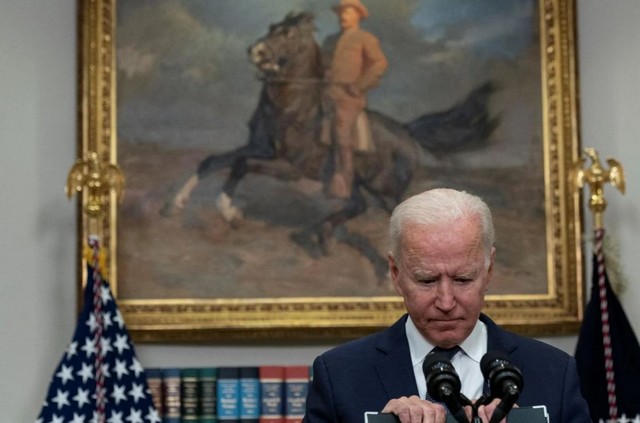
Just hours before I sat down to draft this, the President of the United States gave a speech in which he tried to defend the honor of this war—a defense that is frankly offensive, and that I think most offends the families of the injured and the dead. President Biden then went on to assert that our erstwhile ally, Osama bin Laden, had been brought to justice—our noble lie. He could have been brought to justice, but we shot him instead.

He wasn’t even in Afghanistan.

If there are any lessons to be learned from this tragic sequel to Saigon, you can be assured, we will not learn them. We will just sit by as the people of Afghanistan—many of whom were as deluded by American promises as Americans themselves—cling to hopes and cling to planes and fall, lost to the desert of theocratic rule. Some will say, they didn’t fight! They get what they deserve! To which I say, “And what do we deserve?”

A fractious country comprised of warring tribes, unable to form an inclusive whole; unable to wade beyond shallow differences in sect and identity in order to provide for the common defense, promote the general welfare, and secure the blessings of liberty to themselves and their posterity, and so they perish—in the span of a breath—without ever reaching the promised shore.

Today, the country this describes is Afghanistan. Tomorrow, the country this describes might be my own.

Born in North Carolina in 1983 Edward Snowden, former CIA officer and whistleblower, worked for the National Security Agency through subcontractor Booz Allen in the NSA’s Oahu (Honolulu) office, where he began collecting top-secret documents regarding NSA surveillance practices that he found disturbing.

23 August 2021

Source: www.transcend.org

The U.S. Government Lied for Two Decades about Afghanistan

By Glenn Greenwald

16 Aug 2021 – “The Taliban regime is coming to an end,” announced President George W. Bush at the National Museum of Women in the Arts on December 12, 2001 — almost twenty years ago today. Five months later, Bush vowed: “In the United States of America, the terrorists have chosen a foe unlike they have faced before. . . . We will stay until the mission is done.” Four years after that, in August of 2006, Bush announced: “Al Qaeda and the Taliban lost a coveted base in Afghanistan and they know they will never reclaim it when democracy succeeds. . . . The days of the Taliban are over. The future of Afghanistan belongs to the people of Afghanistan.”

For two decades, the message Americans heard from their political and military leaders about the country’s longest war was the same. America is winning. The Taliban is on the verge of permanent obliteration. The U.S. is fortifying the Afghan security forces, which are close to being able to stand on their own and defend the government and the country.

President George W. Bush announces end of Taliban, Dec. 12, 2021

Just five weeks ago, on July 8, President Biden stood in the East Room of the White House and insisted that a Taliban takeover of Afghanistan was not inevitable because, while their willingness to do so might be in doubt, “the Afghan government and leadership . . . clearly have the capacity to sustain the government in place.” Biden then vehemently denied the accuracy of a reporter’s assertion that “your own intelligence community has assessed that the Afghan government will likely collapse.” Biden snapped: “That is not true. They did not — they didn’t — did not reach that conclusion.”

Biden continued his assurances by insisting that “the likelihood there’s going to be one unified government in Afghanistan controlling the whole country is highly unlikely.” He went further: “the likelihood that there’s going to be the Taliban overrunning everything and owning the whole country is highly unlikely.” And then, in an exchange that will likely assume historic importance in terms of its sheer falsity from a presidential podium, Biden issued this decree:

Q. Mr. President, some Vietnamese veterans see echoes of their experience in this withdrawal in Afghanistan. Do you see any parallels between this withdrawal and what happened in Vietnam, with some people feeling —

THE PRESIDENT: None whatsoever. Zero. What you had is — you had entire brigades breaking through the gates of our embassy — six, if I’m not mistaken.

The Taliban is not the south — the North Vietnamese army. They’re not — they’re not remotely comparable in terms of capability. There’s going to be no circumstance where you see people being lifted off the roof of an embassy in the — of the United States from Afghanistan. It is not at all comparable.

When asked about the Taliban being stronger than ever after twenty years of U.S. warfare there, Biden claimed: “Relative to the training and capacity of the [Afghan National Security Forces} and the training of the federal police, they’re not even close in terms of their capacity.” On July 21 — just three weeks ago — Gen. Mark Milley, Biden’s Chairman of the Joint Chiefs of Staff, conceded that “there’s a possibility of a complete Taliban takeover, or the possibility of any number of other scenario,” yet insisted: “the Afghan Security Forces have the capacity to sufficiently fight and defend their country.”

President Biden dismissing likelihood of Taliban takeover, July 8, 2021

Similar assurances have been given by the U.S. Government and military leadership to the American people since the start of the war. “Are we losing this war?,” Army Maj. Gen. Jeffrey Schloesser, commander of the 101st Airborne Division, asked rhetorically in a news briefing from Afghanistan in 2008, answering it this way: “Absolutely no way. Can the enemy win it? Absolutely no way.” On September 4, 2013, then-Lt. Gen. Milley — now Biden’s Chairman of the Joint Chiefs of Staff — complained that the media was not giving enough credit to the progress they had made in building up the Afghan national security forces: “This army and this police force have been very, very effective in combat against the insurgents every single day,” Gen. Milley insisted.

None of this was true. It was always a lie, designed first to justify the U.S’s endless occupation of that country and, then, once the U.S. was poised to withdraw, to concoct a pleasing fairy tale about why the prior twenty years were not, at best, an utter waste. That these claims were false cannot be reasonably disputed as the world watches the Taliban take over all of Afghanistan as if the vaunted “Afghan national security forces” were china dolls using paper weapons. But how do we know that these statements made over the course of two decades were actual lies rather than just wildly wrong claims delivered with sincerity?

To begin with, we have seen these tactics from U.S. officials — lying to the American public about wars to justify both their initiation and continuation — over and over. The Vietnam War, like the Iraq War, was begun with a complete fabrication disseminated by the intelligence community and endorsed by corporate media outlets: that the North Vietnamese had launched an unprovoked attack on U.S. ships in the Gulf of Tonkin. In 2011, President Obama, who ultimately ignored a Congressional vote against authorization of his involvement in the war in Libya to topple Muammar Qaddafi, justified the NATO war by denying that regime change was the goal: “our military mission is narrowly focused on saving lives . . . broadening our military mission to include regime change would be a mistake.” Even as Obama issued those false assurances, The New York Times reported that “the American military has been carrying out an expansive and increasingly potent air campaign to compel the Libyan Army to turn against Col. Muammar el-Qaddafi.”

Just as they did for the war in Afghanistan, U.S. political and military leaders lied for years to the American public about the prospects for winning in Vietnam. On June 13, 1971, The New York Times published reports about thousands of pages of top secret documents from military planners that came to be known as “The Pentagon Papers.” Provided by former RAND official Daniel Ellsberg, who said he could not in good conscience allow official lies about the Vietnam War to continue, the documents revealed that U.S. officials in secret were far more pessimistic about the prospects for defeating the North Vietnamese than their boastful public statements suggested. In 2021, The New York Times recalled some of the lies that were demonstrated by that archive on the 50th Anniversary of its publication:

Brandishing a captured Chinese machine gun, Secretary of Defense Robert S. McNamara appeared at a televised news conference in the spring of 1965. The United States had just sent its first combat troops to South Vietnam, and the new push, he boasted, was further wearing down the beleaguered Vietcong.

“In the past four and one-half years, the Vietcong, the Communists, have lost 89,000 men,” he said. “You can see the heavy drain.”

That was a lie. From confidential reports, McNamara knew the situation was “bad and deteriorating” in the South. “The VC have the initiative,” the information said. “Defeatism is gaining among the rural population, somewhat in the cities, and even among the soldiers.”

Lies like McNamara’s were the rule, not the exception, throughout America’s involvement in Vietnam. The lies were repeated to the public, to Congress, in closed-door hearings, in speeches and to the press.

The real story might have remained unknown if, in 1967, McNamara had not commissioned a secret history based on classified documents — which came to be known as the Pentagon Papers. By then, he knew that even with nearly 500,000 U.S. troops in theater, the war was at a stalemate.

The pattern of lying was virtually identical throughout several administrations when it came to Afghanistan. In 2019, The Washington Post — obviously with a nod to the Pentagon Papers — published a report about secret documents it dubbed “The Afghanistan Papers: A secret history of the war.” Under the headline “AT WAR WITH THE TRUTH,” The Post summarized its findings: “U.S. officials constantly said they were making progress. They were not, and they knew it, an exclusive Post investigation found.” They explained:

Year after year, U.S. generals have said in public they are making steady progress on the central plank of their strategy: to train a robust Afghan army and national police force that can defend the country without foreign help.

In the Lessons Learned interviews, however, U.S. military trainers described the Afghan security forces as incompetent, unmotivated and rife with deserters. They also accused Afghan commanders of pocketing salaries — paid by U.S. taxpayers — for tens of thousands of “ghost soldiers.”

None expressed confidence that the Afghan army and police could ever fend off, much less defeat, the Taliban on their own. More than 60,000 members of Afghan security forces have been killed, a casualty rate that U.S. commanders have called unsustainable.

As the Post explained, “the documents contradict a long chorus of public statements from U.S. presidents, military commanders and diplomats who assured Americans year after year that they were making progress in Afghanistan and the war was worth fighting.” Those documents dispel any doubt about whether these falsehoods were intentional:

Several of those interviewed described explicit and sustained efforts by the U.S. government to deliberately mislead the public. They said it was common at military headquarters in Kabul — and at the White House — to distort statistics to make it appear the United States was winning the war when that was not the case.

“Every data point was altered to present the best picture possible,” Bob Crowley, an Army colonel who served as a senior counterinsurgency adviser to U.S. military commanders in 2013 and 2014, told government interviewers. “Surveys, for instance, were totally unreliable but reinforced that everything we were doing was right and we became a self-licking ice cream cone.”

John Sopko, the head of the federal agency that conducted the interviews, acknowledged to The Post that the documents show “the American people have constantly been lied to.”

Last month, the independent journalist Michael Tracey, writing at Substack, interviewed a U.S. veteran of the war in Afghanistan. The former soldier, whose job was to work in training programs for the Afghan police and also participated in training briefings for the Afghan military, described in detail why the program to train Afghan security forces was such an obvious failure and even a farce. “I don’t think I could overstate that this was a system just basically designed for funneling money and wasting or losing equipment,” he said. In sum, “as far as the US military presence there — I just viewed it as a big money funneling operation”: an endless money pit for U.S. security contractors and Afghan warlords, all of whom knew that no real progress was being made, just sucking up as much U.S. taxpayer money as they could before the inevitable withdraw and takeover by the Taliban.

In light of all this, it is simply inconceivable that Biden’s false statements last month about the readiness of the Afghan military and police force were anything but intentional. That is particularly true given how heavily the U.S. had Afghanistan under every conceivable kind of electronic surveillance for more than a decade. A significant portion of the archive provided to me by Edward Snowden detailed the extensive surveillance the NSA had imposed on all of Afghanistan. In accordance with the guidelines he required, we never published most of those documents about U.S. surveillance in Afghanistan on the ground that it could endanger people without adding to the public interest, but some of the reporting gave a glimpse into just how comprehensively monitored the country was by U.S. security services.

In 2014, I reported along with Laura Poitras and another journalist that the NSA had developed the capacity, under the codenamed SOMALGET, that empowered them to be “secretly intercepting, recording, and archiving the audio of virtually every cell phone conversation” in at least five countries. At any time, they could listen to the stored conversations of any calls conducted by cell phone throughout the entire country. Though we published the names of four countries in which the program had been implemented, we withheld, after extensive internal debate at The Intercept, the identity of the fifth — Afghanistan — because the NSA had convinced some editors that publishing it would enable the Taliban to know where the program was located and it could endanger the lives of the military and private-sector employees working on it (in general, at Snowden’s request, we withheld publication of documents about NSA activities in active war zones unless they revealed illegality or other deceit). But WikiLeaks subsequently revealed, accurately, that the one country whose identity we withheld where this program was implemented was Afghanistan.

There was virtually nothing that could happen in Afghanistan without the U.S. intelligence community’s knowledge. There is simply no way that they got everything so completely wrong while innocently and sincerely trying to tell Americans the truth about what was happening there.

In sum, U.S. political and military leaders have been lying to the American public for two decades about the prospects for success in Afghanistan generally, and the strength and capacity of the Afghan security forces in particular — up through five weeks ago when Biden angrily dismissed the notion that U.S. withdrawal would result in a quick and complete Taliban takeover. Numerous documents, largely ignored by the public, proved that U.S. officials knew what they were saying was false — just as happened so many times in prior wars — and even deliberately doctored information to enable their lies.

Any residual doubt about the falsity of those two decades of optimistic claims has been obliterated by the easy and lightning-fast blitzkrieg whereby the Taliban took back control of Afghanistan as if the vaunted Afghan military did not even exist, as if it were August, 2001 all over again. It is vital not just to take note of how easily and frequently U.S. leaders lie to the public about its wars once those lies are revealed at the end of those wars, but also to remember this vital lesson the next time U.S. leaders propose a new war using the same tactics of manipulation, lies, and deceit.

Glenn Greenwald – Journalist; co-founder, The Intercept; author, No Place to Hide and forthcoming book on Brazil; animal fanatic & founder of HOPE Shelter.

23 August 2021

Source: www.transcend.org

The Islamic Emirate of Afghanistan Back with a Bang

By Pepe Escobar

The US ‘loss’ of Afghanistan is a repositioning and the new mission is not a ‘war on terror,’ but Russia and China.

Wait until the war is over
And we’re both a little older
The unknown soldier
Breakfast where the news is read
Television children fed
Unborn living, living, dead
Bullet strikes the helmet’s head
And it’s all over
For the unknown soldier

— The Doors, “The Unknown Soldier”

16 Aug 2021 – In the end, the Saigon moment happened faster than any Western intel “expert” expected. This is one for the annals: four frantic days that wrapped up the most astonishing guerrilla blitzkrieg of recent times. Afghan-style: lots of persuasion, lots of tribal deals, zero columns of tanks, minimal loss of blood.

August 12 set the scene, with the nearly simultaneous capture of Ghazni, Kandahar and Herat. On August 13, the Taliban were only 50 kilometers from Kabul. August 14 started with the siege of Maidan Shahr, the gateway to Kabul.

Ismail Khan, the legendary elder Lion of Herat, struck a self-preservation deal and was sent by the Taliban as a top-flight messenger to Kabul: President Ashraf Ghani should step out, or else.

Still on Saturday, the Taliban took Jalalabad – and isolated Kabul from the east, all the way to the Afgan-Pakistan border in Torkham, gateway to the Khyber Pass. By Saturday night, Marshal Dostum was fleeing with a bunch of military to Uzbekistan via the Friendship Bridge in Termez; only a few were allowed in. The Taliban duly took over Dostum’s Tony Montana-style palace.

By early morning on August 15, all that was left for the Kabul administration was the Panjshir valley – high in the mountains, a naturally protected fortress – and scattered Hazaras: there’s nothing there in those beautiful central lands, except Bamiyan.

Exactly 20 years ago, I was in Bazarak getting ready to interview the Lion of the Panjshir, commander Masoud, who was preparing a counter-offensive against … the Taliban. History repeating, with a twist. This time I was sent visual proof that the Taliban – following the classic guerrilla sleeping cell playbook – were already in the Panjshir.

And then mid-morning on Sunday brought the stunning visual re-enactment of the Saigon moment, for all the world to see: a Chinook helicopter hovering over the roof of the American embassy in Kabul.

‘The war is over’

Still on Sunday, Taliban spokesman Mohammad Naeem proclaimed: “The war is over in Afghanistan,” adding that the shape of the new government would soon be announced.

Facts on the ground are way more convoluted. Feverish negotiations have been going on since Sunday afternoon. The Taliban were ready to announce the official proclamation of the Islamic Emirate of Afghanistan in its 2.0 version (1.0 was from 1996 to 2001). The official announcement would be made inside the presidential palace.

Yet what’s left of Team Ghani was refusing to transfer power to a coordinating council that will de facto set up the transition. What the Taliban want is a seamless transition: they are now the Islamic Emirate of Afghanistan. Case closed.

By Monday, a sign of compromise came from Taliban spokesman Suhail Shaheen. The new government will include non-Taliban officials. He was referring to an upcoming “transition administration,” most probably co-directed by Taliban political leader Mullah Baradar and Ali Ahmad Jalali, a former minister of internal affairs who was also, in the past, an employee of Voice of America.

In the end, there was no Battle for Kabul. Thousands of Taliban were already inside Kabul – once again the classic sleeper-cell playbook. The bulk of their forces remained in the outskirts. An official Taliban proclamation ordered them not to enter the city, which should be captured without a fight, to prevent civilian casualties.

The Taliban did advance from the west, but “advancing,” in context, meant connecting to the sleeper cells in Kabul, which by then were fully active. Tactically, Kabul was encircled in an “anaconda” move, as defined by a Taliban commander: squeezed from north, south and west and, with the capture of Jalalabad, cut off from the east.

At some point last week, high-level intel must have whispered to the Taliban command that the Americans would be coming to “evacuate.” It could have been Pakistan intelligence, even Turkish intelligence, with Erdogan playing his characteristic NATO double game.

The American rescue cavalry not only came late, but was caught in a bind as they could not possibly bomb their own assets inside Kabul. The horrible timing was compounded when the Bagram military base – the NATO Valhalla in Afghanistan for nearly 20 years – was finally captured by the Taliban.

That led the US and NATO to literally beg the Taliban to let them evacuate everything in sight from Kabul – by air, in haste, at the Taliban’s mercy. A geopolitical development that evokes suspension of disbelief.

Ghani versus Baradar

Ghani’s hasty escape is the stuff of “a tale told by an idiot, signifying nothing” – without the Shakespearean pathos. The heart of the whole matter was a last-minute meeting on Sunday morning between former President Hamid Karzai and Ghani’s perennial rival Abdullah Abdullah.

They discussed in detail who they were going to send to negotiate with the Taliban – who by then not only were fully prepared for a possible battle for Kabul, but had announced their immovable red line weeks ago – they want the end of the current NATO government.

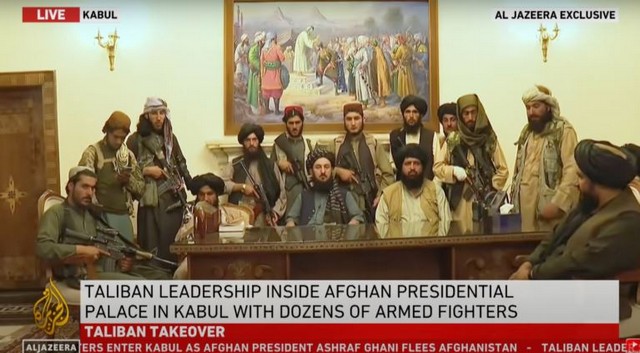
Ghani finally saw the writing on the wall and disappeared from the presidential palace without even addressing the potential negotiators. With his wife, chief of staff and national security adviser, he escaped to Tashkent, the Uzbek capital. A few hours later, the Taliban entered the presidential palace, the stunning images duly captured.

Commenting on Ghani’s escape, Abdullah Abdullah did not mince his words: “God will hold him accountable.” Ghani, an anthropologist with a doctorate from Columbia, is one of those classic cases of Global South exiles to the West who “forget” everything that matters about their original lands.

Ghani is a Pashtun who acted like an arrogant New Yorker. Or worse, an entitled Pashtun, as he was often demonizing the Taliban, who are overwhelmingly Pashtun, not to mention Tajiks, Uzbeks and Hazaras, including their tribal elders.

It’s as if Ghani and his Westernized team had never learned from a top source such as the late, great Norwegian social anthropologist Fredrik Barth (check out a sample of his Pashtun studies here).

Geopolitically, what matters now is how the Taliban have written a whole new script, showing the lands of Islam, as well as the Global South, how to defeat the self-referential, seemingly invincible US/NATO empire.

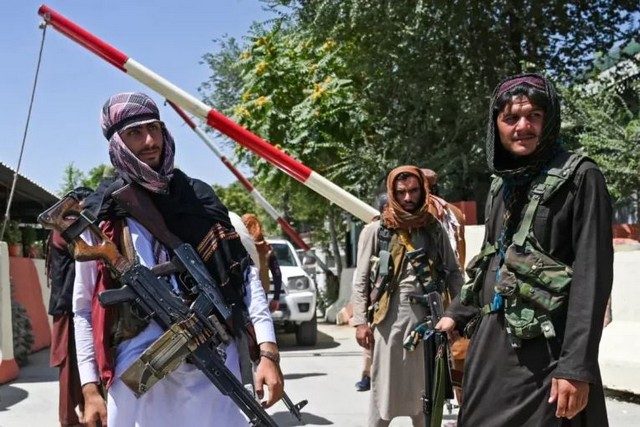
The Taliban did it with Islamic faith, infinite patience and force of will fueling roughly 78,000 fighters – 60,000 of them active – many with minimal military training, no backing of any state – unlike Vietnam, which had China and the USSR – no hundreds of billions of dollars from NATO, no trained army, no air force and no state-of-the-art technology.

They relied only on Kalashnikovs, rocket-propelled grenades and Toyota pick-ups – before they captured American hardware these past few days, including drones and helicopters.

Taliban leader Mullah Baradar has been extremely cautious. On Monday he said: “It is too early to say how we will take over governance.” First of all, the Taliban wants “to see foreign forces leave before restructuring begins.”

Abdul Ghani Baradar is a very interesting character. He was born and raised in Kandahar. That’s where the Taliban started in 1994, seizing the city almost without a fight and then, equipped with tanks, heavy weapons and a lot of cash to bribe local commanders, capturing Kabul nearly 25 years ago, on September 27, 1996.

Earlier, Mullah Baradar fought in the 1980s jihad against the USSR, and maybe – not confirmed – side-by-side with Mullah Omar, with whom he co-founded the Taliban.

After the American bombing and occupation post-9/11, Mullah Baradar and a small group of Taliban sent a proposal to then-President Hamid Karzai on a potential deal that would allow the Taliban to recognize the new regime. Karzai, under Washington pressure, rejected it.

Baradar was actually arrested in Pakistan in 2010 – and kept in custody. Believe it or not, American intervention led to his freedom in 2018. He then relocated to Qatar. And that’s where he was appointed head of the Taliban’s political office and oversaw the signing last year of the American withdrawal deal.

Baradar will be the new ruler in Kabul – but it’s important to note he’s under the authority of the Taliban Supreme Leader since 2016, Haibatullah Akhundzada. It’s the Supreme Leader – actually a spiritual guide – who will be lording over the new incarnation of the Islamic Emirate of Afghanistan.

Beware of a peasant guerrilla army

The collapse of the Afghan National Army (ANA) was inevitable. They were “educated” the American military way: massive technology, massive airpower, next to zero local ground intel.

The Taliban is all about deals with tribal elders and extended family connections – and a peasant guerrilla approach, parallel to the communists in Vietnam. They were biding their time for years, just building connections – and those sleeper cells.

Afghan troops who had not received a salary for months were paid not to fight them. And the fact they did not attack American troops since February 2020 earned them a lot of extra respect: a matter of honor, essential in the Pashtunwali code.

It’s impossible to understand the Taliban – and most of all, the Pashtun universe – without understanding Pashtunwali. As well as the concepts of honor, hospitality and inevitable revenge for any wrongdoing, the concept of freedom implies no Pashtun is inclined to be ordered by a central state authority – in this case, Kabul. And no way will they ever surrender their guns.

In a nutshell, that’s the “secret” of the lightning-fast blitzkrieg with minimal loss of blood, inbuilt in the overarching geopolitical earthquake. After Vietnam, this is the second Global South protagonist showing the whole world how an empire can be defeated by a peasant guerrilla army.

And all that accomplished with a budget that may not exceed $1.5 billion a year – coming from local taxes, profits from opium exports (no internal distribution allowed) and real estate speculation. In vast swaths of Afghanistan, the Taliban were already, de facto, running local security, local courts and even food distribution.

Taliban 2021 is an entirely different animal compared with Taliban 2001. Not only are they battle-hardened, they had plenty of time to perfect their diplomatic skills, which were recently more than visible in Doha and in high-level visits to Tehran, Moscow and Tianjin.

They know very well that any connection with al-Qaeda remnants, ISIS/Daesh, ISIS-Khorasan and ETIM is counter-productive – as their Shanghai Cooperation Organization interlocutors made very clear.

Internal unity, anyway, will be extremely hard to achieve. The Afghan tribal maze is a jigsaw puzzle, nearly impossible to crack. What the Taliban may realistically achieve is a loose confederation of tribes and ethnic groups under a Taliban emir, coupled with very careful management of social relations.

Initial impressions point to increased maturity. The Taliban are granting amnesty to employees of the NATO occupation and won’t interfere with businesses activities. There will be no revenge campaign. Kabul is back in business. There is allegedly no mass hysteria in the capital: that’s been the exclusive domain of Anglo-American mainstream media. The Russian and Chinese embassies remain open for business.

Zamir Kabulov, the Kremlin special representative for Afghanistan, has confirmed that the situation in Kabul, surprisingly, is “absolutely calm” – even as he reiterated: “We are not in a rush as far as recognition [of the Taliban] is concerned. We will wait and watch how the regime will behave.”

The New Axis of Evil

Tony Blinken may blabber that “we were in Afghanistan for one overriding purpose – to deal with the folks who attacked us on 9/11.”

Every serious analyst knows that the “overriding” geopolitical purpose of the bombing and occupation of Afghanistan nearly 20 years ago was to establish an essential Empire of Bases foothold in the strategic intersection of Central and South Asia, subsequently coupled with occupying Iraq in Southwest Asia.

Now the “loss” of Afghanistan should be interpreted as a repositioning. It fits the new geopolitical configuration, where the Pentagon’s top mission is not the “war on terror” anymore, but to simultaneously try to isolate Russia and harass China by all means on the expansion of the New Silk Roads.

Occupying smaller nations has ceased to be a priority. The Empire of Chaos can always foment chaos – and supervise assorted bombing raids – from its CENTCOM base in Qatar.

Iran is about to join the Shanghai Cooperation Organization as a full member – another game-changer. Even before resetting the Islamic Emirate, the Taliban have carefully cultivated good relations with key Eurasia players – Russia, China, Pakistan, Iran and the Central Asian ‘stans. The ‘stans are under full Russian protection. Beijing is already planning hefty rare earth business with the Taliban.

On the Atlanticist front, the spectacle of non-stop self-recrimination will consume the Beltway for ages. Two decades, $2 trillion, a forever war debacle of chaos, death and destruction, a still shattered Afghanistan, an exit literally in the dead of night – for what? The only “winners” have been the Lords of the Weapons Racket.

Yet every American plotline needs a fall guy. NATO has just been cosmically humiliated in the graveyard of empires by a bunch of goat herders – and not by close encounters with Mr Khinzal. What’s left? Propaganda.

So meet the new fall guy: the New Axis of Evil. The axis is Taliban-Pakistan-China. The New Great Game in Eurasia has just been reloaded.

Pepe Escobar is a Brazilian independent geopolitical analyst. He is a frequent contributor to websites and radio and TV shows ranging from the US to East Asia.

23 August 2021

Source: www.transcend.org

Did the NY Fed Confiscate $1.3 Billion in Afghan Gold?

By Tyler Durden | Zero Hedge

Striking Revelations from Afghanistan’s Central Bank Chief

19 Aug 2021 – Yesterday morning, shortly after the acting Afghan central banker chief, Ajmal Ahmady, fled the country (after he was “somehow pushed on board” of a military plane by his colleagues), and warning on twitter that the country has no dollars left domestically (i.e., any dollars and gold currently stored at the local central bank vault have been pillaged by the Taliban even though the country’s new rulers vowed on Saturday that the treasury, public facilities and government offices were the property of the nation and “should be strictly guarded”), sparking domestic bank runs and a record rout in the local currency, the Afghani, some asked what that means for Afghan reserves stored offshore.

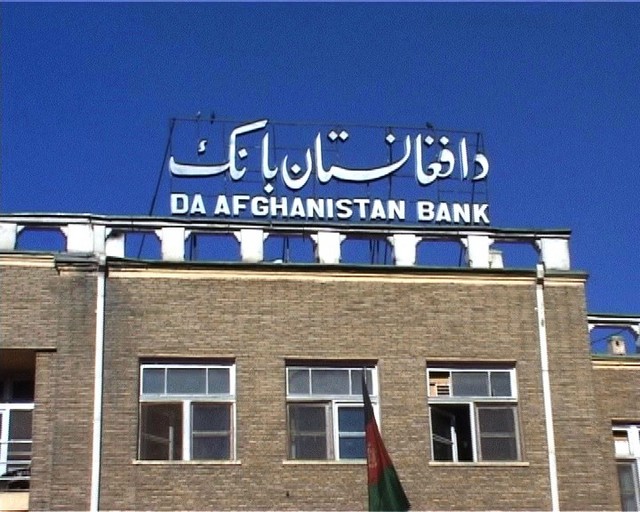
Conveniently, overnight Reuters provided a handy breakdown of the international reserves owned by the DAB (as the Afghani central bank is called). The most recent financial statement posted online shows DAB holds total assets of about $10 billion, including $1.3 billion-worth of gold reserves and $362 million in foreign currency cash reserves, according to currency conversion rates on June 21, the date of the report. Notably, a big chunk of the reserves aren’t held in the country as we observed yesterday.

Digging deeper, the DAB’s June statement stated that the bank owned investments worth $6.1 billion. While the latest report did not provide details of those investments, a breakdown in the year-end report showed that the majority of those investments were in the form of U.S. Treasury bonds and bills, most likely held by proxy at the Fed where they make up a portion of the $3.5 trillion in securities held in custody by the US central bank. As Reuters further notes, investments were made through the International Bank for Reconstruction and Development (IBRD), an arm of the World Bank, or through the FRBNY and held in New York. Among its smaller items are shares in an investment pool by the Bank for International Settlement, which is based in Switzerland, as well as the Economic Cooperation Organisation Trade and Development Bank in Turkey.

This is important because as we also learned yesterday, the US Treasury imposed a freeze on all Afghan reserves, depriving the Taliban – who remain on US international sanctions lists – of much needed cash. An Bidn admin official confirmed as much telling Reuters: “Any central bank assets the Afghan government have in the United States will not be made available to the Taliban.”

Additionally, DAB’s foreign currency cash holdings worth around $362 million consist almost entirely of U.S. dollars and were held at the bank’s head offices and branches as well as the presidential palace, which is now in the hands of the Taliban and is likely lost for ever.

That’s not all that is gone: according to the DAB, some $160 million worth of gold bars and silver coins held at the bank’s vault at the presidential palace. Also gone is a hoard of 2,000-year-old gold jewellery, ornaments and coins known as the Bactrian Treasure, which was held in the Afghan central bank’s vaults. The around 21,000 ancient artifacts were presumed lost until 2003, when they were found in a secret vault in the central bank’s basement, having survived the previous era of Taliban rule undiscovered. This time, they will be lost for good (Afghan lawmakers in January floated the idea of sending the treasures abroad for safe keeping, warning they were vulnerable to theft, according to local broadcaster Tolo News).

Afghan foreign reserves also consist of a pending $650 billion allocation of Special Drawing Rights currency reserves to the Fund’s 190 member countries on Aug. 23, whose fate as of this moment remains unclear. The distribution of the SDRs, the Fund’s unit of exchange based on dollars, euros, yen, sterling and yuan, aims to shore up the reserves of developing countries strained by the COVID-19 pandemic. As an IMF member, Afghanistan is eligible for an allocation of about $455 million, based on its 0.07% quota shareholding in the Fund.

It is unlikely that the IMF will proceed with making any disbursements to the Taliban as insurgents gaining access to those assets would be hard to digest in capitals around the globe. Indeed, in 2019, the IMF suspended Venezuela’s access to its SDRs after more than 50 member countries representing a majority of the Fund’s shareholding refused to recognize Nicolas Maduro’s government as Venezuela’s legitimate ruler following disputed 2018 elections. We doubt there will be an international scramble to legitimize the Taliban, even if the regime is now desperate to portray itself as the moderate, women-respecting Taliban 2.0 (for obvious reason: it knows it needs access to the cash).

But most notably, the central bank’s consolidated statement revealed that the New York Fed’s gold vault located hundreds of feet below street level, held gold bars worth 101,770,256,000 afghanis – or some $1.32 billion – on behalf of the Afghan central bank at end-2020. And since this gold is effectively non-recourse to Afghanistan’s new Taliban government, we asked publicly if this means that the Afghan gold has now been effectively confiscated.

Using gold as leverage would hardly be a first: most recently the Bank of England refused to release some $1 billion worth of Venezuela gold to the Maduro regime after he was found to be an illegitimate president, and instead the monetary authority said it would only deliver the gold to Juan Guaidó, whom Britain had found as “constitutional interim president of Venezuela.” However now that Guaido’s prospects have been snuffed, Venezuela’s gold located in the UK remains in limbo.

A similar fate will befall the Afghanistan, pardon Taliban, gold which is now effectively confiscated by the NY Fed, which will not disburse the precious metal to a regime which the Treasury has designated as illegitimate.

Curiously, after maintaining a radio silence for the past 48 hours, the acting head of the Afghanistan central bank, Ajmal Ahmady, who now functions out of an unknown location after his prompt departure, shared some much needed clarity on the local central bank’s holdings in a lengthy threat on twitter, amusingly using our tweet as a basis to argue that “most assets are held in safe, liquid assets such as Treasuries and gold.”

While we republish Ahmady’s entire thread – which largely confirms what Reuters reported overnight – below, we wish to point out some of his notable disclosures, starting with his breakdown of major investment categories which include the following assets (all figures in billions)

  • Federal Reserve = $7.0
    • U.S. bills/bonds: $3.1
    • WB RAMP assets: $2.4
    • Gold: $1.2
    • Cash accounts: $0.3
  • International accounts = 1.3
  • BIS = $0.7

Ahmady also revealed that “given Afghanistan’s large current account deficit, DAB was reliant on obtaining physical shipments of cash every few weeks.” Since it was the US that was providing said shipments of cash, we look forward to the Congressional hearings that will figure out just how much such cash was deployed to Afghanistan, and how much has now been lost.

In any case, as the acting central bank head notes, “The amount of such cash remaining is close to zero due a stoppage of shipments as the security situation deteriorated, especially during the last few days.”

And then a remarkable admission, suggesting that the Biden administration was fully aware that the Taliban were about to sweep control:

On Friday morning, I received a call notifying me that there would be no further USD shipments (we were expecting one on Sunday, the day Kabul fell).  On Saturday, banks placed very large USD bids as customer withdrawals accelerated.

It is then that the currency collapse and the dollar run began in earnest because as Ahmady notes, “for the first time, I therefore had to limit USD access to both banks and dollar auctions to conserve remaining DAB dollars. We also put out a circular placing maximum withdrawal limits per customer. During the day, afghani depreciated from 81 to almost 100 and then back to 86.”

And then some more remarkable disclosures, which effectively confirm that the US “had good intelligence as to what was going to happen.”

On Saturday at noon, I met with President Ghani to explain that the expected Sunday dollar shipment would not arrive.

On Saturday evening, President Ghani spoke with Secretary Blinken to request dollar shipments to resume. In principle it was approved.

Again, seems ridiculous in retrospect, but did not expect Kabul to fall by Sunday evening.

In any case, the next shipment never arrived. Seems like our partners had good intelligence as to what was going to happen.

Notwithstanding what the US may or may not have known ahead of time when it decided to block the most recent scheduled shipment of cash to Afghanistan, Ahmady takes a step back to observe the strategic implications of what just happened.

First, “in no way were Afghanistan’s international reserves ever compromised. Assets are all held at Fed, BIS, RAMP, or other bank accounts. Easily audited. We had a program with both IMF and Treasury that monitored assets. No money was stolen from any reserve account.”

Repeating what we already knew, the acting central bank chief then says that “given that the Taliban are still on international sanction lists, it is expected (confirmed?) that such assets will be frozen and not accessible to Taliban. I can’t imagine a scenario where Treasury/OFAC would given Taliban access to such funds.”

If indeed the vast majority of Afghanistan reserves remain offshore, Ahmady says that “we can say the accessible funds to the Taliban are perhaps 0.1-0.2% of Afghanistan’s total international reserves. Not much. Without Treasury approval, it is also unlikely that any donors would support the Taliban Government.”

While this is bad news for the new Taliban government which will suddenly find itself with no reserves to keep the country functioning, it is even worse news for local commerce as “local banks have told customers that they cannot return their dollars – because DAB has not supplied banks with dollars.” This is the case “not because funds have been stolen or being held in vault” although they very well may have been – after all we are dealing with the Taliban here – “but because all dollars are in international accounts that have been frozen.”

Somewhat defensively the central banker then tweets that “the Taliban should note this was in no way the decision of DAB or its professional staff. It is a direct result of US sanctions policy implemented by OFAC. Taliban and their backers should have foreseen this result.”

As a reminder, when detailing the coming monetary collapse of Afghanistan we said that “for all the focus on the humanitarian crisis unfolding at an unprecedented pace in Afghanistan, many are forgetting that an even worse economic disaster awaits the “Islamic Emirate” of Afghanistan now that the Taliban are in charge.”

Ahmady concludes as much saying that “Taliban won militarily – but now have to govern. It is not easy.”

It certainly won’t, so to help out his successor, the central banker has a 4-point plan of what to do next:

  • Taliban have to implement capital controls and limit dollar access
  • Currency will depreciate
  • Inflation will rise as currency pass through is very high
  • This will hurt the poor as food prices increase

In short, the Taliban won. But since they are now financially blacklisted and locked out of dollar commerce, the country faces hyperinflation, currency collapse, and economic ruin.

The only question is what happens to the Afghanistan gold located at the NY Fed, and which now appears to be confiscated. We will just remind readers of one notable fact: the NY Fed’s vault is inexplicably connected to the vault next door – the largest gold vault in the worldwhich is located at 1 Chase Manhattan Plaza, and which until 2013 was owned by JPMorgan at which point the building (and attached vault) now known as 28 Liberty Street, was sold to one of the largest privately-owned Chinese conglomerates, Fosun international.

* * *

Below is the full thread from the acting head of the Afghanistan central bank (link here).

This thread is to clarify the location of DAB (Central Bank of Afghanistan) international reserves

I am writing this because I have been told Taliban are asking DAB staff about location of assets. If this is true – it is clear they urgently need to add an economist on their team.

First, total DAB reserves were approximately $9.0 billion as of last week. But this does not mean that DAB held $9.0 billion physically in our vault. As per international standards, most assets are held in safe, liquid assets such as Treasuries and gold

The major investment categories include the following assets (all figures in billions)

(1) Federal Reserve = $7.0
– U.S. bills/bonds: $3.1
– WB RAMP assets: $2.4
– Gold: $1.2
– Cash accounts: $0.3

(2) International accounts = 1.3

(3) BIS = $0.7

Interesting note was that the IMF had approved a SDR650 billion allocation recently. DAB was set to receive approximately $340 million on August 23rd. Not sure if that allocation will now proceed with respect to Afghanistan

Given Afghanistan’s large current account deficit, DAB was reliant on obtaining physical shipments of cash every few weeks. The amount of such cash remaining is close to zero due a stoppage of shipments as the security situation deteriorated, especially during the last few days

On Friday morning, I received a call notifying me that there would be no further USD shipments (we were expecting one on Sunday, the day Kabul fell). On Saturday, banks placed very large USD bids as customer withdrawals accelerated. For the first time, I therefore had to limit USD access to both banks and dollar auctions to conserve remaining DAB dollars.

We also put out a circular placing maximum withdrawal limits per customer. During the day, afghani depreciated from 81 to almost 100 and then back to 86. On Saturday at noon, I met with President Ghani to explain that the expected Sunday dollar shipment would not arrive.

On Saturday evening, President Ghani spoke with Secretary Blinken to request dollar shipments to resume. In principle it was approved. Again, seems ridiculous in retrospect, but did not expect Kabul to fall by Sunday evening.

In any case, the next shipment never arrived. Seems like our partners had good intelligence as to what was going to happen.

Please note that in no way were Afghanistan’s international reserves ever compromised. Assets are all held at Fed, BIS, RAMP, or other bank accounts. Easily audited.

We had a program with both IMF and Treasury that monitored assets. No money was stolen from any reserve account.
Given that the Taliban are still on international sanction lists, it is expected (confirmed?) that such assets will be frozen and not accessible to Taliban.

I can’t imagine a scenario where Treasury/OFAC would given Taliban access to such funds. Therefore, we can say the accessible funds to the Taliban are perhaps 0.1-0.2% of Afghanistan’s total international reserves. Not much. Without Treasury approval, it is also unlikely that any donors would support the Taliban Government.

https://www.washingtonpost.com/us-policy/2021/08/17/treasury-taliban-money-afghanistan/

I believe local banks have told customers that they cannot return their dollars – because DAB has not supplied banks with dollars

This is true. Not because funds have been stolen or being held in vault, but because all dollars are in international accounts that have been frozen.

Taliban should note this was in no way the decision of DAB or its professional staff. It is a direct result of US sanctions policy implemented by OFAC. Taliban and their backers should have foreseen this result

Taliban won militarily – but now have to govern. It is not easy.
Therefore, my base case would be the following:
– Treasury freezes assets
– Taliban have to implement capital controls and limit dollar access
– Currency will depreciate
– Inflation will rise as currency pass through is very high
– This will hurt the poor as food prices increase

_______________________________

Zero Hedge is an English-language financial blog that aggregates news and presents editorial opinions from original and outside sources. The news portion of the site is written by a group of editors who collectively write under the pseudonym “Tyler Durden” (a character from the novel and film Fight Club).

23 August 2021

Source: www.transcend.org
America’s humiliation in Afghanistan reveals a terminal crisis of empire

By Junaid S. Ahmad

There are parallels between the retreats from Saigon and Kabul, but one major difference: there is a new global context, and this time US hegemony will not survive

“Vietnam is a unique case – culturally, historically and politically. I hope that the United States will not repeat its Vietnam blunders elsewhere.”

So wrote the late Pakistani intellectual Eqbal Ahmad, one of the great gurus of matters related to colonialism, hegemony and resistance, in his 1965 essay for The Nation, 1965-1975: How to Tell the Rebels Have Won.

In it, Ahmad offered some sober advice to Washington planners. Sadly, not only was it not heeded, but it no longer makes sense to categorise the compiling and cascading imperial mistakes as merely “blunders”.

Every nation has its unique objective and subjective specificities. These are what ultimately define and situate the country – geostrategically – in the world system. The Vietnamese were, objectively, just another nation in the third world. However, the formidable organised resistance mounted against unquestioned US supremacy is the striking subjective, particularly characteristic of Vietnam at that time.

The Vietnamese insurgency, led by the Viet Cong, was heavily armed and supported by the two other global behemoths at the time: the Soviet Union and China. That was no secret. And despite the enormous human toll on Vietnam, with between three to five million killed and a nation flattened, the more-than-a-decade-long brutal American air and ground war could not defeat the resistance. At least, not militarily.

However, politically speaking, Washington’s message was sent, loud and clear. If a nation of the third world, or the global south, did not submit to America’s grand design for the world, it would pay a heavy price. Even though the Vietnamese were able to humiliate the US militarily, the country was utterly destroyed by massive carpet bombing sustained year after year.

Expansionism by other means

What type of independence and sovereignty was there to be had when there was barely a dent made to unhinged American hegemony. US global domination would continue to manifest itself in the coups and proxy wars that America continued to indulge in – successfully in terms of its imperial ambitions – for the decades to come. The “Vietnam syndrome” did not mean less global interventionism by the US. It was simply expansionism by other – indirect – means. And, anyway, that “syndrome” was short-lived. It had been overcome by the time of the heavy US military deployment in the Gulf War of 1990-91.

The scenarios of Saigon in 1975, and Kabul in 2021, are remarkably similar – despite the considerable ideological differences of the indigenous political forces involved. The utter humiliation of the US in both cases is all too palpable. Nevertheless, there is a crucial difference: the two events take place in vastly different global contexts. And that has defined the way the Taliban has retaken Afghanistan now.

By 1996, it had taken the nascent Taliban two years to defeat a bunch of warlords before establishing its reign over the country from Kabul. The new movement of “students”, or Taliban, were openly and fully backed, in all ways including militarily, by Pakistan. Not only has the Taliban not been supported anything remotely like that this time by Islamabad or elsewhere, but it has also had to confront what on paper is a much more daunting enemy: heavily trained and armed Afghan security and military personnel numbering well over 300,000. And, of course, American air strikes.

We have seen before our very eyes how astonishingly quickly this ethnic Pashtun insurgency took over Afghanistan once the officially announced beginning-of-the-end of the western occupation began. The American puppet government in Saigon lasted a good three years after the US withdrawal there in 1972. Indeed, even the Soviet puppet regime in Kabul lasted a good three years after the Soviets withdrew in 1989. The Ashraf Ghani government, on the other hand, collapsed even before the American deadline for withdrawal.

Syria’s ‘moderate rebels’

To emphasise this fact again: the Taliban today, unlike the Taliban of the 1990s, has accomplished what it has in Afghanistan more or less on its own. It becomes remarkable when comparing its achievement with the lack thereof, for example, of the “moderate rebels” in Syria. Funded to the tune of hundreds of millions of dollars (maybe billions) and armed to the teeth by an array of both regional actors as well as western ones (principally the US), this not-so-moderate proxy opposition could not bring down the Assad regime.

However critical Russian and Iranian/Hezbollah support was for the Syrian government, it in no way approximates the scale of the two decades of western occupation of Afghanistan. The country has witnessed 20 years of US/Nato air strikes, ground operations by up to 150,000 foreign forces, an equal if not larger number of mercenaries and private contractors, and the arming and training of the Afghan National Army (ANA) and security personnel – with a tally of around $2tn for this entire venture. Only to see, in the end, the propped-up puppet fiefdom in Kabul lose power so quickly and so embarrassingly when having to confront any resistance on its own.

The larger political meaning of what has happened now in Afghanistan is what distinguishes it from the fall of Saigon in 1975. The war and military defeat in Vietnam, as Eqbal Ahmad noted, was a colossal American blunder. Beyond its geopolitical significance, the Vietnam war took a tragic human toll of epic proportions.

But the US could easily survive that military defeat – again, politically speaking. It maintained its global hegemonic status of the superpower that “calls all the shots”. A country dreaming of independence and sovereignty may put up a valiant resistance to the American imperium, but even if such resistance “wins”, as the Viet Cong did, its country would have been flattened to a moonscape. Ultimately, such a nation would be politically and economically compelled to return to its subservient status in the US-run global order.

America’s precipitous decline

And that is what differentiates the Saigon defeat in 1975 from the Kabul one in 2021. Over the past few decades, the US has gone from a steady decline as the hegemonic power to a precipitous one. The disastrous wars in Iraq and Afghanistan have further validated such an assessment.

Thus, what has occurred in Afghanistan is not just another imperial “blunder”. It is a naked manifestation, with its startling sequence of events and spectacular optics, of the terminal crisis of empire. The past two weeks, culminating in the Taliban’s capture of Kabul, represent nothing less than the final stage of the post-war American imperium.

Rather than simply examining the two events in and of themselves – Saigon in 1975 and Kabul in 2021, respectively – we must evaluate the objective structural global position of the US both before and after each military intervention. And therein lies the crux of the matter. The US was utterly dominant both before and after the blunder in Vietnam. Even after that blunder, the world was still divided between the winning West and the remaining Rest. Prosperity would still be primarily found in New York, London, Berlin, and so on.

That is no longer the case. The fall of Kabul was symptomatic and a product of the decades-long process of the severe weakening of American power, authority, legitimacy – in short, its hegemony. The world has become definitively multipolar, especially with the phenomenal rise of China. There has been a profound decentring of the West in the world system that it has attempted to dominate for more than 500 years now. In other words, the world is not necessarily buying the “West knows/is best” mantra anymore.

And prosperity in 2021 can be found in Doha, Shanghai, Singapore, and so on.

The retreating US forces in Kabul, therefore, may not only be the symbolic death knell of American exceptionalism and expansionism – narratives and processes that define the nation since its birth. It may also be one of the last pages of the chapter of Eurocentric history that arguably began in 1492.

The surge of American militarism at the beginning of this century is akin to the vociferous roars of the king of the jungle, meant to compensate for and conceal its irreversible wounded and weakened condition. The anxious lion may be in partial denial, but deep down it knows that its deranged actions are no longer merely mistakes or blunders, but the logical outcome of its emaciated predicament.

After Saigon in 1975, the American sheriff could simply pull up his bootstraps and get back to the business of running the world. After Kabul in 2021, the sheriff will have to belatedly acknowledge that he no longer is the only sheriff in town.

The views expressed in this article belong to the author and do not necessarily reflect the editorial policy of Middle East Eye

Junaid S. Ahmad teaches Religion and World Politics and is the Director of the Center for the Study of Islam and Decoloniality, Islamabad, Pakistan

23 August 2021

Source: www.middleeasteye.net

Blood in the sand

By Jeffrey D. Sachs

The magnitude of the US’s failure in Afghanistan is breathtaking. It is not a failure of Democrats or Republicans, but an abiding failure of American political culture, reflected in US policymakers’ lack of interest in understanding different societies. And it is all too typical.

Almost every modern US military intervention in the developing world has come to rot. It’s hard to think of an exception since the Korean War. In the 1960s and first half of the 1970s, the US fought in Indochina – Vietnam, Laos, and Cambodia – eventually withdrawing in defeat after a decade of grotesque carnage. President Lyndon B. Johnson, a Democrat, and his successor, the Republican Richard Nixon, share the blame.

In roughly the same years, the US installed dictators throughout Latin America and parts of Africa, with disastrous consequences that lasted decades. Think of the Mobutu dictatorship in the Democratic Republic of Congo after the CIA-backed assassination of Patrice Lumumba in early 1961, or of General Augusto Pinochet’s murderous military junta in Chile after the US-backed overthrow of Salvador Allende in 1973.

“Almost every modern US military intervention in the developing world has come to rot”

In the 1980s, the US under Ronald Reagan ravaged Central America in proxy wars to forestall or topple leftist governments. The region still has not healed.

Since 1979, the Middle East and Western Asia have felt the brunt of US foreign policy’s foolishness and cruelty. The Afghanistan war started 42 years ago, in 1979, when President Jimmy Carter’s administration covertly supported Islamic jihadists to fight a Soviet-backed regime. Soon, the CIA-backed mujahedeen helped to provoke a Soviet invasion, trapping the Soviet Union in a debilitating conflict, while pushing Afghanistan into what became a forty-year-long downward spiral of violence and bloodshed.

Across the region, US foreign policy produced growing mayhem. In response to the 1979 toppling of the Shah of Iran (another US-installed dictator), the Reagan administration armed Iraqi dictator Saddam Hussein in his war on Iran’s fledgling Islamic Republic. Mass bloodshed and US-backed chemical warfare ensued. This bloody episode was followed by Saddam’s invasion of Kuwait, and then two US-led Gulf Wars, in 1990 and 2003.

The latest round of the Afghan tragedy began in 2001. Barely a month after the terror attacks of September 11, President George W. Bush ordered a US-led invasion to overthrow the Islamic jihadists that the US had backed previously.

His Democratic successor, President Barack Obama, not only continued the war and added more troops, but also ordered the CIA to work with Saudi Arabia to topple Syrian President Bashar al-Assad, leading to a vicious Syrian civil war that continues to this day. As if that was not enough, Obama ordered NATO to oust Libyan leader Muammar Gaddafi, inciting a decade of instability in that country and its neighbours (including Mali, which has been destabilised by inflows of fighters and weapons from Libya).

“Underlying all of these failures is the US foreign-policy establishment’s belief that the solution to every political challenge is military intervention or CIA-backed destabilisation”

What these cases have in common is not just policy failure.

Underlying all of them is the US foreign-policy establishment’s belief that the solution to every political challenge is military intervention or CIA-backed destabilisation.

That belief speaks to the US foreign-policy elite’s utter disregard of other countries’ desire to escape grinding poverty. Most US military and CIA interventions have occurred in countries that are struggling to overcome severe economic deprivation. Yet instead of alleviating suffering and winning public support, the US typically blows up the small amount of infrastructure the country possesses, while causing the educated professionals to flee for their lives.

Even a cursory look at America’s spending in Afghanistan reveals the stupidity of its policy there. According to a recent report by the Special Inspector General for Afghanistan Reconstruction, the US invested roughly $946bn between 2001 and 2021. Yet almost $1tn in outlays won the US few hearts and minds.

Here’s why. Of that $946b, fully $816bn, or 86%, went to military outlays for US troops. And the Afghan people saw little of the remaining $130bn, with $83bn going to the Afghan Security Forces. Another $10bn or so was spent on drug interdiction operations, while $15bn was for US agencies operating in Afghanistan. That left a meager $21bn in “economic support” funding.

Yet even much of this spending left little if any development on the ground, because the programmes actually “support counterterrorism; bolster national economies; and assist in the development of effective, accessible, and independent legal systems.”

“Instead of alleviating suffering and winning public support, the US typically blows up the small amount of infrastructure the country possesses, while causing the educated professionals to flee for their lives”

In short, less than 2% of the US spending on Afghanistan, and probably far less than 2%, reached the Afghan people in the form of basic infrastructure or poverty-reducing services.

The US could have invested in clean water and sanitation, school buildings, clinics, digital connectivity, agricultural equipment and extension, nutrition programmes, and many other programmes to lift the country from economic deprivation. Instead, it leaves behind a country with a life expectancy of 63 years, a maternal mortality rate of 638 per 100,000 births, and a child stunting rate of 38%.

The US should never have intervened militarily in Afghanistan – not in 1979, nor in 2001, and not for the 20 years since. But once there, the US could and should have fostered a more stable and prosperous Afghanistan by investing in maternal health, schools, safe water, nutrition, and the like.

Such humane investments – especially financed together with other countries through institutions such as the Asian Development Bank – would have helped to end the bloodshed in Afghanistan, and in other impoverished regions, forestalling future wars.

Yet American leaders go out of their way to emphasise to the American public that we won’t waste money on such trivialities. The sad truth is that the American political class and mass media hold the people of poorer nations in contempt, even as they intervene relentlessly and recklessly in those countries. Of course, much of America’s elite hold America’s own poor in similar contempt.

In the aftermath of the fall of Kabul, the US mass media is, predictably, blaming the US failure on Afghanistan’s incorrigible corruption. The lack of American self-awareness is startling. It’s no surprise that after trillions of dollars spent on wars in Iraq, Syria, Libya, and beyond, the US has nothing to show for its efforts but blood in the sand.

Jeffrey D. Sachs, University Professor at Columbia University, is Director of the Center for Sustainable Development at Columbia University and President of the UN Sustainable Development Solutions Network.

19 August 2021

Source: english.alaraby.co.uk

White Feminists Wanted to Invade

By Rafia Zakaria

On a March evening in 1999, a wealthy Hollywood socialite named Mavis Leno, the wife of late-night superstar Jay Leno, held a fundraiser to which she invited her rich and/or famous friends. The event was to benefit the Feminist Majority Foundation’s campaign to “End Gender Apartheid in Afghanistan,” which highlighted the barbaric conditions of women living under Taliban rule. (Nowhere, of course, did anyone point out that the Taliban owed its strength at least in part to US foreign policy.) Before long, actresses like Susan Sarandon and Meryl Streep signed on and made the issue a cause célèbre.

Then came September 11, 2001, and the revelation that the organization behind the attack, Al Qaeda, was holed up in Afghanistan. The George W. Bush administration, always looking for justifications for war, found just the thing in the Feminist Majority’s campaign. By November, first lady Laura Bush was arguing that the reason for the war was to “liberate Afghan women.” By November 20, the leaders of the Feminist Majority—including Ellie Smeal, the former head of the National Organization for Women—were attending events at the State Department and meeting with administration officials. The spring 2002 issue of Ms. magazine called the invasion a “coalition of hope,” adding bombs to the feminist toolkit.

The brand of feminism those women collectively championed is what I call “white feminism,” meaning that it refuses to consider the role that whiteness and racial privilege play in universalizing white feminist concerns, agendas, and beliefs as those of all feminism and all feminists. Of course, not all feminists who are white are white feminists. No matter the person’s skin color and gender, advocating for an anti-racist, anti-capitalist feminism is a threat to white feminism.

Yet both within and outside the US government, the white feminists decided that war and occupation were essential to freeing Afghan women. Notable examples include then-Senator Hillary Clinton, who enthusiastically voted for the war, calling it a “restoration of hope,” and New York Representative Carolyn Maloney, who wore a blue burka to the House floor and made impassioned declarations about how claustrophobic the garment was. The enduring logic was that if they thought military intervention was a good thing, then Afghan women would too.

But groups like the Revolutionary Association of the Women of Afghanistan, a political organization that has denounced religious fundamentalism since its founding in 1977, opposed the US attacks and the US-backed government. Afghan feminists never asked for Meryl Streep’s help—let alone US air strikes.

The belief that white women knew what’s best for Afghan women goes deeper than Hollywood and political posturing. The hundreds of millions in development aid that the United States poured into its savior-industrial complex relied on second-wave feminists’ assumption that women’s liberation was the automatic consequence of women’s participation in a capitalist economy. One of the most expensive development programs that Americans brought to Afghanistan was PROMOTE, which cost $418 million and was intended to provide 75,000 Afghan women with training, internships, and jobs. When the program was audited in 2016, it was almost impossible to trace where all the money had gone. The influx of cash wasn’t just wasted; it helped kill Indigenous feminisms that might have worked to achieve more culturally relevant goals. The aid economy meant that Afghan women activists abandoned their own programs and rushed to American ones.

White feminism’s refusal to disaggregate whiteness—and its colonialist and oppressive associations—from feminism meant that the blueprint for empowerment was acting, by and large, like white women. The result was that those opposing the US presence saw authenticity in rejecting all that came via white feminism, which helped discredit all feminist ideas.

White feminism is a trickle-down feminism, and Afghan women are not the only ones it condescends to; Black women, Latina women, Asian women, and other women of color have trouble gaining entry into policy-making circles because their experiences of being a feminist, surviving as a single mother, working on a factory floor, or enduring years of racial discrimination are considered irrelevant. Those roles go to elite white women who have climbed the ladder, nudging out the very women they allegedly wish to help.

Many of the would-be white saviors of Afghan women are now insisting, with the same dogged and willful blindness that led them to support US imperialism in the first place, that the United States should have kept its military in the country to protect Afghan women. But an ill-conceived project cannot be fixed by continuing to make disastrous decisions. The best outcome would be for the white feminists who aided in the destruction of a country to forever forswear such lethal meddling.

Rafia Zakaria is the author of The Upstairs Wife: An Intimate History of Pakistan (Beacon, 2015), Veil (Bloomsbury, 2017), and Against White Feminism (W.W. Norton, 2021).

17 August 2021

Source: www.thenation.com

And so it begins again: The media recycles Afghanistan war lies

By Patrick Martin

In the days following the desperate evacuation of US troops from Afghanistan, the corporate press has launched an international propaganda campaign raising concerns for the “human rights” of residents of the Central Asian country.

For the last 20 years, the corporate media and imperialist powers of the world raised no objections as the United States killed over 100,000 people, set up black site torture chambers, carried out drone assassinations and robbed the country of its resources. The major imperialist powers joined the US in the invasion and occupation. The corporate press facilitated the commission of horrific crimes by promoting the war as a “just cause,” a necessary response to September 11, 2001. Those who exposed the real character of the war in Afghanistan—including Julian Assange, Chelsea Manning and Daniel Hale—were locked up in prison.

But now, all of the tropes employed by the corporate media to “sell” to world public opinion the invasion and occupation of Afghanistan in 2001, no matter how moth-eaten and worn out, are being revived.

This serves two purposes: to paper over the war crimes carried out by the US in the past and to prepare public opinion for an intensification of imperialist pressure on the war-ravaged population.

Reports of the suppression of a handful of small protests against the new government give few details about the nature of that “opposition,” including whether those engaged in the protests are acting at the instigation of the thousands of CIA agents and “contractors” left behind in Afghanistan by the US government.

The media campaign over repression, however, is entirely cynical and two-faced. Nothing done in Jalalabad or Kabul this week comes close to the mass slaughter carried out by the US on a weekly basis over the course of the last 20 years.

The media is not up in arms over Egyptian military dictator Abdel Fattah el-Sisi, whose troops and police killed more than a thousand protesters at a single anti-government demonstration held after his 2013 military coup. El-Sisi, with tens of thousands imprisoned, thousands of them under death sentences, is now one of the pillars of US foreign policy in the Middle East.

The Democratic and Republican parties and the entire corporate media are replete with pious denunciations of the treatment of Afghan women. This same political establishment paid no attention as tens of thousands of Afghan women were killed by American soldiers in US drone strikes or through the devastating social collapse caused by the invasion and occupation.

The New York Times, the mouthpiece of the Democratic Party and identity politics, has taken the lead on this issue, publishing an op-ed column by Malala Yousefzai, the one-time teenage advocate of education for girls and survivor of an assassination attempt by the Pakistani Taliban. She urges Americans to “listen to the voices of Afghan women and girls. They are asking for protection, for education, for the freedom and the future they were promised …”

But again, the media double standard is of staggering hypocrisy. In Saudi Arabia, the leading US ally among the Arab nations, women cannot drive, vote or appear in public except under escort of a male relative. Adultery is a crime punishable by death, although Shi’ites engaged in political opposition to the Sunni-based monarchy are the main victims of the mass beheadings that take place on a regular basis.

None of these barbaric practices has threatened the close collaboration of the Pentagon that makes possible the ongoing Saudi war in Yemen, which uses mass starvation as a major weapon, enforced by a naval blockade and air strikes guided by US satellite intelligence.

The media and military-political establishment also repeat concerns that Afghanistan will become a “safe haven” for Al Qaeda. We have heard this one before. This was, after all, the main pretext for the US invasion in October 2001, one month after the September 11 terrorist attacks.

It has long been known that Al Qaeda was first formed under Osama bin Laden’s leadership in the 1980s, as part of the US-backed guerrilla war by Islamic fundamentalists against the Soviet-backed government of Afghanistan. But after the interval of ferocious hostility that included the 2001 terrorist attacks, Al Qaeda has returned to its roots as an instrument of US imperialism in both Libya and Syria.

In Libya, the commander of the NATO bombing campaign described his role as acting as “Al Qaeda’s air force,” since the Islamists were carrying out the ground war against the regime of Muammar Gaddafi. In Syria, both Al Qaeda and its offshoot ISIS received backing from US allies like Saudi Arabia and Qatar, as well as direct support from the CIA.

Meanwhile, ISIS efforts to gain a foothold in Afghanistan have erupted in violent clashes with the Taliban and their allied militia, such as the Haqqani network. Those raising the supposed danger of renewed anti-US terrorism emanating from Afghanistan have not been able to identify any actual terrorists who would be empowered by the new regime in Kabul.

Biden made a significant concession to the pressure to reverse his policy when he declared, in the course of his interview with ABC News broadcast Thursday morning, that the August 31 deadline for the completion of US evacuation operations from the airport was flexible. “If there’s American citizens left, we’re going to stay to get them all out,” he said.

This formulation is so elastic that it could well serve to justify a nearly indefinite extension of the US occupation of the Kabul airport and even renewed American military aggression against the country.

The more fundamental obstacle to a renewal of American aggression against Afghanistan, however, is not in that tortured country. It is the opposition within the United States itself. A poll conducted by the Associated Press during the final week of the collapse of the Afghan puppet regime found that nearly two-thirds of those interviewed thought the Afghanistan war not worth fighting.

The American people are adamantly opposed to further intervention in Afghanistan. That is one reason for the increasingly hysterical character of the media campaign for war. The US ruling elite senses this and through its media outlets expresses a fear that it is losing its political grip on the majority of the US population. The American people, and above all the American working class, are coming to their own conclusions about vital questions of war and peace and calling into question the social, economic and political structures of American capitalism.

Originally published by WSWS.org

20 August 2021

Source: countercurrents.org

Afghanistan’s “Color Revolution”? Narcotics and the Opium Trade

By Prof Michel Chossudovsky

The U.S. has not been thrown out of Afghanistan. Quite the opposite.

Washington is involved in managing the strategic transition towards the formation of a Taliban Islamic Emirate.

Earlier reports suggested that a so-called interim Afghan administration was to be headed by Prof. Ali Ahmad Jalali, who just so happens to be a US citizen.

“Regime Change” in Afghanistan?

Troop withdrawals coupled with a US sponsored color revolution?

The Doha Negotiations with the Taliban

America’s withdrawal from Afghanistan has been the object of extensive negotiations between Washington and the Taliban. An earlier deal was signed in Doha in late February 2020 during the Trump administration.

The transition timeline had been agreed upon. On August 09, 2021, US special envoy Zalmay Khalilzad arrived in Doha with a US team of negotiators for 3 days of top level discussions with representatives of both the Taliban and the defunct government of Ashraf Ghani.

In the wake of the Doha meeting on August 13, the “Green Light” was given to Taliban Forces to capture Kabul as well as most of the provincial capitals. (See Southfront, August 18)

The evacuation of the US embassy described by the media was a smokescreen. The entry of the Taliban into Kabul which prompted the US to evacuate its embassy, had been carefully planned and agreed upon. The presidential palace was taken without a fight.

On August 13, reports suggested that the candidacy of Ali Ahmad Jalali, a distinguished professor at the Washington based National Defense University‘s Near East South Asia Center for Strategic Studies (NESA) (and a former Minister of the Interior in the Hamid Karzai government) had been contemplated to lead a so-called interim administration. Based at Fort Lesley J. McNair, Washington DC, The National Defense University is a partner institution of the US Department of Defense.

While the US is involved in astutely managing the transition towards the formation of a pro-US Taliban government, the appointment of Professor Ali Ahmad Jalali who lives in Maryland is unconfirmed. According to a Reuters Report (August 16):

“Former Afghan Interior Minister Ali Jalali on Monday said he was never under consideration to become transitional president for Afghanistan and that he would never have accepted the position.

“The bottom line is that I’ve never been contacted. I’ve never been considered. I never thought about it, and I’m not interested,” Jalali, who served as Afghanistan’s first interior minister after a 2001 U.S.-led invasion, told Reuters.

Jalali, who is a professor at the U.S. National Defense University in Washington, spoke by telephone from Washington.

He was responding to a Reuters report that quoted three diplomatic sources on Sunday as saying he would likely be named to head a transitional administration in Kabul as the Taliban took over the capital.”

According to SouthFront, (unconfirmed): “Taliban’s co-founder and second-in-command, Abdul Ghani Baradar is expected to become Afghanistan’s President…” .

Flashback to 9/11: Why was Afghanistan Invaded on October 7, 2001?

Almost 20 years later, both the media and the Biden administration, in chorus, continue to point to the 9/11 attacks and the role of Al Qaeda, allegedly supported by Afghanistan, when in fact (amply documented) Al Qaeda was an intelligence asset created by the CIA.

Lest we forget, Osama bin Laden had been recruited by National Security Advisor Zbigniew Brzezinski in the 1980s during the so-called Soviet-Afghan war.

The legal argument used by Washington and NATO to invade Afghanistan was that the September 11, 2001 attacks constituted an undeclared “armed attack” “from abroad” by an unnamed foreign power, and that consequently “the laws of war” apply, allowing the nation under attack, to strike back in the name of “self-defense”.

NATO’s North Atlantic Council meeting in Brussels on September 12, 2001, adopted the following resolution:

“if it is determined that the [September 11, 2001] attack against the United States was directed from abroad [Afghanistan] against “The North Atlantic area“, it shall be regarded as an action covered by Article 5 of the Washington Treaty”. (emphasis added)

The bombing and invasion of Afghanistan which commenced on October 7, 2001 was described as a “campaign” against “Islamic terrorists”, rather than a war.

To this date, however, there is no proof that Al Qaeda was behind the 9/11 attacks.

Even if one accepts the official 9/11 narrative, there is no evidence that Afghanistan as a nation-state was behind or in any way complicit in the 9/11 attacks. There were no Afghan jet fighters in the skies of New York on September 11, 2001.

The Afghan government in the weeks following 9/11, offered on two occasions through diplomatic channels to deliver Osama bin Laden to US Justice, if there were preliminary evidence of his involvement in the 9/11 attacks. These offers were casually refused by Washington. In the words of George W. Bush, it’s “non-negotiable”.

The Smoking Gun. Narcotics and the Afghan Opium Trade

One of the key strategic objectives of the October 2001 invasion of Afghanistan was to restore the opium trade following the Taliban government’s successful 2000-2001 drug eradication program which led to a 94% collapse in opium production (down to 8000 hectares in 2001, see graph below).

At the October 2001 session of the UN General Assembly (which took place barely a few days after the beginning of the 2001 bombing raids), the Taliban Government was congratulated by the United Nations: “No other UNODC member country was able to implement a comparable program”.

What is the Future of the Narcotics Economy?

How will this multibillion trade (which until recently was protected by US forces) be affected by the withdrawal of US troops from Afghanistan? Private mercenary companies are currently involved in protecting the opium trade.

There is a geopolitical power play with Russia, China, Iran and Turkey. Afghanistan is integrated into China’s Belt and Road. How this will evolve is yet to be determined.

Strategic control over the Afghan opium trade will play a key role.

Taliban Out, Taliban In:

The US initiated a war on October 7, 2001 against the Taliban government which had unduly sabotaged the opium economy in 2000-2001. That war lasted more than nineteen years.

And now the Biden Administration is involved in pushing for the formation of a renewed Taliban proxy regime which will unconditionally endorse the lucrative multibillion dollar trade in narcotics.

A followup article on the role of China is envisaged.

*
Michel Chossudovsky is an award-winning author, Professor of Economics (emeritus) at the University of Ottawa, Founder and Director of the Centre for Research on Globalization (CRG), Montreal, Editor of Global Research.

19 August 2021

Source: www.globalresearch.ca

The Spoils of War: Afghanistan’s Multibillion Dollar Heroin Trade

By Prof Michel Chossudovsky

Author’s Note and Update

The US opioid crisis broadly defined bears a relationship to the export of heroin out of Afghanistan.

How will  this multibillion trade (which until recently was protected by US forces) be affected by the withdrawal of US troops from Afghanistan. Private mercenary companies are also involved in supporting the opium trade.

The US withdrawal has been the object of extensive negotiations between US-NATO and the Taliban. A deal was signed in Doha in late February 2020
[3] at the outset of the Biden Administration.

Did the U.S. reach a “secret agreement” with the Taliban regarding the opium trade?

Restoration of the Drug Trade. Did the Invasion of Afghanistan Contribute to the Increase in Heroin Addiction

What is important to understand is that one of the key strategic objectives of the 2001 war on Afghanistan was to restore the opium tradefollowing the Taliban government’s successful 2000-2001 drug eradication program which led to a 94% collapse in opium production. This program was supported by the United Nations. (For details, see below)

In the course of the last 19 years following the US-NATO October 2001 invasion,  there has been a surge in Afghan opium production. In turn the number of heroin addicts in the US has increased dramatically. Is there a relationship?

There were 189,000 heroin users [4] in the US in 2001, before the US-NATO invasion of Afghanistan.

By 2016 that number went up to 4,500,000 (2.5 million heroin addicts and 2 million casual users).

In 2020, at the hight of the covid crisis, deaths from opioids and drug addiction increased threefold.

It’s Big Money for Big Pharma.

[5]

Graph based on CDC data Source PBS [6]

In a bitter irony, Johnson and Johnson which is marketing its “experimental” COVID-19 adenovirus viral vector vaccine, just so happens to be a major producer of prescription opioids.

In November 2020 a “a tentative $26 billion settlement  [7]was reached with counties and cities across America which sued J and J and its distributors on behalf of opioid victims.

This  class action law suit was “the largest federal court case in American history”.  It coincided with the launching of the Covid vaccine initiative in early November 2020. (For further details see Michel Chossudovsky’s E-Book, Chapter VI [8]).

According to the Washington Post [7]:

Johnson & Johnson and the “Big Three” distributors, McKesson, Cardinal Health and Amerisource Bergen, potentially brings a large measure of legal closure for the companies and will funnel money to communities devastated by an addiction crisis that claims more than 70,000 lives in America every year.  (emphasis added)

Afghanistan currently produces 84 percent of the World’s opium which feeds the heroin and opioid markets.

Lest we forget, the surge in opium production occurred in the immediate wake of the US invasion in October 2001.

Who is protecting opium exports out of Afghanistan?

“In 2000-2001,  the Taliban government –in collaboration with the United Nations– had imposed a successful ban on poppy cultivation. Opium production declined by more than 90 per cent in 2001. In fact the surge in opium cultivation production coincided with the onslaught of the US-led military operation and the downfall of the Taliban regime. From October through December 2001, farmers started to replant poppy on an extensive basis.” (quoted from article below)

The Vienna based UN Office on Drugs and Crime (UNODC) reveals that poppy cultivation in 2012 extended over an area of  more than  154,000 hectares, an increase of 18% over 2011. A UNODC  spokesperson confirmed in 2013 that opium production is heading towards record levels.

In 2014 the Afghan opium cultivation hit a record high, according to the United Nations Office on Drugs and Crime’s 2014 Afghan Opium Survey [9]. (See graph below). A slight decline occurred in 2015-2016.

Click here to continue reading…

17 August 2021