Just International

Rights group: Israeli human rights violations escalated in 2020

By Yumna Patel

2020 was a dismal year for human rights in Palestine, as Israel tightened its grip on the occupied Palestinian territory (oPt) through escalated attacks on Palestinians and their property and the introduction of new laws to further limit Palestinian rights, all in the midst of the COVID-19 pandemic.

A new field report from Palestinian human rights group Al-Haq released this week details the numerous human rights violations that occurred throughout Palestine, particularly in the occupied West Bank, during 2020 — violations that the group said were exacerbated by, and spurred on, by the ongoing coronavirus pandemic.

In the report, Al-Haq states that while Palestinians focused their efforts into combating the spread of the coronavirus in 2020, Israel “seized the opportunity to advance its settler project and intensify repressive measures against Palestinians in all their places of residence.”

Those repressive measures, the group says, included massive home demolitions, land confiscation, settlement expansion, and the violation of freedom of movement and the right to health, among other things.

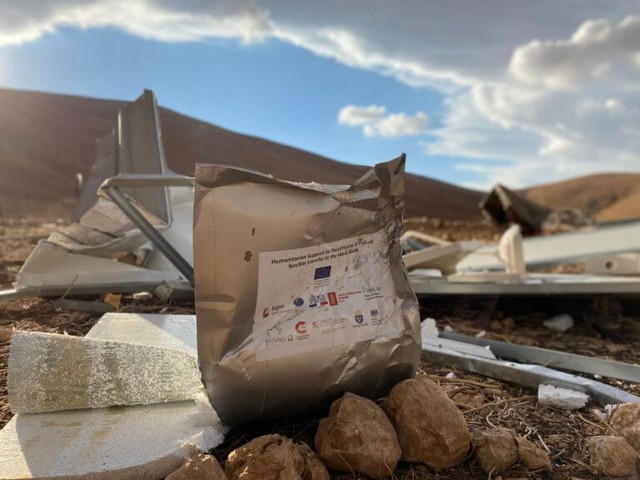
Most “remarkable” of all the Israeli violations documented in 2020 , the group said, was the increasing frequency of demolishing Palestinian homes and structures.

According to Al-Haq, the number of Palestinian structures, both public and private, that were destroyed in 2020, in the midst of the pandemic, amounted to twice the average number of structures destroyed on an annual basis over the past 10 years.

In 2020, the group recorded the demolition of 535 Palestinian private and public structures, compared to an average of 325 demolished structures over the past 10 years (2010-2019).

Of the 535 structures destroyed in 2020, 248 of them were homes, the vast majority of which (242) were demolished under the pretext of lacking Israeli-issued building permits, which are notoriously difficult to obtain.

The other six homes were demolished on punitive grounds — a practice employed by the Israeli government against Palestinians accused of committing attacks against Israelis, and one that rights groups have characterized as “collective punishment.” Israel claims that punitive home demolitions “deter” future attacks, though that claim has been disputed by top Israeli security officials over the years.

Home demolitions in 2020 resulted in the displacement of 941 persons, of which 462 are women and girls, 442 are children, 267 are school students, and 124 are Palestinian refugees already displaced from their original homes, Al-Haq said in its report.

In the case of 69 home demolitions, Israeli authorities did not allow the home owners an opportunity to evacuate their belongings before the demolitions were carried out. Additionally, Al-Haq reported that members of 27 affected families were “violently harassed, attacked, or physically assaulted” during the demolition.

Israeli forces also carried out the demolition of four public structures, including a tent erected for sit-in protests against the Israeli occupation, the foundations of a school, one classroom, and the perimeter wall of a soccer playground that was still under construction.

Today, 500,000 Palestinian structures located inside the boundaries of the Green Line are still under threat of demolition. The UN recently reported that among the structures at risk, are 53 schools located across the West Bank.

As Palestinians were having their homes destroyed at alarming rates, Israeli settlers living illegally in the West Bank and East Jerusalem continued to benefit from Israel’s construction and planning policies. In 2020, Israel confiscated 20,030 dunums (4,949 acres) of land for settlement expansion throughout the OPT.

According to settlement watchdog Peace Now, 2020 saw the highest level of settlement construction plan approvals per year in the past two decades, with 12,159 housing units approved for Israeli settlements last year alone. In comparison, only 245 housing units, many of which already exist, were approved for Palestinians.

Killings & physical violence

In addition to benefiting from the confiscation of Palestinian land, Israel settlers carried out significant amounts of violence against Palestinians in 2020, Al-Haq reported, saying that “of all other Israeli perpetrators, Israeli settlers committed the greater portion of violations.”

The nature of the settler violence included attacks on Palestinians and their property, leaving many Palestinians with physical injuries, the vandalism of Palestinian communities with racist graffiti, preventing Palestinians from accessing their land, and the chopping down, burning, and theft of Palestinian crops.

Al-Haq noted that a majority of the attacks were carried out in the Nablus district in the northern West Bank, with a significant number of attacks taking place in the Palestinian towns and villages that surround the notoriously violent and ultra-nationalist Yitzhar settlement.

In 2020, Israel human rights group B’Tselem documented 248 incidents of settler violence against Palestinians, including: 86 bodily assaults, in which 75 Palestinians were injured; 27 cases of stone-throwing at homes; 17 attacks on moving vehicles; 147 of the attacks were aimed at Palestinian farmers or their property, including 80 cases of damage to trees and crops owned by Palestinians, resulting in more than 3,000 trees vandalized.

B’Tselem noted that 72 instances of settler violence took place in the presence of Israeli soldiers, police officers or security personnel, who did not intervene to stop the assault on the Palestinians or their property.

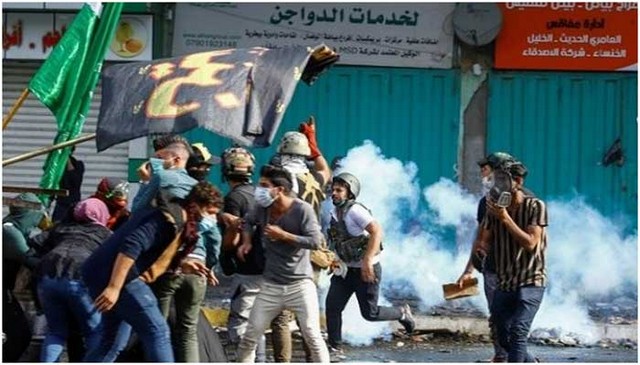
“These violent acts could not take place without the sweeping support provided by the state,” B’Tselem said, adding that in 28 cases of settler violence, Israeli soldiers dispersed the Palestinian residents who were under attack by firing tear gas, stun grenades and rubber-coated metal bullets, at them. In five instances, live fire was used against the Palestinians, and at least 12 Palestinians were arrested during these altercations.

In addition to overseeing and promoting settler violence, Israeli forces themselves were responsible for the killing of 32 Palestinians in 2020, including nine children, Al-Haq reported.

On nine occasions, the group noted, Israeli soldiers prevented Palestinian ambulances from accessing and providing first aid to the injured Palestinians before they succumbed to their wounds. In 19 cases, reflecting the majority of Palestinian’s killed in 2020, Israeli soldiers did not offer any first aid to wounded Palestinians after they had been shot.

According to Al-Haq, 11 Palestinians were killed in “peculiar circumstances,” including four Palestinian prisoners who were believed to have died inside Israeli prison as a result of medical negligence.

In 2020, Israeli authorities withheld the bodies of 18 Palestinians as part of its policy of withholding the bodies of slain Palestinians accused of committing attacks against Israelis — a policy that has been widely condemned by human rights groups as “cruel and without legal justification.”

By the end of 2020, Israel continued to hold the bodies of 69 Palestinians. One of those bodies is that of Ahmad Erekat, who Israeli authorities were accused of “extrajudicially executing” at a military checkpoint in June 2020, and whose case has drawn widespread international attention.

In an attempt to further entrench the policy of impunity that Israel exercises towards its soldiers who kill and injure Palestinians, a draft law was proposed in 2020 that would inhibit “the ability to hold to account soldiers who killed Palestinians during their military service,” Al-Haq said.

In addition to promoting the existing culture of impunity, the draft law “encourages [Israeli] troops to utilize force, in violation of international law, without any expectation of accountability,” the group said.

In addition to killings and home demolitions Israeli forces were responsible for perpetrating more than 1,000 other violations, Al-Haq reported, including arrests, confiscation of property, beatings, physical violence, and torture, among others.

Al-Haq reported that Israeli soldiers also “assaulted Palestinian medics, denied access permits or permits to receive medical treatment, placednrestrictions on the rights to freedom of movement and peaceful assembly, and committed environmental violations.”

“To further tighten Israel’s colonial grip, a draft law was submitted to suppress the
Palestinian right to resistance against the Israeli colonial occupation,” Al-Haq reported, referring to a law that proposes legalizing the expulsion of the families of Palestinians who “carry out operations against the Israeli occupying authorities outside Palestine.”

“This is a more egregious form of collective punishment imposed by the Israeli occupying authorities on the families of those charged with carrying out operations against the Israeli occupation,” the group said.

Additionally, as part of Israel’s “unrelenting efforts to suppress the right to freedom
of expression,” a draft law was presented to the Knesset, Israel’s parliament, that would see a provision added to the existing “Anti-Terrorism Law” prescribing a five year prison sentence for anyone who published or ‘likes’ a post on social media “supporting Palestinian rights and struggle for independence.”

PA & Hamas violations

While Israeli forces and settlers carried out the majority of human rights violations in Palestine in 2020, Palestinians’ rights were also under threat from their own government and authorities in the West Bank and Gaza.

According to Al-Haq, the Palestinian Authority (PA) in the West Bank and Hamas, the de facto authority in the Gaza Strip, perpetuated a number of rights violations “under the guise of the state of emergency” that was “unlawfully” declared at the beginning of the pandemic in March 2020, and has since been extended.

Palestinian authorities were responsible for numerous violations, including arbitrary detention; infringements on the right to a fair trial, right to humane prison conditions, and right to freedom of expression, Al-Haq said.

Ill treatment, torture, beating, physical violence, and confiscation of devices, funds, and equipment were also on the list of violations committed by Palestinian officials during 2020.

The majority of human rights violations perpetrated by Palestinian authorities were
committed by the police in the West Bank (106) and in the Gaza Strip (155); Preventive
Security forces (159); Internal Security forces (148); and the General Intelligence (66), Al-Haq reported.

Palestinian officials have long been accused of widespread corruption and have been criticized for quashing dissent, both in the West Bank and Gaza. Dozens of Palestinian citizens, mainly youth, have been arrested and tortured by the PA over social media posts critical of Abbas and his regime in recent years.

Yumna Patel is the Palestine correspondent for Mondoweiss.

5 March 2021

Source: mondoweiss.net
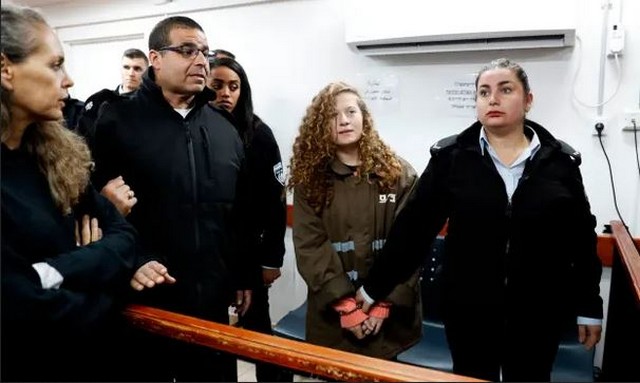
Israel’s military courts for Palestinians are a stain on international justice

By Sahar Francis

The overwhelming majority of Palestinians in the West Bank were born into, and have spent their entire lives under, an Israeli military occupation that violates their right to self-determination. A new report by the UK charity War on Want exposes how a core part of what sustains that occupation is a military judicial system characterised by violations of international law.

The report – Judge, Jury and Occupier – is a deep dive into the diverse ways in which Palestinians’ rights are being violated – from arrest, through interrogation, conviction and jail time. It reflects the experiences of Palestinian lawyers and human rights groups. The prisoners’ rights organisation I lead, Addameer, was proud to contribute evidence.

One of the report’s important contributions is to make clear that, despite the Oslo accords and establishment of the Palestinian Authority (PA) for Palestinians in the West Bank, there has been, and remains, no escape from Israel’s military judicial system.

Regardless of the existence of the PA penal code and judiciary, which operate with limited autonomy in parts of the occupied territory, all Palestinians, wherever they reside in the West Bank, remain subject to the jurisdiction of Israel’s military courts if they fall foul of certain laws.

The impact of this military judicial system is far-reaching, and profoundly discriminatory.

Since 1967, for example, Israel has decreed more than 411 Palestinian organisations illegal, including all the major Palestinian political parties. Palestinian civilians are then prosecuted for “membership and activity in an unlawful association”, a key tool in Israel’s repression of anti-occupation activism.

Public order offences, meanwhile, include the charge of “incitement”, defined as any attempt “to influence public opinion … in a manner which may harm public peace or public order”. Palestinians can also be detained for “bringing into hatred or contempt, or the exciting of disaffection against” authorities.

Other charges heard by the military courts include being in Israel illegally – that is, those caught looking for work without a permit – as well as traffic violations. The latter accounts for some 40% of all Palestinians brought before the military courts each year.

The military judicial system is part of a “separate and unequal” reality. In contrast to Palestinians, Israeli settlers arrested in the West Bank are tried in civilian courts inside Israel. Two populations, two different legal systems – Israel’s largest human rights group is therefore right to call this a form of apartheid.

Within this wider discriminatory system, there are specific and serious violations of international law.

One such violation is torture, a method that the report documents is used routinely, along with other cruel and degrading acts, to extract confessions from Palestinians during interrogations (access to a lawyer can be denied for up to 60 days). These confessions are then used as the primary evidence to secure convictions in the military courts. One example of many is Tariq, a school counsellor arrested in 2019 for allegedly being a member of a proscribed organisation; his ordeal included beatings, stress positions and verbal abuse. Another transgression of the law concerns the fact that most Palestinian prisoners are held in prisons within Israel, despite the fourth Geneva convention’s prohibition of the transfer of prisoners from the occupied territory into the occupying state.

All of this occurs within a system that – as I know from my own years of experience defending people in the military courts – cannot be “reformed” but rather must be abolished.

Any occupying power is obliged to act in the interests of the occupied population; Israel, by contrast, is violating Palestinians’ civil and political rights. In addition, as UN special rapporteur Michael Lynk has laid out, after half a century, Israel’s “role as occupier … has crossed a red line into illegality”.

Britain has a particular role, and responsibility. An important element of Israel’s military rule in the occupied West Bank is the Defence (Emergency) Regulations enacted by the British mandate in Palestine in 1945. Today, the UK government approves the sale of weapons, components and military technology to Israel, as well as imports of Israeli-made military technology.

The report thus calls for the UK government to implement a two-way arms embargo, and also urges the government to increase support for Palestinian human rights defenders and organisations.

Applying meaningful pressure on Israel to end its occupation and military judicial system is the necessary response to a historical wrong and a present injustice. For the Palestinian men, women and children subjected to a Kafkaesque denial of their liberty this is not just necessary, it is urgent.

Sahar Francis is director of Addameer Prisoner Support and Human Rights Association

6 March 2021

Source: theguardian.com

MOTHER and CHILD

By David Sparenberg

Of all visions accessible on this living Earth, no natural sight is more beautiful that a mother and child. If the mother and child are human (no matter of what race), they are beautiful.

If mother and child are lion or tiger, horse, bison, swan, or mountain sheep, beautiful.

If mother and child are bear, be they black or brown, grizzly, polar or panda, beautiful.

If mother and child are orcas or whales (from whatever pod the orcas, or whatever the type of whale), beautiful.

And on and on, throughout the visible enchantment of evolutionary diversity: Earth shares Her fecundity of magic and birthing miracles in patterns, cycles, and circles of rotating seasons.

Remember to re-member your existential disconnections back into Earth’s biosphere of relationships: back to the immensity, intensity, and intimacy of nature.

Remember to think like a mountain, to grow inclusive and sustainable, horizontally vast, vertically profound, practicing patience and assuring habitation for ranging species and communities, nuanced shades of ecologic-identity and spiritually beneficent dreams.

The constancy of flowing water wears away the hardest monuments of imperial stone.

Live compassionately and find the Way with your uniqueness of welcome, passion and embrace. Return to walking in the Beauty Way. Return to traveling the Red Road of becoming appropriate and responsibly human.

As we emerge through time’s emergency into the sacredness of maturity, we can release old views and the old need for clinging to transcendence. Deep in the numinous dialogue of maturity we learn to grow to the height of treetops, to trekking over rainbows, simultaneously rooting profound, and deeper still, into the ecosophy of the given and the open, and the narrative ancestry of where we came from, where we are and who we shall yet become along Earth’s continuum.

When in the here and now and when we are reconnected through Earth and Cosmos to reverence for all life forms, with our souls we go immersed in the renaissance spirituality of inscendence*. Then it is not to leave the Earth to find peace and plenitude in a hereafter, but to make peace flourish among us and attend, in trust and lovingkindness, the feast of inclusiveness, the banquet of biotic commensality.

Abide in the grounding dimension of natural creation. Abide via acts of beauty in rituals of community, communion, and affirmation, offering prayers as cultures of spontaneity, appropriateness, attunement, and metamorphic reconciliation.

Return honoring to everyday activity. Sound the Orphic voice that subverts the shallow mind, plants visions of awakening in buried, sleeping souls. Bestow blessings of wakefulness. An open hand is a blessing. Magic in the language of eyes is a blessing. A blessing too is healing touch. Always the dignity of recognition. Making conditional the union of courage and gentleness.

Restore truth. From truth grows trust. Through trust dialogue flowers between us. Through dialogue, shell-hardness cracks and possibilities break open. New life enters the world of potentials through opening.

To Earth, every mother is an Earth Mother, precious, nourishing, beautiful. Mothers respect this instinctual charge. To Earth, each child, a child of the Earth, is continuance, after its kind, renewal and beautiful. Children be birthed into belonging: honor, hallow, and love the gift of life. It is for you to become beatitudes of planetary future.

If you want to learn the way of the shaman, druid, alchemist, or sage, study the art of a tree. I you wish to experience the ecstasy of unknowing, go down to the ocean or recline in grass, with eyes upward, reflecting a starry sky in a cosmic night. If you desire to feel the sacred blessing of beauty without preparing to depart for the world hereafter, be at ease: look on a mother and child.

*A word originating with environmentalist Thomas Berry, “inscendence” is the future of Earth Spirituality; a directional alternative to transcendence, which locates the home of holiness in Heaven—not on this planet but in an ethereal world hereafter.

David Sparenberg is a world citizen, environmental & peace advocate & activist, actor, poet-playwright, storyteller, teacher and author.

5 March 2021

Source: countercurrents.org

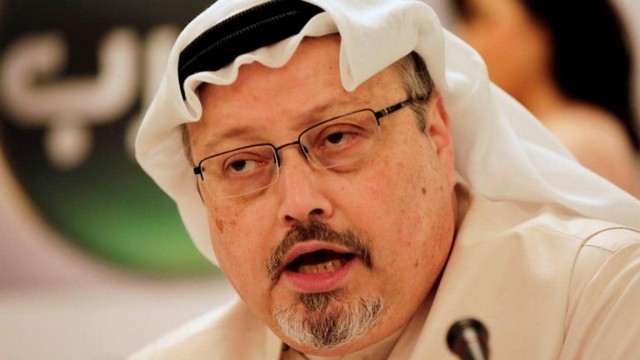
Biden response to Khashoggi investigation ‘shocking,’ says UN official

By Countercurrents Collective

The UN official who investigated the 2018 murder of Saudi journalist Jamal Khashoggi sharply criticized U.S. President Biden’s response to the killing, saying his administration’s failure to sanction Crown Prince Mohammed bin Salman sent a “dangerous” message to world leaders that they could kill dissidents and journalists with impunity.

“I found it to be shocking,” Agnes Callamard, the UN special rapporteur for extrajudicial killings, said in a Wednesday interview. “I thought Joe Biden had made a commitment during his campaign regarding truth telling and accountability, so I was expecting certainly more. I also felt this kind of message is actually dangerous. It gave the impression to would-be killers of journalists that as long as they have a friendly relationship with the United States they can proceed with killing dissidents. Yes, maybe they will be named [and] a little bit shamed. But nothing else. That to me is an extraordinary source of disappointment and frustration.”

After an exhaustive investigation, during which she was granted access to secret audiotapes made by Turkish intelligence, Callamard released a blistering and highly detailed report in June 2019 concluding that the murder of Khashoggi was an “international crime” that was being covered up by the Saudi government through a sham and highly secretive legal process that failed to explore the role of high-level officials responsible for the murder.

Her comments came in response to the release last week of a long-awaited declassified report by Director of National Intelligence Avril Haines that found that Mohammed bin Salman (MBS) approved the operation that killed Khashoggi inside the Saudi Consulate in Istanbul on Oct. 2, 2018. In response, the administration sanctioned former Saudi deputy intelligence chief Ahmed Hassan Asiri, adding him to a list of 17 other Saudi operatives who had been previously sanctioned by the Trump administration. It also imposed what it called a “Khashoggi ban” that would deny U.S. visas for 76 unnamed Saudis who administration officials say were involved in extraterritorial operations to suppress or intimidate dissidents and journalists.

But the administration left untouched the crown prince — the de facto leader of the country who is in line to succeed his father, King Salman, as the country’s absolute monarch — apparently because further action could have disrupted the U.S. relationship with a longtime ally in the Mideast.

Callamard was sharply critical of that political calculus.

“His assets should be frozen, his bank accounts, of course, should be frozen,” she said, referring to MBS. “That’s what has been done to the others [involved in the Khashoggi killing]. I do not see why they are not doing it to him, particularly because he is not even the head of state yet. So if there were any questions about immunity, it does not appear to be applicable just now.”

Callamard added that she was especially appalled at the greeting the crown prince received when he flew to the G-20 summit in Osaka, Japan, in June 2019 just days after her damning report on Khashoggi’s murder — and MBS’s complicity — was released.

The crown prince was “welcomed with open arms and almost anointed at the G-20 meeting in Osaka,” she said. “Mohammed bin Salman should be banished from a number of those international gatherings. We should not have to confront the kind of images and behavior we saw in Osaka, with every G-20 leader being forced to smile and welcome somebody who is a known killer now. I am not naive. But in that particular case, he used his position of power to order the killing of somebody he did not like.”

The summit took place less than two weeks after Callamard released her report, which challenged the claims of Saudi officials that Khashoggi’s murder was a tragic accident. In fact, she concluded, Turkish intelligence audiotapes from inside the Saudi Consulate showed that, while the operation against Khashoggi may have originally been planned as a kidnapping or rendition aimed at flying him back to Saudi Arabia, it had turned into a plot to assassinate him by the day of the murder. Even before Khashoggi entered the consulate that day — to pick up divorce records that would allow him to marry his Turkish fiancée — the Saudi operatives were discussing plans to dismember his joints and cut his body into pieces, with one intelligence official referring to him as a “sacrificial animal.”

Callamard said that while she was pleased that the Biden administration report on the murder pinned the blame on the crown prince, she was disappointed that it included none of the details in her own report about what happened in the consulate. According to multiple media reports at the time, the CIA had access to the same Turkish audiotapes as well as other intelligence about how the Saudis murdered Khashoggi — none of which was included in the report released by Haines.

“I was disappointed,” Callamard said, by the lack of details in the administration’s release about the murder. Officials apparently made a “political judgment,” she added, not to rile up the Saudis by issuing a complete report about what the U.S. government knew. U.S. officials have said such details are usually omitted from public disclosures for fear of compromising sources and methods of U.S. intelligence gathering.

“Very little has been put in the public domain, and most of what they had in their hands remains confidential,” Callamard said.

4 March 2021

Source: countercurrents.org

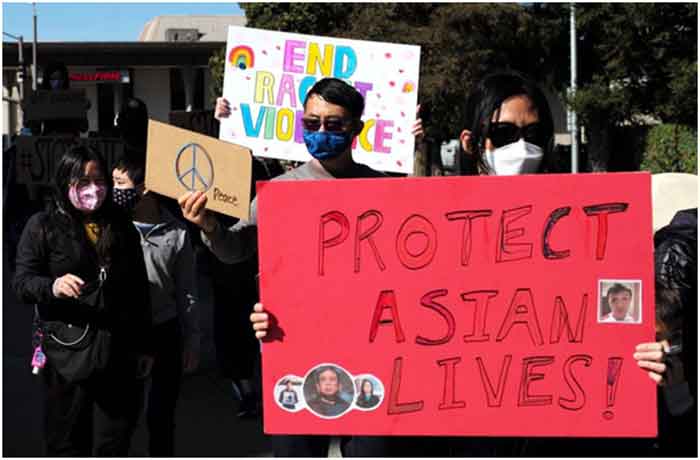
Anti-Asian hate crimes rose 150% in major U.S. cities, finds study

By Countercurrents Collective

Hate crimes targeting Asian-Americans rose 150% in U.S.’s largest cities last year, even as overall hate crimes decreased, according to alarming new data released Tuesday.

There were 122 hate crimes targeting Asian-Americans in 16 of the U.S.’s most populous cities in 2020, according to a study of police records by the Center for the Study of Hate and Extremism at California State University, compared to 49 such crimes in those cities in 2019.

The first spike in anti-Asian hate crimes occurred in March and April, according to the study, “amidst a rise in COVID cases and negative stereotyping of Asians relating to the pandemic.”

New York City saw the biggest increase, recording 28 such hate crimes in 2020 compared to only three in 2019 — an 833% jump. Other cities with especially large upticks included Philadelphia and Cleveland, which both saw 200% increases; and Boston and Los Angeles, which both saw increases of over 110%.

These spikes, according to the study, occurred even as overall hate crimes in those cities fell 7%, a drop likely caused by coronavirus lockdown measures, which created “a lack of interaction at frequent gathering places like transit, commercial businesses, schools, events, and houses of worship.”

The study, first reported by Voice of America, is seen as a reliable predictor of annual FBI hate crime statistics for the whole country, released every November.

Brian Levin, executive director at the hate and extremism center, told HuffPost he predicts the FBI data for 2020, once it is released this fall, will show a “century-high” number of hate crimes targeting Asian Americans.

“For our Asian-American friends and neighbors, this is similar to a post 9/11 time, similar to what we saw with Muslims and Arab-Americans,” Levin said, referring to the increase in hate crimes targeting those groups after the Sept. 11, 2001, terror attacks.

Rep. Grace Meng (D-N.Y.), whose district in Queens has recently seen anti-Asian hate crimes, told HuffPost that racist rhetoric and misinformation from public officials is to blame.

“We saw discriminatory rhetoric coming from President Trump and Members of Congress including from the highest-ranking Republican in the House,” Meng said in a statement Tuesday.

“Although Donald Trump is no longer in office, his past anti-Asian rhetoric and use of terms like ‘Chinese virus’ and ‘Kung-flu’ continues to threaten the safety of the Asian American community,” Meng said, adding that “so many Asian Americans” are currently “living in fear.”

For more than a year, Asian Americans have faced a deluge of attacks fueled by racist, nativist and xenophobic sentiments surrounding the COVID-19 pandemic. As president, Trump exacerbated these attacks by continually referring to the pandemic using racist terms and scapegoating China, where the virus was first detected, to downplay his shambolic response to the pandemic.

This hate and fearmongering is another chapter in a long history of racism, nativism and xenophobia against Asian Americans, beginning in the 19th century, when Asian immigrants were deemed “the yellow peril” and accused of being filthy disease carriers.

Throughout the pandemic, Asian-American and Pacific Islander advocacy groups and local governments have recorded sharp upticks in anti-Asian racist attacks and harassment. Since last March, the group Stop AAPI Hate has collected nearly 3,000 reports from 47 states and the District of Columbia — everything from being verbally attacked or spat on to being physically assaulted or denied services. The number is likely an undercount because the incidents are self-reported.

In recent weeks, there has been a wave of high-profile incidents, including in New York City and the San Francisco Bay Area, both with large and robust Asian American communities. Many of the attacks have involved older Asian Americans.

In one of his first acts as president, Joe Biden condemned anti-Asian racism and pledged to take more action, and the Department of Justice has said it will devote more resources to investigating such incidents.

Meng, in her statement to HuffPost on Tuesday, said she also plans to reintroduce her COVID-19 Hate Crimes Act, which would require the DOJ to provide Congress with regular updates on the status of reported hate incidents tied to the pandemic.

Local law enforcement in places like New York and California have also started more concerted efforts since last year, though some Asian American advocacy groups have expressed concern about law enforcement involvement.

Death of an elderly Thai immigrant after being shoved to the ground, slashing face of a Filipino-American in the face, and slapping of a Chinese woman and then set on fire are 3 of the main recent violent attacks on Asian-Africans. Violent attacks on Asian-Americans is part of a surge in abuse since the start of the pandemic a year ago.

From being spat on and verbally harassed to incidents of physical assault, there have been thousands of reported cases in recent months.

Advocates and activists say these are hate crimes, and often linked to rhetoric that blames Asian people for the spread of Covid-19.

The FBI warned at the start of the Covid outbreak in the U.S. that it expected a surge in hate crimes against those of Asian descent.

Late last year, the UN issued a report that detailed “an alarming level” of racially motivated violence and other hate incidents against Asian-Americans.

It is difficult to determine exact numbers for such crimes and instances of discrimination, as no organizations or governmental agencies have been tracking the issue long-term, and reporting standards can vary region to region.

The advocacy group Stop AAPI Hate said it received more than 2,800 reports of hate incidents directed at Asian Americans nationwide last year. The group set up its online self-reporting tool at the start of the pandemic.

Local law enforcement is taking notice too: the New York City hate crimes task force investigated 27 incidents in 2020, a nine-fold increase from the previous year. In Oakland, California, police have added patrols and set up a command post in Chinatown.

In recent weeks, celebrities and influencers have spoken out after several disturbing incidents went viral on social media.

Here are some of the recently reported attacks:

  • An 84-year-old Thai immigrant in San Francisco, California, died last month after being violently shoved to the ground during his morning walk.
  • In Oakland, California, a 91-year-old senior was shoved to the pavement from behind.
  • An 89-year-old Chinese woman was slapped and set on fire by two people in Brooklyn, New York.
  • A stranger on the New York subway slashed a 61-year-old Filipino American passenger’s face with a box cutter.
  • Asian-American restaurant employees in New York City told the New York Times they now always go home early for fear of violence and harassment.
  • An Asian-American butcher shop owner in Sacramento, California found a dead cat – likely intended for her – left in the store’s parking lot; police are investigating it as a hate crime.
  • An Asian-American family celebrating a birthday at a restaurant in Carmel, California, was berated with racist slurs by a Trump-supporting tech executive.
  • Several Asian-Americans homeowners say they have been abused with racial slurs and had rocks thrown at their houses.

Situation in California

Over six million Asian-Americans live in California, according to the latest population estimates, by far the most in any U.S. state. They make up more than 15% of residents in the state.

In Los Angeles County, hate crimes against Asian Americans are up 115%, CBS News reported.

There are more local efforts to combat the hate too.

In Orange County, neighbors stepped in to help out an Asian American family after a group of teenagers repeatedly targeted them for months with little police intervention. Neighbors now stand guard outside the family’s home each night, the Washington Post reported.

A March 2, 2021 report from California by KABC said:

Surveillance camera video shows vandals ringing the doorbell at the Ladera Ranch home of Haijun Si and his family in the middle of the night. Sometimes, the culprits pound on the door, throw rocks and shout out racial slurs. The family has been harassed for months.
“This harassment started almost immediately upon them moving here and the fact that it’s so clearly tied to their race is deeply upsetting,” said Olivia Fu, a Ladera Ranch resident.

Fu was among a large group of community members who held a cultural festival over the weekend to show unity and condemn hate and racism.

“We need to stand in solidarity with the Asian community,” said one speaker at the event.

Small business owners in Orange County’s nail salon industry joined local government and law enforcement leaders to stand against an increase in hate crimes against Asian-Americans and Pacific Islanders.

There’s growing concern about a string of violent attacks on Asian Americans.

In New York, a man was stabbed in the back in Chinatown Thursday night. A suspect is now in custody charged with a hate crime.

In another brutal incident, a Chinese woman was attacked outside a bakery.

“Sad, fearful, most of all outraged. This is 2021, it’s unacceptable,” said California Sen. Dave Min, who participated in the weekend community event.

With incidents of anti-Asian hate crimes on the rise during the pandemic, two SoCal congresswoman are introducing a measure to help protect the AAPI community.

In Los Angeles, authorities are investigating a possible hate crime at a Buddhist temple in Little Tokyo. Vandals knocked over lanterns, shattered a window and set a fire in the entryway.

In Orange County, community volunteers have formed a neighborhood watch, sitting outside the Si family’s home to keep vandals away.

4 March 2021

Source: countercurrents.org

Blood for Oil

By Kathy Kelly

Amid the ongoing horror, it’s important to find ways to atone for war crimes —including reparations.

Thirty years ago, when the United States launched Operation Desert Storm against Iraq, I was a member of the Gulf Peace Team. We were 73 people from fifteen different countries, aged 22 to 76, living in a tent camp close to Iraq’s border with Saudi Arabia, along the road to Mecca.

We aimed to nonviolently interpose ourselves between the warring parties. Soldiers are called upon to risk their lives for a cause they may not know much about. Why not ask peace activists to take risks on behalf of preventing and opposing wars?

So we witnessed the dismal onset of the air war at 3:00 a.m. on January 17, 1991, huddled under blankets, hearing distant explosions and watching anxiously as war planes flew overhead. With so many fighter jets crossing the skies, we wondered if there would be anything left of Baghdad.

Ten days later, Iraqi authorities told us we must pack up, readying for a morning departure to Baghdad. Not all of us could agree on how to respond. Adhering to basic principles, twelve peace team members resolved to sit in a circle, holding signs saying “We choose to stay.”

Buses arrived the next morning, along with two Iraqi civilians and two soldiers. Tarak, a civilian, was in charge, under orders to follow a timetable for the evacuation. Looking at the circle of twelve, Tarak seemed a bit baffled. He walked over to where I stood. “Excuse me, Ms. Kathy,” he asked, “but what am I to do?”

“No one in that circle means you any harm,” I assured him. “And no one wishes to disrespect you, but they won’t be able board the bus on their own. It’s a matter of conscience.”

Tarak nodded and then motioned to the other Iraqis who followed him as he approached Jeremy Hartigan, the tallest person sitting in the circle. Jeremy, an elderly UK lawyer and also a Buddhist, was chanting a prayer as he sat with his sign.

Tarak bent over Jeremy, kissed him on the forehead, and said, ”Baghdad!” Then he pointed to the bus.

Next, he, the other civilian and two Iraqi soldiers carefully hoisted Jeremy, still in his cross-legged position, and carried him to the top step of the bus. Gently placing him down, Tarak then asked, “Mister, you okay?!” And in this manner they proceeded to evacuate the remaining eleven people in the circle.

Another evacuation was happening as Iraqi forces, many of them young conscripts, hungry, disheveled and unarmed, poured out of Kuwait along a major highway, later called “the Highway of Death.”

Boxed in by U.S. forces, many Iraqis abandoned their vehicles and ran away from what had become a huge and very dangerous traffic jam. Iraqis attempting to surrender were stuck in a long line of Iraqi military vehicles. They were systematically slaughtered.

“It was like shooting fish in a barrel,” said one U.S. pilot of the air attack. Another called it “a turkey shoot.”

Days earlier, on February 24th, the United States Army forces buried scores of living Iraqi soldiers in trenches. According to The New York Times, Army officials said “the Iraqi soldiers who died remained in their trenches as plow-equipped tanks dumped tons of earth and sand onto them, filling the trenches to ensure that they could not be used as cover from which to fire on allied units that were poised to pour through the gaps.”

Shortly after viewing photos of gruesome carnage caused by the ground and air attacks, President George H.W. Bush called for a cessation of hostilities on February 27th, 1991. An official cease fire was signed on March 4.

It’s ironic that in October of 1990, Bush had asserted that the U.S. would never stand by and let a larger country swallow a smaller country. His country had just invaded Grenada and Panama, and as President Bush spoke, the U.S. military pre-positioned at three Saudi ports hundreds of ships, thousands of aircraft, and millions of tons of equipment and fuel in preparation to invade Iraq.

Noam Chomsky notes that there were diplomatic alternatives to the bloodletting and destruction visited upon Iraq by Operation Desert Storm. Iraqi diplomats had submitted an alternative plan which was suppressed in the mainstream media and flatly rejected by the U.S.

The U.S. State Department, along with Margaret Thatcher’s government in the United Kingdom, were hell-bent on moving ahead with their war plans. “This was no time to go wobbly,” U.K. Prime Minister Margaret Thatcher famously warned Bush.

The resolve to attack and punish Iraqis never ceased.

After the “success” of Operation Desert Storm, the bombing war turned into an economic war, which lasted through 2003. As early as 1995, United Nations documents clarified that the economic war, waged through continued imposition of U.N. economic sanctions against Iraq, was far more brutal than even the worst of the 1991 aerial and ground war attacks.

In 1995, two Food and Agriculture Organization scientists estimated that more than half a million Iraqi children under age five had likely died due to economic sanctions.

In February, 1998, while visiting a hospital in Baghdad, I watched two friends from the United Kingdom trying to absorb the horror of seeing children being starved to death because of policy decisions made by governments in the UK and the U.S. Martin Thomas, himself a nurse, looked at mothers sitting cross legged, holding their limp and dying infants, in a ward where helpless doctors and nurses tried to treat many dozens of children.

“I think I understand,” said Thomas. “It’s a death row for infants.” Milan Rai, now editor of Peace News and then the coordinator of a U.K. campaign to defy the economic sanctions, knelt next to one of the mothers. Rai’s own child was close in age to the toddler the mother cradled. “I’m sorry,” Rai murmured. “I’m so very sorry.”

Those six words whispered by Milan Rai, are, I believe, incalculably important.

If only people in the U.S. and the UK could take those words to heart, undertaking to finally pressure their governments to echo these words and themselves say, “We’re sorry. We’re so very sorry.”

We’re sorry for coldly viewing your land as a “target rich environment” and then systematically destroying your electrical facilities, sewage and sanitation plants, roads, bridges, infrastructure, health care, education, and livelihood. We’re sorry for believing we somehow had a right to the oil in your land, and we’re sorry many of us lived so well because we were consuming your precious and irreplaceable resources at cut rate prices.

We’re sorry for slaughtering hundreds of thousands of your children through economic sanctions and then expecting you to thank us for liberating you. We’re sorry for wrongfully accusing you of harboring weapons of mass destruction while we looked the other way as Israel acquired thermonuclear weapons.

We’re sorry for again traumatizing your children through the 2003 Shock and Awe bombing, filling your broken down hospitals with maimed and bereaved survivors of the vicious bombing and then causing enormous wreckage through our inept and criminal occupation of your land.

We’re sorry. We’re so very sorry. And we want to pay reparations.

From March 5 – 8, Pope Francis will visit Iraq. Security concerns are high, and I won’t begin to second guess the itinerary that has been developed. But knowing of his eloquent and authentic plea to end wars and stop the pernicious weapons trade, I wish he could kneel and kiss the ground at the Ameriyah shelter in Baghdad.

There, on February 13, 1991, two 2,000 lb. U.S. laser guided missiles killed 400 civilians, mostly women and children. Another 200 were severely wounded. I wish President Joe Biden could meet the Pope there and ask him to hear his confession.

I wish people around the world could be represented by the Pope as a symbol of unity expressing collective sorrow for making war after hideous war, in Iraq, against people who meant us no harm.

Illustration courtesy of Sallie Latch

A version of this article first appeared at The Progressive.org [https://progressive.org/dispatches/remembering-first-gulf-war-kelly-210302/]

Kathy Kelly, (Kathy.vcnv@gmail.com) is a peace activist whose effort have at times led her into war zones and U.S. prisons.

3 March 2021

Source: countercurrents.org

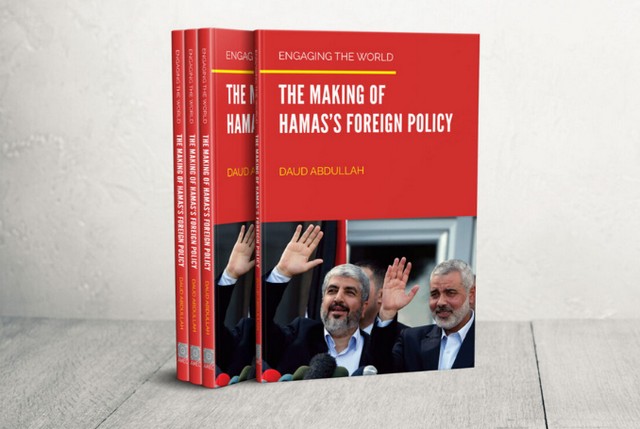
‘Engaging the World’: The ‘Fascinating Story’ of Hamas’s Political Evolution

Written by Romana Rubeo and Ramzy Baroud

On February 4, representatives from the Palestinian Movement, Hamas, visited Moscow to inform the Russian government of the latest development on the unity talks between the Islamic Movement and its Palestinian counterparts, especially Fatah.

This was not the first time that Hamas’s officials traveled to Moscow on similar missions. In fact, Moscow continues to represent an important political breathing space for Hamas, which has been isolated by Israel’s Western benefactors. Involved in this isolation are also several Arab governments which, undoubtedly, have done very little to break the Israeli siege on Gaza.

The Russia-Hamas closeness is already paying dividends. On February 17, shipments of the Russian COVID-19 vaccine, Sputnik V, have made it to Gaza via Israel, a testament to that growing rapport.

While Russia alone cannot affect a complete paradigm shift in the case of Palestine, Hamas feels that a Russian alternative to the blind and conditional American support for Israel is possible, if not urgent.

Recently, we interviewed Dr. Daud Abdullah, the author of ‘Engaging the World: The Making of Hamas’s Foreign Policy’, and Mr. Na’eem Jeenah, Director of the Afro-Middle East Center in Johannesburg, which published Dr. Abdullah’s book.

Abdullah’s volume on Hamas is a must-read, as it offers a unique take on Hamas, liberating the discussion on the Movement from the confines of the reductionist Western media’s perception of Hamas as terrorist – and of the counterclaims, as well. In this book, Hamas is viewed as a political actor, whose armed resistance is only a component in a complex and far-reaching strategy.

Why Russia?

As Moscow continues to cement its presence in the region by offering itself as a political partner and, compared with the US, a more balanced mediator between Israel and the Palestinians, Hamas sees the developing Russian role as a rare opportunity to break away from the US-Israel imposed isolation.

“Russia was a member of the Quartet that was set up in 2003 but, of course, as a member of the (United Nations) Security Council, it has always had an ability to inform the discourse on Palestine,” Abdullah said, adding that in light of “the gradual demise of American influence, Russia realized that there was an emerging vacuum in the region, particularly after the (Arab) uprisings.”

“With regard to Hamas and Russia the relationship took off after the (Palestinian) elections in 2006 but it was not Hamas’s initiative, it was (Russian President Vladimir) Putin who, in a press conference in Madrid after the election, said that he would be willing to host Hamas’s leadership in Moscow. Because Russia is looking for a place in the region.”

Hamas’s willingness to engage with the Russians has more than one reason, chief among them is the fact that Moscow, unlike the US, refused to abide by Israel’s portrayal of the Movement. “The fundamental difference between Russia and America and China … is that the Russians and the Chinese do not recognize Hamas as a ‘terrorist organization’; they have never done so, unlike the Americans, and so it made it easy for them to engage openly with Hamas,” Abdullah said.

On Hamas’s ‘Strategic Balance’

In his book, Abdullah writes about the 1993 Oslo Accords, which represented a watershed moment, not only for Hamas but also for the entire Palestinian liberation struggle. The shift towards a US-led ‘peace process’ compelled Hamas to maintain a delicate balance “between strategic objectives and tactical flexibility.”

Abdullah wrote,

“Hamas sees foreign relations as an integral and important part of its political ideology and liberation strategy. Soon after the Movement emerged, foreign policies were developed to help its leaders and members navigate this tension between idealism and realism. This pragmatism is evident in the fact that Hamas was able to establish relations with the regimes of Muammar Gaddhafi in Libya and Bashar al-Assad in Syria, both of whom were fiercely opposed to the Muslim Brotherhood.”

In our interview, Abdullah elaborated:

“From the very beginning, Hamas adopted certain principles in respect to its international relations and, later on, in the formation of a foreign policy. Among these, there is a question of maintaining its independence of decision-making; non-alignment in conflicting blocks, avoidance of interference in the affairs of other states.”

Mr. Jeenah, an accomplished writer himself, also spoke of the “delicate balance.”

“It is a delicate balance, and a difficult one to maintain because, at this stage, when movements are regarded and regard themselves as liberation movements, they need to have higher moral and ethical standards than, for example, governments,” Jeenah said.

“For some reason, we expect that governments have to make difficult choices but, with liberation movements, we don’t, because they are all about idealism and creating an ideal society, etc.”

Jeenah uses the South Africa anti-apartheid struggle which, in many ways, is comparable to the Palestinian quest for freedom, to illustrate his point:

“When the liberation movement in South Africa was exiled, they took a similar kind of position. While some of them might have had a particular allegiance to the Soviet Union or to China, some of them also had strong operations in European countries, which they regarded as part of the bigger empire. Nevertheless, they had the freedom to operate there. Some of them operated in other African countries where there were dictatorships and they got protection from those states.”

Hamas and the Question of National Unity

In his book, which promises to be an essential read on the subject, Abdullah lists six principles that guide Hamas’s political agenda. One of these guiding principles is the “search for common ground.”

In addressing the question of Palestinian factionalism, we contended that, while Fatah has failed at creating a common, nominally democratic platform for Palestinians to interact politically, Hamas cannot be entirely blameless. If that is, indeed, the case, can one then make the assertion that Hamas has succeeded in its search for the elusive common ground?

Abdullah answers:

“Let me begin with what happened after the elections in 2006. Although Hamas won convincingly and they could have formed a government, they decided to opt for a government of national unity. They offered to (Palestinian Authority President) Mahmoud Abbas and to (his party) Fatah to come into a government of national unity. They didn’t want to govern by themselves. And that, to me, is emblematic of their vision, their commitment to national unity.”

But the question of national unity, however coveted and urgently required, is not just controlled by Palestinians.

“The PLO is the one that signed the Oslo Accords,” Abdullah said, “and I think this is one of Hamas’s weaknesses: as much as it wants national unity and a reform of the PLO, the fact of the matter is Israel and the West will not allow Hamas to enter into the PLO easily, because this would be the end of Oslo.”

[https://www.youtube.com/watch?v=FO85rTjOlRY]

On Elections under Military Occupation

On January 15, Abbas announced an official decree to hold Palestinian elections, first presidential, then legislative, then elections within the PLO’s Palestine National Council (PNC), which has historically served as a Palestinian parliament in exile. The first phase of these elections is scheduled for May 22.

But will this solve the endemic problem of Palestinian political representation? Moreover, is this the proper historical evolution of national liberation movements – democracy under military occupation, followed by liberation, instead of the other way around?

Jeenah spoke of this dichotomy: “On the one hand, elections are an opportunity for Palestinians to express their choices. On the other hand, what is the election really? We are not talking about a democratic election for the State, but for a Bantustan authority, at greater restraints than the South African authority.”

Moreover, the Israeli “occupying power will not make the mistake it did the last time. It will not allow such freedom (because of which) Hamas (had) won the elections. I don’t think Israel is going to allow it now.”

Yet there is a silver lining in this unpromising scenario. According to Jeenah, “I think the only difference this election could make is allowing some kind of reconciliation between Gaza and the West Bank.”

Hamas, the ICC and War Crimes

Then, there is the urgent question of the anticipated war crime investigation by the International Criminal Court (ICC). Yet, when the ICC agreed to consider allegations of war crimes in Palestine, chances are not only alleged Israeli war criminals are expected to be investigated, but the probe could potentially consider the questioning of Palestinians, as well. Should not this concern Hamas in the least?

In the Israeli wars on Gaza in 2008, 2012 and 2014, Hamas, along with other armed groups had no other option but to “defend the civilian population,” Abdullah said, pointing out that the “overriding concept” is that the Movement “believes in the principle of international law.”

If Hamas “can restore the rights of the Palestinian people through legal channels, then it will be much easier for the Movement, rather than having to opt for the armed struggle,” Abdullah asserted.

Understanding Hamas

Undoubtedly, it is crucial to understand Hamas, not only as part of the Palestine-related academic discourse, but in the everyday political discourse concerning Palestine; in fact, the entire region. Abdullah’s book is itself critical to this understanding.

Jeenah argued that Abdullah’s book is not necessarily an “introductory text to the Hamas Movement. It has a particular focus, which is the development of Hamas’s foreign policy. The importance of that, in general, is firstly that there isn’t a text that deals specifically with Hamas’s foreign policy. What this book does is present Hamas as a real political actor.”

The evolution of Hamas’s political discourse and behavior since its inception, according to Jeenah, is a “fascinating” one.

Many agree. Commenting on the book, leading Israeli historian, Professor Ilan Pappé, wrote,

“This book challenges successfully the common misrepresentation of Hamas in the West. It is a must-read for anyone engaged with the Palestine issue and interested in an honest introduction to this important Palestinian Movement.”

[Dr. Daud Abdullah’s book, Engaging the World: The Making of Hamas’s Foreign Policy, is available here.]

Romana Rubeo is an Italian writer and the Managing Editor of The Palestine Chronicle.

Ramzy Baroud is a journalist and the Editor of The Palestine Chronicle.

3 March 2021

Source: countercurrents.org

China challenges UN high commissioner: Come to Xinjiang, but not for ‘investigation based on guilty before proven’

By Countercurrents Collective

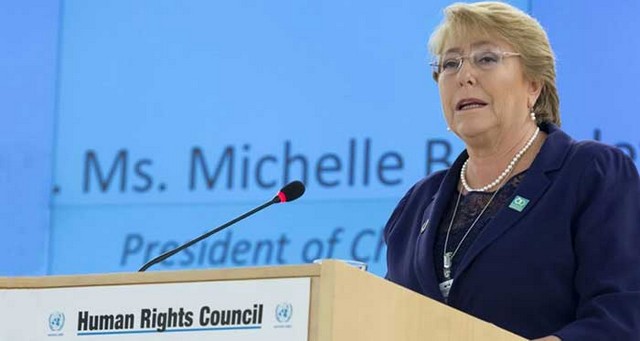
China has said that the door to Xinjiang “is always open” for UN High Commissioner Michelle Bachelet, after she claimed Muslim Uighurs are suffering arbitrary detention and ill-treatment in the area.

The statement was made on Tuesday by the Chinese delegation to the UN Human Rights Council in Geneva in response to comments by Bachelet claiming an independent investigation needs to be conducted into claims of human rights violations against Uighur Muslims.

The Chinese authorities offered to facilitate a visit from the high commissioner to Xinjiang but warned that the trip must be about providing “cooperation,” and not be part of a “so-called investigation based on guilty before proven.”

The Chinese delegate said: “The door to Xinjiang is always open, and we welcome the high commissioner to visit Xinjiang.”

China has faced criticism from international bodies, including the UN, over allegations of its mistreatment of Muslim Uighurs across the country, with suggestions that the religious group is being targeted and faces restrictions on its civil and political freedoms.

Bachelet’s remarks on Friday pointed towards reports of arbitrary detention, ill-treatment and forced labor of Uighurs, citing “information that is in the public domain.” She called for an “independent and comprehensive assessment” of the situation in the region.

This is the second time that China has publicly offered an invitation to the UN high commissioner. In June 2019, Chen Xu, China’s ambassador to Geneva, said that Bachelet would be welcome to “pay a visit to China, including a trip to Xinjiang, to see [for] herself.” However, no such trip has taken place to date.

China blasts Britain for abusing UN HRC to attack and smear China

In the last week of February, China’s Foreign Ministry has hit out at the UK, lamenting its use of the UN Human Rights Council (UNHRC) to “spread false information” after London accused Beijing of systematically violating the human rights of minority groups.

“Britain’s so-called adoption of a resolution on this issue is obviously an ulterior motive. Its purpose is to confuse and discredit China… We firmly oppose this. The British tricks cannot deceive the international community,” Chinese Foreign Ministry spokesperson Wang Wenbin told reporters in February.

Wang sought to highlight Britain’s “double standards” on human rights issues, claiming that one-third of families with children under-5 in the UK live in poverty. “British troops indiscriminately killed and tortured innocents in Iraq, Afghanistan and other places, but the perpetrators were sheltered by the British government and remained at large,” the spokesperson added.

Wang said China urges the UK to look at its own human rights situation and take concrete actions, adding that it should adopt a more constructive approach for the healthy development of international human rights.

The spokesperson claimed that xenophobia and hate speech are rampant in the UK and that the rights of immigrants are seriously violated, a line China has increasingly adopted since Britain offered millions of Hongkongers the chance to settle and obtain full British citizenship from February 2021.

Wang’s comments come after UK Foreign Secretary Dominic Raab slammed China during an address to the UN Human Rights Council, accusing Beijing of multiple human rights violations within its own borders.

Raab cited human rights violations in Tibet, Xinjiang and Hong Kong, insisting that the UK will continue to hold China to account and requesting unfettered access to Xinjiang where Uighur Muslims are allegedly being persecuted.

Beijing denies the allegations made against China.

‘Distinguish right from wrong’, Beijing calls on Britons

China has called on the British people to “make independent judgments based on facts,” as a poll shows Brits are suspicious of China after London and Beijing engaged in a tit-for-tat ban on each other’s media organizations.

Speaking on last Friday, Chinese Foreign Ministry spokeswoman Hua Chunying took aim at Britain’s media when questioned about a recent poll by the non-profit British Foreign Policy Group, which highlighted Britons’ distaste for Beijing.

“China hopes that foreign people, including the British people, can keep their eyes open and distinguish right from wrong, as well as make independent judgments based on facts,” Hua stated.

Hua blasted media organizations she said had “concocted and spread too many rumors, lies and false information on China-related issues,” noting that such practices are not conducive to a “correct understanding” of the Chinese and British peoples.

The spokeswoman took the opportunity to remind journalists of the “importance of true and objective reporting,” and said the media should play an “active and constructive role” in improving cultural understanding between the two nations.

The poll in question revealed that Britons are highly suspicious of the Chinese state, showing that 41 percent of the respondents regarded China as a “critical threat,” and only 22 percent of participants were happy to see any economic agreement between Britain and China.

In early February, the two powers exchanged blows, when as London banned China’s CGTN network from broadcasting in the UK and Beijing took reciprocal action, banning BBC World News from airing in China, despite the BBC not actually having been widely available to the Chinese.

The UK’s Ofcom watchdog pulled CGTN’s license after an investigation showed the broadcaster was “controlled by the Chinese Communist Party and therefore disqualified from holding a broadcast licence under UK laws”.

Meanwhile, Beijing claimed the license-fee-funded BBC “violated the requirements that news should be truthful and fair, harmed China’s national interests, and undermined China’s national unity.”

3 March 2021

Source: countercurrents.org

Biden’s Reckless Syria Bombing Is Not the Diplomacy He Promised

Written by Medea Benjamin and Nicolas J. S. Davies

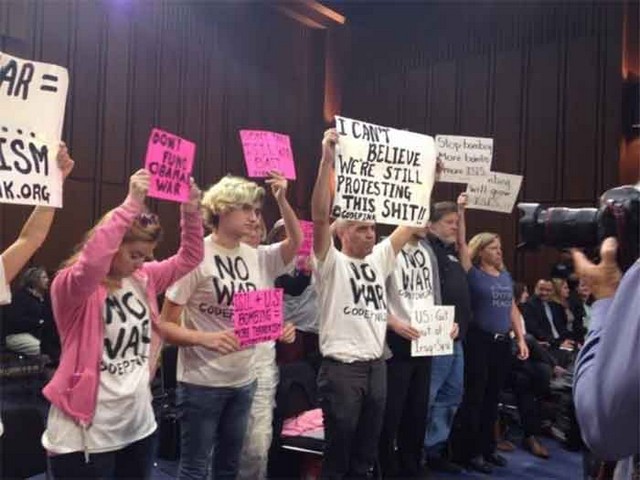
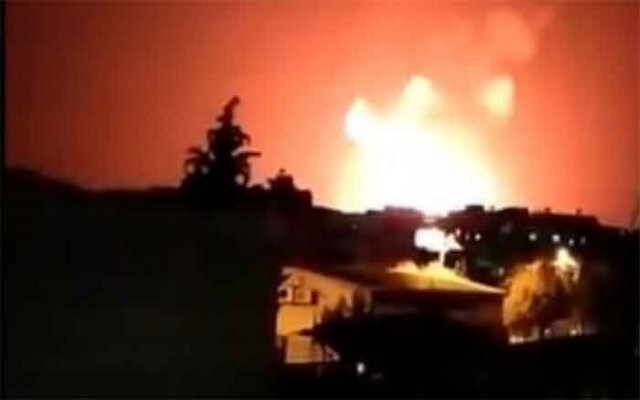
The February 25 U.S. bombing of Syria immediately puts the policies of the newly-formed Biden administration into sharp relief. Why is this administration bombing the sovereign nation of Syria? Why is it bombing “Iranian-backed militias” who pose absolutely no threat to the United States and are actually involved in fighting ISIS? If this is about getting more leverage vis-a-vis Iran, why hasn’t the Biden administration just done what it said it would do: rejoin the Iran nuclear deal and de-escalate the Middle East conflicts?

According to the Pentagon, the U.S. strike was in response to the February 15 rocket attack in northern Iraq that killed a contractor working with the U.S. military and injured a U.S. service member. Accounts of the number killed in the U.S. attack vary from one to 22.

The Pentagon made the incredible claim that this action “aims to de-escalate the overall situation in both Eastern Syria and Iraq.” This was countered by the Syrian government, which condemned the illegal attack on its territory and said the strikes “will lead to consequences that will escalate the situation in the region.” The strike was also condemned by the governments of China and Russia. A member of Russia’s Federation Council warned that such escalations in the area could lead to “a massive conflict.”

Ironically, Jen Psaki, now Biden’s White House spokesperson, questioned the lawfulness of attacking Syria in 2017, when it was the Trump administration doing the bombing. Back then she asked: “What is the legal authority for strikes? Assad is a brutal dictator. But Syria is a sovereign country.”

The airstrikes were supposedly authorized by the 20-year-old, post-9/11 Authorization for the Use of Military Force (AUMF), legislation that Rep. Barbara Lee has been trying for years to repeal since it has been misused, according to the congresswoman, “to justify waging war in at least seven different countries, against a continuously expanding list of targetable adversaries.”

The United States claims that its targeting of the militia in Syria was based on intelligence provided by the Iraqi government. Defense Secretary Austin told reporters: “We’re confident that target was being used by the same Shia militia that conducted the strike [against U.S. and coalition forces].”

But a report by Middle East Eye (MEE) suggests that Iran has strongly urged the militias it supports in Iraq to refrain from such attacks, or any warlike actions that could derail its sensitive diplomacy to bring the U.S. and Iran back into compliance with the 2015 international nuclear agreement or JCPOA.

“None of our known factions carried out this attack,” a senior Iraqi militia commander told MEE. “The Iranian orders have not changed regarding attacking the American forces, and the Iranians are still keen to maintain calm with the Americans until they see how the new administration will act.”

The inflammatory nature of this U.S. attack on Iranian-backed Iraqi militias, who are an integral part of Iraq’s armed forces and have played a critical role in the war with ISIS, was implicitly acknowledged in the U.S. decision to attack them in Syria instead of in Iraq. Did Prime Minister Mustafa Al-Kadhimi, a pro-Western British-Iraqi, who is trying to rein in the Iranian-backed Shiite militias, deny permission for a U.S. attack on Iraqi soil?

At Kadhimi’s request, NATO is increasing its presence from 500 troops to 4,000 (from Denmark, the U.K. and Turkey, not the U.S.) to train the Iraqi military and reduce its dependence on the Iranian-backed militias. But Kadhimi risks losing his job in an election this October if he alienates Iraq’s Shiite majority. Iraqi Foreign Minister Fuad Hussein is heading to Tehran to meet with Iranian officials over the weekend, and the world will be watching to see how Iraq and Iran will respond to the U.S. attack.

Some analysts say the bombing may have been intended to strengthen the U.S. hand in its negotiations with Iran over the nuclear deal (JCPOA). “The strike, the way I see it, was meant to set the tone with Tehran and dent its inflated confidence ahead of negotiations,” said Bilal Saab, a former Pentagon official who is currently a senior fellow with the Middle East Institute.

But this attack will make it more difficult to resume negotiations with Iran. It comes at a delicate moment when the Europeans are trying to orchestrate a “compliance for compliance” maneuver to revive the JCPOA. This strike will make the diplomatic process more difficult, as it gives more power to the Iranian factions who oppose the deal and any negotiations with the United States.

Showing bipartisan support for attacking sovereign nations, key Republicans on the foreign affairs committees such as Senator Marco Rubio and Rep. Michael McCaul immediately welcomed the attacks. So did some Biden supporters, who crassly displayed their partiality to bombing by a Democratic president.

Party organizer Amy Siskind tweeted: “So different having military action under Biden. No middle school level threats on Twitter. Trust Biden and his team’s competence.” Biden supporter Suzanne Lamminen tweeted: “Such a quiet attack. No drama, no TV coverage of bombs hitting targets, no comments on how presidential Biden is. What a difference.”

Thankfully though, some Members of Congress are speaking out against the strikes. “We cannot stand up for Congressional authorization before military strikes only when there is a Republican President,” Congressman Ro Khanna tweeted, “The Administration should have sought Congressional authorization here. We need to work to extricate from the Middle East, not escalate.” Peace groups around the country are echoing that call. Rep. Barbara Lee and Senators Bernie Sanders, Tim Kaine and Chris Murphy also released statements either questioning or condemning the strikes.

Americans should remind President Biden that he promised to prioritize diplomacy over military action as the primary instrument of his foreign policy. Biden should recognize that the best way to protect U.S. personnel is to take them out of the Middle East. He should recall that the Iraqi Parliament voted a year ago for U.S. troops to leave their country. He should also recognize that U.S. troops have no right to be in Syria, still “protecting the oil,” on the orders of Donald Trump.

After failing to prioritize diplomacy and rejoin the Iran nuclear agreement, Biden has now, barely a month into his presidency, reverted to the use of military force in a region already shattered by two decades of U.S. war-making. This is not what he promised in his campaign and it is not what the American people voted for.

Medea Benjamin is cofounder of CODEPINK for Peace, and author of several books, including Inside Iran: The Real History and Politics of the Islamic Republic of Iran.

Nicolas J. S. Davies is a freelance writer and a researcher with CODEPINK, and the author of Blood On Our Hands: the American Invasion and Destruction of Iraq.

27 February 2021

Source: countercurrents.org

A little acknowledged clause may be main obstacle to revival of Iran nuclear accord

By Dr James M Dorsey

A little acknowledged provision of the 2015 international agreement that curbed Iran’s nuclear program explains jockeying by the United States and the Islamic republic over the modalities of a US return to the deal from which President Donald J. Trump withdrew.

The provision’s magic date is 2023, when the Biden administration if it returns to the agreement, would have to seek Congressional approval for the lifting or modification of all US nuclear-related sanctions against Iran.

Both the administration and Iran recognize that Congressional approval is likely to be a tall order, if not impossible, given bi-partisan US distrust, animosity, and suspicion of the Islamic republic.

As a result, the United States and Iran have different objectives in negotiating a US return to the accord.

The Biden administration is attempting to engineer a process that would allow it to sidestep the 2023 hurdle as well as ensure a negotiation that would update the six-year-old deal, limit Iran’s controversial ballistic missiles program and halt Iranian support for non-state actors in Lebanon, Iraq, and Yemen.

A pro-longed negotiation would allow President Joe Biden to focus Congress on his domestic legislative agenda without Iran being a disruptive detraction.

Mr. Biden “needs something to get beyond 2023. So, he wants a process that would take a number of steps that could take…a number of years to accomplish. During that time, the United States could ease some sanctions… These small things along the way could happen in a process but the key is going to be to have a process that allows the Biden administration to draw this out for some time,” said former State Department and National Security Council official Hillary Mann Leverett.

An extended process would, moreover, make it easier for Mr. Biden to convince America’s sceptical Middle Eastern partners – Israel, Saudi Arabia, and the United Arab Emirates – that a return to the deal is the right thing to do.

Mr. Biden sought to reassure its partners that, unlike Mr. Trump, he would stand by the US commitment to their defence with this week’s missile attack on an Iranian-backed Shiite militia base in Syria. The strike was in response to allegedly Iranian-backed militia attacks on US targets in Iraq as well as the firing of projectiles against Saudi Arabia reportedly from Iraqi territory.

The US attack also served notice to Iran that it was dealing with a new administration that is more committed to its international commitments and multilateralism as well as a revival of the nuclear agreement but not at any price.

The administration has reinforced its message by asking other countries to support a formal censure of Iran over its accelerating nuclear activities at next week’s meeting in Vienna of the International Atomic Energy Agency’s (IAEA) board of governors.

The United States wants the IAEA to take Iran to task for stepping up production of nuclear fuel in violation of the nuclear accord and stalling the agency’s inquiries into the presence of uranium particles at undeclared sites.

While risking a perilous military tit-for-tat with Iran, the US moves are likely to reinforce Iranian domestic and economic pressures, in part in anticipation of the 2023 milestone, to seek an immediate and unconditional US return to the accord and lifting of sanctions.

Pressure on the Iranian government to secure immediate tangible results is compounded by a public that is clamouring for economic and public health relief and largely blames government mismanagement and corruption rather than harsh US sanctions for the country’s economic misery and inability to get the pandemic under control.

The sanctions were imposed after Mr. Trump withdrew from the nuclear accord in 2018.

The pressure is further bolstered by the fact that recent public opinion polls show that the public, like the government, has little faith in the United States living up to its commitments under a potentially revived nuclear deal.

The results suggest that neither the government nor the Iranian public would have confidence in a process that produces only a partial lifting of sanctions. They also indicated a drop of support for the deal from more than 75 per cent in 2015 to about 50 per cent today.

Two-thirds of those polled opposed negotiating restrictions on Iran’s ballistic missile program as well as its support for regional proxies even if it would lead to a lifting of all sanctions.

Public opinion makes an Iranian agreement to negotiate non-nuclear issues in the absence of a broader effort to restructure the Middle East’s security architecture that would introduce arms controls for all as well as some kind of non-aggression agreement and conflict management mechanism a long shot at best.

Among Middle Eastern opponents of the nuclear agreement, Israel is the country that has come out swinging.

The country’s chief of staff, Lt. Gen. Aviv Kochavi, last month rejected a return to the deal and signalled that Israel would keep its military options on the table. Mr. Kochavi said he had ordered his armed forces to “to prepare a number of operational plans, in addition to those already in place.”

Israel’s ambassador to the United States, Gilad Erdan, suggested a couple of weeks later that his country may not engage with the Biden administration regarding Iran if it returns to the nuclear agreement.

“We will not be able to be part of such a process if the new administration returns to that deal,” Mr. Erdan said.

By taking the heat, Israel’s posturing shields the Gulf states who have demanded to be part of any negotiation from exposing themselves to further US criticism by expressing explicit rejection of Mr. Biden’s policy.

To manage likely differences with Israel, the Biden administration has reportedly agreed to reconvene a strategic US-Israeli working group on Iran created in 2009 during the presidency of Barak Obama. Chaired by the two countries’ national security advisors, the secret group is expected to meet virtually in the next days.

It was not immediately clear whether the Biden administration was initiating similar consultations with Saudi Arabia and the UAE.

In a confusing twist, Israel has attracted attention to its own officially unacknowledged nuclear weapons capacity by embarking on major construction at its Dimona reactor that was captured by satellite photos obtained by the Associated Press.

Some analysts suggested that Israel’s hard line rejection of the Biden administration’s approach may be designed to distract attention from upgrades and alterations it may be undertaking at the Dimona facility.

“If you’re Israel and you are going to have to undertake a major construction project at Dimona that will draw attention, that’s probably the time that you would scream the most about the Iranians,” said non-proliferation expert Jeffrey Lewis.

A podcast version of this story is available on Soundcloud, Itunes, Spotify, Stitcher, TuneIn, Spreaker, Pocket Casts, Tumblr, Podbean, Audecibel, Patreon and Castbox.

Dr. James M. Dorsey is an award-winning journalist and a senior fellow at Nanyang Technological University’s S. Rajaratnam School of International Studies in Singapore and the National University of Singapore’s Middle East Institute.

26 February 2021

Source: countercurrents.org