Just International

Blood in the sand

By Jeffrey D. Sachs

The magnitude of the US’s failure in Afghanistan is breathtaking. It is not a failure of Democrats or Republicans, but an abiding failure of American political culture, reflected in US policymakers’ lack of interest in understanding different societies. And it is all too typical.

Almost every modern US military intervention in the developing world has come to rot. It’s hard to think of an exception since the Korean War. In the 1960s and first half of the 1970s, the US fought in Indochina – Vietnam, Laos, and Cambodia – eventually withdrawing in defeat after a decade of grotesque carnage. President Lyndon B. Johnson, a Democrat, and his successor, the Republican Richard Nixon, share the blame.

In roughly the same years, the US installed dictators throughout Latin America and parts of Africa, with disastrous consequences that lasted decades. Think of the Mobutu dictatorship in the Democratic Republic of Congo after the CIA-backed assassination of Patrice Lumumba in early 1961, or of General Augusto Pinochet’s murderous military junta in Chile after the US-backed overthrow of Salvador Allende in 1973.

“Almost every modern US military intervention in the developing world has come to rot”

In the 1980s, the US under Ronald Reagan ravaged Central America in proxy wars to forestall or topple leftist governments. The region still has not healed.

Since 1979, the Middle East and Western Asia have felt the brunt of US foreign policy’s foolishness and cruelty. The Afghanistan war started 42 years ago, in 1979, when President Jimmy Carter’s administration covertly supported Islamic jihadists to fight a Soviet-backed regime. Soon, the CIA-backed mujahedeen helped to provoke a Soviet invasion, trapping the Soviet Union in a debilitating conflict, while pushing Afghanistan into what became a forty-year-long downward spiral of violence and bloodshed.

Across the region, US foreign policy produced growing mayhem. In response to the 1979 toppling of the Shah of Iran (another US-installed dictator), the Reagan administration armed Iraqi dictator Saddam Hussein in his war on Iran’s fledgling Islamic Republic. Mass bloodshed and US-backed chemical warfare ensued. This bloody episode was followed by Saddam’s invasion of Kuwait, and then two US-led Gulf Wars, in 1990 and 2003.

The latest round of the Afghan tragedy began in 2001. Barely a month after the terror attacks of September 11, President George W. Bush ordered a US-led invasion to overthrow the Islamic jihadists that the US had backed previously.

His Democratic successor, President Barack Obama, not only continued the war and added more troops, but also ordered the CIA to work with Saudi Arabia to topple Syrian President Bashar al-Assad, leading to a vicious Syrian civil war that continues to this day. As if that was not enough, Obama ordered NATO to oust Libyan leader Muammar Gaddafi, inciting a decade of instability in that country and its neighbours (including Mali, which has been destabilised by inflows of fighters and weapons from Libya).

“Underlying all of these failures is the US foreign-policy establishment’s belief that the solution to every political challenge is military intervention or CIA-backed destabilisation”

What these cases have in common is not just policy failure.

Underlying all of them is the US foreign-policy establishment’s belief that the solution to every political challenge is military intervention or CIA-backed destabilisation.

That belief speaks to the US foreign-policy elite’s utter disregard of other countries’ desire to escape grinding poverty. Most US military and CIA interventions have occurred in countries that are struggling to overcome severe economic deprivation. Yet instead of alleviating suffering and winning public support, the US typically blows up the small amount of infrastructure the country possesses, while causing the educated professionals to flee for their lives.

Even a cursory look at America’s spending in Afghanistan reveals the stupidity of its policy there. According to a recent report by the Special Inspector General for Afghanistan Reconstruction, the US invested roughly $946bn between 2001 and 2021. Yet almost $1tn in outlays won the US few hearts and minds.

Here’s why. Of that $946b, fully $816bn, or 86%, went to military outlays for US troops. And the Afghan people saw little of the remaining $130bn, with $83bn going to the Afghan Security Forces. Another $10bn or so was spent on drug interdiction operations, while $15bn was for US agencies operating in Afghanistan. That left a meager $21bn in “economic support” funding.

Yet even much of this spending left little if any development on the ground, because the programmes actually “support counterterrorism; bolster national economies; and assist in the development of effective, accessible, and independent legal systems.”

“Instead of alleviating suffering and winning public support, the US typically blows up the small amount of infrastructure the country possesses, while causing the educated professionals to flee for their lives”

In short, less than 2% of the US spending on Afghanistan, and probably far less than 2%, reached the Afghan people in the form of basic infrastructure or poverty-reducing services.

The US could have invested in clean water and sanitation, school buildings, clinics, digital connectivity, agricultural equipment and extension, nutrition programmes, and many other programmes to lift the country from economic deprivation. Instead, it leaves behind a country with a life expectancy of 63 years, a maternal mortality rate of 638 per 100,000 births, and a child stunting rate of 38%.

The US should never have intervened militarily in Afghanistan – not in 1979, nor in 2001, and not for the 20 years since. But once there, the US could and should have fostered a more stable and prosperous Afghanistan by investing in maternal health, schools, safe water, nutrition, and the like.

Such humane investments – especially financed together with other countries through institutions such as the Asian Development Bank – would have helped to end the bloodshed in Afghanistan, and in other impoverished regions, forestalling future wars.

Yet American leaders go out of their way to emphasise to the American public that we won’t waste money on such trivialities. The sad truth is that the American political class and mass media hold the people of poorer nations in contempt, even as they intervene relentlessly and recklessly in those countries. Of course, much of America’s elite hold America’s own poor in similar contempt.

In the aftermath of the fall of Kabul, the US mass media is, predictably, blaming the US failure on Afghanistan’s incorrigible corruption. The lack of American self-awareness is startling. It’s no surprise that after trillions of dollars spent on wars in Iraq, Syria, Libya, and beyond, the US has nothing to show for its efforts but blood in the sand.

Jeffrey D. Sachs, University Professor at Columbia University, is Director of the Center for Sustainable Development at Columbia University and President of the UN Sustainable Development Solutions Network.

19 August 2021

Source: english.alaraby.co.uk
White Feminists Wanted to Invade

By Rafia Zakaria

On a March evening in 1999, a wealthy Hollywood socialite named Mavis Leno, the wife of late-night superstar Jay Leno, held a fundraiser to which she invited her rich and/or famous friends. The event was to benefit the Feminist Majority Foundation’s campaign to “End Gender Apartheid in Afghanistan,” which highlighted the barbaric conditions of women living under Taliban rule. (Nowhere, of course, did anyone point out that the Taliban owed its strength at least in part to US foreign policy.) Before long, actresses like Susan Sarandon and Meryl Streep signed on and made the issue a cause célèbre.

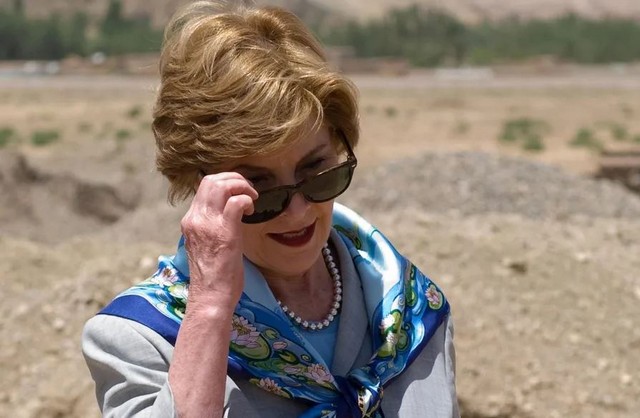
Then came September 11, 2001, and the revelation that the organization behind the attack, Al Qaeda, was holed up in Afghanistan. The George W. Bush administration, always looking for justifications for war, found just the thing in the Feminist Majority’s campaign. By November, first lady Laura Bush was arguing that the reason for the war was to “liberate Afghan women.” By November 20, the leaders of the Feminist Majority—including Ellie Smeal, the former head of the National Organization for Women—were attending events at the State Department and meeting with administration officials. The spring 2002 issue of Ms. magazine called the invasion a “coalition of hope,” adding bombs to the feminist toolkit.

The brand of feminism those women collectively championed is what I call “white feminism,” meaning that it refuses to consider the role that whiteness and racial privilege play in universalizing white feminist concerns, agendas, and beliefs as those of all feminism and all feminists. Of course, not all feminists who are white are white feminists. No matter the person’s skin color and gender, advocating for an anti-racist, anti-capitalist feminism is a threat to white feminism.

Yet both within and outside the US government, the white feminists decided that war and occupation were essential to freeing Afghan women. Notable examples include then-Senator Hillary Clinton, who enthusiastically voted for the war, calling it a “restoration of hope,” and New York Representative Carolyn Maloney, who wore a blue burka to the House floor and made impassioned declarations about how claustrophobic the garment was. The enduring logic was that if they thought military intervention was a good thing, then Afghan women would too.

But groups like the Revolutionary Association of the Women of Afghanistan, a political organization that has denounced religious fundamentalism since its founding in 1977, opposed the US attacks and the US-backed government. Afghan feminists never asked for Meryl Streep’s help—let alone US air strikes.

The belief that white women knew what’s best for Afghan women goes deeper than Hollywood and political posturing. The hundreds of millions in development aid that the United States poured into its savior-industrial complex relied on second-wave feminists’ assumption that women’s liberation was the automatic consequence of women’s participation in a capitalist economy. One of the most expensive development programs that Americans brought to Afghanistan was PROMOTE, which cost $418 million and was intended to provide 75,000 Afghan women with training, internships, and jobs. When the program was audited in 2016, it was almost impossible to trace where all the money had gone. The influx of cash wasn’t just wasted; it helped kill Indigenous feminisms that might have worked to achieve more culturally relevant goals. The aid economy meant that Afghan women activists abandoned their own programs and rushed to American ones.

White feminism’s refusal to disaggregate whiteness—and its colonialist and oppressive associations—from feminism meant that the blueprint for empowerment was acting, by and large, like white women. The result was that those opposing the US presence saw authenticity in rejecting all that came via white feminism, which helped discredit all feminist ideas.

White feminism is a trickle-down feminism, and Afghan women are not the only ones it condescends to; Black women, Latina women, Asian women, and other women of color have trouble gaining entry into policy-making circles because their experiences of being a feminist, surviving as a single mother, working on a factory floor, or enduring years of racial discrimination are considered irrelevant. Those roles go to elite white women who have climbed the ladder, nudging out the very women they allegedly wish to help.

Many of the would-be white saviors of Afghan women are now insisting, with the same dogged and willful blindness that led them to support US imperialism in the first place, that the United States should have kept its military in the country to protect Afghan women. But an ill-conceived project cannot be fixed by continuing to make disastrous decisions. The best outcome would be for the white feminists who aided in the destruction of a country to forever forswear such lethal meddling.

Rafia Zakaria is the author of The Upstairs Wife: An Intimate History of Pakistan (Beacon, 2015), Veil (Bloomsbury, 2017), and Against White Feminism (W.W. Norton, 2021).

17 August 2021

Source: www.thenation.com

And so it begins again: The media recycles Afghanistan war lies

By Patrick Martin

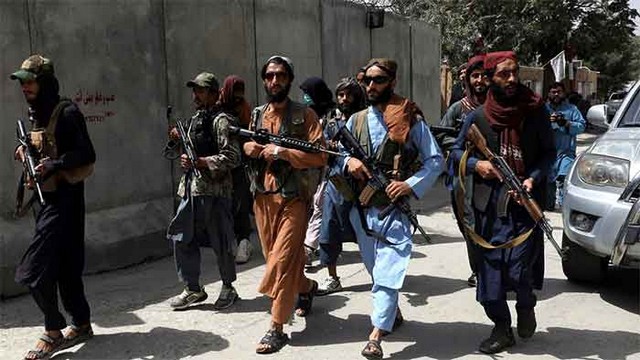
In the days following the desperate evacuation of US troops from Afghanistan, the corporate press has launched an international propaganda campaign raising concerns for the “human rights” of residents of the Central Asian country.

For the last 20 years, the corporate media and imperialist powers of the world raised no objections as the United States killed over 100,000 people, set up black site torture chambers, carried out drone assassinations and robbed the country of its resources. The major imperialist powers joined the US in the invasion and occupation. The corporate press facilitated the commission of horrific crimes by promoting the war as a “just cause,” a necessary response to September 11, 2001. Those who exposed the real character of the war in Afghanistan—including Julian Assange, Chelsea Manning and Daniel Hale—were locked up in prison.

But now, all of the tropes employed by the corporate media to “sell” to world public opinion the invasion and occupation of Afghanistan in 2001, no matter how moth-eaten and worn out, are being revived.

This serves two purposes: to paper over the war crimes carried out by the US in the past and to prepare public opinion for an intensification of imperialist pressure on the war-ravaged population.

Reports of the suppression of a handful of small protests against the new government give few details about the nature of that “opposition,” including whether those engaged in the protests are acting at the instigation of the thousands of CIA agents and “contractors” left behind in Afghanistan by the US government.

The media campaign over repression, however, is entirely cynical and two-faced. Nothing done in Jalalabad or Kabul this week comes close to the mass slaughter carried out by the US on a weekly basis over the course of the last 20 years.

The media is not up in arms over Egyptian military dictator Abdel Fattah el-Sisi, whose troops and police killed more than a thousand protesters at a single anti-government demonstration held after his 2013 military coup. El-Sisi, with tens of thousands imprisoned, thousands of them under death sentences, is now one of the pillars of US foreign policy in the Middle East.

The Democratic and Republican parties and the entire corporate media are replete with pious denunciations of the treatment of Afghan women. This same political establishment paid no attention as tens of thousands of Afghan women were killed by American soldiers in US drone strikes or through the devastating social collapse caused by the invasion and occupation.

The New York Times, the mouthpiece of the Democratic Party and identity politics, has taken the lead on this issue, publishing an op-ed column by Malala Yousefzai, the one-time teenage advocate of education for girls and survivor of an assassination attempt by the Pakistani Taliban. She urges Americans to “listen to the voices of Afghan women and girls. They are asking for protection, for education, for the freedom and the future they were promised …”

But again, the media double standard is of staggering hypocrisy. In Saudi Arabia, the leading US ally among the Arab nations, women cannot drive, vote or appear in public except under escort of a male relative. Adultery is a crime punishable by death, although Shi’ites engaged in political opposition to the Sunni-based monarchy are the main victims of the mass beheadings that take place on a regular basis.

None of these barbaric practices has threatened the close collaboration of the Pentagon that makes possible the ongoing Saudi war in Yemen, which uses mass starvation as a major weapon, enforced by a naval blockade and air strikes guided by US satellite intelligence.

The media and military-political establishment also repeat concerns that Afghanistan will become a “safe haven” for Al Qaeda. We have heard this one before. This was, after all, the main pretext for the US invasion in October 2001, one month after the September 11 terrorist attacks.

It has long been known that Al Qaeda was first formed under Osama bin Laden’s leadership in the 1980s, as part of the US-backed guerrilla war by Islamic fundamentalists against the Soviet-backed government of Afghanistan. But after the interval of ferocious hostility that included the 2001 terrorist attacks, Al Qaeda has returned to its roots as an instrument of US imperialism in both Libya and Syria.

In Libya, the commander of the NATO bombing campaign described his role as acting as “Al Qaeda’s air force,” since the Islamists were carrying out the ground war against the regime of Muammar Gaddafi. In Syria, both Al Qaeda and its offshoot ISIS received backing from US allies like Saudi Arabia and Qatar, as well as direct support from the CIA.

Meanwhile, ISIS efforts to gain a foothold in Afghanistan have erupted in violent clashes with the Taliban and their allied militia, such as the Haqqani network. Those raising the supposed danger of renewed anti-US terrorism emanating from Afghanistan have not been able to identify any actual terrorists who would be empowered by the new regime in Kabul.

Biden made a significant concession to the pressure to reverse his policy when he declared, in the course of his interview with ABC News broadcast Thursday morning, that the August 31 deadline for the completion of US evacuation operations from the airport was flexible. “If there’s American citizens left, we’re going to stay to get them all out,” he said.

This formulation is so elastic that it could well serve to justify a nearly indefinite extension of the US occupation of the Kabul airport and even renewed American military aggression against the country.

The more fundamental obstacle to a renewal of American aggression against Afghanistan, however, is not in that tortured country. It is the opposition within the United States itself. A poll conducted by the Associated Press during the final week of the collapse of the Afghan puppet regime found that nearly two-thirds of those interviewed thought the Afghanistan war not worth fighting.

The American people are adamantly opposed to further intervention in Afghanistan. That is one reason for the increasingly hysterical character of the media campaign for war. The US ruling elite senses this and through its media outlets expresses a fear that it is losing its political grip on the majority of the US population. The American people, and above all the American working class, are coming to their own conclusions about vital questions of war and peace and calling into question the social, economic and political structures of American capitalism.

Originally published by WSWS.org

20 August 2021

Source: countercurrents.org

Afghanistan’s “Color Revolution”? Narcotics and the Opium Trade

By Prof Michel Chossudovsky

The U.S. has not been thrown out of Afghanistan. Quite the opposite.

Washington is involved in managing the strategic transition towards the formation of a Taliban Islamic Emirate.

Earlier reports suggested that a so-called interim Afghan administration was to be headed by Prof. Ali Ahmad Jalali, who just so happens to be a US citizen.

“Regime Change” in Afghanistan?

Troop withdrawals coupled with a US sponsored color revolution?

The Doha Negotiations with the Taliban

America’s withdrawal from Afghanistan has been the object of extensive negotiations between Washington and the Taliban. An earlier deal was signed in Doha in late February 2020 during the Trump administration.

The transition timeline had been agreed upon. On August 09, 2021, US special envoy Zalmay Khalilzad arrived in Doha with a US team of negotiators for 3 days of top level discussions with representatives of both the Taliban and the defunct government of Ashraf Ghani.

In the wake of the Doha meeting on August 13, the “Green Light” was given to Taliban Forces to capture Kabul as well as most of the provincial capitals. (See Southfront, August 18)

The evacuation of the US embassy described by the media was a smokescreen. The entry of the Taliban into Kabul which prompted the US to evacuate its embassy, had been carefully planned and agreed upon. The presidential palace was taken without a fight.

On August 13, reports suggested that the candidacy of Ali Ahmad Jalali, a distinguished professor at the Washington based National Defense University‘s Near East South Asia Center for Strategic Studies (NESA) (and a former Minister of the Interior in the Hamid Karzai government) had been contemplated to lead a so-called interim administration. Based at Fort Lesley J. McNair, Washington DC, The National Defense University is a partner institution of the US Department of Defense.

While the US is involved in astutely managing the transition towards the formation of a pro-US Taliban government, the appointment of Professor Ali Ahmad Jalali who lives in Maryland is unconfirmed. According to a Reuters Report (August 16):

“Former Afghan Interior Minister Ali Jalali on Monday said he was never under consideration to become transitional president for Afghanistan and that he would never have accepted the position.

“The bottom line is that I’ve never been contacted. I’ve never been considered. I never thought about it, and I’m not interested,” Jalali, who served as Afghanistan’s first interior minister after a 2001 U.S.-led invasion, told Reuters.

Jalali, who is a professor at the U.S. National Defense University in Washington, spoke by telephone from Washington.

He was responding to a Reuters report that quoted three diplomatic sources on Sunday as saying he would likely be named to head a transitional administration in Kabul as the Taliban took over the capital.”

According to SouthFront, (unconfirmed): “Taliban’s co-founder and second-in-command, Abdul Ghani Baradar is expected to become Afghanistan’s President…” .

Flashback to 9/11: Why was Afghanistan Invaded on October 7, 2001?

Almost 20 years later, both the media and the Biden administration, in chorus, continue to point to the 9/11 attacks and the role of Al Qaeda, allegedly supported by Afghanistan, when in fact (amply documented) Al Qaeda was an intelligence asset created by the CIA.

Lest we forget, Osama bin Laden had been recruited by National Security Advisor Zbigniew Brzezinski in the 1980s during the so-called Soviet-Afghan war.

The legal argument used by Washington and NATO to invade Afghanistan was that the September 11, 2001 attacks constituted an undeclared “armed attack” “from abroad” by an unnamed foreign power, and that consequently “the laws of war” apply, allowing the nation under attack, to strike back in the name of “self-defense”.

NATO’s North Atlantic Council meeting in Brussels on September 12, 2001, adopted the following resolution:

“if it is determined that the [September 11, 2001] attack against the United States was directed from abroad [Afghanistan] against “The North Atlantic area“, it shall be regarded as an action covered by Article 5 of the Washington Treaty”. (emphasis added)

The bombing and invasion of Afghanistan which commenced on October 7, 2001 was described as a “campaign” against “Islamic terrorists”, rather than a war.

To this date, however, there is no proof that Al Qaeda was behind the 9/11 attacks.

Even if one accepts the official 9/11 narrative, there is no evidence that Afghanistan as a nation-state was behind or in any way complicit in the 9/11 attacks. There were no Afghan jet fighters in the skies of New York on September 11, 2001.

The Afghan government in the weeks following 9/11, offered on two occasions through diplomatic channels to deliver Osama bin Laden to US Justice, if there were preliminary evidence of his involvement in the 9/11 attacks. These offers were casually refused by Washington. In the words of George W. Bush, it’s “non-negotiable”.

The Smoking Gun. Narcotics and the Afghan Opium Trade

One of the key strategic objectives of the October 2001 invasion of Afghanistan was to restore the opium trade following the Taliban government’s successful 2000-2001 drug eradication program which led to a 94% collapse in opium production (down to 8000 hectares in 2001, see graph below).

At the October 2001 session of the UN General Assembly (which took place barely a few days after the beginning of the 2001 bombing raids), the Taliban Government was congratulated by the United Nations: “No other UNODC member country was able to implement a comparable program”.

What is the Future of the Narcotics Economy?

How will this multibillion trade (which until recently was protected by US forces) be affected by the withdrawal of US troops from Afghanistan? Private mercenary companies are currently involved in protecting the opium trade.

There is a geopolitical power play with Russia, China, Iran and Turkey. Afghanistan is integrated into China’s Belt and Road. How this will evolve is yet to be determined.

Strategic control over the Afghan opium trade will play a key role.

Taliban Out, Taliban In:

The US initiated a war on October 7, 2001 against the Taliban government which had unduly sabotaged the opium economy in 2000-2001. That war lasted more than nineteen years.

And now the Biden Administration is involved in pushing for the formation of a renewed Taliban proxy regime which will unconditionally endorse the lucrative multibillion dollar trade in narcotics.

A followup article on the role of China is envisaged.

*
Michel Chossudovsky is an award-winning author, Professor of Economics (emeritus) at the University of Ottawa, Founder and Director of the Centre for Research on Globalization (CRG), Montreal, Editor of Global Research.

19 August 2021

Source: www.globalresearch.ca

The Spoils of War: Afghanistan’s Multibillion Dollar Heroin Trade

By Prof Michel Chossudovsky

Author’s Note and Update

The US opioid crisis broadly defined bears a relationship to the export of heroin out of Afghanistan.

How will  this multibillion trade (which until recently was protected by US forces) be affected by the withdrawal of US troops from Afghanistan. Private mercenary companies are also involved in supporting the opium trade.

The US withdrawal has been the object of extensive negotiations between US-NATO and the Taliban. A deal was signed in Doha in late February 2020
[3] at the outset of the Biden Administration.

Did the U.S. reach a “secret agreement” with the Taliban regarding the opium trade?

Restoration of the Drug Trade. Did the Invasion of Afghanistan Contribute to the Increase in Heroin Addiction

What is important to understand is that one of the key strategic objectives of the 2001 war on Afghanistan was to restore the opium tradefollowing the Taliban government’s successful 2000-2001 drug eradication program which led to a 94% collapse in opium production. This program was supported by the United Nations. (For details, see below)

In the course of the last 19 years following the US-NATO October 2001 invasion,  there has been a surge in Afghan opium production. In turn the number of heroin addicts in the US has increased dramatically. Is there a relationship?

There were 189,000 heroin users [4] in the US in 2001, before the US-NATO invasion of Afghanistan.

By 2016 that number went up to 4,500,000 (2.5 million heroin addicts and 2 million casual users).

In 2020, at the hight of the covid crisis, deaths from opioids and drug addiction increased threefold.

It’s Big Money for Big Pharma.

[5]

Graph based on CDC data Source PBS [6]

In a bitter irony, Johnson and Johnson which is marketing its “experimental” COVID-19 adenovirus viral vector vaccine, just so happens to be a major producer of prescription opioids.

In November 2020 a “a tentative $26 billion settlement  [7]was reached with counties and cities across America which sued J and J and its distributors on behalf of opioid victims.

This  class action law suit was “the largest federal court case in American history”.  It coincided with the launching of the Covid vaccine initiative in early November 2020. (For further details see Michel Chossudovsky’s E-Book, Chapter VI [8]).

According to the Washington Post [7]:

Johnson & Johnson and the “Big Three” distributors, McKesson, Cardinal Health and Amerisource Bergen, potentially brings a large measure of legal closure for the companies and will funnel money to communities devastated by an addiction crisis that claims more than 70,000 lives in America every year.  (emphasis added)

Afghanistan currently produces 84 percent of the World’s opium which feeds the heroin and opioid markets.

Lest we forget, the surge in opium production occurred in the immediate wake of the US invasion in October 2001.

Who is protecting opium exports out of Afghanistan?

“In 2000-2001,  the Taliban government –in collaboration with the United Nations– had imposed a successful ban on poppy cultivation. Opium production declined by more than 90 per cent in 2001. In fact the surge in opium cultivation production coincided with the onslaught of the US-led military operation and the downfall of the Taliban regime. From October through December 2001, farmers started to replant poppy on an extensive basis.” (quoted from article below)

The Vienna based UN Office on Drugs and Crime (UNODC) reveals that poppy cultivation in 2012 extended over an area of  more than  154,000 hectares, an increase of 18% over 2011. A UNODC  spokesperson confirmed in 2013 that opium production is heading towards record levels.

In 2014 the Afghan opium cultivation hit a record high, according to the United Nations Office on Drugs and Crime’s 2014 Afghan Opium Survey [9]. (See graph below). A slight decline occurred in 2015-2016.

Click here to continue reading…

17 August 2021

America and its allies helped the Taliban on the road to victory

By Yvonne Ridley

Most Western media outlets are carrying headlines and hype about the return of the Taliban to Afghanistan after the fighting force swept through the country at a blistering pace which has left military strategists gasping. Within 24 hours of making his “I am staying” speech, President Ashraf Ghani fled from Kabul when the Taliban entered the city. Apparently, he has gone to Tajikstan while an interim government headed by Taliban commander Mullah Abdul Ghani Baradar takes over.

Ghani didn’t want to stay and fight. Happily, the Afghan National Army agreed, probably because he and his corrupt government weren’t worth defending; the troops gave little or no resistance when Baradar arrived.

In less than a week, the Taliban has seized ten provincial capitals, including the movement’s spiritual home of Kandahar. On Saturday morning, its forces surrounded the capital.

Since Western governments and media have spent three decades demonising the Taliban, the headlines over recent days were entirely predictable. “Return to the Dark Ages”, screamed one alongside the face of an Afghan girl looking incredibly frightened and bewildered. I felt frightened for her, even though most of the emerging descriptions and scare stories lack real substance. Not only are Western media outlets selling the public short they’re managing to scare the hell out of everyone else with stories of rape, forced marriage, and schools being closed, as well as the usual tropes such as kite flying being banned.

What is absent in all of the hysteria is any meaningful analysis, insight, or even simple facts about how the Taliban forces have managed to sweep through Afghanistan taking strategic cities such as Herat, Kandahar, and Pul-e-Alam, the capital of Logar province, in just a few days.

Yes, there is carnage on the ground; and, yes, there have been atrocities, but they are happening on all sides. That is what war looks like. The bodies of the children pulled out of the rubble in Kabul when the US and Britain fired cruise missiles against the Afghans in the city at the start of this conflict in 2001 look no different to the bodies of innocents caught up in last week’s crossfire. The only difference is that no one bothered to count the dead and wounded back then if they weren’t American, British or other NATO soldiers.

How has the Taliban managed to seize control of Afghanistan? For a start, it’s worth reminding ourselves that, despite what we read in the media, the movement is not a small band of insurrectionists who have recently re-emerged like some pop-up army after the US announced the surprise pull out of its troops. The Taliban is made up of Afghans with popular support in many parts of the country; it never really went away. These are people fighting in and for their own country, not interlopers.

Although some of the original Taliban are still in its ranks, the movement is quite different from that which fled from Kabul in 2001. The key strategists and decision-makers have not ditched or compromised their Islamic beliefs. They have, though, matured and developed and embraced a more pragmatic outlook on global politics.

Just as the then would-be president Hamid Karzai spent much of 2001 sneaking in and out of Afghanistan making strategic alliances with regional power holders and tribal leaders, ever since 9/11 the Taliban leaders have done exactly the same. However, instead of relying solely on support from within the country, the Taliban negotiating team has also realised that alliances with neighbours and regional powers are equally important, especially when it comes to trade and creating jobs and wealth.

According to my sources — and they’ve not let me down so far — top-level meetings have already taken place with China, Russia, Turkey, Pakistan, Iran, and other neighbouring states. I’m told that the meetings have all been productive and positive.

There could be very practical reasons for this. Tehran, for example, does not need any more problems to deal with, especially along its rugged 950km border with Afghanistan. Given the tough geographical conditions in the region, it’s nigh on impossible to secure. Iran already has plenty to contend with further afield, as Israel keeps threatening to attack and is goading the US into action against the government in Tehran. The Israelis are already embroiled in a so-called shadow war with Iran in the Gulf.

Similarly, Pakistan has a massive job policing its 2,640km border with Afghanistan while keeping an eye on its potentially hostile nuclear-armed neighbour India in occupied Kashmir. China has much bigger problems to contend with as an emerging superpower, so it too will not want to be distracted by events in the Wakhan Corridor, a sliver of land 350km long but less than 15km wide, ending in Afghanistan’s shortest border of just 75km.

Russia also has its own problems and doesn’t want to be sucked into sorting out Afghanistan’s. Moscow has already been down that route as we all know; the old USSR invaded Afghanistan in 1979 until 1989, leading to a 10-year war and occupation, and the emergence of Al-Qaeda. Soviet involvement was as disastrous as the American and British military misadventure in the “graveyard of empires”.

The fact that the Sunni Taliban have been talking with Shia Iran is a sign that toxic sectarian issues could finally be resolved. Not everyone will be happy at this, not least Israel’s new best friends and strategic partners in the Gulf, including Saudi Arabia. The two have a mutual loathing for Shia-dominated Iran, as does the kingdom’s influential Wahhabi religious establishment.

Turkey could prove to be a good ally since it is already making its weight felt in the Muslim world with its troops in Syria, Libya, and Qatar, where the Taliban’s negotiating team is based. The Qataris are already promoting themselves as partners for peace in other arenas; again, its rivals in Riyadh are not happy.

Taking all of this into consideration, it is highly unlikely that Afghanistan will become a playground for jihadists or a magnet for terrorists. Far from being isolated, Afghanistan could once again become a key trading route with significant business partners. The key thing, as I wrote a couple of weeks ago, is that “The time has come for the West to take a giant step back and stop interfering in Afghanistan other than to provide no-strings humanitarian aid and support to make up for 20 years of devastation.” I stand by this claim.

I remember asking my Taliban interrogators during my well-documented captivity in Afghanistan in 2001 about the movement’s relationship with Al Qaeda. “They came in as our guests and now act as our masters,” they replied bluntly. If that was representative of the general feeling back then, I think that the Taliban leadership may be more selective over who it hosts in the future.

Bearing in mind that the Taliban has never exported terrorism or carried out military strikes beyond its own country, I think it’s highly unlikely it will tolerate those with plans to export terrorism to the West. It’s worth repeating that there were no Taliban fighters on board any of the hijacked aircraft on 9/11, something which many Americans forget; the terrorists were nearly all Saudis.

This will come as a surprise to some journalists who are incapable of viewing the Taliban as anything other than “terrorists”. They see the beards, turbans, and distinct clothing and lazy journalism results; Islamophobia and racism follow.

I suspect that the Taliban’s priorities will include expunging any traces of Daesh from its territory. If any politicians and journalists cannot — or will not — distinguish between the two groups, they need to consider if they are in the right job. As they give this some thought, let them also consider the fact that Western efforts to prop up one of the most corrupt governments in the world helped the Taliban considerably.

The US has thrown three trillion dollars at its failed military campaign in Afghanistan; billions more have been given as aid, much of which has been siphoned off by unsavoury elements within Ashraf Ghani’s regime. Now a lot of the American weapons and equipment supplied to the Afghan National Army and other forces are in the hands of the Taliban. Britain and the EU have also spent huge amounts of money in Afghanistan.

Astonishingly, Europe has threatened to isolate Afghanistan on the international stage if the Taliban takes power again. Why? It was a disaster the last time round and by isolating the Taliban, the EU created even more fertile conditions for Al-Qaeda and other groups to flourish. It has been said that the definition of madness is to do the same thing over and over again and expect different results. European racism is clouding its judgment.

Perhaps the most shocking reaction of all has come from US President Joe Biden, who dropped a bombshell before heading off to his Camp David retreat for the weekend. The Afghan people, he told journalists, have to “fight for themselves” and “fight for their nation.”

Let this be a lesson to all who look to America to police the world. The US message is clear: We bombed, invaded, and occupied your country and now we have quit, leaving someone else to sort out the mess that we made. What a propaganda tool for the Taliban. Is it any wonder that the movement has encountered little resistance on the road to Kabul?

I said many years ago that America and its allies were not the solutions for Afghanistan, but the problem. Post-captivity I’ve been back to Afghanistan many times and I can tell you that moving around the country in the all-enveloping blue burqa enabled me to observe America’s arrogant imperialism at close quarters. It was repugnant.

As we look at what is happening now, let’s remember this: It’s not the rapid withdrawal of the US forces that enabled the Taliban’s speedy power grab, it was their presence in Afghanistan in the first place.

British journalist and author Yvonne Ridley provides political analysis on affairs related to the Middle East, Asia and the Global War on Terror.

16 August 2021

Source: www.middleeastmonitor.com

The US Legacy in Afghanistan

By Maya Evans

15 Aug 2021 – The Taliban take all major cities in Afghanistan ~ The Presidential Palace has fallen ~ President Ghani flees the country ~ US pledge to redeploy 5,000 troops ~ All embassy staff leave the country ~ We are now looking at a Taliban led Government ~ The Taliban say they want to take power without violence.

The war in Afghanistan can be summed up as chaotic and disastrous.

Nearly twenty years ago, just one month after 9/11, the US led the coalition that invaded Afghanistan. Its stated aims were to topple the Taliban, liberate women and capture Osama Bin Laden.

Twenty years later, the US have installed a corrupt puppet government. Rights have improved for some women, but they are not included or safeguarded in the ‘peace deal’. It took 10 years to capture Bin Laden, but not in Afghanistan: he was hiding in Pakistan.

Under the peace agreement, the Taliban are supposed to share power with the Afghan government, and promise to never accommodate terrorist organisations in Afghanistan. It hasn’t, perhaps deliberately, been well documented that theTaliban were not close allies of Bin Laden and Al Qaeda; the international terrorist group were in fact merely tolerated by Mullah Omar. In the early days of the 2001 invasion, the Taliban had in fact impounded Bin Laden and were willing to hand him over to a third-party country, if the US could prove his connection with 9/11. The Bush administration chose to ignore diplomacy and negotiation and instead, perhaps unknowingly, committed themselves to the longest war in their history.

The prospects for power-sharing with the Afghan government were never great. The Taliban still see the current regime as a US-installed ‘illegitimate puppet government’. The Afghan Government is known for its corruption, with politicians who included notorious warlords with blood on their hands from the 1990s civil war.

The Taliban wanted the lion’s share of power and were confident they would win out. In the last two years, they have made gains across the country, taking most rural districts. Today Kabul fell to the Taliban, joining all the other major cities which have been taken over the last few weeks.

Throughout the talks, the Taliban continued to carry out attacks on civilian buildings, while the US regularly undertook airstrikes. The violence running up to the withdrawal date has been intensifying. There are also reports of units of the Afghan Army readily surrendering, while the Taliban seize huge weapon stores left by the US. Meanwhile some rural villagers are taking up arms and vowing to defend themselves, while others opt to flee to the mountain tops.

The position of women has not featured much during the talks. Representatives of women’s organisations were rarely invited and their contributions not taken that seriously. Although a well-lauded justification for invading in 2001, women’s rights are not part of the peace deal.

It is important to acknowledge that women’s rights in Afghanistan have improved for some women, with better access to education, healthcare and employment. However, it should be noted that not all women have been afforded these rights: many girls in the rural villages were not able to attend school due to societal pressure to stay home. The benefits of accessing healthcare are perhaps eclipsed by the impacts of US/ NATO aerial bombing or being caught up in Taliban suicide bomb attacks and other conflict-related injuries. Unemployment for 2021is expected to reach 12.7%, with an eye-watering 47.3% of the population now living below the poverty line.

Was the government ever serious about women’s rights? It certainly didn’t enshrine enough legislation to protect women: for example, the 2009 Elimination of Violence Against Women Law, created to provide women and girls with protection against domestic violence, has never properly been implemented. While in 2014 the Afghan Government tabled Article 26, potential legislation which forbad family members from testifying against alleged perpetrators of domestic violence. Today, Afghan women are understandably worried about the few hard-earned rights they have won disappearing, and being thrust back into the dark days of the Taliban.

But the continued occupation of US and NATO troops is not the answer. Kabul resident Zainab, age 26, says,

“The Afghan people don’t know what the US troops are doing here. Every day there are killings by explosions, drones, weapons. The US troops have just made a land of conflict so they can bring more guns and kill people in different ways. They have made [Afghanistan into] a poor country whose people are so tired of what is going on, and given more power to the Taliban. I think they should know that this country needs life, health, education and childcare. Women are so tired of military solutions. Also, they should know that here we need peace.

“I am a woman who hasn’t seen any change after these years. Still, we lose our families in war .I think only Afghans can bring peace to Afghanistan. I am very worried about women. When the Taliban get more involved and gain power, women will lose their rights, especially to education, and will go back to wearing the burqa. We will see more violence, we will not be able to get food or any basic needs. No one will hear women’s voices.”

Another Kabul resident, Naji, age 24, added:

“The current government might last for a while but many will still lose their lives, as people do these days. The impact of irresponsible withdrawal might be another civil war. Women won’t be treated as humans, schools and universities will close, people will migrate, and civil society organisations will vanish. On top of that, climate change will add to the problems. People already face a shortage of clean water.”

The idea that the NATO operation has tried to win ‘hearts and minds’ is completely disingenuous. There have been airstrikes and drone attacks, which are notorious for killing civilians – in 2019 aerial operations killed 700 Afghan civilians, while it has been found a drone strike is 10 times more likely to kill a civilian. Afghans fear US night raids, the torture centre at Bagram, the deliberate targeting and bombing of wedding parties, the bombing of hospitalssuch as the 2015 bombing of Médecins Sans Frontières in Kunduz, the ‘Mother of all bombs’ in Nangarhar… The list of war atrocities could go on and on. 20 years spent on violence and war, rather than peace and education.

One of my young Afghan friends calls me on WhatsApp: Gul Jamal, aged 25. I’ve known him for around 10 years: “Maya Jan, I am afraid my life will be taken, what do you think about me leaving the country, where should I go?” Another friend messages me; he and his young family have been lucky enough to get visas for the US. Meanwhile, our friends in a youth peace group in Kabul want to Skype to discuss chances of international scholarships and asylum. An email lands in my inbox: colleagues in the US have been contacted by another dear Afghan friend. He has asked for $6,000 so that he and his wife can flee to Turkey. Another young Afghan friend contacts me via Facebook: formerly a street kid in Kabul, now aged 15, he is living in India and in desperate need of employment.

Afghanistan has been the US’s longest war. The cost has been $2.26 trillion, of which $143bn has been spent on reconstruction. There have been 71,000 civilian deaths as a direct result of the war. The military fatalities are 69,000 Afghan troops, 3,500 US and allied NATO troops, 3,800 private security contractors and 84,000 Taliban and other militia.

Today Afghanistan is one of the worst countries in the world for almost every quality of life index. There are 4 million internally displaced persons. There is a major water crisis, with only 27% of people having access to clean water. Due to climate change, snows are failing. The pumping of water for opium production also has a negative effect.

Around 10% of the population are addicted to opium. Some 90% of the world’s supply comes from Afghanistan.

The UN estimate 55% of children are malnourished. 68% of the population suffer from depression. The list could go on.

But still there is hope. My two friends Amir and Gulzar run peace projects in Bamiyan. They operate a peace art project and in the winter they run a street kids school and distribute solar pots so that poor people can cook food using solar power.

This is where the international funding should go, not to the ghost hospitals and schools which are the result of US contracts, or to the ineffective multi-million dollar Aid industry which saw 40% of the supposed Aid to Afghanistan go back to the donor countries in corporate profits and consultancy salaries, while in-country aid workers often never venture out of the heavily secured ‘green-zone’ in Kabul, a heavily secured bubble reserved for international workers.

The US and NATO are pulling out of Afghanistan, but they are not entirely leaving. Afghanistan remains important for geopolitical reasons, both for neighbouring China, as well as Iran and Pakistan. The country also contains at least a trillion dollars’ worth of rare earth metals.

The leverage the US will have over the Taliban to co-operate around these key interests will be in the form of drone strikes and aid-giving. One thing is for certain, the Afghan people will suffer further.

No doubt, after September 11th Afghanistan will drop out of the news and people will think it’s all over, but it won’t be. Continue to follow Afghanistan, and above all, campaign for reparations to be given to the people of Afghanistan.

_______________________________________

Maya (Anne) Evans is a British peace campaigner who was arrested in October 2005 opposite the Cenotaph war memorial in London, for refusing to stop reading aloud the names of British soldiers who had been killed in Iraq following the 2003 Iraq war.

16 August 2021

Source: www.transcend.org

The Fall of Kabul

By Nick Turse

Joe Biden claimed “zero” parallels between U.S. withdrawals from Afghanistan and Vietnam. As the Taliban take Kabul, he’s proved wrong.

15 Aug 2021 – Last month, President Joe Biden announced that America’s “military mission in Afghanistan will conclude on August 31st.” In the time since the July 8 statement, a Taliban offensive has overrun city after city across the country. Today, the militant group entered the Afghan capital of Kabul, and several countries, including the United States, began to evacuate their embassies. As reports emerged that the Taliban had seized the presidential palace, Afghan president Ashraf Ghani fled the country.

“We, of course, are saddened indeed by the events. … But these events, tragic as they are, portend neither the end of the world nor of America’s leadership in the world,” said the U.S. president.

But that president wasn’t Biden. It was Gerald Ford on April 23, 1975, as North Vietnamese forces rolled toward Saigon, the capital of South Vietnam.

A two-decade American effort to turn South Vietnam into a noncommunist bulwark in Southeast Asia had failed. A million-man army long advised, financed, trained, and equipped by the United States was crumbling as South Vietnamese soldiers fled the front lines. They stripped off their uniforms and attempted to disappear into the civilian population.

“We can and we should help others to help themselves,” said Ford. “But the fate of responsible men and women everywhere, in the final decision, rests in their own hands, not in ours.”

Last month, Biden echoed the same sentiments, putting the fate of Afghanistan squarely on the shoulders of the Afghan government and military. It is, he said, “the right and the responsibility of the Afghan people alone to decide their future and how they want to run their country.”

While the United States and its allies had propped up the Afghan government for the better part of two decades and had spent at least $83 billion to build, advise, train, and equip its faltering armed forces, Biden seemingly washed his and the rest of the U.S.’s hands of further responsibility. “We provided our Afghan partners with all the tools — let me emphasize: all the tools, training, and equipment of any modern military. We provided advanced weaponry,” he said.

The case was the same in South Vietnam. The United States had provided billions in high-tech weapons, but it hardly mattered as North Vietnamese forces rolled toward Saigon. The U.S.-backed “puppet troops,” as they were called by the North, melted away.

A week after Ford made his speech, South Vietnam ceased to exist. The United States’s military efforts in neighboring Cambodia and Laos fared no better. “Some tend to feel that if we do not succeed in everything everywhere, then we have succeeded in nothing anywhere. I reject categorically such polarized thinking,” Ford told the crowd at Tulane University. “America’s future depends upon Americans — especially your generation, which is now equipping itself to assume the challenges of the future, to help write the agenda for America.”

That new agenda could have included a complete reevaluation of U.S. foreign policy and a rejection of the ruinous national security strategy and reckless foreign interventions that led to America’s embarrassing defeats in Southeast Asia. Ford had demanded that “we accept the responsibilities of leadership as a good neighbor to all peoples and the enemy of none.” But in a few short years, the United States began a massive effort to saddle the Soviet Union with its own Vietnam War. It was one of the most aggressive campaigns ever mounted by the CIA, aiding guerrillas in Afghanistan and setting the stage for 9/11, the forever wars, and today’s Afghan collapse.

The years since have been typified by U.S. military interventions that yielded little, like the ruinous 1983 deployment of U.S. Marines to Beirut, the 1986 bombing of Libya, and, more recently, military setbacks, stalemates, and defeats from Iraq to Burkina Faso, Somalia to Libya, Mali to, again, Afghanistan. Victories, such as they are, have been confined to efforts in places like Grenada and Panama.

As he concluded his July 8 speech, Biden, like Ford before him, attempted to turn the page. “We have to defeat Covid-19 at home and around the world … [and] take concerted action to fight existential threats of climate change,” he asserted. The rapid rise in Covid-19 infections and deaths in the United States, paired with the devastating report by the Intergovernmental Panel on Climate Change, suggests that meeting these challenges may be far more difficult than those the U.S. faced and failed in Afghanistan.

Taking questions from the press in July, Biden was asked if he saw “any parallels between this withdrawal and what happened in Vietnam.”

“None whatsoever. Zero,” he replied.

He was, in some way, right. The Afghan collapse was far more precipitous than that of the South Vietnamese armed forces. But Biden ignores the clear parallels between that past moment of defeat and the current one at his own peril and that of the United States as a whole. Ford’s 1975 speech was loaded with absurd rhetoric about the future, lacking any real attempt at redefining American foreign policy. Without a true reevaluation this time around, the U.S. risks falling into well-worn patterns that may, one day, make the military debacles in Southeast and Southwest Asia look terribly small.

Nick Turse is a contributing writer for The Intercept, reporting on national security and foreign policy.

16 August 2021

Source: www.transcend.org

How Myanmar Fits into China’s New Silk Roads

By Pepe Escobar

4 Aug 2021 – You don’t argue with the Tatmadaw – the Myanmar Armed Forces. It’s always their way, or the highway. Since the mid-20th century, the Chinese have come to understand it quite well.

How Beijing approaches the Myanmar maze is conditioned by four variables: natural gas; water; the drug trade; and the fractious clashes between the Tatmadaw and a dizzying patchwork of over 135 ethnic minorities.

Each Myanmar ethnic group exhibits its own peculiar history, culture and language. They control vast territories, whole industries and serious militias. Myanmar’s two-third majority is represented by the Bamar – also known as the Lowland Burmese. The Tatmadaw is largely a Lowland Burmese army – in perennial conflict with that large ethnic jigsaw puzzle.

The ethnic minorities live mostly in the hills and along Myanmar’s porous jungle borders. Myanmar is divided into seven states – named after the seven largest ethnic groups: Kachin, Chin, Karenni, Karen, Mon, Shan and Rakhine. Alliances tend to be quite fragile, but historically the Chinese have been inclined to support a few of them in their fight against the Tatmadaw.

Drug trade in Myanmar is a virtually impenetrable matryoshka – with most of these groups connected across the Golden Triangle to partners in China, Thailand and Laos, and on top of it competing against each other.

The Shan traditionally have used huge profits in the drug trade to buy an array of weapons. There is a wealth of competing Shan groups, among them the army of the late, notoriously flamboyant drug lord Khun Sa, known as “The Opium King of Burma”; the former headhunters that compose the Wa tribe; and a bunch of Kokang Chinese who form the eastern Shan State army.

The opium/heroin business – and much of the ya ba (amphetamine) trafficking – in the Golden Triangle is now largely controlled by the much feared United Wa State Army: a 20,000-strong ultra-hardcore militia, one of the most powerful on the planet, complete with their private collection of surface-to-air missiles.

And that brings us to the Chinese angle – because many of these ethnic potentates, from Khun Sa to Kyi Myint, a.k.a. Zhang Zhiming, a former head of the Communist Party of Burma, have forged very close relations with Chinese Triads.

Yet what does the central government in Myanmar have to do with the heart of the action in the Golden Triangle? Not much. The Tatmadaw may strike the odd peace deal with these unruly actors, but they usually don’t last long.

What the Tatmadaw did over these past decades was a crash course on business – learning the ropes about post-Mao China. That’s how they evolved into a major corporate empire – much more than an army.

Myanmar was already on the front line when sections of the People’s Liberation Army (PL) in China got into business. For instance, Yunnan province in southern China was the operating base for the top three heroin Triad families. So the first step was Burma linked to the Chinese triads as the logistical arm of the Golden Triangle drug trade. The next step featured China building railways to link Yunnan to Burma/Myanmar.

Oil and gas star as the next piece of the puzzle. As France’s Total started to expand their initial oil and gas exploits off Rakhine – formerly known as Arakan state – the Chinese had the foresight to invest in a long oil and gas pipeline linking it to Yunnan. From Beijing’s point of view, what really matters is this Sino-Myanmar oil and gas pipeline from the Bay of Bengal to southern China – with the Tatmadaw in charge of security.

While China invests in copper mines and dams, but arguably its key investment in Myanmar is a new deep-water port on the Bay of Bengal, with the accompanying Kyaukphyu Special Free Trade Zone. The port and the pipeline interconnect, representing the Myanmar backbone of the vitally important Belt and Road Initiative (BRI) Southeast Asia corridor.

And that brings us to the intractable Rohingya problem.

China’s absolute priority is to protect the new port plus the Special Free Trade Zone being built in Rakhine.

For quite a while the Myanmar government’s income – now controlled by the Tatmadaw – has depended on the oil/gas from onshore and offshore operations in Rakhine as well as the rail/road connectivity.

The Chinese for their part are in close touch with the Kachin Army and the Kokang ethnic group. If the going gets tough, the plan is to use them as well as the Arakan Army, active in the region, to manage the Tatmadaw in case they start having funny ideas. The only thing that matters for the Chinese is the BRI corridor and the Rohingya find themselves caught in the middle of this serious power play.

The Myanmar puzzle is made even more complex by the issue of water. The Beijing leadership knows very well how strategic Myanmar is in terms of solving China’s critical water imbalance. China, with 20% of the world’s population, can count on only 7% of the world’s fresh water. And 80% of China’s water is in the south, while over 700 million Chinese and two-thirds of its farmland are in the north.

The solution has been to build 11 of the world’s largest hydroelectric dams on the key rivers which flow towards China’s neighbors. And this has given rise to dramatic problems, especially in the case of the Mekong, where every region below the dams, in Myanmar, Laos, Thailand, Cambodia, and Vietnam, has been extremely handicapped. And the issue is far from over: 11 more dams will be built in the lower Mekong, in Laos and Cambodia.

The relationship between Beijing and the Tatmadaw was never a bed of roses. Overall, the Chinese were seen with much suspicion at the Ministry of Foreign Relations level during the NLD years, while most Tatmadaw Generals admire China’s economic power. Beijing’s immutable diplomatic law amounts to non-interference in the domestic policies of its partners – so it has refrained from weighing in on whether the military coup earlier this year was actually not really a coup, as the Tadmadaw argues.

Facts on the ground spell out the Tatdadaw making a lot of money over the years by collecting fees and owning shares in Chinese deals struck in the ethnic regions. At the same time the Tatmadaw know that the Chinese, even indirectly, provide military support to quite a few militias. And drug kingpins are only able to operate smoothly across the Golden Triangle because the Chinese allow it.

So, the relationship is undoubtedly an uneasy one. A great deal of Chinese influence in Myanmar was somewhat restricted during the NLD government. Now the whole situation is in limbo. Yet Beijing never takes its eyes off the Big Prize: BRI corridor projects should never be in danger, and Myanmar will always be an inextricable part of the New Silk Roads.

Pepe Escobar is a Brazilian independent geopolitical analyst. He is a frequent contributor to websites and radio and TV shows ranging from the US to East Asia.

16 August 2021

Source: www.transcend.org

What the West Must Learn from China

By Marshall Auerback

10 Aug 2021 – The Chinese government has made an existential choice: rather than surviving by betting on the markets, it is going to produce stuff instead. It wants a nation full of engineers, not financial engineers; computer chips, rather than chocolate chips; innovation over financial experimentation. Beijing also wants an education system that actually educates, rather than creating a cottage industry of “progressive” credentialism that engenders a self-perpetuating upper class, rich both in terms of capital and diplomas but provides little in the way of genuine scholarship.

Needless to say, this is not the conventional reading of China’s recent attacks on fin-tech, internet monopolies and private education companies. Take Stephen Roach, former chief economist at Morgan Stanley, who recently decried Beijing’s actions “as a tipping point for the economy”. He goes on to lament the heavy-handed use of regulation “to strangle the business models and financing capacity of the economy’s most dynamic sector”.

As the proverbial expression goes, you can take the boy out of Morgan Stanley, but you can’t take Morgan Stanley out of the boy. Roach still retains a Wall Street-centric bias in a country — the United States — where the stock market remains the ultimate arbiter of the American experience. Indeed, if one were to assess America’s “entrepreneurial spirit” via stock market metrics, then that would suggest that US has been stunningly successful. As economist David Goldman has noted, “in 2010, the five biggest tech companies accounted for just 11% of the market capitalisation of the S&P 500”. Today, however, “ten companies in the S&P 500 hold two-fifths of all the cash balances of index members, and all but one is a tech giant… The top three cash holders in the S&P — Microsoft, Apple, and Google — hold a fifth of all the cash held by index companies”.

But as Goldman observes, these companies’ profits have increasingly been the product of oligopolistic rents, rather than product innovation: “Apple is so cash-rich that it has bought back $327 billion of its stock since 2012. That explains why its stock price has risen by 82% in the past six years even though its operating income has barely changed.”

Far from deploying cash toward productive R&D investment, Apple’s behaviour provides a case study of precisely the kind of situation that Beijing is seeking to avoid: companies deploying cashflow toward stock buybacks, rather than investing in stateside facilities to enhance the nation’s productive investment and employment capabilities.

How many times do we find ourselves in an elevator, in an airplane terminal or at home, looking at a screen with stock numbers whizzing by, and people fretting over whether America is about to disintegrate because of a 5% swing in Apple’s share price? How did we get to point where our national economic conversation is dominated by chatter on the stock gyrations of GameStop, when this just an economic irrelevance for most of the 330 million people who live in America, and are struggling to sustain a modicum of economic security?

We ban the use of Chinese 5G equipment in US networks, but few ponder the question as to why there are no longer any American telecom equipment companies. After all, in the 1970s the two largest telecom equipment manufacturers were US companies: Western Electric and ITT. With this story of increasing manufacturing irrelevance as our backdrop, is it really fair to suggest that China is on the road to economic perdition because its government decries the “spiritual opium” of computer games?

A harsh charge, especially when one considers China’s own tragic history pertaining to opium addiction. Yet it seems there is some moral force to the Government’s argument which pressured China’s largest gaming company, Tencent, to announce new restrictions to limit gaming time for children under 12 to just one hour a day and two hours a day during holidays.

Here in the United States, we lost our way decades ago, when we decided that the only social responsibility of a corporation was to increase its profits, community considerations and employees be damned. This laid the groundwork for economist Milton Friedman’s “stockholder theory”: the idea that shareholders, being the owners and the main risk-bearing participants, ought therefore to receive the biggest rewards.

But while tying corporate decision-making and stock price to innovation and production may have sounded superficially attractive, the champions of this theory, including Friedman himself, never bothered to show how these outcomes could be achieved in the real world. In fact, the historical experience has been abysmal.

Boeing and GE, to cite two prominent examples, were once poster boys for the success of American capitalism. Today they are but a shell of their former glory. With its Max 8 737 plane, and the 787 Dreamliner, Boeing has become synonymous with airplane crashes and shoddy engineering, whilst GE, once a byword for thriving manufacturing and innovation, suffered the indignity of being yet another target of Harry Markopolos, the accounting expert who first raised red flags about Bernie Madoff’s Ponzi scheme.

Both managements are now focused on financial engineering rather than manufacturing, much of which has been sold off, or outsourced to China. In doing so, they reflect an ethos that prioritises finance above all else in an economy increasingly characterised the layering of debt on top of debt. It means a greater share of GDP going to the financial system, going to interest rather than profit, and away from a goods-producing economy.

Beijing has been paying attention as it increasingly bets on real innovation, and targets various companies as strate­gic components within a broader industrial ecosystem to promote national development. True, the Government has fought to protect and promote its own companies within this sector. But what has been caricatured in the West as governments incompetently picking winners and losers has in fact created world-class companies such as Huawei.

At the same time, American “free market” solutions have resulted in a hollowing out of companies that were once world-class innovators, and a corresponding degradation of economic know-how and social capital as highly skilled jobs have been outsourced.

This is the context in which we should understand Beijing’s recent crackdowns. What Stephen Roach and others characterise as Beijing’s politically motivated attacks on big tech behemoths such as Jack Ma’s Alibaba, could more accurately been seen reining in Ma’s attempt to convert his company into bank, all the while seeking to circumvent increased banking regulation. In other words, regulatory arbitrage.

Likewise, China’s State Administration for Market Regulation has been criticised for its fines on Alibaba Group, Tencent, and SF Holdings. But a closer look at the situations shows that these firms were singled out for what China’s chief regulator called “monopolistic corporate behaviour”, and the fines were levied “to protect consumer interests”. That sounds like the sort of thing that we are used to in the US, before our tech behemoths — Apple, Google, Facebook, Microsoft — gobbled up smaller competitors and began stifling competition and actively suppressing competitive innovation. These days, Beijing appears to believe in market competition more than we do.

Similarly, the crackdown on private education companies should be seen as an attempt to curb a credential arms race as we have in the US. Attacks on cramming factories such as TAL Education Group and Gaotu Group are not an attack on education, but a deterrent to the need to furnish students with worthless diplomas while businesses lament a skills deficit.

It’s not as though Beijing’s authorities are saying mathematics is Western and needs to be replaced with Han math or Confucian physics — which would be the real equivalent of what we are currently doing in many of our universities, where the extremes of progressive ideology mean that medical school professors are forced apologise for referring to a patient’s biological sex on the grounds that “acknowledging biological sex can be considered transphobic”.

In America, among the biggest beneficiaries of the current economic system are not entrepreneurs or innovators, but parasites who owe their wealth to rigged markets or government subsidies. But they are merely a symptom of the bigger problem: a newfound scepticism in the ability of American capitalism to deliver on its economic promise of prosperity.

That is precisely the kind of thing that China is seeking to avoid. Stock market investors may be unhappy, but far from destroying consumer confidence, the measures now being undertaken by Beijing might have precisely the opposite effect.

As Chinese fund manager Yuan Yuwei has argued, “housing, medical and education costs were the ‘three big mountains’ suffocating Chinese families and crowding out their consumption”. Yuan went on to describe these measures as “the most forceful reform I’ve seen over many years, and the most populist one. It benefits the masses at the cost of the richest and the elite groups.”

Unlike America’s Federal Reserve, whose increasing tolerance and support of financial bubbles continues to engender profound systemic fragility in the American economy, Beijing is prioritising social cohesion above the narrow interests of financial rentiers. If only American policymakers had demonstrated such foresight in decades past.

Marshall Auerback is a market commentator and a research associate for the Levy Institute at Bard College.

16 August 2021

Source: www.transcend.org