Just International

Palestinians attend funeral for PA critic Nizar Banat in Hebron

Thousands of Palestinians turned out on Friday in the occupied West Bank city of Hebron to attend the funeral of Nizar Banat, an outspoken critic of the Palestinian Authority (PA), who died in the custody of PA forces on Thursday.

Mourners travelled from across the occupied West Bank to attend Banat’s funeral prayers at Wasaya al-Rasool Mosque in Hebron and marched through the streets along with his family and friends before he was buried. The funeral began with the transfer of Banat’s body to his family home for a final farewell.

“People here are incredibly angry at the Palestinian Authority,” Al Jazeera’s Stefanie Dekker said, speaking from Hebron. “They are calling for the downfall of the regime, and are saying they are under a double occupation. They accuse the PA of being hand in hand with Israel.”

The chants also included calls for PA President Mahmoud Abbas to resign. Abbas, who has been president since 2005, technically finished his mandate in 2009, but continued to rule in the absence of new elections.

Banat, 43, intended to run in parliamentary elections before they were cancelled earlier this year. He was a harsh critic of the PA, which governs parts of the Israeli-occupied West Bank, and called on Western nations to cut off aid to it because of its growing authoritarianism and human rights violations.

The PA receives millions of dollars in foreign aid as it is recognised by the West to represent the Palestinian people.

Banat was in bed in his home in Dura in southern Hebron, when some two dozen PA officers broke into his home and started beating him in the early hours of Thursday morning, according to his family. He was dragged away screaming, local media quoted them as saying, and he was beaten on the head with batons and pieces of metal.

After conducting an autopsy, a Palestinian rights group said Banat took blows to the head, adding the wounds indicated “an unnatural death”.

Since Banat’s death, Palestinians have been widely sharing his previous writings and videos.

Protests against PA

Videos shared on social media on Friday showed large crowds of mourners protesting against the PA following Banat’s funeral.

Armed men present vowed to avenge Banat’s death from those who killed him.

Many chanted “leave, leave Abbas” and “the people want the overthrow of the regime” as anger continued to mount against the Palestinian Authority.

In occupied East Jerusalem, hundreds of worshippers who attended Friday prayers in the Al-Aqsa Mosque compound, also protested against the killing of Banat.

A statement by the Palestine Liberation Organization (PLO) said the investigation into Banat’s death will be “transparent and impartial”, and the results of the investigation will be announced “at the earliest opportunity”.

Hours after Banat’s death on Thursday, large crowds of Palestinians also took to the streets in the occupied West Bank city of Ramallah to protest against his killing, but they were met with batons and tear gas fired by dozens of PA forces dressed in riot gear.

“The people want the downfall of the regime,” the protesters chanted at the city’s main al-Manara Square while others screamed, “traitors, traitors” at the security forces.

Outspoken critic

Banat was an advocate of free speech and an outspoken critic of the PA’s alleged corruption and security coordination with the Israeli military. He was known for posting his views on social media, with more than 100,000 people following his Facebook page.

He accused prominent Fatah supporters of waging an incitement campaign against him, after he was accused of collaborating with Israel – a serious allegation that amounts to treason. He denied the accusation.

He also accused PA forces of perpetrating the torture of political dissidents inside its prisons.

Banat was a former member of the Fatah movement, the de facto ruling party of the PA. In the legislative elections initially scheduled in May, Banat campaigned as a candidate on the Freedom and Dignity list party.

In April, Abbas cancelled the elections, the first to be scheduled in 15 years, ostensibly because Israel would not let Palestinians in occupied East Jerusalem vote for the new Palestinian leadership. East Jerusalem is seen as the capital of a future Palestinian state as part of a two-state solution.

Many have argued, though, that the true motive was Abbas’s fear that the fractured Fatah party would suffer another humiliating defeat to Hamas, the group that governs the Gaza Strip.

A recent poll showed plummeting support for Abbas, who is facing both a loss of popularity and increasing opposition within his party.

Western nations continue to view Abbas as a key partner in the long-moribund peace process, and the European Union (EU) has provided hundreds of millions of dollars in direct aid to the PA over the years.

Crackdown

According to his family, Banat had been imprisoned by the PA eight times – each time for several months.

In early May, gunmen fired bullets, stun grenades and tear gas at Banat’s home, where his wife was inside with their children. No one seemed to have been hurt in the incident.

He blamed the attack on Fatah, which dominates the security forces.

“The Europeans need to know that they are indirectly funding this organisation,” Banat told The Associated Press in May, in an interview at a location where he was hiding out.

“They fire their guns into the air at Fatah celebrations, they fire their guns in the air when Fatah leaders fight each other, and they fire their guns at people who oppose Fatah.”

Last November, the EU denounced Banat’s arrest at the time after he had published a video critical of Palestinian politicians.

On Thursday, United Nations Middle East peace envoy Tor Wennesland tweeted that he was “alarmed and saddened” by Banat’s death.

25 June 2021

Source: www.aljazeera.com

Climate Crisis Pushes A Million People in Madagascar to the ‘Edge of Starvation,’ Says WFP

By Countercurrents Collective

Climate crisis has pushed communities in Madagascar to the verge of starvation. The World Food Programme (WFP) says resources are scarce in the country after the worst drought in four decades.

The WFP said more than a quarter of people are suffering in one area. And $78.6 million is needed to fight the crisis.

Climate change is the driving force of a developing food crisis in southern Madagascar, the UN’s World Food Programme (WFP) has warned.

Acute malnutrition in Madagascar has almost doubled in just the last four months.

A mother of three said about children she takes care: “I rely on God. Today we have absolutely nothing to eat except cactus leaves that we are trying to clean up. We have nothing left. Their mother is dead and my husband is dead. What do you want me to say? Our life is all about looking for cactus leaves again and again to survive.”

David Beasley, WFP’s executive director, said: “It’s seven times worse than it was just a year ago. Seven times more children are in trouble. Why? Because of drought. We’re facing the worst drought in over 40 years, and this is an area where people depend on their own agriculture; home-grown school meals, smallholder farmers, this is how they live down here but with drought back to back to back, people can’t survive and so the government partnering with WFP and others we’re doing the best we can, but it’s a terrible situation.”

The African island has been plagued with back-to-back droughts — its worst in four decades — which have pushed 1.14 million people “right to the very edge of starvation,” said David Beasley in a news release Wednesday.

“I met women and children who were holding on for dear life, they’d walked for hours to get to our food distribution points. These were the ones who were healthy enough to make it,” Beasley said.

“Families are suffering and people are already dying from severe hunger. This is not because of war or conflict, this is because of climate change. This is an area of the world that has contributed nothing to climate change, but now, they’re the ones paying the highest price.”An estimated 14,000 people are already in catastrophic conditions, according to the WFP, a number that is predicted to double to 28,000 by October. Thousands in southern Madagascar have left their homes in search of food, while those who remain are resorting to extreme measures such as foraging for wild food to survive, the WFP said.

“This is enough to bring even the most hardened humanitarian to tears. Families have been living on raw red cactus fruits, wild leaves and locusts for months now. We can’t turn our backs on the people living here while the drought threatens thousands of innocent lives,” said Beasley.

“Now is the time to stand up, act and keep supporting the Malagasy government to hold back the tide of climate change and save lives.”

Beasley’s warning came a day after the WFP said 41 million people in 43 countries were now teetering on the edge of starvation, with 584,000 already experiencing famine-like conditions across Madagascar, Ethiopia, South Sudan, Nigeria, Burkina Faso and Yemen. This number has increased from 27 million in 2019.

Conflict, climate change and economic shocks are all driving the rises in hunger, the WFP said, with those pressures on food security compounded by steep price increases for basic foods this year.

“Global maize prices have soared almost 90% year-on-year, while wheat prices are up almost 30% over the same period. In many countries, currency depreciation is adding to these pressures and driving prices even higher. This in turn is stoking food insecurity in countries such as Lebanon, Nigeria, Sudan, Venezuela and Zimbabwe,” said the WFP statement.

The WFP needs about $6 billion to provide 139 million people this year with life-saving food and nutritional assistance, it said, in what the UN agency describes as “the biggest operation in its history.”

25 June 2021

Source: countercurrents.org

Abdala, with three doses, has 92.28% efficacy in fighting COVID-19

Written by Leticia Martínez and René Tamayo León

A three-dose regimen of Cuba’s Abdala candidate vaccine has demonstrated an efficacy of 92.28 percent, placing it well above the World Health Organization (WHO) requirement of at least 50 percent, to be recognized as an anti-COVID-19 vaccine.

Over the course of 48 hours, from Saturday to Monday, Cuba, a small, poor country, has shaken the world, noted Party First Secretary and President of the Republic Miguel Díaz-Canel Bermúdez, in a meeting, June 21, 2021 afternoon, with researchers at the Center for Genetic Engineering and Biotechnology (CIGB), where Abdala was developed.

The President decided to meet with the scientists after learning about the efficacy analysis of Abdala at Monday’s meeting of the government’s COVID-19 prevention and control group. He had visited the Finlay Vaccine Institute on Saturday, after learning that its Soberana 02 candidate vaccine, with just two doses, had demonstrated 62% efficacy – without a third booster dose of Soberana Plus, which should produce an superior response.

Abdala’s efficacy places it among vaccines with the best results in the world, which have all been produced in the principal laboratories of the most developed countries with financing of hundreds of millions and billions of dollars, something that for Cuba is impossible, even more so given the tightening of the economic, commercial and financial blockade during the pandemic. Dr. Marta Ayala Avila, CIGB director, explained that efficacy is the most important objective of any vaccine. “It is its effect in real life,” she stated.

In presenting the findings, she highlighted the work of the teams of scientists who conducted Phase I/II and III clinical trials in Santiago de Cuba, Bayamo, Guantanamo and Havana, and thanked the 48,000 volunteers, who participated in the study.

The final analysis of Abdala’s efficacy in preventing symptomatic cases of COVID-19, which was conducted by an independent group led by the Institute of Cybernetics, Mathematics and Physics, showed not only a response to the initial strain of SARS-CoV-2 (DG614G), but also the Alpha, Beta and Gamma mutations, she explained.

Dr. Ayala recalled that the clinical trial included a placebo group and a vaccinated group, with three administrations over a period of 0-14-28 days. She noted that the studies continue, that new evaluations and conclusions will continue to be drawn.

She also highlighted the work of the Immunoassay Center, AICA Laboratories and other scientific centers, as well as the public health workers, who conducted a rapid, high quality vaccination process, difficult to achieve in other countries around the world. The researchers, she added, are gratefully dedicating this accomplishment to Comandante en jefe Fidel Castro Ruz, founder of the CIGB, Army General Raúl Castro Ruz, Party First Secretary Miguel Díaz-Canel Bermúdez, and the center’s pioneer scientists.

After listening to the findings, the First Secretary commented, “One feels proud to be Cuban and to have compatriots like you.”

The results are really impressive, he reiterated and recalled the early days of the pandemic, when “I was convinced that poor countries were not going to have access to vaccines within a short period time, that the rich world was producing to prioritize the rich.

“This is why I asked our scientists (to assume the task), with the conviction, with the certainty that we could do it, that it was necessary to have Cuban vaccines to be sovereign in this situation, as well.”

We, he added, are among the few who, having the vaccines to resolve Cuba’s problems, are thinking about how, with these same vaccines, we can solve the problems of millions in the world, and above all of the millions who have less and live today in tremendous uncertainty caused by the disease.

“On behalf of Cuba, congratulations,” Díaz-Canel concluded, thanking the CIGB researchers who have worked on the creation of Abdala, meeting the highest standards as an anti-COVID-19 vaccine.

The report was first published in Granma, official voice of the Communist Party of Cuba, on June 22, 2021.

23 June 2021

Source: countercurrents.org

What Really Counts

By Dietrich Fischer

Nine physically and mentally disabled contestants at a Special Olympics assembled at the starting line for the 100-meter dash. As they heard the gunshot, they all began to move as rapidly as they could, not really in a dash, but with joy to try to be the first to reach the finish line and win.

But one boy stumbled, fell down and began to cry. The others heard him and stopped. Then they all turned back. One girl with Down Syndrome kissed the boy and said,

“This will make it better.”

Then all nine linked arms and walked together to the finish line. Everyone in the stadium stood up and cheered for ten minutes, some with watery eyes.

And we keep calling them ‘disabled’.

Dietrich Fischer (1941-2015) from Münsingen, Switzerland, got a Licentiate in Mathematics from the University of Bern 1968 and his Ph.D. in Computer Science from New York University 1976.

21 June 2021

Source: www.transcend.org
The Real B3W-NATO Agenda

By Pepe Escobar

16 Jun 2021 – For those spared the ordeal of sifting through the NATO summit communique, here’s the concise low down: Russia is an “acute threat” and China is a “systemic challenge”.

NATO, of course, are just a bunch of innocent kids building castles in a sandbox.

Those were the days when Lord Hastings Lionel Ismay, NATO’s first secretary-general, coined the trans-Atlantic purpose: to “keep the Soviet Union out, the Americans in, and the Germans down.”

The Raging Twenties remix reads like “keep the Americans in, the EU down and Russia-China contained”.

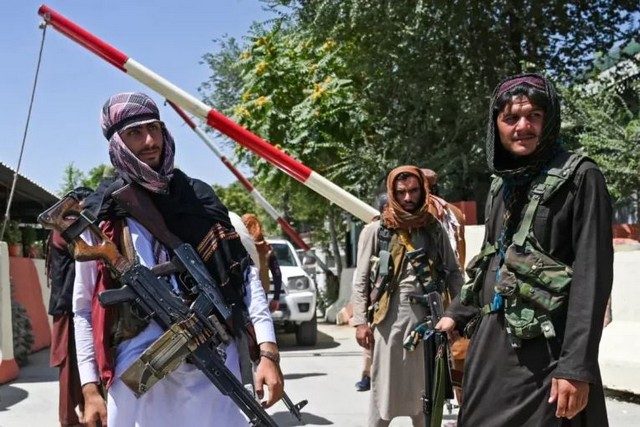
So the North Atlantic (italics mine) organization has now relocated all across Eurasia, fighting what it describes as “threats from the East”. Well, that’s a step beyond Afghanistan – the intersection of Central and South Asia – where NATO was unceremoniously humiliated by a bunch of Pashtuns with Kalashnikovs.

Russia remains the top threat – mentioned 63 times in the communiqué. Current top NATO chihuahua Jens Stoltenberg says NATO won’t simply “mirror” Russia: it will de facto outspend it and surround it with multiple battle formations, as “we now have implemented the biggest reinforcements of our collective defense since the end of the Cold War”.

The communiqué is adamant: the only way for military spending is up. Context: the total “defense” budget of the 30 NATO members will grow by 4.1% in 2021, reaching a staggering $1.049 trillion ($726 billion from the US, $323 billion from assorted allies).

After all, “threats from the East” abound. From Russia, there are all those hypersonic weapons that baffle NATO generals; those large-scale exercises near the borders of NATO members; constant airspace violations; military integration with that “dictator” in Belarus.

As for the threats from China – South China Sea, Taiwan, the Indo-Pacific overall – it was up to the G7 to come up with a plan.

Enter “green”, “inclusive” Build Back Better World (B3W), billed as the Western “alternative” to the Belt and Road Initiative (BRI). B3W respects “our values” – which clownish British PM Boris Johnson could not help describing as building infrastructure in a more “gender neutral” or “feminine” way – and, further on down the road, will remove goods produced with forced labor (code for Xinjiang) from supply chains.
The White House has its own B3W spin: that’s a “values-driven, high-standard, and transparent infrastructure partnership” which will be “mobilizing private-sector capital in four areas of focus – climate, health and health security, digital technology, and gender equality – with catalytic investments from our respective development institutions”

The initial “catalytic investments” for BW3 were estimated at $100 billion. No one knows how these funds will be coming from the “development institutions”.

Seasoned Global South observers already bet they will be essentially provided by IMF/World Bank “green” loans tied to private sector investment in selected emerging markets, with an eye on profit.

The White House is adamant that “B3W will be global in scope, from Latin America and the Caribbean to Africa and the Indo-Pacific”. Note the blatant attempt to match BRI’s reach.

All these “green” resources and new logistic chains financed by what will be a variant of Central Banks showering helicopter money would ultimately benefit G7 members, certainly not China.

And the “protector” of these new “green” geostrategic corridors will be – who else? – NATO. That’s the natural consequence of the “global reach” emphasized on the NATO 2030 agenda.

NATO as investment protector

“Alternative” infrastructure schemes already proliferate, geared to contain “Russia bullying” and “Chinese meddling” off from the EU. That’s the case of the Three Seas Initiative, where 12 EU member-states from Eastern Europe are supposed to better interconnect the Adriatic, Baltic and Black Seas.

This initiative is a pale copy of China’s 17+1 mechanism of integrating Eastern Europe as part of BRI – in this case forcing them to build very expensive infrastructure to receive very expensive American energy imports.

The offensive against “threats from the East” is bound to fail. Dmitry Orlov has detailed how “Russia excels at building and operating huge energy, transportation and materials production systems” and, in parallel, how “the technosphere…has quietly relocated and is now busy telecommuting between Moscow and Beijing.”

As every geek knows, China is way ahead in 5G and is the world’s top market for chips. And now the Anti-Foreign Sanctions Law – significantly approved right before the G7 in Cornwall – will “safeguard” Chinese companies from “unilateral and discriminatory measures imposed by foreign countries” and the US “long arm jurisdiction”, thus forcing Atlanticist capital to make a choice.

It’s China as a rising global power that in fact has proposed an “alternative” to the Global South in the first place, a counterpunch to the endless IMF/World Bank debt trap of the past decades. BRI is a highly complex sustainable development trade/investment strategy with the potential to integrate vast swathes of the Global South.

That’s a direct connection to Chairman Mao’s famous theory on the division of the Three Worlds ; the emphasis then on the post-colonial Non-Aligned Movement (NAM), of which China was a stalwart, now encompasses the whole Global South. In the end, it’s always about sovereignty against neocolonialism.

B3W is the Western, essentially American, reaction to BRI: try to scotch as many projects as possible while harassing China 24/7 in the process.

Unlike China or Germany, the US hardly manufactures products the Global South wants to buy; manufacturing accounts for only 5% of a US economy essentially propped up by the US dollar as reserve currency and the – dwindling – Pentagon’s Empire of Bases.

China churns out ten top engineers for every US “financial expert”. China has perfected what is known among bilingual tech experts as an effective system to make SMART (specific, measurable, achievable, relevant and time-bound) development plans – and implement them.

The notion that the Global South will be convinced to privilege B3W – a hollow PR coup at best – over BRI is ludicrous. Yet NATO will be regimented to actively protect those investments that follow “our values”. One thing is certain: there will be blood.

Pepe Escobar is a Brazilian independent geopolitical analyst.

21 June 2021

Source: www.transcend.org
Meet NATO, the Dangerous “Defensive” Alliance Trying to Run the World

By Jon Schwarz

15 Jun 2021 – Yesterday’s summit showed how the “North Atlantic” Treaty Organization has decided it has an extremely expansive global mission.

In a stop last week on his way to Belgium for Monday’s NATO summit, President Joe Biden visited a Royal Air Force base in eastern England. “In Brussels,” he told the assembled crowd, “I will make it clear that the United States’s commitment to our NATO alliance and Article 5 is rock solid. It’s a sacred obligation that we have under Article 5.”

These lines were aimed at a tiny number of human beings. Certainly almost no Americans have any idea what “Article 5” is part of or what it says.

But Biden’s words were genuinely significant. Article 5 is a clause in the North Atlantic Treaty, the founding document of NATO, which states that any armed attack against any member of the alliance “shall be considered an attack against them all.”

This is at the core of how the U.S. runs the world and intends to keep running it in the future. It also signifies that should we face the prospect of sharing power with others — today that mostly means China — we may end up destroying the world.

The North Atlantic Treaty is also known as the Washington Treaty, which tells you most of what you need to know about it. It was written in 1949, a time when U.S. power was so overweening that it could simply dictate terms to its allies. Most of whatever little discussion there was with other countries’ diplomats took place in secret over two weeks at the Pentagon. It was co-written by the delightfully-named Thomas Achilles, a State Department official who later said his boss had told him, “I don’t care whether entangling alliances have been considered worse than original sin ever since George Washington’s time. We’ve got to negotiate a military alliance with Western Europe in peacetime and we’ve got to do it quickly.”

The public rationale for NATO was that it was a defensive alliance necessary to stop the Soviet Union from invading Western Europe. The private rationale, as articulated by Achilles, was somewhat different:

At that point Western Europe was devastated, prostrate and demoralized and it badly needed confidence and energy within. With the Soviet armies halfway across Europe and still at their full wartime strength and the Communist parties the largest single political elements in France and Italy, something to inspire Soviet respect was equally essential.

Some top U.S. officials did honestly think that the Soviet Union was poised to stage a military attack. Whether that belief had any basis in reality is extremely debatable; about 27 million Russians, or 1 in every 6 people in the country, had just died in World War II. The equivalent for the U.S. today would be 50 million dead Americans. Even Joseph Stalin might have had a tough time motivating the country to immediately embark on another such event.

A more reasonable concern for the American government was a political, rather than military, threat. As Achilles said, there were powerful communist parties across Europe, especially in France and Italy — ones that could plausibly win honest elections. The anti-communist forces in those countries needed the “confidence and energy” of NATO to fight back. Meanwhile, NATO would “inspire Soviet respect” that would hopefully lessen Russian support, material and moral, for Europe’s communist parties.

Something else is notable about NATO’s founding. The original 12 members were Belgium, Canada, Denmark, France, Iceland, Italy, Luxembourg, the Netherlands, Norway, Portugal, the U.K., and the U.S. — in hindsight, something of an all-star league of European colonialism. It’s difficult today not to notice the blindingly alabaster complexion of the officials who signed the treaty. The original version of the treaty even specifies that it applied to any attack on “the Algerian Departments of France.”

A fuller reading of history suggests that the formation of NATO helped intensify and institutionalize the Cold War.

In any case, the architects of NATO would say that they were simply responding to the Cold War, already in progress at the instigation of the Soviets. A fuller reading of history suggests that the formation of NATO helped intensify and institutionalize the Cold War. The Warsaw Pact, after all, was not created until 1955, six years later, and its text is in many ways a replica of that of NATO’s treaty. It even has its own Article 5 language, except it’s in Article 4.

The unstated logic of both NATO and the Warsaw Pact was also the same. Indeed, it’s identical to that of similar alliances for thousands of years going back to the Delian League, founded in 478 B.C. and led by Athens. Providing protection is one key way for powerful countries to bind less powerful ones to them. The U.S. didn’t create NATO because we believed that we’d someday need Luxembourg’s military might to save us, nor did the Soviets come up with the Warsaw Pact because they felt that way about Albania. Rather, both superpowers knew that if they didn’t promise smaller countries protection, the smaller countries would feel compelled to protect themselves — which would lead to them wandering off on their own with their own foreign policies. That’s no way to run a sphere of influence.

NATO worked during the Cold War, both in the sense that there was no Soviet invasion and that the U.S. was able to corral Western Europe into following our instructions most of the time. A smattering of new countries joined during this period: Greece and Turkey in 1952, West Germany in 1955, and Spain in 1982.

Then came the dissolution of the Soviet Union, beginning in the late 1980s. If NATO’s champions were correct, it would have similarly been disbanded, its purported purpose now moot. But NATO’s more skeptical critics, who claimed that it was largely an aggressive instrument of U.S. power, have clearly been proven right by time.

As Mikhail Gorbachev attempted to peacefully dismantle the Soviet Union and the Warsaw Pact, he sought assurances from the U.S. that NATO would not expand into the areas the Soviets were vacating. James Baker, President George H.W. Bush’s secretary of state, told Gorbachev not once but three times that wouldn’t happen. “Not an inch of NATO’s present military jurisdiction will spread in an eastern direction,” Baker promised.

NATO’s goals have expanded along with its territory.

Instead, in 1999 NATO incorporated the Czech Republic, Poland, and Hungary, a big chunk of what had been the Warsaw Pact. Then in 2004 Bulgaria, Romania, and Slovakia, more of the Warsaw Pact, joined, along with Latvia and Lithuania, which had actually been part of the Soviet Union. Other Eastern European countries followed, bringing NATO’s current membership to 30.

NATO’s goals have expanded along with its territory. The U.S. has found it particularly useful as a way to create legitimacy for wars when the United Nations won’t authorize them, as with the bombing of Serbia in 1999 and Libya in 2011. In both cases, the American government pointed to NATO’s involvement as making the wars “multilateral” — that is, not unilateral acts by the U.S. — even though the U.S. provided the crucial firepower and neither war would have happened if America hadn’t wanted them to.

Russia has greeted these events with the same enthusiasm that the U.S. would if Mexico, Canada, and a newly independent Texas joined a Russian-led military alliance. Of particular concern to Russia is the possibility of Ukraine, another huge chunk of the former Soviet Union, becoming part of NATO.

NATO is also looking farther afield, to the entire planet. It just released “NATO 2030,” which describes an “an ambitious agenda to make sure NATO remains ready, strong and united for a new era of global competition. … NATO needs to adopt a more global approach to tackle global challenges to Atlantic security.” The head of NATO recently discussed this need with Lloyd Austin, the new U.S. secretary of defense.

Oddly, it turns out that the North Atlantic Treaty Organization’s “Atlantic security” now is largely about China, a country famously located on the Pacific. After Tuesday’s summit, NATO released its formal communiqué, which said, among other things, that “China’s stated ambitions and assertive behaviour present systemic challenges to the rules-based international order and to areas relevant to Alliance security.”

It now seems quite possible that NATO will accomplish in the near future what it did 70 years ago — that is, push countries outside it into their own alliance in what they perceive as necessary self-defense. Thus just as NATO helped create the Cold War then, it’s well on its way to creating a sequel now.

Ominously, there is essentially no discussion about this in the U.S. and Europe. As Biden said, the small number of elites who are involved in these discussions see NATO as “sacred.” Similarly, when advocating for the creation of NATO, then-British Foreign Secretary Ernest Bevin said it was necessary for “the salvation of the west.” As strange as it may seem for normal people, NATO is an institution of religious fervor for Western elites and therefore cannot be debated, any more than the Pope is open to debate about the Holy Trinity. And we all know how religions can lead to war.

Jon Schwarz – jon.schwarz@​theintercept.com

21 June 2021

Source: www.transcend.org
The Same Shady People Own Big Pharma and the Media

By Joseph Mercola, M.D.

  • Big Pharma and mainstream media are largely owned by two asset management firms: BlackRock and Vanguard
  • Drug companies are driving COVID-19 responses — all of which, so far, have endangered rather than optimized public health — and mainstream media have been willing accomplices in spreading their propaganda, a false official narrative that leads the public astray and fosters fear based on lies
  • Vanguard and BlackRock are the top two owners of Time Warner, Comcast, Disney and News Corp, four of the six media companies that control more than 90% of the U.S. media landscape
  • BlackRock and Vanguard form a secret monopoly that own just about everything else you can think of too. In all, they have ownership in 1,600 American firms, which in 2015 had combined revenues of $9.1 trillion. When you add in the third-largest global owner, State Street, their combined ownership encompasses nearly 90% of all S&P 500 firms
  • Vanguard is the largest shareholder of BlackRock. Vanguard itself, on the other hand, has a unique structure that makes its ownership more difficult to discern, but many of the oldest, richest families in the world can be linked to Vanguard funds

15 Jun 2021 – What does The New York Times and a majority of other legacy media have in common with Big Pharma? Answer: They’re largely owned by BlackRock and the Vanguard Group, the two largest asset management firms in the world. Moreover, it turns out these two companies form a secret monopoly that own just about everything else you can think of too. As reported in the featured video:

“The stock of the world’s largest corporations are owned by the same institutional investors. They all own each other. This means that ‘competing’ brands, like Coke and Pepsi aren’t really competitors, at all, since their stock is owned by exactly the same investment companies, investment funds, insurance companies, banks and in some cases, governments.

The smaller investors are owned by larger investors. Those are owned by even bigger investors. The visible top of this pyramid shows only two companies whose names we have often seen …They are Vanguard and BlackRock.

The power of these two companies is beyond your imagination. Not only do they own a large part of the stocks of nearly all big companies but also the stocks of the investors in those companies. This gives them a complete monopoly.

A Bloomberg report states that both these companies in the year 2028, together will have investments in the amount of 20 trillion dollars. That means that they will own almost everything.’”

Who Are the Vanguard?

The word “vanguard” means “the foremost position in an army or fleet advancing into battle,” and/or “the leading position in a trend or movement.” Both are fitting descriptions of this global behemoth, owned by globalists pushing for a Great Reset, the core of which is the transfer of wealth and ownership from the hands of the many into the hands of the very few.

Interestingly, Vanguard is the largest shareholder of BlackRock, as of March 2021.3,4 Vanguard itself, on the other hand, has a “unique” corporate structure that makes its ownership more difficult to discern. It’s owned by its various funds, which in turn are owned by the shareholders. Aside from these shareholders, it has no outside investors and is not publicly traded.5 As reported in the featured video:6,7

“The elite who own Vanguard apparently do not like being in the spotlight but of course they cannot hide from who is willing to dig. Reports from Oxfam and Bloomberg say that 1% of the world, together owns more money than the other 99%. Even worse, Oxfam says that 82% of all earned money in 2017 went to this 1%.

In other words, these two investment companies, Vanguard and BlackRock hold a monopoly in all industries in the world and they, in turn are owned by the richest families in the world, some of whom are royalty and who have been very rich since before the Industrial Revolution.”

While it would take time to sift through all of Vanguard’s funds to identify individual shareholders, and therefore owners of Vanguard, a quick look-see suggests Rothschild Investment Corp.8 and the Edmond De Rothschild Holding are two such stakeholders.9 Keep the name Rothschild in your mind as you read on, as it will feature again later.

The video above also identifies the Italian Orsini family, the American Bush family, the British Royal family, the du Pont family, the Morgans, Vanderbilts and Rockefellers, as Vanguard owners.

BlackRock/Vanguard Own Big Pharma

According to Simply Wall Street, in February 2020, BlackRock and Vanguard were the two largest shareholders of GlaxoSmithKline, at 7% and 3.5% of shares respectively.10 At Pfizer, the ownership is reversed, with Vanguard being the top investor and BlackRock the second-largest stockholder.11

Keep in mind that stock ownership ratios can change at any time, since companies buy and sell on a regular basis, so don’t get hung up on percentages. The bottom line is that BlackRock and Vanguard, individually and combined, own enough shares at any given time that we can say they easily control both Big Pharma and the centralized legacy media — and then some.

Why does this matter? It matters because drug companies are driving COVID-19 responses — all of which, so far, have endangered rather than optimized public health — and mainstream media have been willing accomplices in spreading their propaganda, a false official narrative that has, and still is, leading the public astray and fosters fear based on lies.

To have any chance of righting this situation, we must understand who the central players are, where the harmful dictates are coming from, and why these false narratives are being created in the first place.

As noted in Global Justice Now’s December 2020 report12 “The Horrible History of Big Pharma,” we simply cannot allow drug companies — “which have a long track record of prioritizing corporate profit over people’s health” — to continue to dictate COVID-19 responses.

In it, they review the shameful history of the top seven drug companies in the world that are now developing and manufacturing drugs and gene-based “vaccines” against COVID-19, while mainstream media have helped suppress information about readily available older drugs that have been shown to have a high degree of efficacy against the infection.

BlackRock/Vanguard Own the Media

When it comes to The New York Times, as of May 2021, BlackRock is the second-largest stockholder at 7.43% of total shares, just after The Vanguard Group, which owns the largest portion (8.11%).13,14

In addition to The New York Times, Vanguard and BlackRock are also the top two owners of Time Warner, Comcast, Disney and News Corp, four of the six media companies that control more than 90% of the U.S. media landscape.15,16

Needless to say, if you have control of this many news outlets, you can control entire nations by way of carefully orchestrated and organized centralized propaganda disguised as journalism.

If your head is spinning already, you’re not alone. It’s difficult to describe circular and tightly interwoven relationships in a linear fashion. The world of corporate ownership is labyrinthine, where everyone seems to own everyone, to some degree.

However, the key take-home message is that two companies stand out head and neck above all others, and that’s BlackRock and Vanguard. Together, they form a hidden monopoly on global asset holdings, and through their influence over our centralized media, they have the power to manipulate and control a great deal of the world’s economy and events, and how the world views it all.

Considering BlackRock in 2018 announced that it has “social expectations” from the companies it invests in,17 its potential role as a central hub in the Great Reset and the “build back better” plan cannot be overlooked.

Add to this information showing it “undermines competition through owning shares in competing companies” and “blurs boundaries between private capital and government affairs by working closely with regulators,” and one would be hard-pressed to not see how BlackRock/Vanguard and their globalist owners might be able to facilitate the Great Reset and the so-called “green” revolution, both of which are part of the same wealth-theft scheme.

BlackRock and Vanguard Own the World

BlackRock – The company that owns the world?

That assertion will become even clearer once you realize that this duo’s influence is not limited to Big Pharma and the media. Importantly, BlackRock also works closely with central banks around the world, including the U.S. Federal Reserve, which is a private entity, not a federal one.18,19 It lends money to the central bank, acts as an adviser to it, and develops the central bank’s software.

In all, BlackRock and Vanguard have ownership in some 1,600 American firms, which in 2015 had combined revenues of $9.1 trillion. When you add in the third-largest global owner, State Street, their combined ownership encompasses nearly 90% of all S&P 500 firms.

BlackRock/Vanguard also own shares of long list of other companies, including Microsoft, Apple, Amazon, Facebook and Alphabet Inc.21 As illustrated in the graphic of BlackRock and Vanguard’s ownership network below,22 featured in the 2017 article “These Three Firms Own Corporate America” in The Conversation, it would be near-impossible to list them all.

In all, BlackRock and Vanguard have ownership in some 1,600 American firms, which in 2015 had combined revenues of $9.1 trillion. When you add in the third-largest global owner, State Street, their combined ownership encompasses nearly 90% of all S&P 500 firms.

A Global Monopoly Few Know Anything About

To tease out the overarching influence of BlackRock and Vanguard in the global marketplace, be sure to watch the 45-minute-long video featured at the top of this article. It provides a wide-view summary of the hidden monopoly network of Vanguard- and BlackRock-owned corporations, and their role in the Great Reset. A second much shorter video (above) offers an additional review of this information.

How can we tie BlackRock/Vanguard — and the globalist families that own them — to the Great Reset? Barring a public confession, we have to look at the relationships between these behemoth globalist-owned corporations and consider the influence they can wield through those relationships. As noted by Lew Rockwell:

“When Lynn Forester de Rothschild wants the United States to be a one-party country (like China) and doesn’t want voter ID laws passed in the U.S., so that more election fraud can be perpetrated to achieve that end, what does she do?

She holds a conference call with the world’s top 100 CEOs and tells them to publicly decry as ‘Jim Crow’ Georgia’s passing of an anti-corruption law and she orders her dutiful CEOs to boycott the State of Georgia, like we saw with Coca-Cola and Major League Baseball and even Hollywood star, Will Smith.

In this conference call, we see shades of the Great Reset, Agenda 2030, the New World Order. The UN wants to make sure, as does [World Economic Forum founder and executive chairman Klaus] Schwab that in 2030, poverty, hunger, pollution and disease no longer plague the Earth.

To achieve this, the UN wants taxes from Western countries to be split by the mega corporations of the elite to create a brand-new society. For this project, the UN says we need a world government — namely the UN, itself.”

As I’ve reviewed in many previous articles, it seems quite clear that the COVID-19 pandemic was orchestrated to bring about this New World Order — the Great Reset — and the 45-minute video featured at top of article does a good job of explaining how this was done. And at the heart of it all, the “heart” toward which all global wealth streams flow, we find BlackRock and Vanguard.

Dr. Joseph Mercola is the founder of Mercola.com. An osteopathic physician, best-selling author and recipient of multiple awards in the field of natural health, his primary vision is to change the modern health paradigm by providing people with a valuable resource to help them take control of their health.

21 June 2021

Source: www.transcend.org

Say This, Don’t Say That: Time to Confront the Misleading Language on Palestine, Israel

By Ramzy Baroud

14 Jun 2021 – On May 25, famous American actor, Mark Ruffalo, tweeted an apology for suggesting that Israel is committing ‘genocide’ in Gaza.

“I have reflected & wanted to apologize for posts during the recent Israel/Hamas fighting that suggested Israel is committing ‘genocide’,” Ruffalo wrote, adding, “It’s not accurate, it’s inflammatory, disrespectful & is being used to justify antisemitism here & abroad. Now is the time to avoid hyperbole.”

But were Ruffalo’s earlier assessments, indeed, “not accurate, inflammatory and disrespectful”? And does equating Israel’s war on besieged, impoverished Gaza with genocide fit into the classification of ‘hyperbole’?

To avoid pointless social media spats, one only needs to reference the United Nations Convention on the Prevention and Punishment of the Crime of Genocide. According to Article 2 of the 1948 Convention, the legal definition of genocide is:

“Any of the following acts committed with intent to destroy, in whole or in part, a national, ethnical, racial or religious group, such as (a) Killing members of the group; (b) Causing serious bodily or mental harm to members of the group; (c) Deliberately inflicting on the group conditions of life calculated to bring about its physical destruction in whole or in part ..”

In its depiction of Israel’s latest war on Gaza, the Geneva-based human rights group Euro-Med Monitor reported:

“The Israeli forces directly targeted 31 extended families. In 21 cases, the homes of these families were bombed while their residents were inside. These raids resulted in the killing of 98 civilians, including 44 children and 28 women. Among the victims were a man and his wife and children, mothers and their children, or child siblings. There were seven mothers who were killed along with four or three of their children. The bombing of these homes and buildings came without any warning despite the Israeli forces’ knowledge that civilians were inside.”

As of May 28, 254 Palestinians in Gaza were killed and 1,948 were wounded in the latest 11-day Israeli onslaught, according to the Palestinian Ministry of Health. Though tragic, this number is relatively small compared to the casualties of previous wars. For example, in the 51-day Israeli war on Gaza in the summer of 2014, over 2,200 Palestinians were killed and over 17,000 were wounded. Similarly, whole families, like the 25-member Abu Jame family in Khan Younis, also perished. Is this not genocide? The same logic can be applied to the killing of over 300 unarmed protesters at the fence separating besieged Gaza from Israel between March 2018 and December 2019. Moreover, the besiegement and utter isolation of over 2 million Palestinians in Gaza since 2006-07, which has resulted in numerous tragedies, is an act of collective punishment that also deserves the designation of genocide.

But one doesn’t need to be a legal expert to locate the many elements of genocide in Israel’s violent behavior, let alone language, against Palestinians. There is a clear, undeniable relationship between Israel’s violent political discourse and equally violent action on the ground. One of the rising stars of Israeli politics, Naftali Bennett, who has served the role of the defense minister, had, in July 2013, stated: “I’ve killed lots of Arabs in my life – and there’s no problem with that.”

That context in mind, and regardless of why Ruffalo found it necessary to backtrack on his moral position, Israel is an unrepented human rights violator that continues to carry out an active policy of genocide and ethnic cleansing against the native, indigenous inhabitants of Palestine.

Language matters, and in this particular ‘conflict’, it matters most, because Israel has for long managed to escape any accountability for its actions, due to its success to misrepresent facts, and the overall truth about itself. Thanks to its many allies and supporters in mainstream media and academia, Tel Aviv has rebranded itself from being a military occupier and an apartheid regime to an ‘oasis of democracy’, in fact, ‘the only democracy in the Middle East’.

This article will not attempt to challenge the entirety of the misconstrued mainstream media’s depiction of Israel. Volumes are required for that, and Israeli Professor Ilan Pappé’s ‘Ten Myths about Israel’ is an important starting point. However, the article will attempt to present some basic definitions that must enter the Palestine-Israel lexicon, as a prerequisite to developing a fairer understanding of what is happening on the ground.

A Military Occupation – Not a ‘Conflict’

Quite often, mainstream Western media refers to the situation in Palestine and Israel as a ‘conflict’, and to the various specific elements of this so-called conflict as a ‘dispute’. For example, the ‘Palestinian-Israeli conflict’ and the ‘disputed city of East Jerusalem’.

What should be an obvious truth is that besieged, occupied people do not engage in a ‘conflict’ with their occupiers. Moreover, a ‘dispute’ happens when two parties have equally compelling claims to any issue. When Palestinan families of East Jerusalem are being forced out of their homes, which are, in turn, handed over to Jewish extremists, there is no ‘dispute’ involved. The extremists are thieves and the Palestinians are victims. This is not a matter of opinion. The international community itself says so.

‘Conflict’ is a generic term. Aside from absolving the aggressor, in this case Israel, it leaves all matters open for interpretation. And since American audiences are indoctrinated to love Israel and hate Arabs and Muslims, siding with Israel in its ‘conflict’ with the latter becomes the only rational option.

Israel has sustained a military occupation of 22% of the total size of historic Palestine since June 1967. The remainder of the Palestinian homeland was already usurped, using extreme violence, state-sanctioned apartheid, and, as Pappé puts it, ‘incremental genocide’ decades earlier.

From an international law perspective, the term ‘military occupation’, ‘occupied East Jerusalem’, ‘illegal Jewish settlements’, and so forth, have never been ‘disputed’. They are simply facts, even if Washington has decided to ignore international law, and even if mainstream US media has chosen to manipulate the terminology, to present Israel as a victim, not the aggressor.

‘Process’ without ‘Peace’

The term ‘peace process’ has been coined by American diplomats decades ago. It was put to use throughout the mid and late 1970s when, then-US Secretary of State Henry Kissinger labored to broker a deal between Egypt and Israel with the hope of fragmenting the Arab political front and, eventually, sidelining Cairo entirely from the ‘Arab-Israeli conflict’.

Kissinger’s logic proved vital for Israel as the ‘process’ did not aim at achieving justice according to fixed criteria that have been delineated by the United Nations for years. There was no frame of reference anymore. If any existed, it was Washington’s political priorities, which historically almost entirely overlapped with Israel’s priorities. Despite the obvious American bias, the US bestowed upon itself the undeserved title of ‘the honest peace broker’.

This approach was used successfully in the write-up to the Camp David Accords in 1978. One of the Accords’ greatest achievements is that the so-called ‘Arab-Israeli conflict’ was replaced with the so-called ‘Palestinian-Israeli conflict’.

Now, tried and true, the ‘peace process’ was used again in 1993, resulting in the Oslo Accords. For nearly three decades, the US continued to tout its self-proclaimed credentials as a peacemaker despite the fact that it pumped – and continues to do so – $3-4 billion of annual, mostly military, aid to Israel.

On the other hand, the Palestinians have little to show for. No peace was achieved; no justice was obtained; not an inch of Palestinian land was returned; and not a single Palestinian refugee was allowed to come home. However, American and European officials and a massive media apparatus continued to talk of a ‘peace process’ with little regard to the fact that the ‘peace process’ has brought nothing but war and destruction for Palestine, and allowed Israel to continue its illegal appropriation and colonization of Palestinian land.

Resistance, National Liberation – Not ‘Terrorism’ and ‘State-Building’

The ‘peace process’ introduced more than death, mayhem, and normalization of land theft in Palestine. It also wrought its own language, which remains in effect until this day. According to the new lexicon, Palestinians are divided into ‘moderate’ and ‘extremists’. The ‘moderates’ believe in the American-led ‘peace process’, ‘peace negotiations’ and are ready to make ‘painful compromises’ in order to obtain the coveted ‘peace’. On the other hand, the ‘extremists’ are ‘Iran-backed’, politically ‘radical’ bunch that use ‘terrorism’ to satisfy their ‘dark’ political agendas.

But is this the case? Since the signing of the Oslo Accords, many sectors of Palestinian society, including Muslims and Christians, Islamists and secularists, and notably socialists, resisted the unwarranted political ‘compromises’ undertaken by their leadership, which they perceived to be a betrayal of Palestinians’ basic rights. Meanwhile, the ‘moderates’ have largely ruled over Palestinians with no democratic mandate. This small but powerful group introduced a culture of political and financial corruption, unprecedented in Palestine. They applied torture against Palestinian political dissidents whenever it suited them. Not only did Washington say little to criticize the ‘moderate’ Palestinian Authority’s dismal human rights record, but it also applauded it for its crackdown on those who ‘incite violence’ and their ‘terrorist infrastructure’.

Such term as ‘resistance’ – muqawama – was slowly but carefully extricated from the Palestinian national discourse. The term ‘liberation’ too was perceived to be confrontational and hostile. Instead, such concepts as ‘state-building’ – championed by former Palestinian Prime Minister Salam Fayyad and others – began taking hold. The fact that Palestine was still an occupied country and that ‘state-building’ can only be achieved once ‘liberation’ was first secured, did not seem to matter to the ‘donor countries’. The priorities of these countries – mainly US allies who adhered to the American political agenda in the Middle East – was to maintain the illusion of the ‘peace process’ and to ensure that ‘security coordination’ between PA police and the Israeli army carried on unabated.

The so-called ‘security coordination’, of course, refers to the US-funded joint Israeli-PA efforts at cracking down on Palestinian resistance, apprehending Palestinian political dissidents and ensuring the safety of the illegal Jewish settlements, or colonies, in the occupied West Bank.

War and, Yes, Genocide in Gaza – Not ‘Israel-Hamas Conflict’

The word ‘democracy’ was constantly featured in the new Oslo language. Of course, it was not intended to serve its actual meaning. Instead, it was the icing on the cake of making the illusion of the ‘peace process’ perfect. This was obvious, at least to most Palestinians. But it also became obvious to the whole world in January 2006, when the Palestinian faction Fatah, which has monopolized the PA since its inception in 1994, lost the popular vote to the Islamic faction Hamas.

Hamas, and other Palestinian factions have rejected, and continue to reject, the Oslo Accords. Their participation in the legislative elections in 2006 took many by surprise, as the Palestinian Legislative Council (PLC) was itself a product of Oslo. Their victory in the elections, which was classified as democratic and transparent by international monitoring groups, threw a wrench in the US-Israeli-PA political calculations.

Lo and behold, the group that has long been perceived by Israel and its allies as ‘extremist’ and ‘terrorist’, became the potential leaders of Palestine. The Oslo spin doctors had to go to work and quickly so in order for them to thwart Palestinian democracy and ensure a successful return to the status quo, even if this means that Palestine is represented by unelected, undemocratic leaders. Sadly, this has been the case for nearly 15 years.

Meanwhile, Hamas’s stronghold, the Gaza Strip, had to be taught a lesson, thus the siege imposed on the impoverished region for nearly 15 years. The siege on Gaza has little to do with Hamas’s rockets or Israel’s ‘security’ needs, the right to ‘defend itself’, and its supposedly ‘justifiable’ desire to destroy Gaza’s ‘terrorist infrastructure’. While, indeed, Hamas’s popularity in Gaza is unmatched anywhere else in Palestine, Fatah too has a powerful constituency there. Moreover, the Palestinian resistance in the Strip is not championed by Hamas alone, but also by other ideological and political groups, for example, the Islamic Jihad, the socialist Popular Front for the Liberation of Palestine (PFLP), and other socialist and secular groups.

Misrepresenting the ‘conflict’ as a ‘war’ between Israel and Hamas is crucial to Israeli propaganda, which has succeeded in equating between Hamas and militant groups throughout the Middle East and even Afghanistan. But Hamas is not ISIS, Al-Qaeda or Taliban. In fact, none of these groups are similar anyway. Hamas is a Palestinian Islamic nationalist movement that operates within a largely Palestinian political context. An excellent book on Hamas is the recently published volume by Daud Abdullah, Engaging the World. Abdullah’s book rightly presents Hamas as a rational political actor, rooted in its ideological convictions yet flexible and pragmatic in its ability to adapt to national, regional and international geopolitical changes.

But what does Israel have to gain from mischaracterizing the Palestinian resistance in Gaza? Aside from satisfying its propaganda campaign of erroneously linking Hamas to other anti-American groups, it also dehumanizes the Palestinian people entirely and presents Israel as a partner in the American global so-called ‘war on terror’. Israel neofascist and ultranationalist politicians then become the saviors of humanity, their violent racist language is forgiven and their active ‘genocide’ is seen as an act of ‘self-defense’ or, at best, a mere state of ‘conflict’.

The Victimizer as the Victim

According to the strange logic of mainstream media, Palestinians are rarely ‘killed’ by Israeli soldiers, but rather ‘die’ in ‘clashes’ resulting from various ‘disputes’. Israel doesn’t ‘colonize’ Palestinian land, it merely ‘annexes’, ‘appropriates’, and so on. What has been taking place in the Sheikh Jarrah neighborhood in the occupied East Jerusalem, for example, is not outright property theft, leading to ethnic cleansing, but rather a ‘property dispute’.

The list goes on and on.

In truth, language has always been part of Zionist colonialism, long before the state of Israel was itself constructed from the ruins of Palestinian homes and villages in 1948. Palestine, according to the Zionists, was ‘a land with no people’ for ‘a people with no land’. These colonists were never ‘illegal settlers’ but ‘Jewish returnees’ to their ‘ancestral homeland’, who, through hard work and perseverance, managed to ‘make the desert bloom’, and, in order to defend themselves against the ‘hordes of Arabs’, they needed to build an ‘invincible army’.

But there can be no alternative to this feat, because, without proper, accurate and courageous understanding and depiction of Israeli settler colonialism and Palestinian resistance to it, Israel will continue to victimize Palestinians while presenting itself as the victim.

Dr. Ramzy Baroud is a journalist, author and editor of The Palestine Chronicle.

21 June 2021

Source: www.transcend.org

The Covid Vaccine Is Causing the Covid Variants

By Paul Craig Roberts

15 Jun 2021 – The so-called Covid variants, officially designated as mutations, are being used to extend the British lockdown. However, Dr. Luc Montagnier, 2008 Nobel Prize in Physiology or Medicine for his discovery of the human immunodeficiency virus (HIV), and former director of the Retrovirology Lab at the Pasteur Institute, reports that in fact it is the vaccinations that are producing the variants.

Dr. Montagnier says that an enormous mistake, an unacceptable mistake, a scientific and medical error has been made. The Covid vaccines are causing new variants that perpetuate the problem.

Dr. Montagnier said that epidemiologists know but are silent about the phenomenon, known as “Antibody-Dependent Enhancement” (ADE). Prof. Montagnier explained that the trend is happening in each country where “the curve of vaccination is followed by the curve of deaths.”

Montagnier’s point is supported by information in an open letter from a long list of medical doctors to the European Medicines Agency. The letter stated that “there have been numerous media reports from around the world of care homes being struck by COVID-19 within days of vaccination of residents.”

In a recent statement French Virologist Christine Rouzioux said: “the rise in new cases is occurring in vaccinated patients in nursing homes in ‘Montpellier, in the Sarte, in Rheims, in the Moselle.”

I am concerned that the mistakes made by public health bureaucrats, or the deceptions in which they have engaged, have become too serious to be acknowledged and that the dangerous vaccines will continue to be administered.

Dr. Paul Craig Roberts was Assistant Secretary of the Treasury for Economic Policy and associate editor of the Wall Street Journal.

21 June 2021

Source: www.transcend.org

Biden has a worthy interlocutor in Raisi

By M K Bhadrakumar

This may seem a paradox but the truth is that the United States does not realise that Iran’s presidential election result — the resounding victory of the conservative head of the judiciary Ebrahim Raisi — can be an optimal outcome.

Raisi has impeccable credentials as a hardliner who belongs to the powerful religious establishment and happens to be a genuinely popular public figure with whom the West can do business with.

Some skeptics might say Raisi is under US sanctions for his involvement in the 1988 mass execution of prisoners. In the anti-Iranian folklore, hundreds of detainees were executed. But few would know what really happened.

It is no secret that Washington encouraged Saddam Hussein to wage his war on Iran, taking advantage of the apparent disorder and isolation of the new Islamic government in Tehran —then at loggerheads with the US over the seizure of the American embassy —and of the demoralisation and dissolution of Iran’s regular armed forces.

But the revolutionary regime fought back and Saddam was finally forced to seek a peace agreement with Iran. It was a brutal war. Estimates of total casualties range from 1-2 million.

But then, after Iran’s Supreme Leader Ayatollah Khomeini accepted a UN-brokered cease-fire in 1988, members of the terrorist group Mujahedeen-e-Khalq (MEK), based in Iraq and heavily armed by Saddam, and enjoying the backing of the CIA, stormed across the Iranian border in a surprise attack. Iran smashed the MEK assault and that set the stage for the so-called “death commissions” of the prisoners, terrorists and others.

Inevitably, those executed included agents of the western intelligence. The executions couldn’t have been carried out except on Khomeini’s orders. Now, Raisi was a young man of 27 when he reportedly served on a revolutionary panel involved in sentencing Iran’s enemies to death.

Interestingly, 31 years later, when Washington sanctioned Raisi, it was as part of a series of post-JCPOA sanctions in 2019. The Trump administration sanctioned Supreme Leader Khamenei, his office and those closely affiliated with his access to key financial resources (June 2019); Iran’s Foreign Minister Javad Zarif (July 2019); and the core inner circle of advisers to the Supreme Leader including one of his sons, Mojtaba Khamenei, the newly appointed head of Iran’s judiciary, Ebrahim Raisi, the supreme leader’s chief of staff, Mohammadi Golpayegani, and others (November 2019.)

The good part is that the sanctions against Raisi and other Iranian leaders were part of a diabolical plot to complicate the US-Iranian standoff. Clearly, once those who plotted are no more there, the Biden administration can lift those sanctions.

In fact, it should. For, President-elect Raisi will make just the interlocutor that the White House needs to implement any agreement reached in Vienna.

The US analysts keep grumbling that the “reformists” in Iran got a bad deal in the list of candidates for the presidential election. But Raisi has won a resounding victory.

In the 2017 election, Raisi received 38.28% of votes; vote share has now increased to 61.95%, an aggregate increase of 2.1 million votes. Two factors contributed to this outcome.

First, the voter turnout reportedly dropped from around 70% four years back to around 50% in the present election. Second, Raisi’s popularity has been genuinely on a rising curve ever since he took over as the chief justice in 2019 and launched a high-profile anti-corruption drive. This needs some explanation.

Public corruption is a major issue in Iran’s public discourses in the recent years. Raisi figures today as the champion of probity in public life and that holds appeal to the average Iranian voter.

This is where America’s analysts lose the plot. Iran’s presidential election has been held concurrently with the 6th Islamic city and village council elections and they focused on the country’s political economy — and not about the United States.

Now, Raisi is well-versed with the phenomenon of bonyads (meaning “Foundations”), the charioteers of corruption in Iran’s political system. The bonyads are supposedly charitable trusts exempt from taxes and enjoying huge state subsidies that play a major role in Iran’s non-oil economy and account for over one-fifth of the country’s GDP, but are notorious for siphoning off production to the lucrative black market and provide only limited and inadequate charity to the poor.

Raisi held the position of chairman of Astan Quds Razavi, a bonyad based in Mashhad, from 2016 to 2019 until his appointment as the chief justice. The Astan Quds Razavi is the administrative organisation which manages the fabulously wealthy Imam Reza shrine and various institutions. In reality, it is a huge conglomerate that runs auto plants, agricultural businesses, and many other enterprises, owns most of the real estate in Mashhad and rents out shop space to bazaars and hoteliers, etc.

Now, Raisi’s main political programme as president will focus on the economic malaise gripping the country, which is inextricably linked to corruption. It will be interesting to see how Raisi tackles the bonyads.

With the lifting of western sanctions, for the first time since the 1979 revolution, Iran’s so-called “resistance economy” is at crossroads. Significantly, Raisi launched his election campaign at the grand Tehran bazaar.

The Biden administration should try to understand that in Raisi it has a leader who is as much committed to the ongoing nuclear negotiations in Vienna as President Rouhani has been. In fact, the conservatives generally support the lifting of western sanctions so that Iran’s full potential for growth and development can be realised. Conceivably, Raisi may choose to depend on Iran’s chief negotiator at Vienna, Abbas Araqchi.

This is where analysts with zero sum mindset miss the wood for the tree. Raisi himself has been a member of the Supreme National Security Council and contributed to the making of the country’s grand strategies on the foreign policy arena.

The Biden administration should expect continuity in Iran’s policies under Raisi. This may not necessarily mean that strengthening of ties with the West will be Raisi’s top priority. Iran pursues a multi-vector foreign policy.

But where Raisi scores over Rouhani is that he has an established reputation as hardliner. In the prevailing political milieu in Iran where Rouhani’s “reformist” agenda stands thoroughly discredited and with the locus of domestic politics distinctly shifting to the conservatives — as manifest in the last election to the Majlis — Raisi’s ascendence makes the regime more cohesive than before.

Equally, it is reassuring that any agreement negotiated in Vienna is followed through. Having said that, much will depend on the Biden administration’s far-sightedness to craft an Iran policy that dovetails with Raisi’s economic programme.

1989 belongs to the world of yesterday. Also, do not expect Iran to jettison Velayat-e faqih, the country’s chosen system of Islamic governance. America cannot possibly impose its exceptionalism on a “civilisation state” such as Iran.

Ambassador M K Bhadrakumar served the Indian Foreign Service for more than 29 years.

21 June 2021

Source: countercurrents.org