Just International

Ethiopian Conflict and International Law

Ann Garrison interviews Francis A. Boyle

8 Jul 2021 –Legal scholar Francis A. Boyle told Ann Garrison that a “Responsibility-to-Protect” intervention in Ethiopia would be illegal and catastrophic.

Ann Garrison: Francis Boyle, you’re an expert in international law, including subsets, international human rights law, and international humanitarian law. Could you explain what international humanitarian law is?

Francis A. Boyle: There is a subset of international human rights law that is called international humanitarian law.

Now, the truth of the matter is that international humanitarian law is really a euphemism for the laws of war. When I was at Harvard Law School, I took a course on the laws of war from Richard R. Baxter, the world’s leading expert on the subject. And there was no such thing as international humanitarian law then. The term “international humanitarian law” was invented by experts who didn’t like identifying as experts on the laws of war.

AG: The humanitarian corridor, a practice guaranteed by international humanitarian law, is one of the biggest issues in Ethiopia right now. The NATO nations, and especially the US are hostile to Prime Minister Abiy Ahmed and the government of Ethiopia. They are arguing that Ethiopia is committing a humanitarian crime by not allowing aid convoys access into Tigray.

The same argument is being made about Idlib Province in Syria. Could you say something about how you see the humanitarian corridor issue in these two instances?

“The NATO nations, and especially the US are hostile to Prime Minister Abiy Ahmed and the government of Ethiopia.”

FAB: Well, certainly in Syria, the Biden administration is simply using this humanitarian corridor argument, as Obama did, to shore up support for their jihadi terrorists.

It’s very simple in Syria. That humanitarian relief could be given to the Syrian government quite legitimately and the Syrian government could distribute it to its own people, as they have done before.

I certainly don’t support Abiy cutting off food to the people in Tigray right now if that’s what he’s doing. And international humanitarian law prohibits starvation of a civilian population as a method of warfare. But I would hope that the UN Security Council (UNSC) would be encouraging Abiy to reestablish food supplies to the people of Tigray to prevent famine conditions and more loss of innocent human life.

AG: No one on the UNSC seems to disagree on the need for aid convoys, but it’s not at all clear that Abiy’s government is hindering them, just because Western powers who are hostile to Ethiopia are claiming he is. The Abiy government says that it is not only allowing aid in but sending aid in , but that it had to establish checkpoints , because at one point, a humanitarian convoy was determined to be carrying weapons and ammunition rather than food and other sorts of aid, and there is history of that in Ethiopian wars. Is this a legitimate stance on their part?

FAB: That’s a legitimate, as long as they are letting aid in. They can check it for weapons. Sure. I don’t see any legal problem with that.

The head of the Tigrayan forces recently said that for now he’s not interested in proclaiming Tigray’s independence from Ethiopia. But he could. And who knows what would happen then? I shudder to think.

AG: I think the first and most contentious issue would probably be the territorial dispute over what the TPLF,  the US, and other Western nations call “Western Tigray,”  but which the Amhara say is ancestral Amhara land. The TPLF redrew boundaries to claim it as their own after coming to power in the 1990s, but the Amhara Regional Forces have taken it back during the conflict that began last November.  So, even if Tigray were to secede from Ethiopia with the government’s agreement, it’s not clear what the boundaries of the secession would be.

FAB: Well, that could set off the crack up of a state, like what Obama and Samantha Power, Anne-Marie Slaughter, and Susan Rice caused in Libya. As I’m sure you know, that whole state cracked up and remains in a dire situation today. We also saw Yugoslavia crack up in the 1990s, and that could be the consequence if Tigray declares independence. It could be what the US wants if it can’t tell Ethiopia what to do.

I’m not saying that Tigray can’t secede. Under international law, people under these circumstances, can declare independence. I’m not encouraging it and I’ve represented several clients over the years who have declared independence, and they have paid a very high price for doing that in blood and treasure. So it’s not something to be taken lightly at all.

AG: So much of what people are now claiming is right and lawful depends on investigations that haven’t been done. And that can’t very well be done in a conflict situation. Various parties to the conflict post photographs of atrocities and several times I’ve noticed that these are photographs I’m familiar with, from other conflicts that took place years ago. So there doesn’t seem to be solid evidence about what is happening in a number of situations.

“The Biden administration is simply using this humanitarian corridor argument, as Obama did, to shore up support for their jihadi terrorists.”

FAB: This is typical of international and internal military conflicts of this nature. It’s very difficult at the beginning to sort out precisely what is going on. And of course, sure, everyone publishes atrocity photos to build up public support for their side, but that cannot justify military intervention like that Obama and Power used to destroy Libya, or Responsibility to Protect (R2P) doctrine. Those are totally fraudulent.

I’ve written about that, in a book, “Destroying Libya and World Order,” and I have a whole chapter in there, just demolishing those two arguments. You can’t allow these allegations of atrocities to manipulate you into supporting the use of outside military force to solve this problem. I’m afraid US military intervention here will only make the situation worse. So I’m calling for a diplomatic intervention in good faith by the United States, assuming they have good faith.

AG: That’s quite an assumption.

FAB: That’s another issue. But the US, Russia and China, the major powers, and the UNSC should try to keep this thing under control and resolve it. Because again, the longer this goes on, the more likely Ethiopia is to crack up as a state. And that would be a catastrophe for the entire Horn of Africa and perhaps even a wider region.

Ethiopia and International Law

AG: The UN Security Council has considered this a number of times with the same result. Russia, China, India, and Kenya speak up for Ethiopia’s sovereignty, and say that this is a matter internal to Ethiopia for Ethiopia to solve. The African Union has come to the same conclusion.

FAB: This is an internal armed conflict. That being said, however, I would still hope that some of the great powers would get involved in international mediation here. There are many techniques for peaceful settlement of international disputes to try to resolve this before Ethiopia does crack up. If Tigray declares independence, all bets are off on anything.

AG: Well, on the other side of the aisle, the other three nations with veto power are the US, UK, and France. And they and their allies are constantly raising humanitarian alarm and seeming to suggest that some sort of intervention to protect the people of Tigray is going to be necessary. Secretary of State Blinken has issued ominous warnings that if the Ethiopian government doesn’t do its bidding, basically, there will be grave consequences. There are already sanctions on specific leaders though not on the people as a whole. And no one is more adamant in all this than Samantha Power.

FAB: Well, now she’s head of USAID, which we all know is a front organization for the Central Intelligence Agency. And unfortunately, she also sits on Biden’s National Security Council. And you know, she’s just a rabid warmonger. She was behind convincing Obama to destroy Libya, along with Mrs. Clinton. And Anne-Marie Slaughter, the head of the State Department policy planning staff. And Susan Rice, Obama’s National Security Council advisor for Obama, who is now part of the Biden Administration.

“Samantha Power is just a rabid warmonger.”

That’s what they did to Libya and then Syria while invoking humanitarian law. It’s the same method of operation. All these Bidenites used to work for Obama, including Biden himself. So yes, this is a dangerous situation, if they’re going to continue to push for some type of military humanitarian intervention.

I’m encouraging diplomatic negotiations before the situation gets completely out of control, and those statements by Biden, Blinken, and Samantha Problem from Hell  Power don’t help anything at all. I think that certainly the Russians and the Chinese would veto any type of Security Council resolution authorizing outside military force under these circumstances.

AG: There’s a UN Office on Genocide and the Responsibility  to Protect, but the doctrine has never been incorporated into the UN Charter, has it? If it had, it would violate the Charter’s first principle, and the first principle of international law, which is the sovereignty of member nations.

FAB: No, it’s never been added to the UN Charter in and, as a matter of fact, what happened was this:

In the 1990s, when Clinton and NATO bombed Serbia over Kosovo, they tried to sell it on grounds of humanitarian intervention, but no one bought that argument. So then they tried to come up with a new euphemism for humanitarian intervention. Old wine in a new bottle. So they called it Responsibility to Protect, and you can go back and read Gareth Evans, the primary author of the Responsibility to Protect Doctrine, and others, and see that the criteria they establish contradicts the UN Charter on the threat and use of force and substitutes the Christian doctrine of a just war for the UN Charter rules on the use of force.

Now think about that for a minute. The Christian doctrine of a just war. I mean, that goes back to St. Agustine. I teach a course on jurisprudence, the philosophy of law, and I lecture my law students on the Christian doctrine of a just war. We have the United Nations Charter to counter it because every state in the world today has agreed upon the rules of the Charter, but they certainly have not agreed upon the Christian doctrine of just war. Or the Hindu doctrine of the just war. Or the Hebrew doctrine of just war, which the Israeli government likes to apply all the time, claiming God gave them the land of Israel. What about the Muslim doctrine of just war? Oh, excuse me, that’s jihad, you know, which everyone condemns all the time.

So the UN Charter was written to transcend these religious doctrines with one set of rules that we can all agree upon. I discussed all this at greater length in my book, “Destroying Libya and World Order, ” about how Obama and Power and Rice and Amy Goodman on Democracy Now, and Juan Cole at the University of Michigan, all tried to justify stealing Libya’s oil and destroying Libya as a state on the grounds of Responsibility to Protect humanitarian intervention.

The tie-in to the Christian doctrine of just war should expose it all right now. That was that, as far as Christians were concerned, any war they ever fought against non Christians was just.

AG: Empire is always self righteous.

FAB: Yes, and these bogus doctrines like humanitarian intervention and R2P have historically been used by powerful military states in Europe and the United States to go to war in Third World countries primarily inhabited by people of color. There are both racial and religious components. So it’s an extremely dangerous doctrine.

And conversely, is anyone talking about humanitarian intervention, or Responsibility to Protect the Palestinians from what Israel is doing to them? That proves the hypocrisy of the doctrine.

Is anyone talking about Responsibility to Protect the Palestinians from Israel?”

AG: There are well over half a million homeless people in the United States, 40% of them black, and 34% of US prisoners are Black, even though the Black population in the US is only 13.4%, but nobody’s daring to say they have a responsibility to protect them.

But is there any situation where a determination that genocide, war crimes, and crimes against humanity are being committed within a nation’s internal armed conflict—not by an outside aggressor—can justify the use of outside force in accordance with international law?

FAB: Not unilateral intervention. But if there are massive atrocities along the lines of genocide or something like that, certainly the Security Council should do deal with it, in my opinion. And that’s what the UN General Assembly said. If war crimes, crimes against humanity, and/or genocide are going on in a country, the Security Council should deal with it. The Charter authorizes the Security Council to organize a multilateral response if they can agree on it.

Chapter Seven of the UN Charter says that the Security Council has authority to deal with breaches of the peace, acts of aggression, or threats of the peace, and certainly outright genocide would be a threat to the peace.

The Security Council would have to agree that the level of humanitarian crisis rose to the level that called for a UN Security Council intervention. Then there are variety of measures that they can take. As is laid out in Chapter 7 of the UN Charter, this would basically require the five permanent members to sit down and come up with an agreement on how to proceed.

AG: But they’re deadlocked, just as they were during the Korean War and the Vietnam War. The Council is now deadlocked on Syria, Venezuela, Ethiopia, and most other situations, except for the Democratic Republic of the Congo, where the major powers seem to have agreed that UN Peacekeepers will manage the conflict while they share the spoils, Congo’s vast natural resource wealth.

Deadlock is better than dominance by the United States, which was the case in the 90s. But it seems extremely unlikely that the Security Council is going to agree on Ethiopia.

FAB: Well, I think we should point out nevertheless that if the US government were serious, it would try to sit down with Russia and China, and come up with measures for the peaceful resolution of this dispute.

There is one other mode here. That is, if there is a deadlock at the Security Council, meaning if at least one of the permanent five members with veto power—the US, UK, France, China, and Russia—is threatening a veto, then, under the Uniting for Peace Resolution , the issue could be turned over to the United Nations General Assembly to deal with. But it’s really the Security Council that’s supposed to take first crack at it. We’ll just have to see.

AG: This is the first time I’ve ever heard of the Uniting for Peace Resolution. Has it ever been used?

FB: Yes. I have also advised the Palestinians to use it and they have repeatedly. See my book “Breaking All The Rules, Palestine, Iraq, Iran and the Case for Impeachment .”

AG: OK, finally, I thought we might have news of the Ethiopian elections by the time we had this conversation, but we don’t.  Instead there’s news that Ethiopia has notified Egypt that it’s begun the second filling of the Grand Ethiopian Renaissance Dam , which Sudan and Egypt are adamantly opposing. Do you have any thoughts about this?

FB: Well, yes, there was going to be a meeting of the Security Council on this matter. It looks like Ethiopia has tried to preempt the Security Council. My understanding is that Ethiopian prefers to have this dealt with by the African Union, which is the appropriate regional organization under Chapter Eight of the United Nations Charter. I do agree here with Ethiopia that the African Union should have been given the first crack at this to resolve this matter, under the terms of the UN Charter, as a regional organization.

That being said, of course, the Security Council can step in. I haven’t looked at this in a long time. I believe there is a treaty involving the riparian states regulating the flow of water. But it might have been imposed by the British when they were a colonial power in the region and therefore may no longer be relevant.

“The African Union should have been given the first crack at this to resolve this matter.”

AG: The Security Council meeting has been requested by the Arab states, who are siding with Egypt and Sudan, and they didn’t want to let the AU deal with it, because there are a lot of Black states there. So that’s why I think they’re trying to jump it up to the Security Council right now.

There is fear of a war over filling the dam, and the dam itself is under military guard. Trump at one point warned Ethiopia that he might help Egypt blow it up.

There’s also fear that, since the US is hostile to the Ethiopian government and its ally, Eritrea, the US might back some sort of proxy war against both led by Egypt.

FAB: That would be a disaster, and the dam would not be grounds for the use of military force by Egypt and Sudan against Ethiopia. All riparian states have right of access to that water.

Francis Boyle teaches law at the University of Illinois at Urbana-Champaign and represents clients, which have included Libya and Palestine, in cases involving international law.

Ann Garrison is an independent journalist based in the San Francisco Bay Area.

12 July 2021

Source: www.transcend.org

World Economic Forum Announces Creation of Orwellian ‘Global Coalition for Digital Safety’

By Leo Hohmann

WEF partners with Big Tech and governments to police Internet, encourage ‘coordinated action’ against unauthorized voices deemed ‘harmful’ to collective psyche.

1 Jul 2021 – The World Economic Forum announced June 29 it will initiate a new “public-private partnership” with Big Tech and governments around the world to identify and uproot all opinions from the Internet that it considers “harmful.”

The WEF is one of those elitist organizations that wields enormous influence over the elected leaders of Western nations but which almost nobody in the general population has heard of.

Its members are internationalist corporate honchos and technocrats who meet once a year in Davos with the stated goal of working to “shape global, regional and industry agendas.”

It made a big splash last year with its highly touted “Great Reset,” which promises to use the pandemic as an “opportunity” to crash the world’s dollar-based, capitalist economic system and “build back better” under a more socialist and globally integrated system that mirrors the United Nations Agenda 2030 goals for Sustainable Development.

Any politician you hear using the term “build back better” [Biden-Harris-Trudeau-Johnson repeat this mantra daily] you know has drunk the poisonous Kool-Aid of the World Economic Forum and its founder, Klaus Schwab.

Schwab’s latest venture is the so-called “Global Coalition for Digital Safety” that consists of execs from Big Tech and government officials with the goal of creating a “global framework” for regulating speech on the Internet, wiping it of so-called “harmful content.”

[I could not help but think of the Committee of Public Safety that conducted the reign of terror during the French Revolution.]

And who gets to define what’s “harmful”? Why, the global coalition set up by the elitist WEF of course!

The “harmful” content targeted by this Global Coalition for Digital Safety you can bet will be tailor made to entrap those who stand for limited government, traditional values and individual freedom. Those of us who still believe in such things will not be included in the WEF’s definition “inclusive,” “equality” or “diversity.”

“The Global Coalition for Digital Safety is a public private platform for global, multi stakeholder cooperation to develop innovations and advance collaborations that tackle harmful content and conduct online,” states the WEF on its website.

Microsoft immediately announced it was on board with the WEF’s plan to squelch free speech on the Internet.

Chief digital safety officer for Microsoft Courtney Gregoire stated:

“Technology offers tools to learn, play, connect, and contribute to solving some of the world’s greatest challenges. But digital safety harms remain a threat to these possibilities. As the World Economic Forum is uniquely positioned to accelerate the public-private collaboration needed to advance digital safety globally, Microsoft is eager to participate and help build whole-of-society solutions to this whole-of-society problem.”

Facebook also seems excited to get started on finding new ways to groom users to start thinking about turning in their friends for wrongthink. The social media giant has begun sending cryptic messages to some users that read as follows:

“Are you concerned that someone you know is becoming an extremist?”

This program fits perfectly with the rhetoric coming out of Washington since Biden claimed the presidency.

Biden and his attorney general, Merrick Garland, take every opportunity to talk about “extremists” on the right being the “biggest threat to our democracy.” This is a classic propaganda technique used to turn public sentiment against a targeted demographic. The Nazis perfected this, using the media to blame all of Germany’s problems on Jews before they actually started rounding them up and making them disappear.

The next phase in this evil plan is to encourage Americans to turn each other in to the online thought police. What happens next, after one has been reported to Facebook, Google or Microsoft? Will the tech giants turn those accused of thought crimes by their online “friends” and “followers” over to Biden’s politicized FBI? This is exactly how it works in China.

Readers of this blog know that China is the model being touted by those who believe in the Great Reset. Now their plans are right out in the open on the World Economic Forum website with this announcement of their Global Coalition for Digital Safety.

The WEF states:

“With the growing challenge to counter health misinformation, violent extremist and terrorist content, and the exploitation of children online, there is an urgent need for more deliberate global coordination to improve digital safety.

“The Global Coalition for Digital Safety aims to accelerate public-private cooperation to tackle harmful content online and will serve to exchange best practices for new online safety regulation, take coordinated action to reduce the risk of online harms, and drive forward collaboration on programs to enhance digital media literacy.”

In the above quote, notice how sneakily the WEF lumps spreaders of “health misinformation” – that would be anyone who expresses reticence about experimental mass vaccination programs, COVID lockdowns, mandatory mask wearing, etc. – in with violent extremists, terrorists and child traffickers. How clever.

The WEF has the audacity to claim its coalition will be “impartial” in policing the Internet. This is the same organization run by Schwab, who openly states that the pandemic should be exploited as a “unique window of opportunity” to fundamentally change the way the people live, work, do business and fit into society.

“The Forum is uniquely positioned to leverage its impartial platform and convening power to drive public-private cooperation amongst key stakeholders focused on improving safety online,” the WEF states in its release about the new coalition.

The WEF sets itself up as the global arbiter that defines terms like “harmful content” and “misinformation.” It also laments the fact that encrypted social media channels like Telegram and Signal are able to allow users to communicate free of censorship and spying.

Here are its recommendations for “key focus areas that now require coordinated action” by governments and their Big Tech allies:

  1. Share Best Practices on Safety Standards: Exchange knowledge on policies and practices for improving online safety, considering content policies, remedies, transparency reports, use of data, and new technologies
  2. Address Balance of Privacy and Safety: Share best practices on addressing the growing tension between privacy and safety as harmful content on encrypted channels risks evading detection
  3. Market Competition: Drive better alignment between regulations focused on safety and competition to foster market innovation and enable consumer choice
  4. Cross-Jurisdictional Content Cooperation: Enable action on content that spans jurisdictions and requires greater coordination amongst countries (e.g. content created in one county but causing harm in another)
  5. Definitional Alignment: Support work on consistent definitions for content categories, such as self-harm and cyber-bullying to enable standardized enforcement, reporting, and measurement across regions.

If COVID taught us anything, it’s that Big Tech social-media platforms, in league with global power elites, defined for us what is allowed and not allowed to be said on the Internet.

Posts that challenge the official narrative about the virus and the best way to respond to it were immediately censored, either tagged with warnings meant to discredit the posts or removed all together.

The most typical reason for such censorship was that these posts “violated community standards,” which consist of mysterious, vaguely worded legalese that nobody reads.

Big Tech corporations are also increasingly working in concert with governments around the world, including in the U.S. and the ruling Chinese Communist Party in China, to regulate what people are allowed to see on the Internet.

But all of this control over the free flow of information is not enough for some of the global power elites.

Now they are ready to take their Gestapo tactics to the next level.

They want to turn us against each other.

Don’t let them do it.

Now is the time for all freedom-loving patriots in nations across the world to wake up, rise up, recognize these tactics as divisive and anti-human, and unite against this pernicious group of global predators.

LeoHohmann.com: Investigative reporting on globalism, Christianity, Islam, Judaism and where politics, culture and religion intersect.

12 July 2021

Source: www.transcend.org

The Syria Deception: The Public Has Been Hoodwinked Yet Again into Supporting a Criminal War of Aggression—and One That Has Been Effectively Lost

By Jeremy Kuzmarov

8 Jul 2021 – United States warmakers have become so skilled at propaganda that not only can they wage a war of aggression without arousing protest; they can also compel liberals to denounce peace activists using language reminiscent of the McCarthy era.

Take the case of Syria. The people and groups one would normally count on to oppose wars have been the ones largely defending it. They have also often been the ones to label war opponents as “Assad apologists” or “genocide deniers”—causing them to be blacklisted.

In April, The Nation magazine published an essay by Gilbert Achcar, a professor of international relations at the University of London and co-author with Noam Chomsky of a book critical of U.S. foreign policy in the Middle East, entitled “How to Avoid the Anti-Imperialism of Fools.”

Achcar divides the Left into two factions—one which “opposes all forms of imperialism and oppression,” and one which “supports any regime or force that is the object of Washington’s hostility.” The latter includes “Russia’s thuggish capitalist and imperialist government, or Iran’s theocratic regime or the likes of Slobodan Milošević and Saddam Hussein.”

The binary Achcar paints is misleading because it does not take into account war critics’ attempts to present more nuanced portraits of American targets for regime change like Putin or Milošević or even Hussein that would account for their domestic popularity. Nor the value placed on the principle of national self-determination and sovereignty, and identification of the double standards of U.S. human rights concerns.

Achcar supports military intervention in Syria under the UN doctrine of Responsibility to Protect (R2P), which enables foreign military intervention if it will stop large-scale human rights abuses.

He quotes favorably in his Nation article from a 2019 statement signed by several prominent figures on the American Left—including Judith Butler, Noam Chomsky, the late David Graeber and David Harvey—demanding that the United States “continue military support for the Kurdish-led Syrian Democratic Force,” in the face of Donald Trump’s announced withdrawal.

This position was based on fear that if the U.S. withdrew, the Kurds would be slaughtered by Turkey, the Islamic State in the Levant (ISIS) or the “murderous Assad regime,” as Achcar termed it.

The Kurds, however, were being used as a proxy force by the U.S. in a regime-change operation that would enable foreign exploitation of Syria’s oil and military domination of the Middle East—and would inevitably be abandoned.

Western empires had used the pretext of human rights many times before to justify colonization, and recruited disaffected minority groups, which was no different in this case.

Voices from Syria

Mark Taliano and Basma Qaddour’s book, Voices from Syria—now out in its second edition—offers a strong rebuttal to Achcar and others who consider opponents of U.S. military intervention in Syria to be foolish.

The authors—one a Montreal based teacher, the other a Syrian journalist—point out that the majority of Syrians consider Assad an authentic nationalist who has saved Syria from jihadist terrorists sponsored by the U.S., NATO, Saudi Arabia, Turkey, Israel and Gulf Arab states like Qatar.

The terrorists have killed an estimated 150,000 civilians and another 260,000 fighters and kidnapped thousands more, some of whom were used for illegal organ harvesting.

Their goal is to impose a theocratic regime and to divide, plunder and exploit Syria and open it up to predatory foreign corporations.

Taliano and Qaddour write that “Syria’s stand against the Western agencies of death and destruction is a stand for all humanity against the dark forces that fester beneath our politicians’ empty words and the courtesan media’s toxic lies.”

These lies have ensured that few in the U.S. or West have acknowledged Syria’s heroic victory against colonial aggression—a modern-day equivalent to Vietnam’s victory over the French at the Battle of Dien Bien Phu in 1954.

Long-Standing Plan for Regime Change

Two weeks after the September 11th attacks, General Wesley Clark was visited by a senior general who told him that the U.S. was going to attack Iraq: “The decision has basically been made.”

Six weeks later, when Clark returned to Washington to visit the same general and asked whether the plans for invading Iraq were still in place, the general responded, “‘Oh, it’s worse than that,’ he said, holding up a memo on his desk. ‘Here’s the paper from the Office of the Secretary of Defense [then Donald Rumsfeld] outlining the strategy. We’re going to take out seven countries in five years.’ And he named them, starting with Iraq and Syria and ending with Iran.”

The key to the success of these latter operations was to convince the U.S. public that wars of aggression were military interventions carried out for humanitarian purposes. The way to do that was to give off the illusion that the targeted leaders were brutal dictators intent on waging a campaign of genocide against their own people.

Assad’s Accomplishments

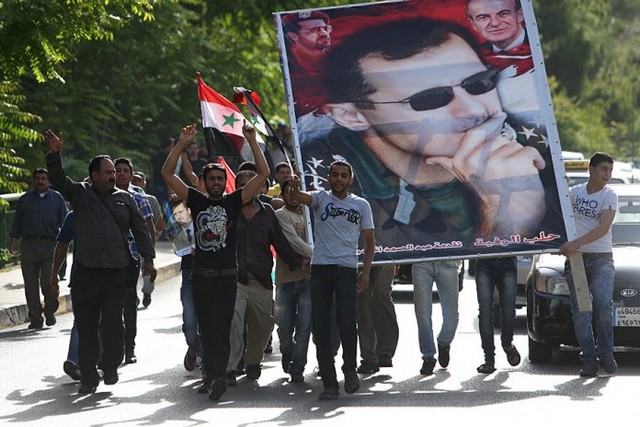
Syria was a main target on Rumsfeld’s list because its leader, Bashar al-Assad, was a secular nationalist like Saddam Hussein and Muammar Qaddafi of Libya, who was defiant of the West.

In 2000, Bashar succeeded his father Hafez al-Assad, who had long been a thorn in the side of the West. He had allied Syria with the Soviet Union during the Cold War, and in 1971 allowed the Russians to establish a naval base at Tartus.

Though vilified in the West, Bashar retains support of the majority of Syrians because he has advanced free health care and education for Syrians and retained Syrian control over most of its economy while rallying the people against foreign aggression.

While certainly there are brutal aspects to his rule like with his father, Assad’s accomplishments before the war, according to Taliano and Qaddour, included: a) construction and restoration of 10,000 mosques and 500 churches; b) construction of 8,000 schools; and c) construction of 600,000 apartment units for young people and 6,000 hospitals and clinics.

Further, salaries increased by 300 percent under Assad’s rule, thousands of new businesses sprung up, agricultural and industrial capacity increased, the illiteracy rate was kept low, and the unemployment rate declined from 28 to 12 percent.

These facts are at odds with the depiction of Assad as a genocidal tyrant.

The latter is part of a demonization campaign initiated by intelligence agencies and embraced by factions of the Left that have unwittingly helped to advance the agenda of the U.S. empire.

“Your Obama Leading Proxy War”

In March 2011, Americans were led to believe that idealistic pro-democracy demonstrations erupted in the southern city of Daraa—inspired by Arab Spring protests in Egypt and Tunisia, and following an incident of police brutality.

Seven police were killed by the demonstrators in the very first protests, and 60 security forces were massacred two weeks later. The plan of the mob was to provoke a police response that would make it seem like the security forces were reacting harshly, which would discredit Assad’s regime.
At least 37 people have died in violent protests since last week in Daraa, the U.N says.

For the first three weeks, police and security personnel were under orders, though, not to carry guns.

As the protests spread, foreign terrorists began descending on Syria and were paid $300-$400 per month. Although Syrian soldiers were paid only one-tenth of that amount, they remained mostly loyal to the Syrian government.

Majd al-Zaim, a Syrian, stated that what had happened in Syria was “not a revolution or civil war [as has been depicted in the Western media]. The terrorists are sent by your government [the U.S.]. They are Al-Qaeda, Jabhat al-Nusra, Wahhabi, Salafist, Talibans and the extremist jihadists are sent by the West, Saudis, Qataris, Turkey…. Your Obama and whoever is behind him or above him are supporting Al-Qaeda and leading a proxy war on my country.”

Historical Background

Historically, Syria faced divisions between secular nationalist and Shia Alawites and Sunni fundamentalists who allied with the Muslim Brotherhood.

In 1982, Hafez al-Assad crushed an Islamic rebellion (the Hama massacre), foreshadowing his son’s actions 30 years later.

A July 1986 declassified CIA document outlined a U.S. strategy in Syria that was hostile to Assad—as it remains. The document stated that “In our view, U.S. interests would be best served by a Sunni regime controlled by business-oriented moderates. Business moderates would see a strong need for Western aid and investment to build Syria’s private economy, thus opening the way for stronger ties to Western governments.”

The report acknowledged that the collapse of the Ba’athist state presided over by Assad could help to empower “religious zealots” seeking to establish “an Islamic Republic.” But this was a risk that Washington was willing to take.

Twenty years later, the Chargé D’affaires at the U.S. embassy in Damascus, William Roebuck, in a leaked diplomatic cable, referred to the threat to the Assad regime from Islamic extremists as “an opportunity that the U.S. should take action to try to increase.”

Roebuck also pushed for better coordination with Egypt and Saudi Arabia in provoking sectarian divisions by exaggerating Iranian influence along with a rumor campaign against Assad, and arming of the Kurds as part of a destabilization strategy, which was implemented under Obama.

An Inhuman Enemy

Voices from Syria tells the stories of the victims of U.S. policy like Ammar, whose sister was killed by a Wahhabi suicide bomber while she was on her way to the local university.

Ammar said that, after the first blast, another suicide bomber blew himself up in the same place, taking advantage of the gathering of people and ambulance teams. At the hospital, Ammar saw many burned and charred bodies, including his sister, who was now a “body without a soul”—like so many others.

Lilly Martin, an American living in Syria, is quoted in Voices from Syria as stating that she could not vote for Hillary Clinton in the 2016 election because Clinton had overseen “the transfer of weapons from Libya to Turkey to be used specifically by the American-backed terrorists.”

These terrorists destroyed Martin’s home on March 21, 2014, beheaded her Christian neighbors and kidnapped and raped the old ladies.

Dr. Declan Hayes described an attack by al-Nusra (U.S.-backed jihadi group) on the village of Kesab where the terrorists swarmed across the border on motorbikes, pick-up trucks, and Western ambulances, and proceeded to desecrate all of Kesab’s churches, loot the village graves and strip the houses of anything of value.

Pepken Djourian and his wife saw their only son executed in front of them, after which his body was left to rot in the sun before being thrown into the ground like a dog.

In another case, terrorists beheaded and executed a captured soldier while he was speaking to his father on the phone so he could hear his son being killed.

The terrorists further roasted bakery workers in a town loyal to Assad in an oven and slaughtered staff at a medical clinic and displayed their severed heads in the marketplace for intimidation.

Operation Timber Sycamore

Some of the head choppers were trained by U.S. military advisers at terrorist training camps in Jordan under the CIA’s $1 billion Operation Sycamore, the largest covert operation since the arming of the mujahadin fighters in Afghanistan to fight the Soviet Union in the 1980s.

Turkish helicopters could be seen overhead during armed terrorist invasions of towns while the Syrian Arab Army was fighting insurgents who wore Turkish military uniforms and carried Turkish military identification.

The Israelis allowed Al Qaeda militants, Jabhat al-Nusra, to use the occupied Golan Heights to fight against the Syrian Army, while the Israeli Air Force repeatedly bombed Syria.

Russia to the Rescue

In “How to Avoid the Anti-Imperialism of Fools,” Gilbert Achcar criticized U.S. and British- based anti-war groups for failing to condemn Russian imperialism in Syria.

Many Syrians, however, laud the Russians for helping to save their country.

Ammar told Taliano and Qaddour that “the Russians provided the biggest humanitarian aid by supporting the Syrian Armed Forces against Western backed barbarian terrorism,” and that Russian aid—including food and medical supplies—was distributed directly to needy people.

Lilly Martin stated that Russia had “saved the Syrian Coast”—along with Syrian towns like Kesab that were on the verge of destruction by the CIA-backed terrorists.

Cruel Economic War

The cruelty of Western policy is exemplified by its economic war on Syria, about which Achcar and his associates have been silent.

The goal of the economic war has been to weaken Syria and demoralize its people so as to pave the way for Syria’s conquest.

Militias affiliated with both the U.S. and Turkey blocked the sale by Syrian peasants of wheat and barley east of the Euphrates, thus exacerbating the food shortage in the country.

They have sold oil illegally in northern Iraq and set fires in an attempt to decimate Syria’s yield of strategic crops. Many of the fires have targeted olive trees, which are used to produce olive oil—a source of livelihood for many Syrians.

The economic sanctions have further prevented needed medical supplies and equipment from getting into Syria and caused milk shortages resulting in the deaths of children.

Fraudulent Pretexts

These sanctions have been legitimated by false propaganda.

The Caesar Syria Civilian Protection Act, which was signed into law in December 2019 by President Donald Trump, was named after a government defector, Caesar, who leaked thousands of photographs alleging torture of civilians by Assad’s security forces.

Nearly half the photos actually showed government soldiers who had been killed and victims of car bombs and other war-related violence, and many others showed soldiers who had died in combat—not government torture centers.

Caesar’s identity was also unclear and he was suspected of being in the employ of the CIA.

More Bright Shining Lies

American-educated opinion about the Syria conflict has been forged by numerous other deceptions.

These include allegations of chemical weapons attacks by Assad—which most Syrians believe were “staged by the terrorists helped by the USA and UK.”

Another deception surrounds the White Helmets—a group of Western-funded humanitarian aid workers that received endorsement from A-list celebrities like George Clooney.

Financed in part by the United States Agency of International Development (USAID), the White Helmets were led by a suspected British MI6 agent, James Le Mesurier, who died under suspicious circumstances in November 2019.

They staged scenes for public relations purposes, assisted in public executions, and functioned as an Al Qaeda affiliate, according to Taliano and Qaddour, which occupied and destroyed more than 7,000 schools.

The War on Terror Is a Fraud

The Syrian War exemplifies that the War on Terror is a fraud.

The U.S. government has claimed for the last two decades to be fighting the scourge of terrorism, but has armed, trained, and supported Islamic terrorists in Syria as part of an imperial strategy designed to control the country’s oil wealth and dominate the entire region.

Another motive is to provoke destabilization so as to justify endless war—which brings huge profits to war industries that fund both major political parties.

U.S. policy in Syria is no anomaly as the U.S. has supported Islamic fundamentalists in Libya, Pakistan, Saudi Arabia, Chechnya, Azerbaijan, Turkey, and Gulf Arab states like Qatar, which allows terrorist financiers to operate in its borders.

Only a very limited number of Americans have recognized the dangers of this strategy—owing in large part to the sophisticated propaganda that has effectively brainwashed many of those who would traditionally identify themselves as antiwar.

NOTE:
1. Declassified British documents obtained by The Grayzone Project showed that Achcar trained British Cultural Defense Units who played a key role in the British war in Afghanistan. The Units have also advised the military on how to operate in other countries, including those that were at one time colonized by Great Britain. See Ben Norton, “Elite UK military unit secretly trained by leftist regime-change advocate Gibert Achcar and other academics,” The Grayzone Project, October 3, 2019, https://thegrayzone.com/2019/10/03/leftist-regime-change-activist-gilbert-achcar-academics-train-uk-military/

Jeremy Kuzmarov is Managing Editor of CovertAction Magazine and author of four books on U.S. foreign policy, including Obama’s Unending Wars (Clarity Press, 2019) and The Russians Are Coming, Again, with John Marciano (Monthly Review Press, 2018).

12 July 2021

Source: www.transcend.org

What Is Wrong With the “Humanitarian Crossing” into Syria?

By Rick Sterling

On Friday July 9 the UN Security Council unanimously agreed to a one year extension of the Bab al Hawa crossing. As part of the agreement, the UN Secretary General needs to report regularly on what is happening with the aid going into the Al Qaeda-dominated zone. Evidently Russia and China thought the time was not right to insist on principle. The problems outlined in this article remain true.

— RS

*************************************

8 Jul 2021 – A friend sent me a link to a Foreign Policy news story about the Turkey / Syria border crossing at Bab al Hawa. He asked, “Is this accurate?” What could be wrong with humanitarian aid?

There have been many such stories, both short and long. The essence of them all in western media is that Bab al Hawa must be kept open for humanitarian reasons. Many of the articles castigate Russia or any other country such as China which might vote to block a renewal of United Nations authorization of the border crossing.

There are important facts which western media stories typically leave out or distort. Here are some reasons why the Bab al Hawa border crossing should NOT be renewed.

* The aid is supporting Syria’s version of Al Qaeda, Hayat Tahrir al Sham (HTS). They control the region on the Syrian side of the crossing. They are the foreigners and hard-core extremists who invaded Idlib from Turkey in 2015 plus those who left Aleppo and other cities when the militants were defeated by the Syrian army. Even if the United Nations inspects all the trucks going into Idlib province in northern Syria, the truck deliveries are ultimately controlled by HTS (formerly called Jabhat al Nusra).

* The aid is effectively supporting the partition of Syria. Idlib province, and the militants which govern there, seek to separate permanently from Syria. They are attempting to Turkify the region through sectarian education, promoting the Turkish language and even using Turkish currency.

* The aid violates the United Nations Charter which says all member countries shall refrain from threatening the territorial integrity of another member state. Turkey and the USA are the major violators, since they have military troops illegally occupying Syrian lands. But it is a shame for the United Nations to be complicit through the authorization of aid to the breakaway Al Qaeda dominated region.

* The aid to northwest Syria is prolonging the conflict instead of helping end it. It is evident that after failing to militarily overthrow the Syrian government, western powers are now using other means to attack Damascus. They continue to interfere in Syria’s domestic affairs. Led by the USA, they have economically attacked Syria while pouring support into the breakaway northwest region.

* Western aid to the Al Qaeda dominated region distracts from the pain, damage, and destruction which US and European sanctions have wreaked on most Syrians. The Caesar sanctions, imposed by the USA amid the Covid19 pandemic, have had a horrendous impact. By outlawing the Syrian Central Bank and making it nearly impossible to trade with Syria, US sanctions have undermined the Syrian currency. Many goods have increased in price by 4 and 5 and even 10 times. Like a modern-day gangster, the US has been openly stealing the oil and wheat from eastern Syria. The US has attacked the electrical grid by prohibiting parts, engineering, or construction to repair or rebuild power plants. “Caesar” sanctions prohibit support for anything government related including schools and hospitals.

According to a December 2020 United Nations General Assembly resolution, Unilateral Coercive Measures such as the “Caesar” law are illegal and a violation of the UN Charter, international law, and international human rights law. Yet because of US global economic dominance, it is still in force and the US claims the right to prohibit any country, company, or individual from supporting or trading with Syria. This is what makes US claims to humanitarian concern so ironic and cynical.

* The western aid to Syrians through Bab al Hawa is discriminatory and serves to divide the country. Before the conflict Idlib province had a total population of 1.5 million persons and the number is LESS today. Much of the population left when the province was over-run by extremists. Some fled into Turkey; others fled to Latakia province to the west. Some opposition militants and their supporters chose to go to Idlib rather than reconcile with the government. For example, when East Aleppo was taken back by government soldiers, there were about thousands of militants and their families transferred – but not hundreds of thousands as was incorrectly predicted in the wave of propaganda before East Aleppo was recaptured. So, in contrast with some estimates, there are one million or fewer persons in Idlib.

The civilians in North West Syria are being effectively bribed to live there through cash payments and vastly greater relief. One thousand trucks per month are taking aid into northwest Syria. As noted in in OCHA document, people are “incentivized by access to services and livelihoods.” This is understandable but the divisive effect is also clear.

In contrast, there are between 14 and 17 million Syrians living elsewhere in Syria. They are receiving little if any of the aid. Instead, they are bearing the brunt of vicious US unilateral coercive measures.

* Aid to civilians in Syria should be distributed fairly and proportionally. This can be done with monitoring or supervision by a respected international agency such as the Red Crescent / Red Cross. In keeping with the UN Charter, western countries should respect the political independence of the Syrian government and stop their continuing interference and efforts at “regime change”.

Weaponizing “Humanitarian Aid”

There are many western NGOs crying out about Bab al Hawa. For example, the International Rescue Committee has raised many millions of dollars which should have gone to help all Syrians but has not. Their literature should be carefully considered however because – according to their 2019 tax returns – western governments are their main funders at $440M in 2019. The CEO, David Miliband, is well compensated at over $1 million per year. We can be sure they keep on message with the US State Department.

Humanitarian aid is big business and has been politically weaponized. While there are many well-meaning people working hard, there political agendas at work.

If Russia and other nations in the UN Security Council veto the extension of the Bab al Hawa crossing, there are good reasons why.

Rick Sterling is a member of the TRANSCEND Network and an investigative journalist who lives in the SF Bay Area, California.

12 July 2021

Source: www.transcend.org

AFGHANISTAN AT A CROSSROADS: Graveyard for Empires or Start of a New Era?

By Helga Zepp-LaRouche

After the hasty withdrawal of U.S. and NATO troops from Afghanistan—U.S. troops, except for a few security forces, were flown out in the dark of night without informing Afghan allies—this country has become, for the moment but likely not for long, the theater of world history. The news keeps pouring in: On the ground, the Taliban forces are making rapid territorial gains in the north and northeast of the country, which has already caused considerable tension and concern in Turkmenistan, Uzbekistan, and Tajikistan, and they have captured the western border town Islam Qala, which handles significant trade flows with Iran. At the same time, intense diplomatic activity is ongoing among all those countries whose security interests are affected by the events in Afghanistan: Iran, Pakistan, India, Russia, China, to name only the most important.

Can an intra-Afghan solution be found? Can a civil war between the Afghan government and the Taliban be prevented? Can terrorist groups, such as ISIS, which is beginning to regain a hold in the north, and Al-Qaeda, be disbanded? Or will the war between Afghan factions continue, and with it the expansion of opium growing and export, and the global threat of Islamic terrorism? Will Afghanistan once again sink into violence and chaos, and become a threat not only to Russia and China, but even to the United States and Europe?

If these questions are to be answered in a positive sense, it is crucial that the United States and Europe first answer the question, with brutal honesty, of how the war in Afghanistan became such a catastrophic failure, a war waged for a total of 20 years by the United States, the strongest military power in the world, together with military forces from 50 other nations. More than 3,000 soldiers of NATO and allied forces, including 59 German soldiers, and a total of 180,000 people, including 43,000 civilians, lost their lives. This was at a financial cost for the U.S. of more than $2 trillion, and of €47 billion for Germany. Twenty years of horror in which, as is customary in war, all sides were involved in atrocities with destructive effects on their own lives, including the many soldiers who came home with post-traumatic stress disorders and have not been able to cope with life since. The Afghan civilian population, after ten years of war with the Soviets in the 1980s followed by a small break, then had to suffer another 20 years of war with an almost unimaginable series of torments.

It was clear from the start that this war could not be won. Implementation of NATO’s mutual defense clause under Article 5 after the 9/11 terrorist attacks was based on the assumption that Osama bin Laden and the Taliban regime were behind those attacks, which would thus justify the war in Afghanistan.

But as U.S. Senator Bob Graham, the Chairman of the Congressional “Joint Inquiry into Intelligence Community Activities Before and After the Terrorist Attacks of September 11, 2001,” repeatedly pointed out in 2014, the then-last two U.S. presidents, Bush and Obama, suppressed the truth about who had commissioned 9/11. And it was only because of that suppression that the threat to the world from ISIS then became possible. Graham said at a November 11, 2014 interview in Florida:

“There continue to be some untold stories, some unanswered questions about 9/11. Maybe the most fundamental question is: Was 9/11 carried out by 19 individuals, operating in isolation, who, over a period of 20 months, were able to take the rough outlines of a plan that had been developed by Osama bin Laden, and convert it into a detailed working plan; to then practice that plan; and finally, to execute an extremely complex set of assignments? Let’s think about those 19 people. Very few of them could speak English. Very few of them had even been in the United States before. The two chairs of the 9/11 Commission, Tom Kean and Lee Hamilton, have said that they think it is highly improbable that those 19 people could have done what they did, without some external support during the period that they were living in the United States. I strongly concur…. Where did they get their support?”

This question has still not been answered in satisfactory manner. The passing of the JASTA Act (Justice Against State Sponsors of Terrorism) in the U.S., the disclosure of the 28 previously classified pages of the Joint Congressional Inquiry report into 9/11 that were kept secret for so long, and the lawsuit that the families of the 9/11 victims filed against the Saudi government delivered sufficient evidence of the actual financial support for the attacks. But the investigation of all these leads was delayed with bureaucratic means.

The only reason the inconsistencies around 9/11 are mentioned here, is to point to the fact that the entire definition of the enemy in this war was, in fact, wrong from the start. In a white paper on Afghanistan published by the BüSo (Civil Rights Movement Solidarity in Germany) in 2010, we pointed out that a war in which the goal has not been correctly defined, can hardly be won, and we demanded, at the time, the immediate withdrawal of the German Army.

Once the Washington Post published the 2,000-page “Afghanistan Papers” in 2019 under the title “At War with the Truth,” at the latest, this war should have ended. They revealed that this war had been an absolute disaster from the start, and that all the statements made by the U.S. military about the alleged progress made were deliberate lies. The investigative journalist Craig Whitlock, who published the results of his three years of research, including the use of documents obtained under the Freedom of Information Act (FOIA), and statements from 400 insiders demonstrated the absolute incompetence with which this war was waged.

Then, there were the stunning statements of Lt. Gen. Douglas Lute, the Afghanistan czar under the Bush and Obama administrations, who in an internal hearing before the “Office of the Special Inspector General for Afghanistan Reconstruction” in 2014 had said: “We were devoid of a fundamental understanding of Afghanistan—we didn’t know what we were doing. … What are we trying to do here? We didn’t have the foggiest notion of what we were undertaking…. If the American people knew the magnitude of this dysfunction … who would say that it was all in vain?”

After these documents were published, nothing happened. The war continued. President Trump attempted to bring the troops home, but his attempt was essentially undermined by the U.S. military. It’s only now, that the priority has shifted to the Indo-Pacific and to the containment of China and the encirclement of Russia that this absolutely pointless war was ended, at least as far as the participation of foreign forces is concerned.

September 11th brought the world not only the Afghanistan War but also the Patriot Act a few weeks later, and with it the pretext for the surveillance state that Edward Snowden shed light on. It revoked a significant part of the civil rights that were among the most outstanding achievements of the American Revolution, and enshrined in the U.S. Constitution, and it undermined the nature of the United States as a republic.

At the same time, the five principles of peaceful coexistence, which are the essence of international law and of the UN Charter, were replaced by an increasing emphasis on the “rule-based order,” which reflects the interests and the defense of the privileges of the trans-Atlantic establishment. Tony Blair had already set the tone for such a rejection of the principles of the Peace of Westphalia and international law two years earlier in his infamous speech in Chicago, which provided the theoretical justification for the “endless wars”—i.e., the interventionist wars carried out under the pretext of the “responsibility to protect” (R2P), a new kind of crusades, in which “Western values,” “democracy” and “human rights” are supposed to be transferred—with swords or with drones and bombs—to cultures and nations that come from completely different civilizational traditions.

Therefore, the disastrous failure of the Afghanistan war—after the failure of the previous ones, the Vietnam war, the Iraq war, the Libya war, the Syria war, the Yemen war—must urgently become the turning point for a complete shift in direction from the past 20 years.

Since the outbreak of the Covid-19 pandemic at the very latest, an outbreak that was absolutely foreseeable and that Lyndon LaRouche had forecast in principle as early as 1973, a fundamental debate should have been launched on the flawed axiomatics of the Western liberal model. The privatization of all aspects of healthcare systems has certainly brought lucrative profits to investors, but the economic damage inflicted, and the number of deaths and long-term health problems have brutally exposed the weak points of these systems.

The strategic turbulence caused by the withdrawal of NATO troops from Afghanistan, offers an excellent opportunity for a reassessment of the situation, for a correction of political direction and a new solution-oriented policy. The long tradition of geopolitical manipulation of this region, in which Afghanistan represents in a certain sense the interface, from the 19th Century “Great Game” of the British Empire to the “arc of crisis” of Bernard Lewis and Zbigniew Brzezinski, must be buried once and for all, never to be revived. Instead, all the neighbors in the region—Russia, China, India, Iran, Pakistan, Saudi Arabia, the Gulf States and Turkey—must be integrated into an economic development strategy that represents a common interest among these countries, one that is defined by a higher order, and is more attractive than the continuation of the respective supposed national interests. This higher level represents the development of a trans-national infrastructure, large-scale industrialization and modern agriculture for the whole of Southwest Asia, as it was presented in 1997 by EIR and the Schiller Institute in special reports and then in the study “The New Silk Road Becomes the World Land-Bridge.” There is also a comprehensive Russian study from 2014, which Russia intended to present at a summit as a member of the G8, before it was excluded from that group.

In February of this year, the foreign ministers of Pakistan, Afghanistan and Uzbekistan agreed on the construction of a railway line from Tashkent, the capital of Uzbekistan, via Mazar-e-Sharif and Kabul, Afghanistan, to Peshawar in Pakistan. An application for funding from the World Bank was submitted in April. At the same time, the construction of a highway, the Khyber Pass Economic Corridor, between Peshawar, Kabul and Dushanbe was agreed to by Pakistan and Afghanistan. It will serve as a continuation of the China-Pakistan Economic Corridor (CPEC), a showcase project of the Chinese BRI.

These transportation lines must be developed into effective development corridors and an east-west connection between China, Central Asia, Russia, and Europe as well as a north-south infrastructure network from Russia, Kazakhstan and China to Gwadar, Pakistan on the Arabian Sea, all need to be implemented.

All these projects pose considerable engineering challenges—just consider the totally rugged landscape of large parts of Afghanistan—but the shared vision of overcoming poverty and underdevelopment combined with the expertise and cooperation of the best engineers in China, Russia, the U.S.A., and Europe really can “move mountains” in a figurative sense. The combination of the World Bank, Asian Infrastructure Investment Bank (AIIB), the BRICS (Brazil, Russia, India, China, South Africa) New Development Bank, New Silk Road Fund, and national lenders could provide the necessary lines of credit.

Such a development perspective, including for agriculture, would also provide an alternative to the massive drug production plaguing this region. At this point, over 80% of global opium production comes from Afghanistan, and about 10% of the local population is currently addicted, while Russia not so long ago defined its biggest national security problem as drug exports from Afghanistan, which as of 2014 was killing 40,000 people per year in Russia. The realization of an alternative to drug cultivation is in the fundamental interest of the entire world.

The Covid-19 pandemic and the risk of further pandemics have dramatically underscored the need to build modern health systems in every single country on Earth, if we are to prevent the most neglected countries from becoming breeding grounds for new mutations, and which would defeat all the efforts made so far. The construction of modern hospitals, the training of doctors and nursing staff, and the necessary infrastructural prerequisites are therefore just as much in the interests of all political groups in Afghanistan and of all countries in the region, as of the so-called developed countries.

For all these reasons, the future development of Afghanistan represents a fork in the road for all mankind. At the same time, it is a perfect demonstration of the opportunity that lies in the application of the Cusan principle of the Coincidentia Oppositorum, the coincidence of opposites. Remaining on the level of the contradictions in the supposed interests of all the nations concerned— India-Pakistan, China-U.S.A., Iran-Saudi Arabia, Turkey-Russia—there are no solutions.

If, on the other hand, one considers the common interests of all—overcoming terrorism and the drug plague, lasting victory over the dangers of pandemics, ending the refugee crises—then the solution is obvious. The most important aspect, however, is the question of the path we as humanity choose—whether we want to plunge further into a dark age, and potentially even risk our existence as a species, or whether we want to shape a truly human century together. In Afghanistan, it holds true more than anywhere else in the world: The new name for peace is development!

Helga Zepp-LaRouche is a German political activist.

11 July 2021

Pacific Northwest heatwave virtually impossible without human-driven climate change, finds study

By Countercurrents Collective

The historic heat wave that struck the Pacific Northwest and killed hundreds of people would have been “virtually impossible without human-caused climate change,” an international team of climate researchers said in a new report.

The World Weather Attribution’s analysis, published July 8, 2021, Wednesday, found that the record-setting heat that triggered wildfires and was linked to hundreds of deaths was a one-in-a-1,000-year event that “would have been at least 150 times rarer without human-induced climate change.” The death toll in Oregon, U.S. alone has topped 100, while British Columbia, Canada, saw hundreds more deaths than usual. It will take months to calculate a full death toll, but scientists say these numbers will rise. Hospitals also saw jumps in the number of heat-related visits and emergency service calls.

An international team 27 scientists from the U.S., Canada, the U.K., the Netherlands, France, Germany and Switzerland spent just over a week using 21 climate models to work out how much climate change influenced the heat in areas around the cities of Seattle, Washington; Portland, Oregon; and Vancouver in Canada — covering a total population of more than 9 million.

The study said that before the industrial era, the region’s late June triple-digit heat was the type that would not have happened in human civilization. And even in today’s warming world, it said, the heat was a once-in-a-millennium event.

But that once-in-a-millennium event would likely occur every five to 10 years once the world warms another 1.4 degrees (0.8 degrees Celsius), said the study from World Weather Attribution (WWA), an international scientific collective that published the study. That much warming could be 40 or 50 years away if carbon pollution continues at its current pace, one study author said.

“There is a clear human fingerprint on this particular extreme heatwave in the Pacific Northwest, and in general on extreme heatwaves everywhere in the modern era we’re living though,” said Daniel Swain, a U.C.L.A. climate scientist who was not involved in the study, to Reuters.

Multiple cities in Oregon, Washington and the western provinces of Canada recorded temperatures “far above 104ºF,” noted the report.

These included Lytton in British Columbia setting Canada’s all-time high temperature record of 121°F on June 29. One day later, a massive wildfire swept through the village.

Maximum temperatures in several areas were up to 9 degrees higher than previous records — “by far the largest jump in the records,” noted Friederike Otto, a climate scientist at the University of Oxford in England, and study senior author to the New York Times. “We have seen quite big increases, but never that big.” “Without climate change this event would not have happened,” said Friederike Otto.

“People need to realize that heat waves are killers, and they are by far the deadliest extreme event,” said Friederike Otto, also co-leader of the WWA, an international scientific collective that published the study.

“Heatwaves are really changing so much more and so much faster than all other extreme events,” Otto said. “Heat preparation and preventing death during heatwaves need to be a No. 1 priority for every city authority.”

Although their study has yet to be peer-reviewed, the scientists used published peer-reviewed methods to conduct their analysis.

The scientists used a well-established and credible method to search for climate change’s role in extreme weather, according to the National Academy of Sciences. They logged observations of what happened and fed them into 21 computer models and ran numerous simulations. They then simulated a world without greenhouse gases from the burning of coal, oil and natural gas. The difference between the two scenarios is the climate change portion.

This heatwave was about 2C (35.6ºF) hotter than it would have been if it had occurred at the beginning of the industrial revolution in the 19th century “when global mean temperatures were 1.2°C [34.1ºF] cooler than today,” the study noted.

“Looking into the future, in a world with 2°C of global warming (0.8°C warmer than today which at current emission levels would be reached as early as the 2040s), this event would have been another degree hotter,” said the study. “An event like this — currently estimated to occur only once every 1,000 years, would occur roughly every 5 to 10 years in that future world with 2°C of global warming.”

This type of extreme heat “would go from essentially virtually impossible to relatively commonplace,” said study co-author Gabriel Vecchi, a Princeton University climate scientist. “That is a huge change.”

The study also found that in the Pacific Northwest and Canada climate change was responsible for about 3.6 degrees (2 degrees Celsius) of the heat shock. Those few degrees make a big difference in human health, said study co-author Kristie Ebi, a professor at the Center for Health and the Global Environment at the University of Washington.

“This study is telling us climate change is killing people,” said Ebi, who endured the blistering heat in Seattle. She said it will be many months before a death toll can be calculated from June’s blast of heat but it’s likely to be hundreds or thousands. “Heat is the No. 1 weather-related killer of Americans.”

What made the Northwest heatwave so remarkable is how much hotter it was than old records and what climate models had predicted. Scientists say this hints that some kind of larger climate shift could be in play — and in places that they didn’t expect.

“Everybody is really worried about the implications of this event,” said study co-author Geert Jan van Oldenborgh, a Dutch climate scientist. “This is something that nobody saw coming that nobody thought possible. And we feel that we do not understand heatwaves as well as we thought we did. The big question for many people is: Could this also happen in a lot of places?”

The WWA team does these quick analyses, which later get published in peer-reviewed journals. In the past, they have found similar large climate change effects in many heatwaves, including ones in Europe and Siberia. But sometimes the team finds climate change was not a factor, as they did in a Brazilian drought and a heat wave in India.

Six outside scientists said the quick study made sense and probably underestimated the extent of climate change’s role in the heat wave.

That’s because climate models used in the simulations usually underestimate how climate change alters the jet stream that parks “heat domes” over regions and causes some heat waves, said Michael Mann, a climate scientist at Pennsylvania State University.

The models also underestimate how dry soil worsens heat because there is less water to evaporate, which feeds a vicious cycle of drought, said Daniel Swain, a climate scientist at UCLA and the Nature Conservancy.

“There is a clear human fingerprint on this particular extreme heatwave in the Pacific Northwest, and in general on extreme heat waves everywhere in the modern era we are living though,” said Daniel Swain, who was not involved in the new study.

“This event was shocking to everybody who experienced it in the Pacific Northwest. Rightfully so, because there was just nothing even close to it in the modern historical record,” Swain said. “And yet it might be something that just becomes a relatively common event.”

The study hit home for University of Victoria climate scientist Andrew Weaver, who was not part of the research team.

“Victoria, which is known for its mild climate, felt more like Death Valley last week,” Weaver said. “I have been in a lot of hot places in the world, and this was the worst I have ever been in.

“But you ain’t seen nothing yet,” he added. “It is going to get a lot worse.”

The heatwave gripped parts of the U.S. and Canada for days at the end of June, smashing records in dozens of cities. Power lines melted in the heat. Roads buckled. Canada thrice broke its national temperature record, peaking on June 29 at 121 Fahrenheit (49.6 Celsius) – a full 8 degrees Fahrenheit (4.6 degrees Celsius) higher than the previous record set in 1937.

Another heatwave is expected to hit parts of Canada and the United States later this week.

The new research attributing the heatwave to climate change is not entirely surprising. Worldwide, climate change has made heatwaves more common, more severe and longer lasting.

The June heatwave was far beyond the norm for the Pacific Northwest. For that, the authors suggested two possible explanations: Either many factors came together to produce a very rare event that was worsened by climate change, or climate change has altered the atmospheric conditions so that this type of heatwave is now more common than previously understood.

Either way, industry-driven climate change played a key, and considerable, role, according to the study.

“Most types of extreme events have been getting more frequent,” said Philip Mote, a climate scientist at Oregon State University not involved in the study. Or in the case of the Pacific Northwest heatwave, he said, extreme events were sometimes becoming “things that were almost unimaginable.”

The temperature spike was caused by what scientists call a “heat dome”, or a mass of high-pressure air parked over the region. Like a lid on a pot, the dome trapped hot air beneath it.

While the weather was unusual in its timing – record-breaking temperatures are rare so early in the summer season – last month proved to be the warmest June on record for North America, and the fourth warmest globally, scientists at the EU’s Copernicus Climate Change Service reported Wednesday.

In recent years, scientific advances have allowed researchers to link specific extreme weather events to climate crisis.

9 July 2021

Source: countercurrents.org

The Chinese Miracle, Revisited

By Pepe Escobar

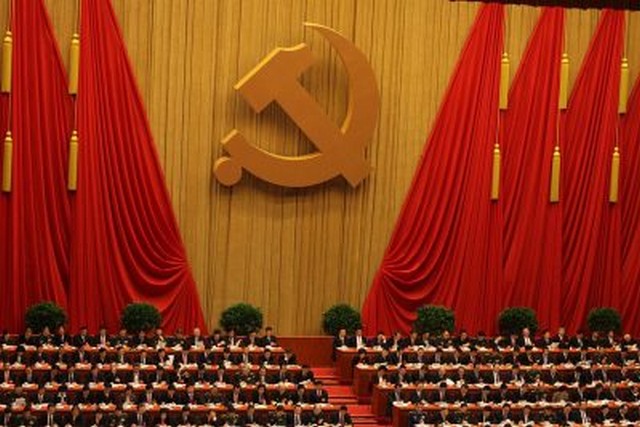
30 Jun 2021 – The Chinese Communist Party (CCP) centennial takes place this week at the heart of an incandescent geopolitical equation.

China, the emerging superpower, is back to the global prominence it enjoyed throughout centuries of recorded history, while the declining Hegemon is paralyzed by the “existential challenge” posed to its fleeting, unilateral dominance.

A mindset of full spectrum confrontation already sketched in the 2017 U.S. National Security Review is sliding fast into fear, loathing and relentless Sinophobia.

Add to it the Russia-China comprehensive strategic partnership graphically exposing the ultimate Mackinderian nightmare of Anglo-American elites jaded by “ruling the world” – for only two centuries at best.

The Little Helmsman Deng Xiaoping may have coined the ultimate formula for what many in the West defined as the Chinese miracle:

“To seek truth from facts, not from dogmas, whether from East or West”.

So this was never about divine intervention, but planning, hard work, and learning by trial and error.

The recent session of the National People’s Congress provides a stark example. Not only it approved a new Five-Year Plan, but in fact a full road map for China’s development up to 2035: three plans in one.

What the whole world saw, in practice, was the manifest efficiency of the Chinese governance system, capable of designing and implementing extremely complex geoeconomic strategies after plenty of local and regional debate on a vast range of policy initiatives.

Compare it to the endless bickering and gridlock in Western liberal democracies, which are incapable of planning for the next quarter, not to mention fifteen years.

The best and the brightest in China actually do their Deng; they couldn’t care less about the politicizing of governance systems. What matters is what they define as a very effective system to make SMART (specific, measurable, achievable, relevant and time-bound) development plans, and put them in practice.

The 85% popular vote

At the start of 2021, before the onset of the Year of the Metal Ox, President Xi Jinping emphasized that “favorable social conditions” should be in place for the CCP centennial celebrations.

Oblivious to waves of demonization coming from the West, for Chinese public opinion what matters is whether the CCP delivered. And deliver it did (over 85% popular approval). China controlled Covid-19 in record time; economic growth is back; poverty alleviation was achieved; and the civilization-state became a “moderately prosperous society” – right on schedule for the CCP centennial.

Since 1949, the size of the Chinese economy soared by a whopping 189 times. Over the past two decades, China’s GDP grew 11-fold. Since 2010, it more than doubled, from $6 trillion to $15 trillion, and now accounts for 17% of global economic output.

No wonder Western grumbling is irrelevant. Shanghai Capital investment boss Eric Li succinctly describes the governance gap; in the U.S., government changes but not policy. In China, government doesn’t change; policy does.

This is the background for the next development stage – where the CCP will in fact double down on its unique hybrid model of “socialism with Chinese characteristics”.

The key point is that the Chinese leadership, via non-stop policy adjustments (trial and error, always) has evolved a model of “peaceful rise” – their own terminology – that essentially respects China’s immense historical and cultural experiences.

In this case, Chinese exceptionalism means respecting Confucianism – which privileges harmony and abhors conflict – as well as Daoism – which privileges balance – over the boisterous, warring, hegemonic Western model.

This is reflected in major policy adjustments such as the new “dual circulation” drive, which places greater emphasis on the domestic market compared to China as the “factory of the world”.

Past and future are totally intertwined in China; what was done in previous dynasties echoes in the future. The best contemporary example is the New Silk Roads, or Belt and Road Initiative (BRI) – the overarching Chinese foreign policy concept for the foreseeable future.

As detailed by Renmin University Professor Wang Yiwei, BRI is about to reshape geopolitics, “bringing Eurasia back to its historical place at the center of human civilization.” Wang has shown how “the two great civilizations of the East and the West were linked until the rise of the Ottoman Empire cut off the Ancient Silk Road”.

Europe moving seaward led to “globalization through colonization”; the decline of the Silk Road; the world’s center shifting to the West; the rise of the U.S.; and the decline of Europe. Now, Wang argues, “Europe is faced with a historic opportunity to return to the world center through the revival of Eurasia.”

And that’s exactly what the Hegemon will go no holds barred to prevent.

Zhu and Xi

It’s fair to argue that Xi’s historical counterpart is the Hongwu emperor Zhu, the founder of the Ming dynasty (1368-1644). The emperor was keen to present his dynasty as a Chinese renewal after Mongol domination via the Yuan dynasty.

Xi frames it as “Chinese rejuvenation”: “China used to be a world economic power. However, it missed its chance in the wake of the Industrial Revolution and the consequent dramatic changes, and was thus left behind and suffered humiliation under foreign invasion …we must not let this tragic history repeat itself.”

The difference is that 21st century China under Xi will not retreat inward as it did under the Ming. The parallel for the near future would rather be with the Tang dynasty (618-907), which privileged trade and interactions with the world at large.

To comment on the torrent of Western misinterpretations of China is a waste of time. For the Chinese, the overwhelming majority of Asia, and for the Global South, much more relevant is to register how the American imperial narrative – “we are the liberators of Asia-Pacific” – has now been totally debunked.

In fact Chairman Mao may end up having the last laugh. As he wrote in 1957, “if the imperialists insist on launching a third world war, it is certain that several hundred million more will turn to socialism, and then there will not be much room left on earth for the imperialists; it is also likely that the whole structure of imperialism will utterly collapse.”

Martin Jacques, one of the very few Westerners who actually studied China in depth, correctly pointed out how “China has enjoyed five separate periods when it has enjoyed a position of pre-eminence – or shared pre-eminence – in the world: part of the Han, the Tang, arguably the Song, the early Ming, and the early Qing.”

So China, historically, does represent continuous renewal and “rejuvenation” (Xi). We’re right in the middle of another one of these phases – now conducted by a CCP dynasty that, incidentally, does not believe in miracles, but in hardcore planning. Western exceptionalists may continue to throw a fit 24/7 ad infinitum: that will not change the course of history.

Pepe Escobar is a Brazilian independent geopolitical analyst. He is a frequent contributor to websites and radio and TV shows ranging from the US to East Asia.

5 July 2021

Source: www.transcend.org

China Pulls Itself Out of Poverty 100 Years into Its Revolution

By Vijay Prashad and John Ross

1 Jul 2021 – On February 25, 2021, China’s President Xi Jinping announced that his country of 1.4 billion people had pulled its people out of poverty as it is defined internationally. Since 1981, 853 million Chinese people have lifted themselves out of poverty thanks to large-scale interventions from both the Chinese state and the Communist Party of China (CPC); according to the data of the World Bank, three out of four people worldwide who were lifted out of poverty live in China. “No country has been able to lift hundreds of millions of people out of poverty in such a short time,” Xi said.

When UN Secretary-General António Guterres visited China in September 2019, he gushed over this accomplishment, calling it the “greatest anti-poverty achievement in history.” “You reduced infant and maternal mortality rates, improved nutrition, reduced stunting and halved the proportion of the population without access to safe drinking water and sanitation,” Secretary Guterres said. In 1949, at the time of the Chinese Revolution, the infant mortality rate in China was 200 per 1,000 live births; this declined to fewer than 50 by 1980. A World Bank study from 1988 noted, “Much of China’s success in improving the health of its people can be attributed to the health policies and the national health service delivery system.” This is the historical context for Secretary Guterres’ 2019 comment; in other words, the Chinese state institutions—products of the revolution led by the CPC—improved the social conditions of life.

Before the Revolution

In 1949, China was one of the world’s poorest countries. Only 10 countries had a lower per capita GDP than China. Chairman Mao Zedong’s famous words at the inauguration of the People’s Republic of China—“The Chinese people have stood up”—is a reflection of a century of humiliations that produced terrible poverty in the country.

The degree of this national suffering may be seen in the fact that between 1840 and 1949 almost 100 million Chinese people died in wars, which directly resulted from foreign intervention, or were victims of civil wars and famines related to those interventions. China had suffered the longest Second World War, from 1937 to 1945 (with a civil war following that lasted until 1949); the death toll was at least 14 million (as documented by Rana Mitter in his book Forgotten Ally: China’s World War II, 1937-1945). From the Opium Wars beginning in 1839 to the Japanese invasion in 1931, China struggled to establish its sovereignty and its future.

It was the terrible burden of this past that brought together a range of radicals to establish the CPC in July 1921 in Shanghai. The small group of 13—including Mao—met in Shanghai’s French Concession and then on a tourist boat on Nanhu Lake after the foreign police came for them on the information of a spy. The principal task of the CPC was to organize and guide the working class. By May Day 1924, 100,000 workers marched in Shanghai, while 200,000 workers marched in Canton. “The time is past when workers are only cannon fodder for the bosses,” the workers wrote in a leaflet. The CPC threw itself into these struggles, growing through setbacks—including the Shanghai Massacre of 1927; leadership by the CPC in the protracted, anti-imperialist war against Japan led it to eventual victory in 1949.

Phases of Socialist Construction

The Chinese Revolution had to confront a broken state, a destroyed economy, and a society in deep turmoil. In 1949, China’s people lived three years less than the world average. They were less well-educated and deeply unhealthy. By 1978, they lived five years longer than the world average. Literacy rates had risen, and health care data showed a marked improvement. As China in 1978 was 22 percent of the world’s population, never in human history had such an immense step forward taken place.

From 1978, with the introduction of “reform and opening up,” China achieved the fastest economic growth ever calculated by a major country in recorded history. From 1978 to 2020, China’s annual average GDP growth was 9.2 percent. Since 1978, China’s household consumption has increased by 1,800 percent, twice that of any major country. This means that everyday life has improved markedly in China. China’s literacy rate is now 97.33 percent, up from 95.92 percent in 2010, far above the literacy rate of 20 percent in 1949.

By 2025, China will become a “high-income” economy by World Bank international standards, according to Justin Lin Yifu (a standing committee member of the Chinese People’s Political Consultative Conference National Committee, and dean and professor at the Institute of New Structural Economics of Peking University). That is, in about 75 years, a single lifetime, China will have gone from almost the world’s poorest country to a high-income economy—with all the enormous improvement in human living standards, life expectancy, education, culture, and numerous other dimensions of human welfare this results in.

With the foundation of the CPC 100 years ago by a handful of people, the Chinese people found a leadership that could deliver them from a struggle that dates back to 1839; now, the CPC will play a decisive role in deciding the fate not only of China but of the world. This historical context is too often lost when Western media and politicians play down China’s socioeconomic victories or imply they came out of nowhere. China’s people have fought for this outcome for centuries.

Vijay Prashad is an Indian historian, editor and journalist. He is a writing fellow and chief correspondent at Globetrotter.

5 July 2021

Source: www.transcend.org
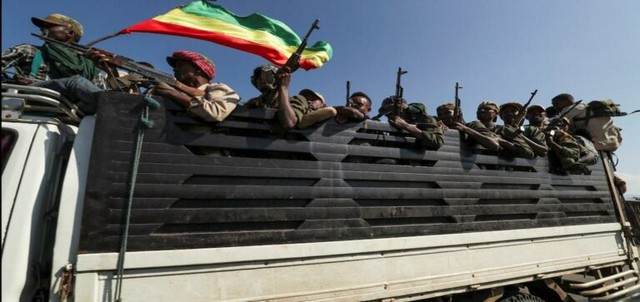
The Three Revolutions of the Chinese Communist Party

By Walden Bello

1 Jul 2021 – The Communist Party of China led three revolutions of world-historic significance in its short 100-year-history: national liberation, the “Cultural Revolution,” and China’s rapid capitalist transformation.

Reflecting on the meaning of the 100th anniversary on July 1, 2021, of one of the most important institutions of our time, the Chinese Communist Party (CCP), the first thing that entered my head was that the present does change the significance of the past.

Before 1991, when the Soviet state went pffft, I would have bet that, hands down, the most important event of the 20th century was the Russian Revolution of 1917.

Now, owing to history’s merciless intolerance for failed experiments, the Chinese Revolution has emerged as the most momentous event of the last century, and its paradoxical consequence – the rise of China to become the center of global capital accumulation – bids fair to be the most significant development of this century as well.

From National Liberation to the Cultural Revolution

In 1949, China was able to put behind it the long century of shame that began with its defeat in the so-called Opium Wars of the 1840’s that resulted in the ceding of Hong Kong to Britain.

In the succeeding decades, imperial China collapsed, the country was plunged into deep social and spiritual crisis and went through a wrenching civil war between a corrupt and weak nationalist government and a puritanical revolutionary Communist Party led by Mao Zedong.

Other countries would have experienced a post-revolutionary consolidation after 1949, but not China. An incorrigible revolutionary, Mao pushed the country into the disastrous “Great Leap Forward,” then after a brief pause, to a decade-long cultural revolution which called on youth to declare war on their elders and all things ancient and traditional and pushed them to “bombard headquarters,” that is, the Communist Party, while the People’s Liberation Army held the ring within which the battle unfolded.

By the early seventies, China was exhausted, or perhaps a better way of putting it is that Mao had exhausted China. The so-called Asian Miracle was unfolding on China’s eastern borders, in Japan, Korea, and Taiwan, but, as two students of the Cultural Revolution put it, “China itself now lay spread-eagled, this time by its own hand, not as a result of foreign invasion or conventional civil war.”

For Deng Xiaoping and other survivors of Mao’s bombardment of headquarters, the message was clear: It was “to embark upon a policy of rapid economic growth to make up for lost time and to relegitimize CCP rule. They had to abandon Maoist utopianism in favor of building the strong and prosperous nation of which they had dreamed when they joined the nascent CCP in the 1920’s.

Otherwise, the CCP itself might not last. So ‘practice,’ not ideology—not Marxism-Leninism, not Mao Zedong Thought—became the ‘sole criterion of truth. If it worked, it would be done’.”

Nation and class have always had an uneasy coexistence in Chinese Communism. Reconciled during the struggle to free the country from imperialism, class conflict gained the upper hand during the Cultural Revolution.

With Mao gone and Deng in command, the emphasis shifted decisively to national solidarity in the late 1970’s, with “national modernization” declared as China’s new objective.

This collective goal of common prosperity was, however, not to be achieved by submerging the individual in the cooperative venture of the virtuous masses but by activating the latent spirit of competition that separated them.

From socialism to capitalism

Deng did not say, “To get rich is glorious,” as is commonly believed, but however he might have expressed the new outlook, it was squarely in the tradition of Adam Smith, who said that the common good would, paradoxically, be achieved by competition among individuals. There was, however, one difference, and it was a major one.

While Smith said a minimal state would be best for competition to thrive and achieve the common good, Deng and the CCP said a powerful state, holding the ring like the People’s Liberation Army did during the Cultural Revolution, was necessary for the common welfare to be achieved in a society where competition would also unleash corruption and in a world that continued to be dominated by predatory western capitalist societies.

It was an important difference that would shape the contours of China’s third revolution since the founding of the Communist Party in 1922: the country’s breathtakingly rapid capitalist transformation.

Mao’s socialist revolution petered out, but he had created the state that made possible the success of its capitalist revolution. For with that state, his successor Deng was emboldened to make a devil’s bargain.

That bargain was, in return for the country’s comprehensive development along capitalist lines, the CCP would offer the country’s labor force for super-exploitation by US transnational corporations.

That the force of capitalism unleashed by the deal would be bent in China’s favor instead of that of the transnationals would be ensured by a powerful state, one that was, on account of its revolutionary origins, far more powerful than the fabled developmental states of Japan and South Korea that had produced the Asian miracle economies.

Forty years on, Deng and his successors have clearly gotten the better of the western capitalist devil. True, there have been costs and not insignificant ones. Income inequality in China is close to that of the US. Environmental crises are rampant. Inland China has been left behind by coastal China.

Women are less equal to men than they were in the 1970’s. Democratic rights have been subordinated to the stability of the state, and in Xinjiang, forced cultural assimilation of the Uighur minority is the order of the day. And, of course, the shadow of Tiananmen Square 1989 continues to cast its shadow on the accomplishments of the CCP.

Yet, nothing succeeds like success, as the 90-year-old Mikhail Gorbachev – all but forgotten now in his homeland while Deng has been canonized in his—probably realizes with bitterness.

For China has become the center of world capital accumulation or, in the popular image, the “locomotive of the world economy,” accounting for 28% of all growth worldwide in the five years from 2013 to 2018, more than twice the share of the United States, according to the International Monetary Fund.

In the process, over 800 million people have been lifted out of the ranks of the poor, according to the World Bank, though the Chinese government’s claim that it has “abolished extreme poverty” has been met with skepticism.

Though protests are widespread on the ground and alienation from the authorities is widely expressed on the internet, there is no systemic challenge to the CCP. Fear of repression may be a factor here, but far more significant is a more mundane phenomenon.

As one western economist put it, “For most of the past three decades, all boats have been rising, and most people pay more attention to their own boat than the boats that have risen higher… They may, in short, have bought into Deng Xiaoping’s motto early in the reform era that ‘some people and some regions should be allowed to prosper before others’.”

China as a model?

After a visit to the new Soviet Union in the 1930’s, the famous American journalist Lincoln Steffens wrote, “I have seen the future and it works.” In a similar manner, China’s startling success has captivated many outside China, and one of those most mesmerized Is the Columbia University economics professor Jeffrey Sachs.

Sachs has done a complete turnaround from his early day as the champion of the free-market “Washington Consensus” in the 1980’s and 1990’s. In a recent talk with United Nations officials, Sachs claimed that “China shows a path for how it is possible to make profound transformations for well-being in a short period of time.”

Sachs, who is criticized by some of his colleagues for “channeling Xi Jin Ping,” is just one of a bevy of liberal and progressive western economists who no longer have any hope that a US economy ruined by neoliberal policies that have fostered deindustrialization, out-of-control financial speculation, and spectacular inequality (with 50 percent of the population having access to only 12 percent of the wealth) has much of value to offer the global South. China, on the other hand, is seen as the new North Star, the country most capable of providing global leadership for a strategy that Sachs calls “sustainable development.”

But China has not embraced Sach’s “sustainable development,” nor has it promoted what some western economists have deluded themselves into thinking as China’s response to the neoliberal Washington Consensus: the so-called Beijing Consensus.

When it comes to what China has to offer the world, Beijing has gone out of its way to say it is not prescribing a model for other countries. Indeed, it has gone to some length to claim that what Deng Xiaoping called “socialism with Chinese characteristics” is a state-guided capitalist system unique to China and probably non-transferable.

What Deng’s heir, Xi Jin Ping, wants though is for China to be recognized as the leader of globalization in its latest phase of “connectivity,” or the comprehensive linking via physical, economic, and digital infrastructures of vast areas of the globe.

Originally meant to be mainly a way by which China could reduce the overcapacity that was sapping the profitability of its industry, the much ballyhooed Belt and Road Initiative (BRI) has become Beijing’s flagship project in its pursuit of connectivity, aiming to bring about the compression in terms of time and space of the Eurasian landmass, Africa, and Latin America via a web of physical and digital projects.

In terms of actual and future commitments of money in the form of development aid or more straightforward commercial deals – up to $4 trillion now from Xi’s original commitment of $1 trillion, according to some estimates – has already been channeled by Beijing to BRI projects, the bulk of it to developing countries.

Indeed, the BRI can be seen as one giant foreign assistance project to the global South that is highly competitive with bilateral and multilateral aid from the West.

With its stingy sums and all sort of conditionalities, western aid is losing many of its former clients to Beijing, which offers much more money and fewer conditionalities (though critics say the real conditionalities are often unspoken but very real political concessions).

Group of seven on the rocks

The disparity between the “soft power” of the US and Beijing was in full display during the G7 meeting in Cornwall, England, and its immediate aftermath.

US President Joe Biden tried hard to recreate the old western alliance after Donald Trump’s demolition job, invoking a struggle between “western democracy” and “authoritarian China.”

It made for lovely photo ops, but the G7 rhetoric masked harsh realities. Washington’s allies knew that Biden faced an undeclared civil war at home with the white supremacist Republican Party led by Trump actively seeking to destabilize him.

The Europeans knew that the European Union itself was in a very real crisis, with Britain’s leaving it. The expansive Japan of the 1970’s and 1980’s was now the little Japan of the 2020’s which had never quite snapped from its more than 30 years of economic stagnation.

The B3W (Better World Partnership) meant to counter the BRI that was announced with fanfare was purely reactive, and purely reactive programs tend to be put together in a hurry, with little serious thought to follow through.

The biggest problem is, of course, is money, and with all these countries suffering fiscal crises, with the possible exception of Germany, where are the western governments going to get the trillions of dollars to match China’s estimated $4 trillion current and future investment in the BRI?

Washington, for one, has already committed $250 billion that could otherwise be earmarked for its tattered bilateral aid program to the new US-focused high-tech industrial policy program passed by the Senate and awaiting sure passage in the House of Representatives.

The fact is, even as they rhetorically proclaim B3W, all the other G7 countries, with the exception of Japan and the US, have signed on as partners in the China-led Asian Infrastructure Investment Bank (AIIB), despite the efforts of the Obama administration to dissuade them a couple of years ago.

These governments have a keen sense of where their interests lie at the same time that they know that rhetoric is cheap, especially rhetoric to keep Washington happy. No wonder Beijing could hardly conceal its scorn for the whole empty show when it characterized the G7 in Cornwall as a manifestation of “small circle politics.”

My problems with China

But I do have problems with China.

One of them has to do with the much-touted BRI. The BRI projects have to be designed to be more environmentally and climate-friendly instead of being what Arundhati Roy has called “gigantistic” top-down projects reminiscent of the mid-20th century. They also have to be sensitive to what the people want and not to what the local elites in the global South desire.

Also, China’s commitments to reduce greenhouse gas emissions should be more radical in scope and speed, something that is demanded of the world’s current champion in greenhouse gas emissions.

Beijing should likewise end the practice of bringing in thousands of Chinese workers to work in projects it funds in Africa and elsewhere and hire and rapidly train many more local workers.

Moreover, China should stop grabbing maritime formations such as Mischief Reef and Scarborough Shoal that belong to the Exclusive Economic Zone in the Philippines and making the outrageous claim that 90 percent of the South China Sea belongs to it.

These moves are illegal and unjustifiable, even if they are understandable as strategic defensive moves made by Beijing to counter the very real military threat to the country’s industrial base in Southeastern China posed by the US Seventh Fleet’s domination of the South China Sea and the West Philippine Sea.

Finally, Beijing must also end its forced cultural assimilation of the Uighurs, and while Hong Kong and Taiwan indisputably belong to China, it must be cognizant of the rights of the peoples of these areas to have a say in the way they are governed, especially given their long separation from the rest of the country.

So China has real problems, both domestic and in some of its relations with the global South. But overall, Beijing’s rise has been a large plus for most of the world. It has become a global economic force powering the economies of smaller countries, and it has achieved this with little, if any, of the force and violence that marked the rise to hegemony of the West.

It has provided the countries of the global South alternative opportunities for aid and finance that have contributed to their becoming much less dependent on the US and the rest of the West.

But beyond these has been its inspiring lesson to so many countries: that with determination, grit, and organization, it is possible not only to break western domination but to use the West as a means of achieving national resurrection. In the long view, the rise of China is but the latest stage of the global South’s 150-year-old struggle for decolonization to end the over 500-year-old yoke of western capitalist hegemony.

Danger ahead?

But our optimism must be tempered, and most of all by the fact that hegemonic powers like the US are often at their most vicious when in decline. The US enjoys absolute superiority over China in the area of war-making capability because China has elected to spend most of its available resources on economic priorities and economic diplomacy.

This yawning gap creates a dangerous situation since Washington will be tempted try to compensate for its rapid economic decline with new military adventures, this time not in the Middle East, where its troops continue to be pinned down in unwinnable struggles, but vis-à-vis China.

This is why the South China Sea is so volatile. In a region where there are no rules of the game except a volatile balance of power, it is not a distant possibility that a mere ship collision between two forces playing “chicken” with each other, which US and Chinese forces apparently frequently engage in, could easily escalate into a conventional war.

Are we being too alarmist in our reading of the dangers of Washington’s absolute military superiority?

The US has probably been the most warlike country on earth over the last 245 years, constantly expanding and taking over territory through military adventures in its first 150 years, then using military force to achieve and maintain military hegemony for the next 100 years. There have been few periods when this country has not been at war.

Indeed, Americans have been continuously in combat over the last 20 years in Afghanistan, and it is not at all sure that Washington’s powerful War-on-Terror Lobby will allow President Biden to follow through with his planned total withdrawal from Afghanistan by September of this year.

Compare this to China, which last deployed troops outside its borders over 40 years ago, with the cross-border expedition to “punish Vietnam” that ended in a disaster for the People’s Liberation Army that Beijing would prefer to forget. Indeed, the big fear of Chinese military strategists is that their forces do not have the experience of war-making that the US has, which would be decisive in any conflict.

In his latest book, Graham Allison, the dean of the American security studies establishment, asks rhetorically if China and the US are “destined for war?” as the volume’s title puts it.

Read the book closely, and despite its periodic protestations that it was written to enable Beijing and Washington to avoid conflict, one cannot avoid the impression that this work, which is required reading in West Point, Annapolis, and the National Defense University Washington, DC, is actually meant to lay out various ways of militarily containing China.

This does not surprise those who have a long and deep familiarity with the bellicose history of American society even before its formal declaration of independence in 1776.

And it would not be a surprise if the Chinese, who have been taught by experience to be utter realists when it comes to relations between states, would consider a preemptive or provocative move on the part of Washington as not only possible but probable.

For the leaders of the CPP, which has led China through 100 years of crises and conflicts, the question is most likely not whether but when, where, and how it will take place.

Walden Bello is the co-founder of and current senior analyst at the Bangkok-based Focus on the Global South, the International Adjunct Professor of Sociology at the State University of New York at Binghamton, and National Chairperson of Laban ng Masa, a progressive coalition of organizations and individuals in the Philippines.

5 July 2021

Source:www.transcend.org

What to the Slave Is the Fourth of July?

By Frederick Douglass

“This oration stands with the most inspirational addresses in US history. The erudition, eloquence, and elocution are unmatched. Douglass’ words should bring shame and guilt to those zealots who deny the importance and essential inclusion of Critical Race Theory in US education as it is the authentic history of the USA.”
— Anthony Marsella, Ph.D. – Member of TRANSCEND

5 July 1852

Mr. President, Friends and Fellow Citizens,

This, for the purpose of this celebration, is the 4th of July. It is the birthday of your National Independence, and of your political freedom. This, to you, is what the Passover was to the emancipated people of God. It carries your minds back to the day, and to the act of your great deliverance; and to the signs, and to the wonders, associated with that act, and that day. This celebration also marks the beginning of another year of your national life; and reminds you that the Republic of America is now 76 years old. I am glad, fellow-citizens, that your nation is so young. Seventy-six years, though a good old age for a man, is but a mere speck in the life of a nation. Three score years and ten is the allotted time for individual men; but nations number their years by thousands. According to this fact, you are, even now, only in the beginning of your national career, still lingering in the period of childhood. I repeat, I am glad this is so. There is hope in the thought, and hope is much needed, under the dark clouds which lower above the horizon.

Fellow-citizens, I shall not presume to dwell at length on the associations that cluster about this day. The simple story of it is that, 76 years ago, the people of this country were British subjects. The style and title of your “sovereign people” (in which you now glory) was not then born. You were under the British Crown. Your fathers esteemed the English Government as the home government; and England as the fatherland. This home government, you know, although a considerable distance from your home, did, in the exercise of its parental prerogatives, impose upon its colonial children, such restraints, burdens and limitations, as, in its mature judgment, it deemed wise, right and proper.

But, your fathers, who had not adopted the fashionable idea of this day, of the infallibility of government, and the absolute character of its acts, presumed to differ from the home government in respect to the wisdom and the justice of some of those burdens and restraints. They went so far in their excitement as to pronounce the measures of government unjust, unreasonable, and oppressive, and altogether such as ought not to be quietly submitted to. I scarcely need say, fellow-citizens, that my opinion of those measures fully accords with that of your fathers…Feeling themselves harshly and unjustly treated by the home government, your fathers, like men of honesty, and men of spirit, earnestly sought redress. They petitioned and remonstrated; they did so in a decorous, respectful, and loyal manner. Their conduct was wholly unexceptionable. This, however, did not answer the purpose. They saw themselves treated with sovereign indifference, coldness and scorn. Yet they persevered. They were not the men to look back.

As the sheet anchor takes a firmer hold, when the ship is tossed by the storm, so did the cause of your fathers grow stronger, as it breasted the chilling blasts of kingly displeasure. The greatest and best of British statesmen admitted its justice, and the loftiest eloquence of the British Senate came to its support. But, with that blindness which seems to be the unvarying characteristic of tyrants, since Pharaoh and his hosts were drowned in the Red Sea, the British Government persisted in the exactions complained of.

The madness of this course, we believe, is admitted now, even by England; but we fear the lesson is wholly lost on our present ruler.

Oppression makes a wise man mad. Your fathers were wise men, and if they did not go mad, they became restive under this treatment. They felt themselves the victims of grievous wrongs, wholly incurable in their colonial capacity. With brave men there is always a remedy for oppression. Just here, the idea of a total separation of the colonies from the crown was born! It was a startling idea, much more so, than we, at this distance of time, regard it. The timid and the prudent (as has been intimated) of that day, were, of course, shocked and alarmed by it.

Such people lived then, had lived before, and will, probably, ever have a place on this planet; and their course, in respect to any great change, (no matter how great the good to be attained, or the wrong to be redressed by it), may be calculated with as much precision as can be the course of the stars. They hate all changes, but silver, gold and copper change! Of this sort of change they are always strongly in favor.

These people were called Tories in the days of your fathers; and the appellation, probably, conveyed the same idea that is meant by a more modern, though a somewhat less euphonious term, which we often find in our papers, applied to some of our old politicians.

Their opposition to the then dangerous thought was earnest and powerful; but, amid all their terror and affrighted vociferations against it, the alarming and revolutionary idea moved on, and the country with it.

On the 2nd of July, 1776, the old Continental Congress, to the dismay of the lovers of ease, and the worshipers of property, clothed that dreadful idea with all the authority of national sanction. They did so in the form of a resolution; and as we seldom hit upon resolutions, drawn up in our day whose transparency is at all equal to this, it may refresh your minds and help my story if I read it.

“Resolved, That these united colonies are, and of right, ought to be free and Independent States; that they are absolved from all allegiance to the British Crown; and that all political connection between them and the State of Great Britain is, and ought to be, dissolved.”

Citizens, your fathers made good that resolution. They succeeded; and to-day you reap the fruits of their success. The freedom gained is yours; and you, therefore, may properly celebrate this anniversary. The 4th of July is the first great fact in your nation’s history – the very ring-bolt in the chain of your yet undeveloped destiny.

Pride and patriotism, not less than gratitude, prompt you to celebrate and to hold it in perpetual remembrance. I have said that the Declaration of Independence is the ring-bolt to the chain of your nation’s destiny; so, indeed, I regard it. The principles contained in that instrument are saving principles. Stand by those principles, be true to them on all occasions, in all places, against all foes, and at whatever cost.

Fellow Citizens, I am not wanting in respect for the fathers of this republic. The signers of the Declaration of Independence were brave men. They were great men too—great enough to give fame to a great age. It does not often happen to a nation to raise, at one time, such a number of truly great men. The point from which I am compelled to view them is not, certainly, the most favorable; and yet I cannot contemplate their great deeds with less than admiration. They were statesmen, patriots and heroes, and for the good they did, and the principles they contended for, I will unite with you to honor their memory.

They loved their country better than their own private interests; and, though this is not the highest form of human excellence, all will concede that it is a rare virtue, and that when it is exhibited, it ought to command respect. He who will, intelligently, lay down his life for his country, is a man whom it is not in human nature to despise. Your fathers staked their lives, their fortunes, and their sacred honor, on the cause of their country. In their admiration of liberty, they lost sight of all other interests.

They were peace men; but they preferred revolution to peaceful submission to bondage. They were quiet men; but they did not shrink from agitating against oppression. They showed forbearance; but that they knew its limits. They believed in order; but not in the order of tyranny. With them, nothing was “settled” that was not right. With them, justice, liberty and humanity were “final;” not slavery and oppression. You may well cherish the memory of such men. They were great in their day and generation. Their solid manhood stands out the more as we contrast it with these degenerate times…

THE PRESENT

My business, if I have any here to-day, is with the present. The accepted time with God and his cause is the ever-living now.

“Trust no future, however pleasant,
Let the dead past bury its dead;
Act, act in the living present,
Heart within, and God overhead.”

We have to do with the past only as we can make it useful to the present and to the future. To all inspiring motives, to noble deeds which can be gained from the past, we are welcome. But now is the time, the important time. Your fathers have lived, died, and have done their work, and have done much of it well. You live and must die, and you must do your work. You have no right to enjoy a child’s share in the labor of your fathers, unless your children are to be blest by your labors. You have no right to wear out and waste the hard-earned fame of your fathers to cover your indolence…Washington could not die till he had broken the chains of his slaves. Yet his monument is built up by the price of human blood, and the traders in the bodies and souls of men, shout – “We have Washington to our father.” Alas! that it should be so; yet so it is.

“The evil that men do, lives after them,
The good is oft’ interred with their bones.”

What have I, or those I represent, to do with your national independence? Fellow-citizens, pardon me, allow me to ask, why am I called upon to speak here to-day? What have I, or those I represent, to do with your national independence? Are the great principles of political freedom and of natural justice, embodied in that Declaration of Independence, extended to us? and am I, therefore, called upon to bring our humble offering to the national altar, and to confess the benefits and express devout gratitude for the blessings resulting from your independence to us?

Would to God, both for your sakes and ours, that an affirmative answer could be truthfully returned to these questions! Then would my task be light, and my burden easy and delightful…

…But, such is not the state of the case. I say it with a sad sense of the disparity between us. I am not included within the pale of this glorious anniversary! Your high independence only reveals the immeasurable distance between us. The blessings in which you, this day, rejoice, are not enjoyed in common. The rich inheritance of justice, liberty, prosperity and independence, bequeathed by your fathers, is shared by you, not by me. The sunlight that brought life and healing to you, has brought stripes and death to me. This Fourth [of] July is yours, not mine. You may rejoice, I must mourn. To drag a man in fetters into the grand illuminated temple of liberty, and call upon him to join you in joyous anthems, were inhuman mockery and sacrilegious irony. Do you mean, citizens, to mock me, by asking me to speak to-day? …

…Fellow-citizens; above your national, tumultuous joy, I hear the mournful wail of millions! whose chains, heavy and grievous yesterday, are, to-day, rendered more intolerable by the jubilee shouts that reach them. If I do forget, if I do not faithfully remember those bleeding children of sorrow this day, “may my right hand forget her cunning, and may my tongue cleave to the roof of my mouth!” To forget them, to pass lightly over their wrongs, and to chime in with the popular theme, would be treason most scandalous and shocking, and would make me a reproach before God and the world. My subject, then fellow-citizens, is AMERICAN SLAVERY.

I shall see, this day, and its popular characteristics, from the slave’s point of view. Standing, there, identified with the American bondman, making his wrongs mine, I do not hesitate to declare, with all my soul, that the character and conduct of this nation never looked blacker to me than on this 4th of July! Whether we turn to the declarations of the past, or to the professions of the present, the conduct of the nation seems equally hideous and revolting. America is false to the past, false to the present, and solemnly binds herself to be false to the future. Standing with God and the crushed and bleeding slave on this occasion, I will, in the name of humanity which is outraged, in the name of liberty which is fettered, in the name of the constitution and the Bible, which are disregarded and trampled upon, dare to call in question and to denounce, with all the emphasis I can command, everything that serves to perpetuate slavery-the great sin and shame of America! “I will not equivocate; I will not excuse;” I will use the severest language I can command; and yet not one word shall escape me that any man, whose judgment is not blinded by prejudice, or who is not at heart a slaveholder, shall not confess to be right and just.

But I fancy I hear some one of my audience say, it is just in this circumstance that you and your brother abolitionists fail to make a favorable impression on the public mind. Would you argue more, and denounce less, would you persuade more, and rebuke less, your cause would be much more likely to succeed. But, I submit, where all is plain there is nothing to be argued. What point in the anti-slavery creed would you have me argue? On what branch of the subject do the people of this country need light? Must I undertake to prove that the slave is a man? That point is conceded already. Nobody doubts it. The slaveholders themselves acknowledge it in the enactment of laws for their government. They acknowledge it when they punish disobedience on the part of the slave. There are seventy-two crimes in the State of Virginia, which, if committed by a black man, (no matter how ignorant he be), subject him to the punishment of death; while only two of the same crimes will subject a white man to the like punishment. What is this but the acknowledgement that the slave is a moral, intellectual and responsible being? The manhood of the slave is conceded. It is admitted in the fact that Southern statute books are covered with enactments forbidding, under severe fines and penalties, the teaching of the slave to read or to write. When you can point to any such laws, in reference to the beasts of the field, then I may consent to argue the manhood of the slave. …

…For the present, it is enough to affirm the equal manhood of the Negro race. Is it not astonishing that, while we are ploughing, planting and reaping, using all kinds of mechanical tools, erecting houses, constructing bridges, building ships, working in metals of brass, iron, copper, silver and gold; that, while we are reading, writing and cyphering, acting as clerks, merchants and secretaries, having among us lawyers, doctors, ministers, poets, authors, editors, orators and teachers; that, while we are engaged in all manner of enterprises common to other men, digging gold in California, capturing the whale in the Pacific, feeding sheep and cattle on the hill-side, living, moving, acting, thinking, planning, living in families as husbands, wives and children, and, above all, confessing and worshipping the Christian’s God, and looking hopefully for life and immortality beyond the grave, we are called upon to prove that we are men!

Would you have me argue that man is entitled to liberty? that he is the rightful owner of his own body? You have already declared it. Must I argue the wrongfulness of slavery? Is that a question for Republicans? Is it to be settled by the rules of logic and argumentation, as a matter beset with great difficulty, involving a doubtful application of the principle of justice, hard to be understood? …There is not a man beneath the canopy of heaven that does not know that slavery is wrong for him.

What, am I to argue that it is wrong to make men brutes, to rob them of their liberty, to work them without wages, to keep them ignorant of their relations to their fellow men, to beat them with sticks, to flay their flesh with the lash, to load their limbs with irons, to hunt them with dogs, to sell them at auction, to sunder their families, to knock out their teeth, to bum their flesh, to starve them into obedience and submission to their masters? Must I argue that a system thus marked with blood, and stained with pollution, is wrong? No! I will not. I have better employments for my time and strength than such arguments would imply.

What, then, remains to be argued? Is it that slavery is not divine; that God did not establish it; that our doctors of divinity are mistaken? There is blasphemy in the thought. That which is inhuman, cannot be divine! Who can reason on such a proposition? They that can, may; I cannot. The time for such argument is past.

At a time like this, scorching irony, not convincing argument, is needed. O! had I the ability, and could I reach the nation’s ear, I would, to-day, pour out a fiery stream of biting ridicule, blasting reproach, withering sarcasm, and stern rebuke. For it is not light that is needed, but fire; it is not the gentle shower, but thunder. We need the storm, the whirlwind, and the earthquake. The feeling of the nation must be quickened; the conscience of the nation must be roused; the propriety of the nation must be startled; the hypocrisy of the nation must be exposed; and its crimes against God and man must be proclaimed and denounced.

What, to the American slave, is your 4th of July? I answer: a day that reveals to him, more than all other days in the year, the gross injustice and cruelly to which he is the constant victim. To him, your celebration is a sham; your boasted liberty, an unholy license; your national greatness, swelling vanity; your sounds of rejoicing are empty and heartless; your denunciations of tyrants, brass fronted impudence; your shouts of liberty and equality, hollow mockery; your prayers and hymns, your sermons and thanksgivings, with all your religious parade, and solemnity, are, to him, mere bombast, fraud, deception, impiety, and hypocrisy – a thin veil to cover up crimes which would disgrace a nation of savages. There is not a nation on the earth guilty of practices, more shocking and bloody, than are the people of these United States, at this very hour.

Go where you may, search where you will, roam through all the monarchies and despotisms of the old world, travel through South America, search out every abuse, and when you have found the last, lay your facts by the side of the everyday practices of this nation, and you will say with me, that, for revolting barbarity and shameless hypocrisy, America reigns without a rival.

INTERNAL SLAVE TRADE

Take the American slave-trade, which, we are told by the papers, is especially prosperous just now. Ex-Senator Benton tells us that the price of men was never higher than now. He mentions the fact to show that slavery is in no danger. This trade is one of the peculiarities of American institutions. It is carried on in all the large towns and cities in one-half of this confederacy; and millions are pocketed every year, by dealers in this horrid traffic. In several states, this trade is a chief source of wealth. It is called (in contradistinction to the foreign slave-trade) “the internal slave trade.” It is, probably, called so, too, in order to divert from it the horror with which the foreign slave-trade is contemplated. That trade has long since been denounced by this government, as piracy. It has been denounced with burning words, from the high places of the nation, as an execrable traffic. To arrest it, to put an end to it, this nation keeps a squadron, at immense cost, on the coast of Africa. Everywhere, in this country, it is safe to speak of this foreign slave-trade, as a most inhuman traffic, opposed alike to the laws of God and of man. The duty to extirpate and destroy it, is admitted even by our DOCTORS OF DIVINITY. In order to put an end to it, some of these last have consented that their colored brethren (nominally free) should leave this country, and establish themselves on the western coast of Africa! It is, however, a notable fact that, while so much execration is poured out by Americans upon those engaged in the foreign slave-trade, the men engaged in the slave-trade between the states pass without condemnation, and their business is deemed honorable.

Behold the practical operation of this internal slave-trade, the American slave-trade, sustained by American politics and America religion. Here you will see men and women reared like swine for the market. You know what is a swine-drover? I will show you a man-drover. They inhabit all our Southern States. They perambulate the country, and crowd the highways of the nation, with droves of human stock. You will see one of these human flesh-jobbers, armed with pistol, whip and bowie-knife, driving a company of a hundred men, women, and children, from the Potomac to the slave market at New Orleans. These wretched people are to be sold singly, or in lots, to suit purchasers. They are food for the cotton-field, and the deadly sugar-mill. Mark the sad procession, as it moves wearily along, and the inhuman wretch who drives them. Hear his savage yells and his blood-chilling oaths, as he hurries on his affrighted captives! There, see the old man, with locks thinned and gray. Cast one glance, if you please, upon that young mother, whose shoulders are bare to the scorching sun, her briny tears falling on the brow of the babe in her arms. See, too, that girl of thirteen, weeping, yes! weeping, as she thinks of the mother from whom she has been torn! The drove moves tardily. Heat and sorrow have nearly consumed their strength; suddenly you hear a quick snap, like the discharge of a rifle; the fetters clank, and the chain rattles simultaneously; your ears are saluted with a scream that seems to have torn its way to the center of your soul! The crack you heard, was the sound of the slave-whip; the scream you heard, was from the woman you saw with the babe. Her speed had faltered under the weight of her child and her chains! that gash on her shoulder tells her to move on. Follow the drove to New Orleans. Attend the auction; see men examined like horses; see the forms of women rudely and brutally exposed to the shocking gaze of American slave-buyers. See this drove sold and separated forever; and never forget the deep, sad sobs that arose from that scattered multitude. Tell me citizens, WHERE, under the sun, you can witness a spectacle more fiendish and shocking. Yet this is but a glance at the American slave-trade, as it exists, at this moment, in the ruling part of the United States.

I was born amid such sights and scenes. To me the American slave-trade is a terrible reality. When a child, my soul was often pierced with a sense of its horrors. I lived on Philpot Street, Fell’s Point, Baltimore, and have watched from the wharves, the slave ships in the Basin, anchored from the shore, with their cargoes of human flesh, waiting for favorable winds to waft them down the Chesapeake. There was, at that time, a grand slave mart kept at the head of Pratt Street, by Austin Woldfolk. His agents were sent into every town and county in Maryland, announcing their arrival, through the papers, and on flaming “hand-bills,” headed CASH FOR NEGROES. These men were generally well dressed men, and very captivating in their manners. Ever ready to drink, to treat, and to gamble. The fate of many a slave has depended upon the turn of a single card; and many a child has been snatched from the arms of its mother by bargains arranged in a state of brutal drunkenness.

The flesh-mongers gather up their victims by dozens, and drive them, chained, to the general depot at Baltimore. When a sufficient number have been collected here, a ship is chartered, for the purpose of conveying the forlorn crew to Mobile, or to New Orleans. From the slave prison to the ship, they are usually driven in the darkness of night; for since the antislavery agitation, a certain caution is observed.

In the deep still darkness of midnight, I have been often aroused by the dead heavy footsteps, and the piteous cries of the chained gangs that passed our door. The anguish of my boyish heart was intense; and I was often consoled, when speaking to my mistress in the morning, to hear her say that the custom was very wicked; that she hated to hear the rattle of the chains, and the heart-rending cries. I was glad to find one who sympathized with me in my horror.

Fellow-citizens, this murderous traffic is, to-day, in active operation in this boasted republic. In the solitude of my spirit, I see clouds of dust raised on the highways of the South; I see the bleeding footsteps; I hear the doleful wail of fettered humanity, on the way to the slave-markets, where the victims are to be sold like horses, sheep, and swine, knocked off to the highest bidder. There I see the tenderest ties ruthlessly broken, to gratify the lust, caprice and rapacity of the buyers and sellers of men. My soul sickens at the sight.

“Is this the land your Fathers loved,
The freedom which they toiled to win?
Is this the earth whereon they moved?
Are these the graves they slumber in?”

But a still more inhuman, disgraceful, and scandalous state of things remains to be presented. By an act of the American Congress, not yet two years old, slavery has been nationalized in its most horrible and revolting form. By that act, Mason & Dixon’s line has been obliterated; New York has become as Virginia; and the power to hold, hunt, and sell men, women, and children as slaves remains no longer a mere state institution, but is now an institution of the whole United States. The power is co-extensive with the Star-Spangled Banner and American Christianity. Where these go, may also go the merciless slave-hunter. Where these are, man is not sacred. He is a bird for the sportsman’s gun. By that most foul and fiendish of all human decrees, the liberty and person of every man are put in peril. Your broad republican domain is hunting ground for men. Not for thieves and robbers, enemies of society, merely, but for men guilty of no crime. Your lawmakers have commanded all good citizens to engage in this hellish sport. Your President, your Secretary of State, your lords, nobles, and ecclesiastics, enforce, as a duty you owe to your free and glorious country, and to your God, that you do this accursed thing. Not fewer than forty Americans have, within the past two years, been hunted down and, without a moment’s warning, hurried away in chains, and consigned to slavery and excruciating torture. Some of these have had wives and children, dependent on them for bread; but of this, no account was made. The right of the hunter to his prey stands superior to the right of marriage, and to all rights in this republic, the rights of God included! For black men there are neither law, justice, humanity, not religion. The Fugitive Slave Law makes MERCY TO THEM, A CRIME; and bribes the judge who tries them. An American JUDGE GETS TEN DOLLARS FOR EVERY VICTIM HE CONSIGNS to slavery, and five, when he fails to do so. The oath of any two villains is sufficient, under this hell-black enactment, to send the most pious and exemplary black man into the remorseless jaws of slavery! His own testimony is nothing. He can bring no witnesses for himself. The minister of American justice is bound by the law to hear but one side; and that side, is the side of the oppressor. Let this damning fact be perpetually told. Let it be thundered around the world, that, in tyrant-killing, king-hating, people-loving, democratic, Christian America, the seats of justice are filled with judges, who hold their offices under an open and palpable bribe, and are bound, in deciding in the case of a man’s liberty, hear only his accusers!

In glaring violation of justice, in shameless disregard of the forms of administering law, in cunning arrangement to entrap the defenseless, and in diabolical intent, this Fugitive Slave Law stands alone in the annals of tyrannical legislation. I doubt if there be another nation on the globe, having the brass and the baseness to put such a law on the statute-book. If any man in this assembly thinks differently from me in this matter, and feels able to disprove my statements, I will gladly confront him at any suitable time and place he may select.

RELIGIOUS LIBERTY

I take this law to be one of the grossest infringements of Christian Liberty, and, if the churches and ministers of our country were not stupidly blind, or most wickedly indifferent, they, too, would so regard it.

At the very moment that they are thanking God for the enjoyment of civil and religious liberty, and for the right to worship God according to the dictates of their own consciences, they are utterly silent in respect to a law which robs religion of its chief significance, and makes it utterly worthless to a world lying in wickedness…The fact that the church of our country, (with fractional exceptions), does not esteem “the Fugitive Slave Law” as a declaration of war against religious liberty, implies that that church regards religion simply as a form of worship, an empty ceremony, and not a vital principle, requiring active benevolence, justice, love and good will towards man. It esteems sacrifice above mercy; psalm-singing above right doing; solemn meetings above practical righteousness. A worship that can be conducted by persons who refuse to give shelter to the houseless, to give bread to the hungry, clothing to the naked, and who enjoin obedience to a law forbidding these acts of mercy, is a curse, not a blessing to mankind. The Bible addresses all such persons as “scribes, Pharisees, hypocrites, who pay tithe of mint, anise, and cummin, and have omitted the weightier matters of the law, judgment, mercy and faith.”

THE CHURCH RESPONSIBLE

But the church of this country is not only indifferent to the wrongs of the slave, it actually takes sides with the oppressors. It has made itself the bulwark of American slavery, and the shield of American slave-hunters. Many of its most eloquent Divines. who stand as the very lights of the church, have shamelessly given the sanction of religion and the Bible to the whole slave system. They have taught that man may, properly, be a slave; that the relation of master and slave is ordained of God; that to send back an escaped bondman to his master is clearly the duty of all the followers of the Lord Jesus Christ; and this horrible blasphemy is palmed off upon the world for Christianity.

For my part, I would say, welcome infidelity! welcome atheism! welcome anything! in preference to the gospel, as preached by those Divines! They convert the very name of religion into an engine of tyranny, and barbarous cruelty, and serve to confirm more infidels, in this age, than all the infidel writings of Thomas Paine, Voltaire, and Bolingbroke, put together, have done! These ministers make religion a cold and flinty-hearted thing, having neither principles of right action, nor bowels of compassion. They strip the love of God of its beauty, and leave the throng of religion a huge, horrible, repulsive form. It is a religion for oppressors, tyrants, man-stealers, and thugs. It is not that “pure and undefiled religion” which is from above, and which is “first pure, then peaceable, easy to be entreated, full of mercy and good fruits, without partiality, and without hypocrisy.” But a religion which favors the rich against the poor; which exalts the proud above the humble; which divides mankind into two classes, tyrants and slaves; which says to the man in chains, stay there; and to the oppressor, oppress on; it is a religion which may be professed and enjoyed by all the robbers and enslavers of mankind; it makes God a respecter of persons, denies his fatherhood of the race, and tramples in the dust the great truth of the brotherhood of man. All this we affirm to be true of the popular church, and the popular worship of our land and nation – a religion, a church, and a worship which, on the authority of inspired wisdom, we pronounce to be an abomination in the sight of God. In the language of Isaiah, the American church might be well addressed, “Bring no more vain ablations; incense is an abomination unto me: the new moons and Sabbaths, the calling of assemblies, I cannot away with; it is iniquity even the solemn meeting…. Yea! when ye make many prayers, I will not hear. YOUR HANDS ARE FULL OF BLOOD; cease to do evil, learn to do well; seek judgment; relieve the oppressed; judge for the fatherless; plead for the widow.”

The American church is guilty, when viewed in connection with what it is doing to uphold slavery; but it is superlatively guilty when viewed in connection with its ability to abolish slavery.

The sin of which it is guilty is one of omission as well as of commission. Albert Barnes but uttered what the common sense of every man at all observant of the actual state of the case will receive as truth, when he declared that “There is no power out of the church that could sustain slavery an hour, if it were not sustained in it.”

Let the religious press, the pulpit, the Sunday school, the conference meeting, the great ecclesiastical, missionary, Bible and tract associations of the land array their immense powers against slavery and slave-holding; and the whole system of crime and blood would be scattered to the winds; and that they do not do this involves them in the most awful responsibility of which the mind can conceive.

In prosecuting the anti-slavery enterprise, we have been asked to spare the church, to spare the ministry; but how, we ask, could such a thing be done? We are met on the threshold of our efforts for the redemption of the slave, by the church and ministry of the country, in battle arrayed against us; and we are compelled to fight or flee. From what quarter, I beg to know, has proceeded a fire so deadly upon our ranks, during the last two years, as from the Northern pulpit? As the champions of oppressors, the chosen men of American theology have appeared-men, honored for their so-called piety, and their real learning. The LORDS of Buffalo, the SPRINGS of New York, the LATHROPS of Auburn, the COXES and SPENCERS of Brooklyn, the GANNETS and SHARPS of Boston, the DEWEYS of Washington, and other great religious lights of the land, have, in utter denial of the authority of Him, by whom they professed to be called to the ministry, deliberately taught us, against the example or the Hebrews and against the remonstrance of the Apostles they teach, “that we ought to obey man’s law before the law of God.”

My spirit wearies of such blasphemy; and how such men can be supported, as the “standing types and representatives of Jesus Christ,” is a mystery which I leave others to penetrate. In speaking of the American church, however, let it be distinctly understood that I mean the great mass of the religious organizations of our land. There are exceptions, and I thank God that there are. Noble men may be found, scattered all over these Northern States, of whom Henry Ward Beecher of Brooklyn, Samuel J. May of Syracuse, and my esteemed friend on the platform, are shining examples; and let me say further, that upon these men lies the duty to inspire our ranks with high religious faith and zeal, and to cheer us on in the great mission of the slave’s redemption from his chains.

RELIGION IN ENGLAND AND RELIGION IN THE USA

One is struck with the difference between the attitude of the American church towards the anti-slavery movement, and that occupied by the churches in England towards a similar movement in that country. There, the church, true to its mission of ameliorating, elevating, and improving the condition of mankind, came forward promptly, bound up the wounds of the West Indian slave, and restored him to his liberty. There, the question of emancipation was a high[ly] religious question. It was demanded, in the name of humanity, and according to the law of the living God….. The anti-slavery movement there was not an anti-church movement, for the reason that the church took its full share in prosecuting that movement: and the anti-slavery movement in this country will cease to be an anti-church movement, when the church of this country shall assume a favorable, instead or a hostile position towards that movement.

Americans! your republican politics, not less than your republican religion, are flagrantly inconsistent. You boast of your love of liberty, your superior civilization, and your pure Christianity, while the whole political power of the nation (as embodied in the two great political parties), is solemnly pledged to support and perpetuate the enslavement of three millions of your countrymen. You hurl your anathemas at the crowned headed tyrants of Russia and Austria, and pride yourselves on your Democratic institutions, while you yourselves consent to be the mere tools and bodyguards of the tyrants of Virginia and Carolina. You invite to your shores fugitives of oppression from abroad, honor them with banquets, greet them with ovations, cheer them, toast them, salute them, protect them, and pour out your money to them like water; but the fugitives from your own land you advertise, hunt, arrest, shoot and kill. You glory in your refinement and your universal education yet you maintain a system as barbarous and dreadful as ever stained the character of a nation – a system begun in avarice, supported in pride, and perpetuated in cruelty. You shed tears over fallen Hungary, and make the sad story of her wrongs the theme of your poets, statesmen and orators, till your gallant sons are ready to fly to arms to vindicate her cause against her oppressors; but, in regard to the ten thousand wrongs of the American slave, you would enforce the strictest silence, and would hail him as an enemy of the nation who dares to make those wrongs the subject of public discourse! You are all on fire at the mention of liberty for France or for Ireland; but are as cold as an iceberg at the thought of liberty for the enslaved of America. You discourse eloquently on the dignity of labor; yet, you sustain a system which, in its very essence, casts a stigma upon labor. You can bare your bosom to the storm of British artillery to throw off a three penny tax on tea; and yet wring the last hard-earned farthing from the grasp of the black laborers of your country. You profess to believe “that, of one blood, God made all nations of men to dwell on the face of all the earth,” and hath commanded all men, everywhere to love one another; yet you notoriously hate, (and glory in your hatred), all men whose skins are not colored like your own. You declare, before the world, and are understood by the world to declare, that you “hold these truths to be self evident, that all men are created equal; and are endowed by their Creator with certain inalienable rights; and that, among these are, life, liberty, and the pursuit of happiness;” and yet, you hold securely, in a bondage which, according to your own Thomas Jefferson, “is worse than ages of that which your fathers rose in rebellion to oppose,” a seventh part of the inhabitants of your country.

Fellow-citizens! I will not enlarge further on your national inconsistencies. The existence of slavery in this country brands your republicanism as a sham, your humanity as a base pretence, and your Christianity as a lie. It destroys your moral power abroad; it corrupts your politicians at home. It saps the foundation of religion; it makes your name a hissing, and a by word to a mocking earth. It is the antagonistic force in your government, the only thing that seriously disturbs and endangers your Union. It fetters your progress; it is the enemy of improvement, the deadly foe of education; it fosters pride; it breeds insolence; it promotes vice; it shelters crime; it is a curse to the earth that supports it; and yet, you cling to it, as if it were the sheet anchor of all your hopes. Oh! be warned! be warned! a horrible reptile is coiled up in your nation’s bosom; the venomous creature is nursing at the tender breast of your youthful republic; for the love of God, tear away, and fling from you the hideous monster, and let the weight of twenty millions crush and destroy it forever!

THE CONSTITUTION

But it is answered in reply to all this, that precisely what I have now denounced is, in fact, guaranteed and sanctioned by the Constitution of the United States; that the right to hold and to hunt slaves is a part of that Constitution framed by the illustrious Fathers of this Republic.

Then, I dare to affirm, notwithstanding all I have said before, your fathers stooped, basely stooped

“To palter with us in a double sense: And keep the word of promise to the ear, But break it to the heart.”

And instead of being the honest men I have before declared them to be, they were the veriest imposters that ever practiced on mankind. This is the inevitable conclusion, and from it there is no escape. But I differ from those who charge this baseness on the framers of the Constitution of the United States. It is a slander upon their memory, at least, so I believe…In (the Constitution) I hold there is neither warrant, license, nor sanction of the hateful thing; but, interpreted as it ought to be interpreted, the Constitution is a GLORIOUS LIBERTY DOCUMENT. Read its preamble, consider its purposes. Is slavery among them? Is it at the gateway? or is it in the temple? It is neither. While I do not intend to argue this question on the present occasion, let me ask, if it be not somewhat singular that, if the Constitution were intended to be, by its framers and adopters, a slave-holding instrument, why neither slavery, slaveholding, nor slave can anywhere be found in it? Now, there are certain rules of interpretation, for the proper understanding of all legal instruments. These rules are well established. They are plain, common-sense rules, such as you and I, and all of us, can understand and apply, without having passed years in the study of law. I scout the idea that the question of the constitutionality or unconstitutionality of slavery is not a question for the people. I hold that every American citizen has a fight to form an opinion of the constitution, and to propagate that opinion, and to use all honorable means to make his opinion the prevailing one….

Now, take the constitution according to its plain reading, and I defy the presentation of a single pro-slavery clause in it. On the other hand it will be found to contain principles and purposes, entirely hostile to the existence of slavery…

Allow me to say, in conclusion, notwithstanding the dark picture I have this day presented of the state of the nation, I do not despair of this country. There are forces in operation, which must inevitably work the downfall of slavery.

“The arm of the Lord is not shortened,” and the doom of slavery is certain. I, therefore, leave off where I began, with hope. While drawing encouragement from the Declaration of Independence, the great principles it contains, and the genius of American Institutions, my spirit is also cheered by the obvious tendencies of the age. Nations do not now stand in the same relation to each other that they did ages ago. No nation can now shut itself up from the surrounding world, and trot round in the same old path of its fathers without interference. The time was when such could be done. Long established customs of hurtful character could formerly fence themselves in, and do their evil work with social impunity. Knowledge was then confined and enjoyed by the privileged few, and the multitude walked on in mental darkness. But a change has now come over the affairs of mankind. Walled cities and empires have become unfashionable. The arm of commerce has borne away the gates of the strong city. Intelligence is penetrating the darkest corners of the globe. It makes its pathway over and under the sea, as well as on the earth. Wind, steam, and lightning are its chartered agents. Oceans no longer divide, but link nations together. From Boston to London is now a holiday excursion. Space is comparatively annihilated. Thoughts expressed on one side of the Atlantic are, distinctly heard on the other.

The far off and almost fabulous Pacific rolls in grandeur at our feet. The Celestial Empire, the mystery of ages, is being solved. The fiat of the Almighty, “Let there be Light,” has not yet spent its force. No abuse, no outrage whether in taste, sport or avarice, can now hide itself from the all-pervading light. The iron shoe, and crippled foot of China must be seen, in contrast with nature. Africa must rise and put on her yet unwoven garment. “Ethiopia shall stretch out her hand unto God.” In the fervent aspirations of William Lloyd Garrison, I say, and let every heart join in saying it:

God speed the year of jubilee
The wide world o’er!
When from their galling chains set free,
Th’ oppress’d shall vilely bend the knee,
And wear the yoke of tyranny
Like brutes no more.
That year will come, and freedom’s reign.
To man his plundered rights again
Restore.
God speed the day when human blood
Shall cease to flow!
In every clime be understood,
The claims of human brotherhood,
And each return for evil, good,
Not blow for blow;
That day will come all feuds to end,
And change into a faithful friend
Each foe.
______________________________________________________

Abridged version by Janet Gillespie, Director of Programming, Community Change.

5 July 2021

Source: www.transcend.org