Just International

Scientific American Retracted Pro-Palestine Article without Any Factual Errors

By Murtaza Hussain

After right-wing outrage, the esteemed journal removed an opinion piece expressing solidarity with Palestinians under Israeli bombardment.

1 Jul 2021 – Sabreen Akhter felt an urge to help in whatever way she could. Like many people around the world this May, Akhter was following news of war in the Gaza Strip, where Israeli bombardment was exacerbating a humanitarian crisis in the territory. Scanning her social media feed, Akhter, a doctor from Chicago, made contact with a few other health care professionals across the United States who had also been posting news online about the crisis.

Akhter set up a call to discuss what they could do, on behalf of their profession, for Palestinians. They settled on the idea of writing an article together as a group of medical workers concerned about the medical situation in Gaza and pitching it to Scientific American, where Akhter had published in the opinion section in the past.

“We didn’t know each other previously but had all been watching all of this violence and devastation happening in Palestine and were feeling helpless about it,” said Akhter. “I remembered that there had been an article published in The Lancet in 2014 about health care workers speaking up for Palestine. I thought it was really powerful at the time and remembered that a lot of people in the health care field had responded to it when it was published.”

On June 2, following an extensive editing and fact-checking process with the publication, the article ran in Scientific American under the headline “As Health Care Workers, We Stand in Solidarity with Palestine.”

Less than two weeks later, on June 11, the article was removed from Scientific American’s website without warning. A short editor’s note appeared in its place. “This article fell outside the scope of Scientific American and has been removed,” the note said. That same day, an editor from the publication emailed Akhter and the others, informing them of the retraction and apologizing for any “confusion” caused by the initial decision to publish the article.

“We were shocked, completely shocked. We all got on a call together and talked about it,” Akhter said. “We sent an email back to the editor later stating that we were disappointed and asking to clarify what they meant that the article had fallen ‘outside the scope,’ but we never got a response.”

The article was a summary of the health crisis taking place in the Gaza Strip as a result of the war, including the role of the conflict in exacerbating the Covid-19 pandemic. The authors categorically condemned the Israeli government for using disproportionate force and expressed support for the Boycott Divestment and Sanctions movement against Israel — a call that evidently triggered the anger of Israel supporters online.

Since the retraction, the authors of the article, which has since been posted online as a PDF, have faced a wave of harassing emails and messages. Right-wing pro-Israel groups gloated over the move by Scientific American.

Pro-Palestine activists, for their part, have been unsurprised, chalking it up as another example of an insidious campaign of free speech suppression that has for years targeted their cause.

“Palestinians have been facing systematic reprisal for their speech and activism,” said Marwa Fatafta, the Middle East and North Africa policy manager for Access Now, a digital rights organization. “Folks have lost their jobs, scholarships, and career futures destroyed for legitimate expression. And when your livelihood is on the line, you’re most likely think twice before you express yourself.”

“Labels of antisemitism and terrorism are also weaponized to publicly smear and intimidate Palestinians and their allies,” Fatafta said. “There are websites and social media pages dedicated to this very mission. Not to mention the relentless efforts to criminalize the BDS movement and any peaceful and nonviolent calls for boycott and accountability. It’s a witch-hunt.”

The debacle at Scientific American seemed to follow a familiar playbook of silencing pro-Palestinian speech in the United States.

Immediately after its publication, the article triggered a backlash in right-wing pro-Israel circles online, with the media advocacy organization CAMERA denouncing the article as an “anti-Israel screed parroting Palestinian terror groups’ lies and incitement.”

In the following days, Scientific American received a flood of emails from individuals espousing roughly that same message. The New York Post later reported that “a number of influential New Yorkers,” including New York Medical College Chancellor Edward Halperin, as well as other medical professionals, sent a letter of their own opposing the article.

A person with insight into Scientific American’s internal processes, who asked for anonymity to avoid backlash, said that the language used in the editor’s note was written in a manner intended to convey that the retraction was not due to any factual errors in the article itself.

Journalism experts contacted by The Intercept pointed to the curiosity of a retraction of an op-ed taking place in a reputable publication without any admission of factual errors.

“There are no official guidelines for how to make editorial decisions of this kind, but it’s definitely unusual and not in keeping with standard practice for a publication to withdraw an article that they find no factual errors in, particularly when it’s an opinion piece clearly marked as such,” said Alisa Solomon, a professor at the Columbia School of Journalism.

“If the facts are accurate, one can only conclude that it’s the expressed opinion that is being stifled.”

The Intercept reviewed an email chain with editors at the publication and the authors in which the article was meticulously fact-checked before publication to avoid errors in anticipation of the scrutiny that the editors expected would come once it ran. “We expect pushback for this one, so if you haven’t already checked everything carefully, it would be great if you could do so,” a Scientific American staffer wrote to a colleague, in an email chain in which the magazine’s staff went over details of the article’s factual claims.

“I fact-checked it closely against the links,” a top Scientific American editor wrote later in the chain, amid an extensive discussion of specific fact-checking queries with the author. “I found it generally well-supported by the links, though the way things are framed, in piece and links, is definitely controversial. I expect the pushback will mostly be about toine [sic] and interpretation, not that numbers are wrong and such.”

Solomon said the lack of factual inaccuracy pointed to an editorial problem with the opinions in the piece.

“If the facts are accurate, one can only conclude that it’s the expressed opinion that is being stifled,” said Solomon, an award-winning theater critic. “There’s a long record in American discourse of discussion of Palestine being thwarted and suppressed, whether it’s in art museums, theaters, unconstitutional laws aiming to forbid the promotion of BDS or, in this case, in a scientific magazine.”

Though the Scientific American article was taken down several weeks ago, news coverage of the incident only recently began to mount, especially in conservative media. In addition to the New York Post’s reporting on June 26, which linked to personal details about each of the authors on the piece, Fox News published a short story about the incident two days later. The story has also been covered in right-leaning pro-Israel outlets, like Algemeiner and the Jerusalem Post, whose coverage has effectively treated the retraction as a victory lap.

The authors of the retracted Scientific American article, all of whom are medical professionals in the United States, have been inundated with hateful emails denouncing them as antisemitic and supporters of terrorists. These email writers have also frequently copied the health care workers’ employers or colleagues, in an apparent effort to have them fired.

One email sent to an author by a doctor from Toronto, which was shared with The Intercept, had copied several of the author’s Jewish colleagues at the hospital where they worked. “Israel is real,” the email said. “Your river to the sea ideal is an active wish for the destruction of the Jewish state, with Jerusalem as its capital.” The letter writer added, “I hope your department assists in tempering your anti-Semitism.”

“It’s really unfortunate when you can’t even speak to the truth as health care personnel on this subject without being silenced.”

The retraction and the ongoing harassment campaign targeting their reputations and livelihoods has had a negative effect on the authors, some of whom declined to go on the record for fear of more harassment. For her part, Akhter said she is disappointed but not entirely surprised by Scientific American’s apparent folding in the face of organized pressure to quash an article.

“I think it’s really sad, that any criticism of Israel, especially from health care workers calling out health care disparity and destruction, would be considered antisemitic and that people would lob that accusation at us,” Akhter said. “I knew that this happened in other forms of media, but it was hard to imagine it taking place in a medical and scientific journal. It’s really unfortunate when you can’t even speak to the truth as health care personnel on this subject without being silenced.”

Murtaza Hussain – murtaza.hussain@​theintercept.com

5 July 2021

Source: www.transcend.org

Who Was Edward Said? Biographically Interpreted and Existentially Recollected

By Richard Falk

[Prefatory Note: This is an edited text of Remarks on 30 June 2021 at the opening on the Book Launch of Timothy Brennan’s PLACES OF MIND: A LIFE OF EDWARD SAID (2021), an event under the auspices of the Cambridge Centre of Palestinian Studies, moderated by its director, Dr. Makram Khoury-Machool. Also participating in the discussion of Professor Brennan’s book Prof. As’ad Abu Khali and Dr. Kamal Khalef Al-Tawll.]

Who Was Edward Said? Biographically Interpreted and Existentially Recollected

I am honored to take part in this event celebrating the publication of Timothy Brennan’s extraordinary biography of Edward Said. This gathering also provides an occasion for considering once more Edward’s powerful legacy as a creative and progressive icon, someone with a global reach, possessed of as passionate and challenging an ethical, cultural, and political conscience as I have ever had the good fortune to experience. I understand from Makram that my role tonight is to set the stage for the featured performer, somewhat similar to the warmup given to the audience at a rock concert by an obscure local pop group before the acclaimed international star makes his or her dramatic appearance. As I mentioned to Makram, I have two qualifications to be a speaker tonight: I once played tennis with Edward on Cambridge’s exquisite grass courts several decades ago, and more to the point, we were both often embattled due to supporting the struggle of the Palestinian people for a just and sustainable peace.

Edward more than anyone else on the American scene exemplified what we understand to be a ‘public intellectual’ in the late 20th and early 21st century, that is after this presence had been epitomized by the life of Jean-Paul Sartre. Such a role presupposes a degree of democratic governance within sovereign space that tolerates, even if only barely and reluctantly, ideas and critiques that challenge the most fundamental behavioral tropes of the state, captured in spirit by the slogan ‘talking truth to power,’ which is somewhat less activist than Mario Savio’s slogan that embodied the spirit of the 1960s: ‘put your body up against the machine.’

One of the many achievements of Brennan’s book is to grapple with the complexity and contradictory character of Said, who as a friend and colleague was at once engaging, paradoxical, theatrical, seductive, critical, provocative, who could be on occasion defensive and even enraged. Such qualities were distinctively expressed by this most gifted individual possessed of a dazzling intelligence, a sparkling sense of humor, and of course, stunning erudition. Edward was continually reenergized by his curiosity about all aspect of life and about the world. More than the few notable academics of my acquaintance with whom he might be compared, in my reckoning Noam Chomsky and Howard Zinn, and on the right, Samuel Huntington, Said alone was both a hero to constituencies of outsiders and a welcome guest among most insiders, and with his paradoxical style on display he was often a commanding presence in both atmospheres. Perhaps, the secret of his personal magnetism and intellectual preeminence was that he was simultaneously a profound thinker and a consummate performer, a combination rarely found to inhabit the same person.

Such was his charm and the imaginative excellence of his academic contributions that Edward was almost even forgiven in Western elite circles for vigorously challenging the Zionist Project and denouncing Israel’s policies and practices. Brennan points out that Said after he declared himself an activist on behalf of Palestinian liberation was on multiple occasions offered jobs at Harvard and elsewhere that would have made his life easier, yet although tempted, he never abandoned the edgy Manhattan atmosphere that he explored as an adolescent, possibly because he wanted to guard against succumbing to the alluring comforts and urbane satisfactions of the more serene academic life style that the Harvard/Cambridge scene offered. In his pre-activist days, he had partaken of such serenity while a graduate student and earlier as an undergraduate at Princeton where he became a participant in the elitest eating club social life. Perhaps, nothing is more vividly revealing of Edward’s love/hate relationship to the establishment in the U.S. than his disgust with the way Middle East Studies were done at Princeton, undoubtedly prefiguring his most famous and influential rebuff to the disguised style of ‘othering’ Arabs and others by way of his book and work on Orientalism. Despite this, Edward took a bemused delight that his two beloved children followed in his footsteps and received their first university degrees at Princeton. Even after their graduation Edward annually came and taught my seminar in international relations once a year, a high point for the students, and for me a lesson in humility tinged with admiration and affection.

As Timothy Brennan is such a warrior of ideas, himself working in the Said tradition of comparative cultural studies, I am not so foolish as to venture comments in this venue on Said’s seminal work in literary and cultural studies, including music. My relations with Edward were during the last 25 years of his life, but it was for me an enriching friendship that centered on several personal connections and of course our shared commitment to and understanding of the Palestinian struggle, and the multiple obstacles that beset it.

I met Edward through his greatest political friend, somewhat of a guru for Edward of Thirdworldism, Eqbal Ahmad. Like Edward, Eqbal was a larger-than-life character who left an indelible impression on many he encountered, partly a result of his stage brilliance as a charismatic speaker before large audiences and partly as a legendary professor at Hampshire College. Eqbal brought to Edward a vivid form of Third World authenticity as well as exceptional warmth and loyalty as a stalwart friend. Beyond this they proudly shared a theatrical and romantic sense of life as performance, excelling in its execution, which characteristically exhibited disciplined passion backed by humane and humanistic worldviews, illuminating humor, and a deep knowledge of their subject-matter.

Yet both men were involuntary refugees of the spirit who never lost altogether their existential sadness, having been deprived of their homelands of childhood by alien forces. Despite their quite different success stories in America they long forgot these deep feelings of political and autobiographical nostalgia. Both men achieved much in their lives, yet died before fulfilling their respective redemptive dreams. Eqbal’s consuming wish of his latter years was to establish a quality university in Pakistan while Edward’s was to experience directly a liberated Palestine.

It was one of the great joys of my life to have been their friend and comrade over many years, somewhat sharing their strivings for societal, political, and personal fulfillment where justice and love flourish and coexist. And always learning from their example of devotion and steadfastness so meaningly fused with their dedication to justice and their appreciation of the precious quality of lives well lived.

Brennan’s book made me feel, despite my great differences of religion, temperament, background, and talent from Edward, that my life was yet in illuminating respects a pale replica of Edward’s illustrious life story, especially with respect to the choices we made in relation to Palestine, choices that crossed several red lines of political propriety.

I hope it is not overly self-indulgent for me to explicate nervously this comparison in the course of bringing these remarks to a close. We both were products of privileged socio-economic backgrounds, both shaped to a significant degree by the vivacities of NYC’s cultural milieu, specifically that of Manhattan, both educated in preparatory schools. We both attended Ivy League universities, and later earned doctorates at Harvard, and we both remained throughout long professional careers within the faculty confines of the Ivy League. We were multiply linked to Princeton University, and happened to write our most enduring books while visiting The Stanford Center for Advanced Study of the Behavioral Sciences, and finally, and perhaps most relevantly, we both endured defamation and threats because of our outspoken engagement with pro-Palestinian activism.

There were also some manifest differences, none starker than Edward as an ambivalent upper class Christian and me as a nominal middle class Jew, yet surprisingly not very relevant. Of course, Edward’s birth and experience of consciousness in Jerusalem and his Palestinian identity created for him a more natural vector for his political activism.

Brennan brilliantly shows how Said’s oppositional sensibility pervaded all that he did, including eventually including even his relationship to the Palestinian political establishment in Ramallah. My somewhat similar oppositional sensibility remains somewhat more mysterious, but like Edward involves the frustrations and satisfactions of a resolve to swim against the current.

And finally, I think as the years go by Edward Said’s life becomes more and more fused with his texts to form a seamless whole, and no one has done more to bring this confluence to our sense of Edward and his work than Timothy Brennan, whose presentation I now look forward to experiencing in this oral form different from the valuable experience of reading his book.

Richard Falk is an international law and international relations scholar who taught at Princeton University for forty years.

3 July 2021

Source: countercurrents.org

Taliban has won the war in Afghanistan, says Lord Dannatt, former British army head

By Countercurrents Collective

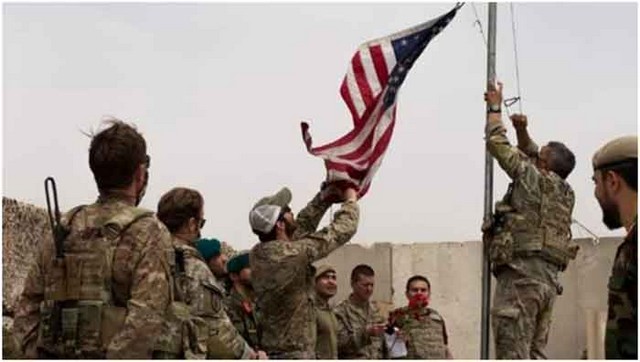
The Taliban has “prevailed” in its battle with the West in Afghanistan, said General Lord Dannatt, the former head of the British Army as it emerged all UK and U.S. troops will be withdrawn on Sunday.

Writing in The Telegraph, General Lord Dannatt said: “Ultimately, Taliban force of arms has prevailed, and the people of that country have been denied the chance to choose a better way of life.” Lord Dannatt said. “Tragically, a descent into the chaos of civil war seems highly likely.”

During the 20-year conflict, 454 British military personnel were killed while serving in Afghanistan. Taliban forces are now making sweeping gains across rural areas, declaring victory over NATO and its allies.

Lord Dannatt has called for a Chilcot-like “audit” of the campaign to take place as the Union flag has been lowered in Kabul, ending 20 years of British presence in Afghanistan.

Lord Dannatt added: “The Afghan National Army has seemingly lost the will to fight and many soldiers are abandoning their posts, no longer supported by substantial international air power.”

He warned that “tragically, a descent into the chaos of civil war seems highly likely”.

Groups form militia and rearm

A report by The Telegraph said:

The Taliban have yet to capture any significant town or city, but the toppling of rural district centers has spread alarm in Kabul and Washington that the momentum may build into a cascade of larger victories.

A former Taliban minister said the withdrawal showed that: “We are the winner”.

Afghan officials have claimed the loss of some districts represents a strategic withdrawal to protect urban centers, while others have been recaptured. Some groups that fear the government cannot protect them have begun to rearm and form militia.

Taliban envoys have attempted to reassure the Afghan government and international community that they will not reimpose their strict emirate of the 1990s, which was notorious for repressing women and executing criminals.

However, one commander said that was exactly what he was fighting for. The man, called Asad Sadaqat, said: “Taliban will establish an Islamic regime and there won’t be much difference with the old regime. Stoning, the adultery death penalty and chopping the hands off thieves are God’s rules. The Taliban can’t show flexibility and compromises on those rules.”

Yet the prospect of renewed civil war appeared to haunt at least one older insurgent commander, who said anarchy could not be deemed victory. The fighter, called Mullah Hamidullah, said he had spent 25 of his 55 years with the Taliban.

“We will certainly enter another civil war with our own fellow Muslims, so instead of being arrogant winners, the Taliban must think for a peaceful Afghanistan.”

He predicted world attention would quickly move on.

“Afghans killing Afghans won’t be noticed by anyone,” he said.

‘I want to talk about happy things’: Biden cuts off questions on Afghanistan

The U.S. President Joe Biden cut off reporters on Friday after being questioned about the withdrawal of US troops from Afghanistan, saying he would rather talk about “happy things”.

The U.S. president had sought to tout a strong employment report released on Friday, but instead faced questions on fears that the situation in Afghanistan could unravel into civil war amid the exit of American troops.

Biden, who met with Afghan leaders last week, said he did not want to take “negative” questions and would rather focus on the Fourth of July weekend.

“I want to talk about happy things, man” he said after being asked repeatedly about Afghanistan during a press conference to celebrate last month’s job growth.

Asked a fourth time about Afghanistan, Biden said: “I’m not gonna answer any more questions on Afghanistan… it’s Fourth of July [weekend].”

The president said he would answer questions on less “happy” affairs next week.

“You guys are asking me questions that I’ll answer next week. But this is a holiday weekend” he said. “I’m going to celebrate it. There are great things happening.”

“We’re bringing out our troops home, we have all across America people are going to ballgames and doing good things,” he said.

The president said he would “answer all of your negative questions, not negative – your legitimate questions” next week after the Fourth of July weekend.

Biden said on Friday that he believes Afghanistan will be able to “sustain a government” in the event of a heightened Taliban assault after US troops exit.

Asked about the US Air Force supporting Afghanistan, he said “we can be value-added but the Afghans are going to have to be able to do it themselves with the air force they have.”

U.S. to keep airstrike option in Afghanistan

An AP report said:

The U.S. military will remain involved in the Afghanistan war into September, keeping the option of launching airstrikes against the Taliban to defend Afghan forces, U.S. officials said Thursday.

A range of complicating factors means that will not end U.S.’s involvement in the 20-year war.

Officials said when U.S. Army Gen. Scott Miller, the top U.S. commander in Afghanistan, flies out of Afganistan, his combat role, including authority to carry out strikes on the Taliban and to conduct counterterror operations against al-Qaida or other groups, will be taken over by Marine Gen. Frank McKenzie, the top U.S. commander for the Middle East, who is based in Florida. Officials said there have been several U.S. airstrikes in support of the Afghans in recent weeks, using warplanes based outside of Afghanistan, and those strikes will continue.

The new U.S. commander inside Afghanistan will be Navy Rear Adm. Peter Vasely, who will head the security mission at the U.S. Embassy. He is already in Kabul, working with Miller on a transition, said the officials on condition of anonymity.

Vasely will have 650 U.S. troops in the country, based largely at the embassy to secure the diplomatic mission, a force that will remain indefinitely. In addition, until September, McKenzie will have the authority to keep up to 300 more troops in Afghanistan to help with security, including at the airport, said the officials.

The Pentagon and other U.S. leaders — from the White House to Capitol Hill — have expressed alarm about a recent surge in violence in Afghanistan, amid fears that it will lead to a widespread civil war and the collapse of the Afghan government and its military.

During his final press conference in Kabul earlier this week, Miller painted a grim picture of the security situation. He noted the rapid loss of districts around the country to the Taliban and warned that “a civil war is certainly a path that can be visualized if this continues on the trajectory it’s on right now, that should be of concern to the world.”

U.S. officials have repeatedly stressed that security at the Hamid Karzai International Airport in Kabul is a critical requirement for keeping any U.S. diplomatic staff in Afghanistan. While Turkey has agreed to continue that mission, agreements with the Afghans and the U.S. have not been finalized.

As part of the agreement with Turkey, the U.S. would keep a C-RAM — or Counter-Rocket, Artillery, Mortar system — at the airport, as well as troops to operate it. The U.S. also plans to leave aircrew for helicopter support at the airport.

The U.S. maintains its authority to strike any militants that pose a threat to the American homeland.

Other media reports said:

There are significant numbers of private security contractors working for the US in Afghanistan. This included as of the last quarter of 2020 more than 7,800 US citizens, according to US Congress research.

The human cost of the war

Since the war against the Taliban began in 2001, U.S. forces have suffered more than 2,300 deaths and around 20,660 soldiers injured in action.

The U.S. casualty figures are dwarfed by the loss of life among Afghan security forces and civilians.

Afghan president Ashraf Ghani said in 2019 that more than 45,000 members of the Afghan security forces had been killed since he became president five years earlier.

Brown University’s research in 2019 estimated the loss of life amongst the national military and police in Afghanistan to be more than 64,100 since October 2001, when the war began.

And according to the United Nations Assistance Mission in Afghanistan (Unama), nearly 111,000 civilians have been killed or injured since it began systematically recording civilian casualties in 2009.

3 July 2021

Source: countercurrents.org

It’s Apartheid, Say Israeli Ambassadors to South Africa

By Ilan Baruch and Alon Liel

“It is clearer than ever that the occupation is not temporary, and there is not the political will in the Israeli government to bring about its end.”

8 Jun 2021 – During our careers in the foreign service, we both served as Israel’s ambassador to South Africa. In this position, we learned firsthand about the reality of apartheid and the horrors it inflicted. But more than that – the experience and understanding we gained in South Africa helped us to understand the reality at home.

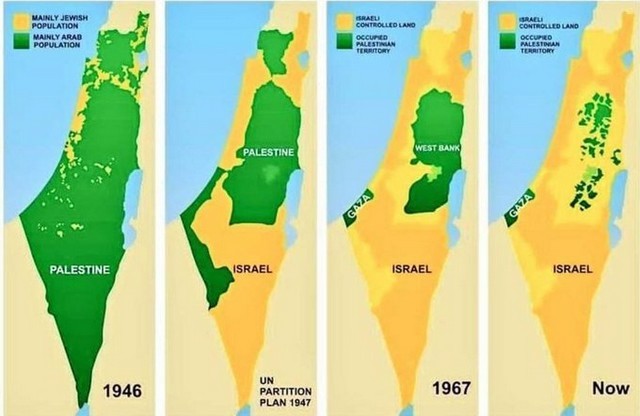
For over half a century, Israel has ruled over the occupied Palestinian territories with a two-tiered legal system, in which, within the same tract of land in the West Bank, Israeli settlers live under Israeli civil law while Palestinians live under military law. The system is one of inherent inequality. In this context, Israel has worked to change both the geography and the demography of the West Bank through the construction of settlements, which are illegal under international law. Israel has advanced projects to connect these settlements to Israel proper through intensive investment in infrastructure development, and a vast network of highways and water and electricity infrastructure have turned the settlement enterprise into a comfortable version of suburbia. This has happened alongside the expropriation and takeover of massive amounts of Palestinian land, including Palestinian home evictions and demolitions. That is, settlements are built and expanded at the expense of Palestinian communities, which are forced onto smaller and smaller tracts of land.

This reality reminds us of a story that former Ambassador Avi Primor described in his autobiography about a trip that he took with then-Minister of Defense Ariel Sharon to South Africa in the early 1980s. During the visit, Sharon expressed great interest in South Africa’s bantustan project. Even a cursory look at the map of the West Bank leaves little doubt regarding where Sharon received his inspiration. The West Bank today consists of 165 “enclaves” – that is, Palestinian communities encircled by territory taken over by the settlement enterprise. In 2005, with the removal of settlements from Gaza and the beginning of the siege, Gaza became simply another enclave – a bloc of territory without autonomy, surrounded largely by Israel and thus effectively controlled by Israel as well.

The bantustans of South Africa under the apartheid regime and the map of the occupied Palestinian territories today are predicated on the same idea of concentrating the “undesirable” population in as small an area as possible, in a series of non-contiguous enclaves. By gradually driving these populations from their land and concentrating them into dense and fractured pockets, both South Africa then and Israel today worked to thwart political autonomy and true democracy.

This week, we mark the fifty-fifth year since the occupation of the West Bank began. It is clearer than ever that the occupation is not temporary, and there is not the political will in the Israeli government to bring about its end. Human Rights Watch recently concluded that Israel has crossed a threshold and its actions in the occupied territories now meet the legal definition of the crime of apartheid under international law. Israel is the sole sovereign power that operates in this land, and it systematically discriminates on the basis of nationality and ethnicity. Such a reality is, as we saw ourselves, apartheid. It is time for the world to recognize that what we saw in South Africa decades ago is happening in the occupied Palestinian territories too. And just as the world joined the struggle against apartheid in South Africa, it is time for the world to take decisive diplomatic action in our case as well and work towards building a future of equality, dignity, and security for Palestinians and Israelis alike.

Ilan Baruch served as Israeli Ambassador to South Africa, Namibia, Botswana, and Zimbabwe.

Dr. Alon Liel served as Israeli Ambassador to South Africa and as Director General of the Israeli Ministry of Foreign Affairs.

28 June 2021

Source: www.transcend.org

US Jews Are Turning against Zionism in a ‘Surge’ — Pro-Israel Voices Lament

By Philip Weiss

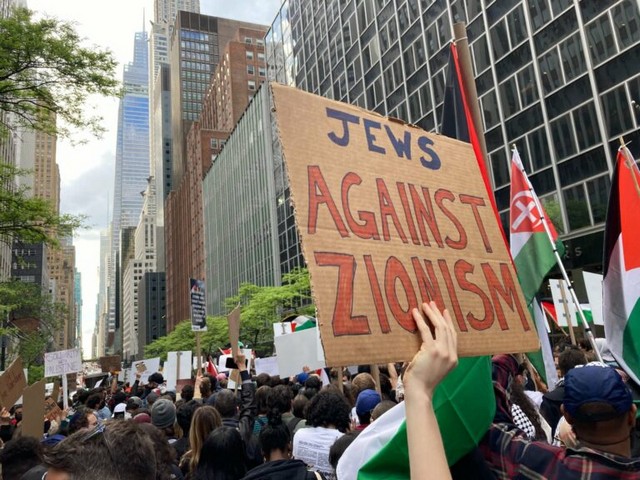
19 Jun 2021 – In recent days, four pro-Israel writers have lamented that American Jews are turning against Zionism in the wake of the latest Gaza attack. Two speak of a “surge in anti-Zionism” among Jews.

In recent days, four pro-Israel writers have lamented that American Jews are turning against Zionism. Two speak of a “surge in anti-Zionism” among U.S. Jews.These writers are seeing just what I am seeing from the other side: Jews are bailing on Israel. The latest Gaza conflict, in which Israel attacked civilian targets for the fifth time in a dozen years, generated tremendous discomfort inside the American Jewish community. Many of them see that Israel has no idea about how to build a future of coexistence-and-equality with Palestinians.

“I always thought Israel was a mistake,” one associate of mine who has long supported Israel said privately.

The lamentations from four pro-Israel writers are all focused on Jewish “identity.” They say there is something wrong with how American Jews have built their social identification. That seems to me a helpful focus. Because it raises the obvious question: When did Judaism become the same thing as Zionism?

First here is David Harris of the American Jewish Committee saying in the Times of Israel that “some Jews” attacked Israel during the recent fighting.

“Some Jews seem to believe that distancing, if not detaching, themselves from any link with Israel will protect them or, at the very least, endear them to the anti-Israel, anti-Zionist mobs,” Harris writes somewhat overheatedly. “[S]ome Jews… think they can buy time or space or security by joining in the assault against Israel…”

More good news. Harris laments that during the recent conflict, some American political leaders “who purport to be friends of the pro-Israel community, were missing in action or resorting to whispered comments for fear they could otherwise potentially jeopardize their careers.” I bet he is talking about Chuck Schumer.

So things have gotten worse for Harris since 2017 when he was upset about young Jews’ disaffection with Israel. “Where did we go wrong in our homes and our schools?” Now it’s the older Jews who are turning…

And it’s a matter of Jewish identity for Harris: “affirming Jewish identity, Zionism, and pro-Israelism.”

Natan Sharansky and Gil Troy are even angrier/more despairing in Tablet. They describe a “surge in anti-Zionism” inside the Jewish community during the recent conflict. And they call these Jews “un-Jews” — a disgusting term.

But a lot of their trendspotting is spot-on. They point to a May 22 statement by Jewish and Israel studies scholars” that said Zionism reflects “ethnonationalist” thinking “shaped by settler colonial paradigms” that has “contributed to unjust, enduring, and unsustainable systems of Jewish supremacy.” They also cite a CUNY Jewish Law Students’ Association statement in support the Palestinian right of return and of “an end to the ongoing Nakba.”

Troy and Sharansky say the criticism from some inside American Jewry has moved “from what Israel did to what Israel is.” That’s true. Many former Zionists believe that Israel’s brutal response to non-Jews arises from its official definition as a “Jewish state” with higher rights for Jews.

Again, this is a matter of identity. In the 90s the Jewish community embraced “Israel and Israel experiences as central Jewish-identity building tools.” Now the anti-Zionists are willfully seeking to change that identity.

They are trying to disentangle Judaism from Jewish nationalism, the sense of Jewish peoplehood, while undoing decades of identity-building. In repudiating Israel and Zionism, hundreds of Jewish Google employees rejected what they call “the conflation of Israel with the Jewish people.” The voices of inflamed Jewish opponents of Israel and Zionism are in turn amplified by a militant progressive superstructure that now has an ideological lock on the discourse in American academia, publishing, media, and the professions that formerly respected American Jewry’s Zionism-accented, peoplehood-centered constructions of Jewish identity…

Where do I sign?

Lastly, Etan Nechin is a liberal Israeli Zionist living in Brooklyn who writes in Haaretz that he welcomes the “sea change” in American coverage of the conflict, including the Human Rights Report stating that Israel practices “apartheid” and the “mainstreaming U.S. media coverage of the Sheikh Jarrah protests.”

And yet Nechin is dismayed by “today’s rush to a wholesale critique of Israel” by leftwing Jews who have turned against the idea of a Jewish state. He says these Jews are detached from the Israeli experience and given to glib answers — such as support for Boycott, Divestment and Sanctions (or BDS), or the idea “that one state is the only morally acceptable solution.”

Nechin attacks Peter Beinart for his advocacy for one democratic state and “self-styled activist Rafael Mimoun’s Washington Post op-ed, ‘Zionism cannot produce a just peace. Only external pressure can end the Israeli apartheid.’” It’s an issue of identity for Nechin: Privileged, solipsistic writers have put criticizing Israel at the center of their identities and cut themselves off from the leftwing discussion inside Israel.

“Now should be an obvious opportunity for the U.S. Jewish left to talk to the Israeli left and not only at it.”

My answer to that is that the American left Jewish and non-Jewish is in close contact with the oppressed population in Israel/Palestine — taking their cues from Palestinians about the nonviolent pressure we can put on an apartheid society. It is a lot like freedom riders and solidarity activists from the north who worked with the civil rights movement in the south against Jim Crow.

Yet all these articles are good signs, of a war inside American Jewry over Zionism.

Over the last 30 years or so, the American Jewish establishment decreed that Jewish identity means supporting Israel, that miracle of “Jewish peoplehood”. This was an instrumental belief; the Israel lobby has buoyed Israel through the settlement/apartheid years.

It was a successful imposition in that these leaders now believe the delusion so thoroughly that they can maintain with utter sincerity that when someone criticizes Israel, they are antisemitic.

More than 95 percent of American Jews support Israel, Batya Ungar-Sargon and Bari Weiss both affirm. Or they did once. The number is slipping before our eyes.

Philip Weiss is Founder and Co-Editor of Mondoweiss.net.

28 June 2021

Source: www.transcend.org

Under Pandemic, UN Votes to Condemn Cruel and Illegal U.S. Blockade of Cuba—but There Is a Twist

By Chris Agee

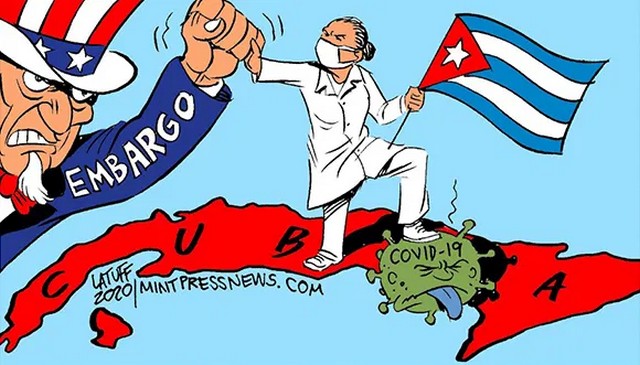
24 Jun 2021 – On June 23rd, 184 countries at the United Nations voted yet again to condemn the U.S. blockade of Cuba, with 3 countries abstaining and 4 not voting. Every year since 1992—2020 being an exception when the vote was not held given COVID restrictions—Cuba has introduced a resolution to end the blockade. And every year, only two countries vote against it: the U.S. and Israel, with Bolsonaro’s Brazil joining them in 2019. Notwithstanding the ongoing nightmare Cubans continue to suffer under the blockade, the focus on health care and their advanced biotechnological and pharmaceutical industry may help them out of the pandemic.

For over 60 years, the U.S. blockade of Cuba has not stopped the island-nation from pursuing its goals of living independently from neocolonial and neoliberal control, using its own national resources for the benefit of the Cuban people and instituting social programs like free universal health care and education.
A group of women smiling Description automatically generated with low confidence

Yet the blockade continues to stifle the Cuban economy and harm the Cuban people. But further, the policy quashes all the productive potential normal relations with Cuba would foster, even for Americans.

According to some sources, conditions in Cuba are now worse than in the so-called “Special Period” in the 1990s after the fall of the Soviet Union. Food shortages were so dire then that malnutrition led to an epidemic disease of blindness afflicting tens of thousands.

With Cuba now facing the worst phase of the COVID-19 pandemic, lifting the blockade—not to mention easening it with the stroke of a pen—would clearly be the most rational and humanitarian act.

The dire situation in Cuba is in great part the result of U.S. policy: isolate nations like Cuba who rid themselves of U.S.-backed dictators and foreign control of their assets. This serves not only to punish those who go their own way and reject neoliberal policies but also serves to showcase struggling, blockaded economies while misleading the public on the causes. The policy is aggressively pursued for fear that successful examples will inspire others to rid themselves of the shackles of the U.S. empire and plutocratic interests.

While Obama’s policy of engagement, among other remedies, renewed diplomatic relations and eased restrictions on travel and remittances to the island, Trump reversed that trend and issued unprecedented aggressive policies against Cuba culminating in its inclusion on the unilateral State Sponsors of Terrorism list.

On the campaign trail last September, Biden slammed Trump’s policies, calling them an “abject failure,” and promised that he would, if elected, “…reverse the failed Trump policies that inflicted harm on Cubans and their families.” Indeed, Cuba is no mystery to the Bidens. Biden’s wife, Jill, now First Lady, actually traveled to Cuba on an educational and cultural trip in 2016.

Will Biden Keep His Promise?

It is no surprise to seasoned CAM readers that Biden’s position seems to have evaporated under the pressures of U.S. electoral politics, particularly from the Cuban-American lobby that has kept Cuba locked in isolation for decades. While Biden has rescinded dozens of Trump’s policies, on Cuba he has remained silent. Of the 240-plus measures adopted by Trump to toughen the blockade against Cuba, Biden has not rescinded even one.

Indeed, Biden’s finite political capital and razor-thin margin in the Senate leaves him wary of upsetting even one Democrat, including anti-Castro hawks like Cuban-American Bob Menendez (D-NJ), not to mention Republican hawks like Cuban-American Marco Rubio (R-FL).

Mounting Pressures

Pressures to get Biden to fulfill his promise are mounting in the U.S. and include Cuban-Americans. Organizations like Bridges of Love and other solidarity groups have staged rallies, protests and caravans nationwide in hopes of pushing the Biden administration to soften its strategy.

Dozens of nonprofit groups, from Oxfam to the DC Metro Coalition, have asked the U.S. to “…act as soon as possible to normalize relations with Cuba…” and lift the blockade on humanitarian grounds. Various leading think tanks, including the Council for Democracy in the Americas (CDA), the Washington Office on Latin America (WOLA) and the Cuba Study Group (CSG) have asked the new administration to restore Obama’s policy of rapprochement and critical engagement. The National Network on Cuba has produced a Hands Off Cuba Map! that can be clicked on to see the particular organizations around the U.S. working to end the blockade.

To defend the ongoing illegal and cruel blockade, Biden’s Secretary of State Antony Blinken ratcheted up the rhetoric at the 51st Conference of the Council of the Americas stating that Washington “…will defend the human rights of the Cuban people…” to which the Cuban Minister of Foreign Affairs Bruno Rodríguez responded: “If Secretary Blinken was interested in the human rights of the Cuban people, he would lift the embargo and the 243 measures adopted by the previous government…”

Cuban Permanent Representative to the United Nations Pedro Luis Pedroso Cuesta added: “All those measures remain in force today, and are a reflection of the unprecedented levels that the economic war against Cuba has reached, bringing about hardships of all kinds and material shortages in the daily lives of every Cuban.”

Pedroso continued: “Our challenges in terms of human rights, like those of any other country, are known to our people and our government and we will continue to work on their solution on the basis of our Constitution,” he said. “But Cuba is equally concerned about the human rights situation in the United States. Flagrant violations are committed here [in the U.S.] on a daily basis, which arouse concern within the international community.”

Pedroso issued an additional statement on Tuesday, June 22, before the vote:

“The entire world knows that the US blockade against Cuba is a genocidal and criminal policy, which really harms the Cuban people especially amid the Covid-19 pandemic…”

It is “…an act of genocide under the 1948 Convention for the Prevention and Punishment of Crime of Genocide, due to its declared purpose and the political, legal and administrative framework it is based on.”

Rodriguez’s and Pedroso’s statements are especially compelling given the pandemic. Maintaining a blockade on Cuba at this time—much less on any country—is particularly anti-humanitarian, especially when Cuba is currently facing the worst phase of the COVID-19 outbreak since the start of the pandemic.

How is Cuba supposed to battle the pandemic? Venezuela, for example, tried to acquire vaccines by actually paying for them; shockingly the remittances were rejected given the economic blockade on Venezuela.

Cuba’s Health Care, Biotechnology and Pharmaceutical Industry

The Cubans, however, are in a unique situation. Since the 1959 revolution, Cuba has focused on health care, among other social programs. They send more doctors around the world than the World Health Organization and have implemented programs like Doctor de la Familia which house doctors in communities around the island-nation in two-floor homes.

Typically, the doctor de la familia lives with his/her family on the second floor, and the practice resides on the ground floor. In addition to receiving patients at the local clinic, doctors and healthcare workers visit community neighbors in their homes and provide an overall more holistic service.

The Cuban government has made the obvious choice not to rely on foreign vaccines. In spite of the blockade, they are advancing their own vaccine development, testing, and delivery with their own advanced pharmaceutical industry which has exported vaccines for decades.

On Monday, BioCubaFarma announced that its three-shot Abdala vaccine had proved 92.28% effective against the coronavirus in last-stage clinical trials. Soberana 2, announced days earlier, has proven to be 62% effective with just two of its three doses. Both vaccines are expected to be granted emergency approval.

Cuba will likely be in a position to vaccinate its own population and further burnish its own scientific reputation by exporting vaccines against coronavirus. This will provide much-needed currency not to mention assist in the world-wide vaccination effort. Numerous countries, from Argentina and Jamaica to Mexico, Vietnam and Venezuela, are interested in buying Cuba’s vaccines. Iran started producing Soberana 2 earlier this year.

What You Can Do To Help

Get involved in the solidarity campaigns with Cuba listed above. There are many. One organization I worked with in the 1990s was Global Health Partners (GHP): They are particularly efficient and have been sending medicines and medical supplies to Cuba since the 1990s.

Now that the Cubans have potentially developed viable vaccines, they need syringes. Go to the GHP website and support them in getting syringes to Cuba.

The Cuban government is planning to produce 100 million vaccines for its population and to share with developing countries around the world. As GHP notes: “Over the past year alone, Cuba has sent 3,700 health workers, in 52 international medical brigades, to 39 countries overwhelmed by the pandemic. Cuba’s international medical brigades have treated patients and saved lives for the past 15 years in 53 countries confronting natural disasters and serious epidemics, such as the Ebola crisis in West Africa.”

In spite of Cuban advances in health care, biotechnology and pharmaceuticals, the blockade is a daily nightmare for most of the 11.3 million people on the largest Caribbean island-nation. While the pandemic is a deadly layer added to the suffering, the promise of change comes at a crucial moment for Cubans. Will Biden fulfill his promise to relax the blockade and join the rest of the world, or will he carry on with the old Cold War rhetoric against Cuba that has only harmed the Cuban people and exacerbated the anti-humanitarian U.S. image worldwide?

U.S. diplomat Rodney Hunter rhetorically told the U.N. General Assembly before the vote that ‘sanctions were one set of tools in Washington’s broader effort toward Cuba to advance democracy, promote respect for human rights and help the Cuban people exercise fundamental freedoms.’ It seems, given this latest U.S. vote at the United Nations, that the Biden Administration is not yet interested in fulfilling its promise to tear down the cruel wall.

Chris Agee is Executive Editor of CovertAction Magazine.

28 June 2021

Source: www.transcend.org

Refusing to be bulldozed by Israel’s bullying tactics

Palestine Update 477

Refusing to be bulldozed by Israel’s bullying tactics

Israel’s military goal is to inflict never-ending suffering on the Palestinians and, thus, induce Palestinian surrender. This is also the tacit goal of Israel’s allies. In all foreign policy announcements, the West makes believe that Israel and Palestine are alike parties to be managed seemingly in perpetuity. They cunningly continue to empower Israel and protract Palestinian pain in their monstrous treatment of an anti-colonial struggle for liberation. Since 2007, Israel has enforced an air, land and sea blockade on Gaza since 2007. Egypt has been partner to this cruel siege. The siege has kept Gaza stagger on the edge of disintegrating. It has reduced life for the two millions people of Gaza to proportions that are wretched and unstable for its population. The manner in which the siege is pursued is nothing short of criminal. Credible international bodies like the International Committee of the Red Cross have characterized Israel’s actions as amounting to a war crime of collective punishment. The international community has responded with indifference. It is as if the people of Gaza must remain in siege as something they deserve. The world has granted Israel impunity because of the political clout it carries with it. It leaves the entire West holding the title of co-culprits. If one expected that the severity of the 11-day war would cause at least the Quartet – the United Nations, United States, European Union and Russia – that hope came a cropper. Neither did the UN Security Council even discuss it with any level of intensity. For as long democratic channels choose indifference and cowardice, there will be unparalleled suffering, and a retaliation will end up being the only option. A Palestinian in Gaza who lost his home and half his family said: “The bombing was the worst I’ve experienced, but it can’t contain the Palestinian uprising that is showing the world the true face of Israel.”

Ranjan Solomon.
___________________________

Short Palestinian film on Sheikh Jarrah goes viral

On May 15, Palestinian film director Omar Rammal, 23, posted his short film “The Place” on his YouTube channel, but he never expected it to go viral. “I believed it would receive broad acclaim, but not to this extent,” Rammal told Al-Monitor. The video, which he first posted on his Instagram account on May 15, garnered more than 6 million views, and several other channels shared his film. Rammal posted his film without copyrights for it to be available for anyone who wants to repost it, so as to convey the reality in Palestine and in Sheikh Jarrah in particular to the whole world. ‘The Place is only a minute and a half long, during which Rammal summarizes the displacement that 28 Palestinian families are facing in the Sheikh Jarrah neighborhood of East Jerusalem, where Israeli settlement groups are trying to expand.

Thousands of People Protested In Support Of Palestinians in Major Cities around the World

Thousands of people across the world showed their support for Palestinians in protests amid some of the worst fighting between Israelis and Palestinians since the 2014 Gaza War, with demonstrators from Canada to Japan waving flags and chanting “Free Palestine” on Saturday.The protests come as tension and violence in the region grows, with at least 145 Palestinians and 10 Israelis killed, including children. The violence began when Israeli security forces raided Al-Aqsa Mosque during Ramadan last week, injuring scores of worshippers and causing Hamas to retaliate with rocket fire. Israeli police also violently clamped down on protesters demonstrating against the expulsion of Palestinians from their homes in the neighborhood of Sheikh Jarrah.

Videos also showed Israel’s Iron Dome defense system lighting up the night sky as it intercepted a flurry of rockets. An Israeli airstrike hit a refugee camp in Gaza, killing eight children and two women. Hours later, more airstrikes destroyed a 12-floor residential building in Gaza that housed international news organizations, including the Associated Press and Al Jazeera, in a move widely condemned as a threat to the free press in the region. The Israeli military claimed that the strike on the building — which came so quickly that reporters had to leave equipment behind – was necessary because it contained “Hamas military intelligence assets.” The AP, however, said there was “no indication Hamas was in the building or active in the building…This is something we actively check to the best of our ability,” said a statement from the news organization. “We would never knowingly put our journalists at risk.”

‘Silent intifada’:

West Bank is at boiling pointAnalysis: 34 Palestinians have been killed in past month – more than during any other month in the last decade – as tensions persist over Gaza conflict and clashes at al-Aqsa Mosque; these events and cancelation of parliamentary elections have left PA weaker and Hamas stronger
(Elior Levy)

There has been a significant increase in the number of terrorist attacks, clashes, demonstrations and disturbances in the West Bank between Palestinians and security forces since the start of the conflict in Gaza last month. Close inspection of these incidents shows that this is not limited to a particular area, but is occurring across the entire West Bank.

The most disturbing statistic shows that during the past month, at least 34 Palestinians were killed in terror attacks and clashes – more than during any other month in the past 10 years. By comparison, in April just one Palestinian was killed in clashes, none were killed in March and one was killed in February.

Even when comparing the data over the past month to previous periods of security tensions, this is an unusually high number of deaths. For example, at the height of the wave of knife and car-ramming attacks of 2015-2016, which was the most significant escalation in the West Bank in the last decade, an average of 26 Palestinians, were killed each month. The high death toll, growing number of terrorist attacks and other disturbances all point to an extremely fragile situation in the West Bank.

The spirit of resistance is alive and well

The structure of the Zionist project remains unchanged. It is a project that from its inception has been based on the uprooting of the native population in Palestine, ethnic cleansing, theft of land and resources, eradication of Palestinian identity, discrimination, the total control of the lives of the Palestinian people, and the denial of basic Palestinian rights. As long as the project is the same, the only difference between short rounds of military escalation and so-called periods of calm is that of varying degrees of aggression. During military escalations, Israel kills Palestinians. During periods of calm, Israel steals Palestinian land.

Under both scenarios, Israel’s system of oppression humiliates Palestinians, controls their lives, uproots them, and discriminates against them. But May’s escalation also demonstrated the determination of the Palestinian people and their steadfastness against Zionist attempts to supplant them, eradicate their identity, and break their morale. One question that arose after the latest escalation, as it does after every escalation, is simply, who won? Before answering, it is worth noting that the criteria for victory for a colonized people are different from the criteria for the colonial power.

This should be fairly obvious, but is worth elucidating anyway. Throughout history, colonial powers have enjoyed military superiority, international political support, and plentiful economic resources. It is these very advantages that allow colonial powers to invade other nations. A balance of power, in fact, would preclude colonialism. As a result, colonized people’s loss of life and property were correspondingly greater. They bore the brunt due to the imbalance of power.

Israel’s Demographic Warfare Rages on Both Sides of Green Line. With One Difference

“…the demographic war and its bureaucratic weapons do not recognize the Green Line, Israel’s 1967 borders. It’s also being waged against Palestinian residents of the West Bank and Gaza Strip enclaves. To this day, Israel controls the Palestinian population registry and decides who will receive a Palestinian ID card. Since it controls the borders, it also decides who will enter the West Bank or Gaza Strip, and for how long. This double control allows it to interfere in the family life of tens of thousands of people, and potentially even more, by refusing to grant permanent status to foreign nationals who are the spouses, parents or even children of residents of the territories – a process known as family reunification.”

Poll: Many Democrats want more US support for Palestinians

“A new poll on American attitudes toward a core conflict in the Middle East finds about half of Democrats want the U.S. to do more to support the Palestinians, showing that a growing rift among Democratic lawmakers is also reflected in the party’s base. The poll from The Associated Press-NORC Center for Public Affairs Research finds differences within both the Democratic and the Republican parties on the U.S. approach toward Israel and the Palestinians, with liberal Democrats wanting more support for the Palestinians and conservative Republicans seeking even greater support for the Israelis…The poll shows Americans overall are divided over U.S. policy toward Israel and the Palestinians. It also shows more Americans disapprove of President Joe Biden’s approach to the conflict than approve of it. Among Democrats, 51% say the U.S. is not supportive enough of the Palestinians. The sentiment jumps to 62% among Democrats who describe themselves as liberal. On the other hand, 49% of Republicans say the U.S. is not supportive enough of the Israelis, a number that rises to 61% among those who say they’re conservative.”

June 27, 2021

Source: palestineupdates.com

Palestinians attend funeral for PA critic Nizar Banat in Hebron

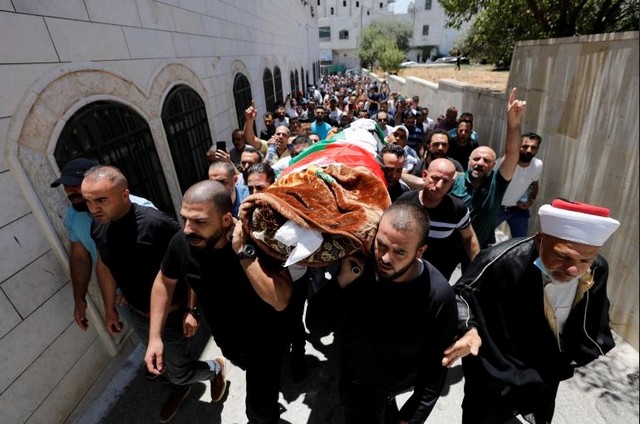
Thousands of Palestinians turned out on Friday in the occupied West Bank city of Hebron to attend the funeral of Nizar Banat, an outspoken critic of the Palestinian Authority (PA), who died in the custody of PA forces on Thursday.

Mourners travelled from across the occupied West Bank to attend Banat’s funeral prayers at Wasaya al-Rasool Mosque in Hebron and marched through the streets along with his family and friends before he was buried. The funeral began with the transfer of Banat’s body to his family home for a final farewell.

“People here are incredibly angry at the Palestinian Authority,” Al Jazeera’s Stefanie Dekker said, speaking from Hebron. “They are calling for the downfall of the regime, and are saying they are under a double occupation. They accuse the PA of being hand in hand with Israel.”

The chants also included calls for PA President Mahmoud Abbas to resign. Abbas, who has been president since 2005, technically finished his mandate in 2009, but continued to rule in the absence of new elections.

Banat, 43, intended to run in parliamentary elections before they were cancelled earlier this year. He was a harsh critic of the PA, which governs parts of the Israeli-occupied West Bank, and called on Western nations to cut off aid to it because of its growing authoritarianism and human rights violations.

The PA receives millions of dollars in foreign aid as it is recognised by the West to represent the Palestinian people.

Banat was in bed in his home in Dura in southern Hebron, when some two dozen PA officers broke into his home and started beating him in the early hours of Thursday morning, according to his family. He was dragged away screaming, local media quoted them as saying, and he was beaten on the head with batons and pieces of metal.

After conducting an autopsy, a Palestinian rights group said Banat took blows to the head, adding the wounds indicated “an unnatural death”.

Since Banat’s death, Palestinians have been widely sharing his previous writings and videos.

Protests against PA

Videos shared on social media on Friday showed large crowds of mourners protesting against the PA following Banat’s funeral.

Armed men present vowed to avenge Banat’s death from those who killed him.

Many chanted “leave, leave Abbas” and “the people want the overthrow of the regime” as anger continued to mount against the Palestinian Authority.

In occupied East Jerusalem, hundreds of worshippers who attended Friday prayers in the Al-Aqsa Mosque compound, also protested against the killing of Banat.

A statement by the Palestine Liberation Organization (PLO) said the investigation into Banat’s death will be “transparent and impartial”, and the results of the investigation will be announced “at the earliest opportunity”.

Hours after Banat’s death on Thursday, large crowds of Palestinians also took to the streets in the occupied West Bank city of Ramallah to protest against his killing, but they were met with batons and tear gas fired by dozens of PA forces dressed in riot gear.

“The people want the downfall of the regime,” the protesters chanted at the city’s main al-Manara Square while others screamed, “traitors, traitors” at the security forces.

Outspoken critic

Banat was an advocate of free speech and an outspoken critic of the PA’s alleged corruption and security coordination with the Israeli military. He was known for posting his views on social media, with more than 100,000 people following his Facebook page.

He accused prominent Fatah supporters of waging an incitement campaign against him, after he was accused of collaborating with Israel – a serious allegation that amounts to treason. He denied the accusation.

He also accused PA forces of perpetrating the torture of political dissidents inside its prisons.

Banat was a former member of the Fatah movement, the de facto ruling party of the PA. In the legislative elections initially scheduled in May, Banat campaigned as a candidate on the Freedom and Dignity list party.

In April, Abbas cancelled the elections, the first to be scheduled in 15 years, ostensibly because Israel would not let Palestinians in occupied East Jerusalem vote for the new Palestinian leadership. East Jerusalem is seen as the capital of a future Palestinian state as part of a two-state solution.

Many have argued, though, that the true motive was Abbas’s fear that the fractured Fatah party would suffer another humiliating defeat to Hamas, the group that governs the Gaza Strip.

A recent poll showed plummeting support for Abbas, who is facing both a loss of popularity and increasing opposition within his party.

Western nations continue to view Abbas as a key partner in the long-moribund peace process, and the European Union (EU) has provided hundreds of millions of dollars in direct aid to the PA over the years.

Crackdown

According to his family, Banat had been imprisoned by the PA eight times – each time for several months.

In early May, gunmen fired bullets, stun grenades and tear gas at Banat’s home, where his wife was inside with their children. No one seemed to have been hurt in the incident.

He blamed the attack on Fatah, which dominates the security forces.

“The Europeans need to know that they are indirectly funding this organisation,” Banat told The Associated Press in May, in an interview at a location where he was hiding out.

“They fire their guns into the air at Fatah celebrations, they fire their guns in the air when Fatah leaders fight each other, and they fire their guns at people who oppose Fatah.”

Last November, the EU denounced Banat’s arrest at the time after he had published a video critical of Palestinian politicians.

On Thursday, United Nations Middle East peace envoy Tor Wennesland tweeted that he was “alarmed and saddened” by Banat’s death.

25 June 2021

Source: www.aljazeera.com

Climate Crisis Pushes A Million People in Madagascar to the ‘Edge of Starvation,’ Says WFP

By Countercurrents Collective

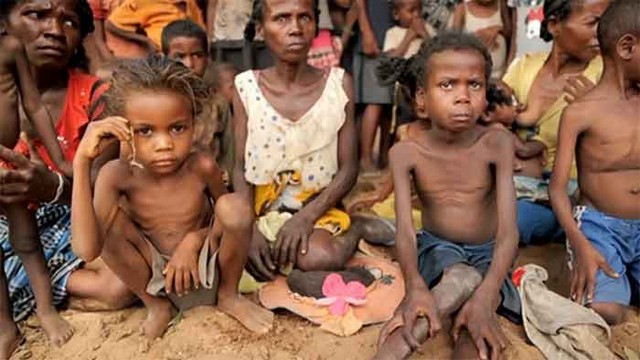
Climate crisis has pushed communities in Madagascar to the verge of starvation. The World Food Programme (WFP) says resources are scarce in the country after the worst drought in four decades.

The WFP said more than a quarter of people are suffering in one area. And $78.6 million is needed to fight the crisis.

Climate change is the driving force of a developing food crisis in southern Madagascar, the UN’s World Food Programme (WFP) has warned.

Acute malnutrition in Madagascar has almost doubled in just the last four months.

A mother of three said about children she takes care: “I rely on God. Today we have absolutely nothing to eat except cactus leaves that we are trying to clean up. We have nothing left. Their mother is dead and my husband is dead. What do you want me to say? Our life is all about looking for cactus leaves again and again to survive.”

David Beasley, WFP’s executive director, said: “It’s seven times worse than it was just a year ago. Seven times more children are in trouble. Why? Because of drought. We’re facing the worst drought in over 40 years, and this is an area where people depend on their own agriculture; home-grown school meals, smallholder farmers, this is how they live down here but with drought back to back to back, people can’t survive and so the government partnering with WFP and others we’re doing the best we can, but it’s a terrible situation.”

The African island has been plagued with back-to-back droughts — its worst in four decades — which have pushed 1.14 million people “right to the very edge of starvation,” said David Beasley in a news release Wednesday.

“I met women and children who were holding on for dear life, they’d walked for hours to get to our food distribution points. These were the ones who were healthy enough to make it,” Beasley said.

“Families are suffering and people are already dying from severe hunger. This is not because of war or conflict, this is because of climate change. This is an area of the world that has contributed nothing to climate change, but now, they’re the ones paying the highest price.”An estimated 14,000 people are already in catastrophic conditions, according to the WFP, a number that is predicted to double to 28,000 by October. Thousands in southern Madagascar have left their homes in search of food, while those who remain are resorting to extreme measures such as foraging for wild food to survive, the WFP said.

“This is enough to bring even the most hardened humanitarian to tears. Families have been living on raw red cactus fruits, wild leaves and locusts for months now. We can’t turn our backs on the people living here while the drought threatens thousands of innocent lives,” said Beasley.

“Now is the time to stand up, act and keep supporting the Malagasy government to hold back the tide of climate change and save lives.”

Beasley’s warning came a day after the WFP said 41 million people in 43 countries were now teetering on the edge of starvation, with 584,000 already experiencing famine-like conditions across Madagascar, Ethiopia, South Sudan, Nigeria, Burkina Faso and Yemen. This number has increased from 27 million in 2019.

Conflict, climate change and economic shocks are all driving the rises in hunger, the WFP said, with those pressures on food security compounded by steep price increases for basic foods this year.

“Global maize prices have soared almost 90% year-on-year, while wheat prices are up almost 30% over the same period. In many countries, currency depreciation is adding to these pressures and driving prices even higher. This in turn is stoking food insecurity in countries such as Lebanon, Nigeria, Sudan, Venezuela and Zimbabwe,” said the WFP statement.

The WFP needs about $6 billion to provide 139 million people this year with life-saving food and nutritional assistance, it said, in what the UN agency describes as “the biggest operation in its history.”

25 June 2021

Source: countercurrents.org

Abdala, with three doses, has 92.28% efficacy in fighting COVID-19

Written by Leticia Martínez and René Tamayo León

A three-dose regimen of Cuba’s Abdala candidate vaccine has demonstrated an efficacy of 92.28 percent, placing it well above the World Health Organization (WHO) requirement of at least 50 percent, to be recognized as an anti-COVID-19 vaccine.

Over the course of 48 hours, from Saturday to Monday, Cuba, a small, poor country, has shaken the world, noted Party First Secretary and President of the Republic Miguel Díaz-Canel Bermúdez, in a meeting, June 21, 2021 afternoon, with researchers at the Center for Genetic Engineering and Biotechnology (CIGB), where Abdala was developed.

The President decided to meet with the scientists after learning about the efficacy analysis of Abdala at Monday’s meeting of the government’s COVID-19 prevention and control group. He had visited the Finlay Vaccine Institute on Saturday, after learning that its Soberana 02 candidate vaccine, with just two doses, had demonstrated 62% efficacy – without a third booster dose of Soberana Plus, which should produce an superior response.

Abdala’s efficacy places it among vaccines with the best results in the world, which have all been produced in the principal laboratories of the most developed countries with financing of hundreds of millions and billions of dollars, something that for Cuba is impossible, even more so given the tightening of the economic, commercial and financial blockade during the pandemic. Dr. Marta Ayala Avila, CIGB director, explained that efficacy is the most important objective of any vaccine. “It is its effect in real life,” she stated.

In presenting the findings, she highlighted the work of the teams of scientists who conducted Phase I/II and III clinical trials in Santiago de Cuba, Bayamo, Guantanamo and Havana, and thanked the 48,000 volunteers, who participated in the study.

The final analysis of Abdala’s efficacy in preventing symptomatic cases of COVID-19, which was conducted by an independent group led by the Institute of Cybernetics, Mathematics and Physics, showed not only a response to the initial strain of SARS-CoV-2 (DG614G), but also the Alpha, Beta and Gamma mutations, she explained.

Dr. Ayala recalled that the clinical trial included a placebo group and a vaccinated group, with three administrations over a period of 0-14-28 days. She noted that the studies continue, that new evaluations and conclusions will continue to be drawn.

She also highlighted the work of the Immunoassay Center, AICA Laboratories and other scientific centers, as well as the public health workers, who conducted a rapid, high quality vaccination process, difficult to achieve in other countries around the world. The researchers, she added, are gratefully dedicating this accomplishment to Comandante en jefe Fidel Castro Ruz, founder of the CIGB, Army General Raúl Castro Ruz, Party First Secretary Miguel Díaz-Canel Bermúdez, and the center’s pioneer scientists.

After listening to the findings, the First Secretary commented, “One feels proud to be Cuban and to have compatriots like you.”

The results are really impressive, he reiterated and recalled the early days of the pandemic, when “I was convinced that poor countries were not going to have access to vaccines within a short period time, that the rich world was producing to prioritize the rich.

“This is why I asked our scientists (to assume the task), with the conviction, with the certainty that we could do it, that it was necessary to have Cuban vaccines to be sovereign in this situation, as well.”

We, he added, are among the few who, having the vaccines to resolve Cuba’s problems, are thinking about how, with these same vaccines, we can solve the problems of millions in the world, and above all of the millions who have less and live today in tremendous uncertainty caused by the disease.

“On behalf of Cuba, congratulations,” Díaz-Canel concluded, thanking the CIGB researchers who have worked on the creation of Abdala, meeting the highest standards as an anti-COVID-19 vaccine.

The report was first published in Granma, official voice of the Communist Party of Cuba, on June 22, 2021.

23 June 2021

Source: countercurrents.org