Just International

The ‘Humanitarian’ Left Still Ignores the Lessons of Iraq, Libya and Syria to Cheer on More War

By Jonathan Cook

22 Jan 2021 – The instinct among parts of the left to cheerlead the right’s war crimes, so long as they are dressed up as liberal “humanitarianism”, is alive and kicking, as Owen Jones reveals in a column today on the plight of the Uighurs at China’s hands.

The “humanitarian war” instinct persists even after two decades of the horror shows that followed the invasion and occupation of Iraq by the US and UK; the western-sponsored butchering of Libya’s Muammar Gaddafi that unleashed a new regional trade in slaves and arms; and the west’s covert backing of Islamic jihadists who proceeded to tear Syria apart.

In fact, those weren’t really separate horror shows: they were instalments of one long horror show.

The vacuum left in Iraq by the west – the execution of Saddam Hussein and the destruction of his armed forces – sucked in Islamic extremists from every corner of the Middle East. The US and UK occupations of Iraq served both as fuel to rationalise new, more nihilistic Islamic doctrines that culminated in the emergence of Islamic State, and as a training ground for jihadists to develop better methods of militarised resistance.

That process accelerated in post-Gaddafi Libya, where Islamic extremists were handed an even more lawless country than post-invasion Iraq in which to recruit followers and train them, and trade arms. All of that know-how and weaponry ended up flooding into Syria where the same Islamic extremists hoped to establish the seat of their new caliphate.

Many millions of Arabs across the region were either slaughtered or forced to flee their homes, becoming permanent refugees, because of the supposedly “humanitarian” impulse unleashed by George W Bush and Tony Blair.

No lesson learnt

One might imagine that by this stage liberal humanitarianism was entirely discredited, at least on the left. But you would be wrong. There are still those who have learnt no lessons at all – like the Guardian’s Owen Jones. In his column today he picks up and runs with the latest pretext for global warmongering by the right: the Uighurs, a Muslim minority that has long been oppressed by China.

After acknowledging the bad faith arguments and general unreliability of the right, Jones sallies forth to argue – as if Iraq, Libya and Syria never happened – that the left must not avoid good causes just because bad people support them. We must not, he writes,

sacrifice oppressed Muslims on the altar of geopolitics: and indeed, it is possible to walk and to chew gum; to oppose western militarism and to stand with victims of state violence. It would be perverse to cede a defence of China’s Muslims – however disingenuous – to reactionaries and warmongers.

But this is to entirely miss the point of the anti-war and anti-imperialist politics that are the bedrock of any progressive leftwing movement.

Jones does at least note, even if very cursorily, the bad-faith reasoning of the right when it accuses the left of being all too ready to protest outside a US or Israeli embassy but not a Chinese or Russian one:

Citizens [in the west] have at least some potential leverage over their own governments: whether it be to stop participation in foreign action, or encourage them to confront human rights abusing allies.

But he then ignores this important observation about power and responsibility and repurposes it as stick to beat the left with:

But that doesn’t mean abandoning a commitment to defending the oppressed, whoever their oppressor might be. To speak out against Islamophobia in western societies but to remain silent about the Uighurs is to declare that the security of Muslims only matters in some countries. We need genuine universalists.

That is not only a facile argument, it’s a deeply dangerous one. There are two important additional reasons why the left needs to avoid cheerleading the right’s favoured warmongering causes, based on both its anti-imperialist and anti-war priorities.

Virtue-signalling

Jones misunderstands the goal of the left’s anti-imperialist politics. It is not, as the right so often claims, about leftwing “virtue-signalling”. It is the very opposite of that. It is about carefully selecting our political priorities – priorities necessarily antithetical to the dominant narratives promoted by the west’s warmongering political and media establishments. Our primary goal is to undermine imperialist causes that have led to such great violence and suffering around the world.

Jones forgets that the purpose of the anti-war left is not to back the west’s warmongering establishment for picking a ‘humanitarian’ cause for its wars. It is to discredit the establishment, expose its warmongering and stop its wars.

The best measure – practical and ethical – for the western left to use to determine which causes to expend its limited resources and energies on are those that can help others to wake up to the continuing destructive behaviours of the west’s political establishment, even when that warmongering establishment presents itself in two guises: whether the Republicans and the Democrats in the United States, or the Conservatives and the (non-Corbyn) Labour party in the UK.

We on the left cannot influence China or Russia. But we can try to influence debates in our own societies that discredit the western elite headquartered in the US – the world’s sole military superpower.

Our job is not just to weigh the scales of injustice – in any case, the thumb of the west’s power-elite is far heavier than any of its rivals. It is to highlight the bad faith nature of western foreign policy, and underscore to the wider public that the real aim of the west’s foreign policy elite is either to attack or to intimidate those who refuse to submit to its power or hand over their resources.

Do no harm

That is what modern imperialism looks like. To ignore the bad faith of a Pompeo, a Blair, an Obama, a Bush or a Trump simply because they briefly adopt a good cause for ignoble reasons is to betray anti-imperialist politics. To use a medical analogy, it is to fixate on one symptom of global injustice while refusing to diagnose the actual disease so that it can be treated.

Requiring, as Jones does, that we prioritise the Uighurs – especially when they are the momentary pet project of the west’s warmongering, anti-China right – does not advance our anti-imperialist goals, it actively harms them. Because the left offers its own credibility, its own stamp of approval, to the right’s warmongering.

When the left is weak – when, unlike the right, it has no corporate media to dominate the airwaves with its political concerns and priorities, when it has almost no politicians articulating its worldview – it cannot control how its support for humanitarian causes is presented to the general public. Instead it always finds itself coopted into the drumbeat for war.

That is a lesson Jones should have learnt personally – in fact, a lesson he promised he had learnt – after his cooption by the corporate Guardian to damage the political fortunes of Jeremy Corbyn, the only anti-war, anti-imperialist politician Britain has ever had who was in sight of power.

Anti-imperialist politics is not about good intentions; it’s about beneficial outcomes. To employ another medical analogy, our credo must to be to do no harm – or, if that is not possible, at least to minimise harm.

The ‘defence’ industry

Which is why the flaw in Jones’ argument runs deeper still.

The anti-war left is not just against acts of wars, though of course it is against those too. It is against the global war economy: the weapons manufacturers that fund our politicians; the arms trade lobbies that now sit in our governments; our leaders, of the right and so-called left, who divide the world into a Manichean struggle between the good guys and bad guys to justify their warmongering and weapons purchases; the arms traders that profit from human violence and suffering; the stock-piling of nuclear weapons that threaten our future as a species.

The anti-war left is against the globe’s dominant, western war economy, one that deceives us into believing it is really a “defence industry”. That “defence industry” needs villains, like China and Russia, that it must extravagantly arm itself against. And that means fixating on the crimes of China and Russia, while largely ignoring our own crimes, so that those “defence industries” can prosper.

Yes, Russia and China have armies too. But no one in the west can credibly believe Moscow or Beijing are going to disarm when the far superior military might of the west – of NATO – flexes its muscles daily in their faces, when it surrounds them with military bases that encroach ever nearer their territory, when it points its missiles menacingly in their direction.

Rhetoric of war

Jones and George Monbiot, the other token leftist at the Guardian with no understanding of how global politics works, can always be relied on to cheerlead the western establishment’s humanitarian claims – and demand that we do too. That is also doubtless the reason they are allowed their solitary slots in the liberal corporate media.

When called out, the pair argue that, even though they loudly trumpet their detestation of Saddam Hussein or Bashar Assad, that does not implicate them in the wars that are subsequently waged against Iraq or Syria.

This is obviously infantile logic, which assumes that the left can echo the rhetoric of the west’s warmongering power-elite without taking any responsibility for the wars that result from that warmongering.

But Jones’ logic is even more grossly flawed than that. It pretends that the left can echo the rhetoric of the warmongers and not take responsibility for the war industries that constantly thrive and expand, whether or not actual wars are being waged at any one time.

The western foreign policy elite is concerned about the Uighurs not because it wishes to save them from Chinese persecution or even because it necessarily intends to use them as a pretext to attack China. Rather, its professed concerns serve to underpin claims that are essential to the success of its war industries: that the west is the global good guy; that China is a potential nemesis, the Joker to our Batman; and that the west therefore needs an even bigger arsenal, paid by us as taxpayers, to protect itself.

The Uighurs’ cause is being instrumentalised by the west’s foreign policy establishment to further enhance its power and make the world even less safe for us all, the Uighurs included. Whatever Jones claims, there should be no obligation on the left to give succour to the west’s war industries.

Vilifying “official enemies” while safely ensconced inside the “defence” umbrella of the global superpower and hegemon is a crime against peace, against justice, against survival. Jones is free to flaunt his humanitarian credentials, but so are we to reject political demands dictated to us by the west’s war machine.

The anti-war left has its own struggles, its own priorities. It does not need to be gaslit by Mike Pompeo or Tony Blair – or, for that matter, by Owen Jones.

Jonathan Cook is an award-winning British journalist based in Nazareth, Israel, since 2001.

25 January 2021

Source: www.transcend.org
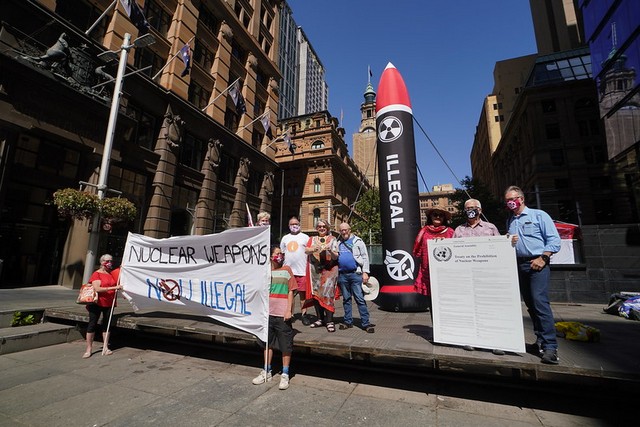
GROUND BREAKING TREATY MAKES NUCLEAR WEAPONS ILLEGAL UNDER INTERNATIONAL LAW

By Sandy Jones

Treaty on the Prohibition of Nuclear Weapons will soon into force.

The Treaty on the Prohibition of Nuclear Weapons (TPNW) will enter into force, effective January 22, 2021. This landmark treaty prohibits nations from developing, testing, producing, manufacturing, transferring, possessing, stockpiling, using or threatening to use nuclear weapons, or allowing nuclear weapons to be stationed on their territory. It also prohibits assisting, encouraging or inducing anyone to engage in any of these activities.

The Nuclear Age Peace Foundation (NAPF), a Santa Barbara-based non-profit and partner organization with the International Campaign to Abolish Nuclear Weapons (ICAN) was involved in the initial negotiations leading up to the nuclear ban treaty at the United Nations in 2017. David Krieger, President Emeritus of NAPF commented on the treaty’s entry into force, “The entry into force of this long-awaited treaty is the culmination of more than 75 years of effort on the part of survivors of the bombings of Hiroshima and Nagasaki and many more nuclear abolitionists throughout the world. At a minimum, this treaty delegitimizes the possession, threat and use of nuclear weapons. This day marks the beginning of the end for these weapons of mass annihilation. It will be remembered in history.“

Despite their catastrophic humanitarian and environmental consequences, nuclear weapons were the only weapons of mass destruction not subject to a comprehensive ban. The TPNW closes this crucial gap in international law and now, nuclear weapons will join land mines, chemical and biological weapons as weapons of mass destruction that are declared illegal by the international community.

While the treaty is only binding on the states that ratified it, it is expected to grow in influence over time. A nation that possesses nuclear weapons may join the treaty, so long as it agrees to destroy them in accordance with a legally-binding, time-bound plan. Similarly, a nation that hosts another nation’s nuclear weapons on its territory may join, so long as it agrees to remove them by a specified deadline.

This effort to ban nuclear weapons has been led by the International Campaign to Abolish Nuclear Weapons, which is made up of more than 500 non-governmental organizations from 103 countries. NAPF has been a Partner Organization of ICAN since the campaign began in 2007. ICAN received the 2017 Nobel Peace Prize for their efforts to draw attention to the catastrophic humanitarian consequences of any use of nuclear weapons and for their ground-breaking efforts to achieve the TPNW.

Beatrice Fihn, Executive Director of ICAN, commented, “This is just the beginning … States that haven’t joined the treaty will feel its power too — we can expect companies to stop producing nuclear weapons and financial institutions to stop investing in nuclear weapon-producing companies.”

The treaty was approved by the 193-member U.N. General Assembly on July 7, 2017 by a vote of 122 in favor, the Netherlands opposed, and Singapore abstaining. Of note, among countries voting in favor was Iran. The original five nuclear powers – China, France, Russia, UK and the United States – and four other countries known to currently possess nuclear weapons — India, Pakistan, North Korea and Israel — boycotted negotiations and the vote on the treaty.

Not only did the U.S. boycott the negotiations in 2017 and refuse to sign the treaty, the Trump administration urged countries that had already ratified the treaty to withdraw their support. The treaty still has the potential to significantly impact U.S. behavior regarding nuclear weapons issues. While the new Biden administration’s most immediate task will be to get control of the Covid-19 pandemic and lessen its impact on the U.S. economy, there are many nuclear weapons issues that Biden will need to tackle, beginning with extending the New START nuclear agreement with Russia which is set to expire on February 5, 2021.

United Nations Secretary-General, António Guterres, commented, “Entry into force is a tribute to the survivors of nuclear explosions and tests, many of whom advocated for this Treaty.” He went on to describe the entry into force as “the culmination of a worldwide movement to draw attention to the catastrophic humanitarian consequences of any use of nuclear weapons. It represents a meaningful commitment towards the total elimination of nuclear weapons, which remains the highest disarmament priority of the United Nations.”

The treaty is a clear indication that the majority of the world’s countries no longer accept nuclear weapons and do not consider them legitimate. It demonstrates that the indiscriminate mass killing of civilians is unacceptable and that it is not possible to use nuclear weapons consistent with the laws of war.

ICAN will be having a compelling and inspiring online event beginning at 12:00 PM (PST) celebrating this once in a lifetime treaty. Register at [https://www.icanw.org/studio_2221]

If you would like to read the treaty in its entirety go to [http://undocs.org/A/CONF.229/2017/8]

The Nuclear Age Peace Foundation’s mission is to educate, advocate, propose and pursue denuclearizing actions with the intention of achieving a just and peaceful world, free of nuclear weapons. The Nuclear Age Peace Foundation is a non-partisan, non-profit organization with consultative status to the United Nations.

18 January 2021

Source: www.wagingpeace.org

The Making of US Empire at the Dawning of Its End

By Pepe Escobar

This article was originally published on Asia Times.

As the Exceptional Empire gets ready to brave a destructive – and self-destructive – new cycle, with dire, unforeseen consequences bound to reverberate across the world, now more than ever it is absolutely essential to go back to the imperial roots.

The task is fully accomplished by Tomorrow, the World: The Birth of U.S. Global Supremacy, by Stephen Wertheim, Deputy Director of Research and Policy at the Quincy Institute for Responsible Statecraft and a research scholar at the Saltzman Institute of War and Peace Studies at Columbia University.

Here, in painstaking detail, we can find when, why and especially who shaped the contours of US “internationalism” in a roomful of mirrors always disguising the real, ultimate aim: Empire.

Wertheim’s book was superbly reviewed by Prof. Paul Kennedy. Here we will concentrate on the crucial plot twists taking place throughout 1940. Wertheim’s main thesis is that the fall of France in 1940 – and not Pearl Harbor – was the catalyzing event that led to the full Imperial Hegemony design.

This is not a book about the U.S. industrial-military complex or the inner workings of American capitalism and finance capitalism. It is extremely helpful as it sets up the preamble to the Cold War era. But most of all, it is gripping intellectual history, revealing how American foreign policy was manufactured by the real flesh and blood actors that count: the economic and political planners congregated by the arch-influential Council on Foreign Relations (CFR), the conceptual core of the imperial matrix.

Behold Exceptionalist nationalism

If just one phrase should capture the American missionary drive, this is it: “The United States was born of exceptionalist nationalism, imagining itself providentially chosen to occupy the vanguard of world history”. Wertheim nailed it by drawing from a wealth of sources on exceptionalism, especially Anders Stephanson’s Manifest Destiny: American Expansion and the Empire of the Right.

The action starts in early 1940, when the State Dept. formed a small advisory committee in collaboration with the CFR, constituted as a de facto proto-national security state.

The CFR’s postwar planning project was known as the War and Peace Studies, financed by the Rockefeller Foundation and boasting a sterling cross-section of the American elite, divided into four groups.

The most important were the Economic and Financial Group, headed by the “American Keynes”, Harvard economist Alvin Hansen, and the Political Group, headed by businessman Whitney Shepardson. CFR planners were inevitably transposed to the core of the official postwar planning committee set up after Pearl Harbor.

A crucial point: the Armaments Group was headed by none other than Allen Dulles, then just a corporate lawyer, years before he became the nefarious, omniscient CIA mastermind fully deconstructed by David Talbot’s The Devil’s Chessboard.

Wertheim details the fascinating, evolving intellectual skirmishes along the first eight months of WWII, when the prevailing consensus among the planners was to concentrate on the Western Hemisphere only, and not indulge in “balance of power” overseas adventures. As in let the Europeans fight it out; meanwhile, we profit.

The fall of France in May-June 1940 – the world’s top army melting down in five weeks – was the game-changer, much more than Pearl Harbor 18 months later. This is how the planners interpreted it: if Britain were the next domino to fall, totalitarianism would control Eurasia.

Wertheim zeroes in on the defining “threat” for the planners: Axis dominance would prevent the United States “from driving world history. Such a threat proved unacceptable to U.S. elites”. That’s what led to an expanded definition of national security: the U.S. could not afford to be simply “isolated” within the Western Hemisphere. The path ahead was inevitable: to shape world order as the supreme military power.

So it was the prospect of a Nazi-shaped world order – and not U.S. security – that shook foreign policy elites in the summer of 1940 to build the intellectual foundations of global U.S. hegemony.

Of course there was a “lofty ideal” component: the U.S. would not be able to fulfill its God-given mission to lead the world towards a better future. But there was also a much more pressing practical matter: this world order might be closed to liberal U.S. trade.

Even as the tides of war changed afterwards, the interventionist argument ultimately prevailed: after all, the whole of Eurasia could (italics in the book) eventually, fall under totalitarianism.

It’s always about “world order”

Initially, the fall of France forced Roosevelt’s planners to concentrate on a minimum hegemonic area. So by midsummer 1940, the CFR groups, plus the military, came up with the so-called “quarter sphere”: Canada down to northern South America.

They were still assuming that the Axis would dominate Europe and parts of the Middle East and North Africa. As Wertheim notes, “American interventionists often portrayed Germany’s dictator as a master of statecraft, prescient, clever and bold.”

Then, at the request of the State Dept., the crucial CFR’s Economic and Financial Group worked feverishly from August to October to design the next step: integrating the Western Hemisphere with the Pacific Basin.

That was a totally myopic Eurocentric focus (by the way, Asia barely registers on Wertheim’s narrative). The planners assumed that Japan – even rivaling the US, and three years into the invasion of mainland China – could somehow be incorporated, or bribed into a non-Nazi area.

Then they finally hit the jackpot: join the Western Hemisphere, the British empire and the Pacific basin into a so-called “great residual area”: that is, the entire non-Nazi dominated world except the USSR.

They found out that if Nazi Germany would dominate Europe, the U.S. would have to dominate everywhere else (italics mine). That was the logical conclusion based on the planners’ initial assumptions.

That’s when U.S. foreign policy for the next 80 years was born: the U.S. had to wield “unquestionable power”, as stated in the CFR planners “recommendation” to the State Dept., delivered on October 19 in a memorandum titled “Needs of Future United States Foreign Policy”.

This “Grand Area” was the brainchild of the CFR’s Economic and Financial Group. The Political Group was not impressed. The Grand Area implied a post-war peace arrangement that was in fact a Cold War between Germany and Anglo-America. Not good enough.

But how to sell total domination to American public opinion without that sounding “imperialistic”, similar to what the Axis was doing in Europe and Asia? Talk about a huge P.R. problem.

In the end, U.S. elites always came back to the same foundation stone of American exceptionalism: should there be any Axis supremacy in Europe and Asia, the U.S. manifest destiny of defining the path ahead for world history would be denied.

As Walter Lippmann succinctly – and memorably – put it: “Ours is the new order. It was to found this order and to develop it that our forefathers came here. In this order we exist. Only in this order can we live”.

That would set up the pattern for the subsequent 80 years. Roosevelt, only a few days after he was elected for a third term, stated it was the United States that “truly and fundamentally…was a new order”.

It’s chilling to be reminded that 30 years ago, even before unleashing  the first Shock and Awe over Iraq, Papa Bush defined it as the crucible of a “new world order” (incidentally, the speech was delivered exactly 11 years before 9/11).

Henry Kissinger has been marketing “world order” for six decades. The number one U.S foreign policy mantra is “rules-based international order”: rules, of course, set unilaterally by the Hegemon at the end of WWII.

American Century redux

What came out of the 1940 policy planning orgy was encapsulated by a succinct mantra featured in the legendary February 17, 1941 essay in Life magazine by publishing mogul Henry Luce:  “American Century”.

Only six months earlier planners were at best satisfied with a hemispheric role in an Axis-led world future. Now they went winner takes all: “complete opportunity of leadership”, in Luce’s words. In early 1941, months before Pearl Harbor, the American Century went mainstream – and never left.

That sealed the primacy of Power Politics. If American interests were global, so should be American political and military power.

Luce even used Third Reich terminology: “Tyrannies may require a large amount of living space. But Freedom requires and will require far greater living space than Tyranny.” Unlike Hitler’s, the unbounded ambition of American elites prevailed.

Until now. It looks and feels like the empire is entering a James Cagney Made it, Ma. Top of the World! moment – rotting from within, 9/11 merging into 1/6 in a war against “domestic terrorism” – while still nurturing toxic dreams of imposing uncontested global “leadership”.

*

Note to readers: please click the share buttons above or below. Forward this article to your email lists. Crosspost on your blog site, internet forums. etc.

Pepe Escobar, born in Brazil, is a correspondent and editor-at-large at Asia Times and columnist for Consortium News and Strategic Culture in Moscow.

Source: www.globalresearch.ca

About Suffering: A Massacre of the Innocents in Yemen

By Kathy Kelly

In 1565, Pieter Bruegel the Elder created “The Massacre of the Innocents,” a provocative masterpiece of religious art. The painting reworks a biblical narrative about King Herod’s order to slaughter all newborn boys in Bethlehem for fear that a messiah had been born there. Bruegel’s painting situates the atrocity in a contemporary setting, a 16th Century Flemish village under attack by heavily armed soldiers. Depicting multiple episodes of gruesome brutality, Bruegel conveys the terror and grief inflicted on trapped villagers who cannot protect their children. Uncomfortable with the images of child slaughter, the Holy Roman Emperor Rudolph II, after acquiring the painting, ordered another reworking. The slaughtered babies were painted over with images such as bundles of food or small animals, making the scene appear to be one of plunder rather than massacre.

Were Bruegel’s anti-war theme updated to convey images of child slaughter today, a remote Yemeni village could be the focus. Soldiers performing the slaughter wouldn’t arrive on horseback. Today, they often are Saudi pilots trained to fly U.S.-made warplanes over civilian locales and then launch laser-guided missiles (sold by Raytheon, Boeing and Lockheed Martin), to disembowel, decapitate, maim, or kill anyone in the path of the blast and exploding shards.

For more than five years, Yemenis have faced near-famine conditions while enduring a naval blockade and routine aerial bombardment. The United Nations estimates the war has already caused 233,000 deaths, including 131,000 deaths from indirect causes such as lack of food, health services and infrastructure.

Systematic destruction of farms, fisheries, roads, sewage and sanitation plants and health-care facilities has wrought further suffering. Yemen is resource-rich, but famine continues to stalk the country, the UN reports. Two-thirds of Yemenis are hungry and fully half do not know when they will eat next. Twenty-five percent of the population suffers from moderate to severe malnutrition. That includes more than two million children.

Equipped with U.S.-manufactured Littoral Combat Ships, the Saudis have been able to blockade air and sea ports that are vital to feeding the most populated part of Yemen – the northern area where 80 percent of the population lives. This area is controlled by Ansar Allah, (also known as the “Houthi”). The tactics being used to unseat Ansar Allah severely punish vulnerable people –those who are impoverished, displaced, hungry and stricken with diseases. Many are children who must never be held accountable for political deeds.

Yemeni children are not “starving children;” they are being starved by warring parties whose blockades and bomb attacks have decimated the country. The United States is supplying devastating weaponry and diplomatic support to the Saudi-led coalition, while additionally launching its own “selective” aerial attacks against suspected terrorists and all the civilians in those suspects’ vicinity.

Meanwhile the U.S., like Saudi Arabia and the UAE, has cut back on its contributions to humanitarian relief. This severely affects the coping capacity of international donors.

For several months at the end of 2020, the U.S. threatened to designate Ansar Allah as a “Foreign Terrorist Organization” (FTO). Even the threat of doing so began affecting uncertain trade negotiations, causing prices of desperately needed goods to rise.

On November 16, 2020, five CEOs of major international humanitarian groups jointly wrote to U.S. Secretary of State Pompeo, urging him not to make this designation. Numerous organizations with extensive experience working in Yemen described the catastrophic effects such a designation would have on delivery of desperately needed humanitarian relief.

Nevertheless, U.S. Secretary of State Mike Pompeo announced, late in the day on Sunday, January 10th, his intent to go ahead with the designation.

Senator Chris Murphy termed this FTO designation a “death sentence” for thousands of Yemenis. “90% of Yemen’s food is imported,” he noted, “and even humanitarian waivers will not allow commercial imports, essentially cutting off food for the entire country.”

U.S. leaders and much of the mainstream media responded vigorously to the shocking insurrection at the U.S. Capitol, and the tragic loss of multiple lives as it occurred; it is difficult to understand why the Trump Administration’s ongoing massacre of the innocents in Yemen has failed to generate outrage and deep sorrow.

On January 13, journalist Iona Craig noted that the process of delisting a “Foreign Terrorist Organization” – removing it from the FTO list – has never been achieved within a timeframe of less than two years. If the designation goes through, it could take two years to reverse the terrifying cascade of ongoing consequences.

The Biden administration should immediately pursue a reversal. This war began the last time Joseph Biden was in office. It must end now: two years is time Yemen doesn’t have.

Sanctions and blockades are devastating warfare, cruelly leveraging hunger and possible famine as a tool of war. Leading up to the 2003 “Shock and Awe” invasion of Iraq, U.S. insistence on comprehensive economic sanctions primarily punished Iraq’s most vulnerable people, especially the children. Hundreds of thousands of children died tortuous deaths, bereft of medicines and adequate health care.

Throughout those years, successive U.S. administrations, with a mainly cooperative media, created the impression that they were only trying to punish Saddam Hussein. But the message they sent to governing bodies throughout the world was unmistakable: if you do not subordinate your country to serve our national interest, we will crush your children.

Yemen hadn’t always gotten this message. When the United States sought United Nations’ approval for its earlier 1991 war against Iraq, Yemen was occupying a temporary seat on the UN Security Council. It surprisingly voted then against the wishes of a United States, whose wars of choice around the Middle East were slowly accelerating.

“That will be the most expensive ‘No’ vote you ever cast,” was the U.S. ambassador’s chilling response to Yemen.

Today, children in Yemen are being starved by monarchs and presidents colluding to control land and resources. “The Houthis, who control a large part of their nation, are no threat whatsoever to the United States or to American citizens,” declares James North, writing for Mondoweiss. “Pompeo is making the declaration because the Houthis are backed by Iran, and Trump’s allies in Saudi Arabia and Israel want this declaration as part of their aggressive campaign against Iran.”

Children are not terrorists. But a massacre of the innocents is terror. As of January 19, 2021, 268 organizations have signed a statement demanding an end to the war on Yemen. On January 25, “The World Says No to War Against Yemen” actions will be held worldwide.

It was of another painting of Bruegel, The Fall of Icarus, that the poet W.H. Auden wrote:

“About suffering they were never wrong,

the Old Masters:…

how it takes place

while someone else is eating or opening a window

or just walking dully along…

how everything turns away

quite leisurely from the disaster…”

This painting concerned the death of one child. In Yemen, the United States –through its regional allies, — could end up killing many hundreds of thousands more. Yemen’s children cannot protect themselves; in the direst cases of severe acute malnourishment, they are too weak even to cry.

We must not turn away. We must decry the terrible war and blockade. Doing so may help spare the lives of at least some of Yemen’s children. The opportunity to resist this massacre of the innocents rests with us.

This article first appeared on the website of The Progressive Magazine

Kathy Kelly (Kathy.vcnv@gmail.com) is a peace activist and author working to end U.S. military and economic wars.

20 January 2021

Source: countercurrents.org

Fearing the Palestinian Narrative: Why Israel Banned ‘Jenin Jenin’

By Dr Ramzy Baroud

On January 11, the Israeli Lod District Court ruled against a Palestinian film-maker, Mahmoud Bakri, ordering him to pay hefty compensation to an Israeli soldier who was accused, along with the Israeli military, of carrying out war crimes in April 2002, in the Palestinian Jenin refugee camp located in the northern occupied West Bank.

The case, as presented by Israeli and other media, seemed to deal with typical legal matters such as defamation of character and so on. To those familiar with the massive clash of narratives which emanated from that singular event, known to Palestinians as the ‘Jenin Massacre’, the Israeli court verdict is not only political but historical and intellectual, as well.

Bakri, a native Palestinian born in the village of Bi’ina, near the Palestinian city of Akka, now located in Israel, has been paraded repeatedly in Israeli courts and censured heavily in Israeli mainstream media simply because he dared challenge the official discourse on the violent events which transpired in the Jenin refugee camp nearly two decades ago.

Bakri’s documentary, “Jenin Jenin”, is now officially banned in Israel. The film, which was produced only months after the conclusion of this particular episode of Israeli violence, did not make many claims of its own. It largely opened up a rare space for Palestinians to convey, in their own words, what had befallen their refugee camp when large units of the Israeli army, under the protection of fighter jets and attack helicopters, pulverized much of the camp, killing scores and wounding hundreds.

To ban a film, regardless of how unacceptable it may seem from the viewpoint of the official authorities, is wholly inconsistent with any true definition of freedom of speech. But to ban “Jenin Jenin”, to indict the Palestinian filmmaker and to financially compensate those accused of carrying out war crimes, is outrageous.

The background of the Israeli decision can be understood within two contexts: one, Israel’s regime of censorship aimed at silencing any criticism of the Israeli occupation and apartheid and, two, Israel’s fear of a truly independent Palestinian narrative.

Israeli censorship dates back to the very inception of the State of Israel atop the ruins of the Palestinian homeland in 1948. The country’s founding fathers had painstakingly constructed a convenient story regarding the birth of Israel, almost entirely erasing Palestine and the Palestinians from their historical narrative. On this, late Palestinian intellectual, Edward Said, wrote in his essay, Permission to Narrate, “the Palestinian narrative has never been officially admitted to Israeli history, except as that of ‘non-Jews,’ whose inert presence in Palestine was a nuisance to be ignored or expelled.”

To ensure the erasure of the Palestinians from the official Israeli discourse, Israeli censorship has evolved to become one of the most elaborate and well-guarded schemes of its kind in the world. Its degree of sophistication and brutality has reached the extent that poets and artists can be tried in court and sentenced to prison for merely confronting Israel’s founding ideology, Zionism, or penning poems that may seem offensive to Israeli sensibilities. While Palestinians have borne the greatest brunt of the ever-vigilant Israeli censorship machine, some Israeli Jews, including human rights organizations, have also suffered the consequences.

But the case of “Jenin Jenin” is not that of routine censorship. It is a statement, a message, against those who dare give voice to oppressed Palestinians, allowing them the opportunity to speak directly to the world. These Palestinians, in the eyes of Israel, are certainly the most dangerous, as they demolish the layered, elaborate, yet fallacious official Israeli discourse, regardless of the nature, place or timing of any contested event, starting with the ‘Catastrophe’ or Nakba of 1948.

Almost simultaneously with the release of “Jenin Jenin”, my first book, “Searching Jenin: Eyewitness Accounts of the Israeli Invasion”, was published. The book, like the documentary, aimed to counterbalance official Israeli propaganda through honest, heart-rending accounts of the survivors of the refugee camp. While Israel had no jurisdiction to ban the book, pro-Israeli media and mainstream academics either ignored it completely or ferociously attacked it.

Admittedly, the Palestinian counter-narrative to the Israeli dominant narrative, whether on the ‘Jenin Massacre’ or the Second Palestinian Intifada, was humble, largely championed through individual efforts. Still, even such modest attempts at narrating a Palestinian version were considered dangerous, vehemently rejected as irresponsible, sacrilegious or anti-Semitic.

Israel’s true power – but also Achilles heel – is its ability to design, construct and shield its own version of history, despite the fact that such history is hardly consistent with any reasonable definition of the truth. Within this modus operandi, even meager and unassuming counter-narratives are threatening, for they poke holes in an already baseless intellectual construct.

Bakri’s story of Jenin was not relentlessly attacked and eventually banned as a mere outcome of Israel’s prevailing censorship tactics, but because it dared blemish Israel’s diligently fabricated historical sequence, starting with a persecuted “people with no land” arriving at a supposed “land with no people”, where they “made the desert bloom”.

“Jenin Jenin” is a microcosm of a people’s narrative that successfully shattered Israel’s well-funded propaganda, sending a message to Palestinians everywhere that even Israel’s falsification of history can be roundly defeated.

In her seminal book, “Decolonizing Methodologies: Research and Indigenous Peoples”, Linda Tuhiwai Smith brilliantly examined the relationship between history and power, where she asserted that “history is mostly about power”.

“It is the story of the powerful and how they became powerful, and then how they use their power to keep them in positions in which they can continue to dominate others,” she wrote. It is precisely because Israel needs to maintain the current power structure that “Jenin Jenin” and other Palestinian attempts at reclaiming history have to be censored, banned and punished.

Israel’s targeting of the Palestinian narrative is not a mere official contestation of the accuracy of facts or of some kind of Israeli fear that the ‘truth’ could lead to legal accountability. Israel hardly cares about facts and, thanks to Western support, it remains immune from international prosecution. Rather, it is about erasure; erasure of history, of a homeland, of a people.

A Palestinian people with a coherent, collective narrative will always exist no matter the geography, the physical hardship and the political circumstances. This is what Israel fears most.

Ramzy Baroud is a journalist and the Editor of The Palestine Chronicle.

20 January 2021

Source: countercurrents.org

Biden on Biodiversity: The Silence and the Promise

By Subhankar Banerjee

On January 6, 2021, as many of us in the United States were glued to TV watching the horrors of the insurrection against the U.S Capitol, the AFP News in France posted, on its Facebook page, an infographic built with data provided by the International Union for Conservation of Nature (IUCN), which “confirmed the extinction in 2020 of 36 plant and animal species, not seen for decades.”

Let us first acknowledge and then move from A to B: from apocalypse to build back better.

Visit “Build Back Better,” the official website of the Biden-Harris administrative team and vision. Click the “Nominees and Appointees” tab. “Climate” is a category of its own and appears on top (alphabetical). The names of nominees of the top leadership positions at Interior, Energy, EPA (Environmental Protection Agency), and the CEQ (Council on Environmental Quality) appear on the “Climate” page. There are other top positions with “Climate” on the title that appear elsewhere as well: “Special Presidential Envoy for Climate” in the “National Security” page, and “National Climate Advisor” in the “White House Senior Staff” page.

By naming and elevating “Climate” in this manner as a top priority of his administrative agenda, President Biden has done something that is significant, long overdue and urgently needed. Above and beyond the obvious posts with a clear mandate on climate, it is also expected that climate change will play a significant role in most if not all of the federal agencies and, there will be co-operation among and across those agencies.

Only time will tell how effective the Biden-Harris administration will be in mitigating the climate crisis. For now, let us celebrate the exemplary and expansive model that President Biden has built with intention and rigor—a whole-government approach that eschews silos in favor of co-operation among federal agencies and other institutions to mitigate the climate crisis.

But how did we arrive here?

I’d suggest that two things have led us to this point: public awakening and grassroots mobilization.

At the turn of this century, Indigenous peoples of the Arctic, who were “already witnessing disturbing and severe climate and ecological changes,” made a prescient assessment. They suggested that very little has been done to address the climate crisis because “majority of the Earth’s citizens have not seen any significant climate changes thus far” (see The Earth is Faster Now: Indigenous Observations of Arctic Environmental Change, edited by Igor Krupnik and Dyanna Jolly, Arctic Research Consortium of the United States, 2002, pg. 355).

Mere two decades later, today, we can safely say that “majority of the Earth’s citizens” have experienced at least some impact of climate change, which has led to wide public awakening about the crisis, including and most notably among the youth. Such witnessing and experiencing in turn also contributed to building grassroots movements that are intersectional—people from diverse race, class, gender, and abilities have participated; intergenerational—youth and elders have been collaborating; and inter-movements—environmental justice, economic justice, racial justice, Indigenous rights, each contributed their concerns in the larger movement for climate justice; and transnational.

In short, without public awakening and grassroots mobilization there would not be the expansive government-wide Biden Climate Mitigation Team & Model that we now see and celebrate, and in which we find radical hope for social transformation.

The Silence

Even as I rejoice seeing “Climate” as a top-priority item on “Build Back Better,” I’m saddened that “Biodiversity” does not appear in the drop-down menu.

This silence is disheartening, because the biodiversity crisis is just as significant, just as expansive, just as severe, and just as consequential as the climate crisis. According to the United Nations, 1 million animal and plant species face extinction due to human activity. And also consider, the tragic and no-end-in-sight coronavirus pandemic. The root causes of the pandemic are firmly situated in the human-caused biodiversity crisis. Studies have shown that 75% of all emerging infectious diseases come to humans from animals. Recent examples are Ebola, SARS, Zika, bird flu (there is a bird flu outbreak in India as I write this), and of course COVID-19.

“As we seek to build back better after COVID-19, we need to fully understand the transmission” of these emerging infectious diseases, Inger Andersen, Executive Director of the United Nations Environment Programme (UNEP) wrote in her Foreword to the UNEP report “Preventing the Next Pandemic,” which was published last year. Ingersen’s use of “build back better” is resonant for the Biden-Harris administrative agenda. But while President Biden has instituted an expansive multi-agencies approach to mitigate the coronavirus pandemic and the climate crisis, there is no such expansive effort to address the biodiversity crisis, which if instituted, would certainly help prevent future pandemics (which may come more frequently and be more deadly) and also help many species to bounce back from the brink of extinction and thrive.

I would not fault President Biden for the omission of not including “Biodiversity” as a top priority of his administrative agendas, at least not entirely. For a crisis to receive attention at the Presidential level, it needs to have wide public awakening and major push from grassroots movements, both of which have happened for the climate crisis but not for the biodiversity crisis, not yet despite hundreds of committed scientists and conservationists who have been working on it.

Notwithstanding the silence, we need to do all we can now to bring attention to the biodiversity crisis with the hope that President Biden may consider adding “Biodiversity” also as a top priority in the coming year, just as he has done for the “Climate”. The United Nations did so almost thirty years ago. It’s long overdue that the United States does the same.

In 1992, at the historic Earth Summit in Rio de Janeiro, the United Nations had established two separate bodies: the UN Framework Convention on Climate Change (UNFCCC)—to address the climate crisis; and the UN Convention on Biodiversity Diversity (CBD)—to address the biodiversity crisis.

I do not have any bias for favoring to bring attention to one crisis over the other. Both are equally important. At the turn of the century, during my first visit to the Circumpolar North, I witnessed and made a photograph of one polar bear eating another. That gruesome scene served, for me, as a visual evidence of both climate and biodiversity crises two decades ago and has informed and shaped my work ever since. I recently co-edited (with TJ Demos and Emily Eliza Scott) a book, Routledge Companion to Contemporary Art, Visual Culture and Climate Change, which will be published next month; and at the same time, this past Fall, I co-hosted (with then-U.S. Senator Tom Udall, now retired), the UNM Biodiversity Webinar Series, and now I’m co-writing (with Ananda Banerjee) a book on the biodiversity crisis provisionally titled, Species in Peril, which will be published next year by Seven Stories Press. All to say that I have been working on both crises, equally, for the past two decades.

The 30×30 Proposal to Save Nature: Proceed with Care, Caution and Compassion

Even though President Biden has not made Biodiversity a top priority of his administrative agenda, in the same manner that he has done for the Climate, he has however, expressed his unequivocal support for one significant biodiversity initiative.

“President-elect Joe Biden has said that one of his first steps upon taking office will be to pass an executive order to conserve 30 percent of U.S. lands and waters by 2030,” Inside Climate News reported last month. I offer below a brief history of how President Biden came to know and then offered his support for the conservation plan.

A team of 16 scientists wrote a paper “A Global Deal for Nature: Guiding principles, milestones, and targets,” which was published in the journal Science Advances in April 2019. A “science driven plan to save the diversity and abundance of life on Earth,” the paper calls for conserving 30% of land and oceans by 2030. In the United States, this call from the scientists has been embraced enthusiastically, including by the members of the U.S. Congress.

In October 2019, then Senator Tom Udall (now retired) from my home state of New Mexico introduced the Thirty by Thirty Resolution to Save Nature in the U.S. Senate. Three months later, Congresswoman Deb Haaland, also from New Mexico, introduced a companion 30×30 resolution in the U.S. House of Representatives. Last September, I moderated the inaugural panel “Building a National Biodiversity Action Plan: Science, Policy, and the Grassroots” of the UNM Biodiversity Webinar Series in which then-Senator Udall, Rep. Haaland, and marine conservationist Dr. Enric Sala, one of the authors of the “A Global Deal for Nature” paper, participated as speakers and all spoke about the significance of the 30×30 conservation plan.

President Biden has nominated Rep. Haaland to be the Secretary of Interior, author of the House 30×30 resolution and a key member of his climate team. If confirmed by the Senate, Secretary Haaland, a passionate champion of Indigenous rights, environmental justice and conservation would become the first Native American Cabinet member in U.S. history, and would undoubtedly help advance and institute the 30×30 conservation plan.

There is also strong international support for the 30×30 conservation plan.

At the One Planet Summit earlier this month in Paris, a coalition of more than fifty nations under the banner The High Ambition Coalition for Nature and People committed “to protect almost a third of the planet by 2030 to halt the destruction of the natural world and slow extinctions of wildlife,” Guardian reported. The 30×30 conservation plan is thought to be the key biodiversity goal of the “Paris agreement for nature” which will be negotiated at the COP-15 UN biodiversity summit in Kunming, China later this year.

But Indigenous peoples are already sounding an alarm about the 30×30 conservation proposal. They are weary, because in the past, large land conservation initiatives often led to evictions of Indigenous peoples from their traditional homelands, and to the destruction of their food security and cultural practices.

“By just setting a target without adequate standards and commitment to accountability mechanisms, the CBD could unleash another wave of colonial land grabbing that disenfranchises millions of people,” said Andy White, coordinator of the Rights and Resources Initiative. The Rights and Resources Initiative, which defends indigenous peoples’ rights, has calculated that “over 1.6 billion people could be affected—directly or indirectly—by the so-called ‘30-30’ initiative” (source: AFP). The AFP article also points out that a 2016 UN report concluded that “some of the world’s leading conservation groups had violated the rights of some indigenous people by backing conservation projects that ousted them from ancestral homes.”

I have personal knowledge of one such land conservation initiative. In 2007, the United Nations instituted a program called REDD (Reducing Emissions from Deforestation and forest Degradation), which later evolved into REDD+. The plan was reasonably straightforward: rich nations and corporations in the Global North while continuing business-as-usual pollution would pay (to buy carbon offset credits) poor and developing nations in the Global South to protect forests, which in turn would halt deforestation and contribute to climate mitigation, as tropical forests are significant carbon sinks. Two years later, I was in Copenhagen during the COP-15 UN climate summit. There, I learned about Indigenous peoples’ resistance to the UN REDD and the REDD+ program, and later wrote about it.

“From an indigenous and human rights perspective, REDD could criminalize the very peoples who protect and rely on forests for their livelihood, with no guarantees for enforceable safeguards. REDD is promoting what could be the biggest land grab of all time,” Tom Goldtooth, Executive Director of Indigenous Environmental Network said at the time. He further added that “REDD will always be potentially genocidal.”

Thirteen years after its launch, the REDD and REDD+ initiative has largely “failed to achieve the central goal of curbing deforestation,” Mongabay reported last year in a two-part article, “The U.N.’s grand plan to save forests hasn’t worked, but some still believe it can.”

As many nations around the world are starting to formally adopt the 30×30 conservation initiative to mitigate the biodiversity crisis—I urge everyone to please proceed with care, caution and compassion; include Indigenous and local communities at all levels of decision making; and institute all necessary safeguards against evictions of Indigenous, poor and marginalized peoples from their traditional homelands.

As far as the U.S. is concerned, at the moment, about 12% of lands and 26% of oceans are protected, according to a report from Defenders of Wildlife. I keep thinking that it has taken nearly 150 years (since the founding of the first national park, the Yellowstone, in 1872, which was achieved with great violence committed against the Indigenous peoples) to protect 12% of lands—would it be possible to achieve an additional 18% land protection in just one decade? Are we setting too high an expectation that we may fail to achieve, like UN REDD?

Over the past two decades, I have been fighting to protect significant biological nurseries and cultural places in Arctic Alaska, including the Arctic National Wildlife Refuge. So, don’t get me wrong. I do strongly support land conservation that also honors habitation and cultural practices of local communities, but I’m a bit concerned with the manner and speed with which the 30×30 conservation proposal is moving forward, not so much for the U.S. but internationally that may have significant consequences for the Global South. Let us not overlook justice and ensure all safeguards to protect the places but also the people who live in those places. Let us ensure a 30×30 conservation proposal that would honor those aims.

The Promise

The biodiversity crisis is as much a cultural crisis as it is scientific, because almost all aspects of modern life and our institutions are contributing to the escalation of the crisis. The biodiversity crisis is not a consequence of modern living, but rather, the foundation of modern life and its institutions in part has been built with biological massacres, since the dawn of the early modern age starting in the 16th century. Part of that story you will find in late American historian John Richard’s eye-opening book The World Hunt: An Environmental History of the Commodification of Animals, and Indian historian Mahesh Rangarajan’s India’s Wildlife History.

So, mitigation of the biodiversity crisis then must also include culture, in addition to science-based initiatives. I offer a concrete example below.

“A Global Deal for Nature” paper published in Science Advances that provided the foundation for the 30×30 conservation proposal includes a color-coded map of the whole Earth: dark green represents areas that already have at least 30% protection; lighter green represents at least 30% protected and remaining land that can be candidate for protection; orange represents 20-30% protected and remaining; and solid red represents less than 20% protected and remaining. Except parts of the East and the Gulf coasts, Midwest and the Mississippi River Basin, which is solid red, much of the rest of the United States looks light or dark green, meaning there is much potential to advance the 30×30 conservation plan in the U.S. But if you look at India—almost all of it is solid red, meaning there is very little hope for biodiversity conservation in India, according to the 30×30 conservation plan as proposed by the scientists.

Is protecting biodiversity in India a hopeless endeavor? Quite the contrary. India provides home to 7-8% of all recorded species on only 2.4% of world’s land area. India and the U.S. are both among the 17 mega-biodiverse countries and, India appears to have lesser number of species in peril than the U.S., according to the IUCN Red List of Threatened Species version 2020-2. How is this possible? The answer lies, not in science-based conservation but more broadly in cultural and religious practices, ethics and values. On Thursday, January 28, I will give a public lecture “Visualizing Global Biodiversity: Toward an Understanding of Sacred Places and Relations” at Yale University to elaborate on this point. The online webinar is free and open to the public but registration is required. I hope to see you at the talk.

I end with this question for President Biden: should you put all your biodiversity eggs only in one basket, the 30×30, or should you start, perhaps after your first 100 days in office, thinking about instituting a government-wide team that would work on mitigating the biodiversity crisis, just like the inspiring model you have established for Climate? Like your Climate team, which includes global and domestic leadership posts, and leadership posts all across various agencies—I urge you to build a similar one for Biodiversity. The epic tragedy needs your leadership and demands no less.

Subhankar Banerjee works closely with Indigenous Gwich’in and Iñupiat community members and environmental organizations to protect significant biological nurseries in Arctic Alaska.

20 January 2021

Source: countercurrents.org

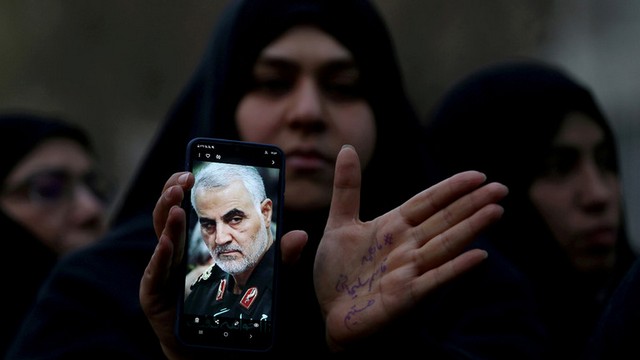
Trump left office ‘defeated, isolated & broken’, Iranian General Soleimani’s daughter says in withering statement

The youngest daughter of slain Iranian general Qassem Soleimani rebuked former US president Donald Trump in a blistering message, saying he ended his term in disgrace while condemning him for her father’s assassination last year.

“Mr. Trump, you murdered my father, the General who led the victorious war against ISIS/Al-Qaeda, with the perverse hope that you will be seen as some sort of hero,” Zeinab Soleimani tweeted on Wednesday, under an alternate spelling of her surname.

But instead you are defeated, isolated & broken – viewed not as a hero, but one who lives in fear of foes. The irony.

Mr. Trump, you murdered my father, the General who led the victorious war against ISIS/Al-Qaeda, with the perverse hope that you will be seen as some sort of heroBut instead you are defeated, isolated & broken – viewed not as a hero, but one who lives in fear of foesThe irony pic.twitter.com/gBN5kqsOsY

— Zeinab soleimany | زینب سلیمانی (@znb_soleimany) January 20, 2021

Soleimani’s tweet – which was accompanied by an image showing a poster of Trump’s face and the words “American terrorist” – came just hours after the swearing-in of President Joe Biden, who took office on the heels of a tumultuous Trump presidency that saw a dramatic spike in hostilities with the Islamic Republic. US-Iranian tensions peaked last January of after General Soleimani’s assassination near the Baghdad International Airport, which itself came amid a relentless US sanctions campaign seeking to cripple Tehran’s vital oil exports to “zero.”

Iranian Foreign Minister Mohammad Javad Zarif, who shared Soleimani’s post on Twitter, issued a similarly harsh statement following Trump’s official ouster from the White House, saying that the ex-president and Secretary of State Mike Pompeo had been “relegated to the dustbin of history in disgrace.” He added a tribute to the late Quds Force commander, noting that his memory would “shine on,” despite those “murdered, maimed & starved of food & meds by Trump’s state.”

Trump, Pompeo & Co. are relegated to the dustbin of history in disgrace.But the memories of Gen Soleimani & the 1000s murdered, maimed & starved of food & meds by Trump’s state—& economic—terrorism & crimes against humanity, will shine on.Perhaps new folks in DC have learned.

— Javad Zarif (@JZarif) January 20, 2021

Think your friends would be interested? Share this story!

21 January 2021

Source: www.rt.com

The Deep State’s Stealthy, Subversive, Silent Coup to Ensure Nothing Change

By John W. Whitehead

“You have such a fervent, passionate, evangelical faith in this country…why in the name of God don’t you have any faith in the system of government you’re so hell-bent to protect? You want to defend the United States of America, then defend it with the tools it supplies you with—its Constitution. You ask for a mandate, General, from a ballot box. You don’t steal it after midnight, when the country has its back turned.”—Seven Days in May (1964)

No doubt about it: the coup d’etat was successful.

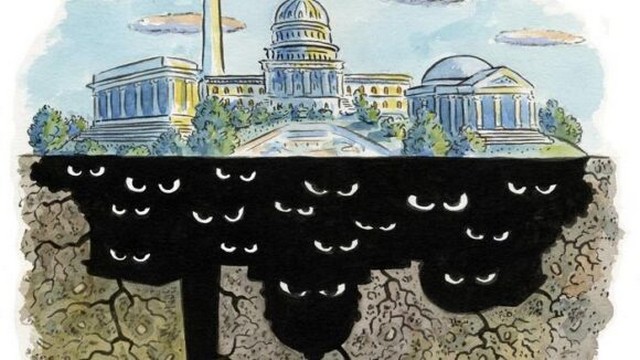
That January 6 attempt by so-called insurrectionists to overturn the election results was not the real coup, however. Those who answered President Trump’s call to march on the Capitol were merely the fall guys, manipulated into creating the perfect crisis for the Deep State—a.k.a. the Police State a.k.a. the Military Industrial Complex a.k.a. the Techno-Corporate State a.k.a. the Surveillance State—to swoop in and take control.

It took no time at all for the switch to be thrown and the nation’s capital to be placed under a military lockdown, online speech forums restricted, and individuals with subversive or controversial viewpoints ferreted out, investigated, shamed and/or shunned.

This new order didn’t emerge into being this week, or this month, or even this year, however.

Indeed, the real coup happened when our government “of the people, by the people, for the people” was overthrown by a profit-driven, militaristic, techno-corporate state that is in cahoots with a government “of the rich, by the elite, for the corporations.”

We’ve been mired in this swamp for decades now.

Every successive president starting with Franklin D. Roosevelt has been bought lock, stock and barrel and made to dance to the Deep State’s tune.

Enter Donald Trump, the candidate who swore to drain the swamp in Washington DC. Instead of putting an end to the corruption, however, Trump paved the way for lobbyists, corporations, the military industrial complex, and the Deep State to feast on the carcass of the dying American republic.

Joe Biden will be no different: his job is to keep the Deep State in power.

Step away from the cult of personality politics and you’ll find that beneath the power suits, they’re all alike.

Follow the money. It always points the way.

As Bertram Gross noted in Friendly Fascism: The New Face of Power in America, “evil now wears a friendlier face than ever before in American history.”

Writing in 1980, Gross predicted a future in which he saw:

…a new despotism creeping slowly across America. Faceless oligarchs sit at command posts of a corporate-government complex that has been slowly evolving over many decades. In efforts to enlarge their own powers and privileges, they are willing to have others suffer the intended or unintended consequences of their institutional or personal greed. For Americans, these consequences include chronic inflation, recurring recession, open and hidden unemployment, the poisoning of air, water, soil and bodies, and, more important, the subversion of our constitution. More broadly, consequences include widespread intervention in international politics through economic manipulation, covert action, or military invasion…

This stealthy, creeping, silent coup that Gross prophesied is the same danger that writer Rod Serling envisioned in the 1964 political thriller Seven Days in May, a clear warning to beware of martial law packaged as a well-meaning and overriding concern for the nation’s security.

Incredibly enough, almost 60 years later, we find ourselves hostages to a government run more by military doctrine and corporate greed than by the rule of law established in the Constitution. Indeed, proving once again that fact and fiction are not dissimilar, today’s current events could well have been lifted straight out of Seven Days in May, which takes viewers into eerily familiar terrain.

The premise is straightforward.

With the Cold War at its height, an unpopular U.S. President signs a momentous nuclear disarmament treaty with the Soviet Union. Believing that the treaty constitutes an unacceptable threat to the security of the United States and certain that he knows what is best for the nation, General James Mattoon Scott (played by Burt Lancaster), the head of the Joint Chiefs of Staff and presidential hopeful, plans a military takeover of the national government. When Gen. Scott’s aide, Col. Casey (Kirk Douglas), discovers the planned military coup, he goes to the President with the information. The race for command of the U.S. government begins, with the clock ticking off the hours until the military plotters plan to overthrow the President.

Needless to say, while on the big screen, the military coup is foiled and the republic is saved in a matter of hours, in the real world, the plot thickens and spreads out over the past half century.

We’ve been losing our freedoms so incrementally for so long—sold to us in the name of national security and global peace, maintained by way of martial law disguised as law and order, and enforced by a standing army of militarized police and a political elite determined to maintain their powers at all costs—that it’s hard to pinpoint exactly when it all started going downhill, but we’ve been on that fast-moving, downward trajectory for some time now.

The question is no longer whether the U.S. government will be preyed upon and taken over by the military industrial complex. That’s a done deal, but martial law disguised as national security is only one small part of the greater deception we’ve been fooled into believing is for our own good.

How do you get a nation to docilely accept a police state? How do you persuade a populace to accept metal detectors and pat downs in their schools, bag searches in their train stations, tanks and military weaponry used by their small town police forces, surveillance cameras in their traffic lights, police strip searches on their public roads, unwarranted blood draws at drunk driving checkpoints, whole body scanners in their airports, and government agents monitoring their communications?

Try to ram such a state of affairs down the throats of the populace, and you might find yourself with a rebellion on your hands. Instead, you bombard them with constant color-coded alerts, terrorize them with shootings and bomb threats in malls, schools, and sports arenas, desensitize them with a steady diet of police violence, and sell the whole package to them as being for their best interests.

This present military occupation of the nation’s capital by 25,000 troops as part of the so-called “peaceful” transfer of power from one administration to the next is telling.

This is not the language of a free people. This is the language of force.

Still, you can’t say we weren’t warned.

Back in 2008, an Army War College report revealed that “widespread civil violence inside the United States would force the defense establishment to reorient priorities in extremis to defend basic domestic order and human security.” The 44-page report went on to warn that potential causes for such civil unrest could include another terrorist attack, “unforeseen economic collapse, loss of functioning political and legal order, purposeful domestic resistance or insurgency, pervasive public health emergencies, and catastrophic natural and human disasters.”

In 2009, reports by the Department of Homeland Security surfaced that labelled right-wing and left-wing activists and military veterans as extremists (a.k.a. terrorists) and called on the government to subject such targeted individuals to full-fledged pre-crime surveillance. Almost a decade later, after spending billions to fight terrorism, the DHS concluded that the greater threat is not ISIS but domestic right-wing extremism.

Meanwhile, the police have been transformed into extensions of the military while the nation itself has been transformed into a battlefield. This is what a state of undeclared martial law looks like, when you can be arrested, tasered, shot, brutalized and in some cases killed merely for not complying with a government agent’s order or not complying fast enough. This hasn’t just been happening in crime-ridden inner cities. It’s been happening all across the country.

And then you’ve got the government, which has been steadily amassing an arsenal of military weapons for use domestically and equipping and training their “troops” for war. Even government agencies with largely administrative functions such as the Food and Drug Administration, Department of Veterans Affairs, and the Smithsonian have been acquiring body armor, riot helmets and shields, cannon launchers and police firearms and ammunition. In fact, there are now at least 120,000 armed federal agents carrying such weapons who possess the power to arrest.

Rounding out this profit-driven campaign to turn American citizens into enemy combatants (and America into a battlefield) is a technology sector that has been colluding with the government to create a Big Brother that is all-knowing, all-seeing and inescapable. It’s not just the drones, fusion centers, license plate readers, stingray devices and the NSA that you have to worry about. You’re also being tracked by the black boxes in your cars, your cell phone, smart devices in your home, grocery loyalty cards, social media accounts, credit cards, streaming services such as Netflix, Amazon, and e-book reader accounts.

So you see, January 6 and its aftermath provided the government and its corporate technocrats the perfect excuse to show off all of the powers they’ve been amassing so assiduously over the years.

Mind you, by “government,” I’m not referring to the highly partisan, two-party bureaucracy of the Republicans and Democrats.

I’m referring to “government” with a capital “G,” the entrenched Deep State that is unaffected by elections, unaltered by populist movements, and has set itself beyond the reach of the law.

I’m referring to the corporatized, militarized, entrenched bureaucracy that is fully operational and staffed by unelected officials who are, in essence, running the country and calling the shots in Washington DC, no matter who sits in the White House.

This is the hidden face of a government that has no respect for the freedom of its citizenry.

Brace yourself.

There is something being concocted in the dens of power, far beyond the public eye, and it doesn’t bode well for the future of this country.

Anytime you have an entire nation so mesmerized by the antics of the political ruling class that they are oblivious to all else, you’d better beware.

Anytime you have a government that operates in the shadows, speaks in a language of force, and rules by fiat, you’d better beware.

And anytime you have a government so far removed from its people as to ensure that they are never seen, heard or heeded by those elected to represent them, you’d better beware.

As I make clear in my book Battlefield America: The War on the American People, we are at our most vulnerable right now.

All of those dastardly seeds we have allowed the government to sow under the guise of national security are bearing demon fruit.

The gravest threat facing us as a nation is not extremism but despotism, exercised by a ruling class whose only allegiance is to power and money.

Constitutional attorney and author John W. Whitehead is founder and president of The Rutherford Institute.

21 January 2021

Source: www.informationclearinghouse.info

Khan Abdul Gaffar Khan: Muslims for Composite Indian Nationalism

By Dr Ram Puniyani

As per the recent communiqué from Chief Minister of Haryana M.L. Khattar’s, the Government of Haryana has decided to change the name of Khan Abdul Gaffar Khan Hospital in Faridabad to Atal Bihari Vajpayee Hospital. So far we have witnessed the name changes by present ruling dispensation aplenty. Most of these changes involved the changing of names of roads/cities, which had names of Muslim rulers. Aurangzeb Road was changed to APJ Abdul Kalam, Allahabad to Prayagraj, Mughal Sarai to Pundit Deen Dayal Upadhyay and Faizabad to Ayodhya. In recent elections in Hyderabad the UP Chief Minister Adiyanath Yogi said name of Hyderabad should be changed to Bhgyanagar. Shiv Sena, which was a long time ally of BJP, has been calling for name change of Aurangabad, Ahmadnagar, and Pune among others. While Shiv Sena has woken up to electoral advantages of name change from Muslim rulers names to Hindu rulers lately, BJP is adept to this game and playing it to the hilt. Its major propaganda has been against Muslim Kings (Temple destruction, forcible conversion, oppression of Hindu women etc.) and reflected on the present Muslim community.

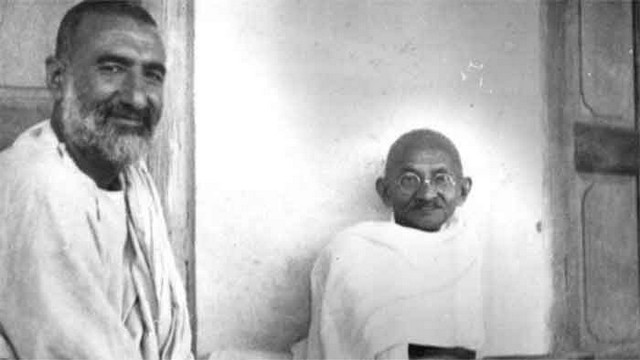
What is different this time in Haryana Governments’ move is that it is not the Muslim King whose name is being changed. It is the name of one of the great Indian Nationalists, one who stood rock solid against British rule, one who opposed the partition in the name of religion and one who was the devout follower of Father of the Nation: Mahatma Gandhi, Khan Abdul Gaffar Khan. He is also addressed as Badshah Khan or Bacha Khan with love and affection. He is also known as Frontier Gandhi.

He was a major leader from NWFP, who due to his anti British stance had to be in British prison and later was jailed by Pakistan authorities for his standing for plural, democratic values. Khan had founded Khudai Khidmatgar, which pledged to work for the nation, oppose British rule and follow the path of non-violence and amity. Khudai Khidmatgar’s agitation and resistance to British rule was best reflected in Kissa Khwani Bazar. This incident happened in Peshawar in 1930 when British armored vehicles trampled and shot the protestors, who were peacefully demonstrating.

Khan was the one who was totally against the concept of partition and when Congress leadership had to reluctantly accept the partition and NWFP was to be part of Pakistan, Khan said to Congress leadership, ‘you have thrown us to the wolves’. After partition many of his followers who migrated to Faridabad, built this hospital in the memory of their leader. Some of these followers of his who are still alive do say that they have no problems with the name of Atal Bihari Vajpayee, but probably a new hospital can be built in his name sparing the cherished memory of one of the great freedom fighters, one who stood for his principles to the end.

The present ruling dispensation, which was not the part of freedom movement, wants to erase the imprint of Islam and Muslim’s contribution to the building of Indian nation. While medieval Muslims kings have been demonized to the hilt, now BJP seems to be turning its attention to the Muslims who were inseparable part of freedom movement. The understanding being spread is that Muslims had been separatists and so the Pakistan was demanded by them. This is a totally superficial understanding of the history of Independence movement. The Muslim League which had its roots in the nawabs and landlords did not represent the majority of Indian Muslims. Surely Muslim League did succeed in attracting some middle class elements but the large majority of Muslims never supported it. Only elite, property owners and degree holders had the right to vote some of who stood with Muslim League while the average Muslims were with the freedom movement.

Muslim League did succeed in forming ministries in Sindh and Bengal in collaboration with Hindu Mahasabha but average Muslims kept aloof from its separatist politics. The point is that while Jinnah is known as the Muslim leader, it is not generally known that there were other Muslim leaders who were either part of national movements or through their organizations they supported the politics of freedom movement in opposition to the separatist politics of the communalists who believed in ‘two nation theory’, nation based on religion. Shamsul Islam in his book ‘Muslims against India’s partition’ brilliantly brings forth the politics of ‘Nation loving Muslims’ (as he calls those Muslims who stood with the values of Composite nationalism).

In response to Jinnah’s Pakistan resolution, Allahbaksh who was twice the premier of Sindh Province not only returned his titles to support the 1942 Quit India movement. He had earlier formed ‘Azad Muslim Conference’ to oppose the demand of partition of India. He organized this Conference to oppose the demand of partition with huge response from the average sections of Muslim community. Allah Baksh in his speech stressed that our religions may be different but we have to live as a joint family respecting the different opinions of our family members. There are many other significant leaders who had substantial following among Muslims and were for Hindu Muslim unity. Shibli Nomani, Hasrat Mohani, Ashfaqulla Khan, Mukhtar Ahmad Ansari, Shaukutllah Ansari, Syed Abdullah Barelvi, Abdul Maziz Khwaja are some of these.

Similarly Maulana Abul Kalam Azad was a tall leader who led the Congress number of times and it was under his President-ship of Congress in 1942 that the call of Quit India movement, the greatest anti- British campaign, was given. Many a Muslim organization like Jamiat-E-Ulema Hind, Momin Conference, Majlis-E-Ahrare Islam, Ahle Hadis, Maualans of Barelvi and Deoband and many others stood unflinchingly to support national movement. Muslim League was totally against these Nationalist Muslims.

Changing the name of the hospital in the memory of Bacha Khan symbolizes the further growth of sectarianism where ruling party wants to undermine and erase the contribution of Muslim freedom fighters, who contributed immensely in the making of modern India.

19 January 2021

Source: countercurrents.org

Navalny in Moscow, and the Empire intones

By Farooque Chowdhury

The old tone is now set again. There’s Navalny, a Russian opposition politician the Empire finds useful, and there’s concern by Mr. Jake Sullivan, the National Security Advisor of US President-elect Joe Biden.

Alexey Navalny was detained in a Moscow airport upon his return from Germany on January 17, 2021. Mr. Sullivan has demanded Russia immediately releases Navalny. It’s that old tone of interference that tells others about duties and responsibilities for upholding “democracy” and interest of the Empire.

This tone will be used and re-used increasingly in the coming days. This tone will be used in cases of other countries, be it Myanmar or China, India or Bangladesh, Venezuela or Cuba. Wherever the Empire will find its interest, and the Empire’s interest is spread all over the Earth, the cacophony will be repeated with varying degree, pitch and form, beginning from “expressing concern” and “calls for democracy” to the infamous R2P and the no-fly zone tact. It may be the South China Sea or Rohingyas in a Bangladesh island or procurement of Russian missile system by India. Issues for interference will be always there for the Empire, and the neocons have gathered there. Therefore, tensions, like the old Cold War days, will rise in regions.

After spending months in Germany, Navalny returned Moscow. He went to Germany to have medical treatment of a case of “poisoning” as he collapsed while on a domestic flight on way to Moscow. Initially, he was treated in a Russian hospital, and then was flown to Germany. The Russian political activist, German doctors claimed, was poisoned with a nerve agent called Novichok.

Russian doctors who treated the political activist found no trace of the toxic agent in the activist’s system. A toxicologist claimed that others travelling with the activist would have suffered if the activist was poisoned with the military-grade nerve agent. Germany ignored Russia’s repeated calls to Berlin to provide Moscow with Navalny’s medical data. Russia also called for a joint investigation of the incident. That was ignored also. Nevertheless, the case, beginning around August-2020, of poisoning persisted with those interested to play with.

Navalny is facing charge: breaching of terms of his probation, and that was also from an earlier criminal allegation. So, he was wanted in Russia. In Moscow, he has been remanded.

Whatever is the case of Navalny, that’s to be sorted out by the concerned authority and the Russian political figure fighting corruption. But, the case is the concern, etc. of the Empire. It’s a part of intervention in other countries.

However, it’s difficult for the Empire to survive without intervention in other lands. Its economy demands intervention. That’s a problem that always accompanies the Empire. But, these days, on one hand, are not those Saddam-Iraq or Gaddafi-Libya days. Some changes are there in the world theater of geopolitics. The change is difficult to handle by the Empire. Therefore, it’ll not be like putting a hot knife on a piece of butter as was done in Libya during Gaddafi’s last days.

Now, there’re voices from Moscow and Beijing. Only days ago, Beijing reminded Washington George Floyd’s choked voice telling difficulty in breathing. Beijing was responding to Washington’s concern with a certain region in China.

Sanctions-regime, a tool of the Empire, is used to threat, coerce and compel any “disobedient” or “going-to-be-disobedient” state. However, that sole authority to use the tool is going to go away. China’s foreign ministry said on January 18, 2021: US officials who have engaged in “nasty behavior” over Chinese-claimed Taiwan will face sanctions. China’s cautionary note came after the US lifted curbs on exchanges between US and Taiwanese officials.

Similarly, on the Navalny case, spokesperson of the country’s foreign ministry, wrote in response to Jake Sullivan’s demand: “Foreign politicians should focus on domestic issues at hand, and respect the Russian law.” A biting truth – domestic issues at hand – has been mentioned. The fact is so much bitter that it’s difficult to swallow for the party concerned.

The Russian spokesperson told the plain truth as she cautioned all interfering into internal affairs of Russia as she wrote in a facebook post: “Have respect for international law, do not interfere with the national law of sovereign countries and deal with your own domestic problems.” These demand and response happened in mid-January 2021.

The present tone is different from the tone of those Gorbachev-days. Those were tones in submission.

Years ago, the Empire was the sole standard-bearer of “rights” and “democracy”, a guardian-like figure. However, that day is now lost. Already it has lost image – that cloak has flew away with the air of exposures in home and abroad. Moreover, other geopolitical players have emerged; and, they have clouts. Since the 1990, one of the watershed moments in the world history, the Empire has not faced such competition, and such complex competition.

On the other hand, the Empire is having problem in home. It’s much serious. It appears in its society, in its economy, and in its politics now ridden with belligerency. These are devouring the Empire. The Empire, very learned and intelligent, can’t ignore this fact of its life.

The single case of the pandemic, if all other fundamental cases are set aside, in the Empire tells a lot about the condition of the state machine. “For nearly the entire pandemic,” writes The New York Times, “political polarization and a rejection of science have stymied the United States’ ability to control the coronavirus. [….] [G]overnors and local officials who were left in charge of the crisis […] as they sidelined health experts, ignored warnings from their own advisers and, in some cases, stocked their advisory committees with more business representatives than doctors. [….] [T]he full extent of the nation’s failures has come into clear view: The country is hurtling toward 400,000 total deaths, and cases, hospitalizations and deaths have reached record highs, as the nation endures its darkest chapter of the pandemic yet.” [1]

While discussing challenges Joe Biden’s presidency faces, The Guardian presented a picture that also tells the Empire’s condition:

“[T]he threat of violence from his [Joe Biden’s] predecessor’s supporters.”

“[A] nation so politically, geographically and socially divided that seven in 10 Republicans say the election was stolen from Donald Trump.”

“[A]n almost total shutdown of the heart of American governance.”

“Even before the assault on Capitol Hill, Biden warned that deepening partisanship was a threat to the stability of the United States.

“‘The country is in a dangerous place,’ he said during the election campaign. ‘Our trust in each other is ebbing. Hope is elusive. […]’”

“The enormity of the challenge was made starkly clear by the sacking of the Capitol. Most Americans recoiled in horror at the sight of their compatriots, some dressed as if ready for war, smashing up congressional offices, beating police officers and threatening to hang the vice-president.”

“Yet more than 70% of Republicans agree with the protesters’ core claim that November’s election was rigged and say Biden is not the legitimate president.”

“‘We are so polarised that polarisation is not going to go away no matter what he [Biden] does in the short term,’ said Charles Franklin, director of the respected Marquette opinion poll in swing state Wisconsin.”

“[L]arge numbers of Americans continue to believe the system does not work for them.” [2]

With this condition, the Empire’s external reach will not be as smooth as the Libya- or Iraq-invasion days. This condition will make the Empire more desperate. It’ll find, as it always finds, interference and war are the real businesses that bring benefit to it.

It, therefore, can be assumed that the coming days will hear more “concerns”, “suggestions”, “calls”, “demands”, and measures – machinations, sanctions, etc. – from the Empire, and the days will be more charged as newcons with experiences of intervention have reassembled to face the situation. A desperado-game it’ll be.

NOTE:

1. “One Year, 400,000 Coronavirus Deaths: How the U.S. Guaranteed Its Own Failure”, January 18, 2021

2. “America is broken – can Biden and Harris put it back together?”, January 17, 2021

Farooque Chowdhury writes from Dhaka.

19 January 2021

Source: countercurrents.org