Just International

Covid-19 under Apartheid: How Israel Manipulates Suffering of Palestinians

By Dr Ramzy Baroud

Israel’s decision to exclude Palestinians from its COVID-19 vaccination campaign may have surprised many. Even by Israel’s poor humanitarian standards, denying Palestinians access to life-saving medication seems extremely callous.

Amnesty International, among many organizations, condemned the Israeli government’s decision to bar Palestinians from receiving the vaccine. The rights group described the Israeli action as evidence of the “institutionalized discrimination that defines the Israeli government’s policy towards Palestinians.”

The Palestinian Authority was not expecting Israel to supply Palestinian hospitals with millions of vaccines as it hopes to receive two million doses of the Oxford-AstraZeneca vaccine in February. Instead, the request made by PA official, Hussein al-Sheikh, Coordinator of Palestinian affairs with Israel, was a meager 10,000 doses to help protect Palestinian frontline workers. Still, the Israeli Health Ministry rejected the request.

According to the Palestinian news agency WAFA, 1,629 Palestinians died and a total of 160,043 were infected with the deadly COVID-19 disease as of January 4. While such dismal numbers can also be found in many parts of the world, the Palestinian coronavirus crisis is compounded by the fact that Palestinians live under an Israeli military occupation, a state of apartheid and, as in the case of Gaza, an unrelenting siege.

Worse still, starting early last year, the Israeli military conducted several operations in various parts of the occupied territories to crack down on Palestinian initiatives to provide free COVID-19 testing. According to the Palestinian rights group, Al Haq, as early as March 2020, several field clinics were shut down and medical equipment confiscated in the Palestinian town of Khirbet Ibziq in the Jordan Valley, in the occupied West Bank. This pattern was repeated in East Jerusalem, Hebron and elsewhere in the following months.

There is no legal or moral justification for Israel’s action. The Fourth Geneva Convention of 1949 asserts that an Occupying Power has the “duty of ensuring and maintaining … the medical and hospital establishments and services” with “particular reference” on taking the “preventive measures necessary to combat the spread of contagious diseases and epidemics.”

Even the Oslo Accords, despite their failure to address many crucial topics pertaining to the freedom of the Palestinian people, oblige both sides “to cooperate in combating epidemics and to assist each other in times of emergency,” the New York Times reported.

Not all Israeli officials deny that Israel is legally compelled to provide Palestinians with the help required to contain the rapid spread of the pandemic. This admission, however, comes with conditions. Former Israeli Ambassador, Alan Baker, told NYT that, while international law does “place an obligation on Israel” to help in the provision of vaccines to Palestinians, Palestinians must first release several Israeli soldiers who were captured in Gaza during and after the 2014 war.

The irony in Baker’s logic is that Israel holds over 5,000 Palestinian prisoners, including women and children, hundreds of whom are imprisoned without trial or due process.

The captured Israelis are held in Gaza as a bargaining chip, to be exchanged for the easing of Israel’s hermetic blockade on the densely populated Strip. One of the Palestinians’ main demands for the release of the soldiers is that Israel allows for the transfer of medical equipment and life-saving medication to the two million people of the Gaza Strip. International and Palestinian human rights groups have long reported on many unnecessary deaths among Palestinians in Gaza because Israel deliberately prevents Gazan hospitals from acquiring cancer medications.

Long before the onset of the coronavirus, Israel has weaponized medicine, and Gaza’s dilapidated health sector is a standing testimony to this injustice.

Perhaps, the overcrowded Israeli prisons remain the glaring testimony of Israel’s mishandling of the COVID-19 outbreak. Despite repeated calls by the United Nations and, particularly, the World Health Organization, that states should take immediate measures to help ease the crisis in their prison systems, Israel has done little for Palestinian prisoners. Al Haq reported that Israel “has taken no adequate measures to improve provision of healthcare and hygiene for Palestinian prisoners” in line with the WHO “guidance for preventing COVID-19 outbreak in prisons.” The consequences were dire, as the spread of COVID among Palestinian prisoners continues to claim new victims at a much higher ratio compared with Israeli prisoners.

Israel’s intentional hampering of Palestinian efforts to fight COVID is consistent with a trajectory of racism, where colonized Palestinians are exploited for their land, water and cheap labor, while never factoring as a priority on Israel’s checklist, even during the time of a deadly pandemic. Israel is an Occupying Power that refuses to acknowledge or respect any of its basic obligations as an Occupying Power under international law.

The Israeli attempt at manipulating Palestinian suffering as a result of the pandemic should also challenge our view of the fundamental relationship between Israel and the Palestinians. Frequently we speak of Israel’s apartheid in Palestine, often illustrating that assertion referring to giant walls, fences and military checkpoints that cage in Palestinian communities and segregate them from one another.

This, however, is merely the physical manifestation of Israeli colonialism and apartheid. In Israel, apartheid runs much deeper as it reaches almost every facet of society where Israeli Jews, including settlers, are treated as superior, while Palestinian Arabs, whether Christian or Muslims, are denied their most basic rights, including those guaranteed under international law.

While Israel’s behavior is not entirely surprising, it being consistent with the sordid reality of military occupation and institutional racism, it is also self-defeating. Despite the obvious imbalance in the relationship between Israel and the Palestinians, they are in constant contact, not as equals but as occupier and occupied. Since the coronavirus does not respect Israel’s matrix of control in Palestine, it will travel across all of the physical divides that Israel has created to ensure permanent oppression of Palestinians. Hence, there can be no containing of COVID-19 in Israel if it continues to spread among Palestinians.

Long after the deadly pandemic is contained, the tragedy of occupied Palestine will, sadly, continue unhindered, until the day that Israel is forced to end its military occupation of Palestine and the Palestinians.

Ramzy Baroud is a journalist and the Editor of The Palestine Chronicle.

13 January 2020

Source: countercurrents.org

Covid-19 lockdown: Confronted with hardships, 15-year-old Sania chose to rap

By Arun Kumar & Jonita Colaco

‘Will there be singing in the times of darkness

Yes there will be singing about the darkness’

                                           — Bertolt Brecht

Par kabhi socha hai
Jo Govandi mein rehete hain

Unka kya hota hai

Vote dene wala

Har ghareeb rota hai, kyun?

This is an excerpt from 15-year-old Sania Mistree’s rap that she wrote during the lockdown. “Rap is a powerful medium and I want our voices to be heard,” says Sania, who lives in Shivaji Nagar (Govandi), M East Ward of Mumbai. The feisty teenager began rapping two years ago to speak about the difficulties faced by the urban poor.

Sania is a Class 10 student and lives with her parents and younger brother. Her father rides a rickshaw, while her mother runs a small provision kiosk in the area. When the government imposed the lockdown on 25 March 2020, her family was one of the many who were left with no means to sustain themselves. According to a study by Apnalaya, an NGO that works with the urban poor through a multi-dimensional approach, 47% of the population in Shivaji Nagar reported having zero income during the lockdown.

M East Ward is ranked the lowest out of 24 wards in Mumbai with respect to the human development index. Civil Society Organisations (CSO) believe that more than 12 lakh people live in M East Ward, as compared to the government figures of 8.07 lakh. Of this, 77% live in slums, with a large population living in Shivaji Nagar, the largest slum cluster in the ward.

With a population close to 6,00,000, Shivaji Nagar has no school for secondary education, in addition to the poor infrastructure and lack of healthcare facilities. In a post-Covid study, Apnalaya found that 47% of Shivaji Nagar residents had reported having no income during the lockdown, while 56% people took loans, especially to buy ration and water. Over 13% people migrated, and many moved within Shivaji Nagar to cheaper areas. The people depended on NGOs for their food, and claimed the government’s response was slow and inadequate. Sania pithily captures the situation, what many would consider an archetype voice from the slums of Mumbai:

Koi iss baat pe insist nahi karte

Ki hum sarkaar ke liye exist nahi karte

Amid the pandemic, while children from privileged backgrounds were attending schools online, the ones from the slums felt ignored, as they could not afford access to the digital world. Upset Sania chose to express her angsts through this hard-hitting rap. “I associate with rap music because I can convey my feelings and speak about the distress of my community in a rhythm,” she says. “Children in slums also want to study, but they do not have the means for it.”

Hai sab kuch chal raha online,

Band hai kitaab,

Train sari band hain

Par bik rahi sharaab

School saare band hain,

Hai padhai online

Bachha chatting mein ghusa hai

But let it be fine, yeah!

Sania is aware that there were huge problems in her area during the lockdown, and people had to flee the city with no means to sustain themselves. She detests the fact that they are routinely left to fend for themselves and politicians who come asking for votes and make lofty promises are invariably missing from the scene. “Nobody helped us during the lockdown,” she adds. “It was only the NGOs who were looking out for us.”

Kyun ki mahamari hai

Public bechari hai

Phir bhi dikha rahi hai

Neta-giri nakhre

Waade bade wakhre

Vote mil gaya,

Ab chal baaju hat re?

Coming from an orthodox Muslim family, the path to music wasn’t easy for her. Her poetry, however, defies her age. It is alive to all-pervasive inequities. To resist, she writes. She found inspiration in Emiway Bantai and Vivian Fernandes, better known by his stage name DIVINE, who shot to fame after the release of Bollywood film Gully Boy. “Their words have the power to touch people and inspire them, and that is exactly what I aim to do,” Sania shares.

Par in sab baaton se pare

Sab yahi baat bataa rahe

Sanitizer lagana

Chalo theek hai

Ab dooriyan badhana

Chalo theek hai

Zaroori mask hai lagana

Chalo theek hai

Band milna milana

Chalo theek hai…

Sania was 14 when Apnalaya, during its 2018 event, Ye Bhi Hai Mumbai, Meri Jaan, encouraged her to perform her first rap about the life in slums. Today, Sania’s friend Taufiq Shaikh, a Class 7 student, accompanies her with his beatboxing. “When my friend refused to teach me, I decided to learn beatboxing myself and get better at it,” he says. Sadia joins Sania in chorus. These teenagers are a powerhouse of talent in more ways than one. Sans any formal training, they have self-taught themselves rap, listening to successful rappers on YouTube. What is truly remarkable is their ability to talk about their everyday lives, pick up their moments of hardships and turn them into a song that seeks to inspire and encourage others to change what is not right about today.

She signs off with these words:

Kaafi jazbaat hain jatane ko

Kaafi baat hai bataane ko

Zubaan phir bhi khaamosh hai

Log kehte hain chup ho jaane ko

Let’s hope her voice is never silenced.

Apna Adda – Sania Taufiq and Sadiya (Rap)

Arun Kumar has worked with Social Purpose Organisations for over two decades.

Jonita Colacois a Project Supervisor with the Citizenship and Advocacy team at Apnalaya, an organisation that works towards the upliftment and empowerment of the urban poor.

8 January 2021

Source: countercurrents.org

From Counter terrorism to Geopolitics: Reviving the U.S. Deep State

By Richard Falk

25 Dec 2020 – The challenge of transnational non-state violence, what the media dutifully criminalizes as ‘terrorism’ while whitewashing the abuses of state and state-sponsored violence as ‘counterterrorism’ or exercises of every state to act in self-defense. Language matters as those who wanted to sugarcoat ‘torture’ by such phrases as ‘enhanced interrogation.’ The pendulum of U.S. foreign policy is swinging back in the direction of geopolitical confrontation, given the prospects of the Biden presidency. Although it is the highest political priority to be done with Trump and Trumpism, the renewal of ‘bipartisan foreign policy’ under the guidance of the American version of the deep state is not good news. It could mean a new cold war tilted toward China, but with different alignments, possibly including Russia, filled with risk and justification for continuing over-investment in a militarized approach to national security causing a continuing under-investment in human security, exposing the root cause of American imperial decline. The post below addresses some of these issues, and was published in the Tehran Times (17 Dec 2020).

********************************

  • In 1972, a specialized Committee on Terrorism was set up at the United Nations, and member states made great efforts to provide appropriate definitions of international terrorism, but due to intense political differences, the actual definition of international terrorism and comprehensive conventions in practice was impossible. Security Council Resolution 1373 was the most serious attempt to define terrorism after 9/11, which evolved into UN Security Council Resolution 1535. Despite providing a definition of terrorism, countries approach it differently. What is the reason?

There exists a basic split between those political actors that seek to define ‘terrorism’ as anti-state violence by non-state actors and those actors that seek to define terrorism as violence directed at innocent civilians, regardless of the identity of the perpetrator. The latter approach to the definition reaches targeted or indiscriminate violence directed at civilians even if the state is the perpetrator. States that act beyond their borders to fulfill counterrevolutionary goals seek to stigmatize their adversaries as terrorists while exempting themselves from moral and legal accountability.

There exists a second basic split due to state practice following political rather than legal criteria when identifying terrorist actors. When the Taliban and Al Qaeda were opposing Soviet intervention in Afghanistan they were identified as Mujahideen, but when seen as turning against the West, they were put on the top of the terrorist list. Osama Bin Laden, once hailed as a Western ally deserving lavish CIA support became the most wanted terrorist after the 9/11 attacks on the World Trade Center and Pentagon. Such subjectivity and fluidity makes it virtually impossible to develop a coherent and legal approach to ‘terrorist’ activity.

In essence, geopolitical actors have always sought to have international law regard the use of force by states acting on their own as falling outside the framework of terrorism while regarding transnational political violence by adversary or enemy non-state actors as terrorism even if the targeted person or organization is a government official or member of the armed forces, or if the non-state actor is resisting occupation by foreign armed forces. Before the 9/11 attacks Israel adopted influentially adopted this approach in its effort to portray Palestinian resistance as a criminal enterprise. After 9/11 the United States added its political weight to this statist approach to the conception of terrorism, which meant in effect that any adversary target that could be characterized as associated with a non-state actor that resorted to armed struggle was criminalized to the extent of being treated as unprotected by international humanitarian law. In practice, this subjectivity was vividly displayed in recent years by support given to anti-Castro Cuban exiles that engaged in political violence against the legitimate Cuban government, and yet were given aid, support, and encouragement while based in the United States.

The UN was mobilized after the 9/11 attacks by the United State to support this statist/geopolitical approach to political violence, which possessed these elements, and given formal expression in a series of Security Council Resolutions, including 1373, 1535:

  • Terrorists are individuals who engage in political violence on behalf of non-state actors;
  • states, their officials and citizens may be guilty of supporting such activities through money, weapons and safe haven, and therefore indictable under national law as aiding and abetting terrorism;
  • political violence by states, no matter what its character, is to be treated by reference to international law, including international humanitarian law, and not viewed as terrorism;
  • even if the non-state actor is exercising its right of resistance under international law against colonialism or apartheid, its political violence will be treated as ‘terrorism’ if such a designation furthers geopolitical ambitions.

The alternative view of terrorism that I endorse emphasizes the nature of the political violence, rather than the identity of the perpetrator. As such, political violence can be identified as ‘state terrorism,’ which amounts to uses of force that are outside the framework of war and peace, and violate the sovereign rights of a foreign country or fundamental rights of citizens within the territory of the state. Such acts of terrorism may be clandestine or overt, and may be attributed to state actors when counterrevolutionary groups are authorized, funded, and encouraged directly or indirectly by the state. Non-state actors can also be guilty of terrorism if their tactics and practices deliberately target civilians or recklessly disregard risks of death or harm to civilians.

  • How do you assess the role and position of Iran in the fight against terrorism in the region?

As far as I know, Iran has opposed non-state political violence of groups such as ISIS or Taliban that engage in terrorist activity by committing atrocities against civilians that amount to Crimes Against Humanity. Iran has also consistently condemned state terrorism of the sort practiced by Israel and the United States, and possibly other governments, within the region. In this regard, Iran has been active both in the struggle against non-state and state terrorism.

Iran has been accused of lending funding and material support to non-state actors that many governments in the West officially classify as ‘terrorist’ organizations, such as Hezbollah and Hamas. Part of the justification for U.S. sanctions arises from this allegation that Iran supports terrorism in the Middle East. These allegations are highly ‘political’ in character as both Hezbollah and Hamas engaged in violent resistance directed at unlawful occupation policies that denied basic national rights to the Lebanese and Palestinian people, including the fundamental right of self-determination, although some of their tactics and acts may have crossed the line of legality.

There are also contentions that Iran’s support for the Syrian government in dealing with its domestic adversaries involves complicity in behavior that violates the laws of war and international humanitarian law. This contention is a matter of regional geopolitics. As far as international law is concerned, the Assad government in Damascus is the legitimate representative of the Syrian people, and is treated as such at the UN. Iran is legally entitled to provide assistance to such a government faced with insurgent challenges from within its boundaries. If the allegations are true that Syria has bombed hospitals and other civilian sites, then the Syrian government could be charged with state terrorism.

  • How do you assess the role and position of General Ghasem Soleimani in the fight against terrorism and ISIS in the region?

Although a military officer, General Soleiman, was not in any combat role when assassinated, and was engaged in peacemaking diplomacy on a mission to Iraq. His assassination was a flagrant instance of state terrorism. With considerable irony, the truth is that General Soleiman had been playing a leading counterterrorist role throughout the region. He is thought to have been primarily responsible for the ending, or at least greatly weakening, the threat posed by ISIS to the security of many countries in the Middle East.

  • Given the conflict of interests of different countries, can we see the same action by countries against terrorism? What mechanism can equalize the performance of countries against the terrorism?

As suggested at the outset, without an agreed widely adopted and generally agreed upon definition of terrorism it is almost impossible to create effective international mechanisms to contain terrorism. As matters now stand, the identification of ‘terrorists’ and ‘terrorism’ is predominantly a matter of geopolitical alignment rather than the implementation of prohibitions directed at unacceptable forms of political violence within boundaries and across borders.

To imagine the emergence of effective international, or regional, mechanisms to combat terrorism at least four developments would have to occur:

  •  The reliance on legal criteria to categorize political violence as terrorism;
  •  the inclusion of ‘state terrorism’ in the official definition of terrorism;
  •  the inclusion of political violence within sovereign territory as well as across boundaries;
  •  an internationally or regionally agreed definition incorporating these three elements and formally accepted by all major sovereign states and by the United Nation.

In the present international atmosphere, such an international consensus is impossible to achieve. The United States and Israel, and a series of other important states would never agree. There are two sets of obstacles: some states would not give up their discretion to attack civilian targets outside their borders and would not accept accountability procedure that impose limits on their discretion over the means used to deal with domestic transnational non-state adversaries.

Under these conditions of geopolitical subjectivity such that from some perspectives non-state actors are ‘freedom-fighters’ and from others they are ‘terrorists,’ no common grounds for  meaningful and trustworthy intergovernmental arrangements exists.

It remains important for individuals and legal experts to advocate a cooperative approach to the prevention and punishment of terrorists and terrorism by reference to an inclusive definition of terrorism that considers political violence by states and by governments within their national territory as covered.

It is also in some sense to include non-state actors as stakeholders in any lawmaking process that has any prospect of achieving both widespread acceptance as a framework or implementation at behavioral levels. It would seem, in this regard, important to prohibit torture of terrorist suspects or denial of prisoner of war rights. One-sided legal regimes tend to be rationalizations for unlawful conduct, and thus operate as political instruments of conflict rather than legal means of regulation.

Unless surprises occur, almost a probability, the Biden foreign policy will likely follow the George H.W. Approach approach more than the Obama approach, which continued to unfold as part of the aftermath to the 9/11 attacks. This means becoming again captive to the deep state’s approach to world order: global militarism, Eurocentric points of reference, predatory capitalism, and quasi-confrontational toward China, Russia.

__________________________________________

Richard Falk is a member of the TRANSCEND Network, an international relations scholar, professor emeritus of international law at Princeton University, Distinguished Research Fellow, Orfalea Center of Global Studies, UCSB, author, co-author or editor of 60 books, and a speaker and activist on world affairs.

4 January 2021

Source: www.transcend.org

US Must Remove Sanctions and Allow Syria to Rebuild – UN Expert

By UN Human Rights Council

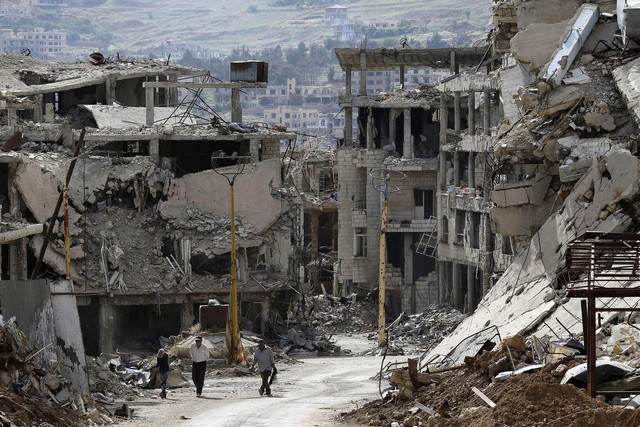
29 Dec 2020 – UN human rights expert Alena Douhan today called on the United States to remove unilateral sanctions which may inhibit rebuilding of Syria’s civilian infrastructure destroyed by the conflict.

“The sanctions violate the human rights of the Syrian people, whose country has been destroyed by almost 10 years of ongoing conflict,” said Douhan, UN special rapporteur on the negative impact of the unilateral coercive measures on the enjoyment of human rights.

“The conflict and violence have already had a dire impact on the ability of the Syrian people to realise their fundamental rights, having extensively damaged houses, medical units, schools, and other facilities,” she said.

The broad sweep of the U.S. sanctions law that went into effect in June could target any foreigner helping in reconstruction of the devastated country, and even employees of foreign companies and humanitarian operators helping rebuild Syria.

The Caesar Syria Civilian Protection Act, also known as the Caesar Act, contains the most wide-ranging U.S. sanctions ever applied against Syria.

“I am concerned that sanctions imposed under the Caesar Act may exacerbate the already dire humanitarian situation in Syria, especially in the course of COVID-19 pandemic, and put the Syrian people at even greater risk of human rights violations,” Douhan said.

“When it announced the first sanctions under the Caesar Act in June 2020, the United States said it did not intend for them to harm the Syrian population,” she said. “Yet enforcement of the Act may worsen the existing humanitarian crisis, depriving the Syrian people of the chance to rebuild their basic infrastructure.”

The Caesar Act raises serious concerns under international law because of its unfettered emergency powers of the Executive and extraterritorial reach, she said. It also results in the high risk of over-compliance.

“What particularly alarms me is the way the Caesar Act runs roughshod over human rights, including the Syrian people’s rights to housing, health, and an adequate standard of living and development. The U.S. government must not put obstacles in the way of rebuilding of hospitals because lack of medical care threatens the entire population’s very right to life.”

Since the economy is largely destroyed, Syria needs to be able to access necessary humanitarian aid and rebuild essential infrastructure in the country, while relying on foreign help. The fact that the U.S. Treasury has designated the Syrian Central Bank as suspected of money laundering clearly creates unnecessary hurdles in processing Syrian foreign aid and handling humanitarian imports.

The Syrian people’s right to adequate housing should be respected and their access to essential services guaranteed, she said.

“Impeding access to supplies needed to repair infrastructure damaged by the conflict will have a negative impact on human rights of the Syrian people and may preserve the trauma of the decade-long conflict,” Douhan said. Ensuring that the import of necessary humanitarian aid and construction materials is not inhibited could facilitate the return of displaced people as infrastructure is repaired.

If people are forced to live in degrading and inhumane circumstances because rebuilding is prevented, this could affect their physical and mental integrity, and may under some circumstances amount to cruel, inhuman or degrading treatment.

_____________________________________________

Ms Alena Douhan, (Belarus) was appointed as Special Rapporteur on the negative impact of the unilateral coercive measures on the enjoyment of human rights by the Human Rights Council in March 2020. Ms. Douhan has extensive experience in the fields of international law and human rights as, a Professor of international law at the Belarusian State University (Minsk), a visiting Professor at the Institute for International Law of Peace and Armed conflict, (Bochum, Germany) and the Director of the Peace Research Centre (Minsk). She received her PhD at the Belarusian State University in 2005 and obtained Dr. hab. in International Law and European Law in 2015 (Belarus). Ms. Douhan’s academic and research interests are in the fields of international law, sanctions and human rights law, international security law, law of international organizations, international dispute settlement, and international environmental law.

Special Rapporteurs are part of what is known as the Special Procedures of the Human Rights Council. Special Procedures, the largest body of independent experts in the UN Human Rights system, is the general name of the Council’s independent fact-finding and monitoring mechanisms that address either specific country situations or thematic issues in all parts of the world. Special Procedures’ experts work on a voluntary basis; they are not UN staff and do not receive a salary for their work. They are independent from any government or organization and serve in their individual capacity.

4 January 2021

Source: www.transcend.org

Pandemic Profiteers: Forbes Adds 50 Health Care Moguls to Its List of Global Billionaires

By Genevieve Leigh

29 Dec 2020 – For the richest layer of society, the year 2020 has proven to be one of soaring profits and the accumulation of personal wealth on a scale never before seen. The world’s billionaires collectively increased their already massive fortunes by more than a quarter (27.5 percent) from April 2020 to July 2020 alone, reaching a record total of $10.2 trillion.

According to a new report by Americans for Tax Fairness (ATF) and the Institute for Policy Studies (IPS), the total wealth of US billionaires grew by $1.064 trillion during the first nine months of the coronavirus pandemic, a 36 percent increase. For context, this increase in wealth—that is, not the total wealth of these individuals, but only the money they made in the first nine months of the year—is more than it would cost to send a stimulus check of $3,000 to every one of the roughly 330 million people in America.

Among the most profitable sectors has been the health care industry. A report released in October by wealth manager UBS and professional services firm PricewaterhouseCoopers notes that the billionaires in the health care industry increased their wealth by 36.3 percent between April 7 and July 31, from a total of $402.3 billion to $548 billion. The health care industry is second only to the tech industry in total increase in billionaire wealth.

Just before Christmas, Forbes magazine released a new survey revealing that at least 50 health care capitalists hailing from 11 different countries entered the ranks of the world’s billionaires in 2020.

Who are these newly minted billionaires and just how much wealth are they hoarding?

* Uğur Şahin is a Turkish citizen and CEO of BioNTech, the German biotech firm that is partnering with Pfizer on the latter’s vaccine. Şahin’s net worth is now $4.2 billion. BioNTech shares now trade at $101.63, up 614 percent since the close of the first trading day last year. The company is worth more than $24 billion.

Even with his $4.2 billion, Şahin was not the main beneficiary of BioNTech’s surge in the markets. Thomas and Andreas Strungmann, German twins and early investors in the company, have each added $8 billion to their net worth this year from their holdings in the firm. Already billionaires to begin with, they are each now worth about $12 billion.

* Stéphane Bancel is a French citizen and CEO of the Massachusetts-based biotechnology company Moderna. Bancel has gained $4.8 billion in wealth this year, giving him a net worth of $5.3 billion.

At the start of 2020, when he first became a billionaire, Bancel owned about nine percent of the company. As the firm’s stock surged by more than 550 percent with news of the company’s contract for a vaccine, he sold roughly $40 million worth of Moderna stock held by himself or associated investment funds.

Chief Medical Officer Tal Zaks has sold around $60 million worth of stock and President Stephen Hoge has sold more than $10 million.

* Moderna’s skyrocketing stock price also lifted two others into the health care billionaire club: Harvard Professor Timothy Springer (net worth $2 billion) and MIT scientist Robert Langer (net worth $1.5 billion). Springer and Langer were founding investors in Moderna , whose rise has turned Springer’s initial $5 million investment into roughly $1.6 billion.

* Sergio Stevanato is a new billionaire hailing from Italy. He has made his fortune as the majority shareholder in the privately-owned Stevanato Group, which is making glass vials for several dozen vaccines around the world.

The common feature in almost all of the health care billionaire fortunes has been the massive surge in stock prices. As the virus quickly became global, investors flocked to companies involved in the development of vaccines, treatments, medical devices and related fields. At the same time, the Federal Reserve in the US and central banks in Europe and around the world ensured the rise in stock prices by pumping trillions of dollars into the financial markets.

The speculators’ wealth ballooned as the market continued to rise despite, or rather because of, the dire state of affairs for workers. The capitalist economy was only able to produce the historic rise in the markets on the backs of millions of workers, forced back into factories and workplaces under unsafe conditions.

It did not take long for investments to pay off for health care executives. According to a Business Insider investigation, executives in charge of biotech and pharma firms working on COVID-19 treatments and vaccines have raked in more than $1 billion by selling stocks.

Pfizer CEO Albert Bourla sold 60 percent of his stock on the same day the company announced the high success rate of its vaccine. The stock-selling bonanza was denounced as “unethical” at the time by some media outlets. However, most concluded that the action was completely legal.

The financialization of the health care industry, leading to the creation of this growing class of health care billionaires, was in the making long before the COVID-19 pandemic.

The spike in wealth among health care billionaires widens when one compares the health care sector from the beginning of 2018 to the end of July 2020. Over that period, the total wealth held by 1,690 health care billionaires increased by 50.3 percent, to $658.6 billion.

An even wider view reveals profound levels of inequality in the world’s richest capitalist country: US billionaires’ total wealth in March 2020 was 12 times greater than their total wealth in 1990.

For these billionaires and multi-millionaires, the year 2020 will be remembered as the year they could finally afford that private island they had been dreaming about. But for billions of workers and youth throughout the world, 2020 was a year marked by mass death, social misery and suffering.

Millions lost loved ones to the virus this year. Most of those families said goodbye to mothers, fathers, sisters, brothers, spouses or children over the phone, unable to be with their dying family member. Millions more lost their jobs, health insurance and ability to provide for their families. For many, the year will be remembered as the first time they waited in a food line, depended on an unemployment check or were evicted.

As 2020 comes to an end, the attitude of the ruling elite to the plight of the working class is starkly revealed in the so-called stimulus bill just signed by Trump: a pittance of $600 to the workers.

It is becoming all too clear to millions of workers that their lives and well-being have been, and continue to be, deliberately sacrificed in the interests of Wall Street. Immense anger is building up. Nothing has been done to control the pandemic. In the coming months, the virus is predicted to kill hundreds of thousands more.

In some ways, the ballooning profits of the health care giants and the exploding personal wealth of their top executives and investors demonstrate most starkly the incompatibility between a system based on private ownership of industry and finance and production for profit and the well-being and very lives of the vast majority of the population.

Health care infrastructure is decayed and under-funded. Health care workers—nurses, aides, technicians—are woefully underpaid and overworked. Hospital workers get sick and die because of inadequate personal protective equipment and overwhelmed hospitals, the lack of testing and tracing, the homicidal herd immunity policies of governments dictated by the profit interests of big business.

The drive for private profit at every point cuts across the need for a rational, nationally and internationally coordinated effort to vaccinate every man, woman and child worldwide at no cost and as rapidly and safely as possible.

Meanwhile, the health care capitalists rake in money hand over fist. The working class must take action to save lives, including the expropriation of the fortunes of the health care billionaires and transformation of their private companies into publicly owned and democratically controlled utilities. Only in this way—in the fight for socialism—can the full potential of science and technology be harnessed in the interests of humanity.

4 January 2021

Source: www.transcend.org

Patriotism, Religion and RSS Ideology

By Dr Ram Puniyani

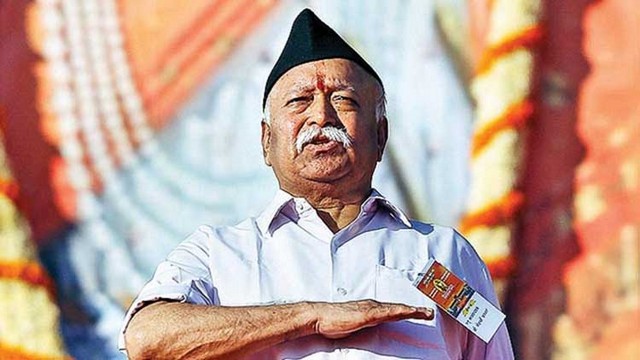
Word ‘anti-National’ has been more in vogue form last few years. Simply put all those who are criticizing the RSS and its progeny are labeled as anti-National. As fountainhead of Hindu Nationalism RSS is becoming stronger, it has been trying to link patriotism and religion. While hailing Hindus for their loyalty to this nation, the subtle hints are being circulated about Muslims in particular that they are more loyal to Pakistan. In cleverly worded articulation, (HT Jan 02, 2020) the chief of RSS, Mohan Bhagwat said that Hindus are patriotic by nature due to their religion. He also twists a sentence of Gandhi to state that Gandhi’s patriotism had its origin in Hindu religion, “All Indians worship motherland. But Gandhi said my patriotism comes from my religion. So if you are a Hindu then you will be an automatic patriot. You may be an unconscious Hindu, you may need awakening, but a Hindu will never be anti-India.”

Before analyzing the subtle hints hidden in this formulation let’s understand that when RSS began, its major ideologue M.S. Golwalkar was forthright in praising the Nazis and recommended the treatment for Muslims and Christians (Foreign religions, according to RSS) on the lines which were used by Nazis for Jews. Now from last few decades as RSS is becoming more powerful through it multiple organizations like BJP, VHP, ABVP, Vanvasis Kalyan Ashram, and through its infiltration into different wings of state, media and education, it is using more subtle language, while communicating the same Hindu nationalist ideology. The meaning and content remains the same, which Golwalkar had outlined in ‘We or Our Nationhood Defined’, but the presentation is well decorated, subtle to the extent of confusing many in the society.

As far as Gandhi is concerned, for him religion was a personal matter. He did call himself as sanatani Hindu, but his Hinduism was liberal and inclusive. His religion had more to do with moral values. He derived his spiritual strength from all the religions, “I consider myself as good a Muslim as I am a Hindu and for that matter, I regard myself as equally good a Christian or a Parsi”. (Harijan, May 25 197, page 164). There is respect and inclusivity for people of other religions in his practice of Hinduism. This is in total contrast to exclusivist, narrow understanding and practice of Hinduism of RSS, which is continuously raking up issues to frighten and intimidate people of other religions. As Gandhi’s practice of his religion was liberal and inclusive he could lead the people of different religions in the struggle against British rule.

He also did not connect up religion and nationality or for that matter to patriotism. In that sense patriotism, love for one’s country and countrymen, is not rooted in the religion but in the ‘Nationhood’ which is not an outcome of religion for that matter. His use of word religion has two levels. One is the popular notion of customs, identity, faith etc. and second the morality inherent in the teachings of religion. Though he is very clear that morality is the core of religions, the likes of RSS or for that matter even the Muslim communalists (Muslim League etc.) take his use of the word purely at the level of rituals, holy places etc. only.

The ideologues, who are a part of Hindu nationalist outlook, close to RSS mindset, are burning the midnight oil to dig fragments of sentences, not only from Gandhi and other national icons to present as if the values of these makers of ‘India as a nation’ had ideas similar to that of RSS. In the process they retain the RSS ideology while trying to get more legitimacy by showing their similarity to the great icons of India’s freedom movement and the process of ‘India as a nation in the making’.

So now the formulation is that Hindus are naturally patriots, they can’t be anti national. The other side of this is that the nationalism and patriotism of those belonging to other religions is suspect, subject to certification by those who have a monopoly of being patriots and nationalists, those claiming to represent Hindus.

This totally bypasses the great contributions of Muslims and Christians in making of modern India. Where do you place the millions of Muslims who followed Khan Abdul Gaffar Khan and Maulana Abul Kalam Azad who stood not only against British rule but also against the concept of partition of India? Where do you place the likes of Shibli Nomani, Hasrat Mohani, and Ashfaqullah Khan? How do you value the contribution of Allahbaksh who was instrumental in organizing the conference of Muslims to oppose the resolution for separate Pakistan by Mohammad Ali Jinnah? There were innumerable organizations formed by Muslims who rubbed shoulders with participants in the struggle for freedom movement.

In Independent India people of all religions have contributed with equal zeal in making of modern India, in all the fields of industry, education, sports, culture and what have you. Are they not patriots or nationalists?

On the other side this formulation of Mr. Bhagwat is a clever defense of the one trained in its shakhas who murdered Gandhi, Nathuram Godse. How do we label those who participated and led in demolition of Babri Mosque, which was called as a crime by the Supreme Court? As per Bhagwat do acts of killing of Gandhi, Kalburgi, Dabholkar, Gauri Lankesh and Govind Pansare fall in the category of patriotic acts? Where do so many Hindus involved in spying, smuggling, black marketing etc. are to be placed?

Interestingly as RSS is making a show of paying respect to Gandhi, at the same time its trained pracharaks and fellow ideologues and many of its affiliated organizations are openly paying respect to Nathuram Godse. This Gandhi anniversary tweets praising Godse were aplenty, mostly from Hindus. That just shows the ideological manipulation capability of the multi headed hydra, RSS. Only such an organization can simultaneously make the show of paying obeisance to Gandhi while quietly enhancing the ideology which led to his murder.

5 January 2021

Source: countercurrents.org

Assange wins. The cost: The crushing of press freedom, and the labelling of dissent as mental illness

By Jonathan Cook

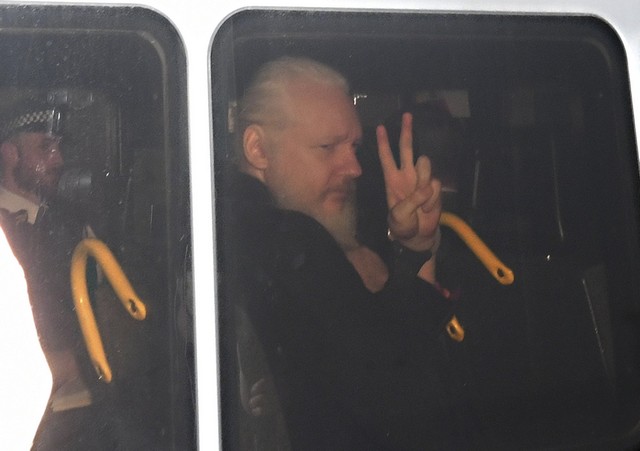
The unexpected decision by Judge Vanessa Baraitser to deny a US demand to extradite Julian Assange, foiling efforts to send him to a US super-max jail for the rest of his life, is a welcome legal victory, but one swamped by larger lessons that should disturb us deeply.

Those who campaigned so vigorously to keep Assange’s case in the spotlight, even as the US and UK corporate media worked so strenuously to keep it in darkness, are the heroes of the day. They made the price too steep for Baraitser or the British establishment to agree to lock Assange away indefinitely in the US for exposing its war crimes and its crimes against humanity in Iraq and Afghanistan.

But we must not downplay the price being demanded of us for this victory.

A moment of celebration

We have contributed collectively in our various small ways to win back for Assange some degree of freedom, and hopefully a reprieve from what could be a death sentence as his health continues to deteriorate in an overcrowded Belmarsh high-security prison in London that has become a breeding ground for Covid-19.

For this we should allow ourselves a moment of celebration. But Assange is not out of the woods yet. The US has said it will appeal the decision. And it is not yet clear whether Assange will remain jailed in the UK – possibly in Belmarsh – while many months of further legal argument about his future take place.

The US and British establishments do not care where Assange is imprisoned – be it Sweden, the UK or the US. What has been most important to them is that he continues to be locked out of sight in a cell somewhere, where his physical and mental fortitude can be destroyed and where he is effectively silenced, encouraging others to draw the lesson that there is too high a price to pay for dissent.

The personal battle for Assange won’t be over till he is properly free. And even then he will be lucky if the last decade of various forms of incarceration and torture he has been subjected to do not leave him permanently traumatised, emotionally and mentally damaged, a pale shadow of the unapologetic, vigorous transparency champion he was before his ordeal began.

That alone will be a victory for the British and US establishments who were so embarrassed by, and fearful of, Wikileaks’ revelations of their crimes.

Rejected on a technicality

But aside from what is a potential personal victory for Assange, assuming he doesn’t lose on appeal, we should be deeply worried by the legal arguments Baraitser advanced in denying extradition.

The US demand for extradition was rejected on what was effectively a technicality. The US mass incarceration system is so obviously barbaric and depraved that, it was shown conclusively by experts at the hearings back in September, Assange would be at grave risk of committing suicide should he become another victim of its super-max jails.

One should not also discard another of the British establishment’s likely considerations: that in a few days Donald Trump will be gone from the White House and a new US administration will take his place.

There is no reason to be sentimental about president-elect Joe Biden. He is a big fan of mass incarceration too, and he will be no more of a friend to dissident media, whistleblowers and journalism that challenges the national security state than was his Democratic predecessor, Barack Obama. Which is no friend at all.

But Biden probably doesn’t need the Assange case hanging over his head, becoming a rallying cry against him, an uncomfortable residue of the Trump administration’s authoritarian instincts that his own officials would be forced to defend.

It would be nice to imagine that the British legal, judicial and political establishments grew a backbone in ruling against extradition. The far more likely truth is that they sounded out the incoming Biden team and received permission to forgo an immediate ruling in favour of extradition – on a technicality.

Keep an eye on whether the new Biden administration decides to drop the appeal case. More likely his officials will let it rumble on, largely below the media’s radar, for many months more.

Journalism as espionage

Significantly, Judge Baraitser backed all the Trump administration’s main legal arguments for extradition, even though they were comprehensively demolished by Assange’s lawyers.

Baraitser accepted the US government’s dangerous new definition of investigative journalism as “espionage”, and implied that Assange had also broken Britain’s draconian Official Secrets Act in exposing government war crimes.

She agreed that the 2007 Extradition Treaty applies in Assange’s case, ignoring the treaty’s actual words that exempt political cases like his. She thereby opened the door for other journalists to be seized in their home countries and renditioned to the US.

Baraitser accepted that protecting sources in the digital age – as Assange did for whistleblower Chelsea Manning, an essential obligation on journalists in a free society – now amounts to criminal “hacking”. She trashed free speech and press freedom rights, saying they did not provide “unfettered discretion by Mr Assange to decide what he’s going to publish”.

She appeared to approve of the ample evidence showing that the US spied on Assange inside the Ecuadorian embassy, both in violation of international law and his client-lawyer privilege – a breach of his most fundamental legal rights that alone should have halted proceedings.

Baraitser argued that Assange would receive a fair trial in the US, even though it was almost certain to take place in the eastern district of Virginia, where the major US security and intelligence services are headquartered. Any jury there would be dominated by US security personnel and their families, who would have no sympathy for Assange.

So as we celebrate this ruling for Assange, we must also loudly denounce it as an attack on press freedom, as an attack on our hard-won collective freedoms, and as an attack on our efforts to hold the US and UK establishments accountable for riding roughshod over the values, principles and laws they themselves profess to uphold.

Even as we are offered with one hand a small prize in Assange’s current legal victory, the establishment’s other hand seizes much more from us.

Vilification continues

There is a final lesson from the Assange ruling. The last decade has been about discrediting, disgracing and demonising Assange. This ruling should very much be seen as a continuation of that process.

Baraitser has denied extradition only on the grounds of Assange’s mental health and his autism, and the fact that he is a suicide risk. In other words, the principled arguments for freeing Assange have been decisively rejected.

If he regains his freedom, it will be solely because he has been characterised as mentally unsound. That will be used to discredit not just Assange, but the cause for which he fought, the Wikileaks organisation he helped to found, and all wider dissidence from establishment narratives. This idea will settle into popular public discourse unless we challenge such a presentation at every turn.

Assange’s battle to defend our freedoms, to defend those in far-off lands whom we bomb at will in the promotion of the selfish interests of a western elite, was not autistic or evidence of mental illness. His struggle to make our societies fairer, to hold the powerful to account for their actions, was not evidence of dysfunction. It is a duty we all share to make our politics less corrupt, our legal systems more transparent, our media less dishonest.

Unless far more of us fight for these values – for real sanity, not the perverse, unsustainable, suicidal interests of our leaders – we are doomed. Assange showed us how we can free ourselves and our societies. It is incumbent on the rest of us to continue his fight.

This essay first appeared on Jonathan Cook’s blog: https://www.jonathan-cook.net/blog/

Jonathan Cook won the Martha Gellhorn Special Prize for Journalism.

4 January 2021

Source: countercurrents.org

Health Imperialism and Discriminatory International Laws

By Soraya Sepahpour-Ulrich

“Hypocrisy can afford to be magnificent in its promise, for never intending to go beyond promise costs nothing.” – Edmund Burke

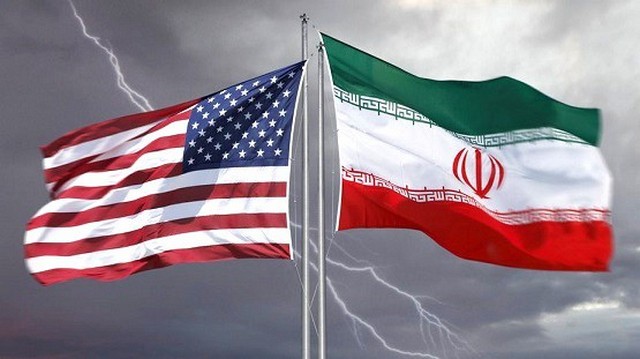
Joe Biden’s statements on resuscitating the 2015 Joint Comprehensive Plan of Action (JCPOA) has also reignited an old debate inside Iran. With the Rouhani administration clearly siding with those pushing for unconditional return to the ‘deal’ signed with the U.S. and five other world powers, it is important to discuss what is at stake – specifically as it relates to medical isotopes and Iran’s enrichment needs.

While the United States and its western ‘allies’ demand that Iran stop all enrichment of up to 20% for its research reactor and medical isotopes, the US government has continued its efforts to commercialize nuclear medicine.

In 2011, while the Obama administration was busy talking in secret with the ‘reformist’ groups attempting to influence and undermine Iran’s rights under the Non-Proliferation Treaty (NPT), the U.S. Congress passed the “American Medical Isotopes Production Act of 2011” . The Bill calls for providing uranium to private sector companies to make medical isotopes with U.S. government undertaking the task of waste removal: “The lease contracts shall provide for the Secretary to retain responsibility for the final disposition of radioactive waste created by the irradiation, processing, or purification of leased uranium.” It is important to read the entire Bill here: E:BILLSS99.IS (govinfo.gov)

Under Section 6 titled ‘DOMESTIC MEDICAL ISOTOPE PRODUCTION’, the Bill stipulates:

“(a) In General.— Chapter 10 of the Atomic Energy Act of 1954 (42 U.S.C. 2131 et seq.) is amended by adding at the end the following:

“Sec. 112. Domestic Medical Isotope Production.

“a. The Commission may issue a license, or grant an amendment to an existing license, for the use in the United States of highly enriched uranium as a target for medical isotope production in a nuclear reactor, only if, in addition to any other requirement of this Act.”

Clearly not a proliferation concern. America is the arbitrator of international treaties – it would seem with cooperation from other powers. But Iran’s uranium enriched to 19.75% – considered to be LEU and necessary for research reactors and medicinal purposes – has to be halted.

Through National Nuclear Security Administration, the U.S. is monopolizing and handing control over global medical isotope production to profit-driven companies. Here is the statement published on NNSA’s website:

“As part of its mission to minimize the use of highly enriched uranium (HEU), NNSA’s Office of Material Management and Minimization was tasked to lead the Molybdenum-99 (Mo-99) program. Mo-99 is an isotope that is used in over 40,000 medical procedures in the United States each day, but is 100% supplied by foreign vendors, most of which use HEU in the production process.”

It also identifies four private companies currently working with the U.S. government:

NorthStar Medical Radioisotopes, LLC, located in Beloit, Wisconsin

  • SHINE Medical Technologies, located in Janesville, Wisconsin Northwest
  • Medical Isotopes, located in Corvallis, Oregon
  • Niowave, Inc., located in Lansing, Michigan”

Medical isotopes are a lucrative, growing business and one that is essential to human health.

Radiotherapy can be used to treat some medical conditions, especially cancer, using radiation to weaken or destroy particular targeted cells.

  • Over 40 million nuclear medicine procedures are performed each year, and demand for radioisotopes is increasing at up to 5% annually.
  • Sterilization of medical equipment is also an important use of radioisotopes

The global radioisotope market was valued at $9.6 billion in 2016, with medical radioisotopes accounting for about 80% of the total, and poised to reach about $17 billion by 2021. North America is the dominant market for diagnostic radioisotopes with close to half of the market share, while Europe accounts for about 20%.  Hence, 70% of the global medical radioisotopes goes to a population of 778 million people (US 331 and EU 447 million) while 7 billion (global population 7.8 billion less US and EU) are left with only 30%.

Where there is health imperialism, profit, and discrimination, there is Bill Gates.  According to the Journal of Economics and Sociology (2015), Bill Gates, the single biggest contributor to World Health Organization (WHO):

“Gates calls for discussion “about which parts of the process [WHO] should lead and which ones others (including the World Bank and the G7 countries) should lead in close coordination.” While the article contains perfunctory nods to U.N. authority, as well as brief lip service to the idea of strengthening public health services in poor countries, there can be little doubt that Gates is advocating a new form of international institution, transcending the United Nations, targeting the developing world, and effectively controlled by the wealthy nations of the West”.  

It comes as no surprise therefore that Gates in involved with nuclear medicine.  “TerraPower, the nuclear research venture founded by Bill Gates, is joining with Isotek Systems and the U.S. Department of Energy in a public-private partnership aimed at turning what otherwise would be nuclear waste into radiation doses for cancer treatment.”

Such benevolence.  But sovereign signatory nations party to the NPT are not permitted to cure their sick.

Furthermore, the more affluent people living in countries with limited access to nuclear medicine, find their way to the US or the EU for treatment, benefiting from their affluence while taking their home country’s wealth to the West.  And the gap is only growing.

In the USA there are over 20 million nuclear medicine procedures conducted per year, and in Europe about 10 million. In Australia there are about 560,000 per year, with 470,000 using reactor isotopes. The use of radiopharmaceuticals in diagnosis is growing at over 10% per year.

But in spite of the dire shortage of medical isotopes as reported by IAEA report – April 2020, JCPOA and the signatories, are demanding that Iran not produce this life-saving nuclear medicine.

The degree of double standards and hypocrisy cannot be emphasized enough. Only 10 nuclear reactors, many of which are nearing 50 years of operation, produce over 95% of the world’s supply. In 2007, Poland used HEU to supply medical isotopes – and continued.   Why and how is it that the IAEA and other members states have no problem with Poland possessing HEU?    “In 2007, during a supply crisis in the molybdenum 99 market (caused by breakdowns at some of the older reactors, particularly the Canadian NRU reactor), Poland’s MARIA reactor increased its HEU-based production of molybdenum 99 to fill the gap. Though the crisis has passed, the Polish reactor does not appear to have reduced its production. It too uses HEU fuel and targets.

One of the main suppliers of medical isotope is the Netherlands using bomb grade/HEU to process.    Obviously not an issue with the IAEA or the U.S. or anyone else.  South Africa has maintained around 80 kilograms of its HEU according to NTI Civilian HEU: South Africa | NTI   Clearly, blessed by America as they are working on producing LEU medical isotopes while the U.S. looks the other way

It is not clear how anyone can accept so much discrimination in applying science, and to enforce not only lawlessness, but health imperialism.

Soraya Sepahpour-Ulrich is an independent researcher and writer with a focus on US foreign policy.

26 December 2020

Source: countercurrents.org

A mandate from Christmas 2020: Let love and justice meet

By Dr Ranjan Solomon

On Christmas Day 2019, at a Christmas Eve Mass, parishioners were offered a powerful, yet challenging message on how we as everyday Christians must understand and observe Christmas. The priest narrated how the image of the manger is not just that of a humble abode. It is an inclusive and ecumenical space because Jesus came for all the people of the world. “There were shepherds living in the fields, keeping watch over their flock by night” (Luke2:8). “…after Jesus was born in Bethlehem of Judea, wise men from the East came to Jerusalem…” (Matthew 2:1). The apostle Matthew records that the birth of Jesus was accompanied by an extraordinary celestial event: a star that led the “wise men” to Jesus. This star “went before them, till it came and stood over where the young child was” (Matthew 2:9). What was this star? And how did it lead the wise men to the Lord? We must also recall that the manger makes reference to cattle. Most representations of Jesus’ birth show donkeys, cows, and sheep watching over the Holy Family and a camel or two arriving with the Three Kings. Many scholars believe Mary rode to Bethlehem on a donkey, and, as a result, many artistic representations show Joseph leading Mary into town as she rides on the back of a donkey. Donkeys were a common mode of transportation for the poor in biblical times.

The birth of Christ, the Christmas story, is so inclusive because it embodies every aspect of God’s creation. What is more important is that the first to sight the bright star were the shepherds. In the first century shepherds in Palestine represented one of the lowest social strata in society. Religious tradition of Jesus’ day labeled them as unclean. They were marginalized, poor, and considered as the outer layer of society; while the wise men represented the well to do, the educated, and the scholars of their day.

The social and theological implications of the manger are unambiguous: God’s love for all people was expressed in and through the coming of Jesus Christ. This love welcomed both the shepherds and the wise men at the same level. True love does not differentiate between God’s children. In Christ, the evil of discrimination and bigotry is obliterated.

In a caste-class ridden society, and, for that matter, in the church too, this image of the manger trashes the claims of the high and mighty – the capitalists of our time and the rich who see the poor and underclass as being lower in their claims to a place in Jesus’ life. When we stand before God, not only do our social differences lose their importance, our caste-class and ethnic differences are also exterminated. God’s love is for all people regardless of whether they are or of lower social and financial status in society. Not only do rich and poor, Jew and Gentile stand before God as equals, there are also no political boundaries. The migrant is received as a stranger in our presence. All are welcomed and accepted. In other words, when we stand before the holy, our racism and prejudice should melt away and we should become dependably human recognizing the other as a brother and a sister.

One of our most disturbing issues during this Christmas season is the situation of the workers and farmers, Dalits and Tribals. In Jesus’ ministry, he always took up cudgels for the discarded and shunned. They also included the sick, the sex workers, the sinners and sinned against, the child workers, the illiterate, the blind, the imprisoned, and everyone who is socially and otherwise bruised.

The Indian government and the Sangh Parivar in our country show no such tolerance and intent to include anyone except those who fall in their category of the highest caste and classes. The BJP plans to ‘Hinduize’ the country by patterns of ethnic cleansing and abandoning the multiform culture that India is. Instead, they would rather have just one type of people who show allegiance to their brand of ‘Hindutva’.

Our farmers, for example, are not from the upper castes (except for the Brahmins who own the largest portions of land). The BJP wants to force the small and marginal farmers and the landless away from their lands and traditional way of life. Instead, they want to pave the way for the benefit of the corporates whose only interest is not food for all but profit for them. The land legislations are essentially a land grab and based on sheer greed for the already rich. Many local and international human rights organizations have condemned India’s actions and policies against the farmers as oppressive and in violation of international law.

The Christmas message emphasizes the fact that our faith demands of us to champion today’s farmers, workers, Tribals, dalits, oppressed and abused women and children, LGBTQIAs, and to advocate for their rights. The appalling irony is that almost everything this government is doing is to violate the human dignity, equality, and respect for the human rights of the weakest. Our constitution dares us to follow the path of a secular, socialist, democratic Republic. The BJP government does the virtual opposite.

In the midst of life’s complex injustices, we must make Christmas the time to engage in the quest for renewal. For after all, there is something about the child in the manger that should rouse within us a commitment to a just and inclusive society. It is the challenge to the Church, especially to its Social Apostolate.

2020 has been one of horror for most Indians. Covid has taken away 146000 thousands lives, perhaps far more. We are ruled by a cruel and fascist regime that thinks nothing of throwing innocent people into jail, and allowing people to die in misery, watching in indifference when poor farmers end up in suicide. We are forced to muddle through fascistic and unmerited laws scripted and egged on by the rich and the powerful.

At this Christmas time, and as we head towards the end of another year, all of humankind must unite to transform this unjust and cruel society we live in, especially as it affects the poorest and most oppressed. Christians must live by three cornerstones- FAITH, HOPE, AND LOVE. That would allow us to co-exist with other humans in mutual love and respect and pave the way for justice and a renewed society. May Christmas 2020 and New Year 2021 inaugurate the pathways of a just society?

Dr. Ranjan Solomon is a human rights defender, thinker, and writer.

25 December 2020

Source: countercurrents.org
Reflections on Vietnam and Iraq: The Lessons of Two Failed Wars

By Andrew Bacevich

In choosing a title for his final, posthumously published book, the prominent public intellectual Tony Judt turned to a poem by Oliver Goldsmith, The Deserted Villagepublished in 1770. Judt found his book’s title in the first words of this couplet:

Ill fares the land, to hastening ills a prey
Where wealth accumulates, and men decay

A poignant sentiment but let me acknowledge that I’m not a big Goldsmith fan. My own preferences in verse run more toward Merle Haggard, whose country music hits include the following lyric from his 1982 song “Are the Good Times Really Over?”:

Is the best of the free life behind us now
And are the good times really over for good?

I wonder, though: Is it possible that the insights of an eighteenth-century Anglo-Irish novelist-poet and a twentieth-century American singer-songwriter, each reflecting on a common theme of decadence and each served up with a dollop of nostalgia, just might intersect?

Allow me to try the reader’s patience with a bit more of Goldsmith:

O luxury! thou curst by Heaven’s decree,
How ill exchanged are things like these for thee!
How do thy potions, with insidious joy,
Diffuse their pleasures only to destroy!
Kingdoms, by thee, to sickly greatness grown,
Boast of a florid vigour not their own;
At every draught more large and large they grow
A bloated mass of rank unwieldy woe.
Down, down they sink, and spread a ruin round.

Powerful stuff, but here’s Haggard making a similar point without frills:

I wish a buck was still silver
It was back when the country was strong
Back before Elvis
Before the Vietnam War came along…
Are we rolling down hill
Like a snowball headed for Hell?
With no kind of chance
For the Flag or the Liberty Bell

Let me concede from the outset that these laments emerge directly from the heart of the patriarchy. In our present moment, some will discount the complaints of Messrs. Goldsmith and Haggard as not to be taken seriously. As the second decade of the twenty-first century draws to a close, bellyaching white guys tend not to command a lot of sympathy.

Still, with this abysmal year finally ending, the melancholy notes sounded by Goldsmith and Haggard strike me as apt. The Age of Biden — or given our preference for faux intimacy, the Age of Joe and Kamala — beckons. Yet I’m anything but certain that 2021 will inaugurate a happier time.

That said, for those who believe history has its own rhymes and rhythms, the election of Biden and Harris just might herald a turning point of sorts. After all, for more than a century now, presidential elections occurring in even numbered years ending in zero have resulted in big changes.

Don’t take my word for it. Check the record.

Thanks to the assassin who prematurely terminated William McKinley’s presidency, the election of 1900 inaugurated the reformist Progressive Era. Two decades later, Americans yearning for a return to “normalcy” voted for Warren G. Harding. Instead of normalcy, they got the splashy upheaval of the Twenties and the ensuing Great Depression.

Once the balloting in 1940 handed Franklin Roosevelt an unprecedented third term, hopes entertained by some Americans of staying out of World War II were doomed. Global war vaulted the United States to a position of global primacy — and soon gave rise to new challenges. John F. Kennedy’s election in 1960 empowered a generation “born in this century, tempered by war, disciplined by a hard and bitter peace” to address those challenges. Unanticipated complications ensued, as they did again in 1980 and 2000, the former initiating the Reagan Revolution, the latter election of George W. Bush setting the stage for the Global War on Terror and, by extension, Donald Trump.

The challenges awaiting Biden and Harris arguably outweigh those that confronted any of those past administrations, Roosevelt’s excepted. In a recent New York Times column, the man who lost that disputed 2000 election, Al Gore, inventoried the most pressing problems that Biden’s team will confront. In addition to the coronavirus pandemic, they include:

“40 years of economic stagnation for middle-income families; hyper-inequality of incomes and wealth, with high levels of poverty; horrific structural racism; toxic partisanship; the impending collapse of nuclear arms control agreements; an epistemological crisis undermining the authority of knowledge; recklessly unprincipled behavior by social media companies; and, most dangerous of all, the climate crisis.”

That makes for quite a daunting catalog. Yet note this one striking omission: Gore makes no mention of America’s seemingly never-ending penchant for war and military adventurism.

Before the Vietnam War Came Along

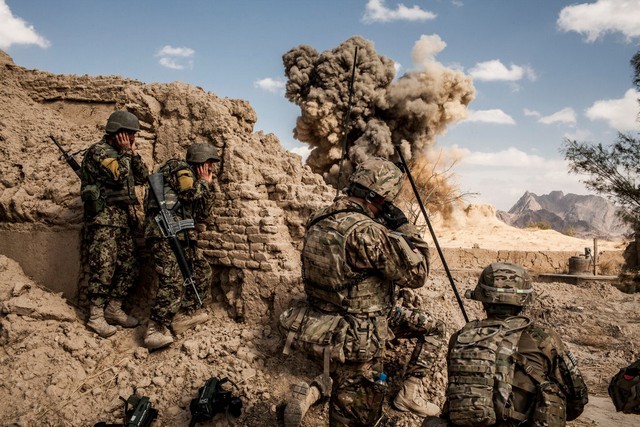
Surely, though, war has contributed in no small way to “the bloated mass of rank unwieldy woe” besetting our nation today. And were Merle Haggard to update “Are the Good Times Really Over?” he would doubtless include the 2003 invasion and occupation of Iraq alongside Vietnam as prominent among the factors that have sent this country caroming downward.

In the evening of my life, as I reflect on the events of our time that ended up mattering most, the wars in Vietnam and Iraq top my list. Together, they define the poles around which much of my professional life has revolved, whether as a soldier, teacher, or writer. It would be fair to say that I’m haunted by those two conflicts.

I could write pages and pages on how Vietnam and Iraq differ from each other, beginning with the fact that they are separated in time by nearly a half-century. Locale, the contours of the battlefields, the character of combat, the casualties inflicted and sustained, the sheer quantity of ordnance expended — when it comes to such measures and others, Vietnam and Iraq differ greatly. Yet while those differences are worth noting, it’s the unappreciated similarities between them that are truly instructive.

Seven such similarities stand out:

First, Vietnam and Iraq were both avoidable: For the United States, they were wars of choice. No one pushed us. We dove in headfirst.

Second, both turned out to be superfluous, undertaken in response to threats — monolithic Communism and Iraqi weapons of mass destruction — that were figments of fevered imaginations. In both cases, cynicism and moral cowardice played a role in paving the way toward war. Dissenting voices were ignored.

Third, both conflicts proved to be costly distractions. Each devoured on a prodigious scale resources that might have been used so much more productively elsewhere. Each diverted attention from matters of far more immediate importance to Americans. Each, in other words, triggered a massive hemorrhage of blood, treasure, and influence to no purpose whatsoever.

Fourth, in each instance, political leaders in Washington and senior commanders in the field collaborated in committing grievous blunders. War is complicated. All wars see their share of mistakes and misjudgments. But those two featured a level of incompetence unmatched since Custer’s Last Stand.

Fifth, thanks to that incompetence, both devolved into self-inflicted quagmires. In Washington, in Saigon, and in Baghdad’s “Green Zone,” baffled authorities watched as the control of events slipped from their grasp. Meanwhile, in the field, U.S. troops flailed about for years in futile pursuit of a satisfactory outcome.

Sixth, on the home front, both conflicts left behind a poisonous legacy of unrest, rancor, and bitterness. Members of the Baby Boom generation (to which I belong) have chosen to enshrine Vietnam-era protest as high-minded and admirable. Many Americans then held and still hold a different opinion. As for the Iraq War, it contributed mightily to yawning political cleavages that appear unlikely to heal anytime soon.

And finally, with both political and military elites alike preferring simply to move on, neither war has received a proper accounting. Their place in the larger narrative of American history is still unsettled. This may be the most important similarity of all. Both Vietnam and Iraq remain bizarrely undigested, their true meaning yet to be discerned and acknowledged. Too recent to forget, too confounding to ignore, they remain anomalous.

The American wars in Vietnam and Iraq are contradictions that await resolution.

Jaw, Jaw, Not War, War

For that very reason, when politicians (including Joe Biden) talk about war, they talk about others, their all-time favorite being the one fought against Nazi Germany between December 1941 and May 1945. There — and not in Vietnam or Iraq — do members of the establishment find the lessons that they have enshrined as permanently relevant.

The first American war against Germany in 1917-1918 doesn’t carry much weight at all. Just a couple of years ago, its centennial came and went virtually unnoticed. Likewise, the war against Japan that occurred in tandem with the second war against Germany seldom gets much attention either. We “remember Pearl Harbor” and that’s about it.

The war against the Nazis, however, is a gift that never stops giving. It yields a great bounty of lessons: never appease; never hesitate to call evil by its name; never back down; and never flinch from the challenges of leadership, which necessarily implies a willingness to use force. And in moments of distress, channel your inner Winston Churchill circa 1940: “Never surrender!”

The problem with clinging to such ostensibly canonical lessons today is that we are no longer the nation that defeated Nazi Germany. The United States was establishing itself as the dominant industrial power on the planet then, while Washington still had the capacity to mobilize the American people pursuant to what was described at the time as a “Great Crusade.” A taken-for-granted tradition of white supremacy underwrote a cultural unity that lent more than a modicum of substance to the claims of e pluribus unum. None of this remains faintly relevant today.

When it comes to present-day policy, the relevant fact is that we are the nation that failed in both Vietnam and Iraq. Along the way, we lost our status as the planet’s dominant industrial power. Meanwhile, Washington forfeited its authority to mobilize the American people for war. More recently, cleavages stemming from class, race, religion, gender, and ethnicity, split the country into antagonistic factions. Al Gore was merely premature when, as vice president, he famously mistranslated the nation’s motto as “out of one, many.”

Now, if you prioritize Vietnam and Iraq over the war against Nazi Germany, you’ll come face-to-face with a very different set of lessons. Here are four that the Biden administration might do well to contemplate.

First, situating the United States within a larger entity called the West — a notion dating from the time when America and Great Britain (with plentiful help from the Soviet Union) rallied to defeat Hitler — no longer works. The West doesn’t exist. These days when the United States opts for war, it must expect to fight alone or with only nominal allied assistance. This was true in Vietnam and again in Iraq. No grand coalition will form.

Second, however gussied up or camouflaged, imperialism no longer retains the slightest legitimacy. Peoples once classified as inferior, usually on the basis of skin color, no longer tolerate outsiders telling them how to govern themselves. Few Americans are willing to acknowledge the imperial motives that have long shaped this country’s global policies. The Vietnamese and Iraqis opposing the U.S. military presence in their midst entertained few doubts on that score; hence, the fierceness with which they defended their right to self-determination.

Third, if the United States remains intent on exporting its version of freedom and democracy, it will have to devise far less coercive ways of doing so. Rather than using armed force to alter the political landscape in faraway places, elites should acknowledge the limited utility of military power. Calling on the troops to defend, deter, and contain works far better than charging them to invade, occupy, and transform.

Fourth, dumb wars deplete. Vietnam and Iraq both inflicted untold damage on the American economy. With the U.S. government currently running an annual deficit of some $3 trillion, we can’t afford to squander any more money on ill-advised military campaigns. A less known quote attributed to Churchill commends itself in our present situation: “Jaw, jaw, jaw is better than war, war, war.”

As it enters the third decade of the twenty-first century, the United States is badly in need of more jaw, jaw and less war, war — more fix, fix, and less fight, fight.

Over to You, Joe

I am not enamored of presidents. I’m even less of a fan of “presidentialism” — the belief, firmly held by American elites, that the fate of the planet turns on what the president of the United States says or does (or doesn’t do). For that reason, I have learned not to expect much of whoever happens to occupy the Oval Office.

In practice, the Most Powerful Man in the World usually turns out to be not all that powerful. Rather than directing History with a capital H, he (not yet she), like the rest of us, is pretty much just along for the ride. In their own ways, Goldsmith and Haggard implicitly endorsed such a fatalistic perspective.

In political circles, a different view tends to prevail. Today, virtually all Democrats and many in the media ascribe to Donald Trump full blame for the mess in which this country finds itself. Yet Americans would do well to temper their expectations of what supplanting Trumpism with Bidenism is likely to produce.

On January 20, 2021, the “torch” to which John F. Kennedy memorably referred in his inaugural address will once again be passed. Let’s hope that, in grasping it, Biden and Harris will heed one of the principal lessons of the Kennedy era: no more Vietnams. To which I would simply add: no more Iraqs (or Afghanistans, or Yemens, or… well, you know the list). Only then might it become possible to undertake the daunting task of repairing our country.

Good luck, Joe. You, too, Kamala. In the coming days, you’re both going to need a truckful of it.

Andrew Bacevich, a TomDispatch regular, is president of the Quincy Institute for Responsible Statecraft.

22 December 2020

Source: countercurrents.org