Just International

Why Pakistan is reluctant to host US military bases?

By Abdus Sattar Ghazali

Pakistani officials have privately begun confirming a secret visit to Islamabad of CIA Director William Burns and are suggesting that he was firmly told that Pakistan would not host the spy agency’s drone bases on its territory, according to the daily Dawn.

This comes after New York Times in an article published on June 6 claimed that Mr Burns had travelled to Pakistan for meetings with Army Chief Gen Qamar Javed Bajwa and ISI Director General Lt Gen Faiz Hamid to explore the possibility of counterterrorism cooperation between the two sides.

The Central Intelligence Agency is said to be looking for bases around Afghanistan from where it could gather intelligence on Afghanistan and execute counterterrorism strikes after the completion of troop withdrawal from there, the Dawn said.

The purpose of quietly sharing of information by the Pakistani officials with select journalists at this stage apparently looked to dispel the impression that the two sides were engaged in negotiations on hosting of US drone bases by Pakistan.

New York Times article had at one point said that American officials believed that Pakistan wanted to allow the US to access a base. But, it indicated that Pakistani officials were setting very stringent conditions.

“In discussions between American and Pakistani officials, the Pakistanis have demanded a variety of restrictions in exchange for the use of a base in the country, and they have effectively required that they sign off on any targets that either the CIA or the military would want to hit inside Afghanistan, according to three Americans familiar with the discussions,” as per the NYT article.

Dawn quoted officials as saying that the CIA chief wanted to meet Prime Minister Imran Khan, but was plainly told that only counterpart meeting between heads of government of the two countries was possible.

The officials further said the CIA chief was categorically conveyed that no US operation would be allowed from Pakistani territory. They rather suggested to have asked the Americans to hand over the drones to them for carrying out the strikes against terrorist targets.

Three factors

There are three factors that will account for Pakistan’s perseverance and inflexibility on extending basing rights to the United States, according to Dr. Syed Ali Zia Jaffery of the Diplomat.

First, the consistency with which Pakistan’s Prime Minister Imran Khan has vociferously opposed his country’s past dealings with Washington has left little room for his government to acquiesce to U.S. requests. Before coming into power, Khan was a staunch critic of U.S. drone strikes in Pakistan, even launching a campaign against them.

Second, Pakistan aiding the United States in its efforts to keep an eye on the Taliban would likely vitiate the country’s ties with the powerful Afghan group. Pakistan can ill-afford to attenuate its relationship with the Taliban because it is becoming abundantly clear that they are the most dominant player in the Afghan political landscape.

Having already warned Afghanistan’s neighbors against making the historic mistake of allowing the U.S. to operate military bases, the Taliban would certainly not welcome Pakistan taking such a step. They could accuse Pakistan of wilting under U.S. pressure.

Third, Pakistan allowing the U.S. to use military bases for carrying out combat missions will likely be a cause of concern for two of Pakistan’s neighbors: China and Iran. That both countries are adversaries of the United States is all the more troubling. Washington has termed Beijing the biggest threat to U.S. national security.

Coupled with the U.S. aversion to the China-Pakistan Economic Corridor (CPEC), this mean that should Pakistan allow U.S. forces to operate out of its territory, Washington would almost certainly use that advantage to keep tabs on CPEC, which is expected to expand and gain momentum. Both Pakistan and China would not like to see the U.S. physically lurking around CPEC hotspots, including the critical Gwadar port.

Other than China, Iran will also be directly affected if Pakistan were to let the U.S. ensconce itself in close proximity to that country, Dr. Syed Ali Zia Jaffery, a strategic affairs and foreign policy analyst, concluded.

Airspace access

Pakistan has allowed the US military to use its airspace and given ground access so that it can support its presence in Afghanistan, a Pentagon official said last month.

David F. Helvey, Assistant Secretary of Defense for Indo-Pacific Affairs, told the US Senate Armed Services Committee last month that the United States would continue its conversation with Pakistan because it had a critical role in restoring peace to Afghanistan.

The official was replying to a question from Senator Joe Manchin, a West Virginia Democrat, who asked him to “outline your assessment of Pakistan, and particularly of Pakistani intelligence agencies, and the role you expect them to play in our future”.

“Pakistan has played an important role in Afghanistan. They supported the Afghan peace process. Pakistan also has allowed us to have over-flight and access to be able to support our military presence in Afghanistan,” Mr Helvey said.

“We will continue our conversations with Pakistan because their support and contribution to the future of Afghanistan, to future peace in Afghanistan, is going to be critical,” he added.

Diplomatic sources in Washington told Dawn that Pakistan had always allowed over-flights and ground access to the US to facilitate its military presence in Afghanistan and would continue to do so.

Abdus Sattar Ghazali is the Chief Editor of the Journal of America (www.journalofmaerica.net)

13 June 2021

Source: countercurrents.org

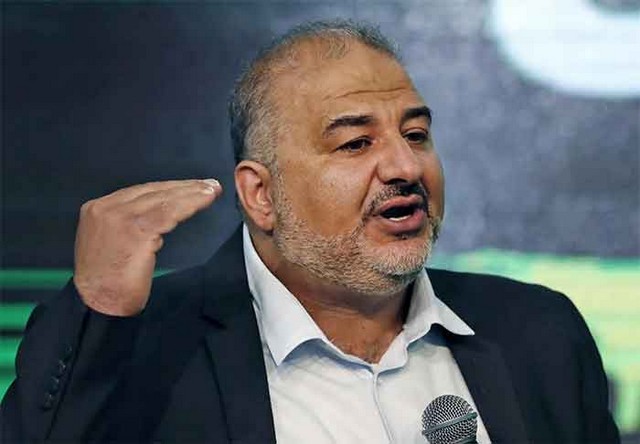
Power at Any Cost: How Opportunistic Mansour Abbas Joined Hands with Avowed ‘Arab Killers’

By Dr Ramzy Baroud

We are led to believe that history is being made in Israel following the formation of an ideologically diverse government coalition which, for the first time, includes an Arab party, Ra’am, or the United Arab List.

If we are to accept this logic, the leader of Ra’am, Mansour Abbas, is a mover and shaker of history, the same way that Naftali Bennett of the far-right Yamina Party, and Yair Lapid, the supposed ‘centrist’ of Yesh Atid, are also history makers. How bizarre!

Sensational media headlines and hyperboles aside, Israel’s new government was a desperate attempt by Israeli politicians to dislodge Benjamin Netanyahu, the country’s longest-serving Prime Minister, from power. While Lapid is fairly new to Israel’s contentious politics, Bennett and Abbas are opportunists, par excellence.

Lapid is a former TV anchorman. Despite his claims to centrist ideologies, his political views are as ‘right’ as they get. The problem is that such characters as Bennett, Ayelet Shaked, also of Yamina, and Netanyahu, of course, among others, have relocated the center of Israel’s political spectrum further to the right, to the point that the right became the center and the ultra-right became the right. This is how Israel’s neofascist and extremist politicians managed to become kingmakers in Israel’s politics. Bennett, for example, who in 2013 bragged about “killing lots of Arabs” in his life, is set to be the Prime Minister of Israel.

It is in this strange context that we must understand Mansour Abbas’ position. His meager four seats at the Israeli Knesset made his party critical in forming the coalition that has been purposely created to oust Netanyahu. Ra’am does not represent Israel’s Palestinian Arab communities and, by joining the government, Abbas is certainly not making history in terms of finding common ground between Arabs and Jews in a country that is rightly recognized by Israeli and international human rights groups as an apartheid state.

On the contrary, Abbas is moving against the current of history. At a time that Palestinians throughout historic Palestine – the occupied Palestinian territories and today’s Israel – are finally unifying around a common national narrative, Abbas is insisting on redefining the Palestinian agenda merely to secure a position for himself in Israeli politics – thus, supposedly ‘making history.’

Even before Abbas shook hands with Bennett and other Israeli extremists who advocate the killing of Palestinians as a matter of course, he made it clear that he was willing to join a Netanyahu-led government. This is one of the reasons behind the splintering of the once unified Arab political coalition, known as the Joint List.

Following his meeting with Netanyahu in February, Abbas justified his shocking turnabout with unconvincing political platitudes as one “needs to be able to look to the future, and to build a better future for everyone”, and so on.

The fact that Netanyahu was largely responsible for the despairing outlook of Israel’s Palestinian communities seemed entirely irrelevant to Abbas, who was inexplicably keen on joining any future political alliance, even if it included Israel’s most chauvinistic political actors. Sadly, though not surprisingly, this has proved to be the case.

Abbas’ position became impossible to sustain in May during the well-coordinated Israeli war in Gaza and the racist attacks on Palestinian communities in Jerusalem, the occupied West Bank and throughout Israel. Even then, when Palestinians were finally able to articulate a common narrative linking the occupation, siege, racism and apartheid in Jerusalem, the West Bank, Gaza and Israel together, Abbas insisted on developing a unique position that would allow him to sustain his chances of achieving power at any cost.

Although it was the Palestinian Arab communities that were under systematic attacks carried by Israeli Jewish mobs and police, Abbas called on his community to “be responsible and behave wisely,” and to “maintain public order and keep the law.” He even parroted similar lines used by right-wing Israeli Jewish politicians, as he claimed that “peaceful popular protests” by Palestinian communities inside Israel have turned “confrontational,” thus creating a moral equilibrium where the victims of racism, somehow, became responsible for their own plight.

Abbas’ position has not changed since the signing of the coalition deal on June 2. His political narrative is almost apolitical as he insists on reducing the national struggle of the Palestinian people to the mere need for economic development – not fundamentally different from Netanyahu’s own ‘economic peace’ proposal in the past. Worse, Abbas intentionally delinks the state of poverty and under-development in Palestinian communities from state-championed racial discrimination, which constantly underfunds Arab communities while spending exuberant amounts of funds on illegal Jewish settlements that are built on ethnically cleansed Palestinian lands.

“We have reached a critical mass of agreements in various fields that serve the interest of Arab society and that provide solutions for the burning issues in Arab society — planning, the housing crisis and, of course, fighting violence and organized crime,” Abbas said triumphantly on June 2, as if the rooted inequality, including communal violence and organized crime, are not direct results of racism, socio-economic inequality and political alienation and marginalization.

No history has been made by Abbas. He is but an example of the self-serving politician and a direct expression of the endemic disunity in the Palestinian Arab body politic inside Israel.

Sadly, the unprecedented success of the Arab Joint List following the March 2020 elections has now culminated in a tragic end, where the likes of Abbas become the unwelcomed ‘representative’ of a politically conscious and awakened community.

In truth, Mansour Abbas, a Palestinian Arab politician who is willing to find common ground with extremists and proud ‘Arab killers’, only represents himself. The future will attest to this claim.

Ramzy Baroud is a journalist and the Editor of The Palestine Chronicle.

11 June 2021

Source: countercurrents.org

The Great Reset: The Davos playbook for the post-Covid world

By Sajai Jose

Series Note: We are in the middle of an unprecedented crisis as the Covid-19 pandemic, and the lockdowns implemented in response, continue to deliver a series of economic, social and psychological shocks to the world. In this time of chaos, some of the world’s most powerful interest groups have stepped forward claiming that this crisis presents an opportunity to ‘reset’ the world’s systems.

Leading the charge is Geneva-based World Economic Forum (WEF) with its ‘Great Reset’ initiative, an ambitious plan to shape the contours of the post-Covid world. This three-part series critically examines the origin, workings and implications of the Great Reset agenda, which its critics have denounced as the corporate capture of global governance and the global commons.

The second part traces the origins of the Great Reset, setting it in the context of the WEF’s own history and its persistent efforts to dictate world affairs on behalf of its corporate benefactors.

For decades, the World Economic Forum has been trying to influence global policy in favour of the world’s financial super-elite. Thanks to the global crisis unleashed by the pandemic and lockdowns, it may finally have found a way to do it.

The World Economic Forum (WEF), a non-profit based in Geneva, states its mission as being “committed to improving the state of the world by engaging business, political, academic, and other leaders of society to shape global, regional, and industry agendas.” Over the years, the annual WEF meeting held at Davos-Klosters, a Swiss mountain resort, has emerged as the world’s most prestigious gathering for its financial, technological and political elites.

The Great Reset

The list of attendees for Davos 2020 (the 2021 event was held virtually) reads like no other; counting in it just about every major head of state from Donald Trump to Narendra Modi, heads of major multilateral organisations, some of the world’s biggest investors, representatives of major banking firms, leading lights from the worlds of economics, technology and law, as well as top executives of Fortune 500 companies, all of which, incidentally, are official partners of the WEF. In a display of the WEF’s global reach, the event was accompanied by virtual events in 430 cities across the world, pulling in thousands more attendees.

Later that year, as the world reeled from a series of unprecedented blows in the form of Covid-19, the lockdowns and the resultant social and economic crises, the WEF stepped into the vacuum created by these events to announce its ‘Great Reset’ initiative, the single most decisive and ambitious attempt by any organisation to shape the contours of the post-lockdown world.

What’s so great about The Great Reset?

Officially, the WEF describes the Great Reset as “a commitment to jointly and urgently build the foundations of our economic and social system for a more fair, sustainable and resilient future.” On the surface, this seems like a commendable attempt to give direction and focus to the world in a time of chaos. Such is the vision articulated by Klaus Schwab, founder and executive chairman of the WEF, which held its 2021 summit on the theme of the Great Reset.

According to Schwab, in a world beset by a host of economic, social and environmental challenges, “The Covid-19 crisis has shown us that our old systems are not fit any more for the 21st century. We have to restore a functioning system of smart global cooperation structured to address the challenges of the next 50 years.” He called for the world to “act jointly and swiftly to revamp all aspects of our societies and economies, from education to social contracts and working conditions. Every country, from the United States to China, must participate, and every industry, from oil and gas to tech, must be transformed. In short, we need a “Great Reset” of capitalism.”

Echoing these sentiments, Prince Charles, who announced the event along with Schwab, said, “In order to secure our future and to prosper, we need to evolve our economic model and put people and planet at the heart of global value creation.” António Guterres, Secretary-General of the United Nations, chimed in, “The Great Reset is a welcome recognition that this human tragedy must be a wake-up call. We must build more equal, inclusive and sustainable economies and societies that are more resilient in the face of pandemics, climate change and the many other global changes we face.”

In many ways, this rhetoric is indistinguishable from the language of bland do-goodism found in the proceedings of the United Nations or reports by international NGOs. But beyond rhetoric, what does the Great Reset have in store for the world, at least, as its originators would have it?

The gameplan

How does the WEF imagine it would actually work itself out in terms of policies and institutional and structural changes? Here is how Schwab, who has personally conceptualised the Great Reset, and has even published a book on it explaining his ideas, describes its three main components:

Stakeholder economy: The first component consists of government policies that would steer the market toward “fairer outcomes”, ultimately to build a “stakeholder economy.” This calls for, among other things, improved government coordination (for example, in tax, regulatory, and fiscal policy), new rules governing intellectual property, trade, and competition, and reforms that promote more equitable outcomes, such as wealth taxes.

Shared goals: The second component of the Great Reset agenda is to ensure that investments advance shared goals that benefit the world at large. Among other things, this calls for the ambitious economic-stimulus plans announced by most major countries, as well as investments from private entities and pension funds, to be used to build a new, “socially equitable and environmentally sustainable global economy” that works in the long term.

Technology governance: The third priority of the Great Reset is to manage and direct the ‘Fourth Industrial Revolution,’ so that its disruptive impacts are minimised, and its benefits maximised. Among other things, the WEF calls for greater collaboration between governments, corporations, universities, research institutions etc., to achieve this. (The WEF’s advocacy of the Fourth Industrial Revolution or Industry 4.0 was covered in detail in the first part of this series).

The Great Reheat?

Schwab’s book outlining his vision of the Great Reset has been touted as “the first policy book on the Covid crisis globally.” But given how comprehensively it deals with just about every aspect of governance and the economy, it’s clear that there’s more to it than meets the eye.

Not surprising then, that it was published as early as June 2020, when the world was still reeling from the lockdowns. It’s actually a much-reheated dish, which recycles many of the ideas Schwab and the WEF has been championing for decades through a number of publications and events over the years. Of special interest among these is a 600-page report released as part of the WEF’s ‘Global Redesign Initiative,’ organised along with the United Nations in the aftermath of the 2008 financial crisis, and described as “the most comprehensive proposal for re-designing global governance since the formulation of the U.N.”

All of the WEF’s proposals have more or less the same official line: a radical transformation of global systems in line with new technological, political and environmental realities. What is never mentioned is that this transformation, conceived and promoted by technocrats such as Schwab, and sponsored by global financial powers whose interests it is meant to serve, is to be executed top-down, ignoring democratic norms and bypassing parliament and other public institutions; a process euphemistically called ‘public-private partnership.’

The Great Reset in action

The WEF’s high profile but exclusive annual Davos event, now the top draw for political and policy leaders around the globe, is the most significant conduit through which the organisation influences government policies worldwide. Thanks to the intense media buzz it creates around these events, they also play a huge role in influencing the general public with the ideas it wants to promote.

At the moment, the WEF is actively injecting the idea of a ‘Great Reset’ into the mainstream through slickly produced video features and podcasts targeting the general public, apart from major features in such favoured outlets as The Economist and Time magazine. In fact, Time’s special issue on Davos 2020 was produced in partnership with the World Economic Forum (not coincidentally, Time’s owner Marc Benioff sits on the WEF board).

The WEF is also increasingly playing a hands-on role when it comes to the implementation of its agenda through a range of ‘strategic partnerships’ and affiliate programmes such as Global Shapers, Young Global Leaders and UpLink Platform which cover not just manufacturing and trade, but every field from governance to agriculture to health.

A particularly ambitious effort is its Fourth Industrial Revolution Network, which opened its India Centre in Mumbai in 2018, in partnership with NITI Aayog, India’s apex planning body, explicitly defining its mission as to “co-design, test and refine governance protocols and policy frameworks” that enable Industry 4.0.

Corporate capture of global governance

The true significance of the Great Reset cannot be understood without knowing the history and agenda of its originator. The WEF started life in 1971 as the European Management Forum, the brainchild of Schwab, then a business professor at the University of Geneva. It later broadened its invitee list to include political leaders and its agenda to include “resolving international conflicts.” Afterwards, it introduced a membership system for the world’s 1,000 leading companies, and in 1987, changed its name to ‘World Economic Forum.’

Even though it claims to be “independent, impartial and not tied to any special interests,” by way of disclaimer, the fact is that the WEF organisation is the premier mouthpiece for global financial and corporate elites today. It’s a central player in a tightly-knit web of privately funded mega ‘non-profits’, ‘think tanks’ and assorted lobbying organisations through which the world’s power elite seek to shape policies and events to their advantage.

However, the WEF is not just any industry lobbying group. It can be argued that especially in the last decade or so, the Davos events have almost become a de facto world parliament, eclipsing even the UN General Assembly meetings in the breadth and depth of influence and prestige it commands.

Not content to project itself as a kind of faux-U.N. for plutocrats, in 2019 the WEF went one step ahead and signed a memorandum of understanding (MOU) to officially partner with the U.N. The move was widely condemned by hundreds of leading civil society organisations, who denounced it as “corporate capture of global governance,” which they said “delegitimises the U.N. and weakens the role of states in global decision-making.”

Furthermore, they point out that the agreement grants transnational corporations (not coincidentally, all WEF members) preferential access to the UN System, at the expense of states and public interest actors. A key component of the agreement are public-private partnerships to globally deliver public goods in many fields, including education, financing, climate change, and health.

The WEF calls itself “the international organisation for public-private cooperation.” As it turns out, their use of the definite article ‘the’ is more significant than it appears. One commentator recalled how the WEF’s Global Redesign Initiative report had “recommended a sort of public-private United “Nations” – something that has now been formalised in this MoU.”

Backed as it is by the full weight of some of the world’s most powerful financial interests and technology corporations, the Great Reset is more than a theoretical construct or a techno-fantasy woven on the magic mountain of Davos.

And given the evident compliance of political and policy elites to this agenda, it very much has the power to remake the world in its image.

(To be continued)

Sajai Jose is a freelance journalist

11 June 2021

Source: countercurrents.org

Modi’s silence over London, Ontario attack tells us a lot about his mindset

By Gurpreet Singh

The hawkish Prime Minister of India, who is generally prompt in denouncing terrorism anywhere in the world, remains quiet over the recent killings of four members of a Muslim family in Ontario.

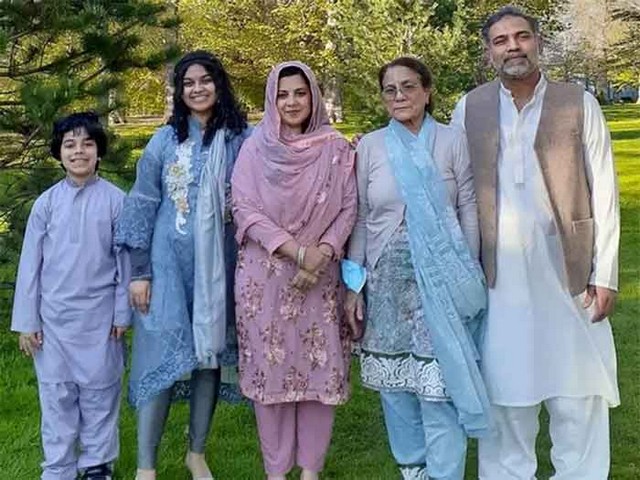
On Sunday, 74-year-old Talat Afzaal, her 46-year-old son Salman Afzaal, 44-year-old daughter-in-law Madiha Salman and 15-year-old granddaughter Yumma Afzaal, were struck by a vehicle in a pre-planned manner in London, while the family was out on a walk. A nine-year-old boy is still recovering from his injuries in the hospital.

Canadian Prime Minister Justin Trudeau has already described this as a terrorist incident, and the police believe it is a hate crime.

However, Indian Prime Minister Narendra Modi, who is fond of making statements on terror-related incidents on twitter, did not react.

This is in sharp contrast to his tweets condemning a similar terror attack in London, UK, in June 2017. Eight people died in that incident, which was blamed on Islamic extremists. The attackers had mowed down pedestrians.

The only explanation could be Modi’s own prejudice against Muslims.

After all, attacks on religious minorities, especially Muslims, have grown under his right wing Hindu nationalist Bhartiya Janata Party (BJP) government since 2014.

The BJP aspires to turn India into a Hindu theocracy. Modi himself faced a travel ban by the US and other western countries for his complicity in the 2002 massacre of Muslims. This was when Modi was the Chief Minister of Gujarat, where thousands of Muslims were targeted by the mobs under his watch after a train carrying Hindu pilgrims caught fire, leaving more than 50 people dead. Modi had blamed it on Muslims. Though he was never charged, the survivors and human rights activists continue to allege his involvement. Modi was able to visit the US after becoming Prime Minister in 2014.

It is interesting that Modi took quick notice of the 2017 terror attack in London, UK, but conveniently overlooked what happened in London, Canada. This may be because the perpetrators in the UK attack were alleged to be Muslims, whereas in Canada the suspect is a non-Muslim.

This is highly problematic, but not surprising, considering Modi’s track record on terrorism. He had introduced a highly controversial female ascetic, Sadhvi Pragya Singh Thakur, into politics during the 2019 election as a BJP candidate. Thakur now sits in the Indian Parliament. She was an accused in the 2008 bombings in a Muslim community that claimed 10 lives. The incident was planned and executed by Hindu extremists to terrorise Muslims. The trial isn’t over yet, but Thakur got a bail on medical grounds and fought the election.

Modi justified her candidacy by saying that Hindus can never be involved in terrorism. In other words, terrorism can only be attributed to Muslims or any other faith group, as far as his brand of politics is concerned. It is refreshing to see Trudeau acknowledging majoritarian terrorism in Canada, but that is unlikely to happen in Modi’s India. His indifference to the London, Ontario attack only proves that.

Gurpreet Singh is a journalist

10 June 2021

Source: countercurrents.org
On the Politics of Victory and Defeat: How Gaza Dethroned the King of Israel

By Dr Ramzy Baroud

How did Benjamin Netanyahu manage to serve as Israel’s longest-serving Prime Minister? With a total of 15 years in office, Netanyahu surpassed the 12-year leadership of Israel’s founding father, David Ben Gurion. The answer to this question will become particularly critical for future Israeli leaders who hope to emulate Netanyahu’s legacy, now that his historic leadership is likely to end.

Netanyahu’s ‘achievements’ for Israel cannot be judged according to the same criteria as that of Ben Gurion. Both were staunch Zionist ideologues and savvy politicians. Unlike Ben Gurion, though, Netanyahu did not lead a so-called ‘war of independence’, merging militias into an army and carefully constructing a ‘national narrative’ that helped Israel justify its numerous crimes against the indigenous Palestinians, at least in the eyes of Israel and its supporters.

The cliched explanation of Netanyahu’s success in politics is that he is a ‘survivor’, a hustler, a fox or, at best, a political genius. However, there is more to Netanyahu than mere soundbites. Unlike other right-wing politicians around the world, Netanyahu did not simply exploit or ride the wave of an existing populist movement. Instead, he was the main architect of the current version of Israel’s right-wing politics. If Ben Gurion was the founding father of Israel in 1948, Netanyahu is the founding father of the new Israel in 1996. While Ben Gurion and his disciples used ethnic cleansing, colonization and illegal settlement construction for strategic and military reasons, Netanyahu, while carrying on with the same practices, changed the narrative altogether.

For Netanyahu, the biblical version of Israel was far more convincing than secular Zionist ideology of yesteryears. By changing the narrative, Netanyahu managed to redefine the support for Israel around the world, bringing together right-wing religious zealots, chauvinistic, Islamophobic, far-right and ultra-nationalist parties in the US and elsewhere.

Netanyahu’s success in rebranding the centrality of the idea of Israel in the minds of its traditional supporters was not a mere political strategy. He also shifted the balance of power in Israel by making Jewish extremists and illegal settlers in the occupied Palestinian territories his core constituency. Subsequently, he reinvented Israeli conservative politics altogether.

He also trained an entire generation of Israeli right-wing, far-right and ultra-nationalist politicians, giving rise to such unruly characters such as former Defense Minister and the leader of Yisrael Beiteinu, Avigdor Lieberman, former Justice Minister, Ayelet Shaked, and former Defense Minister, and Netanyahu’s likely replacement, Naftali Bennett.

Indeed, a whole new generation of Israelis grew up watching Netanyahu take the right-wing camp from one success to another. For them, he is the savior. His hate-filled rallies and anti-peace rhetoric in the mid-1990s galvanized Jewish extremists, one of whom killed Yitzhak Rabin, Israel’s former Prime Minister who engaged the Palestinian leadership through the ‘peace process’ and, ultimately, signed the Oslo Accords.

On Rabin’s death in November 1995, Israel’s political ‘left’ was devastated by right-wing populism championed by its new charismatic leader, Netanyahu, who, merely a few months later, became Israel’s youngest Prime Minister.

Despite the fact that, historically, Israeli politics is defined by its ever-changing dynamics, Netanyahu has helped the right prolong its dominance, completely eclipsing the once-hegemonic Labor Party. This is why the right loves Netanyahu. Under his reign, illegal Jewish colonies expanded unprecedentedly, and any possibility, however meager, of a two-state solution has been forever buried.

Additionally, Netanyahu changed the relationship between the US and Israel, where the latter was no longer a ‘client regime’ – not that it ever was in the strict definition of the term – but one that holds much sway over the US Congress and the White House.

Every attempt by Israel’s political elites to dislodge Netanyahu from power has failed. No coalition was powerful enough; no election outcome was decisive enough and no one was successful enough in convincing Israeli society that he could do more for them than Netanyahu has. Even when Gideon Sa’ar from Netanyahu’s own Likud party tried to stage his own coup against Netanyahu, he lost the vote and the support of the Likudists, later to be ostracized altogether.

Sa’ar later founded his own party, New Hope, continuing with the desperate attempt to oust the seemingly unconquerable Netanyahu. Four general elections within only two years still failed to push Netanyahu out. Every possible mathematical equation to unify various coalitions, all united by the single aim of defeating Netanyahu, has also failed. Each time, Netanyahu came back, with greater resolve to hang on to his seat, challenging contenders within his own party as well as his enemies from without. Even Israel’s court system, which is currently trying Netanyahu for corruption, was not powerful enough to compel disgraced Netanyahu to resign.

Until May of this year, Palestinians seemed to be marginal, if at all relevant to this conversation. Palestinians living under Israeli military occupation looked as if they were mollified, thanks to Israeli violence and Palestinian Authority acquiescence. Palestinians in Gaza, despite occasional displays of defiance, were battling a 15-year-long Israeli siege. Palestinian communities inside Israel seemed alien to any political conversation pertaining to the struggle and aspirations of the Palestinian people.

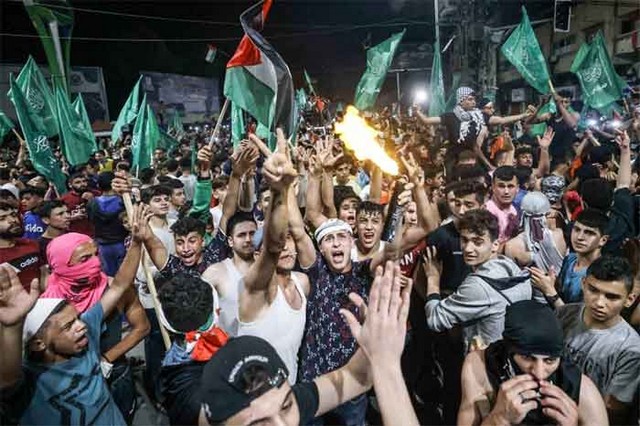
All of these illusions were dispelled when Gaza rose in solidarity with a small Palestinian community in Sheikh Jarrah in occupied East Jerusalem. Their resistance ignited a torrent of events that, within days, unified all Palestinians, everywhere. Consequently, the popular Palestinian revolt has shifted the discourse in favor of Palestinians and against the Israeli occupation.

Perfectly depicting the significance of that moment, the Financial Times newspaper wrote, “The ferocity of the Palestinian anger caught Israel by surprise.” Netanyahu, whose extremist goons were unleashed against Palestinians everywhere, similar to his army being unleashed against besieged Gaza, found himself at an unprecedented disadvantage. It took only 11 days of war to shatter Israel’s sense of ‘security’, expose its sham democracy and spoil its image around the world.

The once untouchable Netanyahu became the mockery of Israeli politics. His conduct in Gaza was described by leading Israeli politicians as “embarrassing”, a defeat and a “surrender”.

Netanyahu struggled to redeem his image. It was too late. As strange as this may sound, it was not Bennett or Lieberman who finally dethroned the “King of Israel’, but the Palestinians themselves.

Ramzy Baroud is a journalist and the Editor of The Palestine Chronicle.

10 June 2021

Source: countercurrents.org
G7 no longer able to order world around

By Martin Jacques

In these Covid times, “There is an ongoing attempt to reframe G7 as the representative and champion of the democratic world in the struggle against autocracy, shorthand for China…. West’s indifference to the vaccination needs of the developing world will be on full display at the G7 summit”.

***

Fine words will accompany the G7 summit this week. Much will be promised. And little will be delivered. It has long been like this. The G7 is no longer fit for purpose. Comprising the US, UK, Germany, France, Italy, Canada and Japan, in the 1970s the G7 was the overlord of the global economy. Today, the G7 is but a pale shadow of what it once was, reduced to the role of a declining faction within the global economy. It still talks in grandiose terms about its intentions, but the world has learnt to discount them. It is entirely appropriate that this week’s summit will be chaired by UK Prime Minister Boris Johnson, a grandmaster of verbal exaggeration and empty gestures.

The role and importance of the G7 has been greatly diminished by the rise of the developing world. The latter now accounts for almost two-thirds of the global economy compared with one-third by the West: in the 1970s, it was exactly the opposite, the West enjoying a two-third share and the developing world just one-third. The most dramatic illustration of the G7’s waning authority came in 2008 when, at the height of the financial crisis, it was effectively displaced by the more representative G20.

Ever since, the G7 has increasingly become an institution in search of a role. Under Biden, as if to confirm its eclipse as a global institution, there is an ongoing attempt to reframe G7 as the representative and champion of the democratic world in the struggle against autocracy, shorthand for China. To this end, South Korea, India, Australia and South Africa have been invited to attend the G7 summit this week. There is even talk of the G7 becoming the D10 (D being a reference to democracy). This, however, would only serve to emphasize the declining authority of the G7: from global leader to ideological sect.

The truth, however, is that this proposal is unlikely to gain assent either among existing G7 members or potential new members, excepting perhaps Australia. Here we get to the heart of the crisis of the G7. It is the rise of China, above all else, that has transformed the global economy, sidelined the G7 and, at the same time, reconfigured the various G7 economies.

Good relations with China are fundamental to the economic prospects of Germany, France and Italy. That is why they are opposed to the G7 becoming an anti-China crusade. So is Japan; and likewise would-be recruits such as South Korea and South Africa. Here laid bare, then, are the fault lines of the G7 and any potential extended membership.

The West is divided and fragmenting. The authority of the US is in decline, no longer able to get its way as it once was.

The best illustration of the growing impotence of the G7 concerns its relationship with the developing world. For eight years, the West has been trying to find a way of responding to the China-proposed Belt and Road Initiative (BRI). The subject is due to be raised again at this week’s G7 summit.

All the ideas that have been offered as a basis of a Western alternative to BRI have come to nought. This failure is extraordinarily significant and most revealing about the West on the one hand and China on the other.

BRI is an eloquent articulation of China’s relationship with the developing world, rooted in its own semi-colonial past and its position as a developing country.

The West, in contrast, has failed because its history has been precisely the opposite, one of colonization and the exploitation and subjugation of these countries. It has neither the experience, empathy nor motivation that is required. The existential gap between the rich Western world and the developing world is a multidimensional chasm.

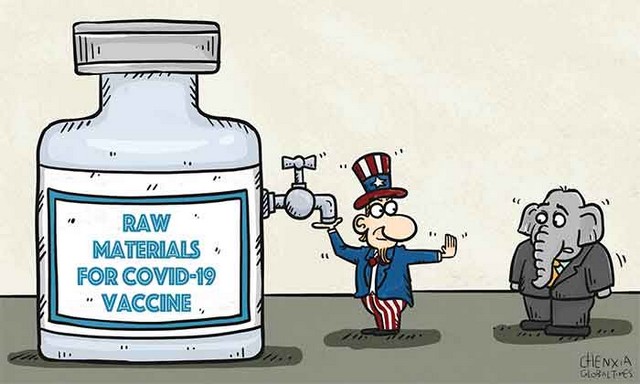
A dramatic example of the West’s indifference to the needs of the developing world will be on full display at the G7 summit. Although the US and UK, and increasingly Western Europe, have vaccinated a majority of their populations against COVID-19, the UK, to take one example, has not exported a single dose of vaccine to the developing world. It has kept all its vaccines for itself, even though its existing stock far exceeds its own future needs. As each new variant spreads around the world, however, it has become patently clear to everyone that no country will be protected until every country is protected.

In a pandemic, no country is an island. The US, which has so far failed to export a single dose of vaccine, is promising to export 80 million doses of vaccines later this year. Compare this with China’s record. In addition to the 777 million vaccinations already carried out in China, it has exported more than 300 million doses of vaccines to the developing world. Over half the vaccinations in Latin America, for example, have been sourced by China. It seems all too likely that the West will fail in its moral responsibility to vaccinate the developing world until it is too late and many millions have died unnecessarily.

***

Courtesy : globaltimes.cn, Jun 08, 2021.

Martin Jacques was until recently a Senior Fellow at the Department of Politics and International Studies at Cambridge University.

10 June 2021

SOurce: countercurrents.org

Four members of a Muslim family killed in London, Ontario terrorist atrocity

By Roger Jordan

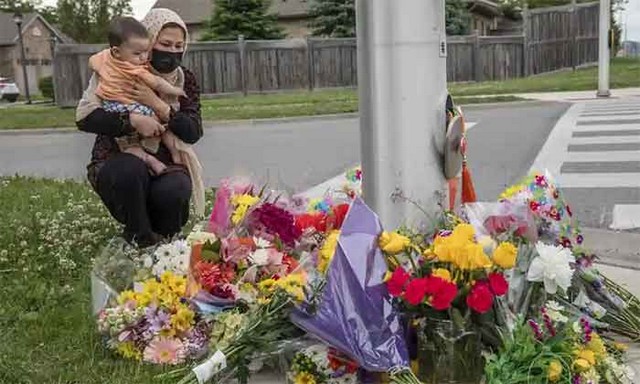
Four members of a Muslim family in London, Ontario were brutally slain Sunday night in a hit-and-run attack that police have described as “premeditated” and motivated by “hate” towards Islam and Muslims.

Police have revealed next to nothing about what they know about the far-right political views and connections of the 20-year-old assailant, Nathaniel Veltman. But they have characterized his murderous attack as a “hate crime” and have said they are considering adding “terrorism charges” to the four counts of murder and one of attempted murder laid against him on Monday.

The victims, whom Veltman struck at high speed with his black pickup truck at 8:40 p.m. Sunday while they were out for a stroll, are 46-year-old Salman Afzaal, his unnamed 74-year-old mother, his 44-year-old wife, Madiha Salman, and their 15-year-old daughter, Yumna Afzaal. Fayez Afzaal, aged nine, survived the attack and remains in hospital with serious injuries.

Salman reportedly came from Pakistan and was a well-known member of the Muslim community in London, which is one of Canada’s oldest. Danveer Chaudry, a family friend, said Salman was involved in community work at the local mosque. “He was a very humble guy, always there for the community. I feel sorry that we were not in touch in the last year because of COVID. When I heard this tragedy, my heart is in so much pain and sorrow,” he told CBC.

The authorities have said the assailant was wearing a body armour-style vest when he was detained by police 10 minutes after the attack. But as of yesterday afternoon, almost 48 hours after his arrest, they have said nothing about his background, including whether he was employed, unemployed or a student, had ties to a far-right group, or made any statement on his arrest.

A Reuters report released Monday night noted that relatives of the deceased had released a statement saying that Veltman’s attack was supported by a group with which he was associated. However, neither their statement nor any other publicly available report has identified the group.

Although details about Veltman’s past and political views are being kept strictly under wraps, the fact that the police are even considering terrorism charges indicates that substantial evidence of his association with the far right must be in their possession.

Adopted on the pretext of the 9/11 attacks, Canada’s draconian anti-terrorism laws have been invoked multiple times against Islamist extremists, including those entrapped by state agents. But Crown prosecutors and the police-security agencies have generally declined to bring terrorism charges against fascist and other far-right assailants.

For example, Alexandre Bissonnette, who killed six Muslims in an armed assault on the Quebec City mosque in January 2017, was convicted on six charges of first-degree murder. However, he faced no terrorism charges, even though his far-right convictions, including support for Trump and the French neo-fascist Marine Le Pen and hatred of Muslims, were well established.

Canadian political leaders acknowledged the political character of Veltman’s bloody crime. “This killing was no accident,” declared Prime Minister Justin Trudeau in a Tuesday House of Commons speech. “This was a terrorist attack.” He placed Veltman’s murderous rampage in the context of the Quebec City mosque shooting, the murder of a man at an Ontario mosque last September, and the harassment of black Muslim women in Edmonton, Alberta. He vowed to “dismantle far-right groups” and pointed to the government’s placing of the Proud Boys on Canada’s terrorism watch list as proof of its readiness to act.

New Democratic Party leader Jagmeet Singh declared that the attack had its source in “pervasive racism” in Canada. “The reality is this is our Canada,” Singh said. “How many more families will be killed before we do something? Another family can’t be mauled down in the streets and nothing happens. Muslims are not safe in this country.”

Behind these crocodile tears, the representatives of the political establishment are unwilling and incapable of acknowledging that the rise of Islamophobia and far-right forces is a direct product of the foreign and domestic policies pursued and supported by all parties in parliament. Contrary to Singh’s fatuous attempt to blame the entire population for anti-Muslim hysteria and discrimination with references to “our Canada,” the reality is that these reactionary sentiments have been systematically stoked and deployed to deadly effect by the Canadian ruling class.

Taking the neocolonial invasion and occupation of Afghanistan as a starting point, Canadian imperialism has been engaged in almost perpetual war for the past 20 years. Canada’s involvement in the US-led onslaughts against Afghanistan, Iraq, Libya and Syria have not only brutalized Canadian society, conveying the impression that all problems can be overcome by resorting to military force and high-powered firearms, but facilitated the eruption of virulent Islamophobia at home. This has proceeded in tandem with a savage assault on social spending and the gutting of democratic rights, including workers’ right to strike, which has ratcheted up social tensions to the breaking point, accelerated the growth of social inequality and created urban landscapes dominated by mass poverty and precarious employment.

To enforce this class war agenda against widespread social opposition, sections of the ruling elite have cultivated direct ties with far-right groups. This includes the use of fascistic thugs by company management at the Federated Cooperatives Ltd. oil refinery in Saskatchewan to intimidate locked out workers.

The Canadian ruling class’s response to the COVID-19 pandemic epitomizes the brutality of contemporary capitalist society. It has systemically prioritized profits over lives. While more than 25,000 Canadians have lost their lives to COVID-19, the country’s 48 billionaires have gained $78 billion in wealth during the 16-month-long pandemic.

Far-right forces, like Maxime Bernier’s People’s Party and the right-wing populist Coalition Avenir Quebec (CAQ), which currently forms Quebec’s provincial government, have undoubtedly spearheaded the demonization of the Muslim population. In 2015, the Conservative government of Stephen Harper, in which Bernier served, proposed setting up a “barbaric cultural practices” snitch line targeting Muslims. In 2019, the CAQ, to wide applause from Quebec’s ruling elite, adopted legislation, Bill 21, that attacks religious minorities, and especially Muslim women, by prohibiting the wearing of “religious signs” by public sector workers, including teachers, in “positions of authority;” and by denying public services, including health care and education, to observant women who wear the burka or niqab.

If these chauvinist and far-right forces have been able to act with such aggressiveness, it is because the discriminatory measures they propose have been given credibility and even endorsed by forces on the so-called “left.” For more than a decade Québec Solidaire, a pseudo-left party that supports Quebec independence, described the reactionary debate over “excessive accommodation” to immigrants and minorities out of which Bill 21 emerged as “necessary.” And while Singh took pot shots Tuesday at “politicians” who “have used Islamophobia for political gain,” the reality is that his own NDP is the lynchpin propping up the Trudeau minority government. A government that has continued and expanded Canada’s participation in US aggression and war in the Middle East and intensified its collaboration, under both Trump and Biden, with the fascistic Immigration and Customs Enforcement in the United States to stop refugees fleeing poverty and American imperialist violence from seeking asylum in Canada.

Trudeau and Singh’s bluster about fighting the far right is a fraud. The Trudeau government has played a central role in ignoring and downplaying the extensive evidence of far-right activities in the Canadian Armed Forces. When a far-right military reservist sought to assassinate Trudeau last July, the incident was trivialized and the assailant faced only minor weapons charges.

These processes are not unique to Canada. Far-right terrorists, nourished by the imperialist-led wars of aggression targeting predominantly Muslim countries and the discrimination and abuse against immigrants and refugees perpetrated by the major powers, have targeted Muslims around the world. The deadliest of these far-right rampages include the brutal shooting spree by fascist terrorist Brenton Tarrant in Christchurch, New Zealand, which claimed the lives of 51 people in two mosques in March 2019, and the July 2011 massacre by Anders Behring Breivik of 77 people, most of whom were members of the Labour Party’s youth movement.

Originally published in WSWS.org

9 June 2021

Source: countercurrents.org

The US Army’s “African Lion”: Hunting for A New Prey

By Manlio Dinucci

The African Lion, the largest military exercise on the African Continent planned and led by the US Army, has begun. It includes land, air, and naval maneuvers in Morocco, Tunisia, Senegal, and adjacent seas – from North Africa to West Africa, from the Mediterranean to the Atlantic. 8,000 soldiers are taking part in it, half of them are American, with about 200 tanks, self-propelled guns, planes, and warships. African Lion 21 is expected to cost $ 24 million, and has implications that make it particularly important.

This political move was fundamentally decided in Washington: the African exercise is taking place this year for the first time in Western Sahara, i.e. in the territory of the Sahrawi Republic, recognized by over 80 UN States, whose existence Morocco denied and fought by any means. Rabat declared that in this way “Washington recognizes Moroccan sovereignty over Western Sahara” and invites Algeria and Spain to abandon “their hostility towards the territorial integrity of Morocco“. Spain, who was accused by Morocco of supporting the Polisario (Western Sahara Liberation Front), is not participating in the African Lion this year. Washington reaffirmed its full support to Morocco, calling it “major non-NATO ally and partner of the United States”.

The African exercise takes place this year for the first time within the framework of a new US Command structure. Last November, the US Army Europe and the US Army Africa were consolidated into a single command: the US Army Europe and Africa. General Chris Cavoli, who heads it, explained the reason for this decision:

“The regional security issues of Europe and Africa are inextricably linked and can quickly spread from one area to another if left unchecked.”

Hence the decision of the US Army to consolidate the European Command and the African Command, so as to “dynamically move forces from one theater to another, from one continent to another, improving our regional contingency response times”.

In this context, African Lion 21 was consolidated with Defender-Europe 21, which employs 28,000 soldiers and over 2,000 heavy vehicles. It basically is a single series of coordinated military maneuvers that are taking place from Northern Europe to West Africa, planned and commanded by the US Army Europe and Africa. The official purpose is to counter an unspecified “malign activity in North Africa and Southern Europe and to defend the theater from adversary military aggression“, with clear reference to Russia and China.

Italy participates in African Lion 21, as well as in Defender-Europe 21, not only with its own forces but as a strategic base. The exercise in Africa is directed from Vicenza by the US Army Southern Europe Task Force and the participating forces are supplied through the Port of Livorno with war materials coming from Camp Darby, the neighboring US Army logistics base. The participation in African Lion 21 is part of the growing Italian military commitment in Africa.

The mission in Niger is emblematic, formally “as part of a joint European and US effort to stabilize the area and to combat illegal trafficking and threats to security“, actually for the control of one of the richest areas in strategic raw materials (oil, uranium, coltan, and others) exploited by US and European multinationals, whose oligopoly is endangered by the Chinese economic presence and other factors.

Hence the recourse to the traditional colonial strategy: guaranteeing one’s interests by military means, including support for local elites who base their power on their armed forces, behind the contrasting jihadist militias smokescreen. In reality, military interventions aggravate the living conditions of populations, reinforcing the mechanisms of exploitation and subjugation, with the result that forced migrations and consequent human tragedies increase.

Manlio Dinucci is an award winning author, geopolitical analyst and geographer, Pisa, Italy.

8 June 2021

Source: www.globalresearch.ca

Today I Saw Syrians Dancing and Celebrating Life, and a Return to Peace – but, of Course, the Western Media Won’t Report That

By Eva Bartlett

26 May 2021 – Although the West has waged 10 years of war on Syria, and there is much destruction, the entire country isn’t in ruins and the pulse of life continues, albeit strangled by brutal Western sanctions.

After Eastern Ghouta’s liberation in 2018, the Western media predictably went silent on the return of internally displaced Syrians and the rebuilding that had occurred. Today, in towns in the region outside the capital Damascus, behind dusty, battered metal shop shutters, I saw glossy new windows and even more rebuilding than I had when I was here in 2018.

In Douma, I saw lovely, smiling children, excited to practise their English with me. Given that they were born during the war and lived under the horrifically savage rule of the rebel groups Jaysh al-Islam and Faylaq al-Rahman, and their co-terrorists, their exuberance was remarkable. The traumas they endured they have either deeply buried within or miraculously healed from.

Since both the media and leaders in the West made such a big deal over the Douma chemical hoax, it was particularly rewarding to see life in the streets again.

Syrians in Eastern Ghouta were put through a hell that most of us, living safely far from war, cannot begin to fathom. I had seen their tortured faces shortly after their liberation in 2018. That made seeing them smiling, dancing, and celebrating the presidential elections today incredibly moving. The difference between then and now was like night and day.

Some were surprised when I posted videos on social media of a Syrian singer and orchestra performing at the Damascus Opera House two nights ago. Many assume the country has been completely destroyed, others are just unaware that it has a rich culture that hasn’t died, in spite of a decade-long war waged by the West.

Until the liberation, however, Syrians in Damascus risked being maimed or killed every time they went to work, to school, to the market, or even while they remained at home, when terrorist mortars and missiles rained down from Eastern Ghouta.

Back in 2014, leaving behind the hospitality of the small hotel I was staying in near the gate of Bab Sharqi, the Old City’s East Gate, I drifted over to a cluster of tables across from the beautiful Zaitoun Greek Orthodox cathedral and beside a closed restaurant. But instead of working on my laptop, as I’d intended, I ended up getting into a conversation with the owner of that restaurant, now called the Abu Zolouf bar.

As Abu Shadi and I spoke, terrorist-fired mortars fell in nearby districts. I wrote at the time:

“As it happened, I got two of four mortars on audio. The first occurred around 7:05 pm, which Abu Shadi estimated to be 200 metres away. His friend corrected him saying it was only 50 metres away (also about 20 metres from my hotel). Roughly 10 minutes later, the second mortar. There were two other mortars within half an hour. SANA news reported the injury of 17 civilians.”

Our conversation became about the incessant shelling, where the latest mortar had fallen, and his near-death experience with one.

“Two times mortars landed outside my restaurant. One would have killed me, but I went inside just before,”

he said, pointing to a spot on the ground next to the door. He lamented the loss of business as much as the threat posed by the mortars.

The other night, I visited the restaurant with a friend. Seeing Abu Shadi, we sat down with him and chatted about those days. Now, his hostelry is open and well frequented, guests sitting under light-strung olive trees enjoying the early summer evenings.

Also in 2014, one afternoon, wishing to escape the blazing sun, I leaned against the wall encircling the Old City, looking towards Jobar, then occupied by terrorist factions, roughly a kilometer away. As I wrote at the time, while I chatted with a friend,

“bullets whizzed past me, half a meter to my right, to my left. Everyone in the vicinity jumped up and ran, most looking panicked. We ran for about 50 meters, to a point which was apparently out of the terrorists’ range. One woman, hyperventilating and unable to stand, took a good 10 minutes to calm down, repeatedly making the sign of the cross as she wheezed. Later, I chatted with a man selling spinach patties, mentioning that I was surprised the bullets had reached the point where I’d been sitting. ‘They reach as far as here,’ he said, from his hole-in-the-wall bakery another 200 metres from where I’d been sitting.”

My encounters with mortars and their victims were many over the years, including seeing numerous children maimed and with critical injuries from the terrorists’ shelling, many ancient Damascene houses partially destroyed by it.

In 2018, I interviewed the supremely talented violinist and composer, Raad Khalaf, who is also a founder of the all-women Mari Orchestra. Afterwards, we chatted and he mentioned that the shelling had reached the Higher Institute of Dramatic Arts where he taught, near the Opera House.

He told me that the year prior, terrorists had attacked the area with some 37 bombs in one day.

“The students had to stay inside for eight hours – you couldn’t go outside because we didn’t know when or where the next bomb would fall. One student went outside and was killed. Here we lived five difficult years.”

On Monday this week, I went to the Opera House to hear Syrian singer Carmen Tockmaji and the orchestra accompanying her perform. The auditorium was only half-full but lively, everyone evidently enjoying the singer’s talents.

I was surprised to learn later that a front-row ticket cost just 2,000 Syrian pounds (80 US cents), a second-class ticket 1,500 (60 US cents), and a third class ticket 1,000 (40 US cents). Nonetheless, despite the low price, Syria’s poorest can’t afford this, largely because of the brutal sanctions on the country that decisively affected the currency, causing hyperinflation – an intended consequence of the cruel and immoral sanctions leveled against the Syrian people.

I wrote last year (and before) about how these sanctions directly affect civilians:

“On June 17, the US implemented the Caesar Act, America’s latest round of draconian sanctions against the Syrian people, to ‘protect’ them, it claims. This, after years of bombing civilians and providing support to anti-government militants, leading to the proliferation of terrorists who kidnap, imprison, torture, maim, and murder the same civilians. Sanctions have impacted Syria’s ability to import medicines or the raw materials needed to manufacture them, medical equipment, and the machines and materials needed to manufacture prosthetic limbs, among other things.”

Also: US sanctions are part of a multi-front war on Syria, and its long-suffering civilians are the main target

But sanctions have yet another brutal effect: they wreak havoc on the economy. A May 3, 2021 opinion piece by Abbey Makoe on the website of the South African Broadcasting Corporation noted:

“Electricity rationing in Syria has reached its highest levels due to the government’s inability to secure the fuel needed to generate electricity. This is mainly due to the damaging international economic sanctions led by the Western powers, including the IIT [Investigation and Identification Team of the Organisation for the Prohibition of Chemical Weapons] protagonists France, UK and the US. The value of the Syrian pound has crumbled to almost nothing. The Caesar Syria Civilian Protection Act of 2019 … is credited with bringing about starvation, darkness, plague, misery, robbery, kidnappings, increased mortality rate and the certain destruction of a nation that was once a beacon of hope across the Middle East.”

The misery is real, and Syrians are indeed suffering, many unable even to feed their families properly.

Speaking of Opera House performances may seem trite in light of the economic suffering, but the fact that productions such as this do still occur in Syria is another indication that the West’s change-of-government project has failed, despite its 10 years of waging war in Syria.

Seeing this concert just before the presidential elections was moving and poignant. As Carlos Tebecherani Haddad, a Syrian-Brazilian friend I met in 2014 when mortars were raining down around us, wrote:

“Celebrating life, victory over foreign aggression, rebuilding, the strength of Syrian roots, presidential elections and the bright future of the Syrian nation.”

That indeed is what I’ve seen in Syria, including today in Douma, where Syrians amassed to vote. Yet there is much to be done, particularly when it comes to rebuilding the infrastructure – especially as oh-so-benevolent America and its allies, in sanctioning the Syrian people, are directly preventing this.

So, if you’re still pointing a finger at the president and the army, turn that finger back at your governments, ye in the West. They are the cause of the destruction and death in Syria, and they hinder an otherwise achievable return to peace and normality.

Eva Bartlett is a Canadian independent journalist and activist.

31 May 2021

Source: www.transcend.org

The Real Crimes of Myanmar’s Suu Kyi and the Farce of Her Trial

By Maung Zarni

28 May 2021 – This past Monday [24 May], the State Administration Council of Myanmar, the military regime, aired on state TV the still images of the detained National League for Democracy (NLD) leader, Aung San Suu Kyi, as she appeared in a closed-door courtroom, sitting alongside her two NLD deputies, in the dock.

There is absolutely no question about the farcical nature of this trial of the deposed Myanmar state counselor by the regime that has committed — and continues to commit — all the gravest crimes in international law, as the UN International Independent Fact-Finding Mission (2016-18) had emphatically noted. Among the charges against her are the illegal import and possession of walkie-talkies for her security details, breaking the COVID-19 regulations, corruption and most ominously, breaking the State Official Secrets Act.

Alas, the irony should not be lost that the State Official Secrets Act was the charge, Suu Kyi herself, used to defend the arrest and prosecution of Wa Lon and Kyaw Soe Oo, the two Burmese and Rakhine journalists with Reuters, who attempted to report on the summary execution of 10 Rohingya villagers in the midst of the genocidal purge of over 740,000 Rohingya. Suu Kyi told the world that her government was taking legal action against the duo, not because they were journalists doing their job, but because they revealed what was considered state secrets. The two went on to win the Pulitzer Prize for their investigative reporting and were released by Suu Kyi’s government under worldwide pressure.

The images of Suu Kyi sitting in the dock had been imagined by others — but not on trumped-up charges or at a Kangaroo court, but on Myanmar’s international state crimes for which the Burmese leader does bear responsibility.

“I want to be a judge in your trial, Aung San Suu Kyi,” angrily declared Shirin Ebadi, the renowned UK-based human rights defender from Iran.

The occasion was the international conference on Myanmar genocide held at the French National Assembly, the parliament, in Paris. Ebadi’s anger at Suu Kyi’s indifference to the plight of the genocide victims in Bangladesh refugee camps was palpable for those of us in the hall, when she delivered the keynote address before the audience made up of Rohingya refugees, Speaker of the National Parliament of Bangladesh Shirin Sharmin Chaudury, French parliamentarians, and international activists and scholars.

As the main founder of the Nobel Women’s Group, Ebadi knew and met, her “Sister Laureate” at the group’s meeting of which Suu Kyi was a very much welcome member. Ebadi and other laureates, such as Northern Irish peace activist Mairead Maguire and American political activist Jodi Williams actively campaigned for Suu Kyi’s freedom during the 15 years of on-and-off house arrests.

Of course, the Iranian had in mind Suu Kyi’s complicity in the atrocity crimes committed against Rohingya by the latter’s partners in power, the Burmese military generals. In their closed-door meeting with the Burmese sister that took place in New York City in 2013, the American laureate and anti-landmine campaigner, Williams, attempted to raise her concerns about the persecution of the Rohingya, and Suu Kyi’s stance — denial of the gravest crime of genocide and the defense of the perpetrating military.

Suu Kyi shot down the conversation instantly, in a callous tone, “What about them?” according to a friend of mine who was at the meeting and witnessed the exchange.

Several years later, Sir Geoffrey Nice, the prosecutor in the trial of Slobodan Milosevic in the International Criminal Tribunal on the former Yugoslavia, co-authored an op-ed in Foreign Policy, A Genocide in the Making, where he, and co-author, Francis Wade, wrote: “Suu Kyi [as the nation’s popularly mandated leader] should know that inactivity in the face of genocidal actions can carry moral, legal, and even criminal responsibility.”

Yanghee Lee, the former special rapporteur on the human rights situation in Myanmar (2014-2020), who looked to Suu Kyi as an inspirational Asian woman icon, told UK’s Channel Four News, emphatically, that the Myanmar state counsellor should face justice at the International Criminal Court, or any other ad hoc international UN tribunal, for the official role she played in the Myanmar genocide. Lee told me that the Nobel laureate pointedly unveiled a threat of entry visa refusal when they last met, face-to-face, in Suu Kyi’s office in Naypyidaw: “[Y]ou know, if you keep pushing this UN [Human Rights-Up-Front] line, you won’t be able to come here again.”

The Myanmar laureate’s culpability in the state’s international crimes by her countless genocide denials on numerous occasions, both in opposition and in office — and her hostilities toward UN human rights bodies and local human rights defenders and journalists, has been amply noted and roundly condemned worldwide, thanks to the frontpage coverage by the mass media, that turned on the very icon which it helped manufacture, over a few decades.

Against this backdrop, it is deeply troubling that the parallel government, named the National Unity Government (NUG), continues to keep Suu Kyi as its patron-saint, in absentia.

Myanmar’s anti-coup public wildly supports and holds unrealistic expectations of NUG as the sole legitimate body that will seek world recognition, material and financial support from states and non-state actors and communities. Besides Suu Kyi, NUG has lesser mortals whose deeds and words were documented to be a part and parcel of the military-led genocidal process of 2016 and 2017, who now play leading roles, either officially, as Cabinet members, or from behind-the-scenes.

Perhaps most troubling of all, some among the old NLD card-carrying rank and file members, have begun to undertake fanatical and violent acts against anyone who opposes both the murderous coup regime, and the old NLD leaders and anti-Rohingya officials and activists, sitting on the front bench of the NUG. On May 25, one anti-genocide and anti-NLD/NUG Myanmar activist named Bhone Pyi Zone Min became the first casualty of what looks like a hate crime: in his sleep, he was stabbed seven times to death by a fanatical NLD/NUG follower, according to his friends who posted the details of the motive and the kill.

The Myanmar Spring, or New Revolution, led on the streets by Generation Z, or the youth of Myanmar, is ultimately aimed not simply at restoring the tyranny of the racist majority with Suu Kyi as the Mother of the Nation, but to rebuild a new, inclusive society, where Rohingya too, will have their full and equal citizenship.

The deeds and words of the NUG and its supporters, who continue to act as if they are old wine in a new bottle, do not bode well for either the social revolution for an inclusive society, or the violent political revolution, with the objective of totally dismantling the dictatorship, including its instrument of terror — the armed forces.

A Buddhist humanist from Burma, Maung Zarni is a member of the TRANSCEND Network for Peace Development Environment, former Visiting Lecturer with Harvard Medical School, specializing in racism and violence in Burma and Sri Lanka, and Non-resident Scholar in Genocide Studies with Documentation Center – Cambodia.

31 May 2021

Source: www.transcend.org