Just International

Japan approves record defense budget for fiscal 2021 amid China threats

By Countercurrents Collective

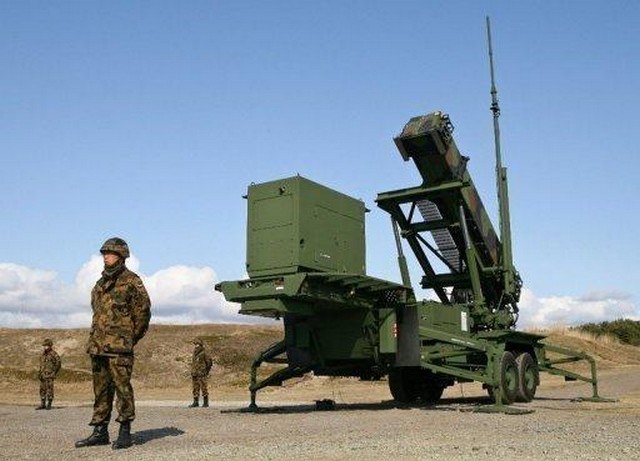
The Japan government approved on December 21, 2020 a record defense budget for fiscal 2021 totaling ¥5.34 trillion ($51.7 billion), as it seeks to introduce new standoff missiles capable of attacking enemy vessels from outside their firing range amid growing threats from China.

The draft budget is up 0.5% from fiscal 2020, including outlays linked to hosting the U.S.’ military bases, and has hit a record high for the seventh consecutive year as the country boosts its ability to deal with China’s growing maritime assertiveness and North Korea’s missile and nuclear threats.

Under the administration of Prime Minister Yoshihide Suga for the first time, the defense budget has grown for the ninth straight year. Suga has pledged to advance the course set by his long-serving predecessor Shinzo Abe.

The Defense Ministry secured ¥33.5 billion for the development of the Japan-made standoff missiles. Opposition lawmakers have raised concerns over the development, saying possessing missiles that could have the capability to strike enemy bases would run counter to the country’s war-renouncing Constitution and exclusively defense-oriented policy.

Defense Minister Nobuo Kishi has said Japan has to “respond” to China’s increasing naval activities around southwestern islands, while ensuring the safety of the nation’s Self-Defense Forces, and that standoff missiles are vital.

It is expected to take five years to develop the missiles. The ministry plans to extend the firing range of surface-to-ship missiles it is already developing to an anticipated 900 kilometers.

The ministry also earmarked ¥1.7 billion for preparations to build two new Aegis naval vessels.

However, the estimated cost to build the ships will be more than ¥500 billion, which is ¥100 billion more than the scrapped plan. Building the vessels will also take five years.

The government has also decided to spend ¥57.6 billion developing a next-generation fighter jet to replace the Air Self-Defense Force’s aging F-2 aircraft, and will allocate ¥15.5 billion separately for related research. Mitsubishi Heavy Industries Ltd. will lead the project with the support of Lockheed Martin Corp.

Meanwhile, the ministry postponed budget allocation for upgrades to F-15 fighter jets that would allow them to carry long-range cruise missiles due to ballooning costs. The upgrade was also aimed at protecting Japan’s southwestern island chain.

In new domains, the ministry allocated ¥119.1 billion for space-related activities. The budget includes funding for research on using an optical telescope to monitor unidentified objects and satellite constellations in order to detect hypersonic weapons.

Such weapons, capable of gliding faster and lower than ballistic missiles, are being developed by China and Russia.

To protect the nation’s cybersecurity, the ministry plans to spend ¥30.1 billion on plans such as setting up a new unit of the SDF that will consist of around 540 members. A separate team will be set up to shield defense-related companies from cyberattacks.

The draft budget includes ¥2.8 billion for research on a system to shoot down aerial threats, including drones, with a high-power laser.

The ministry has also set aside ¥400 million to test next-generation 5G technology.

China plans to raise its military spending 6.6% this year, the smallest increase in three decades.

An earlier report said:

Japan’s Defense Ministry originally asked for a 8.3% budget increase in 2020, its largest rise in more than two decades.

Stephen Nagy, senior associate professor at the Department of Politics and International Studies at Tokyo’s International Christian University, said the expansion of Japan’s military budget would match rapid military growth by other regional powers.

China builds more ships every year than the entire United Kingdom has in its forces,” Nagy said. “Since 2000 it’s been about a 10% increase in the Chinese military budget every year, so Japan’s increase is driven by China’s broad-based expansions of its military footprint in the region and globally.”

Heigo Sato, vice president of the Institute of World Studies at Tokyo’s Takushoku University, said the expanded budget was a response to the rising threat from North Korea, as well as pressure from U.S. President Donald Trump’s administration for Japan to shoulder more responsibility for its own protection.

“The era of not increasing the budget is over,” he said.

Strengthening U.S. ties

In the face of China’s rapid military modernization, Japan has been building closer ties with the U.S. and its allies in the Asia Pacific.

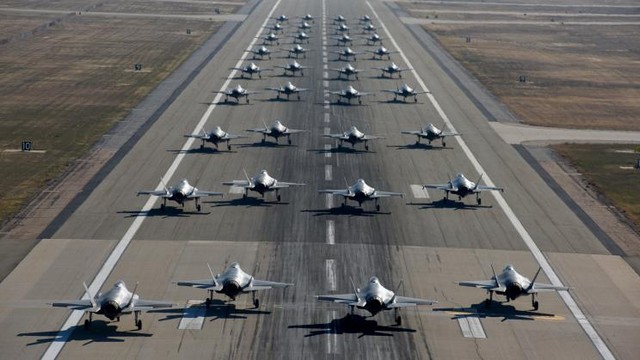
In July, the U.S. government approved the sale of more than 100 F-35 fighter jets to Japan, which Washington claimed would “support the … national security objectives” of America.

Nagy said that with the U.S. economy damaged by the Covid-19 pandemic, there was likely to be more pressure for Japan to increase its defense spending and take a greater role in regional security in East Asia.

“(With this draft budget) Japan is saying … we’ll step up to the plate and increase our spending share to keep the US tethered to the region,” he said. “They’re willing to show their commitment to the alliance.”

21 December 2020

Source: countercurrents.org

EU Summit: Billions for the Banks, Nothing for Workers

By Peter Schwarz

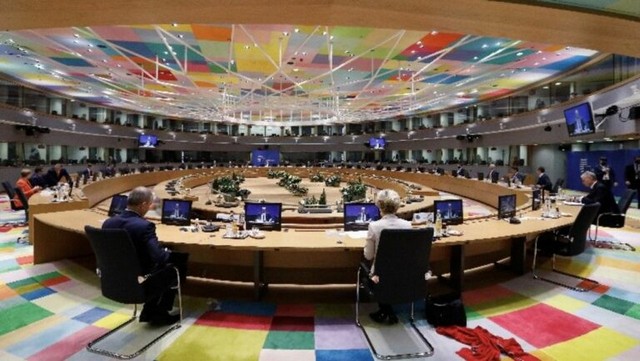
12 Dec 2020 – The European Union (EU) summit on December 10–11 resembled a besieged fortress. It took place in the midst of the deepest social and economic crisis the EU has faced since its foundation.

The coronavirus pandemic is spinning out of control. Every day, more than 5,000 people die from the virus in Europe and more than 200,000 are newly infected—with the figures rising. Anger, indignation, and resistance are growing against the irresponsible policies of governments across the continent, which ignore all scientific warnings and sacrifice indispensable protective measures to the profit interests of big business.

The heads of state and government met in person in Brussels for the first time after the previous meetings of the European Council had been held online. They opted for this risky approach because the differences and tensions had reached a level that could no longer be overcome through video conferencing.

In hours of negotiations that lasted the entire night from Thursday to Friday, they finally succeeded in defusing the fierce conflicts. This does not mean, however, that the differences have been overcome. What currently holds the European Union together is, above all, the fear by the ruling class of the working class. When it comes to suppressing social opposition, building up a police state, pursuing a militaristic foreign policy and making new multibillion-euro gifts to the banks and corporations, they all agree.

It is significant that the European Council only discussed the pandemic peripherally and did not decide on any measures to contain it. Instead, the Council expressly welcomed “the coordination of efforts at EU level so far” and committed itself to “strengthening this coordination, in particular in preparing for a gradual lifting of restrictions and a return to normal travel, including cross-border tourism.”

This means that European governments will continue their current policies, which have led to the greatest health disaster since the Spanish flu a hundred years ago, and will do everything possible to quickly remove the completely inadequate protective measures.

The European Council’s most important decision was the adoption of the EU budget for the next seven years and the release of the €750 billion economic stimulus package, upon which the EU had already agreed in the summer. The EU Commission under Ursula von der Leyen thus has the gigantic sum of €1.8 trillion at its disposal in the coming years to enrich the banks and corporations, bribe politicians and bring recalcitrant governments into line.

European Central Bank (ECB) boss Christine Lagarde supplemented this sum on Thursday with a very special Christmas gift. The ECB extended its Pandemic Emergency Purchase Programme until the end of March 2022 and expanded it by €500 billion. The cost of the junk bonds the ECB will purchase from banks and speculators thus increases to an incredible €1.85 trillion.

This is the greatest redistribution of wealth in history, for the huge sums of money will ultimately have to be paid back by the working class in the form of cuts in social programmes and wages. The stock exchanges are jubilant. Despite the coronavirus crisis, European stock prices are approaching historic highs. Never has money-making been so completely disconnected from real economic development. If proof of the parasitic, antisocial character of the capitalist profit drive were needed, there could have been nothing more conclusive.

The EU budget and stimulus package were on the brink of collapse before the summit. Both Poland and Hungary had threatened vetos. In doing so, they wanted to bring down the so-called “rule of law” mechanism. In October, the European Parliament and the EU Commission had agreed on a regulation allowing the EU to suspend payments to member states that violate the rule of law principles of the EU Treaty. This was directed against Hungary and Poland, whose governments have largely undermined the independence of the judiciary and media.

German Chancellor Angela Merkel intervened personally before the summit to reach an agreement with Hungarian Prime Minister Viktor Orbán and his Polish counterpart Mateusz Morawiecki, which was then confirmed by the European Council. The rule of law mechanism remains in place and will be solemnly invoked again in the “conclusions” of the summit. However, it is now festooned with so many preconditions that it will never be applied in practice. Orbán and Morawiecki celebrated the agreement as a victory.

In any case, the EU was never concerned with democratic principles. The slide of Hungary and Poland into dictatorial forms of rule was, above all, an obstacle to the EU’s aggressive foreign policy, which it likes to cloak with phrases about “Western values” and “democracy.” Indeed, all European governments are increasingly open in their resort to dictatorial and fascist methods to suppress the growing resistance of the working class.

For example, 10 days before the summit, the French National Assembly passed a “global security law” against which hundreds of thousands took to the streets. Among other things, it prohibits the filming of violent police officers and severely restricts press freedom. An anti-Islam law, which the government of Emmanuel Macron is currently discussing, bears openly racist features and tramples on basic democratic rights. The final declaration of the European Council does not mention this law directly, but it does support its content.

The topic of “security” occupies twice as much space in the “conclusions” of the EU summit as COVID-19. The “recent terrorist attacks in Europe” serve as a pretext. While the European Council expressed not a word of regret for the 450,000 European victims of the coronavirus pandemic, it exudes hypocritical condolences for the victims of these reactionary attacks—and derives from them a comprehensive programme of mass surveillance, censorship and increased police powers.

It is “extremely important to prevent radicalisation and to take action against the ideologies underlying terrorism and violent extremism, including on the Internet,” the final declaration states.

The European Council calls for “stepping up the fight against illegal content online” and “ensuring that religious education and training are in line with European fundamental rights and values.” It was “essential that law enforcement and judicial authorities are able to exercise their lawful powers both online and offline to combat serious crime.” Police and judicial cooperation and coordination “should be strengthened”.

The EU summit took the longest time to define a common climate change target. It was finally agreed that greenhouse gas emissions should be reduced by at least 55 percent by 2030 compared to 1990 levels and that public and private capital should be mobilised to this end.

But how this goal is to be achieved was not specified, and there are considerable differences over this. Some eastern European countries and France, for example, want to push ahead with the expansion of nuclear energy, which others strictly reject. Moreover, this goal is to be achieved only in net terms; reforestation and other nature conservation measures can be offset against it.

On foreign policy, the summit reaffirmed the imperialist claims of the EU in the “Eastern Mediterranean” and the “southern neighbourhood”—i.e., in North and Central Africa. In the Eastern Mediterranean, the EU “remains committed to defending its interests and those of its Member States as well as to upholding regional stability,” the final declaration states.

Strong differences over Turkey were bypassed. On the one hand, the country was strongly condemned; on the other hand, the European Council reaffirmed “the EU’s strategic interest in the development of a cooperative and mutually beneficial relationship with Turkey.” Greece, Cyprus, and France were unable to assert themselves by demanding tough sanctions against Ankara.

Overall, the European summit was characterised by fierce national conflicts, which will continue to intensify. In the face of a deep economic crisis and growing social conflicts, Europe’s ruling classes are ruthlessly defending their own interests and fuelling nationalism.

This was most evident in the question that hovered over the entire summit but was not discussed there: Brexit.

The evening before the summit, British Prime Minister Boris Johnson had met with EU Commission President Ursula von der Leyen for dinner in Brussels, but no agreement was reached. The probability of a hard Brexit with corresponding shock waves on December 31 has thus increased considerably.

Johnson has long since become a prisoner of the right-wing Brexit supporters, whom he encouraged. The EU is not prepared to make concessions because it fears that other countries will then demand concessions, undermining Franco–German dominance and causing the EU to disintegrate for good. “Because one thing is clear: the integrity of the internal market must be preserved,” said Chancellor Merkel, explaining the EU’s tough stance.

The unity of Europe, which is indispensable to advance the continent economically and raise the general standard of living, is not possible on a capitalist basis. The EU does not embody the unity of Europe; it is an instrument of powerful capitalist interests to oppress the working class and pursue imperialist goals. It is throwing the continent back into the same national conflicts that sparked two world wars in the last century.

The only way forward is the unification of the working class in a common struggle for a socialist programme against the European Union and for the United Socialist States of Europe.

14 December 2020

Source: www.transcend.org

Qatar: Between the Scylla of Coercion and the Charybdis of Accommodation: An Inquiry into Sub-Regional Geopolitics

By Richard Falk

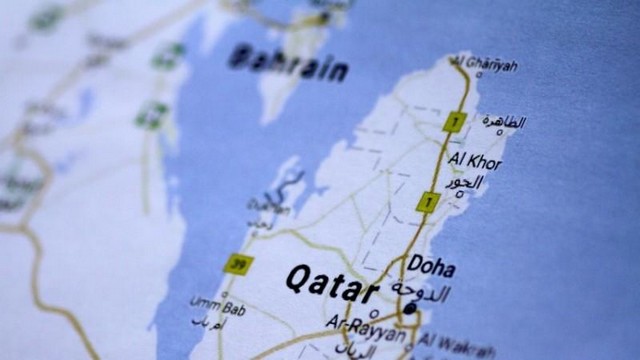
11 Dec 2020 – Responses to interview questions on sub-regional geopolitics in the Persian/Arab Gulf countries, Qods News Agency, 10 Dec 2020. Qatar is caught between seeking the end of the coercive diplomacy led by Saudi Arabia and the UAE and not wanting to end its necessary cooperation with Iran, especially with respect to large maritime natural gas deposits. The efforts at accommodation can turn out to be either a lessening of a confrontational approach to Iran or its intensification. Coming months, perhaps weeks, will be clarifying.

**********************************

Qatar: Between the Scylla of Coercion and the Charybdis of Accommodation–An inquiry into sub-regional geopolitics

Q1: What is the role of Saudi Arabia in the structure of countries like Iraq, Syria, Yemen, or even Lebanon?

There is little doubt that Saudi Arabia seeks to spread its influence throughout

the Middle East, both to enhance the regime stability of the monarchy and to contain challenges of Iran arising in the countries mentioned in the question. Saudi Arabian security is also linked to sectarian identity, not only to give hegemonic legitimacy to its particular version of Islam but to express its view that Shi’ism is responsible for turmoil and strife throughout the region, and is the basis of Iranian influence beyond its borders. These issues cause political controversy and explain external intervention in the four countries mentioned. In each one Iran is perceived by the Saudi government as blocking national ambitions in Riyadh to be the regional leader, but also of the perceived threats to Saudi security and legitimacy. The Islamic Republic of Iran is seen by Saudi Arabia as being not only a challenge to Sunni dominance of Islamic allegiance and identity in the region but also as an abiding threat to domestic security due to the strategic presence in the society of discontented and radicalized Shi’ite minorities and by Shi’ite insistence, clearly articulated by Ayatollah Khomeini, that monarchy is not compatible with Islamic values.

Q2: Given the fact that Qatar, Saudi Arabia, and the UAE obey the US policies, what is your assessment of the current dispute among them?

It is a mistake to assume that the U.S. controls all aspects of Gulf country behavior. I believe that Saudi Arabia and UAE were disturbed by what they regarded as Qatar’s independent line of political behavior that collided with their policy preferences. These governments wanted there to be unity of purpose and policy with Gulf Cooperation Policy under their reactionary leadership, and opposed Qatar’s normalized relations with Iran, their openness to giving asylum and diplomatic support to Muslim Brotherhood leaders and prominent Hamas leaders living in exile, as well as their relative openness to ‘modernity’ with regard to freedom of expression and independent media, particularly Aljazeera, which carried articles that were critical of Saudi Arabia and the UAE in relation to the Syrian strife and otherwise. From available information, the U.S. never was comfortable with this split among Gulf countries, except at the very outset when the Saudi anti-Qatar received the obviously ill-considered blessings of President Trump while he was in Riyadh. Shortly afterwards, the U.S. Government realizing its strategic interests, quickly shifted its position and began using it diplomatic leverage to encourage reconciliation. It is plausible to believe that U.S. influence might have discouraged more aggressive moves against Qatar. The large U.S. Al Udeid Air Base in Qatar undoubtedly was a factor leading Washington to promote accommodation and at the same time likely inhibiting the Saudi/UAE led coalition from making any serious effort to implement their reported intention to achieve regime-change in Doha. It is likely that the Biden presidency will persist in its efforts to restore harmony among the Gulf monarchies, which is also what Israel seeks.

Q3: What reasons caused the shift of Arab world leadership from Egypt, Syria, and Iraq to Saudi Arabia, the UAE, and Qatar? What were its effects?

Egypt, Syria, and Iraq exhibit national situations that each have their own special features generating distinct atmospheres of national emergency. At the same time, they share all-consuming preoccupations associated with domestic turmoil, strife, and conflict within their respective countries. These crisis situations dominates the energies of the political leadership of these governments. It is hardly surprising that the search for stability at home take precedence over the regional agenda. As well, these countries are not nearly as worried as are Saudi Arabia and the UAE by Iranian expanded influence in the region, or particularly threatened by anti-Sunni sectarianism. In contrast, as suggested above, Saudi Arabia and the UAE are relatively stable domestically, while giving greater attention to developments within the regional context of the Middle East. Qatar seems differently motivated, and can be best understood as asserting its independence as a sovereign state, thereby overcoming being in the shadows cast by its larger neighbor. Qatar uses its fossil fuel wealth and active political imagination to overcome its subordinated and mini-state reality, which it did so successfully as to provoke Saudi and Emirate elites, apparently particularly annoyed that Qatar was chosen to host the 2022 World Cup.

Q4: What are the reasons for the current regional security and political crises in the Middle East?

There are four principal reasons for these serious, prolonged crises: first, the various regional reverberations of the Iranian Revolution that has generated since 1979 a counterrevolutionary series of responses led, and even financed by Saudi Arabia and regional allies, and strongly endorsed by Israel and the United States. Each of these political actors has their specific motivations and priorities, as well as convergent policy objectives; secondly, the regionally destabilizing impacts of the Arab Uprisings of 2011, and the various efforts to reverse, or at least neutralize, those challenges directed at the established economic and political order. As well, the severe unresolved civil strife in Yemen, Syria, Iraq, and Libya have offered occasions for competitive interventions that have led to several proxy wars; thirdly, the U.S./UK attack on and regime-changing occupation of Iraq in 2003 had the effect of intensifying sectarian tensions and contributing to political extremism, dramatized by the rise of ISIS, and other manifestations of transnational terrorism; fourthly, the outside reactions to these developments in Iraq increased the scale of regional and international interventions in Syria and Yemen, produced oppression in Egypt, and led to frequent unlawful military actions by Israel in Syria. Such turmoil was aggravated by various U.S. undertakings designed to destabilize Iran, including by covert actions and sanctions maintained during the COVID pandemic despite international appeals to suspend sanctions and mitigate acute civilian suffering and adverse humanitarian consequences. The United States and Israel have given a high priority to curbing Iranian regional influences in relation to Iraq, Syria, Yemen, and more recently, Lebanon, as well as in Gaza.

Q5: What is your opinion about the role of the Persian Gulf Arab countries in the formation of terrorist groups?

I am not an expert on this topic, nor is it easy to assess, given the role of secret and disguised behavior of Persian Gulf Arab countries. For many years, Saudi Arabia invested many billions in support of madrassas in Asian Sunni countries that encouraged Salafi versions of political extremism that

inspired terrorist organizations and political agendas, and also led to an increased reliance on state terrorist tactics and weaponry in carrying on counterterrorist warfare regionally. It is my impression that the lower profile military engagement by the U.S. during the Trump presidency led the Gulf Arab governments to be more regionally cautious, seemingly worried about escalation that might lead to war if Iran was unduly provoked, with the assumption that a full-fledged regional war would produce catastrophic results for all sides. Illustrative of a more cautious Gulf style of confrontation was the muted response to the drone attack attributed to Yemen, but with Iranian weaponry and alleged political support,t on the state-owned Saudi Aramco oil processing facilities located at Abqaiq in eastern Saudi Arabia. Whether Biden will revive American participation in the 2015 Nuclear Program Agreement in Iran, ending sanctions, will affect how Persian Gulf Arab governments deal with anti-Iranian terrorist organizations. As always, expectations about such behavior in the region should be tentative as many uncertainties loom on the road ahead.

__________________________________________

Richard Falk is a member of the TRANSCEND Network, an international relations scholar, professor emeritus of international law at Princeton University, Distinguished Research Fellow, Orfalea Center of Global Studies, UCSB, author, co-author or editor of 60 books, and a speaker and activist on world affairs.

14 December 2020

Source: www.transcend.org

Myanmar’s Perennial Ceasefire Talks

By Maung Zarni

Myanmar is witnessing world’s longest ‘peace talks’ and continuation of longest-running ethnic wars.

4 Dec 2020 – Cease-fire and talks for peace are normally welcome news. But the politics in Myanmar is anything but normal, hence such talks do not necessarily signify prospects for peace, ephemeral or lasting.

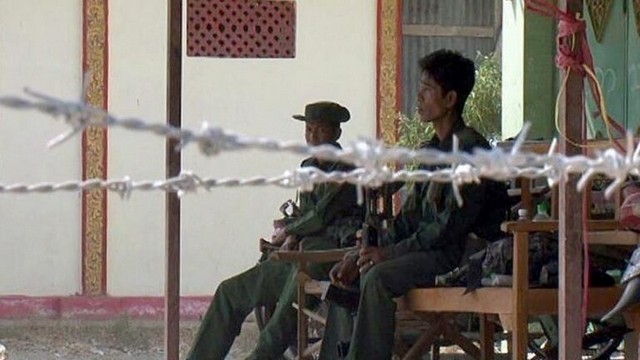
This week the Spokesperson for Myanmar Tatmadaw or the Military Brig. Zaw Min Tun told Mizzima TV that the Defense Ministry is holding talks via intermediaries with the Arakan Army (AA) which Aung San Suu Kyi’s National League for Democracy (NLD) government had officially declared a “terrorist” organization.

Taking to Twitter, a pro-AA Rakhine activist approved the talks, welcoming that there have been no military clashes between the Tatmadaw and AA which has emerged as an effective military and political movement seeking autonomy – and even independence – from the Balkan-like country of Myanmar, with highly diverse ethnic communities.

However, the timing of the talks is suspect. The political proxy of the Burmese military named Union Solidarity and Development Party has suffered a near-total existential electoral defeat at the polls by their nemesis Aung San Suu Kyi and her NLD.

The generals and ex-generals in politicians’ garb are trying to further undermine Suu Kyi’s unpopularity among Rakhine Buddhist voters by demanding a fresh round of elections in the conflict-soaked Rakhine region. The Arakan Army has abducted three ethnically Rakhine NLD MPs for collaborating with the political foe – the victorious NLD.

Earlier Myanmar politicians and military leaders played this triangular political game with Buddhist and Muslim communities as represented by Rakhine and Rohingyas. They tried splitting them through different political and economic sweeteners, keeping the flames of WWII-era communal violence between them alive and exploiting any differences in the region which is the country’s original birthplace of secessionist movements – by Muslim separatists and Buddhist nationalists. Now the military’s “unfinished business” of clearing Rohingya presence in Rakhine has largely been finished – with only estimated 500,000 Rohingyas left languishing as IDPs and in vast open prisons – inside Myanmar the military is now focused on the two new competing threats of Rakhine nationalists’ Arakan Army and Aung San Suu Kyi’s NLD party.

Talks do not instill confidence

For the last 30-odd years, I have watched very closely the dynamics – and outcomes – of such talks, and have had significant interactions with those from all sides who have been engaged in cease-fire – previously “internal or domestic peace talks “. And some were my close relations, and some close friends and contemporaries.

What I have come to know intimately about these talks instill in no confidence in me about their concrete and eventual outcome of peace and reconciliation in either Rakhine or any region of the country – with 20 plus different ethnic armed organizations (EAOs) in Myanmar’s peace industry’s lingo. Any optimism – even a remote and cautious strain – is not warranted when it comes to Myanmar cease-fire talks.

The fact that EAOs have divergent – and in some cases – competing or conflicting interests, rationales, and objectives were pointed out by the Euro-Burma Office in a policy brief released in November entitled The Union Peace Accord: Moving Forward after the Election. In my judgment, the fundamental problem lies with the colonial nature of the post-independence state in Myanmar and the correspondent psychological outlook of the dominant ethnic elite, civilians and soldiers (that is, Aung San Suu Kyi and the generals), namely Burmese or Bama whose namesake the country bears.

A cursory glance at the half-century of negotiations is essential in assessing the prospects for peace in Rakhine – and the rest of the country’s outlying regions where ethnic minority communities live among the natural riches, such as teak forests, jade, gold, ruby, and other precious stones and minerals, natural gas and agriculturally fertile virgin land and rivers for billion-dollar hydropower potentials.

In the official publication of the then ruling military and its political wing Burma Socialist Program Party (1964) entitled The Policies and Attitude of the Revolutionary Council towards the Indigenous Races (of the Union of Burma), Col. Hla Han, the head of Myanmar’s military’s “Internal Peace Talks Delegation”, was quoted as saying candidly, in effect, that Myanmar military and political leaders were resorting to the classic colonial divide-and-rule towards the (ethnic) Karens’ revolutionary organization. In Hla Han’s words, “when one group of the Karens formed KCO [Karen Central Organization], we instigated other groups to establish a rival KYO [Karen Youth Organization]. That was the result of our political immaturity among the Burmese.”

The Burmese colonel also admitted to the pervasive presence of the typical Burmese Buddhist cultural chauvinism and ethnic superiority complex vis-a-vis non-Burmese ethnic communities, which make up 30-40 % of the total population of the country.

One year before the publication of this 96-page official policy booklet by the then ruling military junta, with the socialist façade, led by Gen. Ne Win, the state-controlled English language monthly publication The Guardian in July 1963 editorialized the junta’s “peace offer”. It reads, “the Revolutionary Council was solely motivated by the desire to achieve internal peace so that socialism could be built in the quickest time unhampered by civil strife.

Geostrategic Myanmar

The council offered insurgent organizations (particularly the White Flag and the Red Flag factions of the Burmese communist armed movements, the Karen National Defense Organization, various Shan armed organizations including Shan State Revolutionary Council and Shan State Independence Army, the “Kachin Independence Army”, the Mon rebels, the Arakanese National Youths, pro-communist Burmese student activists and so on), a safe passage to come to the talks and also promised them immunity from arrest and hostile action for three days even if the talks failed.

Some of the Burmese communist leaders who decided to “return to the legal fold” and took up the military junta’s peace offer as well as prominent indigenous leaders urged their respective political and ethnic communities to pursue peace with the central state.

In another state-run English-language magazine the Forward on June 22, 1963), one of the founders of modern Burma and Kachin Chief Sama Duwa Sinwa Nawng was quoted as saying, “underground organizations have for many years been demanding the right to negotiate for peace. Now that this right has been granted, there is no alternative for them but to come forward and negotiate with the Revolutionary Council Government”.

The Cold War Containment policy of the West that afforded the anti-communist, but not pro-free market Myanmar military free reign in the way it chose to deal with its internal rebellions is no more. As a matter of fact, the emerging Cold War 2.0 between the increasingly richer and powerful state-capitalist China next to geostrategic important Myanmar and the waning, if the undeclared empire of the US has put Myanmar’s military and Aung San Suu Kyi as two most important stakeholders in decisively advantageous positions vis-a-vis the country’s restive ethnic minorities with nearly two-dozen armed organizations.

The central military and political actors are getting away with the Rohingya genocide as none on the Security Council will point – and has not pointed – a finger to put an end to Myanmar’s institutionalized destruction of Rohingyas as a protected group under the Genocide Convention.

Over the last 50-plus years since the early days of “internal peace talks” Myanmar has seen the tripling and even quadrupling of EAOs fighting for divergent political objectives – some genuinely federated form of a state, while others actively keeping alive their decades-old and, in the case of Rakhine Buddhists as represented by the Arakan Army, the centuries-old dream of regaining sovereignty from the dominant ethnic group Bama or Myanmar.

Civil wars continue

Even as a seasoned watcher of Burmese affairs including the cease-fire talks, it is rather exhausting for me to read the alphabet soup of acronyms of EAOs, Myanmar’s mechanisms or shifting alliances, multiplying, shrinking, or disappearing armed groups.

To be brutally honest, I have long stopped counting my country’s civil war deeds, the war-triggered IDPs (internally displaced persons), or the military clashes between the central military of Tatmadaw and EAOs as well as between the EAOs themselves.

Myanmar’s peace talks began deep in the Cold War isolation of Myanmar – several decades before the UN’ peacekeeping lingo – Disarmament, Demobilization, and Reintegration or DDR – became the mantra in the global peace industry. In those days, no “stabilization units” in western foreign or intelligence ministries, no de-mining initiatives, no “peace fund” or no International Crisis Group, with its central mission of turning old war zones into the free market.

Irrespective of Cold War 1.0 or Cold War 2.0, Myanmar’s civil war will most definitely continue to rage on, at fluctuating intensities, in the foreseeable future. Besides the military leaders and the NLD under Suu Kyi walking sideways politically and strategically, Myanmar military has made the pledge which it is not prepared to honor, which is the military will vacate the commanding heights of power, which it has secured in the constitution of 2008 when the sound of gunfire went silent.

The military has been firmly in control of all organs of the state since the 1962 military coup. Which rational actor in its institutional right mind would voluntarily give up its near-monopoly over power, wealth, and population control? The manageable level of civil war – and the opportunities to be seen to be talking peace – while keeping this strategically beneficial war has been the generals’ golden goose, which reliably lays eggs for the armed forces.

Another round of mandate for five more years of Aung San Suu Kyi’s leadership, rich in rhetoric and short incompetence, straight-jacketed with the amendment-proof constitution, has not made even a slight dent in the structures of state power, where the military holds the lever. The prospects for genuine peace and reconciliation in the internal national politics will not increase when the Myanmar military sits above the law and society.

Against this scenario, Myanmar has witnessed the world’s longest “peace talks” with the continuation of its longest-running ethnic wars.

___________________________________________

A Buddhist humanist from Burma, Maung Zarni is a member of the TRANSCEND Network for Peace Development Environment, former Visiting Lecturer with Harvard Medical School, specializing in racism and violence in Burma and Sri Lanka, and Non-resident Scholar in Genocide Studies with Documentation Center – Cambodia. Zarni s the co-founder of FORSEA, a grass-roots organization of Southeast Asian human rights defenders, coordinator for Strategic Affairs for Free Rohingya Coalition, and an adviser to the European Centre for the Study of Extremism, Cambridge.

14 December 2020

Source: www.transcend.org

The Collective Suicide of the Liberal Class

By Chris Hedges

No one can, or should, take them seriously. They stand for nothing. They fight for nothing.

7 Dec 2020 – Liberals who express dismay, or more bizarrely a fevered hope, about the corporatists and imperialists selected to fill the positions in the Biden administration are the court jesters of our political burlesque. They long ago sold their soul and abandoned their most basic principles to line up behind a bankrupt Democratic Party. They chant, with every election cycle, the mantra of the least worst and sit placidly on the sidelines as a Bill Clinton or a Barack Obama and the Democratic Party leadership betray every issue they claim to support.The only thing that mattered to liberals in the presidential race, once again, was removing a Republican, this time Donald Trump, from office. This, the liberals achieved. But their Faustian bargain, in election after election, has shredded their credibility. They are ridiculed, not only among right-wing Trump supporters but by the hierarchy of the Democratic Party that has been captured by corporate power. No one can, or should, take liberals seriously. They stand for nothing. They fight for nothing. The cost is too onerous. And so, the liberals do what they always do, chatter endlessly about political and moral positions they refuse to make any sacrifices to achieve.

Liberals, largely comprised of the professional managerial-class that dutifully recycles and shops for organic produce and is concentrated on the two coasts, have profited from the ravages of neoliberalism. They seek to endow it with a patina of civility. But their routine and public humiliation has ominous consequences. It not only exposes the liberal class as hollow and empty, it discredits the liberal democratic values they claim to uphold. Liberals should have abandoned the Democratic Party when Bill Clinton and political hacks such as Biden transformed the Democratic Party into the Republican Party and launched a war on traditional liberal values and left-wing populism. They should have defected by the millions to support Ralph Nader and other Green Party candidates.

This defection, as Nader understood, was the only tactic that could force the Democrats to adopt parts of a liberal and left-wing agenda and save us from the slow-motion corporate coup d’état. Fear is the real force behind political change, not oily promises of mutual goodwill. Short of this pressure, this fear, especially with labor unions destroyed, there is no hope. Now we will reap the consequences of the liberal class’s moral and political cowardice.

The Democratic Party elites revel in taunting liberals as well as the left-wing populists who preach class warfare and supported Bernie Sanders. How are we supposed to interpret the appointment of Antony Blinken, one of the architects of the wars in Iraq and Afghanistan and supporter of the apartheid state of Israel, as Secretary of State? Or John Kerry, who championed the massive expansion of domestic oil and gas production, largely through fracking, and, according to Barack Obama’s memoir, worked doggedly to convince those concerned about the climate crisis to “offer up concessions on subsidies for the nuclear power industry and the opening of additional U.S. coastlines to offshore oil drilling” as the new climate policy czar? Or Brian Deese, the executive who was in charge of the “climate portfolio” at BlackRock, which invests heavily in fossil fuels, including coal, and who served as a former Obama economic adviser who advocated austerity measures, to run the White House’s economic policy? Or Neera Tanden, for director of the Office of Management and Budget, who as president of the Center for American Progress raised millions in dark money from Silicon Valley and Wall Street while relentlessly ridiculing Bernie Sanders and his supporters on cable news and social media and who proposed a plank in the Democratic platform calling for bombing Iran?

The Biden administration resembles the ineffectual German government formed by Franz von Papen in 1932 that sought to recreate the ancien régime, a utopian conservatism that ensured Germany’s drift into fascism. Biden, bereft like von Papen of new ideas and programs, will eventually be forced to employ the brutal tools Biden as a senator was so prominent in creating to maintain social control – wholesale surveillance, a corrupt judicial system, the world’s largest prison system and police that have been transformed into lethal paramilitary units of internal occupation. Those that resist as social unrest mounts will be attacked as agents of a foreign power and censored, as many already are being censored, including through algorithms and deplatforming on social media. The most ardent and successful dissidents, such as Julian Assange, will be criminalized.

The shock troops of the state, already ideologically bonded with the neofascists on the right, will hunt down and wipe out an enfeebled and often phantom left, as we saw in the chilling state assassination by U.S. Marshals of the antifa activist Michael Reinoehl, who was unarmed and standing outside an apartment complex in Lacey, Washington, in September when he was shot multiple times. I witnessed this kind of routine state terror during the war in El Salvador. Reinoehl allegedly killed Aaron Danielson, a member of the far-right group Patriot Prayer during a pro-Trump rally in Portland, Oregon in August.

Compare the gunning down of Reinoehl by federal agents to the coddling of Kyle Rittenhouse, the 17-year-old accused of killing two protesters and injuring a third on August 25 in Kenosha, Wisconsin. Police officers, moments before the shooting, are seen on video thanking Rittenhouse and other armed right-wing militia member for coming to the city and handing them bottles of water. Rittenhouse is also seen in a video walking toward police with his hands up after his shooting spree as protesters yell that he had shot several people. Police, nevertheless, allow him to leave. Rittenhouse’s killings have been defended by the right, including Trump. Rittenhouse, who has received hundreds of thousands of dollars in donations for his legal fees, has been released on $2 million bail.

We stand on the cusp of a frightening authoritarianism. Social unrest, given a continuation of neoliberalism, the climate crisis, the siphoning off of diminishing resources to the bloated war machine, political stagnation and the failure to contain the pandemic and its economic fallout, is almost certain. Absent a left-wing populism, a disenfranchised working class will line up, as it did with Trump, behind its counterfeit, a right-wing populism. The liberal elites will, if history is any guide, justify state repression as a response to social chaos in the name of law and order. That they, too, are on the Christian Right and the corporate state’s long list of groups to be neutralized will become evident to them when it is too late.

It was Friedrich Ebert and the Social Democratic Party of Germany, siding with the conservatives and nationalists, that created the Freikorps, private paramilitary groups composed of demobilized soldiers and malcontents. The Freikorps ruthlessly crushed left-wing uprisings in Berlin, Bremen, Brunswick, Hamburg, Halle, Leipzig, Silesia, Thuringia and the Ruhr. When the Freikorps was not gunning down left-wing populists in the streets and carrying out hundreds of political assassinations, including the murder of Walther Rathenau, the foreign minister, it was terrorizing civilians, looting and pillaging. The Freikorps became the antecedent of the Nazi Brownshirts, led by Ernst Röhm, a former Freikorps commander.

All the pieces are in place for our own descent into what I suspect will be a militarized Christianized fascism. Political dysfunction, a bankrupt and discredited liberal class, massive and growing social inequality, a grotesquely rich and tone-deaf oligarchic elite, the fragmentation of the public into warring tribes, widespread food insecurity and hunger, chronic underemployment and unemployment and misery, all exacerbated by the failure of the state to cope with the crisis of the pandemic, combine with the rot of civil and political life to create a familiar cocktail leading to authoritarianism and fascism.

Trump and the Republican Party, along with the shrill incendiary voices on right-wing media, play the role the antisemitic parties played in Europe during the late 19th and early 20th century. The infusion of anti-Semitism into the political debate in Europe destroyed the political decorum and civility that is vital to maintaining a democracy. Racist tropes and hate speech, as in Weimar Germany, now poison our political discourse. Ridicule and cruel taunts are hurled back and forth. Lies are interchangeable with fact. Those who oppose us are demonized as human embodiments of evil.

This poisonous discourse is only going to get worse, especially with millions of Trump supporters convinced the election was rigged and stolen. The German Social Democrat Kurt Schumacher in the 1930s said that fascism “is a constant appeal to the inner swine in human beings” and succeeds by “mobilizing human stupidity.” This mobilized stupidity, accompanied by what Rainer Maria Rilke called “the evil effluvium from the human swamp,” is being amplified and intensified in the siloed media chambers of the right. This hate-filled rhetoric eschews reality to cater to the desperate desire for emotional catharsis, for renewed glory and prosperity and for acts of savage vengeance against the phantom enemies blamed for our national debacle.

The constant barrage of vitriol and fabulist conspiracy theories will, I fear, embolden extremists to carry out political murder, not only of mainstream Democrats, Republicans Trump has accused of betrayal such as Georgia governor Brian Kemp and those targeted as part of the deep state, but also those at media outlets such as CNN or The New York Times that serve as propaganda arms of the Democratic Party. Once the Pandora’s box of violence is opened it is almost impossible to close. Martyrs on one side of the divide demand martyrs on the other side. Violence becomes the primary form of communication. And, as Sabastian Haffner wrote, “once the violence and readiness to kill that lies beneath the surface of human nature has been awakened and turned against other humans, and even made into a duty, it is a simple matter to change the target.”

This, I suspect, is what is coming. The blame lies not only with the goons and racists on the right, the corporatists who pillage the country and the corrupt ruling elite that does their bidding, but a feckless liberal class that found standing up for its beliefs too costly. The liberals will pay for their timidity and cowardice, but so will we.

Chris Hedges is a Pulitzer Prize–winning journalist who was a foreign correspondent for fifteen years for The New York Times, where he served as the Middle East Bureau Chief and Balkan Bureau Chief for the paper.

14 December 2020

Source: www.transcend.org

In Bipartisan Vote: US House Approves Record $741 Billion Military Spending Bill

By WSWS

10 Dec 2020 – The overwhelming bipartisan vote by the House of Representatives Tuesday [8 Dec] evening to approve the largest military budget in American history demonstrates the reality of capitalist politics. Democrats and Republicans are supposedly at each other’s throats over an array of social and political issues, but they are entirely in agreement on funding the world’s largest and most lethal military machine.

The House vote for the National Defense Authorization Act (NDAA) was by a massive margin, 335–78. Democrats supported passage by 195–37. Republicans supported passage by 140–40. Every leader of the House Democrats backed passage: Speaker Nancy Pelosi, Majority Leader Steny Hoyer, Majority Whip James Clyburn. They were joined by the top Republicans: Minority Leader Kevin McCarthy, Minority Whip Steve Scalise and the ranking Republican on the House Armed Services Committee, the co-sponsor of the massive bill, Mac Thornberry of Texas.

The margin was far more than the two-thirds required to override a threatened Trump veto, although it is not clear that Trump will actually follow up on his tweets demanding two changes in the bill, neither relevant to its basic purposes. Senate Majority Leader Mitch McConnell has already said the Senate will pass the NDAA in the next few days. The margin is likely to be even more decisive than in the House.

While rubber-stamping the largest-ever Pentagon budget, the House and Senate remain locked in a protracted stalemate which has blocked the payment of a single dollar of federal supplemental unemployment insurance since the benefit expired last July 31.

The $741 billion for the Pentagon is approximately six times as much as the $121 billion in unemployment benefits paid out to 60 million workers since the coronavirus pandemic struck.

The goal of the NDAA, according to its preamble, is to achieve “irreversible momentum in the implementation of the National Defense Strategy” spelled out by the Pentagon in 2018, which identified “strategic competition” with Russia and China, not terrorism, as the “preeminent challenge” of US military policy. This includes, according to the various subdivisions of the massive bill, achieving “Superiority in the Air”, “Superiority on the Seas,” “Superiority on the Land,” and, in keeping with the demands of Trump, “Superiority in Space.”

It is not hard to imagine what the rest of the world is to think of this all-out US drive for military power “uber alles”: China, Russia and imperialist powers like Germany, Britain, France and Japan are all engaged in military build-ups to match that in America, bringing ever closer the danger of an uncontrolled military clash between great powers, most of them nuclear armed.

Well short of such an apocalypse, the arms race involves an unforgivable squandering of economic resources needed to meet social concerns such as education, health care, alleviating poverty and retirement security.

One of the largest single components of the Pentagon budget is Overseas Contingency Operations (OCO), funded to the tune of $69 billion. This is the spending for ongoing military operations where US forces are deployed: primarily Afghanistan, Iraq and Syria, as well as the Persian Gulf, where vast naval and air assets are arrayed against Iran. The OCO also covers active drone missile warfare operations across Central Asia, the Middle East and North Africa.

The bill puts billions into preparations to confront Russia and China, including fully funding the European Deterrence Initiative, the NATO build-up on Russia’s western borders, and the Pacific Deterrence Initiative, providing $2.2 billion for similar activity by US naval and air forces directed against China. The label “deterrence” is entirely deceptive: the Pentagon is not seeking to ward off Russian and Chinese aggression, but to prepare for US aggression against one or both countries, regarded as the main obstacles to maintaining US world domination. Another $250 million goes for the Ukraine Security Assistance Initiative, while $500 million (and likely much more) is earmarked for Israel.

Some other major provisions of the bill include:

Requiring the Air Force to maintain 386 operational squadrons comprising at least 3,850 combat aircraft. This includes $9.1 billion to buy an additional 93 F-35 Joint Strike Fighter aircraft, 14 more than the Trump administration requested.

Adding $108 million to the procurement of MQ-9 drones equipped to fire missiles.

Purchasing another seven C-130J transport aircraft, used to rapidly deploy troops, tanks and artillery to new war zones.

Procurement of additional major warships for the US Navy, including one additional Virginia-class nuclear-powered submarine, cost roughly $3 billion, and additional smaller submarines, amphibious ships and P-8 anti-submarine aircraft.

Funding to support redesign and improvement of land-based combat systems like artillery, tanks and armored vehicles for the “future of warfare against near-peer competitors” (war with Russia, China or another major power).

Equipping the Army with an additional 116 helicopters, including 60 UH-60 Blackhawks, 50 AH-64E Apaches, and six of the giant MH-47G Chinooks.

Continued funding for a systematic, across-the-board modernization of US nuclear weaponry, begun under Obama and continued under Trump, including submarine-fired missiles, land-based intercontinental ballistic missiles and heavy bombers capable of intercontinental flight.

The legislation incorporates a number of provisions to block military moves announced by Trump in recent months, delaying reduction of US troops stationed in Germany and South Korea, for example, until the next administration. Trump did not threaten a veto over these items, demonstrating that his threats of withdrawal were only for electoral purposes, or to extract more money from the countries being “protected” by US forces.

The veto threat came over one provision included in the bill, and one provision that the drafters left out despite Trump’s incessant demands to the contrary.

The provision Trump objects to establishes a procedure through which all US military bases named after Confederate commanders will be renamed in the course of the next three years. These include Ft. Bragg, North Carolina, and Ft. Hood, Texas, two of the largest centers of the US military, as well as Ft. Benning, Georgia, and Camp A. P. Hill in Virginia.

The provision Trump has demanded as an addition to the NDAA would repeal Section 230 of the Communications Act of 1995, which frees social media companies of liability for anything posted by their users. Because of this provision, Trump has been unable to sue Facebook and Twitter when they have placed warning messages on his tweets and postings of brazen falsehoods or incitements to violence. Both Senate and House leaders rejected Trump’s demand as extraneous to the Pentagon budget and likely to derail the legislation if included.

What is most remarkable, however, and almost unreported in the media, is the lockstep agreement between the Democratic Party and the Republican Party on this legislation. Under conditions where Trump is defying the outcome of the November election and seeking to overturn its results through unconstitutional actions, the Democrats nonetheless vote to provide the “commander in chief” with virtually a blank check.

Democratic and Republican leaders on the committees overseeing Pentagon policies and military budgets gave unanimous support to the NDAA, boasting that the military budget has passed Congress by huge majorities for 59 straight years, and the Fiscal 2021 budget will be number 60.

When it comes to the most critical institution of the capitalist state, there is not even a two-party system in America, there is only one party: the party of the military-intelligence apparatus, which is required both to assert US imperialist interests around the world and to defend the financial aristocracy against the looming threat of social disorder and class conflict at home.

14 December 2020

Source: www.transcend.org

Murdering Nuclear Scientists Does Not Prevent Proliferation–A Nuclear Free Middle East Does

By Richard Falk

6 Dec 2020 – This is an interview published in the Tehran Times on 2 Dec 2020 to questions posed by Zahra Mirzafarjouyan.

Fakhrizadeh Assassination Not Justifiable

Richard Falk says the assassination of Mohsen Fakhrizadeh cannot be legally, morally, or politically justified by any acceptable theory justifying the use of international force, and has very negative implications as an international precedent confirming prior political assassinations of nuclear scientists and opponents in recent years by drone strikes and other methods of attack as in this instance.

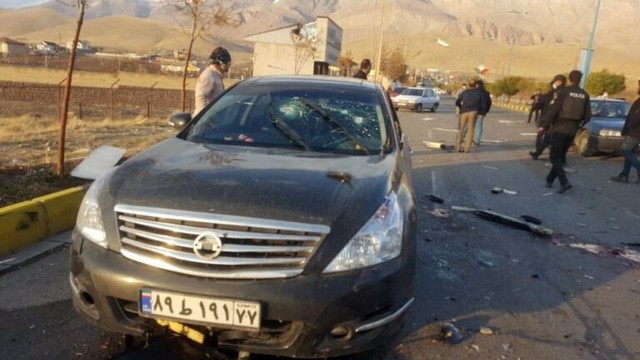
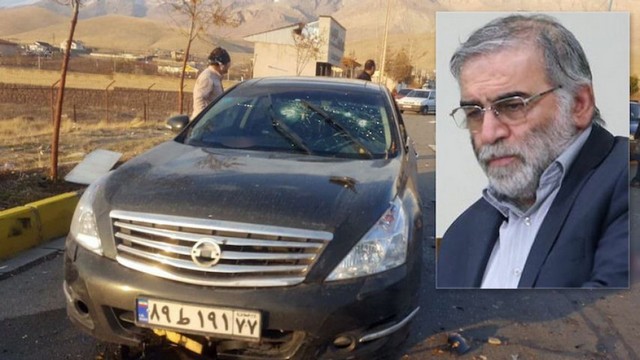
Top Iranian nuclear and defence scientist ‘Dr. Mohsen Fakhrizadeh’, who headed the Iranian Defense Ministry’s Organization of Defensive Innovation and Research (known by its acronym SPND), was targeted on Friday [27 Nov] in a multi-pronged attack involving at least one explosion and small fire by a number of assailants in Absard city of Damavand County, Tehran Province.

New York Times quoted intelligence officials as saying that Israel regime was behind the assassination of Iranian scientist Mohsen Fakhrizadeh.

“One American official — along with two other intelligence officials — said that Israel was behind the attack on the scientist,” New York Times reported, adding, “It was unclear how much the United States may have known about the operation in advance, but the two nations are the closest of allies and have long shared intelligence regarding Iran.”

The assassination of Iranian scientist Fakhrizadeh provoked many reactions in the region and the world but in the meantime, the silence of many human rights defenders in not condemning this assassination is debatable.

In this regard, the Iranian Foreign Minister had condemned the assassination of Mohsen Fakhrizadeh and called on the international community not to remain silent in the face of this terrorist act and to abandon double standards and condemn the act of state-sponsored assassination.

To know more about the issue, we reached out to Richard Anderson Falk, American professor emeritus of international law at Princeton University. Following is the text of our interview with him

************************

Isn’t the assassination of the Iranian scientist against international law and norms?

Fakhrizadeh’s assassination cannot be legally & politically justified by any acceptable theory governing the use of force in international relations and has very negative implications as an international precedent. Yes, it is a targeted use of international force against someone outside the combat zone that cannot be justified by a valid claim of self-defense, which by the UN Charter, requires a prior armed attack, or at least a well-documented threat of the imminence of such an attack. This assassination of a nuclear scientist amounts to an unlawful ‘extra-judicial execution,’ which the UN Human Rights Council has unconditionally condemned on several occasion.

In the case of Afghanistan and its so-called ‘War on Terror,’ the US justified drone assassinations in various parts of the world either by an anti-terrorist rationale or by the contention that a hot battlefield has been extended to foreign countries if linked to a particular terrorist organization. Israel has resorted to extra-territorial assassinations since its inception despite frequent condemnations, as well as provocative assassinations in Occupied Palestine since 1967.

The assassination of Mohsen Fakhrizadeh cannot be legally, morally, or politically justified by any acceptable rationale, and has very negative implications as an international precedent.

Many believe the terrorist act has been committed by the Israeli regime. What do you think of this?

I find all forms of state terrorism to be unlawful, amounting to international crimes, and morally indefensible, especially aggravated when directed at civilians inhabiting countries which are at peace with one another, even if relations are strained by unresolved disputes.

Can such an act by the Israeli regime be done without coordination with Trump?

As such coordination is rarely acknowledged, we can only surmise that it occurs, and has been confirmed in the past, including in relation to Iran’s nuclear program. Given the timing of Pompeo’s visit to Israel prior to the assassination and after Trump was defeated in the U.S. presidential elections in November constitutes strong circumstantial evidence of knowledge before the event, if not active coordination. Israel’s failure to make any effort to deny their role in the assassination is also relevant.

Why have the terrors been focused on Iranian nuclear and defensive elites?

Israel, US, and likely Saudi Arabia have been carrying on an unlawful destabilization campaign against Iran for many years, which has intensified during the Trump presidency. Such a focus corresponds with Israel’s security narrative, which seems to have been unconditionally accepted in Washington during the Trump presidency. It alleges that Israel’s longer-range security is threatened by Iran’s nuclear program, which it further alleges seeks to gain a capability to develop produce nuclear weapons, a concern that is reinforced by claims that its immediate security is currently jeopardized by Iran’s large arsenal of sophisticated precision-guided missiles. Israel may feel emboldened by both Trump support and likely departure from the American presidency on January 20th, and further by the recent normalization agreements with the UAE and Bahrain.

What can be the consequences of such a criminal irresponsible act?

The Iranian choice of diplomacy versus some form of military retaliation will likely shape the future with respect to ‘consequences’ The chain of consequences initially depends on how and when Iran chooses to respond, essentially whether it awaits Biden’s inauguration as the US President on January 20th, hoping for a renewal of US participation in the Joint Comprehensive Program of Action (JCPOA)(2015 Agreement on Iran’s Nuclear Program), including the lifting of all sanctions. The Iranian choice of diplomacy versus some form of military retaliation will likely dominate future developments with respect to ‘consequences.’

There are other uncertainties. (1) will Trump/Netanyahu seek to provoke Iran by further aggressive actions in the interim before the Biden inauguration? (2) will Biden follow the Obama path toward diplomacy or be more guided by a policy that strikes a compromise between Obama’s and Trump’s approach? Such a compromise would extend the 2015 arrangement to cover non-nuclear regional security issues affecting Yemen, Gaza, and Lebanon, and possibly Syria, as well as possiby missile deployments. (3) do the normalization agreements between Israel and several Arab governments create a new regional situation that is different than what existed pre-Trump?

What are the goals behind the act considering the timing?

As the act itself has not been officially acknowledged, commentary on its goals is necessarily speculative. The most reasonable interpretation of goals is to provoke Iran so as to give Israel a pretext for retaliation and possibly draw the US into a combat role, and if this fails, to make a diplomatic accommodation with the Biden presidency more problematic for both sides.

Why haven’t European countries condemned the act strongly and somehow they have kept silent?

Europe is hoping mainly for a renewal of its special relationship with the US as soon as Biden takes overEurope has disengaged from active involvement in the region except possibly for France in relation to Lebanon and the East Mediterranean natural gas disputes. Europe is hoping mainly for a renewal of its special relationship with the US as soon as Biden takes over. It does not want to have any distractions from this goal, and it may feel that its future leverage is greater if it pursues equidistance diplomacy that appears not to take sides in this central confrontation between Iran and the Arab/Israel security partnership.

Richard Falk is a member of the TRANSCEND Network, an international relations scholar, professor emeritus of international law at Princeton University, Distinguished Research Fellow, Orfalea Center of Global Studies, UCSB, author, co-author or editor of 60 books, and a speaker and activist on world affairs.

14 December 2020

Source: www.transcend.org

Global Arms Industry: Sales by the Top 25 Companies up 8.5%–Big Players Active in Global South

By SIPRI

7 Dec 2020 – Sales of arms and military services by the sector’s largest 25 companies totalled US$361 billion in 2019, 8.5 per cent more than in 2018. The largest companies have a geographically diverse international presence. This is according to new data released today by the Stockholm International Peace Research Institute (SIPRI).

New data from SIPRI’s Arms Industry Database shows that arms sales by the world’s 25 largest arms-producing and military services companies (arms companies) totalled US$361 billion in 2019. This represents an 8.5 per cent increase in real terms over the arms sales of the top 25 arms companies in 2018.

US companies still dominate, Middle East represented in top 25 for the first time

In 2019 the top five arms companies were all based in the United States: Lockheed Martin, Boeing, Northrop Grumman, Raytheon and General Dynamics. These five together registered $166 billion in annual arms sales. In total, 12 US companies appear in the top 25 for 2019, accounting for 61 per cent of the combined arms sales of the top 25.

For the first time, a Middle Eastern firm appears in the top 25 ranking. EDGE, based in the United Arab Emirates (UAE), was created in 2019 from the merger of more than 25 smaller companies. It ranks at number 22 and accounted for 1.3 per cent of total arms sales of the top 25.

‘EDGE is a good illustration of how the combination of high national demand for military products and services with a desire to become less dependent on foreign suppliers is driving the growth of arms companies in the Middle East,’ said Pieter Wezeman, Senior Researcher with the SIPRI Arms and Military Expenditure Programme.

Another newcomer in the top 25 in 2019 was L3Harris Technologies (ranked 10th). It was created through the merger of two US companies that were both in the top 25 in 2018: Harris Corporation and L3 Technologies.

Chinese arms companies’ sales increase, Russian companies’ sales fall

The top 25 also includes four Chinese companies. Three are in the top 10: Aviation Industry Corporation of China (AVIC; ranked 6th), China Electronics Technology Group Corporation (CETC; ranked 8th) and China North Industries Group Corporation (NORINCO; ranked 9th). The combined revenue of the four Chinese companies in the top 25—which also include China South Industries Group Corporation (CSGC; ranked 24th)—grew by 4.8 per cent between 2018 and 2019.

Reflecting on the rise in the arms sales of Chinese companies, SIPRI Senior Researcher Nan Tian said: ‘Chinese arms companies are benefiting from military modernization programmes for the People’s Liberation Army.’

The revenues of the two Russian companies in the top 25—Almaz-Antey and United Shipbuilding—both decreased between 2018 and 2019, by a combined total of $634 million. A third Russian company, United Aircraft, lost $1.3 billion in sales and dropped out of the top 25 in 2019.

Alexandra Kuimova, Researcher at SIPRI, said: ‘Domestic competition and reduced government spending on fleet modernization were two of the main challenges for United Shipbuilding in 2019.’

Other notable developments and trends in the top 25

After the USA, China accounted for the second largest share of 2019 arms sales by the top 25 arms companies, at 16 per cent. The six West European companies together accounted for 18 per cent. The two Russian companies in the ranking accounted for 3.9 per cent.

Nineteen of the top 25 arms companies increased their arms sales in 2019 compared with 2018. The largest absolute increase in arms revenue was registered by Lockheed Martin: $5.1 billion, equivalent to 11 per cent in real terms.

The largest percentage increase in annual arms sales—105 per cent—was reported by French producer Dassault Aviation Group. ‘A sharp rise in export deliveries of Rafale combat aircraft pushed Dassault Aviation into the top 25 arms companies for the first time,’ says Lucie Béraud-Sudreau, Director of the SIPRI Arms and Military Expenditure Programme.

Mapping shows Global South becoming integrated into global arms industry

The report also looks at the international presence of the 15 largest arms companies in 2019. These companies are present in a total of 49 countries, through majority-owned subsidiaries, joint ventures and research facilities.

With a global presence spanning 24 countries each, Thales and Airbus are the two most internationalized companies—followed closely by Boeing (21 countries), Leonardo (21 countries) and Lockheed Martin (19 countries).

The United Kingdom, Australia, the USA, Canada and Germany host the largest numbers of these foreign entities. Outside the arms industry hubs of North America and Western Europe, the largest numbers of entities of foreign companies are hosted by Australia (38), Saudi Arabia (24), India (13), Singapore (11), the UAE (11) and Brazil (10).

Alexandra Marksteiner of the SIPRI Arms and Military Expenditure Programme said: ‘There are many reasons why arms companies might want to establish themselves overseas, including better access to growing markets, collaborative weapon programmes, or policies in the host countries tying arms purchases to technology transfers.’

Of the 49 countries hosting foreign entities of the top 15 arms companies, 17 are in low- and middle-income countries. ‘Countries in the Global South seeking to jump-start their arms production programmes have welcomed foreign arms companies as a means to benefit from technology transfers,’ said Diego Lopes da Silva, Researcher at SIPRI.

Siemon Wezeman, Senior Researcher at SIPRI, said: ‘The Chinese and Russian arms companies in the top 15 have only a limited international presence. Sanctions against Russian firms and government-mandated limits on acquisitions by Chinese firms seem to have played a role in constraining their global presence.’

For editors

About the SIPRI Arms Industry Database

The SIPRI Arms Industry Database was created in 1989. At that time, it excluded data for companies in countries in Eastern Europe, including the Soviet Union. The current version contains data from 2015, including data for companies in China and Russia. An archive of the Top 100 data set for 2002–18 is available on the SIPRI website. For this data launch, only the data set for the top 25 has been updated with the latest available information.

‘Arms sales’ are defined as sales of military goods and services to military customers domestically and abroad. Unless otherwise specified, all changes are expressed in real terms. Comparisons (e.g. between 2018 and 2019 or 2015 and 2019) are based on the sets of companies listed in the respective year (i.e. the comparison is between different sets of companies).

About the mapping of the international presence of the arms industry

This year, SIPRI is releasing its data set on the arms sales of the world’s largest arms companies along with the results of a mapping exercise on the internationalization of the arms industry. For this, a new data set was created, comprising 400 subsidiaries, joint ventures and research facilities linked to the top 15 arms companies in 2019. Sources of data included company investment filings, information on company websites, public registrars and news articles. To be included in the mapping, an entity had to have been active for the majority of the 2019 fiscal year; be located in a country other than the one in which its parent company has its headquarters; and (a) manufacture military goods or provide military services to military customers; or (b) manufacture, or provide services for, dual-use goods to military customers.

This is the first of three major data launches in the lead-up to the publication of SIPRI’s flagship publication in mid-2021, the annual SIPRI Yearbook. Ahead of this, SIPRI will release its international arms transfers data (details of all international transfers of major arms in 2020) as well as its world military expenditure data (comprehensive information on global, regional and national trends in military spending).

Media contacts

For information and interview requests contact SIPRI Communications Officer Alexandra Manolache (alexandra.manolache@sipri.org, +46 766 286 133) or SIPRI Communications Director Stephanie Blenckner (blenckner@sipri.org, +46 8 655 97 47).

The Stockholm International Peace Research Institute is an independent international institute dedicated to research into conflict, armaments, arms control and disarmament. Established in 1966, SIPRI provides data, analysis and recommendations, based on open sources, to policymakers, researchers, media and the interested public.

14 December 2020

Source: www.transcend.org

After Fakhrizadeh killing: Why Iranian over-reaction is unlikely

By Ali Fathollah-Nejad

The November presidential election victory of Joe Biden against the incumbent Donald Trump raised alarm bells within the anti-Iran front in the Middle East – most notably Israel and Saudi Arabia. They reckon that the days of Trump’s ‘maximum pressure’ campaign against Iran are numbered, and fear that President-elect Biden will follow through on his campaign promise to return the USA to the Joint Comprehensive Plan of Action (JCPOA, or the Iran nuclear deal), which will include easing sanctions on Iran in exchange for the latter’s return to the limits and restraints imposed by the JCPOA on its nuclear programme.

With just over a month left for the Trump administration, there has been a sense of urgency among Iran’s foes not only to sustain but to increase the pressure on Tehran in this period, by creating new facts that the Biden administration would not be able to ignore, and which will complicate any smooth transition to a new US Iran policy. These new facts could be achieved through new sanctions on Iran, or through other means, such as covert operations against Iran’s nuclear programme intended to provoke an Iranian reaction. This last possibility reportedly featured prominently in a November visit to the region by US Secretary of State Mike Pompeo, especially in his meetings with Israeli, Saudi and UAE leaders. Given these attempts at increasing agitation by the anti-Iran front, as well as Trump’s unpredictability, concerns were raised in Tehran. Iran’s military leadership has, as expected and in its usual manner, reacted with a language of defiance and counter-threats.

The 27 November assassination of Iran’s top nuclear scientist, Mohsen Fakhrizadeh, near Tehran has, in a dramatic manner, given credence to those Iranian worries, while confirming the estimates that, rather than overt operations by the anti-Iran front, we are likely to witness covert ones in the period before Biden’s 20 January inauguration. While there is a strong likelihood that Israel was behind the assassination (since it had carried out such targeted killings against Iranian nuclear scientists in the past – between 2010 and 2012, in particular, and since Israel viewed Fakhrizadeh as a high-value target), there has been the usual ‘neither admit nor deny’ stance by Israel. And it is highly probable that the Trump administration was informed about, and approved of, the assassination.

Just over a week before the assassination, General Esmail Ghaani, the head of the Qods Force of Iran’s Islamic Revolutionary Guard Corps (IRGC), had already put its allies and proxies in the region, especially in Iraq, on high alert, and had called on them to avoid provoking tensions with the USA. In this vein, the leader of the Iran-backed Lebanese Hiizbullah, Hassan Nasrallah, told his followers and allies in a speech early November, ‘All of us…should be on high alert in these next two months so that they pass peacefully.’ There is, clearly, little Iranian appetite for escalation in this US transitional period that is marked by fragility and uncertainty because of the unpredictable nature of the present occupant of the White House. Tehran does not want to alienate the incoming Biden administration – upon which the Iranian regime, despite rhetoric to the contrary by the Supreme Leader Ali Khamenei, has pinned much hope for the easing of the extremely onerous sanctions imposed on the Islamic Republic, and thus reduce Biden’s willingness for compromise and sanctions relief.

The question is whether Trump might be willing – especially if pushed by Israel’s Prime Minister Benyamin Netanyahu – to satisfy his regional darlings by escalating actions against Iran in exchange for their and their American allies’ support for a possible 2024 presidential run. However, Trump’s options on the ground are limited, as US casualties may cost him more than any benefit he might accrue.

Therefore, if there is to be any further escalation from the anti-Iran front, it would involve covert drone attacks, cyber warfare and assassinations targeting Iran’s nuclear and military installations inside and outside the country (such as in Iraq or Syria). If such escalation occurs in this transitional period, the Iranians may respond with similar instruments and tactics, while ensuring that these will not lead to a large-scale conflagration, an outcome that Tehran fears and considers too costly in view of future diplomacy.

Possible scenarios

Rather than to set back Iran’s nuclear programme, the assassination of Fakhrizadeh was primarily aimed to provoke an Iranian reaction that might serve as a basis for a powerful, probably military, response by Israel and/or the USA, which could prove extremely costly for Tehran. Following this logic, Netanyahu may opt for similar further covert ops while Trump is still president, knowing that the outgoing US president will likely support him to further provoke Iran into (over-)reacting – a calculation that Iranian security officials are very aware of. Netanyahu may be preparing to push the USA to attack Iran’s nuclear infrastructure (partly underground or in mountains) with bunker busters, suspecting that Biden’s approach will be too ‘soft’ (for him and the rest of the anti-Iran bloc) on Iran’s nuclear programme.

Against this backdrop, there are several low-risk scenarios that Iran might opt for – with that of inaction in the transition period being, arguably, most likely. Any strong or proportional retaliation from Iran – by, for example, causing Israeli or American deaths – would run the risk of: 1) provoking an Israeli and/or USA military response that could result in the kind of military escalation that Tehran fears; 2) alienating the incoming Biden administration, thus undermining its willingness for concessions (easing of sanctions) that are desperately needed by the Iranian leadership; and 3) alienating European partners and reducing their willingness to help ease the pressure on Iran during Biden’s presidency. Based on this understanding, below are six possible scenarios for an Iranian response.

Scenario 1: Postponing retaliation until a less costly time

Iranian official reactions to the Fakhrizadeh killing included the usual defiance and counter-threats by the IRGC, as well as the well-worn mantra that the murder was a display of how desperate Iran’s foes are. It is probable that Iran will warn that it will forcefully retaliate at a time and place of its choosing, thus postponing any possible response to a time when the move may be less risky – within a different political and geopolitical environment. This scenario was hinted at by Esmail Kowsari, advisor to the IRGC commander-in-chief, who said that Tehran would not deal with the assassination ‘in an impulsive way’, but ‘we will never forget it’. He added that the ‘time, place and type’ of the promised retaliation was yet to be determined.

Scenario 2: Stepping up the nuclear programme

Scenario 1 is likely to be accompanied by a marked stepping up of Iran’s nuclear programme in ways that are easily reversible in order to allow an easing of tensions between Tehran and the Biden administration when appropriate. Already, on 1 December, the Iranian Parliament – controlled by the administration’s conservative opponents – passed (with a 251 majority) a bill called Strategic Action to Lift Sanctions. It obliges the Rouhani administration to annually produce 120 kg of 20% enriched uranium (which approaches weapons-grade), stop the implementation of the Nuclear Non-Proliferation Treaty’s Additional Protocol (that enables unannounced inspections in declared nuclear facilities) if western JCPOA signatories do not re-establish Iran’s access to international banking and oil markets within two months’, and to build a new heavy-water reactor. The bill became law after the Guardian Council – a body also controlled by hardliners – ratified it on 2 December. Initially, the motion was passed by the Iranian Parliament’s National Security and Foreign Policy Commission and by its speaker, Mohammad-Bagher Ghalibaf.

This offensive by the legislative branch can be seen as: 1) a rather low-risk response to the Fakhrizadeh killing, and 2) as a push by hardliners to lessen the chances of a diplomatic breakthrough by the Rouhani administration, a foe of the hardliner-controlled Parliament. In any case, these measures are first and foremost intended to increase Iran’s bargaining leverage in future talks with the USA – a strategy Iran feels had worked successfully in the period preceding the JCPOA negotiations, when Iran’s advanced nuclear programme could be bargained for the Obama administration dropping the ‘zero-enrichment’ demand that had been put forward to Tehran.

However, it is not clear whether the bill’s provisions (in part or in total) will actually be implemented given the power structure in the Islamic Republic of Iran. In this vein, Rouhani administration spokesman Ali Rabiei said: ‘The government believes that, under the constitution, the nuclear accord and the nuclear programme […] are under the jurisdiction of the Supreme National Security Council […] and parliament cannot deal with this by itself.’ Indeed, the nuclear file has now been passed from the Ministry of Foreign Affairs (MFA) to the Supreme National Security Council (SNSC), where it had previously been located. Although a sign of the conservative camp’s ambition to control the nuclear file and possible negotiations around it, the SNSC also includes representatives from other political establishment factions, and it decides on key national security and foreign policy issues in a consensual manner, with Khamenei having an extraordinarily important say.

Iran tried to capitalise on Fakhrizadeh’s extrajudicial killing diplomatically and politically by trying to garner support among some European states, thereby portraying itself as the victim of unlawful practices while emphasising that it abides by international law (as Tehran argued after the USA withdrawal from the JCPOA). The EU has already condemned ‘this criminal act’, but with Iran’s execution of prominent dissident journalist Rouhollah Zam, Tehran’s relations with Europe have been strained.

Scenario 3: A (symbolic) cyber-attack

Another possible retaliatory attack is an Iranian cyber-attack on Israeli entities. However, it is not clear whether Iran could be successful in such an endeavour since Israel has superiority in this field, and, due to that superiority, Iran runs the risk of its nuclear and ballistic missile infrastructures becoming the targets of more damaging cyber-sabotage responses by Israel.

Scenario 4: A symbolic military reaction for domestic consumption

Interestingly, Khamenei’s wording of Iran’s contemplated retaliation to the Fakhrizadeh assassination as seeking ‘definitive punishment’ (mojâzât-e qat’i) was much milder than the ‘hard revenge’ (enteqâm-e sakht) he vowed after the January assassination of Qods force head, General Qassem Soleimani. That ‘hard revenge’ was merely a show of force with ballistic missiles launched at an Iraqi base housing US troops, and calculated to produce zero American deaths. The move was widely seen as being crafted to avoid a full-scale military escalation with the USA that could cost the Iranian regime’s survival.

Such a symbolic retaliation to satisfy domestic and regional proxies’ calls for revenge, albeit on a smaller scale than that demanded, could also play out in the Fakhrizadeh case, due to Iranian fears over a military escalation with Israel and the USA that could be severely damaging.

Scenario 5: Iranian or Iran-allied military responses against Israeli or US interests with no casualties

This mid-level risky scenario would not lead to Israeli or US casualties. It would involve, for example, a Hizbullah attack against Israel, or Iranian drones or missiles launched into the Israeli-occupied Golan Heights. Although this may lead to a further escalation by the anti-Iran front, the latter’s reaction would have to be proportionate for it to be wholly acceptable to much of the international community.

Scenario 6: Iranian response with casualties

This would be similar to Scenario 4, but would lead, instead, to casualties. The quantity and quality of the casualties may define the manner and scope of the anti-Iran front’s retaliation, given international opinion. However, given that front’s sense of urgency, they may opt to act in disregard of international public and political opinion. This scenario is, thus, a very risky one for Iran since it could trigger an escalation that could undermine any chance of Iran seeing sanctions eased next year. The result of that would be a destroyed Iranian economy, and possible destabilisation of the regime.

Dr Ali Fathollah-Nejad is a Non-resident Senior Research Fellow at the Afro-Middle East Centre, and a former Iran expert at the Brookings Institution in Doha (BDC) and the German Council on Foreign Relations (DGAP)

14 December 2020

Source: www.amec.org.za

Arab Normalisation of Zionism – That Old Chestnut!

By Dr Vacy Vlazna

I am revising a previous article, Palestine’s Achilles Heel: The Begging Bowl, to expose that the normalisation of the recent UAE and Moroccan ties with the Jewish ‘state’ of Israel brokered by Trump is a piddly PR show.

Spoiler alert! The Arab normalisation occurred 72 years ago and has never let up. This explains why Trump was not awarded the Nobel Peace Prize. Israel played Trump for a Chump.

Poor Palestine – over decades the major Palestinian players, Fatah and Hamas have degraded and set back the liberation movement by crawling with begging bowls to self-interested, absolutely not Palestine-interested, Arab states. Furthermore both are fickle beggars switching loyalties to conform to the US volatile currents in the Middle East.

The Arab regimes faint-hearted support for Palestine goes back to the Nakba,

“The five Arab states who joined in the invasion of Palestine were Egypt, Transjordan, Syria, Lebanon and Iraq; while the two contingents came from Saudi Arabia and Yemen. All these states, however, only sent an expeditionary force to Palestine, keeping the bulk of their army at home.” Avi Shlaim

The Arab coalition was doomed to fail Palestine. Apart from being outnumbered and outgunned by the superior Zionist forces typically, then (and now), the Arabs were disorganised, under-resourced, headed by weak commanders, military incompetence, conflicting national interests and fractured by internal rivalries: these fault lines were embedded in the Zionist ally, Jordan’s King Abdullah I’s ambitions to hold sway over a Greater Syria encompassing Transjordan, Syria, Lebanon and Palestine that threatened the independence of Lebanon and Syria as well as posing a potential challenge to the Egyptian leadership of the Arab world.

One would expect that the Palestinian leadership would have learnt from the debacle of Arab interference,

“[T]he League remained curiously unwilling to allow the Palestinians to assume control over their own destiny…. At Arab League meetings, the mufti argued against intervention in Palestine by the regular Arab armies, but his pleas were ignored. All the mufti asked for was financial support and arms and these were promised to him but delivered only in negligible quantities. It is misleading, therefore, to claim that all the resources of the Arab League were placed at the disposal of the Palestinians. On the contrary, the Arab League let the Palestinians down in their hour of greatest need.” Avi Shlaim

The Arab League’s unwillingness, to support Palestine over 72 years has slackened off into a paralysis that produced the flaccid Arab Peace Initiative described by Marwan Barghouti as,

“..the lowest the Arabs have gone in terms of a historical settlement with Israel. The statements of the Arab ministerial delegation to Washington in regards to amending the 1967 borders and accepting the land-swap inflict great damage on the Arab stance and Palestinian rights, and stimulate the appetite of Israel for more concessions. No one is entitled to amend borders or swap land; the Palestinian people insist on Israel’s full withdrawal to the 1967 borders, in addition to removing the settlements.”

Curiously, ‘the issue of the “right of return” isn’t even mentioned in the peace initiative. The wording is:

“Attaining a just solution to the problem of Palestinian refugees to be agreed upon in accordance with the UN General Assembly Resolution No 194.” The statement that the solution will be “agreed upon” points to an Israeli veto on every solution which we find unacceptable.” Amnon Reshef

The abandonment of refugees is the signal that the Arabs are spruiking the Zionist agenda.

These conditions, while untenable to Barghouti, President Abba$, on the other hand, in 2016, ‘rejected any changes to the Arab Peace Initiative, stressing that he is sticking to it as it was approved by the Arab League in 2002’.

Warned repeatedly by the intellectual likes of Edward Said, Naji Al Ali, Ghassan Kanafani and Mahmoud Darwish who distinguished the Arab people from their corrupt leaders, Hamas and Fatah know full well the politics of the dictatorial Arab regimes is a sordid 72-year revolving door of lethal intrigues, hypocrisies, betrayals.

Edward Said remarked, “All, however, have decided that they do not trust each other any more than they care strongly for the welfare of their own people (which is to say they care very little)”.

Take the UAE for example, on 10 July 2014, as Israel blasted trapped Gazan families with airstrikes, the UAE pledged $25 million in humanitarian aid. A mere 5 days later, the UAE met secretly in Paris with Avigdor Lieberman ‘to discuss how to eradicate Hamas from the Gaza Strip.’ By an amazing coincidence, the Saudi and Jordanian foreign ministers were meeting in Paris with John Kerry where it,

‘was agreed that Israel would execute the military operation against Hamas while the UAE provided the funds…. All that was required from Cairo was that it kept the Rafah crossing closed and coordinated with Israel when the assault began.’

In 2016, the Arab League including the Sauds, Egypt, Jordan attended, in a show of support, the pie in the sky Abba$/ French Peace Initiative in Paris while Jordan, UAE and Egypt were simultaneously manoeuvring (along with Israeli defence Minister Avigdor Lieberman) for Death-Squad-Dahlan to replace Abba$.

Let me remind you that in 2002, Arafat appointed Mohammed Dahlan as a Security Advisor who then set up the death squads controlling and murdering fellow Palestinians with Arafat’s blessing.

If that’s not enough to make your head spin, the under-the-radar rapprochement steps between arch enemies Dahlan and Hamas, should send you reeling; you recall in 2007 Israel’s darling, Dahlan and his death squads, under the supervision of US General Dayton, spread terror throughout Gaza, set up torture centres, assassinated Hamas officials and resistance fighters and led the failed military coup against Hamas.

Prior to the US-backed war on Syria, Hamas had it headquarters in Damascus, but in 2012, as Syria struggled against US/Saudi armed and Israeli backed Islamist forces, Hamas took its begging bowl to Egypt which kept the Rafah border closed in 2014 during the 51 days of the vicious Zionist assault on Gaza.

To date, not one Arab regime, Jordan, Egypt, Morocco, Saudi Arabia, Kuwait, UAE, in 72 years, has saved an inch of Palestine from unabated Zionist theft and yet Hamas and Fatah leaders incompetently, stupidly, shamefully overlook the fact that all these regimes are puppets whose strings are controlled by the Zionist/USA alliance.

It had been said of George Habash, founder of the Popular Front for the Liberation of Palestine (PLFP), “He was feared by Arab regimes, and respected and loved in the refugee camps.” Therein lies the key to revolutionary success à la Castro – the power lies with the people, lies within of the comradeship of struggle and within uncompromising focus on liberation and sovereignty.

In that spirit, in September 2016 Mohamed Ahmed Madi and young Gazan PLFP members formed a Palestinian solidarity committee for the Sahrawi people. The struggle for freedom from violent occupation’s theft of land and resources, wholesale government subsidised colonial immigration, the exile in refugee camps, a vast Separation Wall, dependence on humanitarian aid, and international betrayal is almost identical in the histories of Palestine and Western Sahara oppressed by the Zionist entity and Morocco respectively.

Respect goes to the young Gazans for defiantly continuing their solidarity online with the Sahrawi people and shame on Hamas for banning the group’s activities to toady up to King Mohammed VI who is Morocco’s Netanyahu clone.

It is hard to understand why Hamas would offer a begging bowl of appeasement to Morocco which the US had designated as a major non-NATO ally, which since the 1960’s has had public and covert intelligence connections with Israel and Mossad including the assassination scandal of Moroccan opposition leader Mehdi Ben Barka in Paris.

Even worse, in early 1967 King Hassan II passed on a secret recording alerting Israel that Arab leaders were ill-prepared for war giving the Zionists the edge for their preemptive strike and victory in the Six Day War in which the Jewish Zionists seized the Gaza Strip, the West Bank, Jerusalem, the Sinai Peninsula and the Golan Heights.

While Morocco and Israel ostensibly haven’t had formal relations since the First Intifada, Hamas would know that Israel has continued to supply intelligence and weapons, such as Heron drones to aid Morocco’s control over Western Sahara.

As for Trump’s magnanimous recognition of Morocco’s sovereignty over Western Sahara that was integral to the recent fake normalisation deal, well, that train left the station in the 70’s. It seems that Trump’s infamous astute grasp of his nation’s real-politic overlooked the bleeding obvious fact that the USA, since the 70s, has been funnelling military equipment to Morocco to fight the Sahrawi Polisario.

The examples here are but a drop in the ocean of decades of ‘diplomatic’ bungling by the Palestinian leadership that has obstructed the political rights of the people of Palestine – unlike the stones of resistance hurled by the young at the Zionist occupation.

The true identity of Palestine’s liberation movement is not in Hamas or in Fatah, but in the stones and hands that Palestine herself has brought into being. Hands that link together with oppressed brothers and sisters struggling for justice as in Ferguson, with Black Lives Matter, at Standing Rock, with the Australian Aboriginal Tent Embassy, with the millions who protested globally for Gaza in 2014, and who joined the global BDS action against Hewlett-Packard in over 100 cities.

Solidarity works. The people power of BDS has thrown the Zionists into paroxysms of panic demanding that Western flunkeys criminalise BDS and criticism of Israel.

There’s no place for begging bowls in the new order of growing global solidarity with Palestinians based on a dignified single-mindedness of purpose grounded in unity.

Unity, dignified and resolute – is – the only paradigm that Palestinians must demand of their future leaders after the dissolution of the PA/PLO collaboration with and normalisation of zionism. Unity alone will secure Palestine’s freedom,

“Isn’t it astonishing that all the signs of popular solidarity that Palestine and the Arabs receive occur with no comparable sign of solidarity and dignity for ourselves, that others admire and respect us more than we do ourselves? Isn’t it time we caught up with our own status and made certain that our representatives here and elsewhere realise, as a first step, that they are fighting for a just and noble cause, and that they have nothing to apologise for or anything to be embarrassed about? On the contrary, they should be proud of what their people have done and proud to represent them.” Edward Said

And yet, the Palestinian people for 27 years have tolerated the enemy within that facilitated the expansionism of the external enemy: in effect the PA/PLO/PNC/FATAH have been active Zionists. The tragic irony is that the Oslo Accords emerged from the Jewish state’s fear of Palestinian unity demonstrated in the First Intifada. Imagine where Palestinians would be today without the internal zionists preventing unity and resistance.

Dr. Vacy Vlazna is Coordinator of Justice for Palestine Matters.

13 December 2020

Source: countercurrents.org