Just International

The pandemic, the profiteers, the people

By Farooque Chowdhury

To profiteers, this pandemic is very good; it hasn’t hurt their profit-making mechanism.

Net worth of US billionaires has soared by $1 trillion – to total $4 trillion – since Pandemic began, a report released on December 8, 2020 by Americans for Tax Fairness (ATF) and the Institute for Policy Studies (IPS) said:

“The total net worth of the 651 US billionaires rose from $2.95 trillion on March 18 — the rough start of the pandemic shutdowns — to $4.01 trillion on December 7, a leap of 36%, based on Forbes billionaires. By around March 18 most federal and state economic restrictions in response to the virus were in place. Combined, just the top 10 billionaires are now worth more than $1 trillion.”

The ATF and IPS made a comparison:

“The billionaires’ wealth growth since March is more than the $908 billion in pandemic relief proposed by a bipartisan group of members of Congress, which is likely to be the package that moves forward for a vote in the next week, but has been stalled over Republican concerns that it is too costly.

“The monstrous cash-pile amounts to double the two-year budget gap of all state and local governments, a figure estimated to reach $500 billion thanks to the devastating effects of the economic shutdowns on tax revenues. It even approaches the massive sum the federal government spends on Medicare and Medicaid – $644 billion and $389 billion in 2019, respectively.”

With this report, profit, politics of the ruling classes, and the state come to view.

The report mentions the way the information was collected:

“Forbes’ annual billionaires report was published March 18, and ATF and IPS collected the real-time data on December 7 from the Forbes website. The methodology of this analysis has been favorably reviewed by PolitiFact. The ATF-IPS analysis also looks at wealth growth since February 2019 — the date of Forbes’ immediately previous annual billionaires report published well before the start of the pandemic and resulting market gyrations.”

The report presented a few facts:

“The $1 trillion wealth gain by 651 US billionaires since mid-March is:

  • More than it would cost to send a stimulus check of $3,000 to every one of the roughly 330 million people in America. A family of four would receive over $12,000. Republicans have blocked new stimulus checks from being included in the pandemic relief package.
  • Double the two-year estimated budget gap of all state and local governments, which is forecast to be at least $500 billion. By June, state and local governments had already laid off 1.5 million workers and public services — especially education — faced steep budget cuts.
  • Only slightly less than total federal spending on Medicare ($644 billion in 2019) and Medicaid ($389 billion in FY2019), which together serve 120 million Americans (69 million in Medicaid, 63 million in Medicare, less 12 million enrolled in both).
  • Nearly four times the $267 billion total in stimulus payments made to 159 million people earlier this year.”

It presented another fact:

“At $4 trillion the total wealth of all US billionaires today is nearly double the $2.1 trillion in total wealth held by the bottom half of the population, or 165 million Americans.”

Two comments on the profit-wealth-fact are striking.

Frank Clemente, executive director of ATF said:

“Never before has America seen such an accumulation of wealth in so few hands. As tens of millions of Americans suffer from the health and economic ravages of this pandemic, a few hundred billionaires add to their massive fortunes. Their pandemic profits are so immense that America’s billionaires could pay for a major COVID relief bill and still not lose a dime of their pre-virus riches. Their wealth growth is so great that they alone could provide a $3,000 stimulus payment to every man, woman and child in the country, and still be richer than they were 9 months ago. Joe Biden won a tax-fairness mandate in November. We look forward to working with him and Congress to deliver on that mandate by taxing the massive wealth of these billionaires.”

Chuck Collins of the IPS said:

“The updraft of wealth to the billionaire class is disturbing at a time when millions face eviction, destitution, and loss. Billionaires are extracting wealth at a time when essential workers are pushed into the viral line of fire.”

The report added a few more facts, which help comprehend the grim situation:

“Ordinary Americans have not fared as well as billionaires during the pandemic:

  • Nearly 14.9 million have fallen ill with the virus and 284,000 have died from it. [Johns Hopkins Coronavirus Resource Center]
  • Collective work income of rank-and-file private-sector employees—all hours worked times the hourly wages of the entire bottom 82% of the workforce—declined by 2.3% from mid-March to mid-October, according to Bureau of Labor Statistics data.
  • Nearly 67 million lost work between Mar. 21 and Oct. 7, 2020. [U.S. Department of Labor]
  • 20 million were collecting unemployment on Nov. 14, 2020. [U.S. Department of Labor]
  • 98,000 businesses have permanently closed. [Yelp/CNBC]
  • 12 million workers have lost employer-sponsored health insurance during the pandemic as of August 26, 2020. [Economic Policy Institute]
  • Nearly 26 million adults reported their household not having enough food in the past week between Nov. 11-23. From Oct. 28 to Nov. 7, between 7 and 11 million children lived in a household where kids did not eat enough because the household could not afford it. [Center on Budget & Policy Priorities (CBPP)]
  • 4 million adults — 1 in 6 renters — reported in November being behind in their rent. [CBPP]”

The EPI predicts:

“[W]ithout more federal aid 5.3 million public-sector jobs — including those of teachers, public safety employees and health care workers — will be lost by the end of 2021.”

More facts are there as it said:

“The stock market surge and lock-down economy have been a boon to tech monopolies and helped create four U.S. ‘centi-billionaires’. Jeff Bezos, Elon Musk, Bill Gates and Mark Zuckerberg are now each worth more than $100 billion. Prior to this year, Bezos had been the only US centi-billionaire, reaching that peak in 2018. Bezos and other billionaires have seen particularly astonishing increases in wealth between March 18 and Dec. 7:

  • Jeff Bezos’s wealth grew from $113 billion on March 18 to $184 billion, an increase of 63%. Adding in his ex-wife MacKenzie Scott’s wealth of $60 billion on that day, the two had a combined wealth of almost a quarter of a trillion dollars thanks to their Amazon stock. If Bezos’s $71.4 billion growth in wealth was distributed to all his 810,000 U.S. employees, each would get a windfall bonus of over $88,000 and Bezos would not be any “poorer” than he was 9 months ago.
  • Elon Musk’s wealth grew by nearly $119 billion, from $24.6 billion on March 18 to $143 billion, a nearly five-fold increase, boosted by his Tesla stock. SpaceX founder Musk has enjoyed one of the biggest boosts in net worth of any billionaire. That $119 billion growth in wealth is more than five times NASA’s $22.6 billion budget in FY2020, the federal agency Musk has credited with saving his company with a big federal contract when the firm’s rockets were failing and it faced bankruptcy.
  • Mark Zuckerberg’s wealth grew from $54.7 billion on March 18 to $105 billion, an increase of 92%, fueled by his Facebook stock.
  • Dan Gilbert, chairman of Quicken Loans, saw his wealth rocket by 543%, from $6.5 billion to $41.8 billion, the second biggest percentage increase of all the billionaires.

The facts cited are from the country considered land of honey and milk, land of liberty, and land of opportunities. There’re sky-high opportunities: “Anyone can go to any length.” However, in real terms, those opportunities are for the few; while the rest pass their whole life only with a dream of a happy life. The jingle of “Dream” is circulated widely, in a planned way. But, now, that jingle doesn’t appeal as part of the mainstream media regularly tells: “American Dream” is now a shattered piece to those millions who once kept trust on that dream.

The facts cited above are from one of the advanced capitalist economies. The question is: what happens in other lands where the rich dominate? There, in those rich-dominated lands, the scene is more or less the same: The rich gain a whole while the ordinary persons languish in a difficult life, a life full with adversities, hurdles impossible to jump over. For them, no dream, nothing to hope; just everyday’s struggle to survive, and being silent witness of the loot by the rich. In some of those lands, similar facts surface on very few occasions, and in others, similar fact almost-never surfaces. These lands are designated as “democratic”, and “with free elections” as these are in the world system that the rich own. But the information essential for ascertaining character of the relevant economy and state are difficult to access. The ordinary persons, the men and women on streets, the ordinary taxpayers are not even aware that such information is required to know the economy, the power, and condition of life of the exploiters and of the exploited although it’s the taxpayers’ money that’s used by the exploiters to loot; and a part of the taxpayers’ money is also looted. All in these loots, the exploiters’ ruling machine is used – a coverage of law and legitimacy. But, this fact isn’t exposed to the ordinary taxpayers that include beggars, blind and lame, on streets also.

In this pandemic-period, this exposure is an opportunity to know an exploitative economy, a fact of mindless money gathering. A dig in other lands can also bring out to light similar facts of loot. The more similar facts/information will come out to public view, the more ordinary taxpayers will question: How an economy makes a few “fortunate” and super-“fortunate” while “maintaining” millions in misfortune, keeping millions in a world of uncertainty-hunger-unemployment-no/inadequate health care/public education tied to the exploiting system? What’s the mechanism? Shouldn’t the mechanism, the mechanism “benefitting” a few exploiters and keeping the rest “dumb-fool”-exploited, be identified and dissected? What’s the mechanism of profiteering by a few and the rest’s being powerless to question that mechanism?

Farooque Chowdhury writes from Dhaka, Bangladesh.

12 December 2020

Source: countercurrents.org

A group of 122 Palestinian and Arab academics, journalists and intellectuals express their concerns about the IHRA definition

The IHRA definition of anti-Semitism is an attack on free speech- Over 120 Palestinian and Arab intellectuals published a statement in the Guardian last Sunday outlining the many pitfalls of the working definition of anti-Semitism, released in 2016 by the International Holocaust Remembrance Alliance (IHRA). In their letter, they highlight that the definition, “and the related legal measures adopted in several countries have been deployed mostly against left-wing and human rights groups supporting Palestinian rights and the Boycott Divestment and Sanctions (BDS) campaign.”

We, the undersigned Palestinian and Arab academics, journalists and intellectuals are hereby stating our views regarding the definition of antisemitism by the International Holocaust Remembrance Alliance (IHRA), and the way this definition has been applied, interpreted and deployed in several countries of Europe and North America.

In recent years, the fight against antisemitism has been increasingly instrumentalised by the Israeli government and its supporters in an effort to delegitimise the Palestinian cause and silence defenders of Palestinian rights. Diverting the necessary struggle against antisemitism to serve such an agenda threatens to debase this struggle and hence to discredit and weaken it.

Antisemitism must be debunked and combated. Regardless of pretence, no expression of hatred for Jews as Jews should be tolerated anywhere in the world. Antisemitism manifests itself in sweeping generalisations and stereotypes about Jews, regarding power and money in particular, along with conspiracy theories and Holocaust denial. We regard as legitimate and necessary the fight against such attitudes. We also believe that the lessons of the Holocaust as well as those of other genocides of modern times must be part of the education of new generations against all forms of racial prejudice and hatred.

The fight against antisemitism must, however, be approached in a principled manner, lest it defeat its purpose. Through “examples” that it provides, the IHRA definition conflates Judaism with Zionism in assuming that all Jews are Zionists, and that the state of Israel in its current reality embodies the self-determination of all Jews. We profoundly disagree with this. The fight against antisemitism should not be turned into a stratagem to delegitimise the fight against the oppression of the Palestinians, the denial of their rights and the continued occupation of their land. We regard the following principles as crucial in that regard:

1. The fight against antisemitism must be deployed within the frame of international law and human rights. It should be part and parcel of the fight against all forms of racism and xenophobia, including Islamophobia, and anti-Arab and anti-Palestinian racism. The aim of this struggle is to guarantee freedom and emancipation for all oppressed groups. It is deeply distorted when geared towards the defence of an oppressive and predatory state.

2. There is a huge difference between a condition where Jews are singled out, oppressed and suppressed as a minority by antisemitic regimes or groups, and a condition where the self-determination of a Jewish population in Palestine/Israel has been implemented in the form of an ethnic exclusivist and territorially expansionist state. As it currently exists, the state of Israel is based on uprooting the vast majority of the natives – what Palestinians and Arabs refer to as the Nakba – and on subjugating those natives who still live on the territory of historical Palestine as either second-class citizens or people under occupation, denying them their right to self-determination.

3. The IHRA definition of antisemitism and the related legal measures adopted in several countries have been deployed mostly against leftwing and human rights groups supporting Palestinian rights and the Boycott Divestment and Sanctions (BDS) campaign, sidelining the very real threat to Jews coming from rightwing white nationalist movements in Europe and the US. The portrayal of the BDS campaign as antisemitic is a gross distortion of what is fundamentally a legitimate non-violent means of struggle for Palestinian rights.

4. The IHRA definition’s statement that an example of antisemitism is “Denying the Jewish people their right to self-determination, eg, by claiming that the existence of a State of Israel is a racist endeavour” is quite odd. It does not bother to recognise that under international law, the current state of Israel has been an occupying power for over half a century, as recognised by the governments of countries where the IHRA definition is being upheld. It does not bother to consider whether this right includes the right to create a Jewish majority by way of ethnic cleansing and whether it should be balanced against the rights of the Palestinian people. Furthermore, the IHRA definition potentially discards as antisemitic all non-Zionist visions of the future of the Israeli state, such as the advocacy of a binational state or a secular democratic one that represents all its citizens equally. Genuine support for the principle of a people’s right to self-determination cannot exclude the Palestinian nation, nor any other.

5. We believe that no right to self-determination should include the right to uproot another people and prevent them from returning to their land, or any other means of securing a demographic majority within the state. The demand by Palestinians for their right of return to the land from which they themselves, their parents and grandparents were expelled cannot be construed as antisemitic. The fact that such a demand creates anxieties among Israelis does not prove that it is unjust, nor that it is antisemitic. It is a right recognised by international law as represented in United Nations general assembly resolution 194 of 1948.

6. To level the charge of antisemitism against anyone who regards the existing state of Israel as racist, notwithstanding the actual institutional and constitutional discrimination upon which it is based, amounts to granting Israel absolute impunity. Israel can thus deport its Palestinian citizens, or revoke their citizenship or deny them the right to vote, and still be immune from the accusation of racism. The IHRA definition and the way it has been deployed prohibit any discussion of the Israeli state as based on ethno-religious discrimination. It thus contravenes elementary justice and basic norms of human rights and international law.

7. We believe that justice requires the full support of Palestinians’ right to self-determination, including the demand to end the internationally acknowledged occupation of their territories and the statelessness and deprivation of Palestinian refugees. The suppression of Palestinian rights in the IHRA definition betrays an attitude upholding Jewish privilege in Palestine instead of Jewish rights, and Jewish supremacy over Palestinians instead of Jewish safety. We believe that human values and rights are indivisible and that the fight against antisemitism should go hand in hand with the struggle on behalf of all oppressed peoples and groups for dignity, equality and emancipation.

7 December 2020

Source: palestineupdates.com

Biden’s Opportunity to End Israeli – Palestinian Conflict

By Dr. Alon Ben-Meir

The Israeli-Palestinian conflict, not only because it is over seven decades old, but because it is an increasingly intractable, explosive, and destabilizing situation, which reverberates throughout the Mideast, and several regional powers are exploiting it to serve their own national interests, which sadly contributes to its endurance.

It is expected that Biden will support a two-state solution given his past position on the Israeli-Palestinian conflict, albeit a growing number of Israelis and Palestinians no longer believe that such an outcome remains viable.

Due to the inter-dispersement of the Israeli and Palestinian populations, the two independent states, however, will have to fully collaborate in many areas, especially on security and economic development. This will lead to the establishment of the framework for a confederation, which will be the final outcome after several years of peace and reconciliation.

For Biden to succeed where his predecessors failed, he must repair the severe damage that Trump has inflicted on the entire peace process and restore the Palestinians’ confidence in a new negotiation that could, in fact, lead to a permanent solution. To that end, he must take specific measures before the start of the talks and establish rules of engagements to which both sides must fully subscribe to demonstrate their commitment to reaching an agreement.

Reestablish the PLO mission in DC: Biden should allow the Palestinian Authority (PA) to reestablish its mission in DC. This would immediately open a channel of communication which is central to the development of a dialogue between the US and the PA and to clear some of the initial hurdles before resuming the negotiations.

It is essential that Biden restore the financial aid that the Palestinians had been receiving from the US. The Palestinian Authority is financially strapped and is in desperate need of assistance. The aid given should be monitored to ensure that the money is spent on specific program and projects. The Biden administration should inform the Israeli government that it will object to any further annexation of Palestinian territories. It will, however, keep the American embassy in Jerusalem and continue recognizing Jerusalem as its capital, leaving its final status to be negotiated.

Given the intense controversy about the settlements and their adverse psychological and practical effect on the Palestinians, Biden should insist that Israel impose a temporary freeze on the expansion of settlements. This issue should top the negotiating agenda to allow for a later expansion of specific settlements in the context of land swaps.

The Biden administration should invite Hamas to participate in the negotiations jointly with the PA or separately, provided they renounce violence and recognize Israel’s right to exist. If they refuse, they should be left to their own devices and continue to bear the burden of the blockade.

Unlike Trump’s envoys who openly supported the settlements and paid little or no heed to the Palestinians’ aspirations, Biden’s envoys should be known for their integrity, professionalism, and understanding of the intricacies of the conflict, and be committed to a two-state solution.

Invite Arab and European observers: The Arab states and the EU are extremely vested in a solution to the Israeli-Palestinian conflict. Saudi and German officials will be ideal observers who can render significant help in their unique capacity as leading Arab and European powers.

Establishing the end game: No negotiations succeed unless the parties involved agree on the nature of their desired outcome. For the Palestinians it is establishing an independent Palestinian state, and for Israelis it is maintaining the security and independence of a democratic Jewish state. Before embarking on new negotiations, the Biden administration should insist that both sides unequivocally commit to a two-state outcome.

Alon Ben-Meir is a professor of international relations at the Center for Global Affairs at New York University

7 December 2020

Source: palestineupdates.com

The diaspora in politics: the world offers a lesson for India

By Dr S Faizi

India is excited about an Indian origin Kamala Haris getting elected as the Vice President of USA. Kerala was particularly excited the other day when Priyanca Radhakrishnan, a first generation migrant from Kerala was appointed as a minister in the new government of Jacinda Arden of New Zealand. Neither in the case of Kamala nor Priyanca almost no one in their respective countries questioned their ‘foreignness’. This is in sharp contrast to India where a key political asset of a political party that has now come to power is the foreign origin of a leader of their opposite camp.

Has an Indian become prime minister in a foreign country, was a rhetorical refrain of the now-moderate LK Advani in the 1999 parliament election campaign meetings, to attack Sonia Gandhi. It was as if he was ignorant of the political life of the Indian diaspora; the Congress too seemed to be uninformed. The Congress party did not give him an informed response but was using in their campaigns an article I wrote in a newspaper about the political positions people of Indian origin holding in their adopted countries.

The world has been open and tolerant to Indian immigrants entering politics and holding key political positions, both in developing countries and developed countries, and in nearly all regions of the world. This is when we have no single political leader of foreign origin in India other than Sonia Gandhi and she is attacked more on account of her ethnic origin than for her alleged wrongs. It is not that we have a shortage of naturalised Indians of foreign origin and their descendants. I am happy to see Priyanca in sari and wearing bindi which her non-Indian voters did not find acceptable, while Sonia Gandhi has to entirely distance herself from her Italian cultural roots.

While the countries of the world are open and welcoming to Indians landing there, whether as indentured labourers of yore or modern day economic immigrants, the ideas of exclusion and ostracization inherent in our culture expresses itself when it comes to foreigners holding public offices in our country. The millennia old theologically ordained caste system that ostracises a large body of Indians cannot be readily welcoming to people of foreign origin even as we benefit from the liberal minds of foreign societies. The elevation of Indian origin persons to political positions in foreign lands is surprisingly large and is beyond the caste and religious barriers often found in India.

Singapore elected a Keralite as its president long before a Keralite was elected as the president of India. No one in Singapore opposed Devan Nair on the basis of his descent or his religion in a country where the Indian fecundity was at play, like anywhere else. (The only response to the Indian fecundity has been Lee Kuan arranging ‘match-making’ luxury voyages to the Chinese origin young people!). And years later one more president of Indian descent, S R Nathan, was elected. Malaysia always has 4-5 ministers of Indian descent in the cabinet, reflecting country’s splendid diversity. Fiji too has several ministers of Indian descent.

Mauritius, a fairly prosperous country off the coast of Africa, had several presidents and prime ministers of Indian origin. The current prime minister is Pravind Jugnauth of Indian descent. The last president was the Indian origin Aminah Gurrim-Fakim who succeeded the Indian origin Kailash Purryag. No one questioned them on their ethnic identity nor does anyone in the country makes the Hindu population growth, which is close to 50 per cent, an issue.

Salim Ahmed Salim, whose mother was of Indian origin, was the prime minister of Tanzania, and later headed the Organisation of African Unity. South Africa always had 3-4 ministers of Indian origin since its liberation into democracy. The Indian community had also played an important role in the freedom movement of the country. UK has three cabinet ministers of Indian origin while the prime minister of Portugal Antonio Costa whose father is Indian. No one in Portugal made an issue the foreign descent of this socialist leader, nor did anyone in Ireland raise questions about the ethnic origin of Leo Varadkar, their young prime minister, whose father was from India. Imagine how these ethnic questions would have been made an issue in India if leading politicians had such foreign blood relation.

Canada has four ministers of Indian origin and there are 22 MPs too. Justin Trudeau had commented that he had more Sikhs in his ministry than Modi had, such a comment by an Indian PM about a hypothetical population group of foreign descent could trigger a harangue in the country and the next election would be fought on this issue. President Irfaan Ali of Guyana is half Indian, and so was the former president Jagan Cheddi. Long time Secretary General of Commonwealth Sridath Ramphal was of Indian origin from Guyana. Kamala Prasad Bissessar of Indian descent had been a prime minister of Trinidad and Tobago while Noor Mohamad Hassanali of Indian origin had been a president.

This is a wonderful story of success of the Indian diaspora, achieved through hard work and dedication. And it also happens so because the world is by and large open and tolerant unlike what is injected into the Indian psyche by some political forces. Interestingly, the authors of these achievements are representative of the composite India, the rainbow of different languages, ethnic groups and religions, and not like the domination of a few privileged social groups. The diaspora, the beneficiaries of host societies that value diversity and tolerance, should vigorously seek to contribute to the efforts to transform India too into such a society that truly value diversity and tolerance, especially in these trying times for the country. Lest their own future abroad is at stake as the discrimination and atrocities in India are gaining global attention.

Dr S Faizi is an ecologist specialising in international environmental policy and had been a UN multilateral negotiator.

9 November 2020

Source: countercurrents.org

Why the Biden victory is not the answer to our prayers

By Joseph Camilleri

Much of America is breathing a sigh of relief that, gracefully or otherwise, Trump will soon vacate the White House. Allies of the United States – not just governments but much of the commentariat – are expecting a less turbulent and more predictable international environment. That may be wishful thinking.

There is no denying that Trumpism has been a recipe for policy incoherence, administrative chaos, and vulgar, often untruthful discourse. Biden’s team will no doubt restore a measure of civility to American diplomacy and craft a set of domestic policies designed to repair some of the damage inflicted on health, environment, and race relations.

Yet, even here the signs are less than reassuring. Yes, we can expect climate change to be given a higher priority in foreign policy. The appointment of US Secretary of State John Kerry as special presidential envoy on climate change signals a willingness to return to the international negotiating table.

Under the 2015 Paris Agreement, Obama committed the United States to reduce its greenhouse gas emissions by 26-28% by 2025, from 2005 levels. The Biden administration will renew that commitment and may even set a goal of net zero emissions by 2050.

But let’s not forget, what can be done on the international stage depends largely on what happens domestically. Soon after his inauguration Biden is expected to use executive leverage to reverse some of Trump’s most egregious decisions, which erased or loosened nearly 100 environmental rules and regulations.

He may not, however, be able to reinstate all these rules. And, even if he can, this will not be enough to meet the net zero emission target. Eventually, a comprehensive legislative network will be needed. It is not clear how Biden proposes to do this, if, as seems likely, he is faced with a hostile Senate and an obstructionist Supreme Court.

Behind and beyond these institutional roadblocks lies the bigger hurdle – fossil fuel interests. Intense lobbying by coal, gas and oil companies, and the utility and transportation sectors, coupled with large donations to political parties, has been remarkably successful. Nothing said during the election campaign suggests Biden is of a mind to neutralise the fossil fuel lobby’s formidable political muscle.

As for Washington’s future engagement with the world, we may be in for a torrid time. When formally announcing the members of his national security and foreign policy team last week, Biden chose as his opening words ‘America is back’.

Which America is this, we may ask? Is it the America that took us to Korea, Vietnam, Afghanistan, Iraq and Libya? Is it the America that has steadfastly invoked external threats to justify in peacetime the deadliest military arsenal in human history?

Much has been made of America’s commitment to a rules-based international order. Yet, US administrations have made a habit of overthrowing foreign governments, whether by force or other means. Over the last 67 years, it has attempted regime change in 58 separate instances, that is, the equivalent of one every 14 months.

The defining feature of America’s presence in the world since 1945 has been the growth of its ‘national security state’. Though presidents come and go, the security apparatus has developed a mind of its own, and tentacles that reach into virtually every area of policy, every institution of government, and a great many foreign governments.

It is entirely possible that Biden has other ideas about future US security policy. He may favour a gentler, wiser, less interventionist America, less intent on reviving its ambition for hegemony. If so, he has yet to spell them out.

All we have at the moment are a few broad-brush sentences. The words he used to introduce his security team are nevertheless cause for concern, and merit restating:

‘It’s a team that reflects the fact that America is back. Ready to lead the world, not retreat from it. Once again, sit at the head of the table. Ready to confront our adversaries, and not reject our allies, ready to stand up for our values.’

We can only assume that the primary adversaries he has in mind are Russia and China. If so, the idea of confronting them raises troubling questions: confront them in response to what, by what means, and with what objectives?

There is, it seems, little appreciation that we are witnessing a shift in the centre of economic and geopolitical gravity from West to East, in part the result of East Asia’s renewed economic dynamism.

More importantly, the West-centric world in which first Europe and then the United Stated held sway, is slowly but steadily giving way to a new world in which other civilisational centres are emerging or re-re-emerging. This calls for new forms of dialogue and accommodation both across and within major civilisations.

Sadly, there is no indication that the incoming administration is aware of, not to say favourably disposed to, these possibilities.

In many ways, Biden’s choice of cabinet members is itself instructive. Antony Blinken (secretary of state), Avril Haines (director of national intelligence), and Jake Sullivan (national security adviser) all went to Ivy League schools, and were closely associated with the Obama administration. They are all quintessential products of the security and foreign policy establishment.

They all speak of an America that can resume global leadership as if they know what leadership entails at this historical moment. They assume the world is yearning to be led and to have the United States as its leader. This can be hardly true of Russia or China, and it is difficult to see either Germany or France meekly complying with US preferences and priorities.

Put simply, there is no evidence that the Biden administration is alive to the immense challenges posed by a rapidly transforming world. Significantly, neither the president-elect nor his appointees have referred to the existential threat posed by nuclear weapons. Nor have they indicated much interest in reaching out to other countries with a view to breathing new life into existing international institutions, in particular the United Nations.

Insofar as Biden and his entourage have referred to multilateralism, it has been primarily in the context of international military alliances and regional formations closely aligned to US interests and priorities.

They have been conspicuously silent on the institutions, decision making processes and resourcing needed to manage, or better still prevent, the financial, environmental and humanitarian crises that have become a regular feature of the international landscape.

They have waxed lyrical about their commitment to US values and human rights, implying that they will respond loudly and forcefully when these standards are violated by adversaries. But they have said little about how they propose to handle gross human rights violations by friends and allies, as is presently the case with the likes of Saudi Arabia, Egypt, Thailand and the Philippines .

It is fair to say that the Obama administration assumed office in January 2009 with a much grander vision and loftier rhetoric, but managed to deliver little in the ensuing eight years. It is conceivable that the Biden administration will assume office in January 2021 with a humbler agenda and still end up achieving more. Australia would be unwise to base its future on the strength of that assumption.

Joseph Camilleri is managing director of Alexandria Agenda, Emeritus Professor at La Trobe University in Melbourne, and a Fellow of the Australian Academy of Social Sciences. He is a member of the JUST International Advisory Panel (IAP)

30 November 2020

Source: johnmenadue.com

Fort Everywhere

By Daniel Immerwahr

How did the United States become entangled in a cycle of endless war?

Shortly after the Covid-19 pandemic struck the United States, a reporter asked Donald Trump if he now considered himself a wartime president. “I do. I actually do,” he replied. Swelling with purpose, he opened a press briefing by talking about it. “In a true sense, we’re at war,” he said. Yet the press and pundits rolled their eyes. “Wartime president?” scoffed The New York Times. “It’s far from clear if many voters will accept the idea of him as a wartime leader.” His “attempt to adopt the military mien raised more than a few eyebrows,” NPR reported. What few noted at the time is that Trump, of course, was a wartime president, and not in a metaphorical sense. He presided—and still does—over two ongoing military missions, Operation Freedom’s Sentinel in Afghanistan and Operation Inherent Resolve in Iraq and Syria. More quietly, thousands of US troops patrol Africa and in recent years have endured casualties in Chad, Kenya, Mali, Niger, Nigeria, Somalia, and South Sudan. US planes and drones, meanwhile, fill the skies and since 2015 have killed more than 5,000 people (and possibly as many as 12,000) in Afghanistan, Pakistan, Somalia, and Yemen.

Why is it so easy to screen these facts out? The relatively low number of US casualties plays an obvious role. Yet surely what matters more is how relentless the slow drip of news reporting is. The United States has been fighting in so many places, for so many vaguely defined reasons, that it’s easier for some to forget the combat altogether and ask instead whether a virus made Trump a wartime leader. In two presidential debates, neither candidate even mentioned the fact that the United States is at war.

But it is, and it’s unsettling to reflect on just how long the country has been. Students who entered college this fall have lived their entire lives during the Global War on Terrorism and its successor campaigns. The decade before that saw American deployments in the Gulf War, the Balkan conflicts, Haiti, Macedonia, and Somalia. In fact, since 1945, when Washington cast itself as the global peacekeeper, war has been a way of life. Classifying military engagements can be tricky, but arguably there have been only two years in the past seven and a half decades—1977 and 1979—when the United States was not invading or fighting in some foreign country.

The question is why. Is it something deep-seated in the culture? Legislators in the pocket of the military-industrial complex? An out-of-control imperial presidency? Surely all have played a part. A revelatory new book by David Vine, The United States of War, names another crucial factor, one that is too often overlooked: military bases. Since its earliest years, the United States has operated bases in foreign lands. These have a way of inviting war, both by stoking resentment toward the United States and by encouraging US leaders to respond with force. As conflicts mount, the military builds more, leading to a vicious circle. Bases make wars, which make bases, and so on. Today, Washington controls some 750 bases in foreign countries and overseas territories.

China, in a telling contrast, has just one foreign base, in Djibouti. And its military confrontations since the 1970s have been almost entirely limited to border clashes and skirmishes over small islands. Though a rising power with a huge military, few qualms about violence, and no shortage of possible enemies, China only recently broke its decades-long streak of not losing any combat troops in action. For the United States, which was fighting in every year of that period, such peace is inconceivable. The question is whether, by retracting its bases, it could cure itself of the scourge of constant war.

It’s easy not to think about the bases. Look at a map of the United States, and you’ll see only the 50 states; you won’t see the hundreds of other sites over which the US flag flies. For those who haven’t served in the military, those tiny dots are barely noticeable. And they are truly tiny: Mash together all of the overseas bases that the US government admits to controlling, and you’d have an area not much larger than Houston.

Yet even a single speck of land controlled by a foreign military can, like a grit of sand in an oyster, be an immense irritant. In 2007, Rafael Correa made this clear when, as president of Ecuador, he faced pressure to renew the lease on a US base in his country. He told reporters that he’d agree on one condition: that he be allowed to put a base in Miami. “If there’s no problem having foreign soldiers on a country’s soil,” he said, “surely they’ll let us have an Ecuadoran base in the United States.” Of course, no US president would agree to such a thing. A foreign military operating a base in Florida or anywhere else in the United States would be an outrage.

As Vine points out, it was precisely this sort of outrage that fueled the creation of the United States in the first place. The British crown did not just burden its colonists with taxes; it viscerally angered them by stationing redcoats in the colonies for a war with France. In the 1760s and ’70s, alarming reports of assaults, harassment, theft, and rape by the soldiers were common. The authors of the Declaration of Independence denounced the king for “quartering large bodies of armed troops among us” and exempting them from local laws. It is not an accident that the Third Amendment to the Constitution—coming before rights concerning fair trials and freedom from unreasonable searches—is the right not to have soldiers quartered on one’s property in a time of peace.

A country born of hostility to military bases nevertheless quickly began building its own. Vine’s book shows just how central they have been to US history. The national anthem, he notes, recounts the story of an Army base, Fort McHenry outside Baltimore, under siege by British ships in the War of 1812. US coastal defenses kept the British incendiary rockets largely out of range, so that despite a barrage of hundreds of “bombs bursting in air,” at the end of the combat, “our flag was still there.”

The British never took Fort McHenry, but US troops during that war seized bases in Canada and Florida. Andrew Jackson, whose troops won the war’s final battle (fought, awkwardly, two weeks after the peace treaty was signed), followed the peace by building yet more outposts in the South, from which he waged destructive campaigns against Native nations.

You can tell a similar story about the Civil War. It began with a Confederate assault on Fort Sumter, an Army post outside Charleston, S.C. And that wasn’t the only Fort Sumter of the war, as it happens. Just as it did in the War of 1812, the Army used the Civil War as an occasion to push farther into Indian lands. Its volunteer units and other militias fought not only in Georgia and Virginia but also in Arizona, Nevada, New Mexico, and Utah. In March 1864 the Army forced some 8,000 Navajos to march 300 miles to Fort Sumter in New Mexico, where they were incarcerated for four years; at least a quarter died of starvation. The years during and after the Civil War, Vine shows, saw a flurry of base building west of the Mississippi.

Fort McHenry, Fort Sumter—these are familiar names, and it’s not hard to think of others throughout the United States, like Fort Knox, Fort Lauderdale, Fort Wayne, and Fort Worth. “Why are there so many places named Fort?” Vine asks.

The answer is obvious yet unnerving: They were military installations. Some, like Fort Sumter in South Carolina, were built on the coast and designed for defense. Yet far more, like Fort Sumter in New Mexico, were placed inland, near Native lands. They were intended not for defense but offense—for fighting, trading with, and policing Indian polities. Today there are more than 400 populated places in the United States whose name contains the word “fort.”

The presence of forts was not limited to North America. As the United States took territories overseas, it built still more bases, such as Fort Shafter in Hawaii, Fort McKinley in the Philippines, and a naval base at Guantánamo Bay in Cuba. Yet again, the vicious circle held. All over the Philippine archipelago, the Army built forts and camps to extend its reach, and those bases then became tempting targets, such as when a group of 500 irate townspeople in Balangiga stormed an Army encampment in 1899 and killed 45 soldiers there. That attack provoked a bloody campaign of slaughter, with US soldiers under orders to kill any Filipino male over the age of 10 who didn’t turn himself over to the government.

Four decades later, the pattern continued. Japan launched an all-out attack on a series of US bases in the Pacific, most famously Pearl Harbor in Hawaii. The United States responded by entering World War II, napalming dozens of Japanese cities, and dropping two atomic bombs.

The war, by its end, had positioned the United States as “the most powerful nation, perhaps, in all history,” as President Harry Truman put it in a radio address in 1945. Measured in bases, this was certainly true. The number of outposts the United States built during World War II “defies the imagination,” one international relations scholar wrote at the time. An oft-cited count puts the US overseas base inventory at 30,000 installations on 2,000 sites by the end of the war. The troops posted to them were so entranced by their sudden access to all corners of the earth that they came up with a graffiti tag, “Kilroy was here,” to proudly mark the many improbable places they’d been. Inhabitants of the base-strewn countries had a different slogan: “Yankee, go home!”

Would the Yankees go home at the end of World War II? Perhaps. The Axis powers had been crushed, leaving little chance of a renewed attack. The only power that might plausibly threaten the United States was the Soviet Union. But the two countries had fought side by side, and if they could continue to tolerate each other, the war-bruised world might finally see peace.

Peace did not come, however, and the reason it didn’t is that the two superpowers learned to interpret each other as existential threats. Histories often emphasize the role of the diplomat George Kennan in firming up US fears. In early 1946 he sent a highly influential cable arguing at length that the “traditional and instinctive Russian sense of insecurity” could never allow for peace. Moscow was a menace, he argued, and its actions must be systematically opposed.

Less is usually heard about the Soviet side. After Kennan’s long telegram was intercepted, Stalin ordered his ambassador in Washington, Nikolai Novikov, to prepare a parallel assessment, which was ghostwritten by Vyacheslav Molotov, the Soviet minister of foreign affairs. Molotov believed the United States was bent on “world domination” and preparing for a “future war” with the Soviet Union. The evidence? He pointed to the hundreds of overseas bases Washington held and the hundreds more it sought to build.

That’s the thing about bases, Vine argues. In the eyes of US leaders, they seem innocuous. But for those living in their shadow, they are often terrifying. Khrushchev would make that point, when vacationing on the Black Sea, by handing his guests binoculars and asking them what they saw. When they replied that they saw nothing, Khrushchev grabbed the binoculars back, peered at the horizon, and said, “I see U.S. missiles in Turkey, aimed at my dacha.”

He wasn’t the only one to fear US aggression. After the CIA tried and failed to overthrow Fidel Castro’s socialist government in Cuba, Castro looked to the Soviet Union for protection. Khrushchev offered to deploy missiles to Soviet bases in Cuba. Beyond protecting an ally, Khrushchev saw this as a way to give his adversaries “a little taste of their own medicine.” As he later explained, “the Americans had surrounded our country with military bases and threatened us with nuclear weapons, and now they would learn just what it feels like to have enemy missiles pointed at you.”

They did learn, and they were horrified. John F. Kennedy moaned that it was “just as if we suddenly began to put a major number of MRBMs [medium-range ballistic missiles] in Turkey.” “Well, we did, Mr. President,” his national security adviser reminded him. In fact, Kennedy was the one who had sent Jupiter missiles to America’s Turkish bases. After a 13-day standoff—“the closest the world has come to nuclear Armageddon,” Vine writes—Kennedy and Khrushchev agreed to disarm their bases.

Historians call this harrowing event the Cuban Missile Crisis, but should they? The name puts the focus on Cuba, implicitly blaming the near cataclysm on Castro and Khrushchev. Kennedy’s earlier stationing of missiles in Turkey slips quietly into the background of the story, as part of the natural order of things. After all, the United States controlled so many armed bases that Kennedy could forget he had even put missiles in Turkey. Calling the event the Turkish Missile Crisis might better drive home Vine’s point: There is nothing natural about a country maintaining an enormous system of military bases in other nations.

Even after the US bases in Turkey almost triggered a nuclear war, military leaders struggled to grasp how politically volatile bases could be. When Saddam Hussein invaded Kuwait in 1990, the United States moved thousands of troops into Saudi Arabia, including to the large Dhahran base on the country’s east coast. The idea was to use Saudi bases to push back Hussein’s forces, but as usual, the presence of US troops on foreign soil kicked up considerable resentment. “It is unconscionable to let the country become an American colony with American soldiers—their filthy feet roaming everywhere,” fumed one Saudi, Osama bin Laden.

“After the danger is over, our forces will go home,” then–Defense Secretary Dick Cheney promised the Saudi government. But the troops stayed on after Hussein’s defeat, and resentment flared. In 1996 a bomb near Dhahran killed 19 US Air Force personnel. It’s not entirely clear who was responsible, although bin Laden claimed responsibility. Two years later, on the eighth anniversary of the arrival of US troops at Dhahran, bin Laden’s Al Qaeda set off bombs at the US Embassies in Kenya and Tanzania, killing more than 200 people. On September 11, 2001, Al Qaeda hijackers flew planes into the Pentagon (“a military base,” as bin Laden described it) and the World Trade Center.

“Why do they hate us?” terrorism expert Richard Clarke asked after the attacks. Bin Laden’s reasons were multiple, but bases loomed large in his thought. “Your forces occupy our countries; you spread your military bases throughout them; you corrupt our lands, and you besiege our sanctuaries,” he wrote in his “Letter to America.”

Can the United States free itself from its endlessly recurring wars? Deescalating or, as Vine puts it, “deimperializing” won’t be easy. There is an intricate worldwide system of security pacts built around the US armed forces, there are cadres of civil servants and military strategists who are used to making war, and there are huge defense contractors with lobbying power. None of those will go away easily.

Yet by identifying the link between bases and war, Vine has found a simple and possibly powerful lever with which to move these large structural forces. You want peace? Close the bases. Fewer overseas outposts would mean fewer provocations for foreign anger, fewer targets for attacks, and fewer inducements for Washington to solve its problems by using force. Vine doesn’t believe that shrinking the base system would prevent US wars entirely, but his case that doing so would significantly calm the waters is hard to gainsay.

Reducing the US military footprint would help in other ways, too. In his previous book Base Nation, Vine calculated that overseas bases cost taxpayers more than $70 billion annually. In United States of War, he argues that this figure underestimates their toll. Because of their propensity to encourage war, cutting back on the number of overseas bases would likely reduce other military costs, putting a further dent in US taxpayers’ enormous $1.25 trillion annual military bill. The amount the United States has spent on its post-9/11 wars, Vine writes, could have funded health care to adulthood plus two years of Head Start for every one of the 13 million children living in poverty in the United States, as well as public college scholarships for 28 million students, two decades of health care for 1 million veterans, and 10 years of salaries for 4 million people working in clean energy jobs.

Was that trade-off even remotely worth it? By now, a majority of US adults think the wars in Iraq and Afghanistan were not worth fighting. A majority of veterans feel that way, too. And what of such countries as Niger, where Vine counts eight US bases and where four US soldiers died in an ambush in 2017? Given that key senators reported not even knowing there were troops in Niger, it’s hard to imagine a groundswell of popular support for the nebulous mission there.

The public is weary of war and seems to have little fondness for—or even awareness of—the overseas bases that keep the fighting going. Trump repeatedly threatened to close some of them to fund his wall. Vine has little sympathy for the president but regards Trump’s airing of “once-heretical views” as symptomatic of a growing dissatisfaction with the status quo. The question is whether Joe Biden, a three-time chair of the Senate Foreign Relations Committee, will recognize and respond to that dissatisfaction.

Biden should. We’re long overdue for a new US foreign policy, one that regards war as a terrible exception requiring justification rather than as a taken-for-granted background condition. Trump was, like all of his predecessors for decades, a wartime president. Let’s hope the coming years bring us something far rarer: a peacetime one.

Daniel Immerwahr is an associate professor of history at Northwestern University.

30 November 2020

Source: www.thenation.com

The planet cannot heal until we rip the mask off the West’s war machine

By Jonathan Cook

Making political sense of the world can be tricky unless one understands the role of the state in capitalist societies. The state is not primarily there to represent voters or uphold democratic rights and values; it is a vehicle for facilitating and legitimating the concentration of wealth and power into fewer and fewer hands.

In a recent post, I wrote about “externalities” – the ability of companies to offset the true costs inherent in the production process. The burden of these costs are covertly shifted on to wider society: that is, on to you and me. Or on to those far from view, in foreign lands. Or on to future generations. Externalising costs means that profits can be maximised for the wealth elite in the here and now.

Our own societies must deal with the externalised costs of industries ranging from tobacco and alcohol to chemicals and vehicles. Societies abroad must deal with the costs of the bombs dropped by our “defence” industries. And future generations will have to deal with the lethal costs incurred by corporations that for decades have been allowed to pump out their waste products into every corner of the globe.

Divine right to rule

In the past, the job of the corporate media was to shield those externalities from public view. More recently, as the costs have become impossible to ignore, especially with the climate crisis looming, the media’s role has changed. Its central task now is to obscure corporate responsibility for these externalities. That is hardly surprising. After all, the corporate media’s profits depend on externalising costs too, as well as hiding the externalised costs of their parent companies, their billionaire owners and their advertisers.

Once, monarchs rewarded the clerical class for persuading, through the doctrine of divine right, their subjects to passively submit to exploitation. Today, “mainstream” media are there to persuade us that capitalism, the profit motive, the accumulation of ever greater wealth by elites, and externalities destroying the planet are the natural order of things, that this is the best economic model imaginable.

Most of us are now so propagandised by the media that we can barely imagine a functioning world without capitalism. Our minds are primed to imagine, in the absence of capitalism, an immediate lurch back to Soviet-style bread queues or an evolutionary reversal to cave-dwelling. Those thoughts paralyse us, making us unable to contemplate what might be wrong or inherently unsustainable about how we live right now, or to imagine the suicidal future we are hurtling towards.

Lifeblood of empire

There is a reason that, as we rush lemming-like towards the cliff-edge, urged on by a capitalism that cannot operate at the level of sustainability or even of sanity, the push towards intensified war grows. Wars are the lifeblood of the corporate empire headquartered in the United States.

US imperialism is no different from earlier imperialisms in its aims or methods. But in late-stage capitalism, wealth and power are hugely concentrated. Technologies have reached a pinnacle of advancement. Disinformation and propaganda are sophisticated to an unprecedented degree. Surveillance is intrusive and aggressive, if well concealed. Capitalism’s destructive potential is unlimited. But even so, war’s appeal is not diminished.

As ever, wars allow for the capture and control of resources. Fossil fuels promise future growth, even if of the short-term, unsustainable kind.

Wars require the state to invest its money in the horrendously expensive and destructive products of the “defence” industries, from fighter planes to bombs, justifying the transfer of yet more public resources into private hands.

The lobbies associated with these “defence” industries have every incentive to push for aggressive foreign (and domestic) policies to justify more investment, greater expansion of “defensive” capabilities, and the use of weapons on the battlefield so that they need replenishing.

Whether public or covert, wars provide an opportunity to remake poorly defended, resistant societies – such as Iraq, Libya, Yemen and Syria – in ways that allow for resources to be seized, markets to be expanded and the reach of the corporate elite to be extended.

War is the ultimate growth industry, limited only by our ability to be persuaded of new enemies and new threats.

Fog of war

For the political class, the benefits of war are not simply economic. In a time of environmental collapse, war offers a temporary “Get out of jail” card. During wars, the public is encouraged to assent to new, ever greater sacrifices that allow public wealth to be transferred to the elite. War is the corporate world’s ultimate Ponzi scheme.

The “fog of war” does not just describe the difficulty of knowing what is happening in the immediate heat of battle. It is also the fear, generated by claims of an existential threat, that sets aside normal thinking, normal caution, normal scepticism. It is the invoking of a phantasmagorical enemy towards which public resentments can be directed, shielding from view the real culprits – the corporations and their political cronies at home.

The “fog of war” engineers the disruption of established systems of control and protocol to cope with the national emergency, shrouding and rationalising the accumulation by corporations of more wealth and power and the further capture of organs of the state. It is the licence provided for “exceptional” changes to the rules that quickly become normalised. It is the disinformation that passes for national responsibility and patriotism.

Permanent austerity

All of which explains why Boris Johnson, Britain’s prime minister, has just pledged an extra £16.5 billion in “defence” spending at a time when the UK is struggling to control a pandemic and when, faced by disease, Brexit and a new round of winter floods, the British economy is facing “systemic crisis”, according to a new Cabinet Office report. Figures released last week show the biggest economic contraction in the UK in three centuries.

If the British public is to stomach yet more cuts, to surrender to permanent austerity as the economy tanks, Johnson, ever the populist, knows he needs a good cover story. And that will involve further embellishment of existing, fearmongering narratives about Russia, Iran and China.

To make those narratives plausible, Johnson has to act as if the threats are real, which means massive spending on “defence”. Such expenditure, wholly counter-productive when the current challenge is sustainability, will line the pockets of the very corporations that help Johnson and his pals stay in power, not least by cheerleading him via their media arms.

New salesman needed

The cynical way this works was underscored in a classified 2010 CIA memorandum, known as “Red Cell”, leaked to Wikileaks, as the journalist Glenn Greenwald reminded us last week. The CIA memo addressed the fear in Washington that European publics were demonstrating little appetite for the US-led “war on terror” that followed 9/11. That, in turn, risked limiting the ability of European allies to support the US as it exercised its divine right to wage war.

The memo notes that European support for US wars after 9/11 had chiefly relied on “public apathy” – the fact that Europeans were kept largely ignorant by their own media of what those wars entailed. But with a rising tide of anti-war sentiment, the concern was that this might change. There was an urgent need to futher manipulate public opinion more decisively in favour of war.

The US intelligence agency decided its wars needed a facelift. George W Bush, with his Texan, cowboy swagger, had proved a poor salesman. So the CIA turned to identity politics and faux “humanitarianism”, which they believed would play better with European publics.

Part of the solution was to accentuate the suffering of Afghan women to justify war. But the other part was to use President Barack Obama as the face of a new, “caring” approach to war. He had recently been awarded the Nobel Peace Prize – even though he had done nothing for peace, and would go on to expand US wars – very possibly as part of this same effort to reinvent the “war on terror”. Polls showed support for existing wars increased markedly among Europeans when they were reminded that Obama backed these wars.

As Greenwald observes:

“Obama’s most important value was in prettifying, marketing and prolonging wars, not ending them. They saw him for what U.S. Presidents really are: instruments to create a brand and image about the U.S. role in the world that can be effectively peddled to both the domestic population in the U.S. and then on the global stage, and specifically to pretend that endless barbaric U.S. wars are really humanitarian projects benevolently designed to help people — the pretext used to justify every war by every country in history.”

Obama-style facelift

Once the state is understood as a vehicle for entrenching elite power – and war its most trusted tool for concentrating power – the world becomes far more intelligible. Western economies never stopped being colonial economies, but they were given an Obama-style facelift. War and plunder – even when they masquerade as “defence”, or peace – are still the core western mission.

That is why Britons, believing days of empire are long behind them, might have been shocked to learn last week that the UK still operates 145 military bases in 42 countries around the globe, meaning it runs the second largest network of such bases after the US.

Such information is not made available in the UK “mainstream” media, of course. It has to be provided by an “alternative” investigative site, Declassified UK. In that way the vast majority of the British public are left clueless about how their taxes are being used at a time when they are told further belt-tightening is essential.

The UK’s network of bases, many of them in the Middle East, close to the world’s largest oil reserves, are what the much-vaunted “special relationship” with the US amounts to. Those bases are the reason the UK – whoever is prime minister – is never going to say “no” to a demand that Britain join Washington in waging war, as it did in attacking Iraq in 2003, or in aiding attacks on Libya, Syria and Yemen. The UK is not only a satellite of the US empire, it is a lynchpin of the western imperial war economy.

Ideological alchemy

Once that point is appreciated, the need for external enemies – for our own Eurasias and Eastasias – becomes clearer.

Some of those enemies, the minor ones, come and go, as demand dictates. Iraq dominated western attention for two decades. Now it has served its purpose, its killing fields and “terrorist” recruiting grounds have reverted to a mere footnote in the daily news. Likewise, the Libyan bogeyman Muammar Gaddafi was constantly paraded across news pages until he was bayonetted to death. Now the horror story that is today’s chaotic Libya, a corridor for arms-running and people-trafficking, can be safely ignored. For a decade, the entirely unexceptional Arab dictator Bashar Assad, of Syria, has been elevated to the status of a new Hitler, and he will continue to serve in that role for as long as it suits the needs of the western war economy.

Notably, Israel, another lynchpin of the US empire and one that serves as a kind of offshored weapons testing laboratory for the military-industrial complex, has played a vital role in rationalising these wars. Just as saving Afghan women from Middle Eastern patriarchy makes killing Afghans – men, women and children – more palatable to Europeans, so destroying Arab states can be presented as a humanitarian gesture if at the same time it crushes Israel’s enemies, and by extension, through a strange, implied ideological alchemy, the enemies of all Jews.

Quite how opportunistic – and divorced from reality – the western discourse about Israel and the Middle East has become is obvious the moment the relentless concerns about Syria’s Assad are weighed against the casual indifference towards the head-chopping rulers of Saudi Arabia, who for decades have been financing terror groups across the Middle East, including the jihadists in Syria.

During that time, Israel has covertly allied with oil-rich Saudi Arabia and other Gulf states, because all of them are safely ensconced within the US war machine. Now, with the Palestinians completely sidelined diplomatically, and with all international solidarity with Palestinians browbeaten into silence by antisemitism smears, Israel and the Saudis are gradually going public with their alliance, like a pair of shy lovers. That included the convenient leak this week of a secret meeting between Israeli prime minister Benjamin Netanyahu and Saudi ruler Mohammed bin Salman in Saudi Arabia.

Israel’s likely reward is contained in a new bill in Congress for even more military aid than the record $3.8 billion Israel currently receives annually from the US – at a time when the US economy, like the UK one, is in dire straits.

The west also needs bigger, more menacing and more permanent enemies than Iraq or Syria. Helpfully one kind – nebulous “terrorism” – is the inevitable reaction to western war-making. The more brown people we kill, the more brown people we can justify killing because they carry out, or support, “terrorism” against us. Their hatred for our bombs is an irrationality, a primitivism we must keep stamping out with more bombs.

But concrete, identifiable enemies are needed too. Russia, Iran and China give superficial credence to the war machine’s presentation of itself as a “defence” industry. The UK’s bases around the globe and Boris Johnson’s £16.5 billion rise in spending on the UK’s war industries only make sense if Britain is under a constant, existential threat. Not just someone with a suspicious backpack on the London Tube, but a sophisticated, fiendish enemy that threatens to invade our lands, to steal resources to which we claim exclusive rights, to destroy our way of life through its masterful manipulation of the internet.

Crushed or tamed

Anyone of significance who questions these narratives that rationalise and perpetuate war is the enemy too. Current political and legal dramas in the US and UK reflect the perceived threat such actors pose to the war machine. They must either be crushed or tamed into subservience.

Trump was initially just such a figure that needed breaking in. The CIA and other intelligence agencies assisted in the organised opposition to Trump – helping to fuel the evidence-free Russiagate “scandal” – not because he was an awful human being or had authoritarian tendencies, but for two more specific reasons.

First, Trump’s political impulses, expressed in the early stages of his presidential campaign, were to withdraw from the very wars the US empire depends on. Despite open disdain for him from most of the media, he was criticised more often for failing to prosecute wars enthusiastically enough rather than for being too hawkish. And second, even as his isolationist impulses were largely subdued after the 2016 election by the permanent bureaucracy and his own officials, Trump proved to be an even more disastrous salesman for war than George W Bush. Trump made war look and sound exactly as it is, rather than packaging it as “intervention” intended to help women and people of colour.

But Trump’s amateurish isolationism paled in comparison to two far bigger threats to the war machine that emerged over the past decade. One was the danger – in our newly interconnected, digital world – of information leaks that risked stripping away the mask of US democracy, of the “shining city on the hill”, to reveal the tawdry reality underneath.

Julian Assange and his Wikileaks project proved just such a danger. The most memorable leak – at least as far as the general public was concerned – occurred in 2010, with publication of a classified video, titled Collateral Murder, showing a US air crew joking and celebrating as they murdered civilians far below in the streets of Baghdad. It gave a small taste of why western “humanitarianism” might prove so unpopular with those to whom we were busy supposedly bringing “democracy”.

The threat posed by Assange’s new transparency project was recognised instantly by US officials.

Exhibiting a carefully honed naivety, the political and media establishments have sought to uncouple the fact that Assange has spent most of the last decade in various forms of detention, and is currently locked up in a London high-security prison awaiting extradition to the US, from his success in exposing the war machine. Nonetheless, to ensure his incarceration till death in one of its super-max jails, the US empire has had to conflate the accepted definitions of “journalism” and “espionage”, and radically overhaul traditional understandings of the rights enshrined in the First Amendment.

Dress rehearsal for a coup

An equally grave threat to the war machine was posed by the emergence of Jeremy Corbyn as the leader of Britain’s Labour party. Corbyn presented as exceptional a problem as Assange.

Before Corbyn, Labour had never seriously challenged the UK’s dominant military-industrial complex, even if its support for war back in the 1960s and 1970s was often tempered by its then-social democratic politics. It was in this period, at the height of the Cold War, that Labour prime minister Harold Wilson was suspected by British elites of failing to share their anti-Communist and anti-Soviet paranoia, and was therefore viewed as a potential threat to their entrenched privileges.

As a BBC dramatised documentary from 2006 notes, Wilson faced the very real prospect of enforced “regime change”, coordinated by the military, the intelligence services and members of the royal family. It culminated in a show of force by the military as they briefly took over Heathrow airport without warning or coordination with Wilson’s government. Marcia Williams, his secretary, called it a “dress rehearsal” for a coup. Wilson resigned unexpectedly soon afterwards, apparently as the pressure started to take its toll.

‘Mutiny’ by the army

Subsequent Labour leaders, most notably Tony Blair, learnt the Wilson lesson: never, ever take on the “defence” establishment. The chief role of the UK is to serve as the US war machine’s attack dog. Defying that allotted role would be political suicide.

By contrast to Wilson, who posed a threat to the British establishment only in its overheated imagination, Corbyn was indeed a real danger to the militaristic status quo.

He was one of the founders of the Stop the War coalition that emerged specifically to challenge the premises of the “war on terror”. He explicitly demanded an end to Israel’s role as a forward base of the imperial war industries. In the face of massive opposition from his own party – and claims he was undermining “national security” – Corbyn urged a public debate about the deterrence claimed by the “defence” establishment for the UK’s Trident nuclear submarine programme, effectively under US control. It was also clear that Corbyn’s socialist agenda, were he ever to reach power, would require redirecting the many billions spent in maintaining the UK’s 145 military bases around the globe back into domestic social programmes.

In an age when the primacy of capitalism goes entirely unquestioned, Corbyn attracted even more immediate hostility from the power establishment than Wilson had. As soon as he was elected Labour leader, Corbyn’s own MPs – still loyal to Blairism – sought to oust him with a failed leadership challenge. If there was any doubt about how the power elite responded to Corbyn becoming head of the opposition, the Rupert Murdoch-owned Sunday Times newspaper soon offered a platform to an unnamed army general to make clear its concerns.

Weeks after Corbyn’s election as Labour leader, the general warned that the army would take “direct action” using “whatever means possible, fair or foul” to prevent Corbyn exercising power. There would be “mutiny”, he said. “The Army just wouldn’t stand for it.”

Such views about Corbyn were, of course, shared on the other side of the Atlantic. In a leaked recording of a conversation with American-Jewish organisations last year, Mike Pompeo, Trump’s secretary of state and a former CIA director, spoke of how Corbyn had been made to “run the gauntlet” as a way to ensure he would not be elected prime minister. The military metaphor was telling.

In relation to the danger of Corbyn winning the 2019 election, Pompeo added: “You should know, we won’t wait for him to do those things to begin to push back. We will do our level best. It’s too risky and too important and too hard once it’s already happened.”

This was from the man who said of his time heading the CIA: “We lied, we cheated, we stole. It’s – it was like – we had entire training courses.”

Smears and Brexit

After a 2017 election that Labour only narrowly lost, the Corbyn threat was decisively neutralised in the follow-up election two years later, after the Labour leader was floored by a mix of antisemitism slurs and a largely jingoistic Brexit campaign to leave Europe.

Claims that this prominent anti-racism campaigner had overseen a surge of antisemitism in Labour were unsupported by evidence, but the smears – amplified in the media – quickly gained a life of their own. The allegations often bled into broader – and more transparently weaponised – suggestions that Corbyn’s socialist platform and criticisms of capitalism were also antisemitic. (See here, here and here.) But the smears were nevertheless dramatically effective in removing the sheen of idealism that had propelled Corbyn on to the national stage.

By happy coincidence for the power establishment, Brexit also posed a deep political challenge to Corbyn. He was naturally antagonistic to keeping the UK trapped inside a neoliberal European project that, as a semi-detached ally of the US empire, would always eschew socialism. But Corbyn never had control over how the Brexit debate was framed. Helped by the corporate media, Dominic Cummings and Johnson centred that debate on simplistic claims that severing ties with Europe would liberate the UK socially, economically and culturally. But their concealed agenda was very different. An exit from Europe was not intended to liberate Britain but to incorporate it more fully into the US imperial war machine.

Which is one reason that Johnson’s cash-strapped Britain is now promising an extra £16.5bn on “defence”. The Tory government’s priorities are to prove both its special usefulness to the imperial project and its ability to continue using war – as well as the unique circumstances of the pandemic – to channel billions from public coffers into the pockets of the establishment.

A Biden makeover

After four years of Trump, the war machine once again desperately needs a makeover. Wikileaks, its youthful confidence eroded by relentless attacks, is less able to peek behind the curtain and listen in to the power establishment’s plans for a new administration under Joe Biden.

We can be sure nonetheless that its priorities are no different from those set out in the CIA memo of 2010. Biden’s cabinet, the media has been excitedly trumpeting, is the most “diverse” ever, with women especially prominent in the incoming foreign policy establishment.

There has been a huge investment by Pentagon officials and Congressional war hawks in pushing for Michèle Flournoy to be appointed as the first female defence secretary. Flournoy, like Biden’s pick for secretary of state, Tony Blinken, has played a central role in prosecuting every US war dating back to the Bill Clinton administration.

The other main contender for the spot is Jeh Johnson, who would become the first black defence secretary. As Biden dithers, his advisers’ assessment will focus on who will be best positioned to sell yet more war to a war-weary public.

The role of the imperial project is to use violence as a tool to capture and funnel ever greater wealth – whether it be resources seized in foreign lands or the communal wealth of domestic western populations – into the pockets of the power establishment, and to exercise that power covertly enough, or at a great enough distance, that no meaningful resistance is provoked.

A strong dose of identity politics may buy a little more time. But the war economy is as unsustainable as everything else our societies are currently founded on. Sooner or later the war machine is going to run out of fuel.

This essay first appeared on Jonathan Cook’s blog: https://www.jonathan-cook.net/blog/

Jonathan Cook won the Martha Gellhorn Special Prize for Journalism.

30 November 2020

Source: countercurrents.org

A Day in 2071 – Chapter 2- Conflict

A novelette by Bharat Dogra

How different will be the world 50 years from now? If the tendencies of domination and exploitation which are a major cause of distress even today get aggravated greatly in the future conditions of escalating climate change and other serious threats, how will life shape up then, and where will humanity then search for hope?

The conflict which had been building up in TT17 was hardly unique to this territory but in fact had been building up gradually in almost all the 53 specially designated TT Areas of Earth in varying degrees. In TT 17 the conflict was somewhat of a higher order and it was here that the contours of a rebellion had begun to take shape.

The beginning of these trends can be traced to around year 2030 when the disasters related to climate change and related factors had escalated suddenly. The fury of floods and cyclones increased to such an extent that the richest people started feeling insecure even in the strong and protected mansions and skyscrapers where they lived. During summer there was the additional risk from fast spreading fires which had increased greatly in both frequency and intensity. Air pollution had also increased to such threatening levels that even all the wealth of the richest people could not protect them from its grave threats.

It was in the middle of these increasing threats and dangers that the idea of special enclaves where the richest people could lead a highly secure as well as healthy and luxurious life caught on rapidly. Security not just from disasters but also from any other threat to their enormous wealth was to be assured through numerous steps. Pollution causing industries were to be shifted to other areas while residents of the new enclaves enjoyed highly automated life-style based on energy generated elsewhere and transferred to these enclaves for their energy-intensive life-style.

Although such thinking had always existed but the escalating disasters of the 1930s gave a new impetus to this. What is more. some of the biggest property developers came forward with their enormous wealth to push this and prevailed upon some governments to make huge land allotments for this. Areas of great natural beauty as well as safety were selected. When there was resistance to this in these countries, the idea emerged of enclaves which would be beyond the jurisdiction of national governments. This paved the way for creating Top Luxury Top Security Enclaves ( TT Areas in brief) as special supranational enclaves where the elites of any country and area could live as long as they had the wealth and the income to buy the highly expensive property and pay an annual membership fee.

Even those with a criminal record could join as long as they fulfilled these conditions and accepted some other rules. An international agreement was drawn up to get the legal acceptance for this from all governments. There was now legal basis for displacing a very large number of ordinary and poor people from designated TT Areas.

This idea caught on like wild fire among the world’s richest people and they hastened to buy the choicest properties in not one but in two or more enclaves to have the option of various natural settings and attractive entertainment industries.

Legal and illegal money from all over the world poured into these enclaves. Soon the number of these TT Areas was increasing rapidly and their number had increased to 53 by 2071. The area governed by national governments continued to shrink rapidly and for all practical purposed the TT Areas emerged as the centres of greatest attraction with the homes and offices of the richest people and the richest corporates being located here along with the headquarters of leading international institutions. Senior leaders and officials of national governments also took pride in the additional properties they owned in various TT Areas.

However as the TT Areas spread to a wider area, it was realized by their administrators that to ensure the ready supply of cheap labor as well as to find ready sites for locating polluting industries and for disposing waste, widespread captive areas including a large number of people were needed. Hence a second international agreement was reached to facilitate the attachment of one designated Captive Territory of Controlled Citizens ( briefly called CC Area) to each TT Area. Once again there was widespread opposition by people of areas which were to be designated as CC Areas but under the force of international agreements and the power of the richest persons, this opposition was suppressed.

Now an even bigger area of the world was separated from national governments and designated as TT Areas plus attached captive areas or CC Areas. With one CC Area for each TT Area, the number of both increased to around 53 by 2071.

As the heavily embanked and fortified TT Areas with their high walls and huge gates apparently conveyed a strong ( although illusory) idea of protection to elites, the TT-CC complexes continued to spread under highly authoritarian regimes which were considered necessary above all to keep the people of CC Areas under control despite the obvious and many-sided injustice against them. The CC Areas were patterned on a new phase of colonization, and the people living there were treated like the residents of a colony whose aspirations and needs had to be curbed so that they could fulfill the role of subordination demanded of them.

A large number of them, particularly women, went to work in TT Areas as domestic workers. Only some were allowed to stay there overnight. All others had to leave early in morning and return to their home in CC Area at night. The domestic workers were entirely at the beck and call of their employers and toiled for long hours at low wages and even lesser gratitude. They had to accept this work as there was very little other employment available on assured basis.

While even domestic workers had almost slave-like existence, several other women and even children were more specifically targeted for use as sex-slaves in TT Areas. This was a matter of very great resentment in CC Areas but at the same time some powerful persons within them colluded in this trafficking.

A large number of men of CC Area toiled as workers at highly mechanized farms, mines, factories and construction sites in highly hazardous and polluting conditions. Others were also sent to TT area, particularly for construction projects which too were heavily mechanized but still needed human inputs. Many workers suffered from accidents in the course of their work but got no relief or help. Many of these disabled workers lived a very distressing life in slums and villages.

As temperatures soared to earlier unheard levels with the accentuation of global warming, many workers had to toil in intolerably hot conditions . Many of them fainted while some even died in the intense heat at workplace. Their living places were highly exposed to rapidly spreading and incredibly fierce fires. In the rainy season floods had become increasingly fearsome, and in addition extra water was diverted towards the settlements of CC Areas to protect TT Areas from floods.

The very large number of people who were displaced from their former homes in TT Area had to resettle on marginal land of CC Area without much support from the authorities and had to depend on domestic work to survive. As TT areas and their automated transport networks expanded, people of CC areas faced more displacement. This was one reason for the recent escalation of discontent in CC17.

Despite all this TT authorities were keen to create a false impression of caring. For this they set up integrated bread loaf manufacturing plants with huge wheat monoculture farms, all highly mechanized, and set up a system of supplying free bread loaves to all households every day.

Secondly they provided TV sets to all CC households. The TT authorities were publicized in CC Areas as those who provided free bread and entertainment every day. Two additional publicity points were that the TT authorities provided protection from outside attack and provided many vaccines to protect from infectious diseases ( even though many of them were in reality used as guinea pigs, unknown to them). TV constantly promoted this false welfare image of TT authorities.

Every day sports events on a grand scale were held in TT Areas and these were telecast in CC Areas too. Highly glamorous films and TV entertainment programs with famous stars were produced in TT Area and also telecast here. These programs also highlighted themes of greed, mutual jealousy, cut-throat competition, animosity, instant gratification, sex, violence and crime, and presented stars of TT Area as the ultimate role models for the people of CC Area. While exposure to such selected TV content was excessive, there were many and severe restrictions on other uses of information technology in CC Areas which could have helped CC people to mobilize.

Sometimes a few upcoming young persons from CC Area, particularly those from loyal and influential households, also got small roles in these films and TV programs. Sometimes some youth from CC Area got employment in the lowest ranks of soldiers and police officials. These jobs were provided as part of a patronage network, and helped to create support for TT among the more influential households of CC Area.

People of several ethnicities and faiths had lived in harmony earlier, but now TV programs promoted animosity among them. The authorities patronized those faith or ethnic leaders who promoted hostility against people of other faiths and ethnicities. Such leaders hence became more powerful and influential.

While health needs of people of CC were widely neglected, a pretense of care was created by placing too much emphasis on a variety of vaccines and publicizing all the time in highly exaggerated way that by providing these vaccines the TT authorities were protecting people from many deadly diseases and this benevolent role can only be performed by TT authorities. Unknown to CC women they were also administered an infertility vaccine to keep down the population of CC Area to levels considered controllable by TT authorities, who at the same were also preparing robots to take up more and more work.

The entire educational system of CC Area had been reduced to serving the needs of TT Area by spreading ideas of subservience, accepting injustice silently and yet remaining grateful towards TT authorities. The media also constantly harped on this theme.

Some of these trends of TT authorities had also spread among national governments ( or what remained of them ) and they also had become more authoritarian and pretentious in their governance.

The apparent success of the TT authorities had led to the more rapid spread of TT Areas. However there was also a hidden factor. Apart from the two widely known world agreements to establish TT and CC Areas , a secret agreement had also been reached in which a decision was taken that no nuclear weapon will ever be used on TT Areas or in their proximity. It could be used far away from TT areas. As the word of this secret treaty spread among elites, the drive for finding a place in TT Areas intensified further.

This trend increased even more when a federation of all TT authorities was formed and it was announced that if any TT regime was threatened by an internal rebellion , all TT armies will come to the help of the threatened TT regime. This further enhanced the security feeling among the elites and they started considering TT areas as their best bet. Property development in TT areas became the biggest business opportunity of these times.

Despite all this, wherever there are very high and intolerable levels of injustice and inequality, exploitation and plunder, insult and indignity, the discontent of people will find some avenue and thus it was that despite the highly repressive regime the seedlings of a rebellion had begun to take firm roots in CC Area No.17.

To be continued…..

Bharat Dogra is a veteran journalist and author whose work has also been recognized in the form of several prestigious awards.

30 November 2020

Source: countercurrents.org

Protecting Indigenous Languages is Protecting Biodiversity

By Subhankar Banerjee

One million animal and plant species face extinction due to human activity, according to the United Nations. Now, think about cultural production—art and literature that we have invested to address the extinction of just a handful of species (passenger pigeon included). Quite a bit actually. The extinction of one million species feels rather abstract, beyond the comprehension of human cultural production at the moment. We do not know how to speak of the scale of such extinction, except as a mere number: one million!

At the same time, the United Nations also warns that between 50% and 95% of the world’s languages “may become extinct or seriously endangered by the end of this century,” and that, the “majority of the languages that are under threat are indigenous languages.” The United Nations Permanent Forum on Indigenous Issues points out that even though “indigenous peoples make up less than 6% of the global population, they speak more than 4,000 of the world’s languages.”

Is there a connection between loss of biodiversity and loss of Indigenous languages? Or, to put another way, what significance protecting Indigenous languages might have for protecting biodiversity?

To answer these questions, let us begin in Arctic Village, Alaska, a community of about 150 Indigenous Gwich’in residents, situated above the Arctic Circle and just outside the southern edge of the now-imperiled Arctic National Wildlife Refuge, the largest national wildlife refuge in the United States.

Over the past twenty years, I have often used this sentence in my writing and lectures: Iizhik Gwats’an Gwandaii Goodlit. I was introduced to that articulation by Sarah James, Gwich’in elder and long-time defender of the Arctic National Wildlife Refuge (NWR). In June 2001, I had gone up to Arctic Village, where Sarah lives, to attend an emergency Gwich’in Gathering. Community members from all fifteen Gwich’in villages from across northeast Alaska and northern Yukon and the Northwest Territory in Canada had gathered in Arctic Village (as they did in 1988) to renew their commitment to protect the caribou and the Gwich’in way of life and defeat President George W. Bush’ attempt to open up the Coastal Plain of the Arctic NWR to oil and gas development.

When translated from Gwich’in to English, Iizhik Gwats’an Gwandaii Goodlit means “the sacred place where life begins.” The “sacred place” that the Gwich’in people are referring to is the Coastal Plain of the Arctic Refuge, a biological nursery of global significance, where the Porcupine (River) Caribou Herd give birth and raise their young, as do so many other species, including polar bears, muskoxen and many bird species that migrate to the Refuge from around the world. The Gwich’in people have relied upon the Porcupine Caribou for nutritional, cultural and spiritual sustenance for millenia.

“Caribou are not just what we eat; they are who we are,” Sarah James said. “They are in our stories and songs and the whole way we see the world. Caribou are our life. Without caribou we wouldn’t exist.”

In September 2020, the Trump administration finalized its plan to open up the Coastal Plain of the Arctic NWR to oil and gas development. The first ever oil and gas lease sales in the Coastal Plain may happen before President-elect Joe Biden assumes office on January 20, 2021, and the ecologically damaging seismic exploration may take place this winter and early spring which would disrupt the lives of denning polar bears, caribou and other species. The Gwich’in people are not idly waiting, however. They are doing all they can to stop this madness to turn a sacred nursery into an industrial wasteland.

On September 9, 2020, the Native Village of Venetie Tribal Government, Arctic Village Council, and Venetie Village Council—the three tribal governments that served in a government-to-government capacity during the Environmental Impact Statement process—filed a lawsuit against the Trump Administration to protect the Iizhik Gwats’an Gwandaii Goodlit.

How we speak about a place, an animal, a tree, a river, a mountain—is just as important as what it is that we want to speak about. This is where the significance of Indigenous languages shines in protecting biodiversity at a time of intensifying biological annihilation. With Indigenous languages, we also turn from a narrative of apocalypse—toward multispecies kinship, care, stewardship, protection, and love for the living Earth.

It is widely recognized that about 80% of Earth’s biodiversity can be found on Indigenous homelands and, Indigenous peoples around the world have been recognized as stewards of biodiversity. At the heart of that stewardship is Indigenous worldviews and, Indigenous languages are the appropriate vehicle for articulating those worldviews.

“The traditional knowledge and practices of indigenous and local communities, indispensable for the sustainable management and conservation of biodiversity, are usually transmitted through indigenous languages,” scholar Claudia Gafner-Rojas wrote in an article “Indigenous languages as contributors to the preservation of biodiversity and their presence in international environmental law,” which was published earlier this year in Journal of International Wildlife Law and Policy. Previous research, published in the Proceedings of the National Academy of Sciences of the United States, explored the co-occurrence of linguistic and biological diversity, which found that regions with high biodiversity “often contain considerable linguistic diversity, accounting for 70% of all languages on Earth.”

In other words, places where there is high biodiversity, we usually find high linguistic diversity as well.

The United Nations has also acknowledged the connection between biodiversity and linguistic diversity. “Local and indigenous communities have elaborated complex classification systems for the natural world, reflecting a deep understanding of their local environment,” a UNESCO webpage on endangered languages highlights. “This environmental knowledge is embedded in indigenous names, oral traditions and taxonomies, and can be lost when a community shifts to another language,” which in turn can have a negative impact on biodiversity conservation.

So, what policy initiatives are being taken to protect Indigenous languages in the United States? And, in relation to that, to protect biodiversity?

Last week, at the seventh annual Native American Languages Summit, U.S. Senator Udall from my home state of New Mexico was honored with the inaugural Native American Language Legacy Organizational Leadership Award. “Throughout his career in Congress, Udall has championed efforts to expand federal support for Native American languages, including working to secure enactment of the Esther Martinez Native Languages Preservation Act in 2006 and the Native language Immersion Student Achievement Act as part of the Every Student Succeeds Act in 2015,” Los Alamos Daily Post reported.

In his acceptance speech Senator Udall said this: “Native languages hold within them the culture, history, and resiliency of their communities. Their importance—to their communities and to the nation at large—cannot be overstated. Native languages have influenced our shared American history, contributed to our understanding of environmental stewardship, and enriched the very fabric of our nation’s identity.” Native languages have indeed “contributed to our understanding of environmental stewardship”—as is evident in such articulation as Iizhik Gwats’an Gwandaii Goodlit.

And, on November 9, Congresswoman Deb Haaland, who hails from the Laguna Pueblo in New Mexico, introduced in the U.S. House of Representatives the Native American Languages Resource Center Act, a bill to create a designated resource center for the protection and stability of Native American language education.

“The beauty of a Native language is something that has been passed down from generation to generation, but the federal government has fallen short on resources to teach these languages. I learned some Kares from my grandparents and my mom, who still speaks our language fluently, but we’re at risk of losing the language and the traditional knowledge that comes with it,” Congresswoman Haaland said.

Senator Udall and Congresswoman Haaland have both been working to protect Indigenous languages in the United States. And, both lawmakers are also our champions in the U.S. Congress to advance biodiversity legislations.

In October 2019, Senator Udall introduced the “30×30 Resolution to Save Nature” in the U.S. Senate—a bold proposal to protect 30% of land and 30% of ocean in the United States by 2030—to help mitigate the intensifying biodiversity and the climate crises. In February 2020, Rep. Haaland introduced a companion “30×30 Resolution to Save Nature” in the U.S. House of Representatives.

This Fall, Senator Udall and I are co-hosting the UNM Biodiversity Webinar Series to bring attention to the intensifying biodiversity crisis and to help shape public policy on biodiversity conservation. The series launched on September 14 and will conclude on December 3 with the final webinar of the series, “Transforming State Wildlife Management to Protect Biodiversity in the U.S.” The series is organized by the Species in Peril project at the University of New Mexico in partnership with the Office of Senator Tom Udall, Office of Congresswoman Haaland, New Mexico BioPark Society, and the Southwest Environmental Center.

On November 19, we hosted our third webinar, “Indigenous Kinship and Multispecies Justice” (YouTube video), which included three distinguished Indigenous panelists: Norma Kassi (Gwich’in Nation) from Yukon, Canada, Goldman Prize-winning conservationist and long-time defender of the Arctic National Wildlife Refuge; Professor Robin Wall Kimmerer (Citizen Potawatomi Nation), scientist and celebrated author of Braiding Sweetgrass: Indigenous Wisdom, Scientific Knowledge and the Teachings of Plants and Director of the Native Peoples and the Environment at SUNY-Syracuse; and Fawn Sharp (Quinault Nation), President of the Quinault Nation and President of the National Congress of American Indians. All three panelists introduced themselves in their native language—Gwich’in, Potawatomi, Quinault—before moving onto English. The panel was moderated by Elspeth Iralu (Angami Naga), Visiting Assistant Professor of Indigenous Planning at the University of New Mexico.

Robin Wall Kimmerer, whose first book Gathering Moss was a like a sacred text to me when I lived in the Olympic Peninsula at the edge of the Salish Sea—spoke about restoring balance. The work before us is not merely to “restore land,” professor Kimmerer said, “but it is also to heal our relationship to land.” Much of her remarks also focused on how we speak of something: “we wouldn’t say land is a natural resource, it’s a gift, it’s a gift that you care for the land.” She urged us to think of ourselves as “one member of a democracy of species,” and all the other species as “our relatives.” After pointing out that the western worldview of human exceptionalism “gives permission for an exploitative economy,” she suggested that “the beautiful, coherent, kin-centric way of Indigenous thinking—is the medicine”—to heal our relationship with land, water and nonhuman relatives. At the heart of that worldview, or more specifically how such worldviews are articulated appropriately—are Indigenous languages.

So, we may begin to acknowledge that protecting Indigenous languages is essential to protecting biodiversity.

Let us close by returning to Alaska.

Maps have long been a potent tool of colonization. But in recent decades, Indigenous peoples have been creating maps as a tool of decolonization. One of my favorites is the “Indigenous Peoples and Languages of Alaska” map that depicts Alaska’s 20 Indigenous languages, which was produced by the Alaska Native Language Center at the University of Alaska-Fairbanks. The ANLC was established in 1972 as a center for research and documentation of the twenty Native languages of Alaska, including Gwich’in that Sarah James’s sister Lillian Garnett taught.

United States is considered to be one of the 17 mega-biodiverse countries, and a nation with high diversity of Indigenous languages. Protecting both is an ethical imperative of critical significance.

Subhankar Banerjee works closely with Indigenous Gwich’in and Iñupiat community members and environmental organizations to protect significant biological nurseries in Arctic Alaska.

30 November 2020

Source: countercurrents.org
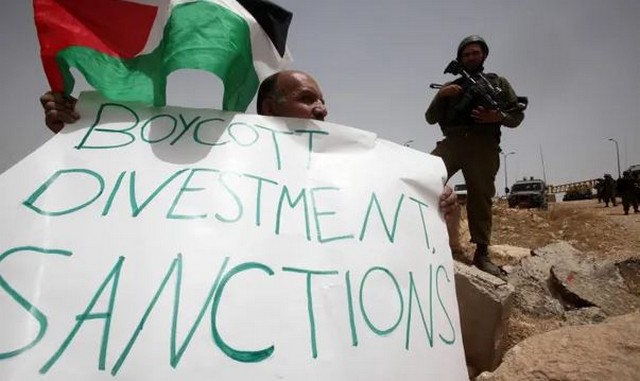
US Intervenes as Venezuela Prepares for High Stakes Election

By Roger Harris

26 Nov 2020 The US finally appointed an ambassador to Venezuela after a decade hiatus and in the run-up to the Venezuelan National Assembly elections. The new ambassador, James Story, was confirmed by US Senate voice vote on November 18 with Democrats supporting Trump’s nominee.

Ambassador Story took his post in Bogotá, Colombia. No, this is not another example of Trump’s bungling by sending his man to the wrong capital. The US government does not recognize the democratically elected government in Caracas.

Impasse of two Venezuelan presidents

US hostility to Venezuela started when Hugo Chávez became president in 1999 and continues to this day, according to Adán Chávez, the late president’s older brother and vice-president of the PSUV, the ruling socialist party in Venezuela. “For the last 21 years,” he commented, “the empire has been perfecting its attacks” on Venezuela.

The elder Chávez, spoke at an international online meeting with the US Chapter of the Network of Intellectuals, Artists and Social Movements in Defense of Humanity on November 19. Venezuela’s Bolivarian Revolution, he explained, was not initially socialist, although it was against neoliberalism. The traditional parties in Venezuela in 1998 had lost their appeal to the voters. Hugo Chávez ran and won, looking for a “third way” that was neither capitalist nor socialist. What the revolution discovered was that there was no third way: either socialism or barbarism.

When in 2013, Venezuela elected President Nicolás Maduro and not the US-backed candidate, the US declared that election fraudulent and refused to recognize the winner. In the 2018 when Maduro was reelected, the US – not taking any chances – proclaimed fraud four months in advance of the vote.

Then in January 2019, US Vice President Pence telephoned the newly installed president of Venezuela’s National Assembly, Juan Guaidó. The following morning Guaidó declared himself president of Venezuela on a Caracas street corner. Almost immediately Donald Trump recognized him as Venezuela’s de facto president.

Guaidó’s claim to the national presidency was based on being third in constitutional succession, overlooking that neither the Venezuelan president nor vice-president had vacated their offices. At the time, the 35-year-old was unknown to 81% of the Venezuelan people, according to a poll by a firm favorable to the opposition. Guaidó was not even a leader in his own far-right party, Popular Will. He had never run for national office and his previous “exposure” was just that. A photograph of his bare behind made the press when he dropped his pants at a demonstration against the government. The person, whose butt may have been better known than his face, only got to be president of the National Assembly by a scheme which rotated the office among the parties in the legislature.

But Juan Guaidó had one outstanding qualification to be the US-anointed puppet president of Venezuela – he was a trained US security asset.

Guaidó’s parallel government has named ambassadors without power and has colluded with the US to loot Venezuelan national assets, some $24 billion. His former attorney is now on the legal team working to take over CITGO, the oil company in the US owned by Venezuela.

“As time went on,” Mission Verdad reported from Venezuela, “support for Guaidó faded and his childish image became a laughable anecdote of Venezuelan politics.” After several failed coup attempts, corruption, embezzlement, resigning from his own party, and losing the presidency of the National Assembly, Guaidó’s last shred of legitimacy – his National Assembly seat – will be contested on December 6 with elections to the unicameral legislature.

US interference and sanctions on Venezuela

The extraordinary level of US interference in Venezuela’s electoral process highlights their importance. The US government has preemptively declared the upcoming National Assembly elections fraudulent.  Guaidó’s political party and others on the far right have dutifully obeyed Trump’s directive to boycott the contest.

However, other opposition elements have broken with the US strategy of extra-parliamentary regime change and are participating in the elections. They have also distanced themselves from Guaidó’s calls for ever harsher sanctions against his people and even for US military intervention.

To maintain discipline among the moderate opposition, the US has sanctioned some opposition party leaders for registering to run in the parliamentary elections. Nevertheless, 98 opposition parties and nine Chavista parties (supporters of the Bolivarian Revolution) will be contesting for 277 seats in the National Assembly.

Following the US’s lead, the European Union rejected the upcoming election and an invitation to send election observers. A long list of international figures including Noble Prize winners and former heads of state petitioned the EU:

“This election represents, above all a democratic, legal and peaceful way out of the political and institutional crisis that was triggered in January 2019 by the self-appointment of Juan Guaidó as ‘interim president’ of Venezuela.”

The Council of Electoral Experts of Latin America (CEELA) and other internationals will be observing the election on December 6. CEELA Chairman Nicanor Moscoso noted: “We, as former magistrates and electoral authorities in Latin America, have organized elections and also participated in over 120 elections…Our aim is to accompany the Venezuelan people.”

The nine Chavista parties are not running on a unified slate. The new Popular Revolutionary Alternative coalition, which formed to run candidates independently, includes the Venezuelan Communist Party.

Communists normally would not get favorable ink in The New York Times. But when there are splits on the left, the empire’s newspaper of record exploits them: “They championed Venezuela’s revolution – they are now its latest victims.” The paper reports: “The repression is partly an outcome of Mr. Maduro’s decision to abandon the wealth redistribution policies of his late predecessor, Hugo Chávez, in favor of what amounts to crony capitalism to survive American sanctions [emphasis added].”

The key to deconstructing the Times’ hit piece is the phrase, “to survive American sanctions.” As Alfred de Zayas, the United Nations Human Rights Rapporteur on Venezuela, had observed even before the pandemic hit, the US sanctions on Venezuela are causing “economic asphyxiation.” Compromises have been necessitated.

President Maduro has survived a drone assassination attempt, mercenary invasions, and abortive coups. In this context, the ruling party realistically feels under siege.

Although running independent candidates, Communist Party leader Oscar Figuera states “we see imperialism as the main enemy of the Venezuelan people.” And on that the Chavista forces are united.

National Assembly elections as a referendum on the Venezuelan project

Venezuela’s Vice Foreign Minister Carlos Ron characterized the election as a referendum against the “brutal blockade” imposed by the US and its allies and against their effort to undermine Venezuela’s democracy by trying to prevent the election from being conducted. He spoke from Caracas in a webinar produced by the US Peace Council and others on November 18.

Carlos Ron lamented that the Venezuelan opposition does not play by the rules. In the 24 national elections held since the election of Hugo Chávez, only the two that have been won by the opposition were deemed truly legitimate by them. Yet this is the electoral system that former US President Jimmy Carter proclaimed to be “the best in the world.”

Margaret Flowers of Popular Resistance spoke in the November 18 webinar calling for the US government to end the illegal coercive economic measures, including unfreezing Venezuela’s assets. Flowers called for reestablishment of diplomatic relations with the legitimate government of Venezuela based on peace and mutual respect.

Ajamu Baraka of the Black Alliance for Peace spoke at the webinar of the necessity to protect the Venezuelan project as the “gateway to the transformation of the entire region,” which is also why the US sees Venezuela as a threat. He cautioned that Joe Biden has the same regime-change policy as Trump. Our responsibility, Baraka concluded, is to build a clear anti-imperialist movement.

________________________________________

Roger Harris is a member of the TRANSCEND Network, associate editor at Council on Hemispheric Affairs (COHA), and the immediate past president of the Task Force on the Americas, a 33-year-old human rights organization in solidarity with the social justice movements of Latin America and the Caribbean.

30 November 2020

Source: www.transcend.org