Just International

Trump Administration Imposes Crushing New Sanctions on Iran

By Josh Marcus

The move will make it hard for the country to import humanitarian goods like food and medicine, US allies say.

9 Oct 2020 – The Trump administration on Thursday [8 Oct] imposed a new, crushing round of sanctions that virtually blacklists Iran’s entire financial sector – raising concerns it will cut off the country’s ability to import humanitarian goods like food and medicine.

Treasury Secretary Steven T. Mnuchin said in a statement that the sanctions, which target 18 banks and penalize foreign institutions that do business with them, are part of efforts to cut down on “illicit access to U.S. dollars” and won’t stifle humanitarian efforts.

“Our sanctions programs will continue until Iran stops its support of terrorist activities and ends its nuclear programs,” Secretary Mnuchin said. “Today’s actions will continue to allow for humanitarian transactions to support the Iranian people.”

The country is struggling with both a record-setting coronavirus outbreak and a currency crisis, making the latest round of sanctions, which essentially sever Iran from the global financial system, an even heavier blow.

Foreign companies or individuals doing business with the banks will have 45 days to unwind their relationships, and then will face “secondary sanctions.”

The move is the latest escalation with Iran as the president continues a tough re-election bout.

In September, the Trump administration sought to unilaterally re-impose UN sanctions against Iran that had been lifted as part of the 2015 nuclear deal, though fellow UN Security Council nations have not to recognized the decision.

In 2018, the Trump administration withdrew the US from the deal and reimposed some of the sanctions it had lifted, and tense relations have remained since. In 2019, the president designated the Iran’s Islamic Revolutionary Guard Corps a foreign terrorist organization, over objections from the US Department of Defense.

And in 2020, following earlier attacks the U.S. alleged were led by Iranian-backed militias, a drone strike in Iraq killed Iran’s top military commander, Gen. Qassem Soleimani, and the country responded with missile attacks on U.S. forces.

Mr Trump’s rival in the election, former Vice President Joe Biden, supports returning to the nuclear deal.

12 October 2020

Source: www.transcend.org

Richard Falk: Palestinians Are Winning the ‘Legitimacy War’

By Ramzy Baroud

9 Oct 2020 – ‘International law’ remains one of the most discussed terms in the context of the Israeli occupation of Palestine. It is almost always present, whether the discussion pertains to the Israeli wars and siege on Gaza, the expansion of illegal Jewish settlements in the West Bank or the encroaching apartheid throughout Israel and the Occupied Territories.

Despite the importance and relevance of the term, however, it rarely translates into anything tangible. The Israeli siege on Gaza, for example, has continued, unabated, for nearly 14 years, without international law serving as a protector of Palestinian civilians against Israeli violations of human rights. More recently, on September 13, the Israeli government approved 1,000 illegal settlement units in the West Bank, in stark violation of international law. It is likely that Israel will go ahead with it, anyway.

With regard to violating international law, Israel is in a unique category of its own, for Israel’s behavior is always governed by its military strength and the backing of its Western allies.

To gain more insight into the relationship between international law, conflict resolution and accountability, I spoke with Professor Richard Falk, one of the world’s leading experts on international law and former UN Special Rapporteur on Palestinian Human Rights.

Of particular relevance to our discussion are the current Palestinian efforts at pursuing international action to hold alleged individual Israeli war criminals accountable at the International Criminal Court (ICC). The fact that the Court has agreed to investigate alleged war crimes in occupied Palestine has generated an angry response from Israel and unprecedented sanctions from Washington, targeting ICC judges and staff, including Prosecutor, Fatou Bensouda.

I asked Professor Falk about the ‘limited scope’ of the ICC investigation, as the Court will only be looking into Israeli war crimes, thus, for now, excluding crimes against humanity, among other illegal practices that should be applicable in the case of Israel.

“The scope of the investigation is something that is ill-defined, so it is a matter of political discretion,” Professor. Falk said, adding that “the Court takes a position that needs to be cautious about delimiting its jurisdiction and, therefore, it tries to narrow the scope of what it is prepared to investigate.”

“I don’t agree with this view … but it does represent the fact that the ICC, like the UN itself, is subject to immense geopolitical pressure,” Falk told me. Still, the seasoned international law expert described the ICC investigation as a “breakthrough”.

“It’s a breakthrough even to consider the investigation, let alone the indictment and the prosecution of either Israelis or Americans that was put on the agenda of the ICC, which led to a pushback by these governments … Israel has denounced the Court as if it is improper to examine any State that claims the matter of geopolitical impunity. So you have a core denial of the rule of law.”

Undeniably, this breakthrough and the advanced position of international institutions regarding the illegitimacy of the Israeli occupation are the outcome of the insistent effort put in by Professor Falk and other champions of international law throughout the years. In fact, the relentless attempts aimed at silencing Falk – and others like him – were carried out so that their criticism of Israel’s violations did not, eventually, lead to such dreaded investigations, like that of the ICC.

“There are very militant Zionist-oriented NGOs, like UN Watch, that engage in defamatory kinds of activities and use all their resources and energy to persuade people, including the UN Secretary-General, to criticize me and urge my dismissal or some type of sanctions,” Falk reflected on the challenges he faced during his term at the UN between 2008-14.

Fortunately, but also tellingly, “in the end, the role of Special Rapporteur was respected … and there was so much support for my activity, including foreign ministries and also from outside the Islamic world. I felt that it was an important kind of presence to maintain.”

“The Zionist groups were, of course, very frustrated and they didn’t try to respond to my reports on the violations of human rights in the Occupied Territory; instead, they concentrated on defaming and smearing the messenger rather than addressing the message,” Falk said, identifying the very essence of the strategy used by pro-Israel groups, whether at the UN or elsewhere.

I also asked Professor Falk about the term ‘Israeli occupation’ as, in my limited understanding, the term has been devised by the Geneva Conventions – and previous international definitions – to regulate a transitional period during which an Occupying Power is in charge of the welfare and well-being of the civilian population living in an Occupied Territory.

“International law is quite ambiguous about the duration of a military occupation and Israel has made a kind of specious argument that the Geneva Conventions and the normal law governing belligerent occupation doesn’t apply here, because this is disputed sovereignty rather than a case where another country has been occupied,” Falk said.

Coupled with US-western support and vetoes at the Security Council, Israel has historically exploited this ambiguity to entrench – instead of ending – its occupation of Palestine.

Since international law “doesn’t provide an endpoint to the Occupation, the most effective way of challenging it from an international law perspective is that Israel has committed so many fundamental breaches of the obligations of an Occupying Power – the establishment of the settlements, the incremental annexation, the integration of Jerusalem into the sovereign State of Israel..”

“They are all fundamental violations of the Fourth Geneva Convention and they represent an effort to make the end of Occupation not possible in the sense that it was meant: turning the society back to the civilian population that is occupied,” Falk continued, describing this situation as a “serious flaw, legally and politically.”

“But is there a reason for optimism?” I asked Professor Falk, whose energy and tireless work continue to define this indefatigable warrior of human rights.

“As colonialism and oppression lost their acceptance as forms of legitimate political behavior, the political balance shifted and the perseverance of national struggles turned out to be more formidable than the weaponry at the disposal of the colonial powers,” Falk said.

According to Professor Falk, history is clearly on the side of Palestinians, who are already “winning the legitimacy war”.

Dr. Ramzy Baroud is a journalist, author and editor of The Palestine Chronicle.

12 October 2020

Source: www.transcend.org

Global Billionaire Wealth Tops $10 Trillion as COVID-19 Deaths Mount

By Jacob Crosse

8 Oct 2020 – The collective wealth of the world’s 2,189 billionaires has risen to $10.2 trillion, an increase of nearly $1.3 trillion in the past three years, according to a new report by the Swiss bank UBS and PricewaterhouseCoopers. The unprecedented surge in wealth takes place amidst a global pandemic that has killed more than one million people worldwide, including more than 215,000 in the United States alone.

The report, “Riding the Storm,” is based on data from 43 markets, including interviews with 60 billionaires, accounting for around 98 percent of global billionaire wealth. It sums up the results: “Most of the decade was a time of exceptional prosperity for billionaires regardless of sector…”

The US continues to have the largest concentration of billionaire wealth, accounting for 36 percent of the world’s total, or $3.6 trillion. China ranked second with $1.6 trillion and saw the largest growth over the decade, by 1,146 percent.

Third was Germany, where billionaire wealth totaled $594.9 billion, an increase of 175 percent from 2009’s $216.1 billion. While fourth in terms of billionaire wealth at $467.6 billion, Russia saw the smallest growth by percentage, 80 percent, from $260.2 billion in 2009 to $467.6 billion in 2020.

The $10.2 trillion amassed by less than .0003 percent of the global population is more than the estimated 2020 Gross Domestic Product of every country on the planet except for the US and China. The staggering total hoarded by less than 2,200 people, or about the number of COVID-19 deaths in the US within the last 72 hours, surpasses the previous high of $8.9 trillion recorded in 2017.

For a household earning the average US median income, it would take over 16 million years to accumulate $1 trillion, not even enough to cover what has been collectively usurped from global society in less than three years. Joel Berg, CEO of Hunger Free America, has calculated the cost of ending hunger in the US at $25 billion, which could be done 400 times over with $1 trillion.

The billionaires who have increased their wealth the most, according to the authors, are in the “technology, healthcare and industrial sectors,” including Amazon CEO Jeff Bezos, Tesla CEO Elon Musk, and Facebook CEO Mark Zuckerberg. The report states: “During 2018, 2019 and the first seven months of 2020, technology billionaires’ total wealth rose by 42.5% to USD 1.8 trillion, supported by the surge in tech shares.”

The surge in technology and medical shares was buoyed by unlimited cash from the Federal Reserve, included as part of the $2.2 trillion CARES Act passed at the end of March in a near-unanimous vote by both Democrats and Republicans.

This financial bailout made a “big difference” in the fortunes of billionaires, with the authors writing: “Billionaire wealth is loosely correlated with equity markets, due to holdings in listed companies, and a few weeks makes a big difference. From the end of March, governments’ huge fiscal and quantitative easing packages drove a recovery in financial markets. By the end of July 2020, billionaire wealth was back above its 2019 level.”

Particularly obscene is the surge in wealth of billionaires in the health care industry, in the midst of a deadly global pandemic. The authors write, “Healthcare billionaires’ total wealth increased by 50.3% to $658.6 billion, boosted by a new age of drug discovery and innovations in diagnostics and medical technology, as well as latterly COVID-19 treatments and equipment.”

The report adds: “The number of tech billionaires grew from 68 in 2009 to 234 in 2020, while the number of healthcare billionaires grew from 48 to 167. Tech and healthcare billionaires’ total wealth both multiplied by four times – from $321.3 billion to $1.3 trillion for tech and from $120.8 billion to $482.9 billion for healthcare.”

And what are these “pandemic profiteers” spending their fortunes on? To get some idea, Christie’s auction house in New York held its latest online auction, “20th Century Evening Sale” live-streamed from the Rockefeller Center in New York on October 6. In one night, the world’s wealthiest spent over $340 million on 59 different 20th and 21st century art pieces. The auction also featured the most expensive dinosaur skeleton ever sold, a fossilized Tyrannosaurus rex, for $27.5 million.

The massive concentration of wealth is a decades’ long and bipartisan policy of redistribution to the rich. The Institute for Policy Studies measured the tax obligations of America’s billionaires as a percentage of their wealth between 1980 and 2018 and found that it had decreased 79 percent. Over the last 20 years, the growth in US billionaire wealth has been 200 times greater than the growth in median wealth.

While the billionaires are richer than ever, the response of the ruling class to the pandemic has produced a massive social catastrophe for the working class. In the United States, tens of millions are unemployed and being cut off of all benefits, facing poverty, homelessness and hunger.

Earlier reports found that the 643 wealthiest Americans increased their wealth by a staggering $845 billion between March 18 and September 15. During that same time, over 62 million people in the US applied for unemployment benefits. An estimated 10.5 million jobs were eliminated, with major companies such as Disney, United Airlines, and Cineworld announcing tens of thousands additional layoffs in the last week.

12 October 2020

Source: www.transcend.org

Macron’s Mission to “Liberate” Islam: A Long Continuing French Colonial Enterprise?

By Muhammad Mahmood

The Friday Sermon

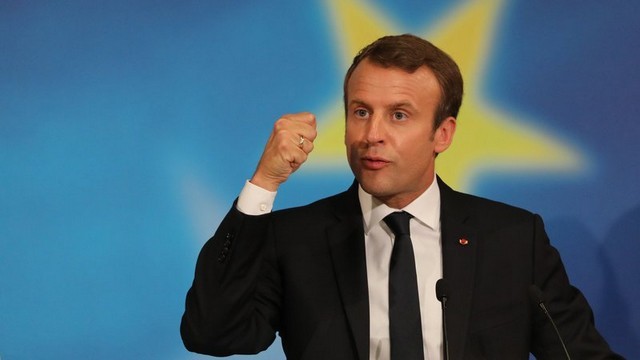
On Friday, October 2, 2020, the Muslim Jumma (Friday Congregation) prayer day, French President Emmanuel Macron said this in a speech in the Western Paris suburb of Les Mureaux that “Islam is a religion that is in crisis all over the world today, we are not just seeing this in our country”. He further added that Islam was in crisis due to “an extreme hardening of positions” and in his speech, Macron also expressed his pious desire to” liberate” Islam in France from foreign influences by improving oversight of foreign financing of mosques, implying somewhat that Islam, Muslims, terrorism and radicalisation are one and the same.

Interestingly, some regarded Macron’s speech positively and saw this is as an important step in creating “French Islam”, a view of the French political establishment’s ”house Arab” and a long time friend of President Macron, Hakim El Karoui. Karouni argued that “it was a speech against Islamism, but it was pro-Islam”. Hoswever, Yasser Louati, a French Muslim activist disagreed and tweeted saying, “The repression of Muslims has been a threat, now it is a promise”. Louati further adds that Macron’s new measures “embolden” the far-Right and anti-Muslim Left at the same time. Many also accuse Macron of stirring up Islamophobic and racist feelings against Muslims at a time when Islamophobia is already on the rise in France.

Rim-Sarah Aloune, a French academic referring to the speech said “ No mention of white supremacy even though we are a country that exported the racist and white supremacist theory of the “great replacement” used by the white terrorist who committed the horrific massacre of Muslims in Christchurch, New Zealand. She was referring to the 2019 massacre at the Christchurch Mosques in New Zealand that killed 51 Muslim worshippers and wounded 49. The Australian white supremacist terrorist, Brenton Tarrant, cited French Islamophobic thinker Renaud Camus who according to him, inspired him to undertake his terrorist actions.

France’s Muslim hatred and its hypocrisies

In fact, hatred of Muslims by France’s Christians and their self-styled seculars is nothing new. It is the staple of every day French political and social discourses at many levels, from the government, politicians, the scholars and the media. In this regard, it is also of interest to note that it was in Clermont in France on November 27, 1097, Pope Urban II, called for a crusade for the first time against the Muslims and ordered his fanatic murderous faithfuls to capture Jerusalem. So anti-Muslim hatred in France has a long history that stretches over a millennium.

Macron is not the first French President to promise new Islam, successive French presidents have done so since the 1980s. His policy is largely guided by ideology to foster an “Islam of Enlightenment” that is “compatible with the values of the Republic” without clearly defining what that will entail except that state would designate “certified Imams” for mosques, though the idea of state certification does not extend to Christian clergies and Jew Rabbis. Double standards are the hall marks of Western societies in general and their politicians, in France, this has taken the form of an art.

Some would argue that such hypocrisies are the reflection of moral and political crisis that these societies are presently experiencing, exacerbated further by more than a decade of continuing economic crisis. This is nowhere more on display than in the US now, the leader of the Western world and France itself is on the march of a political take over by the far Right party Front National led by Marine Le Pen. The recent polls suggest Macron and Le Pen are running neck to neck. Now Macron is doubling down on security (read “Islamist terrorism”) and identity (read spreading Islamophobia) issues, as his political arsenals to attract far-right voters in the 2022 presidential election.

Macron’s talk of the “Muslim Problem” is the latest example of mainstream politicians pandering to the far-right. In fact, Macron at present is more worried about Marine Le Pen than Islam, but the vilification Islam is being used by Macron to enhance his credential among Le Pen’s Islamophobic supporters. However, the far-Right think tank such as French GRECE is well ahead in building a framework of Islamophobia that can be used both as political tactic and a political rhetoric than Macron can do. They have been having quite a bit of success in incorporating the tactics of the left such as Gramscian concept of hegemony where they are articulating their strategy based on cultural power which they argue, must precede political power. Spreading of Islamophobia by the far Right is the product of that endeavour to attain cultural hegemony to capture political power.

In this scenario of a rise in Islamophobia in France, how Macron – of which he himself is a part of – is going to “reorganise” Islam without undermining the “values of the Republic” is a puzzle. Unless he means something else, enshrined in the 1905 Separation of Church and State law his reference to the “values of the Republic” is quite clear and which underpins “laicite”, that explicitly bars the state from interfering with private religious affairs.

Another intriguing aspect of Macron’s reformation of Islam is that he apparently is opting to partner with Egypt, Saudi Arabia and the UAE – homes of a certain brand of Islam that many Muslims believe is extreme and have problem with – to work to establish his brand of “French” Islam and yet the same Arab countries are France’s partners and collaborators in its war against Arab countries that are more moderate, namely Syria and Libya where war crimes are being committed daily with France’s complicity.

Another aspect of France’s double standard is that in a bid to overthrow the Assad regime, it has been instrumental in providing support and material help to the Islamist terrorist groups like ISIS and similar types of Islamist terrorist outfits in Syria. After destroying Libya, France is now backing the Libyan war lord Khlifa Haftar to wage war against the UN backed government of Libya led by Fayez al-Sarraj based in Tripoli.

In accordance with the Sykes-Picot pact which was rubber stamped by the pliant and now defunct League of Nations, the ”secular” France also created in 1920 a colonial state called Lebanon out of the greater Syria. In fact, Syria did not recognise Lebanon as a separate state until 2008.

France granted independence to Lebanon in 1943 but left behind an institutionalised confessional state – “a form of consociationalism in which the highest offices are proportionately reserved for representatives from certain religious communities” – to safeguard the political and economic interests of the Maronite Catholics who were the local collaborators of the French colonial establishment in Lebanon. It must be also noted that 96 percent of French Christians are Catholic. Since gaining independence in 1943, Lebanon has politically remained a dysfunctional state due to the “secular” France’s entrenching of confessionalism into the body politic of that country. Not a great example of “laicite”, secularism – is it?

While Macron’s Friday speech was mocked by some on social media by some as a “Khutba” or sermon because it was delivered on the weekly Muslim communal prayer day, it is beyond joke. France in effect once again is evaluating its relationship with its Muslim minority who now numbers 6 million, constituting 9 percent of the population, the single largest Muslim population in any country in Western Europe.

A leading French Muslim activist described Macron’s project as “A comprehensive institutional framework to control and regulate Islam, with a clear repressive drive”.

As has been highlighted in a statement by 100 Muslim academics, activists and others Macron in fact, is constructing a “Muslim Problem” as they pointed out “ More than the necessity to fight terrorism as a criminal phenomenon, President Macron is to-day participating, with his speech, in constructing a Muslim problem, targeting believers and their faith”.

France like the US has made it a habit to making enemies for itself to justify its military interventions and aggressions, primarily directed at Middle-Eastern Arab countries, to reshape them to suit their economic and political interests.

“We pity a ruler”

Macron is not facing up to the reality that France is politically, militarily and more importantly economically facing at the present time. Increasingly, France is becoming an irrelevant country, geologically, that is. Macron’s bid to reshape the Middle East far exceeds France’s capacity. In Europe itself where Jean Monnet, the Frenchman who helped crafting what has eventually to become the European Union or more precisely the club France, was intended mainly to safeguard France’s political, economic and strategic interests from those of Germany, now precariously and quite ironically, has to hang on to the coat tail of Germany to make its presence felt.

Joseph Massad, Professor of Modern Arab Politics and Intellectual History at Columbia University, New York wrote in the Middle East Eye that “ Macron is not the first French ruler who wanted to “liberate” Islam. This is an old French “secular” tradition”. He further added France’s crisis with Islam is a legacy of 200 years of French colonial brutality. He also pointed out that by the very start of the 20th century as the French concern about their “crisis” with Islam increased with the acquisition of colonies with large Muslim population, the colonial quest for knowledge on Islam became necessary to understand its (Islam) future in the 20th century. This is what Edward Said detailed in his book, Orientalism where he showed how colonial necessity drove the study of the orient in general and Islam in particular in the West with the sole objective to dominate and not appreciate the culture of the colonised people. This was the root of the emergence of the academic “Orientalists Industry” in the West.

However, with all the understanding of Islam dished out by mostly lslamophobic French orientalists and French colonial settler (pied noir) Arabists in North Africa, Professor Massad opined “the project of transforming Islam into something European Christianity and French laicite can tolerate continues afoot in 2020, but with unsatisfactory results as far as Macron is concerned, especially as France’s funding of Jihadist groups in Syria has not so far brought about the French-sought after Islam”.

Now Macron is facing much bigger problem at home than his problem with Islam. French economic growth has been stagnant for more than a decade. Unemployment has been stuck between 9 percent and 11 percent. The deep gap between the rich and poorer citizens is on the rise. France’s richest one percent owns 20 percent of wealth, yet the median monthly wage is about US$1,930 which indicates half of French workers are paid less than that. The declining living standards and purchasing power have morphed into a collective national despair as was reflected in the Yellow Vest movement.

The situation has, in effect, been worsening in the aftermath of the Global Financial crisis of 2007-08 which also created the serious ongoing debt crisis. The slowdown of growth has made it much harder to deal with the other main challenge, the very high level of unemployment. To further worsen the situation, the corona virus pandemic has created the worst economic crisis in decades causing havoc within the country.

Macron’s image being the president for the rich does not help to garner popular support in such a critical time in the country’s history which is marked by economic stagnation and rising unemployment and poverty. He knows that support for him has been withering. His desperate bid to shore up popularity by hanging on to rhetoric that does more harm than good to him individually and Fance as a whole that a leading Muslim scholar who felt sorry for Macron, summed up the situation this way “ We pity a ruler who is still living in crisis and the spectre of religious wars of the middle ages”.

Muhammad Mahmood is an economic and political analyst.

12 October 2020

Source: countercurrents.org

Towards a New Gold Standard? Or a Currency War with China?

By Peter Koenig

Rumors have it that the remaining months of 2020 may bring drastic and explosive changes in the world’s financial system. But such “doomsday” rumors have been floating around every beginning of fall during the last few years. Why? – The US dollar is getting weaker and weaker. It is not quite on a free fall, but still remains a major trading currency and a key world reserve currency. And for many economists that’s difficult to understand.

However, it is unlikely that that the collapse of the dollar will come from one day to the next. That would not be good for the world economy, as still too many countries depend on the dollar.

Facts are,

i) China’s foreign exchange reserves have just increased to US$ 3.112 trillion equivalent, of which about US$ 1.3 trillion denominated in US-dollars – and in general forex-reserves continue to grow;

ii) within short, possibly by the end of 2021, the Chinese yuan, or renminbi (RMB) could become the world’s third largest reserve currency, after the US-dollar and the euro, surpassing the Japanese yen and the British pound, reported by CNBC;

iii) according to Morgan Stanley , at least 10 regulators (i.e. Central Banks and similar forex regulating institutions) added the yuan to their reserves in 2019, bringing the total to 70 – and rising; and

iv) according to the FED, the US economy could lose in excess to one third of its GDP up to the end of 2020 or mid-2021, while China’s economy is expected to grow by 1.3% (IMF) in 2020, and by China’s own estimate up to 3.5%.

Given the dismal covid-related world economy collapsing, and with China being the only major economy expected to grow this year, the number of yuan reserve holders may increase drastically by the end of 2020 and especially through 2021, suggesting that central banks around the world realize that for their financial stability, they must increase their yuan holdings significantly in the foreseeable future. This means shedding other reserve currencies, like the Japanese Yen, the British Pound, but especially the US-dollar. For example, Russia has dumped the dollar, reducing her dollar debt-holdings by 96%.

The Russian Trade Minister, Denis Manturov, called on his BRICS colleagues to increase their trading in local currencies instead of US dollars. Trade in national currencies is a key aspect of cooperation of the five-nation alliance that includes Brazil, Russia, India, China, and South Africa and it is an effective way to dedollarize their economies.

China and Russia and many of the Shanghai Cooperation (SCO) countries are trading for many years already in their local currencies, or in yuan, especially cross-border trading, but they are also promoting currency swap arrangements with other countries, eager to escape the iron fist of sanctions of the United States.

In an interview with MarketWatch, senior fellow Stephen Roach at Yale University and former chairman of Morgan Stanley Asia, says coronavirus may cause a dramatic decline of the US dollar in the near future – “In a Covid era, everything unfolds at warp speed.” Roach also predicted an up to 35% drop of the dollar against major international currencies. He adds, given today’s economic outlook, this might happen rather quickly.

Indeed, while western economies are struggling keeping afloat, China is preparing to launch a new international currency, the digital, gold-backed, possibly crypto-RMB as an international payment and reserve currency, completely outside the dollar-dominated SWIFT system. The new digital RMB money is currently tested in several Chinese cities with positive results.

The People’s Bank of China – China’s Central Bank – recently revealed plans to have its sovereign digital currency ready in time for the 2022 Winter Olympics. The international rollout could actually happen much earlier, possibly in 2021, or earlier if warranted by international monetary events. In any case, the new trading currency may very likely find an astounding attraction by many countries that are eager to dedollarize and get out from under the boot of threats of sanctions by Washington.

It is clear that any money or legal tender that will grow into a major international trading and reserve currency needs to be backed by a strong economy. Backing of a strong economy is fully commensurate with the yuan. China’s economy today in real – and solid – output and long-term stability can easily be assessed as the world’s strongest. Comparing for example the Chinese GDP with the US GDP is like day and night: The Chinese GDP consists of more than two thirds of tangible and solid production and construction of infrastructure, housing, transport, energy and so on; while the US GDP is almost the reverse, more than half is consumption and service industries. Most hard production is outsourced. This undoubtedly distinguishes the yuan or RMB from fiat currencies, as are the dollar and the euro – which are backed by nothing. Simply put, China’s economy and her currency attract a lot of international trust and confidence.

Unfortunately, these differences are not (yet) reflected by the undistinguished linear accounting of GDP, but they are recognized by international economic observers and analysts, including nations’ treasurers around the world.

These are good reasons for the new digital RMB or yuan to grow fast as a primary trade and reserve asset for many countries. It will most likely far outrank Bitcoin, which is often heralded as possibly the “new gold”, or reserve currency.

Not only would the number of countries holding the Chinese currency in their reserve coffers increase rapidly, but the total amount of yuan reserve holdings might skyrocket faster than analysts expect, signaling clearly the end of the US-dollar hegemony. This might undoubtedly shift the global balance of economic power.

“Looking back years later, the two defining historic events of 2020 would be the coronavirus pandemic, and the other would be [China’s] digital currency,” Xu Yuan, a senior researcher with Beijing’s University’s Digital Finance Research Centre, told recently the South China Morning Post.

These developments are not ignored by Washington. The US will not so easily give up its dollar hegemony which means largely control over the world’s economy and financial flows. Although the times of total dollar-control of the world economy are irreversibly gone, Washington intends to slow down the power shift as long as possible. Though a hot war is not excluded, more likely is a currency war.

In line with the Great Reset announced by the World Economic Forum (WEF) and, in parallel, the IMF prediction of the Great Transformation (see this and this), a kind of currency revolution might be initiated, possibly introducing a major instrument for launching the Great Reset, alias Transformation.

As a hypothesis, Washington could, via the IMF, return to some kind of a gold standard. It could take the form of a digital SDR-type currency-basket intended to replace the dollar and the emerging digital yuan / RMB as trading and reserve currency. The current composition of the SDR contains the five major international forex currencies, US dollar (41.73%), euro (30.93%), yuan (10.92%), yen (8.33%), and British pound (8.09%).

Although the yuan is vastly undervalued, especially as compared with the US-dollar and the euro, the yuan is finally present in the basket since 2017 and has thereby become an official international exchange and reserve asset. The respective weights in the SDR basket have last been set in 2016 and are valid for 5 years, meaning they are up for renegotiation and readjustment in 2021.

Continuing with the hypothesis of the new gold standard, it might well be that in the hypothetical new SDR-like currency, gold would take a prominent role, one that overshadows the weakness of the US dollar. However, as was the case with the 1944 gold-standard, Washington-Treasury-FED would insist on the value of gold in the basket being linked to the dollar – which would de facto disproportionately increase the respective weight of the dollar in the basket.

If such a hypothetical deal would be accepted by the majority of countries – the US has still the sole veto right in the two Bretton Woods Institutions, IMF and World Bank – the hypothetical gold-based “SDR” would be a serious contender to the emerging internationalized digital yuan / RMB.

To forego such a situation, a possible currency war, China, as a holder of large direct and indirect gold reserves, may consider establishing a “gold commodity” market priced in yuan / RMB – and invite other large gold producers, like Russia, Venezuela, South Africa and others not in the US orbit, to join in an alternative currency, i.e. a yuan-denominated gold market, or a weighted average gold value of, say, the three major participants of the alternative gold commodity market.

This alternative currency denominated gold would be strengthened by the power of the respective economies which would back it.

In the end – as is already demonstrated today – international trust in the respective economies and their currencies – gold backed or not – will determine the outcome of a possible currency confrontation. China, already engaged in cross-border trading in local currencies and expanding yuan-trading arrangements internationally, for example, with currency swap measures in place with Russia, Iran and Venezuela, would be well placed to break the US-currency hegemony.

Finally, the goal is not to have one hegemon to replace another domineering power, but to establish a balanced world with several regional hubs or financial centers which would promote a monetary equilibrium that would gradually accompany progress of the Belt and Road Initiative (BRI), the bridge that spans the world (see this), with increasingly equal access to vital resources for building peacefully a World Community with a Shared Future for Mankind.

*

Note to readers: please click the share buttons above or below. Forward this article to your email lists. Crosspost on your blog site, internet forums. etc.

This article was originally published on New Eastern Outlook.

Peter Koenig is an economist and geopolitical analyst.

6 October 2020

Source: www.globalresearch.ca

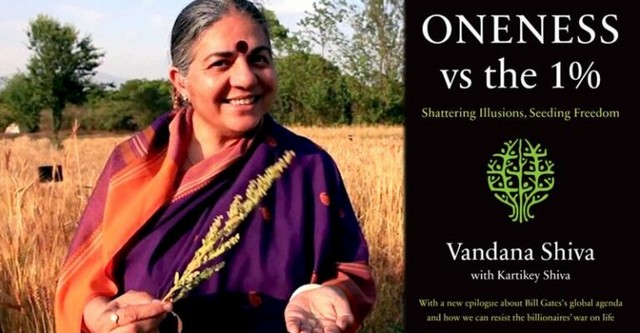
Bill Gates’ Global Agenda and How We Can Stop the Machine and Defend Our Humanity

By Prof. Vandana Shiva

29 Sep 2020 – In March 2015, Bill Gates showed an image of the coronavirus during a TED Talk and told the audience that it was what the greatest catastrophe of our time would look like. The real threat to life, he said, is “not missiles, but microbes.” When the coronavirus pandemic swept over the earth like a tsunami five years later, he revived the war language, describing the pandemic as “a world war.”

“The coronavirus pandemic pits all of humanity against the virus,” he said.

In fact, the pandemic is not a war. The pandemic is a consequence of war. A war against life. The mechanical mind connected to the money machine of extraction has created the illusion of humans as separate from nature, and nature as dead, inert raw material to be exploited. But, in fact, we are part of the biome. And we are part of the virome. The biome and the virome are us. When we wage war on the biodiversity of our forests, our farms and in our guts, we wage war on ourselves.

The health emergency of the coronavirus is inseparable from the health emergency of extinction, the health emergency of biodiversity loss and the health emergency of the climate crisis. All of these emergencies are rooted in a mechanistic, militaristic, anthropocentric worldview that considers humans separate from — and superior to — other beings. Beings we can own, manipulate and control. All of these emergencies are rooted in an economic model based on the illusion of limitless growth and limitless greed, which violate planetary boundaries, and destroy the integrity of ecosystems and individual species.

New diseases arise because a globalized, industrialized, inefficient agriculture invades habitats, destroys ecosystems, and manipulates animals, plants and other organisms with no respect for their integrity or their health. We are linked worldwide through the spread of diseases like the coronavirus because we have invaded the homes of other species, manipulated plants and animals for commercial profits and greed, and cultivated monocultures. As we clear-cut forests, as we turn farms into industrial monocultures that produce toxic, nutritionally empty commodities, as our diets become degraded through industrial processing with synthetic chemicals and genetic engineering, and as we perpetuate the illusion that earth and life are raw materials to be exploited for profits, we are indeed connecting. But instead of connecting on a continuum of health by protecting biodiversity, integrity and self-organization of all living beings, including humans, we are connected through disease.

According to the International Labour Organization, “1.6 billion informal economy workers (representing the most vulnerable in the labour market), out of a worldwide total of 2 billion and a global workforce of 3.3 billion, have suffered massive damage to their capacity to earn a living. This is due to lockdown measures and/or because they work in the hardest-hit sectors.” According to the World Food Programme, a quarter of a billion additional people will be pushed to hunger and 300,000 could die every day. These, too, are pandemics that are killing people. Killing cannot be a prescription for saving lives.

Health is about life and living systems. There is no “life” in the paradigm of health that Bill Gates and his ilk are promoting and imposing on the entire world. Gates has created global alliances to impose top-down analysis and prescriptions for health problems. He gives money to define the problems, and then he uses his influence and money to impose the solutions. And in the process, he gets richer. His “funding” results in an erasure of democracy and biodiversity, of nature and culture. His “philanthropy” is not just philanthrocapitalism. It is philanthroimperialism.

The coronavirus pandemic and lockdown have revealed even more clearly how we are being reduced to objects to be controlled, with our bodies and minds as the new colonies to be invaded. Empires create colonies, colonies enclose the commons of the indigenous living communities and turn them into sources of raw material to be extracted for profits. This linear, extractive logic is unable to see the intimate relations that sustain life in the natural world. It is blind to diversity, cycles of renewal, values of giving and sharing, and the power and potential of self-organizing and mutuality. It is blind to the waste it creates and to the violence it unleashes. The extended coronavirus lockdown has been a lab experiment for a future without humanity.

On March 26, at a peak of the coronavirus pandemic and in the midst of the lockdown, Microsoft was granted a patent by the World Intellectual Property Organization (WIPO). Patent WO 060606 declares that “Human Body Activity associated with a task provided to a user may be used in a mining process of a cryptocurrency system….”

The “body activity” that Microsoft wants to mine includes radiation emitted from the human body, brain activities, body fluid flow, blood flow, organ activity, body movement such as eye movement, facial movement and muscle movement, as well as any other activities that can be sensed and represented by images, waves, signals, texts, numbers, degrees or any other information or data.

The patent is an intellectual property claim over our bodies and minds. In colonialism, colonizers assign themselves the right to take the land and resources of indigenous people, extinguish their cultures and sovereignty, and in extreme cases exterminate them. Patent WO 060606 is a declaration by Microsoft that our bodies and minds are its new colonies. We are mines of “raw material” — the data extracted from our bodies. Rather than sovereign, spiritual, conscious, intelligent beings making decisions and choices with wisdom and ethical values about the impacts of our actions on the natural and social world of which we are a part, and to which we are inextricably related, we are “users.” A “user” is a consumer without choice in the digital empire.

But that’s not the totality of Gates’ vision. In fact, it is even more sinister — to colonize the minds, bodies and spirits of our children before they even have the opportunity to understand what freedom and sovereignty look and feel like, beginning with the most vulnerable.

In May 2020, Gov. Andrew Cuomo of New York announced a partnership with the Gates Foundation to “reinvent education.” Cuomo called Gates a visionary and argued that the pandemic has created “a moment in history when we can actually incorporate and advance [Gates’] ideas…all these buildings, all these physical classrooms—why with all the technology you have?”

In fact, Gates has been trying to dismantle the public education system of the U.S. for two decades. For him students are mines for data. That is why the indicators he promotes are attendance, college enrollment, and scores on a math and reading test, because these can be easily quantified and mined. In reimagining education, children will be monitored through surveillance systems to check if they are attentive while they are forced to take classes remotely, alone at home. The dystopia is one where children never return to schools, do not have a chance to play, do not have friends. It is a world without society, without relationships, without love and friendship.

As I look to the future in a world of Gates and Tech Barons, I see a humanity that is further polarized into large numbers of “throw away” people who have no place in the new Empire. Those who are included in the new Empire will be little more than digital slaves.

Or, we can resist. We can seed another future, deepen our democracies, reclaim our commons, regenerate the earth as living members of a One Earth Family, rich in our diversity and freedom, one in our unity and interconnectedness. It is a healthier future. It is one we must fight for. It is one we must claim.

We stand at a precipice of extinction. Will we allow our humanity as living, conscious, intelligent, autonomous beings to be extinguished by a greed machine that does not know limits and is unable to put a break on its colonization and destruction? Or will we stop the machine and defend our humanity, freedom and autonomy to protect life on earth?

Prof. Vandana Shiva is a physicist, ecofeminist, philosopher, activist, and author of more than 20 books and 500 papers.

5 October 2020

Source: www.transcend.org

Nicaragua, the Country That Didn’t Swallow the Covid Blue Pill

By Jorge Capelán

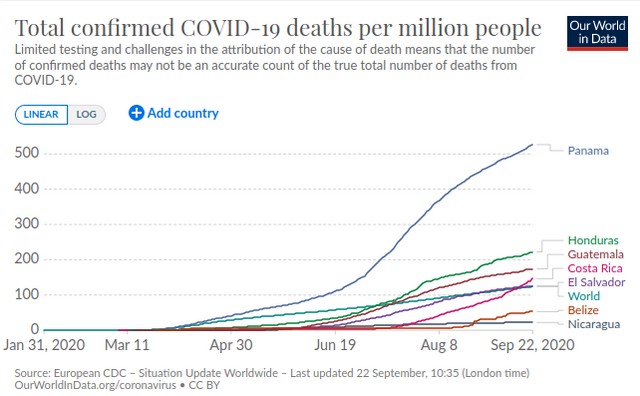
26 Sep 2020 – No curfews, no lockdowns, no “stay at home”, no psychosis, no covid-calamities. There has been much talk about the Swedish corona strategy but the strategy of Nicaragua has been by far more successful, with many fewer deaths, no “economic rescue” for big banks and only limited damage to small and medium sized businesses.

In the midst of the worldwide economic debacle caused by covid hysteria, food self-sufficient, small business based, impoverished Nicaragua, has seen its exports grow over 10% the past 8 months because it did not shut down its economy. Precisely because it sustained its economy, it has not had to take on huge loans in order to face the emergency. Thus, its foreign debt levels remain within a readily manageable range, below 50% of GDP. (On the other hand, the economies of neighboring countries such as Costa Rica, El Salvador, Honduras and Guatemala, are hurting badly with debt levels soaring).

I went out on Sunday afternoon in the barrio where I live in Managua. Bars full of people, even small family-run restaurants full of guests. No masks. The local convenience store which still has the “only-masked-customers-allowed” sign hanging from the door no longer refuses to let maskless people in.

There is no mask-wearing official policy in Nicaragua except for a recomendation that only patients with respiratory conditions or personnel taking care of them should wear masks. The wearing of surgical gloves by patients, on the other hand, is strongly discouraged as it poses a serious risk of contagion both of coronavirus and other respiratory deseases. In hospitals and health care units most people wear masks, be it out of precaution or out of plain courtesy. Otherwise, in offices and shops handwashing and alcohol hand sanitizers are readily available practically everywhere.

No restrictions have been put in place for public meetings and sports championships such as the popular local baseball league have taken place without problems, as well as scores of local fairs and other traditional activities that take place weekly.

Few massive activities have been cancelled due to covid, especially Catholic Church processions, most notably the traditional 10-day-long celebrations of Saint Dominic in Managua, for which thousands of people gather every year. For the most part, people have moved around, going out or heading to the beach as normal. Over the last 3 weeks, an all-time record number of over 83 thousand people visited the Salvador Allende Port and its lakeside promenade – a big and popular public leisure complex in Managua–, according to the authorities.

Schools haven’t closed down, which is very good for the country’s school children, since they provide a nutritious meal a day to 1.2 million children, a food security measure contributing greatly to improved public health for families across Nicaragua.

Yet, with just 2-3 covid-19 deaths per week the last couple of weeks (147 in total as of September 22nd), Nicaragua is by far the least affected country in Central America. Belice has only 19 deaths so far, but on the other hand, its population is a fraction of Nicaragua’s.

As in Germany and other countries, Nicaragua’s Health Ministery does differentiate between deaths of patients “with covid” and “from covid”. That is, a person can be with covid-19 but in the last instance die from an acute heart attack, while someone else who also has covid-19 can die “from covid-19” because of an upper lung condition typical of viruses that cause Severe Acute Respiratory Syndrome (SARS), such as SARS-CoV-2. That is the official explanation given by the authorities in a white paper on Nicaragua’s public health response to the pandemic issued last May.

Athough increased mortality due to pneumonia has been noticed (last week, 26% fewer pneumonia cases were reported, but with an increase of 8% in deaths – related but not directly caused by covid), the situation in the hospitals, health care centers, funeral parlours and graveyards is totally normal. No collapse anywhere.

By the end of April and the beginning of May, when the majority of covid deaths were reported, many people lost acquaintances, relatives or friends with comorbidities, but not even back then did the situation reach the kinds of scenes taking place in other countries. The health system never came even close to saturation point at any time.

In the Western press Nicaragua has been portrayed as a country that “did nothing” to divert the pandemic, which is totally false. Very early on, on January 21st, while the wealthy countries of North America and Europe dallied, Nicaragua declared a national epidemiological alert. That was the day after the Chinese authorities reported that country’s third death from covid-19. Some weeks later, Nicaragua’s national covid response committee elaborated a detailed protocol based on strenghtening the public health system and informing the population on a mass scale.

The strategy followed by the Nicaraguan Government was based on informing the population, taking care of the elderly and frail and strengthening the public health system, specially via enhanced control of the many diseases already threatening the population such as zika, dengue, malaria and chikungunya. The ordinary public health campaigns never stopped, with fumigation of areas with high prevalence of mosquitoes as well as routine annual vaccination programmes for children and the elderly.

The population was recommended to intensify hygiene routines and those in the high-risk groups were recommended to avoid crowds. Every institution devised plans and protocols to meet the covid emergency and in industrial complexes such as the free trade zones plans were agreed between employers and the workers’ unions in order to ensure that any eventual interruptions to production would not leave working families without an income (luckily, as it turned out, for the most part production was not very seriously affected by the pandemic).

The Ministry of Health from the very beginning has provided epidemiological surveillance for people affected by epidemic diseases typical for the time of year: dengue, malaria (both vivax and falciparum), chikungunya, zika, pneumonia, tuberculosis, H1-N1, leptospirosis, chagas disease, as well ensuring care for chronic diseases, for example cancer treatment, renal dialysis or cardiology conditions.

People with respiratory problems, cough and flu, are being given special attention and follow-up, to determine if they need further monitoring depending on their corresponding chronic condition: diabetes mellitus, chronic kidney disease, stroke, hypertensive disease, chronic obstructive pulmonary disease, pneumonia, among others.

A very successful initiative now being implemented is the program “My Hospital My Community” by which all public hospitals mobilize their specialized health care units out into their respective communities in order to actively reach out to people with various chronic conditions who for various reasons may have difficulties going to their local hospital –among them persons who are afraid of getting covid-19 if they go to a hospital.

As mentioned earlier, schools and universities have remained open because on-line distance learning is not an option for people on low incomes. However, because some parents were reluctant to send their children to school a specially designed series of television classes on all subjects have been produced and broadcast both on public television channels and on radio so that children could make good any classes they may have missed.

Facing the recurring risk of volcano eruptions, earthquakes, hurricanes as well as all the various kinds of tropical diseases, countries such as Nicaragua very much need to develop a routine system for early warning and management of emergencies, simply because those events are part of our everyday reality.

Nicaragua is among the countries most threatened by global warming and has been able to deal simply and readily with covid because since 2007 it has developed an integral civil defence and public health philosophy based on broad popular participation, a highly operational public sector and a system trained and ready to articulate cohesively all the available resources.

Whether addressing natural disasters or national public health challenges, Nicaragua over the years has built up an unrivalled organizational infrastructure that quickly mobilizes thousands of volunteer activists and public sector employees. So covid didn’t take the country unawares.

During the past 13 years Nicaragua has experienced dramatic advances. Back in 2006, before the Sandinistas returned to power, overall poverty was 48%. Today it is 24.6%. 54% of people had no electricity. Today, 98.5% have it. 70% didn’t have running water. Today 93% have it. Infant mortality was 29 per 1000 infants born. Today it is down to 12 per 1000 – a reduction of over 60%. Almost 9 out of 10 births now take place in health centers while before most children were delivered at home. In 2006 the country had 2044km of roads (only 30% in good condition). In 2019 the paved road network was 4590km (all in good repair). The economy grew from USD 6.7bn to 12.5bn in this period.

Amidst this development in a region cursed by neoliberalism, public health has played a central role in Sandinista policies. From the outset, privatization of health care was stopped and rolled back. A new, community and family-based preventive health model was developed using sector based territorial health areas grouping together communities of between 600 to 1,000 families, equivalent to 3,000 to 5,000 inhabitants, depending on whether the sector is rural or urban.

In each of these territories, so-called “cabinets for the family, community and life” have been organized incorporating socially-engaged members of society who effectively monitor the local health situation and are able to address not only sanitary and medical issues, but also the social aspects of public health, of particular importance.

For example, the program “Todos con Voz” (“Everyone with a Voice”) assesses the overall situation of each person with disability in a household and assists, not only with wheelchairs or therapies, but also with economic support and training in order to improve the economic activity available to the whole household. The program “Amor para los más chiquitos” (“Love for the littlest ones”) promotes better care in the family for very young children. Other programs are aimed at helping poor families with children in school age so that they don’t have to send their children to work and so on.

Public health investment has also seen a dramatic increase from USD 32 to USD 70 per capita (2018). Total health care expenditure went from USD 111.9 million to USD468.6 million in 2020. In 2006 there were 22,083 health workers; in 2020, there are 36,649, including doctors, nurses and technicians, many of them educated in Cuba and other countries.

The Sandinista government has built 18 new hospitals and there are plans to build 15 more, 6 of which are already under construction. The total health infrastructure of the country comprises 143 health centers; 1,333 medical posts; 178 maternity homes and 66 mobile clinics – way ahead per population of its Central American neighbors.

All this investment has a strong technological component as it shortens hospitalization periods, in many cases is much safer and makes more rational use of available health personnel. Among recent hi-tech investments are two linear accelerators to treat cancer (one of them has already been set in place, one is about to be installed) and the widespread use of laparoscopic surgeries and other modern techniques.

Recently, a molecular biology lab was inaugurated capable of analyzing evidence of several diseases, including COVID-19. This lab is the second most advanced in the region and has been recognized by the WHO as having Level 3 Biosafety.

Also, the Russian Mechnikov medicine factory was inaugurated, which can produce 12 million influenza vaccines per year. The Cuban drug Interferon Alpha-2B (successfully used to treat patients with COVID-19) is expected to be produced in this lab as well as the Russian Covid vaccine.

All this high-tech investment does not exclude the widespread use of traditional or natural medicine. A public health sector “Pain clinic” has been built to give treatment in acupuncture and many other traditional therapies, and specialists in those treatments are available in many health care facilities all over the country.

Nicaragua is a country where 80% of farmland holdings are under 875 acres, worked by small and medium sized producers. It is a country where small-scale family businesses drive the economy, controlling over 60% of disposable income, providing around 80% of the country’s employment and producing 90% of all the food it consumes. So while it simply cannot afford to “lock down” or “stay home”, conversely it didn’t need to take “extraordinary measures” to face the covid emergency because it already had an immensely resilient system designed and in permanent readiness to face any and every kind of emergency.

For Nicaragua, the “blue pill” of lockdown or “stay at home” would have been pure cyanide, and since its leadership long ago took the red pill, it was able to discern the true interests behind the phony rich-country pandemic discourse and its hidden “great re-set” agenda.

5 October 2020

Source: www.transcend.org

The Guardian’s Deceit-Riddled New Statement Betrays Both Julian Assange and Journalism

By Jonathan Cook

26 Sep 2020 – In my recent post on the current hearings at the Old Bailey over Julian Assange’s extradition to the United States, where he would almost certainly be locked away for the rest of his life for the crime of doing journalism, I made two main criticisms of the Guardian.

A decade ago, remember, the newspaper worked closely in collaboration with Assange and Wikileaks to publish the Iraq and Afghan war diaries, which are now the grounds on which the US is basing its case to lock Assange behind bars in a super-max jail.

My first criticism was that the paper had barely bothered to cover the hearing, even though it is the most concerted attack on press freedom in living memory. That position is unconscionably irresponsible, given its own role in publishing the war diaries. But sadly it is not inexplicable. In fact, it is all too easily explained by my second criticism.

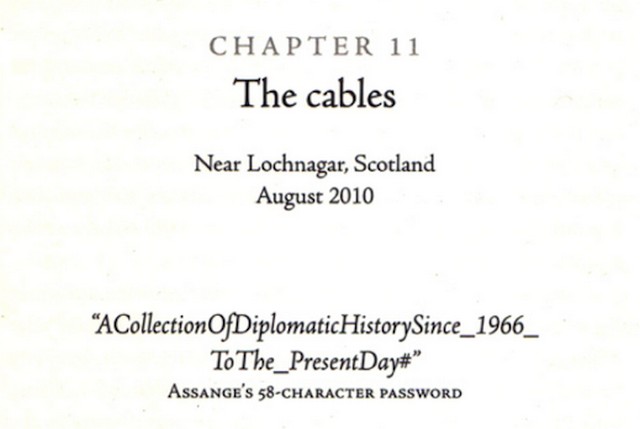
That criticism was chiefly levelled at two leading journalists at the Guardian, former investigations editor David Leigh and reporter Luke Harding, who together wrote a book in 2011 that was the earliest example of what would rapidly become a genre among a section of the liberal media elite, most especially at the Guardian, of vilifying Assange.

In my earlier post I set out Leigh and Harding’s well-known animosity towards Assange – the reason why one senior investigative journalist, Nicky Hager, told the Old Bailey courtroom the pair’s 2011 book was “not a reliable source”. That was, in part, because Assange had refused to let them write his official biography, a likely big moneymaker. The hostility had intensified and grown mutual when Assange discovered that behind his back they were writing an unauthorised biography while working alongside him.

But the bad blood extended more generally to the Guardian, which, like Leigh and Harding, repeatedly betrayed confidences and manoeuvred against Wikileaks rather the cooperating with it. Assange was particularly incensed to discover that the paper had broken the terms of its written contract with Wikileaks by secretly sharing confidential documents with outsiders, including the New York Times.

Leigh and Harding’s book now lies at the heart of the US case for Assange’s extradition to the US on so-called “espionage” charges. The charges are based on Wikileaks’ publication of leaks provided by Chelsea Manning, then an army private, that revealed systematic war crimes committed by the US military.

Inversion of truth

Lawyers for the US have mined from the Guardian book claims by Leigh that Assange was recklessly indifferent to the safety of US informants named in leaked files published by Wikileaks.

Assange’s defence team have produced a raft of renowned journalists, and others who worked with Wikileaks, to counter Leigh’s claim and argue that this is actually an inversion of the truth. Assange was meticulous about redacting names in the documents. It was they – the journalists, including Leigh – who were pressuring Assange to publish without taking full precautions.

But to bolster its feeble claim against Assange – that he was reckless about redactions – the US has hoped to demonstrate that in September 2011, long after publication of the Iraq and Afghan diaries, Wikileaks did indeed release a trove of documents – official US cables – that Assange failed to redact.

This is true. But it only harms Assange’s defence if the US can successfully play a game of misdirection – and the Guardian has been crucial to that strategy’s success. Until now the US has locked the paper into collaborating in its war on Assange and journalism – if only through its silence – by effectively blackmailing the Guardian with a dark, profoundly embarrassing secret the paper would prefer was not exposed.

In fact, the story behind the September 2011 release by Wikileaks of those unredacted documents is entirely different from the story the court and public is being told. The Guardian has conspired in keeping quiet about the real version of events for one simple reason – because it, the Guardian, was the cause of that release.

Jonathan Cook is an award-winning British journalist based in Nazareth, Israel, since 2001.

5 October 2020

Source: www.transcend.org
Palestinian Rejection of Zionism is a Historical, Anti-Colonial Strategy (Part 2 of 2)

By Ramona Wadi

The international community has played a role in maintaining colonialism and preventing decolonization from emerging as a just solution. This is the second installment of a two-part article. The first part ran on October 1, 2020.

In his introduction to “The Palestine Nakba” (Zed Books, 2012), Nur Masalha writes, “The deletion of historic Palestine was designed not only to strengthen the newly created state, but also to consolidate the myth of the ‘unbroken link’ between the days of Joshua and the Israeli state.” Furthermore, in his book “Imperial Israel and the Palestinians: The Politics of Expansion” (Pluto Press, 2000), Nur Masalha asserts, “‘Greater Israel’ is both a territorial concept and an ideology aimed at achieving maximum territorial expansion and imperial domination in the region.” This succinct description of Zionism’s ultimate aims is absent from international reckonings of what the UN calls “the Palestinian question.”

According to Zionist narratives, the Palestinian people were either present or absent, depending on whether the myth of the barren land was evoked, or the need to cleanse the land of its indigenous inhabitants. Yet Ze’ev Jabotinsky clearly acknowledged the Palestinian people’s presence and connection to their land, in his rationale which justified the Zionist aims of colonizing the land: “Every indigenous people will resist alien settlers as long as they see any hope of ridding themselves of the danger of foreign settlement.” To crush Palestinian resistance, Jabotinsky advocated primarily for the use of force to achieve indigenous subjugation, after which negotiations with the Palestinians would happen.

“Every indigenous people will resist alien settlers as long as they see any hope of ridding themselves of the danger of foreign settlement.”

The Palestinian people find themselves in a quandary designated by the UN. While the UN is purportedly dedicated to “eradicating colonialism” through a plan of action which is now in its third decade, the institution is also influenced by the colonial past. Hence the discrepancy between the UN reaffirming “the legitimacy of the struggle of peoples for independence, territorial integrity, national unity and liberation from colonial domination, apartheid and foreign occupation by all available means, including armed struggle,” and the refusal to allow Palestinians to achieve such liberation. The latter is influenced by the UN’s acquiescence to the Zionist narrative and the later insistence upon the two-state compromise as the only solution, which contradicts the earlier UN resolutions.

Looking at the earlier Zionist narrative as traced in Natasha Gill’s analysis, it is clear that the UN contributed to the “peace” discourse by upholding the erasure of the earlier Palestinian anti-colonial struggle against colonization. UN discourse, even resolutions which claim to support Palestinian rights, are first and foremost concerned with colonial preservation. The Palestinian Right of Return is one such example – the text assumes Palestinian responsibility for making amends and “peace” with the colonizers that ethnically cleansed their towns and villages.

The understanding of the Palestinian narrative and the Zionist narrative, therefore, cannot be exploited to bring about an understanding that preserves the colonial project in Palestine. In other words, an understanding of colonization in Palestine should bring about the realization that the solution to Israel’s security narrative can happen with the decolonization of land stolen in the name of Zionist ideology and the Zionist colonial enterprise.

Palestine’s pre-1948 history has two facets. One is the gradual appropriation of land, which later gained international political support. The other is the Palestinian anti-colonial struggle itself, legitimate even in accordance with international dictates, and refuted by Israel and the international community as a threat to Israel’s security.

Israeli academic, writer, and activist Haim Bresheeth Žabner’s latest book, “An Army Like No Other: How The Israeli Defense Forces Made A Nation” (Verso Books, 2020) holds an important observation that refutes the simplistic anti-Semitic claims woven into the Zionist narrative. The lack of security Israel complains about is a direct result of “political and military praxis, not their racial origin.”

The lack of security Israel complains about is a direct result of “political and military praxis, not their racial origin.”

Bresheeth’s observation ties into Jabotinsky’s play on power and subjugation. Drawing upon its political and military power, Israel has used its advantage to spin a fabricated narrative regarding the Palestinian anti-colonial struggle, and one that shapes the current discourse on Palestinian resistance and political blame.

Anti-colonial struggle “by all means” as the UN defines such resistance, includes violent resistance. However, the alleged gratuitous Palestinian violence is part of the Zionist narrative which thrives upon recognition and non-recognition of the existence of Palestinian people in their land, depending on what Israel is seeking to achieve militarily and diplomatically. Palestinian armed resistance in the early colonization period was borne out of political isolation and a recurring failure of the international community to see early settler-colonization for what it was – a plan in motion that would eventually expand over Palestinian land.

As the two-state compromise and the more recent US “Deal of the Century” have shown, “peace” is just a euphemism for the condoning of Israeli colonization. It is the concept of “peace” which empowers the Zionist narrative; after all, the international community has failed to hold the political ideology and its implementation accountable after having incorporated the Zionist narrative into its diplomatic agenda. The two-state paradigm – staunchly described by the current UN Secretary General Antonio Guterres as “the only solution” – is concerned with Israel’s security at the expense of the Palestinians’ ongoing oppression. The US “Deal of the Century” clarifies the extent of this expense.

By eliminating all Palestinian claims to their land, including a plan to alter the definition of who qualifies as a Palestinian refugee, the US has taken Israel closer to its myths.

By eliminating all Palestinian claims to their land, including a plan to alter the definition of who qualifies as a Palestinian refugee, the US has taken Israel closer to its myths. On the flip side of this coin, the US-Israeli scheming to hasten the colonization process requires an even deeper evaluation of the option remaining for Palestinians – decolonization – and how this can bring the Palestinian narrative to the fore. Not as an equal to the Zionist narrative, for that would diminish the severity of colonialism and the erasure of Palestinian memory, but as a departure point for a solution that would include restoration of rights and land for Palestinians.

Resolving “the conflict,” as the international community defines Zionist colonization in Palestine, does not incorporate the settler-colonial and the colonized paradigms. It is a detached, simplistic alternative that chooses power imbalance to force a solution, in a similar manner to how colonialism used force to extricate a semblance of acquiescence from the indigenous, colonized population.

“The conflict” has prioritized Israeli demands over Palestinian rights. Peace negotiations, after all, are about appeasement and profit. With the international community heavily complicit and invested in the Zionist colonial project, a proper reckoning through decolonization would likely be a long process. On the ground, the settler-colonial population is fulfilling the function of ethnic cleansing through a gradual replacement of the indigenous population.

Internationally, the UN’s failure to even acknowledge Israel’s settler-colonial character is manufacturing cycles of impunity which are incorporated into the two-state paradigm. The latter completely eliminates the root of the problem, which is the Zionist colonial project and which, in itself, is the main obstacle to decolonization that few wish to talk about. By eliminating the Zionist colonial project from the “solution,” as mainstream narratives do, the exclusionary nature of the Israeli settler-colonial state is maintained and entrenched.

Historically, Palestinians have resisted such exclusion from their own narrative. At first, through attempts at diplomacy and later, through anti-colonial resistance, only to repeat the cycle until the present day, where diplomacy has failed Palestinians not only by neglecting to recognize their political demands, but also by refusing the Palestinian population the right to resist the colonizers with all disposable means.

Reversing the hegemonic narrative that restructured colonization into the “Israeli-Palestinian” or “Israeli-Arab” conflict is an important step in decolonization.

Reversing the hegemonic narrative that restructured colonization into the “Israeli-Palestinian” or “Israeli-Arab” conflict – the latter more damaging than the other in terms of misrepresentation – is an important step in decolonization. European Zionist colonialism has created victims and indigeneity out of its fabricated narratives, while denying the ties which Palestinians have to their land. Furthermore, the construction of indigeneity as pertaining to the settler-colonial population has also aided two main narratives central to Israel’s existence – the “Jewish state” and “security.”

Both need to be overturned, and achieving this necessitates the incorporation of Palestinian narratives into political diplomacy; the latter with an understanding of how international law provides for legitimate anti-colonial struggle. For justice to be achieved, it is not incumbent upon the colonized Palestinian population to make concessions. Such expectations only confirm the international community’s intention to prolong the colonization process until it becomes irreparable for the Palestinian people.

In terms of power and land, both Israel and the international community have expressed opposition to decolonization. Talk of a one-state “solution” has been voiced by some Palestinians, in which both peoples live in a secular, democratic state. The question is not whether Palestinians are open to solutions, but if Israel is willing to accept a solution which, in colonial narratives, is equivalent to a just loss and therefore, reflects the political justice which must be delivered to the colonized.

Hence, if decolonization is not possible, and apartheid is the norm that characterizes a Jewish state, with a forever resistant Palestinian people, how can true justice be achieved for a lasting peace?

All notions of equity between “both sides” must be discarded. The Palestinian concessions to Israel throughout the decades have wrought an irreparable loss that even the international community would not be able to justify were it not so heavily invested in guarding Israel’s interests. To require further concessions from Palestinians is to elevate the Zionist settler-colonial enterprise in Palestine.

A rejection of Zionism from the Palestinian people is a form of resistance; such rejection from the pro-Israel camp is a must, in order to start altering the prevailing narrative, which is based on myths and exploitation, as opposed to international law.

The one-state possibility must also not be jeopardized by Israel’s concept of exclusivity. If Palestinians are willing to consider the one-state as a solution, Israel and its supporters need to acknowledge the illegalities – even the crime – of colonialism in Palestine. A rejection of Zionism from the Palestinian people is a form of resistance; such rejection from the pro-Israel camp is a must, in order to start altering the prevailing narrative, which is based on myths and exploitation, as opposed to international law.

For, as Gill concludes: “while many Palestinians have (in various agreements and public commitments) been saying ‘yes’ to Israel’s de facto existence since 1988, they will continue to say ‘no’ to Zionism itself. Condoning it would require Palestinians swallow whole the major tenets of the Jewish ‘narrative’ and sign on the dotted line affirming that the creation of a Jewish state on land they considered as their own was a legitimate enterprise; that their own rejection of that enterprise was irrational or morally wrong; and that the Arab’s 1400-year history in Palestine should be seen as a brief and inconsequential interregnum between two more important eras of Jewish sovereignty.”

“This will never happen. The sooner the pro-Israel camp accepts this and stops trying to change the unchangeable, the sooner they can determine what steps might be taken in the interests of their own peace and security.”

Ramona Wadi is a freelance journalist, book reviewer and blogger.

4 October 2020

Source: palestineupdates.com

Fight over the Mediterranean: France’s Proxy War and the Budding Turkish-Russian Alliance

By Dr Ramzy Baroud

Overwhelmed by uncontrollable circumstances, the Greek government is bracing for another financial crisis that promises to be as terrible as the last one in 2015.

Prime Minister, Kyriakos Mitsotakis, announced, on September 12, that Athens has made a “robust” arms deal that will “reinforce the armed forces” and create a “national shield”.

However, beyond Mitsotakis’ mask of confidence, there is a nightmare brewing that is likely to haunt Greece for years to come. Five years ago, when Athens defaulted on its debt, largely to European countries and institutions, France and Germany rushed to further strangle the humbled country by selling it yet more military hardware.

History is repeating itself; this time, the crisis involves the country’s enduring dispute with Turkey over territorial waters. Invoking European solidarity, the French are, once again, pushing their military hardware on embattled and economically weak Greece. Consequently, the latter is set to purchase 18 French-made Rafale warplanes, four navy helicopters, new anti-tank weapons, navy torpedoes and air force missiles.

While the Greek government is presenting the move as a show of force in case of a future military conflict with neighboring Turkey, the French arms will intensify Greece’s vulnerability to French political diktats, now and in the future.

This is part of a larger pattern for France. French President, Emmanuel Macron, is, again, assuming the role of savior. Lately, he has taken on the role of rebuilding devastated Beirut following the massive explosion in August. In return, he expects – in fact, demands – political acquiescence from all of Lebanon’s political forces.

The crisis in Greece, however, is different. The Turkish-Greek East Mediterranean conflict is multifaceted as it involves many regional players, all vying for the same prize: some dividends in the massive deposits of newly discovered natural gas. While the conflict is presented as a continuation of the protracted hostilities between Turkey and Greece, in actuality, the latter is but a small facet of a new great game, the outcome of which could change the dynamics in the Mediterranean altogether.

While NATO is falling apart at the seams, due partly to the current US administration’s isolationist policies, European countries, like France and Italy, are acting independently from the once-unified Western military alliance.

Europe is losing its once strategically dominant position in the Mediterranean region. After years of investing in the decade-long Libyan conflict, European countries are likely to go home empty-handed.

For years, France has backed the Eastern-based forces of Libyan General, Khalifa Haftar, while Italy supported the Government of National Accord (GNA) in the West. The two NATO members, openly clashing politically, had hoped that the outcome of the Libyan war would provide them with much military, political and economic leverage.

Nevertheless, the news emerging from the region is clearly contrary, in that Turkey and Russia, which staked their claims over Libya only recently, are the ones who are now controlling the fate of this country. Not only are Ankara and Moscow the main power brokers in Libya – Russia supporting Haftar, while Istanbul backing the GNA – it is likely that they will shape Libya’s future, as well. In their second rounds of negotiations in Ankara on September 16, the two countries have endorsed a ceasefire in Libya as part of a political process that should eventually stabilize the warring country.

The irony is that, until fairly recent, there was discord between Turkey and Russia. The conflict in Syria had reached a point where war in 2015 seemed imminent. This has changed as both countries saw an unprecedented opportunity arising from the relative absence of Washington as a direct player in the region’s conflicts, coupled with European/NATO disunity and internal conflict.

With time, more opportunities arose in Libya and, eventually, in the Eastern Mediterranean. When France and Italy showed enthusiasm in an emerging alliance between Israel, Greece and Cyprus around the EastMed gas pipeline project, Turkey swooped in to counter-balance this with an alliance of its own. In November 2019, Turkey and Libya’s GNA signed a Memorandum of Understanding that expanded Turkey’s areas of influence in the Mediterranean and forced France to contend with yet another challenge to its leadership in the region.

Moreover, emboldened Turkey widened its search for natural gas in the Mediterranean to cover a massive area that extends from the Turkish southern coast to Libya’s north-east coast. With NATO being unable to present a unified front, France advanced alone, hoping to sustain a geopolitical status quo that has governed the Mediterranean for decades.

That status quo is no longer sustainable as a new political contract is sure to be written, especially as the nature of the Turkish-Russian alliance is becoming clearer and promises to be a lasting one.

The mutual interests between Turkey and Russia are likely to culminate into an actual alliance should their ongoing negotiations pay lasting dividends. On the other side of that possible coalition, there are reluctant and fractious European powers, led by self-serving France, whose strategic vision has suffered a major blow in Libya as it did in Syria, years earlier.

Russian Foreign Minister, Sergey Lavrov, is now leading Russian diplomacy to find a non-military resolution to the Turkish-Greek conflict. This, in itself, is an indication of Russia’s growing prowess in a region that, until very recently, was dominated solely by NATO.

Ramzy Baroud is a journalist and the Editor of The Palestine Chronicle.

30 September 2020

Source: countercurrents.org